WP Menu

wp-menu

The Strait of Hormuz blockade has exposed two chokepoints amid the Middle East conflict: one for fossil fuels, and another for Western decarbonization policies. In many respects, it is China that’s leading the global energy transition. Emerging trade data highlights China’s often-underappreciated position in global clean energy supply chains, which has only accelerated with the Hormuz crisis.

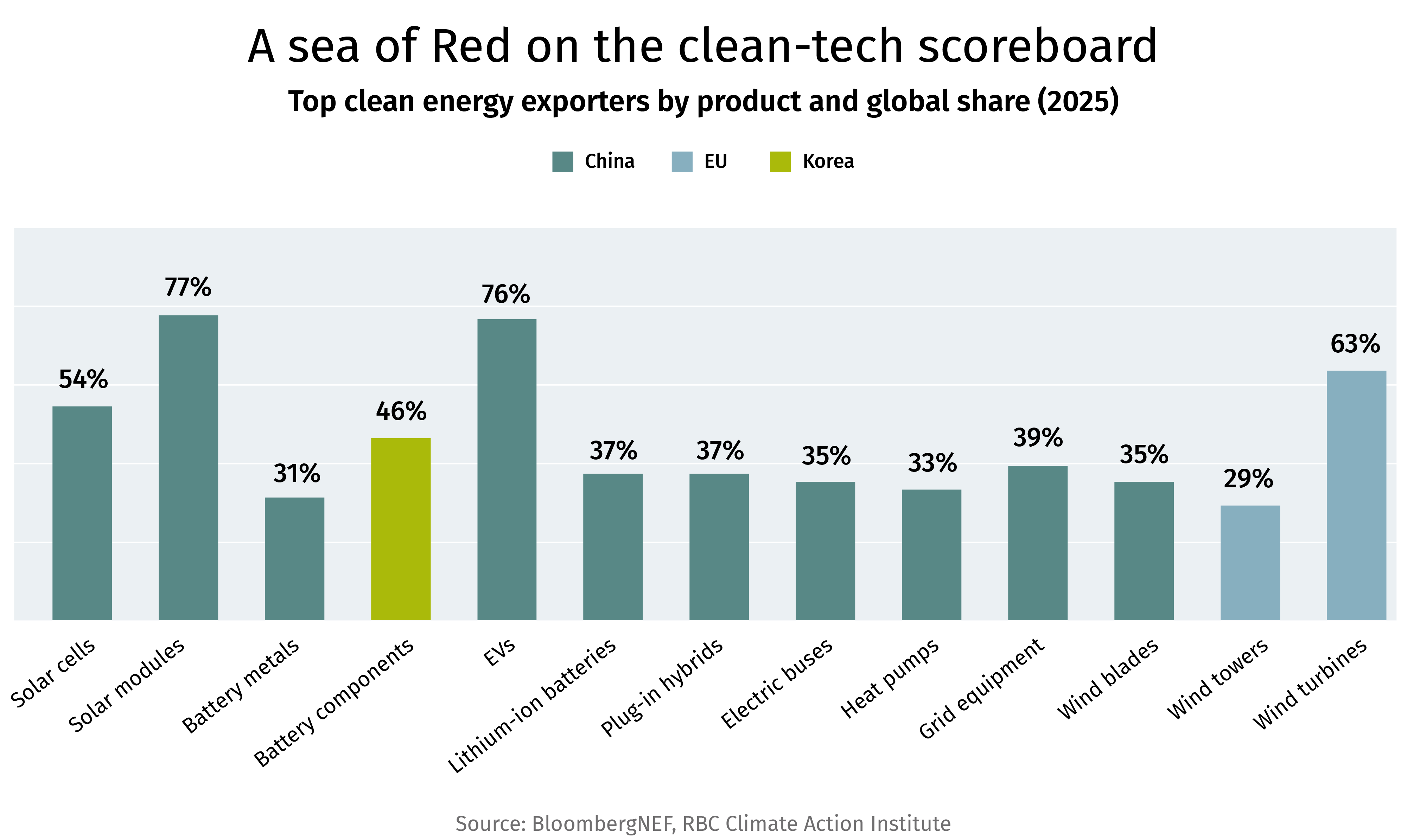
A sea of Red on the clean-tech scoreboard. Top clean energy exporters by product and global share (2025)

China is the largest exporter of almost every major clean technology, often by a significant margin. Non-Chinese leaders—the E.U. for wind towers and turbines, and South Korea for battery components—either source from, or invest alongside, China. In North America, geopolitical sensitivities (to date) have outweighed benefitting from China’s structural advantage.

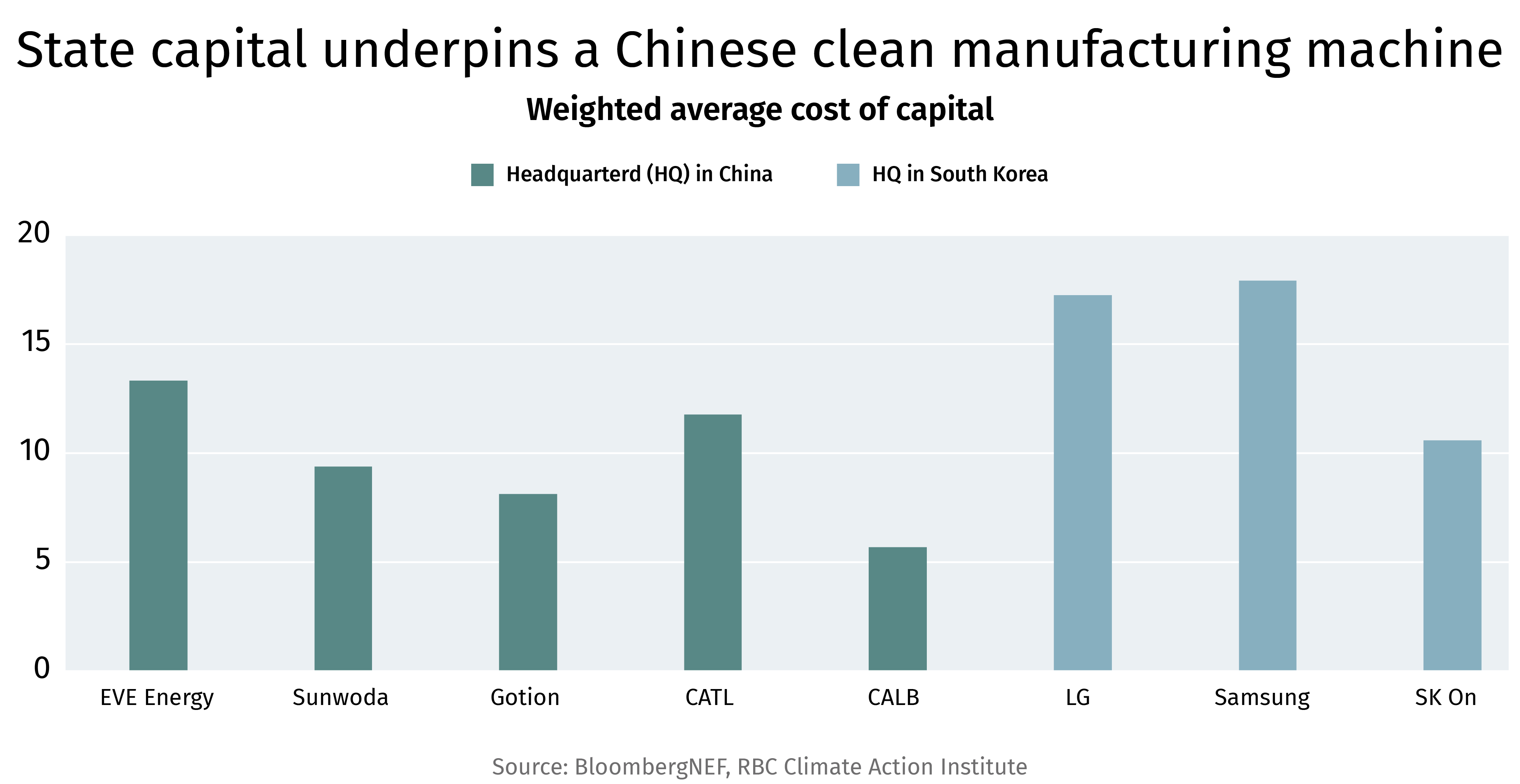
State capital underpins a Chinese clean manufacturing machine. Weighted average cost of capital
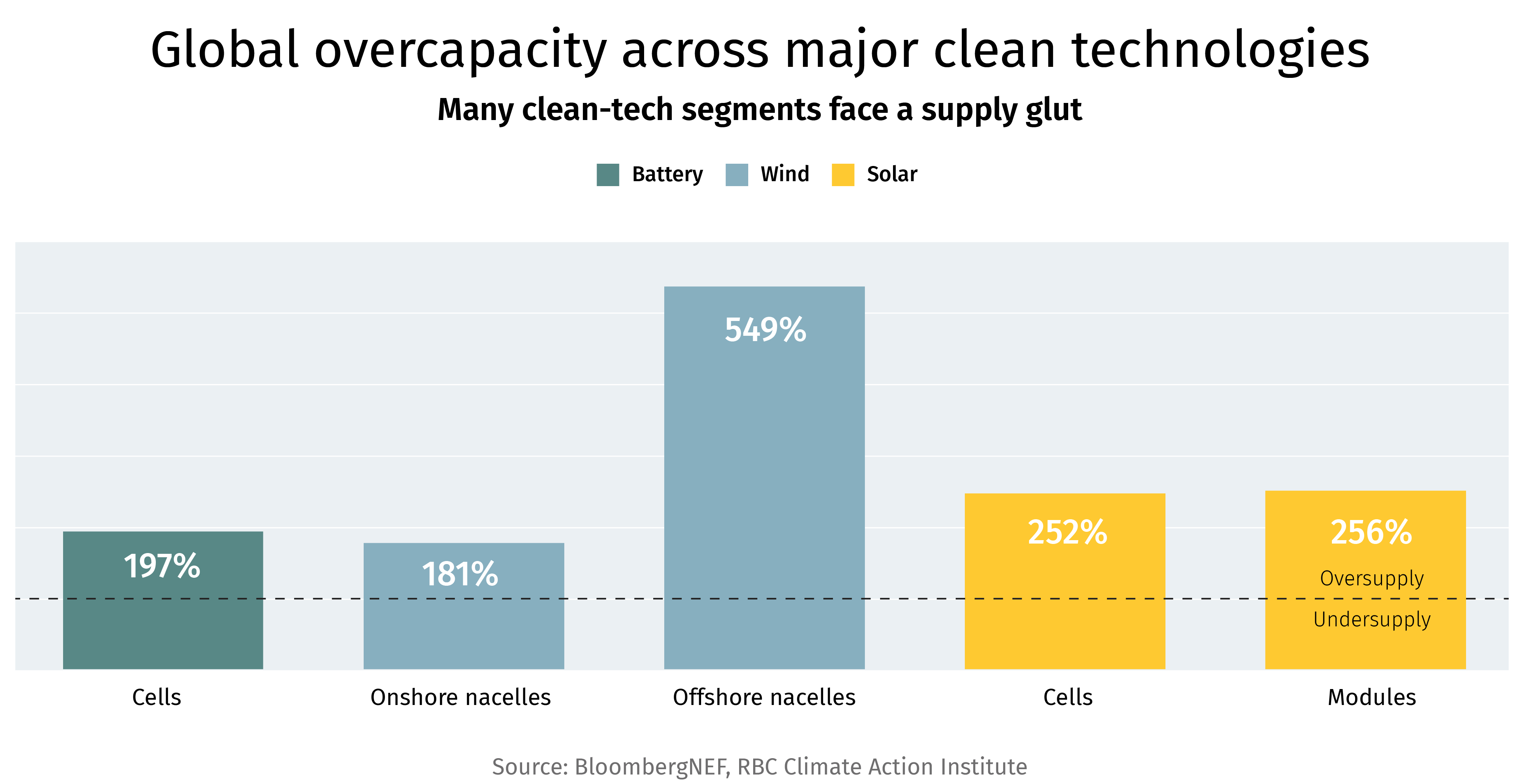
Global overcapacity across major clean technologies. Many clean-tech segments face a supply glut

Chinese producers carry a structurally lower cost of capital than peers—state backing and preferential financing, which in turn often generates and perpetuates overcapacity at a scale private markets cannot, and would not, sanction. This creates a self-reinforcing cycle of fierce domestic competition where only the fittest survive, resulting in a cost floor that continues to fall. If and when demand responds, China is best suited to gain incremental market share given the overcapacity. China has since tried to slow this competition through self-discipline agreements among manufacturers, but thus far has been unsuccessful.

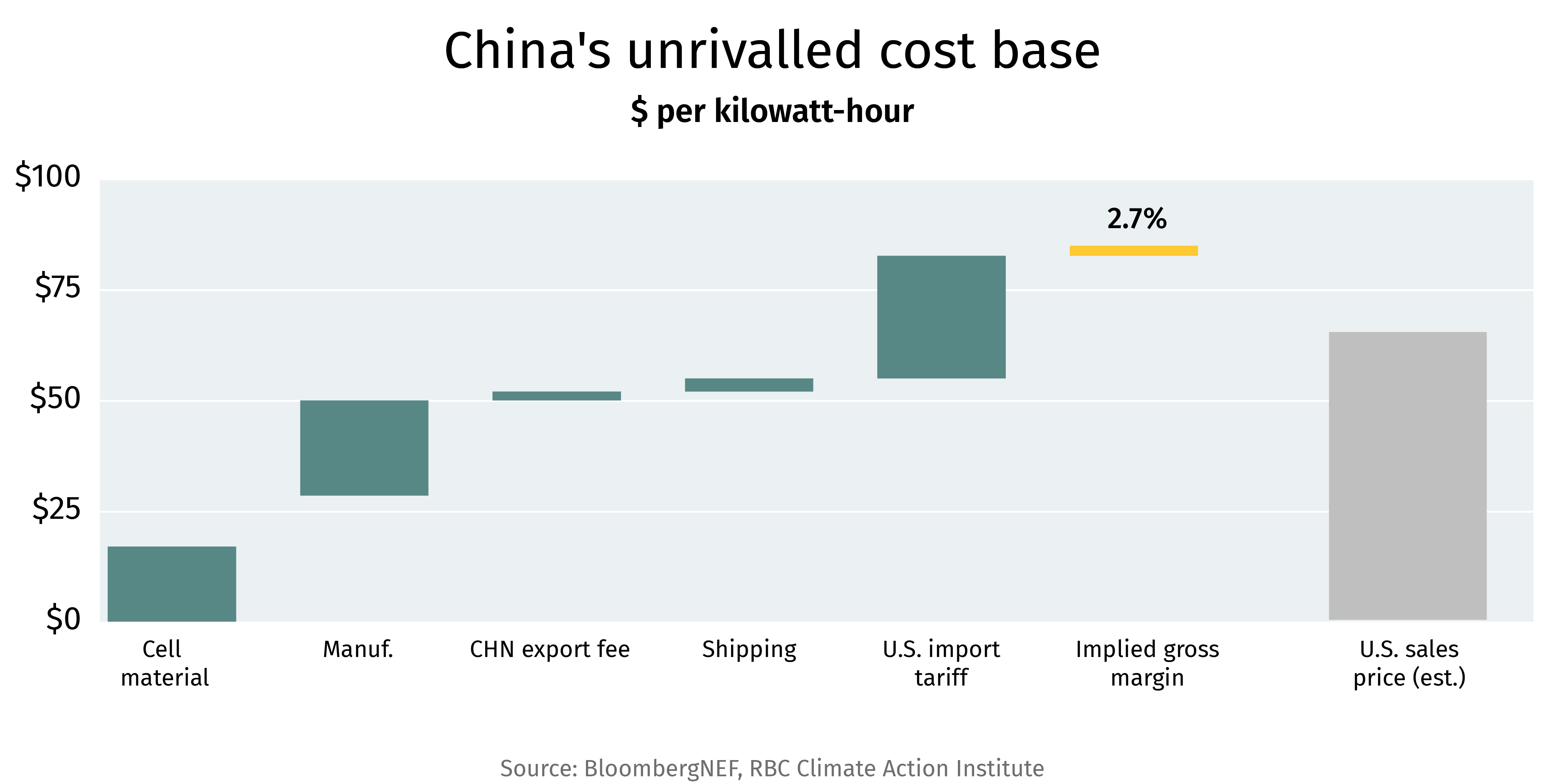
China's unrivalled cost base - $ per kilowatt-hour

Chinese cell materials and manufacturing account for less than US$50 of an US$84 per kilowatt-hour (kWh) delivered cost for battery cells sold into the U.S. The import tariff adds US$27/kWh—more than China’s entire manufacturing cost. Still, Chinese exporters earn a 2.7% margin.

By comparison, S&P Global estimates North American NCM811 (nickel-cobalt-manganese) battery cells cost roughly US$95/kWh, around 90% more expensive than Chinese battery cost. To put this into context, a Tesla Model Y Standard Range carries a 60 kWh LFP (Lithium Iron Phosphate) battery pack. At median Chinese LFP pack prices of US$81/kWh (as per Bloomberg NEF data), a similar sized battery would cost roughly US$4,900 ($6,500), or about 13% of the Model Y’s Canadian sticker price.

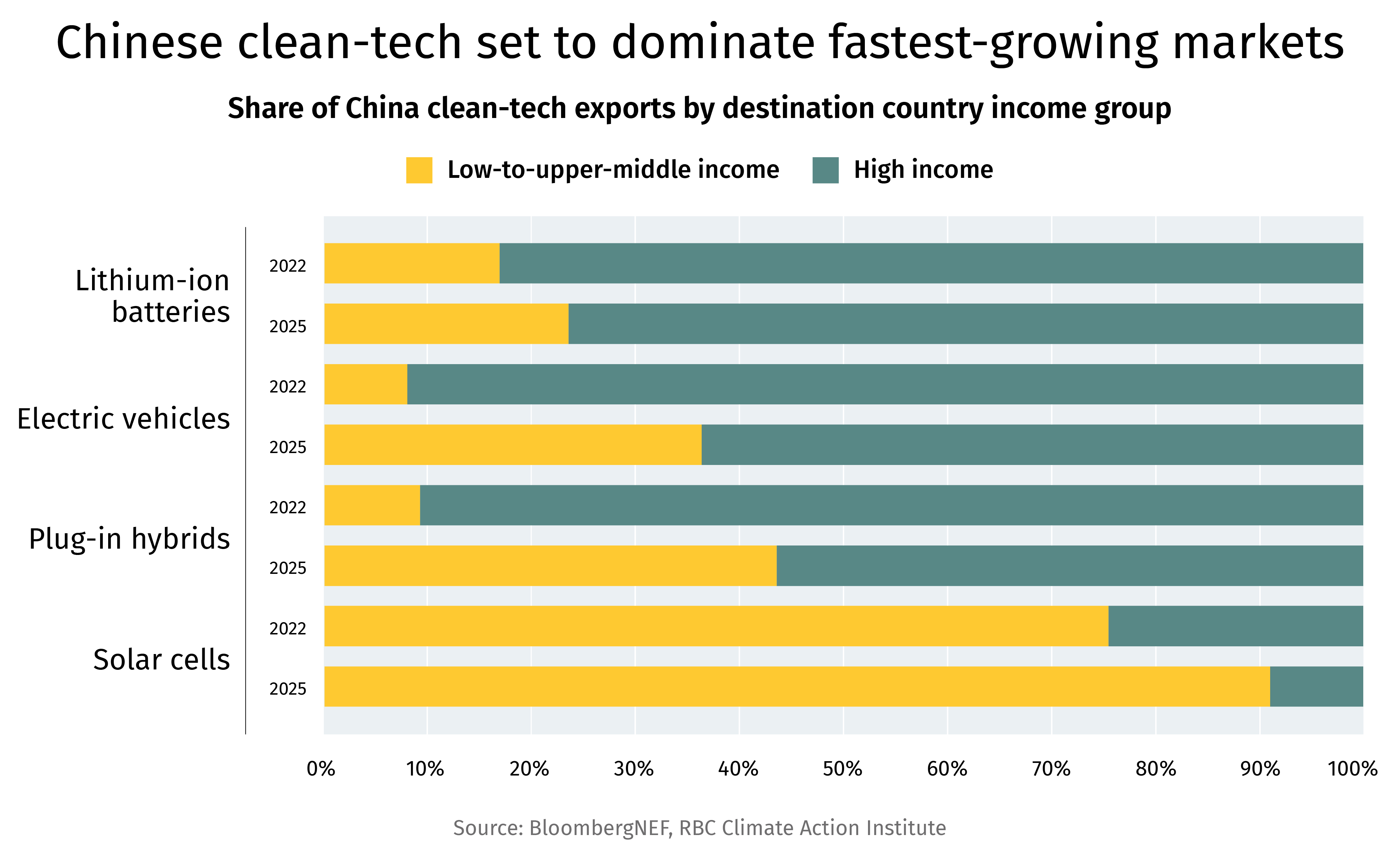
Chinese clean-tech set to dominate fastest-growing markets. Share of China clean-tech exports by destination country income group

While the West is often fixated with the higher cost of clean technologies, roughly 40% of China’s EV exports and over 90% of solar cell exports went to lower-income countries in 2025. China’s cost base has unlocked a category of clean buyer no Western producer will likely ever reach—fast-growing markets, concentrated in Asia, where clean energy adoption is accelerating rapidly.

Pakistan added 18.3 GW of solar in 2025 alone—75% of Canada’s entire installed solar and wind capacity to date—mostly imported from China. Adoption of EVs in Vietnam and Thailand—countries where nominal GDP per capita is less than $10,000—run north of 40% and 20%, respectively (Canada’s EV adoption in 2025 stands at 11%). Vietnam and Thailand do not provide fiscal incentives for the purchase of electric vehicles.

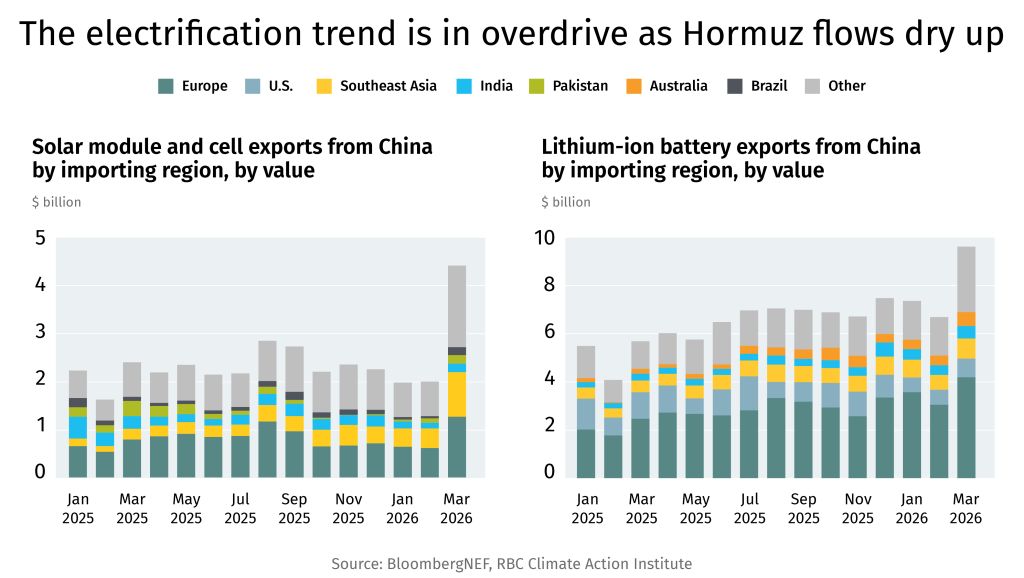
The electrification trend is in overdrive as Hormuz flows dry up. Solar module and cell exports from China by importing region, by value. Lithium-ion battery exports from China by importing region, by value

The Middle East conflict that choked the Strait of Hormuz brought the electrification trend into focus, with fossil-fuel importing countries accelerating their clean energy procurement.

As a result, Chinese battery exports reached nearly US$10 billion in March of 2026 alone, with Europe, Southeast Asia and the Middle East absorbing the volume. U.S. demand was just 8% of March exports.

The transition is happening on Chinese terms. South Korea and Europe have treated that as a sourcing and partnership question, rather than a binary one, and have advanced as a result. North America must also pursue strategies that find a balance between utilizing Chinese content but also building a domestic base that can compete and scale up to meet the opportunity offered by the global energy transition.

WP Menu

wp-menu

  • Pathways for pipeline: Breaking down the Alberta-Canada deal

  • Why Hope Bay project boosts Indigenous participation

  • Oil is spiking, but clean energy stocks are the ones getting a bump

Honda may have shelved its $15-billion EV plant in Ontario—but there’s a world where Canada’s assembly lines bustle with activity. In Steering Through Uncertainty, RBC Thought Leadership’s Managing Director Jordan Brennan outlines four possible futures for the embattled Canadian auto industry. One of the rosier forecasts sees the industry restore access to the U.S. market, unlock billions in pledged investment for EVs and conventional vehicles, and ramp up car assembly to two million by 2040 (from 1.3 million today). Leveraging critical mineral reserves bolsters the case for made-in-Canada cars. That’s the fast lane scenario. Other projections lead to diversification, deceleration, and even a dead end. Dive into all four scenarios here.

Hope Bay project promises Inuit-led development. Ottawa broke ground on the $2 billion redevelopment of the Hope Bay gold mine in Nunavut—projecting $2.6 billion in annual export growth and nearly 2,000 jobs. Ottawa also committed $25 million to the Kitikmeot Tugliq Energy Hope Bay Wind Project, an Inuit-owned wind and battery storage system that will power the mine. The project is a useful real-world test of the framework examined in Nations Building, our assessment of Indigenous loan guarantee programs in Canada’s new project wave. Hope Bay is promising on three counts:(1)The mine will be powered by wind and batteries rather than diesel. (2) Indigenous equity participation in mining remains structurally underrepresented. Hope Bay is gold, not a critical mineral, but it establishes a template for the harder projects that follow. (3) An Inuit-owned energy project powering a mine on Inuit lands offers opportunities communities in remote regions toparticipate in Canada’s new projects.

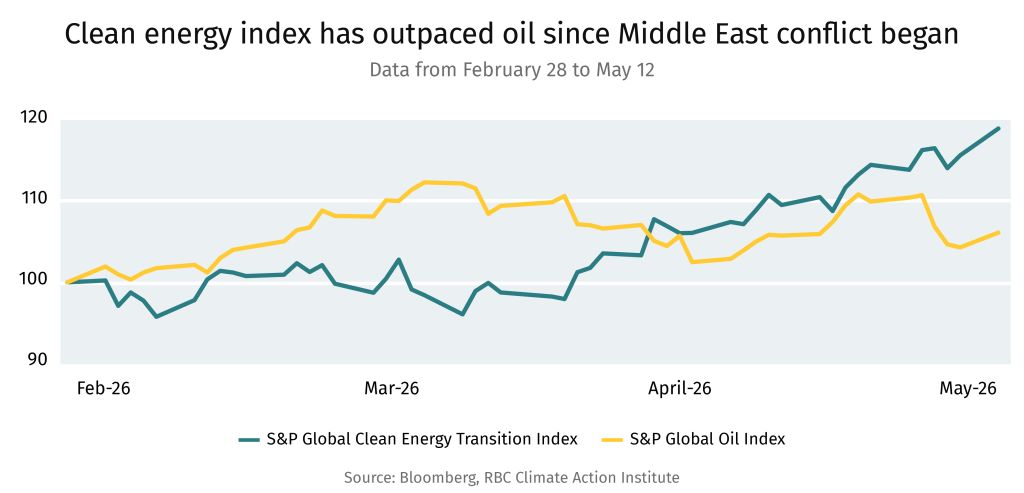
Clean energy index has outpaced oil since Middle East conflict began

Oil prices are spiking, but momentum rests with low-carbon stocks. Clean energy companies benefit from both elevated fossil fuel prices and accelerating renewable policy support on growing concerns over energy independence, Christopher Dendrinos, RBC Capital Market’s clean energy analyst, told us. This is particularly pronounced in oil-and-gas import-reliant Europe. While natural gas dominates the data centre space, renewables are also benefiting from rising demand to power AI. “The sector remains resilient going forward given the strong energy demand macro backdrop,” Dendrinos said.

Canada and Alberta’s landmark Implementation Agreement last week builds on the November 2025 Memorandum of Understanding that aimed to balance Canada’s economic and environmental goals.  However, the Implementation Agreement doesn’t stand alone. A day before, Carney had launched a National Electricity Strategy committing to double Canada’s grid capacity by 2050, with consultations now underway with provinces, territories, Indigenous Peoples, utilities, and unions. The strategy projects up to $15 billion in total energy savings and lower energy costs for 7 in 10 Canadian households. Natural gas retains a role for grid stability, nuclear and geothermal get explicit support, and the Clean Electricity Investment Tax Credit is being extended to intra-provincial transmission. A joint Alberta-Canada Electricity Working Group has been struck to advance the work.

Other stakeholders will now weigh in on the national electricity strategy, but the Alberta-MoU is much further ahead and poised for action. Energy Policy Lead Shaz Merwat breaks down its key highlights:

  • Carbon pricing in Alberta is locked in through 2040: Headline TIER (Technology Innovation and Emissions Reduction) prices: $95 today, $115 per tonne in 2030, $130 in 2035, $140 in 2040. The federal backstop will be updated to match — this is now effectively the national industrial carbon pricing framework.

  • A binding floor on TIER credits — for the first time: Starting at $60/t in 2030, rising to $110/t by 2040. Pre-MOU, TIER credits traded at roughly $20 against a $95 headline. The floor is the most consequential new mechanism in the deal.

  • 75 Mt of Carbon Contracts for Difference: Jointly issued 2030–2040, equally cost-shared, $600 million maximum liability per party ($1.2 billion aggregate). If either government walks back, that party assumes sole liability.

  • The West Coast pipeline has a defined timeline: Alberta submits to the Major Projects Office by July 1, with Ottawa designating it as a “project of national interest” under the Building Canada Act by October 1. The one million barrels per day pipeline to Asian markets could start construction by September 2027.

  • No Pathways, no pipeline. The two projects are explicitly mutually dependent. Pathways targets 16 Mtpa in total emissions reductions: 6 Mtpa by 2035, 5 Mtpa by 2040, 5 Mtpa by 2045. The trilateral MOU with the Oil Sands Alliance is still unsigned.

  • Sector-specific stringency rates. Large oil sands companies face 2% annual tightening of emissions intensity through to 2040 under revamped TIER, while Pathways operators see a tightening of just 1% from 2031 onwards.

  • Co-operation agreement on Impact Assessment. Two-year cap on impact assessments and federal deference to provincial processes where projects fall primarily within Alberta’s jurisdiction.

  • Indigenous economic participation centred across the framework. Co-ownership and equity partnership paths referenced repeatedly in today’s Implementation Agreement and the Co-operation Agreement on Impact Assessment.

  • The Co-operation agreement reflects intriguingly different working on UNDRIP. Canada maintains its commitment, while Alberta views UNDRIP as non-binding.

  • Climate targets remain intact. Both Alberta and Ottawa re-commit their target of net zero by 2050.

Taken together, the twin announcements represent a potential move towards creating the most comprehensive federal-provincial energy framework Canada has produced in a decade — covering carbon markets, carbon capture, storage and utilization, oil export infrastructure, and grid expansion simultaneously. The architecture is scoped, but execution will be key. The proxies to watch over the summer, in the lead-up to Ottawa’s Canada Investment Summit in September: a named pipeline proponent, the trilateral MOU with the Oil Sands Alliance, and the first material Indigenous consent agreement on the pipeline route.

  • Long-term uncertainty in global oil markets may ultimately accelerate the shift toward EVs as Canada strengthens domestic electricity generation, Victor Fedeli, Ontario’s Minister of Economic Development, Job Creation and Trade, told John Stackhouse at the Toronto Region Board of Trade Auto Event.

  • Agriculture Policy Lead Lisa Ashton on why Canada and other countries are embarking on a fertilizer emissions accounting overhaul. Read the brief here.

  • It’s hard to trace where critical minerals come from, weakening their environmental bona fides. Around 30-40% of the companies have a traceability system. The International Energy Agency says strengthening incentives for collecting and sharing data could be one of five ways to address the challenge.

  • Alberta’s “failure” to build new transmission could cost consumers in the province over a  quarter of a billion dollars annually through higher electricity bills, Will Noel, of the Pembina Institute, estimates.

  • Leah Stokes, a professor of environmental politics at the University of California-Santa Barbara, says the current U.S. administration’s push away from clean sources is costing each American household US$1,508 this year alone.

Curated by Yadullah Hussain, Managing Editor, RBC Climate Action Institute.

Climate Crunch would not be possible without John Stackhouse, Jordan Brennan, John Intini, Farhad PanahovLisa AshtonShaz MerwatVivan SorabCaprice Biasoni, Lavanya Kaleeswaran and Joelle Schonberg .

Have a comment, commendation, or umm, criticism? Write to me here (yadullahhussain@rbc.com)

Climate Crunch Newsletter

WP Menu

wp-menu

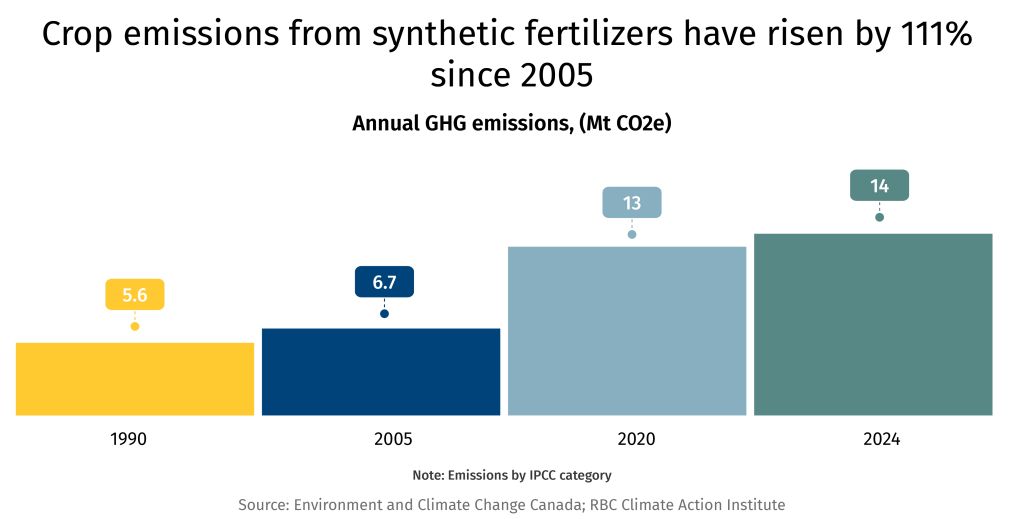
As Canadian farmers produce more per acre to feed a growing global population, fertilizer use has jumped 108% over the past two decades. That has come with an environmental impact: synthetic fertilizers now account for a quarter of the agriculture sector’s emissions in Canada.1 But the current emissions accounting system is flawed as it primarily focuses on the quantity used. What’s missing in the equation is farmer stewardship of fertilizer use to optimize placement, source and timing that help lower emissions.

Crop emissions from fertilizers have risen by 111% since 2005.

Source: Environment and Climate Change Canada and RBC Climate Action Institute

In an effort to optimize fertilizer use, the number of Canadian farmers with a nutrient stewardship plan has more than tripled over the past five years.2

Rising adoption rates are a sign of climate action. But it’s also an economic decision, especially as geopolitics continue to disrupt fertilizer supplies and raise prices. Nitrogen fertilizers have faced the brunt of supply chain shocks from geopolitical conflicts over the past five years as key producers include the Middle East and Russia. Nitrogen is also the primary driver of GHG emissions from fertilizer use. When nitrogen is not fully consumed by crops to grow, nitrogen can be emitted into the atmosphere as nitrous oxide (N2O) emissions, a GHG that is 273 times more potent than carbon dioxide over a 100-year time scale. When farmers adopt nutrient stewardship practices, GHG reductions can be substantial. An Ontario study, for example, found that when nitrogen fertilizer rates are optimized, and technology and practices that improve the source, timing and placement of fertilizer are adopted, N2O emissions can fall by up to 57%.

To capture in the accounting the full suite of practices, Canada, and other agriculture producing countries, including Australia, Denmark, New Zealand, Brazil and the U.S., are developing research and industry networks to collaboratively advance N2O measurement and monitoring systems.  

These research-driven networks have multiple lab-to-market applications, including those focused on:

  • Improving the understanding of how farmers’ practices impact N2O emissions, supporting investment decisions by farmers, industry and governments in nutrient stewardship

  • Building a suite of indicators that allow for more accurate tracking against GHG emission targets at the farm, regional and national scale

  • Refining the measuring, monitoring, reporting and verification (MMRV) protocols for carbon offsets and sustainability programs, improving the accounting of farmers’ climate actions to better connect them to market-based incentives and provide greater assurance to carbon credit buyers

Canada: A driving force in innovation of measurement and monitoring practices

Canada’s response to fertilizer-related N2O emissions has increasingly focused on improving measurement, coordination, and on-farm nitrogen management. A central initiative is the Canadian Nitrous Oxide Network (CanN2ONet), a collaborative research network involving universities, government agencies, farmer groups, and industry partners. The network was established shortly after Canada’s national target for reducing fertilizer-related N2O emissions by 30% by 2030 was announced in 2020—a policy with notable industry push back that has since faded in sector discourse.

CanN2ONet operates a series of long-term monitoring sites across Alberta, Saskatchewan, Manitoba, and Ontario. These sites use micrometeorological techniques to continuously measure N₂O emissions from agricultural fields under different climates, soil conditions, and management systems. The network also addresses a long-standing challenge in agricultural climate policy: accurately measuring emissions at field scale. Traditional national GHG inventories often rely on generalized assumptions that do not fully capture local soil and weather conditions.

Denmark: An ambitious vision for meeting GHG targets

Denmark’s SmartField initiative represents one of Europe’s most advanced efforts to reduce agricultural N2O through data-driven and field-scale innovation. Led by the Danish Technological Institute and funded by the Novo Nordisk Foundation, SmartField aims to cut N2O emissions from Danish agriculture by as much as 30% by 2030 without reducing yields or increasing other forms of nitrogen pollution. 

Canada and Denmark-based researchers are advising one another as both CanN2ONet and SmartField focus on building a national testing and validation platform for emission-reduction technologies and farming practices. The SmartField project combines stationary “supersites,” mobile measurement systems, advanced sensors, and modelling tools to monitor how fertilizers behave in real farming conditions. These facilities generate detailed datasets on nitrogen cycling, soil biology, crop performance, and greenhouse gas emissions. 

One of the initiative’s features is the integration of science, policy, and implementation. SmartField brings together universities, government agencies, agricultural organizations, and private-sector stakeholders to accelerate the adoption of low-emission farming practices.

New Zealand: Balancing rural economic growth and GHG trajectories

Agriculture accounts for roughly half of the country’s GHG emissions. Cattle manure from livestock and fertilization of grasslands for animal feed are the main culprits of N2O emissions. The agricultural sector is also the largest contributor to export revenue, accounting for 70% of merchandise exports, with agricultural production alone contributing 5% to the country’s GDP.

New Zealand’s approach to managing its large agriculture environmental and economic footprint has evolved over the past five years with an initially strong prioritization on GHG reductions aligned with legislated net-zero targets. Through industry engagement, the focus has shifted towards innovation and scaling practices and technologies that present win-wins in productivity and emissions reduction. A government-led, centralized approach to advancing N2O emissions accounting has been driven by the country’s Ag Emissions Centre and rolls into New Zealand’s broader ambitions to mitigate GHG emissions from agriculture.

WP Menu

wp-menu

➔ Renewable projects can serve as a playbook for Indigenous participation in future developments

➔ How methane abatement could replace lost Middle East gas supplies

➔ Your backyard can help save the environment

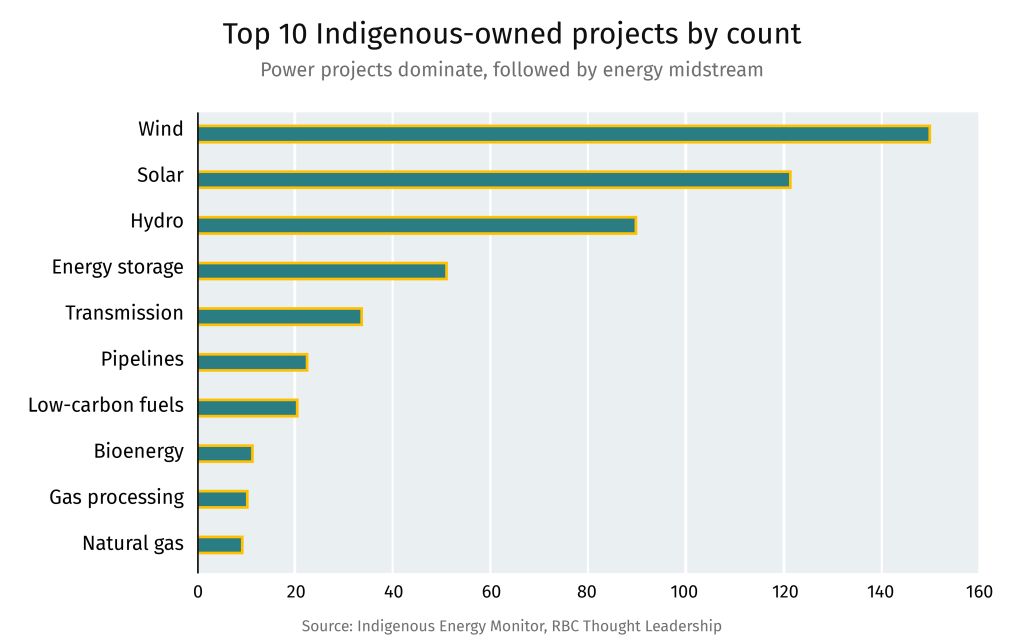
Top 10 Indigenous-owned projects by count

Power and utilities dominate Indigenous participation. That’s both its strength and its constraint, says Energy Policy Lead Shaz Merwat. Loan guarantee programs have been most active in western Canada, while northern communities, closest to the mineral deposits the energy transition requires, lack transaction readiness. Yet, the electrification trend offers substantial Indigenous investment opportunities nationwide. Read our Nations Building report that examines ways to boost First Nations participation as Canada embarks on a new project wave.

Methane mitigation could replace gas supplies stranded due to the Strait of Hormuz closure. That’s the stunning assessment from the International Energy Agency (IEA), which estimates that available methane abatement measures could free up to 200 billion cubic metres of natural gas—or double the supply volumes cut off due to the virtual closure of the Strait. Large quantities of produced gas are not being put to productive use, owing to methane leaks, and flaring and venting from oil and gas operations. The cost-effective, proven technologies could abate three-quarters of emissions from oil and gas and about half of coal emissions, according to the IEA. (Also read: What the Canada-Alberta methane deal means for businesses).

Nature conservation icon Sir David Attenborough is now eyeing his backyard for sustainability. After traversing the world’s wildest places, Attenborough’s new BBC series focuses on the often overlooked garden. It may have several low-hanging fruits, literally: home gardens can reduce carbon emissions, sequester carbon, and produce fresh food (pro tip: use rainwater to go truly green). Canadians already have a head start: About three in five Canadian households (59%) grew fruit, herbs, vegetables or flowers for personal use in a survey a few years ago.

It’s early days, but the stalemate playing out over the Strait of Hormuz is forcing countries to renew their focus on electrifying their way out of fossil fuels. We have been here before as recently as 2022 when Russia launched a full-scale invasion of Ukraine, upending European energy ties to Russian oil and gas. Yet coal, oil and gas rebounded to near all-time highs.

Will it be different this time? Here are five ways the crisis has rekindled momentum for energy transition.

1. Global consensus is hardening. Santa Marta, Colombia, was the site last week of the First Conference on Transitioning away from Fossil Fuels, where 57 nations—including Canada—sought ways to move towards cleaner energy.While several lofty goals were expounded, a key takeaway was to launch a panel of experts who would provide scientific input on reducing fossil fuel dependence, high energy prices and extreme weather damage. It could be a breeding ground for new ideas.

2. AccelerateEU aims to shield Europe from energy price shocks. One idea is to accelerate the shift to “home green clean energy,” including an Electrification Action Plan to be released by the European Commission by the summer.

3. Knee-jerk consumer behaviour could alter long-term demand. Global EV sales jumped 66% in March compared to February, as some consumers baulked at the prices at the pump and switched to EVs. Several countries in Europe and Asia had record-breaking months. That could have long lasting consequences for fuel demand and what’s called” demand destruction.” In Canada, more than 12,600 zero-emission vehicles were sold in February, compared with nearly 8,700 the month before, recent Statistics Canada data shows. An AutoTrader survey of 17,000 Canadians found half of respondents would now consider buying an EV.

local bureaucrats

4. Chinese bureaucrats are now on the clean-energy case. The country is launching a campaign aimed at accelerating climate action by local authorities, in an effort to plateau CO2 emissions before 2030. At stake: rewards and career progress for local bureaucrats. Never underestimate the resourcefulness of a middle manager keen to get their performance bonus.

5. Most renewables are now competitive with fossil fuels. Even before the Iran war, the price competitiveness of solar and wind energy was the primary driver of power sector decarbonization, according to Ember Energy. In 2025, the average Levelized Cost of Energy (LCOE) for solar ($39/MWh) and onshore wind ($40/MWh) was 60% lower than that of combined cycle gas turbines (CCGT), which stood at $102/MWh. Offshore wind ($100/MWh) has also reached price parity CCGT. US$100+ oil prices only make the case for renewables more compelling. China’s export of photovoltaic solar panels, lithium-ion batteries and new-energy vehicles rose 70% in March year-on-year, Carbon Brief’s analysis of Chinese customs data shows.

Here’s what Lisa Ashton, Head of Research, gleaned from Ottawa’s latest Spring Economic Update:

Clean investment push continues. Expanded tax credits and incentives for carbon capture, clean electricity, and clean technologies aim to attract private capital and scale domestic innovation.

Proposed $5 billion in international climate investment. Flowing through Environment and Climate Change Canada, FinDev and Global Affairs Canada, the update proposes spending on climate initiatives and technology development in emerging economies around the world to advance global decarbonization. Carbon pricing framework is reinforced. Working to strengthen industrial carbon pricing benchmarks and ensuring consistent national standards remain central to competitiveness. Yet, key decisions are pending, namely performance standards. Another obstacle: the oil industry is pushing back on the carbon tax.

Funding of $3.5 billion towards scaling nature positive outcomes. Announced in the government’s Force of Nature strategy, the federal government will stimulate investments in nature, tying climate competitiveness to conservation goals (e.g., protecting 30% of lands and waters by 2030).

Integration with broader economic strategy. The proposed Sustainable Finance Conference and the development of the made-in Canada sustainable investment guidelines aim to connect public and private dollars in key economic sectors, linking sustainable investments to jobs, affordability, and global competitiveness.

The takeaway. Canada is doubling down on a market-driven, investment-led approach to climate policy. The country will need to advance key strategies and agreements including the energy MoU with Alberta to drive real outcomes through its renewed approach.

First Nations Major Project Coalition’s 9th annual conference
  • Atthe First Nations Major Project Coalition’s 9th annual conference, John Stackhouse discussed how economic reconciliation and Indigenous equity are vital to ensure Canada’s big ambitions are fully realized.

  • Gregory Brew, a historian of international energy and U.S.-Iranian relations and a senior analyst at the Eurasia Group, on how America would pay dearly for its energy arrogance.

  • Subsidies and price floors are temporary tools, demand is what would sustain prices and investor confidence in critical minerals, writes Gracelin Baskaran, director, critical minerals security, at the Center for Strategic and International Studies.

Curated by Yadullah Hussain, Managing Editor, RBC Climate Action Institute.

Climate Crunch would not be possible without John Stackhouse, Jordan Brennan, John Intini, Farhad PanahovLisa AshtonShaz MerwatVivan SorabCaprice Biasoni, Lavanya Kaleeswaran and Joelle Schonberg .

Have a comment, commendation, or umm, criticism? Write to me here (yadullahhussain@rbc.com)

Climate Crunch Newsletter

WP Menu

wp-menu

Canada and Alberta’s recent agreement-in-principle on methane equivalency sets a 75% reduction target in oil and gas methane emissions by 2035, relative to 2014 levels.1 It could prove to be consequential for the country’s climate ambitions: methane has roughly 80 times the warming impact of CO₂ over a 20-year period and accounts for nearly a quarter of the sector’s total greenhouse gas emissions, making it one of the lowest-cost, highest-impact levers for near-term climate progress.

For oil and gas producers, methane emissions measurement and performance now has greater flexibility on implementation but brings verification to the forefront.

In many instances, things are already up and running among oil and gas operators as several key methane emissions abatement technologies are well established, including:

  • Vapour recovery units that capture gas from storage tanks that would otherwise be vented;

  • Low-bleed pneumatic devices that eliminate routine methane releases from instruments controlling valves and pumps;

  • Compressor seal replacements that prevent leaks from pressurized equipment;

  • Leak detection and repair programs that use optical gas imaging and continuous monitors to find and tackle fugitive emissions.

Collectively, these technologies could reduce emissions by more than three million tonnes per year, representing roughly 1% of Alberta’s annual emissions.2

The province has deployed them at scale. Alberta has invested $172 million in methane reduction technology since 2019, including the installation of more than 58,000 low- or no-bleed devices. The outcomes are tangible: government-funded programs have prevented an estimated 17 million tonnes of emissions from being released, according to the Alberta government. A $25-million implementation program helped 49 operators deploy equipment across more than 650 sites at abatement costs below $50 per tonne.3

Canada’s broader methane mitigation sector has grown to more than 130 firms, with compliance actions under the enhanced regulations projected to generate 34,000 jobs from 2027 to 2040.

However, the progress is not without its headwinds. Alberta had frozen the TIER Fund credit price at $95 per tonne in May 2025, well below the federal trajectory to $170, citing U.S. tariff pressures.4 The MoU commits both governments to a minimum effective price of $130 per tonne, but days after signing, Alberta introduced amendments that flooded the credit market.

While the agreement is promising, success depends on transparent verification, particularly given that a multi-year aerial campaign found Western Canadian oil and gas methane emissions were nearly twice official inventories.5 Canada acknowledged this when it updated its methodology, resulting in a more than 35% increase in reported fugitive emissions.6 The agreement’s commitment to independent third-party assessment may prove its most consequential element.

Norway has the world’s lowest methane intensity thanks to a flaring ban dating back to 1971, but its oil and gas sector is a fraction of Canada’s scale.7 The IEA’s Global Methane Tracker 2025 places Canada’s upstream intensity at approximately 0.40 kg methane/GJ, below the global average of 0.55 kg methane/GJ and well ahead of Russia, Iran, and Turkmenistan, but higher than Norway and Saudi Arabia.8

The EU’s Methane Regulation, the world’s first legally binding standard, will require importers to report methane intensity from 2028 and meet maximum intensity thresholds by 2030, connecting low-methane performance with market access, potentially creating an advantage for producers that can compete on methane intensity.9

Private capital is tracking the signal. One recent example is Montreal-based GHGSat, which raised $47 million in September 2025, bringing total financing to $173 million, backed by Canadian entities Yaletown Partners, BDC Capital, and National Bank.10 The company now operates 16 methane-detecting satellites and has partnered with ExxonMobil and Aramco.

A draft equivalency agreement is expected for 60-day public consultation later this year. The signals point toward a tightening global methane regime: EU import standards by 2030; Japan and South Korea seeking lower-carbon gas supply; and the Global Methane Pledge, endorsed by 159 countries.

WP Menu

wp-menu

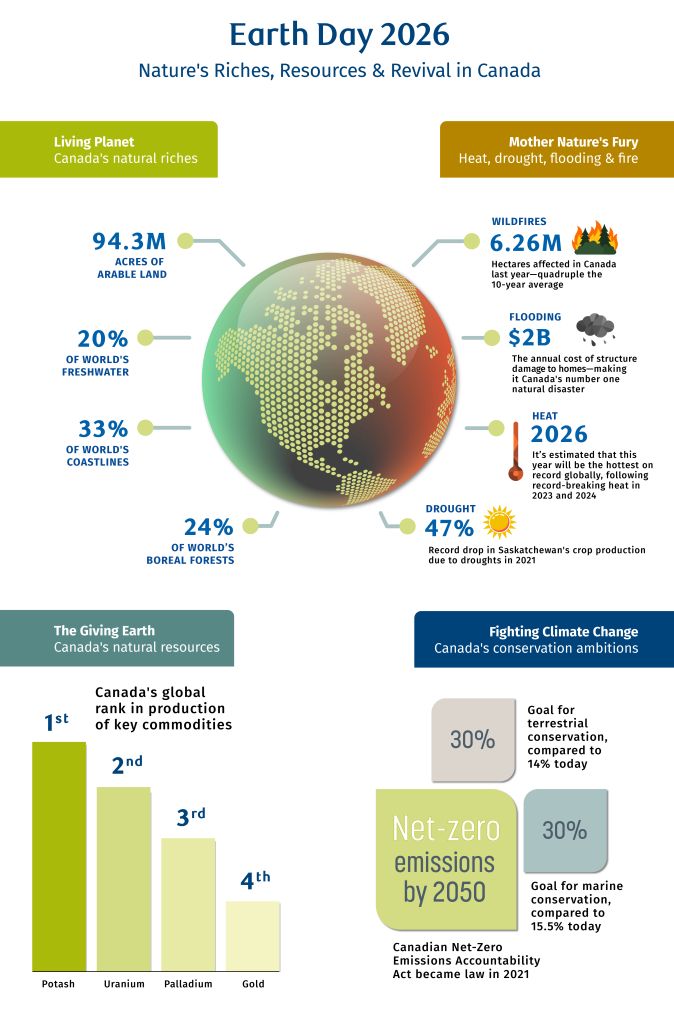
Earth Day 2026: Nature's Richers, Resources, and revival in Canada

Living Planet - Canada's Natural resources include 94.3 acres of arable land, 20% of World's Fresh water, 33% of World's coastline, 24% of World's boreal forests.

Mother Nature's Fury: Heat , drought, flooding and fire include 6.26M hectares affected in canada last year - quaruple the 10-year average, $2B in annual cost of structure damage to homes- making it Canad's number one natural disaster, it is estimated that year 2026 will be the hottest on the record globally, following record-breaking hear in 2023 and 2024, 47% record drop in Saskatchewan's crop production due to droughts in 2021.

“Our power, our planet” is the global theme of this year’s Earth Day. Indeed, clean power often lays the foundation of a cleaner economy. New research from RBC’s Jordan Brennan and Farhad Panahov shows Canada’s electricity system needs an estimated $670 billion over the next 10 years to support the energy transition. While 80% non-emitting, Canada’s grid will need new capacity and modernization. For more, read the Capital Gains report.

Wildfires don’t stop for Earth Day. Close to 200 wildfires were simmering away in Canada last week, just under twice the 10-year average for this time of year. It highlights the scale of the challenge of protecting nature. As a recent RBC report notes, ignoring nature threatens prosperity, especially as we push forward with nation-building projects. It’s time to see conservation as a capital that others will be able tap into for generations to come.

The famous Fischer-Tropsch process brought us gasoline and jet fuel—now it’s poised to make sustainable fuels. Exactlya century after Franz Fischer and Hans Tropsch revolutionized hydrocarbons, the same technique is being used to decouple hydrocarbon production from fossil-derived feedstocks, with emphasis on producing sustainable aviation fuels from carbon dioxide. But true sustainability requires system integration with “upstream low-carbon modules such as green hydrogen and CO₂ capture,” said Peking University’s Ding Ma in Nature. The process is moving beyond labs, with several countries, including China, working on low-carbon chemical manufacturing.

Natural capital–things like forests, clean water, fertile soil, and biodiversity–is one of the most valuable assets any country has. It supports industries, protects communities, and plays a major role in climate resilience. Canada is exceptionally rich in natural capital, but when it comes to investing in and managing it, the picture is mixed—especially compared to countries like the United Kingdom, Australia, and Denmark.

Canada’s natural wealth is hard to overstate. The country holds about 24% of the world’s boreal forest and roughly 20% of its freshwater resources. Natural resource sectors, including oil, mining, forestry, and agriculture, contribute around 20% of Canada’s GDP, including their supply chains. Yet, Canada has struggled to turn natural capital into an investable asset class at scale.

Lessons from around the world

United Kingdom: The U.K. has taken a more systematic approach to embed natural capital accounting into policy and planning. Since 2012, the U.K.’s Natural Capital Committee advised the government on how to measure and invest in ecosystems, which evolved into the Office of Environmental Protection in 2021. Today, the U.K. publishes official natural capital accounts that estimate the economic value of forests, rivers, and other assets–an accounting tool that Canada also has at its disposal under the UN framework: System of Environmental-Economic Accounting. The U.K.’s approach to economic and environmentally informed decisions is complemented by market mechanisms that can stimulate investments in natural assets, such as the Biodiversity Net Gain scheme.

Australia: Like Canada, it is rich in natural resources and heavily dependent on them economically for mining, agriculture, and oil and gas. However, Australia has taken a more aggressive approach to attract private investment into natural capital. Scaled infrastructure projects have been used to mobilize institutional investments, including Canadian pension funds, into long-term projects, including renewable energy development and sustainable land use. An example is the Murray–Darling Basin Plan, a $13-billion initiative to manage water resources sustainably across the country’s food bowl.

Denmark: The Scandinavian country doesn’t have Canada’s vast natural resources. Instead it has focused its attention on baking environmental sustainability into tax law to make investment in sustainably managing natural resources the more economically attractive option. As a result, more than 50% of Denmark’s electricity comes from wind and solar power.

While Canada has made important commitments, it still lacks the coordinated systems of its peers. Pillar three of the Force of Nature Strategy, Valuing Nature and Mobilizing Capital aims to address this challenge. Starting with an Expert Taskforce on Natural Capital Accounting and Nature Financing, the federal government looks to mobilize private capital, blended with their $3.8 billion commitment for nature positive outcomes. If Canada can measure the value of its natural assets, attract more private investment, and align environmental goals with economic growth, it has the potential to turn its natural wealth into a long-term economic advantage.

Dive into more insights on Natural Capital: Unearthing Value: How nature can play a critical role in pro-growth agendas – RBC

“The farmer is responsible for the soil [they] till. This natural resource will not restore itself as fast as it is depleted…The farmer, therefore, needs to open a soil-savings account. It will not only conserve [their] soil, but it will return an increased income and accumulate interest.”

That quotation, pulled from a 1948 edition of RBC’s Making Money by Saving Soils, is as true today as it was when it was first written. In fact, the soil conservation conversation has been a constant among farmers long before that. Sure, things have evolved—with research, big data and technology helping to uncover more about the dynamics of the ground beneath our feet. But many of the challenges of conserving soils to grow healthy crops remain the same. Read more on soil health from Lisa Ashton, the Climate Action Institute’s Interim Head, at the link.

  • There are 10,000 events worldwide to celebrate Earth Day 2026. But if you don’t have time, Eathday.org offers 50 ways to take action for the planet.

  • Deep retrofits would cost $10 per square foot to reduce greenhouse gas emissions in Canadian buildings by 40% by 2030, according to a new MaRS report.

  • James Rising and others at the Grantham Research Institute on Climate Change write on how climate adaptation investments can yield a ‘triple dividend’: preventing losses, stimulating economic activity and providing social and environmental co-benefits.

  • Shrugging off a backlash against renewables, 44% of Americans continue to worry a great deal about climate change—that’s close to its highest point ever. A record low 35% are feeling positive about the environment, according to Gallup.

WP Menu

wp-menu


“We must be quite clear about one point: the farmer is responsible for the soil [they] till. This natural resource will not restore itself as fast as it is depleted…The farmer, therefore, needs to open a soil-savings account. It will not only conserve [their] soil, but it will return an increased income and accumulate interest.”

That quotation, pulled from a 1958 edition of Making Money by Saving Soils (the original source of RBC Thought Leadership), is as true today as it was when it was first written. In fact, the soil conservation conversation has been a constant among farmers long before that. And while things have evolved, research, data and technology have helped to uncover more about the dynamics of the ground beneath our feet, many of the challenges of conserving soils to grow healthy crops remain the same.

In 1950, one in five Canadians were part of the farm population.1 At the time, RBC described three good reasons to save soils:

  • Make a living

  • The hope to make a better living

  • Have a going concern to hand onto the next generation

Farmers were encouraged to adopt practices like crop rotations, responsible nutrient management, and conserving edge-of-field environments like forests and waterways. Back then, tillage was encouraged for three reasons: the preparation of a suitable seed bed, the destruction of plants that would compete with growing crops, and the improvement in the physical condition of soil. Today, the opposite is often encouraged to reduce soil loss, build soil biodiversity, and avoid disrupting soil carbon sinks. This change has served Canadian soil health well. Canada’s agricultural soils are estimated to be a net carbon sink today, driven by widespread adoption of no-tillage in the prairies and increases in productivity across the country.2

Agriculture transformed between the 1940s and 1970s with advancements in life science and mechanization, leading to mass adoption of new crop varieties, fertilizers, pesticides and modern farm equipment that allowed farmers to produce more per acre for a growing global population. And it was all being done by fewer farmers–by 1980, 1 in 21 Canadians were part of the farm population.3

Farmers were introducing more nutrients to their soils, including nitrogen, phosphorus and potassium to optimize the growth of crops. In some cases, adding more nutrients led to the excess use of fertilizer, which had a negative impact on soil composition and externalities such as pollution of waterways. But the productivity boost also meant more crop residue was being returned to the soil, adding to soil organic matter.

The tools introduced to agriculture during the Green Revolution continue to be fine-tuned today to help farmers produce more high-quality crops. Increasingly, inputs and equipment are presenting win-win opportunities for soil health and productivity with the development of tools like biological fertilizers or see and spray technology for pesticide application that only applies chemicals where needed to eliminate invasive plants.

Today, less than 2% of Canadians call a farm their home or place of work.4 Remarkably, on the shoulders of this small group, Canada ranks in the top 10 globally for food security, agri-food exports, as well as food quality and safety.5 6 But it’s also a threat to the future growth of the agriculture and food sector as fewer Canadians step foot on a working farm or meet someone working in the sector.

Farmers today, compared with 70 years ago, rely on a much larger network of partners and advisors to do their job, including everything from finance, agronomy, technology, machinery, farm transition planning and sustainability. It’s less likely today than it ever was for young people see these diverse, dynamic and exciting careers in agriculture, beyond farming. For instance, data and computer scientists are developing AI tools for farmers that perfect the precision of inputs like fertilizers, environmental consultants are connecting farmers to marketplaces that reward soil conservation via credits and premiums, and trade experts are moving Canadia-made products to new markets. Engaging more Canadians in the journey of strengthening agriculture as a foundational sector for Canada’s prosperity and the importance of conserving natural assets like healthy soils are the big challenges ahead.

A close read of the 1958 publication provides a glimpse of what’s next–change: “To be good conservationists it may be necessary for us to remake some of our thought, abandon some customary practices, and revise, sometimes drastically, our methods of farming.”

The continued capacity of soil to function as a vital living ecosystem that sustains plants, animals, and humans.7 Soil is foundational to our economy and environment. Roughly 95% of the food we consume needs soil to grow.8 Soils are also the largest terrestrial carbon sink–holding three times the amount of carbon stored in the atmosphere and twice the amount in all living vegetation.9

WP Menu

wp-menu

➔ Can the Canada-Alberta methane deal deliver both rising oil and gas production and falling emissions?

➔ Why Canada’s clean trade is in the red

➔  A British Columbia city leads on heat bylaws

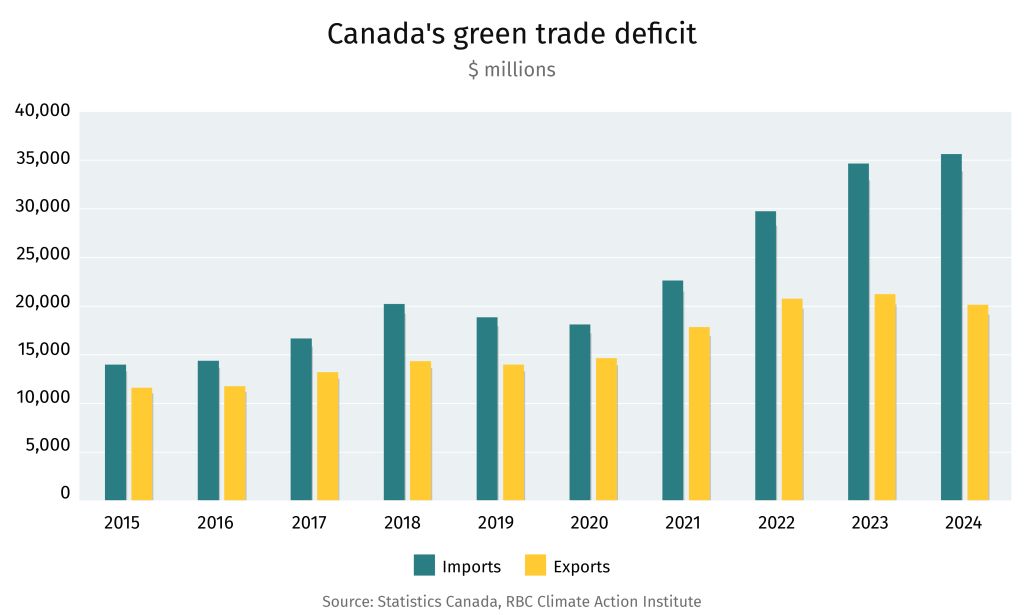
➔  Canada’s clean-tech trade deficit is growing. The country’s environmental and clean tech (ECT) trade deficit has steadily risen to $15.6-billion in 2024 compared to $2.4 billion a decade ago, Statistics Canada’s latest data shows. Imports of clean electricity—Canada’s prized climate ace—have surged in recent years, just as exports fell due to drought conditions and growing domestic electricity demand. Clean tech hardware, spanning wind turbines, electric vehicles, water treatment equipment, accounted for around 80% of the growth in imports, aligned with strong adoption and deployment trends in Canada over the same period, says Economist Farhad Panahov

Canada's green trade deficit

➔  The EU created the bloc’s first voluntary scheme for carbon removal credits. The credits produced under the Carbon Removals and Carbon Farming (CRCF) Regulation are being designed for the voluntary carbon market, to boost scalability and help the EU meet its net-zero 2050 targets. It could be a model for Canada: the agriculture sector has a patchwork of pathways to enter compliance and voluntary market opportunities, but with limited availability of compliance protocols that recognize the role of farmers in building the country’s carbon sinks through sustainable practices, says Lisa Ashton , Interim Head of RBC’s Climate Action Institute. However, the Canada-Alberta energy MoU and carbon pricing benchmark review potentially open the door for Canada to streamline farmers’ ability to access carbon markets.

➔  Hydro Quebec wants households to generate their own energy. A new $1,000 per kW grant for solar kits aims to cover up to 40% of eligible project costs. Quebec is a laggard compared to other North American jurisdictions on solar as cheap hydroelectricity meant 25-30-year payback periods made solar uneconomical. That’s changing. As Hydro-Québec develops alternative power sources and redirects surplus hydro for exports and industry, distributed generation eases the strain on the grid. Indeed, households can even sell excess power back to the grid. The new incentives aim to drop investment costs from $36,000 to $24,000—a payback period of 10-12 years. While that’s a long time to recoup costs, it’s hard to compete with the lowest electricity prices on the continent. In contrast, in Pakistan, which is in the midst of a solar revolution, a similar set up would cost $6,500, estimates Energy Policy Lead Shaz Merwat. Also read our report on how smart homes can unlock grid efficiencies.

Newfoundland and Labrador could be among the major drivers of wind power in Canada. The Canada Energy Regulator’s latest projections (Canada’s Energy Future 2026 ) expects the Atlantic province to emerge as an offshore wind powerhouse, accounting for a sizeable chunk of new wind power capacity by 2050, along with Alberta.

Shaz Merwat examines the Atlantic province’s wind prospects:

  • Wind, primarily offshore, could make up 13.3 gigawatts of electricity capacity by 2050 in the province, from negligible numbers today, according to CER’s base case (which it calls its Current Measures Scenario).

  • The province’s total electricity capacity is set to triple, with 98% from renewables by 2050 (compared to around 87% today).

  • The CER is betting big on Newfoundland. The province has world-class wind conditions but virtually no wind industry at present, and given some major setbacks involving planned green hydrogen demand anchors recently, it likely presents more market risk.

  • Offshore wind development is also constrained by deep water and floating turbine costs. The transmission corridor needed to move power to the Quebec market remains a multi-billion-dollar proposal without a final investment decision, but will be needed if NL is to build upon its hydro exports to Quebec and Atlantic Canada scaled for wind.

  • Alberta could present another challenge to Canada’s effort to ramp up wind power. The province has the resource and the grid as Canada’s largest wind producer. But new wind investment has essentially frozen, the result of policy uncertainty that has yet to thaw.

  • Wind’s build up rides heavily on Alberta and Newfoundland that are expected to add about 16 GW and 13 GW, respectively, in the CER’s base scenario, accounting for much of the 72 GW of capacity additions by 2050 across Canada.

  • By 2050, wind is expected to account for 30% of Canada’s total generative capacity, compared to just 11% in 2025, according to the CER outlook.

By Vivan Sorab

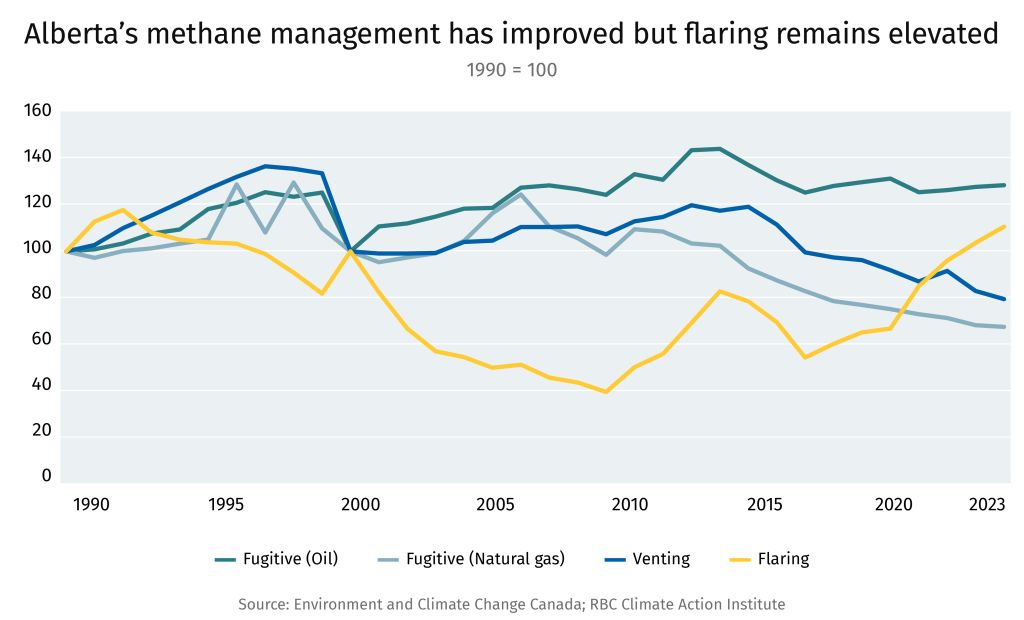
Ottawa and Alberta’s recent agreement-in-principle on methane equivalency sets the stage for Alberta to regulate methane its own way.

Cutting methane emission is considered one of the lowest-cost, highest-impact action levers available for near-term climate progress. Methane has roughly 80 times the warming impact of carbon dioxide over a 20-year period, and accounts for nearly a quarter of the Canadian oil and gas sector’s total greenhouse gas emissions.

The equivalency deal suspends Ottawa’s Enhanced Methane Regulations and allows Alberta to implement its own performance-based approach, comprising a mix of provincial regulations, offset credits, and targeted investments, with methane modelling, emissions reductions analysis, and reduction results overseen by a jointly appointed and cost-shared third party.

Alberta's methane management has improved but flaring remains elevated

New provincial rules will take effect on January 1, 2027, and the agreement would run for a decade, replacing the current equivalency agreement, which is set to expire in October 2030. If reductions fall short, Alberta has committed to corrective action.

Here are some insights:

  • There’s real momentum behind this. Alberta has already cut methane emissions by more than 50% from 2014 levels, backed by roughly $172 million in reduction technology investments since 2019 and more than 58,000 low- or no-bleed devices installed through the province’s carbon-offset system.

  • Agreement to third-party emissions verification is an important step given previous discrepancies between industry-reported figures and independent studies.

  • The 2035 target extends Alberta’s timeline for compliance by five years relative to existing federal methane regulations, while raising the compliance threshold to 75% reductions versus 72% previously.

  • Canada’s methane mitigation sector has grown to more than 130 firms. Compliance actions under federal regulations could generate 34,000 jobs from 2027 to 2040, according to one estimate.

  • Companies looking to position ahead of the compliance date could leverage this rapidly evolving technology suite, including a specific focus on monitoring and measurement, such as through facility-level monitoring, and satellite- and aircraft-based detection technologies.

  • A draft equivalency agreement is expected later this year, followed by a 60-day public consultation, with both sides aiming to finalize it by year-end.

  • Two other Canada-Alberta MoU commitments, namely industrial carbon pricing equivalency and a trilateral agreement with Pathways Alliance partners, remain outstanding.

Ottawa and Alberta are betting that cooperative, outcome-based regulation can deliver both rising oil and gas production and falling emissions. Whether the details hold up to scrutiny will determine if this model becomes a blueprint.

  • British Columbia dropped its EV sales target to 75% by 2035 (from 100%) to align with federal goals. The Pembina Institute’s Adam Thorn is “encouraged”, but Brian Kingston, CEO at Canadian Vehicle Manufacturers’ Association, is “disappointed” that B.C. is sticking to its provincial EV mandate.

  • New Westminster wants to avoid another “heat dome” episode: After the B.C. city had the highest fatality rate during the 2021 heat dome, it became the first Canadian city to pass a maximum heat bylaw, requiring landlords to keep at least one room in a rented apartment at or below 26 C. “While imperfect… this is a recognition that more heat waves are coming, and we all need to adapt,” says Colin Chan, Executive Director of B.C.’s Provincial Health Service Authority.

  • Solar hit a tipping point. “Overall, solar has already been cheaper than fossil power for a while, but upfront costs used to be higher,” says Nicolas Fulghum, senior energy and climate data analyst at Ember.

  • Fast follow: Jesse Jenkins, Associate Professor of Energy Policy at Princeton University, is the most influential digital voice in U.S. clean energy. Here’s a list of the other 99 influential U.S. climate heavyweights.

Curated by Yadullah Hussain, Managing Editor, RBC Climate Action Institute.

Climate Crunch would not be possible without John Stackhouse, Jordan Brennan, John Intini, Farhad PanahovLisa AshtonShaz MerwatVivan SorabCaprice Biasoni, Lavanya Kaleeswaran and Joelle Schonberg .

Have a comment, commendation, or umm, criticism? Write to me here (yadullahhussain@rbc.com)

Climate Crunch Newsletter

WP Menu

wp-menu

I was in Houston this week for CERAWeek, the so-called Super Bowl of Energy, for a series of intense, and informative, discussions about the current global energy crisis. Last year, the forum was all ears as the new Trump administration laid out its plans for “energy dominance.” This year, the forum was all about the dominant energy crisis unleashed by the Iran war.

The prevailing view was the conflict — and dangers in the Persian Gulf — will continue for some time, and energy markets will struggle to find a new normal. Former Defence Secretary James Mattis, who has fought three wars in and around the Gulf, said the U.S. cannot declare unilateral victory. Even though Iran’s navy is destroyed, it can deploy anti-ship cruise missiles from its 1,000-kilometre coastline. That means a longer conflict than was first anticipated, and more economic reverberations as supply chains stay gummed up. Traffic through the Strait of Hormuz is down 70%, with 850+ tankers stuck in the crosshairs. It will take weeks just to move that traffic — one reason the IEA called this the “greatest global energy and food security challenge in history.”

The LNG market disruption is not a temporary shock. QatarEnergy’s CEO confirmed that about 17% of Qatar’s LNG export capacity will be offline for years, with billions of dollars in repairs required. LNG margins are already 200% higher on average for 2026 through 2028. New supply from Australia, Canada, and the U.S. will now just replace the losses, rather than add to supply growth. That means a return to pre-war LNG supply levels is unlikely before late 2027 at the earliest. Analysts at S&P Global Energy expect losses of up to 35 million tonnes of LNG in 2026 — enough to cover half of Japan’s annual imports.

The World Food Programme warned as many as 45 million more people could fall into acute food insecurity if the conflict doesn’t end soon — a crisis that rivals Russia’s invasion of Ukraine. One big reason: 30% of global urea trade comes out of Iran and Hormuz-constrained countries, and fertilizer exports from the Persian Gulf have dropped precipitously, driving up prices globally and threatening spring planting seasons. Bunker and cargo costs are up 4x in Europe, adding to the transport nightmare. Agriculture input prices have nearly doubled in Egypt. Fertilizer plants in India, Bangladesh, and Pakistan have had to stop production entirely as natural gas and oil prices spiked — and unlike in 2022, there are few alternatives. India cut output from three of its urea plants. Bangladesh shut four out of its five fertilizer factories.

The Strait is the only sea route for 93% of Japan’s oil imports, prompting Tokyo to begin releasing 80 million barrels of oil from its strategic reserves. Japan’s LNG buffer is considerably thinner — Japanese companies hold only about three weeks of LNG inventory, equivalent to the total volume of their Hormuz-dependent LNG imports. Taiwan and South Korea are as severely threatened. In South Asia, fuel rationing is well underway. Pakistan and Bangladesh rely on Qatar for roughly half of their LNG imports. Asian LNG spot prices have surged 143% since February 28.

Rising debt costs and higher import prices have always been a curse for developing countries, especially those that leveraged foreign credit and energy to stimulate growth. In several African economies, energy and transport account for 15-25% of inflation. The Asian Development Bank has identified the Philippines, Pakistan, and Sri Lanka as the most vulnerable in that region. Ripples will be felt in low-cost manufacturing belts, too, as input costs — petroleum-based plastics, for instance — rise. All that will put pressure on indebted countries to borrow more to subsidize consumers and industry, just as interest costs are rising again. In Uzbekistan, Egypt and Mongolia, fuel subsidies account for 28.3%, 28.0% and 11.9% of government spending, respectively. Those dependent on tourism, such as Kenya and Sri Lanka, may be further challenged.

It’s widely viewed that power demand from AI-driven data centres will continue to surge, and there won’t be enough gas to run them. Big Tech companies like Google and Microsoft are developing plans to use nuclear, even reviving mothballed plants in the U.S. But that will take years. Data centres now account for 4% of U.S. electricity, and projections are it’s heading to 12%. It’s not just a U.S. and Chinese phenomenon. Asian countries like the Philippines have ambitious data centre strategies, predicated on more imported gas to run them, but will now need that gas — at a much higher cost — to keep factories and the AC running. The supply-demand imbalance doesn’t compute.

The energy shock has put a new light on China’s ambitions to sell EVs to the world, especially the developing world — if those energy-dependent countries can find new ways to electrify their fleets. Currently about 60% of the world’s pure EVs are sold in China. Will the energy shock shift growth? That will take time, especially for countries facing a host of other challenges to build out electric infrastructure. Expect most countries to have both gas- and electric-powered cars for a long time — even the U.S. Fordmotor Co used the Houston forum to promote its strategy for a new electric pick-up truck, being developed at a skunk works plant in California. The truck’s appeal is its simplicity more than its energy needs. The new vehicles use a fraction of the components (it’s all battery) and a fraction of the internal wiring, making it far easier and cheaper to make. U.S. automakers are also learning from China on how to build vehicles as tech platforms. The biggest question in Ford CEO Jim Farley’s mind: How will Americans react? As Ford knows, cars are culture.

It’s early days — and lots of contingencies are emerging — but as much as 10 million barrels a day of production may be lost this year due to the conflict. That’s roughly 10% of global needs. There are plenty of oil fields that can replace that — just not quickly or efficiently.  Take Venezuela. Its recent increase of 250,000 barrels per day over 2026 represents less than 0.3% of global consumption. Neighbouring Guyana offers more hope, as does Brazil, Nigeria and even Libya. But all those together don’t get anywhere near the missing barrels. There was chatter  at CERAWeek about a return to Alaska drilling, North Sea exploration and even Norway’s Far North. Canadian production is expected to increase, too, including offshore opportunities in Newfoundland and Labrador. But most eyes are on Russia. It may have 80 million barrels of oil currently on the open seas, and a multiple of that ready to go.

Energy Minister Timothy Hodgson didn’t mince words. Canada will produce and export a lot more oil and gas, He even put numbers on it: 2.5 million more barrels a day of oil (a 50% increase) and 100 billion cubic feet of gas (double projections) by 2035. He told various audiences that Indigenous support has rarely been stronger for resource development, in part because most big resource projects now have indigenous ownership. Premier Danielle Smith told one audience an agreement between Ottawa and Alberta on carbon pricing is coming and will be critical to long-term contracts. It can also underpin plans for a massive investment in carbon capture and storage, something the Carney government remains insistent on. Behind closed doors, sovereign wealth funds, multinationals and state corporations lined up to advance negotiations for long-term contracts and equity stakes. A universal question among them: Can #Canada execute this time at speed and scale?

WP Menu

wp-menu

This article is a companion to the Disruptors episode on how Wikipedia platform built credibility through community, transparency and a shared commitment to neutrality – Trust at Scale: Lessons from Wikipedia

Something has shifted in how people relate to institutions. Across the OECD, more people now distrust their national government than trust it. In Canada, only 48% express confidence in the federal government, down from the high 50s before the pandemic.1 An Ipsos survey captured the trajectory: trust in government to do what is right fell from 58% in 2019 to 43% by 2022.2 Meanwhile, the 2025 CanTrust Index found that politicians are trusted by just 17% of Canadians, the lowest in a decade of tracking, and 6 in 10 say political parties are divisive forces.3

Social media and AI-generated content have accelerated the decline, with nearly half of Canadians now believing that AI will make information sources less trustworthy. Algorithms reward outrage over accuracy, flooding public discourse with polarizing content and AI-generated noise. As Jimmy Wales, the co-founder of Wikipedia, observed on a recent RBC Disruptors podcast, platforms incentivize bad behaviour through engagement: “you act like a jerk and you get engagement.”4

Wales’ latest book Seven Rules of Trust—A Blueprint for Building Things That Last, focuses on the global crisis of credibility and knowledge. Both are in short supply: The 2026 Edelman Trust Barometer found 73% of Canadians unwilling to trust someone with different values or information sources.5

The consequences of mistrust are far-reaching and having real impact: In Slovakia’s 2023 election, a deepfake audio clip impersonating a political party leader went viral during a legally mandated campaign silence period, leaving journalists no window to respond.6 In the United States, an AI-generated robocall mimicking President Joe Biden urged New Hampshire voters to stay home during the 2024 primary.7 Similar incidents surfaced in Bangladesh, Turkey, and India. The German Marshall Fund tracked 133 deepfake incidents tied to elections across dozens of countries.8

Wikipedia makes for an instructive model. The free online encyclopedia covers more than seven million English-language articles, roughly 283,000 active editors, and billions of page views annually—all on a non-profit budget. It’s the go-to site for many to source everything from a storied company’s corporate history to oddities and obscure records.

For all its variety, it’s far from perfect: critics flag ideological biases, gender gaps among editors, and vulnerability to paid manipulation. But as Wales noted on the podcast, Wikipedia has gone “from being kind of a joke to one of the few things people trust.”

The reason is structural. Wikipedia’s model is “accountability, not gatekeeping,” Wales told RBC’s Disruptors podcast.9 “Everything you edit, everybody can see what you’ve done.” Every source is checkable, disputes happen on public talk pages, and corrections happen in real time.

Wales’s thinking was shaped early by Nobel-prizewinning philosopher Friedrich Hayek’s argument about decentralized knowledge—the idea that decision-making works best at the endpoints, not through a central hierarchy. Wales pointed to X’s Community Notes as a promising application of the same principle: empowering users rather than relying on top-down moderation.

Research going back to Knack and Keefer’s 1997 study confirms that trust is a measurable input to growth.10 A Deloitte analysis by chief global economist Ira Kalish makes the mechanism concrete: a rise in trust increases the quantity of business fixed investment, and it raises productivity through higher-quality investments, human capital accumulation, and greater internationalization.11

The consultancy’s modelling suggests a ten-percentage-point increase in the share of trusting people within a country raises annual per capita GDP growth by about half a percentage point: a substantial gain when global growth averaged 2.2 percent between 2015 and 2019.

There is no single fix to restore trust in corporate and public sector governance. But as the Disruptors’ conversation with Wales highlighted, trust is not a moral decoration. The work of rebuilding it will be slow, uneven, and ongoing. But the cost of not starting is already measurable.