
WP Menu

wp-menu

What you need to know about the West’s struggle to break China’s dominant role in rare-earth elements refining—and the technologies that could break Beijing’s hold

The West has ceded critical minerals processing to China–and rebuilding that capacity in a way that is environmentally permittable, economically viable, and scalable within Western regulatory frameworks is a defining industrial challenge of the decade.

China controls 70% of the global refining market share for 19 of the world’s 20 most critical minerals; across minerals such as rare-earth elements that figure is north of 90%. This dominance is the compounding effect of three structural forces, each reinforcing the other over time.

Economics. China’s historically low labour costs, energy subsidies, and state-backed industrial policy built a cost structure that undercut Western processors at prevailing commodity prices.

Environment. Conventional rare earth processing relies on sulphuric acid baking, multi-stage leaching, and solvent extraction, generating toxic waste streams and radioactive tailings. According to a Harvard analysis, for every tonne of rare earth output, conventional processing produces roughly 2,000 tonnes of toxic waste. Western jurisdictions internalize those costs through permitting, environmental liability, and community opposition.

Industrial ecosystem. As China’s processing capacity scaled, it drew in engineering talent, downstream manufacturers, and end-use demand—each reinforcing the next. As Western processing retreated over the last 40 years, financial markets stopped funding, institutions stopped training, and downstream manufacturers defaulted to Chinese supply. China accumulated the opposite—four decades of process knowledge, engineering expertise, and refining IP that enforces a barrier to Western re-entry.

Rebuilding Western processing capacity by replicating China’s model runs into the same barriers that caused offshoring. Arguably it’s now compounded by China’s October 2025 export controls on processing equipment and technology. A more tractable path confronts the environmental liabilities of conventional methods directly—and in doing so, also improves the economics.

Grant and procurement decisions offer a reasonable proxy for which processing approaches have cleared basic viability thresholds. The U.S. Department of War, Department of Energy, and the Government of Canada have directed meaningful capital toward next-generation critical minerals processing since 2022.

Waste and tailings. New processing approaches—including flash heating and modular ion-exchange systems—substantially reduce or eliminate waste streams, making projects permittable where conventional processing would not be.

Canadian firm Ucore Rare Metals is a case in point. Its RapidSX platform is a column-based solvent extraction system for rare earth separation that runs approximately three times faster than conventional mixer-settler systems, with a smaller physical footprint and no Chinese equipment or technology. The U.S. Department of Defense (DoD) awarded US$4 million for Ucore’s Kingston, Ontario, demonstration facility, followed by US$18 million toward its Louisiana Strategic Metals Complex. The Government of Canada committed $36 million at the G7 resource ministers meeting in October 2025 to support refining of samarium and gadolinium.

Emissions. Decarbonizing processing is mainly a question of energy source: replacing fossil-fuel-fired kilns and furnaces with electrically powered alternatives—particularly hydro or other clean sources—solves the emissions problem and improves economics given falling clean electricity costs. Most global critical mineral refining runs on coal-heavy Chinese grids. Processing on hydroelectric power, as Quebec offers, materially changes the emissions profile of the same output.

Australia-based Metallium Resources Inc. is working on a solution to transform metal recovery and recycling waste through flash joule heating—millisecond electrical pulses to heat material above 3,000 degrees Celsius, extracting metals selectively without acid or water. The U.S. DoW provided an initial gallium-focused grant and selected the technology as a processing step in a DoW-funded red mud recovery project in Louisiana. Metallium’s Texas demonstration plant has been commissioned, with feedstock supply secured through a binding agreement with commodity firm Glencore plc.

Recycling. The IEA finds recycled energy transition minerals such as nickel, cobalt, and lithium produce on average 80% fewer greenhouse gas emissions than primary mined material. Recycling rates for rare-earth elements and lithium remain below 5% globally, yet feedstock is accumulating fast: spent EV batteries, end-of-life wind turbine magnets, and electronic waste from AI infrastructure all carry recoverable critical metal content.

The EU has institutionalized recycling demand through binding regulation. Under EU Battery Regulation 2023/1542, manufacturers face minimum recycled content requirements. These are enforceable compliance thresholds—not targets. They create a structural demand signal for recovered materials that current processing infrastructure cannot meet.

ReElement Technologies is aiming to turn scrap into mining stock. A subsidiary of American Resources Corp, ReElement runs a modular ion-exchange and solvent-based refining platform processing rare earth magnet scrap and lithium-ion battery black mass into high-purity separated products. The platform accepts multiple feedstock types without Chinese primary concentrates. ReElement has received DoD and Department of Energy funding as part of the U.S.’s effort to establish domestic rare earth and battery metal refining capacity.

Challenging China’s rare-earth refining dominance will take time, but the funding of experimental technologies, backed by policy focus and support, suggests that the transition is finally underway.
Critical Minerals Processing: The West’s Refining Challenge and the Technologies Closing the Gap - download the report

Download the report

WP Menu

wp-menu

➔ Canada charts new scenarios for a new energy era

➔ The small switcheroo that revolutionized energy efficiency

➔ A handbook for climate hopefuls

What happens to coffee farms when pest-controlling bats disappear? The world is waking up to the fact that biodiversity impacts everything from your morning cup of Joe to corporate bottom lines. Recently, 152 member governments, including Canada, backed the IPBES Business & Biodiversity Assessment report. It’s groundbreaking research as more than half of the world’s economy, roughly US$78 trillion, depends on nature, from food to tourism to construction, according to RBC research. One of the IPBES report’s key takeaways: align fiscal policies and financial flows with biodiversity and sustainability goals. However, muted mainstream media coverage suggests the message of nature as an asset—and shield—has yet to resonate with a mass business audience. For more, read Unearthing Value: How nature can play a critical role in pro-growth agendas

It’s a light-bulb moment for energy efficiency. While the global built floor area grew 20% over the past decade, lighting electricity use remained stable—in no small part to the humble LEDs, which are nearly 12 times more efficient than halogen lamps. Without them, the world would have gobbled up 800 TWh more electricity—exceeding Africa’s annual electricity consumption, the International Energy Agency estimates. Significant potential remains: 30% of lamps in South America and parts of Asia-Pacific (excluding China and India) still need upgrades, while replacing aging first-generation LEDs would further conserve power watts.

Nuclear’s making a climate comeback. The low-carbon electricity technology underlies some of the world’s cleanest grids and could help decarbonize several industries, says Vivan Sorab, our Clean Tech Policy Lead. France’s electricity grid emits just 22 gCO2/kWh, one of the lowest in the world, as nuclear supplies 65% of the country’s power. Ontario’s grid saw emissions intensity rise to 74 gCO2/kWh in 2024 over the previous year as nuclear refurbishments and demand growth necessitated more natural gas in the system. Small modular reactors (SMRs) could extend nuclear’s climate logic beyond the grid. Carbon-intensive industries like heavy oil extraction and petrochemicals require high-temperature steam that renewables are struggling to deliver on their own. SMRs could eventually provide both electricity and industrial process heat, making them one of the few technologies that can help hard-to-decarbonize sectors. For more on nuclear, read Atomic Advantage: Canada’s generational opportunity in a new Nuclear Age.

By John Stackhouse, Senior Vice-President, Office of the CEO

John Stackhouse at CERAWeek

The climate contingent at this week’s big CERAWeek energy conference in Houston could be forgiven for a bit of dizziness. It’s not just the bayou city’s humidity (early) or the marathon TSA lineups at Bush International (late); the tenor on climate action felt a bit 180. 

Two years ago, Joe Biden’s energy secretary Jennifer Granholm was here to explain the administration’s LNG pause. On Monday, Donald Trump’s energy secretary Chris Wright stood on the same stage to explain plans to double LNG production this decade.

It’s not just the White House that has changed climate colours. Delegations from dozens of countries came to Houston to plead for more of everything—especially natural gas. The Japanese—home to Kyoto and a lot of climate innovation—were at the front of the queue, explaining they can no longer rely on Qatar and a few others for the gas that powers their island economy. (Remember the nuclear shut down, post-Fukushima.)

The U.S. is now working to supply Japan and other allies with as much gas and oil as it can muster. And it looks like a lot of that will come from Canada.

When it comes to oil, Canada covers two-thirds of the gap between U.S. production (12 million barrels a day) and consumption (20 million). We supply an even bigger share of Americans’ gas in a range of states.

Energy Minister Tim Hodgson came to Houston to tell the world that the federal government is committed to seeing oil production increase by 2.5 million barrels a day — a 50% jump — and doubling LNG exports from what’s now planned. Can that massive increase be done in line with climate commitments?

I posed the question to Hodgson and Alberta Premier Danielle Smith in a conversation I moderated at Canada House, as part of the conference. They expressed strong alignment (so much so that Smith called herself the environmental spokesperson for Carney’s energy policy). They then honed in on three words: methane, carbon pricing and Pathways.

Their governments later that day unveiled an agreement on methane emissions that will help keep Canada, and Alberta, on a path to net zero (“carbon neutrality” is Smith’s preferred measure). Industrial carbon pricing is thornier, although it may get solved by extending some timelines.

The big nut is Pathways, which Hodgson called “the biggest carbon capture project in the world” and would make all those new barrels much more carbon efficient. Cost is another matter. Ottawa thinks Pathways could cost as little as 50 cents a barrel, which it sees as a deal for the industry if it secures a 50% increase in production. Industry people here see the cost to be higher, although there’s some hope that possible investments from Canadian pension funds would reduce long-term capital costs.

We can expect more on all this next week, when the Ottawa-Alberta MOU on energy hits its key milestone date of April 1. The global crisis may cause some delays, and lead to further adjustments. But the message in Houston from Ottawa and Alberta was clear: more production and lower emissions is the new Canadian plan.

By Shaz Merwat, Energy Policy Lead

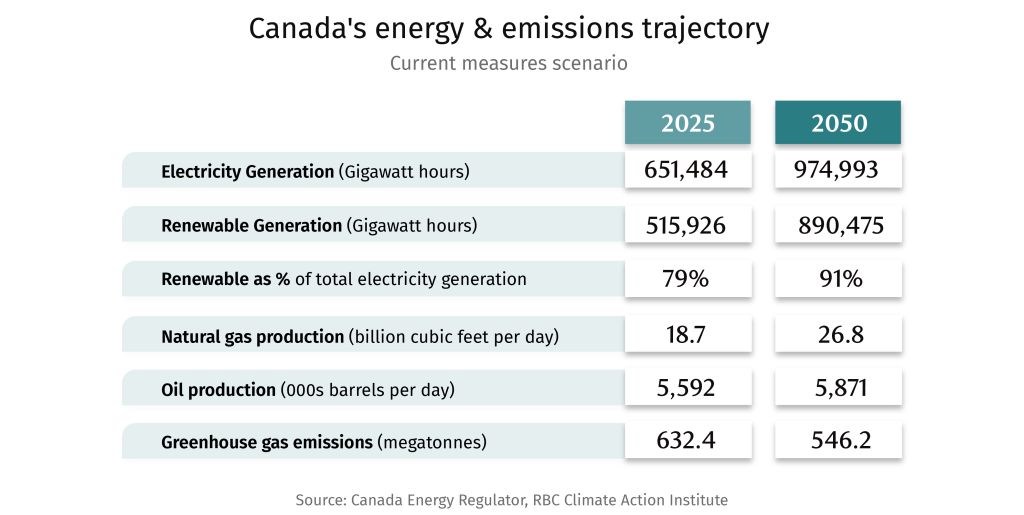
Electrification is going to be Canada’s key climate enabler. Electricity generation is expected to be up 50% by 2050, with renewables making up 91% of the grid (compared to 79% today), according to Canada Energy Regulator’s latest traditional scenario, which it labels as Current Measures.

While net-zero by 2050 remains a challenging aspiration, the economy is also forecast to advance towards lower-carbon sources. With carbon-intensive coal almost out of the equation, and crude oil production growth easing, fossil- fuel growth will be driven by the relatively lower emissions natural gas: By 2050, natural gas will account for 43% of total oil and gas production—compared to 36% today.

Canada's energy & emissions trajectory

Published two weeks into the war on Iran—what could prove to be one of the most cataclysmic energy events of this century—the report offers multiple paths for Canadian energy and electricity growth and emissions contraction.

  • Canada is moving beyond net zero: This year’s edition retains the Current Measures and Canada Net-Zero Scenarios from Canada’s Energy Future 2023 (EF2023), but adds Higher and Lower Cases that bracket the baseline by varying economic growth, liquefied natural exports, data centre demand, and global energy prices—offering a more plausible ±20% range of outcomes rather than anchoring the analysis around net zero by 2050 as the only destination.

  • Emissions will decline around 14% by 2050. GHG emissions under Current Measures are lower in EF2026 at every point—but a net-zero Canadian economy is nowhere on the horizon. By 2050, EF2026 projects 546 megatonnes (Mt) versus 566 Mt in EF2023, reflecting better near-term decarbonization from policies already in place, particularly in the electricity sector.

  • Sun and wind power will power the grid. Electricity generation under Current Measures is broadly similar across both reports. By 2050, total generation reaches approximately 975 Terawatt-hour (TWh) in the Energy Futures 2026 report compared to 972 TWh (EF2023). The more notable divergence is in the renewables share: EF2026 projects a faster ramp-up, reaching 91% non-emitting generation by 2050 versus 86% in EF2023, with stronger growth from 2035 onward.

  • Canada’s kicking the peak oil can down the road. Oil production is consistent near-term but EF2026 is notably more conservative in the medium term. By 2035, EF2026 projects ~6.0 million barrels per day (bpd) versus 6.5 million bpd in EF2023—converging closer by 2050 at 5.9 versus 6.3 million bpd by 2050. Peak oil production has been pushed out seven years, to 2042 from 2035 prior. The High Scenario projects oil production soaring to 6.4 million bpd.

  • …and firing up natural gas. EF2026 projects substantially higher output in every time horizon, reaching 26.8 billion cubic feet per day (bcfd) by 2050 versus 21.5 bcfd in EF2023—a 25% increase—driven largely by new LNG export assumptions baked into the 2026 modelling.

  • Carbon capture, utilization and storage (CCUS) volumes will likely be marginal. While not specifically broken out in the forecast, about 4% of Canada’s total power generation will be from carbon-captured natural gas in the Current Measures scenario.Total oil and gas emissions are expected to be 176 MT in 2050, down 12% vs 199 MT as modelled in 2025, on the back of a 5% increase in oil and gas production (5.9 million bpd by 2050, compared to 5.6 million bpd in 2025).

  • Canada is trailing peers: Within a global context, under Current Measures, Canada’s emissions decline from 694 Mt in 2023 (latest available data) to 562 Mt by 2035 is a 23% reduction from its 2005 baseline of approximately 730 Mt. That puts Canada marginally behind the U.S., where Rhodium Group projects a 26–35% reduction below 2005 levels by 2035. Both trail the EU considerably—the EU is on track for roughly a 45–47% reduction by 2035 under current and planned measures. All three are falling short of net-zero without additional policy action.​​​​​​​​​​​​​​​​

Fred Pearce, a UK-based science writer and public speaker, who has authored a few ominously titled books over the years: When the Rivers Run Dry, The Land Grabbers and With Speed and Violence, has a change of tone with Despite it All: A Handbook for Climate Hopefuls. In it, heaims to tell stories about “hope amid the gloom.”

Here’s an excerpt from a short email exchange:

What makes you hopeful?
We remain in deep peril. Every tonne of greenhouse gases added to the atmosphere sticks around for centuries. But my hope lies in the extraordinary progress we have made technically. China, and increasingly India and other fast-developing countries, are adopting solar power as their default source of energy, because it is so cheap. That was unimaginable even 20 years ago. The Chinese are now transforming the cost of batteries so we can store the sun’s energy, rather than just tapping it real-time. We are entering the solar age. It is economics now, not politics, that is making the difference. Whether it is happening fast enough remains as issue. But it is happening.

One of the reasons you give for your optimism are smaller families and an ageing population—but isn’t that going to impact economic growth and government’s ability to support citizens?
 
It’s a new kind of population bomb. The fear is of a growing number of aged economic “dependents”, and fewer people of working age to support them. Ageing could also slow economic activity by undermining innovation from young go-getters. We have to rethink the old: see them as a source of wisdom and knowledge, as carers as well as the cared for. I am 74 now and still working, so I would say that! But let’s also remember we have fewer children to care for, and today most women are economically active, not at home to bring up the kids.

What worries you the most?
Cliff-edges, points of no return. Melting ice sheets on Greenland and Antarctic and the resulting rising sea levels may soon be unstoppable—even if temperatures come back down. Deforestation in the Amazon may be near the point where lack of trees dries out the air so the remaining trees die off. And the ocean circulation system could be close to collapse, switching off the Gulf Stream.  Then there is melting permafrost unleashing methane, a potent greenhouse gas that would supercharge warming. Again, unstoppable. Science cannot tell us yet where or when we may trigger such tipping points. So even as we make remarkable ground in ending our addiction to carbon-based fuels, my fear is it could be too late to avoid these great regime shifts. We may be lucky; we may not.

  • Failure to value and account for natural assets are among the four barriersholding back climate adaptation initiatives in Canada,write C.D. Howe senior fellow James Stewart and Anabela Bonada, managing director at the Intact Centre on Climate Adaptation, University of Waterloo.

  • Gavin Mooney at the Energy Transition Advisor explores how rapid solar power deployment helped Pakistan cushion its crushing dependence on Middle East natural gas.

  • Canada is entering one of the largest electricity buildouts in its history. If it’s going to succeed, Indigenous Nations must be at the centre—not on the sidelines, write Kwatuuma Cole Sayers and Blake Shaffer in an op-ed.

  • As energy systems are struggling to transform in the face of climate change, Justice in Canada’s Energy Transition report asserts that justice and equity are central to making a low-carbon economy sustainable, writes Julie MacArthur, a co-editor of the report.

  • “Excessive heat warnings, red flag warnings for wildfire conditions, and monthly temperature records being shattered yet again… this is easily one of the most anomalous out-of-season heatwaves that I’ve observed,” says climate scientist Zachary Labe about the current season.

Curated by Yadullah Hussain, Managing Editor, RBC Climate Action Institute.

Climate Crunch would not be possible without John Stackhouse, Jordan Brennan, John Intini, Farhad PanahovLisa AshtonShaz MerwatVivan SorabCaprice Biasoni, Lavanya Kaleeswaran and Joelle Schonberg .

Have a comment, commendation, or umm, criticism? Write to me here (yadullahhussain@rbc.com)

Climate Crunch Newsletter

WP Menu

wp-menu

This article is a companion to the Disruptors episode on sports technology – Tech wins Gold: How Canada can rebuild its Olympic pipeline.

On November 1, 1959, three minutes into a game at Madison Square Garden, a shot by New York Ranger forward Andy Bathgate broke Jacques Plante’s nose. The Montreal Canadiens’ goalie left the ice, received several stitches, and returned wearing a fiberglass mask he had moulded himself. Montreal won 3–1 and went on an 18-game unbeaten streak. From then on, Plante refused to play without one. Within a decade, every goalie in the league had followed his lead. Plante was not trying to disrupt anything. He had simply decided that stopping a frozen puck with his face was a problem worth solving—and that impulse, identify a problem, build a solution, let the results speak for themselves, has been a through-line in Canadian sport ever since.

The global sport tech market was valued at roughly US$19 billion in 2024 and growing about 20% annually. Canada has a US$450-million share, a little more than 3%, and an annual growth rate of nearly 19% ranking among the fastest of any national market. Yet, on the funding side, Canada is treating sport and sport technology as a discretionary expense. As Canadian Olympic Committee CEO David Shoemaker notes in a recent episode of Disruptors, peer countries are “out‑investing [Canada] at the federal level, five, six, 10 times.” Germany alone is putting “about a billion dollars a year into sport.”

Toronto Metropolitan University’s Future of Sport Lab, launched with Maple Leaf Sports & Entertainment (MLSE) in 2015 as one of North America’s first sport tech incubators, has helped launch companies that have collectively raised more than $100 million.

That includes Montreal’s Sportlogiq, co-founded by former Olympic figure skater Craig Buntin, which has developed computer vision technology now trusted by almost every NHL team. And Rapsodo and 3Motion AI, which are putting biomechanical coaching tools into the hands of club-level athletes and local coaches. Tools that are now accessible through a portable device or a smartphone app.

The issue with Canada’s sport tech story has never been what gets built. But what happens after it does. Sportlogiq was acquired by U.S.-based Teamworks in January 2026. Halifax-founded Kinduct, whose athlete‑management platform was used by more than 550 teams and organizations worldwide, was bought by Silicon Valley’s mCube in 2020, in what its founder called the largest sport tech exit in Canadian history.

The cycle is familiar: public research dollars seed the company, which proves its technology at global scale, before getting snapped up by foreign owners that provide the commercial infrastructure that Canada lacks. The same pattern is emerging in human capital. On Disruptors, Jennifer Heil, Canada’s chef de mission for Milano Cortina 2026 Winter Olympics and founder of a performance‑tech startup, describes “a moment of total brain drain” in high‑performance sport, with top scientists and nutritionists shifting their time to the United States because “we can’t afford them right now.”

Three-quarters of Canada’s medallists at Milano Cortina were 30 or older. The bench strength is thinning, with Speed Skating Canada’s World Cup roster dropping from 24 to 16. Close to half of Canadian families report that organized sport is too expensive, and athletes at the national level pay as much as $25,000 out of pocket to represent their country.

Sport technology can address the problem directly. RBC Training Ground identified gymnast Marion Thénault at 17 with no skiing background; within five years she had won Olympic bronze. AI-assisted talent identification could replicate that kind of discovery at scale, reaching communities that traditional scouting never will.

Shoemaker imagines that scaled through AI: “Show us how you jump, how you run, how you throw—and we’ll tell you what sport you should sign up for at your local club.” Heil’s own startup, Revel, is built on the idea that AI can “democratize access” to elite coaching knowledge once reserved for Olympians.

And keeping the companies that build those tools Canadian-owned means keeping the returns: the jobs, the intellectual property, the platform revenue, stay here as well.

The sector has the companies and the research infrastructure. It lacks the domestic capital to keep them scaling at home, as well as a national strategy that pairs the products with the young athletes that need them.

That gap is visible in the public system itself: national sport organizations have not seen a core‑funding increase since 2005, and Shoemaker notes that some athletes now face team fees of as much as $30,000. A national strategy for sport tech could treat data, infrastructure and talent identification as long‑term capital investment.

WP Menu

wp-menu

Oil and gas markets are reeling as the Iran war chokes off production in the Middle East, with its impact reverberating across the world. As energy supply chains get fractured and prices become volatile, we examine the emerging trends defining this new era of global energy insecurity.

  • Alternative Middle East export routes have limited capacity of 3.5 to 5.5 million bpd.

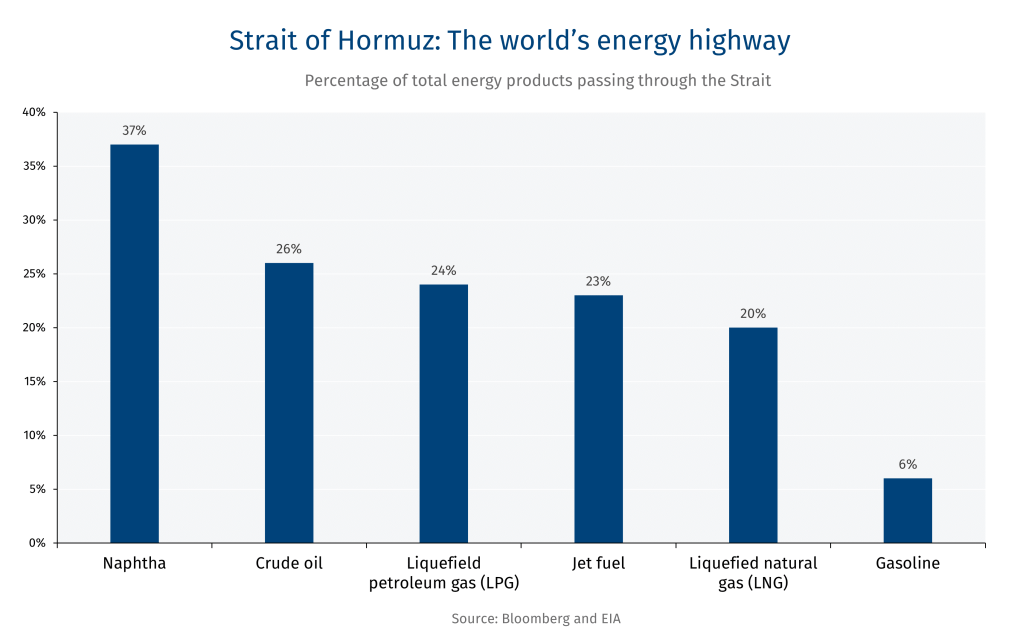
  • The 54-kilometre waterway handles 20 million barrels per day (bpd) or 20% of global oil supply. Only the Strait of Malacca, in Southeast Asia, handles more crude oil.

  • Close to 93% of Qatar’s LNG exports transit through the Strait—19% of global LNG trade.

Strait of Hormuz: The worlds' energy highway
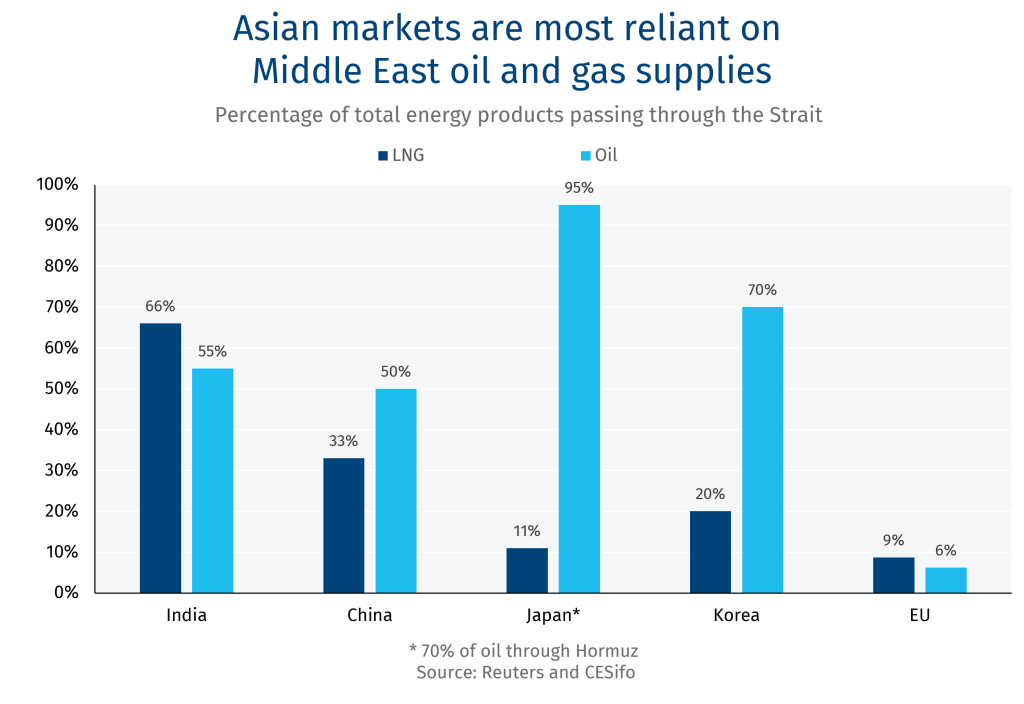
  • Japan was the first country to announce the release of oil from its reserves as part of the International Energy Agency-coordinated action, injecting 80 million barrels in the market.

  • The U.S. is allowing India to buy Russian oil as a stop-gap measure—as New Delhi scrambles to find alternatives for some of the 2.5-2.7 million bpd it sources from Iraq, UAE, Saudi Arabia and Kuwait.

  • The U.S. has exempted Russian oil from sanctions for at least 30 days—weakening Western efforts to support Ukraine in its war against Russia.

Asian markets are most reliant on Middle East oil and gas supplies
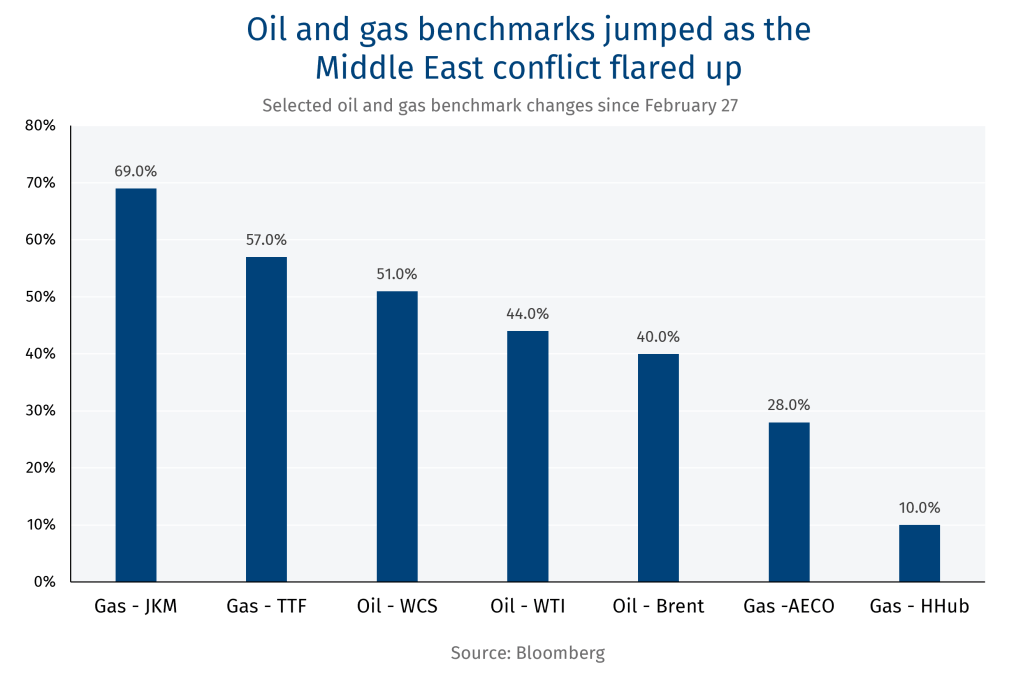
  • LNG Japan/Korea Marker (JKM) jumped the most, underscoring Asian dependence on the Strait.

  • The crisis has erased a looming LNG supply glut, with Europe Asia scrambling for supplies.

  • Oil prices remain volatile, vacillating between US$76-119 per barrel over the past week.

Oil and gas benchmarks jumped as the Middle East conflict flared up
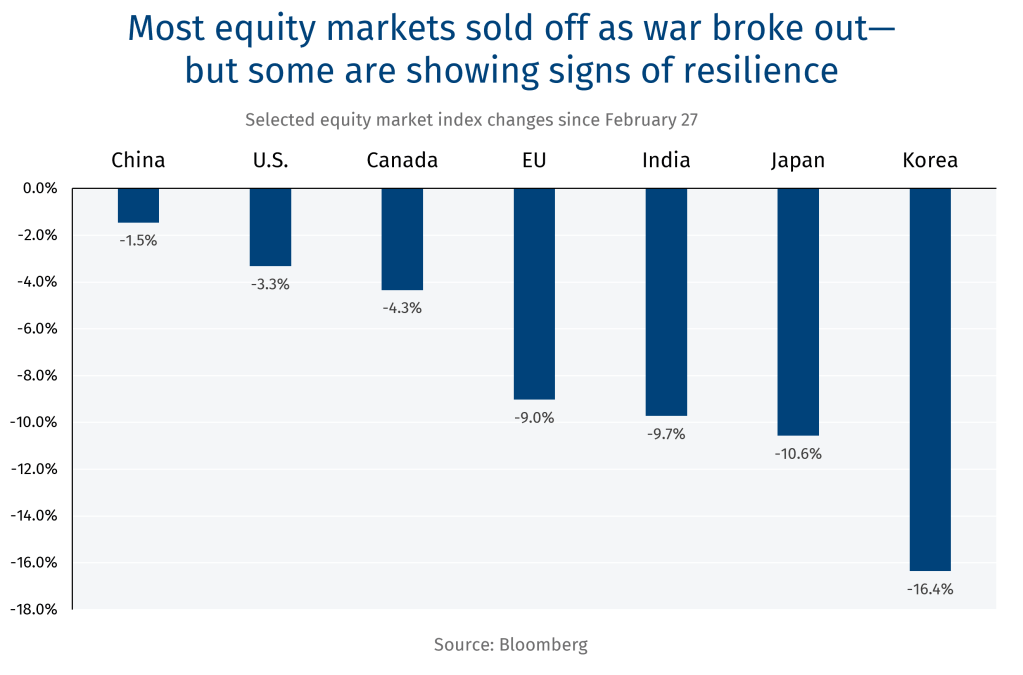
  • The Korean and Japanese stock market sell-off is reflective of energy exposure but also above-average year-to-date performance pre-crisis.

  • China’s estimated 100-day oil import cover has shielded its stock market from a severe downturn.

  • U.S. and Canada markets have been structural winners in the reallocation of global equities.

Most equity markets sold off as war broke out - but some are showing signs of resilience
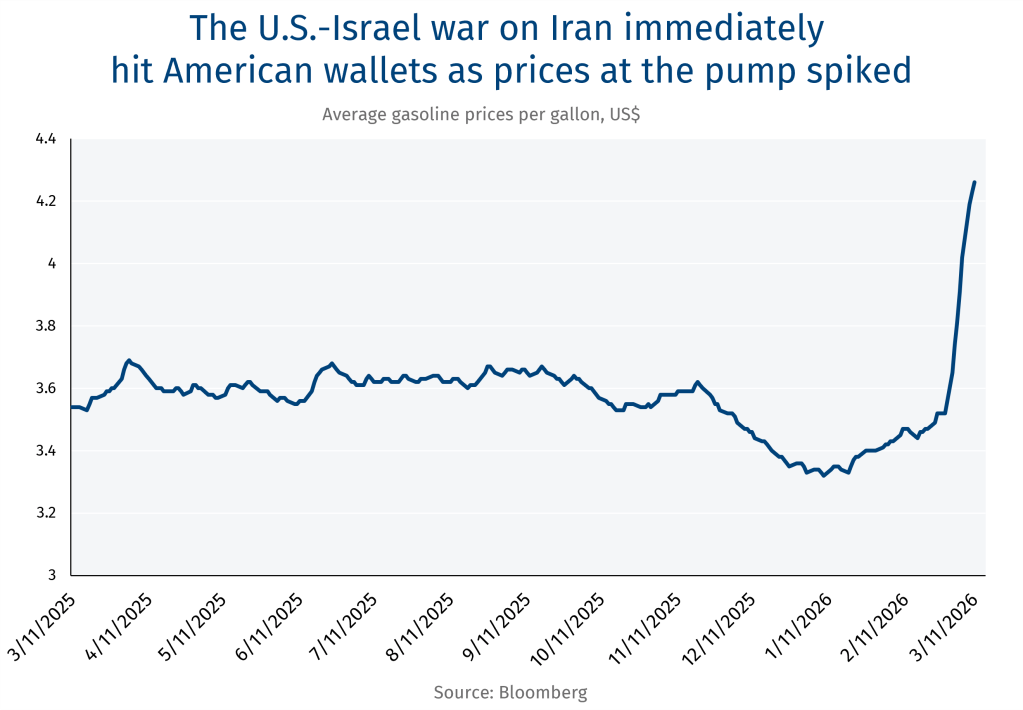
  • While North America’s net exporter of crude oil, the global structure of oil markets has not spared the American economy

  • A recent Washington Post/CNN poll shows about 7 in 10 American voters are “very” or “somewhat” concerned that the Iran war will send oil and gasoline prices higher

  • Higher gasoline prices would be a key datapoint for the U.S. administration as it plots it next move.

The U.S.-Israel war on Iran immediately hit American wallets as prices at the pump spiked
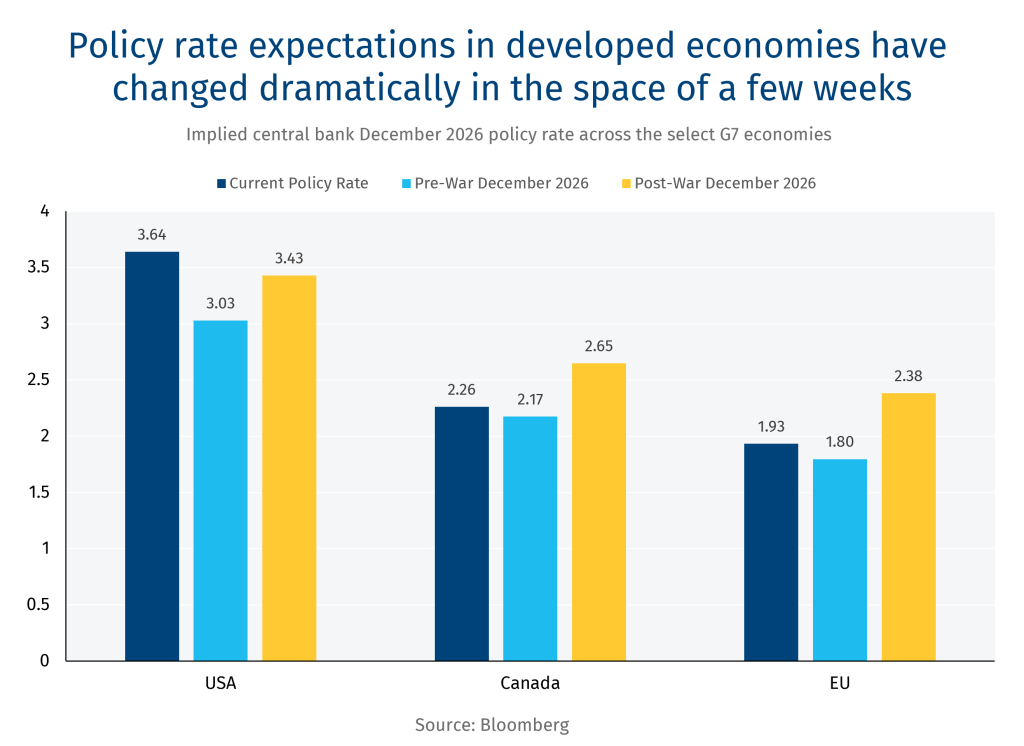
  • Across Canada, the U.S. and EU, the expectation was an easing of monetary policy as the year progressed—but it has reversed on fears of higher inflation.

  • A sustained US$80 oil could raise inflation from 2.2% to 2.5% in Canada, according to RBC Economics.

  • Similarly, the U.S. would see an increase from 2.7% to 3.1% at US$80 per barrel.

Policy rates expectations in developed economies have changed dramatically in the space of a few weeks
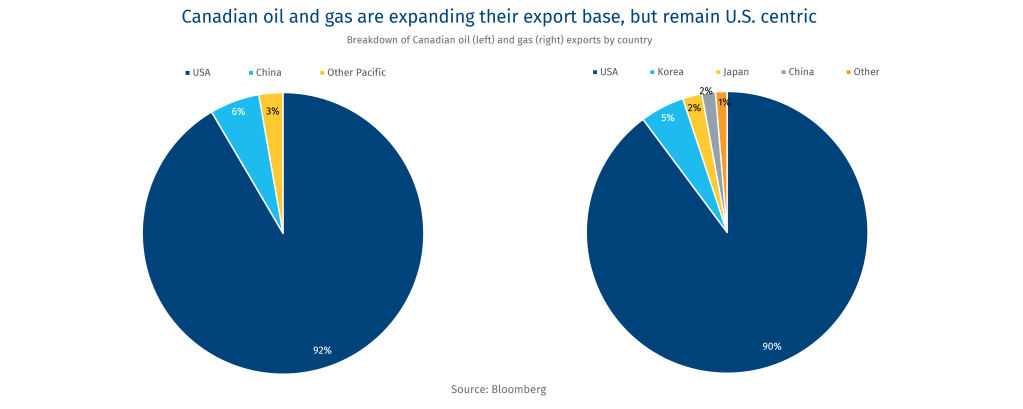
  • China has been Canada’s biggest non-U.S. oil export destination—which could grow further as relations with Beijing improve.

  • South Korea has been the primary destination for Canadian LNG to date.

  • Over the long term, Canada could likely serve a more meaningful role in de-risking Asian supply.

Canadian oil and gas are expanding their export base, but remain U.S. centric
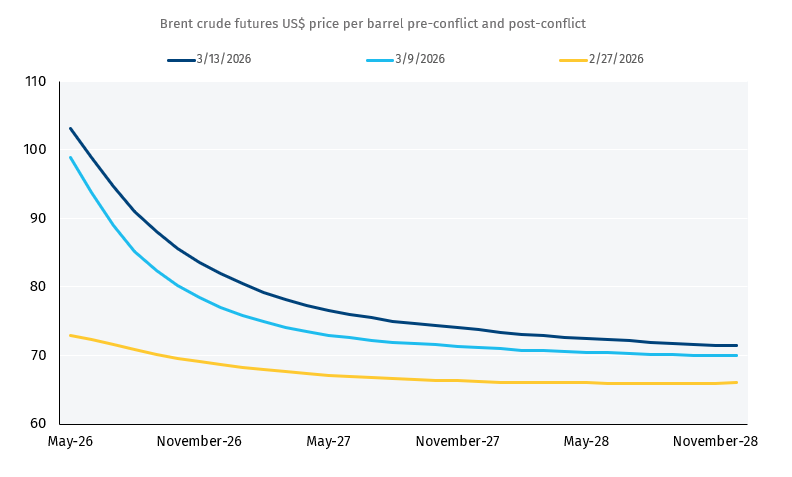
  • Around 8 million barrels per day of crude and 10 mbd of liquids production in the Middle East is reportedly shut in with the Strait of Hormuz at a virtual standstill, according to the International Energy Agency.

  • Despite International Energy Agency members planning 400-million-barrel injection into markets, the price trajectory would likely depend on the U.S.’s ability to ensure the security of the Strait of Hormuz.

Brent Future curve suggests oil prices will remain higher for longer

WP Menu

wp-menu

➔ Inside Canada’s strategy for the “Davos of Energy”

➔ What Canadian leaders told us about their views on climate action

➔ Canadian oil can deploy industrial carbon pricing at the cost of a Timbit per barrel, according to a study

Energy transition—not defence—will drive demand for critical minerals. Focus on electric vehicles and other energy transition technologies will be vital to underpin investments in Canada’s critical minerals sector, , according to Energy Lead Shaz Merwat. The good news is that emerging processing technologies—such as flash joule heating and direct lithium extraction—could alter the cost curve for new Canadian refining projects. Canada’s clean electricity advantage could also prove to be a differentiator as processing technology reduce energy intensity sufficiently to compete with China.​​​​​​​​​​​​​​​​ Read Shaz’s Mine & Refine report and Seven Takeaways from PDAC.

How are Canadian business executives addressing climate policies? The Climate Action team was on a listening tour over the past few weeks to check the pulse on climate action among Canadian leaders. Here’s what we heard: Canadian businesses are focusing on the doable. The result is not retreat, but a sharper focus on what can be built, financed, and scaled this decade. There’s plenty of climate capital to scale ambitions. The challenge is deploying it. Read our full briefing here.

Creating demand is the impetus for the new Advanced Carbon Removal (ARC) Coalition in Canada. The coalition launched this month and is made up of RBC, Shopify, the Government of Canada and other investors to mobilize $100 million in new support for Canadian carbon dioxide removal projects by 2030. These projects cross several sectors including energy, heavy industry and agriculture, and focus on scaling durable carbon removal technologies, including direct air capture, biochar, bioenergy with carbon capture and storage, enhanced weathering, and marine carbon dioxide removal. Canada has a competitive advantage in these carbon removal pathways given its vast resources in minerals and biomass, and access to clean electricity sources for processing.

The hope is that the Middle East conflict is short-lived. But it’s already casting a long shadow on global economic growth and energy flows—and climate goals.

With much of the oil-and-gas rich region engulfed in the crisis, major European and Asian importers are scrambling to secure alternative fossil fuel supplies. Solar and wind may be “intermittent” power sources, but oil and gas are now facing challenges of their own. The question for both energy-rich and option-poor policymakers is how to make urgent short-term decisions—without undermining long-term climate implications.

Here is what’s at stake…

For Canada: Big decisions, high stakes

Safe-harbour Superpower. Nervous nations have come calling, says Tim Hodgson, Minister of Energy and Natural Resources, looking for politically neutral Canadian oil and gas. Bonus: Canadian hydrocarbons don’t pass through global flashpoints—but do face domestic logistical hurdles. Can Canada ramp up as a reliable supplier without compromising its climate goals?

Investors are already testing the waters. The temptation is to build new West Coast LNG terminals and oil pipelines, and even East Coast projects to power Europe. Newfoundland Labrador recently reached a deal with Equinor and BP p.l.c. to lay the ground for construction and production at the offshore $14-billion Bay du Nord project. The oil pipeline route formerly known as Keystone XL—and now called the Prairie Connector—is all being revived. These projects could trigger an economic growth spurt—most certainly they would raise emissions.

Provincial considerations. British Columbia and Quebec must now navigate the tension between their strict environmental mandates and the pressure of allowing new energy infrastructure through their territories. Alberta, on the other hand, would need to ensure it does not over-index on oil and gas investments amid uncertain global energy demand.

For Europe: A power reset?

Continental drift. The 40% surge inEuropeanLNG prices following the strike on Iran highlighted the economic bloc’s limited options. With the continent still scarred by the loss of Russian pipeline gas, the current Middle Eastern shock has fractured the EU’s green consensus. Italy’s recent move to suspend carbon pricing—and Germany’s quiet recalibration of the 20-year-old Emissions Trading System (ETS)—signals a pivot toward security first over climate first.

Power with strings attached. As Qatari LNG through the Strait of Hormuz dries up, Europe is facing a short-term gas crisis, with Italy, Belgium and Poland more exposed than others. While U.S. LNG is bridging the gap, this reliance is increasingly transactional, coming with “political strings” that complicate the transatlantic alliance. Faced with a complete Russian gas embargo and a supply chain for renewables that remains dangerously concentrated in China, Europe finds itself in a strategic deadlock: return to legacy coal, pay the American premium, or accelerate a transition fuelled by China.

For Asia: Wake-up call

The Electrostate Paradox: China’s energy security is currently defined by a stark contradiction. As the destination for 38% of all oil transiting the Strait of Hormuz, Beijing has much lose from Middle Eastern volatility—a vulnerability compounded by the loss of Venezuelan crude following the ouster of the Maduro regime earlier this year. While Beijing recently issued a cautious 15th Five-Year Plan—lowering its carbon intensity target to 17% to prioritize industrial stability—this retreat masks a deeper shift. As Jason Bordoff, director of the Centre on Global Energy Policy at Columbia University, argues, by absorbing the short-term costs of fossil fuel disruptions today, China is effectively clearing the path to consolidate its dominance as the world’s first true “Electrostate.”

India’s dilemma. Even before the recent destabilization in the Middle East, New Delhi signalled a significant appetite for Canadian energy, with High Commissioner Dinesh Patnaik affirming India’s readiness to absorb “whatever Canada is offering.” While India maintains deep-rooted ties with Middle East nations, the vulnerability of the Strait of Hormuz—which handles nearly 15% of India’s crude imports—has accelerated a long-standing diversification mandate. For India, the crisis could simultaneously trigger higher coal consumption, more Western LNG exports, but also focus on powering up sola, and other renewable energies.

The Asian pivot. Roughly 37% of the oil transiting the Strait is destined for South Korea, Japan, and other regional hubs—a dependency that is forcing a radical strategic recalibration. Rather than waiting for Middle Eastern tensions to stabilize, South Korea is leveraging the volatility as a catalyst. The country’s president framed the crisis as “a good opportunity to swiftly and extensively transition to renewable energy.”

It’s unclear whether fossil fuels or renewables will emerge as winners from the latest cataclysmic conflict. What’s certain, however, is that the global race to secure energy supplies has intensified.

Canada is all set for the “Davos of energy.” The IHS CERA conference in Houston, starting March 23, will have a much larger Canadian presence than in recent years, with the Canada House pavilion and participation of Tim Hodgson, the Minister of Energy and Natural Resources, with officials from Invest in Canada (IIC), Innovation, Science, and Economic Development Canada (ISED), and Global Affairs Canada (GAC), among others.

Canada’s balancing act would be to attract American dollars but also diversify away from U.S. capital and attract a wider investor base to safeguard its sovereignty and reduce dependence on the American market.

—Canada’s four strategic themes at the event:

  • Standing on guard: Position Canada as a secure and stable clean and conventional energy superpower;

  • Being resourceful: Showcase Canada’s leadership in innovation, research and development, and emissions reduction in energy;

  • Championing Team Canada: Support energy companies by showcasing Canada’s benefits as a destination for energy investment capital; and,

  • Leveraging the sovereignty angle: Highlight Canada’s energy sovereignty and ability to meet growing global energy demand through market diversification.

—Several Canadian provinces, energy companies, and thought leaders will be amplifying the message, with Alberta Premier Danielle Smith slated for one of the panels.

—With construction on the roads in minerals-rich Ring of Fire set to commence this year and a new Critical Minerals Strategy, Ontario Minister of Energy and Mines Stephen Lecce will join a panel on the New Geopolitics of Critical Minerals.

—Canada House will feature dedicated programming focused on oil, nuclear energy, LNG, AI and energy, investment in Canada and methane abatement technologies. Some of the planned sessions, include Capital in Motion: Funding an Infrastructure Supercycle, featuring Minister Hodgson. Another with Chief Sharleen Gale, Chair of the First Nations Major Projects Coalition, will be on delivering Canadian energy to global markets.

—Other sessions focus on Canada’s low-carbon LNG, next-generation nuclear reactors, Canada’s methane innovation leadership, AI-enabled clean technology, and breakthroughs and bottlenecks in getting Canadian oil to global markets.

—The world’s facing a copper shortage. John Stackhouse and Shaz Merwat discuss how Canada can help.

—The agriculture sector is asking, “why Canadian farmers are not participating in compliance carbon markets at scale as a source of offsets?” Interim Head Lisa Ashton presented our Climate Action 2026 findings at the Annual Sustainability of Canadian Agriculture Conference and carbon pricing dominated the Q&A period.

—Canadian Climate Institute’s Dale Beugin and Ross Linden-Fraser explains why the industrial carbon pricing will cost just a Timbit per barrel for Canada’s oil sands sector.

—ESG now means energy, security and geopolitics, writes Liam Denning, Bloomberg opinion columnist.

—Canadian provinces and territories signed a deal to build transmission infrastructure needed to power the country’s next generation of growth. Pembina’s Tim Weis explains its significance.

—It’s not just the latest U.S. tariffs that have gutted Canada’s softwood lumber sector. RBC Economics Salim Zanana explains the thousands cuts.

Curated by Yadullah Hussain, Managing Editor, RBC Climate Action Institute.

Climate Crunch would not be possible without John Stackhouse, Jordan Brennan, John Intini, Farhad PanahovLisa AshtonShaz MerwatVivan SorabCaprice Biasoni, Lavanya Kaleeswaran and Joelle Schonberg .

Have a comment, commendation, or umm, criticism? Write to me here (yadullahhussain@rbc.com)

Climate Crunch Newsletter

WP Menu

wp-menu

This year’s Prospectors & Developers Association of Canada (PDAC) event in Toronto was abuzz with talk of Canda’s critical mineral riches and the speed at which they can be brought to global markets—at commercial scale. The industry is enthusiastic, the government supportive, but there is a long way to go to realize Canada’s mining potential. Here are seven themes that we observed at the event.

The U.S. and Canada approach critical minerals from materially different strategic frameworks, and that divergence has consequences for bilateral cooperation.

The U.S. framing is one of industrial decay and national security emergencymanufacturing surge capacity, weapons systems dependency, and concerns of China outpacing American armament production capacity by a factor of five to six. Within that frame, critical minerals are not a supply chain optimization problem but rather a symptom of a broader hollowing out of American industrial capability that extends to smelters, chemical processing, and advanced manufacturing.

Canada’s framing has been more “narrowly” commercial—a supply chain opportunity, a geological advantage to be monetized, and a seat among allies to be secured.

That gap in threat perception creates friction with an expectation the U.S. is (or at least will be, over time) operating on a more binary logic—alignment or non-alignment—while Canada has positioned itself as a middle power seeking rules-based multilateral cooperation.

Whether Canada narrows that perception gap—or develops an independent strategic rationale grounded in its own economic security interests—will likely impact how “seriously” it is taken at the bilateral table as the Canada-United States-Mexico trade deal review evolves.

Canada’s geological endowment is enviable, but extraction without downstream processing is increasingly seen as less than ideal. Yet, the economics of building processing capacity in Canada are deeply unfavourable.

Anecdotally, conversion costs for lithium spodumene to cathode-grade material run roughly twice what they are in China and at times in Latin America. Global copper smelter margins are often 2–5%, if not simply breakeven. Canada has closed multiple smelters over the past fifteen years. Even in China, the rare earth refining industry has not earned its cost of capital in three decades—arguably the watermark against which any new entrant must be measured.

These margins do not support private sector investment at scale without intervention. We heard overwhelming agreement that state capital needs to function as first dollar in, last dollar out on processing infrastructure. The buyers’ club concept—pooling G7 demand and stabilizing prices when they are depressed—addresses part of this problem, but the governance and trust architecture to deploy that capital at scale remains unresolved.

The bilateral/plurilateral distinction that emerged from the sessions as it relates to the U.S. view of a buyers’ club—supply sourced bilaterally, but demand aggregated multilaterally—sounds like burden-sharing but warrants scrutiny. This architecture is in essence the U.S. acquiring mineral supply on its own terms, stored on U.S. soil and then asking allies to aggregate demand around what is effectively American strategic inventory. Put plainly: Buy American.

Nations’ tendencies to operate in self-interest in a scarcity scenario is precisely the reason for Project Vault’s domestic storage requirement. Still, for other nations like Canada, the risk is being a favoured supplier with no guarantee of preferred access when it matters most. Such asymmetry, hopefully, can be negotiated.

If there is one commodity where the investment thesis is most favourable, it is copper. The convergence of AI infrastructure buildouts, electrification, defence procurement, and grid expansion has created a demand profile that generalist investors can underwrite without relying on policy-dependent assumptions.

Yet even with this enviable demand profile, there is strong consensus of a growing shortage of copper supply, still. As it relates to Canada, copper may be the most realistic near-term entry point through which broader mining investment, including in associated polymetallic deposits, gets unlocked, solving many of the “more traditional” less niche, mining development challenges.

At its simplest, sustainable long-term demand secures supply chains. China built its critical minerals dominance through civilian demand—electric vehicles, wind turbines, batteries—at a scale that justified refining investment and created learning curve advantages that now make its processing margins tough to compete against.

The strategic paradox facing North America is attempting to construct supply chains for critical minerals while simultaneously pulling back on the civilian demand drivers to justify that investment. Without a credible domestic demand signal, processing facilities face uncertain offtake, and without offtake, project finance is unavailable. At present, alternative anchors such as defence and AI/data centres is expected to be the near-term catalyst, but the sheer size of the total addressable clean energy demand is one that better captures the attention of longer-term, more generalist investors.

Treating 30-plus minerals as a single policy strategy ignores the complexities of each metal’s supply chain. The genuine policy problem is in niche commodities where Canada punches above its weight—rare earths, scandium, tungsten, graphite, nickel and possibly lithium—where markets are either small, opaque, and/or structurally dominated by a single producer (often China).

A strategy focused on five to eight minerals with a clear demand anchor is viewed as more executable and more credible from an effective strategy than a broad-based approach. If oriented successfully, this will have positive spillover effects on the procurement of the types of skills and human capital associated with the greater strategy, such as rare earth separation, hydrometallurgy, and advanced processing requiring specialization unreplicated through equipment procurement alone. The expertise that exists across the G7 countries is an untapped potential.

The Major Projects Office represents a meaningful shift toward facilitation of these projects. Brownfield expansion is the near-term opportunity while Indigenous partnerships, structured early with genuine economic participation, is consistently the most effective accelerant to mitigate permitting and financing risks.​​​​​​​​​​​​​​​

WP Menu

wp-menu

A smarter way for adult learners to hone new skills

Competency-based education (CBE) is a personalized style of post-secondary learning that allows participants to earn credentials by mastering skills and knowledge at their own pace.

There are more than 1,000 CBE programs offered at U.S. institutions, many at the degree or associate degree level.

In Canada, while several postsecondary institutions are experimenting with CBE at micro-credential and certificate levels, no public Canadian institution offers the chance to earn competency-based degrees or diplomas (Bow Valley College in Calgary plans to offer hybrid diplomas in information technology and cybersecurity beginning in September).

In 2013, the Obama administration called for individually paced programs that “award credits based on learning, not seat time” as a way of promoting innovation, and creating affordable, accelerated degree pathways for adults. Within a decade, the number of providers grew from about a dozen to more than 600.

Traditional education vs Competency based education

Traditional degree and diploma programs are generally designed to serve students studying full-time and moving directly from high school to college or university. These students often seek and benefit from a cohort experience—students start and progress together, with a pace set by an instructor. Their final grades vary.

CBE degree and diploma programs are designed for adults who already have a level of skill and experience. Programs tend to start monthly or even weekly. Learners move at their own pace with individualized support from coaches or advisors. CBE assessments are usually performance-based tasks or projects that reflect real-life scenarios—a business student might analyze a company’s financial statements and identify inefficiencies, for example, while a nursing student might conduct a thorough patient assessment.

Everyone is required to meet the same high bar. Students pass by demonstrating mastery and are supported to address learning gaps until they do (e.g., they may get rounds of feedback from a faculty coach, persisting until they can perfect a specific task before moving on to the next). This approach allows participants to progress more quickly through content they’re familiar with and devote the necessary time to new skills and concepts.

In today’s rapidly changing economy, CBE can help adults whose jobs are disrupted, providing them an opportunity to upskill in evolving sectors or reskill to shift into an entirely new area of work. CBE programs could also provide foreign-trained workers the opportunity to earn Canadian credentials aligned with their skills and expertise.

Employers benefit, too. CBE programs can help match skills with jobs quickly. And the focus on mastery ensures that graduates achieve a high level of skill. 

Western Governors University–The pioneer of CBE
Salt Lake City, Utah + regional hubs in nine states

On offer: Online undergraduate and graduate degrees in business, education, information technology, health & nursing.

How it works: Most program intakes are monthly. Leaners pay US$4,000 in tuition per six-month term, working at their own pace to earn competency units by demonstrating skills on various tests or projects. On average, a bachelor’s degree takes 2.5 years to complete.

University of Maine at Presque Isle–Nearly doubled CBE enrolment last year
Presque Isle, Maine

On offer: Online undergraduate and graduate degrees in areas such as accounting, education, public policy and management.

How it works: Learners progress through courses in eight-week sessions– US$1,800 per session for undergraduates, US$2,450 for graduate students. An advisor helps ensure students maximize their time each session; programs can be completed in a year.

Capella University –A founding member of the Competency-Based Education Network
Minneapolis, Minnesota

On offer: Undergraduate and graduate degrees in business, education, health care administration, information technology, nursing and psychology.

How it works: Programs operate on an ‘all-you-can-learn’ 12-week subscription basis. Students can start any month. An evaluation of the first five years of program delivery found the median completion time was 60% faster in CBE bachelor’s degrees compared to credit-hour versions Capella offered; and median tuition costs were 60% lower.

Download the report

WP Menu

wp-menu

Climate Action 2026: Reset, Retreat, or Renew highlighted the drop in climate action in 2025 for the first time since the report’s 2019 baseline. It wasn’t a total shock that climate wasn’t a major priority considering the challenges Canadians are facing on trade, affordability, national unity and security. Still, we wanted to delve deeper—is this drop going to persist in 2026? What can Canada do to push through the headwinds and drive climate action back up in 2026?

The Climate Action Institute set out on an engagement tour with industry leaders and climate policy experts over the past few weeks to understand what’s next for climate action in Canada and what path governments, businesses, and consumers will take in the year ahead—reset, retreat or renew?

1. Climate ambitions are being reset with a focus on what’s doable

Many of the climate targets set in the early 2020s for 2030 and beyond are becoming harder to achieve – not because ambition has faded, but because short term pressures are colliding with long-term decarbonization plans. Across advanced economies, governments and businesses are recalibrating, prioritizing delivery and near-term feasibility over headline ambition. The result is not retreat, but a reset: a sharper focus on what can realistically be built, financed, and scaled this decade.

While climate change is still on the mind of Canadians, concern truly intensifies when climate impacts intersect with immediate issues of health and safety—in particular, when it comes to wildfires. The intersection of climate risk and daily life is reshaping policy debates and what climate actions need to be prioritizing in the short-term. Governments are increasingly exploring how to align climate policy with how Canadians are experiencing environmental effects, as well as macro issues including affordability, energy security, and industrial competitiveness, rather than treating climate action as a separate agenda.

2. There’s plenty of climate capital. The challenge is deploying it.

There are $100 billion of government incentives budgeted between now and 2035 for clean-tech and climate programs, according to our estimates.1

The problem is that industry leaders find many Canadian climate funds “untouchable” or with transaction costs that are too high. For example, stakeholders in the mining and clean technology sectors struggle to access programs like the Low Carbon Economy Fund, citing bureaucratic hurdles such as complex granting processes. Stakeholders said this challenge is systemic across climate programs and incentives. Notably, the Auditor General found that the federal government’s recently retired Net Zero Accelerator, an $8-billion fund, attracted only 15 out of the 55 largest-emitting companies in Canada and resulted in just two signed agreements by late 2024. The biggest barrier cited was the lengthy and complex application process, averaging 407 hours.2

Leveraging AI applications was suggested by industry as one option to help streamline project review processes and synthesize project data, reducing the administration burden for governments and applicants. AI powered government administration is a trend that has a growing list of working examples, like DAISY, the Development Application Information System, in New South Wales in Australia that helps local councils and project developers accelerate approval processes.

3. Policy friction and geo-political uncertainty threatens Canadian climate competitiveness

In an era marked by protectionism, shifting alliances, and supply-chain risk, the idea that Canada can compete globally on climate ambition alone can feel aspirational. Yet, for emissions-intensive, trade-exposed sectors, climate competitiveness is less about idealism and more about whether decarbonization can tangibly support growth, resilience, and market access.

Canada’s steel sector illustrates that tension. Over the past year, steel sector exports fell 24%, as the industry saw reduced revenues and demand, and more than 1,000 direct jobs lost, moving long-term 2050 net-zero targets lower on the priority list for companies.3 Yet, decarbonization opportunities that are clearly aligned with growth and market prospects help make the case for climate competitiveness. The U.S.’s 50% tariffs on Canadian steel accelerated plans for Algoma Steel to transition production from traditional blast furnaces to electric arc furnaces, which use electric power instead of coal, allowing for a more flexible, lower-cost operation that is more competitive under trade pressure. Yet, this switch did not come without tradeoffs, including large upfront investments and scaling down employment.

British Columbia’s timber industry exemplifies a sector hit hard by tariffs, but with the potential to bolster Canada’s climate competitiveness ambitions. After a long downturn fuelled by mill closures, pest outbreaks and wildfires, the timber industry is seeking bounce back opportunities through new markets that can boost demand. Mass timber could be an option.

As a low-carbon material, mass timber can reignite domestic production, feed the modular housing boom, and decarbonize the building sector. To succeed, federal, provincial, and municipal governments must prioritize low-carbon procurement, adopt “tall wood” building codes, and streamline project permitting.

Canada climate competitiveness in other sectors hinges on getting major projects off the ground. Despite holding the world’s sixth-largest lithium reserves, and substantial deposits of nickel, cobalt, and rare earth elements, Canada is not a major player in producing the materials that are essential to batteries, wind turbines, and electric vehicles.4 While Natural Resources Canada has identified critical minerals as central to economic growth and climate strategy, mining projects remain hindered by capital gaps and long permitting timelines. Geopolitical fragmentation complicates market access and financing for Canadian projects. For investors, climate alignment alone is insufficient. They require regulatory clarity, infrastructure readiness, Indigenous partnership certainty, and long-term offtake agreements. Without streamlined approvals and coordinated federal–provincial policy, Canada risks failing to leverage its mineral wealth for the global energy and industrial transformation.

Climate competitiveness could be a fantasy if Canada can’t pass the test of reducing policy friction and mitigating geopolitical uncertainty fast enough to make climate alignment the simplest path to growth in resource-based sectors.

4. A national electricity strategy requires a major shift in priorities

An imminent pan-Canadian electricity strategy is set to map a plan for expanded power generation and remove barriers between provincial markets.

According to our estimates, expanding electricity generation by 2050 by low-emission sources including nuclear, hydroelectric and abated natural gas in addition to solar and wind, would cost over $1 trillion.5 Canada’s surging electricity demand is a hot topic as industry leaders and consumers grapple with the current bill to meet demands, like Toronto Hydro’s $5.9 billion investment plan for 2025-2029. The pressing upgrade highlights the strain on existing infrastructure to support electrification (e.g., heat pump adoption).

The availability of reliable renewable power to meet rising demand is a central concern, particularly as the economics of developing low-carbon generation are not consistently viable across Canadian jurisdictions, challenging the national goal of fully decarbonizing electricity systems by 2050. Existing infrastructure and cost barriers mean natural gas continues to play a significant role and is expected to remain the dominant heating source in many provinces including Alberta, Saskatchewan and some Atlantic provinces. On the demand side, affordability is often the primary driver for households considering a switch to low-emitting technologies such as heat pumps. However, in provinces like Saskatchewan, where subsidies for fuel switching are limited or unavailable, homeowners often cannot justify the upfront investment required to adopt low-emission solutions. Without supportive policy measures or improved economic incentives, the financial case for transitioning to cleaner technologies remains challenging for many households.

Scaling energy supply to meet demand and deliver on a pan-Canadian vision requires a shift in priorities to “build big things,” focusing on infrastructure like the East-West energy grid and major climate projects. However, projects have yet to get off the ground raising questions if big and bold is possible, or if the small and fragmented tradition of Canada’s federation will persist.

Other countries are finding ways to meet their economies’ rising power needs. In 2024, China added approximately 543 gigawatts of new electricity capacity, according to their National Energy Administration. The power generation added since the end of 2021 in China now exceeds the size of the entire U.S. power system. While Canada’s needs are proportionally smaller, the comparison highlights the speed required to compete in clean energy manufacturing, supply chains, and technology deployment.

5. Too many shovel-ready carbon removal solutions are waiting to scale

Canada’s forests, wetlands, and agricultural lands can reduce Canada’s emissions by up to 78 megatonnes of CO2e in 2030 if sustainable management and conservation are enabled.6 Unlocking these nature-based solutions requires scale. Projects must achieve economies of scale to go through the costly process of being verified on functioning markets to deliver real value to land stewards, such as farmers. Projects must also provide the value of scale to investors looking for large single purchases of credits or claimed impacts. It’s ironic that despite Canada’s vast natural landscape, a lack of operational scale remains the primary barrier to delivering market-based incentives.

Aside from the Conservation Cropping Protocol in Alberta that has since been retired and the Great Bear Rain Forest, there are few Canadian examples of scaled market-based approaches to incentivize nature-based solutions. Fragmented carbon pricing systems and rigid protocol design are key hinderances that have slowed progress in Canada. However, the current review of Canada’s industrial carbon pricing benchmarks, and bilateral agreements such as Alberta’s memorandum of understanding with the federal government, present an opportunity to test policy designs that can unleash investment for nature-based solutions.

6. Capitalizing on climate-conscious consumers critical to decarbonization

Despite rising national security threats, affordability concerns, and an economic downtown, roughly 33% of Canadians still list climate change as one of their top three concerns, according to our consumer survey.

Consumer demand represents a critical lever. Adoption of technologies, such as heat pumps and electric vehicles, would accelerates once the economics make sense, in the form of rebates, clear price signals, and stable policy frameworks. Businesses and policymakers can harness this demand by aligning climate policy with affordability and competitiveness for consumers.

Major infrastructure projects—such as new transmission corridors, clean-tech manufacturing hubs, or carbon management systems—require public trust to move from proposal to implementation. Without social licence, even technically sound projects stall. Building that trust means demonstrating tangible benefits: job creation, lower long-term energy costs, improved reliability, and enhanced resilience to climate impacts.

Canada’s climate challenge is increasingly a question of scale and delivery. Ambition remains important—but execution, coordination, and trust will determine whether the country can translate targets into tangible outcomes.

Download the report

WP Menu

wp-menu

➔ Stick to net zero by 2050 or abandon it?

➔ Some land sectors have a new emissions standard

➔ Canada makes a big nuclear push in Europe

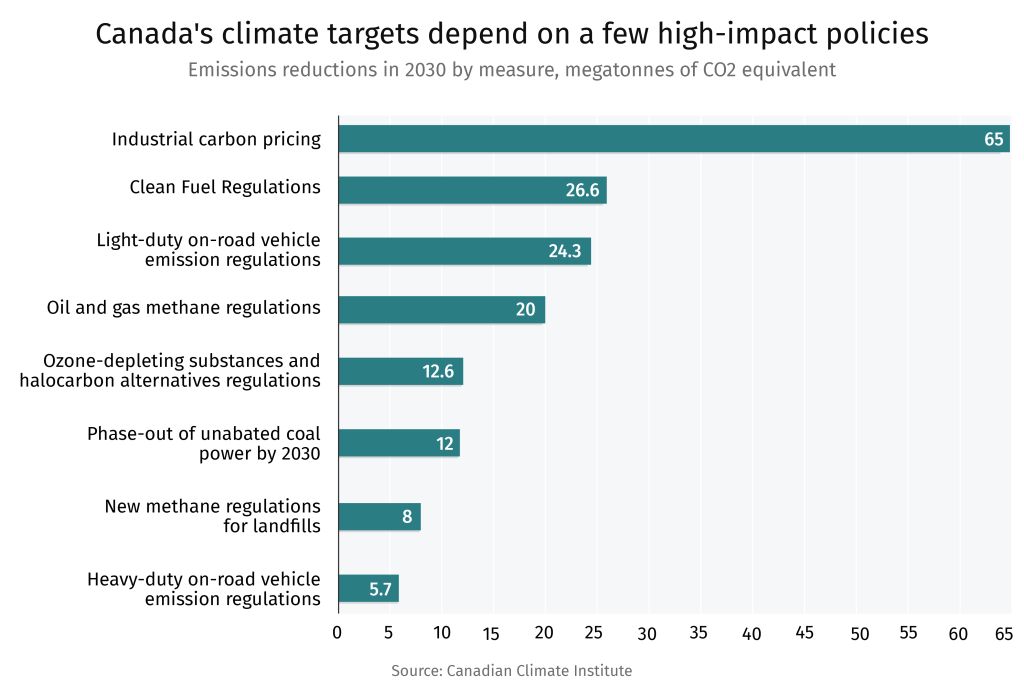
Could April 1 reset Canada’s off-course climate trajectory? The Canadian Climate Institute’s latest report (which notes that Canada’s climate targets are “off course”), suggests that strengthening measures such as industrial carbon pricing and oil and gas methane rules is critical to coming close to the targets. Both measures are part of the MoU that Ottawa and Alberta agreed to hammer out by April 1. Together, these two policies could deliver an emissions-busting punch (see chart).

Canada's climate tarets depend on a few high-impact policies

Should the world give up on net zero by 2050? U.S. Energy Secretary Chris Wright thinks so. He recently chastised the International Energy Agency (IEA) for its “destructive illusion” of the 2050 goal. Amid this friction, energy ministers at an IEA summit in Paris last week failed to agree on climate objectives. It’s true that the world’s struggling to hit its net-zero targets, the UN projects, as nations from Canada to Germany retreat from some of their more ambitious climate policies. But few are looking to cast aside net zero just yet. France and other European nations pushed back during the summit, noting that electrification remains a cornerstone of the bloc’s economic policy. Meanwhile, Canada is expected to unveil its Climate Competitiveness Strategy, and China has already emerged as the world’s first “electro-state.”

China has galloped ahead of competitors with a new electric work horse of the ocean. Fittingly, in the new Year of the Horse, China debuted ocean-going Ning Yuan Dian Kun, featuring a battery capacity equivalent to 380 Tesla Model 3s. The test launch comes as the international Maritime Organization dithers on solving ocean pollution—technology, as it so often does, is leading policy here. Crucially, the batteriescan be shore-charged and swapped like cargo container to ensure its 740 twenty-foot equivalent (TEU) load can sail further. It’s a critical breakthrough: half the world’s container fleet is under 3,000 TEUs (twenty-foot equivalents) and these vessels are considered the ocean’s true work horses. An emissions dent in that space could make a real splash.

– By Lisa Ashton, Interim Head, Climate Action Action Institute

The first international standard for accounting for land-based sectors’ greenhouse gas (GHG) emissions is a true test of taking science from the lab to the field—and of patience.Land-based sectors, including agriculture and forestry, finally have an international standard for accounting, reporting and tracking GHG emissions.

The GHG Protocol’s Land Sector and Removals Guidance (LSRG) is intended to standardize GHG inventory accounting across companies with land-based GHG emissions allowing for consistent disclosures, which is necessary to boost their credibility with investors and regulators around claims like farmers increasing soil carbon sequestration and tree planting that are at risk of miscalculating their real impacts given the complexity of tracking GHG sources and sinks in natural systems.

It was a long time coming, taking more than five years of debates, revisions—and even a period of derailment—to land the GHG Protocol.

Why did it take so long? Simply put, it was due to tensions between climate accounting purists and industry trying to agree on a practical standard.

The sticking points:

  • Not knowing who your farmer is: Agri-food supply chains are geographically dispersed and cover large swaths of land to feed a growing population, challenging companies pursuing perfection in tracking changes in GHG emissions and soil carbon removals happening on the farms from which the companies are sourcing from.

  • Counting GHG emissions when land use changed: Repurposing land from, say grassland to cropland, has GHG emissions and soil carbon change implications that could alter a company’s GHG emissions inventory. Determining which measurement technologies, like remote sensing, are acceptable for tracking these changes and how to report net impacts has been a source of confusion.

  • Accounting, measuring and tracking soil carbon: GHG changes in natural ecosystems like agricultural soils is deeply complex and datasets take years to establish. The right approach that allows companies to track soil carbon changes without becoming an exhaustive, expensive academic exercise is still up for debate as measurement approaches are still being refined and many factors influence soil carbon changes.

Should Canadian businesses align with the GHG Protocol’s Land Sector and Removals Guidance?

Companies that source agriculture and forestry products are now faced with this challenging question as the decision influences their business far beyond their climate goals–from supply chain logistics and relationships to their sourcing regions and ingredient choices. The decision is even more complicated because the standard took longer than expected to be developed and missed a window when influential companies were creating their GHG accounting frameworks and developing incentive programs for farmers and foresters to deliver on-the-ground climate action in the early 2020s.

By Stephanie Shewchuk, Housing Policy Lead

Canada’s stumbling forestry sector could hurt the country’s ability to develop homegrown sustainable solutions for packaging, building and retail sectors. The Forest Products Association of Canada called 2025 “one of the most challenging years in recent memory.” In addition, wildfires—paradoxically exacerbated by climate change—laid to waste 886,300 hectares in 2025 alone, which is well above the province’s 10-year average.

Ottawa and the B.C. governments have both acknowledged the depth of the province’s forestry crisis through targeted budget measures, but there may be room for more: new investment tax credits to encourage biomass use, improved procurement guidelines to support greater uptake of Canadian wood in government projects, and for the newly launched Build Canada Homes agency to prioritize Canadian lumber in federal construction products. It could prove to be a significant climate move as buildings currently make up 18% of Canada’s greenhouse gas emissions.

These approaches will support an industry in crisis today but its future will hinge on three key factors: market recovery, positioning sustainable wood products as a strategic asset in the transition to a low-carbon economy, and how effectively it can adapt to climate-driven wildfire risk.

  • Canada’s Energy Minister Tim Hodgson was in Warsaw recently pushing the CANDU nuclear technology for Poland’s next suite of nuclear reactors. “We have what Poland wants,” Hodgson said as he drums up more interest for the baseload power source. Canada is also reportedly eyeing a uranium deal with India during Prime Minister Mark Carney’s visit to New Delhi this week.

  • Canada’s new auto strategy promises a new path for the sector, but Climate Action Institute Economist Farhad Panahov says the road ahead will be driven by three key themes.

  • Geothermal—the heat beneath our feet—could be a transformative baseload power source. CAI’s Clean Energy Lead Vivan Sorab digs into the opportunity.

  • Who came up with the 1.5 Celsius global target anyway? Climate scientist Katharine Hayhoe explains how science and politics converged on a number that defines global ambition.

  • Any credible scenario for Canada’s electricity future must consider wind and solar supplying majority of new demand growth. “The question is not whether these sources will expand, but whether Canada will begin to treat solar power as a core strategic asset or continue to regard it as marginal,” writes Peter Nicholson, Chair, Canadian Climate Institute, in an essay.

  • “Energy is not an end in itself; what people want is hot showers and cold beers.” Micheal Liebreich and others believe policymakers will have better success if they count energy from the consumer’s perspective.

  • Pollution poses a bigger threat to India’s economy than trade tariffs, IMF chief economist Gita Gopinath warned recently. Here’s why one of the world’s largest economies is being choked.

Curated by Yadullah Hussain, Managing Editor, RBC Climate Action Institute.

Climate Crunch would not be possible without John Stackhouse, Jordan Brennan, John Intini, Farhad PanahovLisa AshtonShaz MerwatVivan SorabCaprice Biasoni, Lavanya Kaleeswaran and Joelle Schonberg .

Have a comment, commendation, or umm, criticism? Write to me here (yadullahhussain@rbc.com)

Climate Crunch Newsletter

WP Menu

wp-menu

Canada’s new automotive strategy is a signal that Ottawa is keen to persist with a central pillar of the country’s manufacturing sector, despite tariff pressures and suggestions from the U.S. President that “we don’t need cars made in Canada.” The new strategy aims to carve out a new path for the industry, led by electric vehicles that have blossomed into a US$750-billion market worldwide in 2025.1

Incentives are back, but unlikely to trigger a major uptick in sales. Provincial subsides are phasing out, and the eligible cars pool is limited

Offering up to $5,000 to consumers buying an EV under $50,000, the $2.3 billion subsidy will add 840,000 EVs to Canadian roads by 2030, the government projects.

Total impact on adoption, however, might be subdued. At least 7 in 10 of all purchases under the previous federal program received a subsidy, largely stacked on top of provincial rebates. But provincial support is also dwindling. The once $7,000 stackable support in Quebec now stands at $2,000, while the $4,000 EV subsidy in British Columbia has ended. Most of the other provinces have also pulled back incentives—Prince Edward Island lowered its rebate amount, New Brunswick and Nova Scotia are ending theirs, while rebates in Manitoba and Newfoundland expiring in March.

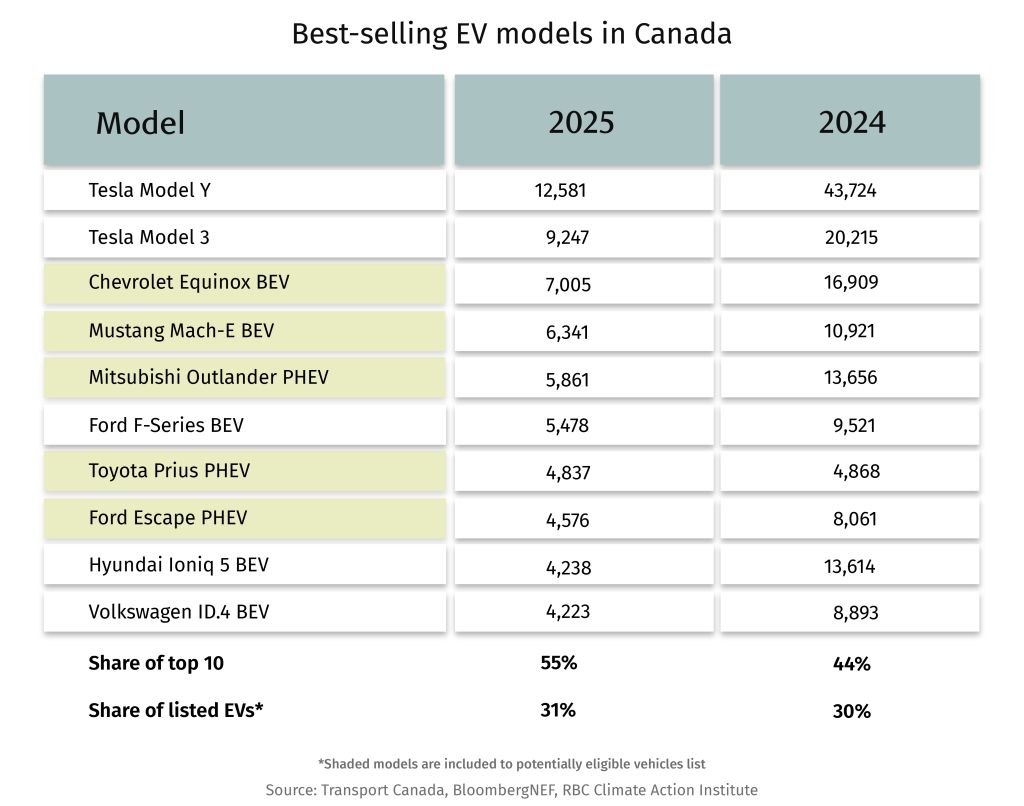
Transaction value threshold of $50,000 targeted for the mass-market segment is also likely to limit adoption. There are only 18 models included in the list of potentially eligible vehicles for a subsidy, 2 which made up only 30% of EV sales in both 2024 and 2025.3

EV prices are still high, and Chinese cars might not deliver the expected relief

The average price of a new EV in Canada was about $70,000 last year,4 so the 49,000 cars under the new China deal could prove to be an attractive bargain. However, final costs for a Chinee EV are likely to creep up as Chinese imports still carry a 6.1% tariff, plus the costs of shipping vehicles to Canada. Chinese carmakers are also likely to seek higher profit margins compared to their competitive domestic market, which is awash with more than 50 brands.

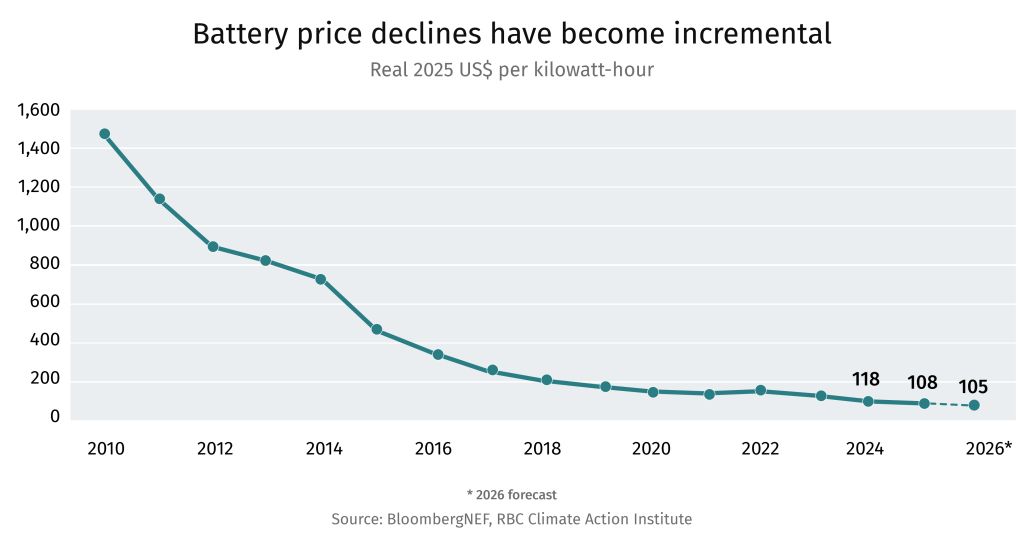
Overall, EV price improvements have lost momentum, especially as battery prices—that make up about a third of EV costs—are also flattening out. The 25-40% difference in costs between Chinese and U.S. carmakers stems from efficiency in battery production.5 The recent scale back of EV roll-out plans by the Detroit Three—Ford, GM and Stellantis—could further slow price improvements in North American EVs.

Check out RBC’s Electric Car Cost Calculator to compare electric vehicle costs to gas models

Emissions would likely to come down, mostly driven by hybrid electric vehicles adoption

Canada’s new emissions standards, however, don’t target EV sales specifically, they only aim to achieve equivalent emission reduction of up to 75% EV sales in 2035, compared to 100% EV sales required under the previous legislation.

Over the past decade, emissions performance improved by 30-50%, however, total emissions continued to rise as more cars entered Canadian roads, from ~20.1 million passenger vehicles in 2011 to 24.5 million in 2024.6 7 BloombergNEF projects that Canada’s car fleet will largely stay flat going into 2035 and decline further in future, in which case improved emissions performance will deliver absolute emissions reduction, though clean fleet eventually hinges on parting with all tailpipe emissions.8

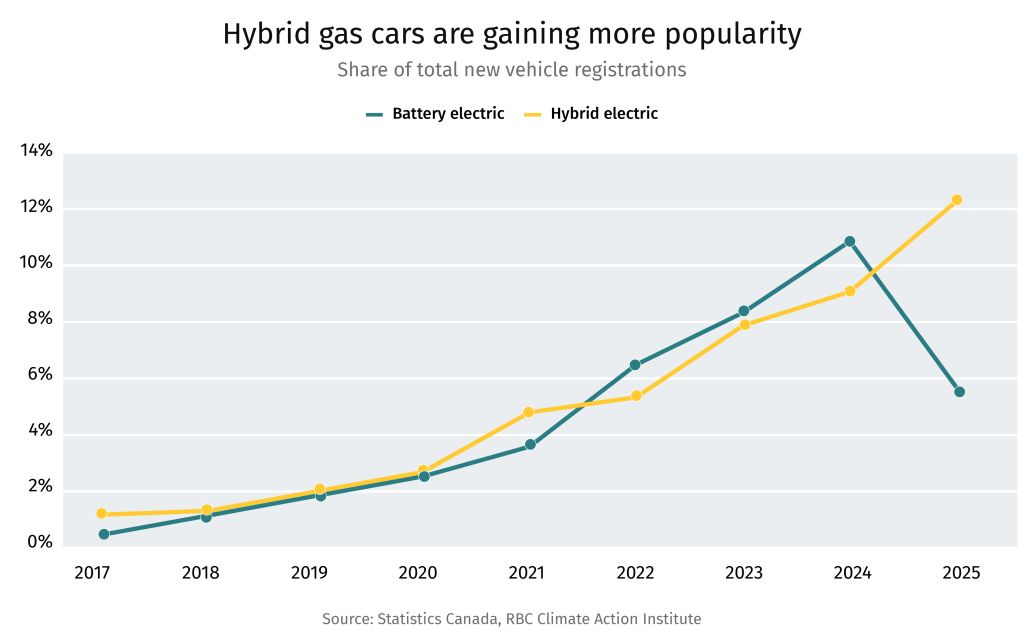
American carmakers now have the flexibility to adjust their technology to ensure compliance, which could delay full electrification in favour of hybrid cars, which are nearly half as less emitting and are more attractively priced. Hybrids are already ascendant, with car sales in the category on the rise in 2025 even as battery-electric vehicles (BEV) sales plummeted.