rbc_toc_for_mmm_action

The Strait of Hormuz blockade has exposed two chokepoints amid the Middle East conflict: one for fossil fuels, and another for Western decarbonization policies. In many respects, it is China that’s leading the global energy transition. Emerging trade data highlights China’s often-underappreciated position in global clean energy supply chains, which has only accelerated with the Hormuz crisis.

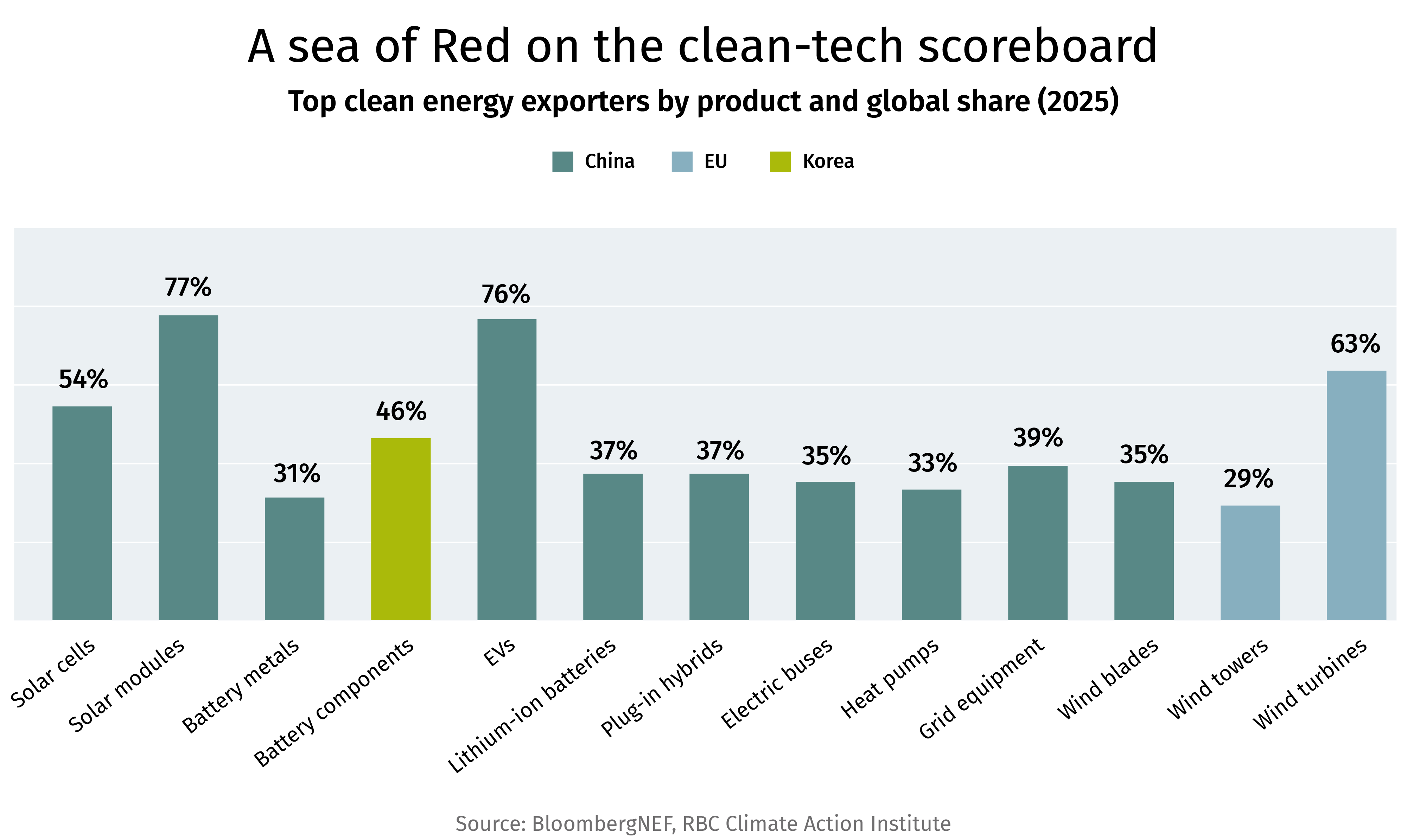
A sea of Red on the clean-tech scoreboard. Top clean energy exporters by product and global share (2025)

China is the largest exporter of almost every major clean technology, often by a significant margin. Non-Chinese leaders—the E.U. for wind towers and turbines, and South Korea for battery components—either source from, or invest alongside, China. In North America, geopolitical sensitivities (to date) have outweighed benefitting from China’s structural advantage.

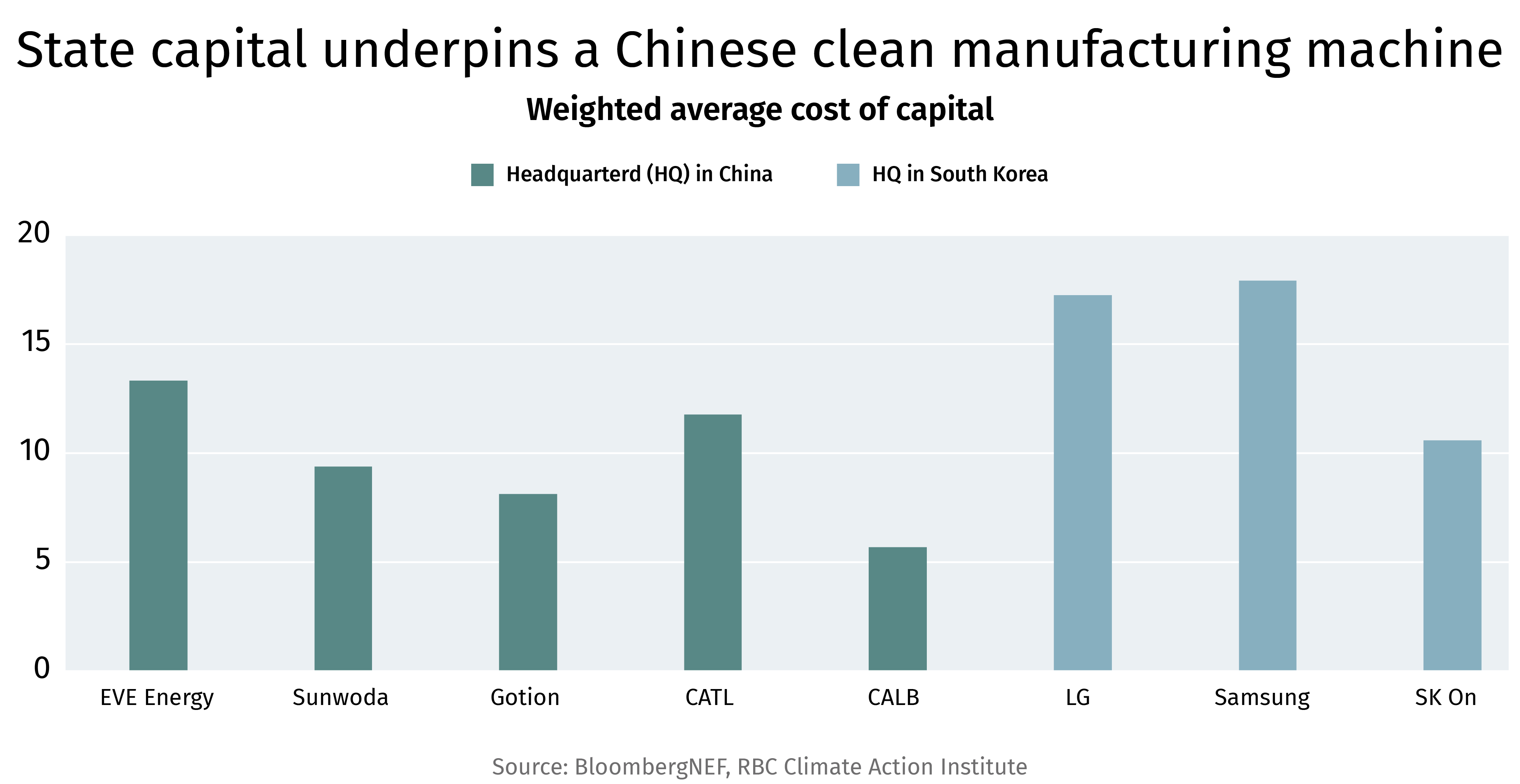
State capital underpins a Chinese clean manufacturing machine. Weighted average cost of capital
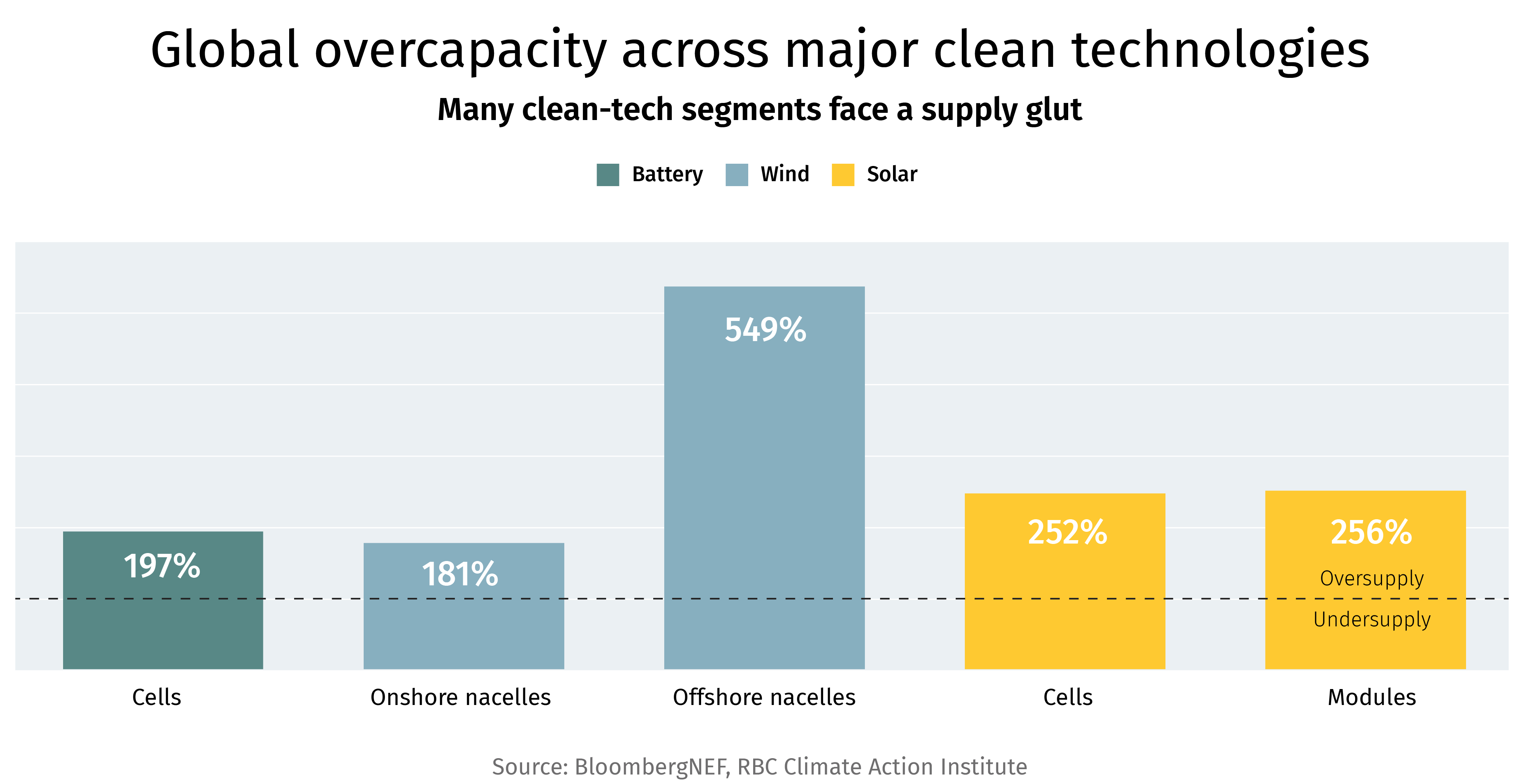
Global overcapacity across major clean technologies. Many clean-tech segments face a supply glut

Chinese producers carry a structurally lower cost of capital than peers—state backing and preferential financing, which in turn often generates and perpetuates overcapacity at a scale private markets cannot, and would not, sanction. This creates a self-reinforcing cycle of fierce domestic competition where only the fittest survive, resulting in a cost floor that continues to fall. If and when demand responds, China is best suited to gain incremental market share given the overcapacity. China has since tried to slow this competition through self-discipline agreements among manufacturers, but thus far has been unsuccessful.

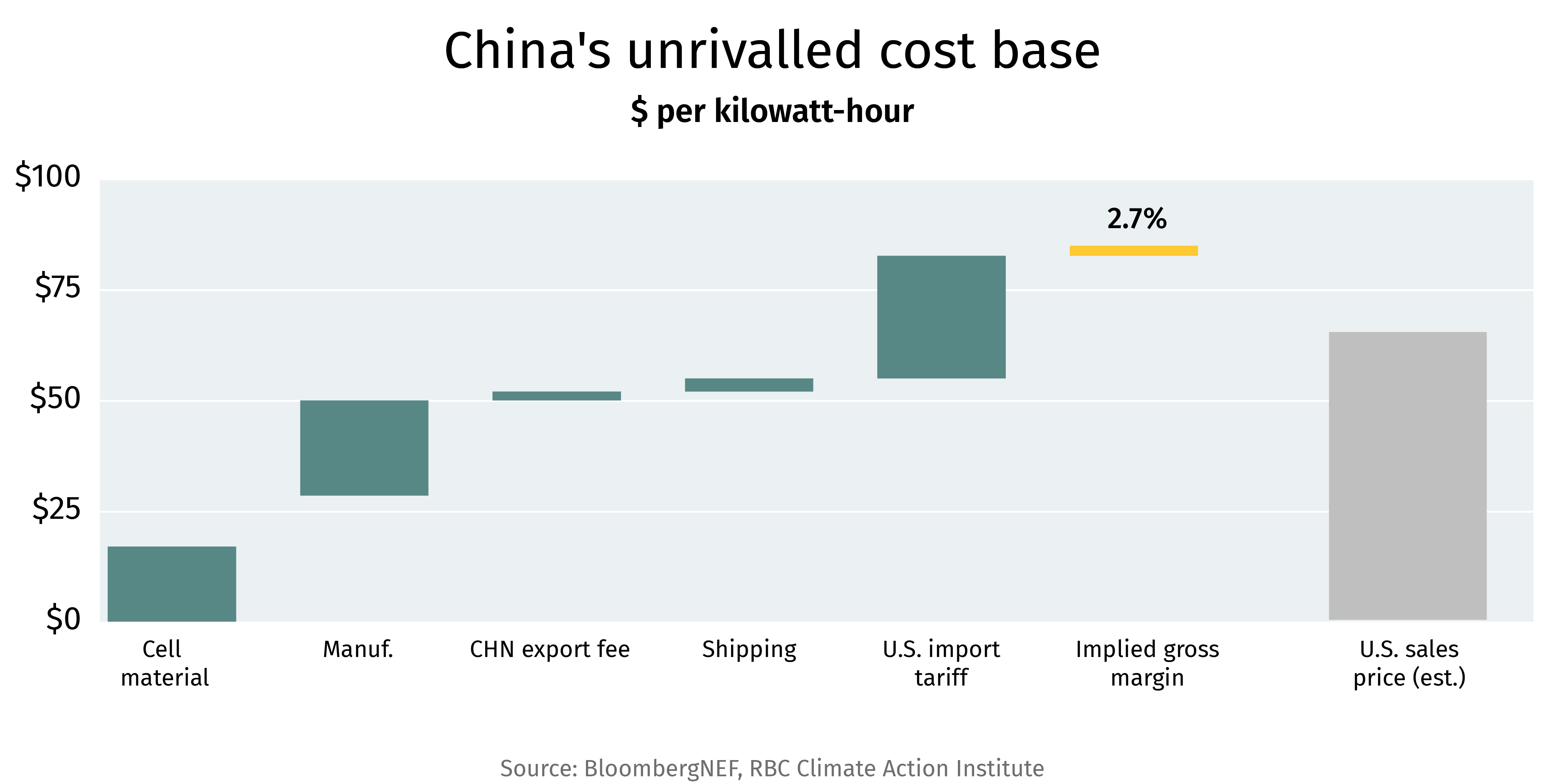
China's unrivalled cost base - $ per kilowatt-hour

Chinese cell materials and manufacturing account for less than US$50 of an US$84 per kilowatt-hour (kWh) delivered cost for battery cells sold into the U.S. The import tariff adds US$27/kWh—more than China’s entire manufacturing cost. Still, Chinese exporters earn a 2.7% margin.

By comparison, S&P Global estimates North American NCM811 (nickel-cobalt-manganese) battery cells cost roughly US$95/kWh, around 90% more expensive than Chinese battery cost. To put this into context, a Tesla Model Y Standard Range carries a 60 kWh LFP (Lithium Iron Phosphate) battery pack. At median Chinese LFP pack prices of US$81/kWh (as per Bloomberg NEF data), a similar sized battery would cost roughly US$4,900 ($6,500), or about 13% of the Model Y’s Canadian sticker price.

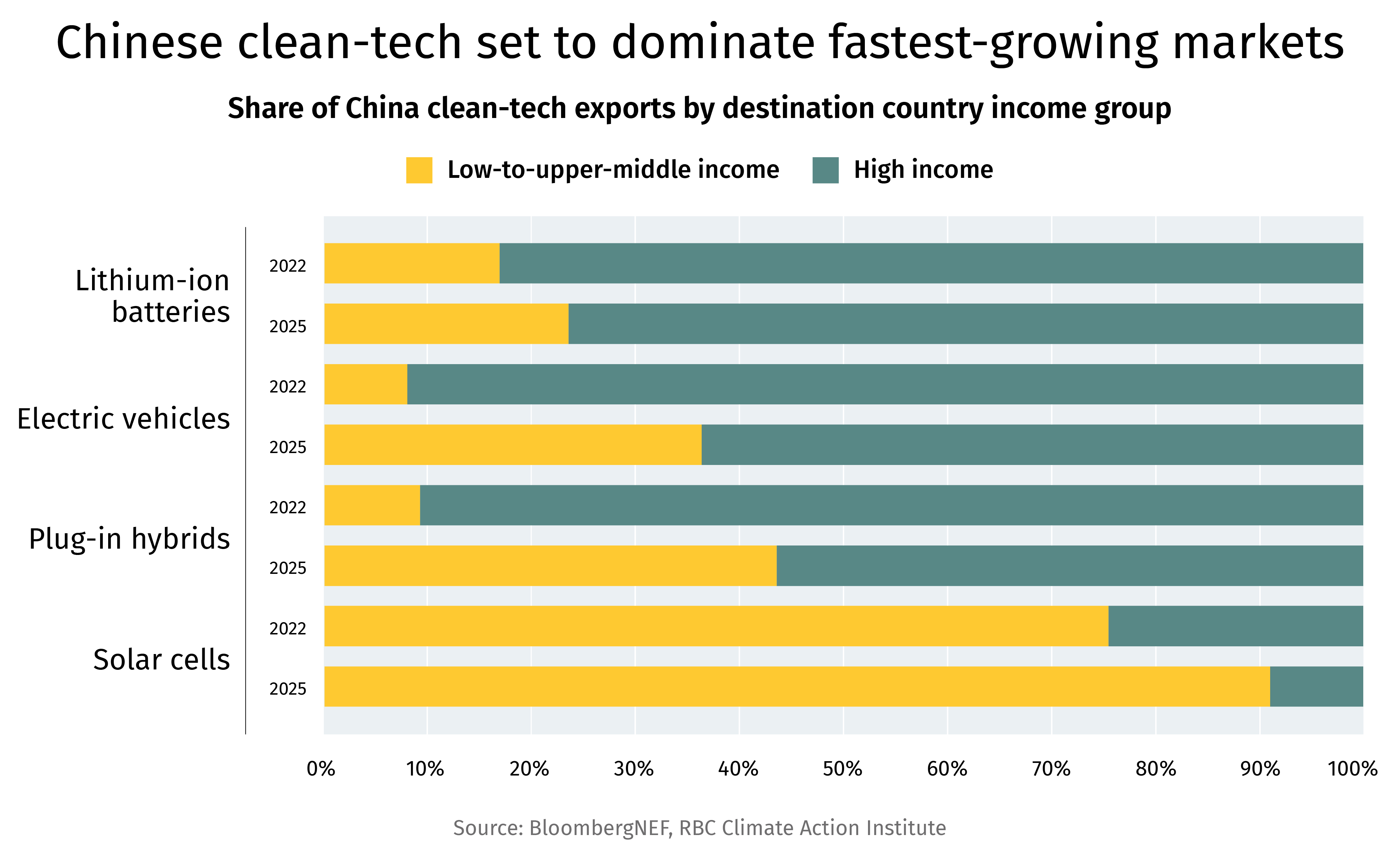
Chinese clean-tech set to dominate fastest-growing markets. Share of China clean-tech exports by destination country income group

While the West is often fixated with the higher cost of clean technologies, roughly 40% of China’s EV exports and over 90% of solar cell exports went to lower-income countries in 2025. China’s cost base has unlocked a category of clean buyer no Western producer will likely ever reach—fast-growing markets, concentrated in Asia, where clean energy adoption is accelerating rapidly.

Pakistan added 18.3 GW of solar in 2025 alone—75% of Canada’s entire installed solar and wind capacity to date—mostly imported from China. Adoption of EVs in Vietnam and Thailand—countries where nominal GDP per capita is less than $10,000—run north of 40% and 20%, respectively (Canada’s EV adoption in 2025 stands at 11%). Vietnam and Thailand do not provide fiscal incentives for the purchase of electric vehicles.

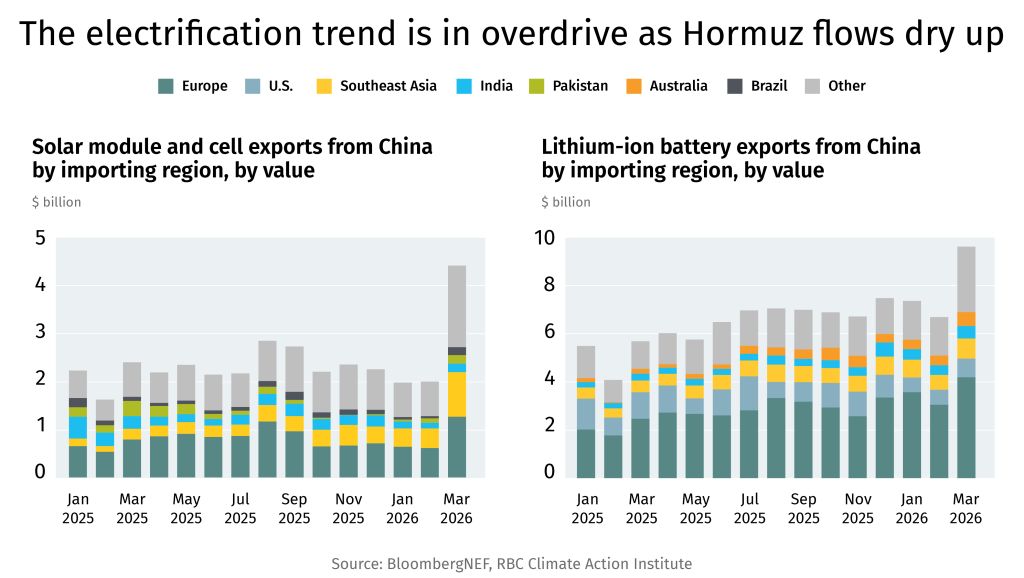
The electrification trend is in overdrive as Hormuz flows dry up. Solar module and cell exports from China by importing region, by value. Lithium-ion battery exports from China by importing region, by value

The Middle East conflict that choked the Strait of Hormuz brought the electrification trend into focus, with fossil-fuel importing countries accelerating their clean energy procurement.

As a result, Chinese battery exports reached nearly US$10 billion in March of 2026 alone, with Europe, Southeast Asia and the Middle East absorbing the volume. U.S. demand was just 8% of March exports.

The transition is happening on Chinese terms. South Korea and Europe have treated that as a sourcing and partnership question, rather than a binary one, and have advanced as a result. North America must also pursue strategies that find a balance between utilizing Chinese content but also building a domestic base that can compete and scale up to meet the opportunity offered by the global energy transition.

rbc_toc_for_mmm_action

Canada and Alberta’s recent agreement-in-principle on methane equivalency sets a 75% reduction target in oil and gas methane emissions by 2035, relative to 2014 levels.1 It could prove to be consequential for the country’s climate ambitions: methane has roughly 80 times the warming impact of CO₂ over a 20-year period and accounts for nearly a quarter of the sector’s total greenhouse gas emissions, making it one of the lowest-cost, highest-impact levers for near-term climate progress.

For oil and gas producers, methane emissions measurement and performance now has greater flexibility on implementation but brings verification to the forefront.

In many instances, things are already up and running among oil and gas operators as several key methane emissions abatement technologies are well established, including:

  • Vapour recovery units that capture gas from storage tanks that would otherwise be vented;

  • Low-bleed pneumatic devices that eliminate routine methane releases from instruments controlling valves and pumps;

  • Compressor seal replacements that prevent leaks from pressurized equipment;

  • Leak detection and repair programs that use optical gas imaging and continuous monitors to find and tackle fugitive emissions.

Collectively, these technologies could reduce emissions by more than three million tonnes per year, representing roughly 1% of Alberta’s annual emissions.2

The province has deployed them at scale. Alberta has invested $172 million in methane reduction technology since 2019, including the installation of more than 58,000 low- or no-bleed devices. The outcomes are tangible: government-funded programs have prevented an estimated 17 million tonnes of emissions from being released, according to the Alberta government. A $25-million implementation program helped 49 operators deploy equipment across more than 650 sites at abatement costs below $50 per tonne.3

Canada’s broader methane mitigation sector has grown to more than 130 firms, with compliance actions under the enhanced regulations projected to generate 34,000 jobs from 2027 to 2040.

However, the progress is not without its headwinds. Alberta had frozen the TIER Fund credit price at $95 per tonne in May 2025, well below the federal trajectory to $170, citing U.S. tariff pressures.4 The MoU commits both governments to a minimum effective price of $130 per tonne, but days after signing, Alberta introduced amendments that flooded the credit market.

While the agreement is promising, success depends on transparent verification, particularly given that a multi-year aerial campaign found Western Canadian oil and gas methane emissions were nearly twice official inventories.5 Canada acknowledged this when it updated its methodology, resulting in a more than 35% increase in reported fugitive emissions.6 The agreement’s commitment to independent third-party assessment may prove its most consequential element.

Norway has the world’s lowest methane intensity thanks to a flaring ban dating back to 1971, but its oil and gas sector is a fraction of Canada’s scale.7 The IEA’s Global Methane Tracker 2025 places Canada’s upstream intensity at approximately 0.40 kg methane/GJ, below the global average of 0.55 kg methane/GJ and well ahead of Russia, Iran, and Turkmenistan, but higher than Norway and Saudi Arabia.8

The EU’s Methane Regulation, the world’s first legally binding standard, will require importers to report methane intensity from 2028 and meet maximum intensity thresholds by 2030, connecting low-methane performance with market access, potentially creating an advantage for producers that can compete on methane intensity.9

Private capital is tracking the signal. One recent example is Montreal-based GHGSat, which raised $47 million in September 2025, bringing total financing to $173 million, backed by Canadian entities Yaletown Partners, BDC Capital, and National Bank.10 The company now operates 16 methane-detecting satellites and has partnered with ExxonMobil and Aramco.

A draft equivalency agreement is expected for 60-day public consultation later this year. The signals point toward a tightening global methane regime: EU import standards by 2030; Japan and South Korea seeking lower-carbon gas supply; and the Global Methane Pledge, endorsed by 159 countries.

rbc_toc_for_mmm_action

What you need to know about the West’s struggle to break China’s dominant role in rare-earth elements refining—and the technologies that could break Beijing’s hold

The West has ceded critical minerals processing to China–and rebuilding that capacity in a way that is environmentally permittable, economically viable, and scalable within Western regulatory frameworks is a defining industrial challenge of the decade.

China controls 70% of the global refining market share for 19 of the world’s 20 most critical minerals; across minerals such as rare-earth elements that figure is north of 90%. This dominance is the compounding effect of three structural forces, each reinforcing the other over time.

Economics. China’s historically low labour costs, energy subsidies, and state-backed industrial policy built a cost structure that undercut Western processors at prevailing commodity prices.

Environment. Conventional rare earth processing relies on sulphuric acid baking, multi-stage leaching, and solvent extraction, generating toxic waste streams and radioactive tailings. According to a Harvard analysis, for every tonne of rare earth output, conventional processing produces roughly 2,000 tonnes of toxic waste. Western jurisdictions internalize those costs through permitting, environmental liability, and community opposition.

Industrial ecosystem. As China’s processing capacity scaled, it drew in engineering talent, downstream manufacturers, and end-use demand—each reinforcing the next. As Western processing retreated over the last 40 years, financial markets stopped funding, institutions stopped training, and downstream manufacturers defaulted to Chinese supply. China accumulated the opposite—four decades of process knowledge, engineering expertise, and refining IP that enforces a barrier to Western re-entry.

Rebuilding Western processing capacity by replicating China’s model runs into the same barriers that caused offshoring. Arguably it’s now compounded by China’s October 2025 export controls on processing equipment and technology. A more tractable path confronts the environmental liabilities of conventional methods directly—and in doing so, also improves the economics.

Grant and procurement decisions offer a reasonable proxy for which processing approaches have cleared basic viability thresholds. The U.S. Department of War, Department of Energy, and the Government of Canada have directed meaningful capital toward next-generation critical minerals processing since 2022.

Waste and tailings. New processing approaches—including flash heating and modular ion-exchange systems—substantially reduce or eliminate waste streams, making projects permittable where conventional processing would not be.

Canadian firm Ucore Rare Metals is a case in point. Its RapidSX platform is a column-based solvent extraction system for rare earth separation that runs approximately three times faster than conventional mixer-settler systems, with a smaller physical footprint and no Chinese equipment or technology. The U.S. Department of Defense (DoD) awarded US$4 million for Ucore’s Kingston, Ontario, demonstration facility, followed by US$18 million toward its Louisiana Strategic Metals Complex. The Government of Canada committed $36 million at the G7 resource ministers meeting in October 2025 to support refining of samarium and gadolinium.

Emissions. Decarbonizing processing is mainly a question of energy source: replacing fossil-fuel-fired kilns and furnaces with electrically powered alternatives—particularly hydro or other clean sources—solves the emissions problem and improves economics given falling clean electricity costs. Most global critical mineral refining runs on coal-heavy Chinese grids. Processing on hydroelectric power, as Quebec offers, materially changes the emissions profile of the same output.

Australia-based Metallium Resources Inc. is working on a solution to transform metal recovery and recycling waste through flash joule heating—millisecond electrical pulses to heat material above 3,000 degrees Celsius, extracting metals selectively without acid or water. The U.S. DoW provided an initial gallium-focused grant and selected the technology as a processing step in a DoW-funded red mud recovery project in Louisiana. Metallium’s Texas demonstration plant has been commissioned, with feedstock supply secured through a binding agreement with commodity firm Glencore plc.

Recycling. The IEA finds recycled energy transition minerals such as nickel, cobalt, and lithium produce on average 80% fewer greenhouse gas emissions than primary mined material. Recycling rates for rare-earth elements and lithium remain below 5% globally, yet feedstock is accumulating fast: spent EV batteries, end-of-life wind turbine magnets, and electronic waste from AI infrastructure all carry recoverable critical metal content.

The EU has institutionalized recycling demand through binding regulation. Under EU Battery Regulation 2023/1542, manufacturers face minimum recycled content requirements. These are enforceable compliance thresholds—not targets. They create a structural demand signal for recovered materials that current processing infrastructure cannot meet.

ReElement Technologies is aiming to turn scrap into mining stock. A subsidiary of American Resources Corp, ReElement runs a modular ion-exchange and solvent-based refining platform processing rare earth magnet scrap and lithium-ion battery black mass into high-purity separated products. The platform accepts multiple feedstock types without Chinese primary concentrates. ReElement has received DoD and Department of Energy funding as part of the U.S.’s effort to establish domestic rare earth and battery metal refining capacity.

Challenging China’s rare-earth refining dominance will take time, but the funding of experimental technologies, backed by policy focus and support, suggests that the transition is finally underway.

Critical Minerals Processing: The West’s Refining Challenge and the Technologies Closing the Gap - download the report

Download the report

rbc_toc_for_mmm_action

  • Canada is one of only six countries with a domestically designed and exportable nuclear technology portfolio. That strategic leverage positions Canada to shape global energy security and forge long-term alliances.

  • Canada can take advantage of rising global interest in nuclear power. The United States has ambitions to quadruple its nuclear capacity, and more than 30 other nations have pledged to triple nuclear capacity by 2050.Canada can offer proven value across the nuclear supply chain to help scale the growing global market.

  • Uranium is the U.S.’s structural vulnerability—and Canada’s advantage. U.S. nuclear reactors require 25,355 tonnes of uranium annually, but sources only 8% of that requirement domestically. Canada, which has the world’s third-largest uranium resources and is ramping up production, is establishing its anchoring role in North America’s nuclear fuel supply chains with its high-quality deposits, reliable production, and geopolitical stability.

  • Canada’s nuclear supply chain is primed for expansion but sits at a strategic inflection point. Ontario’s successful nuclear refurbishment projects have preserved high-value nuclear manufacturing and engineering capabilities and have demonstrated that large-scale nuclear projects can be delivered ahead of schedule and under budget. But future competitiveness depends on sufficient policy clarity, project pipelines, and new nuclear build success to justify sustained investment and expansion.

  • Canada faces three credible, and not mutually exclusive, nuclear futures. Canada can anchor its strategy around: (1) uranium and fuel security; (2) lead in technology through pressurized heavy water reactors (PHWRs) and light water small modular reactors (SMRs); or (3) integrate more deeply into a North American nuclear build-out.

  • Canada needs to move fast to execute its nuclear ambition. Civil nuclear competitors are pairing technology with financing, diplomacy, and long-term partnerships as global interest in nuclear power surges. The window is narrowing for Canada to translate intentions into lasting influence. It could prove to be a multi-billion-dollar exporting opportunity as nuclear investments need to nearly double to US$120 billion annually by 2030 to double nuclear capacity, according to one International Energy Agency scenario.

Following a period of stagnation in the Western world, nuclear power is making a comeback—a global resurgence driven by the rising power demand of artificial intelligence, the energy security concerns, and shifting industrial policy.

The technology sector, facing imminent increases in power demand thanks to AI data centres, is a key driver of nuclear’s resurgence, with companies like Google, Microsoft, Meta, and Amazon signing agreements with conventional nuclear power producers and advanced nuclear technology companies. Google signed a 25-year power purchase agreement with NextEra Energy to restart the Duane Arnold Energy Centre in Iowa, a 610MW plant offline since 2020,1 provided early-stage capital to Elementl Power to develop three advanced nuclear sites in the U.S.2 and partnered with Small Modular Reactor (SMR) company Kairos Power and the Tennessee Valley Authority on a reactor demonstration project.3 Amazon has invested over US$1 billion in nuclear projects and technologies,4 including a stake in the advanced SMR company X-Energy.5 And Meta, looking to secure reliable, long-term electricity supplies to power its AI ambitions, inked 20-year agreements to buy energy from three U.S. nuclear plants (Meta also committed to developing small modular reactors with two companies). These deals will provide the company with 6.6 gigawatts of power by 2035, according to Meta.6

Beyond the growing power needs of artificial intelligence, energy security concerns, particularly in Europe, are driving the reversal of nuclear phaseout plans and the development of new nuclear strategies. Italy has recently begun exploring the reintroduction of nuclear power into the country’s energy mix, almost four decades after its last plant was shut down.7 Denmark is actively considering nuclear power,8 and Norway has begun impact assessment studies for a potential SMR.9 The European Commission is also developing a strategy targeting SMR deployment by the 2030s.10

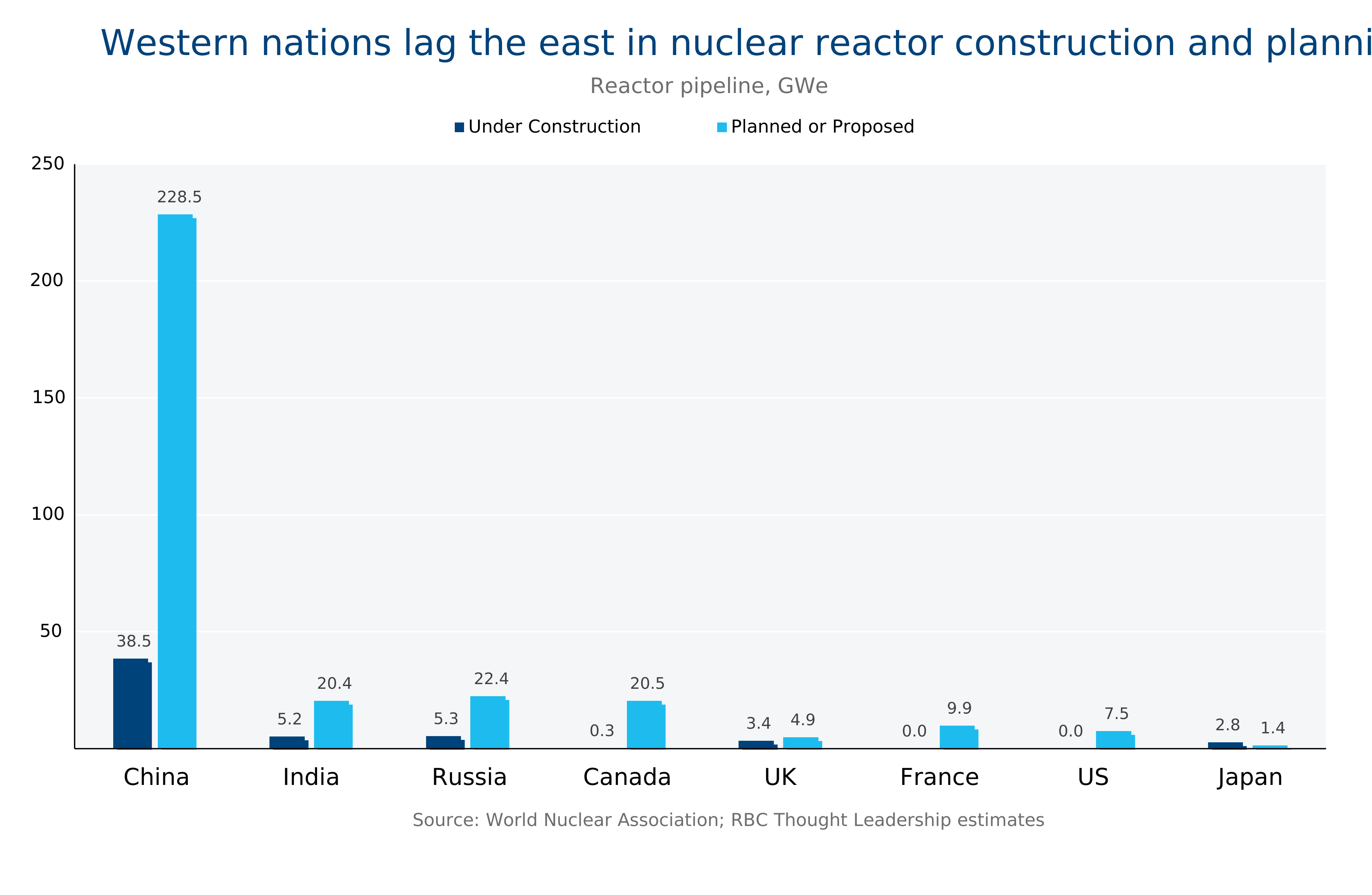
Western nations lag the east in nuclear reactor construction and planning

Yet nuclear’s resurgence in the West faces significant challenges. Most notably, reactor construction projects across several Western nations have been marked by cost and schedule overruns that have raised execution risk and hampered financing. The Vogtle 3 and 4 projects in Georgia, the first new reactor projects in the U.S. in decades, were built at an estimated cost of US$36.8 billion as of 2014, relative to an original estimated cost of US$14 billion.11 The Flamanville 3 project in France connected to the grid in December 2024, twelve years behind schedule, at a cost of €13.2 billion, quadruple the initial cost estimate.12 The U.K.’s Hinckley Point C project remains under construction, and is now projected to cost £49 billion, nearly triple the £18 billion estimate when it commenced construction in 2017, with Unit 1 not expected online before 2030.13 And in the U.S., the V.C. Summer nuclear project in South Carolina was abandoned in 2017 following project delays and cost overruns.14   

But with interest in nuclear resurgent, worldwide capacity could grow 75% to roughly 730GW by 2050 under current policies, according to the International Energy Agency.15 

For its part, the U.S. is aiming to quadruple what is already the world’s largest nuclear reactor fleet by 2050 (up from its previous goal to triple capacity), strengthen its supply chain, and modernize nuclear fuel supplies. The U.S. is advancing rapidly on next-generation nuclear technology, committing about US$5 billion in federal funding to small modular and advanced reactor research, demonstration, and early deployment through U.S. Department of Energy programs.

China, meanwhile, is building an additional 38.5GW of capacity16, while Russia is leveraging nuclear energy for its Arctic, industrial and foreign policy goals, extending its state-backed reactor export model.

With significant uranium reserves and deep nuclear technology expertise, Canada is one of only six countries with domestic and exportable nuclear technology portfolios. And it is embarking on a new nuclear construction program that could become one of the largest in the West if the full suite of projects proceeds as planned. Construction of the G7’s first Small Modular Reactor (SMR) has started at the Darlington nuclear site in Clarington, Ontario, and several of Canada’s nuclear reactors have been successfully refurbished ahead of schedule and under budget, bucking the cost overrun trend of nuclear projects in other Western countries.

Simply put, Canada has an opportunity to play a key role in nuclear’s resurgence—from anchoring global uranium and fuel supply to leading in nuclear technology and service exports to its allies, scaling North American nuclear supply chains, and enhancing global nuclear exports.

Here are some of the goals and requirements for each pathway.

The Goal

As global reactors restart, stable uranium mining and nuclear fuel services (conversion, enrichment, fabrication) become increasingly critical to energy and security. Canada’s world-class uranium deposits and uranium conversion expertise anchor allied nuclear fuel security in North America and abroad, guarding against energy insecurity and resource nationalization risks.

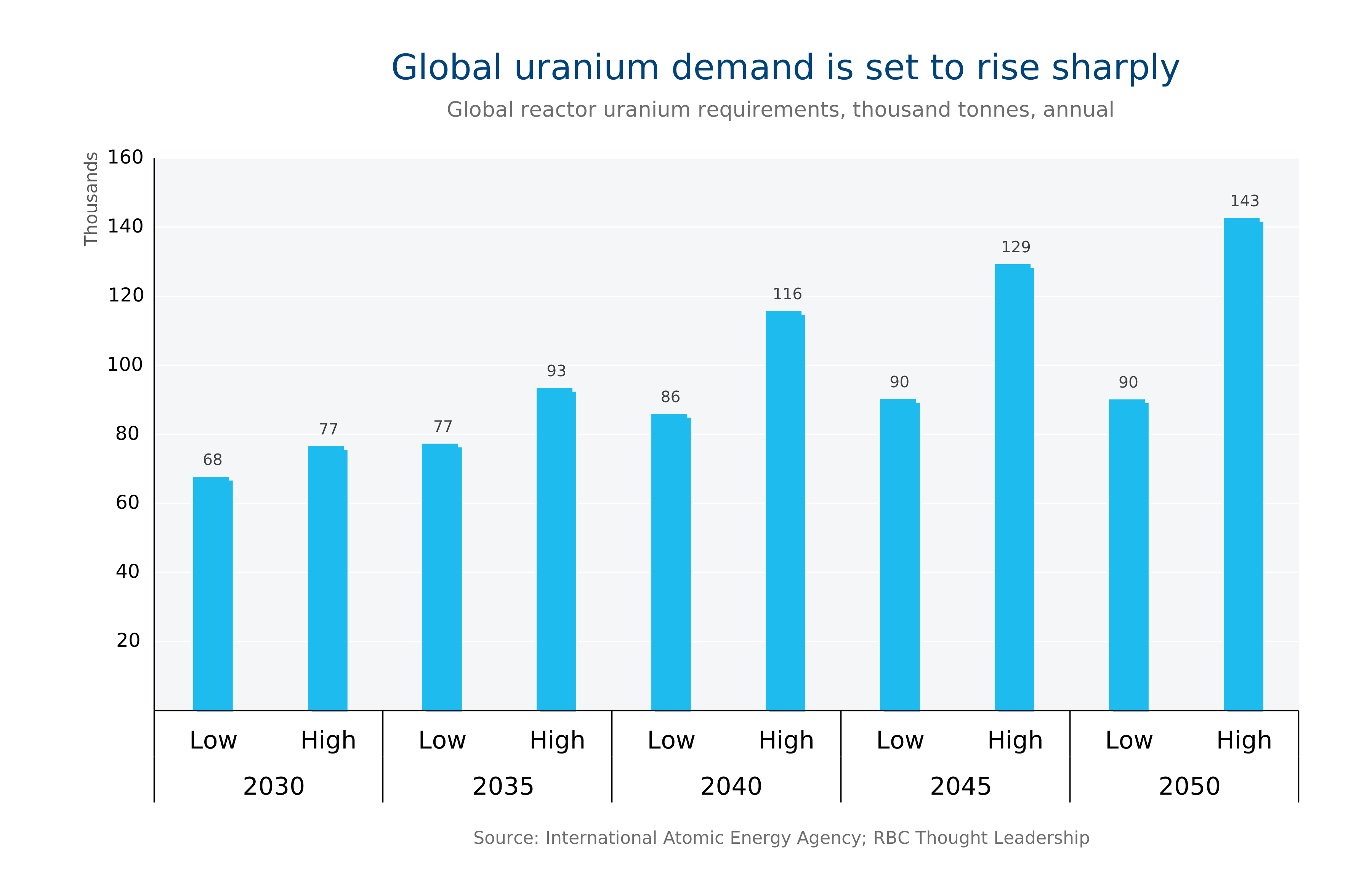
Global uranium demand is set to rise sharply

Leveraging Canada’s Advantage

Planned and under-construction reactors will increase global uranium requirements as they come online, necessitating new mines as existing resource quality drops and supplies of secondary uranium become more constrained.

Canada is home to the world’s third largest uranium resources after Australia and Kazakhstan,17 and already plays a key role in anchoring nuclear fuel supply chains thanks to its high-quality deposits, reliable production, geopolitical stability, and fuel manufacturing expertise.

Ongoing expansion of existing projects and new mines in Saskatchewan will enhance Canada’s position as a key energy security pillar for allies in North America and globally. By building on its strengths in uranium conversion (Canada holds 18% of global uranium conversion capacity),18 Canada can strengthen fuel services stability for an expanding nuclear fleet in North America and abroad.

Pathways to Success

The U.S.’s nuclear reactor fleet already has key energy security vulnerabilities, with 20% of its enriched uranium sourced from Russia in 2024.19 U.S. policy efforts have sought to reduce the dependence with proposed investments in spent fuel reprocessing, and the previous administration’s ban on Russian enriched uranium imports (Russia controls 40% of global enrichment capacity)20. However, even with potential expansion of enrichment infrastructure, the U.S. will remain dependent on uranium imports, with domestic production currently a fraction of annual reactor requirements. U.S. nuclear reactor operators purchased 25,355 tonnes of uranium in 2024, with only 8% sourced domestically, with Canada providing the greatest source of U.S. purchases at 36% of the total.21 Continued U.S.–Canada partnership on uranium will be critical for the security of the U.S.’s nuclear fuel supply. While Canada is currently self-sufficient in uranium and fuel manufacturing thanks to reactors that run on natural uranium, future nuclear reactors, such as SMRs and potentially large light water reactors, will necessitate enriched uranium for fuel, potentially strengthening the case for Canada to seek domestic enrichment capabilities.  

The Goal

Leveraging its existing technology expertise and expanding its domestic large-scale nuclear program alongside growing expertise in SMR deployment would strengthen Canada’s energy and economic security domestically. It would also provide a differentiated portfolio of reactor technologies, engineering and operational services, and regulatory support for new and existing nuclear jurisdictions.

Leveraging Canada’s Advantage

Canada’s experience in the Candu pressurized heavy water reactor (PHWR) design, construction, and operation, underpins a 17-reactor strong fleet across Ontario and New Brunswick and 12 units exported internationally since the 1970s.22 Fuelled by natural uranium, Canadian reactors do not rely on enriched uranium fuels, enabling independence from a concentrated set of enrichment suppliers, an increasingly valuable attribute as energy independence gains traction globally. Modern, gigawatt-scale designs and upgraded versions of existing reactors could expand Canada’s reactor portfolio if they are licensed and proven commercially at home. Simultaneously, successful construction and operation of grid-scale light water SMRs in Ontario would cement Canada’s position as a first mover and operator in this technology, allowing Canadian nuclear suppliers and operators to market their construction, operational and regulatory expertise to new markets.

Combined, these capabilities could position Canada among a handful of countries with credible expertise and export capability across a portfolio of technologies ranging from large nuclear reactors to small modular reactors.

Such a nuclear energy strategy could also provide a boost for the more than 200 domestic nuclear component manufacturers supporting Canada’s program. PHWR and SMR deployments abroad could enable value capture for Canada across the full reactor lifecycle, from uranium and fuel services supply, regulatory support, reactor construction and operation, through refurbishments, and decommissioning—even with some supply chain localization in partner countries.

Pathways to Success

Experience from early SMR projects will enable the Canadian nuclear sector, and partners across the supply chain, construction, and engineering services, to anchor global deployment.  Poland,23 Hungary,24 and Bulgaria25 alone could represent a potential pipeline of up to 40 SMRs, providing a critical early market for Canada starting in the 2030s, as domestic deployment of large reactors sets the stage for international exports later into the decade. To succeed, Canada’s local deployments will need to be delivered and operated successfully, backed by the expansion of its supply chain and nuclear manufacturing base beyond its current refurbishment-ready capabilities. Key manufacturing gaps, such as reactor vessels and heavy water production for new reactors, will need to be closed. Canada will also need to expand its nuclear talent pool to prepare for reactor construction, as well as preserve existing expertise, as global deployments create competition for talent.

The Goal

Integrating more deeply into the U.S. supply chain (including reactor component manufacturing, construction, and deployment) would give Canada access to an established export pipeline for large light water nuclear reactors. Favourable commercial negotiations and cross-border intellectual property transfer could enable Canada to partially localize supply chains for U.S.-origin large reactor components, allowing Canada to support domestic construction programs and support foreign reactor construction.

Leveraging Canada’s Advantage

U.S.–Canada civil nuclear cooperation is rooted in decades of technology collaboration and expertise exchange. Although Canada and the U.S. operate different nuclear reactor technologies today and have distinct nuclear regulatory procedures, the two nations have formally collaborated on several advanced nuclear technologies such as next-generation SMR fuels and light water SMRs through joint technical work between each nation’s regulators.26

A traditionally single-technology nuclear nation, Canada could expand its large nuclear reactor fleet to include U.S.-origin designs such as the AP-1000, which benefits from more than a decade of operating experience in the U.S. and China. This could lower construction risk for gigawatt-scale reactors in Canada by leveraging lessons learned from prior construction projects in the U.S. and China, and enable Canada’s nuclear supply chain to expand, and selectively access a global export pipeline. Currently, 20 AP-1000 reactors have been contracted in markets such as Poland, Bulgaria, Ukraine, and India,27 and Canadian manufacturers have signed memorandums of understanding for the potential supply of  components such as valves and flow control equipment,28 as well as steam generators, pressure vessels, and heat exchangers.29

 Canadian manufacturers have already provided components such as valves30 and fabrication services for reactor modules31 to U.S. nuclear projects such as Georgia’s Vogtle 3 and 4 reactors. U.S. nuclear supply chains, which lay largely dormant until the Vogtle projects lack the capacity to scale reactor construction to the levels envisaged under the U.S. government’s ambitions,32 could create opportunities for Canadian manufacturers if projects proceed to construction. The Canadian nuclear supply chain already hosts more than two dozen companies with nuclear certifications from the American Society of Mechanical Engineers, covering core nuclear components, safety systems, and relief systems,33 evidence of an established, licensable industrial base capable of supporting large-scale reactor deployment.

Pathways to Success

For deeper North American supply chain integration to succeed, Canada will need to secure and increase domestic manufacturing and export opportunities as the U.S. builds out its nuclear industrial base. Washington has increasingly framed nuclear energy as a strategic economic sector, with industrial policy playing a growing role alongside commercial considerations. Recent agreements between the U.S. federal government and nuclear sector partners reflect this orientation, positioning reactor deployment as a vehicle for U.S. industrial renewal. The trajectory of existing U.S.–Canada trade dynamics, such as tariffs on Canadian-manufactured components, alongside commercial negotiations, will determine the extent to which Canada is able to localize manufacturing and scale current exports to the U.S.

  • Eighty years ago, Canada became the second country, behind only the United States, to achieve sustained nuclear fission thanks to the work on the experimental Zero Energy Experimental Pile (ZEEP) reactor at the Chalk River Laboratories in Ontario.34

  • Canada’s domestic, pressurized heavy water nuclear reactor technology, the Candu, supplies 15% of the country’s electricity through 16 reactors in Ontario and one reactor in New Brunswick.35

  • The Canadian nuclear sector employs roughly 89,000 people,36 and is a major producer of medical isotopes, like Cobalt-60 for cancer treatment and medical sterilization, through its nuclear reactors.

  • Canada leads in next-generation nuclear technologies, having developed the world’s first SMR roadmap in 2018 and is building the G7’s first SMR near Toronto, a project that will eventually supply 300MW of capacity, enough to power 300,000 homes with reliable, zero-emission power.

  • Canada is advancing rapidly on its deep geological repository, a culmination of years of stakeholder engagement and Indigenous engagement, entering the impact assessment process, bringing the country closer to a single solution for the long-term responsible management of spent nuclear fuel.

As Canada expands its nuclear power industry, it needs to enhance and refine several areas across the supply chain.

  • Establish a comprehensive nuclear strategy. Centred on energy and economic security and a fleet-based approach for deployment, a pan-Canadian comprehensive strategy—in coordination with Ontario and other provinces, industry and universities—can improve certainty needed for supply chain investment, workforce development, inter-provincial cooperation, and international partnerships. It could integrate deployment targets, construction timelines for major projects, and technology pathway clarity with the goal of ensuring future energy and economic security.

  • Develop a competitive nuclear export financing and diplomatic infrastructure. A dedicated nuclear export financing facility, supporting a multi-technology reactor portfolio including SMRs, could improve Canada’s competitiveness as an exporter of nuclear reactors, components, and expertise. It could be paired with enhanced diplomatic infrastructure, with dedicated nuclear trade commissioners and the integration of civil nuclear cooperation into Canada’s foreign policy strategy.

  • Build and maintain a nuclear-skilled workforce. Skills development planning, including expansion of apprenticeship programs, visa fast-tracks for nuclear specialists, university partnerships, and training facilities tied to deployment timelines could smooth the way for large-scale nuclear deployment.

  • Close critical supply-chain gaps and support expansion. Canada’s nuclear supply chain will need to scale heavy water production and close gaps in calandria manufacturing and zirconium supply for fuel cladding, while supporting local suppliers to remain competitive against manufacturers in other civil nuclear jurisdictions like China. The nuclear supply chain can provide an avenue for manufacturers from other sectors (e.g., the automotive industry) to diversify into, but can benefit from targeted support for high-cost and time-intensive nuclear component manufacturing certifications from professional bodies such as the Canadian Standards Association and the American Society of Mechanical Engineers.

  • Protect uranium value chain and strengthen fuel security. Growing mining capacity, expanding conversion infrastructure to capture more value-added services along the nuclear fuel cycle, and assessing advanced fuel requirements and potential expansion of Canada’s fuel capabilities into areas such as fuel fabrication for light water nuclear reactors and enrichment will prepare Canada and its allies for an energy secure future regardless of technology.

Download the Report

RBC Thought Leadership is grateful to the following individuals and organizations for sharing their expertise.

Atkins Realis

Atomic Energy of Canada Limited

BWXT Canada

Cameco Corporation

Canadian Nuclear Safety Commission

Conexus Nuclear Inc.

David Paterson

Jacquie Hoornweg

Laurentis Energy Partners

Michelle Leslie

Milt Caplan, MZ Consulting

Norm Sawyer, ION Nuclear Consulting

Ontario Power Generation

RBC Capital Markets

SMR Forum

The Breakthrough Institute

The Canadian Association of Small Modular Reactors

The Canadian Nuclear Association

The Organization of Canadian Nuclear Industries

The World Nuclear Association

Westinghouse Canada

rbc_toc_for_mmm_action

Oil and gas markets are reeling as the Iran war chokes off production in the Middle East, with its impact reverberating across the world. As energy supply chains get fractured and prices become volatile, we examine the emerging trends defining this new era of global energy insecurity.

  • Alternative Middle East export routes have limited capacity of 3.5 to 5.5 million bpd.

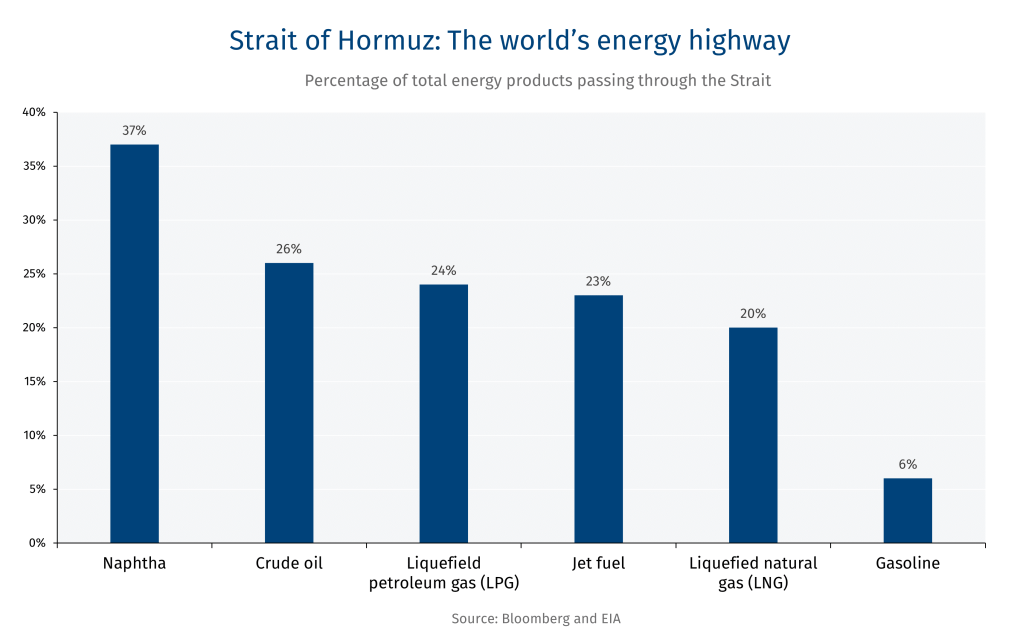
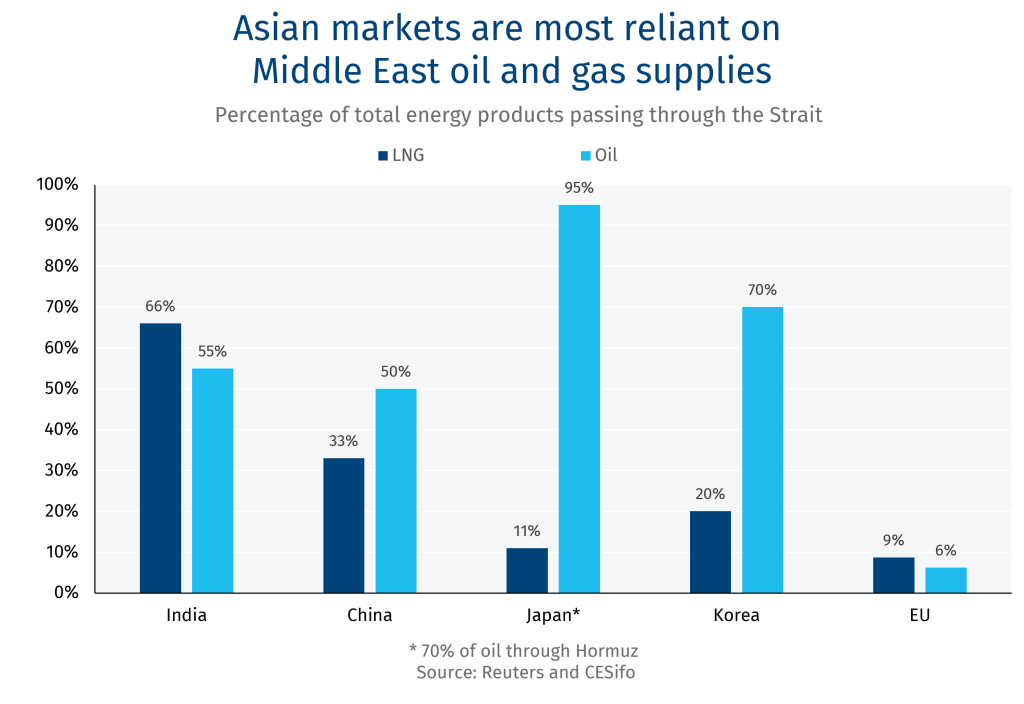
  • The 54-kilometre waterway handles 20 million barrels per day (bpd) or 20% of global oil supply. Only the Strait of Malacca, in Southeast Asia, handles more crude oil.

  • Close to 93% of Qatar’s LNG exports transit through the Strait—19% of global LNG trade.

Strait of Hormuz: The worlds' energy highway
  • Japan was the first country to announce the release of oil from its reserves as part of the International Energy Agency-coordinated action, injecting 80 million barrels in the market.

  • The U.S. is allowing India to buy Russian oil as a stop-gap measure—as New Delhi scrambles to find alternatives for some of the 2.5-2.7 million bpd it sources from Iraq, UAE, Saudi Arabia and Kuwait.

  • The U.S. has exempted Russian oil from sanctions for at least 30 days—weakening Western efforts to support Ukraine in its war against Russia.

Asian markets are most reliant on Middle East oil and gas supplies
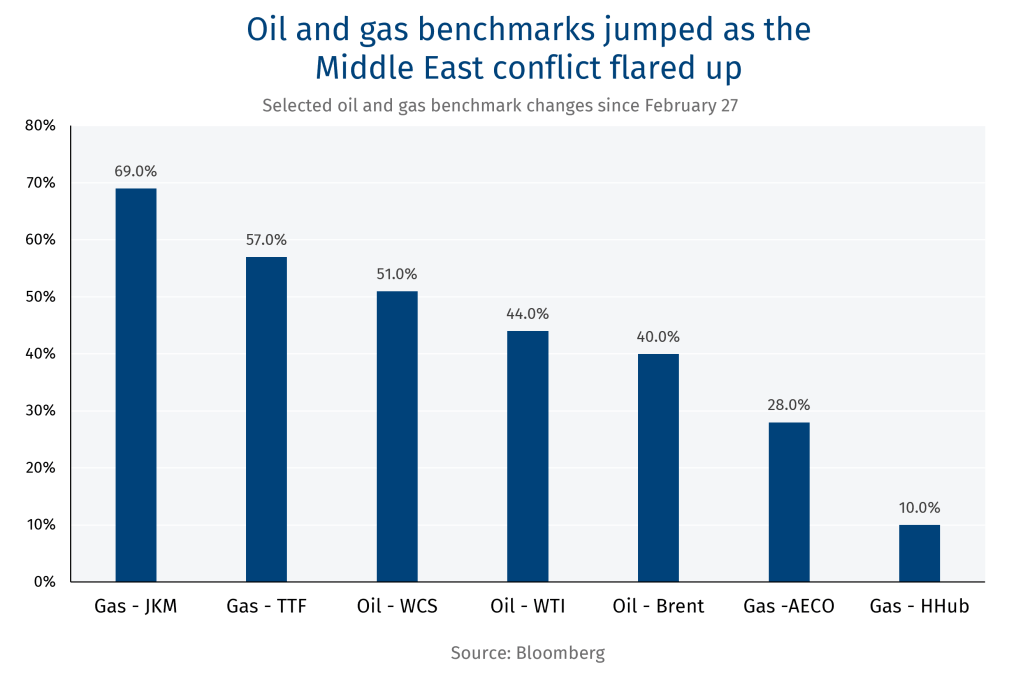
  • LNG Japan/Korea Marker (JKM) jumped the most, underscoring Asian dependence on the Strait.

  • The crisis has erased a looming LNG supply glut, with Europe Asia scrambling for supplies.

  • Oil prices remain volatile, vacillating between US$76-119 per barrel over the past week.

Oil and gas benchmarks jumped as the Middle East conflict flared up
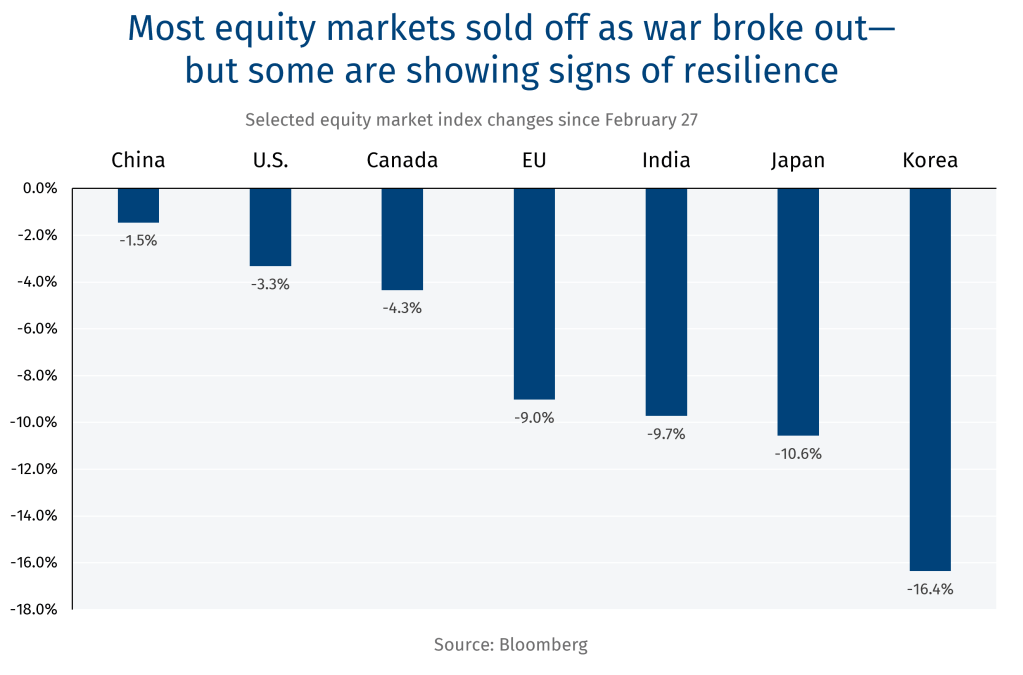
  • The Korean and Japanese stock market sell-off is reflective of energy exposure but also above-average year-to-date performance pre-crisis.

  • China’s estimated 100-day oil import cover has shielded its stock market from a severe downturn.

  • U.S. and Canada markets have been structural winners in the reallocation of global equities.

Most equity markets sold off as war broke out - but some are showing signs of resilience
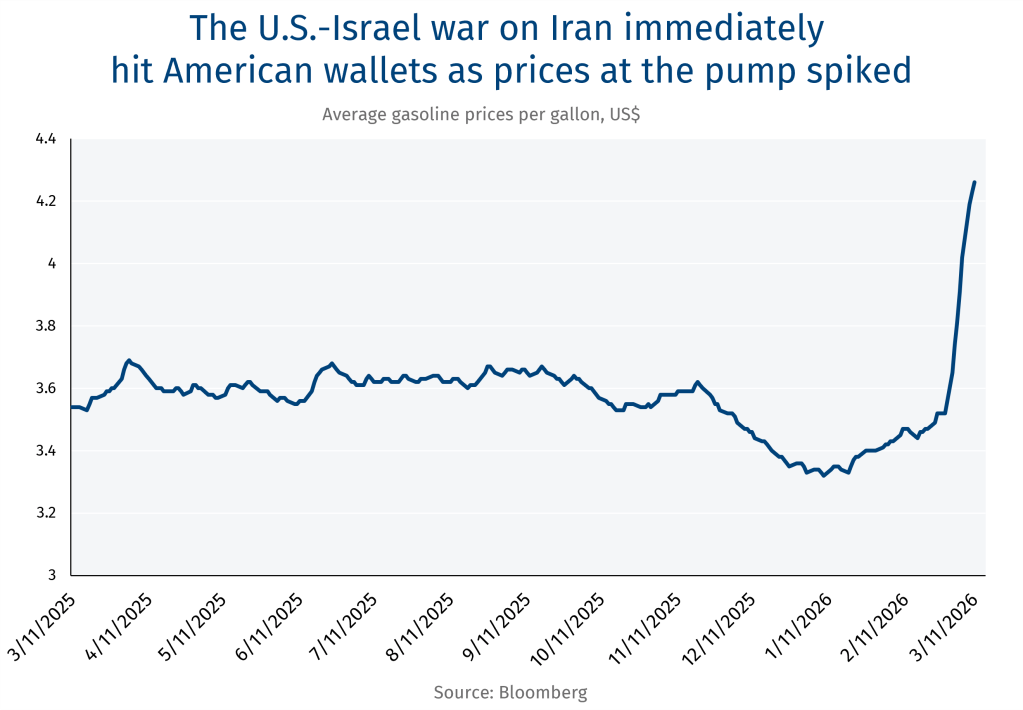
  • While North America’s net exporter of crude oil, the global structure of oil markets has not spared the American economy

  • A recent Washington Post/CNN poll shows about 7 in 10 American voters are “very” or “somewhat” concerned that the Iran war will send oil and gasoline prices higher

  • Higher gasoline prices would be a key datapoint for the U.S. administration as it plots it next move.

The U.S.-Israel war on Iran immediately hit American wallets as prices at the pump spiked
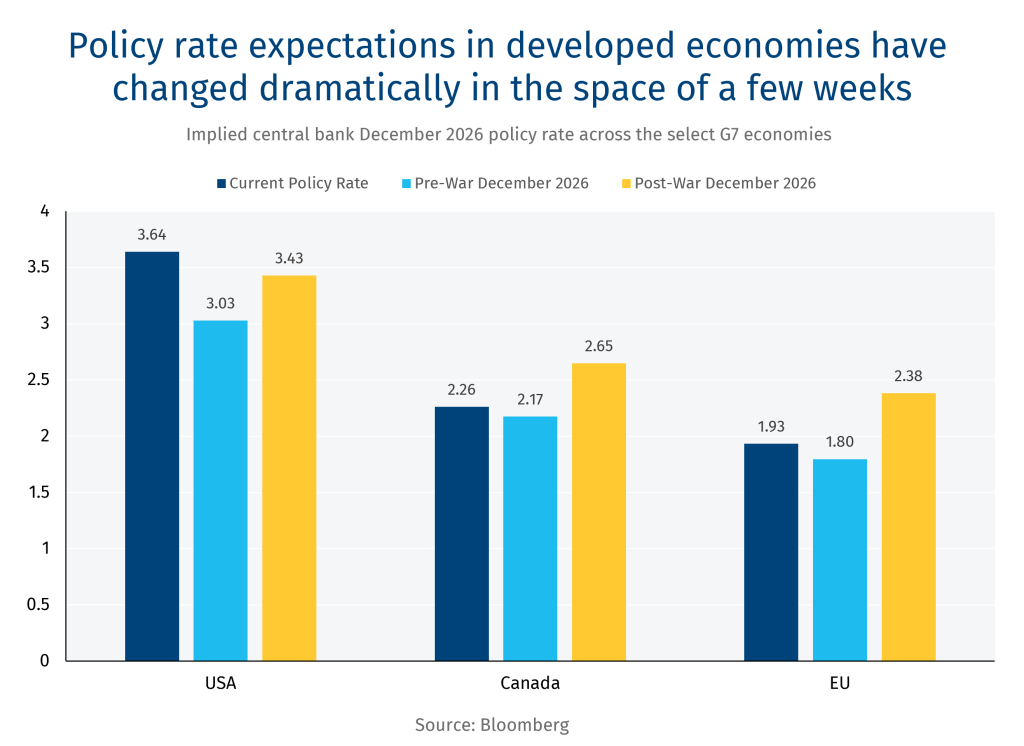
  • Across Canada, the U.S. and EU, the expectation was an easing of monetary policy as the year progressed—but it has reversed on fears of higher inflation.

  • A sustained US$80 oil could raise inflation from 2.2% to 2.5% in Canada, according to RBC Economics.

  • Similarly, the U.S. would see an increase from 2.7% to 3.1% at US$80 per barrel.

Policy rates expectations in developed economies have changed dramatically in the space of a few weeks
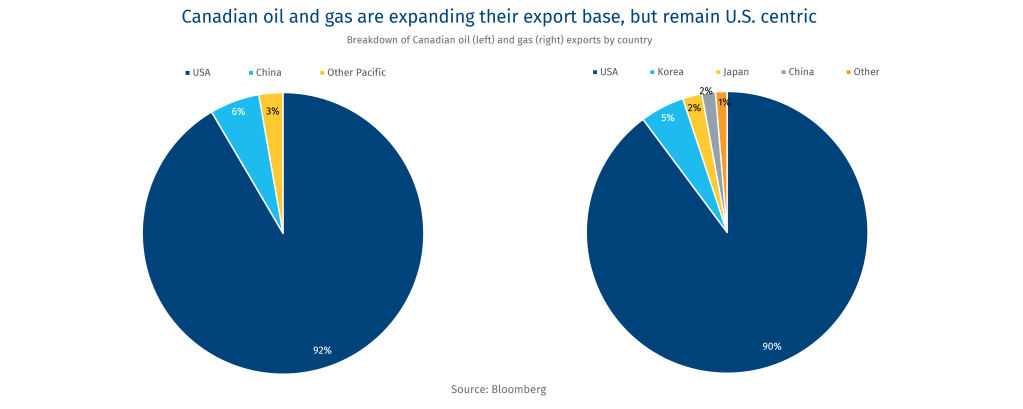
  • China has been Canada’s biggest non-U.S. oil export destination—which could grow further as relations with Beijing improve.

  • South Korea has been the primary destination for Canadian LNG to date.

  • Over the long term, Canada could likely serve a more meaningful role in de-risking Asian supply.

Canadian oil and gas are expanding their export base, but remain U.S. centric
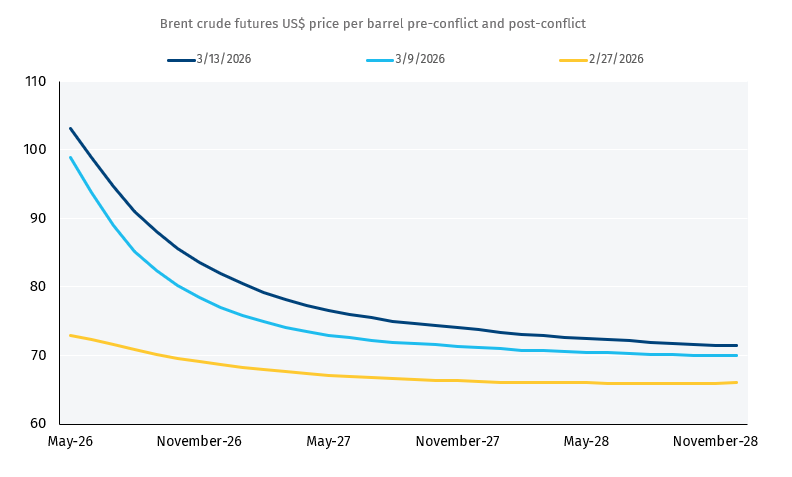
  • Around 8 million barrels per day of crude and 10 mbd of liquids production in the Middle East is reportedly shut in with the Strait of Hormuz at a virtual standstill, according to the International Energy Agency.

  • Despite International Energy Agency members planning 400-million-barrel injection into markets, the price trajectory would likely depend on the U.S.’s ability to ensure the security of the Strait of Hormuz.

Brent Future curve suggests oil prices will remain higher for longer

rbc_toc_for_mmm_action

This year’s Prospectors & Developers Association of Canada (PDAC) event in Toronto was abuzz with talk of Canda’s critical mineral riches and the speed at which they can be brought to global markets—at commercial scale. The industry is enthusiastic, the government supportive, but there is a long way to go to realize Canada’s mining potential. Here are seven themes that we observed at the event.

The U.S. and Canada approach critical minerals from materially different strategic frameworks, and that divergence has consequences for bilateral cooperation.

The U.S. framing is one of industrial decay and national security emergencymanufacturing surge capacity, weapons systems dependency, and concerns of China outpacing American armament production capacity by a factor of five to six. Within that frame, critical minerals are not a supply chain optimization problem but rather a symptom of a broader hollowing out of American industrial capability that extends to smelters, chemical processing, and advanced manufacturing.

Canada’s framing has been more “narrowly” commercial—a supply chain opportunity, a geological advantage to be monetized, and a seat among allies to be secured.

That gap in threat perception creates friction with an expectation the U.S. is (or at least will be, over time) operating on a more binary logic—alignment or non-alignment—while Canada has positioned itself as a middle power seeking rules-based multilateral cooperation.

Whether Canada narrows that perception gap—or develops an independent strategic rationale grounded in its own economic security interests—will likely impact how “seriously” it is taken at the bilateral table as the Canada-United States-Mexico trade deal review evolves.

Canada’s geological endowment is enviable, but extraction without downstream processing is increasingly seen as less than ideal. Yet, the economics of building processing capacity in Canada are deeply unfavourable.

Anecdotally, conversion costs for lithium spodumene to cathode-grade material run roughly twice what they are in China and at times in Latin America. Global copper smelter margins are often 2–5%, if not simply breakeven. Canada has closed multiple smelters over the past fifteen years. Even in China, the rare earth refining industry has not earned its cost of capital in three decades—arguably the watermark against which any new entrant must be measured.

These margins do not support private sector investment at scale without intervention. We heard overwhelming agreement that state capital needs to function as first dollar in, last dollar out on processing infrastructure. The buyers’ club concept—pooling G7 demand and stabilizing prices when they are depressed—addresses part of this problem, but the governance and trust architecture to deploy that capital at scale remains unresolved.

The bilateral/plurilateral distinction that emerged from the sessions as it relates to the U.S. view of a buyers’ club—supply sourced bilaterally, but demand aggregated multilaterally—sounds like burden-sharing but warrants scrutiny. This architecture is in essence the U.S. acquiring mineral supply on its own terms, stored on U.S. soil and then asking allies to aggregate demand around what is effectively American strategic inventory. Put plainly: Buy American.

Nations’ tendencies to operate in self-interest in a scarcity scenario is precisely the reason for Project Vault’s domestic storage requirement. Still, for other nations like Canada, the risk is being a favoured supplier with no guarantee of preferred access when it matters most. Such asymmetry, hopefully, can be negotiated.

If there is one commodity where the investment thesis is most favourable, it is copper. The convergence of AI infrastructure buildouts, electrification, defence procurement, and grid expansion has created a demand profile that generalist investors can underwrite without relying on policy-dependent assumptions.

Yet even with this enviable demand profile, there is strong consensus of a growing shortage of copper supply, still. As it relates to Canada, copper may be the most realistic near-term entry point through which broader mining investment, including in associated polymetallic deposits, gets unlocked, solving many of the “more traditional” less niche, mining development challenges.

At its simplest, sustainable long-term demand secures supply chains. China built its critical minerals dominance through civilian demand—electric vehicles, wind turbines, batteries—at a scale that justified refining investment and created learning curve advantages that now make its processing margins tough to compete against.

The strategic paradox facing North America is attempting to construct supply chains for critical minerals while simultaneously pulling back on the civilian demand drivers to justify that investment. Without a credible domestic demand signal, processing facilities face uncertain offtake, and without offtake, project finance is unavailable. At present, alternative anchors such as defence and AI/data centres is expected to be the near-term catalyst, but the sheer size of the total addressable clean energy demand is one that better captures the attention of longer-term, more generalist investors.

Treating 30-plus minerals as a single policy strategy ignores the complexities of each metal’s supply chain. The genuine policy problem is in niche commodities where Canada punches above its weight—rare earths, scandium, tungsten, graphite, nickel and possibly lithium—where markets are either small, opaque, and/or structurally dominated by a single producer (often China).

A strategy focused on five to eight minerals with a clear demand anchor is viewed as more executable and more credible from an effective strategy than a broad-based approach. If oriented successfully, this will have positive spillover effects on the procurement of the types of skills and human capital associated with the greater strategy, such as rare earth separation, hydrometallurgy, and advanced processing requiring specialization unreplicated through equipment procurement alone. The expertise that exists across the G7 countries is an untapped potential.

The Major Projects Office represents a meaningful shift toward facilitation of these projects. Brownfield expansion is the near-term opportunity while Indigenous partnerships, structured early with genuine economic participation, is consistently the most effective accelerant to mitigate permitting and financing risks.​​​​​​​​​​​​​​​

rbc_toc_for_mmm_action

Roughly $1 in $10 in Canada’s mining sector has been directed towards pure-play critical mineral development over the past 25 years. The majority of the $700+ billion raised in Canadian mining equity and M&A has poured into other metals, with gold and precious metals accounting for 70% alone. In contrast, Australia directed twice that amount over the same period.

Critical minerals are finally attracting a bigger share of mining investment. Around 67 critical minerals projects—representing about half of all active mining proposals—are currently planned, proposed, or under construction, with a potential investment of $72.4 billion by 2034, according to the Major Projects Inventory.

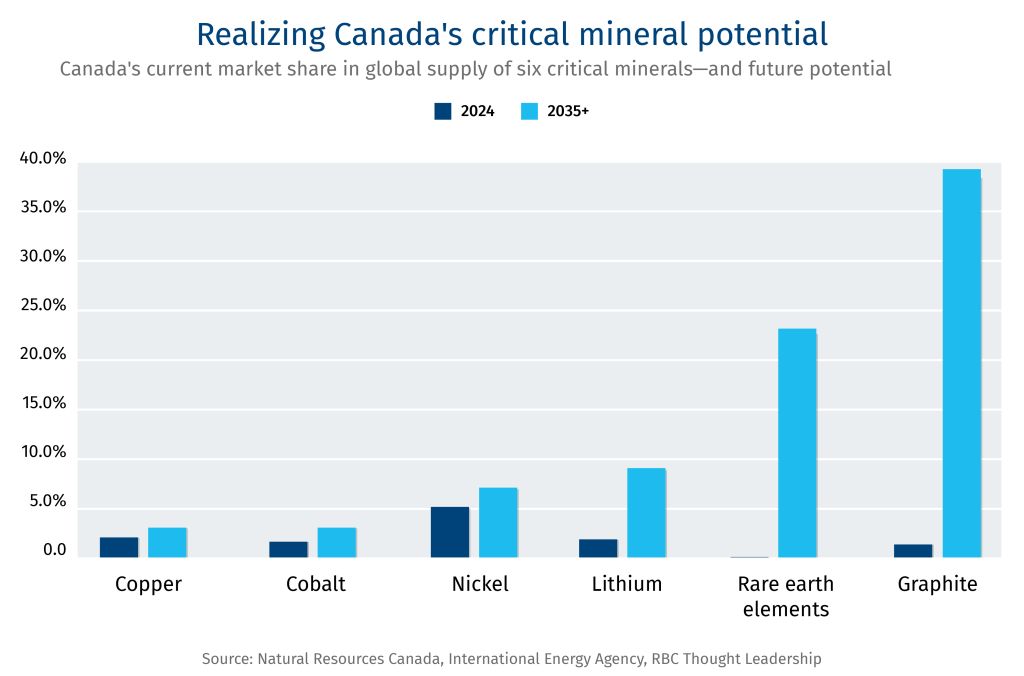
Canada could account for 14% of the global supply across the six key critical minerals by 2040. Current Canadian production of six core critical minerals, cobalt, nickel, lithium, copper, graphite and rare earth, is on average 2% of global supply. It could rise to 14%, on average, at full capacity if identified projects come on stream, the Canadian government estimates.

However, Canada lacks a strong base of well-capitalized domestic players. Only 19% of Canada’s publicly listed S&P/TSX Composite mining firms are diversified miners, compared to two-thirds of Australia’s S&P/ASX 300 mining index. To reach its goals, Canada will likely need to continue relying on international mining companies and foreign investors.

Two decades of capital allocation decisions have stunted critical minerals’ growth. Canada remains largely a “mine-and-ship” jurisdiction when it comes to critical minerals—with much of the value add and refining picked up by China and other players who have captured the refining segment, and further developed ancillary supply chains, such as electric vehicle, electronics and defence industries.

Despite trade tensions, there are still signs of U.S.-Canada capital alignment. Under President Donald Trump, the U.S. has invested an estimated US$135 million in direct equity stakes in Vancouver-based companies Trilogy Metals and Lithium Americas Corp., in addition to a US$2.3 billion bridge loan for Lithium Americas. It will be unlikely the U.S. can (or wishes to) completely phase out Canada from North America’s critical mineral ecosystem.

Canada faces a critical minerals capital crunch. The absence of patient, risk capital severely impedes the country’s ability to support both Canada and other Western nations in their efforts to move their critical mineral supply chains away from China.

Realizing Canada's critical minerals potential

That capital is needed for Canada to take advantage of the critical minerals industry that’s projected to grow between two to three times globally with a capital requirement of US$500-600 billion by 2040, according to an International Energy Agency forecast. Global demand for six core commodities—cobalt, copper, graphite, lithium, nickel and rare earth elements—will be driven by several growth sectors, including electric vehicles, clean energy infrastructure and space. As well as strategic sectors such as defence, manufacturing and electronics.

Canada holds world-class geology across all six metals but remains a relatively marginal player, accounting for roughly 2% of the global supply of the six metals. If identified projects proceed at full capacity, it could climb to 14% of total supply over the next 15 years, on average, according to Canadian government estimates. The development of vertical supply chains such as an expanded advanced manufacturing base, could have an exponential impact on Canadian supply to meet domestic and international demand.

Yet, Canada remains largely a “mine-and-ship” jurisdiction. Raw metals are shipped mostly to China where they are refined and transformed into high-value components. It’s the result of two decades of capital allocation decisions and the lack of a robust national strategy, but also China’s ability to depress metal prices to crush competitors.

There’s considerable global momentum to propel the Canadian critical minerals industry forward. The U.S. is leveraging its funding, market mechanisms and guarantees to build out a critical minerals market that excludes China. Meanwhile, Europe and several G20 allies are eager to diversify their critical minerals supply chain as they fear the Chinese industrial machine will crush their domestic economies and leave them ever more beholden to Beijing.

China’s recent export controls on key minerals—including rare earths, graphite, gallium, germanium—over the past year are a clarion call for Western countries to act.

Among its G7 allies, Canada is best equipped to take advantage: it’s home to high-grade lithium belts and graphite deposits in Quebec and Ontario, globally significant nickel resources in Manitoba, formidable copper reserves in British Columbia, and rare earth elements in pockets across Canada, including Newfoundland and Labrador. Few countries can claim this breadth across all six critical minerals at scale.

We have identified five structural pressure points that explain why Canada’s critical minerals sector remains undercapitalized, and why market forces alone will not correct the imbalance. Closing the gap requires a coordinated public-private agenda anchored in sovereign co-investment, infrastructure financing, miner-driven shared processing corridors and integration into Western supply chains.

1. The loss of national champions

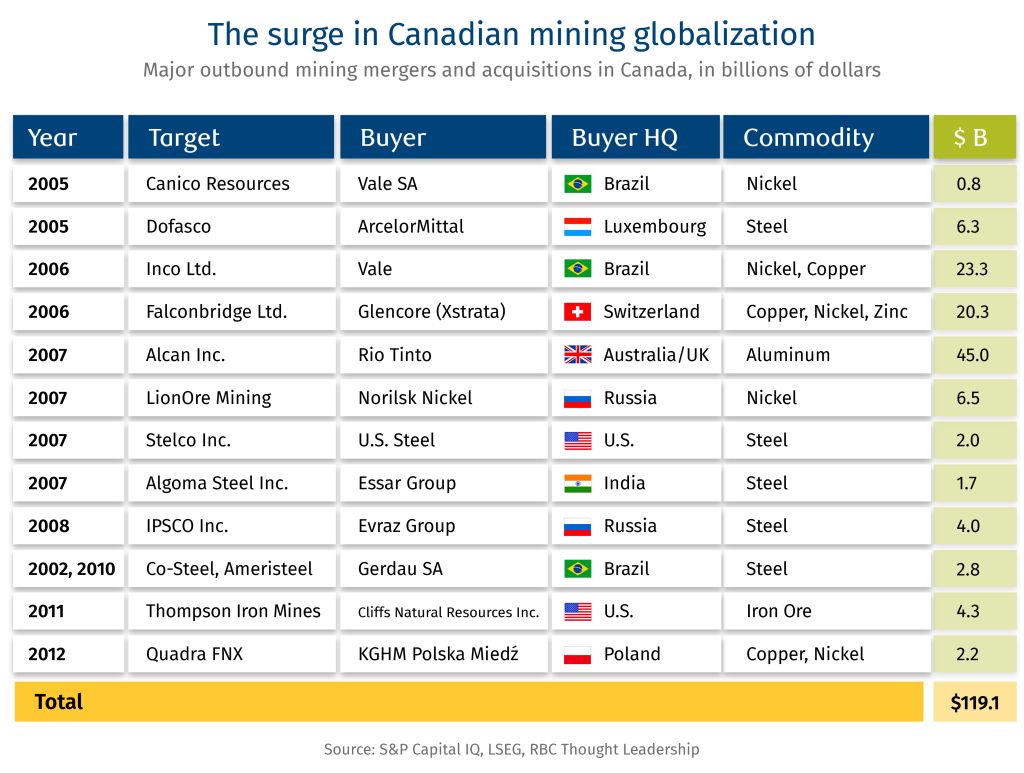
Between 2005 and 2012, more than $119 billion in Canadian base metals and steel assets transferred to foreign ownership.

The surge in Canadian mining globalization

The transactions were part of a wider globalization trend: foreign capital was expected to unlock value faster than our limited domestic capital markets, and nationality of ownership mattered less than the resulting economic uplift from mineral production and job creation. What that consensus underestimated was the long-term cost of losing domestic companies capable of anchoring new project developments—for a future era.

As Canada’s domestic giants were subsumed into global majors, the domestic capital-raising ecosystem was also disrupted. Boutique mining dealers shrank from around 60% of deal flow in 2010 to effectively 20% today, according to S&P Capital IQ. A similar trend is seen across capital holders as well, with resource-specialist funds now making up only 1-2% of domestic equity mutual fund assets under management today, compared to 6-8% in the early years following the global financial crisis, according to ISS MI MarketSage.

Many of the national champions that could have spearheaded Canada’s lithium, graphite and rare-earth projects largely no longer exist. Meanwhile, global majors allocate capital across their global portfolios that may not align with Canada’s strategic, sovereign objectives. This dynamic stands in marked contrast to the oilsands, which is the predominant operating asset controlled by large domestic players with large domestic ownership.

2. Capital consolidation around gold took the shine off other metals

Of the $700 billion raised in Canada in mining equity and mergers and acquisitions over the past 25 years, only 11% of capital was channelled to pure-play critical minerals development, according to S&P Capital IQ and LSEG. In contrast, Australia directed over twice as much capital to critical minerals during the same period. This was partly due to geology (Australia’s copper deposits are larger and less associated with gold), and partly to a closer proximity to Chinese and East Asian smelters.

The higher gold concentration in Canada reflects a historical M&A wave, with the S&P/TSX Composite mining complex becoming increasingly dominated by a smaller pool of large gold producers. In essence, Canada’s public mining equities evolved into a precious metals financing platform—a result of structural choices made over two decades across Canada’s critical minerals companies.

It doesn’t have to be a zero-sum game between gold and critical minerals—there is room to grow both mining sectors and even create ecosystems that feed off each other.

However, in Canada excellence in gold did not necessarily extend to critical minerals for two reasons:

  • The composition of Canada’s gold endowment made it efficient at producing the yellow metal, but relatively less so for other associated minerals like copper, nickel, cobalt as by-products. Australia’s mix of iron oxide-copper-gold deposits provide a more diverse commodity portfolio.

  • Gold mining skills and infrastructure do not inherently transfer to critical minerals. Gold smelting and refining are mature and standardized, whereas critical minerals processing, which is oriented towards specific end-uses (especially on battery metals) that require complex hydrometallurgy and chemical conversion..

3. Junior miners continue to face a financing cliff

Canada’s flow-through share financings—a tax incentive that allows investors to deduct 100% of their investment against their taxable income—works exceptionally well for early-stage exploration. It aggregates retail capital, reduces the effective cost of capital, and has successfully supported mineral exploration.

However, once a company completes the first assessment hurdle, these tax incentives expire (until construction begins). What follows is a $20-30 million financing gap: feasibility studies, engineering, permitting, and technical validation are required for ultimate final investment decision. These costs are often too large for high net-worth investors and too risky for institutional investors and lenders. Delays in permitting compound this challenge, as the companies remain pre-revenue with a stretched balance sheet.

For niche commodities such as graphite, rare earths and lithium, the problem is worsened by lack of market diversity. China often remains the sole buyer of mineral concentrates. Chinese lithium converters buy spodumene ore and process it into battery-grade lithium, while rare earth concentrates must be converted into a Mixed Rate Earth Carbonate—a processing step Canada largely lacks.

Few institutional investors have historically backed a Canadian junior whose only offtake market is a Chinese refiner, leading to a structural financing gap that has stalled viable projects for years.

4. Refining and processing face a structural deficit

Over the past three decades, Western countries effectively outsourced lower-margin, energy-intensive refining to China. Backed by state-backed capital, lax environmental regulations and lower labor costs, China now controls 70% of global refining market share for 19 of the world’s 20 most critical minerals.

China also builds overcapacity to squeeze competitors. Global copper smelting utilization was only 70% last year, and has played a role in Canada closing the Flin Flon, Gaspe and Kidd Creek copper smelters over the years. Today, only one Canadian copper smelter/refinery remains active: Glencore’s Horne smelter in in Rouyn-Noranda, Que., and its associated Canadian Copper Refinery.

Competing head-to-head in pure-play downstream processing against subsidized overcapacity is economically difficult. However, Canada’s advantage lies in pairing upstream mineral exposure—where margins are structurally higher—with selective downstream integration in “mineral corridors” that offer durable cost advantages, such as low-cost, zero-emitting hydro power in Quebec.

5. Limited domestic demand has constrained value chain growth

Refining investment follows demand—a capital-intensive smelter is hard to build in Canada where local demand is limited. Battery cell manufacturing is nascent and defence procurement operates at a fraction of U.S. scale. Magnet manufacturing, rare earth processing, and cathode precursor production are largely absent. The result is that shipping concentrates are shipped to where the customers are: primarily China.

The paradox is that Canada committed up to $55 billion to attract electric vehicle and battery manufacturers over the next 15 years without attaching domestic sourcing conditions that peer jurisdictions demanded. Germany and France implemented strict, minimum E.U. content and local supply-chain requirements into their electric vehicle subsidy schemes. South Korea similarly tied support to the use of Korean-source battery materials and components. The absence of such commitments in Canada, means the subsidies have not yet catalyzed ancillary industries.

1. Scale sovereign capital across the full value chain

Ottawa’s $2-billion Critical Minerals Sovereign Wealth Fund requires more heft to match the significant capital requirements. The Korea Zinc joint venture, for example, is developing a refinery in Tennessee for US$7.4 billion alone, demonstrating the substantial capital-intensity of downstream investments. A full build-out of mining, refining and processing critical minerals require an order of magnitude of patient capital that’s willing to persevere over years of construction and commercial validation.

The Canada Growth Fund (CGF) has made three mineral investments to address the gap. Its recent co-investment in Thompson Nickel Mines in Manitoba alongside U.S.-based Orion Resource Partners LP and Brazil’s Vale SA anchored the project, attracting credible corporate capital, and signalling strong sovereign commitment. This follows investments by the CGF in Quebec’s Nouveau Monde Graphite facility and the Foran Mining Corp. copper-zinc project in Saskatchewan.

Internationally, the Brazilian Development Bank also offers a template: a US$1-billion blended fund structured with government and private capital (including national mining champion Vale), managed at arm’s length and deployed across extraction, refining and processing. The structure, backed by government funding, instills commercial discipline, and makes strategic projects financeable.

2. Deploy infrastructure capital to unlock regions

Co-investing in enabling infrastructure—such as roads, transmission, grid connections to remote mining regions—reduces a project’s required break-even price by around 22-24%, the single largest lever of any individual policy measure, according to a recent Canada Infrastructure Bank (CIB) analysis.

The build-out of accompanying infrastructure is ideal for pension funds and long-duration institutional investors who are best suited to participate: lower risk than equity in a junior miner, contractual cash flows, and infrastructure-style returns. Ontario’s metal-rich Ring of Fire region alone requires as much as $2.4 billion in road and transmission investment before a single mine becomes commercially viable. For pension funds, it’s an opportunity to finance infrastructure, provided there’s surety of the facility being built, and the new infrastructure can be put to multiple uses and even serve as a springboard for new developments.

Investment in remote communities, many of which are on First Nations territories, presents another opportunity. However, unlike Alberta and British Columbia where oil and gas commercial precedents are well-established between First Nations communities and corporations, these mining jurisdictions require nurturing local governance and technical readiness to ensure long-term commercial success.

3. Build mineral corridors around Canada’s best clusters

Shared processing infrastructure solves multiple problems simultaneously. For instance, Quebec’s six high-grade, high-tonnage lithium projects can complement a regional refining hub. A similar logic applies to the lithium belt running from Thunder Bay to Winnipeg, and to the Sudbury nickel cluster, which already boasts world-class refining infrastructure that could expand to serve new critical minerals projects across Northern Ontario.

Such centralized refiners would give junior and mid-sized miners credible non-Chinese buyers, reinforcing their business and investment case. Corridor economics could also have a cascading economic effect, extending to logistic, transport, commercial and residential housing, and other amenities.

A shared Central Lithium Refinery—potentially structured with government loan guarantees and anchor offtake agreements with battery producers in Europe, Korea, Japan, and emerging Canadian manufacturers.

This offtake, in turn, makes projects financeable on Canadian equity markets and eventually eligible for project financing. The infrastructure economics improve further if the Plan Nord railway extension in Quebec proceeds—an initiative championed by the Cree Development Corporation that would materially reduce both the environmental footprint and capital costs of the Quebec lithium cluster.

4. Draw in global majors to improve project economics

The Canada Growth Fund is well-positioned to co-invest alongside global majors, provide offtake agreements that de-risk revenues, and leverage investment tax credits (ITC) to improve project economics. CGF’s partnership with Strathcona Resources Ltd., to build a $2-billion carbon capture and sequestration facility is a case in point: the government underwrote half the capital and allowed full ITC value to flow to private investors. Revenue de-risking tools, such as offtake agreements and contracts for difference, could reduce a project’s required break-even by approximately 18-19%, CIB analysis shows. The combination of infrastructure investment, revenue de-risking, and co-equity could move Canadian projects to the top of a global major’s priority list.

5. Forge closer ties with U.S. supply chains—but diversify

Few governments are doing more to reshape the global minerals order than the United States. The U.S. Office of Strategic Capital is authorized to deploy US$100-200 billion to bolster defence and industrial supply chains—roughly 15-20 times Canada’s federal funding. Washington’s Project Vault, a US$12-billion critical minerals stockpile, is already operational and striking deals with other countries.

Developing closer ties with U.S. supply chains is Canada’s greatest structural advantage other jurisdictions would struggle to replicate. Strategic deals under the Project Vault umbrella, would ensure Canadian minerals flow into U.S. rules of origin for batteries and EVs. Guaranteed offtake commitments would also give Canada both the demand signal and the financing certainty that mine-refine-process economics require.

The strategy is not without risk as deeper supply-chain alignment with Washington could mean Canadian minerals face U.S. export licencing and defence procurement priorities that serve American industrial policy first.

To avoid diminishing its resource sovereignty, Canada should pursue a strong diversification strategy targeting European and Asian allies, building on its 26 new investments and partnerships with G7 allies that unlocked $6.4 billion of critical minerals projects.

Australia and Canada share comparable geological endowments and mining traditions, but the similarities end there. Australia has consistently outpaced Canada in diversifying its resource wealth, employing a robust strategy focused on mobilizing capital, project permitting, and underwriting infrastructure—ultimately shaping investor behaviour.

Here’s how the Australian and Canadian playbooks have deviated:

1. Anchor investors lead the way

Australia’s pension funds maintain a standing allocation to resources, supported by specialist mining investors who understand the risk profile at every stage of development. Canadian pension funds don’t have the same obligation, while its overall investor base has rotated away from resources over the past 15 years towards tech, healthcare, and global equities. This has left mining capital in Canada episodic, cycle-dependent, and increasingly risk-averse at critical stages of development. The result is a more fragile domestic funding environment for Canadian miners, a trend partly driven by the historically lower total return performance of Canadian miners relative to their Australian peers.

2. Mechanisms to manage financing troughs

While both countries successfully fund early-stage exploration, Canada’s path diverges sharply after that. Flow-through financing—which provides tax incentives at the earliest stages—is effective but limited to exploration. This leaves feasibility, construction, and first production with few funding and incentive levers. This creates a structural incentive to sell assets early rather than build and operate them. Australia’s deeper capital pool through pension funds and specialist resource investors has fostered mid-tier producers that Canada largely lacks.

3. Permitting certainty as a capital advantage

Australia’s approval frameworks include statutory timelines to prevent processes from stalling indefinitely. Canada’s multi-layered federal and provincial reviews, combined with open-ended consultation processes, can stretch five years or more with no defined endpoint. Because permitting risks directly impact project economics, these delays serve as a significant deterrent to capital.

4. The virtuous cycle of base metal wealth—and expertise

Australia’s commodity diversity is anchored in bulk and base metals—iron ore, metallurgical coal, copper, bauxite and alumina—in greater propensity than Canada and its precious metals. That mix supported the growth of BHP Group, Rio Tinto Ltd and Fortescue Ltd., which are now backing other critical minerals including the energy-transition metals like lithium and rare earths. While Canada’s geology is diverse, public markets, historical mergers and acquisitions (M&A) and resulting producer base tilted towards gold companies.

5. Market access and Asian ties facilitated demand

The rise of Asian steel manufacturing, especially China but also Japan and Korea, drove long-term contracts for Australian iron ore and metallurgical coal and anchored the rise of the Australian mining majors. These deep commercial ties now extend to copper, alumina and other emerging battery materials. Canada, by contrast, built commercial ties with North America and Europe, and became cost uncompetitive from a supply standpoint given the lower operating costs of Asian refiners but also missed out on the nexus of demand from Asian battery value chains.

Download the report

rbc_toc_for_mmm_action

Investment in next-generation geothermal technologies is surging globally, driven by recent breakthroughs in drilling technology that are rapidly transforming the economics and viability of geothermal electricity generation. According to the International Energy Agency (IEA) and data from Underground Ventures, a geothermal-focused venture investor, financing for next-generation geothermal reached roughly CAD$3 billion in 2025.1 The U.S. and Indonesia lead the world in investment in geothermal power and heating projects.2

While Canada possesses world-class subsurface expertise, hot geothermal gradients spanning western and northwestern regions, and companies like Eavor, DEEP Earth Energy, and Tu Deh-Kah Geothermal, domestic deployment lags dramatically. Canada currently generates less than six megawatts (MW) of geothermal power, representing 0.004% of the country’s installed capacity.3

According to the IEA, global investment in geothermal energy could reach CAD$3 trillion by 20504 as nations seek reliable, zero-emission baseload power to complement intermittent renewables. Advanced technologies are key to scaling geothermal, which has traditionally been confined to specific areas with the right geology. Two technologies stand out: (1) Enhanced geothermal systems (EGS), which borrow shale drilling technology, create new fractures in hot underground rocks, inject fluids and use the steam to generate geothermal power;5 (2) Closed Loop Geothermal (CLG) systems also deploys advanced drilling and injects liquid through underground pipes to generate electricity.6 7

Recent innovations are dramatically reducing costs. Improved drilling techniques borrowed from oil and gas, including polycrystalline diamond compact drill bits and real-time fibre optic monitoring, are cutting well costs by up to 12-26% compared to earlier estimates.8 Companies like Houston-based Fervo Energy have demonstrated sustained 8-10 MW output from single production wells at their Cape Station project in Utah, validating the commercial viability of EGS.9 New techno-economic analysis shows that in high-gradient regions like British Columbia’s Mount Meager or the Northwest Territories’ Liard Basin, levelized costs of energy for EGS could fall to CAD$45-53/MWh with continued innovation, competitive with combined-cycle gas and cheaper than new nuclear.10

The opportunity could be significant.

Recent research on Baker Lake, Nunavut, reveals that previously dismissed regions of the Canadian Shield may hold viable deep geothermal resources. At a measured gradient of 28°C/km, significantly higher than earlier national estimates, modelling indicates a 90% likelihood that a four-kilometre deep system could meet the community’s heating demand, with potential for electricity generation at 7-8 kilometre depth.11

Saskatchewan is already leveraging its oil and gas expertise.

Saskatoon-based DEEP Earth Energy has partnered with oilfield services company SLB to develop Canada’s first commercial-scale geothermal power facility near Estevan, near the Saskatchewan-North-Dakota border. Phase 1 involves drilling two wells, with Phase 2 potentially scaling to 18 wells producing 30 MW.12 This project leverages the Western Canadian Sedimentary Basin’s hot sedimentary aquifers and demonstrates that Canada’s oil and gas infrastructure, rigs, drilling expertise, and supply chains, can be applied to geothermal development.

Yet regulatory fragmentation threatens to stall momentum.

Only Alberta, British Columbia, and Nova Scotia have geothermal-specific legislation. There is no national strategy, no coordinated R&D agenda, and insufficient financial de-risking tools to accelerate early-stage projects. A national regulatory template that provinces could rapidly adapt to their own specific needs alongside government-backed initiatives like the Alberta Drilling Accelerator (ADA) could help to catalyse geothermal in Canada by reducing drilling costs, developing high-temperature tools, and optimizing reservoir stimulation.

The window for Canadian leadership is closing.

The U.S. Department of Energy’s Enhanced Geothermal Shot targets electricity costs below CAD$61/MWh by 2035.13 with billions in funding. Tech giants including Google, Meta, and Microsoft are investing heavily in geothermal partnerships. China, Indonesia, and the Philippines are rapidly expanding deployment. If Canada does not act with coordinated policy, regulatory harmonization, and strategic R&D investment, it risks squandering subsurface expertise and geological endowment that offer natural advantages.


Vivan Sorab is Clean Technology Lead at RBC Thought Leadership

rbc_toc_for_mmm_action

The U.S. loves heavy oil. The blend is vital for diesel, jet fuel and petrochemicals, and Canada is, by some distance, its biggest foreign supplier. However, a U.S. plan to influence and revive Venezuelan oil has raised concerns that Canada—already facing U.S. pressure on several other domestic industries—could start losing market share to Venezuelan heavy crude in a few years. It could amount to a Washington squeeze on Canada’s most prized resource.

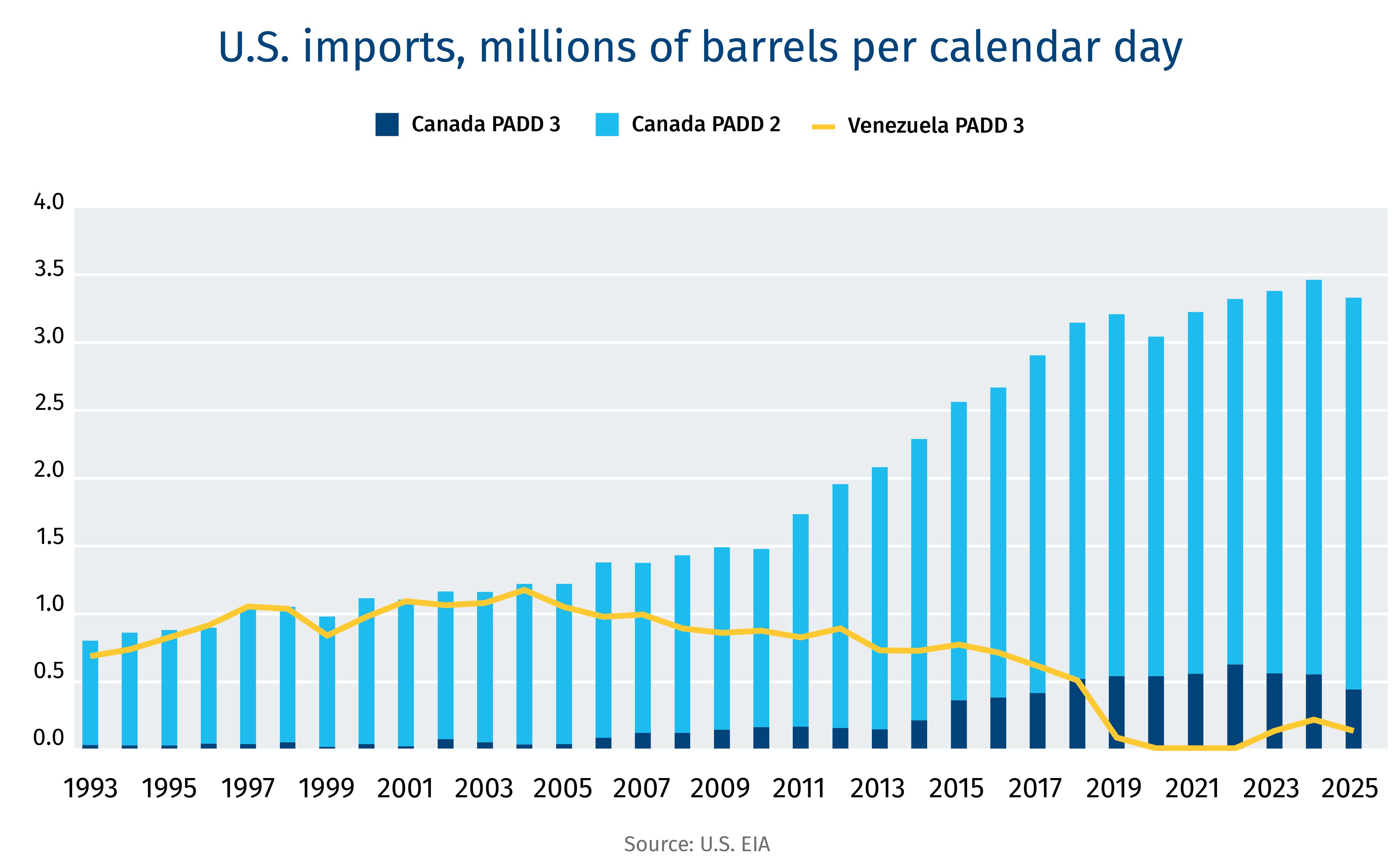
Imports of crude and liquids into the U.S., the millions of barrels per calendar day

U.S. crude import patterns reflect a clear structural divergence between Canada and Venezuela. The result is a fundamental reorientation of U.S. import dependence toward Canadian supply, reinforced by reliability, infrastructure, and long-cycle capital investment.

U.S. Imports, millions of barrels per calendar day

Venezuelan crude once dominated Gulf Coast imports, but its collapse created space that has only partially been filled by Canadian barrels. The Gulf Coast is seen as a battleground, but only 10% of total Canadian imports flow into the region known as PADD 3. Most Canadian crude growth has occurred within the Midwest refinery region, known as PADD 2, which accounts for 69% of total Canadian export growth into the U.S. over the past three decades.

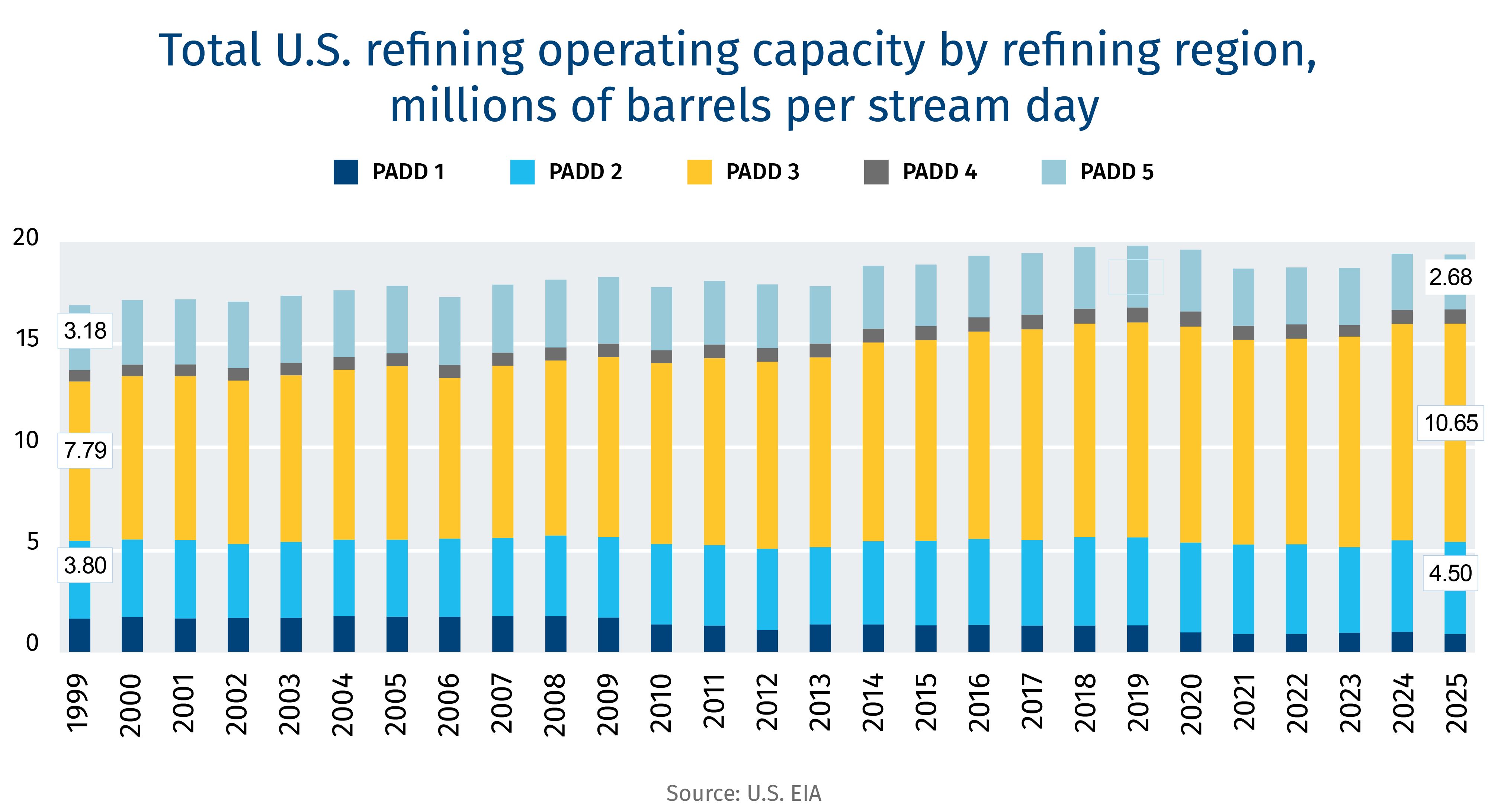
Total U.S. Refining capacity by refining region, millions of barrels per stream day

U.S. refining capacity growth has been concentrated in PADD 3 and PADD 2, reinforcing the system’s orientation toward large-scale, complex refining hubs. The Gulf Coast’s dominance reflects decades of investment designed to process heavier and more diverse crude slates, positioning it as both a domestic refining centre and a globally relevant supply hub.

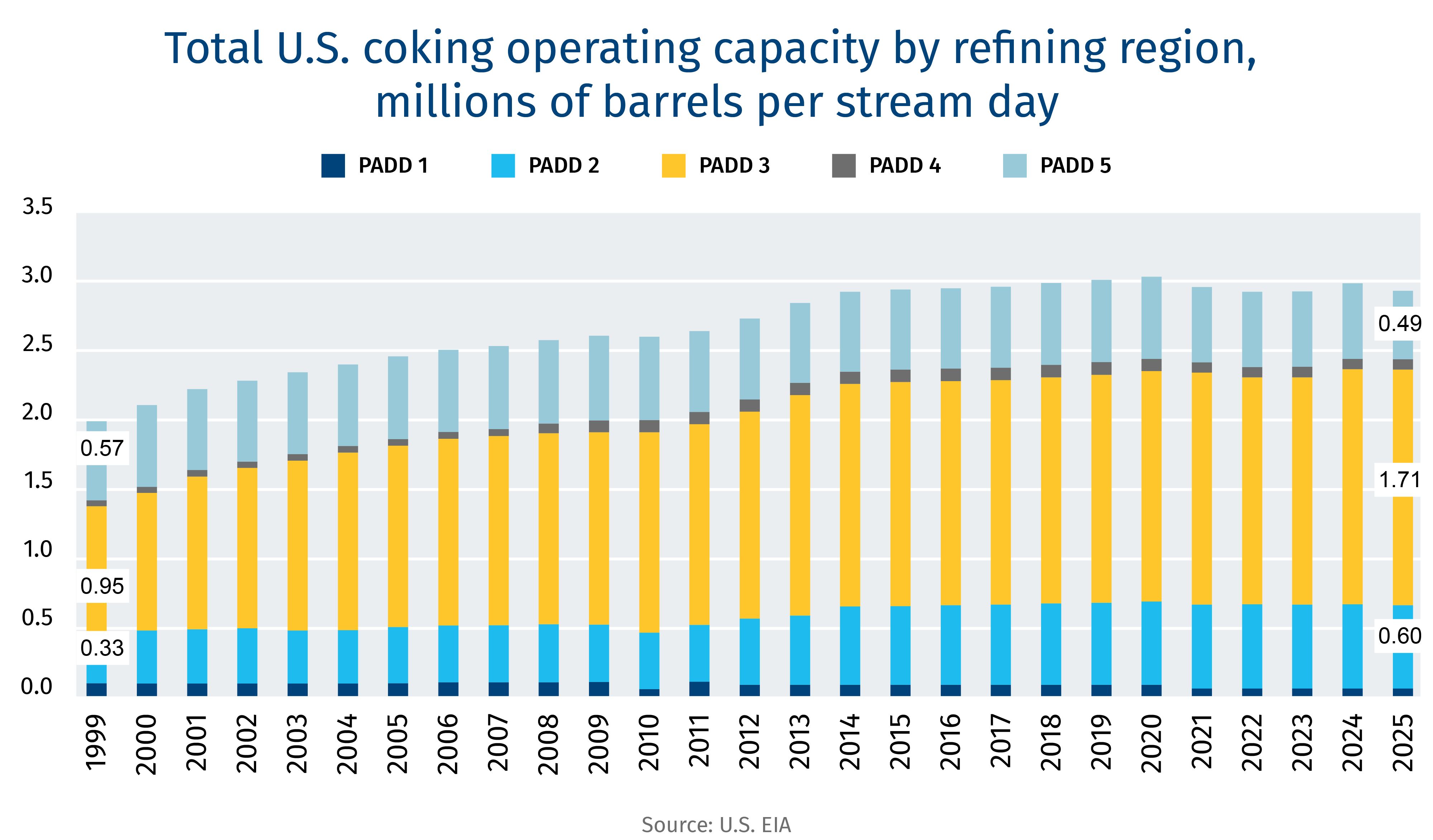
Total U.S. coking operating capacity by refining region, millions of barrels per stream day

Coking capacity remains a defining feature of the U.S. system’s ability to process heavy crude, with the majority of investment concentrated along the Gulf Coast. The steady build-out of coking units over time highlights how refiners structurally adapted assets to heavier barrels, further entrenching supply relationships that favor Canadian crude.

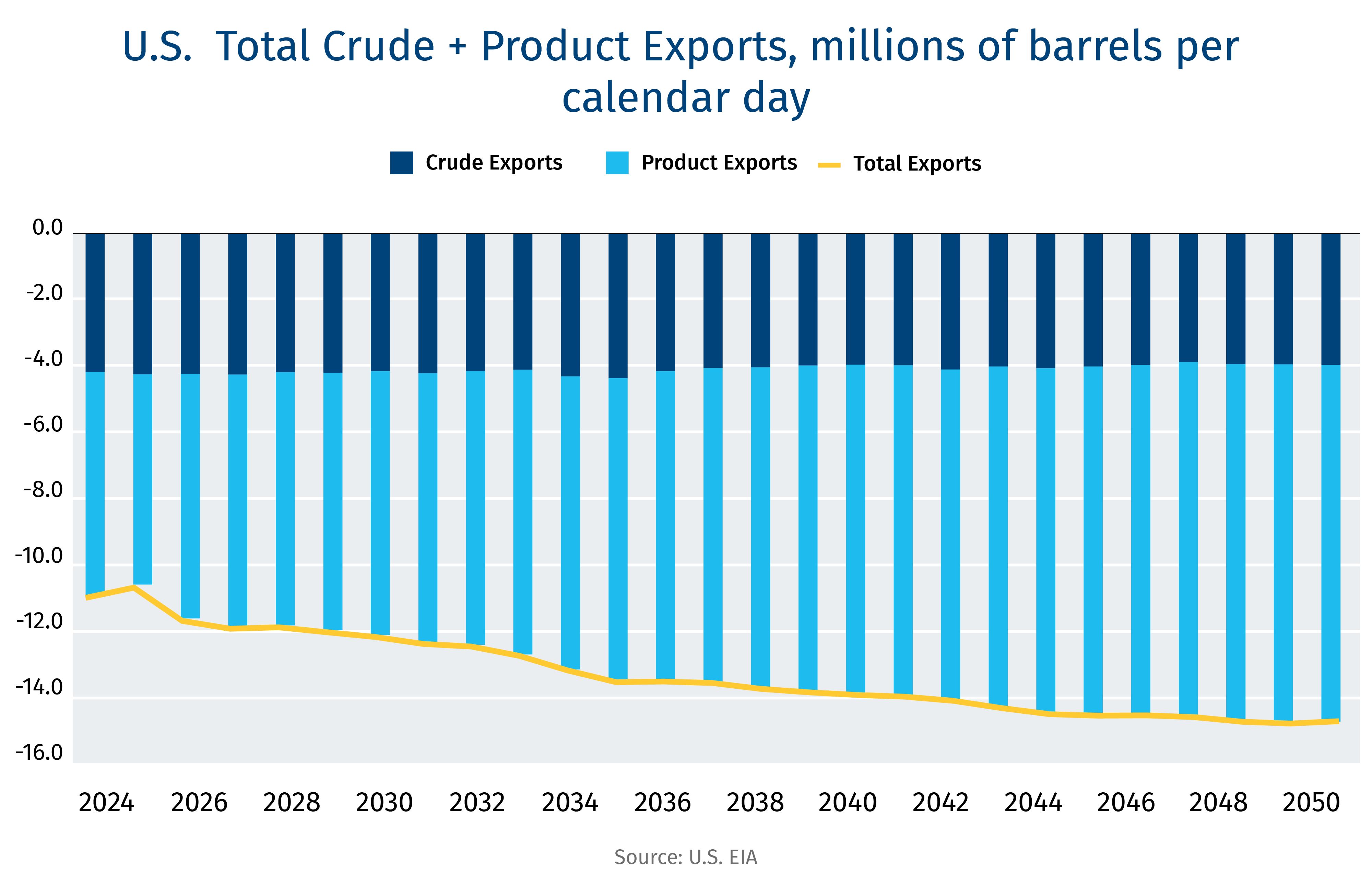
U.S. Total Crude + Product Exports, millions per barrel per calendar day

The U.S. energy system is increasingly focused on exports, with petroleum products accounting for majority of outbound volumes over time. This underscores the Gulf Coast’s role not only as a refining hub, but as a critical petrochemical and export platform. For Canada it reinforces the importance of market access, blending, refining, and re-export pathways within an evolving global trade landscape.

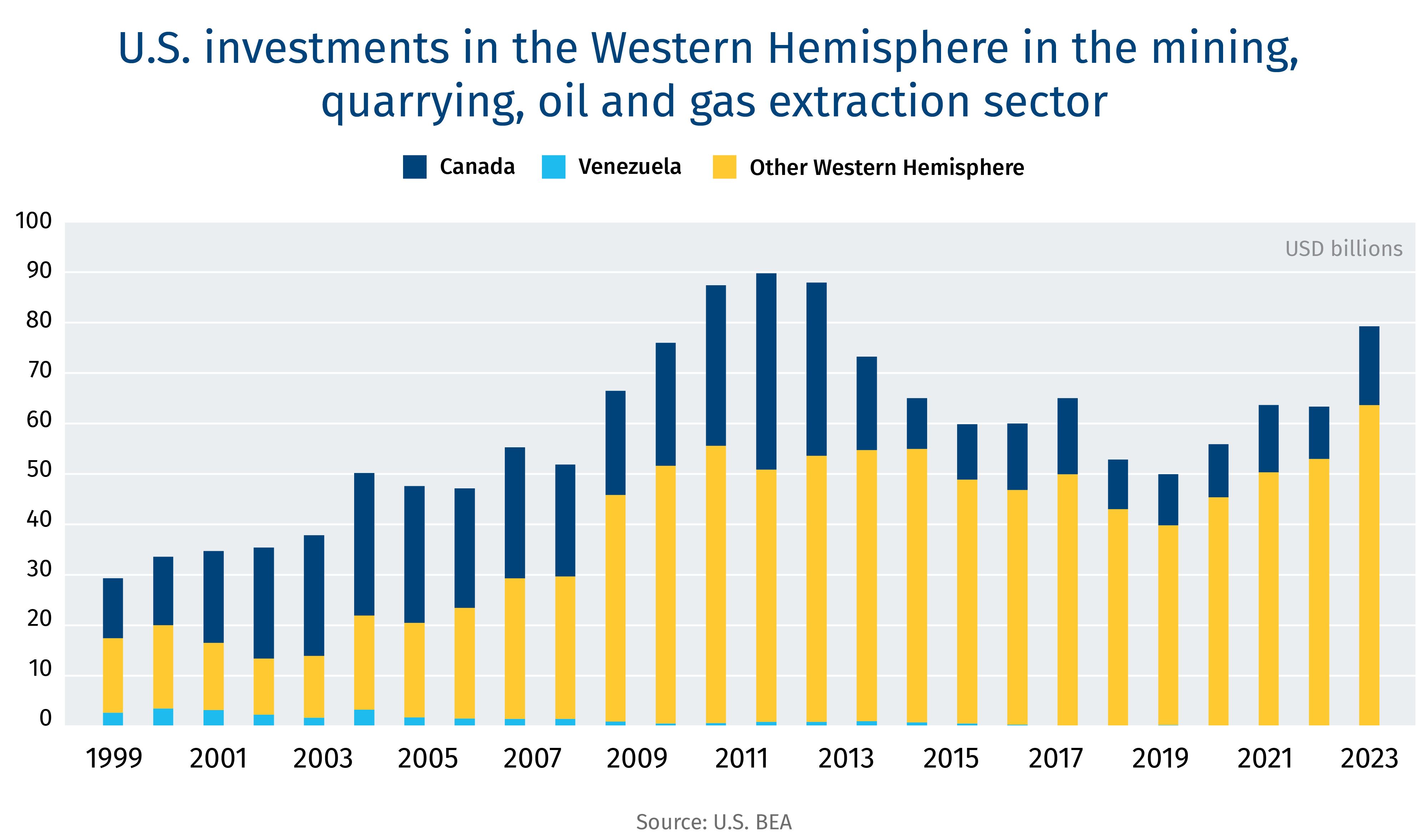
U.S. investments in western hemisphere in the mining, quarrying, oil and gas extraction sector

For all the cross-border integration, U.S. capital investment in the Canadian resource sector (mining, oil and gas) has fallen by more than half from its US$39.1 billion peak in 2011. Meanwhile, U.S. investments into other Western Hemisphere countries has steadily grown from US$16 billion in 2000 to US$64 billion in 2024, even without Venezuela.

The competition for investment dollars from the U.S. into the Western Hemisphere is growing—Canada will need to lock in American capital to ensure it preserves its pre-eminent position in the U.S. market.

rbc_toc_for_mmm_action

The Canada-Alberta Memorandum of Understanding (MOU) sets the stage for the province to become a continental energy superpower across both traditional and non-traditional energy forms. A key piece of the MoU centres around a bitumen pipeline project provided Alberta proceeds with several low-carbon projects and programs in parallel.
As it stands, the province’s major projects inventory consists of almost 1,000 projects valued at $167 billion. Incorporating a new major bitumen pipeline, plus meaningful growth in data centres and accompanying power generation and distribution, could raise that figure to more than $400 billion.

Here are five themes that stood out to us from the MoU:

1. A clear roadmap: The level of specificity within the document gives the MoU teeth. Unlike most MoUs that usually focus on outlining broad contours of areas of co-operation, this MoU sets out clear guidelines and targets.

2. Tight deadlines: The accelerated timelines suggest an urgency that puts the onus on Alberta to deliver, quickly, on several climate policies in order to secure expansion of its fossil fuel sector. Most of the key action items required on the Alberta side (carbon pricing equivalency, methane equivalency, tri-lateral Pathways MoU) have an April 1, 2026, deadline. It also brings an urgency in British Columbia where Premier David Eby would have to make some quick decisions on a new pipeline (and the proposed expansion of Trans Mountain pipeline) across his province.

3. A new bitumen pipeline: The success of the MoU, especially in the context of a new, large bitumen pipeline, revolves around the historically challenged duty to consult and the Build Canada Act to bypass future legal challenges, which at this point appear almost certain.

4. A 700,000-bpd proposition:
The Alberta government is expected to remain the central pipeline proponent until all parties—including Indigenous groups— are on board to reduce the possibility of delays and cost overruns that has plagued past pipeline expansions. In the nearer to mid-term (next five years), pipeline expansions across Enbridge’s Mainline and the federal government-owned Trans Mountain will add up to 600,000 to 700,000 barrels per day in added capacity, which should be enough to support growth for the remainder of this decade.

5. Low-carbon boost: The space given to non-oil and gas commentary such as a substantial expansion of power generation for traditional heavy industry, but also around data centres, interties, and domestic supply chain capture (e.g., Canadian steel and pipeline), suggests that the federal government is creating linkages to ensure a potential Alberta boom cascades across industries and provinces.

What’s being overlooked:

  • The increase in Alberta’s TIER price to $130 per tonne does not specify a date. The Canadian federal benchmark was set to cross that threshold in 2027/2028. Current Alberta TIER prices have since risen to $25-27/tonne (from $17-18/tonne just a couple weeks ago) according to RBC’s Environmental Markets trading desk, implying a 5x return if prices reach the threshold level;

  • The MoU makes specific reference to include enhanced oil recovery (EOR) as part of an extension of existing federal investment tax credits for carbon sequestration, utilization and storage (CCUS). The economic uplift from the ability to monetize the additional oil stream can be meaningful. According to a University of Calgary study, certain Alberta EOR-CCUS reservoirs are economically viable at a carbon price of $60/tonne. In comparison, a Colorado School of Mines study suggests that in the U.S. allowing EOR within the 45Q tax credit— designed to accelerate carbon capture, utilization and storage—could provide an additional economic benefit of between US$95-$120 per tonne of CO2e.

  • Both the construction of a bitumen pipeline and construction of the oilsands-led Pathways carbon capture, utilization and storage (CCUS) project are preconditions of one another. Yet, that precondition is dependent upon the commencement of ”Pathways Phase 1 Projects” (22-million tonnes out of Pathways’ total 50-million tonne capacity). It’s unclear if that references the sequestering (12 million tonnes) or emissions reductions (10 million tonnes) initiatives.


    Shaz Merwat is Energy Policy Lead at RBC Thought Leadership