Issue #11

➔ Earth Day edition focuses on Canada and B.C.’s power struggles
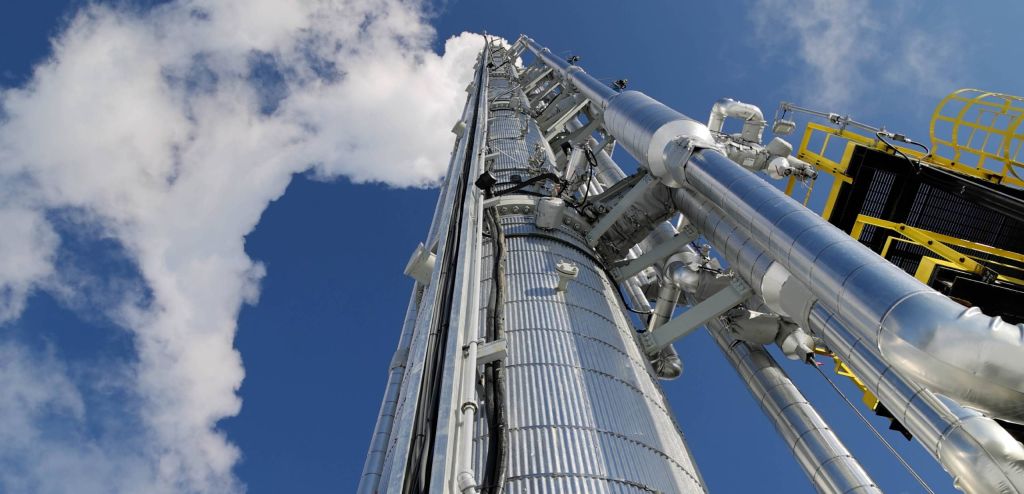
➔ Green steel is coming
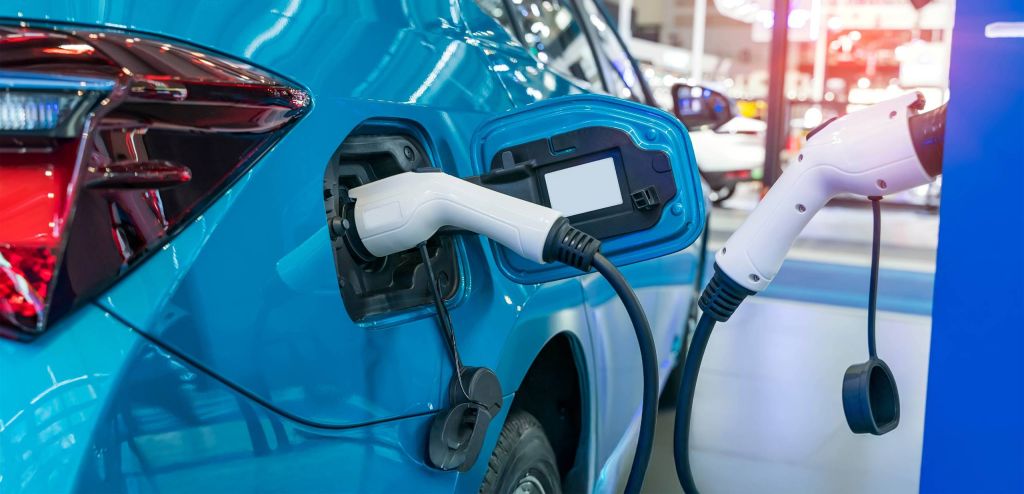
➔ EVs: Open road or roadblocks?

Hot takes

➔ Our power, our planet. That’s the theme of this year’s Earth Day, celebrated today, just as the world feels a little less empowered to take care of the planet. But this edition is striving to celebrate small victories in a (very) long journey to heal the planet. Despite policymakers axing or toning down several ambitious global climate policies, there are rays of sunshine: led by solar and wind, renewable energy capacity additions hit a new record globally in 2024, while renewables accounted for more than 92% of total power expansion last year. Still, IRENA forecasts, the world’s falling short of the collective goal set in 2023 to triple installed renewable energy capacity by 2030.

➔ Sault Ste. Marie, Ont., is the setting for a Canadian green power revolution. The northern Ontario-based Algoma Steel is gearing up to launch its electric arc furnace (EAF) this month—it would cut back on coke, or coal power, and slash the company’s annual emissions by 70%. That’s a feat for any sector, but a monumental one for an industry considered among the hardest to abate.

➔ Canada’s first SMR got the green light this month. The small modular reactor (SMR) at the Darlington Nuclear Generating Station in Ontario—the first in a G7 nation— has the all-clear from the Canadian National Safety Commission. Ontario Power Generation, the developer, is now awaiting the provincial okay. There is a trade twist, though: the BWRX-300 reactor was built by North Carolina-based GE-Hitachi Nuclear Energy—making Canada dependent on the American supply chain at a time when ties between the two countries are strained.

➔ Climate drops off the radar as an election issue. About 24% of Canadians believed climate was an important issue in the 2021 federal election cycle. Just under 4% feel the same way as they start voting in the run-up to election day on April 28. Predictably, U.S.-Canada ties topped the list in the non-partisan Vote Compass’s poll of 161,000 Canadians, followed by economy, affordability, social justice and healthcare. The environment did not crack the top 5. Climate change also barely got a mention in the leaders’ TV debates (read John Stackhouse’s LinkedIn post here).

Earth Day: A Clean Super-Power

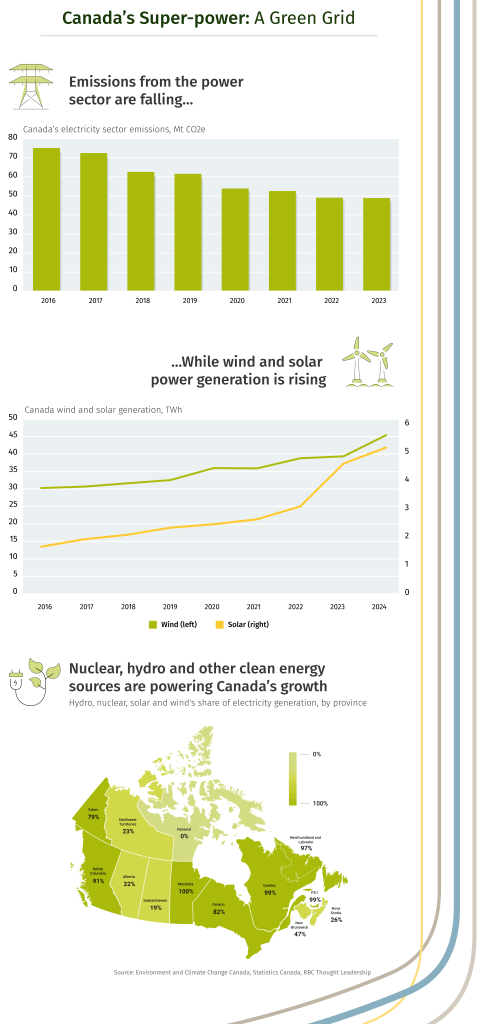
With this year’s Earth Day theme focused on tripling renewable energy by 2030, Canada can point to some victories in the electricity sector, the big one being that it’s Paris Agreement-compliant already. Alberta is coal-free, six years ahead of schedule, while Canada’s absolute electricity emissions declined by about 10% in 2024 compared to 2023.

Three charts that illustrate why electricity is Canada’s climate poster child:
There is no room for complacency, though. Here are 3 critical challenges Canadian policymakers—and a new federal government—will need to address soon.

➔ Balancing affordability with clean energy goals. New hydro dams and nuclear buildouts will be expensive, straining the ability of utilities to keep electricity bills affordable. 

➔ Expanding grids cleanly. Canada needs to more than double electricity capacity by 2050—and keep it clean—, if it wants to compete for investment dollars for data centres, automotive supply chains and other heavy manufacturing.

➔ Ensuring Indigenous rights. Power and energy projects—gaining renewed urgency—require a buy-in, consent and financial involvement from First Nations. Canada has had a spotty track-record on that file, which needs to change to fast-track projects.

Ready or not

Sticking to the power theme, B.C. LNG projects now only need to be net-zero ready. That’s the distinction the B.C. government made in a new letter to the environmental regulator, widely considered a weaking of the province’s environmental rules. Or is that climate realism ? Jurisdictions are walking a fine line as they fast-tack new projects in a tariff-stricken world without abandoning their environmental commitments.

The provincial utility BC Hydro has been bulking up, but not as fast as the surge in demand, which it estimates will rise 15% by 2030. Just over 90% of B.C. grid is no-emitting, but that could drop if natural gas power.

Here’s how the province is racing to meet its economic and climate goals:

➔ BC Hydro’s updated 10-Year Capital Plan (2024/25 to 2033/34) includes almost $36 billion in community and regional infrastructure investments—a 50% increase over its previous capital plan.

➔ The Site C hydro project’s fourth unit began this month, with two more set to be switched on by the fall. Once fully operational, the project in the province’s northeast can power nearly 500,000 homes, increasing BC Hydro’s electricity supply by 8%. Given expectations for Canada’s supply needing to 2x or 3x by 2050, we need similar additions every two to three years, Energy policy lead Shaz Merwat estimates. “Policy of needing to be ‘ready’ probably adds a level of ambiguity but good to see perspectives are changing about the need to build.”

➔ In February, B.C. signed deals for 9 wind and 1 solar energy projects with a combined 4,830 gigawatt hours (GWh) projects. All projects are majority-owned by First Nations.

➔ B.C. is working to electrify Northern B.C., vital for several big-ticket energy projects including the Ksi Lsims LNG project that’s currently under regulatory review. The Indigenous-backed gas export project now faces competition for Asian markets from an Alaskan LNG development that’s gaining traction. Canada needs to move fast.

➔ The North Coast Transmission Line is a critical piece of the northern B.C. clean grid. The government is fast-tracking permits to speed up construction of the NTCL and other major high-voltage transmission lines.

➔ The B.C. government is not ruling out more hydro dams in the province.

➔ Finally, we are watching how a greenhouse gas emissions cap for natural gas utilities, as envisioned in the CleanBC Roadmap to 2030, will play out.

Four roadblocks ahead for EVs

By John Stackhouse

EVs may be one of the causalities in the trade war — or one of the winners. It’s too early to tell.

The latest quarterly assessment from BloombergNEF shows a U-turn forming in some markets, and acceleration in others, notably China. Canada is one of the markets at a turning point.

EVs, including plug-in hybrids, accounted for one in five vehicle sales last year, reaching 17.2 million new vehicles on the road, up 24% in one year. Most of that growth was in China, where close to half of new vehicle sales are EVs—a number expected to increase this year thanks to a scrappage scheme for car-owners.

Elsewhere, EVs are facing new challenges, and not just the brand war that Tesla finds itself in. European sales started to flatline in 2024, while sales growth in the U.S. tempered. And that was before Liberation Day (April 2) and Donald Trump’s decision to slap 25% tariffs on imported vehicles and parts. Higher costs are the last thing EV producers need. Other policy changes—looser fuel standards in Europe and an end to the consumer carbon tax in Canada—may further impede EV sales, as the economics of traditional car engines gain ground again on batteries.

Canadian EV sales in the past year accounted for around 15% of passenger vehicle sales. BNEF expects Canadian EV sales to rise 20% this year, amid a decline in policy supports.
If EV sales stall, it will be due to four roadblocks in the months ahead:

➔ 1. Subsidies. Fiscally challenged governments will be looking to cut spending in some areas to pay for economic supports for businesses and workers hit by the trade war. The Trump administration has its eye on generous supports introduced in the Biden years. And many governments are pulling back EV mandates for their own fleets.

➔ 2. Tariffs. The U.S. is advancing a range of tariffs and trade restrictions on batteries and battery components, while China is also restricting exports of critical minerals. Battery-specific tariff rates are projected to hit 115% this year, and 132% next year. The Trump administration is also expected to continue to explore anti-dumping measures against Chinese battery components producers, even though a number of U.S. manufacturers, including Tesla, rely on them.

➔ 3. Economic growth. If the trade war continues to be a drag on economic growth, consumers will hold back on vehicle purchases of all kinds — and the more expensive range of EVs will be especially challenged.

➔ 4. Interest rates. If tariffs stoke inflation, and keep interest rates higher, car sales will be the first consumer item to take a dent, or worse. EVs may be at the front of that line, as car-owners hold on to their old vehicles for a year or two longer.

Climate Crunch would not be possible without John Stackhouse, Myha Truong-Regan, Sarah Pendrith, Farhad Panahov, Lisa Ashton, Shaz Merwat, Vivan Sorab, Caprice Biasoni and Frances Dawson.

Curated by Yadullah Hussain, Managing Editor, RBC Climate Action Institute.

Have a comment, commendation, or umm, criticism? Write to me here (yadullahhussain@rbc.com)

Climate Crunch Newsletter
Field Notes: How Canadian businesses are navigating trade tensions

China’s 100% tariff on canola oil and meal has Canadian farmers concerned. That stress level could climb, as China also has its eye on Canadian canola seeds—the largest segment of our canola exports to China—, which have been spared for now. “That would be the other big shoe to drop,” said Rick White, CEO of the Canadian Canola Growers Association (CCGA), which represents approximately 40,000 farmers across Canada.

Canola was developed by Canadian scientists in the 1960s—hence the name. It’s considered healthy oil as it’s low in saturates (an unhealthy fat) and high in monounsaturates (considered good). Canada is the world’s largest canola producer and counts, with 40,000 farmers generating $43.7 billion, with the U.S., China and Japan—in that order, its three biggest export markets. Australia is among Canada’s biggest canola rivals.

As the Chinese tariffs hit Canadian canola farmers, they are freezing investments and need support. White shared some ideas on ways to soften the blow:

  • White says the tariffs were not a surprise, as past disputes with China (2019-2020) had targeted canola.

  • China has once again targeted the agriculture sector in direct response to Ottawa implementing tariffs on Chinese EVs, aluminum and steel.

  • The industry feels the Canadian government “absolutely bears the responsibility” of that action and should compensate farmers for the financial losses that they will incur.

  • Other major canola seed exporting countries include Australia, Ukraine, Russia. Canada specifically grows canola, which is defined as having low erucid acid and low glucosinolates. Australia and the EU are also significant growers of canola or double low rapeseed, which is of comparable quality.

Canola seeds in the crosshairs

  • A looming Chinese anti-dumping investigation on Canadian canola seed could trigger more tariffs. That’s “the big shoe to drop.”

  • Canola seed is Canada’s primary canola export to China, with canola oil and meal accounting for a smaller portion. In 2024, China imported six million metric tonnes of Canadian canola seed, worth $4 billion.

  • The Chinese are following World Trade Organization (WTO) rules around anti-dumping. WTO challenges take time but provide legal recourse. The CCGA has registered as a party to China’s investigation.

Farmers are looking to freeze investments

  • Farmers rotate crops for agronomic reasons, but canola is a Canadian staple crop, which limits alternatives. Agronomics involves soil and crop management and helps optimize distribution, management and productivity of land.

  • Farmers are already expressing concerns about market risks from China and the U.S. with some suggesting delays in capital investments and equipment purchases due to uncertainty.

  • Plus, purchase of new equipment could possibly come from the U.S. that could be subject to countervailing duty by Canada.

  • “Farmers are not going to take that risk of investing big pieces of capital into renewing infrastructure … there’s going to be a big chill on investment, at least this year.”

Across the border, more trouble is brewing

  • The U.S. is Canada’s largest canola export destination, valued at $7.7 billion in 2023. The U.S. has not yet imposed a 25% tariff on canola, as CUSMA (the Canada-U.S.-Mexico Agreement) remains in effect. But once exemptions expire, new U.S. tariffs could further harm Canadian canola exports.

There are ways to build a tariff-less ecosystem

  • Last December, the CCGA sent a letter to the federal government, forecasting farm gate losses of between $1.76 billion to $4.33 billion for 2025-26 due to the Chinese tariffs.

  • Ottawa has announced new loan products to sustain the industry, but farmers argue they cannot borrow their way through this crisis and need cash compensation.

  • “The federal government needs to compensate farmers commensurate with the losses that they will incur because of China… farmers can’t, nor should they, be expected to borrow their way—they need to be compensated.”

  • The CCGA is advocating for the development of a domestic biofuels and sustainable aviation market.

  • It could be a new domestic market for at least 2-3 million tonnes of canola seed. It would help soften the blow for canola farmers, as the risk and uncertainty around U.S. and Chinese markets is going to remain for a long time. It is an opportunity to help diversify and reduce Canada’s heavy dependence on China and the U.S. markets.


Dig deeper:

RBC Chief Economist Frances Donald answers three questions on Trump’s tariffs and its impact on the global economy.

Q: What do the U.S. tariff exemptions mean for Canada’s economic growth outlook? U.S. still has tariffs on Canadian autos, steel and aluminum.
FD:
 How quickly the Canadian economic narrative has shifted. Prior to “Liberation Day,” our biggest concern was the implications of broad based tariffs on Canadian growth and particularly, that Canada appeared to be the biggest relative loser of American trade policy. Now, while various sector specific tariffs will weigh on Canada in 2025, our concerns are shifting to more “traditional” risks to Canada’s economy—the rising risk of a U.S. recession and a drop in oil prices. The latter may be more “indirect” in some capacity, but they are also more of a function of global developments that have far less to do with Canadian-U.S. political relations.

Q: Do you expect the Bank of Canada and the U.S. Federal Reserve to reassess as U.S. tariffs are rolled out?
FD: The Bank of Canada and the Federal Reserve are facing different challenges, just like their economies are struggling with different risks. In Canada, inflation is around 2% with some mild upside created by global supply chain disruptions ahead. And yet, Canadian growth is still tepid and supportive of a few more rate cuts. As of now, we continue to expect another 50bps of rate cuts.

The Federal Reserve is in a much greater bind. The size and scope of tariffs announced are consistent with higher inflation and a much lower growth profile. That “stagflationary” mix pulls at both sides of the Fed’s dual-mandate in opposite directions (price stability and full employment). At this point, our expectation is that concerns about inflation spiralling higher will keep the Federal Reserve on the sidelines, but markets have been increasing their probabilities of rate cuts to support what is likely to be a much weaker economy.

Q: A bigger tariff war looms, with the U.S.-China and U.S.-EU imposing tariffs and retaliatory tariffs. Will that be inflationary and damaging for the Canadian and global economy?
FD: Just how damaging U.S. tariffs turn out to be will largely be a function of how long they stay in place for, and economists are poorly credentialled on making that call. But the largest concern at this juncture is that we witness a global uptick in prices as supply chains become entangled and the interconnected nature of our global economy makes it difficult for any economy to escape rising costs. There are certainly similarities to the COVID era that can be drawn, except for one major one: we didn’t head into pandemic-era inflation having just gone through pandemic-era inflation. That is, Canadians and Americans have already experienced an over 20% increase in prices since 2020, and the ability of households and businesses to absorb a second wave of inflation so soon after is likely very limited. Last month, it seemed the trade war was North American centric. Now, it is global and without borders.

Further reading:

Yadullah Hussain is Managing Editor, RBC Thought Leadership

Field Notes: How Canadian businesses are navigating trade tensions

Canada’s agriculture sector is among the first casualties of the trade wars with China and the United States. Monty Reich, CEO of SWT Ltd, a farmer-owned, independent grain and crop input company in Saskatchewan, discusses how farmers are navigating the trade tensions.

Uncertainty and volatility a near-daily irritant

  • The current environment is challenging, uncertain—and confusing. “Each day is a different journey,” Reich said.

  • Even before the 100% Chinese tariffs on canola oil and meal and yellow peas were imposed, the U.S. had started talking tariffs in December, with durum wheat on the list to be hit.

  • SWT had to absorb the financial blow of U.S. tariffs on durum wheat, choosing not to pass those costs onto its farmer-shareholders. “We sold product into future spring positions and took that hit on our own bottom line,” Reich noted.

  • U.S. tariffs have made durum wheat exports more costly. “We are the importer of record,” Reich noted, meaning SWT itself is directly responsible for paying the 25% tariff—a cost that prohibits any future sales.

Canola prices are plunging

  • For canola farmers, the impact has been brutal. Prices have plunged by 25-30% since the Chinese tariffs were imposed, dropping from around $16 per bushel to $12.

  • “Margins on the farm are pretty narrow as it is,” Reich said. Even small price shifts can turn a profitable season into a financial disaster. With this level of decline, farmers are watching their incomes evaporate.

Tariffs are hitting from all quarters

  • China’s restrictions on canola and yellow peas have cut off a crucial market, leaving farmers with few places to turn to. “China accounts for about 87% of the yellow pea market along with the U.S. and India,” meaning farmers now face a near-total lockout.

  • India’s on-again, off-again tariffs on pulses add another layer of uncertainty, leaving Canadian farmers with few viable alternatives.

Farmers are scrambling for alternatives

  • “Growers are penciling in right now, trying to figure out what’s going to provide them the best return,” Reich said.

  • Farmers could pivot to other crops, but in practice, it’s not that simple. “It’s not easy to just flip commodities,” he explained.

  • Farmers are “scrambling” to adjust before the next planting season.

Deferred investments, shrinking profitability

  • Some canola crush plant investments were already deferred a couple of years ago due to ongoing challenges with the Chinese marketplace and the cost of construction.

  • Production facilities being built today are going to continue, and existing facilities will continue operating, but margins are getting tighter.

  • Farmers are weighing whether to cut back production, reduce costs, or even scale down their operations altogether.

Fear of stranded shipments

  • China’s anti-dumping tariffs on canola seeds can come soon, adding to the threat.

  • That risk makes exporting to China a high risk. If canola seed shipments hit the waters, the Chinese “can slap on a tariff tomorrow.” That uncertainty alone is enough to spook exporters and depress prices.

  • This feels different from the dispute with China in 2019 that was more restricted to a few companies over “dockage concerns,” and quality issues.

Backdoor trade routes

  • In the past, when China restricted direct imports, Canadian canola still made its way there—through other markets.

  • “There will be other South Pacific Asian countries that’ll take the product and flip it over to China.” But those countries will try to secure the goods at a discount.

  • In addition, building trade relationships with new markets takes time. It’s not simply about switching markets from one to another (e.g., from China to the Philippines).

Other crops are also facing challenges

  • Pulse crop (e.g., lentils) are also facing challenges, particularly due to tariffs from India. This adds pressure to the profitability of these crops, with farmers having to navigate changing trade policies, especially when tariffs are applied or removed unpredictably.

Who will replace Canadian canola?

  • In the short term, other countries such as Australia can substitute Canadian canola, but Canada’s product is generally seen as highly reliable and high-quality.

  • As supply and demand dynamics shift, other countries may adjust their crop rotations to meet market needs.

  • Billions of dollars have been invested in Western Canada in canola capacity and crush capacity. There’s a lot of investment at stake in canola to “just let it go away,” Reich said.

The need for stronger government engagement

  • While farmers often prefer minimal government intervention, strong trade agreements are essential in resolving issues like tariffs or trade restrictions.

  • Canada’s government should ensure robust trade relations with key partners (China, the U.S., India) to reduce barriers, Reich recommended.

  • Saskatchewan, for instance, has set up nine offices abroad to facilitate smoother trade relations and reduce friction.

  • Canadian agriculture needs to have strong representation globally, not just through trade agreements, but through actual presence and ongoing diplomatic engagement.

  • Government investments are needed to improve infrastructure to boost interprovincial markets and move products west-to-east.

Issue #10

➔ Meet Mark Carney, the consumer carbon tax eliminator
➔ Welcome to the era of “energy addition”
➔ Trump tracker: Keeping tabs on the U.S.’s whirlwind climate policy changes

Hot takes

➔ The consumer carbon tax is gone. It was Prime Minister-designate Mark Carney’s first policy pronouncement 12 minutes into his victory speech after sweeping the Liberal race, as he promised during his campaign. The federal elections, presumably coming soon, will not just determine how a new leader handles the Trump Tornado, but also signal the trajectory of Canadian climate policy. On the surface, Carney, a former UN Special Envoy on Climate Action and Finance, and Conservative leader Pierre Poilievre could not have more different policy playbooks, but they appear to be on the same page on resource development—and scrapping the consumer carbon tax.

➔The latest B.C. budget captured the country’s shifting mood from environment first to economy foremost. The David Eby government is fast-tracking resource projects, including 18 major critical mineral and energy projects worth around $20 billion. Several of these critical mineral projects are vital for energy transition. At the same time provincial allocations for key climate-related ministries such as environment and parks, energy and climate solutions, water, land and resources won’t see significant increases over the three-year fiscal budget plan. Sales tax exemptions for used electric and other zero-emission vehicles is also at an end. Still, there was some environmental cheer: $100-million were earmarked for electric heat pump rebates, while the clean building tax credits were extended by a year.

The Great American Energy “Addition”

By John Stackhouse

The divide between the United States and Europe is not just about Ukraine. The two poles of Western power are now an ocean apart on energy and climate policy. And Canada will feel the tension, no matter who wins a federal election.

The cross-Atlantic divide was a key theme of Day 1 of CERAWeek, one of the world’s biggest energy conferences, in Houston. Energy Secretary Chris Wright kicked off the day with a blistering attack on climate policies, renewable energy sources and the very idea of an “energy transition.”

Wright shared details of his plans to boost LNG exports, and increase domestic electricity, to reduce costs. That will mean more natural gas, coal and nuclear. In other words, get ready for more of everything, or what he calls “energy addition” rather than energy transition.

Europe’s energy commissioner Dan Jørgensen offered a different view, saying his home country of Denmark is proof of an energy transition, with its shift from Russian gas to Danish renewables (plus American LNG). Europe will save 45 billion euros this year because of energy switching, he said. “There’s no back-tracking on our new green deal. In fact, it’s fast-tracking.”

Salim Samaha, BlackRock’s global head of energy, took a middle ground, suggesting “the zeitgeist has swung too far. There is a lot of energy addition and energy innovation that will hit us very quickly.”

He expects fossil fuels to be prominent “for a long time,” even as clean energy sources continue to grow.

So who will pay for and build “all of the above”?

The pressures to build more conventional energy in the U.S. will draw a lot of capital, equipment, machinery and skilled labour—all of which are in short supply anyway. For those wanting more gas power, turbine prices are up three-fold, and not available at any price until 2030. And for those wanting nuclear, the U.S. will need to outpace its best year ever by 60%, and do that every year for 20 years, to meet its goals.

Get ready for a lot more trade-offs, not just between energy sources but between how those sources are permitted, regulated and priced.

Read John’s full blog here and follow him on LinkedIn to read his latest insights.

TRUMP TRACKER

A scan of executive orders, departmental notices and government actions impacting the environment.

➔  #1: The Environmental Protection Agency launched its “biggest deregulatory action in U.S. history.”

➔ Implication: Deregulation of power plants and the oil and gas industry, and a revamp of the greenhouse gas reporting program are among the 31 actions planned, aimed at “driving a dagger straight into the heart of the climate change religion,” said EPA Administrator Lee Zeldin.

➔ #2: The National Oceanic and Atmospheric Administration terminated more than 800 employees, or about 7% of its workforce.

➔ Implication: Weather and climate disasters has cost the U.S. economy US$2.9 trillion since 1980, and the latest cuts come as natural disasters become more frequent and severe. Last year saw the second-highest number of billion-dollar disasters, costing over US$180 billion. The downsizing could undermine the effectiveness of critical agencies such as the National Hurricane Center and the Aviation Weather Center.

➔ #3: The Environmental Protection Agency (EPA) plans to scrap its previous conclusion that greenhouse gases’ endanger public health and welfare. 

➔ Implication: The U.S. administration has already rolled back about 100 environmental regulations. Expect the latest move to unleash a chain of court battles.

➔ #4: The U.S. Department of Agriculture removed climate-change information and data from its websites.

➔ Implication: The Northeast Organic Farming Association of New York and two environmental groups have already sued the USDA for archiving and unpublishing pages focused in climate change. Climate data, tools and information is vital for farmers to make decisions about planting crops and managing land amid extreme weather patterns.

Issue #09

Most of the world forgot to do its climate homework

➔ Why scrapped energy projects are back in the news ➔ The Trump Tracker ➔ Introducing the Trade Hub

Hot takes

➔ Most of the world forgot to do its climate homework. As many as 95% of countries, missed a U.N. deadline to submit new climate pledges for 2035. The UN said many countries had asked for more time to ensure their nationally determined contributions (NDC) to the United Nations Framework Convention on Climate Change under the Paris Agreement are “first rate.” However, Canada submitted its plan, pledging to reduce emissions by 45-50% below 2005 levels by 2035. To track Canada’s progress on its net-zero journey, read our annual report Climate Action Report 2025. ➔ Energy East, Northern Gateway and Saguenay LNG. The long-dead energy projects are back in the news as the momentum to extract resources and ship to places not called the U.S. are gaining momentum. But a shake-up in regulations would be needed for companies before we see movement on any of these projects. Enbridge CEO Greg Ebel, the erstwhile backer of the Alberta-to-B.C. Northern Gateway oil pipeline, said it would require “real changes” from governments before the project would move forward. That includes legislative changes, including repealing Bill C-69 , also known as the “no-more-pipelines-act” by its detractors. François Poirier, CEO of TC Energy, which had proposed the Alberta-to-East-Coast Energy East oil pipeline back in 2013, said Canadian projects will need to compete with the company’s other opportunities in the U.S. and Mexico. But a quick overhaul of the regulatory environment, Poirier noted, would signal Canada’s willingness to get projects off the ground. ➔ BP pressed the reset button on its strategy. The U.K. energy company said it’s restructuring its low-carbon business “for growth, but in a more capital-light way .” Analysts believe the changes would lead to a watering down of the company’s climate ambitions. BP is also the target of an activist investor after the company lost nearly a quarter of its value over the past two years, with investors souring over the previous CEO’s policies. New CEO Murray Auchincloss, a key architect of BP’s net-zero strategy in the previous regime, is now helming the “ fundamental reset”. ➔ The launch event of our annual report on Canada’s climate progress sparked some great ideas. We hand-picked five for the next five years gleaned from an event to celebrate our Climate Action 2025: A year for rewiring report. Email me at Yadullah.hussain@rbc.com if you’d like a PDF of the briefing.

Carney’s plan

Are we talking about a climate plan in this day and age? Yes, yes, we are. Mark Carney, former governor of two G7 central banks, and leading contender to take the Liberals into the next federal election, has shared some ideas on his platform on how to weave climate into economic policy. First, like Conservative Leader Pierre Poilievre, he wants to axe the consumer carbon tax. Here are the contours of his some of yet-to-be-fleshed-out climate plan: ➔ Strengthen the industrial carbon tax. Carney wants to refine the Output-Based Pricing System (OBPS) to 2035, tightening benchmarks to maintain a strong carbon price signal and curb credit oversupply. The plan also calls for inter-provincial collaboration. Last year, we worked with the Canadian Climate Institute and Clean Prosperity on using industrial carbon pricing to strengthen Canada’s competitiveness. ➔ The plan is heavy on consumer-focused incentives. Expanding the Greener Homes Grants, increasing heat pump subsidies and implementing alternative financial tools, such as discounted mortgage insurance for energy-efficient homes are some of the ideas. The plan does not have a dollar figure for all these incentives and subsidies. Another idea that caught our eye: leveraging technology for real-time home energy assessments to drive smarter consumption decisions. (We wrote about that, too). ➔ Mobilizing capital. Hard to mobilize capital when tariff threats and hard stares from across the border are making investors nervous. The plan also calls for finalizing Canada’s long-delated transition taxonomy. “Mandate broad coverage of climate risk disclosure for companies across Canada,” is also going to be a tough one to accomplish in an era when the U.S. is actively going after companies adhering to climate rules. Chrystia Freeland, Carney’s Liberal rival and former Deputy Prime Minister, also has a plan to turn Canada into an “energy superpower” through major economic investment tax credits. If she were to become PM, Freeland has pledged to “double down” on getting Canadian energy and resources to market, build West-East pipelines to reduce Canada’s dependence on the U.S. and secure its energy sovereignty. Critically, her government will fast-track 10 regionally important projects, of which three must be critical mineral projects, for faster approvals each year. We will continue to monitor the climate and energy platforms of other candidates and other parties and summarize them in the run-up to the federal elections.

TRUMP TRACKER

A rundown of U.S. president Donald Trump and his administration’s pronouncements, orders, action and musings that could impact climate policy and trends. ➔ Action #1: The U.S. approved a proposal from the country’s largest grid operator in the development of 50 new power plants. ➔ Implication: Supposedly agnostic to energy sources, the projects are expected to encourage natural gas power, deemed more reliable than wind and solar power, in meeting urgent power needs. Renewable energy developers and environmental groups think the 50 new power plants “would jump the queue” and add to the delays in development of new wind turbines and solar farms. ➔ Action #2: An oil and gas advocate was nominated to run the Bureau of Land Management. ➔ Implication: If approved, Kathleen Sgamma , will oversee grazing, logging, drilling and wildlife conservation on 245 million acres of public land. The role is seen as part of the White House’s “energy dominance” vision that leans more on conventional energy than renewable power. ➔ Action #3: On Day One of his appointment as Secretary of Interior, Doug Burgum issued several orders that would have a direct impact on carbon emissions. While “prosperity by deregulation,” and resuming offshore oil and gas leasing in several areas are among the highlights of the Secretary’s Day One orders, there’s one more thing that caught our eye: taking steps to prioritize updating the U.S. Geological Survey’s list of critical minerals and accelerating the ongoing geological mapping of the country. ➔ Implication: From Greenland to Canada, the new (it turns a month old today!) U.S. administration sees critical minerals as a precious prize. Prime Minister Justin Trudeau even suggested critical minerals was driving talk of U.S.’s threat to annex Canada through “economic force.” ➔ Action #4: Paper straws are out, plastic straw are back in, according to a new presidential executive decree. Implication: “I don’t think plastic is going to affect a shark very much, as they’re munching their way through the ocean,” is an actual Trump quote. Phew, we’re sure we missed a few. Let us know any pertinent orders and regulations and we will look to include them in the next edition.

Trade Hub

We can’t talk climate without talking trade these days. Trade Hub , a new digital platform by RBC, aims to highlight opportunities for Canada in an economic order shaped by energy and national security. We will examine several key areas where Canada can leverage its strengths, including agriculture, energy, critical minerals and manufacturing supply chains, and the regulations and policies that drive investments into the country.

Read our latest insights here:

➔ Resourceful: How Canada can strike a new commodity deal with the U.S. and others ➔ A playbook for how to measure a tariff shock in Canada ➔ 50 ways to leave your lover: Sizing the impact of a trade breakup

ICYMI

➔ How each country’s emissions and climate goals compare—a handy guide ➔ How to build new Canadian homes out of harm’s way ➔ What are Ukraine’s critical minerals – and why does Trump want them? ➔ Climate aid projects fighting extremism and unrest are closing down ➔ Don’t say climate: how cleantech is rebranding as national security in the Trump era

The Institute In Action

➔ Institute head John Stackhouse is on a panel at the Canadian Federation of Agriculture’s annual general meeting Feb 25-26 in Ottawa. Moderated by Tyler McCann, Acting Director at the Canadian Agri-food Policy Institute, the Canada’s Place in the World panel will explore evolving geopolitical and trade dynamics and how they impact Canada’s foreign and trade policy, with particular emphasis on the implications for Canadian agriculture. ➔ Economist Farhad Panahov attended the 2025 Canadian International Auto Show. Look out for his latest commentary on Canadian EV demand trends soon.
Curated by Yadullah Hussain, Managing Editor, RBC Climate Action Institute. Climate Crunch would not be possible without John Stackhouse, Myha Truong-Regan, Sarah Pendrith, Farhad Panahov, Lisa Ashton, Shaz Merwat, Vivan Sorab, Caprice Biasoni and Frances Dawson. Have a comment, commendation, or umm, criticism? Write to me here (yadullahhussain@rbc.com)

Issue #08

➔ Trump Tracker: The President’s impact on energy and climate policy
➔ A brake on EV mandates?
➔ Meet the ‘science geek’ at the helm of U.S. energy policy

Hot takes

A trade war looms coast to coast. RBC’s economics team believes a persistent tariff could be recessionary for Canada. But is it equally recessionary for Canadian climate policy? A bit early to say, but in response to a White House that’s placing greater emphasis on energy security relative to energy transition, there is a stronger push to expand all forms of resource development in both the U.S. and Canada (see item below). That likely has negative implications on Canada’s oil and gas pollution cap. The consumer carbon tax, which is increasingly being abandoned by the Liberals and the NDP, is also on shaky ground.

B.C., for a start, is not wasting a crisis. With U.S. tariffs looming, Premier David Eby is streamlining the regulatory track for North Coast Transmission Line and other high grid projects to support the development of critical minerals and liquefied natural gas projects, etc. The government is also expediting approvals for natural resource projects to counter “threats from the south of the border.” B.C. expects its real GDP to decline by 0.6% between 2025 and 2026 if the U.S. goes forward with its tariffs on Canadian goods.

What do tungsten, tellurium and indium have in common? China has announced export controls on all three minerals, but they can be substituted by building up Canadian resources. In December, the U.S. Department of Defense and a Canadian infrastructure fund invested $35.4 million in Vancouver-based Fireweed Metals to advance its 100%-owned Yukon tungsten project towards a final investment decision. Meanwhile, Canada is a top five global producer of tellurium and indium—both are used to make solar panels. In so many ways, American energy security runs through Canada.

Fracking executive is confirmed U.S. energy secretary. Chris Wright will drive U.S. energy diplomacy and oversee the Strategic Petroleum Reserve (which the U.S. wants to build up), among other key tasks. In his Senate testimony, the self-confessed “science geek” pledged to “unleash” American energy at home and abroad, lower energy costs, and cut red tape. He is a fan of nuclear fusion and geothermal. Wright also batted away several questions from U.S. senators on rising insurance costs due to climate risks. He was also non-committal about a question on U.S clawing back renewable investments. Read his fascinating responses to senators’ questions here.

DeepSeek jolted AI exuberance—and that’s not a bad thing. The low-cost Chinese AI app’s unexpected rise rocked Big share prices, but also shook up independent power producers, natural gas producers and gas pipelines that had rallied on unprecedented power demand to fuel the AI frenzy. Suddenly, there are doubts around global power outlook (up to 3x by 2050 from current levels). It’s still early days, but it’s made Big Tech CEOs revisit their portfolio of (low-carbon) energy needs.

Climate Action Award: For successful conservation efforts to revive at-risk sea otters and peregrine falcons in Canada, according to a new research by Carleton University’s Laurenne Schiller, et al.

The brake on EV mandate

All of this might be moot by the next election cycle, but for now Ottawa’s EV mandate (20% of all new car sales must be EVs by 2026; 100% by 2035) still stands. Even before politics cast a shadow, progress is stalling: first, Ottawa ended  its EV rebate program after helping push 546,000 EVs on to the roads. Second, Quebec has temporarily suspended its generous Roulez vert Program until March 31.

If Canada’s federal EV mandate survives the next election cycle, automakers will have to purchase credits from their peers to offset the shortfall if they don’t meet their quota. Tesla collected over US$1.8 billion globally from selling regulatory credits in 2023, and will become a major seller of credits here in Canada, most likely enough to supply most of the industry. (That explains why Tesla founder Elon Musk is pushing for an end to EV incentives in the U.S.)

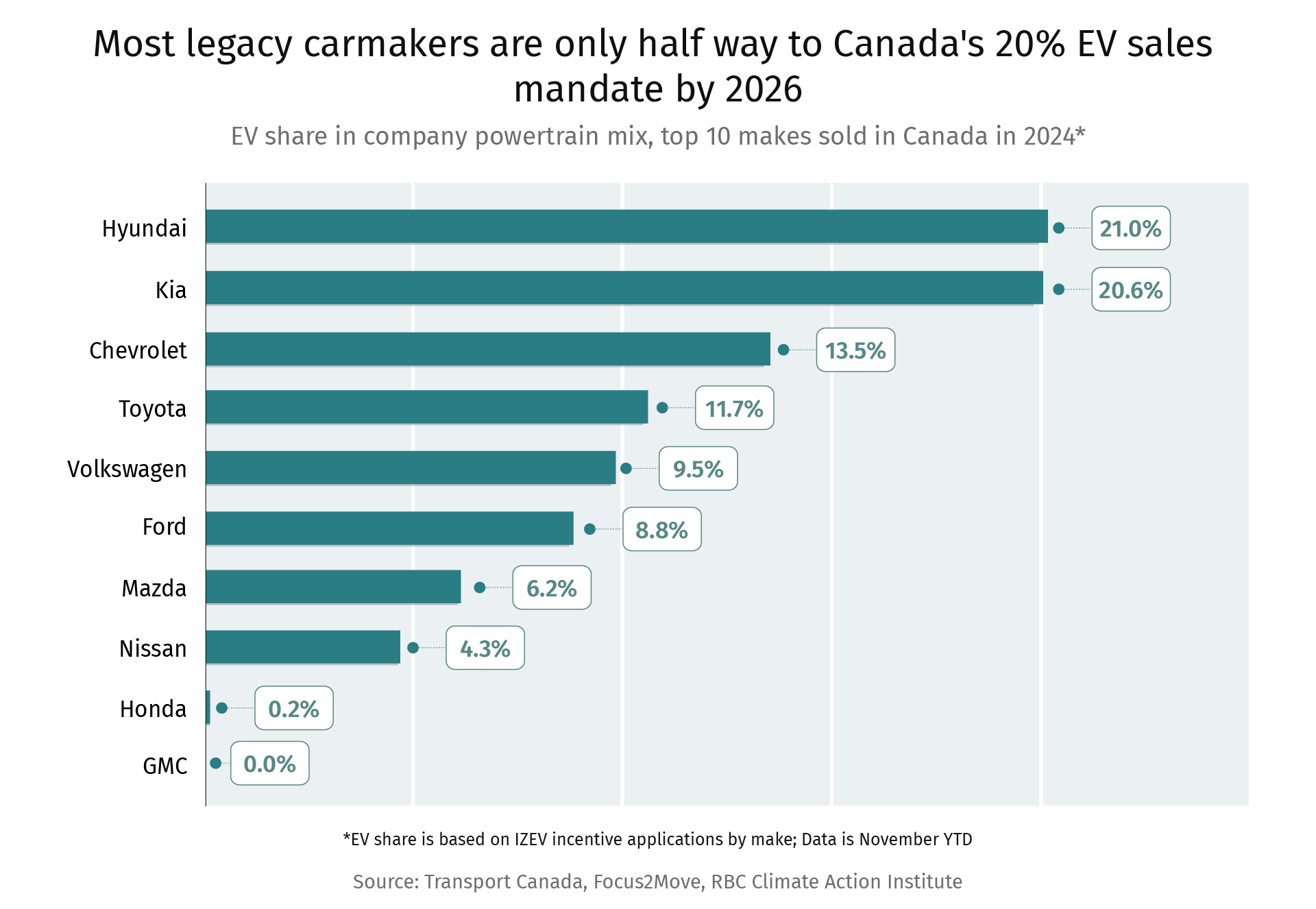
There is a third pain point: The new U.S. administration’s rollback of EV incentives is going to dent automakers EV plans—they are already delaying them at a time when they should be ramping up. While EVs make up around 20% of Hyundai and Kia’s sales mix in Canada in 2024, other top carmakers still have a large gap to bridge unless they quickly ramp up their EV focus.

All of this could have a net effect of 2.5 million fewer EVs on Canadian roads by 2035, and emissions level that are 10 Mt CO2e higher, or approximately 6% of sector’s current emissions, according to Climate Action Institute economist Farhad Panahov.

TRUMP TRACKER

The U.S. is changing its climate policy in deep and meaningful ways. Here are some of the highlights (or should that be lowlights?) from a flurry of executive orders and policy pullbacks:

Policy shift #1: Abolish Biden-era auto emissions rules.

Implication: Possible disruptions of automakers’ plans in Canada and the U.S. gearing up to build more efficient hybrids and EV cars.

Policy shift #2: Terminate state emissions waivers, like California’s, that seek to limit sales of gas-powered cars; rescind EV sales target of 50% total car sales by 2030; scrap 100% zero-emission federal fleet target by 2035.

Implication: Adds uncertainty to EV production, but unclear whether it impacts EV tax credits are other EV-promoting policies rooted in tax codes and Clean Air Act regulations.

Policy shift #3: Declare a national energy emergency to spur more drilling, pipelines, refineries, power plants and reactors and “a massive increase in domestic energy supply.”

Implication: Oil producers have maintained capital discipline and returned money to shareholders rather than expanding production in recent years. Trump has also urged OPEC countries to open the taps to boost oil output at a time when global oil demand is tepid. But a recent wildlife drilling auction in Alaska yielded no bids, suggesting producer are not ready to “drill, baby, drill” yet.

Policy shift #4: Withdraw the U.S. from the Paris Agreement, a global pact to address climate change.

Implication:
The U.S. will be MIA on several global initiatives to fight climate change, suggesting a bifurcated international approach to combat global warming.

Policy shift #5: Rescinded 100% carbon pollution-free electricity by 2035.

Implication: A hit to wind and solar industries, which were expected to drive record clean electricity capacity additions in 2024 and possibly 2025.

ICYMI

Los Angeles after the fires: ‘You can only live in a disaster zone for so long’

The rise of the Net-Zero Dad

Trump’s cash freeze is making clean energy projects collapse

Hotel rooms in Brazil would cost US$15,000 a night for COP30 delegates

Davos 2025: Searching for nuggets in the new golden age

The Institute In Action

What on the team’s reading list?: Range: Why Generalists Triumph in a Specialized World by David Epstein, Source Code by Bill Gates, and Supremacy: AI, ChatGPT and the race that will change the world by Parmy Olson.

Curated by Yadullah Hussain, Managing Editor, RBC Climate Action Institute.

Climate Crunch would not be possible without John Stackhouse, Myha Truong-Regan, Sarah Pendrith, Farhad Panahov, Lisa Ashton, Shaz Merwat, Vivan Sorab, Caprice Biasoni and Frances Dawson.

Have a comment, commendation, or umm, criticism? Write to me here (yadullahhussain@rbc.com)

Issue #07

➔ America’s era of energy dominance is here. What does it mean for climate policy?
➔ Climate Action Annual Report 2025: What Semex and Purolator have in common
➔ What Canadian business leaders say about climate action
➔ The TV series capturing U.S. oilpatch’s cheery mood

Hot takes

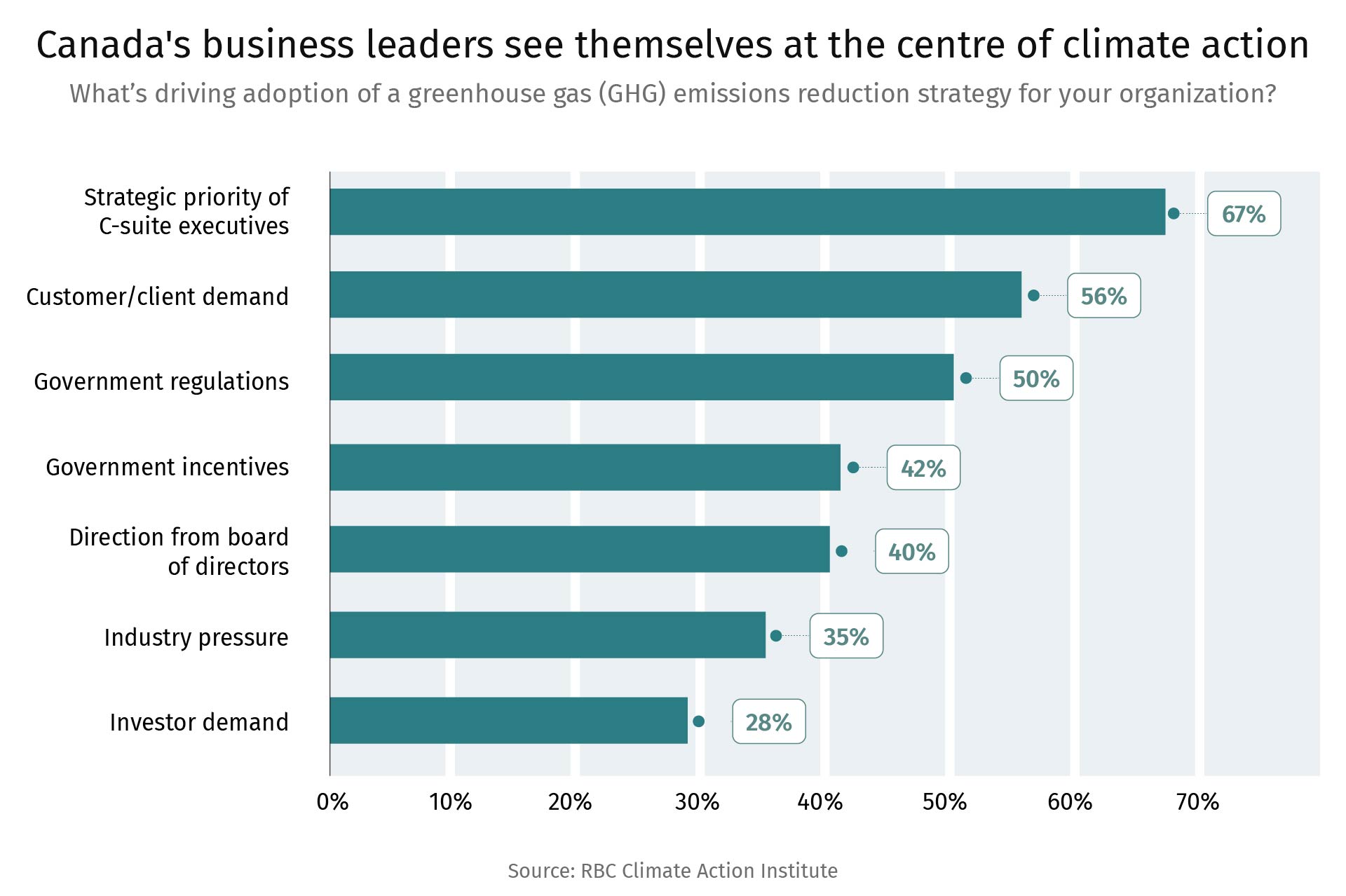
Subsidies, funding and leadership. These three levers will advance climate progress, according to a majority of the 100-plus business executives we surveyed for the Climate Action 2025: A year for rewiring, our annual report tracking Canada’s climate progress. Around three-fourths of Canadian businesses have a climate strategy in place, and roughly 40% believe they are (almost) equal partners with governments in driving climate action. Read the survey here.

Severe weather events are costing Canada’s economy. Natural disaster claims of $8 billion last year in Canada smashed the previous record of $6 billion, as climate-change fuelled weather events played havoc across the country from Jasper to Toronto, Insurance Bureau of Canada estimates. It’s not just Canada. Early estimates show Los Angeles’ wildfires could trigger economic losses of as much as US$150 billion—the costliest natural disaster in U.S. history. Globally, the losses stood at US$320-billion last year, 30% higher than 2023.

Misinformation is the world’s top short-term global risk. That’s according to a World Economic Forum report on global risks. While misinformation, and its close cousin disinformation, pervades society, it also pollutes discourse on climate issues. Social media is not helping as it plans to remove guardrails on misinformation. WEF’s top 4 long-term risks are all environmental: extreme weather events, biodiversity loss, critical changes to Earth’s system, and natural resource shortages.

Oilpatch cowboy tales. Taylor Sheridan, co-creator of the Yellowstone TV series—which tapped America’s conservative-progressive cultural clash—, is back with Landman (Amazon Prime), a Texas Permian Basin tale rife with drug cartels, roughneck life and merciless ribbing off the renewable sector’s presumed deficiencies compared to the oil sector. Watch the acerbic, plain-speaking oil lease executive—or landman—Billy Bob Thornton bat away Permian and parental troubles on a daily basis. It’s reductive and retro—quite like the American mood right now.

➔ Bi-Weekly Climate Action Award: To Ontario for launching a Home Renovation Savings Program that offers 30% rebate on heat pumps, rooftop solar panels and battery storage systems, etc. Buildings account for 13% of Canada’s emissions.

➔ Bi-Weekly Climate Action Fail Award: To Australia for delaying the rollout of new carbon emission targets by 2035, citing the return of Donald Trump’s return to the White House.

Canada’s role in U.S. energy dominance

There were no tariffs on Canadian goods on Day One of Donald Trump’s presidency—but they could come as soon as Feb. 1. Amid the chaos of Washington’s tariff and “economic force” threats, there might even by a sliver of opportunity for Canada: the potential of a new bilateral energy trade deal between the two as the U.S. president vows “energy dominance” for America.

The U.S. president has declared an “energy emergency” to build new critical infrastructure. Could some of it be built in Canada given the integrated nature of the two country’s energy sector?

Trump’s inaugural speech focused on “liquid gold under our feet,” and exporting American energy all over the world. Would Canada be feeding America’s domestic oil and gas markets that would free up U.S. output for exports? The contours of Trump’s Great Energy Game views Greenland, Canada, Mexico and the Panama Canal, as resource and depots hubs that the U.S. can draw upon. Glass half-full suggests Canada can be an equal partner in fortifying North American energy security. Glass half-empty suggests the U.S. may need less Canadian oil and gas in the future if its “drill, baby, drill,” mantra leads to a domestic output boom. Cue for calls in some quarters to resurrect the long-dead, Asia-facing Northern Gateway oil pipeline.

Canada has its work cut out as it keeps tariffs at bay and helps America realize its energy ambitions without losing sight of its own climate goals.

Meanwhile, the U.S.’s own climate targets are out the window with its exit from the Paris Climate Accord. If that positioning turns into a full reversal of the Inflation Reduction Act, it’s hard to see other major economies not following suit and scaling back their investments, according to Institute head John Stackhouse.

Read John Stackhouse’s take on Trump’s first day back in the White House.

Climate Action 2025: Rewire & reboot

The Institute’s second annual report on Canada’s climate action is full of insights, but here are five themes that stood out to us:

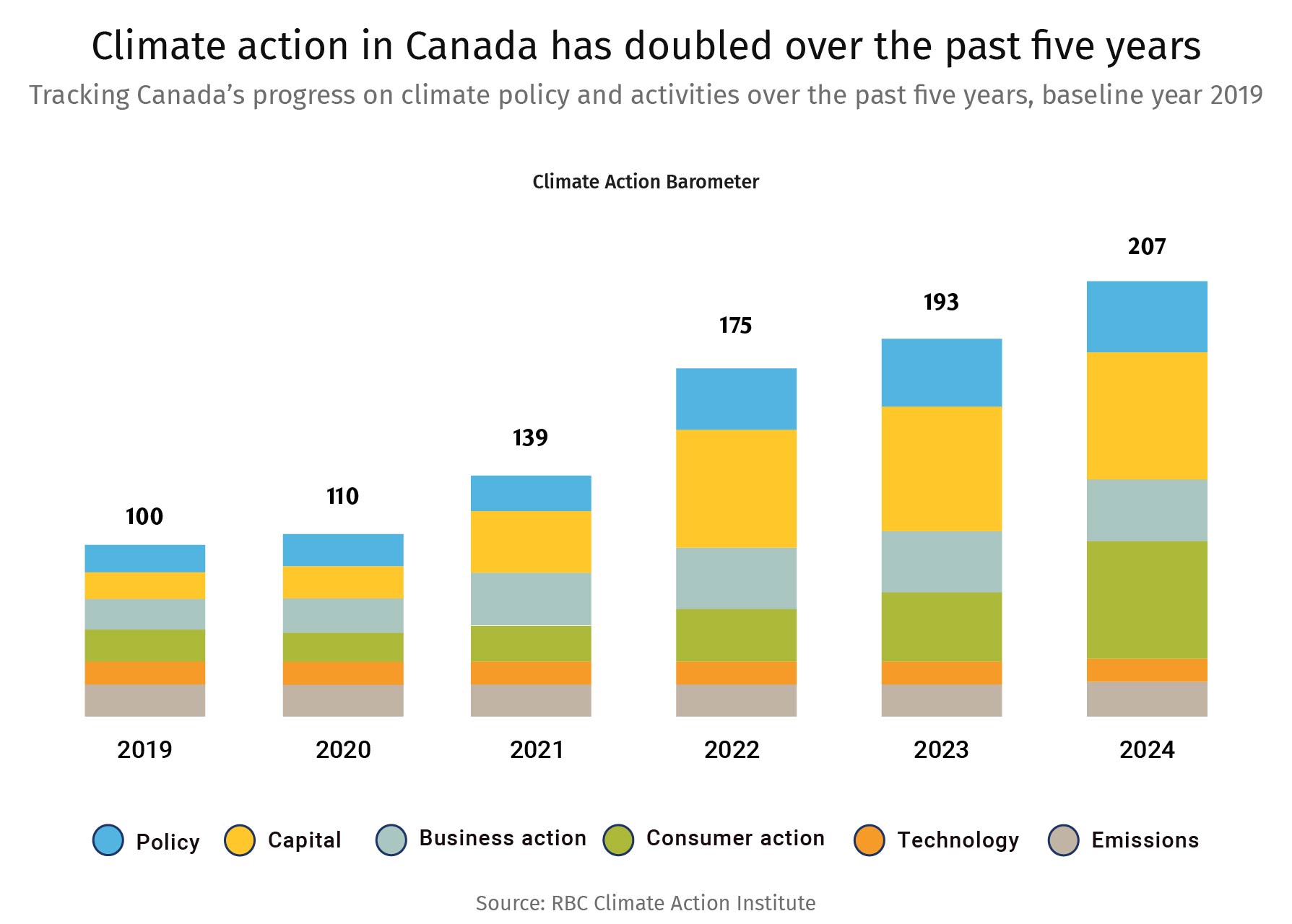
1. The big number: Climate action has doubled in Canada over the past five years, and there is one big driver: sizeable government funding announcements of $177 billion worth over the past decade, according to our tracking. Now comes the other hard part: how to fully deploy it.

2. Climate security is the new watchword. ESG is out, climate security is in—or so it seems. Protecting North American resources and supply chain is going to be critical over the next decade. However, governments will also need to distinguish between friend and foe (yes, we are looking at you, America).

3. Canadian innovation is alive and well—and under-reported: Guelph-based Semex is working away to make future generations of Holstein cattle breeds low-carbon. Meanwhile, unknown to most, logistics firm Purolator helped Canadian startups build better e-bikes. Innovation, driven by market forces, can lead to serendipitous solutions.

4. Alberta is a climate leader: The province’s early coal phaseout needs to be celebrated. Of course, Alberta’s U-turn on renewable development has undone some the goodwill, but climate progress is almost never linear.

5. A spate of new green projects could boost the Climate Action Barometer. Our proprietary index on Canada’s climate action is tracking progress from a spate of decarbonizing projects, including Entropy’s carbon capture and storage projects, Shell’s Polaris carbon capture and Canada Nickel’s Timmins project, among others.

ICYMI

➔ Seven big environmental decisions facing the B.C. government in 2025

➔ Donald Trump’s economic advisors on the wonder of tariffs

➔ U.S. energy chief vows to ‘unleash’ U.S. expansion

➔ U.S. ESG funds had a bad year with a record outflows

➔ California is waiving climate rules to speed up wildfire-hit LA’s rebuild. That might be a mistake

The Institute In Action

➔ On January 15, we gathered over 100 business, NGO, government, and climate leaders to launch our flagship climate action report, Climate Action 2025: a year for rewiring. We heard from Dave McKay, RBC CEO, Sir Andrew Steer, President and CEO of the Bezos Earth Fund, and Canadian artist Ed Burtynsky on ways Canada and the world can rewire our thinking and strategies to keep climate on the radar.

➔ Institute head John Stackhouse is in Davos. Follow him on LinkedIn to read his frequent updates.

➔ On January 30, Myha Truong-Regan, our Head of Climate Research,  will be on a panel alongside Jennifer McLeod Macey, SVP, Public Affairs & Communications, Leger, and Tracey Bodnarchuk, CEO, Canada Powered by Women, at the Toronto Regional Board of Trade’s Powering our Climate & Energy Economy Symposium, to discuss what Canadians really think about climate and energy policy.

What’s on the team’s reading wish list: Waste Land: A World in Permanent Crisis by Robert D Kaplan, The Technological Republic: Hard Power, Soft Belief, and the Future of the West by Alexander C Karp and Nicholas W Zamisk, Abundance by Ezra Klein and Derek Thompson.

Curated by Yadullah Hussain, Managing Editor, RBC Climate Action Institute.

Climate Crunch would not be possible without John Stackhouse, Myha Truong-Regan, Sarah Pendrith, Farhad Panahov, Lisa Ashton, Shaz Merwat, Vivan Sorab, Caprice Biasoni and Frances Dawson.

Have a comment, commendation, or umm, criticism? Write to me here (yadullahhussain@rbc.com)

Issue #06

➔ How Canada can stave off a tariff-trigger-happy U.S.
➔ AI vs Emissions: Canada can have it all

Hot takes

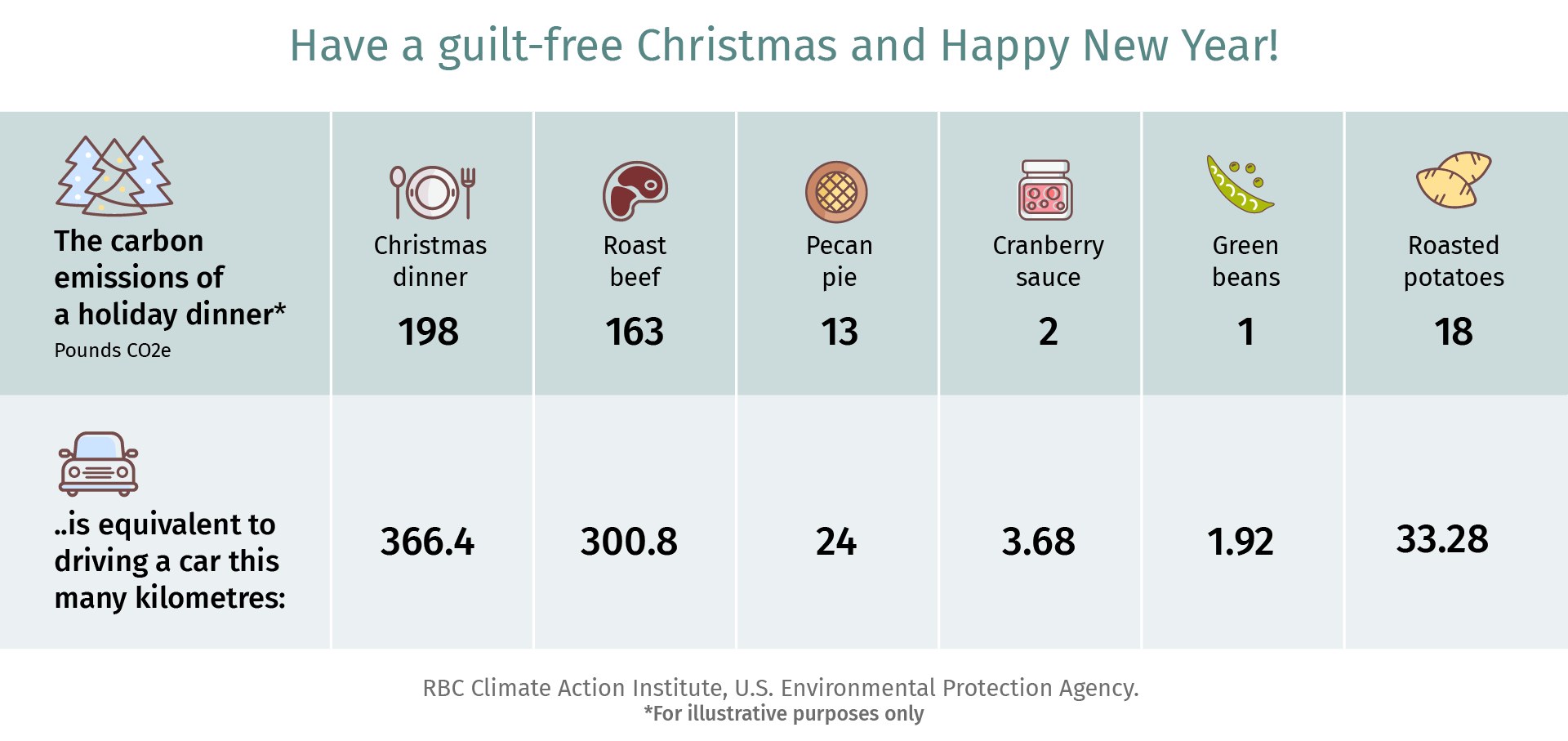
Give those sanctimonious Christmas climate blogs a rest. There might be better ways to make you feel less guilty about your Christmas carbon footprint. Can you travel less in the run-up to Christmas, get on public transportation more, avoid that optional plane trip, stop buying wrapping paper—even send less cards (Canada Post is on strike, anyway)? And dig in your Christmas roast guilt-free.

➔ Environment vs economy plays out in two Canadian cities: Crowsnest Pass, Atla., wants to be a coal town again. The 6,000-strong community recently voted in favour of building the Grassy Mountain metallurgical coal project—and it wasn’t even close: 72% voted yes in a high turnout, in the hopes of securing new economic revenues. While the town’s vote is non-binding, it underscores how economic development is trumping environmental concerns for some communities. Further west, Vancouver clung on to its ban on natural gas heating for new homes—but only just. Those in favour of scrapping the ban, including mayor Ken Sims, said it would improve housing affordability in pricey B.C. But it also sparked widespread opposition. A 5-5 tie at the city council vote ensured the ban remains in place.

➔ The backlash against the plastic backlash. Global climate leaders’ very bad, no good, awful year seems to have ended with another disaster this week in South Korea: a failure to agree on plastic pollution . More than 100 countries were pushing to phase out plastic production, but oil producers warned it could impact economic development. Talks will resume next year. The latest stalemate is part of a broader pattern of stalled progress on climate and environmental issues, especially at COP29.

➔ Barbados swapped a portion of its debt for climate commitments. The debt-to-climate swap allows Barbados to restructure higher-interest debt, and generate $125 million in fiscal savings. In return the Caribbean nation has pledged to use the funds to boost water resource management and improve water and food security. It’s emerging as a popular way for developing countries to ease their financial burden in return for greater environmental stewardship. The World Economic Forum estimates debt-for-nature swaps could provide US$100 billion to restore nature and help countries adapt to climate change.

➔ Bi-Weekly Climate Action Award: Omar Yaghi, a chemist at University of California, Berkely, for developing a carbon capture powder. Early tests show just half a pound of the stuff may absorb as much carbon dioxide as a tree.

➔ Bi-Weekly Climate Fail Award: To Norway for offering commercial deep-sea mining—a world first. The government has since postponed the decision amid pressure from a coalition partner. Thirty two countries, including Canada, have called for a moratorium on deep-sea mining in international waters.

5 Energy Aces Up Canada’s Sleeves

President-elect Donald Trump hosted Prime Minister Justin Trudeau at Mar-a-Lago for dinner last week after threatening to impose a blanket 25% tariff on Canadian goods. Trump described the dinner meeting as “productive,” but Canada’s hardly off the hook. Here’s how Ottawa can leverage its energy resources to play a strong hand and steer U.S. away from mutually assured inflation in both countries.

➔ The crude math doesn’t add up: Heavy Canadian oil still trades at roughly a $10 discount to the North American benchmark. A 25% tariff on the U.S.’s biggest oil shipper could send gasoline prices spiking well over their current US$3 per gallon average, nationwide. That could derail energy czar Doug Burgum’s mandate to lower gas to US$2 per gallon. Incidentally, Burgum was at the Trump-Trudeau dinner table.

➔ There’s no American energy dominance without Canada: Canada is the dominant supplier of piped natural gas to the U.S. If the new administration wants to establish American “energy dominance,” it must lean on Canadian gas. A steady supply from the Montney and Duvernay, would give U.S. lawmakers the flexibility to boost American liquefied natural gas exports to Europe and Asia, without raising prices at home.

➔ There’s uranium at the U.S.’s doorstep: The Joe Biden administration’s plan to triple U.S. nuclear capacity is something the new administration will likely be on board with. Biden’s nuclear framework envisions working closely with Canada, among others, to “establish a secure and resilient global nuclear fuel supply chain,” including uranium. Canada is the world’s second largest producer of uranium with output far exceeding the U.S.

➔ We are critical to building an alternative to China’s supply chains: Canada has nearly five times more cobalt reserves and six times more nickel reserves than the U.S, two key metals in energy transition. We are also a bigger producer of aluminum, graphite (for lithium-ion batteries), indium (for chip-making), iron ore and lithium than the U.S., according to the U.S. Geological Survey. The U.S. needs us to loosen China’s hold on global supply chains.

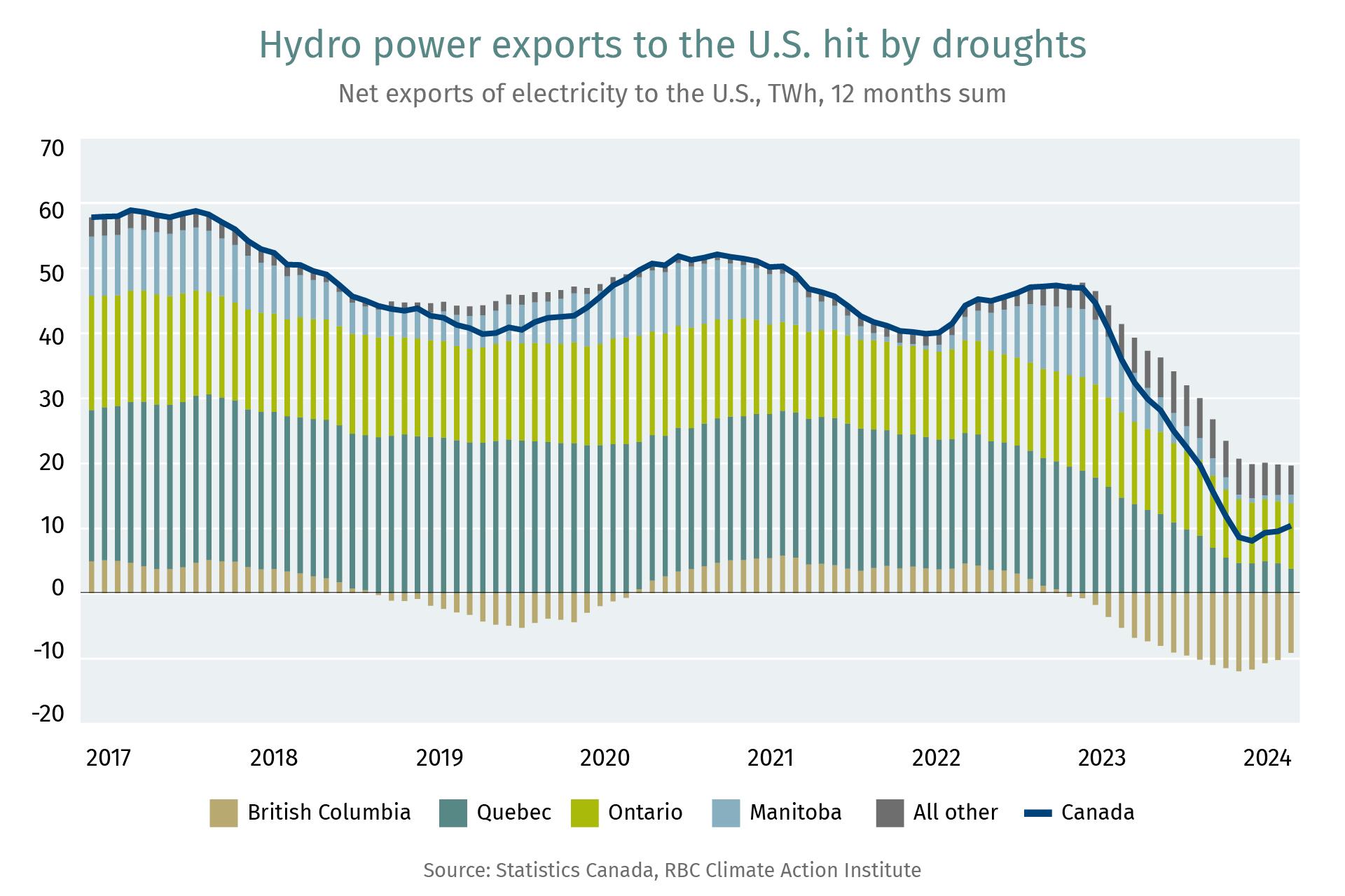
➔ We power your cities. Admittedly, a bit of a weak hand these days (see chart). Still, Hydro Quebec has built new transmission lines and sewn up long-term contracts with customers in Massachusetts and New York. Droughts are playing havoc with Canadian electricity exports, but it remains an important bargaining chip.

AI vs Emissions

Canada can have it all: a foothold in North America’s booming data centre sector powered by artificial intelligence, but also maintain its climate ambitions. What’s needed is a flexible approach, a strategic alignment with the United States—and meaningful levels of abated natural gas.

Power Struggle: How AI is challenging Canada’s electricity grid, a new report by Energy Policy Lead Shaz Merwat, analyzes how Canada can navigate the stress data centres could potentially place on the country’s grid:

➔ What’s the opportunity?:

Canadian regulators are reviewing data centre applications with a combined estimated capacity of 15 gigawatts—enough to power seven out of 10 homes nationwide. AI is the primary driver of this surge, with data centres offering a $100 billion opportunity for the construction and build of data centres and accompanying IT infrastructure (think expensive Nvidia chips).

➔ What’s the playbook?:

“Bring your own power” seems ideal. That’s the Alberta model, which allows for faster deployment and supports local natural gas prices, driving economic benefits for the province.

➔ What are the climate costs?:

If natural gas powers six additional gigawatts of data centres, annual emissions could rise by 16 million tonnes of CO2e—a 3% increase in Canada’s total emissions, Shaz estimates. However, carbon capture and storage (CCS) could throttle the rise of emissions.

Read the full report here.

The Institute In Action

➔ The RBC Climate Action Institute co-hosted a special session in Ottawa in November with the British High Commission, where Institute head John Stackhouse and Deputy High Commissioner David Prodger offered eight key messages for Canada.

➔ John also spoke at the National Electricity Roundtable in Ottawa about Canada’s opportunity to produce more electricity to power AI, EV batteries and other parts of the economy.

➔ John’s whirlwind Ottawa trip concluded with a discussion at the Sustainable Finance Forum on Canada’s opportunity to produce more food and emit less—it could be our best investment for the disruptive decade ahead.

➔ What’s on the team’s reading wish list: John’s been brushing up on his Trumponomics with two books return by the president-elect’s former advisors. Here are some other books on the team’s list: The New Cold War: How the Contest Between the U.S. and China Will Shape Our Century, obert Niblett, and The War Below: Lithium, Copper, and the Global Battle to Power Our Lives, by Ernest Scheyder.

Curated by Yadullah Hussain, Managing Editor, RBC Climate Action Institute.

Climate Crunch would not be possible without John Stackhouse, Myha Truong-Regan, Sarah Pendrith, Farhad Panahov, Lisa Ashton, Shaz Merwat, Vivan Sorab, Caprice Biasoni and Frances Dawson.

Have a comment, commendation, or umm, criticism? Write to me here (yadullahhussain@rbc.com)

Issue #05

➔ Team Trump’s pet climate peeves and preferences
➔ Meet the most critical metal of them all
➔ COP29: Baku into a corner

Which is the most critical mineral of all for decarbonization? Lithium, it turns out. The International Renewable Energy Agency and the Norwegian Institute of International Affairs came to that conclusion after crunching data to account for future demand, resource availability, recycling and substitute potential. Cobalt is the second most critical. The good news for Canada: both are found in copious amounts with new mines proposed.

How can Indigenous Nations tap a $45-billion equity gap? A new CAI report recommends pathways to help build Indigenous capital muscle. Financial and non-financial partnerships in major project developments can emerge as made-in-Canada model for inclusive economic growth, writes Varun Srivatsan, director of policy and strategic engagement, in the report. It’s starting to happen: the Federal government, along with the B.C. and Manitoba governments, announced loan guarantee programs in 2024, to spur Indigenous participation in several energy projects. Read our report here.

Cooking oil may be powering your next Air Canada flight. The airline has sourced 78 million litres of sustainable aviation fuel (SAF), made of waste oil grease from cooking oil tallow and other feedstocks. Provider Neste calls the Singapore-produced vintage “unblended neat.” Combined with conventional jet fuel, the concoction can reduce GHG emissions by up to 80% over the fuel’s lifecycle. Still, SAF accounts for a mere 0.54% of the jet fuel market—although global production has tripled in a year.

Canada needs to install a 100 EV charges…a day. Currently, there is “no obvious pathway” to a Canadian charging infrastructure that can help hit the federal goal of 100% zero-emission vehicle sales goal by 2035, according to The Canadian Vehicle Manufacturers’ Association. Canada needs 446,800 public charging ports by 2035 to support the ZEV sales mandate—we are currently at 30,000. CVMA’s concerns carry tremendous weight as the association represents Ford, General Motors and Stellantis—companies that are betting their future on EVs dominating North American roads in the not-so distant future.

Climate Action Award: To Trottier Family Foundation, Peter Gilgan Foundation, Ronald S. Roadburg Foundation, Chisholm Thomson Family Foundation, David Keith and Kirsten Anderson, Sitka Foundation, Vohra Miller Foundation and Allan Shiff for donating $405 million to climate-related initiatives.

Climate Fail Award: To the Valencia regional government, which failed to send an emergency alert to mobile phones until after 8pm on the first day of catastrophic floods in Spain— nearly 13 hours after the state weather agency warned of “very intense” rain.


Trump’s energy czars, nominees and hopefuls

Energy markets are on edge as U.S. president-elect Donald Trump rolls out his choices for key posts that energy markets will either love or hate. Many of these nominees are subject to confirmation, but they offer early signals on the president’s intentions.

One early insight: many of these candidates’ constituencies and home states have benefitted immensely from the Inflation Reduction Act, which Trump has labelled the “green new scam.” Also, the U.S. oil and gas production has grown uninterrupted regardless of who’s been in the White House (see chart). For Canada, the Trump energy squad’s focus on critical minerals, oil and gas and nuclear is good news, although there seems less clarity on EV policies.

Doug Burgum, interior secretary and energy czar
Loves: “Data-driven” approach to managing. The former CEO of a software company is governor of oil and agro state North Dakota. Pushed for Net Zero emission goals for his state by 2030 primarily through carbon capture technology.

Hates: Not much. Neutral on renewables and eager to extract critical minerals.

Burgum would lead a new National Energy Council encompassing agencies and departments involved in “ALL forms of American Energy,” and scrap “totally unnecessary” regulations. Two big tasks: channeling IRA incentives and rebates, and delivering Trump’s US$2 per gallon pledge.

The interior secretary requires Senate confirmation, but not the czar role.

Chris Wright, energy secretary (nominee)
Loves: Fracking. The MIT graduate helped advance the U.S. shale gas revolution by developing a new fracking method. Once drank frack fluid on camera.
Hates: The phrase “climate crisis;” also thinks Net Zero emission pledges are “silly.”

Wright is also part of the Burgum-led National Energy Council.

John Thune, Senate majority leader (elected)
Loves: Wind power and biofuels. Wind energy powers 55% of electricity of his home state of South Dakota. He is also bullish on nuclear.
Hates: Joe Biden’s pause on liquefied natural gas approval, calling it a move to “satisfy climate activists on TikTok.”

Thune’s support for wind power potentially has him at odds with Trump who has promised to end offshore wind projects on Day 1.

Kristi Noem, U.S. Department of Homeland Security

Loves: Wind and hydropower. The South Dakota governor believes her state is the ideal place to develop next-gen nuclear technologies.
Hates:
Her pet dog. Noem was also one of five governors who declined to accept the Environmental Protection Agency’s (EPA) planning grants that Washington offered every state to address climate pollution. Also refused to distribute rebates on energy-efficient home appliances.

Neom is a nominee for an entity that oversees the Federal Emergency Management Agency at a time of frequent weather disruptions. FEMA is the country’s biggest flood insurer.

Mike Waltz, National Security Advisor
Loves: American energy dominance. Hawkish on Iran and Russia that could likely lead to more stringent energy sanctions on both countries. He helped craft the Stop Harboring Iranian Petroleum (SHIP) Act legislation, which may be revived in the new administration.
Hates: Pause in LNG approvals by the Biden administration.

The national security adviser does not require Senate confirmation.

Marco Rubio, Secretary of State
Loves:
Critical minerals supply chains. Introduced a bipartisan bill in June to “develop a strategy…to ensure that the U.S., its allies and global partners can count on a diverse and secure end-to-end supply of critical minerals.”

Hates: China, Iran and Russia—which could have implications for both renewable and oil markets.

Elon Musk, co-lead, Department of Government Efficiency (DOGE)
Loves: Tesla EVs. And U.S. federal government loans, tax breaks and other EV policies that have spurred Tesla’s rise.

Hates: Big governments and regulators that have regularly tangled with Musk over Tesla’s safety issues. Now he could gut those agencies.

Vivek Ramaswamy, co-lead, Department of Energy Efficiency

Loves:
Fossil fuels. Has financial interest in an asset management fund that manages an energy ETF—DRL—that tracks major oil and gas companies.

Hates: President Biden’s EV subsidies, which he says, makes America more dependent on China. Possible sticking point with co-DOGE lead?


Beyond The Cop29 Doom Loop

COP29 has not exactly been climate diplomats’ shining moment. But it wasn’t all doomscrolling. Here are some of CAI head John Stackhouse and the team’s top takeaways from the Baku event so far.

#1 Rejoice Article 6.4
In a landmark decision on the first day of the global climate talks, COP29 officially adopted the new operational standards for a mechanism of the Paris Agreement under Article 6, setting the stage for a global carbon market.

The adoption of article 6.4 sets the stage for operationalizing Article 6, which has faced years of deadlock. It establishes a centralized carbon market that allows countries to trade emission credits, or A6.4ERs, to meet their Paris Agreement commitments.

#2 Show me the money
To many UN skeptics, COP29 might as well be on Mars, because the agenda seems otherworldly. While establishing rules for a global carbon market is a start, most of the oxygen is going to the Big Ask, which in UN-speak is called — brace for it — the New Collective Quantified Goal, or NCQG. The goal: $1 trillion a year. We may see Elon on Mars first. A more likely commitment will be $300 billion.

Remember, the same process committed to $100 billion a year more than a decade ago, and didn’t get to that 2020 goal until 2022. We’ll see if NCQG is different.

#3 Deal or no deal
One of the biggest changes in climate action over the past decade has been a surge of charitable funds looking to invest in sustainable projects. The poster child may be Jeff Bezos’s $10-billion Earth Fund, whose CEO, Andrew Steer, is in Baku to remind the climate crowd that traditional financial players aren’t leveraging philanthropic money nearly enough. He’s been pushing the idea of “a deal team for the planet” — some kind of version of the World Bank that could pull together government-backed funding, private sector capital and philanthropic funds for the big, non-market projects to cut emissions.

#4 Upside down world
The U.S. president-elect Donald Trump is contemplating an exit from the climate talks, and France—the architect of the Paris Agreement—withdrew its top negotiator at Cop 29. But Russia, the world’s fourth-biggest emitter, thinks climate talks should not be “interrupted despite political differences,” its top diplomat said. China also wants constructive dialogue on climate change with the U.S. under the Trump administration. An upside down world, indeed.

Curated by Yadullah Hussain, Managing Editor, RBC Climate Action Institute.

Climate Crunch would not be possible without John Stackhouse, Myha Truong-Regan, Sarah Pendrith, Farhad Panahov, Lisa Ashton, Shaz Merwat, Vivan Sorab, Caprice Biasoni and Frances Dawson.

Have a comment, commendation, or umm, criticism? Write to me here (yadullahhussain@rbc.com)