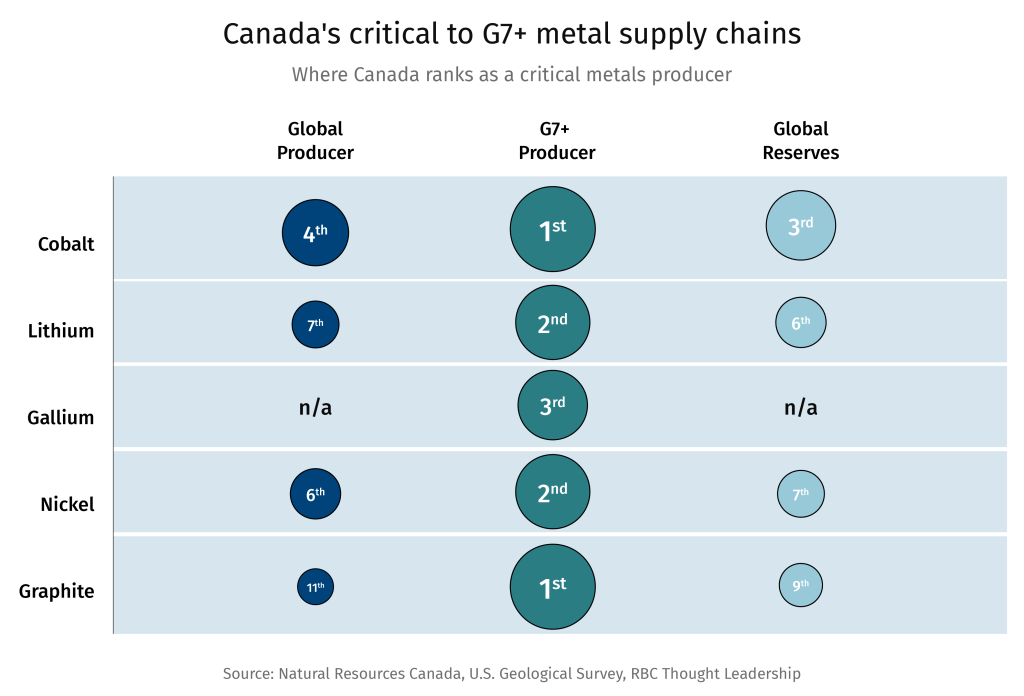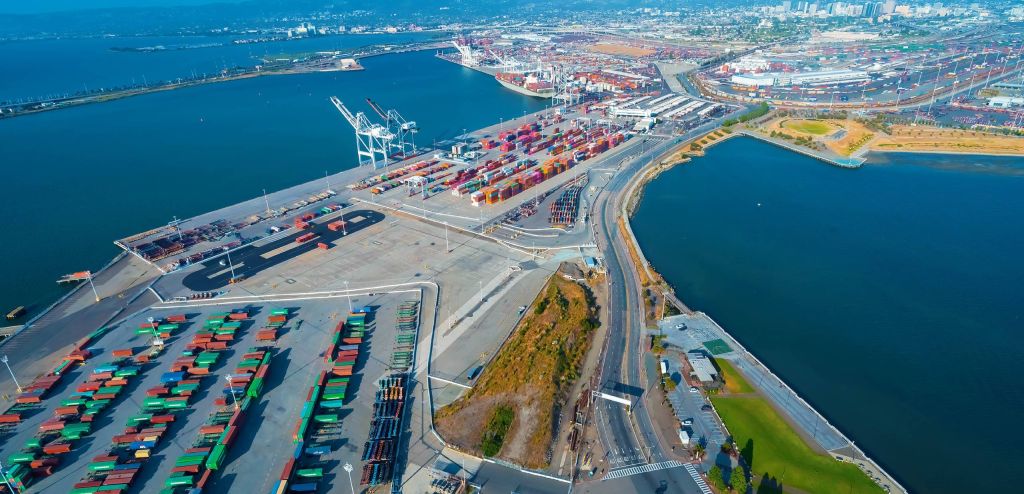
➔ Why Canada’s critical to G7+’s metal security

➔ Peak IEA vs OPEC fight

➔ A geothermal breakthrough

Hot takes

Canadians slammed the brakes on zero-emission car purchases in Q1. Sales were down 19.5% compared to the same period last year, while total light-duty vehicles, that includes hybrids and plug-ins, fell 3.2% during the period. New vehicle registrations accounted for 9.5% of total car sales in Q1, down from an impressive 18.9% in Q4, S&P Global data shows. A confluence of factors tripped up sales, including the end of the $5,000 federal rebate, a drop in Quebec’s rebate program, and tariff uncertainty. Tesla is also losing its brand appeal in Canada, securing less than 10% market share in April, down from 50% a few years ago.

G7 leaders were not the only luminaries in Alberta this month. Haitham al-Ghais, secretary-general of the Organization of Petroleum Exporting Countries, showed up in Calgary for the Global Energy Show with the bold claim that “there is no peak in oil demand on the horizon.” Over the past few years, OPEC and the International Energy Agency have bickered over the peak dates of oil, which the Paris watchdog believes could come before 2030. OPEC also recently called out the IEA for cutting its electric vehicle forecast as proof it was backtracking on its peak-demand theory. But the IEA remains firm, noting in its June forecast that a “peak in global oil demand is still on the horizon.”.

The Arctic is hot territory. Three new books this year show how the top of the world is now top of mind, as it warms up for—and to—more commerce. In The North Pole, Norwegian explorer Erling Kagge charts how explorers were traversing the region as early as the 1600s to find shortcuts from Europe to Asia. In End of the Earth, fossil hunter Neil Shubin explores what the latest science tells us about the riches beneath. And in Arctic Passages, journalist Keiran Mulvaney explores how thawing ice could cut trips from, say, Korea to the Netherlands, circumnavigating geopolitical flashpoints Suez and Panama canals.

Critical Canada

From Nice to Kananaskis, critical minerals are on everyone’s lips. But it was awkward in the coastal French city where delegates at the UN Ocean Conference criticized the U.S.’s interest in deep-sea mining, suggesting that the White House’s plans for offshore critical minerals set “a dangerous precedent that could destabilize the entire system of global ocean governance,” according to the International Seabed Authority (ISA). It seems that the business of developing clean energy inputs is not always, well, clean.

In Kananaskis, Canada corralled G7 nations to at least agree on a critical minerals “action plan .” While a united and sweeping G7 statement was being avoided on several matters to avoid the ire of the Oval Office, leaders agreed on developing a framework to finance new mines and downstream processing facilities, and reduce reliance on China for key metals such as lithium, cobalt and rare earth elements.

As a major producer of several commodities vital for the production of electric vehicles, defence, smart phones and wind turbines, Canada wants to play a key role, as part of its overarching “energy superpower” ambition.

There’s some awkwardness here, too as the federal government is starting to get some pushback: Chiefs of Ontario believe Bill C-5, proposed by the government to fast-track mining and other projects, will override environmental laws and “sidestep constitutional obligations.”

The private sector , which overwhelmingly wants all levels of governments to build an energy-agnostic utility corridor, also has a laundry list of concerns including cost overruns and delays of mega-projects, scope creep, stakeholder consultations, environmental assessments, and regulatory delays, according to a KPMG survey of Canadian executives.

Our report, The New Great Game, outlines how Canada can overcome challenges to scale its critical minerals sector. Further reading: Resourceful: How Canada can strike a new commodity deal with the U.S. and others

The Canada-Japan gas nexus

Japan is the Canadian energy sector’s new market—with a climate twist. B.C. Premier David Eby was in Japan as recently as this month, showcasing his province’s commodity resources, including energy. Meanwhile, Mitsubishi Corp.—an anchor investor in LNG Canada, will start receiving shipments from the facility starting in July.

Our new report on G7+ Strategy for Natural Gas , examines how member countries can leverage natural gas to ensure energy security. Canadian LNG can find a greater Asian foothold if it can align with Japan’s Green Transformation Emissions Trading System (GX-ETS), which is central to the Asian country’s carbon neutrality by 2050.

Here’s how:

  • Japan’s GX policy accepts low-carbon LNG—particularly if paired with methane abatement, carbon capture and storage (CCS), or certified emissions standards—as transition-aligned. Canadian LNG could qualify for long-term GX-aligned supply contracts, if emissions reductions are verifiable.

  • Japanese investment via GX Transition Bonds, especially in infrastructure such as liquefaction and CCS-enabled transport. Japan is collaborating with Australia and other countries on clean ammonia. Canada’s low-carbon certified energy products can tap several opportunities including financing through GX Transition Bonds and Japan’s Joint Crediting Mechanism (JCM).

  • Canada can also tap Japan’s plan to scale blue hydrogen imports, by developing natural gas with CCS.

  • Japan’s economy also needs power to maintain its edge in computation and digital infrastructure. Data centres, AI and digital infrastructure are going to depend on natural gas, offering another opening for Canada.

Read the full report here. Also watch John Stackhouse and lead author Shaz Merwat discuss the report.

The World Bank is entering the nuclear energy space. In a boost to nuclear, the World Bank is collaborating with the International Atomic Energy Agency, the UN nuclear watchdog, to support existing reactors and support “grid upgrades,” including SMRs, amid a push from the U.S. and Germany. Natural gas power plants, that do not “constrain renewables,” could also tap its funding. However, the World Bank’s board has not yet agreed on funding upstream natural gas development.

Carbon capture projects are ramping up. Between 2020 and 2030, carbon management project deployment is expected to be dominated by capture-only initiatives, which will account for approximately 45% of all operational and planned projects, according to a new report by the International Energy Forum . The U.S., the U.K. and Canada—in that order—have the highest number of proposed CCUS projects by 2030. That will take proposed global CCUS capacity to 1 gigatonne of CO2 by 2030 (equivalent of taking 306.3 million cars off the road for a year), with most initiatives financed through public funding.

A Bill Gates-backed geothermal firm reported an industry-shaking breakthrough. The industry is abuzz after Houston-based Fervo Energy drilled 15,765 feet in 16 days—a 79% cut in average drilling times. With drilling the costliest line item for geothermal companies, the feat is a giant step in making geothermal economically competitive with other energy sources. Second, its technology—borrowed heavily from fracking techniques—, allows the industry to look beyond geological sweet spots for geothermal, like Iceland. Gates’ Breakthrough Energy immediately rewarded the company with an additional US$100-million injection, part of a US$206-million investment round for the company.

Curated by Yadullah Hussain, Managing Editor, RBC Climate Action Institute.

Climate Crunch would not be possible without John Stackhouse, Jordan Brennan, John Intini, Farhad PanahovLisa AshtonShaz MerwatVivan SorabCaprice Biasoni, Lavanya Kaleeswaran and Joelle Schonberg .

Have a comment, commendation, or umm, criticism? Write to me here (yadullahhussain@rbc.com)

Climate Crunch Newsletter

➔ Climate-tech funding perks up

➔ Nuclear ramps up

➔ Got eco-friendly milk?

Hot takes

Canadian climate technology companies raised $468 million in Q1. That’s upfrom a paltry $39 million during the same period last year. It’s a bright beginning to the year following a sluggish period of investment from Q2-Q4 2024. First quarter funding in 2025 was mostly driven by energy storage and clean power deals. While the overall rise in climate technology funding is encouraging, additional investments in industrial innovation—beyond the $36 million raised to date this year from a single deal—will be critical in decarbonizing hard-to-abate industrial sectors.

Speaking of funding, Canada will need more foreign capital to realize its commodity ambitions. More than 100 mineral projects worth $107 billion, are at various stages of development in Canada over the next ten years, according to research by RBC’s Cynthia Leach, Shaz Merwat and Vivan Sorab. With Chinese investment in minerals effectively blocked by Ottawa, Canadian miners would need to tap a variety of countries such as those in America and Europe and institutions such as Middle East sovereign wealth funds, to emerge as a commodity powerhouse. Read the full report here. Also watch RBC analysts talk minerals.

After all the talk, nuclear is finally ramping up. A new U.S. executive order aims to speed up new nuclear plant applications within 18 months—and quadruple nuclear power generation in 25 years. Belgium is scrapping its nuclear phase-out law, while EU members Germany, Denmark, and Italy are reconsidering their stances on nuclear. Ontario also kickstarted a nuclear modular reactor in May. But New Brunswick is delaying its small modular reactor (SMR) plans after its two partners failed to raise capital and hire workers. Ambition is fine, but the challenge is finding the money and the people to execute.

INFRASTRUCTURE

Build, Baby, Build—But Also Wait

Lofty ambitions, meet ground realities.Despite a reset, Canada’s plans to build new clean and conventional energy projects are running up against familiar obstacles, such as stringent environmental rules and lack of Indigenous consent. Both are critical considerations that should not supersede national interest.

Provinces that stitched together new laws in a hurry are being asked to wait:

  • Ontario’s Bill 5, which is set to become law, gives the provincial government wide powers to allocate projects to “trusted proponents” in special economic zones. The Canadian Civil Liberties Association calls it an “alarming move,” that they say gives the government the authority to unilaterally scrap legal safeguards that protect vulnerable communities and some Indigenous people.

  • Worried about the surge in mining activity, First Nations in Ontario’s Ring of Fire region are demanding the bill be struck down. Mining claims at the Ring of Fire have shot up 67% since 2022, with just under 43,000 claims covering an area 14 times the size of Toronto city, according to Wildlands League.

  • In British Columbia, which is hoping to be an LNG and commodity hub, the government narrowly passed the Infrastructure Projects Act (the Speaker had to break the tie) aimed at fast-tracking projects, amid opposition from B.C. Assembly of First Nations, municipalities and environmental organizations.

  • Anishinabek Nation Regional Chief Scott McLeod said a national plan to advance projects without input could trigger another “Idle No More” movement.

What are the chances of the federal government facing similar headwinds as it embarks on pushing through a new wave of major projects? The NDP and Bloc Quebecois are already gearing up for a fight. For now, the momentum is with the “Build” crowd.

RBC’s John Stackhouse who wasin Quebec and British Columbia recently, says attitudes towards resource development, and oil and gas exports, are shifting. (Read John’s full briefing from Quebec and B.C. here).

But as Prime Minister Mark Carney and the premiers thrash out a plan and prepare a “national interest” bill, here’s what’s on their to-do-list:

  • Indigenous consent will be needed and will take time, especially under B.C.’s commitment to the UN Declaration of the Rights of Indigenous Peoples. The First Ministers’ statement after their meeting acknowledges those challenges.

  • Premier Danielle Smith wants nine “terrible” federal policies, such as the proposed oil and gas emissions cap and tanker ban on B.C.’s northern coast, which she believes discouraged investment. How will policymakers balance their economic and environmental commitments?

  • Industrial carbon pricing remains another point of contention as it makes Canadian gas exports less competitive, but advance’s the country’s climate goals.

  • First Ministers’ focus on “decarbonized oil and gas pipelines” is another interesting proposition and would require leaning on carbon capture technology.

  • Building cleaner and more affordable electricity systems to ensure net-zero by 2050 could also spark activity in several industries such as steel, lumber and aluminum that have been deeply disrupted by U.S. tariffs.

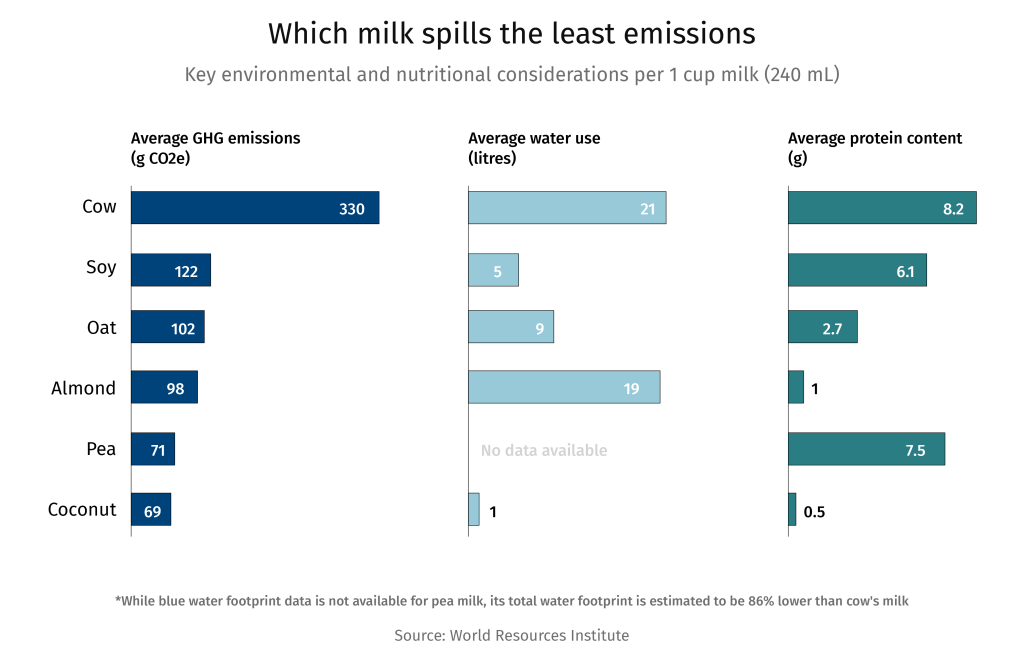
Got eco-friendly milk? It appears consumers can’t have all three—nutrition, low emissions and water conservation—when picking milk. Good old-fashioned dairy is the most emissions- and water-intensive but also the most nutritious, according to a World Resources Institute study. Almond appears to be the greatest disappointment: consuming almost as much water as dairy but is rather unwholesome. The winner appears to be the lesser-known pea milk.

Canadian cleantech remains a man’s world. Women were paid 17% less than men in 2023 in the environmental and cleantech (ECT) space—more pronounced than the 12.8% wage deficit women face in the overall Canadian economy, Statistics Canada data shows. Even though women in the industry (41.6%) were almost twice as likely as men (24.6%) to have a university diploma or degree. Overall, 7 in 10 jobs were held by men in a sector that represents 1.7% of all Canadian jobs in 2023.

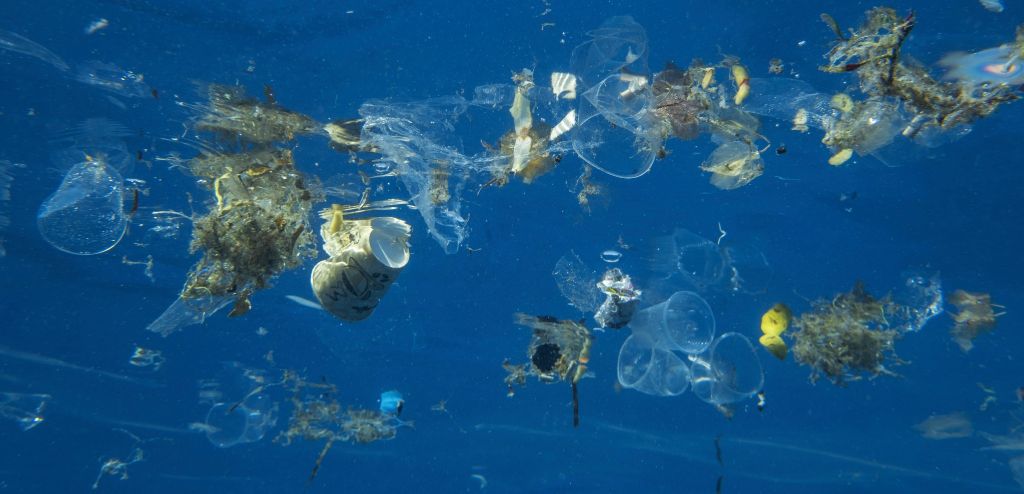
A garbage truck’s worth of plastic enters the ocean every minute.That catastrophe is what makes Ocean with David Attenborough compellingviewing (now out in cinemas). “In front of us is a chance to protect our climate, our food, our home,” said Attenborough, the famed 99-year-old biologist. Oceans absorb 30% of CO2 emissions from human activities, yet only 2.4% of oceans are protected—compared to the global pledge to protect 30% of the ocean by 2030. The UN, which is hosting a conference on oceans next week in Nice, France, notes that of its 17 Sustainable Development Goals, protecting “Life Below Water,” remains the most underfunded.

The Institute In Action

  • In British Columbia, John Stackhouse joined a meeting between the Greater Vancouver Board of Trade and Calgary Chamber to discuss Canada’s role in global natural gas exports.

  • Myha Truong-Regan attended the Walrus Talks, Power Economy: Using Electricity to Change Cities, Homes, and Industry recently, to hear seven climate thought leaders and practitioners argue why the future is and must be electric.

  • Varun Srivatsan spoke to an audience at the Saskatchewan First Nations Energy Forum last week on equity financing and the importance of capacity, capital and consent to resource development.

On the team’s reading list

  • Fantasyland, a 500-year history of “How America Went Haywire” by Kurt Andersen. Read John’s review here.

  • Hotshot: A Life On Fire by River Selby, on wildfires and insights on U.S. federal fire policy, Indigenous land use and ecological history.

  • Is A River Alive? by Robert Macfarlane, tracks flowing water in Ecuador, India and Canada.

  • Who is government: The Untold Story of Public Service, by Michael Lewis, explores the vast complexity of American bureaucracy.

Curated by Yadullah Hussain, Managing Editor, RBC Climate Action Institute.

Climate Crunch would not be possible without John Stackhouse, Jordan Brennan, John Intini, Farhad PanahovLisa AshtonShaz MerwatVivan SorabCaprice Biasoni, Lavanya Kaleeswaran and Joelle Schonberg .

Have a comment, commendation, or umm, criticism? Write to me here (yadullahhussain@rbc.com)

Climate Crunch Newsletter

➔ A battery storage project going live and an approved SMR project suggests Canada can build

➔ Mark Carney’s cabinet: The fixer, the insider and the skeptic

➔ General Fusion needs financial infusion

Hot takes

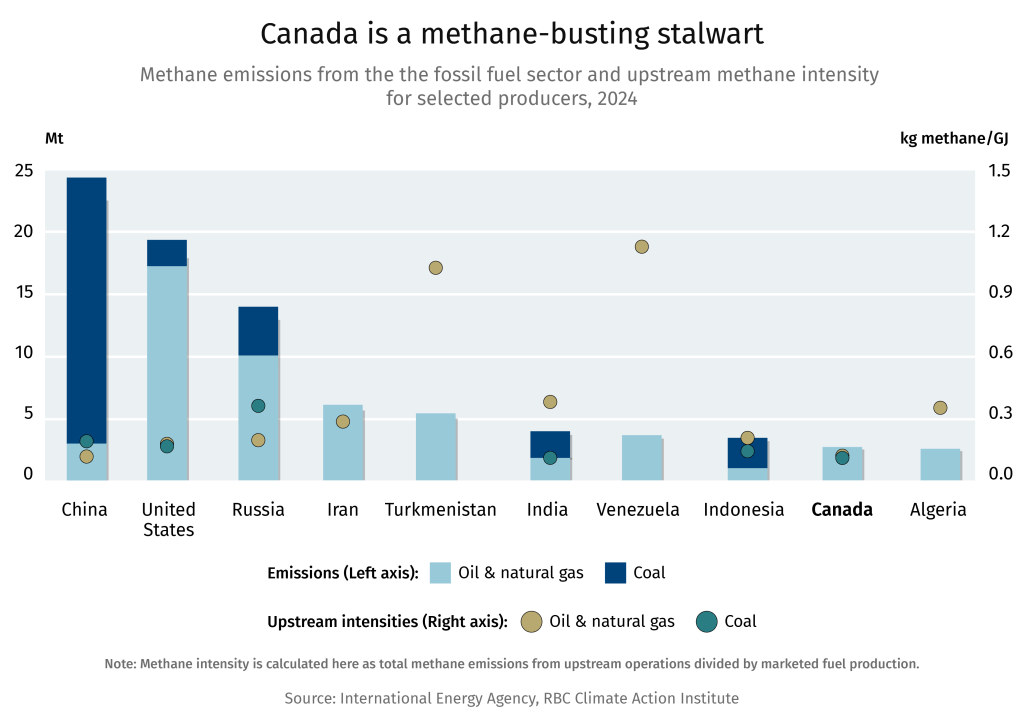
Canada is a methane-busting powerhouse. The International Energy Agency ranks Canada as among the lowest in methane intensity among major oil and gas producers including the United States, Russia and Iran. Emissions from methane, a far more potent greenhouse gas than carbon dioxide, remains at a high level globally despite pledges and available solutions that can lower fossil fuel emissions at “near zero” costs, the IEA estimates. Worse: methane emissions remains widely underreported globally, the agency said in its latest Methane Tracker report.

Canada is a methane-busting stalwart

The U.S. is going after solar power—and showers. A new U.S. Republican proposal aims to rollback popular tax credits for home solar and electric vehicles. The sweeping proposal to gut several incentives in the Inflation Reduction Act and other programs will save the government US$560-billion over a decade, but raise U.S. household costs by 7% by 2035, analysts say. The cuts could also impede U.S. efforts to cut emissions by 43% to 48% below 2005 over the next decade. Another U.S. proposal aims to scrap rules that conserve water in shower and toilets; also on the block: the Energy Star program that’s been credited for boosting energy efficiency and cutting utility bills.

The number of rare earth projects in Canada currently stand at 12. These constitute projects that are active in the exploration, resource estimation, or the preliminary economic assessment phase. Three separation and processing facilities and two rare earth elements (REE) recycling plants already exist, according to a report by Vivan Sorab, senior manager, clean technology. Fixing a couple of bottlenecks could help fast track the 12 projects. First, government investment, such as provincial funding in Saskatchewan, can help bring rare earth processing facilities closer to commercialization. Offtake agreements at competitive prices could also help Canada’s REE industry get a foothold.

Planting trees isn’t enough to tackle climate change. The world needs a global industry focused on removing carbon via nature-based and man-made solutions from the atmosphere at scale. Listen to a new episode of Disruptors X CDL: Innovation Era, where John Stackhouse and Sonia Sennik sit down with David Keith, a pioneer in carbon removal and founder of Carbon Engineering, to explore what it will take to build a low-carbon future.

POLICY

The fixer, the insider and the skeptic

Tim Hodgson, the new federal energy and resource minister, has been charged by his boss Mark Carney to make Canada a “leading energy superpower.” Hodgson will have to play the role of fixer in the resources sector, that includes mending relationships with Western provinces and Indigenous groups to make that dream come true. So far, he has been warmly received in the West, where grievances over Ottawa’s attitudes towards fossil fuels run deep—and remain live.

Julie Dabrusin, the Minister of Environment and Climate Change of Canada, has elicited a different reaction from oil and gas provinces. Her bio boasts a “strong stance against oil sands expansion,” raising concerns. But her insider knowledge as a parliamentary secretary to the Ministers of Natural Resources and Environment and Climate Change, and a member of the Natural Resources Committee, will be vital for Ottawa to streamline and fast-track project developments, including oil and gas pipelines. The Prime Minister seems open to the idea of new fossil fuel pipelines, as is Quebec. “Quebecers are saying, ‘There’s no way Trump is going to control the oil we produce in Alberta.’ So, can we export it to Europe through Quebec instead of being stuck with Trump? There’s openness. I feel things are shifting,” Premier Francois Legault said recently, adding that no concrete projects had been proposed.

While former environment minister Steve Guilbeault is now in charge of the heritage file, his skepticism about the economics of an east-to-west oil pipelines on his first day back in parliament, has also raised eyebrows. His portfolio appears to include Parks Canada, which gives him a platform to raise issues of biodiversity and nature erosion brought about by climate change. Committee to watch: Cabinet committees are where most of the business of government is transacted. One committee to watch will be the Build Canada committee, tasked with considering issues as diverse as housing, infrastructure, Indigenous economic prosperity, climate action and a host of others. The tag-team of Hodgson and Chrystia Freeland–chair and vice-chair of the committee–will provide a mix of private sector expertise and cabinet experience.

CLEANTECH

Financial infusion for General Fusion

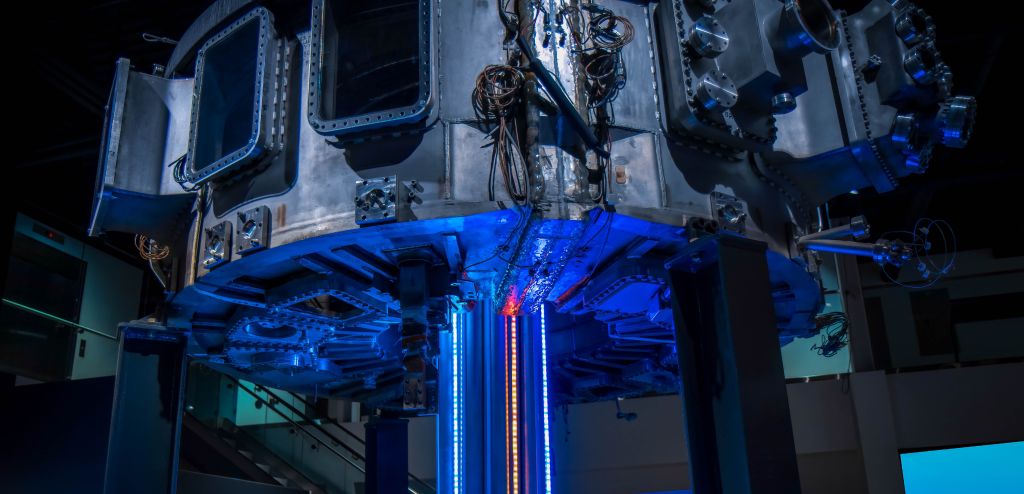
General Fusion needs fresh capital. The B.C.-based nuclear fusion company announced a technological breakthrough that brings it one step closer to bringing zero-carbon fusion tech to the electricity grid. But the company also cut its headcount due to “unexpected and urgent financing constraints,” and is seeking new capital “to finish the job,” CEO Greg Twinney said.

Nuclear fusion mimics how stars create energy—an incredibly complex technology that’s perpetually “five years away,” but has gained investor interest in recent years on the back of several tech advances.

General Fusion also needs the stars to align. While the Canadian federal and provincial governments have injected funds in the company in the past, Twinney is looking for more financing including from the private sector, as the company’s competing with “nationally funded fusion programs around the world.” Since 2002, the company has raised US$440.53 million, according to PitchBook, and include counts Temasek, BDC Capital, and Chrysalix Venture Capital and Jeff Bezos as investors. The company recently hired the former CEO of the Amazon.com Inc. founder’s rocket company Blue Origin LLC as a strategic adviser.

The U.S. has been spending US$800 million annually in fusion technology in recent years, while China has injected between US$1-billion to US$1.5 billion annually. There are now around 98 demonstration plants or prototypes operating globally, another 13 under construction and 33 more planned.

Domestic rivals are also nipping at General Fusion’s heels. Montreal’s Fuse Energy raised US$32 million in new funding late last year, with the U.S. National Nuclear Security Administration (NNSA) as its largest collaborator and potential customer. The idea is to make Fuse to NNSA, what SpaceX is to NASA, said its 24-year-old CEO JC Btaiche. Last year, the Canadian Nuclear Laboratories called for a Canadian Fusion Strategy to help the country advance its net-zero emissions target by 2050. Canada provides the least government support for fusion development on a per capita basis among its G7 peers, CNL noted.

Ontario is set to build the G7’s first SMR. The province gave Ontario Power Generation the greenlight to start building the first of four small modular reactors at its Darlington New Nuclear Project—the first nuclear project in the province in three decades.

The Oneida energy storage operation is now live. The development in southern Ontario, near Hamilton, in Haldimand County is the fourth largest battery storage facility in the world. Its 278 lithium-ion battery units will store enough power to keep southern Ontario buzzing when demand peaks, or other sources get too expensive. Powered by renewable sources, the Indigenous-led project will reduce Ontario’s emissions by up to 4-million tonnes, equivalent to taking nearly 850,000 gas-powered cars off the road for a year. It may soon become a model for big demand users (such as datacentres) as they explore options. Read John Stackhouse’s blog on how battery storage gives us even more optionality to ensure costs remain low, relatability remains high and Canada’s climate commitments are fulfilled.

Recycling seems to be going out of fashion. A report by think-tank Circle Economy found only 6.9% of the 106-billion tonnes of materials used annually by the global economy came from recycled sources, a 2.2% point drop since 2015. While the use of recycled materials rose 200-million tonnes from 2018 to 2021, overall material consumption rose much faster, offsetting these improvements, Circle noted.

The Institute In Action

John Stackhouse attended the B7 Conference in Ottawa last week, where he presented preliminary findings from RBC’s joint project with Columbia University’s Center on Global Energy Policy, focused on exploring policy options for gas and LNG.

➔ On April 30th, John and Lisa Ashton presented our latest research on agriculture, food, and postsecondary education to the Deans Council-Agriculture, Food and Veterinary Medicine in Ottawa, highlighting key insights on talent development, innovation, and sector resilience.

➔ Read Head of Climate Research Myha Truong-Regan’s four key takeaways from a recent gas and electricity event organized by the Toronto Region Board of Trade.

➔ As part of the Salazar Center for North American Conservation’s symposium in Vancouver this month, the RBC Climate Action Institute co-hosted a roundtable with Nature United. Lisa hosted the discussion, which focused on how nature conservation and stewardship can be positioned as a strategic asset in pro-growth plans for nature-dependent sectors, including forestry, agriculture, and mining.

➔ On the team’s reading list: The Measure of Progress: Counting What Really Matters by Diane Coyle Bad Company: Private Equity and the Death of the American Dream, By Megan Greenwell; Transcend: Unlocking humanity in the age of AI, by Faisal Hoque.

Issue #12

➔ On Carney’s to-do list: carbon capture project and transition bonds
➔ Warren Buffett’s successor built the company’s energy empire
➔ Struggling cleantech stars, and a Climate Fiction Prize

Hot takes

➔ Canada’s EV policies are hurting farmers. Ottawa’s tariffs on Chinese EVs has had the “unintended consequence” of Beijing slapping levies on Canadian canola, lobsters, and peas, etc., agriculture members of the Canadian Federation of Independent Businesses’ wrote in a letter to three federal ministers. Canada’s $62 billion in total subsidies to EV firms has also not triggered an investment boom as those firms have paused their plans in Canada, CFIB pointed out. The group wants some of those funds redirected to small businesses.

➔ Did green power trigger Iberian blackouts? Some suggest “non-controllable” resources—i.e. solar and wind that can’t be controlled or scheduled on demand—were to blame. But it’s not like fossil-fuels grids can’t break down (Italy in 2003, anyone?). But intermittent generation poses a different set of problems. While authorities remain in the dark for now, the Spanish grid operator REE had warned in February that reliance on renewables could lead to grid instability, especially if the government closes its nuclear power plants by 2027. Could the simple answer be: keep the energy mix diversified?

➔ Warren Buffett’s successor is an energy empire builder. The Oracle of Omaha handpicked Edmontonian Greg Abel to succeed him at Berkshire Hathaway. As chairman of the company’s energy and other non-insurance businesses, Abel runs a conglomerate that’s among the largest operators of wind and solar energy in the U.S., electric utilities, and natural gas pipelines. While Berkshire Hathaway runs some of the dirtiest coal plants in the U.S.—coal power now accounts for only 22% of Berkshire’s power generation, compared to 71% in 2005.

➔ Ontario is fast-tracking critical minerals development. The new proposed rules will boost investment in local supply chains and reducing reliance on foreign imports would drive job creation, stimulate economic growth, and position Ontario as a leader in the green economy. The new rules also give the province wide powers to shield its strategic assets against “hostile foreign actors and regimes.” The move comes as the U.S. is moving at a frenzied pace to lock in critical minerals, including a deal with Ukraine, fast-tracking of supply chains, and plans to accelerate deep-sea mining.

CLIMATE POLICY

Carney’s Climate Corridors

Economy and trade tops the new federal government’s priority list, but there’s room to push through climate policies—especially “energy corridors,” that are seen as the path to an investment-led growth spurt.

Here are some high-profile climate files on the new government’s to-do list:

➔ Building a major carbon capture project in Alberta. How can a CCS project backed by Pathways Alliance—a consortium of oilsands firms looking to build a carbon capture project—get off the ground? Prime Minister Mark Carney said last week in Edmonton he is keen to see it built.

➔ Strengthening industrial carbon policy. The Conservatives wanted to repeal the federal carbon pricing for industrial emissions, but it stays for now. Last year, Myha Truong-Regan, RBC Climate Action Institute’s Head of Climate Research, co-wrote on how industrial carbon markets can be central to Canada’s efforts to accelerate energy transition.

➔ A Carbon Border Adjustment Mechanism. It was in the Liberal platform and could be Canada’s version of a climate-tariff—if it proceeds—helping climate-compliant Canadian companies compete with high-emitting foreign rivals. The Europeans may nod approvingly, but a Canadian CBAM will likely face strong pushback—and retaliation—from the U.S. and other trade partners.

➔ Carbon Contracts for Difference (CCfD). Carney is supportive of expanding the initiative, but the federal government is already dealing with a laundry list of other financial priorities.

➔ Climate risk disclosure. The idea was floated on the platform just as Canada’s provincial securities commissions suspended their work on making climate-related disclosure mandatory for public companies.

➔ Transition bonds. The Liberal platform suggests financing clean industrial and agriculture projects with $10 billion in bonds issued annually.

➔ Oil and Gas Emissions Cap. There might be tweaks after Carney suggested he would work with industry and provinces “on specific ways to get those reductions, as opposed to … having preset caps or preset restrictions on preset timelines.”

➔ For more, read John Stackhouse’s blog on Carney’s energy options in the age of Trump.

Climate treads, tech & science

➔ Li-Cycle is running out of road. The Toronto-based company’s woes persist with its CEO departing after a takeover deal with Swiss miner Glencore collapsed.

➔ Quebec won’t save Lion Electric Co. No white knight yet for the electric bus and truck maker that has struggled amid delays in subsidy and incentive programs in Canada and the U.S., and supply-chain disruptions.

➔ Nova Scotia-based Planetary Technologies won US$1 million XPrize. The ocean-based CO2 removal tech firm beat 1,300 rivals to win a slice of the US$100-million competition backed by Elon Musk. Mati Carbon, an American-Indian-African company, won the $50-million grand prize for its carbon-removal tech.

➔ Listen to Mike Kelland of Planetary Technologies, Jim Mann of UNDO who won US$5 million from XPrize, Dr. David Keith, a pioneering climate scientist and co-founder of Carbon Engineering, speak to RBC Disruptors hosts John Stackhouse and Sonia Sennik, on the innovation race to scale carbon removal technologies.

➔ Nunavut welcome solar power. A tiny community on the Arctic Circle will be able to ditch diesel generators—in the summers at least—once 2,500 solar panels are switched on soon. 

➔ Climate Fiction Prize. Boy meets girl amid climate change, and love in the time of wildfires are among the themes explored in the five novels short-listed in the first-ever £10,000 Climate Fiction Prize . The winner will be picked at the Hay Festival later this month in Wales.

The Institute In Action

➔ Many of Canada’s top Indigenous leaders came together for the RBC-sponsored 8th annual First Nations Major Projects Coalition conference, to see how we can better mobilize capital for Indigenous-partnered projects. RBC also published a report, Building Together , and hosted a private roundtable with 30 Indigenous leaders and CEO’s around building Canada’s economic resilience, and the central role of Indigenous partnerships and inclusion.

➔ Grow Ontario Food Summit brought together agriculture and food leaders from across Ontario. RBC Thought Leadership’s John Stackhouse and Lisa Ashton delivered the keynote address on Canada-U.S. trade relations and its impacts on agriculture and food, and highlighted key insights from our latest research report, Food First. On the team’s reading list: Just Earth: How a Fairer World Will Save the Planet by Tony Juniper; What’s Left: Three Paths Through the Planetary Crisis, by Malcolm Harris; Values: Building a Better World for All, by Mark Carney; Abundance, by Ezra Klein and Derek Thompson.

Curated by Yadullah Hussain, Managing Editor, RBC Climate Action Institute.

Climate Crunch would not be possible without John StackhouseMyha Truong-ReganSarah PendrithFarhad PanahovLisa AshtonShaz MerwatVivan SorabCaprice Biasoni and Frances Dawson.

Have a comment, commendation, or umm, criticism? Write to me here (yadullahhussain@rbc.com)

Climate Crunch Newsletter

Issue #11

➔ Earth Day edition focuses on Canada and B.C.’s power struggles
➔ Green steel is coming
➔ EVs: Open road or roadblocks?

Hot takes

➔ Our power, our planet. That’s the theme of this year’s Earth Day, celebrated today, just as the world feels a little less empowered to take care of the planet. But this edition is striving to celebrate small victories in a (very) long journey to heal the planet. Despite policymakers axing or toning down several ambitious global climate policies, there are rays of sunshine: led by solar and wind, renewable energy capacity additions hit a new record globally in 2024, while renewables accounted for more than 92% of total power expansion last year. Still, IRENA forecasts, the world’s falling short of the collective goal set in 2023 to triple installed renewable energy capacity by 2030.

➔ Sault Ste. Marie, Ont., is the setting for a Canadian green power revolution. The northern Ontario-based Algoma Steel is gearing up to launch its electric arc furnace (EAF) this month—it would cut back on coke, or coal power, and slash the company’s annual emissions by 70%. That’s a feat for any sector, but a monumental one for an industry considered among the hardest to abate.

➔ Canada’s first SMR got the green light this month. The small modular reactor (SMR) at the Darlington Nuclear Generating Station in Ontario—the first in a G7 nation— has the all-clear from the Canadian National Safety Commission. Ontario Power Generation, the developer, is now awaiting the provincial okay. There is a trade twist, though: the BWRX-300 reactor was built by North Carolina-based GE-Hitachi Nuclear Energy—making Canada dependent on the American supply chain at a time when ties between the two countries are strained.

➔ Climate drops off the radar as an election issue. About 24% of Canadians believed climate was an important issue in the 2021 federal election cycle. Just under 4% feel the same way as they start voting in the run-up to election day on April 28. Predictably, U.S.-Canada ties topped the list in the non-partisan Vote Compass’s poll of 161,000 Canadians, followed by economy, affordability, social justice and healthcare. The environment did not crack the top 5. Climate change also barely got a mention in the leaders’ TV debates (read John Stackhouse’s LinkedIn post here).

Earth Day: A Clean Super-Power

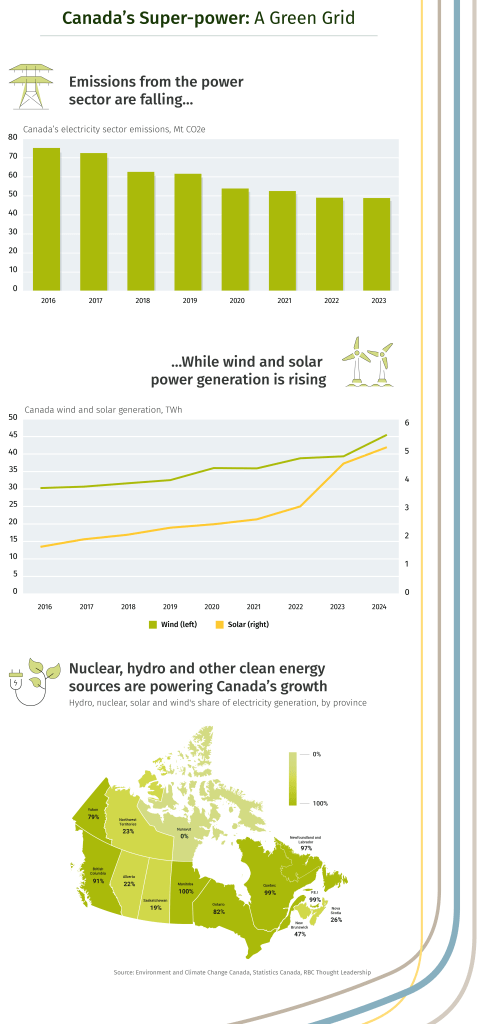
With this year’s Earth Day theme focused on tripling renewable energy by 2030, Canada can point to some victories in the electricity sector, the big one being that it’s Paris Agreement-compliant already. Alberta is coal-free, six years ahead of schedule, while Canada’s absolute electricity emissions declined by about 10% in 2024 compared to 2023.

Three charts that illustrate why electricity is Canada’s climate poster child:

There is no room for complacency, though. Here are 3 critical challenges Canadian policymakers—and a new federal government—will need to address soon.

➔ Balancing affordability with clean energy goals. New hydro dams and nuclear buildouts will be expensive, straining the ability of utilities to keep electricity bills affordable. 

➔ Expanding grids cleanly. Canada needs to more than double electricity capacity by 2050—and keep it clean—, if it wants to compete for investment dollars for data centres, automotive supply chains and other heavy manufacturing.

➔ Ensuring Indigenous rights. Power and energy projects—gaining renewed urgency—require a buy-in, consent and financial involvement from First Nations. Canada has had a spotty track-record on that file, which needs to change to fast-track projects.

Ready or not

Sticking to the power theme, B.C. LNG projects now only need to be net-zero ready. That’s the distinction the B.C. government made in a new letter to the environmental regulator, widely considered a weaking of the province’s environmental rules. Or is that climate realism ? Jurisdictions are walking a fine line as they fast-tack new projects in a tariff-stricken world without abandoning their environmental commitments.

The provincial utility BC Hydro has been bulking up, but not as fast as the surge in demand, which it estimates will rise 15% by 2030. Just over 90% of B.C. grid is no-emitting, but that could drop if natural gas power.

Here’s how the province is racing to meet its economic and climate goals:

➔ BC Hydro’s updated 10-Year Capital Plan (2024/25 to 2033/34) includes almost $36 billion in community and regional infrastructure investments—a 50% increase over its previous capital plan.

➔ The Site C hydro project’s fourth unit began this month, with two more set to be switched on by the fall. Once fully operational, the project in the province’s northeast can power nearly 500,000 homes, increasing BC Hydro’s electricity supply by 8%. Given expectations for Canada’s supply needing to 2x or 3x by 2050, we need similar additions every two to three years, Energy policy lead Shaz Merwat estimates. “Policy of needing to be ‘ready’ probably adds a level of ambiguity but good to see perspectives are changing about the need to build.”

➔ In February, B.C. signed deals for 9 wind and 1 solar energy projects with a combined 4,830 gigawatt hours (GWh) projects. All projects are majority-owned by First Nations.

➔ B.C. is working to electrify Northern B.C., vital for several big-ticket energy projects including the Ksi Lsims LNG project that’s currently under regulatory review. The Indigenous-backed gas export project now faces competition for Asian markets from an Alaskan LNG development that’s gaining traction. Canada needs to move fast.

➔ The North Coast Transmission Line is a critical piece of the northern B.C. clean grid. The government is fast-tracking permits to speed up construction of the NTCL and other major high-voltage transmission lines.

➔ The B.C. government is not ruling out more hydro dams in the province.

➔ Finally, we are watching how a greenhouse gas emissions cap for natural gas utilities, as envisioned in the CleanBC Roadmap to 2030, will play out.

Four roadblocks ahead for EVs

By John Stackhouse

EVs may be one of the causalities in the trade war — or one of the winners. It’s too early to tell.

The latest quarterly assessment from BloombergNEF shows a U-turn forming in some markets, and acceleration in others, notably China. Canada is one of the markets at a turning point.

EVs, including plug-in hybrids, accounted for one in five vehicle sales last year, reaching 17.2 million new vehicles on the road, up 24% in one year. Most of that growth was in China, where close to half of new vehicle sales are EVs—a number expected to increase this year thanks to a scrappage scheme for car-owners.

Elsewhere, EVs are facing new challenges, and not just the brand war that Tesla finds itself in. European sales started to flatline in 2024, while sales growth in the U.S. tempered. And that was before Liberation Day (April 2) and Donald Trump’s decision to slap 25% tariffs on imported vehicles and parts. Higher costs are the last thing EV producers need. Other policy changes—looser fuel standards in Europe and an end to the consumer carbon tax in Canada—may further impede EV sales, as the economics of traditional car engines gain ground again on batteries.

Canadian EV sales in the past year accounted for around 15% of passenger vehicle sales. BNEF expects Canadian EV sales to rise 20% this year, amid a decline in policy supports.
If EV sales stall, it will be due to four roadblocks in the months ahead:

➔ 1. Subsidies. Fiscally challenged governments will be looking to cut spending in some areas to pay for economic supports for businesses and workers hit by the trade war. The Trump administration has its eye on generous supports introduced in the Biden years. And many governments are pulling back EV mandates for their own fleets.

➔ 2. Tariffs. The U.S. is advancing a range of tariffs and trade restrictions on batteries and battery components, while China is also restricting exports of critical minerals. Battery-specific tariff rates are projected to hit 115% this year, and 132% next year. The Trump administration is also expected to continue to explore anti-dumping measures against Chinese battery components producers, even though a number of U.S. manufacturers, including Tesla, rely on them.

➔ 3. Economic growth. If the trade war continues to be a drag on economic growth, consumers will hold back on vehicle purchases of all kinds — and the more expensive range of EVs will be especially challenged.

➔ 4. Interest rates. If tariffs stoke inflation, and keep interest rates higher, car sales will be the first consumer item to take a dent, or worse. EVs may be at the front of that line, as car-owners hold on to their old vehicles for a year or two longer.

Climate Crunch would not be possible without John StackhouseMyha Truong-ReganSarah PendrithFarhad PanahovLisa AshtonShaz MerwatVivan SorabCaprice Biasoni and Frances Dawson.

Curated by Yadullah Hussain, Managing Editor, RBC Climate Action Institute.

Have a comment, commendation, or umm, criticism? Write to me here (yadullahhussain@rbc.com)

Climate Crunch Newsletter

Field Notes: How Canadian businesses are navigating trade tensions

China’s 100% tariff on canola oil and meal has Canadian farmers concerned. That stress level could climb, as China also has its eye on Canadian canola seeds—the largest segment of our canola exports to China—, which have been spared for now. “That would be the other big shoe to drop,” said Rick White, CEO of the Canadian Canola Growers Association (CCGA), which represents approximately 40,000 farmers across Canada.

Canola was developed by Canadian scientists in the 1960s—hence the name. It’s considered healthy oil as it’s low in saturates (an unhealthy fat) and high in monounsaturates (considered good). Canada is the world’s largest canola producer and counts, with 40,000 farmers generating $43.7 billion, with the U.S., China and Japan—in that order, its three biggest export markets. Australia is among Canada’s biggest canola rivals.

As the Chinese tariffs hit Canadian canola farmers, they are freezing investments and need support. White shared some ideas on ways to soften the blow:

  • White says the tariffs were not a surprise, as past disputes with China (2019-2020) had targeted canola.

  • China has once again targeted the agriculture sector in direct response to Ottawa implementing tariffs on Chinese EVs, aluminum and steel.

  • The industry feels the Canadian government “absolutely bears the responsibility” of that action and should compensate farmers for the financial losses that they will incur.

  • Other major canola seed exporting countries include Australia, Ukraine, Russia. Canada specifically grows canola, which is defined as having low erucid acid and low glucosinolates. Australia and the EU are also significant growers of canola or double low rapeseed, which is of comparable quality.

Canola seeds in the crosshairs

  • A looming Chinese anti-dumping investigation on Canadian canola seed could trigger more tariffs. That’s “the big shoe to drop.”

  • Canola seed is Canada’s primary canola export to China, with canola oil and meal accounting for a smaller portion. In 2024, China imported six million metric tonnes of Canadian canola seed, worth $4 billion.

  • The Chinese are following World Trade Organization (WTO) rules around anti-dumping. WTO challenges take time but provide legal recourse. The CCGA has registered as a party to China’s investigation.

Farmers are looking to freeze investments

  • Farmers rotate crops for agronomic reasons, but canola is a Canadian staple crop, which limits alternatives. Agronomics involves soil and crop management and helps optimize distribution, management and productivity of land.

  • Farmers are already expressing concerns about market risks from China and the U.S. with some suggesting delays in capital investments and equipment purchases due to uncertainty.

  • Plus, purchase of new equipment could possibly come from the U.S. that could be subject to countervailing duty by Canada.

  • “Farmers are not going to take that risk of investing big pieces of capital into renewing infrastructure … there’s going to be a big chill on investment, at least this year.”

Across the border, more trouble is brewing

  • The U.S. is Canada’s largest canola export destination, valued at $7.7 billion in 2023. The U.S. has not yet imposed a 25% tariff on canola, as CUSMA (the Canada-U.S.-Mexico Agreement) remains in effect. But once exemptions expire, new U.S. tariffs could further harm Canadian canola exports.

There are ways to build a tariff-less ecosystem

  • Last December, the CCGA sent a letter to the federal government, forecasting farm gate losses of between $1.76 billion to $4.33 billion for 2025-26 due to the Chinese tariffs.

  • Ottawa has announced new loan products to sustain the industry, but farmers argue they cannot borrow their way through this crisis and need cash compensation.

  • “The federal government needs to compensate farmers commensurate with the losses that they will incur because of China… farmers can’t, nor should they, be expected to borrow their way—they need to be compensated.”

  • The CCGA is advocating for the development of a domestic biofuels and sustainable aviation market.

  • It could be a new domestic market for at least 2-3 million tonnes of canola seed. It would help soften the blow for canola farmers, as the risk and uncertainty around U.S. and Chinese markets is going to remain for a long time. It is an opportunity to help diversify and reduce Canada’s heavy dependence on China and the U.S. markets.


Dig deeper:

RBC Chief Economist Frances Donald answers three questions on Trump’s tariffs and its impact on the global economy.

Q: What do the U.S. tariff exemptions mean for Canada’s economic growth outlook? U.S. still has tariffs on Canadian autos, steel and aluminum.
FD:
 How quickly the Canadian economic narrative has shifted. Prior to “Liberation Day,” our biggest concern was the implications of broad based tariffs on Canadian growth and particularly, that Canada appeared to be the biggest relative loser of American trade policy. Now, while various sector specific tariffs will weigh on Canada in 2025, our concerns are shifting to more “traditional” risks to Canada’s economy—the rising risk of a U.S. recession and a drop in oil prices. The latter may be more “indirect” in some capacity, but they are also more of a function of global developments that have far less to do with Canadian-U.S. political relations.

Q: Do you expect the Bank of Canada and the U.S. Federal Reserve to reassess as U.S. tariffs are rolled out?
FD: The Bank of Canada and the Federal Reserve are facing different challenges, just like their economies are struggling with different risks. In Canada, inflation is around 2% with some mild upside created by global supply chain disruptions ahead. And yet, Canadian growth is still tepid and supportive of a few more rate cuts. As of now, we continue to expect another 50bps of rate cuts.

The Federal Reserve is in a much greater bind. The size and scope of tariffs announced are consistent with higher inflation and a much lower growth profile. That “stagflationary” mix pulls at both sides of the Fed’s dual-mandate in opposite directions (price stability and full employment). At this point, our expectation is that concerns about inflation spiralling higher will keep the Federal Reserve on the sidelines, but markets have been increasing their probabilities of rate cuts to support what is likely to be a much weaker economy.

Q: A bigger tariff war looms, with the U.S.-China and U.S.-EU imposing tariffs and retaliatory tariffs. Will that be inflationary and damaging for the Canadian and global economy?
FD: Just how damaging U.S. tariffs turn out to be will largely be a function of how long they stay in place for, and economists are poorly credentialled on making that call. But the largest concern at this juncture is that we witness a global uptick in prices as supply chains become entangled and the interconnected nature of our global economy makes it difficult for any economy to escape rising costs. There are certainly similarities to the COVID era that can be drawn, except for one major one: we didn’t head into pandemic-era inflation having just gone through pandemic-era inflation. That is, Canadians and Americans have already experienced an over 20% increase in prices since 2020, and the ability of households and businesses to absorb a second wave of inflation so soon after is likely very limited. Last month, it seemed the trade war was North American centric. Now, it is global and without borders.

Further reading:

Yadullah Hussain is Managing Editor, RBC Thought Leadership

Field Notes: How Canadian businesses are navigating trade tensions

Canada’s agriculture sector is among the first casualties of the trade wars with China and the United States. Monty Reich, CEO of SWT Ltd, a farmer-owned, independent grain and crop input company in Saskatchewan, discusses how farmers are navigating the trade tensions.

Uncertainty and volatility a near-daily irritant

  • The current environment is challenging, uncertain—and confusing. “Each day is a different journey,” Reich said.

  • Even before the 100% Chinese tariffs on canola oil and meal and yellow peas were imposed, the U.S. had started talking tariffs in December, with durum wheat on the list to be hit.

  • SWT had to absorb the financial blow of U.S. tariffs on durum wheat, choosing not to pass those costs onto its farmer-shareholders. “We sold product into future spring positions and took that hit on our own bottom line,” Reich noted.

  • U.S. tariffs have made durum wheat exports more costly. “We are the importer of record,” Reich noted, meaning SWT itself is directly responsible for paying the 25% tariff—a cost that prohibits any future sales.

Canola prices are plunging

  • For canola farmers, the impact has been brutal. Prices have plunged by 25-30% since the Chinese tariffs were imposed, dropping from around $16 per bushel to $12.

  • “Margins on the farm are pretty narrow as it is,” Reich said. Even small price shifts can turn a profitable season into a financial disaster. With this level of decline, farmers are watching their incomes evaporate.

Tariffs are hitting from all quarters

  • China’s restrictions on canola and yellow peas have cut off a crucial market, leaving farmers with few places to turn to. “China accounts for about 87% of the yellow pea market along with the U.S. and India,” meaning farmers now face a near-total lockout.

  • India’s on-again, off-again tariffs on pulses add another layer of uncertainty, leaving Canadian farmers with few viable alternatives.

Farmers are scrambling for alternatives

  • “Growers are penciling in right now, trying to figure out what’s going to provide them the best return,” Reich said.

  • Farmers could pivot to other crops, but in practice, it’s not that simple. “It’s not easy to just flip commodities,” he explained.

  • Farmers are “scrambling” to adjust before the next planting season.

Deferred investments, shrinking profitability

  • Some canola crush plant investments were already deferred a couple of years ago due to ongoing challenges with the Chinese marketplace and the cost of construction.

  • Production facilities being built today are going to continue, and existing facilities will continue operating, but margins are getting tighter.

  • Farmers are weighing whether to cut back production, reduce costs, or even scale down their operations altogether.

Fear of stranded shipments

  • China’s anti-dumping tariffs on canola seeds can come soon, adding to the threat.

  • That risk makes exporting to China a high risk. If canola seed shipments hit the waters, the Chinese “can slap on a tariff tomorrow.” That uncertainty alone is enough to spook exporters and depress prices.

  • This feels different from the dispute with China in 2019 that was more restricted to a few companies over “dockage concerns,” and quality issues.

Backdoor trade routes

  • In the past, when China restricted direct imports, Canadian canola still made its way there—through other markets.

  • “There will be other South Pacific Asian countries that’ll take the product and flip it over to China.” But those countries will try to secure the goods at a discount.

  • In addition, building trade relationships with new markets takes time. It’s not simply about switching markets from one to another (e.g., from China to the Philippines).

Other crops are also facing challenges

  • Pulse crop (e.g., lentils) are also facing challenges, particularly due to tariffs from India. This adds pressure to the profitability of these crops, with farmers having to navigate changing trade policies, especially when tariffs are applied or removed unpredictably.

Who will replace Canadian canola?

  • In the short term, other countries such as Australia can substitute Canadian canola, but Canada’s product is generally seen as highly reliable and high-quality.

  • As supply and demand dynamics shift, other countries may adjust their crop rotations to meet market needs.

  • Billions of dollars have been invested in Western Canada in canola capacity and crush capacity. There’s a lot of investment at stake in canola to “just let it go away,” Reich said.

The need for stronger government engagement

  • While farmers often prefer minimal government intervention, strong trade agreements are essential in resolving issues like tariffs or trade restrictions.

  • Canada’s government should ensure robust trade relations with key partners (China, the U.S., India) to reduce barriers, Reich recommended.

  • Saskatchewan, for instance, has set up nine offices abroad to facilitate smoother trade relations and reduce friction.

  • Canadian agriculture needs to have strong representation globally, not just through trade agreements, but through actual presence and ongoing diplomatic engagement.

  • Government investments are needed to improve infrastructure to boost interprovincial markets and move products west-to-east.

Issue #10

Meet Mark Carney, the consumer carbon tax eliminator
Welcome to the era of “energy addition”
Trump tracker: Keeping tabs on the U.S.’s whirlwind climate policy changes

Hot takes

The consumer carbon tax is gone. It was Prime Minister-designate Mark Carney’s first policy pronouncement 12 minutes into his victory speech after sweeping the Liberal race, as he promised during his campaign. The federal elections, presumably coming soon, will not just determine how a new leader handles the Trump Tornado, but also signal the trajectory of Canadian climate policy. On the surface, Carney, a former UN Special Envoy on Climate Action and Finance, and Conservative leader Pierre Poilievre could not have more different policy playbooks, but they appear to be on the same page on resource development—and scrapping the consumer carbon tax.

The latest B.C. budget captured the country’s shifting mood from environment first to economy foremost. The David Eby government is fast-tracking resource projects, including 18 major critical mineral and energy projects worth around $20 billion. Several of these critical mineral projects are vital for energy transition. At the same time provincial allocations for key climate-related ministries such as environment and parks, energy and climate solutions, water, land and resources won’t see significant increases over the three-year fiscal budget plan. Sales tax exemptions for used electric and other zero-emission vehicles is also at an end. Still, there was some environmental cheer: $100-million were earmarked for electric heat pump rebates, while the clean building tax credits were extended by a year.

The Great American Energy “Addition”

By John Stackhouse

The divide between the United States and Europe is not just about Ukraine. The two poles of Western power are now an ocean apart on energy and climate policy. And Canada will feel the tension, no matter who wins a federal election.

The cross-Atlantic divide was a key theme of Day 1 of CERAWeek, one of the world’s biggest energy conferences, in Houston. Energy Secretary Chris Wright kicked off the day with a blistering attack on climate policies, renewable energy sources and the very idea of an “energy transition.”

Wright shared details of his plans to boost LNG exports, and increase domestic electricity, to reduce costs. That will mean more natural gas, coal and nuclear. In other words, get ready for more of everything, or what he calls “energy addition” rather than energy transition.

Europe’s energy commissioner Dan Jørgensen offered a different view, saying his home country of Denmark is proof of an energy transition, with its shift from Russian gas to Danish renewables (plus American LNG). Europe will save 45 billion euros this year because of energy switching, he said. “There’s no back-tracking on our new green deal. In fact, it’s fast-tracking.”

Salim Samaha, BlackRock’s global head of energy, took a middle ground, suggesting “the zeitgeist has swung too far. There is a lot of energy addition and energy innovation that will hit us very quickly.”

He expects fossil fuels to be prominent “for a long time,” even as clean energy sources continue to grow.

So who will pay for and build “all of the above”?

The pressures to build more conventional energy in the U.S. will draw a lot of capital, equipment, machinery and skilled labour—all of which are in short supply anyway. For those wanting more gas power, turbine prices are up three-fold, and not available at any price until 2030. And for those wanting nuclear, the U.S. will need to outpace its best year ever by 60%, and do that every year for 20 years, to meet its goals.

Get ready for a lot more trade-offs, not just between energy sources but between how those sources are permitted, regulated and priced.

Read John’s full blog here and follow him on LinkedIn to read his latest insights.

TRUMP TRACKER

A scan of executive orders, departmental notices and government actions impacting the environment.

➔  #1: The Environmental Protection Agency launched its “biggest deregulatory action in U.S. history.”

Implication: Deregulation of power plants and the oil and gas industry, and a revamp of the greenhouse gas reporting program are among the 31 actions planned, aimed at “driving a dagger straight into the heart of the climate change religion,” said EPA Administrator Lee Zeldin.

#2: The National Oceanic and Atmospheric Administration terminated more than 800 employees, or about 7% of its workforce.

Implication: Weather and climate disasters has cost the U.S. economy US$2.9 trillion since 1980, and the latest cuts come as natural disasters become more frequent and severe. Last year saw the second-highest number of billion-dollar disasters, costing over US$180 billion. The downsizing could undermine the effectiveness of critical agencies such as the National Hurricane Center and the Aviation Weather Center.

#3: The Environmental Protection Agency (EPA) plans to scrap its previous conclusion that greenhouse gases’ endanger public health and welfare. 

Implication: The U.S. administration has already rolled back about 100 environmental regulations. Expect the latest move to unleash a chain of court battles.

#4: The U.S. Department of Agriculture removed climate-change information and data from its websites.

Implication: The Northeast Organic Farming Association of New York and two environmental groups have already sued the USDA for archiving and unpublishing pages focused in climate change. Climate data, tools and information is vital for farmers to make decisions about planting crops and managing land amid extreme weather patterns.

Issue #09

Most of the world forgot to do its climate homework

Why scrapped energy projects are back in the news The Trump Tracker Introducing the Trade Hub

Hot takes

Most of the world forgot to do its climate homework. As many as 95% of countries, missed a U.N. deadline to submit new climate pledges for 2035. The UN said many countries had asked for more time to ensure their nationally determined contributions (NDC) to the United Nations Framework Convention on Climate Change under the Paris Agreement are “first rate.” However, Canada submitted its plan, pledging to reduce emissions by 45-50% below 2005 levels by 2035. To track Canada’s progress on its net-zero journey, read our annual report Climate Action Report 2025. Energy East, Northern Gateway and Saguenay LNG. The long-dead energy projects are back in the news as the momentum to extract resources and ship to places not called the U.S. are gaining momentum. But a shake-up in regulations would be needed for companies before we see movement on any of these projects. Enbridge CEO Greg Ebel, the erstwhile backer of the Alberta-to-B.C. Northern Gateway oil pipeline, said it would require “real changes” from governments before the project would move forward. That includes legislative changes, including repealing Bill C-69 , also known as the “no-more-pipelines-act” by its detractors. François Poirier, CEO of TC Energy, which had proposed the Alberta-to-East-Coast Energy East oil pipeline back in 2013, said Canadian projects will need to compete with the company’s other opportunities in the U.S. and Mexico. But a quick overhaul of the regulatory environment, Poirier noted, would signal Canada’s willingness to get projects off the ground. BP pressed the reset button on its strategy. The U.K. energy company said it’s restructuring its low-carbon business “for growth, but in a more capital-light way .” Analysts believe the changes would lead to a watering down of the company’s climate ambitions. BP is also the target of an activist investor after the company lost nearly a quarter of its value over the past two years, with investors souring over the previous CEO’s policies. New CEO Murray Auchincloss, a key architect of BP’s net-zero strategy in the previous regime, is now helming the “ fundamental reset”. The launch event of our annual report on Canada’s climate progress sparked some great ideas. We hand-picked five for the next five years gleaned from an event to celebrate our Climate Action 2025: A year for rewiring report. Email me at Yadullah.hussain@rbc.com if you’d like a PDF of the briefing.

Carney’s plan

Are we talking about a climate plan in this day and age? Yes, yes, we are. Mark Carney, former governor of two G7 central banks, and leading contender to take the Liberals into the next federal election, has shared some ideas on his platform on how to weave climate into economic policy. First, like Conservative Leader Pierre Poilievre, he wants to axe the consumer carbon tax. Here are the contours of his some of yet-to-be-fleshed-out climate plan: Strengthen the industrial carbon tax. Carney wants to refine the Output-Based Pricing System (OBPS) to 2035, tightening benchmarks to maintain a strong carbon price signal and curb credit oversupply. The plan also calls for inter-provincial collaboration. Last year, we worked with the Canadian Climate Institute and Clean Prosperity on using industrial carbon pricing to strengthen Canada’s competitiveness. The plan is heavy on consumer-focused incentives. Expanding the Greener Homes Grants, increasing heat pump subsidies and implementing alternative financial tools, such as discounted mortgage insurance for energy-efficient homes are some of the ideas. The plan does not have a dollar figure for all these incentives and subsidies. Another idea that caught our eye: leveraging technology for real-time home energy assessments to drive smarter consumption decisions. (We wrote about that, too). Mobilizing capital. Hard to mobilize capital when tariff threats and hard stares from across the border are making investors nervous. The plan also calls for finalizing Canada’s long-delated transition taxonomy. “Mandate broad coverage of climate risk disclosure for companies across Canada,” is also going to be a tough one to accomplish in an era when the U.S. is actively going after companies adhering to climate rules. Chrystia Freeland, Carney’s Liberal rival and former Deputy Prime Minister, also has a plan to turn Canada into an “energy superpower” through major economic investment tax credits. If she were to become PM, Freeland has pledged to “double down” on getting Canadian energy and resources to market, build West-East pipelines to reduce Canada’s dependence on the U.S. and secure its energy sovereignty. Critically, her government will fast-track 10 regionally important projects, of which three must be critical mineral projects, for faster approvals each year. We will continue to monitor the climate and energy platforms of other candidates and other parties and summarize them in the run-up to the federal elections.

TRUMP TRACKER

A rundown of U.S. president Donald Trump and his administration’s pronouncements, orders, action and musings that could impact climate policy and trends. Action #1: The U.S. approved a proposal from the country’s largest grid operator in the development of 50 new power plants. Implication: Supposedly agnostic to energy sources, the projects are expected to encourage natural gas power, deemed more reliable than wind and solar power, in meeting urgent power needs. Renewable energy developers and environmental groups think the 50 new power plants “would jump the queue” and add to the delays in development of new wind turbines and solar farms. Action #2: An oil and gas advocate was nominated to run the Bureau of Land Management. Implication: If approved, Kathleen Sgamma , will oversee grazing, logging, drilling and wildlife conservation on 245 million acres of public land. The role is seen as part of the White House’s “energy dominance” vision that leans more on conventional energy than renewable power. Action #3: On Day One of his appointment as Secretary of Interior, Doug Burgum issued several orders that would have a direct impact on carbon emissions. While “prosperity by deregulation,” and resuming offshore oil and gas leasing in several areas are among the highlights of the Secretary’s Day One orders, there’s one more thing that caught our eye: taking steps to prioritize updating the U.S. Geological Survey’s list of critical minerals and accelerating the ongoing geological mapping of the country. Implication: From Greenland to Canada, the new (it turns a month old today!) U.S. administration sees critical minerals as a precious prize. Prime Minister Justin Trudeau even suggested critical minerals was driving talk of U.S.’s threat to annex Canada through “economic force.” Action #4: Paper straws are out, plastic straw are back in, according to a new presidential executive decree. Implication: “I don’t think plastic is going to affect a shark very much, as they’re munching their way through the ocean,” is an actual Trump quote. Phew, we’re sure we missed a few. Let us know any pertinent orders and regulations and we will look to include them in the next edition.

Trade Hub

We can’t talk climate without talking trade these days. Trade Hub , a new digital platform by RBC, aims to highlight opportunities for Canada in an economic order shaped by energy and national security. We will examine several key areas where Canada can leverage its strengths, including agriculture, energy, critical minerals and manufacturing supply chains, and the regulations and policies that drive investments into the country.

Read our latest insights here:

Resourceful: How Canada can strike a new commodity deal with the U.S. and others A playbook for how to measure a tariff shock in Canada 50 ways to leave your lover: Sizing the impact of a trade breakup

ICYMI

How each country’s emissions and climate goals compare—a handy guide How to build new Canadian homes out of harm’s way What are Ukraine’s critical minerals – and why does Trump want them? Climate aid projects fighting extremism and unrest are closing down Don’t say climate: how cleantech is rebranding as national security in the Trump era

The Institute In Action

Institute head John Stackhouse is on a panel at the Canadian Federation of Agriculture’s annual general meeting Feb 25-26 in Ottawa. Moderated by Tyler McCann, Acting Director at the Canadian Agri-food Policy Institute, the Canada’s Place in the World panel will explore evolving geopolitical and trade dynamics and how they impact Canada’s foreign and trade policy, with particular emphasis on the implications for Canadian agriculture. Economist Farhad Panahov attended the 2025 Canadian International Auto Show. Look out for his latest commentary on Canadian EV demand trends soon.
Curated by Yadullah Hussain, Managing Editor, RBC Climate Action Institute. Climate Crunch would not be possible without John Stackhouse, Myha Truong-Regan, Sarah Pendrith, Farhad Panahov, Lisa Ashton, Shaz Merwat, Vivan Sorab, Caprice Biasoni and Frances Dawson. Have a comment, commendation, or umm, criticism? Write to me here (yadullahhussain@rbc.com)