WP Menu

wp-menu

Investment in next-generation geothermal technologies is surging globally, driven by recent breakthroughs in drilling technology that are rapidly transforming the economics and viability of geothermal electricity generation. According to the International Energy Agency (IEA) and data from Underground Ventures, a geothermal-focused venture investor, financing for next-generation geothermal reached roughly CAD$3 billion in 2025.1 The U.S. and Indonesia lead the world in investment in geothermal power and heating projects.2
While Canada possesses world-class subsurface expertise, hot geothermal gradients spanning western and northwestern regions, and companies like Eavor, DEEP Earth Energy, and Tu Deh-Kah Geothermal, domestic deployment lags dramatically. Canada currently generates less than six megawatts (MW) of geothermal power, representing 0.004% of the country’s installed capacity.3

According to the IEA, global investment in geothermal energy could reach CAD$3 trillion by 20504 as nations seek reliable, zero-emission baseload power to complement intermittent renewables. Advanced technologies are key to scaling geothermal, which has traditionally been confined to specific areas with the right geology. Two technologies stand out: (1) Enhanced geothermal systems (EGS), which borrow shale drilling technology, create new fractures in hot underground rocks, inject fluids and use the steam to generate geothermal power;5 (2) Closed Loop Geothermal (CLG) systems also deploys advanced drilling and injects liquid through underground pipes to generate electricity.6 7

Recent innovations are dramatically reducing costs. Improved drilling techniques borrowed from oil and gas, including polycrystalline diamond compact drill bits and real-time fibre optic monitoring, are cutting well costs by up to 12-26% compared to earlier estimates.8 Companies like Houston-based Fervo Energy have demonstrated sustained 8-10 MW output from single production wells at their Cape Station project in Utah, validating the commercial viability of EGS.9 New techno-economic analysis shows that in high-gradient regions like British Columbia’s Mount Meager or the Northwest Territories’ Liard Basin, levelized costs of energy for EGS could fall to CAD$45-53/MWh with continued innovation, competitive with combined-cycle gas and cheaper than new nuclear.10

The opportunity could be significant.

Recent research on Baker Lake, Nunavut, reveals that previously dismissed regions of the Canadian Shield may hold viable deep geothermal resources. At a measured gradient of 28°C/km, significantly higher than earlier national estimates, modelling indicates a 90% likelihood that a four-kilometre deep system could meet the community’s heating demand, with potential for electricity generation at 7-8 kilometre depth.11

Saskatchewan is already leveraging its oil and gas expertise.

Saskatoon-based DEEP Earth Energy has partnered with oilfield services company SLB to develop Canada’s first commercial-scale geothermal power facility near Estevan, near the Saskatchewan-North-Dakota border. Phase 1 involves drilling two wells, with Phase 2 potentially scaling to 18 wells producing 30 MW.12 This project leverages the Western Canadian Sedimentary Basin’s hot sedimentary aquifers and demonstrates that Canada’s oil and gas infrastructure, rigs, drilling expertise, and supply chains, can be applied to geothermal development.

Yet regulatory fragmentation threatens to stall momentum.

Only Alberta, British Columbia, and Nova Scotia have geothermal-specific legislation. There is no national strategy, no coordinated R&D agenda, and insufficient financial de-risking tools to accelerate early-stage projects. A national regulatory template that provinces could rapidly adapt to their own specific needs alongside government-backed initiatives like the Alberta Drilling Accelerator (ADA) could help to catalyse geothermal in Canada by reducing drilling costs, developing high-temperature tools, and optimizing reservoir stimulation.

The window for Canadian leadership is closing.

The U.S. Department of Energy’s Enhanced Geothermal Shot targets electricity costs below CAD$61/MWh by 2035.13 with billions in funding. Tech giants including Google, Meta, and Microsoft are investing heavily in geothermal partnerships. China, Indonesia, and the Philippines are rapidly expanding deployment. If Canada does not act with coordinated policy, regulatory harmonization, and strategic R&D investment, it risks squandering subsurface expertise and geological endowment that offer natural advantages.


Vivan Sorab is Clean Technology Lead at RBC Thought Leadership

WP Menu

wp-menu

➔ Meet Coalie, the hard-hatted American mascot

➔ Ottawa’s auto strategy comes with a climate-action twist

➔ What should be the North Star for Canada’s proposed national electricity strategy?

Canadian companies aren’t waiting for Ottawa’s signal to advance the U.S.’s mineral ambition. While the federal government is holding off signing any formal deals with Washington on critical minerals, Toronto-based Cyclic Material is investing a strategic US$82 million in a rare-earth recycling facility in South Carolina, after securing new funding from the Canada Growth Fund, among other investors. It’s a trend: Vancouver-based Lithium Americas is building a massive project in Nevada, while Trilogy Metals is developing a copper-zinc-gold district in Alaska—with the U.S. government taking the unprecedented step of buying small stakes in both recently. North America’s market and geographical gravitational pull would hopefully overcome political posturing.

Climate Adaptation and Resilience (CA&R) could be the next frontier in climate investing. RBC Capital Markets’ report Private Markets Innovation in Climate Adaptation and Resilience highlights five areas where capital could make a difference: earth data, insurance solutions for businesses and society, wildfire and the grid, water, and the built environment. CA&R secured only US$65 billion in capital flows in 2023, compared to US$1.8 trillion in traditional mitigation investments such as renewables and energy storage. Climate Action Institute’s Clean Tech Lead Vivan Sorab believes while mitigation efforts’ address both current and long-term trends in emissions, their immediate impact tends to be muted; CA&R investment can potentially deliver more visible and quicker results in the form of less downtime and assets protected. The insurance costs are already mounting: 34 extreme-weather events triggered insured losses of US$1 billion or more in 2024—the second-highest number on record.

“Coalie,” the hard-hatted American mascot, may struggle to revive coal This carbon-intensive lump is getting a makeover for the AI meme era as the U.S. government promotes coal as vital for the economy. Despite its critics, coal saw a resurgence last year: U.S. coal-fired electricity jumped 13% year-on-year in 2025, while natural gas—which is about 50% less emission-intensive than coal—fell 3.6%, according to the International Energy Agency’s latest electricity outlook. However, coal’s dominance is slipping elsewhere in what the IEA describes as an “uncharacteristic” shift: major consumers China and India saw a drop in coal power generation in 2025 for the first time in more than five decades. While coal is projected to remain the single largest source of global electricity through 2030, the IEA predicts declining consumption in China and the European Union. Even the U.S. is expected to see a drop in coal consumption by 2030, Coalie’s charms notwithstanding.

Photo Credit: U.S. Department of the Interior

– By Farhad Panahov, Economist, RBC Climate Action Institute

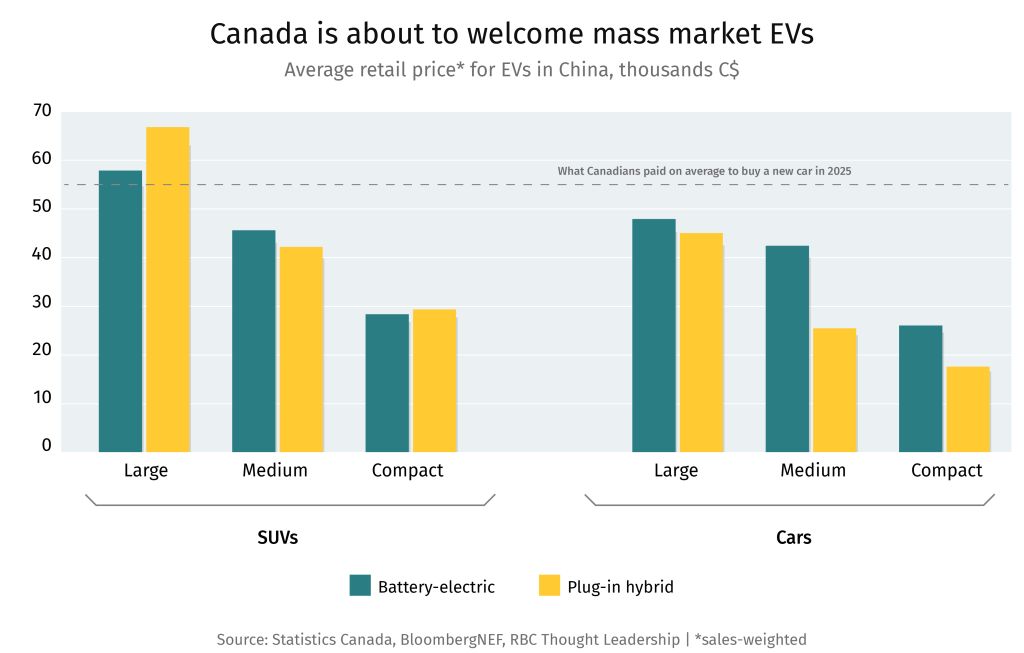
Canada’s new strategy to boost EV sales has a twist: a cap of $50,000 for the total transaction value to be eligible for a subsidy. A more stringent rule—to boost mass market models—compared to a previous program that allowed purchases of more expensive trims.

Average price Canadians paid last year for a new vehicle was $55,000, and nearly $70,000 for an EV. And while each $1,000 could add 11% to the EV demand, based on Canadian Climate Institute’s analysis, only 13 of the 163 battery-electric models available in Canada are priced below that level, according to the Canadian Automobile Association. Another 10, priced at around $55,000, are potential candidates to be marked down to claim the subsidy.

Meanwhile, the 49,000-quota for Chinese EVs, should add further impetus to vehicle transition. Crucially, while these vehicles are excluded from the incentive program, they could enter the market at the lower end of the price range, as models like BYD and Geely made up about a quarter of global EV sales last year, are sold for $35,000 in China—roughly half of what Canadians paid for EVs in 2025.

But North America is notoriously in love with large cars, such as trucks and SUVs, a segment where Chinese EVs might not have the same price leverage. And don’t forget the 6.1% Canadian tariff that still applies on Chinese cars, plus shipping costs. Chinese EVs, facing less intense competition than at home, could also seek higher markups for their models in Canada.

The success of the Canadian strategy could rest as much on consumer trust as it does on the final price tag. Nearly half of Canadians are still not in the EV camp based on recent poll from Clean Energy Canada; and only one in 10 would buy a Chinese EV with another two in the “maybe” mindset.

The previous federal program of $2.7 billion helped put about half a million EVs on Canadian roads. The fresh round of subsidies, with a lower $2.3-billion allocation, could add 840,000 new EVs, the government projects.

Canada is about to welcome mass market EVs

The new auto strategy could help transport—a stalwart sector for emission cuts over the past five years (see our Climate Action report)—deliver the following in climate action:

  • EV mandates out, standards in. Abolishing the much contested EV sales mandates in favour of emissions standards will aim to achieve 75% EV sales share by 2035.

  • Emissions standards. Emissions standard are a common practice for automakers and allows for higher compliance flexibility compared to sales mandate while still incentivizing a pivot towards emissions-free vehicles. Since 2011 alone, emissions per mile from passenger cars and light trucks have declined 50% and 30%, respectively.

  • U.S.-Canada policy is diverging. Historically, Canada aligned its emissions standards with the U.S. It’s different now as Canadian policy diverges from the U.S. Environmental Protection Agency (EPA) push to roll-back Biden-era standards (that would have halved emissions per mile by 2032).

  • …As is Detroit 3’s strategy. The auto policy supports another $3 billion investment in the EV sector “positioning Canada as a place where the vehicles of the future are built.” However, the Detroit Three—Ford Motors, General Motors and Stellantis—are scaling back EV roll-out plans that has cost them around US$50 billion, amid tepid customer demand.

  • Networks are getting a supercharge. Ottawa is committing $1.5 billion to expand the charging network, adding to the $1.1 billion in funding, which so far has helped add 7,000 installations. Canada’s public charging network is already sufficient for current levels of EV adoption, at ratio of ~21 EVs per charging port, but will need to significantly expand as adoption accelerates.

Also check out: RBC’s Electric Car Cost Calculator

A scan of notables and notable developments

  • Lisa Ashton, Interim Head of the institute, is in Ottawa for Agriculture Day festivities, a timely opportunity to share insights from Seeding Scale, our new research on the growth capital pipeline in the agri-food sector. Lisa heard that the innovation pipeline needs focused improvements as well and universities and industry are working collaboratively to devise a clear vision for the sector ahead of the agriculture ministers meeting in July. 

  • As the U.S. convened allies, including Canada, on critical minerals last week, John Stackhouse shared a few thoughts. His first point: even the U.S. knows it can’t go-it alone on mining.

  • Canadian Climate Institute’s Rick Smith finds another climate angle on a recent Canadian court ruling that reinforced Ottawa’s right to list plastics as “toxic”: “…polluting industries and some provinces have been spinning a yarn that the federal government’s Clean Electricity Regulations, also enacted under CEPA, are an illegal over-reach. As of today, those arguments look like the thinnest of gruel.” Read the ruling.

  • As Canada develops a national electricity strategy, Polaris Strategy’s Dan Woynillowicz has some thoughts on what the strategy should set as its North Star: Double energy productivity, double production, and double the share of final energy demand met by clean electricity.

  • Nugget from a House of Commons report on climate change, from Janis Sarra of the Canada Climate Law Initiative, on the importance of Canadian taxonomy: “An estimated $115 billion annually is required for Canada’s low-carbon transition, and a  science-based taxonomy will create the market integrity, clarity and interoperability, globally, necessary to accelerate global capital to come and invest in Canada’s businesses.”

Curated by Yadullah Hussain, Managing Editor, RBC Climate Action Institute.

Climate Crunch would not be possible without John Stackhouse, Jordan Brennan, John Intini, Farhad PanahovLisa AshtonShaz MerwatVivan SorabCaprice Biasoni, Lavanya Kaleeswaran and Joelle Schonberg .

Have a comment, commendation, or umm, criticism? Write to me here (yadullahhussain@rbc.com)

Climate Crunch Newsletter

WP Menu

wp-menu

Driving effective carbon pricing. That’s a core challenge for Canada in implementing a carbon competitiveness strategy and underpins the active review of the national carbon pricing benchmark by Environment and Climate Change Canada (ECCC).

Carbon markets are no longer an abstract policy debate. They’re a practical test of whether capital shows up — or goes elsewhere.

The Climate Action Institute team spent time this week with the Pembina Institute and other leaders in carbon markets and climate investment to focus on one question: what is required to drive further investment?

The answer was consistent and blunt: a well-functioning carbon market. And in Canada, we still don’t quite have one.

The clearest signals from the room:

Carbon policy is increasingly shaped by global market access and competitiveness, not domestic policy alone.

Large trading partners are embedding carbon constraints into trade architecture. The EU’s Carbon Border Adjustment Mechanism (CBAM) is the most visible example: it effectively exports EU carbon prices into global supply chains. Starting with exporters selling steel, cement, aluminum, fertilizers, or electricity into the block, carbon pricing is no longer optional – it’s a cost of doing business. However, shifting political winds in the EU could cast uncertainty onto the implementation of CBAM, creating a rocky landscape for Canada’s carbon policy makers to navigate as they consider benchmark stringency in the context of market access under unpredictable geopolitical conditions.

But emerging economies aren’t waiting.

Brazil is advancing a national carbon market framework tied to sustainable finance taxonomies. Several African jurisdictions are building carbon market infrastructure alongside trade and development partnerships–often accelerated by deeper commercial ties with Europe.

These systems may start narrower, but they are being designed with international alignment in mind from day one.

Large consumer blocs are pulling climate policy into their economies at scale.

China now operates the world’s largest Emission Trading System (ETS) by covered emissions. The EU ETS covers thousands of facilities, has a declining cap, deep liquidity, and a clear long-term trajectory. The UK ETS mirrors this logic. Systems in Japan, Korea, and India are expanding rapidly.

Canada stands out–not for ambition, but for structure. Instead of a single scaled trading system, we operate a patchwork: the federal backstop, provincial fuel charges, and multiple industrial output-based systems (OBPS, TIER, etc.), each with different rules, prices, and compliance options. Scale and harmonization have helped other countries build function carbon pricing system. Canada’s fragmented approach makes it harder for investors and trading partners to engage. The benchmark review must grapple with whether flexibility has crossed too far into fragmentation.

Financing decarbonization at scale without a carbon market will be extremely challenging. Large-scale decarbonization projects can be risky to backstop through government guarantees alone. A deeper, more liquid national market would let the market itself absorb more of that price risk, reducing reliance on public balance sheets.

Establishing fungibility of carbon credits across federal-provincial systems emerged as a critical first step to building the market depth that serious decarbonization investment requires. Investors were clear: price volatility kills capital formation.

  • They need price certainty over investment time horizons

  • They need credible incentives that reward real decarbonization

  • They need policy or fiscal backstops that hold when markets wobble

Alberta’s TIER market is a frequently cited example for price volatility. Prices swung from under $15 per tonne to over $40 in a matter of weeks in tandem with the announcement of the Alberta MOU. And this ignores the reality that too often TIER prices can become dislocated from the headline federal carbon backstop–implying future volatility as well. The result is investors are forced to price in the risk that spreads could widen further.

ECCC benchmark criteria focused only on minimum price levels may miss the point. Predictability, guardrails, and credible price corridors matter just as much as nominal stringency. By contrast, the EU ETS combines a long-term cap trajectory with market stability mechanisms that dampen extreme swings. The result isn’t cheap carbon—it’s bankable carbon.

Canada is in the middle of an infrastructure push. The first tranche of major projects under Bill C-5 was announced six months ago; the second tranche is underway. Hydrogen, LNG, pipelines, grid interconnections—there’s real momentum behind getting things built faster.

Market design choices made now will shape where capital flows next. The ECCC benchmark review is an opportunity to signal that Canada is serious about building a market that works and how complementary instruments can crowd in capital.

Carbon contracts for difference (CCfDs), for example, were discussed as a powerful complement to carbon pricing, if used in a targeted manner. They de-risk investments by guaranteeing a carbon price floor for projects that deliver deep emissions reductions.


Market design is investment policy. It determines whether Canada attracts the next generation of clean industrial projects – or watches them land elsewhere.

As ECCC reviews the national carbon pricing benchmark, the question isn’t whether carbon pricing should exist. That debate is over. The real question is whether Canada’s system is credible, scalable, and stable enough to compete in a world where carbon markets now shape trade, capital flows, and industrial strategy.

WP Menu

wp-menu

➔ Winter Olympics: running out of slope?

➔ Chinese EVs: low emissions, high drama

➔ Notes from Davos: The looming fight for grid power

Only four locations would be able to host Winter Olympics by 2050 if current climate trajectory persists. The 2026 Winter Olympicorganizers are powering venues in Milan and Cortina d’Ampezzo with certified renewable electricity and sustainable sourcing, even as the February event is expected to emit around 930,000 tons of CO2. More crucially, snow management remain an issue as the Alpine region has seen a 25% drop in snowfall since 1980. It’s a problem that’s unlikely to go away: a new University of Waterloo study shows that of the 92 potential Winter Olympic host locations, only 52 would remain-climate reliable for the winter edition and 22 for the Paralympics in the future, if current climate policies persist. Without snowmaking technology—only four will reliably be able to host the event by 2050.

China-made EVs could lower Canadian transport emissions—but at a political cost. The decision to allow Chinese EVs in return for Canadian agri-food access comes as Canadian federal and provincial governments have rolled back subsidies. EVs have done the heavy work of lowering Canda’s emissions over the past six years, with transport emissions down 6% compared to 2019, according to Climate Action 2026 report. Cheaper EVs could help maintain the momentum. But rumblings from Washington suggest the deal could complicate CUSMA negotiations.

Canada’s agri-food processors are not waiting for policy perfection. In Atlantic Canada, processors are investing to extract more output from less energy and water, while farmers see emission cuts as a way to boost productivity, observed our Interim Head Lisa Ashton, during her trip to Prince Edward Island to share Climate Action 2026 report’s findings. PEI farmers are leading the way with their 2040 Pathways plan to reduce GHG emissions, accelerate on-farm climate adaptation actions, and boost economic outputs and trade by 2040. It’s an example of how farmers can organize and design a pragmatic plan to drive environmental and economic outcomes for their businesses.

Nowhere has climate change, resources and geopolitics collided more quickly. U.S. interest in the Arctic island of Greenland and Russian ships patrolling the region should compel Canada to cover—and bolster—its northern bases.

Climate change is the trigger for interest in the Arctic: Washington’s sudden interest in the “piece of ice” is sparked by a climate-change induced thaw that’s opening up the region to activity— benign or otherwise. The Arctic has just ended a year of record heat and shrunken sea ice as northern latitudes become rainier and less ice-bound due to the climate crisis, scientists say. That’s also accelerated a race for control by the U.S., Russia and “near-Arctic state” China. Canada needs to catch up.

While the Arctic’s location is strategic—so are its resources. The northern region contains significant fossil fuel reserves—an estimated 13% (90 billion barrels) of the world’s undiscovered conventional oil resources and 30% of its undiscovered conventional natural gas resources. In addition it also contains rare earths, nickel, cobalt, graphite and other elements that are vital for energy transition. While it’s unclear whether the region can meaningfully meet rising global energy demand at cost and at scale any time soon, the faster the region warms, the more attractive and accessible its resources would become.

Sovereignty and strategic competition: Canada’s Arctic sovereignty is shaped by competing interpretations under the United Nations Convention on the Law of the Sea, with Canada ratifying the treaty and defining extended continental shelf claims, while the United States has signed but not ratified it.

The North American Aerospace Defense Command (NORAD) detected and tracked Russian military aircraft operating in international airspace near Alaska in 2025, while China and Russia launched a joint patrol in 2024.

Canada’s calculus: Canada makes up 28% of the Arctic land area, second only to Russia’s 67% Arctic landmass. However, the Canadian Arctic accounts for just under 2% of the Arctic region’s economy, and negligible population.

The Major Project Office’s focus on developing Churchill Port at the mouth of Hudson Bay, the Red Chris Mine Expansion and the North Coast Transmissions Line and Ksi Lisim LNG, along with a separate $1-billion investment to strengthen the North’s trade and transportation infrastructure, suggests Canada is joining the Arctic race. Getting these proposals to completion would be the ultimate test. The projects—and more defence spending—will be vital to allay U.S. concerns about the vulnerability of the Canadian Arctic.  But they also need to be respectful of climate and Indigenous issues.

By John Stackhouse, Senior Vice President, Office of the CEO, RBC

John was at Davos last week to make sense of the new world order and a global economy that’s resembling more a bartering and babbling souk than a tightly wired marketplace. Among his observations, two directly impact energy and climate: the competing priorities for grid power, and the continued rise of renewable energy—against all odds. Read the excerpts:

A/C or AI: It’s gridlock
The next energy crisis won’t be fuelled by oil or gas; it will be strained by the world’s faltering electricity grids. Electricity demand globally is rising three times faster than total energy demand, driven by air conditioning and electric vehicles, as well as data centres.

While 90% of Americans have access to air conditioning, the number is 20% in India, 18% in Indonesia and 5% in Nigeria—each with some of the world’s fastest-growing cities. Add to that the growing demand for EVs, which now account for a quarter of global car sales, up from 5% in just five years.

Fatih Birol, head of the International Energy Agency, said the world will need 10,000 terra-watts of new electricity in the next decade, which is the equivalent of adding another U.S., Canada, Europe and Japan. Without any innovation breakthroughs, that would require 70% more copper, and a vast expansion of steel and critical minerals processing.

A renewable lease on energy: There were two vastly telling moments in Davos’s main Congress Hall, one speaking to scarcity, the other to abundance. Donald Trump went off script to lambaste renewable energy, especially wind which he said was for “losers.”

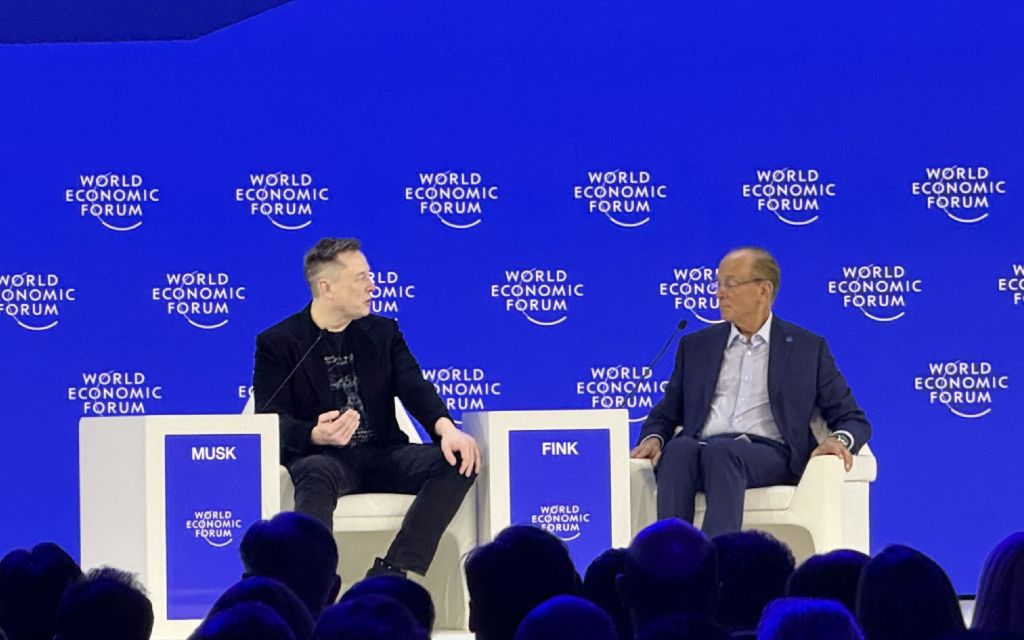
A day later, Elon Musk used the same stage to profess a glorious future for renewables, especially solar which he said could power all of America if he had his way. Just give him a parcel of land, 160×160 kilometres, and tariff-free solar panels! Away from North America, renewables are still the driver of energy growth and have shifted from a “transition” source to a default for new supply in many markets. Europe reached roughly 50% renewable generation in 2024.

In other fast-growing markets, renewables are increasingly seen as energy additions, not just replacements for fossil fuels. Falling battery costs (solar is down roughly 80% in India) and longer lifetimes (30–35 years) have helped shift economics from a simple cost per unit to a cost per lifecycle.

Read John’s full Davos commentary here.

  • Interim Head Lisa Ashton recently hosted a roundtable in Edmonton with industry leaders and investors on growth capital in Canada’s agri-food sector to dive into the investment challenges that were highlighted in The Next Generation of Growth.

  • Energy Lead Shaz Merwat moderated a panel at the BC Natural Resources Forum at Prince George, focused on Canada’s future gas and LNG competitiveness with senior executives from industry, Indigenous organizations.

Curated by Yadullah Hussain, Managing Editor, RBC Climate Action Institute.

Climate Crunch would not be possible without John Stackhouse, Jordan Brennan, John Intini, Farhad PanahovLisa AshtonShaz MerwatVivan SorabCaprice Biasoni, Lavanya Kaleeswaran and Joelle Schonberg .

Have a comment, commendation, or umm, criticism? Write to me here (yadullahhussain@rbc.com)

Climate Crunch Newsletter

WP Menu

wp-menu

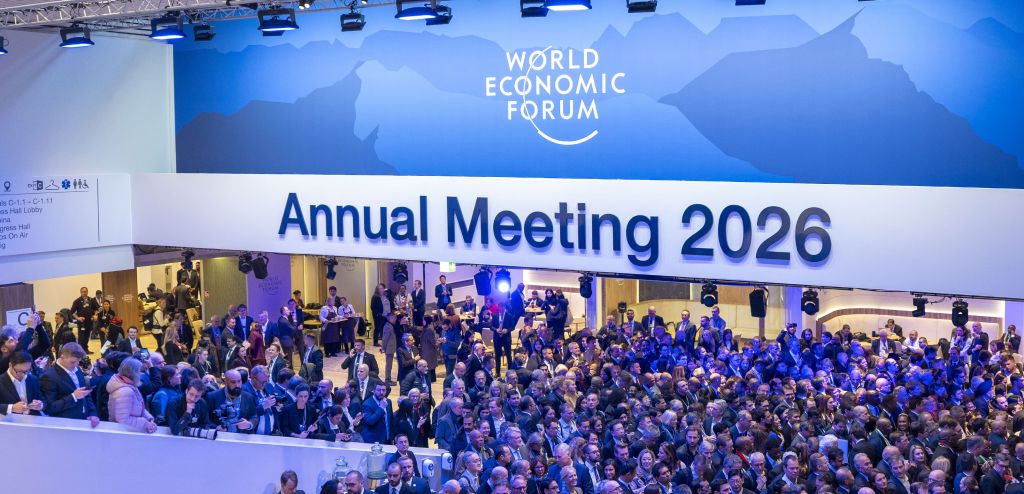
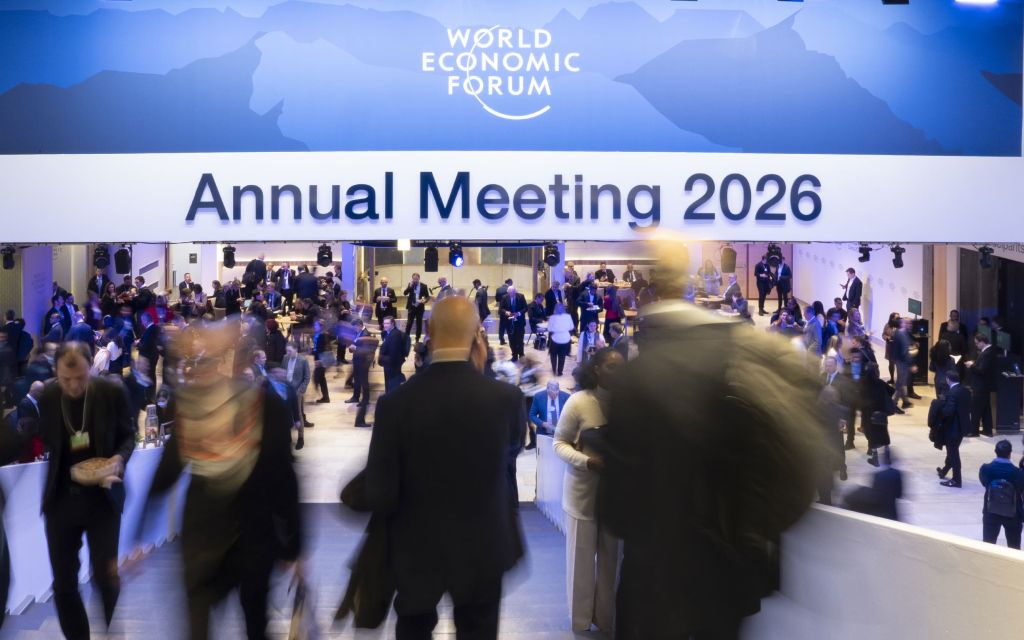
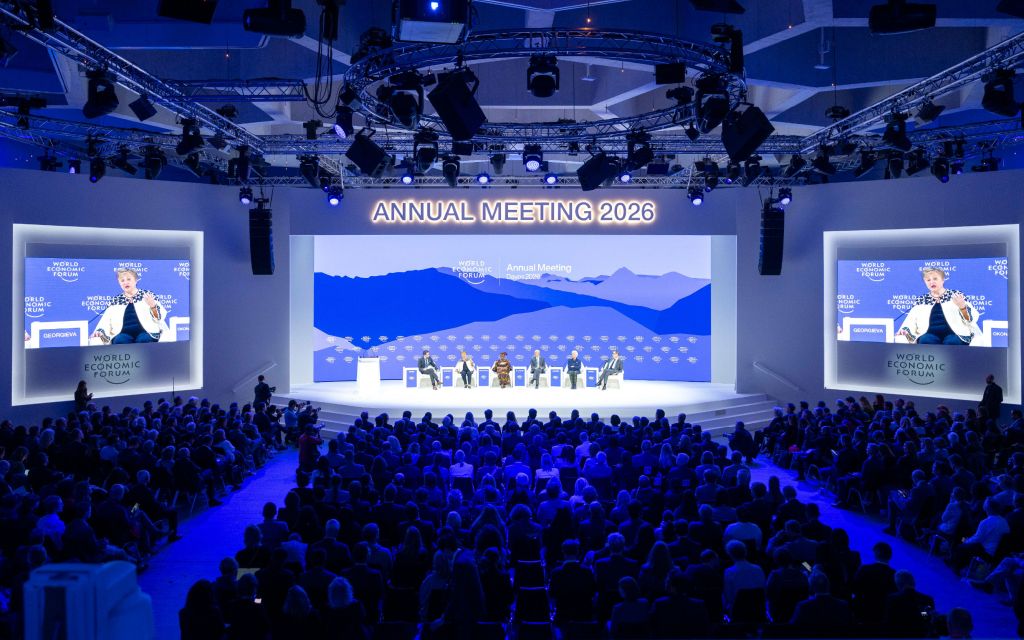
The World Economic Forum this year became a tale of two Davoses.

Inside the main Congress Centre, a record number of attendees, including 850 CEOs, 80 tech billionaires and founders, hundreds of ministers and 65 heads of government spent the week hearing about the decline of globalization and the inward turn of societies.

Outside, it was a very different world. On the town’s main promenade, you couldn’t walk 50 metres without feeling like you were in a mash-up of Wall Street, Silicon Valley and the United Nations, as countries from Brazil to Indonesia and companies from Tech Mahindra to Pinterest pitched themselves to the passing kaleidoscope of a crowd.

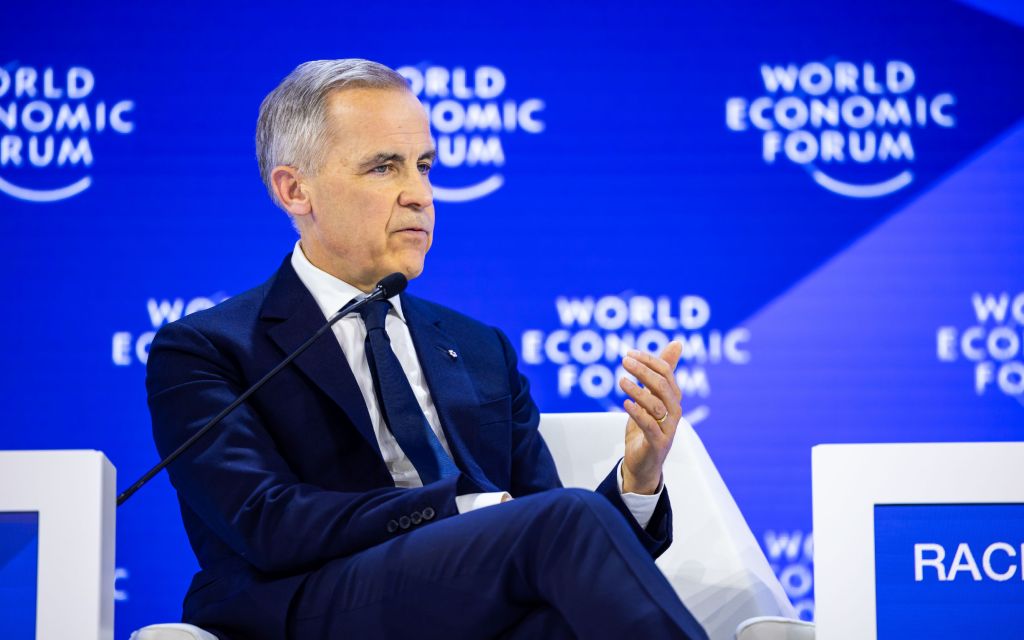
Mark Carney called this new environment one of “variable geometry.” Others called it a new age of “multi-alignment”—as if the global economy is becoming a bit more of a bartering and babbling souk than a tightly wired marketplace. By any name, the emerging world order, or disorder, seems as slippery and risky as the icy streets of Davos. Here’s some of what to look out for:

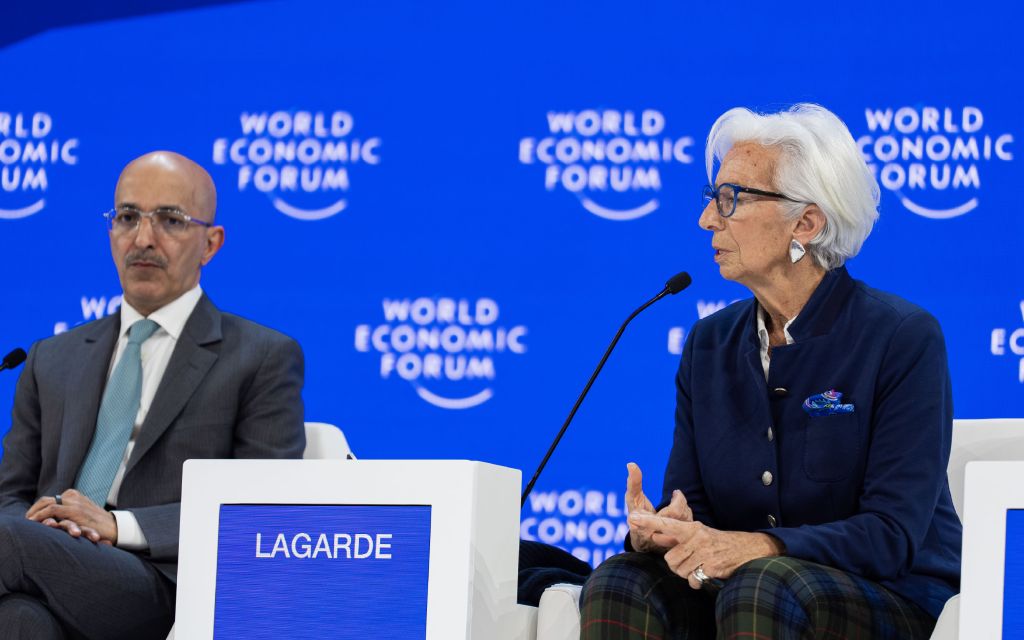
Last year, a day after his second inauguration, Donald Trump spoke by video to the Forum and promised a golden age for America. This time, he came in person to proclaim victory. With five cabinet secretaries and hundreds of American CEOs in tow, the President spent an extraordinary two days in the Swiss Alps projecting a 21st century version of American power. This is no stay-at-home superpower. In Trump’s vision, the world will trade and prosper more than ever, on America’s terms.  Close to three-quarters of global trade is still compliant with WTO rules. Inventory build-ups helped many companies escape the initial tariffs. A greater impact may come this year. But for the most part, “it’s still holding,” said Christine Lagarde, head of the European Central Bank, arguing the global economy is so intricate and intertwined even the U.S. cannot unravel it. Trump’s more mercantile Pax America is not just economic. He came with an unsolicited bid for Greenland that was rejected by his closest NATO allies. He left with a Board of Peace, supported by an unlikely collection of 19 countries with a combined GDP of $5 trillion, roughly equal to Germany. Only four (Albania, Bulgaria, Hungary, Turkiye) are in NATO, and only four (Argentina, Indonesia, Saudi Arabia, Turkiye) are in the G20. Will Trump be able to expand America’s reach without stronger partners? Or is this the new geometry of power?

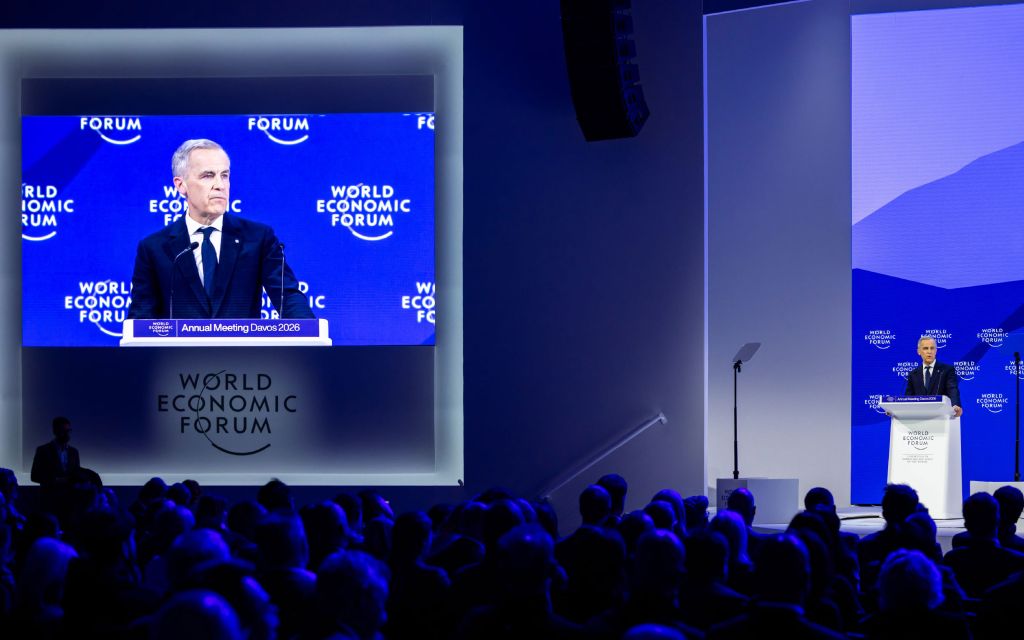
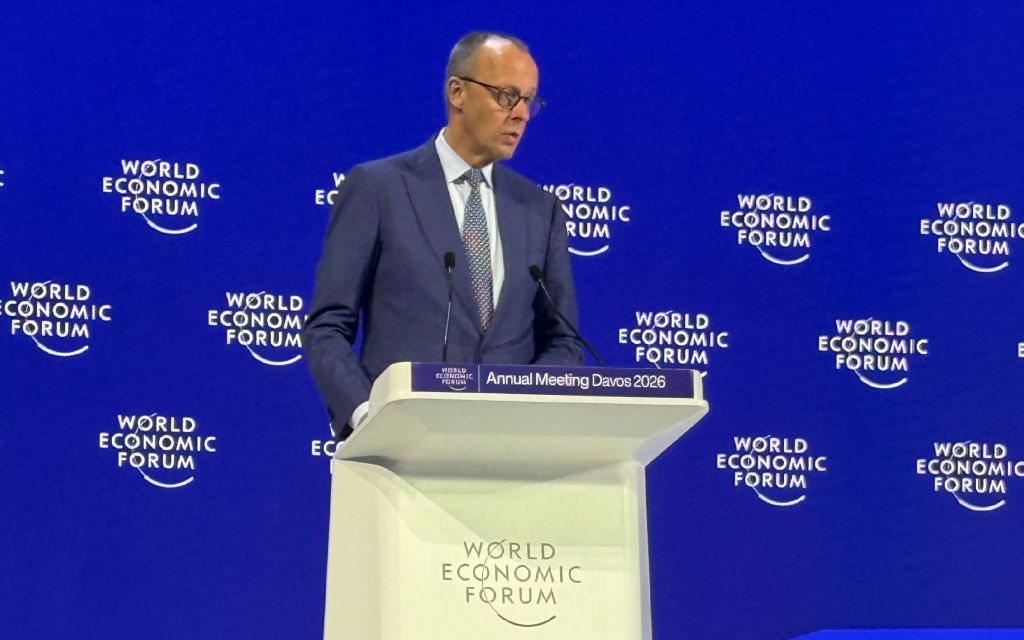
Mark Carney, long viewed as the quintessential “Davos Man,” gave a keynote speech that was widely celebrated for capturing the distraught mood of many there and crystallizing the desire for a new approach to international affairs. His tag line—“nostalgia is not a strategy”—resonated. Now he has to deliver on diversification. There’s no easy path. Canada’s closest allies in Europe are each struggling, economically and politically, weakened by the Ukraine war, immigration crises and a growing appeal of nationalism, which is now the biggest political force on the continent. Europe’s biggest economy, Germany, narrowly escaped a recession last year, after two years of decline. Chancellor Friedrich Merz called Europe “world champions of over-regulation” and at risk of losing its unity if it doesn’t reform. Canada will need more distant partners, too, particularly China and India, which the WEF estimates will account for nearly 40% of global economic growth over the next five years. Both emerging giants can be as tough as Trump when it comes to trade. The Persian Gulf beckons, too, with trillions of dollars of capital investment. But there, too, a new generation of economic partners have different political and legal systems—and social customs—to the neighbourhood where Canada grew up.

High above Davos, someone carved a message into a mountaintop glacier: “No King.” It was probably meant for the visiting U.S. President but equally could have been a message from European markets to the mighty greenback. King Dollar had a rough week, facing big questions as global trade winds shift, and countries and companies look to re-orient capital flows. The dollar still dominates 88% of global foreign exchange transactions, and 54% of global trade, which is why so many still cite TINA (There Is No Alternative). Or is there? The WEF opened to the startling news that Denmark’s largest pension funds had dumped U.S. treasuries in retaliation to the Greenland threat. A risk-off America vibe sent U.S. bond yields higher, reducing hopes for broader rate cuts. In moments like this, investors tended to stay in America, through real estate or stocks. This time, at least among Europeans, there was plenty of corridor chatter about a secular shift forming. One fund manager said his investors had asked him to sell down U.S. holdings. A few American tech executives said long-time European clients were cancelling orders. The euro, yen and Canadian dollar may play greater roles. The renminbi should gain prominence, although is years away from being a serious global alternative. Uneasy lies its head, but there’s still only one king wearing the currency crown.

The World Economic Forum was created in the 1970s to help Europe avoid the rise of socialism, and turn instead to free markets. A half century later, much of the West is again turning to the state to meet various economic ambitions—and the risks are evident. As countries, Canada included, seek to build back their militaries, build up their own technology foundations and become less reliant on the U.S.—home to roughly half the world’s financial capital—they are looking to leverage their own balance sheet and use other tools to direct capital to national priorities. These ambitions are so pronounced that many prime ministers and presidents seemed more like investment bankers working the Davos crowd. Advanced economies like Australia, Norway, Germany and South Korea do indeed have capacity to borrow more for investment, as do many emerging economic powers like Saudi Arabia. But capitalism is about more than capital; it’s about putting capital to work, with results. Singapore’s president, Tharman Shanmugaratnam, offered some sage advice, urging these new nation-state capitalists to be ruthless with investing, and with spending and regulation, too. Growth requires governments to focus on productive investments, including education, rather than redistribution—and a humble recognition that governments are inherently weak at building economic enterprises. If this new shot at state capitalism is to work, a new mindset will be needed, too.

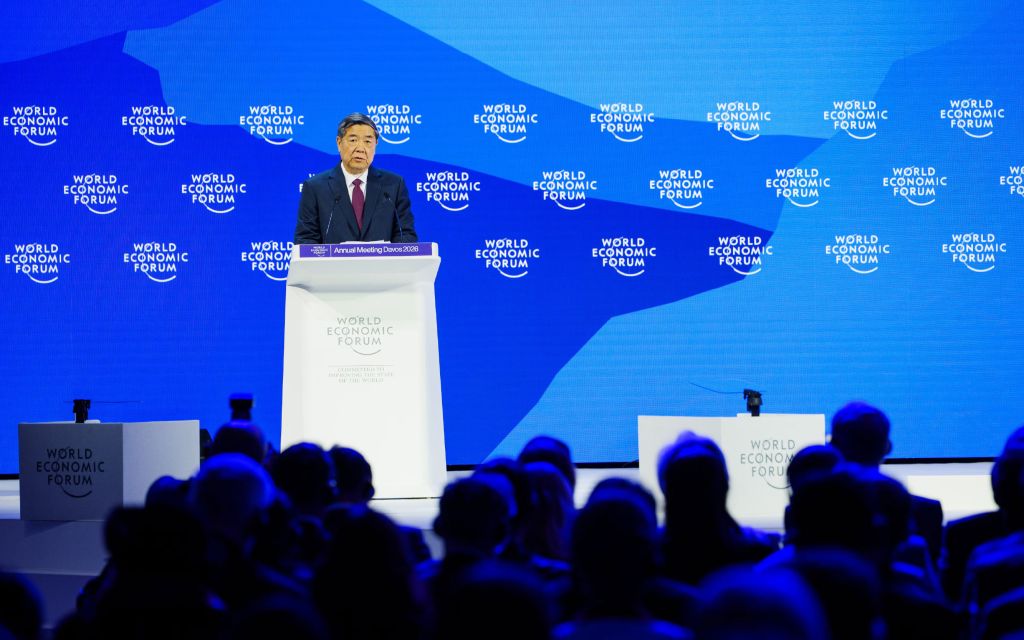
Right after Donald Trump was first elected President, Xi Jinping came to Davos, to offer up China as a global leader for an emerging age. In the ensuing decade, Beijing has delivered—in renewable energy, nuclear power, critical minerals, pharmaceuticals and AI. So much so that Xi no longer needs to be there. This time, while the U.S. and Europe shouted at each other, he sent one of his less powerful vice premiers, He Lifeng, to position their country as a defender of multilateral trade and “inclusive globalization.” China experts said Beijing is not missing a moment to quietly advance its two biggest priorities—reunification with Taiwan and AI supremacy. Xi sees AI as critical to China’s future, and DeepSeek 4, the next-generation AI model expected in February, will show how far China’s come. On that other front, it’s believed the Chinese military, which conducted naval exercises around Taiwan at New Year’s, is ready to take the island by force, if necessary, within a year, which would give it sway over the world’s semiconductor industry that is so essential to AI. Democratic Senator Chris Coons, who was at Davos, fears the U.S. Administration doesn’t appreciate the need for “a network of allies with core values” to contain China. We’ll get a clearer picture when Trump and Xi meet in April, but don’t expect a grand bargain between the hegemons. Best case, Coons said, may be a series of “small landing points” to keep the world in balance.

Data centres seem to be eating the world, electron by electron. But will the capital be there again in 2026 to feed their financial appetite? Data centre spending surpassed $500 billion last year, and when combined with broader electricity needs, according to McKinsey, may total $6.7 trillion over the next five years. The world has never seen an infrastructure boom like this. Data centre construction is now the single biggest contributor to U.S. economic growth; tech spending as a share of all investment is now running 50% higher than it was during the broadband boom of 2000, and triple what the U.S. spent on Interstate highways in the 1960s. Vacancy rates for data centres recently hit a record low of 1.6%, as developers bid up available spaces. “We may need more,” said Larry Fink, CEO of Blackrock. “If we don’t scale, China wins.” Equinix, a large data centre player, faces ten times the demand for every new unit they build. Land is no longer the constraint; energy is, as a medium-sized centre requires the energy of a small town. Such operations last year accounted for two-thirds of U.S. load growth, making them a new political target in boom states like Virginia and Ohio where electricity prices have soared. They’re also a growing concern in Africa and South-east Asia, the world’s fastest-growing regions, where countries have found themselves outbid for gas turbines and other power equipment.

The next energy crisis won’t be fueled by oil or gas; it will be strained by the world’s faltering electricity grids. Electricity demand globally is rising three times faster than total energy demand, driven by air conditioning and electric vehicles, as well as data centres. While 90% of Americans have access to air conditioning, the number is 20% in India, 18% in Indonesia and 5% in Nigeria—each with some of the world’s fastest-growing cities. Add to that the growing demand for EVs, which now account for a quarter of global car sales, up from 5% in just five years. Fatih Birol, head of the International Energy Agency, said the world will need 10,000 terra-watts of new electricity in the next decade, which is the equivalent of adding another U.S., Canada, Europe and Japan. Without any innovation breakthroughs, that would require 70% more copper, and a vast expansion of steel and critical minerals processing. Developments in large-scale battery storage and grid digitalization offer some hope, as most electricity systems still suffer a gross mismatch of supply and demand. But an unfortunate truth remains: it’s easier and faster to build power plants than it is to add transmission and distribution. Take this recent experience in Europe: the continent added 80 gigawatts of renewable energy supply only to find it didn’t have the capacity to transmit all that new electricity.

There were two vastly telling moments in Davos’s main Congress Hall, one speaking to scarcity, the other to abundance. Donald Trump went off script to lambaste renewable energy, especially wind which he said was for “losers.” A day later, Elon Musk used the same stage to profess a glorious future for renewables, especially solar which he said could power all of America if he had his way. Just give him a parcel of land, 160 kilometres by 160 kilometres, and tariff-free solar panels! Away from North America, renewables are still the driver of energy growth and have shifted from a “transition” source to a default for new supply in many markets. Europe reached roughly 50% renewable generation in 2024. In other fast-growing markets, renewables are increasingly seen as energy additions, not just replacements for fossil fuels. Falling battery costs (solar is down roughly 80% in India) and longer lifetimes (30–35 years) have helped shift economics from a simple cost per unit to a cost per lifecycle. But reliability remains a challenge, which will require more battery storage, pumped hydro, and hybrid round-the-clock systems. But that’s happening in places like India, which has installed 2.7 million rooftop solar systems and 3.1 million solarized pumps and has already hit its 2030 target for renewables to account for roughly 50% of non-fossil fuel energy.

AI has shifted from an experimental technology to foundational infrastructure—and now an operating system for companies and governments. The competitive advantage is not just model innovation; it’s diffusion and how fast firms can beat their competitors to transform. As diffusion accelerates, Anthropic co-founder and CEO Dario Amodei sees 2026 as the year when AI systems build AI systems, including within firms, in ways that could upend entire business models. Demis Hassabis, co-founder and CEO of DeepMind, said the advantage will go to “continuous learners” who track what models are doing and adjust strategies and workflows. Seizing that approach, most CEOs have taken AI ownership out of the tech department and parked it on their desk. A BCG survey, released at Davos, found that 72% of global CEOs see AI as a core part of their mandate, with half believing it will define their tenure. Companies plan to double AI spending this year, even though a 2025 MIT study found very few adopters had seen a financial return. David Sacks, the Silicon Valley guru who is Donald Trump’s AI czar, sees the need for leaders, in government, business and media, to dispel fears, and embrace the chance to disrupt and innovate. He cited another study that found 83% of Chinese are optimistic about AI, compared to 39% of Americans. Sacks worries that “a fit of pessimism” will result in the U.S. losing the AI race due to what he described as a “self-inflicted injury.”

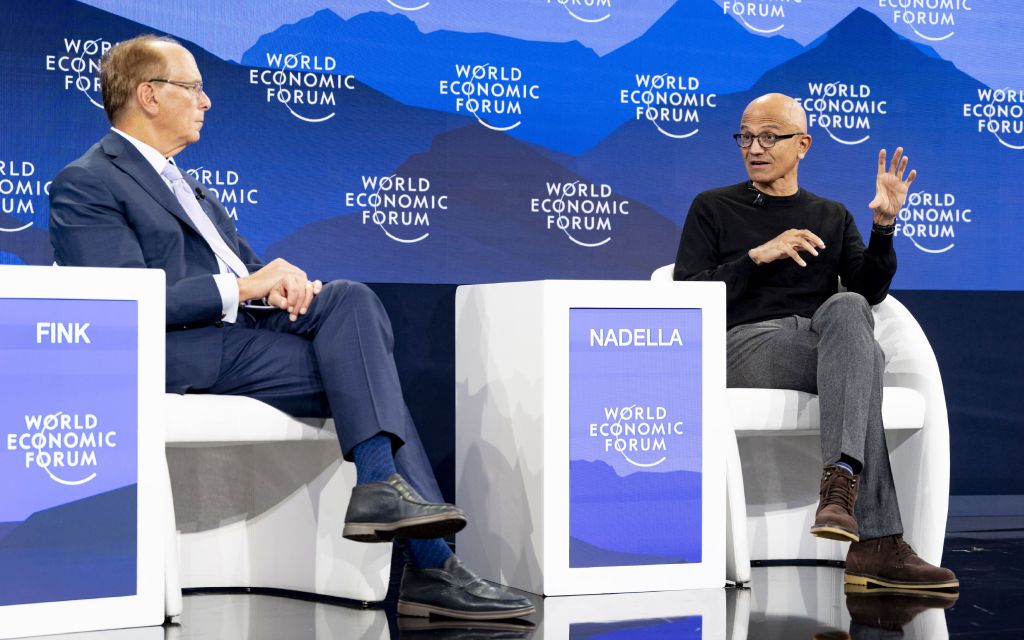
There’s a new financial math for AI. It’s what Microsoft CEO Satya Nadella calls “tokens per dollar per watt”—basically the energy cost per unit of compute. Think of it as a kind of basic wage and productivity measure for AI. And the companies, and countries, that can drive down that unit cost will be positioned to win in the data economy. This new math may fundamentally change the nature of human work, too. Think of it as “data x energy x labour = success.” The C-suite consensus at Davos seemed to be that labour, like data and energy, will be needed even more. CEOs said the entry-level “job cliff” is overstated; the real problem is a widening skills mismatch, as most roles will require a re-bundling of tasks and skills. The winners will be the workers (and firms) that can integrate and operate with AI. This transformation is resetting corporate ladders, especially in professional services and governments, where basic tasks like document review, screening and modelling can be done by machines. New apprenticeship designs will be the hot HR need, to build judgement, context, and supervision skills. More model design and modification will be pushed to the frontlines, where employees can create small pieces of automation to transform their work. All this can flatten organizations, and give advantage to those with abundant data, cheap energy and AI-savvy teams.

Growing divisions in the world, and within countries, is a matter of trust. And we’re losing it. Stefanie Stantcheva, a Harvard economist, finds it’s especially acute for her generation—those under 40—who see a zero-sum world and their slice shrinking. She shared research at Davos showing how distrust now spans the political spectrum, with a wide range of millennials feeling other groups have captured government agendas through mainstream media, corporate influence and old-school politics. That tension will grow as aging voters in the West demand more income and health security, perhaps at the cost of economic and national security. The Edelman Trust Barometer, which surveys 34,000 people in 28 countries and is released annually at Davos, found societies sliding from grievance into insularity; seven in 10 people are hesitant or unwilling to trust those with different values, backgrounds, or information sources. Trust is also shifting away from institutions to “people like me,” neighbours, co-workers, and one’s CEO. Business is now seen as both most competent and most ethical, surpassing NGOs on ethics for the first time, while government and media remain the least trusted. Most starkly, optimism is fading: in many countries, majorities no longer believe they or their families will be better off in five years, citing economic anxiety, AI, misinformation, and global conflicts.

Download the Report

WP Menu

wp-menu

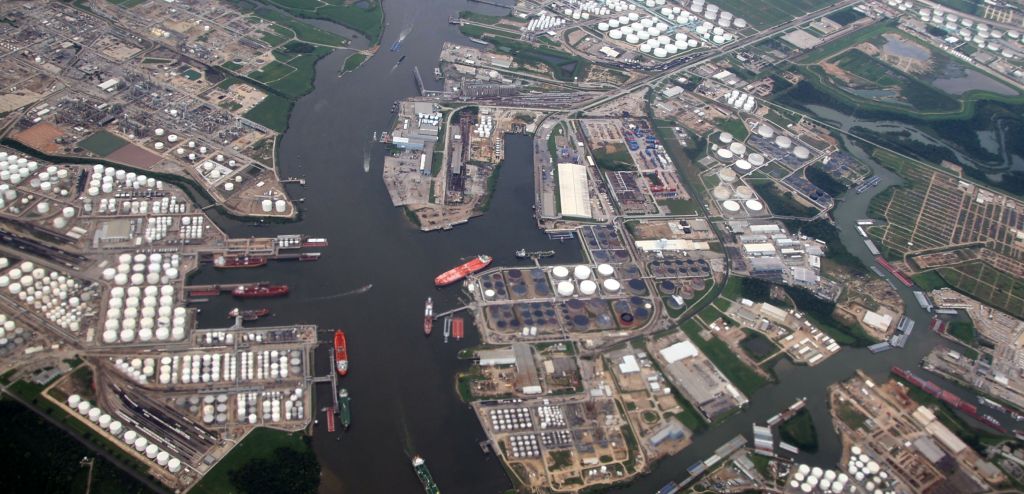
The U.S. loves heavy oil. The blend is vital for diesel, jet fuel and petrochemicals, and Canada is, by some distance, its biggest foreign supplier. However, a U.S. plan to influence and revive Venezuelan oil has raised concerns that Canada—already facing U.S. pressure on several other domestic industries—could start losing market share to Venezuelan heavy crude in a few years. It could amount to a Washington squeeze on Canada’s most prized resource.

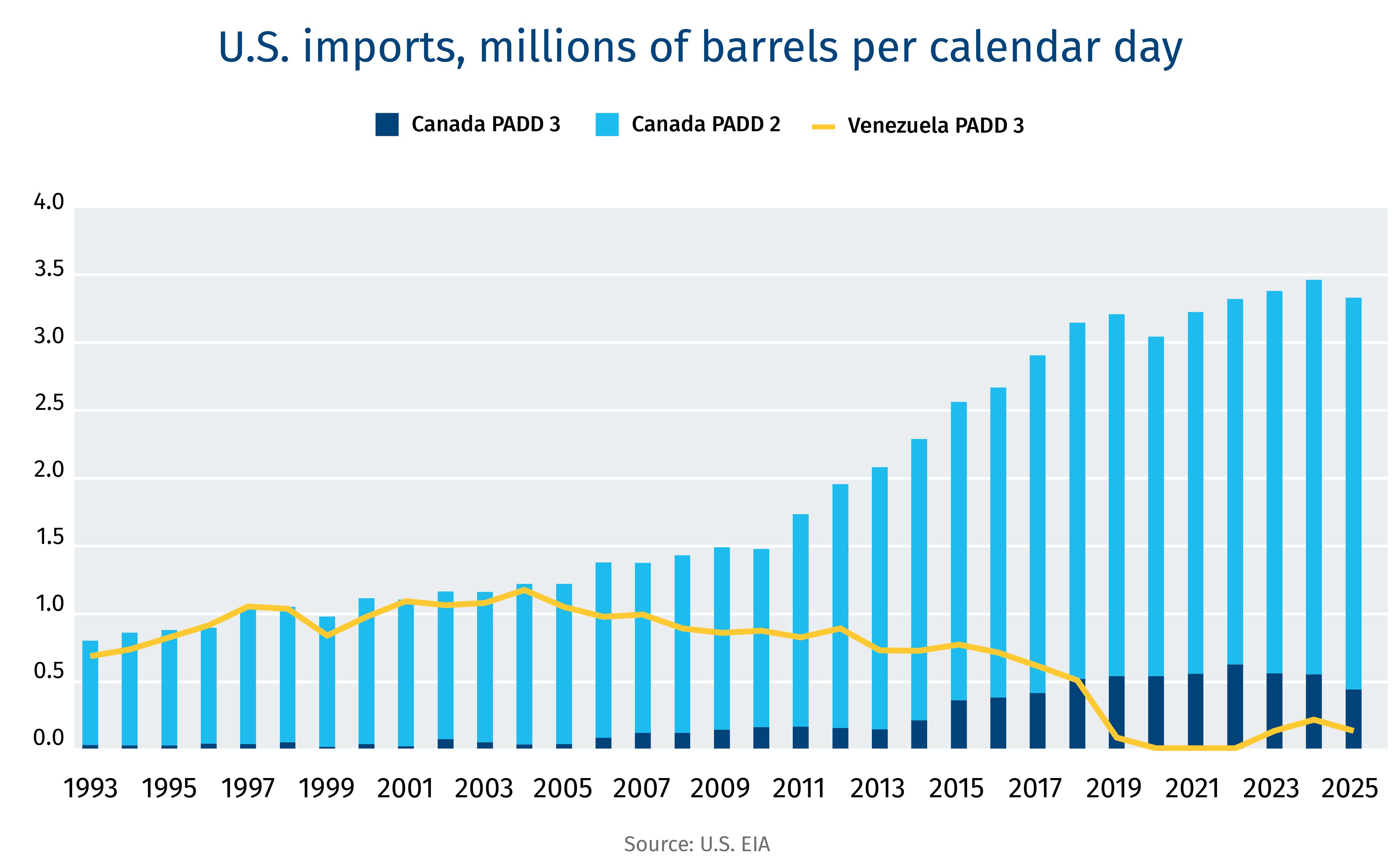
Imports of crude and liquids into the U.S., the millions of barrels per calendar day

U.S. crude import patterns reflect a clear structural divergence between Canada and Venezuela. The result is a fundamental reorientation of U.S. import dependence toward Canadian supply, reinforced by reliability, infrastructure, and long-cycle capital investment.

U.S. Imports, millions of barrels per calendar day

Venezuelan crude once dominated Gulf Coast imports, but its collapse created space that has only partially been filled by Canadian barrels. The Gulf Coast is seen as a battleground, but only 10% of total Canadian imports flow into the region known as PADD 3. Most Canadian crude growth has occurred within the Midwest refinery region, known as PADD 2, which accounts for 69% of total Canadian export growth into the U.S. over the past three decades.

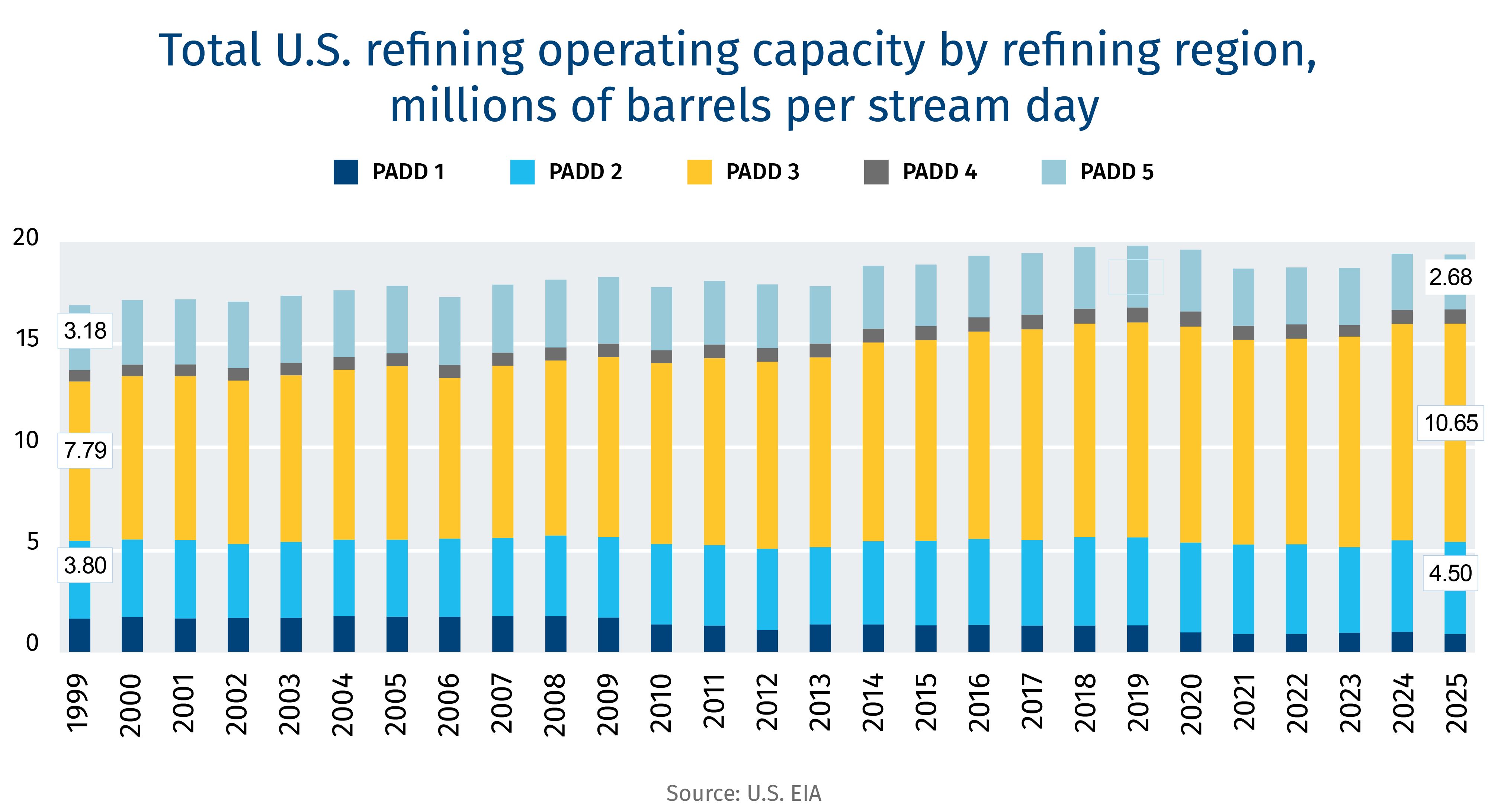
Total U.S. Refining capacity by refining region, millions of barrels per stream day

U.S. refining capacity growth has been concentrated in PADD 3 and PADD 2, reinforcing the system’s orientation toward large-scale, complex refining hubs. The Gulf Coast’s dominance reflects decades of investment designed to process heavier and more diverse crude slates, positioning it as both a domestic refining centre and a globally relevant supply hub.

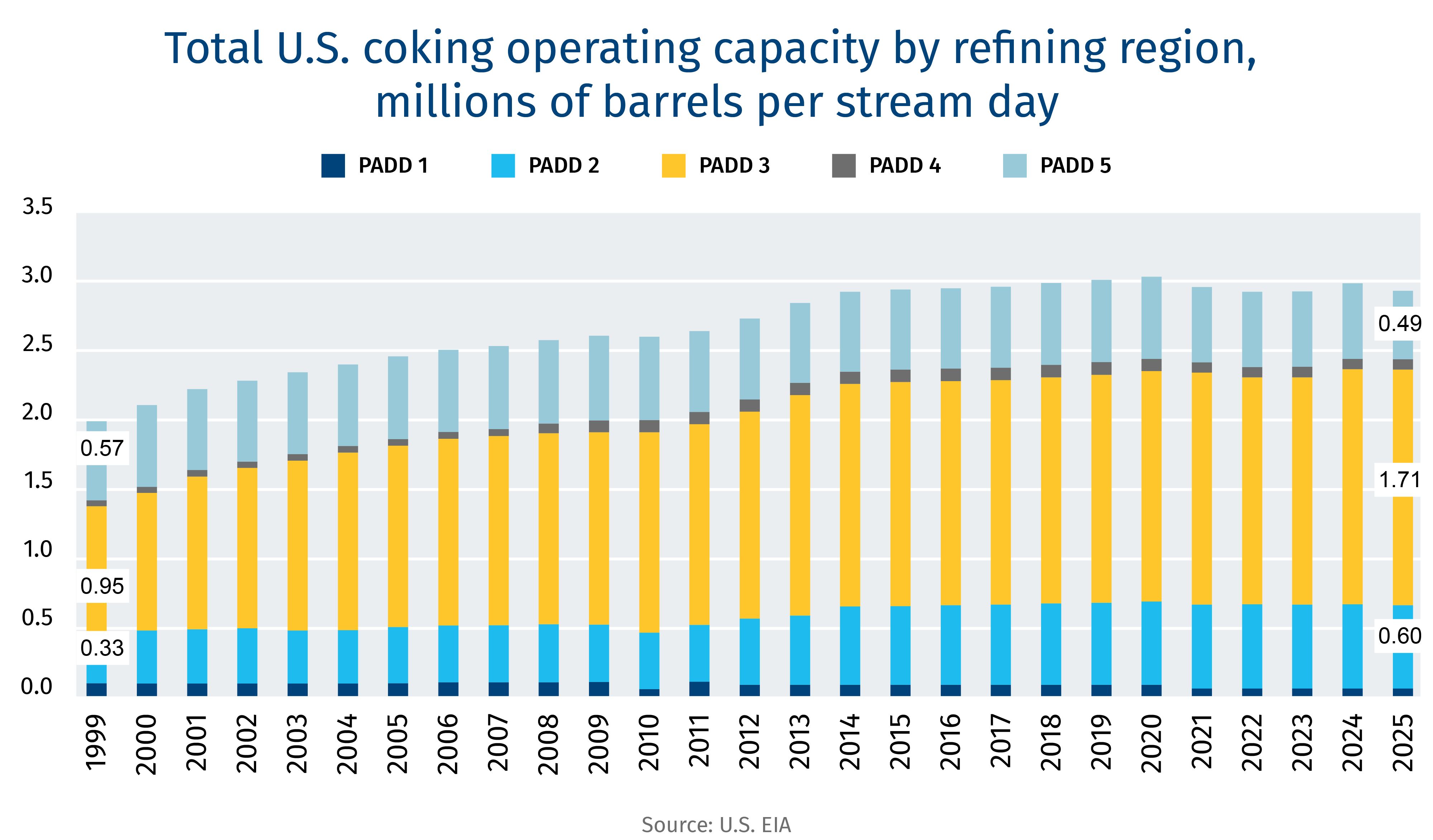
Total U.S. coking operating capacity by refining region, millions of barrels per stream day

Coking capacity remains a defining feature of the U.S. system’s ability to process heavy crude, with the majority of investment concentrated along the Gulf Coast. The steady build-out of coking units over time highlights how refiners structurally adapted assets to heavier barrels, further entrenching supply relationships that favor Canadian crude.

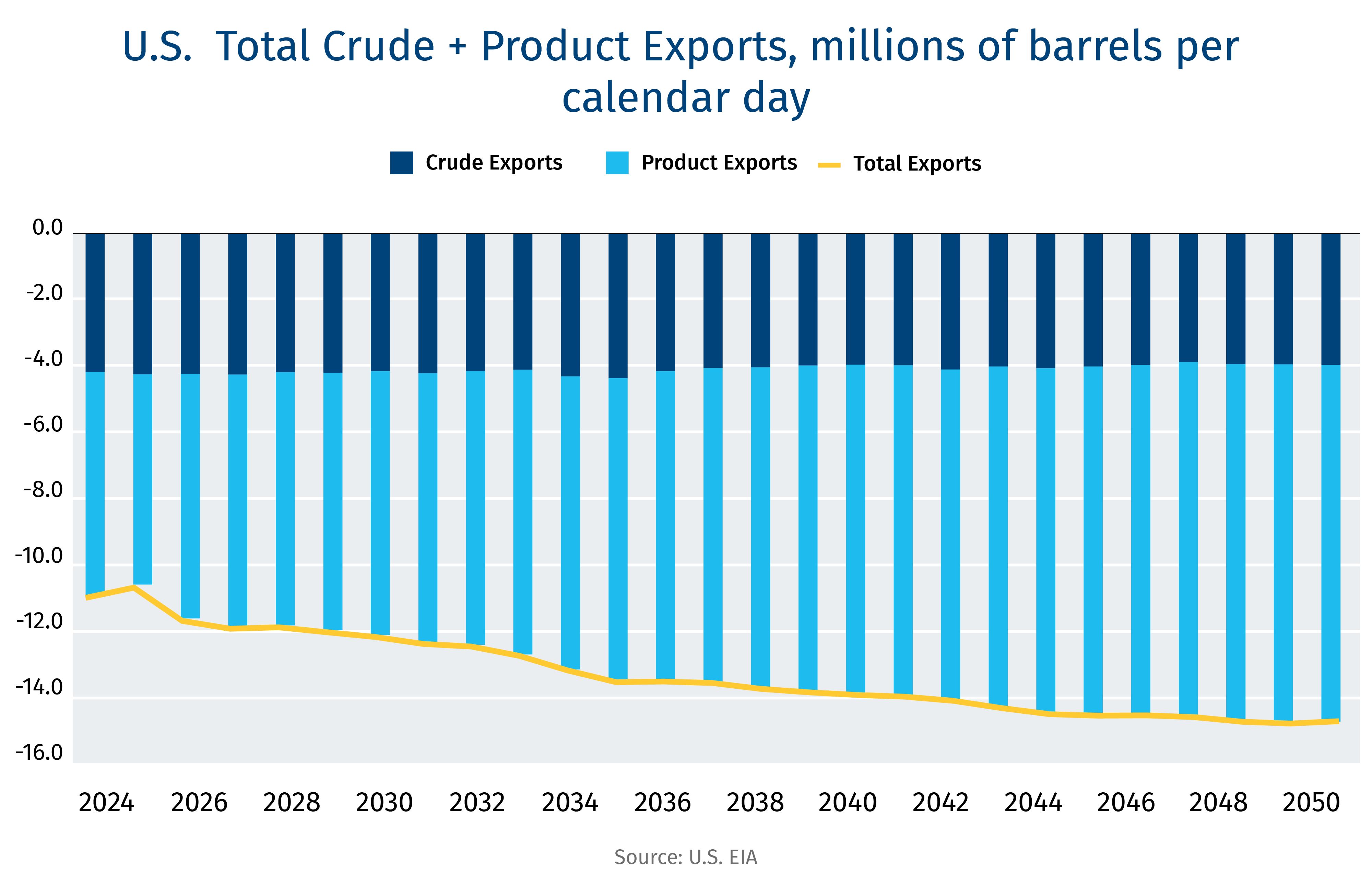
U.S. Total Crude + Product Exports, millions per barrel per calendar day

The U.S. energy system is increasingly focused on exports, with petroleum products accounting for majority of outbound volumes over time. This underscores the Gulf Coast’s role not only as a refining hub, but as a critical petrochemical and export platform. For Canada it reinforces the importance of market access, blending, refining, and re-export pathways within an evolving global trade landscape.

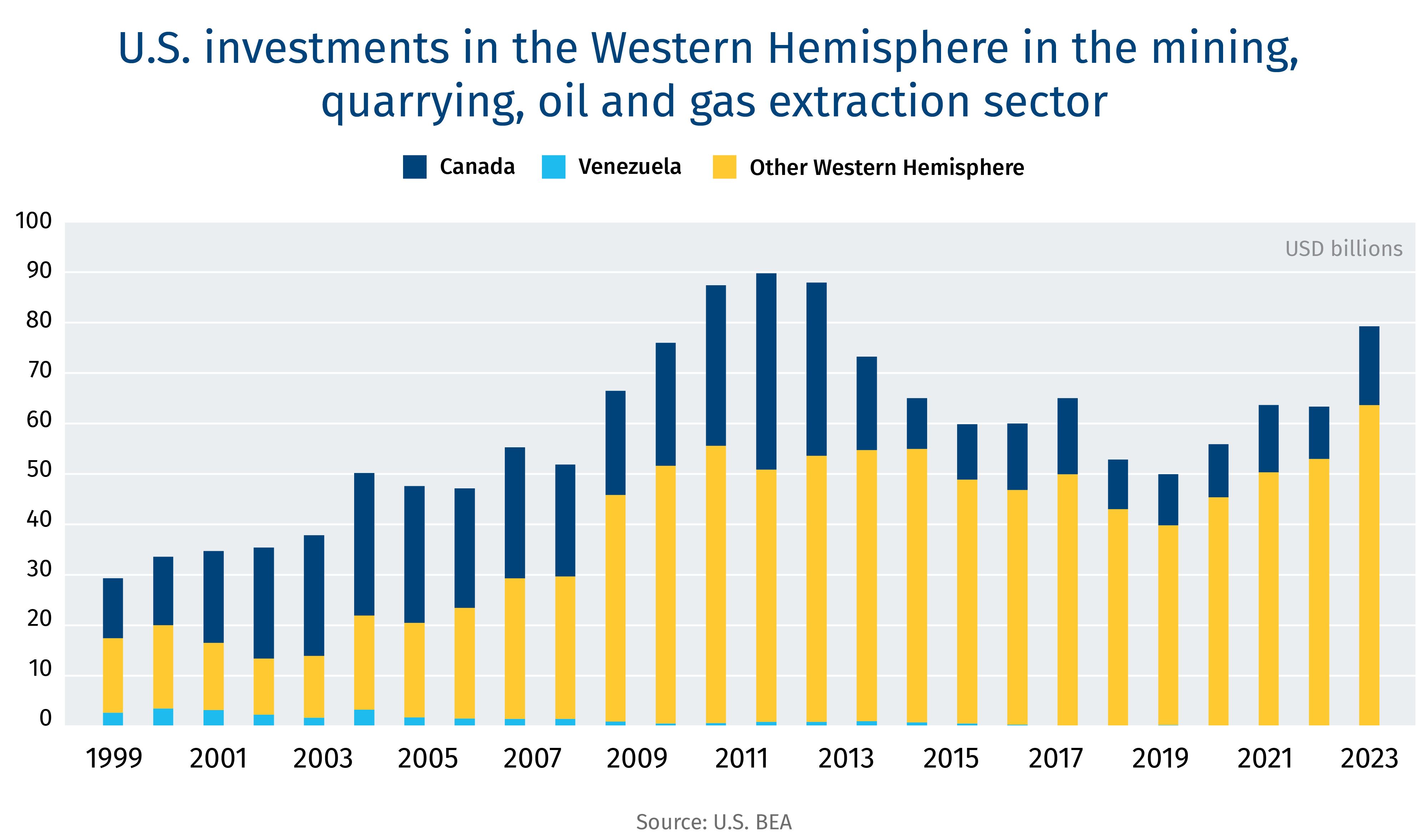
U.S. investments in western hemisphere in the mining, quarrying, oil and gas extraction sector

For all the cross-border integration, U.S. capital investment in the Canadian resource sector (mining, oil and gas) has fallen by more than half from its US$39.1 billion peak in 2011. Meanwhile, U.S. investments into other Western Hemisphere countries has steadily grown from US$16 billion in 2000 to US$64 billion in 2024, even without Venezuela.

The competition for investment dollars from the U.S. into the Western Hemisphere is growing—Canada will need to lock in American capital to ensure it preserves its pre-eminent position in the U.S. market.

WP Menu

wp-menu

➔ How’s Canada doing on fighting climate change? It’s complicated

➔ Is the world falling out of love with Teslas?

➔ Canada’s methane rules get pragmatic

Can the IPCC survive its breakup with Washington? The UN-backed Intergovernmental Panel for Climate Change is in a “keep calm-and carry-on” mode after the U.S. decided to pull out, noting that it continues to work on its next cycle of reports, starting in 2027. The IPCC reports are extremely influential, and many countries benchmark themselves to its authoritative data. It’s critical for IPCC to persist, but one of the criticisms of the body is its focus on the science and the tech, that underplays the economics and politics of energy transition. While the White House labelled the IPCC (and the 65 other UN organizations the U.S. exited) as a “waste” of American taxpayer money, others argue that the IPCC has been instrumental in focusing global policymakers on one of the world’s most critical challenges. Science, they hope, will prevail.

New methane rules mark a pragmatic evolution in Canadian climate policy. The new rules—covering onshore oil and gas operations and large landfills with requirements beginning in 2028—pair high ambition with greater regulatory flexibility. The most consequential change is optionality, says Vivan Sorab, our Clean Tech Lead. Government estimates suggest that the new rules could deliver cumulative reductions of 304 Mt CO2e from 2028 to 2040. Operators can follow a regulator-prescribed inspection pathway, subject to regulatory verification and enforcement, or demonstrate compliance through their own processes, backed by monitoring and verification. The removal of the five-year expiry on federal-provincial equivalency agreements further strengthens the framework by improving long-term certainty for provinces and the industry. The rules are reinforced by a $16-million federal investment in methane monitoring and verification tech. Given ongoing uncertainty on methane emission volumes, the focus on measurement could prove to be crucial.

Is the world moving past Elon Musk’s Tesla? It’s hard to say whether the billionaire’s politics put off many, but it could certainly be a factor. Globally, EV cars sales hit a record 21.7 million last year, Bloomberg New Energy Finance estimates, even as Tesla sales contracted 9% to 1.64 million. BNEF forecast 24.3 million EV car sales in 2026—a slower pace of growth than previous years—as falling government incentives are offset by falling battery prices, a bump in commercial vehicle sales and the slow ramp up of robotaxis.

Behind the scenes, the Climate Action Institute team spent the past six months on what’s emerging as a benchmark of Canadian climate action: our Climate Action report, now in its third year.

While there’s been some retreat on climate policies, there’s plenty of action too, on climate. Our report title, Retreat, reset or renew?, suggests it’s all of the above.

The report is based on calculations, aggregations and estimates using a variety of measures from across the economy and society. We selected those metrics to help paint a picture of where we’re at, how far we’ve come and some of the distance ahead. The report, and its measurement tools, are not designed to be a precise diagnostic of any one sector, policy or technology—it’s more like a mirror in which we can see Canada’s successes and shortcomings.

The report was also informed by our team attending over 100 events, and visiting farms, facilities and offices, cross-country, where we listened, spoke and compared notes with peers, experts and skeptics. Over 2,000 Canadian consumers and 150 business executives participated in our two annual surveys. Peer groups dove into the methodologies and several external experts stress-tested our analysis. For our case studies, several companies agreed to heart-to-hearts on the challenges of putting their boardroom promises into action on their factory or office floor. The result is a snapshot of Canada’s climate journey: some milestones achieved, a few dead-ends, and strapping up for the next curve round the bend.

Read the full report here, but here’s a peek at a handful of findings:

  • Emissions progress is mixed: National emissions are down 7% since 2019, with reductions in electricity (-27%), buildings (-19%), and oil/gas (-19%) sectors. However, new projects like the TMX pipeline expansion and LNG Canada Phase 1 are projected to increase oil/gas emissions.

  • There’s a strong pipeline of climate funding. Climate capital flows of around $20 billion annually continue to support the low-carbon sector.

  • …And there’s more on the way. Nearly $100 billion worth of incentives for clean-tech and climate programs and initiatives budgeted for deployment between now and 2035—although funding remains uncertain given policy shifts.

  • Climate Action Barometer declined: the Institute’s flagship index fell for the first time in six years amid policy uncertainty.

  • Canadians still care about climate: Cost of living issues, healthcare access and strengthening the economy were front and centre, but 33% still consider climate change as a top-three priority for policymakers.

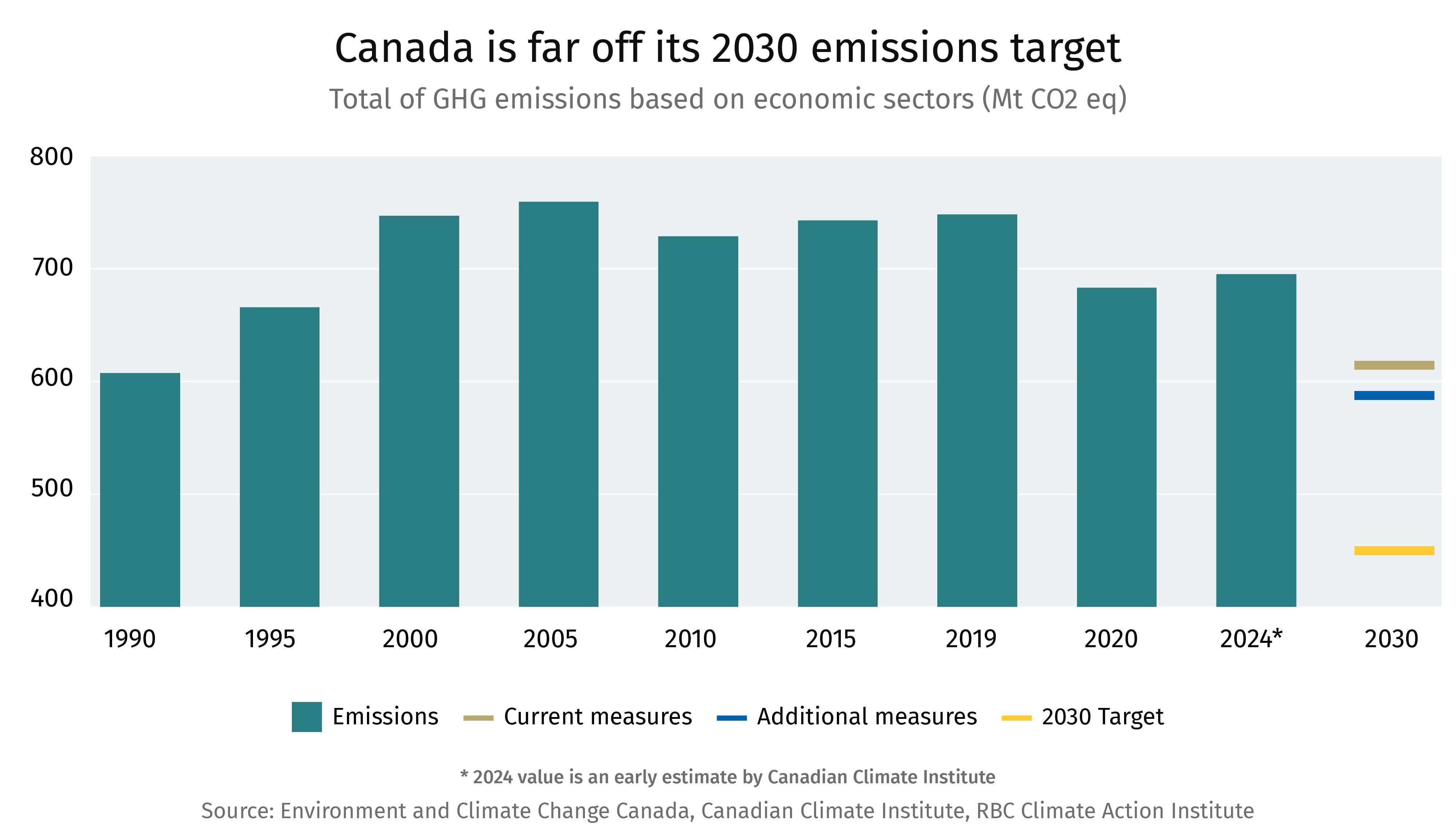
Don’t fixate on 2030 Canada’s emissions targets. That’s the message from Environment and Climate Change Canada (ECCC) in its latest progress report on the country’s 2030 emissions reduction plan, released days before the Christmas break. Focusing on 2030 targets “at all costs” risks undermining the long-haul climate fight, the report notes. “Focusing narrowly on short‑term reductions could also divert attention from the deeper, systemic transformations needed to reach net‑zero by 2050.”

Pushing heavy industry and oil and gas—two sectors that are deeply tied to competitiveness, investment flows, and trade— could “trigger capital flight, carbon leakage, and a loss of international competitiveness, especially if compliance costs outpace those faced by peer economies.”

Economist Farhad Panahov pored through the data trove to glean 5 valuable insights:

  • Emission declines are impressive, given population growth. By 2023, Canada’s emissions declined 8.5% from 2005 levels. More impressively, emissions intensity was down 35% based on the economic size and 29% based on population (which has been growing at a fast clip over the past two decades).

  • We need four times the pandemic era emissions declines. Canada’s emissions would need to drop fourfold compared to the 2020-COVID-era magnitude to reach its 2030 targets.

  • Most sectors are pulling their weight. Electricity, transportation, heavy industry and buildings sectors are projected to deliver a combined 68 MtCO2e emissions reductions by 2030, through several measures including electric vehicle and heat pump adoption, fuel switching and electrification in heavy industry, and renewable technology deployment.

  • Fossil fuels are the outliers. Oil and gas sector, however, has a diverging projection, ranging from either flat to 33 MtCO2e emissions with enhanced methane regulations, hydrogen substitution, and deployment of solvent-based extraction technologies.

  • What’s going to move the needle? The controversial, and now shelved, Oil and Gas Emissions Cap (excluded from the projections) would have only added 3MtCO2e in emissions reduction. Meanwhile, agriculture practices along with nitrogen management could contribute up to 12 MtCO2e in emissions reduction.

  • John Stackhouse will be on the ground in Davos next week. Watch out for his analysis on what he saw, shared and heard at the world’s most influential forum for discussion and debate on the global economy.

  • Lisa Ashton, the Institute’s Interim Head, was the keynote speaker on how agri-food can lead a new era of economic development at the Saskatchewan Crops Forum this week.

  • Lisa also hosted a roundtable in Saskatoon with industry leaders and investors on growth capital in Canada’s agri-food sector to dive into the investment challenges that were highlighted in the Next Generation of Growth.

  • Shaz Merwat, Director of Energy Policy, is moderating a panel on Canada and B.C.’s Competitive Edge as a Global Gas and LNG Producer on Jan. 21 at the B.C. Natural Resources Forum.

  • The Elements of Power: A Story of War, Technology and the Dirtiest Supply Chain on Earth by Nicolas Niarchos, on what it takes to usher in the battery era.

  • TV series Landman, starring Billy Bob Thornton, that shows wildcat drilling is alive and well in Texas—often powered by wind turbines.

  • Disruptors podcast: Alberta’s Next Energy Mix. John Stackhouse speaks with Premier Danielle Smith about the future of power in Alberta.

  • Things Are Never So Bad That They Can’t Get Worse (2022), by William Neuman, on the steady collapse of Venezuela over the years.

Curated by Yadullah Hussain, Managing Editor, RBC Climate Action Institute.

Climate Crunch would not be possible without John Stackhouse, Jordan Brennan, John Intini, Farhad PanahovLisa AshtonShaz MerwatVivan SorabCaprice Biasoni, Lavanya Kaleeswaran and Joelle Schonberg .

Have a comment, commendation, or umm, criticism? Write to me here (yadullahhussain@rbc.com)

Climate Crunch Newsletter

WP Menu

wp-menu

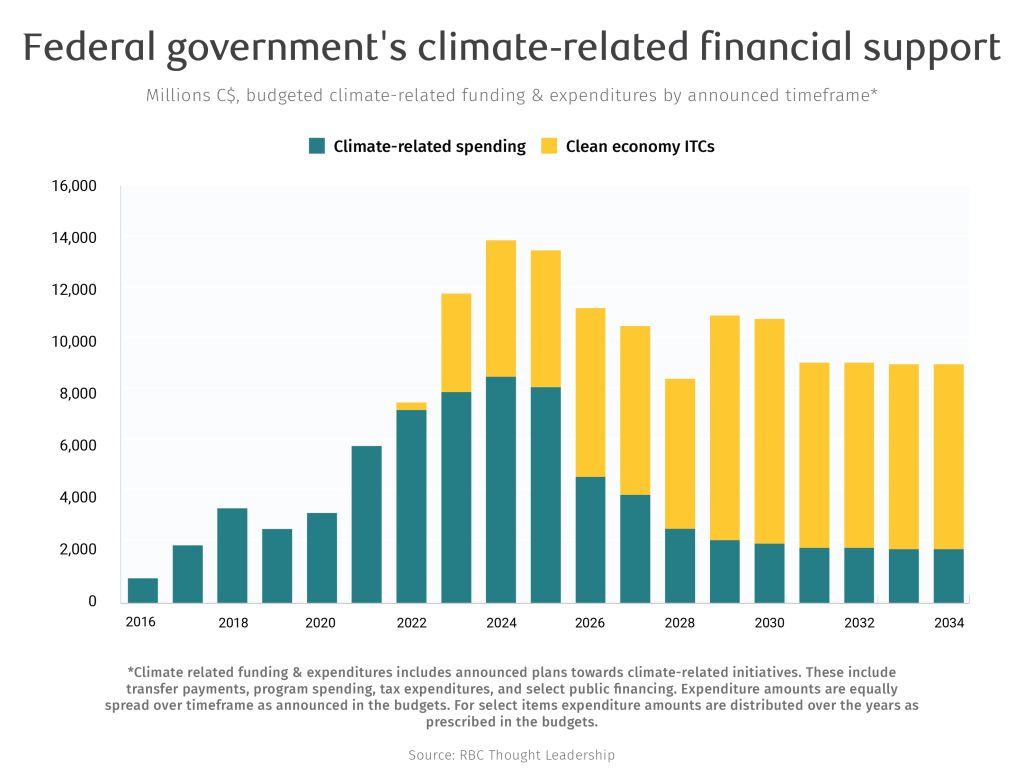
Consumer carbon pricing—scrapped. Electric vehicle mandate—delayed. Oil and gas emissions cap—all but gone. The headlines suggest Canada’s climate ambition is in retreat. However, much of the climate action-enabling capital has already been locked and loaded, with an estimated nearly $100 billion worth of incentives—by our count—ready to be deployed between now and 2035 for clean-tech and climate programs and initiatives.1

Federal givernment's climate related financial support

As part of the Climate Action Report 2026, which will be released on January 13, we analyzed the various federal government’s climate policy and commitments over the decades.

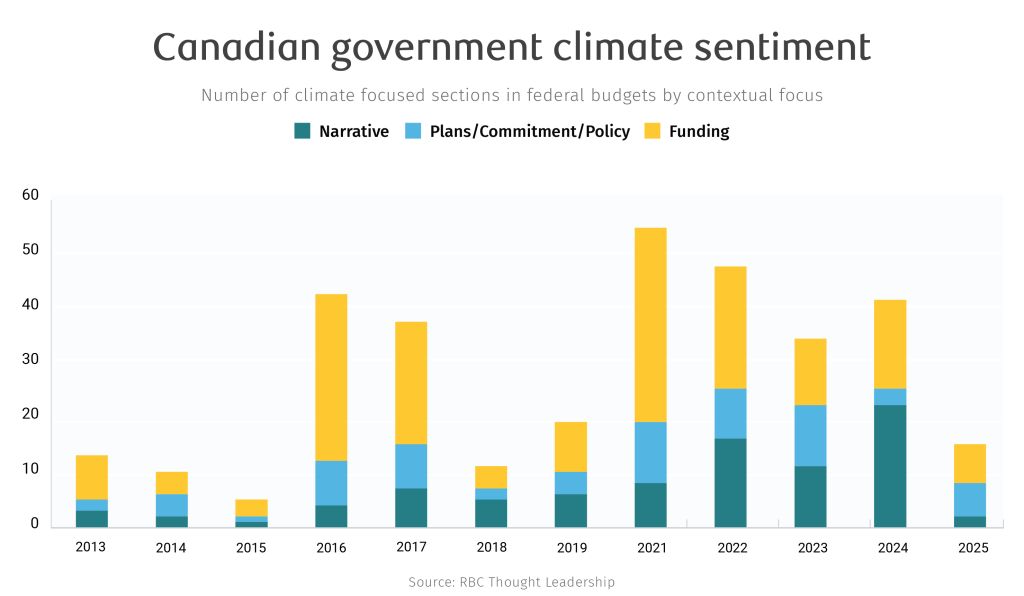
For the Canadian Government Climate Sentiment we used OpenAI’s advanced reasoning models to curate and analyze contextual framing of climate and related topics to assess government resolve around climate.

Our research applied the analysis to federal government budgets across three main categories: narrative (references to climate trends and past actions), policy, commitments and plans signalling government intentions, and new funding announcements.

Canadian governemnt climate sentiment
  • The Trudeau years were packed with talk—and action. Climate talk hit its highest levels during the pandemic years. Justin Trudeau’s Liberal government started strong with a number of climate focused funding announcements in its first federal budget in 2016 to about $6 billion, according to our count.2

  • Climate funding has been frontloaded. Since 2016, cumulative budgeted climate-related spending has risen to $150 billion. Clean economy Investment Tax Credits of around $78 billion as initially announced are already in place and will support adoption of low-carbon technologies for another decade into the 2030s.3 Program spending, transfer payments and other tax expenditures accounted for another $70+ billion in financial support.4

WP Menu

wp-menu

RBC Climate Action Institute’s latest annual survey of 150 executives shows 136 (91%) Canadian executives said their organization had a greenhouse gas (GHG) emissions reduction strategy—a sizable jump from 73% in last year’s survey.1

The survey, part of the RBC Climate Action Institute’s soon-to-be released Climate Action 2026 report, finds businesses in review-and-reset mode.

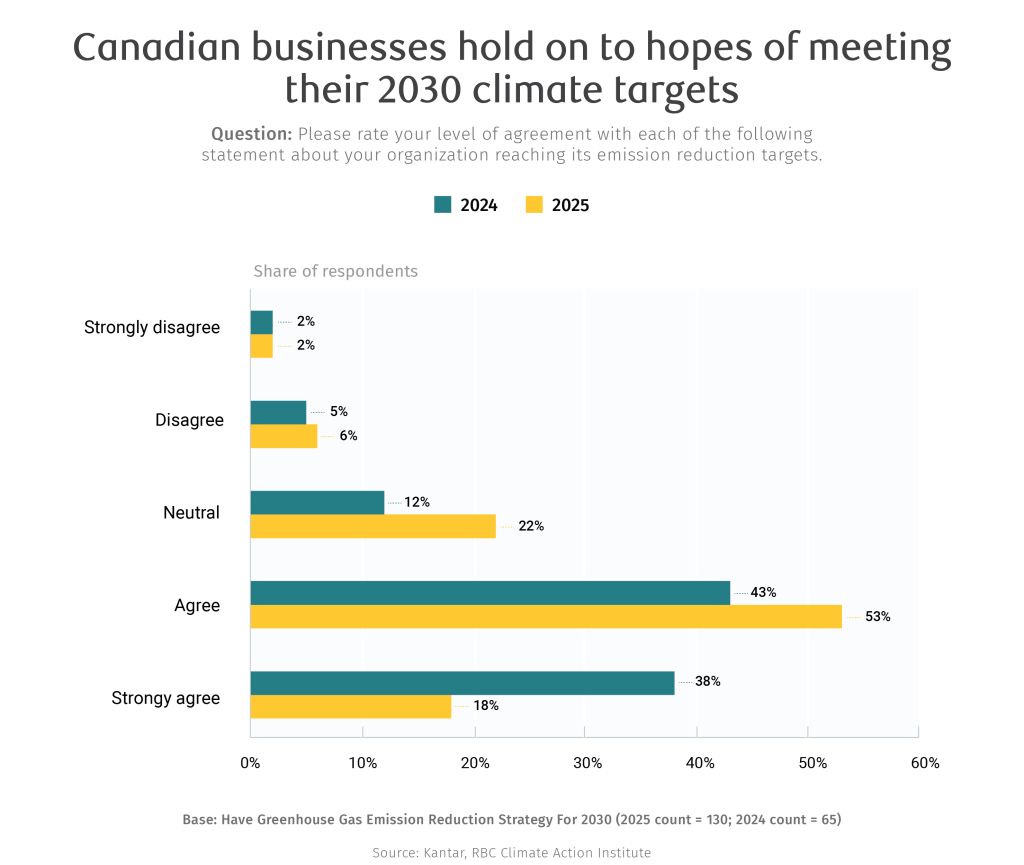
While a strong majority had a strategy, they were scaling back their targets in the interim: the percentage of executives “agreeing” or “strongly agreeing” when asked whether their organizations will reach its 2030 climate targets stood at 71% this year, compared to 81% last year.

That seems understandable as tectonic shifts are shaking up several planks of the Canadian and global economy this year, including trade, investments and energy security. Nearly three out of five senior leaders said their companies are planning to scale, or have already scaled back, their climate commitments or targets. More than a quarter cited the risk of political blowback in the U.S. as a key factor in their company’s decision, while just over 20% pointed to shifting sentiment at home for their decision.

Canadian Businesses hold on to hopes of meeting their 2030 climate targets

A few other highlights from our survey:

  • Executives believe they should be driving climate progress. Corporate priority (63%) was the biggest driver of their emissions reduction strategy, followed by government regulation (60%). With several federal and provincial government climate policies in retreat in Canada, it will be interesting to see whether GHG emission reduction strategies wane in future surveys.

  • Energy efficiency was a popular way (82%) to lower emissions. When asked “what’s the primary focus of your organization’s climate strategy?” 62% picked waste reduction, and 41% identified the purchase of carbon credits—similar to last year. There was, however, a drop in switching away from fossil fuels (46% in 2025, versus 52% in 2024), and electrification (48% in 2025, versus 59% in 2024).

  • Customers are seeking sustainable products and services. Customer/client demand (54%) was the next big driver of their strategic decision-making—little changed from last year despite new economic and affordability pressures on customers. However, only 30% of executives cited investor demand as a key factor.

  • Sustainability policies are viewed as expensive… 60% of executives said implementing sustainability policies led to a moderate cost increase of between 5 to 15% to their business costs, while another 13% reported cost inflation exceeding 15%. In our survey, we did not define what sustainability policies companies were pursuing.

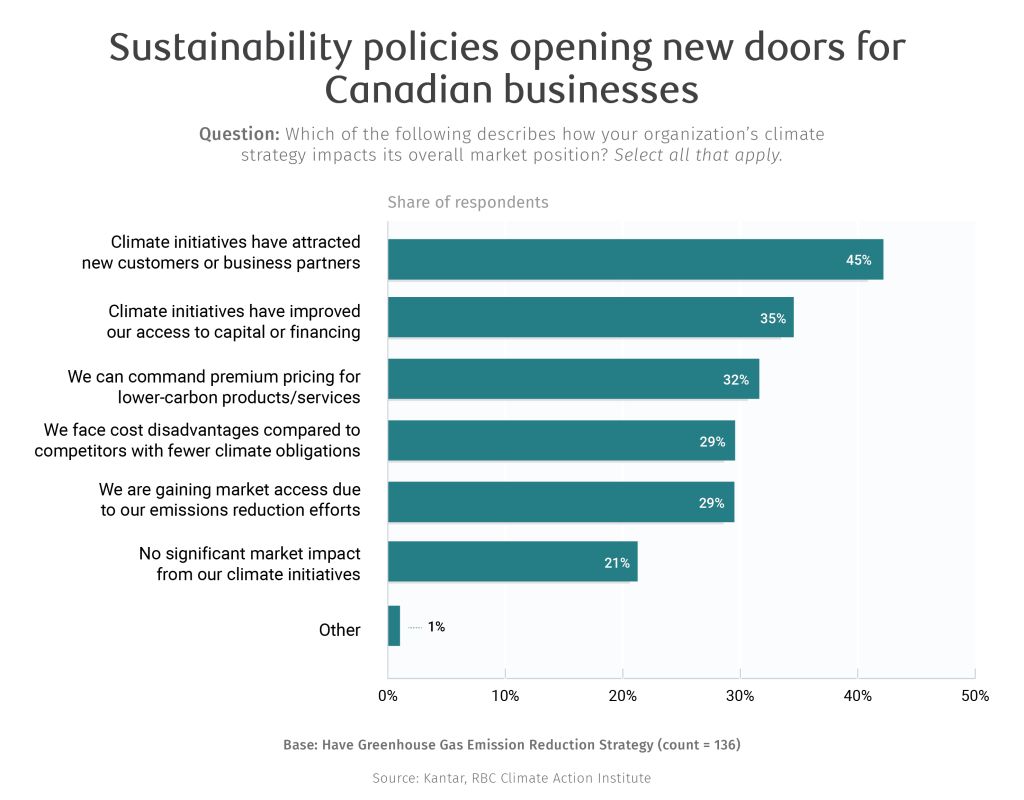
  • … But deploying climate policies had upside, according to the executives. Around a third of executives (32%) reported commanding premium pricing for their lower-carbon products and services, with 29% reporting securing new market access; 45% said their climate initiatives attracted new customers and business partners. However, nearly a third suggested they faced cost disadvantages compared to competitors with fewer climate considerations. A fifth reported noting no difference from their climate action.

  • Lack of access to capital tops the barriers list. In addition, the challenge of qualifying for government incentives and regulatory uncertainty, along with macro-economic conditions, were most frequently ranked as the top three barriers facing executives in their effort to lower their corporations’ GHG emissions.

WP Menu

wp-menu

Climate change may have slipped on Canadians’ priority list, but it remains front and centre when it hits closest to home—most notably in the form of wildfires inflicting property damage, raising insurance costs and impacting health.

That’s one of the key findings of RBC Climate Action’s latest consumer survey, which polled 2,000 Canadians. The survey is part of the Institute’s third annual Climate Action report, which reviews Canada’s progress on its environmental goals. (The full report is out Tuesday, January 13.)

Concerns around climate change has ebbed and flowed in tandem with Canadians’ economic prospects. In last year’s Climate Action report, 14% of respondents reported climate change as one of their top three concerns, down from 26% in 2019. This is consistent with the general observation that climate change, while important, ranks below pocketbook issues such as the cost of living and job security. When the economy is strong and jobs are secure, people can ‘afford’ to prioritize climate action. In times of economic stress, climate change tends to be de-prioritized.

This year’s consumer survey, conducted by market research firm Ipsos, again finds Canadians focused more on the economy, jobs and personal finances. However, the frequency of extreme weather events ensures that environmental issues continue to simmer just under the surface.

Here’s what we heard in the survey:

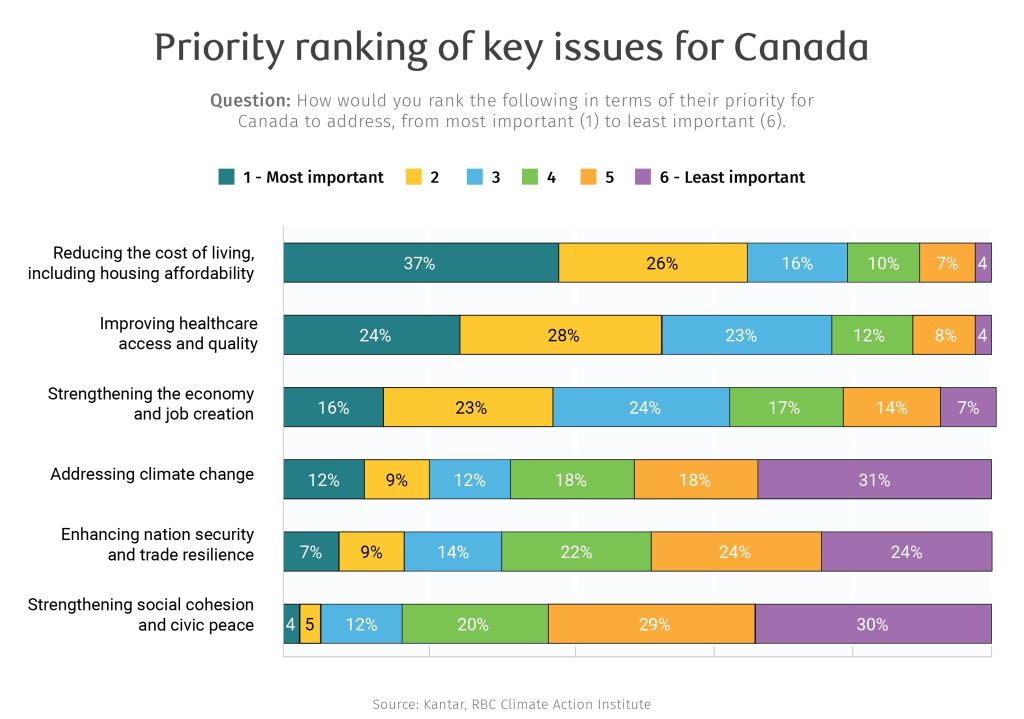
  • It’s about personal issues right now. Cost of living (79%), healthcare (75%) and economy and jobs (63%) were the top three challenges for most Canadians. Only 33% of respondents listed climate change as a top three issue. One-in-eight Canadians (12%) identified it as their top priority.

  • More than three out of five Canadians (67%) didn’t see climate change as a top three priority. It appears that climate change as an abstract concept is struggling to capture the attention of Canadians in the same way as the immediate impact of wildfire smoke or urban flooding does.

    Priority ranking of key issues for Canada including cost of living, healthcare, job creation, national security, and civic peace
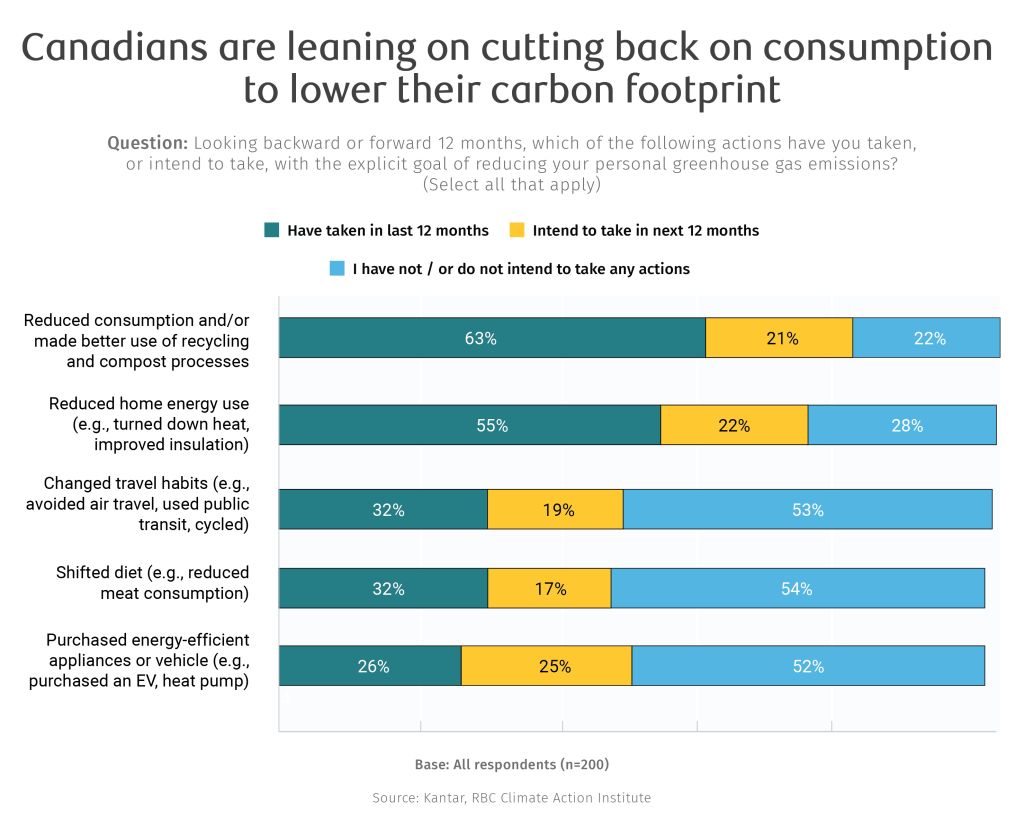
  • That does not necessarily mean climate inaction. Canadians are trying to reduce their carbon footprint in measures they can control: avoiding air travel and cutting meat consumption. Strong majorities either reduced or intend to reduce consumption or boost recycling efforts (84%), cut home-energy usage (77%), while roughly half changed or intended to change their travel habits (51%) and diets (49%).

  • Weather over climate: Around 60% of respondents would place greater emphasis on climate action if extreme weather events were even more frequent. Canada’s last three wildfire seasons were among the worst according to federal records dating back to 1970.2 As the survey suggests, the frequency and intensity has had an immediate impact on the quality of life for many Canadians.

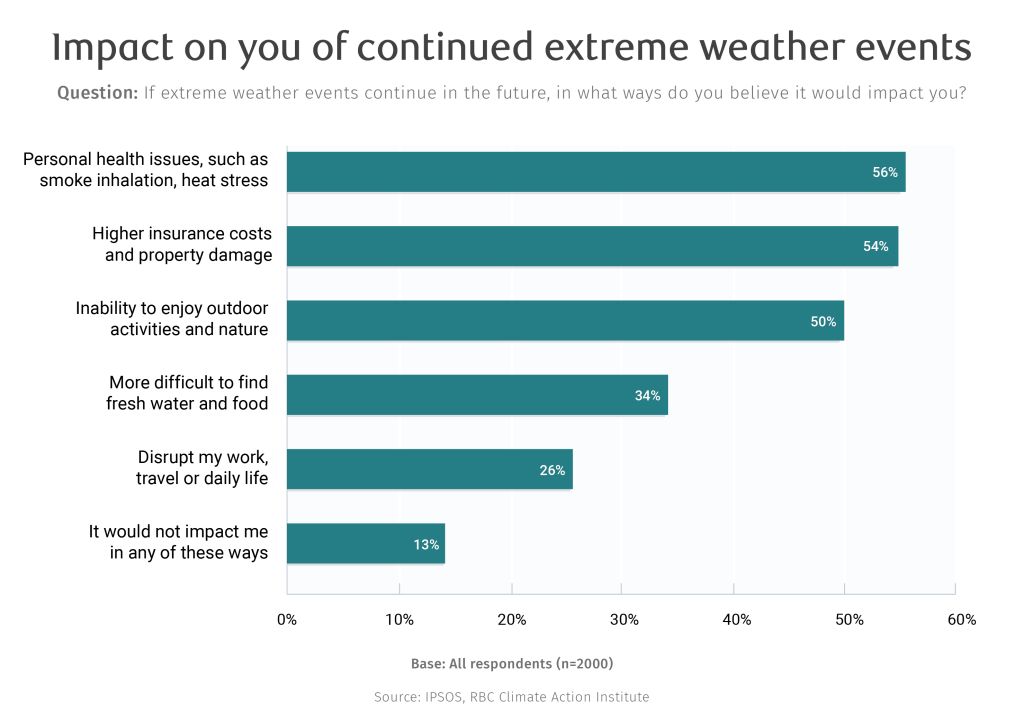
    Impact of continued extreme weather events
  • Canadians want wildfire-containment action: Personal health (56%), including smoke inhalation and heat stress, topped the list of concerns from wildfires, followed by property damage and insurance costs (54%), and the inability to enjoy outdoor activities and nature (50%).

    Canadians are leaning on cutting back on consumption to lower their carbon footprint

The challenge for policymakers and business leaders will be to harmonize environmental goals with other priorities and ensure economic growth does not override climate priorities.