Building Canada: A new generation takes charge
John Stackhouse: [00:00:00] Hi, it’s John here. Welcome to Disruptors, the Canada Project, Alberta, Vancouver, Manitoba, Newfoundland, Nova, Scotia, Nunavut, Waterloo, Quebec, Saskatchewan. This season we’ve been crisscrossing the country, meeting with some of Canada’s brightest minds to learn how they’re tackling some of our biggest challenges.
Chris Avery: When President Trump came into power and tariffs were levied against Canadian goods, really amplified the need for us as a nation to diversify our Trade.
Janice Stein: Tech sovereignty would guarantee Canadians. Their core services and core data are free from coercion by outside powers.
Chris Avery: It’s important to know that Nunavut is relying a hundred percent by burning diesel.
Anne Raphaele: That is, I import into the territory mostly from the United States. Canada’s at a critical [00:01:00] moment for our economy and for our shared future.
The way, you may have gotten a sense of a new map of Canada being drawn. It’s not the one you memorized in grade school, but it’s a map of ports and launchpads of power grids and AI data centers.
And for that matter, battery belts and northern fiber lines. It’s a map of a new economic future, a bolder one, a more global one, a more innovative one. And it’s one that Canadians right now are shaping every day.
Jean Charest: The countries that will prosper in the future are the ones that are going to commit themselves to these added value products, and that’s exactly where Canada is going.
P.J. Akeeagok: When Canadians think about growth, we don’t always think about the architect, but we should.
Daniel Smith: We wanna ensure that we can meet the electricity demands of emerging sectors like data centers, artificial intelligence, and other technologies that depend on secure power. 24 7,
Chris Hadfield: we got the [00:02:00] landmass, we got the intellectual property, we got the education, we got the raw materials, we got the history.
John Stackhouse: We can do it here and sell it to the world. Those are just a few of the many ambitious Canadians we’ve heard from this season on disruptors, the Canada Project. It’s been eye-opening to explore some of the ideas and initiatives that Canadians are putting forward to meet this pivotal moment. As trade and supply chain disruptions collide with broader questions of climate security, economic advancement, and sovereignty.
Today as we wrap up our journey, we’re gonna zoom out several thousand feet, or maybe that should be several thousand meters to talk to Daniel Debo and Lucy Hargraves of Build Canada. They’re two of the many people behind what’s become a movement to get Canada building again, to turn big ideas into real world impact Build.
Canada is a network and really a movement that connects and amplifies entrepreneurs, creators, and innovators committed to a more prosperous Canada. [00:03:00] Daniel is a serial entrepreneur who you may remember from past episodes of disruptors. He’s chair of the Build Canada Board, and Lucy, who comes from a background in government, is the CEO.
Together, they bring deep experience in technology, innovation, entrepreneurship, policy and partnerships. In this episode, we’ll dig into what building the country really means. The ambition, the tools, and the challenges involved when citizens from coast to coast to coast say yes to shaping Canada’s future.
Daniel Lucy, welcome to Disruptors.
Thanks, John. Happy to be here. Thanks so much for having us, John.
We’ve had this amazing virtual CrossCountry tour hearing from all sorts of Canadians who are. Building amazing things from space launchpads to data centers, and I thought, who better to help wrap up that tour than the people behind Build [00:04:00] Canada?
Lucy, let me start with you and just give us a quick sense of what Build Canada is and what you’re setting out to do.
Lucy Hargreaves: Yeah, for sure. Thanks, John. For those of your listeners who don’t know, we’re a non-partisan, mission-driven movement focused on making Canada the most prosperous country in the world.
We’ve been around for almost a year now. And we started out sharing actionable, bold policy memos from Canada’s leading entrepreneurs and business leaders. And we’re also doing a lot more in person. And so bringing Canadians together around the country in city chapters and campus clubs. So what I’m seeing is like incredible passion for this idea of focusing on growth.
We’re growing kind of 10 to 15% week over week in terms of the size of our movement, rallying towards this sort of optimistic, bold vision of what Canada can be.
John Stackhouse: I wanna come back to that growth opportunity and also the growth that you’re capturing. It’s really impressive. But let me ask you both about where we’re at as a [00:05:00] country as we come to the end of a really extraordinary year, 2025.
Um, I think no one had. Forecast or certainly predicted it would play out the way it has. How are you feeling about the state of Canada as we wrap up this momentous year?
Daniel Debow: Cautiously optimistic. Rationally optimistic. I think it’s important to remember like Canada didn’t get here by accident. It’s a series of choices that we made and policy decisions that we made all along the way.
And I think what’s optimistic, as Lucy pointed out, is that Canadians understand that they have agency. They can choose which path they wanna take, and politicians understand this. When we started this experiment, right, like can we publish some policy memos to help guide and help inform and, and give ideas out there from Canada’s great entrepreneurs to both parties?
Uh, all parties. Actually, we did not expect to get the reaction that we got. We did not expect, I think actually Lucy. We did not expect to have to set up a full-time merch shop so people could [00:06:00] buy t-shirts that say giver on it. And that to me is really optimistic. That’s positive. It doesn’t mean there aren’t lots of things we have to get over, but boy, it tells me that Canadians want change.
And if you want politicians to change, they need to see a constituency. They need to see people want that. And I think that’s what we can see the beginnings of now. We can’t give up, we can’t stop. But boy, that that is a reason heading into the new year, to feel at least cautiously optimistic despite all the headwinds and challenges we face.
John Stackhouse: Give us the origin story of the Giver T-shirt and why it’s gone viral.
Daniel Debow: I’ve always loved that Canadian expression of giver, like, you’re behind the car, you’re in a ditch. Things suck. But Canadians, they rally. They just say, yeah, I know that this sucks, but we gotta go. So giver, give it your best shot and we’ll be okay.
I think that is a very good reminder. It’s a positive, optimistic view of what it means to be who we are, and it resonated,
Lucy Hargreaves: and I think it’s a really important point. We have to remember who we are. Canada [00:07:00] is a nation of builders. Like it was forged by explorers. People who were risk takers we’re a nation that discovered insulin.
We built a railroad across our country. We became a top global defense manufacturing hub during World War ii. So we have to remember and like remind ourselves that we’ve done ambitious things before and we can do them again, and that Canada is still very much a work in progress. We are a project, uh, still that is being built.
I think this is what resonates, especially with the young people who, you know, 18 to 35 year olds who are really gravitating towards the Build Canada movement is that they can be part of it, that they have agency and that they can actually get off the sidelines, get off the couch, get outta their house, and they can participate in this nation building project.
John Stackhouse: Tell us a bit more about the mindset that you’re. Challenging us all to develop, as I watch [00:08:00] what’s going on in the country, a lot of it is about building, but it’s frankly about other people building stuff somewhere else in the country. And that’s, that’s all very good. But there’s 40 million of us. And what kind of mindset do all of us 40 million need to aim for and develop to be a builder nation?
Lucy Hargreaves: There’s some principles, uh, that we sort of repeat over and over again. Bold, beat, safe growth is good. You can just do things. Doing things is better than complaining. It’s this kind of mindset that, you know, when you see a problem or you, you see an issue in your society or your community and you’re, you’re frustrated by it, that instead of complaining about that, you can actually take action.
And that’s what we encourage at Build Canada. And that’s kind of that. Mentality that we’re encouraging across the country, we can go for gold. And I think as a nation and as individuals, uh, many times we are satisfied with going for bronze or silver and not striving to be the [00:09:00] absolute best and to win.
Daniel Debow: We cannot wait for the government to solve every problem, right? People have to step up. That’s part of the ethos, and that’s just people saying, I, I don’t wanna sit around and complaint. I want to go do something. I wanna connect with my other Canadians and I wanna actually feel connected to other Canadians who do feel this way.
I’m not alone. I want it to grow. So I think that’s a big part of the mindset. I think there’s another part which is like, what does it mean to be a builder? And I think it’s a bias to action. You have to take a risk. You have to put yourself out there. Getting a bronze medal is as much effort as going for gold.
You might as well go for gold. Right? And reminding Canadians that they are actually amazing, can make great things, is a very powerful mindset that we can put in. We have to go be a force in the world. If you believe the world to harken back to a prior age needs more Canada, well then we have to go make it want what we have.
And that’s gonna be by becoming economically strong, it’s gonna be by becoming, uh, militarily strong. Like strength and sovereignty really are linked to those two things. They happen because of those 40 million [00:10:00] Canadians making individual choices every day to kind of act the way that we’re talking.
John Stackhouse: When you talk about Canada needing to be a force in the world, it takes me straight back to some of the builders we’ve met this season who are already trying to do that in very Canadian ways, in orbit, under the sea, and deepen the ground. They’re all trying to turn our unique advantages into things. We actually build own and export.
Rahul Goel: We already do such a great job as Canadians training our workforce. In fact, we train our workforce and it enables other countries to build their space programs. We have a massive exodus of talent, of capital, of sovereignty, of national pride.
So all of those factors led to the founding of North Space. The amazing thing about building capabilities in space is that it spans the entire spectrum. Highly specialized key roles that, you know, Canadians are really, really good at and creating opportunities. But at the end of the day, the retention is really the problem.
David Shea: One of [00:11:00] the great advantages that they have in Newfoundland when we talk about hardening technology, building technology, proving that it can work. If it can work off the coast of Newfoundland, then it can work anywhere. It is one of the harshest climates in the world. When you go out on the ocean, it is not long before you are in the middle of the North Atlantic.
Eric Desaulniers: We’re optimizing the usage of this hydro to be carbon neutral. So having the four reason to buy in Canada, great geology to start with two hours away. We have a great industrial park in big and core with sheep, hydro, and all reagents and all the the right area to develop this safely. And then we have the right talents and we have the customer now in our backyard who really need graphite and they really need to diversify from a single source in China.
John Stackhouse: Space launches, subsea, robotics, critical minerals, those are very different sectors, but you kind of get the pattern, Canadians trying to turn our geography, our geology, and our grit into a [00:12:00] real edge in the world. For all those builders, how are you seeing momentum grow to support them?
Daniel Debow: I think you had Rahul from Nord space on there. Um, I was an investor prior space company in Canada from the CDL. Honestly, most of the time when I talked about it, people were rolling their eyes like, what are you talking about? A Canadian space company? That’s not a real thing. And I just don’t see that now as people hear about North Space and what they’re doing, uh, similarly, there was no way you could start a defense company in Canada even five years ago, and now that’s a possibility.
And they’re moving very, very quickly. And what’s important is they’re doing it in partnership. Like I see all sorts of military folk who are quite interested in like a new way, a new approach of doing these things. Dan and I are very privileged to be able to have incredible conversations across the country with some of Canada’s leading entrepreneurs and innovators,
Lucy Hargreaves: I’m encouraged actually on the attention now being paid to major projects and all of [00:13:00] the possibilities in the natural resources sector.
Both in oil and gas, but also critical minerals and mining. I think it’ll take a while for that to change, but it does seem like through the work that the major Projects Office is, is doing, and a lot of the conversations specifically in the critical mineral space, that there’s some appetite to, you know, go faster there.
And it’s so inspiring to me that I actually see these people just, they’re just moving ahead, right? They’re not waiting for the government to create a new subsidy program or a grant program or a tax incentive. Like in many, many cases, they are builders and they are just focused on moving ahead and getting things done.
Daniel Debow: I actually am very encouraged when provincial or federal leaders reach out and say, well, what are these ideas you have about ai? What are these ideas about exporting more lentils and pulses? What are these ideas about how we can open up our export of natural resources? How can we build more homes? Like those are positive things.
I’m not saying it’s the end of the story, but that’s optimistic to me.[00:14:00]
John Stackhouse: Those are great companies you’ve referenced. Fast growing sectors that Canadians can really seize on space. We’ve, we’ve been doing research here at RBC on the potential of the space sector, and I’ve been able to speak with investors in Europe and the US particularly, who are so keen to invest more in Canada.
They see the talent and opportunity here and as a country, I don’t think we’ve got our heads fully around the idea of private capital. Driving stuff, but it is that private capital that really accelerates things. And part of that requires us to think through what you might call the reward function. So there’s of course, the expression, no risk, no reward, but if you have no reward, you’re not gonna get a lot of risk either.
We need arguably different reward functions for entrepreneurs and the people who, who back them. Tell us a bit about how you’re thinking about the [00:15:00] reward function. And what Canada needs to do to up our game on that front in the years ahead.
Daniel Debow: We want Canadian entrepreneurs, whether it’s the people who created Mike’s Hark Lemonade, or the people who create Lululemon, or the people who create Cirque de Soleil or Shopify’s, like, we need those folks.
Those are great and those are capitalistic, uh, profit seeking enterprises. That’s not a dirty word. That should be a positive thing. You know, entrepreneurs are human beings. They have the ability more than most actually to be mobile. And I think that the, one of the things we have to do is the reward function has to be that you are socially rewarded.
You are a good part of the country. That reward function really does matter because it’s a cycle of everyone’s psyche. You ask the beginning, what’s the mindset? I’m like, well, geez. The mindset has to be that these are Canadian heroes. Now we can’t just say nice things though. And have photo ops, we have to actually back it up.
John Stackhouse: Well, if I can just jump in quickly, I, I love your passion, number one, but also it’s so critical how you’re laying this out. That reward is both tangible [00:16:00] and intangible, and they’re both incredibly powerful and we need to lean into both.
Lucy Hargreaves: Yeah. This is not just about financial rewards, and as Dan said, we’re not just talking about the founders. We’re talking about like the early employees who also leave relatively stable jobs and, and go and try and start new things. So we should celebrate and reward that. Financially speaking, what I say is, you know, we always need to remind ourselves as a nation that we don’t exist in isolation. We operate in a global economy, and we have to think about our reward and incentive and tax structure in that context.
Entrepreneurs have options. Many of them, you know, are very mobile. They can make different choices. Highly talented employees of companies can make different choices. We have the US right there. There’s a whole big wide world out there. And so we, when we think about our tax incentives and rewarding risk takers, we have to think about it in that global context.
We published a number of memos on [00:17:00] this, specifically on capital gains tax. We, um, had a great memo from Matt Cohen who’s, uh, with Ripple Ventures, uh, looking at how we can make our capital gains rewards, uh, and system not just on par with the us but actually more competitive than what’s on offer in the us.
The US has this thing called QSBS. Which is essentially their capital gains structure for small businesses. It’s incredibly competitive. It has a much higher capital gains cap of 15 million per company. This is the key thing Per company. Yeah. Whereas our capital gains cap in Canada right now is around 1.5 million, whereas the US has this 15 million cap that can be stacked across multiple exits, and so that’s.
It might seem small to, to some people, but this is like a real meaningful difference maker in, uh, people’s decision making for how much risk they wanna take. And it’s also, um, from an investor’s perspective, often investors [00:18:00] are, you know, looking for Canadian companies and Canadian founders to relocate to the US so that the investors can benefit from the US capital gain structure There.
Daniel Debow: Of course the only reason people build companies isn’t just to make money, but it is part of the reason, and we are fooling ourselves if we don’t understand that. We have to create incentives for our best Canadians to stay here. We have to figure out a way to do that if we wanna get our most amazing Canadians who wanna do this.
Also wanna say, this isn’t just about tech people, right? This is about. The folks who are losing their jobs, unfortunately, we want some of them to go start drone manufacturing supply chain companies, people who are in manufacturing, building next generation humanoid robots. We need to create opportunities across our stacks, small businesses that this is something that they can, and really, the, the balance of keeping a job versus trying something, it becomes overwhelmingly better that you’re like, I wanna try something more in society.
But you’ve got to remember that innovation is not something entrepreneurs do outta the goodness of their heart. It is something that’s done because they want to win. They either wanna win new customers or market share, or they don’t wanna lose that from someone else who’s [00:19:00] coming to eat their lunch, and that’s a good function for society.
John Stackhouse: Let’s talk a bit about hustle in the public sector. I think one of the many things Mark Carney has done to rattle cages has been to set real deadlines that many people, from what I understand, say, oh, that’s impossible. We’ve seen this in the, uh, in the energy agreement with Alberta. Some pretty huge things have to be done by April 1st and July 1st, and as you know, that’s the way the private sector works.
You set deadlines and you manage the work accordingly. It’s one of the basic principles of project management, but there’s more to it. There’s a builder mindset versus an operator mindset, and that’s something you’ve both stressed through. Build Canada. Help us understand the difference between the two and how a builder mindset can help the public sector.
Lucy Hargreaves: The culture of the public service and the incentive structure in the public service is one that [00:20:00] reinforces a risk averse mindset to operating. They are incentivized to be a steady hand to avoid risk and to not take bold bets that might get themselves or the minister or prime minister of the day into trouble.
So. I think it is a bit of a shock to the system for many public servants to have a Prime Minister kind of come in and have these ambitious goals and deadlines. But I think it’s a good thing. I mean, I think having deadlines and focusing attention on the things that really matter. We have to focus on growth and make the main thing the main thing.
And it seems like this prime Minister is, uh, you know, attempting to make the main thing, the main thing, which is the economy and driving the public service towards that. You know, we’ve been talking about a lot the reinvigoration of the interchange program, uhhuh, which is now called the Build Canada Exchange Program.
Yeah. The budget of this year, they re have [00:21:00] rebranded to call the Build Canada Exchange Program. Is, is there a copyright issue there? Everyone should use it. There’s no, they should use it. If it works, they should use it well for it.
John Stackhouse: Tell us a bit about the Build Canada Exchange program ’cause it’s a neat innovation?
Lucy Hargreaves: Yeah, so the interchange program, build slash Build Canada interchange, so it’s been around for a number of years in the public service and, and has been designed to bring in. Private sector experts on sort of like a secondment basis into the public service. To, you know, help deliver programs or provide specific expertise and it, you know, sort of an exchange.
So the private sector sort of better understands public service. Public service can better understand perspectives, uh, from various different industries. And so now this rebranding is build candidate exchange. And so the Komen is to bring in 50, uh, private sector experts into the public service. Across a number of different sectors for a period of 12 to 18 months and have them do a rotation within, within the public service.
This idea that you recognize that, you know, there’s various [00:22:00] sectors where you need help and that the help exists in the private sector, and, and finding ways to bring those people in, give them the right authority, and really, you know, set up the structure for good collaboration and sharing. I, I think is, is a great idea.
And I’m excited to see that, you know, hopefully get implemented pretty rapidly in the next few months.
John Stackhouse: It’s exciting to see these kinds of innovative approaches where the public and private sectors actually learn from each other instead of talking past each other. And it also reminds us that public service doesn’t have to be a 40 year career.
It could be a tour of duty, a period in your life where you step in, help build something better for the greater good, and then bring that experience back out into the rest of the economy. All season on Disruptors, the Canada Project, we’ve seen how that orientation towards the greater good drives the long-term infrastructure work that will shape our future.
From food corridors on the prairies to ports on both coasts to hydro and fiber [00:23:00] lines into the Arctic. The decisions we make now will define what kind of country our kids and grandkids in Hara. Canada.
Tamara Vrooman: Canada is a country with a large geography, but a small population, and so we literally need connectivity and transportation infrastructure to make our country work, and we certainly need that infrastructure to connect our country to the world.
We have the component parts. They’re just not integrated in the way that they could be to allow for that speed and resilience that the international trade market is going to demand.
Devan Fitch: We’re the size of the next five largest Canadian ports combined in terms of the amount of commodities that we move, uh, through the Port of Vancouver.
The terminals that we’re looking at right here, they were also built many decades ago, and they just don’t simply have the birth depth that’s required. You couldn’t pull up next to the container terminal because it’s just gonna bottom out on the, on the birth face there. We have to be planning for what the trade infrastructure looks like in 2050 and 2060, not in [00:24:00] 2026.
Murad Al-Katib: If I was Prime Minister for a day, I would spend a hundred billion on trade infrastructure. It will pay for generations to come. Supply chains are all about connectivity. Each link has to be efficient. Data and technology will also make that more efficient. So let’s seize that opportunity.
John Stackhouse: We just heard the voices of Tamara Ruman, Devon Fitch, and Marad Al Kaip.
They’re just a few of the builders and shapers we’ve spoken to on this series. Daniel, Lucy, if you’re in your twenties today listening to all of that, the stakes, the infrastructure projects, the need to think long term, what would you actually do with it? What’s your message to those younger Canadians about the decades ahead and the role they can play?
Daniel Debow: First message is they should go to Build Canada do com and they should sign up. Yeah, join Build Canada newsletter and find a way to volunteer. I mean, I say that in a little in jest, but in reality. Yeah, because that’s a great first step. That’s what we want. Sign up. I was actually shocked how many people sign up just to learn about how the government works.
[00:25:00] They’re like, I didn’t know what a budget is. I didn’t know this stuff. But what’s the main message? I mean, I look, I have four young kids. Just because there are challenges, that does not mean that there’s no future for you. There’s no hope for you. You have to be kind of a rational optimist that yes, there are challenges, but you can pull this off.
I think the second message is exactly that, that you have agency, right? You are not necessarily a victim. You can make change in your own life, in your own community, your own family, with your own friend group, and in fact, you have, at least in the digital realm, you have access to tools that were like truly science fiction.
You know, 50 years ago, 25 years ago, right? You can see people building tools with ai, learning how to do things that run circlers around the folks of us on this call. The third thing is you can’t be quiet. You have to actually say that, I want this to be better. And so if you’re willing to step up and say, I think we can do things different around transit or around youth employment, or around any one of the issues that matter to you, you can do it.
They should not give up. I mean, I think that is the [00:26:00] key, key message I would have for those young people, that they have a right to fight like hell and to make the project what they think it should be, and they can define the future.
John Stackhouse: Canada is a project and we all have agency to help build it. That’s a great message.
Lucy, final word to you?
Lucy Hargreaves: Yeah, absolutely. I have three kids that are a little bit younger than Dan’s kids, I think, but I think about them a lot. I think about their future a lot, and I have the privilege of being able to talk to a lot of the folks who have been coming to our Build Canada events across the country.
So hundreds of people. They’re so energized and so optimistic about the future. And so my message to them really is recognize that you are part of this incredible journey that our nation is on, and that you have a role to play. Canada is going places. Don’t aim small, you know, think bold and take risks.
There are so many ways to show up. To get involved. That is what actually makes change at the end of the day is, is [00:27:00] multiple people across the country showing up and speaking up for the future that they want. So I would encourage folks to do that. We can all do more love. All these messages about building a better Canada.
John Stackhouse: To quote your website, people want to join up, go to build canada.com. Lucy, Daniel, thank you so much for being on disruptors and for helping to build Canada. Thanks, John, and thanks for, for this uh, series. It’s been great. Thanks so much, John. Appreciate it. As we close out this season of disruptors, I wanna leave you with a simple thought.
Canada’s future isn’t something that happens to us, it’s something that we build through the choices we make, the jobs we take on, the risks that we lean into, and the communities that we strengthen. Each of us has a role in shaping what comes next. Yes, the world is throwing a lot of disruption at us all at once.
But Canada has the geography, the resources, the global credibility, and the [00:28:00] traditions to turn challenge into opportunity. And Canadians have the ideas, the ambition, and the talent to do just that. That’s what we call the Canada Project Canadians working together. To innovate, to compete, and to build.
If you’re looking for inspiration, explore more nation building stories and ideas at rbc.com/thought leadership and revisit the episodes of Disruptors, the Canada Project, an RBC podcast on Apple or Spotify, or wherever you get your podcasts. Thanks for joining us on this incredible journey and for being a builder.
I’m John Stackhouse. See you in the new year.
John Stackhouse: [00:00:00] Hi, it’s John here. Welcome to Disruptors, the Canada Project, Alberta, Vancouver, Manitoba, Newfoundland, Nova, Scotia, Nunavut, Waterloo, Quebec, Saskatchewan. This season we’ve been crisscrossing the country, meeting with some of Canada’s brightest minds to learn how they’re tackling some of our biggest challenges.
Chris Avery: When President Trump came into power and tariffs were levied against Canadian goods, really amplified the need for us as a nation to diversify our Trade.
Janice Stein: Tech sovereignty would guarantee Canadians. Their core services and core data are free from coercion by outside powers.
Chris Avery: It’s important to know that Nunavut is relying a hundred percent by burning diesel.
Anne Raphaele: That is, I import into the territory mostly from the United States. Canada’s at a critical [00:01:00] moment for our economy and for our shared future.
The way, you may have gotten a sense of a new map of Canada being drawn. It’s not the one you memorized in grade school, but it’s a map of ports and launchpads of power grids and AI data centers.
And for that matter, battery belts and northern fiber lines. It’s a map of a new economic future, a bolder one, a more global one, a more innovative one. And it’s one that Canadians right now are shaping every day.
Jean Charest: The countries that will prosper in the future are the ones that are going to commit themselves to these added value products, and that’s exactly where Canada is going.
P.J. Akeeagok: When Canadians think about growth, we don’t always think about the architect, but we should.
Daniel Smith: We wanna ensure that we can meet the electricity demands of emerging sectors like data centers, artificial intelligence, and other technologies that depend on secure power. 24 7,
Chris Hadfield: we got the [00:02:00] landmass, we got the intellectual property, we got the education, we got the raw materials, we got the history.
John Stackhouse: We can do it here and sell it to the world. Those are just a few of the many ambitious Canadians we’ve heard from this season on disruptors, the Canada Project. It’s been eye-opening to explore some of the ideas and initiatives that Canadians are putting forward to meet this pivotal moment. As trade and supply chain disruptions collide with broader questions of climate security, economic advancement, and sovereignty.
Today as we wrap up our journey, we’re gonna zoom out several thousand feet, or maybe that should be several thousand meters to talk to Daniel Debo and Lucy Hargraves of Build Canada. They’re two of the many people behind what’s become a movement to get Canada building again, to turn big ideas into real world impact Build.
Canada is a network and really a movement that connects and amplifies entrepreneurs, creators, and innovators committed to a more prosperous Canada. [00:03:00] Daniel is a serial entrepreneur who you may remember from past episodes of disruptors. He’s chair of the Build Canada Board, and Lucy, who comes from a background in government, is the CEO.
Together, they bring deep experience in technology, innovation, entrepreneurship, policy and partnerships. In this episode, we’ll dig into what building the country really means. The ambition, the tools, and the challenges involved when citizens from coast to coast to coast say yes to shaping Canada’s future.
Daniel Lucy, welcome to Disruptors.
Thanks, John. Happy to be here. Thanks so much for having us, John.
We’ve had this amazing virtual CrossCountry tour hearing from all sorts of Canadians who are. Building amazing things from space launchpads to data centers, and I thought, who better to help wrap up that tour than the people behind Build [00:04:00] Canada?
Lucy, let me start with you and just give us a quick sense of what Build Canada is and what you’re setting out to do.
Lucy Hargreaves: Yeah, for sure. Thanks, John. For those of your listeners who don’t know, we’re a non-partisan, mission-driven movement focused on making Canada the most prosperous country in the world.
We’ve been around for almost a year now. And we started out sharing actionable, bold policy memos from Canada’s leading entrepreneurs and business leaders. And we’re also doing a lot more in person. And so bringing Canadians together around the country in city chapters and campus clubs. So what I’m seeing is like incredible passion for this idea of focusing on growth.
We’re growing kind of 10 to 15% week over week in terms of the size of our movement, rallying towards this sort of optimistic, bold vision of what Canada can be.
John Stackhouse: I wanna come back to that growth opportunity and also the growth that you’re capturing. It’s really impressive. But let me ask you both about where we’re at as a [00:05:00] country as we come to the end of a really extraordinary year, 2025.
Um, I think no one had. Forecast or certainly predicted it would play out the way it has. How are you feeling about the state of Canada as we wrap up this momentous year?
Daniel Debow: Cautiously optimistic. Rationally optimistic. I think it’s important to remember like Canada didn’t get here by accident. It’s a series of choices that we made and policy decisions that we made all along the way.
And I think what’s optimistic, as Lucy pointed out, is that Canadians understand that they have agency. They can choose which path they wanna take, and politicians understand this. When we started this experiment, right, like can we publish some policy memos to help guide and help inform and, and give ideas out there from Canada’s great entrepreneurs to both parties?
Uh, all parties. Actually, we did not expect to get the reaction that we got. We did not expect, I think actually Lucy. We did not expect to have to set up a full-time merch shop so people could [00:06:00] buy t-shirts that say giver on it. And that to me is really optimistic. That’s positive. It doesn’t mean there aren’t lots of things we have to get over, but boy, it tells me that Canadians want change.
And if you want politicians to change, they need to see a constituency. They need to see people want that. And I think that’s what we can see the beginnings of now. We can’t give up, we can’t stop. But boy, that that is a reason heading into the new year, to feel at least cautiously optimistic despite all the headwinds and challenges we face.
John Stackhouse: Give us the origin story of the Giver T-shirt and why it’s gone viral.
Daniel Debow: I’ve always loved that Canadian expression of giver, like, you’re behind the car, you’re in a ditch. Things suck. But Canadians, they rally. They just say, yeah, I know that this sucks, but we gotta go. So giver, give it your best shot and we’ll be okay.
I think that is a very good reminder. It’s a positive, optimistic view of what it means to be who we are, and it resonated,
Lucy Hargreaves: and I think it’s a really important point. We have to remember who we are. Canada [00:07:00] is a nation of builders. Like it was forged by explorers. People who were risk takers we’re a nation that discovered insulin.
We built a railroad across our country. We became a top global defense manufacturing hub during World War ii. So we have to remember and like remind ourselves that we’ve done ambitious things before and we can do them again, and that Canada is still very much a work in progress. We are a project, uh, still that is being built.
I think this is what resonates, especially with the young people who, you know, 18 to 35 year olds who are really gravitating towards the Build Canada movement is that they can be part of it, that they have agency and that they can actually get off the sidelines, get off the couch, get outta their house, and they can participate in this nation building project.
John Stackhouse: Tell us a bit more about the mindset that you’re. Challenging us all to develop, as I watch [00:08:00] what’s going on in the country, a lot of it is about building, but it’s frankly about other people building stuff somewhere else in the country. And that’s, that’s all very good. But there’s 40 million of us. And what kind of mindset do all of us 40 million need to aim for and develop to be a builder nation?
Lucy Hargreaves: There’s some principles, uh, that we sort of repeat over and over again. Bold, beat, safe growth is good. You can just do things. Doing things is better than complaining. It’s this kind of mindset that, you know, when you see a problem or you, you see an issue in your society or your community and you’re, you’re frustrated by it, that instead of complaining about that, you can actually take action.
And that’s what we encourage at Build Canada. And that’s kind of that. Mentality that we’re encouraging across the country, we can go for gold. And I think as a nation and as individuals, uh, many times we are satisfied with going for bronze or silver and not striving to be the [00:09:00] absolute best and to win.
Daniel Debow: We cannot wait for the government to solve every problem, right? People have to step up. That’s part of the ethos, and that’s just people saying, I, I don’t wanna sit around and complaint. I want to go do something. I wanna connect with my other Canadians and I wanna actually feel connected to other Canadians who do feel this way.
I’m not alone. I want it to grow. So I think that’s a big part of the mindset. I think there’s another part which is like, what does it mean to be a builder? And I think it’s a bias to action. You have to take a risk. You have to put yourself out there. Getting a bronze medal is as much effort as going for gold.
You might as well go for gold. Right? And reminding Canadians that they are actually amazing, can make great things, is a very powerful mindset that we can put in. We have to go be a force in the world. If you believe the world to harken back to a prior age needs more Canada, well then we have to go make it want what we have.
And that’s gonna be by becoming economically strong, it’s gonna be by becoming, uh, militarily strong. Like strength and sovereignty really are linked to those two things. They happen because of those 40 million [00:10:00] Canadians making individual choices every day to kind of act the way that we’re talking.
John Stackhouse: When you talk about Canada needing to be a force in the world, it takes me straight back to some of the builders we’ve met this season who are already trying to do that in very Canadian ways, in orbit, under the sea, and deepen the ground. They’re all trying to turn our unique advantages into things. We actually build own and export.
Rahul Goel: We already do such a great job as Canadians training our workforce. In fact, we train our workforce and it enables other countries to build their space programs. We have a massive exodus of talent, of capital, of sovereignty, of national pride.
So all of those factors led to the founding of North Space. The amazing thing about building capabilities in space is that it spans the entire spectrum. Highly specialized key roles that, you know, Canadians are really, really good at and creating opportunities. But at the end of the day, the retention is really the problem.
David Shea: One of [00:11:00] the great advantages that they have in Newfoundland when we talk about hardening technology, building technology, proving that it can work. If it can work off the coast of Newfoundland, then it can work anywhere. It is one of the harshest climates in the world. When you go out on the ocean, it is not long before you are in the middle of the North Atlantic.
Eric Desaulniers: We’re optimizing the usage of this hydro to be carbon neutral. So having the four reason to buy in Canada, great geology to start with two hours away. We have a great industrial park in big and core with sheep, hydro, and all reagents and all the the right area to develop this safely. And then we have the right talents and we have the customer now in our backyard who really need graphite and they really need to diversify from a single source in China.
John Stackhouse: Space launches, subsea, robotics, critical minerals, those are very different sectors, but you kind of get the pattern, Canadians trying to turn our geography, our geology, and our grit into a [00:12:00] real edge in the world. For all those builders, how are you seeing momentum grow to support them?
Daniel Debow: I think you had Rahul from Nord space on there. Um, I was an investor prior space company in Canada from the CDL. Honestly, most of the time when I talked about it, people were rolling their eyes like, what are you talking about? A Canadian space company? That’s not a real thing. And I just don’t see that now as people hear about North Space and what they’re doing, uh, similarly, there was no way you could start a defense company in Canada even five years ago, and now that’s a possibility.
And they’re moving very, very quickly. And what’s important is they’re doing it in partnership. Like I see all sorts of military folk who are quite interested in like a new way, a new approach of doing these things. Dan and I are very privileged to be able to have incredible conversations across the country with some of Canada’s leading entrepreneurs and innovators,
Lucy Hargreaves: I’m encouraged actually on the attention now being paid to major projects and all of [00:13:00] the possibilities in the natural resources sector.
Both in oil and gas, but also critical minerals and mining. I think it’ll take a while for that to change, but it does seem like through the work that the major Projects Office is, is doing, and a lot of the conversations specifically in the critical mineral space, that there’s some appetite to, you know, go faster there.
And it’s so inspiring to me that I actually see these people just, they’re just moving ahead, right? They’re not waiting for the government to create a new subsidy program or a grant program or a tax incentive. Like in many, many cases, they are builders and they are just focused on moving ahead and getting things done.
Daniel Debow: I actually am very encouraged when provincial or federal leaders reach out and say, well, what are these ideas you have about ai? What are these ideas about exporting more lentils and pulses? What are these ideas about how we can open up our export of natural resources? How can we build more homes? Like those are positive things.
I’m not saying it’s the end of the story, but that’s optimistic to me.[00:14:00]
John Stackhouse: Those are great companies you’ve referenced. Fast growing sectors that Canadians can really seize on space. We’ve, we’ve been doing research here at RBC on the potential of the space sector, and I’ve been able to speak with investors in Europe and the US particularly, who are so keen to invest more in Canada.
They see the talent and opportunity here and as a country, I don’t think we’ve got our heads fully around the idea of private capital. Driving stuff, but it is that private capital that really accelerates things. And part of that requires us to think through what you might call the reward function. So there’s of course, the expression, no risk, no reward, but if you have no reward, you’re not gonna get a lot of risk either.
We need arguably different reward functions for entrepreneurs and the people who, who back them. Tell us a bit about how you’re thinking about the [00:15:00] reward function. And what Canada needs to do to up our game on that front in the years ahead.
Daniel Debow: We want Canadian entrepreneurs, whether it’s the people who created Mike’s Hark Lemonade, or the people who create Lululemon, or the people who create Cirque de Soleil or Shopify’s, like, we need those folks.
Those are great and those are capitalistic, uh, profit seeking enterprises. That’s not a dirty word. That should be a positive thing. You know, entrepreneurs are human beings. They have the ability more than most actually to be mobile. And I think that the, one of the things we have to do is the reward function has to be that you are socially rewarded.
You are a good part of the country. That reward function really does matter because it’s a cycle of everyone’s psyche. You ask the beginning, what’s the mindset? I’m like, well, geez. The mindset has to be that these are Canadian heroes. Now we can’t just say nice things though. And have photo ops, we have to actually back it up.
John Stackhouse: Well, if I can just jump in quickly, I, I love your passion, number one, but also it’s so critical how you’re laying this out. That reward is both tangible [00:16:00] and intangible, and they’re both incredibly powerful and we need to lean into both.
Lucy Hargreaves: Yeah. This is not just about financial rewards, and as Dan said, we’re not just talking about the founders. We’re talking about like the early employees who also leave relatively stable jobs and, and go and try and start new things. So we should celebrate and reward that. Financially speaking, what I say is, you know, we always need to remind ourselves as a nation that we don’t exist in isolation. We operate in a global economy, and we have to think about our reward and incentive and tax structure in that context.
Entrepreneurs have options. Many of them, you know, are very mobile. They can make different choices. Highly talented employees of companies can make different choices. We have the US right there. There’s a whole big wide world out there. And so we, when we think about our tax incentives and rewarding risk takers, we have to think about it in that global context.
We published a number of memos on [00:17:00] this, specifically on capital gains tax. We, um, had a great memo from Matt Cohen who’s, uh, with Ripple Ventures, uh, looking at how we can make our capital gains rewards, uh, and system not just on par with the us but actually more competitive than what’s on offer in the us.
The US has this thing called QSBS. Which is essentially their capital gains structure for small businesses. It’s incredibly competitive. It has a much higher capital gains cap of 15 million per company. This is the key thing Per company. Yeah. Whereas our capital gains cap in Canada right now is around 1.5 million, whereas the US has this 15 million cap that can be stacked across multiple exits, and so that’s.
It might seem small to, to some people, but this is like a real meaningful difference maker in, uh, people’s decision making for how much risk they wanna take. And it’s also, um, from an investor’s perspective, often investors [00:18:00] are, you know, looking for Canadian companies and Canadian founders to relocate to the US so that the investors can benefit from the US capital gain structure There.
Daniel Debow: Of course the only reason people build companies isn’t just to make money, but it is part of the reason, and we are fooling ourselves if we don’t understand that. We have to create incentives for our best Canadians to stay here. We have to figure out a way to do that if we wanna get our most amazing Canadians who wanna do this.
Also wanna say, this isn’t just about tech people, right? This is about. The folks who are losing their jobs, unfortunately, we want some of them to go start drone manufacturing supply chain companies, people who are in manufacturing, building next generation humanoid robots. We need to create opportunities across our stacks, small businesses that this is something that they can, and really, the, the balance of keeping a job versus trying something, it becomes overwhelmingly better that you’re like, I wanna try something more in society.
But you’ve got to remember that innovation is not something entrepreneurs do outta the goodness of their heart. It is something that’s done because they want to win. They either wanna win new customers or market share, or they don’t wanna lose that from someone else who’s [00:19:00] coming to eat their lunch, and that’s a good function for society.
John Stackhouse: Let’s talk a bit about hustle in the public sector. I think one of the many things Mark Carney has done to rattle cages has been to set real deadlines that many people, from what I understand, say, oh, that’s impossible. We’ve seen this in the, uh, in the energy agreement with Alberta. Some pretty huge things have to be done by April 1st and July 1st, and as you know, that’s the way the private sector works.
You set deadlines and you manage the work accordingly. It’s one of the basic principles of project management, but there’s more to it. There’s a builder mindset versus an operator mindset, and that’s something you’ve both stressed through. Build Canada. Help us understand the difference between the two and how a builder mindset can help the public sector.
Lucy Hargreaves: The culture of the public service and the incentive structure in the public service is one that [00:20:00] reinforces a risk averse mindset to operating. They are incentivized to be a steady hand to avoid risk and to not take bold bets that might get themselves or the minister or prime minister of the day into trouble.
So. I think it is a bit of a shock to the system for many public servants to have a Prime Minister kind of come in and have these ambitious goals and deadlines. But I think it’s a good thing. I mean, I think having deadlines and focusing attention on the things that really matter. We have to focus on growth and make the main thing the main thing.
And it seems like this prime Minister is, uh, you know, attempting to make the main thing, the main thing, which is the economy and driving the public service towards that. You know, we’ve been talking about a lot the reinvigoration of the interchange program, uhhuh, which is now called the Build Canada Exchange Program.
Yeah. The budget of this year, they re have [00:21:00] rebranded to call the Build Canada Exchange Program. Is, is there a copyright issue there? Everyone should use it. There’s no, they should use it. If it works, they should use it well for it.
John Stackhouse: Tell us a bit about the Build Canada Exchange program ’cause it’s a neat innovation?
Lucy Hargreaves: Yeah, so the interchange program, build slash Build Canada interchange, so it’s been around for a number of years in the public service and, and has been designed to bring in. Private sector experts on sort of like a secondment basis into the public service. To, you know, help deliver programs or provide specific expertise and it, you know, sort of an exchange.
So the private sector sort of better understands public service. Public service can better understand perspectives, uh, from various different industries. And so now this rebranding is build candidate exchange. And so the Komen is to bring in 50, uh, private sector experts into the public service. Across a number of different sectors for a period of 12 to 18 months and have them do a rotation within, within the public service.
This idea that you recognize that, you know, there’s various [00:22:00] sectors where you need help and that the help exists in the private sector, and, and finding ways to bring those people in, give them the right authority, and really, you know, set up the structure for good collaboration and sharing. I, I think is, is a great idea.
And I’m excited to see that, you know, hopefully get implemented pretty rapidly in the next few months.
John Stackhouse: It’s exciting to see these kinds of innovative approaches where the public and private sectors actually learn from each other instead of talking past each other. And it also reminds us that public service doesn’t have to be a 40 year career.
It could be a tour of duty, a period in your life where you step in, help build something better for the greater good, and then bring that experience back out into the rest of the economy. All season on Disruptors, the Canada Project, we’ve seen how that orientation towards the greater good drives the long-term infrastructure work that will shape our future.
From food corridors on the prairies to ports on both coasts to hydro and fiber [00:23:00] lines into the Arctic. The decisions we make now will define what kind of country our kids and grandkids in Hara. Canada.
Tamara Vrooman: Canada is a country with a large geography, but a small population, and so we literally need connectivity and transportation infrastructure to make our country work, and we certainly need that infrastructure to connect our country to the world.
We have the component parts. They’re just not integrated in the way that they could be to allow for that speed and resilience that the international trade market is going to demand.
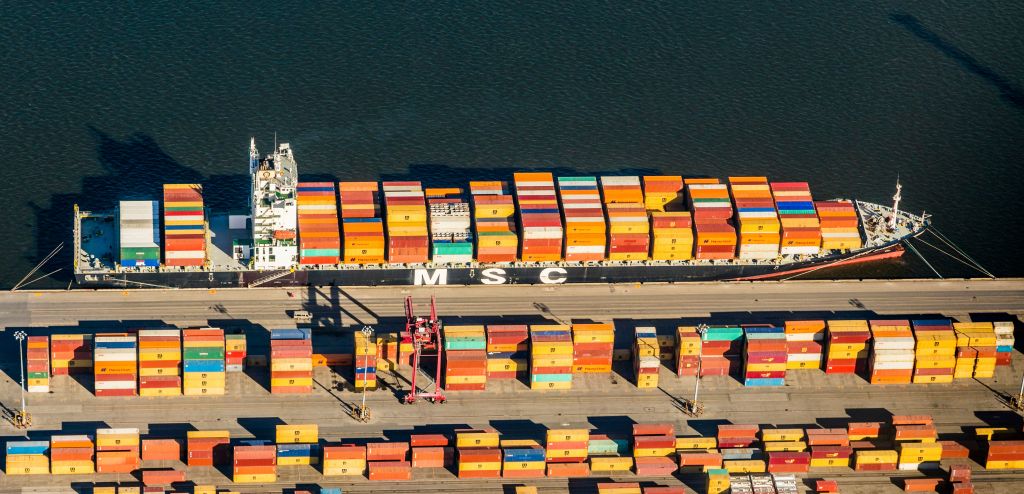
Devan Fitch: We’re the size of the next five largest Canadian ports combined in terms of the amount of commodities that we move, uh, through the Port of Vancouver.
The terminals that we’re looking at right here, they were also built many decades ago, and they just don’t simply have the birth depth that’s required. You couldn’t pull up next to the container terminal because it’s just gonna bottom out on the, on the birth face there. We have to be planning for what the trade infrastructure looks like in 2050 and 2060, not in [00:24:00] 2026.
Murad Al-Katib: If I was Prime Minister for a day, I would spend a hundred billion on trade infrastructure. It will pay for generations to come. Supply chains are all about connectivity. Each link has to be efficient. Data and technology will also make that more efficient. So let’s seize that opportunity.
John Stackhouse: We just heard the voices of Tamara Ruman, Devon Fitch, and Marad Al Kaip.
They’re just a few of the builders and shapers we’ve spoken to on this series. Daniel, Lucy, if you’re in your twenties today listening to all of that, the stakes, the infrastructure projects, the need to think long term, what would you actually do with it? What’s your message to those younger Canadians about the decades ahead and the role they can play?
Daniel Debow: First message is they should go to Build Canada do com and they should sign up. Yeah, join Build Canada newsletter and find a way to volunteer. I mean, I say that in a little in jest, but in reality. Yeah, because that’s a great first step. That’s what we want. Sign up. I was actually shocked how many people sign up just to learn about how the government works.
[00:25:00] They’re like, I didn’t know what a budget is. I didn’t know this stuff. But what’s the main message? I mean, I look, I have four young kids. Just because there are challenges, that does not mean that there’s no future for you. There’s no hope for you. You have to be kind of a rational optimist that yes, there are challenges, but you can pull this off.
I think the second message is exactly that, that you have agency, right? You are not necessarily a victim. You can make change in your own life, in your own community, your own family, with your own friend group, and in fact, you have, at least in the digital realm, you have access to tools that were like truly science fiction.
You know, 50 years ago, 25 years ago, right? You can see people building tools with ai, learning how to do things that run circlers around the folks of us on this call. The third thing is you can’t be quiet. You have to actually say that, I want this to be better. And so if you’re willing to step up and say, I think we can do things different around transit or around youth employment, or around any one of the issues that matter to you, you can do it.
They should not give up. I mean, I think that is the [00:26:00] key, key message I would have for those young people, that they have a right to fight like hell and to make the project what they think it should be, and they can define the future.
John Stackhouse: Canada is a project and we all have agency to help build it. That’s a great message.
Lucy, final word to you?
Lucy Hargreaves: Yeah, absolutely. I have three kids that are a little bit younger than Dan’s kids, I think, but I think about them a lot. I think about their future a lot, and I have the privilege of being able to talk to a lot of the folks who have been coming to our Build Canada events across the country.
So hundreds of people. They’re so energized and so optimistic about the future. And so my message to them really is recognize that you are part of this incredible journey that our nation is on, and that you have a role to play. Canada is going places. Don’t aim small, you know, think bold and take risks.
There are so many ways to show up. To get involved. That is what actually makes change at the end of the day is, is [00:27:00] multiple people across the country showing up and speaking up for the future that they want. So I would encourage folks to do that. We can all do more love. All these messages about building a better Canada.
John Stackhouse: To quote your website, people want to join up, go to build canada.com. Lucy, Daniel, thank you so much for being on disruptors and for helping to build Canada. Thanks, John, and thanks for, for this uh, series. It’s been great. Thanks so much, John. Appreciate it. As we close out this season of disruptors, I wanna leave you with a simple thought.
Canada’s future isn’t something that happens to us, it’s something that we build through the choices we make, the jobs we take on, the risks that we lean into, and the communities that we strengthen. Each of us has a role in shaping what comes next. Yes, the world is throwing a lot of disruption at us all at once.
But Canada has the geography, the resources, the global credibility, and the [00:28:00] traditions to turn challenge into opportunity. And Canadians have the ideas, the ambition, and the talent to do just that. That’s what we call the Canada Project Canadians working together. To innovate, to compete, and to build.
If you’re looking for inspiration, explore more nation building stories and ideas at rbc.com/thought leadership and revisit the episodes of Disruptors, the Canada Project, an RBC podcast on Apple or Spotify, or wherever you get your podcasts. Thanks for joining us on this incredible journey and for being a builder.
I’m John Stackhouse. See you in the new year.


 EN
EN