

 EN




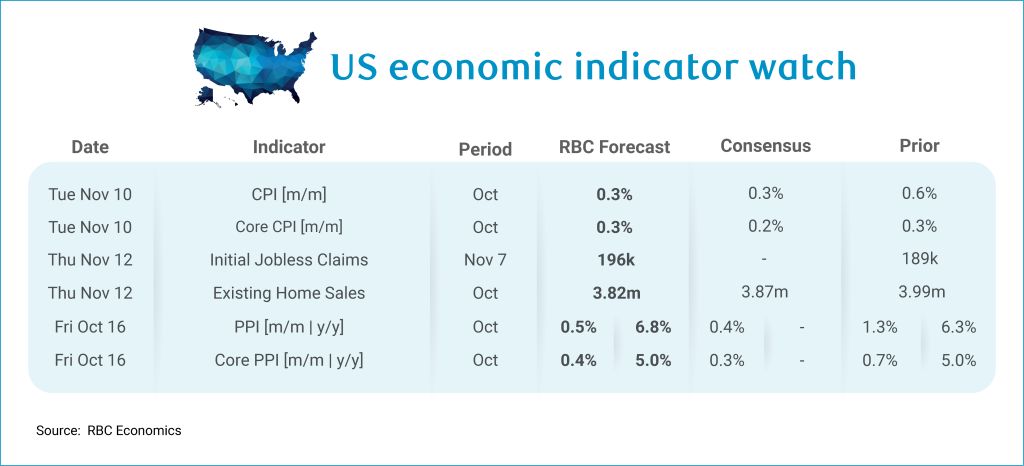
Inflation data is the main event next week. For CPI, we expect to see both headline and core inflation rose +0.3% m/m in October. We will not get year-over-year CPI data because we are missing data from October 2025 due to the government shutdown.
The September CPI report flagged early signs of an energy price spillover, but this was likely just the tip of the inflation iceberg. And we expect that this will continue to be the case in October. Core goods prices have been accelerating over the past three months with pressures building in imported goods categories including apparel and footwear, toys and recreational goods, and IT equipment. Motor vehicle parts and equipment prices (driven by tariff pressures) are beginning to add to used car prices. On the services side, we have consistently emphasized that services inflation is not slated to bring any meaningful relief for the remainder of the year. Housing prices are expected to continue to tick higher, and core services excluding housing (i.e., Super core) has never declined on a year-over-year basis. Taken together, view inflation risks skewed heavily to the upside.
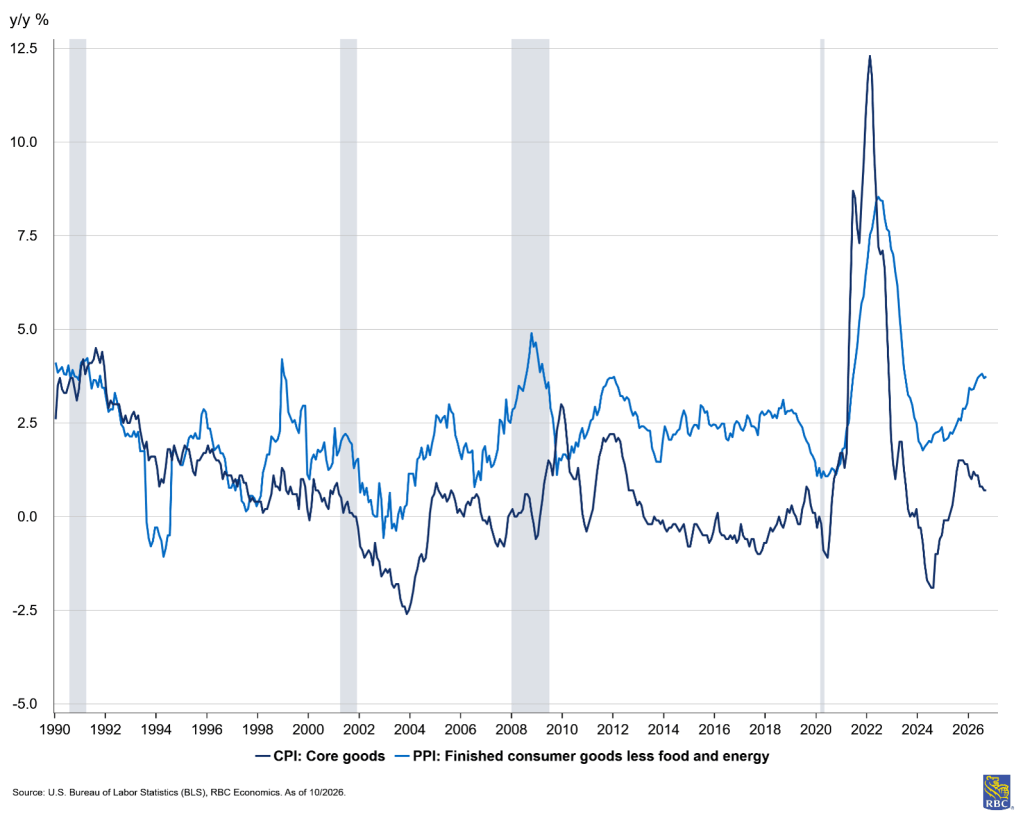
Looking ahead, PPI will provide a better indication of the trajectory of inflation. We forecast PPI rose +0.5% m/m in October, with headline slightly higher as high oil prices filter through to freight costs. Freight has been a key pressure point, with PPI for deep sea transportation up a record 37% y/y. Since PPI for freight is based on longer-term service contracts negotiated by domestic shipping companies, a pullback in global spot rates for container shipping will not immediately translate to a reprieve — and higher shipping costs give firms good reason to mark up prices. With costs already flowing through the price pipeline, the damage is likely done, and the evidence is imminent. There is a whopping 4.3 percentage point gap between the year-over-year pace of core PPI (excluding trade services) and core goods CPI — wider than we typically see — which suggests passthrough to CPI is imminent if firms aim to preserve margins. Trade services will give us a good gauge of those margins: consistently negative prints could signal compression, while a positive trend would suggest firms are passing higher costs through to consumers rather than cutting labor costs — something we simply have not seen as indicated by the jobless claims data or WARN notices.
Core PPI for consumer goods outpacing core goods CPI signals price pressure ahead for consumers
About the authors:
Mike Reid is Head of US Economics at RBC. He is responsible for generating RBC’s US economic outlook, providing commentary on macro indicators, and producing written analysis around the economic backdrop.
Carrie Freestone is a Senior US Economist at RBC. She is responsible for generating RBC’s US economic forecasts across GDP, employment, and inflation, and providing macro commentary through publications, presentations, and the media.
Imri Haggin is an US Economist at RBC, where he focuses on thematic research. His prior work has centered on consumer credit dynamics and treasury modeling, with an emphasis on leveraging data to understand behavior.
This article is intended as general information only and is not to be relied upon as constituting legal, financial or other professional advice. The reader is solely liable for any use of the information contained in this document and Royal Bank of Canada (“RBC”) nor any of its affiliates nor any of their respective directors, officers, employees or agents shall be held responsible for any direct or indirect damages arising from the use of this document by the reader. A professional advisor should be consulted regarding your specific situation. Information presented is believed to be factual and up-to-date but we do not guarantee its accuracy and it should not be regarded as a complete analysis of the subjects discussed. All expressions of opinion reflect the judgment of the authors as of the date of publication and are subject to change. No endorsement of any third parties or their advice, opinions, information, products or services is expressly given or implied by Royal Bank of Canada or any of its affiliates.
This document may contain forward-looking statements within the meaning of certain securities laws, which are subject to RBC’s caution regarding forward-looking statements. ESG (including climate) metrics, data and other information contained on this website are or may be based on assumptions, estimates and judgements. For cautionary statements relating to the information on this website, refer to the “Caution regarding forward-looking statements” and the “Important notice regarding this document” sections in our latest climate report or sustainability report, available at: https://www.rbc.com/community-social-impact/reporting-performance/index.html. Except as required by law, none of RBC nor any of its affiliates undertake to update any information in this document.

