

 EN




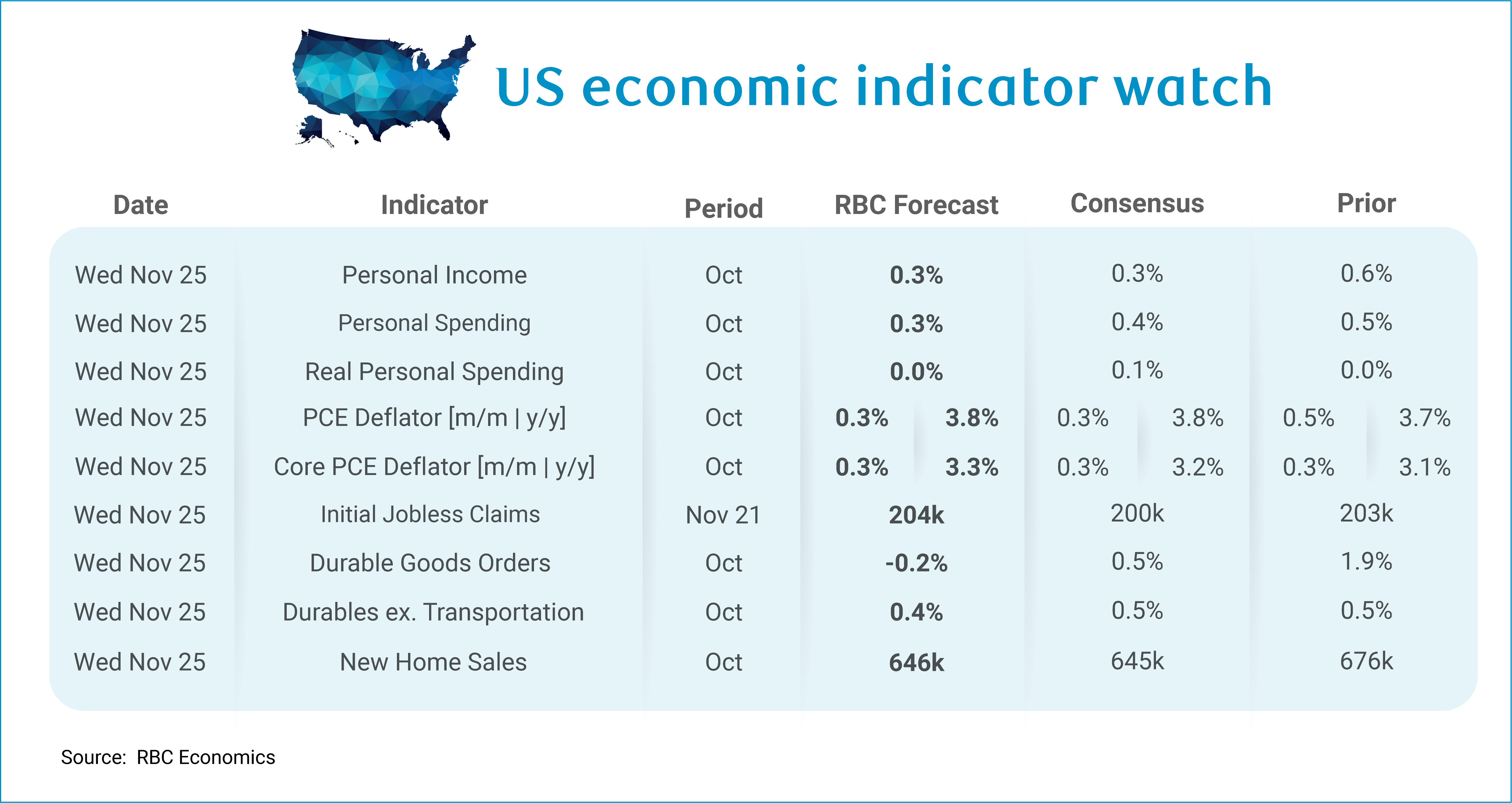
Ahead of the upcoming Thanksgiving shortened week, we are publishing our forecasts for the next two weeks. Next week, we’ll be watching BEA’s personal income and spending report for signs of consumer stress, as inflation remains the top concern.
We expect the October PCE deflators to confirm what we’ve already seen this month – inflation is re-accelerating. We forecast both headline and core PCE will rise 0.3% m/m, pushing the y/y pace up to 3.8% and 3.3% respectively. While the direction of travel is concerning, the uptick could be worse without the help from PPI inputs. October’s PPI for airfares declined (compared to CPI where they rose –methodological differences are responsible for the divergence). And medical care services including PPI for offices of physicians, home health care services and nursing care facilities all declined in October relative to the month prior.
The bigger question remains: can consumers continue to absorb the pass through of higher energy prices? So far, the October retail sales report suggest they are holding up, but for some that means the cost will be lower savings and higher personal interest payments. We don’t expect to see much improvement in the personal saving rate this month but as we recently flagged, the reliance on consumer credit to support spending is a problem as the Fed is prepared to raise interest rates again in December.
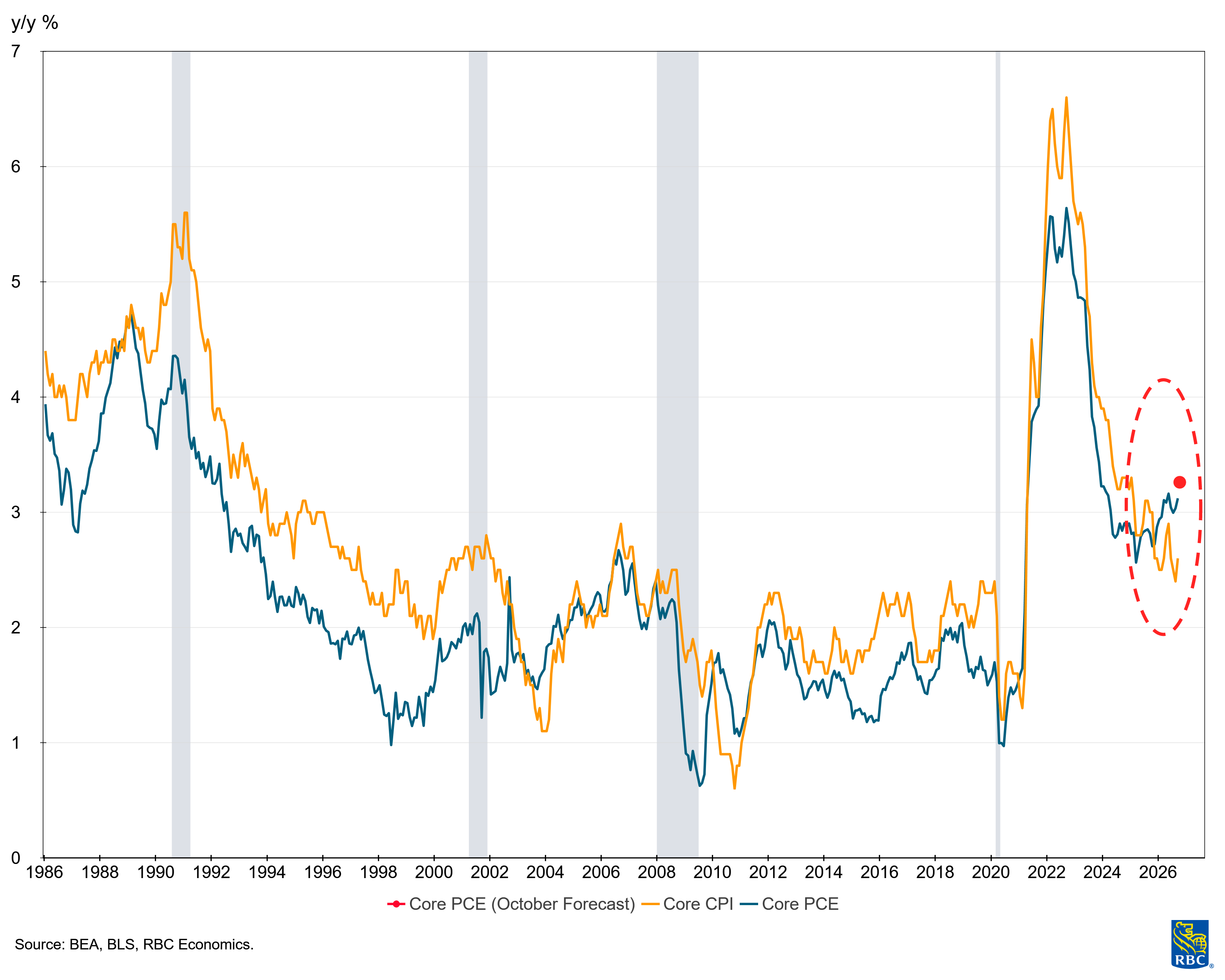
Core PCE has outpaced core CPI for nearly a year – a rare divergence
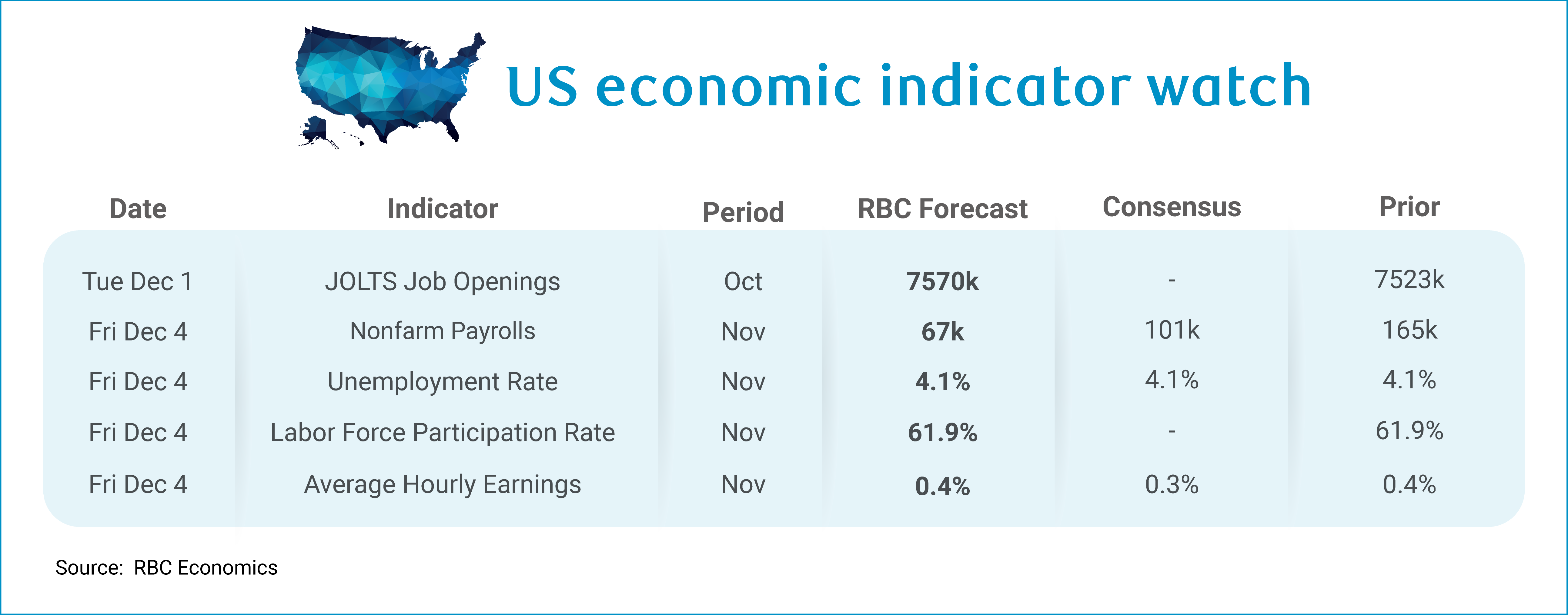
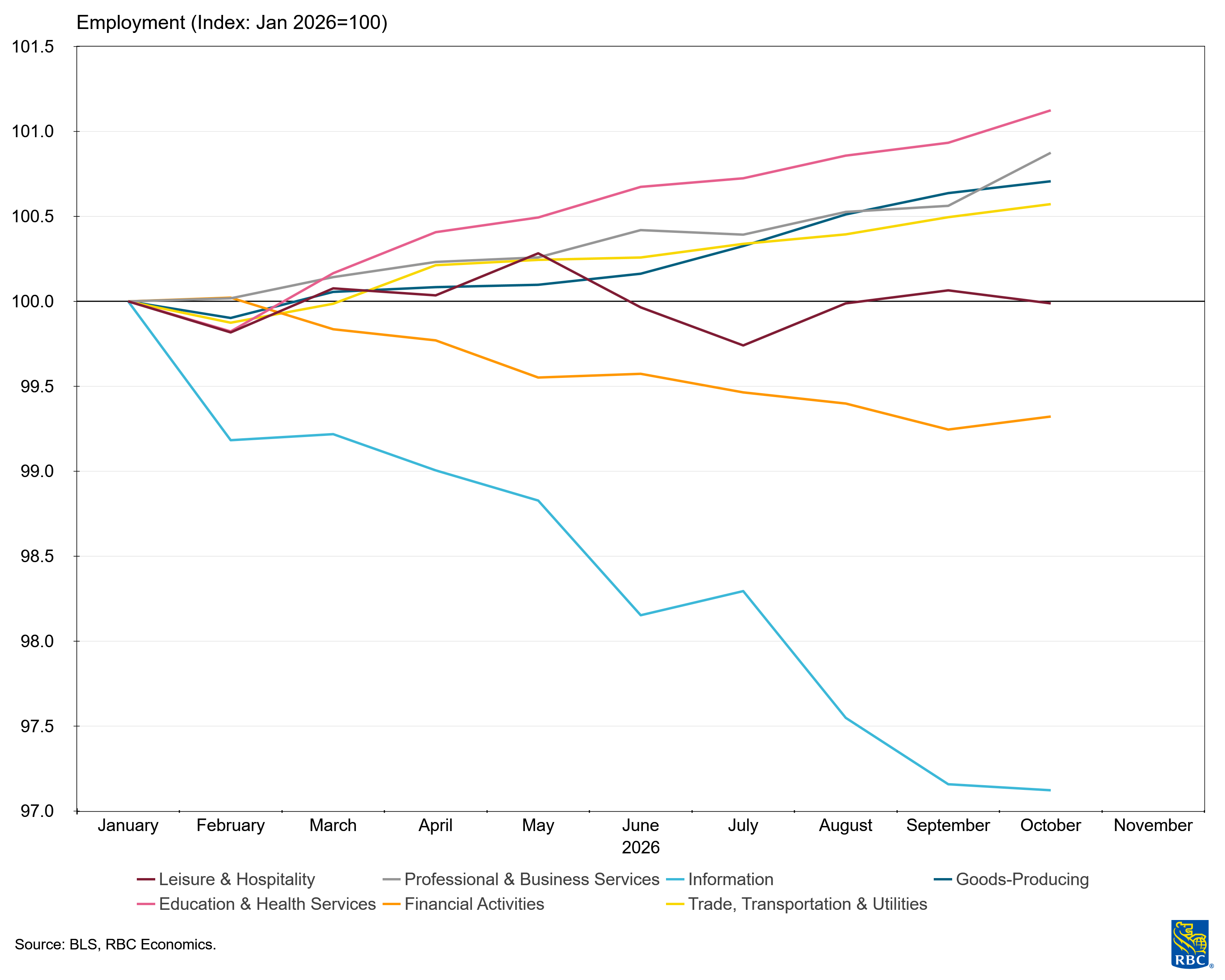
In the week following Thanksgiving, we turn back our focus to the labor market. For payrolls, we expect to see November growth moderate to 67k after a massive upside to hiring in October. Amazon’s announcement that it planned to hire 20% more seasonal workers this year is expected to boost transportation and warehousing and with a strong retail sales print for October, we do expect hiring to hold up there. Health care is expected to be a large contributor, but some of the weakness will likely show up in residential construction – housing data looks awful this month and homebuilders are likely feeling the pain from higher rates. And wholesale trade is exposed to higher energy costs as profit margins there are being squeezed – this would be one sector where signs of cost cutting could show up. But the broader trend this year is job creation is stronger in goods producing and trade related sectors while job destruction is most pronounced in “white collar” sectors. We continue to think it’s too early to attribute the weakness to AI replacing workers, but finding cost offsets to AI investment is a likely culprit.
Still the combination of low layoffs and record retirements should help keep the unemployment rate steady at 4.1%. Initial jobless claims were up by 8k in the November reference week vs. October – but this likely won’t be enough to move the needle. We expect jobless claims will continue to move sideways – though a dip is likely for the week ending November 29th, since the Thanksgiving holiday will likely impact administrative processing of jobless benefits. Importantly, October saw a notable y/y uptick in worker retirements, suggesting replacement demand will remain elevated in a supply constrained labor market.
So far this year, only “white collar” sectors have meaningfully shed jobs
About the authors:
Mike Reid is Head of US Economics at RBC. He is responsible for generating RBC’s US economic outlook, providing commentary on macro indicators, and producing written analysis around the economic backdrop.
Carrie Freestone is a Senior US Economist at RBC. She is responsible for generating RBC’s US economic forecasts across GDP, employment, and inflation, and providing macro commentary through publications, presentations, and the media.
Imri Haggin is an US Economist at RBC, where he focuses on thematic research. His prior work has centered on consumer credit dynamics and treasury modeling, with an emphasis on leveraging data to understand behavior.
This article is intended as general information only and is not to be relied upon as constituting legal, financial or other professional advice. The reader is solely liable for any use of the information contained in this document and Royal Bank of Canada (“RBC”) nor any of its affiliates nor any of their respective directors, officers, employees or agents shall be held responsible for any direct or indirect damages arising from the use of this document by the reader. A professional advisor should be consulted regarding your specific situation. Information presented is believed to be factual and up-to-date but we do not guarantee its accuracy and it should not be regarded as a complete analysis of the subjects discussed. All expressions of opinion reflect the judgment of the authors as of the date of publication and are subject to change. No endorsement of any third parties or their advice, opinions, information, products or services is expressly given or implied by Royal Bank of Canada or any of its affiliates.
This document may contain forward-looking statements within the meaning of certain securities laws, which are subject to RBC’s caution regarding forward-looking statements. ESG (including climate) metrics, data and other information contained on this website are or may be based on assumptions, estimates and judgements. For cautionary statements relating to the information on this website, refer to the “Caution regarding forward-looking statements” and the “Important notice regarding this document” sections in our latest climate report or sustainability report, available at: https://www.rbc.com/community-social-impact/reporting-performance/index.html. Except as required by law, none of RBC nor any of its affiliates undertake to update any information in this document.

