

 EN




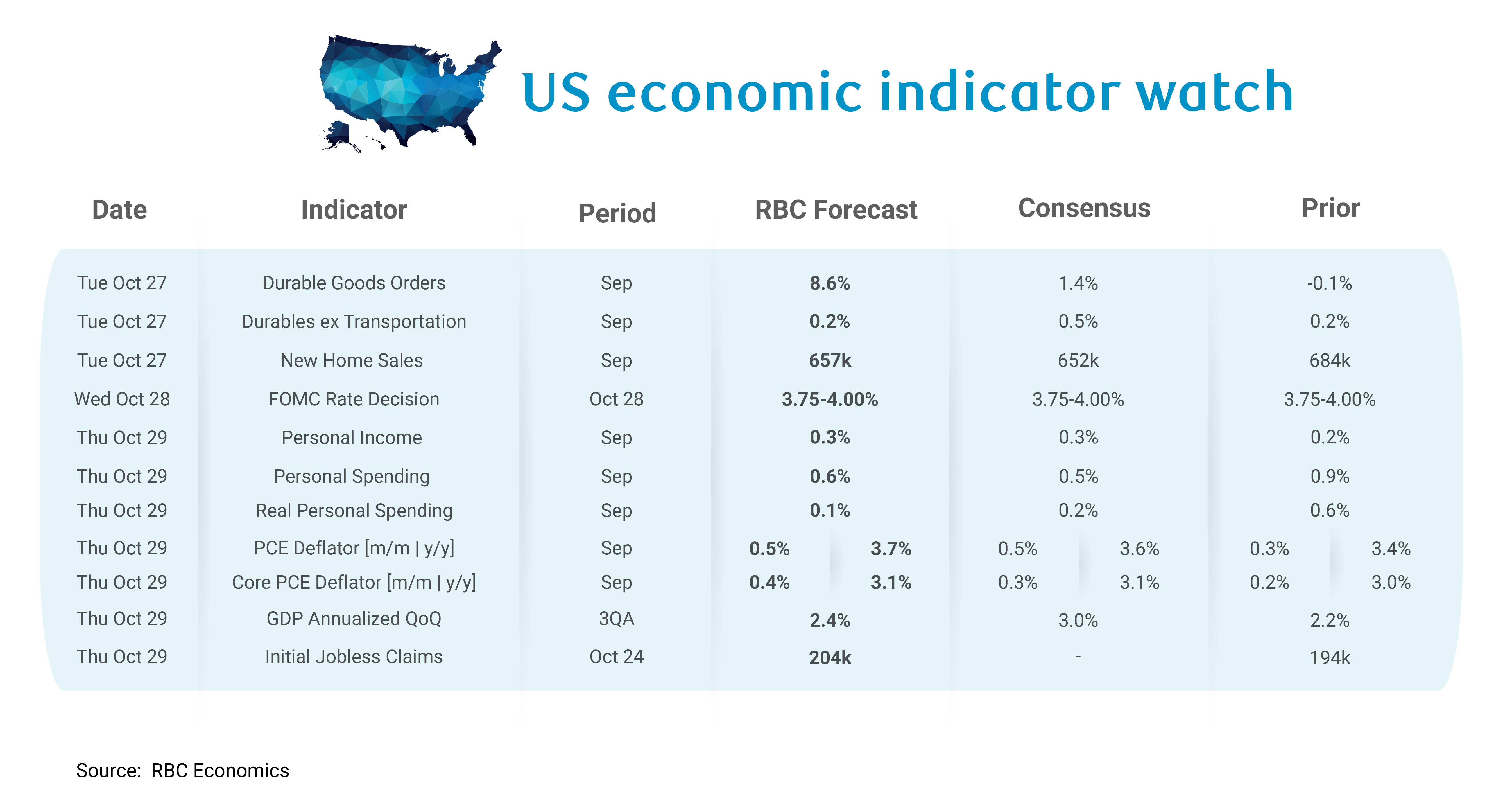
Next week our focus is on BEA’s personal income and spending data, and importantly the inflation data. We forecast the core PCE price index rose +0.4% m/m in September, pushing the y/y pace up to 3.1%.
Headline is expected to rise 0.5% m/m, with the y/y pace accelerating to 3.7%. There are a few reasons we expect core PCE to reaccelerate this month. First, within the September CPI data, we saw material price increases for imported goods including clothing, toys, and computers. Second, PPI for airfares, which feeds into PCE transportation services, registered 2.0% m/m compared to a 1.2% m/m increase in CPI airfares. Third, health care, which is included in PCE but not CPI, added to price pressures, particularly PPI for hospital inpatient care (up +0.3% m/m). As the Fed’s preferred measure of inflation, we expect the data will show a concerning trajectory. We do not expect the full extent of upside risks stemming from energy prices and tariffs to be captured in this report. Exceptionally high freight costs will likely continue to flow through to consumer prices with a lag.
We expect the Federal Reserve will hold interest rates steady in their October meeting. The uncomfortable reality is that the timing of future hikes will have little influence over the trajectory of inflation. Higher interest rates cannot solve supply-driven inflation, and they are not well-equipped to curb demand-driven impulses either when the bulk of demand comes from groups that are not particularly rate-sensitive: upper-income consumers and retirees. We expect to see additional hikes in the coming months but remain mindful that a higher rate environment would disproportionately harm lower- and middle-income households who are saving less and already facing a high personal interest expense burden.
For consumers, we expect personal spending to continue to rise, driven by upper income households and retirees. Our forecast calls for a 0.6% m/m increase, largely stemming from strong services spending and the effects of higher energy prices. Netting out the impact of inflation, real personal spending is expected to show a more modest 0.1% m/m rise. Still, with spending outpacing income growth (0.3% m/m), most consumers will be unlikely to maintain consumption growth in the months ahead, especially if energy prices remain elevated.
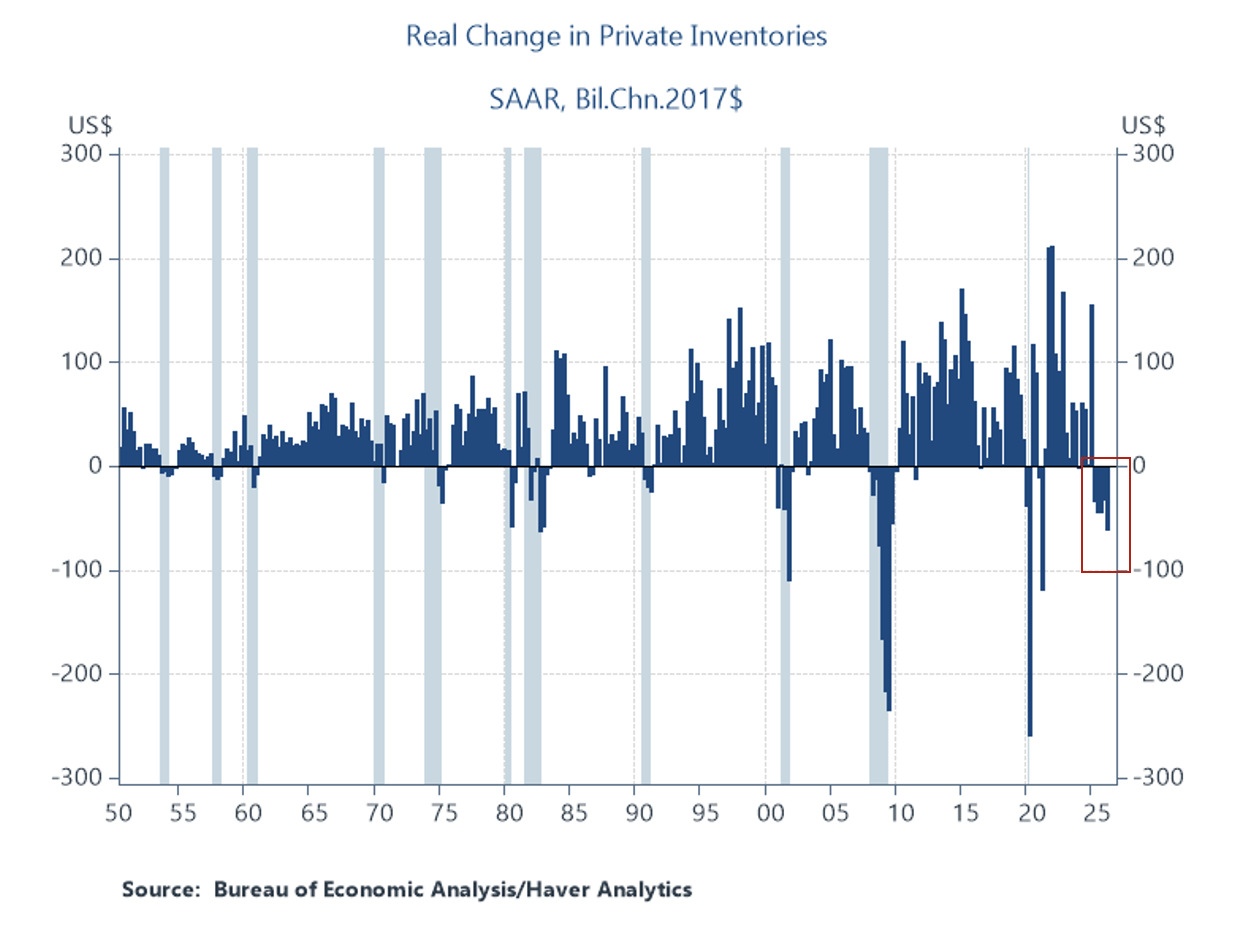
We also get Q3 Advanced GDP data and forecast 2.4% growth. We expect the bulk of growth will be driven by personal consumption and nonresidential capex tied to AI. Despite strong momentum from the aforementioned sectors, trade and inventories are expected to subtract from growth – a byproduct of the tariff environment. The 2025 Q1 inventory buildup has been drawn down for five consecutive quarters and we look for the remaining pre-tariff inventories to run out this year. While a re-stocking of inventories in 2027 is a tailwind for growth, it adds to inflation risk with the latest tariffs now in effect.
Five consecutive quarters of inventory drawdown has never occurred outside a recession
Consumer Spending and Business Investment slated to drive bulk of Q3 growth

About the authors:
Mike Reid is Head of US Economics at RBC. He is responsible for generating RBC’s US economic outlook, providing commentary on macro indicators, and producing written analysis around the economic backdrop.
Carrie Freestone is a Senior US Economist at RBC. She is responsible for generating RBC’s US economic forecasts across GDP, employment, and inflation, and providing macro commentary through publications, presentations, and the media.
Imri Haggin is an US Economist at RBC, where he focuses on thematic research. His prior work has centered on consumer credit dynamics and treasury modeling, with an emphasis on leveraging data to understand behavior.
This article is intended as general information only and is not to be relied upon as constituting legal, financial or other professional advice. The reader is solely liable for any use of the information contained in this document and Royal Bank of Canada (“RBC”) nor any of its affiliates nor any of their respective directors, officers, employees or agents shall be held responsible for any direct or indirect damages arising from the use of this document by the reader. A professional advisor should be consulted regarding your specific situation. Information presented is believed to be factual and up-to-date but we do not guarantee its accuracy and it should not be regarded as a complete analysis of the subjects discussed. All expressions of opinion reflect the judgment of the authors as of the date of publication and are subject to change. No endorsement of any third parties or their advice, opinions, information, products or services is expressly given or implied by Royal Bank of Canada or any of its affiliates.
This document may contain forward-looking statements within the meaning of certain securities laws, which are subject to RBC’s caution regarding forward-looking statements. ESG (including climate) metrics, data and other information contained on this website are or may be based on assumptions, estimates and judgements. For cautionary statements relating to the information on this website, refer to the “Caution regarding forward-looking statements” and the “Important notice regarding this document” sections in our latest climate report or sustainability report, available at: https://www.rbc.com/community-social-impact/reporting-performance/index.html. Except as required by law, none of RBC nor any of its affiliates undertake to update any information in this document.

