The Trump administration’s sweeping AI Action Plan, released last week, moves the global AI race into a new realm. It’s no longer just a race between OpenAI and Google; it’s a geopolitical contest that the world’s greatest tech power is doubling down on, as it seeks to influence (and dominate) the digital decades ahead.
Canada will need to move fast.
Here’s what stands out to me in the Trump policy:
Jurisdiction. Big data (and AI) is inherently global and local. And now Trump wants to unshackle Big Tech from state-level regulations on AI. Mark Carney may soon face the same challenges with the provinces, as he tries to develop a “one economy” approach to so many things. Both Carney and Trump will face push back if and when the big platforms move into health and education data—seen to be subnational jurisdictions in both countries. But in very different ways, they will need to figure out how to balance individual, local, national and global, in an AI age.
Ideology. Trump is aiming to “de-woke” AI models. I’m not sure how you do that, especially if you want to avoid some kind of version of thought police patrolling algorithms. I’m not suggesting AI models shouldn’t be accountable to public standards, including free speech. We just don’t know how to temper what we’ve unleashed, other than to prosecute developers under the law, just as we do with other forms of speech. Whatever your view, the Trump policy begins a new chapter in the politicization of tech.
Investment. A gold rush is underway for data centres and will continue to draw billions of dollars. Trump is laser-focused on keeping and building them in the U.S. Canada can continue to feed that model with our energy, financial capital and data—or build our own competitive strategy. I recently talked with a major investor who is waiting (and waiting) for approval for a mega-billion-dollar Canadian data centre, while he’s moving ahead with similar state-side projects. Data waits for no government.
Sovereignty. This may be the most challenging one for Canada. The U.S. and Chinese models, and clouds, have become so big and powerful it’s hard to imagine other countries creating anything to rival them. But there’s a chance for Canada. We have global tech leaders, in OpenText, Shopify and Cohere, and some competitive advantages in our own data sets, especially in health care. Is there a moonshot opportunity to build a Canadian rival? And will that require the same sort of techno-nationalist policies we’re seeing emerge in the U.S. and Europe.
As America aims to dominate AI, Canada will need our own human ingenuity to thrive in this new digital order.
➔ AI gets all the attention, but the AC is also a major power drag, too
➔ Canada’s ghost emissions
➔ David Suzuki and Chris Wright’s starkly different world views
Hot takes
➔ Ghost emissions are climate change’s untold story. Globally, emissions from Land Use, Land-Use Change and Forestry (LULUCF) are tracked but not included in a country’s emissions inventory. While emissions from managed lands are included, emissions from unmanaged lands are excluded as they are triggered by events beyond human control-such as wildfires. But they are formidable: Wildfire on just managed lands had emissions in 2023 that surpassed Canada’s total accounted emissions-by a lot. This year’s LULUCF emissions could rack up, too. By June 2nd, total estimated wildfire emissions for Canada were second only to 2023, with approximately 56 megatonnes of carbon (or 8% of Canada’s GHG emissions in 2023), according to the EU CAMS Global Fire Assimilation System. That’s years of painstaking climate action wiped out in weeks. This highlights a fundamental tension in Canada’s climate policy: most of the attention has been on emissions mitigation; less attention has been paid to climate adaptation. And we are all paying the price.
➔ Is it time for a $100-billion Pathway + pipeline package? Alberta and Ottawa are making progress on a big energy package that could include a West Coast oil pipeline, the long-contemplated Pathways project to capture carbon emissions, and room for expanded oil production, writes John Stackhousefrom Calgary. But Mark Carney’s team may need to finesse its way out of the previous Liberal government’s oil and gas emissions cap. That could involve a new target, or delayed timeline, or a refined approach to measuring abated emissions. The package’s headline costs could also be sobering—up to $100 billion.
➔ The Texas tragedy underscores the frequency, and intensity, of floods. More than 80% of Canadians live in urban areas, and around 8 out of 10 major Canadian cities are located in proximity to flood zones, according to the federal government. Floods are already Canada’s costliest natural hazard in terms of property damage, causing $2 billion in destruction annually, as climate change supercharges weather conditions. As part of a greater National Adaptation Strategy, Ottawa is spending $164.2 million to update Canada’s flood mapping program by 2028. Will it be enough?
➔ David Suzuki and Chris Wright’s recent comments highlight the tension between environmentalists and some energy proponents. Canada’s veteran environmentalist told iPolitics recently that its “too late” to reverse climate change as policymakers are focused on economic growth, not nature. Meanwhile, U.S. Energy Secretary Christ Wright sees the climate crisis as a byproduct of progress, not an existential threat. “I am willing to take the modest negative trade-off for this legacy of human advancement,” he wrote in The Economist. Policy is often driven by political cycles, with energy proponents winning this round. However, the next political cycle is around the corner.
The Big Cool
Power-hungry data centres get all the attention, but the humble air conditioner is also a major strain on grids. As summers get more oppressive in Canada and around the world, the International Energy Agency expects air conditioners to be a top driver of global electricity demand, with air-conditioner ownership worldwide rising from 37% to 45% by 2030.
Here’s why cooling is emerging as a critical climate issue:
➔ Cooling generated just over 1 gigatonne of carbon emissions globally in 2022 (1.9% of total). Space cooling could also lead to leakage of refrigerants, which have a global warming potential of around 1,000 times higher than CO2.
➔ 2Energy demand for space cooling globally is growing at 4% annually, twice as fast as water heating. This is putting pressure on power capacity, especially as countries like Canada strain to keep their grids clean.
➔ In Canada, the percentage of households with an air conditioner hit 64% in 2021, compared to 55% in 2013. That’s even more impressive given the surge in households over the past decade.
➔ Buildings account for 18% of Canada’s total emissions. Of these, space heating and cooling represent more than 67% of building energy use.
➔ One in 10 Canadian households had a heat pump (which, of course, double up as air-conditioners) in 2021, from virtually zero a few years prior. Heat pumps are 4.5 times more efficient than conventional air conditioners, making them a key pillar of climate action.
➔ Federal and provincial Canadian policymakers are considering building codes that would stipulate at least one room with an air conditioner in a home.
➔ Access to cooling is emerging as a human rights issues, especially after nearly 600 people died in a Vancouver heat dome event in 2021.
➔ “An important driver of activity is climate-change mitigation, driven mostly by policy, rebate programs, incentive,” says Martin Luymes, Vice President, Government & Stakeholder Relations at HRAI. For instance, federal rebates led to record heat pump sales, which then dropped off when the programs ended. Several provinces including Ontario, B.C., and Nova Scotia continue to offer rebates, helping sustain interest.
➔ The Canadian HVAC industry sees the possible termination of the Energy Star program in the U.S. as a “major mistake,” says Luymes, noting that the program, which promotes energy-efficient products including air conditioners, as valuable, low-cost consumer guidance tools. Experts say scrapping or weakening Energy Star could harm climate progress.
Sign up to receive RBC Thought Leadership’s newsletter, major reports and analysis on the biggest ideas shaping Canadian business and the economy.
The good and the ugly in the One Big, Beautiful Bill Act
Donald Trump’s signature 2025-26 budget bill is now law. The legislation changes several clean energy tax incentives that were managed under the Inflation Reduction Act (IRA), tightens domestic content requirements, imposes new qualification deadlines and sunsets other tax credits that could impact Canadian cleantech firms eyeing opportunities across the border.
Here’s the good, the bad and the ugly of the OBBBA:
Carbon capture: The bill maintains credits for carbon capture, but also provides incentives for captured CO2 for oil production, underscoring the administration’s commitment to the fossil fuels industry.
Nuclear: The bill maintains credits for both existing nuclear facilities and new advanced energy technologies. However, new foreign entity provisions could inject uncertainty in the sector’s growth. The legislation is supported by an earlier executive order that targets a quadrupling of U.S. nuclear capacity from 100GW to 400 GW by 2050.
EVs: Electric vehicle manufacturing and competitiveness will be “hard hit,” according to the Center on Global Energy Policy, noting that the law could reduce domestic demand for EVs, jeopardize battery investment and allow China and other foreign competitors to gain greater market share.
Clean grid: Solar and wind power was particularly hard hit as historic investment and production tax credits sunset earlier than before. The law would reduce the build-out of new clean power generating capacity by 53-59% through to 2035, according to the Rhodium Group. An executive order following the OBBBA directs the U.S. Treasury Secretary to eliminate subsidies for “unreliable green sources like wind and solar,” that it believes is threatening national security. A separate executive order directs the Treasury Secretary to end “market-distorting subsidies for unreliable, foreign controlled energy sources.”
Critical minerals: Metallurgical coal is nowdeemed a “critical mineral,” allowing it to qualify for a production tax credit. The law also broadly reduced 45X Production Tax Credits for critical minerals to 2033 (compared to no limits before), which would pose a challenge as most critical minerals projects require long timelines. The Center for Strategic & International says the “amended tax credit disincentivizes investment in newly discovered greenfield projects with longer timelines to production in favour of brownfield legacy mines that may be closer to production but have lower grade reserves.”
Trends, tech and science
China is the world’s energy transition workhorse. Around 74%, or 1.3 terawatt, of the world’s new wind and solar capacity is being built in the country, with the U.S. a distant second with 5.9% of all new projects, and India third at 5.1%, according to Global Energy Monitor. The 590GW of new Chinese wind capacity proposed or underway could power nearly all U.S. households. China’s inevitable cleantech dominance poses a conundrum for the West, as suggested by EU President Ursula von der Leyen earlier this month: “Beijing is at once a staunch competitor in the clean tech race, and a vital partner for global decarbonization.” A fractured G7 can’t keep Chinese tech out for too long.
Straddling cleantech and AI. Founded by veteran tech investor Nicholas Parker, CleanAI recently launched a networking and financing ecosystem for entrepreneurs and businesses intersecting AI and clean-tech. CleanAI research shows that the artificial intelligence-enabled cleantech solution space would require US$138 billion over the next five years and could mitigate up to 10% of global greenhouse gas emissions.
Last week, John Stackhouse visited Limberlost Place, Ontario’s first mass timber, net-zero carbon emissions building, to participate in a documentary about the project. The George Brown College building is set to open this fall in Toronto.
On July 15th, Nathan Janzen and Lisa Ashton gave a keynote presentation at the Dairy Farmers of Canada Annual General Meeting in Toronto.
Books on the team’s reading list:
Genesis, Henry Kissinger, Craig Mundie and Eric Schmidt, on AI’s transformative powers, in politics, security, prosperity and science. Read John’s review here.
The Explorer’s Gene: Why We Seek Big Challenges, New Flavors, and the Blank Spots on the Map, by Alex Hutchinson.
Curated by Yadullah Hussain, Managing Editor, RBC Climate Action Institute.
➔ A Silicon Valley of direct air capture set to debut in Alberta
➔ Global abundance: Exploring the New Energy Age
➔ Brazil is cooking up sustainable soybeans for China
Hot takes
➔ The Silicon Valley of direct air capture is taking shape in central Alberta. Quebec-based Deep Sky, backed by a US$40-million grant from Bill Gates’ Breakthrough Energy, is opening its direct air capture innovation and commercialization centre in Innisfail in central Alberta this summer. The facility—seen as a hub for direct air capture activities—will serve as a sandbox for firms to test direct-air carbon-sucking technologies before they scale their operations commercially. Eight companies—from Canada, the U.S. and Germany and others—have already signed up. In a vote of confidence, the Alberta government also recently invested $5 million in DeepSky from the province’s Technology Innovation and Emissions Reduction Regulation (TIER) fund.
➔ Ontario is crafting a new wood construction strategy. The recently announced Advanced Wood Construction Plan aims to promote wood use in larger and taller structures to accelerate projects, lower costs by as much as 20%. Swapping cement and steel with wood would also help lower emissions in a sector that accounts for 18% of Canada’s total emissions. Widespread adoption of wood, specifically mass timber, as a substitute or complement to concrete and steel could cut embodied emissions in buildings by as much as 25%, according to our reportMass Timber. The five-year plan comes as the province’s $20-billion industry is facing punitive U.S. tariffs.
➔ Forecasters are scrambling to assess demand from data centres in the U.S. Electricity demand is now set to grow 25% by 2030 and 78% by 2050, compared to 2023 levels, according to a new report by ICF, a consulting firm. That’s an annual growth rate of 3.2% through 2030 (1.4% previously) and 2.2% (1.1% previously) through 2050 and contrasts with the past two decades when U.S. electricity demand was essentially flat. The strain on capacity could lead to a doubling of electricity prices by 2050, ICF warns. Texas, along with California and PJM region (covering 13 mid-Atlantic and Midwest states)—markets already importing Canadian electricity—will see the highest demand growth.
➔ Brazil is developing bespoke, sustainable soybeans for China. Inspired by its successful Boi China beef model, the Latin American country aims to develop “Soy China,” through a supply chain that aligns with China’s environmental standards and runs on renewable energy. It’s also seen as a way for China to counter the EU Deforestation Regulations (EUDR), which have much stricter rules. Many countries (inside and outside the EU) have raised concerns about the EUDR because of its stringent traceability requirements that do not align with conventional soybean supply chains. And Brazil and China’s move is alternate route for soybeans to flow. The U.S. Department of Agriculture recently warned that sustainable soybeans would directly challenge American and Canadian exporters’ market share in China.
Nature capital: Canada’s other green power
By Lisa Ashton
As climate change disrupts the U.K.’s landscapes—from the Scottish Highlands to the Somerset Wetlands—the country is facing a £97-billion ($181-billion) nature asset deficit. The Green Finance Institute(GFI) estimates that planned public spending on conservation and restoration by the government is well short of delivering on its binding commitments, including the 25-year Environment Plan and the U.K.’s 30×30 targets under the UN Biodiversity targets. It also presents real risks and losses of between £150-£300 billion of U.K.’s GDP by 2030. The U.K. government is now seeking ideasfrom businesses, investors, and innovators to protect the “natural foundations of its economy,” and spur growth in its “burgeoning” nature services sector.
Canada can draw lessons from the U.K. experience. It’s home to landmark investments in several initiatives including the Great Bear Sea project finance for permanence (PFP), and watershed policy commitments to protect and conserve 30% of Canada’s land and water by 2030.
Canada’s is truly a nature powerhouse with riches that are second to none:
➔ It’s one of just five countries that collectively contain more than 70% of the world’s remaining intact ecosystems;
➔ 20% of the world’s total freshwater;
➔ 25% of the world’s wetlands;
➔ 24% of the world’s boreal forests;
➔ the world’s longest coastline;
➔ the world’s longest coastline;
➔ ecosystems in Canada provide essential habitat for approximately 80,000 species.
But, Canada, like many others, has not been able to unlock nature finance at scale to address declining natural capital as a share of GDP—roughly 70% in 1995 to about 40% today—and mitigate the risks associated with a natural environment that’s experiencing more deterioration than the U.S. and the U.K. Wildfires year-to-date alone could risk 0.4% of Saskatchewan’s GDP and 0.2% for Alberta, according to Statistics Canada estimates.
Nature finance is in its infancy, but a pathway to build natural capital in Canada and investments is slowly being charted. In 2022, the Government of Canada issued its first green bond, valued at $5 billion, with a portion of funds going to nature-based projects including financing that supports the adoption of climate-smart agriculture practices.
Exploring nature finance is an opportunity to build greater resilience in Canada’s natural resource dependent economy driven by fuel, food, fertilizer and forestry production.
Sign up to receive RBC Thought Leadership’s newsletter, major reports and analysis on the biggest ideas shaping Canadian business and the economy.
Trends, tech & science
Gas flaring in Alberta is raising alarms among health professionals. The Canadian Association of Physicians for the Environment (CAPE ) Alberta chapter cited research that shows a 1% increase in flaring exposure led to a 0.73% rise in respiratory-related hospital visits. The warning comes after Reuters reported that gas flaring blew past the province’s self-imposed limit on annual natural gas flaring in 2024, for a second year in a row. In June, the Alberta Energy Regulator said it was ending limits on flaring.
Overcapacity is reinforcing steel’s hard-to-abate reputation. Around 30% of steel capacity remains unused globally, an excess that’s sent prices plunging to a four-year low. With margins under pressure, steelmakers are hardly in the mood to decarbonize. The problem is set to worsen: more than 40% of new steelmaking capacity—mostly from “non-market” forces such as China—that’s set to enter the market by 2027 will be emission-intensive, according to an OECD report. Strengthening international co-operation to address excess capacity and market distortions will be vital to improve the outlook for steelmakers in market economies, the OECD recommends. That would give steelmakers the space to advance decarbonization efforts. New anti-dumping tariffs in Canada and the U.S., primarily aimed at China, is also an opportunity to establish a green steel market.
Plastic bag bans and fees are making a difference. Several U.S. jurisdictions that enforced these policies have seen a 25-47% dip in plastic bags as a share of total items collected in shoreline cleanups, according to an extensive University of Delawareand Columbia University study. The ban also reduced the number of animals entangled along the shoreline. Still, plastic pollution overall remains a growing challenge. The final round of a Global Plastics Treaty is set for August in Geneva.
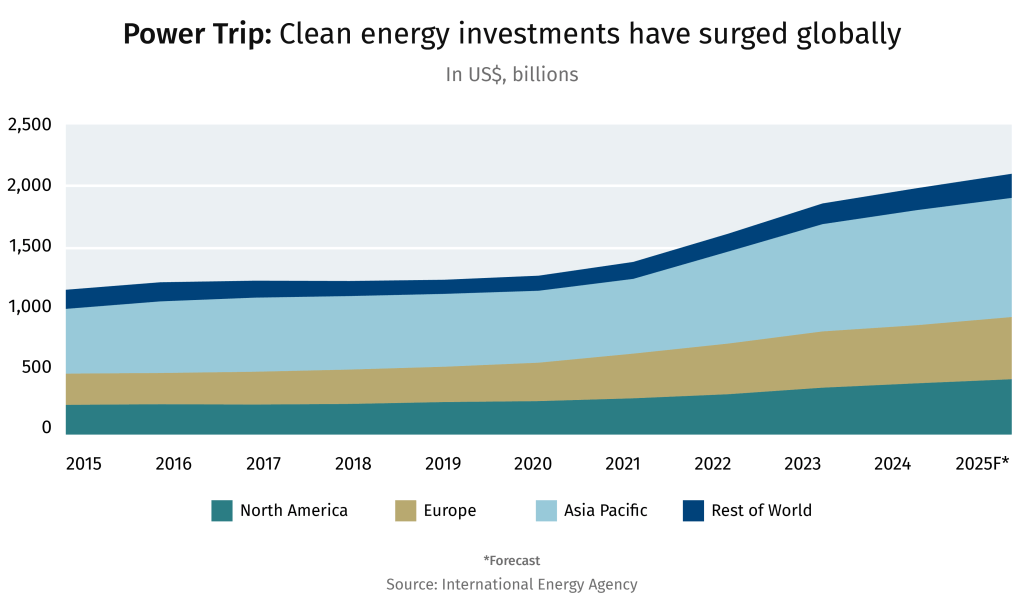
The International Energy Agency (IEA) tracks investment flows for all forms of energy, and this year is more relevant than ever, given the volatility we’ve seen in energy prices this decade. While a slower global economy may temper some investment patterns, what gets built today will shape energy patterns in years to come.
Some highlights:
Capital flows to the energy sector are on course to reach US$3.3 trillion this year.
China is leading the energy investment surge, accounting for nearly a third of global investment, split almost evenly between grid and storage, renewable power and fossil fuels.
North America saw a record US$700 billion in investments in 2024, but will see pullback to US$690 billion this year. Clean energy investment is at an all-time high.
Would the U.S. new “big, beautiful bill” that guts several clean energy incentives, and Canada’s Bill C-5, that promotes clean and conventional energy projects, move the needle on energy investments?
The biggest use of investment globally is electrification, which will consume almost half ($1.5 trillion) of all energy capital.
Only a third of investment will go to oil, natural gas and coal:
lower oil prices are likely to keep investment down;
LNG investment is on “a strong upward trajectory,” led by the U.S., Qatar and Canada;
nuclear’s renaissance continues, rising by 50% over the past five years;
coal-fired power in advanced economies has ground to a halt, while it’s showing a comeback in China and India.
The bottom line is the world will continue to need to invest trillions a year in energy, across a wide array of sources. As that continues, some long-term trends are clear—more energy investment will go to Asia, especially China; more will go to electrification; and as our new report, “A G7+ Strategy for Natural Gas,” lays out, more will go to gas infrastructure.
Countries that develop the right policies will generate and attract the bulk of that capital, in what’s shaping up to be a New Energy Age.
John Stackhouse and Lisa Ashton visited the Kelburn Farm in Manitoba in late June. The demonstration farm operates out of the Red River Valley, a growing hotspot for agri-food innovation. The Kelburn Farm is a place for farmers, students, researchers, and companies along the agri-food supply chains to test and trial new ideas that are advancing Canadian agriculture.
Shaz Merwat was at the RBC Energy Transition Conference in London last week. He also attended a virtual International Energy Agency Conference on certified natural gas this week.
On the team’s reading list:
Crisis: A Global Case Primer, by Jason Miklian and John Katsos, on leading when things are falling apart.
Shaz Merwat was at the RBC Energy Transition Conference in London last week. He also attended a virtual International Energy Agency Conference on certified natural gas this week.
Curated by Yadullah Hussain, Managing Editor, RBC Climate Action Institute.
➔ Canadians slammed the brakes on zero-emission car purchases in Q1. Sales were down 19.5% compared to the same period last year, while total light-duty vehicles, that includes hybrids and plug-ins, fell 3.2% during the period. New vehicle registrations accounted for 9.5% of total car sales in Q1, down from an impressive 18.9% in Q4, S&P Global data shows. A confluence of factors tripped up sales, including the end of the $5,000 federal rebate, a drop in Quebec’s rebate program, and tariff uncertainty. Tesla is also losing its brand appeal in Canada, securing less than 10% market share in April, down from 50% a few years ago.
➔ G7 leaders were not the only luminaries in Alberta this month. Haitham al-Ghais, secretary-general of the Organization of Petroleum Exporting Countries, showed up in Calgary for the Global Energy Show with the bold claim that “there is no peak in oil demand on the horizon.” Over the past few years, OPEC and the International Energy Agency have bickered over the peak dates of oil, which the Paris watchdog believes could come before 2030. OPEC also recently called out the IEA for cutting its electric vehicle forecast as proof it was backtracking on its peak-demand theory. But the IEA remains firm, noting in its June forecast that a “peak in global oil demand is still on the horizon.”.
➔ The Arctic is hot territory. Three new books this year show how the top of the world is now top of mind, as it warms up for—and to—more commerce. In The North Pole, Norwegian explorer Erling Kagge charts how explorers were traversing the region as early as the 1600s to find shortcuts from Europe to Asia. In End of the Earth, fossil hunter Neil Shubin explores what the latest science tells us about the riches beneath. And in Arctic Passages, journalist Keiran Mulvaney explores how thawing ice could cut trips from, say, Korea to the Netherlands, circumnavigating geopolitical flashpoints Suez and Panama canals.
Critical Canada
From Nice to Kananaskis, critical minerals are on everyone’s lips. But it was awkward in the coastal French city where delegates at the UN Ocean Conference criticized the U.S.’s interest in deep-sea mining, suggesting that the White House’s plans for offshore critical minerals set “a dangerous precedent that could destabilize the entire system of global ocean governance,” according to the International Seabed Authority (ISA). It seems that the business of developing clean energy inputs is not always, well, clean.
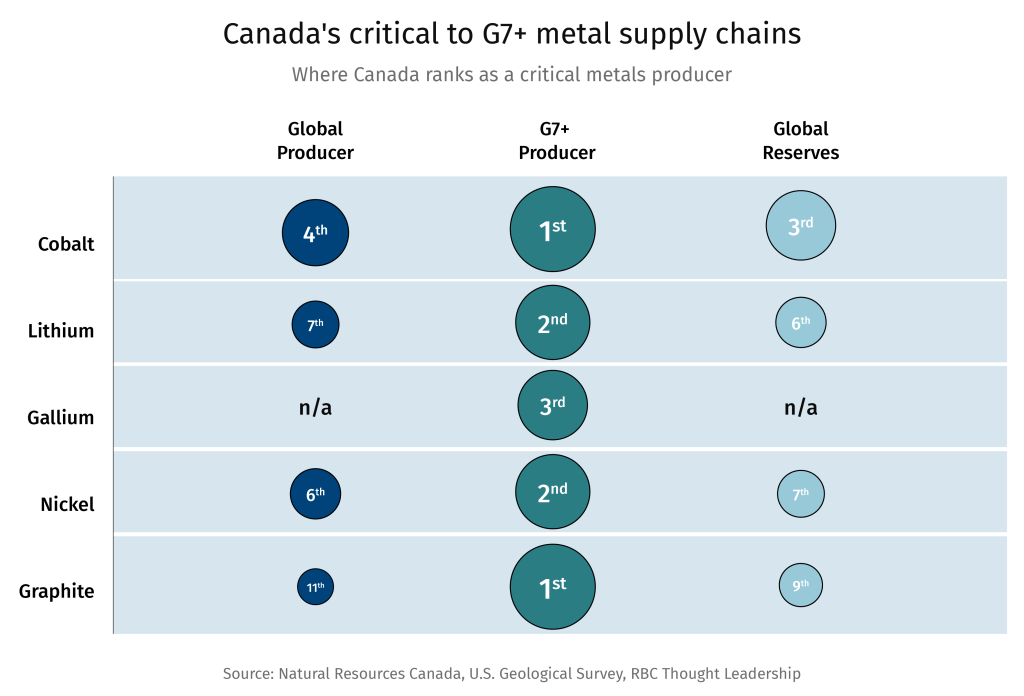
In Kananaskis, Canada corralled G7 nations to at least agree on a critical minerals “action plan .” While a united and sweeping G7 statement was being avoided on several matters to avoid the ire of the Oval Office, leaders agreed on developing a framework to finance new mines and downstream processing facilities, and reduce reliance on China for key metals such as lithium, cobalt and rare earth elements.
As a major producer of several commodities vital for the production of electric vehicles, defence, smart phones and wind turbines, Canada wants to play a key role, as part of its overarching “energy superpower” ambition.
There’s some awkwardness here, too as the federal government is starting to get some pushback: Chiefs of Ontario believe Bill C-5, proposed by the government to fast-track mining and other projects, will override environmental laws and “sidestep constitutional obligations.”
The private sector , which overwhelmingly wants all levels of governments to build an energy-agnostic utility corridor, also has a laundry list of concerns including cost overruns and delays of mega-projects, scope creep, stakeholder consultations, environmental assessments, and regulatory delays, according to a KPMG survey of Canadian executives.
Japan is the Canadian energy sector’s new market—with a climate twist. B.C. Premier David Eby was in Japan as recently as this month, showcasing his province’s commodity resources, including energy. Meanwhile, Mitsubishi Corp.—an anchor investor in LNG Canada, will start receiving shipments from the facility starting in July.
Our new report on G7+ Strategy for Natural Gas , examines how member countries can leverage natural gas to ensure energy security. Canadian LNG can find a greater Asian foothold if it can align with Japan’s Green Transformation Emissions Trading System (GX-ETS), which is central to the Asian country’s carbon neutrality by 2050.
Here’s how:
Japan’s GX policy accepts low-carbon LNG—particularly if paired with methane abatement, carbon capture and storage (CCS), or certified emissions standards—as transition-aligned. Canadian LNG could qualify for long-term GX-aligned supply contracts, if emissions reductions are verifiable.
Japanese investment via GX Transition Bonds, especially in infrastructure such as liquefaction and CCS-enabled transport. Japan is collaborating with Australia and other countries on clean ammonia. Canada’s low-carbon certified energy products can tap several opportunities including financing through GX Transition Bonds and Japan’s Joint Crediting Mechanism (JCM).
Canada can also tap Japan’s plan to scale blue hydrogen imports, by developing natural gas with CCS.
Japan’s economy also needs power to maintain its edge in computation and digital infrastructure. Data centres, AI and digital infrastructure are going to depend on natural gas, offering another opening for Canada.
➔ The World Bank is entering the nuclear energy space. In a boost to nuclear, the World Bank is collaborating with the International Atomic Energy Agency, the UN nuclear watchdog, to support existing reactors and support “grid upgrades,” including SMRs, amid a push from the U.S. and Germany. Natural gas power plants, that do not “constrain renewables,” could also tap its funding. However, the World Bank’s board has not yet agreed on funding upstream natural gas development.
➔ Carbon capture projects are ramping up. Between 2020 and 2030, carbon management project deployment is expected to be dominated by capture-only initiatives, which will account for approximately 45% of all operational and planned projects, according to a new report by the International Energy Forum . The U.S., the U.K. and Canada—in that order—have the highest number of proposed CCUS projects by 2030. That will take proposed global CCUS capacity to 1 gigatonne of CO2 by 2030 (equivalent of taking 306.3 million cars off the road for a year), with most initiatives financed through public funding.
➔ A Bill Gates-backed geothermal firm reported an industry-shaking breakthrough. The industry is abuzz after Houston-based Fervo Energy drilled 15,765 feet in 16 days—a 79% cut in average drilling times. With drilling the costliest line item for geothermal companies, the feat is a giant step in making geothermal economically competitive with other energy sources. Second, its technology—borrowed heavily from fracking techniques—, allows the industry to look beyond geological sweet spots for geothermal, like Iceland. Gates’ Breakthrough Energy immediately rewarded the company with an additional US$100-million injection, part of a US$206-million investment round for the company.
Curated by Yadullah Hussain, Managing Editor, RBC Climate Action Institute.
➔ Canadian climate technology companies raised $468 million in Q1. That’s upfrom a paltry $39 million during the same period last year. It’s a bright beginning to the year following a sluggish period of investment from Q2-Q4 2024. First quarter funding in 2025 was mostly driven by energy storage and clean power deals. While the overall rise in climate technology funding is encouraging, additional investments in industrial innovation—beyond the $36 million raised to date this year from a single deal—will be critical in decarbonizing hard-to-abate industrial sectors.
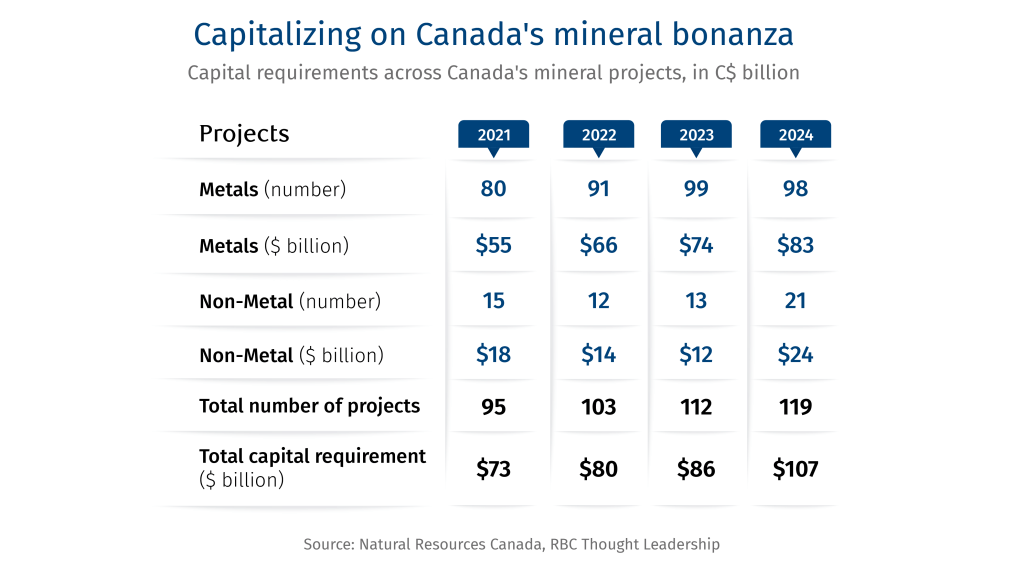
➔ Speaking of funding, Canada will need more foreign capital to realize its commodity ambitions. More than 100 mineral projects worth $107 billion, are at various stages of development in Canada over the next ten years, according to research by RBC’s Cynthia Leach, Shaz Merwat and Vivan Sorab. With Chinese investment in minerals effectively blocked by Ottawa, Canadian miners would need to tap a variety of countries such as those in America and Europe and institutions such as Middle East sovereign wealth funds, to emerge as a commodity powerhouse. Read the full report here. Alsowatch RBC analysts talk minerals.
➔ After all the talk, nuclear is finally ramping up. A new U.S. executive order aims to speed up new nuclear plant applications within 18 months—and quadruple nuclear power generation in 25 years. Belgium is scrapping its nuclear phase-out law, while EU members Germany, Denmark, and Italy are reconsidering their stances on nuclear. Ontario also kickstarted a nuclear modular reactor in May. But New Brunswick is delaying its small modular reactor (SMR) plans after its two partners failed to raise capital and hire workers. Ambition is fine, but the challenge is finding the money and the people to execute.
INFRASTRUCTURE
Build, Baby, Build—But Also Wait
Lofty ambitions, meet ground realities.Despite a reset, Canada’s plans to build new clean and conventional energy projects are running up against familiar obstacles, such as stringent environmental rules and lack of Indigenous consent. Both are critical considerations that should not supersede national interest.
Provinces that stitched together new laws in a hurry are being asked to wait:
Ontario’s Bill 5, which is set to become law, gives the provincial government wide powers to allocate projects to “trusted proponents” in special economic zones. The Canadian Civil Liberties Association calls it an “alarming move,” that they say gives the government the authority to unilaterally scrap legal safeguards that protect vulnerable communities and some Indigenous people.
Worried about the surge in mining activity, First Nations in Ontario’s Ring of Fire region are demanding the bill be struck down. Mining claims at the Ring of Fire have shot up 67% since 2022, with just under 43,000 claims covering an area 14 times the size of Toronto city, according to Wildlands League.
In British Columbia, which is hoping to be an LNG and commodity hub, the government narrowly passed the Infrastructure Projects Act (the Speaker had to break the tie) aimed at fast-tracking projects, amid opposition from B.C. Assembly of First Nations, municipalities and environmental organizations.
Anishinabek Nation Regional Chief Scott McLeod said a national plan to advance projects without input could trigger another “Idle No More” movement.
What are the chances of the federal government facing similar headwinds as it embarks on pushing through a new wave of major projects? The NDP and Bloc Quebecois are already gearing up for a fight. For now, the momentum is with the “Build” crowd.
RBC’s John Stackhouse who wasin Quebec and British Columbia recently, says attitudes towards resource development, and oil and gas exports, are shifting. (Read John’s full briefing from Quebec and B.C. here).
But as Prime Minister Mark Carney and the premiers thrash out a plan and prepare a “national interest” bill, here’s what’s on their to-do-list:
Indigenous consent will be needed and will take time, especially under B.C.’s commitment to the UN Declaration of the Rights of Indigenous Peoples. The First Ministers’ statement after their meeting acknowledges those challenges.
Premier Danielle Smith wants nine “terrible” federal policies, such as the proposed oil and gas emissions cap and tanker ban on B.C.’s northern coast, which she believes discouraged investment. How will policymakers balance their economic and environmental commitments?
Industrial carbon pricing remains another point of contention as it makes Canadian gas exports less competitive, but advance’s the country’s climate goals.
First Ministers’ focus on “decarbonized oil and gas pipelines” is another interesting proposition and would require leaning on carbon capture technology.
Building cleaner and more affordable electricity systems to ensure net-zero by 2050 could also spark activity in several industries such as steel, lumber and aluminum that have been deeply disrupted by U.S. tariffs.
Trends, tech and science
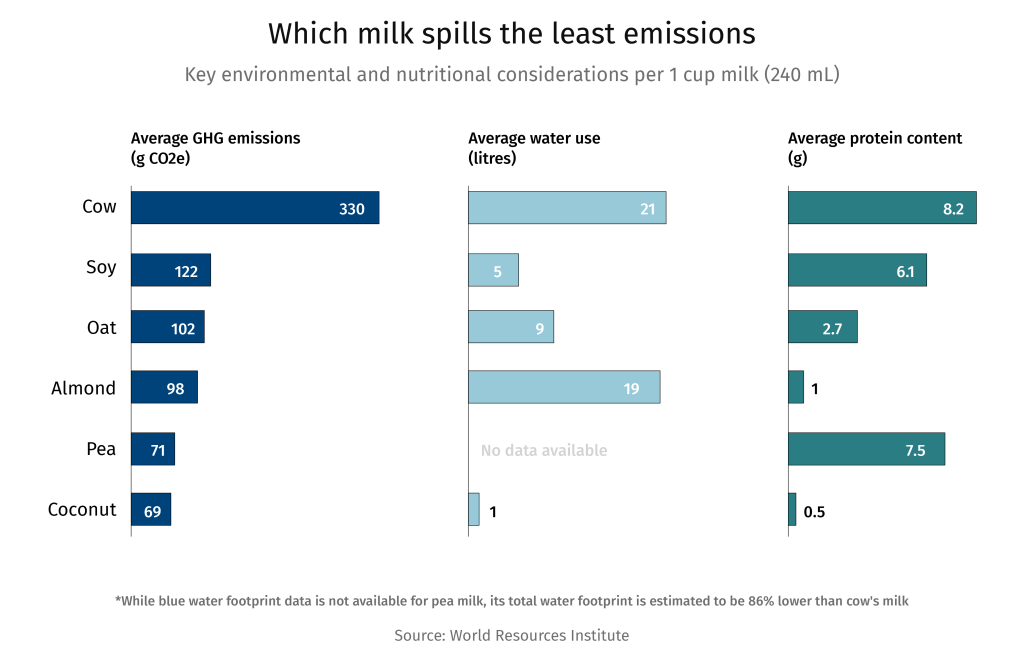
Got eco-friendly milk? It appears consumers can’t have all three—nutrition, low emissions and water conservation—when picking milk. Good old-fashioned dairy is the most emissions- and water-intensive but also the most nutritious, according to a World Resources Institute study. Almond appears to be the greatest disappointment: consuming almost as much water as dairy but is rather unwholesome. The winner appears to be the lesser-known pea milk.
Canadian cleantech remains a man’s world. Women were paid 17% less than men in 2023 in the environmental and cleantech (ECT) space—more pronounced than the 12.8% wage deficit women face in the overall Canadian economy, Statistics Canada data shows. Even though women in the industry (41.6%) were almost twice as likely as men (24.6%) to have a university diploma or degree. Overall, 7 in 10 jobs were held by men in a sector that represents 1.7% of all Canadian jobs in 2023.
A garbage truck’s worth of plastic enters the ocean every minute.That catastrophe is what makes Ocean with David Attenborough compellingviewing (now out in cinemas). “In front of us is a chance to protect our climate, our food, our home,” said Attenborough, the famed 99-year-old biologist. Oceans absorb 30% of CO2 emissions from human activities, yet only 2.4% of oceans are protected—compared to the global pledge to protect 30% of the ocean by 2030. The UN, which is hosting a conference on oceans next week in Nice, France, notes that of its 17 Sustainable Development Goals, protecting “Life Below Water,” remains the most underfunded.
The Institute In Action
In British Columbia, John Stackhouse joined a meeting between the Greater Vancouver Board of Trade and Calgary Chamber to discuss Canada’s role in global natural gas exports.
Myha Truong-Regan attended the Walrus Talks, Power Economy: Using Electricity to Change Cities, Homes, and Industry recently, to hear seven climate thought leaders and practitioners argue why the future is and must be electric.
Varun Srivatsan spoke to an audience at the Saskatchewan First Nations Energy Forum last week on equity financing and the importance of capacity, capital and consent to resource development.
On the team’s reading list
Fantasyland, a 500-year history of “How America Went Haywire” by Kurt Andersen. Read John’s review here.
Hotshot: A Life On Fire by River Selby, on wildfires and insights on U.S. federal fire policy, Indigenous land use and ecological history.
Is A River Alive? by Robert Macfarlane, tracks flowing water in Ecuador, India and Canada.
Who is government: The Untold Story of Public Service, by Michael Lewis, explores the vast complexity of American bureaucracy.
Curated by Yadullah Hussain, Managing Editor, RBC Climate Action Institute.
More than 100 mineral projects, valued at $107 billion, are at various stages of development in Canada over the next ten years. Unlocking that potential requires diversified capital flow, both domestic and foreign, for Canada to emerge as a commodity powerhouse.
With Chinese capital constrained by stricter federal rules, American capital is the natural partner to help develop Canada’s mineral resources, given the two countries’ geo-strategic alignment. Still, recent bilateral trade tensions with the U.S., suggest Canada should be clear-eyed entering into new partnerships and diversify capital sources to derisk projects.
If part of a broader security framework, Canada can position itself as a key pillar of the U.S.’s focus on breaking China’s hold on the supply chains of several commodities critical for defence, energy and high-end manufacturing. New cross-border commodity supply chains could serve as the bedrock of a North American high-end manufacturing, defence and energy infrastructure revival.
Building metal and critical mineral projects requires patient, long-term investors who can guarantee either long-term offtake agreements or security of demand to ensure their economic feasibility. To derisk projects, Canada could broaden its capital base beyond the U.S. and tap various global sources of foreign capital that are on the hunt for strategic assets—provided they meet Canada’s national interest and energy security thresholds.
Canada in the Great Resource Game
Canada’s vast natural resources present compelling investment opportunities. Crucially, they’re becoming strategic assets for G7 and other allies in a fragmented world.
Mineral development also gives Canada an opening to service several core verticals—automotive, energy equipment, defence, and high-end manufacturing. With the right strategy, Canada can position itself as a new manufacturing supply chain hub in a geopolitically-charged world, as we wrote in The New Great Game.
But injecting geopolitics into the minerals development space is a double-edged sword.
This was evident in recent years with China, a major supplier of foreign direct investment (FDI) in the global mining sector. Its involvement in Canadian minerals over the past few years have come under strict scrutiny on security concerns—coming to a head in 2022 when Ottawa ordered three Chinese entities to divest from three Canadian mining companies. The move has largely frozen Chinese interest in Canada’s minerals’ sector.
American companies are seen as more natural partners for Canada to develop mineral resources, given the countries’ long-standing geopolitical alignment. Despite the U.S. trying to squeeze Canada on trade, defence and several sectors such as lumber, automotives and steel and aluminum, the synergies on metals and minerals could be strategic for both countries. Recent U.S. rhetoric aside, there is a sense that collaboration on several metals and minerals supply chains would fortify North American energy and national security.
Trump charts a new direction
Washington’s approach to minerals development is still being laid out.
Signals indicate that the U.S. is poised to act decisively on critical minerals1 and other resources it considers vital for defence, technology, and semiconductors. The White House has fast-tracked 10 mining projects, signed an executive order aimed at stepping up deep-sea mining within U.S. and international waters, and floated the prospect of investing directly in mining companies, including through a proposed U.S. sovereign wealth fund.
U.S. President Donald Trump’s hawkish stance on resource-rich Greenland, the recent signing of a minerals deal with Ukraine, and interest in one with the Democratic Republic of Congo, suggests minerals are a strategic asset in the U.S. quest to counter Chinese dominance.
Canadian Prime Minister Mark Carney’s interest in connecting trade talks with U.S. national security, dovetails with American interest in energy and minerals development. As recently as December2, the two countries had invested in a critical mineral project in Yukon, part of a broader bilateral collaboration under the Canada-U.S. Joint Action Plan on Critical Minerals Collaboration and the Canada-U.S. Energy Transformation Task Force.
The U.S. and Canadian governments have already injected billions in capital into the space. Between 2021-2024, the U.S. government funded at least 24 critical minerals and materials projects, including five in Canada jointly with the Canadian government. Ottawa has also funded at least another five projects as of early 2024.
While Canada is keen to partner with its American counterparts on mineral development, it has taken measures in recent months to place some guardrails over its assets in a world that’s become more transactional and unpredictable. In March 20253, the Innovation, Science and Industry Ministry, responsible for Canada’s investment review, expanded the criteria for national security review to include economic security, in a move seen directed at the U.S. And in April 2025, the Government of Ontario introduced new measures “to prevent foreign governments or corporations from claiming Ontario’s critical minerals.”4
Securing geo-strategic capital
To further derisk its resource base, Canada should tap into a wide variety of capital that’s on the hunt for strategic assets.
The Canadian mining sector is already a major capital magnet. There are currently more than 100 mineral and mining major projects underway in Canada at various stages of development (announced, in review, approved or under construction) valued at more than $107 billion in capital, according to the Natural Resources Canada’s major projects database. And the list has ballooned in recent years as interest in Canadian resources has grown. But where will the capital come from?
As miners gear up for future development, they could tap four sources of capital: self-financing, global equity markets, foreign state-owned entities, and sovereign wealth funds (SWF)— each aligned to different investment horizons and risk appetites.
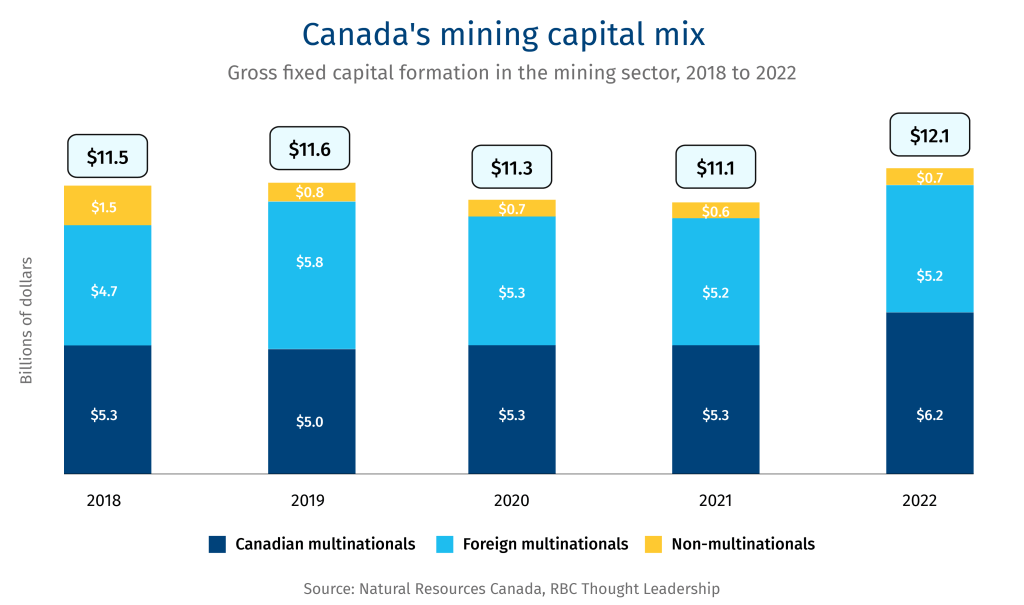
Foreign capital is already a well-established feature of Canadian mining, making up around 40-45% of investments flowing into the sector over the past few years.
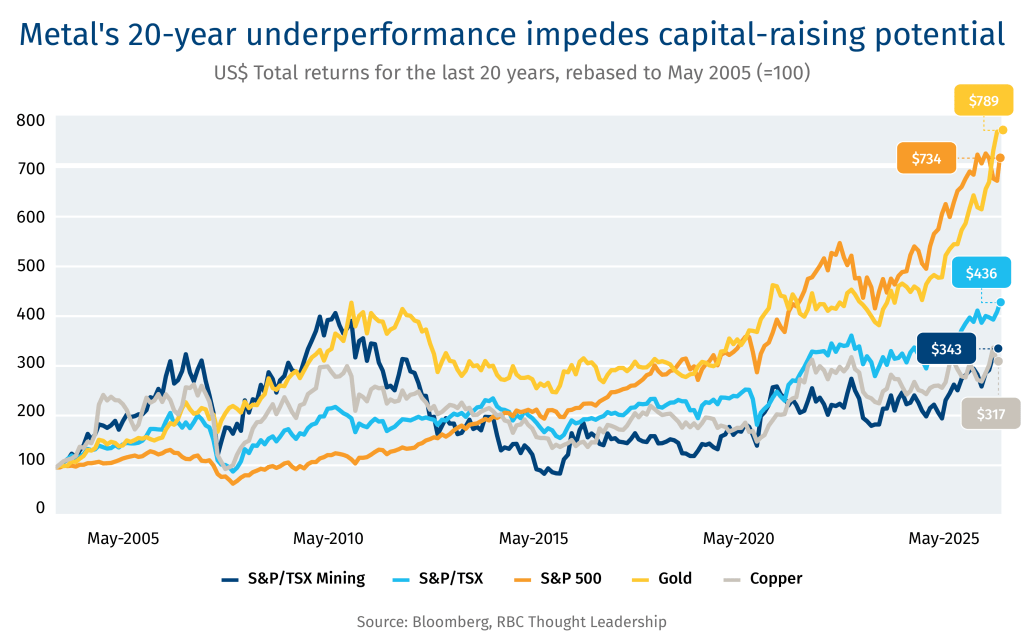
Self-financing: Over the past two decades, capital raising for the minerals sector has been challenged as mining and mineral companies have lagged both the underlying commodity and the broader index. Across equities specifically, this underperformance is even greater on a risk-adjusted basis given the lower volatility in returns for both the S&P/TSX Composite and the S&P 500.
This has emerged as a key financing challenge for companies. Yet a new commodity super cycle, driven by geopolitical and energy transition dynamics, could drive renewed investor interest in the sector. Despite the market underperformance, Canadian miners are generally in good shape to partially fund projects. The sector enjoys financial strength and discipline as evident from its 0.7x capex-to-cash-flow over the past 12 months (compared to 1x in the past 10 years), indicating that funds are available to invest, while the debt burden has also fallen considerably in recent years5.
All told, the S&P/TSX metals and mining firms have accumulated as much $14 billion in excess cash flow over the past 12 months, ready to be deployed globally6. While Canada could attract a portion of that, companies will still need to tap into a variety of other capital sources to finance projects.
Equity markets: Public equity markets remain a viable capital source. New corporate equity issuance is also an attractive option from institutional and Western capital, majority of which is composed of passive or long-only funds. While investor risk appetite has been lukewarm, new macroeconomic and geopolitical drivers, coupled with strong company balance sheets could shift investor sentiment.
State and SWFs: Sustaining some of these projects with long gestation periods require geopolitical actors that take a long-term view on strategic resources. They are already on the hunt: between 2022-2024, we estimate that about 20% of global mining M&A originated from sovereign wealth funds (SWFs). The share of state-linked transactions was almost certainly higher, since the majority of China’s 18% share of global deals would have been done through its state-linked corporates.
State capitalism extends beyond sovereign wealth funds, and could include corporations that are linked to or championed by governments.
Among such state-owned entities, not all actors would be classified as high geopolitical risk like those from China, in terms of threatening market control or transferring minerals’ intellectual property (IP). Clean energy infrastructure funds linked to public pensions funds, sovereign wealth funds or large private equity firms are also eyeing opportunities in mining. Canada’s well-capitalized pension funds could also play a role here.
Other deep-pocketed investors—such as Middle Eastern sovereign wealth funds and state-owned entities—could be more active in the future. While an important source of capital, they could pose security challenges, ranging from shifting geopolitical alliances or bilateral diplomatic spats, such as Canada’s diplomatic fight with Riyadh in 2018 over Saudi Arabia human rights record.
Containing China
The issues around security of strategic assets cannot be underestimated, and will only gain more traction, as evident with Washington and Beijing locking horns over supply chains. As President Trump embarks on signing trade deals with several countries, he may pressure those nations to purge Chinese capital from their mining supply chains.
That wouldn’t be entirely without precedent. Concerns over Chinese capital compelled the prior U.S. administration of Joe Biden to enhance its internal review of new Chinese investments in critical minerals and other strategic sectors7. In the past, Washington has also raised concerns more broadly about new Chinese investment in its allies, putting pressure on close trading partners Canada and Mexico to fortify their review processes.
Bolstering the Investment Canada Act That has already triggered a shift in how Canada has handled Chinese investments in recent years. In 2022, the Investment Canada Act (ICA) national security provisions were enforced to require the divestiture of Chinese investment in three Canadian critical minerals companies with lithium mining activities. In doing so, the critical minerals sector was flagged for enhanced government scrutiny8.
Further amendments over the past year give the federal government enhanced scope to complete a national security review for any new foreign investment in Canada, not just those with controlling interests, and greater scrutiny of investments by state-owned entities (SOE), which primarily targets China.
Amendments also asserted quasi-extraterritorial powers of the ICA – that the foreign assets of Canadian businesses were within scope of ICA review in case of foreign SOE acquisition.
Canada’s expanded reach Combined with the fact that Canada has major mining concentration—the Toronto Stock Exchange and the TSX Venture Exchange represent 40% of the world’s public mining companies and are home to more than a 1,000 listings—, the ICA’s quasi-territorial means it’s a powerful tool for policing some Chinese investments abroad. Canada has recently asserted this authority, with two Canadian companies attempting to re-domicile to avoid the ICA review.
In the case of a more significant break with China, President Trump may seek a broader Chinese investment purge by Canada as the cost of participating in U.S.-centric supply chains. For one, it could push Canada to test its powers under the ICA. It could also take issue with some legacy investments by Chinese state-owned companies in large Canadian miners (see Managing legacy Chinese investments).
However, a provoked China could retaliate against Canada by closing its markets to certain exports, similar to its tariffs on Canadian canola in March, or by further weaponizing its supply chain.
Even as China’s capital or long-term supply agreements may no longer be welcome in the Canadian mining sector, it remains a major supplier of industrial equipment and parts. Western governments could replace Chinese equipment over time, but it is sand in the gears of further developing resources. Trump’s recent backtracking on Chinese tariffs at the behest of American corporations points to the importance of Chinese materials in the global economy.
Managing legacy Chinese investments
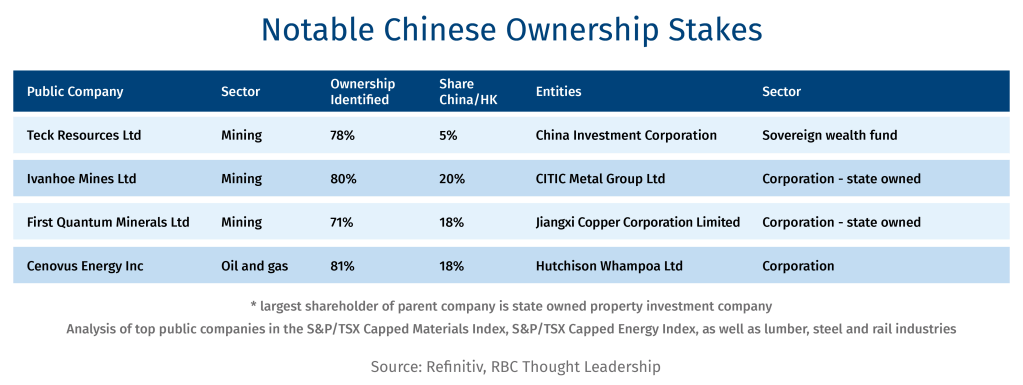
Analyzing the largest public Canadian mining companies reveals three with material Chinese ownership from state-owned entities. No major U.S. mining companies have similarly significant or state-sponsored Chinese interests.
Given that these are legacy investments, the Canadian government lacks the legal authority to compel their divestiture, notwithstanding the shifting national security lens.
In the U.S., President Trump’s recent political pressure may have compelled the planned sale of Hong Kong-based Hutchison Whampoa’s stake in Panama Canal and other ports to an American-led consortium (currently paused while under review by China). Ergo, other tools may be within the Canadian government’s control to achieve its aims, but they could come at the cost of provoking China and damage to Canada’s reputation as an investor-friendly jurisdiction.
Canada’s investment opportunity
The world’s looking at Canada as a stable and dependable commodity player to help diversify its commodity supply. It’s also a generational opportunity for the provinces and the federal government to unlock resource developments that are rich in gold (vital as a safe haven commodity), copper, iron and critical minerals. The right strategy, investments and security measures can help power Canadian mining.
Contributors: Cynthia Leach, Assistant Chief Economist, RBC Economics Shaz Merwat, Energy Lead, RBC Thought Leadership Vivan Sorab, Senior Manager, RBC Thought Leadership Yadullah Hussain, Managing Editor, RBC Thought Leadership
[5] The sector’s capex-to-cash flow of 0.7x over the past 12 months and debt-to-cash flow ratio of 1.1x are both well below their 10-year averages of 1.0x and 2.1x, respectively.
[6] Float-cap weighted average trailing twelve month operating cash flow less capital expenditures less dividends less buybacks across the S&P/TSX Metals and Mining Index (GICS Level 3)
➔ A battery storage project going live and an approved SMR project suggests Canada can build
➔ Mark Carney’s cabinet: The fixer, the insider and the skeptic
➔ General Fusion needs financial infusion
Hot takes
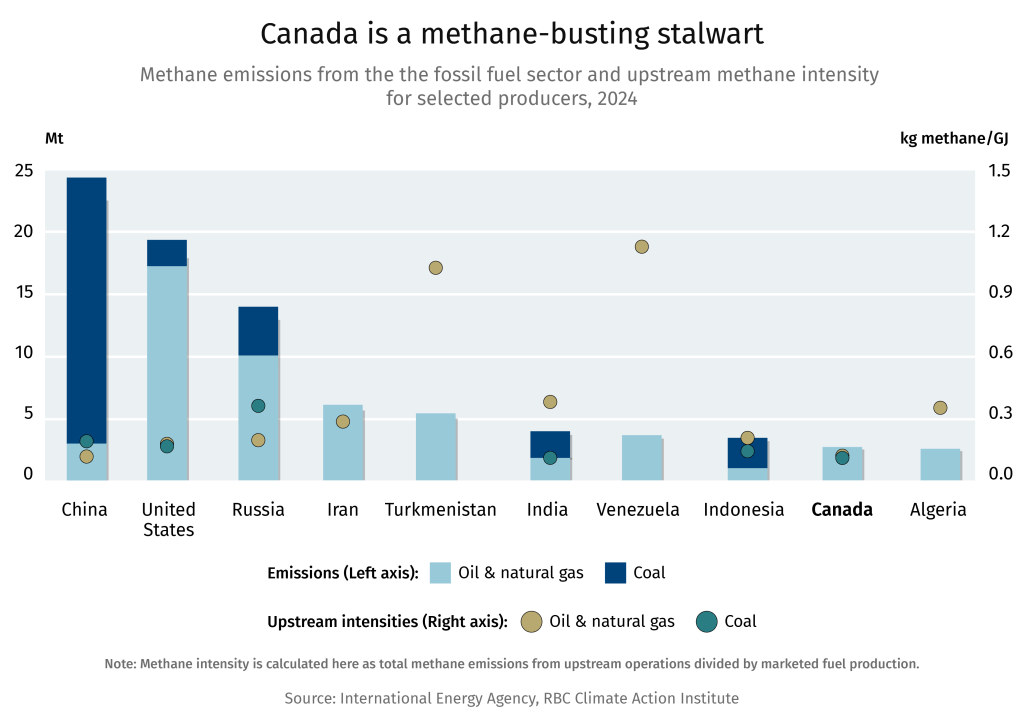
➔ Canada is a methane-busting powerhouse. The International Energy Agency ranks Canada as among the lowest in methane intensity among major oil and gas producers including the United States, Russia and Iran. Emissions from methane, a far more potent greenhouse gas than carbon dioxide, remains at a high level globally despite pledges and available solutions that can lower fossil fuel emissions at “near zero” costs, the IEA estimates. Worse: methane emissions remains widely underreported globally, the agency said in its latest Methane Tracker report.
➔ The U.S. is going after solar power—and showers. A new U.S. Republican proposal aims to rollback popular tax credits for home solar and electric vehicles. The sweeping proposal to gut several incentives in the Inflation Reduction Act and other programs will save the government US$560-billion over a decade, but raise U.S. household costs by 7% by 2035, analysts say. The cuts could also impede U.S. efforts to cut emissions by 43% to 48% below 2005 over the next decade. Another U.S. proposal aims to scrap rules that conserve water in shower and toilets; also on the block: the Energy Star program that’s been credited for boosting energy efficiency and cutting utility bills.
➔ The number of rare earth projects in Canada currently stand at 12. These constitute projects that are active in the exploration, resource estimation, or the preliminary economic assessment phase. Three separation and processing facilities and two rare earth elements (REE) recycling plants already exist, according to a report by Vivan Sorab, senior manager, clean technology. Fixing a couple of bottlenecks could help fast track the 12 projects. First, government investment, such as provincial funding in Saskatchewan, can help bring rare earth processing facilities closer to commercialization. Offtake agreements at competitive prices could also help Canada’s REE industry get a foothold.
➔ Planting trees isn’t enough to tackle climate change. The world needs a global industry focused on removing carbon via nature-based and man-made solutions from the atmosphere at scale. Listen to a new episode of Disruptors X CDL: Innovation Era, where John Stackhouse and Sonia Sennik sit down with David Keith, a pioneer in carbon removal and founder of Carbon Engineering, to explore what it will take to build a low-carbon future.
POLICY
The fixer, the insider and the skeptic
Tim Hodgson, the new federal energy and resource minister, has been charged by his boss Mark Carney to make Canada a “leading energy superpower.” Hodgson will have to play the role of fixer in the resources sector, that includes mending relationships with Western provinces and Indigenous groups to make that dream come true. So far, he has been warmly received in the West, where grievances over Ottawa’s attitudes towards fossil fuels run deep—and remain live.
Julie Dabrusin, the Minister of Environment and Climate Change of Canada, has elicited a different reaction from oil and gas provinces. Her bio boasts a “strong stance against oil sands expansion,” raising concerns. But her insider knowledge as a parliamentary secretary to the Ministers of Natural Resources and Environment and Climate Change, and a member of the Natural Resources Committee, will be vital for Ottawa to streamline and fast-track project developments, including oil and gas pipelines. The Prime Minister seems open to the idea of new fossil fuel pipelines, as is Quebec. “Quebecers are saying, ‘There’s no way Trump is going to control the oil we produce in Alberta.’ So, can we export it to Europe through Quebec instead of being stuck with Trump? There’s openness. I feel things are shifting,” Premier Francois Legault said recently, adding that no concrete projects had been proposed.
While former environment minister Steve Guilbeault is now in charge of the heritage file, his skepticism about the economics of an east-to-west oil pipelines on his first day back in parliament, has also raised eyebrows. His portfolio appears to include Parks Canada, which gives him a platform to raise issues of biodiversity and nature erosion brought about by climate change. Committee to watch: Cabinet committees are where most of the business of government is transacted. One committee to watch will be the Build Canada committee, tasked with considering issues as diverse as housing, infrastructure, Indigenous economic prosperity, climate action and a host of others. The tag-team of Hodgson and Chrystia Freeland–chair and vice-chair of the committee–will provide a mix of private sector expertise and cabinet experience.
CLEANTECH
Financial infusion for General Fusion
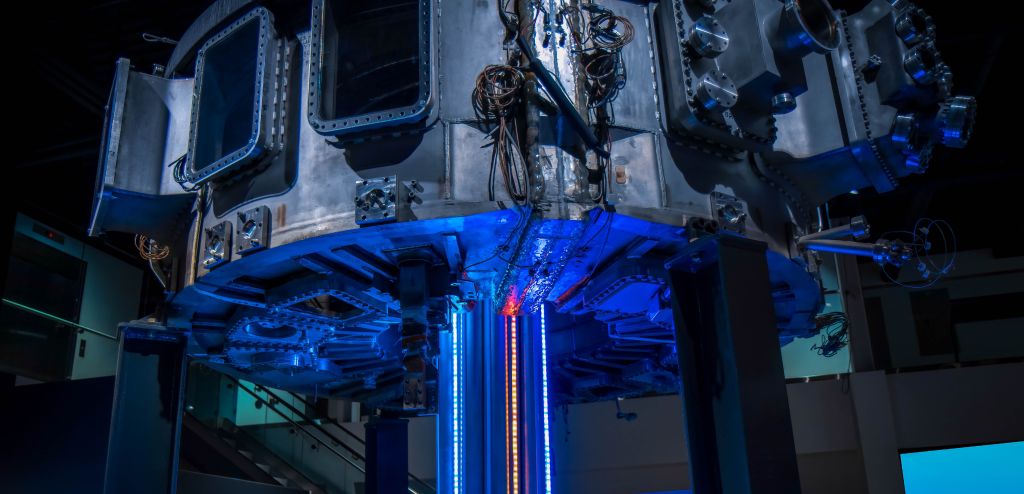
General Fusion needs fresh capital. The B.C.-based nuclear fusion company announced a technological breakthrough that brings it one step closer to bringing zero-carbon fusion tech to the electricity grid. But the company also cut its headcount due to “unexpected and urgent financing constraints,” and is seeking new capital “to finish the job,” CEO Greg Twinney said.
Nuclear fusion mimics how stars create energy—an incredibly complex technology that’s perpetually “five years away,” but has gained investor interest in recent years on the back of several tech advances.
General Fusion also needs the stars to align. While the Canadian federal and provincial governments have injected funds in the company in the past, Twinney is looking for more financing including from the private sector, as the company’s competing with “nationally funded fusion programs around the world.” Since 2002, the company has raised US$440.53 million, according to PitchBook, and include counts Temasek, BDC Capital, and Chrysalix Venture Capital and Jeff Bezos as investors. The company recently hired the former CEO of the Amazon.com Inc. founder’s rocket company Blue Origin LLC as a strategic adviser.
The U.S. has been spending US$800 million annually in fusion technology in recent years, while China has injected between US$1-billion to US$1.5 billion annually. There are now around 98 demonstration plants or prototypes operating globally, another 13 under construction and 33 more planned.
Domestic rivals are also nipping at General Fusion’s heels. Montreal’s Fuse Energy raised US$32 million in new funding late last year, with the U.S. National Nuclear Security Administration (NNSA) as its largest collaborator and potential customer. The idea is to make Fuse to NNSA, what SpaceX is to NASA, said its 24-year-old CEO JC Btaiche. Last year, the Canadian Nuclear Laboratories called for a Canadian Fusion Strategy to help the country advance its net-zero emissions target by 2050. Canada provides the least government support for fusion development on a per capita basis among its G7 peers, CNL noted.
Trends, Tech & Science
➔ Ontario is set to build the G7’s first SMR. The province gave Ontario Power Generation the greenlight to start building the first of four small modular reactors at its Darlington New Nuclear Project—the first nuclear project in the province in three decades.
➔ The Oneida energy storage operation is now live. The development in southern Ontario, near Hamilton, in Haldimand County is the fourth largest battery storage facility in the world. Its 278 lithium-ion battery units will store enough power to keep southern Ontario buzzing when demand peaks, or other sources get too expensive. Powered by renewable sources, the Indigenous-led project will reduce Ontario’s emissions by up to 4-million tonnes, equivalent to taking nearly 850,000 gas-powered cars off the road for a year. It may soon become a model for big demand users (such as datacentres) as they explore options. Read John Stackhouse’s blog on how battery storage gives us even more optionality to ensure costs remain low, relatability remains high and Canada’s climate commitments are fulfilled.
➔ Recycling seems to be going out of fashion. A report by think-tank Circle Economy found only 6.9% of the 106-billion tonnes of materials used annually by the global economy came from recycled sources, a 2.2% point drop since 2015. While the use of recycled materials rose 200-million tonnes from 2018 to 2021, overall material consumption rose much faster, offsetting these improvements, Circle noted.
The Institute In Action
➔ John Stackhouse attended the B7 Conference in Ottawa last week, where he presented preliminary findings from RBC’s joint project with Columbia University’s Center on Global Energy Policy, focused on exploring policy options for gas and LNG.
➔ On April 30th, John and Lisa Ashton presented our latest research on agriculture, food, and postsecondary education to the Deans Council-Agriculture, Food and Veterinary Medicine in Ottawa, highlighting key insights on talent development, innovation, and sector resilience.
➔ Read Head of Climate Research Myha Truong-Regan’sfour key takeaways from a recent gas and electricity event organized by the Toronto Region Board of Trade.
➔ As part of the Salazar Center for North American Conservation’s symposium in Vancouver this month, the RBC Climate Action Institute co-hosted a roundtable with Nature United. Lisa hosted the discussion, which focused on how nature conservation and stewardship can be positioned as a strategic asset in pro-growth plans for nature-dependent sectors, including forestry, agriculture, and mining.
➔ On the team’s reading list: The Measure of Progress: Counting What Really Matters by Diane Coyle Bad Company: Private Equity and the Death of the American Dream, By Megan Greenwell; Transcend: Unlocking humanity in the age of AI, by Faisal Hoque.
This is the 50th anniversary year of the G7, and when its leaders meet in Alberta next month, many will wonder if the group has another 50 years in it.
Their finance ministers may have the same questions this week when they meet in Banff, asking if the champions of democratic capitalism can overcome a tariff war, threats of stagflation and growing concerns about the U.S. debt.
The fate of democratic capitalism may hang in the balance.
I spent part of last week in Ottawa, with a group called the B7, made up of business leaders from across the seven leading democratic economies, and didn’t come away feeling enthusiastic about the West’s great project. Since 1975, when the world was struggling with oil shocks and monetary crises, the G7 has helped maintain economic and financial stability. Most of the heavy lifting was done by the U.S., with assists from Germany and Japan, but the coordination of economic and monetary policy across the broader group was essential, too.
Now that’s fading. You just need to look at Donald Trump’s visit to the Persian Gulf last week to see how much capital’s centre of gravity has shifted. China and Latin America are laying claims, too.
And if trade follows geopolitics, we can expect more disruption to come.
So what can the G7 do? Perhaps develop new ways to generate, attract and reinvest capital.
For too many years, the public and private balance sheets of the leading democracies have focused on short-term objectives. Meanwhile, the non-democratic world has amassed capital for decades-long projects.
With their economies struggling and debts growing, G7 countries now face a $15-trillion infrastructure gap, to rebuild supply chains, expand production of critical minerals, develop capacity for AI-powered economies, and decarbonize energy systems.
Canada can help shift the alliance’s thinking to those longer-term needs. That won’t be easy given political tensions between the Trump administration and most of the G7 allies. But with U.S. engagement, the G7 can create new approaches for democratic capitalism, including:
coordinated investments across countries.
more institutional capital for priority projects.
preferential approaches to procurement.
joint approaches to procurement, especially of energy, advanced technologies and critical minerals.
shared standards, measurements and principles.
You can read the B7 group’s final communique here.
Seesawing trade relationships between the U.S. and China have brought critical minerals to the forefront. In fact, Rare Earth Elements (REEs), the 17 elements with physical and chemical properties that make them key inputs to some of the world’s most critical technologies, were China’s latest weapon in its trade arsenal against the U.S.
Following recent trade talks with the U.S., China expressed a willingness to walk back the REE export restrictions it announced in April. However, the threat re-emphasized the West’s collective dependence on China. In September 2020, the first Trump administration signed an executive order warning of the country’s critical dependence on China for REEs and called for increased domestic production. Even if the U.S.’s attempts at re-shoring supply are successful, its production will be a fraction of China’s, making international collaboration, including with Canada, a critical requirement.
Seven numbers tell the current state—and Canada’s potential role.
67%
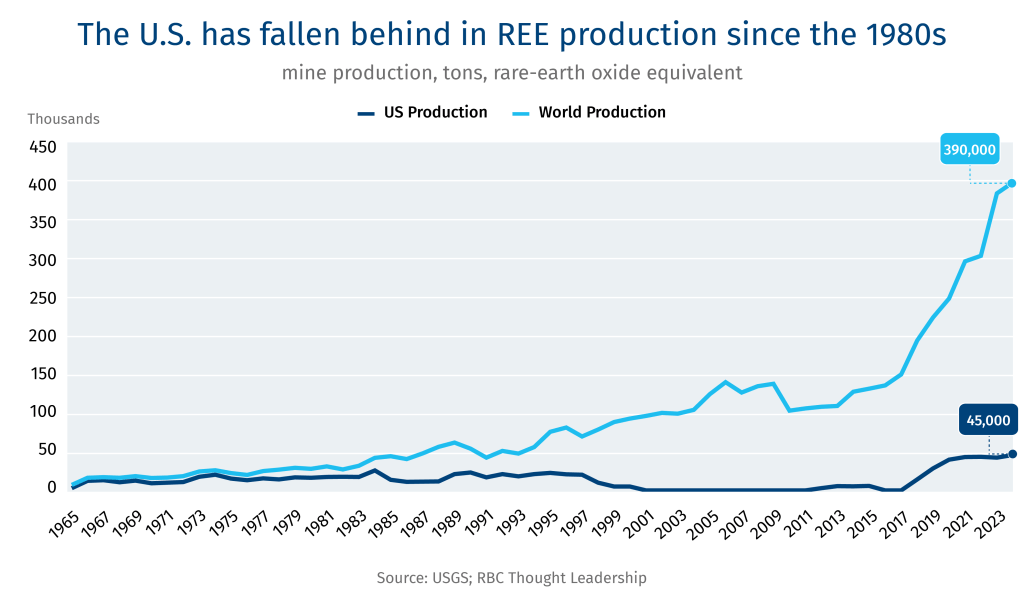
Share of global REE mine production that comes from China. While the U.S. produces 11% of the global total, the second highest, it exports nearly all its production for further processing. The U.S. was once the world’s leading REE producer but has been losing share since the 1980s, with China dominating global production since. Canada has produced REEs in the past, but currently does not have any domestic mining operations.
99%
Share of Chinese control over Heavy REE separation and processing. Heavy Rare Earths, such as terbium, enable REE magnets to work in higher temperature applications without losing performance. China also controls 90% of Light REEs, including neodymium, which are also key inputs to magnets. Countries like Estonia and Canada have or are developing LREE and HREE separation and processing capabilities.
92%
Share of Chinese control of global REE magnet manufacturing. While REEs are used in various forms (e.g., as powders for polishing optical equipment, and as catalysts in petroleum refining), they are also used to make the world’s most powerful permanent magnets. These magnets are used in high-performance technology including military aircraft, submarines, and electronics and are difficult to substitute.
16
The number of U.S.-entities to which REE exports were banned by China in April, as trade tensions between the two nations escalated. Fifteen of these entities were linked to the manufacturing of defense technologies.
US$439 Million
How much the U.S. Department of Defense has spent since 2020 to strengthen its domestic REE supply chain.
$22 Million
What the U.S. has invested in Canadian REE processing companies since 2023. Canada is considered a “domestic source” of critical minerals under the U.S. Defense Production Act (DPA), so Canadian companies are eligible to receive investments under DPA Title III.
12
REE projects in Canada currently active in the exploration, resource estimation, or preliminary economic assessment phases. There are also three separation and processing facilities and two REE recycling plants. To capitalize on the opportunity, a few things could speed things along. 1/ Government investment: Provincial funding in Saskatchewan, for example, has helped bring REE processing facilities closer to commerciality. Government support could also help fast-track projects. 2/ Secure offtake for REE products: As discussed in The New Great Game, decades of focused industrial policy and technology development have left Western manufacturers competing with lower-cost products while being bound to tighter environmental standards. Guaranteed offtake at competitive prices could help Canada’s REE industry get a foothold.
Vivan Sorabis Senior Manager, Clean Technology, at the RBC Climate Action Institute
Thriving natural ecosystems are critical to growing North America’s resource-based economy. “Build, baby, build” and “Drill, baby, drill” policies are driven by immediate concerns such as trade, economic sovereignty and security, and affordability. But plans for growth should consider building up our foundational asset–nature.
As part of the Salazar Center for North American Conservation’s symposium in Vancouver last week, the RBC Climate Action Institute co-hosted a roundtable with Nature United. The topic: How nature conservation and stewardship can be positioned as a strategic asset in pro-growth plans for nature-dependent sectors, including forestry, agriculture, and mining.
Here’s what we heard:
Focus on the economic benefits. There continues to be a movement away from models protecting landscapes with no public activity or access to those efforts that benefit local economies–creating jobs, spaces for recreation, and new streams of revenue (environmental credits) and businesses (ecotourism, responsible logging, forest management). This shift reflects that durability in conservation requires people. A good example of this is the Heiltsuk Tribal Council’s 2021 purchase of the Shearwater Marine Ltd., a 63-acre resort and marina in Bella Bella, B.C. The Heiltsuk regained an important part of their territory and unlocked new economic opportunities, including eco-cultural tourism.
Communicate with people where they’re at. The energy transition risks leaving behind rural communities dependent on fossil-fuel extraction for employment and economic activity. Revitalizing these communities via nature-based economies can be part of the solution, but generating buy-in depends on how the opportunities are communicated, requiring a focus on place-based values and priorities. In West Virginia, a hotspot for coal mining and a focus of the Trump administration’s efforts in building back the coal industry, there has been a new wave of growth via a nature-based economy focused on job creation and regenerate abandoned towns. Opportunities span responsible forestry and forest restoration, conservation rehabilitation within renewable energy projects on retired coal mine sites, and growing tourism along the Appalachian Mountain range.
A debate over assigning nature a monetary value. While opponents argue against commodifying nature, proponents say that valuing nature enables a broader scope of stakeholders to invest. This debate has shaped nature’s role in environmental offset markets and other mechanisms that drive investment in nature, from budgetary accounting to green bonds. For example, the town of Gibsons, B.C. developed an eco-asset strategy, integrating the value of nature in its planning processes. As a result, the town determined that green infrastructure was cost effective in managing stormwater, resulting in the reduction of associated development costs for residential and commercial projects.
3 things to watch:
Proposed U.S. tax cut package could authorize the sale of nearly 300-million acres of public lands. There is growing concern that these lands will be sold for mining, logging and drilling with limited restraint on the scale. This is an issue for Canada, as well, since neighbouring public lands provide intact natural landscapes for wildlife crossing borders on migration routes. It also plays a critical role in the U.S.’s ability to meet global biodiversity and climate commitments. Public Lands in Public Hands Act is a piece of legislation that aims to prohibit the Secretary of the Interior and the Secretary of Agriculture from selling land of more than 300 acres to a non-federal entity. The bill was initially sponsored by Ryan K. Zinke, Republican congressperson from Montana. While seeking further support, the bill is with the Congress’ Subcommittee on Forestry and Horticulture.
The role of the UN Agreement on Biodiversity Beyond National Jurisdiction on Arctic development. While the agreement has 114 country signatories, only 21 have ratified it so far. That’s well short of the 60 required for it to take effect and ensure the conservation and sustainable use of marine biological diversity in international waters. The Arctic is home to some of the world’s largest intact marine ecosystems–the protection of which is a timely consideration with Russia, China, the U.S. and Canada eyeing Arctic-based tourism, commercial fishing, trans-Arctic shipping, and deep-sea mining.
Can the Carney government build up Canada’s natural resources in a pro-growth environment? The Liberal government platform outlines a plan for expediting and scaling energy and critical mineral projects, parallel to commitments to expand Canada’s nature conservation efforts. The challenge for a Liberal minority government will be integrating Indigenous reconciliation, nature-positive efforts, and resource extraction pathways while addressing tensions such as the pace of projects and the value of nature in extraction-based sectors.
Lisa Ashton, Agriculture Policy Lead, RBC Climate Action Institute
Martha Rogers, Senior Economist, The Nature Conservancy/Nature United


 EN
EN