WP Menu

wp-menu

Ontario’s clean grid strategy, released this week, has the “all-of-the-above” vibe to it

The province is doubling down on its nuclear power prowess, keeping natural gas in play and eyeing more hydro even as it plugs in more solar and wind into the grid.

There’s a lot to like in the provincial government’s plan to meet rising long-term electricity needs. The plan to invest more in nuclear will add certainty that Ontario’s electricity grid would facilitate Net Zero goals by 2050. But its reliance on natural gas in the near term could threaten short-term climate targets.

Ontario’s “Plan For A Clean Energy Future” signals the government’s recognition that the province’s economic growth depends on more clean electricity: a greener grid would help the province attract billions of dollars in transition energy investments such as electric vehicle supply chains, decarbonizing industries, energy storage, and critical minerals.
But the plan falls somewhat short in putting much of the focus on the 2040s. The province’s decision to maintain natural gas-fired power in the energy mix could set up a potential political dust-up with the federal government, which is poised to finalize its Clean Electricity Regulations.


Our key take-aways from Ontario’s clean energy plan:

Demand Surge

By 2050, Ontario’s electricity capacity—how much power the province can produce at one time—is expected to more than double to 88,000 megawatts. The province will also have to replace power generation capacity of 20,000 megawatts over the next three decades. Coupled with rising population over the next few decades, Ontario will be challenged to power the grid without raising its emissions.

The province is also attracting unprecedented investments in electric vehicle battery manufacturing, clean steelmaking and other sectors, partly as a function of subsidies, which would strain capacity. Five major investments in the new energy economy alone will increase industrial demand by 21% once online.

Nuclear Renaissance

Ontario is going big on new nuclear reactors to meet that demand. Plans to make Bruce Power Generating Station the world’s biggest nuclear site with a 4,800-megawatt expansion, announced last week, were augmented to add three innovative small modular reactors to one announced at the Darlington nuclear site in 2021.

Stand-by Source
It’s what the province calls its “insurance policy.” Natural gas will continue to play a role as the Darlington and Bruce sites undergo refurbishment over the next decade (at its peak four nuclear units representing 9% of Ontario’s capacity will be offline). To that end, the province is in search of 1,500 MW of new gas generation capacity (growth of about 15%, if met). But that could upset the province’s plans to cut emissions: a recent Independent Electricity System Operator (IESO) estimate foresees nearly tripling electricity sector emissions by 2030 as gas plants stand-in for nuclear power generation in the short-term.

While some gas will be needed to meet rising peaks as hot days become more frequent, there are other options that could be explored as we noted in our recent report, Power Shift, How Ontario Can Cut Its $450-Billion Electricity Bill.

Facilitating Renewablese
The province is procuring electricity storage, which is critical if it’s to deploy more cost-effective wind and solar power. It’s current procurement of 2,500 MW of clean energy storage is the largest battery procurement in Canada’s history. The Oneida Energy Storage Facility and Marmora Hydroelectric Pumped Storage Project are also positive developments.

But as the province’s grid integrates more renewables, a buildout of transmission lines will be critical to plug in power from remote sites. The province has not yet outlined a strategy to address that looming transmission challenge.

What’s Missing

The province has the long-term plan mostly right in our view: nuclear and hydro firming up a lot of new renewables, with some questions around peaking power from gas with carbon capture or hydrogen. Efforts to expand hydropower capacity and exploring promising low-carbon technologies such as renewable natural gas and renewable diesel will also ensure the province remains a clean-tech hub.

But a lack of near-term focus on key infrastructure is concerning. Transmission will be critical to integrate renewables, investments to facilitate electrification of households by local distribution companies will be needed to ensure the grid can handle EVs and heat pumps, and smarter technology can help facilitate more limited natural gas peaking in the near and medium term.

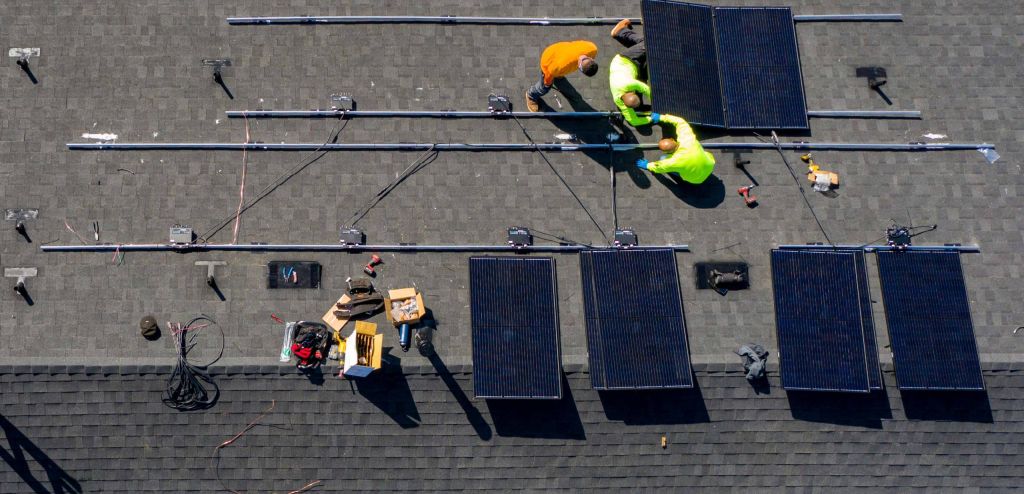
The plan takes some good first steps in facilitating a more flexible electricity system, by allowing consumers to access their utility data via Green Button, an energy efficiency tracking program, and considering more use of distributed energy (like rooftop solar) or energy conservation.

Ontario’s long-term nuclear investment will secure a visible path to 2050 climate goals. But the province will need to move quickly and make costs more visible to consumers if it’s to avoid major investments in emitting infrastructure over the next few years.

WP Menu

wp-menu

  • Ontario faces a $450-billion investment bill by 2050 to meet surging demand and emerge as a green-grid hub that’s attractive to industries looking to cut or eliminate their emissions.
  • Rising electricity demand could strain the province’s grid as early as 2026 and even trigger chronic shortages by 2030.To meet pressing short-term needs, Ontario is eyeing more gas-fired power generation, which, unabated, could clash with the federal government’s forthcoming Clean Electricity Regulations.
  • The province can avoid making expensive decisions on its future energy mix by pursuing robust policy measures and incentives to save power.
  • Timely action to conserve energy could save enough electricity to power 3 million homes by early 2040s—a little more than half of the province’s residential electricity demand.
  • Readily available technologies such as smart thermostats, electric panels and AI-enabled HVAC systems that can substantially improve grid efficiency and sustainability would give Ontario the room to manage demand peaks without building new gas plants.
  • The measures could save Ontario ratepayers at least $500 million annually in avoided generation costs over that time.

Smart homes can unlock grid efficiencies

Tech-savvy homes could save Ontario ratepayers $500 million annually
  • 1
    Smart thermostats
  • 2
    Solar panels
  • 3
    Smart HVAC
  • 4
    Distributed battery storage for EVs
  • 5
    LED light bulbs for conservation
  • 6
    Insulation and air sealing
  • 7
    Smart electrical panel
  • 8
    Wi-Fi enabled plugs
  • 9
    Energy-efficient appliances
  • 10
    Heat Pump Water Heater

Ontario is bracing for a wave of electricity demand

The province’s rapidly growing population, electrifying industry, and aging nuclear reactors will shift the province’s electricity grid from decades of comfortable surplus to critical shortages in just a few years. By 2026, the province’s grid could strain to meet demand during peak hours; by 2030 soaring demand could outpace generation capacity. Clearly, building more power generation is going to be unavoidable in the coming years. The Independent Electricity System Operator (IESO), which runs the province’s power market, plans to import power (primarily from Quebec), expand renewables, store power in batteries, and dabble with new nuclear reactors to meet demand. But IESO is also seeking bids for new gas-fired power plants that are vital to manage near-term capacity pressures.
The strategy could clash with Ottawa’s expected Clean Electricity Regulations (CER) that will prohibit unabated gas-fired power plants to ensure a Net Zero electricity grid by 2035. Electricity generates 7.7% of Canada’s greenhouse gas emissions—the 6th largest source of emissions in the nation. The country boasts one of the cleanest grids in the world, but that label is threatened as provinces such as Ontario, Alberta and Saskatchewan remain heavily dependent on natural gas and see it as a critical and reliable source to meet future demand. The expected CER builds on federal coal regulations that stipulate phasing out unabated coal-fired electricity units by 2030, and aims to avoid grid emissions as other sectors electrify. Rising demand for electric vehicles and heat pumps, electrified steelmaking, and battery manufacturing, among other segments, will cause the grid to expand rapidly over the next few decades. Left to their own devices, some provinces have planned to add natural gas power, partially offsetting emissions cuts from these sectors. The federal government believes recently announced electricity tax credits should offset the cost of taking gas out of the power mix or fitting it with carbon capture, but several provinces say building enough non-emitting power to meet Ottawa’s timeline is going to be difficult. Alberta and Saskatchewan who are rapidly phasing out coal as a power source, are reluctant to shut the door on natural gas without ensuring the reliability of other sources. The CER’s rollout in its current form and timeline could set up a federal-provincial fight. Ontario, the country’s largest economic engine and most populous province, faces the most immediate challenge. But investing $450 billion in generation, transmission, and distribution by 2050 without knowing the scale of demand is risky. To ensure an accelerated but orderly transition, Ontario will have to do both: boost supply, but also find other ways to manage demand in the interim. RBC’s $2-Trillion Transition report estimates annual investment of $5.4 billion in renewable and batteries are needed to save around 11 million tonnes in electricity emissions, but natural gas will have to play a stabilizing role in ensuring an orderly energy transition. As Ontario’s reliable generators such as nuclear plants get refurbished and coal power shuts down, more natural gas generation is the province’s preferred route. But that strategy is at odds with federal Net Zero targets: A recent IESO estimate foresees nearly tripling of emissions by the end of the decade, as gas plants meet increasing demand and declining nuclear production.

Stepping off the gas

What can the province do to bide its time and avoid making an early call on costly natural gas generation? One way is to use policy levers to delay demand. Energy conservation can buy the province time to build large-scale, cleaner power sources such as hydro and nuclear instead of gas, saving money long-term, as we wrote in Price of Power last year. Deferring hefty financial commitments will keep electricity affordable and gives Ontario time to redefine itself as a low-carbon manufacturing hub that attracts companies involved in electric car supply chains, green metal production, and clean-tech. The good news: technology exists that Ontario can use to navigate the looming demand rush and delay committing to natural gas-powered generation. Changing consumer attitudes and behaviours to promote flexible demand and energy efficiency will also be key to unlocking significant savings and alleviating grid pressures.
By 2040, Ontario could meet nearly 20% of its electricity demand growth via economically viable conservation
Electricity conservation is often overlooked, since it has done little to cut emissions in Ontario’s already-green grid, but it could emerge as a vital policy lever to avoid new gas plants. By 2040, Ontario could meet nearly 20% of its expected demand growth—or 28 terawatt-hour (TWh)—via economically viable conservation. Doing so could save Ontario ratepayers at least $500 million annually by 2040. It’s worked before. Over the past two decades, albeit against slowing demand growth, IESO’s conservation programs have outpaced demand. By funding retrofits and LED lighting, among other actions, electricity conservation doubled between 2014 and 2021, from 11 TWh to nearly 22 TWh. Demand grew just 7 TWh in comparison. To maximize potential, Ontario will need to leverage technology to shift peaks to avoid building more capacity now.

Smart tech to the grid’s rescue

Ontario can build on its reputation as a leader in grid innovation to support smart energy use. It’s one of the only jurisdictions globally that has a smart meter installed in nearly every home. That’s allowed the province’s widespread time-of-use pricing policy to manage peak demand. Flexible demand can also respond better to variable zero-emitting sources, like wind and solar. Given the right financial incentives that inspire attitude change, consumers may be prompted to install home solar panels, smart thermostats and smart electrical panels that can improve grid efficiency. Currently, Ontario’s centralized grid system is underutilizing these technologies. Here are a few ways the province can leverage new technologies.
  • Make it pay: EV owners save money when they charge their cars overnight. But what if they could use it themselves when they turn on their induction stove or sell the leftover power in their car back to the grid? Our research suggests EV owners could earn as much as $100 per month. Those payments could offset distribution upgrade costs for households, although infrastructure upgrades will be needed to facilitate the new vehicle-to-grid technology. Set right, they can save the province money, too, since storing power in EVs may be cheaper than single-use utility-scale batteries. Giving consumers the right price signals can facilitate more responsive demand.
  • Make it smart: Home monitoring systems attached to electrical or smart panels can combine with Wi-Fi-enabled plugs and smart thermostats to remotely control appliances, lights, heating and cooling to avoid electricity peaks. In Montreal, start-up Brainbox’s artificial intelligence software cut electricity use 10% in a major office tower by weeding out inefficiencies in the system.
  • Make it responsive: With smarter systems in place, electrical panels can alert consumers that the dryer they just turned on is more economical to run in an hour. Or when the system predicts new peaks, smart water heaters could pre-heat and store hot water for later in the day. This could be key to managing a grid that’s increasingly reliant on variable renewable power.
  • Make it accessible: Ontario’s current demand response programs focus on paying industry and large buildings to cut demand during peaks. Finding ways to encourage widespread, distributed adoption of these technologies can help consumers benefit (and get paid) for the services they can provide to the grid, easing the cost of electrification.
  • Make it cost-effective: Traditional energy efficiency can also ease the strain on Ontario’s grid. Think analog solutions like LED light bulbs, energy-efficient appliances, efficient pool pumps for homeowners. Retrofit programs will also need to be scaled up, with support from IESO.

Actions for a green & efficient grid

Ontario is in an enviable position to get electricity consumers to change behaviour. Adjustments to time-of-use pricing are already set to shift demand away from peaks. But with overnight set as the cheapest rate, consumers may not be willing to alter behaviour beyond EV charging. A well-established track record of successful efficiency programs does not mean consumers will invest in retrofits without education or financial incentives. The key will be to help consumers understand the cost of their actions and price them sufficiently to change behaviour. We’ll need to support household investments in technologies to get there faster and assist lower income households through transition. The action points below should ideally be pursued together to maximize benefits for consumers, industry and the province. Ideas to move forward
  • Ontario’s Ministry of Energy should direct IESO to ramp up and expand cost-effective energy efficiency programming.
  • Energy efficiency programs should finance low-income households’ adoption of smart technologies such as panels, thermostats, and water heaters to ensure they can benefit from new rate structure.
  • Economic incentives in existing time-of-use pricing structure are not large enough to nudge consumers to shift their energy consumption to off-peak and mid-peak hours. After supporting tech adoption and real-time pricing feedback, the Ontario Energy Board should introduce higher on-peak rates and set time-of-use pricing as a default, with financial support for low-income households.
  • Utilities should take a more consumer-minded approach to pricing that clearly communicates to ratepayers the pricing consequences of their electricity use patterns.
  • As a policy default, allow homeowners and building operators with onsite renewable power generation capacity to sell surplus power back to the electricity grid during peak demand.
  • Future electricity subsidies from all levels of government should not be focused on subsidizing more generation, regardless of cleanliness. Rather they should support adoption of new technologies to make the grid smarter and accelerate behaviour changes.

For more, go to Climate Action Institute (rbc.com).

Download the Report

Download

Contributors:

Lead author: Colin Guldimann, Senior Economist, RBC Climate Action Institute

RBC Climate Action Institute Myha Truong-Regan, Head of Climate Research Yadullah Hussain, Managing Editor Darren Chow, Senior Manager, Digital Media Shiplu Talukder, Digital Publishing Specialist

WP Menu

wp-menu

Canada has the world’s longest coastline. At 243,000 km, it can circle the world nine times. This expanse plays a critical role in the Canadian economy, supporting 300,000 jobs, anchoring critical trade routes and providing over $31.7 billion annually to gross domestic product from marine transportation, seafood production and energy. Yet its greatest potential—as a weapon in the fight against climate change—remains largely untapped. The ocean’s power to sequester carbon—pushing us closer to our climate targets—is unmatched by any other sector. It absorbs 31% of global CO2 emissions, capturing and storing blue carbon through a variety of processes involving mangroves, seagrass (known as eelgrass in Canada) and salt marshes.i And the financial toll of ignoring it is growing as more nations take on the challenge of mapping their seabeds and developing nascent blue carbon markets. Blue carbon credits are worth two to three times more than typical carbon credits—largely because of significantly higher sequestration potential and additional ecosystem services. Early estimates suggest Canada’s blue carbon represents a US$3.5 billion market opportunity.

Eelgrass and Salt Marshes

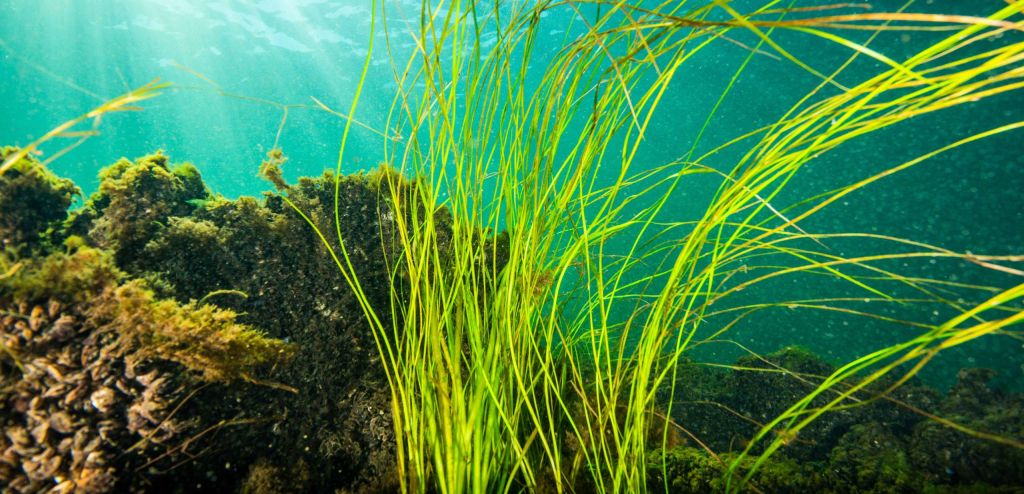
  • Eelgrass is a breed of seagrass found off Canada’s Atlantic, Pacific, Arctic coasts.
  • Eelgrass promotes biodiversity and is a habitat for marine life like eels, lobsters, crabs, and cod. Unlike kelp or seaweed, eelgrass develops roots and flowers.
  • Salt marshes are found across Canada’s coastline. They act as a transitional zone between terrestrial and marine environments and are a buffer against coastal erosion.
  • Salt marshes provide a critical habitat for a variety of plant and animal species.

The great Canadian coastal mapping challenge

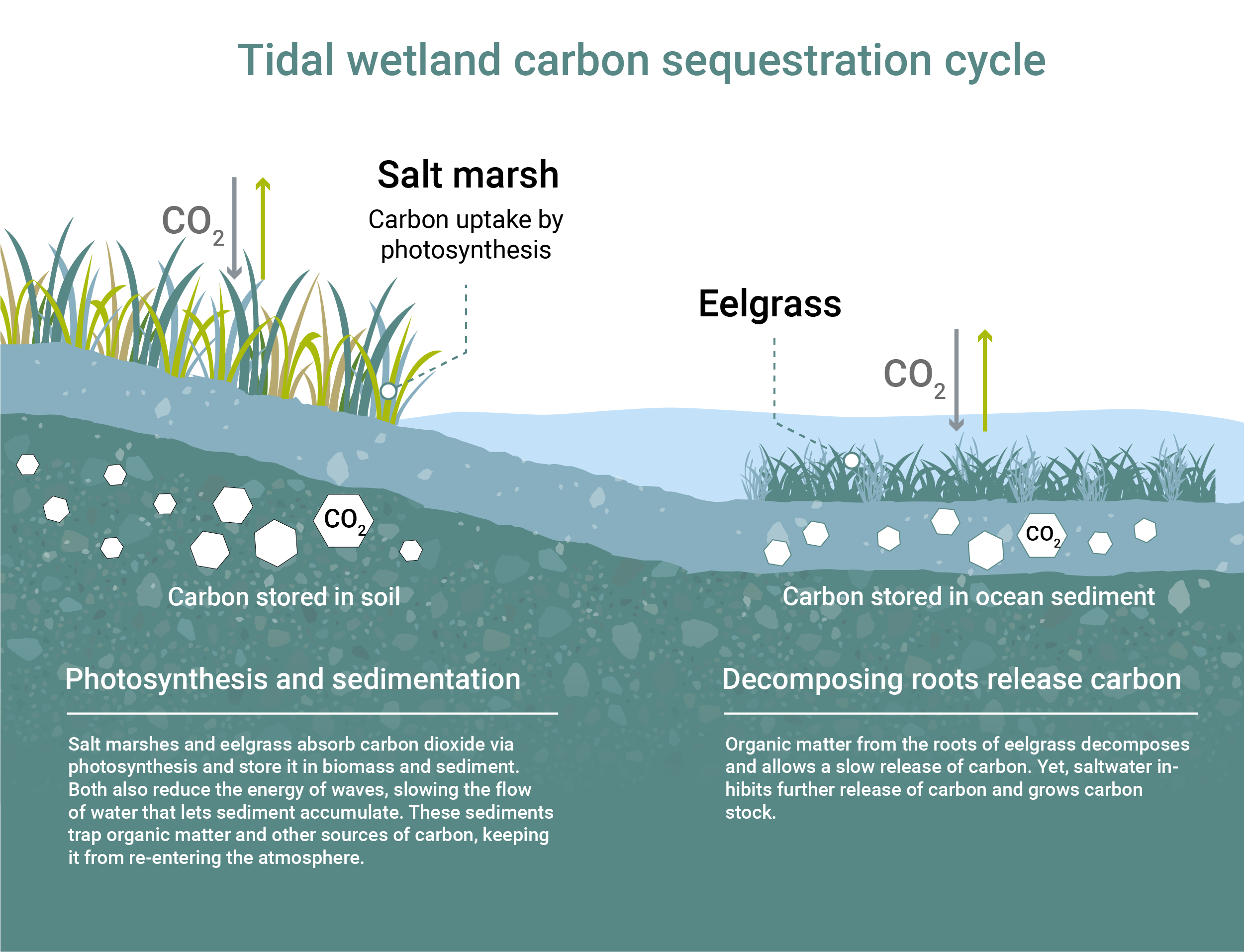
Realizing this economic potential could bring significant cross-sectoral benefits: helping fisheries become more resilient, rewarding conservation, and improving national defense through the mapping of seabeds and coastlines. But to make it happen, we’ll need to grapple with many of the same obstacles facing soil sequestration efforts, including scientific challenges that begin with how to measure and verify the carbon sequestered in coastal ecosystems. Tidal wetland carbon sequestration cycle

Our most precious blue carbon assets

While other marine organisms, like macroalgae, can sequester and store carbon, eelgrass and salt marshes are the most promising blue carbon assets we have. This is both because of their sizeable current carbon stock and the immediate benefits their ecosystems provide. Through chemistry and the process of photosynthesis in marine organisms, carbon dioxide dissolves in water to create carbonic acid—a form of carbon that doesn’t easily escape the ocean. Eelgrass (a marine plant with ribbon-like leaves) can store twice as much carbon as terrestrial forests while salt marshes can sequester carbon 11 times more efficiently than grasslands and around 125 times more than forests. Roughly 90% of eelgrass meadows in Atlantic Canada have been decimated since the 1930s. And salt marshes in many coastal regions have been converted into agricultural lands or have been flooded to make way for hydroelectric dams. Current figures suggest the global blue carbon market is worth over US$190 billion (81 million metric tons of carbon) with countries like Australia, Indonesia, The Bahamas, and many more involved.ii Despite Canada’s potential to become the largest player in this market, our presence will remain minimal without a national blue carbon strategy. Action is needed now. Here are three key steps for building a made-in-Canada blue carbon strategy:
  • Step 1: Indigenous communities must take the lead

For any blue carbon strategy to be successful, Indigenous communities must be key stakeholders in its management. Many of the remaining eelgrass meadows and salt marshes across Canada are in or are close to Indigenous communities and are protected for food provisions and ecological integrity. For instance, the Cree protect eelgrass because Canada geese, a staple in their diet, feed on it. Tasks like mapping and monitoring carbon stock levels—critical to voluntary offset markets—can be best organized and led by Indigenous communities. And ultimately, blue carbon programs can provide a new source of revenue for these groups. Technology that can map ecosystems and measure carbon sequestration is not currently effective in Canada. Satellite imaging and drones can be helpful in certain circumstances, but unlike tropical regions where clarity is high, Canada’s coastline waters are too murky to be mapped with these tools. While hyperspectral imaging might overcome present challenges, satellites are only now starting to use sensors with such capabilities. The most effective approach, while lengthy, is to manually map locations. Many Indigenous communities across Canada have already started to do this. Funding for skills development in data science and information systems is needed to ensure Indigenous groups are prepared to administer carbon credit protocols as effectively and profitably as possible.
  • Step 2: Start with mapping and research

A voluntary offset market for Canada’s blue carbon assets is key—and won’t happen without mapping and research. As with agriculture, we need to develop effective measurement, reporting, and verification (MRV) systems that can ensure activities that sequester higher amounts of carbon are monitored accurately. Over 300,000 hectares of eelgrass meadows and salt marshes have already been identified along Canada’s shoreline. But this is likely just a sliver of our blue carbon assets (experts say we may have only mapped only 10% of our entire coastal seabed). Mapping of Canada’s shoreline has been both understudied and underfunded—particularly in comparison to other nations. The Bahamas recently found over 9.2 million hectares of seagrass meadows off its coastline, dwarfing Canada’s official stock.iii Mapping takes money. Though the Blue Carbon Canada initiative received $1.59 million in funding for three years of research to assess the carbon stock of eelgrass, salt marshes, and kelp, much more will be needed to truly understand Canada’s potential. What’s holding us back? In part, a mindset that identifies extraction as more important than conservation. For a long time, mapping Canada’s coastline did not present as viable a business case as mining or fishing. The rise of a blue carbon market could change that narrative. But Canada will need to catch up to countries that are decades ahead in mapping their coastlines. Canada has only started to earnestly advance efforts to study its shoreline in the past three years. The United States is arguably decades ahead, particularly in studying the carbon sequestration cycles of eelgrass and salt marshes. This is mainly due to the many restoration, water quality, and biodiversity projects involving seagrass and salt marshes across the U.S., especially in Chesapeake Bay.
  • Step 3: Start conserving and restoring eelgrass and salt marshes now

Canada’s viable blue carbon market can be valued at US$130 million annually or US$3.5 billion cumulatively by 2050, according to figures on the assessed size, carbon stock, and rate of sequestration of its eelgrass and salt marshes. By 2030, eelgrass and salt marshes located in tidal wetlands could sequester 17.2 MT of CO2e/year. iv However, according to new research from the University of British Columbia, the total carbon stock of eelgrass in the top 100 cm of sediment holds an estimated 88 million metric tons of carbon. v A voluntary blue carbon credit market can equip companies and organizations to buy and sell carbon offsets to meet their own objectives. Unlike compliance markets, voluntary markets are self-governed and do not legally mandate that participants reduce emissions. But voluntary markets complement compliance markets and offer private actors the opportunity to buy, generate, and sell carbon credits. Asset owners, like businesses, private investors, public agencies, or non-governmental organizations can purchase these credits. The benefits of voluntary markets are that unlike compliance markets, projects that are more experimental and innovative can be launched (in part due to less restrictive regulatory oversight). They offer participants the opportunity to reduce their emissions outside of a compliance market and expand the pool of participants.
Type of carbon offset market Compliance Voluntary
Regulated by national, regional, or international reduction regimes
Open market for trading and generating credits
Rely on independent standard bodies
Legally mandated reduction of emissions
Optional reduction of emissions
However, to develop a successful and effective blue carbon program, we must evolve from conserving current blue carbon assets to restoring lost marine ecosystems. Eelgrass and salt marsh ecosystems already have a substantial carbon stock and are efficient at sequestering carbon while acting as vital marine habitats. It takes years to plant eelgrass or restore salt marshes that can then grow to store and sequester carbon. And destroying them leads to the release of carbon that has been stored for millennia. Conservation activities should be focused not only on declaring protected environmental areas, but also limiting any human activity that can disrupt them.vi Such initiatives can include the development of management plans for coastal ecosystems, promoting sustainable fishing, and preventing the destruction of habitats. Restoration of eelgrass and salt marshes will take at least a decade to complete and these projects will come online gradually. Still, it’s critical that we start now. Eelgrass meadows can take at least a decade to grow and even longer to sequester carbon efficiently. Salt marshes can grow swiftly by comparison, but oftentimes we need to reflood areas that were converted for agricultural use. Restoration projects can issue valuable and high-quality carbon credits, but they also have the net benefit of increasing fishing stock as a marine habitat. Ultimately, conservation and restoration initiatives must also support local community values and needs, biodiversity, and rural development. Releasing the carbon currently stored in eelgrass meadows and salt marshes will also come with a hefty toll. The “social cost of carbon” is estimated at US$2.5 billion annually.

Conclusion: Perfection is the enemy of execution

Canada cannot wait for perfection. We must start executing a blue carbon strategy immediately. To succeed, the federal government should consider adopting a two-pronged approach. First, eelgrass and salt marsh ecosystems that currently store carbon ought to be protected. Policies should be developed with communities that depend on fisheries for their livelihoods to ensure their buy-in and participation in future blue carbon markets. A clear separation of departmental jurisdiction between Environment and Climate Change Canada (ECCC) and Department of Fisheries and Oceans Canada (DFO) can ensure program rollouts aren’t trapped in bureaucratic overlaps. For instance, ECCC has dominion over salt marshes till the high tide line, while DFO manages the ocean at large. Major funding for climate change research is mainly diverted to ECCC, oftentimes leaving DFO’s expertise and research on climate change aside. For this strategy to be effective, both departments ought to be involved and have their roles clearly defined. Through an intergovernmental top-down approach, the federal government can also motivate and guide provinces to collect data on existing blue carbon assets. Second, studies into the carbon stock of eelgrass meadows and salt marshes need further funding. Government should collaborate further with researchers to develop a national blue carbon stock account and understand that promising results will emerge within years, not months. This research will contribute to the policy development of any voluntary market that issues credits based on blue carbon. It will ensure measurements fit within the proper magnitude of carbon sequestration measurement. Blue carbon can be Canada’s defining initiative against climate change. We just need to rise to the challenge.

Contributors:

Lead author: Mohamad Yaghi, Agriculture and Climate Policy Lead, RBC

RBC Naomi Powell, Managing Editor, Economics and Thought Leadership Farhad Panahov, Economist Darren Chow, Senior Manager, Digital Media Acknowledgements: Kristina Boerder, Research Scientist Future Of Marine Ecosystems Lab, Dept. of Biology, Dalhousie University Mary O’Connor, Professor, Department of Zoology, Director, Biodiversity Research Centre, The University of British Columbia Melisa Wong, Ph.D., Research Scientist, Fisheries and Oceans Canada

  1. Nicolas Gruber et al.,The oceanic sink for anthropogenic CO2 from 1994 to 2007.Science 363,1193-1199(2019).DOI:10.1126/science.aau5153
  2. Friess DA, Howard J, Huxham M, Macreadie PI, Ross F (2022) Capitalizing on the global financial interest in blue carbon. PLOS Clim 1(8): e0000061. https://doi.org/10.1371/journal.pclm.0000061
  3. Gallagher, A.J., Brownscombe, J.W., Alsudairy, N.A. et al. Tiger sharks support the characterization of the world’s largest seagrass ecosystem. Nat Commun 13, 6328 (2022). https://doi.org/10.1038/s41467-022-33926-1
  4. C. Ronnie Drever et al., Natural climate solutions for Canada.Sci. Adv.7, eabd6034(2021). DOI :  10.1126/sciadv.abd6034
  5. Christensen, M.S. (2023). Estimating blue carbon storage capacity of Canada’s eelgrass beds. University of British Columbia.
  6. Additionality will be a challenge in some circumstances where eelgrass meadows or salt marshes may be located near tributaries of forests that have issued credits.

WP Menu

wp-menu

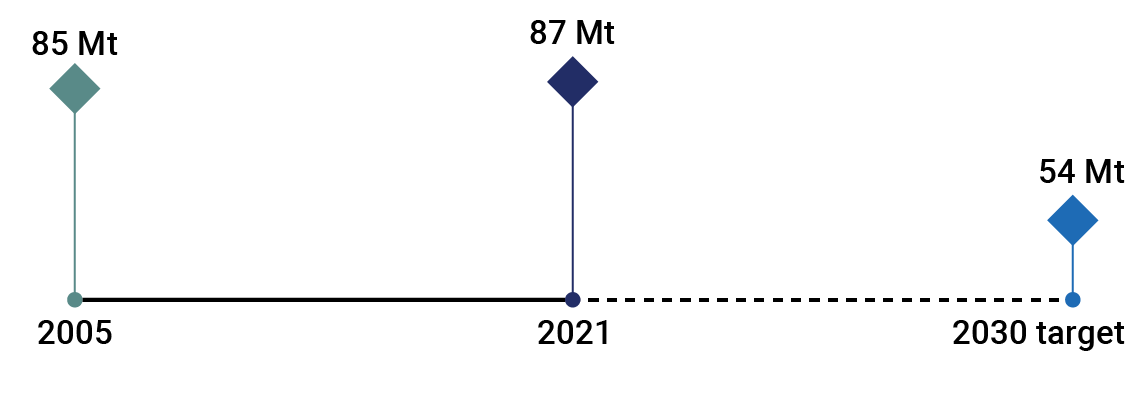
Canada’s agrifood sector contributes over 136 MT to the country’s annual emissions tally. By 2050, these emissions are expected to rise above 196 MT—representing 19% of the national total. As the world combats climate change, there has been a growing movement toward achieving Net Zero emissions across all sectors of the economy. But one sector that hasn’t been given what it needs to hit this target is agrifood. With a global population set to grow by two billion by 2050, agriculture needs to be integral to our national sustainability agenda. Producers must have the right tools to increase their adoption of climate-smart farm practices. And the entire agrifood supply chain recognizes that change needs to happen now. RBC, Loblaw, Maple Leaf Foods, Nutrien, Boston Consulting Group’s (BCG) Centre for Canada’s Future—with support from Smart Prosperity Institute/Natural Step Canada, and the Arrell Food Institute—have provided the initial support to launch the Canadian Alliance for Net Zero Agrifood (CANZA). At a high level, CANZA is about bringing the right people together across the food value chain and partnering sectors to significantly scale up investment and drive innovation at a national level, while being reflective of regional realities. CANZA will be a national voice for the industry and will utilize the power of the entire agriculture supply chain to spur change. The aim of this alliance is to cut emissions by 50 MT by 2030 and 150 MT by 2050. In late 2022, RBC, the BCG Centre for Canada’s Future, and the Arrell Food Institute at the University of Guelph identified six potential cross-cutting initiatives that could shape a Net Zero roadmap in agriculture. To make change as fast and effectively as possible, two workstreams have been established: the Carbon Farming Initiative and the National Biodigester Network Initiative. These will address the largest emission sources in the agrifood supply chain with the goal of reducing emissions by 50 MT by 2030. The Carbon Farming Initiative aims to develop a low cost, scalable, and nationally relevant measurement reporting, verification system (MRV) and create a carbon credit platform to help producers develop and monetize high quality carbon assets. The workstream will also help develop climate-smart products and a certification strategy to increase consumer awareness and demand. A first demonstration project in Saskatchewan will lay the foundation for additional pilots across the country that will cater to all farms. The National Biodigester Network Initiative seeks to develop a roadmap and model for scaling a ‘waste to value’ digester network in high emission areas across Canada. By creating policy and market incentives for agricultural digester development, the workstream will provide stable feedstocks and new economic opportunities. Upon the successful launch of these two workstreams, more initiatives will be introduced to help Canada reach its goal of cutting emissions in the agriculture sector by 150 MT by 2050. Ultimately, CANZA’s goal is to find mechanisms that financially reward farming operations for their conservation practices. The alliance seeks to build low carbon initiatives for farmers across the country and to scale the sector’s sustainability practices at an accelerated pace. Through this broad coalition, the agrifood supply chain will be able to take substantial steps toward reducing its emissions footprint. For more information, please contact mohamad.yaghi@rbc.

Canadian Alliance for Net Zero Agrifood partners

WP Menu

wp-menu

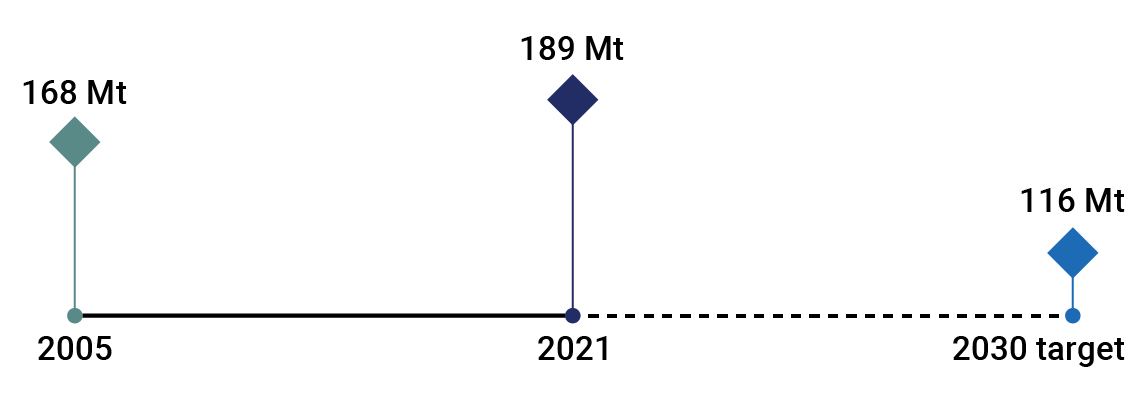
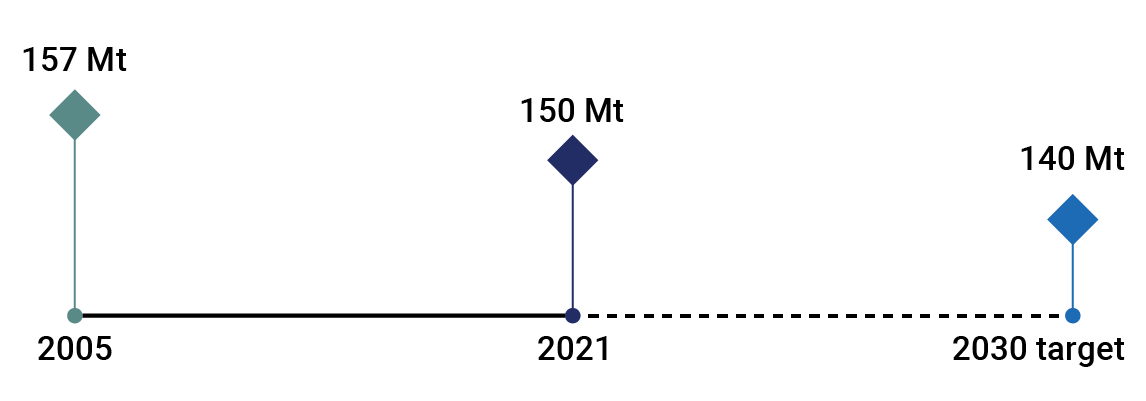
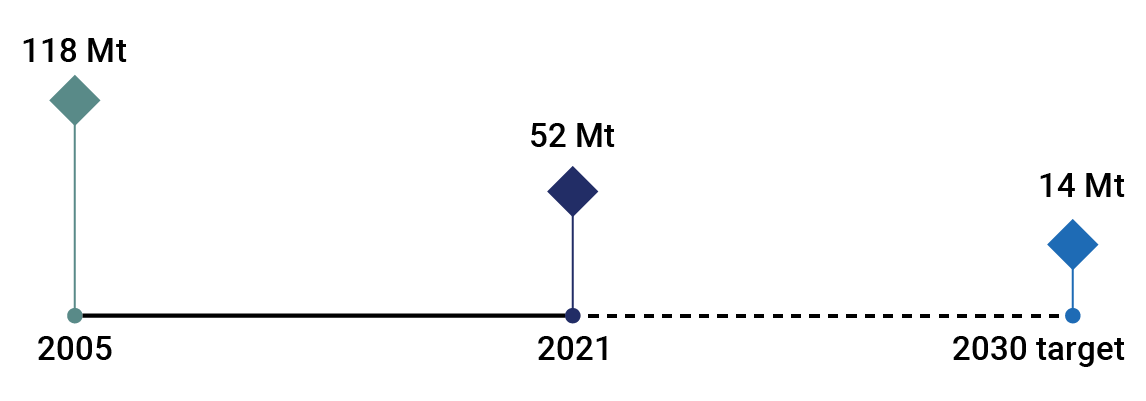
Scaling down Canada’s emissions rapidly to 440 Mt by 2030 will require cuts equal to around four times the drop seen during the pandemic. Canada’s latest National Inventory Report highlights the progress made on curbing greenhouse gas emissions but also the distance that needs to be covered to reach climate targets. Canadian GHG emissions stood at 670 million tonnes (Mt) in 2021, a 54-Mt contraction from pre-pandemic levels, but 1.8% above the 2020 lows. Scaling down Canada’s emissions rapidly to 440 Mt by 2030 will require cuts equal to around four times the drop seen during the pandemic. While emissions were 8.5% lower from the 2005 benchmark, achieving the federal government’s target of 40% lower emissions by 2030, as set out in the Emissions Reduction Plan (ERP), would require greater effort.
Encouragingly, existing policies have moved the needle: the coal phase-out triggered the largest cuts in the country, while methane reduction policies appear to have a lasting impact, pointing to policy efficacy. Spearheaded by the ERP, further cuts could be driven by recently announced climate policies such as investment tax credits for cleaner fuels, the proposed Clean Electricity Regulations and Oil and Gas Emissions Cap. Carbon pricing remains the cornerstone of the government’s emissions drive, and its continued rollout will be critical to hitting 2030 targets.
Here’s a look at how some of Canada’s most carbon-intensive sectors are managing their emissions:

Oil & Gas

  • Oil & gas is charged with cutting emissions by 73 Mt—the single largest cut in terms of volume among sectors to meet Canada’s 2030 targets.
  • A relatively cheaper fix for methane leaks combined with stringent government policies will help in cutting another 23 Mt.
  • Carbon capture, utilization and storage (CCUS) capacity is projected to reach 30 Mt CO2e per year by 2030, consistent with ERP expectations. If realized, the technology will deliver half the cuts needed to reach the target.
  • New oil and gas related projects valued at $200 billion would require additional heavy investments in abatement technologies such as CCUS to manage emissions.
  • Industry would need to quickly develop and deploy more abatement technologies and identify electrification opportunities across the value chain.
Path to 2030: The proposed oil and gas emissions cap policy is designed to slow and limit emissions, while investment tax credits could potentially bolster additional CCUS capacity.

Transportation

  • Canadian car fleet, accounting for half of transport emissions, grew 30% in past 15 years to reach 24 million. That’s pushed emissions higher despite improved fuel efficiency and exhaust systems.
  • Zero-emission vehicle (ZEV) registration is growing, but at a 1% market share (in 2021), the stock has yet to make a dent in emissions.
  • At current pace, Canada is expected to achieve 40% ZEV sales of the total market by 2030—short of its stated 60% target. ZEVs would make up 17% of the total Canadian car fleet.
  • Pandemic lockdowns saw a 27 MT drop in emissions in 2020, but traffic levels returning to pre-pandemic levels would likely see sector emissions rebound.
Path to 2030: Auto makers will need to accelerate EV development and offer consumers more choices to comply with ZEV sales target of 60% of total car sales by 2030 and 100% by 2035. Boosting the stock of emissions-free cars could tip the emissions scale later in 2030s.

Electricity

  • A major coal phase-out drove emissions lower in Ontario and Alberta over the past decade. Ontario’s emissions fell rapidly as it expanded its clean energy infrastructure, but maintaining a low-emissions grid is a challenge as its economy and population grows. Meanwhile, Alberta’s electricity emissions declined largely due to a switch from coal to natural gas. Expanding its promising renewables infrastructure will be key in bringing emissions down further.
  • Nationally, continuing coal phase-out will provide just under half of the required 38 Mt reduction (assuming coal-to-natural-gas transition).
  • Additional challenges lie in meeting rapidly increasing electricity demand, grid upgrades, and dependence on stable sources.
  • Meeting new demand entirely with natural gas could potentially push the progress back by 30 Mt.
Path to 2030: The proposed Clean Electricity Regulations could facilitate the deployment of cleaner energy sources to curb emissions from rising demand, and lay the foundation of a low-emissions infrastructure to replace retiring plants.

Buildings

  • Population growth and expanding floor space is driving building emissions faster than energy efficiency can offset. Housing demand is also unlikely to relent any time soon.
  • In half the provinces, the sector is emitting at above 2005 levels. Many regions remain highly reliant on fossil fuels as a heating source and require heavy investments to switch to cleaner fuels.
  • The sector requires a massive 33 Mt reduction to meet 2030 targets, a 39% decline from current levels.
Path to 2030: Retrofit grant and loan programs have struggled with low pick-up rates. Retrofitting 30% of existing real estate—, an immense challenge and expensive endeavour,—would take us only halfway to our target. Complex set of measures, including but not limited to stronger incentives and stringent regulations, could lead the way past 2030.

Conclusion

Emissions in half the provinces are trending either at above or close to the 2005 stating point, as each region grapples with its own set of unique challenges. Despite higher emissions in carbon-intensive provinces, they will likely see relatively faster cuts in the near term as current policies continue to deliver results, mainly due to methane reduction. Ontario and Quebec made headway in cutting emissions over the past two decades but will enter a slower reduction phase as they tackle the more challenging transport and buildings sectors.
A few key measures drove emission cuts over the past two decades, but further reductions will require greater provincial and federal focus—and co-operation. Emissions rising in tandem with an economic recovery could also prove to be a headwind. However, the emerging trend of economic growth decoupling from emissions and Canada’s willingness to implement tough climate policies are grounds for some optimism. Farhad Panahov is an economist at RBC. He holds a BSc in Economics from the University of British Columbia, and Master of Applied Science in Data, Economics, and Development Policy from the Massachusetts Institute of Technology.

WP Menu

wp-menu

Betting on the farm:

Leveraging soil to fight climate change

For generations, Canadian farmers have been financially rewarded for the food they produce. The more bushels of wheat a farmer grows—and the greater price that commodity fetches on markets—the larger the return will be.

Yet by embracing sustainable practices, farmers also hold unparalleled power to cut emissions, and to improve air and water quality, soil health and biodiversity.

Tapping that power will require capital. While the current potential of sustainable agriculture is robust, the economics underpinning it are not. We’ll need to price in sustainable practices while supplying the funding and financial instruments to de-risk and incentivize their use. And we’ll need to rethink an economic system that wholly rewards agricultural production while placing little value on preservation.

These efforts—supported by national MRV protocols, and cross-industry partnerships—can be the foundation of a world-leading sustainable agriculture strategy.

What are MRVs?

Measurement: A tool monitors reduction of emissions by farming activity.
Reporting: The measurement is submitted to a third party verifier.
Verification: The third party verifier certifies emissions.

Agriculture could be a much larger source of emissions reduction and removal

Source: Elis (2021). BCG Analysis

What are insets and offsets?

Insets: Organizations directly avoid or reduce emissions within their own supply chains.
Offsets: Companies or individuals purchase tradeable credits generated by renewable energy or other emissions-reducing projects. This credit negates or offsets the same amount of carbon emissions created by the buyer.


Hitting pay dirt:

Three financial pathways to a more sustainable agriculture sector

In this paper, we examine three financial instruments that could boost carbon storage in soil and create other benefits: carbon offsets, carbon insets, and government funding. All of these tools are currently operating at varying scales. However, their potential to make an immediate impact on sustainable farming ranges.

Insetting is currently the most effective mechanism to incentivize farmers to adopt new practices. Though broad consumer demand for sustainable food has yet to develop, agri-food companies have displayed a willingness to pay more for sustainable inputs as a way to reduce emissions in their own supply chains.

Government support will also be critical in the early days of this transition. Yet as it stands, Canadian government funding is lagging that of its global peers. This discrepancy could put Canadian farmers at a disadvantage as sustainable and reliant food systems become more important in the global marketplace. In all cases, reliable measurement, reporting and verification systems (MRVs) are key. Offsets are particularly reliant on MRV trials to build a foundation of market integrity and trust. Developing these systems will take time.

1 | Carbon Offsets

  • Short-term: Challenged
  • Long-term: Important

[inpage-tabs id=”2″ background_colour=”#ffffff”]

How do carbon offsets work?
  • ...
  • Projects
    Projects reduce or remove GHG emissions (for example, through direct air capture, reforestation, sustainable ag practices). Once the projects are validated, credits are issued and then verified by a 3rd party auditor.
  • ...
  • Offsetting
    Organizations or individuals can purchase external credits to offset their emissions.
For farmers, the return on offsets doesn’t add up

A farmer using sustainable practices receives roughly $8 to $13 in carbon credits per acre. But due to imperfect science and shaky measurement, a large portion of these credits may be withheld. That’s before multiple project costs deduct as much as 60% (35% for costs, 25% for fees) and another 20% for insurance. In the end, the farmer’s share is just $2 to $4 per acre, a sliver of total farm receipts.

Poor revenue

  • ~$8-$13

Carbon credits per acre

Large deductions

  • Costs – 35%
  • Fees – 25%
  • Insurance – 20%

Weak incentive

  • ~$2-$4

Carbon credit per acre after deductions

Source: Research on North American MRV trials; BCG analysis

The quality of carbon credits hinges on measurement

3 Main Types of MRVs

[inpage-tabs id=”3″]

Framework to identify high quality MRVs

Though every MRV is different, the most effective deploy the following:

MRV Function Bronze Silver Gold
Soil sampling
Process-based models cross Checkmark Checkmark
At least two 3rd party certifiers to audit findings cross Checkmark Checkmark
Remote sensing cross Checkmark Checkmark
Assessment of life cycle inputs on farm or more than three best management practices cross cross Checkmark
Coverage of more than five field crops cross cross Checkmark

2 | Insetting

  • Short-term: Ready
  • Long-term: Important

[inpage-tabs id=”4″]

How sustainably-grown foods can cut supply chain emissions
  • ...
  • Farmers
    A network of farmers within a supply chain are selected to farm sustainably by incorporating new practices or expanding them.
  • ...
  • Companies
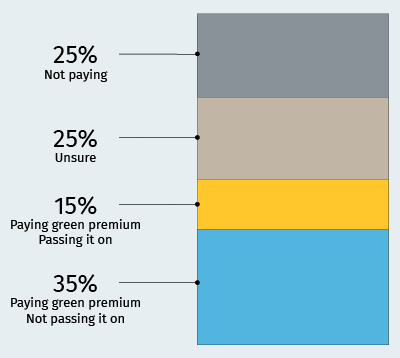
    Companies pay farmers more for this food, which helps compensate them for the costs and risk associated with transitioning to sustainable farming. Companies may absorb the added cost of this or pass it on to consumers in the form of a higher price or “green premium”.The process helps companies avoid or reduce Scope 3 emissions in their supply chains and better prepares for them for future regulations that may be more stringent. These supply chain initiatives can also be used for marketing purposes.
  • ...
  • Consumers
    Consumers have the option to purchase products that have been grown sustainably.
Most consumers won’t buy for sustainability alone1
  • 10%
  • of consumers are buying just to “save the planet”.
  • 10-30%
  • of consumers are willing to buy when sustainability2 is linked to other benefits such as health, safety and quality.
  • 40-60%
  • of consumers express concern for sustainability but are limited by barriers3 like income, cost and convenience.

1. Including shoppers often/very often purchasing sustainably and considering themselves as sustainable; 2. Including shoppers that sometimes buy sustainably; 3. Includes non-buyers that would be willing to pay a >5% premium at parity of other benefits.

But half of companies, including those in agri-food, will pay more

Source: BCG sustainability consumer survey (June 2022);
BCG project experience and analysis; BCG-WEF Report (2023)

Reasons given to pay green premium

  • Meet sustainability commitments (e.g. insets)
  • Gain advantage in faster growing markets
  • Secure supply ahead of future scarcity
  • Prepare for government regulation, (e.g. carbon price)
  • Capture customers willing to pay for and/or willing to stop buying for sustainability

3 | Government funding

  • Short-term: Ready
  • Long-term: Important

[inpage-tabs id=”5″]

Canada’s funding for sustainable agriculture lags peers

USA

United States


Total farm receipts1

$545B


Ag support as a % of receipts

$64B|12%


Climate funding as a
% of total farm receipts

~1.7%

Inflation Reduction Act (IRA) includes $27 billion for agricultural conservation and stewardship through 2031

Europe

European Union


Total farm receipts1

$699B


Ag support as a % of receipts

$122B|18%


Climate funding as a
% of total farm receipts

~1.8%

Common Agricultural Policy includes about $224 billion through 2027 for ‘climate-relevant initiatives’

Canada

Canada


Total farm receipts1

$83B


Ag support as a % of receipts

$8B|10%


Climate funding as a
% of total farm receipts

~0.5%

The Sustainable Canadian Agricultural Partnership could commit $500M in added funding, and $800 million in On-Farm Climate Action Fund & Ag Clean Tech funding

For more information see appendix


Recommendations:

Harvesting change
[inpage-tabs id=”6″]


Cover crops | Crops, such as clover, can be grown in the off-season after cash crops, increasing carbon storage & reducing soil erosionReduced Tillage | Reducing soil disturbance by limiting tilling in croplands improves carbon storage

Nutrient Management | Applying fertilizer from the right source, at the right rate, at the right time, and in the right place, using as little as required

Silvopasture Integrate trees, forage, and livestock grazing in the same area to improve soil nutrients and livestock wellness

Crop rotations | Planting different crops sequentially to improve soil health and nutrients, while combating pests and weeds

Manure Management | Manure can be turned into energy through anaerobic digestion or used as a natural fertilizer

Biochar | Converting crop residue (i.e., waste) to charcoal; when used as a fertilizer, it can increase carbon storage

For more, go to rbc.com/climate.

Download the Report

Download


Contributors:

Lead author: Youssef Aroub, Project Leader, Boston Consulting Group

Boston Consulting Group
Keith Halliday, Director, Centre for Canada’s Future
Chris Fletcher, Managing Director and Partner
Thomas Foucault, Managing Director and Partner
Shalini Unnikrishnan, Managing Director and Partner
Sonya Hoo, Managing Director and Partner
Pilar Pedrinelli, Consultant

RBC
Darren Chow, Senior Manager, Digital Media
Naomi Powell, Managing Editor, Economics and Thought Leadership
Mohamad Yaghi, Agriculture and Climate Policy Lead
Colin Guldimann, Economist
Trinh Theresa Do, Senior Manager, Thought Leadership Strategy
Zeba Khan, Digital Publishing
Aidan Smith-Edgell, Research Associate
Shiplu Talukder, Digital Publishing Specialist
Gwen Paddock, Director, Sustainability & Climate – Agriculture

Arrell Food Institute, University of Guelph
Evan Fraser, Director
Ibrahim Mohammed, Ph.D. Candidate, Environmental Sciences
Deus Mugabe, Ph.D. Candidate, Plant Agriculture
Lisa Ashton, Ph.D. Candidate

In addition to those cited in this report, we’d like to thank the following individuals for their insights:

    • Alison Sunstrum, Founder, CEO CNSRVX-Inc
    • Dan Lussier, Director, Canadian Agri-Food Data Initiative
    • Tim Faveri, Global VP, Sustainability & Stakeholder Relations
    • Michelle Nutting, Director, Agricultural and Environmental Sustainability, Nutrien Ltd.
    • Karen Haugen-Kozyra, President Viresco Solutions
    • Dr. Brian McConkey, Chief Scientist, Viresco Solutions
    • Anthony D’Agostino, Director – Commodity Markets, RBC
    • Marty Seymour, COO, Carbon RX
    • Gillian Flies, Co-Founder, Farmers for Climate Solutions
    • Matt Sawyer, fourth generation farmer, Acme, Alberta
    • Doug Whitehead, crop farmer, Manitoba
    • Julia Maria-Becker, Senior Manager, Sustainable Enterprise Solutions, RBC
    • Janay Meisser, Director of Innovation, United Farmers of Alberta
    • Derek Eaton, Director of Industrial Policy, The Transition Accelerator
    • Ryan Cooke, Research Associate, Smart Prosperity Institute
    • David Hughes, President and CEO, The Natural Step Canada
    • Kristjan Hebert, Managing Partner, Hebert Grain Ventures

Appendix

Canada
The Sustainable Canadian Agricultural Partnership includes $3 billion over 5 years. About $1 billion is through federal programs and activities, of which $690M goes to innovative and sustainable growth including the AgriScience program to tackle pre-commercial and other research. About $2 billion is dedicated to supporting sustainable agriculture, equipment purchases, training, and scientific research.The $200 million On-Farm Climate Action Fund was distributed through 12 organizations across Canada. These will dispense money to help farmers adopt sustainable practices. Provinces are also establishing or managing their own carbon trading systems where producers can sell agricultural carbon credits. Alberta and Quebec’s offset systems are well established, while Nova Scotia and Saskatchewan are in the process of launching their own approaches.United States
The Inflation Reduction Act (IRA) is the largest piece of federal legislation to ever address climate change, increasing the pool of funding for conservation efforts by US$20 billion. It expands the Partnerships for Climate-Smart Commodities program which seeks to remove 50 million metric tons of carbon dioxide. It has allocated US$3 billion to 141 projects on crop and livestock farms across all 50 states and Puerto Rico. And it involves collaboration among more than 100 universities, 20 tribes and tribal groups, and 60,000 farms, on over 25 million acres of working land. The project will remove the emissions amounting to the equivalent of 12 million gas-powered vehicles.

European Union
The Common Agricultural Policy (CAP) program was revamped in 2022. It includes €387 billion, a third of the EU’s entire 2021-2027 budget, to assist in the transition to Net Zero farms and rural communities. Its goal is to cut greenhouse gases by 55% by 2030—in line with EU’s Green Deal targets. In all, 40% of the CAP’s financial plan is explicitly dedicated to climate relevant activities and a further 10% of the EU’s budget outside the CAP is directed towards biodiversity efforts.

Australia
The Emissions Reduction Fund is Australia’s flagship program for fighting climate change. It supports farmers, businesses, and rural communities in decreasing greenhouse gases by providing carbon credit units that can be sold on to public or private buyers. The scheme actively promotes soil carbon projects by sharing the upfront costs of soil sampling. The program expects Australian farmers to earn over AUD 400 million from the sale of credits from soil carbon sequestration by 2050. The federal government is also dedicating AUD 64 million in funding to promote the development of soil carbon measurement technologies and an additional AUD 54.4 million to encourage active soil testing and national data sharing.

Brazil
Brazil is offering farmers low-interest loans through the ABC Plan. Farmers are given credit and financing options to adopt sustainable farming practices like no-till, intercropping, crop rotation, and recovering degraded pastures. Launched in 2010, the program was recently revamped with the goal of storing 41MT annually of carbon dioxide over 177 million acres of farmland across the country. In its last financing round, over 62,000 contracts were signed. This made Brazil the second highest ranked nation in the world for no till farms (around 18% of Brazil’s total agricultural land).

WP Menu

wp-menu

Move over, tree huggers. Potato farmers, urban planners and mountain bikers are the new vanguard of biodiversity. Call it Conservation 3.0. The big UN biodiversity conference in Montreal this week will see a shift from forests to finance as the host country Canada looks to capitalism to unleash trillions of dollars needed to protect and enhance nature, and fight climate change. If Conservation 1.0 was about ring-fencing nature, going back to the tragedy of the commons in the 1800s, and Conservation 2.0 was about integrating nature and development, a new chapter of biodiversity thinking has turned to the economics of ecology. With a capitalist bent. Nature as an “asset class” will be a major theme at the United Nations Conference of the Parties—yes, another COP—as the UN tries to advance its Convention on Biological Diversity. Over the past 30 years, since the first Earth Summit in Rio, the world has slashed our natural capital per capita by 40% while doubling production per capita. It’s not all bad news. Nature United figures soil, trees and water could absorb 37% of current greenhouse gas emissions. But we need to move fast to restore what’s been lost. Canada is pushing countries to adopt a 30-by-30 goal, to ensure 30% of nature is protected by 2030. The UN says we will need to get to 50% to mitigate climate change, too. Here are some ways business can help restore and enrich nature:

1. Give nature a business model

Business models can be anathema to some nature lovers, but they may be the only way to generate the revenue needed to attract capital to enhance forests, land and water. The current gap is about US$700 billion, far more than governments and philanthropists can cover. But here’s the thing: nature already powers our economy, accounting for roughly 12% of GDP, and is critical to countless businesses beyond extractive sectors like mining and forestry. According to the World Economic Forum, as much as half the world’s economic output—US$44 trillion—is highly dependent on nature. Just ask a coalition of resorts in Cancun, Mexico that are investing in coral reef protection. No reef, no business.

2. Set finance loose in the wild

Finance is already creating opportunities for nature, and will need to do a lot more. Consider a bike park in Akron, Ohio. The city was able to protect forests where bikers, rather than builders, could roam, and financed it with bonds backed by increased taxes from tourism. More significantly, governments are using green bonds to finance conservation, appealing to investors who want their money to support biodiversity while also generating funds to restore habitats. We’ll need a lot more. Of the US$632 billion of climate capital invested in a typical year, only 2% goes to nature.

3. Think inset, not offset

The race to Net Zero has inspired many companies to buy carbon offsets that finance nature-based solutions such as the planting of trees. A bigger opportunity may lie in “insets” that allow companies to pay for natural climate solutions through their own supply chain. Among the most popular insets now are “soil capture” investments that see farmers adopt regenerative agriculture practices, such as cover cropping, in return for money from food producers and retailers trying to reduce their own footprint. It’s not only economically powerful, but it helps companies trace the roots of their production back to nature.

4. Develop nature-minded housing

Canada is going to see more tensions between people and nature as our population grows by 500,000 a year through immigration. That will require a lot of new housing development, as the debate over Ontario’s Green Belt has shown. But the debate needn’t be binary, between sprawl and condos. Innovative urban design—and suburban design—is showing how more housing can be built sustainably using nature corridors, integrated wild lands and small-scale farming in the same vicinity.

5. Eat as if our lives depended on it

One reason for this year’s food crisis is that too much of the world’s diet depends on a small range of crops and animals. Roughly 75% of the world’s food comes from 12 plant and five animal species. Regardless of your food preferences, diversity is the spice of nature. It not only provides more interesting meal choices, it makes us all less dependent on monocultures. The World Economic Forum estimates US$310 billion in business opportunities—equivalent of another Singapore—could be generated annually if we enhance biodiversity in our food systems.

6. Reward nature as your star talent

Every good asset manager knows you have to reinvest some of your proceeds if you want to keep growing your assets. A more capitalist approach to nature would see us place a clearer price on biodiversity, just as we have with carbon, and then funnel some of that price into restoration and enhancement. Such investments would be good for the economy, too. Consider natural sea walls that not only protect cities but help nurture sea life. Or storm sewers that keep runoffs from wiping out forests and fields. Just as with climate, we will need new accounting methods and systems to measure the costs and benefits of nature, and build them into our economic equations.

7. See nature tech as a growth sector

Seems paradoxical to apply artificial intelligence to nature but scientists are—and it’s working. According to a Worldwide Fund for Nature (WWF) study, general purpose technologies like AI, remote sensors and environmental DNA are quickly helping us do more than count trees. Sophisticated AI-driven models linked to satellite imagery and ground sensors are allowing countries to map their natural assets and measure both depletion and growth. After all, what gets tracked gets measured, and what gets measured gets managed. With billions of dollars flowing into biodiversity, nature tech may just become a new asset class of its own.

WP Menu

wp-menu

The backdrop for the 27th United Nations Climate Conference was always going to be an odd one.

Sharm El-Sheikh is a beach resort town built by the Israelis during their occupation of the Sinai Peninsula in the 1970s, and dedicated pretty much to the hedonistic pursuits of European and Arab charter groups. Picture a faux Roman amphitheater, a Hollywood theme park and 10-lane highways through the desert. And then picture 30,000 climate actors, advocates and activists crowding into the Tonino Lamborghini International Convention Centre to tackle, without a hint of irony, the future of our consumption-based society.

From the get-go, COP27 had to be a kind of Truman Show of climate conferences—a conceit wrapped in a bubble, cloaked in a narrative at odds with reality outside. In the centre of that bubble, in a “blue zone” of temporary hangars that gave the feel of a military encampment, climate visitors tried their best to draw in the world and project their intentions back. The stakes were otherwise too high. But the odds of success were also daunting.

During a year of economic disruption, this was a critical chance to reconcile the growing tensions between energy security, climate security and economic security. Here are some of my takeaways of what was achieved and what was not.

1. The “Implementation COP” needs more implementers

COP26 in Glasgow was all about ambition, with nations committing to deeper emissions cuts by 2030 to ensure the world meets its Paris agreements. Sharm El-Sheikh was meant to be about implementation plans, and how countries can do what they say. Five G7 leaders came: France’s Emmanuel Macron, Germany’s Olaf Scholz, Italy’s Giorgia Meloni, Britain’s Rishi Sunak and America’s Joe Biden.

They each must have noticed a sign, “Act Now,” on their way into the main hall. The European Union upped its goals—remarkable given its energy crisis. So, too, did Indonesia. Canada noted the prevalence of climate action, from carbon capture projects in Alberta to green steel mills in Ontario and manure methane plants in Quebec.

Biden, in his keynote speech to COP27, recommitted the U.S. to its promise of cutting emissions by 50% from 2005 levels by 2030, a key part of his presidency. Businesses, too, came with greater commitments; there’s been a ten-fold increase in companies with science-based climate targets since 2019. But those implementers are still a minority. Among 196 countries, only 29 came to Egypt with revised action plans.

2. 1.5 may not be alive for long

A signal achievement from Glasgow was the endorsement of the 1.5-degrees-Celsius imperative–that is, all climate action needs to contribute to containing global warming to that threshold, after which catastrophic results accelerate. “Keep 1.5 alive” was the Glasgow mantra, as it’s the threshold at which, according to the UN climate scientists, we can say goodbye to coral reefs such as the ones off the beach at Sharm. To contain temperature increases, the world needs to cut emissions by roughly 50% this decade.

Instead, we saw emissions rise 1% last year (even more in the U.S.) and are on course for a 10% increase this decade.

A draft Sharm declaration maintained the rhetorical commitment to 1.5, but in the corridors there was a striking number of questions about the authenticity of such commitments, and whether the world should begin focusing on a more realistic ambition, such as “well below 2.0 degrees.”

3. Coal’s not dead

Glasgow declared a death knell for coal. What a difference a year makes. Germany is using more coal. China and India, too. But it’s not inevitable.

If COP27 can claim meaningful success, it might be through the curiously named JET Partnership, for a Just Energy Transition. The partnership of wealthy nations and financial institutions is designed to help developing countries wind down coal. JETP had its first partner in South Africa, and moved quickly at COP27 to sign on Indonesia, to help it reach peak power sector emissions by 2030 and get to Net Zero by 2050. Vietnam may be next.

The costs are enormous, and raise concerns about burdening poorer countries with more debt–and likely seeing them shift from coal to natural gas, which still warms the planet.

But the effort also misses the elephants in the room. China consumes 50% of the world’s thermal coal; India close to 20%. Neither is moving quickly away from it.

In fact, India sidetracked the COP discussions with a provocative challenge of its own, to cancel coal when the rest of the world agrees to cancel oil and gas. There weren’t many takers. African nations were among the most vocal at COP27 for an enhanced role for gas, which they see as an essential energy source as they transition away from coal and wood.

4. The oil COP?

Sharm El-Sheikh proved to be a good summit for the oil industry. For proof, you only needed to look out your window on the drive in from the airport. A 10-lane road, financed by the Saudis and named for King Salman, took COP-goers past another striking display of Saudi swagger.

The green-lit, twin-dome Saudi Innovation Park, built in a patch of desert next to the main conference centre, was an early indication of how the oil world, led by OPEC, has shifted to its front foot.

UN Secretary General António Guterres kicked off COP with a provocative metaphor—“a highway to climate hell with our foot on the accelerator”—that captured the point, but his PR machine met its match on the test track. The Saudis, who share the Red Sea with Egypt, vowed to increase oil production and intend to produce oil past 2100. The United Arab Emirates, who will host COP28 in Dubai, described the region as “superheroes.”

The Arabs argue they will develop carbon capture and storage (CCS) technologies that will bring their net emissions to zero. Indeed, the Saudis plan to open the world’s biggest CCS facility by 2027. Environmentalists have fought to marginalize so-called abatement technologies, to ensure they don’t facilitate more fossil fuel production. Expect that debate—reduction versus abatement—to define the Dubai COP.

5. A loss for developing countries; damage for the UN

If host Egypt had one ambition for COP27, it was to win global support for “loss and damages”—a popular term that essentially translates as compensation for countries hardest hit by climate change and least able to pay for it.

Pakistan was a poster child for Egypt’s campaign; the diplomatically savvy South Asian country used pretty much its entire COP presence to advocate for a mechanism to compensate it for some of the estimated US$30 billion in damages it has suffered from this year’s floods caused by global warming and early snowmelt.

Sadly, the Egyptians didn’t think through the levels of concern from the wealthy countries they hoped would pay. The U.S. has a deep allergy to anything in the UN that hints at reparations, not least because of legal fears (never underestimate the influence of government lawyers) over unlimited liabilities. A draft agreement recognized Egypt’s concern, but offered only pennies to the dollars that developing countries were pushing for.

6. America’s back. China’s not

A striking feature of COP27: America’s climate ambitions. Fresh from midterm elections that kept the Senate in Democrat hands, Joe Biden landed in Sharm El-Sheikh en route to the G20 summit in Bali, Indonesia, to promote his Inflation Reduction Act and the US$370 billion it will allocate to climate.

His administration has a tech-forward approach, betting on five key technologies: batteries, heating and cooling systems, electricity grids, aviation fuel and de-carbonization of the chemical, steel and cement industries. It’s clear the U.S. is going to use more carrots than sticks to get to its 50% emissions cut and assert itself globally as a clean-tech superpower.

A few years ago, China wanted that mantle. Today, it’s a diminished power as the Xi regime struggles with a hostile relationship with Washington, rapidly aging demographics and COVID lockdowns. China has not abandoned its green ambitions as it’s still one of the world’s leading developers of wind and solar power, and electric vehicles. But Beijing’s no longer the climate champion it was during the years of US President Donald Trump, nor is it a leader of nations. The rest of the world may be more dependent on the U.S. than ever. For better and worse.

7. #WTF: Where’s the finance?

There are not a lot of economists at a COP, which is too bad, because economics drive political action. No more so than when money’s getting tight. The sharp rise in interest rates this year is quietly becoming a drag on climate policies, especially in developing countries.

Few appreciate this more than Mark Carney, the former central banker who helped launch the Glasgow Financial Alliance for Net Zero at COP26. Carney’s alliance now consists of 550 financial institutions in 50 countries, representing trillions of dollars in assets. It’s a grand coalition with a grand promise to mobilize capital for Net Zero—and it’s leading to a grand array of criticisms.

Carney came under fire at COP27 for overpromising and under-delivering; for most developing countries, the capital hasn’t arrived. The concern even fuelled a COP-meme, #WTF, as in “where’s the finance?” One reason is a lack of sufficiently large projects.

Egypt tried to bend that curve at this COP, announcing a massive renewables project. Carney believes the world needs US$1 trillion a year of projects like that to quadruple the ratio of renewable energy to non-renewable investments to 4:1. The capital is there. But a challenge lies in the U.S. Federal Reserve’s aggressive campaign against inflation, which has jacked up U.S. interest rates and attracted a lot of capital to, well, the U.S.

8. Agriculture, the new climate champion

Believe it or not, this was the first COP where agriculture took centre stage. Pretty surprising when you realize the food supply system accounts for roughly a quarter of global emissions.

The UN, and many of its members, have shied away from tackling agriculture as they don’t want to alienate farmers, who are central to global development. But increasingly, agriculture is viewed as a climate solution—perhaps even a net positive to the world if farmers can turn their soil into profitable carbon sinks. With a newfound spirit of ag innovation, the conference devoted a day to agriculture, and the “blue zone” of pavilions had plenty on display from every continent.

More sustainable fertilizer practices and lower emitting fertilizers will be key. So, too, will new technologies like anaerobic digesters that turn animal emissions into energy. China, which accounts for 20% of the world’s methane, needs to be a leader on that front.

But the most contentious opportunity may be regenerative agriculture—a series of practices like cover cropping and no-till farming that ensure soils capture and sequester greenhouse gases. The U.S. is racing ahead with voluntary markets that will allow companies and investors to pay farmers for harnessing their soil in return for carbon credits. Other countries are more cautious, knowing soil science isn’t quite advanced enough to prove how much has been captured or stored.

9. Hello, atmosphere. The ocean’s calling. Rainforests, too

This was also the first COP where oceans got a serious look. That’s appropriate as Sharm El-Sheikh is not just a desert town; it sits next to some of the Red Sea’s finest coral reefs, which face extinction if more progress isn’t made.

I sat in on a session with Prince Albert of Monaco, Sylvia Earle, the great oceans champion, and Johan Rockström, a pre-eminent climate scientist with the Potsdam Institute for Climate Research. Rockström explained what rising temperatures are doing to the world, and to oceans.

The Arctic is already 2C degrees warmer, which is not only leading to ice shelves disappearing into the sea; it’s disrupting air currents and leading to heat waves like the one that engulfed Western Canada in 2021.

Some 93% of that excess heat is absorbed by oceans in a massive energy transfer that’s changing life deep below the surface. Global ocean heat was at a record high in 2021. Cue the storm surges. This kind of interplay between oceans, land and air has been appreciated by scientists for centuries but lost a bit of its imperative in recent years. That’s changing, as biodiversity and climate are again seen as two sides of the same coin.
It will be a central theme of the UN Biodiversity Conference in Montreal in December, and got a big endorsement in the final days of COP27 from the incoming Brazilian president, Luiz Inácio Lula da Silva. Lula, as he is universally known, got a bigger cheer than Biden, pledging to renew the fight to save the Amazon. It won’t be easy, not when an anxious world is looking for economic growth more than natural growth. But Lula’s message on biodiversity was clear: “There is no climate security for the world without a protected Amazon.”

10. Whose COP is it anyway?

This was the first COP in memory where Canada had a national pavilion. It wasn’t techie like India’s pavilion next door, or bold like America’s. But it did, in that Canadian way, stand out as inclusive. With a design that felt a bit like an upscale donut shop (there was even free coffee), the venue gave voice to more views and experiences than perhaps any other I saw.

Activists, Indigenous leaders, corporate executives, mayors, entrepreneurs, investors—it was Canada in full. And in a way that’s an enduring challenge for COP. This one, in Egypt, adhered to the strict laws and security standards that barred any serious form of protest. Even Greta Thunberg, the young environmental activist, didn’t see the point in being there. Across a major road, a Green Zone was set up for community groups and activists, and was actually more interesting and enjoyable than the conference halls. But even there, one didn’t get the impression the world was on edge.

COP benefits from a diversity of voices, which has grown over the years. Only the most arrogant or naïve delegates believe they have a clear answer to the world’s challenges, and only they would not welcome differing views.

As the world adds Sharm El-Sheikh to a long and growing list of COP hosts, and turns its mind to Dubai, that curiosity will be needed more than ever. It may just be Canada’s best contribution to COP28, and beyond.


John Stackhouse is senior vice-president in the Office of the CEO at Royal Bank of Canada, leading the organization’s research and thought leadership on economic, technological and social change. Previously, he was editor-in-chief of the Globe and Mail and editor of Report on Business. He is a senior fellow at the C.D. Howe Institute and the Munk School of Global Affairs and Public Policy and sits on the boards of Queen’s University, the Aga Khan Foundation of Canada and the Literary Review of Canada.

WP Menu

wp-menu

Food is again at the forefront

It’s reshaping the economy, as food prices take inflation higher. It’s redefining national security, as countries reckon with the prospect of strategic supplies. And it’s resetting the climate conversation, as producers and consumers grapple with the need for more food with fewer emissions.

The world needs a new Green Revolution, and Canada can play a leading role. Indeed, we must.

By 2050, we must increase our food production by a quarter just to maintain our contribution as the world’s population swells. We need to grow more for humanity, with less impact on the planet. This can be Canada’s moonshot for 2030 and beyond, if we can harness the imagination and enterprise of Canadians in every sector and geography.

The coming age of disruption, in agriculture and food systems, compelled RBC, BCG Centre for Canada’s Future and Arrell Food Institute at the University of Guelph to take on this project to help inform and inspire Canadians to see both the urgent need and growing opportunity that will come with more sustainable food systems.

In our report series, we outline how we can build those systems by:

  • Using breakthrough technologies as well as some well-established practices,
  • Attracting and training a new generation of farm and food innovators,
  • Investing in farmers to develop new economic incentives that reward what they produce as well as what they preserve,
  • Creating a national policy framework to unite all key constituents, align our emissions measurement and reduction goals, and integrate with industries that intersect with agriculture,
  • And boldly declaring to the world that Canadian agriculture can help everyone move more quickly to a world that has solved the climate crisis.

How we grow, process and consume food is not the key cause of our climate crisis. It can be a key solution. And with the right investments, it can become a made-in-Canada, farmed-in-Canada solution for the world.

Our Project Partners


[inpage-tabs]

The Growing Challenge: a Disruptors podcast series

The Growing Challenge is a special, three-part series on Disruptors, an RBC podcast, which tackles a critical question for the 2020s: how can Canada help feed the world’s growing population, while simultaneously slashing our carbon emissions to meet our nation’s Net Zero goals?

Disruptors hosts John Stackhouse and Trinh Theresa Do visited farms and production facilities across the country, and spoke with an array of experts working up and down the food supply chain, including farmers, academics, scientists, and restaurateurs.

We’ll take you from the field, to the processing facility, to the dinner table, to learn how we can harness new technologies and processes to improve efficiency, cut emissions, and reduce food waste. Solving this challenge could be Canada’s moonshot—and a defining moment for our country.


WP Menu

wp-menu

Introduction

The skies above Davos were unusually cloudy during the World Economic Forum. The annual winter gathering, on the other hand, had unusual bursts of sun.

The global meeting of government, business and community leaders—the first in three years—can’t quite be described as optimistic. But after a year marked by war, inflation, energy shortages and pandemic fears, the general view of Davos 2023 was, “hey, things could be a lot worse.” Europe is more united than it’s been in decades. The Ukraine war seems contained. China has re-emerged from a marathon COVID lockdown. Inflation is on its way down. And many revised economic forecasts suggest most of the world is headed for only a “You-call-that-a-recession?” recession.

In short, a year to hold your ground.

This was my 7th trip to Davos, an otherwise sleepy ski town in the Swiss Alps. And while the pandemic did nothing to wash away the gathering’s hubris (“We’re good; the world isn’t,” could be its motto), the Forum continues to be a rare opportunity for much of the world to exchange views on the world. Where else can you sit with a scientist from the Bill & Melinda Gates Foundation, an economist from Oxford University, a tech entrepreneur from Brazil, and a social activist from Johannesburg?

Here are 12 ideas—a Davos dozen—that I took away from this year’s Forum:

1. It’s a fragmented world, after all

An extraordinary 30-year run of global openness and cooperation that rose from the ashes of the Cold War is coming to an end. A decade ago, at my first Davos, I met with Iranian leaders, Russian oligarchs and Chinese techies. In the 2020s, that seems a distant memory, as large parts of the world feel unwelcome at international events. It’s what the Germans are calling a Zeitenwende, a tectonic shift that now threatens serious aftershocks. Those include a rise in economic nationalism that’s become a norm in every region, and a renewed desire in the West to impose liberal values on a new global order. For those who felt economics replaced geopolitics after the Cold War, the history of great power—and value—struggles is back.

Ironically, the Forum was created more than 50 years ago to combat economic nationalism in Europe. Today, many of its founding members are pushing for a “Climate Club” to foster a renewable energy cartel to rival the Organization of the Petroleum Exporting Countries (OPEC), and new democracy-based trading blocs to challenge China. Economic security has become national security, and a justification for governments to impose arbitrary investment and trade rules.

In one interactive discussion among 200 participants, geopolitics was identified as the top risk to financial stability, well ahead of cyber and economic risks. The World Trade Organization came to Davos to warn that such forms of deglobalization could cost the world US$7 trillion of lost output if it goes too far. But there was no sign of backtracking. When asked about deglobalization, Ursula von der Leyen, president of the European Commission, chafed at the word, preferring to call this a new era of “de-risking.”


2. Meh-conomy, 101

If there was a Davos consensus, it was that 2023 will be, well, meh. A CNBC survey of 90 CEOs at the Forum found they were generally optimistic but not bullish. Kristalina Georgieva, head of the International Monetary Fund, said she expects to roughly stick to the IMF forecast of 2.7% global economic growth. China has suffered the worst of its economic downturn and may help lift the world with “revenge spending,” as Chinese households are estimated to have US$2 trillion in pent-up savings.

Supply chains are slowly getting back to normal. Europeans are limping through a warmer winter with lower energy costs, while the U.S. appears to have its economic nose above water.

There’s one Matterhorn-sized risk: interest rates. Central bankers used the Davos stage to stress they’re not tempted to cut rates due to the slowing economy. “Stay the course” was said more often, in more languages, than any other line. While inflation appears to have peaked, central banks recognize it will be much harder to get from 4% to 2% than from 6% to 4%. Wage increases alone will continue to frustrate inflation hawks.

Central banks are fighting a credibility question, too, having missed the early signals of global inflation during the pandemic. Another challenge is an enigmatic labour force, with its remarkably low unemployment levels that show few signs of bending, thanks to a new work culture that has millennials redesigning jobs, Baby Boomers redesigning retirement, and a huge number of working-aged men—one in eight—opting out of the formal economy in the U.S. If central banks continue to focus on employment levels, they’re likely to keep rates higher for longer—and economic growth lower into 2024.


3. National security subsumes climate strategy

The hottest topic was the U.S. Inflation Reduction Act, with its US$370 billion of subsidies for clean energy and a promise of easy regulation for U.S. firms to help the world’s biggest energy user create the technologies to get to Net Zero, and export them to the world. In Davos, it was like the U.S. had dropped an economic bomb on the European Union. The bloc has had a few months to digest the IRA, and seems determined to launch its own wave of subsidies. Europeans know they will have to do something far more challenging: cut regulation.

Canada is facing the same challenge to not just match U.S. spending but to ensure the notoriously slow federal-provincial approach to project approvals can find warp speed. Europe’s main goal is to negotiate preferential access for some climate-friendly technologies like electric vehicles; in effect, getting inside America’s climate club.

Europe wants to build as much renewables capacity by 2030 as it has today, launching the biggest building boom since the Marshall Plan repaired the wreckage of the Second World War. Chancellor Olaf Scholz stressed Germany will use all its spending and regulatory might to get off coal by 2030, and be fully reliant on renewables soon after.

That’s not how many Americans see their climate plan, which is designed to ensure energy security, with low emissions, not eliminate fossil fuels. Joe Manchin, the U.S. Senator who orchestrated the legislation, came to Davos to explain that it’s not meant to be a threat to America’s allies—nor is it meant to speed up the death of oil. He surprised many Europeans by saying the U.S. might see oil production increase 20% and gas by as much as 50%, using carbon capture to keep emissions in the ground. His goal is to see an America that produces all forms of energy. Climate is a secondary concern.


4. The realities of reshoring

The semiconductor shock of 2022 is still reverberating. In addition to clean tech, the U.S. is spending billions to help companies like Intel move chip production from Asia back to North America. The U.S. accounted for 37% of global chip manufacturing in the 1990s. Today, its share is 12%. That decline took 30 years, and may take just as long to reverse, if that’s even possible. Taiwan and Korea are so sophisticated in their production networks, as to make it a kind of supercomputer puzzle. Intel is building plants in the U.S. and Germany but will need years to build up both a workforce and supply chains. Trouble is, the U.S. may not have decades to get reshoring right, as 5G unleashes a wave of industrial demand and the EV revolution turns to a new generation of chips, which could account for 20% of EV car content—four times what cars need now.

While the reshoring rhetoric is popular in Davos, and on political campaign trails, it’s proving to be less appealing to business operators. New McKinsey research shows that over the past five years, since former president Donald Trump brought his America First speech to Davos, no major economy, including the U.S., has systemically diversified trade. The consulting firm also found no region to be anywhere near self-sufficient. Instead, there is heavy concentration of production for a range of goods and commodities, from laptops and airplanes to soybeans, iron ore and, yes, microchips.


5. Ukraine holds while Europe hopes

Volodymyr Zelenskyy was a relative unknown at Davos in 2020, when he spoke about the need for speed in decision making. He stormed Davos 2023 by video, using his motivational skills to keep the West from slowing down support. His wife Olena spoke in person, and sat in the front row for several leaders’ addresses. One after another, European, American and Canadian politicians assured Ukrainians their support was unconditional, and they were prepared to stand by the country for years—“a decade, if needed,” said Finland’s Prime Minister Sanna Marin. Europe is showing more confidence than it has in decades, but it knows its vulnerabilities, including the ghosts of history. Germany continues to go slow on tank supplies, not wanting to provoke Russia. Europe also knows it dodged an energy bullet this winter, thanks to warm weather, emergency gas supplies from Qatar and the U.S., and less competing demand from a China in lockdown. Next winter may not be so kind.

To Zelenskyy, the end game will be Russia’s defeat, apology and reparations. This would be difficult for Russia without political upheaval, economic crisis or military debacle—or all three. Henry Kissinger, the former U.S. Secretary of State, spoke to a small group, also by video, to share a view that Europeans are not partial to. Kissinger believes there can be a ceasefire, but Ukraine would have to concede Crimea, which Russia took in 2014, and possibly some other towns that Moscow has claimed.

In return, Russia would have to accept Ukraine joining NATO and the European Union—currently red lines for the Kremlin, as it would bring the West right to its borders. The West will need to give Russia a path back into the international community, including the removal of sanctions. All of which would be hard for Ukraine, and much of Europe, to accept. But if the fighting goes on another year, backers of the war—namely the U.S.—may have other views.


6. China agitates while India accelerates

The most notable absence in Davos was China, which was represented only by the soon-to-retire Vice Premier Liu He. Instead of the usual Chinese self-aggrandizement, and finger-wagging, Liu gave a tepid speech that seemed designed primarily to build bridges with the West. He spoke privately to business executives, signalling that “China is back.” He urged U.S. and European politicians to avoid “a Cold War mentality” and to scale back trade sanctions, including a ban on semiconductors from U.S.-affiliated suppliers.

U.S. political leaders weren’t interested, with Republicans and Democrats focused on out-toughing each other on China. Clearly, the Chinese economy is suffering from more than lockdowns. Its inflated real estate sector was top-ofmind for Liu, as it now accounts for 60% of urban household wealth and 40% of bank loans. That’s concerning for a country with a population in decline—and that’s projected to lose 150 million working-age people by 2050.

A more different image could not have been crafted by China’s neighbour and sometime rival, India, which took Davos by storm. India occupied an entire block of the Davos promenade, with trade showcases, reception spaces and a large billboard of Prime Minister Narendra Modi. It’s more than PR.

India has overtaken China in economic growth, and will overtake it in population as the world’s biggest country this spring. Having won an iPhone manufacturing mandate from China, it’s also aiming to be a leading tech supplier to the world. The Modi government has committed US$10 billion to subsidizing the semiconductor industry, which employs 50,000 engineers in India, and reorienting post-secondary education to accommodate a doubling of chip production, with 500,000 new engineers a year. In addition, an Indian delegation of CEOs and economic ministers told the Forum they intend to be the world’s leading telecom equipment exporter, and leading locomotive and train exporter, by the end of the decade.


7. The riskiest places on earth

The world’s poorest countries always get a seat at the table at Davos. They just don’t always get a voice. That changed this year as the spectre of low economic growth, high interest rates and stiff competition for energy, food and advanced technologies like microchips cast into stark relief the coming challenges for developing countries. And how that may make them the riskiest places on earth for global stability.

Coming into 2023, 60 of the world’s 80 low-income countries were listed as “distressed” in terms of their ability to pay their debts. If interest rates remain high, that stress will worsen if the U.S. dollar remains the world’s safe haven (and in turn makes imports of food, oil and other essentials for those countries more expensive.) Add to that the scarring of both COVID and climate-related disasters like last year’s floods in Pakistan, and scores of countries face a tough road ahead.

No one is predicting a Third World debt crisis like the one that destabilized global markets in the 1980s. By the same token, any debt crunch will be harder to resolve in an increasingly fractured world. In the 1980s, the U.S. was able to orchestrate debt relief packages through a group of creditors called the Paris Club. Today, most emerging market debt is spread across a panoply of creditors, from sovereign wealth funds to commercial banks, and the biggest new creditor, China.

Some Davos regulars, led by former central banker Mark Carney and former U.S. Secretary of the Treasury Lawrence Summers, are pushing for reform of the World Bank and International Monetary Fund, at their annual meetings this spring, in part to avert future debt crises while also accelerating climate finance. According to the WEF, those institutions, along with regional development banks, need access to US$3 trillion a year in capital to finance developing countries through a socially just transition to Net Zero.


8. Soil, the new gold

Leave it to Davos to follow the money. One of the quickest sessions to fill up was on “soil health,” where the CEOs of Nestlé, Unilever and Illycaffè joined farmers and policymakers to explain their approach to regenerative agriculture. Farm lands are considered a leading asset for climate action, as, properly managed, they can absorb the emissions of entire sectors. They can also offset the carbon, methane and nitrous emissions that come from fertilizer, and the production and consumption of food. What’s more, soil degradation has become a serious consequence of climate change, albeit less noticed than hurricanes and floods.

The Italian coffee entrepreneur, Andrea Illy, warned the Forum that half the world’s coffee lands may be out of production by 2050 if their soils, and trees, are not better protected. If we help farmers preserve their land and trees, the world wins, as do coffee drinkers.

The challenge for Davos was how to finance the next green revolution, by rewarding farmers and landowners not only for producing food, but for protecting and preserving their soil.

Nestlé and Unilever are among the large food companies testing an “inset” model that certifies and pays farmers directly for sustainable practices such as no-till planting or low-emission fertilizers. Food companies can then claim the emissions on their climate accounting books—something many investors and consumers want to see to better measure progress. For now, retailers are leading the push, wanting to win over climate-minded shoppers. But for a true gold rush, consumers will need to take charge, sending a signal from their purchases back to farmers that they want to help preserve the soil that produced their food.


9. A concrete approach to climate

For millennia, Europeans have prided themselves as builders. But they have recently discovered their great concrete monuments—and all the heat required to make the materials—are not helpful to the planet. European innovators are trying to change that, reimagining ways to make concrete, and other materials, with far fewer emissions.

Building construction is estimated to account for 11% of global emissions. That’s why many local governments are using building codes as well as procurement to help the construction industry get to Net Zero. The 2024 Paris Olympics will be the next hurdle in that race. But it won’t come cheaply. The global construction sector, which is adding the equivalent of 40 New York Cities a year, would need US$10 trillion—per year—to abate or offset its emissions, which are on course to triple over the next 25 years.

The construction giant Holcim sees a different approach, and has invested in more than 100 startups to help design a new path. It’s developing new ways to recycle concrete, largely from demolished buildings. Other companies are electrifying kilns, to ensure a low-emissions method of making bricks.

But to succeed, the innovators will need governments to create new approaches to building codes, lenders to reimagine how they finance recyclable construction materials, and landlords to bake the climate value into their business models.


10. In person, like never before

The pandemic was supposed to bring an end to large-scale gatherings like Davos, saving its 2,500 visitors the long journey and endless hours of schmoozing. The obituaries were premature, judging by the crowds—and by the newest pop-up pavilion in the heart of Davos, a café sponsored by Zoom.

Enrique Lores, CEO of computer maker HP Group, put himself among the many who couldn’t wait to be back in person, for conferences and for work. A techie to the core, he said he nonetheless gets pushed, prodded and inspired in person in ways he’s never experienced on Zoom. The pandemic cruelly revealed the importance of personal interaction can be for mental health, too, which has quickly moved from a corporate risk to corporate imperative. Several CEOs said they’re looking to develop a more productive and competitive workforce by ensuring they have a mentally healthy workforce. It took a pandemic to see how depression can inflict an insidious cost on everyone.

A different approach to work requires a different approach to management. For most organizations, that seems to mean a hybrid strategy. (All-remote teams tend to have high turnover rates.) But as many firms are discovering, hybrid requires a different set of management skills, particularly for team managers.

Alexi Robichaux, co-founder of BetterUp, an online coaching platform, thinks the performance—and engagement—of middle managers may be a defining element of the new world of hybrid work. And it’s being put to the test in real time, in what he’s calling “the year of the manager.”


11. The cloud wars

A year ago, when Russian forces were amassing to invade eastern Ukraine, some of the world’s best techies and security analysts swapped ideas on how to build a line of defence in the cloud. They knew Russian President Vladimir Putin would be unleashing his top forces there, too. Matthew Prince, founder of CloudFlare, explained how his Silicon Valley company worked with the Pentagon and Kyiv to protect Ukraine in cyberspace, and to keep Russia on its digital heels.

Rather than pull out of Russia entirely, CloudFlare maintained some services, which Prince said are now being accessed by 10% of Russians hoping to bypass censorship and surveillance. Silicon Valley and Kyiv tech firms have also been able to keep the Ukraine internet, and digital services like banking, operating with little disruption.

Ukraine is just one front in the global cyber battle, which some see as World War III. U.S. firms are actively working with U.S. intelligence groups to fend off forces from Iran and their most aggressive adversary, China.

FBI Director Christopher Wray said China has “the world’s most sophisticated hacking program.” Their artillery are dual-use technologies that can attack and defend. And their ammunition is data, which they try to steal with every hack and breach to train algorithms to know where, when and how to strike.


12. Deep Tech takes Davos

Davos has long been a solid platform for Big Tech. And over the years, it’s used it effectively to get close to government officials, policymakers and influencers, as well as to inform and shape global tech thinking. Some like Salesforce founder Marc Benioff use the Forum to advance their causes; in Benioff’s case, refugees.

The tech giants were in Davos again, occupying the best real estate and putting on hot-ticket parties, although a little more humbly as they began to announce tens of thousands of layoffs back home. Before the pandemic, Big Tech leaders like Benioff and Microsoft’s Satya Nadella loved to align themselves with the Forum’s favourite topic, the Fourth Industrial Revolution. Meta (Facebook) still finds Davos a good avenue on which to tout itself as the village square of democracy. But with the Great Reopening has come the Great Reckoning, and the revolution may have to pause until interest rates come down and venture capital flows again.

That sombreness didn’t seem to affect the Deep Tech tribe, as it explores the edges of discovery and doesn’t need to worry too much about consumers and other Planet Earth realities. Despite Big Tech troubles, Generative AI—and the celebrated ChatGPT—were star attractions, showing up in blogs, podcasts and multimedia art.

The emphasis on “deep tech”—technologies without commercial applications—is opening all sorts of possibilities for a world challenged by slow growth, aging, conflict and social disharmony. Ethical dilemmas will continue, which is why forums like Davos are needed, to draw people from all the world’s fragments to find or create common ground.


Download the Report

Download