How indoor agriculture can serve as a local food source in northern—and urban—settings
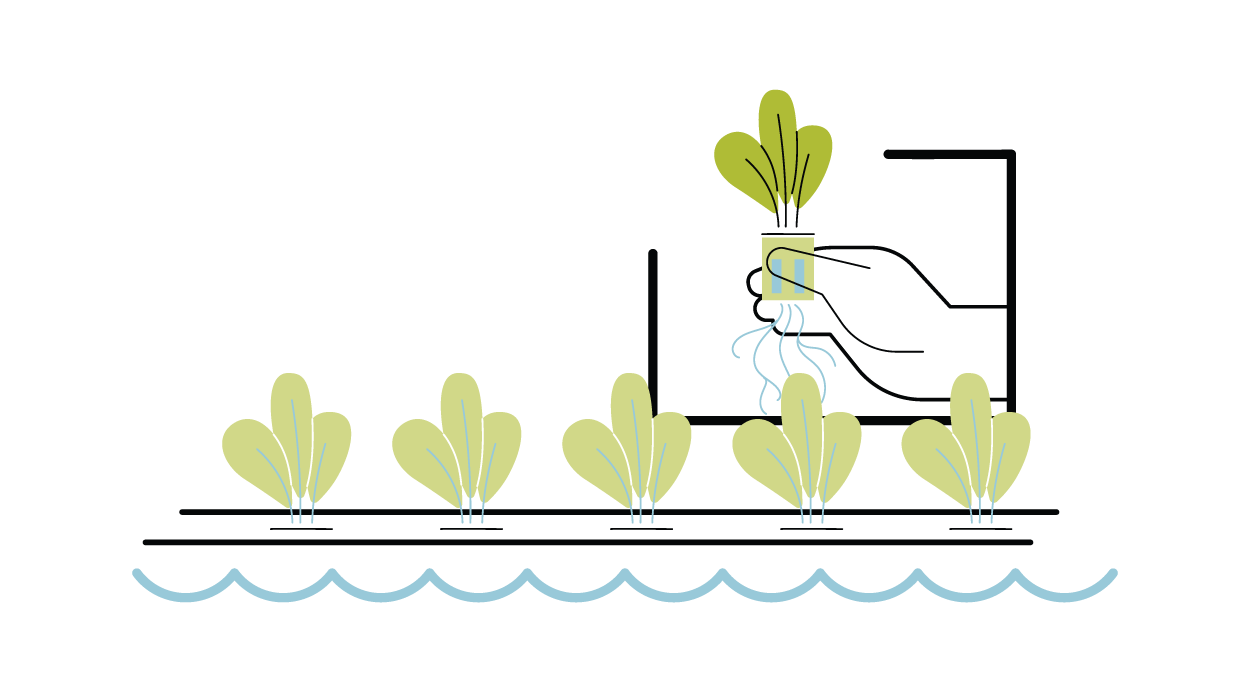
Vertical farming is a form of controlled environment agriculture (CEA), that gives growers more control over the environment they tend their crops in, which can be advantageous in challenging growing conditions.
Indoor vertical farming was set to take off in a big way, but lacklustre investment returns and scaling challenges has limited production.
“There was a big bubble around this industry that has more or less burst over the past four years,” said Dr. Alesandros Glaros, Food and Agriculture Institute, University of the Fraser Valley. “The companies that have weathered the storm are patient and have invested substantially in research and development. They have tried and true technologies, are integrated into strong local and regional supply chains, and are highly collaborative. Now, we can find their vertically grown, competitively priced leafy greens in remote regions as well as major grocery stores.”
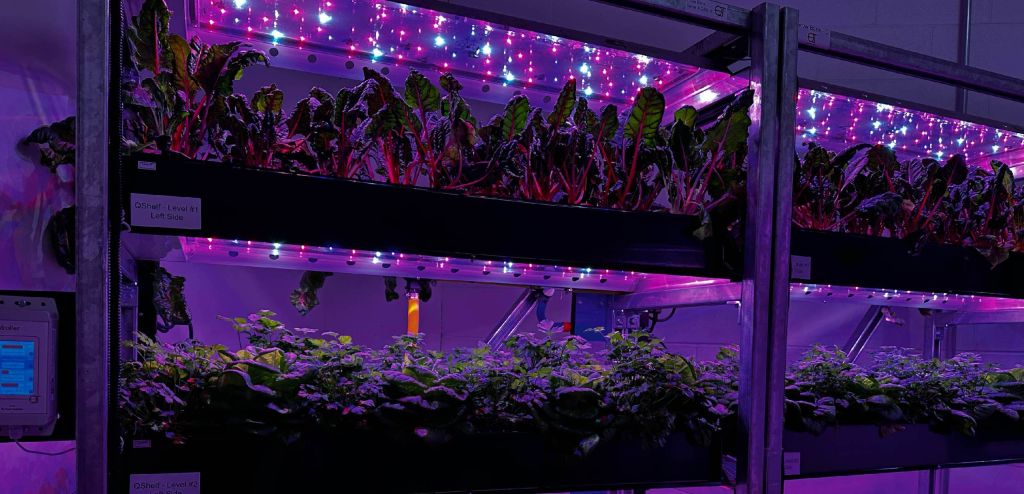
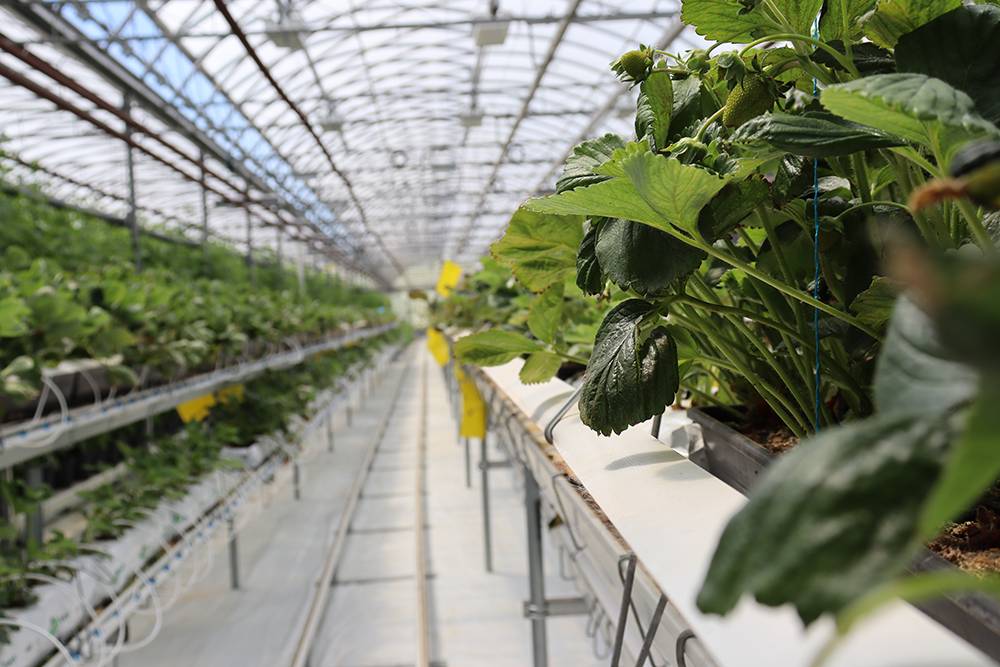
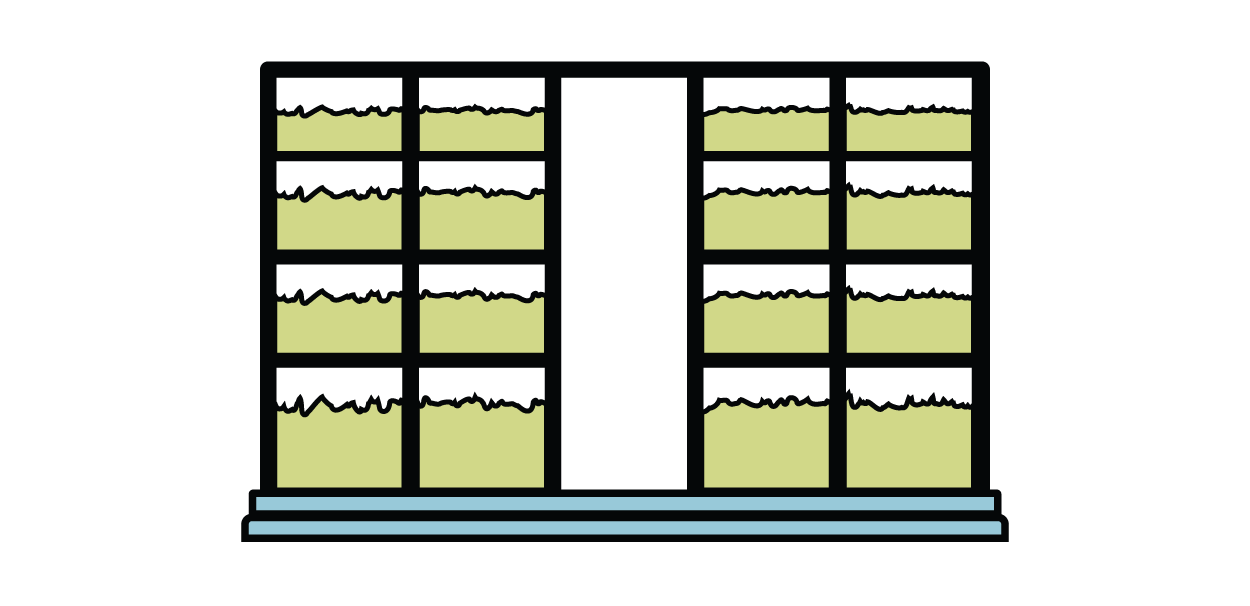
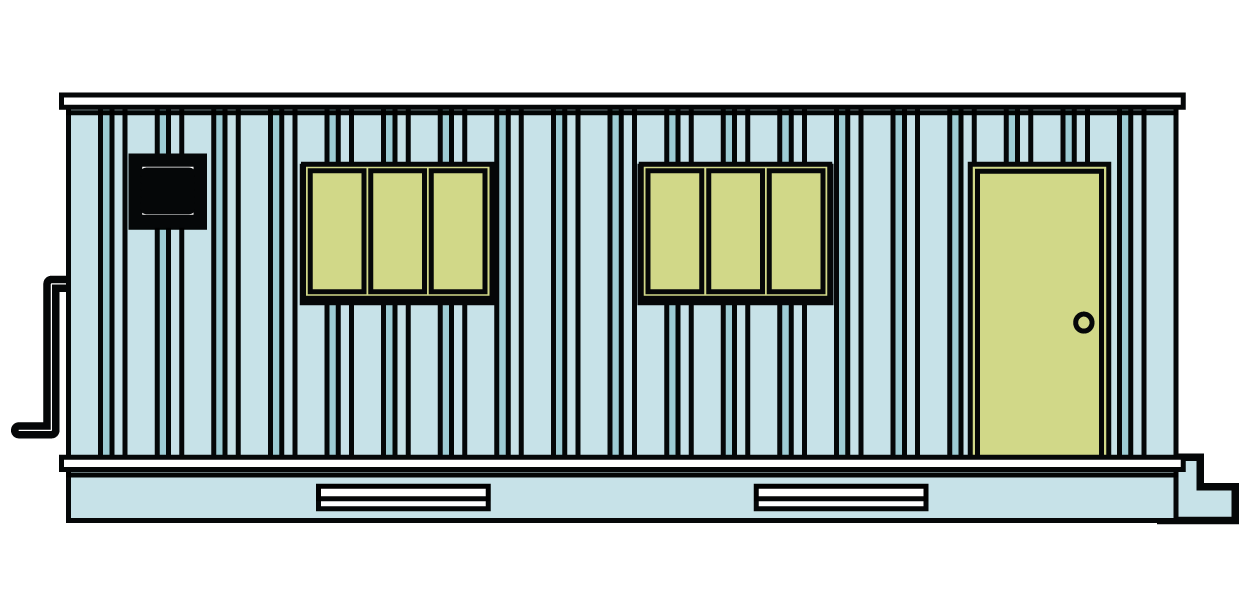
There are examples of innovations in the space. British Columbia-based QuantoTech Solutions, a vertically integrated ag-tech company, has developed a growing system that features 8 by 12 feet sheds with shelving units to allow for vertical farming, producing 4.8 between 7.2 tonnes of food per year, including leafy greens, strawberries, and cherry tomatoes. Each unit requires approximately 37.2 to 52 gigajoules of energy per year, which is less than the energy needed to power the average Canadian home1. The mobile units were originally developed for northern and challenging growing conditions, but are also suitable for urban settings.
QuantoTech Solutions’ system features 8 by 12 feet sheds with shelving units to allow for vertical farming.
A food source for northern and remote communities
Northern and remote communities face many barriers in accessing fresh fruits and vegetables, which are often of poor quality and high cost by the time they reach northern communities from production or distribution centers below the 49th parallel. Indoor vertical farms are not capable of addressing northern food insecurity alone or replacing traditional Indigenous food sources, but can contribute to raising the region’s supply of local, fresh vegetables and fruit.
Key considerations for indoor agriculture in northern and remote communities:
1. Investing and scaling. The timescale for return on investment and availability of grants to support upfront and operational costs are critical before growers can invest in starting, or scaling, indoor farming.
2. Energy source and use. Around 178 remote Indigenous and northern communities in Canada rely on generators powered often by diesel fuel as they are not connected to the North American electricity grid and natural gas infrastructure2.
3. Growing yields. Sustaining operations require streamlining access to inputs and improvements in yields. Developing and maintaining access to suppliers and local vertical farming expertise is key.
Building up urban agriculture
The indoor vertical ecosystem can easily be replicated in urban settings, which have their own set of challenges. Connections to agriculture production in large urban areas is increasingly less common as our cities expand and demand rises, placing a high need for commercial scale production with streamlined supply chains. Indoor vertical farms that can be integrated within building developments and retrofits is one pathway to provide urban dwellers with fast access to local produce, as well as potentially contributing to cities and the building sectors’ decarbonization efforts.
Key considerations for indoor agriculture in urban areas:
1. Connecting consumers. Encouraging consumers to get their greens from a local vertical farm will require awareness and ease of access.
2. Making the case. More energy, more space, and more investments are needed to scale indoor vertical farms in or close to urban areas and the return on investment must be there to justify further development.
3. Planning land use. Urban areas are home to intense competition for land. Throwing food production into the mix should be strategically aligned to city planning, collaborative with municipalities, and meet local needs.
Indoor vertical farming could evolve as a mainstream source of food across Canada, if it improves the business case in scaling production. But for now, its strength is in meeting niche, local market demands.
Lisa Ashton is Agriculture Policy Lead at RBC Climate Action Institute.
Statistics Canada. (2024). Household energy consumption, Canada and provinces.
Canada Energy Regulator. (2023). Market Snapshot: Clean Energy Projects in Remote Indigenous and Northern Communities.
Generative AI, suddenly, is everything, everywhere, all at once.
In the Okanagan Valley, the city of Kelowna is using AI to automate permit applications and answer questions about municipal bylaws, hoping to speed up building processes in the face of a housing crunch1. In Edmonton, global engineering giant Stantec has developed an AI-powered tool to analyze massive data sets on river flow, land use and water runoff patterns to help mitigate flood risk for infrastructure projects2. In Halifax, Dalhousie University researchers are training computers with thousands of photos and audio recordings of dairy cattle to see if their facial expressions, or something in the way they moo, offers a clue to how they are feeling—contented cows are known to produce more milk.
Artificial intelligence is the transformational technology of our time, with seemingly no end of applications as it accelerates a fourth industrial revolution fueled by data and electrons. Massively powerful, amazingly versatile, and only partly understood, AI uses technology to do things that usually require human intelligence. It scours massive datasets to look for patterns, solve problems and perform tasks.
Investing in Gen AI, along with other technologies, would not only help close the productivity gap; it could add to higher wages and help Canada compete in an increasingly digital and data-driven world.
Its latest iteration, Generative AI or Gen AI, uses machine learning to train computers to create things— write reports, code software, design molecules and produce art3. Gen AI has raised concerns about privacy, misinformation and ethical implications. It’s also posing a challenge to electricity supplies as each ChatGPT request to use one example consumes 10 times the amount of energy as a Google search.
By the same token, Gen AI holds the potential to get Canada’s economy growing again through accelerated innovation and productivity. The big question is whether Canadian businesses and public sector organizations will seize the moment.
Why we wrote this report:
To help explore Canada’s productivity challenge, RBC recently launched The Growth Project, exploring key economic drivers including productivity, trade, and investment; skills and immigration; and disruptive technologies like AI. For this report, we set out to explore the adoption of AI, and its impact on key economic sectors.
We surveyed innovators and AI specialists, convened roundtables of business leaders across key sectors, and developed an analytical framework to assess vulnerabilities across the Canadian economy. Finally, we offer recommendations to help with the adoption of Gen AI to ensure its impact is positive and productive for all Canadians.
Canada’s productivity rate—the amount we produce for each hour worked—has been declining in recent years, and is now 30% below U.S. levels. A key reason is a decline in capital spending and investments in intellectual property (which is now about 40% less than the U.S.). Our manufacturing sector invests just a quarter of what the U.S. does by the same measure4. Investing in Gen AI, along with other technologies, would not only help close the productivity gap; it could add to higher wages and help Canada compete in an increasingly digital and data-driven world.
Canadian businesses need to move now or risk getting left behind. What’s needed most of all is a change in mindset.
In business, such investments can make workers—be they white collar, green or blue—more productive by saving time and streamlining routine tasks. A study by Microsoft found coders who used Gen AI tools could complete tasks in 56% less time than non-users, and the time taken for writing tasks was reduced by more than a third (37%)5. Estimates for how much time it could save range from 1006 to 125 hours per worker per year7, boosting labour productivity by 8% by 2030.
What business wants from Gen AI is to help save employees time to work on more important tasks and create more value. A survey of Canadian start-ups by the Conference Board of Canada found 63% said implementing AI would not reduce headcount and 30% said they weren’t sure8. (Two-thirds said it has already made them more competitive).
The productivity boost from Gen AI could add $180 billion per year to the Canadian economy by 20309, with another $ 5 billion coming from the creation of new Gen AI products and services10. The Conference Board sees it adding almost 2% to Canada’s gross domestic product with tech centres like Toronto, Waterloo and Vancouver gaining the most11.
To be part of the Gen AI generation, Canadian organizations will need to close the “readiness gap.” Because ready or not, the next technological transformation is coming. It may already be here.
Why then are Canadian businesses so far behind in adopting Gen AI? A recent report from the Canadian Chamber of Commerce revealed that one in seven Canadian businesses, or 14%, are using Gen AI or have plans to use it soon. Almost three out of four, or 73%, are not even considering it yet. The reasons are what one might expect for any revolutionary new technology—cost, concerns over data safety, doubts that workers have the skills to use it, and fear of making a mistake. Fear of AI is not limited to those who run businesses or public sector companies. Polling shows less than a third of Canadians (32%) trust AI systems, compared to 39% globally and 40% in the U.S. Only 28% of Canadians believe current regulations are sufficient to make AI use safe12.
The risks may be too big to ignore, but so too, are the benefits. To be part of the Gen AI generation, Canadian organizations will need to close the “readiness gap.” Because ready or not, the next technological transformation is coming. It may already be here.
Where’s Canada on adoption?
How far behind is Canada when it comes to Gen AI? The latest and most comprehensive look came in Statistics Canada’s quarterly survey of business conditions, a survey of 13,327 companies in early 2024. It showed 73% of Canadian firms were not even considering using Gen AI. It put the percentage of companies using it at 9.3%, and those with plans to use it soon at 4.6%.
Internationally, we rank 20th out of 35 Organisation for Economic Co-operation Development countries in AI adoption, though that data is a few years old13. IBM’s Global AI Adoption Index from 2022 put Canada 10th out of 15 countries surveyed, 6 percentage points behind the average. We are not only trailing the U.S., we’re also not chasing Gen AI as hard.
To be trailing so many competitors is at odds with our leadership in research. We were the first country to create a national strategy for AI in 2017—a $125 million effort led by the Canadian Institute for Advanced Research intended to attract and retain talent and support research and innovation14. Canada’s three National AI Institutes are recognized as world-leading, and some of the great minds in machine learning call Canada home. We also have a dynamic AI ecosystem of research labs, business incubators, accelerators, Gen AI vendors and venture capital firms15.
Unfortunately, Canada has simply been better at generating ideas and developing models than putting them to work.
Economic overview
The basic structure of Canada’s economy presents some challenges when it comes to seizing the Gen AI moment. We have a small population and a large, diverse land mass making it a challenge to create the kind of large data sets that AI tends to require. Much of our economy is regulated as well, which can constrain innovation with technologies and business models. And then, there’s the large share of our economy connected to natural resources—forestry, mining, fishing, oil and gas—which have not been at the forefront of Gen AI anywhere.
A further impediment to the adoption of Gen AI is cost, be it through large computers and their electricity demand, or the increasing competition for tech talent. Those cost barriers are even greater for small businesses, which dominate our economy. About 98% of businesses in Canada have fewer than 100 employees, and small businesses are typically less eager to invest in new technology. They may believe they don’t have the money or the expertise needed, or it may be that the competitive pressures simply aren’t as great.
Analysis by the Business Data Lab (BDL) at the Canadian Chamber of Commerce puts the proportion of small businesses using or planning to use Gen AI at 15%, with roughly half being businesses with 100 employees or more16. Small companies ought to have an easier time retraining employees and re-orienting business strategy and technology use, the BDL argued. However, it conceded financing can be a bigger challenge for small businesses. Still, the benefits could be substantial. By one estimate, small and medium enterprises (SMEs) could add $100 billion a year to the Canadian economy by 2030 by using Gen AI with 70% of that coming from small businesses17.
Governments and the public sector should be moving faster as well. Innovation is not just a private sector concern, especially in Canada where the public sector accounts for roughly 40% of the economy and a fifth (21%) of all employment18. Canada’s large public sector education and healthcare industries are 70% and 50% less productive than in the U.S., respectively19.
StatCan puts Gen AI adoption by government agencies at a dismal 0.3%. It’s a good deal better in the healthcare and social assistance industry, which is mostly public sector, at 9%, but that’s still no better than the nation as a whole. The federal government said this spring it wants to have a plan in place by next spring for using AI in its operations, which may indicate it’s off to a late start. Among its problems is a massive technical debt, meaning systems are so old that introducing AI may not be possible or worth it. Microsoft’s study on AI opportunities in Canada broke out several sectors and estimated that AI could add $13 billion in value for healthcare by 2030, and $14 billion for government20.
Even old economy stalwarts like natural resources could see a $9 billion increase in GDP by adopting AI21. But each sector may require a different approach, as will competitors within those sectors. Many face different regulatory challenges in applying AI to customer data. Others continue to struggle to attract or retain talent for any kind of advanced technology. Still, some sectors have deep relationships with universities, where much of Canada’s AI research is housed.
The diversity of Canada’s economy suggests a diversity of approaches will be needed for the Gen AI landscape, which we lay out in the next section.
Sectoral analysis–Readiness gap
To better understand Canada’s readiness gap, we developed an analytical model that assesses major sectors of the economy, using key components that can drive Gen AI adoption:
Technology adoption rates. Based on the speed at which Canadian firms invest in intellectual property products (IPP) as a share of that sector’s GDP compared to the U.S. over the last 10 years.
Risks due to competitive pressure. Based on the risks of disruption or heightened global competition in major sectors, reflecting competitive forces that could influence the readiness gap.
Productivity potential. The promise of Gen AI for key economic sectors based on comparative studies, industry data and sector roundtables.
Skills readiness. Current and transferrable skills in major sectors based on labour market data and sector interviews.
Corporate willingness, based on StatCan‘s 2024 “Business Use of Generative AI” survey.
Government and public services
22%
of GDP
4.2
million jobs
Low risk High reward
Strength: Large, centralized data sets including health, tax and school records Priority: Data governance
Slow record of tech adoption
Higher than average skills readiness
Use cases: Enrolment processing, scheduling and record keeping, predicting curriculum demand
Key need: Data cooperatives
Payoff: Customized learning, more efficient research
Slow record of tech adoption
Average skills readiness
Use cases: Permit applications, crime patterns, public policy effectiveness
Key need: Stronger data infrastructure
Payoff: Leaner, more effective government
Slow record of tech adoption
11% already use or plan to use Gen AI
High level of skills readiness
Use cases: Drug discovery, disease detection
Key need: Enhanced data governance
Payoff: Better health outcomes at lower costs
Case studies: AI Across The Board
Health
Mutuo Health wants to put an end to manual note scribbling by physicians.
The Toronto-based startup aims to leverage Gen AI technology with AutoScribe, a virtual medical scribe that transcribes doctor-patient dialogues and takes accurate notes in real time.
“This significantly reduces the after-visit notetaking time, which liberates the clinician to see more patients,” said Noah Crampton, CEO of Mutuo Health. “As a clinician myself, I also see my fair share of colleagues dissatisfied with their roles.” The tool has improved job satisfaction among doctors by 72%, boosting their productivity and well-being, Crampton said. The tool is being used by more than 1,000 clinicians since it was launched in 2023, and is a tangible example of productivity improvements in Gen AI. The company says the tool shaves off an average of 80% of note-taking time for doctors. Considering that manually writing notes on average takes about five hours per week, a doctor can get back on average 16 to 20 hours per month – freeing them up for more patient care.
Professional and financial services
14%
of GDP
2.1
million jobs
High risk High reward
Strength: Integrated with U.S. supply chains and markets Priority: Supply chain management
Canadian firms invested 8% more in new technology than U.S. counterparts over the past decade
Nearly 20% of firms already use Gen AI
High skills readiness
Use cases: Contract generation, legal research, due diligence
Key need: Regulatory alignment
Payoff: More access to legal, tax and consulting services
Lower investments in intellectal property than U.S. counterparts
Three Canadian banks ranked among top 10 in the world on AI
22% already use or plan to use Gen AI
High skills readiness
Use cases: Enhanced compliance and fraud detection, personalized financial advice
Key need: Enablement of frontline staff
Payoff: More effective fraud prevention and cyber-defence
Case studies: AI Across The Board
Professional services
Eirene, engaged in death care, has integrated Gemini, Google’s generative AI, to automate and optimize various aspects of its FuneralOS platform, allowing their staff to focus on delicate services such as cremation arrangements and funeral services.
Eirene uses GenAI to transcribe, analyze, and extract relevant information from phone calls, emails, and chat messages. The application can fill out a dozen government forms efficiently, reducing manual data entry and minimizing the risk of errors.
“We leverage AI to drive operational efficiencies behind the scenes, allowing us to invest more resources into delivering exceptional human-centered experiences for our customers, said CEO Mallory Greene. “The key is using AI as an enabling tool, not a replacement for human ingenuity.”
Manufacturing
10%
of GDP
1.6
million jobs
High risk High reward
Strength: Integrated with U.S. supply chains and markets Priority: Supply chain management
Heavily underinvested in new technology, 72% less than U.S. over the past decade
15% already use or plan to use Gen AI
Medium skills readiness
Use cases: Product development, production optimization, supply chain management
Key need: More re-training of existing technical staff
Payoff: Higher productivity
Case studies: AI Across The Board
Manufacturing
Gen AI could soon make its mark in the physical world. That’s the goal of Sanctuary AI, a Vancouver-based company, which aims to develop an AI system that mimics the human brain and body through a human-like robot.
Integrated large language models, such as ChatGPT, help robots ‘think’ and act like humans and translate language into actions and concepts. But while ChatGPT stops at “thinking,” Sanctuary AI robots go a step further with a range of human-like motions that can be used for manual or repetitive tasks. Sanctuary AI has attracted the attention of leading companies around the world. In April 2024, the company signed a strategic partnership with Magna International to deploy Gen AI applications across the auto parts giant’s automotive manufacturing processes.
Technology laggard, investing 40% less than U.S. peers
11% already use or plan to use Gen AI
Low skills readiness
Use cases: Inventory management, product development
Key need: High-quality data management
Payoff: Global competitiveness
Case studies: AI Across The Board
Retail
Retailers are often at the forefront of disruptive technology as they balance consumer expectations and shifting preferences with just-in-time inventory. To that end, Canadian Tire recently introduced CeeTee, a virtual shopping assistant powered by Gen AI, into its mobile app.
CeeTee streamlines the shopping journey by helping customers easily select the right tires for their vehicles.
“With CeeTee, we’re meeting our customers where they’re at on their shopping journey. Purchasing tires is not always an easy decision; it’s a technical decision and an expensive purchase. We started with tires and are using this as an opportunity to experiment with Gen AI and really understand how our customers might use this type of application,” said Cari Covent, Head of Artificial Intelligence and Emerging Technology at Canadian Tire Corporation.
The results are promising: the tool is guiding customers through their shopping journey, from browsing to asking questions, receiving recommendations, and ultimately selecting and purchasing the right tires for their vehicle. Furthermore, the customer interactions feed into a rich database enabling retailers to better tailor their products, and inform merchandising and inventory decisions, and Canadian Tire also has the opportunity to use these interactions to improve personalized offerings for its customers.
Information and cultural industries
3.3%
of GDP
360K
jobs
High risk High reward
Strength: Skills Priority: Quality and accuracy
Investing 66% less than U.S. counterparts in new technology
31% already use or plan to use Gen AI
High skills readiness
Use cases: Content creation, personalized recommendations, fact-checking
Key need: Combat misinformation
Payoff: A more informed society
Mining and oil and gas
5%
of GDP
200K
jobs
Low risk Medium reward
Strength: Global expertise Priority: Technology investment
Investing 63% more than U.S. counterparts in new technology
8% already use or plan to use Gen AI
Low skills readiness
Use cases: Exploration and development, analyzing geological data
Key need: More tech talent
Payoff: More sustainable resource extraction
Agriculture, forestry and fishing
2%
of GDP
575K
jobs
Medium risk Medium reward
Strength: Global expertise Priority: Production optimization
Investing 80% more than US counterparts in new technology
8.3% already use or plan to use Gen AI
Low skills readiness
Use cases: Carbon sequestration modelling, fertilizer and seed optimization
Key need: More on-farm tech talent
Payoff: More food production with fewer emissions
Recommendations
The Gen AI revolution will have an impact both broad and deep—across all sectors, affecting virtually everything businesses do. It will help companies make systems and processes more efficient, provide better customer service, and create new and better products—all at greater speed and lower cost. It will free employees from drudgery and let them create more value. It will make the Canadian economy more productive and innovative, better able to compete against the world and deliver prosperity for citizens.
Canadian businesses need to move now or risk getting left behind. What’s needed most of all is a change in mindset. Business needs to shed the reluctance to invest in new technologies and the belief that decisions can be delayed until there is less chance of making a mistake.
Barriers preventing AI adoption, or the rationalizations for waiting, need to be overcome. Here is what businesses can do:
1. Build public trust in AI.
It’s true Canadians don’t yet trust AI. The annual Edelman Trust Barometer showed just 31% of Canadians surveyed said they trust the technology, 19 points lower than the global average. Nearly half of Canadian respondents told an Ipsos study that products or services using AI make them nervous. Constant public discourse on the need for “guardrails” around the technology has only added to the suspicion.
Canadian companies have a role to play in changing this. They need to assure employees, customers, and the broader public that AI can be adopted responsibly. That will help earn the social license to adopt the technology in return. Companies should be transparent when using Gen AI, train their employees when relevant so that they in in turn can explain its use cases to clients and stakeholders.
2. Build an AI-capable labour force.
Workers need to overcome the fear that AI will take their jobs, and companies need to demonstrate that they intend to make them better and faster at their jobs and give them the tools that will allow them to innovate. (The Chamber of Commerce report showed the second biggest benefit seen by early Gen AI adopters was an increase in automation of tasks without reducing employment. Accelerating the development of creative content was at the top.) Gen AI is effectively a way to upskill the workforce.
That means investing in education and training, and working with post-secondary institutions to make sure the programs needed are available or being developed. Organizations that serve small businesses should help by setting up networks and how-to guides to get them started.
Employees can help themselves by taking advantage of online tools to experiment with Gen AI. Many are free of charge or almost free. “Prompt engineering” will be an increasingly important skillset for workers in the future, and for companies as well.
3. Invest now, pilot early and start small if necessary.
The cost of AI and Gen AI models is coming down, and small pilot projects to get started are affordable. It can be worth the investment. One study puts the average return on investment for AI at $3.50 for every $1 invested22.
Creating an environment safe for exploration and experimentation by employees is critical. By definition, Gen AI—and the business data it’s trained on—will improve over time. A business that starts too late might miss exponential improvements that competitors are taking advantage of, particularly, if they started using the technology months or years before.
Companies don’t need to begin with organization-wide transformational Gen AI projects. They can start by using it to tackle smaller practical challenges and then leverage the success to other projects.
4. Fix healthcare.
A sector so large and critical needs particular attention. It’s one that still uses fax machines to communicate and needs urgent modernization. Basic data infrastructure needs to be built. Digitized health records would be a start, but we should consider dynamic, digital networks of information that enable our healthcare system to spring from the middle to the front of the pack and leverage data for AI applications.
5. Build the right policy environment.
When attempting to regulate AI, governments should take technologically neutral and risk and principles-based approaches to legislation. This will help create sustainable regulations amid very rapid technology changes. They should also align as much as possible with international AI governance standards and promote interoperability (when a product/system can work with, exchange, or make use of information from another product/system) for Canadian companies abroad.
6. Review the appropriateness of data residency requirements.
Data residency requirements have slowed the adoption of modern cloud services in governments and some key industries. We should re-evaluate their pertinence in 2024. In place of the professional-grade software used by other governments and companies, Canadian government teams end up depending on legacy IT systems. Canada is too small a market for any but the largest cloud service providers to launch dedicated infrastructure. Currently, data residency requirements limit software options from major providers and give access to less-than-optimal AI models for companies to train on.
All of this is only possible with the right infrastructure in place. The electricity requirements of AI computing have surged dramatically—data centers running complex AI models need the power equivalent to the City of Vancouver or Calgary. As AI continues to evolve and expand, its electricity demands are expected to grow, highlighting the need for efficient and sustainable energy solutions to support this technological advancement without overwhelming existing power infrastructures. Recent announcements from the federal government in computing power further underscore the need for Canadian governments to keep an open dialogue with the industry on finding ways to let them seize the opportunity.
Rajeshni Naidu-Ghelani, Managing Editor, Economics & Thought Leadership
Mark Stevenson, Contributing editor
Benjamin Richardson, Research Associate
Darren Chow, Content Strategy and Production
We recognize the support of Business + Higher Education Roundtable who helped us gather business and institutional leaders as part of this research initiative.
Microsoft – AI in Canada: Meeting the opportunity and governing AI in Canada, 2023.
Microsoft – AI in Canada: Meeting the opportunity and governing AI in Canada, 2023.
Microsoft – Canada’s Generative AI opportunity, 2024.
RBC – Canada’s Growth Challenge: Why the economy is stuck in neutral
Microsoft – Canada’s Generative AI opportunity, 2024.
Microsoft – Canada’s Generative AI opportunity, 2024.
Conference Board of Canada – Real Talk: How Generative AI Could Close Canada’s Productivity Gap and Reshape the Workplace—Lessons From the Innovation Economy, 2024.
Conference Board of Canada – Real Talk: How Generative AI Could Close Canada’s Productivity Gap and Reshape the Workplace—Lessons From the Innovation Economy, 2024.
Microsoft – Canada’s Generative AI opportunity, 2024.
Microsoft – Canada’s Generative AI opportunity, 2024.
Conference Board of Canada – Real Talk: How Generative AI Could Close Canada’s Productivity Gap and Reshape the Workplace—Lessons From the Innovation Economy, 2024.
Microsoft – Canada’s Generative AI opportunity, 2024.
Canada’s greenhouse sector is a hotbed for growth. Greenhouses specializing in fruits and vegetables in Canada have increased in farm gate value for the 11th consecutive year, up 9.2% to $2.5 billion in 2023–doubling in size from a decade ago.1
Infrastructure limitations could stunt future growth. Greenhouse production in Ontario is expected to more than double in acreage over the next 10 years, but the industry faces key barriers in accessing energy, water, waste management, and labour2. The Windsor-Essex and Chatham area peak demand is projected to rise from 500 megawatt (MW) in 2023 to approximately 2,100 MW by 2035, driven primarily by growth in advanced and electric vehicle battery manufacturing and greenhouses.3
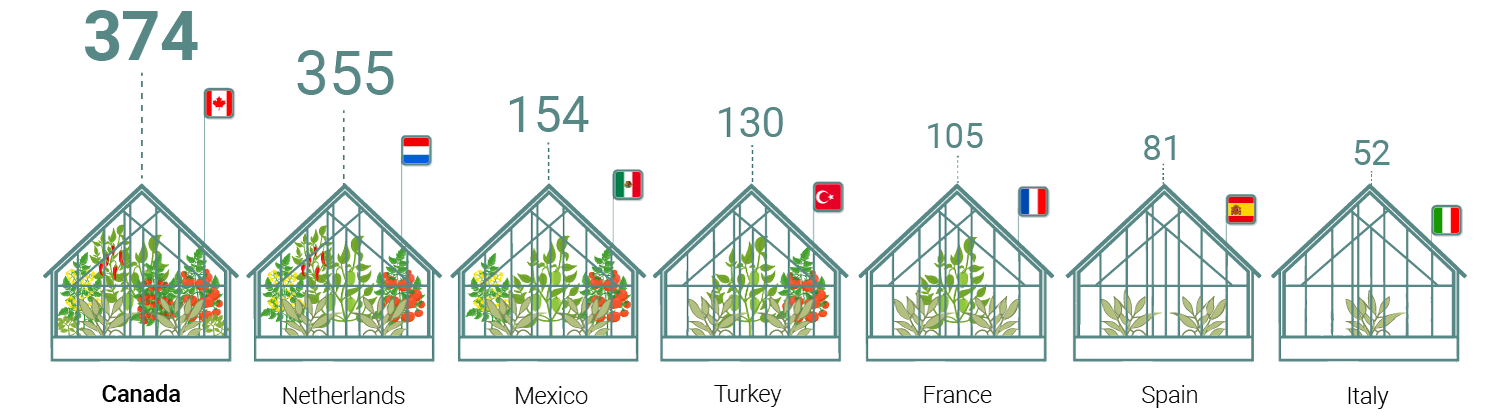
Canada’s global greenhouse strengths lie in productivity and land-use efficiency. The country’s greenhouse production boasts the highest yields per area of land among top greenhouse nations. Canada produces 4.6 times more per area of land than Spain, is slightly more productive than the Netherlands, and 2.6 times more than Mexico4,5. The challenge over the next decade for Canada will be to continue to lead on land-use efficiency, while scaling production to meet domestic and trade demands.
A key market for export growth is the western United States. Greenhouse vegetables account for 39% of Canada’s fresh produce exports, 99.5% of which are U.S.-bound. Canadian greenhouse fruit and vegetable products are consumed in the east from New York to Florida. Canada could also tap into the U.S. Midwest’s 68-million-strong market, if it can build relationships, branding, and cold chain logistics.
Greenhouses must solve their energy trilemma—of demand, emissions, and bills—to expand. Energy costs for Canadian greenhouses have surged 55% between 2013 and 2023, while natural gas-sourced power is driving the industry’s carbon footprint.6,7 Reducing natural gas demand and the green premium for alternatives including renewable natural gas, hydrogen, and clean electricity would enable Canadian greenhouses to thrive in a low carbon economy.
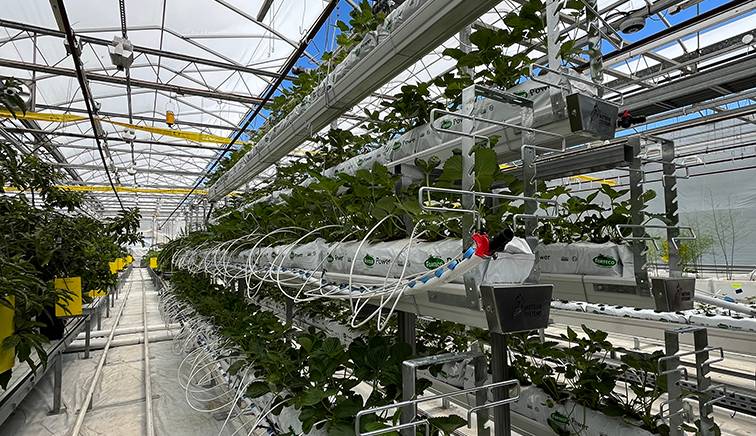
Rows of strawberry plants inside Center for Horticultural Innovation, Leamington, ON
(From left to right) Linda Nuhn, RBC; Lisa Ashton, RBC; Aaron Coristine, OGVG; Matt Korpan, CFHI; Peter Quiring, NFF; John Stackhouse; Gary Toupin, RBC.
Banana trees inside Center for Horticultural Innovation, Leamington, ON
Table of fresh produce grown at the Center for Horticultural Innovation, Leamington, ON
Sticky surface to detect location of bugs, Center for Horticultural Innovation, Leamington, ON
Opening the doors to the possibilities
Globally, population growth is expected to rise to 9.7 billion in 2050, with food demand rising around 56% by 2050 from 2010 levels8,9. Meeting future demand is a daunting task amid rising food insecurity. In Canada, more than 20% of households experience food insecurity, while food prices in stores have increased 21.6% from February 2021 to February 2024 due to several factors, including poor growing conditions, supply chain issues, and high input costs10. These factors present a challenge for the agriculture sector to innovate and advance climate resilient, efficient systems that bring more of the food produced to people’s plates at an affordable price.
Canada’s greenhouses are well positioned to help meet the challenge because of their high land use and input efficiency, potential to shorten supply chains for Canadians, and a strong history of growth and innovation.
Between 2013 and 2023, greenhouses specialized in vegetable and fruit production have grown each year11:
103 %
Value of product
36 %
Harvested volume
12 %
Greenhouse operations
Doubling down on these achievements over the next decade would require overcoming energy, water, and waste infrastructure challenges, while addressing regulatory constraints, labour shortages, and shortcomings in supply chains.
Greenhouses’ innovation advantage is growing in controlled environments. Enclosed spaces mean operators can design dynamic systems of lighting, fertigation, and heating to optimize plant growth and improve efficiency of resource use. For example, greenhouse operators can adopt low-tech innovations such as horizontal curtains to keep heat closer to plants, and high-tech innovations in early genetic testing to combat disease and pests that risk wiping out an entire crop’s growing cycle. Controlled environment agriculture also presents an opportunity to innovate in climate adaptation. By growing fruits and vegetables in enclosed structures and in controlled growing mediums, production can be more resilient to extreme weather events, changes in precipitation, and seasonal shifts, safeguarding a consistent supply of food. With climate change already disrupting supply and markets, there are economic costs to inaction—there is no time to create a false dilemma between choosing climate action or food supply12. Instead, food production and supply chains can advance their efforts in converging economic, production, and climate goals.
Canadian Greenhouses energy use is primarily powered by natural gas, which means high energy use equates to high greenhouse gas (GHG) emissions13. Canada needs to expand clean and renewable energy options, while also bringing down bills and reducing energy consumption to help the sector successfully decarbonize. Options in development include renewable natural gas (RNG) production from agriculture biowaste and neighbouring landfills, investments in regionalized hydrogen production, and exploring deployment of industrial sized electric heat pumps.
Disruptions and volatility in markets are to be expected from now until 2050, but so too is rising demand for fruits and vegetables produced in Canada. North America’s population is estimated to steadily grow during this period, and as incomes rise, consumer preferences are likely to shift to selecting more nutritious foods like fruits and vegetables for health reasons and complementary measures such as sugar taxes. Supply needs to be available to meet changing tastes, but projections suggest that the land used for fruits and vegetable production in North America will shrink over the next decade14. These multifaced issues present new growth challenges for Canada’s greenhouse sector.
What is CEA?
Controlled environment agriculture (CEA) is a continuum of growing systems from low tech to high tech that allows growers to have more control over the environment that crops are grown in.
CEA growing infrastructure
Glass or poly greenhouse:
Enclosed structure made from glass, polycarbonate, or
polyethylene.
Low-tech plastic hoop house:
Plastic film tunnel-shaped structure that are often low-tech with limited climate control systems.
Indoor vertical farm:
Enclosed room such as warehouses with stacked growing units that often use artificial lighting and soilless growing mediums.
Other indoor farm:
Enclosed, opaque structures such as retrofitted buildings using different growing systems, from aeroponics to deep-water culture.
CEA growing medium
Hydroponics:
Plants are grown in water-based mineral nutrient solutions.
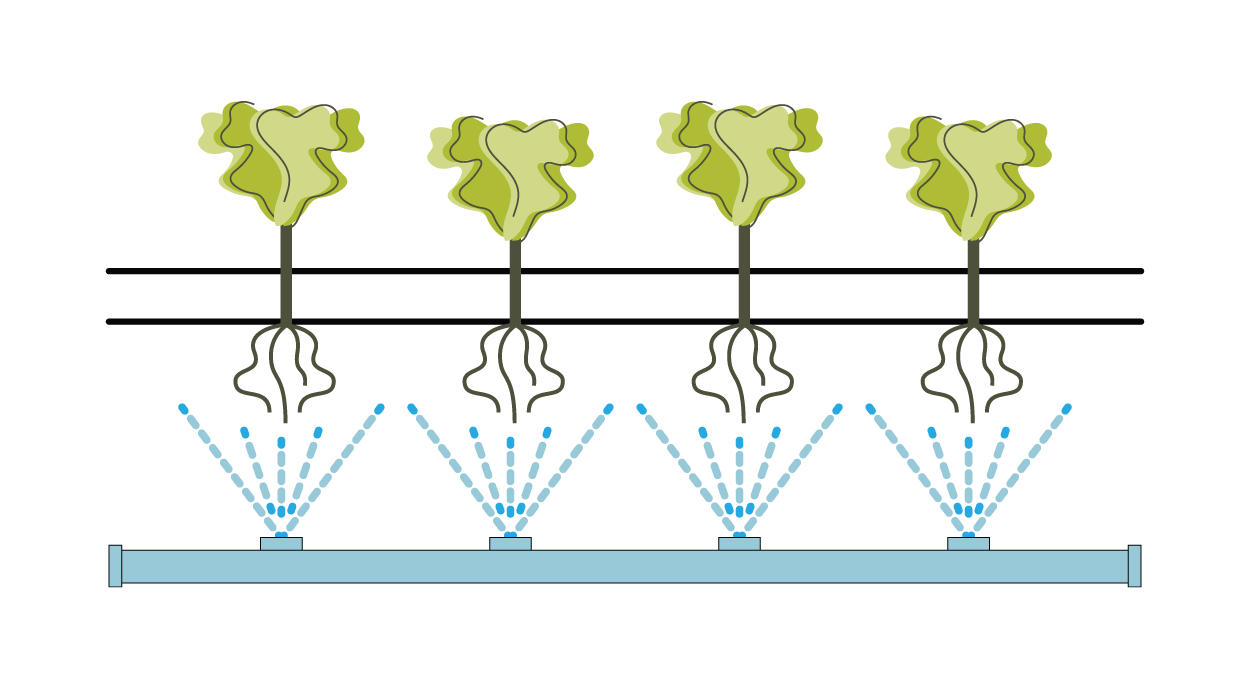
Aeroponics:
Plants are grown by suspending their roots, receiving nutrients through misted solutions.
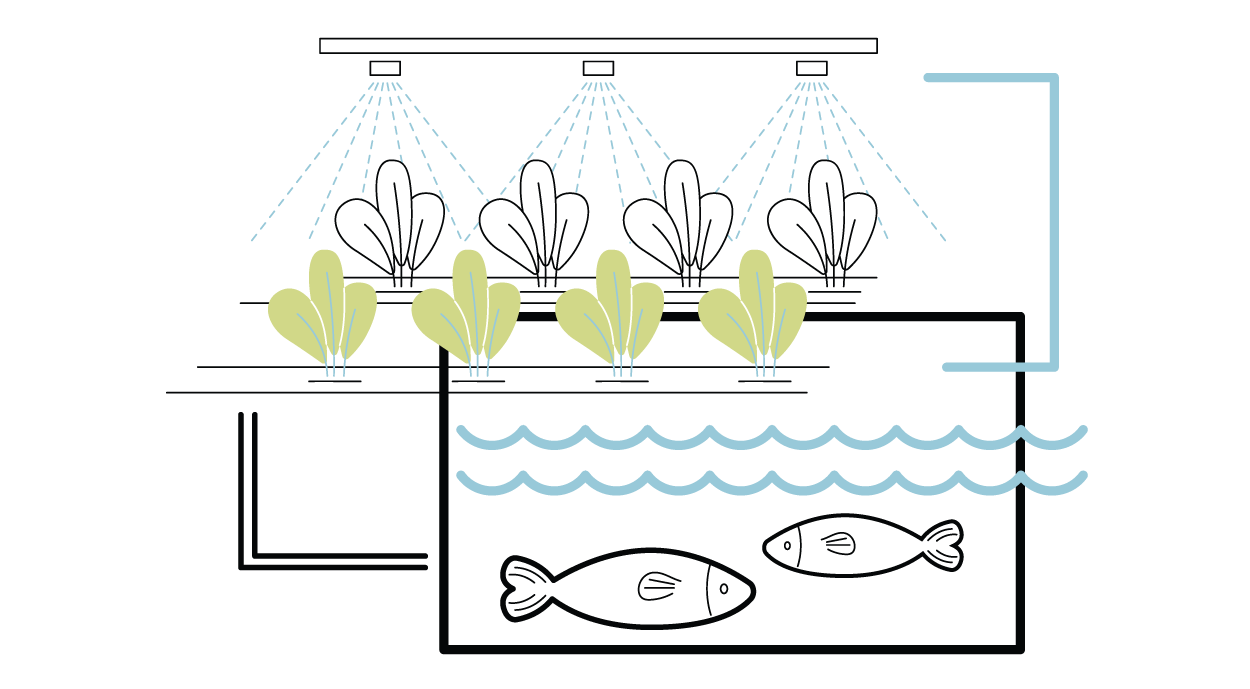
Aquaponics:
Plants are grown in water in a symbiotic environment with aquatic organisms.
Soil-based:
Plants are grown in soil.
A glimpse into current Canadian greenhouse production
A regionalized approach to greenhouse growth
In Canada, there are 920 greenhouses specializing in fruits and vegetables, spanning more than 5,000 acres15. These greenhouses produce more than 800,000 tonnes of tomatoes, cucumbers, peppers, lettuce, strawberries, and other produce, and are mainly made of glass, polycarbonate, or polyethylene, with different growing mediums depending on the crop16. Canada is also home to greenhouse production for flowers and cannabis. There are more than 1,500 operations growing flowers and plants generating a farm gate value of $2.1 billion in 202317. This report is focused on fruit and vegetable greenhouse production given Canada’s opportunity and challenge ahead to expand agri-food production and trade, while decarbonizing and adapting our food system to climate change.
Two-thirds of greenhouse production of fruits and vegetables in Canada takes place in Ontario and is mostly concentrated in Essex County in the province’s southwest. Leamington, Ontario, or the “Sun Parlour” of Canada, is in Essex County and home to North America’s largest concentration of greenhouses growing fruits and vegetables.
Essex County benefits from warmer temperatures, long sunny days, a Great Lakes-induced microclimate that creates ideal growing conditions, and is under an hour away from the U.S. border. The region has also benefitted from family farms that have invested locally and innovated in greenhouse construction, research, and cogeneration of energy and heat, making it a unique greenhouse hub. For example, the Center for Horticultural Innovation in Leamington trials the production of fruits and vegetables and new technologies such as bug-zapping drones to identify what can be scaled in Canadian greenhouses, keeping the industry moving forward. Ontario’s broader greenhouse sector is also supported through a variety of means including innovation funds such as the Greenhouse Competitiveness and Innovation Initiative (GCII), energy efficiency incentives, numerous research projects under the Ontario Agri-Food Research Innovation Alliance, and energy expansion projects underway to support regional growth.
Canada: A Greenhouse Powerhouse
Source: Statistics Canada
British Columbia, Quebec, and Alberta follow in production with smaller slices of the pie, but each have a growing greenhouse sector, in part, because of strategic regional development.
Quebec is actioning its ‘2020-2025 Greenhouse Growth Strategy’ through mechanisms such as rebates on energy consumption to double the size of the province’s greenhouse operations to approximately 620 acres by 2025.
Alberta is scaling innovation in agri-tech in greenhouses through research on novel strawberry and tomato seed varieties and efficiencies in lighting and energy. There is also support in the province to develop cross sector collaborations between the energy and greenhouse sectors to install transparent solar panels within greenhouses and facilitate the use of waste heat and CO2 from the production of natural gas to feed plant growth.
British Columbia is leveraging agriculture technology to advance its greenhouse sector through the creation of the B.C. Centre for Agritech Innovation at Simon Fraser University—part of the StrongerBC Economic Plan.
Canada’s greenhouse vegetables account for 39% of all fresh produce exports, valued at over $1.4 billion. Ontario is responsible for 88% of this export value, predominantly to the U.S. (99.5%), but also to Japan, France, and Taiwan18 .
The U.S.’s demand for fresh fruits and vegetables exceeds its production capacity, making it a key market for Canada to expand exports. For example, greenhouse tomatoes represent around 65% of the U.S.’s total fresh tomato import volume and value, and make up a significant chunk of its domestic consumption19. Canada is second to Mexico in U.S. imports of greenhouse tomatoes by some distance. Building upon innovation and energy solutions, Canada could market its products as high-tech and low-carbon to capitalize on consumers’ rising preference for sustainable products20.
Growing conditions, costs, and regulations
Delivering on domestic and export demands requires highly efficient and productive growing systems.
In Ontario, the top producers of greenhouse tomatoes, cucumbers, and peppers had gross margins of approximately 80 to 90% between 2017 and 2021, growing in greenhouses sized at approximate 29, 117 and 49 acres on average, respectively21.
Natural and artificial lighting, CO2, heat, water, nitrogen, phosphorus, and companion plants all contribute to a dynamic growing system for greenhouse fruits and vegetables. The balance across inputs varies depending on the produce. Cucumbers are mostly made up of water and therefore require substantial amounts of water to grow. In greenhouses, water is recirculated, and cucumbers’ water needs are approximately 800 to 1,200 litres per square metre per growing season. The exact amount of water needed depends on different factors, including the light source used. Inputs for tomatoes can slightly vary depending on the variety, but the outputs highlight the key differences. For example, a beefsteak tomato requires similar lighting, water, energy, CO2, and fertilizer to cherry tomatoes, yet beefsteak yields are more than double of the cherry variety22.
Greenhouses use energy, primarily from natural gas, for heating, lighting, and CO2 production. Natural gas is often used to heat water using boilers, which is pumped into greenhouses via piping that runs along the ground like a grid network and serves a dual purpose in creating tracks that harvesters can move along like a train to pick the produce. The flue gas from the boilers is often scrubbed and converted into CO2 for plant food.
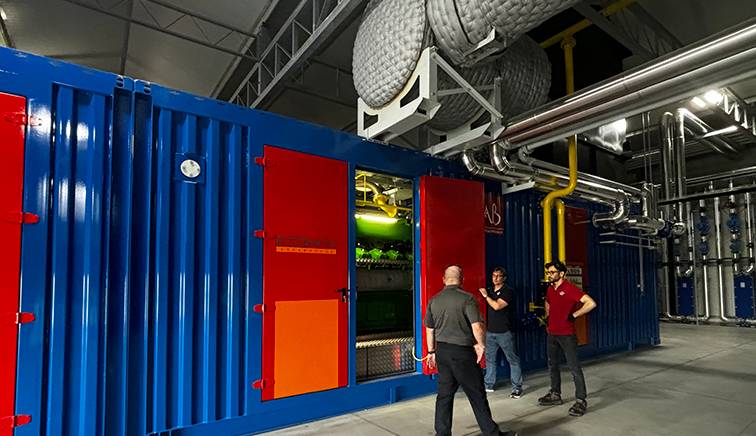
Natural gas, electricity, heating oils, and other types of fuels are rising in cost for Canadian greenhouse operators, and have increased by 55% from 2013 to 2023, to $406 million23. Energy use in greenhouses can also be costly for the environment with the use of natural gas often the main source of emissions in a greenhouse’s carbon footprint24. Some greenhouse operations have developed co-generation energy and heat facilities that power production in greenhouses and is integrated in the electric grid to help optimize efficiencies and meet peak energy demands. For example, Leamington-based Under Sun Acres operates four combined heat and power gas engines adjacent to their greenhouse used for pepper production. The engines supply the Ontario electricity grid with 13 MW of electricity, and the waste heat recovered from the engine exhaust and jacket is utilized to heat the greenhouse25.
Co-generation engine at Under Sun Acres, Leamington, ON
Greenhouse’s role in energy production can help meet regional demands, such as the Windsor-Essex and Chatham area’s projected rise from 500 MW peak demand in 2023 to approximately 2,100 MW by 2035, primarily driven by greenhouses, advanced manufacturing, and electric vehicle battery production.
Land is also a hot commodity, but efficiency per area of land relative to field production is a keystone in greenhouse’s sustainability story, freeing up land for other uses. In Canada, greenhouse tomatoes, peppers, cucumbers, lettuce, and strawberries together produce around 8.5 times more per area of land compared to Canadian field production, demonstrating strong productivity. However, yields over the past decade have plateaued26,27. Innovations underway to surpass historic yields include dynamic lighting systems, reconfiguring growing infrastructure to optimize space and light, and genetics to overcome stagnation.
Pyramid growing system at the Center for Horticultural Innovation, Leamington, ON
Labour is necessary but costly, accounting for 29% of Canada’s greenhouse operating expenses28. Farmer 4.0 highlights that greenhouses have far less returns on labour expenditure relative to other agriculture sectors such as beef. While the harvesting process remains primarily human-powered, promising innovations such as conveyer belt harvesters and robotics transporting and packaging in warehouses, can cut the time it takes produce to reach store shelves.
Yellow peppers at Under Sun Acres, Leamington, ON
Greenhouses have benefitted from government and industry support, but their policy and regulatory environment can also be an impediment. Controlled environment agriculture is often caught up in a no-man’s land of regulations, where it does not fit neatly into agriculture or industrial categories for development and access to resources. It can also take years to get approval for new projects. Canadian greenhouses face higher taxes and barriers in accessing affordable energy relative to some of their U.S. counterparts, hurting their competitiveness. The sector also comes up against regulatory barriers in accessing sufficient water, leading operators to choose between a few options, including making large upfront investments to build irrigation ponds and storm water collection systems, paying hefty development charges, or enduring lengthy processes to obtain easements and permits to access water.
The Big 5
Canadian fruit and vegetable greenhouses are highly specialized. The five big staples in Canadian greenhouse production include:
Tomatoes: Tomatoes are the king of greenhouse production in Canada, covering more than 1,800 acres, producing around 315,000 tonnes and $869 million in farm gate value29.
Cucumbers: Cucumbers represent the largest share of Canadian greenhouse vegetable exports at 34% of the value30.
Peppers: With nearly 170,000 tonnes, produced in 2023, peppers are the third largest greenhouse product in volume and value, but second in land use31.
Lettuce: Lettuce is a distant fourth in greenhouse production, led by Quebec. There is an opportunity to boost domestic production as lettuce represents the highest share of field vegetables imported into Canada by value at 18%, with the U.S. and Mexico combined accounting for around 99% of imports32.
Strawberries: Strawberries are the star fruit in greenhouse production, but currently account for only 3% of Canadian fruit and vegetable space33. This household favourite has runway to grow as Canadian greenhouse operators continue to modify their approach to protect strawberries from pest and diseases.
Five to watch
Canadian tastes are evolving and diversifying and Canada’s access to highly consumed items such as bananas and coffee could become more challenging over time amid concerns about climate change, supply chain disruptions, and geopolitical shifts. This context creates opportunities to innovate in the types of commodities grown in Canada.
Berries beyond strawberries: Raspberries and blueberries are among the top five fruit imports by value in Canada, presenting a large domestic demand for greenhouses to meet if production of these delicate, high-value products can be mastered34.
Spinach: Canada is a net importer of spinach, but efforts are underway to improve yield in greenhouses, speed up and automate the cultivation process, and improve cold chain logistics35.
Bananas: Bananas are the largest fruit import into Canada by volume, and have experienced global yield increases since the 1960s. But the next 50 years may not be as fruitful, opening an opportunity for greenhouses to grow bananas36,37.
Coffee: While it may be hard to imagine Canadian coffee production, research is underway to explore development of greenhouse coffee beans and address the multifaceted issues causing cocoa bean shortages and soaring prices38.
Okra: Okra is a key ingredient in many international cuisines and is steadily climbing year-over-year as a vegetable imported into Canada. Currently representing 1% of vegetable import value, it has grown more than 50% from 201839.
Canada leads on land use efficiency
Canada’s strength in greenhouse vegetable and fruit production relative to its international competitors lies in its productivity per acre. Canada produces 4.6 times more per area of land than Spain, is slightly more productive than the Netherlands, and 2.6 times more than Mexico40,41,42.
Productivity per area of land
Estimated yield per hectare (tonnes)
*Global comparison of top greenhouse producing nations in 2022. Estimates include combined annual greenhouse production of tomatoes, cucumbers, peppers, lettuce, and strawberries.
Source: Statistics Canada, Government of Mexico, EuroStat.
These high-producing regions have their own strengths, thanks to a variety of factors including the technology they’ve adopted, geographical location, and climatic conditions. While Canada can’t compete with Mexico’s heat—at least not in the near-term—, it can learn many lessons from its competitors.
Climatic conditions
Labour availability
Proximity and access to North American markets
Mexico has access to a large and productive labour force that will be challenging to replicate in Canada. Canadian greenhouse operators are actively exploring approaches to integrate the use of artificial intelligence (AI) in greenhouse operations to centralize data and optimize growing conditions in real-time. The use of AI and other efficiency disruptive technologies are not expected to replace humans, but can improve Canada’s competitiveness. Complementary to a productive labour force and favourable climatic growing conditions, Mexico has also benefitted from open and free trade with the U.S. supported earlier by the North American Free Trade Agreement (NAFTA) and now the Canada-United States-Mexico Agreement (CUSMA). Simultaneously, Mexico fostered investments in large scale greenhouse facilities, improving its competitiveness overtime in providing fresh produce year-round that can reliably fulfill the U.S. demand. However, a growing trade imbalance between the U.S. and Mexico on fresh fruits and vegetables means there is pressure within the U.S. to explore legislative options that support its fresh produce industry43.
Proximity and access to European markets
Regional concentration
Climatic conditions
Spain’s ability to scale centralized greenhouse production within a short period of time and optimize regional market access and trade is certainly a model to learn from. Centralization of production has enabled Spain to emerge as a greenhouse exporting leader. The southeast city of Almeria accounts for 72% of greenhouse vegetables in the country, spanning 98,000 acres—the largest concentration of greenhouses anywhere in the world44. Spurred from strategic development and a lack of land use planning, Almeria is a centralized hub market that accounts for more than 80% of Spain’s greenhouse vegetable exports to the European Union45. However, Almeria’s expansive network of greenhouses has created negative externalities for the environment and those working and living within the region, such as depletion and salinization of water supply and even changes to the microclimate of the region46. Mitigating negative impacts on local communities, pollution, and the workforce from expanding highly concentrated areas of greenhouse production requires an inclusive and strategic lens to planning and development.
Investment in decarbonization
Land-use efficiency
High-skilled labour matches hi-tech industry
The Netherlands has a head start over Canada in navigating the complex landscape of producing more on less land, while mitigating GHG emissions. The country has limited land availability and has set GHG targets specifically for the greenhouse sector of 1Mt CO2 eq reduction by 2030 from 2016 levels, primarily from reducing emissions from energy47. The Netherlands’ target is coupled with enabling mechanisms such as the Energy Efficiency in Greenhouse Horticulture scheme, Green Label greenhouse certification, and demonstration projects to promote knowledge development and exchange. Packaging GHG targets with mechanisms designed to support the sector to grow and innovate while transitioning to a low-carbon system is a model that could be replicated by governments in Canada through initiatives such as the Sustainable Agriculture Strategy.
Climatic conditions
Labour availability
Proximity and access to North American markets
Mexico has access to a large and productive labour force that will be challenging to replicate in Canada. Canadian greenhouse operators are actively exploring approaches to integrate the use of artificial intelligence (AI) in greenhouse operations to centralize data and optimize growing conditions in real-time. The use of AI and other efficiency disruptive technologies are not expected to replace humans, but can improve Canada’s competitiveness. Complementary to a productive labour force and favourable climatic growing conditions, Mexico has also benefitted from open and free trade with the U.S. supported earlier by the North American Free Trade Agreement (NAFTA) and now the Canada-United States-Mexico Agreement (CUSMA). Simultaneously, Mexico fostered investments in large scale greenhouse facilities, improving its competitiveness overtime in providing fresh produce year-round that can reliably fulfill the U.S. demand. However, a growing trade imbalance between the U.S. and Mexico on fresh fruits and vegetables means there is pressure within the U.S. to explore legislative options that support its fresh produce industry43.
Proximity and access to European markets
Regional concentration
Climatic conditions
Spain’s ability to scale centralized greenhouse production within a short period of time and optimize regional market access and trade is certainly a model to learn from. Centralization of production has enabled Spain to emerge as a greenhouse exporting leader. The southeast city of Almeria accounts for 72% of greenhouse vegetables in the country, spanning 98,000 acres—the largest concentration of greenhouses anywhere in the world44. Spurred from strategic development and a lack of land use planning, Almeria is a centralized hub market that accounts for more than 80% of Spain’s greenhouse vegetable exports to the European Union45. However, Almeria’s expansive network of greenhouses has created negative externalities for the environment and those working and living within the region, such as depletion and salinization of water supply and even changes to the microclimate of the region46. Mitigating negative impacts on local communities, pollution, and the workforce from expanding highly concentrated areas of greenhouse production requires an inclusive and strategic lens to planning and development.
Investment in decarbonization
Land-use efficiency
High-skilled labour matches hi-tech industry
The Netherlands has a head start over Canada in navigating the complex landscape of producing more on less land, while mitigating GHG emissions. The country has limited land availability and has set GHG targets specifically for the greenhouse sector of 1Mt CO2 eq reduction by 2030 from 2016 levels, primarily from reducing emissions from energy47. The Netherlands’ target is coupled with enabling mechanisms such as the Energy Efficiency in Greenhouse Horticulture scheme, Green Label greenhouse certification, and demonstration projects to promote knowledge development and exchange. Packaging GHG targets with mechanisms designed to support the sector to grow and innovate while transitioning to a low-carbon system is a model that could be replicated by governments in Canada through initiatives such as the Sustainable Agriculture Strategy.
What Canadian greenhouses need to grow
Canada’s greenhouse sector is a success story in growth and productivity, but it’s now time to consider steps that can sustain and expand the sector. A pan-Canadian greenhouse growth strategy that maps out production, trade, value, and GHG targets could enable the sector to still experience year-over-year growth by 2035 and beyond. In conjunction with mapping the possible, considering infrastructure, skills, policy, investment, and research needs are essential to address the challenges the sector will need to navigate.
Energy: Address the sector’s trilemma
Natural gas is the primary energy source powering the sector, but continued use could challenge Canada’s GHG reduction targets. Reducing production carbon footprints would require greenhouses to scale alternative energy sources such as RNG, electric powered heat pumps, and hydrogen. RNG makes up only 0.36% of natural gas distribution in Canada, but has the potential to halve the carbon intensity of gas use relative to natural gas, depending on the type of feedstock (e.g., manure) used48 49 50. However, green premiums for such alternatives are high. For example, in Ontario RNG is cheaper than electricity, but five times more expensive than natural gas51. Creating awareness and financial mechanisms that appropriately compensate farmers and greenhouse operators for biowaste suitable for RNG production is vital to ensure Canada builds a consistent supply of feedstock for biodigesters.
Fully electric systems are also being explored. But operators considering switching to electric heat pumps to improve energy efficiency and reduce their carbon footprint, must also consider the source of electricity. Nationally, GHGs associated with public electricity and heat production are down 56% as of 2022 from 2005, which is Canada’s baseline year for its 2030 GHG emissions target52. However, the level of GHGs associated with electricity substantially differs between provinces as the power sources vary between fossil fuels and renewables, equating to different carbon intensities. In 2021, Alberta electricity generation’s carbon intensity was 510 times more than Quebec53. This variability emphasizes the need for regionalized strategies and targeted commitments and action to clean grid expansion and enable industrial processes to decarbonize.
Waste: Design circular and low-carbon systems
Natural gas is the primary energy source powering the sector, but continued use could challenge Canada’s GHG reduction targets. A steady and consistent supply of feedstock is required to scale RNG. Greenhouses produce biowaste that could be used as a feedstock for RNG production, but would likely need to be supplemented with other waste to make supply consistent as greenhouse waste dips during growing seasons and peaks when they end. Due to biosecurity concerns and plastic tags and twine in greenhouse biowaste, the safest and common option is to dispose of the biowaste at a landfill. Close to Canada’s greenhouse hub, Enbridge is developing an RNG project at Waste Connections of Canada’s Ridge Landfill in Chatham-Kent, which is expected to offset 110,000 CO2eq tonnes from the landfill and produce 1.591 petajoules per year54.
Landfills like Ridge Landfill are at capacity or expanding to meet waste disposal demands. To alleviate waste disposal pressure and complement landfill RNG production, agriculture biodigester hub- and- spoke models could present new revenue streams within highly productive agriculture regions, collecting farm biowaste from multiple agriculture systems, from crop to livestock to greenhouses. That would create circularity and promote rural access to RNG.
Land: Produce more on less
The increasing cost and competition for land among housing, retail, agriculture, and industry, especially within densely populated regions such as the Windsor and Montreal Corridor, has strained land resources. Canadian greenhouses have demonstrated their global leadership in productivity per area of land, but innovations that lead to leaps in yield are needed to maintain Canada’s global lead. Producing more with less is one of the agriculture sector’s biggest challenges. Greenhouses’ contribution to addressing this challenge for growth, should be more explicitly included and supported through sector-wide sustainability policy, especially the forthcoming federal Sustainable Agriculture Strategy.
Water: Conserve an increasingly precious resource
Like land, water access is also being pinched in some regions for greenhouse operators. Development charges introduced by municipalities on new developments using public water in Chatham-Kent, Ontario, highlight the changing landscape. Investments in rural infrastructure is needed from different levels of government given the rising demand for food production and the competing pressures and rising costs of natural resources. Alignment across municipalities and provincial infrastructure development plans and growth targets for the sector could help rural Canada address future shortcomings.
Light: Consider community in rural development
Greenhouses can emit bright lights around the clock, which can be a nuisance to rural residents. Municipalities in regions such as Leamington that have a high concentration of greenhouses have regulations that require operators to mitigate light pollution by using curtains or turning lights off in the evening. Ensuring greenhouse operators comply with local regulations and expansion plans consider the implications for community well-being is critical to its sustainable growth and ability to attract high-skilled labour.
Skills: Rebrand Canadian agriculture to attract diverse talent
Advancements in automation in greenhouses can result in greater efficiency and create demand for more high-skilled jobs. But is Canada ready to fill them? The sector is already struggling to address its labour shortage, with one in every three agriculture jobs expected to be vacant by 2030 without significant action55. Convincing more Canadians to move to rural regions is increasingly challenging with rural population growth 15 times slower than in urban areas56. Further, recent policies that impact foreign students’ pathways to stay in Canada can shrink enrollment in post-secondary programs, further limiting access to high-skilled individuals. As these challenges mount, greenhouse operators continue to rely heavily on temporary foreign workers from Mexico and Central America. Agriculture needs to rebrand to attract job seekers and promote itself as a place for highly skilled, tech-driven, and ambitious individuals that want to make a positive impact in Canada and globally.
Regulation and Policy: Modernize for a more competitive world
Becoming a global center for sustainable and efficient greenhouse production would require exploring the policies and regulations that leave Canada at a disadvantage compared to global competitors. A key place to start is by identifying and modernizing regulations that put greenhouses and other forms of CEA in regulatory no-man’s land and delay development.
Market Development: Develop a blueprint for tapping into new markets
A blueprint for greenhouse fruit and vegetable exports could help stakeholders chart a course on possible actions Canada needs to expand. Targeting the U.S. Midwest is a key expansion opportunity and could serve as a foundation of a trade blueprint. Co-led industry and government trade promotion missions can serve as means to collect information on cold chain logistic needs, size up the market opportunity, build relationships and a Canadian brand. Expansion to in new areas should also consider climate impacts of extending refrigeration and food miles, as well as key competitors in the region such as California’s field production.
Trade: Create a made-in-Canada carbon calculator
The greenhouse sector is primed for a made-in-Canada carbon intensity calculator. Not knowing the carbon intensity of greenhouse production is a blind spot for Canadian climate policy and for the industry in developing solutions and marketing its sustainability progress. Governments have a role in investing in and collaborating on the development of user-friendly tools for Canadian greenhouse operators to identify, understand, and reduce their carbon footprint. Calculating the carbon intensity of products is increasingly important to meet market demands, overcome trade barriers, and empower the industry to make informed decisions on new developments and retrofits.
Research: Coordinate and scale Canadian innovations
Canada is not only a leader in greenhouse productivity but also in innovation. Yet, funding programs are fragmented, and knowledge translation is siloed. These challenges come from Canada operating on a reactive model, whereby industry and universities might work collaboratively with individual operators on projects to address a specific issue, but lack overarching alignment on research priorities, funding, and goals. This patchwork presents an opportunity for an umbrella research framework to bring projects and stakeholders together to advance research in a targeted and coherent fashion. Stakeholders could agree upon research priorities such as automation, genetics and breed, Net Zero goals, and agronomy, which can then be used to facilitate coordination and partnerships across relatable projects. A research framework with priorities, committed funds, and timebound objectives can also ensure research institutions are better aware of their relative speed of travel, aligning industry needs and research projects.
The next 10 years
Greenhouses can emerge as a pillar of Canada’s agri-food growth and sustainability ambitions over the next decade and towards 2050. The sector is set to double in acreage over the next 10 years, deliver more diversity of products, and improve yields. The real challenge for Canadian greenhouses in meeting demands in growing markets and overcoming rising resource constraints will be developing infrastructure that spurs growth and decarbonization, and enables rural communities to thrive.
Dias et al. (2017). Life cycle perspectives on the sustainability of Ontario greenhouse. tomato production: Benchmarking and improvement opportunities. Journal of Cleaner Production.
United Nations. (2022). World population to reach 8 billion this year, as growth rate slows.
Van Dijk et al. (2021). A meta-analysis of projected global food demand and population at risk of hunger for the period 2010–2050. Nature Food.
Statistics Canada. (2024c). Consumer Price Index, February 2024.
Statistics Canada. (2024a).
Deloitte. (2022). The turning point: A new economic climate in the United States.
Statistics Canada. (2024b).
Organisation for Economic Cooperation and Development (OECD). (2022). OECD-FAO Agricultural Outlook 2022-2031
Statistics Canada. (2024a).
Statistics Canada. (2024a).
Statistics Canada. (2024d). Estimates of specialized greenhouse operations, greenhouse area, and months of operation.
Agriculture and Agri-Food Canada (AAFC). (2022a). Statistical Overview of the Canadian Greenhouse Vegetable and Mushroom Industry.
United States Department of Agriculture (USDA). (2024). Vegetables and Pulses Outlook: April 2024.
McKinsey & Company. (2023). Consumers care about sustainability—and back it up with their wallets.
Open Government. (2024). Ontario farm financial analysis data.
There is a buzz around hydrogen. It comes in many iterations—geological, low-carbon, and conventional, and everything in between—and has seen billions of dollars of investment across the world. Depending on how hydrogen is made, it is labelled green when manufactured using renewable power, and blue when using natural gas and capturing the emissions, although several other ways of producing hydrogen exist. Its properties as an energy carrier and a chemical feedstock promise to make significant contributions to decarbonizing the world.
Canada can play a role here to meet continental, perhaps even global, demand.
For now, the country’s hydrogen production remains modest: we produce about 3,500 tonnes of low-carbon hydrogen, several orders of magnitude less than the three million tonnes of fossil-based, carbon-emitting hydrogen it consumes to service its oil and gas, petrochemical, and fertilizer sectors. Scaling up low-carbon hydrogen production to replace this would help Canada achieve its Net Zero goals, but it has a long way to go—in technology, regulations and application—before it can emerge as a formidable alternative to conventional hydrogen and fossil fuels.
The good news is that progress is already underway. Since the federal government published its hydrogen strategy in 2020, 80 low-carbon hydrogen projects valued at over $100 billion in investment have been announced or are under consideration or development. Provincial strategies are taking shape and pilot projects, across applications from steel to space heating, are demonstrating hydrogen’s potential to replace fossil fuels and lower emissions in areas where it has not traditionally been applied. And with at least 13 known partnerships between hydrogen proponents and Indigenous communities already established, a hydrogen-fueled future in Canada could be built on a strong foundation of Indigenous engagement.
Hydrogen could be one of the pillars of a decarbonized Canada. Canada’s 2020 hydrogen strategy projected production trebling to 21 Mt per year by 2050, accounting for a third of Canada’s final energy consumption—an ambitious growth trajectory.
In theory, hydrogen could flow through natural gas distribution lines, fuel heavy-duty trucks that are the backbone of inter-regional trade, and burn in power plants to keep the lights on in homes, all while lowering emissions if produced cleanly. It could also form part of a new export industry, transporting energy from the East Coast’s best-in-class wind resources to Europe and support the continent’s energy independence from natural gas.
But as the federal government’s May 2024 strategy update shows, a lot hinges on which applications see uptake of hydrogen in favour of other solutions. Demand could vary significantly, from 3 to 20Mt/year—that’s a 17Mt/y spread, suggesting uncertainty around hydrogen’s potential.
This uncertainty stems from hydrogen’s innate complexities and the competition it faces from other clean technologies. Here are some hurdles the industry must overcome:
1. A question of logistics
Hydrogen is inefficient to make and difficult to transport. Converting renewable power into hydrogen results in 30% to 40% less energy than if the electricity was used directly, such as through a heat pump for space heating. And once manufactured, moving hydrogen to its destination is challenging because of high energy requirements for compression, limited hydrogen pipelines in the country, and the inability of natural gas pipelines to channel high concentrations of hydrogen without risking damage.
2. Footing clean hydrogen’s energy bill
Canada’s rich hydroelectric and nuclear generation resources and strong methane regulations are an advantage, but will only take us so far in an age of increasing energy demand and rising costs. Hydrogen’s efficiency challenges mean that Canada will need a lot more renewable energy generation to make green hydrogen, and strong carbon capture, utilization and storage (CCUS) infrastructure to lower the CO2 emitted from making blue hydrogen. Blue hydrogen manufacturing will also need Canada to step up methane leak monitoring and mitigation. These measures will allow Canada to manufacture the hydrogen it needs without straining electricity grids or increasing overall emissions because of methane leaks.
3. Competing with the IRA
Lowering hydrogen manufacturing costs will also be key while maintaining an investment environment that’s attractive to global hydrogen companies. The biggest competition comes from the United States, where tax credits under the Inflation Reduction Act (IRA) give hydrogen developers a revenue premium over Canadian incentives. Canada’s Clean Hydrogen Investment Tax Credit (ITC) could offset 15% to 40% of hydrogen costs and help close the gap with the U.S., especially as new, restrictive guidance on IRA credit eligibility makes incentives down south more uncertain. For costs to go down, Canada’s hydrogen ITC must progress through legislation quickly and demand for clean hydrogen must scale.
Hydrogen’s potential applications are as numerous as its varied colours. But prioritizing high-impact early projects will help calibrate the demand hydrogen needs to match supply-side incentives. Canada needs to be tactical in the near term to ensure that existing hydrogen supply is decarbonized quickly, and that the most promising pilot projects and economic sectors receive the support they need to deploy hydrogen at scale.
Vivan Sorab is RBC Climate Action Institute’s Senior Manager, Clean Technology.
Canada has a growth problem. The economic momentum that propelled the country through the 20th century has faded in the 21st, and appears to have worsened since the pandemic. Higher interest rates have slowed per-capita output since 2019, but the problems run deeper than that. Our economy is now smaller than it was in 2019 when adjusted for inflation and immigration, and pretty much in the same place it was a decade ago.
Globally, we’ve fallen behind most major economies since 2000. At the turn of the century, the economic output of the average Canadian was on par with Australia. Today, Australians are almost 10% more productive, while their economy has grown 50% per person faster than Canada’s over the quarter century. We’re further behind the United States. Canada is 30% less productive than the U.S. and closer to lower-income states like Alabama in terms of economic performance than tech-rich California or New York. The result: We’ve fallen from the 6th most productive economy in the Organisation for Economic Co-operation and Development in 1970 to the 18th as of 2022.
Pretty much every Canadian has something at stake. The productivity gap with the U.S. stands at about $20,000 per person a year, putting Canadians’ wages roughly 8% below their U.S. counterparts. The gap has been even more taxing for capital. Anyone who invested $1,000 in Canada’s main stock index in 2000 would have $4,400 today; the same investment in the U.S. S&P 500 index would be worth $6000—a more than 35% difference.
Our relatively low productivity —the amount of production and income generated per hour worked in the economy— has been held back by a shortfall in investment, especially outside real estate, construction and public services like hospitals. As a result, we’ve not been able to capitalize on the immigration boom that has added seven million people—most of them working-age and well-educated—since the turn of the century and offset the retirement wave of baby boomers.
The deindustrialization of many parts of Canada has cut into the country’s overall prosperity. Manufacturing is half what it was to the economy in 2000, while mining has also shrunk. Oil and gas—once powerhouses of investment and growth—are showing signs of renewed strength, but investment levels remain far below what they were a decade ago. Agriculture has been a rare standout, as we’ll explore later in this report.
A positive change in productivity could be the most significant factor in lifting economic growth, and the prosperity that goes with it. We have the natural and human resources that much of the world is looking for, and our access to major markets—Europe, Asia, and critically, the U.S.—is the envy of the world. With those strengths, Canada’s growth challenge can quickly become a growth opportunity, with significant benefits for Canadians. Simply closing the productivity gap with the U.S. would add roughly $20,000 of GDP per person per year.
Slowing Canadian GDP growth led by softening productivity gains
Average annual percent change, business sector (sum of bars equals per-year GDP growth)
Statistics Canada, RBC Economics
Boosting productivity is not simple, of course. Canada is a large, geographically diverse, resource-rich country with a dispersed population, and that creates unique infrastructure, regulatory and investment challenges. Administrative burdens across multiple levels of government have created inefficiencies and increased internal trade barriers. Infrastructure chokepoints and red tape make international trade more difficult than it should be. Even the mobility of skilled workers—hard enough given our geographic expanse—can be limited by the way provinces, industries and professional groups try to control labour supplies.
Those issues all contribute to lower Canadian business investment and with that, lower growth. Moreover, in recent economic cycles, a growing share of savings and investment has flowed to real estate and construction, which, while needed and beneficial for many reasons, are both relatively inefficient and can hold back the overall productive growth of an economy. The same can be true for small businesses, which account for 98% of total businesses and historically have been less productive. Those businesses are foundational to the country and are part of many Canadian’ communities, but if they’re not growing and becoming more competitive, they can limit the overall economy’s potential.
It wasn’t always this way. Canada’s productivity growth averaged 5% per year in the 1950s as wartime technologies were adapted for civilian use—powering virtually all GDP growth that decade. Productivity growth stayed strong (3.5% per year) in the 1960s as automation of the manufacturing sector continued, along with a boost from the 1965 Auto Pact between Canada and the U.S. that opened a new door to freer trade. That trajectory faded during the turbulent economic times of the 1970s and 1980s, although innovations like container shipping and expanding global trade led to further gains in growth and productivity in the 1990s.
These challenges can seem daunting. But the solutions are also clear and attainable and don’t require many trade-offs. Growth-minded policies can benefit all parts of society including both investors and workers.
Among the most compelling options for governments, businesses, unions and industry groups:
Cutting red tape and reducing internal trade barriers. This doesn’t have to mean lowering standards but rather improving consistency and rules across jurisdictions to make project approval times and costs more predictable.
Better utilization of immigrant skills. All population and workforce growth is going to come from immigration, and we need a better system to match education and skills with jobs.
Improving tax competitiveness. Canada’s tax competitiveness has been slipping. Our level of taxation overall is lower than other more productive economies, but broader reforms to reduce complexity and the cost of tax compliance could help to attract more investment.
Adopting new technologies. “Smarter” investments like artificial intelligence can help but adoption rates are low in Canada. Making it easier to invest in new technologies is critical to maintaining global competitiveness.
Capitalizing on a highly educated workforce. Canada’s highly educated workforce is uniquely positioned to benefit from a global shift to a more services-based economy. Canada needs to ensure investments in education are generating a return.
Every federal government over the last quarter-century, and many of the provinces have studied the challenges of competitiveness, growth and productivity. And they’ve each discovered, sometimes in hindsight, that there’s no simple policy playbook. This report examines some of the steps that can be taken to enhance growth, but one of the most powerful tools is not a tool at all; it’s a mindset.
If Canadians developed a collective focus on the economy of the future—one that rewards innovation, celebrates competitiveness, invests in both people and technology, and efficiently delivers returns—the productivity puzzle may become easier to solve. And with it, growth will return.
Canada’s productivity vs. the U.S. has been sliding since 1980s
Natural resources lead Canada’s productivity gains vs. U.S.
What you need to know about productivity
What is productivity?
Productivity is a measure of economic output per hour worked. Economic growth depends on many factors—the price of goods and services, and the value of exports, for instance. But, the most important factor over time is the efficiency of an economy at generating additional income from each hour worked.
Can an economy grow without productivity?
It’s possible. You just need to add more hours worked. To some degree, high rates of immigration have done that in Canada in recent years. But an economy can’t become more vibrant and competitive unless productivity improves.
Does more productivity mean fewer jobs?
It’s not about replacing workers with machines. It’s about working more efficiently, which is the most reliable way to increase wages and living standards. New technologies like AI have the potential to be disruptive, but for specific tasks and jobs, they can equally allow a wide range of people to create more value with what they do. Technological advancements change the way we work, but historically, have allowed the creation of more jobs than they displace.
Do we need lower taxes to raise productivity?
Some taxes impact productivity; others don’t. Worldwide, private-sector investment does not require a race to the bottom on corporate tax rates. Other economies with higher productivity levels have higher taxation rates overall than Canada, but the mix of taxes is different and there are benefits to be had from making the tax system less complex.
Does higher productivity mean higher income inequality?
No. Most countries with higher productivity levels than Canada have lower levels of income inequality. Global comparisons in productivity are often complicated by the fact that the U.S. outperforms most other advanced economies in total production per hour worked, but those gains are not evenly spread across the population and between workers and business owners.
Does productivity operate the same across economies?
There are significant geographical and structural economic differences that lead to different productivity outcomes. Norway benefits from large oil and gas resources that are mostly publicly owned or controlled. Canada’s widely dispersed population and rich resource base create some unique challenges. But, some of those challenges are also human-made and tied to a lack of cooperation and consistency in rules and regulations across different levels of government.
How we got here: Canada’s journey to low productivity
Some of the causes of Canada’s long-term slowdown in economic growth are well-known and clear. Let‘s start with an inefficient regulatory and administrative approval system at all levels of government, which has unintentionally increased internal barriers to trade and growth. Infrastructure chokepoints and red tape further make international trade more difficult than it should be. Those have contributed to lower Canadian business investment, and with that, an overweight of capital going to buildings and construction, which, while valuable to the economy, don’t do as much for growth as machinery and intellectual property do. Moreover, many policies have favoured small businesses over growth companies and large enterprises, which, in turn, limits our overall productivity growth.
Canadian businesses invest less
Canadian businesses invest substantially less than in the U.S.—about half as much per worker in aggregate. That underperformance intensified following the 2008-09 global financial crisis and through the oil price collapse of 2015, and worsened following the pandemic as higher interest rates hit the Canadian economy harder than the U.S. In sum, the contribution to productivity growth from capital investment in Canada since the 2008/09 financial crisis has been less than half the average over the decade before. Added to this, weak recent investment trends suggest further underperformance in the decade ahead.
Of course, part of the slowing in investment has been from a pullback in investment in the Canadian oil and gas sector that is tied more to the ongoing energy transition globally away from fossil fuels. But, businesses have also invested a substantially smaller share of GDP in the manufacturing sector in Canada than in the U.S. over the last decade.
The issue does not appear to be a lack of available funding. Central banks have pushed interest rates higher, but businesses are still sitting on a large cash stockpile worth almost a third of GDP. Businesses have long argued that an inefficient project approvals backdrop is making investing in Canada relatively expensive. Lack of investment also keeps Canadian businesses smaller (98% of businesses in Canada have fewer than 100 employees) and smaller businesses are typically, on average, less productive.
Canada vs. U.S. investment per worker ratios
Utilities and mining draw most investment both sides of the border
Regulation is a tax on investment and growth
A patchwork of regulatory and administrative rules across different municipalities and provinces is complicated and unintentionally restricts trade within Canada.
The International Monetary Fund has estimated that internal trade barriers (for example, regulatory differences across regions, paperwork requirements for businesses in multiple jurisdictions, and certification differences that limit labour mobility) cost the equivalent of a 20% average tariff between provinces. By comparison, the effective tariff rate collected on international imports from abroad in Canada is less than 1%1.
In 2020, Canada ranked 188th out of 208 economies tracked by the World Bank on the number of days businesses spent dealing with construction permits for new projects. That is three times longer than time spent in the U.S.
Red tape also makes it more expensive for companies to trade across international borders. Actual tariff rates on international trade in Canada are low, but Canada ranks poorly (51st globally) in the ease of trading across borders in large part due to high administrative costs associated with importing and exporting.
Our tax system is losing its competitive edge
A decade ago, Canada had the second lowest corporate tax rate among G7 economies. That gap has narrowed, particularly, after a sharp drop in U.S. corporate tax rates in 2018.
Canadian corporate tax rates are still comparable to other advanced economies. But taking into account the tax on company dividends at the personal income tax level, the total tax on distributed profits from Canadian companies is the highest in the G7, according to the OECD.
Added to this, governments in Canada have been running larger budget deficits after decades of fiscal responsibility. That raises the risk of further tax increases in the future, which increases uncertainty for businesses thinking about coming to and expanding in Canada.
At the same time, while foreign direct investment in Canada has remained firm, investment by Canadians abroad has grown substantially, leading to a large net outflow of investment abroad. The investments abroad are valuable. Canada’s stock of net assets held abroad has increased to about $1.7 trillion (57% of GDP)—but they are adding to productivity growth outside of Canada, rather than within.
Canada’s net investment outflow to U.S. intensified after 2014
Canada’s corporate profit taxes are highest among developed nations
Infrastructure challenges—some natural, some self-created
Canada has a small population spread across a large land area with abundant natural resources that need to be exported. That generates some unique challenges compared to other countries.
The good news is Canada has a strong infrastructure overall, ranking at the top of the G7 in World Bank rankings. Transportation and warehousing are the few industries where Canadian business investment is a larger share of industry GDP than in the U.S. It is one of the industries where Canada’s productivity underperformance relative to the U.S. is the smallest.
However, there remain significant bottlenecks where Canadian infrastructure significantly underperforms. The country’s turnaround times at ports are among the longest in the world, ranking 103rd out of 113 countries tracked by the World Bank in 2023 with a median of two and a half days. Canada also ranks poorly on “ease of exporting” in global rankings by the World Bank largely due to high document and paperwork costs.
Overweight in construction, light on intellectual property
Productivity in Canada lags in most industries versus the U.S., but the Canadian economy is also overweight in construction, where productivity growth has been slower.
Investment in residential structures accounts for twice the share of GDP in Canada (6%) than in the U.S. (3%). Businesses in Canada invest more in nonresidential structures and less in intellectual property products. Canada invests about 40% less (as a share of GDP) in intellectual property products (IPP) overall—with a larger weighting towards mining exploration activity. The manufacturing sector invests about just a quarter of what the U.S. invests in IPP relative to the industry’s GDP footprint.
As a result, construction accounts for about twice the share of total hours worked in Canada (8%) as it does in the U.S. (4%). Construction is one of the industries that has struggled the most to boost productivity over time. Indeed, looking back decades, productivity in the Canadian construction sector as of 2022 was 54% above levels in 1961—which is just a fourth of the broader increase in business sector output per hour worked over that period.
How Canada’s productivity grew by sector over the last six decades
U.S. outpaces Canada in intellectual property investment in key sectors
A growing services sector isn’t helping productivity
The reasons for Canada’s decades-long productivity challenge on the goods-producing side of the economy are well known, if not easily solved. The service sector (home to 80% of Canadian workers) must also be part of any solution to productivity challenges.
It’s concerning that high levels of investment in human capital aren’t paying higher dividends in terms of productivity growth. Canada has a highly educated and skilled workforce that should be well-positioned to take advantage of the ongoing shift in the global economy from goods to service-producing industries. However, there hasn’t been a corresponding acceleration in productivity growth from the quality of labour as education outcomes have improved.
The share of the Canadian workforce with completed post-secondary education has increased from 41% in 1990 to 70% in 2023, but growth in measured productivity from labour composition (skill upgrading as measured by increases in the experience and education composition of the workforce) has been running at about half its pace in the 1990s.
A more educated workforce isn’t resulting in higher productivity
A large and growing public sector is less productive
Canada’s large public sector education and healthcare industries are much less productive than in the U.S. by 70% and 50%, respectively. and accounting for a fifth of the total economy productivity gap despite only accounting for 14% of the economy.
However, it is also notoriously difficult to measure productivity in the public sector, where there are often no market transactions. Much of Canada’s underperformance in measured productivity in healthcare and education (essentially the market value of services over the number of hours worked) versus the U.S. disappears when broader outcomes of those systems are considered. Life expectancies in Canada are longer, and preventable deaths are lower. A larger share of the population over the age of 65 is in good health. And the Canadian healthcare system costs just over half as much as the U.S. on a per-capita basis to achieve those outcomes. In education, Canadian students (15 year-olds) rank close to the top of the OECD (and above the U.S.) in math, science, and reading scores.
But that doesn’t mean there is no room for improvement. The public sector will need to get more productive to meet the needs of a rapidly growing population. While Canadian health outcomes rank better than measured productivity, the speed and availability of services have long been an issue.
Satisfaction with health coverage has been slipping. Canada has a shortage of doctors and nurses, and a poor record of utilizing the skills of new arrivals, particularly, in the healthcare sector at a time when demands are increasing due to rapid population growth. In Canada, public-sector employment has accounted for more than a third of total job growth over the last decade.
Canadian agricultural output:
Lessons for the future
Agriculture isn’t always top of mind in conversations about technological innovation. But no industry in Canada has seen more disruptive technological advancement over the last century (or two) than food production. Those advances have led to massive productivity gains—even in recent decades. New techniques and products have increased crop yields. Advanced machinery has dramatically reduced the number of people needed to work the land. Forget about the tractors and combines of a generation ago—the technology in modern farm equipment more closely resembles that found in a spaceship. By our count, agricultural production per farm acre in 2016 was three and a half times the level in 1941. Per-worker production gains have been even stronger. Output per agricultural worker is about 12 times what it was in 1941.
Fewer farmers but multiple times more productive
All of those productivity gains have led to dramatic structural changes. Farms have gotten much bigger. The average Canadian farm size in 2021 was about 800 acres—twice as big as an average farm 50 years ago and four times the average size in 1921. Larger machinery means fewer workers are needed. In 1921, about a third of Canadian jobs, or one million workers were in the agriculture industry. Today, agriculture accounts for about 1.5% of jobs or less than 300,000 workers. About 700,000 fewer people currently farm land, which is about 12% larger than it was a century ago.Automation—this is not our first rodeo
There’s a lesson in agriculture for those who fear that automation could make large swaths of the current workforce obsolete. Historical trends in agriculture show us technology can be massively disruptive but also welfare-improving on the same scale. The prospect of losing almost a third of jobs to technological innovation in agriculture would have sounded terrifying in 1921. There have been negative consequences for rural communities that depended on all of those agricultural jobs. The flip side of that equation, though, is that all of those agricultural productivity improvements freed up almost a third of the workforce to focus on something other than food production. New industries developed, and people found other jobs. Advancements in medical research, a widely expanded social safety net, new innovations that have boosted output in other industries, all owe part of their success to the fact that farmers got really good at producing food.
What needs to be done to improve productivity
Most of what should be done to address Canada’s productivity challenges is not controversial. The changes required are growth-positive policies that would benefit business owners and workers even if Canada were starting from the highest productivity levels in the world. That does not mean they are not easy to implement. But if they’re not addressed, Canada will enter the 2030s with an even greater economic challenge than we face today.
Lower interprovincial trade barriers and cut red tape
Lowering trade barriers within Canada doesn’t have to mean lower standards. It implies improving consistency and rules across jurisdictions to increase the speed and predictability of project approval times and lower potential holding costs for businesses planning new investments in Canada. In a lot of our conversations with businesses, an unpredictable project approval timeline is flagged as an issue that raises costs in Canada versus other regions like the U.S.
Attempts have been made over decades to try and better harmonize the regulatory backdrop across the provinces. The latest was the 2017 Canadian Free Trade Agreement. But progress is slow and lists of exemptions to free trade across provinces are long. Not all of the challenges are interprovincial, either. Rules, regulations, and project approval times also vary across municipal governments.
Other countries that have been able to reduce internal trade barriers have had success in boosting productivity levels.
Australia also struggled with internal trade barriers but had more success eliminating them in the 1990s. Other factors at play in Australia included the emergence of China as a major global economic power. The result: Australia’s productivity levels swung from 8% below Canada’s in the early 1990s to 8% above Canada’s before the pandemic.
Better utilize immigrant skills
All population and workforce growth is going to come from immigration in the decade ahead, and Canada has a bad track record at utilizing the skills of new arrivals. Canada leads the G7 in attracting immigrants with newcomers now driving population growth.
Those immigrants are, on average, better educated and younger than the domestic workforce and more likely to have majored in STEM-related fields (science, technology, engineering, and math) than their Canadian-born peers. But they are also more likely to work in jobs that don’t fully utilize those skills.
Canada has had more success at utilizing the skills of new arrivals among international students who choose to stay in Canada. Labour market underutilization of immigrant skills versus the Canadian-born population largely disappears among immigrants that studied in Canada. But simply recognizing the credentials of foreign-trained professionals in fields like healthcare would also increase the productivity and earnings of those workers and help address the chronic undersupply of those workers in the labour market.
Focus again on tax competitiveness
Canada’s effective economy-wide tax rate doesn’t appear to be a problem. Of the 17 OECD economies that outrank Canada’s productivity, 13 have higher total tax burdens (all taxes, including corporate and personal, combined).
But the way that tax revenues are collected also matters. Canada relies more heavily on income taxes and less on consumption taxes like the GST/HST compared to more productive economies. Tax rates on corporate profits (including taxes on dividend payments) are also high.
The tax system is also overly complex with a long list of exceptions, deductions, credits, etc. They increase the costs of compliance, often without clear results in terms of increasing tax fairness across the income distribution. Policymakers should aim to make sure tax rules can be easily understood to encourage compliance, especially among those that are most in need of the benefits, i.e., new businesses and lower-income households. Proper assistance from the government with tax filing and document gathering should also be available and accessible to all with the help of digitization.
The harmonization of the tax rules, tax bases and defined terms between the federal government and provinces can also be improved to increase efficiency. Canada could also consider the creation of an independent, impartial body or mechanism for regular tax policy and complexity reviews. Canada’s last thorough review of the tax system happened in 1967.
Invest in new technologies
“Smarter” investments like AI can help but adoption rates are low in Canada. New disruptive technologies also don’t always translate into productivity gains. Productivity gains have been slower in the decades following the widespread adoption of the Internet than in the 1990s, for example. However, the consequences of falling behind emerging trends can be significant, and Canadian businesses have been underinvesting in new technologies.
Canada is already a leader in generating new ideas, but has been slower to adopt new technologies among businesses. Canada ranks fifth in the OECD in research and development at universities and only 22nd in those investments among businesses.
The problem does not appear to be a lack of capital. The Canadian venture capital market is much smaller than in the U.S., but is easily the second largest in the G7.
Improving the broader competitive backdrop and predictability of the policy environment can help. Canada ranks relatively high in R&D subsidies for small and medium-sized businesses, but much smaller for larger businesses, according to the OECD. Still, R&D tax incentives will only help in a predictable policy environment and projects often have long time horizons. Therefore, improving the efficiency and predictability of Canada’s complicated project approvals system and simplifying the tax system would benefit these investments.
The OECD has also found that bankruptcy regimes that are less punishing to debtors can help spur investments and productivity growth. Canada ranks well on measures of ideas generation and perceived opportunities, but entrepreneurs have a high fear of failure.
Capitalize on Canadian strengths
Canada is uniquely positioned to capitalize on a global shift to a more services-based economy. Automation is shrinking the share of the workforce that is needed to produce goods globally, and that has meant that the services sector is growing.
Canada’s highly educated workforce should benefit from that shift—with the largest share of university and college graduates in the G7. Some of the natural challenges to productivity growth in the goods-producing side of the economy, like the geographically dispersed population, are less of an issue in services, where high-value outputs can be exchanged electronically around the world almost instantly.
Indeed, size and scale have long been a challenge for a dispersed population in Canada with a larger share of smaller and less productive businesses than in the U.S. But those challenges are smaller in the service sector where productivity levels are tied less to business size. The professional services sector has been among the fastest growing in recent years. It is a productive and high-wage industry, relies heavily on human capital versus machinery and equipment investments, and is less dependent on economies of scale. The average professional services business in Canada had six workers versus 29 in the manufacturing sector as of 2019.
In Canada, the challenge has long been converting those positive education outcomes into increased income. We have long argued that a focus on skills over degrees, increasing emphasis on career planning in high school programs, and increasing the utilization of work-integrated learning placements (co-ops and internships) would help to better match the developments of skills in the economy with current and future labour market needs.
Trade barriers
Lower interprovincial trade barriers and cut red tape
Lowering trade barriers within Canada doesn’t have to mean lower standards. It implies improving consistency and rules across jurisdictions to increase the speed and predictability of project approval times and lower potential holding costs for businesses planning new investments in Canada. In a lot of our conversations with businesses, an unpredictable project approval timeline is flagged as an issue that raises costs in Canada versus other regions like the U.S.
Attempts have been made over decades to try and better harmonize the regulatory backdrop across the provinces. The latest was the 2017 Canadian Free Trade Agreement. But progress is slow and lists of exemptions to free trade across provinces are long. Not all of the challenges are interprovincial, either. Rules, regulations, and project approval times also vary across municipal governments.
Other countries that have been able to reduce internal trade barriers have had success in boosting productivity levels.
Australia also struggled with internal trade barriers but had more success eliminating them in the 1990s. Other factors at play in Australia included the emergence of China as a major global economic power. The result: Australia’s productivity levels swung from 8% below Canada’s in the early 1990s to 8% above Canada’s before the pandemic.
Immigrant skills
Better utilize immigrant skills
All population and workforce growth is going to come from immigration in the decade ahead, and Canada has a bad track record at utilizing the skills of new arrivals. Canada leads the G7 in attracting immigrants with newcomers now driving population growth.
Those immigrants are, on average, better educated and younger than the domestic workforce and more likely to have majored in STEM-related fields (science, technology, engineering, and math) than their Canadian-born peers. But they are also more likely to work in jobs that don’t fully utilize those skills.
Canada has had more success at utilizing the skills of new arrivals among international students who choose to stay in Canada. Labour market underutilization of immigrant skills versus the Canadian-born population largely disappears among immigrants that studied in Canada. But simply recognizing the credentials of foreign-trained professionals in fields like healthcare would also increase the productivity and earnings of those workers and help address the chronic undersupply of those workers in the labour market.
Tax competitiveness
Focus again on tax competitiveness
Canada’s effective economy-wide tax rate doesn’t appear to be a problem. Of the 17 OECD economies that outrank Canada’s productivity, 13 have higher total tax burdens (all taxes, including corporate and personal, combined).
But the way that tax revenues are collected also matters. Canada relies more heavily on income taxes and less on consumption taxes like the GST/HST compared to more productive economies. Tax rates on corporate profits (including taxes on dividend payments) are also high.
The tax system is also overly complex with a long list of exceptions, deductions, credits, etc. They increase the costs of compliance, often without clear results in terms of increasing tax fairness across the income distribution. Policymakers should aim to make sure tax rules can be easily understood to encourage compliance, especially among those that are most in need of the benefits, i.e., new businesses and lower-income households. Proper assistance from the government with tax filing and document gathering should also be available and accessible to all with the help of digitization.
The harmonization of the tax rules, tax bases and defined terms between the federal government and provinces can also be improved to increase efficiency. Canada could also consider the creation of an independent, impartial body or mechanism for regular tax policy and complexity reviews. Canada’s last thorough review of the tax system happened in 1967.
New technologies
Focus again on tax competitiveness
“Smarter” investments like AI can help but adoption rates are low in Canada. New disruptive technologies also don’t always translate into productivity gains. Productivity gains have been slower in the decades following the widespread adoption of the Internet than in the 1990s, for example. However, the consequences of falling behind emerging trends can be significant, and Canadian businesses have been underinvesting in new technologies.
Canada is already a leader in generating new ideas, but has been slower to adopt new technologies among businesses. Canada ranks fifth in the OECD in research and development at universities and only 22nd in those investments among businesses.
The problem does not appear to be a lack of capital. The Canadian venture capital market is much smaller than in the U.S., but is easily the second largest in the G7.
Improving the broader competitive backdrop and predictability of the policy environment can help. Canada ranks relatively high in R&D subsidies for small and medium-sized businesses, but much smaller for larger businesses, according to the OECD. Still, R&D tax incentives will only help in a predictable policy environment and projects often have long time horizons. Therefore, improving the efficiency and predictability of Canada’s complicated project approvals system and simplifying the tax system would benefit these investments.
Canadian strengths
Capitalize on Canadian strengths
Canada is uniquely positioned to capitalize on a global shift to a more services-based economy. Automation is shrinking the share of the workforce that is needed to produce goods globally, and that has meant that the services sector is growing.
Canada’s highly educated workforce should benefit from that shift—with the largest share of university and college graduates in the G7. Some of the natural challenges to productivity growth in the goods-producing side of the economy, like the geographically dispersed population, are less of an issue in services, where high-value outputs can be exchanged electronically around the world almost instantly.
Indeed, size and scale have long been a challenge for a dispersed population in Canada with a larger share of smaller and less productive businesses than in the U.S. But those challenges are smaller in the service sector where productivity levels are tied less to business size. The professional services sector has been among the fastest growing in recent years. It is a productive and high-wage industry, relies heavily on human capital versus machinery and equipment investments, and is less dependent on economies of scale. The average professional services business in Canada had six workers versus 29 in the manufacturing sector as of 2019.
In Canada, the challenge has long been converting those positive education outcomes into increased income. We have long argued that a focus on skills over degrees, increasing emphasis on career planning in high school programs, and increasing the utilization of work-integrated learning placements (co-ops and internships) would help to better match the developments of skills in the economy with current and future labour market needs.
Productivity will not fix itself
Canada’s productivity problems could take years, if not decades, to fix. But if action isn’t taken to address why people are working more and producing less—resulting in lower wages— then the growing discontent among workers and businesses could set the economy back even further than where we are today.
The skyrocketing cost of living has put lagging productivity more in focus because lower wages play a big role in the affordability crisis. The challenge for Canada is how can the economy reverse decades of underinvestment by businesses, slow and low adoption of new technologies, and remove complex regulatory and tax hurdles. It also comes down to what are the tools and measures needed to get a highly educated workforce to fully utilize their skills.
The massive gains in agricultural productivity over the last century show Canada has the capability to turn things around, as disruptive as it may be. There is a role for governments, businesses and industry groups to implement and support the transition to becoming more efficient. After all, if we don’t improve productivity in Canada, living standards will not improve.
In late May, the RBC Climate Action Institute held its inaugural youth Climate Action Event. We brought together industry executives and climate experts and 70 of Canada’s next generation of climate leaders to engage in some of our recent research and spark thoughtful debate and ideation on how to feed, fuel and house the world in a Net- Zero way.
We set out to engage the next generation in our research and generate actionable ideas in agriculture, energy and housing sectors, that we can continue to drive forward in the coming years. But what we learned went much deeper than ideas.
On top of critical thinking on how to address challenges in these key sectors with education and community engagement, participants challenged our industry panel on how to best put their efforts, education and enthusiasm to increase transparency and build trust. They challenged both RBC and our industry panel to make more space and time for youth voices as we continue to take climate action.
Here’s some of what we took away:
1. Small actions can snowball into big impact
A single plant may not seem like much, but if every person in a community grew a native plant, it would help restore the entire ecosystem. As we heard from Megan Leslie, President and CEO of WWF Canada, collective small changes can add up quickly. WWF Canada’s re:grow program, an online platform that mobilizes Canadians to plant native species in their own spaces, will help restore one million hectares of complex ecosystems. Industry panelists also noted how participants could contribute to climate action through their career, including choosing where they work and informing decarbonization strategies internally to help drive change within their own organization. Other ways include bringing the “latest and greatest” science and technology to the table to inform and influence clients, financiers, and governments on new and sustainable ways of doing things.
2. Using systems to help shift consumer behaviour
Relying on government subsidies is not a long-term strategy so new approaches are needed to facilitate changes in consumer behaviour–both in what they are consuming and how much. We see this starting in schools with meatless days, farming and food programs. There are also programs that encourage sustainable behaviour such as expansion of public transport systems and policies that incentivize use of green retrofits (i.e. heat pumps). We know from RBC-Ipsos research that three-quarters of us felt that given the state of the economy, now is “not the right time” to spend money combatting climate change. We need to go deeper to facilitate change by implementing more systems that help consumers overcome perceived barriers to sustainable practices like lack of affordability, reliability, and access by: 1) instilling the benefits, impacts and outcomes of these choices early on, and 2) encouraging consumers to make better choices that don’t impact their quality of life.
3. Invest in tech
A major theme that emerged was investing in innovative decarbonization solutions during production, and technologies that can help consumers make better choices. In agriculture, we heard about using AI to reduce waste and optimize food production and promoting lab-grown meat to decrease the environmental footprint of traditional livestock farming. Buildings can become more energy-efficient through green building materials like mycelium mushroom concrete and automatic window blinds that adjust to natural light, reducing heating bills. In the energy sector, participants discussed the use of small modular reactors (SMRs), offshore wind farms, and nuclear fusion as cutting-edge solutions for clean energy, alongside better subsidies and infrastructure for electric vehicles (EVs) to make them more accessible and widespread. The focus was on thinking big, emphasizing the need for bold timelines in both the development and deployment of these solutions (think COVID-19 vaccine fast) and a tenfold increase in collaboration across consumers, governments and businesses to ensure we hit our 2030 climate targets.
4. Indigenous communities as collaborators
Attendees shared concerns that climate action doesn’t take into consideration the needs of all stakeholders. Critically lacking is collaboration and consultation with Indigenous communities who can leverage their knowledge as stewards of the land to prioritize resiliency and biodiversity over profitability. Deep engagement in development and decision-making processes can help implement initiatives that reflect the unique environmental, economic, and cultural contexts of each community—that are more likely to be embraced. A collaborative approach enhances the effectiveness of climate action, promotes resilience, and can aid in Canada’s reconciliation journey.
5. Corporations need to build trust
This takes us right to building trust with our communities. Communities won’t collaborate if they don’t see action being taken and commitments fulfilled. Everyone is fatigued by what they perceive to be empty corporate commitments on climate. Attendees shared that their trust in corporations is eroding, and according to Edelman Trust Barometer, only 51% of people trust businesses to do what is right when it comes to climate change. As much as a third of respondents said companies are falling short on living up to their climate commitments . To rebuild that trust, organizations, including RBC, need to be transparent about our commitments, follow through on them and expect to be held accountable if we don’t.
6. Talk less, listen more
An equally important step to building trust is continuously engaging in meaningful—and sometimes uncomfortable—dialogue with young people who want their voices heard. Where appropriate, we must provide adequate time and space for young leaders to connect with decision makers in meaningful, respectful ways. The new generation wants to be a part of free and frank discussions that address their questions and helps them analyze their role in fighting climate change.
Canada has urgent and challenging energy choices to make. We will need to rapidly scale power generation to service the needs of a growing economy, while simultaneously reducing net-carbon emissions to zero by 2050 to meet our climate targets. Given the current technological outlook, there is no single energy source that can meet those competing demands. But one thing is clear: nuclear power can be a key part of that lower-emissions future — and an increasingly promising option is to commercialize small modular reactors (SMRs).
SMRs are more adaptable versions of today’s large-scale reactors and could solve many of the issues facing the nuclear industry. While most SMRs are still on the drawing board, they promise to reduce the costs of construction and operations, expand the range of applications across the economy, and potentially improve safety factors. If commercialized successfully, SMRs could bring new, non-emitting sources of electricity to big cities and remote communities, while providing flexibility to key Canadian industries that now power production processes with fossil fuels.
Darlington Nuclear Generating StationVivan Sorab, Senior Manager, Clean Technology RBC (Left), John Stackhouse, SVP, Office of the CEO RBC (Middle), Chuck Lamers, Senior Communications Advisor (Right)
The repercussions of SMRs could be far-reaching, with the global SMR market projected to reach $150 billion to $300 billion annually by 20401. Given the country’s seven decades of success in nuclear energy, Canada starts from a position of strength. SMRs could revitalize Canada’s nuclear industry, allowing us to export our talent and proven expertise to a world that is committed to triple nuclear power by 20502. Several countries including the U.S. and Britain have announced major public-private partnerships to capture those opportunities.
Canada has already taken an early lead in deploying a new generation of SMRs. One such reactor—GE-Hitachi BWRX-300—is close to the start of construction at the Darlington Nuclear Generating Station east of Toronto. That single SMR, the first of four that will be built at Darlington, could eventually provide electricity for 300,000 homes3. Other SMRs in various stages of licensing across the country could eventually power industrial facilities and remote mines and replace diesel in isolated communities.
Types of SMRsSMRs vary in size, design and components, electrical and thermal outputs, and intended applications. Early SMRs will be used to generate electricity for cities, but the technology’s versatility could mean that scaled-down, or micro-SMRs, could eventually be used by industries, small, off-grid communities, and mines. Like large nuclear reactors, SMRs are broadly classified based on how they are cooled and the way their fission reactions are controlled.
Light and heavy water reactors
The most established technology, use water to cool the reactor core and slow down neutrons – subatomic particles that help sustain nuclear fission reactions.
High-temperature gas-cooled reactors
Uses gases like helium to cool the reactor core and have faster neutron speeds, allowing higher temperatures to be produced.
Molten salt reactors
Use salts to cool the reactor core. They can operate at high temperatures and can use a range of fuel types.
Fast neutron reactors
As their name suggests, fast neutron reactors use fast neutrons to trigger and sustain fission reactions, making reactors more fuel-efficient and increasing power production.
Source: US Department of Energy
To optimize the drive to net zero, Canada has formulated a national plan to develop and commercialize SMRs. In 2018, Ottawa created a coalition drawn from various levels of government, Indigenous communities, academia, power utilities and other industries to draw up a coordinated Small Modular Reactor Roadmap4. This was followed by an SMR Action Plan in 20205. To remain at the forefront of a potential SMR revolution, Canada must seek further ways to finance and regulate the development and commercialization of reactors. No one expects that will be straightforward. But an effective rollout of a nationwide plan to deploy SMRs promises an adaptable new energy source for the country, and a powerful catalyst for Canada’s transition to a greener economy.
Key findings
Canada will need to build a projected 85 SMRs at a cost of $102 billion to $226 billion to reach our net-zero emissions target by 2050.
SMRs could help power electrical grids, while their size and flexibility would allow them to replace fossil fuels in specific industrial processes and other off-grid settings.
To ensure the country has the expertise to support the growth of an SMR industry, Canada will need more than 5000 full-time, skilled workers on average between 2025 and 2040.
Indigenous partnerships and expertise will be a critical for the development of Canada’s SMR industry and its supply chains, from uranium mining to component manufacturing and eventually to new projects in areas on or near traditional Indigenous lands.
With no uranium-enrichment facilities of its own, Canada will need to work with allied nations such as the U.S. and France to secure stable supplies of enriched nuclear fuel to deploy its SMR fleet.
What is an SMR?
Nuclear energy has been used to produce carbon-free electricity since the 1950s, providing stability and diversity to national power grids. In addition to large-scale plants, small, bespoke nuclear reactors have been used to power submarines, aircraft carriers and planetary spacecraft. Some small reactors have been installed inconspicuously for research in national laboratories or university campuses, like McMaster University in Hamilton6 and the Royal Military College of Canada in Kingston7.
SMRs were conceived to address conventional nuclear’s long construction timelines and escalating costs by leveraging some key attributes of small reactors. SMRs are like conventional nuclear fission reactors, but are designed to be built in factories, and assembled on-site to exploit economies of scale through multiple units to reduce costs. They could also include enhanced safety systems, digitalization, and streamlined operations. They are typically defined as reactors that have at most 300 megawatts of capacity, which would make them about a third the size of a conventional nuclear plant, and can be as small as 5MW8.
Not all SMRs meet the 300MW criterion — and not all reactors smaller than 300MW are SMRs. Companies in Britain, for instance, are developing SMRs rated at 470MW capacity9, and India’s nuclear reactor fleet includes several reactors rated at 220MW that are not considered SMRs10.
Climate change has renewed interest in the nuclear industry, particularly SMRs. While there are an estimated 98 SMR designs around the world in various stages of development, only Russia and China are currently operating commercial SMRs. The majority of SMRs remain in the design phase. The U.S. has the most SMR designs under development, followed by Russia, China, Japan and Canada. Denmark, with no native nuclear power, is also pursuing the technology with a floating SMR design11.
SMR designs are being advanced by companies worldwide
Count of SMR designs in development
Source: World Nuclear Association, RBC Climate Action Institute
Although a handful of private players are working to commercialize SMRs, government support is key for the technology to scale. In the U.S., the Department of Energy and private companies have jointly invested over $1 billion in SMR development12. The Tennessee Valley Authority (TVA), the largest U.S. public utility, has thrown its weight behind SMR technology. As early as 2019, it obtained federal approval for SMRs at its Clinch River Nuclear site13. In November 2020, Britain announced a £215 million spending package to be matched by private investment14.
In 2022, Canada announced $29.6 million for research and supply chain frameworks, $70 million for research on minimizing SMR waste, and $51 million for the Canadian Nuclear Safety Commission to build regulatory capacity for SMRs15,16. In the same year, the Canada Infrastructure Bank provided $970 million in funding for the Darlington SMR17. New Brunswick invested $10 million in 2018 to establish a research cluster for SMRs18, and another $80 million in total in two advanced SMR companies19. Saskatchewan invested $80 million in a micro-SMR project in 202320.
To remain in the forefront of the potential SMR revolution, Canada will need to continue to refine the ways it finances and regulates the development and commercialization of the reactors.
A strategic moment for Canada
SMRs could be a significant part of Canada’s future energy mix. How big a share depends in part on how quickly SMRs can be developed and deployed. Given the current technological outlook at least, SMRs have several advantages compared to the other main energy sources.
Darlington Nuclear Generating Station
Hydroelectric projects have been a mainstay of the Canadian energy landscape, but big projects are not possible or viable in many parts of the country, their massive expense, land impact, and the lack of new, quality resources make the case for new dams challenging. Prolonged droughts may challenge their reliability.
Renewables such as wind and solar provide relatively inexpensive electricity compared to nuclear options. But that power is intermittent, dependent on when the sun shines and the wind blows, which means renewables generally need to be backstopped by expensive batteries or emissions-intensive natural gas.
Natural gas plants retrofitted or built with carbon capture and sequestration (CCS) could provide relatively clean and reliable power. But on the drive to net zero, they will largely be limited to geographies where emissions can be captured and stored underground (mostly Western Canada), in a process that often comes with a hefty price tag and uncertainties in economics and commercialization potential.
Nuclear energy, to reach its potential, must overcome a track record that has included cost overruns, long project timelines, and low social acceptance in parts of the country such as British Columbia and Nova Scotia. There also continue to be concerns around nuclear safety and waste management. Nuclear is the world’s second-highest source of zero-emissions power after hydroelectric dams but its share of global electricity production has dropped from 17% in the 1990s to 9% today (with natural gas, coal and renewables filling the gap21.)
SMRs will be the 5th largest source of power in a net-zero Canada
Installed capacity, MW
Source: Canada Energy Regulator, RBC Climate Action Institute
SMRs, if commercialized, could accelerate nuclear project timelines, lower costs, and bring nuclear to geographies with grids too small to accommodate large power plants. Under a net-zero scenario from the federal Canada Energy Regulator, the country will need 25 gigawatts of SMR capacity—equivalent to about 85 grid-scale SMRs—by 2050, which would provide 7% of Canada’s power capacity. Under that scenario, onshore wind would account for 30% of the total, hydro 26%, utility-scale solar 10%, abated natural gas 7% and large nuclear 3%22. By leveraging SMRs as a source of non-emitting power, Canada could save 41 megatons of emissions, on average, annually between 2030 and 2050 relative to unabated natural gas generation23.
SMR applications
Grid-scale power generation
Canada’s electricity supply is one of the world’s greenest, with 81% of its generation fed by hydro, nuclear, and wind and solar power24. But there is no easy solution that would decarbonize the 19% of Canada’s grid that still relies on fossil fuels.
Successful deployment of SMRs would unlock a new source of carbon-free power for Canada’s electrical grids. SMRs scalability make them suitable for grids of varying sizes and location. And with technological, social, and commercialization issues currently limiting growth of other energy options in Canada, SMRs are expected to be competitive with other sources of power on a cost-of-generation basis25.
Industrial processes
Reducing the 75 megatons of CO2 equivalent emitted annually from Canada’s industrial sector26 is a net-zero imperative. SMRs can help Canadian industries decarbonize by providing uninterrupted, non-emitting electricity and heat to commodity producers. In the longer term, SMRs could be used to produce low-emissions hydrogen and synthetic fuels that may aid in the carbon-intensive steel, cement and petrochemical industries.
The SMRs could be used at individual sites for specific applications — like the chemicals and pulp and paper sectors to create steam currently produced by burning natural gas. These applications would provide a competitive edge to Canadian companies whose customers need lower-carbon materials.
But deploying SMRs will be difficult in certain industrial processes given existing technologies. Steelmaking in blast furnaces and cement manufacturing require temperatures at or above 1,000 Celsius, which current SMR designs would not be able to produce27.
Mining
The mining sector produces 2% of national emissions28, but has made steady progress on decarbonization. For instance, nickel miners are converting their mine vehicle fleets to electric29 and pursuing projects that use tailings to capture CO230.
SMRs may be able to push many other mining operations closer to zero emissions—particularly if the sites are beyond the reach of electricity transmission infrastructure—by displacing diesel generators and providing electric power for mine vehicles.
But complexity varies and some mines will be more challenging to decarbonize. Canada’s largest and heaviest carbon-emitting mines are the massive iron ore operations in Newfoundland and Labrador, Quebec and Nunavut. These operations will continue to rely on fossil fuels in the near-term because there are no alternatives at present that can produce the high temperatures (at least 1,300 C) they need to process ore31.
Oil sands
Decarbonizing this carbon-intensive sector is arguably Canada’s greatest climate challenge. Oil sands extraction is responsible for 12% of national emissions32, and consumes 30% of the Canada’s natural gas output33, which it burns in boilers to produce steam for in-situ production techniques.
If SMRs can be commercialized, they will be a strong contender to lower emissions in the oil patch. By producing high quality, high temperature steam, SMRs can replace natural gas boilers at in-situ oil sands facilities, cutting off emissions at their source. Unlike carbon-capture technologies, SMRs would not require further infrastructure such as CO2 pipelines and underground storage downstream. By deploying a large SMR to the highest emitting facilities, oil sands producers could theoretically displace natural gas emissions at a capital cost of $1.6 billion to $2.6 billion. For smaller facilities, six or seven micro-SMRs may be able to abate emissions at a capital cost of $300 million to $700 million34.
The path ahead:What Canada needs to go big on SMRs
Large nuclear power plants have a track record of going over budget during construction. Capital costs for large-scale nuclear plants in the U.S., France, Canada and Germany have escalated 60% to 200% since the 1970s35, and some recent projects exceeded their budgets by billions of dollars.36
SMRs could eventually reverse that trend—at least on paper. Lower design complexity, better safety features that may streamline regulation, and potential modular manufacturing and on-site assembly are all features that advocates say will help them overcome the industry’s cost problems. If SMRs can be built on time and on budget, they may be cost competitive with other sources of low- or non-emitting energy.
The SMR record is still nascent, and therefore difficult for capital markets to assess. There are only two SMRs operating commercially, one in Russia, the other in China; both saw cost escalations and project timeline delays37. An SMR in Argentina has been under construction since 2014. With only a handful of projects in advanced development around the world, it is unclear whether SMRs will achieve economies of scale and lower their costs in the near-term.
Building the 85 SMRs that Canada needs to reach our net-zero climate targets will cost a projected $102 billion to $226 billion38. Because of nuclear’s long lead times, that spending will have to begin soon. Under one net zero forward trajectory, Canada’s power sector will need 93% of Canada’s SMR capacity to be built before 204039. Capital spending to support that rapid growth in the 2030s will need to reach an average of $9 billion to $20 billion annually40.
Canada already has one advantage in place. The federal clean technology investment tax credit could offset 30% of the capital costs for SMRs. Based on current projections, the credits would lower the cost of electricity from SMRs by 24% while boosting their competitiveness41.
Ways forward: Federal and provincial governments can draw in private capital with their current and proposed suite of fiscal incentives to de-risk project finance. The Canada Infrastructure Bank could also help spur early, grid-scale SMR deployment.
In building a new fleet of SMRs to generate clean power, Canada can plan the newest phase of its energy transition in concert with Indigenous communities at all stages of the SMR value chain from uranium mining through to project development and operation, and eventually spent fuel management.
Early signs have been encouraging. Indigenous groups are already seeking opportunities in Canada’s SMR buildout, and government funding has helped establish bodies such as the Indigenous Advisory Council to provide a unified national voice for Indigenous communities around SMRs42. In New Brunswick, the North Shore Mi’kmaq Tribal Council and its seven First Nation member communities signed equity agreements last year with Moltex Energy Canada and ARC Clean Technology Canada to develop and deploy advanced SMR technology. In Saskatchewan, three Indigenous-owned companies partnered in 2021 to jointly invest and build businesses to service SMR markets44.
Ways forward: The sector can maintain early momentum with Indigenous community engagement and capacity-building. As micro-SMR technologies advance, technology vendors, project developers and end-users can further prioritize engagement and knowledge-building in remote areas, where micro-SMRs may best be deployed.
Building out a successful national SMR industry could create a substantial export opportunity for a new generation of Canadian nuclear. Key areas of opportunity include licensing the GE-Hitachi BWRX-300 design, scheduled to be built at the Darlington nuclear plant. Provincial crown corporation Ontario Power Generation, the Tennessee Valley Authority electric utility and the Polish company Synthos Green Energy invested $400 million to bring the BWRX-300 design to completion45. Should this design scale, OPG would share technology licensing revenues from future BWRX-300 projects.
Canadian project management expertise will also be in demand. The emergence of a successful SMR industry could create a $3 billion to $10 billion annual opportunity for Canadian expertise by 2040 in pre-construction (e.g., land acquisition, environmental studies, permitting), and indirect services (e.g., engineering, project management, quality assurance, testing, and commissioning)46.
Export opportunities could extend to other parts of the SMR industry, such as uranium supply and conversion. Canada is the world’s second-largest uranium miner, after Kazakhstan—producing 15% of global uranium supply47. A tripling of global nuclear capacity by 2050, as projected at the COP28 UN Climate Change Conference in Dubai, would create significant opportunities for Canada’s uranium mining industry.
Uranium conversion—the processes that transform raw uranium ore to fuel- or enrichment-ready products—is another area of opportunity. Canada controls 28% of the world’s operating uranium conversion capacity, which is less than Russia (38%), but ahead of China (25%) and France (8%)48.
Ways forward: Canada can add to existing strengths by streamlining permitting for new uranium mines and expanding cooperation with allied countries to supply uranium conversion services. It can also build early relationships with foreign partners, especially countries with limited nuclear experience, by sharing expertise in community engagement, technology, and building societal acceptance for nuclear.
To streamline the introduction of SMRs, the private sector and the federal and provincial governments will have to overcome negative perceptions about nuclear energy. They will also face government restrictions in certain provinces: B.C. has a long-standing ban on nuclear power generation49, and Nova Scotia has only recently reopened the possibility of nuclear power generation in the province50.
Polls indicate Canadian societal attitudes to nuclear power are changing. Between 2012 and 2023, Canadian public support for nuclear power increased from 37% to 55%, with 62% now viewing it as essential to Canada’s net-zero strategy. A majority of the public in Ontario, Saskatchewan, and Alberta supports nuclear power, as do pluralities in Manitoba and the Atlantic provinces.
Public opinion polls indicate Canadians who may oppose a nuclear project deemed beneficial if it was built close to where they live are increasingly in the minority. Surveys that attempt to capture public concerns about the selection of new plants and nuclear waste management sites have indicated local opposition to new projects—including nuclear—peaked in 2011 and have been in decline ever since.
Other challenges persist. In 2022, 60% of Canadians said they had never heard of SMRs and another 25% said they were only vaguely aware of them. Skeptics were not convinced by the information about SMRs’ smaller footprint, affordability and enhanced safety, but were open to learning more51.
Canada will need a rapid revitalization of its nuclear workforce to support growth of the SMR industry in the coming decades. At least a third of the country’s nuclear professionals were approaching a retirement age in 2019. Ensuring that the country has the nuclear-critical skills it needs will be key, as 4,000 professionals across all trades are set to retire by 2025.
Canada needs a new workforce to build and operate its SMR fleet
Number of Workers
Source: Conference Board of Canada, NB Power, RBC Climate Action Institute
Building and operating the near-term SMR fleet in Ontario, Saskatchewan and New Brunswick, and Alberta will require an average of 5,300 workers between now and 2040, and about 2,400 to operate and maintain the fleet thereafter. To service domestic and international demand, associated sectors like uranium mining and processing will need to grow their workforces as well.
Ways forward: Canada could follow the example of Britain, which in partnership with several industry players has committed £763 million to revitalize the country’s defense and civil nuclear sector, aiming to fill over 40,000 new jobs expected by the end of this decade, and augment apprenticeship programs and advanced studies52.
Because its CANDU reactor fleet runs on natural uranium, and an international treaty prevents the country from enriching uranium at home, Canada has not developed domestic uranium enrichment capacity53. Canada will need to look beyond its borders for enriched uranium to run a future nuclear fleet that will almost certainly need the fuel. The amount it requires will depend on what designs get developed, both in terms of SMRs and large nuclear power plants.
All but one of the SMR designs being commercialized in Canada today require uranium to be enriched to different degrees. Canada’s earliest SMRs will be fueled by Low Enriched Uranium (LEU), which will initially be sourced from France and the U.S54. More advanced designs will need High-Assay Low Enriched Uranium (HALEU).
Uranium enrichment is geographically concentrated. As of 2022, Russia controlled 40% of the world’s enrichment capacity55, and it is the only commercial producer of HALEU. Issues over accessing HALEU have already disrupted SMR projects in the U.S. As nuclear’s resurgence stagnant enrichment capacity, following years of oversupply and underinvestment, enriched uranium could become bottlenecked in the future. Addressing that bottleneck could become critical.
Ways forward: Canada will need to advance cooperation with allies to strengthen global enriched uranium supply chains and secure supplies of LEU and HALEU. Canada can turn to its partnership with other nations in the newly formed “Sapporo 5” (Japan, the U.S., Britain. and France) to invest in an international uranium enrichment centre and strategic enriched uranium stockpile.
Spent nuclear fuel in Canada currently comes from the country’s CANDU reactor fleet and has been safely managed since the first commercial reactors began operating about five decades ago. As Canada commercializes SMR designs, new types of spent nuclear fuel will require long-term management. The physical properties, quantities and management protocols around spent fuel will vary significantly between different SMR designs. In some cases, spent fuel will be of a kind that is well understood and for which management protocols exist internationally. For others, new waste-management protocols will need to be developed.
Ways forward: SMR vendors will need to continue to invest in research and development on advanced fuels, and closely coordinate their work with the Nuclear Waste Management Organization, to advance designs for managing fuel. That will include specific engineering solutions for managing SMR fuel and its eventual containment and isolation in a Deep Geological Repository, to contain spent fuel in perpetuity. Canada is progressing towards selecting a site for a DGR.
SMRs could help decarbonize and expand electricity grids servicing large and small population centers and provide energy to beachhead industrial markets. But as electricity demand grows, traditional large nuclear power plants must continue to play a role. Proven conventional nuclear technologies, such as Canada’s home-grown CANDU reactor and potential alternative technologies from abroad, are well placed to provide additional non-emitting capacity.
With the exception of the Point Lepreau reactor in New Brunswick, Canada’s nuclear fleet is concentrated in Ontario. With the successful refurbishments of two units in Darlington almost half a year ahead of schedule, and commitments for additional refurbishments at the Pickering Nuclear Generating Station, Canada is set to keep the fleet running for at least another 30 years56. But translating this experience into new nuclear capacity will be essential if we are to reach its climate goals while maintaining secure energy supplies.
Ways forward: Utilities can begin long lead-time activities like the identification and assessment of potential sites for new large nuclear power plants and initiate early discussions around community engagement, permitting, and transmission planning, especially for areas that are not currently licensed for new nuclear buildout.
Preparing for the age of small
Canada has been a global leader in the peaceful use of nuclear energy for over 75 years. Early research at labs in Montreal and Chalk River helped lead to breakthroughs in the industry and development of the safe and versatile CANDU reactor technology, which has been used across eastern Canada and exported to six other countries. The Pickering, Bruce and Darlington nuclear generating stations have been strategic drivers through the 1990s, producing important supply chains in Ontario and employing tens of thousands of skilled workers. While fiscal tightening and global nuclear-safety fears arrested the industry’s growth in the 1980s and 1990s, decisions to reinvest in Bruce and Darlington have since brought the sector new life.
The promise of SMRs now presents Canada with new choices about our nuclear future. If SMRs can be developed and commercialized quickly and cost-effectively, they can help Canada meet growing demand for electricity and its commitment to reach Net Zero by 2050. But we will need to move faster. For Canada to achieve Net Zero emissions by 2050, 93% of SMR capacity must come online in the 2030s, more than twice as fast as Canada achieved its conventional nuclear capacity buildout between the 1970s and 1990s57.
The good news is that Canada is taking an early lead in deploying SMRs. The GE-Hitachi BWRX-300 prototype is nearing construction at Darlington, while other SMRs are in various stages of licensing. Success could unlock a new source of energy for non-emitting baseload power for Canada’s grids, and off-grid power for remote locations. Success will also position Canada to be an important exporter of SMR components and expertise.
Canada will need to be nimble. Nuclear power is by far our most complicated source of electricity. And the commercialization of advanced approaches to nuclear, through SMRs, will require a diverse mix of capital, skills, fuel supplies and public policy. That, in turn, will require a coordinated national approach to make this potentially transformative technology a key part of our energy future.
Lead author: Vivan Sorab, Senior Manager, Clean Technology
Steven Frank, Contributing editor
Caprice Biasoni, Graphic Design Specialist
Ben Alex, Hatch
David Dal Bello, RBC Capital Markets
Philip Chaffee, Energy Intelligence
George Christidis, Canadian Nuclear Association
Lance Clarke, ARC Clean Technology
Chris Deschenes, Ontario Power Generation
Sara Dolatshahi, Nuclear Waste Management Organization
John Gorman, Canadian Nuclear Association
Frances Hilderman, Hatch
Daniel Jurijew, Capital Power
Dr. Chris Keefer, Canadians for Nuclear Energy
Neal Kelly, Ontario Power Generation
Chuck Lamers, Ontario Power Generation
Kim Lauritsen, Ontario Power Generation
Carlos Leipner-Gomes, LGE Strategic Advisors (Leipner Global Enterprises LLC)
Michelle Leslie, Deloitte
Matthew Mairinger, North American Young Generation in Nuclear
Jon-Michael Murray, Terra Praxis
Matthew Naraine, Canadian Nuclear Safety Commission
Chad Richards, Nuclear Innovation Institute
Adam Schatzker, Canada Nickel Company
Brad Sigurdsson, Saskatchewan Mining Association
Mathias Trojer, Prodigy Clean Energy
James Wolf, ARC Clean Technology
Andrew Wong, RBC Capital Markets
Natural Resources Canada: Canada Outlines Next Steps for Progress on Small Modular Reactor Technology
Natural Resources Canada: COP28: Declaration to Triple Nuclear Energy (2023
Ontario Power Generation: OPG working to deploy SMR fleet to help power Ontario’s clean energy future
Natural Resources Canada: Canadian SMR Roadmap
Canada’s Small Modular Reactor (SMR) Action Plan
McMaster University: McMaster Nuclear Reactor
Nuclear facility – Royal Military College of Canada SLOWPOKE-2 research reactor
World Nuclear Association: Small Nuclear Power Reactors
Rolls-Royce Small Modular Reactors
Chemical and Engineering News: Can small modular reactors at chemical plants save nuclear energy?
The NEA Small Modular Reactor Dashboard: Second Edition
World Nuclear Association: Small Nuclear Power Reactors
Tennessee Valley Authority: Advanced Nuclear Solutions
UK Research and Innovation: UK government invests £215 million into small nuclear reactors
Natural Resources Canada: Canada Launches New Small Modular Reactor Funding Program
Osler: Canada announces funding program to enable deployment of small modular reactors
Canada Infrastructure Bank: CIB commits $970 million towards Canada’s first Small Modular Reactor
University of New Brunswick: UNB researchers are exploring how to power the future with small modular reactors
CBC: 7 First Nations in N.B invest in small modular nuclear reactors
Government of Saskatchewan Funds Microreactor Research
Energy Institute: Statistical Review of World Energy 2023
Canada Energy Regulator: Canada’s Energy Future
RBC Climate Action Institute Analysis
Canada Energy Regulator: Canada’s Energy Future
RBC Climate Action Institute Analysis
Canadian Climate Institute: Early Estimate Of National Emissions
Nuclear Energy Agency: The NEA Small Modular Reactor Dashboard: Second Edition
Canadian Climate Institute: Early Estimate Of National Emissions
Electric Autonomy Canada: Vehicle orders bring Glencore’s all-electric Onaping Depth mine a step closer to fruition
Canada Nickel: Canada Nickel Announces Carbon Storage Testing Results Better than Anticipated; Integrated Feasibility Study Expected in September
RBC Climate Action Institute Analysis
Canadian Climate Institute: Early Estimate Of National Emissions
Canada Energy Regulator: Oil sands use of natural gas for production decreases considerably in early 2020
RBC Climate Action Institute Analysis
Lovering et al. (2016): Historical construction costs of global nuclear power reactors
US Energy Information Administration: First new U.S. nuclear reactor since 2016 is now in operation
POWER: A Closer Look at Two Operational Small Modular Reactor Designs
RBC Climate Action Institute Analysis
Canada’s Energy Future 2023: Energy Supply and Demand Projections to 2050
RBC Climate Action Institute Analysis
ibid
Natural Resources Canada: Canada Supports Indigenous Advisory Council for SMR Action Plan
CBC: 7 First Nations in N.B invest in small modular nuclear reactors
First Nations Major Project Coalition: Primer on Nuclear Energy, SMRs and First Nations
GE Vernova: Tennessee Valley Authority, Ontario Power Generation and Synthos Green Energy Invest in Development of GE Hitachi Small Modular Reactor Technology
RBC Climate Action Institute analysis.
World Nuclear Association: World Uranium Mining Production
World Nuclear Association: Conversion and Deconversion
BC Laws: Clean Energy Act
Nova Scotia Legislature: Energy Reform (2024) Act
Environics Research and Canadian Nuclear Association: Public Attitudes To Nuclear Power
Reuters: Britain plans to boost nuclear workforce
Fasken: A Nascent Renaissance – Part II: Confronting Nuclear Energy Fuel Supply Chain Challenges
Ontario Power Generation: OPG selects suppliers for first fuel contracts for its Small Modular Reactors
World Nuclear Association: Uranium Enrichment
OPG celebrates green light for Pickering Refurbishment. Here’s what’s next
Transportation is Canada’s second-highest emitting sector, after oil and gas, and most vehicle emissions come from passenger cars. But for all the buzz and investment around electric vehicles, a significant opportunity for decarbonization can be found in medium- and heavy-duty vehicles (MHDVs). They account for only five per cent of Canada’s vehicle stock, and yet produce 37 per cent of the sector’s GHG emissions1.
The opportunity to cut MHDV emissions was the central theme at a recent workshop hosted by the Pembina Institute, a Calgary-based think tank, as part of EV & Charging Expo 2024 in Toronto. Unlike other energy transition conferences, which often dwell on technology and capital needs, the focus here was on implementation and management challenges. That’s because the transition to electrification, even of heavier vehicles, is underway. The technology exists, although still evolving, with clear costs and benefits. The heavy vehicle industry is also taking action. Even drivers are leaning into the transition. One insight shared on the floor captured the mindset shift: once vehicle operators taste the EV experience, free from the noise of loud diesel engines, they prefer the switch.
To accelerate the change, industry experts stressed three major themes:
Collaboration: The transition cannot happen in a vacuum.
Data-driven decisions: Data and insights are in the driver’s seat.
Change management: Holistic planning is a necessity.
A synergy between the fleet managers and utilities is becoming crucial as they find themselves intertwined in the quest for decarbonization. Talking kilowatts is uncommon for fleet managers, who traditionally think in kilometers. They face a steep learning curve to choose the right charger and vehicle types. Utilities face a different challenge: they need to expand their infrastructure but are uncertain of the scale and challenged to adjust timelines. Utilities also find themselves trying to understand intricate details of fleet energy needs as they attempt to devise suitable electricity rate options. Effective collaboration will streamline infrastructure development, avoiding unnecessary redundancies while accommodating growing demand.
Before even breaking the ground, fleet managers must confront a complex web of decisions. A switch to electric fleets requires precise planning, to avoid cost overruns and supply disruptions. Here, data becomes indispensable, which is a powerful aspect of the transition as electrification entails digitalization. Tools like telematics–vehicle tracking devices–are crucial in harvesting and analyzing data from each trip. Fleet decarbonization often happens one vehicle at a time, and success lies in knowing precisely which vehicle and trip are most suitable for a switch. Layers of considerations are added about when, where and how to charge the vehicles. While some fleet managers are pioneers, having already transitioned their fleets or commissioning pilot projects, others are still assembling a business case. Establishing data-sharing practices can accelerate industry-wide progress and also help utilities to plan ahead.
Fleet electrification also blurs the traditional departmental boundaries and necessitates a holistic approach within organizations. It involves everyone from drivers, who must adapt driving habits, to engineers and IT specialists, who need to ensure day-to-day operational continuity, to logistics managers, who will have to rethink entire management systems. Effective change management is pivotal for orchestrating this grand play and ensuring engagement of internal and external stakeholders continues along the way.
As shipping, trucking and transportation companies drive deeper into the energy transition, new management thinking may be as important as the engines and energy systems powering a lower-emissions future.
Ottawa is much more than Parliament Hill. I spent a couple of days there last week, ahead of the federal budget, and had the chance to meet home builders, steelmakers, software entrepreneurs, a battery innovator, electric bus operator, a few AI players — and the granddaddy of Silicon Valley North, Sir Terry Matthews. It was a refreshing dive into Ottawa’s dynamic economy. Here are a few of the insights I took away:
Housing
NIMBYism is the biggest threat to the federal housing plan. We all want more housing, just not in our backyard
infrastructure, especially water and sewers, is critical, Nothing will be built without it
all the excitement about prefab homes may need to be tempered by the reality that most need to be built far away from population centres, and that means getting factory workers to those places
Technology
capital gains taxes (and indeed any more taxes on wealth) may be the biggest budget concern for techies. Every firm I met can put their company on an airplane tomorrow to the U.S.
immigration remains Canada’s tech strength, along with colleges and universities. We need to continue to invest.
political paralysis around important fiscal instruments like the Scientific Research & Experimental Development tax credit, and Sustainable Development Technology Canada, is costing Canadian innovators critical support
Clean tech
venture capital is struggling, as interest rates remain higher for longer. Patient capital will be needed, including from pension funds
policy uncertainty, including over electric vehicle mandates, has some early proponents and adopters concerned their markets may not accelerate fast enough
procurement remains a big hurdle for many entrepreneurs, as they sometimes face a tougher market at home than abroad
Artificial intelligence
the recent funding announcement for supercomputers is a big boost for the tech sector
regulatory reach remains a concern for entrepreneurs who want principle-based guidelines but not excessive prescriptions
how can we apply AI to some of our biggest challenges, like the energy transition and housing construction?
John Stackhouse is a nationally bestselling author and one of Canada’s leading voices on innovation and economic disruption. He is senior vice-president in the office of the CEO at Royal Bank of Canada, leading the organization’s research and thought leadership on economic, technological and social change. Previously, he was editor-in-chief of the Globe and Mail and editor of Report on Business. He is a senior fellow at the C.D. Howe Institute and the Munk School of Global Affairs and Public Policy. His latest book is Planet Canada: How Our Expats Are Shaping the Future, which explores the untapped resource of the millions of Canadians who don’t live here but exert their influence from afar.
Waning voter and political support for the consumer carbon tax, recently renamed the Canada Carbon Rebate, and the spate of pre-budget announcements over the last several weeks signals that Budget 2024 may be a climate-light budget.
The climate bright spot is a commitment to spend $903.5 million on improving energy efficiency, lowering energy costs, and reducing emissions of existing and new homes. These measures are part of the federal government’s broader efforts to increase housing supply and affordability. The dedicated funding for climate initiatives is a recognition that increasing housing supply and affordability go hand-in-hand with fighting climate change. This is smart policy and a rare opportunity for the government to have its cake and eat it too. The buildings sector, after all, is the third heaviest emitting sector, releasing an estimated 92 MT of CO2e in 2022 with heating and cooling accounting for 75% of residential operating emissions.
Much has been written about the Trudeau government’s climate policies. Some would say they are over-indexed on ideology and under-indexed on pragmatism. The budget measures announced in Canada’s Housing Plan show a government thinking more strategically and pragmatically about how to integrate climate into other policy issues that are top of mind for Canadians. And, also letting these headline policy issues take center stage without diminishing climate to a walk-on role.
Outside of housing, we are watching for three other climate-related announcements, and whether the Trudeau government’s newfound pragmatic approach to climate will spill over to these policy areas. These commitments are top of mind for Indigenous and business communities based on what we’ve heard in the field as part of the Climate Action Institute’s research and engagement activities across all swaths of Canadian society from coast to coast. These outstanding policy decisions—with only one requiring an outlay of new money—will keep climate action moving forward by providing program and regulatory certainty. That is a prerequisite for businesses and investors to unleash the $60 billion needed annually on supply-side capital flows if Canada is to achieve Net Zero by 2050. Budget 2024 could very well be a climate budget in all but name if the government acts decisively and quickly on these matters.
Funding and program eligibility details for the Indigenous loan guarantee program. The 2023 Fall Economic Statement announced the Trudeau government’s intention to introduce an Indigenous loan guarantee program. The program would address longstanding structural governance and financial management roadblocks preventing Indigenous communities from borrowing vast sums of capital. Capital that would open the door for more Indigenous communities to own an equity stake in major projects. The lack of program and funding details to date has meant that project developers and Indigenous communities are hampered in their efforts to unlock $225 billion in economic opportunities tied to the vast amount of land, energy and mineral resources under Indigenous control or ownership. These are key to Indigenous economic reconciliation and the country’s transition to a low-carbon economy.
Update on clean investment tax credits eligibility and timing. Businesses welcomed the federal government’s five climate-related investment tax credits (ITCs). The Clean Electricity Investment Tax Credit—the last of the ITCs announced—is estimated by the Canadian Climate Institute to provide $25.7 billion in tax incentives between 2024 and 2035. The tax incentives will lower capital costs and put businesses in a better position to compete against the Inflation Reduction Act for domestic and foreign capital flows. Yet, businesses have been hesitant to move ahead with their planned capital projects. They want certainty that the ITCs will materialize, and their projects will meet all eligibility criteria. These concerns are not unfounded. The pace of climate policy making suggests there may not be enough runway room before the next federal election to pass all the legislative amendments required to operationalize the ITCs. An update on the ITC program design including finalized eligibility criteria, and the government’s targeted dates for clearing all legislative hurdles would provide businesses and investors with the clarity they need to start putting their plans and capital into motion.
Update on Impact Assessment Act. About 150 mining and forestry major projects were planned or already under construction in May 2023. The economic value of these projects is $99.2 billion. The Supreme Court’s decision in October 2023 on the federal government’s overreach of applying the Impact Assessment Act added more regulatory uncertainty to the permitting process for resource projects. A detailed game plan of how the government intends to address the Supreme Court’s ruling will provide resource companies—in particular those with planned projects—and investors with the regulatory and timing certainty needed to decide if, where, and when to deploy their capital.


 EN
EN