Shifting gears: How new management tools will be as important as new engines in transforming heavy-vehicle fleets
Transportation is Canada’s second-highest emitting sector, after oil and gas, and most vehicle emissions come from passenger cars.
Transportation is Canada’s second-highest emitting sector, after oil and gas, and most vehicle emissions come from passenger cars. But for all the buzz and investment around electric vehicles, a significant opportunity for decarbonization can be found in medium- and heavy-duty vehicles (MHDVs). They account for only five per cent of Canada’s vehicle stock, and yet produce 37 per cent of the sector’s GHG emissions1.
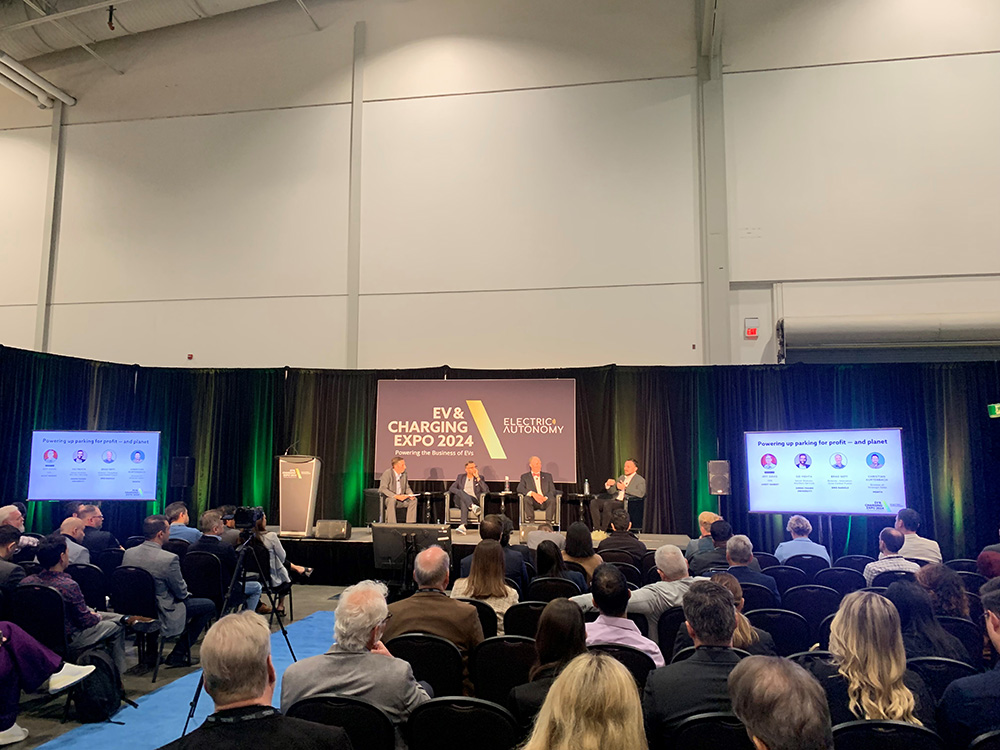
The opportunity to cut MHDV emissions was the central theme at a recent workshop hosted by the Pembina Institute, a Calgary-based think tank, as part of EV & Charging Expo 2024 in Toronto. Unlike other energy transition conferences, which often dwell on technology and capital needs, the focus here was on implementation and management challenges. That’s because the transition to electrification, even of heavier vehicles, is underway. The technology exists, although still evolving, with clear costs and benefits. The heavy vehicle industry is also taking action. Even drivers are leaning into the transition. One insight shared on the floor captured the mindset shift: once vehicle operators taste the EV experience, free from the noise of loud diesel engines, they prefer the switch.
To accelerate the change, industry experts stressed three major themes:
Collaboration: The transition cannot happen in a vacuum.
Data-driven decisions: Data and insights are in the driver’s seat.
Change management: Holistic planning is a necessity.
A synergy between the fleet managers and utilities is becoming crucial as they find themselves intertwined in the quest for decarbonization. Talking kilowatts is uncommon for fleet managers, who traditionally think in kilometers. They face a steep learning curve to choose the right charger and vehicle types. Utilities face a different challenge: they need to expand their infrastructure but are uncertain of the scale and challenged to adjust timelines. Utilities also find themselves trying to understand intricate details of fleet energy needs as they attempt to devise suitable electricity rate options. Effective collaboration will streamline infrastructure development, avoiding unnecessary redundancies while accommodating growing demand.
Before even breaking the ground, fleet managers must confront a complex web of decisions. A switch to electric fleets requires precise planning, to avoid cost overruns and supply disruptions. Here, data becomes indispensable, which is a powerful aspect of the transition as electrification entails digitalization. Tools like telematics–vehicle tracking devices–are crucial in harvesting and analyzing data from each trip. Fleet decarbonization often happens one vehicle at a time, and success lies in knowing precisely which vehicle and trip are most suitable for a switch. Layers of considerations are added about when, where and how to charge the vehicles. While some fleet managers are pioneers, having already transitioned their fleets or commissioning pilot projects, others are still assembling a business case. Establishing data-sharing practices can accelerate industry-wide progress and also help utilities to plan ahead.
Fleet electrification also blurs the traditional departmental boundaries and necessitates a holistic approach within organizations. It involves everyone from drivers, who must adapt driving habits, to engineers and IT specialists, who need to ensure day-to-day operational continuity, to logistics managers, who will have to rethink entire management systems. Effective change management is pivotal for orchestrating this grand play and ensuring engagement of internal and external stakeholders continues along the way.
As shipping, trucking and transportation companies drive deeper into the energy transition, new management thinking may be as important as the engines and energy systems powering a lower-emissions future.
This article is intended as general information only and is not to be relied upon as constituting legal, financial or other professional advice. The reader is solely liable for any use of the information contained in this document and Royal Bank of Canada (“RBC”) nor any of its affiliates nor any of their respective directors, officers, employees or agents shall be held responsible for any direct or indirect damages arising from the use of this document by the reader. A professional advisor should be consulted regarding your specific situation. Information presented is believed to be factual and up-to-date but we do not guarantee its accuracy and it should not be regarded as a complete analysis of the subjects discussed. All expressions of opinion reflect the judgment of the authors as of the date of publication and are subject to change. No endorsement of any third parties or their advice, opinions, information, products or services is expressly given or implied by Royal Bank of Canada or any of its affiliates.
This document may contain forward-looking statements within the meaning of certain securities laws, which are subject to RBC’s caution regarding forward-looking statements. ESG (including climate) metrics, data and other information contained on this website are or may be based on assumptions, estimates and judgements. For cautionary statements relating to the information on this website, refer to the “Caution regarding forward-looking statements” and the “Important notice regarding this document” sections in our latest climate report or sustainability report, available at: https://www.rbc.com/our-impact/sustainability-reporting/index.html. Except as required by law, none of RBC nor any of its affiliates undertake to update any information in this document.
Important notice regarding information on this website and Caution regarding forward-looking statements
This website is intended as general information only and does not constitute an offer or a solicitation to buy or sell any security, product or service in any jurisdiction; nor is it intended to provide investment, financial, legal, accounting, tax or other advice, and such information should not be relied or acted upon for providing such advice. Nothing herein shall form the basis of or be relied upon in connection with any contract, commitment, or investment decision whatsoever. The reader is solely liable for any use of the information contained herein, and neither the Climate Action Institute, nor Royal Bank of Canada (“RBC”), its subsidiaries and its affiliates nor any of their respective directors, officers, employees or agents shall be held responsible for any direct or indirect damage arising from the use of any information contained herein by the reader.
Except as required by law, none of RBC nor any of its affiliates undertake to update any information on this website. All expressions of opinion on this website reflect the judgment of the authors as of the date of publication and are subject to change. We do not guarantee the accuracy of the information or expressions of opinion presented herein and they should not be regarded as a complete analysis of the subjects discussed. No endorsement of any third parties or their advice, opinions, information, products or services is expressly given or implied by RBC or any of its affiliates. All references to websites are for your information only. The content of any websites referred to on this website, including via website link, and any other websites they refer to are not incorporated by reference in, and do not form part of, this website. This website is also not intended to make representations as to sustainability-related initiatives of any third parties, whether named herein or otherwise, which may involve information and events that are beyond our control.
From time to time, we make written or oral forward-looking statements within the meaning of certain securities laws, including on this website, and in other communications. Forward-looking statements on our website include, but are not limited to, statements relating to economic or sustainability-related objectives, vision, ambitions, commitments, goals, and targets as well as potential events and actions. By their very nature, forward-looking statements require us to make assumptions and are subject to inherent risks and uncertainties, which give rise to the possibility that our predictions, expectations or conclusions will not prove to be accurate, that our assumptions may not be correct, and that our economic or sustainability-related objectives, vision, ambitions, commitments, goals, and targets will not be achieved. We caution readers not to place undue reliance on these statements as a number of risk factors – many of which are beyond our control and the effects of which can be difficult to predict – could cause our actual results to differ materially from the expectations expressed in such forward-looking statements. Sustainability-related metrics, data and other information contained on this website are or may be based on assumptions, estimates and judgements.


 EN
EN