Language Flag Filename

rbc_language_toggle_menu_flag

Mark Carney’s first act as Prime Minister was to axe the consumer carbon tax, as cost of living concerns continue to remain front and centre for Canadians.

Since the RBC Climate Action Institute launched our annual report Climate Action 2025: a year for rewiring in January, we’ve been asked repeatedly: “How will axing the carbon tax affect the building sector?”

A fair question, as half of homes in Canada are heated using natural gas or home heating oil. The burning of these fuels accounts for 75 to 80% of building emissions.  Ergo, the biggest opportunity to reduce these operating emissions is to electrify home heating.

The consumer carbon tax, until last Friday, applied to fossil fuels used to heat buildings. But even after factoring in the carbon tax, the cost of natural gas is about two times cheaper than electricity.  The economics are still heavily tilted in favour of using natural gas for home heating at this stage of the energy transition.

Provincial and federal governments, aware of the unfavourable economics, have intervened by providing consumers with incentives to move away from fossil fuel powered furnaces.  As we found in our analysis of the building sector, consumer adoption of heat pumps and their knock-on effects on capital mobilization and emissions are driving decarbonization efforts in the sector. All to say, axing the tax won’t slow down building decarbonization in the short-term, if other government policies, and spending by consumers and businesses stay the course.

Read our building sectoral analysis in Climate Action 2025: A year for rewiring for a deeper dive on the policies, people, and trends that helped move the dial on building decarbonization.

Language Flag Filename

rbc_language_toggle_menu_flag

Donald Trump has set out to remake the global trading order, and with it America’s relationship with the global economy. Unsettling as that is, it’s neither new nor sudden. Trade reform has been a dominant part of American political thinking since the collapse of the Berlin Wall and, with it, the end of a Communist counterweight to global capitalism. While resistance can be traced back to the early days of NAFTA, the fragility of America’s trade confidence really rose to the fore during the Global Financial Crisis and in the years that followed as China grew emboldened with its claim for great power status.

Brick by brick, it’s now orchestrating the dismantling of another dominant structure of the 20th century—the supporting wall of a global economy, one that relies on American military protection, legal principles, and monetary policy. The emerging trade war of 2025 is as much about Pax Americana Oeconomia as anything else and is quickly threatening to create a wholesale break in that support, equal in consequence perhaps to that moment in 1989. It’s why some Trump advisers have called this moment one of “generational change” in trade.

The shape of the global economy, and its direction heading to the 2030s, is in play, and few countries have as much at stake as Canada—because few countries benefitted as much from that trading era that may now be in its twilight. Each country is each other’s largest customer, with over 75 percent of Canadian exports going to the U.S. and 17.3 percent of American goods exports destined for Canada. The two-way trade is more than commercial; the two neighbours have come to rely on each other for energy and food security, military security, and economic security, through aligned standards and principles for everything from car parts and aeronautics to telecom protocols and computing principles.

For Canada to navigate this new age of disruptive economics, in which those long-term understandings may now be at the perpetual whim of political capriciousness and mercantile mindsets, a more strategic approach will be needed. Yes, our future will be more beholden to tariffs and tirades—but beyond those moments, it will be shaped in more lasting ways by our understanding of America’s fundamental challenges, and whether we can help address them, to ensure the generational change helps us regenerate our economy. Among those challenges:

It’s security, stupid

The Trump economic agenda is about security more than prosperity. It’s why security and trade policies are more intertwined than we’ve seen in decades, even though the U.S., remarkably, has not fought a war over trade interests since becoming the world’s dominant economy. The tariff threats are not so much a shakedown, to gain advantage in bilateral and multilateral deals; they’re aligned with an American First view of the world. We can expect, in the coming years, to see the U.S. pull back to this hemisphere, in military and trade engagement. That is, unless and until U.S. economic interests come under threat. This new imperative will require Canada to play a greater role in policing global trade

The world is no longer flat

Successive U.S. Administrations have undermined the World Trade Organization enough to make it largely insignificant to major trade considerations. Trump is now out to remake the broader system, targetting the preferential tariff regime that the U.S. created, coming out of the Cold War, to stimulate growth in allied and developing economies. The U.S. effective tariff rate, at about 3 percent, is the lowest among major economies. The European Union’s effective rate on imports is 5 percent; China’s is 10 percent; Bangladesh’s is 155 percent, the world’s highest. The resulting re-orientation of global trade will complicate Canada’s ambitions to diversify exports.

King Dollar is dead? Long live King Dollar

Underlying America’s trade imbalances is its very awkward position as a backstop for the global economy. The U.S. dollar, as the reserve currency, continues to pull capital to the U.S., in turn making its exports less competitive. The dollar’s strength, in turn, makes its cost of borrowing cheaper than it should be—enabling a credit binge for governments and consumers, and permitting a series of administrations to run fiscal deficits that do little to make America competitive again. As the world’s leading economy became a consumption machine, it relied ever more on imports and the ever-growing need to find cheaper imports, so as not to fuel inflation. Canada will need to join others in helping to rebalance global currencies.

Many have suggested the need for a new version of the Plaza Accord—the 1988 agreement, following a stock market crash the previous year, that helped reset the dollar against other major currencies. That would be much harder today, given the dollar’s dominance over all other currencies, accounting for roughly 60 percent of the world’s $12 trillion in foreign exchange reserves. Moreover, since 1988, the U.S. debt, as a share of GDP, has tripled. The best hope may be a long-term transition that incents America’s leading trade partners, including Canada, to share some of the hidden costs of a reserve currency.

These are some of the strategic pressures the U.S. is facing, and integrating in its approach to trade. It needs others to help police global commerce, including shipping lanes. It needs others to increase its imports of American goods, including energy. And it needs others to help destress long-term pressures on the U.S. dollar and even pay part of the cost of running a reserve currency (through tighter fiscal or monetary policy).

With these major forces at play, we can expect the U.S. to continue to push for trade reforms, perhaps radically so.

What it means for Canada

A headline tariff rate of 25 percent is unlikely, given the blowback that would cause to the U.S. economy and consumers. But its potential impact should not be lost on Canadians: according to RBC Economics, such a tariff hit would cause unemployment to rise above 8 pecent, cut GDP growth in half this year, and add 2.5 percent to consumer price increases. It would also cost U.S. consumers, on average, $1,200 USD a year.

Such modelling is a challenge in that tariffs are never applied in isolation. Also to consider is the likelihood of counter-tariffs, and worse, escalation, as well as the impact on the Canadian dollar. A further factor is the ability of firms to absorb the cost of tariffs, through efficiencies and margin compression. Many Canadian firms have hinted they can absorb a 10 percent tariff, by dividing the cost roughly in thirds—for consumers, intermediaries, and their own profits. In fact, Canadian profit margins have reached relatively high levels, in part because of the 70-cent dollar along with capacity challenges in the U.S., including labour shortages.

But that’s just one measure, by the standard of profit-and-loss statements. The unpredictable trade policies of the Trump administration also create an insidious tax on investment confidence. The Economic Policy Uncertainty Index for Canada has increased to its highest level ever—four times higher than its 20-year average, and well above where it was during the COVID pandemic. Merger and acquisition activity has also slowed, as have investment intentions in machinery and equipment. There is an additional negative effect emerging as firms stockpile inputs and exported outputs ahead of any anticipated tariffs and non-tariff barriers. We saw signs of this in January, as manufacturers hurried to get products across the border, even at a cost of greater inventory management.

That reaction—or pre-emptive action—could lead to an industrial slowdown in subsequent quarters. Add to that an expected decline in consumer confidence, as Canadians read of projected job losses, company closures, and needs for government support, which could lead to interest rate cuts.

In that mix, the Bank of Canada faces a dilemma as difficult as it saw during the pandemic when the supply side of the economy was shut down. Tariffs can simultaneously slow economic growth and increase prices. Deciding whether to adjust interest rates will depend on which effect—inflationary or deflationary—proves more dominant. And as was true in the pandemic, much of that will depend on innovation and the creativity of firms to manage the shock, which we tend to see only in hindsight.

Finally, and equally challenging for the Bank of Canada, there will likely be significant federal and provincial supports for affected businesses and workers, including subsidies and tax relief. This will be politically necessary and economically risky, as it could strain public finances, influence Canada’s credit rating, and prove pro-cyclical if it coincides with interest rate cuts.

How to navigate the uncertainty

While the exact impact of tariffs on the Canadian economy remains uncertain, we know from past experiences and economic fundamentals how such trade disruptions might further unfold.

The first thing to recognize is that trade-sensitive industries will be most vulnerable. Tariffs function as taxes on the movement of goods, not on production. Therefore, industries that rely heavily on cross-border trade—such as automotive manufacturing—face the greatest risk. Decades of free trade have led to deeply integrated supply chains, where goods cross borders multiple times at different stages of production. This means that tariffs can apply multiple times within the same production cycle, compounding costs. The auto industry is most typically cited, but there are similar examples in most sectors: Maine lobsters, for instance, are sent to Canada for processing and then returned to the U.S. market. Overall, more than 60 percent of Canada’s manufacturing sector has trade flows with the U.S. that are at least twice the size of their domestic production.

In addition, even if Canada does not impose retaliatory tariffs, U.S. tariffs alone can indirectly harm Canadian businesses. Because of the tight integration between U.S., Canadian, and Mexican manufacturing sectors, tariffs on U.S. industrial imports will drive up costs for U.S. exporters. This, in turn, raises the price of goods that Canada imports from the U.S., creating an inflationary effect. The OECD estimates that a significant portion of U.S. imports are actually American-made goods that were exported for processing and later re-imported. The result is that North American manufacturing supply chains suffer more from tariffs than those in Asia or Europe.

A clear target for Trump is steel and aluminum, in part because of his stated belief that “if you don’t have steel, you don’t have a country.” The U.S. accounts for over 90 percent of Canadian steel and aluminum exports, meaning these tariffs directly impact nearly $24 billion worth of Canadian goods. However, the trade relationship is deeply intertwined—Canada is also the largest supplier of these metals to the U.S., making up about 20 percent of American steel imports and 50 percent of aluminum imports. In 2024, U.S. steel imports from Canada totaled $7.5 billion, while aluminum imports reached $9.4 billion.

While Canada maintains a trade surplus in these industries—$14 billion in 2024, with $11 billion from aluminum—their overall contribution to the national economy remains relatively small. Steel and aluminum represent just 0.5 percent of Canada’s GDP and jobs and about 3 percent of total exports. Quebec and Ontario are the most affected provinces, where these sectors account for 1 percent and 0.6 percent of GDP, respectively.

The U.S. market also has limited alternatives to replace these goods. The 2018-19 tariff experience demonstrated that U.S. producers struggle to replace Canadian steel and aluminum. Most alternative suppliers also face tariffs and production capacity cannot be expanded quickly. Many specialized products are difficult to substitute, forcing U.S. importers to absorb higher costs. Interestingly, despite the 2018 tariffs, U.S. imports of steel products increased, with Canada, Mexico, and Europe slightly growing their market share. In Canada, employment in steel and aluminum industries grew by 4 percent in 2018 and 6 percent in 2019. Meanwhile, U.S. steel and aluminum production capacity actually declined over the tariff period.

What Canada can do

In the near term, Canada may find itself in a tariff brawl, absorbing and delivering blows with our biggest trading partner. We need to think longer-term, too, simultaneously investing in our own trade diversification while exploring ways to help the U.S. address its secular economic challenges. In the long run, those will be our challenges, too.

We can start with our natural resources, not only because Trump has cited them as targets. Canada must continue to highlight its critical role in U.S. energy and economic security, emphasizing its resource wealth with the goal of avoiding American trade threats.

In addition, a focus within Canada on developing key commodities can drive industrial growth, boost GDP, attract investment, and advance Indigenous participation, making Canada further indispensable to U.S. interests. Geographic diversification of Canadian resource exports is also essential, as expanding trade beyond the U.S. mitigates risk. Washington already acknowledges Canada’s resource importance, offering a negotiating advantage. By prioritizing energy, agriculture, and critical minerals, Canada can strengthen its position as a key partner in global trade and U.S. economic stability.

Consider just how important these commodities are to the American economy.

Canada’s oil, natural gas, and electricity exports play a crucial role in stabilizing U.S. energy reserves. Integrated pipelines and cross-border electricity grids facilitate a seamless supply of energy, while expansions such as the Trans Mountain pipeline allow Canada to increase its capacity to serve both the U.S. and international markets.

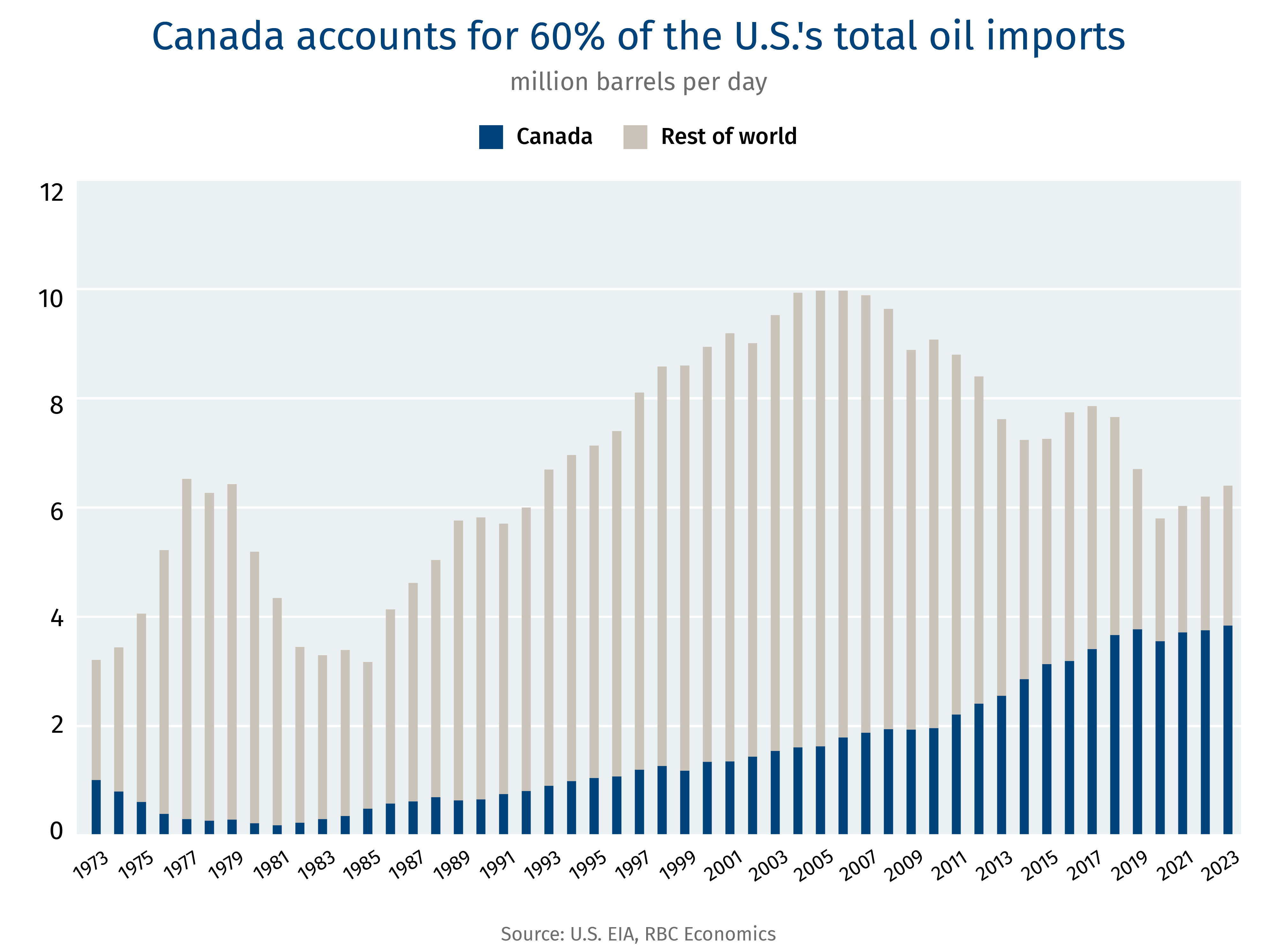
Canada supplies 60 percent of U.S. oil imports, particularly heavy crude oil that is vital for U.S. refineries. Without Canadian crude, U.S. refineries would face expensive retooling or become reliant on riskier suppliers like Venezuela and the Middle East. Similarly, Canada provides 90 percent of U.S. electricity imports, offering a low-cost and clean energy alternative that supports high-tech industries such as artificial intelligence and advanced manufacturing. Additionally, Canada supplies 99 percent of U.S. natural gas imports, which are essential to meet growing U.S. energy demands, particularly as domestic production struggles to keep pace.

Canada is also a vital contributor to U.S. food security, providing key agricultural commodities that support American food production and biofuel industries. With the U.S. facing potential labour shortages due to immigration policies, Canada’s role in supplementing the North American food supply will become even more critical.

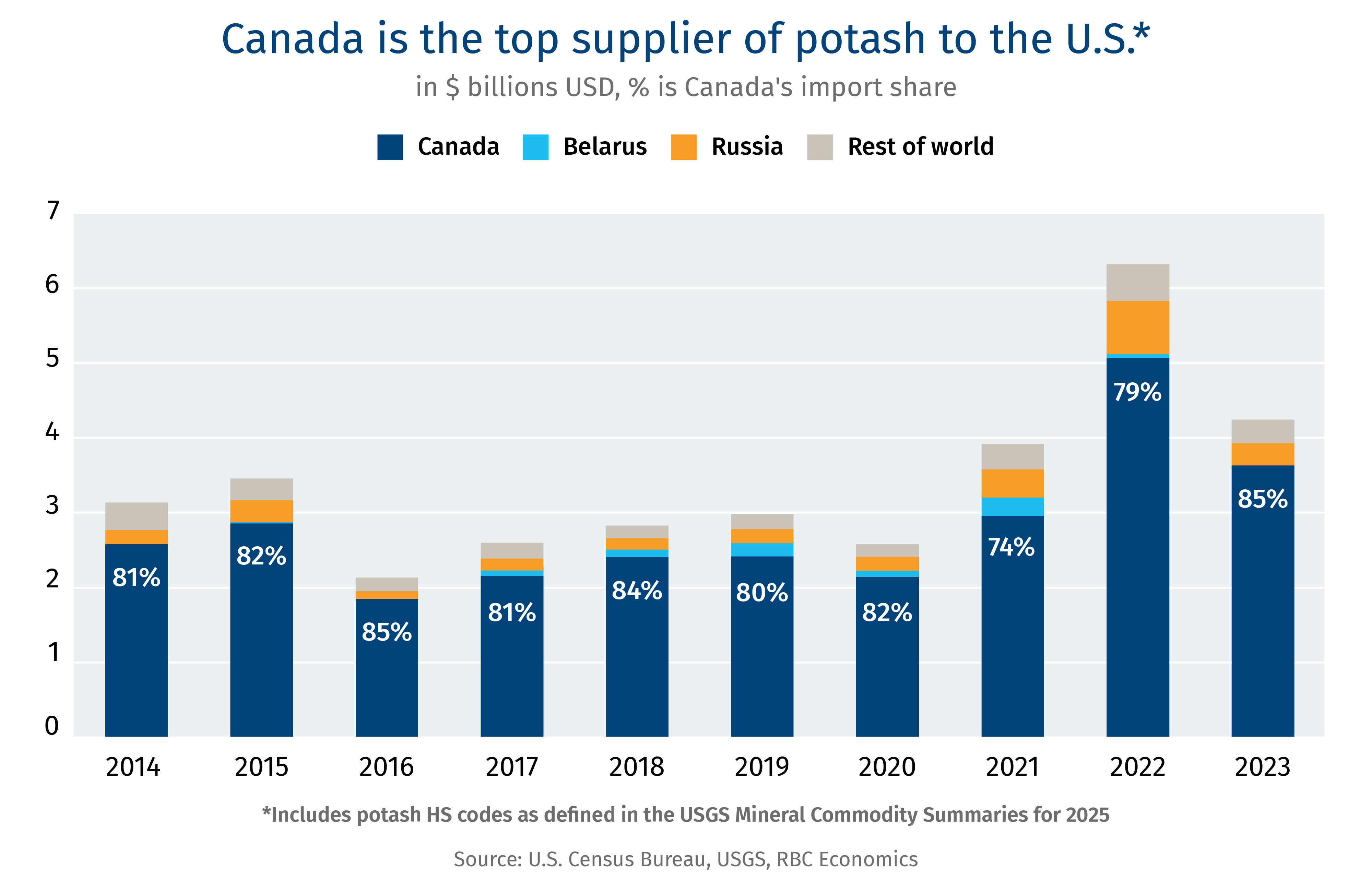
Canada supplies 98 percent of U.S. canola oil imports, a crucial ingredient in both food processing and biofuel production. Additionally, the U.S. imports 34 percent of its meat from Canada, particularly beef and pork, which are deeply integrated into North American supply chains. Furthermore, Canada provides 85 percent of U.S. potash imports, a critical component in fertilizer that supports crop yields, especially in the face of climate-related agricultural challenges.

Finally, as the U.S. seeks to reduce its reliance on China and Russia for critical minerals, Canada has the opportunity to strengthen its role as a key supplier for industries like clean energy, semiconductors, and defence. Canada currently provides 19 percent of U.S. critical mineral imports, including essential resources like nickel, aluminum, and zinc. With the right investments and policy support, Canada could further expand its capacity in these sectors.

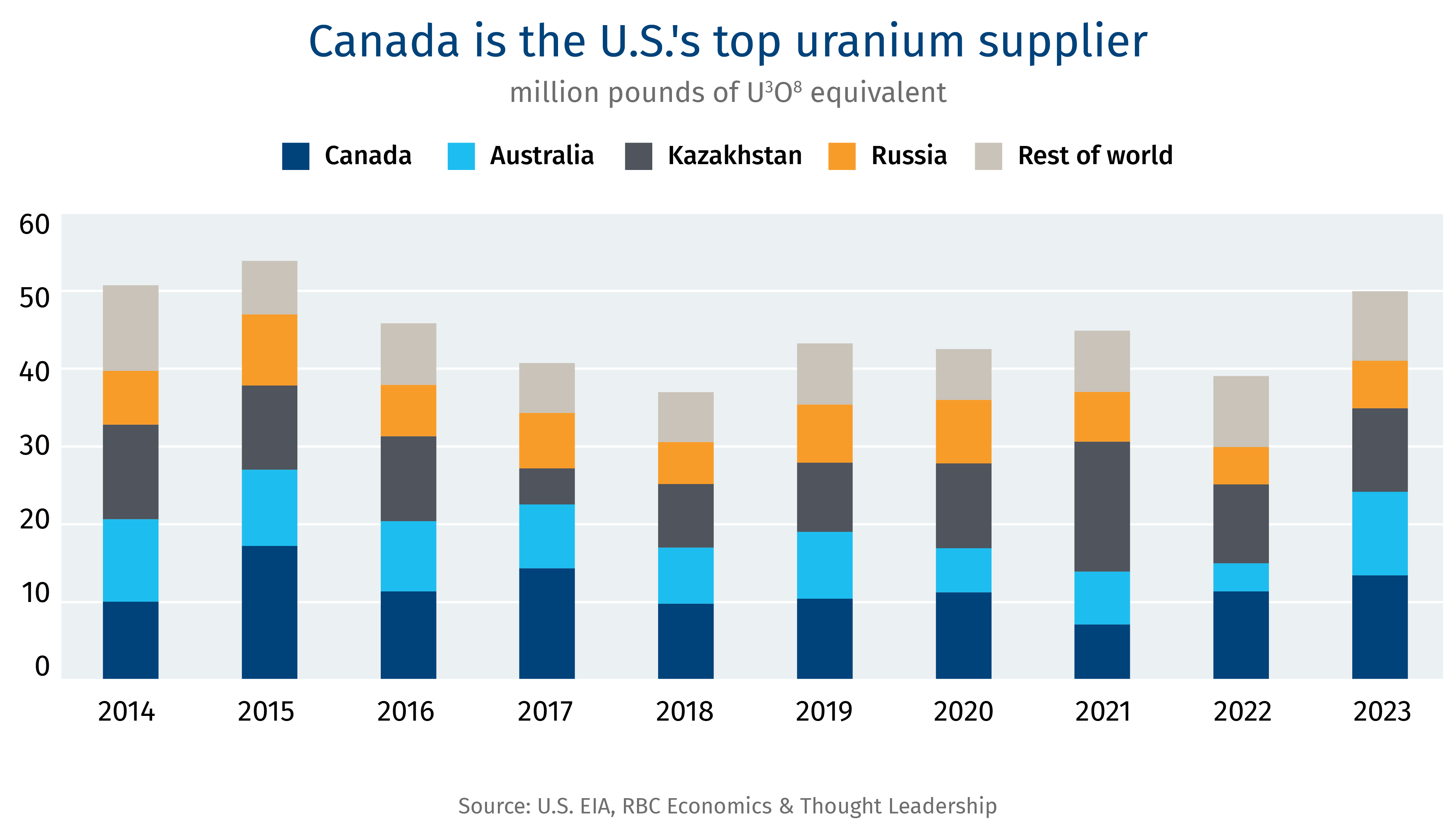
Additionally, Canada is a crucial partner in the U.S. nuclear energy sector, supplying 27 percent of U.S. uranium imports. As America looks to expand its nuclear energy capabilities, Canada’s advanced uranium mining, conversion, and small modular reactor (SMR) technologies can help fill gaps in the North American nuclear fuel cycle.

To maximize its resource advantages, Canada must invest in infrastructure, create a stable regulatory environment, and attract capital for long-term development. Expanding global trade partnerships—particularly in Asia and Europe—can reduce Canada’s overreliance on the U.S. while ensuring resilience in the face of shifting geopolitical dynamics.

But long term, Canada can’t always run large trade surpluses in these sectors, as such imbalances have the derivative effect of destabilizing the world’s largest economy. We can seek other markets for these resources and also look to buy more resource-related products from the U.S.—be it enriched uranium or packaged foods. That is, if the U.S. is interested in a negotiated approach to trade balances.

On that front, an accelerated renegotiation of the USMCA trade agreement seems both inevitable and in Canada’s interest. A quick resolution to the lingering uncertainties and frustrations in the original agreement might reduce the uncertainty that’s come with the Trump tariff threats. A renegotiation—ideally, free from the threat of tariffs—could help address trade concerns in the new, digital economy, including Canada’s adherence to a digital sales tax. Perennial concerns over Canada’s lumber and dairy sectors might also be resolved, helping create a new agreement that could reinforce North America’s value to global investors. The agreement can do more—to Canada’s benefit—to enshrine human rights and environmental standards in North American trade. But the three countries should remind each other of the mutual benefits of the agreement, even as it is now. In less than five years since it was implemented, North American trade has soared 47 percent, supporting nine million jobs.

More broadly, with the restoration of good faith between governments, Canada can help create a new strategic framework for North America, including the supply of critical minerals, defence of the Arctic, and shared approaches to another economic frontier, outer space.

As Canada navigates the economic uncertainty posed by U.S. tariff policies, this sort of strategic and proactive approach is essential. The deeply integrated Canada-U.S. trade relationship is built on mutual dependence, with Canada providing critical resources, energy, and industrial goods that bolster American economic and national security interests. While tariffs present immediate challenges, they also reinforce the need for Canada to leverage its economic strengths in trade negotiations, diversify its global partnerships, and invest in long-term industrial resilience.

By emphasizing its indispensable role in energy, agriculture, and critical minerals, Canada can position itself not only as a key U.S. trade partner but also as a leader in global markets. Expanding infrastructure, fostering innovation, and securing stable investment environments will be crucial for sustaining growth. While protectionist policies may shape near-term trade dynamics, Canada’s ability to adapt and strengthen its competitive advantages will determine its long-term economic success in an evolving global landscape.

RBC Thought Leadership has launched a multi-month campaign with The Hub The focus of this month’s series is tariffs, trade, and opportunities for Canada in this new economic order. Be sure to check out the kick-off DeepDive.

Language Flag Filename

rbc_language_toggle_menu_flag

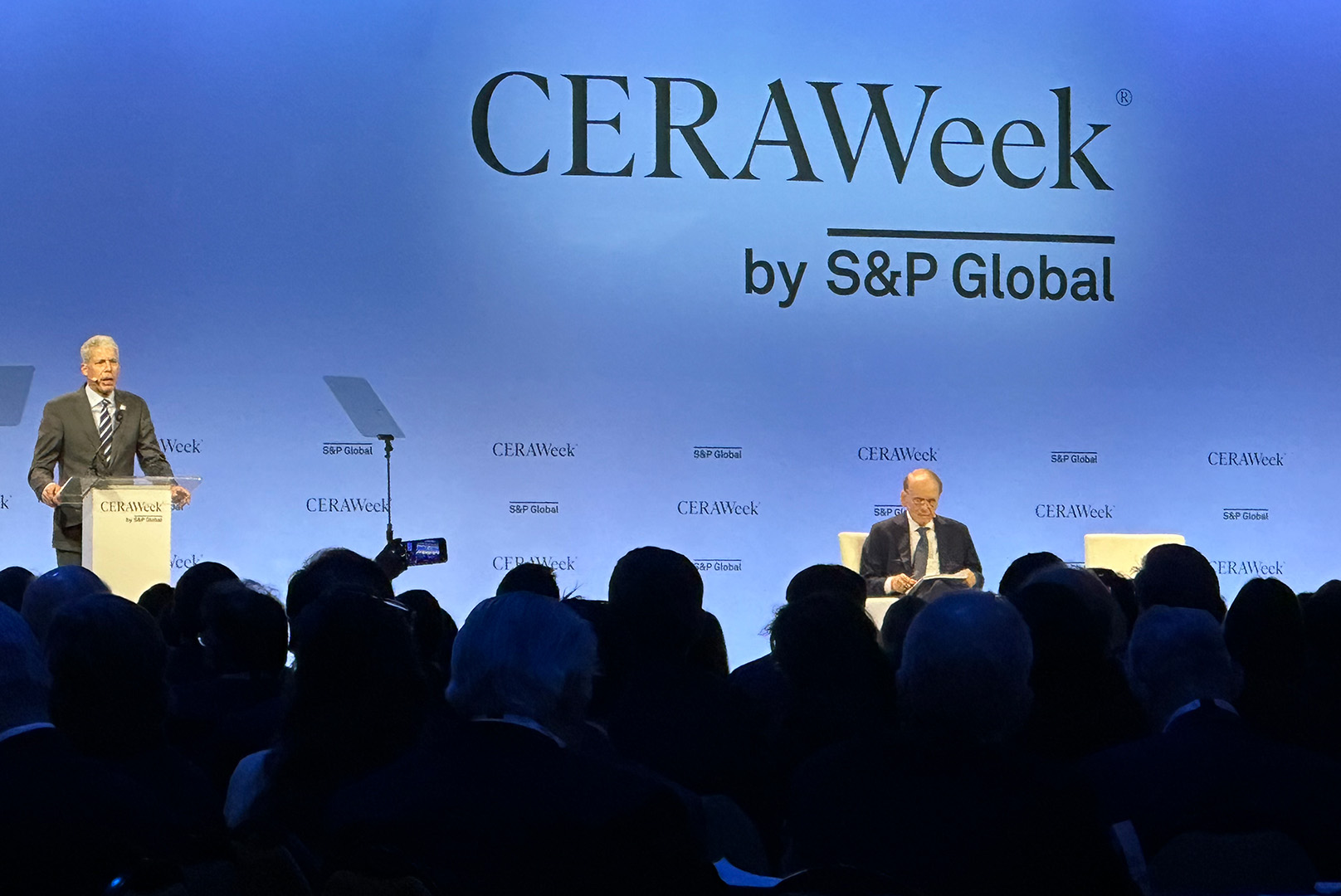
Held every year in Houston, CERAWeek is the world’s biggest energy conference, attracting 10,000 executives, policymakers, investors, scientists and technologists from around the world. If you want to know what’s hot—or not—in energy, it’s a good place to be.

A few years ago, the hot topic at CERA was local grids for EV charging. Last year, renewables and clean tech were so much in vogue that the Biden Administration sent loan officers to sign up companies for its bonanza of climate action incentives. This year, the dominant theme was more—as in, how can the world produce more of every kind of energy, in particular natural gas and nuclear.

As a few people joked, Make Energy Great Again (MEGA).

Houston is hometown to all things energy—known for oil and rocket fuel, and over the past decade, the giant liquefied natural gas terminals that dot the nearby Gulf of, umm, Amexico? But as bullish as the CERA crowd was, especially when two of U.S. President Donald Trump’s key cabinet secretaries spoke, the storm clouds of creating all that energy were not far from view. The darkest one: the trade war.

As the conference kicked off, with a rousing American Dominance speech from Energy Secretary Chris Wright, global markets started tanking—amid fears of a recession that would deplete demand, especially for oil and gas. If America is going to achieve “energy dominance,” it will need to regain the confidence of capital—and renew some confidence in policy, which continues to be as unpredictable as those storm clouds over Houston.

The CERAWeek event left me with these questions:

1. Oilpatch, archipelago: an ocean of energy or a chain of islands?

The world will need more energy, but it may be deeply challenged to distribute that energy as countries and continents build artificial walls. Shell CEO Wael Sawan presented the company’s three energy security scenarios for the decade ahead: a “horizon” scenario that’s largely business as usual; a “surge” scenario that incorporates a maximalist view of economic growth and AI demands; and a third scenario, called the Archipelagos, that’s the most worrisome, and the one increasingly likely. In an archipelago world, we will see a surge in demand—but supplies locked into regions by nationalist and protectionist policies that will turn the global energy market into a chain of islands. This new energy world will be more demanding and less efficient.

With a growing threat of energy nationalism, many import-dependent nations are scrambling for optionality. Japanese and Korean delegates said in private conversations they’re looking for multiple sources of natural gas, as they’re not sure they can count on North America. And they’re more willing to consider longer-term contracts. The scramble has some of the majors returning to frontier oil markets—Iraq, Libya, Suriname, Brazil—and adding to LNG production in South Asia and Africa.

Perhaps the biggest challenge in that world of islands: capital. Global oilfields are in decline—sometimes by 5% a year—and the vast majority of capital is going to maintaining rather than expanding them. Moreover, a consistent message from Big Oil is the intention to return more of that capital to shareholders, rather than invest in growth. As one executive put it, the sustainability mantra of “people and planet” needs to add “profitability,” for investors to put up the trillions needed.

2. Compute this: will AI break the system, or fix it?

A sign of the times: 42 sessions at CERAWeek had “data center” in their title. And it was hard to find a conversation that did not include the term “hyperscaler” — the Big Tech companies like Google and Amazon whose AI-feeding data centres are all the rage. In just a few years, data centres have become such as big drain on global energy that their collective consumption is on par with the economy of Japan. One of Florida’s biggest energy providers, NextEra, is projecting 55% growth in demand over the next 20 years, compared to 9% over the last 20 — and a third of that growth will come from AI.

Small wonder the CEO of Chevron said he’s sending executives to MIT, for courses on AI.

The hyperscalers showed up in force, hosting must-attend Texas BBQ parties and showcasing their avatars, agents and robots for a conference full of bemused oilmen and women. In fact, the relationship between AI and energy is now so intertwined that the two worlds are teaming up to drive energy efficiency from well to wheel. Google says its chips are 60% more energy efficient. Large electricity providers said AI-calculated efficiencies could unlock 100 gigawatts of power. But there was general agreement that both sectors will need a lot more gas-powered electricity to run those data centres. In 2024, U.S. data centres relied on gas for 43% of their power, while nuclear provided close to 20% and coal accounted for slightly less. The hope for renewables remains important but marginal—so much so, several of the hyperscalers have abandoned their pledges for carbon-neutral energy in their data centres.

3. A new P3 model: Pricing, pipelines and permitting?

The determining factors of America’s energy ambitions will be pricing, pipelines and permitting—and key to attracting all that investment for growth. The hyper-scalers may have to pay more to cross-subsidize other sectors and households, and their need for electricity and power. Last year alone, U.S. electricity prices soared 20%, while overall demand grew only 2%. One utilities veteran said a new business model, and mindset, may be needed for the two worlds to coexists. Techies live and die by a 10x philosophy—the growth mindset that success can be multiplied through innovation and scale. Utilities, on the other hand, live by a 10% philosophy—a regulated mindset that suggests such a rate of return is all society will bear over the long term.

More risk capital will be needed to build the pipelines and grids to power an AI economy. But risk capital doesn’t thrive in a regulated, and litigated, arena. One case study that was presented: the Constitution pipeline to get natural gas from Pennsylvania to the Northeast and brain centres like Boston and New York. The company faced so many legal challenges that it cancelled the project in 2020. The current U.S. administration is now looking to revive it.

Permitting reform will be critical to any chance for energy dominance—and it will require a supermajority in Congress, something not many politicos expect in a deeply divided D.C.. Get ready for “Drill, Baby, Drill” to run up against “Sue, Baby, Sue.” Mark Christie, chair of the Federal Energy Regulatory Commission, and a constitutional law expert, told the conference that FERC writes every decision now with the full expectation its approval will end up in court. The result, he said, is less energy than America needs, and a looming “rendezvous with reality.”

4. LNG: Is this the new global power play?

Natural gas accounts for around 25% of global energy—and this year, 50% of the CERAWeek agenda. In a world that will need a lot more power, the Houston consensus was for a lot more gas, especially to be cooled, liquefied and shipped as LNG. Ryan Lance, CEO of ConocoPhillips, thinks LNG demand could double in the next decade. It’s already done that in the U.S., largely through a massive tech revolution in gas that helped to massively increase production while cutting rigs, from 1,600 to 100.

The forecasts for LNG growth are impressive. Shell expects global LNG demand to shoot up more than 50% by 2040, as manufacturers in China and other Asian economies accelerate their switch from coal-to-gas to support their economic growth, while lowering emissions. India alone will need to double LNG imports to meet its rising demand by 2030.

But one of the overlooked needs is concessional finance for all the infrastructure needed to take LNG off ships and convert it to gas. Western countries have until recently been opposed to allowing multilateral development banks to help finance such infrastructure — as it may add to global emissions. The upcoming G7 summit in Alberta may put that back on the table.

5. A nuclear spring: But in which decade?

Nuclear energy is enjoying a renaissance, and it’s not restricted to North America. China is expected to build 5 gigawatts of nuclear power this year. Bangladesh and Türkiye are both expecting to open their first reactors in 2025, with Egypt not far behind. Abu Dhabi now has four nuclear plants, with plans for more. All told, nuclear accounts for about 10% of the world’s energy mix. But just to maintain that share, the world needs to triple production by 2050 —and that means adding 50 gigawatts of capacity every year for the next 20 years. Bear in mind the best year on record was in the 1980s, at 31 gigawatts.

Some new models are needed. Several speakers spoke of a need to narrow the range of nuclear technologies being pursued, in order to help aggregate demand for the technologies as well as skills and supply chains attached to them. Too many projects remain first of a kind. More reactors may also need to be built both on existing sites, as well as decommissioned coal facilities, to take advantage of existing infrastructure, cool water and local support. And critically, governments and nuclear developers need to commit to long lead cycles, typically up to 15 years. That’s usually difficult for investors, other than pension funds and sovereign wealth funds, which suggests new financing models may be needed, too.

6. Critical minerals: When will we realize they really are critical?

A range of strategically-important minerals have been called “critical minerals” since World War 2, when Canada stopped shipping nickel to Japan and the U.S. helped blockade Greenland, fearing the Nazi occupation of Denmark would claim the Arctic region’s minerals to add to its military machinery. We’re back to a mindset of criticality—if it’s not too late—and energy supplies depend on it. All those data centres and electricity lines require copper and nickel, and more exotic minerals. To meet the world’s energy expectations, we will need to mine as much copper in the next 20 years as the world has mined in the last 20 centuries. Unfortunately, China has a stranglehold on production and processing. One startling fact: China now has 60 mineral smelters; the U.S., two. Most U.S. copper, as a result, is shipped to China, as concentrate, and returned as wire and other products.

The West is 30 years behind China, and it will take decades more to catch up. For one, a mine takes up to 20 years to find and another 10 to develop. Local resistance to mines and smelters will also need to be overcome. As is the case for energy, new financing models will be needed for these long-term projects. The Trump Administration has proposed a sovereign wealth fund, harnessing rents on the massive tracts of land and oceans the federal government owns. It is also using the ExIm Bank, its main export financing arm, to support critical minerals projects. Canada is exploring similar options through Export Development Canada. If the West were to take a wartime mentality to the challenge, governments might start to allocate production and restrict materials for strategic needs. Whether the U.S., Canada and others could also accept more accommodating labour and environmental standards is another question altogether.

7. Supply chains: can we actually make the stuff we need?

You can have the right policies and right projects and even the right timing—and still get it wrong if supply chains are not with you. Across the energy sector, that perhaps remains the biggest near-term concern. One mining executive said giant rock washers now take seven years to be delivered. One electricity executive said he’s waiting for a delivery of gas turbines, which are scheduled to come in 2030. Moreover, the cost is up three-fold since before the pandemic. Smaller stuff can be just as hard to get, such as enriched uranium and graphite for nuclear plants. Governments may need to start to allocate resource production, including material supplies, manufacturing capacity, and logistical support, to ensure resilience of critical industries.

Skilled labour is equally in short supply, in part because so few gas projects have been built over the past five years—and in part because of the boom in LNG construction. A nuclear energy executive said he doesn’t need more PhDs (although he’s happy to hire them), as much as he needs community college graduates who can take on sophisticated welding and pipefitting jobs. Even Larry Fink, the CEO of BlackRock, the giant Wall Street investment firm, focused his CERA comments on the growing labour market crisis. His blunt message, which he said he also shared with President Trump: “We’re going to run out of electricians.”

8. Climate: will it dominate again?

From the opening session, climate action was on the backfoot, if mentioned at all. Energy Secretary Chris Wright set the tone with the opening keynote, saying emissions were a function of economic growth, and the world wants more growth. “Everything in life involves trade-offs. Everything!” he stressed. It was more than rhetorical. The return of natural gas to the forefront was seen to move its status from transition source to base-load source of energy. In other words, it’s here for the long run, as evidenced by North Carolina’s recent plans to add 5 gigawatts of gas power. Even coal got some positive mentions, as perhaps a necessary fuel for the AI boom.

The biggest question on climate action remained unanswered: will Trump kill the Inflation Reduction Act? Several big oil and gas executives argued in favour of Joe Biden’s signature act, saying they had developed and capitalized a host of decarbonization investments that helped drive their energy efficiency and profitability. Vicki Hollub, CEO of Occidental Petroleum, advocated for the continuation of tax credits that help fund her company’s direct air capture projects—a key reason it bought B.C.-based Carbon Engineering in 2023. Oxy is also trying to advance its work with enhanced oil recovery, by capturing carbon from the air, liquefying it and pumping it back into old reservoirs, to push oil to the surface. Many environmentalists look askance at EOR, as it’s known, arguing it’s more or less a shell game that trades carbon for carbon. But the fact that EOR is back, at least for some, as a net-zero strategy, signals how much has changed in one year.

John Stackhouse is Senior Vice-President to the Office of the CEO at RBC, and head of RBC Thought Leadership.

Follow him on LinkedIn here.

Language Flag Filename

rbc_language_toggle_menu_flag

Canada is bracing for a new trade war after the U.S. slapped 25% tariffs on Canadian steel and aluminum in an effort to re-shore its own industries. While it’s easy to lose sight of climate-change challenges amid trade turmoil, Canada’s decarbonizing efforts in its heavy industries can emerge as a strength that would help the sector face these headwinds.

However, fully capitalizing on these strengths would require Canada to address critical hurdles, including financing gaps for industrial-scale deployment, slow permitting for resource projects, and the need for stronger policy alignment with major trading partners. By strategically leveraging its clean-energy endowment and critical minerals supply, Canada can turn near-term economic pressures into long-term competitive advantages for its heavy industries such as cement, iron and steel, and petrochemicals.

We highlight a few of Canada’s strengths here:

  1. Late-stage startups are leading the charge: As we highlighted in Climate Action 2025: A year for rewiring, the mega deals that characterized Canadian heavy industry innovators in the early 2020s have given way to a more sober fund-raising environment, with venture deals in 2024 amounting to $158 million, a fraction of the funds raised in previous years. While funding, especially for early-stage innovations, is more challenging than ever, late-stage startups are actively deploying their carbon-reducing innovations in partnership with large, incumbent players in cement, petrochemicals, and pulp and paper.
  2. Clean power is Canada’s superpower. The country’s rich endowment of low-cost hydroelectric power has differentiated Canadian industries in several areas. Such advantages span aluminum smelting and iron and steel production. Additionally, electric arc furnaces under development in Ontario powered by clean electricity sources are set to produce low-carbon steel that would help lower the industry’s emissions.
  3. Canada is poised to leverage a critical advantage: As a leading global producer of commodities such as potash, nickel, aluminum, and uranium, Canada’s metals and mining industry could buck the economic headwinds facing other sectors. As we highlighted in Climate Action 2025, mining companies are incorporating decarbonization technologies and practices into their operations, which are being recognized by end-users keen on decarbonizing their supply chains. The key for Canada will be to bring the commodities to market faster and position itself as the West’s critical minerals hub. This will require more financing for junior mining companies and faster permitting to bring mines online. In addition, industries and government will also need to build logistics and transportation infrastructure to remote location with First Nations buy-in, consent and partnerships. Read more about Canada’s critical minerals advantage here.

Canadian industries are well positioned to deliver commodities the country and global markets need, without losing sight of sustainability. Canada would benefit from using its energy endowment to responsibly power its industries, and continue to innovate to bring new technologies to commercial reality.

For more climate briefings and analyses, subscribe to our mailing list here to get our reports and bi-weekly newsletter Climate Crunch.

Vivan Sorab is Senior Manager, Clean Technology, at the RBC Climate Action Institute

Language Flag Filename

rbc_language_toggle_menu_flag

The U.S.-Canada trade war has kicked off, with Canadian steel and aluminum exports, valued at $24 billion annually1, set to be tariffed at 25% starting today. We highlight five themes to watch for as the two economies brace for the fallout from these levies:

1. The tariffs are unlikely to reinvigorate U.S. production

The first iteration of Section 232 tariffs in 2018, triggered by U.S. national security concerns, did not meaningfully expand American steel and aluminum production capacity (production increased 7% and 4%, respectively)2. This scenario will likely repeat itself. The U.S. steel industry is impeded by a far bigger challenge as China floods global steel markets with excess production capacity, ultimately hindering U.S. producers’ ability to boost domestic output. This global oversupply reached 560 million tonnes (6x U.S. consumption) in 2024, with a further 157 million tonnes of carbon-intensive capacity additions set to come online by 2026, mostly from Asian countries3.

Since Section 232 tariffs were introduced, overall U.S. imports (by weight) have fallen 15% for steel and 13% for aluminum compared to 2018. U.S. net steel imports remain at 13% of domestic consumption, while aluminum net imports are structurally higher at 47% of consumption. However, total U.S. consumption of both metals has fallen about 10% since 2018, which helps explain why import dependence hasn’t dropped as much as the raw numbers suggest4.

This is evident in Tables 1 and 2.

Table 1: U.S. steel consumption and net imports are stagnant


Source: U.S. Geological Survey, RBC Thought Leadership

Table 2: U.S. remains heavily reliant on imported aluminum


Source: U.S. Geological Survey, RBC Thought Leadership

2. The devil is in the details on China’s access to U.S.

Defining “steel” is no easy task, given the hundreds of tariff line items within both Harmonized System (HS) codes 72 that covers iron and steel, and 73 which accounts for articles of iron and steel. HS codes classify products for international trade, making customs and regulations easier. The U.S. has largely succeeded in shutting Chinese “steel” out of its market (as defined in HS Code 72), as they account for only US$490 million of steel imports in 2024, or about 1.6% of total imports5.

However, Chinese steel exports to Mexico and Canada are over three times higher, at an estimated $1.7 billion (aggregate) in 2024, or 8% of each countries’ total imports6. That figure is trending upwards, having more than doubled since 2017. Including Chinese proxies (Vietnam, Thailand, Indonesia, among others), total Chinese and “back door” exports from proxies to Mexico and Canada likely surpassed US$2.5 billion. Understandably, the U.S. has voiced its concerns to both countries.

Still, this ‘concern’ is dwarfed by the reality the U.S. directly imports U$14 billion worth of steel and steel products (HS Codes 72 and 73 combined) directly from China, or a quarter of its total imports of steel and steel products7. In comparison, Chinese steel and steel products account for only 10% of Canadian and Mexican imports, respectively8.

When viewed in aggregate, U.S. national security has materially improved with allies such as Canada, Japan, South Korea and Mexico having raised their steel and aluminum shipments to America over the past six years—at China’s expense. Specifically, total U.S. steel and aluminum imports from the exempted countries increased in dollar value from 51% in 2018 to 57% by 2024, with a corresponding decline from 44% to 36% for China and its ‘backyard’—a net swing of +14% (see Table 3)9.

Table 3: Allies boosted their market share in the U.S. at China’s expense


Source: U.S. International Trade Commission, RBC Thought Leadership

3. For all the China talk, Canada has become target number one

From a fundamental market standpoint, Canada’s exports of steel and aluminum to the U.S. have increased by 35% to US$17.7 billion since 2018. That pace of growth is greater than the global average, with the most recent years far surpassing historical Canadian growth rates. As a result, Canada’s steel and aluminum trade surplus with the U.S. has more than doubled from 2018 to more than US$9 billion last year10.

However, Mexico and Vietnam both added more to their exports during the same period both on an absolute basis (US$11.8 and US$4.9 billion, respectively) and relative basis (+62% and +410%)11. The surge in Vietnamese volumes would be of particular concern to the U.S. administration—perhaps warranting a higher tariff rate. But the tit-for-tat nature of trade wars has manifested with Canada often targeted – perhaps beyond the realities of fundamental market conditions.

Lastly, and specific to Canada, it is worth noting the U.S. also has concerns on Luxembourg-headquartered ArcelorMittal’ substantial Canadian presence, likely accounting for half of total Canadian steel production. The firm has also established a strategic partnership with China Oriental Group, and is a 37% shareholder in the firm.

4. Exemptions for Canada will be hard to come by

While there is always the likelihood Trump eventually gives Canada a tariff reprieve, it remains unlikely.

Firstly, Canada’s hardening stance and tit-for-tat tariffs is creating a challenging negotiating environment. Secondly, Corporate America is unlikely to go to bat for Canada given these tariffs are sector-specific and comparatively far less economically disruptive compared to blanket tariffs.

Lastly, we have been here before: It was not until the signing of USMCA in May 2019 when Section 232 tariffs on Canada were lifted, fourteen months after they took effect.

While Canadian products may still secure an exemption if they are deemed to be ‘un-substitutable,’ it is difficult to substantiate this from the data. For steel, the U.S. is only 13% net-import reliant. Also, the end-use of Canadian steel domestically is broad-based: general manufacturing (40%), autos (20%), oil and gas (15%) and general construction (10%)12. It is unlikely that Canadian steel is consumed in the U.S. for strategic purposes that are hard to substitute. Canadian aluminum may have better luck, given Canada represents 75% of U.S. primary aluminum imports13.

5. The best chance for success is to offer concessions

The clock is now ticking for Canada and the U.S.’s other trade partners. Over the next three weeks, the Trump administration will seek concessions in the run-up to April 2, the effective date for both reciprocal global tariffs and expiry of Canada and Mexico’s broad-based 25% tariff.

In the past, South Korea ‘voluntarily’ agreed to restrict exports under a quota system, which granted them Section 232 steel and aluminum exclusions. Japan entered into bilateral trade negotiations to avoid potential tariffs on autos. Canada and Mexico held out until USMCA was signed in mid-2019. Future success could only come with meaningful concessions to the U.S.

Perhaps one promising sign is that Canada is set for new political leadership, whether it be Liberal leader Mark Carney or Conservative leader Pierre Poilievre. Both present an opportunity to ‘reset’ a personal relationship with the U.S. President. This could also be a catalyst to engage in USMCA renegotiations, following a similar playbook, and appease an increasingly hawkish (and unpredictable) Trump administration.

  1. U.S. International Trade Commission (DataWeb), U.S. Federal Register
  2. U.S. Geological Survey Mineral Commodity Summaries 2025
  3. European Steel Association (Eurofer), OECD, U.S. Geological Survey
  4. U.S. Geological Survey Mineral Commodity Summaries 2025
  5. U.S. International Trade Commission (DataWeb)
  6. Innovation, Science and Economic Development Canada, UN Comtrade

  7. U.S. International Trade Commission (DataWeb)
  8. Innovation, Science and Economic Development Canada, UN Comtrade
  9. U.S. International Trade Commission (DataWeb)
  10. Ibid
  11. Ibid
  12. Statistics Canada, Symmetric input-output tables
  13. Aluminum Association of Canada

Language Flag Filename

rbc_language_toggle_menu_flag

Key takeaways

  • Canada and the U.S. are each other’s largest minerals trading partner, amounting to $146 billion in bilateral trade1.
  • The U.S. is 100% import reliant for 12 of its identified list of 50 critical minerals, and net import reliant (>50%) for 29 of those critical minerals2.
  • China is the primary foreign source for a quarter of the U.S.‘s critical minerals3.
  • Disruptions to the supply of critical minerals could cause material damage to the U.S. economy. One example: a 30% supply restriction of gallium could cause a $600 billion (U.S.) decline in U.S. GDP4.
  • Defense procurement is an underutilized source of financing for key defence critical minerals, particularly graphite, tungsten, scandium, and gallium.

Bedrocks of a Fourth Industrial Revolution

Minerals are the bedrock of any industrial economy. From steel to copper to aluminum, they lay the foundation of economic, civil, and defence infrastructure. And increasingly, a growing cohort of minerals underlie the critical components of the so-called Fourth Industrial Revolution — an era of disruptive technological forces driven by human-machine interaction across research, manufacturing and an ever-expanding data economy.

In this new age, the demand for that cohort of “critical minerals” will be driven by a growing use of semiconductors and data processing machines, increased adoption of battery technologies and new energy sources, and advancements in defence and aerospace technologies. For Canada, the race to develop and process these minerals is about much more than the mining sector; it underscores a new security paradigm to protect and enhance our economic and national interests in an evolving world order. Here’s some of what’s at stake:

Semiconductors

The early days of generative AI are showing how much more computing power we will need. Global semiconductor sales are on pace to reach $1 trillion (U.S.) by 2030, with high-powered artificial intelligence (AI) chips likely accounting for the majority of sales5. To date, silicon has been the material of choice but AI is testing silicon’s thermal limits. Gallium nitrade’s (GaN) superior conductivity results in over 30% improvements in wafer power efficiency6. Palladium, arsenic, copper, and cobalt are also used in chip fabrication (plating, wiring).

Batteries

Whether it’s for EVs on the road, energy efficiency at home or long-duration storage at power generation sites, we’ll need a lot more battery technology in the years ahead. An EV battery requires an average of 205 kilograms of critical minerals (or six times that of an internal combustion engine), comprised of lithium, cobalt, nickel, graphite and manganese7. Based on Bloomberg New Energy Finance’s Economic Transition Scenario, we estimate North American battery minerals demand (transport and utility storage) is likely to increase between four to five-fold by 2040, relative to today8.

Frontier energy

We’re likely to see more oil and gas consumption over the next decade in North America, but we also will see much more growth in newer energy sources, including small modular nuclear reactors, geothermal, wind and solar. The rapid growth in renewable power, which is now about 15% of global power9, is increasing the demand of a number of critical minerals. Silicon, silver and aluminum are needed for solar panels with cobalt, tellurium and rare earth elements for wind. Based on Bloomberg New Energy Finance’s Economic Transition Scenario, we estimate North American renewables (solar and wind) electricity generation to at least triple on the back of increased demand for electricity by 2040, compared to 2024 levels10.

Defence

The push for materially more defence and security spending across the West, including in Canada, will require a lot more heavy equipment and the materials and minerals that go into them. A typical artillery tank requires over 20 different critical minerals across navigation, communications, and combat systems11, while an F-35 jet relies on almost 1,000 pounds of rare earth elements12. Batteries and semiconductors are also increasingly important to military operations, along with more traditional needs to strengthen artillery, naval and aerospace (antimony, beryllium, titanium, among others). And then there’s border security; tungsten is used in automobile x-rays and germanium within thermal imaging and night vision goggles.

A New Great Game

The battle for global tech supremacy between China and the U.S. is manifesting a critical mineral resource war, and a geopolitical great game for the 21st century that may soon rival the race for oilfields that came out of the Second World War or the competition for trade routes that shaped the 19th century.

For the U.S. and its Western allies, this competition is at risk of being lost to China. In areas of EVs, renewable energy, and advanced civil and defence technologies, China is proving to be as innovative as America. Global autos rely on Chinese battery technology. Ford CEO Jim Farley views China a decade ahead on battery technology – and still innovating13. On defence, China can bring on new weapons systems five times as quickly as the U.S.14.

Even more concerning is that the U.S. has little to no presence across the critical minerals value chain. The country is 100% import reliant for almost a quarter of its identified 50 critical minerals, and over 50% import reliant on 29 minerals15. In many instances, that reliance is on China. The country is the primary import source for a quarter of U.S. critical minerals and is the leading global producer of 16 of the U.S.’s list of critical minerals16.

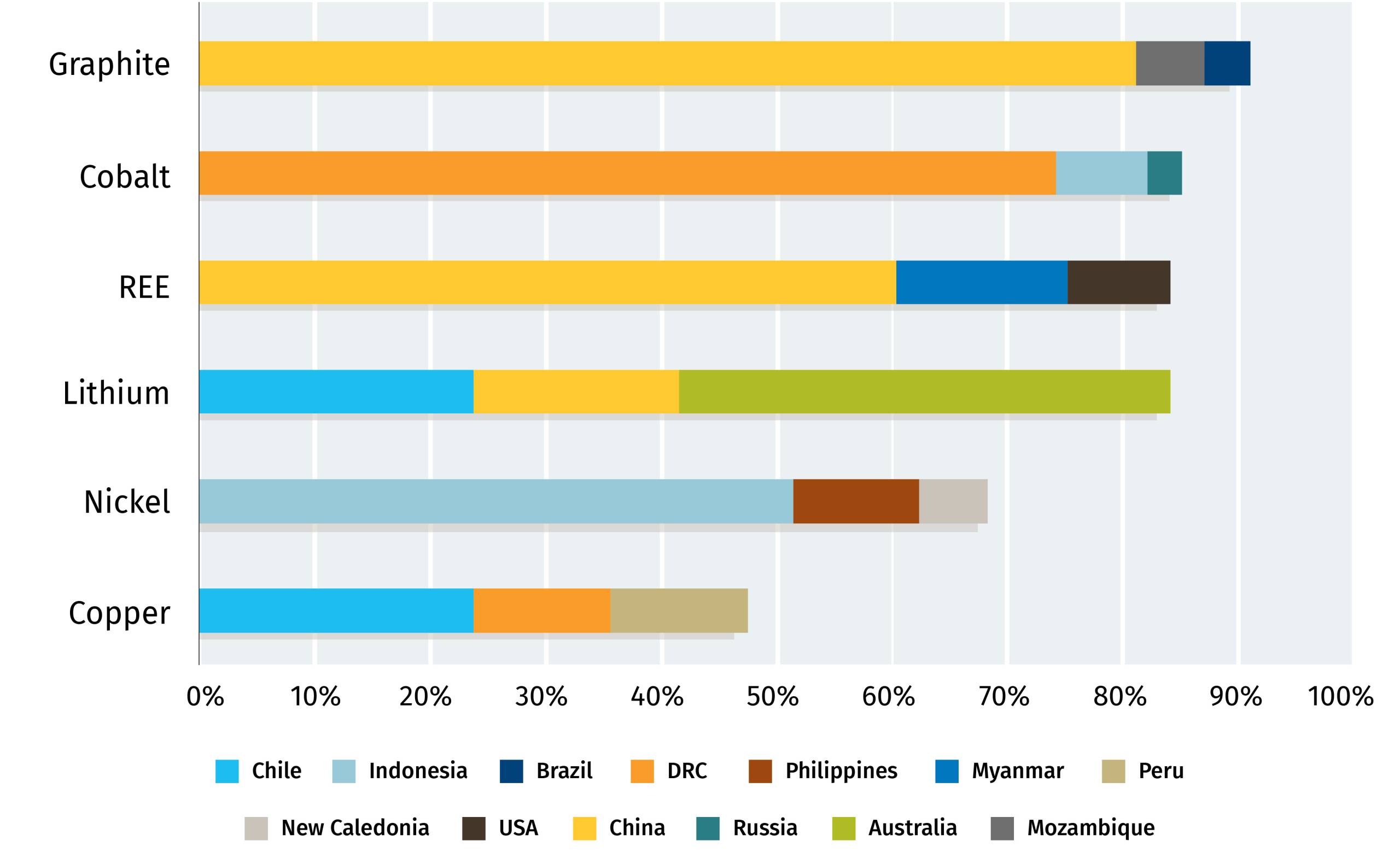
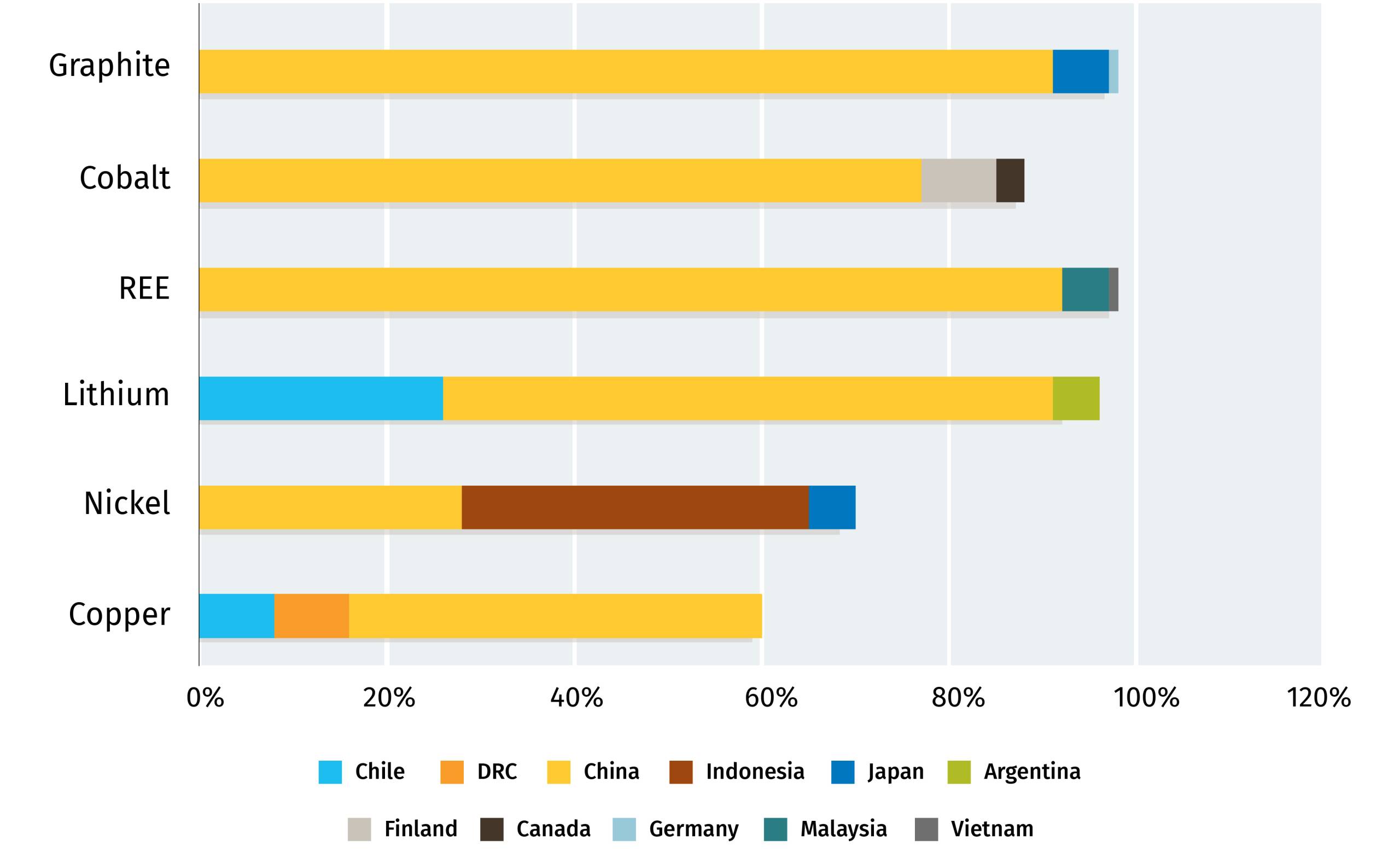
China has dominant positions in either the production and/or refining across the six ‘core’ critical minerals, i.e., lithium, graphite, cobalt, nickel, copper, and rare earth elements (REE). At the most extreme, China has 75% or more global market share of produced and refined graphite, refined rare earth elements, and refined cobalt17. Across the entire six minerals, China has control of, on average, two-thirds of global processing/refining output18.

Critical mineral production is characterized by meaningful concentration risk

Top 3 suppliers as a percent of global supply, 2023

Source: IEA and RBC Thought Leadership

And even more so for critical mineral refining, which is dominated by China

Top 3 suppliers as a percent of global supply, 2023

Source: IEA and RBC Thought Leadership

In foreign markets, Chinese state-owned miners have meaningful operations in Peru, the Democratic Republic of Congo and Indonesia (Chinese firms control almost 75% of Indonesia’s nickel capacity)19. The country also has established investment ties and is the largest trading partner for mineral producers/refiners across virtually every country in South America, Africa, Southeast Asia and Oceania (Australia).

Playing catch-up in this rush for critical minerals will be difficult, and far more challenging than the West experienced with oil, for several reasons:

  • 1.
    Exotic minerals. Critical minerals are a varied, diverse set of both traditional and exotic minerals, with their own unique processes to both produce and refine. The process is far more complex than crude refining or natural-gas processing, which situate within a narrower molecular band of hydrogen and carbon compounds.
  • 2.
    End use matters. In critical minerals, the end use predicates the type of production and level of refinement required. For instance, primary gallium is recovered as a byproduct of processing bauxite and even at refinement, high purity gallium is refined up to 99.99999% purity.
  • 3.
    Technology. Decades of experience have allowed China to innovate refining techniques, such as perfecting the solvent extraction process to refine rare earth elements.
  • 4.
    Limited domestic resources. The U.S. has limited domestic resources of critical minerals, with less than 1% of the world’s reserves of cobalt, nickel and graphite and less than 2% of manganese and rare earth elements20.
  • 5.
    No state champions. The Seven Sisters, ancestors of British-American siblings BP, Chevron and ExxonMobil, birthed the oil industry. The seven were provided immense political (and military) assurances to traverse foreign lands in pursuit of securing reserves. In contrast, most major North American miners have smaller global footprints relative to the U.S. oil majors, especially downstream (albeit less so for Barrick Gold, Teck Resources and First Quantum Minerals).

The U.S. will be challenged to catch up to Chinese dominance, at least on its own. As a result, it’s creating new strategic spheres to secure the minerals critical to its global technological leadership, targeting resource deals – and perhaps deeper relationships – in the Ukraine, Greenland and Canada. The U.S. may even re-integrate unrestricted Russian commodities back into global markets, if that furthers its own ambitions for resource security.

Canada must be at the centre of this sphere. The country can de-risk critical mineral supply chains – reducing the reliance on China but also providing additional capacity to markets dominated by a handful of suppliers. Canada is a geologically rich, responsible mining nation with significant mineral potential including nickel, cobalt, zinc, aluminum, potash and more niche minerals such as indium, graphite, germanium and gallium. We are also a trading nation, the only G7 nation with free trade agreements across all other G7 members, complemented by a historically strong security relationship with the U.S.

How China gained the lead

The Trump Administration has made critical minerals a strategic priority. A renewed focus on defence is widely seen as a positive investment. The new administration’s executive order immediately pausing the disbursement of funds through the Inflation Reduction Act, along with recent uncertainty around the Biden Administration’s CHIPS and Scient Act, may be more problematic, as it threatens to freeze some critical investment plans at a time when Beijing is not slowing its pace. Put simply, the U.S. may need to embrace all demand drivers because China is embracing all demand drivers: batteries, renewable power, EVs, defence and AI.

We have identified four key drivers that led to China’s dominance – some of which employ industrial and foreign policy approaches that the West may be forced to take to unbalance this great imbalance:

Policy

Industrial policy targeting steel, aluminum and copper (initial industrialization) was followed by policies to further adoption of EVs and renewables. On the supply side, state assistance was provided to create national champions to compete with global majors. This was complemented with foreign policy objectives, such as One Belt, One Road, which invested $1 trillion (U.S.) in foreign countries — often in resource rich nations21. The Inflation Reduction Act was America’s industrial policy response, and while successful in stimulating capital directed towards research, development and manufacturing, little has been put towards mineral mining and/or refining.

Market

Today, China accounts for 70% of the value of global clean technology22 manufacturing within an ecosystem that is often vertically integrated; minerals are mined, refined to the specificity of end components. Demand pulls supply, which is sourced by state-owned miners operating in lower cost jurisdictions, all while being provided state support. Western miners, in contrast, are beholden to higher standards by public investors, lacking in state subsidies, and are often subject to higher social license costs in foreign resource development, given the lack of political support (state-investor dispute, versus state-state dispute).

Technology

In China, targeted state-support for both supply and demand fostered breakthroughs in technology and riding down the cost curve – especially in renewables and batteries. On the supply side, technological innovation in Chinese production and refining has allowed China to perfect the solvent extraction process to refine REEs.

Mindset

China takes a war-time mindset to allocating capital and other resources to ensure security of supply and demand through an entire value chain approach. The U.S., in contrast, lacks such urgency. It’s even moved away from strategic mineral reserves, by either not replenishing reserves relative to historical levels or, in the case of helium, selling reserves altogether. This is vastly different than the approach taken to crude oil, which maintains a strategic reserve and until 2015 had a continental export ban.

The big five: Canada’s non-fuel critical minerals

U.S. imports of all non-fuel mineral and metals reached $167 billion (U.S.) in 202423. Canada remains the largest source of U.S. imports (US$40 billion, or 24%), and is the #1 provider of steel, aluminum, potash, nickel and zinc to the U.S. (#2 for copper)24. Across the U.S.’s 50 critical minerals, Canada is also the largest source of imports (US$4.5 billion, or 20%)25.

With that said, the U.S. remains reliant on China for many less commercial yet strategically important critical minerals. Even more, China has implemented export controls on a number of these minerals, such as gallium. The economic significance from this supply risk is material; the U.S. Geological Survey estimates a 30% supply reduction in gallium (China is 90% of global supply) alone could cause a $600 billion (U.S.) drop in U.S. GDP26.

In the near to mid-term, Canada has an opportunity to gradually displace Chinese supply, while also furthering a U.S.-Canadian strategy to secure production across a range of technologies and applications critical to both continental security and the Fourth Industrial Revolution. Below, we identify five key critical minerals best situated around this opportunity.

1. Gallium


Gallium has one of the highest thermal conductivities among metals. It is used in the production of highly specialized integrated circuits and semiconductors for AI and advanced computing. Gallium-based semiconductors are also vital to U.S. next-generation missile defence, radar systems and electronic communications.

The U.S. remains 100% import reliant for its supply of gallium27. In 2024, Canada was the #1 provider of gallium metal to the U.S., accounting for over 50% of imports (effectively displacing Chinese supply)28. Current supply is sourced from recycled gallium at Neo Performance Materials’ site in Peterborough, Ontario. Rio Tinto’s Saguenay demonstration project could add another 5-10% of total global primary gallium metal production if it can reach commercial viability29. A proposed expansion at Teck Resource’s Trail, B.C. operations could also increase production of germanium and add gallium and antimony.

2. Graphite


High electric conductivity, temperature resistance, chemical inertness, and lubricity characterize this battery metal increasingly relevant in defence applications. Graphite’s unique properties make it difficult – even impossible – to substitute in many applications, such as where thermal resistance is essential to equipment performance and durability.

Global demand for graphite is forecast to nearly double by 203530. Canada has a unique opportunity to develop a full graphite value chain, a highly valuable proposition given China is 82% and 91% of global graphite production and refining, respectively31. Quebec is furthest along with Northern Graphite’s operating mine in Lac des Iles, northwest of Mt. Tremblant, and Nouveau Monde Graphite’s development projects underway for mining in Matawinie, north of Montreal, and refining in Bécancour, outside Trois-Rivieres. Ontario offers another potential graphite mine, Northern Graphite’s Bissett Creek, near the Ottawa River north of Algonquin Park, which is undergoing permitting.

3. Nickel


Nickel has high ductility (flexible), toughness and strength. The mineral is used in lithium-ion batteries and in the production of stainless steel. Global demand is forecast to grow 70% by 2035, largely on the back of demand for batteries, both within transport and stationary (utility)32.

The Dumont Nickel project (Nion Nickel) in Quebec’s Abitibi region is vertically integrated and under construction. Canada Nickel’s Crawford mine (world’s second largest nickel reserve) north of Timmins, Ontario, is undergoing permitting. Canadian nickel provides much needed diversification of supply, with Indonesia and the Philippines together alone accounting for two-thirds of global production33. Canadian nickel could exceed 100% of U.S. import needs if all projects come online34.

4. Tungsten


With the highest tensile strength (the maximum stress a material can bear without breaking) and melting point of all naturally occurring metals, tungsten-based alloys are key inputs for defence aircraft, naval vessels, and armour-piercing ammunition. Tungsten is also used within automobile x-ray machines, used in enhancing U.S. border security.

China produces 83% of the world’s tungsten and accounts for 52% of global reserves35. Canada is a past producer, with substantial reserves that include some of the world’s largest tungsten deposits. Northcliff Resources’ Sisson project, northwest of Fredericton, and Fireweed Metals’ Mactung mine, in eastern Yukon, are notable Canadian tungsten projects. In December 2024, the Canadian government and U.S. Department of Defense announced a joint investment of $35 million USD in the Mactung project, the world’s largest high-grade tungsten deposit36.

5. Germanium


The mineral has semiconducting characteristics comparable to those of silicon, but with superior optical and thermal properties. Its use is critical in night vision, space exploration, fiber optic cables, and semiconductors. The growing need for datacenters (fibre) has spurred demand in recent years.

Canada supplied 20% of U.S. germanium (oxide) imports in 202337. Canada’s Teck Resources holds an integrated germanium supply chain with zinc ores mined in Alaska and refined in Trail, B.C. The Trail facility has a proposed expansion to increase germanium production largely in response to China’s germanium export ban late last year.

Ensuring Canadian Competitiveness

Canada’s natural resource wealth has attracted natural resource investors and operators for over a century, backed by quality infrastructure, rule of law, robust environmental and labour standards, and deep trading relationships. Canada can build on those strengths, taking the following steps:

  • Leverage government capital. Critical mineral projects face capital shortages. Governments can help bridge this gap with either direct equity positions or by providing long-term offtake agreements. Defence procurement is a focal point, where Canadian, U.S. and allied nations defence departments can source future supply of critical minerals and stockpile reserve through “virtual inventories” or long-term purchase commitments. If Canada meets a commitment to spend 2% of GDP on defence, this could unlock as much as $17 billion of new capital, annually, for mine development.
  • Limit price distortions from China. The mining industry now requires a “China premium” to counteract market distortions – primarily to offset the risk of China oversupplying markets to suppress global pricing. A minimum price floor, supported by government purchase agreements and other intervenions, adds price transparency and establishes revenue certainty to buffer price fluctuations. Alternatively, restrictions on Chinese products could support domestic pricing. This includes restricting Chinese supply outright, or enacting price adjustments such as anti-dumping, countervailing duties, or border adjustments (environmental and human rights standards).
  • Expand tax credits. Canada’s Critical Mineral Investment Tax Credit (ITC) excludes key defence critical minerals such as tungsten, indium, and beryllium. Eligibility could be further expanded beyond the current list of 15 minerals. Other options: allow for the stacking of tax credits, introduce Production Tax Credits (PTC) to support operating expenses (buffering against Chinese dumping) and enhance various government programs to more explicitly support critical minerals, including the Strategic Innovation Fund and Canada Growth Fund.
  • Secure market access. Tariff threats and Buy America programs hinder capital flows into non-U.S. jurisdictions. Minimizing tariff barriers abroad and investing in domestic refining and processing capacity ultimately secures demand for our products. On the supply side, securing our own supply chain is also critically important. Gallium is a Canadian success story, but relies on imported electronics from Taiwan (via the U.S.).
  • Invest in human capital. The Toronto Stock Exchange and TSX Venture Exchange are home to more miners than any other major developed world index, and with them comes a deep bench of mining talent. This talent is at risk, however, as engineers and a tech-minded generation increasingly looks to software and AI for careers. One startling fact: China has 39 university degree programs to train engineers in critical minerals; Canada has none.
  • Reduce approval times. Canada needs to consolidate processes, where possible. Critical minerals are as strategic as transportation, and related projects can be declared to be in the national interest to accelerate their development. The same sort of pragmatism can be applied at the provincial level, where collaboration across departments, with local communities and with Ottawa can be improved. Lastly, and perhaps most importantly, we will need to find new ways to accelerate project approval processes while not undermining the duty to consult Indigenous communities. More Indigenous equity in these projects, including through the national and various provincial loan guarantee programs, can unlock greater Indigenous wealth and capital for re-investment in societal infrastructure and future resource projects.
  • Enabling infrastructure. Given the remote nature of many critical mineral deposits, the lack of existing infrastructure is problematic including rail, road, ports, power transmission, and cell towers. Increased collaboration by Federal and provincial governments to provide anticipatory, enabling infrastructure can support project economics and limit mine development times.

For more, go to rbc.com/thetradehub.

Download the Report

Download

Contributors:

Shaz Merwat, Energy Policy Lead, RBC Climate Action Institute

John Stackhouse, Senior Vice-President, Office of the CEO, RBC

Vivan Sorab, Senior Manager, Clean Technology, RBC Climate Action Institute

Caprice Biasoni, Graphic Design Specialist

Shiplu Talukder, Digital Publishing Specialist

  1. Natural Resources Canada
  2. Center for Strategic and International Studies, Critical Minerals and the Future of the U.S. Economy, February 2025; Natural Resources Canada
  3. Natural Resources Canada
  4. U.S. Geological Survey
  5. Deloitte, 2025 Global Semiconductor Industry Outlook
  6. Arrow Electronics, Silicon vs. gallium nitride (GaN) semiconductors: Comparing properties & applications, March 21, 2024
  7. IEA, Minerals used in electric cars compared to conventional cars, May 5, 2021
  8. Bloomberg New Energy Finance, RBC Thought Leadership
  9. IEA, Renewables 2024, October 2024
  10. Bloomberg New Energy Finance, RBC Thought Leadership
  11. Natural Resources Canada
  12. Science History Institute, Manufacturers Case Study, Using the Rare Earth Elements
  13. Wall Street Journal, What Scared Ford’s CEO in China, September 14, 2024
  14. Center for Strategic and International Studies, Critical Minerals and the Future of the U.S. Economy, February 2025
  15. Ibid
  16. Natural Resources Canada
  17. IEA, Global Critical Minerals Outlook 2024, May 2024
  18. Ibid
  19. Reuters, Chinese firms control around 75% of Indonesian nickel capacity, report finds, February 5, 2025
  20. Center for Strategic and International Studies, Critical Minerals and the Future of the U.S. Economy, February 2025
  21. AidData, Power Playbook: Beijing’s Bid to Secure Overseas Transition Minerals, January 28, 2025
  22. IEA, Energy Technology Perspectives 2024, October 30, 2024
  23. U.S. International Trade Commission, data accessed via DataWeb
  24. Ibid
  25. U.S. Geological Survey Mineral Commodities Survey; U.S. International Trade Commission, data accessed via DataWeb; USA Trade Online, U.S. Census Bureau
  26. U.S. Geological Survey
  27. Ibid
  28. U.S. International Trade Commission, data accessed via DataWeb; USA Trade Online, U.S. Census Bureau
  29. Company website
  30. Natural Resource Canada
  31. IEA, Global Critical Minerals Outlook 2024, May 2024
  32. Natural Resources Canada
  33. IEA, Global Critical Minerals Outlook 2024, May 2024
  34. Company website
  35. IEA, Global Critical Minerals Outlook 2024, May 2024
  36. Natural Resources Canada
  37. U.S. International Trade Commission, data accessed via DataWeb; USA Trade Online, U.S. Census Bureau

Language Flag Filename

rbc_language_toggle_menu_flag

As the world races to secure the critical minerals essential to a modern economy, Canada has a crucial decision to make: what role can it play in de-risking a critical mineral supply chain that is overwhelmingly dominated by China?

At PDAC 2025, this question is top of mind for industry leaders, policymakers, and global investors. Building on our Getting Critical on Critical Minerals briefing, we’re diving deeper into five minerals increasingly vital to the economy of the future.

Each of these minerals are vital inputs across five key focus areas: artificial intelligence, border security, healthcare, energy and defense. But supply chains are vulnerable, international competition is fierce, and Canada must navigate complex policy, investment, and processing challenges to establish itself as a global leader.

Explore the briefings:

1. Gallium: the most critical of critical minerals. Key Focus: Artificial Intelligence

Critical Minerals – Gallium

2. Germanium: vitally important to border security: Key Focus: Border Security

Critical Minerals – Germanium

3. Graphite: the Swiss Army Knife of critical minerals. Key Focus: Defense

Critical Minerals – Graphite

4. Helium: tomorrow’s critical mineral. Key Focus: Healthcare

Critical Minerals – Helium

5. Rare Earth Elements: a needed alternative to China. Key Focus: Energy

Critical Minerals – Rare Earths

It’s time to get critical on critical minerals.

Language Flag Filename

rbc_language_toggle_menu_flag

Every year, Toronto plays host to the world’s biggest mining conference, as the Prospectors and Developers Association of Canada brings together more than 27,000 global mining executives, investors and policy makers. And this year’s conference, running from March 2-5, is more critical than ever. Critical minerals will be centre stage, given their importance to the growing geopolitical race between the United States and China. They may not be the mainstay of mining but minerals like gallium and lithium are essential inputs in advanced technologies that span energy, defense, manufacturing and increasingly, artificial intelligence. Nations with secure access to these critical minerals will secure global economic competitiveness and national security. Here are three big questions we’ll be tracking at PDAC ‘25:

1. What’s with all the critical mineral hype?

From advanced semiconductors used in AI to the manufacturing of electric vehicles and batteries to technological advancements in defense and aerospace, critical minerals underlie the critical components of the Fourth Industrial Revolution – an era of disruptive technological forces driven by increased human-machine interaction. Today, China dominates the entire critical mineral value chain, from mining to refining/processing to end-use demand. The International Energy Agency has identified six core critical minerals (copper, lithium ,nickel, cobalt, graphite and rare earth elements) — and on average, China accounts for two-thirds of global refining capacity for the group. In contrast, the U.S. has limited domestic reserves of critical minerals and is entirely import-reliant on supply – often times from China itself. This battle for global tech supremacy between China and the U.S. is manifesting a critical mineral resource war, a new great game for the 21st century rivaling the geopolitical significance of oil post Second World War.

2. What role can Canada play in securing critical mineral supply chains?

Canada and the U.S. have an established minerals and metals trading relationship, as each other’s largest trading partner. In 2024, Canadian non-fuel mineral imports amounted to US$40 billion, or 24% of total U.S. imports. The country is also the largest source of U.S. critical mineral imports by dollar value, but largely skewed by ‘commercial’ critical minerals imports such as aluminum, nickel and zinc. Increasingly, there is a growing cohort of less commercial yet strategically important niche critical minerals with vital importance in defense applications, border security and advanced chip making. The supply of these minerals, such as gallium, germanium, antimony and tungsten, are dominated by China and are subject to Chinese export controls. It is across this subset of minerals particularly where we believe Canada can play a vital role in in de-risking U.S. and G7 critical mineral supply chains.

3. What can we expect to hear at the conference?

This year’s PDAC conference will have a greater-than-usual policy bent, given the increased tensions around U.S. critical mineral supply – already witnessed in Ukraine peace talks but also seen in President Trump’s commentary around Greenland and Canada. Continued rhetoric from policy makers and mining executives on Canada’s potential may expand the belief that Canada has allies and economic partners. We anticipate hearing more on how Canada can enhance its competitiveness in attracting critical mineral capital. This could include a greater role for governments in providing offtake agreements, enhanced fiscal incentives such as expanded investment tax credits, securing market access and streamlining permitting. RBC Thought Leadership will publish a more detailed report on critical minerals later this coming week, along with commentary throughout PDAC. You can follow our research and insights on RBC’s Trade Hub.

Language Flag Filename

rbc_language_toggle_menu_flag

INSIGHTS AND ANALYSIS

COMMENTARY

READ THIS NEXT


BUSINESS RESOURCES

RBC Global Connect

Expanding into global markets comes with challenges, and having the right resources can make all the difference. RBC Global Connect™ is a free online platform designed to support businesses in researching, planning, and navigating international growth. Whether you’re exploring new opportunities or expanding existing operations, our goal is to provide the insights and tools you need to move forward with confidence.

The Growth Project

This project explores key drivers of economic growth including productivity, evolving technologies like AI, key sectors including agriculture and trade, and the intersection of skills and immigration. We will explore a new generation of ideas to drive prosperity: case studies and actionable steps needed to navigate the dynamic landscape of economic expansion, and uncover tools that foster growth in our community, business, and country.

Language Flag Filename

rbc_language_toggle_menu_flag

U.S. tariffs looming over Canada’s economy demand an urgent, forceful and strategic response. The next 30 days are critical: Canada must demonstrate to Washington that America’s path to energy and economic security depends on Canada. Especially, Canadian resources.

A focus on key commodities can underpin a broader Canadian industrial resurgence that boosts Canadian GDP, revitalizes technical innovation, attracts foreign and domestic investment in several key areas, enhances productivity and accelerate Indigenous investments in resources. That would make us indispensable to U.S. interests, and a key pillar of its economic and energy strategy.

Focusing on specific commodities can also drive a renaissance in Canada’s manufacturing and ancillary services, and can ensure robust Canadian sustainability policies, such as methane capture and conservation, advance emission reductions across the value chain. In other words, a resource-focused economic strategy need not be a strip-and-ship strategy.

There’s a broader imperative, too: geographic diversification. U.S. tariffs of 25% on all steel and aluminum imports from Canada and other countries highlight the urgency of finding new markets. Resource expansion would further derisk large-scale commodity projects and boost Canadian agriculture, materials and energy exports to Asia and Europe. Over time, this could widen the door to greater trade with many of the world’s largest and fastest-growing countries. Strategically owning parts of the value chain raises our global profile, boosts our leverage in trade negotiations with the U.S. and other partners, and makes us more resilient to shifting geopolitics.

Washington already recognizes Canada’s resource strength. The decision to impose less-punitive 10% tariffs on Canadian energy compared to 25% on other goods was a tacit U.S. acknowledgement of the strategic importance of resources to American interests. We need to seize on that geo-strategic edge and elevate commodities, and their end products, in future trade negotiations with Washington.

Here are three strategic sets of resources Canadian negotiators can focus on to deepen one of the world’s most valuable economic partnerships:

1. Abundant Canadian oil, gas and power can underpin America’s energy ambitions

Canada’s exports of oil, gas, and electricity strengthen U.S. energy reserves, reduce consumer costs, and support American objectives to expand international energy exports to global allies. Deep north-south integration of North American energy infrastructure means efforts to diversify away from Canada would be costly and time-consuming.

Although a net exporter of oil and natural gas, the U.S. is looking to help Europe and allied Asian countries reduce their reliance on less-friendly energy sources, while meeting its growing domestic demand. American reserves are plentiful but energy-intensive data centres to power artificial intelligence, and other technologies, are straining capacity. Stable Canadian energy production can add to U.S. supply through integrated pipelines and grids. That would give the U.S. a cushion to export oil and natural gas to global allies without raising prices at the pump for domestic consumers-a key Trump priority.

Oil: 60% of U.S. imports1

Canada’s advantage: Canadian oil can backstop U.S. efforts to become the de facto global swing oil supplier.

Canada’s share of U.S. crude oil imports has grown significantly over the past few decades, and now represent 24% of total U.S. oil consumption2. Cross-border pipelines deliver heavy crude directly to U.S. refineries that are specifically designed to process it. For these refineries, particularly those in the Midwest, moving away from Canadian heavy crude would leave them with high retooling costs or dependent on alternative sources such as Venezuela or the Middle East, exposing them to geopolitical risks. Recently, the Trans Mountain pipeline expansion has nearly tripled Canada’s oil shipping capacity to tidewater markets, carving out a role for Canada’s oil in supporting global allies, such as South Korea and Japan.

Electricity: 90% of U.S. imports3

Canada’s advantage: Low-cost and clean Canadian electricity can power several U.S. efforts including artificial intelligence, advanced manufacturing and advanced technology products.

Although the U.S. generates most of its own electricity, Canadian supplies keep the lights on and costs low across several U.S. states. New projects, such as Hydro-Quebec’s Hertel-New York powerline, aim to further increase electricity exports by providing 20% of New York City’s electricity needs, saving its residents an estimated $17 billion in electricity costs over the next three decades4.

With more than 30 cross-border transmission lines linking Canadian provinces with American states, Canada is essential for ensuring cross-border grid security and a potential source for incremental generation. For example, the rapid growth of AI technology–a U.S. strategic priority–is expected to drive a sharp increase in electricity consumption from U.S. data centres, which is estimated to account for up to 12% of U.S. total consumption by 2028, compared to 4.4% in 20235.

Natural Gas: 99% of U.S. imports

Canada’s advantage: Canadian natural gas can help America ensure ample domestic supplies and room for exports to allies in Europe and Asia.

Higher U.S. natural gas demand is expected to outpace supply growth in the next two years, according to the U.S. Energy Information Association. In addition, demand from data centres and reshoring of manufacturing could further strain natural gas power generation. Canadian natural gas is well positioned to meet supply gaps, and already accounts for 9% of total U.S. natural gas consumption with the capacity to expand further.

Canada is also poised to become a significant supplier of liquefied natural gas (LNG), and is uniquely positioned to export energy to strategic Asian allies. With six West Coast LNG projects proposed and under construction, including LNG Canada Phase I which is set to come online this year, Canada is estimated to have a total export capacity of 6.26 billion cubic feet per day (bcfd). This proposed capacity would put Canada among the top five global LNG exporters at current levels. In addition, West Coast terminals are strategically located just 10 shipping days from Asia, compared to 20 days for U.S. Gulf Coast exporters via the Panama Canal.

2. Canadian agriculture would strengthen American food security

Canada is a major part of the North American breadbasket, providing a stable and reliable supply of agricultural commodities that supplement the United States’ strengths in the sector. As a key provider of essential inputs like potash and seed oils, Canada supports U.S. food and biofuel production. With the U.S. facing potential labour shortages due to a crackdown on illegal immigration, Canada can help supplement this gap in the short term, while adding to continental food security in the long term.

Potash: 85% of U.S. imports

Canada’s advantage: Canadian potash, a critical fertilizer component, can boost American crop yields amid extreme weather patterns, reinforcing continental food security and supply chain stability.

With growing food demand, there’s significant potential to strengthen this partnership. The Jansen potash mine, slated to begin operations in 2026, is projected to boost Canadian potash production by 4.2 million tonnes per year (mtpa), with potential expansion up to 8.5 mtpa by 2029—boosting Canadian capacity by more than a third. The new project would raise Canada’s global market share to nearly 40% by 2026. The increased production will not only bolster American food security but also help displace potash exports from non-aligned nations such as Russia and Belarus.

Canola oil: 98% of U.S. imports6

Canada’s advantage: Canola, a product developed in Canada, can play a key role in U.S. food security and meeting biofuel demand.

Canada provides a stable and diverse supply of agricultural products to the U.S., second only to Mexico. The U.S. is heavily reliant on Canadian canola oil, which account for 98% of its total imports, and is a key input in U.S. food production and renewable fuels.

Canada is also the top U.S. import source for cereal products, underpinning the deeply integrated cross-border supply chain in these sectors.

Meat: 34% of U.S. imports

Canada’s advantage: Canadian meat, including bovines and swine, are an important part of the meat feedstock into the U.S.

Animal proteins will continue to play a significant role in American diets, with per capita consumption in the U.S. projected to increase from 68.7 kilograms in 2023 to 74.6 kilograms by 20288. Canadian meat producers are essential in meeting this rising demand, as the U.S. already imports 33% of its beef and 66% of its pork from Canada7. The strong integration between Canadian and American meat markets is driven by high safety standards, a similar market structure, and alignment on product quality. As a result, Canadian meat not only supports U.S. domestic consumption but also contributes to American meat exports to global markets.

3. Canadian critical minerals and uranium can power advanced technologies in North America

The U.S. has reserves of many of the critical minerals needed in semiconductors and other sensitive technologies. Its uranium reserves are also able to help build out a new wave of nuclear power projects. It’s aiming to mine and enrich as much as possible within its borders to displace supplies from China and Russia but faces constraints, especially in adding enrichment capability. Canada has capacity in key complementary areas, like uranium conversion, that can help the U.S. build out an efficient North American value chain.

Critical minerals: 19% of U.S. imports, in total minerals and metals9

Canada’s advantage: With the right investments and innovation, Canada can advance production of several critical minerals.

The new U.S. administration is looking to accelerate several critical mineral projects and considering opportunities to advance activity within the Quadrilateral Security Dialogue, comprising the U.S., India, Japan, and Australia. Although outside this alliance, Canada is a player in the critical minerals space. It is a top 10 global producer and already a major supplier to the U.S. for aluminum, iron, steel, copper, nickel and more.

Canada has been working toward U.S. efforts to reduce reliance on China, from establishing a Canada-U.S. Joint Act Plan on Critical Minerals to $3.8 billion in public investments to ramping up exports to the U.S. of gallium and germanium, both impacted by Chinese export controls. Canada’s existing extraction and processing infrastructure could further fill U.S. gaps in key areas, such as aluminum, nickel and zinc.

Uranium and nuclear expertise: 27% of U.S. imports, in uranium

Canada’s advantage: America’s path to nuclear renaissance goes through Canada—the world’s second largest producer of uranium after Kazakhstan.

The energy source is increasingly important to meet growing electricity demand to power AI data centres and other energy-intensive strategic advanced technologies. As the largest uranium supplier to the U.S., Canada can be an important part of the continental nuclear fuel cycle with world-leading technology and talent, small modular reactors (SMRs), and an 89,000-strong nuclear workforce honed through work on CANDU projects.

What Canada can deliver in advancing U.S. interests

In the short-term, there’s an urgent need for Canada to realign our economic interests with the U.S. For its part, the U.S. can go it alone, but it’s going to be a harder, costlier and longer route to self-sufficiency. A shifting economic and geopolitical environment behooves both to collaborate in the three core areas of mutual benefit.

This strategy heavily depends on the U.S. getting on board. We have a short window to convince Washington about the need to collaborate in the resource and energy space, which has been weaponized by several non-allied actors.

Canada also needs to get its own house in order.

A resource-focused economic and trade strategy would require billions of dollars in new infrastructure, including rail lines, seaports and processing facilities. However, domestic and foreign capital will only come to the table If there’s a stable regulatory environment and reliable pricing in what can be highly volatile markets.

These are not new challenges for Canada. Regulatory and policy uncertainty have hobbled economic development for decades. So, too, has lack of reliable demand from our major trading partners, including the U.S.

Resource production and processing calls for longer-term thinking, which will require the federal and provincial governments to work together to create entities, and strengthen existing ones, to attract and retain capital, and protect against extreme price volatility. We will also need to ensure our education systems are geared towards attracting the right talent and skills to ensure the economy is poised for long-term growth. And while positioning Canadian resources anew in the U.S. market, we will need to improve our trading relationships with many other countries and regions.

All this will require a different mindset among Canadians, to ensure our natural resources are not seen as a trading card with the U.S., but rather a strategic platform for growth, and prosperity, for decades to come.

It can be Canada’s greatest resource play.

Contributors:

Salim Zanzana, Economist, RBC Economics

Varun Srivatsan, Director of Policy, RBC Thought Leadership

Cynthia Leach, Assistant Chief Economist, RBC Economics

Yadullah Hussain, Managing Editor

Caprice Biasoni, Graphic Design Specialist

Shiplu Talukder, Digital Publishing Specialist

For more, go to rbc.com/tradehub.

Download the PDF

Download

  1. All U.S. import shares from 2023 unless otherwise indicated.
  2. Natural Resources Canada “Energy Factbook 2024-2025”
  3. Average last 5 years as 2023 figure distorted due to droughts affecting Canadian generation and export capacity.
  4. 2024 Fall Economic Statement
  5. U.S. Department of Energy “Evaluating the Increase in Electricity Demand from Data Centers”
  6. Includes imports of products under HS code 1514 in 2023
  7. Agriculture and Agri-Food Canada “Sector Trend Analysis – Meat Trends in the United States”
  8. Includes products under HS codes 0201 and 0202 for beef and 0203 for pork in 2023
  9. United States International Trade Commission