Issue #02➔ Quebec’s Northvolt-sized problem
➔ A made-in-Canada climate taxonomy to attract green capital
➔ Reimagining Canada’s industrial carbon pricing system
Hot takes
➔King Coal’s rein ended in the U.K—the first G7 country to do. Here in Canada, Alberta banished coal-generated power this year, but Saskatchewan, Nova Scotia and New Brunswick are still figuring out ways to rid coal off their grids. Shaz Merwat, our energy policy lead, suggests the switch to renewables, coupled with battery storage and natural gas are preferred coal-switching solutions for the rest of the decade. The pursuit of Net Zero, however, will involve carbon capture adoption and the often thorny issue of greater inter-provincial connectivity.
➔Canada advanced its guidelines for sustainable investments. The new climate taxonomy aims to guide investors, banks, and other stakeholders seeking clearly-marked “green” and “transition” economic activities. It’s an important step in Canada’s sustainable finance journey, especially as trillions of dollars of capital eyes verifiable green and transition investment opportunities. The Canadian taxonomy can help attract private capital, which is vital for economic growth and emissions cuts. While there’s much work to be done—including some important definitions of end-use for natural gas if it’s to be sold as a transition fuel—it’s a milestone in Canada’s Net Zero journey.
➔There’s a new energy in Calgary. Institute head John Stackhouse found the city fired up as he attended the Energy Disruptors Unite conference recently. Some of his top observations: Nuclear is back, ESG isn’t dead, and Indigenous equity is the new gold standard of engagement. Read John’s 10 takeaways here.
➔… Speaking of new energy…: TC Energy’s spin-off of its oil pipeline business to pivot to lower-energy carbon sources is a new iteration for the 70-year-old Calgary firm. Natural gas and power and energy solutions , “driven by nuclear, pumped hydro storage and new energy opportunities,” gives the firm exposure to utility-like assets. Another energy-transition plus: the potential expansion of the 4,800-megawatt nuclear capacity at the Bruce C project at its existing Bruce Power site in Ontario.
➔
Express your climate change frustration with an emoji. Dead tree emojis are coming to smartphones soon as regular folks channel their climate angst. Hurricane Helene and now Milton are just the latest weather events supercharged by climate change. Since 2019, virtually every Canadian province and U.S. state has been slammed by a costly disaster. Yet, progressive climate change policies are fast becoming political liabilities from Ottawa to Vienna to Washington.
➔Bi-Weekly Climate Action Award: To Shane Gross of B.C., who won the prestigious Wildlife Photographer of Year award from the U.K.’s Natural History Museum. Check out his Swarm of Life photograph below of tadpoles in a lake near Vancouver Island that won him the prize.
Copyright Shane Gross➔Bi-Weekly Climate Fail Award: A new University of Cambridge study that advocates reducing flight speeds by 15% to reduce emissions—raising transatlantic travel times by 50 minutes.
Canada & Quebec’s Big Charge
Ottawa and Quebec have a Northvolt-sized problem. Europe’s biggest battery maker had it all: US$15-billion in funding from auto industry, banks and European governments, and was eyeing an electric vehicle battery plant near Montreal, backed by Quebec and Ottawa.
But EVing is hard. The company is struggling against cheaper and better-performing Chinese EV batteries and a slowdown in European automakers’ EV plans. That could delay its Quebec factory plans by at least 18 months.
➔ The Quebec government called the project the “greenest electric battery factory in the world,” when it was launched a year ago. Now it sees it as a “calculated risk.”
➔ That’s a lot of calculated risk-taking of public money: In addition to federal funding (see table), Northvolt received a $240-million guaranteed loan from Quebec for land near Montreal to build its plant. Quebec also plunked down another $270 million in its Swedish parent company Northvolt AB, with a further $200-million investment from Quebec’s pension fund manager.
➔ The delay to Northvolt’s plans could gum up Canada’s burgeoning EV supply chain. The Parliamentary Budget Officer estimates that of the three massive EV projects (including the Volkswagen and Stellantis-LGES plants in Ontario), Northvolt was closest to break-even, i.e. by 2037. But the company’s potential delays could mean Canada and Quebec would have few economic benefits to show for their billions in EV investments until 2040 at the earliest.
➔ The project was going to be Canada’s answer to Chinese EV battery behemoths. Now the nascent industry is just left with more questions.
Carbon Pricing In Transition
Canada’s industrial carbon markets can serve as building blocks of innovation, low-carbon economic growth and investment, according to a new joint report by Climate Action Institute, Canadian Climate Institute and Clean Prosperity. But Canada’s patchwork of nine siloed carbon pricing systems are barriers to unlocking these benefits.
➔ Harmonization of the country’s carbon markets would help ensure they play an outsized role in advancing Canada’s economic, environmental and geopolitical objectives, the report argues.
➔ As policymakers shift their attention to the back half of the 2020s, amid a more fragmented world, a fresh approach to our carbon markets could strengthen both trade and climate policies, and foster a new cycle of lower-emissions growth, the three institutes state.
➔ Read the full report here.
The Institute In Action
➔ We’re in Ottawa on Oct 10. for Net-Zero Edge, Canada’s largest climate conference, hosted by the Canadian Climate Institute and the Net-Zero Advisory Body. John Stackhouse sat down with Sir Alok Sharma and Candace Laing from the Canadian Chamber of Commerce to discuss Canada’s carbon competitiveness. Follow that conversation on John’s LinkedIn here.
➔ Catalytic capital. That was among the topics Myha Truong-Regan, our Head of Climate Research, and Ravinder Gill, Managing Director and Head of Sustainable Finance at RBC, discussed at a Food for Thought Climate Perspectives series, starting in Toronto. Read some of their top observations here.
➔ What’s on the team’s reading/listening list: Prophet Song (by Paul Lynch), It Can’t Happen Here (by Sinclair Lewis), A World Of Three Zeros (Muhammad Yunus), What If We Get It Right? (by Ayana Elizabeth Johnson).
The energy transition presents a chance for Canada’s small, open economy to reset and recharge its global competitiveness.
The race is already on: As countries fuse their economic, environmental and geopolitical objectives, there is a growing imperative to link trade and climate policies. That pressure may grow as advanced economies turn to protectionism, including ways to reduce access for products made in countries with lower emissions standards. In the new trading paradigm, Canada has the opportunity to compete in the exports of low-carbon goods, while also navigating market disruptions caused by emerging clean tech innovations.
Luckily, Canada already has a head start in this low-carbon competition, with industrial carbon markets that can serve as building blocks of innovation, low-carbon economic growth and investment. By fine-tuning and crafting policy that delivers emissions reductions domestically without compromising our competitiveness, Canada can gain an advantage in the new low-carbon economy.
Indeed, industrial carbon markets can become central to Canada’s efforts to address new imperatives brought on by the energy transition. They can help us compete in low-carbon economies, build competitive advantages in international export markets, and decarbonize heavy industries—and get Canada closer to its Net Zero goals.
Yet Canada’s current system remains a patchwork, with nine industrial carbon markets—also known as Large-Emitter Trading Systems (LETS)—that price carbon for heavy industrial facilities. Each LETS has its own subtly different design elements and market conditions that operate within their provincial silos.
The fragmentation of these markets is undermining their potential, and hampering Canada’s ability to build low-carbon industries. Creating room for provinces to tailor their systems to regional priorities and politics makes sense—up to a point. But the current arrangement is hurting small markets with the presence of a few emitters raising transaction costs for firms operating in multiple provinces. As these companies trudge through different compliance rules, they are bogged down in an increasingly complex regulatory environment that slows investment decisions. The slowdown could lead to price volatility, limited participation, low trading volumes and a general lack of confidence in these markets.
Removing interprovincial trade barriers and integrating this patchwork of systems could offer considerable economic upside that could prove to be transformative for Canada’s energy transition.
Benefits Of Harmonization
Gaining efficiency, lowering costs A firm producing basic chemicals with operations in Ontario and Alberta in Canada’s current system would need to employ two different approaches to calculate its emission limit, to ensure it complies with each province’s laws. That leads to duplication of systems and processes for record keeping, monitoring, reporting, and verification. It also entails greater administrative and compliance costs that will eventually be passed on to consumers. Harmonization could channel more investments in decarbonization and capital expenditures and less in the human capital required to comply with each set of regulations.
Harmonizing the governance can also make markets work better. A robust oversight regime including strong governance, disclosure, and enforcement of standards would contribute to market confidence. While studies examining the integrity and functioning of Canadian carbon credit markets is limited, studies of financial markets suggests that carbon credit markets with these characteristics would improve outcomes for market participants in the form of reduced transaction costs.
A deeper investment pool Linking markets together is another key component of harmonization, enabling the development of larger markets with a greater number of buyers and sellers that can connect quickly, reducing transacting time and search costs. Robust linkages would also create a larger market for carbon credits that are fungible across different LETS, increasing the pool of potential buyers.
Corporate Canada’s Competitive Advantage
It’s hard to evaluate short-term, sector-level (let alone firm-level) implications of industrial carbon pricing. An industry’s competitiveness will heavily depend on its structure, including costs and profitability, long-term demand for its products, and the existence of cost competitive, low-carbon substitutes. It also depends on whether key trading partners have policies in place that give preferential tariff treatment to goods produced in jurisdictions with carbon pricing schemes. And this is without accounting for other forms of policy support.
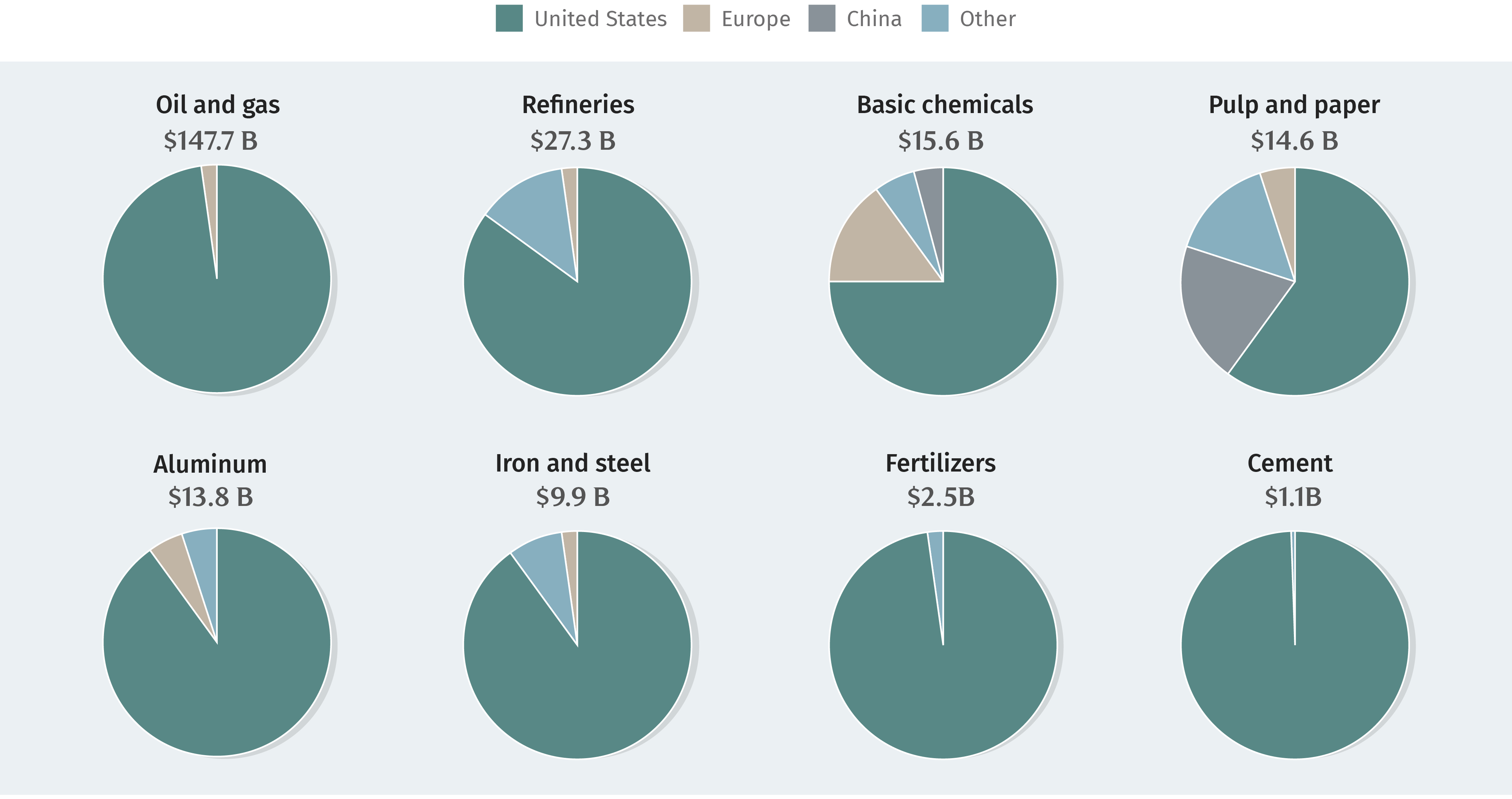
Canada’s carbon pricing scheme covers eight key Emissions Intensive Trade Exposed (EITE) industries. The goods produced by these industries, which last year contributed $232 billion to the Canadian economy, are exported to three key trading partners–the U.S., which is Canada’s largest trade partner, the EU, and China.
Canada’s Biggest Carbon-Intensive Exports
Canada’s top export destinations for its carbon-intensive products
Source: RBC Climate Action Institute analysis of Statistics Canada data
Competing with Trade Partners The EITE industries expected to benefit from carbon pricing are those with significant trading activity with the EU and China—both have LETS of their own, with vastly different dynamics.
Canadian goods are anticipated to be cost competitive with those produced in the EU, given similar industry cost structures and stringency of the EU’s carbon pricing regime. The EU’s Carbon Border Adjustment Mechanism (CBAM), set to come into effect in 2026, is a tariff scheme that gives preferential treatment to goods produced in countries with carbon pricing will have limited impact in eroding the cost competitiveness of iron, steel and aluminum produced in Canada.
Exports destined for China will have a harder time competing on price, given China’s substantially lower cost structures compared to Canada. It’s an advantage that is supported by China’s extensive use of subsidies in key industries and an abundant supply of low-cost labour. China’s relatively lower carbon price of $19 per tonne of CO2e, compared to Canada’s $80 per tonne CO2e, would have limited impact on eroding the cost competitiveness of Chinese goods compared to Canadian goods.
At face value, industries exporting to the U.S. are also at a cost disadvantage since there is no federal carbon pricing regime stateside. Canadian goods with embedded carbon costs would have to compete with U.S. goods without this cost.
Part of this cost disadvantage for key industrial sectors can be offset through system design, as well as the revenues that firms can generate from carbon credits. Recent research from Clean Prosperity and the Transition Accelerator found that revenue generated by carbon credits is the largest policy incentive available to most sectors within heavy industry. They remain Canada’s lowest-cost policy option to attract low-carbon investment into the country. In the long-run, these investment flows can position Canada to be globally competitive in new low-carbon industries.
Beyond Industry Bottom lines Cost competitiveness, however, should not be equated with profitability and the long-term viability of an industry. Profitability ebbs and flows with economic cycles.
The viability of any industry depends on long-term demand. Canadian exports to the U.S. are concentrated in three industries, with oil, natural gas and refined petroleum products, such as gasoline, accounting for 79% of all EITE exports. Greater electrification, including the shift from gas-powered to electric-powered cars, less reliance on natural gas for space heating and electricity generation, and energy efficiency improvements is changing the U.S. energy mix, and shrinking the long-term demand for oil and natural gas.
Falling demand and market size at the industry level does not necessarily lead to broader economic stagnation. A study of B.C.’s carbon market found that, in the aggregate, carbon pricing does not have an adverse impact on its economy or employment, with employment shifting from emission intensive industries to cleaner ones. A study of the French carbon market also found similar greening of employment—evidence that carbon markets are operating as predicted by economic theory.
Similarly, Germany, the European Union’s largest economy and heaviest emitter within the EU carbon market, was able to leverage carbon pricing to cut the emissions intensity of industries, by reducing consumption of natural gas and petroleum and improving the energy efficiency of industrial processes, according to a study. This was achieved without lowering employment, GDP growth or exports.
There are limited data and studies providing insights on how Canadian provinces have adjusted their economic development strategy to safeguard their EITE industries. Some jurisdictions such as Alberta have addressed this policy challenge by building regulatory compliance flexibility into its carbon pricing regime.
Such policies also aim to ensure industries are not fiscally penalized, in the short run, as they invest in low-carbon technology, which are costly long-term investments. Under Alberta’s Technology Innovation and Emissions Reduction Regulation (TIER) system, firms can seek regulatory relief if compliance costs exceed 3% of sales or 10% of profits. In these situations, firms can use a greater number of carbon credits to reduce their compliance obligations and/or seek a greater “free” emission allowance.
Businesses repeatedly cite regulatory uncertainty as an impediment to moving forward with investment decisions. Harmonization can provide investors and markets with the certainty they need to invest in the country’s energy transition.
Navigating politics Despite the many economic and trade benefits, and industry’s appetite for less regulatory complexity, harmonization has not been pursued for two key reasons. For some provinces, there’s a perception that harmonization could lead to an erosion of provincial autonomy to make decisions that protect their key industries. Harmonization introduces the need for greater coordination and consensus building. Processes that some provinces fear could limit their regulatory responsiveness to changing global market and regulatory conditions, and which is required to keep the industries located within their borders competitive. Many of these concerns can be addressed through governance frameworks when harmonizing the country’s LETS.
How To Harmonize LETS
LETS in Canada are already harmonized in some rudimentary ways, primarily through the headline price of carbon, which currently stands at $80 per tonne. But most of the finer details of both market design and market function vary from province to province—most notably the rules around who can hold and trade credits.
Harmonizing LETS and removing these interprovincial trade barriers will require reconciling details across systems that are at different stages in their development and maturity.
Except for Quebec, which shares a cap-and-trade system with California, all provincial and territorial use LETS known as output-based pricing systems. These systems regulate facilities based on their emissions intensity, rather than on their total emissions as with cap-and-trade. We limit this analysis to harmonizing output-based LETS across Canada. Integrating cap-and-trade and output-based markets beyond the headline price would be a far more complex, long-term challenge.
On both the substance and process of harmonizing LETS, federal and provincial governments can lean on their experiences with domestic trade deals in the pursuit of harmonization.
We outline two broad approaches.
All Parties Model Harmonization through the All Parties Model requires strong central leadership with common standards across all provincial LETS. The Canada Free Trade Agreement (CFTA) offers a useful analogy for this more “top-down” approach to removing trade barriers. In the CFTA, the federal government and all provinces and territories have agreed to a shared set of provisions, definitions, rules, exceptions, institutional arrangements (e.g. dispute resolution), and exceptions, with a stated objective to “reduce and eliminate, to the extent possible, barriers to the free movement of persons, goods, services, and investments within Canada and to establish an open, efficient, and stable domestic market”.
Canada’s current approach to LETS, under the umbrella of the federal Greenhouse Gas Pollution Pricing Act (GGPPA), is but one possible version of the All Parties Model. Under the GGPPA, provinces are encouraged to establish and administer their own LETS.
On a rolling five-year basis, Environment and Climate Change Canada (ECCC) evaluates the performance of provincial LETS and negotiates with the provinces regarding the “equivalency” of their performance to federal standards. ECCC assesses equivalency every five years, with the next review coming in 2026. This will be the first review for some of Canada’s youngest LETS, most notably British Columbia, Saskatchewan, and Ontario.
Willing Partners Model The Willing Partners Model offers a roadmap for any two (or more) provincial governments to harmonize their carbon markets. An analogous, “bottom-up” approach to removing trade barriers is the New West Partnership Trade Agreement (NWPTA). Through this effort, signatory provinces—British Columbia, Alberta, Saskatchewan and Manitoba—engage in a mutual effort to “liberalize trade, investment and labour mobility”. The provinces continue to amend, expand and update the agreement, most recently in 2022.
The Willing Partners Model is fundamentally an opt-in model. In the NWPTA, provinces agree to six shared criteria: definitions, obligations, rules, provisions, dispute resolution mechanisms, and exceptions to the agreement. Establishing shared criteria would be a starting point for any iteration of the Willing Partners Model for LETS. Fewer negotiating parties with a model that is voluntary can lead to an agreement with stronger shared criteria with a clearer value proposition for participating provinces.
A Willing Partners Model can also coexist alongside an All Parties Model. Just as any province can exceed the federal standards for LETS set out in the GGPPA, the NWPTA also defers to the Canada Free Trade Agreement (CFTA), where the provisions of the latter are “more conducive” to liberalization of interprovincial trade.
Degrees of harmonization Beyond broad design details like the headline carbon price, there are many program elements of LETS that are not harmonized. Integrating these systems does not have to happen all at once. This gradual, step-by-step harmonization is also known as degrees of harmonization.
Two Components Of Harmonization
There are two core components to market harmonization. Governments can pursue each subcomponent individually or as part of a larger effort toward full harmonization.
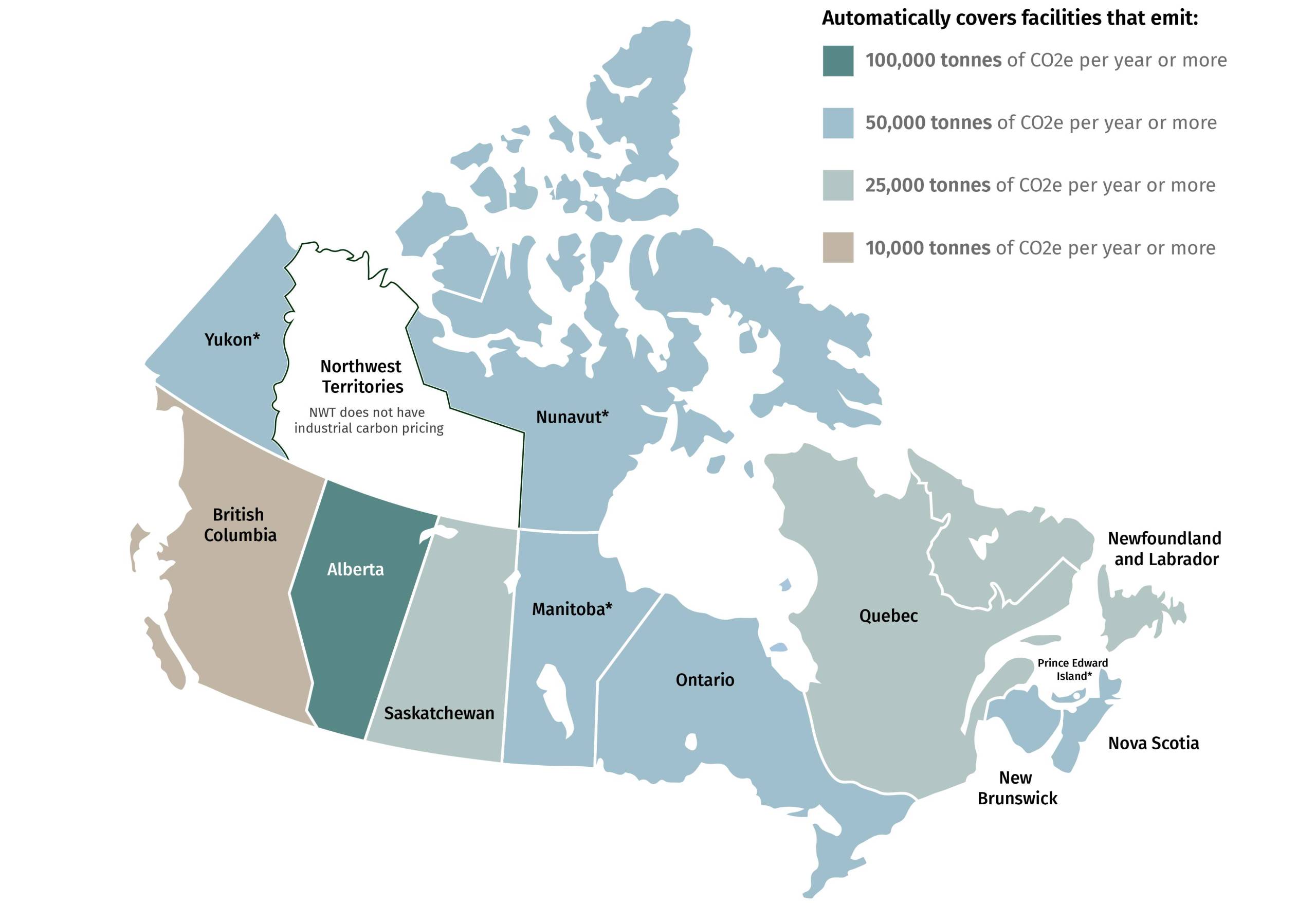
Harmonizing market design LETS market design involves decisions around how the carbon market will legally operate. This include what sectors will be covered by the program, the price of carbon and how exposed emitters will be to that price, who can hold carbon credits and under what conditions, and rules around monitoring, reporting and verification (MRV), including enforcement and non-compliance penalties. To take just one example, facilities that emit above a certain amount are automatically covered by LETS, but this coverage standard varies widely from province to province. Most LETS also allow smaller facilities to opt into and benefit from the program, but this standard also varies from province to province.
A Patchwork Of Carbon Coverage Standards
Canadian jurisdictions have different coverage threshold for large emitters
*Covered under federal framework
Source: RBC Climate Action Institute
Bringing markets in synchronicity Full harmonization of market function includes full removal of interprovincial trade barriers, with fungible credits that are tradeable across provincial borders.
There are several elements of market design that need to be harmonized before this can occur. Some LETS have many different types of credits with unique properties. Alberta’s TIER system, by far the largest and most mature provincial carbon market, makes use of many different types of carbon credits to facilitate growth in different sectors. For instance, Alberta has two types of carbon credits with features that are specifically designed to encourage adoption of carbon capture technologies. Most other systems have a single credit type, and are more restrictive on who can hold carbon credits and participate in the market. These rules would need to be relaxed to facilitate harmonization of market function.
Beyond the mechanics of credit trading, true fungibility would also require harmonizing decisions around governance and review, including shared processes for evaluating the efficacy of different markets and the competitiveness performance of the firms participating in these markets.
Different provinces have very different industrial profiles and therefore face different competitiveness challenges. There is an urgent need for research detailing the opportunities and risks facing Canadian heavy industry as it seeks competitive advantages in a carbon-constrained world.
Canada’s current governance model for LETS—reviews in five-year increments—is sluggish. Provinces have the discretion to review and adjust benchmarks as needed, but have not done so to date even with looming risks of credit oversupply. Harmonized markets would need to make greater use of proactive strategies that can stabilize expectations around credit prices, respond to rapid or disruptive change in global markets, and reduce regulatory uncertainty for investors and operators. These strategies could include but should not be limited to policy tools such as carbon contracts and adaptive benchmark tightening.
Lastly, a shared commitment to measuring the outcomes of harmonization and the effects on provincial economies could help ensure data-driven decision-making around LETS moving forward. Provinces could also share digital infrastructure, registries, and programs that allow for credit tracking across participating provinces to maximize transparency to the broader public.
A Chance For Policy Alignment
Securing Canada’s economic future requires seizing every competitive advantage available. Many provinces have spent the better part of a decade (or more) standing up their LETS as a central plank of their decarbonization and low-carbon economic strategies. But the country’s fragmented approach to LETS presents significant opportunities for improvement. Taking stock of global market dynamics and trends towards protectionism, nearshoring and decarbonization, it may be time for a dialogue about what the next decade should look like for LETS in Canada. Harmonization, as part of a broader vision of economic competitiveness, should top the list for discussion.
Harmonization could help ensure that LETS play an outsized role in advancing Canada’s economic, environmental and geopolitical objectives. Global economic competitiveness, investments in technology and innovation, reduced regulatory red tape and costs: These and other benefits arising from harmonizing LETS are too numerous to ignore.
As policymakers shift their attention to the back half of the 2020s, and a more fragmented world, a fresh approach to our carbon markets could strengthen both trade and climate policies, and foster a new cycle of lower-emissions growth.
Contributors:
Myha Truong-Regan, Head of Climate Research, RBC Climate Action Institute
Brendan Frank, Director of Policy and Strategy, Clean Prosperity
Dale Beugin, Executive Vice-President, Canadian Climate Institute
Yadullah Hussain, Managing Editor, RBC Climate Action Institute
➔ Welcome back to the newsletter formerly known as Climate Signals, offering crunchy insights and quick takes on changing climate and energy trends. ➔ Big Apple’s Big Climate Bash ➔ What EV Sales Downturn?
Hot takes
➔ Carbon tax was seen as good climate policy—now it’s a victim of climate politics. NDP’s Jagmeet Singh and B.C. premier-in-campaign-mode David Eby’s about-turn on the once much-touted consumer carbon taxes reflects the electorate’s changing views on carbon tax. Never mind that the levy added a mere 0.15 percentage points to inflation—it’s radioactive. That leaves the Liberals with a bit of soul searching to do and perhaps even eye some course correction. With the government ruling out a pause, increased exemptions or higher rebates (as they did for some rural Canadians), could save the tax from being axed, says Shaz Merwat, our energy lead.
➔ Electricity is Canada’s decarbonization workhorse. Sector emissions have plummeted 38% since 2005, and led an 0.8% drop in overall emissions last year, The Canadian Climate Institute estimates. But can clean electricity continue to dazzle, as the grid willneed to possibly triple by 2050, hydro power faces droughts and new carbon capture and nuclear projects are at least a decade away? Meanwhile, demand for power-thirsty sectors such as AI and datacentres could force some to lean on gas.
➔ Speaking of electricity, Manitoba unveiled a new plan that highlights the challenge of developing more, cleaner, power. Plan highlights include:
refurbishment of Manitoba Hydro’s ageing plant and equipment
provincial loan guarantee to help First Nations and Métis communities buy equity in wind power
district heating systems to help communities shift from gas
EV charging infrastructure
limits on electricity for data centres
It won’t be easy in a province that’s determined to maintain low prices and keep Manitoba Hydro in government hands (check the number of mentions). But that’s no different from most provinces, where the race is on to create more electricity without costing more to taxpayers or ratepayers. Innovation, partnership and scale will be key.
➔ COP29 could be wild. It starts a week after the U.S. elects either IRA-fan Kamala Harris or IRA-non-fan Donald Trump (or some kind of a cliffhanger). A Trump victory could upend the summit as he famously quit the Paris Agreement in his first term and has threatened to do so again. There’s plenty of drama already after host Azerbaijan skipped over the issue of transitioning away from fossil fuels as a summit priority. Many had fought hard at COP28 in Dubai to squeeze those words in the final text. Expect more fights. And word play.
➔ Simon Kennedy, Canada’s high-profile bureaucrat and innovation deputy minister, has retired. Instrumental in helping craft a fitting response to the U.S. Inflation Reduction Act, he positioned Canada as a tech leader in energy transition, promoted agriculture as an economic and export priority and advanced Canada’s electric vehicle, quantum computing and artificial intelligence industries. His successor will likely have to prepare for leaner fiscal times.
➔ The ultimate insider Bill Gates has a Netflix show out called What Next? Tackling conspiracy theories with pop diva Lady Gaga, global warming with climate activists, AI with director James Cameron, and discussing with Senator Bernie Sanders whether one can be too rich (the answer is yes, Bill), the Microsoft founder leverages the famous curiosity that gave us Outlook (and Windows crashes). He sounds hopeful—as befits a billionaire—but he is right about one thing: remain engaged to find a path to progress.
➔Bi-Weekly Climate Action Award: The Saskatchewan Research Council for starting a commercial rare earth facility last week.
➔Bi-Weekly Climate Fail Award: Any effort to make book fonts thinner to cut their carbon footprint, making them probably unreadable—and inevitably extinct.
New Climate Capital
By John Stackhouse
Greetings from New York, the world’s undisputed capital of finance, fashion, media—and now climate.
➔ Climate Week NYC, which wrapped up on the weekend, is now centre stage for climate thinkers, overshadowing the still essential but less sizzly UN climate conferences known as COPs. Sorry Baku (host of COP29 in November), but it’s hard to compete with the Big Apple when it draws:
100,000 climate nerds;
900 events, from Central Park to Greenwich Village;
the UN General Assembly and a double billing of world leaders (Joe Biden, Emmanuel Macron, Justin Trudeau and 130 others);
a Broadway carpet of climate celebrities, from Elon Musk to Prince Harry.
Even environmental groups seem to be warming up to Gotham glitz, hosting after-parties on Park Avenue (yes, the city where irony doesn’t sleep).
Small wonder the Wall Street Journal called NYC Climate Week “this year’s hottest climate bash.”
So what’s been achieved?
New York is about nothing if not money, and Climate Week NYC rallied a lot of it. Sovereign wealth funds, banks, private equity firms and hedge funds used the event to mobilize more of the billions needed for Net Zero.
As positive as that may be, there were plenty of concerns about the concentration of climate capital, especially in the world’s two biggest economies (which are also the two biggest emitters):
➔ Since 2021, the U.S. has invested US$500 billion in clean energy. More than 80% of that came from the private sector, leveraging the Inflation Reduction Act;
➔ Last year alone, the U.S. added the equivalent of 40 Hoover dams in the form of solar and wind production, helping cut coal’s share of electricity production by two thirds. Falling interest rates may encourage investors to take more risks on climate projects;
➔ as big as America’s renewables boom may be, China accounts for 40% of the world’s new builds. The country is six years ahead of its goals, and may soon be on a clear path to Net Zero. One concern: Can China’s capital flows continue through an economic slowdown that’s worsening by the month?
Yes, money is honey for project proponents, but local is still vocal.
I joined one industry discussion about the shortage of transmission lines, which in the U.S. is holding up as much as one million megawatts of power. Seems everyone wants renewables; just not running through their backyards. Even the nuclear renaissance (see our item below about Microsoft and Three Mile Island) faces questions about the speed of permitting and regulation versus the speed of AI-infused demand.
So as powerful as New York can feel, it can’t rival public sentiment—across the U.S. or around the world. And on that count, Climate Week NYC was left with one big question that only Americans can answer, on November 5. Who the U.S. sends to Climate Week ‘25 may well determine the direction of everything else.
Still in the fast lane
Let’s back up on the Great Electric Vehicle Reversal a bit. While EV sales whimpered in several key developed markets, they held up nicely in Canada. Let’s take a look:
➔ EVs now account for an all-time high of 12.9% of all car sales, beating Q3 2023’s record of 12.6%. That’s impressive amid an overall auto sales boom.
➔ What plug-in hybrid, shybrid surge—battery-powered cars accounted for 74% of all EV sales—similar to previous quarters. Canadians also drove their EVs 14% more on average compared to those in regular, old gas-powered cars.
➔Eight out of 10 EV buyers dipped into the federal subsidies, while generous provincial incentives also helped bridge the price gap with gas-powered engines.
➔ Should Ontario bring back EV rebates? That could be smart given the billions of dollars the province is investing in building an EV supply chain in southwestern Ontario.
➔ Quebec now accounts for half of all EV sales, but something’s amiss in British Columbia—where EV sales have been losing steam for three straight quarters, according to Farhad Panahov, our economist and keen EV sales watcher.
➔ Farhad believes EV sales growth could be further impeded as Canadian and American tariffs on Chinese EVs kick in late in the fall, limiting the availability of affordable options.
➔ How a major oil producing country is struggling to be a climate champion as forest fires ravage its ecology. (No, it’s not Canada).
➔ If hydrogen gets your heart aflutter and you have 1.26 hours to spare, listen to Michael Liebreich’s Youtube chat with Germany’s hydrogen tsar Eva Schmid.
➔ What’s on the team’s reading/listening list: Elon Musk (by Walter Isaacson), Material World (by Ed Conway), How the World Really Works (by Vaclav Smil), Fire Weather (by John Vailant), Not the End of the World (by Hannah Ritchie), and Doomberg Substack.
Curated by Yadullah Hussain, Managing Editor, RBC Climate Action Institute.
Policymakers in Canada’s fastest growing cities face a triple challenge over the next decade: how to build their infrastructure for a rapidly growing population, continue lowering greenhouse gas emissions, and ensure that neither strain municipal finances.
Against this backdrop, low to zero-carbon district heating systems, and in general district energy systems, are emerging as a fiscal and climate tool that municipalities are deploying to tackle their growth, climate and fiscal trilemma. The low-carbon neighbourhood systems have the potential to lower building emissions by just over a third in Canada’s biggest cities, according to our research.
District Heating Systems – A Solution for Multiple Challenges
District heating is a large-scale approach to heating a cluster of buildings with energy produced by a central heating plant. It’s not new to Canada, though. The first central steam heating plant was established in 1878 in London, a mid-sized city in southwestern Ontario. The plant provided downtown businesses with heat, distributed through an underground network of pipes to individual buildings. The network-based neighbourhood approach to heating fell out of favour in the country around the late 1950s, as natural gas became widely available for space heating.
Canada’s ratification of the Paris Agreement in 2016—a legally binding international treaty on climate change—has compelled municipalities to explore ways to transition away from natural gas for space heating while also scaling their greenhouse gas reduction efforts. And district heating systems are increasingly emerging as their solution of choice. These new systems are designed to be low to zero carbon and take advantage of the most cost-effective and low carbon feedstock in close proximity to a system’s central heating plant. Common feedstocks include recovered heated sewer water, such as those from showers and dishwashers, heat stored up to 350-metre deep below the ground, or biomass, such as wood chips and plant waste. Heat pumps or heat exchangers, powered by electricity, are used to move heat generated at a central plant to buildings in the heating network.
The Climate Imperative
Buildings is the third largest source of emissions in the country and the single largest source of municipal emissions, accounting for an estimated 50-60% of all its emissions1.
The challenge of building physical infrastructure is that it’s locked in for up to 60 years in some cases. The strategic and political choices made today will dictate the long-term fiscal and climate health of these cities for more than half a century.
Embodied emissions, which is the carbon in building materials, is more challenging to decarbonize than operating emissions, due to the “green premium” and limited availability of low-carbon building materials.
Given this constraint, municipalities are focusing their policy efforts on reducing emissions from space heating, which account for 65% of operating emissions. A common policy lever is to mandate construction of more energy efficient buildings. A shortcoming of such policies is their failure to address a key change crucial to reaching Net Zero—to switch away from natural gas to carbon free energy sources, especially for space heating. Energy efficiency policies’ intent to lower the amount of energy consumed, and decarbonization policies’ focus on reducing emissions, has led to the emergence of another policy lever that can achieve both policy outcomes: the deployment of low or zero-carbon district heating systems.
Scaling district heating systems could lower building sector emissions in Canada’s largest cities by 36%
Building upon analysis that engineering consultants RWDI undertook for the Climate Smart Building Alliance, the Climate Action Institute estimates that building sector emissions in Canada’s largest cities could conservatively be reduced by 36% annually, were 27% of all new building floor space connected to a district heating system powered by low or zero-carbon energy sources2. That’s four and a half times greater than the current rate of decarbonization for the electricity sector, which has already experienced the fastest decline in emissions in Canada over the past several years3.
The Fiscal Imperative
Municipal infrastructure is costly to repair and maintain. The Federation of Canadian Municipalities’ latest report estimates that local governments across Canada have a $170 billion infrastructure repair backlog, an amount that is 217 times greater than Vancouver’s 2024 capital budget4.
Property taxes, originally conceived to fund community-wide infrastructure and services, such as fire protection, roads and parks, have evolved since the 1990s to fund infrastructure that only benefits a subset of the community’s households and businesses. The trend towards socializing the costs of private benefits, combined with limited revenue raising tools, legislative requirements for balanced budgets and limits on public debt issuances have all contributed to the massive infrastructure repair backlog.
The on-going structural challenges of municipal finance, and the high capital and operating costs of greening infrastructure has municipalities on the hunt for innovative fiscal tools that can shift costs from taxpayers to ratepayers. Privatization of utility costs is emerging as a potential solution. To date, the greatest adoption of this practice is the provision of low or zero-carbon thermal energy through the creation of a district energy system.
District thermal systems, a subset of DES, provide a hat-trick of benefits for municipalities. They facilitate the creation of low to zero-carbon thermal grids, they are crucial to increasing the pace of building decarbonization, and they don’t impose a burden on municipal finances. For municipally owned systems, district thermal systems serve as a new and significant revenue stream, which can be tapped into without new legislative authority5. Revenues are generated, at the building level, from a variable charge for thermal energy consumption and a fixed charge for the amount of system capacity required to provide heat to a building.
The enabling factors for the triple benefit are a business model predicated on full cost recovery, spread over a 30-year time horizon, and aided by regulatory requirements that all buildings must have a utility connection for thermal heating6. System owners take on the initial capital risk of designing and building a system. These capital costs, in addition to operating costs, are directly passed onto ratepayers once a system enters operations. System owners are compensated for the asymmetric risks at project onset, through 30 years of steady, predictable and recession-proof streams of revenue.
The Path To Greater and Faster Adoption
Market forces have primarily driven the deployment of district heating systems to date. Five supply and demand policies, if enacted through Official and Secondary Plans, by-laws and climate strategic plans can speed up their scale and adoption.
Policy Support 1: Introduce Mandatory Connection By-laws
The current crop of new low carbon district heating systems is driven by real estate developers looking to decarbonize their master planned greenfield projects. Devoid of infrastructure connections and utility connections, such developments are fertile ground for the deployment of district heating systems. The blank canvas gives real estate developers complete freedom to choose and build the most cost effective and climate friendly energy sources for their development, unlike other types of developments.
District heating systems have also been deployed for brownfield developments, such as the redevelopment of the False Creek Neighbourhood in Vancouver. On brownfield sites, however, district heating systems often must compete with natural gas or other pre-existing thermal energy infrastructure. By-laws requiring real estate developers to connect their buildings to existing district heating systems can help in scaling demand, by removing developer discretion of the type of thermal energy connection to provide for their developments. Mandatory connection by-laws are common in Vancouver and the lower mainland of British Columbia.
Policy Support 2: Promote Integration of District Heating in New Projects
District heating systems are most cost effective when deployed in high density, mixed-use developments where infrastructure costs can be spread across a greater number of buildings. The mixed-use characteristic of a development is important as it contributes to variable heating demand throughout the day, given the different demand patterns between residential and commercial buildings. This variability in peak demand is important for minimizing system build and operating costs. A smaller system can be built to handle total and peak demand, and peak operating costs are lowered as consumption is spread out.
Introducing policies in Official and Secondary Plans that lay out the circumstances of when district energy systems should be considered will aid in their adoption and economic viability. The City of Toronto’s Official Plan has several policies requiring developers to consider the incorporation of district energy systems when planning new neighbourhoods or when developing in areas zoned for mixed-use projects.
Policy Support 3: Recognize and Reward Adoption
An increasing number of municipalities have adopted Net Zero strategies and emissions reduction goals as part of their target-setting framework or building design and performance requirements, such as the City of Toronto’s Green Standard. These frameworks recognize the environmental benefits of low carbon district energy systems, including district heating systems. Municipalities can reward developers for their pursuit of low-carbon systems by refunding a portion of development charges and/or fast-tracking review of their applications.
Policy Support 4: Create a Strategic Energy Plan
Municipal-wide energy plans, such as those adopted by the cities of Guelph and Edmonton, are another emission-reduction tools municipalities have adopted. Identifying where district energy systems will be built in an energy plan can aid in their adoption. They can be used to attract developers interested in incorporating ready-made, turnkey district energy systems in their projects. That’s the strategy the City of Guelph employed when it developed its district energy strategic plan in 2014. The plan identified 10 nodes in Guelph where district energy systems would be built by the city and the types of development targeted for each node.
Policy Support 5: Encourage Development of District Energy-Ready Buildings
Requiring real estate developers to construct “district energy-ready” buildings to spur future demand has emerged as another proactive policy lever. Under these policies, developers construct their buildings with the equipment necessary for future connection to a planned district energy system.
Lead author: Myha Truong-Regan, Head of Climate Research, RBC Climate Action Institute
Yadullah Hussain, Managing Editor, RBC Climate Action Institute
Shiplu Talukder, Digital Publishing Specialist
Caprice Biasoni, Graphic Design Specialist
Buildings generated 89MT of emission in 2022.
Estimate based on the following DES connectivity ratios by building typology and floor space, for new construction occupied between 2024 to 2030: 50% commercial and institutional; 25% multi-residential; 10% single detached and attached homes. Annual savings starting in 2030.
The average annual rate of emissions reduction for the electricity sector between 2020 to 2022 was 8%.
Making Canada’s Growth a Success: The Case for a Municipal Growth Framework.
Depending on system size and heating demand, a district heating system can generate profits equivalent to 15% of a municipality’s property tax revenue.
All builders are required to provide utilities to their buildings. In the absence of regulation and ESG related emission reduction targets, builders have discretion over whether heating will be powered by electricity or natural gas. District energy systems, given their scale, can enable the use of wasted forms of heat, which is not economically viable at a building level.
How indoor agriculture can serve as a local food source in northern—and urban—settings
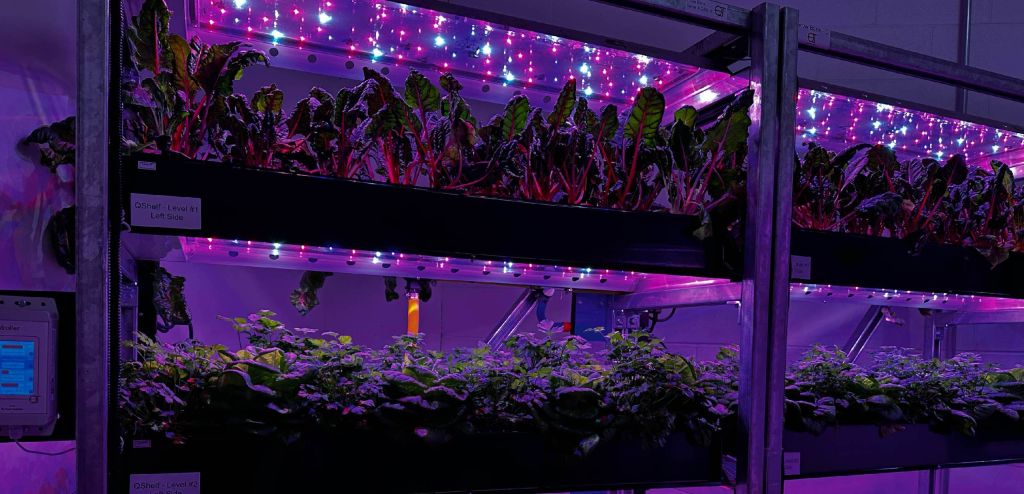
Vertical farming is a form of controlled environment agriculture (CEA), that gives growers more control over the environment they tend their crops in, which can be advantageous in challenging growing conditions.
Indoor vertical farming was set to take off in a big way, but lacklustre investment returns and scaling challenges has limited production.
“There was a big bubble around this industry that has more or less burst over the past four years,” said Dr. Alesandros Glaros, Food and Agriculture Institute, University of the Fraser Valley. “The companies that have weathered the storm are patient and have invested substantially in research and development. They have tried and true technologies, are integrated into strong local and regional supply chains, and are highly collaborative. Now, we can find their vertically grown, competitively priced leafy greens in remote regions as well as major grocery stores.”
There are examples of innovations in the space. British Columbia-based QuantoTech Solutions, a vertically integrated ag-tech company, has developed a growing system that features 8 by 12 feet sheds with shelving units to allow for vertical farming, producing 4.8 between 7.2 tonnes of food per year, including leafy greens, strawberries, and cherry tomatoes. Each unit requires approximately 37.2 to 52 gigajoules of energy per year, which is less than the energy needed to power the average Canadian home1. The mobile units were originally developed for northern and challenging growing conditions, but are also suitable for urban settings.
QuantoTech Solutions’ system features 8 by 12 feet sheds with shelving units to allow for vertical farming.
A food source for northern and remote communities
Northern and remote communities face many barriers in accessing fresh fruits and vegetables, which are often of poor quality and high cost by the time they reach northern communities from production or distribution centers below the 49th parallel. Indoor vertical farms are not capable of addressing northern food insecurity alone or replacing traditional Indigenous food sources, but can contribute to raising the region’s supply of local, fresh vegetables and fruit.
Key considerations for indoor agriculture in northern and remote communities:
1. Investing and scaling. The timescale for return on investment and availability of grants to support upfront and operational costs are critical before growers can invest in starting, or scaling, indoor farming.
2. Energy source and use. Around 178 remote Indigenous and northern communities in Canada rely on generators powered often by diesel fuel as they are not connected to the North American electricity grid and natural gas infrastructure2.
3. Growing yields. Sustaining operations require streamlining access to inputs and improvements in yields. Developing and maintaining access to suppliers and local vertical farming expertise is key.
Building up urban agriculture
The indoor vertical ecosystem can easily be replicated in urban settings, which have their own set of challenges. Connections to agriculture production in large urban areas is increasingly less common as our cities expand and demand rises, placing a high need for commercial scale production with streamlined supply chains. Indoor vertical farms that can be integrated within building developments and retrofits is one pathway to provide urban dwellers with fast access to local produce, as well as potentially contributing to cities and the building sectors’ decarbonization efforts.
Key considerations for indoor agriculture in urban areas:
1. Connecting consumers. Encouraging consumers to get their greens from a local vertical farm will require awareness and ease of access.
2. Making the case. More energy, more space, and more investments are needed to scale indoor vertical farms in or close to urban areas and the return on investment must be there to justify further development.
3. Planning land use. Urban areas are home to intense competition for land. Throwing food production into the mix should be strategically aligned to city planning, collaborative with municipalities, and meet local needs.
Indoor vertical farming could evolve as a mainstream source of food across Canada, if it improves the business case in scaling production. But for now, its strength is in meeting niche, local market demands.
Lisa Ashton is Agriculture Policy Lead at RBC Climate Action Institute.
Statistics Canada. (2024). Household energy consumption, Canada and provinces.
Canada Energy Regulator. (2023). Market Snapshot: Clean Energy Projects in Remote Indigenous and Northern Communities.
Canada’s greenhouse sector is a hotbed for growth. Greenhouses specializing in fruits and vegetables in Canada have increased in farm gate value for the 11th consecutive year, up 9.2% to $2.5 billion in 2023–doubling in size from a decade ago.1
Infrastructure limitations could stunt future growth. Greenhouse production in Ontario is expected to more than double in acreage over the next 10 years, but the industry faces key barriers in accessing energy, water, waste management, and labour2. The Windsor-Essex and Chatham area peak demand is projected to rise from 500 megawatt (MW) in 2023 to approximately 2,100 MW by 2035, driven primarily by growth in advanced and electric vehicle battery manufacturing and greenhouses.3
Canada’s global greenhouse strengths lie in productivity and land-use efficiency. The country’s greenhouse production boasts the highest yields per area of land among top greenhouse nations. Canada produces 4.6 times more per area of land than Spain, is slightly more productive than the Netherlands, and 2.6 times more than Mexico4,5. The challenge over the next decade for Canada will be to continue to lead on land-use efficiency, while scaling production to meet domestic and trade demands.
A key market for export growth is the western United States. Greenhouse vegetables account for 39% of Canada’s fresh produce exports, 99.5% of which are U.S.-bound. Canadian greenhouse fruit and vegetable products are consumed in the east from New York to Florida. Canada could also tap into the U.S. Midwest’s 68-million-strong market, if it can build relationships, branding, and cold chain logistics.
Greenhouses must solve their energy trilemma—of demand, emissions, and bills—to expand. Energy costs for Canadian greenhouses have surged 55% between 2013 and 2023, while natural gas-sourced power is driving the industry’s carbon footprint.6,7 Reducing natural gas demand and the green premium for alternatives including renewable natural gas, hydrogen, and clean electricity would enable Canadian greenhouses to thrive in a low carbon economy.
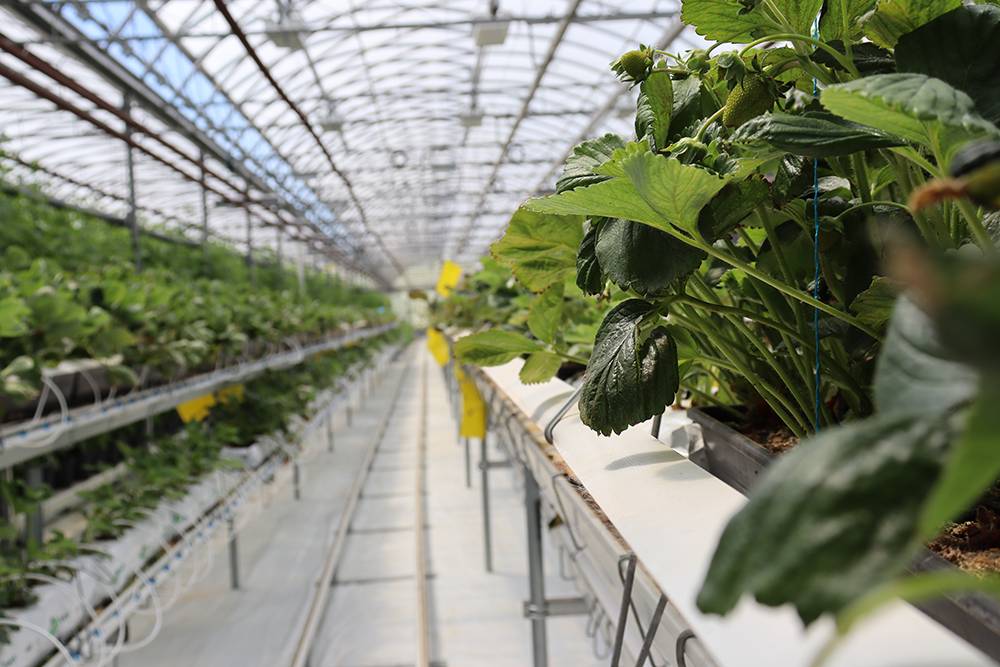
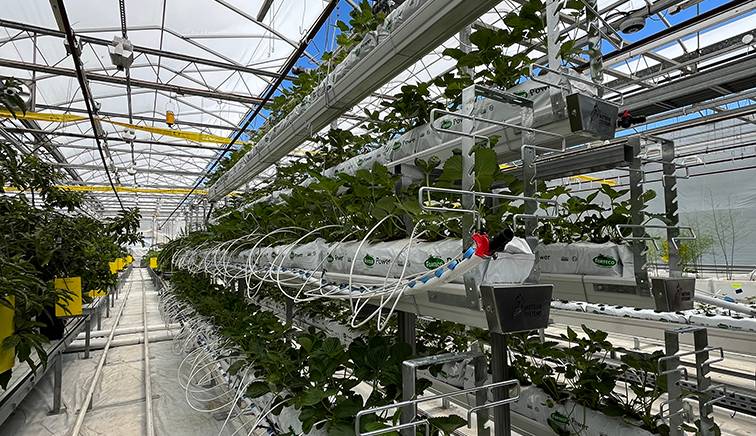
Rows of strawberry plants inside Center for Horticultural Innovation, Leamington, ON
(From left to right) Linda Nuhn, RBC; Lisa Ashton, RBC; Aaron Coristine, OGVG; Matt Korpan, CFHI; Peter Quiring, NFF; John Stackhouse; Gary Toupin, RBC.
Banana trees inside Center for Horticultural Innovation, Leamington, ON
Table of fresh produce grown at the Center for Horticultural Innovation, Leamington, ON
Sticky surface to detect location of bugs, Center for Horticultural Innovation, Leamington, ON
Opening the doors to the possibilities
Globally, population growth is expected to rise to 9.7 billion in 2050, with food demand rising around 56% by 2050 from 2010 levels8,9. Meeting future demand is a daunting task amid rising food insecurity. In Canada, more than 20% of households experience food insecurity, while food prices in stores have increased 21.6% from February 2021 to February 2024 due to several factors, including poor growing conditions, supply chain issues, and high input costs10. These factors present a challenge for the agriculture sector to innovate and advance climate resilient, efficient systems that bring more of the food produced to people’s plates at an affordable price.
Canada’s greenhouses are well positioned to help meet the challenge because of their high land use and input efficiency, potential to shorten supply chains for Canadians, and a strong history of growth and innovation.
Between 2013 and 2023, greenhouses specialized in vegetable and fruit production have grown each year11:
103 %
Value of product
36 %
Harvested volume
12 %
Greenhouse operations
Doubling down on these achievements over the next decade would require overcoming energy, water, and waste infrastructure challenges, while addressing regulatory constraints, labour shortages, and shortcomings in supply chains.
Greenhouses’ innovation advantage is growing in controlled environments. Enclosed spaces mean operators can design dynamic systems of lighting, fertigation, and heating to optimize plant growth and improve efficiency of resource use. For example, greenhouse operators can adopt low-tech innovations such as horizontal curtains to keep heat closer to plants, and high-tech innovations in early genetic testing to combat disease and pests that risk wiping out an entire crop’s growing cycle. Controlled environment agriculture also presents an opportunity to innovate in climate adaptation. By growing fruits and vegetables in enclosed structures and in controlled growing mediums, production can be more resilient to extreme weather events, changes in precipitation, and seasonal shifts, safeguarding a consistent supply of food. With climate change already disrupting supply and markets, there are economic costs to inaction—there is no time to create a false dilemma between choosing climate action or food supply12. Instead, food production and supply chains can advance their efforts in converging economic, production, and climate goals.
Canadian Greenhouses energy use is primarily powered by natural gas, which means high energy use equates to high greenhouse gas (GHG) emissions13. Canada needs to expand clean and renewable energy options, while also bringing down bills and reducing energy consumption to help the sector successfully decarbonize. Options in development include renewable natural gas (RNG) production from agriculture biowaste and neighbouring landfills, investments in regionalized hydrogen production, and exploring deployment of industrial sized electric heat pumps.
Disruptions and volatility in markets are to be expected from now until 2050, but so too is rising demand for fruits and vegetables produced in Canada. North America’s population is estimated to steadily grow during this period, and as incomes rise, consumer preferences are likely to shift to selecting more nutritious foods like fruits and vegetables for health reasons and complementary measures such as sugar taxes. Supply needs to be available to meet changing tastes, but projections suggest that the land used for fruits and vegetable production in North America will shrink over the next decade14. These multifaced issues present new growth challenges for Canada’s greenhouse sector.
What is CEA?
Controlled environment agriculture (CEA) is a continuum of growing systems from low tech to high tech that allows growers to have more control over the environment that crops are grown in.
CEA growing infrastructure
Glass or poly greenhouse:
Enclosed structure made from glass, polycarbonate, or
polyethylene.
Low-tech plastic hoop house:
Plastic film tunnel-shaped structure that are often low-tech with limited climate control systems.
Indoor vertical farm:
Enclosed room such as warehouses with stacked growing units that often use artificial lighting and soilless growing mediums.
Other indoor farm:
Enclosed, opaque structures such as retrofitted buildings using different growing systems, from aeroponics to deep-water culture.
CEA growing medium
Hydroponics:
Plants are grown in water-based mineral nutrient solutions.
Aeroponics:
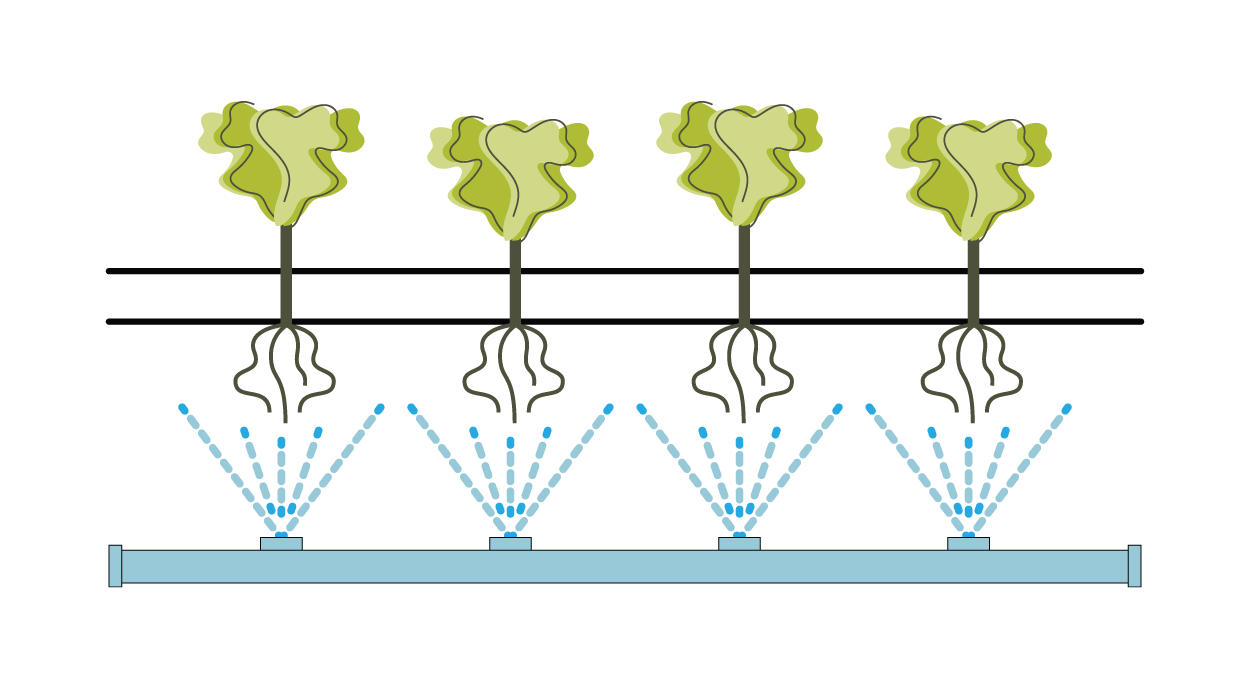
Plants are grown by suspending their roots, receiving nutrients through misted solutions.
Aquaponics:
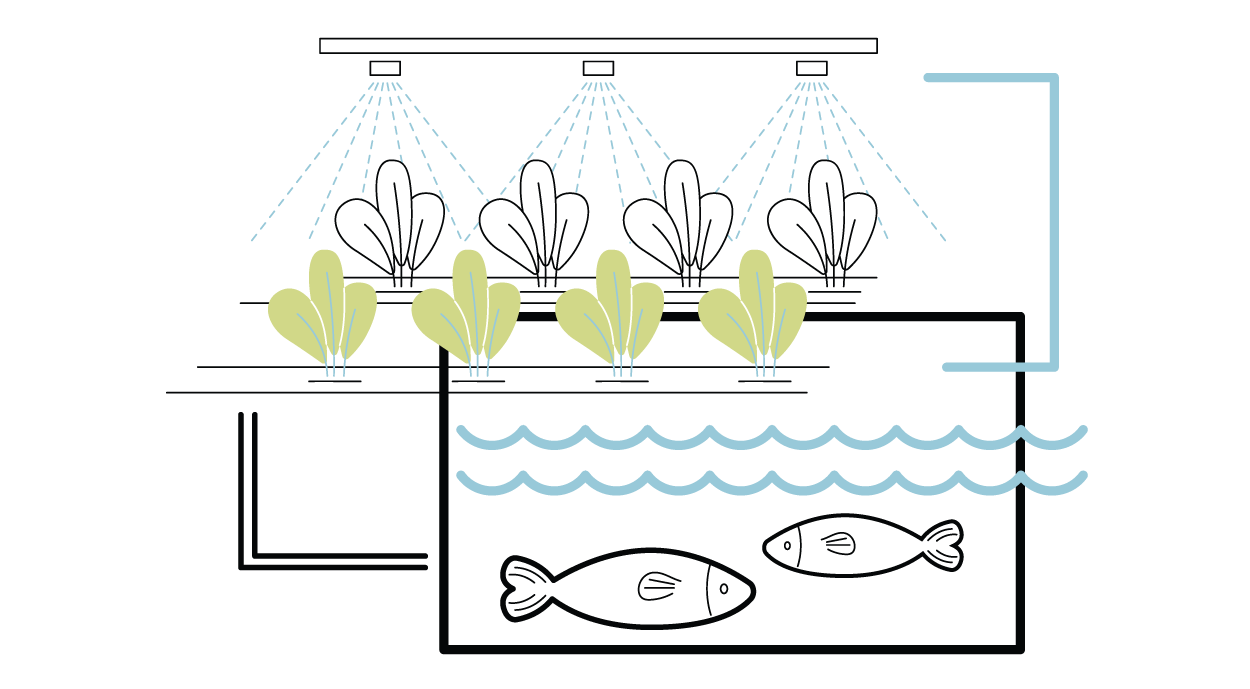
Plants are grown in water in a symbiotic environment with aquatic organisms.
Soil-based:
Plants are grown in soil.
A glimpse into current Canadian greenhouse production
A regionalized approach to greenhouse growth
In Canada, there are 920 greenhouses specializing in fruits and vegetables, spanning more than 5,000 acres15. These greenhouses produce more than 800,000 tonnes of tomatoes, cucumbers, peppers, lettuce, strawberries, and other produce, and are mainly made of glass, polycarbonate, or polyethylene, with different growing mediums depending on the crop16. Canada is also home to greenhouse production for flowers and cannabis. There are more than 1,500 operations growing flowers and plants generating a farm gate value of $2.1 billion in 202317. This report is focused on fruit and vegetable greenhouse production given Canada’s opportunity and challenge ahead to expand agri-food production and trade, while decarbonizing and adapting our food system to climate change.
Two-thirds of greenhouse production of fruits and vegetables in Canada takes place in Ontario and is mostly concentrated in Essex County in the province’s southwest. Leamington, Ontario, or the “Sun Parlour” of Canada, is in Essex County and home to North America’s largest concentration of greenhouses growing fruits and vegetables.
Essex County benefits from warmer temperatures, long sunny days, a Great Lakes-induced microclimate that creates ideal growing conditions, and is under an hour away from the U.S. border. The region has also benefitted from family farms that have invested locally and innovated in greenhouse construction, research, and cogeneration of energy and heat, making it a unique greenhouse hub. For example, the Center for Horticultural Innovation in Leamington trials the production of fruits and vegetables and new technologies such as bug-zapping drones to identify what can be scaled in Canadian greenhouses, keeping the industry moving forward. Ontario’s broader greenhouse sector is also supported through a variety of means including innovation funds such as the Greenhouse Competitiveness and Innovation Initiative (GCII), energy efficiency incentives, numerous research projects under the Ontario Agri-Food Research Innovation Alliance, and energy expansion projects underway to support regional growth.
Canada: A Greenhouse Powerhouse
Source: Statistics Canada
British Columbia, Quebec, and Alberta follow in production with smaller slices of the pie, but each have a growing greenhouse sector, in part, because of strategic regional development.
Quebec is actioning its ‘2020-2025 Greenhouse Growth Strategy’ through mechanisms such as rebates on energy consumption to double the size of the province’s greenhouse operations to approximately 620 acres by 2025.
Alberta is scaling innovation in agri-tech in greenhouses through research on novel strawberry and tomato seed varieties and efficiencies in lighting and energy. There is also support in the province to develop cross sector collaborations between the energy and greenhouse sectors to install transparent solar panels within greenhouses and facilitate the use of waste heat and CO2 from the production of natural gas to feed plant growth.
British Columbia is leveraging agriculture technology to advance its greenhouse sector through the creation of the B.C. Centre for Agritech Innovation at Simon Fraser University—part of the StrongerBC Economic Plan.
Canada’s greenhouse vegetables account for 39% of all fresh produce exports, valued at over $1.4 billion. Ontario is responsible for 88% of this export value, predominantly to the U.S. (99.5%), but also to Japan, France, and Taiwan18 .
The U.S.’s demand for fresh fruits and vegetables exceeds its production capacity, making it a key market for Canada to expand exports. For example, greenhouse tomatoes represent around 65% of the U.S.’s total fresh tomato import volume and value, and make up a significant chunk of its domestic consumption19. Canada is second to Mexico in U.S. imports of greenhouse tomatoes by some distance. Building upon innovation and energy solutions, Canada could market its products as high-tech and low-carbon to capitalize on consumers’ rising preference for sustainable products20.
Growing conditions, costs, and regulations
Delivering on domestic and export demands requires highly efficient and productive growing systems.
In Ontario, the top producers of greenhouse tomatoes, cucumbers, and peppers had gross margins of approximately 80 to 90% between 2017 and 2021, growing in greenhouses sized at approximate 29, 117 and 49 acres on average, respectively21.
Natural and artificial lighting, CO2, heat, water, nitrogen, phosphorus, and companion plants all contribute to a dynamic growing system for greenhouse fruits and vegetables. The balance across inputs varies depending on the produce. Cucumbers are mostly made up of water and therefore require substantial amounts of water to grow. In greenhouses, water is recirculated, and cucumbers’ water needs are approximately 800 to 1,200 litres per square metre per growing season. The exact amount of water needed depends on different factors, including the light source used. Inputs for tomatoes can slightly vary depending on the variety, but the outputs highlight the key differences. For example, a beefsteak tomato requires similar lighting, water, energy, CO2, and fertilizer to cherry tomatoes, yet beefsteak yields are more than double of the cherry variety22.
Greenhouses use energy, primarily from natural gas, for heating, lighting, and CO2 production. Natural gas is often used to heat water using boilers, which is pumped into greenhouses via piping that runs along the ground like a grid network and serves a dual purpose in creating tracks that harvesters can move along like a train to pick the produce. The flue gas from the boilers is often scrubbed and converted into CO2 for plant food.
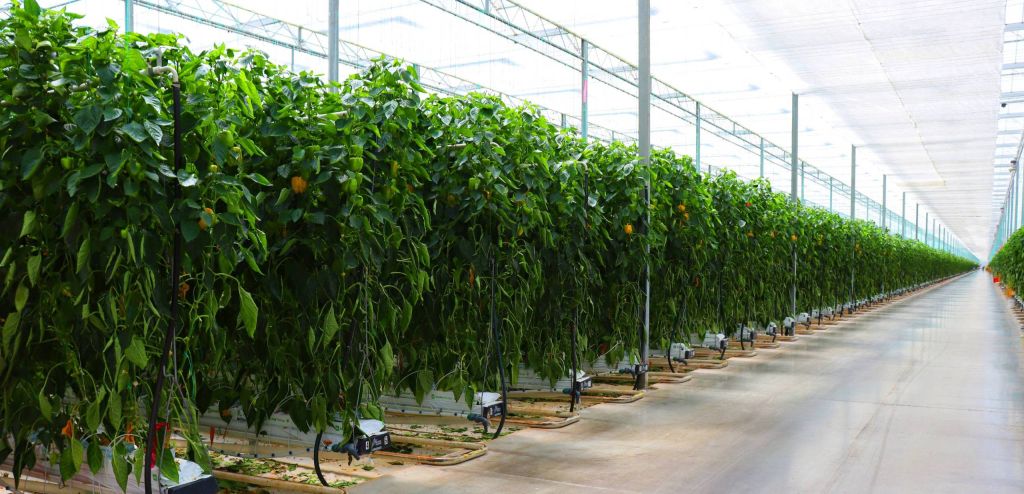
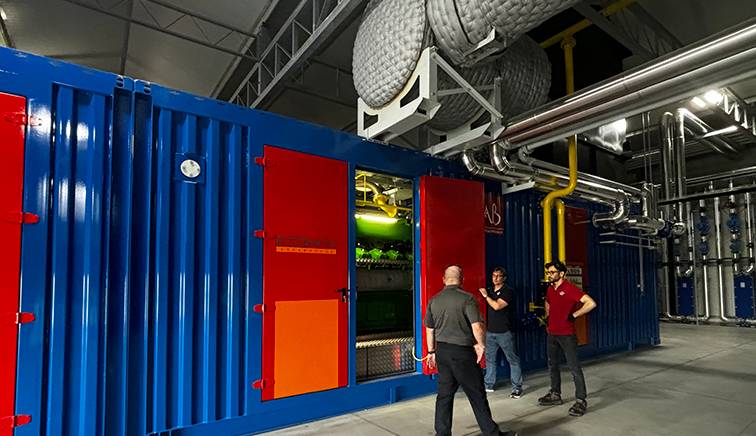
Natural gas, electricity, heating oils, and other types of fuels are rising in cost for Canadian greenhouse operators, and have increased by 55% from 2013 to 2023, to $406 million23. Energy use in greenhouses can also be costly for the environment with the use of natural gas often the main source of emissions in a greenhouse’s carbon footprint24. Some greenhouse operations have developed co-generation energy and heat facilities that power production in greenhouses and is integrated in the electric grid to help optimize efficiencies and meet peak energy demands. For example, Leamington-based Under Sun Acres operates four combined heat and power gas engines adjacent to their greenhouse used for pepper production. The engines supply the Ontario electricity grid with 13 MW of electricity, and the waste heat recovered from the engine exhaust and jacket is utilized to heat the greenhouse25.
Co-generation engine at Under Sun Acres, Leamington, ON
Greenhouse’s role in energy production can help meet regional demands, such as the Windsor-Essex and Chatham area’s projected rise from 500 MW peak demand in 2023 to approximately 2,100 MW by 2035, primarily driven by greenhouses, advanced manufacturing, and electric vehicle battery production.
Land is also a hot commodity, but efficiency per area of land relative to field production is a keystone in greenhouse’s sustainability story, freeing up land for other uses. In Canada, greenhouse tomatoes, peppers, cucumbers, lettuce, and strawberries together produce around 8.5 times more per area of land compared to Canadian field production, demonstrating strong productivity. However, yields over the past decade have plateaued26,27. Innovations underway to surpass historic yields include dynamic lighting systems, reconfiguring growing infrastructure to optimize space and light, and genetics to overcome stagnation.
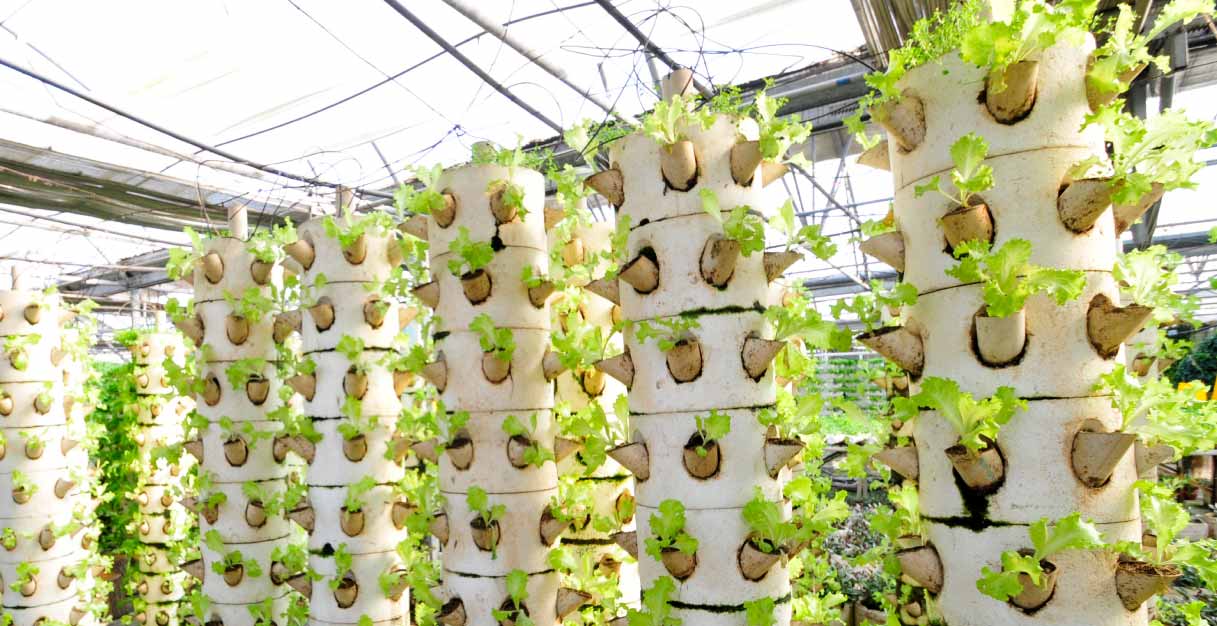
Pyramid growing system at the Center for Horticultural Innovation, Leamington, ON
Labour is necessary but costly, accounting for 29% of Canada’s greenhouse operating expenses28. Farmer 4.0 highlights that greenhouses have far less returns on labour expenditure relative to other agriculture sectors such as beef. While the harvesting process remains primarily human-powered, promising innovations such as conveyer belt harvesters and robotics transporting and packaging in warehouses, can cut the time it takes produce to reach store shelves.
Yellow peppers at Under Sun Acres, Leamington, ON
Greenhouses have benefitted from government and industry support, but their policy and regulatory environment can also be an impediment. Controlled environment agriculture is often caught up in a no-man’s land of regulations, where it does not fit neatly into agriculture or industrial categories for development and access to resources. It can also take years to get approval for new projects. Canadian greenhouses face higher taxes and barriers in accessing affordable energy relative to some of their U.S. counterparts, hurting their competitiveness. The sector also comes up against regulatory barriers in accessing sufficient water, leading operators to choose between a few options, including making large upfront investments to build irrigation ponds and storm water collection systems, paying hefty development charges, or enduring lengthy processes to obtain easements and permits to access water.
The Big 5
Canadian fruit and vegetable greenhouses are highly specialized. The five big staples in Canadian greenhouse production include:
Tomatoes: Tomatoes are the king of greenhouse production in Canada, covering more than 1,800 acres, producing around 315,000 tonnes and $869 million in farm gate value29.
Cucumbers: Cucumbers represent the largest share of Canadian greenhouse vegetable exports at 34% of the value30.
Peppers: With nearly 170,000 tonnes, produced in 2023, peppers are the third largest greenhouse product in volume and value, but second in land use31.
Lettuce: Lettuce is a distant fourth in greenhouse production, led by Quebec. There is an opportunity to boost domestic production as lettuce represents the highest share of field vegetables imported into Canada by value at 18%, with the U.S. and Mexico combined accounting for around 99% of imports32.
Strawberries: Strawberries are the star fruit in greenhouse production, but currently account for only 3% of Canadian fruit and vegetable space33. This household favourite has runway to grow as Canadian greenhouse operators continue to modify their approach to protect strawberries from pest and diseases.
Five to watch
Canadian tastes are evolving and diversifying and Canada’s access to highly consumed items such as bananas and coffee could become more challenging over time amid concerns about climate change, supply chain disruptions, and geopolitical shifts. This context creates opportunities to innovate in the types of commodities grown in Canada.
Berries beyond strawberries: Raspberries and blueberries are among the top five fruit imports by value in Canada, presenting a large domestic demand for greenhouses to meet if production of these delicate, high-value products can be mastered34.
Spinach: Canada is a net importer of spinach, but efforts are underway to improve yield in greenhouses, speed up and automate the cultivation process, and improve cold chain logistics35.
Bananas: Bananas are the largest fruit import into Canada by volume, and have experienced global yield increases since the 1960s. But the next 50 years may not be as fruitful, opening an opportunity for greenhouses to grow bananas36,37.
Coffee: While it may be hard to imagine Canadian coffee production, research is underway to explore development of greenhouse coffee beans and address the multifaceted issues causing cocoa bean shortages and soaring prices38.
Okra: Okra is a key ingredient in many international cuisines and is steadily climbing year-over-year as a vegetable imported into Canada. Currently representing 1% of vegetable import value, it has grown more than 50% from 201839.
Canada leads on land use efficiency
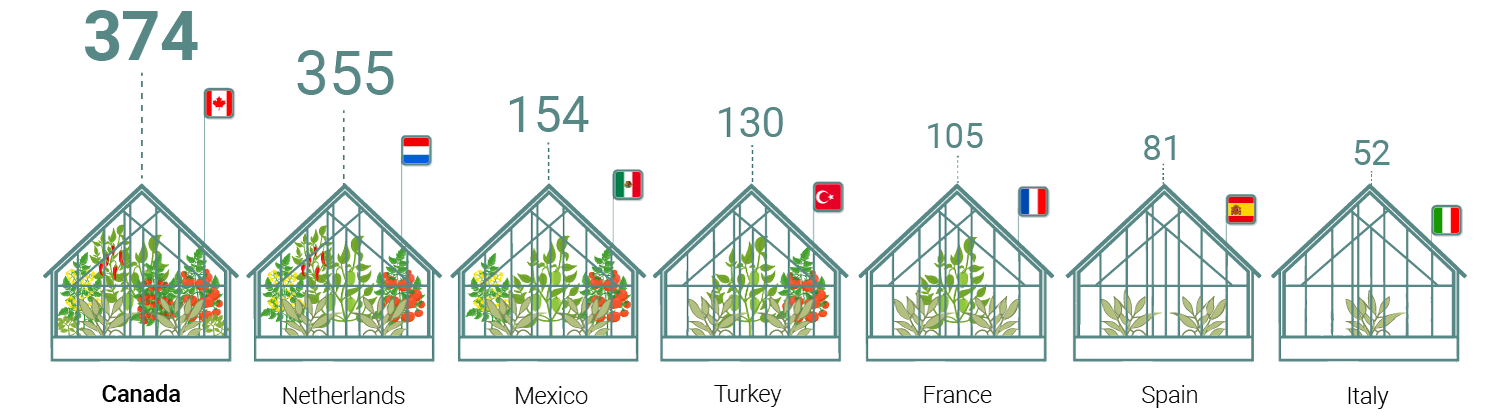
Canada’s strength in greenhouse vegetable and fruit production relative to its international competitors lies in its productivity per acre. Canada produces 4.6 times more per area of land than Spain, is slightly more productive than the Netherlands, and 2.6 times more than Mexico40,41,42.
Productivity per area of land
Estimated yield per hectare (tonnes)
*Global comparison of top greenhouse producing nations in 2022. Estimates include combined annual greenhouse production of tomatoes, cucumbers, peppers, lettuce, and strawberries.
Source: Statistics Canada, Government of Mexico, EuroStat.
These high-producing regions have their own strengths, thanks to a variety of factors including the technology they’ve adopted, geographical location, and climatic conditions. While Canada can’t compete with Mexico’s heat—at least not in the near-term—, it can learn many lessons from its competitors.
Climatic conditions
Labour availability
Proximity and access to North American markets
Mexico has access to a large and productive labour force that will be challenging to replicate in Canada. Canadian greenhouse operators are actively exploring approaches to integrate the use of artificial intelligence (AI) in greenhouse operations to centralize data and optimize growing conditions in real-time. The use of AI and other efficiency disruptive technologies are not expected to replace humans, but can improve Canada’s competitiveness. Complementary to a productive labour force and favourable climatic growing conditions, Mexico has also benefitted from open and free trade with the U.S. supported earlier by the North American Free Trade Agreement (NAFTA) and now the Canada-United States-Mexico Agreement (CUSMA). Simultaneously, Mexico fostered investments in large scale greenhouse facilities, improving its competitiveness overtime in providing fresh produce year-round that can reliably fulfill the U.S. demand. However, a growing trade imbalance between the U.S. and Mexico on fresh fruits and vegetables means there is pressure within the U.S. to explore legislative options that support its fresh produce industry43.
Proximity and access to European markets
Regional concentration
Climatic conditions
Spain’s ability to scale centralized greenhouse production within a short period of time and optimize regional market access and trade is certainly a model to learn from. Centralization of production has enabled Spain to emerge as a greenhouse exporting leader. The southeast city of Almeria accounts for 72% of greenhouse vegetables in the country, spanning 98,000 acres—the largest concentration of greenhouses anywhere in the world44. Spurred from strategic development and a lack of land use planning, Almeria is a centralized hub market that accounts for more than 80% of Spain’s greenhouse vegetable exports to the European Union45. However, Almeria’s expansive network of greenhouses has created negative externalities for the environment and those working and living within the region, such as depletion and salinization of water supply and even changes to the microclimate of the region46. Mitigating negative impacts on local communities, pollution, and the workforce from expanding highly concentrated areas of greenhouse production requires an inclusive and strategic lens to planning and development.
Investment in decarbonization
Land-use efficiency
High-skilled labour matches hi-tech industry
The Netherlands has a head start over Canada in navigating the complex landscape of producing more on less land, while mitigating GHG emissions. The country has limited land availability and has set GHG targets specifically for the greenhouse sector of 1Mt CO2 eq reduction by 2030 from 2016 levels, primarily from reducing emissions from energy47. The Netherlands’ target is coupled with enabling mechanisms such as the Energy Efficiency in Greenhouse Horticulture scheme, Green Label greenhouse certification, and demonstration projects to promote knowledge development and exchange. Packaging GHG targets with mechanisms designed to support the sector to grow and innovate while transitioning to a low-carbon system is a model that could be replicated by governments in Canada through initiatives such as the Sustainable Agriculture Strategy.
Climatic conditions
Labour availability
Proximity and access to North American markets
Mexico has access to a large and productive labour force that will be challenging to replicate in Canada. Canadian greenhouse operators are actively exploring approaches to integrate the use of artificial intelligence (AI) in greenhouse operations to centralize data and optimize growing conditions in real-time. The use of AI and other efficiency disruptive technologies are not expected to replace humans, but can improve Canada’s competitiveness. Complementary to a productive labour force and favourable climatic growing conditions, Mexico has also benefitted from open and free trade with the U.S. supported earlier by the North American Free Trade Agreement (NAFTA) and now the Canada-United States-Mexico Agreement (CUSMA). Simultaneously, Mexico fostered investments in large scale greenhouse facilities, improving its competitiveness overtime in providing fresh produce year-round that can reliably fulfill the U.S. demand. However, a growing trade imbalance between the U.S. and Mexico on fresh fruits and vegetables means there is pressure within the U.S. to explore legislative options that support its fresh produce industry43.
Proximity and access to European markets
Regional concentration
Climatic conditions
Spain’s ability to scale centralized greenhouse production within a short period of time and optimize regional market access and trade is certainly a model to learn from. Centralization of production has enabled Spain to emerge as a greenhouse exporting leader. The southeast city of Almeria accounts for 72% of greenhouse vegetables in the country, spanning 98,000 acres—the largest concentration of greenhouses anywhere in the world44. Spurred from strategic development and a lack of land use planning, Almeria is a centralized hub market that accounts for more than 80% of Spain’s greenhouse vegetable exports to the European Union45. However, Almeria’s expansive network of greenhouses has created negative externalities for the environment and those working and living within the region, such as depletion and salinization of water supply and even changes to the microclimate of the region46. Mitigating negative impacts on local communities, pollution, and the workforce from expanding highly concentrated areas of greenhouse production requires an inclusive and strategic lens to planning and development.
Investment in decarbonization
Land-use efficiency
High-skilled labour matches hi-tech industry
The Netherlands has a head start over Canada in navigating the complex landscape of producing more on less land, while mitigating GHG emissions. The country has limited land availability and has set GHG targets specifically for the greenhouse sector of 1Mt CO2 eq reduction by 2030 from 2016 levels, primarily from reducing emissions from energy47. The Netherlands’ target is coupled with enabling mechanisms such as the Energy Efficiency in Greenhouse Horticulture scheme, Green Label greenhouse certification, and demonstration projects to promote knowledge development and exchange. Packaging GHG targets with mechanisms designed to support the sector to grow and innovate while transitioning to a low-carbon system is a model that could be replicated by governments in Canada through initiatives such as the Sustainable Agriculture Strategy.
What Canadian greenhouses need to grow
Canada’s greenhouse sector is a success story in growth and productivity, but it’s now time to consider steps that can sustain and expand the sector. A pan-Canadian greenhouse growth strategy that maps out production, trade, value, and GHG targets could enable the sector to still experience year-over-year growth by 2035 and beyond. In conjunction with mapping the possible, considering infrastructure, skills, policy, investment, and research needs are essential to address the challenges the sector will need to navigate.
Energy: Address the sector’s trilemma
Natural gas is the primary energy source powering the sector, but continued use could challenge Canada’s GHG reduction targets. Reducing production carbon footprints would require greenhouses to scale alternative energy sources such as RNG, electric powered heat pumps, and hydrogen. RNG makes up only 0.36% of natural gas distribution in Canada, but has the potential to halve the carbon intensity of gas use relative to natural gas, depending on the type of feedstock (e.g., manure) used48 49 50. However, green premiums for such alternatives are high. For example, in Ontario RNG is cheaper than electricity, but five times more expensive than natural gas51. Creating awareness and financial mechanisms that appropriately compensate farmers and greenhouse operators for biowaste suitable for RNG production is vital to ensure Canada builds a consistent supply of feedstock for biodigesters.
Fully electric systems are also being explored. But operators considering switching to electric heat pumps to improve energy efficiency and reduce their carbon footprint, must also consider the source of electricity. Nationally, GHGs associated with public electricity and heat production are down 56% as of 2022 from 2005, which is Canada’s baseline year for its 2030 GHG emissions target52. However, the level of GHGs associated with electricity substantially differs between provinces as the power sources vary between fossil fuels and renewables, equating to different carbon intensities. In 2021, Alberta electricity generation’s carbon intensity was 510 times more than Quebec53. This variability emphasizes the need for regionalized strategies and targeted commitments and action to clean grid expansion and enable industrial processes to decarbonize.
Waste: Design circular and low-carbon systems
Natural gas is the primary energy source powering the sector, but continued use could challenge Canada’s GHG reduction targets. A steady and consistent supply of feedstock is required to scale RNG. Greenhouses produce biowaste that could be used as a feedstock for RNG production, but would likely need to be supplemented with other waste to make supply consistent as greenhouse waste dips during growing seasons and peaks when they end. Due to biosecurity concerns and plastic tags and twine in greenhouse biowaste, the safest and common option is to dispose of the biowaste at a landfill. Close to Canada’s greenhouse hub, Enbridge is developing an RNG project at Waste Connections of Canada’s Ridge Landfill in Chatham-Kent, which is expected to offset 110,000 CO2eq tonnes from the landfill and produce 1.591 petajoules per year54.
Landfills like Ridge Landfill are at capacity or expanding to meet waste disposal demands. To alleviate waste disposal pressure and complement landfill RNG production, agriculture biodigester hub- and- spoke models could present new revenue streams within highly productive agriculture regions, collecting farm biowaste from multiple agriculture systems, from crop to livestock to greenhouses. That would create circularity and promote rural access to RNG.
Land: Produce more on less
The increasing cost and competition for land among housing, retail, agriculture, and industry, especially within densely populated regions such as the Windsor and Montreal Corridor, has strained land resources. Canadian greenhouses have demonstrated their global leadership in productivity per area of land, but innovations that lead to leaps in yield are needed to maintain Canada’s global lead. Producing more with less is one of the agriculture sector’s biggest challenges. Greenhouses’ contribution to addressing this challenge for growth, should be more explicitly included and supported through sector-wide sustainability policy, especially the forthcoming federal Sustainable Agriculture Strategy.
Water: Conserve an increasingly precious resource
Like land, water access is also being pinched in some regions for greenhouse operators. Development charges introduced by municipalities on new developments using public water in Chatham-Kent, Ontario, highlight the changing landscape. Investments in rural infrastructure is needed from different levels of government given the rising demand for food production and the competing pressures and rising costs of natural resources. Alignment across municipalities and provincial infrastructure development plans and growth targets for the sector could help rural Canada address future shortcomings.
Light: Consider community in rural development
Greenhouses can emit bright lights around the clock, which can be a nuisance to rural residents. Municipalities in regions such as Leamington that have a high concentration of greenhouses have regulations that require operators to mitigate light pollution by using curtains or turning lights off in the evening. Ensuring greenhouse operators comply with local regulations and expansion plans consider the implications for community well-being is critical to its sustainable growth and ability to attract high-skilled labour.
Skills: Rebrand Canadian agriculture to attract diverse talent
Advancements in automation in greenhouses can result in greater efficiency and create demand for more high-skilled jobs. But is Canada ready to fill them? The sector is already struggling to address its labour shortage, with one in every three agriculture jobs expected to be vacant by 2030 without significant action55. Convincing more Canadians to move to rural regions is increasingly challenging with rural population growth 15 times slower than in urban areas56. Further, recent policies that impact foreign students’ pathways to stay in Canada can shrink enrollment in post-secondary programs, further limiting access to high-skilled individuals. As these challenges mount, greenhouse operators continue to rely heavily on temporary foreign workers from Mexico and Central America. Agriculture needs to rebrand to attract job seekers and promote itself as a place for highly skilled, tech-driven, and ambitious individuals that want to make a positive impact in Canada and globally.
Regulation and Policy: Modernize for a more competitive world
Becoming a global center for sustainable and efficient greenhouse production would require exploring the policies and regulations that leave Canada at a disadvantage compared to global competitors. A key place to start is by identifying and modernizing regulations that put greenhouses and other forms of CEA in regulatory no-man’s land and delay development.
Market Development: Develop a blueprint for tapping into new markets
A blueprint for greenhouse fruit and vegetable exports could help stakeholders chart a course on possible actions Canada needs to expand. Targeting the U.S. Midwest is a key expansion opportunity and could serve as a foundation of a trade blueprint. Co-led industry and government trade promotion missions can serve as means to collect information on cold chain logistic needs, size up the market opportunity, build relationships and a Canadian brand. Expansion to in new areas should also consider climate impacts of extending refrigeration and food miles, as well as key competitors in the region such as California’s field production.
Trade: Create a made-in-Canada carbon calculator
The greenhouse sector is primed for a made-in-Canada carbon intensity calculator. Not knowing the carbon intensity of greenhouse production is a blind spot for Canadian climate policy and for the industry in developing solutions and marketing its sustainability progress. Governments have a role in investing in and collaborating on the development of user-friendly tools for Canadian greenhouse operators to identify, understand, and reduce their carbon footprint. Calculating the carbon intensity of products is increasingly important to meet market demands, overcome trade barriers, and empower the industry to make informed decisions on new developments and retrofits.
Research: Coordinate and scale Canadian innovations
Canada is not only a leader in greenhouse productivity but also in innovation. Yet, funding programs are fragmented, and knowledge translation is siloed. These challenges come from Canada operating on a reactive model, whereby industry and universities might work collaboratively with individual operators on projects to address a specific issue, but lack overarching alignment on research priorities, funding, and goals. This patchwork presents an opportunity for an umbrella research framework to bring projects and stakeholders together to advance research in a targeted and coherent fashion. Stakeholders could agree upon research priorities such as automation, genetics and breed, Net Zero goals, and agronomy, which can then be used to facilitate coordination and partnerships across relatable projects. A research framework with priorities, committed funds, and timebound objectives can also ensure research institutions are better aware of their relative speed of travel, aligning industry needs and research projects.
The next 10 years
Greenhouses can emerge as a pillar of Canada’s agri-food growth and sustainability ambitions over the next decade and towards 2050. The sector is set to double in acreage over the next 10 years, deliver more diversity of products, and improve yields. The real challenge for Canadian greenhouses in meeting demands in growing markets and overcoming rising resource constraints will be developing infrastructure that spurs growth and decarbonization, and enables rural communities to thrive.
Dias et al. (2017). Life cycle perspectives on the sustainability of Ontario greenhouse. tomato production: Benchmarking and improvement opportunities. Journal of Cleaner Production.
United Nations. (2022). World population to reach 8 billion this year, as growth rate slows.
Van Dijk et al. (2021). A meta-analysis of projected global food demand and population at risk of hunger for the period 2010–2050. Nature Food.
Statistics Canada. (2024c). Consumer Price Index, February 2024.
Statistics Canada. (2024a).
Deloitte. (2022). The turning point: A new economic climate in the United States.
Statistics Canada. (2024b).
Organisation for Economic Cooperation and Development (OECD). (2022). OECD-FAO Agricultural Outlook 2022-2031
Statistics Canada. (2024a).
Statistics Canada. (2024a).
Statistics Canada. (2024d). Estimates of specialized greenhouse operations, greenhouse area, and months of operation.
Agriculture and Agri-Food Canada (AAFC). (2022a). Statistical Overview of the Canadian Greenhouse Vegetable and Mushroom Industry.
United States Department of Agriculture (USDA). (2024). Vegetables and Pulses Outlook: April 2024.
McKinsey & Company. (2023). Consumers care about sustainability—and back it up with their wallets.
Open Government. (2024). Ontario farm financial analysis data.
There is a buzz around hydrogen. It comes in many iterations—geological, low-carbon, and conventional, and everything in between—and has seen billions of dollars of investment across the world. Depending on how hydrogen is made, it is labelled green when manufactured using renewable power, and blue when using natural gas and capturing the emissions, although several other ways of producing hydrogen exist. Its properties as an energy carrier and a chemical feedstock promise to make significant contributions to decarbonizing the world.
Canada can play a role here to meet continental, perhaps even global, demand.
For now, the country’s hydrogen production remains modest: we produce about 3,500 tonnes of low-carbon hydrogen, several orders of magnitude less than the three million tonnes of fossil-based, carbon-emitting hydrogen it consumes to service its oil and gas, petrochemical, and fertilizer sectors. Scaling up low-carbon hydrogen production to replace this would help Canada achieve its Net Zero goals, but it has a long way to go—in technology, regulations and application—before it can emerge as a formidable alternative to conventional hydrogen and fossil fuels.
The good news is that progress is already underway. Since the federal government published its hydrogen strategy in 2020, 80 low-carbon hydrogen projects valued at over $100 billion in investment have been announced or are under consideration or development. Provincial strategies are taking shape and pilot projects, across applications from steel to space heating, are demonstrating hydrogen’s potential to replace fossil fuels and lower emissions in areas where it has not traditionally been applied. And with at least 13 known partnerships between hydrogen proponents and Indigenous communities already established, a hydrogen-fueled future in Canada could be built on a strong foundation of Indigenous engagement.
Hydrogen could be one of the pillars of a decarbonized Canada. Canada’s 2020 hydrogen strategy projected production trebling to 21 Mt per year by 2050, accounting for a third of Canada’s final energy consumption—an ambitious growth trajectory.
In theory, hydrogen could flow through natural gas distribution lines, fuel heavy-duty trucks that are the backbone of inter-regional trade, and burn in power plants to keep the lights on in homes, all while lowering emissions if produced cleanly. It could also form part of a new export industry, transporting energy from the East Coast’s best-in-class wind resources to Europe and support the continent’s energy independence from natural gas.
But as the federal government’s May 2024 strategy update shows, a lot hinges on which applications see uptake of hydrogen in favour of other solutions. Demand could vary significantly, from 3 to 20Mt/year—that’s a 17Mt/y spread, suggesting uncertainty around hydrogen’s potential.
This uncertainty stems from hydrogen’s innate complexities and the competition it faces from other clean technologies. Here are some hurdles the industry must overcome:
1. A question of logistics
Hydrogen is inefficient to make and difficult to transport. Converting renewable power into hydrogen results in 30% to 40% less energy than if the electricity was used directly, such as through a heat pump for space heating. And once manufactured, moving hydrogen to its destination is challenging because of high energy requirements for compression, limited hydrogen pipelines in the country, and the inability of natural gas pipelines to channel high concentrations of hydrogen without risking damage.
2. Footing clean hydrogen’s energy bill
Canada’s rich hydroelectric and nuclear generation resources and strong methane regulations are an advantage, but will only take us so far in an age of increasing energy demand and rising costs. Hydrogen’s efficiency challenges mean that Canada will need a lot more renewable energy generation to make green hydrogen, and strong carbon capture, utilization and storage (CCUS) infrastructure to lower the CO2 emitted from making blue hydrogen. Blue hydrogen manufacturing will also need Canada to step up methane leak monitoring and mitigation. These measures will allow Canada to manufacture the hydrogen it needs without straining electricity grids or increasing overall emissions because of methane leaks.
3. Competing with the IRA
Lowering hydrogen manufacturing costs will also be key while maintaining an investment environment that’s attractive to global hydrogen companies. The biggest competition comes from the United States, where tax credits under the Inflation Reduction Act (IRA) give hydrogen developers a revenue premium over Canadian incentives. Canada’s Clean Hydrogen Investment Tax Credit (ITC) could offset 15% to 40% of hydrogen costs and help close the gap with the U.S., especially as new, restrictive guidance on IRA credit eligibility makes incentives down south more uncertain. For costs to go down, Canada’s hydrogen ITC must progress through legislation quickly and demand for clean hydrogen must scale.
Hydrogen’s potential applications are as numerous as its varied colours. But prioritizing high-impact early projects will help calibrate the demand hydrogen needs to match supply-side incentives. Canada needs to be tactical in the near term to ensure that existing hydrogen supply is decarbonized quickly, and that the most promising pilot projects and economic sectors receive the support they need to deploy hydrogen at scale.
Vivan Sorab is RBC Climate Action Institute’s Senior Manager, Clean Technology.
In late May, the RBC Climate Action Institute held its inaugural youth Climate Action Event. We brought together industry executives and climate experts and 70 of Canada’s next generation of climate leaders to engage in some of our recent research and spark thoughtful debate and ideation on how to feed, fuel and house the world in a Net- Zero way.
We set out to engage the next generation in our research and generate actionable ideas in agriculture, energy and housing sectors, that we can continue to drive forward in the coming years. But what we learned went much deeper than ideas.
On top of critical thinking on how to address challenges in these key sectors with education and community engagement, participants challenged our industry panel on how to best put their efforts, education and enthusiasm to increase transparency and build trust. They challenged both RBC and our industry panel to make more space and time for youth voices as we continue to take climate action.
Here’s some of what we took away:
1. Small actions can snowball into big impact
A single plant may not seem like much, but if every person in a community grew a native plant, it would help restore the entire ecosystem. As we heard from Megan Leslie, President and CEO of WWF Canada, collective small changes can add up quickly. WWF Canada’s re:grow program, an online platform that mobilizes Canadians to plant native species in their own spaces, will help restore one million hectares of complex ecosystems. Industry panelists also noted how participants could contribute to climate action through their career, including choosing where they work and informing decarbonization strategies internally to help drive change within their own organization. Other ways include bringing the “latest and greatest” science and technology to the table to inform and influence clients, financiers, and governments on new and sustainable ways of doing things.
2. Using systems to help shift consumer behaviour
Relying on government subsidies is not a long-term strategy so new approaches are needed to facilitate changes in consumer behaviour–both in what they are consuming and how much. We see this starting in schools with meatless days, farming and food programs. There are also programs that encourage sustainable behaviour such as expansion of public transport systems and policies that incentivize use of green retrofits (i.e. heat pumps). We know from RBC-Ipsos research that three-quarters of us felt that given the state of the economy, now is “not the right time” to spend money combatting climate change. We need to go deeper to facilitate change by implementing more systems that help consumers overcome perceived barriers to sustainable practices like lack of affordability, reliability, and access by: 1) instilling the benefits, impacts and outcomes of these choices early on, and 2) encouraging consumers to make better choices that don’t impact their quality of life.
3. Invest in tech
A major theme that emerged was investing in innovative decarbonization solutions during production, and technologies that can help consumers make better choices. In agriculture, we heard about using AI to reduce waste and optimize food production and promoting lab-grown meat to decrease the environmental footprint of traditional livestock farming. Buildings can become more energy-efficient through green building materials like mycelium mushroom concrete and automatic window blinds that adjust to natural light, reducing heating bills. In the energy sector, participants discussed the use of small modular reactors (SMRs), offshore wind farms, and nuclear fusion as cutting-edge solutions for clean energy, alongside better subsidies and infrastructure for electric vehicles (EVs) to make them more accessible and widespread. The focus was on thinking big, emphasizing the need for bold timelines in both the development and deployment of these solutions (think COVID-19 vaccine fast) and a tenfold increase in collaboration across consumers, governments and businesses to ensure we hit our 2030 climate targets.
4. Indigenous communities as collaborators
Attendees shared concerns that climate action doesn’t take into consideration the needs of all stakeholders. Critically lacking is collaboration and consultation with Indigenous communities who can leverage their knowledge as stewards of the land to prioritize resiliency and biodiversity over profitability. Deep engagement in development and decision-making processes can help implement initiatives that reflect the unique environmental, economic, and cultural contexts of each community—that are more likely to be embraced. A collaborative approach enhances the effectiveness of climate action, promotes resilience, and can aid in Canada’s reconciliation journey.
5. Corporations need to build trust
This takes us right to building trust with our communities. Communities won’t collaborate if they don’t see action being taken and commitments fulfilled. Everyone is fatigued by what they perceive to be empty corporate commitments on climate. Attendees shared that their trust in corporations is eroding, and according to Edelman Trust Barometer, only 51% of people trust businesses to do what is right when it comes to climate change. As much as a third of respondents said companies are falling short on living up to their climate commitments . To rebuild that trust, organizations, including RBC, need to be transparent about our commitments, follow through on them and expect to be held accountable if we don’t.
6. Talk less, listen more
An equally important step to building trust is continuously engaging in meaningful—and sometimes uncomfortable—dialogue with young people who want their voices heard. Where appropriate, we must provide adequate time and space for young leaders to connect with decision makers in meaningful, respectful ways. The new generation wants to be a part of free and frank discussions that address their questions and helps them analyze their role in fighting climate change.
Canada has urgent and challenging energy choices to make. We will need to rapidly scale power generation to service the needs of a growing economy, while simultaneously reducing net-carbon emissions to zero by 2050 to meet our climate targets. Given the current technological outlook, there is no single energy source that can meet those competing demands. But one thing is clear: nuclear power can be a key part of that lower-emissions future — and an increasingly promising option is to commercialize small modular reactors (SMRs).
SMRs are more adaptable versions of today’s large-scale reactors and could solve many of the issues facing the nuclear industry. While most SMRs are still on the drawing board, they promise to reduce the costs of construction and operations, expand the range of applications across the economy, and potentially improve safety factors. If commercialized successfully, SMRs could bring new, non-emitting sources of electricity to big cities and remote communities, while providing flexibility to key Canadian industries that now power production processes with fossil fuels.
Darlington Nuclear Generating StationVivan Sorab, Senior Manager, Clean Technology RBC (Left), John Stackhouse, SVP, Office of the CEO RBC (Middle), Chuck Lamers, Senior Communications Advisor (Right)
The repercussions of SMRs could be far-reaching, with the global SMR market projected to reach $150 billion to $300 billion annually by 20401. Given the country’s seven decades of success in nuclear energy, Canada starts from a position of strength. SMRs could revitalize Canada’s nuclear industry, allowing us to export our talent and proven expertise to a world that is committed to triple nuclear power by 20502. Several countries including the U.S. and Britain have announced major public-private partnerships to capture those opportunities.
Canada has already taken an early lead in deploying a new generation of SMRs. One such reactor—GE-Hitachi BWRX-300—is close to the start of construction at the Darlington Nuclear Generating Station east of Toronto. That single SMR, the first of four that will be built at Darlington, could eventually provide electricity for 300,000 homes3. Other SMRs in various stages of licensing across the country could eventually power industrial facilities and remote mines and replace diesel in isolated communities.
Types of SMRsSMRs vary in size, design and components, electrical and thermal outputs, and intended applications. Early SMRs will be used to generate electricity for cities, but the technology’s versatility could mean that scaled-down, or micro-SMRs, could eventually be used by industries, small, off-grid communities, and mines. Like large nuclear reactors, SMRs are broadly classified based on how they are cooled and the way their fission reactions are controlled.
Light and heavy water reactors
The most established technology, use water to cool the reactor core and slow down neutrons – subatomic particles that help sustain nuclear fission reactions.
High-temperature gas-cooled reactors
Uses gases like helium to cool the reactor core and have faster neutron speeds, allowing higher temperatures to be produced.
Molten salt reactors
Use salts to cool the reactor core. They can operate at high temperatures and can use a range of fuel types.
Fast neutron reactors
As their name suggests, fast neutron reactors use fast neutrons to trigger and sustain fission reactions, making reactors more fuel-efficient and increasing power production.
Source: US Department of Energy
To optimize the drive to net zero, Canada has formulated a national plan to develop and commercialize SMRs. In 2018, Ottawa created a coalition drawn from various levels of government, Indigenous communities, academia, power utilities and other industries to draw up a coordinated Small Modular Reactor Roadmap4. This was followed by an SMR Action Plan in 20205. To remain at the forefront of a potential SMR revolution, Canada must seek further ways to finance and regulate the development and commercialization of reactors. No one expects that will be straightforward. But an effective rollout of a nationwide plan to deploy SMRs promises an adaptable new energy source for the country, and a powerful catalyst for Canada’s transition to a greener economy.
Key findings
Canada will need to build a projected 85 SMRs at a cost of $102 billion to $226 billion to reach our net-zero emissions target by 2050.
SMRs could help power electrical grids, while their size and flexibility would allow them to replace fossil fuels in specific industrial processes and other off-grid settings.
To ensure the country has the expertise to support the growth of an SMR industry, Canada will need more than 5000 full-time, skilled workers on average between 2025 and 2040.
Indigenous partnerships and expertise will be a critical for the development of Canada’s SMR industry and its supply chains, from uranium mining to component manufacturing and eventually to new projects in areas on or near traditional Indigenous lands.
With no uranium-enrichment facilities of its own, Canada will need to work with allied nations such as the U.S. and France to secure stable supplies of enriched nuclear fuel to deploy its SMR fleet.
What is an SMR?
Nuclear energy has been used to produce carbon-free electricity since the 1950s, providing stability and diversity to national power grids. In addition to large-scale plants, small, bespoke nuclear reactors have been used to power submarines, aircraft carriers and planetary spacecraft. Some small reactors have been installed inconspicuously for research in national laboratories or university campuses, like McMaster University in Hamilton6 and the Royal Military College of Canada in Kingston7.
SMRs were conceived to address conventional nuclear’s long construction timelines and escalating costs by leveraging some key attributes of small reactors. SMRs are like conventional nuclear fission reactors, but are designed to be built in factories, and assembled on-site to exploit economies of scale through multiple units to reduce costs. They could also include enhanced safety systems, digitalization, and streamlined operations. They are typically defined as reactors that have at most 300 megawatts of capacity, which would make them about a third the size of a conventional nuclear plant, and can be as small as 5MW8.
Not all SMRs meet the 300MW criterion — and not all reactors smaller than 300MW are SMRs. Companies in Britain, for instance, are developing SMRs rated at 470MW capacity9, and India’s nuclear reactor fleet includes several reactors rated at 220MW that are not considered SMRs10.
Climate change has renewed interest in the nuclear industry, particularly SMRs. While there are an estimated 98 SMR designs around the world in various stages of development, only Russia and China are currently operating commercial SMRs. The majority of SMRs remain in the design phase. The U.S. has the most SMR designs under development, followed by Russia, China, Japan and Canada. Denmark, with no native nuclear power, is also pursuing the technology with a floating SMR design11.
SMR designs are being advanced by companies worldwide
Count of SMR designs in development
Source: World Nuclear Association, RBC Climate Action Institute
Although a handful of private players are working to commercialize SMRs, government support is key for the technology to scale. In the U.S., the Department of Energy and private companies have jointly invested over $1 billion in SMR development12. The Tennessee Valley Authority (TVA), the largest U.S. public utility, has thrown its weight behind SMR technology. As early as 2019, it obtained federal approval for SMRs at its Clinch River Nuclear site13. In November 2020, Britain announced a £215 million spending package to be matched by private investment14.
In 2022, Canada announced $29.6 million for research and supply chain frameworks, $70 million for research on minimizing SMR waste, and $51 million for the Canadian Nuclear Safety Commission to build regulatory capacity for SMRs15,16. In the same year, the Canada Infrastructure Bank provided $970 million in funding for the Darlington SMR17. New Brunswick invested $10 million in 2018 to establish a research cluster for SMRs18, and another $80 million in total in two advanced SMR companies19. Saskatchewan invested $80 million in a micro-SMR project in 202320.
To remain in the forefront of the potential SMR revolution, Canada will need to continue to refine the ways it finances and regulates the development and commercialization of the reactors.
A strategic moment for Canada
SMRs could be a significant part of Canada’s future energy mix. How big a share depends in part on how quickly SMRs can be developed and deployed. Given the current technological outlook at least, SMRs have several advantages compared to the other main energy sources.
Darlington Nuclear Generating Station
Hydroelectric projects have been a mainstay of the Canadian energy landscape, but big projects are not possible or viable in many parts of the country, their massive expense, land impact, and the lack of new, quality resources make the case for new dams challenging. Prolonged droughts may challenge their reliability.
Renewables such as wind and solar provide relatively inexpensive electricity compared to nuclear options. But that power is intermittent, dependent on when the sun shines and the wind blows, which means renewables generally need to be backstopped by expensive batteries or emissions-intensive natural gas.
Natural gas plants retrofitted or built with carbon capture and sequestration (CCS) could provide relatively clean and reliable power. But on the drive to net zero, they will largely be limited to geographies where emissions can be captured and stored underground (mostly Western Canada), in a process that often comes with a hefty price tag and uncertainties in economics and commercialization potential.
Nuclear energy, to reach its potential, must overcome a track record that has included cost overruns, long project timelines, and low social acceptance in parts of the country such as British Columbia and Nova Scotia. There also continue to be concerns around nuclear safety and waste management. Nuclear is the world’s second-highest source of zero-emissions power after hydroelectric dams but its share of global electricity production has dropped from 17% in the 1990s to 9% today (with natural gas, coal and renewables filling the gap21.)
SMRs will be the 5th largest source of power in a net-zero Canada
Installed capacity, MW
Source: Canada Energy Regulator, RBC Climate Action Institute
SMRs, if commercialized, could accelerate nuclear project timelines, lower costs, and bring nuclear to geographies with grids too small to accommodate large power plants. Under a net-zero scenario from the federal Canada Energy Regulator, the country will need 25 gigawatts of SMR capacity—equivalent to about 85 grid-scale SMRs—by 2050, which would provide 7% of Canada’s power capacity. Under that scenario, onshore wind would account for 30% of the total, hydro 26%, utility-scale solar 10%, abated natural gas 7% and large nuclear 3%22. By leveraging SMRs as a source of non-emitting power, Canada could save 41 megatons of emissions, on average, annually between 2030 and 2050 relative to unabated natural gas generation23.
SMR applications
Grid-scale power generation
Canada’s electricity supply is one of the world’s greenest, with 81% of its generation fed by hydro, nuclear, and wind and solar power24. But there is no easy solution that would decarbonize the 19% of Canada’s grid that still relies on fossil fuels.
Successful deployment of SMRs would unlock a new source of carbon-free power for Canada’s electrical grids. SMRs scalability make them suitable for grids of varying sizes and location. And with technological, social, and commercialization issues currently limiting growth of other energy options in Canada, SMRs are expected to be competitive with other sources of power on a cost-of-generation basis25.
Industrial processes
Reducing the 75 megatons of CO2 equivalent emitted annually from Canada’s industrial sector26 is a net-zero imperative. SMRs can help Canadian industries decarbonize by providing uninterrupted, non-emitting electricity and heat to commodity producers. In the longer term, SMRs could be used to produce low-emissions hydrogen and synthetic fuels that may aid in the carbon-intensive steel, cement and petrochemical industries.
The SMRs could be used at individual sites for specific applications — like the chemicals and pulp and paper sectors to create steam currently produced by burning natural gas. These applications would provide a competitive edge to Canadian companies whose customers need lower-carbon materials.
But deploying SMRs will be difficult in certain industrial processes given existing technologies. Steelmaking in blast furnaces and cement manufacturing require temperatures at or above 1,000 Celsius, which current SMR designs would not be able to produce27.
Mining
The mining sector produces 2% of national emissions28, but has made steady progress on decarbonization. For instance, nickel miners are converting their mine vehicle fleets to electric29 and pursuing projects that use tailings to capture CO230.
SMRs may be able to push many other mining operations closer to zero emissions—particularly if the sites are beyond the reach of electricity transmission infrastructure—by displacing diesel generators and providing electric power for mine vehicles.
But complexity varies and some mines will be more challenging to decarbonize. Canada’s largest and heaviest carbon-emitting mines are the massive iron ore operations in Newfoundland and Labrador, Quebec and Nunavut. These operations will continue to rely on fossil fuels in the near-term because there are no alternatives at present that can produce the high temperatures (at least 1,300 C) they need to process ore31.
Oil sands
Decarbonizing this carbon-intensive sector is arguably Canada’s greatest climate challenge. Oil sands extraction is responsible for 12% of national emissions32, and consumes 30% of the Canada’s natural gas output33, which it burns in boilers to produce steam for in-situ production techniques.
If SMRs can be commercialized, they will be a strong contender to lower emissions in the oil patch. By producing high quality, high temperature steam, SMRs can replace natural gas boilers at in-situ oil sands facilities, cutting off emissions at their source. Unlike carbon-capture technologies, SMRs would not require further infrastructure such as CO2 pipelines and underground storage downstream. By deploying a large SMR to the highest emitting facilities, oil sands producers could theoretically displace natural gas emissions at a capital cost of $1.6 billion to $2.6 billion. For smaller facilities, six or seven micro-SMRs may be able to abate emissions at a capital cost of $300 million to $700 million34.
The path ahead:What Canada needs to go big on SMRs
Large nuclear power plants have a track record of going over budget during construction. Capital costs for large-scale nuclear plants in the U.S., France, Canada and Germany have escalated 60% to 200% since the 1970s35, and some recent projects exceeded their budgets by billions of dollars.36
SMRs could eventually reverse that trend—at least on paper. Lower design complexity, better safety features that may streamline regulation, and potential modular manufacturing and on-site assembly are all features that advocates say will help them overcome the industry’s cost problems. If SMRs can be built on time and on budget, they may be cost competitive with other sources of low- or non-emitting energy.
The SMR record is still nascent, and therefore difficult for capital markets to assess. There are only two SMRs operating commercially, one in Russia, the other in China; both saw cost escalations and project timeline delays37. An SMR in Argentina has been under construction since 2014. With only a handful of projects in advanced development around the world, it is unclear whether SMRs will achieve economies of scale and lower their costs in the near-term.
Building the 85 SMRs that Canada needs to reach our net-zero climate targets will cost a projected $102 billion to $226 billion38. Because of nuclear’s long lead times, that spending will have to begin soon. Under one net zero forward trajectory, Canada’s power sector will need 93% of Canada’s SMR capacity to be built before 204039. Capital spending to support that rapid growth in the 2030s will need to reach an average of $9 billion to $20 billion annually40.
Canada already has one advantage in place. The federal clean technology investment tax credit could offset 30% of the capital costs for SMRs. Based on current projections, the credits would lower the cost of electricity from SMRs by 24% while boosting their competitiveness41.
Ways forward: Federal and provincial governments can draw in private capital with their current and proposed suite of fiscal incentives to de-risk project finance. The Canada Infrastructure Bank could also help spur early, grid-scale SMR deployment.
In building a new fleet of SMRs to generate clean power, Canada can plan the newest phase of its energy transition in concert with Indigenous communities at all stages of the SMR value chain from uranium mining through to project development and operation, and eventually spent fuel management.
Early signs have been encouraging. Indigenous groups are already seeking opportunities in Canada’s SMR buildout, and government funding has helped establish bodies such as the Indigenous Advisory Council to provide a unified national voice for Indigenous communities around SMRs42. In New Brunswick, the North Shore Mi’kmaq Tribal Council and its seven First Nation member communities signed equity agreements last year with Moltex Energy Canada and ARC Clean Technology Canada to develop and deploy advanced SMR technology. In Saskatchewan, three Indigenous-owned companies partnered in 2021 to jointly invest and build businesses to service SMR markets44.
Ways forward: The sector can maintain early momentum with Indigenous community engagement and capacity-building. As micro-SMR technologies advance, technology vendors, project developers and end-users can further prioritize engagement and knowledge-building in remote areas, where micro-SMRs may best be deployed.
Building out a successful national SMR industry could create a substantial export opportunity for a new generation of Canadian nuclear. Key areas of opportunity include licensing the GE-Hitachi BWRX-300 design, scheduled to be built at the Darlington nuclear plant. Provincial crown corporation Ontario Power Generation, the Tennessee Valley Authority electric utility and the Polish company Synthos Green Energy invested $400 million to bring the BWRX-300 design to completion45. Should this design scale, OPG would share technology licensing revenues from future BWRX-300 projects.
Canadian project management expertise will also be in demand. The emergence of a successful SMR industry could create a $3 billion to $10 billion annual opportunity for Canadian expertise by 2040 in pre-construction (e.g., land acquisition, environmental studies, permitting), and indirect services (e.g., engineering, project management, quality assurance, testing, and commissioning)46.
Export opportunities could extend to other parts of the SMR industry, such as uranium supply and conversion. Canada is the world’s second-largest uranium miner, after Kazakhstan—producing 15% of global uranium supply47. A tripling of global nuclear capacity by 2050, as projected at the COP28 UN Climate Change Conference in Dubai, would create significant opportunities for Canada’s uranium mining industry.
Uranium conversion—the processes that transform raw uranium ore to fuel- or enrichment-ready products—is another area of opportunity. Canada controls 28% of the world’s operating uranium conversion capacity, which is less than Russia (38%), but ahead of China (25%) and France (8%)48.
Ways forward: Canada can add to existing strengths by streamlining permitting for new uranium mines and expanding cooperation with allied countries to supply uranium conversion services. It can also build early relationships with foreign partners, especially countries with limited nuclear experience, by sharing expertise in community engagement, technology, and building societal acceptance for nuclear.
To streamline the introduction of SMRs, the private sector and the federal and provincial governments will have to overcome negative perceptions about nuclear energy. They will also face government restrictions in certain provinces: B.C. has a long-standing ban on nuclear power generation49, and Nova Scotia has only recently reopened the possibility of nuclear power generation in the province50.
Polls indicate Canadian societal attitudes to nuclear power are changing. Between 2012 and 2023, Canadian public support for nuclear power increased from 37% to 55%, with 62% now viewing it as essential to Canada’s net-zero strategy. A majority of the public in Ontario, Saskatchewan, and Alberta supports nuclear power, as do pluralities in Manitoba and the Atlantic provinces.
Public opinion polls indicate Canadians who may oppose a nuclear project deemed beneficial if it was built close to where they live are increasingly in the minority. Surveys that attempt to capture public concerns about the selection of new plants and nuclear waste management sites have indicated local opposition to new projects—including nuclear—peaked in 2011 and have been in decline ever since.
Other challenges persist. In 2022, 60% of Canadians said they had never heard of SMRs and another 25% said they were only vaguely aware of them. Skeptics were not convinced by the information about SMRs’ smaller footprint, affordability and enhanced safety, but were open to learning more51.
Canada will need a rapid revitalization of its nuclear workforce to support growth of the SMR industry in the coming decades. At least a third of the country’s nuclear professionals were approaching a retirement age in 2019. Ensuring that the country has the nuclear-critical skills it needs will be key, as 4,000 professionals across all trades are set to retire by 2025.
Canada needs a new workforce to build and operate its SMR fleet
Number of Workers
Source: Conference Board of Canada, NB Power, RBC Climate Action Institute
Building and operating the near-term SMR fleet in Ontario, Saskatchewan and New Brunswick, and Alberta will require an average of 5,300 workers between now and 2040, and about 2,400 to operate and maintain the fleet thereafter. To service domestic and international demand, associated sectors like uranium mining and processing will need to grow their workforces as well.
Ways forward: Canada could follow the example of Britain, which in partnership with several industry players has committed £763 million to revitalize the country’s defense and civil nuclear sector, aiming to fill over 40,000 new jobs expected by the end of this decade, and augment apprenticeship programs and advanced studies52.
Because its CANDU reactor fleet runs on natural uranium, and an international treaty prevents the country from enriching uranium at home, Canada has not developed domestic uranium enrichment capacity53. Canada will need to look beyond its borders for enriched uranium to run a future nuclear fleet that will almost certainly need the fuel. The amount it requires will depend on what designs get developed, both in terms of SMRs and large nuclear power plants.
All but one of the SMR designs being commercialized in Canada today require uranium to be enriched to different degrees. Canada’s earliest SMRs will be fueled by Low Enriched Uranium (LEU), which will initially be sourced from France and the U.S54. More advanced designs will need High-Assay Low Enriched Uranium (HALEU).
Uranium enrichment is geographically concentrated. As of 2022, Russia controlled 40% of the world’s enrichment capacity55, and it is the only commercial producer of HALEU. Issues over accessing HALEU have already disrupted SMR projects in the U.S. As nuclear’s resurgence stagnant enrichment capacity, following years of oversupply and underinvestment, enriched uranium could become bottlenecked in the future. Addressing that bottleneck could become critical.
Ways forward: Canada will need to advance cooperation with allies to strengthen global enriched uranium supply chains and secure supplies of LEU and HALEU. Canada can turn to its partnership with other nations in the newly formed “Sapporo 5” (Japan, the U.S., Britain. and France) to invest in an international uranium enrichment centre and strategic enriched uranium stockpile.
Spent nuclear fuel in Canada currently comes from the country’s CANDU reactor fleet and has been safely managed since the first commercial reactors began operating about five decades ago. As Canada commercializes SMR designs, new types of spent nuclear fuel will require long-term management. The physical properties, quantities and management protocols around spent fuel will vary significantly between different SMR designs. In some cases, spent fuel will be of a kind that is well understood and for which management protocols exist internationally. For others, new waste-management protocols will need to be developed.
Ways forward: SMR vendors will need to continue to invest in research and development on advanced fuels, and closely coordinate their work with the Nuclear Waste Management Organization, to advance designs for managing fuel. That will include specific engineering solutions for managing SMR fuel and its eventual containment and isolation in a Deep Geological Repository, to contain spent fuel in perpetuity. Canada is progressing towards selecting a site for a DGR.
SMRs could help decarbonize and expand electricity grids servicing large and small population centers and provide energy to beachhead industrial markets. But as electricity demand grows, traditional large nuclear power plants must continue to play a role. Proven conventional nuclear technologies, such as Canada’s home-grown CANDU reactor and potential alternative technologies from abroad, are well placed to provide additional non-emitting capacity.
With the exception of the Point Lepreau reactor in New Brunswick, Canada’s nuclear fleet is concentrated in Ontario. With the successful refurbishments of two units in Darlington almost half a year ahead of schedule, and commitments for additional refurbishments at the Pickering Nuclear Generating Station, Canada is set to keep the fleet running for at least another 30 years56. But translating this experience into new nuclear capacity will be essential if we are to reach its climate goals while maintaining secure energy supplies.
Ways forward: Utilities can begin long lead-time activities like the identification and assessment of potential sites for new large nuclear power plants and initiate early discussions around community engagement, permitting, and transmission planning, especially for areas that are not currently licensed for new nuclear buildout.
Preparing for the age of small
Canada has been a global leader in the peaceful use of nuclear energy for over 75 years. Early research at labs in Montreal and Chalk River helped lead to breakthroughs in the industry and development of the safe and versatile CANDU reactor technology, which has been used across eastern Canada and exported to six other countries. The Pickering, Bruce and Darlington nuclear generating stations have been strategic drivers through the 1990s, producing important supply chains in Ontario and employing tens of thousands of skilled workers. While fiscal tightening and global nuclear-safety fears arrested the industry’s growth in the 1980s and 1990s, decisions to reinvest in Bruce and Darlington have since brought the sector new life.
The promise of SMRs now presents Canada with new choices about our nuclear future. If SMRs can be developed and commercialized quickly and cost-effectively, they can help Canada meet growing demand for electricity and its commitment to reach Net Zero by 2050. But we will need to move faster. For Canada to achieve Net Zero emissions by 2050, 93% of SMR capacity must come online in the 2030s, more than twice as fast as Canada achieved its conventional nuclear capacity buildout between the 1970s and 1990s57.
The good news is that Canada is taking an early lead in deploying SMRs. The GE-Hitachi BWRX-300 prototype is nearing construction at Darlington, while other SMRs are in various stages of licensing. Success could unlock a new source of energy for non-emitting baseload power for Canada’s grids, and off-grid power for remote locations. Success will also position Canada to be an important exporter of SMR components and expertise.
Canada will need to be nimble. Nuclear power is by far our most complicated source of electricity. And the commercialization of advanced approaches to nuclear, through SMRs, will require a diverse mix of capital, skills, fuel supplies and public policy. That, in turn, will require a coordinated national approach to make this potentially transformative technology a key part of our energy future.
Lead author: Vivan Sorab, Senior Manager, Clean Technology
Steven Frank, Contributing editor
Caprice Biasoni, Graphic Design Specialist
Ben Alex, Hatch
David Dal Bello, RBC Capital Markets
Philip Chaffee, Energy Intelligence
George Christidis, Canadian Nuclear Association
Lance Clarke, ARC Clean Technology
Chris Deschenes, Ontario Power Generation
Sara Dolatshahi, Nuclear Waste Management Organization
John Gorman, Canadian Nuclear Association
Frances Hilderman, Hatch
Daniel Jurijew, Capital Power
Dr. Chris Keefer, Canadians for Nuclear Energy
Neal Kelly, Ontario Power Generation
Chuck Lamers, Ontario Power Generation
Kim Lauritsen, Ontario Power Generation
Carlos Leipner-Gomes, LGE Strategic Advisors (Leipner Global Enterprises LLC)
Michelle Leslie, Deloitte
Matthew Mairinger, North American Young Generation in Nuclear
Jon-Michael Murray, Terra Praxis
Matthew Naraine, Canadian Nuclear Safety Commission
Chad Richards, Nuclear Innovation Institute
Adam Schatzker, Canada Nickel Company
Brad Sigurdsson, Saskatchewan Mining Association
Mathias Trojer, Prodigy Clean Energy
James Wolf, ARC Clean Technology
Andrew Wong, RBC Capital Markets
Natural Resources Canada: Canada Outlines Next Steps for Progress on Small Modular Reactor Technology
Natural Resources Canada: COP28: Declaration to Triple Nuclear Energy (2023
Ontario Power Generation: OPG working to deploy SMR fleet to help power Ontario’s clean energy future
Natural Resources Canada: Canadian SMR Roadmap
Canada’s Small Modular Reactor (SMR) Action Plan
McMaster University: McMaster Nuclear Reactor
Nuclear facility – Royal Military College of Canada SLOWPOKE-2 research reactor
World Nuclear Association: Small Nuclear Power Reactors
Rolls-Royce Small Modular Reactors
Chemical and Engineering News: Can small modular reactors at chemical plants save nuclear energy?
The NEA Small Modular Reactor Dashboard: Second Edition
World Nuclear Association: Small Nuclear Power Reactors
Tennessee Valley Authority: Advanced Nuclear Solutions
UK Research and Innovation: UK government invests £215 million into small nuclear reactors
Natural Resources Canada: Canada Launches New Small Modular Reactor Funding Program
Osler: Canada announces funding program to enable deployment of small modular reactors
Canada Infrastructure Bank: CIB commits $970 million towards Canada’s first Small Modular Reactor
University of New Brunswick: UNB researchers are exploring how to power the future with small modular reactors
CBC: 7 First Nations in N.B invest in small modular nuclear reactors
Government of Saskatchewan Funds Microreactor Research
Energy Institute: Statistical Review of World Energy 2023
Canada Energy Regulator: Canada’s Energy Future
RBC Climate Action Institute Analysis
Canada Energy Regulator: Canada’s Energy Future
RBC Climate Action Institute Analysis
Canadian Climate Institute: Early Estimate Of National Emissions
Nuclear Energy Agency: The NEA Small Modular Reactor Dashboard: Second Edition
Canadian Climate Institute: Early Estimate Of National Emissions
Electric Autonomy Canada: Vehicle orders bring Glencore’s all-electric Onaping Depth mine a step closer to fruition
Canada Nickel: Canada Nickel Announces Carbon Storage Testing Results Better than Anticipated; Integrated Feasibility Study Expected in September
RBC Climate Action Institute Analysis
Canadian Climate Institute: Early Estimate Of National Emissions
Canada Energy Regulator: Oil sands use of natural gas for production decreases considerably in early 2020
RBC Climate Action Institute Analysis
Lovering et al. (2016): Historical construction costs of global nuclear power reactors
US Energy Information Administration: First new U.S. nuclear reactor since 2016 is now in operation
POWER: A Closer Look at Two Operational Small Modular Reactor Designs
RBC Climate Action Institute Analysis
Canada’s Energy Future 2023: Energy Supply and Demand Projections to 2050
RBC Climate Action Institute Analysis
ibid
Natural Resources Canada: Canada Supports Indigenous Advisory Council for SMR Action Plan
CBC: 7 First Nations in N.B invest in small modular nuclear reactors
First Nations Major Project Coalition: Primer on Nuclear Energy, SMRs and First Nations
GE Vernova: Tennessee Valley Authority, Ontario Power Generation and Synthos Green Energy Invest in Development of GE Hitachi Small Modular Reactor Technology
RBC Climate Action Institute analysis.
World Nuclear Association: World Uranium Mining Production
World Nuclear Association: Conversion and Deconversion
BC Laws: Clean Energy Act
Nova Scotia Legislature: Energy Reform (2024) Act
Environics Research and Canadian Nuclear Association: Public Attitudes To Nuclear Power
Reuters: Britain plans to boost nuclear workforce
Fasken: A Nascent Renaissance – Part II: Confronting Nuclear Energy Fuel Supply Chain Challenges
Ontario Power Generation: OPG selects suppliers for first fuel contracts for its Small Modular Reactors
World Nuclear Association: Uranium Enrichment
OPG celebrates green light for Pickering Refurbishment. Here’s what’s next
Transportation is Canada’s second-highest emitting sector, after oil and gas, and most vehicle emissions come from passenger cars. But for all the buzz and investment around electric vehicles, a significant opportunity for decarbonization can be found in medium- and heavy-duty vehicles (MHDVs). They account for only five per cent of Canada’s vehicle stock, and yet produce 37 per cent of the sector’s GHG emissions1.
The opportunity to cut MHDV emissions was the central theme at a recent workshop hosted by the Pembina Institute, a Calgary-based think tank, as part of EV & Charging Expo 2024 in Toronto. Unlike other energy transition conferences, which often dwell on technology and capital needs, the focus here was on implementation and management challenges. That’s because the transition to electrification, even of heavier vehicles, is underway. The technology exists, although still evolving, with clear costs and benefits. The heavy vehicle industry is also taking action. Even drivers are leaning into the transition. One insight shared on the floor captured the mindset shift: once vehicle operators taste the EV experience, free from the noise of loud diesel engines, they prefer the switch.
To accelerate the change, industry experts stressed three major themes:
Collaboration: The transition cannot happen in a vacuum.
Data-driven decisions: Data and insights are in the driver’s seat.
Change management: Holistic planning is a necessity.
A synergy between the fleet managers and utilities is becoming crucial as they find themselves intertwined in the quest for decarbonization. Talking kilowatts is uncommon for fleet managers, who traditionally think in kilometers. They face a steep learning curve to choose the right charger and vehicle types. Utilities face a different challenge: they need to expand their infrastructure but are uncertain of the scale and challenged to adjust timelines. Utilities also find themselves trying to understand intricate details of fleet energy needs as they attempt to devise suitable electricity rate options. Effective collaboration will streamline infrastructure development, avoiding unnecessary redundancies while accommodating growing demand.
Before even breaking the ground, fleet managers must confront a complex web of decisions. A switch to electric fleets requires precise planning, to avoid cost overruns and supply disruptions. Here, data becomes indispensable, which is a powerful aspect of the transition as electrification entails digitalization. Tools like telematics–vehicle tracking devices–are crucial in harvesting and analyzing data from each trip. Fleet decarbonization often happens one vehicle at a time, and success lies in knowing precisely which vehicle and trip are most suitable for a switch. Layers of considerations are added about when, where and how to charge the vehicles. While some fleet managers are pioneers, having already transitioned their fleets or commissioning pilot projects, others are still assembling a business case. Establishing data-sharing practices can accelerate industry-wide progress and also help utilities to plan ahead.
Fleet electrification also blurs the traditional departmental boundaries and necessitates a holistic approach within organizations. It involves everyone from drivers, who must adapt driving habits, to engineers and IT specialists, who need to ensure day-to-day operational continuity, to logistics managers, who will have to rethink entire management systems. Effective change management is pivotal for orchestrating this grand play and ensuring engagement of internal and external stakeholders continues along the way.
As shipping, trucking and transportation companies drive deeper into the energy transition, new management thinking may be as important as the engines and energy systems powering a lower-emissions future.


 EN
EN 

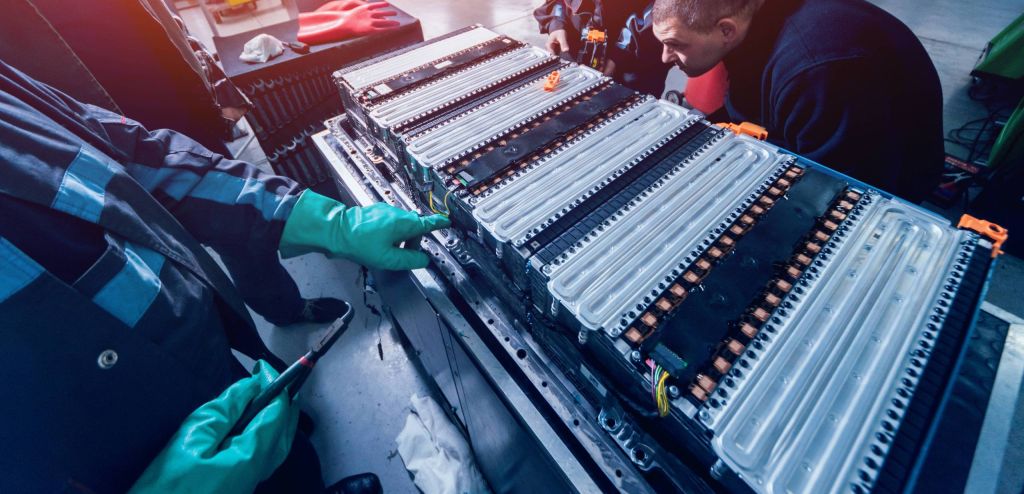
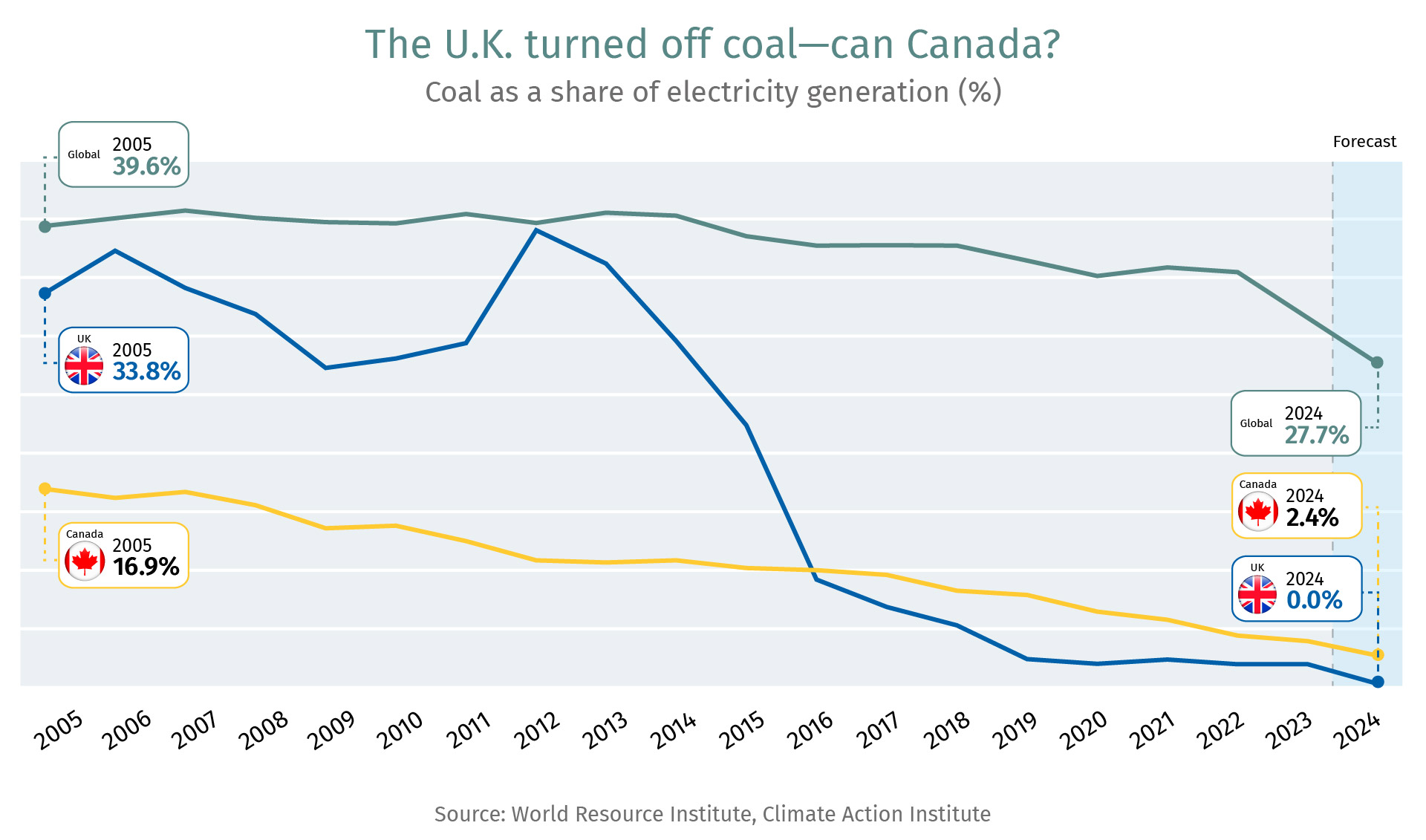 ➔ King Coal’s rein ended in the U.K—the first G7 country to do. Here in Canada, Alberta banished coal-generated power this year, but Saskatchewan, Nova Scotia and New Brunswick are still figuring out ways to rid coal off their grids. Shaz Merwat, our energy policy lead, suggests the switch to renewables, coupled with battery storage and natural gas are preferred coal-switching solutions for the rest of the decade. The pursuit of Net Zero, however, will involve carbon capture adoption and the often thorny issue of greater inter-provincial connectivity.
➔ Canada advanced its guidelines for sustainable investments. The new climate taxonomy aims to guide investors, banks, and other stakeholders seeking clearly-marked “green” and “transition” economic activities. It’s an important step in Canada’s sustainable finance journey, especially as trillions of dollars of capital eyes verifiable green and transition investment opportunities. The Canadian taxonomy can help attract private capital, which is vital for economic growth and emissions cuts. While there’s much work to be done—including some important definitions of end-use for natural gas if it’s to be sold as a transition fuel—it’s a milestone in Canada’s Net Zero journey.
➔ There’s a new energy in Calgary. Institute head John Stackhouse found the city fired up as he attended the Energy Disruptors Unite conference recently. Some of his top observations: Nuclear is back, ESG isn’t dead, and Indigenous equity is the new gold standard of engagement. Read John’s 10 takeaways here.
➔… Speaking of new energy…: TC Energy’s spin-off of its oil pipeline business to pivot to lower-energy carbon sources is a new iteration for the 70-year-old Calgary firm. Natural gas and power and energy solutions , “driven by nuclear, pumped hydro storage and new energy opportunities,” gives the firm exposure to utility-like assets. Another energy-transition plus: the potential expansion of the 4,800-megawatt nuclear capacity at the Bruce C project at its existing Bruce Power site in Ontario.
➔ King Coal’s rein ended in the U.K—the first G7 country to do. Here in Canada, Alberta banished coal-generated power this year, but Saskatchewan, Nova Scotia and New Brunswick are still figuring out ways to rid coal off their grids. Shaz Merwat, our energy policy lead, suggests the switch to renewables, coupled with battery storage and natural gas are preferred coal-switching solutions for the rest of the decade. The pursuit of Net Zero, however, will involve carbon capture adoption and the often thorny issue of greater inter-provincial connectivity.
➔ Canada advanced its guidelines for sustainable investments. The new climate taxonomy aims to guide investors, banks, and other stakeholders seeking clearly-marked “green” and “transition” economic activities. It’s an important step in Canada’s sustainable finance journey, especially as trillions of dollars of capital eyes verifiable green and transition investment opportunities. The Canadian taxonomy can help attract private capital, which is vital for economic growth and emissions cuts. While there’s much work to be done—including some important definitions of end-use for natural gas if it’s to be sold as a transition fuel—it’s a milestone in Canada’s Net Zero journey.
➔ There’s a new energy in Calgary. Institute head John Stackhouse found the city fired up as he attended the Energy Disruptors Unite conference recently. Some of his top observations: Nuclear is back, ESG isn’t dead, and Indigenous equity is the new gold standard of engagement. Read John’s 10 takeaways here.
➔… Speaking of new energy…: TC Energy’s spin-off of its oil pipeline business to pivot to lower-energy carbon sources is a new iteration for the 70-year-old Calgary firm. Natural gas and power and energy solutions , “driven by nuclear, pumped hydro storage and new energy opportunities,” gives the firm exposure to utility-like assets. Another energy-transition plus: the potential expansion of the 4,800-megawatt nuclear capacity at the Bruce C project at its existing Bruce Power site in Ontario.
 Express your climate change frustration with an emoji. Dead tree emojis are coming to smartphones soon as regular folks channel their climate angst. Hurricane Helene and now Milton are just the latest weather events supercharged by climate change. Since 2019, virtually every Canadian province and U.S. state has been slammed by a costly disaster. Yet, progressive climate change policies are fast becoming political liabilities from Ottawa to Vienna to Washington.
 Copyright Shane Gross
➔ Bi-Weekly Climate Fail Award: A new University of Cambridge study that advocates reducing flight speeds by 15% to reduce emissions—raising transatlantic travel times by 50 minutes.
Copyright Shane Gross
➔ Bi-Weekly Climate Fail Award: A new University of Cambridge study that advocates reducing flight speeds by 15% to reduce emissions—raising transatlantic travel times by 50 minutes.