Disclaimer

rbc_tl_disclaimer

Canada is embarking on a major economic pivot and the country’s colleges and universities need to be a key driver in that transformation.

The postsecondary system has long been an important part of the Canadian identity. It has driven discoveries, delivered accessible, quality education and provided economic anchor institutions in communities across the country, underpinning progress and prosperity.

But the sector is not as strong as it once was, and its role in building Canada’s future is under threat. Many colleges and universities are financially unstable, and the sector is often perceived as unresponsive to economic needs; these issues are mutually reinforcing. Postsecondary institutions across Canada are closing programs and campuses and reducing staff to bring temporary budgetary relief. But broader policy and funding changes are needed to ensure the sector’s sustainability.

Like the country’s economy, postsecondary needs to pivot.

Earlier this year, we released a report as part of our Growth Project: A Smarter Path. We offered recommendations to improve the sector’s relevance, including integrating work and real-world experiences into programs and enabling private-sector investment in research and development. Over the summer, RBC Thought Leadership and partners dug deeper, engaging leaders to delve into higher education’s role in addressing Canada’s economic growth challenges.1 The message was clear: the sector is facing a crisis. 

Moved by this urgency, we identified five requirements that are critical to reforming the postsecondary sector and ensuring its relevance to Canada’s new economic strategy.

  • A strong postsecondary sector requires sufficient, stable financing.

  • Public spending on Canadian colleges and universities has been steadily decreasing.

    • Once a global leader in both funding and attainment rates2, public spending on postsecondary institutions in Canada has fallen from 1.47% of GDP at its height in 2011, to the current OECD average of 1.1%.3 Canada is not the only country to reduce spending but “few countries have seen declines as sustained and as wide-ranging as we have ,”4 according to a report.

    • As a percentage of GDP growth, public spending is $13 billion short of where it was 15 years ago.5

  • Domestic tuition has not helped make up for the growing shortfall.

    • Provincial governments essentially set tuition levels for most programs by placing caps on what providers can charge; under the current caps, most undergraduates are paying roughly what they would have paid 10 years ago for the same program.6

    • Partly as a result, Canadian students often encounter very large classes which help to subsidize more expensive programs–like medicine.

  • Unregulated international student tuition has been a lifeline for some institutions and subsidized domestic student programming

    • Between 2010 and 2023, international student tuition was responsible for 100% of new operating revenue in the sector.7

  • But in 2024, the federal government capped intake on permit applications and restricted post-graduate work permit eligibility—a major draw for many international students—to college programs linked to national labour shortages.8

    • Ontario has been hit particularly hard: six institutions are reporting more than $140 million in financial damage—losses, cuts and deficits—since 2024.9

    • By one count, there have been more than 850 program suspensions or closures at institutions since the caps were introduced, and 35 institutions reporting 100 or more job impacts.10

    • The federal list of programs eligible for post-graduate work permits has changed multiple times in the span of a year11 making it difficult for institutions to plan.

  • Without a new financial arrangement, institutions are forced to make decisions with their viability in mind, rather than the country’s prosperity. These decisions will have important implications for education quality and access, especially in rural communities where workforce shortages are already acute, as well as the country’s ability to retain top talent.

  • Increase public spending on postsecondary. That could include more provincial spending, more federal spending, or both.

    • Government funding could be tied to specific criteria or outcomes.

    • One idea raised in our cross-country conversations was to explore a new funding arrangement between the federal government and Canada’s U15–our leading research universities. Participants considered whether Canada could issue special funding to advance research in areas of national interest, potentially freeing up more provincial funding for redistribution.

    • But given Canada’s aging population and competing calls for funding in priority areas like health care, the level of investment needed is unlikely to come from government alone.

  • Another option is to create a larger role for student fees. Offering institutions more flexibility when it comes to tuition could bring a needed influx of funding that stabilizes budgets and encourages a new level of responsiveness to evolving student learning preferences and labour market needs.

    • Greater tuition flexibility would mean higher rates for those who can afford it. To maintain access for those who cannot, provinces together with the federal government should ensure robust financial assistance systems remain in place. Institutions could also be required to reserve a share of tuition revenue for means-tested student aid.

  • If international student fee revenue is to continue playing a significant role in funding institutions (as it has for colleges), Canada will need to offer more stable targets that balance a national interest in aligning immigration with forecasted skills needs with an institution’s need for longer-term institutional planning.

  • With greater financial footing, institutions can play a more strategic role in Canada’s economic pivot—advancing specific priorities. They will be better positioned to do that with mandates that respond to more distinct learner or industry needs. As we noted in A Smarter Path, “we neither need nor can we afford to have every institution offering the same menu.”

  • From afar, Canada’s postsecondary system looks highly differentiated. It includes universities, colleges, institutes, polytechnics, trade unions and employers involved in apprenticeships, as well as additional and sub-categorizations of providers in some provinces.

  • But the distinctions between some of these labels are murky. The system has long been accused of having an “academic drift” towards sameness, with the university model serving as the goal.12 These pursuits have been at least partially motivated by a need to generate revenue within the confines described above.

    • The recent growth in college bachelor’s degrees, and the push for master’s-level offerings are examples.13

    • The style of applied, industry-driven learning that Canadian colleges are known for is expensive to deliver–often requiring technical equipment and small class sizes. With a new funding arrangement, colleges could provide more of this training for Canadians of all ages, including adult learners in need of skills upgrading and youth pursuing careers in the skilled trades where there are persistent labour shortages.14

  • Within the broad categorizations of colleges and universities, institutions can lean into thematic strengths and develop unique reputations.

    • A couple of examples where this is happening to some degree: Lambton College’s collaboration with the local petrochemical industry, and Royal Roads University’s experimentation with flexible learning models.

  • Responding quickly to industry and community training needs will continue to be an essential part of Canada’s economic transition and presents opportunities for institutions with aligned mandates.

    • Plans to fast track major energy projects, for instance, will need to overcome large, technical skill gaps in rural and northern parts of the country.

    • Canada’s armed forces are suffering severe skills shortages in aviation, search and rescue and technicians, to name a few.

    • Of more than 1,000 Canadian adults surveyed recently, less than half felt they could use AI tools effectively, and less than a quarter indicated having received AI training,15 pointing to opportunities for adult upskilling programs.

  • Providing more control over tuition—and creating market competition—might naturally lead institutions toward greater differentiation and specialization.

  • Better data to inform planning would also help illuminate opportunities to specialize and do so strategically.

    • Compared to other jurisdictions, Canada tracks little information about how our education has been functioning, let alone information that would enable foresight about where it needs to go.

    • With better data, institutions could examine, for example, whether certain demographics of students have more success with some program formats than others. And when it comes to lifelong learning, institutions could gain insight into how credentials complement one another or stack together to impact career advancement in specific industries.

  • Updating institutional mandates in ways that play to and develop their unique strengths and meet specific labour force needs (for example, by concentrating on industries or learner demographics).

    • The federal government plans to launch new Workforce Alliances of employers, unions and industry groups, focused on skill development in “sectors under pressure” like energy and advanced manufacturing.

    • Postsecondary providers with relevant mandates should be at these tables, and quick to respond with relevant programming.16

  • For provincial governments: playing a coordination role, ensuring institutional mandates complement one another and align with social and economic needs, creating incentives for institutions to develop and lean into thematic strengths.

  • For the federal government: engaging the provinces in developing regulations to standardize data collection and offering consistent, up-to-date, granular data that allows for program-level analysis and student-level outcomes tracking.

  • College and university programs and services need to be more aligned with the world of work and the opportunities available to graduates.

  • Traditional education models make less sense in a context where AI and access to information is ubiquitous. We need to rethink what and how students learn and demonstrate learning; educators have traditionally focused on ensuring students can answer tough questions, we should be equally concerned with whether they can ask creative ones.

  • Analytical thinking, flexibility and agility, are the most sought-after skills among employers and have been for some time.17

    • Industry leaders emphasized entrepreneurial thinking, communication, and a basic awareness of how businesses operate.

    • All programs should be helping students develop and hone these skills, which are best gained in dynamic learning contexts that weave in real-world scenarios, for example, through applied projects, co-ops or internships.18

  • Demands for technological skills, including AI and big data, are fastest growing.19

    • Canada needs its postsecondary programs to produce graduates who are competent technology users; to know when and how to leverage AI to increase productivity, while being aware of its limitations and risks.

  • Institutions need to reckon with technology and AI themselves.

    • Canadian organizations of all kinds, including government,20 are using AI to find efficiencies and improve client experiences, motivated, in part, by the costs of inaction.21

    • Home to some the country’s top technology experts, postsecondary should be moving much faster, finding ways to integrate the latest technology in programs and supporting services to optimize student experiences, operational efficiency and program quality.

    • There are good examples in other jurisdictions: Arizona State University built proactive student support systems based on predictive analytics22 and is using AI to support student decision making with responsive career guidance.23

  • As economic volatility becomes our new normal, lifelong learning needs to as well.

    • This is a key priority for federal and provincial governments. For example, Canada is investing $450 million in reskilling,24 and Alberta’s new job strategy targets adults changing careers.25

  • More program offerings should reflect and appeal to mid-career adults in need of skills upgrading or retraining.

    • When faced with job disruptions, Canadians have tended to pursue short, career-focused programs, if any.26

    • Appealing to adults in these situations means being mindful that they will likely be keen to get back to work as quickly as possible, likely have prior learning and experience to bring to the table, as well as competing priorities (like bills to pay and children to care for). They may prefer to learn at their own pace and according to their own schedule.

    • Competency-based programs have taken off in the U.S. but are rare in Canada. These programs award credentials based on demonstrated mastery, not the amount of time enrolled in a program.27

  • Rethinking program content, delivery models, assessments, and instructor roles to optimize learning in a modern context.

  • Ensuring every program offers applied learning opportunities that develop transferable skills like problem-solving, communication, technology literacy and entrepreneurial thinking.

  • Leveraging technology and AI. For example:

    • Training faculty and staff to:

      • Effectively integrate AI as part of the student experience (pen and paper assessments to avoid “cheating” with AI are missing the point)

      • Identify places where AI can relieve their own workload.

    • Offering technology-enhanced learning opportunities (e.g., hybrid and distance learning, simulations) and support services.

  • Serving the needs of lifelong learners by presenting all credentials as steppingstones rather than discrete offerings.

    • Expecting that students will return for education multiple times throughout their lives and making that process straightforward and rewarding—this could include experimenting with new models like competency-based education.

  • Being more responsive and modern requires more institutional flexibility.

  • Externally, regulatory bodies and policy frameworks can be overly restrictive and work against the changes described above. As an example, Ontario’s funding model discourages colleges from developing part-time programs that would appeal to adults in need of upskilling28 and across Canada, qualifications and credentials frameworks centered on instructional hours discourage institutions from experimenting with individually-paced programs like competency-based education.

  • Internally, risk-averse institutional cultures, fragmented governance environments and restrictive collective agreements often layered with tenure, can impede leaders’ ability to take decisive action.

    • The processes involved with developing programs, revamping them or shutting them down to evolve in step with the world outside institutional walls are all very much informed (and paced) according to the structures inside those walls.

A roundtable participant captured the situation well:

[Institutional leaders] are being asked to run institutions like businesses, but are still operating in a legal and regulatory structure designed for a public service model. It’s completely mismatched.

80% of revenue and 85% of expenses are controlled by someone else, two governing boards and four sets of stakeholders think they’re the majority shareholder—but none of them are. The institution is accountable to 200+ pieces of legislation. Meanwhile, industry is moving in weekly cycles. It’s no wonder industry is losing faith in us. We’re bordering on obsolescence—not because we aren’t capable, but because we’re structurally constrained.

  • Provincial governments could engage postsecondary leaders to understand and dismantle regulatory roadblocks, including exploring the ways in which professional regulatory bodies facilitate or inhibit responsiveness.

  • Postsecondary leadership together with labour unions could review collective agreements and/or governance and human resource policies—striving for balance between job protection and institutional viability—drawing on union experience and expertise to outline new expectations like modernized job tasks and teaching methods.

  • Together, Canadian governments, postsecondary institutions and businesses need to do a better job of ensuring research advances national priorities, supporting Canadian communities and businesses with timely innovations.

  • Compared to other advanced countries, including the U.S. and Japan, or the OECD average, Canada’s spending on research and innovation is persistently low.29

    • A key reason for this is our business sector: largely made up of small- and medium-sized enterprises without research budgets30 and branches of multi-national companies whose head offices in other jurisdictions are driving innovation.

  • On the other hand, Canadian postsecondary spending on research is high compared to global peers.31 Essentially our postsecondary sector is carrying the weight here; and given the stakes, could be oriented more strategically.

  • Traditionally, success in postsecondary research is measured in terms of publication output and citations;32 often, government grants unintentionally encourage similar ideas and incremental change.

  • Research often ends at the ideation phase with little incentive to push toward patents or commercialization; promising innovations and innovators go elsewhere, like Silicon Valley.

  • For many institutions (and departments within them) advancing innovations, and ensuring they go beyond the ideation phase, will require a reorientation—from exploring topics to advancing goals—and an openness to taking on research contracts with industry partners who have defined milestones and clear deliverables in mind.

  • This is not to say there is no place for inquiry-driven research. Nobel Prize winning research by Geoffrey Hinton33 or Arthur McDonald34 might not have been possible without such freedom. But mission-driven research needs to take new precedence.

  • Updating federal granting to incentivize research that produces intellectual property (IP) or advances national priorities.

  • Focusing institutional research strategies (as part of updating mandates) to advance specific industries or public interests like health care, national defence, or food security.

  • Rewarding innovation and community impact in tenure and promotion processes.

  • Experimenting with new approaches and collaborations—Canada’s defence spending commitments, for instance, offer a prime opportunity. A new Bureau of Research, Engineering and Advanced Leadership in Innovation and Science (BOREALIS) could draw on academia and industry strengths to drive innovation, much like the Advance Research and Invention Agency (ARIA) in the U.K. or Defence Advanced Research Projects Agency (DARPA) in the U.S.–both of which fund high-risk, high-reward projects, free from the typical political constraints and academic processes.  

  • Industry coming to the table with more funding for research contracts.

Canada is relying on its postsecondary sector to supply the skills and innovation needed for an economic transformation. Ensuring, the sector is up to the task will hinge, crucially, on a new funding arrangement. And that, may hinge on public support. Modernizing as set out above will help the sector grow social license.

But this task should not fall entirely on postsecondary and policy makers.

Employers, expecting to benefit, need to be ready to engage and collaborate too: sharing information about job opportunities and skill expectations, shaping curricula and evaluating competencies, developing work-integrated learning opportunities, and funding research and innovation.

Educators in K-12 have a role to play as well. It is time guidance counsellors shed the outdated notion that skilled trades are less valuable than university degrees, and that degrees and diploma are the end point of education.

Upskilling is no longer optional. It must be seen and described—at levels of the education system and in the labour market—as the new baseline for success.

Download the report

Disclaimer

rbc_tl_disclaimer

➔ Nurturing nature at New York Climate Week

➔ The EV mandate is kicked down the road

➔ General Fusion’s new lease of life comes as global race heats up

The Canada EV mandate is on hold. Another Trudeau-era climate policy suffered a blow when the Mark Carney government paused a rule that mandated automakers to ensure EVs accounted for 20% of sales from 2026. Trade headwinds from the U.S. are partly the reason as is the end of U.S. EV tax credits later this month. Automakers are already reeling from an estimated US$12-billion in tariff costs so far. Several are caught in limbo as they have sunk billions in EV supply chains on a market that’s suddenly lost momentum. It’s a microcosm of the bigger climate-versus-economy debate that’s raging around the world.

The Business Development Bank of Canada is going big on critical minerals. The funding agency’s $200-million Industrial Innovation Venture Fund II, is supporting early-stage startups focused on several areas including key raw materials for clean-energy infrastructure and electric vehicles. Canada needs it: latest data from the Canadian Venture Capital Private Equity Association (CVCA) shows Canadian clean-tech firms raised a paltry $191 million in the first half of 2025, compared to $657 million during the same period last year.

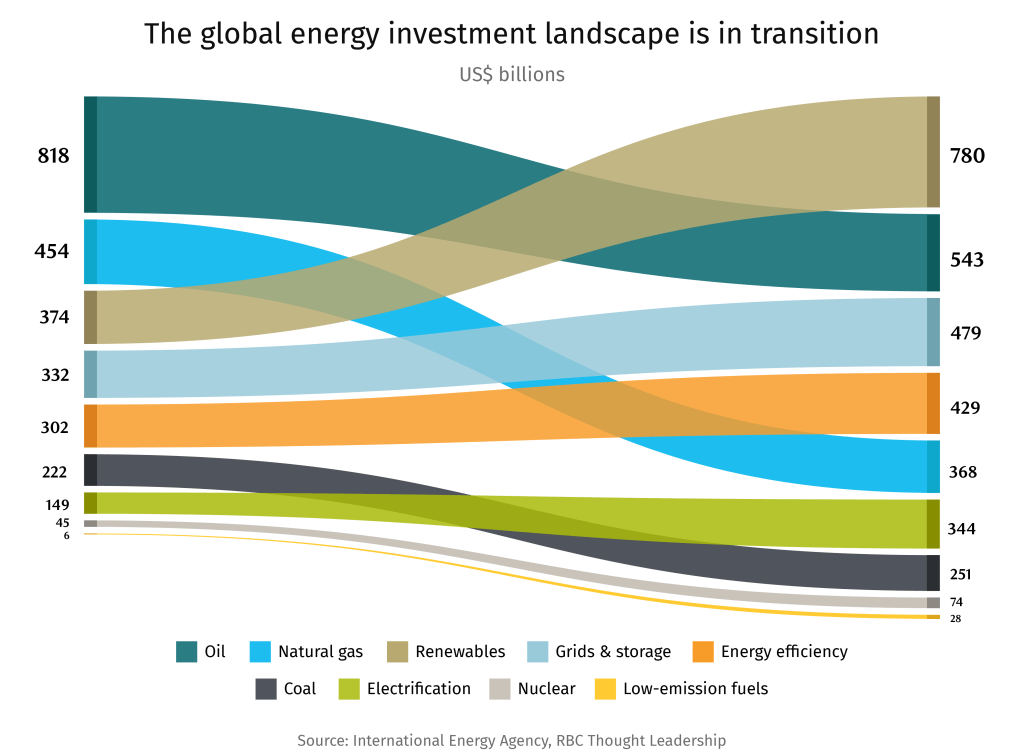
A new global oil rush. Norway likes to imagine itself as the land of the world’s richest—and most ESG-savvy—wealth fund and electric vehicles, but it’s all driven by fossil fuels. But Sylvi Listhaug, whose Progress Party surged to second place in the recently concluded elections, wants Norway to be the “last country in the world to stop (oil) production.” It’s a recurring theme, with Canada among scores of other countries catching the new oil fever. What would it mean for global emissions? Investments in upstream oil was set to fall this year for the first time since 2020, the IEA projects. It could just be a blip.

Dawn Farrell, the first head of the brand-new Major Projects Office (MPO), is tasked with fast-tracking several projects that could raise the country’s emissions—or not, depending on how she navigates the country’s twin environmental and economic imperatives. Could Farrell accomplish Canada’s elusive trifecta of building faster, accelerating sustainable growth, and strengthening national unity?

Her nearly decade-long tenure as CEO of Calgary-based utility giant TransAlta Corp., is instructive on how the executive has operated in the past:

  • Under her watch, which ended in March 2021, the utility transitioned from coal to natural gas, as part of an industrywide transition to reduce emissions.

  • By 2021, TransAlta had completed the full conversion of Keephills Unit 2, Keephills Unit 3 and Sundance Unit 6 from thermal coal to natural gas.

  • The energy transition impacted coal workers, with several provincial communities tapping the Coal Community Transition Fund.

  • By the end of 2021, TransAlta had cut GHG emissions by 70% from 2005 levels, and exceeded the national 2030 emissions targets in Canada, the U.S. and Australia where it operates.

  • TransAlta transformed into one of the largest producers of wind power in Canada and the largest producer of hydro power in Alberta—growing renewable energy capacity from around 900 MW in 2000 to over 2,800 MW in 2021.

The TransAlta journey gives Farrell the cred to help streamline several projects, but now she must elevate it to a national level, where several competing interests—federal, provincial, First Nations and corporations—are jostling for attention.

Oil pipelines, LNG projects, and several renewable energy projects are being proposed, but here are Farrell’s overarching challenges:

  • Bringing investor confidence back: The MPO will need to prove Canada can build again—and sustainably. The office will need some early wins to see global capital dip its toes back into Canada.

  • Looking past Trump: Yes, there’s a POTUS-sized cloud hanging over Canada, but Europe (hello, Germany), Japan and emerging economies also want our resources. The next wave of projects will need to be pointing east and west, with buy-ins from consuming countries.

  • Aligning provincial priorities: Another big rock. If Farrell can get B.C., Alberta and Quebec on the same page, Canada could become a resource superpower.

  • Bringing Indigenous groups into the fold: Moving beyond lip service to actual partnerships with Indigenous communities could be the MPO’s most enduring achievements.

An ocean-based carbon removal tech is making waves. Nova Scotia-based Planetary Technologies recently struck a $43.3-million deal with Frontier Climate, which is backed by Shopify, Google, and Meta. The aim? Remove 115,211 metric tonnes of CO₂ between 2026 and 2030 by adding alkaline minerals—like calcium oxide and magnesium oxide—to coastal waters. The process accelerates natural absorption of CO2 and promises storage for over 10,000 years. Frontier believes it can bring the current price tag of roughly US$270 per tonne to US$50–$160 by leveraging existing infrastructure at coastal power plants. It will also preserve marine ecosystems and involve local communities, including the Mi’kmaq Nation.

The dream is alive at General Fusion. The Richmond, B.C.-based, nuclear fusion hopeful recently raised $30 million, after recently enduring layoffs and scaled-back operations. The funds will power its LM26 fusion demonstration program, targeting operational temperatures of 10 million degrees Celsius—an essential step on the path to commercial fusion. Shopify CEO Tobi Lütke’s Thistledown Capital and Saudi JIMCO were among investors that backed the round. The lifeline for Canada’s sole fusion company comes as investors injected US$2.6 billion over the past year across 52 other companies globally, including 29 in the U.S. alone. And the race to crack the fusion tech code is heating up: China National Nuclear Corp. set up a $2-billion China Fusion Energy Co. in July, followed soon by Massachusetts-based Commonwealth Fusion Systems, the world’s largest private fusion company, raising US$863 million in a new round.

Carbon capture is like trapping a genie in a bottle—but it could escape. A new peer-reviewed study published in Nature estimates that the world can trap a mere 1,460 gigatons of carbon dioxide-compared to previous estimates of as much as 40,000 Gt (roughly a year’s worth of CO2). Structural geological faults and poor well construction could dampen the efficacy of carbon-capture tech, the study notes. That still leaves plenty of jurisdictions with viable geology and expertise to capture carbon. Around US$4 billion has already been invested in carbon capture, utilization and storage (CCUS) facilities in 2024 with more than 50 metric tonnes of CO2 capture capacity currently operational—with few leaks reported so far. In addition, the report identifies Canada and the U.S. as “better placed” than Europe to implement geologic storage solutions.

Power On: Hard choices, real consequences. Sounds about right as the theme of this year’s New York Climate Week starting September 22. The event, which is fast rivalling the annual COP events, brings financiers, environmentalists and policy wonks together in one of the Big Apple’s worst traffic jam seasons.

Lisa Ashton, our Director of Agriculture Policy, will be in attendance. She will be speaking at the Nature Hub on September 24th at an event co-hosted by the RBC Climate Action Institute and Nature United.

Nature contributes US$33 trillion to the global economy—equivalent to the value of global trade in goods and services. Yet, nature’s role in the economy beyond its extracted resources—fish, grain, and timber—are not accounted for in national GDPs, leaving a source of economic growth and risk on the sidelines. Here’s a sneak peak of some early themes emerging in Lisa’s upcoming report on the nature economy:

  • Natural capital is underutilized as an asset in economic growth. The GDP of Canada’s nature-dependent sectors grew 0.6% slower, year-over-year, compared to the rest of the economy over the past quarter century.

  • There are real risks in overlooking nature’s role in building prosperity. Canada, the U.S., and the U.K. are looking to build back their economies. Yet, their nature base is depleting. The U.K., for example, is stressing its water assets, with the government projecting a 5- billion-litre-per-day gap in water availability by 2055.

  • Pro-growth agendas present opportunities to value and build natural capital. Nature is now a reportable risk and an investable asset class—ready to be integrated into major investment and infrastructure projects.

“In an era of reindustrialization, all opportunities for durable growth need to be on the table. A timely consideration as countries around the world are struggling to raise capital to manage, protect, and conserve their natural capital,” says Lisa.

Curated by Yadullah Hussain, Managing Editor, RBC Climate Action Institute.

Climate Crunch would not be possible without John Stackhouse, Jordan Brennan, John Intini, Farhad PanahovLisa AshtonShaz MerwatVivan SorabCaprice Biasoni, Lavanya Kaleeswaran and Joelle Schonberg .

Have a comment, commendation, or umm, criticism? Write to me here (yadullahhussain@rbc.com)

Climate Crunch Newsletter

Disclaimer

rbc_tl_disclaimer

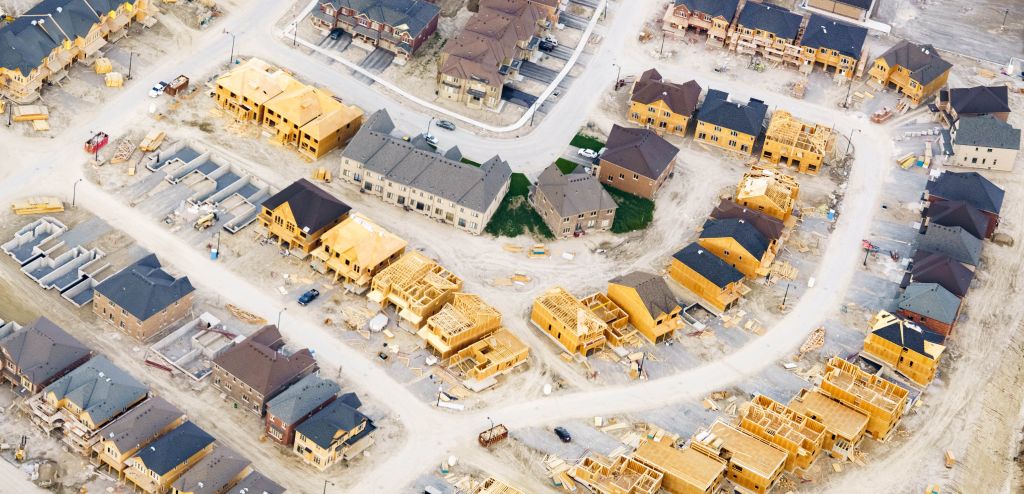
The federal government is launching Build Canada Homes (BCH) this fall with an ambitious goal: to double the current pace of construction in Canada to almost 500,000 new homes per year.

Here are six things that will be key to BCH’s success as it aims to tackle the country’s housing crisis:

The extent to which quick progress can be made by BCH will depend on two critical ingredients: agreement on the problem and precision on what “affordability” means.

In August, Housing, Infrastructure and Communities Canada (HICC) released a ‘Market Sounding guide’ to engage sector stakeholders. And while it offers some identifiable signals, it stops short of defining the specific housing problem that BCH aims to solve. This ambiguity leaves things open to interpretation and may result in misaligned expectations from the different audiences being asked to provide feedback.

Furthermore, housing affordability is based on various factors including income and location. It remains to be seen if BCH will prioritize building and financing non-market “affordable” housing or if its remit will be much broader. Honing in on precise intended outcomes will be critically important–focusing on addressing affordability for those whose needs are not met by the market requires a different set of approaches than aiming to address affordability for Canadians overall.

BCH’s impact will rely on convening housing stakeholders to work together in genuine partnership. All levels of government—federal, provincial and municipal—must row together to ensure funding and regulatory levers align. This will require a clear articulation of BCH’s contribution to getting more housing built in relation to other efforts across government, including within a wider housing plan at the federal level.

Partnership must also extend beyond government. Bringing together core players across the private, public and non-for-profit sectors to create a clear roadmap, and in short order, is no small endeavour. Equally important is meaningful collaboration with Indigenous partners, as rights-holders, to address the unique and considerable housing challenges faced by Indigenous people both on- and off-reserve. In theory, BCH could be a solid platform for joint action, but outcomes will ultimately be determined by the effectiveness of partnerships in practice. 

Canada’s housing policy framework is already complex, with multiple agencies, ministries and levels of government playing important roles. As it stands at the federal level, a department (HICC) and two Crown Corporations (Canada Mortgage and Housing Corporation (CMHC) and Canada Lands Company) are deeply embedded in the design and delivery of housing policy and programs. To be effective, the federal government must be clear on how BCH will complement, not compete with, established organizations with deep institutional expertise, in addition to effectively coordinating housing policy across other jurisdictions and relevant policy areas, including immigration, infrastructure and the environment.

Creating a federal body requires new legislation, governance structures, staff, and systems for accountability and oversight, before the first BCH-supported units will even begin to be developed. Moving too quickly risks creating a structure that is duplicative, under-resourced and poorly integrated within the current context. At the same time, costs associated with establishing a new institution will be significant, raising the question of whether those resources would be better channelled through existing mechanisms. While pressing action on housing affordability is needed, government will engender greater trust by being transparent about what can feasibly be accomplished and by when.

At the core of BCH’s objectives lies a fundamental tension: how to build quickly and at scale while also advancing innovative techniques and improving productivity. Delivering large volumes of new housing quickly will mean understanding which levers to pull and prioritize with existing, more traditional approaches for more units to get built. It will also be essential to indicate what progress should look like with proven, but less utilized technologies, such as modular and prefabricated construction, while layering in experimentation with other less-established methods, materials or financial tools.

Capacity, capability and demand will also factor in as key considerations across regions. What will improvements on the innovation front look like in Whitehorse in relation to Winnipeg? Overall, the test for BCH will be whether it can scale what already works while experimenting in parallel, ensuring that progress is both rapid and attuned to regional differences.

Tariff-related increases in the cost of imported materials pressure budgets and risk delaying projects, while unpredictable supply chains make it difficult for industry to commit to new builds. Prioritizing domestic materials and regional production hubs, as the Market Sounding guide emphasizes, is noteworthy but could impact costs and timelines. Government and industry will need to navigate these pressures strategically to deliver affordable and high-quality housing without interruption.

BCH poses opportunities for stronger coordination, increased innovation and, ultimately, improved affordability for Canadians. Success, however, hinges on its ability to bring partners together to rapidly execute and deliver on its ambitious objectives, against the backdrop of an uncertain economic environment. Lack of agreement or clarity on the ways to collaboratively move forward will reduce trust and hamper results, potentially creating even greater challenges.

Disclaimer

rbc_tl_disclaimer

➔ Canada’s EV battery plan is supercharged

➔ The electric-jet era takes off at Billy Bishop airport

➔ How to unsettle scientists

Canada’s EV battery vision takes shape. Volkswagen’s Canadian battery arm PowerCo is pushing ahead with its St. Thomas, Ontario, gigafactory, with two construction contracts. The plant is slated to start production in 2027. But it’s more than a construction milestone, it’s a signal that Canada’s high-stakes bet on EV supply chains is materializing despite tariff skirmishes and uncertain demand. For Ottawa and Ontario, the real test will be whether it can give Canada a foothold in North America’s evolving battery supply chain. 

Energy ambitions clash with sustainability. Ontario’sproposal to connect Alberta and Saskatchewan oil and gas to refineries in Southern Ontario and tidewater ports, including a new deep-sea port on the James Bay coast, is facing Indigenous pushback. Their key concern: They feel “invisible.” The Indigenous Resource Network is also concerned they are seen as roadblocks to project development, when in fact “they are in fact part of the solution,” the IRN noted. This will be a recurring challenge as Canadian governments look to fast-track projects. Canada will need to get Indigenous groups on board to avoid project delays.

Scientists are unsettled. The U.S. Department of Energy (DoE) stunned the climate academia world with a new report that suggested “CO2-induced warming might be less damaging economically than commonly believed.” Talk about unsettling the science community. Several websites including Nature and Carbon Brief have published pointed ripostes, but the new DoE report is challenging accepted wisdom on climate. Will the UN’s Intergovernmental Panel on Climate Change (IPCC) move swiftly with a rebuttal? Its next assessment report is not due till mid-2028.

Ksi Lisims LNG project is ready for its spotlight. The Indigenous-backed project is waiting for an environmental assessment (EA) order from the B.C. government that could potentially see the natural gas export project proceed. The province’s ministers of environment and parks and energy are set to decide by September 7.

Here’s how the project could impact Canada’s economy, emissions and energy:

Who’s behind it:  The Nisga’a Nation, a self-governing First Nation on the Pacific Coast. Western LNG, backed by an affiliate of investment heavyweight Blackstone Inc., is a partner.

Location: Right next to the U.S. border on Pearse Island.

Timelines: The EA was expected by Q4 2024, so we are already playing catchup. The original application placed construction between Q2 of 2025 to Q4 of 2027, with operations beginning in 2028 (till at least 2058).

Project description: Two floating LNG facilities, each with liquefaction processing units. Once fully complete, the project will handle up to two billion cubic feet per day (bcfd) and export around 12 million tonnes per annum of LNG.

Who’s opposing it: The project faces opposition from several environmental groups and Indigenous groups, including the Gitanyow Hereditary Chiefs and Lax Kw’alaams Band.

Related infrastructure: An environmental certificate has been issued for the 780-kilometre Prince Rupert Gas Transmission (PRGT) project, which Nisga’a and Western bought from TC Energy in 2024. If PRGT rings a bell, that’s because it was the key conduit for the now-defunct Malaysian energy giant Petronas’s LNG project proposal back in 2014. It was approved even then, with amendments in July to address new environmental concerns.

What about the project’s emissions: The development expects to be net-zero ready by 2030, subject to an electricity agreement with BC Hydro. Project proponents say it would contribute 0.02% of B.C.’s emissions and 0.002% of total Canadian emissions.

Is that good?: The project claims to have a lower well-to-port emissions intensity compared to U.S. Gulf Coast projects (0.76–1.19 tonne of carbon/tonne of LNG lower). At full production, Ksi Lisims LNG would emit 9–14 million tonnes less CO2e per year than a U.S. Gulf Coast terminal project.

Is this the future of electric aviation?

RBC Thought Leadership’s Energy lead Shaz Merwat was on the Billy Bishop Toronto City Airport runway last week as Beta Technologies Alia CX300 rolled out an all-electric aircraft. The conventional takeoff/landing aircraft can be configured either as a passenger or cargo aircraft. Here are some cool specs:

  • Passenger capacity: 5 passengers

  • Cargo capacity: 1,250 lbs. of cargo

  • Maximum demonstrated range: 336 nautical miles (i.e., Toronto to Sarnia, or Calgary to Okanagan region)

  • Max speed: 280 km/hour (Cessna 172 can top 344 km/hour)

  • Charge Time: <1 hour

  • Energy cost: $18 per hour of flight time (Cessna 208: $347 per hour)

  • Emissions: At least 75% less emissions than a conventional small aircraft

  • Uses: Short-haul cargo and corporate travel

The CX300 photographed above is the cargo variant, and fourth off the production line with final delivery to Air New Zealand. The carrier will use the aircraft for regional cargo routes.

Billy Bishop is arguably already one of North America’s most sustainable airports, and is on a path to fully electrifying its vehicle fleet, including shuttle buses, ground vehicles, towing, etc.

To learn more about decarbonizing aviation, listen to the episode of RBC’s Disruptors Podcast on the topic with Angela Avery, Executive Vice President, Chief People, Corporate & Sustainability Officer at WestJet Group and Geoff Tauvette, Executive Director at the Canadian Council for Sustainable Aviation Fuels (C-SAF).

Canada’s turning its chill into an advantage. Ottawa recently injected $2.5 million in TerraFixing’s direct air capture (DAC) tech—aimed at extracting CO₂ in remote, wintry zones where low temperatures actually enhance efficiency. It’s an inventive way to turn Canadian winters into an advantage. If TerraFixing can prove cold-weather DAC works at scale, it could give Canada an edge in the global carbon-capture arms race.

A new “cli-fi” take on extreme weather. Sarah Hall’s Helm, is the latest novel in the new climate fiction genre that blends “atmospheric principles” with folktales to paint a picture of humans’ relationship with nature. Meanwhile, eco-warrior Bill McKibben, who once wrote a book with the grim The End of Nature title, returns with a surprisingly upbeat Here Comes the Sun: A Last Chance for the Climate and a Fresh Chance for Civilization.

Curated by Yadullah Hussain, Managing Editor, RBC Climate Action Institute.

Climate Crunch would not be possible without John Stackhouse, Jordan Brennan, John Intini, Farhad PanahovLisa AshtonShaz MerwatVivan SorabCaprice Biasoni, Lavanya Kaleeswaran and Joelle Schonberg .

Have a comment, commendation, or umm, criticism? Write to me here (yadullahhussain@rbc.com)

Climate Crunch Newsletter

Disclaimer

rbc_tl_disclaimer

Even as the world reels from tariffs, there’s a new levy lurking on international borders: a carbon duty on imports.

The EU rolled out its Carbon Border Adjustment Mechanism (CBAM) in 2023; Mark Carney’s government is considering a Border Carbon Adjustments (BCA) to level the playing field for domestic energy and heavy industry against foreign competitors; and a handful of bills in the U.S. at the federal and state level are proposing fees on imports with weaker climate compliance.

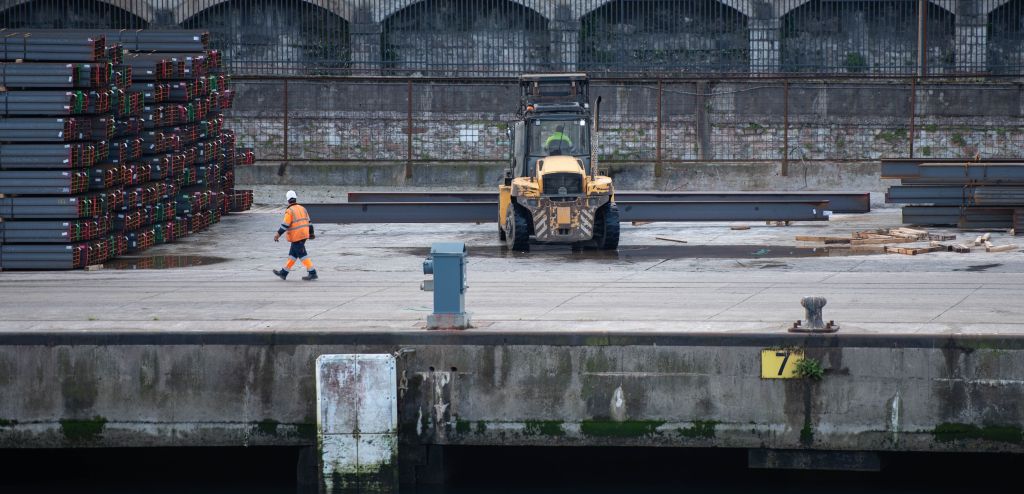
The idea of a border carbon fee is simple: ensure that manufacturers from, say, Montreal or Berlin, that spend money and effort to adhere to their domestic robust carbon policies are not disadvantaged against competitors that benefit from weak climate policies in their jurisdictions. Combined, a domestic carbon policy and a border carbon fee is a one-two punch that forces foreign competitors to raise their environmental standards, and ensures domestic industries are not unduly penalized for pursuing decarbonization strategies. Think of Ottawa taxing coal-powered Chinese steel to ensure its not unfairly advantaged against Canadian steel that’s forged by low-carbon but highly capital-intensive electric furnaces. 

While a border carbon fee would be a natural extension to Canada’s industrial carbon policy, its implementation is tricky. For starters, it could further inflame Ottawa’s already tense relationship with the Trump administration, which has cracked down on climate policies.

Canada’s carbon policy is in a state of flux, too. Earlier this year, the federal government scrapped a fuel charge—widely known as a carbon tax, followed soon after by British Columbia that had one of the longest and most stable emissions pricing systems globally. The past year has seen Canadian policymakers wobble on industrial carbon pricing: commitment to carbon pricing in Quebec and British Columbia all the  while  Alberta froze its carbon price at $95/tCO2e earlier in the year, and Saskatchewan cancelled its industrial carbon pricing system.

Canada’s industrial carbon policy has had mixed success to date—it has helped fund renewable energy projects, but with limited direct impact on emissions reduction to date. As the federal government and some provincial jurisdictions look to adjust their industrial carbon pricing strategy, they will also need to factor in shifting trading patterns, changing global economic priorities and the competitiveness of Canada’s industries.

Canada is one of 40-plus countries that have deployed a version of carbon pricing, covering 28% of global emissions.1 Several are now also exploring or advancing domestic carbon pricing systems in response to the European Union’s CBAM:

  • Emerging markets such as India, Türkiye and Brazil are pursuing domestic carbon pricing mechanisms to ensure their exports comply with EU rules.

  • The U.K. is in the process of linking its carbon market to the EU to streamline its climate policy with the economic bloc.

  • China recently expanded its carbon pricing coverage to include cement, steel and aluminum sector emissions.

  • Japan is consolidating its carbon pricing regimes into a single market as part of its Green Transformation (GX) plan, starting early 2026.

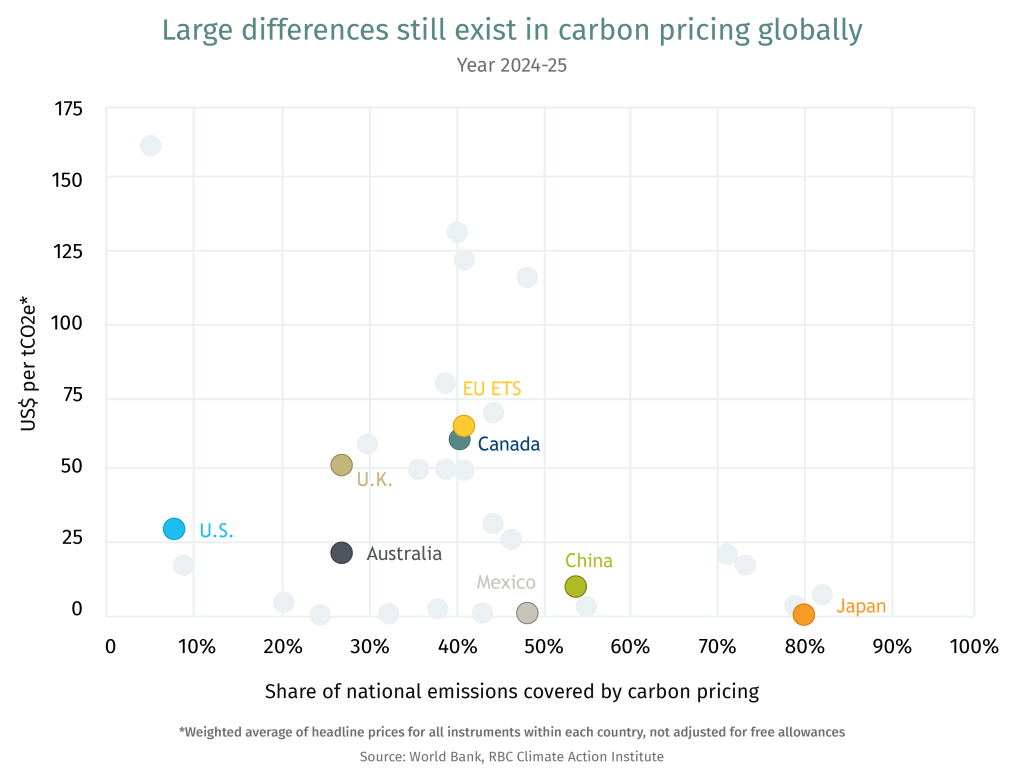
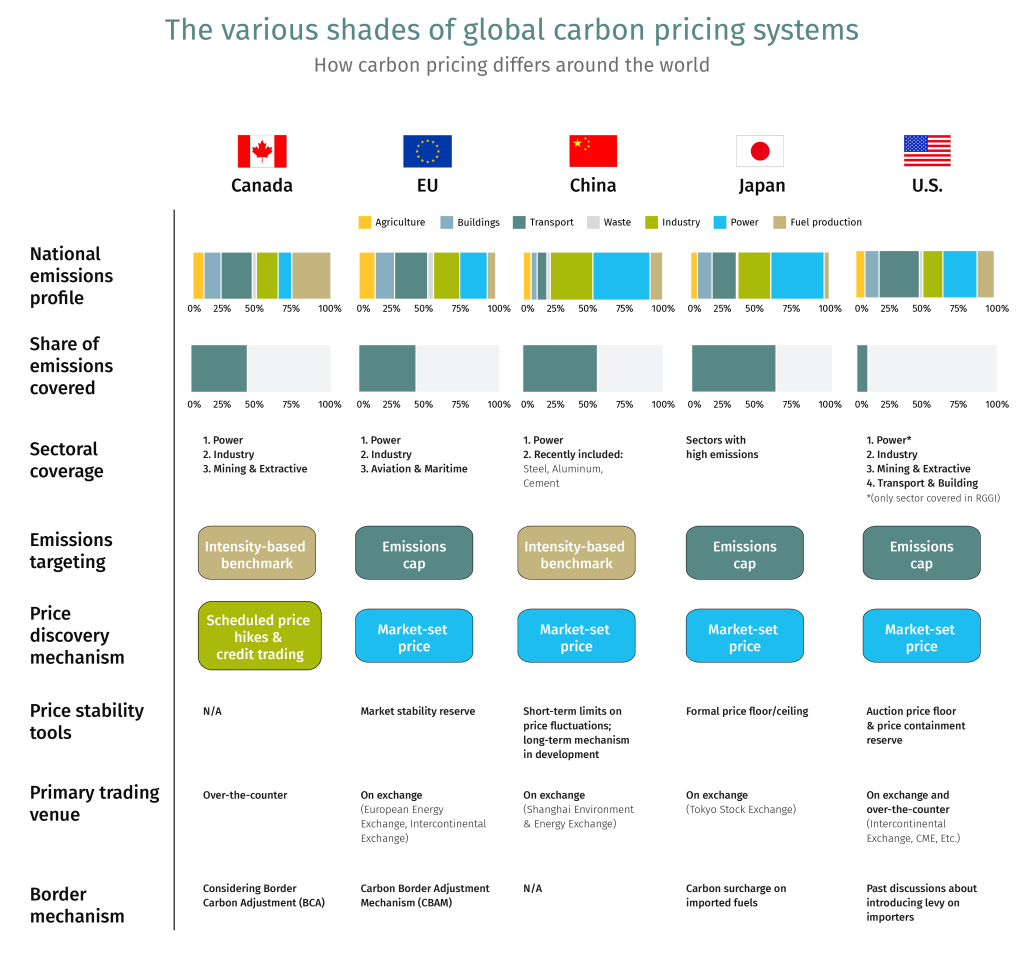
Still, pricing of carbon remains varied. Emissions trading schemes (ETS)—the most common carbon pricing system—rely on market signals to determine the pathway for emissions reduction. As the chart below shows, different jurisdictions assess their sectoral emission profiles, emission reduction potential and costs, that has led to significant differences in how they price carbon.

The U.S.’s Border Carbon Policy Proposals

The Foreign Pollution Fee Act (of 2025) is making its way through the U.S. Senate. It’s a policy designed to impose hefty levies on carbon-intensive imports from primarily China and Russia. But Canada could also get caught in the crossfire, and potentially face carbon tariffs ranging between 17%-33% on its industrial exports to the U.S.2

American policymakers have also been looking to shield domestic industries through a slew of other carbon policy proposals. These include:

  • The FAIR Transition and Competition Act aimed at ensuring American businesses are not undercut by unregulated importers by imposing a border carbon adjustment on carbon-intensive imports.

  • A U.S. Clean Competition Act would establish US$55 per tonne carbon tax on domestic producers and protect them from imports through border adjustments.

  • PROVE IT Act, if enacted, will facilitate the collection of emissions intensity data for energy intensive industries across major trading partners to ensure global transparency on carbon emissions. It was considered a precursor to the Foreign Pollution Fee Act.

The Foreign Pollution Fee Act, reintroduced on April 8, 2025, by Republican Senators Bill Cassidy and Lindsey Graham, seems most advanced. The structure avoids domestic carbon tax, and creates a linear relationship between the levy on importers and their emissions intensity gap. While the bill is unlikely to proceed, it’s seen as another form of protectionism under the guise of climate change policies.

Alberta and Quebec kicked off Canda’s carbon pricing journey in 2007, pursuing two different ways to apply carbon levies on their large industrial emitters. Now, a patchwork of federal and provincial carbon pricing regimes in Canada apply to a range of sectors including power, industry, mining and extraction, and covering nearly half of the country’s total emissions.

With some exceptions, the emissions trading system is Canada’s preferred carbon pricing mechanism. This is how it works: a greenhouse gas emissions performance benchmark places allowance limits on a company’s emissions. Companies emitting beyond those benchmarks buy permits from other companies with emissions that are under the prescribed level. The policy is designed to incentivize investments in low-carbon technologies that would help sharpen Canada’s competitive edge.

The system has encouraged capital to flow to sustainable projects: More than $80 billion worth of projects in carbon capture, utilization and storage (CCUS), wind, solar and bioenergy were either shovel-ready or under consideration and poised to benefit from carbon credit revenues, according to the Major Projects Inventory in 2024.3 Similarly, Emissions Reduction Alberta, funded through the province’s industrial carbon pricing, has facilitated over 300 clean technology projects, valued at more than $10 billion.4

Setting performance benchmarks means not all emissions are subject to carbon pricing, only those beyond the allowance limit—by design. Average cost in Canada, when adjusted for free pollution allowances, stood at $10 per tonnes of carbon dioxide equivalent (tCO2e) in 2024, a fraction of the $80 headline carbon price, according to latest estimate by the Canadian Climate Institute.5 This helps limit carbon leakage (i.e., manufacturers moving to jurisdictions with lower compliance).

Impact on emissions reduction

Carbon pricing reduces emissions with limited or no impact on the economy, according to several studies. But the scale of emissions reduction remains relatively small, with up to 2% annual GHG reduction on average across a range of countries with carbon pricing, including Canada.6 Emissions will need to climb down 6% annually for Canada to reach its climate goals by 2030, as set out in its Nationally Determined Contribution (NDC) commitment to the United Nations.

But there’s a reason the impact on emissions has been muted over the past two decades: Carbon prices were kept low as most clean technologies were nascent with high costs and in early-adoption stage. That’s slowly changing, with solar and wind becoming competitive with fossil fuels, and electric vehicles poised for price parity with conventionally-powered cars; in places like China, EVs are cheaper than gas-powered vehicles. Meanwhile, carbon-capture capacity has doubled globally over the past 10 years.

Major discrepancies in carbon pricing with its trading partners can impact Canada’s competitiveness at a time of a structural global upheaval.

Overall, about a fifth of Canada’s imports and exports are from jurisdictions that don’t price carbon. In the U.S.—where policy vary by state—the average carbon price is only US$6 per tonne when adjusted for Canada-U.S. trade flows at the state level.

Here’s what Canada should watch for as its looks to maintain its global competitiveness amid fragmented trade and climate policies:

  • Diversify trade partners: This won’t be an easy task with 75% of goods destined for the U.S. But nearly a third of Canadian export categories are more diversified; even oil and gas exports are finding new customers in Asia since the expansion of the TMX pipeline and the start of LNG Canada. Beyond the U.S., the global rise of climate-compliant products could give Canada an edge. For instance, Japan’s evolving carbon pricing policy favours cleaner fuel sources.

  • Foster predictable policy: Access to capital was the top challenge businesses faced in their emissions reduction goals, as noted in our Climate Action Report 2025. Large-scale investments to advance low-carbon technologies require strong and stable price signals to lower risk and allow capital to flow. Policy certainty could help pave the way for capital to be directed towards Canada.

  • Streamline provincial systems: Reducing barriers and inefficiencies could help de-risk the investment environment. Businesses operating in multiple jurisdictions face different rules, varying price levels and limited or no ability to transfer credits between their facilities. We have previously emphasized that harmonizing fragmented markets could offer considerable economic upside. Removing interprovincial trade barriers could offer greater market access and liquidity.

  • Beware the wrath of the U.S.: Reconciling carbon policy differences with the U.S.— where less than a tenth of total emissions are priced and at a much lower rate—is eventually required. With 80% of Canada’s oil production, 90% of aluminum, about half of steel and a third of cement shipped to the U.S., Ottawa needs to be mindful of how the U.S. reacts to changes to our policies. For some industries like the oilsands, compliance with emissions obligations costs about $1 per barrel, and less than 50 cents when using carbon offsets. This limits the competitiveness concerns. However, other industries already under tariff pressure and commanding much lower profit margins might require more support.

  • U.S. trade irritants cut both ways: Extending carbon pricing to imports through BCA is effectively a tariff. With Canada already at odds with its biggest trading partner, any attempt to level the playing field with American companies might be viewed as a trade escalation.

  • Resolve administrative complexity: From reporting to verifying, BCA is a daunting administrative task. Especially with varying provincial prices, coverage and benchmarks. It’s another reason to pursue harmonization as we wrote previously. The EU excluded SMEs and individual importers from CBAM to avoid regulatory complexity and reduce their costs. Canada should also strive for simplicity of rules.

  • Beware of unintended consequences: Emissions-intensive trade-exposed (EITE) sectors account for only 5% of Canadian GDP. However, those materials feed into an array of downstream industries. In effect, BCA could cascade through the supply chains. Raising costs for imported steel, for example, while protecting domestic manufacturing may raise costs for automakers, and construction companies, among others, as estimated by the Bank of Canada.7

Disclaimer

rbc_tl_disclaimer

In this week’s edition: Three areas where Canada and Mexico can deepen ties, how one smart idea can help alleviate canola farmers’ China challenge, and why infrastructure, not policy, may be holding us back.

By Jordan Brennan, RBC’s Head of Thought Leadership

Six months into President Trump’s trade war, with no deal in sight, Canada has good reason to deepen its partnership with Mexico. (And, based on a couple of recent trips south, the federal and Alberta governments agree).

Despite being Canada’s third largest trading partner, Mexico accounts for less than 4% of Canada’s global merchandise trade, the bulk of which is imports. In 2024, Canada shipped just $9 billion of goods to Mexico while importing $47 billion of Mexican goods.

Make no mistake, no country can displace the U.S. when it comes to trading significance for Canada. But we see three broad areas where Canada and Mexico can deepen ties.

  • Build Bridges & Infrastructure. Canada’s ‘Maple Eight’ pension funds, with north of $2 trillion in assets, are among the largest in the world and possess expertise in major infrastructure projects like pipelines, rail and port capacity. That’s what Mexico needs: patient capital with financing expertise. Canadian capital is a source of financial influence that could be leveraged to advance geopolitical and trade interests, and enhance commercial ties. Canadian Pacific Kansas City Rail’s investment in the Patrick J. Ottensmeyer International Railway Bridge—a $100M project launched earlier this year that deployed innovative technology to improve continental cargo mobility on the U.S.-Mexico border—is a case in point.   

  • Boost Bilateral Trade. Many of Canada’s export industries—from energy to steel and aluminum, copper, agri-food, softwood lumber, pulp and paper, and plastics—are products the 130-million strong nation imports. Enhanced trade flows, underwritten by the current CUSMA, could help several of our stressed industries find relief.

  • Unite On CUSMA. While the U.S. will remain the cornerstone of North American trade, both Canada and Mexico must prepare for the joint review of the CUSMA, which is officially scheduled for 2026 but may come sooner. Rather than being played against one another, which Trump has successfully orchestrated until now, diplomatic coordination between Canada and Mexico could affirm treaty mechanisms, ensuring duty-free access for CUSMA-compliant goods. Trade irritants in specific industries (think supply management) and trans-shipment for Chinese goods must be managed. With trade nested in a broader framework that includes border security, defence, infrastructure, and supply chain integrity, all three countries can be made better off by deepening their cooperation, ensuring balanced and mutually beneficial trade across the bloc.

  • China tariffs on Canadian canola seed exports have prompted calls on the government to limit imports of vegetable oil. Conservative Leader Pierre Poilievre is also demanding the Carney government cancel a $1-billion loan BC Ferries is using to buy Chinese-built vessels.

  • China also filed a lawsuit over Canada’s import restrictions on steel.

  • The Ontario government is introducing a $1 billion emergency loan program to qualifying businesses in the steel, aluminum, and auto sectors impacted by U.S. tariffs.

  • Trade war ripples start to show in U.S. wholesale prices, which were up 3.3%in June YoY, the biggest jump since February.

  • As it looks to reshore some of its manufacturing–and create 1,000 U.S. jobs–GE Appliances is investing $3-billion in its U.S. factories over the next five years.

By Yadullah Hussain, Managing Editor, RBC Thought Leadership

Canada’s canola crisis has deepened. Beijing’s 75.8% duty on Canada’s most valuable crop comes after its preliminary investigation found Ottawa provided subsidies and preferential treatment to its farmers.

The levy on canola seeds adds to Beijing’s 100% tariffs already in effect on Canada’s canola oil and meals. Back in April, the Canadian Canola Growers Association (CCGA) told us that farmers were freezing investments over fears that a tariff on canola seeds was the “big shoe to drop.” Chris Davison, President and CEO of the Canola Council of Canada, now believes the Chinese market is “effectively closed” to Canadian canola producers.

That’s another $4.5 billion of commodity trade disrupted and now in search of new, tariff-free markets, joining lumber, aluminum and steel.

Here’s how Canada’s canola crisis is playing out:

  • Squeezed by two economic giants: Could Beijing be trying to get Ottawa to remove the 100% tariffs on Chinese EVs, and 25% on Chinese steel and aluminum? Beijing will make a final call on canola seed duties in September. But Ottawa is in a bind as it had raised tariffs on imported aluminum and steel to appease Washington’s concern that countries, including China, were Canada as a backdoor to the U.S. market.

  • Meal plan goes awry: China’s canola meal imports from Canada whittled down to 32,506 tonnes in June—from 141,938 tonnes in June 2024—Statistics Canada data shows.

  • Oil turmoil: Canada’s canola oil exportsto China amounted to a big fat zero from China in June, industry data shows.

  • Seed money: Canada’s canola seed shipment to China had fallen to 237,897 tonnes by June 2025, compared to 651,080 tonnes during the same period last year.

  • Farmers want a cash injection: Farmers should not be asked to borrow their way through a crisis that’s not of their making, the CCGA states. Although that would only exacerbate Beijing’s concerns of Ottawa subsidizing the industry.

Beijing’s concerns of Ottawa subsidizing the industry.

  • Ease the pain: Boosting domestic demand and processing capacity of biofuels like Sustainable Aviation Fuel (SAF) presents one opportunity to diversify canola demand as a biofuel feedstock. According to Lisa Ashton, our Agriculture Policy Lead: “Canada should consider looking at other countries’ playbooks for expanding domestic biofuel markets and agriculture’s role in its growth.” Brazil, Japan, and Malaysia are all expanding processing capacity for biofuels including SAF and increasing required biodiesel and ethanol blends in convention fuels.

Jordan Brennan, RBC’s Head of Thought Leadership, recently connected with Trevor Tombe, at the University of Calgary’s School of Public Policy.

Q: What can the federal government do to lessen our dependence on the U.S.?
A: We face significant constraints. Canada’s ability to expand trade with other countries through trade agreements is largely exhausted. India and China, for geopolitical reasons, are unlikely prospects in the near term. Our limitation is not policy, but infrastructure. Geography remains a stubborn fact that requires substantial infrastructure investment. Expanding upon our rail and port infrastructure is a renewed priority federally but will take many years to move the needle.

Q: What do you see as the long-term impact of Trump’s tariff wars globally?
A: The uncertainty from tariff threats alone dampens investment. That itself may lead to a permanent reduction in Canadian productivity if investors perceive a higher level of risk in Canada due to uncertain market access in the U.S. Globally, if there’s one lesson from the 1930s, it’s that protectionist spirals deepen economic pain for all participants. While tariffs might temporarily boost some U.S. industries, the costs to global efficiency and consumer welfare would be substantial.

Q: Are there any new insights that challenge the prevailing wisdom about the broad-based benefits of free trade?
A: The fundamental case for liberalized trade remains strong. But it requires resources, production, and employment to shift across sectors and regions. Some of my work suggests between 1-2% of Canada’s workforce could migrate across provinces in response to eliminating internal trade costs. While these moves are productivity-enhancing for the overall economy in the long run, there are adjustment costs for individuals and some affected businesses impose significant short-term costs on those individuals.

Related: Read Brennan and Tombe’s discussion on interprovincial trade barriers.

Canada imported $43.4 million of distilled spirits from the U.S.—that’s down 62% June YoY. American wine imports were also down 67%.

Disclaimer

rbc_tl_disclaimer

➔ The worried, the hopeless and the climate-conscious

➔ King Coal’s long rein continues

➔ A global gridlock’s holding back renewables

Hot takes

Climate literacy for the worried and the hopeless. Ottawa plans to invest14.4 million in 17 projects to boost environmental literacy among young people. It ranges from $1.8 million for BC Parks Foundation to inform students about biodiversity loss and several programs that combine climate science with traditional Indigenous knowledge. We are going to need all of it: A recent study shows Canadian youth are wallowing in “worry and hopelessness” in response to climate change.

Carbon Upcycling is a step closer to cracking the cement emissions challenge. The Calgary-based startup recently broke ground on Canada’s first commercial-scale carbon capture and utilization facility at partner Ash Grove’s Mississauga cement plant. Opening in 2026, the $10-millionproject will capture kiln CO₂ and convert it, along with other industrial byproducts, into up to 30,000 tonnes a year of low-carbon cement materials. Funded by federal programs and venture firm CRH Ventures, the initiative aims to embed circular economy solutions into heavy industry. Also read our 2024 case study on Carbon Upcycling.

UN plastics treaty talks are on the brink. There was limited consensus among delegates of 179 nations after a 10-day marathon on global plastic pollution that ends today. The scale of the problem is massive, with straws, cups and stirrers, carrier bags and microbeads among the single-use products clogging up oceans and threatening marine life. The 2,000-plus delegates are poring over 32 clauses in a draft text, but, some say, countries can’t even agree on the definition of “plastic pollution.”

Saskatchewan Premier Scott Moe was the latest target of an AI deepfake video that falsely showed him promoting cryptocurrencies. It’s not just a public menace—it has implications for the climate.

Some AI models gobble up 20.4 million joules to generate a 30-second video, according to data extrapolated from an MIT study —that’s enough to power an electric vehicle for 18 kilometres. Eight million AI deepfakes could be shared online this year—doubling every six months, according to Open Fox, a law-enforcement consultancy. Add to it millions of meaningless, misleading and near-malicious AI-concocted videos that litter the Internet (countries as mythical monsters , anyone?). It’s not nothing: One 30-second video per day, for a month, would be the equivalent of adding 40% to a typical one-bedroom apartment’s utility bill, according to energy policy lead Shaz Merwat who wrote about AI’s power needs last year.

AI’s demand on power grids is already formidable:

➔ Datacentres will account for 20% of electricity demand growth to 2030 in advanced economies, the International Energy Agency estimates.

➔ Emissions from data centres could rise from 180 million tonnes today to 300 metric tonnes (Mt) by 2035 in IEA’s base case, with 500 Mt as a higher estimate—roughly 2.5x the emissions of Canada’s oil and gas sector.

➔ The United States now has the largest pipeline of gas-fired power plants in development globally, surpassing China—with a fifth to power data centres.

➔ Given the exponential use originating from image and video queries, most likely over time, we could see tiered pricing for heavy data users to match users’ data use for heavier AI tasks, Merwat said.

Felippa Amanta, who published a study on the AI deepfake challenge for Oxford University, goes a step further: “The deepfake’s effect on climate information and emotion will be much more significant than the direct energy to produce the deepfake.”

Spot the resilient fossil fuel in the chart below. Old King Coal set a new demand record last year, with coal-for-power generation also hitting its highest level ever. Trade in the carbon-intensive commodity also broke records in 2024. Coal is the world’s most carbon-intensive fossil fuel, with emissions on average 50% higher than natural gas.

Here are some coal trends that suggests it will endure for some time:

  • China accounts for 56% of global demand, but India and the U.S. is expected to see production rise.

  • The U.S. is considering several regulations that were poised to limit coal use in power generation. A Trump executive order also lifted “unattainable emissions controls” for coal plants to ensure energy security.

  • The IEA expects global coal consumption to plateau in 2026, but rise 5% in the fast-growing ASEAN region.

  • Despite coal’s resurgence, the IEA expects renewables-based electricity generation to overtake coal-fired generation in 2025.

Ballard is powering through a global hydrogen reckoning. The Vancouver-based company that’s been plugging away at hydrogen tech since 1979, launched its second major shake-up in less than a year. It underscores the pressure hydrogen fuel cell companies face after years of hype. Under new CEO Marty Neese, Ballard is pivoting to a narrower set of applications where its technology has proven traction, like transit buses and stationary backup power. The 30% operating cost cut target for 2026 suggests that the pace of hydrogen buildout has been slower than the market—or Ballard’s earlier strategies—anticipated.

A global gridlock is stifling renewable energy. Nearly 40% of Scotland’s wind power capacity was curtailed due to grid constraints over the past six months. That’s the latest setback in a long list of renewable and affordable power being held back by a gridlock. For every dollar invested in renewable power, just 60 cents go to grids and storage—the ratio should be one-to-one, the UN estimates, noting that there’s three times more renewable energy waiting to be plugged into grids than was added last year.

Solar and wind are getting eclipsed. The White House’s war on renewables has seen projects valued at US$22-bilion scrapped in the first six months of 2025, according to E2 data . That’s 16,500 in jobs lost during the period. On the heels of the Big Beautiful Bill that would see low-carbon energy credits phased out faster, a new federal order subjects wind and solar projects to greater scrutiny as it “denigrates the beauty of our Nation’s natural landscape.” It echoes Alberta’s no-go zone directive last year.

Disclaimer

rbc_tl_disclaimer

The Trump administration’s sweeping AI Action Plan, released last week, moves the global AI race into a new realm. It’s no longer just a race between OpenAI and Google; it’s a geopolitical contest that the world’s greatest tech power is doubling down on, as it seeks to influence (and dominate) the digital decades ahead.

Canada will need to move fast.

Here’s what stands out to me in the Trump policy:

  • Jurisdiction. Big data (and AI) is inherently global and local. And now Trump wants to unshackle Big Tech from state-level regulations on AI. Mark Carney may soon face the same challenges with the provinces, as he tries to develop a “one economy” approach to so many things. Both Carney and Trump will face push back if and when the big platforms move into health and education data—seen to be subnational jurisdictions in both countries. But in very different ways, they will need to figure out how to balance individual, local, national and global, in an AI age.

  • Ideology. Trump is aiming to “de-woke” AI models. I’m not sure how you do that, especially if you want to avoid some kind of version of thought police patrolling algorithms. I’m not suggesting AI models shouldn’t be accountable to public standards, including free speech. We just don’t know how to temper what we’ve unleashed, other than to prosecute developers under the law, just as we do with other forms of speech. Whatever your view, the Trump policy begins a new chapter in the politicization of tech.

  • Investment. A gold rush is underway for data centres and will continue to draw billions of dollars. Trump is laser-focused on keeping and building them in the U.S. Canada can continue to feed that model with our energy, financial capital and data—or build our own competitive strategy. I recently talked with a major investor who is waiting (and waiting) for approval for a mega-billion-dollar Canadian data centre, while he’s moving ahead with similar state-side projects. Data waits for no government.

  • Sovereignty. This may be the most challenging one for Canada. The U.S. and Chinese models, and clouds, have become so big and powerful it’s hard to imagine other countries creating anything to rival them. But there’s a chance for Canada. We have global tech leaders, in OpenText, Shopify and Cohere, and some competitive advantages in our own data sets, especially in health care. Is there a moonshot opportunity to build a Canadian rival? And will that require the same sort of techno-nationalist policies we’re seeing emerge in the U.S. and Europe.

As America aims to dominate AI, Canada will need our own human ingenuity to thrive in this new digital order.

Disclaimer

rbc_tl_disclaimer

In this week’s edition: Signals from the U.S.-Japan deal, the cost of interprovincial trade barriers, and Trump sets his sights on supply management

  • U.S. President Trump, who celebrated a trade deal with Japan earlier in the week, ended the week saying that he wasn’t sure a deal with Canada would be reached–and that the U.S. may unilaterally impose more tariffs on its neighbour.

  • One‑third of Canadian firms expect tariff‑related cost spikes, down from two‑thirds last quarter, due largely to USMCA exemptions. And half of firms already face higher costs, yet many can’t pass them on, squeezing margins.

  • In a joint statement, Canada’s premiers call on the Carney government to “improve the overall trade relationship” with China.

  • Algoma Steel, which sells about 60% of its output to the U.S., is seeking between $400 and $600 million in tariff relief from Ottawa.

  • U.S. President Trump indicates that 15% is as low as the U.S. is willing to go on tariffs.

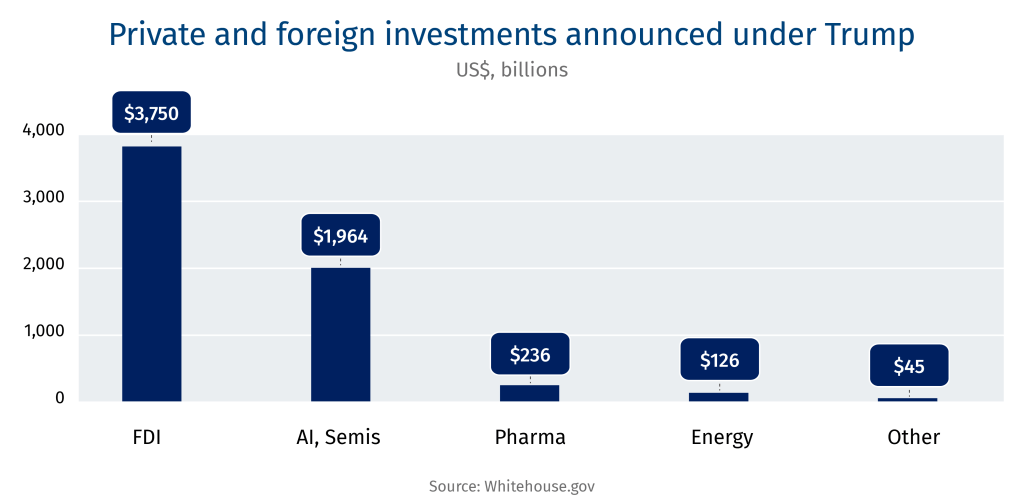
Tucked away in Japan’s trade deal with the U.S. was a US$550-billion pledge to create a sovereign wealth fund overseen by the U.S. President himself. Could that prove to be the blueprint for Canada and the EU, both of whom are angling to seal trade deals before Aug.1?

Details of the Japan fund are vague with both parties characterizing it very differently: The U.S. sees it as a 90:10 partnership in the U.S. taxpayer’s favour, with Washington dictating Japanese companies where to invest; Tokyo sees it as an investment pledge from Japan Inc. The U.S. is increasingly blurring the lines between creating an ecosystem that facilitates investments to what some are calling state intervention over business investments and activities. The most recent example: A US$400-million direct, China-style investment in rare-earth minerals company MP Materials by the Pentagon—a deal that has been criticized by industry competitors for its overreach.

The U.S. state creep poses a challenge for North American markets that are fair and free, but could start seeing U.S. federal-based entities coming to the fore—a new generation of government-backed entities that Western governments have criticized autocratic states for over the past several decades.

Canada has much to offer to the U.S. as an investor, but in the right circumstances. Canadian stock of U.S. foreign direct investment stands at US$812 billion, second only to Japan’s US$819 billion. In theory, more Canadian investments could be channeled into the U.S., structured to enrich Canadian domestic supply chains as well. The continued integration of Canada and the U.S., in public and corporate sectors, should result in positive spill-over effects for Canada in terms of investments, business activity and trade. There are also may be plenty of room for a slew of joint Canada-U.S. projects—in critical minerals, automotives, nuclear, fossil fuels and electricity, among others.

But if a joint fund of some description is on the table, it can’t be a blank cheque to Washington.
It’s crunch time for Canada, which is also facing 35% tariffs for all non-USMCA compliant goods if a deal is not struck (Both Carney and Trump have downplayed chances of a trade deal by Aug.1.) We may have to contend with 15%, which seems to be the going rate, as Europe appears to be resigning itself to that figure with Washington.

That could prove to be positive for Canada. 

Assuming the USMCA preferred treatment remains intact, Canada seems poised to garner a ‘best-in-class’ access to the U.S. market. A possible weighted-average effective tariff rate of 2-3% is attractive both in absolute and comparative terms, assuming a 15% universal tariff rate on only 10%-20% of non-compliant USMCA trade. Essentially that’s similar to most-favoured nation tariff rates (traditionally 2.5%).

In a week when Prime Minister Carney met with the Premiers, our Head of Thought Leadership Jordan Brennan reached out to Trevor Tombe, at the University of Calgary’s School of Public Policy, to discuss interprovincial trade barriers—and Trump.

Q: How much are interprovincial trade barriers costing Canada?
A: My research with collaborators suggests that Canada’s economy could increase by between 4.4% and 7.9% over the long-term—a gain of between $110 and $200 billion per year—if internal trade barriers are eliminated through mutual recognition policies. In specific sectors like trucking, these barriers add approximately 8.3% to freight rates, inflating business costs and reducing overall productivity. The smaller and generally lower income provinces, especially in Atlantic Canada, stand to gain far more than other provinces.

Q: What do you think the likely economic outcome of Bill C-5 will be?
A: Bill C-5 represents a significant federal effort to address internal trade barriers. However, we should be cautious about immediate GDP impacts. The $200-billion growth figure cited by some represents the upper end of estimates and assumes a massive levelling of trade barriers far beyond anything currently proposed. The real gains will come if provinces reciprocate with their own mutual recognition legislation, but we’re seeing considerable momentum in that regard.

Q: Prime Minister Carney seems to believe that removing internal trade barriers will offset the economic harm associated with Trump’s tariffs. How realistic is this belief?
A: The magnitude of interprovincial trade costs is larger than the costs of U.S. tariff disruptions but would take far longer to manifest. Over time, we could potentially more than compensate, but internal trade liberalization is not a sufficient short-term offset for immediate economic disruption.

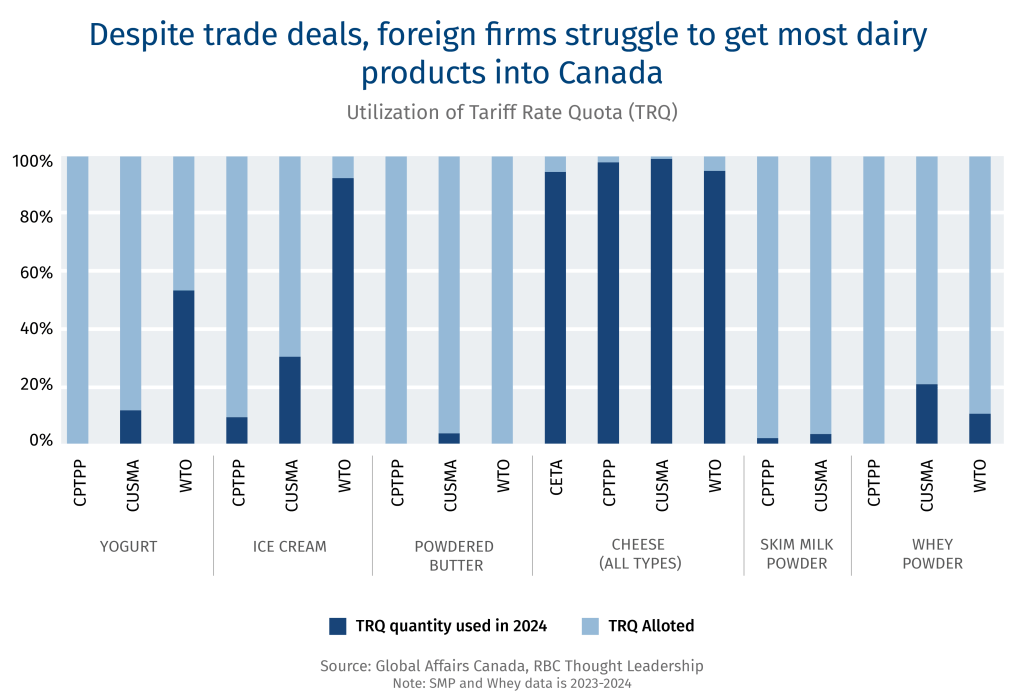
Canada’s supply management has caught the eye of the Trump administration, again. Critics from south of the border are zeroing in on import quotas specifically for dairy products.

  • Canada’s supply management system is governed through import quotas, producer set prices, and production quotas for dairy, eggs, and poultry–a policy to guarantee farmers’ domestic market share and fair prices for products relative to farm inputs.

  • Import quotas are intended to limit imports within Canada’s supply management industries. In recent trade negotiations, however, Canada has made greater concessions. For example, in the Comprehensive and Progressive Agreement for Trans-Pacific Partnership (CPTPP) negotiations, Canada agreed to provide participating countries with an estimated 3.25% of Canada’s domestic dairy market.

  • As Canada-U.S.-Mexico-Agreement (CUSMA), the Canada-European Union Comprehensive Economic and Trade Agreement (CETA) and CPTPP are phased in over the next 10 years, Canadian foreign market access is expected to climb to roughly 10% of Canada’s dairy production.

  • But as Canadian processors hold most tariff import quotas, foreign importers have argued that they have limited access to Canada’s markets to fulfill their non-tariffed trade volumes negotiated in the agreement.

RBC Thought Leadership’s latest report, Supply Management Explained, explores the benefits and drawbacks of the system and its role in trade wars.

Canada and the U.S. ramped up their commodity exports over the past decade, as both countries leverage their resource riches. The latest report from UN Trade and Development (UNCTAD) shows the two countries—comprising ‘Northern America’—raised their combined commodity exports to 13.1% of the global total by 2023, from 10.8% a decade ago. Other regions barely grew or lost market share during the period.

Commodity concentration: Canadian commodity exports—energy, mining and agriculture, as defined by UNCTAD—accounted for 55.8% of its total commodity exports in 2021-23, compared to 53.3% between 2012-14. The U.S. has become even more reliant: the three commodities made up 35.5% of all American commodity exports during the period, up from 29.5%. As both have earmarked energy, ag and mining as export priorities, they could become more dependent on the three commodities—and their price volatility.

Agriculture rising: For Canada, agriculture was able to grow its export market share from 14.7% to 16.7%, with energy, at 17.4%, up only marginally. For the U.S., it was all about the shale evolution and LNG revolution.

Commodity contraction: Globally, commodity exports now account for 32.7% of all international trade in value terms, down from 35.5% a decade earlier.

Strive to diversify. Countries mainly exporting raw materials could miss out on the broader benefits of global trade, driven by diversification, innovation and value-added production. While that UNCTAD warning was directed at developing countries, it should not be lost on Canadian businesses looking to expand mining, energy and agriculture sectors.

“It’s not our objective to have an agreement at any cost.”

Prime Minister Mark Carney on negotiations with the U.S.


Contributors: Jordan Brennan, Shaz Merwat, Lisa Ashton, Reid Mckay, Yadullah Hussain, Caprice Biasoni

Disclaimer

rbc_tl_disclaimer

In this week’s edition: Four potential global trade scenarios, Canada’s agri-food rebound, and why copper is in the crosshairs

By Jordan Brennan, Head of Thought Leadership

What if the U.S. is no longer at the centre of the global trading system? That was one of the ideas explored at a Fields Institute-hosted roundtable I attended this week in Toronto.

The U.S. has wielded tremendous soft power through its custody of the global trading system for the better part of 80 years. That came to an end on April 2nd with President Trump’s ‘Liberation Day’ tariffs, according to one speaker. The speaker went on to claim that the end of American leadership would beget four possible scenarios:

  • World War Trade. This is a 1930s-style scenario where other countries follow the U.S. in ignoring WTO policies. Unless resolved in the coming weeks, Trump’s tariffs will likely provoke retaliatory tariffs from other countries in a tit-for-tat escalation. In one scenario, the trigger is Chinese retaliation against the anti-China provisions the U.S. is seeking from trading partners (e.g., the U.S.-U.K. deal attempts to lock China out of critical supply chains). This nightmarish scenario, thankfully, is the least likely.

  • Managed multi-lateral drift. This is the current base case. The world sees more protectionism from the U.S. and more liberalization everywhere else. The U.S. stands alone in violating the WTO rules, but everyone else plays nice. 

  • Fighting trade blocs. Further geo-political fragmentation leads to the creation of adversarial trade blocs. Within the blocs, there is some measure of cooperation and openness. Between the blocs, we see WTO non-compliance. Three main blocs will form: a U.S.-centric bloc with Canada and Mexico, a pan-European bloc, and a China-led bloc. Japan is a wildcard.

  • Re-globalization without America. This is the most likely scenario. The U.S. will become a more closed economy, trading less with the world. Given that the U.S. only accounts for 15% of global trade, this is not fatal to the international trading system.

It’s not clear what these scenarios would mean for Canada. With more than 75% of our merchandise exports headed to our American neighbours, it is difficult to imagine a future in which the U.S. does not remain Canada’s largest and most important trading partner.

It is possible, strangely, that Canada’s position with the United States is strengthened on a relative basis, given that U.S. tariffs on Canada may end up being considerably lower than those on America’s EU and Asian trading partners. Canada could end up trading more with the United States, not less, despite the tariffs.

It’s also possible, again unexpectedly, that foreign direct investment in Canada is strengthened—think auto—as countries that were happy to pay the ~3% most favoured nation tariff rate now face a 25% tariff wall and will therefore look to pick up spare capacity within North America to work around that wall.

What’s clear is that Canada needs a strong ‘Plan B’ and ‘Plan C’ in the current negotiations with President Trump. Free trade with the U.S. is the preferred outcome, but Canada needs a menu of options if we cannot secure a satisfactory deal.

  • Prime Minister Mark Carney acknowledged that a deal with the U.S. isn’t likely to result in the elimination of all tariffs.

  • Trump’s tariffs have raked in nearly US$50 billion for the U.S.—so far.

  • Mexican President Claudia Sheinbaum said she and Carney have spoken about Mexico and Canada increasing collaboration around trade.

  • A dozen EU nations are considering so-called anti-coercion instrument, that could include new taxes on big U.S. tech firms or investment restrictions, if a deal with the U.S. isn’t struck by Aug. 1.

Canada’s agri-food exports rebounded in May after plunging in April, with meat and seafood exports leading the way. New Statistics Canada merchandise trade data shows meat exports were up 13% in May—largely spurred by pork exports to Japan—while packaged seafood splashed up to 52.9% after a year-long decline.

Why that matters?

  • Commodities travel the path of least resistance, but adjustments can take time. Thanks to the CPTPP, Japan’s duty on Canadian fresh, chilled or frozen pork of 4.3% is gradually phasing out by April 2027, specifically for products that are “over-gate,” which is Japan’s minimum pricing system for all pork imports. Processed products like sausages that faced tariffs of up to 10% pre-CPTPP, are now fully phased out. Canadian prepared and preserved swine meat, including lunch meat, to the U.S. dropped from $4 million in January to $2.4 million in May, while the same category of exports to Japan rose from $3.2 million in January to $8 million in May.

  • Canada’s agri-food trade diversification efforts may not be that diversified, yet. The U.S. remains an important partner, especially for highly perishable products like greenhouse tomatoes. Yet, Canada’s agri-food exporters for many categories are on the move and looking to grow in markets where access is already strong, and logistics are in place, including Japan, Mexico, and South Korea. Further unlocks could be markets on the edges with high growth potential for Canada driven by expanded market access. For example, Columbia and Taiwan, both outside of Canada’s top 5 markets for beef and veal export, have grown in export value by 236% and 57%, respectively, between May 2024 and 2025.

Bottom line: With a tariff-free North America looking more unlikely, Canada continues to diversify its agri-food trading partners and appears to be focused on growing in existing tariff-free or low-tariff markets.

84

Percentage of Canadians who don’t expect the Trump administration to negotiate in good faith.

Copper is now a target of the Trump Administration’s AI-centered energy and resource security agenda, where the commodity’s utility as an electrical conductor makes it a priority for the transformers, transmission lines, and battery technologies that will underpin the buildout of AI infrastructure. By the end of the month copper imports into the U.S. could face 50% tariffs, the latest metal to become front and centre in a realignment of resource supply chains.

  • The U.S. imported 42% of its refined copper on average in the past four years. But with 5% of global reserves, there is scope to expand domestic production.

  • Canada occupies a relatively small share of global copper refining, responsible for 1.2% of refinery production in 2024, and approximately 0.8% of reserves.

  • Canada is a major supplier of copper to the U.S. in the form of ore and concentrate, refined copper, copper scrap, and copper matte and precipitate, and exports to Asia and Europe. Canadian exports to the U.S. were worth $4.8 billion in 2023.

  • The effect of the copper tariffs will be felt less in some provinces. B.C., for instance, hosts Canada’s largest copper mines but doesn’t export significantly to the U.S. But others could be more susceptible. Quebec hosts a copper smelter and a refinery and accounted for 80% of copper exports to the U.S. in 2024, according to data from Innovation, Science, and Economic Development Canada.

  • Canadian mines produced 508,000 tonnes of copper in 2023, and the country counted 14 copper deposits among its top 100 mineral exploration projects in 2024. Expanding Canada’s reserve base and bringing more Canadian copper to market, whether at home or abroad, will be important for achieving our energy and AI ambitions.    

Africa has long been a battleground for the China and the U.S. as they vie for economic and trade influence in the continent. The competition has only intensified as the two countries seek access to minerals, from gold to graphite. The U.S. is trying to break Chinese sway in the continent by brokering a peace between Rwanda and the Democratic Republic of Congo (DRC). Washington also recently wrapped up a U.S.-Africa Business Summit with US$2.5-billion investment commitment, that included US$1.5 billion towards a 1,150-kilometre transmission line from Angola to deliver 1.2 gigawatt electricity to power DRC mining sites. In return, the U.S. gets access to DRC’s natural resources that include two-thirds of global cobalt that power EV batteries. It’s also the largest supplier of tantalum–a critical metal used in capacitors–and the world’s second largest supplier of copper.

Africa could prove to be a new, thriving trading destination as Ottawa casts its export net wider. There are opportunities abound:

  • Canada-Africa trade has tripled over the past 25 years, but still accounts for a mere 1% of Canada’s total trade volume.

  • Canada could sell cleantech to a continent that remains heavily dependent on coal, especially in growing economies like South Africa. May be LNG, too.

  • Canada can also export mining equipment and clean extraction methods in resource-rich African nations.

  • Health-tech and pharma services could also boost digital health services, especially in the continent’s underserved regions. Edu-tech exports to a continent with the world’s youngest population could prove to be another winner.

  • Africa’s critical minerals supplies offer diverse range of inputs to EV battery supply chains, offering analternative to Chinese-controlled resources. 

“We’ve been clear from the get-go that supply management is off the table.”

François-Philippe Champagne, Canada’s Finance Minister, on the protections in place on dairy and agriculture not being part of the U.S/Canada negotiations.