

 EN
EN 



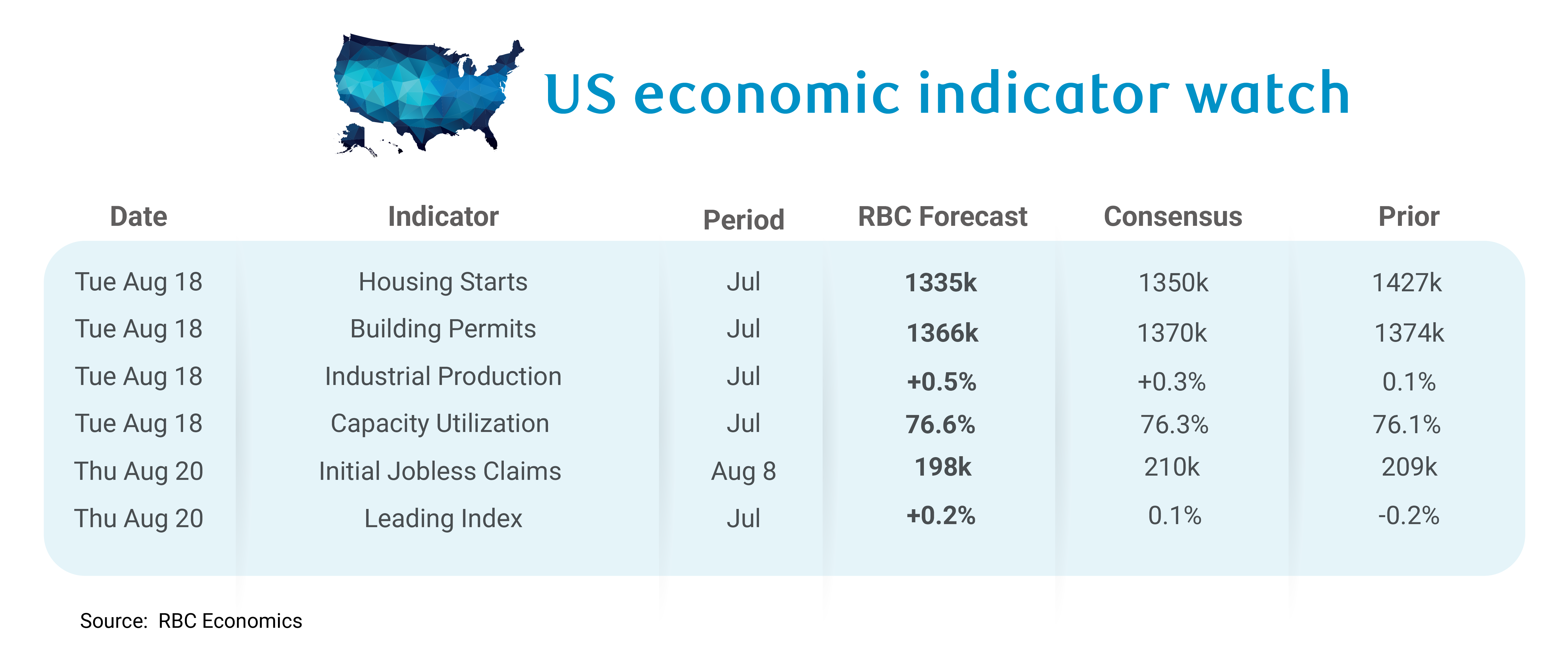
Next week will be a quiet week on the data front, giving markets and economists time to digest a full week of tier-one releases. Housing starts, industrial production, and the Conference Board’s Leading Index round out the calendar—with housing and production telling very different stories about the state of the US economy.
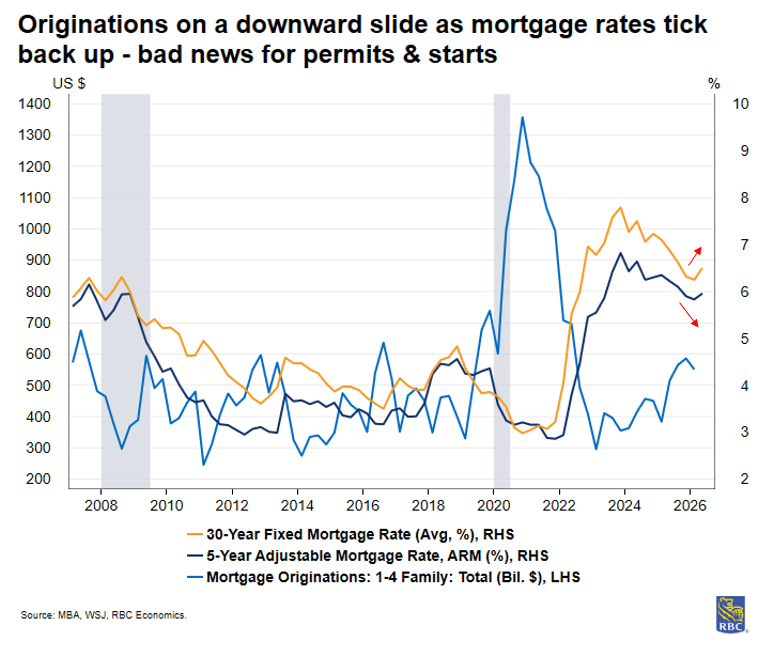
First up: housing starts and building permits will give us an indication of whether the US housing market slog continues—which we expect will be the case. Both 30-year fixed and 5-year adjustable mortgage rates rose between Q1 and Q2, and mortgage loan applications have trended lower as a result. Building permit issuance has softened alongside housing demand, and since permits lead starts, we expect limited growth prospects for housing starts in the coming months. The housing sector remains sidelined by rates, and next week’s data is unlikely to change that narrative.
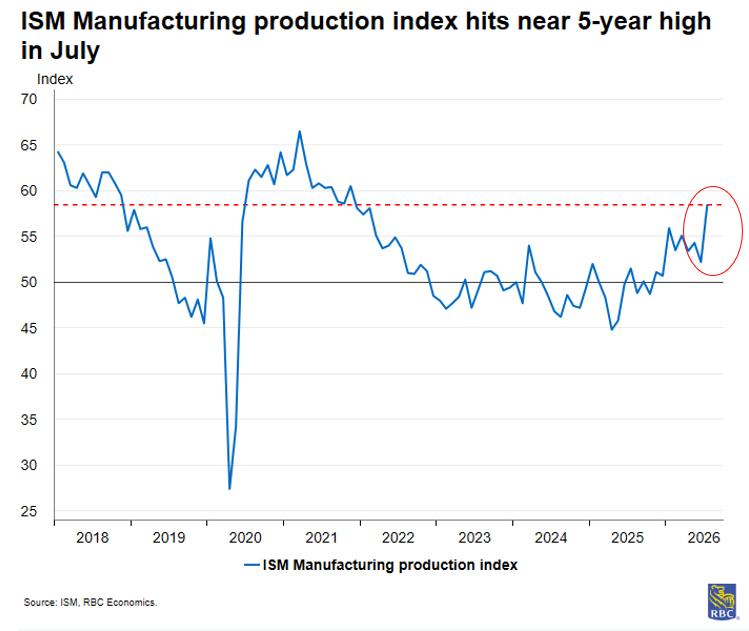
On the other end of the spectrum, industrial production is expected to ramp up materially (+0.5% m/m) after the ISM manufacturing production index posted an outsized expansion—its highest reading in nearly five years. Tariffs have done little to hamper production even as input cost pressures materialize. The July CPI data showed that Section 232 tariffs are increasing motor vehicle parts and equipment prices, with spillovers into motor vehicle maintenance and repair. And prices for computers, peripherals, and smartphones have risen after PPI for electronic components skyrocketed since the beginning of the year. But these cost pressures have not translated into meaningful demand destruction—despite a decline in July, real retail sales have still risen notably (~2%) from the beginning of the year and production continues to expand.
On the tariff front, the backdrop remains largely status quo. Section 338 tariffs on Canada are planned to take effect on August 19th but won’t meaningfully alter the landscape—by our count, they add roughly 0.3 percentage points to the average tariff rate, as the 50% levy affects only about 0.5% of total global imports. And the recently introduced Section 301 tariffs replacing Section 122 should, if anything, leave tariffs on balance lower rather than higher. Core goods inflation appears to be resurfacing in July, but with consumer demand intact and production accelerating, we expect the Conference Board’s Leading Economic Index will continue to point to expansion.
About the authors:
Mike Reid is Head of US Economics at RBC. He is responsible for generating RBC’s US economic outlook, providing commentary on macro indicators, and producing written analysis around the economic backdrop.
Carrie Freestone is a Senior US Economist at RBC. She is responsible for generating RBC’s US economic forecasts across GDP, employment, and inflation, and providing macro commentary through publications, presentations, and the media.
Imri Haggin is an US Economist at RBC, where he focuses on thematic research. His prior work has centered on consumer credit dynamics and treasury modeling, with an emphasis on leveraging data to understand behavior.
This article is intended as general information only and is not to be relied upon as constituting legal, financial or other professional advice. The reader is solely liable for any use of the information contained in this document and Royal Bank of Canada (“RBC”) nor any of its affiliates nor any of their respective directors, officers, employees or agents shall be held responsible for any direct or indirect damages arising from the use of this document by the reader. A professional advisor should be consulted regarding your specific situation. Information presented is believed to be factual and up-to-date but we do not guarantee its accuracy and it should not be regarded as a complete analysis of the subjects discussed. All expressions of opinion reflect the judgment of the authors as of the date of publication and are subject to change. No endorsement of any third parties or their advice, opinions, information, products or services is expressly given or implied by Royal Bank of Canada or any of its affiliates.
This document may contain forward-looking statements within the meaning of certain securities laws, which are subject to RBC’s caution regarding forward-looking statements. ESG (including climate) metrics, data and other information contained on this website are or may be based on assumptions, estimates and judgements. For cautionary statements relating to the information on this website, refer to the “Caution regarding forward-looking statements” and the “Important notice regarding this document” sections in our latest climate report or sustainability report, available at: https://www.rbc.com/community-social-impact/reporting-performance/index.html. Except as required by law, none of RBC nor any of its affiliates undertake to update any information in this document.

