

 EN
EN 



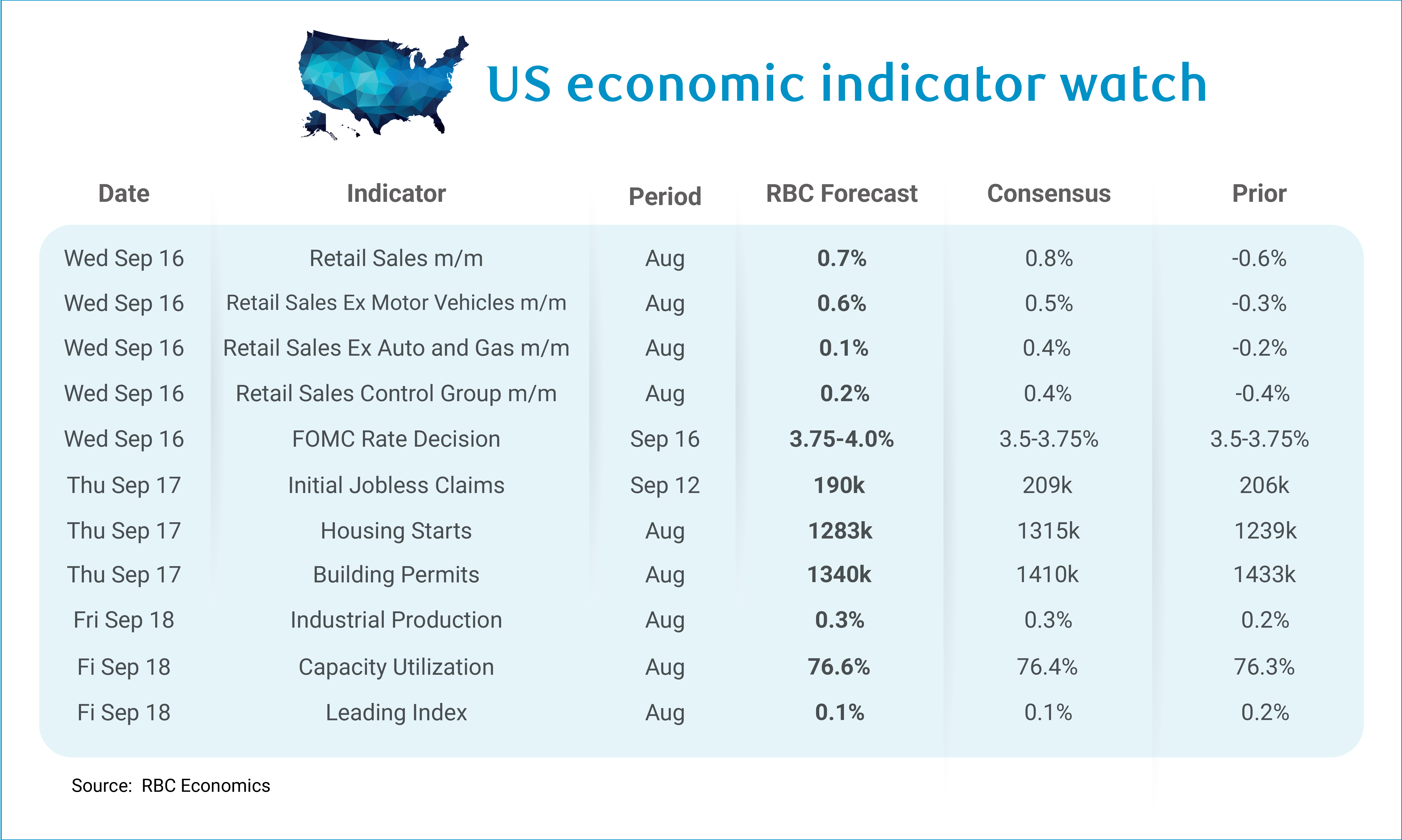
Next week, the focus will be on the FOMC’s September meeting. We now expect that the Fed will raise the Fed Funds Rate by 25 basis points — the first hike since 2023.
August’s core CPI print highlighted accelerating inflationary trend, PPI signalled notable pressure in the inflation pipeline, and WTI hit $100/barrel on concerns over the war in Iran. Meanwhile, the labor side of the Fed’s mandate showed no clear signs of weakness. With inflation risks mounting, we expect the Fed will follow next week’s hike with two additional 25 basis point increases at the remaining meetings this year, fully reversing the three insurance cuts of 2025.
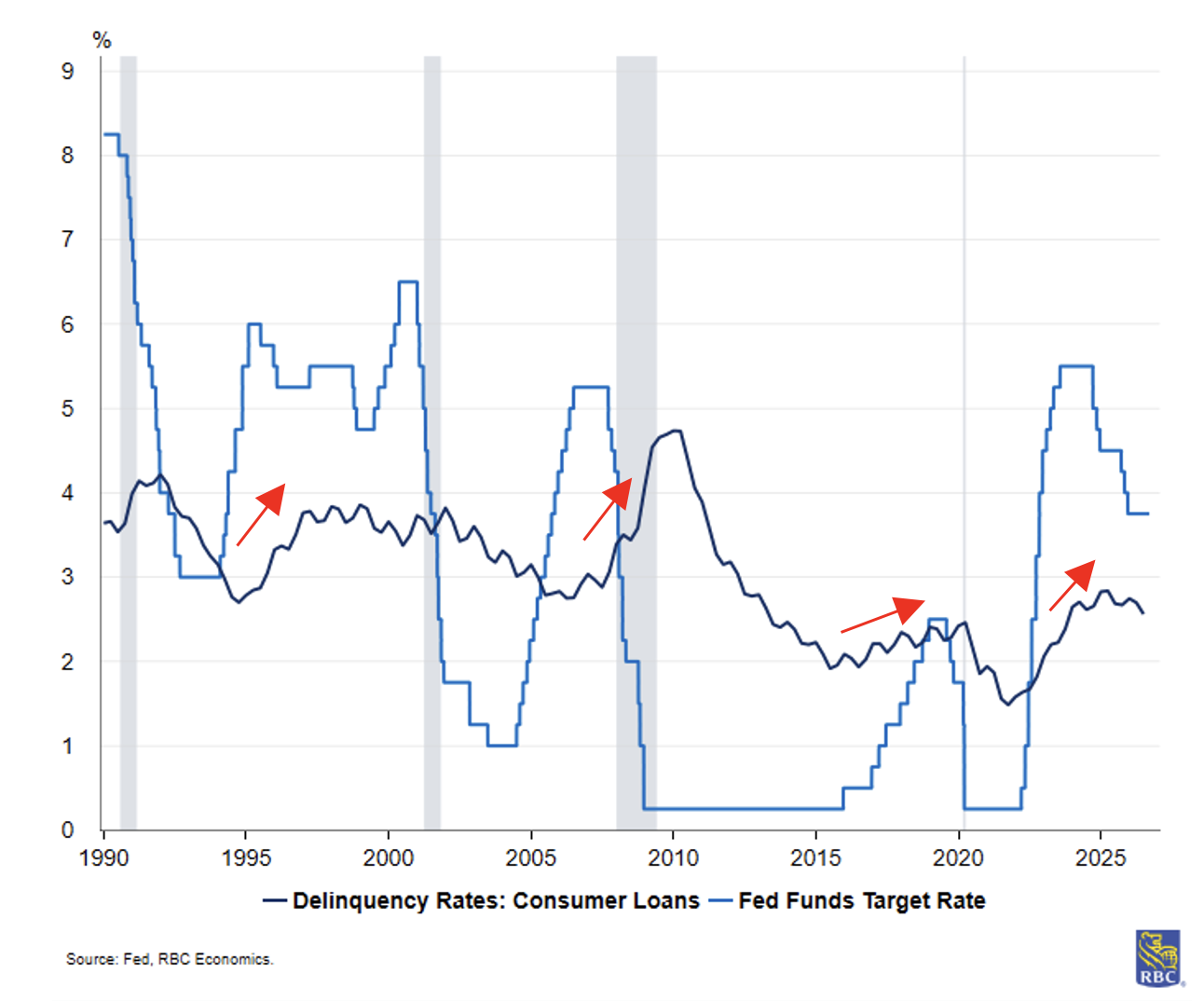
The prospect of rate hikes means consumers will feel the impact. As we have previously flagged, the non-mortgage interest expense burden is already elevated, and raising rates will add to it. Importantly, the August retail sales report will tell us how consumers held up through the end the summer. We look for the August retail sales print to rise 0.7% m/m but largely on gas sales. Gas prices rose 4% m/m in August and we expect to see some pullback elsewhere as a result. Motor vehicles are also expected to add to overall spending as Autodata showed an uptick in vehicle sales, following a sizeable uptick in nonrevolving consumer credit (i.e., auto loans). But stripping out the impact of gas and auto sales, we expect to see more subdued spending growth of 0.1% m/m.
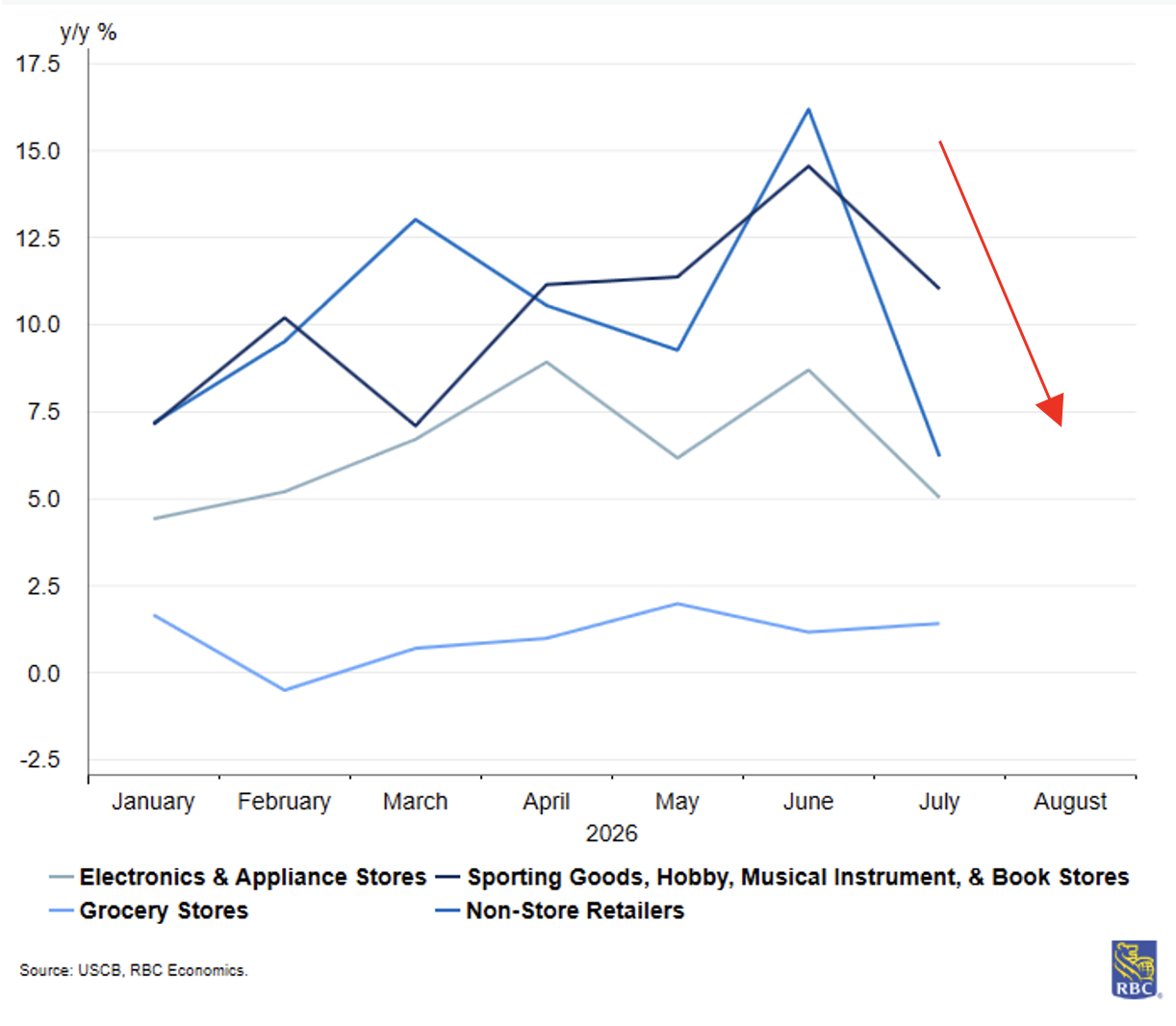
Most consumers have likely spent their tax refunds, and with energy prices biting, consumer confidence worsened in August — both the University of Michigan sentiment index and the Conference Board measure deteriorated, a signal that a slowdown is likely. Discretionary spending categories face headwinds as lower- and middle-income households have been saving less of their incomes and increasing credit card usage. This is reflected in slower growth in grocery spending and a pullback in some big-ticket discretionary items like electronics and appliances.
We do expect broader consumer demand will continue to be supported by high-earners and wealthy households, disproportionately concentrated among Baby Boomers. Aging demographics will continue to nudge spending away from goods in favor of services — most notably toward health care.
Rate hikes pose risk for a rise in delinquencies
Retracement in spending evident as tax refunds are depleted
About the authors:
Mike Reid is Head of US Economics at RBC. He is responsible for generating RBC’s US economic outlook, providing commentary on macro indicators, and producing written analysis around the economic backdrop.
Carrie Freestone is a Senior US Economist at RBC. She is responsible for generating RBC’s US economic forecasts across GDP, employment, and inflation, and providing macro commentary through publications, presentations, and the media.
Imri Haggin is an US Economist at RBC, where he focuses on thematic research. His prior work has centered on consumer credit dynamics and treasury modeling, with an emphasis on leveraging data to understand behavior.
This article is intended as general information only and is not to be relied upon as constituting legal, financial or other professional advice. The reader is solely liable for any use of the information contained in this document and Royal Bank of Canada (“RBC”) nor any of its affiliates nor any of their respective directors, officers, employees or agents shall be held responsible for any direct or indirect damages arising from the use of this document by the reader. A professional advisor should be consulted regarding your specific situation. Information presented is believed to be factual and up-to-date but we do not guarantee its accuracy and it should not be regarded as a complete analysis of the subjects discussed. All expressions of opinion reflect the judgment of the authors as of the date of publication and are subject to change. No endorsement of any third parties or their advice, opinions, information, products or services is expressly given or implied by Royal Bank of Canada or any of its affiliates.
This document may contain forward-looking statements within the meaning of certain securities laws, which are subject to RBC’s caution regarding forward-looking statements. ESG (including climate) metrics, data and other information contained on this website are or may be based on assumptions, estimates and judgements. For cautionary statements relating to the information on this website, refer to the “Caution regarding forward-looking statements” and the “Important notice regarding this document” sections in our latest climate report or sustainability report, available at: https://www.rbc.com/community-social-impact/reporting-performance/index.html. Except as required by law, none of RBC nor any of its affiliates undertake to update any information in this document.

