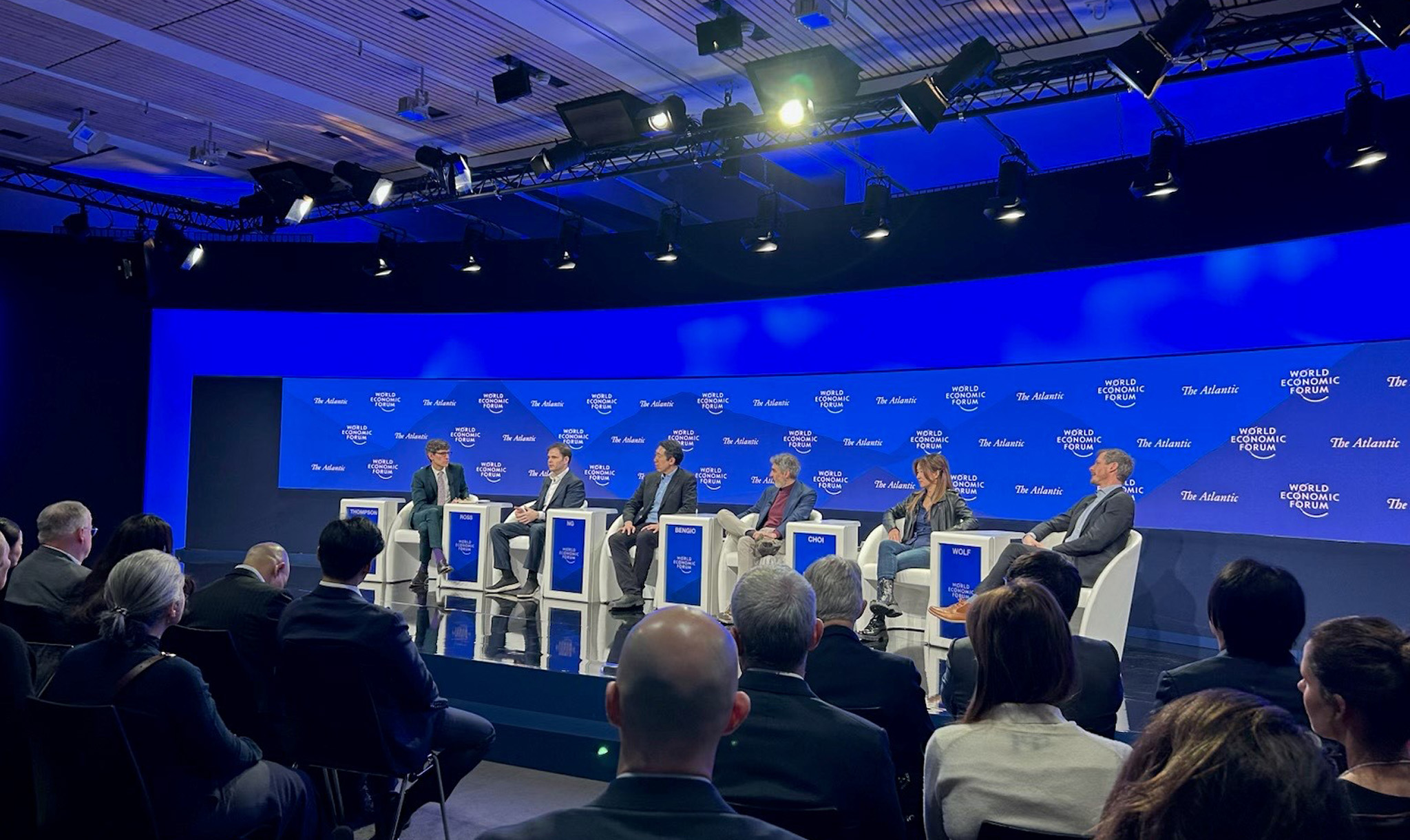
This is the 50th anniversary year of the G7, and when its leaders meet in Alberta next month, many will wonder if the group has another 50 years in it.

Their finance ministers may have the same questions this week when they meet in Banff, asking if the champions of democratic capitalism can overcome a tariff war, threats of stagflation and growing concerns about the U.S. debt. 

The fate of democratic capitalism may hang in the balance. 

I spent part of last week in Ottawa, with a group called the B7, made up of business leaders from across the seven leading democratic economies, and didn’t come away feeling enthusiastic about the West’s great project. Since 1975, when the world was struggling with oil shocks and monetary crises, the G7 has helped maintain economic and financial stability. Most of the heavy lifting was done by the U.S., with assists from Germany and Japan, but the coordination of economic and monetary policy across the broader group was essential, too.

Now that’s fading. You just need to look at Donald Trump’s visit to the Persian Gulf last week to see how much capital’s centre of gravity has shifted. China and Latin America are laying claims, too.

And if trade follows geopolitics, we can expect more disruption to come.

So what can the G7 do? Perhaps develop new ways to generate, attract and reinvest capital. 

For too many years, the public and private balance sheets of the leading democracies have focused on short-term objectives. Meanwhile, the non-democratic world has amassed capital for decades-long projects. 

With their economies struggling and debts growing, G7 countries now face a $15-trillion infrastructure gap, to rebuild supply chains, expand production of critical minerals, develop capacity for AI-powered economies, and decarbonize energy systems. 

Canada can help shift the alliance’s thinking to those longer-term needs. That won’t be easy given political tensions between the Trump administration and most of the G7 allies. But with U.S. engagement, the G7 can create new approaches for democratic capitalism, including:

  • coordinated investments across countries.

  • more institutional capital for priority projects. 

  • preferential approaches to procurement. 

  • joint approaches to procurement, especially of energy, advanced technologies and critical minerals.

  • shared standards, measurements and principles.

You can read the B7 group’s final communique here.

All eyes were on the election this week—but something else remarkable was taking place, too. Many of the country’s top Indigenous leaders came to Toronto, and Bay Street, to see how we can better mobilize capital for Indigenous-partnered projects. These conversations are central to the questions we’re grappling with as a country–including reimagining our relationship with our closest ally and building up our economic strength.

The two outcomes—of the election and economic reconciliation—are closely related. Indeed, our economy and trade won’t grow and diversify if we don’t ensure a lot more Indigenous ownership. That was the focus of the annual First Nations Major Projects Coalition Conference, in Toronto, which drew nearly 2,000 people to explore the future of Indigenous capital—and how it is a source of strength for Canada in an increasingly competitive world.

Here’s some of what we took away, and questions we need to keep asking:

  • From critical minerals to hydro and natural gas, Canada’s ability to build resource projects at speed and scale will come down to 3Cs: capital, capacity and consent. Can we develop those together?

  • Our research shows that there is an Indigenous equity opportunity of close to $100 billion over the next decade. How can governments mobilize concessional tools to attract more private capital?

  • Government loan guarantees are in fashion, with the Carney government committing to double its program to $10 billion and Ontario using the conference to announce a tripling of its program to $3 billion. How can those programs be better coordinated and implemented at a faster click?

  • Equity may not be the most appropriate tool for some communities. Can we also promote new debt instruments, royalty models and procurement agreements for communities to invest in?

  • Indigenous capital is being built up quickly–from project participation to trust settlements. What structures can help us pool this capital–and reinvest returns back into Indigenous Nations?

  • Most communities need a lot more capacity—from finance to engineering and legal—to make these deals and projects work. In fact, our research suggests close to 85% of these projects may be unrealized without plugging the capacity gap. How can we invest more in scholarships, training, work placements and exchanges—for companies as well as communities?

  • Capital and capacity are useless without consent, which is more than a one-off vote, or signature. Can we develop accepted, non-binding approaches to consent that allow both parties to develop and deepen their trust and confidence?

  • Voice is a critical part of consent. How do we know if each partner feels they have a respected voice?

  • Time is of the essence. Can companies and communities create clearer approaches to timelines, and time expectations, for projects?

  • Uncertainty is the enemy of investment. Can co-developed models for Indigenous consent become one of Canada’s advantages with global investors?

  • Indigenous priorities are not diversity issues—they undergird the Constitution of our country and how our country is constituted. How can we more boldly state that Indigenous partnerships are a foundational part of operating in Canada?

  • Small businesses and projects tend to be excluded from these major project conversations, and yet are crucial for the success of our economy. How should we better raise capital for small business collectives and projects?

John Stackhouse, Senior Vice-President, Office of the CEO, RBC

Varun Srivatsan, Director, Policy and Strategic Engagement

Read More:

Building Together: How Indigenous economic reconciliation can fuel Canada’s resurgence

The Public Policy Forum is one of Canada’s premier think tanks, and hosts an annual Growth Summit that tends to be at the pointy end of some pretty big issues.

This year’s summit, in Toronto, was all about what I’d call the Big Pivot — and how we can make our economy more independent and resilient. Great conversations about investment, Indigenous equity, AI-adoption and more.

Here’s a few of the questions I took away:

1. Do we need to win back investor confidence?

The answer seems to be yes. Too many of these conversations assume Canada is amazing in the world’s eyes. Rhetoric is cheap. Credit is costlier. Keep an eye on how money is priced for Canada in the coming months.

2. Can we increase competition while reducing reliance on America?

The U.S. tends to be the primary driver of competition, directly or indirectly. And there are not a lot of easy alternatives. European firms aren’t likely to add a lot of juice to Canadian markets, and Chinese entrants are probably a non-starter. Perhaps our new competition needs to come more from within.

3. Can governments play a more active economic role without wrecking the economy?

We have decades of mixed results but will likely give state corporations one more try, whether it’s to build houses or expand pipelines.

4. What the heck is “national interest”?

A lot of those government investments will be made in the name of an ill-defined national interest. We’re a nation of many regions, and one’s interests are often not another’s

5. Why do Canadians shy away from risk?

I was struck by the number of conversations that eschewed risk. No country clamours to “de-risk” like this one, as if the key role of government is to bear the risks of the private sector and of individuals.

6. How can we develop the Arctic without compromising it?

The summit included several key northern voices that stressed the need to not militarize the North the way we did in the 1950s and ‘60s. They’re eager to defend Canada, on the ground and in the sky, but not at all costs, especially to their culture.

7. How much do we want to exclude China?

Reducing our dependencies on the U.S. will require new markets and new sources of capital — and Europe won’t be the answer, not on its own. Yes, there are plenty of options. It’s a big world! But China is the biggest option, and one we need to develop a clearer relationship with.

8. How do we balance economic ambitions with climate commitments — and the world’s climate expectations?

We’ve become so consumed with All Things Trump that we seem to forgot how the rest of the world is not turning itself upside down. Indeed, climate remains a serious concern from Japan to Germany — the markets we now eagerly want to serve — and we will have to ensure we’re not misaligned.

9. How can we align our duty to consult Indigenous communities with our ambition to build more faster?

There may never be a formula for consultation and the resulting consent — but we may be able to establish norms that will be widely accepted. Watchwords: “speed and certainty.”

10. How can we pool institutional capital for major projects?

We can continue to let market forces determine what gets financed, with a range of government supports and incentives. I don’t think Canada will ever have a sovereign wealth fund. Or will we? Alternatively, can we move toward dedicated public-private investment vehicles that may draw inspiration from the Quebec model?

The next few years will be unlike any few years we’ve seen. So a lot of new thinking will be needed.

This month marks the 100th anniversary of the publication of The Great Gatsby, the F. Scott Fitzgerald novel set in the Jazz Age when American wealth and power soared, and yet the characters clung to the vestiges of an earlier golden age.

Sound familiar?

A couple of weekends ago, I spent some time not far from the mythical Gatsby home, at another estate left by the Whitney dynasty to a foundation that the family created to support peace and sustainability. About three dozen policy leaders from the U.S., Europe and Canada gathered at Greentree, on Long Island, to discuss how business can adapt to Donald Trump’s world—and his promise of a new golden age—and also shape it.

Some of my takeaways from our discussions, which began as global markets began a sharp decline:

1. China will become the defining force of this Administration, which may need to consider “managed interdependence.”

2. The U.S. dollar remains an enormous challenge to America’s trade competitiveness and will continue to be overpriced as long as Washington runs enormous deficits.

3. Trump Republicans hold a special dislike and distrust of Europe that will be hard to resolve, and a peculiar like for Britain.

4. Tariffs won’t fix underlying U.S. frustrations, which are rooted in long-term labour productivity and real wage stagnation.

5. While trade is being blamed for middle America’s economic malaise, technology has caused more job displacement over the last 25 years.

6. America, and others, need to focus on training and reskilling to improve wages and incomes in the coming age of AI.

7. Tariff execution will be a challenge if Trump reaches (or has reached) a political high-water mark, as he will have to spend more energy on opposition forces, including more than 100 lawsuits.

8. Major businesses in Europe and North America need to come together in a more united way to project the case for more economically rational policies.

Read the speech John delivered at the conference here:

Download the Report


I hosted a discussion for RBC clients with Steve Verheul, Canada’s Chief Trade Negotiator during the first Trump Administration, and now a member of the Prime Minister’s trade advisory council. Here’s some of what he shared: 

1. Canada-U.S. headed toward even greater trade conflict

  • We will be lumped in with the “Dirty 15” that have the biggest trade surpluses with the U.S. They include China, Canada, Mexico, the European Union, Vietnam, India, Japan, South Korea, Brazil, Thailand, Malaysia and Indonesia.

  • We may face 14-15% tariffs, although it could start smaller and grow until a trade balance is achieved.

  • Do not expect many exemptions, including on energy and food, at the start.

  • Canada will hit back with counter-tariffs, as mapped out earlier this winter.

  • Prime Minister Mark Carney won’t negotiate until the sovereignty threat is retracted.

  • Verheul does not recommend negotiating at all unless there is an agreement that duty-free status for Canada is still an option.

  • All the major countries and regions are trying to negotiate exemptions and carve-outs. The Eurasia Group believes Canada is still in the light tariff category, according to a grid of U.S. negotiating plans of small, medium, large (7%, 15%, 30%).

2. The U.S. approach will be unprecedented and unpredictable

  • U.S. President Donald Trump will receive reports next week on an array of topics, which will determine U.S. trade action on everything, from China to deficits to currency manipulation.

  • There are indications that the president will start low and grow.

  • The implementation schedule may not be clear, nor is there clarity on possible exemptions.

  • Reciprocal tariffs will be applied using a combination of tools including the International Emergency Economic Powers Act (IEEPA), a U.S. federal law, and Section 338 of the Tariff Act of 1930, or Section 301 of the Trade Act of 1974.

  • The U.S. Congress enacted IEEPA nearly 50 years ago to give the president the power to act promptly to protect the nation’s security—it had never been used.

  • April 2—the day Trump is expected to announce reciprocal tariffs—is the beginning, not the end, as negotiations will ensue.

  • The U.S. is thinking about excluding many countries and narrowing its list and focusing on a list of key sectors, as global tariffs would be too complex. The U.S. would have to go from 17,000 tariff lines to three million tariff lines, which would be impossible to administer.

3. The U.S. strategy is contradictory

  • It’s hard to negotiate as the U.S. is aiming for an outcome that tariffs may not be able to deliver.

  • The U.S. aim is to reshore manufacturing, but companies will require years to do that, and tariffs will cause near-term damage to the U.S. economy.

  • Supply chains are also too complex, and costly, to reshore.

  • It will inflict a lot of self-harm, which the administration appears willing to look past. The U.S. applied tariffs on steel and aluminum even though it requires imports to meet 50% of demand. As an example, the U.S. will need to build four Hoover dams to meet the energy requirements to produce steel domestically.

  • The administration is also trying to extract non-tariff concessions from a range of countries. Expect services to be thrown in, althought the U.S. has no apparent strategy or infrastructure within government to negotiate complex sectors.

  • The U.S. administration doesn’t fully understand the implications of what they are trying to do, caught between trying to move very quickly and the stark reality that companies cannot reshore quickly.

  • “It‘s hard to negotiate with a country willing to shoot itself in the foot.”

4. Trump’s approach is fundamentally different this time

  • His core advisors now are Peter Navarro, Steven Miller and Howard Lutnick, who lack institutional knowledge on trade and current agreements.

  • Robert Lighthizer, who led talks during Trump 1, had clear authority as well as expertise.

  • Jamieson Greer, the current U.S. Trade Representative (USTR), is not yet playing a big role, and focussed largely on China.

  • Lutnick has most influence on the Canada file, including oversight of USTR.

  • Trump is committed to five strategic sectors: steel, aluminum, lumber, semiconductors and pharmaceuticals.

5. VAT will remain a problem

  • The U.S. administration is coming down hard on the EU and Canada on what it views as unfair trade practice in value added tax (VAT) and general sale tax (GST).

  • The EU won’t budge, and it’s hard to see Canada making concessions as it’s a critical revenue source.

  • The issue will be contentious globally as 90% of countries have some form of GST like VAT.

6. USMCA is at risk

  • Verheul suggests leaving dairy, digital services tax (DST), and other contentious issues as is until there is proper negotiation.

  • He would not negotiate until tariffs are removed, and the U.S. expresses willingness to protect duty-free access. Without that commitment to duty-free, the U.S. Mexico-Canada (USMCA) trade agreement would not be worth fighting for.

  • He suggests sticking with the trilateral approach. Canada made “a significant mistake” by isolating Mexico early on.

  • Mexico is better to have at the table as it makes Canada look better, especially as the U.S. is more concerned with the southern border. Let Mexico take the heat.

7. Canada needs a strategic offramp

  • The U.S. is interested in broader continental security, but that’s hard to discuss if it’s not committed to trade access.

  • Canada’s premiers are also not aligned on what concessions to make.

8. Chinese investments will be a target

  • That would be tricky, especially for critical minerals.

  • Canada has taken a number of measures to restrict Chinese foreign direct investment in sensitive areas. That was largely done in reaction to U.S. concerns, but presents a challenge to Canada in how it develops its critical mineral resources.

  • Canada needs to rethink its relationship with China through the prism of critical minerals and border security.

9. China’s reaction to U.S. actions will be key

  • China has signalled it will retaliate with countermeasures, including tariffs, sanctions, and export controls to U.S. actions but only after U.S. measures take effect.

  • China will likely respond by targeting U.S. agriculture, as it’s the top importer of U.S. agriculture, at US$33.7 billion, followed by Mexico at US$28.2 billion, and Canada at US$27 billion.

10. Markets may prove to be the final check and balance

  • Trump still considers stock markets to be the leading arbiter. So far, they have been muted or resilient in response to tariff threats, at least in daily swings.

  • Business and consumer confidence is being hit, and causing an investment slowdown.

  • The S&P 500 is down 7.1% since Trump’s January 20 inauguration. The index is 9.3% lower than its all-time high, achieved on February 19, 2025.


John Stackhouse is Senior Vice-President, office of the CEO, at Royal Bank of Canada, and head of RBC Thought Leadership.

Read some of our latest insights here:

For more, go to rbc.com/thetradehub.

Download the Report

Follow RBC Thought Leadership on LinkedIn here.

This article is intended as general information only and is not to be relied upon as constituting legal, financial or other professional advice. A professional advisor should be consulted regarding your specific situation. Information presented is believed to be factual and up-to-date but we do not guarantee its accuracy and it should not be regarded as a complete analysis of the subjects discussed. All expressions of opinion reflect the judgment of the authors as of the date of publication and are subject to change. No endorsement of any third parties or their advice, opinions, information, products or services is expressly given or implied by Royal Bank of Canada or any of its affiliates.

Donald Trump has set out to remake the global trading order, and with it America’s relationship with the global economy. Unsettling as that is, it’s neither new nor sudden. Trade reform has been a dominant part of American political thinking since the collapse of the Berlin Wall and, with it, the end of a Communist counterweight to global capitalism. While resistance can be traced back to the early days of NAFTA, the fragility of America’s trade confidence really rose to the fore during the Global Financial Crisis and in the years that followed as China grew emboldened with its claim for great power status.

Brick by brick, it’s now orchestrating the dismantling of another dominant structure of the 20th century—the supporting wall of a global economy, one that relies on American military protection, legal principles, and monetary policy. The emerging trade war of 2025 is as much about Pax Americana Oeconomia as anything else and is quickly threatening to create a wholesale break in that support, equal in consequence perhaps to that moment in 1989. It’s why some Trump advisers have called this moment one of “generational change” in trade.

The shape of the global economy, and its direction heading to the 2030s, is in play, and few countries have as much at stake as Canada—because few countries benefitted as much from that trading era that may now be in its twilight. Each country is each other’s largest customer, with over 75 percent of Canadian exports going to the U.S. and 17.3 percent of American goods exports destined for Canada. The two-way trade is more than commercial; the two neighbours have come to rely on each other for energy and food security, military security, and economic security, through aligned standards and principles for everything from car parts and aeronautics to telecom protocols and computing principles.

For Canada to navigate this new age of disruptive economics, in which those long-term understandings may now be at the perpetual whim of political capriciousness and mercantile mindsets, a more strategic approach will be needed. Yes, our future will be more beholden to tariffs and tirades—but beyond those moments, it will be shaped in more lasting ways by our understanding of America’s fundamental challenges, and whether we can help address them, to ensure the generational change helps us regenerate our economy. Among those challenges:

It’s security, stupid

The Trump economic agenda is about security more than prosperity. It’s why security and trade policies are more intertwined than we’ve seen in decades, even though the U.S., remarkably, has not fought a war over trade interests since becoming the world’s dominant economy. The tariff threats are not so much a shakedown, to gain advantage in bilateral and multilateral deals; they’re aligned with an American First view of the world. We can expect, in the coming years, to see the U.S. pull back to this hemisphere, in military and trade engagement. That is, unless and until U.S. economic interests come under threat. This new imperative will require Canada to play a greater role in policing global trade

The world is no longer flat

Successive U.S. Administrations have undermined the World Trade Organization enough to make it largely insignificant to major trade considerations. Trump is now out to remake the broader system, targetting the preferential tariff regime that the U.S. created, coming out of the Cold War, to stimulate growth in allied and developing economies. The U.S. effective tariff rate, at about 3 percent, is the lowest among major economies. The European Union’s effective rate on imports is 5 percent; China’s is 10 percent; Bangladesh’s is 155 percent, the world’s highest. The resulting re-orientation of global trade will complicate Canada’s ambitions to diversify exports.

King Dollar is dead? Long live King Dollar

Underlying America’s trade imbalances is its very awkward position as a backstop for the global economy. The U.S. dollar, as the reserve currency, continues to pull capital to the U.S., in turn making its exports less competitive. The dollar’s strength, in turn, makes its cost of borrowing cheaper than it should be—enabling a credit binge for governments and consumers, and permitting a series of administrations to run fiscal deficits that do little to make America competitive again. As the world’s leading economy became a consumption machine, it relied ever more on imports and the ever-growing need to find cheaper imports, so as not to fuel inflation. Canada will need to join others in helping to rebalance global currencies.

Many have suggested the need for a new version of the Plaza Accord—the 1988 agreement, following a stock market crash the previous year, that helped reset the dollar against other major currencies. That would be much harder today, given the dollar’s dominance over all other currencies, accounting for roughly 60 percent of the world’s $12 trillion in foreign exchange reserves. Moreover, since 1988, the U.S. debt, as a share of GDP, has tripled. The best hope may be a long-term transition that incents America’s leading trade partners, including Canada, to share some of the hidden costs of a reserve currency.

These are some of the strategic pressures the U.S. is facing, and integrating in its approach to trade. It needs others to help police global commerce, including shipping lanes. It needs others to increase its imports of American goods, including energy. And it needs others to help destress long-term pressures on the U.S. dollar and even pay part of the cost of running a reserve currency (through tighter fiscal or monetary policy).

With these major forces at play, we can expect the U.S. to continue to push for trade reforms, perhaps radically so.

What it means for Canada

A headline tariff rate of 25 percent is unlikely, given the blowback that would cause to the U.S. economy and consumers. But its potential impact should not be lost on Canadians: according to RBC Economics, such a tariff hit would cause unemployment to rise above 8 pecent, cut GDP growth in half this year, and add 2.5 percent to consumer price increases. It would also cost U.S. consumers, on average, $1,200 USD a year.

Such modelling is a challenge in that tariffs are never applied in isolation. Also to consider is the likelihood of counter-tariffs, and worse, escalation, as well as the impact on the Canadian dollar. A further factor is the ability of firms to absorb the cost of tariffs, through efficiencies and margin compression. Many Canadian firms have hinted they can absorb a 10 percent tariff, by dividing the cost roughly in thirds—for consumers, intermediaries, and their own profits. In fact, Canadian profit margins have reached relatively high levels, in part because of the 70-cent dollar along with capacity challenges in the U.S., including labour shortages.

But that’s just one measure, by the standard of profit-and-loss statements. The unpredictable trade policies of the Trump administration also create an insidious tax on investment confidence. The Economic Policy Uncertainty Index for Canada has increased to its highest level ever—four times higher than its 20-year average, and well above where it was during the COVID pandemic. Merger and acquisition activity has also slowed, as have investment intentions in machinery and equipment. There is an additional negative effect emerging as firms stockpile inputs and exported outputs ahead of any anticipated tariffs and non-tariff barriers. We saw signs of this in January, as manufacturers hurried to get products across the border, even at a cost of greater inventory management.

That reaction—or pre-emptive action—could lead to an industrial slowdown in subsequent quarters. Add to that an expected decline in consumer confidence, as Canadians read of projected job losses, company closures, and needs for government support, which could lead to interest rate cuts.

In that mix, the Bank of Canada faces a dilemma as difficult as it saw during the pandemic when the supply side of the economy was shut down. Tariffs can simultaneously slow economic growth and increase prices. Deciding whether to adjust interest rates will depend on which effect—inflationary or deflationary—proves more dominant. And as was true in the pandemic, much of that will depend on innovation and the creativity of firms to manage the shock, which we tend to see only in hindsight.

Finally, and equally challenging for the Bank of Canada, there will likely be significant federal and provincial supports for affected businesses and workers, including subsidies and tax relief. This will be politically necessary and economically risky, as it could strain public finances, influence Canada’s credit rating, and prove pro-cyclical if it coincides with interest rate cuts.

How to navigate the uncertainty

While the exact impact of tariffs on the Canadian economy remains uncertain, we know from past experiences and economic fundamentals how such trade disruptions might further unfold.

The first thing to recognize is that trade-sensitive industries will be most vulnerable. Tariffs function as taxes on the movement of goods, not on production. Therefore, industries that rely heavily on cross-border trade—such as automotive manufacturing—face the greatest risk. Decades of free trade have led to deeply integrated supply chains, where goods cross borders multiple times at different stages of production. This means that tariffs can apply multiple times within the same production cycle, compounding costs. The auto industry is most typically cited, but there are similar examples in most sectors: Maine lobsters, for instance, are sent to Canada for processing and then returned to the U.S. market. Overall, more than 60 percent of Canada’s manufacturing sector has trade flows with the U.S. that are at least twice the size of their domestic production.

In addition, even if Canada does not impose retaliatory tariffs, U.S. tariffs alone can indirectly harm Canadian businesses. Because of the tight integration between U.S., Canadian, and Mexican manufacturing sectors, tariffs on U.S. industrial imports will drive up costs for U.S. exporters. This, in turn, raises the price of goods that Canada imports from the U.S., creating an inflationary effect. The OECD estimates that a significant portion of U.S. imports are actually American-made goods that were exported for processing and later re-imported. The result is that North American manufacturing supply chains suffer more from tariffs than those in Asia or Europe.

A clear target for Trump is steel and aluminum, in part because of his stated belief that “if you don’t have steel, you don’t have a country.” The U.S. accounts for over 90 percent of Canadian steel and aluminum exports, meaning these tariffs directly impact nearly $24 billion worth of Canadian goods. However, the trade relationship is deeply intertwined—Canada is also the largest supplier of these metals to the U.S., making up about 20 percent of American steel imports and 50 percent of aluminum imports. In 2024, U.S. steel imports from Canada totaled $7.5 billion, while aluminum imports reached $9.4 billion.

While Canada maintains a trade surplus in these industries—$14 billion in 2024, with $11 billion from aluminum—their overall contribution to the national economy remains relatively small. Steel and aluminum represent just 0.5 percent of Canada’s GDP and jobs and about 3 percent of total exports. Quebec and Ontario are the most affected provinces, where these sectors account for 1 percent and 0.6 percent of GDP, respectively.

The U.S. market also has limited alternatives to replace these goods. The 2018-19 tariff experience demonstrated that U.S. producers struggle to replace Canadian steel and aluminum. Most alternative suppliers also face tariffs and production capacity cannot be expanded quickly. Many specialized products are difficult to substitute, forcing U.S. importers to absorb higher costs. Interestingly, despite the 2018 tariffs, U.S. imports of steel products increased, with Canada, Mexico, and Europe slightly growing their market share. In Canada, employment in steel and aluminum industries grew by 4 percent in 2018 and 6 percent in 2019. Meanwhile, U.S. steel and aluminum production capacity actually declined over the tariff period.

What Canada can do

In the near term, Canada may find itself in a tariff brawl, absorbing and delivering blows with our biggest trading partner. We need to think longer-term, too, simultaneously investing in our own trade diversification while exploring ways to help the U.S. address its secular economic challenges. In the long run, those will be our challenges, too.

We can start with our natural resources, not only because Trump has cited them as targets. Canada must continue to highlight its critical role in U.S. energy and economic security, emphasizing its resource wealth with the goal of avoiding American trade threats.

In addition, a focus within Canada on developing key commodities can drive industrial growth, boost GDP, attract investment, and advance Indigenous participation, making Canada further indispensable to U.S. interests. Geographic diversification of Canadian resource exports is also essential, as expanding trade beyond the U.S. mitigates risk. Washington already acknowledges Canada’s resource importance, offering a negotiating advantage. By prioritizing energy, agriculture, and critical minerals, Canada can strengthen its position as a key partner in global trade and U.S. economic stability.

Consider just how important these commodities are to the American economy.

Canada’s oil, natural gas, and electricity exports play a crucial role in stabilizing U.S. energy reserves. Integrated pipelines and cross-border electricity grids facilitate a seamless supply of energy, while expansions such as the Trans Mountain pipeline allow Canada to increase its capacity to serve both the U.S. and international markets.

Canada supplies 60 percent of U.S. oil imports, particularly heavy crude oil that is vital for U.S. refineries. Without Canadian crude, U.S. refineries would face expensive retooling or become reliant on riskier suppliers like Venezuela and the Middle East. Similarly, Canada provides 90 percent of U.S. electricity imports, offering a low-cost and clean energy alternative that supports high-tech industries such as artificial intelligence and advanced manufacturing. Additionally, Canada supplies 99 percent of U.S. natural gas imports, which are essential to meet growing U.S. energy demands, particularly as domestic production struggles to keep pace.

Canada is also a vital contributor to U.S. food security, providing key agricultural commodities that support American food production and biofuel industries. With the U.S. facing potential labour shortages due to immigration policies, Canada’s role in supplementing the North American food supply will become even more critical.

Canada supplies 98 percent of U.S. canola oil imports, a crucial ingredient in both food processing and biofuel production. Additionally, the U.S. imports 34 percent of its meat from Canada, particularly beef and pork, which are deeply integrated into North American supply chains. Furthermore, Canada provides 85 percent of U.S. potash imports, a critical component in fertilizer that supports crop yields, especially in the face of climate-related agricultural challenges.

Finally, as the U.S. seeks to reduce its reliance on China and Russia for critical minerals, Canada has the opportunity to strengthen its role as a key supplier for industries like clean energy, semiconductors, and defence. Canada currently provides 19 percent of U.S. critical mineral imports, including essential resources like nickel, aluminum, and zinc. With the right investments and policy support, Canada could further expand its capacity in these sectors.

Additionally, Canada is a crucial partner in the U.S. nuclear energy sector, supplying 27 percent of U.S. uranium imports. As America looks to expand its nuclear energy capabilities, Canada’s advanced uranium mining, conversion, and small modular reactor (SMR) technologies can help fill gaps in the North American nuclear fuel cycle.

To maximize its resource advantages, Canada must invest in infrastructure, create a stable regulatory environment, and attract capital for long-term development. Expanding global trade partnerships—particularly in Asia and Europe—can reduce Canada’s overreliance on the U.S. while ensuring resilience in the face of shifting geopolitical dynamics.

But long term, Canada can’t always run large trade surpluses in these sectors, as such imbalances have the derivative effect of destabilizing the world’s largest economy. We can seek other markets for these resources and also look to buy more resource-related products from the U.S.—be it enriched uranium or packaged foods. That is, if the U.S. is interested in a negotiated approach to trade balances.

On that front, an accelerated renegotiation of the USMCA trade agreement seems both inevitable and in Canada’s interest. A quick resolution to the lingering uncertainties and frustrations in the original agreement might reduce the uncertainty that’s come with the Trump tariff threats. A renegotiation—ideally, free from the threat of tariffs—could help address trade concerns in the new, digital economy, including Canada’s adherence to a digital sales tax. Perennial concerns over Canada’s lumber and dairy sectors might also be resolved, helping create a new agreement that could reinforce North America’s value to global investors. The agreement can do more—to Canada’s benefit—to enshrine human rights and environmental standards in North American trade. But the three countries should remind each other of the mutual benefits of the agreement, even as it is now. In less than five years since it was implemented, North American trade has soared 47 percent, supporting nine million jobs.

More broadly, with the restoration of good faith between governments, Canada can help create a new strategic framework for North America, including the supply of critical minerals, defence of the Arctic, and shared approaches to another economic frontier, outer space.

As Canada navigates the economic uncertainty posed by U.S. tariff policies, this sort of strategic and proactive approach is essential. The deeply integrated Canada-U.S. trade relationship is built on mutual dependence, with Canada providing critical resources, energy, and industrial goods that bolster American economic and national security interests. While tariffs present immediate challenges, they also reinforce the need for Canada to leverage its economic strengths in trade negotiations, diversify its global partnerships, and invest in long-term industrial resilience.

By emphasizing its indispensable role in energy, agriculture, and critical minerals, Canada can position itself not only as a key U.S. trade partner but also as a leader in global markets. Expanding infrastructure, fostering innovation, and securing stable investment environments will be crucial for sustaining growth. While protectionist policies may shape near-term trade dynamics, Canada’s ability to adapt and strengthen its competitive advantages will determine its long-term economic success in an evolving global landscape.

RBC Thought Leadership has launched a multi-month campaign with The Hub The focus of this month’s series is tariffs, trade, and opportunities for Canada in this new economic order. Be sure to check out the kick-off DeepDive.

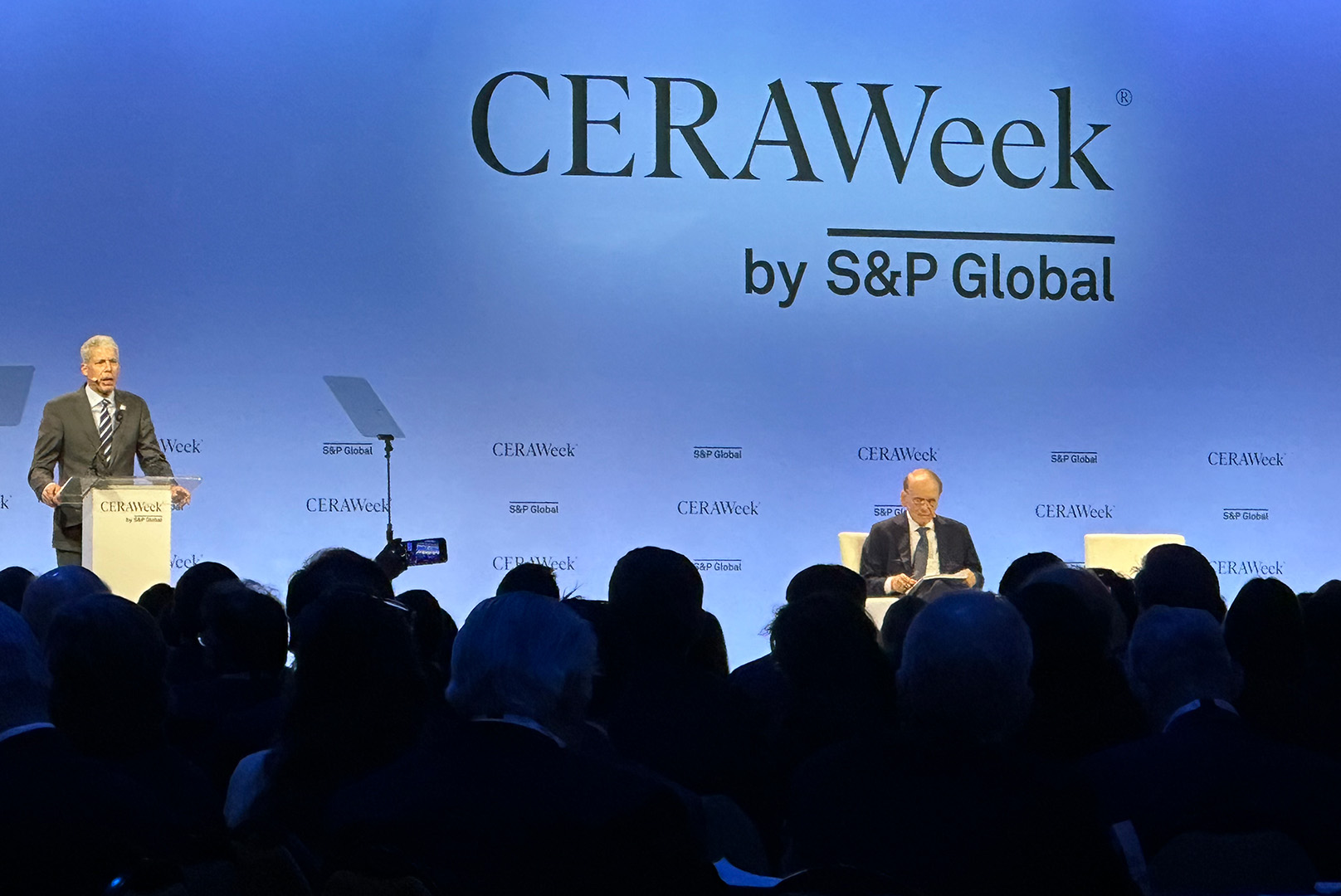
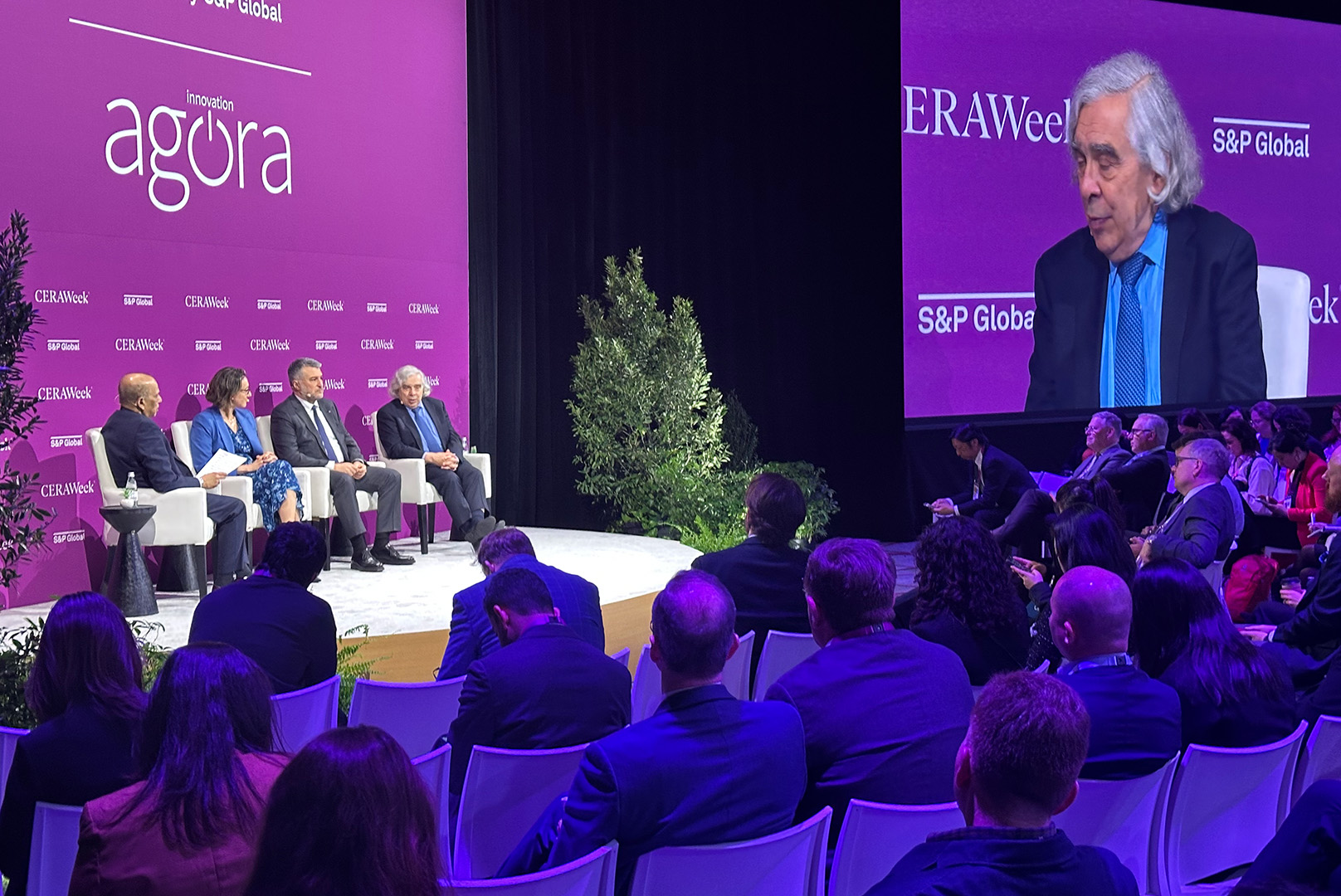
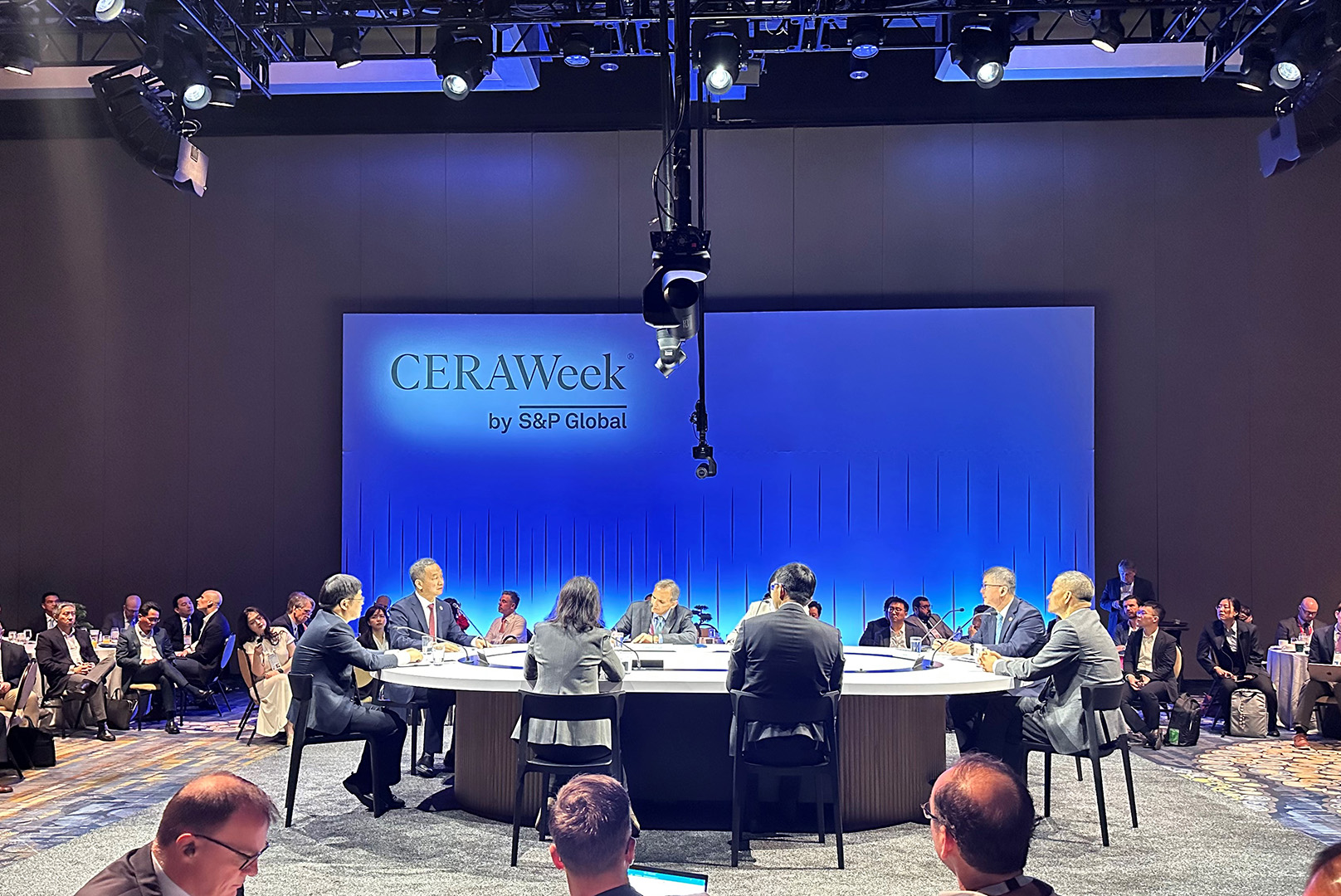
Held every year in Houston, CERAWeek is the world’s biggest energy conference, attracting 10,000 executives, policymakers, investors, scientists and technologists from around the world. If you want to know what’s hot—or not—in energy, it’s a good place to be.

A few years ago, the hot topic at CERA was local grids for EV charging. Last year, renewables and clean tech were so much in vogue that the Biden Administration sent loan officers to sign up companies for its bonanza of climate action incentives. This year, the dominant theme was more—as in, how can the world produce more of every kind of energy, in particular natural gas and nuclear.

As a few people joked, Make Energy Great Again (MEGA).

Houston is hometown to all things energy—known for oil and rocket fuel, and over the past decade, the giant liquefied natural gas terminals that dot the nearby Gulf of, umm, Amexico? But as bullish as the CERA crowd was, especially when two of U.S. President Donald Trump’s key cabinet secretaries spoke, the storm clouds of creating all that energy were not far from view. The darkest one: the trade war.

As the conference kicked off, with a rousing American Dominance speech from Energy Secretary Chris Wright, global markets started tanking—amid fears of a recession that would deplete demand, especially for oil and gas. If America is going to achieve “energy dominance,” it will need to regain the confidence of capital—and renew some confidence in policy, which continues to be as unpredictable as those storm clouds over Houston.

The CERAWeek event left me with these questions:

1. Oilpatch, archipelago: an ocean of energy or a chain of islands?

The world will need more energy, but it may be deeply challenged to distribute that energy as countries and continents build artificial walls. Shell CEO Wael Sawan presented the company’s three energy security scenarios for the decade ahead: a “horizon” scenario that’s largely business as usual; a “surge” scenario that incorporates a maximalist view of economic growth and AI demands; and a third scenario, called the Archipelagos, that’s the most worrisome, and the one increasingly likely. In an archipelago world, we will see a surge in demand—but supplies locked into regions by nationalist and protectionist policies that will turn the global energy market into a chain of islands. This new energy world will be more demanding and less efficient.

With a growing threat of energy nationalism, many import-dependent nations are scrambling for optionality. Japanese and Korean delegates said in private conversations they’re looking for multiple sources of natural gas, as they’re not sure they can count on North America. And they’re more willing to consider longer-term contracts. The scramble has some of the majors returning to frontier oil markets—Iraq, Libya, Suriname, Brazil—and adding to LNG production in South Asia and Africa.

Perhaps the biggest challenge in that world of islands: capital. Global oilfields are in decline—sometimes by 5% a year—and the vast majority of capital is going to maintaining rather than expanding them. Moreover, a consistent message from Big Oil is the intention to return more of that capital to shareholders, rather than invest in growth. As one executive put it, the sustainability mantra of “people and planet” needs to add “profitability,” for investors to put up the trillions needed.

2. Compute this: will AI break the system, or fix it?

A sign of the times: 42 sessions at CERAWeek had “data center” in their title. And it was hard to find a conversation that did not include the term “hyperscaler” — the Big Tech companies like Google and Amazon whose AI-feeding data centres are all the rage. In just a few years, data centres have become such as big drain on global energy that their collective consumption is on par with the economy of Japan. One of Florida’s biggest energy providers, NextEra, is projecting 55% growth in demand over the next 20 years, compared to 9% over the last 20 — and a third of that growth will come from AI.

Small wonder the CEO of Chevron said he’s sending executives to MIT, for courses on AI.

The hyperscalers showed up in force, hosting must-attend Texas BBQ parties and showcasing their avatars, agents and robots for a conference full of bemused oilmen and women. In fact, the relationship between AI and energy is now so intertwined that the two worlds are teaming up to drive energy efficiency from well to wheel. Google says its chips are 60% more energy efficient. Large electricity providers said AI-calculated efficiencies could unlock 100 gigawatts of power. But there was general agreement that both sectors will need a lot more gas-powered electricity to run those data centres. In 2024, U.S. data centres relied on gas for 43% of their power, while nuclear provided close to 20% and coal accounted for slightly less. The hope for renewables remains important but marginal—so much so, several of the hyperscalers have abandoned their pledges for carbon-neutral energy in their data centres.

3. A new P3 model: Pricing, pipelines and permitting?

The determining factors of America’s energy ambitions will be pricing, pipelines and permitting—and key to attracting all that investment for growth. The hyper-scalers may have to pay more to cross-subsidize other sectors and households, and their need for electricity and power. Last year alone, U.S. electricity prices soared 20%, while overall demand grew only 2%. One utilities veteran said a new business model, and mindset, may be needed for the two worlds to coexists. Techies live and die by a 10x philosophy—the growth mindset that success can be multiplied through innovation and scale. Utilities, on the other hand, live by a 10% philosophy—a regulated mindset that suggests such a rate of return is all society will bear over the long term.

More risk capital will be needed to build the pipelines and grids to power an AI economy. But risk capital doesn’t thrive in a regulated, and litigated, arena. One case study that was presented: the Constitution pipeline to get natural gas from Pennsylvania to the Northeast and brain centres like Boston and New York. The company faced so many legal challenges that it cancelled the project in 2020. The current U.S. administration is now looking to revive it.

Permitting reform will be critical to any chance for energy dominance—and it will require a supermajority in Congress, something not many politicos expect in a deeply divided D.C.. Get ready for “Drill, Baby, Drill” to run up against “Sue, Baby, Sue.” Mark Christie, chair of the Federal Energy Regulatory Commission, and a constitutional law expert, told the conference that FERC writes every decision now with the full expectation its approval will end up in court. The result, he said, is less energy than America needs, and a looming “rendezvous with reality.”

4. LNG: Is this the new global power play?

Natural gas accounts for around 25% of global energy—and this year, 50% of the CERAWeek agenda. In a world that will need a lot more power, the Houston consensus was for a lot more gas, especially to be cooled, liquefied and shipped as LNG. Ryan Lance, CEO of ConocoPhillips, thinks LNG demand could double in the next decade. It’s already done that in the U.S., largely through a massive tech revolution in gas that helped to massively increase production while cutting rigs, from 1,600 to 100.

The forecasts for LNG growth are impressive. Shell expects global LNG demand to shoot up more than 50% by 2040, as manufacturers in China and other Asian economies accelerate their switch from coal-to-gas to support their economic growth, while lowering emissions. India alone will need to double LNG imports to meet its rising demand by 2030.

But one of the overlooked needs is concessional finance for all the infrastructure needed to take LNG off ships and convert it to gas. Western countries have until recently been opposed to allowing multilateral development banks to help finance such infrastructure — as it may add to global emissions. The upcoming G7 summit in Alberta may put that back on the table.

5. A nuclear spring: But in which decade?

Nuclear energy is enjoying a renaissance, and it’s not restricted to North America. China is expected to build 5 gigawatts of nuclear power this year. Bangladesh and Türkiye are both expecting to open their first reactors in 2025, with Egypt not far behind. Abu Dhabi now has four nuclear plants, with plans for more. All told, nuclear accounts for about 10% of the world’s energy mix. But just to maintain that share, the world needs to triple production by 2050 —and that means adding 50 gigawatts of capacity every year for the next 20 years. Bear in mind the best year on record was in the 1980s, at 31 gigawatts.

Some new models are needed. Several speakers spoke of a need to narrow the range of nuclear technologies being pursued, in order to help aggregate demand for the technologies as well as skills and supply chains attached to them. Too many projects remain first of a kind. More reactors may also need to be built both on existing sites, as well as decommissioned coal facilities, to take advantage of existing infrastructure, cool water and local support. And critically, governments and nuclear developers need to commit to long lead cycles, typically up to 15 years. That’s usually difficult for investors, other than pension funds and sovereign wealth funds, which suggests new financing models may be needed, too.

6. Critical minerals: When will we realize they really are critical?

A range of strategically-important minerals have been called “critical minerals” since World War 2, when Canada stopped shipping nickel to Japan and the U.S. helped blockade Greenland, fearing the Nazi occupation of Denmark would claim the Arctic region’s minerals to add to its military machinery. We’re back to a mindset of criticality—if it’s not too late—and energy supplies depend on it. All those data centres and electricity lines require copper and nickel, and more exotic minerals. To meet the world’s energy expectations, we will need to mine as much copper in the next 20 years as the world has mined in the last 20 centuries. Unfortunately, China has a stranglehold on production and processing. One startling fact: China now has 60 mineral smelters; the U.S., two. Most U.S. copper, as a result, is shipped to China, as concentrate, and returned as wire and other products.

The West is 30 years behind China, and it will take decades more to catch up. For one, a mine takes up to 20 years to find and another 10 to develop. Local resistance to mines and smelters will also need to be overcome. As is the case for energy, new financing models will be needed for these long-term projects. The Trump Administration has proposed a sovereign wealth fund, harnessing rents on the massive tracts of land and oceans the federal government owns. It is also using the ExIm Bank, its main export financing arm, to support critical minerals projects. Canada is exploring similar options through Export Development Canada. If the West were to take a wartime mentality to the challenge, governments might start to allocate production and restrict materials for strategic needs. Whether the U.S., Canada and others could also accept more accommodating labour and environmental standards is another question altogether.

7. Supply chains: can we actually make the stuff we need?

You can have the right policies and right projects and even the right timing—and still get it wrong if supply chains are not with you. Across the energy sector, that perhaps remains the biggest near-term concern. One mining executive said giant rock washers now take seven years to be delivered. One electricity executive said he’s waiting for a delivery of gas turbines, which are scheduled to come in 2030. Moreover, the cost is up three-fold since before the pandemic. Smaller stuff can be just as hard to get, such as enriched uranium and graphite for nuclear plants. Governments may need to start to allocate resource production, including material supplies, manufacturing capacity, and logistical support, to ensure resilience of critical industries.

Skilled labour is equally in short supply, in part because so few gas projects have been built over the past five years—and in part because of the boom in LNG construction. A nuclear energy executive said he doesn’t need more PhDs (although he’s happy to hire them), as much as he needs community college graduates who can take on sophisticated welding and pipefitting jobs. Even Larry Fink, the CEO of BlackRock, the giant Wall Street investment firm, focused his CERA comments on the growing labour market crisis. His blunt message, which he said he also shared with President Trump: “We’re going to run out of electricians.”

8. Climate: will it dominate again?

From the opening session, climate action was on the backfoot, if mentioned at all. Energy Secretary Chris Wright set the tone with the opening keynote, saying emissions were a function of economic growth, and the world wants more growth. “Everything in life involves trade-offs. Everything!” he stressed. It was more than rhetorical. The return of natural gas to the forefront was seen to move its status from transition source to base-load source of energy. In other words, it’s here for the long run, as evidenced by North Carolina’s recent plans to add 5 gigawatts of gas power. Even coal got some positive mentions, as perhaps a necessary fuel for the AI boom.

The biggest question on climate action remained unanswered: will Trump kill the Inflation Reduction Act? Several big oil and gas executives argued in favour of Joe Biden’s signature act, saying they had developed and capitalized a host of decarbonization investments that helped drive their energy efficiency and profitability. Vicki Hollub, CEO of Occidental Petroleum, advocated for the continuation of tax credits that help fund her company’s direct air capture projects—a key reason it bought B.C.-based Carbon Engineering in 2023. Oxy is also trying to advance its work with enhanced oil recovery, by capturing carbon from the air, liquefying it and pumping it back into old reservoirs, to push oil to the surface. Many environmentalists look askance at EOR, as it’s known, arguing it’s more or less a shell game that trades carbon for carbon. But the fact that EOR is back, at least for some, as a net-zero strategy, signals how much has changed in one year.

John Stackhouse is Senior Vice-President to the Office of the CEO at RBC, and head of RBC Thought Leadership.

Follow him on LinkedIn here.

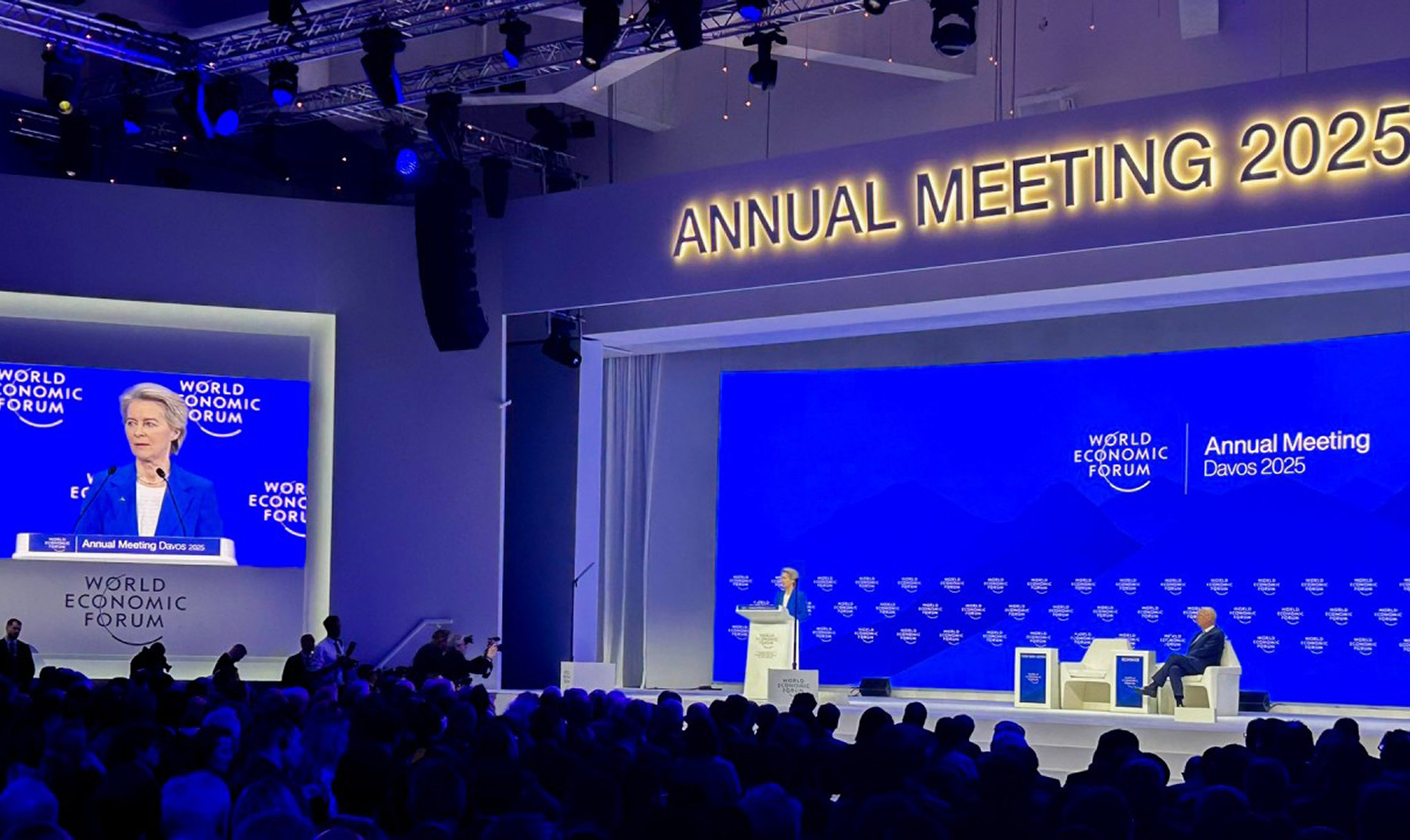
Davos has seen a few golden ages during its time. In the 1880s, the Swiss Alps town became one of Europe’s early tourist destinations when a new class of travellers took to the “grand tour.” Davos added to its lustre in the 1920s as a spa resort for a newly confident class of Europeans. And in the 1990s, it gained a special renown as home to the World Economic Forum, which was rapidly growing in prominence at the time as the intellectual centre of globalization.

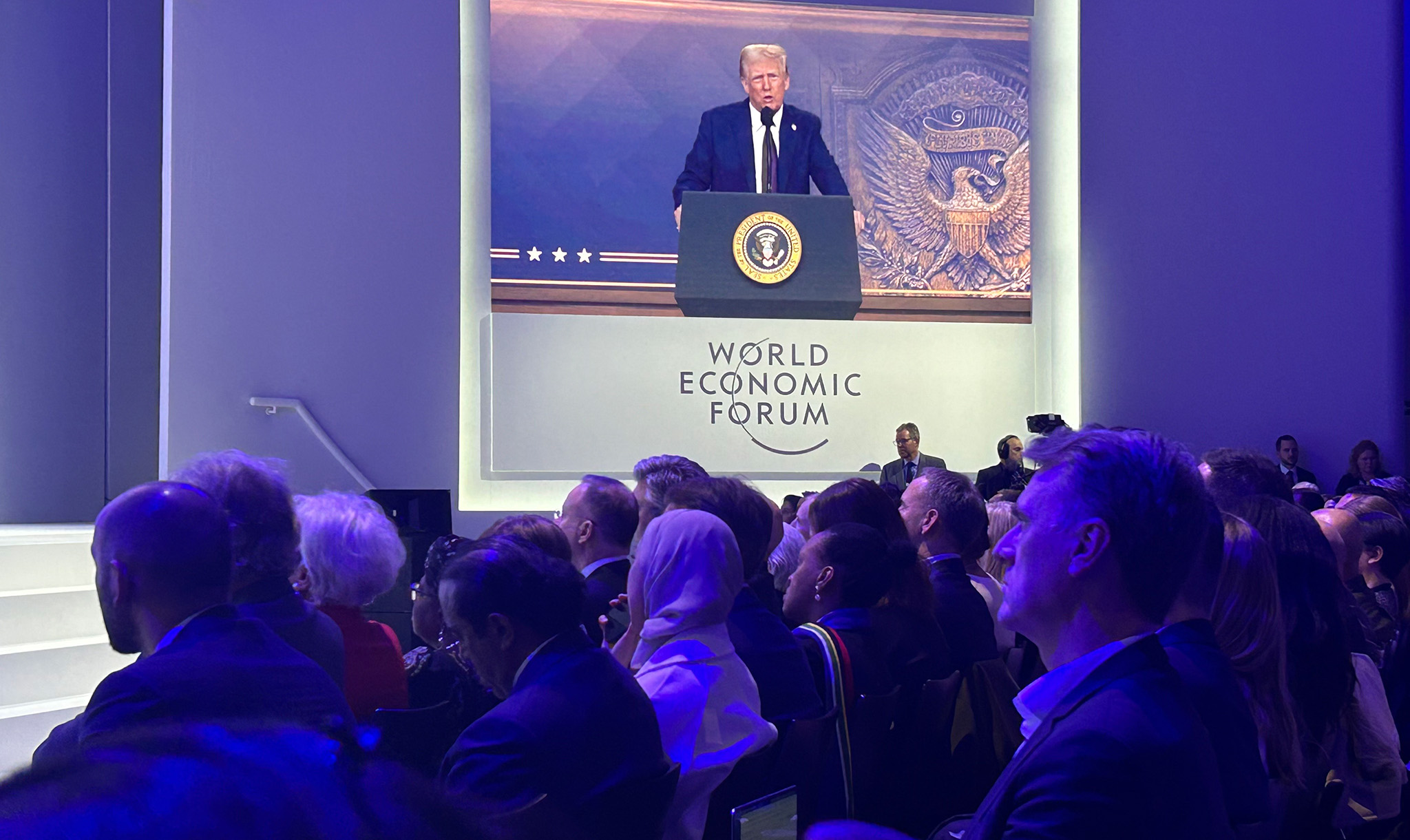
But none of those moments may have quite matched the American exuberance that took to the sleepy ski town this week. Rather than showing signs of retreat, the U.S. came in force—700 strong—including Silicon Valley titans, Wall Street billionaires, Nobel laureates, industrialists and, as if to put the gold in golden age, Olympic ski legends Lindsay Vonn and Picabo Street. To cap it off, President Donald Trump—a longtime Davos fan—video-conferenced in from Washington to both berate other government and business leaders for not pulling their weight, and to talk up American exceptionalism. Golden or not, a new age felt like it had begun—not just for the 50 heads of government and 3,000 others in attendance, but for much of the world.

Here are some of the themes that emerged at this year’s Forum:

1. America’s confidence has rarely been higher

The mood among American CEOs, and investors, was what one Davos veteran  called “giddy.” Donald Trump’s triumphal declaration of a “golden age” seems to have given businesses a shot of confidence that has changed many 2025 outlooks. The U.S economy is showing such strength that the International Monetary Fund raised its global growth forecast for 2025, from 2.2% to 2.7%, as corporations invest, especially in artificial intelligence (AI), and look to acquisitions. The U.S. is now the world’s premier destination for investment, by a long shot. In the 12 months before Trump returned to power, it attracted US$227 billion in greenfield investment projects—up by US$100 billion and more than China, India and Britain combined. Consumers are showing renewed confidence, too, while Trump’s promise to cut corporate taxes and slash regulations has quickly unleashed the animal spirits of a free market. Even the tariff threats that are rattling trade partners are seen as a win at home, pushing businesses to build inventories and domestic capacity. More than policies, Trump seems to want to restore enthusiasm in corporate America and the broader economy, and stretch the country’s ambitions. “The impossible is what we do best,” he said by video conference. While American exceptionalism may carry companies and markets for a while, risks could cloud  the sunny outlook. Joe Biden’s Inflation Reduction Act (IRA)—and its massive subsidies that are now on the chopping block—was a big reason for a lot of that investment. Inflation is another worry, as the massively indebted U.S. government continues to spend and compete with all that private investment. Immigration cuts are threatening the labour supply and could drive up wages, too. All that has put pressure on long-term interest rates, as investors wonder if inflation is truly conquered. Larry Fink, BlackRock’s CEO, said he could see a scenario in which 10-year bond yields hit 5.5%—not his forecast, he stresses, but just a distinct possibility that could dampen some of the giddiness.

Question for 2025 (Q25): Will an America First administration be able to work with other countries to keep global imbalances from tipping?

2. Europe’s confidence has seldom been lower

European leaders usually flock to Davos to tell the rest of the world about their special place in global affairs, diplomacy, business and economic policy. Not this time. European Commission president Ursula von der Leyen led a procession of voices from the continent, expressing concern about its prospects. American business and government leaders, including Trump, used the Davos stage to make it clear that Europe had become almost uninvestible because of the extraordinary layers of red tape that constrict companies and entrepreneurs. (One executive said new sustainability reporting rules required his company to answer 800 questions in its submission.) Von der Leyen acknowledged that a generation of young entrepreneurs was at risk of leaving for America and elsewhere, and conceded that Trump’s “Golden Age” messaging was a “wake-up call” for Europe. German opposition leader Friedrich Merz, who is expected to win next month’s election and become Chancellor, shared his conservative agenda of cutting taxes, slashing energy bills for manufacturers (prices have soared since Germany went off nuclear and then Russia cut gas supplies), reducing unemployment benefits and cutting family immigration levels to focus on skilled workers. He also wants to confront the Brussels bureaucracy. But it took an American, BlackRock’s Fink, to see some opportunity in the shifting winds, especially if Europe can agree to a single capital market. “There’s too much pessimism in Europe,” he told an audience on the final day. “It’s probably time to be investing back into Europe.”

Q25: Will a further expected shift to the right create momentum for deep changes to the European Union?

3. Supply shocks add to geopolitical risks

Just as the world is trying to find a new normal in the aftermath of the pandemic, the abnormal has become common. Some central bankers at Davos expressed concern about the growing threat of “supply shocks”—the disruptions in the global economy that gum up the free flow of markets. Their interest rate policies can control inflation only so much. Take the Panama Canal, for instance, one of Trump’s early targets. Any disruption to its normal operations could send inflation jumping again. Same for the Suez Canal, where Iran casts a dark shadow. The two conflicts of greatest concern to Trump—Ukraine and Gaza—could easily turn worse, and spread through their neighbourhoods at a time when many countries are pulling back from multilateral institutions like the United Nations. And then there’s perhaps the biggest risk on the supply side: climate-related disasters. Trump expressed confidence his administration can restore peace and some certainty where others had failed. He’s already opened an active channel with China’s President Xi Jinping, and suggested they work together to end the Ukraine war (Trump would handle the Ukrainians; Xi would work on Vladimir Putin). He took credit for the Israeli-Hamas ceasefire, too, and said he’d like to work on nuclear disarmament with China and Russia once Ukraine is settled. Many Davos regulars wondered if Trump, having twice won the U.S. presidency, is now angling for the Nobel Peace Prize, too.

Q25: Can shrewd negotiating skills and the strong arm of U.S. influence keep the world from greater war?

4. Energy dominance is a thing, but who will pay for it?

Say what you like about Trump, but he doesn’t mince words. And on energy, his message to the Davos crowd was clear: “Drill, baby, drill.” The Europeans seated around me in the conference hall looked shocked, until he said he would guarantee natural gas supplies for Europe. The desire for more of all kinds of energy—Trump cited oil, natural gas, nuclear, even coal—will be a relief to people in many countries struggling with high energy costs. But the political goal of “energy dominance” will have to overcome some market fundamentals. The sector has been starved of capital for much of the past decade, and may not want to invest billions of dollars on new production when prices are uncertain and perhaps falling. There’s the supply-chain challenge, too. New rigs and pipelines need a lot of heavy materials and skilled labour that are in short supply. The same goes for critical minerals which Trump wants the U.S., and allies such as Canada, to develop in order to wean themselves from Chinese supplies. Nuclear energy, which is gaining popularity, will have its own set of challenges in terms of time-frames and costs. As for the fastest-growing source of energy in the U.S., and elsewhere, the near-term fate of solar and wind is suddenly less certain. They’ve benefitted greatly from IRA, and now have to make it more on their own merits.

Q25: Will energy expansion be paid for mostly by governments, businesses or consumers?

5. The world is starting to re-arm, and re-aim

In the WEF’s annual risk survey of its members, armed conflict topped the list for the year ahead; two years ago, it didn’t even crack the Top 10. Ukraine has Europeans on edge, especially if the U.S. pulls back, while the Taiwan Strait is a worry to Asia. And the Middle East remains nervous as a weakened Iran—after losing influence in Syria, Lebanon and Gaza—considers its options. Despite Trump’s promise of peace-making, he and other leaders speaking at Davos made clear that governments in the coming years will be spending a lot more on defence. And that will mean competition for both new technologies and the old materials—steel, for instance—that every military machine is built on. The need for an advanced manufacturing sector is a key reason both Germany and the U.S. are looking to rebuild their industrial bases, to ensure they can manufacture  their own weapons. They may have a harder time building up their troops, given aging demographics across the West and young generations’ reluctance to sign up for military service. Ukrainian President Volodymyr Zelenskyy came to Davos, in military fatigues, to maintain support for his efforts—and also issue a warning to Europe and its allies. Russia has a military force of 1.4 million, including 600,000 on and around Ukrainian soil. After that, Ukraine is the largest force in Europe, with 800,000 troops. France is next at 200,000. Moreover, Ukraine relies on the U.S. for more than a third of its weapons, and continues to build arms factories to gain more independence. Mark Rutte, NATO’s new secretary-general, warned of growing “hybrid” threats through the weaponization of civilian devices like drones (and pagers). Zelenskyy suggested Europe build an “iron dome” like Israel to protect itself from Russian missiles. It may need other defensive shields, including cyber ones, as warfare rapidly evolves, leaving no nation truly safe.

Q25: As AI increasingly powers dual-use weapons, will they be more useful to democracies or dictatorships?

6. Meet Gen AI’s agents of change

AI has become as common a theme at Davos as the economic outlook, and the two are increasingly intertwined. Unlike previous years when AI was debated largely by technologist and ethicists, it’s now firmly the domain of business operators too, thanks to the explosion of AI agents  at work. Small wonder it’s called the agentic era. In the U.S. alone, more than 5,000 companies have been created in the last decade to help businesses deploy AI agents in call centres, on sales teams and in back offices. A WEF study released at Davos found companies that lead in AI adoption outperform their peers by 15% in revenue, with the biggest growth coming in financial services, telecom and media. A range of public and private enterprises shared their experience more broadly with AI, from accelerating drug discovery to providing municipal services in dozens of languages and advancing cancer detection. Copilots and agents have gained additional traction in education—in schools as well as workplaces, as AI increasingly personalizes and predicts a learning journey. Marc Benioff, CEO of Salesforce, a leader in the agent space, says the challenge now for organizations investing in AI is to develop more than tech talent. The coming preponderance of AI agents in every aspect of organizations is going to require  new approaches to corporate culture and team-building, because the teams of tomorrow will include active learning AI agents. Benioff told a roomful of business leaders: “We’re going to be the last CEOs who will be managing only humans as our workforce.“

Q25: Is society ready to work with mixed teams of people and AI agents?

7. DEI seems to be MIA. Will climate manage to stay?

Diversity, equity and inclusion used to be central themes at Davos. No more, other than as an attack line for some politicians. Trump rattled the crowd—you could see people bristle in their chairs—when he called diversity initiatives “nonsense” and stressed, a few times, America would be a “meritocracy.” His rhetoric was tame compared to a speech earlier that day from Argentina’s Javier Milei, who railed against social justice efforts, saying rights are enshrined in law and so people don’t need privileges like hiring preferences. Away from the spotlight, some wondered whether the same giant pendulum swing might happen to climate, while Europeans looked to limit the impact of decisions like the U.S. pulling out of the Paris climate accord. Many climate-focused organizations seem to be already quietly shifting their focus, including a swing back to conserving nature. Another shift  may be to move scarce dollars toward helping people and communities adapt to a world with more floods and fires. In the WEF risk report, five of the top 10 long-term risks were still climate-related. They may just need to be addressed differently. And more quietly.

Q25: How will a new class of conservative governments address the rise of climate-related disasters and damages?

8. The populists now have to deliver … to the people

Many political thinkers and historians at Davos had one eye on the new voices on the world stage, and another on the people who voted them in. Why? The populists now have to deliver, which won’t be easy in an age of tightening budgets and rising expectations. Gillian Tett, an anthropologist and journalist who is now provost of Cambridge University, cautioned the audience to be mindful of “social silence”—and the undercurrents that can pull any government under. The biggest risk, in her view, is an economic downturn, or worse a financial crisis, at a time when Trump is talking of a golden age and spending public money on things like AI and cryptocurrency that don’t mean much at the kitchen table. Despite his popularity now, Americans could grow more hostile if Trump’s wealthiest advisers were seen to profit from his policies while the general economy suffered. Such a prospect would play into a broader and growing anti-elite sentiment, which appears to be particularly strong among younger people. The annual Edelman Trust Barometer, released at Davos, showed this year an astonishing rise in the acceptance of violence among younger adults, as a means of expressing discontent. Lawrence Summers, the noted American economist, former Treasury Secretary and long-time Davos-goer, said governments would be wise to focus on service-delivery rather than grand promises and restructurings—getting roads paved, cheques delivered, and communities served in their times of need. In many ways, he noted, it’s overdue and could be good for democracy if it restores confidence in government and institutions.

Q25: Will any Western government be more popular than at the time of its last election?

9. Back to the moon, and beyond

For all the discussions at Davos about markets and policies—it’s the World Economic Forum, after all—the WEF manages to draw an eclectic mix of doers and creators. This year there was a special focus on space, and, yes, the space economy. One evening, under a bright moon, I made my way across the Davos valley, to a small dinner with the heads of several space agencies, and some of the entrepreneurs who are building entirely new sectors to get more people, and equipment, to our outer orbit—and to that shining moon. The diversity of exploration was impressive. Japan is rapidly advancing space robots and precision landing devices (they can land within 10 metres of their destination on the moon). The Japanese are also working with the Indian space agency on the next generation of moon rovers, which the Japanese think they can soon equip with pressurized cabins that will allow astronauts to drive on the surface without full personal equipment. The Saudis are focussed on launching satellites and collecting space debris. A team from the Massachusetts Institute of Technology explained a project to send a ship this month to the South Pole of the Moon, where temperatures range from +1 to -200, to study a crater that’s been visited only once. The European Space Agency has its own big project, to chase an asteroid that is hurtling towards us and will come within 38,000 kilometres of Earth (on Friday, April 13, 2029). A U.S. space investor, Kam Ghaffarian, was at our dinner to explain the hundreds of millions he’s investing in new launch systems, with a 700-person team in Los Angeles. He thinks launch technology will be one of the big growth opportunities, as the U.S. goes from a record 145 orbital launches last year (five times what it was in 2017) to sending that many every few weeks. There will be far more launches every month around the world. Entrepreneurs like Ghaffarian raised US$8.6-billion for space ventures last year—in a sector that a McKinsey & Co. study projects will be worth US$1.8 trillion in another decade. For the space-dreamers, it’s not about the money; it’s about the chance to help humanity rise above ourselves, and see our world as it is from space, with no borders and no conflict. And even among competitors, it’s about collaboration. As Mohammed Al-Tamimi, the CEO of Saudi’s space agency said, “no country will go to the moon and stay on the moon alone.”

Q25: Will the Trump administration formally launch a new Mars project?


John Stackhouse is Senior Vice-President, Office of the CEO, Royal Bank of Canada, and leads the RBC Climate Action Institute.

For more, go to RBC Thought Leadership.

Download the Report

Download

The RBC Climate Action Institute co-hosted a special session today in Ottawa with the British High Commission, to share views with the diplomatic corps on where we see global climate policy heading and how Canada is positioned for the rest of the 2020s. Here’s some of what I discussed in a conversation moderated by Deputy High Commissioner David Prodger:

  1. Climate policy needs to be reframed (and maybe reshaped) to deliver direct cost-of-living benefits. Think energy efficiency.
  2. “Security” may be Word of the Year in 2025. Can climate policy add to our need for security of exports? We may be able to better deploy our industrial carbon pricing systems, run by the provinces, to position Canadian products as cleaner than others, especially in the U.S. and European markers.
  3. Expect more dual-purpose alliances for energy security and climate action. A G7 approach to nuclear energy cooperation, for instance, could add to Canada’s role as host in 2025.
  4. Private capital will continue to move ahead of public policy. As we will show in our upcoming Climate Action 2025 report, climate capital is still growing — not as much as it needs to, but the trajectory is up.
  5.  Innovation and technology will be key. Even in tight budget times, we’ll need to invest ambitiously in research and development.
  6. International financial institutes like the World Bank will need to take on more of the climate finance load for developing countries. Will China step up to help? And how will the U.S. react?
  7.  Developing nations will continue to raise pressure around resilience and adaptation. More money for disaster-proofing may be a good thing, unless it comes at the cost of prevention.
  8. As the world’s biggest emitters — the U.S. and China — go their own ways, other countries will need to build bridges between North and South, East and West, rich and poor, big and small. Is that still a role for Canada?

Great comments from a range of countries, with a general concern that the headwinds for climate action are growing, and more international cooperation will be needed, even in a more divided world.

At Energy Disruptors United in Calgary, I sat down with Chana Martineau, CEO of Alberta Indigenous Opportunities Corporation (AIOC), to discuss economic reconciliation. Chana is uniquely qualified to help unlock economic opportunity for Indigenous communities and her background as a woman of First Nations heritage with 30 years of experience in banking and consulting has made her a bridge builder between private enterprise and Indigenous communities. Her cross-functional team of capital markets professionals, Indigenous relations specialists, and engagement professionals enables the AIOC to be a role model for strong governance and professional management. Chana has some advice for companies that want to build ties with Indigenous communities:

  1. Alberta Indigenous Opportunities Corporation is a breakthrough organization that’s a model for the rest of the country, demonstrating the power of mobilizing capital through Indigenous communities for opportunities. Can you tell us the story of AIOC?
  2. In 2019, the Alberta government fulfilled a campaign promise to bring to life an organization that would facilitate investment and participation by Indigenous groups in commercially viable projects – groups who had previously been held back from participating in the economy due to restrictions in the Indian Act. AIOC was set up to remove the barriers – to provide that capital that would allow full participation in the economy, while creating a replicable model that could be accessed for future projects to come. We’re coming up on 5 years next month and are seeing so much come through the pipeline we can’t keep up sometimes. It’s an exciting time for us and demonstrates the critical need for this program.

  3. It’s amazing to think that you’re just coming up to your fifth anniversary because you’ve got such an impressive track record already. And several other provinces are modelling what you’ve built. What advice do you have for them?
  4. I am impressed with the Alberta Government’s entrepreneurial spirit and their passion. They came to us and said, “What do you need to make this happen?” Our governance model is incredibly important. Our board consists of five First Nations members, two Metis members and two allies. It’ a mix of people that really understand Indigenous business and capital markets. You need the right skills at the table to protect the provincial loan guarantee and to understand the intersection of the Indigenous Nations and groups’ interests. We talk a lot about Canada’s productivity crisis. Well, it doesn’t make any sense for each jurisdiction to have a different program that doesn’t work together. When we look at big infrastructure projects that are multi-jurisdictional, we want to make sure the different programs can work together. We have been an open book in terms of helping the new programs learn from our journey. We’re here to help Indigenous peoples and Canadians understand and unlock the benefits from these partnerships.

  5. So, governance is critical. And then entrepreneurial spirit and support from your “shareholders”. It seems like a lot can be solved with these partnerships. Why hasn’t the market solved it then?
  6. Corporations want to bring in Indigenous partnerships, but those relationships have been contentious for hundreds of years. Some corporations don’t want to make a mistake. And some recognize we’ve all made mistakes and that’s what the journey toward reconciliation is about. Now they want to help. Our team straddles both worlds. We understand capital markets, publicly traded companies, and pressures of shareholders. We also understand Indigenous ways and its history, so we can help bring that together in a way that the values are shared and guide both sides. It’s about learning how to speak with each other, helping people connect and giving them a safe place to have those conversations – that’s when the magic can happen.

  7. So being a bridge builder is very powerful. What else is critical for these corporations to understand?
  8. I believe you need to be firmly rooted in your values. Thinking about our corporate partners who have executed successful transactions, they have a leadership commitment to making it happen. Their corporate development teams and legal teams are used to doing things a certain way, where time is money. It doesn’t start from a “seek-to-understand” point of view. Indigenous communities are different. The conversation is different. What I really encourage those organizations to do, and the successful ones really understand this, is to take that “seek-to-understand” approach. It’s going to look different than any transaction you’ve done before, and that’s a good, healthy thing. It takes real leadership from the very top, and commitment to following it through, because it’s a new way of doing business.

  9. The seek-to-understand approach takes time, and that often doesn’t compute with a corporate mindset. How have the successful companies adjusted their notions and approach to time?
  10. Patience, perseverance, and creativity. Those are three key elements to these kinds of transactions. Creativity is a big one. It’s not just to engage with First Nations partners – there are certain parameters of a loan guarantee that make it challenging. At AIOC, we are responsible for $3 billion of the Alberta government’s balance sheet. That’s a big responsibility. If you’re a taxpayer in this province, you don’t want me to tell you we’ve made a bad call. These deals are not easy to do. The bar is high. We have some creative credit structuring to protect the loan guarantee because if the province has a $150 million loan guarantee called, we’ve got less money for roads, schools, housing and health care. We all know the challenges there. Our credit underwriting needs to be prudent, and we need all three parties to collaborate around what works for the communities, the corporate partners, and the loan guarantee.

  11. Let’s look at the Indigenous community’s viewpoint. What are some of the signs of success in communities. How do they view these corporate partners and the structures that you’re helping to create?
  12. I think we’re on a journey and some have already seen the benefits. We’re seeing corporate and Indigenous partnerships changing contentious relationships into ones of mutual respect, understanding and collaboration. And we’re also seeing a massive unlocking of economic activity within these communities. They’re able to rebuild gathering places and all the things that go along with that – the contracting, the construction. It’s jobs, it’s income. All that drives economic activity and builds a healthy heart and connections to the community. Multiply that over 43 Nations and Settlements that have participated in our transactions. These are invaluable to the fabric of the lives in those communities. We’re just starting to see the positive economic impacts grow.

  13. How are you helping communities that don’t have capital markets or financial expertise to move at pace with some of these opportunities?
  14. There’s a lot to learn in a short period of time. We do that through our capacity grant funding, which provides advisors and/or funding for advisors. Our corporate partners also help fund that stream. Members of Indigenous communities can see the full lifecycle of the transaction – be at every single meeting, witness all the due diligence and take the site tours. Understand the journey start to finish, equipping them with the tools to engage with industry. Empowering them to say “Why are you here to talk about consultation? Why are you not here offering us equity share partnership?” The entire conversation has changed. They are not subservient to industry anymore, and I am so proud of that.

  15. Success for both corporates and communities in these deals must equate to more than just the money, doesn’t it? You’ve got human and cultural capital also on the table.
  16. You need to understand what these transactions bring to you. When it’s all about money, I don’t care who it is sitting on the other side of the table. And if it’s all about money, you’ll see what you get. When you’re in the trenches of those negotiations, if you haven’t spent the time to “seek-to-understand” and build trust upfront, Indigenous partner or not, that’s when you’re really going to feel it.

  17. What do all of us, but especially those involved with businesses and governments, need to consider to augment what you are doing?
  18. AIOC is one part of the equation, and we’re not all things to all people. We have the loan guarantees delivered, but that does not replace procurement, contracting, relationships and hiring. We need organizations and governments to start thinking differently about how these relationships are formed. If you’re trying to increase Indigenous participation in your workforce but can’t get anyone out to your job fairs – change the narrative. What if you started with an economic partnership? What does the recruiting funnel look like now? It’s a different way of approaching the issue. I think a lot of people are thinking, “How can we do this?” “How can I bring this to life for my company?” Talk to your Indigenous neighbours. Start the conversation and you will move along with that journey.

  19. Thinking about the AIOC journey – If we’re back here in a year, what’s one or two things you hope will have advanced or changed?
  20. I hope we’ve supported more partnerships. I hope we’ve broadened our scope of deals. I hope we’ve done one or two big game-changing deals across jurisdictions. And I hope the other programs are up and running.


John Stackhouse is Senior Vice President, Office of the CEO, RBC.