Canada’s nation-building strategy runs through First Nations territory.
As the country embarks on a new development wave, spanning hydroelectricity grids, copper mines, and liquefied natural gas projects, Indigenous groups are front and centre in several roles: as communities, investors, and the labour force. They are also likely to be most deeply impacted by the developments.
As it seeks reconciliation, Canada has a generational opportunity to leverage Indigenous expertise, include them in the fruits of new capital injection, and make some headway in redressing long-standing issues of exclusion.
There is no nation building without First Nations, Inuit, and Métis communities being involved.
Our Nations Building report, published earlier this year, examined why the capital architecture set up to facilitate Indigenous participation in Canada’s development does not match the impending project wave. This briefing measures the mismatch.
Key Pillar: Building Canada with Indigenous participation
Prize of development
$ billion
Construction cost of Major Projects Inventory developments
690
Operating + sustaining costs of projects (20-year timeframe)
1,053
Price of development
Equity required in MPI projects
314
Indigenous equity required
51
Indigenous Loan Guarantees
17
Indigenous loan guarantees already deployed
3
Sources: RBC Thought Leadership, Natural Resources Canada’s Major Projects Inventory, Indigenous Energy Monitor
The prize of development
New infrastructure is vital for Canada to meet its new trade goals. Ottawa’s target of $300 billion in additional non-U.S. trade over the next decade1 depends largely on expanding its energy base, scaling its minerals riches, and developing the infrastructure that moves them to overseas markets.
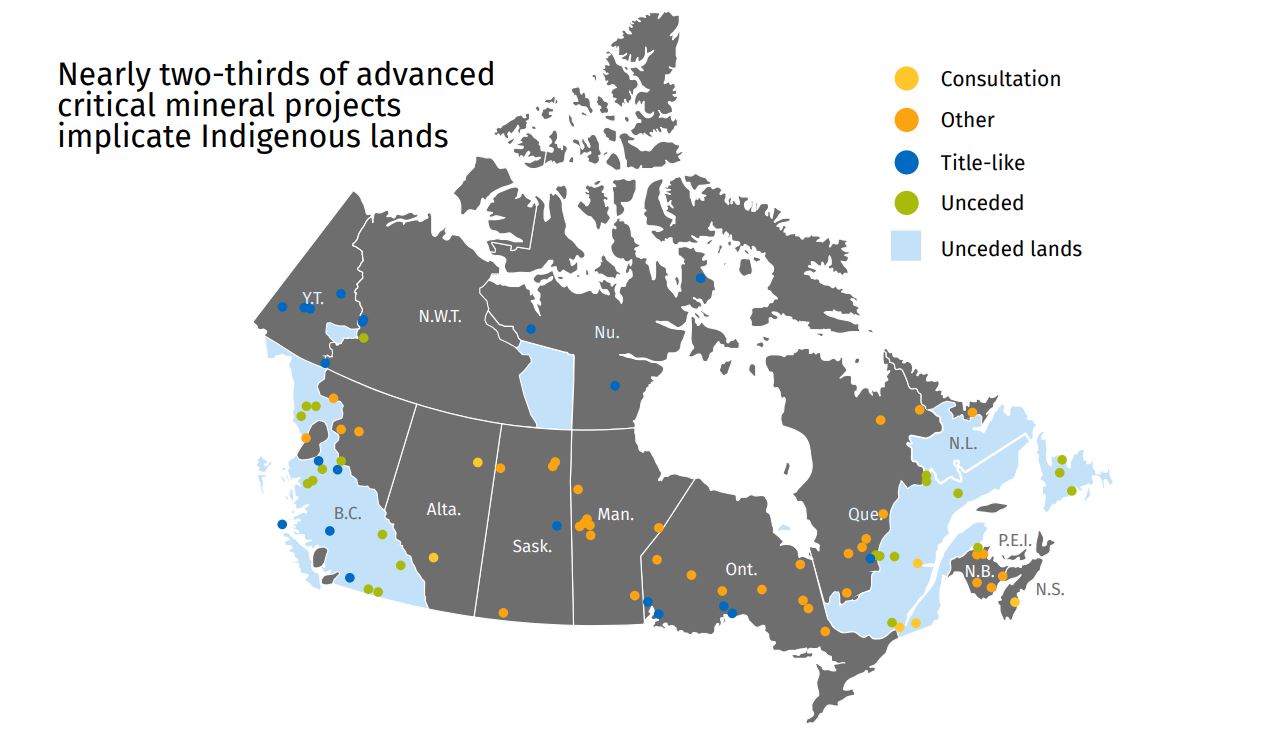
Indigenous territorial borders intersect nearly every major economic development plan in Canada. More than 70% of the Major Projects Inventory sits within 20 kilometres of an Indigenous community.2
Starting projects with the right stakeholders would speed up development. Similarly, more than 70% of the $126 billion fast-tracked by the Major Projects Office—launched by the Mark Carney government to fast-track nation-building projects—runs through Indigenous territories. Creating pathways for Indigenous participation could be decisive in ensuring Canada can restore its reputation as a builder of large-scale projects.
The financing opportunity is immense. The inventory lists 475 active projects worth ~$690 billion, requiring an estimated $314 billion in equity financing3. That would require foreign and domestic capital, interlaced with blended finance, loan guarantees and other support to bridge the gap.
There are more opportunities beyond the new build. The new proposed projects are only a portion of a broader opportunity. Another major untapped area are operating assets—pipelines, transmission, terminals—where the largest Indigenous equity transactions to date have occurred.
Nation building projects would lift the economy. Together the projects could generate $1.45 trillion in GDP, $665 billion in labour income, 310,000 jobs annually, and $170 billion in government revenue.4 This accrues to the country rather than to any community specifically.
Trade pressures highlight the need for speed—and financing challenges. U.S. tariffs imposed in 2025 exempted energy, potash and critical minerals—exports with the fewest substitutes, and the sectors most represented in this pipeline. Trade uncertainty raises the weight of domestic capital financing it.
Building together of collaboration
Hydro One offers First Nations up to 50% equity in every new large transmission project. The standing policy was adopted after the Wataynikaneyap Power project, in which 24 First Nations hold 51% of a $1.9 billion system connecting 17 remote communities, demonstrated majority Indigenous ownership at scale.
The Haisla Nation has a 50.1% stake in the $6-billion Cedar LNG project on the West Coast. It’s a majority Indigenous ownership, financed without a loan guarantee.
Suncor directed 20% of its total supply-chain spend to Indigenous businesses in 2022, up from 8% in 2019—a 2.5x increase in three years.
Trans Mountain delivered 25% of contract value to Indigenous businesses and roughly 11% Indigenous workforce participation during construction.
BC Hydro and SaskPower have set minimum First Nations equity ownership requirements in power procurement, 25% and 10%, respectively, as conditions of bidding, at no fiscal cost.
The price of Indigenous ownership
Full Indigenous equity participation would require around $51 billion. That’s a 16% weighted share of the $314 billion equity requirement, and would return roughly $75 billion, net of the capital invested, over a 20-year horizon, according to our research.
While $51 billion is not a requirement for projects to proceed, it creates room for Indigenous groups to become stakeholders and play a meaningful role in the development of Canadian resources and the wider economy.
The existing architecture is not set up to match the requirements. Federal and provincial Indigenous loan guarantee programs hold more than $17 billion in combined authority. As much as $2.5 billion had been deployed across 27 transactions5 from 2009 to June 2026. The requirement is roughly three times the federal and provincial authorities that exist to support it.
Ownership does not require entry at the outset. Stakes can be acquired at financial close or in assets already operating, which is how the largest Indigenous transactions to date have been structured: an Indigenous partnership acquiring an interest in an operating pipeline system, a post-completion equity option, a federal asset signalled for divestment. Roughly one-eighth of the requirement modelled here sits in projects essentially already built and generating cash flow.
The opportunity for Indigenous groups extends beyond new projects. Corporate resource projects—oil and gas, mining, LNG—hold roughly 60% of the pipeline’s capital and carry the highest expected returns. Contracted and regulated assets, including transmission and community-scale power, return less but are more predictable. Assumed participation in this analysis varies accordingly, with capital intensity and technological maturity: highest in smaller, contracted, mature assets, lowest in the largest resource projects. A portion of the requirement also sits in Crown-owned assets, where participation would require a policy decision to open equity to outside partners—a decision with precedent, in Ontario’s transmission and Darlington nuclear projects.
The channels of Indigenous participation
Value from these projects can reach communities through four channels that can be blended or priced independently.
Channel 1—Ownership. Equity of $51 billion returns approximately $75 billion, net of capital, over 20 years. Even this is conservative, as transmission assets operate for roughly 70 years, hydro assets even longer, and nuclear refurbishments extend station life toward 80. The model counts no more than 20 years of distributions from any project regardless of its actual life. The economics of these assets extend well beyond the window in which this report accounts for them.
Channel 2—Agreements. Impact benefit agreements are negotiated payments from proponents to Indigenous governments, typically struck on a project’s revenue or production rather than its capital cost. According to the Indigenous Energy Monitor, Disclosed payments reached $847 million in 2025 and $4.2 billion cumulatively since 2017, across 231 reporting companies and 287 Indigenous government recipients. Because only mandatory disclosure is captured, these are floors. Notably, they concentrate in projects where equity participation is least common, with mining at highest risk. This study does not model agreement payments across the inventory: the dataset is built on capital cost, and no defensible bridge exists to revenue-based payment structures.
Channel 3—Work. Indigenous workers earn wages and Indigenous businesses win contracts on these projects irrespective of ownership. Applying capture rates grounded in disclosed outcomes—4% to 12% of labour income, and 10% to 30% of the Tier-1 domestic contract pool—yields an estimated $27 billion to $80 billion in wages and $59 billion to $177 billion in procurement over the 20-year window. The base of each range assumes nothing more than demographic parity in hiring and a procurement share below levels several major operators already report. This channel requires no capital commitment from any Nation.
Channel 4—The build. The aggregate is $1.45 trillion in GDP, $665 billion in labour income, 310,000 jobs annually, and $170 billion in government revenue6. This accrues to the country rather than to any community specifically, and is the reason participation question matters beyond the parties directly involved. Ownership distributions and wage flows are components of this total, not additions to it.
Two concerns shape real decisions and deserve direct treatment. First, taking equity might displace an existing agreement. It does not: the channels draw on different pools and pay different recipients. The national payment data confirms the separation, as disclosed agreement tracking explicitly excludes contractor and supplier payments. Second, own-source revenue from an equity stake can, over time, reduce federal transfers that fund basic services. That concern is real.
Look beyond equity for Indigenous participation. A project that does not suit equity by a Nation need not exclude them. Much of the mining pipeline carries commodity and construction risk that a community dependent on stable distributions may rationally decline, a judgement any institutional investor would exercise. But there are other ways Nations can participate, such as the $85 billion of estimated value through wages and procurement alone that these projects generate nationwide. That would require no capital at all from Indigenous groups, but help lift the community’s economic prospects.
What international investors need to know
As the world’s second-largest country by area, Canada requires infrastructure at continental scale to move energy and minerals to market. Most resource endowments, and therefore most major projects, sit outside urban Canada, on or near the traditional territories of more than 630 First Nations as well as Inuit and Métis communities.
Section 35 of the Constitution Act, 1982 recognizes and affirms the rights of Indigenous peoples. It is constitutional law, not policy. From it flows the Crown’s duty to consult and, where impacts are serious, to accommodate, before projects proceed. Canada has also legislated alignment with the UN Declaration on the Rights of Indigenous Peoples, whose standard of free, prior and informed consent shapes project processes. Equity participation is a financial structure; it is not a substitute for consent.
The legal landscape varies by region. Most of British Columbia is not covered by historic treaties, which makes title and consultation dynamics materially different from Alberta and the Prairies.
Federal and provincial loan guarantee programs spanning $17 billion have existed to backstop Indigenous borrowing for equity stakes in these projects. Indigenous ownership is well established with majority stakes in operating LNG, transmission and midstream assets. The federal government has also signalled selling assets to Indigenous buyers.
All data sourced from Indigenous Energy Monitor (IEM) unless otherwise mentioned. Indigenous Energy Monitor data is sourced from IEM’s Indigenous Energy Ownership Tracker (IEOT) module and Indigenous Resource Payment Tracker.
Canada’s Indigenous loan guarantee programs have totalled $1.8 billion across 26 deals1. While utilization remains low at 11%2, it is a meaningful start, reflecting deal complexity and a challenging macro environment.
A core gap exists as a first-mile problem, not a last-mile one. Guarantee programs activate at financial close. Many projects now central to Canada’s economic agenda require Indigenous participation well before that point— before commercial viability is established and long before a community could table a term sheet.
Current programs work best for contracted, rate-of-return assets. Over 80% of prior Indigenous equity transactions are in the power and utilities sector3, often smaller deals supported by dedicated procurement at the provincial level (e.g., power projects in Ontario).
Canada’s next project wave presents a risk profile these programs were never designed to manage on their own. This includes capital-intensive liquefied natural gas (LNG), higher-risk mining, and first-of-its-kind projects like carbon capture and small modular reactors.
Only experienced communities are realistically able to tap the programs. Middle-tier communities that are less transaction-ready remain structurally underrepresented; the programs’ current design risks only reinforces that gap.
Equity is not inherently equivalent to consent. Free, Prior and Informed Consent (FPIC) is a process of informed, voluntary decision-making; equity is a financial structure. Conflating the two creates pressure on communities that is counterproductive—and the regulatory environment reflects that distinction.
Two sovereignties, one economy
Canada is in the middle of a significant economic reorientation. A trade war with the United States, the emergence of new strategic partners, the demands of energy transition, and a renewed focus on sovereignty and security have produced a political consensus that the country needs to build, and build quickly. The federal government has set a target of $300 billion in additional non-U.S. trade over the next decade4. The Major Projects Office has referred 17 projects worth $126 billion for accelerated approval5. Loan guarantee programs at the federal and provincial level now represent more than $17 billion in combined authority to support Indigenous equity participation6. And the capital markets have broadly accepted that meaningful Indigenous partnership is not a regulatory checkbox—it is a condition of project viability.
These are genuine advances. But they share a common assumption worth examining: the tools, timelines, and structures being assembled around Canada’s major project agenda are built for the communities being asked to participate in them. That assumption is not wrong, but it is not always right either.
Indigenous communities are not passive participants waiting to be mobilized into Canada’s economic agenda. They are sovereign entities with their own economic priorities, their own definitions of what is an attractive investment, and their own timelines for building the institutional capacity complex transactions require. Communities generally want an equity interest in projects that serve them directly—assets that provide tangible, direct benefits to their members, that they feel genuine ownership over.
There is appetite among communities to own a share of a pipeline or an LNG terminal. But the nature of that ownership matters—a financial stake in a large (and perhaps distant) infrastructure project is not necessarily the same as owning assets proximate and community-relevant. The fit between the asset, the community, and the nature of participation matters—and it is not a fit Canada’s national project list was necessarily designed around.
This is the tension at the centre of Indigenous economic participation. A tension between two legitimate forms of nation building—Canada’s imperative to diversify its economy and build at scale, and Indigenous communities’ imperative to participate in ways that best serve their people—that overlap but do not always coincide. Given the majority of identified projects exist on or adjacent to Indigenous lands7, getting that overlap right is a key determinant in whether Canada is able to build over the next decade.
Indigenous Loan Guarantees: An early perspective
When Canada’s loan guarantee programs were announced, they generated genuine excitement—and genuine ambition. The federal program alone carries a $10 billion mandate8. Provincial programs in Alberta, Ontario, Saskatchewan, Manitoba and B.C. add another $7 billion9. Together they represent something Canada had not previously offered at scale: a systematic mechanism for Indigenous communities to access capital for equity participation in major resource and energy projects.
The utilization numbers, viewed in isolation, look modest. To date, 26 deals have been completed across four guarantee programs totalling approximately $1.8 billion deployed, or roughly 11% of combined program authority. Ontario leads by deal count: 13 deals valued at $563 million, running since 200910. Alberta leads by dollar value: 9 deals totaling $749 million since 201911. The federal program, the largest by mandate at $10 billion, has completed two transactions: a $400 million guarantee on a $740 million pipeline deal covering 12.5% of the Enbridge Westcoast system across 38 First Nations in B.C., and a second transaction involving a 20% interest in the Hydro One Chatham-Lakeshore line (dollar terms undisclosed)12. Saskatchewan has completed two deals worth $107 million13. Manitoba has also launched a program.
But the utilization rate deserves context before it invites criticism. These are still young programs. Deals within the resources sector are complex, involving large consortia of communities, evolving project economics, leadership transitions, and trust-building that cannot be compressed by any government instrument. The current macro environment has added further drag: a trade war with the United States, tariff uncertainty, elevated interest rates, and commodity price volatility.
This context matters because it points to something important about what loan guarantees are, and what they are not. A guarantee is not a grant, not direct funding, and not free money. The guarantee is a mechanism that often makes loans possible in the first place, while also reducing the cost of capital by an estimated 50 to 150 basis points (anecdotal evidence suggests)—meaningful when Indigenous communities typically borrow 100% of the acquisition price to take an equity stake.
As such, projects are often rate-of-return assets such as power and utilities projects, transmission lines, and pipelines. Projects with contracted cash flows, predictable debt service, and limited commodity exposure are such that the risk of default is more manageable and protects taxpayer dollars. These assets also suit communities well; levelized, stable payments that can service 100% debt financing without exposing communities to unmanageable volatility.
But what happens when the risk profiles of projects change? LNG is vastly more capital-intensive. Critical minerals have greater commodity exposure and often no contracted offtake. Carbon capture, hydrogen and small modular reactors are still technologically emerging or first-of-its-kind. This risk profile is in stark contrast to the historical transactions seen to date.
According to data from the Indigenous Energy Monitor (IEM), the median Indigenous-owned project is valued at approximately $175 million, and only 15% of projects cross the $1 billion threshold. The Major Projects Office (MPO) portfolio sits in an entirely different weight class, and very likely moves the risk profile well beyond what a loan guarantee was designed to absorb.
Loan guarantees are, by design, a last-mile instrument—they activate when a transaction is commercially viable and a community is ready to close. However, many of Canada’s future resource projects could require Indigenous communities to participate much earlier in the development cycle, before commercial viability is established and long before a community could table a term sheet.
This can create a timing gap: programs activate too late when communities may need support upfront. This first-mile problem is arguably the most important gap in the current architecture.
Five challenges the current architecture has not resolved
Across the ecosystem—programs, financial institutions, proponents, and communities—five structural challenges persist that no single instrument, loan guarantee or otherwise, has resolved and yet is likely required for the next generation of Canadian projects.
1. The banking gap
According to the Bank of Canada’s Survey of Indigenous Firms, only 8% of Indigenous businesses use institutional loans as their primary financing source, compared to 31% of non-Indigenous small businesses. Similarly, loan approval rates run at 58% versus 90%, respectively. This remains a structural impediment.
Financial institutions are still learning how to operate in this space. Deals are still processed individually rather than through standardized templates. Syndication norms are still being established. Banks are not yet fully recognizing the strength of federal and provincial guarantees in the rates they offer Indigenous borrowers—in some transactions, spreads of up to 50 basis points (anecdotal evidence suggests) persists even under loan guarantees.
The friction is most acute in the $5 to $100 million range, where deals tend to be non-recourse, whereas mid-market commercial banking operates on a recourse basis. The rate structure often compounds this–prescribed fixed rate term loans could carry significant interest costs for communities that are 100% leveraged. More flexible structures including floating rates or shorter reset periods could meaningfully improve affordability.
2. The reach problem
The communities most actively using the guarantee programs tend to be those with prior deal experience—established investment arms, legal capacity, and existing lender relationships. These communities return to the programs repeatedly. The less experienced communities with limited institutional capacity are often left behind. Even when capital does flow, many communities lack the internal governance structures needed to manage it effectively. As such, program operators have made meaningful efforts to bring less experienced communities along through consortia structures, in an attempt to offset these structural challenges. Even here, proximity to attractive assets/opportunities remains a key factor.
Many Indigenous communities depend on federal and provincial transfers to fund basic services—housing, education, and healthcare. A persistent concern is that generating own-source revenue through an equity stake can, over time, trigger reductions in those transfers. This is most tangible during pre-revenue when distributions from an equity investment may not arrive for years (construction-stage). That gap is a real deterrent to participation.
Most importantly, Section 89(1) of the Indian Act shields the real and personal property of a First Nation or band situated on reserve from seizure or other enforcement by non-Indigenous creditors, making these assets largely unavailable as conventional collateral. No loan guarantee program, in its inherent design, can alter this core constraint; rather guarantees exist precisely because of it and shape every dimension of how communities engage with capital markets.
3. The scale mismatch
The programs face a structural problem at both ends of the size spectrum. At the small end, sub-$25 million deals are effectively uneconomic. Legal and structuring costs consume a disproportionate share of the benefit at smaller ticket sizes. Yet a meaningful share of Indigenous-owned projects sit in this range. The programs, as currently structured, cannot serve them ‘efficiently’.
With larger deals, capital commitments and risk tolerances are categorically beyond what current guarantee structures were designed to support. Coastal GasLink is a case in point: a 10% equity interest was offered to 16 Indigenous communities in March of 2022, the pipeline entered commercial in-service in November 2024, but the transaction has still not closed. It reflects the complexity involved in managing large consortia of communities across years of changing project economics, leadership transitions, and evolving deal terms.
4. The geographic and sector mismatch
Recently, guarantee programs have been most active in Western Canada, where established infrastructure, mature frameworks, and communities with prior transaction experience have created ideal deal conditions. In northern and northeastern Canada, however, where many critical minerals projects, such as lithium, nickel and graphite are situated, communities are often new to major project participation, are further from existing program infrastructure, and operate without the commercial relationships that western communities have had for decades.
Of 546 Indigenous-owned projects tracked by IEM, only 13 are in mining and minerals despite critical minerals being a stated national priority14. The historically preferred form of Indigenous participation in the mining sector has been royalties and revenue-sharing arrangements—structures that communities have negotiated effectively but are not captured in equity ownership data and are not supported by guarantee programs.
The provincial map is also incomplete. Alberta, Ontario, Saskatchewan, Manitoba and British Columbia have large programs, but meaningful participation is lacking across other provinces. This compounds the geographic and sectoral gap. Generally, provincial support often moves quicker, better reflects regional resource priorities and can carry greater alignment between governments, proponents and local communities on the “acceptability” of desired projects—key benefits that are much harder for Ottawa to replicate.
5. Equity may not mean consent
Mainstream capital markets may have increasingly settled on Indigenous equity participation as a default measure of meaningful reconciliation and a proxy for project consent. Yet, Free, Prior, and Informed Consent (FPIC) is a process of informed, voluntary decision-making and equity is a financial structure. Conflating the two can create pressure on communities that is counterproductive: the sense that accepting equity means consenting to the project, or that declining equity means forfeiting a seat at the table.
Some communities genuinely prefer royalties, revenue sharing, or contracting as forms of economic participation without requiring communities to absorb project risk or service debt. These are legitimate structures that have worked effectively in the Canadian context and deserve to be treated as such. For higher-risk projects such as upstream mining or first-of-its-kind projects, equity is likely not the most appropriate form of project participation (excluding the possibility of investing in enabling infrastructure surrounding a project). Equity partnerships are better understood as a symptom of trust than a condition precedent to it—communities with trusted relationships with proponents move quickly.
How Canada compares
No peer country has built a systematic framework for Indigenous equity participation in major resource and energy projects comparable to Canada.
The United States operates the Department of Energy’s Tribal Energy Financing Program with US$20 billion in authority for either direct loans or partial loan guarantees15. Only one transaction has closed to date16. Subsequent legislation rescinded most of the unobligated Inflation Reduction Act (IRA) funding, severely limiting available fiscal capacity.
Australia operates a statutory royalty-sharing system through the Aboriginals Benefit Account and Aboriginal Investment NT, which received a $680 million endowment at inception17. There is no government-backed loan guarantee for Indigenous equity participation in individual projects. Notably, over 57% of operating critical minerals mines sit on land where Indigenous Australians hold native title rights, but equity ownership in those projects remains limited18.
New Zealand’s Māori and Iwi have built diversified investment portfolios through Treaty of Waitangi settlements, with some Iwi now participating in large-scale infrastructure joint ventures with institutional partners. That institutional capacity has been built over thirty years of compounding settlement capital and governance development.
Canada’s combination of federal and provincial guarantee programs, complemented by targeted fiscal support from Canada Infrastructure Bank, Canada Growth Fund and First Nations Finance Authority, represents a more systematic approach than any of these jurisdictions have deployed.
Path Forward: Improving and building future tools
The programs that exist are not necessarily failing–they are working within the parameters of what they were designed to do. The question is whether those parameters are sufficient to manage the scale, pace, and risk profile of development aligned with the federal government’s $300 billion aspirations—a next wave of projects representing a category of capital intensity and risk the current architecture was never designed to address alone.
A streamlined template for smaller transactions (sub $25 million) would bring the middle tier of communities into the system without requiring bespoke structuring processes that consume most of the economic benefit (a cited example is how agricultural loan programs operate with standardized terms, allowing banks to more easily process small ticket sizes). Smaller deals done at volume also build institutional knowledge on both the community and lender side that larger transactions can build upon.
Federal and provincial guarantees are not being fully recognized in the rates offered to Indigenous borrowers—at 100% leverage, that gap meaningfully reduces the distributions a community receives. Banks offering improved loan terms would reduce interest costs and improve cash flows.
The most successful multi-community transactions demonstrate that experienced Nations can carry less experienced ones through a process, absorbing negotiation overheads smaller communities cannot manage. Formalizing and resourcing that role would extend the programs’ reach without requiring every participating community to independently develop full transaction capacity.
Capacity investment ahead of the deal cycle is underutilized. Financial literacy training, governance preparation, and pre-transaction advisory support delivered as standing preparation (rather than triggered by a live deal) would move more communities to the threshold where program access becomes realistic.
Budget 2025 allows the Canadian Indigenous Loan Guarantee Program to use convertible debt (e.g. committed at construction, converted to equity once cash flows begin), and it could become the standard approach for greenfield participation. In other instances, creative structuring solutions where proponents can carry communities’ equity during construction (community investments are often 100% leveraged positions) are being explored.
On the incentive side, an Indigenous investment tax credit could directly improve the economics of Indigenous equity participation for proponents. Greater flexibility around stranded tax pools could similarly improve deal economics; Indigenous communities do not pay corporate tax and therefore do not benefit from traditional tax shields, but those benefits could be structured to flow to the corporate partner.
The most significant gap is at first-mile risk. Loan guarantees activate when a transaction is commercially viable but many of the projects needing Indigenous communities’ participation will require capital commitment well before that point. Difficulty in approving and permitting greenfield projects at times is partly a function of Indigenous participation arriving too late in the development cycle.
The use of convertible debt and conditional guarantees (guaranteed financing once key project milestones are reached) are meaningful progress on the timing problem. Still, closing that gap may require a dedicated instrument or facility willing to be first dollar in, absorbing early-stage risk that neither banks nor guarantee programs are designed to take on.
The Canada Growth Fund’s (CGF) role in critical minerals—providing patient sovereign capital to projects that markets alone would not finance—offers a potential model. A comparable mechanism oriented specifically around Indigenous participation in major projects does not yet exist. This would further complement the already existing layered capital stack from CIB financing, First Nations Finance Authority (FNFA) bonds and CGF equity.
Four milestone Indigenous transactions
Stonlasec8 and the Westcoast Pipeline | Federal | 2025
In July of 2025, Stonlasec8 Indigenous Alliance Limited Partnership—representing 38 First Nations in British Columbia—acquired a 12.5% ownership interest in Enbridge’s Westcoast natural gas pipeline system for approximately $736 million. The transaction marked the first loan guarantee issued by the federal Canada Indigenous Loan Guarantee Corporation. CILGC provided a $400 million federal guarantee, enabling the partnership to borrow at significantly reduced cost. The financing was structured in two tranches: the guaranteed senior secured bonds issued for $400 million notional, 30-year term, 4.517% coupon and a separate non-guaranteed senior unsecured bond issuance for $335 million notional, 30-year term, 5.168% coupon, demonstrating how the two instruments can sit alongside each other in the same capital stack. A fixed rate instrument protected communities from interest rate fluctuations over the life of the investment—a meaningful feature for communities that are 100% leveraged and depend on stable distributions.
Clearwater Infrastructure Partnership | Alberta | 2023
In December 2023, Wapiscanis Waseskwan Nipiy Limited Partnership—representing 12 First Nation and Métis communities in northern Alberta—acquired an 85% non-operating interest in Clearwater Infrastructure Limited Partnership for approximately $172 million, backed by a $150 million loan guarantee of the same size. Tamarack Valley Energy retained a 15% operated interest and committed to long-term take-or-pay volume agreements, providing the stable contracted cash flows that made financing viable. CEO-level commitment from Tamarack was central to the transaction. The deal performed well enough that a follow-on expansion closed in September 2024, adding approximately $51 million in additional midstream assets and bringing Bigstone Cree Nation into the partnership.
Wataynikaneyap Power | Ontario | 2024
In December 2024, Wataynikaneyap Power (51% owned by a partnership of 24 First Nations, 49% by Fortis Inc.) completed construction and successfully energized approximately 1,800 kilometres of transmission lines connecting 17 remote northwestern Ontario communities to the provincial grid. Total project cost was $1.9 billion, financed through $1.6 billion in federal support and $680 million in loans from a syndicate of five Canadian banks. Communities that had relied on diesel generation for decades gained access to reliable, lower-cost power. The project won multiple awards and is widely cited as having shifted industry norms, with Hydro One subsequently adopting a policy to offer First Nations up to 50% equity in new transmission projects over $100 million.
Cedar LNG | British Columbia | Under Construction
Cedar LNG is a floating liquefied natural gas facility under construction near Kitimat, British Columbia, within the traditional territory of the Haisla Nation. The Haisla Nation holds a 50.1% majority equity stake with Pembina Pipeline Corporation holding the residual 49.9% — making it the world’s first Indigenous majority-owned LNG export facility. Total project cost is approximately C$6 billion, financed through 60% asset-level debt and 40% equity, with the Haisla Nation funding its 20% equity contribution through the First Nations Finance Authority (FNFA) Agency in 2026—including the issuance of a sustainable bond ($350 million notional, 30-year term, 4.7% coupon) that won Environmental Finance’s Sustainability Bond of the Year. The facility will be powered entirely by renewable electricity from BC Hydro. Operations are expected in late 2028. Cedar LNG does not use a loan guarantee.
Shaz Merwat, Energy Policy Lead, RBC Thought Leadership
Editorial
Yadullah Hussain, Managing Editor, RBC Thought Leadership Lavanya Kaleeswaran, Director, Digital & Production, RBC Thought Leadership
Caprice Biasoni, Design Lead, RBC Thought Leadership
All data sourced from Indigenous Energy Monitor (IEM) unless otherwise mentioned. Indigenous Energy Monitor data is sourced from IEM’s Indigenous Energy Ownership Tracker (IEOT) module.
Momentum is building across Canada for Indigenous-led agriculture production and food processing. This was on full display in Regina at the recently-concluded Canadian Western Agribition, Canada’s largest livestock show, where the National Circle for Indigenous Agriculture and Food (NCIAF) hosted the Indigenous Agriculture Summit, attracting more than 400 attendees.
Three takeaways from the summit:
1. Shifting demographics sparks skills development
Canada’s total farm population decreased by 3.5% between 2016 and 2021.1 Its workforce is also getting older, with the average farm operator now 56 years old. In contrast, the Indigenous farm population is growing (+6%), with average Indigenous male farm operator aged 34 and 39 for female operators.2
Agriculture’s relatively young and growing Indigenous population can potentially help the sector meet its rising demand for highly skilled talent. It could also support services gaps, including business and finance advisory, agronomic and technology support, and environmental and management planning services.
Indigenous training programs are growing at college and university campuses across the country. In some cases, the offerings are highly specific. For instance, Suncrest College, which operates nine locations across Saskatchewan, launched an Indigenous-led canola crushing program earlier this year. The 12-week program prepares students for careers in the oilseed crushing industry.3 Assinobione Community College in Manitoba is also strengthening Indigenous students’ access to agri-food training and skills by providing tuition-free programs like horticultural production for off-reserve learners, funded by partners like the Congress of Aboriginal Peoples.4
2. Expanding Indigenous engagement in production and land management
First Nation reserves across the prairies are home to 1.5 million acres of cropland—and growing. In Saskatchewan, Indigenous reserve land has nearly doubled since 1992—currently 8,234 square kilometres—due in part to the Treaty Land Entitlement (TLE) and Specific Claims process. The TLE and Specific Claims are Canada’s avenues for fulfilling promises to First Nations, addressing land owed from historical treaties or breaches of obligations of assets (Specific Claims). Cropland on reserves in Saskatchewan increased by roughly 10% over the same period and now covers roughly 43% of reserve land in the Prairie provinces– below the provincial average of cropland accounting for 63% of Saskatchewan.5
With expanded reserve lands and a growing movement to build food sovereignty, Indigenous communities are reintroducing or advancing their community food production systems, focusing primarily on gardens and raising animals on a small scale for local consumption. Fox Lake Cree Nation, for example, reintroduced fruit, vegetable and poultry production for the community, situated 750 kilometres northeast of Winnipeg. On a larger scale, 4C Farms Ltd., on Cowessess First Nation, is an example of an Indigenous owned commercial agricultural production operation, growing grains and oilseeds, and managing a herd of 125 Angus cattle. The farm includes more than 2,500 acres of pasture and hay land, and 2,000 acres of croplands in Saskatchewan.6
Access to processing infrastructure and navigating supply chain logistics and food standards can be barriers to bringing food products grown on reserve to market. To address these barriers, Indigenous communities are working to shorten their supply chains so that they can sell more directly to retailers or customers. Mistickokat Nehiyawak, located about 120 kilometres north of Saskatoon, is a community leading wild rice production and processing initiatives to expand market access for wild rice.
3. Regenerating bison populations
Across North America, roughly 30 to 60 million bison roamed before European colonization led to the expansion of settler communities and agriculture production.7 At the summit, Dr. Leroy Little Bear, elder of the Kainai First Nation and professor emeritus at the University of Lethbridge, shared how restoring bison populations can be a path to Indigenous reconciliation and regeneration.
Indigenous communities are developing approaches to reintroduce bison on reserve land. And it’s paying dividends. The Blood Tribe (Treaty 7) is leading a project to reintroduce plains bison through enhanced land management that includes restoring native grasslands and revitalizing cultural approaches to building a healthy ecosystem, including prescribed burning of grasslands for regrowth. The Blood Tribe now has a 96-animal herd, providing cultural and environmental benefits, and employment opportunities for the band. Overall, the bison population in Canada, primarily concentrated in Alberta and Saskatchewan, has grown by 25% to 150,000 head over the past five years.8 And Agriculture and Agri-Food Canada’s recent three-year, $5-million investment further supports the restoration of bison in collaboration with Indigenous communities across the region.9 This funding was announced at the summit, and will support capacity building in the bison sector, regional learning herd networks to share knowledge and skills, and foster collaboration among communities.
Lisa Ashton is RBC Thought Leadership’s Director of Agriculture Policy.
Legal Disclaimer1
Statistics Canada. Farm population and total population for rural areas and population centres classified by gender and age, Agriculture–Population Linkage, 2021.
Legal Disclaimer2
Statistics Canada. The socioeconomic portrait of the Indigenous farm population in Canada, 2021.
Assiniboine Community College. Indigenous learners to receive horticulture training tuition free at Assiniboine, 2023.
Legal Disclaimer5
Yu X., Natcher D.C., Morrissey, C.A., and Arcand, M.M. First Nations reserve expansion and land cover dynamics since Treaty Land Entitlement in the Prairie region of Saskatchewan, Canada. Frontiers in Environmental Science, 2025.
Legal Disclaimer6
Saskatchewan Chamber of Commerce. Indigenous Business Directory.
Legal Disclaimer7
National Park Services. People and Bison, 2024.
Legal Disclaimer8
Canadian Bison Association. Present Trends.
Legal Disclaimer9
Agriculture and Agri-Food Canada. Indigenous Prairie Bison Initiative, 2025.
All eyes were on the election this week—but something else remarkable was taking place, too. Many of the country’s top Indigenous leaders came to Toronto, and Bay Street, to see how we can better mobilize capital for Indigenous-partnered projects. These conversations are central to the questions we’re grappling with as a country–including reimagining our relationship with our closest ally and building up our economic strength.
The two outcomes—of the election and economic reconciliation—are closely related. Indeed, our economy and trade won’t grow and diversify if we don’t ensure a lot more Indigenous ownership. That was the focus of the annual First Nations Major Projects Coalition Conference, in Toronto, which drew nearly 2,000 people to explore the future of Indigenous capital—and how it is a source of strength for Canada in an increasingly competitive world.
Here’s some of what we took away, and questions we need to keep asking:
From critical minerals to hydro and natural gas, Canada’s ability to build resource projects at speed and scale will come down to 3Cs: capital, capacity and consent. Can we develop those together?
Our research shows that there is an Indigenous equity opportunity of close to $100 billion over the next decade. How can governments mobilize concessional tools to attract more private capital?
Government loan guarantees are in fashion, with the Carney government committing to double its program to $10 billion and Ontario using the conference to announce a tripling of its program to $3 billion. How can those programs be better coordinated and implemented at a faster click?
Equity may not be the most appropriate tool for some communities. Can we also promote new debt instruments, royalty models and procurement agreements for communities to invest in?
Indigenous capital is being built up quickly–from project participation to trust settlements. What structures can help us pool this capital–and reinvest returns back into Indigenous Nations?
Most communities need a lot more capacity—from finance to engineering and legal—to make these deals and projects work. In fact, our research suggests close to 85% of these projects may be unrealized without plugging the capacity gap. How can we invest more in scholarships, training, work placements and exchanges—for companies as well as communities?
Capital and capacity are useless without consent, which is more than a one-off vote, or signature. Can we develop accepted, non-binding approaches to consent that allow both parties to develop and deepen their trust and confidence?
Voice is a critical part of consent. How do we know if each partner feels they have a respected voice?
Time is of the essence. Can companies and communities create clearer approaches to timelines, and time expectations, for projects?
Uncertainty is the enemy of investment. Can co-developed models for Indigenous consent become one of Canada’s advantages with global investors?
Indigenous priorities are not diversity issues—they undergird the Constitution of our country and how our country is constituted. How can we more boldly state that Indigenous partnerships are a foundational part of operating in Canada?
Small businesses and projects tend to be excluded from these major project conversations, and yet are crucial for the success of our economy. How should we better raise capital for small business collectives and projects?
John Stackhouse, Senior Vice-President, Office of the CEO, RBC
Varun Srivatsan, Director, Policy and Strategic Engagement
Canada could be on the verge of a historic investment boom. The trade war with the U.S., an increasingly divided global economy, concerns over Arctic security and an AI revolution that comes with enormous energy requirements—all point to the need for more economic and security infrastructure. But those diverse ambitions, from northern ports to West Coast LNG to critical mineral plants, have a common requirement: Indigenous partnerships.
Canada’s future growth and prosperity depends heavily on getting Indigenous economic reconciliation right. If not, the country’s ability to diversify our resource exports, enjoy independence and resiliency in strategic sectors, and improve productivity, which has lagged that of other countries for years, are all at risk. And that’s not the only thing at stake. As RBC Thought Leadership’s research indicates, 73% of the 504 major resource and energy projects planned or currently underway in Canada run through, or are within a 20-kilometre radius of, Indigenous territories—namely, treaty, title unceded and consultation lands. The value of the Indigenous equity opportunity of those projects alone is $98 billion over the next 10 years.
Canada can’t afford to miss out on the opportunity. Fortunately, examples of Indigenous economic reconciliation in action span the country, including:
In Kitimat, B.C., the Haisla Nation and Pembina Pipeline are working on the Cedar LNG project, a four-year partnership that will result in a $4-billion facility. Once operational, this majority Indigenous-owned facility is expected to generate $85 million in GDP annually.
In several Manitoba and Nunavut communities, the Kivalliq Hydro-Fiber Link seeks to provide clean energy through a proposed 1,200-kilometre energy and telecommunications corridor connecting Nunavut with Manitoba’s grid.
In the small southwestern Ontario town of Jarvis, the Oneida Battery Storage Project will be one of North America’s largest battery-storage facilities when it comes online. Partly owned by Six Nations of the Grand River Development Corporation, Oneida will provide much-needed capacity to Ontario’s strained electricity grid.
While these projects illustrate progress, more can be done. Centuries of treaties, Nation-to-Nation and business agreements, and case law have underscored the centrality of Indigenous peoples in Canadian decision-making, particularly in building up infrastructure and resource projects. The Constitution Act of 1982, particularly Section 35, recognized and affirmed Aboriginal and treaty rights in the Canadian legal and political fabric. Supreme Court cases, including Calder, Delgamuukw and Tsilhqot’in, further affirmed Aboriginal rights and title—the inherent right to use and jurisdiction over an Indigenous Nation’s traditional territory.
One of the key principles enshrined through the Constitution and case law is maintaining the Honour of the Crown—a legal concept characterizing the fiduciary duty imposed on the Government of Canada toward Indigenous peoples. One of the duties that this principle imparts on the Crown is the duty to consult and accommodate. When the Crown engages in an activity that could have a negative effect on an Aboriginal right or title, it must consult with the relevant Indigenous groups and accommodate these infringements. This duty has been affirmed through case law and is characterized in the Nation-to-Nation relationship between Indigenous peoples and the Government of Canada.
The United Nations Declaration on the Rights of Indigenous Peoples (UNDRIP) advanced the concept of free, prior and informed consent (FPIC). This is a pro-active means for governments (and businesses) to seek and achieve consent on developments occurring on Indigenous territories. UNDRIP is now law federally, as well as in British Columbia and the Northwest Territories.
Together, the duty to consult and FPIC provide the framework and requirements for the way governments and businesses engage with Indigenous Nations on projects happening on their lands or implicating their interests.
What’s needed now is bold, innovative thinking. And it starts by finding ways of unlocking three critical elements:
CAPITAL: Indigenous ownership in major projects requires a mix of private and concessional financing tools, including loans, loan guarantees and grants. Without access to capital, a historic challenge for Indigenous Nations, many equity opportunities, and indeed, entire projects, may not get started.
CAPACITY: Rights-based negotiations, along with commercial and legal discussions around major project development, are complex and requires investing in capacity for everyone at the table—Indigenous Nations, governments and business—to ensure project success.
CONSENT: The constitutional duty to consult and accommodate, UNDRIP, case law, and decades of legal and political developments have cemented how important free, prior and informed consent is to project development. The downpayment needed to seek and achieve FPIC is long-term, trust-based relationships across all parties, which requires going beyond transactional project discussions.
Advancing all three elements—capital, capacity and consent—in parallel is necessary to bringing Indigenous Nations along as true partners in economic development. Through a collective call for action, led by Indigenous Nations and closely supported by businesses and governments, there is an opportunity to generate shared prosperity—and get Canada building at speed and scale.
Capital
Access to affordable capital is a persistent challenge for members of Indigenous communities, caused in part by institutional barriers set up by Canadian governments. Risk premium for Indigenous borrowers is impacted by rating agencies, and by extension, financial institutions’ risk and liability considerations. This is partly due to First Nations communities being unable to collateralize reserve land under Section 89 of the Indian Act; Metis communities being unable to leverage a land base and access federal funding; and Inuit communities finding it challenging to secure project funding in remote, rural areas. As we outlined in previous reports, loan guarantees and other financing tools can help address access to capital and risk issues.
Historically, the speed of implementation and scaling of these tools has been slow, while capital needs are only growing. This ranges from an infrastructure capital gap of up to $270 billion1, a $30-billion gap in critical minerals2, and a $60-billion gap related to climate-aligned investments in carbon capture, electricity and renewables3. The support of both private and public lenders is needed to meet demand.
The Canada Infrastructure Bank (CIB) stepped up recently, committing $1 billion to its Indigenous Equity Initiative. CIB’s equity grants, ranging from $5 million to $100 million, have a 15-year repayment target. And in early 2024, the money started to flow. That’s when CIB issued its first Indigenous equity loan, committing up to $18 million to Wskijinu’k Mtmo’taqnuow Agency Ltd. (WMA), a limited partnership owned by 13 Mi’kmaw communities. The financing allowed WMA to take an equity stake in the Nova Scotia Energy Project, Canada’s largest planned battery storage initiative.
Another important source has been the First Nations Finance Authority (FNFA), which has enabled First Nations economic development through a pooled borrowing facility. By issuing debentures on behalf of First Nations (certified by the First Nations Financial Management Board for a clean balance sheet and good financial management practices), the FNFA has borrowed $3 billion for its members toward critical, revenue-generating projects—creating an economic output of $6.3 billion.
These aren’t the only examples of progress when it comes to unlocking capital. Last year, three loan-guarantee programs were announced. One at the Federal level (recently increased from $5 to $10 billion) and two at the provincial level—B.C. ($1 billion) and Manitoba ($500 million).
The various access-to-capital tools currently available amount to about $20 billion. And based on the amount of private investment these concessional financing tools have crowded-in, there is potential to mobilize close to $48 billion in Indigenous equity investments. This leaves a concessional financing gap of $20.7 billion and a private financing gap of $28.7 billion4.
While gaps remain, there’s more capital flowing than ever. And it’s leading to action. Between 2022 and 2024, 111 Indigenous communities announced that they had acquired an equity stake in an infrastructure project, according to a report by the Toronto-based law firm Fasken Martineau DuMoulin LLP last April. More than a quarter (26%) of those were in Alberta, home to the $3-billion Alberta Indigenous Opportunities Corporation Loan Guarantee Program. Wind generation projects resulted in a spike in Nova Scotia (23%). And B.C. rounded out the top 3 with 18%. And that was before the launch of the province’s loan guarantee program noted above5.
From a private financing standpoint, approaches to risk management need to accommodate unique Indigenous concerns, with banks recognizing that if project economics are sound, Indigenous borrowers should have an opportunity to be treated on equal footing to other market borrowers.
For existing and announced access-to-capital tools, prioritize speed to implementation, a risk-accommodative approach, and broader sectoral scope, spanning not just resource and energy projects, but infrastructure, transportation, agriculture, fisheries—essentially, any sector with a nexus between Indigenous interests and a national economic imperative.
Capacity
The added complexity of major project development requires capacity building on all sides. This includes education and training required for businesses and governments to better understand Indigenous histories, economies, cultures and priorities. For Indigenous Nations, this can include everything from financial, legal and engineering capacity required for commercial negotiations, to the environmental, historical and legal support needed to participate in regulatory and rights-based discussions. It is important to recognize that Indigenous capacity has always existed, whether through trade networks, economic systems, governance models and traditional knowledge that Indigenous Nations have built up over centuries.
Two (imperfect) measures of fiscal and economic capacity are the ability of Nations to be able to raise own-source revenues (revenues not generated through governmental transfers) and maintain financial and governance controls. We assume two proxies for these measures—own-source revenues greater than 25% of total revenues in a First Nation, and a First Nation receiving the Financial Performance Certification. The FPC is a voluntary, independent assessment by the First Nations Financial Management Board certifying good financial health and ability to borrow from the First Nations Finance Authority.
Our research indicates that capacity gaps put 85% of projects that pass through First Nations territory at risk. That’s an estimated $83.6 billion in project value.
Project Rocket, a partnership between 23 First Nations and Metis communities and Enbridge, resulted in capacity building that benefits all parties. The partnership involved the creation of Athabasca Indigenous Investments, the special-purpose vehicle behind the Indigenous Nations taking on an 12% equity stake—valued at $1.1 billion—in seven pipelines. In addition to the potential economic benefits, the dealmaking process provided technical, legal and commercial capacity for Indigenous Nations, as well as the proponents and financial intermediaries. Agreements that include multiple Nations, like this one, allow better resourced and experienced Nations to share their expertise, ultimately making it more replicable and scalable.
Indigenous-corporate partnerships, including secondments, knowledge sharing, and leader-to-leader forums can help hone capacity.
By bridging corporate and Indigenous Canada, organizations such as the First Nations Major Projects Coalition and the Canadian Council for Indigenous Business enable relationship and capacity building, and uplift Indigenous businesses and governments. Organizations like FNMPC and CCIB are positive models to emulate and scale across the country, to provide mentorship, skills-development, environmental and economic tools, procurement strategies and project-level negotiation support for and with Indigenous Nations.
Capacity building with lending or M&A teams for proponents and financial institutions must be prioritized. This can help ensure lending team members are educated on Indigenous history, economic-development priorities, and the lens through which teams must engage with Indigenous Nations.
An important consideration for businesses is whether to build capacity internally—through targeted hiring and training—or to enhance capacity through acquiring existing organizations with the right mix of commercial knowledge and Indigenous community-level expertise.
Governments should consider dedicating 2-5% of grants, loans and guarantee funds toward capacity, to empower Indigenous Nations with the right information and ability to negotiate agreements with better-resourced private-sector counterparts. Between 2% and 5% is a guideline based on past transactions.
Consent
The nature of consent varies from community to community, and project to project. Getting to a shared understanding of consent is challenging and intersects with constitutional (Section 35 and the duty to consult) and international legal obligations (UNDRIP). However, there are some necessary, but not sufficient, conditions for achieving and maintaining consent, which include engaging early and often, economic partnerships, and inclusion of Indigenous Nations in the regulatory process.
A big part of getting projects built is the permitting and regulatory process. Part of the process is seeking informed Indigenous engagement, and, where required, consent. The Government of Canada has a duty to consult and accommodate Indigenous groups when its actions may impact potential or established Aboriginal or treaty rights—a duty that has been affirmed by the courts and the constitution. As such, expediting permitting timelines, although an important objective to speed up project development, cannot be done in a vacuum without the Crown discharging its duty to consult. Proponents have an important responsibility and role to play in building deep trust-based relationships with Indigenous Nations, and through that process, seek and achieve consent.
The Cedar LNG project illustrates how federal, provincial and Indigenous Nations can expedite the permitting process. The federal government, through a process called substitution, eliminated the duplication of two assessments for a single project. And the B.C. government worked in close partnership with the Haisla Nation to identify and mitigate environmental, social, health and economic impacts—a process that was accelerated in no small part because Haisla Nation is a co-owner in the project—resulting in a shorter and less contentious permitting process (notwithstanding ongoing concerns of the project by other Nations).
While equity ownership by the Haisla Nation on Cedar LNG likely moved things along more quickly, average assessment timelines in B.C. are, generally, some of the shortest in the country. This is partly due to proponents engaging early and often with Indigenous Nations, and provincial regulators increasingly empowering Indigenous Nations to lead assessments. The B.C. Environmental Assessment (EA) process, can integrate Indigenous-led assessments through substitution, delegation or other mechanisms. It yields a process that is 5 to 15 months shorter than the average timelines of two long-standing federal regimes and the U.S. permitting process. Federally permitted projects, particularly those that cross provincial boundaries, are complex, requiring longer permitting times. Still, the B.C. experience suggests a permitting process that incorporates Indigenous views, processes and knowledge can facilitate trust and social license.
The Eskay Creek Consent-Based Decision-Making Agreement, and the Squamish Nation Environmental Assessment Agreement both provide blueprints for how consent can be operationalized through the environmental assessment and permitting process.
The agreement, pertaining to the reopening of the Eskay Creek gold and silver mine in northern B.C., was set up under section 7 of the Declaration Act (B.C.’s legislation aligning its laws to UNDRIP). As part of the deal, the modified EA process seeks consensus through a collaboration team between the Tahltan Nation and B.C., a Tahltan risk assessment, free, prior and informed consent on the final decision, and independent dispute resolution. The agreement provides a unique model for joint decision-making, a shared environmental assessment and sustaining social license.
The Squamish Nation EA process involving the Woodfibre LNG plant and export terminal in B.C., was the first-of-its-kind legally binding, Indigenous-led EA process in Canada. A framework agreement enabled the Squamish Nation to set up a process outside the provincial and federal EA regimes. What enabled success was a parallel process of environmental and socio-economic information collection and analysis, with the final decision-making resting with the Squamish Nation Chief and Council, enabling accountability at both the technical and political levels. Buy-in for the Indigenous-led EA from federal and provincial governments, and the proponent, was crucial. And all three parties could be confident that the review addressed Squamish Nation’s concerns and interests—important for consistency of social license and support.
These approaches are not without challenges—as other Nations may seek to assert jurisdiction over those that are leading the EA process, or substantially support project development. Furthermore, this does not obviate the opposition of other interest groups, such as environmental or social groups. Nonetheless, they provide useful models of operationalizing consent through a collaborative assessment process.
Some key principles for businesses and governments when seeking and maintaining consent:
Indigenous-led assessments is one way. So is including Indigenous legal orders, traditional knowledge, values and priorities into the regulatory and assessment process through a co-assessment of projects, or the meaningful delegation of certain aspects of a project to Indigenous governments.
Relationships take investment—both time and money. Governments and businesses cannot engage on project-related issues without meaningfully building relationships to maintain consent, trust and social license for project development.
Information sharing and transparent discussions between proponents, government and Indigenous Nations is imperative.
This is challenging as it depends on both legal definitions on which First Nations the government has to discharge the duty to consult and accommodate, as well as relationship-based measures that can provide an indication of which Nations to consult. Building strong and lasting relationships with Nations, regardless of having to discharge the duty of consult, is a best practice.
Moving forward: Considerations for Canada
The geopolitical tensions with our closest ally have exposed the fault lines of Canada’s economic strategy. Trade diversification, massively building up our resource and infrastructure base, resolving internal trade once and for all, and moving up the product value chain have all become economic imperatives. Advancing Indigenous economic reconciliation is a keystone to meeting these goals. Other considerations that will drive the conversation in Canada in the months ahead will include:
What’s on the fast-track list: Both major political parties in Canada have promised to speed up development, permitting and financing of certain trade, infrastructure and resource projects in the national interest. Virtually all of the projects that will be fast-tracked will impact Indigenous interests and run through Indigenous territories. Fulsome Indigenous engagement and partnerships will determine the federal government’s ability to move at speed and scale.
The renewal of the continental security agreement: The incoming federal government will likely enter discussions with the U.S. administration on renewing the economic and security framework between the two countries. The investments needed will include surveillance, domain awareness and trade infrastructure to strengthen the North. Beyond trade and security, the social infrastructure, including housing, education and healthcare facilities, need to be built up. These discussions need to happen in close collaboration with territorial governments, Inuit birthright corporations and communities in the Inuit Nunangat.
The impact of the geopolitical contest between the United States and China: As we have explored previously, critical minerals have emerged as a key element in the new great game between the two superpowers. Canada’s ability to step in as a pinch-hitter on critical minerals mining and processing will depend on our ability to tap into mineral-rich regions such as the Ring of Fire in Ontario and the Golden Triangle in B.C. The Tahltan Nation, whose traditional territories cover 70% of the Golden Triangle, have been supportive of mineral exploration. But Indigenous claims and partnerships are yet to be resolved in the Ring of Fire—a question that will challenge other mining regions in Canada.
Generational changes in the global trading system: Changes in international trade and investment flows have countries seeking sources of economic resilience. That includes diversifying markets, but also reshoring parts of their value chain. Canada is no less immune. While these changes take effect, it is useful to remind ourselves that Indigenous Nations, as our youngest and fastest-growing population, are a source of strength and comparative advantage.
Our ability to move fast depends on our ability to move collectively. As the late Murray Sinclair, chairman of the Truth and Reconciliation Commission, said at the release of the Commission’s final report: “We have described for you a mountain, we have shown you the path to the top. We call upon you to do the climbing.”
4. Financing gap calculations are based on the capital cost of projects implicated under treaty, title and title-like, and unceded lands, multiplied by average debt-equity ratios by sector, and industry-specific assumptions on the ratio of capital that would be Indigenous-owned. The aggregate figures across sectors are multiplied by the ratio of concessional to private capital through existing loan guarantee programs, to arrive at the concessional and private capital gap. It is important to note that of the $17 billion in concessional financing tools, about $11.5 billion has not yet been implemented.
2024 has been a significant year for momentum in Indigenous economic reconciliation. The mainstreaming of Indigenous equity ownership in major projects has been a long-sought goal. Significant strides include:
The final investment decision on the first Indigenous-owned LNG facility, Cedar LNG in B.C.
The sale and purchase agreement completed by the Nisga’a Nation on Ksi Lisims LNG in B.C.
The continued expansion of the largest Indigenous-led energy project in Ontario, Wataynikaneyap Power.
The announcement of a new, Indigenous-owned wind energy project—Seven Stars Energy—which is expected to be the largest in Saskatchewan.
Enabling meaningful Indigenous economic participation is now the status quo, and it’s incumbent on both governments and the private sector to advance proactive Indigenous participation. It is important to get this right for Canada—to grow the Indigenous economy, enable free, prior and informed consent for project development, and provide investor certainty.
Both provincial and federal governments are starting to catch up. BC Hydro announced the first competitive power bid in 15 years that mandated a minimum 25% Indigenous equity ownership requirement. Ontario recently announced its largest competitive energy procurement with the scoring expected to continue incentivizing (but not mandating) Indigenous participation1. All SaskPower renewable projects require a minimum of 10% Indigenous ownership.
And, after years of advocacy from both outside and within governments, three Indigenous loan guarantee programs were announced this year – one federal, and one in B.C. and Manitoba. These programs, if effectively implemented, will provide access to capital for Indigenous Nations seeking equity partnerships in major projects. Direct equity participation can enable greater economic self-determination by going beyond the traditional structures of impact-benefit agreements and employment, procurement, and contracting covenants. In some cases, it gives governance rights on projects that directly impact Nations. With existing access to capital support through provincial loan guarantee programs and federal Crown corporations, the next few years present a significant opportunity to advance meaningful progress on Indigenous economic reconciliation and equity ownership across the country.
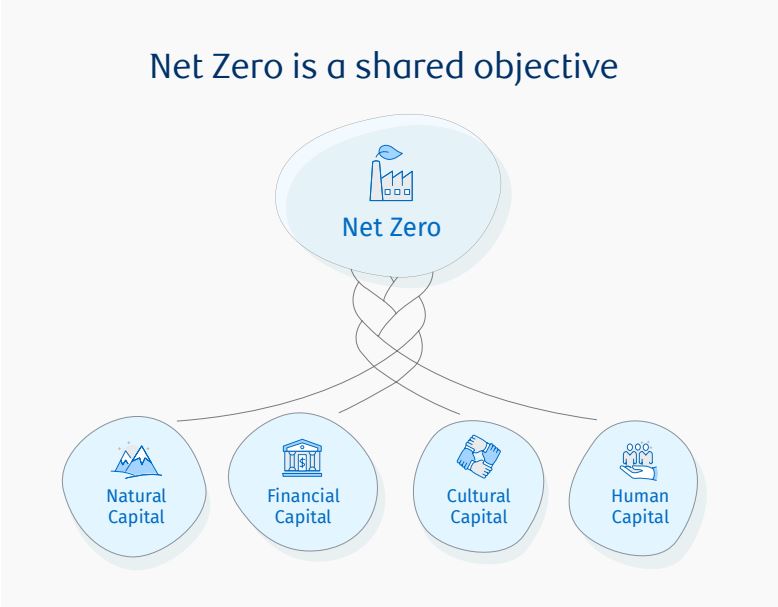
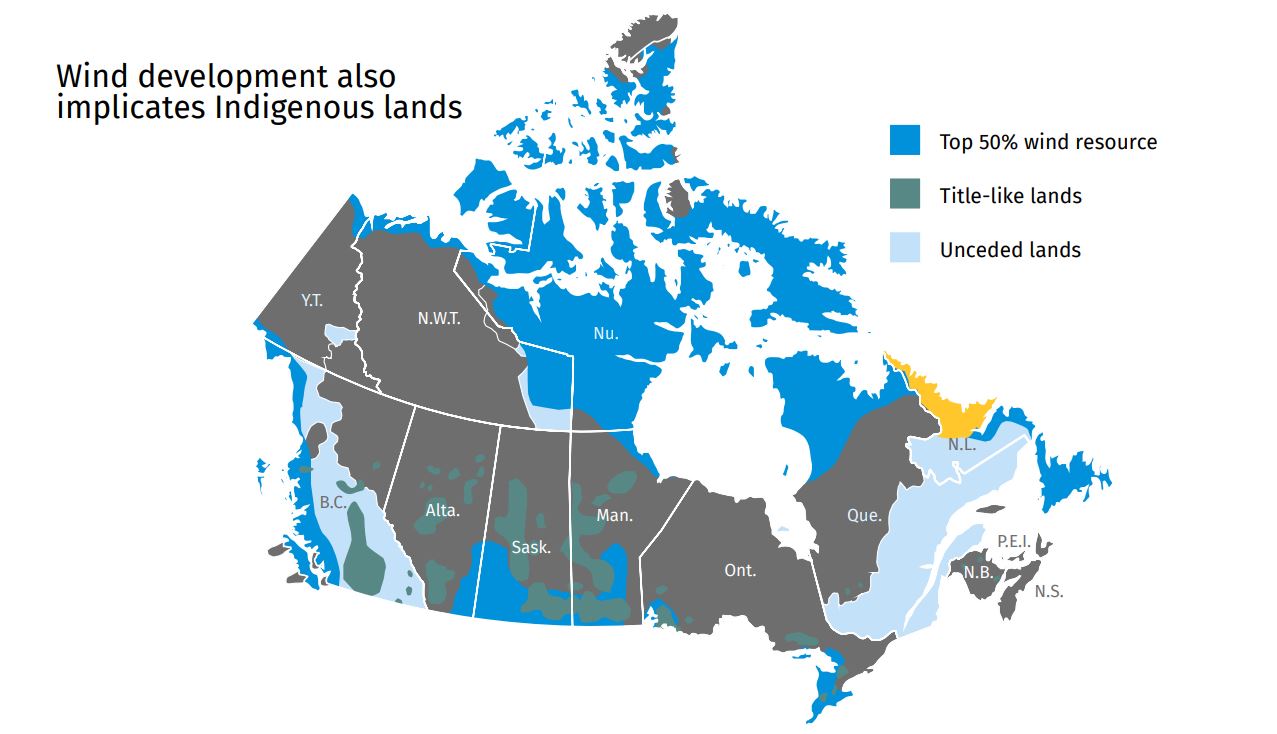
Canada is amid an energy transition—which is both a climate and economic imperative. The road to Net Zero goes through Indigenous territory as our previous report 92 to Zero underscored. Indigenous ownership, participation and partnerships are now table stakes when advancing important resource and energy projects. Through financial and non-financial partnerships, early and deep Indigenous involvement in major project development can be a made-in-Canada model for inclusive economic growth as proactive relationship building is prioritized between Indigenous Nations, governments, and the private sector.
How we got here
The story of Canada is one of the Indigenous Nations that have occupied these lands and waters before all settlers. The Canadian government (personified through the Crown) recognized their independence, autonomy, and nationhood through treaties and agreements including the Tawagonshi Treaty (Two Row Wampum Treaty) of 1613, the Hudson’s Bay Charter of 1670, and the Royal Proclamation of 1763. Canada as a country and a concept has been and continues to be shaped by its relationship with its First Peoples. These agreements and documents recognize Indigenous rights and titles, but the Supreme Court of Canada has also recognized that they only express and affirm what already exists—that Indigenous Nations have stewarded Canada since time immemorial2.
The Canadian government pursued colonization through a range of administrative, legal and other means (including, but not exclusively, through violence). Following the conclusion of the process of Confederation in 1867, the Canadian government consolidated various pieces of legislation relating to Indigenous peoples in the form of the first Indian Act (1876), marking the shift in federal policy from mutuality to assimilation. Post-Confederation historic treaties signed with First Nations were sometimes done so under duress, or were implemented in a manner that breached the terms and spirit of the treaty relationship.
Following the Red River Resistance, the Canadian government often removed members of the Métis Nation from the lands they had been living on to give it to settlers and in some instances, offered scrip—titles to land that were either untenable for agriculture and hunting or bought out by unscrupulous speculators at a significant discount. The Inuit faced similar dispossession with resource extinguishment due to the whaling industry and forced relocation to the High Arctic. These are only some examples of the direct and indirect impacts of colonialism that First Nations, Inuit and Metis Nations have faced over history.
Indigenous Nations have found themselves increasingly dislocated from their legal orders, governance and economic systems through a process of dispossession of their lands, waters and resources.3 Despite this marginalization, Indigenous Nations have advocated for, and advanced legal, political and governance rights, including having Aboriginal rights and titles entrenched in the Constitution. Being able to participate fully in the mainstream Canadian economy while maintaining sui generis rights continues to be an important priority for Indigenous peoples and is an important aspect of the pathway toward economic self-determination and true reconciliation.
Indigenous Nations continue to face significant institutional and legal barriers to raising affordable capital to enable entrepreneurship and participation. This includes the inability to collateralize reserve land due to Section 89 of the Indian Act for First Nations, the inability to access federal funding programs for the Métis Nation, and the difficulty of securing project funding in remote, rural areas for the Inuit.
Major strides have already been made, including the passage of the First Nations Fiscal Management Act, the creation and devolution of powers to territorial governments and the creation of Indigenous-led financial institutions. Further strides must be made to unlock Indigenous economic potential and create the pathway for true economic reconciliation.
Timeline of key events
The story today
When Indigenous Nations consider major project participation, they often face a combination of institutional, legal and economic barriers that have led to many (but not all) Indigenous Nations to build a balance sheet, deal history, or internal capacity. Access to affordable capital that enables Nations that reduce the cost of capital and safeguard Indigenous assets remains a challenge. This is because of a combination of legal and institutional barriers outlined above, as well as network effects and a lack of awareness on the part of the private sector on the benefits of proactive Indigenous participation.
This gap is particularly evident in opportunities where Indigenous Nations may wish to have an ownership stake in energy and natural resource projects on their territories. Indigenous ownership is now a leading model to align interests and advance project development in a timely way by prioritizing Indigenous-corporate relationships, incorporating Indigenous values and priorities, and potentially streamlining regulatory processes4.
What is a loan guarantee and how are they structured?
A loan guarantee is a contractual agreement to repay a debt provided by a third-party lender such as a bank, when the borrower can no longer pay (i.e., “backstopping a loan”). For the lender, this can virtually eliminate the risk of economic loss. For Indigenous investors, equity loans without guarantees can be prohibitively expensive (i.e., the cost of the loan, if granted at all, is less than the cost of financing without a guarantee). Without guarantees, Indigenous investors are often faced with the scenario of an uneconomic cost of capital, accepting a much smaller equity position—or none at all—which are sub-optimal outcomes.
A loan guarantee facilitates the lending environment to fund the equity portion of a transaction, providing credit enhancement and liquidity support for Indigenous borrowers. Importantly, the use of limited partnerships and special purpose vehicles do not put Indigenous community assets at risk, as the project debt raised is non-recourse/limited recourse to equity partners. Use of a special purpose vehicle owned by Indigenous Nations, and generating distributions back to the community limit exposure of liabilities to the value of the initial equity investment made by a Nation.
Loan guarantee programs have emerged as a “brick in the wall”—a part of the solution to address the access to capital gap among other complementary tools. The figure below outlines an example of the ownership structure and the relationship between an Indigenous Nation and equity ownership in a project, in particular, where a loan guarantee may play a role.
The federal government along with the B.C. and Manitoba governments announced loan guarantee programs in 2024 on the heels of advocacy by Indigenous Nations and the private sector amid growing maturity in the public policy development process. These programs, if effectively deployed, could help close the gap in the substantial demand for Indigenous equity participation, estimated by the First Nations Major Projects Coalition to be approximately $45 billion over the next 10 years. Both the development and deployment of newly announced loan guarantee programs will benefit from existing models in Ontario, Alberta and Saskatchewan.
Project finance tools for advancing Indigenous ownership in major projects
These announcements are an important contribution to the set of tools available for Indigenous Nations to economically participate in resource and energy projects. As these programs are implemented, important considerations will include the risk mandate of a loan guarantee program, adequatecapacity support to enable partnerships, robust governance to ensure decision-making and issuance of guarantees are undertaken commercially, and stacking with other guarantee programs and support. Priorities to pay attention to as these programs are being implemented will include:
Indigenous people must be supported to make free, prior and informed decisions on project participation. Partnerships across all Indigenous Nations—First Nations, Inuit and Métis—must be supported. Indigenous perspectives, leadership and talent recruitment, development and retention should also be prioritized when implementing loan guarantee programs.
Programs should support the widest scope of projects to maximize Indigenous economic opportunity as a first-order priority in addition to wider productivity gains to Canada.
Government financial support should be backed by a robust due diligence process. A path toward market sustainability is necessary, so Indigenous Nations can access capital on an equal footing with other market participants over the long term.
Time is of the essence. Individual project negotiations must move at the speed of trust, but the bureaucratic functions of the loan guarantee programs must move at the speed of business. This priority will have to be balanced with the need to have a robust due diligence process.
Existing loan guarantee programs continue to learn and develop new approaches to better enable Indigenous ownership and participation. For instance, how best to support Indigenous ownership in greenfield or pre-construction projects. New loan guarantee programs need to retain flexibility in the structuring and deployment of guarantees to develop and adopt best practices across both public and private sectors.
Risk mandate and project application
Projects that provincial and federal governments select to guarantee will depend largely on the risk mandate of the loan guarantee program. Generally, loan guarantee programs mandated to be low or zero-risk will primarily provide support for relatively low-risk sectors (such as rate-regulated or operational projects). A loan guarantee program with a more accommodative risk mandate could take
on earlier-stage projects in riskier sectors (such as those with more merchant risk exposure) and larger/smaller ticket sizes—facilitating the completion of net-new projects that would not have occurred without Indigenous economic participation. Figure 2 presents the notional risk across a range of possible sectors and project stages, ranging from low to high risk.
It is likely that loan guarantee programs, similar to many government funding programs, will start out relatively risk-averse. However, given the ability of governments (particularly the federal government) to absorb more risk, these programs should adopt an evolving, dynamic risk mandate as they gain expertise through “learning by doing.” For instance, annual risk mandate reviews can incorporate the inputs of Indigenous clients and private sector participants in guarantee programs to re-evaluate whether new, innovative approaches and sectors can be covered. The risk would entail multiple dimensions, including:
Although partial loan guarantees that do not cover the entire Indigenous equity loan may be preferred initially, guaranteeing up to 100% of the equity loan can enable a greater degree of Indigenous economic participation and returns on projects where previously infeasible.
A sector-agnostic approach is important, enabling Indigenous Nations to retain full say and determination on the types of projects that happen on their territory and broadening the positive impacts of Indigenous participation. The loan guarantee program should prioritize a mix of projects across a range of sectors and geographies
Loan guarantee programs will seek to minimize undue risk and a call on guarantees due to both fiscal and reputational risk. Over time, as loan guarantee programs demonstrate success, a wider range of considerations can include guaranteeing projects with a smaller ticket size and greenfield or pre-regulatory projects versus brownfield projects, have a range of risk exposure. Ensuring this mix will capitalize on the program opportunity to maximize Indigenous opportunity and enable investment into net-new projects that contribute to energy and economic goals.
A larger number of Nations in a deal may add complexity, and dilute returns and the equity stake for individual Nations, but it can provide positive multiplier effects. Nations with a greater degree of capacity can support Nations that are developing and building their own internal capacity. Facilitating relationship building across Nations, and with the private sector will be an important impact measure for loan guarantee programs.
A loan guarantee does not create a cash profile on a government’s public accounts, but a loan loss provision can set aside part of the cash requirement for a call on a guarantee. However, when a guarantee is issued, part of this provision would be “locked in” until the loan is repaid. Accounting for a diversity of loan durations (e.g. a mix of five, 10 and 15-year terms) can enable the program to recycle capital and issue new guarantees that would unlock a greater value of equity partnerships.
Additional structuring protections governments may consider to mitigate risk would include:
Indigenous Nations that can invest their own capital can create an equity buffer, which can mitigate risk and further reduce the cost of equity capital.
Loan guarantee programs must lower the barrier to entry, including onerous fees, but these fees can also be tailored to the specific risk profile of the guarantee.
These are standard contractual terms that can stipulate timely repayment of debt by directing cash flows toward debt repayment before distributions, and create a buffer to ensure that future issues can be cured through funds capitalized upfront and over time.
Often used in minority ownership positions, share buyback provisions obligate the majority partner (and often the operator) to re-acquire the Indigenous equity shares in the case of full default.
A standard aspect of commercial debt monitoring, post close due diligence can help address potential issues proactively and enable a government, proponents or financiers to step in prior to an issue being raised. Both commercial monitoring and relationship management with individual Indigenous Nations will be important.
The federal minister of finance has indicated that the government would look forward to seeing the program oversubscribed and a request to increase the funding beyond $5 billion. Indeed, one major project can take over the entire loan guarantee envelope. A larger guarantee envelop is a positive signal of the government’s commitment to enable greater Indigenous partnerships and meet the $45 billion potential.
Capacity
A combination of institutional factors and network effects may mean Indigenous Nations have varying degrees of relationships, know-how and deal history to build the commercial capacity to assess and negotiate deals. The degree of capacity may be variable based on the Indigenous Nation and the nature of the deal. Capacity support can be crucial to the success of access to capital tool that enables Nations to access appropriate commercial, legal and financial expertise to make the right decisions.
As a comparator that highlights the importance of capacity amongst other factors, the U.S. Tribal Energy Loan Guarantee Program created in 2005 issued its first loan guarantee in March 2024. The program’s slow progress may be attributable to multiple factors, but an important omission appears to be that it did not fund for capacity for Native American tribes to make informed decisions on the commercial and technical aspects of a deal.
The federal government has provided $3.5 million over two years to support capacity funding under the program. This is a start, but capacity funding must be more highly prioritized to ensure Indigenous Nations have the appropriate commercial, technical and legal expertise to make project participation decisions. Capacity is often further enabled through the fees charged on loan guarantees, which can be recycled into a capacity fund, alongside support by project proponents. The B.C. loan guarantee program has indicated that it will capitalize a capacity fund with $10 million. The Manitoba loan guarantee program has not indicated whether it will fund capacity.
Organizations such as the First Nations Major Projects Coalition have played an important role in supporting Nations build and consolidate internal commercial, technical and environmental capacity. Continued support of existing and new organizations will be a crucial success factor over the long run.
A positive trend that is Indigenous Nations is growing the number of Nations supporting each other in building capacity. Anecdotally, in deals with multiple Indigenous Nations involved, Nations with more experience and a greater degree of internal commercial or technical expertise often allocate their internal or external resources or contribute their relationships or past experience to support those Nations that are building this capacity.
Governance
Independent, arms-length administration has been a priority with existing programs, including in Ontario (managed through a Crown agency) and Alberta and Saskatchewan (managed through an arms-length corp.). Independence and autonomy enable decision-making to happen with minimal political interference, and generally, have enhanced credibility. Indigenous perspectives and inclusion must be a critical component in all governance structures. Key priorities in developing a transparent, inclusive and nimble governance model will include:
Indigenous leadership and representation across governance and decision-making bodies must be a priority and imperative, given the focus of these programs on Indigenous economic reconciliation and inclusion.
The focus should remain on assessing guarantees on apolitical criteria, including ensuring commercial viability and inclusivity, limiting the scope for political interference in the issuance of individual guarantees.
A corollary for loan guarantee programs to remain apolitical is ensuring the approval and decision-making processes prioritize speed. Approvals by an independent, arms-length board with representation across Indigenous leaders, government officials, and the private sector can expedite implementation and communications.
Part of deploying at speed is enabling, particularly at the federal level, a “single window” approach or coordinating efforts across federal and provincial loan guarantee programs to ensure appropriate service delivery to Nations.
Robust, commercially comparable due diligence criteria and evaluation processes must be developed to ensure loan guarantee decisions are made on the commercial and economic merits of the underlying project and loan guarantee.
Buy-in and transparency go hand in hand to bulwark the credibility and reputation of loan guarantee programs. Both a clear governance process and robust monitoring and reporting requirements will be required for Indigenous Nations and the private sector to understand how and why guarantee decisions are made.
Stacking
There are a range of organizations that provide financial support for Indigenous major project participation, notably provincial loan guarantee programs. Considerations that would enable better stacking with the aim of maximizing the economic opportunity of Indigenous ownership using the full weight of government resources include:
Offering a “single window” for Nations considering both provincial and federal guarantees.
This includes coordination and communication between officials, which is especially important in complex projects that require support across multiple organizations. The federal loan guarantee program has an opportunity to show leadership in this regard.
Aligned financing and contractual terms including fees, guarantee structure and flexibility in rules that enable Nations to tap into multiple financing “pots.”
For capacity grants—not restricting the number of sources Nations can access.
Organizations that provide both financing and capacity support include the provincial guarantee programs, the First Nations Finance Authority, the Canada Infrastructure Bank, Export Development Canada, Business Development Bank of Canada, Farm Credit Canada, and multiple provincial agencies that provide support towards Indigenous economic opportunity.
Future tools
Loan guarantees can be an effective tool—but are only a brick in the wall and not a silver bullet. Crowding in private investment and creating a path to market sustainability will be important.
Future considerations for governments as they consider expanding the toolkit may include:
Indigenous economic interests intersect with almost every sector in the economy including fisheries, agriculture, telecommunications, infrastructure, manufacturing, tourism, and others. Federal and provincial loan guarantee programs can start expanding support across multiple sectors, particularly beyond the energy and natural resources sectors where most of the focus has remained.
Guaranteeing project debt, albeit riskier, may be the next stage after a critical mass of support and private capital is available to guarantee equity. This would functionally on-lend the federal government’s credit rating to Indigenous borrowers, and provide a greater range of flexibility for banks to lend toward.
Providing 100%-plus guarantees can support Indigenous participation for projects in the pre-construction, pre-revenue generation phase. Similar to guaranteeing debt, this may be riskier, but if strategically employed in otherwise commercially viable projects, it can unlock meaningful, early Indigenous participation in projects, particularly in strategic sectors such as critical minerals.
In higher-risk sectors such as mining, particularly in some frontier critical minerals projects, Indigenous Nations may prefer to participate through a royalty or income stream. By creating an institutional structure to transfer part of the royalty revenue to Indigenous Nations, governments can incentivize participation in sectors such as mining or forestry (where the royalty is referred to as stumpage fees). Federal government action is called for here. Provincial governments in B.C. and Alberta amongst others already have resource-revenue sharing agreements.
The growing wealth of Indigenous Nations includes an estimated $20 billion in trust assets and up to $100 billion in outstanding land and other claims. Pooling trust and investment assets through optional Indigenous-led institutions can help generate significant investment income as well as a vehicle to further advance participation and ownership.
An Indigenous Development Bond, akin to development bonds issued by emerging economies and multilateral institutions, can support financing of Indigenous-led projects. This would build on the existing success of the First Nations Finance Authority’s pooled lending and bond issuance program. This instrument would require consensus on bond issuance standards.
Building on the work of the Canadian Sustainability Standards Board and the federal sustainable investment guidelines, integrating Indigenous perspectives and considerations to investment standards can be an additional tool to drive investment to Indigenous-led projects and organizations.
An Indigenous-led development finance institution that consolidates debt, equity and grant instruments could offer a comprehensive set of tools to durably finance projects and businesses. The model for such an institution would be akin to community development banks, capitalized by both public and private sectors, rather than multilateral development banks with votes allocated by share capital.
The private sector is developing innovative structures to crowd in Indigenous participation and inclusion in major projects, including:
Breaking out lower-risk, revenue-generating elements of a larger project and facilitating Indigenous ownership—often elements that outlive the life of a single project (e.g. transmission lines or toll roads).
Post-construction options for Indigenous ownership, wherein the option can be exercised by Indigenous Nations to purchase an equity stake upon project completion.
Minimum annual payments to mitigate the potential downside and protect Nations from undue risk when a project goes through periods of no revenue.
Share buybacks upon project failure to commit to a set price to repurchase equity stakes by the project proponent if the project fails to be completed.
Negotiating Indigenous governance rights even in cases of minority equity positions through a separate share-class structure to recognize Indigenous owners sit in a unique position apart from other commercial participants.
Co-investing with institutional investors, particularly, with co-investors that can deploy large sums of capital over long durations, both in individual major projects and by bundling smaller opportunities through joint ventures.
Proponent guarantees or contractual supports: Proponents may seek to provide their loan guarantees or other forms of contractual support to enable Indigenous participation, particularly in riskier projects. This may be balanced by a higher equity sale price.
A proactive, relationship-focused and trust-based approach for Indigenous partnerships is now necessary in both public and private sectors. Advancing economic reconciliation through meaningful partnerships is both a moral and economic imperative – presenting an opportunity to grow out collective prosperity as a country.
At Energy Disruptors United in Calgary, I sat down with Chana Martineau, CEO of Alberta Indigenous Opportunities Corporation (AIOC), to discuss economic reconciliation. Chana is uniquely qualified to help unlock economic opportunity for Indigenous communities and her background as a woman of First Nations heritage with 30 years of experience in banking and consulting has made her a bridge builder between private enterprise and Indigenous communities. Her cross-functional team of capital markets professionals, Indigenous relations specialists, and engagement professionals enables the AIOC to be a role model for strong governance and professional management. Chana has some advice for companies that want to build ties with Indigenous communities:
Alberta Indigenous Opportunities Corporation is a breakthrough organization that’s a model for the rest of the country, demonstrating the power of mobilizing capital through Indigenous communities for opportunities. Can you tell us the story of AIOC?
In 2019, the Alberta government fulfilled a campaign promise to bring to life an organization that would facilitate investment and participation by Indigenous groups in commercially viable projects – groups who had previously been held back from participating in the economy due to restrictions in the Indian Act. AIOC was set up to remove the barriers – to provide that capital that would allow full participation in the economy, while creating a replicable model that could be accessed for future projects to come. We’re coming up on 5 years next month and are seeing so much come through the pipeline we can’t keep up sometimes. It’s an exciting time for us and demonstrates the critical need for this program.
It’s amazing to think that you’re just coming up to your fifth anniversary because you’ve got such an impressive track record already. And several other provinces are modelling what you’ve built. What advice do you have for them?
I am impressed with the Alberta Government’s entrepreneurial spirit and their passion. They came to us and said, “What do you need to make this happen?” Our governance model is incredibly important. Our board consists of five First Nations members, two Metis members and two allies. It’ a mix of people that really understand Indigenous business and capital markets. You need the right skills at the table to protect the provincial loan guarantee and to understand the intersection of the Indigenous Nations and groups’ interests. We talk a lot about Canada’s productivity crisis. Well, it doesn’t make any sense for each jurisdiction to have a different program that doesn’t work together. When we look at big infrastructure projects that are multi-jurisdictional, we want to make sure the different programs can work together. We have been an open book in terms of helping the new programs learn from our journey. We’re here to help Indigenous peoples and Canadians understand and unlock the benefits from these partnerships.
So, governance is critical. And then entrepreneurial spirit and support from your “shareholders”. It seems like a lot can be solved with these partnerships. Why hasn’t the market solved it then?
Corporations want to bring in Indigenous partnerships, but those relationships have been contentious for hundreds of years. Some corporations don’t want to make a mistake. And some recognize we’ve all made mistakes and that’s what the journey toward reconciliation is about. Now they want to help. Our team straddles both worlds. We understand capital markets, publicly traded companies, and pressures of shareholders. We also understand Indigenous ways and its history, so we can help bring that together in a way that the values are shared and guide both sides. It’s about learning how to speak with each other, helping people connect and giving them a safe place to have those conversations – that’s when the magic can happen.
So being a bridge builder is very powerful. What else is critical for these corporations to understand?
I believe you need to be firmly rooted in your values. Thinking about our corporate partners who have executed successful transactions, they have a leadership commitment to making it happen. Their corporate development teams and legal teams are used to doing things a certain way, where time is money. It doesn’t start from a “seek-to-understand” point of view. Indigenous communities are different. The conversation is different. What I really encourage those organizations to do, and the successful ones really understand this, is to take that “seek-to-understand” approach. It’s going to look different than any transaction you’ve done before, and that’s a good, healthy thing. It takes real leadership from the very top, and commitment to following it through, because it’s a new way of doing business.
The seek-to-understand approach takes time, and that often doesn’t compute with a corporate mindset. How have the successful companies adjusted their notions and approach to time?
Patience, perseverance, and creativity. Those are three key elements to these kinds of transactions. Creativity is a big one. It’s not just to engage with First Nations partners – there are certain parameters of a loan guarantee that make it challenging. At AIOC, we are responsible for $3 billion of the Alberta government’s balance sheet. That’s a big responsibility. If you’re a taxpayer in this province, you don’t want me to tell you we’ve made a bad call. These deals are not easy to do. The bar is high. We have some creative credit structuring to protect the loan guarantee because if the province has a $150 million loan guarantee called, we’ve got less money for roads, schools, housing and health care. We all know the challenges there. Our credit underwriting needs to be prudent, and we need all three parties to collaborate around what works for the communities, the corporate partners, and the loan guarantee.
Let’s look at the Indigenous community’s viewpoint. What are some of the signs of success in communities. How do they view these corporate partners and the structures that you’re helping to create?
I think we’re on a journey and some have already seen the benefits. We’re seeing corporate and Indigenous partnerships changing contentious relationships into ones of mutual respect, understanding and collaboration. And we’re also seeing a massive unlocking of economic activity within these communities. They’re able to rebuild gathering places and all the things that go along with that – the contracting, the construction. It’s jobs, it’s income. All that drives economic activity and builds a healthy heart and connections to the community. Multiply that over 43 Nations and Settlements that have participated in our transactions. These are invaluable to the fabric of the lives in those communities. We’re just starting to see the positive economic impacts grow.
How are you helping communities that don’t have capital markets or financial expertise to move at pace with some of these opportunities?
There’s a lot to learn in a short period of time. We do that through our capacity grant funding, which provides advisors and/or funding for advisors. Our corporate partners also help fund that stream. Members of Indigenous communities can see the full lifecycle of the transaction – be at every single meeting, witness all the due diligence and take the site tours. Understand the journey start to finish, equipping them with the tools to engage with industry. Empowering them to say “Why are you here to talk about consultation? Why are you not here offering us equity share partnership?” The entire conversation has changed. They are not subservient to industry anymore, and I am so proud of that.
Success for both corporates and communities in these deals must equate to more than just the money, doesn’t it? You’ve got human and cultural capital also on the table.
You need to understand what these transactions bring to you. When it’s all about money, I don’t care who it is sitting on the other side of the table. And if it’s all about money, you’ll see what you get. When you’re in the trenches of those negotiations, if you haven’t spent the time to “seek-to-understand” and build trust upfront, Indigenous partner or not, that’s when you’re really going to feel it.
What do all of us, but especially those involved with businesses and governments, need to consider to augment what you are doing?
AIOC is one part of the equation, and we’re not all things to all people. We have the loan guarantees delivered, but that does not replace procurement, contracting, relationships and hiring. We need organizations and governments to start thinking differently about how these relationships are formed. If you’re trying to increase Indigenous participation in your workforce but can’t get anyone out to your job fairs – change the narrative. What if you started with an economic partnership? What does the recruiting funnel look like now? It’s a different way of approaching the issue. I think a lot of people are thinking, “How can we do this?” “How can I bring this to life for my company?” Talk to your Indigenous neighbours. Start the conversation and you will move along with that journey.
Thinking about the AIOC journey – If we’re back here in a year, what’s one or two things you hope will have advanced or changed?
I hope we’ve supported more partnerships. I hope we’ve broadened our scope of deals. I hope we’ve done one or two big game-changing deals across jurisdictions. And I hope the other programs are up and running.
John Stackhouse is Senior Vice President, Office of the CEO, RBC.
Canada is at an economic crossroads. In one direction, reconciliation points to a new generation of corporate thinking and government policy, leading to more Indigenous ownership, project decisions based on consent and a more sustainable approach to resource development. In the other direction, Canada could risk a return to court fights over resource rights, lost foreign investment and a diminished ability to reach Net Zero. Leading businesses and Indigenous communities have a short window of time to pick a path and forge it together.
As Canada nears the halfway mark of the 2020s, with climate challenges growing and the economy struggling, a new path of prosperity through economic reconciliation and a transformed approach to resource development can be forged. A rapidly evolving legal framework around Indigenous rights has helped create this opportunity, as have scores of communities and nations looking to shape – even control – a more equitable future.
Enhancing this new spirit of economic reconciliation between Indigenous and non-indigenous businesses will be important if Canada is to solve the challenges of climate change and slow economic growth. The imperative for action now is growing, with the country in the early stages of an energy transition and on the verge of a critical-minerals boom. A new approach to reconciliation, as laid out in this report, can not only lead to more effective resource development for Canada and sustainable economic growth for communities; it can enhance exports, boost overall productivity and engage a larger part of the Indigenous workforce in the advanced jobs and trades of a greener economy.
All sides will need to work together to increase investment in infrastructure for First Nations, Inuit and Métis peoples, including in the thousands of communities that both rely on and steward the natural resources on which much of Canada has been built. Canadians, whether in business, government or public life, will also need to see this as a critical chance to rebuild trust between Indigenous and non-Indigenous peoples, and hasten all of Canada on the path to reconciliation.
At the heart of the matter is the concept of Free, Prior and Informed Consent (FPIC). FPIC sets out principles that can serve as a compass for this new path, and a means through which to enhance trust and decrease potential frictions wherever Indigenous peoples have interests and rights. FPIC is much more than a legal concept. The concept embodies a mindset of cooperation and long-term thinking that can position Canada in the eyes of global investors as a reliable and collaborative market that could offer fewer disputes and more rewards.
In 2021, the Canadian government enacted a law to commit the country to the United Nations Declaration on the Rights of Indigenous Peoples, which recognizes FPIC as an inherent right of Indigenous peoples. The law may seem vague and aspirational, and is only a first step to ensuring federal laws adhere to the Declaration. Indeed, FPIC is more concept than prescription, and will require much work to establish as a working standard in government and business. But the spirit of FPIC can also be a powerful navigational device for business now.
FPIC is a call for direct, frank and respectful conversations that move beyond “yes or no” negotiations and check-box decisions. It is also a dynamic approach that requires early and regular engagement, as well as flexibility, open-mindedness and creativity from all participants. It calls for businesses to have a respect for traditional and contemporary Indigenous knowledge and culture.
That’s what consent is. Indigenous and legal authorities agree it is not a veto. International law makes clear that FPIC is a mechanism that serves to balance all rights at stake.
Shortly after Canada committed to adopt this new rights-based approach, RBC launched a national initiative to hear from Indigenous communities about their views of engagement and consent. The initiative, led by special advisor and former National Chief Phil Fontaine, embarked on a series of “listening circles” across the country that continue to inform our approach to economic reconciliation, including a view of how Canadian business should approach development with Indigenous peoples.
These conversations will continue, and like the concept of Free, Prior and Informed Consent, will evolve as communities – and new generations – develop their own approaches to and comfort with economic reconciliation. It’s a flowing river, as one listening circle participant said, not a still pond.
While FPIC is still in its early days of implementation, (only BC and the federal government have enacted laws related to it) we heard from communities that it is not, and will not be, a fast track or free pass for project development. Early adoption shows that this consensual approach to economic development requires plenty of time and extensive engagement between groups. This approach is also about much more than deal-making or project building. It’s about the past, and helping to heal and repair pervasive and often insidious harms. And it’s about the future, and building relationships and a mutual understanding that can transcend any particular transaction. In the long run, such investments – in relationship building, knowledge sharing, cultural recognition and ultimately, power sharing – can be effective mitigants to conflict and, more positively, enduring assets for future development.
We heard from Indigenous and non-Indigenous leaders that this can be Canada’s moment, to choose the right path ahead from this crossroads. And if we apply the same concern, even urgency, as we do to other collective challenges, be it climate change or economic growth, we can go far and fast. No one expects the journey to be easy or straightforward. But the business of reconciliation promises a new economic chapter for the country, and for Indigenous peoples.
An anchor within UNDRIP, embodies the concept that Indigenous communities have the inherent right to make decisions about their lands, resources and futures.
It mandates states and businesses to engage in meaningful dialogue with Indigenous peoples, respecting their autonomy, cultural integrity and traditional knowledge, most notably in conjunction with the use of land.
The 2007 United Nations Declaration on the Rights of Indigenous Peoples, established in 2007, is a legally non-binding resolution that defines the inherent rights of Indigenous Peoples around the world.
Since its inception, UNDRIP has gained international recognition as a fundamental instrument of human-rights law, with a growing number of countries including Canada endorsing its principles.
While FPIC is an international guideline, “duty to consult” and accommodate has been a legally binding obligation in Canada since 2004 that applies to the federal, provincial and territorial governments.
Duty to consult must be fulfilled by the governments, collectively called the Crown, before they take any action that may affect the rights of Indigenous peoples.
Listening Circles: Key learnings
In our Listening Circles (roundtables with community leaders across Canada), we heard:
Business should embrace FPIC as a process to help find common ground with Indigenous communities on prospective projects.
First Nations, Inuit and Métis communities and nations can view enhanced collaboration with the private sector, as well as government agencies, as an additional model to development, moving beyond bilateral Crown-Indigenous relations.
Governments should consider Indigenous-led environmental impact assessments as sufficient for a single review process, replacing the requirement for additional reviews by outside agencies.
Ottawa should continue to clarify federal laws to ensure Indigenous consent is considered fundamental to any decision that impacts a community’s rights or way of life.
Business should develop and share leading practices for engagement with Indigenous communities, including a new emphasis on relationship-building and knowledge-sharing. And engagement should increasingly be in the language of a community’s choice.
Indigenous communities and outside industry should view equity participation as a pivotal component of successful partnerships, and an important element of consent.
Government and the private sector should prioritize investment in financial tools and skills in Indigenous communities to help develop local capacity to participle in, and shape, economic development.
Listening Circles
RBC has been on a journey of reconciliation, working with our Indigenous partners to listen, learn, and work towards tackling the complex challenges and emerging opportunities of our time. Together we have seen signs of progress, achieved many firsts, with recent work inspired by collaborations between Indigenous communities and the corporate sector dating back more than a quarter century. After the Royal Commission on Aboriginal Peoples published their final report, RBC released a seminal report called The Cost of Doing Nothing which highlighted the financial implications that inaction would create, including long-term social and economic costs for Indigenous communities and Canada as a whole.
In 2015 we pledged to honor the Truth and Reconciliation Commission’s Call to Action 92, which underscores the critical partnership between the corporate sector in Canada and our Indigenous partners.
Over the past two years, RBC has joined with former Assembly of First Nations national chief Phil Fontaine to engage with Indigenous leaders and communities across Canada. Indigenous leaders spoke on the urgency and ambitions for their communities and the economic impact that it could have for all of Canada. We heard at length how interconnected issues about economic development are with community, geography and history – the need to tackle these issues together and not just in isolation – and their drive to collaborate with organizations and businesses to build a brighter future.
The magnitude and complexity of the tasks in front of us – from reconciliation to the economy to the environment – can feel formidable. However, the work we have started and the partnerships we continue to build on are key to navigating the solutions to these interlinked challenges. RBC is committed to this pathway of collaboration with our Indigenous partners – acknowledging and breaking down institutional barriers, creating new innovative approaches, driving economic empowerment and creating meaningful impact now and for generations to come. Together we can shape a stronger more sustainable future from coast to coast to coast.
The TRC was established in 2008 to confront the impacts of residential schools on Indigenous children and offer a path towards healing, and understanding between Indigenous and non-Indigenous peoples.
The TRC’s 94 calls to action, released in 2015, provided a framework for addressing historical injustices, promoting Indigenous rights, and building bridges to reconciliation.
This Call to Action in the TRC report was directed to the Canadian corporate sector, calling on businesses to apply UNDRIP to their principles and standards involving Indigenous Peoples, their land and resources.
No. 92 includes the appeal for businesses to commit to meaningful consultation, building respectful relationships and obtaining FPIC before proceeding with economic development projects.
A new paradigm
Modern Aboriginal law has evolved slowly and unevenly throughout Canada’s history. Much of Canada’s land mass is covered by historical treaties that evolved over 300 years from early diplomatic and economic alliances that shifted by the influx of settlers who created a greater demand for land. After Confederation, the numbered treaties were signed with First Nations in much of the centre of the country for settlement and access to natural resources, while regions including Atlantic Canada, eastern Ontario, and large areas of Quebec and British Columbia remained unceded. Some Indigenous groups, particularly in the North, gained autonomy much faster than others.
This left a patchwork of rules, policies and approaches that, from the point of view of some investors, created an unstable foundation for businesses to work on. Constitutional changes in the 1980s did not sufficiently clear up the matter. In the vacuum, courts have been asked to step in, and their decisions have helped delineate Indigenous rights.
In response, federal and provincial governments have been intensifying efforts to bring balance to the situation. A critical moment came in 2014 when the Supreme Court of Canada recognized Aboriginal title beyond a reserve, ruling in the Tsilhqot’in decision that Crown sovereignty needs to be balanced with Indigenous rights and self-determination. Two years later, Canada officially endorsed the United Nations Declaration on the Rights of Indigenous Peoples (UNDRIP), paving the way for it to be adopted in law. Then, in June 2021, the federal government passed a law respecting the adoption in Canada of UNDRIP, which promotes Indigenous rights globally. Since then, Canada has released a UN Declaration Act Action Plan aimed at harmonizing federal laws with UNDRIP’s principles. That includes a commitment to meaningful consultation and building respectful relationships, including the desire of Indigenous communities to make business decisions based on the principle of FPIC.
Provinces and territories are making changes as well. British Columbia’s new environmental assessment act formalizes the need for consent from First Nations communities for projects on their traditional territories. B.C. is also exploring innovative amendments to its Land Act, contemplating a shared decision-making model for authorizing permits on Crown land.
First Nations Major Projects Coalition
The Act was created in 1876 as a tool to administer rights promised by the Crown, but it was applied in a way that coerced First Nations to surrender their rights and culture and severed them from the mainstream economy.
The devastating marginalization and other impacts of the Act are still felt today. New legislation is dismantling it piece by piece through the return to self-determination and self-government initiatives.
Revenues generated by Indigenous governments through taxes or resource development, or by communities through economic endeavours and development like resource extraction and tourism.
Own Source Revenues symbolize a shift towards Indigenous economic self-determination because they allow communities to fund activities such as infrastructure projects, social programs and cultural initiatives.
Contracts between Indigenous communities and project developers that outline remedies, compensation and environmental safeguards related to natural resource development on traditional lands.
While IBAs are designed to honour Indigenous rights and mitigate socio-economic impacts, they may not meet communities’ expectations if they are not comprehensive and leave too much room for interpretation.
Overcoming unique challenges
Amidst this evolving legal landscape for Indigenous rights, one of the biggest challenges for business is the amorphous FPIC process. FPIC demands businesses approach Indigenous communities by building relationships and finding consensus rather than solely following the rules of Canadian corporate law.
Difficulties in understanding the differences in governance systems and worldviews—not to mention inevitable discrepancies in size or financial power of business entities—have created frictions that have in places undermined collaboration. While the dynamics between Indigenous and non-Indigenous entities have improved in many ways, not all parts of the corporate sector have been quick to adapt their attitudes and policies to the new paradigm.
On a deeper level, a legacy of injustice continues to impede progress. For decades, government policies deprived Indigenous peoples of their inherent rights and decision-making powers, leading to economic underinvestment and human deprivation that continues to impact Indigenous communities. The Indian Act of 1876 marginalized First Nations communities, while other restrictive and prejudicial policies such as the residential school system and forced relocation isolated
most Indigenous peoples from their traditional economy, as well as the mainstream economy. This multi-generational legacy has led to lingering mistrust, which grinds at the wheels of relationship-building, even in cases where there are mutually beneficial agreements around specific projects.
Efforts to reverse this narrative are imperative if Canada is to advance economic reconciliation, boost economic development, strengthen productivity growth and increase climate action. Heading into the latter half of the 2020s, these objectives may well be intertwined. For instance, RBC research shows traditional Indigenous lands in Canada account for 56% of advanced critical mineral projects, 35% of the top solar sites, and 44% of the best wind sites for energy production.
In each case, Canada will struggle to meet our potential without a new approach, which in turn promises significant economic opportunities, for Indigenous communities as well as the country. Over the next decade, Canada is poised to develop 470 natural resources projects, worth an estimated $525 billion, mostly in the energy sector. The First Nations Major Projects Coalition estimates these projects could create more than $50 billion in equity opportunities for Indigenous communities.
Amidst this evolving legal landscape for Indigenous rights, one of the biggest challenges for business is the amorphous FPIC process. FPIC demands businesses approach Indigenous communities by building relationships and finding consensus rather than solely following the rules of Canadian corporate law.
Difficulties in understanding the differences in governance systems and worldviews—not to mention inevitable discrepancies in size or financial power of business entities—have created frictions that have in places undermined collaboration. While the dynamics between Indigenous and non-Indigenous entities hve improved in many ways, not all parts of the corporate sector have been quick to adapt their attitudes and policies to the new paradigm.
On a deeper level, a legacy of injustice continues to impede progress. For decades, government policies deprived Indigenous peoples of their inherent rights and decision-making powers, leading to economic underinvestment and human deprivation that continues to impact Indigenous communities. The Indian Act of 1876 marginalized First Nations communities, while other restrictive and prejudicial policies such as the residential school system and forced relocation isolated most Indigenous peoples from their traditional economy, as well as the mainstream economy. This multi-generational legacy has led to lingering mistrust, which grinds at the wheels of relationship-building, even in cases where there are mutually beneficial agreements around specific projects.
Efforts to reverse this narrative are imperative if Canada is to advance economic reconciliation, boost economic development, strengthen productivity growth and increase climate action. Heading into the latter half of the 2020s, these objectives may well be intertwined. For instance, RBC research shows traditional Indigenous lands in Canada account for 56% of advanced critical mineral projects, 35% of the top solar sites, and 44% of the best wind sites for energy production.
In each case, Canada will struggle to meet our potential without a new approach, which in turn promises significant economic opportunities, for Indigenous communities as well as the country. Over the next decade, Canada is poised to develop 470 natural resources projects, worth an estimated $525 billion, mostly in the energy sector. The First Nations Major Projects Coalition estimates these projects could create more than $50 billion in equity opportunities for Indigenous communities.
To fulfil that promise, here are three important steps for business to consider:
Businesses seeking to engage a community about a project on Indigenous traditional territory would be wise to take a different approach than they would elsewhere. Increasingly, First Nations, Métis and Inuitleaders expect potential partners respect their community values, governance systems, timelines and consensus-building processes, which often vary from community to community and region to region. Seeking to establish a firm understanding of values and business goals is a far different approach than traditional Impact Benefit Agreements might seek through financial transfers, jobs and procurement deals. Indigenous leaders want to be approached as long-term partners who have unique value to add, including their traditional knowledge of their lands and natural ecosystems, which in turn could de-risk projects and lead to more sustainable and profitable outcomes.
Indigenous communities also want agreements that ensure they will retain influence over the life of the project, from initial planning to remediation and reclamation. This is why they have been advocating for equity participation to become a larger component of their business partnerships. While resource royalties are valuable because they can generate long-term wealth, equity participation generates both wealth and influence. Holding an ownership position in a project—and perhaps a seat on the board of directors—also aligns Indigenous interests, including environmental, impact and investment concerns, with project partners.
At a minimum, First Nations, Métis and Inuit leaders are demanding that project proponents approach them with a respect for traditional and contemporary Indigenous knowledge and worldviews. Participants in the Listening Circles consistently stressed the importance of listening, understanding and respect.
Businesses should seek participation in proactive partnerships with Indigenous communities and government agencies. Public Private Indigenous partnerships (P3I) are an increasingly attractive model for cooperation—and a departure from the framework of Crown-Indigenous relations that dominated the Indigenous economy for decades. P3Is leverage wide economic powers and build trust. The Oneida Energy Storage Project in Southwestern Ontario provides a recent example. The energy startup NRStor worked alongside Six Nations of the Grand River Development Corporation to advocate policies and procedures to promote a battery-storage project on the territory that could help serve Ontario’s Golden Horseshoe. The result was a true P3I, with Tesla providing the battery technology, Aecon building it, and Northland Power becoming a significant backer. In 2021, the Canada Infrastructure Bank committed to invest $170 million in the $500 million project.
Promoting P3Is can also be used as a potent force to eliminate the Indigenous infrastructure gap. Efforts to close that gap should be seen not only as an effort to redress legacy injustices and promote economic reconciliation, but an integral driver to help Canada reach its commitments of climate transition (through more efficient electrical grids and housing, for instance) and increased productivity.
The private sector should accelerate investment in financial tools and people. This will allow more First Nations, Métis and Inuit groups to participate in, or take charge of, community development and resource projects—while increasing collective opportunities for Canada as a whole. The need for greater support from the private sector, and coordination with Indigenous communities, was a major theme of the listening circles. Indeed, the “free” and “informed” parts of FPIC require that Indigenous groups be able to engage in business negotiations without substantive disadvantages.
Lack of financial capacity can pose a major barrier to that kind of engagement. The availability of tools like government loan guarantee programs has begun to allow Indigenous communities to access new forms of capital – but they also need the skills and technology to leverage the opportunities and overcome challenges such as the inability to use settlement lands for collateral. In Budget 2024, the federal government detailed a new national Indigenous loan guarantee program that could add to the transformative power of business-to-business cooperation. But it will need to be accompanied by formal and informal capacity building, for communities as well as small and medium-sized Indigenous businesses.
Private-sector support for increased educational opportunities, and sector-specific training in fields such as finance, governance and engineering can promote positive economic outcomes for Indigenous peoples. A new generation of jobs, trades and professions will not only add to the income levels in many communities. It will add to the collective strength of those communities to further advance their interests and protect their values.
A new business model
Economic reconciliation can be seen as an effort to achieve balance in equity and prosperity with First Nations, Métis and Inuit peoples. Free, Prior and Informed Consent can help build strong partnerships and can underpin that effort.
As Canada grapples with the implications of FPIC, Indigenous communities are not standing idly by. Many of the leaders are pursuing business deals that conform to their individual nation’s priorities and worldviews—and in many cases are striking out on their own. As we noted in our 92 to Zero report, Indigenous entrepreneurs are developing new businesses at nine times the Canadian average—while Indigenous-led development agencies are proliferating. That is transforming Indigenous relations from a one-way to a two-way street.
The private sector has a large role to play. Businesses in Canada can approach Indigenous negotiations by looking for shared goals, while offering equity rather than handouts. Those that don’t risk being outflanked by foreign firms, as well as emerging Indigenous competitors, with more collaborative approaches.
To widen the field of collective opportunities, the private sector should be seeking to create new, innovative partnership models, and look for ways to accelerate investments in financial tools and people. Businesses that follow this balanced approach, including FPIC, may find it to be far less a business risk and much more a competitive advantage. Indeed, the greatest risk of reconciliation may soon be for those who don’t embrace it.
In a guest essay, Allan Clarke explores ways Canada can tap First Nations’ potential to advance Canada’s green growth
Key Points
Federal government’s 2023 budget commitments will empower Indigenous Peoples to play a vital role in helping Canada achieve its Net Zero goals.
Government’s financial support for Indigenous investment in major projects is critical in achieving economic reconciliation.
Made-for-Canada tools could include loan guarantee programs, capital-raising vehicles, and credit risk management to hone Indigenous potential and embed their capital and skillsets in green economic and community development projects.
Long-term and sustainable access to a predictable capital stream can only be achieved through structural changes in fiscal and taxation frameworks.
Indigenous Groups can lead in advancing Canada’s Critical Minerals Strategy—which is expected to play a pivotal role in fuelling the domestic and global low-carbon economy.
Indigenous Groups Emerge As A Net Zero Pillar In Budget 2023
In Budget 2023, the Government of Canada recognized “the world’s major economies are moving at an unprecedented pace to fight climate change, retool their economies, and build the net-zero industries of tomorrow.”
To keep up, Budget 2023 proposed several initiatives that were described as necessary “to build a thriving, sustainable made-in-Canada clean economy.”
Some notable budget highlights:
Significant investments to accelerate the supply and transmission of clean electricity
A refundable tax credit to support and accelerate clean electricity investment in Canada
Prioritizing investments through the Canada Infrastructure Bank to support the building of major clean electricity and clean growth infrastructure projects
Recapitalizing funding for the Smart Renewables and Electrification Pathways Program to support regional priorities and Indigenous-led projects.
At the same time, Ottawa recognized two fundamental challenges to the success of this effort.
First, large-scale, long-term investments are required to support the realignment of global supply chains and build a Net Zero future. And second, the recent passage of United States’ Inflation Reduction Act (IRA) poses a major challenge to Canada’s ability to compete in the industries that will drive the green economy.
To accelerate the completion of major projects required to drive the clean economy, the government intends to prioritize expediting major project reviews while maintaining strong regulatory standards.
The government also stated its commitment to further improving the quality and consistency of benefits that Indigenous communities derive from major projects in their territories, by advancing opportunities for Indigenous communities to participate as partners in major projects.
Budget 2023 identified $8.7 million to support engagement with Indigenous partners, including Indigenous rights-holders, towards the development of a National Benefits-Sharing Framework.
The Canada Infrastructure Bank is tasked with providing loans to Indigenous communities to support them in purchasing equity stakes in major projects in which the Bank is also investing.
Both initiatives will serve Canada’s effort to build the clean economy.
Meaningful implementation of the United Nations Declaration on the Rights of Indigenous Peoples in Canada requires a sharing of wealth and power
In the first case, meaningful implementation of the United Nations Declaration on the Rights of Indigenous Peoples (UNDRIP) in Canada requires a sharing of wealth and power. Article 26 of UNDRIP states that “Indigenous Peoples have the right to the lands, territories and resources which they have traditionally owned, occupied or otherwise used or acquired.”
A National Benefits-Sharing Framework could be an important step in implementing UNDRIP and achieving economic reconciliation.
Support from the Canada Infrastructure Bank to help Indigenous communities purchase equity stakes in major projects, while limited in scope, is another welcome development.
Making Capital Affordable
It’s a start, but more can be done. Here are three mutually beneficial ways Canada can unlock capital for Indigenous participation.
1. A More Comprehensive Loan Program
The greatest impediment to Indigenous participation in major projects is access to affordable capital.
The causes are well documented: a legal and regulatory environment that is unfavourable for economic and business development; historic and deliberate exclusion from exercising jurisdiction over traditional lands and resources; inequitable public investment in housing and infrastructure; lack of support for business growth; and a complex government funding regime.
According to the National Indigenous Economic Strategy: “While the effects of colonialism have been devastating to the social, physical, and mental health of our communities, one of its most nefarious objectives was the deliberate exclusion of Indigenous Peoples from sharing in the wealth of this country.”1
The principal instrument to achieve this nefarious objective is generally understood to be the anachronistic Indian Act, which regulates almost every aspect of community life on reserve for nearly 600,000 registered Indians.2 It defines who is an “Indian” and, among other matters, regulates band membership, band government, taxation, lands and resources, estates and money management.
While legislation and regulations in off-reserve contexts typically evolve and are updated over time, the Indian Act has largely been frozen in time, leaving on-reserve communities with outdated and paternalistic rules and procedures that have not kept pace with a modern economy.
Partly as a result of its fiduciary duty to Indigenous people, the federal government often acts in ways that hinder economic and business development on reserve. As a fiduciary, the Crown is required to protect the interests of First Nations and is liable if it fails to do so: witness the growing inventory of Specific Claims that deal with historic wrongs against First Nations.3
This slows down transactions considerably, as the Crown often acts in a manner designed to reduce potential liability for decisions over which it has ultimate authority under the Indian Act.
According to research conducted by Fiscal Realities, in its report Expanding Commercial Activity on Reserve Land, “as result of delays and a reluctance of the Crown to allow First Nations to share risk, First Nations are not only protected from bad deals but also lose many good ones.”4
Deployed prudently, loan guarantee programs similar to the ones in place in Alberta, Ontario and Saskatchewan, can help Indigenous communities overcome the impediments to economic development and barriers to economic inclusion that are the product of outmoded policy and legislation.
Most recently, the Alberta Indigenous Opportunities Corporation (AIOC) played a key role in the landmark agreement that resulted in 23 First Nations and Métis communities acquiring an 11.57% non-operating interest in seven Enbridge pipelines in northern Alberta (valued at $1.12 billion). In this case, the AOIC provided a loan guarantee that made the project a viable proposition for the Indigenous groups.
At the time, Indigenous leaders involved spoke passionately about impacts the stable source of long-term revenues generated by the partnership will have on their citizens and communities. Fort McKay Métis Nation president Ron Quintal said the agreement will mean the community can direct more money to education, infrastructure and housing.5
A federal loan guarantee program would facilitate equity participation by Indigenous communities in major projects, thereby advancing economic reconciliation by redressing past efforts at economic exclusion. It also furthers the implementation of UNDRIP by creating the conditions conducive to free, prior and informed consent, and support Indigenous communities in generating revenues that will be re-invested in Indigenous housing, education, health and other services that promote community well-being and better socio-economic outcomes.
2. Overcoming Development Barriers
Canada needs to take meaningful action on closing the infrastructure gap.
Longstanding under-investment in key infrastructure in First Nations communities has created immense economic, social and health inequities. While adequate infrastructure is vital to community health and well-being, the lack of infrastructure—housing, broadband, connectivity, transportation, energy, adequate water and wastewater treatment systems—is a serious barrier to economic development and an impediment to participation in major projects.
While investments announced in recent budgets represent a significant increase to historical levels of Indigenous infrastructure funding, they are still inadequate to substantially close the infrastructure gap.
New approaches and innovations are also required to more effectively deploy available federal funding. It’s generally accepted that the serious shortages of on-reserve housing and infrastructure cannot be addressed exclusively through the current “annual cash funding” model of federal funding. When inflation exceeds annual budget increases, less infrastructure is built each year even as the Indigenous population continues to grow. Alternatives must be contemplated.
The First Nations Fiscal Management Act and its institutions, including the First Nations Finance Authority, the First Nations Financial Management Board and the First Nations Infrastructure Institution, can be used to leverage long-term federal transfers to raise debt financing through the capital markets to build on-reserve infrastructure and housing.
Canada needs to take meaningful action on closing the infrastructure gap
Specifically, the First Nations Fiscal Management Act (FNFMA) provides First Nations with fiscal powers similar to those exercised by municipalities and other orders of government in the areas of real property taxation, financial management and access to capital. Promoting strong and accountable on-reserve taxation and financial management frameworks, and providing a mechanism to access pooled borrowing for infrastructure and other public works, has allowed the regime to demonstrate its value as an important instrument to promote economic development and support sustainable First Nations communities.
Since the issue of its first debenture in 2014, the First Nations Finance Authority has raised over $1.8 billion in the capital markets. This financing is used to construct housing and public infrastructure in First Nation communities. Today, more than 350 First Nations have joined the FNFMA, and 142 First Nations are now qualified borrowing members.
According to Closing the Infrastructure Gap by 2030: A Collaborative and Comprehensive Cost Report Identifying the Infrastructure Needs of Canada’s First Nations, published in 2022, $349.2 billion is required between now and 2030 to close the infrastructure gap in First Nations communities.6 The report—undoubtedly the most thorough, comprehensive and far-reaching assessment and costing of First Nations housing and infrastructure needs ever undertaken—outlines the capital and operations and maintenance costs to construct, repair and improve First Nations infrastructure and ensure its proper and on-going maintenance.
The report identifies major infrastructure requirements across a broad range of needs—often needs that are not typically funded by Indigenous Services Canada or other federal government departments. In addition to estimating costs associated with education, housing and public infrastructure, the report provided a comprehensive examination of the cost associated with all-season access roads, climate adaptation, meeting Net Zero carbon goals, connectivity and accessibility.
Building on the success of FNFMA, the government should allow First Nations to borrow against long-term federal transfers. This would ensure that more infrastructure and housing can be built now, in today’s dollars, and with higher standards for design, construction and maintenance than currently exists in government programs.
3. Forging A New Fiscal Relationship With Indigenous Peoples
Canada must fulfill its commitment to building a new fiscal relationship with Indigenous Peoples.
In 2019, the Joint Advisory Committee on Fiscal Relations released its interim report7 with wide-ranging recommendations on improving the Nation-to-Nation and Treaty-based fiscal relationships of First Nations and Canada. These recommendations included moving toward sufficient flexible and predictable funding, enhancing revenue generation opportunities, strengthening the institutions that support First Nations, new approaches to measuring for results, new fiscal and taxation powers, and the establishment of new fiscal institutions.
The fiscal powers, institutional structures and financial and administrative capacity associated with a new fiscal relationship are necessary pre-requisites to support successful and authentic partnerships with Indigenous communities in major projects. It’s a necessary step on the road to a clean economy that would ensure Indigenous governments have meaningful access to capital, including their own.
These recommendations are consistent with the government’s own stated positions. For example, Canada’s Critical Minerals Strategy was described by the Minister of Natural Resources as setting the stage for the “advancement of reconciliation with Indigenous Peoples.”8
“By growing and building our expertise at each point along the critical mineral supply chain, Canada can grow its economy from coast to coast to coast, fight climate change at home and around the world, and improve the resiliency of our supply chain and those of our allies to future disruptions. Importantly, this must be done in a way that advances the Government of Canada’s commitment to reconciliation with Indigenous peoples through meaningful consultation, early and ongoing engagement, investments in capacity supports, environmental stewardship, community safety, and economic opportunities for Indigenous peoples.” – The Canadian Critical Minerals Strategy
The Critical Minerals Strategy will prioritize economic reconciliation, respect Aboriginal and Treaty rights and contribute to the socio-economic well-being of Indigenous communities. The strategy identifies strong, progressive relationships with First Nations, Inuit, and Métis peoples across Canada through early engagement, collaboration, and the development of mutually beneficial partnerships as key success factors.
The strategy also identifies systemic barriers to Indigenous participation and leadership in the sector, in addition to addressing economic, business, and community skills and capacity gaps. The blueprint also identifies the need for more Indigenous-led research and inclusion of traditional knowledge and inclusion in planning, and decision-making throughout the project lifecycle. It also rightfully cites lack of access to competitive capital for equity participation as a major impediment.
The implementation of a federal loan guarantee program would facilitate equity participation of Indigenous communities in major projects. Closing the infrastructure gap by employing innovative solutions would help address a long-standing impediment to creating the conditions for economic development in Indigenous communities, while complementing efforts to increase own-source revenues from participation in major projects and to establish a modern fiscal relationship between Canada and Indigenous governments.
These efforts would pay dividends—not to shareholders in private companies—but to citizens of Indigenous governments through new investments in housing, infrastructure, education, health care and facilities and other public works. All of which are sorely—and demonstrably—needed.
Contributors:
Lead Author: Allan Clarke, Consultant, Indigenous Issues
RBC Climate Action InstituteMyha Truong-Regan, Head of Climate Research
Yadullah Hussain, Managing Editor
Shiplu Talukder, Digital Publishing Specialist
Darren Chow, Senior Manager, Digital Media
Allan Clarke is an Ottawa-based consultant on Indigenous issues. He previously served more than 30 years in the Public Service of Canada, most recently as the Director General, Economic Research and Policy Development with the former Indigenous and Northern Affairs Canada. Allan has served on several not-for-profit boards, including Catalyste+, the Indigenous Screen Office, the John Howard Society (Ottawa), BookNet Canada and the Association for the Export of Canadian Books. He is Anishinaabe with family roots on the Wikwemikong Unceded Indian Reserve.
92 to Zero is the latest report in RBC Economics and Thought Leadership’s climate series, building from the team’s flagship report, The $2 Trillion Transition.For decades, RBC has engaged with Indigenous communities and we continue to work with them on our journey toward progress and reconciliation. The Royal Commission on Aboriginal Peoples was a clarion call that led to The Cost of Doing Nothing and subsequent work, including A Chosen Journey. Through our Climate Blueprint we are committed to sustainability and accelerating the transition to Net Zero. In these initiatives, we are listening and learning and using our platform to amplify Indigenous voices.
It’s now clear that the national priorities of Net Zero and reconciliation with Indigenous Peoples are inextricably linked. In the same spirit, we expect RBC’s reconciliation journey will increasingly intersect with our climate priorities.
92 to Zero highlights the incredible value that Indigenous capital, knowledge and decision-making can bring to a Net Zero transition. We’ve recently launched a national initiative of “listening circles” led by former Assembly of First Nations national chief Phil Fontaine that this report will help inform and inspire—and lead to more from us in the years ahead.
Now, each of us must act to break down the ongoing systematic barriers that prevent the full realization of Indigenous capital, supporting reconciliation and climate action. We hope this report will propel us further down that path.
We acknowledge that RBC resides on the traditional and contemporary treaty, and unceded territories of Turtle Island (North America) that are home to many First Nations, Inuit, and Métis peoples.
Key Findings
Canada’s road to Net Zero will rely heavily on vital sources of capital held by Indigenous nations. RBC estimates Canada needs roughly $2 trillion in capital over the next 25 years, much of it from Indigenous sources—or unlocked by Indigenous partnerships, including ownership.
An Indigenous-led approach to the climate transition, and economic opportunities toward Net Zero, will be essential to economic reconciliation.
Specifically, to achieve Net Zero and economic reconciliation, Canada needs to leverage four forms of Indigenous capital:
Natural Capital: Indigenous lands hold vast resources essential to green energy systems, and will be essential to the clean tech revolution. At least 56% of advanced critical mineral projects, 35% of top solar sites and 44% of the better wind sites involve Indigenous territory.
Financial Capital: The growing wealth of Indigenous communities includes an estimated $20 billion in trust assets and up to $100 billion in outstanding land and other claims. This capital will be critical to “crowding in” billions of dollars in private and public clean energy investment for Net Zero initiatives.
Intellectual Capital: Incorporating Indigenous values and traditional knowledge in the transition will lead to more sustainable and profitable outcomes. It can establish Canada as a leader in regenerative techniques, the preservation of biodiversity, and nature based carbon solutions—a powerful advantage as Canada competes with other countries for capital to finance the energy investment.
Human Capital: Emerging young Indigenous leaders and entrepreneurs will be critical generators of the innovative thinking needed to fuel the green transition. And as the fastest growing youth cohort, Indigenous Canadians can help power a Net Zero workforce that will include valuable jobs in skilled trades, advanced technology, business ventures and more.
What is 92?
To redress the legacy of residential schools and advance the process of Canadian reconciliation, the 2015 Truth and Reconciliation Commission issued 94 calls to action. The 92nd dealt specifically with business and reconciliation.
We acknowledge that RBC resides on the traditional and contemporary treaty, and unceded territories of Turtle Island (North America) that are home to many First Nations, Inuit, and Métis peoples.
Indigenous communities can unlock green economic growth
For many Indigenous Peoples in Canada, braiding is a sacred act. It brings together seemingly disparate sinews, with the goal of building a stronger, more unified whole. Strands of hair, breakable on their own, become more resilient when braided together. Blades of sweet grass are woven and burned with sage, cedar, and tobacco, the ceremony strengthening the community, which in turn cares for the plant.
Similarly, to meet the generational challenge of climate change, Canada must weave together the critical strands of Indigenous capital to secure a durable Net Zero strategy.
This new approach is about much more than money. It includes natural capital—vast portions of critical mineral, solar and wind developments depend on access to Indigenous lands—along with growing Indigenous wealth (financial capital), traditional Indigenous knowledge (intellectual capital) and powerful Indigenous entrepreneurship and talent (human capital). Each is required to strengthen the whole.
To unleash this capital, Canada will need new tools for clean energy development. That means establishing stronger corporate commitments and incentives for Indigenous partnership, greater sharing of project benefits, and financeable models of Indigenous equity participation. It means developing investment criteria that incorporates Indigenous perspectives and more intentional development of Indigenous entrepreneurs and youth leadership.
Above all else, it means establishing a new approach to partnership, one that reinforces the role of Indigenous rights, leadership, decision-making and consent.
These concrete actions will pull growing sources of Indigenous capital toward Net Zero. They’ll also mobilize critical private capital, by building a foundation of predictable development, better environmental outcomes, and expansive social impact.
Meaningful partnerships can’t be rushed. But the demands of the Net Zero transition are immediate—and there’s only one opportunity to get it right.
The onus now is on everyone to move forward together.
Natural Capital: The path to Net Zero winds through Indigenous land
Canada comes to the global climate challenge with a unique set of advantages. Its landscape includes vast quantities of both conventional and renewable energy resources—assets that, while enviable, bring challenges. Even as the country continues to rely on oil and gas, and works to more sustainably produce it, it’ll need to begin harnessing the resources to power the clean economy of the future.
And these resources are attached largely to Indigenous lands. RBC research shows at least 56% of advanced critical minerals projects involve Indigenous territory. Top opportunities for renewables development also overlap with Indigenous lands, including at least 35% of top solar sites and 44% of better wind sites. And Indigenous rights exist over many other territories that will require engagement.
To include these assets in its Net Zero strategy, Canada will need a new model for Indigenous partnerships—one that begins with meaningful engagement and consent.
Indigenous land contains key resources
At least 56% of the $60 billion in new critical mineral advanced projects involve Indigenous lands, including 26% within 20 kilometres of Indigenous reserves, settlement lands, and other title-like areas, and another 30% on unceded territories where Indigenous rights are asserted.
At least 35% of the top sites for the required $30 billion in solar development are near title-like lands.
And at least 44% of the better sites for the needed $135 billion in wind development are near title-like lands.
Indigenous communities have ‘a say’, but not decision-making power
Greater legal and political recognition of land rights has empowered Indigenous voices at the negotiating table for development projects, particularly in unceded and modern treaty territories.
These advancements follow decades of government policy that removed Indigenous Peoples from decision-making and deprived them of long-held land and treaty rights. This created a cycle of underinvestment, poverty, and trauma that persists in many communities today.
How Indigenous Peoples were isolated from decision-making
Early cooperation between distinct and sovereign settler and Indigenous groups created mutually beneficial trade and strategic military alliances that aided European survival on the land. But over time, official government policies of land dispossession, paternalistic suppression, and cultural assimilation took hold. The government never fully honoured original agreements and it removed Indigenous Peoples from the decision-making table.
It’s now clear that the national priorities of Net Zero and reconciliation with Indigenous Peoples are inextricably linked. In the same spirit, we expect RBC’s reconciliation journey will increasingly intersect with our climate priorities.
92 to Zero highlights the incredible value that Indigenous capital, knowledge and decision-making can bring to a Net Zero transition. We’ve recently launched a national initiative of “listening circles” led by former Assembly of First Nations national chief Phil Fontaine that this report will help inform and inspire—and lead to more from us in the years ahead.
Now, each of us must act to break down the ongoing systematic barriers that prevent the full realization of Indigenous capital, supporting reconciliation and climate action. We hope this report will propel us further down that path.
We acknowledge that RBC resides on the traditional and contemporary treaty, and unceded territories of Turtle Island (North America) that are home to many First Nations, Inuit, and Métis peoples.
As Indigenous communities regain rights and sovereignty, business methods are inching closer to the true spirit of initial cooperative agreements between Indigenous and settler societies, or
Treaties, that guided the sharing of land and living together in parallel.
But conflicts continue to erupt, including public demonstrations against development companies. While the courts have signaled a growing willingness to set precedent for consultation, they’ve also established that Indigenous rights are not absolute.
Government often navigates difficult decisions in the overall national interest. But this maxim has led to problematic policy and flawed corporate approaches to Indigenous engagement. Too often, Indigenous Peoples have been given only checkbox approval on planned projects that don’t respect their community values, governance, timelines, or consensus-building processes.
Resulting clashes have led to cancelled projects, runaway costs and timelines, and rushed planning phases that fail to leverage extensive Indigenous knowledge of land stewardship.
An oppositional approach is one way to pursue energy development. But it’s not the optimal one. Resulting court challenges, broken social trust, delays, and investment uncertainty pose a sizeable threat to Canada’s climate ambitions.
Striking true partnership
Some Indigenous leaders have told Canada’s business community they’re thinking about this in the wrong way. Rather than represent a project risk, Indigenous Peoples could bring something unique to the table. They can potentially improve certainty and returns, offer deep location-specific knowledge and better environmental and social outcomes. And as the rights of Indigenous
Peoples continue to draw international attention, their reintegration into clean energy development could emerge as a competitive strength.
“I think a lot of proponents are going to have to shift their mindset from thinking of Indigenous people as a risk to a possible source of capital and an enhancement to their project.”
Mark Podlasly Director Economic Policy First Nations Major Projects Coalition
To realize it, Indigenous communities must be engaged as true partners. That means including their voices, values, knowledge and decision-making from the earliest stages of a project. Sufficient time needs to be allotted for this process, similar to the months or years afforded for Western development work.
Meaningful engagement and consent is an ongoing exercise of building trust, sharing information, and acting to realign the terms of the partnership based on evolving priorities. It also includes the possibility of saying no—some projects will not align with community values, and they may have to be rerouted or in some cases abandoned.
The power of Indigenous equity
Indigenous equity ownership of new energy projects is rising. Equity improves the risk profile of projects, both through ongoing information sharing and the ability of both parties to shape their direction.
Equity participation can build intergenerational wealth and guide land stewardship. This aligns with the long-term sustainable world view of many nations and in particular, the Haudenosaunee (Iroquois) Seventh Generation Principle, where decisions are partly determined by the impact they’ll have on the next seven generations.
By contrast, near-term commitments in many of today’s impact benefit agreements (around Indigenous procurement, employment, community investment or royalties) are increasingly out of sync with the priorities of Indigenous communities, especially in light of the valuable sources of capital they control.
Equity is not a universal solution. Some communities may not have the risk appetite or expertise to manage equity investment. Infrastructure development is complicated and risky, and project finance lenders may be wary of significant partners that lack major construction or operational experience. Certain projects that focus on transition fuels or non-dominant abatement technologies—like oil, natural gas, or carbon capture, utilization, and storage—could carry long-term risks.
And equity isn’t always an option for the Indigenous communities that want it. Even communities that have revenue-generating activities may find a portion of the equity contribution is unfinanceable by private lenders. For communities that lack any revenue-generating activities, the equity option is even further out of reach. Project proponents, financial institutions, and governments need to eliminate this equity financing gap. Greater capacity building and advisory services are then needed to support communities in making informed choices between different partnership arrangements, and negotiating the best terms.
“Our nation is not new to industrial development […] essentially we’ve sat on the sidelines and witnessed the destruction of our territory, our environment, and our cultural resources to being active partners within a process where we had a seat at the table.”
Chief Crystal Smith Haisla First Nations Chair First Nations LNG Alliance
Financial Capital: Indigenous leadership will help fuel the $2 trillion transition
Large Canadian firms with $8 trillion in global assets have committed to Net Zero, yet annual spending on green projects is still far short of the $80 billion per year required. Indigenous financial wealth isn’t at the scale needed to lead financing of the $2 trillion Net Zero transition. But with more than $20 billion in trust assets and up to $100 billion in outstanding land and other claims, it can nevertheless make a significant impact.
The bigger opportunity rests in the power of Indigenous financial capital and consent to crowd in the larger private funding needed for Net Zero—by derisking projects, boosting returns, improving environmental outcomes, and increasing social acceptance. Mobilizing investors to support Indigenous-aligned responsible investment will accelerate this process while also enhancing economic reconciliation.
Indigenous assets cycle back into communities
Greater recognition and application of Indigenous land rights have added to the financial wealth of Indigenous communities. These additions stem partly from land claim settlements or compensation for past violations of treaty or other rights. With over 250 specific claims awaiting negotiation and over 160 currently under review, as well as ongoing litigation and land claims, further increases in these assets can be anticipated.
Distinct from individual wealth, these assets are for the benefit of the community, supporting spending on physical, social or cultural infrastructure, economic development, or disbursements to members. They are increasingly being used to decarbonize local communities, including Net Zero projects in the built environment, renewable energy developments or transmission lines that bring cleaner electricity to diesel-reliant remote communities, or equity stakes in sustainable projects such as transition fuel facilities or wind and solar farms.
The Senákw project on Squamish Nation reserve land in Vancouver—a 12-tower, mixed-use development—is the largest First Nations economic development project in Canadian history and Canada’s first large-scale net zero housing development . To be developed in partnership with a private developer, the Nation is contributing the land. Costing $3 billion to construct, it could generate $8-12 billion in revenue for the Nation over the leasehold life
While growing, Indigenous financial assets remain undersized, a result of the historic non-recognition of Indigenous rights and suppression of the Indigenous economy. There’s also significant variation in the financial wealth held by communities based on treaty status (unceded, modern, or historic), location (urban or remote) and proximity to major resource projects. For example, the Squamish, Musqueam, and Tsleil-Waututh nations have major developments on their traditional unceded territories around and within modern day Vancouver. By contrast, a limited sample of 500 First Nations from 2015 to 2016 showed 50% had revenues below $3 million, whereas the top nation earned almost $100 million.
Formally recognizing the value of Indigenous partnership
Indigenous leaders can provide the greatest long-term certainty around infrastructure development. And Western developers and scientists are starting to recognize the value of Indigenous knowledge in project design.
Governments and leading project sponsors need to financially recognize the value Indigenous partners bring to the table. Fair compensation will lead to a growing Indigenous financial asset base that can be invested back into community wellbeing and position nations for Net Zero investment. That means finding new valuation models that go beyond lands leased or rights-of-way. Right now, communities that seek an equity share after the risky construction phase often purchase a stake in a more valuable project—but at a higher cost. This is despite their active participation in helping to de-risk it from the beginning. In terms of traditional knowledge, communities are often reimbursed for their time or monetary outlays, but not necessarily for their intellectual property as ‘consultants on the land’. Appropriately classifying these features as accretive to project returns may lead to their monetization, helping to close the Indigenous financial asset and equity financing gap.
Indigenous-aligned responsible investment
Successful Indigenous communities are investing in financial products consistent with their cultural values and using activist strategies to push companies to do better. They’re scaling their impact and building capacity through partnerships with like-minded investors. The National Aboriginal Trust Officers Association (NATOA), a resource and training organization, and Share, a responsible investment organization, have created the Reconciliation and Responsible Investment Initiative. It seeks to mobilize Canadian investors to “… use their voices and their capital to promote positive economic outcomes for Indigenous peoples including through employment, support for Indigenous entrepreneurs, increased partnerships with Indigenous communities and respect for Indigenous rights and title”10.
There’s a growing understanding that Indigenous entrepreneurs and communities could be a valuable focus for impact investing approaches. Also, that Indigenous factors, like Indigenous project co-development or Indigenous say in corporate governance, may be important to the overall performance of companies and projects. But while intentions are on the rise, the tools and regulatory framework to mobilize finance remain in the early stages.
The ESG standards increasingly being deployed across capital markets have largely omitted Indigenous priorities and perspectives, and were developed without Indigenous input.
Too often, Indigenous issues are considered an “S” factor in ESG modelling, which overlooks the singular legal foundations of Indigenous participation, as well as the unique environmental nature of Indigenous-led or -guided development.
The $1.3 trillion dedicated sustainable equity fund market has no funds with an explicit focus on Indigenous issues.
Investor demand has been insufficient to establish investment products aligned with Indigenous priorities.
Concrete business commitments to Indigenous issues are not significant enough—or disclosed and verifiable—to build diversified products.
As the investment environment changes, corporate and investor inaction on climate and Indigenous priorities becomes increasingly salient to the bottom line.
“Investors are going to need to see this as not as some sort of forecasted or predicted risk. They’re actually going to need to see climate change as having material impact on assets that they own..”
Joseph Bastien Share Reconciliation and Responsible Investment Initiative
Intellectual Capital: The power of Indigenous land stewardship and knowledge
Indigenous capital is more than natural and financial capital. Recognition of the value of Indigenous voices and knowledge can be a powerful driver of both economic reconciliation—and growth.
Generations of traditional Indigenous knowledge have shaped an approach to land management that ensures the long-term sustainability of ecosystems. Each community specializes in preserving the delicate interrelationships between people, plants, and animals in its traditional territory. This approach is holistic, anchored in the interconnectedness of the environment, well-being and culture. It’s about the principle of reciprocity and sustainability. It is not rigid, but evolving.
As Canada seeks to build a prosperous economy while also minimizing environmental damage, preserving biodiversity, and developing nature-based carbon sinks for climate management, Indigenous knowledge and ways of knowing will become critical competitive advantages.
Leveraging these assets can also extend economic opportunities to Indigenous Peoples that haven’t traditionally benefitted from land rights.
But it’ll mean embracing a different world view.
Two-eyed seeing leads to better outcomes
Etuaptmumk, or two-eyed seeing, is a Mi’kmaq principle that calls for seeing from one eye with the strength of Indigenous stewardship, knowledge, and ways of knowing, and from the other with the strength of Western tools and systems. Bringing both perspectives together can create thoughtful, and more profitable Net Zero solutions.
Uniting place-based Indigenous knowledge with Western scientific methods improves the outcomes of environmental studies for development projects. By itself, the traditional scientific approach may only offer a narrow window into the local environment and require advanced extrapolation—for instance, on the baseline migratory patterns of fish or how to restore a reclaimed project site to its original ecosystem from decades ago. Indigenous knowledge, acquired over centuries of climatic variation, can augment or contextualize this information, producing more robust conclusions. Similarly, Western methods can complement traditional knowledge. For example, tracking devices on at-risk local species can expand information on and understanding of their movements.
“[Mi’kmaq Ecological Knowledge] is a cumulative body of knowledge that is passed on from generation to generation, Elder to child and is dynamic. MEK draws upon the ever changing natural world—as ecological knowledge changes over time, and new experiences bring forward new understandings regarding the Earth’s ecology, the Mi’kmaq will continue to learn, grow and share, just as they have done for over ten thousand years.”
Mi’kmaq Ecological Knowledge Study Protocol Assembly of Nova Scotia Mi’kmaq Chiefse
Federal laws now require incorporation of Indigenous knowledge in the environmental assessment process, with interim guidance saying that traditional knowledge should be viewed as providing a framework “as complementary and influential information alongside Western science”.
But Indigenous knowledge does not yet have an equal place in environmental studies. Whereas Western science is afforded months, or even years, to do its work, assessment processes now often only have a short timeline for Indigenous input near the end. Indigenous communities often do not have this information readily available as it must be collected from knowledge-holders in the community, and they may be reluctant to share if trust is not strong. Others may want to produce their own traditional knowledge-based studies.
Human Capital: A new generation of leaders is driving innovation
Stronger say over local project development, growing wealth, and recognition of the value of Indigenous knowledge is empowering a new generation of Indigenous Peoples and entrepreneurs. The Indigenous economy, estimated at over $30 billion per year in 2016, is outpacing growth in the overall national economy and is poised to grow to $100 billion by 2024.
Driving change is a growing group of young, educated Indigenous leaders. These leaders are advancing new models of economic reconciliation and development. Supported by stronger land rights and growing capital, they’re pursuing an Indigenous-led approach to sustainable economic development that connects investment and community prosperity. They’re building networks with other Indigenous leaders past and present and often acting through increasingly influential Indigenous-led business and advocacy organizations, such as the Canadian Council for Aboriginal Business, First Nations Major Projects Coalition (FNMPC), Indigenous Resource Council, or National Aboriginal Capital Corporations Association (NACCA).
Many are heads of major economic ventures and are building a new model for the upcoming generation, which still sees limited Indigenous representation in corporate Canada. In 2020, only 0.3% of corporate board seats were held by Indigenous persons, despite their 4.9% share of the population.
Corporate Canada is increasingly seeking Indigenous perspectives and representation. As it does, it will be important that it doesn’t hoard Indigenous talent, especially from remote communities. Corporations that have a clear social purpose and use innovative models to share Indigenous talent with their communities are more likely to be successful.
Local talent can be a competitive advantage
The Net Zero projects brought by Indigenous leaders to their communities will have a powerful pool of human capital to draw from. And many communities are interested in economic partnerships that include long-term employment benefits. This means higher-value Indigenous employment and skills development that outlives the project, and includes opportunities at all levels including planning, design, construction, management, and operations.
This is also in the interest of project sponsors. For one, it’s a sign of the true partnership Indigenous leaders will be looking for when selecting collaborators. Additionally, in a world of acute labour shortages and fragile, cost-pushing global supply chains, a network of trusted local employees and suppliers delivers value. Building these networks takes time. But Canada’s energy system transition will be an intergenerational project.
The Net Zero transition can benefit from an Indigenous workforce that’s younger than for Canada as a whole. Indigenous youth are the fastest-growing population cohort, with their numbers expanding four times quicker than the non-Indigenous population. Indigenous people are increasingly pursuing postsecondary qualification, especially women, 52% of whom had a postsecondary qualification in 2016. Indigenous youth value their languages, identity and culture, and are confident in their foundational skills—including critical thinking, communication, or collaboration, which are all central to the future of work. The already strong employment of Indigenous people in Canada’s resource economy and skilled trades occupations, and greater proximity to remote areas, means an easier transition to the skills needed for green infrastructure and clean energy.
Meanwhile, Indigenous entrepreneurs are developing new businesses at nine times the Canadian average with 50,000 Indigenous-owned businesses across diverse Canadian sectors. Many of these businesses are promoting Indigenous values and knowledge, from Cheekbone Beauty—founded by Jenn Harper, an Anishinaabe woman whose line of high quality sustainable cosmetics is giving back to the community—to the SIKU mobile app, an Inuit-led social network to help hunters share real-time knowledge of ice conditions and animal behaviour.
Moving forward with reconciliation also means not hiding from the past or the impact that endures in so many Indigenous communities. All Canadians, including Canadian business, have a greater role to play in reconciliation, including supporting new approaches to education and pathways to employment, as we explored in our 2021 report, Building Bandwidth. Whether it’s apprenticeship and co-op opportunities for Indigenous students or capital for young entrepreneurs, a skills-centric approach to the climate transition will be critical.
“I think about the advancements [that Indigenous groups have] and it’s a small group thinking outside the box, thinking about innovation. What we need to figure out and address is how to bring everyone with us and continue to strengthen capacity in our communities.”
Chief David Jimmie CEO at Squiala First Nation, President Stó:lō Nation Chiefs Council
Capacity planning and supports are needed. Indigenous-led organizations are providing some of that—in addition to NATOA, First Nations Major Projects Coalition (FNMPC) and others, AFOA Canada provides capacity development in Indigenous management, finance, and governance. The Indigenous Leadership Development Institute Inc. (ILDII) builds leadership capacity in Indigenous people with specific training. But greater access and new partnerships will be critical.
More financial innovations are helping address the longstanding capital gaps between Indigenous communities and the rest of the country. It would take about $83 billion in capital to close the financing gap based on 2013 estimates. But Indigenous entrepreneurs still face barriers that other Canadian entrepreneurs don’t. Limits from the Indian Act and government underinvestment in assets continues to constrain the use of homes or other sources of collateral for conventional lending.
Innovative approaches can often work around this, but the complexity can scare off some lenders, or cause significant risk aversion in Indigenous lending. And with the need to access multiple government, Indigenous organizations, and private programs to obtain financing, application processes and timelines can be complex and time consuming.
A Way Forward
In her book, Braiding Sweetgrass, Robin Wall Kimmerer describes the propagation of sweet grass as growing not from the wind or animals but by underground root systems called rhizomes. Having long survived unseen, the Indigenous community is now emerging with strength and taking hold of prosperity grounded in recognition of the essential strands that nourished it: natural, human, financial, and intellectual capital.
To get to Net Zero, Canada will need to bring this Indigenous capital together with non-Indigenous capital through positive intent and deliberate action. If this is done right, it can promote reconciliation and a prosperous Net Zero future for everyone.
Here are some key questions Canadians need to address:
What are the steps of engagement that project proponents must develop with Indigenous communities to achieve and maintain consent for development, given evolving definitions of consent and community-specific priorities?
How can Indigenous communities proactively communicate their internal governance structures, preferred engagement processes, and general posture or conditions for clean energy and infrastructure development?
How can better equity participation models be developed to encompass the wide range of assets, ambitions and priorities across Indigenous communities?
How can non-Indigenous and Indigenous-led financial institutions and governments fill gaps in the project financing needed to ensure meaningful Indigenous ownership?
How can international ESG standards and metrics be adapted to incorporate Indigenous perspectives and Canada-specific context, including legal rights framework?
What are the best practices for meaningfully hearing and integrating Indigenous knowledge and perspectives in project decision-making processes as well as broader economic development strategies?
How can Indigenous communities be supported in projecting the labour supply, skills, or supplier network needed to actively participate in economic development opportunities?


 EN
EN 





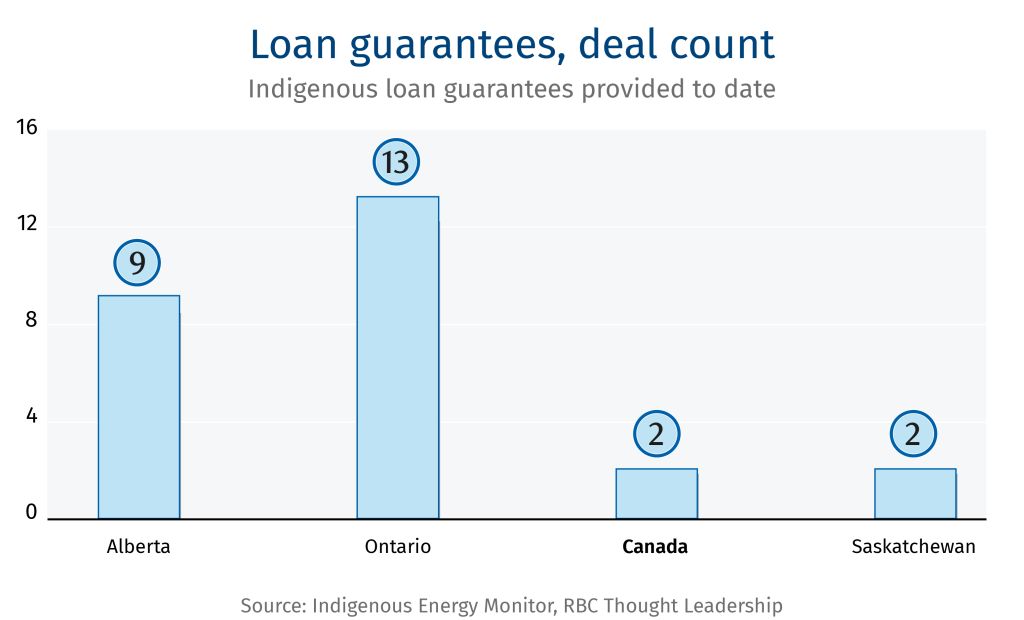
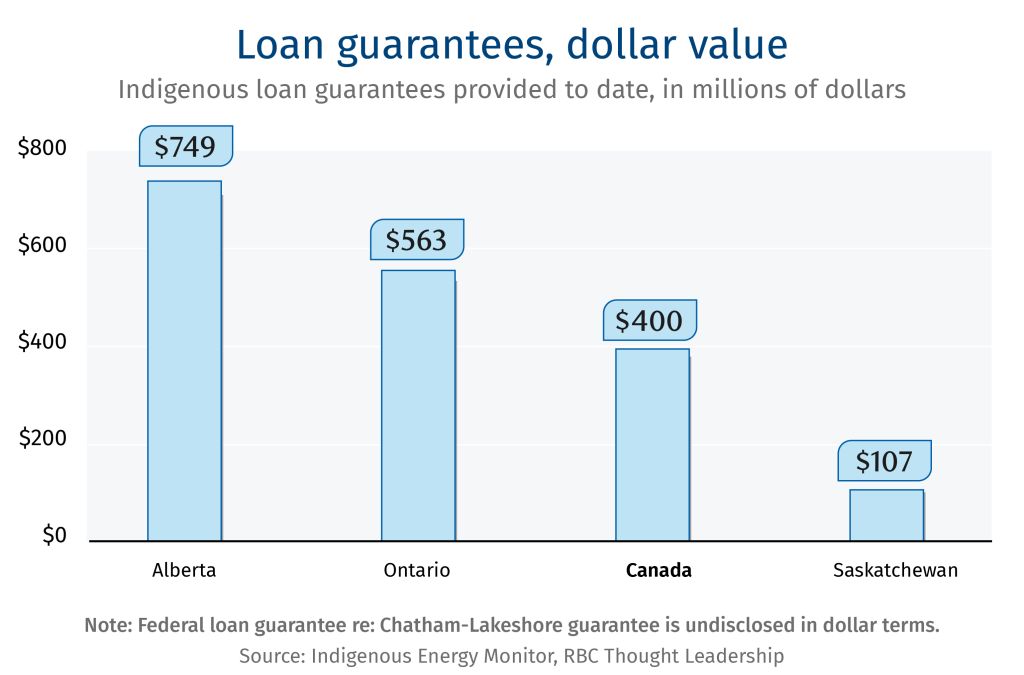
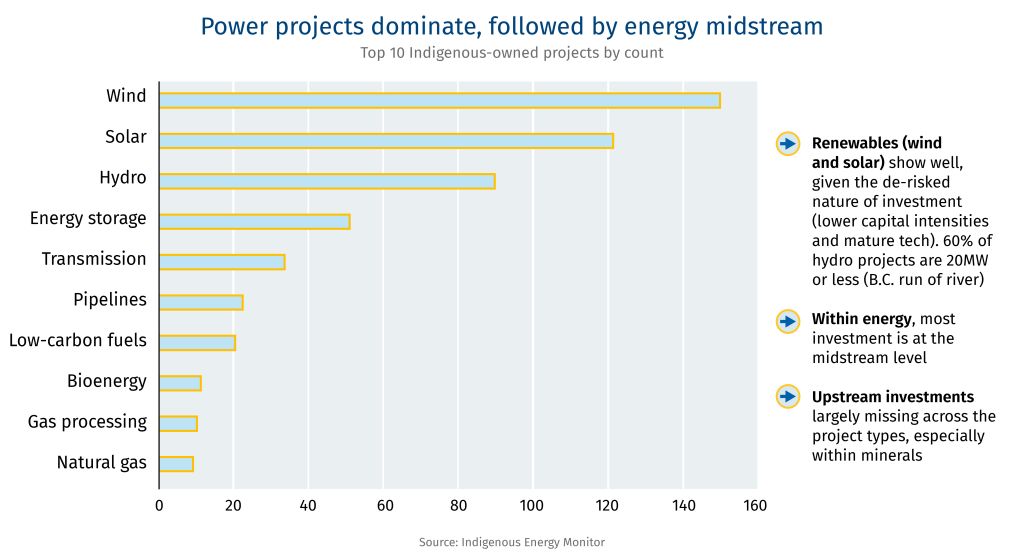





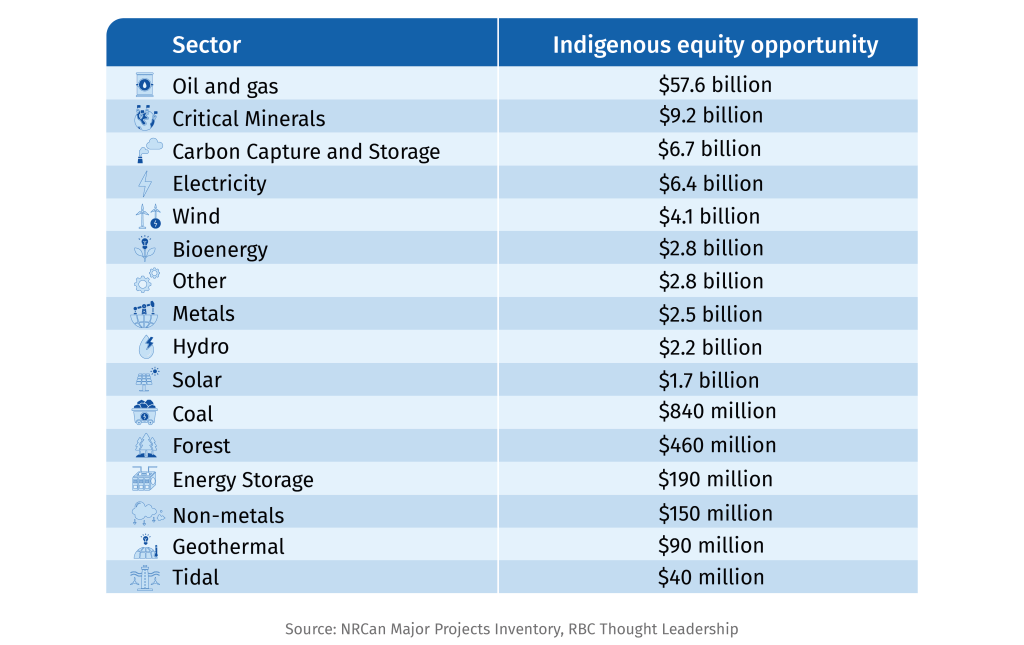




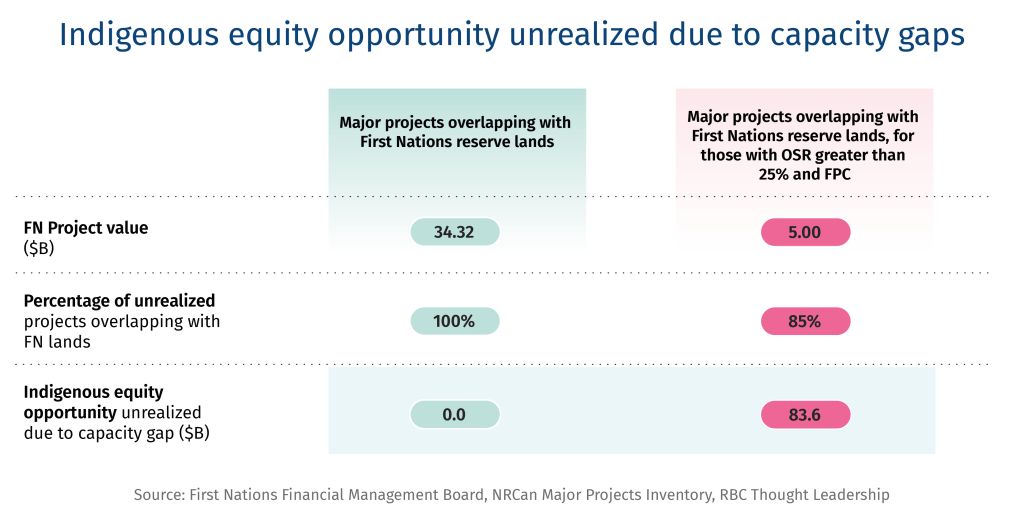
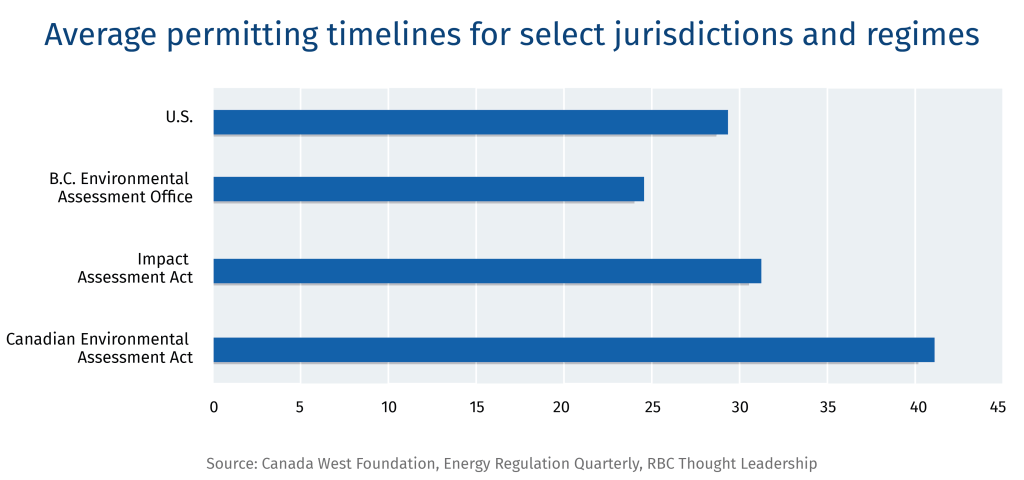





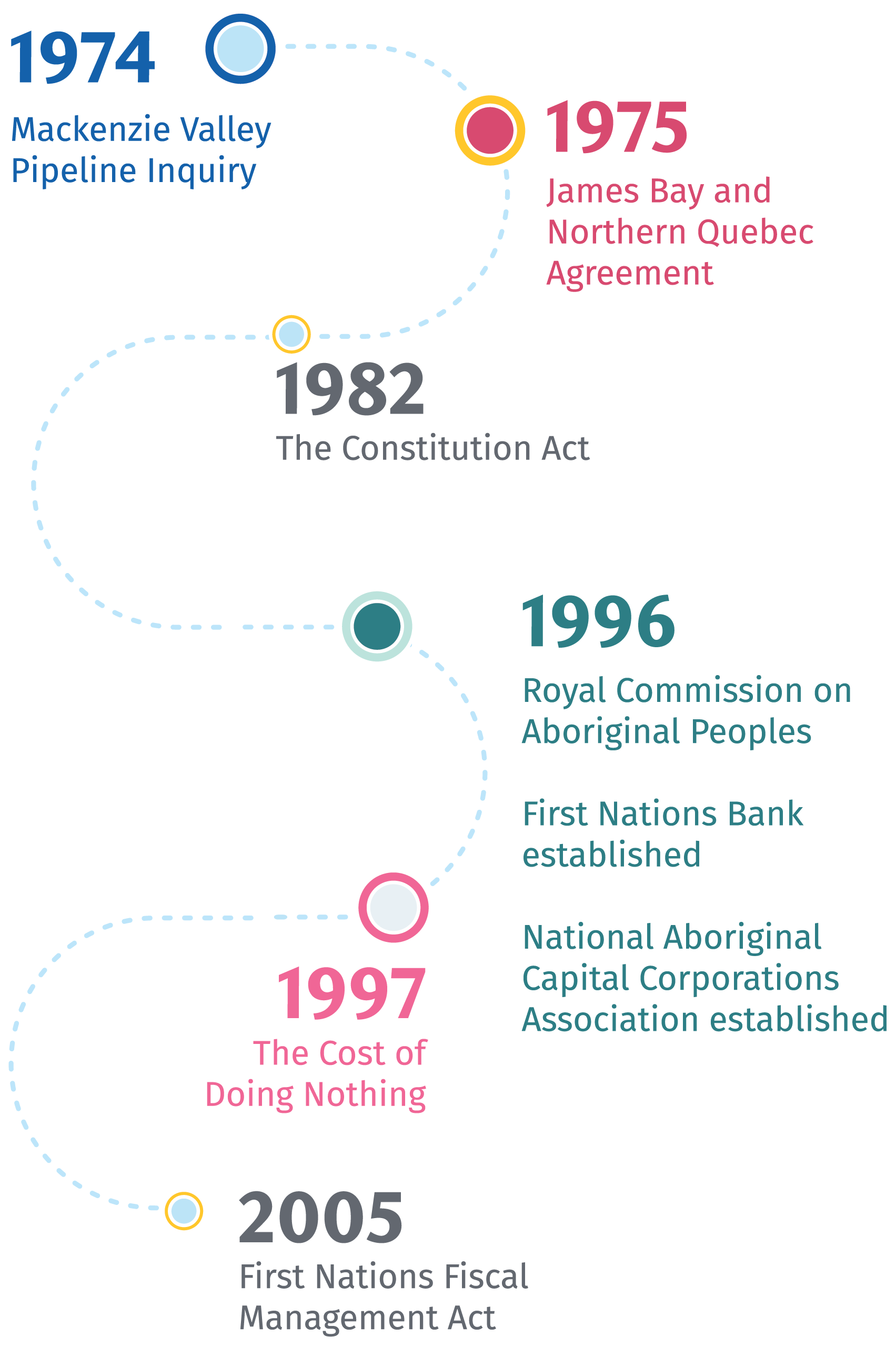
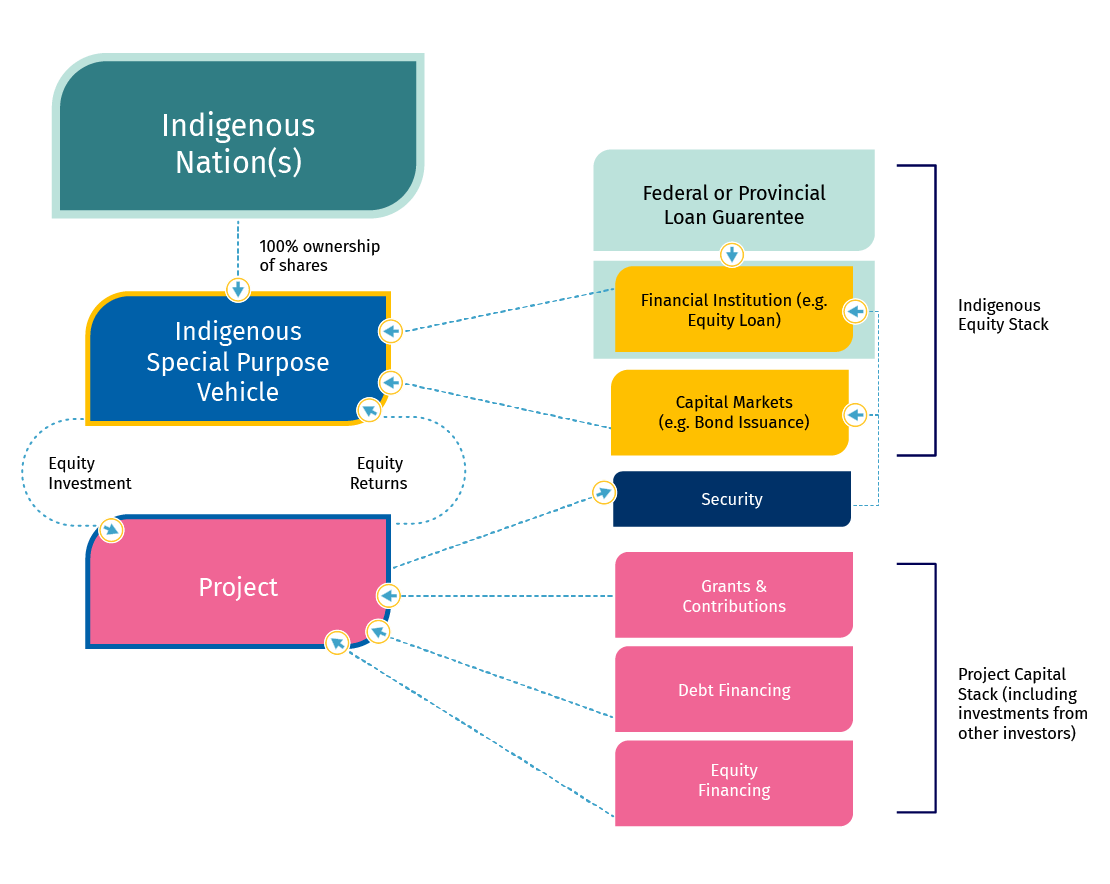
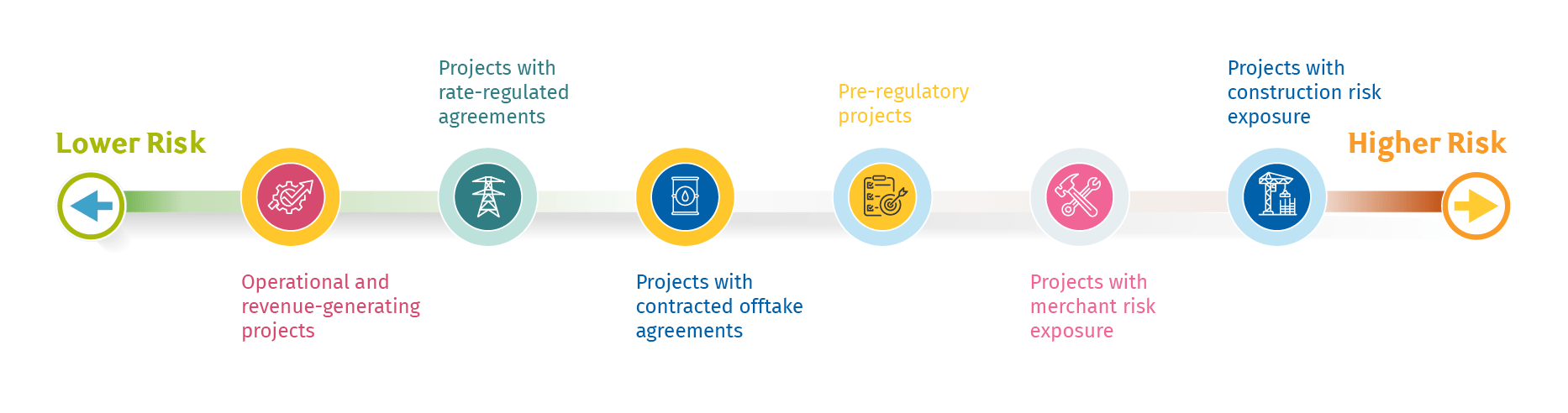


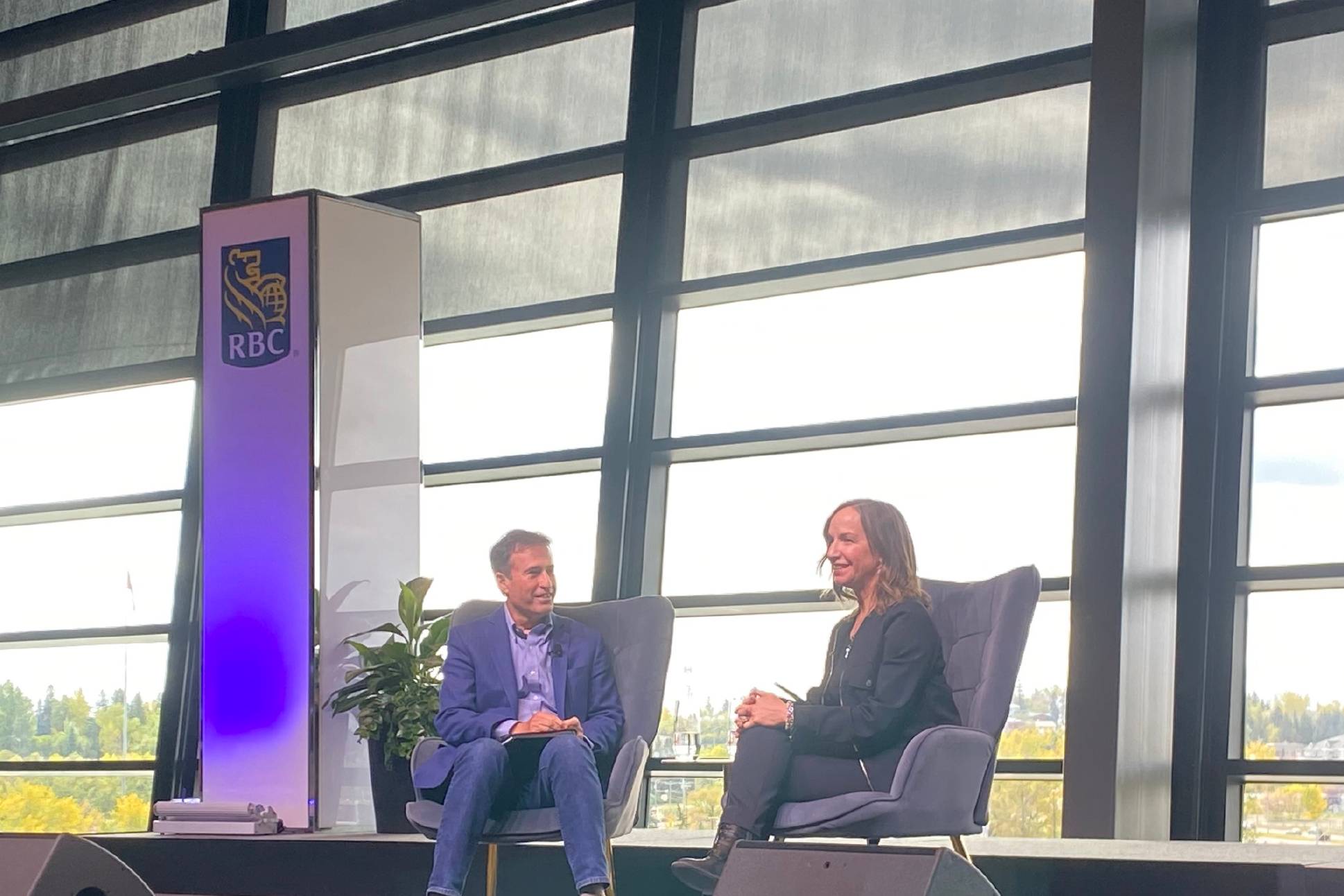








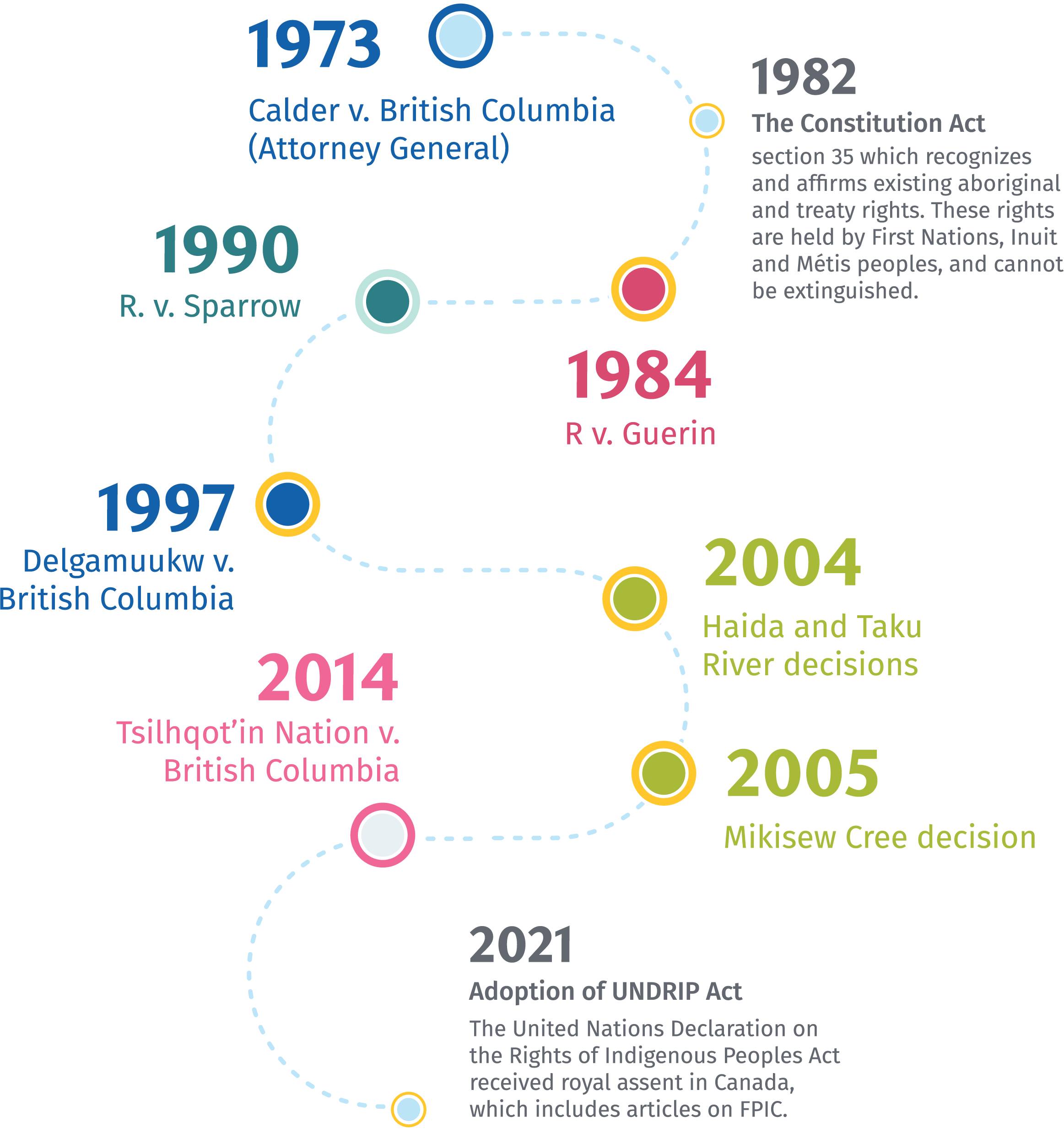 In response, federal and provincial governments have been intensifying efforts to bring balance to the situation. A critical moment came in 2014 when the Supreme Court of Canada recognized Aboriginal title beyond a reserve, ruling in the Tsilhqot’in decision that Crown sovereignty needs to be balanced with Indigenous rights and self-determination. Two years later, Canada officially endorsed the United Nations Declaration on the Rights of Indigenous Peoples (UNDRIP), paving the way for it to be adopted in law. Then, in June 2021, the federal government passed a law respecting the adoption in Canada of UNDRIP, which promotes Indigenous rights globally. Since then, Canada has released a UN Declaration Act Action Plan aimed at harmonizing federal laws with UNDRIP’s principles. That includes a commitment to meaningful consultation and building respectful relationships, including the desire of Indigenous communities to make business decisions based on the principle of FPIC.
Provinces and territories are making changes as well. British Columbia’s new environmental assessment act formalizes the need for consent from First Nations communities for projects on their traditional territories. B.C. is also exploring innovative amendments to its Land Act, contemplating a shared decision-making model for authorizing permits on Crown land.
In response, federal and provincial governments have been intensifying efforts to bring balance to the situation. A critical moment came in 2014 when the Supreme Court of Canada recognized Aboriginal title beyond a reserve, ruling in the Tsilhqot’in decision that Crown sovereignty needs to be balanced with Indigenous rights and self-determination. Two years later, Canada officially endorsed the United Nations Declaration on the Rights of Indigenous Peoples (UNDRIP), paving the way for it to be adopted in law. Then, in June 2021, the federal government passed a law respecting the adoption in Canada of UNDRIP, which promotes Indigenous rights globally. Since then, Canada has released a UN Declaration Act Action Plan aimed at harmonizing federal laws with UNDRIP’s principles. That includes a commitment to meaningful consultation and building respectful relationships, including the desire of Indigenous communities to make business decisions based on the principle of FPIC.
Provinces and territories are making changes as well. British Columbia’s new environmental assessment act formalizes the need for consent from First Nations communities for projects on their traditional territories. B.C. is also exploring innovative amendments to its Land Act, contemplating a shared decision-making model for authorizing permits on Crown land.
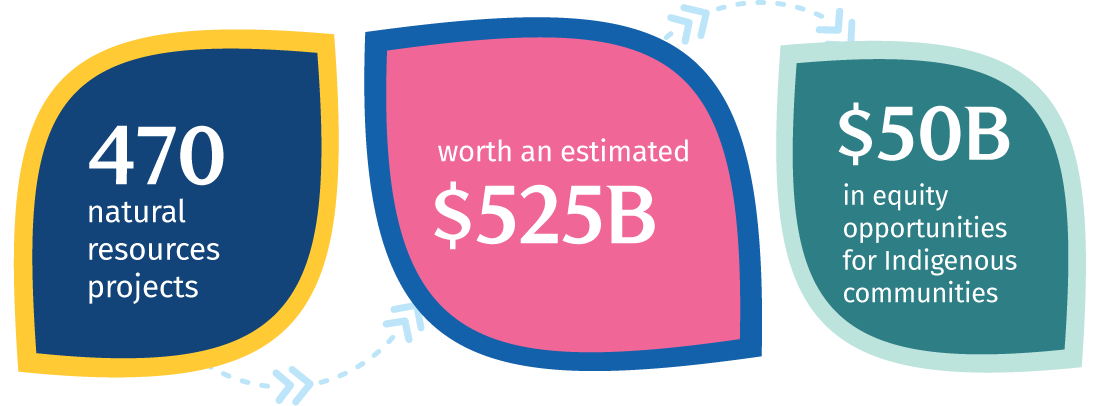 To fulfil that promise, here are three important steps for business to consider: