John Stackhouse: Real economy insights for Budget 2024
Author: John Stackhouse
John Stackhouse is Senior Vice-President in the Office of the CEO at Royal Bank of Canada, where he leads the bank’s enterprise-wide research and thought leadership agenda on the economic, technological and social forces reshaping global markets. In this role, he helps inform RBC’s strategic perspective and positions the organization as a leading voice on the future of growth, competitiveness and innovation.
John is a nationally best-selling author and, before joining RBC, worked as a journalist for 25 years at The Globe and Mail, including terms as Editor-in-Chief, editor of Report on Business and foreign correspondent in Asia.
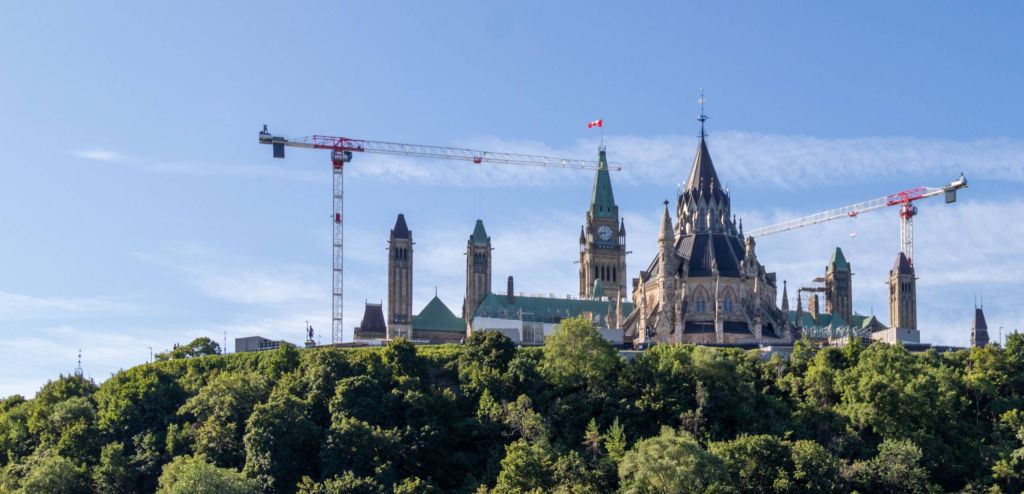
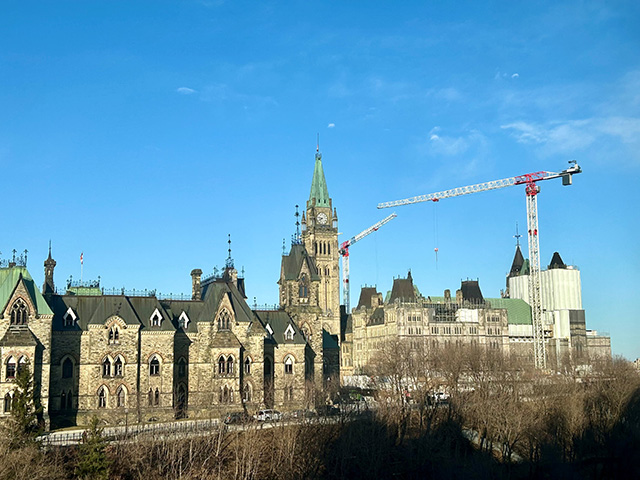
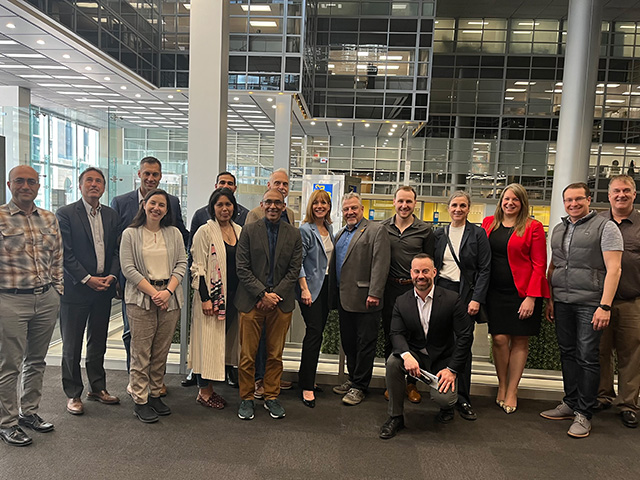
Ottawa is much more than Parliament Hill. I spent a couple of days there last week, ahead of the federal budget, and had the chance to meet home builders, steelmakers, software entrepreneurs, a battery innovator, electric bus operator, a few AI players — and the granddaddy of Silicon Valley North, Sir Terry Matthews. It was a refreshing dive into Ottawa’s dynamic economy. Here are a few of the insights I took away:
Housing
NIMBYism is the biggest threat to the federal housing plan. We all want more housing, just not in our backyard
infrastructure, especially water and sewers, is critical, Nothing will be built without it
all the excitement about prefab homes may need to be tempered by the reality that most need to be built far away from population centres, and that means getting factory workers to those places
Technology
capital gains taxes (and indeed any more taxes on wealth) may be the biggest budget concern for techies. Every firm I met can put their company on an airplane tomorrow to the U.S.
immigration remains Canada’s tech strength, along with colleges and universities. We need to continue to invest.
political paralysis around important fiscal instruments like the Scientific Research & Experimental Development tax credit, and Sustainable Development Technology Canada, is costing Canadian innovators critical support
Clean tech
venture capital is struggling, as interest rates remain higher for longer. Patient capital will be needed, including from pension funds
policy uncertainty, including over electric vehicle mandates, has some early proponents and adopters concerned their markets may not accelerate fast enough
procurement remains a big hurdle for many entrepreneurs, as they sometimes face a tougher market at home than abroad
Artificial intelligence
the recent funding announcement for supercomputers is a big boost for the tech sector
regulatory reach remains a concern for entrepreneurs who want principle-based guidelines but not excessive prescriptions
how can we apply AI to some of our biggest challenges, like the energy transition and housing construction?
John Stackhouse is a nationally bestselling author and one of Canada’s leading voices on innovation and economic disruption. He is senior vice-president in the office of the CEO at Royal Bank of Canada, leading the organization’s research and thought leadership on economic, technological and social change. Previously, he was editor-in-chief of the Globe and Mail and editor of Report on Business. He is a senior fellow at the C.D. Howe Institute and the Munk School of Global Affairs and Public Policy. His latest book is Planet Canada: How Our Expats Are Shaping the Future, which explores the untapped resource of the millions of Canadians who don’t live here but exert their influence from afar.
In early February, the RBC Climate Action Institute launched our inaugural assessment of Canadian climate progress, and convened more than 100 business leaders, investors, public policy thinkers and community leaders to discuss and debate our findings—and propose ideas for what Canada can do to accelerate action. It was a standing-room only crowd, with a clear buzz that indicated climate ideas are more in demand than ever.
Our report, Double or Trouble, shows how Canada needs to increase investment flows for climate action from $22 billion in 2023 to roughly $60 billion a year for the rest of the decade, to get on a path to Net Zero. The discussion, led by Mark Carney, the United Nations’ special envoy for climate action and finance, and RBC CEO Dave McKay, mapped out a range of ideas.
Here is some of what we took away:
Governments need to step back, a little
Subsidies aren’t sustainable, and yet they effectively account for most climate action, from heat pump purchases to industrial carbon capture. Our report shows 80% of climate spending over the past decade has been funded by Ottawa. Some of that is in response to the U.S. Inflation Reduction Act, which is a massive subsidy scheme that others, including Canada, have tried to match. According to the International Monetary Fund, if every country matched the U.S. subsidies, total government debt globally would rise 40-50% over the next 20 years.
Climate action call: Ottawa should widen its climate focus to develop market-minded trade policies, including border carbon adjustment mechanisms, with a dual mandate to attract investment and cut emissions.
Follow the emissions
The oilpatch presents the biggest opportunity for emissions cuts and has the balance sheet and cash flow to help finance large-scale decarbonization efforts. Other heavy emitters, including steel, aluminium, cement and shipping, are also ripe for emissions cuts, and have the capital and supply chains to move quickly. Focusing on heavy emitters in the 2020s will position us in the 2030s to go after other challenges, including electricity supply and consumer technologies.
Climate action call: Develop a program modelled on the Industrial Transition Accelerator, a global initiative launched at COP28 to bring together companies, investors and governments, to build major cleantech projects.
Blended finance is critical
Cleantech needs capital, and our financial market structure is not aligned with the risk, return and time horizon required for climate investments available today. It also can’t come from one source. Several Canadian entrepreneurs shared their frustrations with access to capital and have turned to foreign markets for their early investment needs. One challenge is a lack of large venture capital pools (and VC savvy) for unproven technologies. Another frustration expressed was with banks and pensions funds, which have the capital but are seen as risk averse. Part of the challenge lies in regulatory constraints on bank capital, and it was suggested the federal government, through the Office of the Superintendent of Financial Institutions, could play a more constructive role in loosening restrictions. Canada’s pension funds, which have allocated a large portion of their capital overseas to diversify their risk exposure and to increase returns, could be another potential source of capital—but not at the expense of their fiduciary duty.
Climate action call: Bring together diverse bundles of capital through the Canada Growth Fund to accelerate made-in-Canada technologies, especially around strategic priorities and marquee projects
Lean into emerging markets
Working with multilateral development agencies like the World Bank, we can renew our relevance in the Global South through climate action. Many of the technologies needed in fast-growing (and fast industrializing) markets are made in Canada, from carbon capture and utilization to battery storage and satellite monitoring. Since most of the world’s new emissions over the next 25 years will come from emerging markets, the opportunity is clear—as is the benefit to global emissions.
Climate action call: Advance a cleantech trade strategy, led by the Export Development Corp., to double exports by 2030.
Canada needs a faster gear
A robust regulatory environment is essential if Canada wants to accelerate private sector action. That includes quickly developing investment tax credits and scaling the $15-billion Canada Growth Fund, and the Carbon Contracts for Difference program (which essentially serves as a guarantee against changes to the carbon price). Further regulations, on electricity and oil and gas emissions, are also moving slowly. It’s time to fast-track policies to capture new green dollars. Business needs more certainty around regulations to invest more in decarbonization. Too many Canadian regulations, including the environmental Impact Assessment Act, live under a cloud of political and constitutional uncertainty. While regulations can be good for business, investors need to know they will maintain their integrity, even through revisions, for the lifecycle of their commitments.
Climate action call: Establish a climate unit in the Finance Department to accelerate fiscal measures, and launch a Canadian version of Britain’s Climate Change Committee to independently track policy progress against clear emissions requirements.
Industrial carbon pricing is the new norm
The consumer carbon tax may not survive the next election, but many climate analysts are not fussed. It has impacted only a small portion of emissions, and its role in changing consumer behaviour is further muted by all those rebate cheques. Many businesses and policymakers are looking ahead to the opportunity to build out an industrial carbon pricing system, perhaps through a national cap-and-trade program. Alberta and Ontario, the two biggest industrial emitters, will be key.
Climate action call: Explore a national industrial emissions trading system that incentivizes companies to profit from reducing their environmental footprint..
Taxonomy: Made-in-Canada solution required to unlock capital
If there was one word that stood above all others at the forum, it was taxonomy. An abstract word, it has real economy potential as a labelling system for green and transition finance. If Canada is to attract the tens of billions of dollars needed to advance decarbonization, financial institutions will need to tell those looking to raise capital what their standards are when describing a project, or investment, as green or transition. Such labelling systems are in place in Europe, and several emerging markets. A framework for a Canadian transition taxonomy, developed by about 30 leading banks, insurance companies and pension funds, is sitting with the federal finance minister.
Climate action call: Advance the federal taxonomy outline to standardize green investment labelling that serves as a benchmark for financial institutions.
Carbon markets can leverage private capital
They’re growing rapidly in Europe and the United States, but carbon markets remain nascent in Canada. That needs to change if we’re to mobilize tens of billions of dollars in capital for operators to reward them for cutting emissions. A prime example: Canadian farmers who adopt better soil management practices to capture and retain carbon, but are paid only for what they produce, not what they preserve. In the U.S., food companies and investors can reward farmers much more easily, as they can with other emitters who invest in cutting emissions. As a result, U.S. carbon markets are estimated to be a US$200-billion-a-year opportunity.
Climate action call: Bring together leading companies in the food supply chain, institutional investors and provincial regulators to establish a monitoring, reporting and verification (MRV) framework that lays the ground for a thriving carbon market.
Methane can be our moonshot
Some of the biggest oil and gas companies representing 40% of emissions, including Saudi Aramco, ExxonMobil and Chevron, have signed on to a pledge to eliminate methane emissions by 2030. Canada is already a leader in methane regulations and part of a global methane movement to lower emissions. We can cover 25% of the emission cuts we’re committed to by 20230 if we scale the technologies already in the field. The federal government estimates that $15 billion will be needed for methane abatement, making it one of the most cost-effective investments for emissions cuts.
Climate action call: Develop a methane monitoring atlas for Canada’s oil and gas sector led by the industry, through investments in startups and deployment of satellite, aerial and on-the-ground sensor technologies.
Climate literacy for consumers is needed
Three-quarters of consumers need more support and education on climate, according to RBC-Ipsos research. This is where advancing climate literacy and key policies play a meaningful role. Politicians are afraid of the consumer, said one attendee. But they shouldn’t be. The biggest drivers of climate action are policies that catalyze transformation. Remove friction from the consumers’ path to help them make climate-friendly decisions, including limiting fossil fuel choices in the marketplace to direct their spending toward greener options.
Climate action call: Leverage a variety of digital channels—including creative awareness campaigns on social media and gamified online resources and courses—to engage the Canadian public on the climate actions available to them and the trade-offs inherent to a transition.
Canada won’t get to the climate podium if governments and industry continue working at a distance, or worse, in isolation. We need more collaborative models for planning, resource allocation and execution of the industrial strategy. One example that was discussed was the Climate Smart Buildings Alliance—an organization founded by Mattamy Homes, EllisDon and RBC—to develop demonstration projects for low-carbon buildings and communities.
As one speaker put it: “Today’s not the time for competition. It’s time for collaboration.” This approach is about more than feel-good patriotism—it can advance new procurement and supply chain models, new financing approaches and more risk-taking. As was demonstrated at COP28, global middle powers such as Brazil and India are exerting their might and influence to jostle for the ultimate prize (green dollars plus technical expertise). Canada can’t settle for bronze.
John Stackhouse is Senior Vice President, Office of the CEO, RBC.
Canada faces a triple economic challenge, and with it, a triple economic opportunity that can lay the foundation for growth through the 2030s.
The three points of this new growth triangle—economic reconciliation, productivity and climate action—are mutually dependent. In other words, you can’t have one without the others.
This was clear at COP28 in December, where there was an emphasis on growth, capital formation and economic inclusion to reach our climate goals. And it can be Canada’s strategic advantage if we make some important adjustments.
Let’s start with climate action, and a blunt reality: Net Zero is going to require a scale of investment that we have not seen in our lifetimes.
RBC’s Climate Action Institute recently published a report on the state of the transition in Canada, called Climate Action 2024, with the core message: We’re making progress but not nearly enough. In terms of financing a transition to Net Zero, we will need to invest $60 billion a year on climate action. Right now, we’re investing $22 billion.
Some good news: that’s up from $15 billion in just three years. Some bad news: it needs to more than double, almost immediately. Which is why we called our report “Double or Trouble.” (Moreover, for every year we fall short, we will get closer to the need to triple the investment required.)
The amount of capital seems daunting, but it’s only about 1% of GDP. And properly invested, it can add to economic growth and prevent us from sliding back into the pre-pandemic funk of secular stagnation.
As every business builder knows, capital is not something that gets printed by governments or banks, at least not for long. It’s what thriving enterprises and sectors attract, generate and retain. All of which requires productivity.
Unfortunately, about 80% of Canada’s climate action over the past decade has been funded by the federal government. Canada is simply not attracting or retaining investment capital, at a time when we need to attract tens of billions of dollars more a year to finance both economic reconciliation and the transition to a net-zero economy. In fact, between 2015 and 2022, business investment declined 16%, largely because of a wholesale retreat of investment in the oil and gas, mining and forestry sectors. And overall, investment has been at best flat, held up largely by government investments in things like hospitals and highways, and our collective investment in real estate.
Not only are we not capitalizing and recapitalizing our key growth sectors, we’re not attracting enough international capital. Canadian investment abroad is now outpacing foreign direct investment in Canada by a factor of two to one ($102 billion to $62 billion).
We’ll need to revise our collective playbook to finance an energy transition, through capital-intensive projects ranging from carbon capture to methane abatement to wind- and solar-powered electricity, hydrogen, and battery storage. One catalyst is economic reconciliation, especially through Indigenous consent and ownership that cannot only prevent years of court battles but provide the sort of stewardship that long-term, climate- and nature-minded investors are looking for.
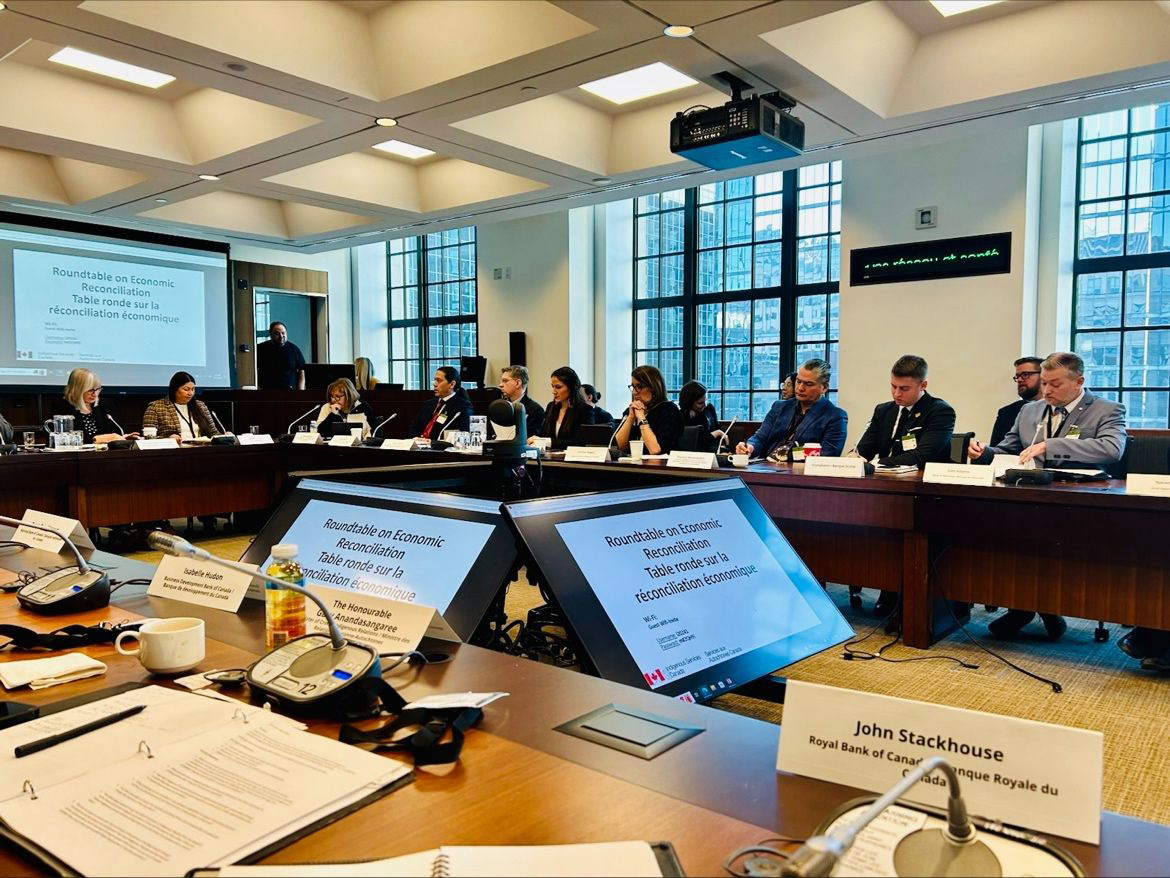
As we stated in our 2023 report, “92 to Zero,” there will be no Net Zero without the kind of economic reconciliation spelled out in the Truth and Reconciliation Commission’s Recommendation No. 92.
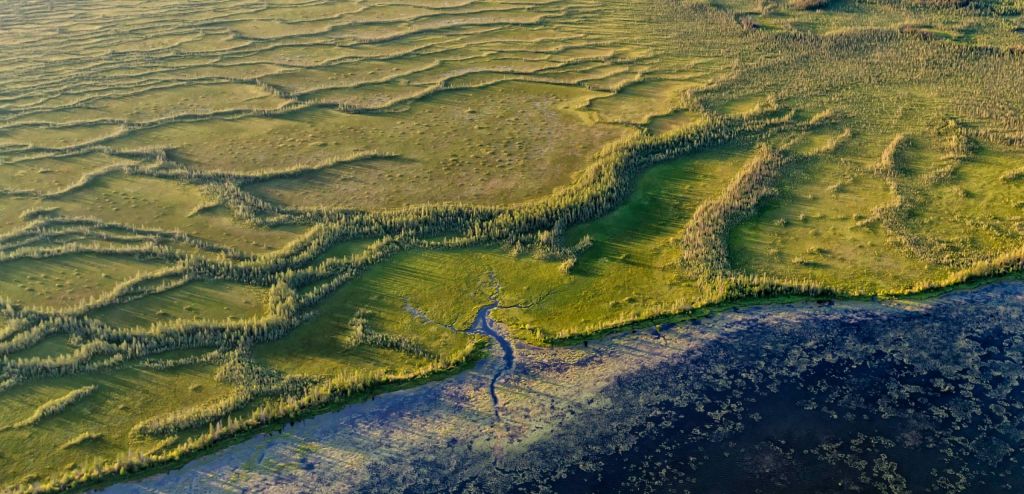
With that spirit, however, the potential for resource development is profound. Our research shows Indigenous lands in Canada account for:
56% of advanced critical mineral projects;
35% of the top solar sites;
44% of the best wind sites for energy production.
Properly and sustainably developed, that resource wealth could generate roughly $225 billion in investment.
We won’t get on these converging paths—to Net Zero, to reconciliation, and to more sustainable economic growth—without a new approach to partnerships with Indigenous communities. A new legal era of free, prior and informed consent will require it. So, too, will common-sense capitalism that sees local ownership and stewardship as essential to healthy, long-term returns. Equity within projects builds a foundation of predictable development, better environmental outcomes, and a community centered approach to social impact. In other words, it de-risks projects and adds to the economic return for all stakeholders, including project proponents.
Beyond opportunities to unlock capital for the transition, we can collectively advance economic reconciliation through investments focused on core infrastructure, in turn fuelling greater economic productivity.
RBC Economics supported the Assembly of First Nations in a major research project, entitled Closing the Infrastructure Gap, that estimates infrastructure needs of First Nations, including housing and basic needs like water, to be approximately $350 billion. The needs of Inuit and Metis communities add to that significantly.
Properly deployed, such infrastructure could increase GDP growth, according to the AFN-RBC research effort, by 0.5% a year.
There’s a lot of money at stake, but the needs and outcomes are about more than money. We need to also focus on consent, security and people.
Consent is what gives investors, operators and supply chains the confidence to take risks.
Security gives them a sense that those risks will be priced and managed fairly.
People make it happen, and keep it happening.
Let’s look first at consent. A couple of years ago, Phil Fontaine, who is a special adviser to RBC, and I launched an initiative of ”listening circles,” to hear from communities across the country and better understand what they mean by consent. There is no crisp definition, and there may never be one. But it’s becoming clear to us that consent takes time, talk and equity.
That will be hard in the face of climate deadlines, like 2030, but the decarbonization projects needed for Net Zero (critical minerals and carbon pipelines, among them) won’t happen without meaningful and enduring buy-in from communities. One of the best ways to demonstrate that is equity participation. Hydro One’s 50/50 initiative, enabling Indigenous communities to own half the transmission lines through their territory, shows how such partnerships can work.
Financial security is a different challenge. Indigenous communities can’t access the capital needed to buy into projects without some form of backstop or guarantee. Most don’t have a balance sheet—they’re not allowed to under the Indian Act—to borrow against, and not enough surplus revenue from their own businesses or federal government transfers to support such loans. However, through loan guarantees, such as the one developed by the Alberta government, we’re seeing that Indigenous communities are willing and able to borrow and buy into the ownership structure of major projects.
We see this as a central reason to establish a national Indigenous loan guarantee, as laid out in the 2023 Fall Economic Statement. It could help facilitate the mobilization of $10 billion for Indigenous communities, which in turn could leverage 10 times that amount in partner and private capital. A sovereign guarantee would also cut borrowing costs by 100-150 basis points in many cases, saving Indigenous communities, collectively, more than $100 million a year.
That takes us to the third big need, which is people and skills. Indigenous communities need and want to be more than financial partners in this new economy. They want to be participants, as owners, managers, workers and suppliers. It’s even more pressing in the face of Canada’s looming demographic decline. But to make it happen, and effective, we need to invest much more in our schooling system, from K-PhD, to prepare Indigenous youth for the jobs and roles of a new economy.
The timing for this new approach could hardly be better:
settlements with the federal government are now coming at a pace and scale that can be transformative for communities and nations;
fiscal incentives from the federal and many provincial governments, including investment tax incentives, are kicking in;
interest rates are coming down, leading many long-term investors to look for new opportunities.
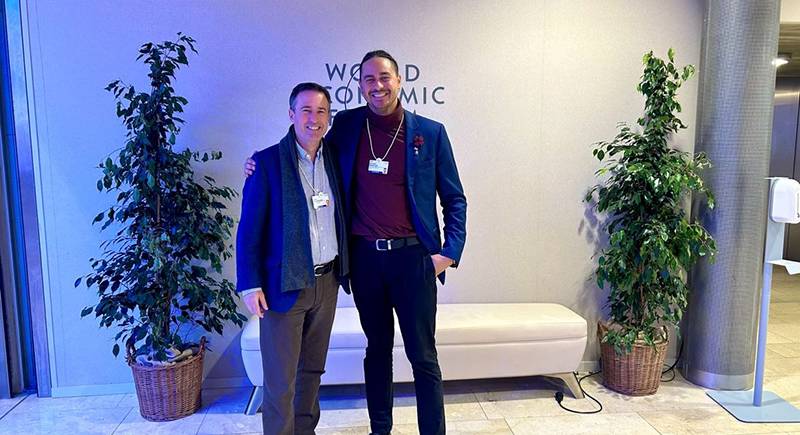
The World Economic Forum is always a contradiction of hope and anxiety. This year’s version felt like peak paradox.
The week-long gathering of government, business and civil society leaders, in Davos, Switzerland, was designed to focus on a global crisis of trust. And yet on the Forum’s final day, the world’s leading stock markets — a good measure of trust — ended at record highs. At the same time, more humans than ever, in more countries than ever, are preparing to vote in democratic elections this year. Global trade, another measure of trust, is on the rise again, albeit slowly.
That’s Davos for you — one of the world’s most eclectic and energetic gatherings that is both a good window on the year ahead, and a place that gets as much wrong (social media, global financial crisis, Brexit and COVID) as it gets right. This year’s Forum, the 54th, attracted 3,000 delegates, including 350 government leaders and ministers, and 80 national security leaders. It also attracted tech executives, entrepreneurs, academics and social activists from around the world.
The overall mood? Economically tepid, politically sour, tech excited and security nervous. One Davos-goer called it “realistic optimism.” Another preferred “radical uncertainty,” which could foster a time of creative destruction, and remarkable progress — or just a time of destruction.
Here’s some of what I took away:
1. The economic mood is tepid
The Davos crowd seemed confident for modest economic growth this year and slowing inflation, which should allow central banks to cut interest rates — but not too much or too fast. Business leaders and economists largely called for a soft landing of the U.S. economy. Then again, that was the Davos mood a year ago — and the U.S. economy finished 2023 with GDP growth above 2.5%. A lack of recession, and persistent costs pressures, may prevent inflation from slowing much further or the U.S. Federal Reserve from moving more aggressively on rates. Among the inflationary forces: election-year spending in the U.S., trade disruptions like we’re seeing the Red Sea (war) and Panama Canal (climate), and skills shortages. Overall, North American and European consumers are in good shape financially; in fact, luxury spending is at all-time highs. There’s also plenty of capital flowing out of the oil-rich Persian Gulf, helping to push up asset prices. But the wild cards: Washington now spends 18% of its budget on debt servicing, which may force spending cuts, while China’s economic prospects are slumping and its real estate market sliding. Those two economies, which account for a third of global GDP, may present the biggest risks to growth, with the interest rate outlook holding the balance.
2. China is shrinking
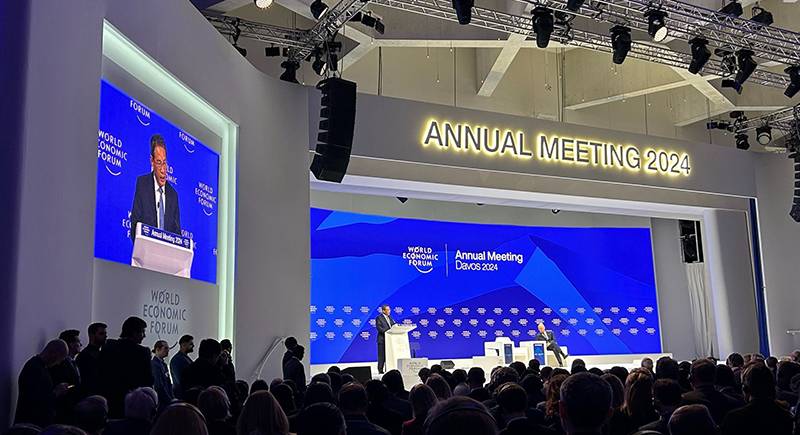
In just five years, China has gone from WEF leader to WEF laggard. Premier Li Qiang tried to change that with his Davos debut, bringing a large delegation and taking the opening keynote slot to pitch the world on China’s resilience. There weren’t many takers. China saw large-scale outflows of foreign investment in the run-up to Davos, and finished the week with Shanghai losing its spot as Asia’s most valuable equity market to Tokyo. China’s population also shrank in 2023 for the second consecutive year. Birth rates are at record lows, and it’s now home to the largest number of senior citizens in the world. Li urged Washington to remove trade sanctions, reverse academic bans, and pull back from the technology restrictions that are scaring a lot of companies from doing business in China. The world recorded 5,400 trade actions in 2023, double what it was before the pandemic, with about 20% of them directed at China. Investment, meanwhile, has shifted materially to Vietnam, Indonesia, Mexico and India — including billions from Chinese companies. The message from the Americans and Europeans was clear: they’ll no longer rely on one country, or one region, for what they need.
3. America is rebalancing
The U.S. came to Davos as a lonely superpower that could go in one of two directions this year. The Biden administration sent its top foreign policy brains — Antony Blinken and Jake Sullivan — to stress, in Sullivan’s words, “we’re not turning inward.” They described the Biden doctrine as “variable geometry” changing by region, situation and timeframe. It’s a mix of ideals and interests, which Sullivan calls “strategic competition in an age of interdependence.” A world of frenemies, in other words. The Biden team suggested it will continue to box in rivals with sanctions, technology restrictions and military might, including strikes against their proxies. That seems to be well understood by America’s adversaries. Some of its friends also shared concerns about a possible Trump presidency and return to America First-ism. Europeans are worried Trump would ease up on Russia, and joined others in sharing concerns that Trump 2.0 would go hard at Europe, Canada and Mexico over trade. German Finance Minister Christian Lindner said Europe needs to strengthen its defences, technology capacity and economic independence — to meet whoever’s President next year from a position of strength. No matter the outcome in November, the prospects for global cooperation are limited.
4. Populism is rising
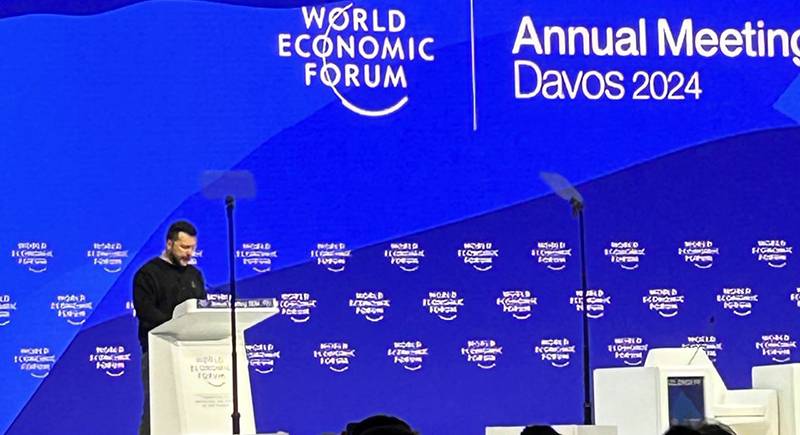
The theme of trust fostered plenty of conversations around democracy and what the world’s voters will be looking for in 2024. In a word: change. There are 50 scheduled elections this year, from Indonesia, India and Pakistan to the European Union, Britain and Mexico — and, of course, the U.S. There’s no single trend emerging other than, in many countries, a taste for change among a pandemic-scarred public. Argentina’s new libertarian president, Javier Milei, took centre stage to give a very anti-WEF speech about the power of unbridled capitalism and the “extortion” of taxes, signaling the kind of disruptive messaging that’s gaining ground. Milei may be an outlier — the Wall Street Journal called his speech “a spine transplant” — but the hunger for political and economic change is not. Only 16% of Americans trust their federal government “to do the right thing” — near a record low after the financial crisis and down from 20% in 2022. The historian Niall Ferguson compared the current mood to the Gilded Age of the 1920s, when populism on both the right and left found new footing as income inequalities rose. Some of it is also rooted in that meta-theme of trust, as the pandemic rattled many people’s confidence in institutions, and shaped an emerging generation that is less optimistic about the future.
5. AI is dividing
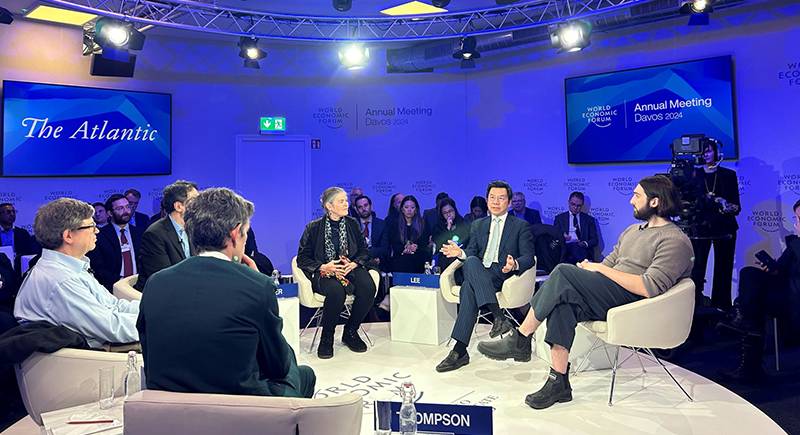
Artificial intelligence was the mega-meme of the week. Bill Gates set the tone, telling a Davos crowd he thinks AI will be bigger than the invention of the Internet. The ensuing debates questioned whether the Forum’s belief in creative destruction — let the market pick winners — is fit for a new tech age in which market concentration seems to be growing at warp speed. Much of the regulatory conversation focused on the power of the big three cloud providers (Amazon, Microsoft and Google) and their dominance with data, the rocket fuel of AI. “There’s no data like more data,” cautioned Erik Brynjolfsson, who heads the Stanford Digital Economy Lab. The International Monetary Fund also warned of growing economic disparities created by AI, between regions and between generations (although Microsoft’s Satya Nadella, who grew up in India, said he’s seen firsthand how technology can flatten the world.) Others stressed the perceived failure by governments to reign in social media in its early years. European leaders, in particular, stressed their intention to regulate AI, even if it slows innovation, while the U.S. and Britain are aiming for a more permissive approach, preferring to correct missteps than prevent steps. “No one knows the future but we have agency over the future,” said Jeremy Hunt, Britain’s Chancellor of the Exchequer. “We have choices.”
6. AI is accelerating
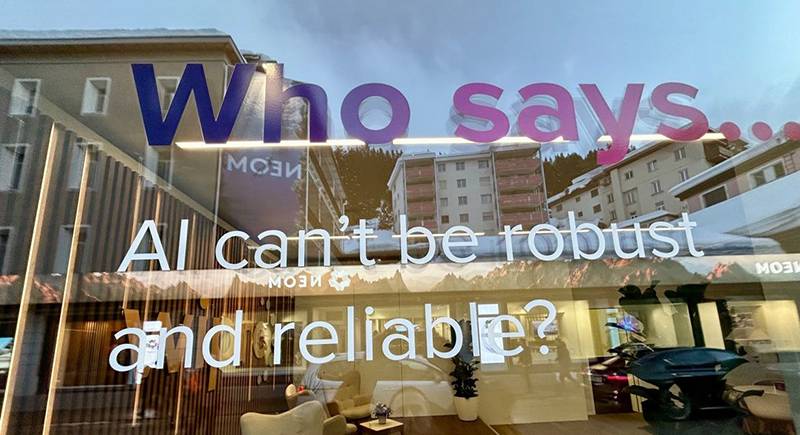
Davos’s main promenade was draped with banners proclaiming the positive power of AI, with plenty of stores converted to trade pavilions for the week to promote artificial intelligence. I attended a lunch in one of the shops, run by an American AI startup that wanted to hear from big companies — industrial manufacturing, health care and robotics, among them — about their experiences with AI. The conversation boiled down to one word: productivity. Most companies are using AI to boost the performance of sales forces, call centres and coding teams — and to cut employee time spent writing reports and producing decks, which AI is getting good at. Few employers at Davos, or surveyed for the many consulting firm reports released during the Forum, said they planned to cut jobs because of AI. Most said they’re looking instead to increase revenue. Accenture is aiming to equip most of its 740,000 global employees with AI tools, just as it did with other software tools. Albert Bouria, the CEO of Pfizer, predicted “a renaissance in life sciences” because of AI’s speed in exploring molecule sequences for drugs. To harness the creative power of AI, Sachin Dev Duggar, co-founder of Builder.ai, said the focus needs to shift from technology to organizational culture and learning. As he put it, “How do you put the superhero cape on every employee instead of them thinking AI is the superhero?”
7. AI is facing limits
If politicians at Davos worried about jobs and privacy, and business leaders focused on performance, some of the techies behind AI spoke a bit more about its limitations, warning the rhetoric is outpacing reality. Blame it on YouTube. Generative AI models like ChatGPT may be approaching limits, for now, because they are rooted in text-based learning — and they’ve consumed pretty much the entire universe of text. But no large language learning model has yet to conquer video, or been able to learn through trial-and-error, which is how humans do our greatest learning, as babies and infants. Yann LeCun, the head of AI at Meta, said a typical 4-year-old has absorbed 50 times more information than the biggest LLMs. Moreover, the human world’s information supply is growing more through video than text. Another scientist explained Generative AI is largely about association, not causality, and therefore has limits in terms of logic and judgment, not to mention sensitivity and foresight. “It’s why computers don’t have common sense,” he said. He compared it to airplanes and birds. Airplanes are faster but can’t do a fraction of the things birds can. What generative AI can do is help humans solve problems, especially ones that require finding subtle patterns in large homogenous data sets, like a drug sequence. Or climate patterns and their causes.
8. Climate is waning
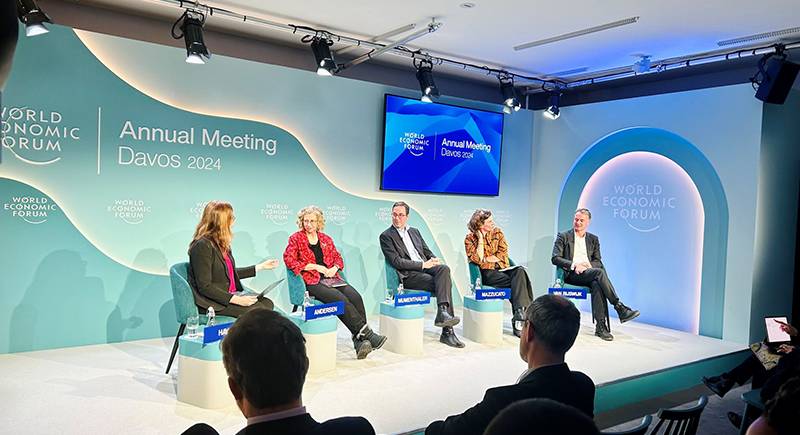
It was hard not to notice the waning of climate as an issue at the Forum, amidst all the excitement around AI and anxiety over geopolitics. That’s not necessarily a bad thing. The focus of many climate sessions I attended — some with just a handful of people in the room — was on action, much more than angst or announcements. I attended one working breakfast, with energy, finance and industrial sector executives, who agreed this has to be the year of Final Investment Decisions, or FIDs, to get far more decarbonization projects off the ground (or in the ground). Among the barriers: a lack of global industrial carbon pricing, compliance costs, and a shortage of working models for blended finance between government, investors and banks. A sharper focus on a few breakthrough projects, with clear deadlines, might help. At a time of higher interest rates, better rates of return are also necessary, especially in renewable energy, which the world is aiming to triple by 2030. That won’t be easy as regulations and community resistance are already hampering growth. In the U.S., legal objections to solar and wind projects have grown six-fold. Some new approaches to governance may be needed if the world is to install massive new energy systems in half a decade. “Maybe climate change needs to be treated as urgently as war,” said economist Mariana Mazzucato.
9. Building is booming
One of the reasons we’re falling behind our climate goals is we keep building as we have for ages. The world is on course to add the equivalent of China’s housing stock over the next 25 years, particularly in developing countries where millions are on the move to cities. India alone is adding the equivalent of another Chicago every year. The construction and operating of buildings accounts for 26% of the world’s emissions. We need to change heating and cooling systems, for starters. But we also need to transform the bricks, concrete, glass and steel that make up all those new buildings. Europe has led the way with recycled building materials— but that supply needs to double by 2030. Challenge is, even in Europe, every city seems to want its own building codes, which prevents suppliers from creating mass recycling plants. I attended a working session with planners and builders who said that challenges aside, they’re seeing in Europe recycling costs approach parity. Still, there’s no sign of recycling in developing countries where most of the world’s new structures will be built. “At the end of the day, everything has to be a financial play,” said Christian Ulbrich, the CEO of real estate giant JLL.
10. Agriculture is growing
In a region known for cow and sheep rearing, the Forum is finally starting to give agriculture its due. It’s promoting food systems on its agenda, and launched a “100 Million Farmers” initiative to advance sustainable agriculture. Agri-food systems account for 30% of global GHG emissions, 70% of freshwater use, and 80% of tropical deforestation — pressures that may grow in a world that’s projected to add 500 million more people by 2030. The Forum brought together governments, food companies and farmers to help solve that, largely by finding new ways to finance farmers for what they preserve as well as what they produce. I had the opportunity to write a piece for the Forum “3 ways to unlock the potential of climate-smart agriculture” that was part of the debate. I also spoke to a group of farmers and food producers from Mexico, Malaysia and the Philippines, and then joined a working session of agriculture ministers, farmers and agri-food CEOs to map out options. We agreed governments need to retool farm subsidies, which add up to $3 trillion a year, to reward sustainability and not just production. There’s another big opportunity for carbon credits to allow polluters to pay farmers for the emissions their land captures. Governments and universities also need to shift research and development spending to invest more in agriculture, which currently accounts for only 2% of the world’s R&D. Tanzania’s vice president Philip Mpango put it to our group: “We need to make agriculture sexy.”
I’m headed to the World Economic Forum next week, where the mood should be somber and hopefully a little humbler, given the amount of strife in the world. This will be my 9th time to Davos, and I don’t remember so much international anxiety.
Here are some the questions and ideas I’m hoping to explore:
Is the Gaza conflict turning into a regional war?
Hezbollah was the known risk the moment Hamas attacked Israel on Oct. 7. The Houthi front, in Yemen, is a new wildcard, as is the emerging prospect of American troops (and others) in combat. Lives and regional peace is at stake, of course. So, too, is 15% of global trade which flows through the Red Sea.
Is the U.S. in a fighting mood?
As Henry Kissinger was to Richard Nixon, Jake Sullivan is to Joe Biden — and he’ll be in Davos, laying out his vision for American security in a ruptured world. Sullivan’s presence will coincide with the Iowa caucuses back home, as we get the first signal of Donald Trump’s popularity in the Republican Party. The Biden presidency has no shortage of global hotspots to carry into an election season, either as a peacemaker or pugilist.
Who will be the new China?
Xi Jinpeng was the cool kid (by Davos standards) in the mid-teens, as the US went into retreat and China stepped up as the new superpower. But the Chinese have barely made a peep at Davos since the pandemic, and ceded a lot of ground to other emerging powers, especially India and Saudi Arabia. Both countries have made the Forum a strategic priority, with their own pavilions, programs and swagger as they try to influence global thinking.
Is there a war on democracy?
More than half of the world’s people go to the polls this year, making 2024 a historic moment with a record number of elections in one year (64 countries). But from Argentina to India, the struggle of democracy continues, as it seems to be in the United States. Eurasia Group lists the top risk as “U.S. versus itself.” The biggest name at Davos will be Donald Trump: while he won’t be there, the prospects of his return to the White House has countries in many places gaming their commitment to democratic ideals.
Is there a war on truth?
Misinformation is one of the hot topics on this year’s agenda. In fact, the Forum’s annual global risk report cites it as the top perceived risk among its members, ahead of economic and climate concerns.
Will there be a war on AI?
The number one topic on the Davos agenda is Artificial Intelligence, and its impact on society, jobs, health care, education and on the planet. I’m looking forward to hearing what government leaders and policymakers think, and if the 2023 excitement over ChatGPT is turning into 2024 remorse about its threats.
Are the culture wars ending, or just beginning?
ESG is nowhere to be seen on the official Davos program, although the perennial themes around environment (climate), social (inclusion) and governance (fairness) issues are cleverly rebranded. Once lampooned as the Olympics of corporate wokism, the Forum has tried to give the stage to populist voices (not much luck) and issues. It’s also dialled down the “change the world for the better” mantra.
Is the war on inflation ebbing?
Davos draws a lot of big-time investors and money managers, and so it’s a decent place to gauge the yield curve. I’m hoping to get a sense of how dovish the crowd is on interest rates, knowing the Davos crowd is often wrong. The Keynesian part of crowd will be interesting, too, as government debt piles up and perhaps keeps rates from falling more.
Are more trade wars coming?
The Forum was established in the 1970s as a platform for free traders, to ensure economically liberal voices could be heard around the world. Today it’s crowded with soft protectionists. There’s Europe with its new climate tariffs to keep out products like steel from high-emitting countries, and of course the U.S. which regardless of who’s in power now makes no bones about America First.
Can Canada be a peacemaker in a world of war?
Canada’s presence at Davos has diminished since Justin Trudeau used it in 2016 to announce “Canada’s back.” Chrystia Freeland, the deputy prime minister, will be there as a WEF board member and to push for Ukraine, among other issues. She’ll have plenty else to tackle, from Israel to inflation. But a bigger question may be, what role can Canada play in such a fraught world? The archetypical peacemaker may be needed as much as ever, just in very different ways.You can follow my daily reports from Davos on this social channel and rbc.com/thoughtleadership.
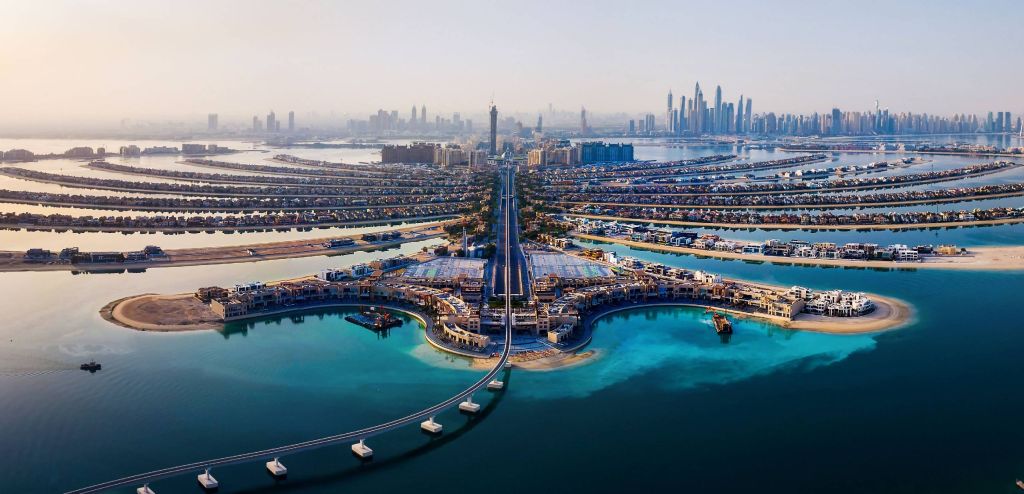
The business COP. The oil COP. The pragmatic COP. The sellout COP. There were almost as many labels thrown at COP28 as there were people (100,000) at the climate conference in Dubai. But one thing’s for sure: the annual UN gathering may never be the same. There were electric bikes and scooters to ferry people around the vast Dubai Expo site, retractable outdoor shades to protect them from the sun and acres of indoor trade show pavilions showcasing everything the Middle East is doing in the new economy. And in the end, there was a remarkable, if flawed, agreement to push the world away from fossil fuels.
Did the end of the oil age just happen in one of the world’s wealthiest oil cities? Or was this more diplomatic show than strategic will? Either way, the 28th Conference of the Parties to the UN climate agreement will be seen as a turning point in climate diplomacy. Perhaps a midlife crisis. Perhaps a coming of age. Here are some of the trends I spotted:
1
Climate Action Is Now Big Business
Dubai was a good metaphor for the COP conundrum, with a can-do business culture focussed on Net Zero. The host United Arab Emirates made no apologies for a business-focused conference, placing it in a massive trade park that normally houses some of the world’s biggest festivals of capitalism. Hundreds of global CEOs, mega-investors and 2,500 lobbyists attended, turning COP into a climate version of Davos. Many of the business leaders spent more time at lavish side conferences and events in Dubai’s celebrated swanky hotels, where US$37 billion in commitments were announced, including US$7 billion for climate-smart food systems. Inside the conference, the hosts seemed to use every available facility to showcase their own approach to climate action with multimedia displays, working robots and creative zones that gave a Vegas vibe. Climate de Soleil, anyone?
2
It’s A Long Way From Paris
While the ink is still drying on the final communique, COP28 will likely be remembered as the fork in the road that started in Paris in 2015. Back then, COP21 was all about ambition as the world pledged to cut greenhouse gas emissions significantly and quickly enough to prevent catastrophic climate impacts. Progress from Paris has been patchy, as was reflected in a “stocktake” exercise at Dubai. The conference’s theme—Unite, Act, Deliver—spoke to a more pragmatic tone that may soon see the world concede that the Paris goals that were updated at COP26 in Glasgow may not be possible, at least not in the time given. This COP was not without promise. Critically, more than 150 countries, including Canada, and 50 big oil and gas companies signed a pledge to cut methane (a potent greenhouse gas) by 75% by 2030. They added US$1 billion in commitments to make that happen. If they deliver, Dubai will be remembered as the springboard to action.
3
It’s About The Oil, Stupid
The COP host, Sultan Al Jaber, also runs UAE’s main oil and gas company, and is a serious player in OPEC. So it was a big deal when he kicked off the conference with a commitment from 50 oil majors, representing 40% of global production, to decarbonize by 2050, and then ended the conference with the first commitment ever by the world to transition away from fossil fuels. The when, where and how of that remain unresolved, but COP28 drew a line in the sand. For UAE, which produces 3 million barrels a day and plans to increase that, the ultimately unsuccessful push by many nations for “a phasing out” of fossil fuels was awkward. Its much bigger neighbour, Saudi Arabia, did everything to keep the conference from demonizing oil, while the U.S. danced delicately around the fact that it’s now the world’s leading producer. China and India, which dominate coal production, kept their voices down, too. Despite the diplomatic pledges: fossil fuels still account for 80% of the world’s energy consumption, only a tad lower from 82% in the 1990s. An expected surge in U.S. LNG exports in 2026 will only add to that stress, as will Asia’s 5,000 coal plants that continue to grow.
4
No, It’s About Renewables
One strong sentiment at COP28 was around the irreversible rise of renewables. The conference committed to tripling renewables by 2030 while doubling energy efficiency. Wind and solar can be seen everywhere in the UAE, which fancies itself as a renewables powerhouse. Green hydrogen was also the talk of the conference. That’s the hydrogen created by wind or solar power and usually converted into ammonia to be shipped to energy-hungry markets. The big prize in the near term is maritime shipping, which is quickly shifting from diesel to ammonia to comply with new international shipping standards. And heavy industry—think German steel—is actively searching for hydrogen solutions. Who will be the big supplier? The Saudis and Chinese are working together across Asia to establish an early grip, while the U.S. is considering a more ambitious hydrogen export strategy. With the right incentives to compete with fossil fuels, Texas hydrogen could be the Sino-Saudi alliance’s biggest rival. And then there’s Canada, with proposals in Newfoundland, Nova Scotia and Quebec. A green hydrogen race is on.
5
Or Is It About The Mix?
Energy security is not a popular expression at COP, but it’s clearly top of mind for the Biden administration. Yes, John Kerry still gets most of the podium time at these conferences, with his Al Gore-inspired jabs at Big Oil. But away from the mic, other officials laid out a more pragmatic view rooted in national security. They don’t want to be dependent on a single supplier of anything, which means the U.S. and its allies will need to produce a wider array of energy, even if that costs the economy a bit more. That could include a lot more nuclear: 20 countries, including Canada, came to COP to commit to tripling nuclear production by 2050. That will require 100 gigawatts of extra nuclear power—10 times current levels—to get to Net Zero. China is another nuclear energy power aspiring to lead, with 22 plants now in development, while the U.S. is starting to talk up nuclear fusion as a game changer. The appetite for “all of the above” seems undiminished.
6
The Great Game, Circa 2050
You didn’t have to wander far from the negotiating hall to get a sense of a world divided. Major oil producers, including Iran, were quiet, while Russia remained a largely unwelcome player, despite its status as an energy powerhouse. India, a giant coal producer, laid low. So, too, did Britain, with its government back home dialling back climate commitments. As for the world’s poorest countries, which suffer the brunt of climate change, the growing anger is palpable. Once again, it was up to China to be the swing power. Beijing hosted the second largest pavilion, after Saudi Arabia, using it to host (among others) African nations vying for Beijing’s ag tech. The Chinese and Saudis showed off their green hydrogen ambitions. The Asian superpower even made an effort to look cooperative with the U.S., as their special envoys, John Kerry and Xie Zhenhua, worked together to salvage an agreement for Dubai. The two men are linchpins of the global climate movement, and both are expected to retire next year. But the most concerning name for the COP crowd — Donald Trump — wasn’t there. Should Trump, who pulled the U.S. out of UN climate talks, return to the White House, all Dubai bets are off.
7
The Federal-Provincial Pavilion Divide
Canada played an outsized role at this COP. Climate change minister Steven Guilbeault, who’s been to all 28 COPs, chaired the efforts to get a final agreement on fossil fuels, and continued to push other countries to adopt carbon pricing. His government also used the conference to unveil its proposed emissions cap for oil and gas—a first for any oil producer (Canada is the world’s fourth largest). But if Guilbeault, a former environmental activist, has enjoyed a place in the sun at most COPs, he encountered a few new clouds in Dubai. Two conservative premiers, Danielle Smith (Alberta) and Scott Moe (Saskatchewan), came to COP to advocate for a different kind of climate policy. Both represent provinces whose economies depend on heavy emitting industries, and missed no opportunity to stress why the world will need oil and gas for more years than COP-tavists might wish. The two provinces hosted their own pavilions away from the official zone, to create a platform for energy, agriculture and Indigenous voices that didn’t get as much airtime at the federal pavilion.
8
Building Blocks That Are Built To Last
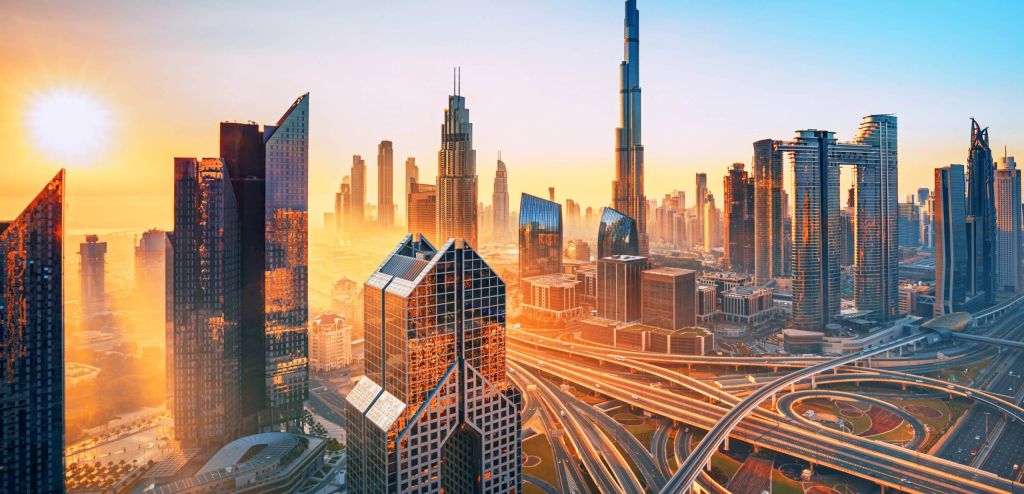
Where better to talk about a buildings revolution than Dubai? The city was a global backwater when the COP movement started; today, it’s a mini-Manhattan with ambitions to be even bigger. The glass-and-steel skyline is a visual feast, and an air-conditioning frenzy. It also reflects what the world may see over the next 25 years, as the built environment is expected to double. That’s a concern because construction accounts for 38 billion tonnes of carbon emissions, accounting for 40% of the world’s challenge to get to Net Zero. Lots being done about it. The open-air Dubai Expo showcased offsite construction technologies, electric building machines, and new materials that reduce a building’s carbon footprint. The large number of cities now represented at COP also brought demonstrations of recycled steel and carbon capture for cement manufacturing. Hong Kong is among the leaders. In just three years, its construction sector has gone from 100% reliance on gas to 60% reliance on batteries. One concern for engineers: rising temperatures are forcing them to rethink everything they build, no where more than in Dubai.
9
Carbon Markets Get Real
Rio Tinto is one of the world’s biggest mining companies, and when it comes to climate it has a big challenge. The company won’t hit its 2025 emissions targets which means it will have to spend a lot for money — perhaps $1 billion a year — buying carbon offsets. It’s not just the money the company is struggling with, it has to compete with the likes of Google and Microsoft for a scarce number of credible offsets. The year leading up to COP28 saw a slew of offset scandals that has the carbon markets, and buyers, nervous. Some of the pressure reflects the growing pains of a new market. And some of it comes from concerted efforts by environmental activists to ensure offsets don’t become a cheap and easy way to avoid real decarbonization efforts. As emitters allocate billions more to offsets, more developers will test the market with new kinds, from nature conversation efforts to carbon removal technologies. One signal from Dubai: sustainable agriculture. The better farmers get at measuring and verifying the amount of carbon their soil captures, the more investors and corporates may want to turn to them for offsets.
10
COP28’s Keyword: Profitability
Where’s the money? It was an odd question to hear in the UAE, home to the world’s richest family and the highest influx of millionaires (100,000 at last count). But like many COPs, this one struggled with how to generate more capital for climate. Of the US$200 trillion in institutional investments around the world, less than 3% is allocated to the energy transition, with only US$1.1 trillion going to renewables and electrification of transportation. Many debates in Dubai came down to a single word: profit. Clean tech and other climate-oriented investments are not generating the real returns needed to attract more capital. Higher interest rates have hurt, but the bigger challenge remains underlying economic models. Climate action needs to generate revenue, and not enough business models are emerging that rely on more than subsidies and venture capital. That will need more blended finance, pooling public and private investment funds. Andrew Steer, who runs the Bezos Earth Fund, suggests we need “a deal team for the planet.” But that won’t be enough. The supply of capital will accelerate only when the demand for climate action takes off. And on that front, many ambitions from Dubai were at risk of being left in the sand until the rest of the world gets moving.
Fixing Climate Finance
It was Finance Day at #COP28, and there was talk of money everywhere.
You might expect that in Dubai, with its splashy display of wealth and ambition at every turn. But at the big UN climate conference that’s underway here, there were plenty of questions about where that money is coming from and where it needs to go.
Bottom line: we need to mobilize $100 trillion over the next 25 years, and even by Dubai that standards requires a stretch of imagination.
Let’s start with the big bucks. The host of this year’s climate mela, the United Arab Emirates, is among many nations looking to invest in this new age of emissions-free development. The Dubai COP (for Conference of the Parties that have signed the UN climate framework) has already raised $57 billion from member states, according to the organizers. In addition, the UAE has pledged $270 billion by 2030. The oil-rich host is also developing a proposal for a $50 billion climate investment fund, which it along with BlackRock and TPG would finance.
Much of that money is needed in lower-income countries, where industry is not able to finance a transition to non-polluting energy systems, and large investors are showing what can be done through things like solar farm and hydrogen production.
The smaller bucks are more challenging. That’s the stuff of carbon markets that allow polluters to pay people and companies around the world for climate-smart actions like tree-planting or no-till farming to absorb some of the greenhouse gases they emit. Such markets are growing slowly but steadily, promising to eventually transfer billions of dollars and inspire waves of better emissions management.
But over the past year, a spate of scandals — misreporting of tree-planting, for instance — has slowed their development.
I sat with some of the world’s largest investors on Finance Day, listening to their concerns about these growing pains for carbon markets. They’re worried climate “purists” will prevent this relatively new market from maturing. They need only look out the door to an official COP poster that reads, “let’s fix climate finance.”
The debate continues whether that can happen fast enough, especially when the finance world is still talking billions when trillions may be needed.
Also on Finance Day, Canada was on the global stage talking Indigenous equity. Chana Martineau (right, below), the CEO of Alberta Indigenous Opportunities Corporation, took the stage with Alberta Premier Danielle Smith (left) to explain how the province’s $3 billion loan guarantee facility has helped Indigenous communities gain a share and say in economic development. In just four years, the AIOC has helped produce thousands of jobs, $27 million a year in new income for communities and a clear path for $1.5 billion in benefits over the next 30 years.
Think what Canada could do with a national Indigenous loan guarantee, like the one promoted in the Fall Economic Statement. A great moment for reconcili-action.
Beyond Fossil Fuels
It’s Energy Day at #COP28 in Dubai, and given the location for the big UN Climate Conference, you might think it means oil and gas. Think again.
Fossil fuels are, of course, a focus of COP, but there’s also emphasis on renewables and nuclear. This region is fast becoming a centre for solar and wind power. It’s also one of the many growth regions for nuclear, which it wants to help champion. COP28 has already won agreement by 50 countries to triple nuclear production by 2050; one of them, China, is building 22 nuclear plants (although it has 5,000 coal-fired electricity plans). And in Europe, Germany is close to 50% renewable.
For many here, the focus of Energy Day was fixed was less on energy supply and more on energy security — at the national and household level. Countries on every continent continue to exhibit scar tissue from Russia’s Ukraine invasion, which caused prices to spike. They seem to generally too adhere to the new American doctrine that energy security is national security.
African leaders, in particular, spent the day voicing concerns about their own vulnerability to energy shortages and shocks. Many of those countries are still reliant on biomass to heat and cook, and could use better access to natural gas before they transition fully to renewables.
Into the gap come newer energy technologies like hydrogen and fusion, as well as abatement technologies like carbon capture and nuclear fusion. John Kerry, the US special envoy on climate, said he’s finally convinced fusion is no longer “30 years away.” And if that’s the case, it has the potential to transform the way the world powers itself.
Europe continues to push hydrogen, but the economics may not work.
Kerry was frank in his assessment that energy demand will continue to rise with economic and population growth: “Demand needs to be addressed.”
He urged the UN conference to set two priorities. One is to ensure all production is abated; that is, producers capture emissions that leave a plant, refinery or well. Second is to focus on methane reduction, where the sector is making enormous gains. More than 50 companies at this COP have signed the Global Methane Pledge.
With one week to go at COP28, the Dubai leadership at COP wants to maintain that focus, believing the sector can engineer itself to a cleaner future. In the coming days, it will try to make the case that in the long run, climate security will require energy security.
Glass & Steel Shrouded By Climate Anxiety
It was Buildings Day at COP28, and where better to discuss the climate impact of office towers and urban sprawl than Dubai.
Like many cities in emerging markets, Dubai’s shimmering skyline used to epitomize the human quest for progress and prosperity. Now, all that glass and steel is shrouded by climate anxiety.
Construction contributes to 40% of global emissions, sending 38 billion of tonnes of carbon dioxide into the atmosphere every year, largely from the intense heat required to make steel and concrete. At recent growth rates, emissions could double in the next 25 years, as hundreds of millions of people move to cities. And the climate oil pact would be severe. Think of all the heat needed to make all the steel and glass.
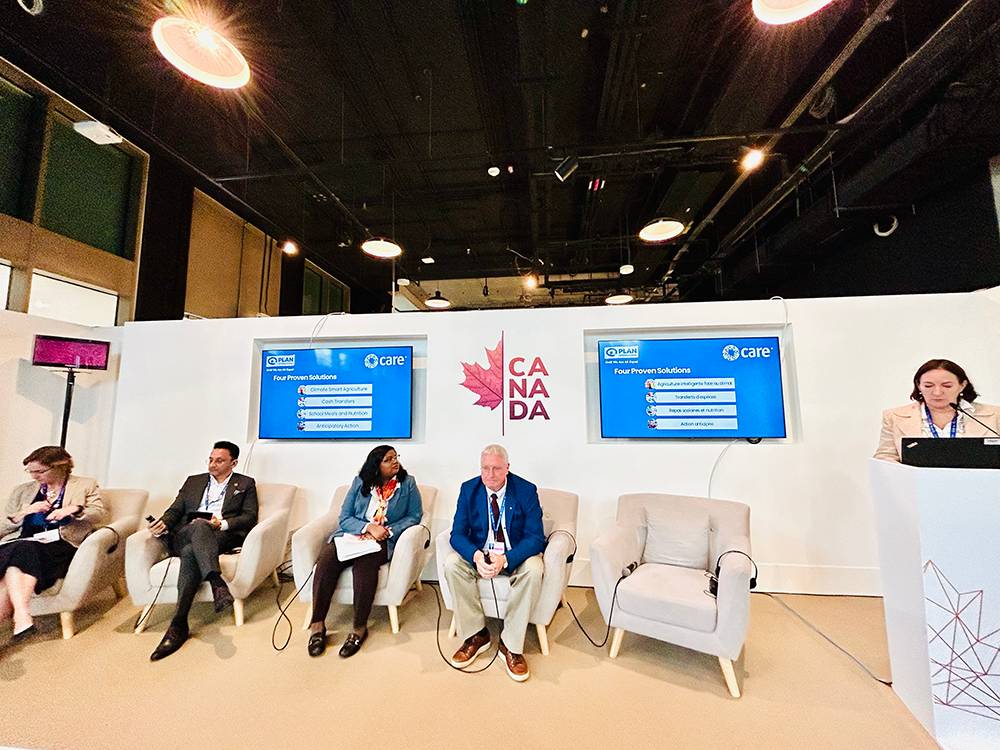
I was part of one COP28 panel that included cement companies and engineers explaining what’s possible and not. We agreed the building sector needs to find new ways to bundle climate friendly buildings, for investors and tenants, and disaggregate elements of them for investors who may want to own part of a building, like a solar-paneled rooftop, and others to stick to the main course.
Governments can do more with procurement, too, instructing developers to ensure new schools, hospitals and public office spaces are as close to Net Zero ready as possible.
The consulting firm McKisney & Co. estimates 11% of all building’s emissions could be cut with better management practices, and that don’t add to the construction costs of a building. Those savings could grow to 22% by 2030, and 40% if some costs were absorbed.
A city like Dubai could probably pay for that, using current oil and gas revenues. But it may need support to invest more.
Further down the road, new approaches like offsite construction, electrified site equipment and recycled scrap steel could help. And there are new technologies like heat pumps that can dramatically change local energy systems.
Dubai — and fast-growing cities like it — could be a good test case. The conference centre where the United Nations is gathering is more like a campus of low-rise and open buildings, each repurposed this week for climate. Such unobtrusive buildings could be a template for a new kind or urbanism — if rapidly developing countries are willing to forego skyscrapers.
Diane Hoskins, a leading architect who is co-CEO of Gensler, told our COP gathering that architects and engineers need to be more flexible, as do local governments. And they need to ensure buildings not only fight climate change, but are resilient to its harsh impacts, including heat.
The best efforts may emanate from successful business models, as the profit motive becomes an ever-more powerful driver of climate action.
A good example can be found in Hong Kong, where MPD Energy has helped the construction industry get off fossil fuels by deploying portable batteries to power equipment. Just three years ago, 100% of construction in Hong Kong relied on fossil fuels. Today, it’s 40%, thanks to batteries that can produce up to 500 kW of power and have already helped the industry cut its emissions by 40%.
The Abate Debate
Get used to the word “unabated.” It’s a clunky term that’s fast-taking centre stage at the United Nations climate conference in Dubai. The world’s major economic powers and oil producers, including host country United Arab Emirates, want COP28 to call for the winding down of “unabated” fossil fuel production, meaning anything that doesn’t capture greenhouse gas emissions at source.
Opponents of the term fear it will give oil and gas producers carte blanche to produce as much as they want, as long as they’re using carbon capture technologies. They fear such an enthusiasm for abatement overlooks the emissions caused by the combustion of fossil fuels when people drive their cars or heat their homes. And they worry there’s not enough proof that abatement technologies work at the scale that will be needed.
The abate debate will likely define COP28, which is living up to its nickname as the “Oil and Gas COP.” Not surprisingly, given its location, the conference has attracted large delegations from oil producing countries, as well as executive teams from many of the world’s biggest oil and gas companies.
They’re promoting a view that the world relies heavily on fossil fuels and won’t reduce that dependency any time soon, no matter how fast the growth of renewable energy. One astonishing fact that a UAE oil executive shared today: at the time of the world’s first climate summit, in 1992, roughly 82% of the world’s energy came from oil, gas and coal; today, during COP28, that share is 80%. Surprisingly, more than a quarter of the world’s energy still comes from coal.
Such slow progress has many climate activists pushing for more radical solutions, to force wholesale change to renewable energy. But they’re swimming against some strong currents of both supply and demand. The United States, which is now the world’s largest oil producer, is on course to pump a record amount this year and may look to increase that again next year — an election year, no less – to keep gas prices low. That’s fueling speculation that Saudi Arabia will ramp up its own production, to drive prices even lower and drive US producers out of business.
The potential of another oil war drew an unlikely visitor, Vladimir Putin, to the UAE this week. The Russian leader didn’t attend COP but he did meet with Emirati leaders, before heading to Saudi Arabia, to talk about oil production. The UAE is the world’s eighth largest oil producer and is looking to increase supply by 40% this decade.
Can all that production be abated? It’s a question COP28 likely can’t answer. But it will try to challenge the world with it.
Good Cap, Bad Cap?
It’s here at last—but not there yet. The federal government unveiled its much hyped (and to some, much feared) oil and gas emissions cap “framework” at the midpoint of COP28, laying down its most ambitious climate policy to date.
No other oil and gas exporting nation has placed a cap on emissions. Now Canada—the world’s fourth largest oil producer—is aiming to cut emissions by 35-38% by 2030.
To get there, the government wants to limit the sector’s emissions and establish a cap-and-trade system that would charge producers for going over the limit and put the money into clean tech funds or, if necessary, carbon offsets.
The big oil producers think they’re already on a course to hit those targets, using abatement technologies like carbon capture, but won’t get there until the mid-2030s. And then there’s jurisdiction. Alberta has been quick to say Ottawa doesn’t have the right to tell provinces how to manage their natural resources.
Ottawa put the cap framework out for 60 days of consultation. Here are some of the questions we’re wondering:
What will oil and gas demand look like in the 2030s? The feds have gone with a forecast from the Canadian Energy Regulator that shows oil production higher in 2030, at 5.1 million barrels a day, with most of the increase coming from the oilsands and Trans Mountain pipeline expansion project. Gas production will remain steady, while LNG exports will be much higher. If nothing were done, the sector’s emissions would go from 174 megatons in 2019 to 199 MT in 2030. But with abatement technologies, emissions are forecast to come down to 134 MT, which would fit within the cap.
Where’s the money? The sector won’t come close to cutting emissions at that scale without massive subsidies from Ottawa and the provinces. Exhibit A will be the Pathways Alliance, a group of oilsands companies looking to build a massive carbon capture and sequestration project for their emissions. They’re still negotiating the terms with government and expect to have a memorandum of understanding within weeks. But they will need to see clear financial commitments before breaking ground. That includes a lot more clarity from Ottawa on its proposed investment tax credits, which currently are set to expire in 2030.
Can Ottawa set up a credible tech platform? Companies are likely to push for the right to channel their own money into their own clean tech projects, subject to emissions commitments. Others will push for an independent fund, or something like Emissions Reduction Alberta, to collect money from emitters and then disburse it to credible projects. The amounts will run into the billions, which could help position Alberta as a global leader in the energy transition. Or create a trail of boondoggles.
Can the cap include a cleaner approach to offsets? The cap framework offers up a lot of flexibility for offsets, including international ones, to help those emitters who can’t get their emissions down in time. Trouble is, the global offsets business has faced growing criticism this year, largely over the integrity of climate-positive activities like forestation and land protection. The credibility of the cap will be determined in part by the credibility of the offsets that companies buy.
What do other provinces think? All eyes are on Alberta and whether the federal cap can work harmoniously with the provincial system. But the challenges of “interoperability” don’t stop there. The cap also applies to British Columbia’s LNG ambitions, Newfoundland’s offshore oil dreams and Saskatchewan’s conventional oil business, each operating under a different emissions regime. Each province may want its emissions payments to remain at home, but an open market may be needed for more options.
How much flexibility will there be? It’s extremely ambitious to think the sector can cut its emissions by 2030. So the framework includes some important “shock absorbers” that allow for production swings— oil and gas markets are volatile, if nothing else — and also possible delays in technology. The framework offers up something called “multi-year compliance periods” that sound a bit like a homework extension of three years should carbon reduction projects not come together by 2030.
Will anyone go to jail? Penalties for non-compliance are, so far, vague, ranging from a warning letter to possible imprisonment under the environmental protection laws that will house the cap. The lack of clarity on enforcement measures will continue to cause anxiety among executives who have to make the whole thing work. A good cap will need a good cop.
After a winter of consultations, the feds will have to spend another year, in all likelihood, crafting the cap into law. And by then — if not before — Canada will be in the heat of election battle. Which means all this may be a prelude for an epic national debate about the future role of oil and gas in our economy.
If there were any doubts how far climate has fallen down Santa’s wish list for the Trudeau government, read Chrystia Freeland’s Fall Economic Statement. She delivered the government’s annual economic strategy without once mentioning “climate change” or “environment.” (“All I Want for Christmas is Two” could be her holiday jingle, as she dreams of 2% inflation.) Such a narrow consumer focus may be bad news for her green caucus. But Freeland’s renewed focus on execution may be welcome. In her government’s strategy for the “clean economy”—Ottawa speak for climate—she made a few things clear.
First, the new Canada Growth Fund will allocate roughly half its $15 billion funding for “carbon contracts for difference”—essentially carbon price guarantees if government policy changes. That’s a lot of money but may not be enough to underwrite a clean economy. Second, the government will soon introduce legislation for investment tax credits for carbon capture and clean technology projects, which were promised a year ago but never finalized. They will be critical to decarbonization projects, and there is some concern they’re still not competitive with U.S. incentives. Ottawa is also pushing ahead with its hydrogen agenda, promising tax breaks for ammonia, and giving more incentives for waste biomass (wood chips and crop residue) that can be used in sustainable aviation fuel. To attract more capital, Freeland gave the green light for a “taxonomy” to help banks and pension funds label investments as “green” or “transition,” and she will push pension funds to invest more in Canada’s “clean economy.”
How a taxonomy treats natural gas will be contentious, as will another Freeland proposal: a national Indigenous loan guarantee. Will Ottawa limit what Indigenous communities can buy, depending on its climate impact? A group of 130 Indigenous nations were quick to say, not a chance. After centuries of colonization, they’ll pick their own projects, including natural gas, thank you very much. Such debates will dominate the winter term, as the Trudeau Liberals try to show they can manage the current economy and help build a new one.
The weather in Ottawa turned gnarly this week, as did the politics around Net Zero. Is this the winter of our climate discontent? I spent Thursday at the Canadian Climate Institute’s third annual conference, and it was hard not to feel a change in weather. The sunny ways of the past decade are now clouded by economic reality, as governments (and consumers) look increasingly for economically minded ways to decarbonize our world. The days of free money are gone, which is undermining venture capital and all those innovators trying to create and scale new energy technologies. Governments (like consumers) are running low on fiscal gas, which will limit the billions they had hoped would stimulate climate action. The mood for regulation also seems to be dwindling, judging by the Trudeau government’s muted presentation of an oil and gas emissions cap (now called a “framework”) at the event. And then there’s all that global volatility—two hots wars and a cold one—that’s got energy markets (and market confidence) everywhere on edge.
Looking to 2024, the outlook for climate action may seem dark. But if there’s hope, it’s in private sector. This year’s CCI conference had a greater business focus, with steelmakers, oil producers and builders sharing their plans to decarbonize—not just for the planet but for their own competitiveness. That was also a clarion call from the Biden Administration, which sent its top energy diplomat to Ottawa this week to talk up business-led climate action. Geoffrey Pyatt laid out how the Inflation Reduction Act is transforming America’s energy systems (and its competitiveness), creating significant opportunities for business and trade for its allies. On that count, Pyatt wanted to know about Canada’s “political geography,” and how we can fit into a continental energy strategy that will include oil, nuclear, hydrogen and natural gas. In other words, climate security is now energy security, and both are about national security. The climate crowd didn’t embrace every word, but they did get the message. It’s a new season.


 EN
EN 





 Canada faces a triple economic challenge, and with it, a triple economic opportunity that can lay the foundation for growth through the 2030s.
The three points of this new growth triangle—economic reconciliation, productivity and climate action—are mutually dependent. In other words, you can’t have one without the others.
This was clear at COP28 in December, where there was an emphasis on growth, capital formation and economic inclusion to reach our climate goals. And it can be Canada’s strategic advantage if we make some important adjustments.
Let’s start with climate action, and a blunt reality: Net Zero is going to require a scale of investment that we have not seen in our lifetimes.
RBC’s Climate Action Institute recently published a report on the state of the transition in Canada, called
Canada faces a triple economic challenge, and with it, a triple economic opportunity that can lay the foundation for growth through the 2030s.
The three points of this new growth triangle—economic reconciliation, productivity and climate action—are mutually dependent. In other words, you can’t have one without the others.
This was clear at COP28 in December, where there was an emphasis on growth, capital formation and economic inclusion to reach our climate goals. And it can be Canada’s strategic advantage if we make some important adjustments.
Let’s start with climate action, and a blunt reality: Net Zero is going to require a scale of investment that we have not seen in our lifetimes.
RBC’s Climate Action Institute recently published a report on the state of the transition in Canada, called 







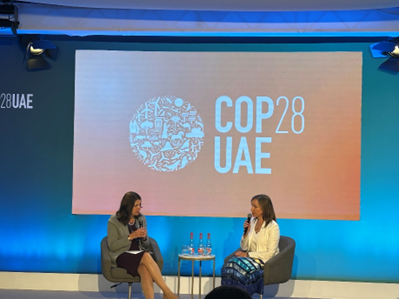 Also on Finance Day, Canada was on the global stage talking Indigenous equity. Chana Martineau (right, below), the CEO of Alberta Indigenous Opportunities Corporation, took the stage with Alberta Premier Danielle Smith (left) to explain how the province’s $3 billion loan guarantee facility has helped Indigenous communities gain a share and say in economic development. In just four years, the AIOC has helped produce thousands of jobs, $27 million a year in new income for communities and a clear path for $1.5 billion in benefits over the next 30 years.
Think what Canada could do with a national Indigenous loan guarantee, like the one promoted in the Fall Economic Statement. A great moment for reconcili-action.
Also on Finance Day, Canada was on the global stage talking Indigenous equity. Chana Martineau (right, below), the CEO of Alberta Indigenous Opportunities Corporation, took the stage with Alberta Premier Danielle Smith (left) to explain how the province’s $3 billion loan guarantee facility has helped Indigenous communities gain a share and say in economic development. In just four years, the AIOC has helped produce thousands of jobs, $27 million a year in new income for communities and a clear path for $1.5 billion in benefits over the next 30 years.
Think what Canada could do with a national Indigenous loan guarantee, like the one promoted in the Fall Economic Statement. A great moment for reconcili-action.
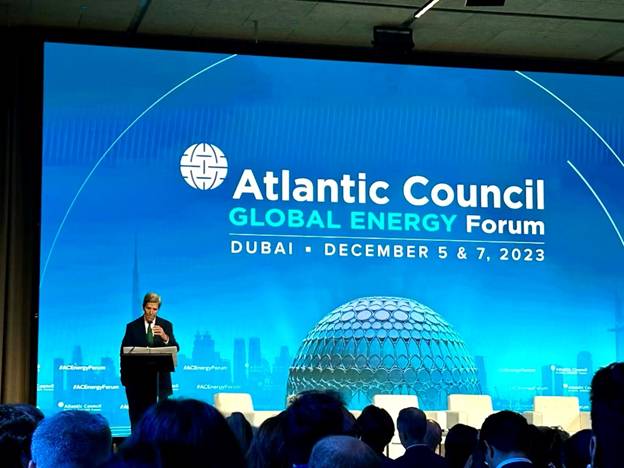 It’s Energy Day at #COP28 in Dubai, and given the location for the big UN Climate Conference, you might think it means oil and gas. Think again.
Fossil fuels are, of course, a focus of COP, but there’s also emphasis on renewables and nuclear. This region is fast becoming a centre for solar and wind power. It’s also one of the many growth regions for nuclear, which it wants to help champion. COP28 has already won agreement by 50 countries to triple nuclear production by 2050; one of them, China, is building 22 nuclear plants (although it has 5,000 coal-fired electricity plans). And in Europe, Germany is close to 50% renewable.
For many here, the focus of Energy Day was fixed was less on energy supply and more on energy security — at the national and household level. Countries on every continent continue to exhibit scar tissue from Russia’s Ukraine invasion, which caused prices to spike. They seem to generally too adhere to the new American doctrine that energy security is national security.
African leaders, in particular, spent the day voicing concerns about their own vulnerability to energy shortages and shocks. Many of those countries are still reliant on biomass to heat and cook, and could use better access to natural gas before they transition fully to renewables.
Into the gap come newer energy technologies like hydrogen and fusion, as well as abatement technologies like carbon capture and nuclear fusion. John Kerry, the US special envoy on climate, said he’s finally convinced fusion is no longer “30 years away.” And if that’s the case, it has the potential to transform the way the world powers itself.
Europe continues to push hydrogen, but the economics may not work.
Kerry was frank in his assessment that energy demand will continue to rise with economic and population growth: “Demand needs to be addressed.”
He urged the UN conference to set two priorities. One is to ensure all production is abated; that is, producers capture emissions that leave a plant, refinery or well. Second is to focus on methane reduction, where the sector is making enormous gains. More than 50 companies at this COP have signed the Global Methane Pledge.
With one week to go at COP28, the Dubai leadership at COP wants to maintain that focus, believing the sector can engineer itself to a cleaner future. In the coming days, it will try to make the case that in the long run, climate security will require energy security.
It’s Energy Day at #COP28 in Dubai, and given the location for the big UN Climate Conference, you might think it means oil and gas. Think again.
Fossil fuels are, of course, a focus of COP, but there’s also emphasis on renewables and nuclear. This region is fast becoming a centre for solar and wind power. It’s also one of the many growth regions for nuclear, which it wants to help champion. COP28 has already won agreement by 50 countries to triple nuclear production by 2050; one of them, China, is building 22 nuclear plants (although it has 5,000 coal-fired electricity plans). And in Europe, Germany is close to 50% renewable.
For many here, the focus of Energy Day was fixed was less on energy supply and more on energy security — at the national and household level. Countries on every continent continue to exhibit scar tissue from Russia’s Ukraine invasion, which caused prices to spike. They seem to generally too adhere to the new American doctrine that energy security is national security.
African leaders, in particular, spent the day voicing concerns about their own vulnerability to energy shortages and shocks. Many of those countries are still reliant on biomass to heat and cook, and could use better access to natural gas before they transition fully to renewables.
Into the gap come newer energy technologies like hydrogen and fusion, as well as abatement technologies like carbon capture and nuclear fusion. John Kerry, the US special envoy on climate, said he’s finally convinced fusion is no longer “30 years away.” And if that’s the case, it has the potential to transform the way the world powers itself.
Europe continues to push hydrogen, but the economics may not work.
Kerry was frank in his assessment that energy demand will continue to rise with economic and population growth: “Demand needs to be addressed.”
He urged the UN conference to set two priorities. One is to ensure all production is abated; that is, producers capture emissions that leave a plant, refinery or well. Second is to focus on methane reduction, where the sector is making enormous gains. More than 50 companies at this COP have signed the Global Methane Pledge.
With one week to go at COP28, the Dubai leadership at COP wants to maintain that focus, believing the sector can engineer itself to a cleaner future. In the coming days, it will try to make the case that in the long run, climate security will require energy security.
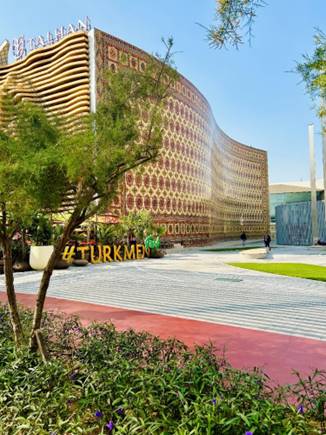 It was Buildings Day at COP28, and where better to discuss the climate impact of office towers and urban sprawl than Dubai.
Like many cities in emerging markets, Dubai’s shimmering skyline used to epitomize the human quest for progress and prosperity. Now, all that glass and steel is shrouded by climate anxiety.
Construction contributes to 40% of global emissions, sending 38 billion of tonnes of carbon dioxide into the atmosphere every year, largely from the intense heat required to make steel and concrete. At recent growth rates, emissions could double in the next 25 years, as hundreds of millions of people move to cities. And the climate oil pact would be severe. Think of all the heat needed to make all the steel and glass.
It was Buildings Day at COP28, and where better to discuss the climate impact of office towers and urban sprawl than Dubai.
Like many cities in emerging markets, Dubai’s shimmering skyline used to epitomize the human quest for progress and prosperity. Now, all that glass and steel is shrouded by climate anxiety.
Construction contributes to 40% of global emissions, sending 38 billion of tonnes of carbon dioxide into the atmosphere every year, largely from the intense heat required to make steel and concrete. At recent growth rates, emissions could double in the next 25 years, as hundreds of millions of people move to cities. And the climate oil pact would be severe. Think of all the heat needed to make all the steel and glass.
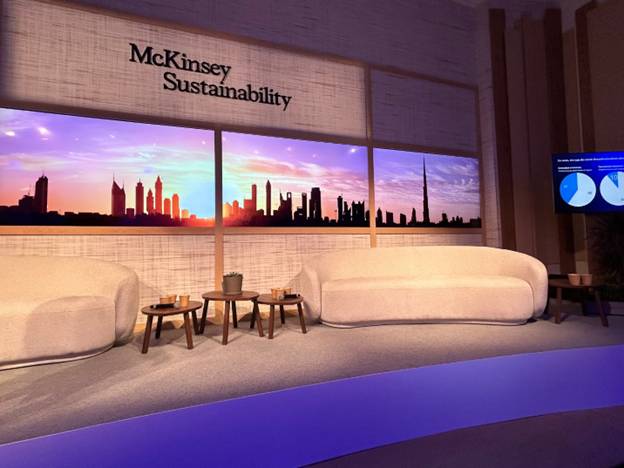 I was part of one COP28 panel that included cement companies and engineers explaining what’s possible and not. We agreed the building sector needs to find new ways to bundle climate friendly buildings, for investors and tenants, and disaggregate elements of them for investors who may want to own part of a building, like a solar-paneled rooftop, and others to stick to the main course.
Governments can do more with procurement, too, instructing developers to ensure new schools, hospitals and public office spaces are as close to Net Zero ready as possible.
The consulting firm McKisney & Co. estimates 11% of all building’s emissions could be cut with better management practices, and that don’t add to the construction costs of a building. Those savings could grow to 22% by 2030, and 40% if some costs were absorbed.
A city like Dubai could probably pay for that, using current oil and gas revenues. But it may need support to invest more.
Further down the road, new approaches like offsite construction, electrified site equipment and recycled scrap steel could help. And there are new technologies like heat pumps that can dramatically change local energy systems.
Dubai — and fast-growing cities like it — could be a good test case. The conference centre where the United Nations is gathering is more like a campus of low-rise and open buildings, each repurposed this week for climate. Such unobtrusive buildings could be a template for a new kind or urbanism — if rapidly developing countries are willing to forego skyscrapers.
Diane Hoskins, a leading architect who is co-CEO of Gensler, told our COP gathering that architects and engineers need to be more flexible, as do local governments. And they need to ensure buildings not only fight climate change, but are resilient to its harsh impacts, including heat.
The best efforts may emanate from successful business models, as the profit motive becomes an ever-more powerful driver of climate action.
A good example can be found in Hong Kong, where MPD Energy has helped the construction industry get off fossil fuels by deploying portable batteries to power equipment. Just three years ago, 100% of construction in Hong Kong relied on fossil fuels. Today, it’s 40%, thanks to batteries that can produce up to 500 kW of power and have already helped the industry cut its emissions by 40%.
I was part of one COP28 panel that included cement companies and engineers explaining what’s possible and not. We agreed the building sector needs to find new ways to bundle climate friendly buildings, for investors and tenants, and disaggregate elements of them for investors who may want to own part of a building, like a solar-paneled rooftop, and others to stick to the main course.
Governments can do more with procurement, too, instructing developers to ensure new schools, hospitals and public office spaces are as close to Net Zero ready as possible.
The consulting firm McKisney & Co. estimates 11% of all building’s emissions could be cut with better management practices, and that don’t add to the construction costs of a building. Those savings could grow to 22% by 2030, and 40% if some costs were absorbed.
A city like Dubai could probably pay for that, using current oil and gas revenues. But it may need support to invest more.
Further down the road, new approaches like offsite construction, electrified site equipment and recycled scrap steel could help. And there are new technologies like heat pumps that can dramatically change local energy systems.
Dubai — and fast-growing cities like it — could be a good test case. The conference centre where the United Nations is gathering is more like a campus of low-rise and open buildings, each repurposed this week for climate. Such unobtrusive buildings could be a template for a new kind or urbanism — if rapidly developing countries are willing to forego skyscrapers.
Diane Hoskins, a leading architect who is co-CEO of Gensler, told our COP gathering that architects and engineers need to be more flexible, as do local governments. And they need to ensure buildings not only fight climate change, but are resilient to its harsh impacts, including heat.
The best efforts may emanate from successful business models, as the profit motive becomes an ever-more powerful driver of climate action.
A good example can be found in Hong Kong, where MPD Energy has helped the construction industry get off fossil fuels by deploying portable batteries to power equipment. Just three years ago, 100% of construction in Hong Kong relied on fossil fuels. Today, it’s 40%, thanks to batteries that can produce up to 500 kW of power and have already helped the industry cut its emissions by 40%.
 Get used to the word “unabated.” It’s a clunky term that’s fast-taking centre stage at the United Nations climate conference in Dubai. The world’s major economic powers and oil producers, including host country United Arab Emirates, want COP28 to call for the winding down of “unabated” fossil fuel production, meaning anything that doesn’t capture greenhouse gas emissions at source.
Opponents of the term fear it will give oil and gas producers carte blanche to produce as much as they want, as long as they’re using carbon capture technologies. They fear such an enthusiasm for abatement overlooks the emissions caused by the combustion of fossil fuels when people drive their cars or heat their homes. And they worry there’s not enough proof that abatement technologies work at the scale that will be needed.
The abate debate will likely define COP28, which is living up to its nickname as the “Oil and Gas COP.” Not surprisingly, given its location, the conference has attracted large delegations from oil producing countries, as well as executive teams from many of the world’s biggest oil and gas companies.
They’re promoting a view that the world relies heavily on fossil fuels and won’t reduce that dependency any time soon, no matter how fast the growth of renewable energy. One astonishing fact that a UAE oil executive shared today: at the time of the world’s first climate summit, in 1992, roughly 82% of the world’s energy came from oil, gas and coal; today, during COP28, that share is 80%. Surprisingly, more than a quarter of the world’s energy still comes from coal.
Such slow progress has many climate activists pushing for more radical solutions, to force wholesale change to renewable energy. But they’re swimming against some strong currents of both supply and demand. The United States, which is now the world’s largest oil producer, is on course to pump a record amount this year and may look to increase that again next year — an election year, no less – to keep gas prices low. That’s fueling speculation that Saudi Arabia will ramp up its own production, to drive prices even lower and drive US producers out of business.
The potential of another oil war drew an unlikely visitor, Vladimir Putin, to the UAE this week. The Russian leader didn’t attend COP but he did meet with Emirati leaders, before heading to Saudi Arabia, to talk about oil production. The UAE is the world’s eighth largest oil producer and is looking to increase supply by 40% this decade.
Can all that production be abated? It’s a question COP28 likely can’t answer. But it will try to challenge the world with it.
Get used to the word “unabated.” It’s a clunky term that’s fast-taking centre stage at the United Nations climate conference in Dubai. The world’s major economic powers and oil producers, including host country United Arab Emirates, want COP28 to call for the winding down of “unabated” fossil fuel production, meaning anything that doesn’t capture greenhouse gas emissions at source.
Opponents of the term fear it will give oil and gas producers carte blanche to produce as much as they want, as long as they’re using carbon capture technologies. They fear such an enthusiasm for abatement overlooks the emissions caused by the combustion of fossil fuels when people drive their cars or heat their homes. And they worry there’s not enough proof that abatement technologies work at the scale that will be needed.
The abate debate will likely define COP28, which is living up to its nickname as the “Oil and Gas COP.” Not surprisingly, given its location, the conference has attracted large delegations from oil producing countries, as well as executive teams from many of the world’s biggest oil and gas companies.
They’re promoting a view that the world relies heavily on fossil fuels and won’t reduce that dependency any time soon, no matter how fast the growth of renewable energy. One astonishing fact that a UAE oil executive shared today: at the time of the world’s first climate summit, in 1992, roughly 82% of the world’s energy came from oil, gas and coal; today, during COP28, that share is 80%. Surprisingly, more than a quarter of the world’s energy still comes from coal.
Such slow progress has many climate activists pushing for more radical solutions, to force wholesale change to renewable energy. But they’re swimming against some strong currents of both supply and demand. The United States, which is now the world’s largest oil producer, is on course to pump a record amount this year and may look to increase that again next year — an election year, no less – to keep gas prices low. That’s fueling speculation that Saudi Arabia will ramp up its own production, to drive prices even lower and drive US producers out of business.
The potential of another oil war drew an unlikely visitor, Vladimir Putin, to the UAE this week. The Russian leader didn’t attend COP but he did meet with Emirati leaders, before heading to Saudi Arabia, to talk about oil production. The UAE is the world’s eighth largest oil producer and is looking to increase supply by 40% this decade.
Can all that production be abated? It’s a question COP28 likely can’t answer. But it will try to challenge the world with it.
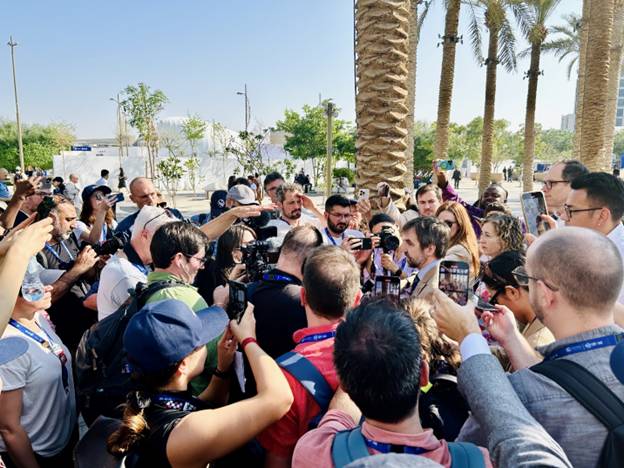 It’s here at last—but not there yet. The federal government unveiled its much hyped (and to some, much feared) oil and gas emissions cap “framework” at the midpoint of COP28, laying down its most ambitious climate policy to date.
No other oil and gas exporting nation has placed a cap on emissions. Now Canada—the world’s fourth largest oil producer—is aiming to cut emissions by 35-38% by 2030.
To get there, the government wants to limit the sector’s emissions and establish a cap-and-trade system that would charge producers for going over the limit and put the money into clean tech funds or, if necessary, carbon offsets.
The big oil producers think they’re already on a course to hit those targets, using abatement technologies like carbon capture, but won’t get there until the mid-2030s. And then there’s jurisdiction. Alberta has been quick to say Ottawa doesn’t have the right to tell provinces how to manage their natural resources.
Ottawa put the cap framework out for 60 days of consultation. Here are some of the questions we’re wondering:
It’s here at last—but not there yet. The federal government unveiled its much hyped (and to some, much feared) oil and gas emissions cap “framework” at the midpoint of COP28, laying down its most ambitious climate policy to date.
No other oil and gas exporting nation has placed a cap on emissions. Now Canada—the world’s fourth largest oil producer—is aiming to cut emissions by 35-38% by 2030.
To get there, the government wants to limit the sector’s emissions and establish a cap-and-trade system that would charge producers for going over the limit and put the money into clean tech funds or, if necessary, carbon offsets.
The big oil producers think they’re already on a course to hit those targets, using abatement technologies like carbon capture, but won’t get there until the mid-2030s. And then there’s jurisdiction. Alberta has been quick to say Ottawa doesn’t have the right to tell provinces how to manage their natural resources.
Ottawa put the cap framework out for 60 days of consultation. Here are some of the questions we’re wondering: