Introduction

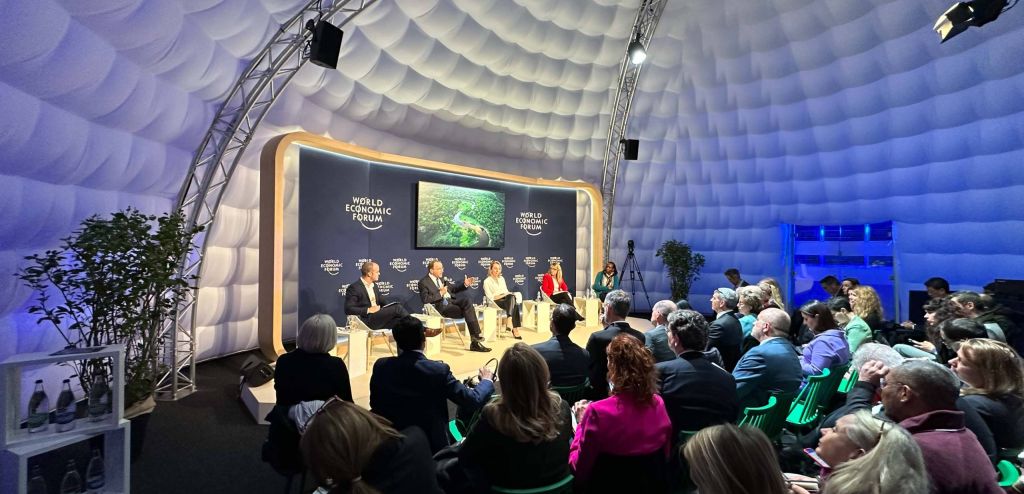
The skies above Davos were unusually cloudy during the World Economic Forum. The annual winter gathering, on the other hand, had unusual bursts of sun.

The global meeting of government, business and community leaders—the first in three years—can’t quite be described as optimistic. But after a year marked by war, inflation, energy shortages and pandemic fears, the general view of Davos 2023 was, “hey, things could be a lot worse.” Europe is more united than it’s been in decades. The Ukraine war seems contained. China has re-emerged from a marathon COVID lockdown. Inflation is on its way down. And many revised economic forecasts suggest most of the world is headed for only a “You-call-that-a-recession?” recession.

In short, a year to hold your ground.

This was my 7th trip to Davos, an otherwise sleepy ski town in the Swiss Alps. And while the pandemic did nothing to wash away the gathering’s hubris (“We’re good; the world isn’t,” could be its motto), the Forum continues to be a rare opportunity for much of the world to exchange views on the world. Where else can you sit with a scientist from the Bill & Melinda Gates Foundation, an economist from Oxford University, a tech entrepreneur from Brazil, and a social activist from Johannesburg?

Here are 12 ideas—a Davos dozen—that I took away from this year’s Forum:

1. It’s a fragmented world, after all

An extraordinary 30-year run of global openness and cooperation that rose from the ashes of the Cold War is coming to an end. A decade ago, at my first Davos, I met with Iranian leaders, Russian oligarchs and Chinese techies. In the 2020s, that seems a distant memory, as large parts of the world feel unwelcome at international events. It’s what the Germans are calling a Zeitenwende, a tectonic shift that now threatens serious aftershocks. Those include a rise in economic nationalism that’s become a norm in every region, and a renewed desire in the West to impose liberal values on a new global order. For those who felt economics replaced geopolitics after the Cold War, the history of great power—and value—struggles is back.

Ironically, the Forum was created more than 50 years ago to combat economic nationalism in Europe. Today, many of its founding members are pushing for a “Climate Club” to foster a renewable energy cartel to rival the Organization of the Petroleum Exporting Countries (OPEC), and new democracy-based trading blocs to challenge China. Economic security has become national security, and a justification for governments to impose arbitrary investment and trade rules.

In one interactive discussion among 200 participants, geopolitics was identified as the top risk to financial stability, well ahead of cyber and economic risks. The World Trade Organization came to Davos to warn that such forms of deglobalization could cost the world US$7 trillion of lost output if it goes too far. But there was no sign of backtracking. When asked about deglobalization, Ursula von der Leyen, president of the European Commission, chafed at the word, preferring to call this a new era of “de-risking.”


2. Meh-conomy, 101

If there was a Davos consensus, it was that 2023 will be, well, meh. A CNBC survey of 90 CEOs at the Forum found they were generally optimistic but not bullish. Kristalina Georgieva, head of the International Monetary Fund, said she expects to roughly stick to the IMF forecast of 2.7% global economic growth. China has suffered the worst of its economic downturn and may help lift the world with “revenge spending,” as Chinese households are estimated to have US$2 trillion in pent-up savings.

Supply chains are slowly getting back to normal. Europeans are limping through a warmer winter with lower energy costs, while the U.S. appears to have its economic nose above water.

There’s one Matterhorn-sized risk: interest rates. Central bankers used the Davos stage to stress they’re not tempted to cut rates due to the slowing economy. “Stay the course” was said more often, in more languages, than any other line. While inflation appears to have peaked, central banks recognize it will be much harder to get from 4% to 2% than from 6% to 4%. Wage increases alone will continue to frustrate inflation hawks.

Central banks are fighting a credibility question, too, having missed the early signals of global inflation during the pandemic. Another challenge is an enigmatic labour force, with its remarkably low unemployment levels that show few signs of bending, thanks to a new work culture that has millennials redesigning jobs, Baby Boomers redesigning retirement, and a huge number of working-aged men—one in eight—opting out of the formal economy in the U.S. If central banks continue to focus on employment levels, they’re likely to keep rates higher for longer—and economic growth lower into 2024.


3. National security subsumes climate strategy

The hottest topic was the U.S. Inflation Reduction Act, with its US$370 billion of subsidies for clean energy and a promise of easy regulation for U.S. firms to help the world’s biggest energy user create the technologies to get to Net Zero, and export them to the world. In Davos, it was like the U.S. had dropped an economic bomb on the European Union. The bloc has had a few months to digest the IRA, and seems determined to launch its own wave of subsidies. Europeans know they will have to do something far more challenging: cut regulation.

Canada is facing the same challenge to not just match U.S. spending but to ensure the notoriously slow federal-provincial approach to project approvals can find warp speed. Europe’s main goal is to negotiate preferential access for some climate-friendly technologies like electric vehicles; in effect, getting inside America’s climate club.

Europe wants to build as much renewables capacity by 2030 as it has today, launching the biggest building boom since the Marshall Plan repaired the wreckage of the Second World War. Chancellor Olaf Scholz stressed Germany will use all its spending and regulatory might to get off coal by 2030, and be fully reliant on renewables soon after.

That’s not how many Americans see their climate plan, which is designed to ensure energy security, with low emissions, not eliminate fossil fuels. Joe Manchin, the U.S. Senator who orchestrated the legislation, came to Davos to explain that it’s not meant to be a threat to America’s allies—nor is it meant to speed up the death of oil. He surprised many Europeans by saying the U.S. might see oil production increase 20% and gas by as much as 50%, using carbon capture to keep emissions in the ground. His goal is to see an America that produces all forms of energy. Climate is a secondary concern.


4. The realities of reshoring

The semiconductor shock of 2022 is still reverberating. In addition to clean tech, the U.S. is spending billions to help companies like Intel move chip production from Asia back to North America. The U.S. accounted for 37% of global chip manufacturing in the 1990s. Today, its share is 12%. That decline took 30 years, and may take just as long to reverse, if that’s even possible. Taiwan and Korea are so sophisticated in their production networks, as to make it a kind of supercomputer puzzle. Intel is building plants in the U.S. and Germany but will need years to build up both a workforce and supply chains. Trouble is, the U.S. may not have decades to get reshoring right, as 5G unleashes a wave of industrial demand and the EV revolution turns to a new generation of chips, which could account for 20% of EV car content—four times what cars need now.

While the reshoring rhetoric is popular in Davos, and on political campaign trails, it’s proving to be less appealing to business operators. New McKinsey research shows that over the past five years, since former president Donald Trump brought his America First speech to Davos, no major economy, including the U.S., has systemically diversified trade. The consulting firm also found no region to be anywhere near self-sufficient. Instead, there is heavy concentration of production for a range of goods and commodities, from laptops and airplanes to soybeans, iron ore and, yes, microchips.


5. Ukraine holds while Europe hopes

Volodymyr Zelenskyy was a relative unknown at Davos in 2020, when he spoke about the need for speed in decision making. He stormed Davos 2023 by video, using his motivational skills to keep the West from slowing down support. His wife Olena spoke in person, and sat in the front row for several leaders’ addresses. One after another, European, American and Canadian politicians assured Ukrainians their support was unconditional, and they were prepared to stand by the country for years—“a decade, if needed,” said Finland’s Prime Minister Sanna Marin. Europe is showing more confidence than it has in decades, but it knows its vulnerabilities, including the ghosts of history. Germany continues to go slow on tank supplies, not wanting to provoke Russia. Europe also knows it dodged an energy bullet this winter, thanks to warm weather, emergency gas supplies from Qatar and the U.S., and less competing demand from a China in lockdown. Next winter may not be so kind.

To Zelenskyy, the end game will be Russia’s defeat, apology and reparations. This would be difficult for Russia without political upheaval, economic crisis or military debacle—or all three. Henry Kissinger, the former U.S. Secretary of State, spoke to a small group, also by video, to share a view that Europeans are not partial to. Kissinger believes there can be a ceasefire, but Ukraine would have to concede Crimea, which Russia took in 2014, and possibly some other towns that Moscow has claimed.

In return, Russia would have to accept Ukraine joining NATO and the European Union—currently red lines for the Kremlin, as it would bring the West right to its borders. The West will need to give Russia a path back into the international community, including the removal of sanctions. All of which would be hard for Ukraine, and much of Europe, to accept. But if the fighting goes on another year, backers of the war—namely the U.S.—may have other views.


6. China agitates while India accelerates

The most notable absence in Davos was China, which was represented only by the soon-to-retire Vice Premier Liu He. Instead of the usual Chinese self-aggrandizement, and finger-wagging, Liu gave a tepid speech that seemed designed primarily to build bridges with the West. He spoke privately to business executives, signalling that “China is back.” He urged U.S. and European politicians to avoid “a Cold War mentality” and to scale back trade sanctions, including a ban on semiconductors from U.S.-affiliated suppliers.

U.S. political leaders weren’t interested, with Republicans and Democrats focused on out-toughing each other on China. Clearly, the Chinese economy is suffering from more than lockdowns. Its inflated real estate sector was top-ofmind for Liu, as it now accounts for 60% of urban household wealth and 40% of bank loans. That’s concerning for a country with a population in decline—and that’s projected to lose 150 million working-age people by 2050.

A more different image could not have been crafted by China’s neighbour and sometime rival, India, which took Davos by storm. India occupied an entire block of the Davos promenade, with trade showcases, reception spaces and a large billboard of Prime Minister Narendra Modi. It’s more than PR.

India has overtaken China in economic growth, and will overtake it in population as the world’s biggest country this spring. Having won an iPhone manufacturing mandate from China, it’s also aiming to be a leading tech supplier to the world. The Modi government has committed US$10 billion to subsidizing the semiconductor industry, which employs 50,000 engineers in India, and reorienting post-secondary education to accommodate a doubling of chip production, with 500,000 new engineers a year. In addition, an Indian delegation of CEOs and economic ministers told the Forum they intend to be the world’s leading telecom equipment exporter, and leading locomotive and train exporter, by the end of the decade.


7. The riskiest places on earth

The world’s poorest countries always get a seat at the table at Davos. They just don’t always get a voice. That changed this year as the spectre of low economic growth, high interest rates and stiff competition for energy, food and advanced technologies like microchips cast into stark relief the coming challenges for developing countries. And how that may make them the riskiest places on earth for global stability.

Coming into 2023, 60 of the world’s 80 low-income countries were listed as “distressed” in terms of their ability to pay their debts. If interest rates remain high, that stress will worsen if the U.S. dollar remains the world’s safe haven (and in turn makes imports of food, oil and other essentials for those countries more expensive.) Add to that the scarring of both COVID and climate-related disasters like last year’s floods in Pakistan, and scores of countries face a tough road ahead.

No one is predicting a Third World debt crisis like the one that destabilized global markets in the 1980s. By the same token, any debt crunch will be harder to resolve in an increasingly fractured world. In the 1980s, the U.S. was able to orchestrate debt relief packages through a group of creditors called the Paris Club. Today, most emerging market debt is spread across a panoply of creditors, from sovereign wealth funds to commercial banks, and the biggest new creditor, China.

Some Davos regulars, led by former central banker Mark Carney and former U.S. Secretary of the Treasury Lawrence Summers, are pushing for reform of the World Bank and International Monetary Fund, at their annual meetings this spring, in part to avert future debt crises while also accelerating climate finance. According to the WEF, those institutions, along with regional development banks, need access to US$3 trillion a year in capital to finance developing countries through a socially just transition to Net Zero.


8. Soil, the new gold

Leave it to Davos to follow the money. One of the quickest sessions to fill up was on “soil health,” where the CEOs of Nestlé, Unilever and Illycaffè joined farmers and policymakers to explain their approach to regenerative agriculture. Farm lands are considered a leading asset for climate action, as, properly managed, they can absorb the emissions of entire sectors. They can also offset the carbon, methane and nitrous emissions that come from fertilizer, and the production and consumption of food. What’s more, soil degradation has become a serious consequence of climate change, albeit less noticed than hurricanes and floods.

The Italian coffee entrepreneur, Andrea Illy, warned the Forum that half the world’s coffee lands may be out of production by 2050 if their soils, and trees, are not better protected. If we help farmers preserve their land and trees, the world wins, as do coffee drinkers.

The challenge for Davos was how to finance the next green revolution, by rewarding farmers and landowners not only for producing food, but for protecting and preserving their soil.

Nestlé and Unilever are among the large food companies testing an “inset” model that certifies and pays farmers directly for sustainable practices such as no-till planting or low-emission fertilizers. Food companies can then claim the emissions on their climate accounting books—something many investors and consumers want to see to better measure progress. For now, retailers are leading the push, wanting to win over climate-minded shoppers. But for a true gold rush, consumers will need to take charge, sending a signal from their purchases back to farmers that they want to help preserve the soil that produced their food.


9. A concrete approach to climate

For millennia, Europeans have prided themselves as builders. But they have recently discovered their great concrete monuments—and all the heat required to make the materials—are not helpful to the planet. European innovators are trying to change that, reimagining ways to make concrete, and other materials, with far fewer emissions.

Building construction is estimated to account for 11% of global emissions. That’s why many local governments are using building codes as well as procurement to help the construction industry get to Net Zero. The 2024 Paris Olympics will be the next hurdle in that race. But it won’t come cheaply. The global construction sector, which is adding the equivalent of 40 New York Cities a year, would need US$10 trillion—per year—to abate or offset its emissions, which are on course to triple over the next 25 years.

The construction giant Holcim sees a different approach, and has invested in more than 100 startups to help design a new path. It’s developing new ways to recycle concrete, largely from demolished buildings. Other companies are electrifying kilns, to ensure a low-emissions method of making bricks.

But to succeed, the innovators will need governments to create new approaches to building codes, lenders to reimagine how they finance recyclable construction materials, and landlords to bake the climate value into their business models.


10. In person, like never before

The pandemic was supposed to bring an end to large-scale gatherings like Davos, saving its 2,500 visitors the long journey and endless hours of schmoozing. The obituaries were premature, judging by the crowds—and by the newest pop-up pavilion in the heart of Davos, a café sponsored by Zoom.

Enrique Lores, CEO of computer maker HP Group, put himself among the many who couldn’t wait to be back in person, for conferences and for work. A techie to the core, he said he nonetheless gets pushed, prodded and inspired in person in ways he’s never experienced on Zoom. The pandemic cruelly revealed the importance of personal interaction can be for mental health, too, which has quickly moved from a corporate risk to corporate imperative. Several CEOs said they’re looking to develop a more productive and competitive workforce by ensuring they have a mentally healthy workforce. It took a pandemic to see how depression can inflict an insidious cost on everyone.

A different approach to work requires a different approach to management. For most organizations, that seems to mean a hybrid strategy. (All-remote teams tend to have high turnover rates.) But as many firms are discovering, hybrid requires a different set of management skills, particularly for team managers.

Alexi Robichaux, co-founder of BetterUp, an online coaching platform, thinks the performance—and engagement—of middle managers may be a defining element of the new world of hybrid work. And it’s being put to the test in real time, in what he’s calling “the year of the manager.”


11. The cloud wars

A year ago, when Russian forces were amassing to invade eastern Ukraine, some of the world’s best techies and security analysts swapped ideas on how to build a line of defence in the cloud. They knew Russian President Vladimir Putin would be unleashing his top forces there, too. Matthew Prince, founder of CloudFlare, explained how his Silicon Valley company worked with the Pentagon and Kyiv to protect Ukraine in cyberspace, and to keep Russia on its digital heels.

Rather than pull out of Russia entirely, CloudFlare maintained some services, which Prince said are now being accessed by 10% of Russians hoping to bypass censorship and surveillance. Silicon Valley and Kyiv tech firms have also been able to keep the Ukraine internet, and digital services like banking, operating with little disruption.

Ukraine is just one front in the global cyber battle, which some see as World War III. U.S. firms are actively working with U.S. intelligence groups to fend off forces from Iran and their most aggressive adversary, China.

FBI Director Christopher Wray said China has “the world’s most sophisticated hacking program.” Their artillery are dual-use technologies that can attack and defend. And their ammunition is data, which they try to steal with every hack and breach to train algorithms to know where, when and how to strike.


12. Deep Tech takes Davos

Davos has long been a solid platform for Big Tech. And over the years, it’s used it effectively to get close to government officials, policymakers and influencers, as well as to inform and shape global tech thinking. Some like Salesforce founder Marc Benioff use the Forum to advance their causes; in Benioff’s case, refugees.

The tech giants were in Davos again, occupying the best real estate and putting on hot-ticket parties, although a little more humbly as they began to announce tens of thousands of layoffs back home. Before the pandemic, Big Tech leaders like Benioff and Microsoft’s Satya Nadella loved to align themselves with the Forum’s favourite topic, the Fourth Industrial Revolution. Meta (Facebook) still finds Davos a good avenue on which to tout itself as the village square of democracy. But with the Great Reopening has come the Great Reckoning, and the revolution may have to pause until interest rates come down and venture capital flows again.

That sombreness didn’t seem to affect the Deep Tech tribe, as it explores the edges of discovery and doesn’t need to worry too much about consumers and other Planet Earth realities. Despite Big Tech troubles, Generative AI—and the celebrated ChatGPT—were star attractions, showing up in blogs, podcasts and multimedia art.

The emphasis on “deep tech”—technologies without commercial applications—is opening all sorts of possibilities for a world challenged by slow growth, aging, conflict and social disharmony. Ethical dilemmas will continue, which is why forums like Davos are needed, to draw people from all the world’s fragments to find or create common ground.


Download the Report

Download

In our post-pandemic world, there is no more pressing issue than climate change. This fall on Disruptors, an RBC podcast, we launched a multi-part series called The Climate Conversations, which explored some of the potential solutions to a warming planet—as well as the challenges in implementing them. Co-host John Stackhouse spoke to several leading advocates for climate action in the series—including former Bank of Canada Governor Mark Carney. Carney was the top central banker in both Canada and England before taking on the important role of UN Special Envoy on Climate Action and Finance. He’s also co-chair, along with former New York City Mayor Mike Bloomberg, of the Glasgow Financial Alliance for Net Zero: a forum for global financial institutions to accelerate the transition to a net-zero economy. In this special extended cut of the conversation, we hear more from Carney on how the climate emergency compares to the 2008-09 Global Financial Crisis; the opportunities (and limitations) for technology to get us to Net Zero; and why the world is looking to Canada, now more than ever, for climate-change solutions.
Speaker 1 [00:00:02] Hi, it’s John here. This fall on disruptors, we’ve been exploring some of the big topics around climate change and speaking with some of the big players who are seeking climate action. Speaker 2 [00:00:11] We called the series the climate conversations, and it’s fair to say the conversations are ongoing. As part of that effort, we’re bringing you special extended cuts of some of our most popular climate conversations. 2021 has been a pivotal year for our planet. Extreme weather put the need for climate action front and center, as did a high profile global climate conference called COP26, which happened in Glasgow. Among those who played a critical role there was Mark Carney, a former governor of the Bank of Canada, who now serves as the UN special envoy on climate action and finance. We talked with Mark about what he’s been up to, as well as his hopes for global economic transformation. Speaker 1 [00:00:53] In this conversation from earlier this fall. Mark Carney, welcome to disruptors. Speaker 3 [00:00:59] John Stackhouse, a pleasure to be with you. Speaker 1 [00:01:01] I want to ask a question that came to me this morning when I woke up because this is the 20th anniversary of 911 and there’s much debate about how much it changed the world in different ways. And we’re talking about climate. And I wonder why 20 years ago, the world galvanized around a horrific event and was able to mobilize, rightly or wrongly, trillions of dollars and mobilize nations, as well as individual action to change the world. And arguably, we have not been able to mobilize the same will or resources on climate. I wonder how you think through our different collective approaches to global challenges. Speaker 3 [00:01:44] It’s a great question. First, and if you recall the urgency of 20 years ago, and I think we all who lived through that had the same reflection and certainly the first thing I thought about this morning. Same weather here today. Very different global environment. You know, there has been a lot of progress over those 20 years, but let’s focus on what hasn’t been accomplished and how much more difficult it has become to galvanize global action, as you say. And I think there is a couple of routes of that. One was how quickly the global goodwill of the response to 911 was dissipated within a few years. The global I mean, there were strong support among the allies, but obviously the Iraq War took a toll. And you know, the retrospect the stance of the Canadian government took at the time was a principled and the right stance in retrospect, but that created a bit of a fissure as well in our relationship, and that played out more broadly across a number of a number of countries. I think the second thing, though I’d underscore, is we had the financial crisis. You and I know that, well, we are from different vantage points lived and worked through that and the response to the financial crisis. The policy response was overwhelmingly an economic policy response in the run up to twenty seven eight. There was increasing focus on climate action at the global level. You know, the elements of the consensus of which you just spoke were there and within the private sector an increase in focus and I would suggest in the financial sector as well. It didn’t absolutely stop, but it was set back dramatically. As the issues in the financial sector became survivals, the issues from a public policy perspective became recovering. From then, what was then the worst economic crisis of anyone’s lifetime and had the prospect of moving into a depression if the right policy hadn’t been followed and that set back climate efforts almost a decade? We, in my judgment, we had lost decade, and I would say as well, John, that when we got back to the level of public urgency, maybe arguably a greater public urgency around addressing climate in the run up to the start of 2020, governments starting to come together, the financial sector starting to focus on this more. And then, of course, we had the Covid health crisis and economic crisis associated with it. And I given that history thought, Wow, this is 50. You know, this could be history repeating itself and will be set back again. What’s happened? And I’m sure we’ll get into this. This has been the opposite. The experience of Covid and the economic circumstances and the right economic response. Also, social response has galvanized climate action, so we are in a different. Speaker 1 [00:04:44] place, different this time. Why are? Why is it not? Why is climate not relegated by yet another global crisis? Speaker 3 [00:04:51] Well, yeah, I think there’s several factors. One of them is I’ll start with the negative, which is that it’s 10 years later and it’s that much later. It’s that much more obvious. The climate impacts. It’s much more urgent. That’s the first. The second is that technology has moved on quite substantially. So many more of the opportunities are economic today. It’s a question of will and getting capital to work and investment in the ground. I’m not saying that we’ve got all the solutions at an economic level to fully decarbonize, but there is a path for at least the next decade for a substantial progress that makes a big difference. I think thirdly, a number of governments and informally I’ve been involved in these discussions with a number of governments. They took a lesson from, you know, a few countries had a climate focused response to 2008 South Korea, elements of China, elements of the German fiscal response. And lo and behold, those countries established quite competitive positions, very competitive positions in key industries. Solar, wind as well, so the economic congruence, if I can say it that way, the alignment is much better now and it’s much better understood. And I think the last thing which is a softer point, if you will, or a values point in many respects, that’s a harder point. A stronger point is what lessons do you take from the health crisis? We undervalued resilience. We didn’t prepare for something that wasn’t just a possibility. It was a certainty. And there were ample warnings. So we undervalued resilience. We didn’t listen enough to science. We didn’t think about sustainability. And by and large, and you know, there are exceptions to this. But by and large, people’s response to Covid was one of solidarity. They did what they needed to do, not just for themselves and their families, but for others. And of course, all of those elements resilience, sustainability, solidarity, those values are what’s necessary to properly address climate. And if I go back, if you allow me to go back to my first point, which is the economic shifting, well, actually, you can marry them with jobs growth, dynamism of the economy if if you if you bring it together. So we’re in a different situation now, fortunately. And I think our individual and collective responsibility is to harness that as much as possible. Speaker 1 [00:07:17] Let’s talk about values. Of course, the title of your book, which I read with great interest, it’s an excellent book for those who haven’t read it in a very serious book. And I mean that in a complimentary way. I read it concurrently with the Bill Gates book and wrestled with similarities and differences. I think you agree on many, many things, but stepping back, I found Gates. And this shouldn’t be surprising, perhaps for a math guy like him. A very technological approach. That’s what we would expect from Bill Gates, who was almost Cartesian, that this is a problem that can be solved and you take a more bit more of a moralistic point. If I can put it that way, it kind of Hobbesian. And as I compare and contrast the two works, I thought, and this is oversimplifying it, but there’s a real tension between man and machine, both in the cause of the climate crisis, but also in the solutions. And there are some, and one can question gates on those who believe this is a technological problem that can be solved. And there are others who say, No, this is a human challenge. This is a behavioral issue. And I wonder how you. Of course it’s both. But how you balance those two, because a lot of people would like technology to solve this. We don’t like technology to solve it. As with Covid, as with everything, it’s just easier if we have a machine or a device that can take care of a problem, we are harder to solve. We humans. But I wonder how you, you know in the balance, are weighing technology and human behavior as we get deeper into trying to solve this crisis. Speaker 3 [00:08:56] Yeah, the way I look at it, as you say, John, it’s both. And I’d argue it’s there’s it’s a triangle. And I think we’ve talked about this a bit in the past and its benefits in the book, which is that we need three technologies. In order to solve this, we need the engineering technologies. And I referenced a moment ago that some of them are fully economic, profitable today when solar increasingly on the storage side, prospectively on hydrogen, they’re economic today. But we need those and I’ll use Bill Gates’s term breakthrough technologies, elements of green hydrogen, sustainable aviation fuels, direct air capture and even large scale carbon capture. You know, which is a big issue for Canada. We need those to become economic. So we need the engineers. We need the technological solutions. My argument or my perspective would be the scale of what’s required for those means that they won’t just happen, and they certainly won’t just happen in a timely fashion to address the issue, given the limited carbon budget. So we also need political technology, and that’s an odd phrase. But just to keep the structure, we need that consensus, which people have developed by and large. You see voting patterns, polling patterns, not just in Canada, but elsewhere. You know, that consensus is coming together in different political parties or political groups in different countries have different ways of mapping that to addressing the climate crisis in terms of what policies would be. But you need that consensus. And what I argue in the book and what I really believe about, of course, I believe it, but is that when you get a consensus around something like sustainability and you move out of a trade off the planet and profit, you know, sustainability today versus tomorrow and people say, no, we want the climate crisis addressed. We expect our businesses. Governments or financial institutions to be addressing this. This changes the value equation, it means that it is valuable to do things that reduce our carbon footprint that move us towards net zero and it becomes not just risky but actively harmful to the viability of a business. If you’re still part of the problem, if you’re not moving and that gets to the third leg of the triangle, which is financial technology, and that’s a lot of what the work I’ve been doing for the UN and run up to the Glasgow cop, which is and you’ve been helping with this as an institution is to put in place the plumbing of the system so that there’s proper disclosure about who’s part of the solution and who’s still part of the problem. That there’s new markets that help to invest in not just the breakthrough technologies, but carbon offsets and other things that are necessary to optimize the carbon budget to have bigger capital flows into emerging economies, creating those, but also to have the commitments of the financial institutions. And with that, the transparency about what they’re doing to solve the problem. And I’ve talked to, you know, Bill Gates about this a few times, and I think there’s a recognition that, you know, this is comparative advantage, right? Not surprisingly, you wouldn’t want me focused on the technologies of the future. I’m much better focused on trying to help the financial system get into place. And Bill and others absolutely invest in identifying the technological needs and investing in those. And if I can make one last point, just to put this in context, you know, direct air capture, which is a technology where, you know, we’ve got a great company, a Canadian company, carbon engineering, one of the leaders. It’s still a very expensive technology relative to a tonne of carbon taken out of the air. That said, very little money has been put into that area. And by thinking all the way through the decarbonization chain, if I can put it that way from solar and wind, that’s economic today to direct air capture, which arguably has to be part of the solution. Tomorrow, we’re shining a light on where money needs to go. And if you’re a venture capitalist, growth equity and entrepreneur and to some extent, a government for a primary research, well, you should be focused on those technologies of the next decade. The private sector can take care of the technologies of this decade at scale. Speaker 1 [00:13:26] One of the questions you get into in the book is around capitalism and whether capitalism is fit for this crisis. And of course, there’s many models and executions of capitalism is not a monolith. But I wonder how your thinking is evolving coming out of this crisis, where we have mobilized trillions of dollars and it wasn’t capitalism, it was the state that mobilized that largely to avert an even greater crisis. I wonder what that tells us about the limitations of capitalism to solve these epic challenges and the tragedies on the horizon as you call them in the book, but also what the strengths are of capitalism there was that we need to hang on to or even invest more in Speaker 3 [00:14:11] a moment ago you, you referenced Taubes and rightly so. So, you know, one of the points he made, obviously, is the fundamental role of the state is to his protection. And in his day and age, it was protection from war and violence within societies. So the state has a monopoly on violence that, if you will, as well. That’s his terminology. So it runs the police force, runs the army, et cetera. And that’s the implicit social contract with individuals. And if the state doesn’t do its job, you, you replace those who are running the state. Now, the idea of protection has extended over the centuries. It extends to financial stability, interestingly enough. So again, our world, if I can help you into mine where we do expect the Bank of Canada, we do expect the regulators to be thinking about the big risk. Obviously, we expect major financial institutions as well. But you know, the core bits of the state have an overarching responsibility. Think about those and act on them appropriately, organize ourselves so that if the US blows up as it did Canada, I mean, we can’t avoid some aftershocks, but our system doesn’t go down, which it did not. The same thing applies to pandemic preparedness, where the state has fallen down, and now the effort is OK, how do we organize ourselves in order to be prepared for the next health crisis, have adequate capacity, have action, work on a global level as well as the local level? And so there’s some lessons there that is not going to be provided by the market. That’s that those are roles of the state and within climate. What what’s the analog well, part of what the state has to do, and we’re moving in this direction in Canada to, you know, to the credit, is have a clear objective first point. Net zero by 2050, have a medium term objective, you know how to run a business. You know, it’s great to have a long term objective. What about a medium term objective and marking progress? So we have a 2030 objective 40 to 45 percent, or at least that’s as we’re speaking today. That’s Canada’s objective measure progress annually, but also put in place the policies in order to get there and have a degree of credibility and predictability about those policies. And so the classic example in Canada, and I think I use this example globally is the carbon price. We have a legislated carbon price that runs to one hundred seventy dollars by 2030, and that gives predictability for businesses and investors and individuals to start adjusting today. You know, no internal combustion engine vehicles, new ones by 2035. Again, our auto sector, you see it responding today is going to mean we’re more competitive in auto manufacturing as a consequence. So the state plays an important role. But you start to see and hopefully in my answer, where the state’s actions fulfilling its fundamental role in this case on climate starts to provide a path or some certainty. So then the market and capitalism, as you were terming it, can step in and really provide the solutions. And of course, the best elements of state intervention provide flexibility for the market to find a better way of, you know, in a world with one hundred and seventy two all their carbon price will what’s the what’s the right answer to deliver energy or to heat a building? Well, let’s have the market figure it out within that context and not overly dictate it, because the one thing I think we know is that the scale the problem is such that we need many, many solutions, and there’s probably some of them that seems somewhat unlikely at this stage, but smarter people and more energetic people can make them happen. Speaker 2 [00:18:11] Coming up after the break, more of my conversation with Mark Carney. So stay right there. Speaker 4 [00:18:21] You’re listening to Disruptors, an RBC podcast, I’m Trinh Theresa Do. Earlier this fall, RBC Economics and Thought Leadership released a report called, “The two trillion dollars transition: Canada’s Road to Net Zero”. It explores the costs and benefits of Canada’s shift to a carbon neutral economy and how it can fuel a new generation of Canadian innovation, from carbon capture technology to sustainable agriculture to the full potential of super charging electric vehicles. We look at all the ways for Canada to take a leading role in the fight for climate action and the economic opportunities they create. To learn more. Check out the link in the show notes of this episode and visit rbc.com/Net zero and follow disruptors wherever you get your podcasts. Speaker 2 [00:19:12] Welcome back in the second half of my conversation with Mark Carney. We talk about some of the daunting timelines facing the world as we try to stem decades worth of damage wrought by climate change. And we also talk about the important role Canada can and should play in the fight for climate action. Speaker 1 [00:19:30] Timelines, as you’ve put quite eloquently, are critical to this. We don’t have centuries, certainly, but there’s an important tension underway in the world. I would argue around timelines. When I talk to my environmentalist friends, I often divide them into two camps the 20 30 camp and the 2050 camp and the 20 30 camp are people who say we can’t really think too much about net zero by 2050. The crisis has to be solved by 2030, by getting emissions down by 40 or 50 percent in that range. And then the 2050 camp are those and I’ve heard Bill Gates speak to those who say, let’s, let’s not undermine the 30 year journey by trying to do too much in the 10 year. And now it’s a year journey to 2030, so maybe we’ll fall a bit short of 2030. But the real need is to get on the right path to 2050. And hey, it’d be great to have both, but just don’t let one undermine the other. Are you a 2050 or 2030 or are you going to be Canadian and say, you’re 20 40? Speaker 3 [00:20:36] Yeah, exactly. I’m more of a 20 30 year. I think that I mean, experience in managing things the extent I have and I have some is that you need objectives that are within your timeline of responsibility. Let’s put it that way that you’re going to live to live with the consequences. Now that’s first reason. The second, just given how tight the carbon budget is, it is. It is essential. I think the third point I’ll make, which is tangential to this, but I just want to make it, which is some in the 20 30 camp, maybe not those you’ve talked to. But take the view. OK, well, we just need to radically change and shut down a variety of things. I think the lesson of the last 18 months is we’re not going to shrink our way to net zero. You know, we shut down a quarter of the global economy effectively, maybe more and only just met that seven percent annual reduction. We’re not going to shut down another quarter of our economy and then another and another. I mean, so we need to invest at scale to grow. The caveat I’d put to the 2050 camp and the Gates camp is that when you have S-curve adoptions, you don’t necessarily have to be a third of the way to where you need to be from a technology roll out because of the fact that compounding effective as new technology spreads. So the fact that getting into the teens percentage of vehicles that are electric vehicles in the latter part of this decade that is consistent with and that reinforced by government policy and the reworking of the capital stock in the in the auto industry that will be consistent with getting to where we need to, which is, you know, zero emission fleet. But we need to we need to deliver this. All of us play separate know related roles in it in a way that’s growing the economy. We absolutely need to grow the economy to do that and build the confidence I think we can. I think, particularly in Canada, I think it’s been underplayed to be candid, just the scale of investment that will come with a clean grid by 2035. The reworking of our auto sector, the effort so you know, my home province to move to net zero emissions for scope one CO2 emissions for the oil sands. I mean, that’s a $50 billion investment program, at least, if not more, with big knock on effects for jobs, positive knock on effects for jobs. So I know we need to deliver on that in our own ways. But as the confidence builds that this is part of our economic future as well as our environmental future, we will hold the coalition behind. Speaker 1 [00:23:23] Well, let’s talk about some of the systems, the adjustments or changes that can, can, can get us there. You’ve talked about the opportunity. We have a piece of research from RBC Economics looking at the net zero pathways for Canada and estimating it to be a $2 billion project over 30 years for the country. In other words, it’s going to require $2 billion of investment, public and private. This is not all due to be spent by by government. And that’s a big number. But it actually breaks down in a fairly manageable way. Since two to three percent of GDP, we allocate two to three percent of GDP to to a number of things that are of great value to society. And there’s lots of ways we can do that even more effectively by mobilizing private capital to be a significant chunk of that of that $2 trillion. And of course, the two trillion dollars is going to lead to a lot of new companies new jobs, new even new sectors. If. Canada gets things, get things right. What do we need to get right in terms of the systems? And that includes the money flows. How do we get that two trillion dollars in the most efficient, effective way to the folks who can invest it optimally for themselves, but also for society, Speaker 3 [00:24:50] normally for capital expenditure above 60 percent or so, a little more is internally funded by companies. You know they’re making a profit, they’re making cash flows and they reinvest that in their business. And the question will be for a variety of our businesses, our big energy companies or big automakers, as two examples are tech companies as well. How much of their money are they reinvesting in decarbonizing and becoming more carbon competitive? It will be a very important signal because of course, the less they’re investing in that, the more they’re running off their business, because in the end they’re going to need to be net zero to, you know, consistent with the rest of the country. So a reasonable proportion of this, not all businesses will work for this will make sense, but a reasonable proportion of this will come from business themselves as other capital expenditure does. The second thing is that clearly the bulk of it will need to come from private finance. I can make a case for and there is a case absolutely for government spending in newer technologies and kick starting things and knitting grid inner ties together. For example, in the electricity sector, there’ll be other examples. But the bulk of it has to come from the private sector, and there will be an expectation that those returns are market returns that they’re consistent with, you know, on a on a risk adjusted basis. They are consistent with returns that have been seen in the past. That is feasible. I’ll put it this way let me let me answer on a global basis and then come back. Well, I’m going to make a global point in a macro point just gratuitously, which is that orders of magnitude internationally take the whole world. The numbers are similar to your numbers, if not slightly bigger, probably two, two and a half percentage points of additional annual investment per year. If that were to happen, that would take up the so-called savings glut that has built up over the course of the last 20 years. One of the as you note, well, John, one of the things that’s developed is that people have been saving more investment as a whole. Hard investment has been lower than in the past. And that’s one of the reasons why global interest rates are so low. And that’s a whole other set of topics. But this is actually something that is manageable globally, but actually has a knock on effect. All things being equal of raising global interest rates to rates that you know, listeners would be most would be more familiar with historically, maybe not all the way there, but half of the way there and giving some returns to individuals on risk and risk free investments on their savings accounts on their own, their government bonds. Now governments, by the way, have to prepare for that. They can take the current situation for granted. So the short answer is too late for a short answer. But the short answer to your question is a chunk will come from the companies themselves. That’s what happens in the past, and particularly if they see it as an imperative for their competitiveness and their viability, their businesses. But the bulk will need to come from the private financial sector. The banks, the big insurance companies are ourselves through, you know, our RSP investments and others. And that will make sense in a world that values sustainability in a policy environment that’s consistent with moving towards net zero, that will be that will be profitable for those individuals. Speaker 1 [00:28:21] You get to see Canada both as a Canadian on Canadian soil, but also from a from a global perch. How does the world in 2021 see Canada? Speaker 3 [00:28:31] The world sees Canada in different ways, and it’s it’s a little hard as an insider, as a Canadian to add this up and balance it. But there’s a couple of lenses through which we’re seeing. We are seen as relatively from a climate perspective. We’re seen as a very carbon intensive economy and a need to like everybody, but maybe even as more than others to make a concerted effort to get that down first. First thing that’s that’s a perspective. The second thing is that we are seen as having a number of the solutions. So I mentioned the carbon price that’s seen as world leading. In terms of the approach, we’re seen as having a number of the technological solutions and expertize and innovation and drive, and that goes from a, you know, carbon. You’re in cement, carbon engineering and direct air capture to a very, very long legacy of innovation in our core energy industry. Oil and gas sector and others. And you know, there’s an imperative for that to be continued at scale and at pace. But we are seen to have that build up. We’re also seen as one of the more constructive international players, if I can put it that way. You know, we’re helping to build the system and recognize that the world needs to move forward together in order to solve this. So I, you know, I’m biased because I’m Canadian, so I’m going to say that the balance sheet is pretty positive. The judgment of us, and by the way, our financial sector is seen as very sophisticated and particularly our pension funds, that our institutions are seen as very welcome partners internationally and being part of the part of the solution here. So to, you know, to bring it together, I’m biased. So I see that on net were viewed positively, but everybody is going to be judged by results. And you know, the exam time is over the course of this decade. And so everything that we’re all doing in the end, this is an issue that there’s no style points on climate change right in the end. You’re either getting emissions down or you’re not. And if you’re getting them down or you’re doing it in a way that’s growing your economy is others. And we’ve, you know, look, we’ve got challenges. I think we all know that, you know, let’s get them out in the open, which I think we’re increasingly doing must get our best people on it and get moving. Speaker 1 [00:31:07] What are the two or three most important things the country can do in the next 24 months? Speaker 3 [00:31:13] I’d say the following one I’d lock down those 20, 30, 20, 30, five hard. And so the on the auto side, on the electricity side, I think that’s an imperative. I think the initiative in the in the oil sands to net zero oil sands, the private initiatives making that fully tangible, credible and moving it forward and appropriately scaled. I think having the whole of the financial sector organized for net zero and being transparent about being organized to net zero as a necessary facilitator of that. And you know, look, we can’t we can’t be moving backwards on anything as well. I think that that’s another point. As soon as you establish a reputation for stop, start on climate policy, people will focus elsewhere. If you establish a reputation that climate policies is headed in the right direction and the market can anticipate the future entrepreneurs, innovators, you know, investors, banks, others, they’ll put money behind the future and we’ll get there faster. Speaker 1 [00:32:18] This was outstanding. Mark, thank you. Speaker 3 [00:32:19] My pleasure. There is great pleasure. Speaker 2 [00:32:23] That was Mark Carney, former Bank of Canada governor and the U.N. special envoy on climate action and finance. Stay with us in the weeks ahead. For more extended cuts of our most popular interviews from the Climate Conversations, a special multi-part series on disrupters. To hear the complete series, go to RBC dot com slash disruptors. Until next time, I’m John Stackhouse. Thanks for listening. Speaker 4 [00:32:51] Disruptors, an RBC podcast is created by the RBC Thought Leadership Group and does not constitute a recommendation for any organization, product or service. It’s produced and recorded by Jar Audio. For more disruptors content, like or subscribe wherever you get your podcasts and visit rbc.com slash disruptors.

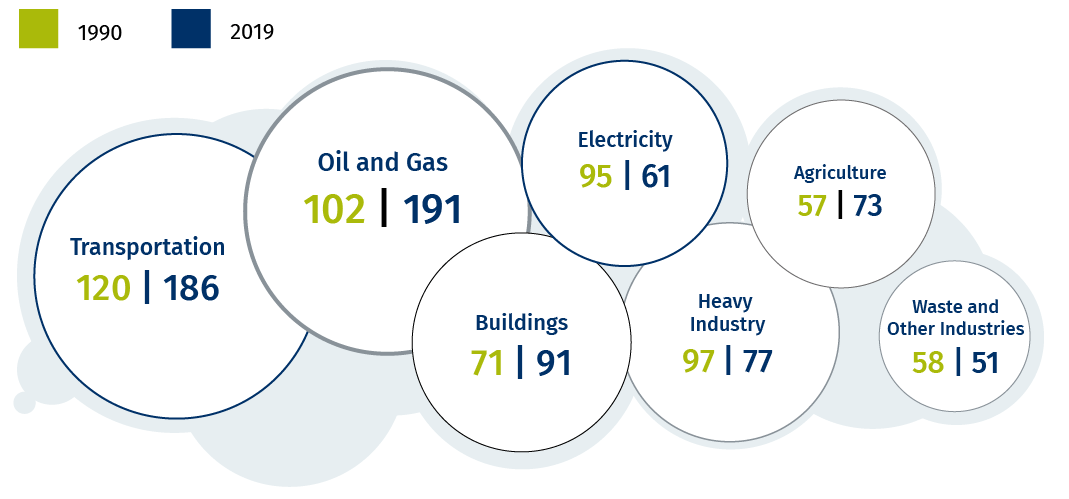
You already know the stereotypes of Canada—vast stretches of empty space, millions of us living in courageous isolation through frigid winters, the Great White North. Yet the reality is, we are a nation of cities. Over 80% of us live in urban centres, more than a third in Toronto, Montreal and Vancouver. Cities are also major contributors to climate change. According to UN Habitat, cities consume 78% of the world’s energy and produce more than 60% of greenhouse gas emissions. Yet they account for less than 2% of the Earth’s surface. If cities are going to thrive sustainably in the decades ahead, we have to rethink how we design them, how we build them, and how we live in them. “We actually need our cities to grow,” said Jennifer Keesmaat, former chief planner for the city of Toronto. “Because our cities offer the greatest hope and possibility of us mitigating the impact of people on the planet.” We spoke to Keesmaat and Brent Toderian, the former chief planner for the city of Vancouver, on the final episode of The Climate Conversations. Canada’s population is projected to rise about 30% to 50 million people in 2050. Since people live in massive concentrations in cities, much of our greenhouse gas emissions will also come from these urban settings. On the flip side, when people are in cities, they emit fewer greenhouse gases per capita. “Cities may be the location of emissions, but they are the solution to emissions at the same time,” said Toderian. If we are to continue this stampede to the cities and still meet our climate goals, we’ll need to make some fundamental shifts in how we think about land use, Toderian and Keesmaat say. We’ll have to be smarter about how we power our homes, offices and transportation networks. And we’ll need to ensure that the natural environment—those treasured green spaces often sacrificed in the push to develop—are part of the equation too. “We knew 40 years ago that we should be in-filling in existing areas where we have schools, roads and transit,” said Keesmaat. “But what have we done over the past decade? We’ve built new houses on agricultural land that cannot possibly be serviced by transit.” Transportation, electricity and buildings are three major areas in need of a revamp. Transportation is Canada’s biggest emitter after the oil and gas sector, adding 186 million tons of GHGs to the atmosphere in 2019. According to Keesmaat, 75% of all new housing in Canada over the past ten years is suburban sprawl designed around the automobile. As our cities grow, our suburbs need to become a lot more dense than they are now—meaning an end to car-oriented sprawl. “And if we’re going to still build suburbs—which we probably will—they’ve got to be a fundamentally different suburb than we’ve been building up until now, because if we keep going down that path, we dig our hole deeper and deeper,” said Toderian. Meantime, buildings are Canada’s third-largest source of greenhouse gases. For our cities to thrive—and for the country to deliver on our Paris Agreement commitments—we’ll need to innovate and make our buildings, as the heart of our cities, greener and cleaner. “We need our cities to work—it’s not something frivolous or secondary,” said Keesmaat.
Speaker 1 [00:00:01] Hi, it’s John here. Speaker 2 [00:00:02] And hey, it’s Theresa. Speaker 1 [00:00:04] So, Theresa, here we are in episode four, The last of our climate conversations for this time, but I think we may keep the conversation going because there’s been so much ground that we’ve covered and yet so much we still have to cover. When we started, the Glasgow Climate Conference was just getting going. And even though that’s now in the rearview mirror, it’s important to know what’s changed. A lot of meaningful agreements were reached in Glasgow on methane, on deforestation, among other things. But now’s the time for real action, and it’s kind of over to all of us. So what do we need to be thinking about? Speaker 2 [00:00:41] What’s really exciting coming out of this big summit is the promise of green technology, right? And the in the coordination of global countries to make it affordable and accessible to all nations. So we have things like clean electricity, electric vehicles, green steel, hydrogen, sustainable farming, all of these transformational climate solutions that are taking root and will set us on the path to net zero. And you know, when we look even in our own backyards emissions reduction, Alberta made that a big announcement for funding of these big emissions reduction projects like the Canadian Pacific Railway project to build North America’s first hydrogen powered train. How cool is that? I think we’re seeing the future John, and the future is bright. Speaker 1 [00:01:24] I wish I had a hydrogen locomotive to play with when I had a train as a kid, but can’t wait to see it on the rail rails. I think when we look ahead, it’s important to keep that in mind, Theresa, that it’s now really up to the private sector. It’s up to entrepreneurs, investors, big companies to to take advantage of the really big shifts underway in the world, whether it’s the reimagining of the railroads, new techniques, new technologies in the oil and gas industry or changing the way that we go about agriculture, all things we’ve talked about in our climate conversations. But one of the things I thought was overshadowed in Glasgow was the role that we can all play as citizens, as consumers, as community dwellers. And increasingly, we live in urban communities. Cities, of course, are not just where we live, they’re where many, if not most, Canadians work, where businesses thrive, where people come from around the world to build new lives. Canada is a model for that. But if cities are going to continue to thrive sustainably in the decades ahead, we now have to rethink how we design them, how we build them, how we live in the great cities of this country and around the world watching the climate conference. I couldn’t help but notice the irony that it was in a very small city, Glasgow and most of the world is moving to gigantic cities, the mega cities. And that’s where we’re really going to need to focus a lot of our energy human energy in the years ahead. This is Disruptors, an RBC podcast. I’m John Stackhouse Speaker 2 [00:03:05] and I’m Trinh Theresa Do. Welcome to the climate conversations. In this week’s final installment of the Climate Conversations, our special multi-part series on Disruptors, we look at the crucial role that Canada cities play in the push toward net zero emissions. Throughout this episode, you’ll hear from some of the innovators who are helping to make city living more sustainable. But first, John welcomes two of Canada’s leading urban thinkers for a robust conversation on what our cities, their elected officials, citizens and business leaders need to do to meet the climate moment. Speaker 1 [00:03:46] We all know the stereotypes of Canada. You know, the vast stretches of empty space, the bucolic wonders, millions of us living in courageous isolation. Yes, the Great White North. The reality? Yeah, it’s different. We’re a nation of cities. Most of us live within 100 kilometers of the U.S. border, and most newcomers settle in a handful of cities. Today, 82 percent of Canadians live in urban areas and more than a third of us in Canada’s three biggest metropolises Toronto, Montreal and Vancouver. So why does this matter to climate? Well, cities are major contributors to climate change, according to the United Nations. Cities consume 78 percent of the world’s energy and produce more than 60 percent of greenhouse gas emissions. And yet, cities account for less than two percent of the Earth’s surface. Our last two episodes focused on the producers oil and agriculture. This episode, we’re going to look at consumers and dwellers, especially city dwellers. The way we live and how is ourselves get around and get food to our tables. They’re all critical forces in climate change, and our next two guests have spent their careers helping Canadians and many others come to grips with this reality. Jennifer Keesmaat is the former chief planner for the City of Toronto, where from 2012 to 2017, she led a team of planners overseeing unprecedented growth and urban development in Canada’s largest city. She’s currently a partner in Maki Developments, which designs, finances, builds and manages affordable rental housing in Toronto. Jennifer, welcome to disrupters. Speaker 3 [00:05:21] It’s great to be here. Speaker 1 [00:05:22] And also with us is Brant Toderian. Brant served as the city of Vancouver’s chief planner from 2006 to 2012. Prior to that, he was the manager of Center City Planning and Design for the City of Calgary. His consulting firm, Toderian Urban Works, works with municipalities around the world from Auckland to Rotterdam. Brant, welcome to disruptors. Speaker 4 [00:05:43] Thank you, John. Nice to meet you. Speaker 1 [00:05:45] Brenton, Jennifer, great to have you together, even if it’s virtual. And I wonder if we can jump on that virtual point and talk off the top about how Covid has changed us as city leaders and city thinkers. Jennifer, how has the past 18 months changed your thinking of the city? Speaker 3 [00:06:02] Well, I think the past 18 months has changed our experience of the city really in three key ways. One is that by virtue of the fact that we haven’t been traveling internationally or even traveling often beyond our neighborhood, we’ve come to know the local much more better. There isn’t anyone I know who’s gone through Covid without having experienced a lot of walking and in some instances for the first time cycling in their local neighborhood. So we become more connected to local places just by virtue of the fact that that’s what happens in a lockdown. I think the second critical change that’s taken place has been around commuting. Many of us, many for the first time in their lives, have been freed of the long commute. You know, not having the burden of having to rush around in the morning, rush out the door, sit in traffic or, in my instance, crammed myself on to a subway car, which was a big part of my everyday life. And then the third way our lives has changed is really very much something that we are bringing into the future. And the fact that we’re doing this virtually is a reflection of that, which is we work differently. We’ve gone through an acceleration of a digital world. So the way we work has fundamentally changed, and that’s linked into the two other ideas that changes the commute and it changes how we experience that immediate environment. Speaker 1 [00:07:31] Brant, what did we miss about cities and the resilience in in Covid that has prevented? I’d argue their death, as predicted. Speaker 4 [00:07:39] First of all, we need to make sure cities don’t fail, period. And sure enough, there was never any chance that they were going to. But there was a chance that they could be hurt a lot, that we could lose a lot of the progress that we’ve made on things like transit ridership increases over decades that have literally taken decades to happen. There was a real chance that we could lose progress. And frankly, with the climate crisis where it is, we can’t afford to lose any progress. We need to be speeding up, not trying to make up lost ground. So when these prognostications were happening about the deaths of cities, the death of transit, the death of the commute and replaced by almost ubiquitous working from home, you know, I sort of rolled my eyes and shook my head and changed the conversation to what do we need to have happen for cities? We need cities to survive. We need public transit to survive and thrive as a critical component of successful city region. We need to have more work from home. Ironically, planners like Jan and I have been talking about increasing work from home as a way to address the complex issues of commute based transportation. For decade. AIDS and, you know, for a few decades, we said, boy, wouldn’t it be interesting if we could get from one percent to five percent working from home? Now I suddenly found myself talking about what if we have too much working from home? And what are the implications of that to the future of downtowns as not only a successful place that is the literally the taxation and economic engine of cities? What are the implications of downtown’s weakening or even failing? Speaker 1 [00:09:10] I might argue that one of the one of the aspects of the pandemic that we can certainly learn from is resilience, and we’ve talked a lot. You’ve both talked a lot over the years about urban resilience, city resilience in design and in the functioning of cities. And we’ve seen obviously a very different resilience in a call to the fore in a pandemic. But Jennifer, I’m wondering, what have we learned from all of us as city dwellers through the pandemic that could perhaps inform the kind of resilience we may need more of climate wise in the years ahead? Speaker 3 [00:09:39] I love that. I love that question because in some ways what we’ve learned is that we can actually live to pick up on some of the themes that Brent was introducing that we cannot we can live in a smaller footprint that we can do that and we can have a very high quality of life living in a smaller footprint. We are very early on in the pandemic, a series of US leaders from across Canada pulled together something called the 2020 Declaration for Resilience in Canadian cities. And that declaration was very much rooted in the recognition that Brent has introduced, which is that we actually make choices about the future so we can talk about what is the future going to look like? Or we can say this is the kind of future we should create. And here’s a series of things that we can do to create that future. And so that declaration has really three key themes. One is ensuring the responsible use of land, which is all about 15 minute neighborhoods and walkable, walkable places and getting our density just right. Wait a Speaker 1 [00:10:45] second. What’s what’s a 15 minute neighborhood? Speaker 3 [00:10:47] So a 15 minute neighborhood is really a very old idea that’s been packaged up in a very new way, which is the idea that we can design our cities, both existing places and new places such that we can undertake the majority of our activities within 15 minutes of home. And this was popularized during the pandemic through the mayor of Paris, who adopted this as city policy and introduced a whole variety of really powerful initiatives along the lines of creating urban technologies, adding community gardens into neighborhoods, adding bike lanes into neighborhoods, looking at infill and adding a diversity of housing types in the neighborhoods. And so one of the things that the pandemic really introduced was this idea that, well, hold on a minute, we can plan and design our cities and our neighborhoods in such a way that we’re using land in a more responsible way and using the land in a more responsible way means less cars, more bikes, less freeways and highways, more parks, more places for community gathering. And the 2020 declaration was a document with 20 key actions to actually deliver on that promise. Really, going back to that idea that Brant has talked about, that the city isn’t something that happens to you. In fact, the future isn’t something that happens to you. Part of the Democratic Project is actually about creating the future. We’re all creating it together. We’re making decisions and choices every day that determine what the world will be like tomorrow. Speaker 4 [00:12:26] We tend to talk about the two most significant ways that municipal governments are essentially in control of the climate solutions or climate crisis being municipal governments control over land use and transportation. But the two are really one thing because the density of your housing is going to determine your transportation more than any other single factor. You know, I live here in downtown Vancouver, where I say, not only do I not miss owning a car, the idea of owning a car would be causes me stress. It’s like, I mean, it would be a major hassle in my highly dense, highly mixed urban condition when I can walk out of my house based on the power of nearness, the 15 minute city and get everything I need much easier than if I went down into my parking garage and pulled out a car. And in my case, it would be a car share Speaker 2 [00:13:16] for those urban dwellers who do want to keep a car but are committed to reducing their carbon footprint. Carter Li, the CEO and co-founder of Toronto’s Switch Energy, has a solution, and we’ll let him explain. Speaker 1 [00:13:28] Hello, my name is Carter Li. Speaker 5 [00:13:29] I’m the CEO and co-founder of Switch Energy Inc. Switch Energy Inc is an electric vehicle charging solutions provider, and we’re addressing the challenges to widespread electric vehicle adoption by making it easier for urban dwellers who live in a. Apartments and condominiums to get convenient access to charging where they live, 80 percent of EV charging occurs at 30, so it’s very important that we address the challenges that people who live in multifamily buildings don’t have access to charging at home. Buildings designed and built 30 50 70 years ago were never designed with the context of electric vehicle charging. So there’s a lack of electrical infrastructure within buildings to provide this service to these as an amenity to residents and tenants. We optimized the electric vehicle charging infrastructure to be energy efficient, to be able to spread out across different electrical infrastructures, as well as integrate with other smart building and smart city services to provide a holistic solution to the smart charging ecosystem within buildings. Speaker 2 [00:14:38] Now, back to more of John’s conversation with Brent Toderian and Jennifer Keesmaat. Speaker 1 [00:14:45] So I want to extend that point and challenge you both with the choice between technology and lifestyle. The number of people listening to you or listening to urban debates will say fundamentally you’re saying I’ve got to change my lifestyle. I got a bike more. I got to have a smaller home, smaller windows on and on. And there are others who say, maybe, but the real challenge and opportunity is technology. It’s not fewer cars, it’s more electric cars. And the problem is in cities, it’s how we power our cities. Why are we focused so much on how we live rather than how we power the way that we live? Speaker 3 [00:15:24] I actually I actually think we are focused on the way we live because the way we live consumes resources or doesn’t. And that’s why walking and cycling are such a powerful, transformative way to live because we’re not talking about moving from gas or diesel to electric. We’re talking about moving from consuming to contributing something positive. And that’s a big deal, John. That’s a really big deal. If instead of getting in my car or even getting on transit, I can walk out the door on my own two feet. And oh, by the way, I’m making a positive contribution to our overall public health care system because we know that when I walk and cycle that my health indicators go up in my demands on the health care system go down. That is a really big deal for all of society and how society is structured. Communities where people know their neighbor are better able to handle the shocks of climate change, whether that is extreme heat, extreme cold or flooding or other kinds of natural disasters which we all know we’re living in the midst of right now, our city has become very, very hot in the summer. Knowing where the elderly people live on your street and who has air conditioning, who doesn’t is a really critical part of taking care of one another, and it’s about resilience and livability in the city. Speaker 4 [00:16:55] Our riff on what Jen’s been talking about and start with this blunt statement lifestyle will change. I’m tired of this notion that we can address climate change with no change in lifestyle, but it illustrates the fundamental problem with our whole conversation because if you go back every year over the last five years, I guarantee you lifestyle has changed every single year over the last five years. Lifestyle is constantly changing. So can you imagine telling our grandchildren that we really wanted to address climate change, but we didn’t want our lifestyle to change, even though literally your fashion is going to change two times this season? I agree with Jen about the technology. What I say is that we need to focus on getting the fundamentals right and then using technology to optimize those fundamentals. But too often technology gets put out as the alternative to getting the fundamentals right. And that has never worked. Speaker 2 [00:17:49] One company that is all about optimization is Peak Power, a Toronto based software company that helps building owners forecast a grid needs and make energy storage more efficient. CEO Derek LeNsTR explains how his technology works. Speaker 5 [00:18:04] Hello, I’m Derek Lim, the CEO of Peak Power. We developed a AI powered solutions to transform buildings into resources which can generate power instead of just using it by turning these assets into profitable energy resources. We encourage building owners to take action that reduce greenhouse gases, energy use and provide flexibility and reliability to the grid. Climate contributors become part of the climate solution and get paid to do so. Peak power transforms buildings into distributed energy resources in three ways, which is like batteries, on-site batteries and mobile batteries. Buildings become synthetic batteries through energy optimization or piquancy. Platform provides metrics on energy use and performance without expensive retrofits. The platform delivers actionable recommendations that save energy without sacrificing occupant comfort. A peak synergy platform connects on site batteries with the energy markets to charge discharge them at the most profitable times. Essentially, our software knows when batteries should charge from the grid at times of low demand and when to discharge its power as needed. Each solution provides value to the building owner and reduces strain on the electricity grid. They empower the building and electricity sector to make a positive environmental impact with existing infrastructure. Peak power is clean. Energy solutions help facility owners and operators prepare for a future that is environmentally and economically sustainable. Speaker 2 [00:19:23] Now back to John in conversation with Brent Toderian and Jennifer Keesmaat. Speaker 1 [00:19:29] You’re acutely familiar, both of you, with the governance challenge in this country when it comes to cities. How can we go about? Maybe it’s an overstatement to say reinventing our cities, but certainly rethinking them, revising them in ways that are significant contributors to our collective journey to net zero. How can we do that when cities are perennially impoverished there that are beholden to the provinces? So many of the provinces are beholden to the federal government. What’s a better approach? Speaker 3 [00:20:01] It has become incredibly popular to say, Oh, I can’t do anything, it’s the feds, it’s the province. I can’t do anything. The issue the Brant and I have been talking about here with respect to the land use planning is 100 percent the jurisdiction of municipalities. 75 percent of all new housing in the past 10 years in Canada. Auto oriented suburban sprawl. When you 40 years ago that we should be in filling in existing areas where we have existing schools, existing roads and existing transit. But what have we done? Over the past decade, we’ve built new houses on agricultural land that cannot possibly be serviced by transit, and we built new schools well. The schools in the core of our city see their populations disappear or decline or in our older suburbs. We see this the school 36 percent utilization rates in our schools, 20 percent utilization rates in our in our schools, in our older suburbs. We can fix this. Municipalities can fix this. The governance doesn’t need to change. It’s an absence of leadership. That is the problem. Speaker 4 [00:21:10] Well, here’s what I’ve seen. I’ve seen bad government and good government at all three levels of government, and I agree with everything you said at the municipal level and I challenge municipalities as well. When I look at the cities that I’m working with around the world are the ones that inspire me. They have all sorts of governance structures. But what they have consistently is they’ve pushed your way from this culture of excuse to a culture of energy, a culture of experimentation and strategic risk-taking. What Charles Landry calls the willingness to risk competent failure and learn. So yes, let’s by all means talk about better governance structures and some of the limitations that we built into our system. But I tend to start with culture and that and it’s really about the cities that are doing amazing things are the ones that are just finding a way to get on with it. Speaker 1 [00:22:00] I wonder why Canadian cities and this is a gross generalization, but there’s a fair degree of truth in it. Why Canadian cities are so slow to innovate and do this sort of dynamic things that you’re talking about. What’s holding us back, especially knowing what we have to do in the next decade to address our emissions coming from our big cities? Speaker 4 [00:22:22] I’ve heard politicians say to me many times it’s controversial out there, so we need to be patient and bring the public along instead of a leader saying it’s my job to be persuasive, to actually tell the truth about the costs and consequences, not be boring. And I think it’s actually the job of people like us to find ways to be more persuasive, break through the noise, give political leaders a chance, a better chance to do the right thing because many of them want to. But they’re often afraid of the blowback, afraid of the controversy. So it’s our job to help give them a tailwind, if you will, and position them for success. Speaker 3 [00:23:00] I think the biggest problem with the changing the culture and enabling innovation is that because we’ve had a model of single family home ownership, there is a constituency that is vast majority in every city that has a stake in things staying the same. Unfortunately, that approach to development has been highly subsidized and so kind of truth telling about how we got that model for development, why that model for development is isn’t sustainable is really critical. But we currently have a situation where it’s very difficult to change because there’s this constituency that sees its primary interest, which is their home ownership as being protected by keeping things the same, keeping them exactly the same. So that’s another reason why it’s very difficult to implement change and build more housing the housing that we need and to create what we’re talking about here, which is more resilient and sustainable cities where you have that density, where people can walk or people can cycle and where transit is a real choice because it’s really viable. It’s really hard to do that because we can intellectualize it and identify that it is in the broader public interest. But then it actually ends up coming down to a process where when you’re implementing change, you have the vast majority of the people who are voting and who are participate. Aiding in the governance models that exist, the municipal level have a very clear vested interest in the status quo. So I think the culture we have to shake it loose by shaking loose those ideas about housing and land Speaker 2 [00:24:44] to challenge the status quo will require a different approach to land use. But it also requires a different approach to how we build our homes and offices. Xhosa Browne, the VP of sustainability for Vancouver’s next year building solutions, explains how a lower carbon alternative to wood, concrete and steel could be a game changer for the construction industry. Speaker 6 [00:25:06] I’m Xhosa Brown, I’m the vice president of sustainability with next. Next is a green construction technology company. We’re based in Vancouver, B.C., and we design and manufacture innovative, high performance buildings in green building products that are sustainable, cost efficient and also resilient in the face of climate change. Many people aren’t aware that buildings in the construction sector represent up to 39 percent of global energy related GHG emissions, and so we have a product that can really help reduce carbon across the value chain of buildings. We use a proprietary material called back site that has comparable properties to concrete but contains no Portland cement. And that means we’re really able to tackle carbon in the material itself, as well as build high performance, airtight, highly insulated building envelopes and then reduce carbon in the operation phase as well. We use precision offsite manufacturing and and our panels are able to be rapidly assembled on site, reducing construction waste, build times and cost. Speaker 2 [00:26:11] And now the conclusion of John’s conversation with urban planners Brant Totten and Jennifer keesmaat. Speaker 1 [00:26:20] Let me wrap up with a question for you both on what the city of the future and the future can be next year looks like in a country that clearly wants cities. We’ve opted for that and clearly wants more people and needs more people that there becomes a climate challenge when we’re adding every two years, roughly a million people, and we’ll go over a million people eventually just given given mass and putting most of them into, you know, half a dozen cities. How do we ensure that they don’t grow in the same way in terms of emissions, given the trajectories that they’re already on? And what would you want to do? What do we need to do today to ensure that that trajectory doesn’t take us, take us to a place we don’t want to be? Speaker 3 [00:27:05] Well, this is a really important question because, you know, I would flip it around in some ways and say, it’s not that our cities are going to grow, but we actually need our cities to grow because our cities offer the greatest hope and possibility of us mitigating the impact of people on the planet. You know, ironically, in America, the per capita individual carbon footprint is lowest in any city in New York City. Why? Because people are most likely not to own a car in New York City, most likely to rely primarily on transit, most likely to live in a very tiny footprint where you can’t buy a lot of stuff and fill up your space with them with a lot of stuff. So the question becomes as we grow and change, how do we ensure that we can make our cities places where our quality of life is always increasing? One of the ways that we tackle this when I was chief planner, we put a planning framework in place was that we wanted to add more people, but not more cars. How do you add more people but not adding more cars? You do it through urban infill. We wanted to grow and add more people, but improve our air quality rather than decreasing our air quality. So how do we do that? We put a green roof bylaw in place and required the first city in North America to require green roofs on all new buildings so that our air quality is getting better as we’re building more buildings. We’re adding more of a natural environment, increasing access to green space and access to nature. The Ravine strategy, which is 17 percent of our land area in the city of Toronto. The ravine strategy, which is now being implemented, was not just about protecting pretty places, it was actually the counterpoint to intensification. It was precisely because we recognize there’s places that we want to grow and add density that in the city, there’s areas where we shouldn’t add density. We need cities to thrive in order to become a sustainable country and to deliver on our Paris Agreement commitments. We need our cities to work. It’s not something frivolous or secondary. It’s at the heart of being a country that can integrate new immigrants, for example, and where young people don’t leave. Speaker 1 [00:29:20] Brant, I wonder how we can think about urban growth in the 2020s and 2030s with a climate imperative, knowing that so much of our carbon footprint as a country comes from our cities. How do we rethink those cities for the next couple of decades to make some significant changes even while we’re growing? Speaker 4 [00:29:41] Well, you know, we tend to say that that statement that so much of our greenhouse gas emissions come from cities, they don’t come from cities, they come from people, and that cities happen to be where the people are in massive concentrations. But we know that when people are in cities, they emit less, they emit less per capita. So cities may be the location of emissions, but they are the solution to emission emissions at the same time. So how do we plan for that? Well, we tend to throw out things like, here’s our Paris climate target. We want to be carbon neutral, we want to be whatever by 2060 or 2050 or what have you. But what I haven’t seen at a city level and I and I haven’t seen at a national level is you take those outcomes you want. You take the population that were expected or intending to grow by and you actually plan it out as a massive growth management strategy for the entire country. We need to have our cities be bigger, our suburbs be smarter and a lot different and a lot more dense than they are now. And we have to have full stop on a dime stop building car oriented sprawl. And if we’re going to still build suburbs, which we probably will. They’ve got to be a fundamentally different suburb than we’ve been building up until now because if we keep going down that path, we dig our hole deeper and deeper. Speaker 1 [00:30:58] Cities are wealth generators as they’ve always been, and we just have to think of more creative ways to ensure that wealth is being reinvested in the transition in the way we live, the way we move around, the way we use land. As Jennifer, you’ve been articulating and as you said, Brant, how we think of our space, whether it’s downtown or in the suburbs, in more dynamic ways. Thank you both for being on disrupters. Speaker 3 [00:31:24] Very happy to be here. It was fun. Speaker 1 [00:31:27] After the break, Theresa and I will look back at the last few episodes of the climate conversations and reflect on what we’ve learned and where we can go from here. So stay right there. Speaker 2 [00:31:40] You’re listening to Disruptors, an RBC podcast. I’m Theresa Do. RBC Economics and Thought Leadership recently released a report called, “The Two Trillion Dollar Transition: Canada’s Road to Net Zero.” It explores the costs and benefits of Canada’s shift to a carbon neutral economy and how it can fuel a new generation of Canadian innovation, from carbon capture technology to sustainable agriculture to the full potential of supercharging electric vehicles. We look at all the ways for Canada to take a leading role in the fight for climate action and the economic opportunities they create. To learn more. Check out the link to the show notes of this episode and visit our rbc.com. slash Net zero and be sure to like and follow disruptors wherever you get your podcasts. Speaker 1 [00:32:28] Welcome back in the final few minutes of this episode and the series, I thought would be a good idea to reflect on what we’ve heard and maybe a bit on what we’ve learned. Let’s start with that really dynamic conversation with Jennifer and Brant. Teresa, how did that reshape your thinking about cities? Speaker 2 [00:32:44] Jennifer and Brent really pulled out a key insight that I’m also contrasting with another interview earlier on in the series. And their insight from that discussion was about how we learned through Covid that we can live with a smaller footprint and still maintain a higher quality of life than an example that they gave. As when we choose to walk or cycle instead of drive or take transit, we actually improve our health and we reduce our demands on our health care system. So there’s a less is more argument there and torn between this tension of changing how we live versus changing how we power how we live. And I think both are crucial. You know, the short term is changing how we power, how we live, changing our processes over the long term, we will have to think about fundamentally changing our lifestyle, right? Like how do we create an infrastructure where we can do more walking can do more cycling? And so when I internalized this to my own life, what are the decisions I need to make on my everyday commute or how I choose to travel? Or where do I choose to live? So I haven’t quite come out on the other side of this yet, but this is causing me a deep reflection, which I think is the point of these climate conversations. Speaker 1 [00:33:57] Well, we all need to reflect on our roles individually and collectively, but I love where you’re going without Theresa, because so often when we look at challenges or even crises around us, we only look at the problem. And often it’s best, whether it’s in our lives are we’re looking at a business challenge to think about what’s working and build on that while addressing what isn’t working. I was reflecting on what Mark Carney said to kick off this little protective vase on how much already is out there. We often are left with thoughts of despair in climate conversations. But as Carney said, we’ve got a lot of things going right and that includes capital. There’s a lot of capital that is being mobilized to invest in these transformative technologies, and we just need to get the right incentives in place. Not necessarily easy, but also something that is within our reach and we can get going on today. Speaker 2 [00:34:50] Yeah, I appreciated what he said about how if businesses don’t get on board, they’re going to be left behind and other challenges, how to ensure that all businesses can get on board and they have the support they need to understand. What does it take to get to net zero? You know, Speaker 1 [00:35:05] I also keep thinking about Katharine Hayhoe, who was on that first episode as well, and what a dynamic speaker she is and so passionate about what we can all do as climate citizens. And I think that’s a really important point that I’m taking away from. This is to be a climate citizen, to talk about this and try to think about how it is relevant to different people in different ways to not think about it as judgy. She calls it or sciency because those are often the scare words or scare tones in the climate conversations. How do we talk about climate in relevant, exciting, ambitious ways that we can all connect with? Speaker 2 [00:35:43] Hmm. I definitely would be remiss if I didn’t say that we have to be inclusive as well. And you know, part of this, we talk a lot about technology, about how exciting these innovations coming down the pipe are and they are. But also we have to acknowledge that technology is not the be all and all. You know, we think about like regenerative farming techniques that are so important to maintaining soil health and helping us to sequester carbon. But these techniques have been around since time immemorial. They have been practiced by indigenous communities while before the modern age. And, you know, listening to JP Gladu in a previous conversation. All climate action has to absolutely include partnership with indigenous communities. And so inclusion is definitely a big part of it, and that was take away from me as well. Speaker 1 [00:36:28] What we’re going to need a different approach, a different playbook to climate, because when you look at how we’ve done over the last 30 plus years, a lot of ambitions and in so many different ways, we’ve fallen short of what we set out to to do and the clock’s running out on us, whether that’s the ten year clock or the 30 year clock, it is going to be a challenge for us to get to where I think we all need to get to. So doing the same thing over and over again, probably not the best approach. Whatever you’re doing today as an individual, what can you do in the climate conversations to get Canada moving faster and further ahead? Speaker 2 [00:37:02] Absolutely. That is so well, said John. Well, we hope you’ve enjoyed listening to the climate conversations as much as we’ve enjoyed bringing them to you. And if you just can’t get enough, stay tuned in the weeks ahead because we’ll be offering extended cuts of some of our most popular interviews, including with Maple Leaf Foods CEO Michael McCain, former Bank of Canada Governor Mark Carney and, of course, climate scientist Katharine Hayhoe. Until then, I’m Theresa Do and Speaker 1 [00:37:30] I’m John Stackhouse. This is Disruptors, an RBC podcast. Talk to you soon. Speaker 6 [00:37:39] Disruptors, an RBC podcast is created by the RBC Thought Leadership Group and does not constitute a recommendation for any organization, product or service. It’s produced and recorded by JAR Audio. For more disruptors content, like or subscribe wherever you get your podcasts and visit rbc dot com slash disruptors.

There is perhaps no sector more imperative to Canada’s Net Zero journey than oil and gas. The industry is Canada’s single biggest source of GHG emissions, at nearly 10% of the national total. For Alberta, and the country as a whole, the stakes for a successful transition are especially high. Oil and gas accounts for 5% of our GDP and supports hundreds of thousands of jobs across the country. The recent global energy crunch has only deepened the challenge. Demand for oil has spiked by 500,000 barrels a day, according to the International Energy Association (IEA). Coal demand is set to exceed 2019 levels this year and rise through to 2025. How can a sector so ingrained in our economy and daily lives make a full transition to Net Zero? Progress is well underway. Oil patch giant Suncor announced this past June that the company is moving to a carbon neutral model by 2050. Suncor’s CEO Mark Little and Clean Energy Canada’s Executive Director Merran Smith joined us for the third episode of The Climate Conversations, a special miniseries. “I sit here today, obviously having made the commitment [to Net Zero by 2050], and you know, I actually have turned my thinking that this is an opportunity for our Canadian oil sands, for us as a company and for our country,” said Little. Demand for Canada’s oil, gas and plastics isn’t likely to wane significantly for a while, Little said. It will take years to phase out the internal combustion engine, transform natural gas-burning furnaces and develop alternatives for jet fuel. “Will oil demand go down? I fully believe oil demand will go down,” he said. “Do I think it’s in the next year or two? No, I don’t.” But Canada’s energy sector is aiming for a clean overhaul, with the integration of alternate energy sources like wind, solar and hydrogen. “Currently we have technologies that are ready for prime-time—things like electric vehicles, and we’re seeing the uptake of businesses building batteries for those electric vehicles, green and clean hydrogen coming on board,” said Smith. Little and Suncor spearheaded the formation of the Oil Sands Pathways to Net Zero, which also includes Canadian Natural Resources, Cenovus, Imperial Oil, ConocoPhillips and Meg Energy. The companies, which together account for 90% of total oil sands production are collaborating to develop the technologies that will speed the transition to Net Zero. “I think the path forward for us is to figure out how quickly do we get to Net Zero and we’re investing in hydrogen and wind farms and all of these types of things—but the world needs energy and it’s going to need more energy,” said Little. Change will also impact our country’s 500,000 oil sector workers, whose jobs are likely to be disrupted by a clean energy transition. “It’s key that while we make this transition, that we also need to provide support for Canada’s oil and gas workforce to go through retraining and move into industry,” said Smith. “We want to be moving people into industries that are going to be growing in this Net Zero world.” “Their skills will be directly transferable to renewable energy, things like geothermal, and there’s opportunities in hydrogen production and others for the oil and gas worker skills to transfer,” she said.
Speaker 1 [00:00:02] Hi, it’s John here, Speaker 2 [00:00:04] and it’s Theresa. Speaker 1 [00:00:05] Theresa, I remember you telling me about a cross-country trip you took this past summer with your partner, and as our astute listeners will know, you have an electric vehicle. How did that go? Was it hard finding places to charge, especially when you’re in the great wilderness stretches of Canada? Speaker 2 [00:00:22] I actually created a whole spreadsheet that mapped out all of the chargers along our route, the length of time between chargers, how long it would take us to get to each charger. And then I learned when we started actually driving off towards Sioux Saint Marie that Tesla actually has that automatically for you when you enter your destination. But yeah, infrastructure is still lacking. There’s a patchwork of chargers, so it’s expensive and it’s inconvenient. The cool thing about it was I met people along the way in Manitoba, Saskatchewan and Alberta who like all came up to our car and we’re like, Hey, so is that electric vehicle? Like, how are things? What’s the range like? And they were very interested in switching, but many of them are super anxious about unreliability of charging and battery performance compared to gas in the wintertime, even despite volatility in gas prices. So huge learning experience for me. Speaker 1 [00:01:14] You’ve touched on a couple of incredibly important forces out there. One is consumer demand. How do we build demand for the technologies, be they electric vehicles or heat pumps for our homes that will allow businesses and innovators to scale, to sell to lots and lots of people so they can get the costs down? That’s one of the challenges of disruption. And the second point and these are interconnected, is infrastructure you can’t scale, usually without infrastructure or the internet was built on infrastructure, and it’s going to be the same with the net zero economy. It’s going to require new kinds of infrastructure, including electric vehicle charging networks across the country. And these are a couple of key points that we get at in our report. The two trillion dollar transition that people can find at RBC dot com or on our social channels. And in that report, we not only look at these new technologies, we try to come to grips with some of the consumer shifts that are underway, but kind of going slower than we really need to. Speaker 2 [00:02:15] Consumers definitely have a part to play, and that’s part of the reason why James and me, we chose to drive an electric vehicle. But consumer involvement, that’s only part of the picture. You can’t rest the entire climate burden on individuals. Industrial energy users from mining to oil and gas pulp and paper, they are huge emitters of greenhouse gases. But the good news is that industry is moving toward a solution, and we’re going to talk about that later in the show. Speaker 1 [00:02:41] Exactly. There is a lot of innovation happening right now in the energy sector, and that’s going to be critical if we’re going to meet our ambitious climate targets and hit net zero emissions by 2050 or even sooner. On the last episode, we talked about agriculture and its carbon footprint, but the reality is that Canada’s energy sector is the big hurdle. Canada has to clear as we move toward a net zero future. The sector is the single biggest source of greenhouse gas emissions, and the stakes are especially high in Alberta as productive oil and gas patch, which accounts for 10 percent of our GDP and supports hundreds of thousands of jobs across the country. Energy producers are realizing that they have to step up to the carbon challenge or risk being left behind and the fate of their industry. Indeed, our planet may hang in the balance. This is Disrupters, an RBC podcast. I’m John Stackhouse Speaker 2 [00:03:46] and I’m Trinh Theresa Do. Welcome to the climate conversations in this week’s installment of the Climate Conversations, our special multi-part series on disruptors. We talked to several influential players in the energy sector, each with a unique take on how Canada can meet its climate goals. Speaker 1 [00:04:09] After the break, we’ll hear from one of the business innovators who has developed technology that takes carbon dioxide straight out of the air. We’ll also speak with a clean energy advocate who argues that our energy future will not be found in fossil fuels or even try to mitigate their impact. But first, my conversation with the CEO of one of Canada’s biggest oil and gas companies as it transitions to becoming a net zero producer. Though five years ago, I was in Fort McMurray and traveled around the oil sands and a few things really still stick in my mind. One is the enormity of it. It is vast, but it’s not just the geography, it is the human ingenuity. There’s an enormous amount of human ingenuity around Fort McMurray. In fact, the biggest engineering projects I’ve seen in this country. Technology that should inspire every Canadian. And there’s that enormous challenge of emissions as well, which are hard not to see when you’re traveling around Fort McMurray. The oil sands is roughly 10 percent of our emissions as a country. So when we talk about pathways to net zero, when we talk about Canada’s net zero challenge, we all know the road to net zero goes through oil and gas and it goes through the oil sands. But we also have to come to grips with the opportunity to harness that enormous ingenuity that has built the oilsands to what it is and to talk about that. I’m excited to welcome our next guest to disruptors. Mark Little is the CEO of Suncor Energy, a company that traces its roots back more than 100 years and which was the first to develop the Athabasca oil sands back in the late 1960s. And earlier this year, he pledged to make his company a net zero emitter by 2050 and to position Suncor as a sustainable energy company for Canada’s low carbon future. Mark, welcome to disruptors. Speaker 3 [00:06:06] Thanks, John. It’s a pleasure to be here with you. I always like the opportunity to talk about this. It’s a big topic. Speaker 1 [00:06:13] It’s a big topic and you’ve made some big commitments in it. And I want to step back more and get a sense of when you first realized you needed to make this kind of bold commitment. You’re a major oil producer and now you’ve declared you’re going to be a net zero company. When did you realize you needed to make that transition? Speaker 3 [00:06:32] So my position and thinking on this evolved significantly over three decades. But one of the things that I’ve loved about Suncor and one of my great attractions to come to the company is that they were willing to engage with people that disagreed with them and to try and understand what is the element of truth that we need to deal with. And if there was a big problem or a challenge that we faced, then what are we going to do about it? Literally. For twenty five years, Suncor has been publishing reports on sustainability and climate. We’ve been investing in things like biofuels and wind farms for two decades. But it’s just really in the last several years where we’ve been trying to figure out, Wow, how would you get to net zero? What does it mean? What are the technologies? What approach would we take where we’ve really tried to wrestle with it? It took me a while to try and figure out is is there a hope to get to net zero? Can we see our path forward? And I sit here today, obviously having made the commitment. And you know, I actually have turned my thinking that this is an opportunity for our Canadian oil sands and for us as a company and for our country. Speaker 1 [00:07:46] One of the things about the oil sands that many Canadians may not appreciate is how much energy is required to get energy out of the ground. It is an amazing feat that requires a lot of steam to get that bitumen out of the ground and to turn it into something that’s economic and usable and that that generates a lot of the emissions. And now you and others are figuring out ways to capture those emissions and keep them or put them back in the ground or keep them in the ground. You formed something called the oil sands pathways to Net Zero Alliance. This is five big companies Suncor, Canadian Natural Resources, Cenovus, Imperial Oil and Meg Energy, which I think account for 90 percent of total oilsands production in this alliance. What are you setting out to do? Speaker 3 [00:08:33] We operate 90 percent of all of the facilities, and so there’s some other owners, but so this is a huge part of the industry. I think this collaboration, John, is literally unprecedented globally, certainly in our industry. But I think also in many industries associated with it and because we are a big emitter, you said we’re about 10 percent of Canada’s emissions associated with that. And so this really started as a conversation, not so much about how we would physically get there and how we could work together. A lot of this was like, OK, the last thing we need to do is all go out and define it differently and communicate at different and just cause absolute chaos and confusion when it be great. If we could at least get on the same page around how we talk about this. And then from that, we started realizing that, OK, wait a minute. So if you did this and we talked about this commitment, how would we get there? And we started talking about different technologies and different mechanisms that could apply across the whole industry. Then we started realizing, like some of their approaches, like carbon sequestration, we would be much stronger if we worked together and we could drive down the cost, which means that we can increase the value of oilsands to the country and to our companies and such. And so it ended up being a really exciting opportunity around, well, wait a minute, we could we could literally create an organization, a cooperation, a joint venture where we work on this together and we can go faster at a lower cost. And you kind of think, OK, this is a very good thing for all the all the various stakeholders. And that’s what eventually led to our announcement of pathways to net zero by 2050. Speaker 1 [00:10:23] You mentioned carbon sequestration. Can you explain, especially for a layperson like me, what that what that means here? I guess grabbing carbon out of the air, doing something with it. But how does that work? Speaker 3 [00:10:34] So we’re emitting 70 million tons of CO2 into the atmosphere every year out of our facilities. And so we went through and looked at all sorts of different things, some of its fuel switching, some of its energy efficiencies and such. But about half the solution for oilsands is around carbon sequestration. Essentially, what we do is instead of amending it from the stacks into the atmosphere, we take the emissions and we separate out the CO2 from the other emissions and then we compress it all and inject it back into the ground. And so a lot of these emissions came from hydrocarbons that were in the ground and then we put the CO2 back into the ground, so it doesn’t have an impact. We think that this technology will be able to take something like 35 to 40 megatons. Of our emissions, and we’ll put them back in the ground, and Alberta is a fantastic world class location for putting this back into the ground because we’ve been producing oil out of that same underground reservoirs and stuff literally for decades and decades. And so there’s lots of space to be able to do this. And so not only do we have a great oilsands resource, but we also have a great place to put this CO2 into the ground. The challenge with this is not putting it in the ground, and it’s not necessarily transporting at the real challenges. How do you capture it from the facilities? And that’s where there’s a massive part of the focus on. Speaker 1 [00:12:12] How do you think about the economics of this to make these very significant investments to capture carbon and put it back in the ground and still get oil to market at a competitive price? Speaker 3 [00:12:23] Well, it’s one of the reasons that we see this as a collaboration with governments, as an industry. Over the next 30 years, we’re expecting to generate about three trillion dollars of gross domestic product for the country over that period of time. Of that, about 500 billion dollars goes to governments. So we’re generating 15, 16, 17 million dollars a year that are going to fund the provincial and federal governments in those sorts of things. The cost, we think, is about two and a half billion dollars a year, or it’s about somewhere in the neighborhood of seventy five billion dollars to be able to make this happen if the industry just went and did this ourselves. We’re not competitive. And the reason why is in Norway as an example, two thirds of the capital to actually physically build the project that’s coming directly from the government, and they’re also paying for two thirds of the operating costs for the first 10 years. So if in one particular case, they actually are getting government support and because they’re co-investing to achieve this and we’re not, we have to fund it 100 percent. We don’t we don’t make. In fact, I would say our margins are actually lower than what you would see in Norway as it is. And so if we don’t have a competitive model in Canada to be able to figure out how to put this together, you know, the industry won’t be competitive. Speaker 1 [00:13:54] We’ve been talking largely about fossil fuels, and you’re changing Suncor. You’ve made significant investments in low emission energy sectors, biofuels, natural gas powered hydrogen, as you mentioned clean hydrogen. How do you see the energy mix, not just for Suncor, but for Canada evolving over the next the next decade or so? Speaker 3 [00:14:16] I do think you’re seeing significant investment going in to some of the other alternative energy sources, which is very exciting. You’re seeing wind and solar getting implemented. We’re an investor, at least in wind, and we’re considering some solar investments associated with that. And so I think you’ll see us increasing the use of hydrogen. And so you’re going to see a lot of new energies put forward. But, you know, I really do believe if you look at any of the forecasts going forward out to 2050, no matter how aggressively people think oil demand is going down, they’re still depending on what forecast you look at somewhere between 20 and 80 million barrels of oil being used in 2050 versus the 100 million we’re using today. And it’s kind of like, OK, this doesn’t go away overnight. We use oil for asphalt and synthetics and clothing and plastics and medical supplies and food. It’s amazing all the things it’s used for. Speaker 1 [00:15:17] What do you say to those folks who think we need to really stage down? I think was your expression by dial down our production and dial up other sources? Speaker 3 [00:15:28] I think the path forward for us is to figure out how quickly do we get to net zero and we’re investing in hydrogen and we’re investing in wind farms and all of these types of things. But the world needs energy and it’s going to need more energy. And what you’ve seen is even with all of the money that’s been poured into wind and solar and all the various technologies, and it is accelerating, there’s no question it’s accelerating. And will oil demand go down? I fully believe oil demand will go down. Do I think it’s in the next year or two? No, I don’t. These two forces one force of population growth and people coming out of poverty and stuff is overtaking that. The drive on efficiency and fuel switching. And so what? It’s not really fuel switching. It’s actually supplementing. We’re just adding to the energy diversity, which is which, you know, I get the fact that we would have lower emissions faster if we just shut off all the energy, but then look at what’s happening in Britain and you kind of think we’re trying to find this balance. Speaker 2 [00:16:33] One of the leaders who’s helping to find that balance is J.P. Gladu, a former CEO of the Canadian Council for Aboriginal Business, who also happens to serve on the Suncor board. For J.P., there’s a clear connection between indigenous led conservation efforts and economic reconciliation in Canada’s oil patch Speaker 3 [00:16:52] for a long time. We’ve been shut out of the Canadian economy, and for a long time we had the fur trade which sustained our communities, and then our communities were told that the harvesting furs was not appropriate anymore. OK, well, we don’t want to live in poverty. We don’t want government handouts. So what’s next? Well, a lot of our communities are in the north, so we’ll look to the extraction sectors to generate revenue, to generate income, to generate an economy when we talk about economic reconciliation. It means that we’re generating wealth and we’re managing that wealth and we’re empowering our communities. We know that we can actually find a better balance between extraction and indigenous protected conservation areas and sustainable development and more trees, because our natural service ecosystems provide billions, trillions of dollars that we don’t even think about when it comes to clean air, clean water. You know, think of all the health impacts that occur if you don’t have a clean environment. But we also, as an indigenous community, are having these tough conversations around, well, we’re going to transition. It’s going to take time. There’s still so much poverty, not only in Canada but around the world, 700 million people in abject poverty because they don’t have access to energy. So oil and gas is going to be a part of our economy for years to come. That doesn’t mean that we shouldn’t be putting time and effort and resources and research into actually improving that technology. So there’s a balance to be struck, and that balance is going to be we’re not going to find that balance without the indigenous voice. We need to be at the table every step of the way from any kind of development to any kind of protected area and developing economies around those protected areas. Speaker 2 [00:18:35] So a lot of what JP was talking about is something that Mark Little shared in this interview with you, John. Speaker 1 [00:18:40] That’s right. I asked Mark about his conversations with indigenous leaders, many of whom Suncor has partnered with in the oil sands. And he says there’s a similar urgency in securing a path to net zero, as there is with the. Slapping a new economic relationship with Canada’s First Nations. Here’s part of what he had to say. Speaker 3 [00:18:58] It’s not like we started talking about indigenous reconciliation yesterday, and it wasn’t like we started talking about climate yesterday. And so the chance of us solving this by tomorrow is zero. And I actually felt like the context of, OK, we’ve been talking about this for a long time, but now these are real actions that are happening in the context of this is a path forward. We are making these investments. We are entering these joint ventures. These are real actions versus just talking about it. And I do think that people are getting frustrated about us talking about these issues literally for decades. And then we go, OK, well, nothing really changed. I think that’s a contrast. And if I actually felt like we were just talking about it but didn’t have real plans or weren’t taking real actions like that joint venture with Indigenous, it’s kind of like, OK, well then this is just all a bunch of gibberish. And people have said that to me. They’re going to go, OK, well, it sounds great, but like anybody can say that, and it’s true. Unfortunately, collectively, as a country, often we get caught in the platitudes and talk about it versus real action. And so people might not like the path, they might not like what we’re doing, but at least we’re doing, and our focus is making the future far stronger than it is today. Speaker 1 [00:20:25] Coming up after the break, we talk to the leader of a BC based organization who believes that Canada’s energy future lies far beyond the oilsands. So stay right there. Speaker 2 [00:20:38] You’re listening to Disruptors and RBC podcast. I’m Theresa Do, RBC Economics and Thought Leadership recently released a report called The Two Trillion Dollar Transition Canada’s Road to Net Zero. It explores the costs and benefits of Canada’s shift to a carbon neutral economy and how it can fuel a new generation of Canadian innovation, from carbon capture technology to sustainable agriculture to the full potential of super charging electric vehicles. We look at all the ways for Canada to take a leading role in the fight for climate action and the economic opportunities they create. To learn more. Check out the link in the show notes of this episode and visit our bbc.com. Net zero emission a lake and follow disruptors wherever you get your podcasts. Speaker 1 [00:21:29] Welcome back. We just heard from Mark Little, the CEO of Suncor on one of Canada’s top energy producers, is doing to help Canada across the finish line in the race to net zero and how indigenous leaders like JP Gladu will be watching to make sure that Canada’s First Nations have a seat at the decision making table. But a lot of the innovation happening in the energy sector right now is on the bleeding edge of technology. Take Carbon Engineering, which is based in Squamish, B.C., whose direct air capture machines are giant fans combined with a complex chemical process suck CO2 from the atmosphere. It might sound like it’s straight out of a science fiction novel, but carbon engineering has some big financial backers, including Bill Gates, Chevron and BHP. We talked recently to its CEO, Steve Oldham, on how his technology works and whether it’s a viable solution to the energy sector as emissions challenge. Speaker 4 [00:22:23] Fundamentally, when you think about a climate problem, we have a situation where every year we add more and more and more CO2 into the air. We have 150 years of excess CO2 already in the atmosphere to solve that problem. We have to stop every single emission on the planet quickly and at an affordable cost. That’s extremely challenging to do so. Our simple proposition is if you can’t stop every emission on the planet, the other way to solve the problem is to remove emissions once they’ve occurred. When trying to get to zero one plus minus one is also zero. CO2 in the atmosphere is 400 parts per million. That’s not very much. It’s one drop event in the Olympic swimming pool that gives you a sense of how difficult it is to remove. The challenge for us was how do you do that at very large scale, at a reasonable cost? So we use PVC filters and we drip a chemical across the PVC filter and then we suck air across that mix using a fan. We do that in a very similar piece of equipment to the air conditioning in your house. It’s the same fundamental principle of cooling the air, except we pull the air across a chemical. The chemical reacts with the CO2 in the air and strips the majority of that CO2 out. We then have three more steps in the process which pull out the CO2 completely and regenerate the chemicals that we use to capture the CO2. So think of that part as being like a sponge, but you can use to mop up over and over and over again as we talk about the energy transition. We’re going to have an ongoing need for energy. We have to be conscious of the fact that many economies, many people, many companies are built upon the existing energy business director. Capture done in those locations offers an alternative industry using exactly the same skills, exactly the same locations. And just reversing the process, putting carbon back in its place. Speaker 2 [00:24:29] That is fascinating stuff. And as technologies such as carbon capture have grabbed the attention of many in the oil and gas patch, as well as Bill Gates. Others argue that now is the time to make bold investments in renewable energy and leave fossil fuels behind. Our next guest has spent decades fighting for a new economic model, one that embraces public policies and private actions that not only promote environmental sustainability but also spur economic innovation. As the former program director for Forest Ethics, Marian Smith allowed the campaign to protect Canada’s Great Bear Rainforest, which culminated in 2006 in one of North America’s largest conservation agreements. She did it by uniting a diverse coalition of stakeholders in the negotiations, including First Nations, corporations, government and environmentalists. Two years later, she founded Clean Energy Canada, a climate and clean energy think tank within the Maurice Jaworski Center for dialog at Simon Fraser University. Its aim is to accelerate Canada’s transition to renewable energy sources and clean technology. Marin is a much sought after adviser to leaders across Canada and currently serves as co-chair of the B.C. government’s Climate Solutions Council. Marin, welcome to disrupters. Great to be here. Thank you. You made your name as an environmentalist working for the Sierra Club and Forest Ethics before founding Clean Energy Canada in 2008. But you’ve also said that clean energy isn’t just about fighting climate change, it’s also about using Canadian innovation to create better and cheaper solutions for everyday life. Why is the economic argument about renewables? The pocketbook approach so important? Speaker 5 [00:26:15] Canadians are experiencing climate change. We all understand the urgency, but we’ve seen the floods, the fires, heat waves. But what we need is an energy transition, and the energy transition is really about economic benefits. It’s about gain, not pain, which was the narrative of the past. But currently we have technologies that are ready for prime time, things like electric vehicles, and we’re seeing the uptake of businesses building batteries for those electric vehicles, green and clean hydrogen coming on board. So we released a report earlier this year that looked at the jobs in Canada’s clean energy sector and how they would grow if Canada follows through on its commitments for the healthy environment, healthy economy, climate plan that we have right now. That sector is set to grow 50 percent by 2030. The number of new jobs will far exceed jobs that will be lost in our fossil fuel sector. So we’re looking at gaining 280000 new jobs in the clean energy sector. Yes, we will be losing jobs in the fossil fuel sector. It suggests about one hundred and twenty five thousand would be lost. But many of those will transition to these new jobs, and we’re set to have 80000 roughly more jobs as we transition to clean energy here in Canada. Speaker 2 [00:27:35] I’d like to pull on the jobs threat that you had mentioned earlier. As you said, our clean energy sector currently employs a little under 500000 people, and by 2030, that number is going to grow by 50 percent to just over 600000 people. Can you elaborate on where and what exactly are those jobs or types of jobs? Are they? Speaker 5 [00:27:56] One thing to note is that jobs in the renewable energy sector, like those in the oil and gas sector, they tend to pay better than the median. There are studies that have been done both in Canada and the US that show that clean energy workers earn more than your average worker. They’re good paying jobs. We found in Canada, they’re going to be across the country, they’re going to be rural and urban. There’s blue collar jobs, there’s white collar jobs, so lots of opportunity and potential for transition. I’d say some of the areas that we see for jobs there is going to be potential for existing workers in the oil and gas sector. Their skills will be directly transferable to renewable energy, things like geothermal, and there’s opportunities in hydrogen production and others for the oil and gas worker skills to transfer. But I would say it’s key that while we make this transition, that we also need to provide support for Canada’s oil and gas workforce really to go through retraining and to move into industry. And my focus, my framing is we want to be moving people into industries that are going to be growing in this net zero world. Speaker 2 [00:29:14] Part of the challenge in transitioning to a clean energy economy, as you know, is infrastructure. You had mentioned electric vehicles earlier. So the transition to widespread adoption of EVs requires a nationwide network of quick charging stations. And to make it a viable option for most people, so along those lines, what else should we be doing? Do we need to be doing to lay that groundwork for a broad based clean energy economy? So the good Speaker 5 [00:29:38] news is that Canada’s got an eighty three percent emission free grid zero emission grid right now. You know, we have the cleanest grid in the G20, and we have lots of potential to produce more clean renewable energy in Canada. So that’s great because that’s step one. We’re going to need to double or potentially even triple the amount of clean electricity that we produce in order to then use it to, as you just mentioned, to plug into cars and trucks to reduce the emissions from our transportation sector, to plug in to industry where that’s possible and to plug in to heating and cooling buildings and homes. So there’s a huge infrastructure piece of it. You know, I’ve got to say this is not rocket science. What we need is a one collaboration between all levels of government and province and cities with the utilities and with industry to map out that clear pathway, including the infrastructure, which will be around things like EV charging, hydrogen infrastructure for that and for hydrogen fueling electric grids, et cetera. We can look at two other countries, you know, Denmark, South Australia, there’s other nations and some nationals who are ahead of us on this, and we can look to them about how to align all these pieces. Once we do that and prove that we are committed to this, that there is a vision of where we’re going and there’s clear pathways that’s going to provide the clarity for investors to come in and help fund the right activities at the right time Speaker 2 [00:31:14] while we’re casting our eyes outward into the world. You know, this fall there has been a global energy crunch. Demand for oil has been boosted by 500000 barrels a day, according to the IEA, and coal demand is set to exceed 2019 levels this year and rise through 2025 as global economies, especially in the global south, come back to life post-pandemic. What are the limitations of clean energy to meet the needs of a growing economy and a growing global population? Speaker 5 [00:31:44] Well, I guess I want to make it clear that there’s a tendency for people to look to the energy shocks that are happening right now and for people to be quick to blame for renewables as the problem, as the reason why there’s been this energy crisis in Europe, for example. And it just isn’t true. If you look at places like South Australia, they demonstrate how renewables not only can make grids cheaper, but they can make them more reliable. And if we look at some of the energy shocks going on right now, fossil fuel prices are spiking, but that is not an indicator that therefore we can’t afford renewables. Like, are you kidding me? The new renewables are cheaper and they’re cheapest than the cheapest fossil fuel projects. They’re precisely how we get away from these volatile fossil fuel price jumps. You know, I’m not suggesting that there’s not going to be some hiccups on the way to this massive energy transition and the infrastructure transition that’s needed. But let’s be clear about what the problems really are and be clear about the opportunities of very cheap, clean renewable electricity and the opportunities that it provides. Speaker 2 [00:33:04] Merran, as we start to wrap up this conversation, you were part of a delegation which included Prime Minister Trudeau that went to COP21 in 2015, where the Paris Agreement was born. By the time we released this podcast, COP26 in Glasgow will have just concluded. What is your hope coming out of this very important climate conference? Speaker 5 [00:33:26] I hope that we come out of COP26 talking about the opportunities, talking about the gain that we can make, not the pain. The second thing is is I want to be hearing about actions. We already have many of the solutions that we need to get to net zero. I’m hoping our leaders are really going to realize that climate action is going to be the engine of wealth creation over the next decades. And because of that, they are going to commit to move forward quickly, urgently with these solutions, these solutions that are ready today. Speaker 1 [00:34:05] Theresa, that was a fascinating conversation, and as I listened to it, I kept thinking about the word balance. How do we ensure that the supply of energy and demand don’t get out of balance? How do we ensure that the needs of different parts of the country, even of different people in our own communities, don’t fall too far out of balance? Because that leads to social, economic and other disruptions that are not going to be healthy and may even undermine the transition that so many people want. We’ll hear a lot more about that in our next episode on cities and how we can energize them in the decades ahead. Speaker 2 [00:34:42] Yeah, John, over 80 percent of us live and work in cities now, and all that activity comes with a massive carbon footprint. But as we discover next time, some smart planning combined with innovative technology might just help us to tread a little lighter. Until then, I’m Theresa Do. Speaker 1 [00:35:00] and I’m John Stackhouse. This is Disruptors, an RBC podcast. Talk to you soon. Speaker 5 [00:35:12] Disruptors, an RBC podcast is created by the RBC Thought Leadership Group and does not constitute a recommendation for any organization, product or service. It’s produced and recorded by Jar Audio. For more Disruptors content, like or subscribe wherever you get your podcasts and visit rbc.com/disruptors.

Canada is an agriculture giant. And Canadian farmers feed the world. We export half of our beef and cattle, and 70% of our pork. We’re the world’s sixth largest wheat exporter and the top producer of canola. In all, agriculture accounted for 2% of Canada’s total GDP over the last decade and currently employs over 300,000 Canadians. But the sector is also a major contributor to the current climate crisis. Agriculture generates about 10% of our country’s greenhouse gases and the amount of energy it uses grew 30% between 2008 and 2018. “It’s been well known that agrifood is one of the principal contributors to the climate crisis we face,” said Maple Leaf Foods CEO Michael McCain. “We’ve been working for a long time trying to do the right thing to improve our footprint.” McCain and Canadian regenerative farmer Brent Preston joined us for the second episode of The Climate Conversations, a special podcast miniseries from Disruptors. So how can we move towards a more sustainable future in the food sector? McCain told us that regenerative agriculture—a set of farming practices that leverage nature to address climate change—could convert the industry from “one of the largest sources of the problem, to one of the only sources of solution.” Maple Leaf Foods made headlines in late 2019 after announcing they are the first food company globally to be carbon neutral. Low tech practices, including the use of cover crops (crops not grown to harvest, but to feel the soil) can help reduce emissions, while increasing crop resiliency, McCain said. Another example is anaerobic digestion (technology that takes methane from manure, concentrates then captures it, and converts it to a renewable fuel). But as Preston noted, it takes time and money to realize the economic benefits. “A lot of farmers don’t have that ability to spend three to five years losing money on a practice before they start making money on it,” he said. “The precariousness of a lot of farmers in terms of the financial position means they’re very risk-averse and they don’t want to try out new practices, especially if it’s going to take three or four or five years for those practices to start paying dividends.” Despite these hesitations, if Canada is to achieve its target of Net Zero emissions by 2050, change in the agriculture and farming sector needs to happen now. “One of the principles when we started down this journey [of carbon neutrality]—and this was as important internally as it was externally—was we said, ‘we’re going to take the first step, but only on the premise of progress, not perfection’,” said McCain. “And I think that serves us well on this journey.” To read RBC Thought Leadership and Economics 2019 report, Farmer 4.0: How the coming Skills revolution can transform agriculture, please click here. RBC Future Launch has launched a program that aims to unlock the full potential of Canadian youth by providing access to skill development, networking, work experience, mental well-being services and other resources to empower youth for the diverse jobs of tomorrow in our Canadian agriculture industry. To learn more, click here.
Speaker 1 [00:00:01] Hi, it’s John here. Speaker 2 [00:00:02] And it’s Theresa Speaker 1 [00:00:03] Theresa. I know you’re something of a foodie, and I’ve always wanted to ask you, how much thought do you put into your carbon footprint when you’re cooking and eating? Speaker 2 [00:00:13] Oh, I have put a fair amount into the carbon footprint of what I cook, so I kind of reduce my meat consumption as much as I can to try to consume plant-based alternatives. And I do think about how water intensive, different alternatives are. So something that I’ve learned through my cooking adventures in the pandemic is to go to the farmer’s market, find what is being produced seasonally, what’s available seasonally and then building your meals from that. Speaker 1 [00:00:41] I’m glad you raised that because I find even for meat consumption, how valuable it is to talk to farmers or people who work with the farmers about the cuts of the meat you might be buying. So the closer we can get to the food producers, even though that’s not always possible, the better it is for our own consumption. You know, one of the challenges in Canada’s search for climate action is we don’t always know where the problem lies, and that includes what we eat wherever we may be in the country. Unlike, say, the oilsands, which are very concentrated in one region. Emissions from the production of food are distributed across the country and often hidden by bucolic landscapes or just our distance as consumers from the producers of our food. But there’s no hiding from the fact that farming generates about eight to 10 percent of Canada’s total greenhouse gas emissions. We all need food. Many of us love food and want to continue to enjoy sustainably produced food. And for Canada, that could be a huge opportunity to create more sustainable food products, not just for us here at home, but for the world. Speaker 2 [00:01:41] We are definitely seeing more of those sustainable solutions on the food growing side, but holistically. We also have to address how food gets to our kitchens and the increasingly global supply chain for agriculture. I think it’s very important for consumers to understand where their food comes from, how far their food has traveled and reduce that physical distance between food growers and food consumers. My partner, James, his family owns an independent apple farm in Creamery, the Morrison Century Farm, and they sell their apples locally. Farmers markets, they accept visitors who come and buy apples by the bushel. And because these visitors does the actual farm, they may ask questions about how apples are grown and they get a deeper understanding of what it takes to produce food. And then I think that starts to help them truly grasp the real cost of having a meal and the role that they might play in the whole landscape. Speaker 1 [00:02:32] I love apple farms and was lucky enough to be able to eat an apple right off the tree the other day and got me thinking a little bit. Trees are just as you were saying about the carbon footprint of that apple coming straight off the tree versus buying it, let’s say, in a grocery store. And most of us, if not all of us need grocery stores. It just makes food accessible, convenient and even affordable, but often creates a distance between us and the producer. And like so many things connected to the climate conversation, Theresa, a change in those very consumer attitudes is going to be critical. Will we ultimately pay for a more sustainable form of agriculture? You mentioned apples. Are we willing to spend an extra dollar or maybe two dollars for that apple because it’s locally produced and uses fewer chemicals? And does knowing that a producer is carbon neutral makes us more willing to buy from that producer, even if it’s not the cheapest option on the grocery shelves? This is Disruptors, an RBC podcast. I’m John Stackhouse Speaker 2 [00:03:37] and I’m Trinh Theresa Do, welcome to the climate conversations. In this week’s installment of the Climate Conversations, a special multi-part series on Disruptors that’s exploring viable paths towards Net Zero. We talked to two influential players in Canada’s vital agricultural sector. Speaker 1 [00:04:00] That’s right, after the break, you’ll hear my conversation with a pioneering farmer from Creemore, Ontario. Not far from that, apple farm trees are just mentioned who have some provocative things to say about the future of agriculture. But first, we look at the big climate challenges facing Canada’s largest food producers. There are few economic sectors more central to the debate about climate change than agriculture and food production. Our next guest has been thinking a lot about a warming climate and how his business may be contributing to it, but also affected by climate change, and it’s key to any solution. Michael McCain has been president and CEO of Maple Leaf Foods, one of Canada’s largest and oldest food producers, since 1999. In recent years, Maple Leaf has made carbon reduction a central focus and today claims to be the most sustainable protein company on Earth. Michael, welcome to disrupters. Speaker 3 [00:04:52] John. Thank you for having me today on this very important topic. Speaker 1 [00:04:56] You’ve been CEO of Maple Leaf Foods for a couple of decades now, and I just want to take you back to a moment when you realized that you had to make climate a strategic issue and what captured your attention? Speaker 3 [00:05:09] Well, the science has been clear for some time. John, it’s certainly clarified over the last number of years, some more vividly. But it has been somewhat clear for a long period of time, and it’s been well known that agrifood is one of the principal contributors to the climate crisis we face. So we’ve been working for a long time trying to do the right thing to improve our footprint, going back for probably a decade. However, I’m reminded of a period of time several years ago when I’m sitting at Davos and in a luncheon discussion with 200 of the world’s leading activists, there are climate activists, food activists, animal welfare activists. I must say I felt a little bit like Darth Vader in the middle of the room. But you know, their whole thesis was the collective goal to eliminate animal meat production by 2035, and I’m the largest shareholder of the largest meat company in Canada. That’s a crystallizing point of view. You know, we had a bit of an existential moment inside our organization where we have to decide, are we going to put our foot in yesteryear and defend and promote all the good things we’re doing? Or are we going to recognize that these activists there may not be fully right, but they’re not wrong either. And that is much better and more productive for us to embrace the problem and embrace the reality that the agrifood footprint and specifically the meat footprint has not been appropriately managed over many decades and that we do need to change. Speaker 1 [00:06:38] Talk to us about how it’s going at Maple Leaf in 2014. You set out to reduce the emissions. You’ve got five production facilities across North America, and you set out to cut emissions by 50 percent by 2025. It’s an extraordinary goal for just ten years. How how’s it going? Speaker 3 [00:06:55] Well, actually, John, well, we’ve sort of taken this in two tranches. We established our first tranche of goals, which was a reduction of in our footprint of 25 percent by 2025. We’re sort of on track to that as we speak. We’re getting close to 2025 now, but most of the components of our emissions are down in the 20 to 22 percent range. But we’ve reframed those two years ago when we were one of the first companies to actually adopt science based targets at the time. In the fall of 2019, there were 290 companies, I think two in Canada. We were one of those to 290 globally. Speaker 1 [00:07:36] And Michael, what does what does that mean? Speaker 3 [00:07:38] Science-Based targets Once the Paris accord was adopted, it became painfully obvious to most leaders and science advocates around the world that the collection of target setting of most industrial organizations, the sum total of their targets were not credible and didn’t add up to the one and a half degree limitation that was established in the Paris accord. And it’s a central body that accepts applications for targets, reviews them with a very scientific lens for their robustness and their scientific integrity, to the extent that if everybody around the world adopted science based targets, which are, by the way, very aggressive, if everybody adopted science based targets, we would meet the goals of the Paris court simultaneously in 2019, following the very important architecture of avoid, reduce, recycle and offset. In that order, recognizing that you know the first three have to be committed to before you get to the third. We also became the very first food company in the world. To become carbon neutral now, Speaker 1 [00:08:50] I wonder if you can walk us through a couple of the key decisions for you that got you to carbon neutrality. You’ve had to offset some of it. But what did you do in your own operations that got you down the path Speaker 3 [00:09:03] again with the backdrop of a large constituency saying that you know you don’t deserve to be in business against the backdrop of an owner, operator and a family that has a 30 year generational view, saying, Do I want to own this meat company over a 30 year period on the back of being carbon neutral versus, you know, the alternative? And yet will we make less money? Maybe, maybe some, depending on how well we monetize that? You know, we don’t have to convince everybody that they should buy more from us just a few. But we just decided that that was the long term, better calculus to own a carbon neutral company, particularly in the context of the vision that we had established. So we did two years of analytics with some outside help just to make sure that we were not just making an impulsive decision, but, you know, to be the first in the world of that, we had to make sure that we were very careful in that in that calculus. Speaker 1 [00:09:55] In 2017, you made the decision to enter the plant based protein market when you bought light life foods. Michael, how do you see Maple Leafs product mix changing over the coming years? Speaker 3 [00:10:05] We see it as additive protein. The consumer’s migration today is they want more protein in their diet, not less. They want more choice in the proteins that they select plant versus meat. It’s the rise of flexitarians over vegetarians or vegans. And ultimately, there’s the evidence would suggest that it will be additive to meat consumption is not going to go away, which is over the course of the next 10 years. So it’s not a substitution effect that’s taking place here. We wanted to respect that need for choice and additive protein. We obviously want it to be in the growth markets. But the most important point unsustainability sustainability is plant based protein is not the answer to the sustainability challenges of the meat industry. The sustainability challenge of the meat industry are embodied in fixing the ills of the meat industry, not replacing it, like asking the transportation sector, you know, cars are our bad, so get people to walk to work. No, that’s not going to work. We have to fix the ills of the industry, and we believe that the footprint of animal meat production can be normalized to a sustainable level. And that’s our pursuit. Speaker 1 [00:11:13] Walk us through a bit of that pursuit. What can the industry do to reduce its own footprint directly in the production of meat? Speaker 3 [00:11:19] When you look at transportation, inbound transportation, outbound transportation, the movement of cars and vehicles, it’s a bubble on the chart, but it’s a really damn small one. The lion’s share of emissions in our footprint come from two sources. Number one manure and number two grains grain production. I mean, they’re overwhelmingly large bubbles manure because it’s methane. Methane, as you know, is 28 to one in the ratio of its impact on the environment relative to carbon. It is a very corrosive emission because of that concentration, and it shows up in intensive meat production manure in grains. It shows up in agricultural practice and agricultural practice that for a hundred years has unleashed carbon from the soil where it’s been for the millennia into the atmosphere, where it has been having the effect that we’ve all seen. But there are two technologies that are heavy hitters that are fundamentally game changers that have the capacity over the next 10 years to convert an industry from being one of the largest sources of the problem to being one of the only sources of solution. One of them is regenerative agriculture, and the other is anaerobic digestion. Anaerobic digestion is a technology that takes the methane from manure, concentrates it intensifies it, captures it and convert it to a renewable fuel. To the extent that that can be economically applied across the animal meat production system, you convert that largest bubble into a renewable energy source with respect to regenerative agriculture. That’s reversing the negative effects of 100 years, 100 years of poor agricultural practice to not just release carbon from soil into the atmosphere, but actually convert it to sequestering that carbon from the atmosphere back into the soil where it belongs. There are agricultural practices that are tested time true if applied properly and consistently, have that sequestration capacity. It’s very, very exciting. Speaker 1 [00:13:25] You mentioned consumers and the reality that while we all care about climate, we may not make it part of our food buying decision when we’re actually at the make me counter or in the in the deli. But what’s holding us back? Speaker 3 [00:13:39] Consumers care, you know, in this order of preference, they care about what goes in their body first, what goes on their body? Second, what’s around their body? Third, and this one certainly falls into the third category. Number two is, you know, let’s put that against the backdrop of other issues connected to the food chain. Things like food insecurity. Affordability. You know, if you are single mother, two kids, one income operating on a budget. There are lots of considerations and carbon neutrality might be, you know, down on the list relative to other subjects. And so, you know, I also think that I also think one of the things that none of us do very well is we don’t calibrate Horizon. We tend to worry less about what’s going to happen next year, the year after 10 years from now versus what’s going to happen next week, next month, six months from now. We know that carbon neutrality in the end, the story of the carbon crisis, probably, and I’m sixty two years old problem. You know, it’s going to affect my life a little, but not a lot. It’s going to affect my grandchildren a lot. It’s going to be life changing, game changing for my grandchildren. So there’s I think consumers sometimes succumb to a little bit of the, you know, the horizon effect. Speaker 1 [00:14:59] I wonder, as we move to close Michael, if you can give us a global perspective, you operate in Canada, you’re huge in Canada, but you also operate significantly in the United States and Australia. What are you seeing in other markets and what are you sensing around the world in terms of where agriculture is going, where food production is going? With respect to climate action, Speaker 3 [00:15:20] I think if you did a heat map, John, you would find it the hottest in continental Europe, the coolest in Asia, kind of Canada, the North America kind of neutral. But there’s a lot of greenwashing and a lot of carbon denial in the U.S. industry. And I think to some degree, because we compete so directly with the U.S. that that has a bit of an overflow. You know, we have a three percent for three to four percent market share. And so we, you know, we can go into the U.S. marketplace and we’re the disruptor in that market and we are gaining a very pointed and well-known reputation for being leaders in this space. And you know, when you got three to four percent market share, you don’t have to convince everybody. You just got to miss a few people to favor you with some type of growth. One of the principles when we started down this journey and this was as important internally as it was externally was, we said, we’re going, we’re going to take the first step, but only on the premise of progress, not perfection. And I think that serves us well on this journey Speaker 1 [00:16:17] might be a good message for a lot of listeners across the country as we wrap up Speaker 3 [00:16:20] progress over perfection. It’s a good message for a lot of listeners to recognize that sometimes disruption comes with a lack of perfection. Speaker 1 [00:16:29] Michael, thank you for being on disruptors. Speaker 3 [00:16:30] Thank you, John. It’s been wonderful to spend the time with you today. Speaker 1 [00:16:33] Coming up after the break, we talked to an Ontario farmer who’s advocating for a new model of agriculture, one in which the goal is to produce less food, not more. So stay right there. Speaker 2 [00:16:49] You’re listening to Disruptors and RBC podcast. I’m Theresa Dohme, RBC Economics and Thought Leadership recently released a report called The Two Trillion Dollar Transition. It explores the costs and benefits of Canada’s shift to a carbon neutral economy and how it can fuel a new generation of Canadian innovation, from carbon capture technology to sustainable agriculture to the full potential of supercharging electric vehicles. We look at all the ways for Canada to take a leading role in the fight for climate action and the economic opportunities they create. To learn more. Check out the link in the show notes of this episode and visit our bbc.com. Net zero. And be sure to like and follow disruptors wherever you get your podcasts. Speaker 1 [00:17:38] Welcome back. Theresa. I’m really struck by something Michael McCain said about horizons and how we’re so focused on the immediate future that especially older generations, those in positions of power don’t look down the road at how much carbon emissions will cost our children and grandchildren. How do we overcome that Horizon’s problem? Speaker 2 [00:17:56] I think it’s as simple as talking about it and creating empathy. If you’re someone who cares about the detrimental effects of climate change, but perhaps older members of your family don’t talk to them openly and without judgment, talk to them about the benefits of doing certain things sustainably and differently, like how much money you save by choosing energy efficient systems to power your home, or, in my case, with food. I’m talking to my parents, James, his family, about how easy and delicious it is to use plant based meat instead of meat. Me and you know, we’re seeing younger generations are forcing a shift in consumption habits, things like plant protein burgers, which is a major focus of maple leaf foods. So I do believe that it starts with influencing drone circles and hoping that they receive the message and can share that along. Speaker 1 [00:18:44] Well, the challenges of getting to net zero are a problem confronting all generations of consumers and all sizes of agriculture operations. The 100 acre farm owned and operated by our next guest definitely falls into the smaller category, though he has an outsized influence in the sustainable agriculture movement over the past 15 years. Brant, Preston and his wife, Gillian have turned New Farm, which is based in Creedmoor, Ontario, 120 kilometers north of Toronto, into a thriving organic operation. They grow vegetables for restaurants, retail stores and wholesale customers right across southern Ontario. Brant is a former journalist, and his first book was called The New Farm. After 10 years on the front lines of the Good Food Revolution, it was published by Random House Canada in 2017 and offers a hopeful vision for farming’s future, outlining a model of agriculture built around three simple principles. First, to feed Brent’s young family. Second, to strengthen the environment. And third to nourish the local community. Brant, welcome to disruptors. Speaker 4 [00:19:48] Thanks so much for having me. Speaker 1 [00:19:50] So I before we get going, but I think we need to be clear with the audience. You weren’t actually born a farmer. How did you get into farming? Speaker 4 [00:19:57] It’s an interesting question. I’m not sure myself sometimes, but you’re right. I was born in Toronto. I grew up in suburban Toronto and worked in international development and human rights and journalism for a number of years. It was really after having a couple of kids and living in the city, my wife and I felt like we needed to do something really concrete and substantial about some of the big issues that we’re seeing around us, especially climate change. And there was really a motivation to have a hands on role in the fight against climate change that pushed us out of the city, and we bought a farm and have kind of never looked back. We sort of went into it thinking that there was going to be a trade off between our desire to farm in a way that was good for the environment and the climate and the amount of money we could make on the farm. And we’ve actually found the opposite that focusing on environmental issues and focusing on the climate impact of our farmers actually made our operation more profitable. Speaker 1 [00:20:50] Tell us more about that because a lot of farmers who I’ve met over the years, but also in researching climate change and sustainability, will say it’s incredibly tough to make a buck to begin with, and now you’re adding on other costs related to sustainability. So how have you made it work where maybe some of your neighbors are a bit more skeptical? Speaker 4 [00:21:10] In a couple of ways, I think, first of all, it takes time. So the economic benefits from climate friendly or environmentally friendly farming don’t materialize immediately. It takes some time and trial and error in order to realize those benefits. The other problem is that there’s very little support for farmers to make that transition. There’s not a lot of effort spent at our universities and research institutions on figuring out the ways that farmers can farm in a more environmentally sustainable way. And then also, there are very much short term costs. So the transition is expensive and it’s difficult. And I think because so many farmers are in such a precarious financial position, they don’t have the cushion to take a few years of losses in order to get these practices established. So I think that the precariousness of a lot of farmers in terms of the financial position means they’re very risk adverse and they don’t want to try out new practices, especially if it’s going to take three or four or five years for those practices to start paying dividends. Speaker 1 [00:22:13] Earlier, we got to speak with Michael McCain of Maple Leaf Foods about a lot of these challenges across the agriculture industry and also in food processing, which his company is trying to take head off. They, of course, are much bigger than than your operation have capital and technology that you may not have access to, but there’s different challenges when you talk to your neighbors, whether it’s. The local coffee shop or wherever you catch up on some of these ideas, what do you suggest to them in terms of getting started? Speaker 4 [00:22:45] Well, there’s some sort of low hanging fruit there practices that are low tech proven in use on a lot of Canadian farms that there’s very, very sound research showing that they can help reduce agricultural emissions and increase resilience. And so the easiest example is cover crops. So these are crops that are grown not to harvest, but to feed the soil and enhance their fertility on the farm in order to promote the growth of the cash crop that you want to grow. So we’ve been cover cropping on our farms for 15 years. The benefits are very, very obvious increased soil health, increased soil biodiversity, better water holding capacity in the soil, better ability to withstand drought and a really effective means of driving carbon down into the ground, pulling carbon dioxide out of the atmosphere and putting into the ground. They’re also a really good way to reduce the amount of nitrogen fertilizer that we use, and I think it’s really important to remember that nitrogen fertilizer is actually the single biggest source of emissions on Canadian farms. So anything we can do to reduce the amount of synthetic fertilizer we use on our farms is going to have an immediate benefit to the climate. So a practice like cover cropping is is something that’s really accessible to farmers. Well understood. We call it the gateway practice for environmental practices on the farm. It’s really, really beneficial on a whole bunch of levels. Speaker 1 [00:24:06] If things like cover cropping are so sensible the way you’re, you’re laying it out, why? Why isn’t everyone doing it? Speaker 4 [00:24:13] Because there’s an initial cost that takes three to five years, the research shows, before farmers start realizing the private economic benefits of cover cropping. And a lot of farmers don’t have that ability to spend three to five years losing money on a practice before they start making money on it. The other one is that there hasn’t been a lot of public research and education for farmers on how to implement this practice. So cover cropping seed mixes and cover cropping techniques have almost entirely been developed by farmers. This research, by and large, is not happening in our public universities, so there’s not a lot of information for farmers if they want to adopt that practice. So it gets to a whole bunch of problems that we see in the agricultural sector that are major input companies who have an interest in selling products to farmers are the primary funders of agricultural research and the primary funders of agricultural institutions in Canada. And cover cropping is, by definition, a low input practice that reduces the amount of things that farmers have to buy. It reduces the amount of expenses we incur in our farm, and that’s good for the bottom line of individual farmers. But it’s not necessarily good for the bottom line of the people who are who are funding agricultural research in this country. Speaker 1 [00:25:31] Some people may argue that we need those inputs to increase production and increase efficiency not only to feed Canada, but to help feed the world to hungry and growing world. You gave a TED talk three or four years ago and titled The World Needs Less Food a very provocative title. Explain a bit why the world may need less food. Speaker 4 [00:25:53] Well, it shouldn’t be provocative because it’s I think it’s pretty straightforward right now. Globally, we have a glut of calories available at the household level on every continent, including South America, including Africa. We have more calories available on average than we need to keep us healthy as human beings. So a lot of the time, the people who are arguing for the necessity of a high input agricultural system, those higher input systems are producing a lot of things like corn and meat, calories that that are often going into highly processed foods that are not making people healthy. We see that malnutrition is, of course, a really, really serious problem. But malnutrition is caused by inadequate distribution of food, not by an absolute lack of food. And what we’re seeing everywhere in the world is that obesity related illnesses are rapidly increasing. And globally, obesity is now responsible for the deaths of three times as many people as malnutrition. So I think we need to get over this idea that we need to keep pumping inputs into our farms and producing more and more food to feed the world because the world is already, to a large extent, overfed. Speaker 1 [00:27:09] One of the things that Michael McCain shared with us, which stuck with me, I find it fascinating is he challenge of getting consumers to pay for this. We tend to want to pay less for food, not more. We’re very price sensitive in the grocery aisle. There are, of course, great exceptions to that. But I think food producers, big or small know the challenge of convincing consumers to pay, especially to absorb some of what Bill Gates may. Called the green premium of sustainably produced agriculture in your experience, bred in farming, you’ve talked a bit about the investments you need upfront and the time you need, but at the consumer end. How has your thinking evolved in terms of what we humans are willing to absorb to help farmers produce in the way that you’re describing? Speaker 4 [00:27:58] Well, I think I think first of all, it’s really important to recognize that as Canadians, we pay less for food as a portion of our income than any other country in the planet, except maybe the United States, and that we spend less of our time earning money to buy food than any other civilization in human history. So I think we have to start from the recognition that our food is ridiculously cheap right now. That doesn’t mean that people are going to gladly pay more for it, but I think we have to start from that recognition. Secondly, I don’t think that any big environmental or social problem has ever been solved by consumer behavior. So we’re not going to solve the climate crisis or the farm crisis by just convincing individual consumers that they need to pay more for their food. We need to ensure that people are paying the true cost of their food. And right now, a lot of food is really cheap because the environmental and climate costs of those food are externalized. They’re borne by not by the consumer, but by poorly paid farm workers, by farmers who can’t make a living, by the local environment that suffers because of the farming practices that are employed and from our climate. So we need to start paying the full cost of food, and I personally believe that means that Canadians are going to have to get used to paying more for their food. To be frank, whether they like it or not. And it’s also important to realize that a lot of the food that Canadian farmers are producing is going into food products where the very, very large majority of the price of that food product on the shelf in the grocery store is for things other than the cost of the money that was paid to the farmer is one egg, analysts told me a long, long time ago. If you doubled the price of corn, it wouldn’t make any difference on the price of a box of corn flakes in the store. Because those corn flakes, the cost of the processing distribution, the markup of all the people in the food chain, the packaging, the marketing that’s, you know, 80 90 percent of the cost of that product. So I think, you know, we’re not going to solve the problem of food affordability or accessibility on the backs of farmers. Consumers at some point are going to have to pay more. Speaker 1 [00:30:11] Right. You’ve been farming for 15 years, roughly and seeing in very different ways the impacts of climate change. What do you see today that was not so evident a decade or a decade and a half ago. Speaker 4 [00:30:26] We’ve seen very marked changes in climate over the past 15 years. Just on our farm. We have very, very different weather patterns now than we started with. What is really hit home is that we’re now entering an era of extreme variability. So we have colleagues who we’re in contact with on the Canadian prairies, who’ve just had a devastating year. They’ve had to they’ve had to go out to harvest their crops in the middle of the night because their equipment was setting their fields on fire when they’re working during the heat of the day. And it never occurred to me 10 years ago that that we would actually have farms burning because of climate change. It’s just absolutely remarkable. But here on our farm, we’ve had the best growing season we’ve ever had. We’ve had lots of rain, lots of heat, really, really regular rain, whereas the last two years we’ve had really bad drought. So I think what we what we’re realizing here is that we’re in an era of real unpredictability and that the practices that we need to employ to reduce our emissions are pretty much the same as the practices that are going to help us withstand that variability in the future. And so it’s a it’s an imperative for survival of our business to adapt to climate change. Speaker 1 [00:31:39] This has been an inspiring conversation. Brant, thanks for joining us on, disrupters. Speaker 4 [00:31:43] Thanks so much, John. It’s been a real pleasure. Speaker 2 [00:31:46] What an interesting conversation, John. It sounds like a real challenge to be a farmer these days, you know, not knowing whether you’re going to have a bumper crop one year or a drought that wipes you out the next. Speaker 1 [00:31:58] You know, it really gets back to what Brant said about not only embracing practices that reduce carbon emissions, but also learning to adapt to climate change is something I’ve always admired in farmers. They understand the environment and climate better than most of us, their livelihoods, and for many of them, their purpose in life is inextricably linked to the world around them, to the natural world, around them, which they want to strengthen through everything they do in farming. Speaker 2 [00:32:25] Mm-Hmm. Absolutely. They are so incredibly resilient. Well, stay with us in the weeks ahead for more provocative climate conversations and cutting edge solutions. And you know, it’s impossible to. Talk about climate change without addressing oil and gas. Next time we explore how Canada’s energy sector is reinventing itself to meet its net zero future. Until then, I’m Theresa Do. Speaker 1 [00:32:48] and I’m John Stackhouse. This is Disruptors, an RBC podcast. Talk to you soon.
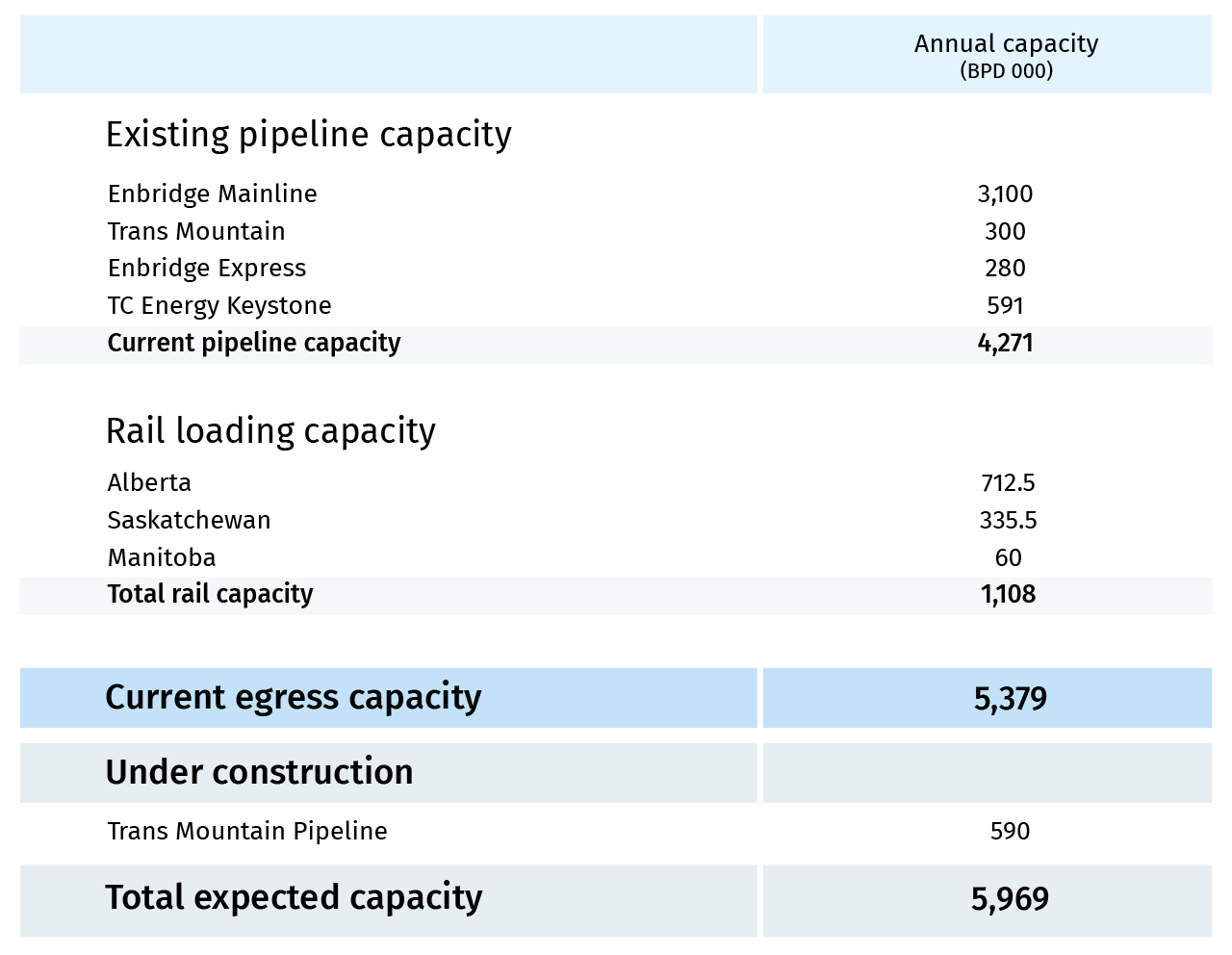
Wildfires. Hurricanes. Drought. We’ve just come through a summer of environmental catastrophes, signaling climate change effects that are not only accelerating, but getting far worse. In August, the latest IPCC report issued a “code red for humanity” and found that the earth’s global surface temperature had already risen 1.09°C since the 19th century. The last decade is quite likely the hottest the planet has seen in 125,000 years, the report stated. The scientific evidence is unequivocal—and time is running out. A major United Nations Climate Change conference in Glasgow, called COP26, is fast approaching. For the community of world leaders in attendance, how to reach Net Zero—in which we take as much carbon, methane and other greenhouse gases out of the air as we put in—will be the main topic of discussion. “Net Zero has become an organizing principle for sustainability—it’s become much clearer to a much broader range of actors,” said former Bank of Canada governor Mark Carney, now the UN special envoy on climate action and finance, and chair of the Glasgow Financial Alliance for Net Zero. Carney and renowned climate scientist Dr. Katherine Hayhoe join RBC’s John Stackhouse for the opening episode of The Climate Conversations, a special podcast miniseries from Disruptors. The team spent weeks interviewing leading experts like Hayhoe and Carney to gather the best insights on Canada’s path to Net Zero emissions. Our current commitment is to reach Net Zero by 2050. But using existing technologies and know how will get us only two-thirds of the way to that goal. RBC’s latest report, The $2 Trillion Transition: Canada’s Road to Net Zero, lays out six possible pathways to go the full distance—and estimates the costs by sector. As we lay out in the report, for Canada to get just 65% of the way to Net Zero, it will need roughly $60 billion annually in private and public investment in new technologies, products and processes. “Climate is changing faster than at any time in the history of human civilization on this planet, and that’s why it matters,” said Hayhoe, who is chief scientist at the Nature Conservancy and a distinguished professor at Texas Tech University. “It’s not about saving the world—the planet will still be orbiting the sun long after we’re gone. It is literally about saving us.” Hayhoe refers to herself as a “rational optimist,” who looks to form connections with those who oppose her views as a scientist. Those connections, she believes, are critical to charting a course out of the climate emergency. “How did the world change before?” she asks. “It wasn’t because the prime minister or a president or a king or a CEO or even a celebrity decided it had to. It was when ordinary people used their voices to say, ‘you know what? The world can and must be different’.” Though Hayhoe and Carney come at the challenge of climate action from different angles, they share an optimism about how we can meet the moment—and both are using their globally-respected voices to win over skeptics in an existential battle for our planet. What we learned: large-scale, global Net Zero initiatives are required now if we’re to keep the world’s temperature from rising another two, three or even four degrees. As Carney told us, collective action is what’s needed to make meaningful change. “We have a carbon budget and we are spending it rapidly. Emissions need to go down — ultimately every country, region, sector, company, financial institution will have to be at Net Zero.” Stay tuned for our next episode of Disruptors, focusing on the agriculture sector and creating a more sustainable food chain. “The Climate Conversations: How to Build a Greener Food Chain” will be available Nov. 2nd wherever you get your podcasts.
Speaker 1 [00:00:02] Hi, it’s John here, Speaker 2 [00:00:04] and it’s Theresa. Speaker 1 [00:00:05] Theresa, how are you? Speaker 2 [00:00:06] I’m not too bad. How are you, John? Speaker 1 [00:00:09] That’s actually a tough question to answer these days because we’re coming out of a pandemic, so we should all feel a little better. But we’re also facing the extraordinary climate crisis, and it’s so easy to get down on it for all the high level talk about climate, and we heard a lot of it in the election. We can’t forget it comes back to us as consumers, as citizens, as neighbors. The choices we make every day add up in the conversations we have really do have an impact. And yet climate, I find, is one of the most difficult conversations. Sometimes it’s just too big to think about or too personal to talk about, but it really is about us. Speaker 2 [00:00:49] So speaking of us, John, you’ve talked to people inside RBC and outside RBC, where one of the largest companies in Canada and the leading financial institution. What sort of role should RBC play in these big climate conversations? Speaker 1 [00:01:04] We see climate change as one of the most significant issues in our world and in our country, and it has a meaningful impact on almost everything we do as a bank. We hear about it from our clients, whether they’re big companies or individuals. We see it impacting the direction of the economy. We see it increasingly influencing investment flows. And in a lot of ways, these are really positive changes. We’re seeing more and more dynamism in the economy among our clients. Among businesses we work with investing in new technologies, finding new processes that are making companies and entire industries more efficient, more competitive globally. We’re hearing from individuals and communities who are really hungry for change, and we want to be part of that conversation. Theresa, you’ve been involved in a research report that we’re putting out this fall looking at pathways to net zero and the two trillion dollar transition, as we call it, which is what Canada needs to think about over the next 30 years up to 2050. We need to transition the economy, and it’s not just oil and gas, it’s not just agriculture. It’s every part of the economy, it’s every region of the country. Teresa, you’ve seen a lot of the evidence from our research and the part of the conversations about what we need to do in the decades to come. Here we are in the fall of 2021. What do you think we stand? Speaker 2 [00:02:27] I would say that if we were heading out report cards, I think our great at the moment would be needs improvement. Canada is on course to meet only two thirds of our climate commitment with existing technologies and existing know-how and for the sake of our audience net zero. It’s a it’s a complex concept, but at its most basic level, it’s about removing as much greenhouse gas from the atmosphere as we’re putting into it. Why net zero matters and why we talk about it so much is that it’s our only way to stabilize the temperature increases that our planet’s seeing. The Paris Agreement set out to limit global rises to 1.5 degrees. So if you don’t change how we’re living now, how we’re working our current approach, we’re going to be on track to see temperatures rise 3.4 3.9 Celsius this century. And the consequences are catastrophic. Speaker 1 [00:03:17] It’s a pretty tall order. Do you think we can make it? Speaker 2 [00:03:20] I think it will take some ingenuity, a lot of hard work, maybe a bit of luck, but I am very hopeful that we can work our way up to a passing grade. Speaker 1 [00:03:28] Me too. Over the next several weeks, Theresa and I will be talking to some of the business innovators and market disruptors who are working to get us on that net zero path. We’ll also speak to some of the leading climate thinkers and advocates for climate action, each of whom is helping us become more knowledgeable about and more engaged in this existential fight for our planet. This is Disruptors, an RBC podcast. I’m John Stackhouse. Speaker 2 [00:03:58] and I’m Trinh Theresa Do. Welcome to the climate conversations. Speaker 1 [00:04:08] On today’s episode, we’re talking with two of the leading evangelists on climate action. In the second half. We’ll hear from Mark Carney, the former Bank of Canada governor who is now the U.N. special envoy on climate action and finance and also chairs the Glasgow Financial Alliance for Net Zero. But first, we’re going to speak with a woman who’s often called the most influential climate scientist on the planet. Katharine Hayhoe is the Toronto born chief scientist for the Nature Conservancy and a distinguished professor at Texas Tech University. Her work has resulted in more than 125 peer reviewed papers, and she’s contributed to multiple climate reports for the U.S. government and the United Nations. But you know what? What Hayhoe is best known for is her ability to connect with regular people and having those difficult conversations about what needs to change, even with those who don’t agree with her. In 2014, she cracked TIME magazine’s 100 Most Influential People list, and in 2018 she delivered a TED talk called The Most Important Thing You Can Do to Fight Climate Change. Talk about it. It’s been viewed almost four million times, so people do want to talk about us. Kathryn’s latest book is saving us a climate scientist case for hope and healing in a divided world. Fellow Canadian Margaret Atwood calls it a must read. If we’re serious about enacting positive change from the ground up, Katharine, welcome to disrupters. Speaker 3 [00:05:37] Thank you so much for having me. Speaker 1 [00:05:38] I want to start Katharine with a question about optimism because so many climate conversations are negative or pessimistic. You’re an optimist. What gives you optimism? Speaker 3 [00:05:49] I am, and I would like to say that I’m a rational optimist because I am a scientist and as a scientist, I see all the bad news firsthand. In fact, I get it hot off the press, so to speak. I look at the data myself, and the science does not give us a lot of hope. When we look at what’s happening to our world, climate is changing faster than any time in the history of human civilization on this planet. And that’s why it matters. It’s not about saving the world. The planet will still be orbiting the sun long after we’re gone. It is literally about saving us. But what I’ve noticed wherever I go, and I literally got this question even twice yesterday, once talking to medical students and then once talking to an academic group every single day, almost I’m asked what gives you hope? And so that’s actually why I wrote the book is because I figured there’s enough doom and gloom out there. Enough of us are activated. We’re concerned about it. The majority of Canadians understand that it’s a serious issue. So what can we do about it? It turns out that hope comes from action that interesting and not recycling. And though, you know, every little bit helps. But specifically, when we get out and we use our voice to advocate for change would reengage with others when we speak within the place where we work or the neighborhood or a kid’s school or, you know, an organization where part of obviously our city and our province and at the national scale when we use our voices to talk about why this matters and what we can do to help fix it. We don’t have to be David Suzuki to do this. I’m absolutely convinced that every single Canadian can do this. And when you look to the past, when you look to massive issues like slavery and women being able to vote and civil rights in the states and apartheid in South Africa, how did the world change before? It wasn’t because the prime minister or a president or a king or a CEO or even a celebrity decided it had to. It was when ordinary people used their voices to say, You know what? The world can and must be different. That’s how change happened. Speaker 1 [00:07:48] What can each of us be doing more of? I recycle, and as our longtime listeners know, I’m an active biker, but I don’t think I’m doing nearly enough. What can each of us be doing more of? Speaker 3 [00:08:00] Well, it’s so interesting because when I first started to talk to people about climate change, I would get that question immediately. And, you know, I would say the traditional things that we would all say. I would say, Well, you know, have you changed your light bulbs? Have you looked at where your electricity comes from? But then I thought to myself, Is that really enough? So I stepped on the carbon scales myself. I stepped on, you know, I went to a carbon footprint calculator and I calculated my carbon footprint. And I was absolutely shocked because the number one source of my personal carbon emissions was not my light bulbs, and it was not even the car that I drove. It was not my hydro bill. It was my travel. And I’m not talking about like travel. The yoga retreats in Bali. The last time I went on an actual vacation, I can’t even remember. I mean, just to see family. It was travel to scientific conferences and to talk to people about climate change. I thought to myself, Well, this is Speaker 1 [00:08:54] Oh the irony, the irony. Speaker 3 [00:08:57] So, so I decided that pre-COVID I was going to transition 80 percent of the events I did to virtual events, whether people liked it or not. And if I traveled, I was only going to travel by bundling. My events together, so I would go somewhere and do like five, eight, 10. I think my record so far is 29 events in six days, which is kind of crazy, but it’s a very effective use of your time and your carbon. But then and here’s where being a scientist comes in. I started to calculate, OK. So I did this, and here’s how much I could reduce my carbon footprint. And I also got solar panels and plug-in car and address food waste and diet and stuff like that. What if everybody else who’s concerned and activated did it too? How much impact would that have on our national emissions? A fraction, a very small fraction, not even a third. And so I thought to myself, Look, this is not the answer. This is not the most effective thing that we can be doing. So that’s what I did this deep dove into. How is the world changed before? Was it because individual people took individual steps and that’s all they did? No, it’s because individual people use their voices to advocate for change in the larger sphere that they are in. Speaker 1 [00:10:08] We’ve just come through the summer of the apocalypse. It felt like in many parts of the world. Did that dent your optimism? Speaker 3 [00:10:16] Unfortunately, it did, because with climate change, a big part of our problem is something called psychological distance. We all agree it’s a big issue. We agree it will affect future generations and plants and animals and people living over there. But you know, we’re the north. We sort of see ourselves as invulnerable to global warming. We see it as a distant issue. And studies have shown that as we decrease our psychological distance, as we’re able to say, look, that crazy heat wave out west, it was one hundred and fifty times more likely because of climate change. The wildfire season we had back in 2017, it burned about 10 times the area because of climate change. The floods that we’re seeing, the hurricane category one passing over Newfoundland, we’re seeing climate change loading the weather dice against us. And so studies have shown that when we’re able to connect the impacts of climate change to our lives, our lived experience, our activation increases, our concern increases. But then you get Covid and I live in Texas. I live in a place where I know people who lost their lives and with their dying breath, we’re saying this isn’t coronavirus. I know people who their families then did not wear a mask or get vaccinated, and then they got Covid. And I’m thinking to myself, have I overestimated the human capability for self preservation? Speaker 1 [00:11:36] You’ve argued as well that climate is about values, and we’re also talking to Mark Carney, who has a book called Values and I think would agree with a lot of what you’re saying. But you’re also saying it’s a rational decision. And I just wonder how we can balance in our conversations just the rational decision that saves you money or saves you time or makes your neighborhood safer versus the moral decision that this is about values and our collective being an even more existential questions. Speaker 3 [00:12:10] In most cases, for most of us, those two are not incompatible, in fact, often they’re very compatible. I have a really funny story in my book, probably my favorite story of my colleague John. His dad lives in a rural area of Australia and his dad is a fiscal conservative, but he’s also an ideological conservative. And so in Australia, like in Canada, many conservatives reject the science of climate change because they don’t think there’s any solution other than destroying the economy. So its solution aversion masked to science sounding arguments. Because if you say it’s real, but I don’t want to fix it, that would make you a bad person. And most of us don’t want to be a bad person. So John’s dad would drag up, Oh, there’s more polar bears now than there ever were. What are you saying? The Arctic is melting dot every time John went home for dinner. And so John went back to school. He got a p, h d and cognitive psychology to understand denial. He created the world leading skeptical science website that lists 198 science sounding arguments against climate change and provides peer reviewed responses. Do you think that changed his father’s mind? Speaker 1 [00:13:14] I suspect not Speaker 3 [00:13:16] correct. It did not. But then there was a rebate on solar panels in his dad’s area, and so his dad got solar panels started to save a ton of money. Every month, you would send on his power bill, saying, John, look how much money I saved. It reinforced his own identity. It fit rate with one of the things at the top of his priority list. And so two years later, John was sitting with his dad and out of nowhere, his dad said, Oh, you know, global warming. I’ve always thought that was real. And John was like, what? Not only had he changed his mind, but he had forgotten that he had ever denied it because the solutions change his mind. You know what? There is nothing wrong with that. Speaker 1 [00:13:52] I sometimes think about smoking and cigarettes, and it’s an imperfect and maybe a bad analogy, but that has been a decades long struggle with behavioral change. And when I think about some of the behavioral changes we need for true climate action, maybe there’s some lessons we can draw that out. And even though with the smoking, all the science is there and many of us smoked regardless, we knew the risks that that we were taking and we did it anyway because it was maybe enjoyable, definitely addictive. But it was also cool. And I wonder, in terms of climate and our own behaviors, what kind of norms in terms of mass media pop culture, we may need to start to challenge or think about to help change our own thinking and our own behavior. Speaker 3 [00:14:41] I think you’re absolutely right. I mean, that’s that whole idea of social norms, the idea that we determine what’s acceptable and what’s not, because we always, as humans have these antenna, these invisible antenna up that are taking, you know, sort of taking the measure of what’s going on. So is it acceptable to have a plastic water bottle? No. Well, I better not have one. Is it acceptable to drive a giant gas guzzler? Oh, well, not really. That’s not cool anymore. What’s cool is the fast electric car better. Think about that next time. So you’re right, that has a huge impact, and that has played a big role in the changes that we’ve seen in the world. Before that I mentioned everything from, you know, women getting the right to vote to civil rights, to all kinds of changes. It’s been changes in social norms where people like that’s just not acceptable anymore. And how do we figure that out when we see other people doing it and when we hear other people talking about it? So, you know, get your solar panels or do whatever it is that you’re doing, but then talk about what you’re doing. That’s how you can change people. And in my book, even talk about how their scientific studies showing the impact of contagion, for example, with solar panels, the number one predictor of whether you’ve got solar panels is whether there’s somebody else within about a kilometer and a half of your house that has the that’s the number one predictor. It’s contagious literally in a good way, not a bad way. Speaker 1 [00:15:52] We’ve been having a fairly optimistic conversation, which I appreciate, but there may be people listening who say, that’s not the full story. There will be people. There will be sectors. There may be regions that will be losers in this transition. How do you engage people who feel they see writing on the wall? That is not for them. Happy writing. Speaker 3 [00:16:15] Well, first of all, I think the most important thing is to be proactive about that engagement. Acknowledge it upfront. Don’t wait for them to tell you. Think of it and look at it yourself and realize, Hey, there’s a lot of people who are just trying to feed their families. They have a well-paying job in Alberta, in the oil and gas industry, or here in West Texas, which is also the home to the oil and gas industry. And they’re not doing it. They did that job because they wanted to, you know, help destroy civilization as we know it. They picked that job because we need energy and energy is something that is inextricably linked with human well-being around the world. Access to electricity specifically is one of the major metrics that determines our level of well-being. So when I had the chance to talk to the Board of Big Oil and Gas Company here in Texas a couple of years ago, I was invited to speak and I thought to myself, Well, I can’t do it unless I figure out how we can connect over something we share first. I’m not. Go in there and start with something we disagree on, I have to start with something that we agree on, and if I can’t do that, I’m not the right person to have that conversation. Finally, I realize, you know what? I am profoundly grateful for fossil fuels. Imagine what a woman’s life was like. Imagine what anyone’s life is like 200 years ago, it was short, miserable and filled with bone breaking, repetitive tasks that left them no time for education, no time for leisure, no time for travel, no time for anything that we enjoy doing today. Energy has transformed our lives, so I actually started off by telling them how grateful I was for fossil fuels and how I realized that they were doing this because it helped people and we need energy and a solution to our future is not to just pull the plug. It’s to figure out new ways of getting energy. The same way we don’t use a Model T Ford today, the same way we don’t use a party line telephone in the same way we need energy just as much, if not more in the future than we did in the past. But in the same way, we’re transitioning to new sources of energy. So how can we work together to try to figure out how to get those new sources while still providing good paying jobs for people who have these skills who again are just trying to support their family and be part of the local economy? And I can tell you it was amazing because I went in and meeting all the arms were folded. All the pastor was leaning back. Everybody was giving side I to the one guy who invited me there, like, why did you invite her to speak to us? He sort of read the brainwaves, but when I said that? You could see like the arms were unfolding, people were leaning forward, and then one guy finally said, he’s like, You get it. We’re not the bad guys. We’re doing this because people need energy. And I was like, Yes, that’s right. And how can we keep on making sure they get energy in the future? And so that conversation was supposed to be about 40 minutes ended up going two plus hours. Everybody wanted to know what’s really happening. How is it affecting people and how can they be the good guys? Speaker 1 [00:18:57] You mentioned the transition and this is a transition. It will take time. There are many people, thoughtful people who say, we don’t have time. There’s a lot of people, including maybe a whole generation, that is convinced that 2030 is not the end, but is, you know, a significant marker in their lives and frankly, their century. And I’m starting to wonder, well, what? What’s it going to be like if we fall short, even a little bit short, but maybe a lot short, how are we going to kind of stay together as people and keep keep at it? Speaker 3 [00:19:35] Well, that’s part of the danger of having these hard targets, like saying, you know, 20, 30, because if we end up at, you know, one percent over by 2030, it’s not like everything’s lost. We’re a lot closer to 2030 than we would have been if we hadn’t had that goal. Every action counts, every bit of warming counts, every time counts, and we are taking a lot more action today than we were a year ago. And then next year, more, hopefully than. But you’re right. Are we going to achieve our ambitious goals? Are we going to stop smoking fast enough to avoid all of the impacts on our lands? I can tell you the answer is no, because some of the impacts already here, we’ve been essentially smoking that pack of cigarettes every day for years and even decades. And so we have some impaired breathing. We have some spots in our lungs, but we don’t have emphysema, we don’t have lung cancer and we’re not dead. So the time to act is now. And so I think when we sort of remind ourselves that what’s at stake is all of us, we’re all at stake. We all sink or swim together. We can get angry. We can get frustrated. And believe me, I do too. But ultimately, understanding that most people want to do the right thing, but they’re just scared and coming from that place of sort of understanding and forgiveness and encouragement. And in some places, you know, drawing that line and saying this is not acceptable and we cannot keep on doing this, but doing it in a way that recognizes that it’s not about us or that it’s not about allies or enemies, it’s about the fact that we’re all humans together. Speaker 1 [00:20:55] Catherine, you are an optimist Speaker 3 [00:20:58] in my immediate moments. I absolutely am. Speaker 1 [00:21:01] And it’s contagious. Katharine, thank you for being on disruptors. Speaker 3 [00:21:05] Thank you for having me. Speaker 1 [00:21:06] Coming up after the break, we turn our attention to some of the biggest players in the global economy and speak to one of the most influential people in finance to figure out who needs to do what to get us to net zero. So stay right there. Speaker 2 [00:21:24] You’re listening to Disruptors, an RBC podcast. I’m Theresa Do. As we mentioned off the top of this episode, RBC Economics and Thought Leadership has a new report coming out this month called the two trillion dollar transition. It explores the costs and benefits of Canada’s shift to a carbon neutral economy and how it can fuel a new generation of Canadian innovation, from carbon capture technology to sustainable agriculture to the full potential of super charging electric vehicles. If we look at all the ways for Canada to take a leading role in the fight for climate action and the economic opportunities they create. To learn more. Check out the link in the show notes of this episode and visit our rbc.com. slash Net zero. And be sure to like and follow disruptors wherever you get your podcasts. Speaker 1 [00:22:15] Welcome back, Theresa. I don’t know about you, but listening to Katharine Hayhoe, it’s hard not to be inspired. What stood out for you? Speaker 2 [00:22:23] She is so inspiring. I love her overall messaging on the power of the olive branch or finding a way to connect with people who may not agree with you. Being able to reach across the aisle gets to that global cooperation that you had been talking about, and it’s the only way that we’re going to able to move forward. Speaker 1 [00:22:41] That’s so true. And, you know, maybe you have to be a climate scientist, a Canadian climate scientist living in Texas to know how to engage in those conversations because she’s done it with incredible effect. Well, our second guest is no less an advocate for individual climate action, but much of what Mark Carney focuses on these days is corralling the forces of business and the forces of finance to help get us to net zero. As the U.N. special envoy on climate action and finance, Carney is getting deep into the plumbing of the global financial system to find ways to get capital to the areas that will be critical to the transition to net zero. And as chair of the Glasgow Financial Alliance for Net Zero, Carney is working with more than 160 financial firms that control $70 billion in assets to make that a reality by 2050, if not sooner. There are many people better suited for the task. Carney is a former top banker in both Canada and England. He has deep experience in the private sector, including 13 years at Goldman Sachs and his latest book, He’s done. A lot of thinking about. This is called values building a better world for all. Mark Carney, welcome to disruptors. Speaker 4 [00:23:54] John Stackhouse, a pleasure to be with you. Speaker 1 [00:23:58] And I want to ask a question that came to me this morning when I woke up because this is the 20th anniversary of 911 and there’s much debate about how much it changed the world in different ways. And we’re talking about climate, and I wonder why 20 years ago, the world galvanized around a horrific event and was able to mobilize, rightly or wrongly, trillions of dollars and mobilized nations, as well as individual action to change the world. And arguably, we have not been able to mobilize the same will or resources on climate. I wonder how you think through our different collective approaches to global challenges. Speaker 4 [00:24:42] You know, there has been a lot of progress over those 20 years, but let’s focus on what hasn’t been accomplished and how much more difficult it has become to galvanize global action, as you say. And I think there is a couple of roots of that. One was how quickly the goodwill the global goodwill of the response to 911 was dissipated within a few years. I think the second thing, though I’d underscore, is we had the financial crisis. You and I know that well, we from different vantage points lived and worked through that and the response to the financial crisis. The policy response was overwhelmingly an economic policy response in the run up to twenty seven eight. There was increasing focus on climate action at the global level. The you know, the elements of the consensus of which you just spoke were there and within the private sector an increasing focus. And I would suggest in the financial sector as well that it didn’t absolutely stop. But it was set back dramatically. As the issues in the financial sector became survival, the issues from a public policy perspective became recovering from what was then the worst economic crisis of anyone’s lifetime and had the prospect of moving into a depression if the right policy hadn’t been followed. And that set back climate efforts almost a decade when we got back to the level of public urgency, maybe arguably a greater public urgency around addressing climate in the run up to the start of 2020, government starting to come together, the financial sector starting to focus on this more. And then, of course, we had the COVID health crisis and economic crisis associated with it. And I given that history thought, Well, this is 50. You know, this could be history repeating itself and will be set back again. What’s happened and I’m sure we’ll get into this is has been the opposite that the experience of COVID and the economic circumstances and the right economic response, also a social response has galvanized climate action. Speaker 1 [00:26:49] Why is climate not relegated by yet another global crisis? Speaker 4 [00:26:53] Well, I think there’s several factors. One of them is I’ll start with the negative, which is that it’s 10 years later and it’s that much later. It’s that much more obvious. The climate impacts. It’s that much more urgent. That’s the first. The second is that technology has moved on quite substantially. So many more of the opportunities are economic today. It’s a question of will and getting capital to work and investment in the ground that I’m not saying that. We’ve got all of the solutions at an economic level to fully decarbonize, but there is a path for at least the next decade for substantial progress that makes a big difference. I think thirdly, a number of governments and informally I’ve been involved in these discussions with a number of governments over the last 18 months. They took a lesson from a few countries, had a climate focused response to 2008 South Korea, elements of China, elements of the German fiscal response. And lo and behold, those countries established quite competitive position, very competitive positions in key industries, solar, wind as well. So again, the economic congruence, if I can say it that way, the alignment is much better now and it’s much better understood. And I think the last thing which is a softer point, if you will, or a values point in many respects, that’s a harder point. A stronger point is what lessons do you take from the health crisis? We undervalued resilience. We didn’t prepare for something that wasn’t just a possibility, it was a certainty, and there were ample warnings. So we undervalued resilience. We didn’t listen enough to science. We didn’t think about sustainability. And by and large, and you know, there are exceptions to this. But by and large, people’s response to COVID was one of solidarity. They did what they needed to do, not just for themselves and their families, but for others. Speaker 1 [00:28:48] Let’s talk about values. That’s of course, the title of your book, which I read with great interest. It’s an excellent book for those who haven’t read it in a very. Serious book, and I mean, not in a complimentary way. I read it concurrently with the Bill Gates book and wrestled with similarities and differences. I think you agree on many, many things, but stepping back, I found Gates. And this shouldn’t be surprising. Perhaps for a math guy like him took a very technological approach. That’s what we would expect from Bill Gates. It was almost Cartesian that this is a problem that can be solved, and you take a more bit more of a moralistic point, if I can put it that way, kind of Hobbesian. And as I compare and contrast the two works, I thought, and this is oversimplifying it, but there’s a real tension between man and machine, both in the cause of the climate crisis, but also in the solutions. But I wonder how you, you know, in the balance, are weighing technology and human behavior as we get deeper into trying to solve this crisis. Speaker 4 [00:29:51] As you say, John, it’s both. We need the engineering technologies, and I referenced a moment ago that some of them are fully economic, profitable today when solar increasingly on the storage side, prospectively on hydrogen, they’re economic today. But we need those and I’ll use Bill Gates is termed breakthrough technologies elements of green hydrogen, sustainable aviation fuels, direct air capture and even large scale carbon capture, which is a big issue for Canada. We need those to become economic, so we need the engineers. We need the technological solutions. And what I argue in the book and what I really believe, of course I believe it. But is that when you get a consensus around something like sustainability and you move out of a trade off the planet and profit, you know, sustainability today versus tomorrow and people say, no, we want the climate crisis addressed. We expect our businesses, our governments, our financial institutions to be addressing this. This changes the value equation. It means that it is valuable to do things that reduce our carbon footprint that move us towards net zero and it becomes not just risky but actively harmful to the viability of a business. If you’re still part of the problem, if you’re not moving and that gets to the third leg of the triangle, which is financial technology, and that’s a lot of what the work I’ve been doing for the U.N. and run up to the Glasgow cop, which is and you’ve been helping with this as an institution is to put in place the plumbing of the system so that there is proper disclosure about who’s part of the solution, who’s still part of the problem. That there’s new markets that help to invest in not just the breakthrough technologies, but carbon offsets and other things that are necessary to optimize the carbon budget to have bigger capital flows into emerging economies, creating those, but also to have the commitments of the financial institutions. And with that, the transparency about what they’re doing to solve the problem. Speaker 1 [00:31:57] I’ve been tracking summits and cops back to the to the first one in Rio. There has been a diminishment of the state in those 30 years and an expectation that the private sector, the business should do more and can do more. That was not a dominant line of thinking in Rio in 92, but it is Glasgow in in twenty one. I wonder what has shifted in those 30 years? Has the state failed in its obligations to society or is it just reached its limits? Or is there a greater robustness to private initiative, whether it’s technology or financial mobilization that we’re finally appreciating? Speaker 4 [00:32:40] I’m not sure I would fully subscribe that the state has had the face in or has set the ground rules and been aggressive enough in the objectives and and in playing its role over the period of time. And so many in the private sector have, I mean, I’ll put it in the pejorative, but have either ignored the issue or a free road on others efforts. And so we have not been nearly aggressive enough in pricing carbon and investing in primary research. The 2008 experience. I won’t belabor it, but is an example where over 90 percent of the quote shovel ready infrastructure was carbon intensive. Effectively, it was anything but green, so it was a massive missed opportunity. What has mainstreamed over the course of the last decade and accelerated since Paris? Net zero has become an organizing principle for sustainability. It’s become much clearer to a much broader range of actors. If I can put it that way that we have a carbon budget, we are spending it rapidly, that emissions need to go down, that ultimately every country, region, sector, company, financial institutions. We’ll have to be at net zero. Candidly, that’s from my perspective, that’s one of gratitude Berg’s contributions, the sort of remorseless logic of a of a teenager, very intelligent teenager, but of a teenager, which is, well, how does this all that up? And you know, it wasn’t anywhere near shape or form and even in the financial sector or especially maybe I should say, in the financial sector 18 months ago, certainly the start of 2020, focus on climate risk management focused on disclosure. We set up pretty big objectives for the Glasgow summit, and at the heart of it was that climate was part of every major financial decision, and mapping to get there was to organize the system around net zero. And now we’re seeing that. Speaker 1 [00:34:43] But there’s an important tension underway in the world. I would argue around timelines. When I talk to my environmentalist friends, I often divide them into two camps the 2030 camp and the 2050 camp and the 2030 camp. For people who say we can’t really think too much about net zero by 2050. The crisis has to be solved by 2030 by getting emissions down by 40 or 50 percent in that range. And then the 2050 camp for those and I’ve heard Bill Gates speak to those who say, let’s, let’s not undermine the 30 year journey by trying to do too much in the 10 year now eight year journey to 2030. So maybe we’ll fall a bit short of 2030. But the real need is to get on the right path to 2050. And hey, it’d be great to have both, but just don’t let one undermine the other. Are you a 2050 or 2030? Speaker 4 [00:35:38] I’m more of a 20 30 year. I think that I mean, experience in managing things to extent I have and I have some is that you need objectives that are within your timeline of responsibility. Let’s put it that way that you’re going to live to live for the consequences. Now that’s the first reason. The second, just given how tight the carbon budget is, it is. It is essential. I think the third point I’ll make, which is tangential to this, but I just want to make it, which is some in the 20 30 camp, maybe not those you’ve talked to. Take the view. OK, well, we just need to radically change and shut down a variety of things. I think the lesson of the last 18 months is we’re not going to shrink our way to net zero. You know, we shut down a quarter of the global economy effectively, maybe more and only just met that seven percent annual reduction. We’re not going to shut down another quarter of our economy and then another and another. I mean, so we need to invest at scale to grow. Speaker 1 [00:36:41] You get to see Canada both as a Canadian on Canadian soil, but also from a from a global perch. What are the two or three most important things the country can do in the next 24 months to get moving? Speaker 4 [00:36:55] I think I’d say the following one I’d lock down those 20, 30, 20, 30, five hard commitments. So on the auto side, on the electricity side, I think that’s an imperative. I think the initiative in the net zero oil sands, the private initiative making that fully tangible, credible and moving it forward, you know, an appropriately scaled. I think having the whole of the financial sector organized for net zero and being transparent about being organized to net zero as a necessary facilitator of that, if you establish a reputation that climate policies is headed in the right direction and the market can anticipate the future entrepreneurs, innovators, investors, banks, others, they’ll put money behind the future and we’ll get there faster. Speaker 1 [00:37:44] Well, if this were, this was outstanding. Mark, thank you. Speaker 4 [00:37:46] Thank you. My pleasure. No, it’s great pleasure, John. Speaker 2 [00:37:51] Well, that was a lot to chew on there, John. Are you as hopeful as Mark Carney about the ability of capital to nudge countries to try harder, in his words in Glasgow? Speaker 1 [00:38:03] I’m hopeful that capital can play a really constructive role, but we can’t assume that others are going to take care of this, whether the others are governments or multilateral institutions like the U.N. or so-called big business. Ultimately, this all rests on all of us. We are consumers, we are citizens, we are neighbors, and the choices we make in our everyday lives may not seem consequential in their own, but together that’s what capital responds to. Let’s ensure that we’re all in this together and making informed decisions and making sure that information flows freely in open democratic systems, whether it’s in politics or in the economy or in our own communities. Speaker 2 [00:38:47] Yeah, I love that, and I think it’s extremely important to remember the power of our own voices to make change happen. So on that note, please stay with us. In the weeks ahead, four more provocative climate conversations and cutting edge solutions, including how Canada’s farmers and food producers are responding to a rapidly warming world. Until then, I’m Theresa Do and Speaker 1 [00:39:10] I’m John Stackhouse. This is Disruptors, an RBC podcast. Talk to you soon. Speaker 3 [00:39:21] Disruptors, an RBC podcast is created by the RBC Thought Leadership group and does not constitute a recommendation for any organization, product or service. It’s produced and recorded by Jar Audio. For more disruptors content, like or subscribe wherever you get your podcasts or visit rbc.com slash disruptors.

We know the consequences of climate change. We know the causes, too. We even know what can be done to address it. What we don’t know is how best to shift into gear to get there in time. It’s why RBC Economics and Thought Leadership set out on a year-long research project to map out some of the necessary pathways for Canada to get to Net Zero. That’s the state when we take as much or more carbon dioxide, methane and other greenhouse gases out of the air as we put into it. And we need to get to that state by 2050, or sooner, to avoid the irreversible consequences of climate change.

At RBC, we’re committed to Net Zero in our own operations and lending portfolios. We’re working with governments, regulators, clients, environmental groups and the global financial sector to understand what’s needed from each of us—and to share those insights as widely as we can, because we believe a shared understanding of the challenges can lead us to better solutions for all. We undertook this research to inform and inspire those conversations, and welcome you to join the conversation and learn more through our new RBC Climate Hub. The more we can listen and learn, and share the same facts, the better our chances of using Canadian resources and ingenuity to solve perhaps the greatest challenge of our time and achieve Net Zero, together.


Canada has a math challenge.

When it comes to greenhouse gas emissions, Canadians account for a relatively large share of what the world produces. Although we’ve committed over the decades to cut those emissions, we’ve fallen short. We continue to consume conventional energy to cross our vast land and heat our homes, and allow methane to seep into the atmosphere to feed ourselves and much of the planet.

All told, we’re putting as much pollution into the atmosphere as we did a generation ago. We don’t have another generation to shift gears—not if we want to avoid the worst consequences of global warming. Canada emits roughly 730 million tonnes of carbon dioxide and equivalent greenhouse gases each year, making us the world’s 10th largest emitter. That number may seem small compared to the nearly 50 billion tonnes the world produces, notably from the U.S. and China. But it’s a lot more than the 602 million tonnes we generated in 1990, just before the world’s first Earth Summit.


Despite our best intentions, emissions have grown

Greenhouse gas emissions, million tonnes of CO2, equivalent

Source: Environment and Climate Change Canada, RBC Economics


To get on a more serious path to Net Zero, the federal government committed to getting Canada back to around 500 million tonnes by the end of this decade—and eliminating or offsetting the rest by 2050, using new technologies like electric vehicles, new heat sources for homes, and new processes to capture and store some of the emissions that we’ll continue to produce to power our planet.

This report aims to map out some of those pathways, as well as the investments and policies needed to achieve Net Zero. We use a range of established modelling on the emissions of major sectors, and the potential of breakthrough technologies, behavioural changes and improvements in industrial and agriculture processes. Our research aims to project out, over 30 years, what the estimated long-term costs and benefits could be, understanding that many uncertainties exist around climate, technology and behavioural trends and such forecasts will continue to evolve.

The amounts needed could be hefty: around $2 trillion in the next three decades. Based on our estimates, governments, businesses and communities would have to spend at least $60 billion a year to cut Canada’s emissions by 75% from current levels, which is about as far as we can get with current technologies. That’s a significant jump from the estimated $15 billion a year we currently spend. While those are large numbers, they’re also affordable, especially when measured against the economic returns of new technologies, products and even entire industries in which Canada can be a global leader. For context, Ontarians alone spend nearly $70 billion a year on healthcare, an essential national priority.

Nature can help, of course. Scientific forecasts for large-scale tree planting and forest management suggest such measures could sequester some 50 million tonnes annually by 20501, which covers one-tenth of what Canada will need to get to Net Zero. (Protecting Canada’s forests, wetlands and grasslands from being converted to other uses could prevent another 30 million tonnes of GHGs from being released annually.)

Then there’s technology. A nation of electric vehicles, solar-powered houses and hydrogen-fueled airplanes will help enormously, and the innovation spurred by more uptake of these technologies can cut their costs and the overall bill. But as the chart below illustrates, the best-case scenarios for these technologies might only get Canada three-quarters of the way to Net Zero. We’ll need many more inventions, and new habits, to help transform industries and lifestyles. The good news: Canadians, whether we’re developing resources, building technologies or serving a diverse world, are strong innovators, especially in the face of challenges like climate change.


One of our biggest challenges: we’ll need to roughly double our electricity supply to power a new fleet of EVs, and to heat and cool our homes, offices and schools. Canada has a head start, with a “green grid” fed by hydro, nuclear, wind and solar power. We also have plenty of lower-emissions natural gas to serve as a transition fuel, be it for heavy industry or big cities, as the economics and reliability of renewables improve. More capacity will be needed on each front, as well as historic investments in transmission lines and a new approach to how provinces manage the sector.

A national green grid can help power some of the country’s biggest emitters in cleaner, and cheaper, ways. Canada will also need to help our oil and gas producers, farmers, manufacturers and others working in carbon-heavy sectors, as they continue to develop their own pathways to Net Zero, and ensure that any transformation does not cause widespread economic hardship or social disruption. (We will have more to share on the costs of a disorderly transition in an upcoming report.)

A long-term commitment to carbon pricing, with steady and predictable increases, will help, by allowing investors, entrepreneurs and operators to allocate capital efficiently and effectively. So, too, will a regular, independent and transparent assessment of the impact of carbon pricing, and whether the 2030 target of $170 per tonne is optimal. Such an approach to pricing carbon, at significantly higher levels than today, could even shape new economic thinking for North America, if Canada and the U.S. work cooperatively on continental supply chains for green products like EVs and trade measures to better price the cost of important energy-intensive products like steel.

This journey will require new approaches to sustainable finance, if we’re to generate the $2 trillion needed to finance the transition. Overall, capital is not in short supply. Investible projects, with reasonable returns, are. What’s needed? An overhaul of industrial regulation and tax policy, and more government backstops, to offset the inherently risky frontier of clean technology, sustainable infrastructure and new consumer products. A lack of consistent and reliable policies continues to impede Canada’s ability to attract the sort of private capital needed to finance the transition.

And we’ll need people—a lot of them—to focus on the skills required to power the transition, install neighbourhood solar grids, maintain new EV fleets, and reform farming practices to ensure Canada’s ample soil is used more actively to absorb carbon from the atmosphere. Estimates suggest Canada will need to retrain 100,000 workers with new green skills, and add up to 200,000 more like them to the labour force as early as 2030.

icon

The cost of inaction

While cutting emissions is costly, there’s a cost to doing nothing, too—one that will continue to climb the longer we postpone action.

Trend growth – or potential growth – reflects the long-run sustainable productive capacity of the economy. Actual growth fluctuates around this trend due to short run ‘cyclical’ factors. Trend growth is estimated based on trend labour supply growth and productivity.

The challenges are serious, but so are the opportunities. Canadians are proven energy innovators, including around nuclear, hydrogen-cell and oil and gas-extraction technologies. We can’t delay action as we wait for new technologies to arrive.

Policy changes will be essential. But first we’ll have to take a hard look at the areas in which Canada has the biggest emissions. In the section that follows, we explore those areas and how they can become pathways to Net Zero.


Achieving Net Zero requires us to adopt technologies that can facilitate the transition from fossil fuels to electricity, in an accelerated but orderly manner. Still, some economic activities aren’t in a position to be electrified at scale, at least in the short term: think air travel and cement making. We’ll continue to burn fossil fuels to make plastics and to generate the electricity to power all those greener technologies.

We identified six pathways to Net Zero, and while they’re not all-encompassing, they are among the most viable opportunities within reach. Four of them, explored later in this section, outline ways to cut emissions from buildings, transportation, industry, and agriculture. Even still, if we all drove electric cars and lived in solar-powered homes, rethought livestock management and captured more carbon from smokestacks, we’d still have emissions. Successfully reducing emissions from the electricity and oil and gas sectors are the two pathways most essential to fulfilling our Net Zero ambitions. We’ll start there.


From the wind turbines on the Cape Breton coast to the dams of the James Bay Project and glittering solar panels along Vancouver’s skyline, you can see the footprints of a major electricity producer just about anywhere in Canada. We enjoy arguably the world’s best supply mix, and are fortunate to be able to take reliable electricity for granted. The companies behind those supplies have helped shape Canadian history, and will help define our future.

To power a nation of EVs and electric grills, to heat our schools when it’s -30°C and cool our offices during prolonged heat waves, we’ll need to double the supply of green electricity—essentially, power from hydro, nuclear, wind and solar. That won’t be easy in populated areas, which can still rely on relatively cheap oil and gas, especially to meet demand surges. Wind and solar are the most affordable options but often hard to get to, as large-scale renewables projects need to be built around nature’s dictates—for instance, where the wind is strongest (like in Northern Ontario, Quebec and Newfoundland)2 and where the sun shines longest (like the southern Prairies). That’s why natural gas – a Canadian strength – will be needed for the foreseeable future.

A hydrogen-powered future has long been promised. The lightest of gases, hydrogen burns hot and can be used in place of fossil fuels in trucks, trains and industrial boilers. However, the way we currently make hydrogen is an emissions challenge: using steam to break methane into hydrogen and carbon generates nine kilograms of CO2 for every kilogram of hydrogen produced. Adding carbon capture to that process yields a cleaner product called “blue” hydrogen, which relies on natural gas and could become a greater export opportunity for Canada as new regulations and process improvements take hold. The purest form, “green” hydrogen, is produced by splitting water molecules with carbon-free electricity—but it’s very expensive. Lowering its cost would be a great start, along with infrastructure to deploy green hydrogen at scale, and commercialize fuel cells for trucks and other heavy vehicles.


Canada is starting from an enviable position. As of 2019, 80% of the national grid was carbon-free. Compared with the U.K., our grid produces less than half the GHGs per unit of electricity, and a quarter compared with the U.S.

Efforts to phase out coal over the past decade, expected to be completed by 2030, have helped Canada cut carbon emissions from electricity generation. The continued use of nuclear energy helps, as have new additions of wind and solar power. Since 2010, almost all of the new capacity installed has come from renewables. That’s sped up because the cost of many zero-carbon electricity sources has declined: for new electricity plants, wind and solar generation are often 30% cheaper than natural gas. It’s a good example of something economists call “endogenous technology” – our choices today affect how technology development progresses.

In the near term, Canada’s best bet is to invest in more large-scale renewable energy. But as in every sector, any plan will involve making social and political choices. We’ll have to determine how much we’re willing to pay—collectively and individually—to accelerate the move away from fossil fuels.


Lower costs make wind and solar competitive, but not batteries

Levelized cost of electricity or storage, $US/MWh

Source: Lazard, RBC Economics


Handling the peaks

Another key challenge for renewables is that, unlike gas or coal power, they can’t be fired up at any time to meet demand, and they don’t produce electricity consistently when they’re on. Studies have shown that3 solar generation can fall by as much as a third in the winter and autumn, and wind farms produce more in the spring and winter. And that’s not taking into consideration climate variances between regions.

This so-called “intermittency” leads experts to suggest we’ll likely need some gas-fired power to manage periods when electricity is in highest demand, for example at dinnertime. The key question is whether it is cheaper to store electricity from renewables, cut peak demand with energy efficiency, or build new, simpler gas plants with carbon capture technology since many existing gas plants can’t respond to demand that quickly. More national modelling is urgently needed to work through these choices and help energy producers get on with the challenge.

Another way to improve the system is to better connect provincial grids. Right now, our grid is a hodgepodge of independent systems scattered throughout the country. Smoother connections could reduce the need for expensive storage by moving power from where it’s generated to where it’s needed.

Any transition from natural gas peaking plants will involve finding better ways to store energy for those rainy days. High-capacity batteries are expensive to use, but recent analysis from Lazard suggests costs at some projects are getting closer to natural gas peaking plants as technology improves.4 Pumping some of Canada’s abundant water into a reservoir during off-peak hours could make sense, too, but it’s mostly effective in mountainous areas.5 Future energy technologies, like small nuclear reactors and green hydrogen, could provide new solutions, but they’re a ways off from being commercialized. Storing electricity for the future will be the world’s critical energy challenge.


What will it cost?

As we look to increase electricity production, the source of all this new energy will be critical. Even in the existing grid, the costs of decarbonizing could run about $5.4 billion annually. Our ability to do that would be limited initially by the cost of building and deploying enough high-capacity batteries to store all the renewable energy we’ll need, though storage prices should drop as technology improves.6

Another question: will continued population growth require an even greater amount of electricity? Canada’s population is projected to rise about 30% to 50 million people in 2050. And many of the technologies we’ll use to cut emissions will require more electricity. Most estimates point to the system’s load increasing at least 100% by 2050.

General Fusion is developing the world’s first commercially viable fusion power plant, which will provide clean energy on demand, supplementing the intermittency of renewables. (In fusion energy, two light nuclei are combined to release large amounts of energy, producing four times more energy than nuclear fission.) The Burnaby, B.C. company’s 70%-scale demonstration plant in the U.K. will be complete in 2025. General Fusion has attracted some notable backers, including the U.K. government and Jeff Bezos. That could help the company as it competes against well-funded U.S. startups that are also racing to deploy fusion technology at scale.

Opus One Solutions’ platform allows utility companies to better manage and plan energy distribution as operating grids get more complex due to an increase in renewables. Singapore’s state-owned utility, SP Group, has contracted the Richmond Hill, Ont. firm to help optimize distribution and integrate more renewable energy into its grid. Opus One is also helping utilities in the U.K. and Australia develop more efficient and more flexible energy markets. While it offers a made-in-Canada solution, it will compete against giants like ABB, IBM, and Siemens in a competitive smart grid environment.


Nothing symbolizes Canada’s strengths, and challenges, as an energy power more than Alberta’s oil sands. At 165 billion barrels, Alberta’s proven reserves rank fourth in the world. The industry’s growth was made possible by homegrown innovation that allowed companies to vastly increase underground extraction of heavy crude. The province’s energy sector has been a major driver of economic growth, generating jobs, investment and almost a fifth of total exports, to the benefit of all Canadians.

Along with national pride, the oil sands continue to spark national and international debate. They’re Canada’s biggest single source of GHG emissions, at nearly 10% of the national total, and one-third of the 191 million tonnes of GHGs generated by the oil and gas sector in 2019. In 2021, to bring their net emissions to zero, the largest producers formed an alliance to invest billions in carbon-capture and sequestration, which will be critical to Canada’s overall success. But now governments need to match that commitment with additional investment and regulatory clearances to achieve Canada’s goals.

It’s the most important variable in our carbon equation, and won’t be easy to balance. Emissions from the energy sector have grown rapidly since in situ production took off in the early 2000s. About 80% of oil sands emissions now come from burning fossil fuels to make the steam used to bring bitumen to the surface and to use hydrogen to upgrade that bitumen into synthetic crude. More innovation will be needed to reduce those emissions, while also helping meet the world’s energy needs. Fortunately, the Canadian industry is a world leader in the science of heavy oil, and invested heavily in it before prices collapsed in 2015, and were hammered again in the early months of the pandemic.

The oil sands aren’t the only source of emissions in the sector, and because of Canada’s geography, a lot of energy is needed to get other forms of energy out of the ground and through pipelines to market. In conventional oil and gas production, two-thirds of emissions come from methane venting or leaks, as well as from naturally occurring CO2 in oil wells. Although methane – the main component of natural gas — causes about 80 times the warming of CO2 in the near-term, recent changes to federal and provincial regulations, along with more technology funding, have improved the outlook for Canadian gas as a global feedstock for blue hydrogen.

Such a step-by-step approach to emissions may be prudent, as we’ll need fossil fuels for years to come through the Net Zero transition. Demand for Canada’s oil, gas and plastics isn’t likely to wane significantly for a while, and could even rise for a time if U.S. demand stays strong. It will take years to phase out the internal combustion engine, transform natural gas-burning furnaces and develop alternatives for jet fuel. We also need petroleum to make petrochemicals and plastics for the foreseeable future. Curtailing oil production in Canada would put at risk our existing engineering advantages, especially if demand remains strong for some time, and could undermine our ability to study and develop other energy innovations, including green hydrogen, small nuclear reactors and electricity storage.

Another promising technology, direct air capture, envisages removing carbon straight out of ambient air. If it scales, that could also cut emissions from burning oil and gas. But for now, it’s not proven enough to rely on, and we must still move toward cleaner oil production, including capturing emissions as they’re produced.


Canada can benefit economically from maintaining production of crude and gas—but only if we act quickly to reduce the carbon intensity of Canadian production, and address carbon-intensive processes. Technological advances have already made energy production somewhat cleaner. Emissions per barrel in the oil sands have fallen 36% since 2000. Making Canada’s energy sector more efficient is critical to making our products more attractive as the rest of the world transitions.

In all parts of the energy system, reducing methane emissions should be a top priority, because the leaks cause significant warming and are among the cheapest reductions to make per tonne.

We must also ramp up use of carbon capture systems. Priority targets include stationary equipment at oil sands facilities and the methane reformers that produce hydrogen for upgrading bitumen. While carbon capture isn’t a perfect solution, it’s a known technology that can meaningfully stop GHGs from escaping into the atmosphere.

Carbon capture systems trap CO2 before it enters the atmosphere. There are various methods for doing this, but all basically end up compressing the trapped gas into a liquid and shipping it, usually by pipeline, to a storage facility. But the process has limitations. Carbon capture systems can be so costly that they make certain applications uneconomical. Another challenge is finding appropriate places to bury or trap the carbon so it doesn’t leak back into the air. A third issue is getting liquefied gases from a carbon capture facility to a place where they will be stored; that requires specialized, and sometimes very long, pipelines that further add to the cost and complexity of the whole effort.

Carbon capture can also help decrease emissions in off-grid parts of natural gas production. Where possible, we can electrify parts of the process that currently run on fossil fuels. Roughly the same goes for conventional oil production and oil refining.

A stumbling block to getting these projects off the ground is uncertainty: of the future carbon price, of regulatory approvals, and of community support. Another is finding long-term partners for projects. We’ll need to resolve these challenges to deploy CCUS at scale.

One avenue is to seek greater involvement from Indigenous communities. They have long fought for protecting the environment, a key goal of CCUS projects, and they have long-term interest in the land through which many CO2 pipelines would run, and which have the greatest capacity for CO2 storage. This makes them natural partners in these projects.

By 2030, the federal government expects oil and gas emissions to drop 53 megatonnes. The view after 2030 is far murkier because it’s difficult to predict how quickly current technologies will be adopted or new ones commercialized. Given what we know now, if $14 billion were invested by industry and government in green initiatives annually, 92 additional megatonnes could be eliminated in the oil and gas sector.

Carbon Engineering of Squamish, B.C. is a leader in direct air capture technology, which takes carbon dioxide directly from the atmosphere to then be sequestered or reused. Its facilities—one in Texas and another in Scotland—are slated to come online in 2024 and 2025, respectively. They’re each expected to remove 1 million metric tons of CO2 a year, or the equivalent of 40 million trees, all while being powered by renewable energy. (As of now, the world’s largest direct air capture facility is operated by Climeworks in Iceland and removes 4,000 metric tons of CO2 a year.) Direct air capture is a small, but important piece of the climate change equation, and it will need further development of carbon storage technologies to scale.

Carbonova’s unique chemical process uses carbon dioxide and methane to make carbon nanofibre—a cutting edge material with potential in numerous applications because it’s both stronger and lighter than steel. Carbon nanofibre’s proponents say it could be used to increase the storage capacity of lithium-ion batteries, while making paints and coatings more resistant and improving vehicle tires, among other uses. The Calgary-based company has received backing from prominent investors in Alberta’s oil patch and is building a semi-commercial reactor as the first step in scaling up production.


Buildings are Canada’s third-largest source of greenhouse gases. Space heating is by far the sector’s worst carbon culprit, accounting for about 75% of emissions in residential properties and 85% in commercial. Most of the remaining emissions come from water heating. Appliances and lighting contribute only a small share. And air conditioning is a relatively small line item because most AC units and systems are run in provinces with relatively clean electrical grids.


Heating buildings is Canada’s cold climate challenge

Greenhouse gas emissions (2020), Mt of CO2e

Source: National Resources Canada, Environment and Climate Change Canada, RBC Economics


An overarching problem is that much of the energy we use to regulate home and office temperatures is lost because of poor insulation, cracks and crevices in walls and out-of-date windows and doors. But voluntary programs aimed at making retrofits easier have so far failed to move the needle. For instance, a Toronto municipal program offering low-interest loans for home-energy improvements received less than 200 applications in five years.7

Efforts to encourage retrofits have fallen flat because of high upfront costs, a dearth of skilled tradespeople, and long pay-back periods for big upgrades. Even where retrofit programs make financial sense, there may be resistance because the work is disruptive and time-consuming. Landlords, too, don’t often see the energy cost savings from retrofits, which accrue to tenants.

Here’s the good news: total decarbonization is possible with current technologies. Indeed, efforts to reduce Canadian buildings’ carbon footprint are accelerating. Emissions per square metre have fallen with the introduction of more efficient appliances, retrofits and better building codes. Residential buildings have made more progress than commercial since 2000, at about 25% compared with 7%.

Phasing out fossil fuel-burning systems in favour of electric power will be key. Many parts of Canada already use electrical heat and hot water systems, but they can be expensive—especially so for building owners who switch over without first retrofitting their buildings.

One promising solution is the heat pump, a relatively new technology that moves heat from the outside air, water or ground and transfers it for use inside. It can also run in reverse. Heat pumps convert to heat much more efficiently than furnaces or boilers. As the technology behind them improves, overall utility costs should decrease in buildings with a solid retrofit plan.

Adoption of heat pumps has been slowed by high costs and also because many homeowners simply don’t know they’re an option. Another problem, at least for now, is that existing heat pumps are less efficient when temperatures dip below -15°C, so dwellings in the coldest parts of the country will need backup heat sources in the coldest periods.

Climate change has focused attention on communal alternatives to traditional on-site heating and cooling systems. Often called district energy systems, they distribute heat or cold air to multiple locations from a single source. In downtown Toronto, more than 180 buildings are connected to a shared cooling network that harnesses the cold temperatures of the water deep in Lake Ontario. District energy systems provide economies of scale, free up space in connected buildings and reduce emissions. Put another way, they spread the high cost of low-carbon systems over many users, making them feasible for more buildings. These systems are harder to incorporate into existing communities, but could suit places undergoing rapid population growth.

Costs to meet the 2050 goal

The costs of installing the most efficient insulation and electrical capacity are lower during construction than when retrofitting existing homes. For instance, the costs for heat pumps, in the absence of other retrofits, are nearly double for old houses than new builds.8

The upfront costs for a national Net Zero buildings plan would add 8% to the average construction bill, according to a joint study by the Canada Green Building Council and WSP9—but the upgrades would roughly pay for themselves in energy savings over the buildings’ lifetime. Finding ways to make the returns accrue more quickly, or spread costs over the life of the equipment (for example, with lower electricity rates for those who slash emissions) could accelerate adoption.

The added annual costs to bring both residential and commercial buildings to Net Zero could be about $5.4 billion a year.

BrainBox AI uses deep learning and algorithms to optimize HVAC systems, cutting energy waste in commercial buildings. Unlike current HVAC systems, which are reactive, its technology uses data to predict future temperature states and respond accordingly. The Montreal-based company was on Time’s list of the “Best Inventions of 2020,” and its technology—whose heart is a one-square-foot box—is already installed in more than 100 million square feet of real estate. BrainBox’s software is unique, but it does have some formidable rivals in the building sensor and automation space, including giants like Amazon and Google.

Enwave’s Deep Lake Water Cooling system is the largest geothermal cooling system in the world, using the cold waters of Lake Ontario to cool offices, hospitals and other buildings in Toronto’s downtown core. It’s got winter covered too, recovering wasted heat from buildings to provide low-carbon warmth. Enwave’s system reduces electricity consumption by 90% when compared to traditional sources. After water is used for cooling it is forwarded to treatment facilities for subsequent use in taps and showers. Enwave is expected to benefit from the growing popularity of district energy systems. But they aren’t always an option: cooling systems like Enwave’s require large and deep quantities of water, and they are capital- and labour-intensive to build.


Nothing reminds Canadians of the Net Zero challenge more than the cars, trucks and planes we rely on to navigate our vast country. And our own preferences may be as powerful as any technology. Over the past 10 years, SUVs accounted for 40% of new vehicle registrations, and pickup trucks drove another 20%.

Transportation is Canada’s biggest emitter after the oil and gas sector, adding 186 million tons of GHGs to the atmosphere in 2019. Passenger transport accounts for just over half of those emissions, but we estimate the percentage from moving freight has been growing three times as quickly since 2005.


Even with Canadians driving more and buying bigger vehicles, transportation emissions have been slowly declining. That’s in part to increasing fuel-efficiency standards and the introduction of electric and hybrid vehicles. EV sales are a small but growing share of the market, spurred mostly by government subsidies and enthusiasm from early adopters.

We need to work on making passenger EVs more mainstream. Hybrids and EVs made up only 3.5% of new light vehicle registrations last year, compared with 75% of new sales in Norway, where EVs are exempt from registration fees as well as much higher value-added and import taxes. In Canada, mid-range EVs cost $8,000-10,000 more than regular cars, over the span of seven years, entirely because of higher sticker prices. Policy changes, including federal proposals to ban sales of new gas-powered passenger vehicles by 2035, will spur domestic uptake and, presumably, cut those prices. Meanwhile, Canada is also set to benefit from significant investment by automakers into more varied EVs over the next decade.

Battery technology continues to progress, and prices have fallen 80% since 201310. That’s yet more evidence that deploying technology leads to economies of scale and innovation. If we can continue this trend, EVs may only be a few years from cost parity with gas cars which would cut the added costs of transition.

Battery-powered electric motors are the most practical low-carbon alternative to internal-combustion engines, but work best in light-duty vehicles that need to move short distances without frequent recharging. They’re too heavy and inefficient for bigger vehicles, and currently out of reach for jets. As for ships, batteries are slightly more practical for smaller vessels like local ferries, but still not able to carry large loads over long distances.

Canada’s climate poses unique challenges, too. Battery performance is weaker in the cold, so during prolonged winters EVs need to charge more frequently. That’s of little concern for daily commutes, but poses a greater challenge for extended road-trips and long freight journeys. Ultimately, infrastructure and some behaviour change will be needed, along with new battery chemistry.

Alternative fuels as a stop-gap measure

For now, heavy-duty trucks, ships and planes will need to depend on biofuels to reduce emissions. These fuels, which are generally made from plant and animal materials called biomass, have an emissions profile that can be about 80% lower than traditional fossil fuels. Most biofuels can’t entirely replace fossil fuel in existing engines: they have to be blended with varying amounts of traditional fuel to avoid engine problems. One example is sustainable aviation fuel (SAF), which is generally blended 50-50 with regular jet fuel.

More advanced biofuels with the same chemical makeup as regular diesel also exist, and can be used as full replacements. The scale of use is very limited so far and production can be restricted since these fuels are sometimes made from waste-food oils and crop residues that aren’t always readily available. Growing more plants to produce biofuels also has implications: we may end up with less land to grow food. And depending where the new cultivation occurs, we might destroy stable carbon sinks like forests.

Hydrogen fuel cells, which power electric motors with the energy carried in liquid hydrogen, could be useful for heavy transport further down the road. Many are hopeful the technology could one day transform the transportation sector. For the moment, though, there’s little infrastructure to support the technology, nor are trucks being built at scale with these engines.

What are the costs?

Where electrification is viable, Canada can achieve deep emission cuts if it provides subsidies and invests in infrastructure to encourage EV use. That could be expensive. Based on current EV models and the average time Canadians own new cars, the government would conceivably have to provide EV subsidies of at least $300 for each tonne of GHGs saved to make EVs as affordable as gas-powered cars. That adds up to an annual cost of about $20 billion. Advancing battery technology—about one-third the cost of an EV—will go a long way in cutting that cost. Better infrastructure might make people more comfortable with carrying around smaller, cheaper batteries.

Where electrification of transportation is not viable right now, biofuels could fill the gap. But many applications are expensive: SAF costs about five times more than jet fuel, and could amount to $500 a tonne. Even if we could produce enough SAF to use in every flight, it could raise airline costs by as much as 50%.

The government expects current efforts to bring transportation emissions down by about 35 megatonnes. If an extra $25 billion were to be invested by Canadians on current technologies each year, a further 93 megatonnes of the projected 2030 emissions in the transportation sector could be eliminated on the path to Net Zero. But we’ll need more research and development to find better solutions for the rest of our emissions challenges.

Heavy-duty trucks rely on biofuels to reduce emissions, since batteries are too heavy. Ottawa-based GBatteries‘ ultra-fast charging technology could allow trucks to carry fewer batteries by recharging as quickly as it takes to refuel a tank of gas. What’s more, the company says its technology avoids a problem common to fast charging: battery degradation. Rival startups from Israel to Australia are looking to bring fast-charging solutions to market. While competitors are focused on new materials and construction of lithium-ion batteries, Gbatteries relies on a patented algorithm for fast charging. Listen to our conversation with GBatteries’ CEO Kostyantyn Khomutov on Disruptors.

Li-Cycle of Mississauga, Ont. has grown to be the largest lithium-ion battery recycler in North America in just five years. The company says its proprietary recycling process recovers 95% of the metals critical to battery manufacturing—much more than rival technologies do—saving those metals from ending up in a landfill. The materials can then be reused in new batteries. Li-Cycle’s process also produces no wastewater and emits less carbon than traditional recycling methods. One of its biggest challenges is preparing for wider EV adoption.


Oil and gas producers are not Canada’s only heavy emitters. The workhorses of the economy (mining and cement production, to name just two) require tremendous amounts of heat and energy, and emit a lot of carbon as a result. Their production is essential to everyday life, and to Canada’s economic well-being, accounting for 16% of exports in the last five years. Some parts of this sector have made tremendous progress since the 1990s, due to cleaner manufacturing processes. But with global demand for low-carbon materials growing, getting those producers to cut emissions even more will be crucial.

In recent years, Canada’s strategy to cut the emissions of heavy industry has focused on various levies like the carbon tax, with a preference for gradual increases rather than abrupt measures.11 Progress has been slow. One reason: most companies still use relatively inexpensive fossil fuels. For instance, it takes about 900 tons of steel to make a 5 MW wind turbine,12 and producing that much steel creates about 2,400 tonnes of CO2 emissions.13 The technology to easily substitute electricity or another fuel in that process would be far more expensive or perhaps not even commercially viable.

What’s more, many industries generate emissions as an inherent part of production. Making fertilizer ammonia, for example, is energy-intensive, and further generates greenhouse gases when the constituent ingredient hydrogen is extracted from natural gas. Or in the case of cement, breaking down limestone requires a chemical reaction that emits CO2. These inherent “process” emissions are the reason why carbon capture is likely to be needed in certain circumstances.

icon

Making steel green

Traditional steelmaking involves melting high-grade coal with iron ore at very high temperatures in furnaces fired with fossil fuels—generating a lot of emissions.

A key challenge: how to make all the new steel we need for solar panels and other green technology with as few emissions as possible. The race is on to solve that problem in places like Sweden, where the first shipment of “green” steel was received this summer. That pilot project, like others in various stages of development, uses a process that replaces the coal in the first step of steelmaking with hydrogen. The transformational power of green steelmaking will depend largely on how cost- and emissions-effective hydrogen and electricity become in the decades ahead.

The federal government expects that a slowly rising price on industrial emissions and subsidies for cleaner processes over the next decade will only coax companies to eliminate 16 of the 77 megatonnes of greenhouse gases generated in 2019. With more policy changes and more investment, faster progress may be achieved to encourage the adoption of existing technology. Industrial heat pumps, for instance, and even regular electrical heat can replace fossil fuels in some low- and medium- temperature applications, such as parts of paper production. Carbon capture works well for concentrated exhaust streams, like those from fertilizer plants and, while costly, can be applied to more expensive cases like cement plants.

If an extra $4.4 billion were invested annually by industry and government on current technologies, a further 35 megatonnes of projected 2030 emissions in heavy industry could be eliminated on the path to Net Zero.

Dartmouth, N.S-based CarbonCure injects captured CO2 into concrete to make it greener. Its technology could help the heavy-emitting buildings sector get to Net Zero faster, and the amount of concrete being produced with its technology is doubling every year. That helps explain why CarbonCure attracted funding from Bill Gates’ Breakthrough Energy Ventures, Amazon and other big investors. Governments and municipalities are major buyers of concrete, so the company’s growth would benefit from procurement policies that encourage low-carbon concrete. Listen to our conversation with CarbonCure’s Rob Niven and Jennifer Wagner on Disruptors.

MineSense Technologies of Vancouver helps mining companies balance the need for sustainability with finding high-grade ore. Its ShovelSense technology, which can be retrofitted onto existing mining equipment, uses sensors and a proprietary algorithm to assess ore as it’s being mined, improving ore recovery and reducing waste. MineSense’s technology is being used in mines in Canada, Chile and Peru. COVID restricted its access to the mine sites of customers, forcing it to pivot to remote technology installations.


Canada is an agricultural giant, exporting wheat, barley, pulses and other food products to the world. The sector accounted for 2% of Canada’s total GDP and about 5% of its exports over the last decade and employs over 300,000 Canadians. It also generates about 10% of Canadian GHGs, or the equivalent of 73 megatonnes. Reducing them won’t be easy. Cows, pigs and other ruminant animals generate methane through their digestion, so the gases they emit are hard to trap. Widely used nitrogen fertilizers are necessary to improve yields but are a major source of nitrous oxide emissions. Like methane, nitrous oxide has a stronger warming impact than CO2.

While the amount of energy used to produce food per dollar of production has fallen, rising production has dwarfed efficiency gains. The amount of energy used in agriculture grew 30% between 2008 and 2018, largely in the form of diesel for more heavy machinery.14


The good news is that Canada compares well on agricultural emissions globally. In the livestock sector, for instance, the country ranks among the least carbon intensive, according to the Organization for Economic Co-operation and Development.

One reason for uneven progress on the farm: emissions from animals and land (including those after fertilizer application) aren’t subject to carbon pricing, and farmers are exempt from federal fuel charges on the diesel used to power equipment. The exemptions exist largely because carbon-mitigation efforts would be expected to raise food prices and put Canadian exporters at a disadvantage to global trading partners who don’t regulate farming as much.

Changing the way we grow things—such as applying less fertilizer—would help. Farmers could be encouraged to plant more cover crops, which are sown after cash crops have been harvested to help reduce soil compaction and prevent erosion. Cover crops can also sequester more carbon in the soil and prevent leftover nitrogen from wafting into the atmosphere.

Rethinking livestock production and manure management could yield the biggest reductions. Indoor facilities can be modified to capture some methane and turn it into biogas. The same could be done for manure storage, another source of methane from livestock. This is already happening, on a small scale. Also, more selective breeding and changing animals’ diets could somewhat mitigate the amount of methane ruminant animals generate in the first place.

Switching out of fossil fuels will help, too. As is the case in other buildings, fuel sources to heat or cool farm facilities can be switched over to electric heat pumps. Farm equipment, as yet, generally hasn’t been electrified, but advancements in battery technology could make that happen sooner. Electric tractors are starting to come to market, but not combines. In some cases, like grain dryers, electricity is more difficult and expensive with current technology, but still feasible.

It’s important to remember that, trees, plants and soils can store CO2. The the proliferation of food-growing in rural (or urban) settings also has the potential to sequester carbon, if managed right.

Doing a better job of managing our natural world might impact climate change just as dramatically as cleaning up heavily carbonized industries. A recent study by Nature United, funded in part by RBC Tech for Nature, found that protecting our land could prevent 30 million tonnes of GHGs from being released annually. Taking better care of Canada’s agricultural lands, forests, wetlands and grasslands could sequester 48 million tons of GHGs annually by 2030, or about 6% of current overall emissions. A large part of the approach involves changing the way we do things on the farm. Regenerative agriculture is a set of farming practices—like planting cover crops to manage soil quality—that leverage nature to address climate change. It aims to increase carbon sequestration in soils and includes benefits like making farms more drought resilient. Other practices, like planting trees between crops and on pastures, are promising too: Nature United estimates these efforts could sequester as many as 7 megatonnes by 2030, even if limited to areas where large machinery isn’t used.

While some of these GHG reductions can be achieved at relatively low costs, most will be expensive and require new processes and capital investment. Comprehensive modelling of cover crops, for example, shows that about half this abatement will cost more than $50 a tonne, exceeding the current carbon price. We estimate cutting emissions in the sector to 43 megatonnes, from 73 megatonnes in 2019, could cost as much as $2.5 billion annually.

SemiosBio Technologies is a Vancouver-based precision farming platform. Its proprietary wireless network uses machine learning and artificial intelligence to provide farmers with a data-driven crop management solution. Its IoT network is the largest in agriculture, with more than 120 million acres under management and customers in countries from the U.S. and Australia to South Africa. The company has hundreds of rivals, but most are smaller and focused on one aspect of farming.

Another Vancouver firm, Terramera, is developing digital agronomy tools to support and scale the transition to regenerative agriculture practices. It’s also pursuing a remote sensing technology that can measure the carbon content of soil reliably and inexpensively—a move that could help lay the foundation for an agricultural carbon credit market. The company developed a proprietary chemistry technology, Actigate, to enhance the performance of organic inputs in farming and reduce the use of synthetic chemicals.


We’ve urged households to switch from gas cars and furnaces to EVs and heat pumps. But many can’t afford to take such steps. They can take inspiration from knowing that behavioural changes can make a big impact. For example, cutting waste from fruits, vegetables, and leftovers to levels closer to that of meat and dairy could reduce Canada’s emissions by up to 4 million tonnes.15 By changing how we move, how much we heat and cool spaces, and by using cement and other carbon-intensive materials more sparingly, we could cut emissions by as much as 1.7 billion tonnes globally by 2030, according to the International Energy Agency.16 The total represents more than 10% of the cuts we’d need in that timeframe.

The challenge is getting people to change. A low-carbon lifestyle can be more expensive, harder, and less convenient than the status quo. While getting nearly 40 million Canadians to accept less convenience in their daily lives is daunting, design and innovation could make things easier. To today’s youth, getting kicked off Youtube if their parents need to make a phone call is laughable. And the thought of working from home several times a week would have seemed daunting to professionals just two years ago. In 10 years, home cooks may covet induction stoves the way they currently admire gas ranges.

Every sector has a role in helping consumers make more informed and cleaner decisions. Here’s how we think we can get started:

  • Businesses should inform consumers about how their choices impact emissions. Outlining the emissions impact of different package-shipping options, or the environmental cost of packaging, could affect consumer choices.
  • Mandatory labelling for emissions-intensive decisions. We could require home-sellers to disclose energy efficiency ratings and annual emissions from homes, enabling buyers to compare houses on emissions and costs.
  • Cheaper funding for greener options. The financial sector has long innovated in ways that have helped drive change. Securitization of retrofit loans or mortgages for green homes and offices could tap ESG markets and bring down costs, as they once did for mortgages more broadly.
  • Making greener transit more enjoyable. Dark subways, crowded trains, and unprotected bike lanes do little to encourage city-dwellers to eschew cars. Adding amenities to stations and vehicles (Wi-Fi and shopping, for instance) could boost ridership. So could building safer infrastructure: bike lanes in Toronto, especially ones that increase safe access to workplaces, have encouraged many more cyclists.17 Mandating secure bicycle parking and e-bike charging at businesses and new condos could go a long way too.
  • Re-jigging electricity pricing. Nudging consumers to use less electricity when it’s most expensive to produce is the logic behind time-of-use pricing in some provinces. Expanding that nationally is a good first step. Paying industry to slash demand during peaks could be even more effective.


For decades, we took a piecemeal approach to environmental regulation and to protecting the climate. The result: emissions rose anyway. Getting to Net Zero will require a bolder plan, teeing up changes for the coming decades.

In the preceding pages, we’ve outlined the pathways that such a plan could follow. It will require everyone—homeowners, business operators, scientists, skilled tradespeople, educators, city planners—to lean in. But in conclusion, we’d like to focus on the role that policymaking can play, with eight ideas to ignite change:

A national policy on electrification

Federal incentives will be needed to develop better links between provincial grids, harmonized regulations and coherent pricing. The goal: double production over the next 30 years. Producing more power cleanly will require some tough choices, even with a rising carbon price. We may need a lot more hydro-electric power, and transmission lines to get it to major centres. Nuclear options need to stay on the table. And we’ll require carbon capture for gas-fired plants, even as renewable options and batteries build commercial scale. What will be essential: greater interprovincial cooperation.

A national strategy for green skills

Clean innovation won’t succeed if there aren’t enough engineers to deploy carbon capture systems, or contractors to install heat pumps. The goal: train up to 200,000 new workers in green skills, and reskill 100,000 existing workers, by 2030. A federal Green Skills Grant could retrain existing employees, while provincial programs could support career shifts. Teachers will need course content on climate tech, as well as the new “green” skills for tomorrow’s workforce. And farmers will need to enhance their ability to monitor how well their soils are storing carbon from the atmosphere.

Long-term commitment to carbon pricing

Canada’s plan to increase the national carbon price, through 2030, should be reaffirmed by the federal government, provinces and major business groups, to signal to the world that it is a shared priority. Ottawa should also allocate a significant (and clearly defined) portion of the revenue to technology development and adoption, and study the economic impact and sufficiency of the price as it increases to $170 per tonne. Business and environmental groups need to help governments move forward in ways that benefit every region.

Leveraging climate to enhance U.S. trade

Canada should engage the U.S. in bilateral talks around climate policy, with a focus on strategic supply chains, energy products and emissions-reduction technologies. The two governments should explore a border carbon adjustment to be applied to heavily traded goods, to ensure North American products aren’t put at a disadvantage by explicit or implicit carbon prices. Of particular importance: a secure place for Canada in the rapidly growing EV supply chain, with special focus on battery technology and critical minerals. Research collaboration with the U.S. can also help.

An industrial strategy for carbon capture, utilization and storage

The federal government and major industrial-emitting provinces should agree to a new framework for CCUS – essentially, technologies to capture and store emissions in the ground or in new products – that includes research grants, long-term tax credits for carbon stored, and new approaches to public-private investment. Critical issues: clear rights to geologic storage, permits for CO2 pipelines and flexible, time-bound regulations. Importantly, Indigenous communities must play a leading role in this next chapter of Canadian energy.

A national action plan on sustainable agriculture

Agricultural emissions are inherent to our food system, since we’ll need nitrogen fertilizer as long as we grow crops, and will produce methane as long as we raise cows and pigs. There are ways to cut emissions from current levels without lowering food production, but pricing farm emissions can lead to unacceptably high food costs. A better option: allowing nature-based sequestration on farms — from cover crops and trees, for instance — to produce tradable carbon credits. To get there, farmers need access to more soil monitoring equipment, data systems and training.

Super-charging electric vehicles

EVs will be clear winners in the transition, but unless costs fall rapidly, their adoption may not move fast enough to move the larger dial. The pluses of EV ownership are currently offset by range anxiety, a lack of charging stations, and the perils of cold weather. EV infrastructure will help, as will vehicle mandates, including Ottawa’s proposal to allow the sale of only zero-emission vehicles by 2035. On the production side, Canada can do more to support North American battery supply chains, for instance by investing in refining capacity and domestic battery manufacturing.

Rapid retrofitting

Canada’s plan to retrofit more homes must be urgently accelerated. A good start: programs to help owners manage the disruptive process of rewiring or redesigning one’s home. Net Zero building codes can remove the need to retrofit recent builds. Other policies, including financing, can help homeowners tackle large projects collectively. A national retrofit strategy could also promote group retrofitting services, and support communities that want to rethink heating altogether, with centralized geothermal models, for instance. The need: retrofit 4.5 million homes by 2030.
Conclusion

This report lays out the case for accelerated climate action, with clear goals and significant opportunities. Despite the challenges, and perhaps late start, Net Zero is within reach.

To get there we will need to stretch our approach to capital mobilization and to regulatory flexibility. We will need to imagine new ways to assess opportunities and invest in them by harnessing public and private capital, coordinating federal and provincial authorities, and ensuring Indigenous communities help to lead the way.

Canadians want a faster, and more effective, response to the climate challenge and Canadian innovators have shown they can get it done. Canadian businesses, in a range of key sectors, are driving their own transitions. The payoff – environmental, economic and social – is there if we start to move collectively.

If we get it right, we can usher in a new era of ingenuity that will protect and enhance the environment, strengthen existing industries, create new ones, and extend prosperity’s reach to millions more Canadians.


For more, go to rbc.com/climate.

Download the Report

Download

1. https://www.rbc.com/en/wp-content/uploads/sites/4/2024/11/lazards-levelized-cost-of-storage-version-60-vf2.pdf
5. https://www.nature.com/articles/s41467-020-14555-y
6. Canada had 35.2 GW of fossil-based electrical capacity in 2018 (CER, 2020). The fastest growing battery-storage market, California, will add 1,750 MW of battery capacity in 2021. If Canada installed a similar amount of battery storage, it would take 20 years to replace fossil capacity.
7. https://www.toronto.ca/legdocs/mmis/2018/pe/bgrd/backgroundfile-114375.pdf
8. https://www.oeb.ca/sites/default/files/OEB_MACC%20Report_20170720.pdf
9. https://www.cagbc.org/CAGBC/Advocacy/making_the_case_for_building_to_zero_carbon_2019.aspx
10. https://about.bnef.com/blog/battery-pack-prices-cited-below-100-kwh-for-the-first-time-in-2020-while-market-average-sits-at-137-kwh/
11. Heavy industries are not subject to the fuel charge, but rather are covered by provincial and federal regulations that limit the level of emissions by each facility, and charge the carbon price on a subset of their emissions.
12. http://vaclavsmil.com/wp-content/uploads/15.WINDTURBINE.pdf
13. RBC calculations
14. https://oee.nrcan.gc.ca/corporate/statistics/neud/dpa/showTable.cfm?type=CP&sector=agr&juris=ca&rn=1&page=3
15. National Zero Waste Council, RBC calculations (https://lovefoodhatewaste.ca/about/food-waste/)
16. https://iea.blob.core.windows.net/assets/beceb956-0dcf-4d73-89fe-1310e3046d68/NetZeroby2050-ARoadmapfortheGlobalEnergySector_CORR.pdf
17. https://www.sciencedirect.com/science/article/abs/pii/S000145751930658X; https://www.utoronto.ca/news/why-don-t-more-torontonians-bike-work-u-t-study-points-disconnected-cycling-infrastructure

Contributors:

John Stackhouse, Senior Vice President

Colin Guldimann, Economist

Ben Richardson, Research Associate

Steven Frank, Consulting Editor

Darren Chow, Senior Manager, Digital Media

Carolyn King, Senior Managing Editor

Farhad Panahov, Research Associate