

 EN
EN 



Next week is a quieter one for data as markets digest recent inflation and labor market developments. A few second-tier releases land mid-week, each offering a timely update on how the macro backdrop is evolving. We do not expect any of the data points will change our broader narrative: the inflation pipeline is a problem, the labor market is solid, and consumers are hanging on but stress is mounting.
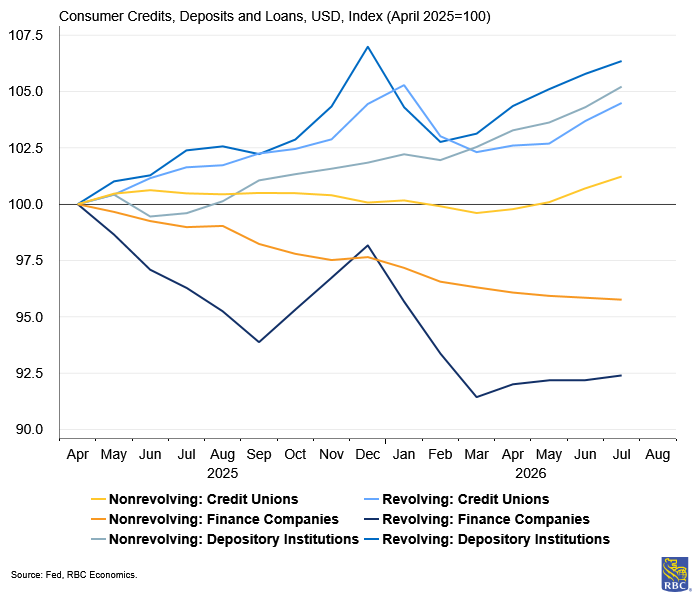
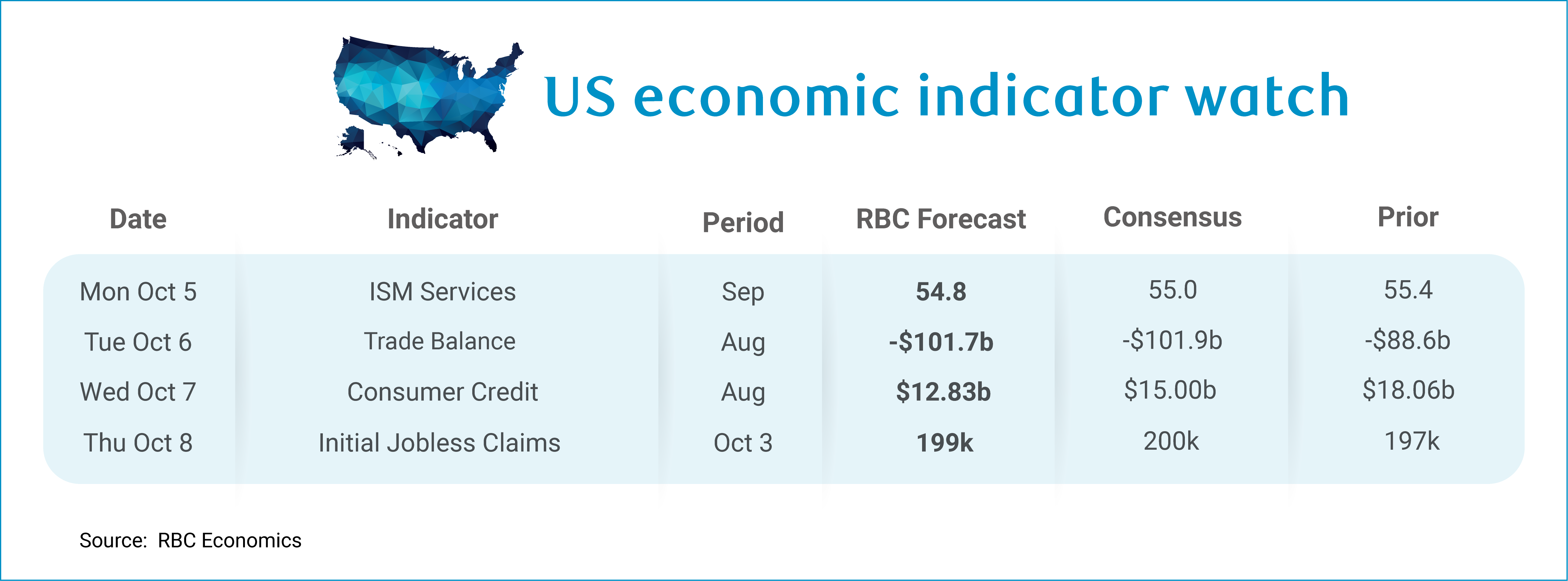
We get consumer credit data for August next week and anticipate it will paint a concerning picture. We forecast consumer credit outstanding will rise by $12.8 billion, driven primarily by revolving consumer credit (i.e., credit cards). Since Liberation Day, revolving consumer credit outstanding has increased by nearly 5% as consumers tapped into credit to maintain spending amid slowing wage growth. Consumers are also saving a smaller share of their take-home income. While the August personal income and spending report delivered a sizeable upward revision to the personal savings rate — to 4.1% — the downward trend is concerning, with the rate sitting at its lowest level in four years.
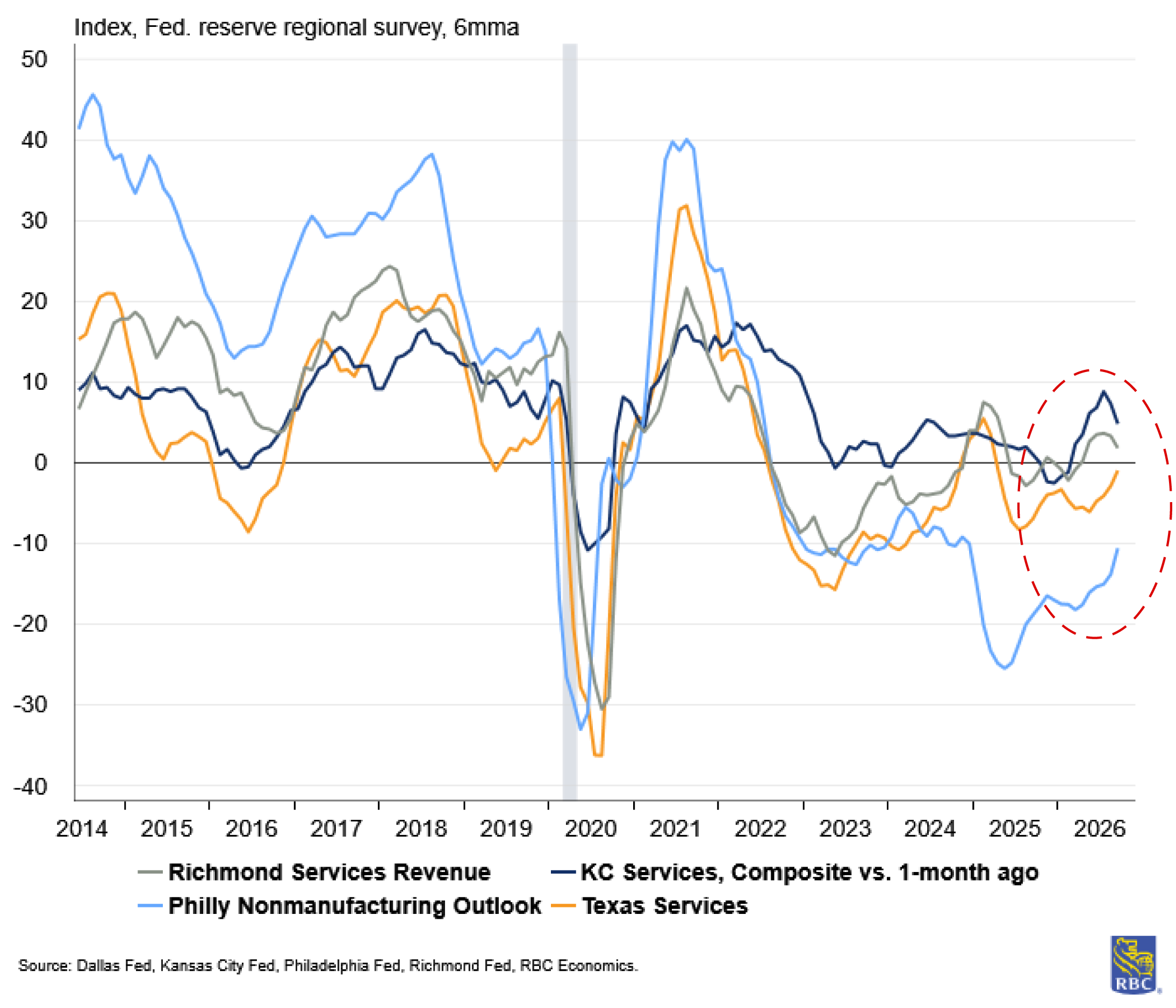
ISM Services will draw attention after an outsized market reaction to the uptick in both the preliminary S&P manufacturing and services PMIs. Contrary to the S&P data, we expect ISM will point to a services sector that is expanding but at a slower pace, at 54.8. S&P and ISM Services PMIs have moved in opposite directions in 13 of the past 24 months, and we tend to give more weight to ISM because it is a better indicator of GDP growth. The regional Fed surveys reinforce this view — Kansas City flagged flat services activity alongside the Richmond Fed’s regional survey, while activity in both Texas and Philadelphia deteriorated. This is consistent with real personal spending data for services, where the month-over-month pace of growth has slowed since May. While we expect high-income consumers will continue to support positive services spending, growth ahead risks being constrained by the consumer credit strain.
The good news is that despite inflationary pressures weighing on consumers, the labor market remains stable for now. Initial jobless claims have been declining since the beginning of the year and moved sideways through September. We expect this trend to hold, with initial claims coming in at 199K for the week ending October 3rd.
Credit card balances climb as inflation weighs on budgets
Regional Fed surveys flag slowing services momentum
About the authors:
Mike Reid is Head of US Economics at RBC. He is responsible for generating RBC’s US economic outlook, providing commentary on macro indicators, and producing written analysis around the economic backdrop.
Carrie Freestone is a Senior US Economist at RBC. She is responsible for generating RBC’s US economic forecasts across GDP, employment, and inflation, and providing macro commentary through publications, presentations, and the media.
Imri Haggin is an US Economist at RBC, where he focuses on thematic research. His prior work has centered on consumer credit dynamics and treasury modeling, with an emphasis on leveraging data to understand behavior.
This article is intended as general information only and is not to be relied upon as constituting legal, financial or other professional advice. The reader is solely liable for any use of the information contained in this document and Royal Bank of Canada (“RBC”) nor any of its affiliates nor any of their respective directors, officers, employees or agents shall be held responsible for any direct or indirect damages arising from the use of this document by the reader. A professional advisor should be consulted regarding your specific situation. Information presented is believed to be factual and up-to-date but we do not guarantee its accuracy and it should not be regarded as a complete analysis of the subjects discussed. All expressions of opinion reflect the judgment of the authors as of the date of publication and are subject to change. No endorsement of any third parties or their advice, opinions, information, products or services is expressly given or implied by Royal Bank of Canada or any of its affiliates.
This document may contain forward-looking statements within the meaning of certain securities laws, which are subject to RBC’s caution regarding forward-looking statements. ESG (including climate) metrics, data and other information contained on this website are or may be based on assumptions, estimates and judgements. For cautionary statements relating to the information on this website, refer to the “Caution regarding forward-looking statements” and the “Important notice regarding this document” sections in our latest climate report or sustainability report, available at: https://www.rbc.com/community-social-impact/reporting-performance/index.html. Except as required by law, none of RBC nor any of its affiliates undertake to update any information in this document.

