

 EN



Bottom Line:
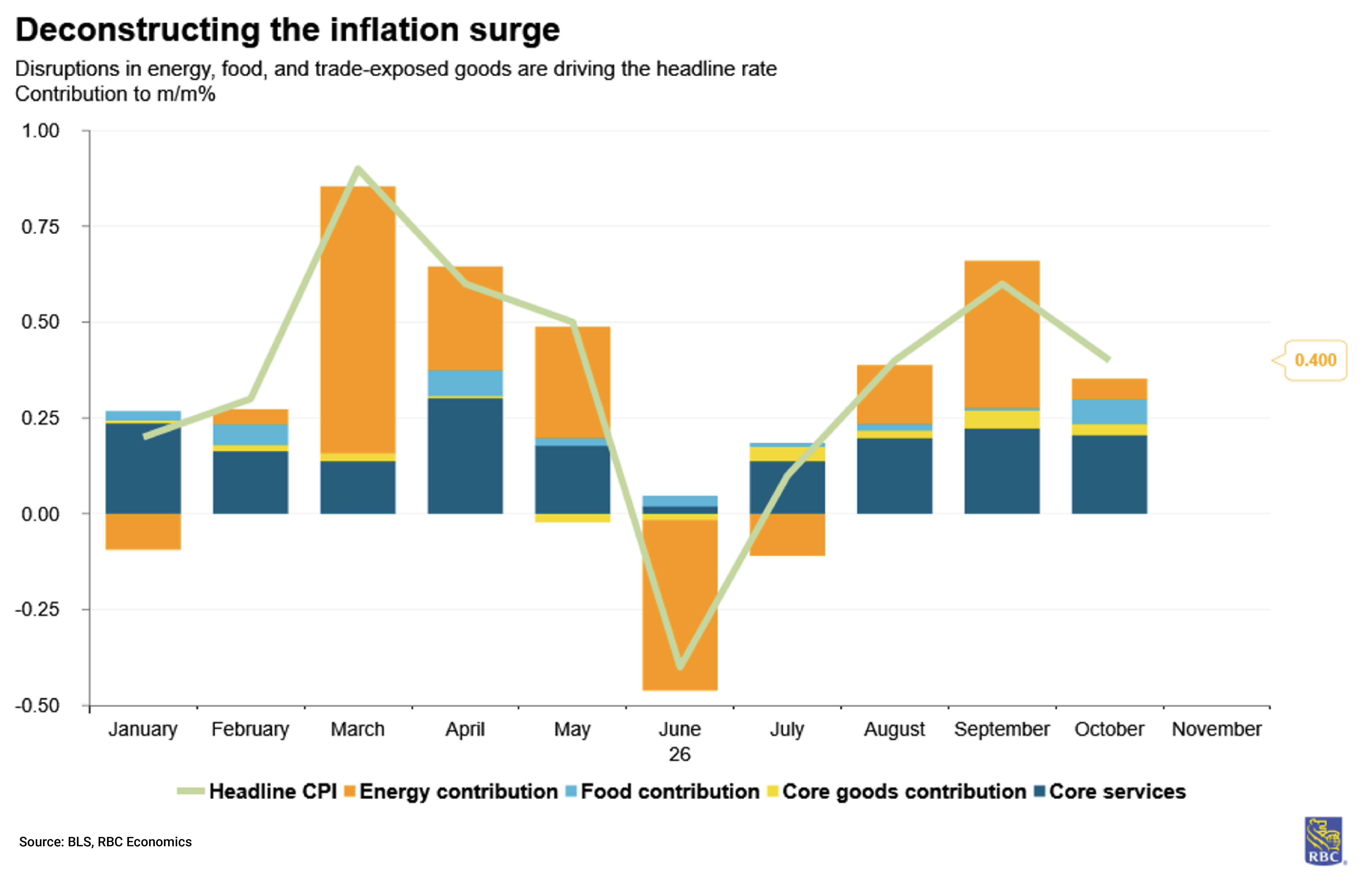
We have an inflation problem. The CPI report surprised to the upside, as broad based inflationary pressures continue to show up across many sectors. Headline inflation rose 0.4% m/m while core remained elevated at 0.3% m/m. While BLS did not officially report the y/y pace of inflation, by our estimate both measures accelerated to 3.9% and 2.8% respectively.
As the last CPI report before the Fed’s last meeting of 2026, this all but confirms our expectation that another hike is on the table. But the question remains, will additional hikes be effective in bringing inflation back down? We don’t think the supply driven factors will respond, and much of the inflationary pressure is already baked into the pipeline.
Energy prices are spilling over – goods prices continue to trend higher driven by elevated freight transportation costs. But services are accelerating as well, due to energy – public transport stood out today – but also due to tariff impacts. Just look at auto repair costs and the closely related auto insurance costs – both moved meaningfully, pushed up by tariffs on auto parts (in addition to freight costs).
Our concern moving forward is that the tariff impact was subdued throughout 2025 due to the pre-tariff inventory buildup and the overturn of IEEPA and subsequent refunds. But those buffers are running out – in fact the Q3 2026 GDP report saw the first increase of inventories since Q1 2025, meaning the restocking of inventories is now fully subject to tariffs. With a limited off-ramp to the war in Iran, the short-term prospect for relief in oil prices is limited and therefore we expect freight costs will remain a burden.
Another problem for the Fed is the inflation that is demand driven is rather insensitive to rate hikes as well. Part of that is the AI story, but we continue to see strong demand for discretionary services (e.g., hotels, recreation, food away from home) driven by older consumers, many of whom are set to get a 3.6% COLA in January for Social Security income. And they would likely welcome the added tailwind of additional rate hikes to add to their interest income.
The details:
Core goods inflation continues to be a problem (+0.2% m/m) – with pressures continuing in trade-reliant products: household furnishings and supplies (+0.7% m/m), medical care commodities (+0.5% m/m), recreation goods (+0.7% m/m), and education & communication equipment (+0.5% m/m). And higher prices for motor vehicle parts and equipment have started to spill over into new car prices (+0.3% m/m) as well as maintenance & repair (+0.6% m/m) and auto insurance (+0.7% m/m).
Core services remain elevated and supercore (services less energy and housing) rose +0.4% m/m and has been accelerating aggressively since August. Demand for discretionary services remains robust, reflected by prices for hotels (+0.6% m/m), food away from home (+0.5% m/m), and recreation services (+0.9% m/m).
About the authors:
Mike Reid is Head of US Economics at RBC. He is responsible for generating RBC’s U.S. economic outlook, providing commentary on macro indicators, and producing written analysis around the economic backdrop.
Carrie Freestone is a Senior US Economist at RBC. She is responsible for generating RBC’s US economic forecasts across GDP, employment, and inflation, and providing macro commentary through publications, presentations, and the media.
Imri Haggin is an US Economist at RBC, where he focuses on thematic research. His prior work has centered on consumer credit dynamics and treasury modeling, with an emphasis on leveraging data to understand behavior.
This article is intended as general information only and is not to be relied upon as constituting legal, financial or other professional advice. The reader is solely liable for any use of the information contained in this document and Royal Bank of Canada (“RBC”) nor any of its affiliates nor any of their respective directors, officers, employees or agents shall be held responsible for any direct or indirect damages arising from the use of this document by the reader. A professional advisor should be consulted regarding your specific situation. Information presented is believed to be factual and up-to-date but we do not guarantee its accuracy and it should not be regarded as a complete analysis of the subjects discussed. All expressions of opinion reflect the judgment of the authors as of the date of publication and are subject to change. No endorsement of any third parties or their advice, opinions, information, products or services is expressly given or implied by Royal Bank of Canada or any of its affiliates.
This document may contain forward-looking statements within the meaning of certain securities laws, which are subject to RBC’s caution regarding forward-looking statements. ESG (including climate) metrics, data and other information contained on this website are or may be based on assumptions, estimates and judgements. For cautionary statements relating to the information on this website, refer to the “Caution regarding forward-looking statements” and the “Important notice regarding this document” sections in our latest climate report or sustainability report, available at: https://www.rbc.com/community-social-impact/reporting-performance/index.html. Except as required by law, none of RBC nor any of its affiliates undertake to update any information in this document.

