

 EN



The Federal Reserve held interest rates steady at the October meeting, as expected. The Fed’s meeting today was a clearly intended placeholder, with explicit references to needing to wait to “accumulate more information”. Some minor upgrading of growth expectations and some references in the press conference to ongoing concerns about inflation are consistent with our expectation that two more rate hikes are ahead.
Fed Chair Warsh also unveiled a change to meetings starting next year. The change adds “strategy” meetings with no rate decisions – with one scheduled for 2027 and two in 2028, meaning we’d only get 6 rate decisions in 2028. Some strategic thinking is probably warranted to assess why it makes sense to both see persistent inflation but not necessarily an aggressive hiking cycle as we might have seen in the past.
It is pertinent to reiterate that two additional hikes (or more) are unlikely to meaningfully tame inflation that is driven by both supply shocks and demand that is relatively insensitive to interest rates. With oil prices up 20% year-over-year amid the Iran War, many are likening the current inflation environment to the late 1970s and early 1980s’ during the Iranian Revolution, when then-Fed Chair Paul Volcker intervened with an impromptu 100-basis-point hike and subsequently ratcheted interest rates up to 20% in less than two years. But this is no “Saturday Night Massacre” and this is not a 1980s’ hiking cycle. Why don’t we expect the Fed to hike aggressively? In essence, the current economy looks very different.
Here are five reasons why:
1. Consumers are less exposed to higher gasoline prices
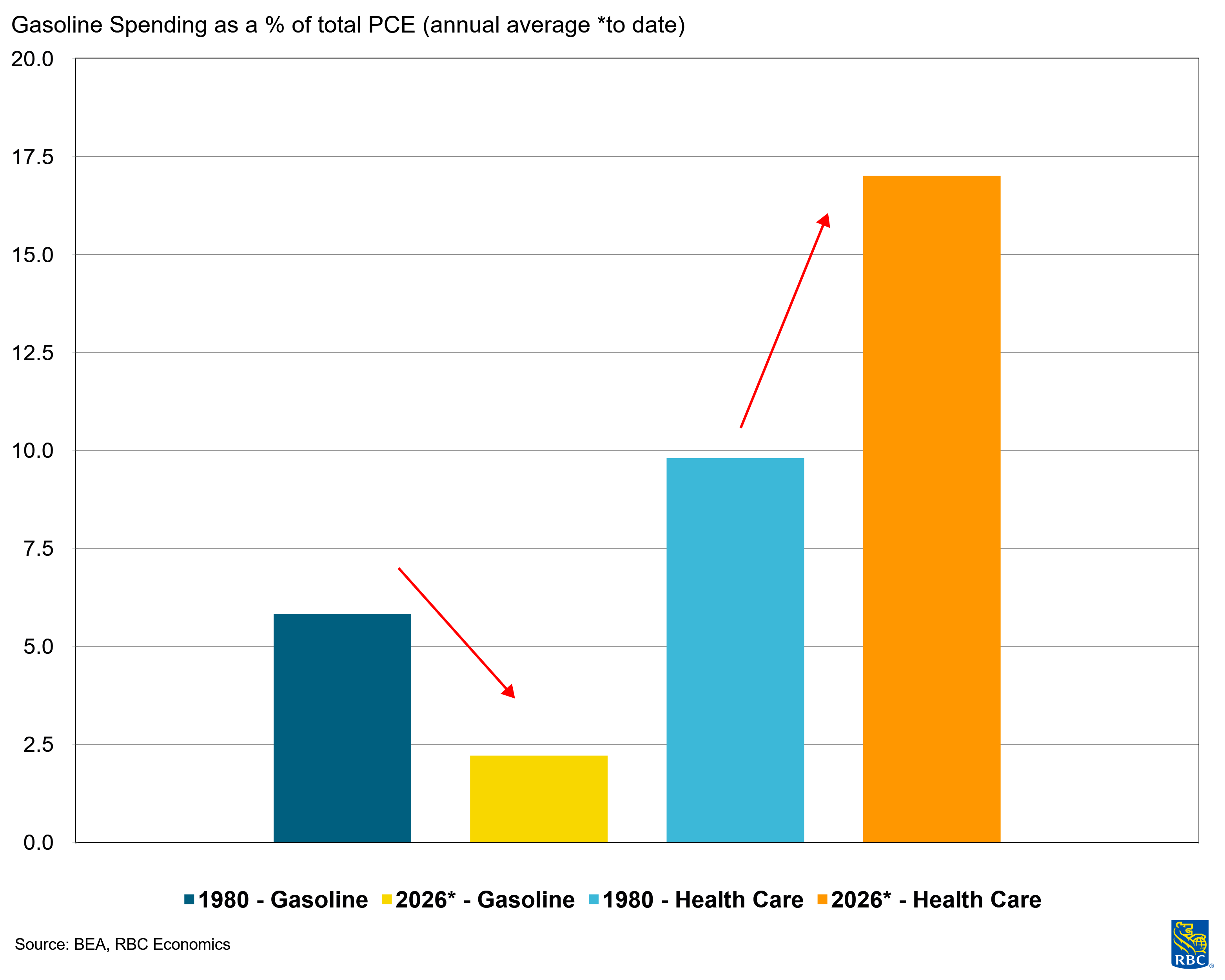
Gasoline accounted for nearly 6% of household spending in 1980; today it represents just over 2%. Services now make up two-thirds of consumption, with a growing share going to health care as the population ages — spending that is largely non-discretionary and therefore less rate-sensitive. This lower relative exposure to energy prices is one reason consumer spending has remained resilient despite seven months of double-digit energy inflation. Real personal spending is up 2.5% year-over-year, whereas in 1980 it outright declined.
2. Non-labor income makes up a larger share of total personal income today
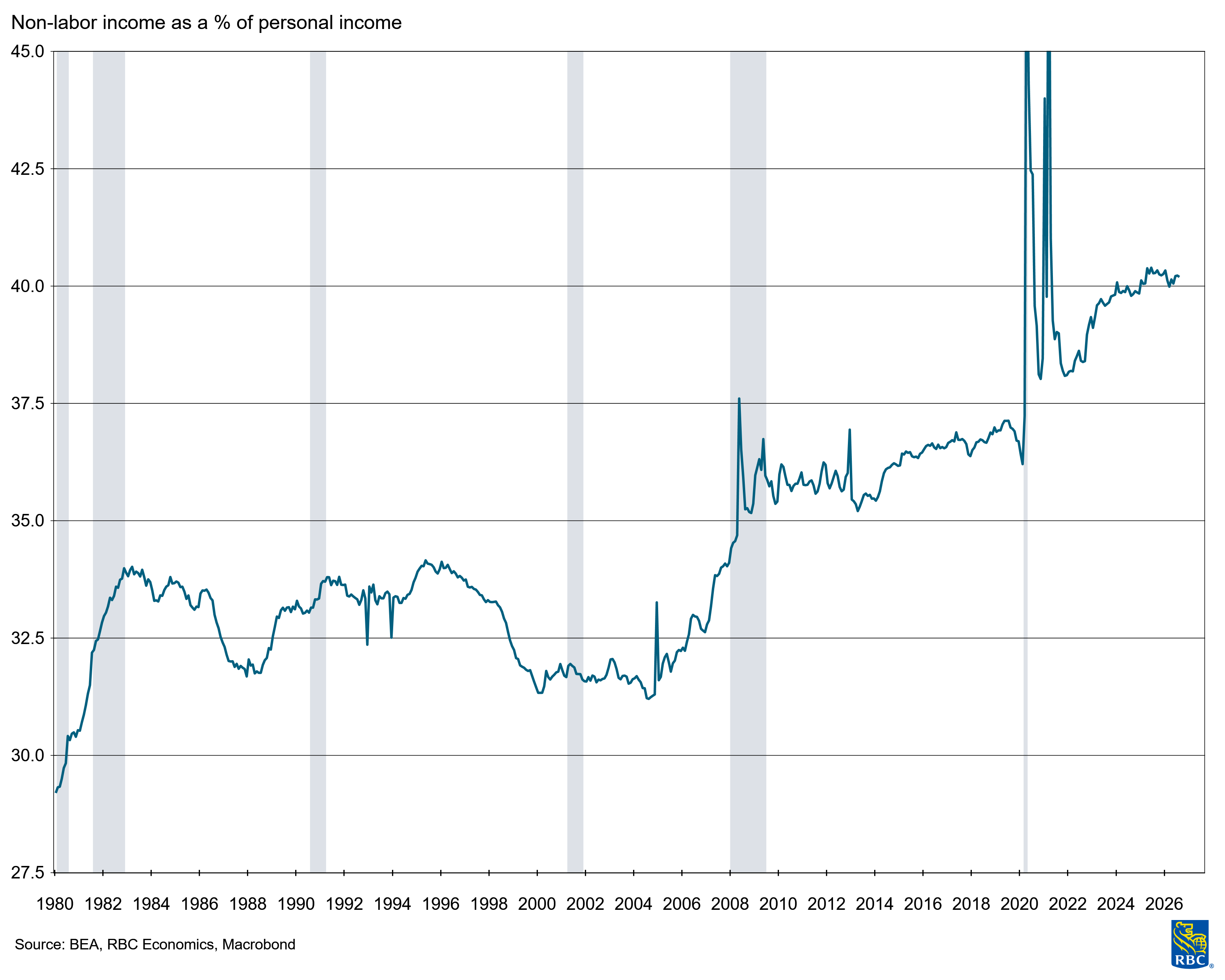
In 1980, wages accounted for 60% of personal income, so the key question was whether wage growth was keeping pace with inflation. Today, non-labor income — transfers, interest, dividends and rents — represents a much larger share. The most relevant question, therefore, is how interest rate hikes affect these sources. The answer is not much. In fact, higher interest rates would provide a boost to interest income and do little to change the other income sources in the short term. Additionally, retirees are set for a 3.6% boost to Social Security income in January through cost-of-living adjustments.
3. Non-residential investment accounts for a massive share of GDP
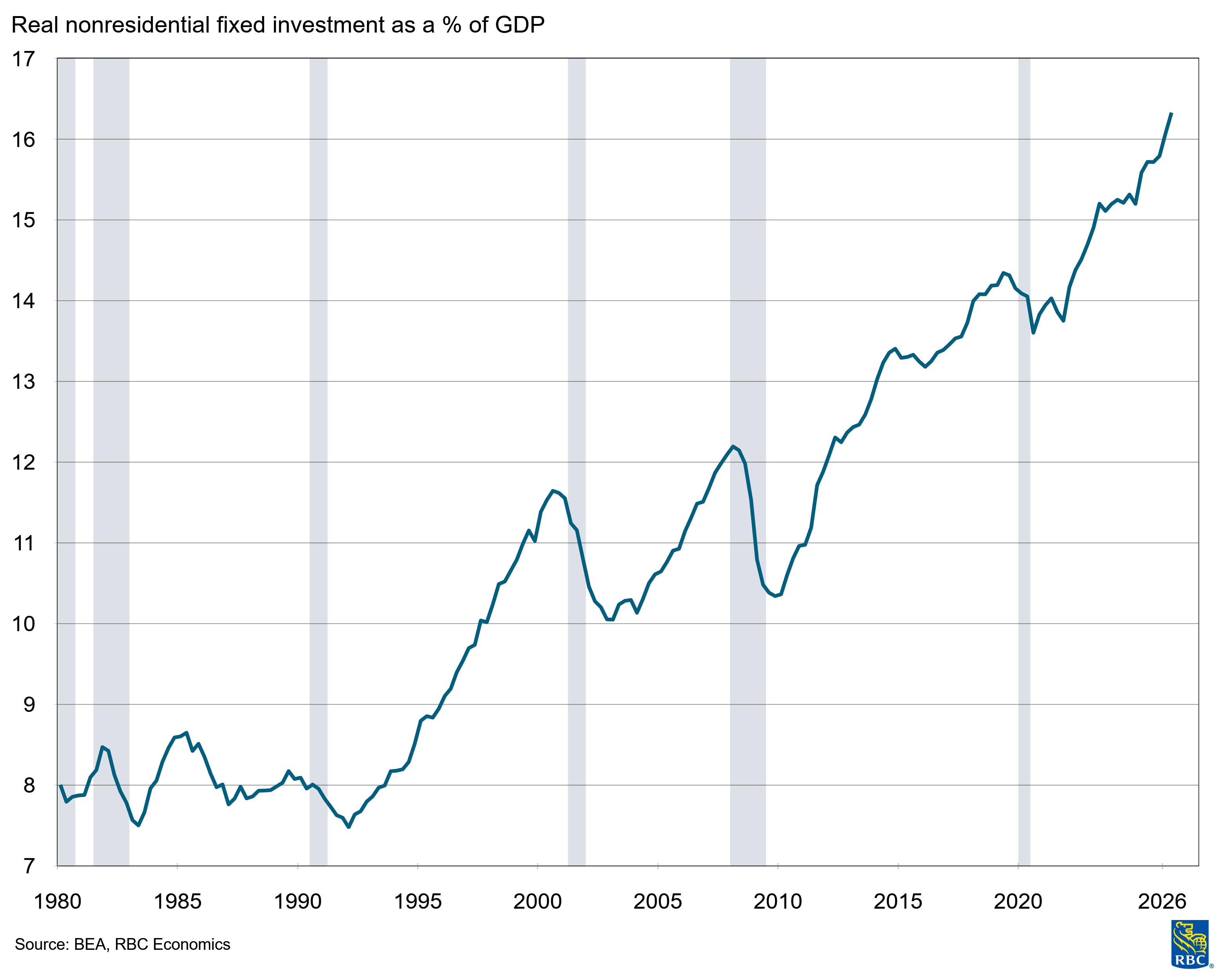
The AI buildout has fueled a surge in non-residential equipment investment, and the firms driving that spending — predominantly large companies with significant access to capital — are unlikely to pull back in response to modestly higher rates. Chair Warsh himself has acknowledged that an AI-driven productivity boom could ultimately lead to lower costs, reinforcing the incentive to invest. Non-residential investment now accounts for 16% of real GDP, double its share in the 1980s’, and the bar for rate hikes to alter that trajectory is well above our expected path through 2027.
4. The US labor market is still exceptionally tight
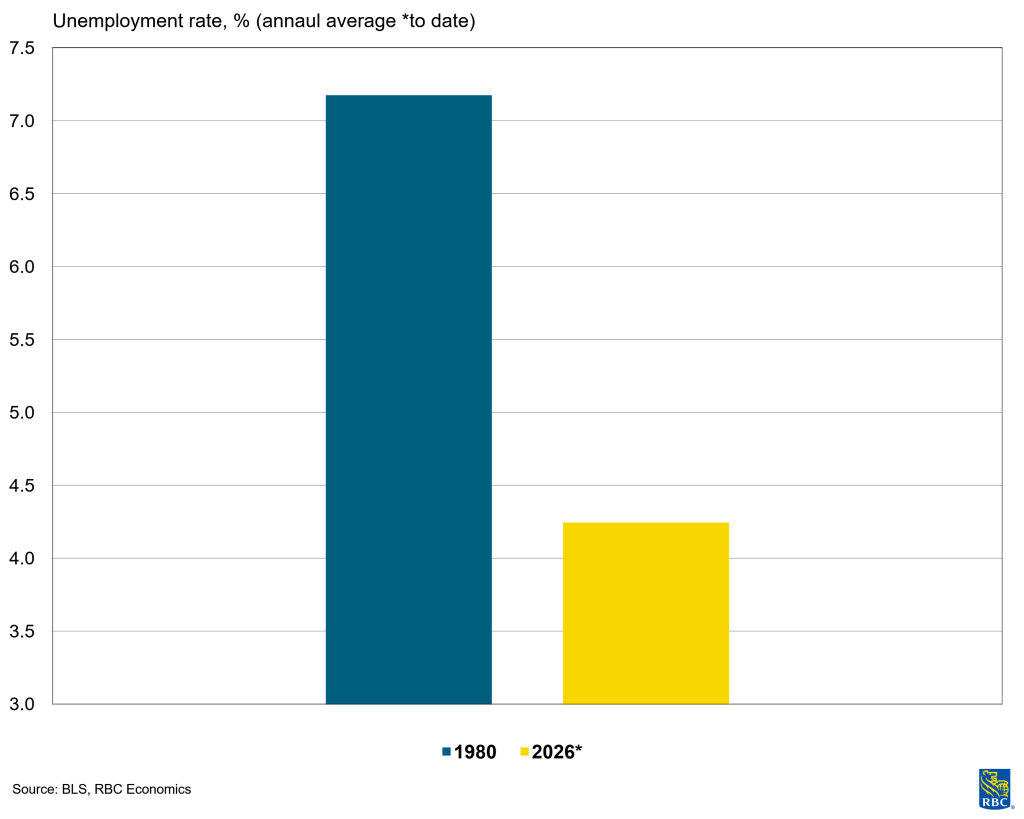
At 4.2%, the unemployment rate sits near a record low as retirements push breakeven employment to exceptionally low levels. Jobless claims have moved sideways since 2026, re-employment rates remain high for those who have lost jobs, and average weekly hours are increasing — suggesting workers can boost hours or take on second jobs as underemployment trends lower. The data is simply not showing signs of layoffs to preserve margins. In contrast, the unemployment rate rose 2 full percentage points between 1979 and 1980, and although economists’ calculations of the equilibrium unemployment rate (NAIRU) was estimated to be much higher then, unemployment still sat well above it. Today, we are likely just below NAIRU.
5. The Federal deficit accounts for a growing share of GDP
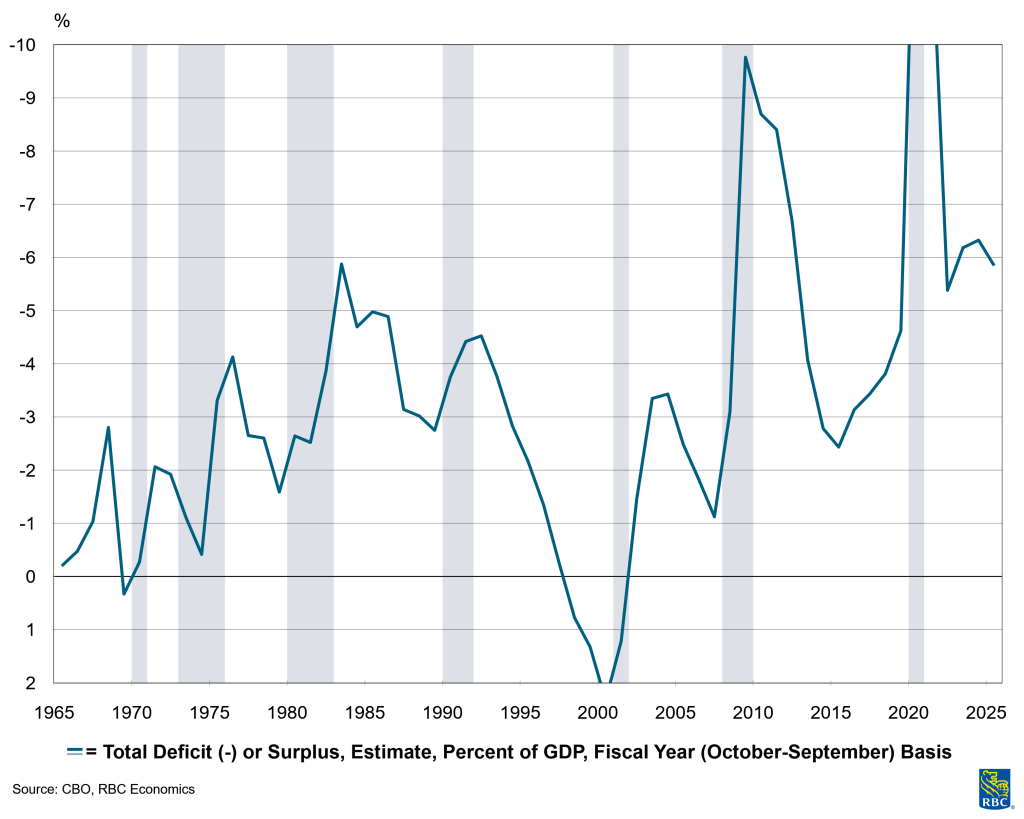
Households may be less exposed to both interest rates and inflation than in the 1980s’, but the federal government is not. The US deficit now exceeds 6% of nominal GDP — a record outside of a recession and more than double 1980 levels — funded by over $40 trillion in outstanding debt, or more than 125% of GDP, the highest on record. As yields rise across the curve, the Treasury’s balance sheet will bear the cost, particularly since federal debt and interest payable make up two-thirds of government liabilities. Importantly, the government budget is set and interest rates aren’t going to change it nor its impact on the economy.
About the authors:
Mike Reid is Head of US Economics at RBC. He is responsible for generating RBC’s US economic outlook, providing commentary on macro indicators, and producing written analysis around the economic backdrop.
Carrie Freestone is a Senior US Economist at RBC. She is responsible for generating RBC’s US economic forecasts across GDP, employment, and inflation, and providing macro commentary through publications, presentations, and the media.
Imri Haggin is an US Economist at RBC, where he focuses on thematic research. His prior work has centered on consumer credit dynamics and treasury modeling, with an emphasis on leveraging data to understand behavior.
This article is intended as general information only and is not to be relied upon as constituting legal, financial or other professional advice. The reader is solely liable for any use of the information contained in this document and Royal Bank of Canada (“RBC”) nor any of its affiliates nor any of their respective directors, officers, employees or agents shall be held responsible for any direct or indirect damages arising from the use of this document by the reader. A professional advisor should be consulted regarding your specific situation. Information presented is believed to be factual and up-to-date but we do not guarantee its accuracy and it should not be regarded as a complete analysis of the subjects discussed. All expressions of opinion reflect the judgment of the authors as of the date of publication and are subject to change. No endorsement of any third parties or their advice, opinions, information, products or services is expressly given or implied by Royal Bank of Canada or any of its affiliates.
This document may contain forward-looking statements within the meaning of certain securities laws, which are subject to RBC’s caution regarding forward-looking statements. ESG (including climate) metrics, data and other information contained on this website are or may be based on assumptions, estimates and judgements. For cautionary statements relating to the information on this website, refer to the “Caution regarding forward-looking statements” and the “Important notice regarding this document” sections in our latest climate report or sustainability report, available at: https://www.rbc.com/community-social-impact/reporting-performance/index.html. Except as required by law, none of RBC nor any of its affiliates undertake to update any information in this document.
Get the latest forecasts and analysis from RBC Economics.
Subscribe Now
- 1. Consumers are less exposed to higher gasoline prices
- 2. Non-labor income makes up a larger share of total personal income today
- 3. Non-residential investment accounts for a massive share of GDP
- 4. The US labor market is still exceptionally tight
- 5. The Federal deficit accounts for a growing share of GDP
