

 EN
EN 



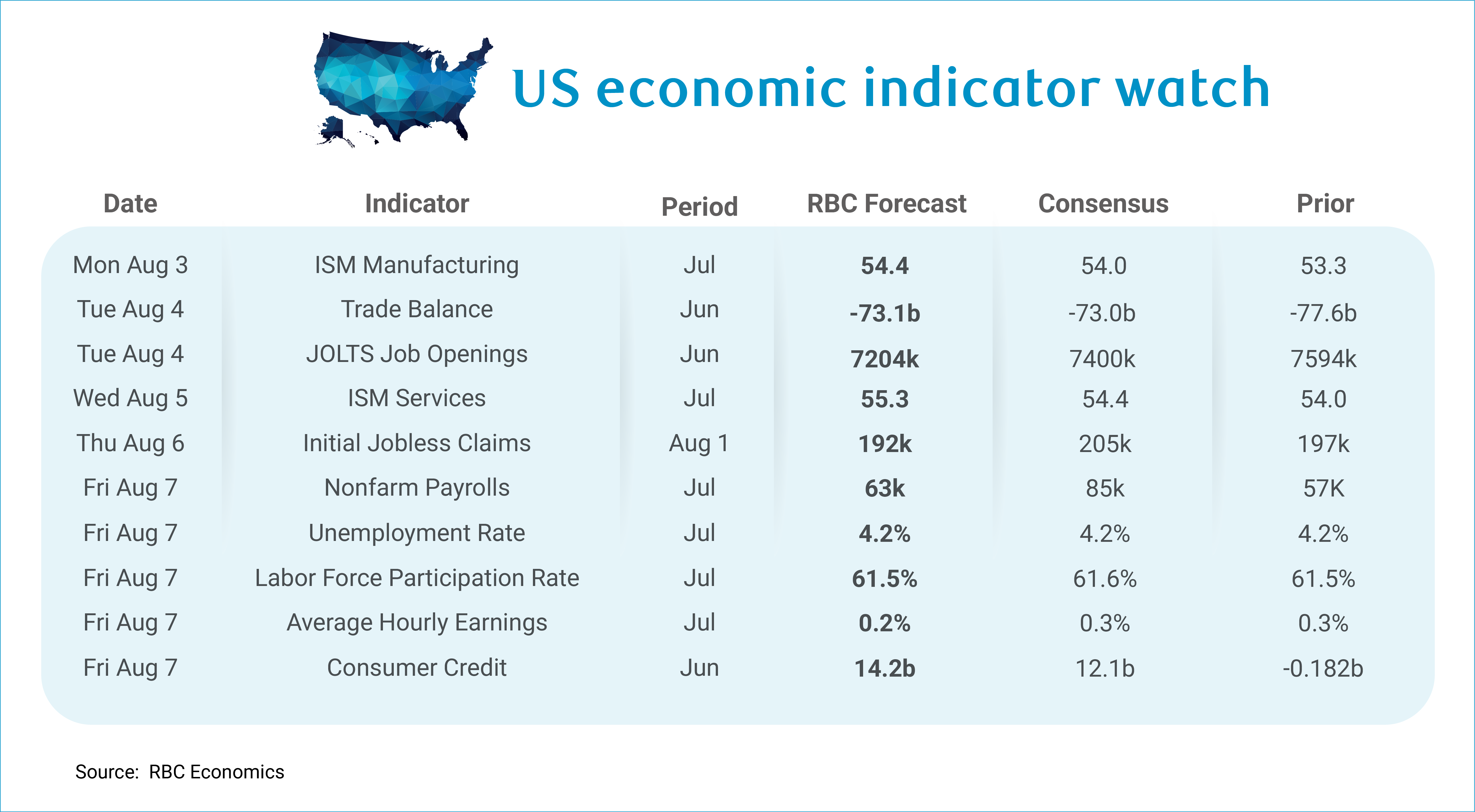
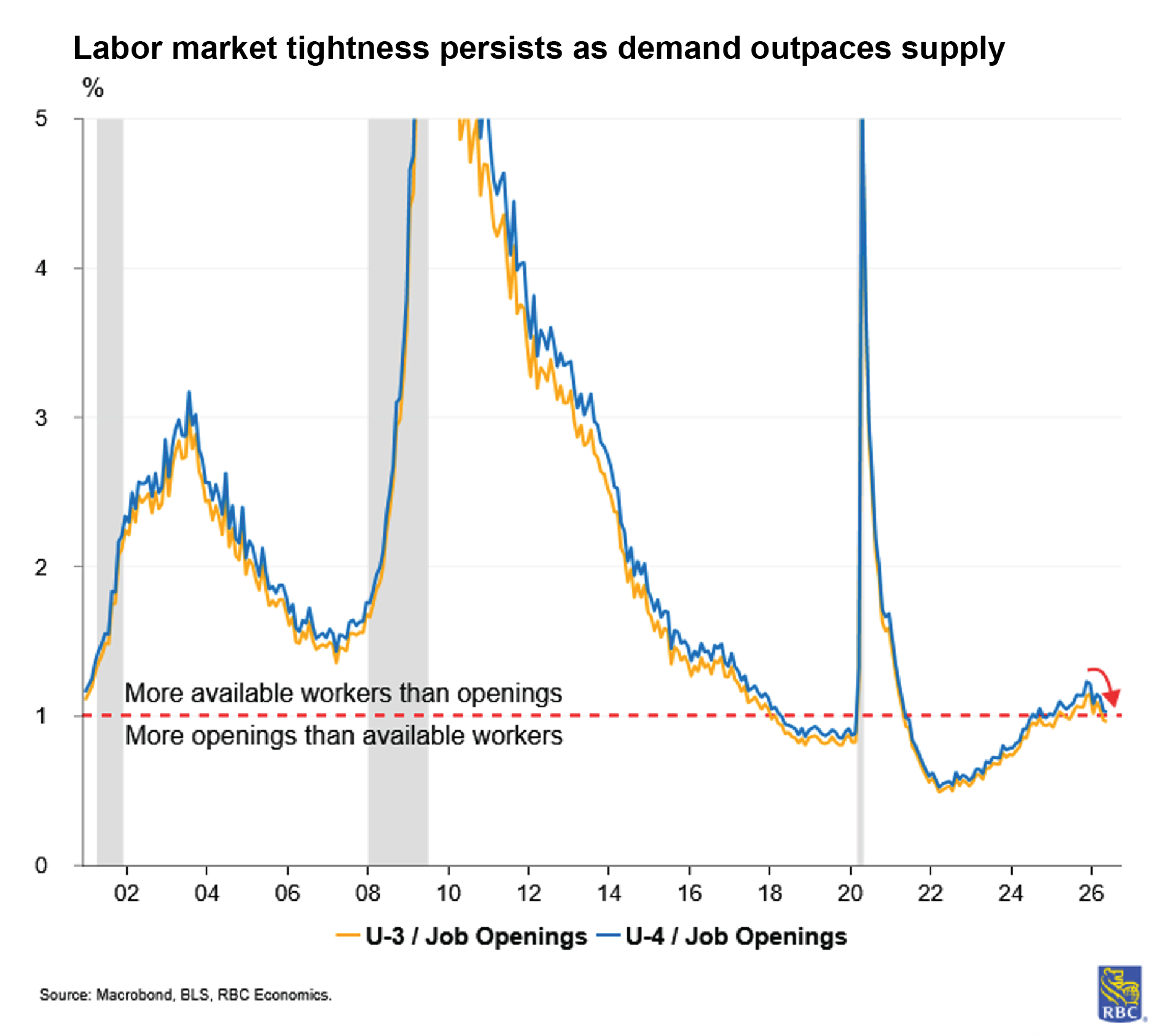
Next week, we will be focused on the July employment report. We do not expect that it will change the prevailing narrative that the labor market remains exceptionally tight. We look for nonfarm payrolls to rise by 63K – a pace the is notably slower than H1 but it is sufficient to keep the unemployment rate steady at 4.2%. Layoffs remain exceptionally low, and July marked the largest reference-week to reference-week drop (-39k) in initial claims this year while continuing claims also fell by a notable 30k.
The breadth of hiring narrowed in June, and we expect that this will continue in July. Health care and social assistance will likely account for the bulk of job gains as structural hiring continues to be the primary driver of job creation. AI-buildout has bolstered hiring in the nonresidential construction sector which we expect will continue but gains there will likely be offset by weakness in residential construction.
Trade-exposed sectors are still recovering (roughly half of jobs shed in 2025 have been added back) but we expect to see weakness in manufacturing due to seasonal re-tooling. With new tariffs in place, trade-reliant sectors including wholesale, transportation, and warehousing are at risk of seeing their recovery cut short in the coming months. For now, we don’t expect meaningful gains in July.
Services hiring has been a mixed bag with job losses concentrated in information and finance. After leisure and hospitality shed a sizeable number of jobs in June, we expect losses to continue with the conclusion of the World Cup. Within financial activities, a weak residential real estate market is resulting in notable job losses. Real estate, rental and leasing shed about 34k jobs since the end of 2023. Mortgage and non-mortgage loan brokering have cut around 45k jobs since peaking in early 2022. We expect this weakness to continue this month and through year-end as the housing market remains stuck and reacts to a recent rise in mortgage rates.
Despite the slowdown in payrolls this year, we do expect the unemployment rate to hold steady through year end. This means the Fed’s focus should remain on inflation. We will get early signs of inflationary pressures next week with both the ISM Manufacturing and Services releases. While we expect both to improve, more focus should be given to the price indices. Although both saw prices paid improve in June on cooler energy costs, the reversal in oil prices will likely cause both to reverse course. Regardless, both price indices remain exceptionally high and point to a sticky inflation backdrop ahead.
About the authors:
Mike Reid is Head of US Economics at RBC. He is responsible for generating RBC’s US economic outlook, providing commentary on macro indicators, and producing written analysis around the economic backdrop.
Carrie Freestone is a Senior US Economist at RBC. She is responsible for generating RBC’s US economic forecasts across GDP, employment, and inflation, and providing macro commentary through publications, presentations, and the media.
Imri Haggin is an US Economist at RBC, where he focuses on thematic research. His prior work has centered on consumer credit dynamics and treasury modeling, with an emphasis on leveraging data to understand behavior.
This article is intended as general information only and is not to be relied upon as constituting legal, financial or other professional advice. The reader is solely liable for any use of the information contained in this document and Royal Bank of Canada (“RBC”) nor any of its affiliates nor any of their respective directors, officers, employees or agents shall be held responsible for any direct or indirect damages arising from the use of this document by the reader. A professional advisor should be consulted regarding your specific situation. Information presented is believed to be factual and up-to-date but we do not guarantee its accuracy and it should not be regarded as a complete analysis of the subjects discussed. All expressions of opinion reflect the judgment of the authors as of the date of publication and are subject to change. No endorsement of any third parties or their advice, opinions, information, products or services is expressly given or implied by Royal Bank of Canada or any of its affiliates.
This document may contain forward-looking statements within the meaning of certain securities laws, which are subject to RBC’s caution regarding forward-looking statements. ESG (including climate) metrics, data and other information contained on this website are or may be based on assumptions, estimates and judgements. For cautionary statements relating to the information on this website, refer to the “Caution regarding forward-looking statements” and the “Important notice regarding this document” sections in our latest climate report or sustainability report, available at: https://www.rbc.com/community-social-impact/reporting-performance/index.html. Except as required by law, none of RBC nor any of its affiliates undertake to update any information in this document.

