1501355-Thumbnail-default

Les technologies vertes novatrices sont essentielles afin de préserver l’environnement et de stimuler la croissance économique, mais de nombreux obstacles entravent leur développement.

Un écosystème diversifié d’entreprises et d’investisseurs, qui encourage l’innovation et ouvre l’accès aux capitaux, est nécessaire en vue de soutenir l’essor des technologies propres et de favoriser leur adoption par le marché.

Pour relever les défis climatiques mondiaux à l’aide d’actions efficaces, nous avons besoin d’une diversité de points de vue. C’est pourquoi les femmes et les membres des collectivités sous-représentées doivent faire partie de la solution.

Pourtant, bien que les femmes de tous les horizons soient l’une des forces motrices de l’économie de l’innovation au Canada, elles sont considérablement sous-représentées dans le domaine des technologies propres où seulement une entreprise sur dix a été fondée par une femme.

Que faut-il pour briser le plafond de verre? Comment pouvons-nous encourager et inspirer une nouvelle vague d’entrepreneuses? Premièrement, nous devons reconnaître l’inégalité systémique et créer des voies d’accès aux possibilités et à la réussite.

Chaque année, le 8 mars, la Journée internationale de la femme est l’occasion de célébrer les réalisations sociales, économiques, culturelles et politiques des femmes. C’est aussi le moment d’appeler à redoubler d’efforts en vue de l’égalité entre les sexes et de faire connaître les défis auxquels les femmes sont confrontées.

Dans cet épisode du balado Les innovateurs, John Stackhouse anime une table ronde en compagnie d’Alison Nankivell, la nouvelle cheffe de la direction de MaRS Discovery District, organisme sans but lucratif et principal centre d’innovation urbaine en Amérique du Nord, qui offre du soutien aux entreprises en démarrage. Nous accueillons trois femmes qui se trouvent en première ligne des technologies propres au Canada : Myra Arshad d’ALT TEX, Natalie Ashdown d’Evoco et Jacqueline Hutchings de Friendlier.
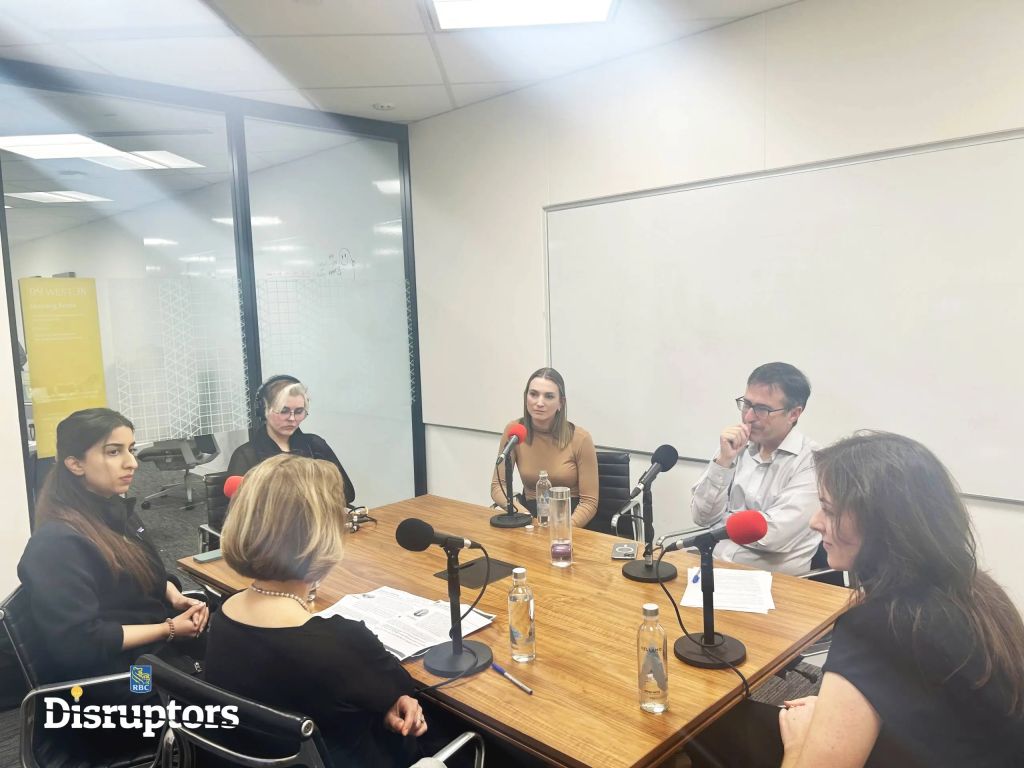
Le programme accélérateur Femmes du secteur des technologies propres RBC collabore avec MaRS afin d’appuyer les entrepreneuses qui cherchent à concrétiser leurs idées novatrices à l’aide de produits propres, prêts à être commercialisés et susceptibles de générer des retombées à l’échelle mondiale.

Pour en savoir plus sur :

Le programme accélérateur Femmes du secteur des technologies propres RBC, cliquez ici.

Orateur 1 [00:00:01] Bonjour à tous. Mon nom est John. Aujourd’hui, nous allons faire les choses un peu différemment. En effet, alors que sera sous peu célébrée la Journée internationale des femmes, dans le cadre du présent épisode, nous allons nous entretenir avec des femmes innovantes qui mènent la charge dans le domaine des technologies propres au Canada. Je suis accompagné aujourd’hui d’Alison Nankivell, la nouvelle cheffe de la direction de MaRS Discovery District (MaRS), ici à Toronto. MaRS constitue le plus important centre d’innovation urbaine d’Amérique du Nord, en plus d’être un organisme sans but lucratif qui fournit un soutien direct à des entreprises en démarrage, permettant ainsi à une communauté d’innovateurs d’accélérer l’adoption de solutions à fortes retombées pour certains des problèmes les plus pressants qui nous affligent à travers le monde. Nous nous retrouvons ici, dans le cadre d’une table ronde, dans l’édifice Royal Bank Plaza, au centre-ville de Toronto, pour discuter avec certaines de ces entrepreneures qui font également partie du programme accélérateur Femmes du secteur des technologies propres RBC. À Alison et moi-même se joint Myra Arshad, cheffe de la direction de la société ALT TEX, qui a en fait pour vocation de transformer des aliments en tissu. Nous en entendrons beaucoup plus sur ce sujet un peu plus tard. Nous retrouvons également Natalie Ashdown, cheffe de l’exploitation de la société Evoco, qui met l’accent sur les produits durables. Pensez, si vous le voulez bien, à une solution en vertu de laquelle tous les produits que nous connaissons et utilisons dans le cadre de notre vie quotidienne feraient appel à la chimie végétale. Enfin se joint à nous Jackie Hutchings, directrice des revenus de la société Friendlier, qui s’est donné pour mission d’éliminer les plastiques à usage unique dans la livraison de nourriture. Nous nous retrouvons dans le cadre du balado de RBC appelé Les innovateurs. Mon nom est John Stackhouse.

Orateur 1 [00:01:25] Alison, je suis absolument ravi de vous retrouver.

Oratrice 2 [00:01:27] Merci de m’avoir invitée, John. Je suis ravie d’être ici en compagnie de femmes exceptionnelles.

Orateur 1 [00:01:31] Et permettez-moi de vous féliciter pour votre nouveau rôle. Si vous n’êtes pas encore officiellement entrée en fonction, vous êtes désormais la nouvelle dirigeante de MaRS. J’aimerais tout d’abord traiter, Alison, de vos débuts dans le domaine de la finance. Car, avant d’entrer au service de MaRS, vous étiez à la Banque de développement du Canada (BDC), où vous avez dirigé une grande partie de son travail dans le domaine du capital de risque. Et avant cela, vous aviez connu une formidable carrière, allant d’Exportation et développement Canada (EDC) au Régime de retraite des enseignantes et des enseignants de l’Ontario.

Oratrice 2 [00:01:52] Oui. Je dois dire que j’ai connu un parcours tout à fait passionnant en travaillant tant au niveau international, dans le domaine de la finance, que par la suite au niveau national. Mais je me ravis véritablement du fait qu’une partie importante de mes activités professionnelles m’ont menée à l’écosystème canadien du capital de risque. Et que, par ailleurs, j’ai eu la chance, tant auprès de la BDC qu’aujourd’hui auprès de MaRS, de collaborer avec un si grand nombre de fondateurs et d’entreprises en démarrage tout à fait exceptionnels. Je suis donc extrêmement enthousiaste à l’idée de tabler sur les connaissances préalablement acquises dans le domaine du financement pour travailler, à titre de cheffe de la direction, d’une manière beaucoup plus globale avec la formidable communauté de personnes qui composent notre écosystème du capital-risque.

Orateur 1 [00:02:23] Qu’est-ce qui vous a inspirée en tout premier lieu à vous tourner vers le domaine de la finance ?

Oratrice 2 [00:02:26] Pour moi, la question a toujours consisté à donner aux entreprises les moyens nécessaires pour faire les choses qu’elles souhaitent accomplir, quelle que soit la forme qu’elles prennent. Au tout début, j’ai beaucoup travaillé avec des entreprises axées sur l’exportation, et l’enjeu à l’époque tenait aux efforts qu’elles devaient engager pour conquérir de nouveaux marchés, sachant que, pour ce faire, elles avaient besoin de capitaux. Par la suite, en ce qui concerne le domaine du capital-investissement et celui du capital-risque, l’enjeu consiste à disposer de ce capital-risque pour véritablement bâtir une entreprise. Et tout cela exige de la passion et une vision. Et cela constitue toujours une chose merveilleuse que de contribuer à concrétiser la vision de quelqu’un.

Orateur 1 [00:02:56] Quelle formidable vocation. Et nous allons maintenant entendre certaines de ces entrepreneures. Je vais les laisser, dans quelques instants, nous en dire plus sur leur travail, après quoi nous engagerons la discussion. Myra, pourquoi ne commencerions-nous pas par vous ? Permettez-moi de vous souhaiter de nouveau la bienvenue à Les innovateurs puisque vous avez déjà participé à notre balado. Qu’est-ce qui vous a amenée à créer votre propre entreprise et, plus particulièrement, ALT TEX ?

Oratrice 3 [00:03:12] Merci beaucoup, John, de m’avoir à nouveau invitée. ALT TEX est ma façon bien personnelle d’avoir un impact sur cette planète. Je pense que chaque entrepreneur peut affirmer qu’il ne serait pas en mesure de s’épanouir en effectuant un travail traditionnel de 9 h à 17 h. ALT TEX représente donc une façon pour moi de tenter de contribuer à la planète d’une manière qu’un emploi traditionnel en entreprise de type 9 h à 17 h ne m’a pas permis de faire avant de lancer cette entreprise. Comme vous le savez, ALT TEX est une entreprise en démarrage dans le domaine de la biotechnologie. Nous avons créé une alternative biodégradable et recyclable au polyester à base de déchets alimentaires transformés. Comme l’alimentation et la mode sont deux des industries les plus polluantes au monde, je suis d’avis qu’en les combinant mon équipe et moi-même pouvons trouver une façon d’avoir réellement un impact.

Orateur 1 [00:03:49] L’entrepreneuriat n’est pas une affaire de 9 à 5. Voilà l’une des conclusions que je retire de vos propos. Natalie, comment êtes-vous arrivée dans le secteur de la technologie ?

Oratrice 4 [00:03:56] J’ai entrepris ma carrière dans le domaine de l’ingénierie des matériaux et des procédés et, vous savez, je me compte chanceuse d’avoir pu me lancer dans le domaine des technologies environnementales et durables ou propres. J’ai contribué à mettre sur pied l’une des premières installations de bioéthanol de troisième génération au Royaume-Uni, et cela a vraiment façonné une partie importante de ma carrière. Mon partenaire, qui est le cofondateur d’Evoco, est également ingénieur chimiste et, lorsque nous attendions notre premier enfant, nous nous sommes disputés sur le sujet du choix du matelas pour le berceau et, chaque fois que nous consultions la liste des composants, nous constations que s’y retrouvait quelque chose dont nous ne saurions tolérer la présence dans ce matelas, puisque nous savions pertinemment que ce produit était toxique. Ainsi donc, non seulement avons-nous pris conscience du fait que nous pouvions créer des matériaux qui permettraient de réduire l’impact carbone, mais nous avons réalisé que nous pouvions détoxifier de nombreux matériaux dont nous nous servons dans notre vie quotidienne, qu’il s’agisse de nos matelas, des chaises sur lesquelles nous nous assoyons, des voitures que nous conduisons de même que de nos vêtements. Voilà donc comment tout cela a commencé. Telle fut notre source d’inspiration. Nous créons les éléments de base chimiques constitutifs. Nous avons fait nos premiers pas, pour ainsi dire, dans l’industrie de la chaussure et, en adaptant ces éléments de base, nous pouvons nous tourner vers de nombreuses applications différentes.

Orateur 1 [00:04:54] Jacqueline, qu’est-ce qui vous a attirée vers le secteur de la technologie ?

Oratrice 3 [00:04:57] Comme c’est le cas de Natalie, j’ai également une formation d’ingénieure chimiste. J’ai étudié le génie chimique et j’ai travaillé dans un certain nombre d’usines de fabrication, où l’on est directement témoin de l’économie linéaire à l’œuvre. Nous nous retrouvons à produire en masse des articles dont nous savons pertinemment qu’ils seront plus tard jetés et, en vérité, cela ne me semblait tout simplement pas satisfaisant. Comme l’a dit plus tôt Myra, je ne souhaitais pas passer le reste de ma vie à travailler de 9 h à 17 h en contribuant à ce problème. En parallèle, nous sommes tous conscients du développement des enjeux climatiques auxquels nous sommes confrontés. De sorte qu’avec ma cofondatrice Kailey, nous nous sommes assises et nous sommes demandé ce que nous pouvions faire pour résoudre ce problème. Et nous avons alors découvert l’économie circulaire. Nous avons donc décidé de faire appel à la technologie pour faire en sorte qu’il soit extrêmement facile pour les entreprises d’offrir des emballages réutilisables en lieu et place d’emballages à usage unique de sorte que, plutôt que d’utiliser quelque chose une seule fois et de le jeter, nous pouvions tirer la pleine valeur des produits avant qu’ils passent à l’étape du recyclage ou de la transformation.

Orateur 1 [00:05:53] Quelles formidables histoires inspirantes. Alison, j’aimerais m’adresser à vous parce que nous approchons de la Journée internationale des femmes. Et, comme nous le savons tous, il n’y a pas suffisamment de femmes dans le domaine des technologies propres. Elles ne reçoivent pas suffisamment de financement. Vous êtes dans ce domaine depuis plusieurs années. À votre avis, quels sont les aspects auxquels nous devons nous attaquer ?

Oratrice 2 [00:06:11] Une partie de la réponse tient à la possibilité de se référer à ces premières championnes, tant du côté du capital que du côté des entreprises, qui puissent vraiment donner l’exemple. Et c’est ce à quoi nous nous employons sans relâche à MaRS, en collaboration avec RBC, avec le programme accélérateur Femmes du secteur des technologies propres. Je pense qu’il est important pour ces femmes incroyables de servir de modèles pour la prochaine génération d’entreprises de technologies propres créées par des femmes, mais également en ce qui concerne le volet des capitaux. Lorsque j’ai débuté dans le secteur, ce qui remonte à il y a trop de temps pour que j’en fasse mention ici, il me semble qu’environ 5 % de l’ensemble du capital-risque se retrouvait entre les mains de femmes. Cette proportion a augmenté au cours des 10 dernières années de telle sorte qu’elle est aujourd’hui de 20 % au Canada tandis qu’elle n’est que de 3 % aux États-Unis. Il y a donc encore fort à faire dans ce domaine pour permettre aux femmes de disposer de la visibilité et de l’accès aux capitaux nécessaires pour leur permettre de développer réellement leurs entreprises. Ainsi, ce que MaRS souhaite véritablement faire consiste à créer une communauté d’entreprises, de sociétés, d’organismes responsables de l’attribution des capitaux, de sociétés de capital-risque et d’acheteurs d’entreprises afin de vraiment démontrer que les femmes qui dirigent ce type d’entreprises peuvent tout aussi bien réussir elles aussi. Mais, pour ce faire, il faut bâtir une communauté. Et c’est ce que nous nous efforçons de faire ici, dans le contexte du programme accélérateur sur lequel nous travaillons en collaboration avec vous.

Orateur 1 [00:07:23] Myra, vous hochez la tête pratiquement à tout ce que dit Alison. Quels ont été les défis auxquels vous avez été confrontée et que pourriez-vous nous dire qui pourrait peut-être nous servir d’information ou de source d’inspiration quant aux façons dont vous vous y êtes prise pour surmonter ces obstacles ?

Oratrice 3 [00:07:34] La raison pour laquelle je hochais autant de la tête est qu’il semblerait qu’Alison nous dit qu’un changement systémique s’impose, n’est-ce pas ? Actuellement, le système ne favorise pas les femmes. Mais il est possible de faire en sorte qu’il le soit en semant les graines du changement. Et chacune de nous peut faire office de graine qui peut témoigner de notre représentation et permettre ainsi à d’autres femmes de se tourner vers ce domaine. Et nous pouvons élargir nos activités par la suite. Pour moi, lorsque j’ai fait mes premiers pas, je pense que le principal défi consistait à me demander si j’étais même en mesure de faire cela. S’il existait des modèles ou si je pouvais me tourner vers des témoignages de réussite dont je pourrais m’inspirer et dont je pourrais suivre les traces. Et bien qu’il en existe de remarquables, ce ne sont pas ceux sur lesquels nous décidons de mettre l’accent. Lorsqu’on s’intéresse aux femmes qui dirigent des entreprises, la clé ne tient pas au rendement ou au mérite, mais plutôt à la visibilité. Même si nous sommes moins nombreuses, si nous créons de la visibilité, comme nous le faisons par le truchement de ce balado et comme le fait MaRS en collaboration avec le programme accélérateur Femmes du secteur des technologies propres RBC, de plus en plus de femmes qui sont moins chevronnées que nous le sommes pourront prendre conscience de cette représentation et y trouveront l’inspiration nécessaire pour venir nous rejoindre en quelque sorte. Tel était donc le principal défi auquel j’ai été confrontée, lequel renvoyait à ce syndrome de l’imposteur, qui m’incitait à me demander si je disposais même de ce qu’il fallait pour y parvenir. Et c’est en trouvant des appuis comme les représentants de MaRS et d’autres écosystèmes que le problème a été résolu, dans la mesure où j’ai alors acquis la confiance et les ressources nécessaires pour prendre conscience du fait qu’il n’existait ni différence innée ni différence systémique, et de ce que j’étais en mesure de réaliser par rapport à n’importe lequel de mes homologues.

Oratrice 2 [00:08:48] Et l’un des aspects que j’allais souligner est ce sentiment de communauté. Voilà ce que j’entends autour de la table, quant au fait que vous constituez un réseau qui vous permet de devenir des collègues, des amies et des contacts permanents qui continueront de tirer parti de vos conseils et de vos expériences mutuels. Et je suis extrêmement intéressée à en entendre un peu plus sur ce sujet puisque je pense que, pour les femmes, il s’est avéré extrêmement difficile de compter sur les mêmes réseaux innés qui existent depuis un certain temps déjà du côté masculin du monde du capital-risque.

Oratrice 3 [00:09:17] Absolument. Nous sommes toujours à la recherche de pairs ou de collègues qui vivent la même chose puisque, dans mon cas, tous mes bons amis sont des ingénieurs qui travaillent dans des usines. S’ils sont de très bons amis, ils ne comprennent pas ce que cela signifie que de s’employer à réunir des capitaux ou de licencier un employé. Cependant, en adhérant à une communauté comme celle de MaRS, il est alors possible de rencontrer d’autres fondateurs dans d’autres domaines qui, eux, comprennent de quoi il s’agit. Et cela peut vous permettre de poursuivre vos efforts puisque, vous savez, vous tentez d’accomplir quelque chose de difficile. Ils ont accompli quelque chose de difficile. Et nous allons nous tenir les coudes pour y parvenir ensemble.

Oratrice 4 [00:09:44] Oui, je suis tout à fait d’accord avec vous. Même en ce qui concerne les rapports avec Myra, puisque nous travaillons dans un secteur tout à fait similaire. Il nous arrive fréquemment de pouvoir partager des noms de candidats pour certains postes. Je suppose que la situation est exactement telle que vous venez de la décrire. Dans le cadre du programme des technologies propres, nous pouvions discuter de nos problèmes de ressources humaines, puisque cet aspect est important pour nous tous. De sorte que le fait de pouvoir compter sur les programmes qui sont mis de l’avant au sein de MaRS ainsi que sur le réseau qu’il propose s’est avéré absolument essentiel pour nous, et nous nous comptons tout à fait chanceuses.

Oratrice 3 [00:10:07] Je dois ajouter quelque chose à ce que vous venez de dire. Je ne sais pas si vous êtes en mesure, à titre de femmes, de bien comprendre cela, mais si je peux me permettre de revenir à l’évocation de ce syndrome de l’imposteur ou du manque de visibilité en grandissant, j’ai l’impression que nous apprécions encore plus la présence les unes des autres, n’est-ce pas ? Car la norme habituelle met en scène un groupe de garçons ou d’hommes qui se retrouvent quelque part pour créer une entreprise. Cependant, comme nous sommes moins nombreuses lorsque nous nous retrouvons en compagnie les unes des autres, cela s’avère encore beaucoup plus important. Et je pense donc que nous créons des réseaux plus durables qui sont plus pertinents et qui reposent sur des liens beaucoup plus authentiques.

Orateur 1 [00:10:45] Alison, vous avez évoqué l’idée de communauté, de ce qu’elle représente pour les entrepreneurs. Ces personnes qui vont vous soutenir. Je serais curieux d’en savoir plus sur la façon dont cela évolue, puisque beaucoup de capitaux sont disponibles. Il y a énormément de fonds, de bonnes initiatives qui pourraient permettre de rehausser le financement, et notamment pour les fondatrices. Mais, malgré tout, ce n’est pas suffisant. Qu’est-ce qui nous empêche de progresser ?

Oratrice 2 [00:11:08] Eh bien, je pense que nous avons accompli des progrès. Et mon ex-employeur, la BDC, a en fait joué un rôle déterminant à cet égard. Lorsque je dirigeais le volet du financement de l’entreprise, nous passions beaucoup de temps avec les gestionnaires qui n’avaient pas d’expérience antérieure à ce titre, dont plusieurs étaient des femmes, et qui s’employaient à mettre sur pied leur propre société de capital-risque pour la première fois. Et je pense que cette nécessité de faire en sorte qu’un plus grand nombre de femmes se retrouvent à occuper un rôle de décideur en matière de capitaux dans le marché est extrêmement importante. En effet, l’une des choses dont nous avons certainement discuté tient à la façon dont les entreprises dirigées par des femmes et les fondatrices parlent de leurs entreprises et en vantent les mérites aux investisseurs peut sembler très différente de celle que retiennent leurs collègues masculins. Et il arrive fréquemment que si des femmes ne contribuent pas en quelque sorte à faire passer ce message, les gestionnaires de fonds de capital-risque ne comprennent pas véritablement de quoi il s’agit. Ils pourraient avoir pour impression que ces femmes manquent de confiance en elles ou qu’elles ne sont pas suffisamment ambitieuses. Et, vous savez, une partie de ce qui permet à une société de se distinguer, tant en ce qui concerne les fondateurs que le volet des capitaux, tient à la diversité de l’expérience et de l’approche réflexive. Il me semble qu’il s’agit là d’un aspect à l’égard duquel nous avons accompli des progrès au Canada. Cependant, il y a encore fort à faire. Mais je pense que, d’une certaine façon, nous sommes un peu plus conscients de cet aspect depuis quelques années. Et, indiscutablement, pendant mon séjour à la BDC, j’ai fait en sorte que mon portefeuille intègre des entreprises dirigées par des femmes dans une proportion de 42 %, alors que cette proportion était auparavant de 10 % à peut-être 15 %.

Oratrice 4 [00:12:30] J’aurais aimé ajouter quelque chose. Je pense que cet aspect de la première étape est extrêmement important puisque les entrepreneurs créent de nouveaux produits, qu’ils créent de meilleurs produits qui doivent être offerts sur le marché. Et comment s’y prend-on pour faire en sorte que ce produit soit offert sur le marché et pour obtenir le financement ? Il me semble qu’il s’agit là du principal obstacle pour les entrepreneurs. Comment s’y prend-on pour surmonter cette première étape ? Et pour dire vrai, le Canada n’a pas grand-chose à offrir en ce qui concerne cette première étape, et que l’on fasse ici référence aux investisseurs d’entreprises en démarrage, aux banques familiales, le Canada constitue un très petit marché au sein d’un marché très conservateur qui a une aversion pour le risque.

Oratrice 5 [00:13:06] Oui, dans notre cas, nous avons dû faire preuve énormément de créativité à cet égard. Et, à l’origine, notre entreprise nécessitait moins de capitaux. Et cet aspect nous a vraiment aidés puisque nous avons été en mesure de lancer l’entreprise avec, comment dirais-je, les quelque milliers de dollars dont nous disposions dans nos comptes bancaires, en les vidant tout simplement. Et, fort heureusement, nous étions à l’époque étudiants. Nous avons donc pu participer à un certain nombre de concours de présentations rapides. Mais la question consiste à se demander comment on s’y prend pour faire en sorte que le moindre sou compte. Et par la suite, il s’agit de parvenir à mettre sur pied quelque chose qu’il est possible de présenter éventuellement à un investisseur, pour pouvoir en venir à la conclusion que nous disposons de quelque chose qui pourrait vraiment être intéressant. Cela n’a pas été sans poser de nombreuses difficultés. Nous avons dû retourner à la planche à dessin et repenser en quelque sorte la façon dont nous nous exprimions. Il arrive en effet fréquemment, lorsqu’on s’exprime d’une façon donnée, et en laquelle on a confiance, que cela ne suffise pas. De sorte qu’aujourd’hui, nous nous sommes convaincues d’utiliser le langage des investisseurs et de modifier la façon dont nous parlons de nos entreprises pour parvenir à faire notre place. Mais notre désir est aussi de faire en sorte que les femmes n’aient pas à modifier la façon dont elles s’expriment et qu’elles puissent tout simplement se présenter telles qu’elles sont et être entendues.

Orateur 1 [00:14:03] En quoi avez-vous modifié votre façon de vous présenter ?

Oratrice 5 [00:14:05] Nous avons appris à nous montrer plus agressives et plus confiantes envers nos chiffres. La clé consiste tout simplement à faire ressortir notre moi masculin intérieur et à faire preuve d’une grande confiance.

Oratrice 5 [00:14:16] J’aime beaucoup. Comme femmes, nous avons souvent l’impression que nous devons incarner les caractéristiques masculines traditionnelles pour parvenir à les séduire, n’est-ce pas ? Alors qu’il convient toujours plutôt de simplement être soi-même. Si le fait de s’exprimer d’une certaine manière vous vient tout naturellement, c’est ainsi que les choses doivent être. Mais il arrive fréquemment que nous nous forcions, que ce soit sur le plan du langage corporel ou des manières, à incarner quelque chose dont ils puissent être vraiment conscients, alors qu’ils devraient tout simplement apprendre à accepter le fait que les femmes sont intrinsèquement différentes ou plus compatissantes. Nous sommes plus empathiques. Nous tenons compte d’autres aspects et cela est tout aussi important que ce à quoi ils accordent de la valeur. Et, vous avez raison, nous connaissons une formidable période de transition. Mais je pense que la raison pour laquelle nous en sommes toujours à 3 % ou à 20 % tient au fait que l’évolution de ce processus relève d’un changement systémique pour lequel il faudra compter de deux à trois générations, après quoi, faut-il l’espérer, nous nous retrouverons dans des proportions plus proches du 50/50.

Orateur 1 [00:15:07] Le marché est plus difficile actuellement. Les taux d’intérêt sont plus élevés, l’économie est plus lente. Il est plus difficile de rassembler des capitaux. Il est intéressant d’observer comment chacun s’est ajusté à cette réalité. Qu’est-ce que ce cycle baissier vous a permis d’apprendre et comment votre entreprise se transforme-t-elle ?

Oratrice 3 [00:15:19] Oui, permettez-moi d’intervenir rapidement parce que j’aimerais simplement revenir à un commentaire qui a été fait plus tôt au sujet du premier chèque ou de la première étape, de la difficulté que représente le fait d’obtenir cette première source de financement, et de combien cela était aussi difficile jadis. Tout cela nous a appris à devenir plus ingénieuses en tant que fondatrices. À titre d’exemple, au tout début, alors qu’aucun responsable dans le domaine du capital-risque n’était même disposé à nous prendre au sérieux et que nous ne pouvions parvenir à faire en sorte qu’un organisme gouvernemental quelconque nous finance, plutôt que de simplement reconnaître que nous ne pouvions trouver de l’argent, nous avions pour habitude de rédiger des lettres aux conseils d’administration de ces organismes pour leur dire que, même si nous n’étions pas admissibles, nous souhaitions toutefois soumettre notre demande. Ils ont ensuite entrepris de nous faire parvenir un dossier de demande préliminaire qui pouvait ensuite nous amener à déposer une demande. Et cela avait pour effet de multiplier par trois la somme de travail que nous devions accomplir. De la même façon, lorsque nous ne parvenions pas à accéder à un incubateur, nous avions pour habitude de nous mettre en rapport avec les coprésidents de cet incubateur, en leur soulignant les raisons pour lesquelles nous estimions que nous méritions de nous y retrouver. Et nous avions donc pour habitude de nous imposer, d’exiger et de nous manifester pour parvenir à trouver notre place. Et vous venez d’évoquer le ralentissement économique. La raison pour laquelle cela importe tient au fait que nous sommes si habituées aujourd’hui à faire preuve d’ingéniosité qu’il me semble qu’il n’existe aucun ralentissement économique auquel nous ne serions pas en mesure de survivre.

Orateur 1 [00:16:12] Certaines d’autres d’entre vous partagent-elles ce sentiment ?

Oratrice 4 [00:16:13] Je ne sais pas. J’observe des gens extrêmement doués quitter le Canada pour aller aux États-Unis parce qu’on y retrouve plus de financement. Et cette réalité est triste. Nous devons bien évidemment faire preuve d’ingéniosité. Cela va de soi. Mais je pense également que les choses doivent changer. Je pense que le domaine des technologies propres, en particulier, souffre d’un sous-financement. Nous avons besoin de plus de subventions. Nous avons besoin de plus de soutien. Nous avons besoin de plus d’investissements. Et quelque chose doit changer du côté des investisseurs, où nous sommes perçues différemment. Comment entreprenons-nous de nous transformer ? C’est difficile. C’est bien cela que nous avons dû apprendre. Pour développer une entreprise, il faut dépenser de l’argent. En parallèle, cependant, il faut gérer adéquatement les risques auxquels nous sommes exposées. De telle sorte que la situation n’a pas été simple.

Oratrice 2 [00:16:51] Absolument. Je pense que cela représente un véritable problème dans la mesure où le marché du capital-risque au Canada est, disons, peu développé. Ce marché ne présente pas l’étendue et n’offre pas la variété des capitaux équivalente, et on observe, notamment dans le domaine des technologies propres, une véritable pénurie en phase d’amorçage. Et cela représente une double difficulté, me semble-t-il, que de travailler comme femme dans le domaine des technologies propres en phase d’amorçage, sans compter le fait que les technologies propres présentent des difficultés particulières puisque cette même désignation regroupe une multitude de types d’entreprises différents. En effet, certaines d’entre elles ont des besoins plus importants en termes de dépenses en immobilisations tandis que ce n’est pas le cas d’autres, et que d’autres encore se rapprochent beaucoup plus étroitement de la situation qui prévaut généralement dans l’industrie. Cela complique les choses puisque, comment dirais-je, si l’on pense aux gestionnaires de fonds, aux gestionnaires de fonds de capital-risque, il se peut que certains d’entre eux connaissent plus ou moins ou soient plus ou moins à l’aise avec certains des domaines dans lesquels vous travaillez. De telle sorte qu’il n’est pas simple de parvenir à présenter les dossiers de manière percutante et d’obtenir les résultats escomptés. Et je suis d’accord quant au fait que nous devons faire plus. Cependant, je dirais par ailleurs que le marché américain a toujours constitué une partie importante du marché canadien. Notre difficulté ne tient pas tant au fait que les Américains se manifestent et financent autant qu’ils le peuvent, mais plutôt à inciter ces entreprises à revenir aux États-Unis – ou de devenir des sociétés constituées dans l’État du Delaware – plutôt que des sociétés constituées au Canada. Et cela représente une très mauvaise habitude que nous tentons de briser.

Oratrice 4 [00:17:59] Oui. Et je pense qu’indiscutablement, et c’est certainement le cas pour vous également, plusieurs de nos concurrents profitent d’investissements 10 fois plus élevés à ceux que nous obtenons. Voilà qui complique les choses pour nous.

Orateur 1 [00:18:07] Je soupçonne que la loi sur la réduction de l’inflation aura peut-être même augmenté cela selon un facteur de 10. Je serais curieux d’en apprendre plus sur la façon dont vous percevez cela, en parvenant à déterminer si vous observez toutes un phénomène de disparition massive ou si vous êtes tout simplement témoins d’un facteur concurrentiel. Mais il y a énormément d’argent et beaucoup plus d’argent disponible aux États-Unis qu’ici. Que pensez-vous que l’on doit faire au Canada en ce moment ou cette année pour vraiment commencer à faire bouger les choses ?

Oratrice 2 [00:18:34] En fait, il y a plusieurs choses à souligner. La première tient au fait que nous devons bien prendre conscience de notre situation et mettre nos atouts de l’avant. À l’évidence, les technologies propres constituent l’une de nos forces. En vérité, sur le plan national, il faut rappeler que 12 des 100 plus importantes entreprises dans le domaine des technologies propres à travers le monde sont canadiennes, ce qui est un résultat absolument extraordinaire compte tenu de notre population et du financement de notre écosystème d’innovation. Il ne fait donc aucun doute que nous obtenons de meilleurs résultats que ceux auxquels il serait possible de s’attendre sur le plan de l’innovation. Cependant, pour revenir au point soulevé par Natalie, nous ne parvenons pas toujours nécessairement à intégrer l’ensemble de nos ressources de sorte que les entreprises puissent harmonieusement passer de l’étape de la création à celle de la commercialisation, puis du développement, tout en profitant de l’ensemble de ces ressources au Canada. Voilà un aspect dont nous nous soucions énormément chez MaRS, qui concerne la chaîne de valeur que doivent suivre les entreprises pour passer de l’étape du concept initial à celle de la prise en considération des possibilités de développement, tout en pouvant trouver à chacune des étapes du processus, ici au Canada, les structures de soutien, ce qui représente un aspect auquel nous devons, me semble-t-il, porter de l’attention puisque nous savons tous et toutes que nos ressources seront moindres dans le futur. Cependant, si nous parvenons en fait à coordonner un peu mieux les ressources à notre disposition, de la même façon que ces incroyables fondatrices se sont en quelque sorte supportées mutuellement dans le cadre d’un réseau, il me semble que ces services, relèvent-ils des gouvernements ou du secteur privé, devront pouvoir donner naissance à un effet de réseau un peu mieux coordonné de telle sorte que nous puissions accentuer l’impact qu’auront les ressources et qu’en définitive nous puissions faire plus avec moins.

Oratrice 3 [00:19:53] Il me semble qu’il s’agit là d’excellentes remarques. Et un autre aspect de cette même question tient aux politiques, n’est-ce pas ? En fin de compte, nous devons créer au Canada des entreprises qui sont fondamentalement conçues pour le changement et on ne saurait jeter de meilleures bases qu’en altérant les politiques. Si vous le voulez bien, permettez-moi de me référer à notre industrie à titre d’exemple. Il est ici question à la fois de l’alimentation et de la mode. Si devaient être mises en place des politiques qui favoriseraient un meilleur détournement des déchets alimentaires ou une meilleure réutilisation et un recyclage plus approprié de même que la biodégradation des textiles, voilà qui serait automatiquement favorable pour nous. Et le gouvernement actuel est très réticent à prendre des risques, non seulement sur le plan des politiques macroéconomiques, mais également à l’égard des politiques dont nous savons pertinemment qu’elles conduiront à l’établissement d’une conjoncture plus favorable pour les innovateurs et les sociétés comme les nôtres. Il faut donc changer les politiques et écouter ce que souhaitent obtenir les innovateurs, en plus de corriger le contexte concurrentiel de manière à les favoriser. Il me semble que tout le reste s’en suivra tout naturellement.

Oratrice 4 [00:20:41] Oui, je suis d’accord avec cela. En fait, c’est également le cas dans notre industrie puisque, par exemple, a été mise en place en Californie la Proposition 65. L’Europe accomplit des choses tout à fait formidables pour s’assurer que les entreprises adoptent des pratiques plus durables. Et il me semble qu’il s’agit là véritablement de ce qui s’avère nécessaire pour appuyer l’industrie et aider des entreprises comme les nôtres. Le remplacement d’un produit fait intervenir énormément de formalités administratives et de travail du même ordre. De sorte que, lorsque les entreprises ne peuvent compter sur des incitatifs ou lorsque les politiques ne sont pas en place, aucune raison ne justifie d’apporter des changements et d’adopter de nouvelles technologies.

Oratrice 5 [00:21:10] Et il me semble qu’il est important qu’ils écoutent les innovateurs et qu’ils comprennent bien la situation telle qu’elle existe étant donné qu’il arrive fréquemment qu’ils manifestent beaucoup d’hésitation à l’égard de l’élaboration de politiques puisqu’ils ne sont pas d’avis qu’il existe une solution. Ainsi, dans le domaine de l’emballage, si l’on interdit les plastiques à usage unique, on évite de suivre quelque autre avenue que ce soit. Et aujourd’hui, dans le domaine de l’emballage, chaque fois que l’on reçoit quelque chose, cette chose est emballée dans un autre matériau à usage unique. N’est-ce pas ? Et la solution consiste tout simplement à remplacer le plastique par autre chose. Pourriez-vous vous imaginer ce qui arriverait si nous décidions de remplacer tout le plastique par du papier ? Il n’y aurait tout simplement pas suffisamment sur terre d’arbres pour permettre que cela puisse se faire. De nos jours, nous abattons tous les ans une forêt de l’étendue du Royaume-Uni simplement pour subvenir aux besoins en matière d’emballage en papier. De telle sorte qu’il me semble qu’il importe en quelque sorte de porter attention aux répercussions de toutes les politiques que nous adoptons, en nous assurant qu’elles soient orientées dans la bonne direction, qu’elles favorisent l’innovation et que la solution ne consiste tout simplement pas à remplacer un matériau par un autre.

Oratrice 3 [00:22:00] Il est stupéfiant de penser que les politiques présentent un caractère réactif plutôt qu’un caractère proactif. Si l’approche était proactive, il serait possible de dynamiser l’économie beaucoup plus rapidement. Cependant, on attend plutôt que chacun se retrouve coincé avant d’ouvrir la voie au changement, ce qui est tout à fait regrettable.

Orateur 1 [00:22:17] Nous nous rapprochons de la fin de notre rencontre, et je dois dire que cette conversation a été passionnante. Autant je regrette devoir me préparer à la fin de notre rencontre, autant je me demande si je pourrais inviter chacune d’entre vous à nous faire part de ses espoirs et de ses rêves pour son entreprise, sur un horizon de 10 ans. Et en nous précisant peut-être ce que le Canada doit faire pour que vous y parveniez.

Oratrice 3 [00:22:34] Voilà une question difficile. Dans 10 ans, d’un point de vue tout à fait pratique, nous nous entendons sur le fait que nous ne devrions pas porter de vêtements comportant du plastique, n’est-ce pas ? Nous sommes en 2024. Soixante pour cent des vêtements que nous portons contiennent du plastique et nous sommes extrêmement tributaires de ce matériau. Et compte tenu du caractère de plus en plus jetable de la mode, cette situation ne peut se maintenir. De sorte que, dans 10 ans, j’estime que le plastique ou que le pétrole à titre de matières premières auront été remplacés par les déchets alimentaires, et ALT TEX aura fait beaucoup pour ce changement et sera responsable d’une grande partie du tissu qui aura été remplacé. Mais, fait plus significatif encore, nous serons ce faisant en mesure de militer au sein même de la chaîne d’approvisionnement en faveur de pratiques plus éthiques, plus durables et plus transparentes. De la même manière, notre entreprise est en mesure de militer en faveur de la place des femmes dans le domaine des technologies, au niveau du leadership et de l’entrepreneuriat. Je dirais que plus de 80 % de notre équipe est actuellement formée de femmes. Elles sont toutes incroyablement intelligentes et elles accomplissent toutes un travail exceptionnel. Et leur apport ne se limite pas simplement à leurs tâches quotidiennes. Il tient également à l’impact qu’elles laisseront derrière elles. De sorte que les étudiantes de l’Université de Waterloo qui les observent aujourd’hui sont des étudiantes en stage ou des étudiantes dont nous assurons le mentorat, et ainsi de suite. Il est donc ici question d’impact sur les entreprises, d’impact sur la durabilité, mais également de la démarche qui consiste à tisser des liens entre un plus grand nombre de femmes, en leur démontrant que l’entrepreneuriat constitue une option pour leur avenir.

Oratrice 5 [00:23:42] Nous rêvons d’un monde dépourvu de déchets d’emballage. Ainsi, nous souhaitons que le Canada ait complètement éliminé d’ici 10 ans les emballages à usage unique. Nous espérons donc tabler sur cette infrastructure de telle sorte que tout ce qui est produit puisse être réutilisé. De la même façon que nous ramenons nos bouteilles de bière au magasin où nous les avons achetées, nous pourrons ramener nos emballages à emporter. Nous pourrons ramener nos contenants de beurre d’arachide. Nous pensons actuellement à cela sur le plan de nos interventions en termes de recyclage, mais en vérité les produits ne sont pas recyclés. Produisons des articles qui puissent être vraiment recueillis, réutilisés, lavés et maintenus en circulation de telle sorte que nos décharges ne débordent pas et que nous n’ayons pas à expédier la moitié de nos déchets aux États-Unis ou à l’étranger.

Oratrice 4 [00:24:22] Pour ma part, j’aimerais que dans 10 ans nos produits se retrouvent dans un plus grand nombre d’applications. J’aimerais que nous puissions faire profiter différents marchés de nos solutions en matière de chimie. Pour notre part, les partenariats ont été essentiels pour assurer le développement et la croissance de notre entreprise. Et j’espère que nous parviendrons à établir des partenariats stratégiques qui nous aideront à atteindre cet objectif.

Orateur 1 [00:24:45] Alison, lorsque vous entendez de tels témoignages, qui sont vraiment inspirants, de quoi pensez-vous que nous pouvons collectivement tirer parti et comment pensez-vous que nous pourrions apporter notre aide ?

Oratrice 3 [00:24:52] Eh bien, du point de vue de l’écosystème, et pour nous, à titre de partenaires qui aident les entrepreneurs à se développer et à réaliser leurs ambitions, la démarche consiste à faire en sorte que nous puissions rassembler tous les bons ingrédients au bon moment. Il faut donc intervenir sur le plan des conseils. Sur le plan des relations avec les entreprises. Sur celui des capitaux. Sans compter l’accès aux marchés et l’introduction à ces derniers. L’objectif consiste à mettre en place ce réseau de soutien dont toutes ces fondatrices ont besoin de la part de leurs collègues pour leur permettre de partager leurs expériences et d’apprendre les unes des autres. Et il me semble que le simple fait de trouver ce modèle qui nous permettrait de nous acquitter de cette tâche de la manière la plus efficiente possible, tout en mettant en place un réseau le plus vaste possible, comme l’a évoqué plus tôt Myra, passe par l’accès à un plus grand nombre d’entrepreneurs qui puissent profiter de services et d’un soutien meilleurs et plus vastes de sorte que l’entrepreneuriat puisse véritablement transformer l’avenir économique du Canada. Voilà ce qui, me semble-t-il, est nécessaire. Nous avons besoin d’une infrastructure qui met de l’avant le genre de choses que l’on retrouve chez MaRS, et nous avons besoin qu’elle soit beaucoup plus développée de telle sorte que, quel que soit l’endroit où vous vous trouvez au Canada, vous puissiez trouver les structures de soutien qui vous permettront vraiment d’aller de l’avant afin de mettre sur pied cette formidable entreprise que vous souhaitez créer.

Orateur 1 [00:26:01] Quel message exceptionnel. Manifestement, en tant que pays, nous avons besoin de plus d’entrepreneurs. Peut-être ces considérations nous amènent-elles à une dernière question. Beaucoup d’entrepreneurs et de futurs entrepreneurs écoutent notre balado. Je serais curieux de savoir quel conseil vous leur donneriez, tout particulièrement aux femmes entrepreneures et aux futurs entrepreneurs. Si vous pouviez donner un conseil dont vous aimeriez qu’ils se rappellent, quel serait-il ? Peut-être pourrions-nous commencer par vous, Myra ?

Oratrice 3 [00:26:24] Je dirais que vous allez consacrer le même temps à votre entreprise, quelle que soit sa nature. Pourquoi dès lors n’envisageriez-vous pas la possibilité de créer la chose la plus folle à laquelle vous puissiez penser et, ce faisant, tenter d’avoir l’impact le plus puissant que vous puissiez avoir ? Et si vous trouvez certaines des ressources comme celles dont MaRS a su nous profiter, sans compter les investisseurs en capital-risque dont ont su nous faire profiter les autres membres de l’écosystème, vous aurez de grandes chances de réussir dont vous n’auriez peut-être pas été conscientes avant de débuter. Mon conseil consiste donc à voir grand et à vous lancer.

Oratrice 5 [00:26:48] Absolument. J’aime beaucoup l’idée selon laquelle il faut se lancer. Mais je pense aussi qu’il y a une foule de formidables exemples. Comme vous, vous-mêmes, qui êtes de formidables exemples de femmes qui accomplissent des choses vraiment exceptionnelles. Je pense qu’il y a lieu de trouver quelqu’un vers qui vous puissiez vous tourner, de trouver un mentor, même si vous ne connaissez pas vraiment cette personne, mais quelqu’un qui puisse vous inspirer à continuer à faire avancer votre carrière. Car il me semble que cela est particulièrement important. Vous savez, les garçons qui veulent devenir des joueurs de hockey peuvent se référer à cet exemple. Ils peuvent regarder les matches de la LNH, ils peuvent s’entraîner, ils peuvent se préparer et aspirer à réaliser leur rêve. Si vous avez un modèle qui peut vous inspirer, dont vous pouvez observer qu’il passe vraiment à l’action et qu’il accomplit les choses, ce modèle vous démontre en fait que vous aussi vous pouvez le faire. Et cela vous donne la confiance nécessaire pour continuer d’avancer.

Oratrice 4 [00:27:29] Oui, développer cet aspect, trouver un partenaire stratégique, notamment un qui puisse être un client, puisque cela vous aidera sur le plan de l’adoption sur le marché et de la validation du produit. Vous en saurez beaucoup plus avant que vous soyez prêt à commercialiser votre produit et, avec un peu de chance, ce client deviendra votre premier client. Voilà donc indiscutablement quelque chose que je recommanderais à tout entrepreneur.

Orateur 1 [00:27:49] Alison. Cette conversation a été une formidable source d’inspiration, mais je serais curieux de recueillir votre point de vue lorsque vous écoutez certaines des idées et des expériences qui ont été évoquées aujourd’hui. Qu’est-ce qui vous vient à l’esprit et quel enseignement les personnes qui nous écoutent devraient-elles en retirer ?

Oratrice 3 [00:28:02] Je pense que l’une des choses consiste à ne pas sous-estimer la générosité dont plusieurs savent faire preuve pour redonner et vous aider à titre de fondateur ou de fondatrice au fil de votre démarche. Je pense que la communauté du capital-risque s’acquiert parfois une mauvaise réputation alors qu’on estime qu’elle fait preuve de peu d’empathie, que les capitaux ne sont pas suffisants et qu’il s’agit d’un domaine très compétitif. Mais en fait, dans le contexte de l’écosystème de l’innovation considéré dans sa globalité au Canada, j’estime n’avoir jamais rencontré une communauté de gens qui souhaite autant appuyer et défendre les fondateurs qui viennent leur soumettre des idées inspirantes. De sorte que le conseil que je donnerais à toute personne qui possède une entreprise ou qui souhaite créer une entreprise est de ne pas hésiter à prendre l’initiative et à engager une discussion avec un membre de cette communauté. Vous serez surpris de constater combien de temps ces personnes seront disposées à vous donner, en plus de vous aider à poser un premier pas dans cette nouvelle direction, sans compter les autres qui vous aideront à acquérir ce sentiment de communauté et de générosité. Il me semble qu’il s’agit là de l’un des aspects les plus formidables que représente le fait d’être dans ce domaine. Et, par la suite, il vous suffit de continuer à tabler sur ces bases pour faire de mieux en mieux.

Orateur 1 [00:29:00] Voilà une excellente façon de clore notre discussion. J’ai pris énormément de notes, mais je retiens quelques mots clés comme « mentors », « partenaires » et « générosité ». Nous devrions tous être généreux. Cependant, il faut comprendre que la plupart des gens sont également généreux, notamment dans le domaine des technologies. Et voilà qui nous renvoie à la notion de communauté que vous évoquiez au tout début, Alison. Il existe une formidable communauté. Merci à vous toutes d’en faire partie et d’avoir participé à notre balado Les innovateurs.

Oratrice 3 [00:29:21] Merci beaucoup de nous avoir invitées.

Oratrice 4 [00:29:22] Merci de nous avoir invitées.

Orateur 1 [00:29:24] Vous venez d’écouter Les innovateurs, un balado de RBC. Au plaisir de vous retrouver la prochaine fois. Mon nom est John Stackhouse.

Oratrice 3 [00:29:35] Le balado, Les innovateurs, est produit par le Groupe Leadership avisé RBC et ne vise pas à recommander une organisation, un produit ou un service en particulier. Pour retrouver d’autres balados de la série Les innovateurs, veuillez consulter le site RBC.com/Lesinnovateurs. Si vous avez aimé notre balado, n’hésitez pas à nous octroyer une note de cinq étoiles.
1501355-Thumbnail-default

La transition climatique est complexe, non seulement pour les pays et les économies, mais aussi pour les ménages et les individus.

Au Canada, nous participons de plus en plus à l’action climatique, même nos efforts sont encore insuffisants pour assurer notre survie et celle de la planète.

Selon le nouveau rapport de l’Institut d’action climatique RBC intitulé Action climatique 2024 – L’urgence de mettre les bouchées doubles, le Canada doit doubler ses investissements pour les porter à 60 milliards de dollars par an.

Jusqu’à présent, Ottawa a pris en charge la majeure partie du financement, en couvrant environ 80 % du coût de la lutte contre les changements climatiques depuis 2016. Cependant, comme le gouvernement fédéral a atteint les limites de son budget, c’est au tour des provinces et des municipalités d’augmenter sensiblement leurs dépenses dans ce domaine.

L’an dernier, 14 milliards de dollars ont été investis dans des entreprises des secteurs du climat et des technologies propres, soit seulement 12 % de tous les financements en capital. Il faut aussi que la part des marchés publics, du capital-investissement et du capital de risque s’accroisse.

Et si nous voulons que cette décennie soit celle qui propulse un avenir durable, nous devrons financer, développer et soutenir les technologies vertes innovantes.

Cela dit, nos recherches montrent également qu’une grande partie de la population canadienne n’est pas prête à modifier son mode de vie pour lutter contre les bouleversements climatiques. Or, à quoi sert une technologie si personne n’en veut? Les mentalités devront changer et, plus que jamais auparavant, le pays devra se mobiliser pour promouvoir l’adoption des nouvelles technologies.

Dans cet épisode du balado Les innovateurs, nous nous intéressons à un éventail d’innovations canadiennes, des véhicules électriques à l’utilisation du carbone en passant par la mesure du méthane. Pour en parler, nous avons invité trois dirigeants du secteur des technologies propres : Stéphane Germain, président de GHGSat, Apoorv Sinha, chef de la direction de Carbon Upcycling et Louis Tremblay, chef de la direction de FLO EV Charging.

Ce pourrait être une décennie décisive pour le Canada en matière d’action climatique et les technologies novatrices ont un rôle énorme à jouer.

Pour en savoir plus sur :

L’institut d’action climatique RBC, cliquez ici.

Speaker 1 [00:00:02] Bonjour. Ici John.

Speaker 2 [00:00:03] Et Theresa.

Speaker 1 [00:00:05] Theresa. Nous avons parlé de votre véhicule électrique dans des épisodes passés, et aujourd’hui, nous abordons les technologies propres. Commençons donc par un retour sur votre véhicule électrique. En êtes-vous toujours propriétaire?

Speaker 2 [00:00:14] Je le suis, et il m’a bien servi. Nous avons toutefois emménagé dans une maison et nous nous garons parfois dans la rue. L’accès à une borne de recharge n’est donc pas optimal.

Speaker 1 [00:00:24] Comment vous y prenez-vous? Pour la recharge dans la rue?

Speaker 2 [00:00:28] Essentiellement, nous ne le faisons pas. Il faut se rendre à une borne de recharge rapide. Heureusement, bon nombre des endroits que nous fréquentons pour les courses ont installé des bornes de recharge, ce qui est un énorme avantage et, honnêtement, un soulagement. Nous pouvons simplement entrer dans l’épicerie pendant 20 minutes et obtenir environ 6 % de plus de recharge. Cela nous permet d’effectuer nos déplacements essentiels.

Speaker 1 [00:00:46] J’adore; l’innovation à la volée. En tant que propriétaire de logement, que pensez-vous des thermopompes?

Speaker 2 [00:00:51] Nous envisageons justement l’ajout d’une thermopompe. Plus précisément, quelles thermopompes conviennent à notre espace? Quel est le bon moment pour en faire l’acquisition? Nous voulons utiliser nos unités de chauffage actuelles jusqu’à la fin de leur cycle de vie. Il y a donc beaucoup de facteurs à prendre en considération, non seulement moi, mais aussi bon nombre de mes voisins dans notre collectivité. Cette démarche a suscité un dialogue très intéressant entre toutes ces personnes de différents horizons.

Speaker 1 [00:01:16] Cela montre à quel point la transition climatique est complexe, non seulement pour des pays et des économies entiers, mais aussi pour les ménages et les particuliers. Chaque décision peut être légèrement différente. C’est ce qui rend cet enjeu à la fois intéressant et difficile. Nous examinons ces défis dans un nouveau rapport de l’Institut d’action climatique RBC intitulé « L’urgence de mettre les bouchées doubles ». Il s’agit de notre premier rapport qui se penche sur l’action climatique canadienne et évalue où en est le pays dans l’ensemble de l’économie, mais aussi du côté des particuliers et des ménages. Le message central se trouve dans le titre : l’urgence de mettre les bouchées doubles. Nous devons doubler beaucoup d’éléments, y compris le capital qui doit être investi dans la lutte contre les changements climatiques pendant le reste de la décennie. Ce capital est nécessaire pour déployer des technologies à grande échelle, qu’il s’agisse de thermopompes ou de véhicules électriques, mais aussi des technologies industrielles, comme le captage du carbone et la mesure du méthane depuis l’espace.

Speaker 2 [00:02:09] Ce capital climatique sera également nécessaire pour changer le discours, John. Nos recherches montrent que la plupart des Canadiens ne sont pas prêts à changer leur mode de vie pour favoriser une action climatique à incidence élevée, aussi cruciale, urgente et importante soit-elle. À quoi servent donc ces technologies si personne n’est prêt à les adopter?

Speaker 1 [00:02:26] Voilà qui s’annonce comme une décennie d’innovation. À l’approche du milieu de la décennie, comment pouvons-nous nous assurer que le Canada est un chef de file mondial dans la course aux technologies propres? Vous écoutez Les innovateurs, un balado de RBC. Mon nom est John Stackhouse.

Speaker 2 [00:02:45] Et je suis Trinh Theresa Do.

Speaker 1 [00:02:51] La lutte contre les changements climatiques concerne tout le monde. Toutefois, comme le montre notre rapport, le gouvernement fédéral a assumé la majeure partie du poids financier au cours de la dernière décennie. Il faudra de nouveaux investissements publics provenant de toutes sortes de sources, mais la véritable occasion réside du côté des capitaux et des marchés privés pour la mobilisation des milliards, voire des milliers de milliards de dollars nécessaires au développement de ces technologies, afin de nous placer sur la voie de la carboneutralité. Fait plus important encore, nous devrons tous, individuellement, en tant que citoyens, voisins et consommateurs, faire ces choix essentiels chaque jour.

Speaker 2 [00:03:20] Tout à fait. Nous devons nous mobiliser pour créer cette demande, car c’est cette demande qui favorisera l’envergure et l’adoption de ces nouvelles technologies. Cet enjeu est plus important que jamais.

Speaker 1 [00:03:33] Aujourd’hui, nous effectuons une analyse approfondie de la situation avec les dirigeants de trois sociétés canadiennes de technologies propres et discutons des occasions et des défis qu’ils entrevoient partout au pays et même dans l’espace. Notre premier invité est Stéphane Germain. Il est le président de GHGSat. En 2016, la société a lancé le premier satellite au monde permettant de surveiller les gaz à effet de serre. Il était de la taille d’un four grille-pain et portait le nom de Claire. En 2023, les satellites ont aidé les autorités à détecter et à stopper une fuite massive de méthane en Angleterre. Stéphane, bienvenue au balado Les innovateurs.

Speaker 3 [00:04:08] Merci, John. Bien heureux d’être ici.

Speaker 1 [00:04:09] Commençons rapidement par Claire. Pourquoi ce nom?

Speaker 3 [00:04:12] Nous donnons à nos satellites le nom des enfants des membres de notre équipe. Claire est la fille de notre scientifique en chef.

Speaker 1 [00:04:20] C’est un excellent début. Nous connaissons tous assez bien les images satellites, même si elles proviennent de Google. En quoi celles de GHGSat sont-elles différentes?

Speaker 3 [00:04:28] Nous avons conçu nos satellites très précisément pour surveiller les émissions provenant d’installations individuelles partout dans le monde. Il existe des satellites qui permettent d’observer l’ensemble de l’atmosphère chaque jour afin d’alimenter les modèles de changements climatiques. De notre côté, nous cherchions plutôt à aider les exploitants individuels à voir ce qui se passe dans leurs propres installations.

Speaker 1 [00:04:48] C’est une chose d’avoir accès à des images, mais encore faut-il en faire quelque chose. Comment reliez-vous le satellite aux décideurs sur le terrain? Qui peut utiliser ces données?

Speaker 3 [00:04:59] C’est un défi perpétuel, car nous vivons dans un monde où nous sommes tous inondés de données de façon constante. Il s’agit de transformer ces données en quelque chose d’utile et d’exploitable. Parfois, c’est aussi simple qu’une image qui « dit » mille mots. Plutôt que d’obtenir des données indiquant une fuite d’une ampleur donnée à des coordonnées GPS précises, on peut simplement regarder une photo qui dit : « Voici une installation qui produit d’importantes émissions. » Une telle constatation aide à passer à l’action.

Speaker 2 [00:05:32] GHGSat a commencé à surveiller les émissions de méthane et a récemment lancé le premier capteur commercial de CO2 en orbite au monde. Pouvez-vous nous parler de la différence entre la surveillance du méthane et celle du CO2?

Speaker 3 [00:05:46] Il y a environ cinq ans, nous avons dû établir un ordre de priorités, car l’une des premières leçons tirées de Claire, c’est que si l’on essaie de mener deux projets de front, ils seront tous deux un peu moins bien exécutés qu’on ne l’aurait souhaité. Nous avons donc choisi le méthane en premier, car c’est celui qui avait le marché commercial le plus immédiat. Le CO2 est un enjeu à beaucoup plus long terme, bien qu’il faille s’attaquer aux deux. Il s’avère que pour nous, il s’agit en fait du même capteur. Nous devons simplement l’ajuster selon les différents gaz. Il s’agit donc d’un changement relativement mineur entre les deux satellites, mais c’est essentiellement la même chose, même si mon équipe scientifique ne serait pas d’accord! Nous avons très hâte de voir nos premiers résultats concernant le dioxyde de carbone.

Speaker 1 [00:06:33] Bien d’autres pays et sociétés excellent en imagerie par satellite. Comment avez-vous fait pour vous positionner comme chef de file?

Speaker 3 [00:06:39] Nous avons tout simplement constaté que nous disposions d’une technologie qui pouvait être mise à profit pour aider les clients à comprendre leurs propres émissions de façon plus rentable que ce qu’ils utilisaient comme autres technologies. L’idée de miniaturiser un capteur pour en faire un produit commercialisable en tant qu’entrepreneur, en tant que nouvelle entreprise, était assez folle, surtout si l’on remonte 10 ou 15 ans en arrière. Nous avons repéré cette occasion, nous avons constaté le besoin du marché et nous avons foncé. Nous avons simplement été les premiers à le faire. Et maintenant, nous travaillons très fort pour maintenir cette avance et rester au premier rang dans notre créneau.

Speaker 1 [00:07:13] Comme le dit le vieil adage, ce qui peut être mesuré peut être géré. Tout tourne autour de la mesure des émissions. Quels sont les types de sociétés et les secteurs qui, selon vous, seront les plus avantagés, en particulier par la cartographie du méthane?

Speaker 3 [00:07:25] Le secteur du pétrole et du gaz est le plus important émetteur industriel de méthane au monde. Nous travaillons donc en étroite collaboration avec de nombreuses grandes sociétés pétrolières et gazières en Amérique du Nord, mais aussi à l’échelle internationale. En plus du pétrole et du gaz, les secteurs des déchets, de l’exploitation du charbon ainsi que de l’agriculture sont également de très grands émetteurs. Si l’on examine la situation à l’échelle mondiale, si l’on additionne toutes les vaches dans le monde et que l’on multiplie cette somme par le nombre de rots qu’elles produisent, on obtient une grande quantité de méthane. Bien d’autres secteurs sont touchés, mais il s’agit probablement des plus importants.

Speaker 2 [00:07:59] Compte tenu de la diversité des émetteurs et des paysages géographiques, quels sont les défis auxquels votre entreprise fait face pour être en mesure de recueillir et d’analyser ces données?

Speaker 3 [00:08:09] En fait, la collecte et l’analyse des données sont les étapes faciles. Le défi est de savoir comment traduire ces données en actions. On a affaire à différentes cultures d’entreprise, cultures nationales et lois nationales. Le défi consiste donc à mobiliser tous ces groupes et tous ces territoires différents.

Speaker 1 [00:08:30] Je suppose que certains utilisateurs ne veulent pas voir les résultats. Comment combler ce fossé entre les mentalités?

Speaker 3 [00:08:35] La bonne nouvelle est qu’en fait, dans presque toutes les sociétés avec lesquelles nous avons travaillé, il y a toujours un groupe qui veut mieux comprendre les émissions. Parfois, ce groupe se bat contre une culture qui oriente 99 % du reste de la société, vraiment axée sur la production et les bénéfices. C’est donc un défi de taille que d’amener chaque société à obtenir les données, à les assimiler, et à les exploiter, et à le faire d’une manière qui est perçue comme positive.

Speaker 2 [00:09:04] Dans le cadre de vos échanges avec les entreprises et de la création de ce lien de confiance et de vérification, avez-vous été surpris par quelque chose?

Speaker 3 [00:09:13] Je peux peut-être vous raconter une histoire quelque peu amusante. Lorsque nous avons lancé notre premier satellite, Claire, en 2016, nous avons cherché différentes grandes sources d’émissions, et certains universitaires nous ont demandé d’observer ce qu’on appelle un volcan de boue. Il s’agissait d’une source naturelle d’émissions de méthane en Asie centrale. Bien sûr, nous y avons jeté un coup d’œil, mais nous n’avons rien vu. Très ennuyeux. Mais juste à côté, nous observé d’importantes émissions que nous n’avions pas prévues. C’est devenu le premier exemple clé de la communauté internationale qui s’unit pour détecter, au moyen de satellites, une source auparavant inconnue, puis pour travailler avec un gouvernement local pour atténuer le problème. Cette seule découverte a été équivalente au retrait d’un million de voitures des routes pendant un an.

Speaker 2 [00:10:05] C’est incroyable.

Speaker 3 [00:10:06] Voilà l’ampleur des occasions qui s’offrent à nous.

Speaker 1 [00:10:19] Stéphane, que doit faire le Canada pour se doter d’un véritable avantage national dans ce domaine?

Speaker 3 [00:10:24] Je crois vraiment que le Canada peut créer un avantage concurrentiel durable en se dotant de politiques et de règlements musclés, mais aussi grâce à des initiatives et à des efforts dynamiques de la part des exploitants eux-mêmes pour réduire les émissions. Il faut que tous les leviers soient actionnés en même temps. Ce n’est pas seulement une question de réglementation. Il ne s’agit pas seulement des taxes ou de la tarification du carbone. C’est un changement de culture. Il faut que les sociétés elles-mêmes se rendent compte qu’elles seront plus durables et plus rentables si elles se positionnent comme les plus concurrentielles et les plus différenciées au monde.

Speaker 1 [00:11:10] Si vous vous projetez dans, disons, cinq ou dix ans, quelle évolution entrevoyez-vous?

Speaker 3 [00:11:17] Je crois que d’ici cinq ou dix ans, chaque installation dans le monde sera surveillée quotidiennement à l’aide de satellites. Grâce à ce type de renseignements et de données, à cette transparence totale à l’égard des émissions mondiales, non seulement de méthane, mais aussi de dioxyde de carbone, nous aurons à la fois une idée plus claire des défis et des occasions ainsi que les bases d’un marché beaucoup plus fluide. Je vis donc avec l’espoir et, à mon avis, l’optimisme bien fondé que des changements importants seront apportés à la façon dont nous travaillons individuellement et dont les entreprises exercent leurs activités chaque jour, en raison de ce niveau de transparence à l’échelle mondiale.

Speaker 1 [00:11:57] C’est un excellent appel à l’action et aussi une source d’inspiration en ce qui a trait aux occasions qui se présentent pour toutes sortes de secteurs et d’innovateurs. Stéphane, merci d’avoir participé au balado Les innovateurs.

Speaker 3 [00:12:07] Merci, John. Bien heureux d’avoir été des vôtres.

Speaker 2 [00:12:14] Notre prochain invité est Apoorv Sinha, fondateur et chef de la direction de Carbon Upcycling Technologies, une société d’énergie propre de Calgary axée sur les matériaux de construction à faibles émissions de carbone. Apoorv est à la tête de Carbon Upcycling depuis dix ans, axant la société sur le « U » de CUSC (captage, utilisation et stockage du carbone). Apoorv, bienvenue au balado Les innovateurs.

Speaker 4 [00:12:36] Merci de m’avoir invité, Theresa et John.

Speaker 2 [00:12:38] Vous êtes né en Inde, avez grandi au Koweït et avez étudié l’ingénierie chimique et biomoléculaire à Atlanta, en Géorgie. Qu’est-ce qui vous a mené au Canada et dans le domaine des technologies propres?

Speaker 4 [00:12:47] Je peux vous dire que ce n’était pas mes talents en ski! Je demeure un skieur plutôt moyen. La tournure des événements a été vraiment intéressante. Comme vous l’avez mentionné, j’ai eu le privilège de voir différentes régions du monde. Lorsque j’ai obtenu mon diplôme de premier cycle en 2010, c’est vraiment le marché de l’emploi qui m’a mené à Calgary. J’avais étudié le génie chimique et je tenais à travailler dans le domaine de l’énergie. À l’époque, Calgary était l’endroit tout indiqué pour cela. Il était difficile pour un immigrant d’obtenir un visa à long terme aux États-Unis. Il était donc logique de m’installer au Canada. Plus de 12 ans plus tard, je suis toujours là et je travaille dans un domaine que je trouve personnellement extrêmement gratifiant : le cycle du carbone et sa fermeture.

Speaker 1 [00:13:30] Quelle belle histoire canadienne! J’espère que nous pourrons skier ensemble un jour. J’ai l’ambition d’être plutôt moyen en ski, alors vous devrez m’aider à y arriver. Revenons maintenant aux immeubles. Nous sommes nombreux à ne pas être pleinement conscients de l’intensité carbonique des immeubles dans lesquels nous vivons ou travaillons, et du fait que plus nous en construisons, plus, souvent, la quantité de carbone rejetée dans l’atmosphère est grande. Pourriez-vous nous donner une idée de la place qu’occupe Carbon Upcycling dans ce grand défi?

Speaker 4 [00:13:58] Carbon Upcycling est axée sur le ciment et les scories. Je reviendrai sur la différence entre les deux dans quelques instants, car ces deux termes sont constamment confondus. Il n’y a aucune raison pour laquelle nous ne pouvons pas fabriquer du ciment à faibles émissions de carbone qui est à la fois rentable, évolutif et local. Le problème fondamental entourant la décarbonisation du ciment est que la chimie de sa fabrication, qui consiste à prendre du calcaire et à le cuire, entraîne l’émission de CO2 et laisse derrière un produit chimique appelé oxyde de calcium, qui est essentiellement un liant qui assure l’intégrité de nos routes, de nos immeubles et de nos tabliers de pont. Foncièrement, nous travaillons à la réduction de ce composant de calcaire que nous appelons le ciment. En utilisant les déchets de l’exploitation minière, de la construction et de l’industrie de l’acier, nous pouvons essentiellement obtenir un produit de ciment à faibles émissions de carbone. Cela nous permet de nous rapprocher considérablement de nos ambitions de carboneutralité et de favoriser une circularité, non seulement pour le secteur du ciment, mais aussi pour d’autres secteurs comme l’exploitation minière, l’acier et même la production d’énergie.

Speaker 1 [00:15:05] Au fond, vous recyclez des matières pour en faire du ciment. Du recyclage valorisant, c’est ce que fait Upcycling?

Speaker 4 [00:15:12] La véritable différence entre le recyclage et le recyclage valorisant, John, c’est que nous utilisons une matière, présente dans les routes et les bases de sol, qui n’a pratiquement aucune valeur et qui est habituellement jetée avec des résidus ou dans des sites d’enfouissement. La transformation de cette matière en un produit réactif qui peut remplacer les scories dans le ciment est un très bon exemple évolutif de recyclage valorisant : une matière qui n’a essentiellement aucune valeur dans notre type actuel de marché peut maintenant être utilisée pour réduire les émissions de l’un des secteurs à l’intensité carbonique la plus élevée.

Speaker 2 [00:15:48] C’est fascinant; je vous remercie de cette explication très claire du processus. Nous avons beaucoup discuté avec des constructeurs et des promoteurs partout au Canada. Lorsque nous parlons de ciment et de béton, bon nombre d’entre eux nous disent qu’ils ne comprennent pas vraiment les solutions de rechange. Ils sont souvent réfractaires au risque et veulent s’en tenir au ciment portland, car c’est ce qu’ils connaissent et ce à quoi ils sont habitués. Ils peuvent en garantir la sécurité. Expliquez-nous ce que vous diriez à quelqu’un qui pose des questions sur la sécurité de cette approche.

Speaker 4 [00:16:16] Je dirais que le niveau de diligence raisonnable et de tests qui sont effectués, en particulier au Canada et aux États-Unis, est probablement le plus élevé à l’échelle mondiale. Nous effectuons ce travail à l’échelle commerciale à Calgary depuis maintenant trois ans. Nous avons été en mesure d’obtenir de nombreux éléments probants des projets commerciaux que nous avons entrepris avec nos partenaires locaux. Je pense qu’aucune entreprise d’utilisation du carbone (comme la nôtre) ne serait prête à recommander une intégration demain matin dans un tablier de pont ou dans les principaux éléments structurels du projet de la Ligne verte, par exemple. Toutefois, même dans le cas de ces grands projets d’infrastructures, environ 20 % à 30 % de leur portée ne sont pas de nature structurelle. Le profil de risque est donc très faible.

Speaker 1 [00:17:01] Apoorv, nous abordons un éventail de technologies climatiques dans cet épisode, et souvent, les enjeux ne portent pas sur les technologies elles-mêmes, mais plutôt sur leurs aspects économiques et leur financement. C’est là que réside l’obstacle. Donnez-nous une idée des aspects économiques de l’utilisation du carbone, de ce à quoi vous vous heurtez et de ce dont vous essayez de tirer parti.

Speaker 4 [00:17:20] Vous savez, le ciment est de loin la produit de base de fabrication humaine dont la production est la plus importante chaque année. La seule chose que les humains utilisent plus que le ciment est l’eau. Comme vous pouvez l’imaginer, ce facteur exerce une forte pression à la baisse sur le coût du ciment. Nous avons une grande chance, car en montrant que nous pouvons prendre ces déchets et les revaloriser, nous sommes essentiellement en mesure d’établir un profil de coûts de notre technologie qui, sur le plan de l’exploitation, est très concurrentiel, même par rapport au coût local de la production de ciment. Il s’agit d’un point extrêmement important, car à mesure que les facteurs favorables à la tarification du carbone et d’autres mesures incitatives gagneront en importance, nous croyons que le delta continuera de jouer en notre faveur. À notre avis, il est essentiel de créer quelque chose de viable sur le plan économique pour obtenir un niveau d’adoption significatif d’ici 2030.

Speaker 2 [00:18:13] Quels sont les meilleurs cas d’utilisation et les types de projets les plus courants que vous entrevoyez pour vos produits?

Speaker 4 [00:18:18] Je dirais à peu près tout ce qui relève des applications non structurelles. Il pourrait s’agir de trottoirs, de barrières en béton de type Jersey, de produits préfabriqués, ou encore de murs non porteurs dans des immeubles de faible hauteur. Toutes ces applications seraient possibles. Les applications externes sont également très intéressantes pour nous. C’est l’une des raisons pour lesquelles nous essayons de faire connaître le plus possible notre solution.

Speaker 1 [00:18:43] L’un des défis dans le segment des matières est les normes que nous tenons tous pour acquises. Nos immeubles et nos ponts résistent en raison de générations de normes de travail, et beaucoup de personnes compétentes doivent examiner ces nouveaux produits ou ces nouveaux mélanges de matières pour juger s’ils sont prêts ou non à une adoption généralisée. Nous ne voulons pas mettre trop de poids, littéralement, sur ces matières. Comment allons-nous trouver un équilibre entre l’innovation et la protection de la population?

Speaker 4 [00:19:12] Au bout du compte, tout se résumera à la rigueur, à la prise de décisions et aux risques calculés. Je pense que nous devons réagir de façon mesurée; nous ne pouvons pas examiner cette question de façon trop large ou générale. Il existe de nombreuses occasions de le faire à l’échelle locale sans prendre de risques indus, en particulier en ce qui a trait aux vies humaines, mais aussi du côté du rendement. Cela ne signifie pas nécessairement que nous devons ralentir la transition. Je pense que nous devons simplement faire preuve d’une grande prudence quant à la mise en œuvre de ces technologies et en guider l’intégration.

Speaker 2 [00:19:40] Quels sont vos plans pour le développement du recyclage valorisant du carbone et des technologies de CUSC? Qu’espérez-vous voir dans cinq ans?

Speaker 4 [00:19:47] Notre mission, Theresa, est d’être la société de technologie carbone la plus influente de la décennie. Si nous pouvons montrer que nous pouvons y parvenir de façon rentable tout en créant un produit qui aide à réduire les émissions en aval grâce au remplacement de matières à forte intensité carbonique (comme le ciment), nous croyons que nous aurons fait du très bon travail pour réduire les émissions dans leur ensemble et laisser une empreinte positive dans ce segment. Je pense que nous avons une base de connaissances fondamentales en ce qui a trait à la construction, à la gestion du carbone et à la façon de les combiner. Le défi est de transformer cela en proposition de valeur circulaire qui est logique sur le plan holistique. Le développement itératif et l’exploitation des ressources et des compétences que nous avons accumulées au fil des siècles sont, à notre avis, la meilleure façon de procéder.

Speaker 1 [00:20:32] C’est génial. Nous avons besoin de plus d’innovateurs. Merci d’avoir participé au balado Les innovateurs.

Speaker 4 [00:20:36] Absolument, John. Merci.

Speaker 1 [00:20:41] Notre dernier invité, Louis Tremblay, est le chef de la direction de l’entreprise de bornes de recharge de véhicules électriques FLO et un pionnier de la mobilité électrique au Canada. L’objectif de FLO est d’accélérer l’adoption des véhicules électriques en offrant une expérience de recharge pratique et uniforme. L’entreprise permet de réaliser plus de 1,5 million de sessions de recharge par mois grâce à plus de 100 000 bornes de recharge en Amérique du Nord. Louis, bienvenue au balado Les innovateurs.

Speaker 5 [00:21:05] Bonjour, John, merci de l’invitation.

Speaker 1 [00:21:07] Commençons par l’histoire de FLO. Louis, vous exploitez un vaste écosystème de recharge de près d’un demi-million de membres. Comment FLO aide-t-elle les Canadiens à faire la transition vers les véhicules électriques?

Speaker 5 [00:21:18] Depuis la fondation de notre entreprise, nous avons le même objectif : que les conducteurs qui veulent passer à un véhicule électrique aient accès à un réseau de recharge fiable, et que chaque utilisation de nos bornes de recharge soit fructueuse afin que les gens puissent se sentir en confiance de voyager au Canada et compter sur le réseau de FLO.

Speaker 2 [00:21:39] Je suis propriétaire d’un véhicule électrique et j’ai constaté une incohérence dans les prix de recharge d’un endroit à l’autre. Comment FLO se distingue-t-elle de ses concurrents et comment envisagez-vous la tarification?

Speaker 5 [00:21:54] Oui, la tarification est certainement un sujet intéressant. Au cours des 15 dernières années, les prix ont évolué. Une chose dont je suis très fier est que nous avons travaillé en étroite collaboration avec Mesures Canada pour rendre possible la facturation au kilowattheure, et nous avons exercé des pressions pour que cela se concrétise. C’est un défi à relever. L’établissement d’une constance d’un chargeur à l’autre, d’une province à l’autre, demeure un enjeu complexe. C’est certainement un aspect sur lequel FLO intervient afin d’établir des prix raisonnables pour les propriétaires de véhicules électriques.

Speaker 1 [00:22:27] Il est assez normal maintenant, et même beaucoup plus qu’il y a deux ans, de voir des véhicules électriques non seulement dans les grandes villes, mais partout au pays. Or, nous ne voyons pas les infrastructures dont dépendent tous ces véhicules. Dans quelle mesure devrions-nous être préoccupés par l’état de préparation des infrastructures en vue d’un point d’inflexion des ventes de véhicules électriques?

Speaker 5 [00:22:45] Nous devrions certainement être préoccupés, John. Il y a encore beaucoup à faire. Nous devons travailler avec les gouvernements et les équipementiers pour nous assurer qu’il y a suffisamment de bornes de recharge, qu’il s’agisse de recharge rapide entre les villes et les collectivités ou de bornes en bordure de rue dans les villes, où il y a un stationnement ou une clôture. Par ailleurs, l’offre de modèles de véhicules électriques est plus importante aujourd’hui, ce qui est très enthousiasmant. Auparavant, les voitures n’avaient pas une autonomie suffisante et ne pouvaient pas convenir à une famille comme la mienne. Maintenant, on commence à voir des camionnettes, des véhicules utilitaires sport et des fourgonnettes. Il y a tout un éventail de produits disponibles. Le prix des batteries diminue. Il s’agit d’une dynamique favorable; on commence à voir les consommateurs prendre les rênes. Ils ont des options. Cette dynamique crée vraiment le contexte que nous recherchons. C’est un marché mené par les consommateurs où l’on se bat pour offrir plus d’options, de meilleurs prix et plus de fonctionnalités aux consommateurs.

Speaker 2 [00:23:48] À mesure que les types de véhicules électriques se multiplient, quels sont les défis et les obstacles que nous devons encore surmonter pour l’adoption d’une culture de véhicules électriques généralisée?

Speaker 5 [00:23:56] Il y a encore beaucoup à faire. C’est une transition, n’est-ce pas? Il y a encore beaucoup de bornes de recharge à déployer, surtout des bornes de recharge ultrarapides, car les voitures sont maintenant dotées de batteries plus grosses. Les batteries des camionnettes sont deux fois plus grosses que celles des voitures qui étaient sur le marché il y a quelques années. Nous avons donc besoin du soutien du gouvernement. Tout le monde veut lutter contre les changements climatiques, mais il s’agit d’une transition difficile. Nous devons donc nous assurer que toutes les parties prenantes, qu’il s’agisse du gouvernement, des équipementiers, des services publics ou des sociétés d’électricité, effectuent cette transition ensemble.

Speaker 2 [00:24:31] Comment FLO choisit-elle l’endroit où elle construira ses prochaines bornes de recharge? Vous avez mentionné les camionnettes électriques. Il existe différents types de véhicules. Il existe également différents segments de conducteurs. Il y a les parcs commerciaux. Comment envisagez-vous ces segments dans la fabrication des prochaines bornes de recharge?

Speaker 5 [00:24:47] Pendant la majeure partie du déploiement de notre réseau, nous avons vendu des bornes à quiconque en voulait une à la maison ou au travail, qu’il s’agisse d’une borne de recharge rapide ou en bordure de rue. À mesure que le marché progresse, vous avez tout à fait raison, Theresa, nous devons nous assurer, en tant qu’exploitants de réseau, d’offrir une excellente couverture pour que les gens puissent avoir accès à des bornes de recharge partout. Nous disposons de meilleures capacités pour comprendre les besoins des propriétaires de véhicules électriques, car nous avons accumulé un ensemble de données qui nous indiquent où les conducteurs ont besoin de recharger leur véhicule. Nous devons également être en mesure d’investir nous-mêmes et d’obtenir un rendement sur le capital investi, et nous devons placer les bornes de recharge où elles seront les plus utiles. La situation est en pleine évolution. Auparavant, FLO vendait et exploitait ce réseau. Maintenant, nous déployons nos propres bornes de recharge et en sommes propriétaires. Pour moi, après 15 ans dans ce secteur, il s’agit d’un changement important, mais aussi d’un moyen de s’assurer que l’expérience des propriétaires de véhicules électriques sera meilleure grâce à cette couverture que nous serons en mesure d’offrir.

Speaker 1 [00:25:53] Vous avez une perspective fort intéressante sur l’évolution des conducteurs et du secteur. Compte tenu de cette croissance, quels changements observez-vous dans le comportement des consommateurs?

Speaker 5 [00:26:05] Un changement important s’opère, car les choses évoluent et le secteur touche de plus en plus le grand public. J’aime donner en exemple ma femme ou ma mère. Elles ne se soucient pas de toute cette complexité. Elles veulent simplement se rendre du point A au point B. C’est exactement ce que nous voulons, n’est-ce pas? Que les gens n’aient pas peur et n’aient pas d’anxiété liée à l’autonomie des véhicules, et qu’ils veuillent simplement se lancer. Voilà où nous en sommes depuis quelques années. Nous voyons de plus en plus de gens se tourner vers les véhicules électriques parce qu’ils n’ont plus peur. En revanche, la promesse que nous devons tenir, nous et d’autres réseaux de bornes de recharge, est de nous assurer que nous ne les laissons pas tomber.

Speaker 1 [00:26:49] Au cours des cinq prochaines années, de quoi le Canada aura-t-il besoin pour devenir un chef de file dans ce domaine?

Speaker 5 [00:26:57] Nous ne sommes pas dans une mauvaise posture. Je dirais qu’au Canada, nous avons certaines des cibles les plus ambitieuses de la planète. Cela dit, le déploiement des infrastructures doit se concrétiser, et j’espère qu’il s’accompagnera d’une exigence de redressement de la fiabilité et l’expérience de recharge. L’expérience doit être meilleure que celle de la voiture à combustion interne. Nous avons donc toujours besoin du soutien du gouvernement, mais nous devons procéder au déploiement. Parallèlement, nous devons nous assurer d’investir dans notre industrie en investissant dans les mines et les batteries. Toute la valeur change, de la recharge aux voitures. Nous devons investir dans ce secteur et dans ce qui crée de la valeur pour notre pays, car c’est l’un des meilleurs moyens de tirer parti de cette nouvelle économie.

Speaker 1 [00:27:38] Louis, il s’agit d’un excellent appel à l’action pour les propriétaires de voitures et pour le pays. Merci beaucoup d’avoir participé au balado Les innovateurs.

Speaker 5 [00:27:45] Merci, John.

Speaker 1 [00:27:51] Theresa. Ces conversations ont été fascinantes. Nous avons entendu les perspectives de trois pionniers des technologies propres dans les domaines de la mesure du méthane, de l’utilisation du carbone et des véhicules électriques, un véritable spectre de l’innovation canadienne. Tout au long des conversations, je me disais qu’il s’agit d’une période remarquable sur le plan historique, surtout si nous sommes en mesure de développer ces technologies et de nous assurer qu’elles transforment l’économie, mais aussi nos collectivités et la société de façon très positive.

Speaker 2 [00:28:20] J’aime le fait que le fil conducteur de toutes ces discussions est, dans une certaine mesure, la transition vers les questions et les aspects plus ennuyeux. Il ne s’agit plus de présenter des innovations emballantes, de se demander si les projets sont réalisables, ou de montrer une nouveauté géniale en cours d’élaboration. On se pose maintenant des questions plus concrètes : quelle utilisation les gens en feront-ils? Comment paierons-nous pour cela? Comment pouvons-nous gérer adéquatement le changement pour l’intégrer dans le quotidien des gens? Ces éléments sont ennuyeux, mais doivent nécessairement être pris en considération dans la conception et la construction. En réalité, il s’agit de la partie la plus intéressante, car c’est ce qui s’intègre à notre mode de vie. C’est l’aspect le plus important de ce parcours climatique.

Speaker 1 [00:28:59] J’adore. Nous pourrions peut-être demander à notre réalisateur de nommer cet épisode « Les questions ennuyeuses », car vous savez, ce qui est ennuyeux peut être emballant, mais ce qui est ennuyeux est en fait important. Il sera essentiel de bien comprendre tous les détails de ces enjeux. Si nous mettons les efforts nécessaires, comme nous l’avons entendu à maintes reprises au cours de l’épisode, cette décennie pourrait être celle de l’action climatique au Canada, et les technologies de rupture ont un rôle de premier plan à jouer à ce chapitre.

Speaker 2 [00:29:22] Je suis tout à fait d’accord, John. Il faut que tout le monde y mette du sien : les secteurs publics, les secteurs privés et, ultimement, les particuliers. L’Institut d’action climatique RBC, dont nous sommes tous les deux membres, vient de publier un rapport de recherche phare intitulé « Action climatique 2024 : l’urgence de mettre les bouchées doubles ». Si vous souhaitez consulter ce rapport, je vous invite à visiter le site rbc.com/ica.

Speaker 1 [00:29:49] Dans le prochain épisode, nous discuterons avec Allison Nankivell, nouvelle chef de la direction de MaRS Discovery District, et nous entretiendrons avec des femmes remarquables qui relèvent des défis dans le secteur canadien des technologies propres. Voilà. Mon nom est John Stackhouse.

Speaker 2 [00:30:02] Et je m’appelle Trinh Theresa Do. Vous écoutez Les innovateurs, un balado de RBC. On se reparle bientôt.

[00:30:12] Le balado Les innovateurs de RBC est créé par le groupe Leadership avisé RBC. Il ne constitue pas une recommandation visant une organisation, un produit ou un service. Pour en savoir plus sur Les innovateurs, consultez le site https://leadershipavise.rbc.com/innovateurs-rbc/?_gl et laissez-nous une cote de cinq étoiles si vous aimez notre émission, laissez-nous une note de cinq étoiles!

1501355-Thumbnail-default

À un moment où le monde est fragmenté et confronté à une confluence de crises, la réunion annuelle du Forum économique mondial à Davos, en Suisse, est de retour après trois ans d’interruption.

Lors de cette rencontre mondiale qui réunit dirigeants de gouvernement et d’entreprise et leaders communautaires, l’optimisme n’était pas au rendez-vous parmi les quelque 600 chefs de la direction, 200 ministres, 50 chefs de gouvernement et 20 gouverneurs de banque centrale qui participaient à l’événement. Mais après une année marquée par la guerre, l’inflation, les pénuries d’énergie et les craintes de pandémie, l’opinion générale à Davos en 2023 était que les choses pourraient être bien pires.

Dans cet épisode, l’animateur John Stackhouse nous dévoile les principaux enseignements qu’il a tirés de sa visite dans les Alpes suisses. Au côté de sa coanimatrice Naomi Powell, directrice de la rédaction, Services économiques et leadership avisé RBC, M. Stackhouse nous présente les moments mémorables et les principaux thèmes de l’édition 2023 du Forum économique mondial de Davos. Étant aux premières loges, il nous révèle ce qu’il a entendu au sujet des complications découlant de la guerre en Ukraine, de la transition énergétique ou du paysage mondial de l’innovation.

Écoutez quelques-uns des plus grands leaders et penseurs du monde, dont Matthew Prince, chef de la direction de la société de sécurité informatique Cloudflare, Ursula von der Leyen, présidente de la Commission européenne et Svein Tore Holsether, chef de la direction de Yara International, une société à la fine pointe dans le domaine de la nutrition des cultures.

M. Stackhouse parle également des tendances macro et microéconomiques qui ont fait l’objet de discussions lors du forum, et du rôle de premier plan que pourrait jouer le Canada. Enfin, il nous livre le sentiment général des dirigeants mondiaux à l’égard des perspectives pour cette année. Écoutez et découvrez.


Remarque: Ce contenu est disponible en anglais seulement.

En plus de Sonya Hoo, que nous avons rencontrée au début de la série, John et Theresa s’entretiennent avec Meeru Dhalwala, auteure, chef et copropriétaire des restaurants Vij’s et Rangoli à Vancouver ; Randy Huffman, chef de la salubrité des aliments et de la durabilité, Aliments Maple Leaf ; Kevin Groh, vice-président principal, Affaires corporatives et communications, Les Compagnies Loblaw Limitée ; et Jeremy Lang, fondateur et vice-président, Développement durable à Pela Earth, qui fabrique le composteur de cuisine intelligent Lomi.

Remarques :

Notes concernant l’épisode

John Stackhouse nous présente ses conclusions sur Davos 2023. Cliquez ici pour lire l’article intitulé « The Meh-conomy & Matterhorn-sized risks: 12 themes for a fragmented world ». M. Stackhouse a aussi publié quotidiennement des éditoriaux de Davos, que vous pouvez lire sur sa page LinkedIn.

Pour en savoir plus sur le Forum économique mondial, cliquez ici.


Speaker 1 [00:00:01] Hi, it’s John here. And today I’d like to welcome back a special co-host. Naomi Powell is our managing editor of economics and Thought Leadership. She’s at the helm of many of our teams, major research reports.

Speaker 2 [00:00:13] Thanks, John. It’s great to be back.

Speaker 1 [00:00:15] It’s great to have you.

Speaker 2 [00:00:16] So you are just back from the World Economic Forum in Davos, Switzerland. This was the first time the event has been held in-person, at least in a few years, thanks to the pandemic. I’m interested to know what it was like and what were the key moments that you took away with you when you came back to Canada?

Speaker 1 [00:00:33] Well, talk about ironies that a couple of thousand people at least flew or traveled by whatever means to this little town in the Alps when we’ve just been through a crash course in doing so much remotely. In fact, I was thinking the last major international conference in some ways was the World Economic Forum in 2020. And then the pandemic hit and everything was supposed to change, including how we approach conferences.

Speaker 2 [00:01:00] Yeah, I was thinking the same thing. COVID 19 was supposed to spell the end of conferences like this, and that didn’t happen. You’re right. We’re in more of a hybrid world and we’re still trying to figure out how that works. But I do think there’s a sense still out there, after everything we’ve been through, that if you’re going to hold a big in-person conference like the one you just described with hundreds of people flying in, it has to count. So what was accomplished, do you think, in-person that couldn’t have been accomplished virtually. Why does an in-person Davos still matter?

Speaker 1 [00:01:29] I think there is a human interaction that just doesn’t happen on Zoom or whatever your preferred platform is. You do bump into people. You do have more honest conversations in person. And while Davos has this image of being elitist and, you know, in many ways it is it also is impressive how many people from different parts of the world come and get to interact. And I’m not just talking about businesspeople, artists, community leaders, scientists who wouldn’t be on those Zoom calls with CEOs or with government folks. I’d say if there was kind of a major accomplishment at this Davos, it was a reckoning with IRA, the Inflation Reduction Act, the monumental piece of U.S. legislation that has really accelerated a lot of clean tech investing. I didn’t appreciate until I was there just how rattled the Europeans are by this. I mean, this has been an existential challenge. Europe has fought for decades that it is the leader in renewables. And suddenly America, the great champion of fossil fuels in many European minds, is the champion of renewables, while also being the champion of fossil fuels, especially of oil and gas. The commitment to Ukraine was also pretty important. And while a lot of that has advanced through electronic and digital communications, there’s nothing like people being together to really solidify that. And government leaders, especially from North America and Europe, did come together and recommit themselves to Ukraine, not just for the year ahead, but for the years thereafter. One thing that did stand out to me is that all roads lead back to technology, whether it’s the climate crisis, the war, or ensuring the world’s population is being fed and fed sustainably. The development and implementation of technology is always at the core of how we’re going to tackle global challenges. Global problems do require global solutions, and this year’s Davos theme was cooperation in a fragmented world. And from what I saw, cooperation may be more needed, but it’s also more aspirational than ever. This is Disruptors, an RBC podcast. I’m John Stackhouse.

Speaker 2 [00:03:55] And I’m Naomi Powell. John, I have a feeling you have a lot to tell us, so let’s get straight into it. Our audience, the disruptors audience is always keen to hear about technology. What can you tell us about the kind of presence that Tech had at Davos this year?

Speaker 1 [00:04:15] Well, Davos has been the great champion of the so-called fourth Industrial revolution. This idea that advanced technologies, especially artificial intelligence, are really transforming every sector and a lot of aspects of society around us. And that’s a theme we’ve been engaging with on disruptors for a number of years. That’s coming to a head with a lot of economic realities. Many in the tech world have not lived with high interest rates, and they’re now seeing that. They’re now hearing from investors that they’ve got to operate their businesses differently and they’ve got to think about innovation differently. So that kind of collision of tech ambition and economic reality was really visible in in Davos during the forum. Big tech companies like Microsoft and Amazon announced tens of thousands of layoffs, giving a indication of the mood in the tech world. And yet at the same time, there were scientists and technologists there showcasing how quickly artificial intelligence and chat are moving in all sorts of spheres. And that’s not going to slow down even in a tougher economic environment. The science and technology is that powerful. And if there was a message certainly to business operators and business leaders at Davos, it was do not take your eye off the fourth industrial revolution as you’re perhaps managing a bit more tightly through a recession or near recession because your competitors, rivals or innovators, wherever they may be, are going to be doing some pretty extraordinary things this year.

Speaker 2 [00:05:51] So what does that mean? What sorts of tools to leaders have at their disposal to spur that along?

Speaker 1 [00:05:57] Well, Chat GPT is the favorite topic, maybe topic du jour, but it is really starting to disrupt fairly basic aspects of lots of businesses call centers, for instance, where chat bots we’ve had for years, but they’re becoming much more sophisticated. And in fact, it’s during economic downturns or tight economic periods where legacy businesses start to look very aggressively at transformative technologies, not just for innovation, but for cost savings. And I suspect we’re going to see more of that in in the year ahead.

Speaker 2 [00:06:31] But exciting. So the war in Ukraine, you mentioned it before, it’s still a big global issue and it’s going to continue to be as we enter into the second year of the war. What was your sense of how leaders are looking at this second year?

Speaker 1 [00:06:44] Well, it was impressive how resolute certainly European and North American leaders are to stand with Ukraine, a common phrase as for as long as it takes. But there are concerns. There are concerns that, you know, another year of war is not only going to be costly, first and foremost to Ukraine and Ukrainians, but to the many allies who are funding the war and supplying weapons. Can that go on for another year, especially if there is a recession in the West? That question is being asked, how determined will Russia be with the expected spring offensive? Will it be an all-out assault? Will there be weapons that we all have feared might be used? What will Russia throw at us? And I think the Ukrainians are very mindful of that. But their European allies are also starting to think through the consequences of that. One aspect of the Ukrainian war that I didn’t fully appreciate until I was in some conversations at Davos is how sophisticated the fight has been in the cloud. We’ve never had a war on this scale during the cloud computing era, and we’ve got a lot of serious players who are engaged in this kind of cyber warfare, including the United States. It was interesting to hear from companies like Cloudflare, which is a major player in the cloud that has worked with Washington, with American intelligence organizations, as well as with Ukrainians, to both contain what Russia might do in the cloud, to shut down Ukrainian digital operations or the Ukrainian Internet, but also to create space for Russians who want to get beyond the cyber controls of the Kremlin. I witnessed an incredible conversation with Cloudflare’s Matthew Prince. Here’s a clip.

Speaker 3 [00:08:34] Yeah. So if we go back to a year ago today, we were starting to see in Derbyshire coming out of the region. That made us very worried that Russia was going to invade. And so we immediately reached out to authorities that we work with, got in contact with the Ukrainian government and provided our services to protect their critical infrastructure from cyber attacks. When the invasion actually happened, we terminated. Any Russian government affiliated customers from using our infrastructure. And then we worked with law enforcement and experts to say, what do we do next? And while there were some calls for us to pull out entirely what we saw when we talked to the U.S. government, when we talked to European governments, was that there was an important need for organizations like Navalny’s group Bellingcat, which is a Cloudflare customer, to be able to still get their message out. And they are themselves constantly under attack from Russian authorities. And so in order to protect them, we had to have some of our infrastructure still running inside of the country. And we made that determination that that was the right thing to do.

Speaker 2 [00:09:50] That’s incredible. So a Silicon Valley company was able to tip off the authorities of an invasion.

Speaker 1 [00:09:56] Yeah. Welcome to the second battlefield, as many people called it. And this is kind of the war of the future. It’s also the war of the present. It is being fought with artillery and humans, but is also being fought in the cloud.

Speaker 2 [00:10:09] So, John, what about energy? We’re in the midst of an energy crisis. You know, Western sanctions against Russian oil and gas has accelerated that. And it’s also complicated, an already tricky transition to greener fuels. So Europe has so far managed to avoid an energy crisis. Can you give us a sense of how it’s managed to pull that off and what’s next?

Speaker 1 [00:10:30] Well, a bit of international cooperation, some strategic planning and luck, I would say, is how Europe has pulled this off there. There was a great sigh of relief at Davos that the energy crisis has not expanded or been as acute as many had expected. In fact, gas prices are down to pre-pandemic levels in Europe, and there seem to be enough supplies to see Europe through probably this calendar year. But everyone’s worried about next winter. How did Europe get through this winter? Well, warm weather helped a lot. China being in lockdown was a huge factor because China is a major gas importer and a lot of those supplies were diverted to Europe. And then there was significant cooperation, particularly with the United States, to get not only American gas, but gas from American allies to Europe to ensure that it got through this winter. Can all that happen again? Well, maybe some of those forces can be replicated, but there’s no control over weather. And if Europe is hit by another blistering hot summer or a freezing cold winter next year, it’s going to be a lot more challenging all the more so if China is back in the international energy market.

Speaker 2 [00:11:41] So Europe’s talking about doubling its current renewable energy capacity.

Speaker 1 [00:11:45] It’s ambitious and it’s interesting to hear the Europeans, led by the Germans saying we are going to be all renewables by, you know, mid 2030s, maybe even 20, 30. But when you talk to, you know, people who have to literally get shovels in the ground, they’re reminding us as well as Europeans, that Europe doesn’t move that quickly, especially on major projects. Europe has a reckoning under way in terms of its approach to regulation, which ironically was one of the reasons Britain pulled out of out of the EU was just the heavy regulation. Well, that’s holding up some some important renewables development. There’s also supply chain challenges, which we keep hearing about, but there isn’t enough skilled labor or basic materials like steel to build new wind farms or LNG import terminals that are needed to help with that transition. But one thing that was absolutely clear from the Europeans is that they are going to spend whatever it takes to keep pace with the United States on renewables. Whether they can change regulations or not is another matter, but the money will be there. And that was said quite clearly by Ursula von der Leyen, the president of the EU Commission.

Speaker 4 [00:12:56] That means that together the European and the United States alone. Putting forward almost €1,000,000,000,000 to accelerate the clean energy economy. This has the potential to massively boost the path to climate neutrality. But. It is no secret that certain elements of the design of the Inflation Reduction Act raised a number of concerns in terms of some of the targeted incentives for companies. So this is why we have been working with our United States friends to find solutions, for example, so that EU companies and EU made electric cars can also benefit from the Inflation Reduction Act. Our aim should be. To avoid disruptions in transatlantic trade and investment. We should ensure that our respective incentive programs are fair and mutually reinforcing. And we should also set out how we can jointly benefit from this massive investment, for example, by creating economies of scale across the Atlantic or setting common standards.

Speaker 2 [00:14:21] So critical to the eBay’s and the other clean tech that von der Leyen was talking about are semiconductors. And I’m glad you raised supply chains earlier, John, because one of the things that was supposed to have happened by now after the pandemic is there were supposed to be a lot of reshoring, of manufacturing, of these goods. That hasn’t really happened.

Speaker 1 [00:14:40] You’re absolutely right. Naomi There is a gap between rhetoric and reality on a number of these files, but supply chains in particular, we have all heard the rhetoric about the need and desire to move chip production from Taiwan, particularly to the United States. Some of that is underway. Big companies like Intel are building facilities in North America and Europe. But even the CEO of Intel said it took decades to move the locus of the supply chain for chips to Asia. It’s going to take decades to get it back to to the west. And of course, the EV revolution is going to accelerate. So where will the chips come from for all these electric vehicles coming onto the market? It’s important to note that the electronic content and the chip content in EVs is significantly higher than in the current generation of automobile. So those chips are going to be critical to the EV supply chain, and the manufacturing of them is not going to be on American soil probably any time soon. So a couple of things are happening. First of all, chip companies are working with kind of the last generation of chip manufacturing, which is more prevalent in in the West and trying to upgrade that and also work with EV parts makers to make them, frankly, a little less demanding in terms of what chips can do. And then in the spirit of ensuring that word, we hear a lot of there’s other countries, India first and foremost, that are really trying to make a move on this change. India is very proud that it has been winning mandates for products like the iPhone and is spending a huge amount to get semiconductor and chip manufacturing to shift to India. So game on. It’ll be interesting to see how the the geopolitics of Chipmaking continue in the years ahead.

Speaker 2 [00:16:39] Okay. We’re going to take a quick break. But coming up, more of our conversation with John Stackhouse and his rundown of the World Economic Forum in Davos. You’re listening to Disruptors and RBC podcast, I’m Trinh Theresa Do. I’d like to share with you our latest agriculture report from RBC Economics on Thought leadership, called the Transformative Seven Technologies that Can Drive Canada’s Next Green Revolution. In it, we identify seven key agtech innovations we believe can both meaningfully reduce emissions and present opportunities for Canada to lead. Some, like anaerobic digesters, carbon capture and precision technology, are ready to scale now. Others, like vertical farms, plant science and cellular agriculture, will be key solutions.

Speaker 4 [00:17:30] For the future.

Speaker 2 [00:17:30] In every case, maximizing their potential will mean building the right platforms for collaboration among not just farmers and entrepreneurs, but also investors, corporates and governments. To learn more, visit RBC E-commerce Transformative seven.

Speaker 4 [00:17:48] Stephen King’s manuscript for Carrie was rejected by 30 publishers before selling a million copies in its first year. Lisa Kudrow was told she wasn’t gorgeous enough for television before becoming the highest paid actress on TV. And Breaking Bad was rejected by four major studios before breaking the Guinness World Record for highest rated TV show of all time. On We regret to inform you the Rejection Podcast. We walk you through their incredible journeys, extract the insights and uncouple shame from rejection one story at a time. We regret to inform you the Rejection Podcast.

Speaker 2 [00:18:30] Welcome back. John, you had a front row seat at the World Economic Forum in the Alpine village of Davos. I read that China was notably absent this year, or if at least not absent that much more quiet than they have been in the past. That’s a pretty big shift in tone from, you know, pre-pandemic Davos, when Xi Jinping, sort of emboldened by this booming Chinese economy, came out swinging at the West. What can you tell us about that?

Speaker 1 [00:18:54] You’re absolutely right. It seems like yesterday, although it was five or six years ago when President Xi was there, saying essentially we will fill the void created by Donald Trump’s America and America first thinking. You can count on China to help the world through the climate transition, to help the world through energy changes. You don’t see that. You don’t hear that in Davos. Certainly not. Not this year. In fact, the leading voice for China was there in some ways to make amends, to reach out to the West and say, we don’t want a trade war. You probably don’t want one either. But it was very interesting to hear a Chinese leader. And in this case, it was Liu Hay, the vice premier, called for a dialing down of the Cold War rhetoric to call for more open trade and investment. And to suggest that China wants to work with the West. Also interesting to hear a number of Western political voices, including from the United States. Republicans and Democrats say, no, we’ve kind of moved on and we don’t want to be as nearly cooperative with China as we were a decade or two ago. Now, some of this is politics that plays well on Main Street in a lot of countries. Business, trade and investment continues to thrive between America and China and Europe and China. So reality and rhetoric may have a bit of a gap there, too. But I think we’re going to see this chill between the West and China for a good while. In fact, one of the warnings I heard repeatedly the West was how China may be a greater security threat to the West than, let’s say, Russia. And those threats are often in cyberspace. And we’ll probably see even more concerns raised this year about what China may be doing.

Speaker 2 [00:20:37] What do you think is behind that softening in tone from China? Is it just that their domestic problems are becoming so overwhelming right now that they’re not up for posturing on the world stage?

Speaker 1 [00:20:48] We’ve heard the warning that China will grow old before it grows rich. For a number of years, and that is playing out. We’ve seen this intersection of demographics and economic growth. And the Chinese are very worried about that. How are they going to support sustain an older population? How will they keep the economy humming with fewer people? Well, it’s going to take investment. It’s going to take technology and it’s going to require trade. They will need the world’s major economies buying more sophisticated products from them in the years ahead. So that’s going to require a different and more open approach to trade.

Speaker 2 [00:21:28] So China, like a lot of countries, is very much focused on tech. China needs the West to buy the technologies that it’s working very quickly to to develop. So do other countries. We need tech to make a lot of things happen for us, the green transition and beyond. But this requires innovation and a lot of it. So who is at the forefront and where does Canada rank in terms of our innovative capacity?

Speaker 1 [00:21:53] Well, I think it’s clear that the innovation leader and the planner continues to be the United States. It is firing on all cylinders in a whole range of sectors, fueled, if you will, by that Inflation Reduction Act. It is extraordinary how much investment capital is shifting to the United States. How many people who want to be pioneers in agtech or in building technology or in artificial intelligence are shifting or returning their focus to the United States, because that’s where the greatest opportunities are. As we were discussing earlier, Europe is trying to catch up, and that’s going to be interesting to see, see what it does. And China, you know, it hasn’t shut down its innovation machine, but a couple of years of lockdown have really been a setback. So it’s got slow economic growth. It’s got a society that is no doubt scarred by those marathon lockdowns. And it’s got a whole bunch of customers and trading partners who are not as cooperative. So I suspect we’re not going to see innovation coming out of China like we might have a few years ago. And we’ll see the United States continue to really tower over a lot of a lot of global innovation. What a great opportunity for Canada. We’ve got an open border. We’ve got common cultures and a common language. We have engineers and entrepreneurs who go back and forth. We’ve got Americans investing in Canada and Canadians investing in the United States with a freedom that you don’t see. In many other parts of the world. But Canada, like Europe, is going to have to really come to grips with whether we’re doing enough to play at the level that the United States is playing at. I think we’ll see in the federal budget, presumably in March, a number of commitments that try to up Canada’s game in terms of tax incentives and fiscal spending. But one of the quiet concerns has to be our own regulatory pace. We don’t move as quickly as we need to in terms of approving projects, approving investments, scaling opportunities. There are improvements, but there’s going to have to be a lot more if we’re going to move at pace with where the U.S. is going.

Speaker 2 [00:24:17] You know, another issue that the U.S. is going all guns at is food insecurity and cutting emissions in the ag sector. That’s something you’ve looked at a lot on this podcast. What was being said about that in Davos?

Speaker 1 [00:24:29] Quite exciting to see agriculture as a point of focus for so many business leaders as well as government leaders. I think one of the Awakenings last year was how fragile food systems can be in many parts of the world, including our own. We all saw shortages on the grocery shelf and don’t want to see a lot of those in the future. At the same time, I think a lot of countries are realizing that producing more food could come with more emissions. So how do we address that? Well, the best way to address it is through agriculture, because soil, it’s the new gold soil is going to be capturing a lot more greenhouse gas emissions in the years ahead than it has in the past. And there’s a lot of innovation going on in Europe and the United States and Canada will be accelerating this, I suspect, in the in the months and years ahead that allow us to see large swaths of land and of soil used for an economic advantage, but also for a climate advantage. Fertilizer was also a big topic of conversation, as we heard from Sven Tori Hall Sutter. He’s the CEO of Yara International, a Norwegian chemical company that produces, distributes and sells nitrogen based mineral fertilizers. Here’s what he had to say.

Speaker 3 [00:25:44] What are we really as a fertilizer company? Well, we are replacing nutrients that we removed from the field when we take the crop away. Right. And if there’s no value to nature, well, then you mine the soil of its nutrients and you leave that behind. Then you move on and you destroy nature to get to the nutrient because that’s free. But if it rodders, think about it from a business perspective that we put back, that the nutrients be removed, not more, not less. And think about this more as a soil health perspective, healthy soil, healthy crops. Then we have a very different business model. And so for us, this has been a trigger, but we’ve already been preparing for this.

Speaker 2 [00:26:25] Yeah, that’s fascinating. I do think this is one area where Canada has all the assets. It needs to be a leader and a leading voice. So as we come to a close, John, how did Davos leave you feeling about 2023?

Speaker 1 [00:26:37] Well, it’s going to be a risky year, starting with the global economy. We may or may not have a recession in many parts of the world, but at the same time, we’re probably going to have higher interest rates for longer than we might have anticipated even a few months ago because of labor shortages, because of these supply chain challenges and because of the determination of central banks not to get it wrong this time in terms of fighting inflation. So that creates a bit of a tenuous economic environment for a lot of investors. But, you know, it’s at times like these where the advantage goes to the brave, to the courageous, to people who are able to look beyond the current year, to the growth that will follow in 2024 and beyond, and be making the changes, the investments, the commitments this year that will put them ahead of their competitors. There’s also geopolitical risks out there, and the one that I kept hearing about that isn’t getting a lot of headlines is Iran. We all know about the protests in Iran and perhaps the the fragility of the regime there. If Iran wobbles more in the coming year, that’s going to have a big disruption on global markets, including oil. It will destabilize the Middle East, maybe for the better, depending on your point of view. But is another risk that we have to sort of factor into how we see the year ahead.

Speaker 2 [00:27:57] It’s interesting. So it’s a year to be bold. You published a piece summing up your thinking on Davos on RBC Economics website, where you also describe it as a year to hold your ground.

Speaker 1 [00:28:07] Yes, that was a clear message from a lot of business leaders that they may not be bullish about the year ahead, but they are optimistic things will accelerate perhaps in 2024. But that’s why you hold your ground today. Don’t see ground and start to look for those critical investments and opportunities that will allow you to really make a move in the years ahead.

Speaker 2 [00:28:28] John, this is such a pleasure. It’s one thing to read about Davos and all the things that go on there. It’s a lot different to talk to somebody who’s been there and can share their impressions firsthand. Thank you for doing that today.

Speaker 1 [00:28:39] Absolutely. My pleasure, Naomi.

Speaker 2 [00:28:41] And thank you also for inviting me to co-host today. I’m Naomi Powell.

Speaker 1 [00:28:45] And I’m John Stackhouse. This is Disruptors, an RBC podcast. Talk to you soon.

Speaker 2 [00:28:52] Disruptors, an RBC Podcast is created by the RBC Thought Leadership Group and does not constitute a recommendation for any organization, product or service. It’s produced and recorded by JAR Audio. For more disruptors content, like or subscribe wherever you get your podcasts and visit RBC dot com, slash disruptors.

1501355-Thumbnail-default

Il s’agit d’un problème qui, selon les estimations, coûterait au Canada plus de 21 milliards de dollars par année, sans parler de son incidence sur l’environnement. Mais avez-vous réellement réfléchi au problème du gaspillage et de la dégradation des aliments, et à la mesure dans laquelle il pourrait nuire aux efforts de notre pays pour réduire ses émissions ? Chaque fois que de la nourriture gaspillée ou avariée se retrouve enfouie dans une décharge au lieu de se décomposer pendant qu’elle est exposée à l’air libre, elle génère du méthane, un gaz à effet de serre puissant dont la capacité de réchauffement est 86 fois supérieure à celle du dioxyde de carbone. Et il se trouve que le Canada est l’un des cancres de la planète en ce qui concerne le gaspillage d’aliments. Dans ces conditions, que peut-on faire ?

Avec cet épisode des balados de RBC Les Innovateurs, les coanimateurs John Stackhouse et Trinh Theresa Do concluent leur série en trois parties intitulée « The Growing Challenge » (en anglais), avec un examen approfondi de la façon dont le gaspillage et la dégradation des aliments représentent un obstacle énorme et souvent négligé aux efforts de développement durable de notre pays. Ils discutent aussi des nouvelles technologies et tactiques qui aident les producteurs alimentaires à faire face à ce problème, ainsi que de la façon dont les consommateurs doivent changer leurs attitudes à l’égard des dates de péremption, de la taille des portions et des « aliments récupérés ».


Ce contenu est disponible en anglais seulement

En plus de Sonya Hoo, que nous avons rencontrée au début de la série, John et Theresa s’entretiennent avec Meeru Dhalwala, auteure, chef et copropriétaire des restaurants Vij’s et Rangoli à Vancouver ; Randy Huffman, chef de la salubrité des aliments et de la durabilité, Aliments Maple Leaf ; Kevin Groh, vice-président principal, Affaires corporatives et communications, Les Compagnies Loblaw Limitée ; et Jeremy Lang, fondateur et vice-président, Développement durable à Pela Earth, qui fabrique le composteur de cuisine intelligent Lomi.

Remarques :

Pour en savoir plus sur Meeru Dhalwala, consultez sa page Wikipédia ou suivez-la sur Instagram à @meerudhalwala(ce lien mène à un site web dont le contenu est en anglais seulement) Les Aliments Maple Leaf en disent beaucoup plus long sur leurs objectifs de développement durable sur leur site Web. Les Compagnies Loblaw Limitée décrivent en détail leurs efforts pour réduire les déchets dans les secteurs des textiles et de l’alimentation. Cliquez ici (ce lien mène à un site web dont le contenu est en anglais seulement) pour en savoir plus sur le composteur intelligent Lomi et ici pour obtenir des renseignements sur les coques de téléphone compostables de Pela Earth. Pour en savoir plus sur les travaux du BCG sur les systèmes alimentaires et la sécurité alimentaire, suivez ce lien (ce lien mène à un site web dont le contenu est en anglais seulement) Et pour obtenir de plus amples renseignements sur l’Arrell Food Institute (ce lien mène à un site web dont le contenu est en anglais seulement) de l’Université de Guelph, cliquez ici.


Speaker 1 [00:00:00] Hi. It’s John here.

Speaker 2 [00:00:02] And it’s Theresa.

Speaker 1 [00:00:03] Theresa, I wonder if you could close your eyes for a moment and picture a farm. For a lot of people listening, the scene probably hasn’t changed too much over the years or decades. There’s a red barn, black and white cow, a tractor, even wheat waving in the wind.

Speaker 2 [00:00:22] It’s an iconic Canadian image, but when you zoom in on that image these days, it’s changing fast.

Speaker 1 [00:00:28] I know you spent a lot of time over the last number of months visiting farms and ag facilities as part of our research into emerging Agtech. So take us there.

Speaker 2 [00:00:39] I visited a dairy farm outside of London, Ontario, where milk production has gone fully digital, with an automated system controlling flows from one step to the next. It was really high tech, and this place was also installing an anaerobic digester, which is this massive facility that turns manure. And there’s a lot of manure into biogas. Another place I visited was a vertical farm in Guangzhou, where I saw stacks on stacks and stacks of imagined seedlings that are tagged with radio frequency, ideas that are growing under LED lights and controlled air flows. There was automated robotic machinery everywhere I looked, and the farmers, they weren’t wearing overalls, but lab coats. It was all super eye opening. John And I’m sure you felt the same way when you had a chance to tour some facilities in B.C. and Alberta earlier this year.

Speaker 1 [00:01:28] Yeah, some of the best high tech operations in the country are in agriculture. In fact, the best blockchain conversations I get exposed to tend to be with farmers and ag producers. They are racing ahead in the data economy. I was reminded of this on a visit earlier this year to Lethbridge in southern Alberta, where there are massive feedlots largely serving the US market and big operations like McDonald’s. And the farm operators there explained to me how data and blockchain is helping them better market their beef in the US and elsewhere. And in many ways that’s the future of agriculture.

Speaker 2 [00:02:07] As we mentioned on the last episode, meat and dairy production between both burps and manure account for a large part of Canada’s agriculture emissions. So this is a big area of focus.

Speaker 1 [00:02:17] There’s also huge financial stakes. Dairy production alone contributes almost $20 billion to Canada’s GDP, and beef production accounts for nearly $22 billion. These are really important strategic industries, especially at a time when countries around the world are knocking on Canada’s door, looking to us to help feed their growing populations.

Speaker 2 [00:02:39] And so if we’re going to tackle this challenge in a serious way, both in Canada and around the world, a critical puzzle that we need to solve is how to maximize agriculture’s potential as a climate solution, and specifically how to make the meat and dairy sectors climate friendlier, as we’ve both seen firsthand on innovation is going to be a huge driver of that.

Speaker 1 [00:02:59] Absolutely. We’ve heard this from farmers and techies around the country. Agtech is already playing a huge role in boosting productivity while reducing emissions from the meat and dairy industry. There are a number of fascinating tech revolutions underway, which is exactly where we’re going to go today. This is Disruptors an RBC podcast. I’m John Stackhouse.

Speaker 2 [00:03:29] And I’m Theresa Do. This is the second in a special three part series on Disrupters that we’re calling The Growing Challenge. We’re exploring how Canada, using cutting edge technology, data, systems and smart thinking, can help feed a growing world and how we can do it sustainably. Last week we talked about what will it take for Canada to assume that leadership role? And we heard from some of the farmers who are already using technology to produce more food, more sustainably. Green farmer Kristjan Heibert told us how technology used on his farm supports both his production goals and Canada’s climate targets.

Speaker 3 [00:04:13] I got weather stations with four foot soil probes that are reporting to my phone every 15 minutes now of how the water is moving through the soil. All the roots are moving through the soil. Kind of what? The yield algorithm is off of that and then correlating all the stations together, just the speed of which we can collect data and use AI to start to learn more and more than we currently know. I think the changes you’re going to see in the next decade will make what happened in the last decade small.

Speaker 1 [00:04:37] So there’s clearly innovation in grain farming, and the changes on Canada’s dairy and beef farms are no less dramatic. Productivity is up, way up. If you look at a typical dairy farm, each cow produces more than two and a half times as much milk as it did in the 1960s.

Speaker 2 [00:04:53] And a lot of that is thanks to the work of animal health experts who have mined the data to help transform how we raise and feed livestock. To get into this, I first want to introduce Calvin Booker, who’s witnessed Canada’s barnyard evolution firsthand.

Speaker 3 [00:05:10] I’m Calvin Booker. I’m a veterinarian and work at Tulsa Agriculture and Consumer Goods, where I’m the general manager on the Animal Health Team in charge of services and research. I grew up on a farm in Saskatchewan. Our farm was located about 35 miles southeast of Saskatoon, and we had both purebred simmental cattle and a thousand or 1500 acres of grain land.

Speaker 1 [00:05:33] Calvin was in the Forage Club for 11 years. He knew early on that he wanted to work with animals, but in a more scientific way, which is what drove him to attend veterinary school and then grad school. And he took a particular interest in how technology and data systems can be used to improve animal health and boost sustainability.

Speaker 3 [00:05:52] When I was going to vet school, it was lots of talk about herd health programs and how veterinarians could work very closely with producers and provide consultative information and data insights and analysis that would help them make better decisions. But there weren’t that many people doing it in practice in any of the animal production species. There were some innovators in each of the species in the feedlot industry. Dr. Keith Jim was one of those innovators.

Speaker 2 [00:06:18] So, John, as you know, a key Jim is the founder of Feedlot Health, the company Calvin joined in 1982, which was bought by Tell US Agriculture in 2020. Tell us realized the potential of this data driven approach, which helps calf grower and feedlot clients across North America to collect animal data. Because ultimately access to data has the potential to do three main things in Canada’s meat and dairy industry boost overall animal health, drive product efficiencies, and promote sustainable outcomes like emissions reduction and monitoring.

Speaker 1 [00:06:50] Right. And for anyone who might be wondering what’s so important about feedlots, why not just keep the cows in fields? Calvin has an answer.

Speaker 3 [00:06:58] In Canada, because we’re in a very temperate climate where we have winter. The majority of the beef cows calve in the first five or six months of the year and in the fall of the year we’ve got winter coming again. And so most of those calves get weaned because they’re no longer be out grazing on grasslands and need to be fed, stored feeds. So we’ve got a whole bunch of our production system that’s stacked up at once, but yet we want to have beef coming through the production system and available to go into stores for consumers 365 days a year. So we spend the rest of the time spreading that production cycle out so that we’ve got animals that are ready to come to slaughter throughout the year. I think the emphasis on the feedlot side comes because as we put animals together in bigger groups of animals and put them into these fattening operations, it gives us more opportunities to use technology. It gives us greater control over what happens.

Speaker 2 [00:07:52] By the way, John, we should note that there has been a lot of discussion about whether field raised cows are better for the planet.

Speaker 1 [00:07:58] Not such a straightforward question. As it turns out, it’s complicated.

Speaker 2 [00:08:02] Several past studies have actually found lower greenhouse gas emissions associated with the feedlot system. And one reason is that grass fed cows gain weight more slowly so they produce more methane, mostly in the form of burps over their longer lifespans. But then again, there are other dimensions to consider soil health, carbon and landscape health, for instance. Pro pastoralists argue that grazing cattle can help restore grasslands and soil sequestering massive amounts of CO2 in the process. But how well this works really depends on the number of cows, the size of the fields and the conditions. For instance, if it’s too wet, carbon uptake is impeded.

Speaker 1 [00:08:40] One thing’s for sure the reality on the ground, and we learned this from Kalvin, is that Canada has a startling geographic concentration of feedlots. Over 70% of all feedlot production takes place in Alberta, most of it in southern Alberta.

Speaker 2 [00:08:54] And these are big operations. Calvin says, Telus the smallest customers in Canada hold about 500 animals at a time, while the largest can hold about 70,000 animals at once. A lot of cows in one place means a lot of methane, which makes the role of data and tech all the more important. Farmers and veterinarians need tools to get a lens onto what’s really going on with animal health and emissions.

Speaker 1 [00:09:18] Today, digital tools allow Telus Agriculture to connect with feedlots across Canada, the US and Mexico. This helps their team of vets and scientists understand what’s really happening inside those operations to make them more efficient and more sustainable. But as Calvin tells it, if you go back 30 years, it was a very different story.

Speaker 3 [00:09:38] I remember the first computers that we put should side in feedlots in western Canada in 1985 because $13,000 per machine and they had 64 kilobytes of RAM. So if you had a big feedlot that had more than one handling facility, animals were in one computer or the other, but you certainly couldn’t get them to talk to one another. Any information or reports that we were going to generate at that time, we had to run it off that computer where the animals records were located. So it’s come a long way today. All the systems that we work with overnight sync with our office and update all the newest data to our servers in the cloud in our office. And as veterinarians or the animal scientists, nutritionists, we can access that data anywhere in the world to help producers, anywhere in the world make decisions and understand what’s happening in their operations.

Speaker 1 [00:10:27] It sounds a bit like telehealth for cows. It’s kind of similar to the growing online health care options for humans.

Speaker 2 [00:10:34] And you might be wondering what cow health has to do with emissions reduction. Well, for starters, more access to remote care means less jetting around and fewer greenhouse gases. It’s a better use of the time and precious resources needed to feed these cattle and operate these farms so it becomes a more sustainable operation all around.

Speaker 1 [00:10:52] But, you know, where is this all going? What’s the end goal for the meat and dairy industries? Here’s Calvin again.

Speaker 3 [00:10:59] As I look to the future, I think there’s all sorts of possibilities. Technology gives us a whole bunch of different options that we didn’t have before. The ability to have technical experts, whether those are veterinarians or nutritionists, and the animal scientists connected with producers of all sizes, not just large producers, but small producers, kind of on demand on a daily basis. That excites me because that allows the expertize to connect with the farmers and ranchers that are on the ground doing things and helping them make better decisions on a daily basis. That’s got to be more efficient and more sustainable in the long run than meeting with someone once or twice a year and set them up for the best of things, and then pat them on the back and saying, Well, good luck. We’ll talk to you in six months and see how it went. Going forward, I think we have a bright new future to be able to have better outcomes.

Speaker 1 [00:11:49] You know, Theresa, the sort of tech optimism that Calvin Booker has is something you hear again and again the more you talk to people in Canadian agriculture. Sure, there are a lot of farmers toiling away in their fields, but more and more of them recognize that technology can make their jobs easier, more efficient and more sustainable, reducing greenhouse gas emissions and even opening up exciting new revenue streams in some of the least glamorous aspects of their operations.

Speaker 2 [00:12:14] I assume you’re talking about biogas, and we do need to talk about it because methane capture is so critical to greenhouse gas reduction. There are some cool new technologies harnessing the power of anaerobic bacteria. These little digesters that are helping us solve the big climate issues in agriculture and their Canadian businesses are at the forefront of doing this.

Speaker 3 [00:12:36] So I’m Jamil Lichtenstein from Dallas. Biogas. We’ve been involved in the biogas industry since 2010. I own the company with my brother and sister, and that’s been an exciting time in the industry.

Speaker 1 [00:12:47] So while Calvin Booker and tell us are very much focused on the inputs for. Wired to feed cattle and keep them healthy. John van Liechtenstein has his eyes firmly focused on, well, the outputs. Manure, to be precise. He’s literally turning it into fuel. John’s parents bought what was originally a dairy milking equipment business back in 1990. But John and his two siblings transformed it with the creation of DHL’s Biogas.

Speaker 3 [00:13:13] So we are doing manure management equipment. We’re actually starting to do a scraper. As I collected the manure, brought it to the back of the barn. Then we started to get involved, the pumps, to kind of move that manure around. We were already dealing with all the pumps and the material and everything, so we started doing biogas, which was kind of like a natural fit there.

Speaker 2 [00:13:31] It’s really remarkable to see how some of these agricultural operations are reinventing themselves, John. So much innovation. And it’s worth noting the farms that Dairy Lane Systems works with are not the only ones investigating the whole biogas thing. According to RBC Economics, Canada currently has 279 biogas projects capturing methane from agricultural and community waste, and they now generate enough energy to replace nine large hydro dams.

Speaker 1 [00:14:00] On the other hand, I read that only 13% of available biogas energy production is actually being tapped in Canada, at least so far. So there is definitely room to grow and that growth is starting to happen.

Speaker 3 [00:14:12] I would say in the last two years there has been such an uptake in discussions around putting biogas plants on farms. We are constantly getting calls, probably one per week of somebody that’s asking us to at least help them explore the feasibility of putting a biogas plant on their facility.

Speaker 1 [00:14:34] It’s exciting, and for some farms it’s a clear opportunity to develop an income stream that otherwise wouldn’t exist, especially in the supply managed world of Canadian dairy.

Speaker 3 [00:14:44] We talk about that next generation coming on and some of these farms are not big enough to have two kids or three kids join the family farm and split that income three ways. Biogas represents another opportunity for them to grow and keep expanding their operations so they can bring and keep another family member on the operation. So I think there’s several factors, but I do think that part of it is definitely seeing if they can help with that GHG reduction target.

Speaker 1 [00:15:10] I find this so interesting, his idea of essentially running a biogas power plant on farms, which is an entirely different line of business from traditional farming. And it brings up other questions like what’s the return on investment for something like this? And how long would it take for farms to realize benefits from adding this kind of tech to their operations?

Speaker 2 [00:15:29] Right. Well, I know it takes a few years for a digester to be installed. They’re huge. And then for profitability to be realized. I’ve actually visited a farm that’s installing this, and the profitability equation is critical. If the economics don’t work or if, say, government subsidies disappear, farmers will not be incentivized to undertake this.

Speaker 1 [00:15:49] It really speaks to the need to invest in Canadian farms and farming communities as they grapple with these kinds of changes. It’s to everyone’s benefit and the planets. If we can reduce greenhouse gas emissions in the process.

Speaker 2 [00:16:01] Something to keep talking about and keep an eye on for sure. I also think our listeners would appreciate some clarification on the actual mechanics of this technology.

Speaker 1 [00:16:11] Yeah, me as well. So I asked John about that. Here’s how he explained it.

Speaker 3 [00:16:15] The way I describe it is it’s basically acting like a stomach. You have a concrete tank, or it could be a steel tank that’s inserted, let’s say, between the farm and their long term storage for their manure. And that manure ends up funneling in from the barn into that digester. In that concrete tank, it’s heated up to 38 degrees, which is roughly body temperature. It’s agitated to keep it homogenized and keep stuff from settling out while you’re heating it up. You have a dome over top of this concrete tank that collects the gas that’s generated and you extract that gas, you clean it, and you can either run it through an engine. And if you run through an engine, you’re running it straight, biogas, which is about 60% methane. Or you can clean it up with biogas, upgrader to around 98% methane, which scrubs some of the impurities and then brings it up to a natural gas quality. And then you inject it into the natural gas pipeline. Simple.

Speaker 1 [00:17:16] Clear as something, right? I actually learned a lot about this from John. Once the gas is extracted. They take the leftover liquid, what he calls digestate. And that either goes into storage or gets applied to the land on your farm, or in some instances, remaining fibers from the liquid are separated out and turned into bedding for the farm’s animals.

Speaker 2 [00:17:36] That is very cool. But the thing I still wonder about this is the cost of the digester technology. Based on my research, it makes enough sense for operations with 500 plus milking cows, but it’s pretty hard to stomach. So to speak, for those with less than 100 animals.

Speaker 1 [00:17:54] That’s true. But John thinks there is a solution, a kind of co-op model for smaller dairy farmers who want to use the digester technology, which in Canada, where the average dairy farm has only about 85 milking cows. That means most farmers.

Speaker 3 [00:18:08] Yes, it’s 100% a function of scale. There’s those fixed costs that don’t change enough with volume reductions or gas volume reductions that kind of make it more difficult to help the needs of the smaller or the average sized Canadian farm. I really think it comes down to community based digesters. So having six local farms bringing their manure in. But there’s economic challenges to that as well because trucking manure is not super appealing from an economic standpoint.

Speaker 1 [00:18:40] Once again, it comes down to data management, transportation and funding infrastructure. John told us a lot of the technologies in the sector right now are focused on efficiency rather than reducing emissions per se. But he thinks there is an opportunity to shift the needle with the right incentives.

Speaker 3 [00:18:57] I think for any of these things to really take off, there is a certain sector of the population that will always just do it because that’s what they believe in and they think that’s the right thing to do. But I think there has to be a financial penalty or a benefit to implementing that technology. In our sector, some milk pricing based on the technology that you have on your farm or like some variable different pricing, if you did something like that, you would not see how fast people would run to implement it. Right. And same with there was like a premium product and you could opt into producing that premium product. And there is an incentive to doing that. I think you’d see a lot of uptake.

Speaker 1 [00:19:38] Again, you can hear John’s ingenuity and his optimism.

Speaker 2 [00:19:42] One of the most fascinating things John told us was his family’s story. His parents emigrated from the Netherlands.

Speaker 3 [00:19:48] My parents, they came over from Holland in the early eighties. They kind of originally were from farming backgrounds in Holland. Not that they were necessarily farmers, but they were always involved in the industry. They came over, got some jobs. My dad started working for a dairy equipment company in 1987. The guy was kind of ready to retire, so he kind of facilitated the transition of the business to my parents.

Speaker 1 [00:20:14] The Dutch are famous for doing more with less. They’re perhaps some of the most productive and hardest working farmers in the Western world.

Speaker 3 [00:20:21] A lot of it’s like that immigrant mentality. A lot of them don’t have established connections here, so they really put their efforts and their life into their work when they’re first establishing themselves. So you can definitely see the really hard work ethic when these immigrant families come over to Canada. They really have something to prove to establish themselves.

Speaker 1 [00:20:41] We are, after all, a nation of immigrants which has made us stronger and more innovative over the years. Coming up, we’ll speak with an Alberta based tech innovator, someone passionate about the future of Canadian livestock who also takes inspiration from the old country. So stay right there.

Speaker 2 [00:21:02] You’re listening to Disruptors an RBC podcast. I’m Theresa Do. I’d like to share with you our latest second share report from RBC Economics and thought leadership called “the next Green Revolution: How Canada can produce more food and fewer emissions.” Global food demand is set to soar as the population rises to 9.7 billion people in 2050. Meanwhile, climate change is slowing the agricultural productivity of many major producers. And geopolitical upheaval from Russia’s invasion of Ukraine has destabilized the world’s food systems. Rarely has speed in the world presented such a daunting challenge. So how can Canada lead the worldwide effort to confront it? To find out, visit RBC dot com Slash Next Green Revolution.

Welcome back to part two of our special series on the future of Canadian Agriculture. The Growing Challenge We’re Taking into how Canada’s beef and dairy industries can help feed a growing world and do it more sustainably. A minute ago, we heard from John Van Logtenstein, the co-owner of Dairy Lane Systems, and DLS Biogas, who is helping dairy farmers turn manure into biogas. This keeps harmful emissions out of the atmosphere and creates a whole new revenue stream in the process. John also shared the story of his parents who started drilling. They were immigrants from the Netherlands. And according to our next guest, Canada has a lot to learn from the Dutch as we look to boost our agricultural productivity.

Speaker 4 [00:22:35] Hi, I’m Alison Sunstrum, general partner of The 51 Food and AgTech Fund. I grew up in Saskatchewan, so everyone is connected to agriculture in Saskatchewan. But I started life as an accountant and very quickly found computers, technology, and was really fascinated by what they could do for agriculture.

Speaker 2 [00:22:57] Alison thinks that Canada has the potential to be a world leader in agricultural production and produce more valuable agribusiness products. If it invests in cutting edge technologies.

Speaker 4 [00:23:08] It should be easier to grow in Agtech Company in Canada because we definitely have access to primary production here. If we take a look at the number two exporter of agri business goods in the world is Holland. And Holland has a landmass the size of Bass National Park. So if we look at ourselves as the number five producer of agricultural products and goods, why can’t we convert those products into more valuable agribusiness products? Holland can do it. What are the limiting factors here? And I would say we have to just really addressing the fact that we are an agricultural nation, that we have much to learn from the Dutch experience, and we also have the potential to be a more sustainable producer of goods and agribusiness value goods in the world.

Speaker 1 [00:24:01] Canadian Agtech companies have a lot to learn from Alison, too. She’s lent her expertise to many startups, serving as both a venture partner and investment adviser. She’s also founder and CEO of Conserve-X, a Canadian company researching and applying emerging technology in agriculture. And just over two decades ago, she invested in a Calgary based startup called Grow, Save and turn it into a global leader in the Agtech space.

Speaker 4 [00:24:26] In 1999, I met an amazing engineer who was reimagining how you could monitor and work with animals. And I invested and joined the company. And in 1999, we were the first people who had used RFID to tag production livestock.

Speaker 1 [00:24:47] Just to interject, for those who don’t know, RFID stands for Radio Frequency Identification, which allows digital data to be transmitted wirelessly, say, between an animal’s tag and a nearby reader.

Speaker 4 [00:25:00] And over the next 20 years, we built our company measuring animals, monitoring animals and really looking at three characteristics How could we use technology to improve profitability on farm, to improve animal welfare? And we were already looking at how we could reduce the environmental impact of livestock production. And basically what we built is a high speed or high volume data acquisition and analytics platform that measured the R side, which identified animals and also measured multiple biometric and environmental sensors. And with that data we developed, along with researchers using our technology, we developed a way to determine through a genetic selection method how efficient animals and livestock were. And the end result, after 20 years of research, really was, we determined which animals were more efficient in their gain and conversion at sea. And that resulted in a couple of things that improved the cost of feed for livestock producers, but it also reduced manure and methane.

Speaker 2 [00:26:15] This is so, so key. What Gro Save has done with data is essentially optimize animal welfare, including diet and digestion, and that’s optimized farm costs and beautifully reduced emissions from livestock. This is the kind of technology we need to scale to meet our net zero challenge, those that improve food production and minimize their impact on the environment.

Speaker 1 [00:26:37] If every dairy or cattle operation ran with this kind of connected technology to reduce methane, we could go a long way to addressing our net zero goals.

Speaker 2 [00:26:47] The real time monitoring and analysis is something that Alison, in presentations she’s given over the years, calls. The Internet of livestock things. But while this kind of connectivity sounds simple enough, the reality is that many parts of this country, especially rural Canada, don’t have access to the kind of high speed Internet that city folk take for granted.

Speaker 4 [00:27:07] I think the Internet has shifted, and our ability to connect to technology has shifted. Our availability, number one, education on far from, but also number two, that we can really exploit and explode our opportunities on farm with every device and every sensor and everything we can connect to the Internet can reasonably occur. It seems odd in this day and age that so many parts of rural Canada are still not connected. And I think that’s where we’re going to explode. If we can get full connectivity across the country and we think about not just connecting people to the Internet, but also connecting sensors and things that really can measure where we can make management change. So from my perspective, the smart phone and the ability to connect sensors and then therefore through automation is what will really drive our productivity change and our sustainability change in Canada.

Speaker 1 [00:28:10] Alison is also looking beyond sensors and automation and is enthusiastic about the potential of a slew of cutting edge technologies, including blockchain and artificial intelligence. That’s a lot of what she focuses on in her daily work with Conserve. Still, I was curious about the limits to all this tech innovation and wondering, Alison, how much gain is still out there to be had given all the progress that we’ve seen over the last couple of decades?

Speaker 4 [00:28:39] I think that’s a great question, John, because if you look at how we’ve improved our productivity from the sixties until now, we’ve actually doubled food production. And with the increasing number of population, by 2060, we’re going to have at least another 2 billion more people on the planet. I think we have to double food production again. So if we look at the amazing strides that we made from the sixties to now, and if we look at where we have to go to earn the future, we have to really take a look at how we impacted the planet and how we’re going to have to do things a little bit differently. So I think we can do two times as much or we will have to, but we need to do so sustainably.

Speaker 1 [00:29:26] What are the one or two things that you think are essential for Canada to get done in the next few years if we’re going to achieve net zero agriculture?

Speaker 4 [00:29:36] I think that we have to start investing in net zero. And by that I mean that if our products reach net zero, we as consumers must buy them, we must demand them. And we also must ensure that farmers are not where we place the burden of our emission reduction. So as consumers, we have a responsibility, but as a government and as policymakers, I think that we have a responsibility to really backstop our farmers in a way that they can become net zero producers.

Speaker 2 [00:30:13] So, John, I feel like through these conversations, I’ve learned a lot about the technologies that could improve production and transform farming operations across Canada. We just heard from Alison Sunstrum, who obviously sees the potential for Agtech. She’s investing in a big way in a variety of technologies, from blockchain to A.I. that she thinks will revolutionize the sector and make us a world leader in sustainable agriculture. And she talks about how we need to support the farmers who are working towards net zero with our buying power, our wallets.

Speaker 1 [00:30:44] We also heard from Calvin Booker about how tell us agriculture is using technology to monitor feedlots and provide virtual health care that reduces the amount of physical travel for vets and helps us gather more data to study the connection between animal health, productivity and sustainability.

Speaker 2 [00:31:01] John Van Logtenstein explained how his new biogas business is helping to reduce emissions on dairy farms while creating a new revenue stream for farmers.

Speaker 1 [00:31:09] And Theresa, I’m trying back to something that grain farmer Christian Heber told us in our last episode about where he sees technology going in his operation.

Speaker 3 [00:31:18] I always joke that within a decade or two, I think I could run my farm from three or four computer screens anywhere in the world because we’ll literally have a technology dashboard that’s pulling in all the data. I need to make a decision. And I mean, lots of our equipment now can adjust itself on the fly. And operators are still really important. But at the same time, we can just do such a better job than we used to.

Speaker 2 [00:31:36] Well, that’s automation taken to its natural conclusion in agriculture, I guess.

Speaker 1 [00:31:41] The remote control farm. I love it.

Speaker 2 But don’t forget about the low tech practices like cover cropping or other regenerative farming techniques that have stood the test of time or in the case of livestock, simply changing up their diet. There’s research out there, John, that suggests adding seaweed, of all things, to the diet of dairy cows to reduce emissions by up to 82%.

Speaker 1 [00:33:23] And maybe we should lean into things like cellular agriculture, which Evan Fraser from the University of Guelph mentioned in the last episode that involves producing agricultural products from cell cultures, including meat and dairy products, basically lab grown food. The sci-fi possibilities are endless.

Speaker 2 [00:33:44] Sadly, we are out of time for today. Big thanks to our guests and thanks to you for listening. Please join us next time for the third and final episode of The Growing Challenge. We’re going to look at the important role that consumers, producers, grocers and restaurants play in reducing waste in the food system. A big source of emissions across Canada. Until then, I’m Theresa Do.

Speaker 1 [00:34:07] And I’m John Stackhouse. This is Disruptors, an RBC podcast. Talk to you soon.

Speaker 4 [00:34:16] Disruptors, an RBC Podcast is created by the RBC Thought Leadership Group and does not constitute a recommendation for any organization, product or service. It’s produced and recorded by JAR Audio. For more disruptors content, like or subscribe wherever you get your podcasts and visit RBC dot com, slash disruptors.

1501355-Thumbnail-default

Lorsque l’on demande aux gens de nommer les secteurs les plus innovants en Amérique du Nord, les secteurs canadiens du bœuf et des produits laitiers ne sont probablement pas les premiers qui leur viennent à l’esprit. Le secteur agroalimentaire canadien connaît pourtant une évolution rapide et profonde depuis plusieurs années. Et il devra continuer d’innover s’il veut relever l’un des défis les plus pressants de notre époque : les changements climatiques. En effet, si la contribution des secteurs du bœuf et des produits laitiers à l’économie dépasse les 40 milliards de dollars, ils représentent aussi une importante source d’un des gaz à effet de serre les plus puissants : le méthane. Dans ce cas, quelles nouvelles technologies et quels nouveaux systèmes de données et processus seront essentiels si le Canada veut répondre aux besoins d’une population croissante tout en réduisant ses émissions ?

C’est la principale question que nous nous posons cet automne, dans la deuxième partie de la série spéciale de balados de RBC Les Innovateurs, intitulée « Le défi de la croissance » (ce contenu est disponible en anglais seulement) Joignez-vous aux coanimateurs John Stackhouse et Trinh Theresa Do, qui nous font part de leurs points de vue tirés de leurs propres expériences, et s’entretiennent avec des invités qui travaillent à différents niveaux de la chaîne d’approvisionnement du bœuf et des produits laitiers, notamment le Dr Calvin Booker, vétérinaire et directeur exécutif des services et de la recherche à TELUS Agriculture & Biens de consommation ; Alison Sunstrum, chef de la direction, CNSRV-X Inc. et commanditée du Fonds Food and AgTech de The51 ; John van Logtenstein, vice-président de Dairy Lane Systems et de DLS Biogas ; et Kristjan Hebert, directeur général de Hebert Grain Ventures.


Ce contenu est disponible en anglais seulement

Ensemble, ils discutent des compétences, des talents, des technologies et de l’innovation nécessaires pour maximiser la production tout en réduisant au minimum notre impact environnemental, et faire du Canada un chef de file mondial de l’agriculture durable, sans compromettre ses objectifs de carboneutralité.

Remarques :

Pour en savoir plus sur TELUS Agriculture & Biens de consommation et son engagement en matière de chaîne de valeur durable, cliquez ici. CNSRV-X travaille à l’élaboration de solutions de haute technologie pour l’agriculture et les marchés du carbone. Pour en savoir plus à ce sujet, consultez son site Web (ce lien mène à un site web dont le contenu est en anglais seulement) Suivez ce lien pour explorer le travail du Fonds Food and AgTech de The51, et ces deux liens pour vous familiariser avec le personnel et les processus de Dairy Lane Systems et de DLS Biogas ce lien mène à un site web dont le contenu est en anglais seulement Quant à lui, Kristjan Hebert possède son propre site Web (ce lien mène à un site web dont le contenu est en anglais seulement), tout comme sa société, Hebert Grain Ventures (ce lien mène à un site web dont le contenu est en anglais seulement)


Speaker 1 [00:00:00] Hi. It’s John here.

Speaker 2 [00:00:02] And it’s Theresa.

Speaker 1 [00:00:03] Theresa, I wonder if you could close your eyes for a moment and picture a farm. For a lot of people listening, the scene probably hasn’t changed too much over the years or decades. There’s a red barn, black and white cow, a tractor, even wheat waving in the wind.

Speaker 2 [00:00:22] It’s an iconic Canadian image, but when you zoom in on that image these days, it’s changing fast.

Speaker 1 [00:00:28] I know you spent a lot of time over the last number of months visiting farms and ag facilities as part of our research into emerging Agtech. So take us there.

Speaker 2 [00:00:39] I visited a dairy farm outside of London, Ontario, where milk production has gone fully digital, with an automated system controlling flows from one step to the next. It was really high tech, and this place was also installing an anaerobic digester, which is this massive facility that turns manure. And there’s a lot of manure into biogas. Another place I visited was a vertical farm in Guangzhou, where I saw stacks on stacks and stacks of imagined seedlings that are tagged with radio frequency, ideas that are growing under LED lights and controlled air flows. There was automated robotic machinery everywhere I looked, and the farmers, they weren’t wearing overalls, but lab coats. It was all super eye opening. John And I’m sure you felt the same way when you had a chance to tour some facilities in B.C. and Alberta earlier this year.

Speaker 1 [00:01:28] Yeah, some of the best high tech operations in the country are in agriculture. In fact, the best blockchain conversations I get exposed to tend to be with farmers and ag producers. They are racing ahead in the data economy. I was reminded of this on a visit earlier this year to Lethbridge in southern Alberta, where there are massive feedlots largely serving the US market and big operations like McDonald’s. And the farm operators there explained to me how data and blockchain is helping them better market their beef in the US and elsewhere. And in many ways that’s the future of agriculture.

Speaker 2 [00:02:07] As we mentioned on the last episode, meat and dairy production between both burps and manure account for a large part of Canada’s agriculture emissions. So this is a big area of focus.

Speaker 1 [00:02:17] There’s also huge financial stakes. Dairy production alone contributes almost $20 billion to Canada’s GDP, and beef production accounts for nearly $22 billion. These are really important strategic industries, especially at a time when countries around the world are knocking on Canada’s door, looking to us to help feed their growing populations.

Speaker 2 [00:02:39] And so if we’re going to tackle this challenge in a serious way, both in Canada and around the world, a critical puzzle that we need to solve is how to maximize agriculture’s potential as a climate solution, and specifically how to make the meat and dairy sectors climate friendlier, as we’ve both seen firsthand on innovation is going to be a huge driver of that.

Speaker 1 [00:02:59] Absolutely. We’ve heard this from farmers and techies around the country. Agtech is already playing a huge role in boosting productivity while reducing emissions from the meat and dairy industry. There are a number of fascinating tech revolutions underway, which is exactly where we’re going to go today. This is Disruptors an RBC podcast. I’m John Stackhouse.

Speaker 2 [00:03:29] And I’m Theresa Do. This is the second in a special three part series on Disrupters that we’re calling The Growing Challenge. We’re exploring how Canada, using cutting edge technology, data, systems and smart thinking, can help feed a growing world and how we can do it sustainably. Last week we talked about what will it take for Canada to assume that leadership role? And we heard from some of the farmers who are already using technology to produce more food, more sustainably. Green farmer Kristjan Heibert told us how technology used on his farm supports both his production goals and Canada’s climate targets.

Speaker 3 [00:04:13] I got weather stations with four foot soil probes that are reporting to my phone every 15 minutes now of how the water is moving through the soil. All the roots are moving through the soil. Kind of what? The yield algorithm is off of that and then correlating all the stations together, just the speed of which we can collect data and use AI to start to learn more and more than we currently know. I think the changes you’re going to see in the next decade will make what happened in the last decade small.

Speaker 1 [00:04:37] So there’s clearly innovation in grain farming, and the changes on Canada’s dairy and beef farms are no less dramatic. Productivity is up, way up. If you look at a typical dairy farm, each cow produces more than two and a half times as much milk as it did in the 1960s.

Speaker 2 [00:04:53] And a lot of that is thanks to the work of animal health experts who have mined the data to help transform how we raise and feed livestock. To get into this, I first want to introduce Calvin Booker, who’s witnessed Canada’s barnyard evolution firsthand.

Speaker 3 [00:05:10] I’m Calvin Booker. I’m a veterinarian and work at Tulsa Agriculture and Consumer Goods, where I’m the general manager on the Animal Health Team in charge of services and research. I grew up on a farm in Saskatchewan. Our farm was located about 35 miles southeast of Saskatoon, and we had both purebred simmental cattle and a thousand or 1500 acres of grain land.

Speaker 1 [00:05:33] Calvin was in the Forage Club for 11 years. He knew early on that he wanted to work with animals, but in a more scientific way, which is what drove him to attend veterinary school and then grad school. And he took a particular interest in how technology and data systems can be used to improve animal health and boost sustainability.

Speaker 3 [00:05:52] When I was going to vet school, it was lots of talk about herd health programs and how veterinarians could work very closely with producers and provide consultative information and data insights and analysis that would help them make better decisions. But there weren’t that many people doing it in practice in any of the animal production species. There were some innovators in each of the species in the feedlot industry. Dr. Keith Jim was one of those innovators.

Speaker 2 [00:06:18] So, John, as you know, a key Jim is the founder of Feedlot Health, the company Calvin joined in 1982, which was bought by Tell US Agriculture in 2020. Tell us realized the potential of this data driven approach, which helps calf grower and feedlot clients across North America to collect animal data. Because ultimately access to data has the potential to do three main things in Canada’s meat and dairy industry boost overall animal health, drive product efficiencies, and promote sustainable outcomes like emissions reduction and monitoring.

Speaker 1 [00:06:50] Right. And for anyone who might be wondering what’s so important about feedlots, why not just keep the cows in fields? Calvin has an answer.

Speaker 3 [00:06:58] In Canada, because we’re in a very temperate climate where we have winter. The majority of the beef cows calve in the first five or six months of the year and in the fall of the year we’ve got winter coming again. And so most of those calves get weaned because they’re no longer be out grazing on grasslands and need to be fed, stored feeds. So we’ve got a whole bunch of our production system that’s stacked up at once, but yet we want to have beef coming through the production system and available to go into stores for consumers 365 days a year. So we spend the rest of the time spreading that production cycle out so that we’ve got animals that are ready to come to slaughter throughout the year. I think the emphasis on the feedlot side comes because as we put animals together in bigger groups of animals and put them into these fattening operations, it gives us more opportunities to use technology. It gives us greater control over what happens.

Speaker 2 [00:07:52] By the way, John, we should note that there has been a lot of discussion about whether field raised cows are better for the planet.

Speaker 1 [00:07:58] Not such a straightforward question. As it turns out, it’s complicated.

Speaker 2 [00:08:02] Several past studies have actually found lower greenhouse gas emissions associated with the feedlot system. And one reason is that grass fed cows gain weight more slowly so they produce more methane, mostly in the form of burps over their longer lifespans. But then again, there are other dimensions to consider soil health, carbon and landscape health, for instance. Pro pastoralists argue that grazing cattle can help restore grasslands and soil sequestering massive amounts of CO2 in the process. But how well this works really depends on the number of cows, the size of the fields and the conditions. For instance, if it’s too wet, carbon uptake is impeded.

Speaker 1 [00:08:40] One thing’s for sure the reality on the ground, and we learned this from Kalvin, is that Canada has a startling geographic concentration of feedlots. Over 70% of all feedlot production takes place in Alberta, most of it in southern Alberta.

Speaker 2 [00:08:54] And these are big operations. Calvin says, Telus the smallest customers in Canada hold about 500 animals at a time, while the largest can hold about 70,000 animals at once. A lot of cows in one place means a lot of methane, which makes the role of data and tech all the more important. Farmers and veterinarians need tools to get a lens onto what’s really going on with animal health and emissions.

Speaker 1 [00:09:18] Today, digital tools allow Telus Agriculture to connect with feedlots across Canada, the US and Mexico. This helps their team of vets and scientists understand what’s really happening inside those operations to make them more efficient and more sustainable. But as Calvin tells it, if you go back 30 years, it was a very different story.

Speaker 3 [00:09:38] I remember the first computers that we put should side in feedlots in western Canada in 1985 because $13,000 per machine and they had 64 kilobytes of RAM. So if you had a big feedlot that had more than one handling facility, animals were in one computer or the other, but you certainly couldn’t get them to talk to one another. Any information or reports that we were going to generate at that time, we had to run it off that computer where the animals records were located. So it’s come a long way today. All the systems that we work with overnight sync with our office and update all the newest data to our servers in the cloud in our office. And as veterinarians or the animal scientists, nutritionists, we can access that data anywhere in the world to help producers, anywhere in the world make decisions and understand what’s happening in their operations.

Speaker 1 [00:10:27] It sounds a bit like telehealth for cows. It’s kind of similar to the growing online health care options for humans.

Speaker 2 [00:10:34] And you might be wondering what cow health has to do with emissions reduction. Well, for starters, more access to remote care means less jetting around and fewer greenhouse gases. It’s a better use of the time and precious resources needed to feed these cattle and operate these farms so it becomes a more sustainable operation all around.

Speaker 1 [00:10:52] But, you know, where is this all going? What’s the end goal for the meat and dairy industries? Here’s Calvin again.

Speaker 3 [00:10:59] As I look to the future, I think there’s all sorts of possibilities. Technology gives us a whole bunch of different options that we didn’t have before. The ability to have technical experts, whether those are veterinarians or nutritionists, and the animal scientists connected with producers of all sizes, not just large producers, but small producers, kind of on demand on a daily basis. That excites me because that allows the expertize to connect with the farmers and ranchers that are on the ground doing things and helping them make better decisions on a daily basis. That’s got to be more efficient and more sustainable in the long run than meeting with someone once or twice a year and set them up for the best of things, and then pat them on the back and saying, Well, good luck. We’ll talk to you in six months and see how it went. Going forward, I think we have a bright new future to be able to have better outcomes.

Speaker 1 [00:11:49] You know, Theresa, the sort of tech optimism that Calvin Booker has is something you hear again and again the more you talk to people in Canadian agriculture. Sure, there are a lot of farmers toiling away in their fields, but more and more of them recognize that technology can make their jobs easier, more efficient and more sustainable, reducing greenhouse gas emissions and even opening up exciting new revenue streams in some of the least glamorous aspects of their operations.

Speaker 2 [00:12:14] I assume you’re talking about biogas, and we do need to talk about it because methane capture is so critical to greenhouse gas reduction. There are some cool new technologies harnessing the power of anaerobic bacteria. These little digesters that are helping us solve the big climate issues in agriculture and their Canadian businesses are at the forefront of doing this.

Speaker 3 [00:12:36] So I’m Jamil Lichtenstein from Dallas. Biogas. We’ve been involved in the biogas industry since 2010. I own the company with my brother and sister, and that’s been an exciting time in the industry.

Speaker 1 [00:12:47] So while Calvin Booker and tell us are very much focused on the inputs for. Wired to feed cattle and keep them healthy. John van Liechtenstein has his eyes firmly focused on, well, the outputs. Manure, to be precise. He’s literally turning it into fuel. John’s parents bought what was originally a dairy milking equipment business back in 1990. But John and his two siblings transformed it with the creation of DHL’s Biogas.

Speaker 3 [00:13:13] So we are doing manure management equipment. We’re actually starting to do a scraper. As I collected the manure, brought it to the back of the barn. Then we started to get involved, the pumps, to kind of move that manure around. We were already dealing with all the pumps and the material and everything, so we started doing biogas, which was kind of like a natural fit there.

Speaker 2 [00:13:31] It’s really remarkable to see how some of these agricultural operations are reinventing themselves, John. So much innovation. And it’s worth noting the farms that Dairy Lane Systems works with are not the only ones investigating the whole biogas thing. According to RBC Economics, Canada currently has 279 biogas projects capturing methane from agricultural and community waste, and they now generate enough energy to replace nine large hydro dams.

Speaker 1 [00:14:00] On the other hand, I read that only 13% of available biogas energy production is actually being tapped in Canada, at least so far. So there is definitely room to grow and that growth is starting to happen.

Speaker 3 [00:14:12] I would say in the last two years there has been such an uptake in discussions around putting biogas plants on farms. We are constantly getting calls, probably one per week of somebody that’s asking us to at least help them explore the feasibility of putting a biogas plant on their facility.

Speaker 1 [00:14:34] It’s exciting, and for some farms it’s a clear opportunity to develop an income stream that otherwise wouldn’t exist, especially in the supply managed world of Canadian dairy.

Speaker 3 [00:14:44] We talk about that next generation coming on and some of these farms are not big enough to have two kids or three kids join the family farm and split that income three ways. Biogas represents another opportunity for them to grow and keep expanding their operations so they can bring and keep another family member on the operation. So I think there’s several factors, but I do think that part of it is definitely seeing if they can help with that GHG reduction target.

Speaker 1 [00:15:10] I find this so interesting, his idea of essentially running a biogas power plant on farms, which is an entirely different line of business from traditional farming. And it brings up other questions like what’s the return on investment for something like this? And how long would it take for farms to realize benefits from adding this kind of tech to their operations?

Speaker 2 [00:15:29] Right. Well, I know it takes a few years for a digester to be installed. They’re huge. And then for profitability to be realized. I’ve actually visited a farm that’s installing this, and the profitability equation is critical. If the economics don’t work or if, say, government subsidies disappear, farmers will not be incentivized to undertake this.

Speaker 1 [00:15:49] It really speaks to the need to invest in Canadian farms and farming communities as they grapple with these kinds of changes. It’s to everyone’s benefit and the planets. If we can reduce greenhouse gas emissions in the process.

Speaker 2 [00:16:01] Something to keep talking about and keep an eye on for sure. I also think our listeners would appreciate some clarification on the actual mechanics of this technology.

Speaker 1 [00:16:11] Yeah, me as well. So I asked John about that. Here’s how he explained it.

Speaker 3 [00:16:15] The way I describe it is it’s basically acting like a stomach. You have a concrete tank, or it could be a steel tank that’s inserted, let’s say, between the farm and their long term storage for their manure. And that manure ends up funneling in from the barn into that digester. In that concrete tank, it’s heated up to 38 degrees, which is roughly body temperature. It’s agitated to keep it homogenized and keep stuff from settling out while you’re heating it up. You have a dome over top of this concrete tank that collects the gas that’s generated and you extract that gas, you clean it, and you can either run it through an engine. And if you run through an engine, you’re running it straight, biogas, which is about 60% methane. Or you can clean it up with biogas, upgrader to around 98% methane, which scrubs some of the impurities and then brings it up to a natural gas quality. And then you inject it into the natural gas pipeline. Simple.

Speaker 1 [00:17:16] Clear as something, right? I actually learned a lot about this from John. Once the gas is extracted. They take the leftover liquid, what he calls digestate. And that either goes into storage or gets applied to the land on your farm, or in some instances, remaining fibers from the liquid are separated out and turned into bedding for the farm’s animals.

Speaker 2 [00:17:36] That is very cool. But the thing I still wonder about this is the cost of the digester technology. Based on my research, it makes enough sense for operations with 500 plus milking cows, but it’s pretty hard to stomach. So to speak, for those with less than 100 animals.

Speaker 1 [00:17:54] That’s true. But John thinks there is a solution, a kind of co-op model for smaller dairy farmers who want to use the digester technology, which in Canada, where the average dairy farm has only about 85 milking cows. That means most farmers.

Speaker 3 [00:18:08] Yes, it’s 100% a function of scale. There’s those fixed costs that don’t change enough with volume reductions or gas volume reductions that kind of make it more difficult to help the needs of the smaller or the average sized Canadian farm. I really think it comes down to community based digesters. So having six local farms bringing their manure in. But there’s economic challenges to that as well because trucking manure is not super appealing from an economic standpoint.

Speaker 1 [00:18:40] Once again, it comes down to data management, transportation and funding infrastructure. John told us a lot of the technologies in the sector right now are focused on efficiency rather than reducing emissions per se. But he thinks there is an opportunity to shift the needle with the right incentives.

Speaker 3 [00:18:57] I think for any of these things to really take off, there is a certain sector of the population that will always just do it because that’s what they believe in and they think that’s the right thing to do. But I think there has to be a financial penalty or a benefit to implementing that technology. In our sector, some milk pricing based on the technology that you have on your farm or like some variable different pricing, if you did something like that, you would not see how fast people would run to implement it. Right. And same with there was like a premium product and you could opt into producing that premium product. And there is an incentive to doing that. I think you’d see a lot of uptake.

Speaker 1 [00:19:38] Again, you can hear John’s ingenuity and his optimism.

Speaker 2 [00:19:42] One of the most fascinating things John told us was his family’s story. His parents emigrated from the Netherlands.

Speaker 3 [00:19:48] My parents, they came over from Holland in the early eighties. They kind of originally were from farming backgrounds in Holland. Not that they were necessarily farmers, but they were always involved in the industry. They came over, got some jobs. My dad started working for a dairy equipment company in 1987. The guy was kind of ready to retire, so he kind of facilitated the transition of the business to my parents.

Speaker 1 [00:20:14] The Dutch are famous for doing more with less. They’re perhaps some of the most productive and hardest working farmers in the Western world.

Speaker 3 [00:20:21] A lot of it’s like that immigrant mentality. A lot of them don’t have established connections here, so they really put their efforts and their life into their work when they’re first establishing themselves. So you can definitely see the really hard work ethic when these immigrant families come over to Canada. They really have something to prove to establish themselves.

Speaker 1 [00:20:41] We are, after all, a nation of immigrants which has made us stronger and more innovative over the years. Coming up, we’ll speak with an Alberta based tech innovator, someone passionate about the future of Canadian livestock who also takes inspiration from the old country. So stay right there.

Speaker 2 [00:21:02] You’re listening to Disruptors an RBC podcast. I’m Theresa Do. I’d like to share with you our latest second share report from RBC Economics and thought leadership called “the next Green Revolution: How Canada can produce more food and fewer emissions.” Global food demand is set to soar as the population rises to 9.7 billion people in 2050. Meanwhile, climate change is slowing the agricultural productivity of many major producers. And geopolitical upheaval from Russia’s invasion of Ukraine has destabilized the world’s food systems. Rarely has speed in the world presented such a daunting challenge. So how can Canada lead the worldwide effort to confront it? To find out, visit RBC dot com Slash Next Green Revolution.

Welcome back to part two of our special series on the future of Canadian Agriculture. The Growing Challenge We’re Taking into how Canada’s beef and dairy industries can help feed a growing world and do it more sustainably. A minute ago, we heard from John Van Logtenstein, the co-owner of Dairy Lane Systems, and DLS Biogas, who is helping dairy farmers turn manure into biogas. This keeps harmful emissions out of the atmosphere and creates a whole new revenue stream in the process. John also shared the story of his parents who started drilling. They were immigrants from the Netherlands. And according to our next guest, Canada has a lot to learn from the Dutch as we look to boost our agricultural productivity.

Speaker 4 [00:22:35] Hi, I’m Alison Sunstrum, general partner of The 51 Food and AgTech Fund. I grew up in Saskatchewan, so everyone is connected to agriculture in Saskatchewan. But I started life as an accountant and very quickly found computers, technology, and was really fascinated by what they could do for agriculture.

Speaker 2 [00:22:57] Alison thinks that Canada has the potential to be a world leader in agricultural production and produce more valuable agribusiness products. If it invests in cutting edge technologies.

Speaker 4 [00:23:08] It should be easier to grow in Agtech Company in Canada because we definitely have access to primary production here. If we take a look at the number two exporter of agri business goods in the world is Holland. And Holland has a landmass the size of Bass National Park. So if we look at ourselves as the number five producer of agricultural products and goods, why can’t we convert those products into more valuable agribusiness products? Holland can do it. What are the limiting factors here? And I would say we have to just really addressing the fact that we are an agricultural nation, that we have much to learn from the Dutch experience, and we also have the potential to be a more sustainable producer of goods and agribusiness value goods in the world.

Speaker 1 [00:24:01] Canadian Agtech companies have a lot to learn from Alison, too. She’s lent her expertise to many startups, serving as both a venture partner and investment adviser. She’s also founder and CEO of Conserve-X, a Canadian company researching and applying emerging technology in agriculture. And just over two decades ago, she invested in a Calgary based startup called Grow, Save and turn it into a global leader in the Agtech space.

Speaker 4 [00:24:26] In 1999, I met an amazing engineer who was reimagining how you could monitor and work with animals. And I invested and joined the company. And in 1999, we were the first people who had used RFID to tag production livestock.

Speaker 1 [00:24:47] Just to interject, for those who don’t know, RFID stands for Radio Frequency Identification, which allows digital data to be transmitted wirelessly, say, between an animal’s tag and a nearby reader.

Speaker 4 [00:25:00] And over the next 20 years, we built our company measuring animals, monitoring animals and really looking at three characteristics How could we use technology to improve profitability on farm, to improve animal welfare? And we were already looking at how we could reduce the environmental impact of livestock production. And basically what we built is a high speed or high volume data acquisition and analytics platform that measured the R side, which identified animals and also measured multiple biometric and environmental sensors. And with that data we developed, along with researchers using our technology, we developed a way to determine through a genetic selection method how efficient animals and livestock were. And the end result, after 20 years of research, really was, we determined which animals were more efficient in their gain and conversion at sea. And that resulted in a couple of things that improved the cost of feed for livestock producers, but it also reduced manure and methane.

Speaker 2 [00:26:15] This is so, so key. What Gro Save has done with data is essentially optimize animal welfare, including diet and digestion, and that’s optimized farm costs and beautifully reduced emissions from livestock. This is the kind of technology we need to scale to meet our net zero challenge, those that improve food production and minimize their impact on the environment.

Speaker 1 [00:26:37] If every dairy or cattle operation ran with this kind of connected technology to reduce methane, we could go a long way to addressing our net zero goals.

Speaker 2 [00:26:47] The real time monitoring and analysis is something that Alison, in presentations she’s given over the years, calls. The Internet of livestock things. But while this kind of connectivity sounds simple enough, the reality is that many parts of this country, especially rural Canada, don’t have access to the kind of high speed Internet that city folk take for granted.

Speaker 4 [00:27:07] I think the Internet has shifted, and our ability to connect to technology has shifted. Our availability, number one, education on far from, but also number two, that we can really exploit and explode our opportunities on farm with every device and every sensor and everything we can connect to the Internet can reasonably occur. It seems odd in this day and age that so many parts of rural Canada are still not connected. And I think that’s where we’re going to explode. If we can get full connectivity across the country and we think about not just connecting people to the Internet, but also connecting sensors and things that really can measure where we can make management change. So from my perspective, the smart phone and the ability to connect sensors and then therefore through automation is what will really drive our productivity change and our sustainability change in Canada.

Speaker 1 [00:28:10] Alison is also looking beyond sensors and automation and is enthusiastic about the potential of a slew of cutting edge technologies, including blockchain and artificial intelligence. That’s a lot of what she focuses on in her daily work with Conserve. Still, I was curious about the limits to all this tech innovation and wondering, Alison, how much gain is still out there to be had given all the progress that we’ve seen over the last couple of decades?

Speaker 4 [00:28:39] I think that’s a great question, John, because if you look at how we’ve improved our productivity from the sixties until now, we’ve actually doubled food production. And with the increasing number of population, by 2060, we’re going to have at least another 2 billion more people on the planet. I think we have to double food production again. So if we look at the amazing strides that we made from the sixties to now, and if we look at where we have to go to earn the future, we have to really take a look at how we impacted the planet and how we’re going to have to do things a little bit differently. So I think we can do two times as much or we will have to, but we need to do so sustainably.

Speaker 1 [00:29:26] What are the one or two things that you think are essential for Canada to get done in the next few years if we’re going to achieve net zero agriculture?

Speaker 4 [00:29:36] I think that we have to start investing in net zero. And by that I mean that if our products reach net zero, we as consumers must buy them, we must demand them. And we also must ensure that farmers are not where we place the burden of our emission reduction. So as consumers, we have a responsibility, but as a government and as policymakers, I think that we have a responsibility to really backstop our farmers in a way that they can become net zero producers.

Speaker 2 [00:30:13] So, John, I feel like through these conversations, I’ve learned a lot about the technologies that could improve production and transform farming operations across Canada. We just heard from Alison Sunstrum, who obviously sees the potential for Agtech. She’s investing in a big way in a variety of technologies, from blockchain to A.I. that she thinks will revolutionize the sector and make us a world leader in sustainable agriculture. And she talks about how we need to support the farmers who are working towards net zero with our buying power, our wallets.

Speaker 1 [00:30:44] We also heard from Calvin Booker about how tell us agriculture is using technology to monitor feedlots and provide virtual health care that reduces the amount of physical travel for vets and helps us gather more data to study the connection between animal health, productivity and sustainability.

Speaker 2 [00:31:01] John Van Logtenstein explained how his new biogas business is helping to reduce emissions on dairy farms while creating a new revenue stream for farmers.

Speaker 1 [00:31:09] And Theresa, I’m trying back to something that grain farmer Christian Heber told us in our last episode about where he sees technology going in his operation.

Speaker 3 [00:31:18] I always joke that within a decade or two, I think I could run my farm from three or four computer screens anywhere in the world because we’ll literally have a technology dashboard that’s pulling in all the data. I need to make a decision. And I mean, lots of our equipment now can adjust itself on the fly. And operators are still really important. But at the same time, we can just do such a better job than we used to.

Speaker 2 [00:31:36] Well, that’s automation taken to its natural conclusion in agriculture, I guess.

Speaker 1 [00:31:41] The remote control farm. I love it.

Speaker 2 But don’t forget about the low tech practices like cover cropping or other regenerative farming techniques that have stood the test of time or in the case of livestock, simply changing up their diet. There’s research out there, John, that suggests adding seaweed, of all things, to the diet of dairy cows to reduce emissions by up to 82%.

Speaker 1 [00:33:23] And maybe we should lean into things like cellular agriculture, which Evan Fraser from the University of Guelph mentioned in the last episode that involves producing agricultural products from cell cultures, including meat and dairy products, basically lab grown food. The sci-fi possibilities are endless.

Speaker 2 [00:33:44] Sadly, we are out of time for today. Big thanks to our guests and thanks to you for listening. Please join us next time for the third and final episode of The Growing Challenge. We’re going to look at the important role that consumers, producers, grocers and restaurants play in reducing waste in the food system. A big source of emissions across Canada. Until then, I’m Theresa Do.

Speaker 1 [00:34:07] And I’m John Stackhouse. This is Disruptors, an RBC podcast. Talk to you soon.

Speaker 4 [00:34:16] Disruptors, an RBC Podcast is created by the RBC Thought Leadership Group and does not constitute a recommendation for any organization, product or service. It’s produced and recorded by JAR Audio. For more disruptors content, like or subscribe wherever you get your podcasts and visit RBC dot com, slash disruptors.

1501355-Thumbnail-default

Les conditions météorologiques extrêmes et les turbulences géopolitiques exercent d’énormes pressions sur les systèmes alimentaires mondiaux.

Dans le même temps, les changements climatiques perturbent la production agricole parmi les principaux pays producteurs, et il existe un besoin croissant d’augmenter la quantité de nourriture : à l’échelle mondiale, plus de 800 millions de personnes souffrent d’insécurité alimentaire, ce qui signifie qu’elles n’ont pas accès à suffisamment d’aliments sûrs et nutritifs pour combler leurs besoins quotidiens. Au Canada, une personne sur six souffre d’insécurité alimentaire. En tant qu’exportateur agricole de premier plan, le Canada a à la fois la responsabilité et la possibilité de prêter main-forte. Mais l’agriculture est aussi l’un des plus grands responsables de notre empreinte carbone : selon une estimation, 10 % des émissions du Canada proviennent de la production de cultures et de bétail.


Ce contenu est disponible en anglais seulement

Comment le Canada peut-il nourrir une population croissante tout en réduisant ses émissions ? C’est le problème que nous aborderons dans la série spéciale de balados de RBC Les Innovateurs, en trois parties, intitulée « Le défi de la croissance » . Dans le cadre de ces balados, les coanimateurs John Stackhouse et Trinh Theresa Do s’entretiennent avec certains des plus grands innovateurs, qui ont une vision d’ensemble et qui aident le secteur agricole canadien à relever ce grand défi.

Dans la première partie, John et Theresa s’entretiennent avec Sonya Hoo, directrice générale et associée du Boston Consulting Group (BCG) qui étudie le secteur alimentaire et agricole canadien ; Evan Fraser, directeur de l’Arrell Food Institute de l’Université de Guelph et auteur du nouveau livre Dinner on Mars: The Technologies That Will Feed the Red Planet and Transform Agriculture on Earth ; Kristjan Hebert, directeur général de Hebert Grain Ventures (HGV), un important producteur de céréales et de graines oléagineuses du sud-est de la Saskatchewan ; et Murad Al-Katib, président directeur général d’AGT Food and Ingredients, un transformateur mondial à valeur ajoutée de légumineuses, d’aliments de base et d’ingrédients.

Selon un compte-rendu, l’humanité devra produire plus de nourriture au cours des quatre prochaines décennies que pendant les 8 000 ans d’histoire de l’humanité. Pouvons-nous y parvenir, tout en réduisant simultanément nos émissions de gaz à effet de serre ? Pour le savoir, restez à l’écoute au cours des prochaines semaines!

Remarques :

Pour en savoir plus sur les travaux du BCG sur les systèmes alimentaires et la sécurité alimentaire, suivez ce lien (ce lien mène à un site web dont le contenu est en anglais seulement), et pour en savoir plus sur le Centre pour l’avenir du Canada, cliquez ici (ce lien mène à un site web dont le contenu est en anglais seulement)

L’Arrell Food Institute de l’Université de Guelph a pour mission « de rassembler les gens pour mener des recherches, de former la future génération de leaders du secteur alimentaire et de contribuer à la prise de décisions sociales, industrielles et gouvernementales » ; pour lire certains de ses travaux, cliquez ici (ce lien mène à un site web dont le contenu est en anglais seulement) Et pour consulter le nouveau livre du directeur Evan Fraser, coécrit avec Lenore Newman, suivez ce lien (ce lien mène à un site web dont le contenu est en anglais seulement)

Consultez le site Web de l’agriculteur Kristjan Hebert pour être au fait de ses activités. M. Hebert a récemment participé au balado The Farm CPA Podcast : vous pouvez écouter son entrevue ici.

Pour en savoir plus sur l’entreprise de Murad Al-Katib, AGT Food and Ingredients, suivez ce lien (ce lien mène à un site web dont le contenu est en anglais seulement) M. Murad Al-Katib préside aussi la table sectorielle des stratégies économiques de l’agroalimentaire, du gouvernement fédéral. Pour en savoir plus sur ses travaux, cliquez ici.


Speaker 1 [00:00:02] Hi. It’s John here.

Speaker 2 [00:00:03] And it’s Theresa.

Speaker 1 [00:00:04] Theresa? If I were to ask you to name one of the top challenges facing the world today, one of them would have to be climate change, right?

Speaker 2 [00:00:11] Oh, without a doubt. Mother Nature is sending us some serious warning signs, John.

Speaker 1 [00:00:17] Pretty hard to ignore wherever you are on the planet. But how often do you sit down to dinner and consider the climate impact of the actual food on your plate?

Speaker 2 [00:00:27] Yeah, that’s a good point. Probably not often enough. I think sometimes it’s hard to remember what’s good or not good for the environment amidst the day to day stresses of life. But I know that beef is by far the most carbon intensive food to produce, followed by seafood, pork, chicken. And I also know that plant based foods are the least carbon intensive things like tofu, beans and nuts.

Speaker 1 [00:00:50] And let’s not forget that a lot of the stuff we grow or produce doesn’t even make it to our stomachs. It expires or goes bad or gets left on the table and thrown out. Yeah.

Speaker 2 [00:01:00] I really hate food. Waste the silent shame of our kitchens. The fact is that the food we produce and the food we consume comprises 10% of our country’s total greenhouse gas emissions. And to reach our larger carbon reduction goals, we’re up against a ticking clock.

Speaker 1 [00:01:16] The other consideration, Theresa, is that we’re going to need to produce a lot more food in the coming years. Just think about the conflict in Ukraine. It’s laid bare, how fragile the world’s food systems can be. Or remember back to the depths of COVID and lockdowns how precarious food supplies became. That will be a growing challenge, as we say in the title of this podcast series. As the global population grows and that means more mouths to feed, which comes with added costs, both financial and environmental.

Speaker 2 [00:01:45] Yeah, and it’s a huge challenge, John, one that we’ve been spending a lot of time thinking about lately here at RBC.

Speaker 1 [00:01:51] At this moment, Canada has a unique opportunity. We have a huge supply of arable land and water. Our farmers already produce $75 billion worth of food each year. We’re top exporters of wheat, canola and beef. And we’re also a land overflowing with innovation.

Speaker 2 [00:02:09] RBC Economics predicts that Canada will need to spend about $2 trillion in the next three decades to transition to a net zero economy. So, yes, on the one hand, we need to feed more people almost 10 billion by 2050. But at the same time, we have to reduce our current emissions levels while also producing more food in order to meet our net zero goals for the sector. So how do we do it?

Speaker 1 [00:02:33] That’s the $10 billion question. Or maybe you’d like to call it the 10 billion person question that we’re going to try to tackle in the coming weeks. This is Disruptors and our VC podcast. I’m John Stackhouse.

Speaker 2 [00:02:51] And I’m Trinh Theresa Do. It’s my pleasure to welcome you to the first in a special series we’re calling “The Growing Challenge”. Over the next three episodes, we’re going to explore how Canada can lead the world in clean, green agriculture using cutting edge technology, data systems and smart thinking to increase yields while reducing the environmental impact. In other words, more food with fewer emissions in line with our nation’s net zero goals.

Speaker 1 [00:03:23] Here at RBC, we’ve embarked on a signature research project in partnership with Barclays Center for Canada’s Future and the Aral Food Institute at the University of Guelph. Sonja, who is a managing director and partner in BCG, is Washington, D.C. office and a global expert on agriculture. She says the magnitude of the challenge cannot be understated.

Speaker 2 [00:03:46] Agriculture accounts for over 10% of emissions in Canada, and at the same time we expect global demand for food to increase by 26% by 2050. And to be honest, Canada is in a great position to address that demand. But at the same time, it needs to do so in a way that isn’t going to also increase the emissions, given the challenge that we have in the world.

Speaker 1 [00:04:14] We’ll hear more from Sonja a bit later in the series. Canadians right across the country have an opportunity to be leaders in food innovation and help people working up and down the supply chain improve their efficiency. To do that, we need to attract a new generation of farmers, innovators and scientists to the field or fields. And one of the people leading the charge, Ogwell, is this man.

Speaker 3 [00:04:37] My name’s Evan Fraser. I’m director of Arrell Food Institute at the University of Guelph.

Speaker 1 [00:04:42] Evan is one of Canada’s top social scientists working on food and sustainability. I started out by asking him our central question How can Canada help feed the world sustainably?

Speaker 3 [00:04:52] I think the answer to that question is good policy and technological innovation, and I think those two things are the reasons that I remain optimistic. So we know we have to increase production. Some people think we need to increase production by 70% by 2050. And The Economist ran an article a few years ago on this topic, and the stand out pull quote from that article was that the farmers of this planet need to produce more food over the next generation than all farmers have ever in the last 10,000 years cumulatively. The scale of the production challenge is huge, and at the same time we have to not only take greenhouse gas emissions out of agriculture, we actually have to turn the arrow around and make agriculture absorb greenhouse gases. So we’re not trying to reduce emissions in agriculture. We’re trying to make agriculture a net sink for greenhouse gases. Those are formidable challenges. At the same time, of course, water is scarce in many parts of the world and likely to become scarcer. At the same time, weather patterns are less stable and less predictable, and at the same time, soil erosion is real and major parts of the world are experiencing a degradation.

Speaker 1 [00:05:53] So against that backdrop, I asked Evan where the opportunities for improvement lie.

Speaker 3 [00:05:58] First of all, we have a leaky food system. We produce enough calories right now for everybody to eat. If you use the United statistics and you take all the world’s food and you divide it by all the world’s people, there’s about 2700 calories produced per person per day, which is actually more than enough. Second, we waste a lot of food. About a third of the world’s food is wasted. So we’ve got gargantuan rooms for efficiency gains in the current system.

Speaker 2 [00:06:20] By the way, we’re going to talk a lot about food waste in the third episode of the series. But like Evan, we’re also focused on the technological solutions.

Speaker 3 [00:06:28] We have only just started to apply digital technologies to agriculture. So the same tech that produced the Internet, the same tech that transforms medicine in the last ten years, the same technologies that that allowed us to go from no idea about coronavirus to four or five or six vaccines in 18 months. Those same technologies are only now being applied to food production, distribution, food processing. And so not only do we have a system that’s actually quite leaky or inefficient to begin with in terms of waste and surplus calories and things like that. We’ve also got an area where we haven’t done a lot of technological innovation. Much of the world’s farming community still uses sometimes 19th century and certainly 20th century technologies, let alone 21st century technologies. So I think there’s some very, very big vistas of productivity to be gained by artificial intelligence and satellites and genomics. And we can get into very specific, granular examples of cool technologies. But I think overall, agriculture is ripe for a wave of innovation to come crashing down on it. Waves of innovation can be highly disruptive, and they can dislocate rural communities and they can disenfranchize people so that they’re not all good. But I think the potential to boost production while shrinking environmental impact with technology is very real.

Speaker 1 [00:07:48] Evan has spent a ton of time thinking about out there tech solutions to the world’s food problems. In fact, he just co-wrote a book called Dinner on Mars The Technologies That Will Feed the Red Planet and Transform Agriculture on Earth. He thinks growing food on Mars is a good thought experiment for us here on Earth.

Speaker 2 [00:08:06] And it makes sense, right? Because resources are scarce on Mars, which means you have to make the most of what you have. In other words, you have to perfects the idea of a circular economy where waste from one section feeds into another. What he’s basically saying, I think, is that we could actually survive on Mars, at least when it comes to growing food.

Speaker 1 [00:08:25] But I pressed him to explain how this Martian thought experiment could be applied here on Earth. I wanted to know how close we are really to replicating a system like this.

Speaker 3 [00:08:34] We don’t have all the technologies, but let’s just take something like cellular agriculture, the ability to produce livestock proteins from laboratory settings. We’re close. We’re really close on a number of key areas. I think properly designed. A lot of those bioreactors that produce those, those livestock proteins, ultimately they’ll be fed on wasted organics. So you think of all the spent grains from a brewery, for instance? Well, those should go into bioreactors to produce higher value proteins. Or you take the Canadian prairies and we start thinking about Canada’s role in this fractured global food system. The Canadian prairies are unbelievably efficient at producing peas and plant based proteins. But once you take that pea and you fractionated out the water and the. Starches and the proteins, and you used the proteins as a food substance. You’ve got a lot of starches. Well, those starches could go into a fermentation bioreactor, reproduce other kinds of protein. And so I think starting with the idea of the circular economies of Mars and moving forward, we actually start imagining a vision for our country’s agri food future and our position on the global stage.

Speaker 2 [00:09:39] Of course, a lot of farmers are already laser focused on building the tools we need to eat far more sustainably today, right here on planet Earth, and we’ll need their expertize. We know that Canada will need to grow more food without adding substantially more farmland. If we want to reach net zero. For many farmers, faced with expensive real estate, labor shortages and other existential challenges. Doing more with less is not a recent imperative. For some, it’s actually the animating focus that’s driven their farms for generations.

Speaker 4 [00:10:15] I am a Kristjan Hebert. I farm at Moose in Saskatchewan, right in the southeast corner of the province. Most of it’s kind of the halfway point between Brandon, Manitoba and Regina, Saskatchewan. It’s only about 30 miles past the Manitoba border, and agriculture is really large in this area. So we spent about 3500 people, but within a 80 kilometer radius, two trains with about 70,000.

Speaker 1 [00:10:37] Kristjan, you’ve got a really big farm. Can you describe it for us?

Speaker 4 [00:10:41] We currently operate around 30,000 acres and obviously for for listeners that don’t know and acres about eight feet wide and a mile long. So a few football fields in our terms and we grow wheat, barley, canola peas, oats and sometimes some hybrid. RYAN As far as a few people may know, we do a fair bit with data and technology, and that really helps drive our farm operation.

Speaker 2 [00:11:03] 30,000 acres. It’s a lot of work to keep a farm like that going.

Speaker 1 [00:11:06] Kristjan is a third generation farmer working the same soil where his grandfather put down stakes in the early 1960s. But the challenges he faces are new acute labor shortages and difficulty attracting specialized talent to small town Canada because new farming techniques require different kinds of skills.

Speaker 2 [00:11:25] Meanwhile, there’s also growing volatility in interest rates and foreign exchange rates and rising prices for a variety of inputs and equipment. And of course, farms like Christians across western Canada have faced more and more extreme weather in recent years. Droughts, floods and more droughts.

Speaker 1 [00:11:43] Exactly. So given all this, I asked him what role sustainability played in his farm operations. As you’ll hear, it’s pretty integral.

Speaker 4 [00:11:51] I’ve got a picture that hangs on my wall that says our you know, our legacy statement is is our sustainability statement. And that’s that the financial statements, the land, the community and the industry should be handed, you know, generation to generation in a better state. But all four of those need to improve each generation, not just one, when it comes to the land. I mean, it’s everything to us. It’s our asset. It’s like somebody’s home. You don’t let your home deteriorate generation to generation. It’s one thing that helps build family wealth, and that’s really our land. But not only is it like our home, it’s our engine. It generates everything on the farm. So, I mean, in today’s world, if you were to come to our farm, I could show you we’re taking soil tests every four acres on our farm. And I like to compare that to no different than a human taking a blood test to see what they need from their doctor to be healthy.

Speaker 2 [00:12:35] I love that analogy of a soil test being like a blood test, a health check for the land, for sure.

Speaker 1 [00:12:41] Everything, everything starts with the soil. But according to Kristjan, the key is to pay attention to what the soil is telling you. That’s your biggest data source. You need to learn from it.

Speaker 4 [00:12:52] So we take soil tests to see exactly what nutrition our crops are going to require that year to hit the yield targets to allow us to produce the grain we need to feed the world so that we add the nutrition we need, which is in today’s world is called fertilizer. Fertilizer is really just food or calories that goes into a human body. A crop is no different. We give it food and nutrition to allow it to reach its full potential by the end of the growing year, which is only 100 or 120 days. Next step is we use a lot of data to determine which weeds, etc. and pasture in the crop and we remove them with our herbicide in order to to allow it to be healthy. And then lastly, we get to harvest and we collect all the data too on our yield data. We take all of this that we’ve collected all year, our soil test data, the nutrition we put down in the harvest data to create next year’s map to do a better job again.

Speaker 1 [00:13:41] Christian said that the ability to collect data from farms has really improved in the last decade or so. Before that, he says, farmers had to rely more on gut feel and hunches for how to get better.

Speaker 4 [00:13:52] And farmers did. An amazing job of that was with things like Zero Tail, etc. But as data is able to be collected, we can make a lot more changes in season and annually than we could in the past. And of course, the land is something I’m going to take care of. And my kids could come up to the Harvest crew right now and grab a handful of any grain I grow and throw it directly in their mouth and eat it and it would be safe and nutritious and I’d be happy with that.

Speaker 2 [00:14:15] He mentioned zero till there, John. Basically a way of farming that causes less soil erosion.

Speaker 1 [00:14:21] Right. And we’re going to explain more on that in a minute.

Speaker 2 [00:14:24] What jumps out to me is how much passion he puts into what he grows and the precision with which he does it.

Speaker 1 [00:14:29] Absolutely. And that reliance on data is core to how Kristjan Hebert and Hebert Green Ventures has achieved more sustainable results. But sustainability, as he explained to us, is nothing new to the family business. They’ve been on that path for decades, practicing no till farming and using technology such as air seeders which allow crops to be seeded and fertilized without disturbing the soil.

Speaker 4 [00:14:53] Zero tilled came in because of erosion, working the fields in dry land. Farming was really tough on the fields you literally deteriorated your land. So we’ve been doing Zero Tillage since, I think it was the early nineties. The dad bought the first drill. I mean, I’d have been ten years old at the time, so we’ve done zero till forever. But then you look at little pieces like sectional control. We run 80 foot air sinas and he. Section shuts off as it starts to overlap. Where ten, 20 years ago it didn’t. You’d overlap half that air seeder on the way down. Whether you’re going around a slower a curve or turning around, it used to be 13% of your field would be overlapped. Now it’s down close to 1%. You know, 99% of our field gets exactly what it should for nutrition. So that was a huge move forward. I look at nitrogen inhibitors. I mean, that was just once again, we did testing to find out if any of our nitrogen was gassing off. And at times we did find there was conditions that allowed it. So we started using nitrogen inhibitors a number of years ago, but for two reasons. One, it’s better for the climate. The other thing is I don’t want my fertilizer to gas off my crop needs that like that. That’s supper for my crop. So if I only seed my crop two meals a day, it’s not going to be as healthy as if it gets three. So, I mean, the goals of the crop and of the climate are actually extremely intertwined and, and on the same page. And those things both hit my financial statements. And then I think lastly, we just use the ability to collect data alive and all the equipment. And, you know, I got weather stations with four foot soil probes that are reporting to my phone every 15 minutes now of how the water is moving through the soil. All the roots are moving through the soil, kind of what the yield algorithm is off of that and then correlating all the stations together, just the speed of which we can collect data and use AI to start to learn more and more than we currently know. I think the changes you’re going to see in the next decade will make what happened in the last decade small.

Speaker 2 [00:16:39] So, John, it seems like anyone who’s lived and farmed on the prairies over the past decade or two has likely already seen some pretty profound changes in terms of emissions and technology with more to come.

Speaker 1 [00:16:53] And if there’s one thing I learned from talking with Christian, it’s the farmers like him have been innovating for decades and will continue to innovate.

Speaker 2 [00:17:04] John, I want to introduce another person now, someone else who’s had a front row seat to all this change. Meet Murad Al-Katib.

Speaker 5 [00:17:12] We were community leaders. That’s how we grew up and agriculture in our community. I grew up in a time where the country elevators were closing and it was the race for the concrete elevators, you know, the terminals that would be built and those communities that secured those would survive their schools, their hospitals, you know, the communities on Main Street with Thrive, those that didn’t may not survive.

Speaker 2 [00:17:33] Murad’s family moved from Turkey to rural Saskatchewan in the 1960s, ultimately settling in DAVIDSON In 1975, his father was a family doctor and his mother served as councilor for the regional municipality of Willmar.

Speaker 5 [00:17:46] I had to go to my father and tell him that after five generations of doctors, I would disappoint him and go to business school. And I remember him saying, you know, son, is that an honorable profession, you know, going into business? And, you know, again, he supported my development. And, you know, 21 years ago, I founded the company. And it’s been a crazy ride to a couple of billion dollars in revenue and building something that I think has made a bit of a difference in western Canada.

Speaker 2 [00:18:12] So Murad is the founder and CEO of AGT Food and Ingredients. Based in Regina, they’ve got over 2000 full time employees, so it’s one of the largest suppliers of value add pulses, staple foods and food ingredients in the world mirrored by his lentils, peas, beans and chickpeas from farmers in Canada, the U.S., Turkey and beyond processes them and then shipped the final products to customers in more than 120 countries around the globe. I asked him to talk about what motivated him to enter this famously volatile industry and how he thinks Canada can rise to the challenge of growing and exporting more food, more value added food while still cutting emissions.

Speaker 5 [00:18:53] I think it’s all about technology and innovation. I mean, try, you know, implementing digital agriculture on one acre farms in India. We have farm families now with, you know, corporate entities, just farm families themselves that are producing 2 to 300000 acres of production sensors and data collection are going to allow us to do a lot more with a lot less. And I’ll give you a great example. The drought of 2021 was a historically bad drought in western Canada as a result of that drought. You know, nitrogen fertilizer wasn’t utilized like the nitrogen in the soil wasn’t taken by the crops because of the drought. In 2022, we had regions of Saskatchewan where there were enough nitrogen stores in the soil to grow a complete crop without the application of nitrogen fertilizer. In my days growing up in Davidson, we didn’t know that, right? People were farming by gut. Today we’re farming with data. Data is going to be the key to emission reduction. We’re going to have yield gains. We’re going to be using the same amount of nitrogen or last nitrogen, and we’re going to be growing more yield.

Speaker 1 [00:19:58] Interesting to hear him echo Kristjan there on the importance of data.

Speaker 2 [00:20:02] Yeah, he’s super happy. We’re now able to use data to monitor things like the nitrogen levels in the soil. He’s also excited about advances in irrigation technology.

Speaker 5 [00:20:11] The Lake Diefenbaker Irrigation Project in Saskatchewan, which is again, another generational project that we’re going to see freshwater resources brought into irrigation, you know, development that could be 5 million acres of irrigation that doesn’t exist today. The government’s talking about emission reduction, GHG footprint, water use, efficiency. All these things are achievable with technology and innovation and our farmers have the ability to do that. That’s how I think Canada is going to be one that will step outside the crowd and be very relevant to the new consumer that’s going to demand this profile from the food industry.

Speaker 2 [00:20:51] Coming up, we’ll hear more from Iraq on how Canada can lead the world in building a sustainable agricultural advantage. So stay right there. You’re listening to Disruptors and RBC podcast. I’m Theresa Do. I’d like to share a bit about our latest report from RBC Economics and Thought Leadership. It’s called The Price of Power. And in it, we outline the scale of the challenge facing our policymakers over the next three decades to reach a net zero electricity grid by 2035. Is Canada ready to meet a 50% surge in electricity consumption over the next decade? It’s a tall order, even unlikely at our current pace of decision making. If we get it wrong, Canada could suffer Europe’s fate of a hobbled, energy insecure grid that leaves consumers with soaring bills. To learn more, visit our BBC.com thought leadership. Welcome back. Today, we’re talking about how Canada’s farmers and agricultural innovators can lead and feed the world in an age of climate disruption. We just heard from Murad Al-Katib, the CEO of AGT Foods, a leading exporter of Canadian agricultural goods. Canadian farmers already punch above their weight as exporters. We’re a global leader in the production of wheat, barley and canola. A Canadian invention, by the way. But Murad thinks that looking forward, Canada still has so much more potential.

Speaker 5 [00:22:24] You know, I see when a baby is hungry, they cry. And when a 19 year old man is hungry and unemployed, they protest. And what we’re going to see in the world is, I think over the next decade, a resurgence of Canadian geopolitical importance. We’re going to see Canada as a big part of the solution in a Russia, Ukraine, you know, post-conflict, we hope a post-conflict soon. But, you know, Canada is going to be an important part of filling that gap, you know, as infrastructures are rebuilt and food systems in those regions start to recover. So, you know, I’ve kind of seen that, you know, a renaissance of food.

Speaker 1 [00:22:57] A renaissance of food. Sounds promising.

Speaker 2 [00:23:00] Agreed. And I wanted to know more about that. What does that Renaissance look like? Exactly.

Speaker 5 [00:23:05] Governments are again thinking of buffer stocks. They’re thinking of food policy again. That’s important to recognize that we have in Canada the two scarcest resources in the world, land and water. And then I want to probably throw in that early adopters of technology, the farmers. You know, that is, for us, a recipe for success if we get it right in terms of the governmental policy and, you know, the the trends we’re seeing in plant based protein, renewable fuels, I see today the canola transformation that we saw was let’s grow canola and make oil. And canola oil will become one of the most important oils in North America and in the world. Well, now, you know, the renewable fuel side is going to take the canola fields of western Canada and make them synonymous with the Saudi Arabian oil fields. But they just renew annually. Every time we harvest the new crop, pulses are going to go through a similar renaissance where, you know, milling of pulses into protein starch, fiber fractions and flour are going to provide very nutritious protein ingredients to a growing population in the world that’s demanding clean, sustainable ingredients for the development of the food sector.

Speaker 1 [00:24:20] Clean, sustainable ingredients to feed the world. I love that vision. But to achieve that field of dreams, Canada needs to put some serious thought into how we will get agricultural products to markets efficiently.

Speaker 2 [00:24:32] Right. And so Murad says that means a serious rethink of our transportation infrastructure.

Speaker 5 [00:24:39] Our railways need to be relocated from the centers of cities around this country to allow us to reserve the lands to develop the trade infrastructure required for ten, 20, 30 and 40 years from now. We are a trading nation that is blessed with a productive capacity that’s only going to increase our average crop size was, you know, call it 55 million. You know, I think that 70 to 75 million tonnes is going to be more the norm in the future. And that’s again because of the use of technology and agronomy, new varieties, better farm management practices and data. So, you know, we’ve got to get serious about recognizing that potash demand is going to continue to rise. The demand for forestry products is rising. Agricultural production is going through the roof. And we have two national railways that have to share certain infrastructure through mountains and other areas. We’ve got to get serious about developing it, and we’ve got to get serious about a multi-modal strategy in this country. It can’t just be the Port of Vancouver all in the same period. We got to use the Great Lakes better. We’ve got to use Prince Rupert better. We’ve got to use containers as a surge capacity to get our products to market. And as we start out valuing, it’s not all going to be bulk vessels and bulk railcars anymore. We’re going to need intermodal and containers to get food products and ingredients to the world. We have one advantage a neighbor to the south called the United States, which is providing us with containers that come in full of consumer goods for them, which gives Canada an opportunity to fill them up and send them back to Asia to meet the growing middle class spending demand. So these are part of the infrastructure challenges that have to be solved.

Speaker 1 [00:26:19] And from what we’ve heard today, Theresa, it’s about transportation, it’s about data. It’s about sustainable practices with the soil and water. It’s about technology and learning lessons from Mars. A common refrain from farmers we talk to is that there’s no one size fits all strategy to boost productivity, while cutting emissions will require a tailored approach, one that fits both the individual farm and its location. Here’s Kristjan Hebert again.

Speaker 4 [00:26:45] The biggest thing I’ve learned is that we need to have a global theory and regional strategies. And what I mean by that is the global theory can absolutely be GHG emissions reduction. But what regional theories and global theories one would be, we probably need to stand up to some countries around the world that are willing to do anything about it before we focus on completely changing our 1%. You know, Russia and China might be two. That government should make sure everybody’s on board.

Speaker 2 [00:27:12] Christian is driving at the fact that Russia and China have been slow to adopt globally accepted climate treaties, and he feels they should be held more accountable. But he also knows there’s a lot more work to be done here. At home to make farming more sustainable. And the nature of that work is going to vary depending on where you’re standing.

Speaker 4 [00:27:30] A few years to scratch when I got eight feet of frost and three feet of snow from November till March. So I’m not going to get as much of a bang for my bark on our climate positive practices of cover cropping as south west Ontario. And I’m definitely not going to compare to Brazil. In Brazil, a cover crop is an absolute must wear zero. In western Canada, it’s an absolute. We almost have to do it. It’s so much better for our soil. And so that’s what I mean, is that we need a global theory of a reduction, but we need to understand that it’s going to be regional strategies and the data and science behind each of those regional strategies so that we don’t use one paint, brush and paint everybody into having to use certain management practices that might actually make no sense in their region.

Speaker 1 [00:28:10] Christian feels more attention needs to be paid to the sustainability of regional economies which are struggling due to urbanization and what he calls the brain drag into the cities. He’s been very outspoken on this issue, speaking to media and governments right across the country.

Speaker 4 [00:28:26] The one group of people that gives me anxiety is the current agriculture ministers and policymakers, because policy is the only thing that could bankrupt my farm. And so I look them in the face and said, You guys are worried about GHG emissions and all these buzzwords of sustainability, which don’t get me wrong. We’ve cared about sustainability and environment forever in agriculture. If we wreck our land or only screwing our own generation like our kids. But I said, the one thing you haven’t talked about is the sustainability of rural economies. Because if you can’t hire people on a farm and we can’t convince people to live in small towns of 500 or a thousand or 3000 people, there is going to be nobody here to partake and get the sustainable practices you want done. So until we challenge that and quit what I call the brain drag into the cities, well, we’re going to have a problem in agriculture and small business in general in rural areas for a long time. And yet the majority of Canadian GDP comes from natural resources, which are in the middle of cities.

Speaker 2 [00:29:21] So listening to that, Christian clearly feels there needs to be some more incentivization for workers to move to farming communities.

Speaker 1 [00:29:29] And not just any workers, but people can deliver on the newest farming techniques. So just before we wind up, I want to bring Evan Fraser back for a minute. He’s the director of the Arrow Food Institute, who we heard from earlier, the guy from the University of Guelph doing experiments about growing food on Mars. Evan says we need to encourage the next generation to think differently about what a career in agriculture can look like.

Speaker 3 [00:29:53] While ag and food is a huge growth industry, the jobs in agriculture are not spending your life spent pulling weeds out of a strawberry patch anymore. They’re high tech jobs. They’re knowledge economy jobs. They’re jobs that involve lab coats just as often as they involve tractors. So, yes, we need people to go into the sector. We desperately do. And I’m now speaking as an educator and a University of Guelph employee who trains the next generation. We really need to get young people energized by the sector, but we need to remind people that this is part of the knowledge economy. This is just as cool as aerospace. In fact, I know a lot of kids that trained as aerospace engineers and have found better work working for greenhouses, applying their skills of robotics and sensor and artificial intelligence to make greenhouses more efficient because frankly, greenhouses employ more people than aerospace does. So I think there’s a sales job that we’ve got this impression that ag and ag employment is in a rural environment with a red barn and a straw hat and a pitchfork. And we’ve got those sort of impressions for historic reasons. But to any young people that might be listening to this conversation, I would say two things. One, there are jobs in agriculture. There is good jobs in agriculture, their knowledge, economy, jobs. And two, you can actually participate in this workforce, in this sector of the economy, and also be contributing to a huge moral mission, which is to sustainably feed the world’s growing population without wrecking the planet.

Speaker 2 [00:31:22] Fascinating conversations, John, and certainly a lot to chew on.

Speaker 1 [00:31:27] Oh, no, not food jokes.

Speaker 2 [00:31:30] If Canada hopes to cut 85% of emissions from the agricultural supply chain by 2050, it’s becoming clearer that certain things will need to be done. We have to take advantage of available and emerging technology and mobilize finance and policy to support growers.

Speaker 1 [00:31:46] To do this will need to invest in emissions reducing technologies that address the critical drivers of our agricultural emissions. We need to do better with fertilizer production and use methane in manure and from cattle digestion, all of which we’re going to get into in the next episode.

Speaker 2 [00:32:02] And don’t forget regenerative agriculture practices like the No till farming use by Christian, which can help transform farming into a carbon sink rather than a source of carbon emissions, which, by the way, is also an important reframe. Agriculture and growers are an essential part of the climate solution and need to be viewed as such.

Speaker 1 [00:32:21] Exactly. Getting the right people in place with the right skills to get the job done. I think about what Evan had to say about the extraordinary shifts going on in farm technology and the skills required to work a farm or in fact, work through the food supply chain. Often think of my own grandfather, who was a potato farmer in New Brunswick, and how he would see farming today. With all the technology, artificial intelligence sensors in every field, drones and data systems that every farmer has to be advanced with is really making it one of the most exciting fields for anyone to aspire to.

Speaker 2 [00:32:58] And then with Murad, he talks about getting out of the commodity cycle into the ingredient and food cycle. How do we upscale? How do we capture value, and how do we leave that value in our communities?

Speaker 1 [00:33:08] And how do we convince people to live in small towns of 500 or a thousand people? I think back to what Christian had to say about the glue of communities. Even in this digital work from anywhere world, we all want places where we can gather, whether it’s a coffee shop or a community center or a hockey rink. Small towns thrive when they have that community infrastructure, and we need to appreciate that an agriculture economy is only going to thrive when there is that community infrastructure right across the country.

Speaker 2 [00:33:40] Well, that’s all for now. Thanks to our guests, Kristjan Hebert, Murad Al-Katib and Evan Fraser. Join us next time for part two of The Growing Challenge, when we’ll look at the important role that dairy and beef producers play in feeding the world while helping to reduce Canada’s greenhouse gas emissions in the process. Until then, I’m Theresa Do.

Speaker 1 [00:34:00] And I’m John Stackhouse. This is Disruptors, an RBC podcast. Talk to you soon.

Speaker 2 [00:34:09] Disruptors, an RBC podcast is created by the RBC Thought Leadership Group and does not constitute a recommendation for any organization, product or service. It’s produced and recorded by JAR audio. For more disruptors content, like or subscribe wherever you get your podcasts and visit rbc dot com slash disruptors.

1501355-Thumbnail-default

Comment les pertes d’emploi ont-elles marqué un tournant dans la lutte pour attirer des talents dans le domaine des technologies ? Dans cet épisode de la série Innovateurs : Prenez 10 minutes, Trinh Theresa Do, coanimatrice de l’émission, fait le point sur la vague d’incertitude qui frappe le secteur, la manière dont les entreprises devraient revoir leurs stratégies et les conséquences pour les travailleurs du secteur des technologies. Elle est accompagnée d’Anthony Mouchantaf, directeur général, Capital-risque à RBCx, qui nous donne des conseils pour aborder les mois à venir.

1501355-Thumbnail-default

Dans notre monde postpandémique, il n’y a pas de problème plus urgent que le changement climatique. Cet automne, dans le cadre des baladodiffusions Innovateurs de RBC, nous avons lancé une série d’épisodes intitulée Conversation sur le climat, qui présente certaines des solutions possibles au réchauffement planétaire, ainsi que certains des problèmes que leur mise en œuvre suscite.

Le coanimateur de la série, John Stackhouse, s’est entretenu avec plusieurs grands défenseurs de l’action climatique, y compris Mark Carney, ex-gouverneur de la Banque du Canada. M. Carney a été la tête dirigeante des banques centrales du Canada et de l’Angleterre avant d’assumer le rôle important d’envoyé spécial des Nations Unies pour le financement de l’action climatique. Il est également coprésident, avec l’ancien maire de New York Mike Bloomberg, de la Glasgow Financial Alliance for Net Zero, regroupement d’institutions financières mondiales visant à accélérer la transition vers une économie carboneutre.

Dans cette version prolongée spéciale de la conversation, M. Carney explique en quoi l’urgence climatique se compare à la crise financière mondiale de 2008-2009. Énumère les possibilités que nous offre la technologie (et les limites qu’elle comporte) pour l’atteinte de l’objectif zéro émission nette et indique pourquoi le monde se tourne vers le Canada, maintenant plus que jamais, pour trouver des solutions à la crise climatique.

1501355-Thumbnail-default

Dans notre monde postpandémique, il n’y a pas de problème plus urgent que le changement climatique. Cet automne, Innovateurs, une baladodiffusion de RBC, a lancé une série de balados intitulée Conversation sur le climat, qui explore certaines des solutions possibles au réchauffement planétaire, ainsi que certains des défis que leur mise en œuvre représente.

Au début de la série, John Stackhouse, l’un des co-animateurs, s’est entretenu avec l’une des chefs de file de l’action climatique, Katharine Hayhoe, Ph. D. Mme Hayhoe, qui est née à Toronto, scientifique en chef à The Nature Conservancy et professeur distingué de l’Université Texas Tech, est considérée par bien des gens comme la climatologue la plus influente de la planète.

Dans cette version prolongée spéciale de la conversation, Mme Hayhoe nous en dit plus sur l’optimisme qu’elle ressent par rapport à la lutte au changement climatique ainsi que sur les défis liés au changement des normes sociales et elle donne des conseils pour convaincre les climatosceptiques.

1501355-Thumbnail-default

On connaît tous les stéréotypes sur le Canada : de vastes étendues vides, le Grand Nord, des millions de personnes qui s’isolent pour affronter courageusement des hivers rigoureux. Et pourtant, nous sommes un pays de citadins. Plus de 80 % d’entre nous vivent dans des centres urbains, dont plus d’un tiers à Toronto, Montréal et Vancouver.

Les villes contribuent aussi de façon importante au changement climatique. D’après ONU-Habitat, les villes consomment 78 % de l’énergie dans le monde et produisent plus de 60 % des émissions de gaz à effet de serre, alors qu’elles occupent moins de 2 % de la surface terrestre. Pour que les villes puissent se développer de façon durable au cours des prochaines décennies, nous devons repenser la manière dont nous les concevons, les construisons et les habitons.

« Nous avons besoin de nos villes pour croître », selon Jennifer Keesmaat, ancienne planificatrice en chef de la ville de Toronto. « En effet, nos villes sont une grande source d’espoir puisqu’elles nous offrent la possibilité d’atténuer l’impact de l’homme sur la planète. »
Nous nous sommes entretenus avec Mme Keesmaat et M. Toderian, l’ancien planificateur en chef de la ville de Vancouver, lors du dernier épisode de Conversation sur le climat.

La population du Canada devrait augmenter d’environ 30 % pour atteindre 50 millions de personnes en 2050. Comme les gens sont concentrés massivement dans des agglomérations, une grande partie de nos émissions de gaz à effet de serre proviendra aussi de ces zones urbaines. En revanche, les citadins produisent moins d’émissions par personne.

« Les villes constituent peut-être un important lieu d’émissions, mais elles offrent en même temps une solution au problème », affirme M. Toderian.

Les deux planificateurs en chef s’accordent sur le fait que si nous voulons continuer de nous ruer vers les villes tout en atteignant nos objectifs climatiques, nous devrons repenser complètement notre approche à l’égard de l’utilisation des terres. Nous devrons être plus inventifs quant à la manière dont nous alimentons en énergie nos foyers, nos bureaux et nos réseaux de transport. Et nous devrons faire en sorte que l’environnement naturel, notamment ces précieux espaces verts qui sont souvent sacrifiés sur l’autel du développement, fasse partie de l’équation.

« Nous savions il y a 40 ans que nous devions remplir les espaces où nous avons déjà des écoles, des routes et des transports en commun, explique Mme Keesmaat. Mais qu’avons-nous fait au cours de la dernière décennie ? Nous avons construit de nouveaux logements sur des terres agricoles, dans des zones qui ne peuvent pas être desservies par les réseaux de transport. »

Le transport, l’électricité et le bâtiment sont trois secteurs importants qui doivent être repensés. Le transport est le plus grand émetteur de GES au Canada après le secteur pétrolier et gazier. À lui seul, ce secteur a relâché 186 millions de tonnes de GES dans l’atmosphère en 2019. Selon Mme Keesmaat, 75 % de tous les logements qui ont été construits au Canada au cours des dix dernières années sont situés dans des banlieues conçues autour de l’automobile. À mesure que nos villes se développent, nos banlieues doivent devenir beaucoup plus denses qu’elles ne le sont maintenant, ce qui signifie la fin de l’étalement urbain axé sur la voiture.

« Et si nous voulons encore construire des banlieues, ce que nous ferons probablement, il faudra qu’elles soient radicalement différentes de celles d’aujourd’hui. Parce que si nous continuons dans cette voie, nous irons droit dans le mur », affirme M. Toderian.

Entre-temps, les bâtiments sont devenus la troisième source de gaz à effet de serre au Canada. Pour que nos villes se développent – et que le pays respecte ses engagements dans le cadre de l’Accord de Paris – nous devons innover et concevoir des bâtiments, qui sont le cœur de nos villes, plus respectueux de l’environnement.

« Nous avons besoin que nos villes fonctionnent, et ce n’est pas quelque chose de futile ou d’accessoire », conclut Mme Keesmaat.