This is a part of RBC Thought Leadership and Eurasia Group’s joint report

Canada is aiming to double non-U.S. exports through two of its biggest trade antagonists, China and India, even as Canadian investment continues to pour into the United States.

Since Mark Carney launched his “elbows up” campaign to get the country to trade more with the rest of the world, and with each other, Canadians have spent and invested more in the United States, even as Americans are doing less in Canada. The strong U.S. economy, and tax breaks under the Big Beautiful Bill, have reinforced the attractiveness of the world’s largest market for Canadian investors. From pension funds to mutual funds, more Canadian dollars than ever have headed south. Business investment has done the same. Carney may need to do even more on taxes and regulations to keep Canadian investments at home.

For all the bark, and bite, of tariffs, Canadian consumers have been slow to change habits, too. Highly visible brands like Tennessee whiskey were perhaps an easy early target. Florida and Arizona vacations have taken a hit, too. But in large measure, Canadians are still watching Netflix, buying Fords and drinking Coke at the same rate as before the trade war.

A couple of generations ago, in the Trudeau 1 era, when Canada was trying to shift away from a Vietnam-era America, similar tensions reverberated through Canadian living rooms, and board rooms. The proverbial U.S. elephant and Canadian mouse was about more than sneezes and colds; it was about dependencies (plural) in the economy, culture and ultimately sovereignty. A new approach emerged to the binary option of dependence versus independence, known as the Third Option in which Canada would become more closely tied with a reconstructed Europe, a re-emerging Asia and a resurgent Third World.

Back then, there was strong concern about Canada as a branch plant economy—meaning American branch plants. But 50 years on, instead of playing from a position of strength, Canada’s search for new global alliances comes at a moment of maximum dependence on, and maximum uncertainty about, the United States. That dependency has been built over the past century through defence and deterrence partnerships like the North American Aerospace Defense Command (NORAD), trade and investment cooperation and, for Canada, a profile that rested on being the ally most like—but not—America. Now, the central risk is not that Canada will suddenly “break” with its neighbour and ally but that attempts to diversify away from U.S. power will expose how little hard leverage Ottawa has with other partners—and how quickly a more transactional White House can weaponize asymmetry in defence, intelligence, and trade. Geography still is destiny.

Canada’s struggle for more independence starts with the economy. The impact of Trump’s tariffs has included the loss off tens of thousands of manufacturing jobs, and body blows to the auto, steel and lumber sectors and regions that depend on them. If those tariffs are sustained, most projections suggest a prolonged period of slow growth for the economy, which will further erode Canada’s relevance on the world stage. The Trump tariffs were felt quickly and deeply, driving down Canada’s overall exports by close to 10% by mid-2025.

Compounding the challenge of dependence, while Canada’s trade deficit with the U.S. is worsening, its investment surplus is growing. The first year of the trade war made Canadians even more keen to invest in the U.S., despite the bourbon boycotts. Canadians injected $61 billion in U.S. securities in the first half of 2025. The country’s biggest pension fund, the Canada Pension Plan, had raised its share of all investments in the U.S. from 35% at the start of the decade to 47% in 2025.

After decades of Canadian exports gravitating to the U.S., business is starting to find opportunities elsewhere. Britain is buying more unwrought gold as investors and central banks look for alternatives to the U.S. dollar. The rest of Europe has been buying more Canadian canola, aluminum, and oil. China is also buying more oil from Canada, thanks to the Trans Mountain pipeline expansion that fuelled an all-time high, in October 2025, of oil shipments outside North America. Even faraway Singapore and Indonesia saw a surge in Canadian sales, from oil to coal to potassium chloride.  

Those successes speak to Carney’s pledge to double exports to non-U.S. markets by 2035. To accelerate the early trend, the Carney government is focussed in 2026 on forging closer trade ties with China and India. The federal government also launched consultations on trade talks with several countries, including the United Arab Emirates, Qatar, Saudi Arabia. And the first Carney budget pledged $159 million over three years for trade-financing programs to assist firms trying to enter and grow in new markets. It will need to do a lot more to unglue the infrastructure bottlenecks that have made Canadian ports among the least efficient in the industrialized world. 

To gain leverage in more overseas markets, Canada will need to do more to enhance its relevance to those countries—especially in countries and markets, like China, India and even continental Europe, that have a history of hitting Canada with non-tariff trade measures when a point needs to be made. That won’t be easy. As global power has shifted to Asia and as Europe and the Middle East rearm and realign, Canada’s relative salience has eroded. The risk is not outright exclusion from clubs, but quiet marginalization in the working coalitions that matter most for security, technology, and industrial policy—and ultimately trade. Consider Ottawa’s Indo-Pacific Strategy and its deepening security partnership with the Philippines—politically effective, yet not enough to deliver big trade breakthroughs in a region where Japan, Australia, India, and ASEAN states look first to Washington, Beijing, and each other. In Europe, Canada’s big contributions to helping defend Latvia, and a more assertive defence of the Arctic, is buying credibility. Closer to home, in the Caribbean, commitments to helping restore order in Haiti, while important and appreciated, aren’t transforming Canada’s place in the region. 

Too often, these allies calibrate their engagement with Canada through the lens of Trump-era conditionality on NATO and trade. Ottawa is seen as tightly bound to U.S. markets and security but slow to invest in capabilities, enforcement, and industrial scale. To carve out a more independent and ambitious role in the world, Canada can build on some of the alliances and networks it’s already part of. Take the Arctic Council, a group of regional players and powers that focuses on soft issues like science and environmental protection. Canada can deepen ties with Scandinavians and perhaps one day re-engage with Russia through those non-military efforts, while also building up military capacity in the region with like-minded allies like Sweden. It cuts to the new (and old) ethos of foreign policy being rooted in interests, not values.

A very different approach could be taken to the Francophonie and Commonwealth, if other members are willing to muscle up, especially with money. In Africa, for instance, where France’s image has deteriorated, Canada can work with francophone partners to strengthen non-military defences against a resurgent ISIS in the Sahel. The Commonwealth can play its own pragmatic role, helping build trade bridges from Australia to India to South Africa while the U.S. doubles down on America First. More military commitments will be needed, too, as the U.S. pulls back from volatile regions and countries. Haiti crystallizes the risk. A Kenya-led mission with UN authority and rising pressure from the Organization of American States gives Canada a chance to be the training and standards hub for Caribbean contributors, focusing on ports, fuel logistics, and basic state functions—and perhaps with difficulty for Canadians to look the other way if the U.S. shows up in the dead of night to take out gangs or shut down migrant rings.

One of the biggest plays for Canada in gaining more leverage may be AUKUS—the security alliance of Australia, U.K. and U.S. The trilateral pact has focussed initially on nuclear submarines—not a Canadian strength—and is now widening its aperture to advanced capabilities, including undersea sensing, low-orbit satellites, and cyber defences, all of which are Canadian strengths. Canada can pitch itself as a serious member for the next stage of the alliance, which would build leverage overseas while also maintaining a respectful and relevant partnership with the U.S.

The year ahead will present plenty of opportunities to explore this sort of realpolitik diplomacy, as Canada helps design or join more strategic approaches based on interests more than values, and pragmatism more than principles. This will be a step back from those more idealistic approaches that emerged in that earlier time of Third Options. But as every nation knows, independence has a price.

Download the Report

This is a part of RBC Thought Leadership and Eurasia Group’s joint report

A shift in global oil and gas prospects, from Venezuela to Qatar, changes the investment outlook for Albertan exports—and the big infrastructure projects designed to get them to overseas markets.

Canada’s ambitions to be an energy superpower—including oil and gas—is being tested after the U.S. intervention in Venezuela. But the challenges lie well beyond Canada’s immediate neighbourhood. Long-term demand for oil and gas remains an open question, especially as Asia continues to turn to electrons to power growth. A global surplus of supply, including American LNG, clouds the picture further. And then there’s the question of global growth. No growth, no need for more energy, from Canada or anywhere else.

In one strategic swoop in Caracas, U.S. President Donald Trump has attempted to ringfence the Americas with Washington as its most consequential capital. In that respect, Trump may have weakened Canada’s most valuable negotiating card—energy exports. A resurgent Venezuela crude production could displace Canadian oil in the U.S. and leave it scrambling for market share with Saudis and others elsewhere. It’s a potential competitive shock. Over the past 25 years, Canada had solidified its position as the foremost supplier of oil and gas to the world’s biggest oil market, accounting for nearly three out of every five imported barrels entering the U.S. An industry built to serve America now pumps out a record five million barrels per day, compared to just over two million bpd in 2000, with more than 90% of its exports ending up in refineries in the U.S. Midwest, West Coast and the Gulf Coast.

With the U.S. moving at lightning speed on securing its energy and resource needs, Canada needs to pivot quickly, not just to capture a portion of the investment dollars being spent in a hurry, but also to defend its turf and diversify its exports (hello, Xi)—everything all at once to match the American blitz.

Disruptions to the north-south energy flow could deal an economic and political blow to Canada. The industry generates close to $100 billion in annual revenues. A decline in energy exports could also test national unity. Failure to build out Alberta’s oilsands will be seen by the province as a national declaration of political war, at a time when the province’s independence movement is louder than it’s been in a generation. Land-locked Alberta is also at odds with neighbouring British Columbia, which is opposed to building an oil pipeline across its territory to tidewater.

Canada has a few strong cards to play. Venezuela may be home to the world’s largest proven crude oil reserves, but Canada boasts the world’s third largest, with the added advantages of a world-class infrastructure, ready expertise, technology and the capital to deliver on America’s oil needs. After decades of dithering, Ottawa, under Mark Carney, seems to have the will to follow through.

There’s a strong correlation between Canadian oil’s supremacy in the U.S. coinciding with Venezuelan crude’s steady decline (see chart). Both trade primarily in what’s known in the business as “heavy oil,” which has the consistency of peanut butter—it’s harder to extract from the ground, is energy and carbon-intensive to produce, and needs thinning diluents to push through pipelines, adding to shipping costs. Canadian oil’s viscous nature makes it ideal for making gasoline/diesel, jet fuel and plastics, compared to the light blend pumped out from American shale basins.

Canada's oilsands has displaced Mexican and Venezuelan heavy oil in the U.S.

As Canadian oilsands firms innovated over the past decade to overcome cost and emissions intensity, Venezuela’s state-owned Petróleos de Venezuela (PDVSA) fell into a state of neglect, mismanagement, and corruption. Another blow: in 2018, the company was looted by thieves, stripping the oil company of vital equipment, including copper wiring, and its skilled workers fleeing to neighbouring states. If U.S. firms return to Venezuela, they will have to start from scratch in many ways, with some suggesting it will cost upwards of US$100 billion over 10 years to get the Venezuelan oil sector up and running. In a best-case scenario, it would take at least a decade to displace some of Canada’s 4.5 million bpd of oil shipments to the U.S. from Venezuela, which currently produces around 750,000 bpd. That would give Canada a head start to adjust to the new energy paradigm.

Heavy oil is deeply integrated into U.S. refinery systems, which should give oil executives in Calgary some comfort. As early as the 1990s, U.S. refiners began investing billions in heavy-sour configurations to run Canadian and Latin American barrels, given the proximity of both energy sources. Total refining capacity in Gulf Coast refineries (known as PADD 3) rose 2.9 million barrels per day, while Midwest refineries (PADD 2) grew 700,000 bpd. Both regions boosted coker capacity of 1 million bpd during the period.

U.S.-Canadian joint ventures also started to spring up, such as Cenovus and ConocoPhillips collaborating on two refineries in the U.S. as cross-border upstream and downstream flows became entrenched. Meanwhile, Canadian pipeline operators Enbridge and South Bow (spun off from TC Energy) cast a wider system of pipeline spurs and added capacity to reach the Gulf Coast and the Midwest.

Canada’s heavy oil is prized in other markets. While much is made of China becoming an electro-state and other Asian markets switching to renewables, there are few viable substitutes for heavy oil as a critical ingredient for plastics. Rising income levels across Asia is set to fuel ever more demand for TVs, refrigerators, electronics, and Labubu dolls, even as population growth in many emerging markets tapers off. The federal government-owned TMX pipeline expansion has already demonstrated a market for Canadian oil outside the U.S. While overall more than 90% of Canadian oil exports are destined for the U.S., only a third of TMX’s shipmentsended up across the border with the rest shipped to refineries in China, Singapore, South Korea and India.

After all, Asia is where the growth’s at, especially with Europe set to see declining demand. The continent is forecast to account for 80% of total net oil demand growth until 2030, according to the IEA. Indian demand alone is expected to grow almost one million bd, with emerging Asia also in the market for more barrels.

There’s also the perennial question of the value of Canada spending billions on an industry presumed to be slowing down—in a crowded market. While the International Energy Agency recently retreated from its “peak oil” forecast, global demand is inching up only slowly while producers ramp up. New player Guyana, led by production from a three-way ExxonMobil-Chevron-CNOOC venture, has quickly boosted production to around 900,000 bpd in a short span of time. Several OPEC producers and independents such as Brazil, Mexico and Norway also have ambition to pump up oil volumes. While the Saudis, the most influential OPEC producer, have been quiet as U.S. moves threaten to drive down oil prices, Brent crude prices of around US$60 per barrel are nowhere near Saudi government’s fiscal breakeven prices of around US$90.

For Canadian oil firms, which spent roughly $25 billion in dividends and buybacks in 2025, the risk is to embark on a new capital-intensive project without a new pipeline proposal or much visibility when it comes to market direction. Another caveat: Ottawa would insist companies contribute to a much-anticipated and expensive carbon capture storage and utilization (CCUS) project to offset new emissions. Indeed, it’s in writing as part of the Ottawa-Alberta Memorandum of Understanding.

The MoU, which offers a path for the oil industry’s expansion and inject a new investment wave in the country, is an iconic symbol of what Canadian energy can achieve. If it succeeds, the MoU could serve as a model for how Canada can deliver its resources, assets and expertise to a customer base beyond the United States.

Download the Report

This is a part of RBC Thought Leadership and Eurasia Group’s joint report

An over-correction to the recent surge in irregular immigration is squeezing employers, hammering colleges and universities, and threatening to delay a new wave of resource projects and infrastructure builds—at the same time as Canada is nearing a demographic cliff.

Canadian public and political sentiment toward immigration is increasingly negative. But the sentiment is running contrary to the country’s needs: Canada’s aging population is facing declining fertility rates, leaving immigration central to the expansion of the skilled workforce. Cutting back on immigration drastically could lead to a rapid dip in population, hurting efforts to maintain living standards, drive economic and business activity and meet near-term economic ambitions.

The Mark Carney government’s plan to clamp down on immigration comes after years of expansionary policy. Temporary residents increased beyond capacity during Justin Trudeau’s decade-long tenure that began in 2015. Housing infrastructure and community services were overloaded, and productivity declined as temporary low-wage workers removed the incentive from some businesses to invest in technology, training or equipment. Targets for new temporary residents, including students, are down by over 550,000 in 2026 compared to 2024. And permanent resident targets are down by over 100,000 from 2024 admissions. Even with these reductions, Canadians feel immigration levels are too high.  

The government crackdown may face challenges advancing its broader agenda. The 2025 federal budget allocates billions for nation-building projects to jumpstart the economy and insulate Canada from geopolitical threats. It dedicates funding to scaling Canadian businesses, recognizing larger firms create more jobs and contribute disproportionately to economic growth and productivity.

Making good on these investments, and seizing opportunities before the country, will rely on a skilled workforce—without a smarter immigration strategy, Canada has little hope of attracting that skilled labour. Economic immigrants bring skills experience, innovation, and financial investments. They will be essential to addressing labour shortages in critical sectors like healthcare, technology, skilled trades, and agriculture, as they have done in the past. Global talent will also be key to scaling Canadian companies in key sectors and avoiding population declines in rural parts of the country.

Attracting the talent Canada needs will also be increasingly difficult given growing global competition for talent. By some estimates, the global population is set to peak by mid-2080 and is already shrinking in Europe and China. Other countries will be rolling out the red carpet to prospective citizens as their domestic populations shrink. Canada’s approach to immigration needs to be as much about recruiting as it is selecting.

Competing globally to recruit the best and brightest will require a strong international brand, which recent policy volatility is jeopardizing. Changes to Canada’s immigration point system in recent years have created back doors and side doors, making the system less predictable and transparent—deterring the people needed to build a strong economy from applying. The system has been described as a “lottery” depending less on merit and more on timing and has been criticized for long processing times—over two years for those entering through the entrepreneurial program.

Even if Canada addresses these recruitment challenges, there is little guarantee the newcomers will stay. New research shows one in five immigrants leave within 25 years of arriving in Canada, and the most highly skilled are the biggest flight risks.  Whether newcomer or Canadian-born, many of Canada’s graduates from degree programs in science, technology, engineering and math (STEM) disciplines, emigrate after graduation, primarily to the U.S. And Canada’s three largest startup cities—Toronto, Vancouver, Montreal—lag far behind global leaders, pulling in less than 5% of the venture capital investment that flows into places like San Francisco, New York and Boston.

Attracting and retaining the best and brightest will require more transparent, predictable pathways, faster processing times and investment in infrastructure and services—like housing and health care—to ensure a high standard of living. With a steady inflow of talent, Canada will be better placed to grow businesses and invest in the innovation needed to retain top talent.

In addition to attracting world-class talent, Canada can train for it. International students represent an important opportunity that Canada should be careful not to overlook. Foreign students who graduate from reputable programs in in-demand fields offer needed skills and recognized credentials, making them great candidates for permanent residency. They are also more likely to stay in the country and see higher earnings than immigrants who pursue permanent residency directly. That is, of course, if they come in the first place.

The latest federal budget cut international student numbers drastically for the next two years, by almost half of 2025’s target. Even at its new low, the target is unlikely to be met. International applications have declined significantly as frequent changes to post-graduate work permit eligibility have prospective students doubting whether their studies will provide a path to staying in Canada. The new system is also clunky and cumbersome for applicants. It features new hoops that students and institutions must jump through, namely Provincial Attestation Letters to enforce annual permit caps.

Canada can re-open student pathways and make them appealing again by rebuilding its brand as a country that welcomes foreign students and offers transparent immigration pathways after graduation. With guardrails to ensure colleges and universities maintain integrity, Canada could focus on welcoming students who pursue credentials (e.g., diplomas, degrees) in fields of study (e.g., STEM) that yield positive outcomes after graduation, including higher transition rates to permanent residency. (Rather than constantly revising a list of specific programs eligible for work permits after graduation—feeding into an image of instability.)

As the global population contracts and competition for immigration grows, reactive policies hurt Canada’s brand as a stable and desirable destination. Many Canadians acknowledge the need for immigration to fill labour market gaps, and most concerns about immigration are tied to capacity rather than culture or ideology. A revised immigration strategy with stable targets for both temporary and permanent residents, an international brand strategy, and investments in infrastructure and services can set Canada on a positive course.

Download the Report

This is a part of RBC Thought Leadership and Eurasia Group’s joint report

Canada’s economic prospects are threatened not just by external shocks and demanding neighbours; they’re up against a deepening asymmetry of federalism that makes a unified economic strategy harder to design, sell, and implement.

Different views among Ottawa, the provinces, and Indigenous governments over how to use natural resources, fund and deliver education, and stabilize a strained health-care system are pulling Canada further toward a patchwork of policy regimes just as it confronts tough trade talks with a more transactional United States and intensifying global competition. Constitutional tools that were once seen as last resorts—the notwithstanding clause, aggressive jurisdictional challenges, demands for exemptions from national regulations and standards, even provincial votes on autonomy—are becoming more commonplace, raising the odds that provinces and Indigenous groups will weaponize hard and soft vetoes on national priorities. One Canada, maybe, but many nations within.

The consequences for national unity are more serious than at any point since the 1990s because fragmentation now comes with cheerleaders and sponsors abroad. A divided global order gives foreign governments, activist networks, and corporate actors more opportunities to exploit jurisdictional tensions, whether by privileging particular provinces in supply-chain decisions, funding litigation and media campaigns around resource projects, or amplifying separatist narratives. For geopolitical rivals, anything that weakens Canada’s coherence as a U.S. ally and G7 partner could even become a feature, not a bug, as sub-national players and Indigenous rights-holders seek to express their voices more assertively over energy, climate, industrial policy, internal trade and, most critically, bilateral trade with the U.S.

Canada’s federation was designed to balance provincial autonomy with federal authority over certain shared concerns, including trade. But over time, the Charter of Rights and Freedoms has pulled the courts into the heart of that balance. The Charter gives individuals and groups—including Indigenous communities and provinces themselves—powerful tools to challenge federal or provincial legislation on rights grounds, forcing policy choices in areas like language, education, and social programs to survive constitutional scrutiny. In practice, this has extended the Supreme Court’s role as an arbiter of federal-provincial and Crown–Indigenous relations, as governments on all sides use the Charter not only to protect rights but also to constrain fiscal and regulatory initiatives they oppose.

Among those weapons, the most contentious is the notwithstanding clause. Once rarely invoked, the clause has been used or seriously threatened in recent years by Quebec, Ontario, Saskatchewan, and Alberta in disputes over language, religious symbols, election finance, labour rights, and education, signalling to voters that governments can bypass courts when rights protections collide with political objectives. 

The regional nature—and divergences—of Canada’s economy only serves to sharpen the competing interests of the provinces, each under a different threat from the Trump trade war and global divisions. Ontario’s economy remains anchored in autos and steel; British Columbia relies heavily on lumber and Asia-facing trade; Saskatchewan depends on canola and other agricultural exports; and Alberta’s prosperity hinges on oil and gas. Canada’s negotiating position struggled through much of 2025 as premiers tried to argue for their patch in Washington. They may reemerge as soon as CUSMA negotiations begin in earnest.

Bill C-5, the One Canadian Economy Act, and political backlash, has become a focal point for federal-provincial tensions over resource governance and Indigenous rights. The legislation allows the federal cabinet to declare projects—ports, pipelines, mines, dams—to be in the national interest and fast-track approvals. Provinces that resent federal intrusion into natural-resource jurisdiction view C-5 as Ottawa reaching over their heads, while many Indigenous groups see the act as a direct attack on their constitutionally protected right to be consulted and accommodated on decisions affecting their lands. The result is a wave of legal challenges and protests that further politicize big-ticket projects the Carney government counts on to diversify away from the United States.

In the wake of C-5, the Canada–Alberta Memorandum of Understanding on energy and climate is both a template for cooperation and a sign of how transactional federalism has become. The MOU commits Ottawa and Edmonton to work together on net-zero by 2050, build major transmission interties, streamline regulatory timelines to roughly two years, and negotiate equivalency agreements on carbon pricing and methane reductions by April 2026. It also sketches pathways for a new export pipeline and carbon capture infrastructure, with explicit references to Indigenous participation and economic benefit-sharing. But the fact that these national priorities are being handled on a project-by-project basis, with one province at a time, underlines how much of the Carney agenda now runs through bilateral deals rather than pan-Canadian frameworks, inviting other resource-rich provinces to demand similar side arrangements or carve-outs—and the growing urban parts of the country, where the ruling Liberals have their political base, to question if their own aspirations are being met, too.

The sleeping giant of Canada’s asymmetrical agitations is Crown–Indigenous relations that sit at the intersection of rights, resources, and legitimacy. Indigenous nations and communities have become sophisticated in their use of both the courts and direct action to halt or reshape major projects, winning injunctions, forcing governments back to the negotiating table, and mobilizing public opinion when they’ve deemed consultation to have been inadequate. B.C. First Nations pose a particular challenge, as they are central to both resource development and expanded exports to the Pacific—and they have different legal standing, given the province came into Confederation without treaties.

Under these pressures, several provinces and Ottawa have started to experiment with exemptions from environmental rules, electricity regulations, and interprovincial trade norms, and some are pushing to further decentralize immigration and demanding more respect for their jurisdiction over housing policies, which remains the country’s political hot potato. As a result, international investors are beginning to price Canadian federalism—once a quirky part of the Great White North—as an operational risk. “Can you get it done?” is still the global response to many Canadian proposals, whether it’s pipelines, mines or large export infrastructure. At the same time, some view this web of rights protections and multi-level consent requirements as a signal of rule-of-law robustness and social licence, especially compared with more arbitrary regimes. The balance between speed and certainty will be measured, in part, by how the Carney government navigates high-profile disputes over C-5 projects and the project commitments under the Canada-Alberta MOU.

The PMO’s highly centralized style is both an asset and a vulnerability. A strong prime ministerial centre can coordinate economic, climate, and foreign policy to respond quickly to U.S. shocks and mobilize federal spending behind a coherent industrial strategy. But governing through a tight PMO and bilateral deals with premiers risks sidelining intergovernmental forums and parliamentary scrutiny, feeding the narrative that Ottawa is imposing its will and prompting provinces to retaliate through the courts, the notwithstanding clause, or their own referendums on autonomy. That’s not to mention the risk of cabinet and caucus, especially in a fragile parliament. Any over-reliance on executive bargains could leave national policy dependent on a handful of political relationships rather than anchored in durable institutions.

The 2026 political calendar heightens the risk that constitutional and jurisdictional disputes move from background noise to full-blown flashpoints. A possible federal election, a scheduled Quebec election, and ongoing battles in Alberta and B.C. over resource policy, climate targets, and revenue-sharing all create incentives for leaders to campaign against Ottawa or against other provinces. This politics of permanent grievance erodes the goodwill necessary for joint economic projects. Without more signals of progress, the summertime meme of “elbows up” is at risk of melting into a wintertime mood of confidence down. 

Bridging these gaps will require a deliberate strategy of political choreography as much as policy design. Federal-provincial-territorial summits on health, housing, and climate can still set common baselines—but are always at risk of becoming provincial shakedowns of the federation. Advertising, public campaigns and town halls, led not only by the prime minister but also premiers, Indigenous leaders and CEOs, can further strengthen a shared narrative around a united and confident Canada. 

Regulatory reform will be a key test of whether the Carney government can use federal powers to unite the country. Efforts to reduce interprovincial trade barriers, harmonize or mutually recognize skills accreditation, and streamline immigration pathways for in-demand occupations all promise gains in productivity and labour mobility, but each step touches sensitive provincial prerogatives. The new cooperation mechanisms embedded in the Canada-Alberta MOU—single-window assessments, clear timelines, and equivalency agreements—offer a model that could, in theory, be extended to other provinces and sectors if trust can be built. Without such reforms, Canada risks leaving significant internal market efficiencies on the table just as it tries to compensate for a less reliable U.S. partner.

Businesses and investors should treat jurisdictional tensions as an enduring feature—and potential strength—of the Canadian landscape. The need to secure multi-level consent and navigate overlapping legal regimes raises transaction costs and lengthens project lead times, but it can also produce more resilient outcomes with stronger social licence and lessen the risk of abrupt reversals. For firms willing to invest in local relationships with provinces, Indigenous governments, and municipalities, Canada’s complex federalism can be a source of differentiated advantage, insulating long-term bets from the whims of any single political actor, including the U.S. The risk in 2026 is that escalating constitutional brinkmanship turns this complexity from a managed challenge into a systemic vulnerability—just when Canada needs a coherent, collective strategy to build a stronger economy, and country.

Download the Report

Season 10 starts with climate—and a simple test: what actually scales in the real economy? 
 
In our kickoff episode, John Stackhouse sits down with Clara Barby (Senior Partner, Just Climate) to pressure-test what gets built next. They move from the “no premium” filter to Canada’s land transition opportunity, then tackle why Carbon, Capture, Utilization and Storage (CCUS) remains complex—and what would make it bankable. They also look at how AI-driven power demand is reshaping the investment lens on electrification and grids. 
 
Listen now + explore the research behind the episode in the show notes. 

Listen on Apple Podcasts, Spotify or Simplecast

Climate-led Investing: What’s Next 

SPEAKERS

Dr Lisa Ashton, Clara Barby, John Stackhouse

John Stackhouse  00:00

Welcome back to Disruptors, and Happy New Year. I’m John Stackhouse, and this is the start of season 10. We’re kicking off this year with climate because 2025, was a year of proof and pressure, proof that the transition is scaling pressure, yes, on grids, prices, policy and frankly, public support. To capture where we’re at, The RBC Climate Action Institute has just published its annual assessment of Canadian progress. We call it Climate Action 2026 and in it you’ll find some remarkable deep dives, as well as real life case studies on policy changes, capital mobilization, industry action and consumer reality. So to get a better picture of where the opportunities and challenges may lie in the year ahead, I wanted to talk to one of the world’s most sophisticated and respected climate investors, Clara Barby is a senior partner at Just Climate. Now, if you haven’t heard of Just Climate, it was created by Generation Investment Management. That’s the climate focused firm that was co founded by Al Gore and David Blood, a pretty sophisticated investor who previously ran Goldman Sachs Asset Management, Clara and her team are trying to scale what they call climate led investing. And her firm, Just Climate is scaling quickly, including a major industrial strategy that we’ll hear about alongside a natural climate solutions strategy that focuses on land use and agriculture that’s backed by institutional investors, including RBC, who want to accelerate practical solutions that cut emissions now while strengthening the systems we rely on.

John Stackhouse  01:51

Clara, welcome to Disruptors.

Clara Barby  01:53

Thank you so much for having me.

John Stackhouse  01:54

Well, this is our first episode of the year, brand new year 2026 and we’re talking about climate and clean tech in the state of the world, frankly, the mood is a bit grim on climate. There’s not a lot of enthusiasm, as our new report Climate Action 26 shows in Canada, it’s not a top priority on people’s minds. I don’t think that’s a surprise. One of the things that actually encourages me is the amount of funding that actually is still going into climate both private capital and public capital. Clara, I wanted to kick off with your New Year’s view of how you’re feeling going into 26

Clara Barby  02:32

Well, I’m glad I’m your first guest of the year, because I am not optimistic in a foolish way, but I think I’m more determined than ever, John, and some of that determination is driven by the mission of what we need to achieve as a global society, but some of it is also just driven by the economic opportunity that I see every day as an asset manager focused on solutions that are low or no carbon, and a lot of the solutions that we see are indeed just better products or services or systems than the ones we’ve had historically, and so that so part of the determination is fueled by just that very practical observation that some of these things work really well and actually will lead to better Financial and societal outcomes, in our view.

John Stackhouse  03:22

Is there a product or service that most excites you right now, as you watch it both go to market and expand in market?

Clara Barby  03:29

We should talk about the land transition, because it’s such a ripe opportunity for Canada. Part of the way we think about the land transition is that historically, when you think of the way capital markets have organized their strategic asset allocation and even their teams around natural capital, it is typically gravitated to real assets, to holding assets and managing land that continues to be an important area for capital deployment. But actually the really promising opportunity we’re seeing is in the growth equity opportunity of the land transition. And what that means is investing in the products and services that the landowners, the industrial farmers, the forestry managers that they need in order to decarbonize their land and even make it regenerative, which means it can sequester carbon as well. And so that takes you actually to bio pesticides, bio fertilizers, precision agriculture, waste to value, water management and even some of the newer restoration opportunities. So that’s the area of focus for us, and I think bio pesticides stands out as an example of that, where you’re starting to see product come through. We have a portfolio company, and it’s using an RNA based method, and it’s just better. It is a drop in solution. It doesn’t require behavior change, it doesn’t command a green premium, and it delivers very precise, targeted pesticide to solve for what farmers need. So that, for me, is a good example. John, to your question.

John Stackhouse  04:58

 Well, I want to underscore two things you just said. It doesn’t require behavior change and it doesn’t come with a green premium. Those should be real filters on a lot of policy thinking. You were at COP 30, which seems a lifetime ago, but was just a couple of months ago in Brazil. What was your big takeaway? And what are you traveling with going into 26 from there?

Clara Barby  05:19

I’m glad you’ve asked about this. I had the privilege of moderating, facilitating the Asset Owner Summit. It’s actually the first time that a cop has had a formal Asset Owner Summit as part of the program in the blue zone. And that’s a really important step, because if you step way back and look at the key actors in addressing climate change, actually it’s the universal asset owners who are inherently economy wide exposed and long term in their thinking, who are in many ways the best allies for governments in terms of thinking through the imperative to address climate change, because they’re very, very exposed. And so this time at COP, we brought together those asset owners with the multilateral leaders, the development finance leadership, and also, obviously the COP President and CEO, etc. And it was a really fruitful discussion, because there was, so there are actually seven things that came out of it, a really important one, relevant for Canada specifically, was we do need a transition framework that can be referenced by asset owners that is consistent with the macro reality. Solutions need to be a no brainer. That being said, there’s a certain amount of abatement we can do with no brainer solutions. And then you do need policy to come in. I think, in fact, your report has a great line on this where you sort of say, Look, no one actor can do this on their own, no brilliant inventor, no government, no sector, no company. Everyone needs to come together. And I think in some ways, we need to talk about the no brainers in terms of solutions that can work now and just need market force. And then we should talk about the things where you do need governments, and actually without a consistent macro framework for how you define transition finance that links to government, the sort of the NDCs at government level, the Nationally Defined Contribution goals, and those go down to local policies, sticks and carrots that actually are consistent with the NDCs, that’s consistent with the global framework. Without that coherence, I think it’s really hard for asset owners to develop policies and approaches that will not expose them to green washing, that will actually be an economic case. And so that was a real call. Can we have a consistent framework you touch on carbon storage in your report? You know, I think carbon capture and storage is a really interesting kind of case study, because if you look at what’s holding CCUS back, it’s not just one factor.

John Stackhouse  07:40

Clara, let me just jump in there on CCUS, because that’s a huge priority for Canada. Certainly those trying to get the pathways, initiative accelerating here would lead to a major reduction in emissions for Canada, but it’s gummed up for a whole host of reasons, including the ones in some ways too complex, and everyone’s trying to solve everything all at once. How can we be thinking about these massive, big, hairy, audacious challenges, as they used to be called, and de complexing them in a way that allows capital, especially private capital, to have the confidence to jump into especially first of a kind or fairly novel technologies, or technologies like CCUS that, frankly, have not been proven at industrial scale?

Clara Barby  08:28

So if we just look at CCUS as, again, as a case study, you’ve got this combination of lack of sufficiently high carbon price for adequate project returns, you’ve got high CapEx. You’ve got lack of infrastructure and sequestration hubs near the industrial emitters. You’ve got slow moving permitting, going to the example I was giving before, and then you’ve got fragmented value chain in which you’ve got your CO2 source, you’ve got capture, transport and storage, and each of them is provided by a different Counterparty, and there’s an unclear allocation of risk and liability between those different counterparties. So I hope that spells out. When we say complexity, that’s what we’re talking about. I think that CCUS is a particularly complex case. I think if we look at some of the areas where we’ve seen progress, though, you can extrapolate ways to break through these things. So if you take cement John, or you take steel, what we tend to see as a way to break through complexity is that you have to have someone who convenes all of those stakeholders around a table. Because the way in which you break through the complexity typically is to actually have the off takers. So those who are buying the cement or the steel, they have to come together with the banks, who have a hugely important debt financing role in this, but they need the confidence. You need the equity club there, and even the equity club often needs to talk to everyone. Needs to talk together. What kind of risk are you willing to take? Which one am I willing to take? How can we structure this in a smart way? And I’ll come in first. You come in next, and then you have to have the policy makers and sometimes the government led banks. When you bring that group together, they need to feel confident. You need stellar management at the company level in a first of a kind of effort. And so what we found is often having someone who’s come from perhaps a big incumbent in the industry, knows it back to front, and then actually can see the vision of what low or no carbon versions of this looks like and really have them lead is critical. If you can get everyone around the same table, you can unlock it for sure, and actually you can tranche it smartly.

John Stackhouse  10:32

We’ll be right back after this short break. Here’s Dr Lisa Ashton, interim head of the RBC Climate Action Institute to tell us more about the Climate Action Report, and I should note, Lisa is a real authority on Nature-based solutions. You should check out her own recent report Unearthing Value, how nature can play a critical role in pro growth agendas. We’ll be back with Clara Barby in a minute.

Dr Lisa Ashton  10:59

Thanks, John. Every year, our research team takes a pulse on Climate Action in Canada and its key economic sectors, from Agriculture to Energy. We’re not just looking at targets, but results. And today, we’re releasing our new report Climate Action 2026 Retreat, Reset or Renew. 2025 was the first year since our 2019 baseline that national climate action in Canada fell, primarily driven by rollbacks on climate policy, capital investment and consumer action, a signal of retreat diving deeper we go sector by sector, agriculture, buildings, electricity, heavy industry, transportation and oil and gas, to identify where progress is made or not on climate action and why. Canada’s climate action picture is complex, but Climate Action 2026 can help you navigate this important issue if you want the charts, the sector scorecards, the case studies and our idea of the year, please visit rbc.com/cai

John Stackhouse  12:09

And we’re back. Another issue we get at in our report, which is electrification. Electrification certainly for Canada, but I suspect for a range of countries, is the biggest opportunity, also maybe the biggest capital need billions, trillions of dollars, in fact, globally, needed some progress being made, fits and starts, but real challenges on the return side in electrification, because someone has to pay for it at the end of the day. And as we look into 2026, and hopefully a better year of electrification. How are you thinking about the challenges, but also the opportunities?

Clara Barby  12:48

Gosh, that’s a huge question. Actually, in some areas, and particularly because of AI, we’re starting to see things that we thought were broadly getting on track now becoming more off track. So when you look at climate technologies. If you’re a growth equity investor like us, our interest is in areas where you have very high levels of emissions, which is why we’re interested in things like steel and cement and critical materials for batteries. The cost curve of the technology that can address those emissions is yet to come down, and so you have this up. So there’s not binary technology risk. The mouse trap works, but it hasn’t yet been scaled up. And so you have this opportunity to really bring come down that cost curve. If you look at something like offshore wind in the UK, that was the story. If you go back over a decade, and then actually it came all the way down and became cost competitive. And so we haven’t, as an investor, started out looking at things like that. There’s core renewable areas because they they were more on track. But actually what we’re seeing with the rise of AI in particular is that there is now going to be more work to do. And so we are particularly looking at data centers. John, for that reason, I think it’s an area where we’re particularly interested in which geographies are most ripe for data centers, and how can we be really smart about that? And it may be some of the areas that are less you know, are less obvious, but that’s an area of huge interest for us as we look at 2026

John Stackhouse  14:15

And when you’re looking at data centers, is it for the opportunity around data centers as a category, or is it the decarbonisation of data centers?

Clara Barby  14:24

For us, it’s the decarbonisation of data centers, we think is a really important area, including water management.

John Stackhouse  14:33

Well, that’s a perfect segue back to the focus we both have on nature. We did a an episode last season on data centers and what’s going on in Alberta. So listeners can check that out on our site or their podcast stream. And the focus was on abating natural gas, which in Alberta will probably be what powers a lot of the data centers there. For this conversation, pulling in capital, especially private capital, for water and nature solutions around data centers, is really interesting. Canada’s got a lot of water. We got a lot of power. Therefore, we should be probably taking advantage of this and using nature, to put it crudely, as an asset class, a bit more to help with the the economics of of this. Help our listeners think more broadly about the role that nature can play to allow us to do other stuff, like build a data center that is going to need a lot of water.

Clara Barby  15:34

Yeah, and I might just for a moment, talk about language as well, because it’s sensitive this. You know, I was speaking to an Aboriginal leader, actually at the COP. And there’s a resistance to talking about natural resources, but the reference to them as sacred elements, rather than nature, is incredibly important in some of these conversations. And so I just want to acknowledge the delicacy of this upfront at the same time to your point on, how do we invest in this? I do think we need to carry over some of the paradigms from our existing investment practice. I look at natural resources groups, for example, and I wonder whether they will evolve to include looking at nature as part of how asset allocators think about what they formerly called natural resources, because water and soil health, soil richness are indeed key natural resources for the economy. And so I think we’re going to be on a journey with how nature is seen. I think it’s, it’s historically perhaps, you know, you use the term nature, and people might think of a, you know, a book of botanicals by the bath. And we’re so in a different place now talking about the importance of land waste water, and how it fundamentally drives economic value. So in some ways, I’m pleased we’re having the right conversation. I think Canada should be a leader here because of the structure of the country. I think we will see much more on the solution side there. I also think for those of us who own large public companies, the risks associated with this in large corporations is going to keep rising. And I think if you look at the way climate disclosure has unfolded, so Canada, you have the Standards Board in Canada, so you’ve got, you’re starting to get the teeth around that in terms of climate disclosure, John in Canada, but nature’s following really quickly, and in some ways, is seen as more of a bipartisan issue. I think nature is seen to be very important to a wide range of political views, and I very much expect nature related risk and opportunity disclosure to follow suit of climate and to that to be expected of a lot of those large companies as well as we go forward. And that’s important to mention, because that will then, in turn, drive more demand for those solutions again, which creates more opportunity for private market capital to flow into them.

John Stackhouse  17:44

Well, my conservative friends like to say nature was our issue, and still is, and that’s the whole idea of conservative, conservation. Not to be crass, but there’s an important economic opportunity here. It’s about integrating nature, both for sustainability reasons, but also for prosperity reasons. Help us understand how that plays out in the real economy.

Clara Barby  18:09

I don’t think it’s crass at all to point out that economic opportunity and what is better for society, especially if you are a long term economic actor, what we’re seeing in nature, just to give a couple of real world examples, you know, when we looked at the cement opportunity, it was really clear to us that there’s two real factors you need to focus on. One is applicability of the way in which you produce low carbon cement for emerging markets, because 90% of cement use in the next decade is going to be in emerging markets, where they’re developing infrastructure at a faster rate than in mature markets. So that’s a people oriented question. But then secondly, from an environmental perspective, the inputs for that new version, that better version of cement, must be careful about what those inputs are. They can’t come from coal in the way they have historically, if that’s not an asset of the future. And so how do we make sure they come from something that’s widely available, that’s not going to disrupt nature in a way that actually, you know, causes more emissions. And so we spend a lot of time on that. And for us, that’s economic. That question is not just about the science or the sustainability. And so we found a solution that could it actually can process any kind of crush rock. It’s an amazing solution in that respect, because it can actually respect nature in the process of doing so. So that’s one example. Another one would be on how we think about but transmission lines, we have companies that require significant power. Now it’s renewable power because we’re investing in low carbon solutions, but nevertheless, it’s significant power, and that typically will mean transmission lines running to substations, often a very, very significant scale. And one of the things that has surprised me is that investors aren’t doing more direct community engagement to understand in their diligence processes, what are these different admissions lines going to mean, especially if you’ve got indigenous communities using the land that you’re on. So I think that we just need to be more front footed as investors about engaging with all of these issues. They are economic.

John Stackhouse  18:55

Clara, what you and the team at Generation more broadly are doing along with Just Climate is really important, and we’re lucky to be partners with you and be able to invest in natural climate solutions and a huge opportunity for Canada as one of the world’s great kind of stores of natural assets. A lot of this episode, Clara has been talking about investing in market opportunities at macro level, it’s been a couple of tough years for certainly clean tech investing. How are you feeling as we get into the year about the investment environment and opportunity for clean tech and, more broadly, nature based investing opportunities?

Clara Barby  20:59

So one of the strange things about being an investor is that at times when there can feel like strong headwinds in sectors that you’re focused on, valuations come down, and it can actually be very interesting time to deploy capital. And so as we go into 2026 that’s really where we find ourselves, we’re looking at companies which may have been overvalued or it just may not have been as financially interesting to go in, and now we’re finding that valuations are coming down and actually going in now and then watching different scenarios play out. Could make it, in retrospect, a very ripe time to invest as a climate investor.

John Stackhouse  21:43

That’s probably the best message to keep in mind as we go into 2026 when things seem grimmest or loneliest in any market opportunity, but certainly in policy as well, that’s often the time to do things when there isn’t a crowd, when there isn’t a bubble, and when you can actually take advantage of good, practical opportunities and work with as you articulated. Clara, thank you again for being on Disruptors. It’s been a great conversation.

Clara Barby  22:09

Good to see you, John, thank you.

John Stackhouse  22:10

If you’re interested in climate action in Canada, there’s no better place to find out more than our annual assessment. In the report, you’ll find that climate action barometer that I talked about, as well as indices for our six major heavy emitting sectors. You’ll also find case studies exploring how companies and communities are advancing climate action, often in small but really meaningful ways. And you’ll find interesting measures of how business and governments are thinking about climate policy as we move from 2025 into 26. Find it on the climate action Institute’s LinkedIn page or at our website, rbc.com/cai, a big thank you to the team at the Climate Action Institute and all the contributors who provided so many invaluable insights. You’ve been listening to Disruptors an RBC podcast. If you like what you heard, please rate review and follow us on your favorite podcasting platform that will help others discover these great stories of innovation and promise and grow our audience. If you have an idea for an episode, just drop us a line in the comments. I’m John Stackhouse, thanks for listening.

Canada stands at a crossroads: lead boldly or fall behind. Hosted by John Stackhouse, this limited series is built around one urgent question: what must Canada build now to thrive in the world arena? Disruptors: The Canada Project takes listeners across the country to meet the visionaries tackling our most urgent challenges from sovereign launch capacity on the east coast and AI-revived trade routes in Hudson Bay, to critical minerals refining in Quebec, Pacific Gateway expansion in BC, agtech innovation on the Prairies, AI-ready power in Alberta, and trusted data infrastructure in Ontario. These aren’t just stories of invention they’re a blueprint for closing the productivity gap and building the infrastructure that underpins Canada’s sovereignty and prosperity.

The real threat isn’t submarines anymore it’s the underwater cables carrying our digital economy, and Newfoundland’s robotics are the only thing standing between us and the deep.

Guests:

David Shea (CTO and EVP, Kraken Robotics)
General Rick Hillier (Former Chief of the Defence Staff)

Read more


If Canada can’t launch its own satellites, it can’t lead its own future, and Nova Scotia is building the launchpad.

Guests:

Chris Hadfield (Canadian Commander of the International Space Station)

Stephen Matier (CEO, Maritime Launch Services)

Rahul Goel (CEO, NordSpace)

Read more


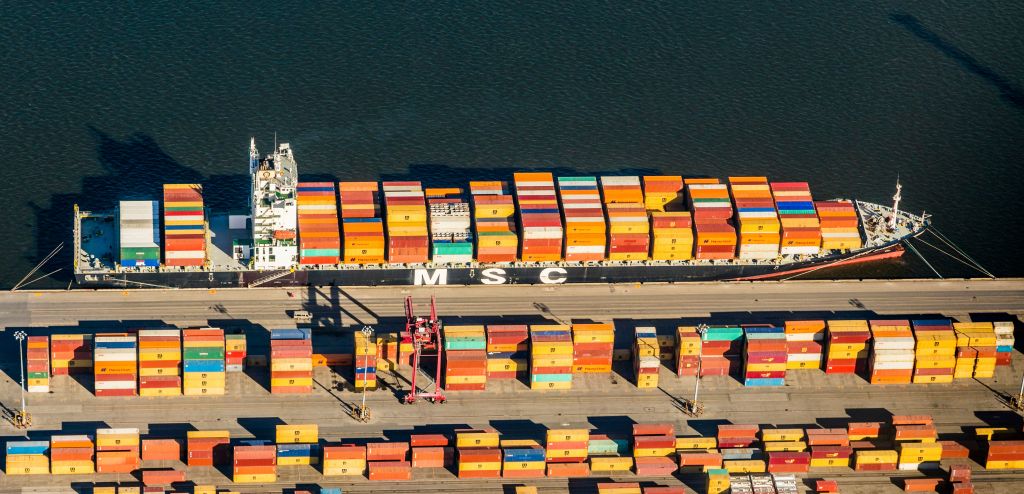
Canada’s ports have fallen behind the world’s best, but Roberts Bank Terminal 2 is about to automate our way back to the top of global trade.

Guests:  

Peter Xotta (CEO, Vancouver Fraser Port Authority)
Tamara Vrooman (CEO, Vancouver Airport Authority)
Devan Fitch (The project’s Program Director)

Read more


Indigenous-owned rail and drone-powered innovation are turning Churchill into Canada’s northern gateway and reconnecting the Prairies to a world that’s shifting Arctic.

Guests:

Wab Kinew (Premier of Manitoba)
Chris Avery (CEO, Arctic Gateway Group)
Grant Barkman (CEO, DecisionWorks)

Read more


AI is grading grain in minutes instead of hours, and Saskatchewan’s ag-tech revolution is turning prairie data into global food security.

Guests:

Kyle Folk (Founder and CEO, Ground Truth Ag)
Murad Al-Katib (CEO, AGT Food and Ingredients)

Read more


A 1,200-kilometre Inuit-led power line could end the North’s diesel dependence and give Canada its first physical link to Arctic sovereignty.

Guests:

P.J. Akeeagok (former Premier of Nunavut)
Anne-Raphaëlle Audouin (CEO, Nukik Corporation)

Read more


China controls 90% of the world’s graphite refining but Quebec is building the full mine-to-anode supply chain that could break that stranglehold.

Guests:

Jean Charest (former Premier of Quebec) 
Eric Desaulniers (Founder & CEO, Nouveau Monde Graphite)

Read more


Canada’s secret weapon in the AI race isn’t bigger data centres it’s trust, jurisdiction, and decades of building secure systems in Waterloo.

Guests:

Tom Jenkins (Chair, OpenText)
Shannon Bell (EVP, Chief Digital Officer & CIO, OpenText)
Janice Stein (Founding Director, Munk School, University of Toronto)

Read more


Old coal plants are becoming AI-ready power hubs, and Alberta’s “bring your own power” model could unlock thousands of megawatts for the hyperscale future.

Guests:

Danielle Smith (Premier of Alberta)
John Kousinioris (President & CEO of TransAlta)

Read more


After a season of big bets and bold plans, one question remains: How do we actually build this before the world passes us by?

Guests:

Daniel Debow (Chair, Build Canada)
Lucy Hargreaves (CEO, Build Canada)

Read more

With industrial power demand rising, can small modular reactors help anchor a cleaner, always‑on system that will support the incoming AI Data Centre boom? 

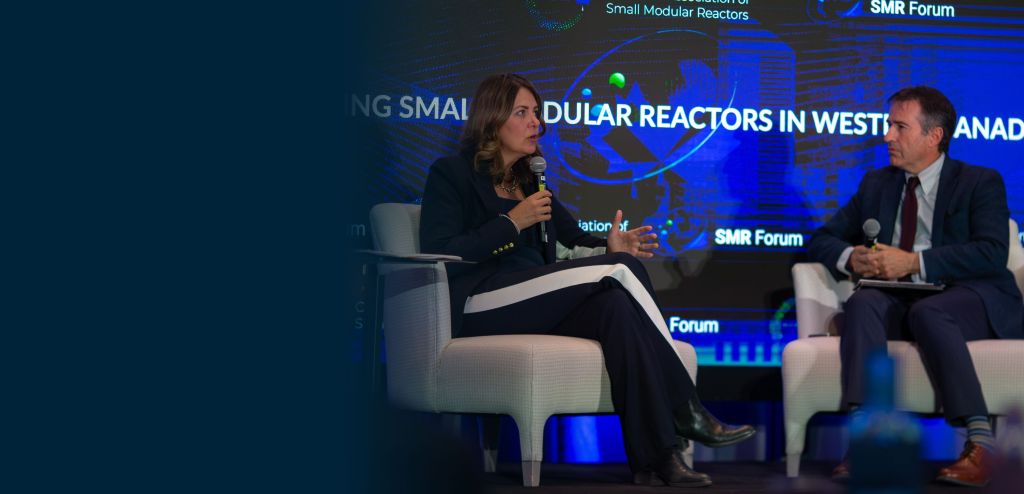
In this bonus episode of Disruptors, host John Stackhouse speaks with Premier Danielle Smith about the future of power in Alberta. They dig into reliability needs, “bring‑your‑own‑power” models, how to finance nuclear in an energy‑only market, and what collaboration between provinces could unlock. 

This conversation was recorded live in Edmonton at the 2025 SMR Forum. 

Listen on Apple Podcasts, Spotify or Simplecast

By John Stackhouse

Tariffs don’t take a holiday and we can assume President Donald Trump won’t either.

Trump used his decorative holiday message to the nation this week to portray himself as a Santa Claus of trade:

  • Tariffs are one of his great achievements, saying it is bringing record investment to the U.S.

  • Tariffs will help pay for the “warrior dividend” to 1.45 million U.S. military personnel.

  • Tariffs are leading to lower prices.

We will see later in 2026 (hello, midterms) if Americans agree. But expect the President to charge into 2026 on a tariff high, even if, as expected, the Supreme Court rules that he’s overstepped his powers. How? The White House can quickly rebuild the tariff wall, using Section 122 and 301 powers that would keep tariffs in place, although the expected rate might drop from the current 16% average to perhaps 10%.

Three questions for the New Year:

  • Will countries look to retaliate, even with non-tariff barriers?

  • Can Congress afford to pass tax cuts and tariff cuts?

  • Can Canada afford to play for time?

Mark Carney seems resigned to the “no deal” scenario, and with it a long slog for CUSMA negotiations. The biggest near-term challenges will be around digital services, lumber and rules of origin for auto manufacturers, each with its own economic and political calculus:

  • expect the U.S. to continue to push for more concessions for online media, particularly for Meta, which could face blowback in Quebec where cultural protections (including subsidies for local media) will be a red line for an expected Parti Quebecois government in 2026;

  • expect the U.S., facing a soft housing market, to continue to hammer B.C. (and New Brunswick) with softwood lumber measures;

  • expect Doug Ford to push hard again for favourable access to the U.S. auto market for Ontario assembly plants. 

Canada is not likely to get all three. Which means Carney may spend the holidays thinking through the coal that Santa has in mind for 2026. 

14257: The Executive Order signed by U.S. President Donald Trump on April 2 that imposed a 10% baseline tariff on imports from all U.S. trading partners.

90: Countries slapped with a tariff rate above the baseline 10% on “Liberation Day.”

2: White House visits by Prime Minister Mark Carney. The most recent was in early October during which Trump called Carney a “good man” who is doing “a great job.”

75 million: Dollars spent by Doug Ford’s Ontario government on an anti-tariff ad campaign featuring Ronald Reagan, which prompted Trump to call off negotiations with Canada. Ford claims the ad clocked 12.4 billion views.

US$35 trillion: Estimated value of global goods trade in 2025. Trade volumes hit record highs even as geopolitics fractured supply chains—proof that globalization is rewiring, not retreating.

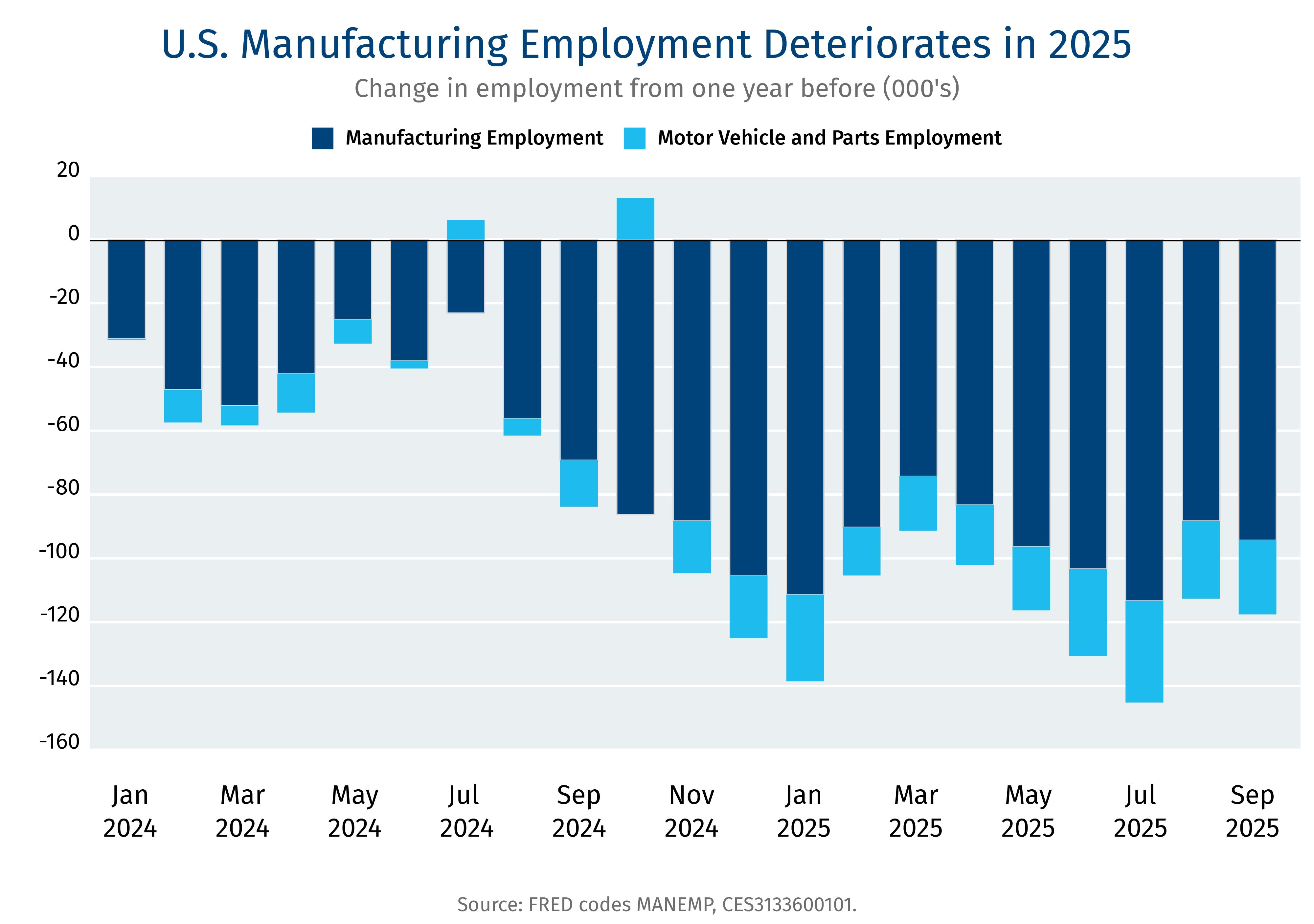
50,000: Fewer manufacturing jobs in the U.S. since the start of the year.

US$1 trillion: China’s record trade surplus despite tensions with the U.S. Beijing exported US$3.4 trillion worth of goods in the first 11 months of the year by finding, in part, new markets, including Africa (+26%), Southeast Asia (+14%) and Latin America (+7.1%).

5: The industries that accounted for 80%of tariffs the U.S. collected from Canada, namely auto (28.8%), aluminum (23.3%), iron and steel (12.7%), machinery (8.8%), articles of iron and steel (8.3%).

$70 billion: The United Arab Emirates’ investment pledge for Canada, focused on the development of critical minerals, energy, ports and AI.

US$226.4 billion: U.S. exports to Mexico between January and August—surpassing the US$225.6 billion goods shipped to Canada—marking the first time in 30 years Mexico overtook Canada as a top destinations for exports.

$200 billion: The estimated value of the Canadian Mutual Recognition Agreement, which eliminates all barriers to trading goods (except food) between Canadian provinces and territories.

3x: Increase in global trade-restrictive measures since 2019. Tariffs, export controls, and subsidies are now structural features of trade policy—not temporary shocks.

10%: The amount of lumber exports  (enough to build 75,000 homes) that Canada’s forestry industry is planning to re-route from the U.S. to the U.K. and Europe.

100%: U.S. reliance on imports for 16 critical minerals (including graphite), with more than 50% import dependence for another 29, including zinc, cobalt, and nickel.

$600 billion: Canada’s non-U.S. export goal by 2035, as outlined in the 2025 federal budget–doubling the current amount.

$50 billion: The potential value of a trade partnership between Canada and India, which have renewed relations this year.

$100 billion: The annual value of Canada’s agri-food exports. Roughly 60% was destined for U.S. markets.

$994.63: The amount the average family in Canada can expect to pay more in groceries in 2026, compared to 2025. The toll of tariffs is impacting domestic food security, with one in four Canadians experiencing food insecurity.

86: Percentage of goods the U.S. imported from Canada in September that were duty free.

51: Number of days gold prices closed higher than previous all-time highs due to heightened geo-economic uncertainty.

28%: The increase in coffee prices year-over-year.

19%: Decline in Chinese exports to the U.S. this year.

US$244 billion: Total tariff revenues the U.S. has collected (January to November 2025)

1 million bpd: The potential capacity of a West Coast oil export pipeline at the heart of an MoU between the federal government and Alberta that would expand Alberta’s oil exports to Asia.

US$7 billion: The massive hit Michigan’s Big Three automakers—General Motors, Ford and Stellantis—expect on their earnings in 2025 from U.S. tariffs.

After a season spent mapping Canada’s next big bets — ports and launchpads, power grids and AI data centres, battery belts and northern fibre lines — Disruptors: The Canada Project closes with a simple, urgent question: How do we actually build this?

In the season finale, host John Stackhouse sits down with Build Canada’s Daniel Debow and Lucy Hargreaves to explore how entrepreneurs, students and community leaders are trying to turn concern into action. They discuss Canada as an ongoing project, the shift from an operator mindset to a builder mindset, and the role that bold ideas, pragmatic policy and public-private collaboration can play in getting major projects over the line.

As trade routes are redrawn and competition for capital, talent, energy and compute intensifies, the episode asks what it will take for Canada to build — and keep — the critical infrastructure that underpins our sovereignty and prosperity, from coastal ports and Arctic corridors to AI-ready power and productivity-boosting agtech.

Listen on Apple Podcasts, Spotify or Simplecast

Building Canada: A new generation takes charge

John Stackhouse: [00:00:00] Hi, it’s John here. Welcome to Disruptors, the Canada Project, Alberta, Vancouver, Manitoba, Newfoundland, Nova, Scotia, Nunavut, Waterloo, Quebec, Saskatchewan. This season we’ve been crisscrossing the country, meeting with some of Canada’s brightest minds to learn how they’re tackling some of our biggest challenges.

Chris Avery: When President Trump came into power and tariffs were levied against Canadian goods, really amplified the need for us as a nation to diversify our Trade.

Janice Stein: Tech sovereignty would guarantee Canadians. Their core services and core data are free from coercion by outside powers.

Chris Avery: It’s important to know that Nunavut is relying a hundred percent by burning diesel.

Anne Raphaele: That is, I import into the territory mostly from the United States. Canada’s at a critical [00:01:00] moment for our economy and for our shared future.

The way, you may have gotten a sense of a new map of Canada being drawn. It’s not the one you memorized in grade school, but it’s a map of ports and launchpads of power grids and AI data centers.

And for that matter, battery belts and northern fiber lines. It’s a map of a new economic future, a bolder one, a more global one, a more innovative one. And it’s one that Canadians right now are shaping every day.

Jean Charest: The countries that will prosper in the future are the ones that are going to commit themselves to these added value products, and that’s exactly where Canada is going.

P.J. Akeeagok: When Canadians think about growth, we don’t always think about the architect, but we should.

Daniel Smith: We wanna ensure that we can meet the electricity demands of emerging sectors like data centers, artificial intelligence, and other technologies that depend on secure power. 24 7,

Chris Hadfield: we got the [00:02:00] landmass, we got the intellectual property, we got the education, we got the raw materials, we got the history.

John Stackhouse: We can do it here and sell it to the world. Those are just a few of the many ambitious Canadians we’ve heard from this season on disruptors, the Canada Project. It’s been eye-opening to explore some of the ideas and initiatives that Canadians are putting forward to meet this pivotal moment. As trade and supply chain disruptions collide with broader questions of climate security, economic advancement, and sovereignty.

Today as we wrap up our journey, we’re gonna zoom out several thousand feet, or maybe that should be several thousand meters to talk to Daniel Debo and Lucy Hargraves of Build Canada. They’re two of the many people behind what’s become a movement to get Canada building again, to turn big ideas into real world impact Build.

Canada is a network and really a movement that connects and amplifies entrepreneurs, creators, and innovators committed to a more prosperous Canada. [00:03:00] Daniel is a serial entrepreneur who you may remember from past episodes of disruptors. He’s chair of the Build Canada Board, and Lucy, who comes from a background in government, is the CEO.

Together, they bring deep experience in technology, innovation, entrepreneurship, policy and partnerships. In this episode, we’ll dig into what building the country really means. The ambition, the tools, and the challenges involved when citizens from coast to coast to coast say yes to shaping Canada’s future.

Daniel Lucy, welcome to Disruptors.

Thanks, John. Happy to be here. Thanks so much for having us, John.

We’ve had this amazing virtual CrossCountry tour hearing from all sorts of Canadians who are. Building amazing things from space launchpads to data centers, and I thought, who better to help wrap up that tour than the people behind Build [00:04:00] Canada?

Lucy, let me start with you and just give us a quick sense of what Build Canada is and what you’re setting out to do.

Lucy Hargreaves: Yeah, for sure. Thanks, John. For those of your listeners who don’t know, we’re a non-partisan, mission-driven movement focused on making Canada the most prosperous country in the world.

We’ve been around for almost a year now. And we started out sharing actionable, bold policy memos from Canada’s leading entrepreneurs and business leaders. And we’re also doing a lot more in person. And so bringing Canadians together around the country in city chapters and campus clubs. So what I’m seeing is like incredible passion for this idea of focusing on growth.

We’re growing kind of 10 to 15% week over week in terms of the size of our movement, rallying towards this sort of optimistic, bold vision of what Canada can be.

John Stackhouse: I wanna come back to that growth opportunity and also the growth that you’re capturing. It’s really impressive. But let me ask you both about where we’re at as a [00:05:00] country as we come to the end of a really extraordinary year, 2025.

Um, I think no one had. Forecast or certainly predicted it would play out the way it has. How are you feeling about the state of Canada as we wrap up this momentous year?

Daniel Debow: Cautiously optimistic. Rationally optimistic. I think it’s important to remember like Canada didn’t get here by accident. It’s a series of choices that we made and policy decisions that we made all along the way.

And I think what’s optimistic, as Lucy pointed out, is that Canadians understand that they have agency. They can choose which path they wanna take, and politicians understand this. When we started this experiment, right, like can we publish some policy memos to help guide and help inform and, and give ideas out there from Canada’s great entrepreneurs to both parties?

Uh, all parties. Actually, we did not expect to get the reaction that we got. We did not expect, I think actually Lucy. We did not expect to have to set up a full-time merch shop so people could [00:06:00] buy t-shirts that say giver on it. And that to me is really optimistic. That’s positive. It doesn’t mean there aren’t lots of things we have to get over, but boy, it tells me that Canadians want change.

And if you want politicians to change, they need to see a constituency. They need to see people want that. And I think that’s what we can see the beginnings of now. We can’t give up, we can’t stop. But boy, that that is a reason heading into the new year, to feel at least cautiously optimistic despite all the headwinds and challenges we face.

John Stackhouse: Give us the origin story of the Giver T-shirt and why it’s gone viral.

Daniel Debow: I’ve always loved that Canadian expression of giver, like, you’re behind the car, you’re in a ditch. Things suck. But Canadians, they rally. They just say, yeah, I know that this sucks, but we gotta go. So giver, give it your best shot and we’ll be okay.

I think that is a very good reminder. It’s a positive, optimistic view of what it means to be who we are, and it resonated,

Lucy Hargreaves: and I think it’s a really important point. We have to remember who we are. Canada [00:07:00] is a nation of builders. Like it was forged by explorers. People who were risk takers we’re a nation that discovered insulin.

We built a railroad across our country. We became a top global defense manufacturing hub during World War ii. So we have to remember and like remind ourselves that we’ve done ambitious things before and we can do them again, and that Canada is still very much a work in progress. We are a project, uh, still that is being built.

I think this is what resonates, especially with the young people who, you know, 18 to 35 year olds who are really gravitating towards the Build Canada movement is that they can be part of it, that they have agency and that they can actually get off the sidelines, get off the couch, get outta their house, and they can participate in this nation building project.

John Stackhouse: Tell us a bit more about the mindset that you’re. Challenging us all to develop, as I watch [00:08:00] what’s going on in the country, a lot of it is about building, but it’s frankly about other people building stuff somewhere else in the country. And that’s, that’s all very good. But there’s 40 million of us. And what kind of mindset do all of us 40 million need to aim for and develop to be a builder nation?

Lucy Hargreaves: There’s some principles, uh, that we sort of repeat over and over again. Bold, beat, safe growth is good. You can just do things. Doing things is better than complaining. It’s this kind of mindset that, you know, when you see a problem or you, you see an issue in your society or your community and you’re, you’re frustrated by it, that instead of complaining about that, you can actually take action.

And that’s what we encourage at Build Canada. And that’s kind of that. Mentality that we’re encouraging across the country, we can go for gold. And I think as a nation and as individuals, uh, many times we are satisfied with going for bronze or silver and not striving to be the [00:09:00] absolute best and to win.

Daniel Debow: We cannot wait for the government to solve every problem, right? People have to step up. That’s part of the ethos, and that’s just people saying, I, I don’t wanna sit around and complaint. I want to go do something. I wanna connect with my other Canadians and I wanna actually feel connected to other Canadians who do feel this way.

I’m not alone. I want it to grow. So I think that’s a big part of the mindset. I think there’s another part which is like, what does it mean to be a builder? And I think it’s a bias to action. You have to take a risk. You have to put yourself out there. Getting a bronze medal is as much effort as going for gold.

You might as well go for gold. Right? And reminding Canadians that they are actually amazing, can make great things, is a very powerful mindset that we can put in. We have to go be a force in the world. If you believe the world to harken back to a prior age needs more Canada, well then we have to go make it want what we have.

And that’s gonna be by becoming economically strong, it’s gonna be by becoming, uh, militarily strong. Like strength and sovereignty really are linked to those two things. They happen because of those 40 million [00:10:00] Canadians making individual choices every day to kind of act the way that we’re talking.

John Stackhouse: When you talk about Canada needing to be a force in the world, it takes me straight back to some of the builders we’ve met this season who are already trying to do that in very Canadian ways, in orbit, under the sea, and deepen the ground. They’re all trying to turn our unique advantages into things. We actually build own and export.

Rahul Goel: We already do such a great job as Canadians training our workforce. In fact, we train our workforce and it enables other countries to build their space programs. We have a massive exodus of talent, of capital, of sovereignty, of national pride.

So all of those factors led to the founding of North Space. The amazing thing about building capabilities in space is that it spans the entire spectrum. Highly specialized key roles that, you know, Canadians are really, really good at and creating opportunities. But at the end of the day, the retention is really the problem.

David Shea: One of [00:11:00] the great advantages that they have in Newfoundland when we talk about hardening technology, building technology, proving that it can work. If it can work off the coast of Newfoundland, then it can work anywhere. It is one of the harshest climates in the world. When you go out on the ocean, it is not long before you are in the middle of the North Atlantic.

Eric Desaulniers: We’re optimizing the usage of this hydro to be carbon neutral. So having the four reason to buy in Canada, great geology to start with two hours away. We have a great industrial park in big and core with sheep, hydro, and all reagents and all the the right area to develop this safely. And then we have the right talents and we have the customer now in our backyard who really need graphite and they really need to diversify from a single source in China.

John Stackhouse: Space launches, subsea, robotics, critical minerals, those are very different sectors, but you kind of get the pattern, Canadians trying to turn our geography, our geology, and our grit into a [00:12:00] real edge in the world. For all those builders, how are you seeing momentum grow to support them?

Daniel Debow: I think you had Rahul from Nord space on there. Um, I was an investor prior space company in Canada from the CDL. Honestly, most of the time when I talked about it, people were rolling their eyes like, what are you talking about? A Canadian space company? That’s not a real thing. And I just don’t see that now as people hear about North Space and what they’re doing, uh, similarly, there was no way you could start a defense company in Canada even five years ago, and now that’s a possibility.

And they’re moving very, very quickly. And what’s important is they’re doing it in partnership. Like I see all sorts of military folk who are quite interested in like a new way, a new approach of doing these things. Dan and I are very privileged to be able to have incredible conversations across the country with some of Canada’s leading entrepreneurs and innovators,

Lucy Hargreaves: I’m encouraged actually on the attention now being paid to major projects and all of [00:13:00] the possibilities in the natural resources sector.

Both in oil and gas, but also critical minerals and mining. I think it’ll take a while for that to change, but it does seem like through the work that the major Projects Office is, is doing, and a lot of the conversations specifically in the critical mineral space, that there’s some appetite to, you know, go faster there.

And it’s so inspiring to me that I actually see these people just, they’re just moving ahead, right? They’re not waiting for the government to create a new subsidy program or a grant program or a tax incentive. Like in many, many cases, they are builders and they are just focused on moving ahead and getting things done.

Daniel Debow: I actually am very encouraged when provincial or federal leaders reach out and say, well, what are these ideas you have about ai? What are these ideas about exporting more lentils and pulses? What are these ideas about how we can open up our export of natural resources? How can we build more homes? Like those are positive things.

I’m not saying it’s the end of the story, but that’s optimistic to me.[00:14:00]

John Stackhouse: Those are great companies you’ve referenced. Fast growing sectors that Canadians can really seize on space. We’ve, we’ve been doing research here at RBC on the potential of the space sector, and I’ve been able to speak with investors in Europe and the US particularly, who are so keen to invest more in Canada.

They see the talent and opportunity here and as a country, I don’t think we’ve got our heads fully around the idea of private capital. Driving stuff, but it is that private capital that really accelerates things. And part of that requires us to think through what you might call the reward function. So there’s of course, the expression, no risk, no reward, but if you have no reward, you’re not gonna get a lot of risk either.

We need arguably different reward functions for entrepreneurs and the people who, who back them. Tell us a bit about how you’re thinking about the [00:15:00] reward function. And what Canada needs to do to up our game on that front in the years ahead.

Daniel Debow: We want Canadian entrepreneurs, whether it’s the people who created Mike’s Hark Lemonade, or the people who create Lululemon, or the people who create Cirque de Soleil or Shopify’s, like, we need those folks.

Those are great and those are capitalistic, uh, profit seeking enterprises. That’s not a dirty word. That should be a positive thing. You know, entrepreneurs are human beings. They have the ability more than most actually to be mobile. And I think that the, one of the things we have to do is the reward function has to be that you are socially rewarded.

You are a good part of the country. That reward function really does matter because it’s a cycle of everyone’s psyche. You ask the beginning, what’s the mindset? I’m like, well, geez. The mindset has to be that these are Canadian heroes. Now we can’t just say nice things though. And have photo ops, we have to actually back it up.

John Stackhouse: Well, if I can just jump in quickly, I, I love your passion, number one, but also it’s so critical how you’re laying this out. That reward is both tangible [00:16:00] and intangible, and they’re both incredibly powerful and we need to lean into both.

Lucy Hargreaves: Yeah. This is not just about financial rewards, and as Dan said, we’re not just talking about the founders. We’re talking about like the early employees who also leave relatively stable jobs and, and go and try and start new things. So we should celebrate and reward that. Financially speaking, what I say is, you know, we always need to remind ourselves as a nation that we don’t exist in isolation. We operate in a global economy, and we have to think about our reward and incentive and tax structure in that context.

Entrepreneurs have options. Many of them, you know, are very mobile. They can make different choices. Highly talented employees of companies can make different choices. We have the US right there. There’s a whole big wide world out there. And so we, when we think about our tax incentives and rewarding risk takers, we have to think about it in that global context.

We published a number of memos on [00:17:00] this, specifically on capital gains tax. We, um, had a great memo from Matt Cohen who’s, uh, with Ripple Ventures, uh, looking at how we can make our capital gains rewards, uh, and system not just on par with the us but actually more competitive than what’s on offer in the us.

The US has this thing called QSBS. Which is essentially their capital gains structure for small businesses. It’s incredibly competitive. It has a much higher capital gains cap of 15 million per company. This is the key thing Per company. Yeah. Whereas our capital gains cap in Canada right now is around 1.5 million, whereas the US has this 15 million cap that can be stacked across multiple exits, and so that’s.

It might seem small to, to some people, but this is like a real meaningful difference maker in, uh, people’s decision making for how much risk they wanna take. And it’s also, um, from an investor’s perspective, often investors [00:18:00] are, you know, looking for Canadian companies and Canadian founders to relocate to the US so that the investors can benefit from the US capital gain structure There.

Daniel Debow: Of course the only reason people build companies isn’t just to make money, but it is part of the reason, and we are fooling ourselves if we don’t understand that. We have to create incentives for our best Canadians to stay here. We have to figure out a way to do that if we wanna get our most amazing Canadians who wanna do this.

Also wanna say, this isn’t just about tech people, right? This is about. The folks who are losing their jobs, unfortunately, we want some of them to go start drone manufacturing supply chain companies, people who are in manufacturing, building next generation humanoid robots. We need to create opportunities across our stacks, small businesses that this is something that they can, and really, the, the balance of keeping a job versus trying something, it becomes overwhelmingly better that you’re like, I wanna try something more in society.

But you’ve got to remember that innovation is not something entrepreneurs do outta the goodness of their heart. It is something that’s done because they want to win. They either wanna win new customers or market share, or they don’t wanna lose that from someone else who’s [00:19:00] coming to eat their lunch, and that’s a good function for society.

John Stackhouse: Let’s talk a bit about hustle in the public sector. I think one of the many things Mark Carney has done to rattle cages has been to set real deadlines that many people, from what I understand, say, oh, that’s impossible. We’ve seen this in the, uh, in the energy agreement with Alberta. Some pretty huge things have to be done by April 1st and July 1st, and as you know, that’s the way the private sector works.

You set deadlines and you manage the work accordingly. It’s one of the basic principles of project management, but there’s more to it. There’s a builder mindset versus an operator mindset, and that’s something you’ve both stressed through. Build Canada. Help us understand the difference between the two and how a builder mindset can help the public sector.

Lucy Hargreaves: The culture of the public service and the incentive structure in the public service is one that [00:20:00] reinforces a risk averse mindset to operating. They are incentivized to be a steady hand to avoid risk and to not take bold bets that might get themselves or the minister or prime minister of the day into trouble.

So. I think it is a bit of a shock to the system for many public servants to have a Prime Minister kind of come in and have these ambitious goals and deadlines. But I think it’s a good thing. I mean, I think having deadlines and focusing attention on the things that really matter. We have to focus on growth and make the main thing the main thing.

And it seems like this prime Minister is, uh, you know, attempting to make the main thing, the main thing, which is the economy and driving the public service towards that. You know, we’ve been talking about a lot the reinvigoration of the interchange program, uhhuh, which is now called the Build Canada Exchange Program.

Yeah. The budget of this year, they re have [00:21:00] rebranded to call the Build Canada Exchange Program. Is, is there a copyright issue there? Everyone should use it. There’s no, they should use it. If it works, they should use it well for it.

John Stackhouse: Tell us a bit about the Build Canada Exchange program ’cause it’s a neat innovation?

Lucy Hargreaves: Yeah, so the interchange program, build slash Build Canada interchange, so it’s been around for a number of years in the public service and, and has been designed to bring in. Private sector experts on sort of like a secondment basis into the public service. To, you know, help deliver programs or provide specific expertise and it, you know, sort of an exchange.

So the private sector sort of better understands public service. Public service can better understand perspectives, uh, from various different industries. And so now this rebranding is build candidate exchange. And so the Komen is to bring in 50, uh, private sector experts into the public service. Across a number of different sectors for a period of 12 to 18 months and have them do a rotation within, within the public service.

This idea that you recognize that, you know, there’s various [00:22:00] sectors where you need help and that the help exists in the private sector, and, and finding ways to bring those people in, give them the right authority, and really, you know, set up the structure for good collaboration and sharing. I, I think is, is a great idea.

And I’m excited to see that, you know, hopefully get implemented pretty rapidly in the next few months.

John Stackhouse: It’s exciting to see these kinds of innovative approaches where the public and private sectors actually learn from each other instead of talking past each other. And it also reminds us that public service doesn’t have to be a 40 year career.

It could be a tour of duty, a period in your life where you step in, help build something better for the greater good, and then bring that experience back out into the rest of the economy. All season on Disruptors, the Canada Project, we’ve seen how that orientation towards the greater good drives the long-term infrastructure work that will shape our future.

From food corridors on the prairies to ports on both coasts to hydro and fiber [00:23:00] lines into the Arctic. The decisions we make now will define what kind of country our kids and grandkids in Hara. Canada.

Tamara Vrooman: Canada is a country with a large geography, but a small population, and so we literally need connectivity and transportation infrastructure to make our country work, and we certainly need that infrastructure to connect our country to the world.

We have the component parts. They’re just not integrated in the way that they could be to allow for that speed and resilience that the international trade market is going to demand.

Devan Fitch: We’re the size of the next five largest Canadian ports combined in terms of the amount of commodities that we move, uh, through the Port of Vancouver.

The terminals that we’re looking at right here, they were also built many decades ago, and they just don’t simply have the birth depth that’s required. You couldn’t pull up next to the container terminal because it’s just gonna bottom out on the, on the birth face there. We have to be planning for what the trade infrastructure looks like in 2050 and 2060, not in [00:24:00] 2026.

Murad Al-Katib: If I was Prime Minister for a day, I would spend a hundred billion on trade infrastructure. It will pay for generations to come. Supply chains are all about connectivity. Each link has to be efficient. Data and technology will also make that more efficient. So let’s seize that opportunity.

John Stackhouse: We just heard the voices of Tamara Ruman, Devon Fitch, and Marad Al Kaip.

They’re just a few of the builders and shapers we’ve spoken to on this series. Daniel, Lucy, if you’re in your twenties today listening to all of that, the stakes, the infrastructure projects, the need to think long term, what would you actually do with it? What’s your message to those younger Canadians about the decades ahead and the role they can play?

Daniel Debow: First message is they should go to Build Canada do com and they should sign up. Yeah, join Build Canada newsletter and find a way to volunteer. I mean, I say that in a little in jest, but in reality. Yeah, because that’s a great first step. That’s what we want. Sign up. I was actually shocked how many people sign up just to learn about how the government works.

[00:25:00] They’re like, I didn’t know what a budget is. I didn’t know this stuff. But what’s the main message? I mean, I look, I have four young kids. Just because there are challenges, that does not mean that there’s no future for you. There’s no hope for you. You have to be kind of a rational optimist that yes, there are challenges, but you can pull this off.

I think the second message is exactly that, that you have agency, right? You are not necessarily a victim. You can make change in your own life, in your own community, your own family, with your own friend group, and in fact, you have, at least in the digital realm, you have access to tools that were like truly science fiction.

You know, 50 years ago, 25 years ago, right? You can see people building tools with ai, learning how to do things that run circlers around the folks of us on this call. The third thing is you can’t be quiet. You have to actually say that, I want this to be better. And so if you’re willing to step up and say, I think we can do things different around transit or around youth employment, or around any one of the issues that matter to you, you can do it.

They should not give up. I mean, I think that is the [00:26:00] key, key message I would have for those young people, that they have a right to fight like hell and to make the project what they think it should be, and they can define the future.

John Stackhouse: Canada is a project and we all have agency to help build it. That’s a great message.

Lucy, final word to you?

Lucy Hargreaves: Yeah, absolutely. I have three kids that are a little bit younger than Dan’s kids, I think, but I think about them a lot. I think about their future a lot, and I have the privilege of being able to talk to a lot of the folks who have been coming to our Build Canada events across the country.

So hundreds of people. They’re so energized and so optimistic about the future. And so my message to them really is recognize that you are part of this incredible journey that our nation is on, and that you have a role to play. Canada is going places. Don’t aim small, you know, think bold and take risks.

There are so many ways to show up. To get involved. That is what actually makes change at the end of the day is, is [00:27:00] multiple people across the country showing up and speaking up for the future that they want. So I would encourage folks to do that. We can all do more love. All these messages about building a better Canada.

John Stackhouse: To quote your website, people want to join up, go to build canada.com. Lucy, Daniel, thank you so much for being on disruptors and for helping to build Canada. Thanks, John, and thanks for, for this uh, series. It’s been great. Thanks so much, John. Appreciate it. As we close out this season of disruptors, I wanna leave you with a simple thought.

Canada’s future isn’t something that happens to us, it’s something that we build through the choices we make, the jobs we take on, the risks that we lean into, and the communities that we strengthen. Each of us has a role in shaping what comes next. Yes, the world is throwing a lot of disruption at us all at once.

But Canada has the geography, the resources, the global credibility, and the [00:28:00] traditions to turn challenge into opportunity. And Canadians have the ideas, the ambition, and the talent to do just that. That’s what we call the Canada Project Canadians working together. To innovate, to compete, and to build.

If you’re looking for inspiration, explore more nation building stories and ideas at rbc.com/thought leadership and revisit the episodes of Disruptors, the Canada Project, an RBC podcast on Apple or Spotify, or wherever you get your podcasts. Thanks for joining us on this incredible journey and for being a builder.

I’m John Stackhouse. See you in the new year.

John Stackhouse: [00:00:00] Hi, it’s John here. Welcome to Disruptors, the Canada Project, Alberta, Vancouver, Manitoba, Newfoundland, Nova, Scotia, Nunavut, Waterloo, Quebec, Saskatchewan. This season we’ve been crisscrossing the country, meeting with some of Canada’s brightest minds to learn how they’re tackling some of our biggest challenges.

Chris Avery: When President Trump came into power and tariffs were levied against Canadian goods, really amplified the need for us as a nation to diversify our Trade.

Janice Stein: Tech sovereignty would guarantee Canadians. Their core services and core data are free from coercion by outside powers.

Chris Avery: It’s important to know that Nunavut is relying a hundred percent by burning diesel.

Anne Raphaele: That is, I import into the territory mostly from the United States. Canada’s at a critical [00:01:00] moment for our economy and for our shared future.

The way, you may have gotten a sense of a new map of Canada being drawn. It’s not the one you memorized in grade school, but it’s a map of ports and launchpads of power grids and AI data centers.

And for that matter, battery belts and northern fiber lines. It’s a map of a new economic future, a bolder one, a more global one, a more innovative one. And it’s one that Canadians right now are shaping every day.

Jean Charest: The countries that will prosper in the future are the ones that are going to commit themselves to these added value products, and that’s exactly where Canada is going.

P.J. Akeeagok: When Canadians think about growth, we don’t always think about the architect, but we should.

Daniel Smith: We wanna ensure that we can meet the electricity demands of emerging sectors like data centers, artificial intelligence, and other technologies that depend on secure power. 24 7,

Chris Hadfield: we got the [00:02:00] landmass, we got the intellectual property, we got the education, we got the raw materials, we got the history.

John Stackhouse: We can do it here and sell it to the world. Those are just a few of the many ambitious Canadians we’ve heard from this season on disruptors, the Canada Project. It’s been eye-opening to explore some of the ideas and initiatives that Canadians are putting forward to meet this pivotal moment. As trade and supply chain disruptions collide with broader questions of climate security, economic advancement, and sovereignty.

Today as we wrap up our journey, we’re gonna zoom out several thousand feet, or maybe that should be several thousand meters to talk to Daniel Debo and Lucy Hargraves of Build Canada. They’re two of the many people behind what’s become a movement to get Canada building again, to turn big ideas into real world impact Build.

Canada is a network and really a movement that connects and amplifies entrepreneurs, creators, and innovators committed to a more prosperous Canada. [00:03:00] Daniel is a serial entrepreneur who you may remember from past episodes of disruptors. He’s chair of the Build Canada Board, and Lucy, who comes from a background in government, is the CEO.

Together, they bring deep experience in technology, innovation, entrepreneurship, policy and partnerships. In this episode, we’ll dig into what building the country really means. The ambition, the tools, and the challenges involved when citizens from coast to coast to coast say yes to shaping Canada’s future.

Daniel Lucy, welcome to Disruptors.

Thanks, John. Happy to be here. Thanks so much for having us, John.

We’ve had this amazing virtual CrossCountry tour hearing from all sorts of Canadians who are. Building amazing things from space launchpads to data centers, and I thought, who better to help wrap up that tour than the people behind Build [00:04:00] Canada?

Lucy, let me start with you and just give us a quick sense of what Build Canada is and what you’re setting out to do.

Lucy Hargreaves: Yeah, for sure. Thanks, John. For those of your listeners who don’t know, we’re a non-partisan, mission-driven movement focused on making Canada the most prosperous country in the world.

We’ve been around for almost a year now. And we started out sharing actionable, bold policy memos from Canada’s leading entrepreneurs and business leaders. And we’re also doing a lot more in person. And so bringing Canadians together around the country in city chapters and campus clubs. So what I’m seeing is like incredible passion for this idea of focusing on growth.

We’re growing kind of 10 to 15% week over week in terms of the size of our movement, rallying towards this sort of optimistic, bold vision of what Canada can be.

John Stackhouse: I wanna come back to that growth opportunity and also the growth that you’re capturing. It’s really impressive. But let me ask you both about where we’re at as a [00:05:00] country as we come to the end of a really extraordinary year, 2025.

Um, I think no one had. Forecast or certainly predicted it would play out the way it has. How are you feeling about the state of Canada as we wrap up this momentous year?

Daniel Debow: Cautiously optimistic. Rationally optimistic. I think it’s important to remember like Canada didn’t get here by accident. It’s a series of choices that we made and policy decisions that we made all along the way.

And I think what’s optimistic, as Lucy pointed out, is that Canadians understand that they have agency. They can choose which path they wanna take, and politicians understand this. When we started this experiment, right, like can we publish some policy memos to help guide and help inform and, and give ideas out there from Canada’s great entrepreneurs to both parties?

Uh, all parties. Actually, we did not expect to get the reaction that we got. We did not expect, I think actually Lucy. We did not expect to have to set up a full-time merch shop so people could [00:06:00] buy t-shirts that say giver on it. And that to me is really optimistic. That’s positive. It doesn’t mean there aren’t lots of things we have to get over, but boy, it tells me that Canadians want change.

And if you want politicians to change, they need to see a constituency. They need to see people want that. And I think that’s what we can see the beginnings of now. We can’t give up, we can’t stop. But boy, that that is a reason heading into the new year, to feel at least cautiously optimistic despite all the headwinds and challenges we face.

John Stackhouse: Give us the origin story of the Giver T-shirt and why it’s gone viral.

Daniel Debow: I’ve always loved that Canadian expression of giver, like, you’re behind the car, you’re in a ditch. Things suck. But Canadians, they rally. They just say, yeah, I know that this sucks, but we gotta go. So giver, give it your best shot and we’ll be okay.

I think that is a very good reminder. It’s a positive, optimistic view of what it means to be who we are, and it resonated,

Lucy Hargreaves: and I think it’s a really important point. We have to remember who we are. Canada [00:07:00] is a nation of builders. Like it was forged by explorers. People who were risk takers we’re a nation that discovered insulin.

We built a railroad across our country. We became a top global defense manufacturing hub during World War ii. So we have to remember and like remind ourselves that we’ve done ambitious things before and we can do them again, and that Canada is still very much a work in progress. We are a project, uh, still that is being built.

I think this is what resonates, especially with the young people who, you know, 18 to 35 year olds who are really gravitating towards the Build Canada movement is that they can be part of it, that they have agency and that they can actually get off the sidelines, get off the couch, get outta their house, and they can participate in this nation building project.

John Stackhouse: Tell us a bit more about the mindset that you’re. Challenging us all to develop, as I watch [00:08:00] what’s going on in the country, a lot of it is about building, but it’s frankly about other people building stuff somewhere else in the country. And that’s, that’s all very good. But there’s 40 million of us. And what kind of mindset do all of us 40 million need to aim for and develop to be a builder nation?

Lucy Hargreaves: There’s some principles, uh, that we sort of repeat over and over again. Bold, beat, safe growth is good. You can just do things. Doing things is better than complaining. It’s this kind of mindset that, you know, when you see a problem or you, you see an issue in your society or your community and you’re, you’re frustrated by it, that instead of complaining about that, you can actually take action.

And that’s what we encourage at Build Canada. And that’s kind of that. Mentality that we’re encouraging across the country, we can go for gold. And I think as a nation and as individuals, uh, many times we are satisfied with going for bronze or silver and not striving to be the [00:09:00] absolute best and to win.

Daniel Debow: We cannot wait for the government to solve every problem, right? People have to step up. That’s part of the ethos, and that’s just people saying, I, I don’t wanna sit around and complaint. I want to go do something. I wanna connect with my other Canadians and I wanna actually feel connected to other Canadians who do feel this way.

I’m not alone. I want it to grow. So I think that’s a big part of the mindset. I think there’s another part which is like, what does it mean to be a builder? And I think it’s a bias to action. You have to take a risk. You have to put yourself out there. Getting a bronze medal is as much effort as going for gold.

You might as well go for gold. Right? And reminding Canadians that they are actually amazing, can make great things, is a very powerful mindset that we can put in. We have to go be a force in the world. If you believe the world to harken back to a prior age needs more Canada, well then we have to go make it want what we have.

And that’s gonna be by becoming economically strong, it’s gonna be by becoming, uh, militarily strong. Like strength and sovereignty really are linked to those two things. They happen because of those 40 million [00:10:00] Canadians making individual choices every day to kind of act the way that we’re talking.

John Stackhouse: When you talk about Canada needing to be a force in the world, it takes me straight back to some of the builders we’ve met this season who are already trying to do that in very Canadian ways, in orbit, under the sea, and deepen the ground. They’re all trying to turn our unique advantages into things. We actually build own and export.

Rahul Goel: We already do such a great job as Canadians training our workforce. In fact, we train our workforce and it enables other countries to build their space programs. We have a massive exodus of talent, of capital, of sovereignty, of national pride.

So all of those factors led to the founding of North Space. The amazing thing about building capabilities in space is that it spans the entire spectrum. Highly specialized key roles that, you know, Canadians are really, really good at and creating opportunities. But at the end of the day, the retention is really the problem.

David Shea: One of [00:11:00] the great advantages that they have in Newfoundland when we talk about hardening technology, building technology, proving that it can work. If it can work off the coast of Newfoundland, then it can work anywhere. It is one of the harshest climates in the world. When you go out on the ocean, it is not long before you are in the middle of the North Atlantic.

Eric Desaulniers: We’re optimizing the usage of this hydro to be carbon neutral. So having the four reason to buy in Canada, great geology to start with two hours away. We have a great industrial park in big and core with sheep, hydro, and all reagents and all the the right area to develop this safely. And then we have the right talents and we have the customer now in our backyard who really need graphite and they really need to diversify from a single source in China.

John Stackhouse: Space launches, subsea, robotics, critical minerals, those are very different sectors, but you kind of get the pattern, Canadians trying to turn our geography, our geology, and our grit into a [00:12:00] real edge in the world. For all those builders, how are you seeing momentum grow to support them?

Daniel Debow: I think you had Rahul from Nord space on there. Um, I was an investor prior space company in Canada from the CDL. Honestly, most of the time when I talked about it, people were rolling their eyes like, what are you talking about? A Canadian space company? That’s not a real thing. And I just don’t see that now as people hear about North Space and what they’re doing, uh, similarly, there was no way you could start a defense company in Canada even five years ago, and now that’s a possibility.

And they’re moving very, very quickly. And what’s important is they’re doing it in partnership. Like I see all sorts of military folk who are quite interested in like a new way, a new approach of doing these things. Dan and I are very privileged to be able to have incredible conversations across the country with some of Canada’s leading entrepreneurs and innovators,

Lucy Hargreaves: I’m encouraged actually on the attention now being paid to major projects and all of [00:13:00] the possibilities in the natural resources sector.

Both in oil and gas, but also critical minerals and mining. I think it’ll take a while for that to change, but it does seem like through the work that the major Projects Office is, is doing, and a lot of the conversations specifically in the critical mineral space, that there’s some appetite to, you know, go faster there.

And it’s so inspiring to me that I actually see these people just, they’re just moving ahead, right? They’re not waiting for the government to create a new subsidy program or a grant program or a tax incentive. Like in many, many cases, they are builders and they are just focused on moving ahead and getting things done.

Daniel Debow: I actually am very encouraged when provincial or federal leaders reach out and say, well, what are these ideas you have about ai? What are these ideas about exporting more lentils and pulses? What are these ideas about how we can open up our export of natural resources? How can we build more homes? Like those are positive things.

I’m not saying it’s the end of the story, but that’s optimistic to me.[00:14:00]

John Stackhouse: Those are great companies you’ve referenced. Fast growing sectors that Canadians can really seize on space. We’ve, we’ve been doing research here at RBC on the potential of the space sector, and I’ve been able to speak with investors in Europe and the US particularly, who are so keen to invest more in Canada.

They see the talent and opportunity here and as a country, I don’t think we’ve got our heads fully around the idea of private capital. Driving stuff, but it is that private capital that really accelerates things. And part of that requires us to think through what you might call the reward function. So there’s of course, the expression, no risk, no reward, but if you have no reward, you’re not gonna get a lot of risk either.

We need arguably different reward functions for entrepreneurs and the people who, who back them. Tell us a bit about how you’re thinking about the [00:15:00] reward function. And what Canada needs to do to up our game on that front in the years ahead.

Daniel Debow: We want Canadian entrepreneurs, whether it’s the people who created Mike’s Hark Lemonade, or the people who create Lululemon, or the people who create Cirque de Soleil or Shopify’s, like, we need those folks.

Those are great and those are capitalistic, uh, profit seeking enterprises. That’s not a dirty word. That should be a positive thing. You know, entrepreneurs are human beings. They have the ability more than most actually to be mobile. And I think that the, one of the things we have to do is the reward function has to be that you are socially rewarded.

You are a good part of the country. That reward function really does matter because it’s a cycle of everyone’s psyche. You ask the beginning, what’s the mindset? I’m like, well, geez. The mindset has to be that these are Canadian heroes. Now we can’t just say nice things though. And have photo ops, we have to actually back it up.

John Stackhouse: Well, if I can just jump in quickly, I, I love your passion, number one, but also it’s so critical how you’re laying this out. That reward is both tangible [00:16:00] and intangible, and they’re both incredibly powerful and we need to lean into both.

Lucy Hargreaves: Yeah. This is not just about financial rewards, and as Dan said, we’re not just talking about the founders. We’re talking about like the early employees who also leave relatively stable jobs and, and go and try and start new things. So we should celebrate and reward that. Financially speaking, what I say is, you know, we always need to remind ourselves as a nation that we don’t exist in isolation. We operate in a global economy, and we have to think about our reward and incentive and tax structure in that context.

Entrepreneurs have options. Many of them, you know, are very mobile. They can make different choices. Highly talented employees of companies can make different choices. We have the US right there. There’s a whole big wide world out there. And so we, when we think about our tax incentives and rewarding risk takers, we have to think about it in that global context.

We published a number of memos on [00:17:00] this, specifically on capital gains tax. We, um, had a great memo from Matt Cohen who’s, uh, with Ripple Ventures, uh, looking at how we can make our capital gains rewards, uh, and system not just on par with the us but actually more competitive than what’s on offer in the us.

The US has this thing called QSBS. Which is essentially their capital gains structure for small businesses. It’s incredibly competitive. It has a much higher capital gains cap of 15 million per company. This is the key thing Per company. Yeah. Whereas our capital gains cap in Canada right now is around 1.5 million, whereas the US has this 15 million cap that can be stacked across multiple exits, and so that’s.

It might seem small to, to some people, but this is like a real meaningful difference maker in, uh, people’s decision making for how much risk they wanna take. And it’s also, um, from an investor’s perspective, often investors [00:18:00] are, you know, looking for Canadian companies and Canadian founders to relocate to the US so that the investors can benefit from the US capital gain structure There.

Daniel Debow: Of course the only reason people build companies isn’t just to make money, but it is part of the reason, and we are fooling ourselves if we don’t understand that. We have to create incentives for our best Canadians to stay here. We have to figure out a way to do that if we wanna get our most amazing Canadians who wanna do this.

Also wanna say, this isn’t just about tech people, right? This is about. The folks who are losing their jobs, unfortunately, we want some of them to go start drone manufacturing supply chain companies, people who are in manufacturing, building next generation humanoid robots. We need to create opportunities across our stacks, small businesses that this is something that they can, and really, the, the balance of keeping a job versus trying something, it becomes overwhelmingly better that you’re like, I wanna try something more in society.

But you’ve got to remember that innovation is not something entrepreneurs do outta the goodness of their heart. It is something that’s done because they want to win. They either wanna win new customers or market share, or they don’t wanna lose that from someone else who’s [00:19:00] coming to eat their lunch, and that’s a good function for society.

John Stackhouse: Let’s talk a bit about hustle in the public sector. I think one of the many things Mark Carney has done to rattle cages has been to set real deadlines that many people, from what I understand, say, oh, that’s impossible. We’ve seen this in the, uh, in the energy agreement with Alberta. Some pretty huge things have to be done by April 1st and July 1st, and as you know, that’s the way the private sector works.

You set deadlines and you manage the work accordingly. It’s one of the basic principles of project management, but there’s more to it. There’s a builder mindset versus an operator mindset, and that’s something you’ve both stressed through. Build Canada. Help us understand the difference between the two and how a builder mindset can help the public sector.

Lucy Hargreaves: The culture of the public service and the incentive structure in the public service is one that [00:20:00] reinforces a risk averse mindset to operating. They are incentivized to be a steady hand to avoid risk and to not take bold bets that might get themselves or the minister or prime minister of the day into trouble.

So. I think it is a bit of a shock to the system for many public servants to have a Prime Minister kind of come in and have these ambitious goals and deadlines. But I think it’s a good thing. I mean, I think having deadlines and focusing attention on the things that really matter. We have to focus on growth and make the main thing the main thing.

And it seems like this prime Minister is, uh, you know, attempting to make the main thing, the main thing, which is the economy and driving the public service towards that. You know, we’ve been talking about a lot the reinvigoration of the interchange program, uhhuh, which is now called the Build Canada Exchange Program.

Yeah. The budget of this year, they re have [00:21:00] rebranded to call the Build Canada Exchange Program. Is, is there a copyright issue there? Everyone should use it. There’s no, they should use it. If it works, they should use it well for it.

John Stackhouse: Tell us a bit about the Build Canada Exchange program ’cause it’s a neat innovation?

Lucy Hargreaves: Yeah, so the interchange program, build slash Build Canada interchange, so it’s been around for a number of years in the public service and, and has been designed to bring in. Private sector experts on sort of like a secondment basis into the public service. To, you know, help deliver programs or provide specific expertise and it, you know, sort of an exchange.

So the private sector sort of better understands public service. Public service can better understand perspectives, uh, from various different industries. And so now this rebranding is build candidate exchange. And so the Komen is to bring in 50, uh, private sector experts into the public service. Across a number of different sectors for a period of 12 to 18 months and have them do a rotation within, within the public service.

This idea that you recognize that, you know, there’s various [00:22:00] sectors where you need help and that the help exists in the private sector, and, and finding ways to bring those people in, give them the right authority, and really, you know, set up the structure for good collaboration and sharing. I, I think is, is a great idea.

And I’m excited to see that, you know, hopefully get implemented pretty rapidly in the next few months.

John Stackhouse: It’s exciting to see these kinds of innovative approaches where the public and private sectors actually learn from each other instead of talking past each other. And it also reminds us that public service doesn’t have to be a 40 year career.

It could be a tour of duty, a period in your life where you step in, help build something better for the greater good, and then bring that experience back out into the rest of the economy. All season on Disruptors, the Canada Project, we’ve seen how that orientation towards the greater good drives the long-term infrastructure work that will shape our future.

From food corridors on the prairies to ports on both coasts to hydro and fiber [00:23:00] lines into the Arctic. The decisions we make now will define what kind of country our kids and grandkids in Hara. Canada.

Tamara Vrooman: Canada is a country with a large geography, but a small population, and so we literally need connectivity and transportation infrastructure to make our country work, and we certainly need that infrastructure to connect our country to the world.

We have the component parts. They’re just not integrated in the way that they could be to allow for that speed and resilience that the international trade market is going to demand.

Devan Fitch: We’re the size of the next five largest Canadian ports combined in terms of the amount of commodities that we move, uh, through the Port of Vancouver.

The terminals that we’re looking at right here, they were also built many decades ago, and they just don’t simply have the birth depth that’s required. You couldn’t pull up next to the container terminal because it’s just gonna bottom out on the, on the birth face there. We have to be planning for what the trade infrastructure looks like in 2050 and 2060, not in [00:24:00] 2026.

Murad Al-Katib: If I was Prime Minister for a day, I would spend a hundred billion on trade infrastructure. It will pay for generations to come. Supply chains are all about connectivity. Each link has to be efficient. Data and technology will also make that more efficient. So let’s seize that opportunity.

John Stackhouse: We just heard the voices of Tamara Ruman, Devon Fitch, and Marad Al Kaip.

They’re just a few of the builders and shapers we’ve spoken to on this series. Daniel, Lucy, if you’re in your twenties today listening to all of that, the stakes, the infrastructure projects, the need to think long term, what would you actually do with it? What’s your message to those younger Canadians about the decades ahead and the role they can play?

Daniel Debow: First message is they should go to Build Canada do com and they should sign up. Yeah, join Build Canada newsletter and find a way to volunteer. I mean, I say that in a little in jest, but in reality. Yeah, because that’s a great first step. That’s what we want. Sign up. I was actually shocked how many people sign up just to learn about how the government works.

[00:25:00] They’re like, I didn’t know what a budget is. I didn’t know this stuff. But what’s the main message? I mean, I look, I have four young kids. Just because there are challenges, that does not mean that there’s no future for you. There’s no hope for you. You have to be kind of a rational optimist that yes, there are challenges, but you can pull this off.

I think the second message is exactly that, that you have agency, right? You are not necessarily a victim. You can make change in your own life, in your own community, your own family, with your own friend group, and in fact, you have, at least in the digital realm, you have access to tools that were like truly science fiction.

You know, 50 years ago, 25 years ago, right? You can see people building tools with ai, learning how to do things that run circlers around the folks of us on this call. The third thing is you can’t be quiet. You have to actually say that, I want this to be better. And so if you’re willing to step up and say, I think we can do things different around transit or around youth employment, or around any one of the issues that matter to you, you can do it.

They should not give up. I mean, I think that is the [00:26:00] key, key message I would have for those young people, that they have a right to fight like hell and to make the project what they think it should be, and they can define the future.

John Stackhouse: Canada is a project and we all have agency to help build it. That’s a great message.

Lucy, final word to you?

Lucy Hargreaves: Yeah, absolutely. I have three kids that are a little bit younger than Dan’s kids, I think, but I think about them a lot. I think about their future a lot, and I have the privilege of being able to talk to a lot of the folks who have been coming to our Build Canada events across the country.

So hundreds of people. They’re so energized and so optimistic about the future. And so my message to them really is recognize that you are part of this incredible journey that our nation is on, and that you have a role to play. Canada is going places. Don’t aim small, you know, think bold and take risks.

There are so many ways to show up. To get involved. That is what actually makes change at the end of the day is, is [00:27:00] multiple people across the country showing up and speaking up for the future that they want. So I would encourage folks to do that. We can all do more love. All these messages about building a better Canada.

John Stackhouse: To quote your website, people want to join up, go to build canada.com. Lucy, Daniel, thank you so much for being on disruptors and for helping to build Canada. Thanks, John, and thanks for, for this uh, series. It’s been great. Thanks so much, John. Appreciate it. As we close out this season of disruptors, I wanna leave you with a simple thought.

Canada’s future isn’t something that happens to us, it’s something that we build through the choices we make, the jobs we take on, the risks that we lean into, and the communities that we strengthen. Each of us has a role in shaping what comes next. Yes, the world is throwing a lot of disruption at us all at once.

But Canada has the geography, the resources, the global credibility, and the [00:28:00] traditions to turn challenge into opportunity. And Canadians have the ideas, the ambition, and the talent to do just that. That’s what we call the Canada Project Canadians working together. To innovate, to compete, and to build.

If you’re looking for inspiration, explore more nation building stories and ideas at rbc.com/thought leadership and revisit the episodes of Disruptors, the Canada Project, an RBC podcast on Apple or Spotify, or wherever you get your podcasts. Thanks for joining us on this incredible journey and for being a builder.

I’m John Stackhouse. See you in the new year.

By Lisa Ashton, Director of Agriculture Policy, RBC Thought Leadership

U.S. President Donald Trump’s US$12 billion aid package for American farmers struggling with rising input costs like fertilizer and seeds comes with a sting for Canada. Trump is considering “very severe” tariffs on Canadian fertilizer to “bolster” U.S. domestic fertilizer production. 

This could prove to be an own goal for Washington. More tariffs on Canadian fertilizers are likely to raise prices for U.S. farmers in the short-term and could create volatility in securing long-term supply. The proposed move comes as the U.S. has few alternatives to Canadian fertilizer, while American farmers have limited leverage in the market and are price receivers. Here’s what is at stake for both the Canadian and U.S. agriculture sectors:

  • Canada accounts for 81% of U.S. potassium-based chemical fertilizer imports and tariffs would further raise costs along North America’s interconnected agri-food supply chain.1

  • The U.S. tried a version of this before: It imposed broad tariffs (25%) earlier this year on many Canadian imports, including potash and other fertilizers. After pushback from American farmers and industry groups, fertilizer tariffs were reduced to 10%.

  • Those moves proved to be a body blow as U.S. Import Price Index for chemical fertilizers rose from 164.5 in December 2024 to 186.5 in September 2025.2

    • The U.S. Prices Paid Index tracking costs paid by U.S. farmers rose to 149.9 in June 2025, up from 139.9 the year before. Over the same period, fertilizer costs were the primary driver for rising costs for U.S. crop farmers, up 11% in the index.3

  • Canada has the world’s largest potash reserves, with 1.1 billion tonnes of potash, which is 5x larger than U.S. reserves.4 Canada’s scale of potash mining by production volumes was 36x larger than the U.S. in 2024.5

  • Fertilizers account for roughly 30% to 45% of a U.S. farmer’s annual operating cost, depending on the crop.6 As farmers are vulnerable to volatility in input prices, they often can’t pass rising input costs onto consumers since many sell into commodity markets (i.e. corn, wheat, soybeans). That could challenge the U.S. administration’s efforts to reduce costs for farmers ahead of 2026 mid-terms with active tariffs on their inputs and threats of more.

  • The U.S. could carve out separate deals with Canada and Mexico says U.S. Trade Representative Jamieson Greer. He said the Trump administration is leaving all options on the table when it comes to the Canada-U.S.-Mexico Agreement (CUSMA). Mark Carney was quick to dismiss the possibility of separate deals: “That’s not what they’re saying.”

  • Kirsten Hillman, Canada’s ambassador to the U.S. who played a key role in the CUSMA negotiations, announced that she will step down in the New Year. Hillman’s replacement has yet to be announced but reports surfaced that Mark Wiseman, former chief executive of the Canada Pension Plan Investment Board, is the front-runner.

  • Canada’s $153-million trade surplus in September blew past analysts’ expectations of a $4.5-billion deficit. Exports to the U.S. rose 4.6% (imports fell 1.7%). And exports to other parts of the world shot up 18.6%.

  • In the U.S. exports surged in September, resulting in the smallest trade deficit in 5 years.

  • And China’s trade surplus tops US$1 trillion for the first time. Despite trade tensions with the U.S., Beijing exported US$3.4 trillion worth of goods in the first 11 months of the year by finding, in part, new markets for its outbound shipments, including Africa (+26%), Southeast Asia (+14%) and Latin America (+7.1%).

By Jordan Brennan, Managing Director, RBC Thought Leadership

President Trump has been making the point that tariffs carry with it short-term pain for long-term gain. The data confirms that he’s got the pain part right.

Inflation: Since Trump’s so-called ‘Liberation Day’ in April, producer prices in the U.S. have moved meaningfully higher. The knock-on-effect: consumer inflation has grown for five consecutive months and now stands at 3%—a level not seen since early 2024.

Producer and Consumer prices march higher since liberation day

Consumer sentiment: According to the University of Michigan’s long-running survey of consumers, confidence is sitting at half-century lows. Four of the 10 worst monthly readings have come since Liberation Day.

Manufacturing: Far from rebounding, manufacturing employment—including politically-sensitive auto jobs—has worsened since January. The U.S. has shed nearly 50,000 manufacturing jobs this year.

U.S. Manufacturing Employment Deteriorates in 2025

The rejoinder from the White House is inevitably that the tariff policy takes time and discomfort is transitional. But voters rarely reward distant promises over immediate pain. And Trump has already started to ease off, recently slashing tariffs on beef, coffee and assortment of other grocery-store items. Expect more selective tariff relief—targeted by region and by product—as the midterms draw closer.