

 EN
EN 

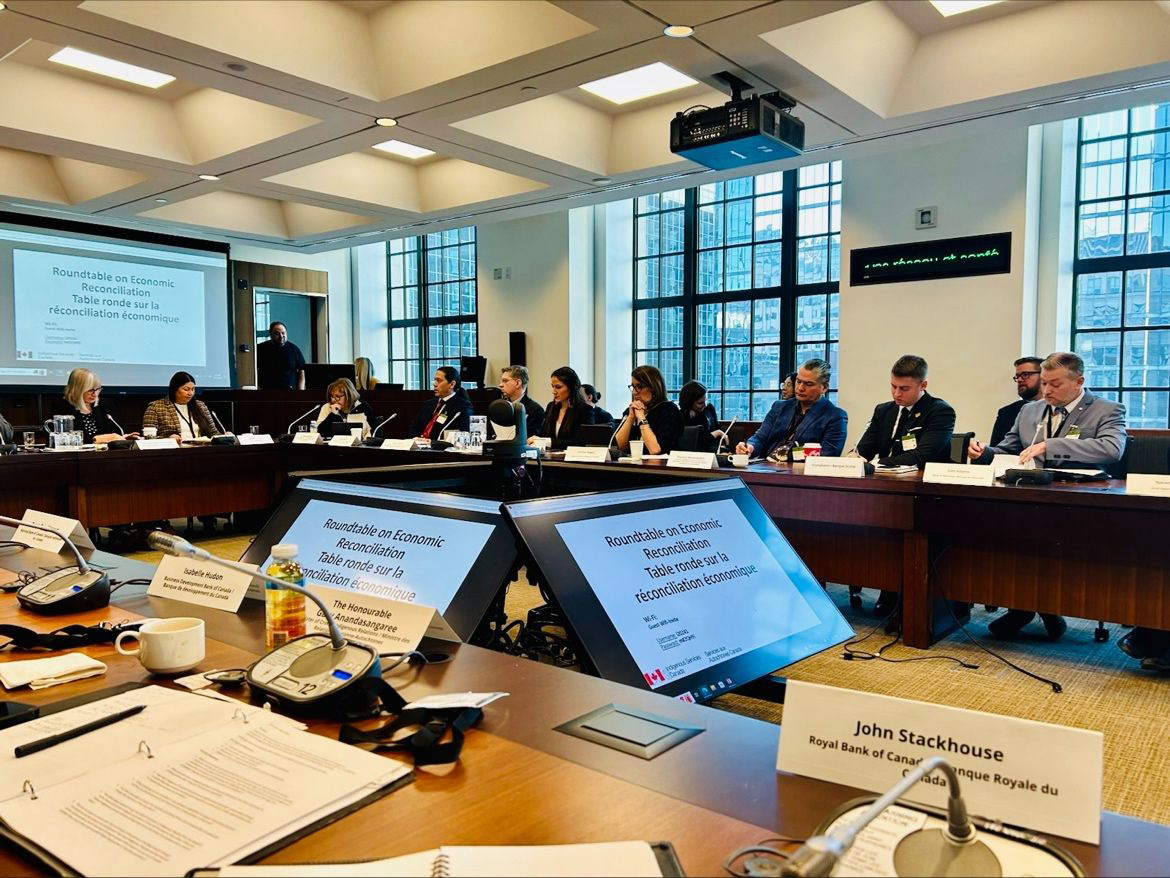 Canada faces a triple economic challenge, and with it, a triple economic opportunity that can lay the foundation for growth through the 2030s.
The three points of this new growth triangle—economic reconciliation, productivity and climate action—are mutually dependent. In other words, you can’t have one without the others.
This was clear at COP28 in December, where there was an emphasis on growth, capital formation and economic inclusion to reach our climate goals. And it can be Canada’s strategic advantage if we make some important adjustments.
Let’s start with climate action, and a blunt reality: Net Zero is going to require a scale of investment that we have not seen in our lifetimes.
RBC’s Climate Action Institute recently published a report on the state of the transition in Canada, called Climate Action 2024, with the core message: We’re making progress but not nearly enough. In terms of financing a transition to Net Zero, we will need to invest $60 billion a year on climate action. Right now, we’re investing $22 billion.
Some good news: that’s up from $15 billion in just three years. Some bad news: it needs to more than double, almost immediately. Which is why we called our report “Double or Trouble.” (Moreover, for every year we fall short, we will get closer to the need to triple the investment required.)
The amount of capital seems daunting, but it’s only about 1% of GDP. And properly invested, it can add to economic growth and prevent us from sliding back into the pre-pandemic funk of secular stagnation.
As every business builder knows, capital is not something that gets printed by governments or banks, at least not for long. It’s what thriving enterprises and sectors attract, generate and retain. All of which requires productivity.
Unfortunately, about 80% of Canada’s climate action over the past decade has been funded by the federal government. Canada is simply not attracting or retaining investment capital, at a time when we need to attract tens of billions of dollars more a year to finance both economic reconciliation and the transition to a net-zero economy. In fact, between 2015 and 2022, business investment declined 16%, largely because of a wholesale retreat of investment in the oil and gas, mining and forestry sectors. And overall, investment has been at best flat, held up largely by government investments in things like hospitals and highways, and our collective investment in real estate.
Not only are we not capitalizing and recapitalizing our key growth sectors, we’re not attracting enough international capital. Canadian investment abroad is now outpacing foreign direct investment in Canada by a factor of two to one ($102 billion to $62 billion).
We’ll need to revise our collective playbook to finance an energy transition, through capital-intensive projects ranging from carbon capture to methane abatement to wind- and solar-powered electricity, hydrogen, and battery storage. One catalyst is economic reconciliation, especially through Indigenous consent and ownership that cannot only prevent years of court battles but provide the sort of stewardship that long-term, climate- and nature-minded investors are looking for.
As we stated in our 2023 report, “92 to Zero,” there will be no Net Zero without the kind of economic reconciliation spelled out in the Truth and Reconciliation Commission’s Recommendation No. 92.
With that spirit, however, the potential for resource development is profound. Our research shows Indigenous lands in Canada account for:
Canada faces a triple economic challenge, and with it, a triple economic opportunity that can lay the foundation for growth through the 2030s.
The three points of this new growth triangle—economic reconciliation, productivity and climate action—are mutually dependent. In other words, you can’t have one without the others.
This was clear at COP28 in December, where there was an emphasis on growth, capital formation and economic inclusion to reach our climate goals. And it can be Canada’s strategic advantage if we make some important adjustments.
Let’s start with climate action, and a blunt reality: Net Zero is going to require a scale of investment that we have not seen in our lifetimes.
RBC’s Climate Action Institute recently published a report on the state of the transition in Canada, called Climate Action 2024, with the core message: We’re making progress but not nearly enough. In terms of financing a transition to Net Zero, we will need to invest $60 billion a year on climate action. Right now, we’re investing $22 billion.
Some good news: that’s up from $15 billion in just three years. Some bad news: it needs to more than double, almost immediately. Which is why we called our report “Double or Trouble.” (Moreover, for every year we fall short, we will get closer to the need to triple the investment required.)
The amount of capital seems daunting, but it’s only about 1% of GDP. And properly invested, it can add to economic growth and prevent us from sliding back into the pre-pandemic funk of secular stagnation.
As every business builder knows, capital is not something that gets printed by governments or banks, at least not for long. It’s what thriving enterprises and sectors attract, generate and retain. All of which requires productivity.
Unfortunately, about 80% of Canada’s climate action over the past decade has been funded by the federal government. Canada is simply not attracting or retaining investment capital, at a time when we need to attract tens of billions of dollars more a year to finance both economic reconciliation and the transition to a net-zero economy. In fact, between 2015 and 2022, business investment declined 16%, largely because of a wholesale retreat of investment in the oil and gas, mining and forestry sectors. And overall, investment has been at best flat, held up largely by government investments in things like hospitals and highways, and our collective investment in real estate.
Not only are we not capitalizing and recapitalizing our key growth sectors, we’re not attracting enough international capital. Canadian investment abroad is now outpacing foreign direct investment in Canada by a factor of two to one ($102 billion to $62 billion).
We’ll need to revise our collective playbook to finance an energy transition, through capital-intensive projects ranging from carbon capture to methane abatement to wind- and solar-powered electricity, hydrogen, and battery storage. One catalyst is economic reconciliation, especially through Indigenous consent and ownership that cannot only prevent years of court battles but provide the sort of stewardship that long-term, climate- and nature-minded investors are looking for.
As we stated in our 2023 report, “92 to Zero,” there will be no Net Zero without the kind of economic reconciliation spelled out in the Truth and Reconciliation Commission’s Recommendation No. 92.
With that spirit, however, the potential for resource development is profound. Our research shows Indigenous lands in Canada account for:
- 56% of advanced critical mineral projects;
- 35% of the top solar sites;
- 44% of the best wind sites for energy production.
- settlements with the federal government are now coming at a pace and scale that can be transformative for communities and nations;
- fiscal incentives from the federal and many provincial governments, including investment tax incentives, are kicking in;
- interest rates are coming down, leading many long-term investors to look for new opportunities.
This article is intended as general information only and is not to be relied upon as constituting legal, financial or other professional advice. The reader is solely liable for any use of the information contained in this document and Royal Bank of Canada (“RBC”) nor any of its affiliates nor any of their respective directors, officers, employees or agents shall be held responsible for any direct or indirect damages arising from the use of this document by the reader. A professional advisor should be consulted regarding your specific situation. Information presented is believed to be factual and up-to-date but we do not guarantee its accuracy and it should not be regarded as a complete analysis of the subjects discussed. All expressions of opinion reflect the judgment of the authors as of the date of publication and are subject to change. No endorsement of any third parties or their advice, opinions, information, products or services is expressly given or implied by Royal Bank of Canada or any of its affiliates. This document may contain forward-looking statements within the meaning of certain securities laws, which are subject to RBC’s caution regarding forward-looking statements. ESG (including climate) metrics, data and other information contained on this website are or may be based on assumptions, estimates and judgements. For cautionary statements relating to the information on this website, refer to the “Caution regarding forward-looking statements” and the “Important notice regarding this document” sections in our latest climate report or sustainability report, available at: https://www.rbc.com/our-impact/sustainability-reporting/index.html. Except as required by law, none of RBC nor any of its affiliates undertake to update any information in this document.