U.S. tariffs looming over Canada’s economy demand an urgent, forceful and strategic response. The next 30 days are critical: Canada must demonstrate to Washington that America’s path to energy and economic security depends on Canada. Especially, Canadian resources.

A focus on key commodities can underpin a broader Canadian industrial resurgence that boosts Canadian GDP, revitalizes technical innovation, attracts foreign and domestic investment in several key areas, enhances productivity and accelerate Indigenous investments in resources. That would make us indispensable to U.S. interests, and a key pillar of its economic and energy strategy.

Focusing on specific commodities can also drive a renaissance in Canada’s manufacturing and ancillary services, and can ensure robust Canadian sustainability policies, such as methane capture and conservation, advance emission reductions across the value chain. In other words, a resource-focused economic strategy need not be a strip-and-ship strategy.

There’s a broader imperative, too: geographic diversification. U.S. tariffs of 25% on all steel and aluminum imports from Canada and other countries highlight the urgency of finding new markets. Resource expansion would further derisk large-scale commodity projects and boost Canadian agriculture, materials and energy exports to Asia and Europe. Over time, this could widen the door to greater trade with many of the world’s largest and fastest-growing countries. Strategically owning parts of the value chain raises our global profile, boosts our leverage in trade negotiations with the U.S. and other partners, and makes us more resilient to shifting geopolitics.

Washington already recognizes Canada’s resource strength. The decision to impose less-punitive 10% tariffs on Canadian energy compared to 25% on other goods was a tacit U.S. acknowledgement of the strategic importance of resources to American interests. We need to seize on that geo-strategic edge and elevate commodities, and their end products, in future trade negotiations with Washington.

Here are three strategic sets of resources Canadian negotiators can focus on to deepen one of the world’s most valuable economic partnerships:

1. Abundant Canadian oil, gas and power can underpin America’s energy ambitions

Canada’s exports of oil, gas, and electricity strengthen U.S. energy reserves, reduce consumer costs, and support American objectives to expand international energy exports to global allies. Deep north-south integration of North American energy infrastructure means efforts to diversify away from Canada would be costly and time-consuming.

Although a net exporter of oil and natural gas, the U.S. is looking to help Europe and allied Asian countries reduce their reliance on less-friendly energy sources, while meeting its growing domestic demand. American reserves are plentiful but energy-intensive data centres to power artificial intelligence, and other technologies, are straining capacity. Stable Canadian energy production can add to U.S. supply through integrated pipelines and grids. That would give the U.S. a cushion to export oil and natural gas to global allies without raising prices at the pump for domestic consumers-a key Trump priority.

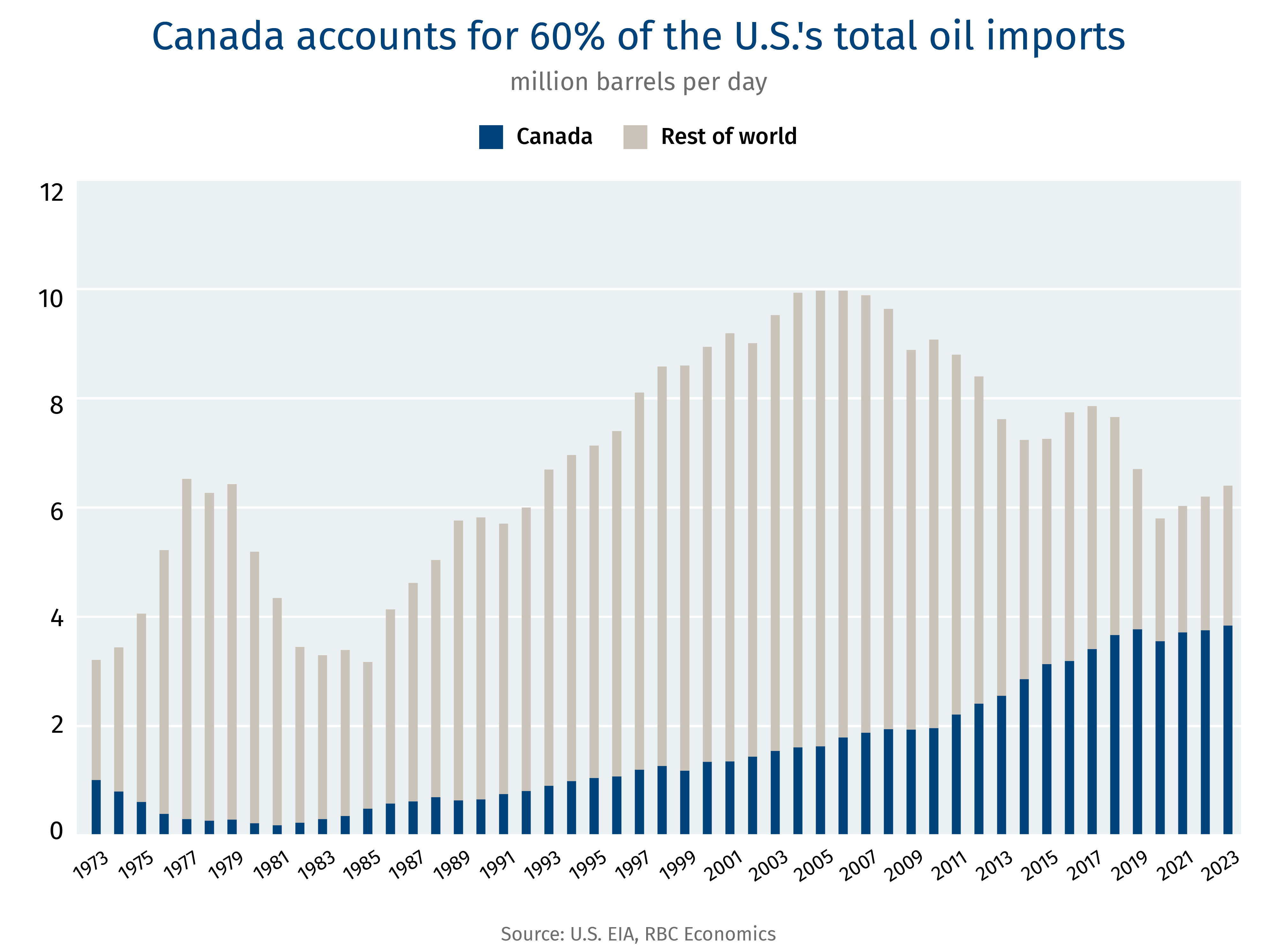
Oil: 60% of U.S. imports1

Canada’s advantage: Canadian oil can backstop U.S. efforts to become the de facto global swing oil supplier.

Canada’s share of U.S. crude oil imports has grown significantly over the past few decades, and now represent 24% of total U.S. oil consumption2. Cross-border pipelines deliver heavy crude directly to U.S. refineries that are specifically designed to process it. For these refineries, particularly those in the Midwest, moving away from Canadian heavy crude would leave them with high retooling costs or dependent on alternative sources such as Venezuela or the Middle East, exposing them to geopolitical risks. Recently, the Trans Mountain pipeline expansion has nearly tripled Canada’s oil shipping capacity to tidewater markets, carving out a role for Canada’s oil in supporting global allies, such as South Korea and Japan.

Electricity: 90% of U.S. imports3

Canada’s advantage: Low-cost and clean Canadian electricity can power several U.S. efforts including artificial intelligence, advanced manufacturing and advanced technology products.

Although the U.S. generates most of its own electricity, Canadian supplies keep the lights on and costs low across several U.S. states. New projects, such as Hydro-Quebec’s Hertel-New York powerline, aim to further increase electricity exports by providing 20% of New York City’s electricity needs, saving its residents an estimated $17 billion in electricity costs over the next three decades4.

With more than 30 cross-border transmission lines linking Canadian provinces with American states, Canada is essential for ensuring cross-border grid security and a potential source for incremental generation. For example, the rapid growth of AI technology–a U.S. strategic priority–is expected to drive a sharp increase in electricity consumption from U.S. data centres, which is estimated to account for up to 12% of U.S. total consumption by 2028, compared to 4.4% in 20235.

Natural Gas: 99% of U.S. imports

Canada’s advantage: Canadian natural gas can help America ensure ample domestic supplies and room for exports to allies in Europe and Asia.

Higher U.S. natural gas demand is expected to outpace supply growth in the next two years, according to the U.S. Energy Information Association. In addition, demand from data centres and reshoring of manufacturing could further strain natural gas power generation. Canadian natural gas is well positioned to meet supply gaps, and already accounts for 9% of total U.S. natural gas consumption with the capacity to expand further.

Canada is also poised to become a significant supplier of liquefied natural gas (LNG), and is uniquely positioned to export energy to strategic Asian allies. With six West Coast LNG projects proposed and under construction, including LNG Canada Phase I which is set to come online this year, Canada is estimated to have a total export capacity of 6.26 billion cubic feet per day (bcfd). This proposed capacity would put Canada among the top five global LNG exporters at current levels. In addition, West Coast terminals are strategically located just 10 shipping days from Asia, compared to 20 days for U.S. Gulf Coast exporters via the Panama Canal.

2. Canadian agriculture would strengthen American food security

Canada is a major part of the North American breadbasket, providing a stable and reliable supply of agricultural commodities that supplement the United States’ strengths in the sector. As a key provider of essential inputs like potash and seed oils, Canada supports U.S. food and biofuel production. With the U.S. facing potential labour shortages due to a crackdown on illegal immigration, Canada can help supplement this gap in the short term, while adding to continental food security in the long term.

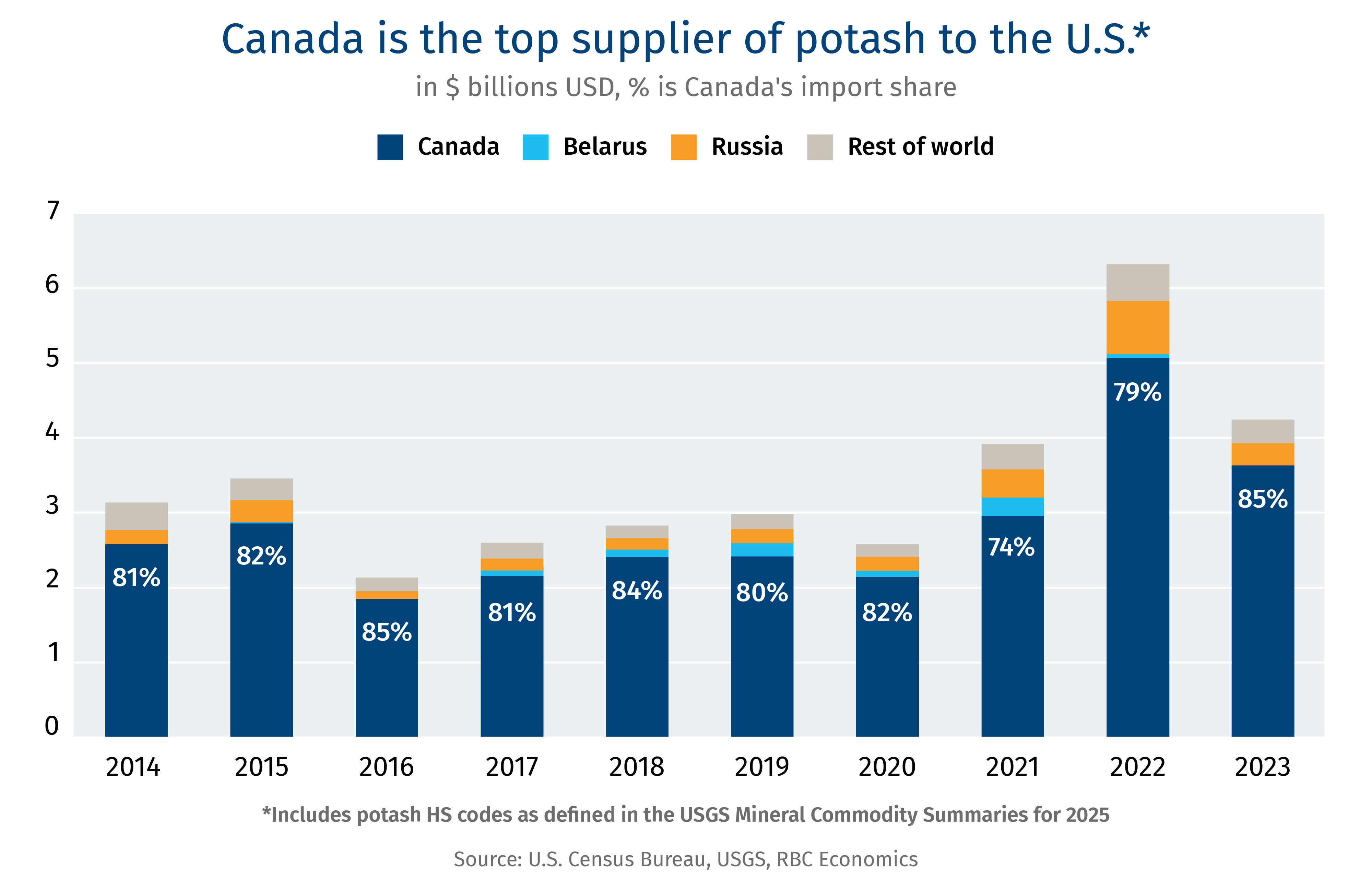
Potash: 85% of U.S. imports

Canada’s advantage: Canadian potash, a critical fertilizer component, can boost American crop yields amid extreme weather patterns, reinforcing continental food security and supply chain stability.

With growing food demand, there’s significant potential to strengthen this partnership. The Jansen potash mine, slated to begin operations in 2026, is projected to boost Canadian potash production by 4.2 million tonnes per year (mtpa), with potential expansion up to 8.5 mtpa by 2029—boosting Canadian capacity by more than a third. The new project would raise Canada’s global market share to nearly 40% by 2026. The increased production will not only bolster American food security but also help displace potash exports from non-aligned nations such as Russia and Belarus.

Canola oil: 98% of U.S. imports6

Canada’s advantage: Canola, a product developed in Canada, can play a key role in U.S. food security and meeting biofuel demand.

Canada provides a stable and diverse supply of agricultural products to the U.S., second only to Mexico. The U.S. is heavily reliant on Canadian canola oil, which account for 98% of its total imports, and is a key input in U.S. food production and renewable fuels.

Canada is also the top U.S. import source for cereal products, underpinning the deeply integrated cross-border supply chain in these sectors.

Meat: 34% of U.S. imports

Canada’s advantage: Canadian meat, including bovines and swine, are an important part of the meat feedstock into the U.S.

Animal proteins will continue to play a significant role in American diets, with per capita consumption in the U.S. projected to increase from 68.7 kilograms in 2023 to 74.6 kilograms by 20288. Canadian meat producers are essential in meeting this rising demand, as the U.S. already imports 33% of its beef and 66% of its pork from Canada7. The strong integration between Canadian and American meat markets is driven by high safety standards, a similar market structure, and alignment on product quality. As a result, Canadian meat not only supports U.S. domestic consumption but also contributes to American meat exports to global markets.

3. Canadian critical minerals and uranium can power advanced technologies in North America

The U.S. has reserves of many of the critical minerals needed in semiconductors and other sensitive technologies. Its uranium reserves are also able to help build out a new wave of nuclear power projects. It’s aiming to mine and enrich as much as possible within its borders to displace supplies from China and Russia but faces constraints, especially in adding enrichment capability. Canada has capacity in key complementary areas, like uranium conversion, that can help the U.S. build out an efficient North American value chain.

Critical minerals: 19% of U.S. imports, in total minerals and metals9

Canada’s advantage: With the right investments and innovation, Canada can advance production of several critical minerals.

The new U.S. administration is looking to accelerate several critical mineral projects and considering opportunities to advance activity within the Quadrilateral Security Dialogue, comprising the U.S., India, Japan, and Australia. Although outside this alliance, Canada is a player in the critical minerals space. It is a top 10 global producer and already a major supplier to the U.S. for aluminum, iron, steel, copper, nickel and more.

Canada has been working toward U.S. efforts to reduce reliance on China, from establishing a Canada-U.S. Joint Act Plan on Critical Minerals to $3.8 billion in public investments to ramping up exports to the U.S. of gallium and germanium, both impacted by Chinese export controls. Canada’s existing extraction and processing infrastructure could further fill U.S. gaps in key areas, such as aluminum, nickel and zinc.

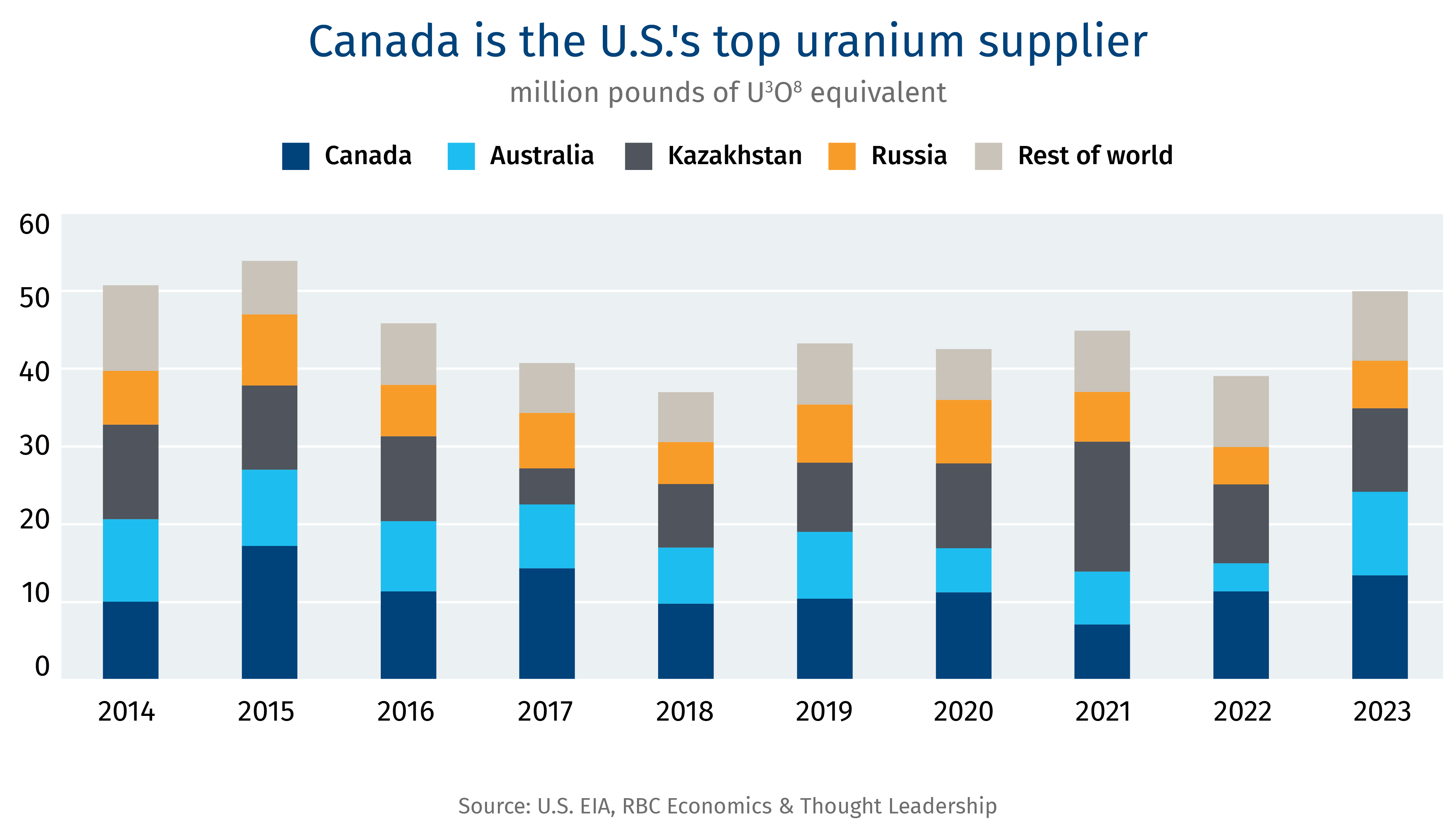
Uranium and nuclear expertise: 27% of U.S. imports, in uranium

Canada’s advantage: America’s path to nuclear renaissance goes through Canada—the world’s second largest producer of uranium after Kazakhstan.

The energy source is increasingly important to meet growing electricity demand to power AI data centres and other energy-intensive strategic advanced technologies. As the largest uranium supplier to the U.S., Canada can be an important part of the continental nuclear fuel cycle with world-leading technology and talent, small modular reactors (SMRs), and an 89,000-strong nuclear workforce honed through work on CANDU projects.
What Canada can deliver in advancing U.S. interests

In the short-term, there’s an urgent need for Canada to realign our economic interests with the U.S. For its part, the U.S. can go it alone, but it’s going to be a harder, costlier and longer route to self-sufficiency. A shifting economic and geopolitical environment behooves both to collaborate in the three core areas of mutual benefit.

This strategy heavily depends on the U.S. getting on board. We have a short window to convince Washington about the need to collaborate in the resource and energy space, which has been weaponized by several non-allied actors.

Canada also needs to get its own house in order.

A resource-focused economic and trade strategy would require billions of dollars in new infrastructure, including rail lines, seaports and processing facilities. However, domestic and foreign capital will only come to the table If there’s a stable regulatory environment and reliable pricing in what can be highly volatile markets.

These are not new challenges for Canada. Regulatory and policy uncertainty have hobbled economic development for decades. So, too, has lack of reliable demand from our major trading partners, including the U.S.

Resource production and processing calls for longer-term thinking, which will require the federal and provincial governments to work together to create entities, and strengthen existing ones, to attract and retain capital, and protect against extreme price volatility. We will also need to ensure our education systems are geared towards attracting the right talent and skills to ensure the economy is poised for long-term growth. And while positioning Canadian resources anew in the U.S. market, we will need to improve our trading relationships with many other countries and regions.

All this will require a different mindset among Canadians, to ensure our natural resources are not seen as a trading card with the U.S., but rather a strategic platform for growth, and prosperity, for decades to come.

It can be Canada’s greatest resource play.

Contributors:

Salim Zanzana, Economist, RBC Economics

Varun Srivatsan, Director of Policy, RBC Thought Leadership

Cynthia Leach, Assistant Chief Economist, RBC Economics

Yadullah Hussain, Managing Editor

Caprice Biasoni, Graphic Design Specialist

Shiplu Talukder, Digital Publishing Specialist

For more, go to rbc.com/tradehub.

Download the PDF

Download

  1. All U.S. import shares from 2023 unless otherwise indicated.
  2. Natural Resources Canada “Energy Factbook 2024-2025”
  3. Average last 5 years as 2023 figure distorted due to droughts affecting Canadian generation and export capacity.
  4. 2024 Fall Economic Statement
  5. U.S. Department of Energy “Evaluating the Increase in Electricity Demand from Data Centers”
  6. Includes imports of products under HS code 1514 in 2023
  7. Agriculture and Agri-Food Canada “Sector Trend Analysis – Meat Trends in the United States”
  8. Includes products under HS codes 0201 and 0202 for beef and 0203 for pork in 2023
  9. United States International Trade Commission
Immigration in Canada has accounted for all the growth in the labour force for well over a decade, but it’s still not enough to significantly offset the impact of an aging demographic or substantially reduce the structural shortages in the jobs market. A big reason for this is that the skill sets that many immigrants bring to Canada and the study fields of international students do not match well with the anticipated longer-term structural needs of the economy. This impairs the prospects for newcomers and, more broadly, the economy. Right now, the immigration system may be focusing too much on the labour market’s short-term demands, filling holes in sectors where low-skilled occupations have been experiencing acute shortages since the pandemic.
This has led to a surge in non-permanent residents, a strain on housing and social services, and eroded public support for immigration. The federal government needs to update immigration policies to focus more strategically on immigrant outcomes and the long-term structural needs of the labour market, while keeping in mind the infrastructure capacity to accommodate newcomers. Addressing this will be key to maintaining economic prosperity over the long run, and Canada’s high quality of life. This report will look at how a combination of a mismatch in immigrants’ skills and the labour market’s long-term needs, along with pressure on the country’s infrastructure capacity is leading to negative economic outcomes.
  • Expanding immigration targets to address an aging demographic and meet short-term labour market needs has led to a widening gap between workers’ skills and the abilities needed to address long-term structural labour shortages.
  • Employment from temporary work permit holders including international students is concentrated in sectors with low-skilled occupations, which reduces the incentive for businesses to innovate and invest in labour-augmenting or -saving technology.
  • Canada’s two-step pathway to apply for permanent residency needs greater oversight to ensure the system isn’t being abused by educational institutions and applicants.
  • The stress on infrastructure and social services needs to be addressed to improve economic outcomes for immigrants and their surrounding communities.
  • Canada’s Comprehensive Ranking System needs to be updated to prioritize economic immigrants with higher predicted earnings.
Growing the ranks of working-age people who have higher earning potential will be crucial to help spread the costs of social support programs such as healthcare. But policymakers also need to meet the challenges of integrating a large and growing number of new immigrants over the medium term.

Expanding immigration targets

The push by the federal government to increase immigration to offset the impact of an aging demographic has been successful in strengthening the labour force in the near term. Canada’s population grew by a substantial 3.3% in the 12 months to July 2023—the highest rate in more than six decades. The rise was driven almost entirely by in-migration as the federal government raised immigration targets for permanent residents.
A steady stream of immigrants is needed as more than 500,000 Canadian baby boomers hit retirement age—65—annually. Natural population growth is falling to the point where by 2030, overall population growth is expected to be fueled entirely by immigration.

Meeting short-term labour market needs

The current approach has succeeded in providing a large supply of labour to the Canadian market, but the majority of roles filled have been concentrated in low-skilled occupations. The labour force surged 6.8% in the past three years—growth unseen since the early 2000s. More international students are earning money while studying than ever before. In 2000, about one in five had a job. Today, about half are working while studying. Employers were able to tap into a pool of an estimated 1.2 million temporary residents with work permits in fiscal 2022-23. The federal government also made available one-time 18-month extensions in 2023 to people working under post-graduation work permits (PGWP) to further address broad-based labour shortages.
However, not surprisingly, employment from temporary work permit holders is concentrated in sectors with low-skilled occupations that have been experiencing acute labour shortages such as accommodation and food services. That may serve the Canadian economy well for the moment, but there is a downside. It reduces the incentive for Canadian businesses to innovate and invest in labour-augmenting or -saving technology needed to deal with an aging demographic and keep the economy globally competitive.1 The current economic weakness may also have a significant impact on low-skilled occupations with non-permanent residents and recent immigrants likely to disproportionately bear the brunt of job losses.

Mismatch between skills and labour market needs

The longer-term benefits of the abundantly available labour are also not clear as shortages in multiple fields, primarily healthcare and skilled trades, remain significant despite the increase of workers. Almost half (46%) of projected structural labour shortages are in occupations that don’t require a university or college education. That indicates the skill sets that international students are studying do not match well with the anticipated longer-term structural needs of the jobs market.
International students at colleges and universities are overrepresented in business management and STEM fields and underrepresented in the skilled trades and healthcare. While some healthcare and skilled trade workers from other countries obtain temporary work permits and professional licenses, they represent a disproportionately small number of employed temporary residents.

The role of Canada’s ‘two-step’ immigration system

Canada’s immigration system is heavily reliant on its “two-step” immigration program that allows international students to eventually apply for permanent residency. In 2018, almost 60% of economic stream immigration applicants had Canadian work experience, indicating that the majority of permanent immigrants were drawn from the pool of temporary residents.ii Strains on infrastructure and the changing labour market suggest Canada needs to broaden the potential ways for newcomers to immigrate. Graduation from designated schools automatically qualifies international students for a PGWP, allowing them to gain valuable work experience and better qualify for permanent residency. The two-step pathway also suits post-secondary institutions, including many contending with a funding squeeze amid flat real provincial funding and declining or frozen domestic student tuition fees. Many universities and colleges rely on the higher tuition fees from international students to cover funding gaps—even though students from other countries represent less than a fifth of university enrolments in Canada. Still, they account for a third of tuition fees. There’s been a particular emphasis on cracking down on “puppy mill” schools—for-profit private career colleges and similar institutions that the government has deemed as not offering a legitimate student experience while churning out diplomas. Private colleges, some in partnership with public colleges, have increasingly targeted international students as a lucrative source of revenue. This has led to negative outcomes for students and their surrounding communities.

Strain on housing and social services

The stress on infrastructure and social services from the high number of immigrants needed to help shore up Canada’s population, and fill jobs is eroding crucial public support for immigration. Housing is a key challenge with demand disproportionately affecting Toronto, Vancouver and Montreal—high-priced markets with low housing supply.iii Policy measures have been introduced to accelerate home building including a federal GST rebate on new purpose-built rental construction, but the
massive scale of in-migration makes it extremely difficult for housing supply to keep up. The squeeze on social infrastructure is no different. Immigration is an important part of the solution for bringing in trained staff for jobs in social services, but even the best candidates often struggle to integrate seamlessly. Training and hiring additional educators, hospital staff, or community support workers also takes time.

Government response to the challenges

A series of changes and updates have been announced by the federal government in an attempt to reel in a ballooning non-permanent resident population and regain greater oversight into newcomers entering the labour market. In January, the federal government implemented a cap on the total study permits to be issued over two years—limiting it to 364,000—roughly half the number of permits issued in 2023. The government also implemented stricter financial requirements for foreign students applying, upping the minimum capital requirement from $10,000 to more than $20,000 to ensure students have enough of a cushion to support their needs while studying. Work visas for spouses of undergraduate international students will also no longer be issued, and students studying at private colleges will no longer be eligible for the PGWP in an attempt to address potential loopholes in the system. However, the government will have to go beyond these initial steps to update the immigration system in order to ensure both the economy and newcomers can once again prosper from the benefits of immigration. Policymakers should examine other streams of non-permanent residents—like the Temporary Foreign Worker and International Mobility Programs—where numbers have also ballooned. They must address housing shortages on and surrounding campuses and update the selection process for permanent residents by streamlining the number of pathways available to prioritize candidates with the highest predicted earnings.

Here are recommendations that could help keep the immigration system on track to meet the country’s needs

The current CRS, developed in 2015, has selection criteria focusing on factors that include language proficiency, age, and education level. Applicants are, periodically, invited to apply for permanent residency based on a set ranking score cutoff. Higher immigration targets have meant reaching deeper into the pool of applicants to meet those targets. The cutoff scores have been lowered in order for more permanent residents to be selected from the process.

The CRS should be updated and streamlined to prioritize economic immigrants with the highest level of predicted earnings. Focusing on higher-earning immigrants can help improve economic outcomes for newcomers as well as encourage businesses to innovate or make labour-augmenting investments to overcome the shortage of low-skilled workers.

Universities and colleges should do more to provide work opportunities and increase job readiness for international students. Federal policy needs to remove or alter the requirement that international students state they do not intend to remain in Canada after graduation. Prospective students must indicate they do not intend to stay beyond their study permit, even though programs like the PGWP are designed for them to do so. This would help post-secondary institutions better create school-work pathways for international students. In addition, education for employers on the rules and benefits of hiring international students needs to be improved.

More labour market and language experience during studying would help temporary residents gain permanent residency faster and improve their prospective post-immigration earnings. International students are currently excluded from many work-integrated learning opportunities.

Provinces should identify countries with qualified workers in healthcare, skilled trades, or other priority fields where direct immigration is the more practical route. Enhanced pre-arrival information, immigration processing, federal settlement services and provincial professional licensing support can help convince foreign workers to build a successful life in Canada.
Federal and provincial housing supply plans should be aligned with in-migration targets. Post-secondary institutions should be encouraged to build more housing—and provinces could grant them commensurate financial flexibility. Canada Mortgage and Housing Corp. could help collect and disseminate more information on the student housing market, which would assist in developing market standards that attract global private capital pools.
Provinces need to develop long-term funding plans for post-secondary institutions that include parameters around domestic student tuition fees, public funding, and international student expectations. Continued freezing of domestic student fees is not sustainable and doesn’t meet the needs of post-secondary education providers. Foreign students also cannot be the key funding source supporting rural and low-enrolment institutions. Provinces should evaluate future local student demand for these institutions, and either publicly fund them appropriately or explore alternate delivery models for post-secondary education in these regions.
Certification of qualifications or credentials from recognized institutions in given source countries can help streamline labour market integration, save resources, and ensure an easier transition for those coming to Canada. Credential recognition has been a long-standing issue for newcomers. For high-earning professional designations, the certification process of immigrant credentials can be lengthy and costly. There aren’t clear frameworks for other professions, and it is often left to employers to determine the suitability of a newcomer candidate. This can be a time-consuming process for employers and a barrier to finding meaningful employment for immigrants.

For more, go to rbc.com/thoughtleadership.

Download the Report

Download

Contributors:

Benjamin Richardson, Researcher

Cynthia Leach, Assistant Chief Economist

Rajeshni Naidu-Ghelani, Managing Editor

Related Reading

Course Correction:

How international students can help solve Canada’s labour crisis

Canadians on the move:

will a pandemic shakeup in migration trends hold?

New School Rules:

How International Students Could Ease Our Labour Crunch

  1. ihttps://www.rbc.com/en/wp-content/uploads/sites/4/2024/11/CLEF-058-2023.pdf
  2. iihttps://www150.statcan.gc.ca/n1/pub/11-626-x/11-626-x2020010-eng.htm
  3. iiihttps://www.rbc.com/en/wp-content/uploads/sites/4/2024/11/san2021-21.pdf

Natural gas currently presents one of Canada’s biggest climate choices

Expansion of the abundant resource could unlock a fresh wave of economic activity and help cut global emissions. But we risk missing our Net Zero targets without major investments in abatement technologies. As major energy importers Japan and Germany eye Canadian natural gas, federal and provincial policymakers are wrestling with a conundrum: Turn them away and risk more global energy volatility or tap British Columbia and Alberta gas and leave Canada’s economy more exposed to shifts in the global gas outlook. The Japan-led G7 Summit in May will struggle with this twin challenge of managing energy and climate security. The group of the world’s richest countries are still debating natural gas’s role in ensuring market stability. A strategic energy alliance that protects the group’s long-term economic prosperity and climate ambitions would bring some clarity to the path forward. Here are three roles Canada can play:
  • The Gulf Coast Gas Exporter: Ramp up natural gas exports to the U.S. Gulf Coast liquefied natural gas producers, which is developing a number of gas-exporting projects. The strategy may raise Canada’s upstream gas sector emissions by up to 7%.
  • The Strategic Exporter: Carve a niche in global LNG markets as a strategic supplier of stable, low-emissions gas. A handful of projects could potentially reduce global emissions by a net 105 MtCO2e—roughly equivalent to Qatar’s total GHG emissions, but would also raise Canadian gas sector emissions by a third assuming current technologies. However, most of the upstream gas emissions and nearly a third of LNG terminal emissions could be abated with electrification and other technologies. The strategy would attract a projected $133 billion in capital investment into the Canadian economy over 40 years.
  • The West Coast Hub: Build out LNG capacity to its full potential, taking a more assertive role in global natural gas markets. The strategy could reduce net global emissions by as much as 211 MtCO2e but raise the Canadian sector’s emissions by 66%. The strategy would attract more than $200 billion in investments.
Each path carries economic and climate risks that Canadian policymakers and industry must weigh. And fast. Global LNG markets are restructuring, opening fresh opportunities for West Coast projects. But that window won’t be open for long.

Canada’s Choices for Supporting Global Energy Security

Chart: Canada’s Choices For Supporting Global Climate & Energy Security

Asia Key To Long-Term Demand As LNG Investors Eye New Investments

Getting to Net Zero requires the world to cut fossil fuel consumption, including natural gas. But we’re not there yet. Even as wind and solar farms spring up around the world, LNG—natural gas cooled to -162°C to 1/600th of its original volume to ship over long distances cheaply—is gaining fresh momentum. A key reason: cleaner-burning natural gas often means lower emissions than oil or coal. Europe has demonstrated LNG’s value with its frantic dash to replace piped Russian gas, importing the equivalent of 10% of LNG trade in 2021, mostly from the U.S. Though the EU remains intent on transitioning to a clean energy economy, for now it’s rushing to build new regasification terminals. Meanwhile, natural gas is part of the EU taxonomy for sustainable activities—albeit under strict conditions including no unabated natural gas in power generation beyond 2035. If carbon capture technology for gas abatement evolves constructively, gas could be a player in European energy for longer. While gas will remain in the mix in Europe and other advanced economies for some time, it’s clear that future demand will decline as these economies build cleaner energy infrastructure.

Natural Gas is a cleaner-burning fossil fuel

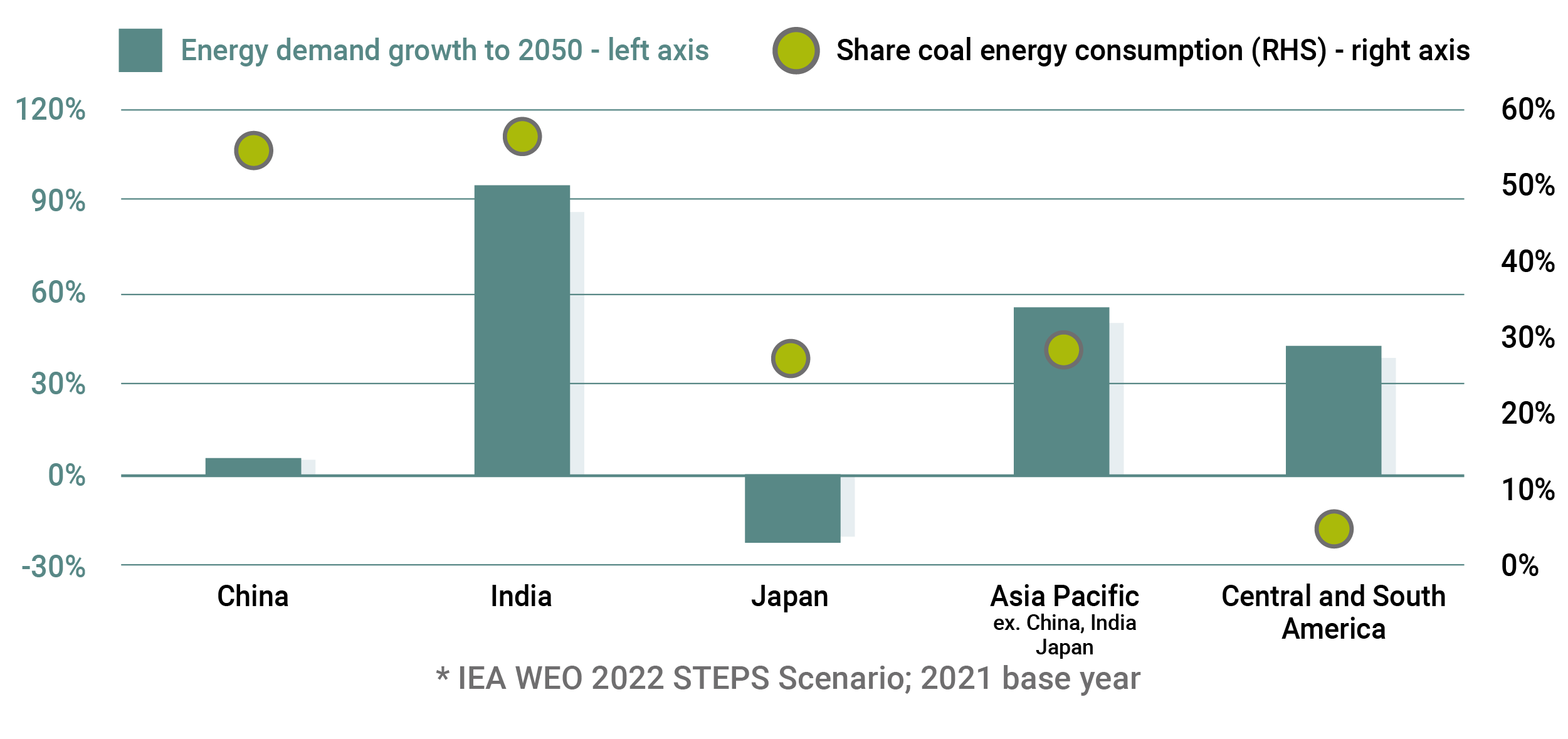
Chart: Natural Gas is a cleaner-burning fossil fuel Asia, on the other hand, will have a harder time turning away from natural gas. As one of the world’s biggest LNG importers, Japan is alarmed by its dependence on Russian and Middle Eastern countries as well as new export limits proposed by major LNG supplier Australia. It’s encouraging the development of nuclear energy, hydrogen and natural gas as part of this year’s G7 agenda. LNG will also remain an essential fuel in China, India and other populous countries of South Asia and Southeast Asia as these countries seek to meet growing energy demand while reducing a strong reliance on coal to meet climate commitments. China, India and Southeast Asia will see gas demand grow by around 44% by 2050 in the International Energy Agency’s base case scenario. LNG would take the bulk of the growth with declining local pipeline-based production. But it’s hardly a full-blown bull case for gas. Stunned by last year’s five-fold jump in LNG prices, many Asian countries raised their coal consumption, while others pivoted to renewables, especially as the economics of switching directly from coal to clean energy in Asia improved dramatically. Non-emitting energy rollout may take a while to gain traction in Asia, but it’s still a cloud hanging over the long-term gas outlook.

Emerging markets driving gas demand

Chart: Emerging markets driving gas demand
Global LNG markets remain tight. But gas exporters are responding to high price signals with a raft of proposed projects from LNG heavyweights, including the U.S. and Qatar.Globally, more than 100 megatonnes per annum (MTPA) of new LNG supply could be approved before 2024, adding 17% to the global LNG market. Another 1,035 MTPA are in pre-final investment decision stage, but the International Gas Union believes “a fair portion” are unlikely to proceed given investor focus on capital discipline and a reluctance to invest in long-term projects in an uncertain global energy market. There are also question marks hovering over Russia’s new planned LNG capacity, given the spate of Western sanctions and departure of oil and gas majors from the country.With a strong market outlook in the medium term but possibly much weaker in the long-term, would 25 to 40-year Canadian LNG liquefaction capacity investments be profitable?

Canada’s Proposition

LNG Canada Phase I, a large B.C. export facility backed by Royal Dutch Shell, Malaysia’s Petronas BHD, PetroChina Co., Japan’s Mitsubishi Corp. and Korea Gas Corp. will mark Canada’s first meaningful entry in global LNG markets by mid-decade. The project’s capacity of 14 MTPA will place Canada among the top 10 largest LNG exporters in one fell swoop. Woodfibre LNG and Cedar LNG, with a combined capacity of up to 6 MTPA, are advancing toward development. Global majors are certainly taking another look at new West Coast projects, drawn by the demand for diversified gas suppliers and some compelling advantages:
  • Canada is the world’s 4th largest natural gas producer, and home to a huge concentration of conventional and unconventional natural gas reserves.
  • The Montney shale basin straddling Alberta and B.C.—about the size of New Brunswick and Nova Scotia combined—can potentially produce 449 trillion cubic feet of natural gas, nearly six times Canada’s conventional gas reserves. And Montney reserves are relatively cheap: a 2018 study found 200 years supply in the basin below $2.50 per million British thermal units breakeven.[1]
  • B.C. projects are about 10 shipping days from Asia, compared to 20 for U.S. Gulf Coast exporters via the tolled Panama Canal, reducing both costs and emissions. The only major active U.S. West Coast LNG project is the federally-approved US$39-billion Alaska project.
  • Canada’s world-leading methane regulations, naturally low formation CO2 in the Montney, and promise of clean electricity supply is prized by global producers eager to reduce their greenhouse gas emissions. Two proposed Canadian LNG projects are majority-backed by Indigenous groups, suggesting strong local support.

Distance To Asia

Nautical miles

Source: Oxford Energy Institute

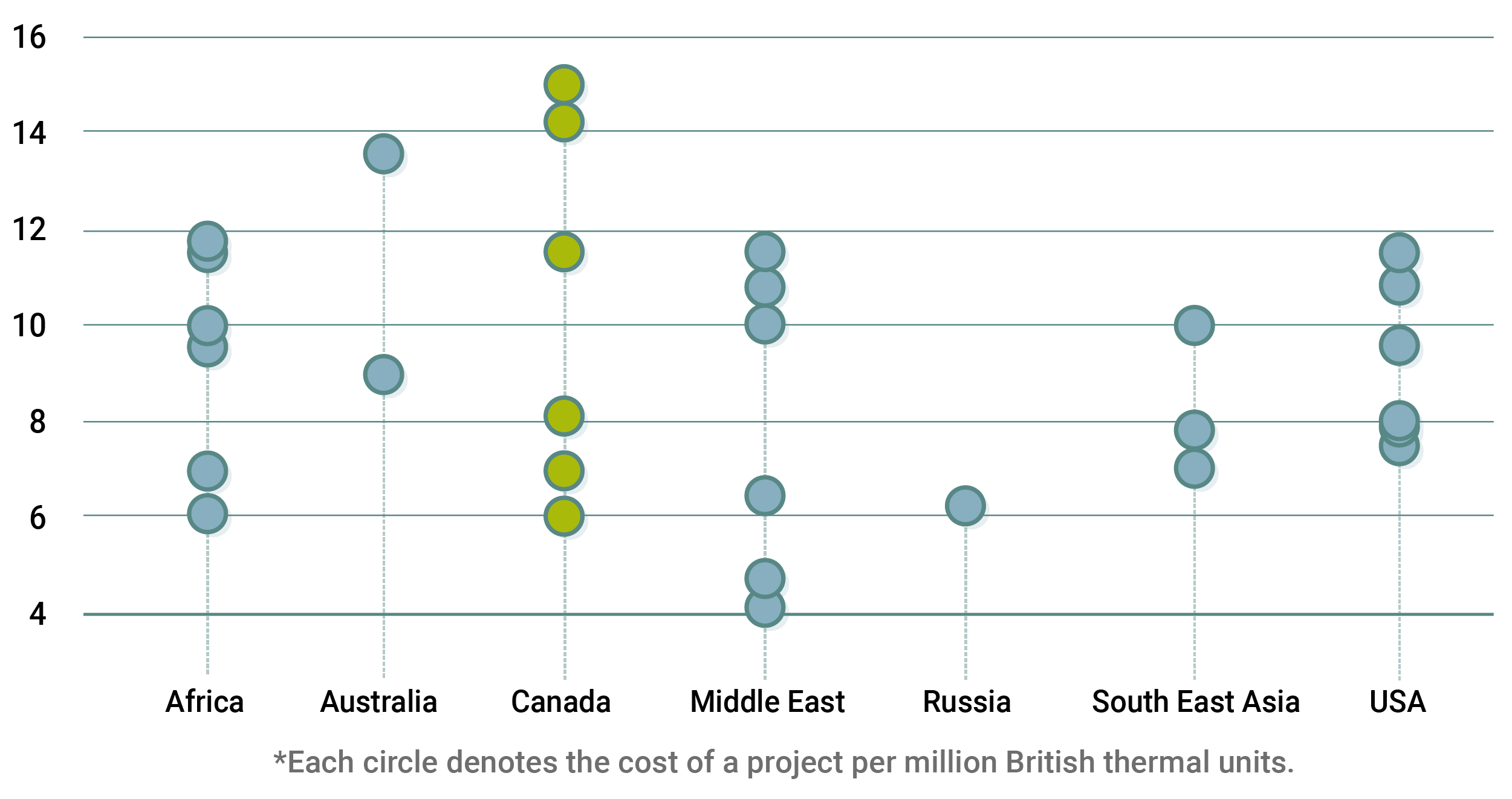
Still, several challenges cloud the cost and profitability picture. Canada’s capital costs for greenfield projects are relatively high and it’s unclear whether foreign consumers are willing to pay added costs for diversified energy supplies. While Canada has existing attributes that can drive a lower emissions profile for its LNG, new oil and gas climate policies requiring rapid industry-led decarbonization could add significantly to costs.

How Canadian LNG projects stack up against rivals

CAD/Mbtu

Chart: How Canadian LNG projects stack up against rivals

Here are three ways Canada can support global energy and environmental security.

Scenario 1: The Gulf Coast Gas Exporter

The U.S.’s expeditious LNG buildout serves as an opening for Western Canadian natural gas producers. Canada’s low-cost, plentiful gas resources and investment grade companies are attractive to many U.S. LNG projects competing for stable gas supplies. Canadian companies have secured supply agreements of 0.3 billion cubic feet per day (bcf/d) with U.S. LNG exporters. Growing these agreements to 1 bcf/d would give Canadian companies exposure to global pricing with limited capital risk.
The Gulf Coast Gas Exporter
New Capacity Economy Climate
LNG capacity Gas production Investment Jobs Royalties Canadian Emissions Global Net Emissions
1.0 bc f/day $10B 6,200 $4.7B 3.4 MtCO2e

Climate and economic considerations

  • Given the abundance of Western Canadian natural gas, higher U.S.-bound gas exports may not raise production. But if it did, Canadian emissions would increase by 2% relative to current oil and gas sector emissions. That’s directionally opposite to Canada’s stated goal to cut emissions from the sector by 42% by 2030.
  • Being a Gulf Coast exporter is not a growth strategy. U.S. LNG could be well supplied with domestic gas reserves over the long-term, new cross-border and interstate pipelines to the Gulf Coast will be difficult to build, and pricing premiums could be captured by other players.
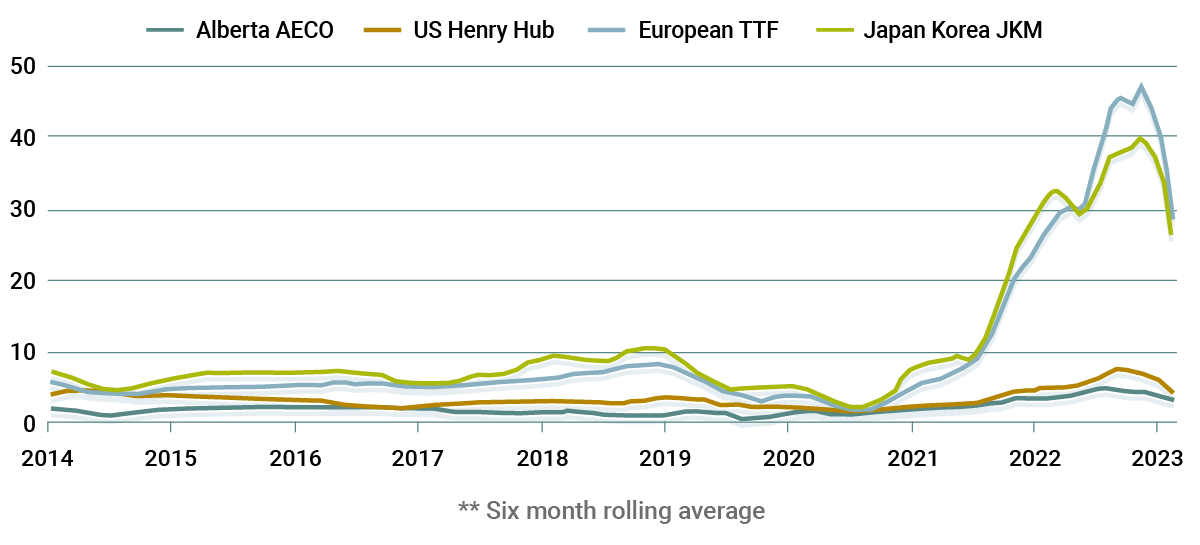
  • Without sufficient pipeline capacity to the U.S. or Eastern Canada, or LNG to international markets, the value of Canadian gas resources will continue to be diminished. The result of flooded local markets: Canadian natural gas benchmarks priced at a discount to U.S. and international benchmarks.

Canadian gas priced at a discount to major benchmarks

USD/Mbtu

Chart: Canadian gas priced at a discount to major beachmarks

Scenario 2: The Strategic Exporter

Canada could take a more deliberate role in stabilizing global energy markets, with new LNG capacity of 40 MTPA, or about 7% of current global supply2. Exporting gas could ramp up trade and investment ties with strategic Trans-Pacific economies. Proposed LNG facilities or those entering the environmental assessment process must demonstrate a credible Net Zero plan by 2030, according to new B.C. rules. Canada’s low emissions and relatively high environmental, social and governance standards would differentiate its gas for markets willing to pay premium prices.
The Strategic Exporter
New LNG Capacity New Gas Production Investment Jobs Royalties Canadian Emissions Global Net Emissions
40 MTPA 4.8 bcf/day $133 B 95,400 $22.7B 16.6 MtCO2e -105 MtCO2e

Climate and economic considerations

  • Global emissions could fall. Canadian West Coast LNG shipped to China can produce less than half the lifecycle emissions per unit of electricity generated compared to the Chinese average, if it displaces coal fired generation. 3
  • The Paris Accord’s Article 6 international centralized emissions trading system—which would verify LNG’s displacement of coal and give Canada credit for global emissions reductions—is years away.
  • Major decarbonization of Canadian gas and LNG is technologically feasible and able to abate up to 90% of upstream gas emissions, while full electrification of LNG terminals can cut emissions by 63% compared to electrification for only non-compression systems (as in LNG Canada Phase I). This could add at least $0.7 per Mbtu to producer costs, raising Canadian supply cost.
  • Electricity demand for low-emissions LNG terminals and gas supplies would require major new generation and transmission infrastructure. Estimates of terminal electricity demand vary, but could translate into about 10% of BC’s current total electricity generation for every 20 MTPA of LNG—enough to power up to 2 million electric vehicles.4While BC will require new LNG projects entering the environmental assessment process to be Net Zero by 2030, BC Hydro has not yet set out clear provincial electrification plans, leaving a narrow window for new LNG investments.
  • Governments could collect substantial royalty and tax revenues from new LNG projects, but with the uncertain long term gas outlook, governments may be asked to pitch in with fiscal incentives to attract new projects, effectively subsidizing allied consumers to ensure energy security.
  • Exporting gas to Trans-Pacific economies would strengthen Canada’s Indo-Pacific investment and trade strategy.
How Natural Gas Producers Can Cut Emissions
Emissions source (share of emissions) Technology Technologically feasible abatement share Producer Cost (CAD/bcf)
Combustion 63% Electrification 100% $514,000
Methane Venting and Leaks 17% Various – leak detection & repair, blowdown capture, replace pumps, etc. 68% $1,900
CO2 Venting 17% Carbon capture 70% $158,000
Flaring 4% Collection & compression of gas into pipelines 90% $5,700
Total upstream gas sector emissions = 50 MtCO2e

Source: 2022 National Inventory Report, B.C. Ministry of the Environment, IEA methane tracker, RBC’s $2 Trillion Transition, industry consultation

Scenario 3: The West Coast Hub

By building up to 13% of current global LNG capacity and increasing natural gas production by 60%, Canada could become a global LNG player. But Canada’s high greenfield development and major decarbonization costs would make building clean, competitive LNG supply at scale a tall order.
The West Coast Hub
New Capacity Economy Climate
New LNG Capacity New gas Production Investment Jobs Royalties Canadian Emissions Global Net Emissions
80 MTPA 9.7 bcf/day $236 B 169,000 $45.5 B 33.2 MtCO2e -211 MtCO2e

Climate and economic considerations

  • Gas sector emissions would rise 60%, assuming current technologies. Canada would likely need to provide leeway in domestic sectoral emission targets, given steep decarbonizing costs and difficulty finding sufficient international buyers willing to engage in bilateral emissions trading.
  • To keep supply costs competitive and reduce sectoral emissions, new projects could require major fiscal incentives or taxpayer investment in electricity infrastructure. Governments could participate more in the financial upside of new projects, earmarking royalty and tax revenues in this high-risk, high-reward strategy for aggressive domestic decarbonization of non-gas sectors.
  • A massive buildout of natural gas could hurt Canada’s reputation as a climate champion. Without consent of Indigenous groups on whose lands most of Montney straddles, upstream gas supplies may have difficulty expanding sufficiently.
  • A larger natural gas sector provides a partial hedge against Canada’s oil sector. However, Canada’s economy would be exposed to transition risk if pessimistic natural gas forecasts play out, as more economic activity is exposed to fossil fuels. Stranded gas assets would cease to generate public economic benefits despite historical emissions allowances or taxpayer supports.
Active Canadian LNG Projects
Project Owners Location Status Capacity (MTPA)
LNG Canada Phase 1 Shell/Petronas/Petrochina/Mitsubishi/Korea Gas Commercial start mid-decade 14
LNG Canada Phase 2 Shell/Petronas/Petrochina/Mitsubishi/Korea Gas Kitimat (Haisla Nation territory) Economic feasibility underway 14
Cedar LNG Haisla Nation/Pembina Environmental Assessment permit received 3 to 4
Ksi Lisims LNG Project Nisga’a Nation, Rockies LNG (Advantage, Birchcliff, Bonavista, NuVista, Paramount Resources & Peyto) and US based Western LNG Pearse Island, NW coast of BC (Nisga’a Nation land) Environmental Assessment Decision in progress 12
Woodfibre LNG Pacific Energy Corp. (Singapore)/Enbridge (30%) Squamish, BC Approved 2.1
Tilbury Phase 2 Expansion Fortis BC Tilbury Island, BC Environmental Assessment Decision in progress 2.5

Under construction; all other projects pre-FID (final investment decision) Source: Project websites, RBC Economics

Ideas to Move Forward

LNG is one of the toughest economic and climate choices for Canada – tremendous upside and downside risks abound on both sides. The country has historically avoided definitive moves on LNG, which led to a rash of abandoned projects a decade ago. The stakes are only higher now, so Canada cannot dither and be locked into a future decided by chance. Canada needs to set clear guardrails for its domestic LNG industry, finding the right roles for industry, government, electricity ratepayers, and foreign consumers to best manage its preferred balance of climate and economic risks. Regardless of the outcome Canada aims for, there are key elements missing in the policy framework and industry playbook that will compromise Canada’s ability to move forward at all. This is where we could start.
  • Canada should drive high standards in bilateral emissions trading agreements under the Paris Accord’s Article 6, with the federal government leading the development of robust frameworks through the G7. Canada’s forthcoming sustainable finance taxonomy could include flexibility for long-lived LNG transition assets where tied to verified global emissions reductions.
  • The federal government should deliver on promises to fast-track major project approvals and streamline regulatory assessment processes, including working with provinces on assuring a single process per project.
  • Industry should seek to expand gas takeaway capacity with existing infrastructure, including investment-grade Canadian operators securing more long-term supply agreements with U.S. LNG developers, investments by midstream companies to optimize pipeline capacity, and gas majors working with pipeline companies to resolve their frequent contract disputes.
  • Sponsors of new LNG projects should improve their cost profile by leveraging pipeline or scale efficiencies, leaning on more modular technologies, and proactively managing skilled labour and supply chain constraints.
  • Federal and provincial governments should set clearer decarbonization targets for the gas and LNG industry. Their support for sectoral decarbonization should be made clear and scale with Canada’s view of how the sector supports global energy security. The industry needs to deliver on emissions reductions.
  • BC Hydro should quickly establish a clear electrification strategy and timetable that helps guide private sector investments in electrification of the sector. Review of the pricing framework for industrial users should appropriately distribute the costs of grid expansion.
  • Federal and provincial governments should roll out broad-based supports for Indigenous communities to purchase equity in major projects, including LNG infrastructure, addressing a historic gap in access to capital that has eroded project support and slowed development.
  • Industry and government actively communicate Canada’s framework for LNG development internationally, so global investors understand Canada’s relative advantages and openness to investment.

Cynthia Leach, Assistant Chief Economist, Thought Leadership, Royal Bank of Canada Yadullah Hussain, Managing Editor, RBC Climate Action Institute, Royal Bank of Canada

LNG capacity in mtpa is converted to gas production in bcf/day by assuming a capacity utilization of 80%, multiplying by the LNG-to-gas (bcf) conversion factor of 48.0279, and then dividing by 365. This value is then grossed up to account for fuel use of the LNG terminal, assuming the specifications of LNG Canada Phase I . Capital investment for LNG liquefaction terminals, upstream gas production and transmission, excludes operating costs. Estimated based on a range of sources, including LNG project proposals. Total (direct+indirect+induced) jobs impact of capital investment (excludes operating costs), using Statistics Canada multipliers for oil and gas construction. Weighted average construction period is 10 years. Current gas sector jobs based on total (direct+indirect+induced) jobs from CAPP. Royalties estimated using 15% rate on revenue, based on one month AECO forward rate. Canadian emissions are calculated using emissions intensity for upstream BC gas production from the Pembina Institute Shale Gas Tool (historical values, not counting planned emissions reductions) and implied emissions intensity of liquefaction, based on the specifications of LNG Canada Phase I. Global net emissions reduction based on midpoint of the range of lifecycle emissions savings estimates of Canadian LNG delivered to Asia versus Chinese coal in power generation, based on: Nie et al. 2020, Greenhouse-gas emissions of Canadian liquefied natural gas for use in China: Comparison and synthesis of three independent life cycle assessments, Journal of Cleaner Production Abatement potential based on IEA methane tracker, RBC’s $2 Trillion Transition, and various discussions with industry and academics. Electricity requirement for LNG terminal compression and auxiliary power used from: https://www.rbc.com/en/wp-content/uploads/sites/4/2025/03/Roda-Stuart_Thesis_Final.pdf. BC Hydro system energy balance taken from: https://www.rbc.com/en/wp-content/uploads/sites/4/2025/03/integrated-resource-plan-2021.pdf 1 Microsoft Word – 19-0156-Letter Report Revised Nov 8 2019 (gov.bc.ca) 2 Operating, under construction, or approved FID LNG liquefaction capacity of 598 MTPA, as of April 2022. https://www.igu.org/resources/world-lng-report-2022/ 3 https://www.rbc.com/en/wp-content/uploads/sites/4/2025/03/Roda-Stuart_Thesis_Final.pdf 4 https://www.rbc.com/en/wp-content/uploads/sites/4/2025/03/Roda-Stuart_Thesis_Final.pdf. At 80% capacity utilization, this translates into 328 GWh/ MTPA.
The 2023 Federal Budget offers a strong response to the U.S. Inflation Reduction Act (IRA), but a Net Zero investment wave still faces headwinds from rising international competition, regulatory impediments and the difficulty in getting provinces on board.
Budget 2023’s new green measures are mostly about bolstering the upstream supply chain for a low-carbon economy with new refundable investment tax credits (ITC) for clean electricity, clean-technology manufacturing, and hydrogen. Combined with carbon capture and cleantech adoption ITCs announced over the past year, the Feds expect to spend about $80 billion over 10 years on green investment tax credits. That’s a significant response to the U.S.’s US$369-billion+ climate program–we estimate Canada would need to spend up to $120 billion to match IRA’s 10% estimated emissions cuts, but required new spending is lower given existing program spending and regulatory incentives.

Cost Of Net Zero: Canada’s Investment Tax Credit Bill

Measure Start Date Credit Rate Total Cost Over 10 Years(CAD)
Clean electricity Budget 2024 15% $25.7B
Clean-technology manufacturing January 1, 2024 30% $11.1B
Clean hydrogen Budget 2023 0-40%, depending on carbon intensity $17.7B
Clean technology adoption * Budget 2023 30% ~$16B
Carbon capture ** 2022 37.5%-60%, depending on equipment and project type ~$15B

* FES 2022; B23 addition of geothermal and extension to 2034 ** Budget 2022; limited new enhancements in B23

Large corporates the biggest direct beneficiaries

The new measures will be advantageous for large corporates given the capital-intensive nature of the related investments.  Consumers and other businesses are supposed to benefit indirectly through lower costs for clean energy and products that federal tax credits support. Other businesses will probably find greater direct benefit from the Fall 2022 updates’ Clean Technology Investment Tax Credit (Clean Tech ITC), which became effective on budget day and saw some enhancements. The budget’s expanded focus for the Canada Infrastructure Bank on clean electricity, more funding for existing programs to update the grid, and additional funding for the Strategic Innovation Fund could also benefit mid-sized businesses. Aside from the power sector, oil and gas, agriculture, and buildings–sectors that make up a sizeable chunk of Canada’s carbon emissions—received no new direct support for decarbonization, with only minor enhancements to the existing carbon capture tax credit.

New measures target mostly future emissions reductions

The clean electricity credit may encourage some near-term emissions reductions. It is being made available to non-taxable entities such as public utilities, which may help provincial planners increasingly opt for renewables over unabated natural gas for new power generation. But the measures are largely about facilitating future emissions cuts. Federal subsidies are meant to lower the costs households and industrial end consumers would otherwise face for important energy inputs, thereby paving the way for investments in low-carbon technologies. There is a strong case for this approach but there are risks. Budget 2023 offers no estimates on expected emissions reductions. Along with electricity and hydrogen, technologies like electric vehicles, batteries, heat pumps, electrolyzers, and non-emitting power equipment are covered by the new measures. These mostly correspond to abatement pathways for sectors where Canada’s 2030 climate plan seeks significant emissions reductions, suggesting the budget can play a role in achieving ambitious climate targets.

Provinces must play ball on electricity

The budget’s $25.7 billion spend on electricity over 10 years will help provinces implement the proposed Clean Electricity Standard (CES), but it requires them to get on board. The CES is Ottawa’s key regulatory tool to achieve a Net Zero emissions electricity system by 2035.  Access to the new clean electricity ITC in each province/territory will depend on provinces committing to a Net Zero electricity sector by 2035 and that federal funding will lower electricity bills. The Feds’ clean electricity intervention does more than aim for an affordable Net Zero grid. It throws its weight behind inter-provincial transmission corridors as an important pathway to lower the cost of a clean grid, and clean electricity underpinning Canada’s ability to compete for electricity-intensive, low-carbon industries such as battery manufacturing or green hydrogen. Provinces are also key to both these objectives, but it’s unclear how system planners will embrace cross-jurisdictional cooperation or precautionary capacity buildout. Without the provinces driving greater and faster investment, the new credit would just shift transition costs from provinces to the federal government.

Canada’s tax credits compare favourably to IRA on first review

Canada does not have production tax credits (PTCs) that are common in IRA and offer tax incentives for each unit produced versus capital invested as in an ITC. However, credit rates for the clean electricity and clean technology ITCs are generally on par with IRA. Canada’s clean hydrogen ITC carries a higher maximum credit rate of 40% (vs 30% in the IRA). Like IRA, Canada’s ITCs apply into the early 2030s, are generally technology neutral, and carry both wage and apprenticeship requirements. Unlike IRA, Canada’s measures do not phase out earlier if climate targets are reached, and the value of refundable tax credits in some cases could be greater than IRA’s direct pay provisions for unprofitable business.

Feds are sticking with ITCs, carbon pricing

The Budget emphasized that tax-based support is only one of four tools in Canada’s strategy for a clean economy. Pollution pricing and regulation is at the core, with strategic financing through the newly created Canada Growth Fund and Canada Infrastructure Bank and programmatic spending driving more targeted interventions. As such, Finance officials emphasized the deliberate choice of ITCs for tax-based support, instead of incorporating production tax credits. Upfront payment in capital intensive sectors is seen as providing significant value, and the best way for federal dollars to influence clean technology improvement. Avoided carbon tax or the sale of carbon credits is supposed to provide complementary revenue streams needed to underwrite decarbonization projects. To firm carbon pricing, carbon contracts for differences are mentioned as part of the toolkit for the Canada Growth Fund, which should start doing deals this spring. The government will also consult on a “broad-based approach” to carbon contracts for differences. It’s not clear what is intended here, and there are numerous complicated issues to resolve. For now, we see these contracts available only in a limited way, so carbon (credit) price uncertainty may continue to challenge investment decisions.

What’s missing in the budget?

Canada has not clarified how it will clear the way for major clean energy projects—which is emerging as an obstacle in securing new investments. Despite last year’s $1.3 billion allotted to federal agencies to improve their project approval process, Budget 2023 still only reiterates a plan to have a plan with concrete actions committed only by the end of the year.  Regulatory issues like permitting may be just as important as tax credits to a project’s feasibility. Budget 2023 enables the Canada Infrastructure Bank to support Indigenous communities to purchase equity in major projects in which it participates. It’s a step in the right direction, but we were looking for a broader and more transparent program to speed up the process, such as government guarantees. Many clean energy projects will be on Indigenous lands, and with both communities and project sponsors increasingly interested in Indigenous equity participation, communities’ challenges in accessing capital needs to be addressed. Cynthia is Assistant Chief Economist, Thought Leadership, a role in which she helps shape the narratives and research agenda around the RBC Economics and Thought Leadership team’s forward-looking economic and policy analysis. She joined the team in 2020.