Canada’s commitment to a Net Zero future is in the spotlight these days, but one crucial aspect is often overlooked: the workforce needed to get us there. If we’re going to completely reshape and transform industries, developing sustainable technologies will not be enough—humans will need to take the lead. RBC’s latest report, Green Collar Jobs, broke down what’s needed for this transition to accelerate and found that some 40% of new jobs in the trades, transport, and equipment occupations will need an enhanced skillset. And it’s businesses of all sizes that will need to spearhead the skills revolution. “Much of the responsibility for retraining will fall to Canadian businesses, especially those developing the green technologies that will drive the climate transition,” said RBC Economics’ Managing Editor Naomi Powell, and co-author of the report. One Canadian firm that’s upgrading the skills of its 6,000+ workforce is Oakville-based Samuel, Son and Company. The family-owned firm started in 1855 as a hardware and metals import/export business. Today, its largest customer is none other than EV maker Tesla. Its CEO Colin Osborne joined us for the latest episode of Disruptors, titled “The Green Collar Revolution,” to share how it is teaching its workforce to integrate new technologies such as artificial intelligence and mechatronics. Employers such as Osborne are facing the difficult task of finding skilled labour and can no longer rely solely on schools to nurture talent. As Osborne told us, they have to find channels to partner with universities or simply train their own people. “In the case of an evolving industry like additive [manufacturing], we really just rely on taking smart people out of university and train(ing) them ourselves,” he said. “It’s one of the frustrations of manufacturers; that we always seem to lag in the academic community and the university community—the ability to seed those types of skills so that we’re ahead of the curve. We always seem to be scrambling to catch up,” Osbourne said. The talent challenge also presents an opportunity for workers. Between 235,000 to 400,000 new jobs will be added in fields where enhanced skills will be critical. The Net Zero transition will demand a reshaping and enhancing of existing skillsets, which could mean, for some jobs, on average 25% to 30% of tasks will change. One thing is clear: as policies and technologies change, Canadian workers must be agile enough to respond and adopt a mindset of constant learning. And employers will become more important than ever in training the workers of the future. “If we’re complacent and we don’t adjust to what those [green] trends are, we’ll obviously not survive it,” said Osborne.


Speaker 1 [00:00:01] Hey, it’s Theresa. We all know by now that lowering carbon emissions is one of the biggest challenges of our time. And it’s of paramount economic importance over the next decade. But here’s the unspoken truth for all the talk about regulation and technology, talent actually has to be at the heart of any strategy to achieve Canada’s new target of cutting emissions by at least 40 percent by the end of the decade. Research shows as early as 2025, Canada could be short roughly 30000 environmental workers, those that are employed by green companies or engaged in green work. So what do we need to do? We need to capitalize on the upcoming generation’s interest and purpose. I’m a millennial Gen Z after me. They want to make sure that they are having an impact more so than others and past generations, and there’s no greater purpose than saving the planet right now. As we move toward net zero, a big shift in mindset is definitely required. But so too is a big shift in skill sets. And that’s the focus of a new RBC report called Green Collar Jobs The Skills Revolution. Canada needs to reach net zero. Some of the numbers in the report are pretty jarring. 3.1 million Canadian jobs, or 15 percent of the labor force, is going to be disrupted over the next decade as the country transitions towards a net zero economy. Eight of 10 major economic sectors are going to be affected as the workforce adapts think transportation, energy, manufacturing, natural resources, agriculture. This is the lifeblood of Canada’s economy, and these changes initially are going to affect highly paid, highly skilled workers more dramatically and more than others. My colleague Naomi Powell, who is the managing editor for RBC Economics and Thought Leadership, coauthored the green collar jobs report and as she explains, upskilling is at the heart of this shift. Speaker 2 [00:01:50] The net zero transition will place new demands on the workforce, especially when it comes to upskilling or expanding existing skill sets. In the beginning, that demand will be felt most by highly skilled, highly paid workers. Managers in engineering and architecture, for example, are already seeing over 50 percent of their work tasks change. But as the transition continues, more jobs will be affected. Logistics people will need to look at the environmental impact of shipping routes. Accountants will need to audit emissions, and mechanics will need to transition from internal combustion engines to battery powered vehicles. There’s a lot of uncertainty about the pace at which all of this will happen and how fast workers will need to upskill. But one thing that’s become clear is much of the responsibility for retraining will fall to Canadian businesses, especially those developing the green technologies that will drive the climate transition Speaker 1 [00:02:38] despite the costs involved. And yes, the disruption. It’s undeniable that this green collar revolution is creating some pretty great opportunities. One is brain gain. A highly skilled Net-Zero workforce could establish Canada as a top destination for green investment and international talent. Not to mention the new industries that could be created, the new jobs that will see a combination of new and old disciplines innovation that we probably can’t even dream of today. But these opportunities can only be seized if we give workers the tools they need to succeed, and that’s a big if. This is Disrupters, an RBC podcast. I’m trying Teresa Dome. In this episode, we’re looking at how the shift to carbon neutrality is affecting Canada’s workforce, particularly in the skilled trades. Our guest today is no stranger to the challenges of greening a blue collar company. Colin Osborn is CEO of Oakdale based Samuelson and Co., a global metals and industrial products giant. Serving buyers like Boeing and the U.S. military. And its largest customer is none other than Tesla. Samuel has been around longer than Canada has been a country, in fact, and today it’s rebuilding its 6000 strong workforce for the demands of a net zero economy. Colin, welcome to disrupters. Speaker 3 [00:04:08] Thank you so much. Really glad to be here. Speaker 1 [00:04:10] A. Samuel is a major player in the green steel supply chain. You buy green steel from suppliers like Algoma, fabricate the bra metals materials and then sell those green parts to your customers across the defense, aerospace and auto sectors. Why was it necessary for you as a parts manufacturer to green your products and operations? Speaker 3 [00:04:30] Well, I think when you look at a company like this, which is pretty incredible, as you mentioned, one hundred and sixty six years old started before electricity and like before a light bulb. I think the only reason that survived one hundred and sixty years before I came along was by innovating and constantly seeing trends in the market or seeing trends in the uses of metals or materials, and then adapting or being ahead of those curves. You know, the reality is I’m the sixth CEO in 160 years. I don’t want to be the guy that doesn’t keep this company going. So a big part of our view on sustainability, aside from just carbon footprint and reduced energy, is really trying to assess market trends and position our company in a way that that it can take advantage of those trends and continue to grow and continue to be profitable and continue to sustain good jobs. And that’s really the gist of it. Two of our core values as a company, we have five, but two of them are agility and courage. And that really just speaks to the the need to constantly assess the market, constantly adapt to the market and have the courage to go after it and make some mistakes, but ultimately hopefully build a very strong, sustainable business. Speaker 1 [00:05:30] Agility and courage are such timeless fundamentals of running your business. And as we look forward, the share of electric vehicles in Canada is expected to rise dramatically over the next decade, bringing with it expanded infrastructure. And my partner and I are a Tesla driver as I’m personally so excited about having more charging options and to see EVs become more mainstream. But as a manufacturer and a key player in enabling this reality, what is at the top of your mind and preparing for this increase in demand? Speaker 3 [00:06:00] I think what’s top of mind, honestly, is positioning our product in our service offering in a way that allows us to service that change. We are metals, primarily a metals company. We process four million tons of metals we buy from all over the world and almost every customer we have, literally every customer out of 23000 customers uses metal in some way. So if we’re complacent and we don’t adjust to what those trends are, we’ll obviously, you know, not survive it. So I think as a company, what we’re trying to do and before my time, we’re investing in areas where we see this greening of the economy, taking off and driving demand. We have a business that makes components for internal combustion engines. You know, that’s not going away tomorrow or next week, but over time, we expect that to be a declining market. So if we don’t change our positioning of our product offering and our service offerings, that wouldn’t be a great outcome. So I think the big driver for us, too, is to assess those trends, look at the products and services and capabilities that we have and position ourselves to help our customers take advantage of the greening of the economy. Speaker 1 [00:06:58] Yeah, I’m glad you mentioned your customers and I’m curious, what’s that relationship like? How much do they steer conversations on sustainability? Speaker 3 [00:07:06] It’s becoming more prevalent. For example, the investment we made in aluminum blanking seven, eight, nine years ago, Tesla was already making a very small volume of cars, but there was no Rivian. There was no lucid who we also supply. So I think in many cases, it’s been our internal people looking at trends that they see and trying to get ahead of those trends as opposed to customers pushing us. But I would say now, Theresa, more and more customers are asking us about sustainability, not just in the product, not just in our carbon footprint, but even in our supply chain. You know, going all the way back through the very complex supply chain that we operate and say, How do you know you’re operating that supply chain and is green a way as possible? And that’s very complicated. And I see it’s starting to evolve where customers are actually insisting that you can disclose and track and monitor and improve if you’re going to bid on their business. So that conversation is happening more and more, especially with sophisticated OEMs, the Hondas, the Boeings, the Toyota as the BMW use Tesla’s. Speaker 1 [00:08:05] Can you give us a sense of the H.R. situation right now at Samuel was the one job you just can’t fill fast enough? Speaker 3 [00:08:14] Timing is everything I would say. You can’t fill anything now, but it’s an absolute, very difficult situation on talent. But without question, I would say we operate businesses and we’ve invested more and more in businesses that involve automation, additive manufacturing, what I’ll call Industry 4.0 Technologies. And I would say in large part, those skills either don’t exist or are in such high demand that you really have to either find channels to partner with universities or you have to do on, in all honesty, train your own people. In the case of an evolving industry like additive, we really just rely on taking smart people out of university and training them ourselves, to be honest. But it permeates a lot of areas. I would say it just broadly I.T. We are a company that will have one of the largest cloud based ERP systems in the world, where about two thirds of the way through that. Even getting those types of skills for people to do cloud based systems is very hard. So it’s one of the frustrations of manufacturers that we always seem to lag in the academic community and the university community, the ability to seed those types of skills so that we’re ahead of that curve. We always seem to be scrambling to catch up when there’s things like mechatronics or automation skills that are required. Speaker 1 [00:09:18] Can you explain to our listeners what exactly is mechatronics and additive manufacturing? Speaker 3 [00:09:23] So starting with mechatronics, the whole field of automation obviously is exploding and we’re investing in companies and automation. We’ve bought two companies in automation and even before the labor in the workforce and the skills issues became so prevalent right that that Amazon’s giving signing bonuses. Automation was a good business. Now it’s going to be, I think, an incredible business. So when you look at an automation business, a skill you want is somebody that can combine mechanical engineering, knows how to put things together, but also electronics and programing. So it’s not like you want a pure mechanical engineer or a pure electronics engineer. You want a mechatronics person who can combine mechanical and electrical and programing skills all together. And that’s your kind of your perfect automation engineer. And so that’s what a mechatronics engineer is. And there’s some very good schools in Canada like Waterloo, who I think have been pioneers in actually developing the field of mechatronics. So that’s what mechatronics is in terms of additive. Additive is my whole life has been manufacturing in every aspect of manufacturing is subtractive and you take something big and then you machine it or you cut it or you fold it or you drill holes in it. But you keep removing and removing material a bit like sculpting until you get to a finished part. But in additive, you literally start from nothing and you build from the ground up. People call it 3D printing. That’s a little bit of a simplistic view because there’s a whole bunch of stuff that happens before you ever get to the printer. But but basically, it’s this additive a building from nothing versus subtracting and taking away. And I do think and we can probably come to it later. I think the adoption of additive is in early stage, but it will be a linchpin or keystone in the greening of manufacturing. Speaker 1 [00:10:55] I wanted to ask you about that. So it sounds to me like it would reduce the much less waste additive manufacturing compared to previous forms of manufacturing. But what other ways is it considered more of a green practice? Speaker 3 [00:11:07] There’s many elements of their green, but I would say there’s two big buckets. One is the first that you mentioned. You can imagine taking a giant slab of aluminum or steel and then cutting it and machining it, and you keep cutting away. And in some cases, you end up with a component where you’ve had 70 or 80 percent yield loss. By the time you get or even higher compared to additive where you print powder and you generally retain 99 percent of the powder, there’s one percent that’s melted slightly. That’s not usable, but you have 99 percent recovery versus 20 or 30 percent. So all of the energy that’s wasted in all of the yield that’s lost is a huge carbon footprint loss. But the second piece that I think sometimes underestimated is the way global supply chains work. You could be buying something in Indonesia, which ships to Canada, which is processed and shipped to the U.S. and maybe goes to Mexico and maybe comes back. So you, before you end up with a component, we make tubing for fuel injectors that metal travels all over the world before it ends up in an engine, as opposed to printing it at the site or close to the site. And so you don’t just have the gain of yield loss, but all of the energy that’s wasted, all the fuel that’s wasted transporting all of these semi-finished components, thousands and thousands of miles back and forth, you know, there’s a very significant carbon footprint. Emission and the transportation industry in general, of course, is a huge contributor to greenhouse gas. So if you can literally produce a component right at the assembly line where it’s going to be put into use and eliminate that whole supply chain, that’s a huge greening of the manufacturing industry. Speaker 1 [00:12:34] So you’ve mentioned that one of your biggest challenges is getting that new breed of engineers to think differently about manufacturing and that you’ve actually tried to retrain mid-career engineers to unlearn what they know. What’s that been like and what makes engineering so challenging to reskill within the manufacturing space? Speaker 3 [00:12:53] Yeah. So I’m a bit of a I’m an engineer by training, so I’m an engineer snob. But I will say that I think is really two elements of this one is getting engineers into the environment because I still think back. When I was in university, the scary exams where they would say you can bring anything you want into the room, you can bring any book, you can bring anything, it’s not going to help you and it creates that mindset where you realize it is you just your brain and creative problem solving and true innovation that’s going to solve the problem, not memorizing something, not not using something that everybody else does. A big part of my job, I think, is creating a culture in our company where that is the mindset you can challenge. You can innovate, you can take risk, you can fail and we’ll learn from that. But in terms of engineering specifically, additives very different because there really there’s very few places you can go in the world and find an additive program. And so we have found when we bring in more mature people that have spent 20 25 years in manufacturing, in a subtractive mode thinking about casting and machining and so on, they have struggled. We have had we have spent most of our time, I would say, bringing people literally out of school who have a mechanical engineering degree or a heat transfer engineering or something and really retraining them from scratch and trying to teach them using 3D modeling techniques and other techniques. How to design for additive It’s called Devam, which is designed for additive manufacturing, how to become competent in devam, and we basically train at our plant. That’s really the answer we have today. There are pockets again, Waterloo in this area, Mohawk College in this area. McGill University, U of T. These programs are evolving. And now there’s dozens and dozens of graduates out of these programs every year. So it’s getting easier. But certainly for the first three or four years that we were operating, we were more or less training our own people Speaker 1 [00:14:35] coming up after the break, more of my conversation with Colin Osborn. Plus, I’ll reveal the top six emerging green jobs in Canada. You’re listening to Disruptors and RBC podcast. I’m Theresa Do. As you heard off the top RBC Economics and Thought Leadership has just released a report called, “Green Collar Jobs: The Skills Revolution Canada needs to reach net zero”. In it, we dove into some of the transformative changes coming to Canada’s labor force. To learn more, check out the link in the show notes of this episode and visit RBC dot com slash thought leadership and be sure to follow disruptors wherever you get your podcasts. Welcome back. We’re talking with Colin Osborne of Samuel Son and Co. about some of the challenges facing Canada’s manufacturing sector and how companies like Samuel are working with their partners along the supply chain to invest in new green skills and understand that you often have new employees working directly with big clients such as Boeing or Pratt and Whitney to learn how to design from first principles. Tell us more about that approach. Speaker 3 [00:15:42] Yeah, and it’s a very good point. I think it’s interesting because it’s actually quite intimidating. I think we bring these young men and women out of university and we put them in front of Boeing engineers and sometimes it’s 10 engineers. And so it’s quite intimidating when you look at the differing skill sets, but it is a big part of the process. And in fact, one of the, I would say, the biggest barriers to entry today and additive is not so much, just as it’s actually educating the customer know that you can actually print something that will go on a plane and perform even better than the way you cast it. So that’s a huge leap for engineers, especially in industries like aerospace that have to be conservative. But it is a very interactive process, Teresa, where you take people that understand design for additive people that are responsible for the design authority and building a plane or a train or a car and putting those people together in a room. We actually do weeklong workshops where we put those people together, try to get them to blue sky. You know, what is it you’re trying to do? Forget how you used to make it. What is it? You need this part to do. So don’t worry about it, and we’ll figure out how we can print it. And that’s an amazing process to watch. It’s as educational for our people listening to people from Boeing and Tesla and GM as it is for I think those engineers and, you know, very mature companies thinking about how to live in a different way. Speaker 1 [00:16:54] It reminds me of I read Elon Musk’s biography a few years ago, and he talks about first principles when he was starting out space. And a key component of that was just questioning how SpaceX has operated for the last several decades to the space program in the 60s and 70s. It was remarkable, and if you subtract all of things that add noise to how you work and just think about what do I need to get this thing out the door and then start the next process and the next process, and you just focus on those things and how you can completely reinvent an industry by doing so. So I think that’s fascinating. How well are you being served by the current skills training and educational programs that are available? Speaker 3 [00:17:35] I think it’s getting better quickly. I think, you know, one of my best friends is actually the dean of engineering at Waterloo, and I’ll give a shout out to her. I think they’re doing a great job. But what I do find just a little challenging and it goes all the way back to even additive manufacturing. And mechatronics is very sexy, but you can obviously have a whole conversation about skilled trades too, about welding, right? And we do a lot of welding, try to find a good welders, try to find good electricians. So I just feel like sometimes we don’t maybe promote properly where the jobs are, what the compensation is, what the opportunity is. And because of that, we don’t fill the pipeline effectively. You know, and again, skilled trades is maybe the poster child for that. But I think in the case of mechatronics, in the case of additive manufacturing, I just I feel like we need to be just more proactive to identify technologies where we can be a big player and try to nurture the school system to shift that way. Because I’m sure, as you know, you know, when you go into university, it’s not like it’s published that if you take this program, you have an 80 percent chance of getting a job that will pay this much money. That kind of it doesn’t exist. I feel like if we did a more transparent approach to that, people would migrate more to these great opportunities. And I do think government can play a role. I actually think in the case of additive manufacturing, we have in Canada a pretty incredible hub between our company here, between Waterloo, between McGill and U of T. There’s some very good other 3D metal printing companies in Canada and Winnipeg and other places. Very good powder manufacturers. I think we have a center of excellence here in Canada that we could be absolutely world class. And I think if the government supports that and nurtures that and you at the university level and provides that feeder for this system, we could be a quite a powerful entity in the additive world. Speaker 1 [00:19:14] What kind of jobs just simply can’t make the transition? Speaker 3 [00:19:17] I think what we have to do is migrate product more than skill for me because I look across my business it like I have a blanking business that used to do metal blanking. We migrated it to aluminum freebies. I have a very good aluminum extrusion business, which did all kinds of stuff for windows and doors, but now they do massive amounts for solar panels. I have a pressure vessel business that does pressure vessels for pharmaceutical and oil and gas, but now they’re doing pressure vessels for renewable natural gas, where you capture waste gas out of landfill. So I’m sure there are jobs that are marginalized, but I think in large part for a company like ours, it’s more about migrating skills to different applications. But I think it’s actually necessary of I would say that the basic labor jobs where which were great entry level jobs for people that didn’t have more education. I think those jobs are going to start to disappear because we have no choice for the labor market is shrinking. Baby Boomers retiring, the number of people entering the workforce is shrinking. I saw data that the workforce is going. A grow by 0.2 percent in the US from 2024 to 2031, which is nothing. And so all of this let’s onshore, let’s build semiconductor plants. Let’s do all this great stuff. Where are those jobs going to come from? You know, I think if anything gets marginalized, it’ll be the unskilled labor jobs and those will have to be automated Speaker 1 [00:20:35] in 10 years. How do you think the composition of your workforce will look? Speaker 3 [00:20:40] We’re doubling down on automation in our company, and I believe that I don’t know if I will say the vast majority, but I would be hopeful that the vast majority of unskilled labor has been automated, and I would hope that a significant proportion of our workforce is actually in the design element. You know, everything from whether it’s pressure vessels or blanks or additive or automation. The proportion of people that are in product design and development is increasing in our company, and I think that’ll be a huge competitive advantage for us. Consider that our company not that long ago, was primarily viewed as a metals distributor, one of the largest. It’s still one of the largest in North America. I hope 10 years old, it’ll be looked at as a product innovator and core companies are around design and bringing product to market would be good. And again, I think there will be a necessity. It’s not. It’s not a nicety. It’ll be a necessity that most of the manual jobs will have been automated Speaker 1 [00:21:30] as we round out this conversation based on your expertize and your experience. What should Canadian workers and employers be doing to not just compete but set themselves up for success on a global stage as we transition to a net zero economy? Speaker 3 [00:21:45] Gentleman, that works for me. He was in a corporate development role in BlackBerry, and of course, we all know the BlackBerry story and sad as it is. And so I feel like as a government, as an industry, we should be sitting down and identifying technologies that are going to drive the green economy and investing like crazy. And, you know, everyone looks at will oil and gas, what will it be like? Of course, they’ll be an oil and gas industry for many decades. But what’s next? Is it mechatronics? Is it automation? Is it additive manufacturing? Is it solar or what are those industries that are going to be manufacturing driven that we can nurture and invest in all the way from the school system up through government to build these centers of excellence? Canada has lost so much manufacturing base, right? And so many corporate head offices, and I feel like we’re becoming a service economy and that’s OK. But I think as you know, the compensation is less than the spinoff jobs are less. And so I feel like if we don’t figure out what manufacturing trends are really going to be driving the next 10 or 15 years of growth and invest heavily in them now, then other people will. And it’s why I’m passionate about additive. I actually think Canada is has a unique opportunity to position itself as a center of excellence globally on additive, you know, but it’s going to require academia and manufacturing and industry and government all to align around that. Speaker 1 [00:22:58] And are you hopeful that they will? Speaker 3 [00:22:59] Yeah, I am. I do see I see government support. It’s never enough, of course, but I see government support. I see academic momentum in this field. We’re competing against obviously some pretty credible people in the US, in particular in Europe. But I do see some pretty positive momentum. But if I’m discouraged in any way, I just feel like in general, Canada has let manufacturing dwindle. You know, for decades, like people have been talking about the hollowing out of manufacturing Canada forever. And once you get past the mining industry and the oil and gas industry and a decreasing amount of automotive, you have to start to look pretty far for industry leaders in manufacturing in Canada. And I think that’s something we should reverse. Speaker 1 [00:23:36] Colin, this has been a really insightful conversation. Thank you so much for your time. Speaker 3 [00:23:41] Thank you, Teresa. My pleasure. Speaker 1 [00:23:43] That was Colin Osborn, CEO of Samuelson and Company. It was a fantastic and fascinating conversation, especially on the point of additive manufacturing, which strikes me as an emblem of the challenges to come as we green our economy. There are only a few but growing school programs that are offering that specific training, but everyone needs to play their part to make this climate transition work. Companies that are developing these cutting edge innovations are already leading the charge in training and work integrated learning, but they need support from governments at all levels, not to mention collaboration and alignment with the universities and colleges that are educating the workforce of tomorrow. And now, as promised, the top six green jobs, as revealed by a new report from the Green Skills Network research projects in no particular order. Home Energy Auditor Home Energy Retrofit our solar panel installer bioenergy plant operator when a turbine maintenance technician and wind turbine manufacturing technician. If you’re looking to go green and put some green in your bank account, you got options. Thanks again to our guest Colin Osborn. Next week we’ll have another 10 minute tech with details on a historic moment for the TSX and why the opening bell has just been rung outside of Toronto for the first time ever. Until then, I’m Theresa Do and this is Disruptors, an RBC podcast. Talk to you soon. Speaker 2 [00:25:11] Disruptors, an RBC podcast is created by the RBC Thought Leadership Group and does not constitute a recommendation for any organization, product or service. It’s produced and recorded by Jar Audio. For more disruptors content, like or subscribe wherever you get your podcasts and visit rbc dot com, slash disruptors. by Jar Audio. For more disruptors content like or subscribe wherever you get your podcasts and visit our rbc.com slash disruptors.

In our inaugural edition of Disruptors: The 10-Minute Take, hosts John Stackhouse and Theresa Do speak with Sid Paquette, Head of RBCx. Together, they chat about the public technology industry’s sell-off and what it means for Canada’s innovation sector. Episode notes To learn more about RBCx and their mission to help companies scale, visit rbcx.com
Speaker 1 [00:00:02] Hi, is John here. Welcome to the inaugural edition of Disruptors, the 10 minute take. Every two weeks, Theresa and I will take a deep dove into the latest in technology innovation and economic buzz. Speaker 2 [00:00:15] That’s right, and this week’s take is on the Big Tech sell off. What’s up with that and what does it mean for Canada startups and tech sector? Speaker 1 [00:00:22] Who better to help us with that question than sit back at the head of RBC? Our BBC’s highly specialized tech and innovation banking team, which has a mission to help companies scale cities, are widely respected leader in the tech space, in fact. Before joining RBC, he was a managing partner at OMERS Ventures. Sid, welcome to the 10 minute take. Speaker 3 [00:00:41] Thanks, John. Thanks for having me. Really, really happy to talk about this subject. Speaker 1 [00:00:45] It’s great to have you on, Disruptors Sid. And I want to start with what’s going on out there in tech. We’ve seen some big sell offs, but some different movements in the private market where valuations continue to be very impressive. How are you thinking about that possible divergence? Speaker 3 [00:01:01] Yeah. Listen, I mean, the tech markets have been extremely frothy with tons of IPOs, and in a lot of cases, some really, really solid tech companies have been out there. But then we’ve also got a lot of the, you know what I would classify as the ride the coattail IPO is as well, right? So, you know, a number of the companies don’t have the growth trajectory, they don’t have the long term business model, nor do they quite frankly have the management teams to excel long term in the public markets. And I think, you know, when you look at the public markets, you’re seeing retail investors starting to identify this. Quite frankly, I think what you’re seeing right now is just a lot of that crazy upside being taken off the table. And so when you look at the tech offerings that are out there in most cases are in a lot of cases, they’re trading in some cases, like two thirds to three quarters less than their initial IPO value. And that is something that again is pretty stark and leads a lot of folks to go, Oh my God, what’s happening right? Is this blowing up? But on the same token, when you look at the private markets, there’s a ton of capital in the system and this isn’t going away in the near term, right? Because remember, funds get created, they raise capital. That capital takes a number of years to deploy. And so these blips that you see in the public markets don’t necessarily translate into the private markets immediately. Right. And when you look at the private markets, you’re really coupling a hyper competitive tech sector with this abundance of capital in the system and you’re creating this perfect storm for increased valuations. And if this market correction continues to be more than just a blip, there’s absolutely going to be an impact on private company valuations as well. And every venture fund in the world leverages public company multiples as part of their valuation justification exercise. And so when public company multiples fall off for a sustained period of time, there’s certainly going to be an impact on the private market valuations as well. Speaker 2 [00:02:50] What about the private later stage companies, the ones that were on the cusp of going public? Do you anticipate that this correction is going to slow down those potential IPOs? Speaker 3 [00:02:59] Yeah, so it’s a great question. And then I think we just have to step back and go, What is an IPO, right? It’s really a financing event. And so when these organizations need capital, they’re either going to top the private markets or the public markets. It’s a hard thing to generalize across all companies, you know, in terms of say, Hey, you’re late stage, you’ve raised a lot of capital, you’ve now looking to the public markets because really it’s going to depend on, you know, obviously the profile of the company, do they have the ability to continue to top the private markets? In the case where they do, you are starting to see them put the IPO processes on hold and really look to go, OK, hold on. Let’s just look at the private company options again before we jump into the public markets. And that’s just because you’ve got this drop off on valuation. You know, you’re starting to see some of this value come out of the ecosystem. And so it’s going to be very specific company by company. But I think if you were to generalize, you know, certainly people are thinking about this, Speaker 1 [00:03:59] said you’ve been through, I don’t want to get you on this show, but you’ve been through a few cycles. What are you telling entrepreneurs? Speaker 3 [00:04:06] Yeah. So, you know, in terms of what we’re telling entrepreneurs, there’s probably not a lot yet that we’re starting to talk about. That’s going to be different from what we’ve been advising entrepreneurs all along. You know, maybe if I just step back for a moment when I look at the huge influx and the velocity of companies going from private to public, you know, if you step back like a decade, two decades ago, like it used to take companies between 18 and 24 months to become IPO ready. And what did that mean? That meant OK. Well, you know, there’s management team, you know, upscaling a whole bunch of things like that. There’s systems up scaling. There’s, you know, just really making yourself optimized for the public markets with the frothy ness of capital and the, you know, the openness of the public markets to bring on all of these tech issuances. You didn’t see the rigor around that sort of like beefing up management. And beefing up processes, and so I think what you’re going to see is, you know, again, we’ve been advising our companies to do this all along is take a little bit of time to do some of those things because ultimately down the road, it is going to pay massive, massive dividends for you. And I think certainly a lot of the companies that are on the public exchanges, they actually didn’t do a lot of those things, right? And so when a lot of us look at these things objectively, you go, OK, well, you don’t really have a public ready team as yet. Right? And so quite frankly, the you know, if it’s a blip or whether it’s sustained, who knows. But this this kind of taking some of the capital out of the out of the system and taking a little bit of air out of that balloon, I think is allowing organizations to have a little bit more time to think about those things in advance and quite frankly, prepare themselves to be really successful as a public company. Speaker 2 [00:05:51] You mentioned earlier that we’re seeing the companies that have strong fundamentals and then the companies that are sort of riding on the coattails of general market sentiment. Is this almost like a clarifying moment in time where we can start to see, you know, the companies that have strong fundamentals rise to the top and it’s clear which companies are, you know, I don’t want to classify them starkly as good and bad companies, or maybe stronger and not so strong companies. But is this like a paradigm shift of a moment? Speaker 3 [00:06:17] Not yet. And I think it’s really going to depend on will additional capital start coming back into the public markets from a valuation perspective, right? So we haven’t yet demonstrated this is a long term impact. But you’re right in the sense that there are different stages. There’s some really, really good tech public issuances. And you know, why did they decrease in value? Absolutely. Did they lose, you know, 75, 90 percent of their value? Absolutely not. And that’s because business fundamentals are strong. A team is strong, a whole bunch of things. And then you’ve got other companies which are struggling a little bit more with some of these things, right? Maybe their business model dynamics shifted. Maybe the market has shifted on them. And so certainly you’re going to start to see a bifurcation. The best companies will always get funding both in the private markets and in the public markets, and you’re probably going to see a little bit of separation when it comes to that particular issue. Speaker 1 [00:07:09] As you noted, everyone’s talking about the war for talent. Is this having any bearing on companies ability to compete for, especially the world class talent that is such a differentiator in the tech sector? Speaker 3 [00:07:21] That’s a great question, John. And you know, I haven’t actually thought about it that way. So just kind of, you know, in our discussion right now, I’m guessing that, you know, in some cases, it’s actually going to be really beneficial, right? Because who like, let’s say I’m in a public company that’s seen a 90 percent decrease in value as an example, I’m probably going to be a little bit more concerned about the long term viability of the organization. There’s going to be all kinds of internal pressures within that organization on me as an employee and a leader, et cetera. And I suspect you probably have a lot more of those people that are going to be a little bit more loose in the socket, so to speak, and more easily plucked out by organizations that maybe are doing better. Or maybe even perception wise, they’re doing better because they’re in private in the private market, and not everything is laid bare. So I suspect you may have that opportunity, right, where some of those organizations that again are getting hit disproportionate to their peers. But yeah, they’re probably, you know, it’s going to be a bit more of a struggle for them on the human capital retention side. Speaker 2 [00:08:23] What are the lessons that companies can learn from this moment and use to positively position themselves to attract investors that maybe didn’t consider Canada in the past? Speaker 3 [00:08:34] Yeah, I think, you know, really is a learning opportunity here is just, you know, focusing in on management teams and business fundamentals, right? And don’t be in a huge rush to go public. Definitely. There’s going to be a number of companies that have gone public that I suspect at some point in time. Boards of directors, et cetera, are going to start thinking about the going private route. And so I think just focusing in on those like, quite frankly, those long term sustainable business fundamentals, it’s going to be really well serving for, you know, whether you’re public or whether you’re private. And so I think if there is a learning moment here and again, I think we’re really early in this process, to be clear. Valuations are extremely frothy. Don’t get me wrong, and we’re seeing a little bit of a correction in the public markets that over time will reflect in the private if it if it continues to sustain. But, you know, make sure you’re ready for what it is you’re about to engage on. And from a public perspective, literally everything is public, right? And so you need to have things buttoned up. You need to be able to represent these things on a quarterly basis. You need to have the systems in place to allow you to do, you know, allow you even to do reporting and you know, your business shifts right to where you’re now, a quarterly report or an annual reporter. And that may not have been the case to the same rigor when you’re a private company. And so for the companies that may have jumped in a little bit too early. This could be a little bit of a warning signal, but again, we’re still pretty early in that process, so we’ll have to see how sustained this is and whether it’s just a little bit of profit taking that’s coming off the top. And then ultimately, we kind of come back to a natural equilibrium. We’ll have to wait and see. But if this does become more sustained and prolonged, then the learning opportunity here is get your house in order before you go public. For sure, Speaker 1 [00:10:22] it’s going to be a great year or two to watch. Thanks for being on disrupters, John. Speaker 3 [00:10:27] Theresa, thank you so much for having me. Speaker 1 [00:10:29] That’s a wrap for our ten minute take. I’m John Stackhouse Speaker 2 [00:10:32] and I’m Theresa Do. Join us next week for a regular episode where we’ll take a look at the green skills Canada’s workforce will need on our journey to a net zero economy. See you soon, disruptors. Speaker 4 [00:10:45] The 10 minute take is created by the RBC Thought Leadership Group and does not constitute a recommendation for any organization, product or service. It’s produced and recorded by Jar Audio. For more disruptors content like or subscribe wherever you get your podcasts and visit our rbc.com slash disruptors.
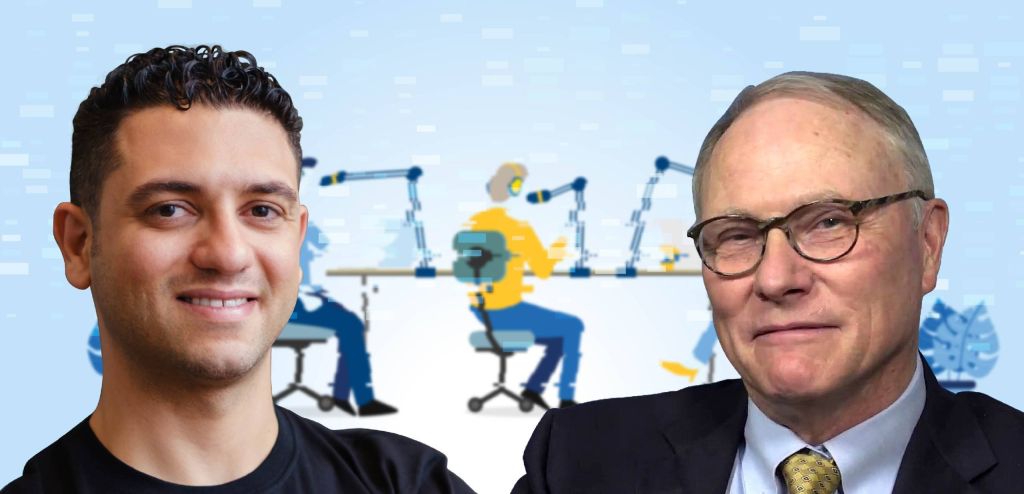
The war for talent is on, with more people reconsidering where they work, how they work—or if they even want to work full time—than ever before. In the U.S. the shift is seen in a record “quit rate,” with over 4.5 million workers resigning in November alone. “The Great Resignation,” as it’s commonly referred to, is playing out slightly differently in Canada. While job vacancies stood at 874,000–near a record in November–, the share of those participating in the labour market remains quite high and above pre-pandemic levels for most age groups. One factor contributing to this has been delayed retirements. “The number of retirements actually slowed substantially in 2020 in Canada, but those are just delayed, rather than prevented labour force exits,” said RBC Senior Economist Nathan Janzen. “Hiring challenges for businesses are expected to remain acute long after the pandemic ends, and that means a stronger bargaining position for workers that will bid up wages more significantly, and will also add to worker retention issues for businesses,” said Janzen. Like much of the Western world, Canadian employees are scrambling to find and retain talent as remote working opens up new horizons for the global workforce. How can Canadian firms take advantage of this fluid, highly competitive global talent market without simply raising salaries? We explored the topic, and what it means for Canadian innovation on the 2022 season opener of the Disruptors podcast about “The Great Resignation,” with guests David Card, the Nobel Prize-winning academic, and Martin Basiri, CEO of a global recruitment platform. Here’s some of what we heard:

Workers are in the driver’s seat

“In the intermediate and longer run, we’re going to be in an era where there is actually declining workforce and shortages of talent – and that’s going to be great for workers,” said David Card, a professor of economics at the University of California, Berkeley. The Guelph, Ontario-born labour economist won one half of a Nobel in economic sciences in 2021 for his pioneering research, which showed an increase in minimum wage does not lead to less hiring, and immigrants do not lower pay for native-born workers. According to a survey conducted by human resource consultancy Robert Half Canada, 28% of Canadian professionals plan to look for a new job in the first half of 2022. Employees are in the driver’s seat, especially as the world is now their job-hunting ground: companies’ increasing comfort with remote work means workers can now apply for thousands of new roles previously off-limits because of geographical distance.

International students hold the key to innovation in Canada

The economic benefits of international students should not be overlooked as it can directly address our country’s talent shortage. “Think about it⁠: we can bring someone at the age of 18 or 22 for their bachelor’s or diplomas or postgraduate master’s degrees—they’re young, energetic and ready to join society, and in five years, you have hundreds of thousands of amazing talent for the country to be able to contribute literally in any field,” said Martin Basiri, CEO and co-founder of Kitchener, Ontario-based ApplyBoard. The company offers a recruitment platform that helps international students apply for post-secondary studies abroad, by connecting students as well as workers with opportunities all over the world. Basiri knows first-hand the economic power that international students can unlock for Canada, having come from Iran in 2010 to earn his master’s degree from the University of Waterloo. He decided to stay and build a company, which is now one of Canada’s tech “unicorns” worth around $4 billion. Basiri follows a long list of immigrants who went on to build new corporate champions in Canada, such as Shopify, Magna International and Blackberry.

The search for a job with a mission statement

Many workers are feeling burnt out after two years of COVID and looking to redefine their work-life balance. Around 40% of millennials aged 25 to 40 plan to look for a new job in the first half of 2022, according to Robert Half. This particular cohort is more socially conscious in its career choices, looking for purpose-driven organizations with missions that align with its world view. Basiri sees this first-hand with individuals coming to ApplyBoard, which has hired more than 1,200 employees since the start of the pandemic. “We are going to a place because we want to have impact, because we love our teammates, because we want this mission to happen in the world,” he said. Amid the struggle for workers, employers need to pay attention and reprioritize their talent strategies, or risk losing their most valuable asset–people. “[Employers] are going to have to start thinking creatively about how to use and better utilize the people that they have instead of treating workers like commodities. So I’m a bit optimistic there,” said Card.
Speaker 1 [00:00:01] Hi, it’s John here, and Speaker 2 [00:00:03] hello, it’s Theresa. Speaker 1 [00:00:04] Theresa, welcome to 2022, I hope you’re not looking for a job, but it seems like everyone else is. What’s going on out there? Speaker 2 [00:00:11] Oh yeah, there’s so many shifts happening. People are rethinking their work-life balance. They’re finally taking on that next job after two years of sitting still. So yeah, what’s happening? I’m excited to dig into them through this episode. Speaker 1 [00:00:24] The great resignation, the great reshuffle of the great retirement. Maybe it’s all going on all at once and it’s going to be the biggest force or among them for twenty twenty two. And what we want to dig into on this episode is how it’s going to drive innovation. Of course, shortages drive a lot of employers crazy. They excite a lot of employers, too. But we’re in an employee market and that actually can be good for innovation. It creates opportunities, but in the right work environment where employees are driving change. This is when organizations can really take off. Speaker 2 [00:00:59] Yeah, exactly. And despite the ominous headlines, this is actually a good news story. As BlackRock’s Larry Fink said in his 2022 letter to CEOs, workers seizing new opportunities is a good thing. It demonstrates their confidence in a growing economy. The war for talent is on. The big labor shakeout has started, so fasten your seatbelts, it’s going to be a bumpy ride. Speaker 1 [00:01:29] This is Disruptors, an RBC podcast. I’m John Stackhouse Speaker 2[00:01:33] and I’m Trinh Theresa Do. In this episode of Disruptors, we’re looking at Canada’s red hot labour market, what’s causing some of the dramatic shifts in who is seeking and leaving jobs and what can Canadian employers do to come out ahead? Speaker 1 [00:01:52] After the break, we’ll hear from a Kitchener, Ontario based entrepreneur whose educational technology firm is one of the fastest growing tech companies in Canada. He’s struggling to fill key roles across his operations, and he’s trying to do the same for universities, colleges and businesses across the country. He’s got some provocative ideas about how we can all meet this challenge. But first, our conversation with a Canadian born Nobel Prize winning economist who’s made studying labor issues and understanding moments just like this. His life’s work. Our next guest has been studying, writing and talking about labor markets for more than four decades. David Card is professor of economics at the University of California, Berkeley, and director of its Center for Labor Economics. Before joining Berkeley, David taught at the University of Chicago, as well as Princeton. He’s written hundreds of journal articles and of course, in 2021 was one of three people awarded the Nobel Prize in Economics. David, welcome to disrupters. Speaker 3 [00:02:54] No, thank you. Nice to be here. Speaker 1 [00:02:56] I want to start with just an open reflection on what we’ve been through. Maybe we’re still going through it, but arguably the last two years has been the biggest disruption, if not shock, to labor markets that any of us can remember. I’m curious at this stage what you have found most surprising. Speaker 3 [00:03:15] I think to me, the most surprising thing was how quickly the economy bounced back in April 2020. There was the sharpest job losses. There had been really on record. I mean, we don’t have data from 1929 and 1930, but it was just a monumental job losses. And if you think about how the recovery went from the 2008 recession, it was a very long slog to get those jobs back. And in this case that we came back really, really quickly and I was quite surprised by that. Speaker 1 [00:03:49] What do you think made that resilience? Speaker 3 [00:03:51] So there’s two kind of ways to think about recessions, and economists have been arguing about this since 1929. One is that the recession is caused by a drop in demand that employers just don’t want to hire anybody because they don’t see ways that they can sell their product. The other view is that employees are being kind of outrageous in their demands and will only work if employers agree to set their wages. So one actually the kind of leading view among the more neoclassical economists is recessions are times when workers take vacation. And I think that view sometimes gets more traction, especially when there’s a prolonged recovery, because it seems like, OK, the workers took a vacation and now they don’t want to come back. The demand view, I think, is workers want to supply their work. Employers don’t want it or there’s some obstacle to, you know, making that work transaction go through. And I think that what this was an episode showed is that the demand side is really the driver. The supply basically with everything withdrew. But then people were able to come back quickly as soon as employers could find a way to get them back into the job. Speaker 1 [00:04:55] So employment, certainly in aggregate, came back with a roar. But we also have this thing going on called the great resignation or great reshuffle, depending on your point of view. Curious how you look at the so-called great resignation, which has surprised a lot of people and maybe even defies certain elements of economic thinking? Speaker 3 [00:05:16] If you look at the ratio of job openings to unemployment, it’s at an all time high, at least in the U.S. I don’t know the exact numbers for Canada, but I assume it’s very similar. And so there’s a lot of opportunities out there. And what had been happening really since 2005 or 2006? A number of leading economists, including, for example, Edward Lazear, the WHO was Bush’s main economist, had written articles saying, We don’t have enough movement in the labor market. People are sticking with their jobs too long and we need to have more mobility to kind of get dynamism going to, you know, get people moving between jobs and filtering up the job ladder and so on. So actually, the perception was that the labor market was becoming more ossified and then this has really changed. But again, I think it isn’t necessarily bad. A labor economist tends to have the perspective of the workers. We tend to sort of take the view of the workers and say, OK, when something happens, is that good for workers, bad for workers? And this switch of jobs, almost all of it is good for workers. Speaker 1 [00:06:21] We talk a lot on our podcast about innovation and disruption, and one of the statistics I’d argue over the years has been that lack of labor, mobility, lack of dynamism. So it’s encouraging to hear you take a positive view to this. But curious if you see this as kind of the new normal. Maybe it’s the old normal coming back, this kind of more dynamism in the in the labor force. Speaker 3 [00:06:45] So one reason why we don’t have as much mobility in the labor market as we used to have is our average workforce is quite a bit older. So right now, the baby boom, I’m the peak of the baby boom. I was born in 56, and so we’re all 65, 66 years old and many of us are starting to retire. And so the the big, huge bulge of children born in the late 50s and early 60s is gradually going to go through. And the average age of the workforce is is going to fall a little bit and old workers don’t change jobs. So even if you’re, you know, if there’s a better opportunity, but you’re 50 years old, you’re just not going to take it because it’s too disruptive. So you so I think one thing that’s really important is understanding the. At demography of the workforce in that regard, another thing is, you know what sectors people are working in, you know, a lot of employment growth has been in sectors where these days there’s, you know, not such long term jobs for young workers, retail and things like that. But then there’s a lot of employment growth in the service sector, especially like health care and those jobs actually persist. Speaker 2 [00:07:46] I’d like to jump on that, David. I’m curious with the different sectoral impacts that we are seeing, do you see that there will be greater job polarization over the next several years? Speaker 3 [00:07:56] Much of the increase in supply of workers is kind of what you would call polarized. So you got a, you know, increasing number of people who have college degrees or master’s and above degrees. That’s really a growing workforce. And then of course, you have a pretty large and consistent supply of people with basically less than high school education because of immigration from low skill countries. And so if you have those two combinations of demography, you’re going to have what appears to be polarized job growth. But it isn’t really, you know, it’s not anybody’s fault, it’s just a type of type of workers you have. So as the workforce has fewer people that are exactly, you know, 12 years of education to just finish high school, then you’re going to have more of what you’re talking about. In addition, there is another kind of inequality which is generated by performance of firms. So some tech sector firms, for instance, in the area that I work in, you know, someone with a Ph.D. can start, you know, in all honesty, can start working at three hundred and fifty thousand dollars a year. That’s a lot of money. But somebody who’s working the Ph.D. teaching in a community college earns about $60000 a year. So that that gap is ginormous. Speaker 1 [00:09:04] One of the challenges we’ve been wrestling with, and this harkens back in some ways to the work you did around fast food employment that was part of the Nobel Prize. Recognition is why we don’t see greater displacement of lower wage employment by technology, fast food being an example. Lot of repetitive tasks that arguably are automatable and yet employment in the sector continues to go up even when wages go up. And you showed how, you know, an increase of minimum wage does not necessarily lead to less employment. But it also doesn’t lead to a greater capital allocation, arguably to technology that has become more of a pressure point through the pandemic, as there have been these disruptions. And all firms have been thinking about, OK, do I need to get people back or can I use this as a bit of a transition moment to invest more in capital? We seem to be lurching back to the labor side of the equation. And I’m curious how your how you think through with that kind of long view of history and economic cycles, but also technology cycles in terms of the transition of labour to capital. Speaker 3 [00:10:12] Well, in the in the slightly longer run, I think most Western economies are going to go into a period of declining labor force. What you’re seeing in Japan, Korea, Italy, Spain already, we’re going to see that in most Western economies, we’re basically I don’t know about Canada, but the United States is it just does no longer has the tolerance for immigration. Western Europe, most of them, those countries don’t have the tolerance for immigration, and that’s the main source of population growth. And so if we stop migration, which I predict we will be doing, which, you know, that’s what’s going on in Japan, and that’s why there’s, you know, that’s why they’re going to have declining population in China. They’re not going to have immigration. So you’re going to have declining workforce and then you’re going to have the kinds of innovations that you’re starting to see in Japan, where people are thinking, you know, pretty hard about how to replace low skilled labor, to look after old people. How do you do that exactly? And still have, you know, quality of life for the people in the shorter term, paying 50 cents an hour for workers extra or something? I don’t think, you know, that’s that is cut into the pocketbook of the owners of firms and stuff, but it doesn’t necessarily change the balance of if I had to pay a dollar an hour extra for a truck driver or try and invest in a self-driving truck. Now, in other cases, it’s it’s easier, you know, like converting some aspects of maybe fast food restaurants to some kind of other system. Actually, when I first went to grad school in New York City, there were still from the 1950s. These famous restaurants that were automatic. There were you walked in and there weren’t any people. There were just kind of rotating counters and you put money in called automatic. Speaker 1 [00:11:55] There’s a lot of us. Exactly. I remember thinking they were so exotic when I saw them in New York. Speaker 3 [00:11:59] It was like a totally awesome thing from your childhood movies and stuff. Speaker 1 [00:12:04] It was that they disappeared. Speaker 3 [00:12:05] So that technology existed, but it didn’t. It didn’t dominate, right? Is people, you know, McDonald’s works better. Speaker 2 [00:12:12] So when we think about other levers that employers control in attracting and retaining workers, increased wages are certainly one of them. But are you seeing other non-monetary benefits making a meaningful? Dent in this issue, things like, you know, a four day workweek, remote work, as we’ve been seeing, are you seeing that play out on a bigger scale? Speaker 3 [00:12:32] I don’t study that, you know, with my own research, I only have direct experience in two places academia and tech sector. I do consulting for the tech sector and they are definitely innovating quickly and academia. We probably were on the flexible schedule, you know, decades ago. Most of my colleagues didn’t come into work only a couple of days a week and even before the crisis. But the private sector tech companies, they are innovating quickly. So one thing, for example, a lot of those companies rely on foreign labor at the high end because there’s very, you know, acute shortage of highly skilled statisticians and computer scientists and economists. And most of the graduate students in those programs in the United States are actually foreigners. In economics, we’re half and I think in CSI and math, it’s above that. And so basically what they’re doing is setting up branch operations in Western Europe and Canada. So this is great for job opportunities in Vancouver. My favorite example is Berlin. I don’t know if anybody knows this, but Berlin is, you know, probably in many ways the most interesting place to live in Germany. But there’s no good jobs in Berlin. There hasn’t been good jobs in Berlin since, you know, at the end of the Cold War. They used to have a subsidy during the Cold War to have firms put plants in Berlin, but they disappeared. And basically lots of people want to live. There is no good jobs, but now there’s a lot of tech jobs and you can work remotely for lots of tech companies there. And so I predict that this is going to be really good for interesting high wage cities that are off the chart. So Berlin is much different than Paris or London. It’s relatively cheap. There’s lots of people looking for work. And so cities like that are going to benefit. I don’t know what’s the Canadian equipped? Was that like Winnipeg? Speaker 1 [00:14:10] Well, it’s fascinating. There’s a great opportunity here for all sorts of communities to make themselves hubs and even destinations for those kinds of work from anywhere populations. What else should we learn from the tech sector in terms of where the future of work? Some people call it may be going. Speaker 3 [00:14:31] I think actually the management of people is still just getting started. So we made amazing changes in like selling stuff to people. But I think we’ve made less progress in managing people and putting teams together and figuring out how to do that and how to best compensate them, how to best allow them to do what they’re doing. I think there’s enormous frontiers there. And you’re starting to see a lot of consulting companies that are coming in and telling firms how to do things, how to how to pay people, how to recruit people. Because I think that as I said, I think in the in the intermediate and longer run, we’re going to be in an era where there is actually declining workforce and shortages of talent. And that’s going to be great for workers because we’ve been in an era for, I don’t know, since 1980 80. Maybe we’ve been in roughly 40 years of pretty depressed labor markets. Basically, my entire professional career has been one where, you know, most of the time it was pretty crappy. Real wages were stagnant in North America, and there wasn’t really the kind of productivity gains that you might have thought at least passed through to workers. And so I think we’re in an era where that might be kind of a change, and that’s going to be a whole new time. And people are going to have to start thinking creatively about how to use and better utilize the people that they have instead of treating workers like commodities. So I’m a bit optimistic there. Speaker 1 [00:15:55] David, thank you for being on RBC Disruptors. Coming up after the break, we’ll talk to a tech entrepreneur in Kitchener, Ontario, who’s at the forefront of a massive shift in the global labor force. He’s connecting students as well as workers with opportunities all over the world through his company apply board. Speaker 2 [00:16:20] You’re listening to Disruptors, an RBC podcast. I’m Theresa Do. Canada’s transition to a net zero economy promises significant opportunities for innovation and growth, but none of it will happen without the right people in the right places at the right time. An upcoming report from RBC Economics looks at some of the big changes coming to Canada’s labor force as it sets out on the climate transition. The report maps out the sectors and jobs undergoing the greatest disruption. The way skills are shifting within specific jobs and highlights what workers and businesses will need to build the green workforce of the future. To learn more, check out the link in the show notes of this episode and visit RBC dot com slash thought leadership. And be sure to like and follow disruptors wherever you get your podcasts. Welcome back. We just heard from economist David Card, who has some keen insights into what’s underneath the changes in the labor market right now. But to really understand what the situation feels like, you need to speak with somebody working in the trenches, trying to fill positions and keep them filled in a fast growing company. Our next guest, Martin Bestiary, is the co-founder and CEO of Kitchener, Ontario ApplyBoard. ApplyBoard has an AI-enabled software platform that lets students from around the world quickly identify and apply for university or college programs across North America, the UK and Australia. This platform takes up the middle man in education, and it’s made applying for university or college from wherever you live as easy as signing up to Spotify. And since launching in 2015, Apply Board has grown to 1500 employees and has attracted over $600 million in venture capital. Martin, welcome to disruptors. Speaker 4 [00:18:06] Thank you very much for having me. Speaker 2 [00:18:07] Martin, I’d like to start with your story. You yourself are an immigrant from Iran originally, and you and your younger brothers went through the international student application process to pursue post-secondary education in Canada. And it was a difficult process, and that’s one of the reasons you created your company apply board. I’m hoping if we can get your thoughts on the broader challenges confronting Canada’s labor market, how does your experience, how does that inform what we could be doing to welcome international students and immigrants into our workforce? Speaker 4 [00:18:38] Absolutely, yes. As you mentioned in 2010, I came to Canada to get my master’s degree at the University of Waterloo, and my brothers came to do their undergrad at Conestoga College. And we left Canada. And then we decided to make this country our home and never regret that international students is, I think, the brightest part for talent shortage or enhancement for any country. And Canada is a country with one of the countries that’s really, really taking advantage of this global movement. Think about it. We can bring someone at the age of 18 or 22 for their bachelors or diplomas or postgraduate master’s degrees. Bring them, educate them. They’re young, energetic, ready to join the society. All of that adaptation to the new country, learning a new language, their college time give them the opportunity to integrate with their culture, country, everything and right away they can join the society and start contributing paying taxes, being an impactful part of the society, and I don’t think it can get better than that. Speaker 1 [00:19:54] And that’s a great way of describing our journey as a country with international students. I’m curious because you’re part of the story, but you’re also an author, frankly, of the Canadian story and the Canadian journey. If we have a chance to write the next chapter and maybe be a bit more thoughtful about how we go about this kind of flow of international students, how can we be more strategic as a country and taking it on? Speaker 4 [00:20:17] Yeah, and that’s exactly what we are working at Applied Birds and our Vision 2030 is to make it available for students along the board to access the best education, even if they’re poor, even if they’re from a country that there were like problems, regardless of their nationality, education, background, their family situation, village situation. We want to make it accessible, but how can the country be more strategic? So, for example, we know our health care system needs a lot of help right now, over hundred thousand jobs available literally in nursing and caregiving. All we need to do is point the ship to to the direction of which easier path to get into those colleges that get faster, processing time for the government to partner with companies like us to be able to access talent all over the board to bring the smartest and most driven people to this country, to the gaps that we have. We know software developers, we know data scientists. We know engineering in general is one of the areas that we in Canada. We really have a lot of positions of and for our country to grow and write the next chapter of the rest of 21st century. These are essential jobs. Speaker 2 [00:21:34] Martin, we’re seeing right now just massive job vacancies in Canada. In June 2021, we saw job vacancies surged past 700,000. You know, every day on LinkedIn, there seems to be another, you know, x number of job postings listed. But if we dig underneath the numbers, anecdotally, people are saying they’re still having trouble finding a job that even though they’re reaching out, these companies have a lot of postings. They can’t seem to get past the recruitment stage, if at all. So I’m just curious, what are you seeing in your work? What are you seeing in the tech sector and beyond about what could be behind? This this tension and what should employers be thinking about as they’re looking to recruit for their companies? Speaker 4 [00:22:17] Very good question. So there are a couple of things happening at the same time that is affecting the job market and we need to like break it down because the couple of effect is going together. So number one, the right now is a prosperous economy, as you said, seven hundred thousand job vacancies. That means we need a lot of people. A lot of companies downsized during the pandemic. Now they need to go back and those people already went somewhere else or they changed jobs, so it’s harder for them. The other thing that is happening people is almost two years that we are literally working from home, right? They are staying home. And Canada was one of the, I’d say, more restrictive countries in terms of keeping people distance. And I think too, one way or another, everyone is kind of affected that there’s something might not going the way that they want in their personal life and they need changes. The other thing that is happening is especially in the younger generation that for a long time the market was employer market and now is the employer market. And when there are so many jobs, a lot of people talked about what are the other means in life. You know, you see the rise of social challenges that we’ve seen in Black Life Matters in the United States. The environment is a big topic, right? Health care is a big topic. People want to do something good. People want to have a meaning with their life because Covid kind of opened a lot of people’s eyes that what are we doing? They are not robots. So a lot of people are looking for something to be able to have a big impact, and they’re searching for that. Speaker 1 [00:24:04] As we come out of this pandemic and kind of think of not just the great resignation, but the great reshuffle and people moving jobs, how do we need to be thinking differently about the kind of optimization of choices out there, either before us or somewhere far away, and ensure that we’re all making kind of the best decision with the best information? Speaker 4 [00:24:25] John, I have a mentor, his name is Howard Behar, he was the president of Starbucks for a long time. And one of the advisors he gave me is right your core values. What is your personal core value? What are you after? If you want to run or if you want to go to work, you put the OK from here to go to downtown Toronto. It takes like forty five minutes. OK, this is the part, and that’s what we are building at ApplyBoard. We are building a base for your life. And yes, we have started with international students because that was the starting point. I had to start from somewhere because that was what my life was. But what it is underneath is like, who are you? What you would like to do and what are the options for you to get there? People go and they just say, Oh, I need a job, why do I need a job? Think a little bit about it. You know, what are you seeking for? And I think our education in K-12, we need to invest more in our K-12 education of teaching students to ask why and be less worry about the content. Because content these days are commodity. You can find it on the internet. You don’t need to teach someone like necessarily all the how to write a new code because they can Google and find in GitHub a similar libraries and they figure it out. But what we need to teach them is to ask why? And that’s something that we humans don’t do it much. Speaker 2 [00:25:57] It’s such a profound way to think about the work about think, thinking about how work fits into our lives. What do you think it would take to have more CEOs and more aspiring CEOs to think the way you do and to view the world? Speaker 4 [00:26:13] Similarly, I think it starts from the CEOs themselves to be able to go and talk to people what they think and talk about their vulnerabilities and talk about their values. I think it’s important to talk about these things as much as it’s important to talk about market events. Market came down said This does that does that, and that’s why I love to talk to people, said what is the impact of apply board? Here’s one thing last week we had a day that for everyone to apply board employees, one students will enroll because of the work of us in that day alone, enrolled in a university. So when I go, I tell them, I tell my employees and I tell our investors. I said, today I’m sleeping better because I feel every two of us change one person life. Speaker 1 [00:27:03] Martin, I wonder as we move towards close, what do you think will be the biggest difference about? Work coming out of the pandemic from the way it was before the pandemic, Speaker 4 [00:27:14] the definition of work, the value of human being to themselves, to the respect of human being, to themselves, that they are not trading over time for money. We are going to a place because we want to have impact, because we love our teammates, because we want this mission to happen in the world, and I hope this is the outcome of it. Speaker 1 [00:27:37] That’s a great point to wrap up on. The meaning of work will change. The meaning of work has changed. The economics of work has changed as well. It’s going to be amazing to watch the next few years unfold. Martin, thank you for being on RBC Disruptors. Speaker 4 [00:27:52] Thank you very much for having me, John. Speaker 2 [00:27:57] What a fascinating set of conversations we’ve had in our program today. Two very different thinkers and speakers on this massive issue that we’re facing right now. The great resignation. What were your takeaways? Speaker 1 [00:28:10] Both David Card and Martin Basiri explained from very different perspectives. How work will continue to matter a lot to individuals and to the society. David Card said one of the biggest surprises for him and he’s won a Nobel Prize from the pandemic is the resilience of the labor force. People want to go back to work and many of those who are employed or who have gone back to employment are putting in a lot of hours and their quality hours because there’s a meaning and purpose and perhaps greater return to what we engage in. But it also speaks to the power of technology and even automation. If we can think about deploying technology wherever and whenever we’re so-called working and use our brains and our human ingenuity and instincts to pursue perhaps a higher purpose than just the task at hand. It’s not so much work. Speaker 2 [00:29:07] Exactly. And that’s the optimistic view about this whole great reshuffle, right? Is that you finally now, maybe not. Finally, but you have this opportunity to seek out that work that is appealing to you if it’s not at your company. Maybe it’s another one next door. And because we can work from anywhere, the opportunities seem limitless. Speaker 1 [00:29:25] Theresa, maybe we need to start calling it the great redefinition. Speaker 2 [00:29:29] I like that. Although it asks the question, what are we redefining it to? Speaker 1 [00:29:33] That’s for a future episode. That’s all for now. Thanks to our guests David Card and Martin Basiri. Speaker 2 [00:29:39] And join us next time when we’ll explore how Canadian employers and workers are preparing for a new era of climate action. Until then, I’m Theresa Do. Speaker 1 [00:29:47] and I’m John Stackhouse. This is Disruptors, an RBC podcast. Talk to you soon. Speaker 5 [00:29:57] Disruptors, an RBC podcast is created by the RBC Thought Leadership Group and does not constitute a recommendation for any organization, product or service. It’s produced and recorded by Jar Audio. For more disruptors content, like or subscribe wherever you get your podcasts and visit rbc-dot-com-slash Disruptors.

This season on Disruptors, we’re changing up our format, alternating between a “Ten-Minute Take” and our regular episodes every Tuesday.

We’re kicking off 2022 with a focus on, “The Great Resignation”, or is it, “The Great Reshuffle?” We’ll explore what’s actually happening out there, and how Canada can harness the talent shift to fuel its innovation economy.

Be sure to subscribe so you don’t miss it.

In our post-pandemic world, there is no more pressing issue than climate change. This fall, Disruptors, an RBC podcast, launched a multi-part series called The Climate Conversations, which explored some of the potential solutions to a warming planet—as well as some of the challenges in implementing them. Early in the series, co-host John Stackhouse spoke with one of the leading voices for climate action, Dr. Katharine Hayhoe. Hayhoe is the Toronto-born chief scientist for the Nature Conservancy and a distinguished professor at Texas Tech University, who is often called “the most influential climate scientist on the planet.” In this special extended cut of the conversation, we hear more from Dr. Hayhoe on her optimism for meeting the climate moment, the challenges in changing social norms—and some tips on how to win over climate skeptics.
Speaker 1 [00:00:01] Hi, it’s John here. This fall on disruptors, we’ve been exploring some of the big topics on climate change and speaking with some of the big players who are seeking climate action. We called the series the climate conversations, and it’s fair to say those conversations well, they’re just starting as part of that effort. We’re bringing you special extended cuts of some of our most popular climate conversations. Katharine Hayhoe, a Toronto-born climate scientist, was one of our earliest guests in the climate conversations and a passionate advocate for finding common ground through dialog. It’s actually the title of a TED talk she gave called the most important thing you can do to fight climate change. Talk about it, which has been viewed almost four million times. We talked with Katherine about what individual citizens can do to affect change and to change minds. Here’s more of that conversation. Katharine, welcome to disrupters. Speaker 2 [00:00:57] Thank you so much for having me. Speaker 1 [00:00:58] I want to start, Katharine, with a question about optimism because so many climate conversations are negative or pessimistic. You’re an optimist. Speaker 2 [00:01:09] I am, and I would like to say that I’m a rational optimist because I am a scientist and as a scientist, I see all the bad news firsthand. In fact, I get it hot off the press, so to speak. I look at the data myself, and the science does not give us a lot of hope. When we look at what’s happening to our world, climate is changing faster than any time in the history of human civilization on this planet. And that’s why it matters. It’s not about saving the world. The planet will still be orbiting the sun long after we’re gone. It is literally about saving us. But what I’ve noticed wherever I go, and I literally got this question even twice yesterday, once talking to medical students and then once talking to an academic group every single day, almost I’m asked what gives you hope? And so that’s actually why I wrote the book is because I figured this enough doom and gloom out there. We enough of us are activated. We’re concerned about it. The majority of Canadians understand that it’s a serious issue. So what can we do about it? It turns out that hope comes from action at that interesting and not recycling. And though, you know, every little bit helps. But specifically, when we get out and we use our voice to advocate for change when reengage with others, when we speak within the place where we work or the neighborhood or a kid’s school or, you know, an organization we’re part of, obviously our city and our province and at the national scale, when we use our voices to talk about why this matters and what we can do to help fix it, we don’t have to be David Suzuki to do this. I’m absolutely convinced that every single Canadian can do this. And when you look to the past, when you look to massive issues like slavery and women being able to vote and civil rights in the states and apartheid in South Africa, how did the world change before? It wasn’t because a prime minister or a president or a king or a CEO or even a celebrity decided it had to. It was when ordinary people used their voices to say, You know what? The world can and must be different. That’s how change happened. Speaker 1 [00:03:09] What can each of us be doing more of? I mean, I recycle, and as our longtime listeners know, I’m an active biker, but I don’t think I’m doing nearly enough. What can each of us be doing more of? Speaker 2 [00:03:21] Well, it’s so interesting because when I first started to talk to people about climate change, I would get that question immediately. And, you know, I would say the traditional things that we would all say. I would say, Well, you know, have you changed your light bulbs? Have you looked at where your electricity comes from? But then I thought to myself, Is that really enough? So I stepped on the carbon scales myself. I stepped on, you know, all right. I went to a carbon footprint calculator and I calculated my carbon footprint. And I was absolutely shocked because the number one source of my personal carbon emissions was not my light bulbs, and it was not even the car that I drove. It was not my hydro bill. It was my travel. And I’m not talking about like travel. The yoga retreats in Bali. The last time I went on an actual vacation, I can’t even remember. I mean, just to see family. It was travel to scientific conferences and to talk to people about climate change. I thought to myself, Well, this was ridiculous. Speaker 1 [00:04:16] The irony COVID. Speaker 2 [00:04:18] So I decided that pre-COVID I was going to transition 80 percent of the events I did to virtual events, whether people liked it or not. And if I traveled, I was only going to travel by bundling my events together so I would go somewhere and do like five, eight, 10. I think my record so far is 29 events and six days, which is kind of crazy, but it’s a very effective use of your time and your carbon. But then and here’s where being a scientist comes in. I started to calculate, OK. So I did this, and here’s how much I could reduce my carbon footprint. And I also got solar panels and plug in car and address food waste and diet stuff like that. What if everybody else who’s concerned and activated did it too? How much impact would that have on our national emissions? A fraction, a very small fraction, not even a third. And so I thought to myself, Well, this is not the answer. This is not the most effective thing that we can be doing. So that’s what I did this deep dove into. How is the world changed before? Was it because individual people took individual steps and that’s all they did? No, it’s because individual people use their voices to advocate for change in the larger sphere that they are in. So you’re at RBC? I’m at a university. I just joined. Make sure you need it as it’s called in Canada. The global affiliate of TMC, each of us is embedded in a place where we can use our voice to talk about how wherever we are can work together to make a difference. Speaker 1 [00:05:44] We’ve just come through the summer of the apocalypse and felt like in many parts of the world. Did that dent your optimism? Speaker 2 [00:05:53] Unfortunately, it did, because with climate change, a big part of our problem is something called psychological distance. We all agree it’s a big issue. We agree it will affect future generations and plants and animals and people living over there. But you know, we’re the north. We sort of see ourselves as invulnerable to global warming. We see it as a distant issue. And studies have shown that as we decrease our psychological distance, as we’re able to say, look, that crazy heat wave out west, it was one hundred and fifty times more likely because of climate change. The wildfire season we had back in 2017, it burned about 10 times the area because of climate change. The floods that we’re seeing there a hurricane category one passing over Newfoundland, we’re seeing climate change loading the weather dice against us. And so studies have shown that when we’re able to connect the impacts of climate change to our lives, our lived experience, our activation increases, our concern increases. But then you get Covid and I live in Texas. I live in a place where I know people who lost their lives and with their dying breath or saying, this isn’t coronavirus. I know people who their families then did not wear a mask or get vaccinated. And then they got Covid. And I’m thinking to myself, have I overestimated the human capability for self-preservation? Speaker 1 [00:07:12] That’s such a good point, because here we have a clear and imminent threat to our public health, but to each of our lives, and it’s a struggle to come to collective decisions around masking and vaccinations. Climate is clear and present, but it doesn’t pose that immediate threat to most people’s lives. How on earth are we going to change behavior for a longer term threat when we can’t adequately change collective behavior for an imminent threat? Speaker 2 [00:07:40] I still believe we can do it because I’ve seen it happen despite COVID. And that is if we truly address the two biggest things that are holding us back, which despite the headlines that we see with many politicians in the US and even some politicians in Canada as well, despite the climate denial we see in the headlines, the real problems most of us have are not issues with basic physics that we’ve known since the eighteen hundreds. If we really had issues with that basic physics, we wouldn’t be flying or using stoves or refrigerators because the same physics, the real problems we have are, again, we don’t think it matters to us and we don’t think there’s anything we can do about it. So if somebody told you that an asteroid was going to hit the Earth, but there is nothing you could do, you just be like, Oh, well, you know, I’ll leave that up to NASA, and I’ll just go on with my life because there’s nothing I can do. Maybe, you know, hug my kids a little tighter and hope for the best. And that’s sort of the way we feel like with climate change, as if it’s an asteroid headed for the Earth and there’s nothing we can do. Except, you know, like I said, older kids a bit tighter and hope for the best. But the reality is with climate change that there’s everything that we can do as individuals. In fact, the only way the world has changed before, again is when individuals decided that it must and it had to. But it all starts with something that I learned when I was doing my undergrad at U of T for the first time. So up until then, like I learned about climate change in high school, I learned about deforestation and air pollution and biodiversity loss. I learned about environmental issues and I thought about environmental issues as issues that are serious issues that people like changed at all. And David Suzuki and David Attenborough are taken care of and the rest of us wish them well and watched their documentaries. That’s sort of the way I thought of environmental issues. So I was studying astrophysics at U of T. I was planning on going on to graduate school, to study galaxies. And I needed an extra course to finish my degree and I looked around. There was a brand new class in the geography department over and said Smith, if anybody’s familiar with you chief. And I thought, Well, that looks interesting when I take it. So I took this class on climate science, and I was completely shocked to learn that climate change is not only an environmental issue. Climate change is a health issue. It’s an economic issue. It’s a national security issue. And most of all, and this is what completely changed my own trajectory. It’s a humanitarian issue. It directly and disproportionately impacts the poorest and most marginalized, most vulnerable people right here in Canada, homeless people living on the streets and Halifax indigenous peoples whose traditional way of life is literally crumbling before their eyes. It affects them more than anyone, and they’re the ones who have done the least to contribute to the problem. And you know, the United Nations has these very basic sustainable development goals. You know, no poverty, no hunger, clean water access to basic health care and education and gender equity. There’s no way to achieve any of these goals if we leave climate change out of the picture because it’s as U.S. military calls it, it’s a threat multiplier. So what I realized is that whatever your priorities are and whatever minor, you know, being a mom, being a parent, caring about the place where I live, loving, you know, loving winter sports, needing snow and ice to do them whatever my priorities are. It turns out that climate change already affects every single one of those, so it doesn’t have to be a new thing on our list or something that we have to try to force up our list, rather because of one, two, three, four and five on our list. We have every reason we need to care about climate change, and I think that that is key to beginning the conversations in a place that helps us connect directly to this issue from the heart based on our identity and who we are. And then recognizing that, you know what? We have a voice that we can use to advocate for change because I love my child, I love my city, I love my outdoor hockey rink. I love the place where I grew up and the fact that I see it changing. I love clean air. I don’t want it to be choked by wildfire smoke because of what we love. That’s why we can make a difference. Speaker 1 [00:11:44] You’ve argued as well that climate is about values, and we’re also talking to Mark Carney, who has a book called The Values and I think would agree with a lot of what you’re saying, but you’re also saying it’s a rational decision. And I just wonder how we can balance in our conversations just the rational decision that saves you money or saves you time or makes your neighborhood safer versus the moral decision that this is about values and our collective being an even more existential questions Speaker 2 [00:12:18] in most cases for most of us. Those two are not incompatible. In fact, often they’re very compatible. So making our neighborhoods healthier, for example, has a direct impact today. But it also typically reduces carbon emissions or takes up carbon from the atmosphere through investing in urban tree planting that also cleans up our air. So there’s and, you know, making our neighborhoods more resilient to flooding, for example, obviously helps ourselves with our insurance rates and the safety of our homes. But it helps us to adapt and build resilience to the impacts of a changing climate. So. So most of us, those aren’t incompatible. And honestly, I have a really funny story. My book, probably my favorite story of my colleague John. His dad lives in a rural area of Australia and his dad is a fiscal conservative, but he’s also an ideological conservative. And so in Australia, like in Canada, many conservatives reject the science of climate change because they don’t think there’s any solution other than destroying the economy. So its solution aversion masked with science sounding arguments because if you say it’s real, but I don’t want to fix it, that would make you a bad person, and most of us don’t want to be a bad person. So John’s dad would drag up, Oh, there’s more polar bears now than there ever were. You know, what are you saying? The Arctic is melting died every time John went home for dinner. And so John went back to school. He got a p, h d and cognitive psychology to understand denial. He created the world leading skeptical science website that lists 198 science’s sounding arguments against climate change and provides peer reviewed responses. Do you think that changed his father’s mind? I suspect not correct. It did not. But then there was a rebate on solar panels in his dad’s area, and so his dad got solar panels started to save a ton of money every month he would spend on his power bill, saying, John, look how much money I saved. It reinforced his own identity. It it fit rate with one of the things at the top of his priority list. And so two years later, John was sitting with his dad and out of nowhere, his dad said, Oh, you know, global warming. I’ve always thought that was real. And John was like, Why not only had he changed his mind, but he had forgotten that he had ever denied it because the solutions change his mind? You know what? There is nothing wrong with that. Speaker 1 [00:14:31] The great Jerry Maguire line. Show me the money, but you touch on a serious challenge that there are groups, large groups of people not necessarily connected to any one religion per se, but they tend to be identifiable groups by geography or some other demographic points, and the views tend to be fairly entrenched. We’re not seeing that kind of shift that you just cited of. John’s father, you’ve been wrestling with that for, for many years. How do you shift large groups of people that tend to reinforce each other’s beliefs and in fact strengthen their groups by reinforcing those beliefs? Speaker 2 [00:15:14] Well, you’re absolutely right. No one wakes up in one morning and decides, I’m just going to reject 200 years of physics. People wake up every morning and they check Facebook and they scroll through what other people in their social group are thinking about and talking about. They go on the internet and they visit the website of whatever organization whose values and views they share. They listen to today, not just to, you know, the national and not just to, you know, you know, everybody grew up listening to, you know, Peter Mansbridge or Walter Cronkite in the U.S.. No, everybody now listens to customized media that reinforces what they already believe. And so it isn’t that we read all the data and facts first, and we make up our mind second, as Jonathan Haidt, who’s a really interesting thinker, says in his book The Righteous Mind, he says, You know, we as humans, we make up our minds first based on what our social group, our in-group decides about various controversial issues like who to vote for in the budget and immigration and nationalism and climate change and masks and vaccines and Covid and racial issues and indigenous justice issues. We make up our mind based on what our group says, and then we engage in motivated reasoning where we go out and we search the internet to find out why we’re right, not whether we right, why we’re right. So how do we change that? People have put a lot of work into trying to figure that out, and I was part of a really interesting experiment a couple of months ago in the states called New Climate Voices. They got me and a Republican politician and an Air Force general and a libertarian to make short little videos about why climate change mattered from our different perspectives. And I was sharing a faith based perspective since I’m a Christian. They aired them in specific congressional districts in the U.S. on social media. And then they tested opinions among the general public in those congressional districts. And they found that among conservatives among Republicans, opinion shifted wide because they had somebody in their in-group telling them why this mattered to for the same reasons that they would care about it. I have this awesome student who works with me, and she started to help me on my social media and her grandma said, I don’t know why you’re working on this. Nobody believes in climate change. That’s just so those myths that they make up to make people vote for the liberals. And so my student, she’s like, Grandma, just listen. Just give it a listen. OK, you know, I’m doing this for a reason. So her grandma listened to just a couple of the videos and she sent her the ones from a Christian perspective, and her grandma completely changed your mind, and now she is button holing all the ladies in her church, telling them why. If you’re a Christian, you have to care about climate change, so change really can happen, but it has to happen, as you yourself said, not when we’re waving judgy fingers at people and saying you have to be just like me. I have a list of these 10 new green commandments, and if you don’t do those, you don’t really care about this issue. Change happens when we show people that who they already are is the perfect person to care. And in fact, caring about and acting on climate is a more genuine expression of the values they already have than what they’re doing right now. Speaker 1 [00:18:28] Coming up after the break, more of my conversation with Katherine Hayhoe. So stay right there. Speaker 3 [00:18:38] You’re listening to disruptors, an RBC podcast, I’m trying to read the Dome earlier this fall, RBC Economics and Thought Leadership released a report called the two trillion dollar transition Canada’s Road to Net Zero. It explores the costs and benefits of Canada’s shift to a carbon neutral economy and how it can fuel a new generation of Canadian innovation, from carbon capture technology to sustainable agriculture to the full potential of super charging electric vehicles. We look at all the ways for Canada to take a leading role in the fight for climate action and the economic opportunities they create. To learn more. Check out the link in the show notes of this episode and visit our bbc.com. Net zero emissions to listen to and follow disruptors wherever you get your podcasts. Speaker 1 [00:19:29] Welcome back. In the second half of my conversation with Katharine Hayhoe. We talk about climate lessons coming out of the pandemic, as well as the role of social norms in changing how we approach climate action. I sometimes think about smoking and cigarettes, and it’s, you know, an imperfect and maybe a bad analogy, but that that has been a decades long struggle with behavioral change. And when I think about some of the behavioral changes we need for true climate action, maybe there’s some lessons we can we can draw that out. And even though with smoking, all the science is there and many of us smoked regardless, we knew the risks that that we were taking and we did it anyway because it was maybe enjoyable, definitely addictive. But it was also cool. And one of the reasons it was cool was Hollywood. The cool people in film more often than not seem to smoke. And that’s still an issue. But Hollywood has bent and that that establishes or reinforces norms. And I wonder, in terms of climate and our own behaviors, what kind of norms in terms of mass media pop culture, we may need to start to challenge or think about to help change our own thinking and our own behavior. Speaker 2 [00:20:51] I think you’re absolutely right. I mean, that’s that whole idea of social norms, the idea that we determine what’s acceptable and what’s not, because we always, as humans have these antenna, these invisible antenna up that are taking, you know, sort of taking the measure of what’s going on. So is it acceptable to have a plastic water bottle? No. Well, I better not have one. Is it acceptable to drive a giant gas guzzler? Oh, well, not really. That’s not cool anymore. It’s called the fast electric car. Better think about that next time. So you’re right, that has a huge impact, and that has played a big role in the changes that we’ve seen in the world. Before that I mentioned everything from, you know, women getting the right to vote to civil rights, to all kinds of changes. It’s been changes in social norms where people like that’s just not acceptable anymore. And how do we figure that out when we see other people doing it and when we hear other people talking about it? So, you know, get your solar panels or do whatever it is that you’re doing, but then talk about what you’re doing. That’s how you can change people. And in my book, even talk about how their scientific studies showing the impact of contagion, that the number one, for example, with solar panels, the number one predictor of whether you’ve got solar panels is whether there’s somebody else within about a kilometer and a half of your house that has the that’s the number one predictor. It’s contagious literally in a good way, not a bad way. Speaker 1 [00:22:03] You mentioned Covid, and it’s been challenging and continues to be challenging in so many ways. It also illustrated how we can have a significant impact on emissions. Now, we don’t want to go through pandemics to decrease our carbon footprint, but we decreased our carbon footprint last year in ways that we’ve not been able to more positively engineer through decades of trying. You stopped flying as much. All of us are flying less. Maybe that has a material impact. Maybe it doesn’t. But what other lessons should we draw from the pandemic in terms of behavioral change and adjustments that we can carry forward into post-pandemic and healthier years ahead? Speaker 2 [00:22:48] So at the height of the lockdowns last year in spring at global carbon emissions dropped by almost 20 percent and overall over the whole year they dropped by seven percent. And during that same year 2020, 90 percent of new energy installed around the world, some of it in the poorest low income countries of the world that don’t have a lot of fossil fuel resources, 90 percent of that energy was clean energy. So we saw some really significant shifts in the way that we’re living. And in fact, it’s estimated that in some places, in some very polluted places in China, it’s estimated that the reduction in air pollution from the lockdowns because of course, air pollution just falls out of the sky within a matter of days, maybe at most weeks, whereas carbon emissions stay there for, you know, decades. The U.S. air pollution might have saved just as many lives as were lost to Covid, because what a lot of people don’t know is a really shocking number. And that is that almost nine million people die prematurely from the particulate emissions, from air pollution, from burning fossil fuels alone every year. And where we are with Colvard right now, I think we’re somewhere over four and a half million premature deaths. And you know, don’t get me wrong, any premature death is a tragedy, but we’re so conscious of Covid. Yet somehow we’ve normalized nearly nine million premature deaths a year from burning fossil fuels. And so forget about the carbon. Just think about the impact on our health. Think about the impact on worker health for a business on personal health. Think about the impact on people in low income neighborhoods, which are often the ones most exposed to pollution. Think about the health impact in low income countries where they don’t have access to the health care system that we benefit from. I mean, there are all kinds of benefits that are entirely health related that are even. Larger than people getting the Covid vaccination, I mean, that is just insane when you think about and I feel like that is the conversation that we need to be having. Well, we’re going Speaker 1 [00:24:49] to have some of these conversations because of the Glasgow Climate Conference. Governments have made some extraordinary commitments this year, including the US government. Is it enough? Speaker 2 [00:25:00] It is not yet enough. I think of these international commitments sort of like a potluck dinner. Right now, we don’t have enough food on the table to feed everyone. We need to up our ambition and we need to up our delivery. So we’re at something like, I think, somewhere around three degrees Celsius and we need to be down at two or even one and a half. And so coming out of Glasgow, I would be so pleased and so happy and so relieved if we really had commitments, especially from the biggest emitting countries in the world. And, you know, we often think, well, Canada, such a small country, why does it matter? We’re actually number nine on the list of the top 10 cumulative carbon emissions emitters of all time. So sure, you know you’ve got China and the US and India and Russia and the EU, you’ve got them right up there at the top. But we’re not that far behind, so every little bit matters. And in fact, the Intergovernmental Panel on Climate Change puts it really perfectly. They say every year matters, every bit of warming matters, every action matters and every choice matters. And so if we came out of Glasgow with countries making those choices, recognizing that it’s not about the environment, it’s about us, it’s not about the economy, it’s about actually saving the economy from the risks and impacts of climate change. It is about all of us and our human systems, our supply chains, our food, our water, our health, our infrastructure, tens of trillions of dollars of infrastructure built for conditions that don’t even exist anymore and will not exist again during our lifetime. If people finally realize that it is literally as a title, my book says it’s about saving us and put that on the table. I would be the happiest person in the world. Somebody asked me just the other day. They said, Well, you know what? If magically the climate solution were solved? Would you still study the planet? I said, no, I’d open a yarn shop, preferably on Vancouver Island. Speaker 1 [00:26:48] Why aren’t I Speaker 2 [00:26:49] just enjoy it? It’s something I get great joy and pleasure from it. Speaker 1 [00:26:52] Perfectly good. That’s perfectly great, in fact. You mentioned the economy, and I don’t think we talk enough about climate as an economic opportunity, and I’m not trying to be cavalier or materialistic about it, but just to frame it differently. We’ve got a really interesting piece of research coming out of RBC on pathways to net zero for Canada. Calculating that it’ll probably be a two trillion dollar project for us over the next 30 years. And a lot of people hear that number and think $2 trillion of my Lord, there go the tax increases and we’re saying no, actually that $2 trillion, this is manageable. Most of it may be private money, by the way. It’s not all up to government. In fact, it’s going to be much better if it’s not government money and it’s going to be investment. This isn’t wealth transfer, it’s not tax and spend. This can be the biggest investment project we’ve seen in nearly a century, and that will have all sorts of multipliers in terms of jobs and incomes and prosperity for communities pretty much everywhere. This isn’t about one sector, it’s not about the oil and gas sector or about Alberta. This is about every sector, every region. And I appreciate that’s kind of a high level economics thinking. But how do we translate that conversation into a meaningful way for everyone who does worry about their job, who does worry about their paycheck, or at least the trajectory or flatlining of their income? For students who are wondering if they’re going to have a job or if they’re going to be in the gig economy forever, how do we take these kind of big macro concepts around the economy and bring it down to the individual household and neighborhood level? Speaker 2 [00:28:35] Well, first of all, I’m delighted to hear that you’re doing this because we need the voice of organizations and institutions like RBC. And what you’re doing in its native form is going to be incredibly influential among the people who think in those terms. And those people need to hear your voice, not mine, because you are somebody who speaks that same language and understands those same concepts. And you’re right, it’s about opportunities. It’s about, you know, when a couple of years ago, I remember just before Christmas, I was at one of the malls in Mississauga and there was a lineup of 200 people outside the Apple Store. They were waiting for the new iPhone. And we had just come up from the state. So my husband had just gotten his, so he literally took his life. And he’s like walking down the road, going, Yes, it’s great. Look at it. Here it is. So were those people told they should get it? Were they told they had to get it? Do they have somebody waving a judgmental finger at them telling him this better if they got it? No. They wanted it because it was better. And really and truly and honestly so many solutions to climate change, from technological solutions to lifestyle solutions, to the amazing, nature based solutions that Nature United does with their Emerald Edge project working with. First Nations tribes out in British Columbia. There’s so many solutions that are good for us that when you actually hear about what they are, you’re like, Hell, yes, I love that. How can I be part of it? And so I feel like that’s what we haven’t done as we haven’t communicated that enthusiasm, that opportunity, as well as the financial risks. So you just said, you know, here’s what we have to spend to get there. But what about the risks that we’re avoiding through building resilience and adaptation and to encouraging other countries to come along with us? Because, believe me, they are watching and we can influence them too? So what are we avoiding? What are we gaining and how do we understand that the future’s coming, whether we like it or not? And it’s up to us, and this is literally a science fiction here. The future that we see is up to us. It is in our hands. It is our choices that will determine this. Will our civilization be able to continue or not? That is what is at risk. Speaker 1 [00:30:37] We’ve been having a fairly optimistic conversation, which I appreciate, but there may be people listening who say that’s not the full story. There will be people. There will be sectors. There may be regions that will be losers in this transition. There has to be a bit of give for the take, if you will. Mm-Hmm. How do you have that conversation with those regions you come from Texas, which may and there’s incredible things going on with renewables in Texas and so many other sectors, but there are plenty of people in Texas who think they will be long term losers. And I’m not trying to pick on Texas. It’s just an illustration of many times around the world who feel this way. How do you engage people who feel they see writing on the wall? That is not for them? Happy writing. Speaker 2 [00:31:23] Well, first of all, I think the most important thing is to be proactive about that engagement. Acknowledge it upfront. Don’t wait for them to tell you. Think of it and look at it yourself and realize, Hey, there’s a lot of people who are just trying to feed their families. They have a well-paying job in Alberta and the oil and gas industry, or here in West Texas, which is also the home to the oil and gas industry. And they’re not doing it. They didn’t get that job because they wanted to, you know, help destroy civilization as we know it. They picked that job because we need energy and energy is something that is inextricably linked with human well-being around the world. Access to electricity specifically is one of the major metrics that determines our level of well-being. So when I had the chance to talk to the board of Big Oil and Gas Company here in Texas a couple of years ago, I was invited to speak and I thought to myself, what? I can’t do it unless I figure out how we can connect over something we share first. I’m not going to go in there and start with something we disagree on. I have to start with something that we agree on, and if I can’t do that, I’m not the right person to have that conversation. So I thought about it and thought about it some more. And finally, I was probably like unloading the dishwasher or something when it occurred to me. That’s one of the best thoughts come. Finally, I realized, You know what? I am profoundly grateful for fossil fuels. Imagine what a woman’s life was like. Imagine what anyone’s life was like 200 years ago. It was short, miserable and filled with bone-breaking repetitive tasks that left them no time for education, no time for leisure, no time for travel, no time for anything that we enjoy doing today. Energy has transformed our lives. In fact, thanks to the medical advances that were part and parcel of the industrial revolution that I’m pretty sure that’s why I’m alive. I’m sure I would have died at an early age from some horrible thing, let alone, you know, when you get to the point where you’re actually having a child or some type of very high risk activity like that. So I actually started off by telling them how grateful I was for fossil fuels and how I realized that they were doing this because it helped people. And we need energy. And the solution to our future is not to just pull the plug. It’s to figure out new ways of getting energy. The same way we don’t use a Model T Ford today, the same way we don’t use the party’s own telephone in the same way we need energy just as much, if not more in the future than we did in the past. But in the same way, we’re transitioning to new sources of energy. So how can we work together to try to figure out how to get those new sources while still providing good paying jobs for people who have these skills who again are just trying to support their family and be part of the local economy? And I can tell you it was amazing because I went in and meeting all the arms were folded. All the pastor was leaning back. Everybody was giving side I to the one guy who invited me like, Why did you invite her to speak to us? He sort of read the brainwaves, but when I said that? You could see like the arms were unfolding, people were leaning forward, and then one guy finally said, he’s like, You get it. We’re not the bad guys. We’re doing this because people need energy. And I was like, Yes, that’s right. And how can we keep on making sure they get energy in the future? And so that conversation was supposed to be about 40 minutes and end up going two plus hours. Everybody wanted to know what’s really happening. How is it affecting people and how can they be the good guys? And when we come at it with that attitude of most people do really want to be the good guys. Not all the time. I mean, it’s not some magic, you know, panacea, but a lot of the time we can end up having much more constructive conversations. And when we come at it with the idea of You’re bad, I’m good and I’m going to fix you. Speaker 1 [00:34:53] Katherine, you are an optimist in Speaker 2 [00:34:55] my in my good moments. I absolutely am. Speaker 1 [00:34:57] And it’s contagious. Katherine, thank you for being on disrupters. Thank you for having me. That was Katharine Hayhoe, chief scientist with the Nature Conservancy and author of Saving US a Climate Scientist Case for Hope and Healing in a Divided World, which was published this September. Stay with us in the weeks ahead. For more extended cuts of our most popular interviews from the Climate Conversations, a special multi-part series on disrupters. To hear the complete series, go to our bbc.com slash disruptors. Until next time, I’m John Stackhouse. Thanks for listening. Speaker 2 [00:35:38] Disruptors, an RBC podcast is created by the RBC Thought Leadership Group and does not constitute a recommendation for any organization, product or service. It’s produced and recorded by Jar Audio. For more disruptors content, like or subscribe wherever you get your podcasts and visit rbc.com slash Disruptors.

In our post-pandemic world, there is no issue more pressing than climate change. This fall on Disruptors, an RBC podcast, we launched a multi-part series called The Climate Conversations, which explored some of the potential solutions to a warming planet—as well as the challenges in implementing them.

Arguably no part of the Canadian economy has more work to do on climate action—but also more opportunities to innovate—than Canada’s oil and gas sector. Co-host Trinh Theresa Do spoke with a key player in the sector: JP Gladu, a Suncor Energy board member and executive director of the Indigenous Resource Network.

In this special extended cut of the conversation, we hear more from Gladu on how oil and gas companies (such as Suncor) can prosper in a Net Zero world; why reconciliation and sustainable development go hand-in-hand; and the importance of a “just transition” for Canada’s First Nations.


Speaker 1 [00:00:01] Hey, it’s Theresa. This fall on disrupters, we explored some of the big topics on climate change and spoke with some of the big players taking climate action. We call the series the climate conversations, and it’s fair to say the conversations are ongoing. As part of that, we’re bringing you a special extended cuts of some of our most popular ones. Arguably, no sector has more work to do in meeting our ambitious climate targets than the oil and gas sector. It’s the biggest producer of greenhouse gas emissions in Canada, but also the sector where we’re starting to see a ton of innovation and an emerging, more inclusive model for doing business. One of those who’s helping build that new model is JP Gladu JP as a board member of Suncor Energy, which has committed itself to becoming a net zero emitter by 2050. He’s also a principal at marketing consultancy and a former CEO of the Canadian Council for Aboriginal Business. As he explained When we talked earlier this fall. Sustainable development is supremely important to First Nations and Canada and essential to the future of energy companies such as Suncor if they hope to reach net zero. JP, welcome to disruptors. Speaker 2 [00:01:15] Theresa, it’s really nice to be here, thank you. Speaker 1 [00:01:17] From 2012 to late last year, you served as president and CEO of the Canadian Council for Aboriginal Business, whose mission is to promote, strengthen and enhance a prosperous indigenous economy. When you look back, how did the KP address sustainable prosperity during your leadership Speaker 2 [00:01:37] that you’re hitting on some and wonderful memories? It was transformative, not, I like to think, and one a great theme that exists that that I was able to build and continues on under the leadership of Tabitha Bull, my successor. Incredible time. The organization and I think what I feel most proud about is the growth of its programs and its presence and research. You and I both know if you don’t have great data, it’s hard to change policy. It’s hard to change thinking. And we are actually I say, I say we again. But the cap is as a leader, a world leader in developing research and research by indigenous people for indigenous people to influence outcomes. The PA program, The Progressive Aboriginal Relations, is a program that is set to and it’s been in existence for a while now that supports non-Indigenous corporations for the most part in long term, sustainable relationships across sectors, to work with indigenous entrepreneurs and communities, and for them to get better at understanding the indigenous sphere and how to empower that economy through business relationships. The action that I was most proud of, the one where I felt I could have retired and felt that, you know, I did my part in society and then fell off into the sunset was the procurement work, the strategy work great team. I hired this young man from Australian Aboriginal guy named Josh Riley, who worked for us for a couple of years, and he said, You know what we did? You know, Canada’s really great as a world leader and indigenous economy in many, many regards, but is not doing as great when it comes to government procurement and what we did in Australia as we we matched up with indigenous leadership with a prominent corporate leader to challenge the governments and other corporations to do better on their procurement strategies because the government, particularly in many parts of Canada, were not doing their part in procuring indigenous entrepreneurs and businesses. So they they’ve done a great job. So they said, Well, let me call up Mark Little, who was the CEO at the time of Suncor, and his team said Yes, Mark is going to stand on the front of the room with the ajp and challenge corporations and the government to do to set targets around indigenous procurement. Because Tricia, you and I know you can do all the great things in the world, but if you can’t bring in cash, cash is in our mind trading. So cash is king, you need economy, you need economic parity to be a partner, to have a voice. So Mark and I, we went to the government, we went to Parliament. We hit up all of the ministers in the right places and we got a commitment from them to set a five percent target. And Tabitha Bulls, the new CEO. I guess she’s not so new anymore. She’s been there since March of 2020. Dropped me a text not too long ago. I was saying, we did it. We got it over. It’s legislated procurement is making shoot. That’s going to translate to billions of dollars because what it is, it’s a handshake. It’s an opportunity to build business together. And most importantly, I think the relationships that have struggled for over 150 years, that’s incredible. Speaker 1 [00:04:50] And those conversations about procurement, economic parity, were there any opportunities to incorporate sustainability environmental issues in those conversations? Speaker 2 [00:05:02] Absolutely. There were six. Abe was an is an organization that is very inclusive. We all know that the energy sector is is transforming, you know, to sit on the Ontario Power Generation Board. And, you know, we have hydro projects. Nuclear is clean energy and we had sustainable equity partnerships with or OPG. Sarah, I got the way I still feel like I’m still part of the conversation every day. Speaker 1 [00:05:28] You know, the lingo Speaker 2 [00:05:30] with communities that are helping transform the way that we generate our energy sector. I want to talk a little bit if it’s all right, Teresa, one of the my roles since then, I’m the chair of the Board of Leadership Champions, and that is a group of companies and indigenous leaders from oil, gas, mining, forestry, energy think I mentioned finance and it’s my good friend Valerie Courtois and Cathy Wilkinson and Meredith and Mark. We’re all trying to find a place, and we’re developing some thought leadership with all these companies around responsible development around Indigenous. US protected conservation, because we need those natural services to be able to live a stronger future one where we can be proud of to hand an environment to hand down to our kids. So we’re doing some thinking around innovative financing and what economic reconciliation looks like and to bring those ideas to the forefront. There’s a lot of organizations and communities that are putting a lot of time into finding this balance and be happy to have more conversations about this with you. Speaker 1 [00:06:38] Yeah, I’d love to follow up on that, actually. Can you describe that connection between indigenous led conservation and economic reconciliation and how that might also apply to energy production? Speaker 2 [00:06:48] Yeah, it’s another great question for a long time. We’ve been shut out of the Canadian economy. We had, you know, the fur trade which sustained our communities, and then we were told our communities were told that harvesting furs was not appropriate anymore. OK, well, we don’t want to live in poverty. We don’t want government handouts. So what’s next? Well, we’ll look to the mining of a lot of our communities are in the north, so we’ll look to the extraction sectors to generate revenue, to generate income, to generate an economy when we talk about economic reconciliation. It means that we’re generating wealth and we’re managing that wealth and we’re empowering our communities. We know that we can actually find a better balance between extraction and indigenous protected conservation areas and sustainable development and more trees, because our natural service ecosystems provide billions, trillions of dollars that we don’t even think about when it comes to clean air, clean water. You know, think of all the health impacts that occur if you don’t have a clean environment. But we also, as an indigenous community, are having these tough conversations around, well, we’re going to transition. It’s going to take time. There’s still so much poverty, not only in Canada but around the world, 700 million people in abject poverty because they don’t have access to energy. So oil and gas is going to be a part of our economy for years to come. That doesn’t mean that we shouldn’t be putting time and effort and resources and research into actually improving that technology. So there’s a balance to be struck, and that balance is going to be we’re not going to find that balance without the indigenous voice. We need to be at the table every step of the way from any kind of development to any kind of protected area and developing economies around those protected areas Speaker 1 [00:08:36] on more practical level. To what extent might there be concern among indigenous communities, especially those who partner with Big Oil and gas, big energy producers about developing these resources, which knowing that oil demand will not win for a while, eventually it will wane to some degree. So knowing that that long term demand will wane along with perhaps the value of these properties, what concerns are there around that? Speaker 2 [00:09:00] Well, I think the biggest concerns are, again, the question of balance, the balance of generating economies. So we’re not poor all the time in government handouts, but also making sure that we’ve got areas that we can rely on for our traditional activities in the clean water and the clean air. I mean, I just had my daughter visiting me up on my reserve the last five days of me or moose hunting and I’m on a lake. Let me let me paint this picture for you, and then I’m going to ask you as an example in Alberta with Fort McKay First Nation. I live on Lake Winnipeg and our whole lake is protected and it’s the biggest lake in Ontario surrounded by the Ontario borders. Beautiful. I hunt on it. I fish. I caught a beautiful speckled choke my fly rod. This weekend I released she is a female and she responded, But you know, we’re the guardians of the land and put us in that place so we can continue to protect her. But we also have a lithium mine site, just not because road access to our reserve. We have two hydro developments that we’re partners and we have a sawmill. We have old railway bed that goes to our community and we have the natural gas line that cuts across our community as well, that my grandfather, one of my grandfathers, helped build. We got all the resource activities there. And so we’re trying to find that balance to make sure that the land that needs to be protected is protected and that we are the ones that are also becoming the equity partners. And the decision makers in the way that resource projects get developed and that we also benefit from it. Now, if you look at maybe more pointed to your question about concerns for Mackay, First Nation is a prime example. You know, Chief Jim Boucher, chief of 30 plus years. He’s not the chief right now, but I will always call him. Chief is just an extraordinary leader. He talked about, you know, he was providing first, trapping first for his community. His community was doing that to subsistence living. And then over time, that went away and then they fought their oil and gas companies. And then they found their way to the table, the oil and gas companies, and then became this equity stakeholder in one of the biggest resource tank projects in history with Suncor, along with Mexico group of companies. But they also have Moose Lake, and I’ve been to Moose like a couple of times with my friends, Dave and Nicole, and it is I’ve been up a couple of stunning. And they drew a line, they said, no, no more encroachment of this lake. This is important to our community. No more development here. We will work with you in these areas that are appropriate. This area hands off and they won that and they led that conversation. So they got concerns. But they also have to provide for their for the young people. Speaker 1 [00:11:31] We had chatted with Marc Little from Suncor, as you know, of course, about Suncor’s work in partnership with Indigenous communities, and I think he had specifically cited the example of of Chief Boucher and the joint venture that they had established the First Nations there about basically providing stable prices to ensure that the volatility of oil doesn’t impact them. Do you see that as a model that can be scaled and replicated going into the future? And what other models might exist that would ensure over time that economic parity and reconciliation? Speaker 2 [00:12:04] That’s a great question. Now, I’m not surprised Mark talked about that. You know, the relationship that unmarked and Jim have, it was that of marriage. They would have their battles, but they’d always come back to the table and what’s best for our community and what’s best for the company, the end the economy and how are we going to balance this all out? And they got through it. And I think it’s an incredible model where the communities were able to hedge against the markets and have lower cost capital and have steady revenue to support their community while having an eye on on the development itself. I think it’s a wonderful model. The cutting edge opportunities in this country exist in a few areas. One is that our communities want to be equity stakeholders in a lot of the resource projects that look at TMCs. There are a number of indigenous groups that want to purchase that line. So we need to, as a country, find equity pools to develop, generate them so that communities can access capital at a reasonable rate and then province to have the ability to backstop the payments. So that adds economic certainty of a project. The other thing, and I know it’s still early days, but the province of Alberta, they’re talking about an energy corridor with Treaty eight, where the First Nations are going to be in. The 80 groups are going to be the ones talking about what’s appropriate, where that line goes, what’s appropriate for development. I sit on the board of Northern Resources and the Ring of Fire in northern Ontario, and it’s the communities that are driving the environmental assessment process for road infrastructure. Which brings me to the last point is our communities are absolutely tired of coming to the table last. Why does a regulatory process and the precedent for the most part is that companies go and engineer the hell out of a project, get their engineers to come to the table, wipe the hands and go, OK, let’s talk to the indigenous communities now and see what they think. I’ll tell you what those communities think. I think what the heck were you thinking coming up to us at the very end? Why don’t you come to us at the beginning when we know this landscape the best? And now with all of the legal precedents, we’re going to say, no, no way are you going to develop your project because you don’t respect us. And so it’s that mutual respect and reciprocity. We always have to go into the boardrooms and communities with to develop projects in a holistic way that is respectful of indigenous sovereignty and as well as the economic model. Speaker 1 [00:14:37] Have you seen that consultative process improving? Speaker 2 [00:14:40] Yes. Yes. I have a group that I am so lucky to advise Chief Charlene Gale’s the chair. She’s in fact, she’s the chief of Fort Nelson First Nation. Neil Edwards is the CEO. They are the executive director of the First Nations Major Project Coalition, and the government is supporting this group. It’s got so much great work. There are two streams when you engage this group as a as an indigenous community or as a proponent. Coming in there will walk you through the environmental because if you can’t do the environmental questioning and process to make sure communities aren’t going to be severely or negatively impacted, you’re not going to get to the business modeling once you pass the sniff test on the on the environmental piece. And you’ve got and this is the thing that I just don’t understand about some projects where they come to our communities last. If you can’t get the indigenous buy-in that your project’s done, do the hard work, get the buy and the economic modeling is going to get better. So then you go into the economic modeling and what the markets are saying and ESG and investment and, you know, investors third, they’re not dumb. They’re all asking, what’s the indigenous relationship like if you don’t have that nailed down in a progressive way? We’re probably not going to be interested in if we do, the cost of that capital is going to be extraordinary because the uncertainty that ensues. So the S&P C is this great organization that helps communities and corporations find that balance. On the modeling, the capacity there and the environmental, it’s a wonderful, wonderful organization. Speaker 1 [00:16:21] Coming up after the break, more of my conversation with J.P. Gladu. So stay right there. Speaker 3 [00:16:32] You’re listening to Disruptors, an RBC podcast. I’m John Stackhouse. Earlier this fall, RBC Economics and Thought Leadership released a report called the two trillion dollar transition Canada’s Road to Net Zero. It explores the costs and benefits of Canada’s shift to a carbon neutral economy and how it can fuel a new generation of Canadian innovation, from carbon capture technology to sustainable agriculture to the full potential of super charging electric vehicles. We look at all the ways for Canada to take a leading role in the fight for climate action and the economic opportunities those create. To learn more, check out the link to the show notes of this episode and visit our bbc.com. Net zero. And be sure to listen to and follow disruptors wherever you get your podcasts. Speaker 1 [00:17:23] Welcome back in the second half of my conversation with J.P. Gladue. We talk about the role of renewables in Canada’s energy mix, as well as the concept of a just transition. And importantly, we discussed the vital role indigenous communities play in building that new energy paradigm. If I can pivot just slightly, so I know you wear a lot of hats and among the many hats that you wear, you sit in the Suncor board. As you mentioned, Suncor is transforming itself into a more sustainable energy producer and is targeting 2050 as the year they become net zero. What do you think about that target and what are the biggest challenges still to overcome on that journey? Speaker 2 [00:18:07] Yeah, it’s a lofty goal. I mean, but the thing is that not only Suncor, we’ve got Imperial Central Meg Cenovus, 90 percent of the oilsands producers are all committed to this. So you have more partners committing to technology. More partners committing to reducing GHG is getting better at water use, getting better at indigenous consultation, engagement and empowerment strength in numbers. So I think because of that commitment with all of these companies, it is achievable. It really is. When we think about the way that our investment is talking about ESG and global investments, they’re going to look at that and they’re going to go, okay, that we can, OK? They’ve got a goal. It’s going to be challenging, but it is possible. Suncor is an incredible organization, and they’ve had a great track record on a number of fronts. And just think about this from a global perspective. You know, when we think about the major oil and gas producers in the world, there’s only two out of the top six. There’s only two that you can invest in because the rest are state owned. And the one country that I’m referring to does that the best in the world when it comes to gender, when it comes to indigenous, when it comes to regulatory, when it comes to water, when it comes to everything else, we’ve got to reduce our GHG. And so when we do that, it’s competitive world and the oil and gas companies understand this. And when they reduce that, nobody’s going to touch Canadian oil and gas. And so we’ve got it. We’ve got it. We’ve got to hit that. That’s the path forward. We have to. Speaker 1 [00:19:45] And there’s still an open question on energy production at its most basic, whether it’s better to find ways to reduce the carbon emissions in traditional extraction or to shift focus to develop more renewable energy sources. And of course, it’s not just another question. Speaker 2 [00:20:01] It’s and it’s and Speaker 1 [00:20:03] so what would you say is the best path for the right mix to meet our future energy needs? Speaker 2 [00:20:08] The I think you said it’s the mix. I don’t know if anybody has a crystal ball on this because there’s so much uncertainty. We’re investing in hydrogen and we’re investing in carbon capture. We’re and we have to spend more time investing in our natural capital of trees. I think it’s one of the best carbon eating machines that I know as a forester. So, so, you know, companies like Suncor are investing the time and resources in those types of technologies, but we cannot rely just on one. It’s like a balanced portfolio. When I look at my RRSP or my investment accounts I’m distributed across. I’ve got some risky investments and you know, some of these investments that we’re exploring the technology, there’s risk. But the payoff could be amazing will be amazing if we can get some of them done. The natural capital is would probably be my easiest one. I mean, I know what the return on the capital of a tree would be. We’re going to plant more of those, but we also have to get better at our processes with the reduction of of the water, the reduction of energy required to extract oil out of the sands. We have to get better at that. We have to get lower emissions out of those processes as well. So we’ve got to look at these things, evaluate them, improve upon them, the stuff that’s not working. Let’s fail quickly, get that out of the way and let’s get the next one on the on the road. And you know, we’ve got a you know, we’ve got to play a number of fronts. We just can’t rely on one path because if we fall off a cliff, not one path and we haven’t spent any time on the other password dooms you. Speaker 1 [00:21:43] You often talk about a just transition. Can you elaborate more on what you mean by that? Speaker 2 [00:21:49] Absolutely. I went to the I went to fill up this morning. You know, I live in the north, I’m a hunter and I’m two hours from Thunder Bay, so I have a truck. And it’s always interesting when we think about environmentalism, it’s always easier to be an environmentalist when you ask everybody else to do the hard work. It really is. It’s it’s baffling. Sometimes, you know, DiCaprio comes up to the oil sands and, you know, chastises the oilsands for oil and gas development. When he flies around the world, it’s got a billion whatever boats and helicopters and they come on like, let’s be real here. But so the just chance I’ll get off my soapbox. But the just transition is yes. Yes. I mean, I sit on an oil and gas company. I also chair the boilers ship champions around conservation. I took my daughter hunting and a clean environment. We need both. And a just transition is the fact that we’ve. Got two sides here, and we’re trying to build a bridge and to meet that bridge to make sure that we can travel in a clean environment and a sustainable economy. The renewables, the batteries, the infrastructure for four battery cars, the wind, the solar. We just don’t have the capacity to meet world demand for energy. There is way too many people that suffer significant like deathly poverty because they don’t have access to energy. How is that? How’s that right in the world? So oil and gas is going to be here for quite a while yet. And that that demand, you can see in our price of our gas, you can see and Biden going over the they’ll tech companies, countries are getting more oil and we got oil up here, but it’s not going to happen overnight and we’ve got to make sure that we’re we hold corporations accountable to their targets. We need to make sure that we have a little bit more balance in the way that we. I’m a proud indigenous Canadian and the way that we develop our resource sector, it’s not perfect. It’s getting better. We see the goalposts and we’re trying to navigate between those posts and we’ve got indigenous inclusion. That is, it’s got to get better, but it’s definitely a hundred percent better than it was even 10 years ago. But that transition is going to take time, and we need to continue to measure, adjust, reinvest, measure, adjust, readjust to get there because there’s way too many energy workers. If we just said no more oil and gas well, our oil, our gas, the pumps are going to go through the roof, then Canadians go to our gas so expensive. And then all these people are going to be out of jobs with nothing, no vine to hold on to the poverty that will ensue because we don’t have the energy, the new jobs for these, for this transition. So it’s going to take some time. Speaker 1 [00:24:38] Yeah, exactly. And when we look at what’s happening in Europe and with the U.K., with their energy shortages, it affects all aspects of the economy and not just not just the energy sector. Speaker 2 [00:24:48] Yeah. And I think Canadians really care about it. I think we care about each other, even though there’s this provincial fights that happen, these transfer payments that were that Alberta started to question. I think we need there’s still a little bit too much polarization in Canada, but I do believe Canadians, you know, because many of our communities travel for construction, jobs, et cetera, and they bring those experiences from other provinces back home and they bring their experience and their culture and their food to other places like Fort McMurray, who’s got lots of incredible Newfoundlanders. And, you know, as an example, we care. I believe Canadians care Speaker 1 [00:25:24] if I can ask you to switch your hat again. Can you tell us a bit about your work with the Energy Futures Lab? Speaker 2 [00:25:31] Well, this is this is relatively new and they are part of the natural step. They asked me early while late spring, I guess early summer, if and again it’s a little bit sensitive and we’ve been very, very fully transparent. The group came to me a little bit late in the process, but they recognized that they had a big gap and that was the indigenous voice. So to carry it and agile on in the crew, you know, thank you for bringing me on. We’re doing our best. And I’ve got this amazing group of half a dozen indigenous leaders from Alberta, one from B.C., one from Ontario, and we’re trying to figure out a policy paper that’s been largely drafted. But there’s tons of room to inject our ideas and the indigenous voice around the criteria, like things like alignment around net zero and our trajectory, a forward looking ESG approach and economic viability building in Alberta’s incredible. They’ve done incredible work, so build on those current assets and strengthen the economy and in promoting an inclusive economy, which is the indigenous one to the building blocks. We’ve done lots of work. What does carbon look like? Carbon fiber, lithium batteries, hydrogen, geothermal? So we’re basically taking this indigenous voices and we’re applying our knowledge systems as well as our need for our economy. And they’ve got these incredible leaders that are on the table that are bringing their experience so that we can make sure when these policy ideas mature with our voice that we’re not going to make the same mistakes that we’ve been making for a hundred and fifty years when it comes to the lack of indigenous inclusion so that policymakers can see exactly what it means to have indigenous people at the table in the value and the experience, and quite frankly, the brilliance of these people that I get to work with Speaker 1 [00:27:26] or above to ask you more about that as we start to wrap up. What is your vision for the future of indigenous participation and leadership in energy production and natural resource development? I believe that the natural resource sector employs a large amount of indigenous peoples. If I state is correct. Speaker 2 [00:27:44] You totally got it. And what is it, seventy three point nine for seven percent of stats are made up. I’m going to make this one. I’m going to be as close as I can. But you know, my friend Kelly Lindsey runs an indigenous human resource development group. For years, I think it was his work. He talked about seven or eight Canadians out of 100 rely on the natural resource sector. I don’t think Canada even knows this. Seventy 16, 17 percent of our GDP, right, by the way, the oil and gas sector over the next 30 years, or one hundred trillion dollars that are 30 trillion dollars to our economy and it’s big indigenous people. To your point, Teresa think it’s around 17 or 18 at a 20 rely on the natural resource sector. So can you imagine if we don’t get this just transition right, what that is going to do to our people? We’re just getting into the job market. For the last 20 years, we’ve been shut out of the economy because of colonialist practices and racism for how long? We’re just getting a foothold. Understanding what it is to break the cycles of government dependency. And all of a sudden you rip the sectors that that our people rely on the most from underneath our feet. That’ll send us back decades, decades, decades, decades. So my vision for the natural resource sector and indigenous people and so we have more people looking like me, maybe not as funny looking sitting on corporate boards, you know, like my mum said, I got a face for radio, so having more of our people in those leadership positions. It was great. I was there a dozen indigenous people that are now in federal politics. I mean, we need more people at that level and we need the equity pool so that, you know, our vision is that our people are actually the ones doing the the sustainable extraction, running the companies, generating the benefits so that we’re not passive participants. You know, for a long time, we couldn’t get work. Then we got jobs and we started businesses and entrepreneurs and we started joint ventures and now we’re primary producers. I want to see more of that. I want to see two or three indigenous companies in the top hundred companies in the world. You know, that’s that’s the vision I have for our people in the natural resource sector, in this country Speaker 1 [00:30:04] and with the knowledge that indigenous youth are also the fastest growing cohort of youth in Canada. How do you see the next generation innovating in the sector? Speaker 2 [00:30:13] Wow. They are brilliant. They are bright, they’re on fire. I have an almost 18 year old daughter who educates me every time I talk to her. They really do have huge opportunities. There’s still significant challenges, of course, in our communities, which we know we don’t. We don’t have to get into. But when we think about the technology advancements, the opportunities to advance that those youth have so much ahead of them. When I when I look in, I stand on the shoulders of giants like a Phil Fontaine as an example, who’s a mentor of mine, who’s done incredible work. There weren’t a lot of Phil Fontaine’s in the world. Then you get to my group and you know, I get to work with the Clint Davis is the Sherry France, the Tabitha Bowles, the Kim Baird. You know, that group is larger. It’s a larger base, but we’re still very few and we are stretched to the max. And then I look at the youth coming up behind me, the twenty five to thirty five year olds who are being educated and are holding on to their cultures and traditions and communities, and their ability to be able to take that knowledge, combine it with their education. Watch out. These youth are going to transform Canada Speaker 1 [00:31:25] and the world. JP my my last question to you is what tangible, practical lessons or practices can we learn from indigenous stewardship of natural resources, the environment as we move into a lower carbon economy? Speaker 2 [00:31:39] And I think just sit down with our communities and and have some tea, go fishing, go something. The stories that emanate from just being around a campfire with our community members will enrich our lives. And I’ll tell you a little story in a second. The practical things that you can do is, you know, show up if you don’t show up, nothing’s going to get done, show up to community events, show up to business events, support organizations like the RCMP and NAC Mafiosi, and support those organizations that are doing great work procure from indigenous entrepreneurs. Because when you procure from those entrepreneurs, you’re building a relationship and you’re supporting a family or supporting a community and you’re supporting an economy, but you just got to show up. I mean, the practical things, just throw your fear based, your preconceived notions about who we are as people and show up, and that’s going to get you a long way. There’s a book Triple Crown. It’s been a while since I’ve read that, Jim. Apprentices, Buck and I was there today at a panel talking about his fucking and somebody asked me what kind of a similar question. And what struck me about Jim was that he read like one of the three crowns was the indigenous relationships, and he took the time to travel and meet with indigenous people to understand us. And I’ll just relate this back to my one of my very first forestry lessons. I was just a young little wet behind the ears and we were grading trees, one twos and threes. And I’ve told this story many times. So many of us heard this this last thing, and I apologize, but some of you may not have. But our prof said, You know, what’s that tree and what do you think it is? A one is called fine lumber to is lumber and pulp, and three is mostly pulp. And what kind of tree is? And so we are looking and I remember I visit, I remember as a yellow birch and we all started out one two one two and our tech said, Well, you’re all wrong. And we’re like, Well, what do you mean? It’s not one of you went to go around the other side of the tree to see what it looks like. On the other side, that could be a big split down. There could be a tree. So my challenge to your listeners is get up and walk around the indigenous tree if you don’t understand it. How can you work with us? Right? That’s the same thing as just show up, because that’s what’s going to progress this country. Speaker 1 [00:34:01] Relationships show up. That is such a simple yet effective and powerful statement. Thank you so much for sharing your insights with us on disruptors. Speaker 2 [00:34:10] Thank you, Terry. So it’s a real pleasure. Speaker 1 [00:34:14] That was J.P. Gladu board director at Suncor Energy and a principal at Mokwateh Consultancy. We hope you’ve enjoyed these extended cuts from some of our most popular interviews from the climate conversations. A special multi-part series on disrupters. To hear the complete series, go to RBC dot com slash disruptors. Until next time, I’m Theresa Doe. Talk to you soon. Speaker 4 [00:34:41] Disruptors, an RBC podcast is created by the RBC Thought Leadership Group and does not constitute a recommendation for any organization, product or service. It’s produced and recorded by JAR Audio. For more disruptors content like or subscribe wherever you get your podcasts and visit rbc.com/disruptors.

In our post-pandemic world, there is no more pressing issue than climate change. This fall on Disruptors, an RBC podcast, we launched a multi-part series called The Climate Conversations, which explored some of the potential solutions to a warming planet—as well as the challenges in implementing them. Co-host John Stackhouse spoke to several leading advocates for climate action in the series—including former Bank of Canada Governor Mark Carney. Carney was the top central banker in both Canada and England before taking on the important role of UN Special Envoy on Climate Action and Finance. He’s also co-chair, along with former New York City Mayor Mike Bloomberg, of the Glasgow Financial Alliance for Net Zero: a forum for global financial institutions to accelerate the transition to a net-zero economy. In this special extended cut of the conversation, we hear more from Carney on how the climate emergency compares to the 2008-09 Global Financial Crisis; the opportunities (and limitations) for technology to get us to Net Zero; and why the world is looking to Canada, now more than ever, for climate-change solutions.
Speaker 1 [00:00:02] Hi, it’s John here. This fall on disruptors, we’ve been exploring some of the big topics around climate change and speaking with some of the big players who are seeking climate action. Speaker 2 [00:00:11] We called the series the climate conversations, and it’s fair to say the conversations are ongoing. As part of that effort, we’re bringing you special extended cuts of some of our most popular climate conversations. 2021 has been a pivotal year for our planet. Extreme weather put the need for climate action front and center, as did a high profile global climate conference called COP26, which happened in Glasgow. Among those who played a critical role there was Mark Carney, a former governor of the Bank of Canada, who now serves as the UN special envoy on climate action and finance. We talked with Mark about what he’s been up to, as well as his hopes for global economic transformation. Speaker 1 [00:00:53] In this conversation from earlier this fall. Mark Carney, welcome to disruptors. Speaker 3 [00:00:59] John Stackhouse, a pleasure to be with you. Speaker 1 [00:01:01] I want to ask a question that came to me this morning when I woke up because this is the 20th anniversary of 911 and there’s much debate about how much it changed the world in different ways. And we’re talking about climate. And I wonder why 20 years ago, the world galvanized around a horrific event and was able to mobilize, rightly or wrongly, trillions of dollars and mobilize nations, as well as individual action to change the world. And arguably, we have not been able to mobilize the same will or resources on climate. I wonder how you think through our different collective approaches to global challenges. Speaker 3 [00:01:44] It’s a great question. First, and if you recall the urgency of 20 years ago, and I think we all who lived through that had the same reflection and certainly the first thing I thought about this morning. Same weather here today. Very different global environment. You know, there has been a lot of progress over those 20 years, but let’s focus on what hasn’t been accomplished and how much more difficult it has become to galvanize global action, as you say. And I think there is a couple of routes of that. One was how quickly the global goodwill of the response to 911 was dissipated within a few years. The global I mean, there were strong support among the allies, but obviously the Iraq War took a toll. And you know, the retrospect the stance of the Canadian government took at the time was a principled and the right stance in retrospect, but that created a bit of a fissure as well in our relationship, and that played out more broadly across a number of a number of countries. I think the second thing, though I’d underscore, is we had the financial crisis. You and I know that, well, we are from different vantage points lived and worked through that and the response to the financial crisis. The policy response was overwhelmingly an economic policy response in the run up to twenty seven eight. There was increasing focus on climate action at the global level. You know, the elements of the consensus of which you just spoke were there and within the private sector an increase in focus and I would suggest in the financial sector as well. It didn’t absolutely stop, but it was set back dramatically. As the issues in the financial sector became survivals, the issues from a public policy perspective became recovering. From then, what was then the worst economic crisis of anyone’s lifetime and had the prospect of moving into a depression if the right policy hadn’t been followed and that set back climate efforts almost a decade? We, in my judgment, we had lost decade, and I would say as well, John, that when we got back to the level of public urgency, maybe arguably a greater public urgency around addressing climate in the run up to the start of 2020, governments starting to come together, the financial sector starting to focus on this more. And then, of course, we had the Covid health crisis and economic crisis associated with it. And I given that history thought, Wow, this is 50. You know, this could be history repeating itself and will be set back again. What’s happened? And I’m sure we’ll get into this. This has been the opposite. The experience of Covid and the economic circumstances and the right economic response. Also, social response has galvanized climate action, so we are in a different. Speaker 1 [00:04:44] place, different this time. Why are? Why is it not? Why is climate not relegated by yet another global crisis? Speaker 3 [00:04:51] Well, yeah, I think there’s several factors. One of them is I’ll start with the negative, which is that it’s 10 years later and it’s that much later. It’s that much more obvious. The climate impacts. It’s much more urgent. That’s the first. The second is that technology has moved on quite substantially. So many more of the opportunities are economic today. It’s a question of will and getting capital to work and investment in the ground. I’m not saying that we’ve got all the solutions at an economic level to fully decarbonize, but there is a path for at least the next decade for a substantial progress that makes a big difference. I think thirdly, a number of governments and informally I’ve been involved in these discussions with a number of governments. They took a lesson from, you know, a few countries had a climate focused response to 2008 South Korea, elements of China, elements of the German fiscal response. And lo and behold, those countries established quite competitive positions, very competitive positions in key industries. Solar, wind as well, so the economic congruence, if I can say it that way, the alignment is much better now and it’s much better understood. And I think the last thing which is a softer point, if you will, or a values point in many respects, that’s a harder point. A stronger point is what lessons do you take from the health crisis? We undervalued resilience. We didn’t prepare for something that wasn’t just a possibility. It was a certainty. And there were ample warnings. So we undervalued resilience. We didn’t listen enough to science. We didn’t think about sustainability. And by and large, and you know, there are exceptions to this. But by and large, people’s response to Covid was one of solidarity. They did what they needed to do, not just for themselves and their families, but for others. And of course, all of those elements resilience, sustainability, solidarity, those values are what’s necessary to properly address climate. And if I go back, if you allow me to go back to my first point, which is the economic shifting, well, actually, you can marry them with jobs growth, dynamism of the economy if if you if you bring it together. So we’re in a different situation now, fortunately. And I think our individual and collective responsibility is to harness that as much as possible. Speaker 1 [00:07:17] Let’s talk about values. Of course, the title of your book, which I read with great interest, it’s an excellent book for those who haven’t read it in a very serious book. And I mean that in a complimentary way. I read it concurrently with the Bill Gates book and wrestled with similarities and differences. I think you agree on many, many things, but stepping back, I found Gates. And this shouldn’t be surprising, perhaps for a math guy like him. A very technological approach. That’s what we would expect from Bill Gates, who was almost Cartesian, that this is a problem that can be solved and you take a more bit more of a moralistic point. If I can put it that way, it kind of Hobbesian. And as I compare and contrast the two works, I thought, and this is oversimplifying it, but there’s a real tension between man and machine, both in the cause of the climate crisis, but also in the solutions. And there are some, and one can question gates on those who believe this is a technological problem that can be solved. And there are others who say, No, this is a human challenge. This is a behavioral issue. And I wonder how you. Of course it’s both. But how you balance those two, because a lot of people would like technology to solve this. We don’t like technology to solve it. As with Covid, as with everything, it’s just easier if we have a machine or a device that can take care of a problem, we are harder to solve. We humans. But I wonder how you, you know in the balance, are weighing technology and human behavior as we get deeper into trying to solve this crisis. Speaker 3 [00:08:56] Yeah, the way I look at it, as you say, John, it’s both. And I’d argue it’s there’s it’s a triangle. And I think we’ve talked about this a bit in the past and its benefits in the book, which is that we need three technologies. In order to solve this, we need the engineering technologies. And I referenced a moment ago that some of them are fully economic, profitable today when solar increasingly on the storage side, prospectively on hydrogen, they’re economic today. But we need those and I’ll use Bill Gates’s term breakthrough technologies, elements of green hydrogen, sustainable aviation fuels, direct air capture and even large scale carbon capture. You know, which is a big issue for Canada. We need those to become economic. So we need the engineers. We need the technological solutions. My argument or my perspective would be the scale of what’s required for those means that they won’t just happen, and they certainly won’t just happen in a timely fashion to address the issue, given the limited carbon budget. So we also need political technology, and that’s an odd phrase. But just to keep the structure, we need that consensus, which people have developed by and large. You see voting patterns, polling patterns, not just in Canada, but elsewhere. You know, that consensus is coming together in different political parties or political groups in different countries have different ways of mapping that to addressing the climate crisis in terms of what policies would be. But you need that consensus. And what I argue in the book and what I really believe about, of course, I believe it, but is that when you get a consensus around something like sustainability and you move out of a trade off the planet and profit, you know, sustainability today versus tomorrow and people say, no, we want the climate crisis addressed. We expect our businesses. Governments or financial institutions to be addressing this. This changes the value equation, it means that it is valuable to do things that reduce our carbon footprint that move us towards net zero and it becomes not just risky but actively harmful to the viability of a business. If you’re still part of the problem, if you’re not moving and that gets to the third leg of the triangle, which is financial technology, and that’s a lot of what the work I’ve been doing for the UN and run up to the Glasgow cop, which is and you’ve been helping with this as an institution is to put in place the plumbing of the system so that there’s proper disclosure about who’s part of the solution and who’s still part of the problem. That there’s new markets that help to invest in not just the breakthrough technologies, but carbon offsets and other things that are necessary to optimize the carbon budget to have bigger capital flows into emerging economies, creating those, but also to have the commitments of the financial institutions. And with that, the transparency about what they’re doing to solve the problem. And I’ve talked to, you know, Bill Gates about this a few times, and I think there’s a recognition that, you know, this is comparative advantage, right? Not surprisingly, you wouldn’t want me focused on the technologies of the future. I’m much better focused on trying to help the financial system get into place. And Bill and others absolutely invest in identifying the technological needs and investing in those. And if I can make one last point, just to put this in context, you know, direct air capture, which is a technology where, you know, we’ve got a great company, a Canadian company, carbon engineering, one of the leaders. It’s still a very expensive technology relative to a tonne of carbon taken out of the air. That said, very little money has been put into that area. And by thinking all the way through the decarbonization chain, if I can put it that way from solar and wind, that’s economic today to direct air capture, which arguably has to be part of the solution. Tomorrow, we’re shining a light on where money needs to go. And if you’re a venture capitalist, growth equity and entrepreneur and to some extent, a government for a primary research, well, you should be focused on those technologies of the next decade. The private sector can take care of the technologies of this decade at scale. Speaker 1 [00:13:26] One of the questions you get into in the book is around capitalism and whether capitalism is fit for this crisis. And of course, there’s many models and executions of capitalism is not a monolith. But I wonder how your thinking is evolving coming out of this crisis, where we have mobilized trillions of dollars and it wasn’t capitalism, it was the state that mobilized that largely to avert an even greater crisis. I wonder what that tells us about the limitations of capitalism to solve these epic challenges and the tragedies on the horizon as you call them in the book, but also what the strengths are of capitalism there was that we need to hang on to or even invest more in Speaker 3 [00:14:11] a moment ago you, you referenced Taubes and rightly so. So, you know, one of the points he made, obviously, is the fundamental role of the state is to his protection. And in his day and age, it was protection from war and violence within societies. So the state has a monopoly on violence that, if you will, as well. That’s his terminology. So it runs the police force, runs the army, et cetera. And that’s the implicit social contract with individuals. And if the state doesn’t do its job, you, you replace those who are running the state. Now, the idea of protection has extended over the centuries. It extends to financial stability, interestingly enough. So again, our world, if I can help you into mine where we do expect the Bank of Canada, we do expect the regulators to be thinking about the big risk. Obviously, we expect major financial institutions as well. But you know, the core bits of the state have an overarching responsibility. Think about those and act on them appropriately, organize ourselves so that if the US blows up as it did Canada, I mean, we can’t avoid some aftershocks, but our system doesn’t go down, which it did not. The same thing applies to pandemic preparedness, where the state has fallen down, and now the effort is OK, how do we organize ourselves in order to be prepared for the next health crisis, have adequate capacity, have action, work on a global level as well as the local level? And so there’s some lessons there that is not going to be provided by the market. That’s that those are roles of the state and within climate. What what’s the analog well, part of what the state has to do, and we’re moving in this direction in Canada to, you know, to the credit, is have a clear objective first point. Net zero by 2050, have a medium term objective, you know how to run a business. You know, it’s great to have a long term objective. What about a medium term objective and marking progress? So we have a 2030 objective 40 to 45 percent, or at least that’s as we’re speaking today. That’s Canada’s objective measure progress annually, but also put in place the policies in order to get there and have a degree of credibility and predictability about those policies. And so the classic example in Canada, and I think I use this example globally is the carbon price. We have a legislated carbon price that runs to one hundred seventy dollars by 2030, and that gives predictability for businesses and investors and individuals to start adjusting today. You know, no internal combustion engine vehicles, new ones by 2035. Again, our auto sector, you see it responding today is going to mean we’re more competitive in auto manufacturing as a consequence. So the state plays an important role. But you start to see and hopefully in my answer, where the state’s actions fulfilling its fundamental role in this case on climate starts to provide a path or some certainty. So then the market and capitalism, as you were terming it, can step in and really provide the solutions. And of course, the best elements of state intervention provide flexibility for the market to find a better way of, you know, in a world with one hundred and seventy two all their carbon price will what’s the what’s the right answer to deliver energy or to heat a building? Well, let’s have the market figure it out within that context and not overly dictate it, because the one thing I think we know is that the scale the problem is such that we need many, many solutions, and there’s probably some of them that seems somewhat unlikely at this stage, but smarter people and more energetic people can make them happen. Speaker 2 [00:18:11] Coming up after the break, more of my conversation with Mark Carney. So stay right there. Speaker 4 [00:18:21] You’re listening to Disruptors, an RBC podcast, I’m Trinh Theresa Do. Earlier this fall, RBC Economics and Thought Leadership released a report called, “The two trillion dollars transition: Canada’s Road to Net Zero”. It explores the costs and benefits of Canada’s shift to a carbon neutral economy and how it can fuel a new generation of Canadian innovation, from carbon capture technology to sustainable agriculture to the full potential of super charging electric vehicles. We look at all the ways for Canada to take a leading role in the fight for climate action and the economic opportunities they create. To learn more. Check out the link in the show notes of this episode and visit rbc.com/Net zero and follow disruptors wherever you get your podcasts. Speaker 2 [00:19:12] Welcome back in the second half of my conversation with Mark Carney. We talk about some of the daunting timelines facing the world as we try to stem decades worth of damage wrought by climate change. And we also talk about the important role Canada can and should play in the fight for climate action. Speaker 1 [00:19:30] Timelines, as you’ve put quite eloquently, are critical to this. We don’t have centuries, certainly, but there’s an important tension underway in the world. I would argue around timelines. When I talk to my environmentalist friends, I often divide them into two camps the 20 30 camp and the 2050 camp and the 20 30 camp are people who say we can’t really think too much about net zero by 2050. The crisis has to be solved by 2030, by getting emissions down by 40 or 50 percent in that range. And then the 2050 camp are those and I’ve heard Bill Gates speak to those who say, let’s, let’s not undermine the 30 year journey by trying to do too much in the 10 year. And now it’s a year journey to 2030, so maybe we’ll fall a bit short of 2030. But the real need is to get on the right path to 2050. And hey, it’d be great to have both, but just don’t let one undermine the other. Are you a 2050 or 2030 or are you going to be Canadian and say, you’re 20 40? Speaker 3 [00:20:36] Yeah, exactly. I’m more of a 20 30 year. I think that I mean, experience in managing things the extent I have and I have some is that you need objectives that are within your timeline of responsibility. Let’s put it that way that you’re going to live to live with the consequences. Now that’s first reason. The second, just given how tight the carbon budget is, it is. It is essential. I think the third point I’ll make, which is tangential to this, but I just want to make it, which is some in the 20 30 camp, maybe not those you’ve talked to. But take the view. OK, well, we just need to radically change and shut down a variety of things. I think the lesson of the last 18 months is we’re not going to shrink our way to net zero. You know, we shut down a quarter of the global economy effectively, maybe more and only just met that seven percent annual reduction. We’re not going to shut down another quarter of our economy and then another and another. I mean, so we need to invest at scale to grow. The caveat I’d put to the 2050 camp and the Gates camp is that when you have S-curve adoptions, you don’t necessarily have to be a third of the way to where you need to be from a technology roll out because of the fact that compounding effective as new technology spreads. So the fact that getting into the teens percentage of vehicles that are electric vehicles in the latter part of this decade that is consistent with and that reinforced by government policy and the reworking of the capital stock in the in the auto industry that will be consistent with getting to where we need to, which is, you know, zero emission fleet. But we need to we need to deliver this. All of us play separate know related roles in it in a way that’s growing the economy. We absolutely need to grow the economy to do that and build the confidence I think we can. I think, particularly in Canada, I think it’s been underplayed to be candid, just the scale of investment that will come with a clean grid by 2035. The reworking of our auto sector, the effort so you know, my home province to move to net zero emissions for scope one CO2 emissions for the oil sands. I mean, that’s a $50 billion investment program, at least, if not more, with big knock on effects for jobs, positive knock on effects for jobs. So I know we need to deliver on that in our own ways. But as the confidence builds that this is part of our economic future as well as our environmental future, we will hold the coalition behind. Speaker 1 [00:23:23] Well, let’s talk about some of the systems, the adjustments or changes that can, can, can get us there. You’ve talked about the opportunity. We have a piece of research from RBC Economics looking at the net zero pathways for Canada and estimating it to be a $2 billion project over 30 years for the country. In other words, it’s going to require $2 billion of investment, public and private. This is not all due to be spent by by government. And that’s a big number. But it actually breaks down in a fairly manageable way. Since two to three percent of GDP, we allocate two to three percent of GDP to to a number of things that are of great value to society. And there’s lots of ways we can do that even more effectively by mobilizing private capital to be a significant chunk of that of that $2 trillion. And of course, the two trillion dollars is going to lead to a lot of new companies new jobs, new even new sectors. If. Canada gets things, get things right. What do we need to get right in terms of the systems? And that includes the money flows. How do we get that two trillion dollars in the most efficient, effective way to the folks who can invest it optimally for themselves, but also for society, Speaker 3 [00:24:50] normally for capital expenditure above 60 percent or so, a little more is internally funded by companies. You know they’re making a profit, they’re making cash flows and they reinvest that in their business. And the question will be for a variety of our businesses, our big energy companies or big automakers, as two examples are tech companies as well. How much of their money are they reinvesting in decarbonizing and becoming more carbon competitive? It will be a very important signal because of course, the less they’re investing in that, the more they’re running off their business, because in the end they’re going to need to be net zero to, you know, consistent with the rest of the country. So a reasonable proportion of this, not all businesses will work for this will make sense, but a reasonable proportion of this will come from business themselves as other capital expenditure does. The second thing is that clearly the bulk of it will need to come from private finance. I can make a case for and there is a case absolutely for government spending in newer technologies and kick starting things and knitting grid inner ties together. For example, in the electricity sector, there’ll be other examples. But the bulk of it has to come from the private sector, and there will be an expectation that those returns are market returns that they’re consistent with, you know, on a on a risk adjusted basis. They are consistent with returns that have been seen in the past. That is feasible. I’ll put it this way let me let me answer on a global basis and then come back. Well, I’m going to make a global point in a macro point just gratuitously, which is that orders of magnitude internationally take the whole world. The numbers are similar to your numbers, if not slightly bigger, probably two, two and a half percentage points of additional annual investment per year. If that were to happen, that would take up the so-called savings glut that has built up over the course of the last 20 years. One of the as you note, well, John, one of the things that’s developed is that people have been saving more investment as a whole. Hard investment has been lower than in the past. And that’s one of the reasons why global interest rates are so low. And that’s a whole other set of topics. But this is actually something that is manageable globally, but actually has a knock on effect. All things being equal of raising global interest rates to rates that you know, listeners would be most would be more familiar with historically, maybe not all the way there, but half of the way there and giving some returns to individuals on risk and risk free investments on their savings accounts on their own, their government bonds. Now governments, by the way, have to prepare for that. They can take the current situation for granted. So the short answer is too late for a short answer. But the short answer to your question is a chunk will come from the companies themselves. That’s what happens in the past, and particularly if they see it as an imperative for their competitiveness and their viability, their businesses. But the bulk will need to come from the private financial sector. The banks, the big insurance companies are ourselves through, you know, our RSP investments and others. And that will make sense in a world that values sustainability in a policy environment that’s consistent with moving towards net zero, that will be that will be profitable for those individuals. Speaker 1 [00:28:21] You get to see Canada both as a Canadian on Canadian soil, but also from a from a global perch. How does the world in 2021 see Canada? Speaker 3 [00:28:31] The world sees Canada in different ways, and it’s it’s a little hard as an insider, as a Canadian to add this up and balance it. But there’s a couple of lenses through which we’re seeing. We are seen as relatively from a climate perspective. We’re seen as a very carbon intensive economy and a need to like everybody, but maybe even as more than others to make a concerted effort to get that down first. First thing that’s that’s a perspective. The second thing is that we are seen as having a number of the solutions. So I mentioned the carbon price that’s seen as world leading. In terms of the approach, we’re seen as having a number of the technological solutions and expertize and innovation and drive, and that goes from a, you know, carbon. You’re in cement, carbon engineering and direct air capture to a very, very long legacy of innovation in our core energy industry. Oil and gas sector and others. And you know, there’s an imperative for that to be continued at scale and at pace. But we are seen to have that build up. We’re also seen as one of the more constructive international players, if I can put it that way. You know, we’re helping to build the system and recognize that the world needs to move forward together in order to solve this. So I, you know, I’m biased because I’m Canadian, so I’m going to say that the balance sheet is pretty positive. The judgment of us, and by the way, our financial sector is seen as very sophisticated and particularly our pension funds, that our institutions are seen as very welcome partners internationally and being part of the part of the solution here. So to, you know, to bring it together, I’m biased. So I see that on net were viewed positively, but everybody is going to be judged by results. And you know, the exam time is over the course of this decade. And so everything that we’re all doing in the end, this is an issue that there’s no style points on climate change right in the end. You’re either getting emissions down or you’re not. And if you’re getting them down or you’re doing it in a way that’s growing your economy is others. And we’ve, you know, look, we’ve got challenges. I think we all know that, you know, let’s get them out in the open, which I think we’re increasingly doing must get our best people on it and get moving. Speaker 1 [00:31:07] What are the two or three most important things the country can do in the next 24 months? Speaker 3 [00:31:13] I’d say the following one I’d lock down those 20, 30, 20, 30, five hard. And so the on the auto side, on the electricity side, I think that’s an imperative. I think the initiative in the in the oil sands to net zero oil sands, the private initiatives making that fully tangible, credible and moving it forward and appropriately scaled. I think having the whole of the financial sector organized for net zero and being transparent about being organized to net zero as a necessary facilitator of that. And you know, look, we can’t we can’t be moving backwards on anything as well. I think that that’s another point. As soon as you establish a reputation for stop, start on climate policy, people will focus elsewhere. If you establish a reputation that climate policies is headed in the right direction and the market can anticipate the future entrepreneurs, innovators, you know, investors, banks, others, they’ll put money behind the future and we’ll get there faster. Speaker 1 [00:32:18] This was outstanding. Mark, thank you. Speaker 3 [00:32:19] My pleasure. There is great pleasure. Speaker 2 [00:32:23] That was Mark Carney, former Bank of Canada governor and the U.N. special envoy on climate action and finance. Stay with us in the weeks ahead. For more extended cuts of our most popular interviews from the Climate Conversations, a special multi-part series on disrupters. To hear the complete series, go to RBC dot com slash disruptors. Until next time, I’m John Stackhouse. Thanks for listening. Speaker 4 [00:32:51] Disruptors, an RBC podcast is created by the RBC Thought Leadership Group and does not constitute a recommendation for any organization, product or service. It’s produced and recorded by Jar Audio. For more disruptors content, like or subscribe wherever you get your podcasts and visit rbc.com slash disruptors.

There is perhaps no sector more imperative to Canada’s Net Zero journey than oil and gas. The industry is Canada’s single biggest source of GHG emissions, at nearly 10% of the national total. For Alberta, and the country as a whole, the stakes for a successful transition are especially high. Oil and gas accounts for 5% of our GDP and supports hundreds of thousands of jobs across the country. The recent global energy crunch has only deepened the challenge. Demand for oil has spiked by 500,000 barrels a day, according to the International Energy Association (IEA). Coal demand is set to exceed 2019 levels this year and rise through to 2025. How can a sector so ingrained in our economy and daily lives make a full transition to Net Zero? Progress is well underway. Oil patch giant Suncor announced this past June that the company is moving to a carbon neutral model by 2050. Suncor’s CEO Mark Little and Clean Energy Canada’s Executive Director Merran Smith joined us for the third episode of The Climate Conversations, a special miniseries. “I sit here today, obviously having made the commitment [to Net Zero by 2050], and you know, I actually have turned my thinking that this is an opportunity for our Canadian oil sands, for us as a company and for our country,” said Little. Demand for Canada’s oil, gas and plastics isn’t likely to wane significantly for a while, Little said. It will take years to phase out the internal combustion engine, transform natural gas-burning furnaces and develop alternatives for jet fuel. “Will oil demand go down? I fully believe oil demand will go down,” he said. “Do I think it’s in the next year or two? No, I don’t.” But Canada’s energy sector is aiming for a clean overhaul, with the integration of alternate energy sources like wind, solar and hydrogen. “Currently we have technologies that are ready for prime-time—things like electric vehicles, and we’re seeing the uptake of businesses building batteries for those electric vehicles, green and clean hydrogen coming on board,” said Smith. Little and Suncor spearheaded the formation of the Oil Sands Pathways to Net Zero, which also includes Canadian Natural Resources, Cenovus, Imperial Oil, ConocoPhillips and Meg Energy. The companies, which together account for 90% of total oil sands production are collaborating to develop the technologies that will speed the transition to Net Zero. “I think the path forward for us is to figure out how quickly do we get to Net Zero and we’re investing in hydrogen and wind farms and all of these types of things—but the world needs energy and it’s going to need more energy,” said Little. Change will also impact our country’s 500,000 oil sector workers, whose jobs are likely to be disrupted by a clean energy transition. “It’s key that while we make this transition, that we also need to provide support for Canada’s oil and gas workforce to go through retraining and move into industry,” said Smith. “We want to be moving people into industries that are going to be growing in this Net Zero world.” “Their skills will be directly transferable to renewable energy, things like geothermal, and there’s opportunities in hydrogen production and others for the oil and gas worker skills to transfer,” she said.
Speaker 1 [00:00:02] Hi, it’s John here, Speaker 2 [00:00:04] and it’s Theresa. Speaker 1 [00:00:05] Theresa, I remember you telling me about a cross-country trip you took this past summer with your partner, and as our astute listeners will know, you have an electric vehicle. How did that go? Was it hard finding places to charge, especially when you’re in the great wilderness stretches of Canada? Speaker 2 [00:00:22] I actually created a whole spreadsheet that mapped out all of the chargers along our route, the length of time between chargers, how long it would take us to get to each charger. And then I learned when we started actually driving off towards Sioux Saint Marie that Tesla actually has that automatically for you when you enter your destination. But yeah, infrastructure is still lacking. There’s a patchwork of chargers, so it’s expensive and it’s inconvenient. The cool thing about it was I met people along the way in Manitoba, Saskatchewan and Alberta who like all came up to our car and we’re like, Hey, so is that electric vehicle? Like, how are things? What’s the range like? And they were very interested in switching, but many of them are super anxious about unreliability of charging and battery performance compared to gas in the wintertime, even despite volatility in gas prices. So huge learning experience for me. Speaker 1 [00:01:14] You’ve touched on a couple of incredibly important forces out there. One is consumer demand. How do we build demand for the technologies, be they electric vehicles or heat pumps for our homes that will allow businesses and innovators to scale, to sell to lots and lots of people so they can get the costs down? That’s one of the challenges of disruption. And the second point and these are interconnected, is infrastructure you can’t scale, usually without infrastructure or the internet was built on infrastructure, and it’s going to be the same with the net zero economy. It’s going to require new kinds of infrastructure, including electric vehicle charging networks across the country. And these are a couple of key points that we get at in our report. The two trillion dollar transition that people can find at RBC dot com or on our social channels. And in that report, we not only look at these new technologies, we try to come to grips with some of the consumer shifts that are underway, but kind of going slower than we really need to. Speaker 2 [00:02:15] Consumers definitely have a part to play, and that’s part of the reason why James and me, we chose to drive an electric vehicle. But consumer involvement, that’s only part of the picture. You can’t rest the entire climate burden on individuals. Industrial energy users from mining to oil and gas pulp and paper, they are huge emitters of greenhouse gases. But the good news is that industry is moving toward a solution, and we’re going to talk about that later in the show. Speaker 1 [00:02:41] Exactly. There is a lot of innovation happening right now in the energy sector, and that’s going to be critical if we’re going to meet our ambitious climate targets and hit net zero emissions by 2050 or even sooner. On the last episode, we talked about agriculture and its carbon footprint, but the reality is that Canada’s energy sector is the big hurdle. Canada has to clear as we move toward a net zero future. The sector is the single biggest source of greenhouse gas emissions, and the stakes are especially high in Alberta as productive oil and gas patch, which accounts for 10 percent of our GDP and supports hundreds of thousands of jobs across the country. Energy producers are realizing that they have to step up to the carbon challenge or risk being left behind and the fate of their industry. Indeed, our planet may hang in the balance. This is Disrupters, an RBC podcast. I’m John Stackhouse Speaker 2 [00:03:46] and I’m Trinh Theresa Do. Welcome to the climate conversations in this week’s installment of the Climate Conversations, our special multi-part series on disruptors. We talked to several influential players in the energy sector, each with a unique take on how Canada can meet its climate goals. Speaker 1 [00:04:09] After the break, we’ll hear from one of the business innovators who has developed technology that takes carbon dioxide straight out of the air. We’ll also speak with a clean energy advocate who argues that our energy future will not be found in fossil fuels or even try to mitigate their impact. But first, my conversation with the CEO of one of Canada’s biggest oil and gas companies as it transitions to becoming a net zero producer. Though five years ago, I was in Fort McMurray and traveled around the oil sands and a few things really still stick in my mind. One is the enormity of it. It is vast, but it’s not just the geography, it is the human ingenuity. There’s an enormous amount of human ingenuity around Fort McMurray. In fact, the biggest engineering projects I’ve seen in this country. Technology that should inspire every Canadian. And there’s that enormous challenge of emissions as well, which are hard not to see when you’re traveling around Fort McMurray. The oil sands is roughly 10 percent of our emissions as a country. So when we talk about pathways to net zero, when we talk about Canada’s net zero challenge, we all know the road to net zero goes through oil and gas and it goes through the oil sands. But we also have to come to grips with the opportunity to harness that enormous ingenuity that has built the oilsands to what it is and to talk about that. I’m excited to welcome our next guest to disruptors. Mark Little is the CEO of Suncor Energy, a company that traces its roots back more than 100 years and which was the first to develop the Athabasca oil sands back in the late 1960s. And earlier this year, he pledged to make his company a net zero emitter by 2050 and to position Suncor as a sustainable energy company for Canada’s low carbon future. Mark, welcome to disruptors. Speaker 3 [00:06:06] Thanks, John. It’s a pleasure to be here with you. I always like the opportunity to talk about this. It’s a big topic. Speaker 1 [00:06:13] It’s a big topic and you’ve made some big commitments in it. And I want to step back more and get a sense of when you first realized you needed to make this kind of bold commitment. You’re a major oil producer and now you’ve declared you’re going to be a net zero company. When did you realize you needed to make that transition? Speaker 3 [00:06:32] So my position and thinking on this evolved significantly over three decades. But one of the things that I’ve loved about Suncor and one of my great attractions to come to the company is that they were willing to engage with people that disagreed with them and to try and understand what is the element of truth that we need to deal with. And if there was a big problem or a challenge that we faced, then what are we going to do about it? Literally. For twenty five years, Suncor has been publishing reports on sustainability and climate. We’ve been investing in things like biofuels and wind farms for two decades. But it’s just really in the last several years where we’ve been trying to figure out, Wow, how would you get to net zero? What does it mean? What are the technologies? What approach would we take where we’ve really tried to wrestle with it? It took me a while to try and figure out is is there a hope to get to net zero? Can we see our path forward? And I sit here today, obviously having made the commitment. And you know, I actually have turned my thinking that this is an opportunity for our Canadian oil sands and for us as a company and for our country. Speaker 1 [00:07:46] One of the things about the oil sands that many Canadians may not appreciate is how much energy is required to get energy out of the ground. It is an amazing feat that requires a lot of steam to get that bitumen out of the ground and to turn it into something that’s economic and usable and that that generates a lot of the emissions. And now you and others are figuring out ways to capture those emissions and keep them or put them back in the ground or keep them in the ground. You formed something called the oil sands pathways to Net Zero Alliance. This is five big companies Suncor, Canadian Natural Resources, Cenovus, Imperial Oil and Meg Energy, which I think account for 90 percent of total oilsands production in this alliance. What are you setting out to do? Speaker 3 [00:08:33] We operate 90 percent of all of the facilities, and so there’s some other owners, but so this is a huge part of the industry. I think this collaboration, John, is literally unprecedented globally, certainly in our industry. But I think also in many industries associated with it and because we are a big emitter, you said we’re about 10 percent of Canada’s emissions associated with that. And so this really started as a conversation, not so much about how we would physically get there and how we could work together. A lot of this was like, OK, the last thing we need to do is all go out and define it differently and communicate at different and just cause absolute chaos and confusion when it be great. If we could at least get on the same page around how we talk about this. And then from that, we started realizing that, OK, wait a minute. So if you did this and we talked about this commitment, how would we get there? And we started talking about different technologies and different mechanisms that could apply across the whole industry. Then we started realizing, like some of their approaches, like carbon sequestration, we would be much stronger if we worked together and we could drive down the cost, which means that we can increase the value of oilsands to the country and to our companies and such. And so it ended up being a really exciting opportunity around, well, wait a minute, we could we could literally create an organization, a cooperation, a joint venture where we work on this together and we can go faster at a lower cost. And you kind of think, OK, this is a very good thing for all the all the various stakeholders. And that’s what eventually led to our announcement of pathways to net zero by 2050. Speaker 1 [00:10:23] You mentioned carbon sequestration. Can you explain, especially for a layperson like me, what that what that means here? I guess grabbing carbon out of the air, doing something with it. But how does that work? Speaker 3 [00:10:34] So we’re emitting 70 million tons of CO2 into the atmosphere every year out of our facilities. And so we went through and looked at all sorts of different things, some of its fuel switching, some of its energy efficiencies and such. But about half the solution for oilsands is around carbon sequestration. Essentially, what we do is instead of amending it from the stacks into the atmosphere, we take the emissions and we separate out the CO2 from the other emissions and then we compress it all and inject it back into the ground. And so a lot of these emissions came from hydrocarbons that were in the ground and then we put the CO2 back into the ground, so it doesn’t have an impact. We think that this technology will be able to take something like 35 to 40 megatons. Of our emissions, and we’ll put them back in the ground, and Alberta is a fantastic world class location for putting this back into the ground because we’ve been producing oil out of that same underground reservoirs and stuff literally for decades and decades. And so there’s lots of space to be able to do this. And so not only do we have a great oilsands resource, but we also have a great place to put this CO2 into the ground. The challenge with this is not putting it in the ground, and it’s not necessarily transporting at the real challenges. How do you capture it from the facilities? And that’s where there’s a massive part of the focus on. Speaker 1 [00:12:12] How do you think about the economics of this to make these very significant investments to capture carbon and put it back in the ground and still get oil to market at a competitive price? Speaker 3 [00:12:23] Well, it’s one of the reasons that we see this as a collaboration with governments, as an industry. Over the next 30 years, we’re expecting to generate about three trillion dollars of gross domestic product for the country over that period of time. Of that, about 500 billion dollars goes to governments. So we’re generating 15, 16, 17 million dollars a year that are going to fund the provincial and federal governments in those sorts of things. The cost, we think, is about two and a half billion dollars a year, or it’s about somewhere in the neighborhood of seventy five billion dollars to be able to make this happen if the industry just went and did this ourselves. We’re not competitive. And the reason why is in Norway as an example, two thirds of the capital to actually physically build the project that’s coming directly from the government, and they’re also paying for two thirds of the operating costs for the first 10 years. So if in one particular case, they actually are getting government support and because they’re co-investing to achieve this and we’re not, we have to fund it 100 percent. We don’t we don’t make. In fact, I would say our margins are actually lower than what you would see in Norway as it is. And so if we don’t have a competitive model in Canada to be able to figure out how to put this together, you know, the industry won’t be competitive. Speaker 1 [00:13:54] We’ve been talking largely about fossil fuels, and you’re changing Suncor. You’ve made significant investments in low emission energy sectors, biofuels, natural gas powered hydrogen, as you mentioned clean hydrogen. How do you see the energy mix, not just for Suncor, but for Canada evolving over the next the next decade or so? Speaker 3 [00:14:16] I do think you’re seeing significant investment going in to some of the other alternative energy sources, which is very exciting. You’re seeing wind and solar getting implemented. We’re an investor, at least in wind, and we’re considering some solar investments associated with that. And so I think you’ll see us increasing the use of hydrogen. And so you’re going to see a lot of new energies put forward. But, you know, I really do believe if you look at any of the forecasts going forward out to 2050, no matter how aggressively people think oil demand is going down, they’re still depending on what forecast you look at somewhere between 20 and 80 million barrels of oil being used in 2050 versus the 100 million we’re using today. And it’s kind of like, OK, this doesn’t go away overnight. We use oil for asphalt and synthetics and clothing and plastics and medical supplies and food. It’s amazing all the things it’s used for. Speaker 1 [00:15:17] What do you say to those folks who think we need to really stage down? I think was your expression by dial down our production and dial up other sources? Speaker 3 [00:15:28] I think the path forward for us is to figure out how quickly do we get to net zero and we’re investing in hydrogen and we’re investing in wind farms and all of these types of things. But the world needs energy and it’s going to need more energy. And what you’ve seen is even with all of the money that’s been poured into wind and solar and all the various technologies, and it is accelerating, there’s no question it’s accelerating. And will oil demand go down? I fully believe oil demand will go down. Do I think it’s in the next year or two? No, I don’t. These two forces one force of population growth and people coming out of poverty and stuff is overtaking that. The drive on efficiency and fuel switching. And so what? It’s not really fuel switching. It’s actually supplementing. We’re just adding to the energy diversity, which is which, you know, I get the fact that we would have lower emissions faster if we just shut off all the energy, but then look at what’s happening in Britain and you kind of think we’re trying to find this balance. Speaker 2 [00:16:33] One of the leaders who’s helping to find that balance is J.P. Gladu, a former CEO of the Canadian Council for Aboriginal Business, who also happens to serve on the Suncor board. For J.P., there’s a clear connection between indigenous led conservation efforts and economic reconciliation in Canada’s oil patch Speaker 3 [00:16:52] for a long time. We’ve been shut out of the Canadian economy, and for a long time we had the fur trade which sustained our communities, and then our communities were told that the harvesting furs was not appropriate anymore. OK, well, we don’t want to live in poverty. We don’t want government handouts. So what’s next? Well, a lot of our communities are in the north, so we’ll look to the extraction sectors to generate revenue, to generate income, to generate an economy when we talk about economic reconciliation. It means that we’re generating wealth and we’re managing that wealth and we’re empowering our communities. We know that we can actually find a better balance between extraction and indigenous protected conservation areas and sustainable development and more trees, because our natural service ecosystems provide billions, trillions of dollars that we don’t even think about when it comes to clean air, clean water. You know, think of all the health impacts that occur if you don’t have a clean environment. But we also, as an indigenous community, are having these tough conversations around, well, we’re going to transition. It’s going to take time. There’s still so much poverty, not only in Canada but around the world, 700 million people in abject poverty because they don’t have access to energy. So oil and gas is going to be a part of our economy for years to come. That doesn’t mean that we shouldn’t be putting time and effort and resources and research into actually improving that technology. So there’s a balance to be struck, and that balance is going to be we’re not going to find that balance without the indigenous voice. We need to be at the table every step of the way from any kind of development to any kind of protected area and developing economies around those protected areas. Speaker 2 [00:18:35] So a lot of what JP was talking about is something that Mark Little shared in this interview with you, John. Speaker 1 [00:18:40] That’s right. I asked Mark about his conversations with indigenous leaders, many of whom Suncor has partnered with in the oil sands. And he says there’s a similar urgency in securing a path to net zero, as there is with the. Slapping a new economic relationship with Canada’s First Nations. Here’s part of what he had to say. Speaker 3 [00:18:58] It’s not like we started talking about indigenous reconciliation yesterday, and it wasn’t like we started talking about climate yesterday. And so the chance of us solving this by tomorrow is zero. And I actually felt like the context of, OK, we’ve been talking about this for a long time, but now these are real actions that are happening in the context of this is a path forward. We are making these investments. We are entering these joint ventures. These are real actions versus just talking about it. And I do think that people are getting frustrated about us talking about these issues literally for decades. And then we go, OK, well, nothing really changed. I think that’s a contrast. And if I actually felt like we were just talking about it but didn’t have real plans or weren’t taking real actions like that joint venture with Indigenous, it’s kind of like, OK, well then this is just all a bunch of gibberish. And people have said that to me. They’re going to go, OK, well, it sounds great, but like anybody can say that, and it’s true. Unfortunately, collectively, as a country, often we get caught in the platitudes and talk about it versus real action. And so people might not like the path, they might not like what we’re doing, but at least we’re doing, and our focus is making the future far stronger than it is today. Speaker 1 [00:20:25] Coming up after the break, we talk to the leader of a BC based organization who believes that Canada’s energy future lies far beyond the oilsands. So stay right there. Speaker 2 [00:20:38] You’re listening to Disruptors and RBC podcast. I’m Theresa Do, RBC Economics and Thought Leadership recently released a report called The Two Trillion Dollar Transition Canada’s Road to Net Zero. It explores the costs and benefits of Canada’s shift to a carbon neutral economy and how it can fuel a new generation of Canadian innovation, from carbon capture technology to sustainable agriculture to the full potential of super charging electric vehicles. We look at all the ways for Canada to take a leading role in the fight for climate action and the economic opportunities they create. To learn more. Check out the link in the show notes of this episode and visit our bbc.com. Net zero emission a lake and follow disruptors wherever you get your podcasts. Speaker 1 [00:21:29] Welcome back. We just heard from Mark Little, the CEO of Suncor on one of Canada’s top energy producers, is doing to help Canada across the finish line in the race to net zero and how indigenous leaders like JP Gladu will be watching to make sure that Canada’s First Nations have a seat at the decision making table. But a lot of the innovation happening in the energy sector right now is on the bleeding edge of technology. Take Carbon Engineering, which is based in Squamish, B.C., whose direct air capture machines are giant fans combined with a complex chemical process suck CO2 from the atmosphere. It might sound like it’s straight out of a science fiction novel, but carbon engineering has some big financial backers, including Bill Gates, Chevron and BHP. We talked recently to its CEO, Steve Oldham, on how his technology works and whether it’s a viable solution to the energy sector as emissions challenge. Speaker 4 [00:22:23] Fundamentally, when you think about a climate problem, we have a situation where every year we add more and more and more CO2 into the air. We have 150 years of excess CO2 already in the atmosphere to solve that problem. We have to stop every single emission on the planet quickly and at an affordable cost. That’s extremely challenging to do so. Our simple proposition is if you can’t stop every emission on the planet, the other way to solve the problem is to remove emissions once they’ve occurred. When trying to get to zero one plus minus one is also zero. CO2 in the atmosphere is 400 parts per million. That’s not very much. It’s one drop event in the Olympic swimming pool that gives you a sense of how difficult it is to remove. The challenge for us was how do you do that at very large scale, at a reasonable cost? So we use PVC filters and we drip a chemical across the PVC filter and then we suck air across that mix using a fan. We do that in a very similar piece of equipment to the air conditioning in your house. It’s the same fundamental principle of cooling the air, except we pull the air across a chemical. The chemical reacts with the CO2 in the air and strips the majority of that CO2 out. We then have three more steps in the process which pull out the CO2 completely and regenerate the chemicals that we use to capture the CO2. So think of that part as being like a sponge, but you can use to mop up over and over and over again as we talk about the energy transition. We’re going to have an ongoing need for energy. We have to be conscious of the fact that many economies, many people, many companies are built upon the existing energy business director. Capture done in those locations offers an alternative industry using exactly the same skills, exactly the same locations. And just reversing the process, putting carbon back in its place. Speaker 2 [00:24:29] That is fascinating stuff. And as technologies such as carbon capture have grabbed the attention of many in the oil and gas patch, as well as Bill Gates. Others argue that now is the time to make bold investments in renewable energy and leave fossil fuels behind. Our next guest has spent decades fighting for a new economic model, one that embraces public policies and private actions that not only promote environmental sustainability but also spur economic innovation. As the former program director for Forest Ethics, Marian Smith allowed the campaign to protect Canada’s Great Bear Rainforest, which culminated in 2006 in one of North America’s largest conservation agreements. She did it by uniting a diverse coalition of stakeholders in the negotiations, including First Nations, corporations, government and environmentalists. Two years later, she founded Clean Energy Canada, a climate and clean energy think tank within the Maurice Jaworski Center for dialog at Simon Fraser University. Its aim is to accelerate Canada’s transition to renewable energy sources and clean technology. Marin is a much sought after adviser to leaders across Canada and currently serves as co-chair of the B.C. government’s Climate Solutions Council. Marin, welcome to disrupters. Great to be here. Thank you. You made your name as an environmentalist working for the Sierra Club and Forest Ethics before founding Clean Energy Canada in 2008. But you’ve also said that clean energy isn’t just about fighting climate change, it’s also about using Canadian innovation to create better and cheaper solutions for everyday life. Why is the economic argument about renewables? The pocketbook approach so important? Speaker 5 [00:26:15] Canadians are experiencing climate change. We all understand the urgency, but we’ve seen the floods, the fires, heat waves. But what we need is an energy transition, and the energy transition is really about economic benefits. It’s about gain, not pain, which was the narrative of the past. But currently we have technologies that are ready for prime time, things like electric vehicles, and we’re seeing the uptake of businesses building batteries for those electric vehicles, green and clean hydrogen coming on board. So we released a report earlier this year that looked at the jobs in Canada’s clean energy sector and how they would grow if Canada follows through on its commitments for the healthy environment, healthy economy, climate plan that we have right now. That sector is set to grow 50 percent by 2030. The number of new jobs will far exceed jobs that will be lost in our fossil fuel sector. So we’re looking at gaining 280000 new jobs in the clean energy sector. Yes, we will be losing jobs in the fossil fuel sector. It suggests about one hundred and twenty five thousand would be lost. But many of those will transition to these new jobs, and we’re set to have 80000 roughly more jobs as we transition to clean energy here in Canada. Speaker 2 [00:27:35] I’d like to pull on the jobs threat that you had mentioned earlier. As you said, our clean energy sector currently employs a little under 500000 people, and by 2030, that number is going to grow by 50 percent to just over 600000 people. Can you elaborate on where and what exactly are those jobs or types of jobs? Are they? Speaker 5 [00:27:56] One thing to note is that jobs in the renewable energy sector, like those in the oil and gas sector, they tend to pay better than the median. There are studies that have been done both in Canada and the US that show that clean energy workers earn more than your average worker. They’re good paying jobs. We found in Canada, they’re going to be across the country, they’re going to be rural and urban. There’s blue collar jobs, there’s white collar jobs, so lots of opportunity and potential for transition. I’d say some of the areas that we see for jobs there is going to be potential for existing workers in the oil and gas sector. Their skills will be directly transferable to renewable energy, things like geothermal, and there’s opportunities in hydrogen production and others for the oil and gas worker skills to transfer. But I would say it’s key that while we make this transition, that we also need to provide support for Canada’s oil and gas workforce really to go through retraining and to move into industry. And my focus, my framing is we want to be moving people into industries that are going to be growing in this net zero world. Speaker 2 [00:29:14] Part of the challenge in transitioning to a clean energy economy, as you know, is infrastructure. You had mentioned electric vehicles earlier. So the transition to widespread adoption of EVs requires a nationwide network of quick charging stations. And to make it a viable option for most people, so along those lines, what else should we be doing? Do we need to be doing to lay that groundwork for a broad based clean energy economy? So the good Speaker 5 [00:29:38] news is that Canada’s got an eighty three percent emission free grid zero emission grid right now. You know, we have the cleanest grid in the G20, and we have lots of potential to produce more clean renewable energy in Canada. So that’s great because that’s step one. We’re going to need to double or potentially even triple the amount of clean electricity that we produce in order to then use it to, as you just mentioned, to plug into cars and trucks to reduce the emissions from our transportation sector, to plug in to industry where that’s possible and to plug in to heating and cooling buildings and homes. So there’s a huge infrastructure piece of it. You know, I’ve got to say this is not rocket science. What we need is a one collaboration between all levels of government and province and cities with the utilities and with industry to map out that clear pathway, including the infrastructure, which will be around things like EV charging, hydrogen infrastructure for that and for hydrogen fueling electric grids, et cetera. We can look at two other countries, you know, Denmark, South Australia, there’s other nations and some nationals who are ahead of us on this, and we can look to them about how to align all these pieces. Once we do that and prove that we are committed to this, that there is a vision of where we’re going and there’s clear pathways that’s going to provide the clarity for investors to come in and help fund the right activities at the right time Speaker 2 [00:31:14] while we’re casting our eyes outward into the world. You know, this fall there has been a global energy crunch. Demand for oil has been boosted by 500000 barrels a day, according to the IEA, and coal demand is set to exceed 2019 levels this year and rise through 2025 as global economies, especially in the global south, come back to life post-pandemic. What are the limitations of clean energy to meet the needs of a growing economy and a growing global population? Speaker 5 [00:31:44] Well, I guess I want to make it clear that there’s a tendency for people to look to the energy shocks that are happening right now and for people to be quick to blame for renewables as the problem, as the reason why there’s been this energy crisis in Europe, for example. And it just isn’t true. If you look at places like South Australia, they demonstrate how renewables not only can make grids cheaper, but they can make them more reliable. And if we look at some of the energy shocks going on right now, fossil fuel prices are spiking, but that is not an indicator that therefore we can’t afford renewables. Like, are you kidding me? The new renewables are cheaper and they’re cheapest than the cheapest fossil fuel projects. They’re precisely how we get away from these volatile fossil fuel price jumps. You know, I’m not suggesting that there’s not going to be some hiccups on the way to this massive energy transition and the infrastructure transition that’s needed. But let’s be clear about what the problems really are and be clear about the opportunities of very cheap, clean renewable electricity and the opportunities that it provides. Speaker 2 [00:33:04] Merran, as we start to wrap up this conversation, you were part of a delegation which included Prime Minister Trudeau that went to COP21 in 2015, where the Paris Agreement was born. By the time we released this podcast, COP26 in Glasgow will have just concluded. What is your hope coming out of this very important climate conference? Speaker 5 [00:33:26] I hope that we come out of COP26 talking about the opportunities, talking about the gain that we can make, not the pain. The second thing is is I want to be hearing about actions. We already have many of the solutions that we need to get to net zero. I’m hoping our leaders are really going to realize that climate action is going to be the engine of wealth creation over the next decades. And because of that, they are going to commit to move forward quickly, urgently with these solutions, these solutions that are ready today. Speaker 1 [00:34:05] Theresa, that was a fascinating conversation, and as I listened to it, I kept thinking about the word balance. How do we ensure that the supply of energy and demand don’t get out of balance? How do we ensure that the needs of different parts of the country, even of different people in our own communities, don’t fall too far out of balance? Because that leads to social, economic and other disruptions that are not going to be healthy and may even undermine the transition that so many people want. We’ll hear a lot more about that in our next episode on cities and how we can energize them in the decades ahead. Speaker 2 [00:34:42] Yeah, John, over 80 percent of us live and work in cities now, and all that activity comes with a massive carbon footprint. But as we discover next time, some smart planning combined with innovative technology might just help us to tread a little lighter. Until then, I’m Theresa Do. Speaker 1 [00:35:00] and I’m John Stackhouse. This is Disruptors, an RBC podcast. Talk to you soon. Speaker 5 [00:35:12] Disruptors, an RBC podcast is created by the RBC Thought Leadership Group and does not constitute a recommendation for any organization, product or service. It’s produced and recorded by Jar Audio. For more Disruptors content, like or subscribe wherever you get your podcasts and visit rbc.com/disruptors.

Canada is an agriculture giant. And Canadian farmers feed the world. We export half of our beef and cattle, and 70% of our pork. We’re the world’s sixth largest wheat exporter and the top producer of canola. In all, agriculture accounted for 2% of Canada’s total GDP over the last decade and currently employs over 300,000 Canadians. But the sector is also a major contributor to the current climate crisis. Agriculture generates about 10% of our country’s greenhouse gases and the amount of energy it uses grew 30% between 2008 and 2018. “It’s been well known that agrifood is one of the principal contributors to the climate crisis we face,” said Maple Leaf Foods CEO Michael McCain. “We’ve been working for a long time trying to do the right thing to improve our footprint.” McCain and Canadian regenerative farmer Brent Preston joined us for the second episode of The Climate Conversations, a special podcast miniseries from Disruptors. So how can we move towards a more sustainable future in the food sector? McCain told us that regenerative agriculture—a set of farming practices that leverage nature to address climate change—could convert the industry from “one of the largest sources of the problem, to one of the only sources of solution.” Maple Leaf Foods made headlines in late 2019 after announcing they are the first food company globally to be carbon neutral. Low tech practices, including the use of cover crops (crops not grown to harvest, but to feel the soil) can help reduce emissions, while increasing crop resiliency, McCain said. Another example is anaerobic digestion (technology that takes methane from manure, concentrates then captures it, and converts it to a renewable fuel). But as Preston noted, it takes time and money to realize the economic benefits. “A lot of farmers don’t have that ability to spend three to five years losing money on a practice before they start making money on it,” he said. “The precariousness of a lot of farmers in terms of the financial position means they’re very risk-averse and they don’t want to try out new practices, especially if it’s going to take three or four or five years for those practices to start paying dividends.” Despite these hesitations, if Canada is to achieve its target of Net Zero emissions by 2050, change in the agriculture and farming sector needs to happen now. “One of the principles when we started down this journey [of carbon neutrality]—and this was as important internally as it was externally—was we said, ‘we’re going to take the first step, but only on the premise of progress, not perfection’,” said McCain. “And I think that serves us well on this journey.” To read RBC Thought Leadership and Economics 2019 report, Farmer 4.0: How the coming Skills revolution can transform agriculture, please click here. RBC Future Launch has launched a program that aims to unlock the full potential of Canadian youth by providing access to skill development, networking, work experience, mental well-being services and other resources to empower youth for the diverse jobs of tomorrow in our Canadian agriculture industry. To learn more, click here.
Speaker 1 [00:00:01] Hi, it’s John here. Speaker 2 [00:00:02] And it’s Theresa Speaker 1 [00:00:03] Theresa. I know you’re something of a foodie, and I’ve always wanted to ask you, how much thought do you put into your carbon footprint when you’re cooking and eating? Speaker 2 [00:00:13] Oh, I have put a fair amount into the carbon footprint of what I cook, so I kind of reduce my meat consumption as much as I can to try to consume plant-based alternatives. And I do think about how water intensive, different alternatives are. So something that I’ve learned through my cooking adventures in the pandemic is to go to the farmer’s market, find what is being produced seasonally, what’s available seasonally and then building your meals from that. Speaker 1 [00:00:41] I’m glad you raised that because I find even for meat consumption, how valuable it is to talk to farmers or people who work with the farmers about the cuts of the meat you might be buying. So the closer we can get to the food producers, even though that’s not always possible, the better it is for our own consumption. You know, one of the challenges in Canada’s search for climate action is we don’t always know where the problem lies, and that includes what we eat wherever we may be in the country. Unlike, say, the oilsands, which are very concentrated in one region. Emissions from the production of food are distributed across the country and often hidden by bucolic landscapes or just our distance as consumers from the producers of our food. But there’s no hiding from the fact that farming generates about eight to 10 percent of Canada’s total greenhouse gas emissions. We all need food. Many of us love food and want to continue to enjoy sustainably produced food. And for Canada, that could be a huge opportunity to create more sustainable food products, not just for us here at home, but for the world. Speaker 2 [00:01:41] We are definitely seeing more of those sustainable solutions on the food growing side, but holistically. We also have to address how food gets to our kitchens and the increasingly global supply chain for agriculture. I think it’s very important for consumers to understand where their food comes from, how far their food has traveled and reduce that physical distance between food growers and food consumers. My partner, James, his family owns an independent apple farm in Creamery, the Morrison Century Farm, and they sell their apples locally. Farmers markets, they accept visitors who come and buy apples by the bushel. And because these visitors does the actual farm, they may ask questions about how apples are grown and they get a deeper understanding of what it takes to produce food. And then I think that starts to help them truly grasp the real cost of having a meal and the role that they might play in the whole landscape. Speaker 1 [00:02:32] I love apple farms and was lucky enough to be able to eat an apple right off the tree the other day and got me thinking a little bit. Trees are just as you were saying about the carbon footprint of that apple coming straight off the tree versus buying it, let’s say, in a grocery store. And most of us, if not all of us need grocery stores. It just makes food accessible, convenient and even affordable, but often creates a distance between us and the producer. And like so many things connected to the climate conversation, Theresa, a change in those very consumer attitudes is going to be critical. Will we ultimately pay for a more sustainable form of agriculture? You mentioned apples. Are we willing to spend an extra dollar or maybe two dollars for that apple because it’s locally produced and uses fewer chemicals? And does knowing that a producer is carbon neutral makes us more willing to buy from that producer, even if it’s not the cheapest option on the grocery shelves? This is Disruptors, an RBC podcast. I’m John Stackhouse Speaker 2 [00:03:37] and I’m Trinh Theresa Do, welcome to the climate conversations. In this week’s installment of the Climate Conversations, a special multi-part series on Disruptors that’s exploring viable paths towards Net Zero. We talked to two influential players in Canada’s vital agricultural sector. Speaker 1 [00:04:00] That’s right, after the break, you’ll hear my conversation with a pioneering farmer from Creemore, Ontario. Not far from that, apple farm trees are just mentioned who have some provocative things to say about the future of agriculture. But first, we look at the big climate challenges facing Canada’s largest food producers. There are few economic sectors more central to the debate about climate change than agriculture and food production. Our next guest has been thinking a lot about a warming climate and how his business may be contributing to it, but also affected by climate change, and it’s key to any solution. Michael McCain has been president and CEO of Maple Leaf Foods, one of Canada’s largest and oldest food producers, since 1999. In recent years, Maple Leaf has made carbon reduction a central focus and today claims to be the most sustainable protein company on Earth. Michael, welcome to disrupters. Speaker 3 [00:04:52] John. Thank you for having me today on this very important topic. Speaker 1 [00:04:56] You’ve been CEO of Maple Leaf Foods for a couple of decades now, and I just want to take you back to a moment when you realized that you had to make climate a strategic issue and what captured your attention? Speaker 3 [00:05:09] Well, the science has been clear for some time. John, it’s certainly clarified over the last number of years, some more vividly. But it has been somewhat clear for a long period of time, and it’s been well known that agrifood is one of the principal contributors to the climate crisis we face. So we’ve been working for a long time trying to do the right thing to improve our footprint, going back for probably a decade. However, I’m reminded of a period of time several years ago when I’m sitting at Davos and in a luncheon discussion with 200 of the world’s leading activists, there are climate activists, food activists, animal welfare activists. I must say I felt a little bit like Darth Vader in the middle of the room. But you know, their whole thesis was the collective goal to eliminate animal meat production by 2035, and I’m the largest shareholder of the largest meat company in Canada. That’s a crystallizing point of view. You know, we had a bit of an existential moment inside our organization where we have to decide, are we going to put our foot in yesteryear and defend and promote all the good things we’re doing? Or are we going to recognize that these activists there may not be fully right, but they’re not wrong either. And that is much better and more productive for us to embrace the problem and embrace the reality that the agrifood footprint and specifically the meat footprint has not been appropriately managed over many decades and that we do need to change. Speaker 1 [00:06:38] Talk to us about how it’s going at Maple Leaf in 2014. You set out to reduce the emissions. You’ve got five production facilities across North America, and you set out to cut emissions by 50 percent by 2025. It’s an extraordinary goal for just ten years. How how’s it going? Speaker 3 [00:06:55] Well, actually, John, well, we’ve sort of taken this in two tranches. We established our first tranche of goals, which was a reduction of in our footprint of 25 percent by 2025. We’re sort of on track to that as we speak. We’re getting close to 2025 now, but most of the components of our emissions are down in the 20 to 22 percent range. But we’ve reframed those two years ago when we were one of the first companies to actually adopt science based targets at the time. In the fall of 2019, there were 290 companies, I think two in Canada. We were one of those to 290 globally. Speaker 1 [00:07:36] And Michael, what does what does that mean? Speaker 3 [00:07:38] Science-Based targets Once the Paris accord was adopted, it became painfully obvious to most leaders and science advocates around the world that the collection of target setting of most industrial organizations, the sum total of their targets were not credible and didn’t add up to the one and a half degree limitation that was established in the Paris accord. And it’s a central body that accepts applications for targets, reviews them with a very scientific lens for their robustness and their scientific integrity, to the extent that if everybody around the world adopted science based targets, which are, by the way, very aggressive, if everybody adopted science based targets, we would meet the goals of the Paris court simultaneously in 2019, following the very important architecture of avoid, reduce, recycle and offset. In that order, recognizing that you know the first three have to be committed to before you get to the third. We also became the very first food company in the world. To become carbon neutral now, Speaker 1 [00:08:50] I wonder if you can walk us through a couple of the key decisions for you that got you to carbon neutrality. You’ve had to offset some of it. But what did you do in your own operations that got you down the path Speaker 3 [00:09:03] again with the backdrop of a large constituency saying that you know you don’t deserve to be in business against the backdrop of an owner, operator and a family that has a 30 year generational view, saying, Do I want to own this meat company over a 30 year period on the back of being carbon neutral versus, you know, the alternative? And yet will we make less money? Maybe, maybe some, depending on how well we monetize that? You know, we don’t have to convince everybody that they should buy more from us just a few. But we just decided that that was the long term, better calculus to own a carbon neutral company, particularly in the context of the vision that we had established. So we did two years of analytics with some outside help just to make sure that we were not just making an impulsive decision, but, you know, to be the first in the world of that, we had to make sure that we were very careful in that in that calculus. Speaker 1 [00:09:55] In 2017, you made the decision to enter the plant based protein market when you bought light life foods. Michael, how do you see Maple Leafs product mix changing over the coming years? Speaker 3 [00:10:05] We see it as additive protein. The consumer’s migration today is they want more protein in their diet, not less. They want more choice in the proteins that they select plant versus meat. It’s the rise of flexitarians over vegetarians or vegans. And ultimately, there’s the evidence would suggest that it will be additive to meat consumption is not going to go away, which is over the course of the next 10 years. So it’s not a substitution effect that’s taking place here. We wanted to respect that need for choice and additive protein. We obviously want it to be in the growth markets. But the most important point unsustainability sustainability is plant based protein is not the answer to the sustainability challenges of the meat industry. The sustainability challenge of the meat industry are embodied in fixing the ills of the meat industry, not replacing it, like asking the transportation sector, you know, cars are our bad, so get people to walk to work. No, that’s not going to work. We have to fix the ills of the industry, and we believe that the footprint of animal meat production can be normalized to a sustainable level. And that’s our pursuit. Speaker 1 [00:11:13] Walk us through a bit of that pursuit. What can the industry do to reduce its own footprint directly in the production of meat? Speaker 3 [00:11:19] When you look at transportation, inbound transportation, outbound transportation, the movement of cars and vehicles, it’s a bubble on the chart, but it’s a really damn small one. The lion’s share of emissions in our footprint come from two sources. Number one manure and number two grains grain production. I mean, they’re overwhelmingly large bubbles manure because it’s methane. Methane, as you know, is 28 to one in the ratio of its impact on the environment relative to carbon. It is a very corrosive emission because of that concentration, and it shows up in intensive meat production manure in grains. It shows up in agricultural practice and agricultural practice that for a hundred years has unleashed carbon from the soil where it’s been for the millennia into the atmosphere, where it has been having the effect that we’ve all seen. But there are two technologies that are heavy hitters that are fundamentally game changers that have the capacity over the next 10 years to convert an industry from being one of the largest sources of the problem to being one of the only sources of solution. One of them is regenerative agriculture, and the other is anaerobic digestion. Anaerobic digestion is a technology that takes the methane from manure, concentrates it intensifies it, captures it and convert it to a renewable fuel. To the extent that that can be economically applied across the animal meat production system, you convert that largest bubble into a renewable energy source with respect to regenerative agriculture. That’s reversing the negative effects of 100 years, 100 years of poor agricultural practice to not just release carbon from soil into the atmosphere, but actually convert it to sequestering that carbon from the atmosphere back into the soil where it belongs. There are agricultural practices that are tested time true if applied properly and consistently, have that sequestration capacity. It’s very, very exciting. Speaker 1 [00:13:25] You mentioned consumers and the reality that while we all care about climate, we may not make it part of our food buying decision when we’re actually at the make me counter or in the in the deli. But what’s holding us back? Speaker 3 [00:13:39] Consumers care, you know, in this order of preference, they care about what goes in their body first, what goes on their body? Second, what’s around their body? Third, and this one certainly falls into the third category. Number two is, you know, let’s put that against the backdrop of other issues connected to the food chain. Things like food insecurity. Affordability. You know, if you are single mother, two kids, one income operating on a budget. There are lots of considerations and carbon neutrality might be, you know, down on the list relative to other subjects. And so, you know, I also think that I also think one of the things that none of us do very well is we don’t calibrate Horizon. We tend to worry less about what’s going to happen next year, the year after 10 years from now versus what’s going to happen next week, next month, six months from now. We know that carbon neutrality in the end, the story of the carbon crisis, probably, and I’m sixty two years old problem. You know, it’s going to affect my life a little, but not a lot. It’s going to affect my grandchildren a lot. It’s going to be life changing, game changing for my grandchildren. So there’s I think consumers sometimes succumb to a little bit of the, you know, the horizon effect. Speaker 1 [00:14:59] I wonder, as we move to close Michael, if you can give us a global perspective, you operate in Canada, you’re huge in Canada, but you also operate significantly in the United States and Australia. What are you seeing in other markets and what are you sensing around the world in terms of where agriculture is going, where food production is going? With respect to climate action, Speaker 3 [00:15:20] I think if you did a heat map, John, you would find it the hottest in continental Europe, the coolest in Asia, kind of Canada, the North America kind of neutral. But there’s a lot of greenwashing and a lot of carbon denial in the U.S. industry. And I think to some degree, because we compete so directly with the U.S. that that has a bit of an overflow. You know, we have a three percent for three to four percent market share. And so we, you know, we can go into the U.S. marketplace and we’re the disruptor in that market and we are gaining a very pointed and well-known reputation for being leaders in this space. And you know, when you got three to four percent market share, you don’t have to convince everybody. You just got to miss a few people to favor you with some type of growth. One of the principles when we started down this journey and this was as important internally as it was externally was, we said, we’re going, we’re going to take the first step, but only on the premise of progress, not perfection. And I think that serves us well on this journey Speaker 1 [00:16:17] might be a good message for a lot of listeners across the country as we wrap up Speaker 3 [00:16:20] progress over perfection. It’s a good message for a lot of listeners to recognize that sometimes disruption comes with a lack of perfection. Speaker 1 [00:16:29] Michael, thank you for being on disruptors. Speaker 3 [00:16:30] Thank you, John. It’s been wonderful to spend the time with you today. Speaker 1 [00:16:33] Coming up after the break, we talked to an Ontario farmer who’s advocating for a new model of agriculture, one in which the goal is to produce less food, not more. So stay right there. Speaker 2 [00:16:49] You’re listening to Disruptors and RBC podcast. I’m Theresa Dohme, RBC Economics and Thought Leadership recently released a report called The Two Trillion Dollar Transition. It explores the costs and benefits of Canada’s shift to a carbon neutral economy and how it can fuel a new generation of Canadian innovation, from carbon capture technology to sustainable agriculture to the full potential of supercharging electric vehicles. We look at all the ways for Canada to take a leading role in the fight for climate action and the economic opportunities they create. To learn more. Check out the link in the show notes of this episode and visit our bbc.com. Net zero. And be sure to like and follow disruptors wherever you get your podcasts. Speaker 1 [00:17:38] Welcome back. Theresa. I’m really struck by something Michael McCain said about horizons and how we’re so focused on the immediate future that especially older generations, those in positions of power don’t look down the road at how much carbon emissions will cost our children and grandchildren. How do we overcome that Horizon’s problem? Speaker 2 [00:17:56] I think it’s as simple as talking about it and creating empathy. If you’re someone who cares about the detrimental effects of climate change, but perhaps older members of your family don’t talk to them openly and without judgment, talk to them about the benefits of doing certain things sustainably and differently, like how much money you save by choosing energy efficient systems to power your home, or, in my case, with food. I’m talking to my parents, James, his family, about how easy and delicious it is to use plant based meat instead of meat. Me and you know, we’re seeing younger generations are forcing a shift in consumption habits, things like plant protein burgers, which is a major focus of maple leaf foods. So I do believe that it starts with influencing drone circles and hoping that they receive the message and can share that along. Speaker 1 [00:18:44] Well, the challenges of getting to net zero are a problem confronting all generations of consumers and all sizes of agriculture operations. The 100 acre farm owned and operated by our next guest definitely falls into the smaller category, though he has an outsized influence in the sustainable agriculture movement over the past 15 years. Brant, Preston and his wife, Gillian have turned New Farm, which is based in Creedmoor, Ontario, 120 kilometers north of Toronto, into a thriving organic operation. They grow vegetables for restaurants, retail stores and wholesale customers right across southern Ontario. Brant is a former journalist, and his first book was called The New Farm. After 10 years on the front lines of the Good Food Revolution, it was published by Random House Canada in 2017 and offers a hopeful vision for farming’s future, outlining a model of agriculture built around three simple principles. First, to feed Brent’s young family. Second, to strengthen the environment. And third to nourish the local community. Brant, welcome to disruptors. Speaker 4 [00:19:48] Thanks so much for having me. Speaker 1 [00:19:50] So I before we get going, but I think we need to be clear with the audience. You weren’t actually born a farmer. How did you get into farming? Speaker 4 [00:19:57] It’s an interesting question. I’m not sure myself sometimes, but you’re right. I was born in Toronto. I grew up in suburban Toronto and worked in international development and human rights and journalism for a number of years. It was really after having a couple of kids and living in the city, my wife and I felt like we needed to do something really concrete and substantial about some of the big issues that we’re seeing around us, especially climate change. And there was really a motivation to have a hands on role in the fight against climate change that pushed us out of the city, and we bought a farm and have kind of never looked back. We sort of went into it thinking that there was going to be a trade off between our desire to farm in a way that was good for the environment and the climate and the amount of money we could make on the farm. And we’ve actually found the opposite that focusing on environmental issues and focusing on the climate impact of our farmers actually made our operation more profitable. Speaker 1 [00:20:50] Tell us more about that because a lot of farmers who I’ve met over the years, but also in researching climate change and sustainability, will say it’s incredibly tough to make a buck to begin with, and now you’re adding on other costs related to sustainability. So how have you made it work where maybe some of your neighbors are a bit more skeptical? Speaker 4 [00:21:10] In a couple of ways, I think, first of all, it takes time. So the economic benefits from climate friendly or environmentally friendly farming don’t materialize immediately. It takes some time and trial and error in order to realize those benefits. The other problem is that there’s very little support for farmers to make that transition. There’s not a lot of effort spent at our universities and research institutions on figuring out the ways that farmers can farm in a more environmentally sustainable way. And then also, there are very much short term costs. So the transition is expensive and it’s difficult. And I think because so many farmers are in such a precarious financial position, they don’t have the cushion to take a few years of losses in order to get these practices established. So I think that the precariousness of a lot of farmers in terms of the financial position means they’re very risk adverse and they don’t want to try out new practices, especially if it’s going to take three or four or five years for those practices to start paying dividends. Speaker 1 [00:22:13] Earlier, we got to speak with Michael McCain of Maple Leaf Foods about a lot of these challenges across the agriculture industry and also in food processing, which his company is trying to take head off. They, of course, are much bigger than than your operation have capital and technology that you may not have access to, but there’s different challenges when you talk to your neighbors, whether it’s. The local coffee shop or wherever you catch up on some of these ideas, what do you suggest to them in terms of getting started? Speaker 4 [00:22:45] Well, there’s some sort of low hanging fruit there practices that are low tech proven in use on a lot of Canadian farms that there’s very, very sound research showing that they can help reduce agricultural emissions and increase resilience. And so the easiest example is cover crops. So these are crops that are grown not to harvest, but to feed the soil and enhance their fertility on the farm in order to promote the growth of the cash crop that you want to grow. So we’ve been cover cropping on our farms for 15 years. The benefits are very, very obvious increased soil health, increased soil biodiversity, better water holding capacity in the soil, better ability to withstand drought and a really effective means of driving carbon down into the ground, pulling carbon dioxide out of the atmosphere and putting into the ground. They’re also a really good way to reduce the amount of nitrogen fertilizer that we use, and I think it’s really important to remember that nitrogen fertilizer is actually the single biggest source of emissions on Canadian farms. So anything we can do to reduce the amount of synthetic fertilizer we use on our farms is going to have an immediate benefit to the climate. So a practice like cover cropping is is something that’s really accessible to farmers. Well understood. We call it the gateway practice for environmental practices on the farm. It’s really, really beneficial on a whole bunch of levels. Speaker 1 [00:24:06] If things like cover cropping are so sensible the way you’re, you’re laying it out, why? Why isn’t everyone doing it? Speaker 4 [00:24:13] Because there’s an initial cost that takes three to five years, the research shows, before farmers start realizing the private economic benefits of cover cropping. And a lot of farmers don’t have that ability to spend three to five years losing money on a practice before they start making money on it. The other one is that there hasn’t been a lot of public research and education for farmers on how to implement this practice. So cover cropping seed mixes and cover cropping techniques have almost entirely been developed by farmers. This research, by and large, is not happening in our public universities, so there’s not a lot of information for farmers if they want to adopt that practice. So it gets to a whole bunch of problems that we see in the agricultural sector that are major input companies who have an interest in selling products to farmers are the primary funders of agricultural research and the primary funders of agricultural institutions in Canada. And cover cropping is, by definition, a low input practice that reduces the amount of things that farmers have to buy. It reduces the amount of expenses we incur in our farm, and that’s good for the bottom line of individual farmers. But it’s not necessarily good for the bottom line of the people who are who are funding agricultural research in this country. Speaker 1 [00:25:31] Some people may argue that we need those inputs to increase production and increase efficiency not only to feed Canada, but to help feed the world to hungry and growing world. You gave a TED talk three or four years ago and titled The World Needs Less Food a very provocative title. Explain a bit why the world may need less food. Speaker 4 [00:25:53] Well, it shouldn’t be provocative because it’s I think it’s pretty straightforward right now. Globally, we have a glut of calories available at the household level on every continent, including South America, including Africa. We have more calories available on average than we need to keep us healthy as human beings. So a lot of the time, the people who are arguing for the necessity of a high input agricultural system, those higher input systems are producing a lot of things like corn and meat, calories that that are often going into highly processed foods that are not making people healthy. We see that malnutrition is, of course, a really, really serious problem. But malnutrition is caused by inadequate distribution of food, not by an absolute lack of food. And what we’re seeing everywhere in the world is that obesity related illnesses are rapidly increasing. And globally, obesity is now responsible for the deaths of three times as many people as malnutrition. So I think we need to get over this idea that we need to keep pumping inputs into our farms and producing more and more food to feed the world because the world is already, to a large extent, overfed. Speaker 1 [00:27:09] One of the things that Michael McCain shared with us, which stuck with me, I find it fascinating is he challenge of getting consumers to pay for this. We tend to want to pay less for food, not more. We’re very price sensitive in the grocery aisle. There are, of course, great exceptions to that. But I think food producers, big or small know the challenge of convincing consumers to pay, especially to absorb some of what Bill Gates may. Called the green premium of sustainably produced agriculture in your experience, bred in farming, you’ve talked a bit about the investments you need upfront and the time you need, but at the consumer end. How has your thinking evolved in terms of what we humans are willing to absorb to help farmers produce in the way that you’re describing? Speaker 4 [00:27:58] Well, I think I think first of all, it’s really important to recognize that as Canadians, we pay less for food as a portion of our income than any other country in the planet, except maybe the United States, and that we spend less of our time earning money to buy food than any other civilization in human history. So I think we have to start from the recognition that our food is ridiculously cheap right now. That doesn’t mean that people are going to gladly pay more for it, but I think we have to start from that recognition. Secondly, I don’t think that any big environmental or social problem has ever been solved by consumer behavior. So we’re not going to solve the climate crisis or the farm crisis by just convincing individual consumers that they need to pay more for their food. We need to ensure that people are paying the true cost of their food. And right now, a lot of food is really cheap because the environmental and climate costs of those food are externalized. They’re borne by not by the consumer, but by poorly paid farm workers, by farmers who can’t make a living, by the local environment that suffers because of the farming practices that are employed and from our climate. So we need to start paying the full cost of food, and I personally believe that means that Canadians are going to have to get used to paying more for their food. To be frank, whether they like it or not. And it’s also important to realize that a lot of the food that Canadian farmers are producing is going into food products where the very, very large majority of the price of that food product on the shelf in the grocery store is for things other than the cost of the money that was paid to the farmer is one egg, analysts told me a long, long time ago. If you doubled the price of corn, it wouldn’t make any difference on the price of a box of corn flakes in the store. Because those corn flakes, the cost of the processing distribution, the markup of all the people in the food chain, the packaging, the marketing that’s, you know, 80 90 percent of the cost of that product. So I think, you know, we’re not going to solve the problem of food affordability or accessibility on the backs of farmers. Consumers at some point are going to have to pay more. Speaker 1 [00:30:11] Right. You’ve been farming for 15 years, roughly and seeing in very different ways the impacts of climate change. What do you see today that was not so evident a decade or a decade and a half ago. Speaker 4 [00:30:26] We’ve seen very marked changes in climate over the past 15 years. Just on our farm. We have very, very different weather patterns now than we started with. What is really hit home is that we’re now entering an era of extreme variability. So we have colleagues who we’re in contact with on the Canadian prairies, who’ve just had a devastating year. They’ve had to they’ve had to go out to harvest their crops in the middle of the night because their equipment was setting their fields on fire when they’re working during the heat of the day. And it never occurred to me 10 years ago that that we would actually have farms burning because of climate change. It’s just absolutely remarkable. But here on our farm, we’ve had the best growing season we’ve ever had. We’ve had lots of rain, lots of heat, really, really regular rain, whereas the last two years we’ve had really bad drought. So I think what we what we’re realizing here is that we’re in an era of real unpredictability and that the practices that we need to employ to reduce our emissions are pretty much the same as the practices that are going to help us withstand that variability in the future. And so it’s a it’s an imperative for survival of our business to adapt to climate change. Speaker 1 [00:31:39] This has been an inspiring conversation. Brant, thanks for joining us on, disrupters. Speaker 4 [00:31:43] Thanks so much, John. It’s been a real pleasure. Speaker 2 [00:31:46] What an interesting conversation, John. It sounds like a real challenge to be a farmer these days, you know, not knowing whether you’re going to have a bumper crop one year or a drought that wipes you out the next. Speaker 1 [00:31:58] You know, it really gets back to what Brant said about not only embracing practices that reduce carbon emissions, but also learning to adapt to climate change is something I’ve always admired in farmers. They understand the environment and climate better than most of us, their livelihoods, and for many of them, their purpose in life is inextricably linked to the world around them, to the natural world, around them, which they want to strengthen through everything they do in farming. Speaker 2 [00:32:25] Mm-Hmm. Absolutely. They are so incredibly resilient. Well, stay with us in the weeks ahead for more provocative climate conversations and cutting edge solutions. And you know, it’s impossible to. Talk about climate change without addressing oil and gas. Next time we explore how Canada’s energy sector is reinventing itself to meet its net zero future. Until then, I’m Theresa Do. Speaker 1 [00:32:48] and I’m John Stackhouse. This is Disruptors, an RBC podcast. Talk to you soon.

Back-to-school season will look very different this year. Most Canadian youth will return to physical classrooms after more than a year of on-again, off-again remote learning that took its toll. The numbers show that students experienced increased anxiety and depression from the stress of social isolation and the challenges of virtual learning, among other factors.

Recent research from Ontario’s Hospital for Sick Children (SickKids) shows a large majority of children and youth experienced harm to their mental health during the first wave of the pandemic, with 70% of school-aged children and 66% of preschool-aged children reporting deterioration in at least one these key areas: depression, anxiety, irritability, attention span, hyperactivity, and obsessions/compulsions.

Mental illness is estimated to cost the Canadian economy $50 billion annually. If we’re to address the cascading issues surrounding it, we need to intervene sooner. We need to develop the tools, technologies and approaches that will ensure that the youth of today become the healthy and prosperous leaders of tomorrow.

In this Disruptors episode from Oct. 2020, host John Stackhouse interviews two leaders in the youth mental health field, Dr. Yuri Quintana, Chief of the Division of Clinical Informatics at the Beth Israel Deaconess Medical Center and an Assistant Professor of Medicine at Harvard Medical School, and Dr. Joanna Henderson, clinical psychologist and director at the Centre for Addiction and Mental Health. Together, they explore how technology can and should play a role in helping young Canadians with their mental health struggles.

Listen to hear how when properly applied, technology can provide more access to services, knowledge and support.

And for those interested, try the Resiliency Quiz to learn more about how resilient you are today and the strategies you can adopt that will enhance your life-long resiliency. This quiz has been developed by Strong Minds Strong Kids, Psychology Canada with support from RBC Future Launch.

You can also check out these three articles from RBC’s 9-part Resilience 101 series that profile youth mental health leaders and organizations from across the country: How Going Virtual Helps You Access Services and Support, Creating New Life Lines for Youth in Rural Communities, and Taking a Small Town Approach to Youth Mental Health in B.C.


Listen on Apple Podcasts, Spotify or Simplecast


How Tech Can Reshape Mental Health Care – for the Better

The unprecedented disruption brought on by the COVID-19 pandemic has made this an extraordinarily challenging period for us all.

In-person interactions have been replaced with digital. We can no longer gather and socialize in lunch rooms, hallways or classrooms. Activities that bring our youth joy can’t be experienced the way they used to be. Coupled with new feelings of loneliness and fear of the virus, our country’s longstanding mental health crisis has worsened. Even before the pandemic, an estimated 75% of youth with mental health disorders did not access the specialized care they need. Wait times for counselling and therapy were often six months to one year in Ontario, for example. That backlog has only worsened these past months.

Another culprit? Our devices. The Canadian Pediatric Society says high school students now spend more than 7.5 hours per day on various screens, with 20% of high school-aged children logging five hours per day on social media alone.

There are clear links between screen time and mental health – and anxiety rates among youth are through the roof. Dr. Murali Doraiswamy, a physician and brain scientist at Duke University who joined us on a previous RBC Disruptors episode, says our brains are continuously adapting to the new things we’re doing in our lives – such as interacting with technology – and rewiring themselves. New research from the University of Calgary shows that 96% of those aged 25 and under report feeling moderate or high levels of stress as a result of the pandemic.

So how can we harness our increasing reliance on screens in a positive way, to deliver meaningful mental health support? With COVID forcing so many aspects of our lives to go digital – fast – the time to create lasting change is now – but there’s lots to consider.

“What we should be doing is co-designing,” said Dr. Joanna Henderson, a clinical psychologist and a director at the Centre for Addiction and Mental Health in Toronto. Henderson was one of our guests on the most recent episode of RBC Disruptors, which delves into the potential risks and rewards of our growing dependence on technology during the pandemic.

Simply moving counselling sessions over to Zoom won’t cut it, she says

“Using technology to deliver services isn’t just about taking what we do in person and then offering it through the technological interface,” Henderson said. It is instead about leveraging the technologies that young people already use to develop new kinds of services for youth that deliver the kinds of support they need.

But users should be careful – there are thousands of problematic “health and wellness” apps, none of which should not be viewed as a one-stop solution. There are “probably 50,000″ healthcare-related apps out there, Said Dr. Yuri Quintana, chief of the Division of Clinical Informatics at the Beth Israel Deaconess Medical Center and an assistant professor of medicine at Harvard Medical School. Many of them don’t get used and part of it is that the style, the content and the way in which people connect to them haven’t been designed in proper ways or evaluated in proper ways,

Quintana believes a blended approach works best, noting that people have different needs, and may require a combination of approaches (apps, telehealth, in-person services) tailored to different individuals. He says it’s about creating new and different models by understanding how virtual services can be leveraged as part of an overall approach

“I think one of the challenges that providers will need to face is how to develop the right blend of services, both technology-based and in-person based for different individuals at different stages in their life. Part of what we need to do now is develop the research to understand what types of technology are appropriate for what types of individuals and what kinds of situations,” said Quintana.

“This COVID pandemic really has woken up people to the need to make services more accessible to everyone,” he said.

RBC’s committment to supporting youth mental health

RBC Future Launch is a 10-year, $500-million commitment (now in its fourth year) to help Canadian youth prepare for the jobs of tomorrow. The program provides funding to community partners across Canada which help youth access through: work experience, skills development opportunities, networking solutions, and/or mental well-being supports and services. Future Launch has released a report that examines how mobile apps can help address youth mental health issues.

RBC Foundation annually invests over $9MM CAD into the youth mental health sector across Canada and specifically as it relates to the innovative integrated youth services model: in the last 5 years, we have invested over $4.5MM across Canada in individual sites as well as provincial and national initiatives.


Speaker 1 [00:00:01] Hey, it’s Theresa. I think it’s fair to say that this past year has been unlike any other, we are all looking forward to a return to something that looks just a bit like normal this fall. For some, it might mean those tentative first steps back into the office. For others, it could involve seeing a live show somewhere, anywhere with other people sitting next to us. But perhaps no group is more excited or anxious, or probably both about the return to this new normal than Canada’s youth. After a year of on again, off again in person learning, students are coming back en masse to the classroom in September in many cases. Unfortunately, they’ll also be bringing with them a year’s worth of mental health baggage. Covid presented a singular challenge to the mental well-being of all Canadians. But youth who are so reliant on social interactions for their development were particularly hard hit. This past May, the Children’s Hospital of Eastern Ontario in Ottawa reported that 50 percent of all patients visiting its emergency department since the start of the year sought treatment for some form of mental health issue. Mental health is a growing concern for our educational system, our health care system and ultimately our economy, according to the Mental Health Commission of Canada. Mental illness is estimated to cost the Canadian economy 50 billion dollars annually. If we’re to address the cascading issues surrounding mental health, we need to intervene sooner. We need to develop the tools, technologies and approaches that will ensure that the youth of today become the healthy and prosperous leaders of tomorrow. This is Disruptors and RBC podcast, I’m trying to raise a. On today’s episode, we revisit an in-depth conversation between my co-host, John Stackhouse, and two of Canada’s top experts in the field of mental health. This is a cause close to our hearts here at RBC. Since 2008, we’ve invested more than 40 million dollars to help support the mental health of children and young people in Canada in 2020 alone. We raised eight million dollars through the reimagined virtual RBC race for the kids. We also partner with a wide variety of national organizations that are similarly committed to the cause. The need for action on mental health is growing. And as John explains in this conversation, which first aired last fall, so too is the need to do something different.

Speaker 2 [00:02:54] Consider just a few alarming statistics,

Speaker 3 [00:02:56] three quarters of mental illnesses emerge between the ages of 16 and 25

Speaker 2 [00:03:01] when most people are just joining the workforce. One in five Canadian post-secondary students is depressed or battling other mental health issues. And Canada’s youth suicide rate is the third highest in the industrialized world. Mental health is a journey that no one should take alone. And in that spirit, I’m joined today by two remarkable leaders in this field. Dr. Joanna Henderson is a clinical psychologist and director of the Center for Addiction and Mental Health here in Toronto. She’s passionate about models of care for young people. Dr. Yuri Quintana cut his teeth here in Canada and is now the chief of the Division of Clinical Informatics

Speaker 3 [00:03:39] at the Beth Israel Deaconess Medical Center.

Speaker 2 [00:03:42] He’s also an assistant professor of medicine at Harvard Medical School. Joanna, Yuri,

Speaker 3 [00:03:50] thank you for being here and welcome to RBC Disruptors. Thank you. Thank you very much. What do you specifically focus on young people with your work?

Speaker 4 [00:03:58] Young people have, as you were pointing out, some of the highest rates of mental health needs. And they’re also our opportunity to change the future. Young people are on developmental trajectories that take them through their childhood, their adolescence, into young adulthood and into the next stage of life where they start to function autonomously and they need the skills and support to be able to do that successfully. If we don’t intervene early, we miss a tremendous opportunity to support young people in their development,

Speaker 3 [00:04:33] as we mentioned earlier. Young people are at a much higher risk of mental illness, yet they also have access and an affinity to technology that previous generations didn’t have is not an advantage or disadvantage.

Speaker 4 [00:04:46] From my perspective, it’s an advantage. It’s unavoidable that young people are connected to technology. It brings with it some risks. It brings with it some challenges to young people. And it also brings opportunity for us to leverage their connection to technology to in my view, what we should be doing is co designing with young people the kinds of technologies and interfaces with technology that help them in their lives.

Speaker 3 [00:05:15] When you think about technology and mental health, a friend or foe, I think when it’s properly applied, it can be very beneficial to many people, not just patients, but also people who are friends of the person that’s needing help. And for health care providers, unfortunately, sometimes technology is poorly implemented or people use it for purposes that weren’t approved. And so there are some potential dangers. But when properly applied, it can certainly provide more access to services, to knowledge and support services. And we’re trying to help individuals as well as organizations use that technology in the best way possible. It’s still early days, early months in this pandemic and in terms of some of the social change it’s led to. But the increase in screen time is phenomenal for all ages, but particularly for young people. Do we know yet if that is causing significant risks to mental health, Yuri? Well, I think the evidence with technology and apps is still in its early stages compared to other fields. Certainly, I think not having connection with other people face to face is something that people are looking at very strongly in terms of the detrimental effects of that. But the reality is that because of the infectious nature of this disease, we do have to keep physical distance and maybe social distance isn’t the right word, you know, because I think we do need to remain connected with each other. So I think technology can enable us to remain connected with our friends, with our health care providers. But it’s also true that spending too much time connected to technology doesn’t allow you sort of individual time to disconnect and decompress. And so there are some innovative technologies that, for example, monitor your screen time and alert you when maybe you do need to sort of disconnect and spend some time on nature. So I think we need to find novel ways to use this technology such that it complements our lifestyle rather than gets us even more addicted to the technology and isn’t helping us.

Speaker 4 [00:07:18] I think one of the challenges with technology and the interfaces that we’re currently using to connect, they lead to a sense of monotony, a lack of engagement, a lack of productivity. And we haven’t really been able to leverage the capacity of technology, I think, in ways that can really create opportunities. Given that we have to use technology so much, we need to be able to use it intentionally to support young people and continuing to feel productive. And I think there’s a risk in talking to a computer screen or staring at a computer screen for many hours, for example, of not feeling productive. And so it’s figuring out how do we support young people in doing what they need to do, like school or other things through technology, and pair that with actual activities that engage them with the real world and allow them to have that feeling of belonging and productivity that’s so essential at this developmental stage

Speaker 3 [00:08:24] and enjoying what you’re doing some of that through. Can you give us a better sense of what you’ve been working on and how that’s playing out?

Speaker 4 [00:08:31] Sure. So with Youth Wellness Hubs Ontario, where a network of mental health services across the province that up until the pandemic had a strong focus on being placed based so espace in the community where young people had co created the space. And could go to that space when they needed support and were able to access services with the pandemic, we needed to transform the way we offered service to young people in the context of our doors being closed, physically closed in some cases, or our physical services, our in-person services being greatly reduced. Initially, what happened was because we were in the context of the pandemic, people retreated to a position of, well, this isn’t a space for youth engagement. This isn’t a space where we can connect with youth to figure out the solutions to this big problem of how are we going to offer services. And instead, it is one that serves Ontario. We really pushed and we invested in continuing to have youth at the table to design our response. And we were able to really understand from young people that using technology to deliver services isn’t just about taking what we do in person and then offering it through the technological interface, but is instead thinking about how do we take the robustness of technology to offer new kinds of services and to use the kinds of things that young people already using technology to also deliver the supports that we need to deliver in the pandemic.

Speaker 1 [00:10:15] During the show, we also heard from Shanna McCracken, Shanna is the executive director of Frame, an Ottawa based network that connects mental health, health and social services framework’s with youth and young adults to accelerate the integration and implementation of youth care in Canada. Here’s what she had to say about gaps in our system that were revealed by covid.

Speaker 5 [00:10:38] What we’ve heard resoundingly over and over again from young people and their families is that, no, we do not have enough access. We are not seeing impact in their lives in the way that we would hope to as a system. And so I think what covid has done is that covid has really laid back there any sort of barrier or any gap that existed previously has been further highlighted through covid and the rapid pivot that our system has had to do to virtual service. Not all young people in their families have access. Not all young people in their families, and now even fewer than before, have the ability to navigate a very complex and often siloed and fragmented mental health and substance use system.

Speaker 3 [00:11:26] Joyner, what goes through your mind when you hear that

Speaker 4 [00:11:29] Shawna’s right on the mark, we hear that over and over again from youth and families, that their experience of the system is that it is fragmented, that there are multiple barriers, that it’s very difficult to access the services they need and want to be able to achieve optimal outcomes. The pandemic has definitely created even further gaps for young people who are particularly disadvantaged. We had young people who didn’t have enough food to eat. It’s really hard to address mental health concerns if you don’t have enough food to eat. And so we really need to think holistically about the needs of young people. We no longer can think of a system that’s divided up, you know, takes one young person and divides them into their physical health needs, their mental health needs, their educational needs. These are not separate things. Young people need to be thought of holistically. And the services we provide need to cut across all of those different areas. And we as a system have an obligation to work holistically and to integrate our services in ways that make sense.

Speaker 3 [00:12:34] So if I could pick up on that, I think the two key points that both China and China have mentioned is access is very important. And the types of wellness hubs that China has been meeting really creates a very welcoming, non-threatening environment where you can sort of access a whole range of support services. But we also need to sort of create virtual environments where people can access information services. One understudied area is social determinants of health. These are sort of different challenges that people have, economic circumstances or educational circumstances or where they live geographical. And so we need to start learning how to scale. And here’s where technology could help. But it needs to be done in a way that’s sensitive to the diversity of circumstances that people have. And so this Covid pandemic, as horrible as it is, really has sort of woken up people to the need to make services more accessible to everyone. Right now, we’re physically challenged because of the infectious disease nature. But how do we make this available to rural areas? How do we help those people who have other factors? And so I think a comprehensive evaluation of this needs to look at social determinants of health and how do we personalize services both on site and online that meet the individual’s needs. You both touched on the question of safety. I wonder if I can draw you deeper into that, because it’s hard for anyone of any age to discuss mental health and certainly to open up about it to and to seek help, given the massive disruption we’ve had to the way we live, the way we study, the way we commute. I wonder what you’re learning about the way that young people seek help. They’re no longer necessarily around the social safety of a school, for instance, or of a place of worship or of a community center where they may feel more comfortable. How is that being addressed? The challenge of safety in a more virtual world, even when it’s in a new physical environment like the kind you’ve been creating?

Speaker 4 [00:14:46] I think it’s a critically important issue to address. We’ve heard from young people in part their reluctance to engage in virtual counseling, where it’s a conventional in-person counseling, but now delivered virtually stems from concerns about being able to engage with mental health professionals safely and structurally as a system. We also make that worse by sometimes putting in place policies and procedures that are intended to protect the service provider, perhaps from liability or other things, like requiring people to be in a fixed place while they engage in virtual therapy so that if there was an emergency, we’d be able to locate them. But what that means is young people who might, when they want to have a confidential conversation, go for a walk or sit in a car so that they can feel comfortable. They have confidentiality. Those options aren’t open to them. So systemically, we’re creating barriers to young people being able to safely engage. And I think we you know, the pandemic has really shone a light on our failure. I think we really can look back now and see that we didn’t take those into consideration. And going forward, I would strongly advocate that youth need to be at the table in thinking about pandemic planning. They have great ideas, but we need to engage them and we need to engage them in the planning stages.

Speaker 3 [00:16:10] What should we have done differently in pandemic planning?

Speaker 4 [00:16:13] I think if we look at the education system and the transitions that needed to take place, what we can see is that there was tremendous immediate focus on how do we ensure that the curriculum. Continues to be delivered. How do we ensure that young people continue their learning of academic skills and what people were slower to respond to, where the broader needs that school needs for young people? If we had engaged young people in a planning process? I expect that they would have flagged for us very early on that many young people get meals at school. Many young people have adult allies at school that help them stay safe, then help them identify when things are unsafe at home or unsafe in their personal lives, and that the social supports and their mental health needs are often being met in the school system. And when we pivoted in the education system, those pieces were not the immediate focus when in fact young people will tell you all of these other needs are also met in that system. So how are we doing that as well? And there has been important work to meet the mental health needs through the school system. Some important investments for sure, but it wasn’t there at the outset. So that might be one difference that would have been in place if we had planned together.

Speaker 3 [00:17:35] That’s a great way of describing some of the challenges that have been bubbling up over the last many months. It makes me think of the metaphorical but also real hallway conversations that exist, whether it’s in offices or schools, hallways and the like, are where we often have the most honest conversations, where we share our feelings, where we come to grips with our problems in ways that we might not want to do in the more formal setting. And I don’t think we’ve figured out yet how to use technology for the hallway conversation that we need.

Speaker 1 [00:18:11] Hey, it’s Teresa again. I hope you’re enjoying this encore presentation of disruptors. And our look back at the pressing issue of youth mental health. If you like what you’re hearing, I’d encourage you to check out some of the many conversations John and I have had with Canada’s top leaders over the past year, such as our recent look at the burgeoning world of virtual medicine, where I talked with three of Canada’s health care innovators. You can find past episodes of disrupters at RBC, dotcom disruptors or wherever you get your podcasts. Now back to John Stackhouse.

Speaker 2 [00:18:46] My guests today are Dr. Joanna Henderson of CAMH and Dr. Yuri Quintana of Harvard Medical School. I want to bring in another clip from Shawna MacEachern, of Frayme

Speaker 3 [00:18:56] we asked her about whether the shift to online mental health treatment during the pandemic is the right direction.

Speaker 5 [00:19:05] I think it depends what we do with it. I think it depends on if we will invest in understanding what works and what doesn’t. We can’t just keep adding things on to our system. We also need to make space to remove parts that are not meeting the needs. Covid could be a catalyst for us to take an opportunity and build something together that can be different. But I think it could also be something that creates a lot of damage. And I think we will see that for young people in their families and mental wellness overall in our country in the long run.

Speaker 3 [00:19:41] I sometimes think that this pandemic is like a white board for society and we have a chance to erase stuff that we want to leave behind and start drawing a new year. I’m wondering how we integrate online and virtual elements in mental health treatment while still staying in touch with the human aspect of keeping some of the traditions that we built up over the years. I think that’s a great question. And I think one of the challenges that providers will need to face is how to develop the right blend of services, both technology based and in person based for different individuals at different stages in their life. And so, for example, apps and in online systems could create new ways of communication, some which might be actually more beneficial and convenient. For example, text based chatting with a health care professional might actually be more beneficial for some people in certain circumstances. For example, if you don’t want to be overheard as to what you’re saying, but not everybody wants to have, for example, a text based chat or an online experience, and it depends on the particular circumstances. So part of what we need to do now is develop the research to understand what types of technology are appropriate for what types of individual and what kinds of situations.

Speaker 4 [00:21:01] I think another important point that Shonna made is just how do we also unemployment things that aren’t working because that challenges our system as well. And I think with technology, just like with in-person services, apps, other pieces of technological interventions as well as in-person interventions can become established without any evidence that they are actually helpful, then it becomes really difficult to implement them, to get people to stop using them or to stop practicing in a particular way. And that’s going to be as important as we shift to new ways of working. And we really think about transforming how we offer services. How do we get rid of old ways of working that may no longer be helpful or no longer contribute sufficiently to the well-being of young people? So that’s going to be important as well.

Speaker 3 [00:21:58] I think one of the quiet stresses of this crisis is the I’d call it the too much syndrome. There’s just too much of everything. It’s overwhelming. How are you thinking, both of you, about this incredible explosion of mental health apps that we’ve seen as not just during the pandemic, it was happening before. What does that tell you about the world around us? Joanna, maybe start with you.

Speaker 4 [00:22:23] I mean, I think it tells me a few things. I think, you know, the market reflects and influences, you know, young people. And so young people want apps. They want helpful things on their phone that can guide their behavior to help them feel strong and resilient when they’re faced with challenges, you know, at the same time. For me, it’s very concerning because I think what we’ve seen we’ve seen good apps be developed using evidence based approaches, co creation commitments to concretion. Working in that way takes time and commercial sort of opportunities are simultaneously arising. They arise more quickly. You know, many, many apps are being made available that we don’t know. Not only do we not know if they’re helpful, but we don’t know if they could be harmful as well. And so it really, you know, although young people are really keen to have apps as part of what they can use to support themselves and to support their peers, they also want to be sure that those apps can be helpful and useful. And we as a system, I think, need to ensure that we have appropriate policies in place to to regulate some of that.

Speaker 3 [00:23:42] And that’s kind of scary that many of these apps could be harmful. How do you assess what makes a good app and what makes an app perhaps harmful? So in the work that I’ve done with Johanna and a whole range of experts both in Canada and the United States, we took both a pragmatic approach of evaluating the methodology of how it was designed, but also a scientific approach for evaluating the outcomes. And I think that’s very key because a lot of these apps, we don’t have any long term studies and some of them don’t have any studies. Many of them don’t have any studies evaluating that. And so we need to invest in doing these evaluations and then being able to transfer that knowledge to health care providers to guide them towards what is known to work or what isn’t working. I think because of the need, there’s a rush for people to commercialize this and nothing wrong with sort of developing a business. But in that. People may not be actually properly designing these, and some of the apps may not have the best intent in mind, and so one of the things that we call out is to actually know who is developing it and whether there’s any scientific or health care professionals involved in the creation of that. One of the dangers is that some of these apps may be collecting all kinds of information without consent and without the best interest of the patient who needs to be providing oversight. Is this something the government needs to regulate health bodies need to take more ownership of? Or is it up to the technology platforms or each of us as consumers and patients, if you will? So I think there’s a role for all of those groups. But definitely I believe that science and health professionals need to play a leading role in this. And those could be scientists within the government or the government working with universities and other institutes. You know, when you think of what kinds of medications you take, you wouldn’t take something that hasn’t been evaluated or a medical equipment that’s been used. You expect experts who are properly qualified without commercial bias to have evaluated the safety of those devices. And so that’s part of what we’re discussing through these roundtables is who should be involved and how do we organize this? It has been done in other areas. So, for example, cancer treatments are very well funded organizations and it is happening in mental health. But we need larger organizations, larger efforts, and we need to look particularly at the aspects of technology because there are ways of collecting massive amounts of data from your phone and sharing it. And that needs to be certainly regulated. Do there need to be warning labels or some sort of tagging on apps to say that someone like you, Yuri or Joanna have studied it? Canada has looked at this and acknowledges that efficacy? Probably likely. I mean, I think when you look at Cigarette’s, they have warning labels and there was a lot of pushback on those labels. I think when you look at medications that are dispensed, you know, there are government agencies that do that. Certainly, I think something that hasn’t been evaluated for therapeutic use needs to have some sort of label. And we need to have that discussion as to what should those labels be and how should they be informed and how should we be thinking about the data challenge, because everything we touch digitally systems, algorithms, learn more about us every time we use a device. But there’s dangers, particular dangers when it comes to mental health and mental health, perhaps. How should we be thinking about that frontier? Because I can also imagine maybe in some ways it could be helpful, but something we would want to approach with caution.

Speaker 4 [00:27:31] Absolutely. You have it exactly right. There’s potential. There’s opportunity there. The ways that people interact with their phones, the things that they may post on social media, may ultimately be able to provide us with early warning systems for young people who are really starting to struggle. However, having control over one’s data, being able to consent in a way that’s informed, having information shared with you that is digestible and understandable to the person reading the information is critically important. And ultimately, I would argue we need to have young people engaged in these conversations so that the policies we do develop keep their needs and their interests at the heart of the discussion because those easily get lost. When we start to, you know, talk about commercial interests and government regulation, we can lose sight of the views of young people who are profoundly impacted by some of these things.

Speaker 3 [00:28:33] This is such an important conversation and I’m so glad we’re having it. A lot of challenges here, a lot of unresolved problems. And as we move towards close, I want to get a sense of what keeps you optimistic, what motivates you. You both work with young people who are often more creative, strong and resilient in all sorts of ways during what’s keeping you motivated and hopeful about the state of mental health care for young people right now in the midst of this extraordinary pandemic. I think what’s keeping me optimistic is that I see a growing collaboration from all kinds of disciplines health care, basic science, engineering, social sciences, government, private sector nonprofits, a growing number of people who recognize that no one group can solve this problem alone. And I think that collaboration will be key to move forward. And so even though there is a lot of challenges, I think we just need to continue to build on these collaborations. And I’m very grateful to the collaboration that I have with many Canadians who I’ve been able to stay in touch with. Even though I’ve moved to different cities around the world and I think Canadians are generally much more collaborative and engaging and have a sense of values of society, and I think that will position Canada to be a great innovator in the mental health, space and technology space. Joint of these can be dark days, dark weeks, especially as we move towards winter. What’s keeping you optimistic about the future?

Speaker 4 [00:30:04] Definitely the young people I work with. We have many young people who have had terrible experiences at the hands of the system, and yet they still stand up and put their hands up and say, I want to be involved in making it better. We have community members. We have corporations who are coming together and across the country. We have so many people who understand that system transformation means that we need to work differently. We can’t just keep doing the same thing and expect different outcomes. So that’s what keeps me going and keeping a focus on really thinking about how we want the lives of young people to be different in the future.

Speaker 3 [00:30:42] This is a universal challenge, mental health. And I think we were moving towards accepting that before the pandemic hit. There’s not a family, not a community in this country that doesn’t have mental health challenges. And we’ve become more comfortable speaking about that with each other. Nowhere near enough, but we’re moving in the right direction. And this conversation has been really helpful. And the work we’re hearing about is critical to helping us as a society move towards a more critical approach to recognizing the quality and efficacy and value of those assets. We need them. We need technology, but as they say, handle with care. I’ve also learned from this conversation that while we need more science in all areas of our life and we need more science in mental health, we also need to think harder about patient centricity and finding ways for patients to actually lead what we’re doing in mental health. That may be harder in this remote existence that we’re all getting used to also may maybe easier. It’ll be easier if we make it so, and that, in a way, comes back to all of us. So while this is a universal challenge, it’s also a universal opportunity for us each to play a positive, constructive role in our journey towards a better state of mental health.

Speaker 2 [00:32:11] My guests today have been Dr. Joanna Henderson, director at the Center of Addiction and Mental Health in Toronto, and Dr. Yuri Quintana an assistant professor of medicine at Harvard Medical School. My thanks to both of you for this important and really timely conversation. Thank you. Thank you. I’m John Stackhouse

Speaker 3 [00:32:28] and this is RBC Disruptors.

Speaker 1 [00:32:31] And I’m Teresa Do. Thanks for joining us on this special look back on youth mental health. Here’s hoping for a better school year for all students. Join us next time for a brand new episode of Disruptors as we launch our third season in September. Talk to you soon.

Speaker 6 [00:32:53] Disruptors, an RBC podcast is created by the RBC Thought Leadership Group and does not constitute a recommendation for any organization, product or service. It’s produced and recorded by JAR audio. For more Disruptors content, like or subscribe, whereever you get your podcasts and visit rbc.com/disruptors.