CER Update: Ottawa’s Flexibility On Natural Gas Gives Provinces Major Win
Category: Energy
rbc_toc_for_mmm_action
The federal government’s latest Clean Electricity Regulations update shows it’s softening its position on sharply cutting emissions from natural gas-fired power plants by 2035.
Ottawa has demonstrated that it’s receptive to the provinces’ and utilities’ concerns about their ability to meet 2035 Net Zero targets.
We see this as a major win for Ontario, and it also gives Alberta and Saskatchewan more leeway in how they manage their transition to cleaner sources.
The proposed changes are not expected to compromise the 2035 Net Zero target set for the electricity sector if the regulations for offsets are included.
The devil will be in the detail, as the white paper does not provide any details on what the regulations could look like when finalized.
In terms of next steps, comments on potential changes to CER are due to be submitted by March 15, and final regulations are set to be released by the summer.
Ottawa’s draft Clean Electricity Regulations (CER) has sparked significant debate among provinces since its release in August 2023. Various stakeholders, including provinces, industry, and utilities, have raised concerns about the draft’s strict approach to phasing out natural gas from the grid. Most provinces worry that achieving the federal target of a Net Zero electricity grid by 2035 across the country will be challenging while ensuring system reliability and affordability. There were particularly large backlashes from Alberta and Saskatchewan, which are currently phasing out coal in favour of less emitting generation like natural gas.
The federal government responded last Friday with an update on the consultations and design options that are being considered for the final regulations. It comes several months after the consultation period for the draft regulations closed.
The feedback that the federal government received from the consultation raised concerns about the effectiveness of carbon capture and storage (CCS), potential operation of inefficient units, short end-of-prescribed life, challenges for existing cogeneration facilities, provisions for greenhouse gas offsets, and post-facto emergency exemptions review. These concerns could impact units under development and how existing units are operated.
In last week’s update, the federal government proposed major changes to its draft to reduce carbon emissions from Canada’s electricity sector by 2035. The new design options show more pragmatism in the federal government’s approach, indicating that it is softening its position on sharply cutting emissions from gas-fired power plants by 2035.
What’s in the update?
The updated design options for the regulations would provide electricity system operators more flexibility to continue operating their natural gas power plants past 2035. This includes setting annual emission limits rather than performance standards, allowing plants to operate longer without constraints, and permitting the purchase of offsets when emissions from natural gas generation exceed those limits.
The improvements to the regulations currently being considered are a significant win for provinces that will still need to rely on natural gas generation past 2035. This ensures that provincial electricity system operators can continue to provide reliable and affordable electricity while maintaining Canada’s ability to achieve its emissions reduction goal.
Flexibility for provinces
The federal government is considering several options to provide more flexibility to provinces, utilities, and other electricity regulators and providers, while still ensuring significant emissions reductions. One such consideration is changing the approach from a performance standard, which is a fixed emissions intensity standard, to a possible emissions limit. This limit would be tailored to each unit’s capacity, replacing the current “performance standard approach.”
This new approach could potentially incentivize efficiency improvements and provide flexibility. However, it could also eliminate the “peaker provision approach” that was included in the draft regulations, and was an area of concern for Ontario.
We see this as a major win for Ontario, and it also gives Alberta and Saskatchewan more leeway in how they manage their transition to cleaner sources.
Additionally, the regulations could permit a unit to exceed its emissions limit by a certain amount, provided it compensates for all excess emissions with greenhouse gas (GHG) offsets. In this scenario, the federal government will be faced with the task of ensuring a reliable supply of high-quality GHG offsets. Additionally, they need to establish effective market mechanisms to manage potential increased demand for offsets within Canada.
Other considerations include extending the “End of Prescribed Life” beyond the current proposed level of 20 years and allowing responsible parties, such as utilities and crown corporations, to pool the emissions limits of their multiple existing units in the same jurisdiction.
Regulatory treatment of cogeneration is also under review, potentially shifting to an emissions limit. The approach under consideration would also differentiate between “behind the fence” electricity emissions and the emissions associated with electricity provided to the grid.
The federal government plans to continue engaging with stakeholders, including provinces and utilities, before finalizing the CER later this year. Ottawa has stated that continued collaboration will be essential to ensuring the regulations can provide significant emissions reductions while supporting electricity system reliability and affordability. Comments on potential changes to CER are due to be submitted by stakeholders by March 15.
rbc_toc_for_mmm_action
Cleantech is in correction mode. Last year’s CleanTech Forum, in Palm Springs, was brimming with measured optimism, although there were whispers of some impending corporate failures wafting down the halls.
Clean technology fortunes between the commercially viable and the questionable had already begun to diverge in 2023, a trend that will only deepen.. At this year’s forum in San Diego, there was a full-throated acknowledgement of a much-needed cleantech shakeup in the offing.
This year will almost certainly see further retrenchment from the US$40 billion capital flows into clean technology companies and national and corporate climate commitments of 2023, according to BloombergNEF.
Companies with weaker economics or technical fundamentals are struggling, while venture and growth dollars for new industrial technologies are waning. Dozens of cleantech companies have seen their values drop and financial flows dry up as financing becomes more difficult to obtain. Further declines and eventual consolidation in the industry seems inevitable.
Still, that’s in Silicon Valley’s DNA: test, crash and burn until a unicorn rises. On repeat.
To be clear, there’s plenty of optimism, too: project financing and job creation for clean technology manufacturing facilities have never been stronger. Meanwhile, government measures, such as the U.S. Inflation Reduction Act, and climate-focused investors will sustain the best companies as they commercialize.
North America’s manufacturing renaissance is underway with technologies graduating from demonstration to deployment. Factories for electric vehicle batteries, electrolyzers, carbon dioxide pipelines, and low-carbon steel, cement, and ammonia plants are coming online across the continent.
Other bright spots are the opportunities in emerging economies, especially in Asia Pacific. Highly susceptible to climate change’s impacts as they raise their standards of living, India, South Korea, and China, for example, are bucking the Western downturn and are happy hunting grounds for clean technology investors and entrepreneurs.
By the end of the year, the role of politics, another key variable in forward climate trajectory, will also become clearer. Electoral unease has already manifested in the rollback of climate policies around electric vehicles and strengthened oil and gas licensing in the U.K., and calls for axing the carbon tax in Canada.
In the conference halls of San Diego Bay Mission Resort there were whispers of further headwinds with a potential return to a Donald Trump presidency. But with Red States securing most of the capital flows emanating from IRA incentives, climate policies may yet not be dumped by Trump. Of course, another Joe Biden term could cement climate policies in the American economy.
Vivan Sorab is Senior Manager, Clean Technology, at the RBC Climate Action Institute.
rbc_toc_for_mmm_action
The global energy system is in the throes of a generational shift.
Population and economic growth spell a demand for much more energy. Climate pressures spell an imperative for a different mix. And new technologies mean new opportunities for both.
Looking out a decade, to the mid-2030s, can that changing world of nearly 9 billion people power itself into a new age of sustainable growth? And where can Canada, a global leader in all forms of energy, create the most value in a Net Zero economy?
To map out the expected courses for both energy demand and supply in the 2030s, RBC Economics & Thought Leadership and RBC Capital Markets, including Global Research, developed global and national datasets, and new projections. The estimates are based on current assumptions of population growth, economic growth and distribution, technology adoption and government regulation.
The highlights of that research are laid out in this report, and its six major conclusions which are designed to help inform policy discussions at COP28, the UN Climate Conference in Dubai, and subsequent energy policy conversations.
We know energy is fundamental to every part of our economy, while our management of energy emissions is also fundamental to progress on climate change. Balancing those needs will require an informed public discussion, which this research is meant to contribute to.
1. The world will need to supply another United States worth of demand
Global population growth may be slowing, but the world still needs to generate more exajoules in the next few decades to power emerging economies’ growing needs. Global population is set to rise by 1.7 billion to 9.7 billion by 2050, adding the equivalent of another China and United States in one generation. More imminently, world population will rise by around 834 million by 2035, which is the equivalent of another Europe. That will require another 93 Quad BTU of energy, or close to what the United States consumes now.
When it comes to energy-intensity growth, the world appears to be on a two-track trajectory. In advanced economies, efficiency gains are lowering per capita consumption, which has contracted 13% over the past 20 years in Europe and North America, or about 0.7% per year. Population growth is also easing, but not declining outright in most advanced economies. Still, efficiency gains on a per-capita basis aren’t yet large enough for total energy demand to decline outright, even among advanced economies, especially in Canada.
Emerging markets are on a faster track and still in the early stages of adopting passenger vehicles, home appliances and advanced manufacturing. In India, the world’s most populous country, energy consumption rates are still relatively low. A slowing population growth rate will help contain emissions growth but not sufficiently enough to offset a growing demand for intensive energy sources, including coal. Indeed, India’s population growth remains concentrated in the north where coal-dependency remains significant for industrial and urban demands.
Global energy demand growth by region
Per-year percentage contribution to world energy consumption growth
Source: U.S. Department of Energy, RBC Economics
Elsewhere, the pace of growth is uneven across the developing world. Per-capita energy consumption rates in China, the world’s largest market, are approaching advanced economy levels and will begin to level out. The pace of energy demand growth is set to slow after rising by 2% per-year over the past decade. And decades of low birth rates from the one-child policy mean China’s population is outright declining, which (all else equal) lowers total energy demand. By our count, growth in total energy consumption will be half the pace of the last decade in China – with risks of further decline if its economy weakens.
The populous countries of Africa, rest of Asia and Latin America are facing their own unique challenges to build their economies while managing energy demand and climate pressures. Capital will be critical. Developing countries account for only one-fifth of investment in clean energy, despite making up two-thirds of the world’s population. Middle income countries, such as Brazil, Mexico and South Africa, are home to 75% of the global population and 62% of the world’s poor. Their rising disposable income, and aspirations to buy motorbikes, homes and electronics, will require all forms of energy.
Eventually, the massive gap between energy consumption rates in emerging markets will close as their economies mature — but we are not there yet.
Energy consumption per-capita
MMBtu/person, 2021
Source: U.S. Department of Energy, RBC Economics
2. Renewables will account for 20% of global energy needs
While total energy demand will continue to increase, a rising share will come from production of zero emissions and renewable power. Renewable power is set to grow at five times the rate of conventional energy by 2035, which would push the share of total energy consumption globally from renewables to about 20% from 12% in 2022 and 8% a decade earlier in 20121.
The cost competitiveness of renewables versus conventional energy has improved greatly, and government supports are encouraging a faster transition than otherwise would occur. Thanks to the Inflation Reduction Act, U.S. renewable energy growth is set to more than double by 2035, rising at a 7% per-year rate, or double the growth rate for renewables over the past decade.
In virtually all regions, renewable power is set to rise as a share of total energy consumption. One key reason: between 2010 and 2020, the cost of solar and wind power fell 56% and 85%, respectively. Much of that growth could displace coal and other high-emissions sources. Coal consumption outright declined by about 0.5% per year globally over the last decade, and is expected to decline annually at twice that pace through 2035. That would still leave coal accounting for about 20% of total global energy consumption in 2035, down from 27% currently and over 30% a decade ago.
Still, renewables are not without their challenges. Countries that have rolled out ambitious clean grid plans worry about the reliability of grids that depend primarily on wind and solar. A surge in installations is leading to cost inflation, at least in the medium term, while scaling up battery storage remains a challenge, although rapid advances are being made.
Global co-operation is also crucial to ensure a smoother roll-out of renewables and a level playing field across countries. The patchwork of global regulations, such as a carbon border adjustment tax, and different carbon pricing mechanisms, need further refinement, robust common standards, and general acceptance across jurisdictions to speed up the transition.
Political calculations could also change the trajectory of renewable adoption in many counties. There are signs of political resolve weakening on climate policies as the electorate around the world struggles with high cost of living, especially inflated energy bills. As many as 3.2 billion people in 40 countries (including the U.S.) with a combined GDP of US$44.2 trillion, will head to the polls in 2024. Climate policies are set to come under scrutiny and the prevailing public mood could well shift momentum in either direction.
Meanwhile, worries around China’s control over metals and minerals and technologies vital for the energy transition have led many countries to develop parallel, and costlier, supply chains. But new mines will take at least a decade to build and renewable supply chains could easily become more complicated and costlier in a trade-restricted world. While these frictions are unlikely to slow the pivot to renewables, they could delay it.
Global energy consumption by source
Source: U.S. Department of Energy, RBC Economics
3. Peak oil demand is coming—but not yet
Discussions around “peak oil” can miss the bigger picture: An industry can remain dominant for decades even if it never surpasses some past high point. We assume global oil demand will continue to slow as a share of total energy consumption, but volumes consumed will not outright peak before 2035.
Total petroleum consumption is already declining in major advanced economies (including the United States) but will continue to grow in emerging markets as population and energy use per person rises. There is substantial uncertainty around those estimates, with near-term risks both on the downside (slower global growth, notably in China) and on the upside (rapid technology adoption, also notably in China). Still, the direction of travel is clear: Over 60% of total global oil consumption is from the transportation sector, where the EV transition is well underway. China alone accounted for almost two-thirds of total global petroleum consumption growth over the last decade, and is now shifting rapidly to EVs. Full electric and plug-in hybrid vehicles have increased to 40% of total retail vehicle sales in China – more than 10 times the roughly 3% share in 2019.
Expected petroleum consumption growth by region
Per-year percent change, 2022 to 2035 (expected)
Source: UN, U.S. Department of Energy, RBC Economics
In Europe, electric vehicles already account for 44% of total car sales in 2022. The U.K. plans to fully end the sale of fully internal combustion engines by 2035. Canada plans to increase zero-emission vehicle sales to 60% of the new car market by 2030 and 100% by 2035. Those plans can change, and governments have a long history of delaying green energy objectives.
The turnover of vehicle fleets is another key factor. Internal combustion vehicles are staying on the road for longer than ever as reliability and durability improves (the average age of a vehicle in the U.S. is 12 years), suggesting a longer shelf life for existing stock even as EVs make up a greater share of sales. Still, per-capita petroleum consumption rates have already been declining for decades across advanced economies thanks to fuel efficiency increases, and that trend will likely accelerate as the market share of EV sales grows.
Per-capita petroleum consumption
Index = 100 in 2011
Source: UN, U.S. Department of Energy, RBC Economics
4. Natural gas faces a more uneven transition
The phasing down of coal power is expected to boost demand for natural gas as a transition fuel on an eventual pathway to renewables and battery storage—at least in advanced economies.
The pace of that transition will vary significantly by region, and with levels of government support. In the U.S., heat pump subsidies in the Inflation Reduction Act will help accelerate the transition to renewable fuels for home and commercial heating. Elsewhere, coal remains a core energy source, which gas could displace over time. China, the world’s largest emitter of greenhouse gases, is continuing to invest in nuclear power, but also permitted the equivalent of two large scale new coal power plants per week in 2022, despite pledges to reach Net Zero by 2060. In India, there is an estimated 65.3 GW of proposed, on-grid coal capacity under active development, equal to a third of its current coal generation capacity.
Globally, natural gas demand growth is expected to be driven primarily by increased demand in emerging markets — enough to ensure total demand for natural gas is not likely to peak until after 2035. But the pace of growth will average about half the 1.8% annual rate of growth over the last decade, and the share of natural gas in the total global energy mix will edge lower with renewable power sources growing more quickly.
In Canada, natural gas demand will be underpinned by strong demand from industrial sources – including high demand from the oil & gas sector. The expected launch of LNG Canada by mid-decade will signal Canada’s first major gas export foray beyond the United States, as major markets look for secure energy supplies. In Europe, since Russia’s invasion of Ukraine, plans for 26 new regasification terminals have been announced or launched, totalling 104.5 MTPA—a fifth of the current global LNG capacity, according to the International Gas Union. In Asia, Japan, China and South Korea remain among the world’s top three LNG importers. Their new long-term deals with multiple LNG exporters underscore their desire to secure and diversify energy supplies.
Petroleum remains an important source of energy – still accounting for around 30% of total energy consumption by 2035. That would remain true even in the International Energy Agency’s more optimistic scenario in which global oil consumption peaks before the end of this decade. And the nature of Canadian oil production – heavily weighted to long-lived projects with very large initial sunk capital costs, and a relatively small share of global production – means that domestic oil production is relatively insensitive to near-term market dynamics2.
Canadian oil & gas capex spending still low
% of GDP
Source: Statistics Canada, RBC Economics
Still, the sector remains constrained by insufficient pipeline capacity to get Canadian production to market. The government-owned Trans Mountain Pipeline expansion will boost takeaway capacity significantly once it enters service likely in 2024. The 590,000-barrel-per-day expansion will fetch tidewater prices and reduce the discounts on Canadian benchmarks.
Additionally, oil sands production is well-capitalized and may not need significant further investments. As a result, total oil and gas investment has declined to 1.5% the size of annual Canadian GDP – less than half the share (3.7%) before the oil price collapse of 2015.
Even without new projects, the domestic industry can increase production over the next decade if global demand grows. We expect Canadian oil production to rise by 16.5% by 2030, primarily by increasing capacity of existing production rather than new investments.
The Federal government’s proposed framework for an oil & gas emissions cap could change that outlook. There is still no certainty of what that the final regulations will look like. The framework envisions a (soft) cap at 35%-38% below 2019 emissions from oil & gas production to be phased in from 2026 to 2030 and with options to produce above caps for a price. But details are still to come and will be influenced by feedback from industry, legislative pressures, and potential court challenges.
Decarbonization strategies may present the most significant capital need for oil and gas producers heading into the 2030s. The oil sector has already lowered emissions per barrel by roughly 20% since 2010, although increased production led to an absolute growth in emissions over that period. Plans and proposals for decarbonization projects, including carbon capture and sequestration, will require tens of billions of dollars of new capital, including from the federal and provincial governments. The sector believes such investments could secure its export markets for years, perhaps decades, to come.
6. Canada’s strong population growth will require a broad energy mix
Canada has one of the highest per-capita energy consumption rates in the world thanks to cold winters, hot summers, and a widely dispersed population. In addition, high levels of immigration are now the key driver of population growth, and added energy demand.
Will Canadians shift to climate-friendly technologies fast enough to offset the addition of five million newcomers over the next decade? The transition to EVs is one signal it might—the share of hybrid and full-electric vehicles in total autos sales has more than doubled over the last decade, to 16% from 7% a decade ago. And the volume of gasoline sales is running ~3% below 2019 levels despite a 6% population increase over that period.
Canadian gasoline sales growing slower than population
Index = 100 in 2019
Source: Statistics Canada, RBC Economics
The pandemic reset consumer behaviour with possibly long-term consequences. Work-from-home policies have also dented public transit traffic and fuel consumption. Plus, a new generation of Canadians, and younger immigrants, living in more urban settings, may further cut fuel consumption over time.
More people will likely mean more buildings to heat, too. Over the longer-run, alternative heat sources like heat pumps can help displace traditional natural gas and fuel oil as primary home heating sources. But cold winters mean energy demand for home heating will continue to grow and keep a floor under natural gas consumption—for now.
Canadian population growth bucking a slowing global trend
Average percent change per year
Source: UN population projections (Statistics Canada for Canada), RBC Economics
Canada’s share of renewable power is still relatively high (25%) compared to other countries, mainly due to the availability of abundant hydro power. But the impressive figure masks a weakness: Canada is one of the few advanced economies that failed to increase that share significantly over the past decade. That could change in the decade ahead with renewable power growth expected to accelerate, as envisioned in the proposed federal Clean Electricity Regulations. The rules aim to create low- or zero-emission electricity grids across Canada by 2035 and are part of the federal government’s overarching goal for the economy to get to Net Zero by 2050. The eventual shape and success of those regulations, which are opposed by several provinces, will be significant to the trend-line of natural gas consumption.
Canada is also expected to rely on growth in nuclear energy, led by Ontario, to boost the share of total energy consumption from the zero-emission source. As the industry regains acceptance as a reliable and safe zero-emissions energy source, we assume a 9% increase in nuclear energy consumption in Canada by 2035.
Canada energy consumption by source
Source: U.S. Department of Energy, RBC Economics
More broadly, the right policy levers and industrial innovation can transform Canada into an all-round global energy player, and taps its sun, wind and timber, in addition to its strategic fossil fuels. Canadian resources and ingenuity can be a force in the world and help us deliver our Net Zero target, as we stated in our $2 Trillion Transition report.
Lead author: Nathan Janzen, Assistant Chief Economist, RBC Economics
Myha Truong-Regan, Head of Climate Research, RBC Climate Action Institute
Yadullah Hussain, Managing Editor, RBC Climate Action Institute
Caprice Biasoni, Graphic Design Specialist
There is room for faster growth in renewable power if governments are more aggressive at accelerating the transition. IEA projections also have renewable power rising to ~20% of global energy consumption by 2035 based on ‘stated policies’, but the share rises to closer to a third in the more aspirational ‘announced pledges’ scenario.
Oil production in Canada continued to grow through the global oil price collapse of 2015
rbc_toc_for_mmm_action
Canada is facing a major electrification challenge at a time of rising demand—and intense competition for decarbonization dollars.
We have a head start with a low-emissions grid but building on that advantage would require significant new investments to develop a larger and reliable electricity infrastructure that attracts clean industries.
As the new Net Zero race heats up, the U.S.’s Inflation Reduction Act (IRA) has emerged as a key catalyst, with its slew of incentives running into billions of dollars. While offering Canada fresh opportunities to capitalize on energy transition, IRA also challenges Ottawa, the provinces and industry to raise their game. If Canada gets it right, a substantially bigger and sustainable grid would serve as a springboard for the new energy economy.
In a bid to meet the challenge, the federal government unveiled its much-anticipated Clean Electricity Regulations (CER) last week, sketching out a roadmap for a Net Zero grid by 2035—with a few detours.
Ottawa’s original, stringent stance on a non-emitting grid has given way to a more flexible approach, accounting for each province’s unique challenges and the sheer scale of managing the energy transition without hurting affordability and reliability. It’s an acknowledgement that the country needs all the energy sources at its disposal to build out a reliable energy infrastructure, with guardrails to ensure new dollars heavily favour low-emission sources.
The proposal also offered more clarity on the role of abated natural gas in the power grid—a contentious issue between Ottawa and the provinces. Despite some latitude, the proposed CER still requires electricity generation in Canada to achieve a low-carbon grid 15 years sooner than legislated targets for the whole economy.
The regulations are going to be play a critical role in boosting the country’s green credentials. A diverse mix featuring gas-fired power with carbon capture, nuclear, hydro and renewables will be needed to meet growing electricity demand. It would also help attract investments to build an electric vehicle supply chain, sustainable mining and other new energy sectors.
The onus is now on provinces to adopt the new regulations. The federal government is seeking feedback until November 2023 with plans to publish finalized regulations by 2024.
Some provincial grids will find it harder to hit Net Zero targets by 2035
GHG emissions in electricity sector by jurisdiction
Jurisdiction
Electricity Total
Greenhouse Gases (Megatonnes)
Electricity Sector Emissions as a % of Total Emissions
Share of clean/renewable electricity (%)
British Columbia
0.4
1
97.5
Alberta
32.7
13
15.1
Saskatchewan
13.9
21
14.1
Manitoba
0
0
99.8
Ontario
3.7
2
92.3
Quebec
0.3
0
99.7
New Brunswick
3.5
28
73.4
Nova Scotia
6.3
43
26.6
Prince Edward Island
0
0
99.3
Newfoundland and Labrador
1
10
97.8
Yukon
0.1
9
72.8
Northwest Territories
0.1
4
68.7
Nunavut
0.2
25
0.2
Canada
62.1
9
82.6
Source: Environment & Climate Change Canada, Canada Energy Regulator, RBC Climate Action Institute
A Role For Natural Gas
The CER consultations launched last year had sparked tensions between Ottawa and fossil-fuel reliant provinces such as Alberta—which recently announced a six-month moratorium on renewable energy projects. Other gas-powered provinces such as Saskatchewan, Ontario and Nova Scotia had also expressed concerns.
Provincial utilities worry that as more power comes from wind and solar power, it will be harder to reliably match supply and demand of electricity, risking blackouts. Ontario’s Independent Electricity System Operator (IESO) noted that 40% of severe weather events that could cause renewables outages exceeded the length of time it can store power in batteries. Rising demand and higher costs of alternatives such as energy storage or nuclear power makes the case for gas a lot stronger.
The proposed rules offer some flexibility to help alleviate those concerns and ensure natural gas has a role to play, albeit diminishing, in provincial grids:
The draft regulations require that grid-connected electricity generating units online as of 2035 with a capacity of 25 megawatts (MW) or more meet an annual average emission threshold under 30 tonnes of CO2 per gigawatt-hour (GWh) of electricity produced. An unabated gas-fired generator produces 400-500 tonnes per GWh.
For reliability, unabated peaking gas turbines can fire for up to 5% of the year without meeting an emissions performance standard. Ottawa considered allowing peakers to run more but found it decreased costs by only 2% while increasing emissions.
Natural gas turbines already in service before 2025 have 20 years of uncapped emissions before being subject to the rule (this likely will not apply to any gas units not already planned, which won’t be commissioned before 2025).
Natural gas-fired generators that install carbon capture can apply for exceptions to the emissions threshold (increasing allowed emissions to 40 tonnes/GWh on an annual average basis) for up to 7 years after commissioning the unit, to allow for capture system downtime.
“Behind-the-fence” (i.e., own-use) power generation is exempt, as are emissions associated with the heat element of combined heat-and-power systems (e.g., those used in the oil sands). They are still covered under the large emitters carbon price.
That gives gas-reliant Alberta and Saskatchewan some breathing room before they need to reduce their dependence on fossil fuels. Still, incentives are firmly nudging the provinces to transition natural gas out of the grid over time.
Provinces Take Charge
We think these are material concessions in response to provincial and industry feedback, without sacrificing the core intent of the regulations. We expect the regulations will have a significant impact on the role of unabated natural gas in the grid.
The 5% threshold for peaking is restrictive (many peakers operate above this capacity factor) but existing transition gas (e.g., Alberta’s recently grow in gas to get off coal) will be allowed to operate for at least 20 years, enough time for operators to be paid out for their investments.
Future gas baseload plants will likely be significantly challenged in areas without access to carbon storage. If the regulations come into force as proposed, gas baseload power is unlikely to offer a solution for eastern Canada without significant work to develop a carbon, capture and storage (CCS) strategy and studies of storage opportunities. Indeed, the federal government’s model sees little role of emitting generation under the regulations even with the peaker provisions, with natural gas providing somewhere between 0.5% and 1% of Canada’s electricity after 2035.
The sum of the regulations and investment tax credits from Budget 2023 would help move the needle.
Teasing a forthcoming clean electricity strategy, Ottawa suggested federal funds would be restricted to provinces that “take concrete action to achieve Net Zero.”
Indeed, provinces will likely need to publicly commit to the 2035 Net Zero Electricity goals and start cutting emissions beyond electricity. Supporting the required permitting for transmission lines, power storage projects, and carbon capture equipment will also be critical for provinces to move at an accelerated pace.
Contributors:
Lead author: Colin Guldimann, Senior Economist
RBC Climate Action InstituteMyha Truong-Regan, Head of Climate Research
Yadullah Hussain, Managing Editor
Shiplu Talukder, Digital Publishing Specialist
Caprice Biasoni, Graphic Design Specialist
rbc_toc_for_mmm_action
Ontario’s clean grid strategy, released this week, has the “all-of-the-above” vibe to it
The province is doubling down on its nuclear power prowess, keeping natural gas in play and eyeing more hydro even as it plugs in more solar and wind into the grid.
There’s a lot to like in the provincial government’s plan to meet rising long-term electricity needs. The plan to invest more in nuclear will add certainty that Ontario’s electricity grid would facilitate Net Zero goals by 2050. But its reliance on natural gas in the near term could threaten short-term climate targets.
Ontario’s “Plan For A Clean Energy Future” signals the government’s recognition that the province’s economic growth depends on more clean electricity: a greener grid would help the province attract billions of dollars in transition energy investments such as electric vehicle supply chains, decarbonizing industries, energy storage, and critical minerals. But the plan falls somewhat short in putting much of the focus on the 2040s. The province’s decision to maintain natural gas-fired power in the energy mix could set up a potential political dust-up with the federal government, which is poised to finalize its Clean Electricity Regulations.
Our key take-aways from Ontario’s clean energy plan:
Demand Surge
By 2050, Ontario’s electricity capacity—how much power the province can produce at one time—is expected to more than double to 88,000 megawatts. The province will also have to replace power generation capacity of 20,000 megawatts over the next three decades. Coupled with rising population over the next few decades, Ontario will be challenged to power the grid without raising its emissions.
The province is also attracting unprecedented investments in electric vehicle battery manufacturing, clean steelmaking and other sectors, partly as a function of subsidies, which would strain capacity. Five major investments in the new energy economy alone will increase industrial demand by 21% once online.
Nuclear Renaissance
Ontario is going big on new nuclear reactors to meet that demand. Plans to make Bruce Power Generating Station the world’s biggest nuclear site with a 4,800-megawatt expansion, announced last week, were augmented to add three innovative small modular reactors to one announced at the Darlington nuclear site in 2021.
Stand-by Source It’s what the province calls its “insurance policy.” Natural gas will continue to play a role as the Darlington and Bruce sites undergo refurbishment over the next decade (at its peak four nuclear units representing 9% of Ontario’s capacity will be offline). To that end, the province is in search of 1,500 MW of new gas generation capacity (growth of about 15%, if met). But that could upset the province’s plans to cut emissions: a recent Independent Electricity System Operator (IESO) estimate foresees nearly tripling electricity sector emissions by 2030 as gas plants stand-in for nuclear power generation in the short-term.
Facilitating Renewablese The province is procuring electricity storage, which is critical if it’s to deploy more cost-effective wind and solar power. It’s current procurement of 2,500 MW of clean energy storage is the largest battery procurement in Canada’s history. The Oneida Energy Storage Facility and Marmora Hydroelectric Pumped Storage Project are also positive developments.
But as the province’s grid integrates more renewables, a buildout of transmission lines will be critical to plug in power from remote sites. The province has not yet outlined a strategy to address that looming transmission challenge.
What’s Missing
The province has the long-term plan mostly right in our view: nuclear and hydro firming up a lot of new renewables, with some questions around peaking power from gas with carbon capture or hydrogen. Efforts to expand hydropower capacity and exploring promising low-carbon technologies such as renewable natural gas and renewable diesel will also ensure the province remains a clean-tech hub.
But a lack of near-term focus on key infrastructure is concerning. Transmission will be critical to integrate renewables, investments to facilitate electrification of households by local distribution companies will be needed to ensure the grid can handle EVs and heat pumps, and smarter technology can help facilitate more limited natural gas peaking in the near and medium term.
The plan takes some good first steps in facilitating a more flexible electricity system, by allowing consumers to access their utility data via Green Button, an energy efficiency tracking program, and considering more use of distributed energy (like rooftop solar) or energy conservation.
Ontario’s long-term nuclear investment will secure a visible path to 2050 climate goals. But the province will need to move quickly and make costs more visible to consumers if it’s to avoid major investments in emitting infrastructure over the next few years.
rbc_toc_for_mmm_action
Ontario faces a $450-billion investment bill by 2050 to meet surging demand and emerge as a green-grid hub that’s attractive to industries looking to cut or eliminate their emissions.
Rising electricity demand could strain the province’s grid as early as 2026 and even trigger chronic shortages by 2030.To meet pressing short-term needs, Ontario is eyeing more gas-fired power generation, which, unabated, could clash with the federal government’s forthcoming Clean Electricity Regulations.
The province can avoid making expensive decisions on its future energy mix by pursuing robust policy measures and incentives to save power.
Timely action to conserve energy could save enough electricity to power 3 million homes by early 2040s—a little more than half of the province’s residential electricity demand.
Readily available technologies such as smart thermostats, electric panels and AI-enabled HVAC systems that can substantially improve grid efficiency and sustainability would give Ontario the room to manage demand peaks without building new gas plants.
The measures could save Ontario ratepayers at least $500 million annually in avoided generation costs over that time.
Smart homes can unlock grid efficiencies
Tech-savvy homes could save Ontario ratepayers $500 million annually
1
Smart thermostats
2
Solar panels
3
Smart HVAC
4
Distributed battery storage for EVs
5
LED light bulbs for conservation
6
Insulation and air sealing
7
Smart electrical panel
8
Wi-Fi enabled plugs
9
Energy-efficient appliances
10
Heat Pump Water Heater
Ontario is bracing for a wave of electricity demand
The province’s rapidly growing population, electrifying industry, and aging nuclear reactors will shift the province’s electricity grid from decades of comfortable surplus to critical shortages in just a few years. By 2026, the province’s grid could strain to meet demand during peak hours; by 2030 soaring demand could outpace generation capacity.
Clearly, building more power generation is going to be unavoidable in the coming years. The Independent Electricity System Operator (IESO), which runs the province’s power market, plans to import power (primarily from Quebec), expand renewables, store power in batteries, and dabble with new nuclear reactors to meet demand. But IESO is also seeking bids for new gas-fired power plants that are vital to manage near-term capacity pressures.
The strategy could clash with Ottawa’s expected Clean Electricity Regulations (CER) that will prohibit unabated gas-fired power plants to ensure a Net Zero electricity grid by 2035.
Electricity generates 7.7% of Canada’s greenhouse gas emissions—the 6th largest source of emissions in the nation.
The country boasts one of the cleanest grids in the world, but that label is threatened as provinces such as Ontario, Alberta and Saskatchewan remain heavily dependent on natural gas and see it as a critical and reliable source to meet future demand.
The expected CER builds on federal coal regulations that stipulate phasing out unabated coal-fired electricity units by 2030, and aims to avoid grid emissions as other sectors electrify. Rising demand for electric vehicles and heat pumps, electrified steelmaking, and battery manufacturing, among other segments, will cause the grid to expand rapidly over the next few decades. Left to their own devices, some provinces have planned to add natural gas power, partially offsetting emissions cuts from these sectors.
The federal government believes recently announced electricity tax credits should offset the cost of taking gas out of the power mix or fitting it with carbon capture, but several provinces say building enough non-emitting power to meet Ottawa’s timeline is going to be difficult. Alberta and Saskatchewan who are rapidly phasing out coal as a power source, are reluctant to shut the door on natural gas without ensuring the reliability of other sources.
The CER’s rollout in its current form and timeline could set up a federal-provincial fight.
Ontario, the country’s largest economic engine and most populous province, faces the most immediate challenge.
But investing $450 billion in generation, transmission, and distribution by 2050 without knowing the scale of demand is risky.
To ensure an accelerated but orderly transition, Ontario will have to do both: boost supply, but also find other ways to manage demand in the interim.
RBC’s $2-Trillion Transition report estimates annual investment of $5.4 billion in renewable and batteries are needed to save around 11 million tonnes in electricity emissions, but natural gas will have to play a stabilizing role in ensuring an orderly energy transition.
As Ontario’s reliable generators such as nuclear plants get refurbished and coal power shuts down, more natural gas generation is the province’s preferred route. But that strategy is at odds with federal Net Zero targets: A recent IESO estimate foresees nearly tripling of emissions by the end of the decade, as gas plants meet increasing demand and declining nuclear production.
Stepping off the gas
What can the province do to bide its time and avoid making an early call on costly natural gas generation?
One way is to use policy levers to delay demand. Energy conservation can buy the province time to build large-scale, cleaner power sources such as hydro and nuclear instead of gas, saving money long-term, as we wrote in Price of Power last year.
Deferring hefty financial commitments will keep electricity affordable and gives Ontario time to redefine itself as a low-carbon manufacturing hub that attracts companies involved in electric car supply chains, green metal production, and clean-tech.
The good news: technology exists that Ontario can use to navigate the looming demand rush and delay committing to natural gas-powered generation. Changing consumer attitudes and behaviours to promote flexible demand and energy efficiency will also be key to unlocking significant savings and alleviating grid pressures.
By 2040, Ontario could meet nearly 20% of its electricity demand growth via economically viable conservation
Electricity conservation is often overlooked, since it has done little to cut emissions in Ontario’s already-green grid, but it could emerge as a vital policy lever to avoid new gas plants. By 2040, Ontario could meet nearly 20% of its expected demand growth—or 28 terawatt-hour (TWh)—via economically viable conservation. Doing so could save Ontario ratepayers at least $500 million annually by 2040.
It’s worked before. Over the past two decades, albeit against slowing demand growth, IESO’s conservation programs have outpaced demand. By funding retrofits and LED lighting, among other actions, electricity conservation doubled between 2014 and 2021, from 11 TWh to nearly 22 TWh. Demand grew just 7 TWh in comparison.
To maximize potential, Ontario will need to leverage technology to shift peaks to avoid building more capacity now.
Smart tech to the grid’s rescue
Ontario can build on its reputation as a leader in grid innovation to support smart energy use. It’s one of the only jurisdictions globally that has a smart meter installed in nearly every home. That’s allowed the province’s widespread time-of-use pricing policy to manage peak demand.
Flexible demand can also respond better to variable zero-emitting sources, like wind and solar. Given the right financial incentives that inspire attitude change, consumers may be prompted to install home solar panels, smart thermostats and smart electrical panels that can improve grid efficiency.
Currently, Ontario’s centralized grid system is underutilizing these technologies. Here are a few ways the province can leverage new technologies.
Make it pay: EV owners save money when they charge their cars overnight. But what if they could use it themselves when they turn on their induction stove or sell the leftover power in their car back to the grid? Our research suggests EV owners could earn as much as $100 per month. Those payments could offset distribution upgrade costs for households, although infrastructure upgrades will be needed to facilitate the new vehicle-to-grid technology. Set right, they can save the province money, too, since storing power in EVs may be cheaper than single-use utility-scale batteries. Giving consumers the right price signals can facilitate more responsive demand.
Make it smart: Home monitoring systems attached to electrical or smart panels can combine with Wi-Fi-enabled plugs and smart thermostats to remotely control appliances, lights, heating and cooling to avoid electricity peaks. In Montreal, start-up Brainbox’s artificial intelligence software cut electricity use 10% in a major office tower by weeding out inefficiencies in the system.
Make it responsive: With smarter systems in place, electrical panels can alert consumers that the dryer they just turned on is more economical to run in an hour. Or when the system predicts new peaks, smart water heaters could pre-heat and store hot water for later in the day. This could be key to managing a grid that’s increasingly reliant on variable renewable power.
Make it accessible: Ontario’s current demand response programs focus on paying industry and large buildings to cut demand during peaks. Finding ways to encourage widespread, distributed adoption of these technologies can help consumers benefit (and get paid) for the services they can provide to the grid, easing the cost of electrification.
Make it cost-effective: Traditional energy efficiency can also ease the strain on Ontario’s grid. Think analog solutions like LED light bulbs, energy-efficient appliances, efficient pool pumps for homeowners. Retrofit programs will also need to be scaled up, with support from IESO.
Actions for a green & efficient grid
Ontario is in an enviable position to get electricity consumers to change behaviour. Adjustments to time-of-use pricing are already set to shift demand away from peaks. But with overnight set as the cheapest rate, consumers may not be willing to alter behaviour beyond EV charging.
A well-established track record of successful efficiency programs does not mean consumers will invest in retrofits without education or financial incentives. The key will be to help consumers understand the cost of their actions and price them sufficiently to change behaviour. We’ll need to support household investments in technologies to get there faster and assist lower income households through transition.
The action points below should ideally be pursued together to maximize benefits for consumers, industry and the province.
Ideas to move forward
Ontario’s Ministry of Energy should direct IESO to ramp up and expand cost-effective energy efficiency programming.
Energy efficiency programs should finance low-income households’ adoption of smart technologies such as panels, thermostats, and water heaters to ensure they can benefit from new rate structure.
Economic incentives in existing time-of-use pricing structure are not large enough to nudge consumers to shift their energy consumption to off-peak and mid-peak hours. After supporting tech adoption and real-time pricing feedback, the Ontario Energy Board should introduce higher on-peak rates and set time-of-use pricing as a default, with financial support for low-income households.
Utilities should take a more consumer-minded approach to pricing that clearly communicates to ratepayers the pricing consequences of their electricity use patterns.
As a policy default, allow homeowners and building operators with onsite renewable power generation capacity to sell surplus power back to the electricity grid during peak demand.
Future electricity subsidies from all levels of government should not be focused on subsidizing more generation, regardless of cleanliness. Rather they should support adoption of new technologies to make the grid smarter and accelerate behaviour changes.
Lead author: Colin Guldimann, Senior Economist, RBC Climate Action Institute
RBC Climate Action InstituteMyha Truong-Regan, Head of Climate Research
Yadullah Hussain, Managing Editor
Darren Chow, Senior Manager, Digital Media
Shiplu Talukder, Digital Publishing Specialist
rbc_toc_for_mmm_action
Natural gas currently presents one of Canada’s biggest climate choices
Expansion of the abundant resource could unlock a fresh wave of economic activity and help cut global emissions. But we risk missing our Net Zero targets without major investments in abatement technologies.
As major energy importers Japan and Germany eye Canadian natural gas, federal and provincial policymakers are wrestling with a conundrum: Turn them away and risk more global energy volatility or tap British Columbia and Alberta gas and leave Canada’s economy more exposed to shifts in the global gas outlook.
The Japan-led G7 Summit in May will struggle with this twin challenge of managing energy and climate security. The group of the world’s richest countries are still debating natural gas’s role in ensuring market stability. A strategic energy alliance that protects the group’s long-term economic prosperity and climate ambitions would bring some clarity to the path forward.
Here are three roles Canada can play:
The Gulf Coast Gas Exporter: Ramp up natural gas exports to the U.S. Gulf Coast liquefied natural gas producers, which is developing a number of gas-exporting projects. The strategy may raise Canada’s upstream gas sector emissions by up to 7%.
The Strategic Exporter: Carve a niche in global LNG markets as a strategic supplier of stable, low-emissions gas. A handful of projects could potentially reduce global emissions by a net 105 MtCO2e—roughly equivalent to Qatar’s total GHG emissions, but would also raise Canadian gas sector emissions by a third assuming current technologies. However, most of the upstream gas emissions and nearly a third of LNG terminal emissions could be abated with electrification and other technologies. The strategy would attract a projected $133 billion in capital investment into the Canadian economy over 40 years.
The West Coast Hub: Build out LNG capacity to its full potential, taking a more assertive role in global natural gas markets. The strategy could reduce net global emissions by as much as 211 MtCO2e but raise the Canadian sector’s emissions by 66%. The strategy would attract more than $200 billion in investments.
Each path carries economic and climate risks that Canadian policymakers and industry must weigh. And fast. Global LNG markets are restructuring, opening fresh opportunities for West Coast projects. But that window won’t be open for long.
Canada’s Choices for Supporting Global Energy Security
Asia Key To Long-Term Demand As LNG Investors Eye New Investments
Getting to Net Zero requires the world to cut fossil fuel consumption, including natural gas. But we’re not there yet. Even as wind and solar farms spring up around the world, LNG—natural gas cooled to -162°C to 1/600th of its original volume to ship over long distances cheaply—is gaining fresh momentum. A key reason: cleaner-burning natural gas often means lower emissions than oil or coal.
Europe has demonstrated LNG’s value with its frantic dash to replace piped Russian gas, importing the equivalent of 10% of LNG trade in 2021, mostly from the U.S.
Though the EU remains intent on transitioning to a clean energy economy, for now it’s rushing to build new regasification terminals. Meanwhile, natural gas is part of the EU taxonomy for sustainable activities—albeit under strict conditions including no unabated natural gas in power generation beyond 2035. If carbon capture technology for gas abatement evolves constructively, gas could be a player in European energy for longer.
While gas will remain in the mix in Europe and other advanced economies for some time, it’s clear that future demand will decline as these economies build cleaner energy infrastructure.
Natural Gas is a cleaner-burning fossil fuel
Asia, on the other hand, will have a harder time turning away from natural gas. As one of the world’s biggest LNG importers, Japan is alarmed by its dependence on Russian and Middle Eastern countries as well as new export limits proposed by major LNG supplier Australia. It’s encouraging the development of nuclear energy, hydrogen and natural gas as part of this year’s G7 agenda.
LNG will also remain an essential fuel in China, India and other populous countries of South Asia and Southeast Asia as these countries seek to meet growing energy demand while reducing a strong reliance on coal to meet climate commitments. China, India and Southeast Asia will see gas demand grow by around 44% by 2050 in the International Energy Agency’s base case scenario. LNG would take the bulk of the growth with declining local pipeline-based production.
But it’s hardly a full-blown bull case for gas. Stunned by last year’s five-fold jump in LNG prices, many Asian countries raised their coal consumption, while others pivoted to renewables, especially as the economics of switching directly from coal to clean energy in Asia improved dramatically. Non-emitting energy rollout may take a while to gain traction in Asia, but it’s still a cloud hanging over the long-term gas outlook.
Emerging markets driving gas demand
Global LNG markets remain tight. But gas exporters are responding to high price signals with a raft of proposed projects from LNG heavyweights, including the U.S. and Qatar.Globally, more than 100 megatonnes per annum (MTPA) of new LNG supply could be approved before 2024, adding 17% to the global LNG market. Another 1,035 MTPA are in pre-final investment decision stage, but the International Gas Union believes “a fair portion” are unlikely to proceed given investor focus on capital discipline and a reluctance to invest in long-term projects in an uncertain global energy market. There are also question marks hovering over Russia’s new planned LNG capacity, given the spate of Western sanctions and departure of oil and gas majors from the country.With a strong market outlook in the medium term but possibly much weaker in the long-term, would 25 to 40-year Canadian LNG liquefaction capacity investments be profitable?
Canada’s Proposition
LNG Canada Phase I, a large B.C. export facility backed by Royal Dutch Shell, Malaysia’s Petronas BHD, PetroChina Co., Japan’s Mitsubishi Corp. and Korea Gas Corp. will mark Canada’s first meaningful entry in global LNG markets by mid-decade. The project’s capacity of 14 MTPA will place Canada among the top 10 largest LNG exporters in one fell swoop. Woodfibre LNG and Cedar LNG, with a combined capacity of up to 6 MTPA, are advancing toward development.
Global majors are certainly taking another look at new West Coast projects, drawn by the demand for diversified gas suppliers and some compelling advantages:
Canada is the world’s 4th largest natural gas producer, and home to a huge concentration of conventional and unconventional natural gas reserves.
The Montney shale basin straddling Alberta and B.C.—about the size of New Brunswick and Nova Scotia combined—can potentially produce 449 trillion cubic feet of natural gas, nearly six times Canada’s conventional gas reserves. And Montney reserves are relatively cheap: a 2018 study found 200 years supply in the basin below $2.50 per million British thermal units breakeven.[1]
B.C. projects are about 10 shipping days from Asia, compared to 20 for U.S. Gulf Coast exporters via the tolled Panama Canal, reducing both costs and emissions. The only major active U.S. West Coast LNG project is the federally-approved US$39-billion Alaska project.
Canada’s world-leading methane regulations, naturally low formation CO2 in the Montney, and promise of clean electricity supply is prized by global producers eager to reduce their greenhouse gas emissions. Two proposed Canadian LNG projects are majority-backed by Indigenous groups, suggesting strong local support.
Distance To Asia
Nautical miles
Source: Oxford Energy Institute
Still, several challenges cloud the cost and profitability picture. Canada’s capital costs for greenfield projects are relatively high and it’s unclear whether foreign consumers are willing to pay added costs for diversified energy supplies. While Canada has existing attributes that can drive a lower emissions profile for its LNG, new oil and gas climate policies requiring rapid industry-led decarbonization could add significantly to costs.
How Canadian LNG projects stack up against rivals
CAD/Mbtu
Here are three ways Canada can support global energy and environmental security.
Scenario 1: The Gulf Coast Gas Exporter
The U.S.’s expeditious LNG buildout serves as an opening for Western Canadian natural gas producers. Canada’s low-cost, plentiful gas resources and investment grade companies are attractive to many U.S. LNG projects competing for stable gas supplies.
Canadian companies have secured supply agreements of 0.3 billion cubic feet per day (bcf/d) with U.S. LNG exporters. Growing these agreements to 1 bcf/d would give Canadian companies exposure to global pricing with limited capital risk.
Given the abundance of Western Canadian natural gas, higher U.S.-bound gas exports may not raise production. But if it did, Canadian emissions would increase by 2% relative to current oil and gas sector emissions. That’s directionally opposite to Canada’s stated goal to cut emissions from the sector by 42% by 2030.
Being a Gulf Coast exporter is not a growth strategy. U.S. LNG could be well supplied with domestic gas reserves over the long-term, new cross-border and interstate pipelines to the Gulf Coast will be difficult to build, and pricing premiums could be captured by other players.
Without sufficient pipeline capacity to the U.S. or Eastern Canada, or LNG to international markets, the value of Canadian gas resources will continue to be diminished. The result of flooded local markets: Canadian natural gas benchmarks priced at a discount to U.S. and international benchmarks.
Canadian gas priced at a discount to major benchmarks
USD/Mbtu
Scenario 2: The Strategic Exporter
Canada could take a more deliberate role in stabilizing global energy markets, with new LNG capacity of 40 MTPA, or about 7% of current global supply2. Exporting gas could ramp up trade and investment ties with strategic Trans-Pacific economies.
Proposed LNG facilities or those entering the environmental assessment process must demonstrate a credible Net Zero plan by 2030, according to new B.C. rules. Canada’s low emissions and relatively high environmental, social and governance standards would differentiate its gas for markets willing to pay premium prices.
Global emissions could fall. Canadian West Coast LNG shipped to China can produce less than half the lifecycle emissions per unit of electricity generated compared to the Chinese average, if it displaces coal fired generation. 3
The Paris Accord’s Article 6 international centralized emissions trading system—which would verify LNG’s displacement of coal and give Canada credit for global emissions reductions—is years away.
Major decarbonization of Canadian gas and LNG is technologically feasible and able to abate up to 90% of upstream gas emissions, while full electrification of LNG terminals can cut emissions by 63% compared to electrification for only non-compression systems (as in LNG Canada Phase I). This could add at least $0.7 per Mbtu to producer costs, raising Canadian supply cost.
Electricity demand for low-emissions LNG terminals and gas supplies would require major new generation and transmission infrastructure. Estimates of terminal electricity demand vary, but could translate into about 10% of BC’s current total electricity generation for every 20 MTPA of LNG—enough to power up to 2 million electric vehicles.4While BC will require new LNG projects entering the environmental assessment process to be Net Zero by 2030, BC Hydro has not yet set out clear provincial electrification plans, leaving a narrow window for new LNG investments.
Governments could collect substantial royalty and tax revenues from new LNG projects, but with the uncertain long term gas outlook, governments may be asked to pitch in with fiscal incentives to attract new projects, effectively subsidizing allied consumers to ensure energy security.
Exporting gas to Trans-Pacific economies would strengthen Canada’s Indo-Pacific investment and trade strategy.
Various – leak detection & repair, blowdown capture, replace pumps, etc.
68%
$1,900
CO2 Venting 17%
Carbon capture
70%
$158,000
Flaring 4%
Collection & compression of gas into pipelines
90%
$5,700
Total upstream gas sector emissions = 50 MtCO2e
Source: 2022 National Inventory Report, B.C. Ministry of the Environment, IEA methane tracker, RBC’s $2 Trillion Transition, industry consultation
Scenario 3: The West Coast Hub
By building up to 13% of current global LNG capacity and increasing natural gas production by 60%, Canada could become a global LNG player. But Canada’s high greenfield development and major decarbonization costs would make building clean, competitive LNG supply at scale a tall order.
Gas sector emissions would rise 60%, assuming current technologies. Canada would likely need to provide leeway in domestic sectoral emission targets, given steep decarbonizing costs and difficulty finding sufficient international buyers willing to engage in bilateral emissions trading.
To keep supply costs competitive and reduce sectoral emissions, new projects could require major fiscal incentives or taxpayer investment in electricity infrastructure. Governments could participate more in the financial upside of new projects, earmarking royalty and tax revenues in this high-risk, high-reward strategy for aggressive domestic decarbonization of non-gas sectors.
A massive buildout of natural gas could hurt Canada’s reputation as a climate champion. Without consent of Indigenous groups on whose lands most of Montney straddles, upstream gas supplies may have difficulty expanding sufficiently.
A larger natural gas sector provides a partial hedge against Canada’s oil sector. However, Canada’s economy would be exposed to transition risk if pessimistic natural gas forecasts play out, as more economic activity is exposed to fossil fuels. Stranded gas assets would cease to generate public economic benefits despite historical emissions allowances or taxpayer supports.
Nisga’a Nation, Rockies LNG (Advantage, Birchcliff, Bonavista, NuVista, Paramount Resources & Peyto) and US based Western LNG
Pearse Island, NW coast of BC (Nisga’a Nation land)
Environmental Assessment Decision in progress
12
Woodfibre LNG
Pacific Energy Corp. (Singapore)/Enbridge (30%)
Squamish, BC
Approved
2.1
Tilbury Phase 2 Expansion
Fortis BC
Tilbury Island, BC
Environmental Assessment Decision in progress
2.5
Under construction; all other projects pre-FID (final investment decision) Source: Project websites, RBC Economics
Ideas to Move Forward
LNG is one of the toughest economic and climate choices for Canada – tremendous upside and downside risks abound on both sides.
The country has historically avoided definitive moves on LNG, which led to a rash of abandoned projects a decade ago. The stakes are only higher now, so Canada cannot dither and be locked into a future decided by chance.
Canada needs to set clear guardrails for its domestic LNG industry, finding the right roles for industry, government, electricity ratepayers, and foreign consumers to best manage its preferred balance of climate and economic risks. Regardless of the outcome Canada aims for, there are key elements missing in the policy framework and industry playbook that will compromise Canada’s ability to move forward at all.
This is where we could start.
Canada should drive high standards in bilateral emissions trading agreements under the Paris Accord’s Article 6, with the federal government leading the development of robust frameworks through the G7. Canada’s forthcoming sustainable finance taxonomy could include flexibility for long-lived LNG transition assets where tied to verified global emissions reductions.
The federal government should deliver on promises to fast-track major project approvals and streamline regulatory assessment processes, including working with provinces on assuring a single process per project.
Industry should seek to expand gas takeaway capacity with existing infrastructure, including investment-grade Canadian operators securing more long-term supply agreements with U.S. LNG developers, investments by midstream companies to optimize pipeline capacity, and gas majors working with pipeline companies to resolve their frequent contract disputes.
Sponsors of new LNG projects should improve their cost profile by leveraging pipeline or scale efficiencies, leaning on more modular technologies, and proactively managing skilled labour and supply chain constraints.
Federal and provincial governments should set clearer decarbonization targets for the gas and LNG industry. Their support for sectoral decarbonization should be made clear and scale with Canada’s view of how the sector supports global energy security. The industry needs to deliver on emissions reductions.
BC Hydro should quickly establish a clear electrification strategy and timetable that helps guide private sector investments in electrification of the sector. Review of the pricing framework for industrial users should appropriately distribute the costs of grid expansion.
Federal and provincial governments should roll out broad-based supports for Indigenous communities to purchase equity in major projects, including LNG infrastructure, addressing a historic gap in access to capital that has eroded project support and slowed development.
Industry and government actively communicate Canada’s framework for LNG development internationally, so global investors understand Canada’s relative advantages and openness to investment.
Cynthia Leach, Assistant Chief Economist, Thought Leadership, Royal Bank of Canada Yadullah Hussain, Managing Editor, RBC Climate Action Institute, Royal Bank of Canada
LNG capacity in mtpa is converted to gas production in bcf/day by assuming a capacity utilization of 80%, multiplying by the LNG-to-gas (bcf) conversion factor of 48.0279, and then dividing by 365. This value is then grossed up to account for fuel use of the LNG terminal, assuming the specifications of LNG Canada Phase I .
Capital investment for LNG liquefaction terminals, upstream gas production and transmission, excludes operating costs. Estimated based on a range of sources, including LNG project proposals. Total (direct+indirect+induced) jobs impact of capital investment (excludes operating costs), using Statistics Canada multipliers for oil and gas construction. Weighted average construction period is 10 years. Current gas sector jobs based on total (direct+indirect+induced) jobs from CAPP. Royalties estimated using 15% rate on revenue, based on one month AECO forward rate.
Canadian emissions are calculated using emissions intensity for upstream BC gas production from the Pembina Institute Shale Gas Tool (historical values, not counting planned emissions reductions) and implied emissions intensity of liquefaction, based on the specifications of LNG Canada Phase I.
Global net emissions reduction based on midpoint of the range of lifecycle emissions savings estimates of Canadian LNG delivered to Asia versus Chinese coal in power generation, based on: Nie et al. 2020, Greenhouse-gas emissions of Canadian liquefied natural gas for use in China: Comparison and synthesis of three independent life cycle assessments, Journal of Cleaner Production
Abatement potential based on IEA methane tracker, RBC’s $2 Trillion Transition, and various discussions with industry and academics.
The New Climate Bargain is the latest report in RBC Economics and Thought Leadership’s climate series, building from the team’s flagship report, The $2 Trillion Transition, which was launched in October 2021. This climate series is designed to inform and inspire Canadian prosperity, while advancing RBC’s ongoing commitment to speak up for smart climate solutions, a key pillar of RBC’s Climate Blueprint.
Climate change, meet energy security
Russia’s invasion of Ukraine is a cataclysmic moment for global energy markets. As governments and consumers grapple with energy shortages and high gas and power bills, climate change policies are being thrust into competition with energy security.
The old energy order is giving way to a new, disorderly one as Europe and Asia seek alternate supplies to replace Russian exports. Moscow’s ploy to exploit Europe’s energy vulnerability will not be forgotten in a hurry, and has accelerated two contradictory responses: rapid decarbonization and a scramble to raise fossil fuel production at least in the short term.
The dichotomy underscores a hard truth: short of major additional action, oil and gas will likely remain critical and contentious energy sources for longer than some think.
This poses some critical questions for the West:
Should Canada and the U.S. raise production significantly in the short term to cool prices?
How does higher output square with their ambitious emissions reduction plans?
If governments fail to balance climate action and energy security, will high energy costs and emissions erode public trust?
Canada can still reach its 2050 Net Zero targets, but it may not be a linear journey.The Canadian government has called for more oil and gas production to help ease the global crisis in the short run, while maintaining a firm commitment to competitive and decarbonized oil and gas in the long run.
Our research shows both goals are within reach—but at significant cost. Canada can still reach its 2050 Net Zero targets, but it may not be a linear journey. There isn’t a moment to lose. Policy action over the next 24 months must chart Canada’s climate-and-energy path to Net Zero by 2050.
Key findings
Canada’s oil and gas sector can support near-term energy security while advancing climate action, but will need regulatory certainty and support at all levels of government.
Oil sands and conventional producers could raise production by up to 500,000 barrels per day from 2021 levels.
This could add 9 million tonnes of greenhouse gases per year, costing at least $1.5 billion annually to abate—but bringing potential net benefits of $10.5 billion annually. Critically, if Canadian barrels displace those of other producers, there would be no additional global emissions.
Meeting climate targets despite new production will demand significant investment in methane reductions, as well as electrification and carbon capture across industries.
Cutting emissions 40% from current levels in the oil sands by 2030 will likely require $45 billion to $65 billion in capital spending between 2024 and 2030, peaking at about $9 billion per year mid-decade.
Full upstream decarbonization with carbon capture, utilization and storage (CCUS), a critical emissions-reduction technology, will require oil prices averaging roughly US$50 WTI through 2050.
A deliberate approach to deploying decarbonization technology in the oil sands is needed to avoid over-investing in costly solutions. CCUS should be viewed as just one tool at Canada’s disposal.
CHAPTER 1
Oil is here for the long haul
The journey to decarbonization was never going to be smooth. But it’s turning out to be a highly disruptive economic and political event.
While energy security and climate change have long been on a collision course, Moscow’s aggression has brought the conflict to a head. Early indications suggest at least 3 million barrels per day of Russian oil could be shut in as buyers stay on the sidelines. In the longer term, a bigger portion of Russia’s 11.7 million bpd production could be challenged in the face of oil majors’ exits and as Moscow becomes an international pariah.
The Russian invasion has prompted calls to cut oil and gas demand by accelerating investments in clean energy technologies, a move that could blunt bad actors’ ability to hold energy markets hostage. But most countries would struggle to switch their energy sources rapidly over the next decade.
For example, zero-emission vehicles (ZEVs) accounted for just 5.6% of Canadian light vehicle registrations in 20211. Given this modest starting point, it would take a Herculean effort to reach the ZEV mandates set out in Ottawa’s recently announced Emissions Reduction Plan (ERP). The mandate requires at least 60% of all new light-duty vehicle sales be ZEVs in 2030. Even if Canada meets that ambitious target, 84% of light vehicles will still run on gasoline by the end of the decade
Russia’s actions in Ukraine have shocked energy markets but it’s still too early to know if the world will double-down on investments in renewable energy or lean on fossil fuels to manage the shortages. Most likely, both will see a wave of new investment.
Early estimates suggest global oil and gas capital expenditures will increase 11.6% year-on-year to US$533 billion in 2022. They’ll rise another 4% in 2023, before returning to pre-pandemic levels in 2024, according to Fitch Solutions.
So far, high fossil fuel prices have done little to curtail demand, at least in North America. While renewable energy investments are expected to rev up too, in Canada, there’s a renewed push for more oil production and a call for more pipelines. In the U.S., shale basins and Middle East oilfields are preparing to bring back mothballed rigs.
And the world may be falling back into old consumption patterns. Germany plans to build LNG terminals even as it accelerates investments in renewables, while the IEA has recommended a temporary switch to coal and oil-fired electricity to wean the European Union off Russian gas. Both would add to, rather than cut, emissions.
The hurried response is aimed at protecting consumers from price spikes. Persistently high energy prices are cascading across energy-intensive industries, raising prices of staple commodities and denting the budgets of vulnerable households and small businesses. In such an environment, energy accessibility and affordability usually trump climate considerations for consumers.
There are already signs that government resolve is weakening: Germany, California, and British Columbia, usually climate leaders, are offering subsidies to offset high gasoline and power prices.
So far, high fossil fuel prices have done little to curtail demand, at least in North America. Consumers have room to absorb higher prices, since US gasoline costs are still nearly a full percentage point lower as a share of personal consumption expenditures than early in the 2000s, and Canadians have amassed major savings stockpiles during the pandemic.
While there is regulatory and investor pressure on energy suppliers to rein in direct emissions (Scope 1) and indirect emissions from purchased electricity (Scope 2), governments have tiptoed around the equally significant challenge of altering consumer behaviour.
Globally, explicit and implicit fossil-fuel subsidies primarily focused on the consumer stood at US$5.9 trillion in 2020, or about 6.8% of GDP. And they’re expected to rise to 7.4% of GDP by 2025, according to the International Monetary Fund. Consumer behaviour trends also suggest preference continues to take precedence over climate considerations: sales of SUVs soared 10% and accounted for 45% of all car sales last year, adding 120 million tonnes of CO2 annually.
Taken together, these indicators suggest oil demand will rise rather than fall in this decade. The IEA’s short-term forecast pegs demand for oil at 104 million barrels per day in 2026, compared to around 99.7 million this year. Production growth over the next few years will be led by the United States, Saudi Arabia, UAE, Iraq and Brazil.
Absent greater action, rising investment in clean energy doesn’t necessarily mean a decline in traditional energy sources.Canada’s contribution to higher output is also baked into the pie. The Canada Energy Regulator expects domestic production, led by the oil sands, to peak at 5.8 million bpd by 2032, before falling to 4.8 million bpd in 2050, assuming action to reduce GHG emissions continues at its current pace. If that’s the case, emissions would mostly rise, despite improvements in oil sands efficiency (which has fallen by a third since 1990.)
Surging global energy demand
Energy demand over the past four decades has grown around 1.75% annually. With global population set to rise by another 2 billion people by 2050, expect that demand to surge again. As a base case, the IEA projects energy demand will grow 1% annually over the next three decades.
While renewable energy consumption is forecast to lead growth with a 3.2% annual increase between 2020 and 2050, oil demand is expected to rise by 0.5% and natural gas by 1.3% annually. Absent greater action, rising investment in clean energy doesn’t necessarily mean a decline in traditional energy sources.
Still, a bullish scenario for oil markets is far from certain. The IEA’s less optimistic scenario pencils in a 25% decline in oil demand, with prices averaging US$64 per barrel. However, if a greater push emerges to get to Net Zero, prices drop as low as US$24. Net Zero production will be a prerequisite to sell into that shrinking oil market.
The trouble is, this base case for fossil fuel demand is at odds with climate goals.
To have a 50% chance of meeting a 1.5°C warming target (the stretch goal for the Paris Agreement), the world will need to leave 60% of the world’s remaining oil and gas, and 90% of its coal in the ground2.That’s twice as much as a 2° scenario, and suggests we’ll need to hit peak global production soon—certainly within the decade.
Compared to 1.5°, 2° could be even more destructive for the planet, with twice as many plants and animals seeing their habitats diminish, large swathes of sea coral becoming extinct, and millions more people facing heatwaves, floods, and water scarcity3.
Against that bleak backdrop, Western oil production should not continue unrestricted no matter how acute the energy security imperatives. To resolve that tension, new Western production must displace other sources, to stabilize global emissions (including Scope 3 emissions that include an organization’s upstream and downstream emissions), and policymakers must redouble efforts to drive down oil demand.
Canada has the tools and technologies needed to rapidly deploy renewable power, electrify buildings and transport infrastructure, and, in some cases, industry. But managing the impact of intermittent renewables and the high cost of some alternatives will require careful planning, too.
But displacing development of fossil fuel resources elsewhere will be more challenging. Western economies need to be on the same page, targeting a growing Western share of oil production and falling overall oil demand. And they’ll need to agree to pay a premium for oil from climate-compliant producers.
Canada and the U.S. should pursue a North America energy security alliance that secures both conventional energy, and the underlying resources for energy transition. Elements of such a strategy include long-term contracts with U.S. refineries that provide certainty for Canadian oil producers to invest in decarbonization, maintenance of existing pipelines and support for power transmission lines.
Canada must ensure it receives consideration for its stability and energy decarbonization efforts. Long-term contracts could seek to put a floor on oil prices at levels that support decarbonization investments in Canada, and reduce the impact of extremely high oil prices for US consumers.
CHAPTER 2
Canada’s role in ensuring energy security
Energy is a critical sector for Canada. Oil and gas extraction and support activities, refining, distribution and transportation, could account for close to 10% of Canadian GDP in 2022. In addition to directly employing 178,500 Canadians, the industry supported 415,000 indirect jobs in 2020.
Resource-rich provincial governments benefit from royalties, which are expected to total at least $18 billion in 2022, up 50% from 2021 due to high energy prices and fully paid-down projects. 4
Given its sizeable resources, Canada can play a critical role in ensuring global energy security—that both addresses short-term energy shortages and burnishes Canada’s status as a soft power whose resource wealth can neutralize non-democratic forces. The challenge is to do so without threatening our climate goals.
First, the good news. Canada can boost oil and gas exports to the U.S., which, in turn will raise the U.S.’s ability to expand energy supplies to the rest of the world.
We estimate that Canada can raise production by as much as 500,000 barrels per day through a combination of oil sands and conventional oil production to overcome supply deficits over the next year.
While Canada’s exports are already at near record levels with an average of 3.76 million bpd in 2021, U.S.-destined pipeline capacity stands at more than 4 million bpd.
Over the past few years, Canadian pipeline operators have invested in decongesting their systems to optimize capacity, but further notable increases may require new lines, according to industry.
But under a realistic production forecast, that may not be necessary. The Canada Energy Regulator’s latest forecast of 5.3 million bpd of pipeline and rail capacity by 2050 should be sufficient to handle Canadian production.
Around 1 million bpd of total rail loading capacity suggests that, in a pinch, current oil export capacity can support near-term expansion. However, railway companies will be challenged to supply specialized rail cars and juggle demand from agriculture, food and minerals producers already struggling with supply chain challenges in order to accommodate higher oil shipments.
Canadian takeaway capacity is sufficient
Source: Canadian Association of Petroleum Producers, Canada Energy Regulator
The bad news: rising production could challenge Canada’s recently-announced ERP target to cut oil and gas sector emissions by 42% as new production adds as many as 9 million tonnes of additional emissions.
Laying the Foundation for Emissions Cuts
Required under Canada’s Net Zero legislation, the Emissions Reduction Plan (ERP) and the subsequent federal budget marked a tone-shift for climate policy. The document outlined emissions targets at the sectoral level, and provided significant new funding for transportation, carbon capture, and nature-based climate solutions.
But when it comes to the all-important energy sector, it was short on details. Mindful of a war in Ukraine and a full-blown global energy crisis that is still unfolding, the ERP underscored the dilemma of setting aspirational climate goals at a time of structural disruption in energy markets.
The ERP assumes rising Canadian oil production. But recent announcements pay more attention to new projects’ emissions rather than their economic benefits. The message from Ottawa is, increasingly, that only the lowest-carbon operations will be given social license to produce.
It will be a challenge, but we believe Canada can accelerate oil production and achieve its stated goal of reducing greenhouse gas emissions by 40 to 45% by the end of the decade.
There are no guarantees. The industry may not respond to the call to raise production without resetting emissions targets and obtaining social licence. Investors have prioritized dividends and buybacks over ploughing back profits to generate more barrels, while labour shortages and stringent ESG targets are further discouraging a push to raise production.
Should oil prices rise further, that may not be the case. But to secure more energy supplies, Canadian policymakers should signal greater comfort with a short-term rise in oil emissions—as long as emissions start to fall in other areas, or oil production starts coming offline beyond 2030.
At the same time, policy makers can pull other levers to ensure we remain close to our 2030 emissions targets. Rising oil sector emissions can be offset with cuts elsewhere, such as by accelerating renewable power infrastructure and building decarbonization, and improving energy efficiency. The economic benefit of rising oil production can help offset the cost of accelerating other sectors’ decarbonization, especially buildings and electricity, where supply chain bottlenecks may be less severe than transportation.
Overall, there’s no need for near-term energy security challenges to threaten the world’s commitment to Net Zero. But cross-sector trade-offs won’t work in the long term. Canadian oil producers will need to cut not just industry-average emissions, but overall emissions in each type of production. Making the long term investments needed to do so requires clarity, and there’s no better clarifying moment than an energy crisis.
CHAPTER 3
The need for CCUS
While supporting near-term energy security and meeting future climate targets will be challenging, our report $2 Trillion Transition: Canada’s Road to Net Zero found that technologies to achieve deep cuts are readily available for transportation, buildings and electricity.
The ERP already targets 42% emissions cuts in the oil and gas sector, nearly 40% of which come from the oil sands, where cuts are costly and technically difficult. This will be challenging to achieve, given the industry’s reliance on capital-intensive carbon capture projects for deep cuts.
Development of the recently-approved Bay du Nord oil field off the coast of Newfoundland, which may only start producing oil in the late-2020s, could add some 4.5 million tonnes over the life of the project.
But conventional oil and natural gas producers appear well placed to cut emissions over the next decade. For one, their emissions are lower per barrel, due to lower energy input. For another, about 40% of upstream natural gas emissions, and two-thirds of conventional oil emissions come from methane releases and leaks. These are slated for a 75% reduction by 2030 via widespread leak detection and vapour recovery units, making up nearly the entire contribution of cuts in the ERP.
More effort to electrify facilities near B.C.’s clean electricity grid to address combustion could deepen cuts and make room within the sector for rising production. In the medium term, with greater effort by utilities to bring electricity to more parts of B.C. and Alberta’s oil and gas fields, deeper decarbonization is possible.
Types of bitumen production
Mining: Shovel-Ready Only a fifth of the oil sands deposit can be extracted by mining. Massive shovels scoop out the bitumen and ship it on large trucks to cleaning facilities where it is separated from sand, water and clay, or tailings. The waste material is sent to tailings ponds. Current production (2020): 1.49 million bpd
Production forecast (2030): 1.70 million bpd The separated oil is processed in two ways:
Synthetic Crude Oil Synthetic crude oil (SCO): Once stripped of the waste, the bitumen is converted to a sweet, synthetic crude oil (SCO), in upgraders, or complex heavy oil refineries. While the process adds to the oil’s emissions at the upstream stage, the lighter, sulphur-free end product can be sold to a conventional refinery.
Average emissions intensity (2014-18): 95 kg/bbl
Froth treatment Mined dilbit or paraffinic froth treatment (PFT): Two new oil sands projects, Imperial Oil’s Kearl Oil Sands Project and Suncor Energy-led Fort Hills, use the PFT method. The process removes the bitumen’s heaviest components and is diluted with lighter blends to produce dilbit. PFT uses a paraffinic solvent as diluent, producing a clean end product that can be transported without the need to upgrade, thereby reducing upstream emissions.
Average emissions intensity (2014-18): 46 kg CO2/bbl
If Canada is serious about cutting oil sands emissions by 2030, the first move is to bring down emissions intensity—the CO2 emitted per barrel—with production efficiencies. But this isn’t likely to bring emissions on track to meet our climate goals.
Without new facilities dragging down average carbon emissions5, oil sands emissions per barrel could improve about 6 to 7% by 2030. Some of these improvements would come at high costs6. Others are only economical for new facilities, or those not yet past the prototype stage.
Over the long term, breakthrough technologies that provide low- or no-carbon steam, like hydrogen boilers and small modular nuclear reactors, could revolutionize oil sands production, as both provide zero-carbon sources of heat and power. Unlike conventional producers, who consistently need to drill new wells, and move emissions-controlling equipment each time, the stationary nature and slow decline rate of oil sands may improve the economics of costlier equipment like reactors.
Until then, carbon capture is the key technology for cutting emissions deeply. The IEA and UN’s Intergovernmental Panel on Climate Change have both identified CCUS as a technology that can help cut emissions with conducive policies, public support and innovation.
Most CCUS projects to date, in Canada and elsewhere, have been heavily subsidized by tax credits or government investments. But the technology is not without significant drawbacks: it’s pricey, slow to build, adds costs, relies on complex engineering, and sometimes fails to capture or store emissions effectively. The technology also needs to be tested in large- scale settings. As yet, there are no major plants that capture CO2 from the combustion of natural gas, which is the primary application for the oil sands. And with just 40 million tonnes per year of existing capturing capacity globally, a near-term buildout of 20 to 30 million tonnes in Canada appears ambitious.
What’s more: CCUS projects don’t inherently have financial returns. The product they make, CO2, has minimal market value, so returns need to be engineered from government policy, like carbon pricing or fuel standards. And in many cases, the avoided taxes or regulatory payments are highly uncertain.
Accordingly, most CCUS projects to date, in Canada and elsewhere, have been heavily subsidized by tax credits or government investments. Or have required corporations to voluntarily pay very high carbon prices. To justify government investment, we need to be sure oil sands production at scale is competitive in the long run.
To justify government investment, we need to be sure oil sands production at scale is competitive in the long run.
Emissions Catchers: Carbon Capture Utilization & Storage Projects in Canada
CCUS projects in operation, under construction and proposed
CHAPTER 4
Can Net Zero oil sands compete in global markets?
The Oil Sands Pathways Initiative, an industry group aimed at getting the oil sands to Net Zero, is targeting targeting 22 million tonnes (Mt) in emissions cuts by 2030. To accelerate investment in CCUS, the recent federal budget announced a refundable investment tax credit totaling a little less than 50% of project costs to 2030. This is a significant step in the right direction, and should help spur studies of, and investment in, the best CCUS sites.7
But for widespread deployment—government modelling implies some 15 to 18 Mt of installed capacity by 2030—more effort from provinces will be needed. This could include a top-up on the credit, but also improvements to non-financial parts of CCUS projects like permitting, liability, and storage rights. The government’s commitment to explore carbon pricing certainty could also help de-risk cash flows from CCUS projects.
And to make an equal contribution to Canada’s 2030 target, we think the overall ambition needs to grow, deploying around 30 Mt of carbon capture in the next eight years.
Doing so would require between $45 and $65 billion in total capital spending between 2024 and 2030, totaling $9 billion per year at its peak. This would be a significant draw relative to the industry’s current investment levels. Assuming the government continues to absorb half the bill, total taxpayer costs would be significant, too.
While previous rounds of high oil prices have led to investment booms, the short-term landscape has changed. After a turbulent few years, oil sector investors prefer to see firms focus on dividends and share buybacks rather than invest in expensive carbon capture projects.
The long-term outlook also challenges major investments in oil sands projects, especially as most forecasts have oil demand falling in the coming decades, as drivers switch to electric vehicles. A major push for decarbonization to reduce demand for Russian oil and gas in Europe may accelerate this trend.
In that context, Canada’s challenge rests in removing carbon emissions from the oil sands without making them uneconomical to extract.
We estimate full decarbonization of the oil sands8 could cost between $6 and $14 per barrel for mined bitumen and $17 and $23 for in situ bitumen. Overall, WTI would have to average about US$50 over the life of the project to meet investor expectations. While that has largely been the case since 2005, uncertain future demand means that may be a high bar.
That said, oil sands wells decline more slowly than conventional ones, making them more suitable for site-specific and immobile CCUS. If CCUS remains a key technology for decarbonizing oil, that may be a structural advantage for oil sands producers. Ignoring sunk capital costs, steam assisted gravity drainage (SAGD) facilities with CCUS could run profitably at prices as low as US$40.
These relatively high abatement costs mean Canadian producers should take a pragmatic approach to CCUS. Deploying investments gradually through the 2020s and 2030s would allow for cost efficiencies and leave room for future technologies to potentially lower costs. A slower approach is at loggerheads with deep emissions cuts this decade, but a measured, realistic approach to decarbonizing heavy oil production will be critical to maintain Canada’s economic competitiveness in the sector.
In the long term, given a majority of emissions from oil consumption come from burning the fuel, industry will need to invest in developing uses for bitumen that don’t require combustion. IEA forecasts put non-combustion demand near 15 million barrels per day in 2050, for things such as lubricants, waxes and asphalt. Opportunities to take the heaviest parts of Canadian barrels and make value-added products like carbon fibre are in the early stages of innovation, but could be a key for diversification and transition in the oil sands.
Of course, this may yet be challenged by emissions reduction mandates levied by government and the significant uncertainty around future oil and carbon prices. We’ll need a coordinated effort by industry and government to address these challenges.
CHAPTER 5
Managing volatility in the investment cycle
The oil sector is highly cyclical, which makes long term investments difficult especially when coupled with the uncertainty of returns for decarbonization projects. For one, it’s likely oil production and emissions will fluctuate through 2050 as prices encourage or discourage investment. Investing billions of dollars in CCUS during periods of price weakness will be challenging, and boom-and-bust weary investors may be reluctant to fund large-scale, long horizon projects even when prices are high.
At the same time, record cash flow of an estimated US$150 billion for Canadian oil and gas producers this year, and expectations that high prices will persist for some time, make allocating public funds to decarbonize the oil sector a greater political challenge amid high corporate profits.
Against this backdrop, a key goal for Canada should be to help smooth volatile investment cycles in the oil patch, and ensure consistent investment in the industry’s decarbonization. Federal and provincial governments should spread out the significant windfall revenues they accrue during high price periods to help sustain investment when the industry is struggling. And firms should commit to funding decarbonization even if oil prices falter.
The Canada Growth Fund is an important shift in the government’s approach, promising new investment structures and formalized involvement in emissions-cutting projects. While co-investing with industry in abatement projects improves financial returns, there are still significant roadblocks to large decarbonization projects. Policy uncertainty, permitting and regulatory snarls, sub-surface rights for carbon storage and liability if it leaks, and the risks associated with early stage technologies can still delay investment.
To deliberately deploy enough investment to meet rapidly approaching targets in the sector, an energy-focused stream within the Growth Fund needs to bring the right stakeholders around a single table to streamline and expedite project approvals.
Resource-rich provinces, the energy and financial industries, regulators, utilities and outside experts can partner with the Growth Fund to jointly address these roadblocks.
To reduce uncertainty, investment in oil and gas decarbonization during low price periods could see higher public contributions than during periods when industry cash flow is high, demonstrating government support when times are tougher.
Crucially, it must have some independence from the political cycle. Rather than additional budgetary allotments, public funding should be directly segregated from existing royalties and federal corporate taxes to ensure funding stability.
Canada Growth Fund’s energy stream: Who does what?
Federal government: can ear-mark windfall corporate tax revenues from high commodity prices to major industrial decarbonization in the Growth Fund, and provide long-term carbon pricing guarantee contracts to de-risk cash flows from specific CCUS projects.
Provincial government: should earmark a portion of the royalties for decarbonization of provincial economies, and commit to proactively reducing the free allocation of credits in provincial pricing systems to support the backstop carbon price.
Provincial and federal regulators: would need to work with ministries industry, and local stakeholders to fast-track permitting and approvals for strategic decarbonization projects.
Indigenous groups: which are at the forefront of both climate change and resource management, should be equity partners and have a voice in how resources are deployed.
Private sector financial institutions: will be key partners to help industry use leverage to hit desired rates of return. Non-recourse financing supported by carbon pricing guarantees from the federal government should be explored.
Utilities: will be key partners to help industry use leverage to hit desired rates of return. Non-recourse financing supported by carbon pricing guarantees from the federal government should be explored.
Industry: will allocate capital as projects are approved, but will also provide expertise on how to direct investment. They must commit to making decarbonization a priority throughout the investment cycle.
Key ideas to move forward
To ensure energy and climate security, the federal government and key provinces, the private sector and Indigenous communities will need to take critical steps in the near future. Some ideas:
ACTIVELY PARTICIPATE IN OIL MARKET STABILITY
Avoid emissions policy that restricts or cuts near-term domestic production at a time when Western Canadian oil is addressing current market disruptions. Beyond 2030, significant efforts should be made to curtail and even wind down projects that are not aligned with Canada’s Net Zero goals. Decarbonization technologies and processes should be embedded in business models of all new projects.
Leverage the Canada Growth Fund to smooth investment cycles in the oil and gas space. Spending could incorporate larger public contributions in periods of lower oil prices and more private funding at high prices.
Ensure any emissions cap is forward-looking. Seek greater effort in natural gas and conventional production than oil sands, and aim for falling emissions over the medium term.
ACCELERATE & DIVERSIFY EMISSION CUTS
Offset slower progress on oil emissions with other decarbonization efforts, including building retrofits, ZEV subsidies, and electrical transmission infrastructure.
Develop new abatement technologies that maintain cost efficiencies. The Canadian Innovation and Investment Agency, introduced in Budget 2022, should also include a stream for the most promising early-stage abatement technologies and non-combustion uses for oil.
Diversify energy investment. While oil and gas will be key fuels for climate transition, electricity and new energy technologies such as hydrogen are gaining momentum. Canada’s energy firms should aspire to broaden their asset portfolio and develop expertise in low-carbon and sustainable technologies that would complement fossil fuel exports.
TAP INTO INDIGENOUS EXPERTISE
Continue to ensure Indigenous groups are key partners in new energy systems. Equity participation in new infrastructure and energy projects would foster support from partners with local expertise, speeding development. Ensuring Indigenous communities receive upside and ownership, as well as the economic benefit of projects, are key pathways to advance meaningful economic reconciliation and inclusion.
FORGE ENERGY ALLIANCES
Resolve key energy trade issues with the United States at the highest political level to overcome state and provincial hurdles. Develop a North American energy alliance with a high-level summit that broadly aligns U.S. and Canada on market access issues including cross-border pipelines, alignment of fuel standards and border carbon adjustments.
Work with international partners to create demand certainty. Aim for long-term oil contracts with the U.S. and Europe to price in environmental efforts, governance and geopolitical stability to ensure the most stable producers remain key suppliers of Net Zero oil. Similarly, cultivate deeper energy ties with Asian economies such as Japan, South Korea and Taiwan to bring energy market stability. Greater trade ties could also open the door for export-focused liquefied natural gas and hydrogen joint ventures with Asian countries.
Yadullah Hussain, Managing Editor, Climate and Energy, Thought Leadership Strategy
Colin Guldimann, Economist
Naomi Powell, Managing Editor, Economics and Thought Leadership
Darren Chow, Senior Manager, Digital Media
Zeba Khan, Manager of Publishing, Economics and Thought Leadership
Aidan Smith-Edgell, Research Associate, Economics and Thought Leadership
rbc_toc_for_mmm_action
There is perhaps no sector more imperative to Canada’s Net Zero journey than oil and gas. The industry is Canada’s single biggest source of GHG emissions, at nearly 10% of the national total. For Alberta, and the country as a whole, the stakes for a successful transition are especially high. Oil and gas accounts for 5% of our GDP and supports hundreds of thousands of jobs across the country.
The recent global energy crunch has only deepened the challenge. Demand for oil has spiked by 500,000 barrels a day, according to the International Energy Association (IEA). Coal demand is set to exceed 2019 levels this year and rise through to 2025.
How can a sector so ingrained in our economy and daily lives make a full transition to Net Zero? Progress is well underway. Oil patch giant Suncor announced this past June that the company is moving to a carbon neutral model by 2050. Suncor’s CEO Mark Little and Clean Energy Canada’s Executive Director Merran Smith joined us for the third episode of The Climate Conversations, a special miniseries.
“I sit here today, obviously having made the commitment [to Net Zero by 2050], and you know, I actually have turned my thinking that this is an opportunity for our Canadian oil sands, for us as a company and for our country,” said Little.
Demand for Canada’s oil, gas and plastics isn’t likely to wane significantly for a while, Little said. It will take years to phase out the internal combustion engine, transform natural gas-burning furnaces and develop alternatives for jet fuel.
“Will oil demand go down? I fully believe oil demand will go down,” he said. “Do I think it’s in the next year or two? No, I don’t.”
But Canada’s energy sector is aiming for a clean overhaul, with the integration of alternate energy sources like wind, solar and hydrogen.
“Currently we have technologies that are ready for prime-time—things like electric vehicles, and we’re seeing the uptake of businesses building batteries for those electric vehicles, green and clean hydrogen coming on board,” said Smith.
Little and Suncor spearheaded the formation of the Oil Sands Pathways to Net Zero, which also includes Canadian Natural Resources, Cenovus, Imperial Oil, ConocoPhillips and Meg Energy. The companies, which together account for 90% of total oil sands production are collaborating to develop the technologies that will speed the transition to Net Zero.
“I think the path forward for us is to figure out how quickly do we get to Net Zero and we’re investing in hydrogen and wind farms and all of these types of things—but the world needs energy and it’s going to need more energy,” said Little.
Change will also impact our country’s 500,000 oil sector workers, whose jobs are likely to be disrupted by a clean energy transition.
“It’s key that while we make this transition, that we also need to provide support for Canada’s oil and gas workforce to go through retraining and move into industry,” said Smith. “We want to be moving people into industries that are going to be growing in this Net Zero world.”
“Their skills will be directly transferable to renewable energy, things like geothermal, and there’s opportunities in hydrogen production and others for the oil and gas worker skills to transfer,” she said.
Speaker 1 [00:00:02] Hi, it’s John here,
Speaker 2 [00:00:04] and it’s Theresa.
Speaker 1 [00:00:05] Theresa, I remember you telling me about a cross-country trip you took this past summer with your partner, and as our astute listeners will know, you have an electric vehicle. How did that go? Was it hard finding places to charge, especially when you’re in the great wilderness stretches of Canada?
Speaker 2 [00:00:22] I actually created a whole spreadsheet that mapped out all of the chargers along our route, the length of time between chargers, how long it would take us to get to each charger. And then I learned when we started actually driving off towards Sioux Saint Marie that Tesla actually has that automatically for you when you enter your destination. But yeah, infrastructure is still lacking. There’s a patchwork of chargers, so it’s expensive and it’s inconvenient. The cool thing about it was I met people along the way in Manitoba, Saskatchewan and Alberta who like all came up to our car and we’re like, Hey, so is that electric vehicle? Like, how are things? What’s the range like? And they were very interested in switching, but many of them are super anxious about unreliability of charging and battery performance compared to gas in the wintertime, even despite volatility in gas prices. So huge learning experience for me.
Speaker 1 [00:01:14] You’ve touched on a couple of incredibly important forces out there. One is consumer demand. How do we build demand for the technologies, be they electric vehicles or heat pumps for our homes that will allow businesses and innovators to scale, to sell to lots and lots of people so they can get the costs down? That’s one of the challenges of disruption. And the second point and these are interconnected, is infrastructure you can’t scale, usually without infrastructure or the internet was built on infrastructure, and it’s going to be the same with the net zero economy. It’s going to require new kinds of infrastructure, including electric vehicle charging networks across the country. And these are a couple of key points that we get at in our report. The two trillion dollar transition that people can find at RBC dot com or on our social channels. And in that report, we not only look at these new technologies, we try to come to grips with some of the consumer shifts that are underway, but kind of going slower than we really need to.
Speaker 2 [00:02:15] Consumers definitely have a part to play, and that’s part of the reason why James and me, we chose to drive an electric vehicle. But consumer involvement, that’s only part of the picture. You can’t rest the entire climate burden on individuals. Industrial energy users from mining to oil and gas pulp and paper, they are huge emitters of greenhouse gases. But the good news is that industry is moving toward a solution, and we’re going to talk about that later in the show.
Speaker 1 [00:02:41] Exactly. There is a lot of innovation happening right now in the energy sector, and that’s going to be critical if we’re going to meet our ambitious climate targets and hit net zero emissions by 2050 or even sooner. On the last episode, we talked about agriculture and its carbon footprint, but the reality is that Canada’s energy sector is the big hurdle. Canada has to clear as we move toward a net zero future. The sector is the single biggest source of greenhouse gas emissions, and the stakes are especially high in Alberta as productive oil and gas patch, which accounts for 10 percent of our GDP and supports hundreds of thousands of jobs across the country. Energy producers are realizing that they have to step up to the carbon challenge or risk being left behind and the fate of their industry. Indeed, our planet may hang in the balance. This is Disrupters, an RBC podcast. I’m John Stackhouse
Speaker 2 [00:03:46] and I’m Trinh Theresa Do. Welcome to the climate conversations in this week’s installment of the Climate Conversations, our special multi-part series on disruptors. We talked to several influential players in the energy sector, each with a unique take on how Canada can meet its climate goals.
Speaker 1 [00:04:09] After the break, we’ll hear from one of the business innovators who has developed technology that takes carbon dioxide straight out of the air. We’ll also speak with a clean energy advocate who argues that our energy future will not be found in fossil fuels or even try to mitigate their impact. But first, my conversation with the CEO of one of Canada’s biggest oil and gas companies as it transitions to becoming a net zero producer. Though five years ago, I was in Fort McMurray and traveled around the oil sands and a few things really still stick in my mind. One is the enormity of it. It is vast, but it’s not just the geography, it is the human ingenuity. There’s an enormous amount of human ingenuity around Fort McMurray. In fact, the biggest engineering projects I’ve seen in this country. Technology that should inspire every Canadian. And there’s that enormous challenge of emissions as well, which are hard not to see when you’re traveling around Fort McMurray. The oil sands is roughly 10 percent of our emissions as a country. So when we talk about pathways to net zero, when we talk about Canada’s net zero challenge, we all know the road to net zero goes through oil and gas and it goes through the oil sands. But we also have to come to grips with the opportunity to harness that enormous ingenuity that has built the oilsands to what it is and to talk about that. I’m excited to welcome our next guest to disruptors. Mark Little is the CEO of Suncor Energy, a company that traces its roots back more than 100 years and which was the first to develop the Athabasca oil sands back in the late 1960s. And earlier this year, he pledged to make his company a net zero emitter by 2050 and to position Suncor as a sustainable energy company for Canada’s low carbon future. Mark, welcome to disruptors.
Speaker 3 [00:06:06] Thanks, John. It’s a pleasure to be here with you. I always like the opportunity to talk about this. It’s a big topic.
Speaker 1 [00:06:13] It’s a big topic and you’ve made some big commitments in it. And I want to step back more and get a sense of when you first realized you needed to make this kind of bold commitment. You’re a major oil producer and now you’ve declared you’re going to be a net zero company. When did you realize you needed to make that transition?
Speaker 3 [00:06:32] So my position and thinking on this evolved significantly over three decades. But one of the things that I’ve loved about Suncor and one of my great attractions to come to the company is that they were willing to engage with people that disagreed with them and to try and understand what is the element of truth that we need to deal with. And if there was a big problem or a challenge that we faced, then what are we going to do about it? Literally. For twenty five years, Suncor has been publishing reports on sustainability and climate. We’ve been investing in things like biofuels and wind farms for two decades. But it’s just really in the last several years where we’ve been trying to figure out, Wow, how would you get to net zero? What does it mean? What are the technologies? What approach would we take where we’ve really tried to wrestle with it? It took me a while to try and figure out is is there a hope to get to net zero? Can we see our path forward? And I sit here today, obviously having made the commitment. And you know, I actually have turned my thinking that this is an opportunity for our Canadian oil sands and for us as a company and for our country.
Speaker 1 [00:07:46] One of the things about the oil sands that many Canadians may not appreciate is how much energy is required to get energy out of the ground. It is an amazing feat that requires a lot of steam to get that bitumen out of the ground and to turn it into something that’s economic and usable and that that generates a lot of the emissions. And now you and others are figuring out ways to capture those emissions and keep them or put them back in the ground or keep them in the ground. You formed something called the oil sands pathways to Net Zero Alliance. This is five big companies Suncor, Canadian Natural Resources, Cenovus, Imperial Oil and Meg Energy, which I think account for 90 percent of total oilsands production in this alliance. What are you setting out to do?
Speaker 3 [00:08:33] We operate 90 percent of all of the facilities, and so there’s some other owners, but so this is a huge part of the industry. I think this collaboration, John, is literally unprecedented globally, certainly in our industry. But I think also in many industries associated with it and because we are a big emitter, you said we’re about 10 percent of Canada’s emissions associated with that. And so this really started as a conversation, not so much about how we would physically get there and how we could work together. A lot of this was like, OK, the last thing we need to do is all go out and define it differently and communicate at different and just cause absolute chaos and confusion when it be great. If we could at least get on the same page around how we talk about this. And then from that, we started realizing that, OK, wait a minute. So if you did this and we talked about this commitment, how would we get there? And we started talking about different technologies and different mechanisms that could apply across the whole industry. Then we started realizing, like some of their approaches, like carbon sequestration, we would be much stronger if we worked together and we could drive down the cost, which means that we can increase the value of oilsands to the country and to our companies and such. And so it ended up being a really exciting opportunity around, well, wait a minute, we could we could literally create an organization, a cooperation, a joint venture where we work on this together and we can go faster at a lower cost. And you kind of think, OK, this is a very good thing for all the all the various stakeholders. And that’s what eventually led to our announcement of pathways to net zero by 2050.
Speaker 1 [00:10:23] You mentioned carbon sequestration. Can you explain, especially for a layperson like me, what that what that means here? I guess grabbing carbon out of the air, doing something with it. But how does that work?
Speaker 3 [00:10:34] So we’re emitting 70 million tons of CO2 into the atmosphere every year out of our facilities. And so we went through and looked at all sorts of different things, some of its fuel switching, some of its energy efficiencies and such. But about half the solution for oilsands is around carbon sequestration. Essentially, what we do is instead of amending it from the stacks into the atmosphere, we take the emissions and we separate out the CO2 from the other emissions and then we compress it all and inject it back into the ground. And so a lot of these emissions came from hydrocarbons that were in the ground and then we put the CO2 back into the ground, so it doesn’t have an impact. We think that this technology will be able to take something like 35 to 40 megatons. Of our emissions, and we’ll put them back in the ground, and Alberta is a fantastic world class location for putting this back into the ground because we’ve been producing oil out of that same underground reservoirs and stuff literally for decades and decades. And so there’s lots of space to be able to do this. And so not only do we have a great oilsands resource, but we also have a great place to put this CO2 into the ground. The challenge with this is not putting it in the ground, and it’s not necessarily transporting at the real challenges. How do you capture it from the facilities? And that’s where there’s a massive part of the focus on.
Speaker 1 [00:12:12] How do you think about the economics of this to make these very significant investments to capture carbon and put it back in the ground and still get oil to market at a competitive price?
Speaker 3 [00:12:23] Well, it’s one of the reasons that we see this as a collaboration with governments, as an industry. Over the next 30 years, we’re expecting to generate about three trillion dollars of gross domestic product for the country over that period of time. Of that, about 500 billion dollars goes to governments. So we’re generating 15, 16, 17 million dollars a year that are going to fund the provincial and federal governments in those sorts of things. The cost, we think, is about two and a half billion dollars a year, or it’s about somewhere in the neighborhood of seventy five billion dollars to be able to make this happen if the industry just went and did this ourselves. We’re not competitive. And the reason why is in Norway as an example, two thirds of the capital to actually physically build the project that’s coming directly from the government, and they’re also paying for two thirds of the operating costs for the first 10 years. So if in one particular case, they actually are getting government support and because they’re co-investing to achieve this and we’re not, we have to fund it 100 percent. We don’t we don’t make. In fact, I would say our margins are actually lower than what you would see in Norway as it is. And so if we don’t have a competitive model in Canada to be able to figure out how to put this together, you know, the industry won’t be competitive.
Speaker 1 [00:13:54] We’ve been talking largely about fossil fuels, and you’re changing Suncor. You’ve made significant investments in low emission energy sectors, biofuels, natural gas powered hydrogen, as you mentioned clean hydrogen. How do you see the energy mix, not just for Suncor, but for Canada evolving over the next the next decade or so?
Speaker 3 [00:14:16] I do think you’re seeing significant investment going in to some of the other alternative energy sources, which is very exciting. You’re seeing wind and solar getting implemented. We’re an investor, at least in wind, and we’re considering some solar investments associated with that. And so I think you’ll see us increasing the use of hydrogen. And so you’re going to see a lot of new energies put forward. But, you know, I really do believe if you look at any of the forecasts going forward out to 2050, no matter how aggressively people think oil demand is going down, they’re still depending on what forecast you look at somewhere between 20 and 80 million barrels of oil being used in 2050 versus the 100 million we’re using today. And it’s kind of like, OK, this doesn’t go away overnight. We use oil for asphalt and synthetics and clothing and plastics and medical supplies and food. It’s amazing all the things it’s used for.
Speaker 1 [00:15:17] What do you say to those folks who think we need to really stage down? I think was your expression by dial down our production and dial up other sources?
Speaker 3 [00:15:28] I think the path forward for us is to figure out how quickly do we get to net zero and we’re investing in hydrogen and we’re investing in wind farms and all of these types of things. But the world needs energy and it’s going to need more energy. And what you’ve seen is even with all of the money that’s been poured into wind and solar and all the various technologies, and it is accelerating, there’s no question it’s accelerating. And will oil demand go down? I fully believe oil demand will go down. Do I think it’s in the next year or two? No, I don’t. These two forces one force of population growth and people coming out of poverty and stuff is overtaking that. The drive on efficiency and fuel switching. And so what? It’s not really fuel switching. It’s actually supplementing. We’re just adding to the energy diversity, which is which, you know, I get the fact that we would have lower emissions faster if we just shut off all the energy, but then look at what’s happening in Britain and you kind of think we’re trying to find this balance.
Speaker 2 [00:16:33] One of the leaders who’s helping to find that balance is J.P. Gladu, a former CEO of the Canadian Council for Aboriginal Business, who also happens to serve on the Suncor board. For J.P., there’s a clear connection between indigenous led conservation efforts and economic reconciliation in Canada’s oil patch
Speaker 3 [00:16:52] for a long time. We’ve been shut out of the Canadian economy, and for a long time we had the fur trade which sustained our communities, and then our communities were told that the harvesting furs was not appropriate anymore. OK, well, we don’t want to live in poverty. We don’t want government handouts. So what’s next? Well, a lot of our communities are in the north, so we’ll look to the extraction sectors to generate revenue, to generate income, to generate an economy when we talk about economic reconciliation. It means that we’re generating wealth and we’re managing that wealth and we’re empowering our communities. We know that we can actually find a better balance between extraction and indigenous protected conservation areas and sustainable development and more trees, because our natural service ecosystems provide billions, trillions of dollars that we don’t even think about when it comes to clean air, clean water. You know, think of all the health impacts that occur if you don’t have a clean environment. But we also, as an indigenous community, are having these tough conversations around, well, we’re going to transition. It’s going to take time. There’s still so much poverty, not only in Canada but around the world, 700 million people in abject poverty because they don’t have access to energy. So oil and gas is going to be a part of our economy for years to come. That doesn’t mean that we shouldn’t be putting time and effort and resources and research into actually improving that technology. So there’s a balance to be struck, and that balance is going to be we’re not going to find that balance without the indigenous voice. We need to be at the table every step of the way from any kind of development to any kind of protected area and developing economies around those protected areas.
Speaker 2 [00:18:35] So a lot of what JP was talking about is something that Mark Little shared in this interview with you, John.
Speaker 1 [00:18:40] That’s right. I asked Mark about his conversations with indigenous leaders, many of whom Suncor has partnered with in the oil sands. And he says there’s a similar urgency in securing a path to net zero, as there is with the. Slapping a new economic relationship with Canada’s First Nations. Here’s part of what he had to say.
Speaker 3 [00:18:58] It’s not like we started talking about indigenous reconciliation yesterday, and it wasn’t like we started talking about climate yesterday. And so the chance of us solving this by tomorrow is zero. And I actually felt like the context of, OK, we’ve been talking about this for a long time, but now these are real actions that are happening in the context of this is a path forward. We are making these investments. We are entering these joint ventures. These are real actions versus just talking about it. And I do think that people are getting frustrated about us talking about these issues literally for decades. And then we go, OK, well, nothing really changed. I think that’s a contrast. And if I actually felt like we were just talking about it but didn’t have real plans or weren’t taking real actions like that joint venture with Indigenous, it’s kind of like, OK, well then this is just all a bunch of gibberish. And people have said that to me. They’re going to go, OK, well, it sounds great, but like anybody can say that, and it’s true. Unfortunately, collectively, as a country, often we get caught in the platitudes and talk about it versus real action. And so people might not like the path, they might not like what we’re doing, but at least we’re doing, and our focus is making the future far stronger than it is today.
Speaker 1 [00:20:25] Coming up after the break, we talk to the leader of a BC based organization who believes that Canada’s energy future lies far beyond the oilsands. So stay right there.
Speaker 2 [00:20:38] You’re listening to Disruptors and RBC podcast. I’m Theresa Do, RBC Economics and Thought Leadership recently released a report called The Two Trillion Dollar Transition Canada’s Road to Net Zero. It explores the costs and benefits of Canada’s shift to a carbon neutral economy and how it can fuel a new generation of Canadian innovation, from carbon capture technology to sustainable agriculture to the full potential of super charging electric vehicles. We look at all the ways for Canada to take a leading role in the fight for climate action and the economic opportunities they create. To learn more. Check out the link in the show notes of this episode and visit our bbc.com. Net zero emission a lake and follow disruptors wherever you get your podcasts.
Speaker 1 [00:21:29] Welcome back. We just heard from Mark Little, the CEO of Suncor on one of Canada’s top energy producers, is doing to help Canada across the finish line in the race to net zero and how indigenous leaders like JP Gladu will be watching to make sure that Canada’s First Nations have a seat at the decision making table. But a lot of the innovation happening in the energy sector right now is on the bleeding edge of technology. Take Carbon Engineering, which is based in Squamish, B.C., whose direct air capture machines are giant fans combined with a complex chemical process suck CO2 from the atmosphere. It might sound like it’s straight out of a science fiction novel, but carbon engineering has some big financial backers, including Bill Gates, Chevron and BHP. We talked recently to its CEO, Steve Oldham, on how his technology works and whether it’s a viable solution to the energy sector as emissions challenge.
Speaker 4 [00:22:23] Fundamentally, when you think about a climate problem, we have a situation where every year we add more and more and more CO2 into the air. We have 150 years of excess CO2 already in the atmosphere to solve that problem. We have to stop every single emission on the planet quickly and at an affordable cost. That’s extremely challenging to do so. Our simple proposition is if you can’t stop every emission on the planet, the other way to solve the problem is to remove emissions once they’ve occurred. When trying to get to zero one plus minus one is also zero. CO2 in the atmosphere is 400 parts per million. That’s not very much. It’s one drop event in the Olympic swimming pool that gives you a sense of how difficult it is to remove. The challenge for us was how do you do that at very large scale, at a reasonable cost? So we use PVC filters and we drip a chemical across the PVC filter and then we suck air across that mix using a fan. We do that in a very similar piece of equipment to the air conditioning in your house. It’s the same fundamental principle of cooling the air, except we pull the air across a chemical. The chemical reacts with the CO2 in the air and strips the majority of that CO2 out. We then have three more steps in the process which pull out the CO2 completely and regenerate the chemicals that we use to capture the CO2. So think of that part as being like a sponge, but you can use to mop up over and over and over again as we talk about the energy transition. We’re going to have an ongoing need for energy. We have to be conscious of the fact that many economies, many people, many companies are built upon the existing energy business director. Capture done in those locations offers an alternative industry using exactly the same skills, exactly the same locations. And just reversing the process, putting carbon back in its place.
Speaker 2 [00:24:29] That is fascinating stuff. And as technologies such as carbon capture have grabbed the attention of many in the oil and gas patch, as well as Bill Gates. Others argue that now is the time to make bold investments in renewable energy and leave fossil fuels behind. Our next guest has spent decades fighting for a new economic model, one that embraces public policies and private actions that not only promote environmental sustainability but also spur economic innovation. As the former program director for Forest Ethics, Marian Smith allowed the campaign to protect Canada’s Great Bear Rainforest, which culminated in 2006 in one of North America’s largest conservation agreements. She did it by uniting a diverse coalition of stakeholders in the negotiations, including First Nations, corporations, government and environmentalists. Two years later, she founded Clean Energy Canada, a climate and clean energy think tank within the Maurice Jaworski Center for dialog at Simon Fraser University. Its aim is to accelerate Canada’s transition to renewable energy sources and clean technology. Marin is a much sought after adviser to leaders across Canada and currently serves as co-chair of the B.C. government’s Climate Solutions Council. Marin, welcome to disrupters. Great to be here. Thank you. You made your name as an environmentalist working for the Sierra Club and Forest Ethics before founding Clean Energy Canada in 2008. But you’ve also said that clean energy isn’t just about fighting climate change, it’s also about using Canadian innovation to create better and cheaper solutions for everyday life. Why is the economic argument about renewables? The pocketbook approach so important?
Speaker 5 [00:26:15] Canadians are experiencing climate change. We all understand the urgency, but we’ve seen the floods, the fires, heat waves. But what we need is an energy transition, and the energy transition is really about economic benefits. It’s about gain, not pain, which was the narrative of the past. But currently we have technologies that are ready for prime time, things like electric vehicles, and we’re seeing the uptake of businesses building batteries for those electric vehicles, green and clean hydrogen coming on board. So we released a report earlier this year that looked at the jobs in Canada’s clean energy sector and how they would grow if Canada follows through on its commitments for the healthy environment, healthy economy, climate plan that we have right now. That sector is set to grow 50 percent by 2030. The number of new jobs will far exceed jobs that will be lost in our fossil fuel sector. So we’re looking at gaining 280000 new jobs in the clean energy sector. Yes, we will be losing jobs in the fossil fuel sector. It suggests about one hundred and twenty five thousand would be lost. But many of those will transition to these new jobs, and we’re set to have 80000 roughly more jobs as we transition to clean energy here in Canada.
Speaker 2 [00:27:35] I’d like to pull on the jobs threat that you had mentioned earlier. As you said, our clean energy sector currently employs a little under 500000 people, and by 2030, that number is going to grow by 50 percent to just over 600000 people. Can you elaborate on where and what exactly are those jobs or types of jobs? Are they?
Speaker 5 [00:27:56] One thing to note is that jobs in the renewable energy sector, like those in the oil and gas sector, they tend to pay better than the median. There are studies that have been done both in Canada and the US that show that clean energy workers earn more than your average worker. They’re good paying jobs. We found in Canada, they’re going to be across the country, they’re going to be rural and urban. There’s blue collar jobs, there’s white collar jobs, so lots of opportunity and potential for transition. I’d say some of the areas that we see for jobs there is going to be potential for existing workers in the oil and gas sector. Their skills will be directly transferable to renewable energy, things like geothermal, and there’s opportunities in hydrogen production and others for the oil and gas worker skills to transfer. But I would say it’s key that while we make this transition, that we also need to provide support for Canada’s oil and gas workforce really to go through retraining and to move into industry. And my focus, my framing is we want to be moving people into industries that are going to be growing in this net zero world.
Speaker 2 [00:29:14] Part of the challenge in transitioning to a clean energy economy, as you know, is infrastructure. You had mentioned electric vehicles earlier. So the transition to widespread adoption of EVs requires a nationwide network of quick charging stations. And to make it a viable option for most people, so along those lines, what else should we be doing? Do we need to be doing to lay that groundwork for a broad based clean energy economy? So the good
Speaker 5 [00:29:38] news is that Canada’s got an eighty three percent emission free grid zero emission grid right now. You know, we have the cleanest grid in the G20, and we have lots of potential to produce more clean renewable energy in Canada. So that’s great because that’s step one. We’re going to need to double or potentially even triple the amount of clean electricity that we produce in order to then use it to, as you just mentioned, to plug into cars and trucks to reduce the emissions from our transportation sector, to plug in to industry where that’s possible and to plug in to heating and cooling buildings and homes. So there’s a huge infrastructure piece of it. You know, I’ve got to say this is not rocket science. What we need is a one collaboration between all levels of government and province and cities with the utilities and with industry to map out that clear pathway, including the infrastructure, which will be around things like EV charging, hydrogen infrastructure for that and for hydrogen fueling electric grids, et cetera. We can look at two other countries, you know, Denmark, South Australia, there’s other nations and some nationals who are ahead of us on this, and we can look to them about how to align all these pieces. Once we do that and prove that we are committed to this, that there is a vision of where we’re going and there’s clear pathways that’s going to provide the clarity for investors to come in and help fund the right activities at the right time
Speaker 2 [00:31:14] while we’re casting our eyes outward into the world. You know, this fall there has been a global energy crunch. Demand for oil has been boosted by 500000 barrels a day, according to the IEA, and coal demand is set to exceed 2019 levels this year and rise through 2025 as global economies, especially in the global south, come back to life post-pandemic. What are the limitations of clean energy to meet the needs of a growing economy and a growing global population?
Speaker 5 [00:31:44] Well, I guess I want to make it clear that there’s a tendency for people to look to the energy shocks that are happening right now and for people to be quick to blame for renewables as the problem, as the reason why there’s been this energy crisis in Europe, for example. And it just isn’t true. If you look at places like South Australia, they demonstrate how renewables not only can make grids cheaper, but they can make them more reliable. And if we look at some of the energy shocks going on right now, fossil fuel prices are spiking, but that is not an indicator that therefore we can’t afford renewables. Like, are you kidding me? The new renewables are cheaper and they’re cheapest than the cheapest fossil fuel projects. They’re precisely how we get away from these volatile fossil fuel price jumps. You know, I’m not suggesting that there’s not going to be some hiccups on the way to this massive energy transition and the infrastructure transition that’s needed. But let’s be clear about what the problems really are and be clear about the opportunities of very cheap, clean renewable electricity and the opportunities that it provides.
Speaker 2 [00:33:04] Merran, as we start to wrap up this conversation, you were part of a delegation which included Prime Minister Trudeau that went to COP21 in 2015, where the Paris Agreement was born. By the time we released this podcast, COP26 in Glasgow will have just concluded. What is your hope coming out of this very important climate conference?
Speaker 5 [00:33:26] I hope that we come out of COP26 talking about the opportunities, talking about the gain that we can make, not the pain. The second thing is is I want to be hearing about actions. We already have many of the solutions that we need to get to net zero. I’m hoping our leaders are really going to realize that climate action is going to be the engine of wealth creation over the next decades. And because of that, they are going to commit to move forward quickly, urgently with these solutions, these solutions that are ready today.
Speaker 1 [00:34:05] Theresa, that was a fascinating conversation, and as I listened to it, I kept thinking about the word balance. How do we ensure that the supply of energy and demand don’t get out of balance? How do we ensure that the needs of different parts of the country, even of different people in our own communities, don’t fall too far out of balance? Because that leads to social, economic and other disruptions that are not going to be healthy and may even undermine the transition that so many people want. We’ll hear a lot more about that in our next episode on cities and how we can energize them in the decades ahead.
Speaker 2 [00:34:42] Yeah, John, over 80 percent of us live and work in cities now, and all that activity comes with a massive carbon footprint. But as we discover next time, some smart planning combined with innovative technology might just help us to tread a little lighter. Until then, I’m Theresa Do.
Speaker 1 [00:35:00] and I’m John Stackhouse. This is Disruptors, an RBC podcast. Talk to you soon.
Speaker 5 [00:35:12] Disruptors, an RBC podcast is created by the RBC Thought Leadership Group and does not constitute a recommendation for any organization, product or service. It’s produced and recorded by Jar Audio. For more Disruptors content, like or subscribe wherever you get your podcasts and visit rbc.com/disruptors.
rbc_toc_for_mmm_action
We know the consequences of climate change. We know the causes, too. We even know what can be done to address it. What we don’t know is how best to shift into gear to get there in time. It’s why RBC Economics and Thought Leadership set out on a year-long research project to map out some of the necessary pathways for Canada to get to Net Zero. That’s the state when we take as much or more carbon dioxide, methane and other greenhouse gases out of the air as we put into it. And we need to get to that state by 2050, or sooner, to avoid the irreversible consequences of climate change.
At RBC, we’re committed to Net Zero in our own operations and lending portfolios. We’re working with governments, regulators, clients, environmental groups and the global financial sector to understand what’s needed from each of us—and to share those insights as widely as we can, because we believe a shared understanding of the challenges can lead us to better solutions for all. We undertook this research to inform and inspire those conversations, and welcome you to join the conversation and learn more through our new RBC Climate Hub. The more we can listen and learn, and share the same facts, the better our chances of using Canadian resources and ingenuity to solve perhaps the greatest challenge of our time and achieve Net Zero, together.
Canada has a math challenge.
When it comes to greenhouse gas emissions, Canadians account for a relatively large share of what the world produces. Although we’ve committed over the decades to cut those emissions, we’ve fallen short. We continue to consume conventional energy to cross our vast land and heat our homes, and allow methane to seep into the atmosphere to feed ourselves and much of the planet.
All told, we’re putting as much pollution into the atmosphere as we did a generation ago. We don’t have another generation to shift gears—not if we want to avoid the worst consequences of global warming. Canada emits roughly 730 million tonnes of carbon dioxide and equivalent greenhouse gases each year, making us the world’s 10th largest emitter. That number may seem small compared to the nearly 50 billion tonnes the world produces, notably from the U.S. and China. But it’s a lot more than the 602 million tonnes we generated in 1990, just before the world’s first Earth Summit.
Despite our best intentions, emissions have grown
Greenhouse gas emissions, million tonnes of CO2, equivalent
Source: Environment and Climate Change Canada, RBC Economics
To get on a more serious path to Net Zero, the federal government committed to getting Canada back to around 500 million tonnes by the end of this decade—and eliminating or offsetting the rest by 2050, using new technologies like electric vehicles, new heat sources for homes, and new processes to capture and store some of the emissions that we’ll continue to produce to power our planet.
This report aims to map out some of those pathways, as well as the investments and policies needed to achieve Net Zero. We use a range of established modelling on the emissions of major sectors, and the potential of breakthrough technologies, behavioural changes and improvements in industrial and agriculture processes. Our research aims to project out, over 30 years, what the estimated long-term costs and benefits could be, understanding that many uncertainties exist around climate, technology and behavioural trends and such forecasts will continue to evolve.
The amounts needed could be hefty: around $2 trillion in the next three decades. Based on our estimates, governments, businesses and communities would have to spend at least $60 billion a year to cut Canada’s emissions by 75% from current levels, which is about as far as we can get with current technologies. That’s a significant jump from the estimated $15 billion a year we currently spend. While those are large numbers, they’re also affordable, especially when measured against the economic returns of new technologies, products and even entire industries in which Canada can be a global leader. For context, Ontarians alone spend nearly $70 billion a year on healthcare, an essential national priority.
Nature can help, of course. Scientific forecasts for large-scale tree planting and forest management suggest such measures could sequester some 50 million tonnes annually by 20501, which covers one-tenth of what Canada will need to get to Net Zero. (Protecting Canada’s forests, wetlands and grasslands from being converted to other uses could prevent another 30 million tonnes of GHGs from being released annually.)
Then there’s technology. A nation of electric vehicles, solar-powered houses and hydrogen-fueled airplanes will help enormously, and the innovation spurred by more uptake of these technologies can cut their costs and the overall bill. But as the chart below illustrates, the best-case scenarios for these technologies might only get Canada three-quarters of the way to Net Zero. We’ll need many more inventions, and new habits, to help transform industries and lifestyles. The good news: Canadians, whether we’re developing resources, building technologies or serving a diverse world, are strong innovators, especially in the face of challenges like climate change.
One of our biggest challenges: we’ll need to roughly double our electricity supply to power a new fleet of EVs, and to heat and cool our homes, offices and schools. Canada has a head start, with a “green grid” fed by hydro, nuclear, wind and solar power. We also have plenty of lower-emissions natural gas to serve as a transition fuel, be it for heavy industry or big cities, as the economics and reliability of renewables improve. More capacity will be needed on each front, as well as historic investments in transmission lines and a new approach to how provinces manage the sector.
A national green grid can help power some of the country’s biggest emitters in cleaner, and cheaper, ways. Canada will also need to help our oil and gas producers, farmers, manufacturers and others working in carbon-heavy sectors, as they continue to develop their own pathways to Net Zero, and ensure that any transformation does not cause widespread economic hardship or social disruption. (We will have more to share on the costs of a disorderly transition in an upcoming report.)
A long-term commitment to carbon pricing, with steady and predictable increases, will help, by allowing investors, entrepreneurs and operators to allocate capital efficiently and effectively. So, too, will a regular, independent and transparent assessment of the impact of carbon pricing, and whether the 2030 target of $170 per tonne is optimal. Such an approach to pricing carbon, at significantly higher levels than today, could even shape new economic thinking for North America, if Canada and the U.S. work cooperatively on continental supply chains for green products like EVs and trade measures to better price the cost of important energy-intensive products like steel.
This journey will require new approaches to sustainable finance, if we’re to generate the $2 trillion needed to finance the transition. Overall, capital is not in short supply. Investible projects, with reasonable returns, are. What’s needed? An overhaul of industrial regulation and tax policy, and more government backstops, to offset the inherently risky frontier of clean technology, sustainable infrastructure and new consumer products. A lack of consistent and reliable policies continues to impede Canada’s ability to attract the sort of private capital needed to finance the transition.
And we’ll need people—a lot of them—to focus on the skills required to power the transition, install neighbourhood solar grids, maintain new EV fleets, and reform farming practices to ensure Canada’s ample soil is used more actively to absorb carbon from the atmosphere. Estimates suggest Canada will need to retrain 100,000 workers with new green skills, and add up to 200,000 more like them to the labour force as early as 2030.
The cost of inaction
While cutting emissions is costly, there’s a cost to doing nothing, too—one that will continue to climb the longer we postpone action.
Trend growth – or potential growth – reflects the long-run sustainable productive capacity of the economy. Actual growth fluctuates around this trend due to short run ‘cyclical’ factors. Trend growth is estimated based on trend labour supply growth and productivity.
The challenges are serious, but so are the opportunities. Canadians are proven energy innovators, including around nuclear, hydrogen-cell and oil and gas-extraction technologies. We can’t delay action as we wait for new technologies to arrive.
Policy changes will be essential. But first we’ll have to take a hard look at the areas in which Canada has the biggest emissions. In the section that follows, we explore those areas and how they can become pathways to Net Zero.
Achieving Net Zero requires us to adopt technologies that can facilitate the transition from fossil fuels to electricity, in an accelerated but orderly manner. Still, some economic activities aren’t in a position to be electrified at scale, at least in the short term: think air travel and cement making. We’ll continue to burn fossil fuels to make plastics and to generate the electricity to power all those greener technologies.
We identified six pathways to Net Zero, and while they’re not all-encompassing, they are among the most viable opportunities within reach. Four of them, explored later in this section, outline ways to cut emissions from buildings, transportation, industry, and agriculture. Even still, if we all drove electric cars and lived in solar-powered homes, rethought livestock management and captured more carbon from smokestacks, we’d still have emissions. Successfully reducing emissions from the electricity and oil and gas sectors are the two pathways most essential to fulfilling our Net Zero ambitions. We’ll start there.
From the wind turbines on the Cape Breton coast to the dams of the James Bay Project and glittering solar panels along Vancouver’s skyline, you can see the footprints of a major electricity producer just about anywhere in Canada. We enjoy arguably the world’s best supply mix, and are fortunate to be able to take reliable electricity for granted. The companies behind those supplies have helped shape Canadian history, and will help define our future.
To power a nation of EVs and electric grills, to heat our schools when it’s -30°C and cool our offices during prolonged heat waves, we’ll need to double the supply of green electricity—essentially, power from hydro, nuclear, wind and solar. That won’t be easy in populated areas, which can still rely on relatively cheap oil and gas, especially to meet demand surges. Wind and solar are the most affordable options but often hard to get to, as large-scale renewables projects need to be built around nature’s dictates—for instance, where the wind is strongest (like in Northern Ontario, Quebec and Newfoundland)2 and where the sun shines longest (like the southern Prairies). That’s why natural gas – a Canadian strength – will be needed for the foreseeable future.
A hydrogen-powered future has long been promised. The lightest of gases, hydrogen burns hot and can be used in place of fossil fuels in trucks, trains and industrial boilers. However, the way we currently make hydrogen is an emissions challenge: using steam to break methane into hydrogen and carbon generates nine kilograms of CO2 for every kilogram of hydrogen produced. Adding carbon capture to that process yields a cleaner product called “blue” hydrogen, which relies on natural gas and could become a greater export opportunity for Canada as new regulations and process improvements take hold. The purest form, “green” hydrogen, is produced by splitting water molecules with carbon-free electricity—but it’s very expensive. Lowering its cost would be a great start, along with infrastructure to deploy green hydrogen at scale, and commercialize fuel cells for trucks and other heavy vehicles.
Canada is starting from an enviable position. As of 2019, 80% of the national grid was carbon-free. Compared with the U.K., our grid produces less than half the GHGs per unit of electricity, and a quarter compared with the U.S.
Efforts to phase out coal over the past decade, expected to be completed by 2030, have helped Canada cut carbon emissions from electricity generation. The continued use of nuclear energy helps, as have new additions of wind and solar power. Since 2010, almost all of the new capacity installed has come from renewables. That’s sped up because the cost of many zero-carbon electricity sources has declined: for new electricity plants, wind and solar generation are often 30% cheaper than natural gas. It’s a good example of something economists call “endogenous technology” – our choices today affect how technology development progresses.
In the near term, Canada’s best bet is to invest in more large-scale renewable energy. But as in every sector, any plan will involve making social and political choices. We’ll have to determine how much we’re willing to pay—collectively and individually—to accelerate the move away from fossil fuels.
Lower costs make wind and solar competitive, but not batteries
Levelized cost of electricity or storage, $US/MWh
Source: Lazard, RBC Economics
Handling the peaks
Another key challenge for renewables is that, unlike gas or coal power, they can’t be fired up at any time to meet demand, and they don’t produce electricity consistently when they’re on. Studies have shown that3 solar generation can fall by as much as a third in the winter and autumn, and wind farms produce more in the spring and winter. And that’s not taking into consideration climate variances between regions.
This so-called “intermittency” leads experts to suggest we’ll likely need some gas-fired power to manage periods when electricity is in highest demand, for example at dinnertime. The key question is whether it is cheaper to store electricity from renewables, cut peak demand with energy efficiency, or build new, simpler gas plants with carbon capture technology since many existing gas plants can’t respond to demand that quickly. More national modelling is urgently needed to work through these choices and help energy producers get on with the challenge.
Another way to improve the system is to better connect provincial grids. Right now, our grid is a hodgepodge of independent systems scattered throughout the country. Smoother connections could reduce the need for expensive storage by moving power from where it’s generated to where it’s needed.
Any transition from natural gas peaking plants will involve finding better ways to store energy for those rainy days. High-capacity batteries are expensive to use, but recent analysis from Lazard suggests costs at some projects are getting closer to natural gas peaking plants as technology improves.4 Pumping some of Canada’s abundant water into a reservoir during off-peak hours could make sense, too, but it’s mostly effective in mountainous areas.5 Future energy technologies, like small nuclear reactors and green hydrogen, could provide new solutions, but they’re a ways off from being commercialized. Storing electricity for the future will be the world’s critical energy challenge.
What will it cost?
As we look to increase electricity production, the source of all this new energy will be critical. Even in the existing grid, the costs of decarbonizing could run about $5.4 billion annually. Our ability to do that would be limited initially by the cost of building and deploying enough high-capacity batteries to store all the renewable energy we’ll need, though storage prices should drop as technology improves.6
Another question: will continued population growth require an even greater amount of electricity? Canada’s population is projected to rise about 30% to 50 million people in 2050. And many of the technologies we’ll use to cut emissions will require more electricity. Most estimates point to the system’s load increasing at least 100% by 2050.
General Fusion is developing the world’s first commercially viable fusion power plant, which will provide clean energy on demand, supplementing the intermittency of renewables. (In fusion energy, two light nuclei are combined to release large amounts of energy, producing four times more energy than nuclear fission.) The Burnaby, B.C. company’s 70%-scale demonstration plant in the U.K. will be complete in 2025. General Fusion has attracted some notable backers, including the U.K. government and Jeff Bezos. That could help the company as it competes against well-funded U.S. startups that are also racing to deploy fusion technology at scale.
Opus One Solutions’ platform allows utility companies to better manage and plan energy distribution as operating grids get more complex due to an increase in renewables. Singapore’s state-owned utility, SP Group, has contracted the Richmond Hill, Ont. firm to help optimize distribution and integrate more renewable energy into its grid. Opus One is also helping utilities in the U.K. and Australia develop more efficient and more flexible energy markets. While it offers a made-in-Canada solution, it will compete against giants like ABB, IBM, and Siemens in a competitive smart grid environment.
Nothing symbolizes Canada’s strengths, and challenges, as an energy power more than Alberta’s oil sands. At 165 billion barrels, Alberta’s proven reserves rank fourth in the world. The industry’s growth was made possible by homegrown innovation that allowed companies to vastly increase underground extraction of heavy crude. The province’s energy sector has been a major driver of economic growth, generating jobs, investment and almost a fifth of total exports, to the benefit of all Canadians.
Along with national pride, the oil sands continue to spark national and international debate. They’re Canada’s biggest single source of GHG emissions, at nearly 10% of the national total, and one-third of the 191 million tonnes of GHGs generated by the oil and gas sector in 2019. In 2021, to bring their net emissions to zero, the largest producers formed an alliance to invest billions in carbon-capture and sequestration, which will be critical to Canada’s overall success. But now governments need to match that commitment with additional investment and regulatory clearances to achieve Canada’s goals.
It’s the most important variable in our carbon equation, and won’t be easy to balance. Emissions from the energy sector have grown rapidly since in situ production took off in the early 2000s. About 80% of oil sands emissions now come from burning fossil fuels to make the steam used to bring bitumen to the surface and to use hydrogen to upgrade that bitumen into synthetic crude. More innovation will be needed to reduce those emissions, while also helping meet the world’s energy needs. Fortunately, the Canadian industry is a world leader in the science of heavy oil, and invested heavily in it before prices collapsed in 2015, and were hammered again in the early months of the pandemic.
The oil sands aren’t the only source of emissions in the sector, and because of Canada’s geography, a lot of energy is needed to get other forms of energy out of the ground and through pipelines to market. In conventional oil and gas production, two-thirds of emissions come from methane venting or leaks, as well as from naturally occurring CO2 in oil wells. Although methane – the main component of natural gas — causes about 80 times the warming of CO2 in the near-term, recent changes to federal and provincial regulations, along with more technology funding, have improved the outlook for Canadian gas as a global feedstock for blue hydrogen.
Such a step-by-step approach to emissions may be prudent, as we’ll need fossil fuels for years to come through the Net Zero transition. Demand for Canada’s oil, gas and plastics isn’t likely to wane significantly for a while, and could even rise for a time if U.S. demand stays strong. It will take years to phase out the internal combustion engine, transform natural gas-burning furnaces and develop alternatives for jet fuel. We also need petroleum to make petrochemicals and plastics for the foreseeable future. Curtailing oil production in Canada would put at risk our existing engineering advantages, especially if demand remains strong for some time, and could undermine our ability to study and develop other energy innovations, including green hydrogen, small nuclear reactors and electricity storage.
Another promising technology, direct air capture, envisages removing carbon straight out of ambient air. If it scales, that could also cut emissions from burning oil and gas. But for now, it’s not proven enough to rely on, and we must still move toward cleaner oil production, including capturing emissions as they’re produced.
Canada can benefit economically from maintaining production of crude and gas—but only if we act quickly to reduce the carbon intensity of Canadian production, and address carbon-intensive processes. Technological advances have already made energy production somewhat cleaner. Emissions per barrel in the oil sands have fallen 36% since 2000. Making Canada’s energy sector more efficient is critical to making our products more attractive as the rest of the world transitions.
In all parts of the energy system, reducing methane emissions should be a top priority, because the leaks cause significant warming and are among the cheapest reductions to make per tonne.
We must also ramp up use of carbon capture systems. Priority targets include stationary equipment at oil sands facilities and the methane reformers that produce hydrogen for upgrading bitumen. While carbon capture isn’t a perfect solution, it’s a known technology that can meaningfully stop GHGs from escaping into the atmosphere.
Carbon capture systems trap CO2 before it enters the atmosphere. There are various methods for doing this, but all basically end up compressing the trapped gas into a liquid and shipping it, usually by pipeline, to a storage facility. But the process has limitations. Carbon capture systems can be so costly that they make certain applications uneconomical. Another challenge is finding appropriate places to bury or trap the carbon so it doesn’t leak back into the air. A third issue is getting liquefied gases from a carbon capture facility to a place where they will be stored; that requires specialized, and sometimes very long, pipelines that further add to the cost and complexity of the whole effort.
Carbon capture can also help decrease emissions in off-grid parts of natural gas production. Where possible, we can electrify parts of the process that currently run on fossil fuels. Roughly the same goes for conventional oil production and oil refining.
A stumbling block to getting these projects off the ground is uncertainty: of the future carbon price, of regulatory approvals, and of community support. Another is finding long-term partners for projects. We’ll need to resolve these challenges to deploy CCUS at scale.
One avenue is to seek greater involvement from Indigenous communities. They have long fought for protecting the environment, a key goal of CCUS projects, and they have long-term interest in the land through which many CO2 pipelines would run, and which have the greatest capacity for CO2 storage. This makes them natural partners in these projects.
By 2030, the federal government expects oil and gas emissions to drop 53 megatonnes. The view after 2030 is far murkier because it’s difficult to predict how quickly current technologies will be adopted or new ones commercialized. Given what we know now, if $14 billion were invested by industry and government in green initiatives annually, 92 additional megatonnes could be eliminated in the oil and gas sector.
Carbon Engineering of Squamish, B.C. is a leader in direct air capture technology, which takes carbon dioxide directly from the atmosphere to then be sequestered or reused. Its facilities—one in Texas and another in Scotland—are slated to come online in 2024 and 2025, respectively. They’re each expected to remove 1 million metric tons of CO2 a year, or the equivalent of 40 million trees, all while being powered by renewable energy. (As of now, the world’s largest direct air capture facility is operated by Climeworks in Iceland and removes 4,000 metric tons of CO2 a year.) Direct air capture is a small, but important piece of the climate change equation, and it will need further development of carbon storage technologies to scale.
Carbonova’s unique chemical process uses carbon dioxide and methane to make carbon nanofibre—a cutting edge material with potential in numerous applications because it’s both stronger and lighter than steel. Carbon nanofibre’s proponents say it could be used to increase the storage capacity of lithium-ion batteries, while making paints and coatings more resistant and improving vehicle tires, among other uses. The Calgary-based company has received backing from prominent investors in Alberta’s oil patch and is building a semi-commercial reactor as the first step in scaling up production.
Buildings are Canada’s third-largest source of greenhouse gases. Space heating is by far the sector’s worst carbon culprit, accounting for about 75% of emissions in residential properties and 85% in commercial. Most of the remaining emissions come from water heating. Appliances and lighting contribute only a small share. And air conditioning is a relatively small line item because most AC units and systems are run in provinces with relatively clean electrical grids.
Heating buildings is Canada’s cold climate challenge
Greenhouse gas emissions (2020), Mt of CO2e
Source: National Resources Canada, Environment and Climate Change Canada, RBC Economics
An overarching problem is that much of the energy we use to regulate home and office temperatures is lost because of poor insulation, cracks and crevices in walls and out-of-date windows and doors. But voluntary programs aimed at making retrofits easier have so far failed to move the needle. For instance, a Toronto municipal program offering low-interest loans for home-energy improvements received less than 200 applications in five years.7
Efforts to encourage retrofits have fallen flat because of high upfront costs, a dearth of skilled tradespeople, and long pay-back periods for big upgrades. Even where retrofit programs make financial sense, there may be resistance because the work is disruptive and time-consuming. Landlords, too, don’t often see the energy cost savings from retrofits, which accrue to tenants.
Here’s the good news: total decarbonization is possible with current technologies. Indeed, efforts to reduce Canadian buildings’ carbon footprint are accelerating. Emissions per square metre have fallen with the introduction of more efficient appliances, retrofits and better building codes. Residential buildings have made more progress than commercial since 2000, at about 25% compared with 7%.
Phasing out fossil fuel-burning systems in favour of electric power will be key. Many parts of Canada already use electrical heat and hot water systems, but they can be expensive—especially so for building owners who switch over without first retrofitting their buildings.
One promising solution is the heat pump, a relatively new technology that moves heat from the outside air, water or ground and transfers it for use inside. It can also run in reverse. Heat pumps convert to heat much more efficiently than furnaces or boilers. As the technology behind them improves, overall utility costs should decrease in buildings with a solid retrofit plan.
Adoption of heat pumps has been slowed by high costs and also because many homeowners simply don’t know they’re an option. Another problem, at least for now, is that existing heat pumps are less efficient when temperatures dip below -15°C, so dwellings in the coldest parts of the country will need backup heat sources in the coldest periods.
Climate change has focused attention on communal alternatives to traditional on-site heating and cooling systems. Often called district energy systems, they distribute heat or cold air to multiple locations from a single source. In downtown Toronto, more than 180 buildings are connected to a shared cooling network that harnesses the cold temperatures of the water deep in Lake Ontario. District energy systems provide economies of scale, free up space in connected buildings and reduce emissions. Put another way, they spread the high cost of low-carbon systems over many users, making them feasible for more buildings. These systems are harder to incorporate into existing communities, but could suit places undergoing rapid population growth.
Costs to meet the 2050 goal
The costs of installing the most efficient insulation and electrical capacity are lower during construction than when retrofitting existing homes. For instance, the costs for heat pumps, in the absence of other retrofits, are nearly double for old houses than new builds.8
The upfront costs for a national Net Zero buildings plan would add 8% to the average construction bill, according to a joint study by the Canada Green Building Council and WSP9—but the upgrades would roughly pay for themselves in energy savings over the buildings’ lifetime. Finding ways to make the returns accrue more quickly, or spread costs over the life of the equipment (for example, with lower electricity rates for those who slash emissions) could accelerate adoption.
The added annual costs to bring both residential and commercial buildings to Net Zero could be about $5.4 billion a year.
BrainBox AI uses deep learning and algorithms to optimize HVAC systems, cutting energy waste in commercial buildings. Unlike current HVAC systems, which are reactive, its technology uses data to predict future temperature states and respond accordingly. The Montreal-based company was on Time’s list of the “Best Inventions of 2020,” and its technology—whose heart is a one-square-foot box—is already installed in more than 100 million square feet of real estate. BrainBox’s software is unique, but it does have some formidable rivals in the building sensor and automation space, including giants like Amazon and Google.
Enwave’s Deep Lake Water Cooling system is the largest geothermal cooling system in the world, using the cold waters of Lake Ontario to cool offices, hospitals and other buildings in Toronto’s downtown core. It’s got winter covered too, recovering wasted heat from buildings to provide low-carbon warmth. Enwave’s system reduces electricity consumption by 90% when compared to traditional sources. After water is used for cooling it is forwarded to treatment facilities for subsequent use in taps and showers. Enwave is expected to benefit from the growing popularity of district energy systems. But they aren’t always an option: cooling systems like Enwave’s require large and deep quantities of water, and they are capital- and labour-intensive to build.
Nothing reminds Canadians of the Net Zero challenge more than the cars, trucks and planes we rely on to navigate our vast country. And our own preferences may be as powerful as any technology. Over the past 10 years, SUVs accounted for 40% of new vehicle registrations, and pickup trucks drove another 20%.
Transportation is Canada’s biggest emitter after the oil and gas sector, adding 186 million tons of GHGs to the atmosphere in 2019. Passenger transport accounts for just over half of those emissions, but we estimate the percentage from moving freight has been growing three times as quickly since 2005.
Even with Canadians driving more and buying bigger vehicles, transportation emissions have been slowly declining. That’s in part to increasing fuel-efficiency standards and the introduction of electric and hybrid vehicles. EV sales are a small but growing share of the market, spurred mostly by government subsidies and enthusiasm from early adopters.
We need to work on making passenger EVs more mainstream. Hybrids and EVs made up only 3.5% of new light vehicle registrations last year, compared with 75% of new sales in Norway, where EVs are exempt from registration fees as well as much higher value-added and import taxes. In Canada, mid-range EVs cost $8,000-10,000 more than regular cars, over the span of seven years, entirely because of higher sticker prices. Policy changes, including federal proposals to ban sales of new gas-powered passenger vehicles by 2035, will spur domestic uptake and, presumably, cut those prices. Meanwhile, Canada is also set to benefit from significant investment by automakers into more varied EVs over the next decade.
Battery technology continues to progress, and prices have fallen 80% since 201310. That’s yet more evidence that deploying technology leads to economies of scale and innovation. If we can continue this trend, EVs may only be a few years from cost parity with gas cars which would cut the added costs of transition.
Battery-powered electric motors are the most practical low-carbon alternative to internal-combustion engines, but work best in light-duty vehicles that need to move short distances without frequent recharging. They’re too heavy and inefficient for bigger vehicles, and currently out of reach for jets. As for ships, batteries are slightly more practical for smaller vessels like local ferries, but still not able to carry large loads over long distances.
Canada’s climate poses unique challenges, too. Battery performance is weaker in the cold, so during prolonged winters EVs need to charge more frequently. That’s of little concern for daily commutes, but poses a greater challenge for extended road-trips and long freight journeys. Ultimately, infrastructure and some behaviour change will be needed, along with new battery chemistry.
Alternative fuels as a stop-gap measure
For now, heavy-duty trucks, ships and planes will need to depend on biofuels to reduce emissions. These fuels, which are generally made from plant and animal materials called biomass, have an emissions profile that can be about 80% lower than traditional fossil fuels. Most biofuels can’t entirely replace fossil fuel in existing engines: they have to be blended with varying amounts of traditional fuel to avoid engine problems. One example is sustainable aviation fuel (SAF), which is generally blended 50-50 with regular jet fuel.
More advanced biofuels with the same chemical makeup as regular diesel also exist, and can be used as full replacements. The scale of use is very limited so far and production can be restricted since these fuels are sometimes made from waste-food oils and crop residues that aren’t always readily available. Growing more plants to produce biofuels also has implications: we may end up with less land to grow food. And depending where the new cultivation occurs, we might destroy stable carbon sinks like forests.
Hydrogen fuel cells, which power electric motors with the energy carried in liquid hydrogen, could be useful for heavy transport further down the road. Many are hopeful the technology could one day transform the transportation sector. For the moment, though, there’s little infrastructure to support the technology, nor are trucks being built at scale with these engines.
What are the costs?
Where electrification is viable, Canada can achieve deep emission cuts if it provides subsidies and invests in infrastructure to encourage EV use. That could be expensive. Based on current EV models and the average time Canadians own new cars, the government would conceivably have to provide EV subsidies of at least $300 for each tonne of GHGs saved to make EVs as affordable as gas-powered cars. That adds up to an annual cost of about $20 billion. Advancing battery technology—about one-third the cost of an EV—will go a long way in cutting that cost. Better infrastructure might make people more comfortable with carrying around smaller, cheaper batteries.
Where electrification of transportation is not viable right now, biofuels could fill the gap. But many applications are expensive: SAF costs about five times more than jet fuel, and could amount to $500 a tonne. Even if we could produce enough SAF to use in every flight, it could raise airline costs by as much as 50%.
The government expects current efforts to bring transportation emissions down by about 35 megatonnes. If an extra $25 billion were to be invested by Canadians on current technologies each year, a further 93 megatonnes of the projected 2030 emissions in the transportation sector could be eliminated on the path to Net Zero. But we’ll need more research and development to find better solutions for the rest of our emissions challenges.
Heavy-duty trucks rely on biofuels to reduce emissions, since batteries are too heavy. Ottawa-based GBatteries‘ ultra-fast charging technology could allow trucks to carry fewer batteries by recharging as quickly as it takes to refuel a tank of gas. What’s more, the company says its technology avoids a problem common to fast charging: battery degradation. Rival startups from Israel to Australia are looking to bring fast-charging solutions to market. While competitors are focused on new materials and construction of lithium-ion batteries, Gbatteries relies on a patented algorithm for fast charging. Listen to our conversation with GBatteries’ CEO Kostyantyn Khomutov on Disruptors.
Li-Cycle of Mississauga, Ont. has grown to be the largest lithium-ion battery recycler in North America in just five years. The company says its proprietary recycling process recovers 95% of the metals critical to battery manufacturing—much more than rival technologies do—saving those metals from ending up in a landfill. The materials can then be reused in new batteries. Li-Cycle’s process also produces no wastewater and emits less carbon than traditional recycling methods. One of its biggest challenges is preparing for wider EV adoption.
Oil and gas producers are not Canada’s only heavy emitters. The workhorses of the economy (mining and cement production, to name just two) require tremendous amounts of heat and energy, and emit a lot of carbon as a result. Their production is essential to everyday life, and to Canada’s economic well-being, accounting for 16% of exports in the last five years. Some parts of this sector have made tremendous progress since the 1990s, due to cleaner manufacturing processes. But with global demand for low-carbon materials growing, getting those producers to cut emissions even more will be crucial.
In recent years, Canada’s strategy to cut the emissions of heavy industry has focused on various levies like the carbon tax, with a preference for gradual increases rather than abrupt measures.11 Progress has been slow. One reason: most companies still use relatively inexpensive fossil fuels. For instance, it takes about 900 tons of steel to make a 5 MW wind turbine,12 and producing that much steel creates about 2,400 tonnes of CO2 emissions.13 The technology to easily substitute electricity or another fuel in that process would be far more expensive or perhaps not even commercially viable.
What’s more, many industries generate emissions as an inherent part of production. Making fertilizer ammonia, for example, is energy-intensive, and further generates greenhouse gases when the constituent ingredient hydrogen is extracted from natural gas. Or in the case of cement, breaking down limestone requires a chemical reaction that emits CO2. These inherent “process” emissions are the reason why carbon capture is likely to be needed in certain circumstances.
Making steel green
Traditional steelmaking involves melting high-grade coal with iron ore at very high temperatures in furnaces fired with fossil fuels—generating a lot of emissions.
A key challenge: how to make all the new steel we need for solar panels and other green technology with as few emissions as possible. The race is on to solve that problem in places like Sweden, where the first shipment of “green” steel was received this summer. That pilot project, like others in various stages of development, uses a process that replaces the coal in the first step of steelmaking with hydrogen. The transformational power of green steelmaking will depend largely on how cost- and emissions-effective hydrogen and electricity become in the decades ahead.
The federal government expects that a slowly rising price on industrial emissions and subsidies for cleaner processes over the next decade will only coax companies to eliminate 16 of the 77 megatonnes of greenhouse gases generated in 2019. With more policy changes and more investment, faster progress may be achieved to encourage the adoption of existing technology. Industrial heat pumps, for instance, and even regular electrical heat can replace fossil fuels in some low- and medium- temperature applications, such as parts of paper production. Carbon capture works well for concentrated exhaust streams, like those from fertilizer plants and, while costly, can be applied to more expensive cases like cement plants.
If an extra $4.4 billion were invested annually by industry and government on current technologies, a further 35 megatonnes of projected 2030 emissions in heavy industry could be eliminated on the path to Net Zero.
Dartmouth, N.S-based CarbonCure injects captured CO2 into concrete to make it greener. Its technology could help the heavy-emitting buildings sector get to Net Zero faster, and the amount of concrete being produced with its technology is doubling every year. That helps explain why CarbonCure attracted funding from Bill Gates’ Breakthrough Energy Ventures, Amazon and other big investors. Governments and municipalities are major buyers of concrete, so the company’s growth would benefit from procurement policies that encourage low-carbon concrete. Listen to our conversation with CarbonCure’s Rob Niven and Jennifer Wagner on Disruptors.
MineSense Technologies of Vancouver helps mining companies balance the need for sustainability with finding high-grade ore. Its ShovelSense technology, which can be retrofitted onto existing mining equipment, uses sensors and a proprietary algorithm to assess ore as it’s being mined, improving ore recovery and reducing waste. MineSense’s technology is being used in mines in Canada, Chile and Peru. COVID restricted its access to the mine sites of customers, forcing it to pivot to remote technology installations.
Canada is an agricultural giant, exporting wheat, barley, pulses and other food products to the world. The sector accounted for 2% of Canada’s total GDP and about 5% of its exports over the last decade and employs over 300,000 Canadians. It also generates about 10% of Canadian GHGs, or the equivalent of 73 megatonnes. Reducing them won’t be easy. Cows, pigs and other ruminant animals generate methane through their digestion, so the gases they emit are hard to trap. Widely used nitrogen fertilizers are necessary to improve yields but are a major source of nitrous oxide emissions. Like methane, nitrous oxide has a stronger warming impact than CO2.
While the amount of energy used to produce food per dollar of production has fallen, rising production has dwarfed efficiency gains. The amount of energy used in agriculture grew 30% between 2008 and 2018, largely in the form of diesel for more heavy machinery.14
The good news is that Canada compares well on agricultural emissions globally. In the livestock sector, for instance, the country ranks among the least carbon intensive, according to the Organization for Economic Co-operation and Development.
One reason for uneven progress on the farm: emissions from animals and land (including those after fertilizer application) aren’t subject to carbon pricing, and farmers are exempt from federal fuel charges on the diesel used to power equipment. The exemptions exist largely because carbon-mitigation efforts would be expected to raise food prices and put Canadian exporters at a disadvantage to global trading partners who don’t regulate farming as much.
Changing the way we grow things—such as applying less fertilizer—would help. Farmers could be encouraged to plant more cover crops, which are sown after cash crops have been harvested to help reduce soil compaction and prevent erosion. Cover crops can also sequester more carbon in the soil and prevent leftover nitrogen from wafting into the atmosphere.
Rethinking livestock production and manure management could yield the biggest reductions. Indoor facilities can be modified to capture some methane and turn it into biogas. The same could be done for manure storage, another source of methane from livestock. This is already happening, on a small scale. Also, more selective breeding and changing animals’ diets could somewhat mitigate the amount of methane ruminant animals generate in the first place.
Switching out of fossil fuels will help, too. As is the case in other buildings, fuel sources to heat or cool farm facilities can be switched over to electric heat pumps. Farm equipment, as yet, generally hasn’t been electrified, but advancements in battery technology could make that happen sooner. Electric tractors are starting to come to market, but not combines. In some cases, like grain dryers, electricity is more difficult and expensive with current technology, but still feasible.
It’s important to remember that, trees, plants and soils can store CO2. The the proliferation of food-growing in rural (or urban) settings also has the potential to sequester carbon, if managed right.
Doing a better job of managing our natural world might impact climate change just as dramatically as cleaning up heavily carbonized industries. A recent study by Nature United, funded in part by RBC Tech for Nature, found that protecting our land could prevent 30 million tonnes of GHGs from being released annually. Taking better care of Canada’s agricultural lands, forests, wetlands and grasslands could sequester 48 million tons of GHGs annually by 2030, or about 6% of current overall emissions. A large part of the approach involves changing the way we do things on the farm. Regenerative agriculture is a set of farming practices—like planting cover crops to manage soil quality—that leverage nature to address climate change. It aims to increase carbon sequestration in soils and includes benefits like making farms more drought resilient. Other practices, like planting trees between crops and on pastures, are promising too: Nature United estimates these efforts could sequester as many as 7 megatonnes by 2030, even if limited to areas where large machinery isn’t used.
While some of these GHG reductions can be achieved at relatively low costs, most will be expensive and require new processes and capital investment. Comprehensive modelling of cover crops, for example, shows that about half this abatement will cost more than $50 a tonne, exceeding the current carbon price. We estimate cutting emissions in the sector to 43 megatonnes, from 73 megatonnes in 2019, could cost as much as $2.5 billion annually.
SemiosBio Technologies is a Vancouver-based precision farming platform. Its proprietary wireless network uses machine learning and artificial intelligence to provide farmers with a data-driven crop management solution. Its IoT network is the largest in agriculture, with more than 120 million acres under management and customers in countries from the U.S. and Australia to South Africa. The company has hundreds of rivals, but most are smaller and focused on one aspect of farming.
Another Vancouver firm, Terramera, is developing digital agronomy tools to support and scale the transition to regenerative agriculture practices. It’s also pursuing a remote sensing technology that can measure the carbon content of soil reliably and inexpensively—a move that could help lay the foundation for an agricultural carbon credit market. The company developed a proprietary chemistry technology, Actigate, to enhance the performance of organic inputs in farming and reduce the use of synthetic chemicals.
We’ve urged households to switch from gas cars and furnaces to EVs and heat pumps. But many can’t afford to take such steps. They can take inspiration from knowing that behavioural changes can make a big impact. For example, cutting waste from fruits, vegetables, and leftovers to levels closer to that of meat and dairy could reduce Canada’s emissions by up to 4 million tonnes.15 By changing how we move, how much we heat and cool spaces, and by using cement and other carbon-intensive materials more sparingly, we could cut emissions by as much as 1.7 billion tonnes globally by 2030, according to the International Energy Agency.16 The total represents more than 10% of the cuts we’d need in that timeframe.
The challenge is getting people to change. A low-carbon lifestyle can be more expensive, harder, and less convenient than the status quo. While getting nearly 40 million Canadians to accept less convenience in their daily lives is daunting, design and innovation could make things easier. To today’s youth, getting kicked off Youtube if their parents need to make a phone call is laughable. And the thought of working from home several times a week would have seemed daunting to professionals just two years ago. In 10 years, home cooks may covet induction stoves the way they currently admire gas ranges.
Every sector has a role in helping consumers make more informed and cleaner decisions. Here’s how we think we can get started:
Businesses should inform consumers about how their choices impact emissions. Outlining the emissions impact of different package-shipping options, or the environmental cost of packaging, could affect consumer choices.
Mandatory labelling for emissions-intensive decisions. We could require home-sellers to disclose energy efficiency ratings and annual emissions from homes, enabling buyers to compare houses on emissions and costs.
Cheaper funding for greener options. The financial sector has long innovated in ways that have helped drive change. Securitization of retrofit loans or mortgages for green homes and offices could tap ESG markets and bring down costs, as they once did for mortgages more broadly.
Making greener transit more enjoyable. Dark subways, crowded trains, and unprotected bike lanes do little to encourage city-dwellers to eschew cars. Adding amenities to stations and vehicles (Wi-Fi and shopping, for instance) could boost ridership. So could building safer infrastructure: bike lanes in Toronto, especially ones that increase safe access to workplaces, have encouraged many more cyclists.17 Mandating secure bicycle parking and e-bike charging at businesses and new condos could go a long way too.
Re-jigging electricity pricing. Nudging consumers to use less electricity when it’s most expensive to produce is the logic behind time-of-use pricing in some provinces. Expanding that nationally is a good first step. Paying industry to slash demand during peaks could be even more effective.
For decades, we took a piecemeal approach to environmental regulation and to protecting the climate. The result: emissions rose anyway. Getting to Net Zero will require a bolder plan, teeing up changes for the coming decades.
In the preceding pages, we’ve outlined the pathways that such a plan could follow. It will require everyone—homeowners, business operators, scientists, skilled tradespeople, educators, city planners—to lean in. But in conclusion, we’d like to focus on the role that policymaking can play, with eight ideas to ignite change:
A national policy on electrification
Federal incentives will be needed to develop better links between provincial grids, harmonized regulations and coherent pricing. The goal: double production over the next 30 years. Producing more power cleanly will require some tough choices, even with a rising carbon price. We may need a lot more hydro-electric power, and transmission lines to get it to major centres. Nuclear options need to stay on the table. And we’ll require carbon capture for gas-fired plants, even as renewable options and batteries build commercial scale. What will be essential: greater interprovincial cooperation.
A national strategy for green skills
Clean innovation won’t succeed if there aren’t enough engineers to deploy carbon capture systems, or contractors to install heat pumps. The goal: train up to 200,000 new workers in green skills, and reskill 100,000 existing workers, by 2030. A federal Green Skills Grant could retrain existing employees, while provincial programs could support career shifts. Teachers will need course content on climate tech, as well as the new “green” skills for tomorrow’s workforce. And farmers will need to enhance their ability to monitor how well their soils are storing carbon from the atmosphere.
Long-term commitment to carbon pricing
Canada’s plan to increase the national carbon price, through 2030, should be reaffirmed by the federal government, provinces and major business groups, to signal to the world that it is a shared priority. Ottawa should also allocate a significant (and clearly defined) portion of the revenue to technology development and adoption, and study the economic impact and sufficiency of the price as it increases to $170 per tonne. Business and environmental groups need to help governments move forward in ways that benefit every region.
Leveraging climate to enhance U.S. trade
Canada should engage the U.S. in bilateral talks around climate policy, with a focus on strategic supply chains, energy products and emissions-reduction technologies. The two governments should explore a border carbon adjustment to be applied to heavily traded goods, to ensure North American products aren’t put at a disadvantage by explicit or implicit carbon prices. Of particular importance: a secure place for Canada in the rapidly growing EV supply chain, with special focus on battery technology and critical minerals. Research collaboration with the U.S. can also help.
An industrial strategy for carbon capture, utilization and storage
The federal government and major industrial-emitting provinces should agree to a new framework for CCUS – essentially, technologies to capture and store emissions in the ground or in new products – that includes research grants, long-term tax credits for carbon stored, and new approaches to public-private investment. Critical issues: clear rights to geologic storage, permits for CO2 pipelines and flexible, time-bound regulations. Importantly, Indigenous communities must play a leading role in this next chapter of Canadian energy.
A national action plan on sustainable agriculture
Agricultural emissions are inherent to our food system, since we’ll need nitrogen fertilizer as long as we grow crops, and will produce methane as long as we raise cows and pigs. There are ways to cut emissions from current levels without lowering food production, but pricing farm emissions can lead to unacceptably high food costs. A better option: allowing nature-based sequestration on farms — from cover crops and trees, for instance — to produce tradable carbon credits. To get there, farmers need access to more soil monitoring equipment, data systems and training.
Super-charging electric vehicles
EVs will be clear winners in the transition, but unless costs fall rapidly, their adoption may not move fast enough to move the larger dial. The pluses of EV ownership are currently offset by range anxiety, a lack of charging stations, and the perils of cold weather. EV infrastructure will help, as will vehicle mandates, including Ottawa’s proposal to allow the sale of only zero-emission vehicles by 2035. On the production side, Canada can do more to support North American battery supply chains, for instance by investing in refining capacity and domestic battery manufacturing.
Rapid retrofitting
Canada’s plan to retrofit more homes must be urgently accelerated. A good start: programs to help owners manage the disruptive process of rewiring or redesigning one’s home. Net Zero building codes can remove the need to retrofit recent builds. Other policies, including financing, can help homeowners tackle large projects collectively. A national retrofit strategy could also promote group retrofitting services, and support communities that want to rethink heating altogether, with centralized geothermal models, for instance. The need: retrofit 4.5 million homes by 2030.
Conclusion
This report lays out the case for accelerated climate action, with clear goals and significant opportunities. Despite the challenges, and perhaps late start, Net Zero is within reach.
To get there we will need to stretch our approach to capital mobilization and to regulatory flexibility. We will need to imagine new ways to assess opportunities and invest in them by harnessing public and private capital, coordinating federal and provincial authorities, and ensuring Indigenous communities help to lead the way.
Canadians want a faster, and more effective, response to the climate challenge and Canadian innovators have shown they can get it done. Canadian businesses, in a range of key sectors, are driving their own transitions. The payoff – environmental, economic and social – is there if we start to move collectively.
If we get it right, we can usher in a new era of ingenuity that will protect and enhance the environment, strengthen existing industries, create new ones, and extend prosperity’s reach to millions more Canadians.
1. https://www.rbc.com/en/wp-content/uploads/sites/4/2024/11/lazards-levelized-cost-of-storage-version-60-vf2.pdf 5. https://www.nature.com/articles/s41467-020-14555-y 6. Canada had 35.2 GW of fossil-based electrical capacity in 2018 (CER, 2020). The fastest growing battery-storage market, California, will add 1,750 MW of battery capacity in 2021. If Canada installed a similar amount of battery storage, it would take 20 years to replace fossil capacity. 7. https://www.toronto.ca/legdocs/mmis/2018/pe/bgrd/backgroundfile-114375.pdf 8. https://www.oeb.ca/sites/default/files/OEB_MACC%20Report_20170720.pdf 9. https://www.cagbc.org/CAGBC/Advocacy/making_the_case_for_building_to_zero_carbon_2019.aspx 10. https://about.bnef.com/blog/battery-pack-prices-cited-below-100-kwh-for-the-first-time-in-2020-while-market-average-sits-at-137-kwh/ 11. Heavy industries are not subject to the fuel charge, but rather are covered by provincial and federal regulations that limit the level of emissions by each facility, and charge the carbon price on a subset of their emissions. 12. http://vaclavsmil.com/wp-content/uploads/15.WINDTURBINE.pdf 13. RBC calculations 14. https://oee.nrcan.gc.ca/corporate/statistics/neud/dpa/showTable.cfm?type=CP§or=agr&juris=ca&rn=1&page=3 15. National Zero Waste Council, RBC calculations (https://lovefoodhatewaste.ca/about/food-waste/) 16. https://iea.blob.core.windows.net/assets/beceb956-0dcf-4d73-89fe-1310e3046d68/NetZeroby2050-ARoadmapfortheGlobalEnergySector_CORR.pdf 17. https://www.sciencedirect.com/science/article/abs/pii/S000145751930658X; https://www.utoronto.ca/news/why-don-t-more-torontonians-bike-work-u-t-study-points-disconnected-cycling-infrastructure


 EN
EN 


 Cleantech is in correction mode. Last year’s CleanTech Forum, in Palm Springs, was brimming with measured optimism, although there were whispers of some impending corporate failures wafting down the halls.
Clean technology fortunes between the commercially viable and the questionable had already begun to diverge in 2023, a trend that will only deepen.. At this year’s forum in San Diego, there was a full-throated acknowledgement of a much-needed cleantech shakeup in the offing.
This year will almost certainly see further retrenchment from the US$40 billion capital flows into clean technology companies and national and corporate climate commitments of 2023, according to BloombergNEF.
Companies with weaker economics or technical fundamentals are struggling, while venture and growth dollars for new industrial technologies are waning. Dozens of cleantech companies have seen their values drop and financial flows dry up as financing becomes more difficult to obtain. Further declines and eventual consolidation in the industry seems inevitable.
Still, that’s in Silicon Valley’s DNA: test, crash and burn until a unicorn rises. On repeat.
To be clear, there’s plenty of optimism, too: project financing and job creation for clean technology manufacturing facilities have never been stronger. Meanwhile, government measures, such as the U.S. Inflation Reduction Act, and climate-focused investors will sustain the best companies as they commercialize.
Cleantech is in correction mode. Last year’s CleanTech Forum, in Palm Springs, was brimming with measured optimism, although there were whispers of some impending corporate failures wafting down the halls.
Clean technology fortunes between the commercially viable and the questionable had already begun to diverge in 2023, a trend that will only deepen.. At this year’s forum in San Diego, there was a full-throated acknowledgement of a much-needed cleantech shakeup in the offing.
This year will almost certainly see further retrenchment from the US$40 billion capital flows into clean technology companies and national and corporate climate commitments of 2023, according to BloombergNEF.
Companies with weaker economics or technical fundamentals are struggling, while venture and growth dollars for new industrial technologies are waning. Dozens of cleantech companies have seen their values drop and financial flows dry up as financing becomes more difficult to obtain. Further declines and eventual consolidation in the industry seems inevitable.
Still, that’s in Silicon Valley’s DNA: test, crash and burn until a unicorn rises. On repeat.
To be clear, there’s plenty of optimism, too: project financing and job creation for clean technology manufacturing facilities have never been stronger. Meanwhile, government measures, such as the U.S. Inflation Reduction Act, and climate-focused investors will sustain the best companies as they commercialize.
 North America’s manufacturing renaissance is underway with technologies graduating from demonstration to deployment. Factories for electric vehicle batteries, electrolyzers, carbon dioxide pipelines, and low-carbon steel, cement, and ammonia plants are coming online across the continent.
Other bright spots are the opportunities in emerging economies, especially in Asia Pacific. Highly susceptible to climate change’s impacts as they raise their standards of living, India, South Korea, and China, for example, are bucking the Western downturn and are happy hunting grounds for clean technology investors and entrepreneurs.
By the end of the year, the role of politics, another key variable in forward climate trajectory, will also become clearer. Electoral unease has already manifested in the rollback of climate policies around electric vehicles and strengthened oil and gas licensing in the U.K., and calls for axing the carbon tax in Canada.
In the conference halls of San Diego Bay Mission Resort there were whispers of further headwinds with a potential return to a Donald Trump presidency. But with Red States securing most of the capital flows emanating from IRA incentives, climate policies may yet not be dumped by Trump. Of course, another Joe Biden term could cement climate policies in the American economy.
North America’s manufacturing renaissance is underway with technologies graduating from demonstration to deployment. Factories for electric vehicle batteries, electrolyzers, carbon dioxide pipelines, and low-carbon steel, cement, and ammonia plants are coming online across the continent.
Other bright spots are the opportunities in emerging economies, especially in Asia Pacific. Highly susceptible to climate change’s impacts as they raise their standards of living, India, South Korea, and China, for example, are bucking the Western downturn and are happy hunting grounds for clean technology investors and entrepreneurs.
By the end of the year, the role of politics, another key variable in forward climate trajectory, will also become clearer. Electoral unease has already manifested in the rollback of climate policies around electric vehicles and strengthened oil and gas licensing in the U.K., and calls for axing the carbon tax in Canada.
In the conference halls of San Diego Bay Mission Resort there were whispers of further headwinds with a potential return to a Donald Trump presidency. But with Red States securing most of the capital flows emanating from IRA incentives, climate policies may yet not be dumped by Trump. Of course, another Joe Biden term could cement climate policies in the American economy.






















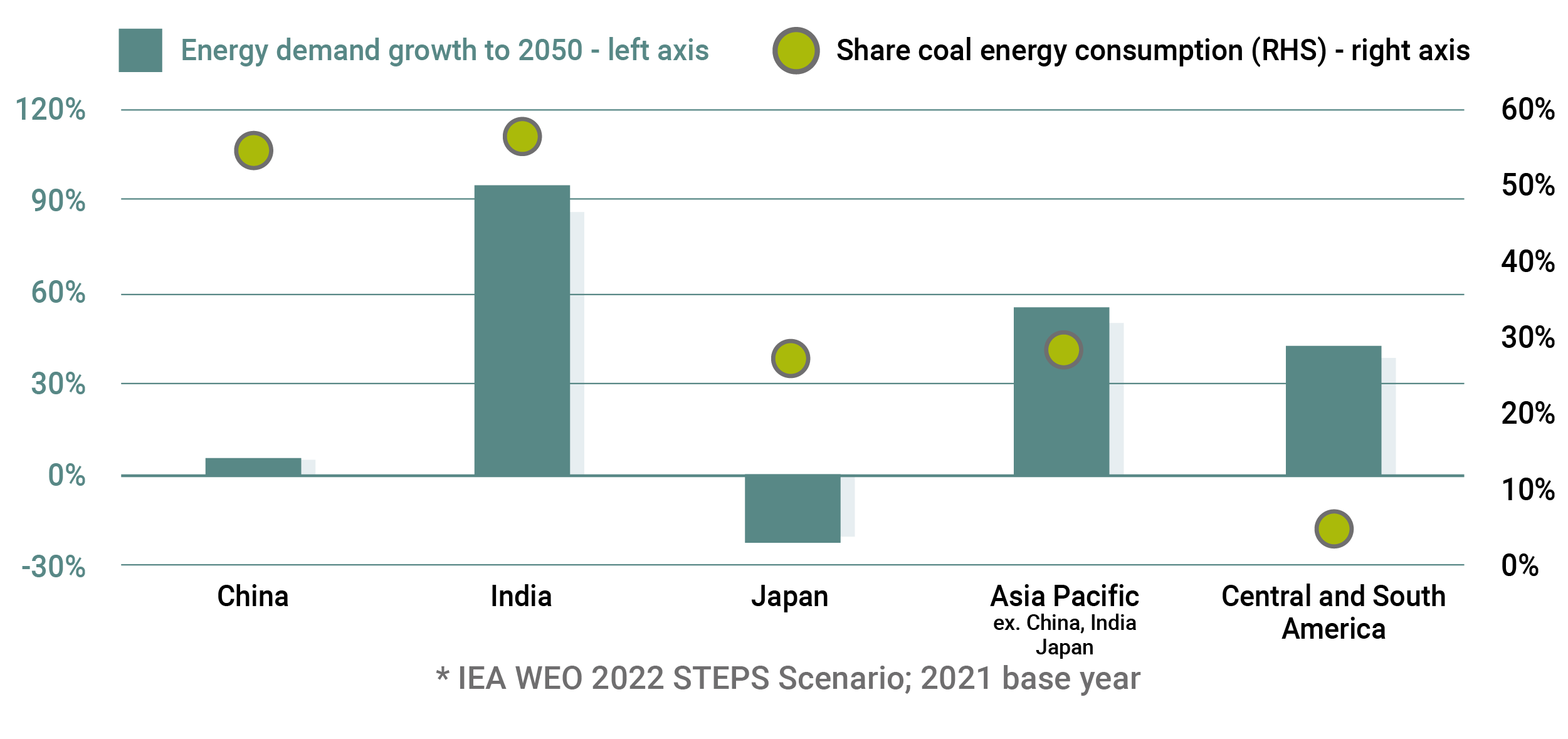
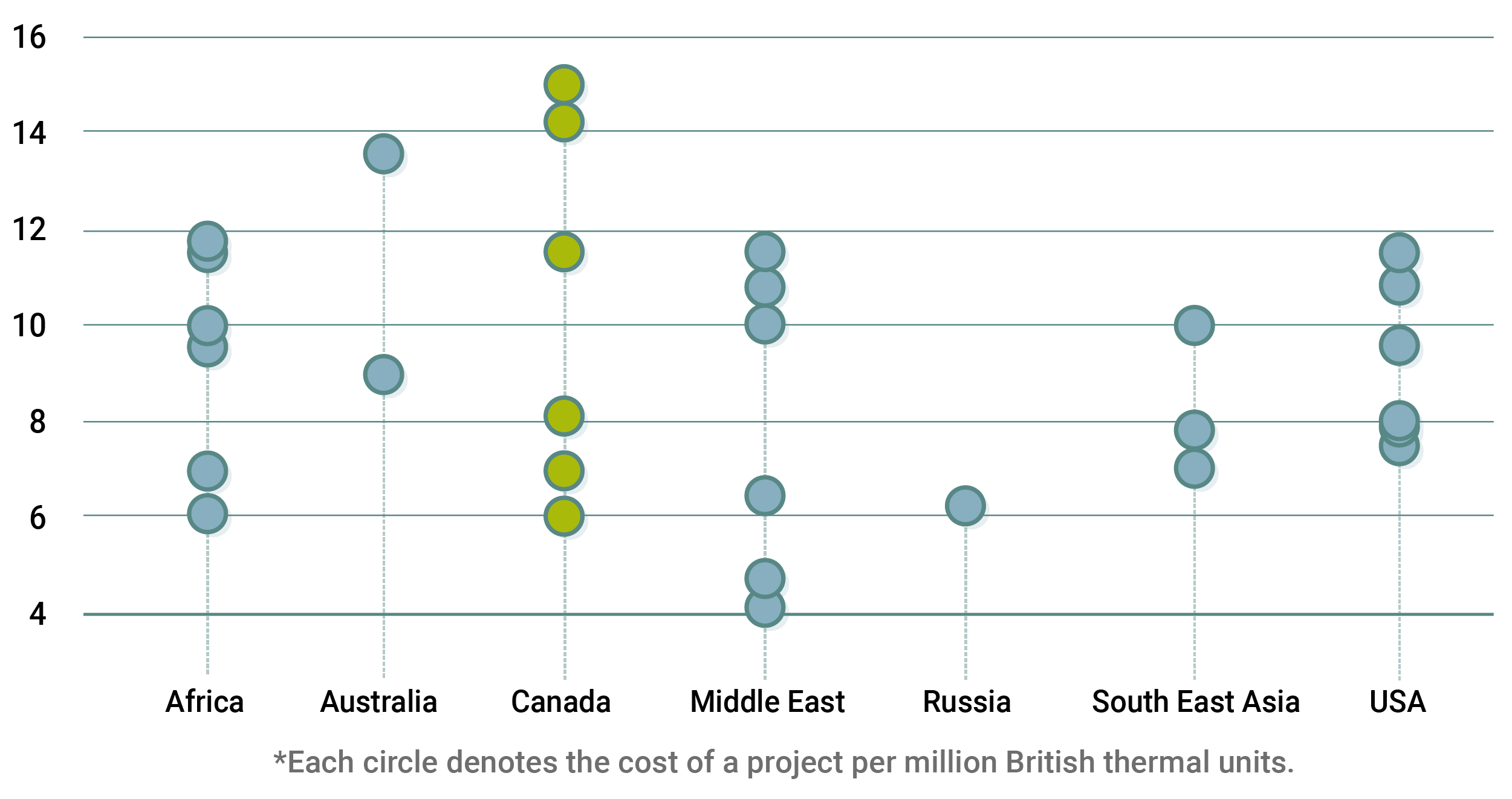
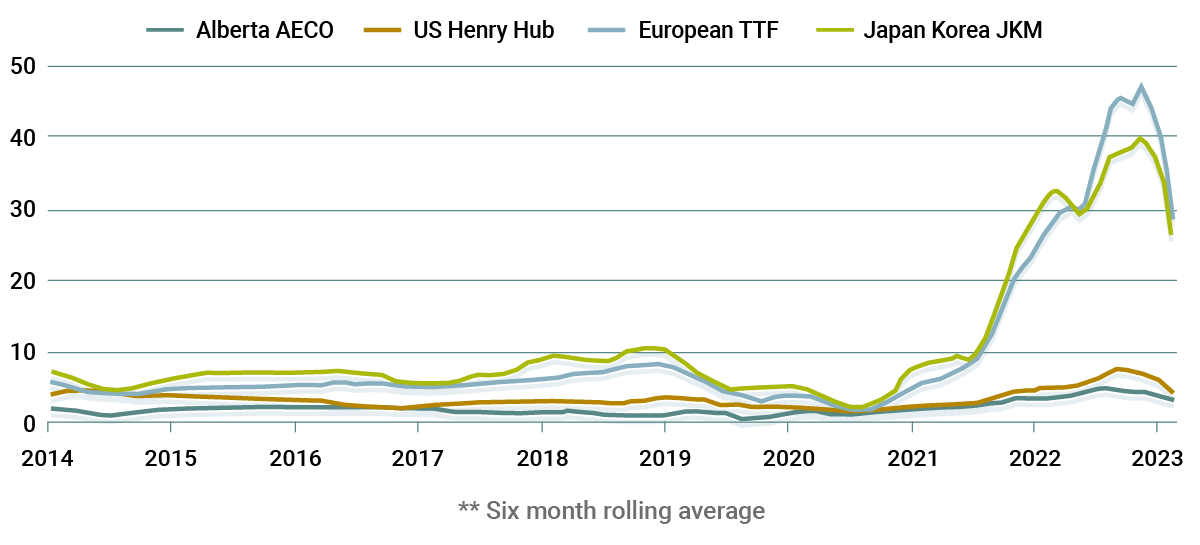
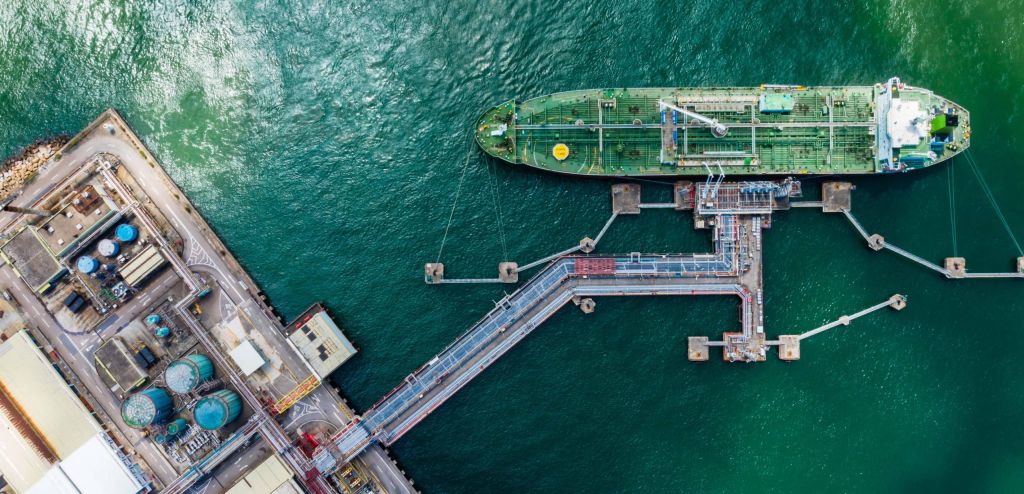







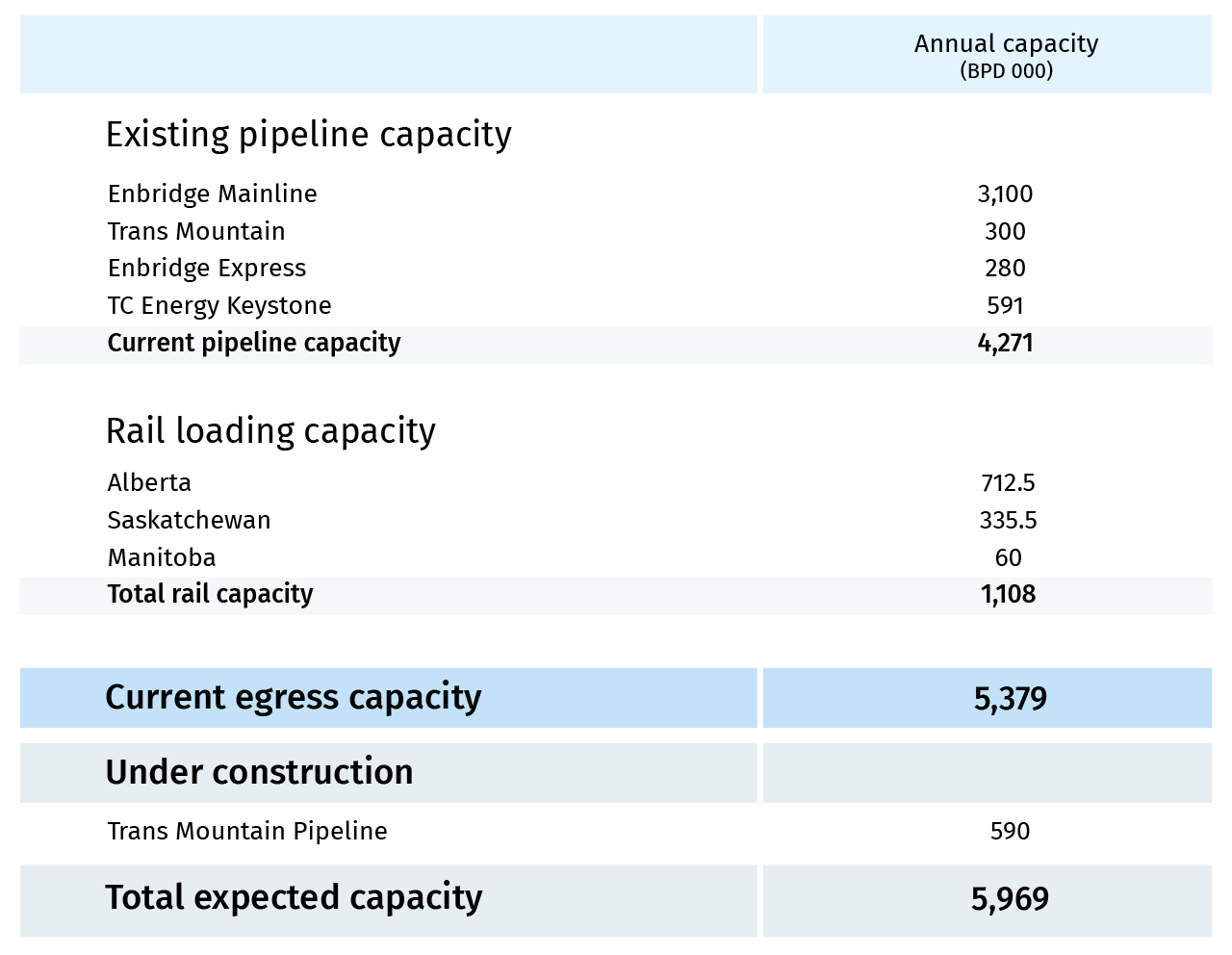


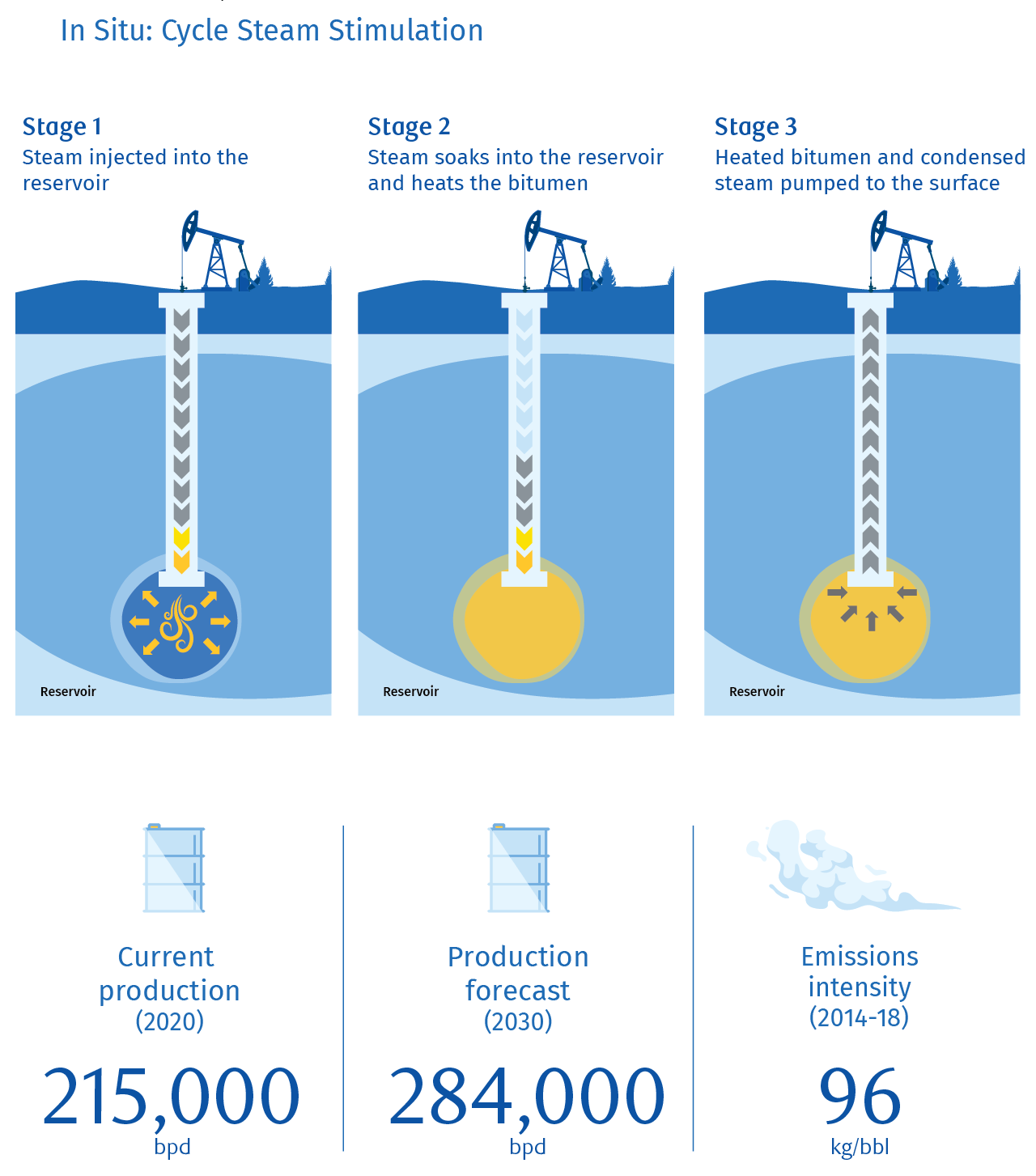









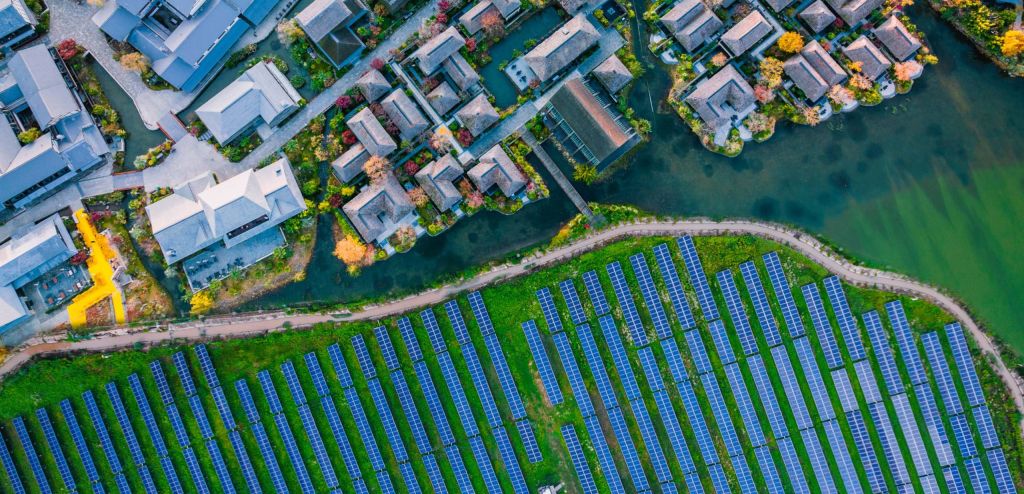
 We know the consequences of climate change. We know the causes, too. We even know what can be done to address it. What we don’t know is how best to shift into gear to get there in time. It’s why RBC Economics and Thought Leadership set out on a year-long research project to map out some of the necessary pathways for Canada to get to Net Zero. That’s the state when we take as much or more carbon dioxide, methane and other greenhouse gases out of the air as we put into it. And we need to get to that state by 2050, or sooner, to avoid the irreversible consequences of climate change.


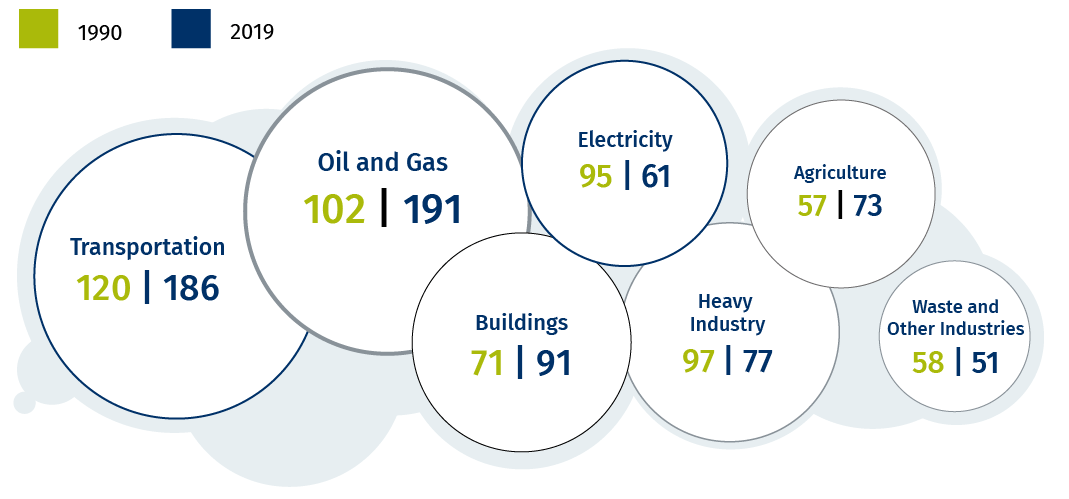



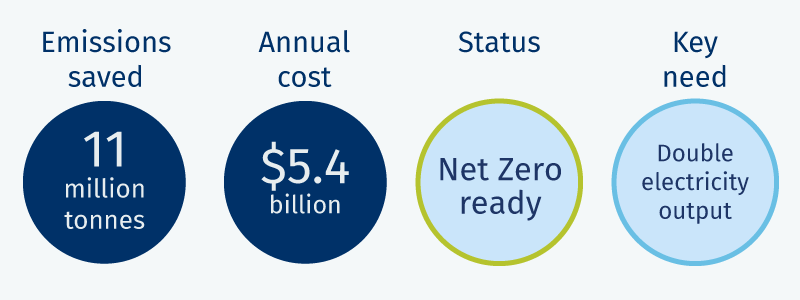
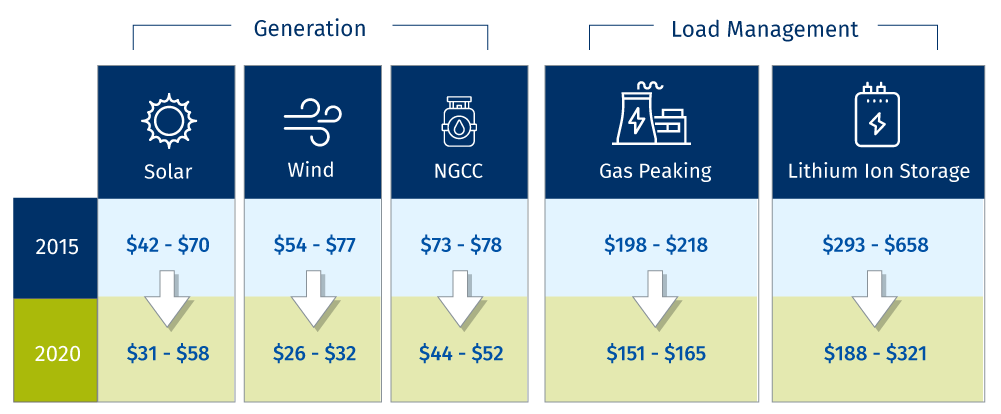

 General Fusion is developing the world’s first commercially viable fusion power plant, which will provide clean energy on demand, supplementing the intermittency of renewables. (In fusion energy, two light nuclei are combined to release large amounts of energy, producing four times more energy than nuclear fission.) The Burnaby, B.C. company’s 70%-scale demonstration plant in the U.K. will be complete in 2025. General Fusion has attracted some notable backers, including the U.K. government and Jeff Bezos. That could help the company as it competes against well-funded U.S. startups that are also racing to deploy fusion technology at scale.