EN
EN 


➔ Mark Carney’s Climate Competitiveness Strategy spotlights critical minerals and tax credits
➔ What to expect at COP30
➔ Gates’ reboots his climate view
➔ Further reading: Unearthing Value: How nature can play a critical role in pro-growth agendas – RBC
Hot takes
➔ The fight for critical minerals is only heating up. Beijing and Washington may be on talking terms these days (unlike Ottawa and Washington), but the fight for rare earth supremacy will be this decade’s big battle. Canada has entered the fray with 26 new partnerships with 9 allied countries and has earmarked capital in the new budget (see below). Vivan Sorab, Senior Manager of Clean Tech, says Canada has the resources, the capital, and the intellectual property to start building a supply chain, but needs to mobilize at speed. That will involve (a) fast-tracking funding for rare earths, (b) guaranteeing demand for the minerals, and (c) building domestic processing capability. Read Vivan’s full briefing here.
➔ Across the pond, several EU members refused to agree to legally binding 2040 goals. Member states agreed to cut emissions by between 66.3%-72.5% by 2035 as part of a submission to the UN ahead of the COP30 Summit in Brazil. But several member states refused to agree to the legally binding 2040 goal unless significant concessions were made that would allow countries to claim 5% of their emissions reductions by selling international carbon credits. The EU also agreed to weaken other politically sensitive climate policies, including delaying the launch of an upcoming EU carbon market by one year, to 2028.
A climate competitive Canada
The federal budget promised to show how the Mark Carney government intertwines climate policy with its growth agenda. It’s early days, but as the federal climate policy takes shape it presents a fascinating trade—stronger industrial carbon pricing and clean electricity regulations for a likely end to the emissions cap and an extension of tax incentives for carbon capture. Let’s see what Alberta and Saskatchewan have to say. (read John Stackhouse’s view on the federal budget here.)
Here’s what caught our eye:
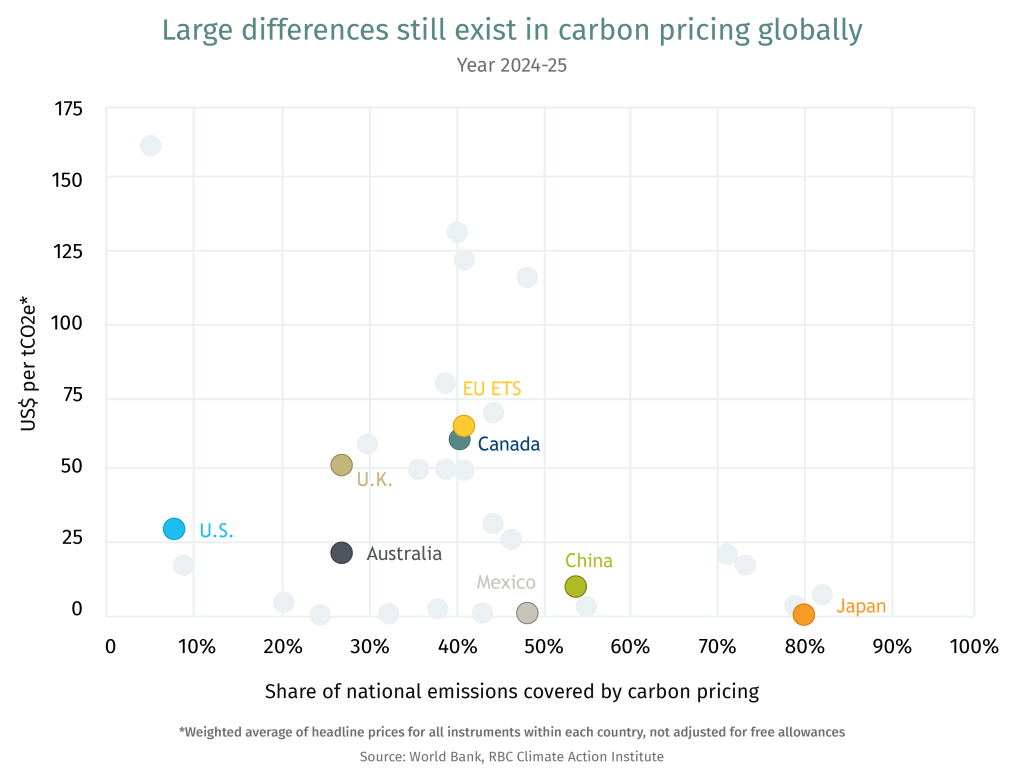
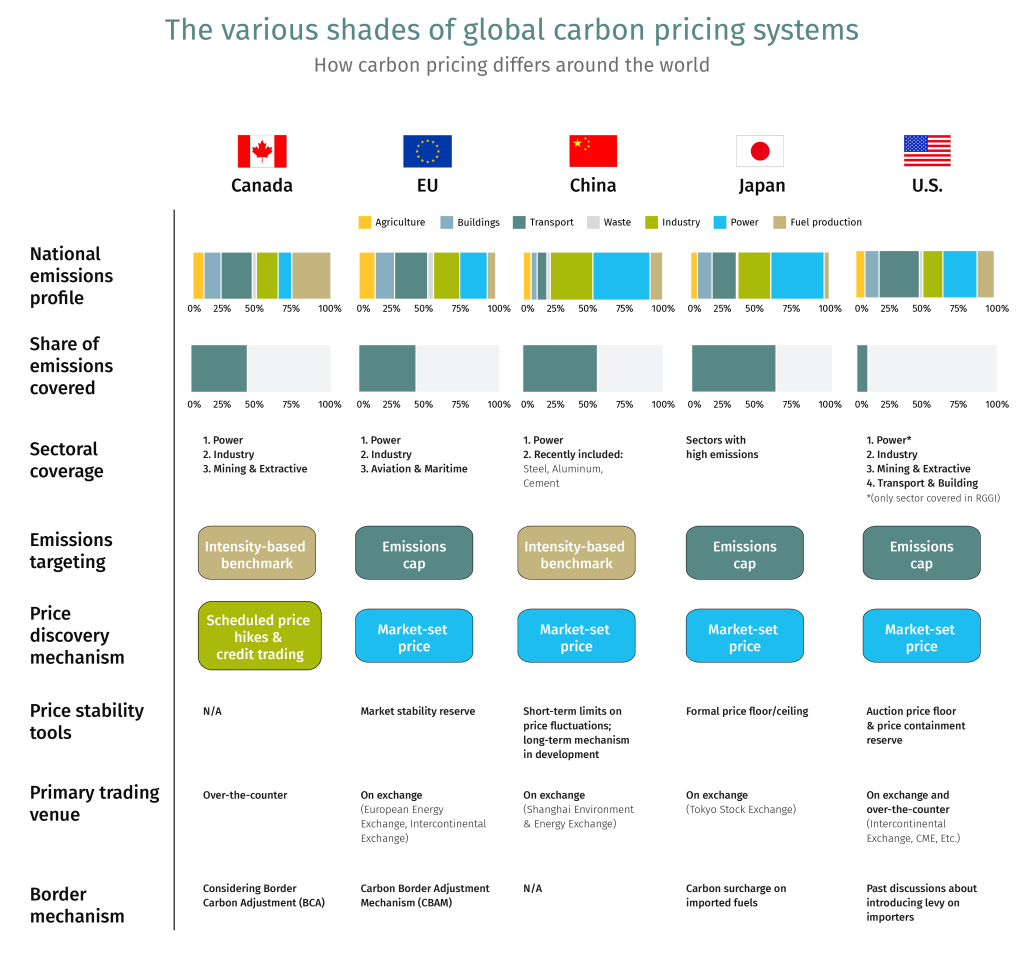
Industrial Carbon pricing: Canada needs robust carbon markets to support clean growth investments. The government plans to work with provinces to set a multi-decade industrial carbon price trajectory that targets net-zero by 2050. It will give businesses confidence. The plan is to fix the benchmark and harmonize across the country in providing a common, strong price signal. We wrote about the importance of harmonizing industrial carbon pricing last year. Expect Canada Growth Fund to continue to issue carbon contract for differences (CCfD) for projects.
Methane: The government aims to finalize enhanced methane regulations for the oil and gas sector and landfills, and work with provinces to negotiate equivalency agreements.
Oil and Gas Emissions Cap: The government plans to leverage technologies such as carbon capture and storage to lower oil and gas sector emissions, which means the Oil and Gas Emissions Cap “will no longer be required.”
Clean Fuels: The government plans to maintain the clean fuel regulations meant to help transition Canada toward less carbon-intensive gasoline and diesel, a rule that the Conservatives have criticized.
Tax credits: The government expanded pre-investment tax credits for green manufacturing, as well as carbon capture and storage (CCUS). Under the budget, the CCUS tax credit, which covers up to 60% of relevant investments, would extend the current rate until 2035.
Critical minerals: A $2-billion Critical Minerals Sovereign Fund will include equity investment, loan guarantees and offtake agreements. The $371.8 million First and Last Mile Fund aims to bring late-stage projects to production stage. Additional critical minerals, like antimony, indium and gallium, are now eligible under the clean tech manufacturing tax credit.
What’s at stake at COP30
It may be more low-key than previous years, but COP events always serve as a pulse check on the state of global climate action—or inaction.
Here’s what to expect from the event:
Belém, the host with the most (to lose): The north Brazilian city is the gateway to the Amazon region—known as the “lungs of the world” – as it produces 20% of the world’s oxygen. But the region is facing disturbances through land use, wildfires and climate-change fuelled extreme weather, plus the relentless march of industrial and commercial expansion. So Belém seems like a fitting, if far-off, location showcasing the ground realities of climate change, unlike the more convenient and glitzy financial hubs of New York and Dubai.
A decade after Paris. The world’s changed since 2015 – when virtually the entire world was united in its pledge to lower emissions. Now, not so much. Current mood: uncompromising. Commodity exporters are feeling emboldened, while climate litigation is at an all-time high.
A logistical challenge for a region with 18,000 rooms. Host Brazil expects 50,000 policy types to attend the negotiations, and has even suggested some delegates share rooms. Organizers are also arranging cruise ships, private properties and converting schools into hostels to accommodate climate-biz tourists. Last month, 81 countries were in negotiations with organizers over hotel rooms while 87 countries had already reserved accommodation, according to Brazil’s COP30 Presidency.
There may be a U.S.-sized hole at COP. The U.S., which is in the process of pulling out of the Paris accord, does not plan to send “high level“ representatives to Belém. Still, Washington’s shadow is expected to loom large over negotiations.Organizers have high hopes. COP30 delegates are pushing forward five key agenda items: (1) stronger national climate plans with clearer investment pathways, (2) mobilizing US$1.3 trillion for climate action, including US$300 billion for developing countries, (3) incentivizing sustainable and climate-aligned investment, (4) finalizing rules for an UN-backed global carbon market, and (5) a “fair and inclusive transition” away from fossil fuels, ensuring support for workers and vulnerable communities impacted by climate change. Let the negotiations begin.
Gates reboots his climate view
Bill Gates, the Microsoft co-founder who launched a successful second career as a climate tech financier, recently shared “some tough truths” about climate. His latest note has upset some but have been welcomed by others, including the U.S. President.
Beyond the headlines, his comments may be more nuanced.
Reframe the risk: Gates argues that while climate change will profoundly reshape global systems, it is unlikely to render the planet uninhabitable. His emphasis is on proportionality—recognizing climate change as a chronic, worsening challenge rather than an existential endgame. A new UN report on climate action now expects temperatures to rise 2.3-2.5°C, compared to 2.6-2.8°C in last year’s report, leaving the “world heading for a serious escalation of climate risks and damages.”
From temperature to welfare: Gates has urged that climate action should be evaluated not only by emissions avoided or degrees of warming averted, but also by how effectively it improves human welfare, particularly in vulnerable regions. It aligns with a growing call in development circles to integrate adaptation and poverty reduction within the climate agenda.
Innovate, innovate, innovate: Gates continues to position technological innovation—in clean power, industrial processes, and agriculture—as the decisive tool for decarbonization, suggesting that will drive lasting emissions reductions.
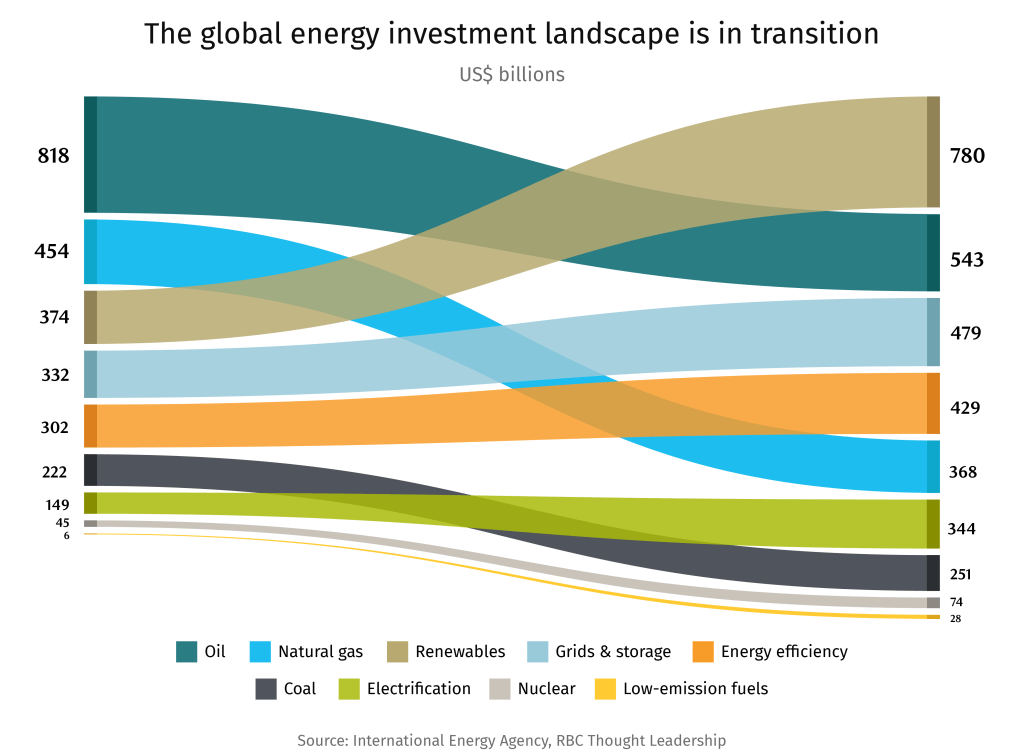
Avoid doomsday narratives: Alarmism may erode public trust and misallocate resources, Gates notes. Some might argue though that the continued focus on climate issues drove action and channelled trillions of dollars into energy transition.
The Institute in action
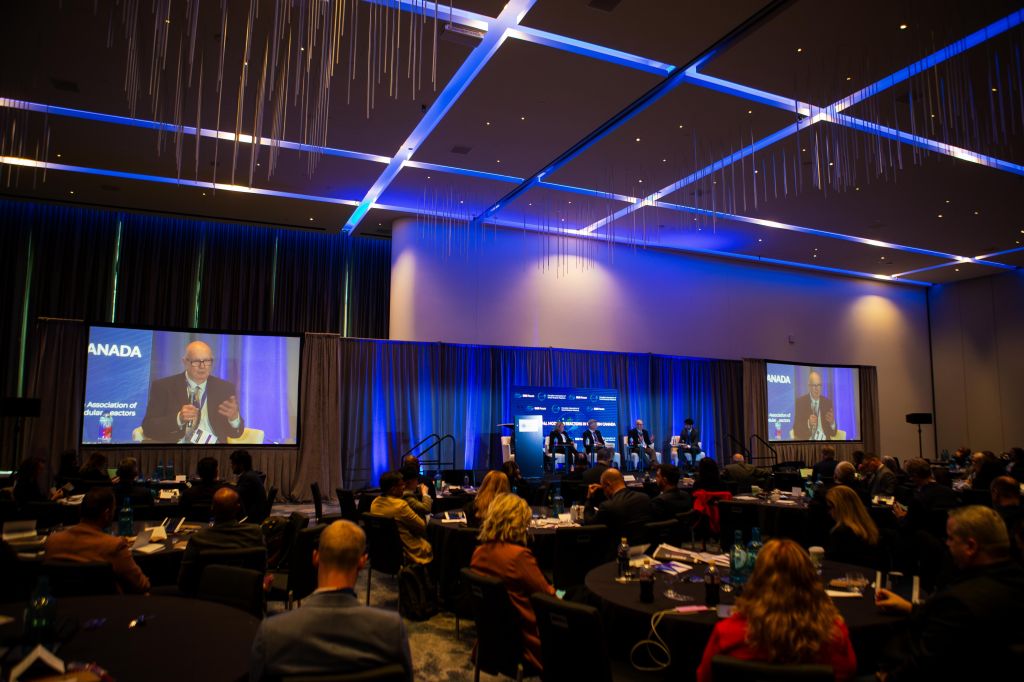
➔ John Stackhouse , Senior Vice-President, Office of the CEO, spoke to a G7 delegation, and advisers, ahead of a G7 Energy and Environment Minister meeting in Toronto last week, sharing insights on how RBC sees the world evolving. Read his keynote here.
➔ At the Toronto Global Forum on Oct 17, John held a main-stage conversation with Heather Chalmers, President and CEO of GE Vernova Canada, and was also part of a working session on skills and supply chain issues with Ontario’s energy minister Stephen Lecce.
➔ At the GLOBE Food Leadership Summit in Calgary the Canadian Alliance for Net Zero Agri-Food (CANZA) unveiled the Million Acre Challenge, a new initiative to scale climate- smart farming practices across Canada.
➔ At the Arrell Food Summit on Oct 21, Lisa Ashton, Director of Agriculture Policy, sat down with Rene Van Acker, President and Vice-Chancellor of the University of Guelph, to discuss Canadian agriculture’s sustainable growth while addressing one of its most pressing challenges—the country’s growing innovation gaps in agri-food.
➔ Lisa also took part in a panel on climate-smart agriculture food systems at Simon Fraser University, Vancouver.
Curated by Yadullah Hussain, Managing Editor, RBC Climate Action Institute.
Climate Crunch would not be possible without John Stackhouse, Jordan Brennan, John Intini, Farhad Panahov, Lisa Ashton, Shaz Merwat, Vivan Sorab, Caprice Biasoni, Lavanya Kaleeswaran and Joelle Schonberg .
Have a comment, commendation, or umm, criticism? Write to me here (yadullahhussain@rbc.com)
Climate Crunch Newsletter