
View By Topics Or Author Page Link

view_by_topics_or_author_page_link

If you’ve been hearing more about angel investing lately, you’re not alone. Because of widespread digitization, the process of starting a company has changed dramatically in the past 15 years. The time and costs related to developing a tech product — even one with significant potential consumer appeal — have dropped, as has the amount of seed money needed to get a company off the ground.

That’s where angel investors come in. They’re typically experienced entrepreneurs willing to provide somewhere between $10,000 and $2 million to finance an early-stage company. They’re comfortable with risk, and have plenty of advice to share.

We talked to a group of angel investors, and the organization that’s helping them, about the state of angel investing in Canada, and what can be done to spur more of it. Here are some takeaways:

Angel investors fill a critical funding gap.

As many as 9 in 10 startups fail, according to some estimates. And for those that don’t, survival isn’t assured. Around half of Canadian firms with up to four employees post zero or negative growth, the Business Development Bank of Canada says. In starting a business, entrepreneurs typically use their own funds, or rely on support from family and friends. But when the demands of scaling-up mean that’s no longer enough, many find it difficult to access external financing, or are too small to catch the interest of venture-capital investors.

In Canada, they’re getting more help from angels. Angel groups made investments totaling $134 million last year, up 48% from 2014, according to the National Angel Capital Organization. That’s a good sign, because venture-capital investment in the country continues to favour later-stage companies. NACO, which represents some 2,000 investors and 32 formal angel groups, is at the forefront of efforts to foster angel investing in Canada.

The growth of the industry comes at a critical time for Canada: the number of people starting businesses is growing. Early-stage entrepreneurs made up some 14.7% of the population aged 18–64 last year — putting Canada ahead of the U.S. and Australia when it comes to the rate of early-stage entrepreneurship, according to the Global Entrepreneurship Monitor’s 2015 report on Canada.

Angels provide more than money.

The angels we spoke to say mentorship is a key motivation. In many cases, they created their wealth, retired and now want to give back. They’re looking for a return, sure, but are often animated by something more. As Gil Penchina, a U.S.-based angel who’s had a hand in companies ranging from eBay to Indiegogo, notes, many are enthusiasts who want to help fellow entrepreneurs.

Early-stage companies can benefit from the experience, and business networks, an angel investor brings. That’s especially helpful given what many entrepreneurs say is a dearth of scale-up talent in Canada.

In providing more than money, angel investors are also contributing to the development of local economies. The Northern Ontario Angels, for instance, focus on connecting angel investors and businesses with the aim of boosting growth in that region.

The time is right.

Canada has a robust early-stage ecosystem. Several Canadian universities have set up technology incubators — and they’re attracting global recognition. The country’s Industrial Research Assistance Program provides a range of services to innovative businesses — including grants to help firms commercialize technology products or build digital skills. Canada’s R&D tax incentive program is also a plus.

These factors make for some pretty fertile grounds for the growing angel investor industry. In terms of headcount, Canada’s angel population is three times bigger than its venture-capital sector, and it already invests in 27 times more startups than venture capital firms do, NACO says.

Angels need support too.

NACO is trying to build up the angel community. It says more could be done to “professionalize” the group, through education and coordination.

But angels say Ottawa can help, by providing more incentives to boost the pool of investment capital. NACO would also like to see a refundable federal tax credit for investments in startup ventures. British Columbia has one — and the province provided some $26 million to startups in 2014 because angels invested $86 million in eligible businesses.

Another idea: Ottawa should create funds to co-invest with angels. Quebec’s government has done something like this in its support for Anges Québec, that province’s main angel group.

Yet another wish: changing the tax regime to allow angels to take accelerated write-offs on their investments, instead of making them wait for years as they do now. That, angels say, would free up capital for other early-stage investments.

Sources:

https://www.rbc.com/en/wp-content/uploads/sites/4/2024/11/challenges-winning-strategies.pdf

http://betakit.com/report-angels-invest-133-million-in-canadian-startups-in-2015-up-48-percent-from-2014/

https://www.rbc.com/en/wp-content/uploads/sites/4/2024/11/NACO_Insights_Aug2016.pdf

http://boastcapital.com/everything-you-need-to-know-about-irap-funding/

http://www.forbes.com/sites/neilpatel/2015/01/16/90-of-startups-will-fail-heres-what-you-need-to-know-about-the-10/#7ae144fe55e1

http://www.nacocanada.com/the-top-four-benefits-of-angel-investment/

https://techcrunch.com/2016/10/02/gil-penchina-on-angel-investing-market-timing-and-his-ambivalence-to-venture-capital/

https://www.rbc.com/en/wp-content/uploads/sites/4/2025/03/GEM-Canada-Report-5.2015.pdf
View By Topics Or Author Page Link

view_by_topics_or_author_page_link

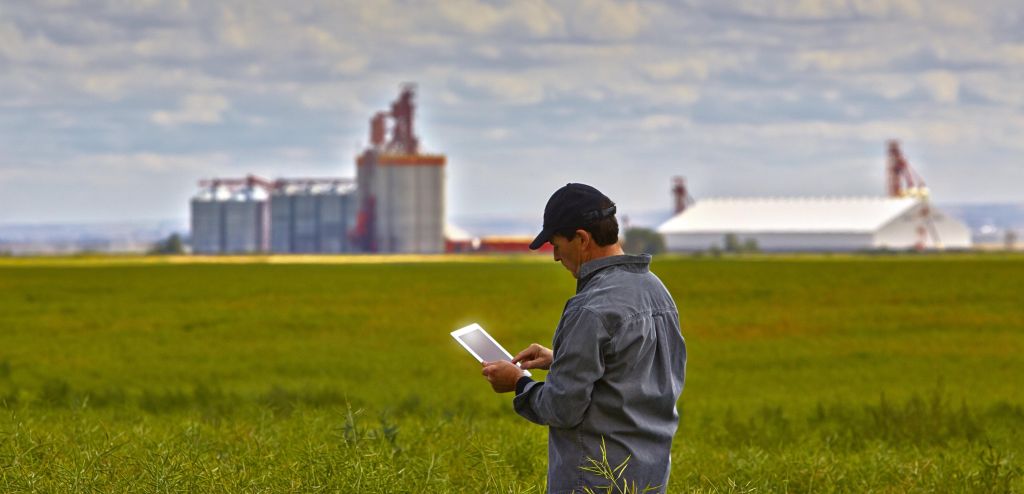
Disruption has reached the family farm. Microsoft is experimenting with “precision agriculture” to help small farmers cost-effectively manage water and other inputs. Monsanto, meanwhile, wants to be the Amazon of farming with its digital-farming platform. The innovations are part of a global race to feed a world population that’s expected to reach almost 10 billion by 2050.

For Canada, the stakes are high. The agricultural and agri-food sector accounts for 6.7% of our GDP. And our agri-food and seafood exports topped C$60 billion last year. But other countries (Australia, the Netherlands), have deep ambitions to be global ag powerhouses, and are making significant investments in infrastructure and agri-food R&D to get there.

We went to two of Canada’s key agri-food hubs – Saskatchewan and southwestern Ontario – to explore ways in which Canada can respond to the challenges, and the opportunities, that lie ahead. Here are some takeaways:

Canada’s got a strong start in the agricultural innovation race. We developed canola back in the 1970s. We’ve got top research institutions – Guelph’s Food Institute, the University of Saskatchewan – focused on advanced farming techniques and food safety. And farmers are practicing their own innovation – experimenting with new crops, or using social media to share information. So we’re well positioned to lead the way. Take Saskatchewan, which has 44% of Canada’s cultivated farmland. Once dubbed the Breadbasket of the World, it’s now much more than that: a major global producer of grains, pulses and canola; and an agribusiness and fertilizer powerhouse. The province has invested heavily in ag research; it hosts a bioscience cluster, and has formed partnerships with countries like Israel to tackle food security challenges.

Australia – which has a A$50 billion national infrastructure program – is investing in an inland rail link to get its agricultural products to market faster. Canada’s rail duopoly, meanwhile, has occasionally hampered farmers. Back in 2014, for instance, farmers vying with oil producers couldn’t get enough space on trains to ship a bumper crop of oats, sending oat-futures soaring. Better transportation solutions would help. So would better connectivity. Inadequate broadband service to many farms inhibits big-data analysis and resource optimization. That’s a problem, since farmers increasingly rely on sophisticated analysis of input and production data to boost yields.

Think of the food scares that have grabbed headlines: the tainted-milk-powder scandal in China, or the E. coli outbreak at the Chipotle restaurant chain in the U.S. Scandals like those have led to the growth of the organic food sector, and harsh scrutiny of the GMO industry. Canada, though, has a reputation for food quality, safety and reliability. How can we leverage that? One option: creating a “Canadian food seal” that vouches for 5-to-10 top-of-mind attributes such as traceability, nutritional value and bio safety.

While Canada’s a major food producer, it imports more processed food than it exports. Blame Nafta, or the economics of food, which make it cheaper to export Canadian durum wheat to be turned into pasta elsewhere. How can Canada become a more critical part of the food value chain? More infrastructure would help, as would brand recognition. But the industry says it needs support in developing and testing products. Value-added isn’t just nice to have: turning wheat into cakes and live cattle into burgers generates wealth. In western Canada, it amounts to a missed opportunity – only 40% of its agricultural products are processed and sold there.

Or is it? Carbon pricing is coming to Canada. It will raise the already-significant costs of planting and harvesting, and could have big implications for food exporters. The higher cost of carbon may prod some farmers to grow less carbon-intensive crops, such as pulses. Saskatchewan’s already doing that. But the focus on carbon may also be a boon to farmers. They’ve got the space to erect solar- and wind-power facilities, meaning they could potentially benefit from cleantech initiatives.

And the next. Canada’s farmers are getting older – in 2011, more than half of Canadian farms had operators over the age of 55. Succession issues are a big deal. That means making it easier for younger farmers to get into the business. It’s not easy – land prices in some regions have soared. And given farming’s capital-intensive nature, financing is an obstacle. But fostering a more dynamic agricultural sector would likely keep more farms in the family.

Sources:

Agriculture and Agri-Food Canada – Canadian Agri-Food and Seafood Exports by Product (by Value)

Agriculture and Agri-Food Canada – An Overview of the Canadian Agriculture and Agri-Food System 2015

The Wall Street Journal – Oats Stuck in Canada Clog the Market

Alberta Farmer Express – It’s a shame that Canada imports more food products than it exports

Global News – Number of farmers is shrinking, while avg age is climbing

The Economist – TV dinners

Saskatchewan Research Council – Growing the Future for Biotech in Saskatchewan

Innovation Saskatchewan – Saskatchewan and Israel Come Together to Create Technology Solutions for Global Food Challenges

Business Insider Australia – The government has introduced a $50 billion infrastructure plan