

 EN
EN 



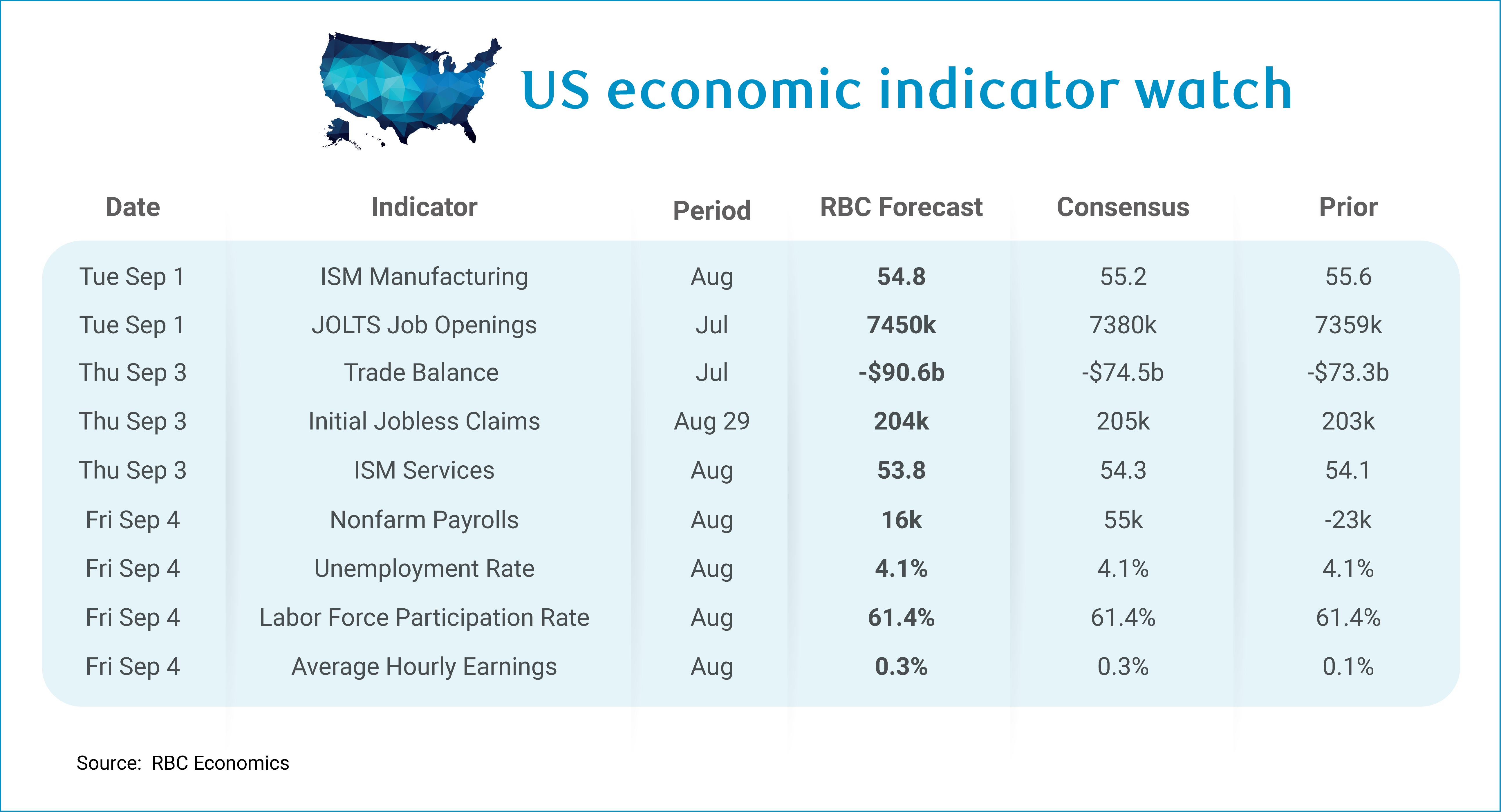
As markets digest Fed Chair Warsh’s Jackson Hole speech, our attention is turning to next week’s calendar, where our focus will be on the August employment report. We expect the payroll report will show that 16K jobs were added to the US labor market, with job growth predominantly driven by roles demanded by an aging population and in tech industries as the AI buildout continues. Our forecast calls for the unemployment rate to hold steady at 4.1% in August.
The pace of payroll growth has slowed significantly in the wake of recent months’ downward revisions, but we do not interpret this as evidence of labor market slack. Payrolls are becoming a less meaningful gauge of labor market health as record retirements distort the picture. Recently, health care and social assistance have driven the bulk of job growth – as health care hiring continues to ramp up to meet the increased demand for health care services as the population ages. And non-residential construction hiring has been supported by the AI infrastructure buildout. But aside from these drivers , new hiring has been limited.
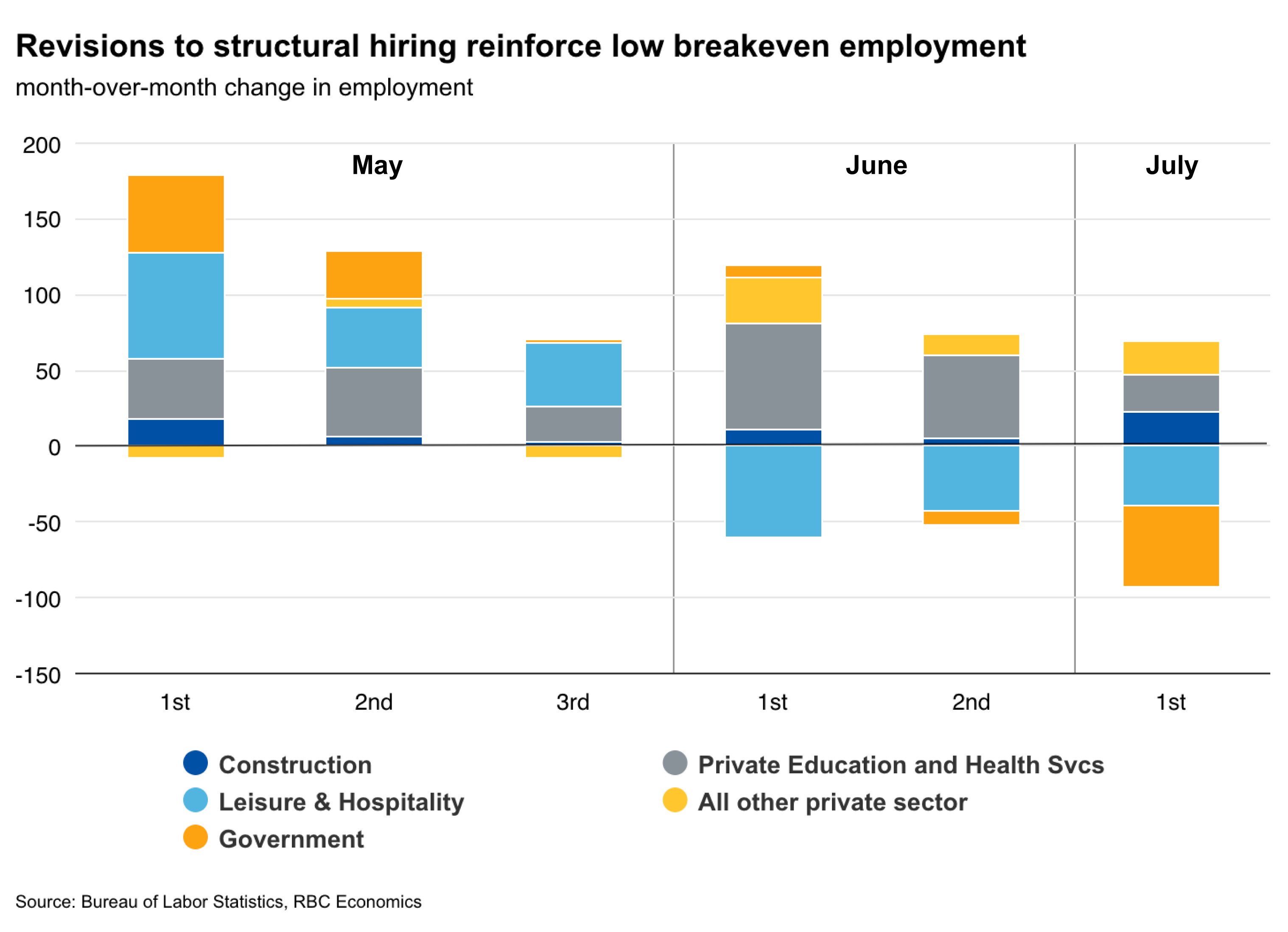
Ultimately, if the labor market were weakening, the holistic picture would say so. Jobless claims would rise, when in fact, jobless claims have settled at extremely low levels. Initial claims fell during the August reference week relative to July and continuing claims held steady. Moreover, currently less than 25% of unemployed job seekers were permanently laid off (nearly half of those currently unemployed are new labor market entrants or re-entrants). And the share of employees working part-time for economic reasons has remained anchored despite softer payroll gains. None of these data points suggest a worsening picture. And over the past year, despite adding only 26K jobs each month, the unemployment rate still ticked down. In fact, if the preliminary CES national benchmark revision is any indication, the revisions suggest that monthly average job gains in the 12-months ending March 2026 were -7K lower than initially reported (at 16K from 23K). Since the unemployment rate is not being revised, this reinforces the fact that the breakeven rate of employment is exceptionally low (likely around 20K per month).
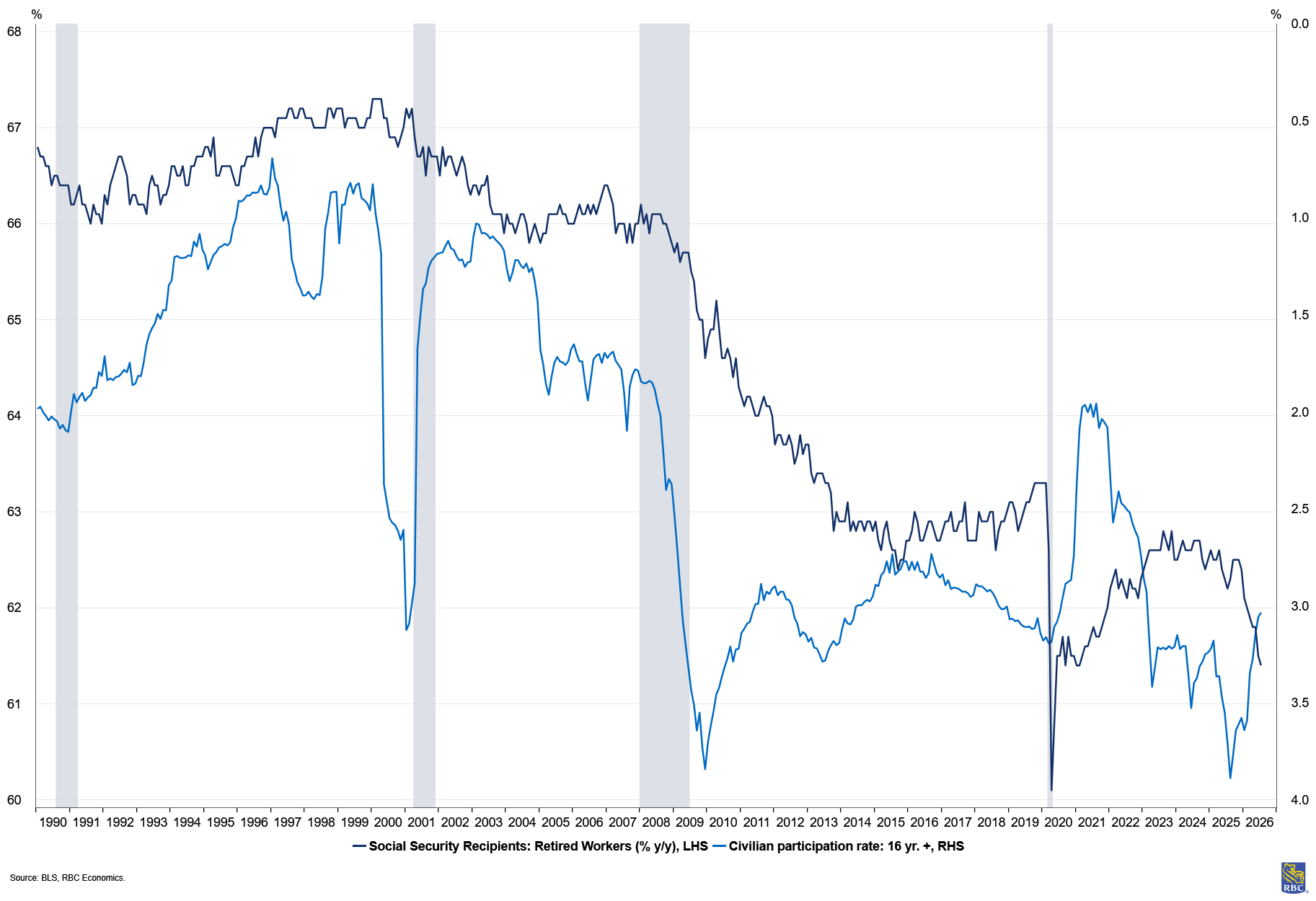
As of the late, the move lower in the unemployment rate has been a labor force participation story. The tightness that we have been witnessing continues to be a supply story as retirements remain elevated and immigration stays exceptionally low. For this reason, we expect the FOMC will be laser-focused on the unemployment rate for a gauge of labor market health ahead of the September meeting. US economic indicator watch
Declining unemployment a product of retirements – not layoffs
About the authors:
Mike Reid is Head of US Economics at RBC. He is responsible for generating RBC’s US economic outlook, providing commentary on macro indicators, and producing written analysis around the economic backdrop.
Carrie Freestone is a Senior US Economist at RBC. She is responsible for generating RBC’s US economic forecasts across GDP, employment, and inflation, and providing macro commentary through publications, presentations, and the media.
Imri Haggin is an US Economist at RBC, where he focuses on thematic research. His prior work has centered on consumer credit dynamics and treasury modeling, with an emphasis on leveraging data to understand behavior.
This article is intended as general information only and is not to be relied upon as constituting legal, financial or other professional advice. The reader is solely liable for any use of the information contained in this document and Royal Bank of Canada (“RBC”) nor any of its affiliates nor any of their respective directors, officers, employees or agents shall be held responsible for any direct or indirect damages arising from the use of this document by the reader. A professional advisor should be consulted regarding your specific situation. Information presented is believed to be factual and up-to-date but we do not guarantee its accuracy and it should not be regarded as a complete analysis of the subjects discussed. All expressions of opinion reflect the judgment of the authors as of the date of publication and are subject to change. No endorsement of any third parties or their advice, opinions, information, products or services is expressly given or implied by Royal Bank of Canada or any of its affiliates.
This document may contain forward-looking statements within the meaning of certain securities laws, which are subject to RBC’s caution regarding forward-looking statements. ESG (including climate) metrics, data and other information contained on this website are or may be based on assumptions, estimates and judgements. For cautionary statements relating to the information on this website, refer to the “Caution regarding forward-looking statements” and the “Important notice regarding this document” sections in our latest climate report or sustainability report, available at: https://www.rbc.com/community-social-impact/reporting-performance/index.html. Except as required by law, none of RBC nor any of its affiliates undertake to update any information in this document.

