

 EN
EN 



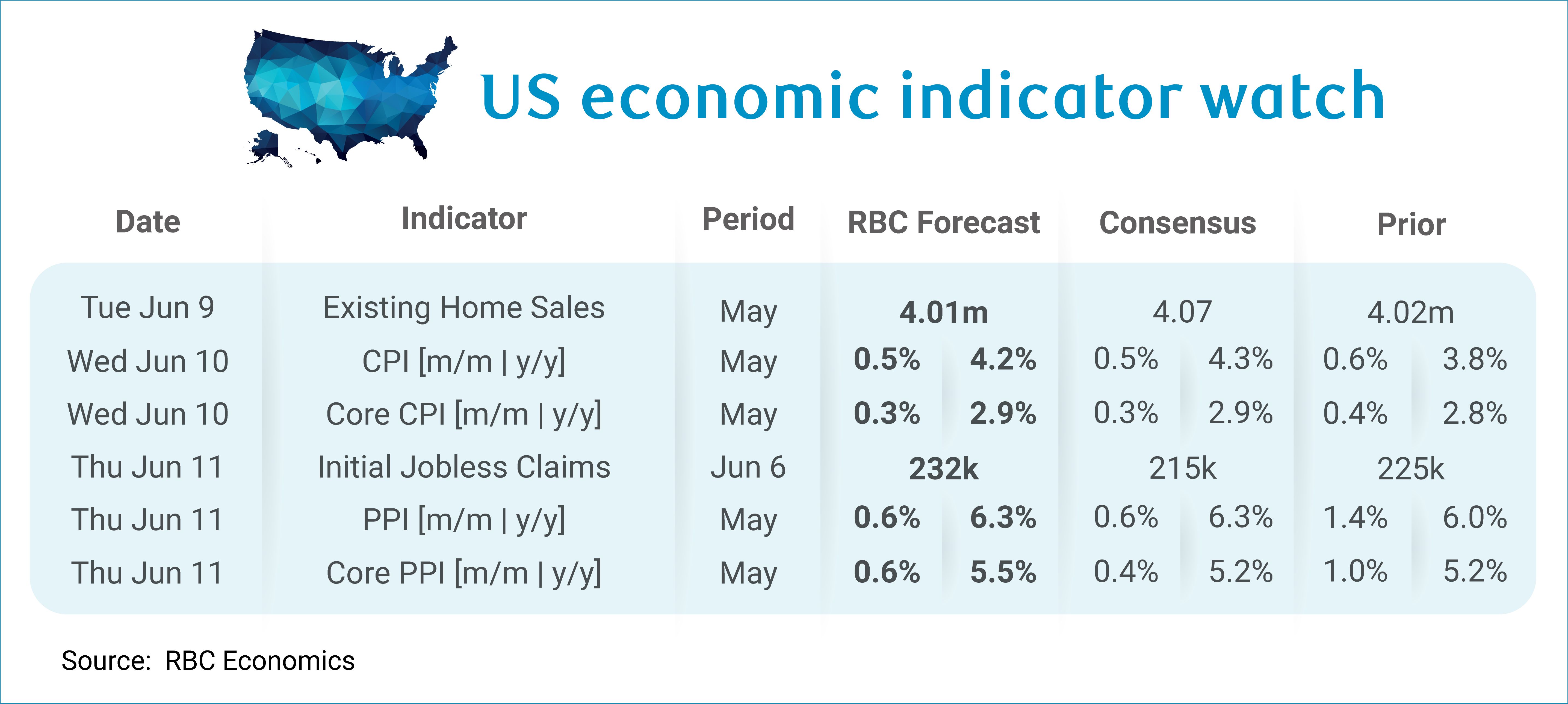
Next week, all eyes will be on CPI data, and we do not expect that it will be a reassuring development. We forecast headline to increase +0.5% m/m in May, which will bring the year-over-year pace to 4.2%.
Higher energy prices continue to push headline inflation up. And we do not expect to see a meaningful reprieve in the food space either, especially following recent headlines about beef prices. Our forecast for core calls for a +0.3% m/m uptick in May, which would nudge the year-over-year pace to 2.9% – well below headline but moving in the wrong direction for the Fed.
Higher jet fuel prices will continue to add to core services, while tight labor markets which keep a floor under wage growth are limiting core services disinflation. And core goods inflation has been helped in recent months by new and used car prices, which are masking price pressures for trade-exposed products like apparel, personal care products, and motor vehicle parts.
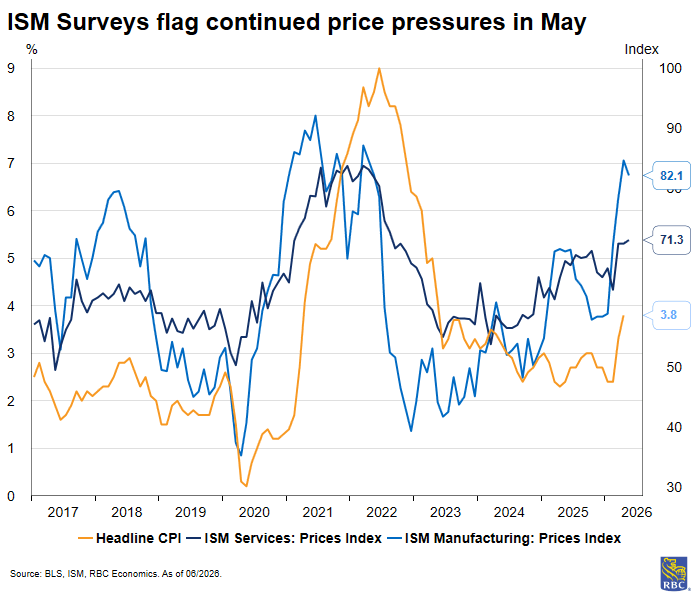
Both ISM manufacturing and services surveys highlighted soaring input costs. And recent PPI data suggests that firms do have the pricing power to pass off these higher input costs. In May, we expect producers continued to pass off higher input prices. We anticipate that we will see a +0.6% m/m increase in both headline and core PPI – bringing the headline pace of growth up to +6.3% y/y and core at +5.5% y/y respectively. The April NFIB survey highlighted a spike in firms (nearly 30%) anticipating that they will raise prices within the next three months, which suggests that passthrough will continue through the summer months.
This is bad news for consumers but good news for the labor market. If firms have sufficient pricing power to preserve margins by passing off higher input costs, there are unlikely to be mass layoffs. And the May jobs report showed net new job creation continued (to the tune of 172K). An unemployment rate that is stable at exceptionally low levels (4.3%) is reassuring, but a stable job market will come at the expense of consumer budgets. For now, households have been saving less to accommodate higher prices in other areas.
Aside from inflation data, here’s what else we’re watching:
-
Our forecast calls for existing home sales to come in at 4.01 million for the month of May. Home sales are expected to remain sluggish, as the mortgage backdrop continues to weigh on affordability.
-
We anticipate that initial jobless claims will rise to 232k for the week ending June 6th. We anticipate that initial jobless claims could moderate in the coming weeks, but will still likely remain at exceptionally low levels. Continued claims have largely ticked lower on a four-week moving average basis since November.
About the Authors:
Mike Reid is Head of US Economics at RBC. He is responsible for generating RBC’s US economic outlook, providing commentary on macro indicators, and producing written analysis around the economic backdrop.
Carrie Freestone is a Senior US Economist at RBC. She is responsible for generating RBC’s US economic forecasts across GDP, employment, and inflation, and providing macro commentary through publications, presentations, and the media.
Imri Haggin is an US Economist at RBC, where he focuses on thematic research. His prior work has centered on consumer credit dynamics and treasury modeling, with an emphasis on leveraging data to understand behavior.
This article is intended as general information only and is not to be relied upon as constituting legal, financial or other professional advice. The reader is solely liable for any use of the information contained in this document and Royal Bank of Canada (“RBC”) nor any of its affiliates nor any of their respective directors, officers, employees or agents shall be held responsible for any direct or indirect damages arising from the use of this document by the reader. A professional advisor should be consulted regarding your specific situation. Information presented is believed to be factual and up-to-date but we do not guarantee its accuracy and it should not be regarded as a complete analysis of the subjects discussed. All expressions of opinion reflect the judgment of the authors as of the date of publication and are subject to change. No endorsement of any third parties or their advice, opinions, information, products or services is expressly given or implied by Royal Bank of Canada or any of its affiliates.
This document may contain forward-looking statements within the meaning of certain securities laws, which are subject to RBC’s caution regarding forward-looking statements. ESG (including climate) metrics, data and other information contained on this website are or may be based on assumptions, estimates and judgements. For cautionary statements relating to the information on this website, refer to the “Caution regarding forward-looking statements” and the “Important notice regarding this document” sections in our latest climate report or sustainability report, available at: https://www.rbc.com/community-social-impact/reporting-performance/index.html. Except as required by law, none of RBC nor any of its affiliates undertake to update any information in this document.

