

 EN
EN 


Bottom Line:
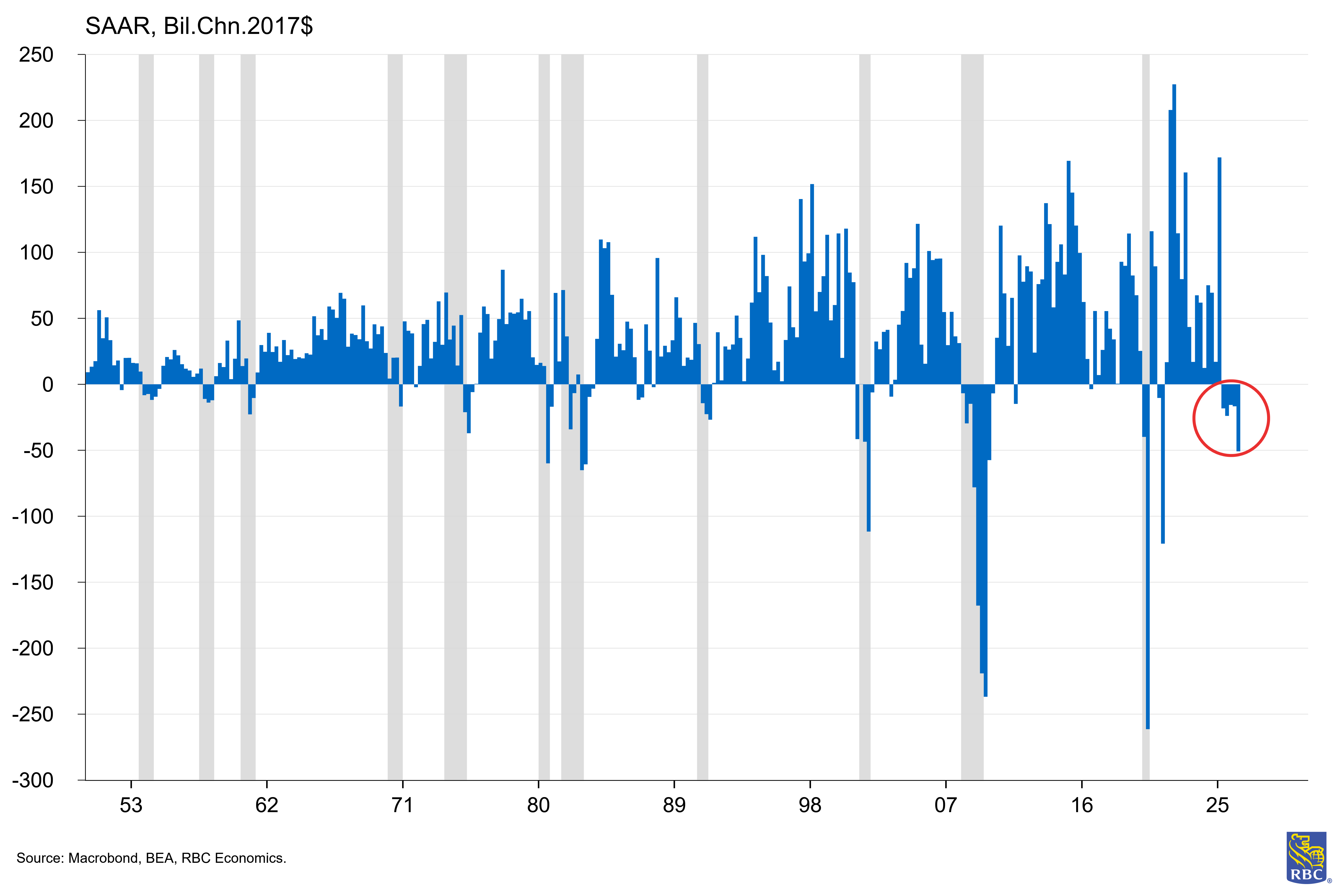
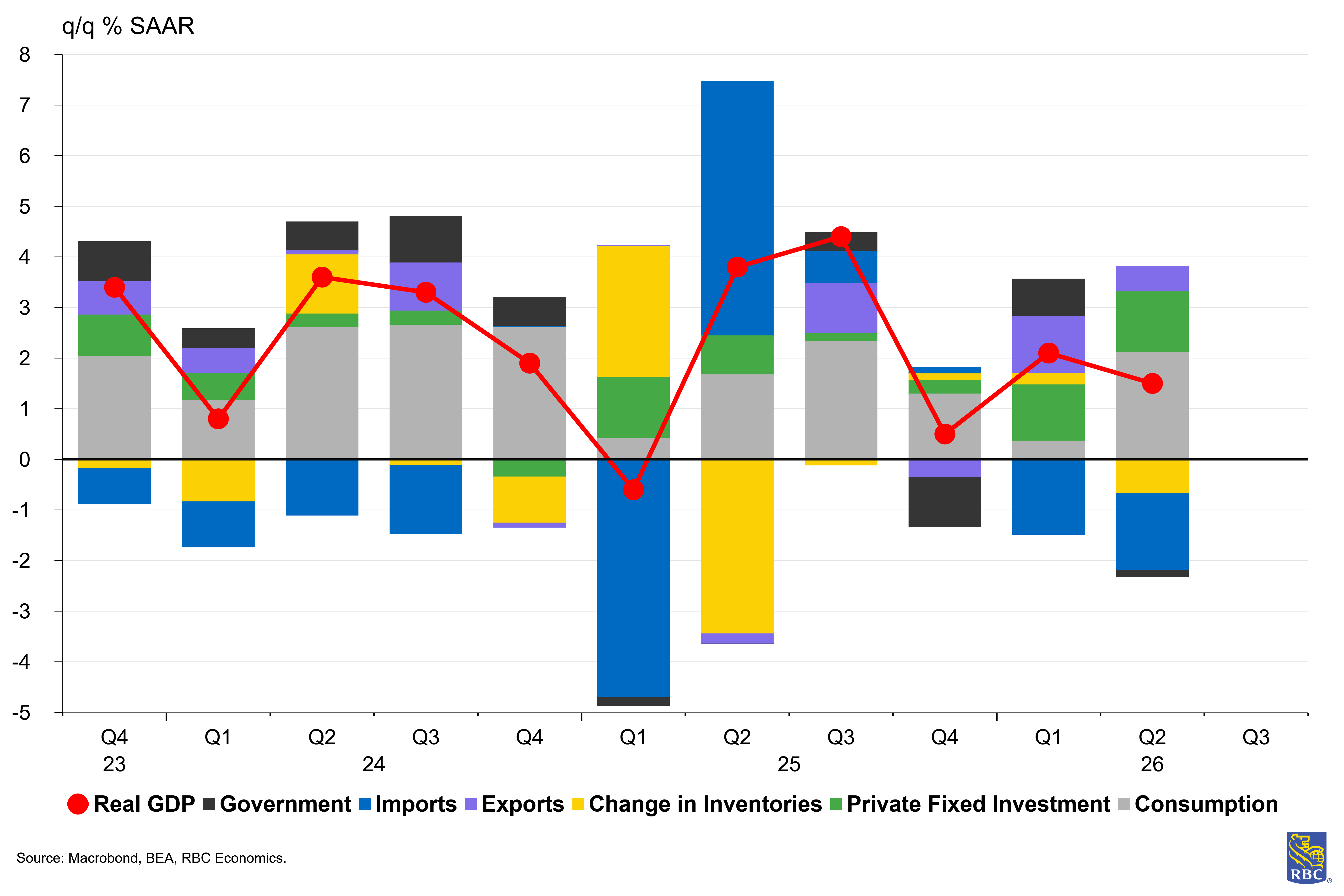
The Bureau of Economic Analysis reported that the US economy expanded by 1.5% in Q2, below expectations, and the longer-term trend of 2.0%. What stood out in this report is the return of data distortions – trade (i.e., net exports) and inventories subtracted 1.7 percentage points from headline growth, both of which are reacting to the tariff backdrop. The overturn of IEEPA in February (Q1) brought a resurgence in imports in Q2. However, what was surprising was the continued decline in inventories – they fell for a 5th consecutive month, a trend that has never been seen outside of a recession. We continue to view this as a strategy firms are using to delay tariff passthrough by drawing down pre-tariff inventories.
Consecutive drawdowns of inventories have never been seen outside of recessions
Despite recent headwinds, the consumer and AI investment continued to propel growth, adding a combined 3.2 percentage points to headline growth. The strength of the consumer was perhaps the biggest surprise – growing by 3.2% in a quarter that was eclipsed by the Iran War and rising oil prices. Strong goods spending outpaced services spending but will likely be a one-off as tariffs and transport costs are likely to add to goods prices in the month ahead. And the AI spending boom maintained strong growth – equipment spending advanced 15.2% and intellectual property (i.e., software and R&D) grew 8.8% in the quarter.
Looking ahead, we maintain our view that the economy will continue to grow through year end as the labor market remains tight, consumers keep spending, and the AI boom continues. But growing tail risks, including section 301 tariffs, rising oil prices, and the increasing odds that the Fed increases interest rates this year would all weigh on the consumer.
Consumer spending and AI investment continue to propel GDP growth
About the authors:
Mike Reid is Head of US Economics at RBC. He is responsible for generating RBC’s US economic outlook, providing commentary on macro indicators, and producing written analysis around the economic backdrop.
Carrie Freestone is a Senior US Economist at RBC. Carrie is responsible for projecting key US indicators including GDP, employment, consumer spending and inflation for the US. She also contributes to commentary surrounding the US economic backdrop which she delivers to clients through publications, presentations, and the media.
Imri Haggin is an US Economist at RBC, where he focuses on thematic research. His prior work has centered on consumer credit dynamics and treasury modeling, with an emphasis on leveraging data to understand behavior.
This article is intended as general information only and is not to be relied upon as constituting legal, financial or other professional advice. The reader is solely liable for any use of the information contained in this document and Royal Bank of Canada (“RBC”) nor any of its affiliates nor any of their respective directors, officers, employees or agents shall be held responsible for any direct or indirect damages arising from the use of this document by the reader. A professional advisor should be consulted regarding your specific situation. Information presented is believed to be factual and up-to-date but we do not guarantee its accuracy and it should not be regarded as a complete analysis of the subjects discussed. All expressions of opinion reflect the judgment of the authors as of the date of publication and are subject to change. No endorsement of any third parties or their advice, opinions, information, products or services is expressly given or implied by Royal Bank of Canada or any of its affiliates.
This document may contain forward-looking statements within the meaning of certain securities laws, which are subject to RBC’s caution regarding forward-looking statements. ESG (including climate) metrics, data and other information contained on this website are or may be based on assumptions, estimates and judgements. For cautionary statements relating to the information on this website, refer to the “Caution regarding forward-looking statements” and the “Important notice regarding this document” sections in our latest climate report or sustainability report, available at: https://www.rbc.com/community-social-impact/reporting-performance/index.html. Except as required by law, none of RBC nor any of its affiliates undertake to update any information in this document.

