EN
EN 



Without Donald Trump or Vladimir Putin, or Theresa May, Emmanuel Macron and Justin Trudeau, and all the media who travel with them, the tiny Alps town felt positively serene. Maybe the quieter atmosphere was needed for some reflection on where the world’s gone since the crisis, and to cast forward to where it might be headed.
This was my fourth Davos, and in many ways, the most enlivening. Clearly, the U.S.-China trade fight, and uncertain course of Brexit, had the gathering on edge. But the serious conversations focused on what lay beyond those crises. This year’s theme was Globalization 4.0, a concept hatched at Davos to explain the coming age of intelligent and ubiquitous technologies that will connect everyone and everything in ways the previous engines of globalization – steam, electricity and computing – could not. In this new era, smart machines will shape our companies and communities, and advanced technologies will be embedded in every object, and perhaps every person we encounter. It will be an age when data isn’t just the new oil; it will be the new water, the lifeblood of everything our society will want and need. The prospects can be unnerving, but I came away encouraged, with more clarity about how transformative technologies and a new generation of thinking can take our world into the next stage of globalization, and make it more decent, democratic and distributed.
Here are some of the challenges we need to consider to get there:
Two years ago, Xi Jinping was the star of Davos, projecting a new vision for a world with China at the forefront. Last year, Donald Trump stole the show, in a very different way, projecting an America-first worldview. Their absence this year had the unexpected effect of placing their tense relationship into perspective. The business leaders at Davos expressed a quiet confidence that the U.S.-China trade dispute would be resolved in the next few months. With the Nafta negotiations largely behind them, Trump’s understaffed trade team has been able to focus on China. The Chinese also have come to understand who, and what, they’re dealing with. And both sides appear to be seeing the economic reality of trans-Pacific supply chains, which are too complex to dismantle without serious harm to both countries.
The Chinese came in force to Davos, with a clear message that they will not be subjected to Washington’s worldview.

The Huawei case seemed to be an unofficial member of the Ottawa delegation, shadowing federal cabinet ministers at every meeting as they tried to build support for the Canadian side. But interest in the company extended far beyond the extradition case of Meng Wanzhou. Huawei’s emergence as a global leader in telecommunications equipment had Davos wondering about the next generation of mobile technology, and whether the Chinese giant would lead the way. I found it intriguing that despite the buzz, many of the world’s business and government leaders seemed to know little about 5G. On the surface, the technology should help us download data and browse the Internet at up to 100 times the speed of today’s smartphones. That will make our lives more convenient, for sure. Perhaps more importantly, 5G could also become the backbone of a new economy, with the speeds and consistency needed for smart objects – self-driving cars, delivery drones, digitally-enabled appliances – to connect with each other at the speed of decision making.
It’s exciting stuff, to think of how 5G might make the Internet perform like electricity – always there, always on. But as with the development of electricity – AC versus DC – there’s a fierce debate about whose technology is better. There’s little doubt Huawei is a leader, and likely to get much better as China turns its 5G focus on its bustling cities. Will we miss out on China’s advancements if we shut out Huawei? We know Beijing has sway over the company, and can compel it to hand over foreign data for national security reasons. But we also need to better understand how Huawei’s equipment would fit into the bigger technology stack that powers our mobile lives. Who can access our data will be a critical question in 2019 – not just for Huawei, but for everyone trying to wire our mobile world.
I co-hosted a dinner for about 40 global CEOs on the final night of the forum, and when we turned our attention to the economy, the mood was cautiously optimistic. “Slowdown but not stagnation,” was a common refrain. McKinsey’s new global managing partner, Kevin Sneader, put it well: “When I ask CEOs at Davos about their business, they say, ‘Pretty good. I’m just worried about everyone else.’” That kind of anxiety can be positive, keeping business operators on their toes. It can also be dangerous, if they rein in investment and take fewer risks. Even though most said they expect a slowdown this year and into 2020, I got the impression other CEOs and investors still see space for expansion. The U.S. economy is running well, and China could begin to rebound once a trade deal is reached with Washington. Of course, Europe is struggling, with Italy in recession and Germany not far off. But there are plenty of other markets – India, Mexico, Brazil – that could be stronger growth engines.
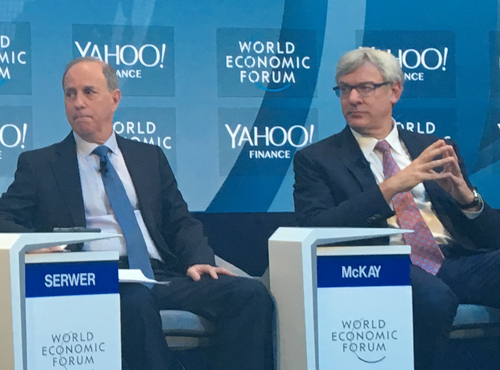
The risk is we won’t be ambitious enough going into the 2020s, to seize on new technologies and those expanding parts of the world. And if we’re not ambitious, and we settle for slow growth, we may fall short of the financial returns our shareholders demand as well as the social returns – jobs, services, stability – our societies expect. To do better, governments will need to give businesses and investors the right incentives, including smarter regulations, more coherent tax policies and a predictable trading regime. As the Economist noted in its Davos issue, under its cheeky cover line, “Slowbalisation,” we need to both manage the slowdown and think more boldly about the next cycle, and how to make it commercially led, socially minded and globally ambitious.
Although Theresa May skipped Davos, she sent a squadron of ministers to convey her government’s confidence that it can secure a Brexit deal by spring. The Conservatives, despite their own divisions, clearly want an outcome that keeps them in power, and keeps the economy from crashing into the wall of a hard exit. We can expect some pretty tense negotiations up to the 11th hour, with an outcome perhaps not far off what May presented in December. The Brexit bullishness wasn’t exactly what the Davos crowd wanted to hear. In one session, with about 300 people in the audience, about 90% put their hands up to say they’d favour a second referendum, hoping the public this time would vote to remain in the European Union. Privately, British officials, and even British business leaders, said that’s not likely. A vote would take too long to organize, be too divisive and risk producing another contentious result. The May government instead believes it can manage a compromise over the Irish border, amongst other vexatious issues.
That may be the easy part. If May wins the support of her party and Parliament, she’ll need to quickly win back business confidence. Investment in Britain is down about 20% since the referendum, and with each passing month, manufacturers, banks and others are moving jobs to the continent, or elsewhere. Mark Carney told a Davos audience Britain’s banking system should be fine, and can withstand plenty of shocks. But he made it clear that if the U.K. can’t lay out a coherent plan for its borders and trade, there’s little business can do to prepare. Perhaps ominously, as the British ministers tried to cheer up Davos, officials back home were laying out plans for food rationing, border patrols and possible civil unrest. If nothing else, such dire prospects should focus the British mind as the 11th hour approaches.
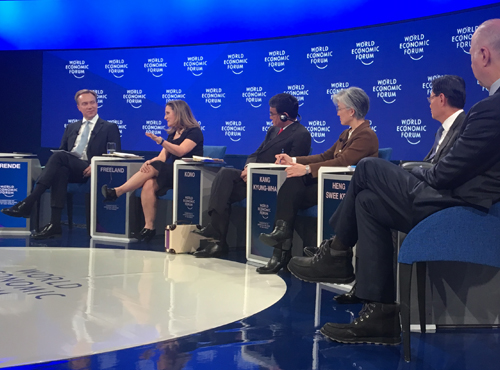
The politicians who made it to Davos focused largely on the growing divisions over global governance, which Canada’s Chrystia Freeland summed up neatly: “The rules-based international order is facing greater challenges than at any time since it was created.” For most of the 20th century, that order was maintained by multilateral institutions to help the world concentrate more on prosperity than conflict. But public confidence in that order has eroded, helping give rise to nationalism on every continent. German Chancellor Angela Merkel, whose country knows the perils of extreme nationalism, used the Davos stage to issue a “wake-up call.”
She sees the rise of bodies like the Shanghai Pact, led by China and Russia, as an effort to build alternative systems to democracy and market capitalism. She praised the G20 as the sort of body the world needs, to keep countries and regions adhering to global principles, if not global rules and standards. It’s not impossible. Merkel pointed to the General Conference on Weights and Measures, which voted last year to change how we measure the basic kilogram, showing what global co-operation can do.
That co-operative spirit is being put to the test at the World Trade Organization, whose fate hangs in the balance of a divided world. The WTO is the central plumbing of global commerce, connecting 400 preferential trade agreements and 3,000 investment deals, and yet it’s been stripped in recent years of its ability to function normally. It’s one reason global trade has been plugged up since the financial crisis. Several sessions at Davos looked at the need for a new approach to trade that would allow countries, and trading blocs, to opt into a reformed global system. As long as global principles can be maintained, the argument goes, the spirit of global trade can live on. This idea of plurilateralism, or a club of clubs, might even be a model for the newest challenges to Globalization 4.0: bioethics, cybersecurity and data.
Several sessions at Davos looked at the need for a new approach to trade that would allow countries, and trading blocs, to opt into a reformed global system.
How appropriate to meet in Switzerland, a country synonymous with secrecy, to talk about 21st century privacy, as it pertains to data. While the Forum once pushed for a global approach to data, there’s a growing view that any governance system will be more balkanized. As Microsoft’s CEO Satya Nadella said, we were “naive” to think about a universal approach to the digital economy. The risk now is that each country will take its own approach to data and we’ll end up with the Internet equivalent of the 1950s airline industry. Small wonder they call it the “splinternet.” As countries like India and Thailand start to advance the use of digital identification for citizens, they’re wanting to keep their data on their soil, in a drive for “data localization” that’s likely to grow as people worry more about the use, and misuse, of their personal information.
Data localization could also become a hindrance to innovation, if it undermines cloud computing and the efficiencies that go with it. Reality is, our data cross more borders every day than many of us appreciate. It’s why Singapore, a leader on so many digital fronts, is experimenting with some ideas around cross-border processing, to allow blocks of data to flow freely, while also maintaining a secure home for them. This will become even more pressing as countries try to incorporate the data economy in trade agreements, perhaps unaware that nothing could slow down the 21st century faster than data walls. Business may need to step forward, with the spirit of the airline industry after World War 2, when it set common standards to secure public trust around the world. As the Forum was told, the public in many countries now trusts business more than government when it comes to data. Our challenge is to convert that public trust to a public good.
The annual Edelman Trust Barometer is released at the opening of the World Economic Forum, dropping a cold bucket of public opinion on delegates just as they’re adjusting to the crisp Alpine air. The barometer, which surveys 33,000 people in 27 markets, continues to show a clear majority distrust both government and media, while business has slowly regained most of what it lost in the financial crisis. If there’s a dominant concern, it’s the trust gap – the difference between the informed public and mass population – which is at a record high. Across the world, only one in five people think the system is working for them. That concern is especially prevalent in developed countries, where an overwhelming majority of the mass population believe they won’t be better off in five years. In Canada, only one-third of that population believes the future will be brighter.
One of the reasons appears to be a growing anxiety over job losses. It’s not that people fear automation; they just worry they’re not being given the training or skills they’ll need to hold decent jobs in the decade ahead. We know the old social contract is fraying. We used to count on good public schooling, workplace security, decent pensions, accessible healthcare and affordable housing. But in many countries, a career is now a series of gigs, the price of education is soaring, and housing is beyond the reach of many young workers. Small wonder we’re seeing so much disquiet and its political cousin, populism. In the past, the public turned to governments for answers; now they’re looking to business to speak out and invest in practical solutions like skills training. The trust barometer found 76% of people – an astonishing 11-point jump in one year – expect CEOs to take the lead on change, with workplace inclusion, fair compensation and training at the top of their list.

I spent the better part of an afternoon with about 50 of my peers from the United States, Europe and Asia, exploring perhaps the greatest leadership challenge in business: How to meet the demands of the world today, while positioning our companies for the complexities of tomorrow? We agreed it has to start with corporate purpose. We have a clearly articulated purpose at RBC, and it’s encouraging to see so many other global companies getting serious about it, too. Our group agreed if you don’t have the north star of purpose, you’re going to get knocked off course by the constant barrage of media and investor pressures. We agreed it’s critical for leaders to keep talking about medium-term objectives – the ones that, if they were running a sports team, would bridge the current scoreboard with the end-of-season standings. It’s also important for leaders to keep their boards and major shareholders aware of the trends they’re watching.
I outlined how RBC has tried to manage this surge of short termism in the market by articulating our medium-term financial goals, and then spending a lot of time with shareholders to help them understand our differentiated strategy, the journey that we’ve planned and the map we’re following to get there. We believe that in an age of digital disruption, we can create something powerful to help our clients thrive and our communities prosper. That’s our purpose. A Hitachi executive explained to our group why the Japanese company is developing a social innovation business, to help address global income inequality and climate change, among other long-term goals. Their executive pay is now measured against those goals. Simple reason: if the world falters, Hitachi will falter. Pepsi presented its own case study of how it’s pursuing a corporate purpose rooted in human wellness. That may sound odd for a company built on soda pop, but this clarity of purpose helped it focus on healthier products and more sustainable packaging. When Pepsi’s board last year named Ramon Laguarta to replace longtime CEO Indra Nooyi, it weighed his ability to run a sustainable enterprise and deal with inclusive societies – and to communicate those needs with passion and humanity. We’re likely to see demand for such leaders grow, as our world becomes more complex and more demanding.
Even though January has been a kinder month to equity investors, the December market rout was still fresh on everyone’s mind. Was the sell-off too sharp and sudden? If so, how much of that was driven by automation? I was part of a panel discussion on the growing role of machines in our markets, and what we need to consider to ensure equity while also driving efficiency. Adena Friedman, the CEO of Nasdaq, made the case that it’s never been a better time to be an investor, thanks to the efficiencies that automation has brought to markets. Costs have dropped more than 75%, she said; spreads between “bid” and “ask” prices are down as much as 90%. Of course, automation has been growing for decades at the back end of markets. But in recent years, its played a more profound role at the front end, determining what we invest in and how our investments are executed.
One example: More investors are putting their money into passive investments such as Exchange-Trade Funds, or ETFs, rather than picking stocks themselves. It’s a popular and positive trend, as it gives small investors a more level-playing field with the big ones. It also carries some long-term risks, which Bill Ford, the CEO of General Atlantic, noted. He told our panel that passive shareholders now control 44% of U.S. stocks, up from 9% a decade ago. In many cases, that means there are fewer buyers and sellers of stocks. As market automation isn’t likely to slow, financial institutions will need to continue to find ways to help clients navigate those shortfalls in liquidity and any ensuing volatility. More broadly, we’ll also need to continue to better understand the consequences of passive investing – on investors and on companies that are watching these gyrations and wondering if this really is the best way to measure the value of what they’re trying to create.
A decade ago, Tony Blair came to Davos to urge the world to use the financial crisis to address the climate crisis. The billions – soon to be trillions – pouring into the balance sheets of stagnant economies, he argued, could be used to stimulate the transition to a lower carbon economy. Ten years on, the global economy is in much better shape; the environment, less so. Our collective shortfall in addressing climate change is now the No. 1 risk in the minds of the Davos community. In this year’s Global Risks Report, three of the top five risks ranked by likely outcome were environmental ones, while four of the top five ranked by impact were the same. Extreme weather was the biggest concern among the 1,000 members the World Economic Forum surveyed for the report, followed by a failure to mitigate and adapt to climate change. While there continues to be concern about the divergence in climate policy between the U.S., China and Europe, there was a lot of talk at Davos about how industries are moving ahead anyway. DHL, for instance, has designed electric vehicles to make its delivery fleet in European cities carbon neutral by 2025. Boeing has successfully tested a cargo plane using only biofuels. And two steelmakers, Mittal and Tata, are developing “green steel” using new energy sources and more recycled materials.
Regulations have to evolve as rapidly as the planet’s needs, to spur new processes and wind down old ones
One of the delightful surprises of this year’s Davos was the diversity of generations, from one of my heroes, Jane Goodall, to the six co-chairs of the Forum, who were all young global leaders and heroes in their own right. The interaction of the generations was inspiring, and should spur all of us to find more ways to connect young and old. At 84, Goodall is remarkable, doing more than 300 events a year, largely to promote her Roots & Shoots initiative, connecting young people with environmental efforts all over the world. “The next generation is desperate to protect nature,” she shared with us. She and rock star Bono, who’s 58, shared the spotlight at a lunch with Greta Thunberg, a 15-year-old environmental activist from Sweden, who upstaged them both with a warning from her generation: “Our house is on fire. I want you to panic.”


At the Toronto Global Forum this week, I sat down with Shuman Ghosemajumder — a Western grad turned Silicon Valley star — to talk about how Canada can harness our strengths in a rapidly changing world.
“I think Canadians are disproportionately talented,” he said.
When Ghosemajumder joined a no-name company called Google in 2003, he was one of a small army of Canadians working there. As the company grew — he helped develop AdSense and launch Gmail — he came to see Canadians as uniquely positioned to succeed in Silicon Valley.
We have the advantage of a strong public education system, high quality and affordable post-secondary institutions, and we’re close enough to the world’s largest economy to understand it, yet have the distance to analyze it, he said
And one other thing: When you grow up in snowy London, Ontario — as Ghosemajumder did — you end up spending a lot of time indoors. He started learning to program a Commodore 64 when he was just five years old.
“There’s a lot to be said about cold climates and productivity,” he said.
In Canada, there are no afternoon siestas. But despite our strengths, we still haven’t matched what’s happening in Silicon Valley.
Ghosemajumder is now the Chief Technology Officer at Shape Security, the fastest growing cybersecurity company in North America. He admits he doesn’t see himself leaving Mountain View. But he did share his insights on how Canada can harness its strengths, and why we shouldn’t be quite so fixated on creating another Silicon Valley anyway.
Here are 4 takeaways:
Science, tech, engineering, math — and arts. As we equip our students with the technical skills they need to succeed in 2020 and beyond, we can’t forget about the arts. It’s our well-rounded curriculum that makes Canadian graduates stand out, Ghosemajumder says. Canada’s software engineers are the most creative in the world — they’re one of the reasons Shape Security is opening a Toronto office.
Ghosemajumder visited Palo Alto as a high school student and competed against the world’s top debaters as President of the Western Debating Society. Seeing the world’s best, in any field, changes your horizons. We also need to show top talent from around the world why they would benefit from experience in Canada. Bright young students still look to American colleges to realize their grandest ambitions — we need to offer them something the U.S. can’t.
With our more centralized government, Canada has the power to go all-in on an investment — as the feds are doing with the $125-million Pan-Canadian Artificial Intelligence Strategy. It’s a smart bet, Ghosemajumder says. We have the money and the talent to go far in this field. Now Canada needs it ingrained, culturally, that we are an AI nation.
A confluence of factors has made Silicon Valley the place to be — and also difficult to replicate. There will always be something special about working in the same place as the biggest players, but talent can live anywhere — and increasingly, it will. We’re already seeing that with the global success of Ottawa’s own Shopify. “There’s no question that talent is going to be far more distributed over time,” Ghosemajumder said.
The province has the tightest labour market in Canada, with an unemployment rate of just 4.1%. More than 60% of B.C.’s tech companies identify recruiting mid-to-senior level talent as “very challenging” — and it’s expected to continue in 2019.
As construction on LNG Canada’s Kitimat project ramps up, an estimated 10,000 jobs will be created. Good news for the economy — as long as you can find the people to fill them.
Over the next 10 years, there will be more than 900,000 job openings in the province, and at the same time, 42% of existing jobs are at significant risk of automation over the next 20 years. Those numbers paint a worrisome picture of a widening gap between employers who will be short of people, and people who will be short of work.
It’s B.C.’s other pipeline problem. Labour supply is tight – and it’s also being misdirected. Universities are proving slow at changing with the economy, and employers are still too fixated on credentials when they evaluate candidates.
We know from RBC’s Humans Wanted research on the future of jobs and skills that we have to stop obsessing over degrees and diplomas, and start looking at the core skills a young person has attained, and where can they be applied.

I visited B.C. recently, and had the opportunity to sit down with students from the University of British Columbia and Camosun College — bright young people who understand what’s happening firsthand.
One Bachelor of Arts student at UBC said he wants to pursue a career in investment banking after he graduates. But when he interviews with potential employers, they look at his major in philosophy — and that’s all they see.
“They call me a philosophy student,” he said.
A philosophy degree teaches you do to a lot more than quote Socrates. You’ve learned how to conduct research, think critically, and solve problems — all part of the skills cluster our research says makes him a “Solver,” and well-positioned for the coming waves of automation. It could make a solid background for a future investment banker.
If employers can see beyond a formal education path and focus on underlying skills, it could remove a barrier to B.C.’s talent pipeline. And if universities can adapt their programming so that students learn the skills that are in demand, more new graduates will find good jobs.
B.C. needs to take a deep breath, and come up with a skills plan for the 2020s. It’s crunch time. But if it does bridge that gap between jobs and skills, its economy could be more competitive and stronger in the end.
The launch of Canada’s first-ever Digital Technology Supercluster in Vancouver last month is a step in the right direction. It’s a $150 million federal investment that will bring together B.C.’s brightest minds to find new ways of doing things in natural resources and health care using technology, positioning the province to do more with less.
B.C. is a province with a history of leading the pack. Its innovative credit transfer system allows students to easily move between college and university, capitalizing on the strengths of both, and still graduating on time. Ontario took more than 20 years to try to match what B.C. started in 1989.
Langara College is at the hub of B.C.’s transfer system. It’s a dynamic and entrepreneurial place with a mix of students who have come from a university, or plan to go to one. It’s common for Langara students to complete two years at the college, then transfer to nearby UBC to complete their degrees — and career counsellors are trained to help them do it successfully.
That’s the kind of thinking we need to see more in 2019. The students and educators I spoke to talked about the value of giving our youngest students the time to reflect on their interests and skills; offering mentorship opportunities for high school students; and making sure post-secondary students spend time in a workplace and learn on the ground.
If we can close the gap between industry and education, by upskilling people and thinking beyond the title on their degree, B.C.’s shortage could turn into an opportunity.
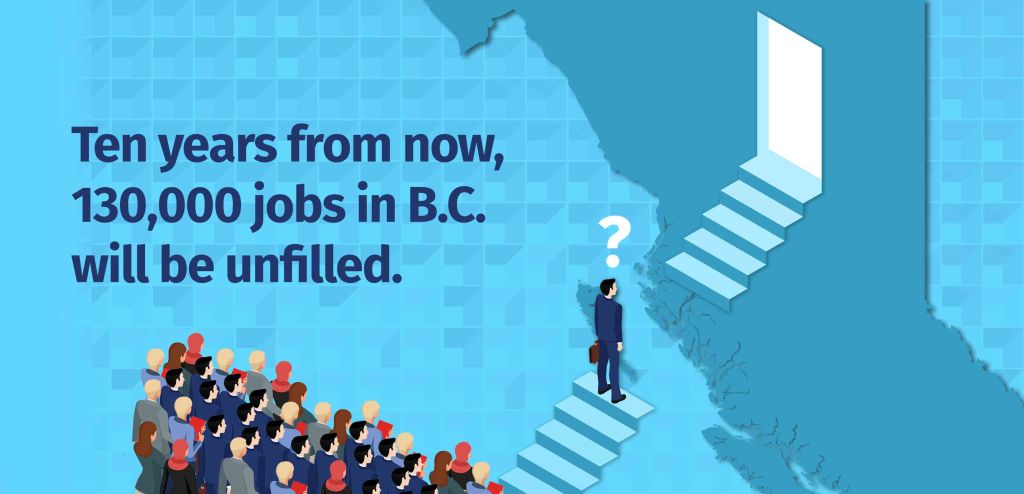
Ten years from now, the B.C. government projects that 130,000 jobs will be unfilled. You could add another Abbotsford to the province, and still be short several thousand workers.
Or, we can find new ways to prepare young people for today’s economy and equip existing workers with even higher skills — and free up the pipeline.
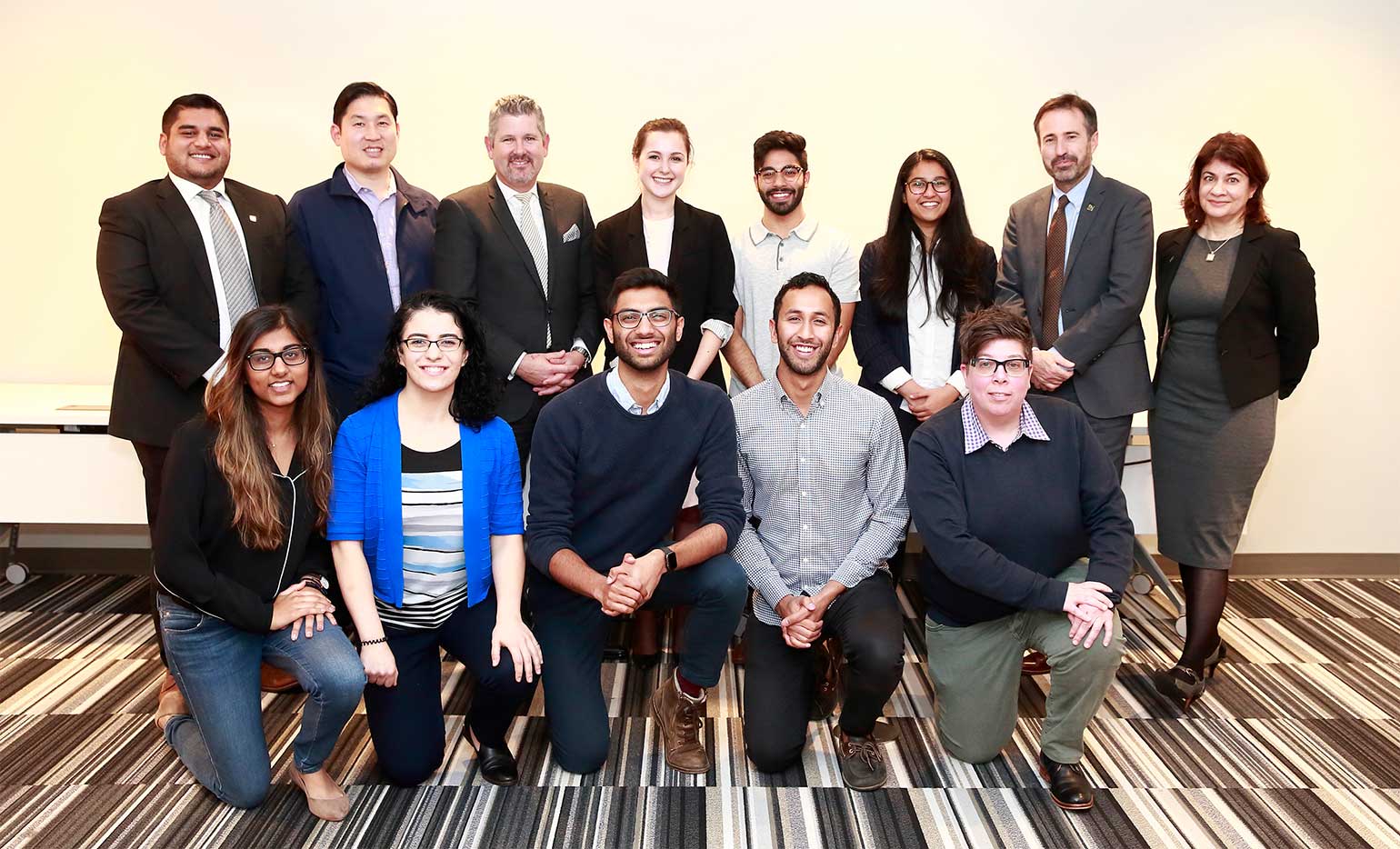
RBC’s John Stackhouse met with UBC students and recent graduates who shared stories about finding work in a changing economy.
Think virtual visits, automated self-care instructions and smart devices providing drug dosage reminders.
But even as healthcare increasingly relies on technology, we are going to need more humans, not fewer, to provide the care people need.
In fact, technology may end up making healthcare more human.
While routine, time-consuming tasks can increasingly be delivered by machines, it requires health workers with very human skills such as compassion, active listening and problem solving to interact with that technology and to focus on the kind of care only people can deliver. Imagine a nurse never needing to monitor vitals or arrange prescriptions, who is instead free to focus time on providing emotional support and resources to patients and families.
Earlier today, I presented these findings from RBC’s Humans Wanted research on the future of skills at the Home Care and the Future of Aging conference organized by SE Health, a 110-year old community health provider that is leading a conversation on the future of home care.
Our research shows that nursing is one of the most future-proof careers, with just a 0.9% probability of being fully automated. Healthcare jobs require the kinds of skills that are the least likely to be computerized. At the same time, demand for nursing and senior care workers is set to outpace the rest of the Canadian labour market, with 3.4% annual growth until at least 2035. Between 2019 and 2023, Ottawa projects we’ll need 55,000 new healthcare workers a year, for increasingly different jobs.
The more we invest in health tech, the more we need workers who can bridge the gap between technology and patient care.
With more technology and more people, our already strained healthcare system will be under even more pressure to evolve.
According to Dr. Zayna Khayat, SE Health’s Future Strategist, our country needs to step up its game.
“Canada is 15 years behind the rest of the world in healthcare and technology,” Khayat said.
By 2020, as many as 25 million patients in the U.S. may be monitored at home and work with wearable personal devices. If that requires more people to augment the technology and interact with patients, massive productivity gains will be necessary to cope with the demands of our aging population.
It’s not a question of whether humans or machines will provide healthcare in the end, it’s how we invest to ensure they work smarter together.
That was the case at last week’s Fortune’s Most Powerful Women event in Montreal. The conference, which was sponsored by RBC, touched upon the big business issues of our day: the opportunities and concerns posed by artificial intelligence, the challenge of lifelong reskilling, and how to navigate a more uncertain economic and political environment.
The room was filled with executives, company founders and senior policy makers, including veteran Canadian CFO Cynthia Devine, now financial chief at Maple Leaf Sports and Entertainment, RBC Chair Katie Taylor, and Fortune’s Most Powerful Woman of 2018, Lockheed Martin CEO Marillyn Hewson, who gave the audience a hint of what it’s like to negotiate with U.S. President Donald Trump.
Here are six things that stood out:
Digital transformation is factoring into the decisions of every business, from auto-parts makers to retailers and marketing firms. Barbara Humpton, CEO of the U.S. arm of industrial conglomerate Siemens, said leaders need to be evaluated not just on IQ and EQ, but on their Digital Quotient, or ability to envision a company’s digital future and help employees transition in a disrupted environment. Humpton should know: she was tapped to help accelerate the use of digital technologies at Siemens USA, which has 50,000 employees and more than 60 manufacturing plants.
Ranit Aharonov heads an IBM research team in Israel that’s developing an AI system that can debate real people on complex topics. Aharonov’s work highlights the tensions surrounding AI: while it holds great promise, business leaders are keenly aware of the impact AI adoption can have on the workforce. Siemens’ Humpton stressed that it is increasingly part of a business leader’s responsibility – and critical to the success of any company – to ensure workers aren’t left behind in digital transformation.
For executives, embracing technological disruption means shifting focus to reskilling – providing employees with training to meet the needs of evolving businesses, or working with universities to ensure students are prepared for a changing workplace.
Many of the women at the conference had successfully pivoted at key moments in their own lives, embodying the best of what reskilling can offer. (Take Manjit Minhas, an engineering grad who built an international beer and spirits company, Minhas Breweries & Distillery, or Canadian Foreign Minister Chrystia Freeland, who has both journalist and Member of Parliament on her resume.)
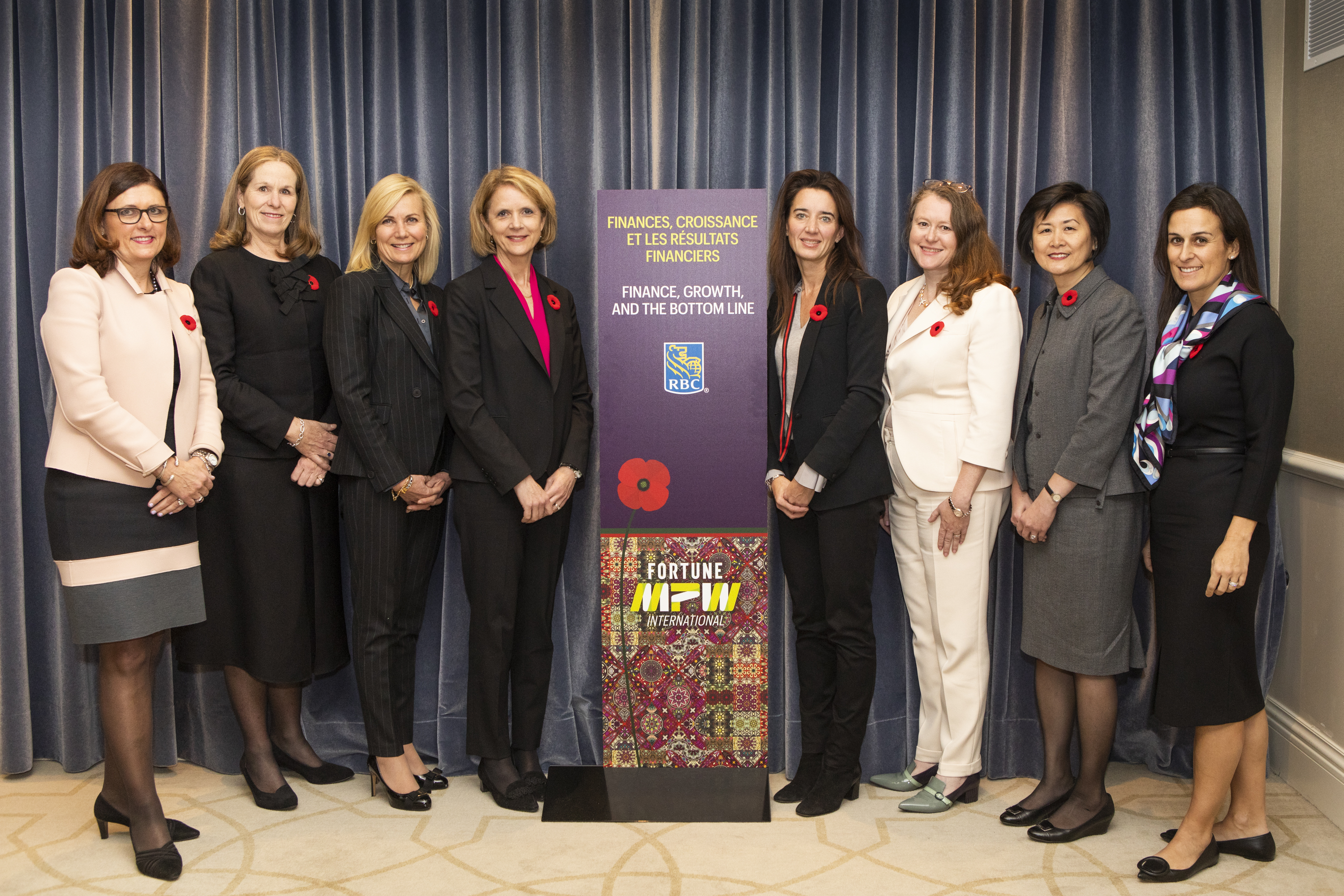
From left to right: Patti Shugart – MD & Head, Corporate Banking and Global Credit; Jennifer Tory – Chief Administrative Officer; Kim Mason – Senior Vice-President, Personal & Commercial Banking; Helena Gottschling – Chief Human Resources Officer; Carrie Cook – Managing Director, RBC Capital Markets; Leanne Kaufman – Head, Estate & Trust Services; Bernadine Leung – Managing Director, Enterprise Strategic Client Group; Claire Sturgess – Managing Director, RBC Capital Markets
Intrigued by the lack of innovation in family planning over the last 60 years, Danish entrepreneur Ida Tin created an app called Clue as a way to harness data to help women better understand their bodies. She started her Berlin-based company with €70,000 in funding; it recently raised US$30 million.
Tin has achieved success in the startup world but she didn’t sugar-coat the challenges. Calling raising money “a man’s game,” she said she found it helpful to have a male ally as she was working to attract fundraising. Tin coined the term “femtech” as a way to entice investors to see women-focused technologies as a whole new category.
Businesses are keeping a wary eye on the geopolitical backdrop. Growing trade tensions and political uncertainty were concerns for CEOs like Linda Hasenfratz, who heads auto-parts maker Linamar. Free trade is critical to a business like hers, in which a typical car part crosses a North American border seven times before ending up on the car lot.
Freeland, fresh from stickhandling Canada’s trade talks with the U.S. and Mexico, voiced optimism about international cooperation, highlighting her recent efforts to convene women foreign ministers from around the globe. But she revealed the steely side that served her well in renegotiating what is now the USMCA: Know your red lines, and make sure you stick to them.
There was almost no talk of #MeToo at the conference, but the topic came up briefly on one panel, when the interviewer asked if the movement makes it harder for men to mentor women. RBC’s Katie Taylor brushed that off, saying men can play a positive role in “moving the dial” on getting more women into senior leadership and board roles.
With women occupying less than 30 per cent of senior management roles in Canada (and not even one-tenth of the C-Suite jobs at the country’s biggest public companies), Taylor’s point was clear: while women should support other women aspiring to senior roles, they can use male allies too.
Family, that is. The challenge of raising children while managing a demanding career remains a largely female concern. Foreign Minister Chrystia Freeland got the last word on that score. She closed the conference by telling the younger attendees not to listen to those who tell them it can’t be done. With three kids and a new North American trade pact to boast about, she proves it can.
For the solar winds and ions swept into our earth’s magnetic fields, it’s an explosive end to an incredible journey. But for those catching the energy, it can be a beginning, a kind of positive recharge.
Inspired by the extraordinary polar lights, about 150 members of the Banff Forum – community leaders, business executives, policy makers, academics, journalists — gathered in Yellowknife recently to discuss Canada’s own incredible journey, and how we can convert some of our illusions into opportunities.
Here’s some of what we debated:
1. The illusion of consensus, in an age of division
The TransMountain pipeline debate is just the latest reminder of the challenge of consensus. While meaningful consultations are critical to any sound decision, Canadians know consent can be illusory. We sat down with the premier and speaker of the North West Territories to better understand their approach to decision-making, as the legislature here operates free of party politics and seeks consensus on major issues. They require a lot of talk, and listening. But when decisions are made, they tend to be accepted by future governments. Policies here are rarely torn up, as is politically vogue now in the south. The northern approach seems to work well for a small population — 120,000 or so in NWT — but would be harder in more populous and diverse regions. The deliberative nature could also lead to deeper divisions among those who feel slow decisions mean no decisions. Can a balance be reached?
2. The illusion of innovation, in an age of disruption
Despite a lot of government money over the decades, Canada still struggles with innovation — even how to define and measure it. Do we focus too much on commercial outcomes, like the value of startups? And do we overly obsess with software, and what gets stuffed in our smart phones? Some of Canada’s most important innovations revolves around the physical economy and trees, oil and gas, agriculture, fisheries and health care – things you see a lot of in the north. Up here, ingenuity is the uber of survival.
3. The illusion of business growth, in an age of scale
We’re a nation of Mom and Pop enterprises – good at starting businesses, not great at growing them, and even worse at shutting them down. There’s something like 1.1 million registered businesses in Canada, and yet only 2,500 of them have 500 employees or more. More than 75% have fewer than 10 employees and 55% have only 1-4 employees. The number of large Canadian businesses has not grown since 2005, while our business creation index has dropped in recent years, even as the rate of U.S. business creation rose. To help those businesses grow, we may need to see more businesses die. While Canadians tend to blanche at the idea, the death of firms — like big trees falling— is often what allows all those small firms to grow.
4. The illusion of financial stability, in an age of volatility
Financial volatility returned this year to global markets, and Canadians shouldn’t feel immune. Just because we’re not Turkey or Argentina doesn’t mean we’re not going to feel the pain of rising U.S. interest rates and a stronger U.S. dollar. We all know we’ve lost out habit of squirrelling away acorns for a harsh winter. Our household debt exceeds $2-trillion – five times what it was in 1990 and more than we collectively produce in a year. About three-quarters of that is in mortgages. That’s not necessarily bad, at least for those who can afford their mortgage payments. But incomes, over a generation, have not kept pace – rising from about $50,000 for a typical family in 1990 to $76,900 in 2015. How did we get away with it? The illusion of low interest rates. Yes, winter is coming, and the impact on household finances could be chilly.
5. The illusion of global trade, in an age of protectionism
The near north is not the most obvious place to discuss the future of trade, but that may be a signal that we’re looking in the wrong places for opportunities. In some respects, the two big economic issues of 2018 – Nafta and TransMountain – are rooted in the trading infrastructure of the 1800s, which was built along the 49th parallel. We may now have the chance to carve some equally historic infrastructure to the north, with an Arctic Ocean corridor. While the idea has been around for decades, it’s regaining steam, with hopes for rail lines and pipelines to the north, where new ports could connect them to the world. There’s also the option for new population centres. to help decongest Toronto and Vancouver. Yellowknife, which is only is one third of the way from Canada’s south to the north pole, is home to just 20,000 people. And the North West Territories is home to just 40,000 or so — about the size of a good crowd at a Toronto Blue Jays game. As they like to say up here, there’s room to grow. A signal of hope: flights into Yellowknife this season are crowded with Asian tourists, looking beyond borders in a world that’s changing faster than Canada. Without illusion.
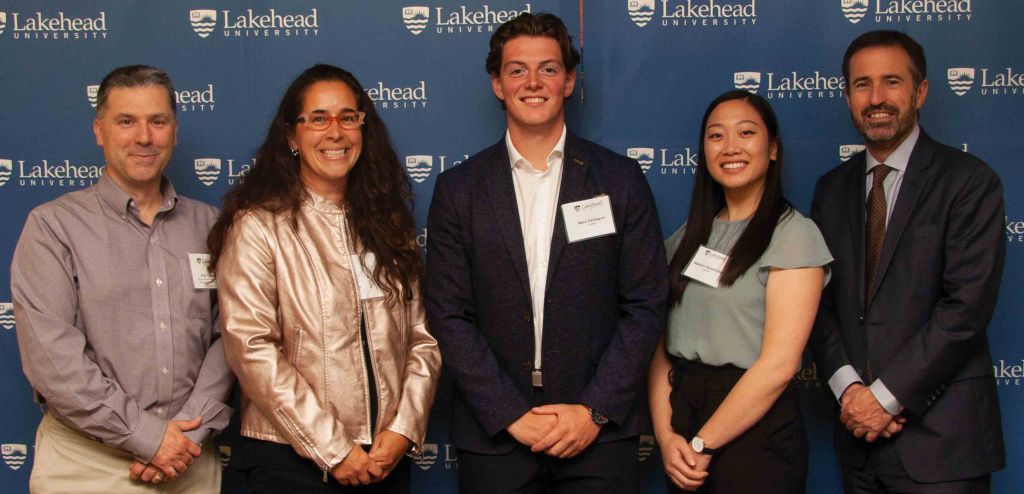
Last week, I spoke with a panel of co-op students and business owners at Lakehead University. Here’s some of what they said they want:
1. Longer Work Placements: Students and employers agreed that skills can be tested and strengthened when placements are longer. A 12-month assignment was seen as mutually beneficial, as it gives the employer better insight on a student’s capabilities and more incentive to offer a job after graduation. One student remarked that a longer program allows time to absorb and apply their experiences, and to build trust and credibility.
2. Get Outside the Office: A holistic experience — beyond delivering on daily tasks — can form lasting experiences for students, gaining more than just on-the-job skills. One student stressed the importance of understanding the human side of business. She felt that getting to know clients and community stakeholders was key to her ability to solve problems and think critically.
3. Tone from the Top: Work-integrated learning programs — coops, internships, apprenticeships — work best when they’re genuinely valued by an organization’s leadership. The more active management is in work placements, the more successful they can become. Senior leaders can elevate the learning experience by sharing feedback, creating new opportunities and building a sense of value for students.
4. Company Culture is Key: The table’s been turned on employers, who find youth are now taking charge in interviews, wanting to know “what can you offer me?” Culture is key. Students are asking about work-life balance, pathways for growth, and an organization’s values. Smart organizations ensure those values are central to their student programs.
5. Share, Share, Share: Employers without work-integrated learning programs often don’t know where to start. And yet too many established WIL employers don’t share their experiences. Both sides can benefit from more sharing, including from students. The result: a stronger ecosystem for employers, students and educators. Smart organizations know their student programs won’t thrive in isolation. They need a community of educators and employers .
Now, entrepreneurs and innovators are turning their sights on mental health, hoping to transform the way we treat our minds just as technology has changed how we treat our bodies.
The potential market is huge: One in five Canadians experience mental illness in any given year, and more than half do over their lifetime—but less than half of them seek help, according to Toronto’s Centre for Addiction and Mental Health.
“There’s a dire need to offset the burden of mental health,” said Dr. Ajmal Razmy, who heads the acute mental health program at the three Trillium Health Partners hospitals in the Toronto area.
New apps such as Headspace, which offers directed meditation from a former Buddhist monk, and Talkspace, which offers psychotherapy by video and text chat, aim to ease that burden.
BEACON provides greater access to mental health care via its technology platform. It provides Cognitive Behavioural Therapy (CBT), a psychotherapy approach that helps develop skills to change negative and anxious thinking. A user is matched with a dedicated therapist (not a bot) that will provide a customized care plan, digitally, at a much reduced cost to traditional in-person sessions that are also time-consuming.
Razmy said such consumer-focused care is a necessity when it can take months to see a psychiatrist.
“If you make an appointment and you’re waiting nine months or a year to see somebody, that crisis is gone and a new one might be there,” he said. “The apps are needed in terms of having that accessibility bridge for our patients.”
Like the Apple Watch and its ECG, he said, apps and devices that track mood and sleep habits are key to a new model that empowers patients in their discussions with doctors.
One app doing just this is Stigma – an automatic mood tracking and journaling tool. Inspired by the founder’s own personal struggle with depression, anxiety, and bipolar disorder, Stigma helps you build a support network, journal your feelings, and track your moods.
And while mental health apps show great promise, proper oversight and professional consultation are still a necessity. Apple had to submit its Watch and ECG design through the FDA certification process for a medical device—no easy feat. Mental health apps, on the other hand, are unregulated.
Razmy cautioned that even the Apple Watch is still only a device for data collection, and consumers need to know that data isn’t a diagnosis.
“An ECG on its own doesn’t mean anything,” he said. “But if it means you can talk about these things a little more meaningfully with your provider, I think it’s a win for both sides.”
The rise of social media has given Canadians a new awareness about mental health, with people more willing to share their emotional experiences. Celebrities too have embraced advocacy: Olympic rower Silken Laumann has spoken out against the stigma around mental health, and Super Bowl MVP Nick Foles spoke frankly about self-doubt following his team’s NFL championship victory.
The spread of smartphones has also helped improve awareness—after all, phone addiction is now a common problem.
Professor Carolyn McGregor, Canada Research Chair in Health Informatics at University of Ontario Institute of Technology, said it’s possible to use the addictive nature of mobile apps for good.
She’s working on apps that build resiliency—allowing people to concentrate, centre themselves and perform tasks under stress. Her research focuses on firefighters and front-line military personnel, the kinds of people that need to maintain focus and calm in the face of danger.
“We’re trying to use that interaction mechanism to create space for mental health, for self-reflection,” she said.
And mental-health apps have the same problems as running apps or the Bowflex in your basement: sticking to it. In May 2018, Statista counted nearly 48,000 health/fitness focused apps available in the Apple App Store, most of which are discarded after just one use.
There is hope: “If people can maintain a habit for three weeks, that’s enough for a long-term change,” McGregor said.