

 EN
EN 


- Is the Gaza conflict turning into a regional war? Hezbollah was the known risk the moment Hamas attacked Israel on Oct. 7. The Houthi front, in Yemen, is a new wildcard, as is the emerging prospect of American troops (and others) in combat. Lives and regional peace is at stake, of course. So, too, is 15% of global trade which flows through the Red Sea.
- Is the U.S. in a fighting mood? As Henry Kissinger was to Richard Nixon, Jake Sullivan is to Joe Biden — and he’ll be in Davos, laying out his vision for American security in a ruptured world. Sullivan’s presence will coincide with the Iowa caucuses back home, as we get the first signal of Donald Trump’s popularity in the Republican Party. The Biden presidency has no shortage of global hotspots to carry into an election season, either as a peacemaker or pugilist.
- Who will be the new China? Xi Jinpeng was the cool kid (by Davos standards) in the mid-teens, as the US went into retreat and China stepped up as the new superpower. But the Chinese have barely made a peep at Davos since the pandemic, and ceded a lot of ground to other emerging powers, especially India and Saudi Arabia. Both countries have made the Forum a strategic priority, with their own pavilions, programs and swagger as they try to influence global thinking.
- Is there a war on democracy? More than half of the world’s people go to the polls this year, making 2024 a historic moment with a record number of elections in one year (64 countries). But from Argentina to India, the struggle of democracy continues, as it seems to be in the United States. Eurasia Group lists the top risk as “U.S. versus itself.” The biggest name at Davos will be Donald Trump: while he won’t be there, the prospects of his return to the White House has countries in many places gaming their commitment to democratic ideals.
- Is there a war on truth? Misinformation is one of the hot topics on this year’s agenda. In fact, the Forum’s annual global risk report cites it as the top perceived risk among its members, ahead of economic and climate concerns.
- Will there be a war on AI? The number one topic on the Davos agenda is Artificial Intelligence, and its impact on society, jobs, health care, education and on the planet. I’m looking forward to hearing what government leaders and policymakers think, and if the 2023 excitement over ChatGPT is turning into 2024 remorse about its threats.
- Are the culture wars ending, or just beginning? ESG is nowhere to be seen on the official Davos program, although the perennial themes around environment (climate), social (inclusion) and governance (fairness) issues are cleverly rebranded. Once lampooned as the Olympics of corporate wokism, the Forum has tried to give the stage to populist voices (not much luck) and issues. It’s also dialled down the “change the world for the better” mantra.
- Is the war on inflation ebbing? Davos draws a lot of big-time investors and money managers, and so it’s a decent place to gauge the yield curve. I’m hoping to get a sense of how dovish the crowd is on interest rates, knowing the Davos crowd is often wrong. The Keynesian part of crowd will be interesting, too, as government debt piles up and perhaps keeps rates from falling more.
- Are more trade wars coming? The Forum was established in the 1970s as a platform for free traders, to ensure economically liberal voices could be heard around the world. Today it’s crowded with soft protectionists. There’s Europe with its new climate tariffs to keep out products like steel from high-emitting countries, and of course the U.S. which regardless of who’s in power now makes no bones about America First.
- Can Canada be a peacemaker in a world of war? Canada’s presence at Davos has diminished since Justin Trudeau used it in 2016 to announce “Canada’s back.” Chrystia Freeland, the deputy prime minister, will be there as a WEF board member and to push for Ukraine, among other issues. She’ll have plenty else to tackle, from Israel to inflation. But a bigger question may be, what role can Canada play in such a fraught world? The archetypical peacemaker may be needed as much as ever, just in very different ways.
Category: Climate Action

- 1
-
Climate Action Is Now Big Business
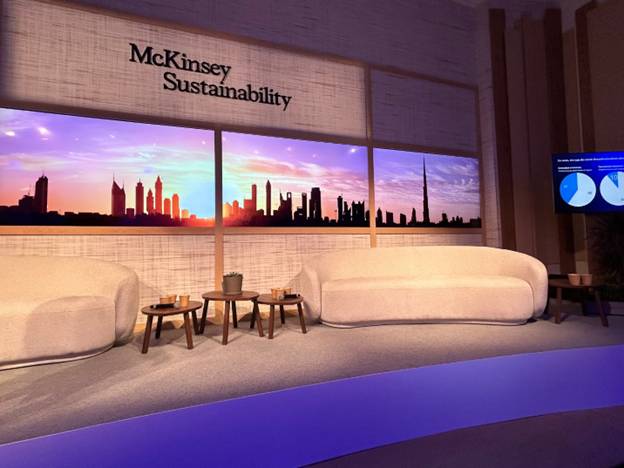
Dubai was a good metaphor for the COP conundrum, with a can-do business culture focussed on Net Zero. The host United Arab Emirates made no apologies for a business-focused conference, placing it in a massive trade park that normally houses some of the world’s biggest festivals of capitalism. Hundreds of global CEOs, mega-investors and 2,500 lobbyists attended, turning COP into a climate version of Davos. Many of the business leaders spent more time at lavish side conferences and events in Dubai’s celebrated swanky hotels, where US$37 billion in commitments were announced, including US$7 billion for climate-smart food systems. Inside the conference, the hosts seemed to use every available facility to showcase their own approach to climate action with multimedia displays, working robots and creative zones that gave a Vegas vibe. Climate de Soleil, anyone?
- 2
-
It’s A Long Way From Paris
While the ink is still drying on the final communique, COP28 will likely be remembered as the fork in the road that started in Paris in 2015. Back then, COP21 was all about ambition as the world pledged to cut greenhouse gas emissions significantly and quickly enough to prevent catastrophic climate impacts. Progress from Paris has been patchy, as was reflected in a “stocktake” exercise at Dubai. The conference’s theme—Unite, Act, Deliver—spoke to a more pragmatic tone that may soon see the world concede that the Paris goals that were updated at COP26 in Glasgow may not be possible, at least not in the time given. This COP was not without promise. Critically, more than 150 countries, including Canada, and 50 big oil and gas companies signed a pledge to cut methane (a potent greenhouse gas) by 75% by 2030. They added US$1 billion in commitments to make that happen. If they deliver, Dubai will be remembered as the springboard to action.
- 3
-
It’s About The Oil, Stupid
The COP host, Sultan Al Jaber, also runs UAE’s main oil and gas company, and is a serious player in OPEC. So it was a big deal when he kicked off the conference with a commitment from 50 oil majors, representing 40% of global production, to decarbonize by 2050, and then ended the conference with the first commitment ever by the world to transition away from fossil fuels. The when, where and how of that remain unresolved, but COP28 drew a line in the sand. For UAE, which produces 3 million barrels a day and plans to increase that, the ultimately unsuccessful push by many nations for “a phasing out” of fossil fuels was awkward. Its much bigger neighbour, Saudi Arabia, did everything to keep the conference from demonizing oil, while the U.S. danced delicately around the fact that it’s now the world’s leading producer. China and India, which dominate coal production, kept their voices down, too. Despite the diplomatic pledges: fossil fuels still account for 80% of the world’s energy consumption, only a tad lower from 82% in the 1990s. An expected surge in U.S. LNG exports in 2026 will only add to that stress, as will Asia’s 5,000 coal plants that continue to grow.
- 4
-
No, It’s About Renewables
One strong sentiment at COP28 was around the irreversible rise of renewables. The conference committed to tripling renewables by 2030 while doubling energy efficiency. Wind and solar can be seen everywhere in the UAE, which fancies itself as a renewables powerhouse. Green hydrogen was also the talk of the conference. That’s the hydrogen created by wind or solar power and usually converted into ammonia to be shipped to energy-hungry markets. The big prize in the near term is maritime shipping, which is quickly shifting from diesel to ammonia to comply with new international shipping standards. And heavy industry—think German steel—is actively searching for hydrogen solutions. Who will be the big supplier? The Saudis and Chinese are working together across Asia to establish an early grip, while the U.S. is considering a more ambitious hydrogen export strategy. With the right incentives to compete with fossil fuels, Texas hydrogen could be the Sino-Saudi alliance’s biggest rival. And then there’s Canada, with proposals in Newfoundland, Nova Scotia and Quebec. A green hydrogen race is on.
- 5
-
Or Is It About The Mix?
Energy security is not a popular expression at COP, but it’s clearly top of mind for the Biden administration. Yes, John Kerry still gets most of the podium time at these conferences, with his Al Gore-inspired jabs at Big Oil. But away from the mic, other officials laid out a more pragmatic view rooted in national security. They don’t want to be dependent on a single supplier of anything, which means the U.S. and its allies will need to produce a wider array of energy, even if that costs the economy a bit more. That could include a lot more nuclear: 20 countries, including Canada, came to COP to commit to tripling nuclear production by 2050. That will require 100 gigawatts of extra nuclear power—10 times current levels—to get to Net Zero. China is another nuclear energy power aspiring to lead, with 22 plants now in development, while the U.S. is starting to talk up nuclear fusion as a game changer. The appetite for “all of the above” seems undiminished.
- 6
-
The Great Game, Circa 2050
You didn’t have to wander far from the negotiating hall to get a sense of a world divided. Major oil producers, including Iran, were quiet, while Russia remained a largely unwelcome player, despite its status as an energy powerhouse. India, a giant coal producer, laid low. So, too, did Britain, with its government back home dialling back climate commitments. As for the world’s poorest countries, which suffer the brunt of climate change, the growing anger is palpable. Once again, it was up to China to be the swing power. Beijing hosted the second largest pavilion, after Saudi Arabia, using it to host (among others) African nations vying for Beijing’s ag tech. The Chinese and Saudis showed off their green hydrogen ambitions. The Asian superpower even made an effort to look cooperative with the U.S., as their special envoys, John Kerry and Xie Zhenhua, worked together to salvage an agreement for Dubai. The two men are linchpins of the global climate movement, and both are expected to retire next year. But the most concerning name for the COP crowd — Donald Trump — wasn’t there. Should Trump, who pulled the U.S. out of UN climate talks, return to the White House, all Dubai bets are off.
- 7
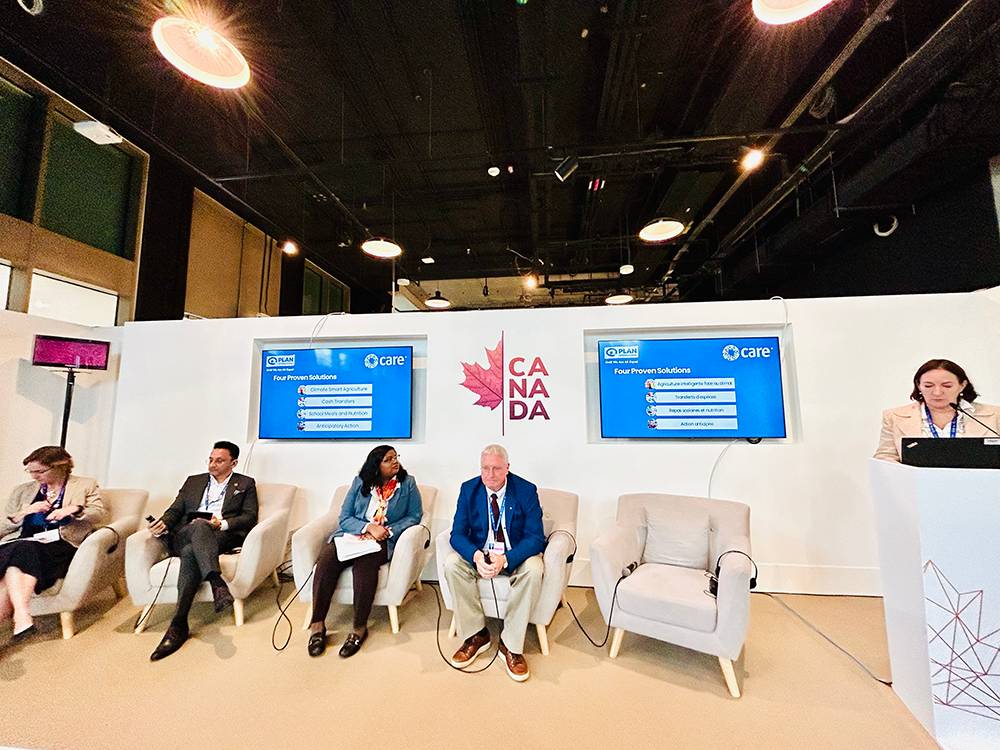
The Federal-Provincial Pavilion Divide
Canada played an outsized role at this COP. Climate change minister Steven Guilbeault, who’s been to all 28 COPs, chaired the efforts to get a final agreement on fossil fuels, and continued to push other countries to adopt carbon pricing. His government also used the conference to unveil its proposed emissions cap for oil and gas—a first for any oil producer (Canada is the world’s fourth largest). But if Guilbeault, a former environmental activist, has enjoyed a place in the sun at most COPs, he encountered a few new clouds in Dubai. Two conservative premiers, Danielle Smith (Alberta) and Scott Moe (Saskatchewan), came to COP to advocate for a different kind of climate policy. Both represent provinces whose economies depend on heavy emitting industries, and missed no opportunity to stress why the world will need oil and gas for more years than COP-tavists might wish. The two provinces hosted their own pavilions away from the official zone, to create a platform for energy, agriculture and Indigenous voices that didn’t get as much airtime at the federal pavilion.
- 8
-
Building Blocks That Are Built To Last
Where better to talk about a buildings revolution than Dubai? The city was a global backwater when the COP movement started; today, it’s a mini-Manhattan with ambitions to be even bigger. The glass-and-steel skyline is a visual feast, and an air-conditioning frenzy. It also reflects what the world may see over the next 25 years, as the built environment is expected to double. That’s a concern because construction accounts for 38 billion tonnes of carbon emissions, accounting for 40% of the world’s challenge to get to Net Zero. Lots being done about it. The open-air Dubai Expo showcased offsite construction technologies, electric building machines, and new materials that reduce a building’s carbon footprint. The large number of cities now represented at COP also brought demonstrations of recycled steel and carbon capture for cement manufacturing. Hong Kong is among the leaders. In just three years, its construction sector has gone from 100% reliance on gas to 60% reliance on batteries. One concern for engineers: rising temperatures are forcing them to rethink everything they build, no where more than in Dubai.
- 9
-
Carbon Markets Get Real
Rio Tinto is one of the world’s biggest mining companies, and when it comes to climate it has a big challenge. The company won’t hit its 2025 emissions targets which means it will have to spend a lot for money — perhaps $1 billion a year — buying carbon offsets. It’s not just the money the company is struggling with, it has to compete with the likes of Google and Microsoft for a scarce number of credible offsets. The year leading up to COP28 saw a slew of offset scandals that has the carbon markets, and buyers, nervous. Some of the pressure reflects the growing pains of a new market. And some of it comes from concerted efforts by environmental activists to ensure offsets don’t become a cheap and easy way to avoid real decarbonization efforts. As emitters allocate billions more to offsets, more developers will test the market with new kinds, from nature conversation efforts to carbon removal technologies. One signal from Dubai: sustainable agriculture. The better farmers get at measuring and verifying the amount of carbon their soil captures, the more investors and corporates may want to turn to them for offsets.
- 10

COP28’s Keyword: Profitability
Where’s the money? It was an odd question to hear in the UAE, home to the world’s richest family and the highest influx of millionaires (100,000 at last count). But like many COPs, this one struggled with how to generate more capital for climate. Of the US$200 trillion in institutional investments around the world, less than 3% is allocated to the energy transition, with only US$1.1 trillion going to renewables and electrification of transportation. Many debates in Dubai came down to a single word: profit. Clean tech and other climate-oriented investments are not generating the real returns needed to attract more capital. Higher interest rates have hurt, but the bigger challenge remains underlying economic models. Climate action needs to generate revenue, and not enough business models are emerging that rely on more than subsidies and venture capital. That will need more blended finance, pooling public and private investment funds. Andrew Steer, who runs the Bezos Earth Fund, suggests we need “a deal team for the planet.” But that won’t be enough. The supply of capital will accelerate only when the demand for climate action takes off. And on that front, many ambitions from Dubai were at risk of being left in the sand until the rest of the world gets moving.

Fixing Climate Finance
It was Finance Day at #COP28, and there was talk of money everywhere. You might expect that in Dubai, with its splashy display of wealth and ambition at every turn. But at the big UN climate conference that’s underway here, there were plenty of questions about where that money is coming from and where it needs to go. Bottom line: we need to mobilize $100 trillion over the next 25 years, and even by Dubai that standards requires a stretch of imagination. Let’s start with the big bucks. The host of this year’s climate mela, the United Arab Emirates, is among many nations looking to invest in this new age of emissions-free development. The Dubai COP (for Conference of the Parties that have signed the UN climate framework) has already raised $57 billion from member states, according to the organizers. In addition, the UAE has pledged $270 billion by 2030. The oil-rich host is also developing a proposal for a $50 billion climate investment fund, which it along with BlackRock and TPG would finance. Much of that money is needed in lower-income countries, where industry is not able to finance a transition to non-polluting energy systems, and large investors are showing what can be done through things like solar farm and hydrogen production. The smaller bucks are more challenging. That’s the stuff of carbon markets that allow polluters to pay people and companies around the world for climate-smart actions like tree-planting or no-till farming to absorb some of the greenhouse gases they emit. Such markets are growing slowly but steadily, promising to eventually transfer billions of dollars and inspire waves of better emissions management. But over the past year, a spate of scandals — misreporting of tree-planting, for instance — has slowed their development. I sat with some of the world’s largest investors on Finance Day, listening to their concerns about these growing pains for carbon markets. They’re worried climate “purists” will prevent this relatively new market from maturing. They need only look out the door to an official COP poster that reads, “let’s fix climate finance.” The debate continues whether that can happen fast enough, especially when the finance world is still talking billions when trillions may be needed.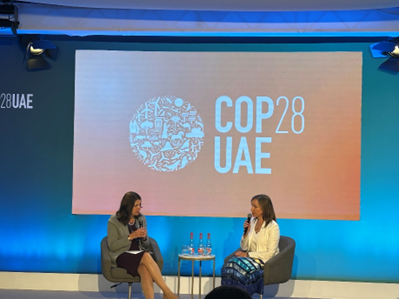 Also on Finance Day, Canada was on the global stage talking Indigenous equity. Chana Martineau (right, below), the CEO of Alberta Indigenous Opportunities Corporation, took the stage with Alberta Premier Danielle Smith (left) to explain how the province’s $3 billion loan guarantee facility has helped Indigenous communities gain a share and say in economic development. In just four years, the AIOC has helped produce thousands of jobs, $27 million a year in new income for communities and a clear path for $1.5 billion in benefits over the next 30 years.
Think what Canada could do with a national Indigenous loan guarantee, like the one promoted in the Fall Economic Statement. A great moment for reconcili-action.
Also on Finance Day, Canada was on the global stage talking Indigenous equity. Chana Martineau (right, below), the CEO of Alberta Indigenous Opportunities Corporation, took the stage with Alberta Premier Danielle Smith (left) to explain how the province’s $3 billion loan guarantee facility has helped Indigenous communities gain a share and say in economic development. In just four years, the AIOC has helped produce thousands of jobs, $27 million a year in new income for communities and a clear path for $1.5 billion in benefits over the next 30 years.
Think what Canada could do with a national Indigenous loan guarantee, like the one promoted in the Fall Economic Statement. A great moment for reconcili-action.
Beyond Fossil Fuels
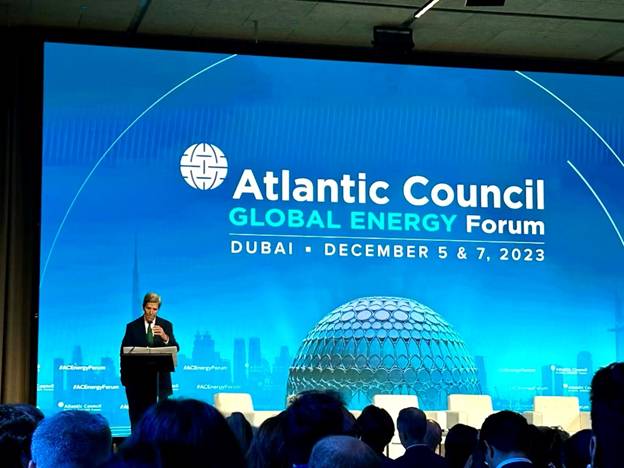 It’s Energy Day at #COP28 in Dubai, and given the location for the big UN Climate Conference, you might think it means oil and gas. Think again.
Fossil fuels are, of course, a focus of COP, but there’s also emphasis on renewables and nuclear. This region is fast becoming a centre for solar and wind power. It’s also one of the many growth regions for nuclear, which it wants to help champion. COP28 has already won agreement by 50 countries to triple nuclear production by 2050; one of them, China, is building 22 nuclear plants (although it has 5,000 coal-fired electricity plans). And in Europe, Germany is close to 50% renewable.
For many here, the focus of Energy Day was fixed was less on energy supply and more on energy security — at the national and household level. Countries on every continent continue to exhibit scar tissue from Russia’s Ukraine invasion, which caused prices to spike. They seem to generally too adhere to the new American doctrine that energy security is national security.
African leaders, in particular, spent the day voicing concerns about their own vulnerability to energy shortages and shocks. Many of those countries are still reliant on biomass to heat and cook, and could use better access to natural gas before they transition fully to renewables.
Into the gap come newer energy technologies like hydrogen and fusion, as well as abatement technologies like carbon capture and nuclear fusion. John Kerry, the US special envoy on climate, said he’s finally convinced fusion is no longer “30 years away.” And if that’s the case, it has the potential to transform the way the world powers itself.
Europe continues to push hydrogen, but the economics may not work.
Kerry was frank in his assessment that energy demand will continue to rise with economic and population growth: “Demand needs to be addressed.”
He urged the UN conference to set two priorities. One is to ensure all production is abated; that is, producers capture emissions that leave a plant, refinery or well. Second is to focus on methane reduction, where the sector is making enormous gains. More than 50 companies at this COP have signed the Global Methane Pledge.
With one week to go at COP28, the Dubai leadership at COP wants to maintain that focus, believing the sector can engineer itself to a cleaner future. In the coming days, it will try to make the case that in the long run, climate security will require energy security.
It’s Energy Day at #COP28 in Dubai, and given the location for the big UN Climate Conference, you might think it means oil and gas. Think again.
Fossil fuels are, of course, a focus of COP, but there’s also emphasis on renewables and nuclear. This region is fast becoming a centre for solar and wind power. It’s also one of the many growth regions for nuclear, which it wants to help champion. COP28 has already won agreement by 50 countries to triple nuclear production by 2050; one of them, China, is building 22 nuclear plants (although it has 5,000 coal-fired electricity plans). And in Europe, Germany is close to 50% renewable.
For many here, the focus of Energy Day was fixed was less on energy supply and more on energy security — at the national and household level. Countries on every continent continue to exhibit scar tissue from Russia’s Ukraine invasion, which caused prices to spike. They seem to generally too adhere to the new American doctrine that energy security is national security.
African leaders, in particular, spent the day voicing concerns about their own vulnerability to energy shortages and shocks. Many of those countries are still reliant on biomass to heat and cook, and could use better access to natural gas before they transition fully to renewables.
Into the gap come newer energy technologies like hydrogen and fusion, as well as abatement technologies like carbon capture and nuclear fusion. John Kerry, the US special envoy on climate, said he’s finally convinced fusion is no longer “30 years away.” And if that’s the case, it has the potential to transform the way the world powers itself.
Europe continues to push hydrogen, but the economics may not work.
Kerry was frank in his assessment that energy demand will continue to rise with economic and population growth: “Demand needs to be addressed.”
He urged the UN conference to set two priorities. One is to ensure all production is abated; that is, producers capture emissions that leave a plant, refinery or well. Second is to focus on methane reduction, where the sector is making enormous gains. More than 50 companies at this COP have signed the Global Methane Pledge.
With one week to go at COP28, the Dubai leadership at COP wants to maintain that focus, believing the sector can engineer itself to a cleaner future. In the coming days, it will try to make the case that in the long run, climate security will require energy security.
Glass & Steel Shrouded By Climate Anxiety
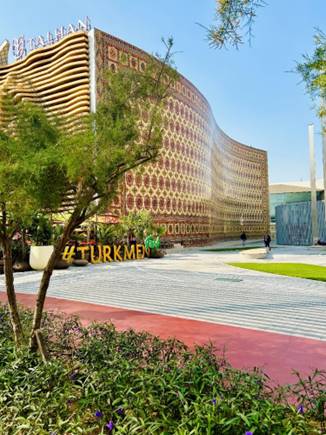 It was Buildings Day at COP28, and where better to discuss the climate impact of office towers and urban sprawl than Dubai.
Like many cities in emerging markets, Dubai’s shimmering skyline used to epitomize the human quest for progress and prosperity. Now, all that glass and steel is shrouded by climate anxiety.
Construction contributes to 40% of global emissions, sending 38 billion of tonnes of carbon dioxide into the atmosphere every year, largely from the intense heat required to make steel and concrete. At recent growth rates, emissions could double in the next 25 years, as hundreds of millions of people move to cities. And the climate oil pact would be severe. Think of all the heat needed to make all the steel and glass.
It was Buildings Day at COP28, and where better to discuss the climate impact of office towers and urban sprawl than Dubai.
Like many cities in emerging markets, Dubai’s shimmering skyline used to epitomize the human quest for progress and prosperity. Now, all that glass and steel is shrouded by climate anxiety.
Construction contributes to 40% of global emissions, sending 38 billion of tonnes of carbon dioxide into the atmosphere every year, largely from the intense heat required to make steel and concrete. At recent growth rates, emissions could double in the next 25 years, as hundreds of millions of people move to cities. And the climate oil pact would be severe. Think of all the heat needed to make all the steel and glass.
 I was part of one COP28 panel that included cement companies and engineers explaining what’s possible and not. We agreed the building sector needs to find new ways to bundle climate friendly buildings, for investors and tenants, and disaggregate elements of them for investors who may want to own part of a building, like a solar-paneled rooftop, and others to stick to the main course.
Governments can do more with procurement, too, instructing developers to ensure new schools, hospitals and public office spaces are as close to Net Zero ready as possible.
The consulting firm McKisney & Co. estimates 11% of all building’s emissions could be cut with better management practices, and that don’t add to the construction costs of a building. Those savings could grow to 22% by 2030, and 40% if some costs were absorbed.
A city like Dubai could probably pay for that, using current oil and gas revenues. But it may need support to invest more.
Further down the road, new approaches like offsite construction, electrified site equipment and recycled scrap steel could help. And there are new technologies like heat pumps that can dramatically change local energy systems.
Dubai — and fast-growing cities like it — could be a good test case. The conference centre where the United Nations is gathering is more like a campus of low-rise and open buildings, each repurposed this week for climate. Such unobtrusive buildings could be a template for a new kind or urbanism — if rapidly developing countries are willing to forego skyscrapers.
Diane Hoskins, a leading architect who is co-CEO of Gensler, told our COP gathering that architects and engineers need to be more flexible, as do local governments. And they need to ensure buildings not only fight climate change, but are resilient to its harsh impacts, including heat.
The best efforts may emanate from successful business models, as the profit motive becomes an ever-more powerful driver of climate action.
A good example can be found in Hong Kong, where MPD Energy has helped the construction industry get off fossil fuels by deploying portable batteries to power equipment. Just three years ago, 100% of construction in Hong Kong relied on fossil fuels. Today, it’s 40%, thanks to batteries that can produce up to 500 kW of power and have already helped the industry cut its emissions by 40%.
I was part of one COP28 panel that included cement companies and engineers explaining what’s possible and not. We agreed the building sector needs to find new ways to bundle climate friendly buildings, for investors and tenants, and disaggregate elements of them for investors who may want to own part of a building, like a solar-paneled rooftop, and others to stick to the main course.
Governments can do more with procurement, too, instructing developers to ensure new schools, hospitals and public office spaces are as close to Net Zero ready as possible.
The consulting firm McKisney & Co. estimates 11% of all building’s emissions could be cut with better management practices, and that don’t add to the construction costs of a building. Those savings could grow to 22% by 2030, and 40% if some costs were absorbed.
A city like Dubai could probably pay for that, using current oil and gas revenues. But it may need support to invest more.
Further down the road, new approaches like offsite construction, electrified site equipment and recycled scrap steel could help. And there are new technologies like heat pumps that can dramatically change local energy systems.
Dubai — and fast-growing cities like it — could be a good test case. The conference centre where the United Nations is gathering is more like a campus of low-rise and open buildings, each repurposed this week for climate. Such unobtrusive buildings could be a template for a new kind or urbanism — if rapidly developing countries are willing to forego skyscrapers.
Diane Hoskins, a leading architect who is co-CEO of Gensler, told our COP gathering that architects and engineers need to be more flexible, as do local governments. And they need to ensure buildings not only fight climate change, but are resilient to its harsh impacts, including heat.
The best efforts may emanate from successful business models, as the profit motive becomes an ever-more powerful driver of climate action.
A good example can be found in Hong Kong, where MPD Energy has helped the construction industry get off fossil fuels by deploying portable batteries to power equipment. Just three years ago, 100% of construction in Hong Kong relied on fossil fuels. Today, it’s 40%, thanks to batteries that can produce up to 500 kW of power and have already helped the industry cut its emissions by 40%.
The Abate Debate
 Get used to the word “unabated.” It’s a clunky term that’s fast-taking centre stage at the United Nations climate conference in Dubai. The world’s major economic powers and oil producers, including host country United Arab Emirates, want COP28 to call for the winding down of “unabated” fossil fuel production, meaning anything that doesn’t capture greenhouse gas emissions at source.
Opponents of the term fear it will give oil and gas producers carte blanche to produce as much as they want, as long as they’re using carbon capture technologies. They fear such an enthusiasm for abatement overlooks the emissions caused by the combustion of fossil fuels when people drive their cars or heat their homes. And they worry there’s not enough proof that abatement technologies work at the scale that will be needed.
The abate debate will likely define COP28, which is living up to its nickname as the “Oil and Gas COP.” Not surprisingly, given its location, the conference has attracted large delegations from oil producing countries, as well as executive teams from many of the world’s biggest oil and gas companies.
They’re promoting a view that the world relies heavily on fossil fuels and won’t reduce that dependency any time soon, no matter how fast the growth of renewable energy. One astonishing fact that a UAE oil executive shared today: at the time of the world’s first climate summit, in 1992, roughly 82% of the world’s energy came from oil, gas and coal; today, during COP28, that share is 80%. Surprisingly, more than a quarter of the world’s energy still comes from coal.
Such slow progress has many climate activists pushing for more radical solutions, to force wholesale change to renewable energy. But they’re swimming against some strong currents of both supply and demand. The United States, which is now the world’s largest oil producer, is on course to pump a record amount this year and may look to increase that again next year — an election year, no less – to keep gas prices low. That’s fueling speculation that Saudi Arabia will ramp up its own production, to drive prices even lower and drive US producers out of business.
The potential of another oil war drew an unlikely visitor, Vladimir Putin, to the UAE this week. The Russian leader didn’t attend COP but he did meet with Emirati leaders, before heading to Saudi Arabia, to talk about oil production. The UAE is the world’s eighth largest oil producer and is looking to increase supply by 40% this decade.
Can all that production be abated? It’s a question COP28 likely can’t answer. But it will try to challenge the world with it.
Get used to the word “unabated.” It’s a clunky term that’s fast-taking centre stage at the United Nations climate conference in Dubai. The world’s major economic powers and oil producers, including host country United Arab Emirates, want COP28 to call for the winding down of “unabated” fossil fuel production, meaning anything that doesn’t capture greenhouse gas emissions at source.
Opponents of the term fear it will give oil and gas producers carte blanche to produce as much as they want, as long as they’re using carbon capture technologies. They fear such an enthusiasm for abatement overlooks the emissions caused by the combustion of fossil fuels when people drive their cars or heat their homes. And they worry there’s not enough proof that abatement technologies work at the scale that will be needed.
The abate debate will likely define COP28, which is living up to its nickname as the “Oil and Gas COP.” Not surprisingly, given its location, the conference has attracted large delegations from oil producing countries, as well as executive teams from many of the world’s biggest oil and gas companies.
They’re promoting a view that the world relies heavily on fossil fuels and won’t reduce that dependency any time soon, no matter how fast the growth of renewable energy. One astonishing fact that a UAE oil executive shared today: at the time of the world’s first climate summit, in 1992, roughly 82% of the world’s energy came from oil, gas and coal; today, during COP28, that share is 80%. Surprisingly, more than a quarter of the world’s energy still comes from coal.
Such slow progress has many climate activists pushing for more radical solutions, to force wholesale change to renewable energy. But they’re swimming against some strong currents of both supply and demand. The United States, which is now the world’s largest oil producer, is on course to pump a record amount this year and may look to increase that again next year — an election year, no less – to keep gas prices low. That’s fueling speculation that Saudi Arabia will ramp up its own production, to drive prices even lower and drive US producers out of business.
The potential of another oil war drew an unlikely visitor, Vladimir Putin, to the UAE this week. The Russian leader didn’t attend COP but he did meet with Emirati leaders, before heading to Saudi Arabia, to talk about oil production. The UAE is the world’s eighth largest oil producer and is looking to increase supply by 40% this decade.
Can all that production be abated? It’s a question COP28 likely can’t answer. But it will try to challenge the world with it.
Good Cap, Bad Cap?
 It’s here at last—but not there yet. The federal government unveiled its much hyped (and to some, much feared) oil and gas emissions cap “framework” at the midpoint of COP28, laying down its most ambitious climate policy to date.
No other oil and gas exporting nation has placed a cap on emissions. Now Canada—the world’s fourth largest oil producer—is aiming to cut emissions by 35-38% by 2030.
To get there, the government wants to limit the sector’s emissions and establish a cap-and-trade system that would charge producers for going over the limit and put the money into clean tech funds or, if necessary, carbon offsets.
The big oil producers think they’re already on a course to hit those targets, using abatement technologies like carbon capture, but won’t get there until the mid-2030s. And then there’s jurisdiction. Alberta has been quick to say Ottawa doesn’t have the right to tell provinces how to manage their natural resources.
Ottawa put the cap framework out for 60 days of consultation. Here are some of the questions we’re wondering:
It’s here at last—but not there yet. The federal government unveiled its much hyped (and to some, much feared) oil and gas emissions cap “framework” at the midpoint of COP28, laying down its most ambitious climate policy to date.
No other oil and gas exporting nation has placed a cap on emissions. Now Canada—the world’s fourth largest oil producer—is aiming to cut emissions by 35-38% by 2030.
To get there, the government wants to limit the sector’s emissions and establish a cap-and-trade system that would charge producers for going over the limit and put the money into clean tech funds or, if necessary, carbon offsets.
The big oil producers think they’re already on a course to hit those targets, using abatement technologies like carbon capture, but won’t get there until the mid-2030s. And then there’s jurisdiction. Alberta has been quick to say Ottawa doesn’t have the right to tell provinces how to manage their natural resources.
Ottawa put the cap framework out for 60 days of consultation. Here are some of the questions we’re wondering:
- What will oil and gas demand look like in the 2030s? The feds have gone with a forecast from the Canadian Energy Regulator that shows oil production higher in 2030, at 5.1 million barrels a day, with most of the increase coming from the oilsands and Trans Mountain pipeline expansion project. Gas production will remain steady, while LNG exports will be much higher. If nothing were done, the sector’s emissions would go from 174 megatons in 2019 to 199 MT in 2030. But with abatement technologies, emissions are forecast to come down to 134 MT, which would fit within the cap.
- Where’s the money? The sector won’t come close to cutting emissions at that scale without massive subsidies from Ottawa and the provinces. Exhibit A will be the Pathways Alliance, a group of oilsands companies looking to build a massive carbon capture and sequestration project for their emissions. They’re still negotiating the terms with government and expect to have a memorandum of understanding within weeks. But they will need to see clear financial commitments before breaking ground. That includes a lot more clarity from Ottawa on its proposed investment tax credits, which currently are set to expire in 2030.
- Can Ottawa set up a credible tech platform? Companies are likely to push for the right to channel their own money into their own clean tech projects, subject to emissions commitments. Others will push for an independent fund, or something like Emissions Reduction Alberta, to collect money from emitters and then disburse it to credible projects. The amounts will run into the billions, which could help position Alberta as a global leader in the energy transition. Or create a trail of boondoggles.
- Can the cap include a cleaner approach to offsets? The cap framework offers up a lot of flexibility for offsets, including international ones, to help those emitters who can’t get their emissions down in time. Trouble is, the global offsets business has faced growing criticism this year, largely over the integrity of climate-positive activities like forestation and land protection. The credibility of the cap will be determined in part by the credibility of the offsets that companies buy.
- What do other provinces think? All eyes are on Alberta and whether the federal cap can work harmoniously with the provincial system. But the challenges of “interoperability” don’t stop there. The cap also applies to British Columbia’s LNG ambitions, Newfoundland’s offshore oil dreams and Saskatchewan’s conventional oil business, each operating under a different emissions regime. Each province may want its emissions payments to remain at home, but an open market may be needed for more options.
- How much flexibility will there be? It’s extremely ambitious to think the sector can cut its emissions by 2030. So the framework includes some important “shock absorbers” that allow for production swings— oil and gas markets are volatile, if nothing else — and also possible delays in technology. The framework offers up something called “multi-year compliance periods” that sound a bit like a homework extension of three years should carbon reduction projects not come together by 2030.
- Will anyone go to jail? Penalties for non-compliance are, so far, vague, ranging from a warning letter to possible imprisonment under the environmental protection laws that will house the cap. The lack of clarity on enforcement measures will continue to cause anxiety among executives who have to make the whole thing work. A good cap will need a good cop.
If there were any doubts how far climate has fallen down Santa’s wish list for the Trudeau government, read Chrystia Freeland’s Fall Economic Statement. She delivered the government’s annual economic strategy without once mentioning “climate change” or “environment.” (“All I Want for Christmas is Two” could be her holiday jingle, as she dreams of 2% inflation.) Such a narrow consumer focus may be bad news for her green caucus. But Freeland’s renewed focus on execution may be welcome. In her government’s strategy for the “clean economy”—Ottawa speak for climate—she made a few things clear.
First, the new Canada Growth Fund will allocate roughly half its $15 billion funding for “carbon contracts for difference”—essentially carbon price guarantees if government policy changes. That’s a lot of money but may not be enough to underwrite a clean economy. Second, the government will soon introduce legislation for investment tax credits for carbon capture and clean technology projects, which were promised a year ago but never finalized. They will be critical to decarbonization projects, and there is some concern they’re still not competitive with U.S. incentives. Ottawa is also pushing ahead with its hydrogen agenda, promising tax breaks for ammonia, and giving more incentives for waste biomass (wood chips and crop residue) that can be used in sustainable aviation fuel. To attract more capital, Freeland gave the green light for a “taxonomy” to help banks and pension funds label investments as “green” or “transition,” and she will push pension funds to invest more in Canada’s “clean economy.”
How a taxonomy treats natural gas will be contentious, as will another Freeland proposal: a national Indigenous loan guarantee. Will Ottawa limit what Indigenous communities can buy, depending on its climate impact? A group of 130 Indigenous nations were quick to say, not a chance. After centuries of colonization, they’ll pick their own projects, including natural gas, thank you very much. Such debates will dominate the winter term, as the Trudeau Liberals try to show they can manage the current economy and help build a new one.
The weather in Ottawa turned gnarly this week, as did the politics around Net Zero. Is this the winter of our climate discontent? I spent Thursday at the Canadian Climate Institute’s third annual conference, and it was hard not to feel a change in weather. The sunny ways of the past decade are now clouded by economic reality, as governments (and consumers) look increasingly for economically minded ways to decarbonize our world. The days of free money are gone, which is undermining venture capital and all those innovators trying to create and scale new energy technologies. Governments (like consumers) are running low on fiscal gas, which will limit the billions they had hoped would stimulate climate action. The mood for regulation also seems to be dwindling, judging by the Trudeau government’s muted presentation of an oil and gas emissions cap (now called a “framework”) at the event. And then there’s all that global volatility—two hots wars and a cold one—that’s got energy markets (and market confidence) everywhere on edge.
Looking to 2024, the outlook for climate action may seem dark. But if there’s hope, it’s in private sector. This year’s CCI conference had a greater business focus, with steelmakers, oil producers and builders sharing their plans to decarbonize—not just for the planet but for their own competitiveness. That was also a clarion call from the Biden Administration, which sent its top energy diplomat to Ottawa this week to talk up business-led climate action. Geoffrey Pyatt laid out how the Inflation Reduction Act is transforming America’s energy systems (and its competitiveness), creating significant opportunities for business and trade for its allies. On that count, Pyatt wanted to know about Canada’s “political geography,” and how we can fit into a continental energy strategy that will include oil, nuclear, hydrogen and natural gas. In other words, climate security is now energy security, and both are about national security. The climate crowd didn’t embrace every word, but they did get the message. It’s a new season.
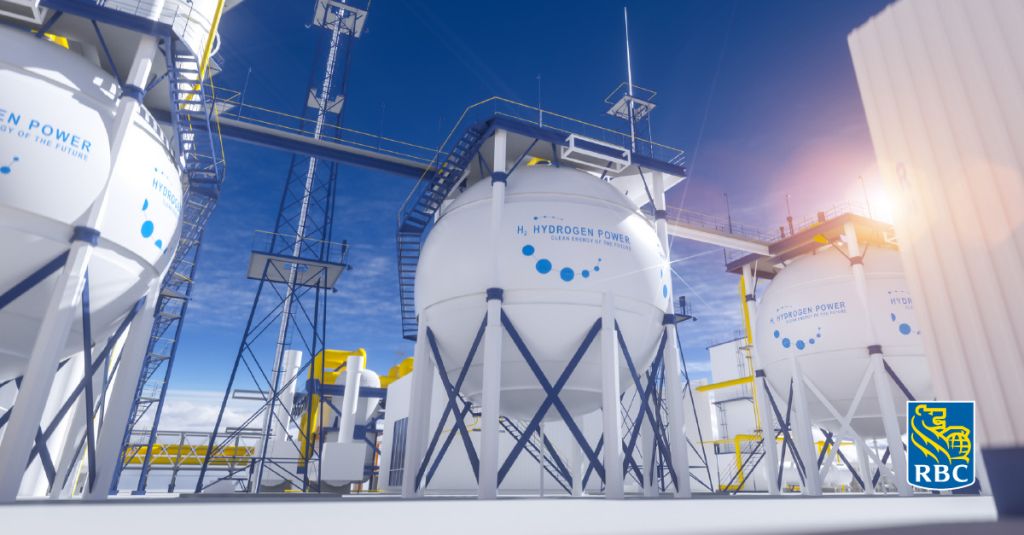
I visited Winnipeg last week and there’s a new energy in the air. The election of Wab Kinew as Manitoba premier—one of the first Indigenous persons to lead any province—has put a new spotlight on the province, its role in reconciliation and leadership in the race to Net Zero.
I met with Premier Kinew to discuss his climate policies, insights from the RBC Climate Action Institute, and whether Manitoba could be a new model for Canada’s transition. He kept returning to a single word: hydrogen. His NDP government wants to make Manitoba a green hydrogen hub, even though the province is running short of surplus industrial power. Kinew is also keen to advance electric vehicle adoption, especially for the buses, trucks and farm machines that account for a third of Manitoba’s emissions. He has a hometown advantage in New Flyer Industries, a global player in electric and hydrogen buses, but needs a growing economy to finance the transition.
More electricity generation and transmission will be an added challenge for Kinew’s promise of reconciliation. His province’s population is 20% Indigenous, the highest in Canada, and new projects will face growing tests of “free, prior and informed consent.” The same challenge will face the NDP’s promise of critical minerals production. (The province claims to hold 29 of 31 key minerals, including lithium.) Kinew said he is hoping to see “enthusiastic consent” exhibited through business partnerships.
Manitoba’s other great climate opportunity? Agriculture. I visited the University of Manitoba’s Glenlea Research Station, south of Winnipeg, to see Canada’s oldest soil sequestration test site, aimed at capturing greenhouse gases. The station is also developing technologies to capture gases from the province’s four million cows, hogs and pigs.
Manitoba is home to only 1.4 million people. It will need all the climate tech it can develop to harness their—and the province’s—energy.
Why we wrote this
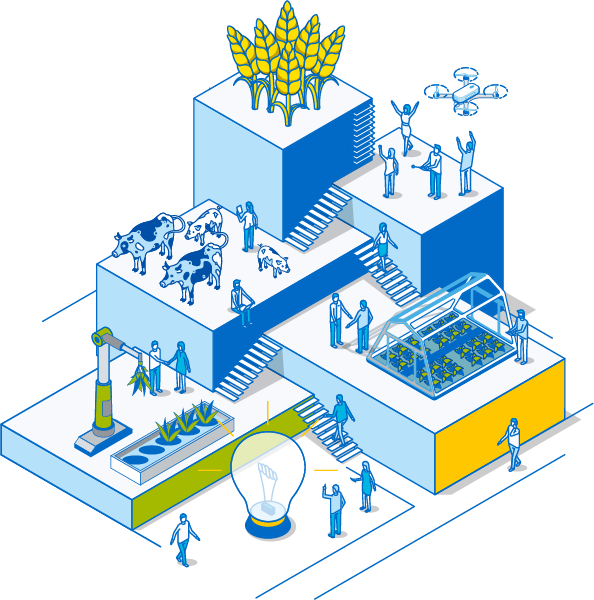
Last fall RBC partnered with BCG’s Centre for Canada’s Future and Arrell Food Institute at the University of Guelph. We set out to explore what we believe is Canada’s moonshot: to produce 26% more food by 2050 (enough to maintain our contribution to the global population as it grows) with fewer emissions. The result was The Next Green Revolution: How Canada can produce more food and fewer emissions.
Throughout the past year, here’s what we learned:- Canada is uniquely placed to lead: Our assets are unparalleled, but we need to do more to maximize them. Other nations are allocating substantial funding to promote climate-smart agriculture. Canada can proportionally match those investments while establishing new market mechanisms to help finance agriculture’s sustainable transition.
- Nothing will happen without accurate measurement technology: Tools to monitor emissions accurately (especially carbon sequestration in soil) are essential to building markets and helping producers take advantage of them.
- Cross-sector collaboration is key: A successful transition to Net Zero demands a new approach. It requires public-private actors across the fragmented agriculture supply chain to work together, as one sector, toward a single vision.
- Private sector R&D is insufficient: Canada has invented some of the most important agricultural technologies globally. But private sector funding for innovation is at an all-time low. To remain leaders in this space, we’ll need private actors to invest.
- Skills gaps are limiting growth: The sector requires more workers to drive the Net Zero transition. From on-farm managers to data analysts, qualified workers and advisors are desperately needed on Canadian farms, but post-secondary funding is insufficient.
- Early adopters should be rewarded: A significant number of producers across Canada have engaged in climate-smart agricultural practices for years—if not decades. These pioneers could be left out as programs develop to financially incentivize farm operators making their first transitions to better soil health methods. To continue growing current carbon stock levels, early adopters must receive a financial benefit for their continued contributions.
- The world needs Canada more than ever: With global supply chains under stress from the Ukraine-Russia War and extreme climate events, many countries are facing food shortages or unstable supply lines. As a politically stable country, and a reliable supplier of safe, high-quality food, Canada has an opportunity to become the world’s sustainable breadbasket.
Key takeaways
-
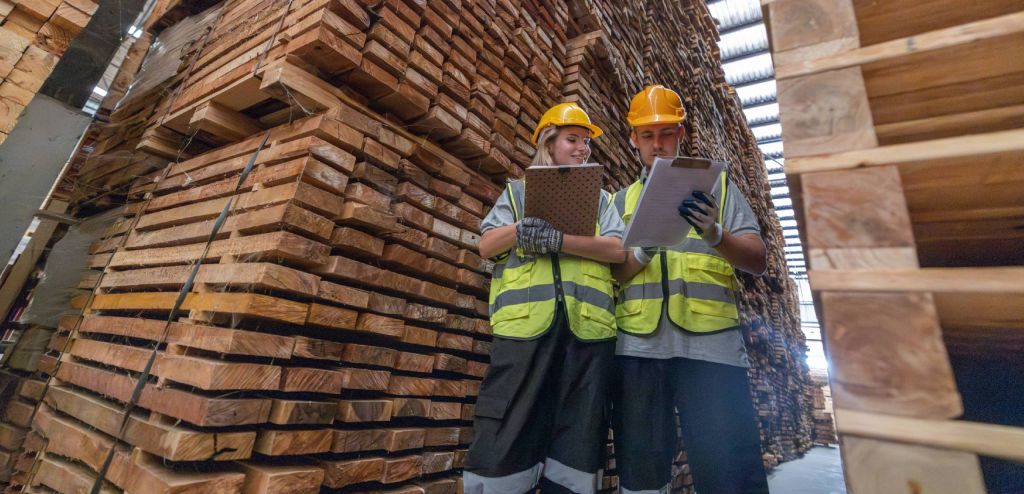
 The building sector is the 3rd most carbon intensive industry in Canada, accounting for 13% of all emissions in 2022, or 92 million tonnes (MT) of CO2e. Canada aims to cut that amount to 53MT by 2030.
 -
 Widespread adoption of wood, specifically mass timber, as a substitute or complement to concrete and steel could cut embodied emissions in buildings by as much as 25%.
 -
 Mass timber deployment in new apartments, condos, and office towers could cut emissions by at least 9MT, or nearly 10% of the sector’s emissions, by 2030.
 -
 Aside from emissions savings, greater use of mass timber in building construction could conservatively grow the mass timber market by $1 billion by 2030. A share of this growth is anticipated to flow to Indigenous communities as they are in the employment catchment areas for logging sites, sawmills and mass timber manufacturing facilities.
 -
 Addressing the cost of construction and occupancy insurance, and mismatch between supply and demand is essential before Canada can achieve emissions savings, economic, and job growth opportunities.
 -
 Canada has all the puzzle pieces required to become a global leader in mass timber. The country’s climate commitments are an opportune time for all players in the building sector to come together to act on this collective ambition.
British Columbia And Quebec Spearheading Canada’s Timber Drive
Completed mass timber projects, 2022
Source: Natural Resources Canada’s Mass Timber database, RBC Climate Action Institute
661
The number of completed mass timber projects in Canada
87%
B.C., Ontario & Quebec’s share of Canada’s mass timber projects
12
The number of storeys permitted for mass timber projects in Canada
What is mass timber?
Mass timber products are solid, structural load-bearing building components such as columns, beams, and panels . They have similar fire and seismic performance as concrete and steel but are significantly lighter in weight. Mass timber can be a substitute for steel and concrete in low and mid-rise buildings. For taller buildings mass timber is typically used in conjunction with concrete and steel, where concrete is used for a building’s stairwell and elevator core and steel is used for columns.Rise of mass timber
The emergence of mass timber in Canada as a complement and alternative to concrete and steel first emerged in 2007, with the completion of several commercial and institutional buildings in British Columbia, Ontario and Quebec2. These include the College of the Rockies Kootenay Centre South in Cranbrook, B.C., the Winnipeg Humane Society in Manitoba, and the OslerBrook Golf Clubhouse in Collingwood, Ontario. Prior to this point in time, national and provincial building codes did not permit the use of mass timber. Canada now boasts 661 completed mass timber projects. The United States, in comparison, has about 356 completed projects. Governments or colleges/universities commissioned most of the early commercial and institutional buildings. And while they still dominate the building type mix, there’s a notable shift to multi-storey residential buildings, driven by private developers and builders. Today, a third of all planned and under construction mass timber projects are residential multi-storey projects.
Insight
Wood first: B.C.’s Mass Timber Playbook
Several enabling policies has made British Columbia a leader in the use and production of mass timber within Canada and internationally.
The long-time champion of its forestry sector and its products, B.C. introduced The Wood First Act in 2009, with the mandate to use wood in provincially funded buildings. The “wood first” procurement approach for public projects continued with successive governments and culminated with the establishment of the Office of Mass Timber Implementation in 2020. A Mass Timber Demonstration Program was announced in 2020 to support early adopters of mass timber, such as Adera Development, to accelerate wider adoption of this low-carbon building material. The province remains quick footed in addressing regulatory barriers, specifically building code requirements. British Columbia was the first province to permit six-storey wood frame residential buildings. When the National Building Code of Canada (NBC) was revised, in 2020, to permit 12-storey mass timber buildings, the province followed suit, even though the NBC was not finalized.
The province leveraged its abundant forestry resources to mirror the playbook used by many European countries to promote mass timber. Countries with sizeable forestry sectors, such as Austria, Germany, Sweden and Finland were some of the first European countries to remove building code restrictions on wood—the most significant obstacle to mass timber use and adoption. Recognizing that government support is often needed to commercialize and scale widespread adoption of new products, these governments also provided project development, and research and development grants for builders and developers to build with mass timber.
The 9 MT emissions imperative
12-25%
Drop in buildings emissions if developers swap concrete & steel with mass timber
6%
Concrete, steel and aluminum’s contribution to Canada’s emissions
9%
Decline in building sector emissions due to widespread use of mass timber
Embodied emissions profile of a mid-rise tower
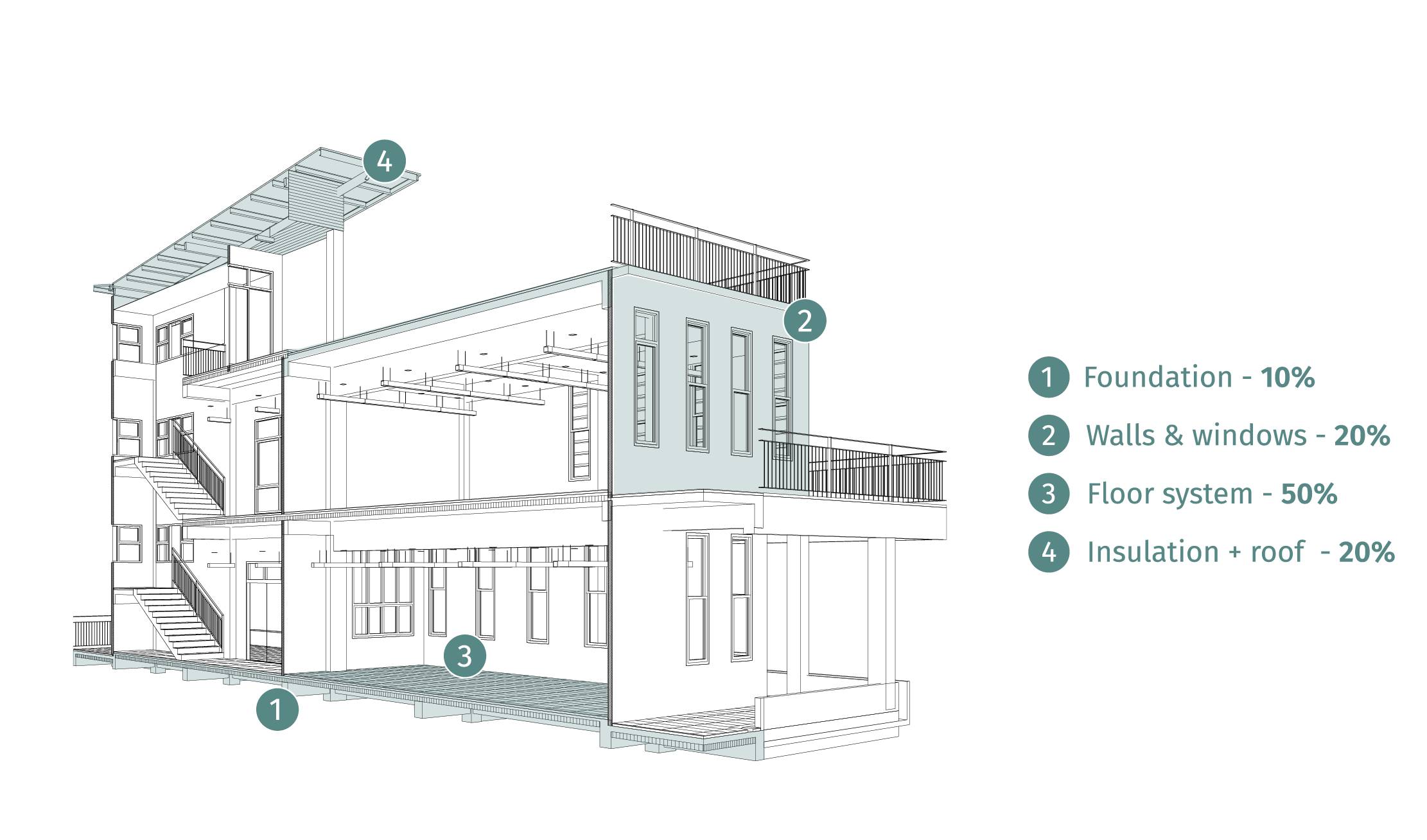 The sector could cut 5.5 MT in emissions by 20307 if one-third of all new apartments and condos and all new office towers, in major urban centres, were constructed using mass timber. Emissions could decline by another 3 MT if all future apartments and condos were constructed using a mass timber floor system and domestic manufacturing capacity was not a constraining factor8. These emission savings demonstrate that small efforts, such as changing one element of a building’s structure, can lead to significant emissions savings, even though the size of the gains may pale in comparison to other purely technology-based solutions, such as heat pumps or electric vehicles⁹.
Construction with mass timber could also lower on-site vehicular traffic and reduce the use of fossil-fuel powered heavy equipment. Unlike concrete, mass timber is a prefabricated wood product that can be delivered in a few shipments and then stored on a construction site.
Mass timber practitioners, Veronica Madonna of Athabasca University and founder of architect firm Studio VMA, and Lee Scott of Element5, a mass timber manufacturer with plants in Quebec and Ontario, have found that this storage benefit can reduce on-site vehicular delivery traffic by 80 to 90%, compared to the construction site for a traditional concrete and steel building.
The sector could cut 5.5 MT in emissions by 20307 if one-third of all new apartments and condos and all new office towers, in major urban centres, were constructed using mass timber. Emissions could decline by another 3 MT if all future apartments and condos were constructed using a mass timber floor system and domestic manufacturing capacity was not a constraining factor8. These emission savings demonstrate that small efforts, such as changing one element of a building’s structure, can lead to significant emissions savings, even though the size of the gains may pale in comparison to other purely technology-based solutions, such as heat pumps or electric vehicles⁹.
Construction with mass timber could also lower on-site vehicular traffic and reduce the use of fossil-fuel powered heavy equipment. Unlike concrete, mass timber is a prefabricated wood product that can be delivered in a few shipments and then stored on a construction site.
Mass timber practitioners, Veronica Madonna of Athabasca University and founder of architect firm Studio VMA, and Lee Scott of Element5, a mass timber manufacturer with plants in Quebec and Ontario, have found that this storage benefit can reduce on-site vehicular delivery traffic by 80 to 90%, compared to the construction site for a traditional concrete and steel building.
Insight
The story of embodied emissions in steel and concrete
Mass timber, steel, and concrete all have their origins as natural materials extracted from or below the earth’s surface.
The energy and industrial processes required to transform iron ore into steel and limestone and clay into cement, and eventually concrete, are the reasons for their high embodied emissions profile, compared to mass timber. The industrial processes for steel and concrete require using extraordinarily high heat, between 1,400 to 1,600 degrees Celsius, to transform raw materials in blast furnaces or kilns. Energy required to power blast furnaces for steel-making accounts for 87% of emissions generated in the steel making process, according to the International Energy Agency. For cement production, the reverse is true, with 65% of emissions attributable to industrial processes, specifically, the release of greenhouse gases from the heating of limestone and clay in kiln ovens. Mass timber’s significantly lower emissions profile can be attributed to a manufacturing process that largely leaves the original raw materials intact.
Canada’s opportunity to capture a slice of the global mass timber market
3x
Growth in Canadian jobs associated with mass timber by 2030
3x
Growth in Canadian GDP from mass timber by 2030
$4.9B
Global mass timber market by 2030
Canada’s Forestry Resources Could Boost Its Low-Carbon Economy
Two scenarios for Canada’s promising mass timber economy

RBC Climate Action Institute derived analysis using data in Polaris Market Research’s Cross Laminated Timber Market report, Natural Resources Canada Mass Timber data base, and Statistics Canada sectoral GDP data.
Barriers to Canada’s mass timber and climate ambitions
The steady increase in the number of mass timber projects underway in Canada is a testament to the building sector’s green ambitions. Industry interviews suggest a strong desire to increase the use of mass timber, but fundamental challenges are preventing market participants from raising their ambitions at a pace necessary to reach Canada’s climate goals.Mass Timber’s Big Opportunity To Grab Greater Market Share
Breakdown of building construction materials use in North America
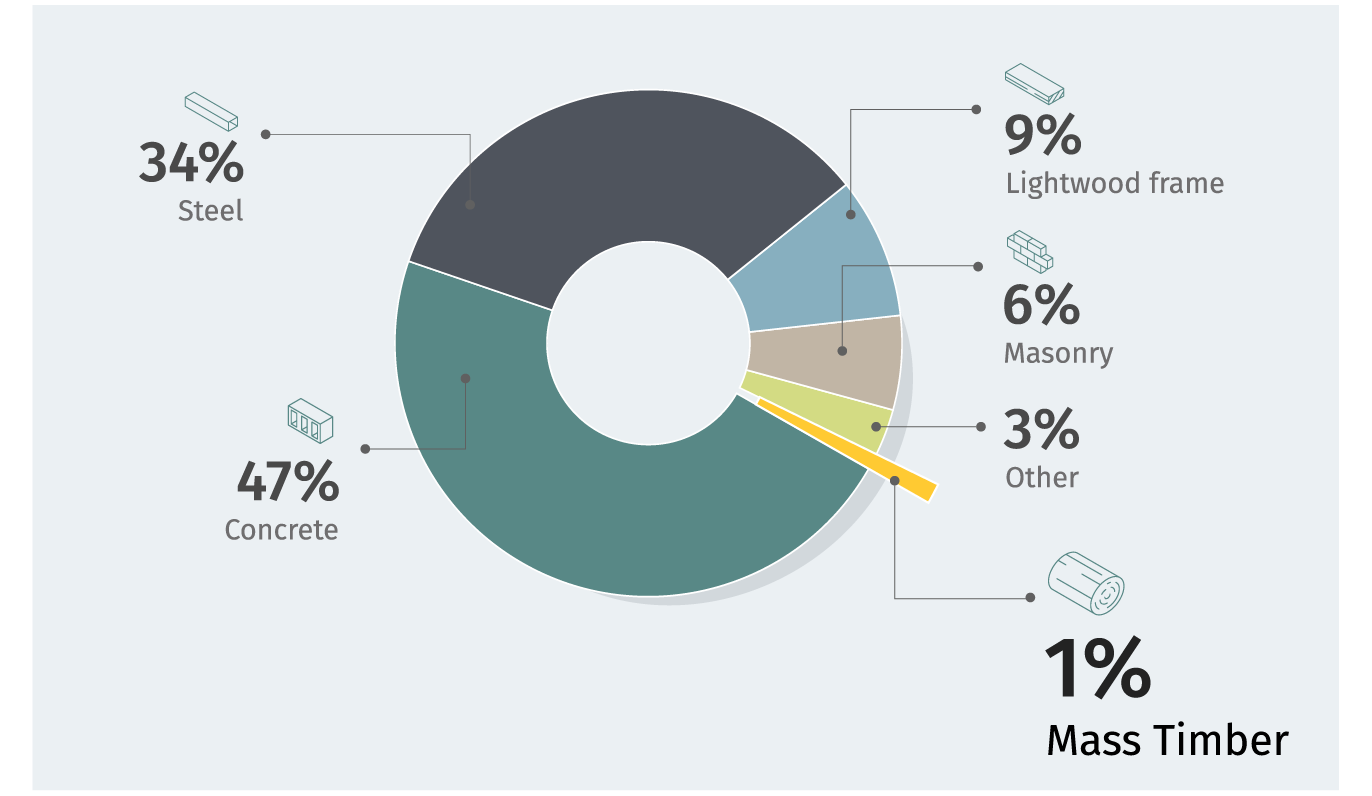
Source: RBC Climate Action Institute, Mantle Developments, 2022
Insurance underwriting has emerged as the most difficult challenge for both building construction and occupancy insurance. Presently, each building requires a bespoke policy, which significantly adds to a project’s final cost,12 and is ultimately passed down to the end buyer. Construction insurance premiums for a mass timber building can be up to 10 times the costs of a similar building constructed with steel and concrete. This layer of cost erodes the competitiveness of buildings featuring mass timber and hampers its widespread use in residential, commercial, and institutional buildings13. A second structural issue is a mismatch between the location of mass timber production and demand for the material. Patrick Chouinard, the founder of Element5, noted that B.C.’s early mover status resulted in a manufacturing base that is concentrated in western Canada, but current and emerging demand largely coming from eastern Canada and central and northeastern United States. Patrick Crabbe, Director of Mass Timber at Bird Construction, an early adopter and proponent of mass timber, estimates that 62% of capacity and 22% of demand is concentrated in western Canada, but 78% of demand and 38% of capacity is concentrated in eastern Canada14.
Insight
Sky-high premiums for mass timber buildings
Lack of data to assess the fire risk of mass timber buildings is primarily why building construction and occupancy insurances for mass timber buildings is 6 to 10 times higher than conventional steel and concrete buildings.
Exacerbating this situation is the small and niche market for mass timber. The lack of actuarial data has meant that insurance companies typically insure mass timber buildings to the closest approximate building structure archetype—a wooden frame house constructed with 2×4 lumber. Recognizing that wider adoption of mass timber is necessary to decarbonize the sector, construction services firm Ellis Don has made attempts to bridge the knowledge and information gap that exists in the insurance industry, by bringing industry players together to discuss the insurance challenge and explore potential solutions. These actions have yet to yield the desired outcome, either in Canada or internationally, and continue to present a significant obstacle to scaling the use of mass timber.
Recommendations
Canada may be late to the mass timber market, but it has caught up with its European competitors in less than a decade, both in the use and manufacturing of mass timber. It didn’t happen by chance either. Tailored federal and provincial policies and programs that were attuned to evolving market and regulatory forces, combined with visionary entrepreneurs along the building value chain drove Canada’s early successes. But we are just getting started. Canada has an opportunity to play a leading role in the global mass timber movement if it adopts the following recommendations: Standardize insurance underwriting to lower costs. Standardizing insurance fire risks for mass timber buildings, during building construction and occupancy, will lower insurance premiums and overall costs for builders and building owners. Continue funding capital expenditure grants. Federal and provincial grants have played a pivotal role in lowering machinery costs and enabling additional manufacturing capacity, either from existing manufacturers or new entrants. Continuing these programs would ensure supply can keep pace with double digit growth in domestic and international demand.Conclusion
In the course of conducting research for this report we repeatedly heard from builders, architects, engineers, and manufacturers that Canada can and should be a global leader in mass timber research, manufacturing, and use, while spearheading efforts to decarbonize the building sector. While there are fundamental challenges that must be addressed before these ambitions can be realized, there’s industry consensus that these challenges are not insurmountable. Now is the time for all players in the building sector to work together to act on these challenges and solutions. And for Canada to showcase to the world that we are a nation of innovators in building construction and climate action.Related Reading
For more, go to www.rbc.com/climate-action-institute.

Download the Report
DownloadContributors:
Lead author: Myha Truong-Regan, Head of Climate Research, RBC Climate Action Institute
Farhad Panahov, Economist Yadullah Hussain, Managing Editor, RBC Climate Action Institute Darren Chow, Director, Content Strategy & Creative Production Shiplu Talukder, Digital Publishing Specialist Caprice Biasoni, Graphic Design SpecialistPatrick Chouinard
-
- , Founder, Element5
-
- , Director of Mass Timber, Bird Construction
-
- , Co-lead, EllisDon Building and Material Sciences Department
- , Co-lead, EllisDon Building and Material Sciences Department
- Estimates from the Canadian Climate Institute Early Emissions Estimates, 2023.
- Some architecture historians would argue that mass timber is not a new building material to Canada. Mass (or heavy) timber had been used in Canada since the late 1800s. The oldest surviving heavy timber building in Canada, which was built in 1895 and is still in use today, is located at 312 Adelaide Street West in Toronto.
- Hsu, S.L. (2010, June). Life cycle assessment of materials and construction in commercial structures: variability and limitations. Massachusetts Institute of Technology.
- RBC Climate Action Institute estimate based on analysis of data from the United Nations Environment Programme: 2022 Global Status Report for Buildings and Construction (section 3.3 Emissions in the Buildings Sector) and the Canadian Climate Institute’s Early Emissions Estimates for 2022.
- Interview with Mark Gaglione and Vince Davenport, co-leaders of Ellis Don’s Building and Material Sciences Department. Craig Applegath of Dialog estimates that for some building forms, a building’s floor system can account for 70% of total building materials used.
- The floor system emissions reduction savings is based on the assumption that the mass timber building is constructed with a concrete and steel foundation. The 12% and 25% total savings is for a mass timber structure versus an equivalent structure constructed using a composite steel and beam method.
- Residential units constructed between 2025 and 2030.
- The current mass timber manufacturing capacity in Canada is estimated at 1.1 million cubic meters, based on data from Natural Resources Canada. In comparison, Architectural Record reports that European capacity is 1.6 million cubic meters.
- The emissions from using a mass timber floor system would be negative, were biogenic carbon taken into consideration. Ellis Don’s Building Materials and Science Department has estimated biogenic carbon savings of negative 170Kg/CO2e/m2.
- RBC Climate Action Institute derived analysis using data in Polaris Market Research’s Cross Laminated Timber Market report, Natural Resources Canada Mass Timber data base, and Statistics Canada sectoral GDP data.
- RBC Climate Action Institute derived analysis using data in B.C’s Mass Timber Action Plan, Polaris Market Research’s Cross Laminated Timber Market report, Natural Resources Canada Mass Timber data base, and Statistics Canada sectoral GDP data.
- Builders of projects that cost more than $50 million to construct typically need to bring in several insurance carriers to provide coverage for their projects. This practice cannot be avoided because insurance carriers have a lower maximum insurable limit for mass timber than other conventional building materials such concrete, steel, and traditional wood.
- Builders with extensive experience in building with mass timber have been able to achieve cost parity with conventional steel and concrete buildings by optimizing design, construction, and scheduling practices.
- Data presented by Patrick Crabbe at the Brookfield Sustainability Institute’s Toronto Mass Timber Conference, September 2023. Data obtained from Forest Economic Advisor Mass Timber North America report, July 2022.
- Estimate made in October 2022 in a Medium article titled: 10 Reasons to Build with Mass Timber.

Why we wrote this
Last fall RBC partnered with BCG’s Centre for Canada’s Future and Arrell Food Institute at the University of Guelph. We set out to explore what we believe is Canada’s moonshot: to produce 26% more food by 2050 (enough to maintain our contribution to the global population as it grows) with fewer emissions. The result was The Next Green Revolution: How Canada can produce more food and fewer emissions.
Throughout the past year, here’s what we learned:- Canada is uniquely placed to lead: Our assets are unparalleled, but we need to do more to maximize them. Other nations are allocating substantial funding to promote climate-smart agriculture. Canada can proportionally match those investments while establishing new market mechanisms to help finance agriculture’s sustainable transition.
- Nothing will happen without accurate measurement technology: Tools to monitor emissions accurately (especially carbon sequestration in soil) are essential to building markets and helping producers take advantage of them.
- Cross-sector collaboration is key: A successful transition to Net Zero demands a new approach. It requires public-private actors across the fragmented agriculture supply chain to work together, as one sector, toward a single vision.
- Private sector R&D is insufficient: Canada has invented some of the most important agricultural technologies globally. But private sector funding for innovation is at an all-time low. To remain leaders in this space, we’ll need private actors to invest.
- Skills gaps are limiting growth: The sector requires more workers to drive the Net Zero transition. From on-farm managers to data analysts, qualified workers and advisors are desperately needed on Canadian farms, but post-secondary funding is insufficient.
- Early adopters should be rewarded: A significant number of producers across Canada have engaged in climate-smart agricultural practices for years—if not decades. These pioneers could be left out as programs develop to financially incentivize farm operators making their first transitions to better soil health methods. To continue growing current carbon stock levels, early adopters must receive a financial benefit for their continued contributions.
- The world needs Canada more than ever: With global supply chains under stress from the Ukraine-Russia War and extreme climate events, many countries are facing food shortages or unstable supply lines. As a politically stable country, and a reliable supplier of safe, high-quality food, Canada has an opportunity to become the world’s sustainable breadbasket.
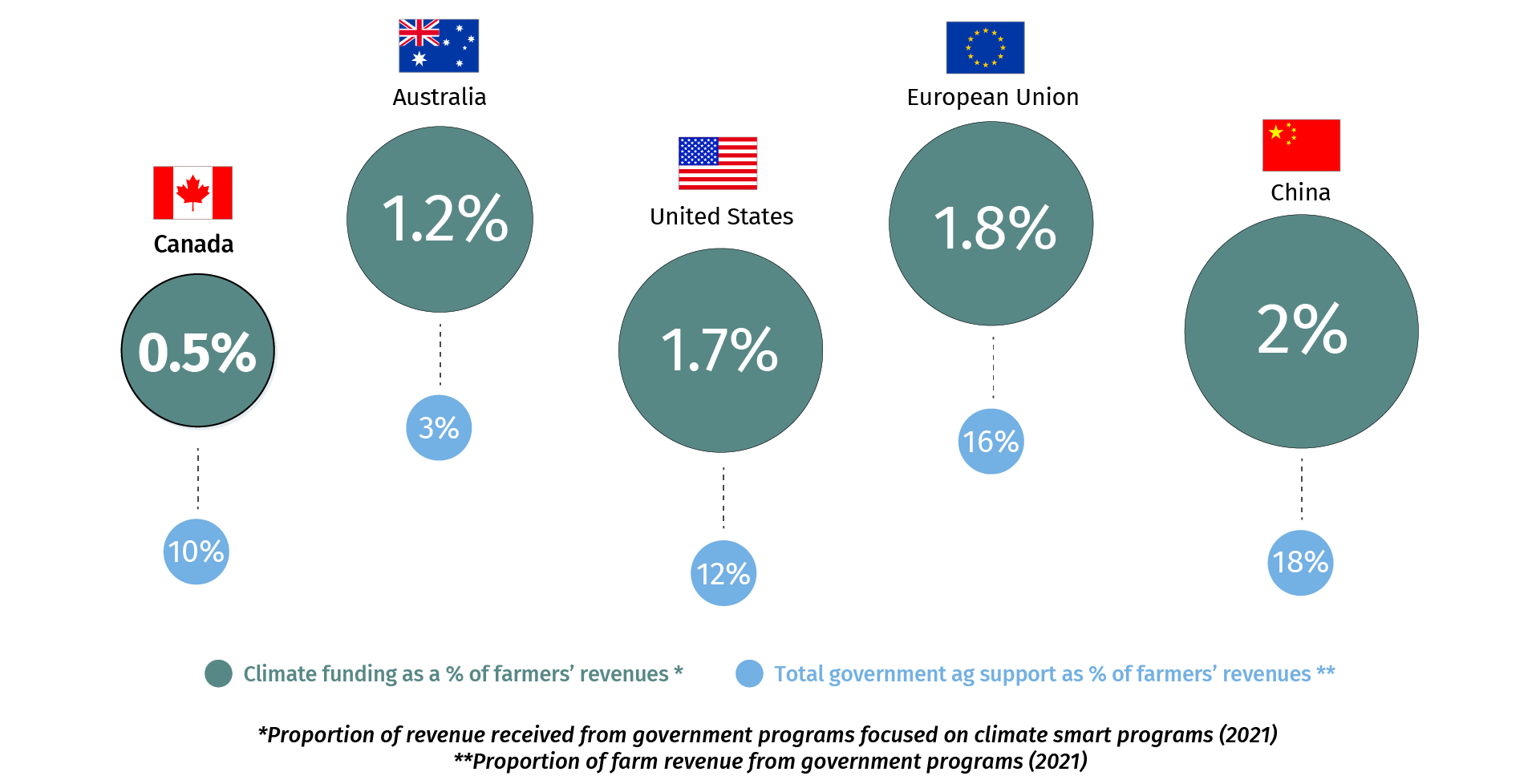
Canada’s investment in climate-smart agriculture lags global peers
Source: BCG analysis, RBC analysis, USDA, and OECD
Brazil and Indonesia were not included due to climate-related funding directed to financing programs
The world’s top food producers are on the move. Making sustainable agriculture a strategic priority, Canada’s peers are laying the foundations for formidable climate-smart food supply chains backed by sizeable funding and bold policy measures. Amid these dramatic investment and policy shifts, a pivotal moment is emerging for Canadian agriculture. The sector risks falling behind if Canadian governments don’t match their competitors in supporting producers with the funding and policy tools to grow more food with fewer emissions. Canada is already falling behind. The agriculture sectors in the U.S., EU, Australia and China get roughly three times the climate funding that Canada provides to its industry. Yet the expectations placed on our farmers are growing: to produce more (in increasingly adverse weather conditions), to cut emissions and to help boost global food security. We began to explore the opportunities around climate-smart agriculture last year, in the midst of twin global crises over food shortages and climate shocks. Since then, our research teams have spoken with more than 500 farmers and food producers, to gain a better understanding of what practical policies could make a difference now. The right policy measures will help strengthen our economy, soften geopolitical threats and accelerate emissions reductions. Ottawa and the provinces will need to transform their approach to agriculture policy to protect a sector that accounts for 7% of national GDP—with huge potential for further growth. This report lays out nine polices across five areas—soil, methane, fertilizers, talent & technology, and consumers—that can slingshot Canada’s agriculture sector to the forefront of the next green revolution and compete globally. The nine-point plan could serve as a powerful response to IRA’s ambition, and lays the ground for a prosperous, expanded, and sustainable food powerhouse. Currently, Canada’s ag policy and funding falls well short of the US$19.5 billion in incentives and tax credits embedded in the Inflation Reduction Act to support ag-tech, conservation and other measures. Even before Washington rolled out its signature climate program, U.S. climate funding as a percentage of total farmers’ revenues stood at 1.7%—more than three times the level in Canada. The proposed US$1.5 trillion Farm Bill could further extend America’s advantage. China, meanwhile, is revitalizing farmland through an annual US$7 billion investment, while the European Union is dedicating US$224 billion to “climate-relevant initiatives” through 2027. The farmers we spoke to suggest agriculture is already ahead of other economic sectors in fighting climate change, and in deploying technologies, innovations and methods that have reined in emissions. But soaring global and national emissions mean there are new expectations—from domestic and global markets—on Canada’s major sectors to raise the bar. Our proposed policies will reduce agriculture sectors’ emissions, which currently account for more than 10% of the nation’s total greenhouse gas emissions. A climate-era agriculture business model involves farmers to provide demonstrable proof of emissions reduction to meet challenging government and investors targets and growing consumer expectations. The good news: Canada is already a vital contributor to global food security and has a head start in climate-smart farming. Canada is already a top food exporter, with a food system ranking among the highest in sustainability, according to the Food Sustainability Index. Over 65% of Canada’s farmers have adopted at least one practice to improve their farm’s resiliency to adverse soil, water or biodiversity challenges.I Now is the time for Canadian governments to build on our farmers’ successes. The nine-point plan could serve as a powerful response to IRA’s ambition, and lays the ground for a prosperous, expanded, and sustainable food powerhouse.Soil As An Asset Class
A corn farmer near the township of Elmira, Ontario, recently shared his excitement with us about the prospect of boosting his bottom line by integrating carbon credits into his farming practices. He’s not alone. Thousands of Canadian farmers are also eyeing the carbon credit market, which promises fresh sources of revenue and recognizes their efforts to remove carbon from the atmosphere. However, stories and experiences of unsuccessful pilots that didn’t ultimately pay out, unclear guidelines on access, and limited data and knowledge is dampening enthusiasm. In addition, producers that implemented practices to sequester carbon at a higher rate years ago feel left behind and rue their timing. Canadian governments could pursue three policy measures to create thriving carbon markets.1. Build Standards To Support Carbon Markets
-
-

Opportunity
A $4B carbon market by 2050
-
-

Challenge
No clear standards
Serving as a powerful carbon sink, active farmland in Canada can sequester between 35MT to 38MT of carbon by 2050, around 40% to 45% of the oilsands’ current annual emissions.
Currently in a nascent stage, Canadian voluntary carbon markets could emerge as a $4 billion behemoth by 2050, our research shows. An active market could mean tens of thousands of dollars in fresh revenues streams for some operators—and over a $1 million for larger operations.
Here’s how we can build a vibrant Canadian carbon market:
- Based on the private sector’s work, the federal government can publish methodologies on the most credible approaches to creating offsets and insets (see box).
- To receive any carbon credit payment, the impact must be measured scientifically. Working with farmers/ranchers and agribusiness and through regional pilots across the country, AAFC and ECCC could introduce publishing standards for a preliminary measurement, reporting, and verification (MRV) framework for different climate-smart practices. This would work in tandem with the soil database detailed in the next section. It will be tricky, though. Finding a consistent and cost effective MRV methodology to measure the impact of climate-smart agricultural practices (including cover cropping and no-tillage) on soil carbon sequestration and emissions remains challenging.
- An MRV framework would guide producers on earning credits in an affordable way, and enable buyers to confidently purchase those credits or incorporate them in an inset program.
- Governments should explore viable ways to ensure market prices are stable and farmers and investors can secure a consistent and substantial return.
- The U.S.’s 8-year, US$300-million investment in MRVs could serve as a template for Canada. The investment will enable improved data collection mechanisms and build algorithmic models to establish current and future emission baselines. It will also determine the protocols needed for soil testing, identify scalable and affordable remote sensing and soil sampling technologies, and establish a nationwide network of research to improve on-farm practices. Canada will need to match this funding proportionally to ensure producers can compete.
Insets
Organizations directly avoid or reduce emissions within their own supply chains. The process helps companies avoid or reduce Scope 3 emissions in their supply chains and better prepares for them for future regulations that may be more stringent.
Offsets
Companies or individuals purchase tradeable credits generated by renewable energy or other emissions-reducing projects. This credit negates or offsets the same amount of carbon emissions created by their operations.
2. Create A Climate-Smart Database To Help Farmers
-
-
Opportunity
A data-smart ag sector to manage risks and boost productivity
-
-
Challenge
Lack of accessible knowledge
A deep and extensive data pool is critical for measuring status of climate practices and future areas of focus. But a lack of government funding for climate-smart data programs has hampered efforts to manage risks and boost productivity.
The federal government, in cooperation with provinces, can address these challenges and accelerate the adoption of efficient methods by developing the framework for a national soil database:
- Building on years of work by the AAFC and provinces, a national soil database can collect data through a common system. This is critical to understanding the current health of various soil classes across Canada, particularly since some soil maps have not been updated since the 1950s. It’s also key to understanding soil’s impact on nitrous oxide emissions (which is especially damaging to crops and human health), carbon sequestration and organic carbon stock patterns.
- Established and funded by the AAFC, the database could serve as a portal delivering real-time and downloadable economic intel to producers, experts, and decision makers.
- The slew of data, from provinces, soil laboratories, ag-machinery providers and remote-sensing operators, will create real-time regional and national baseline emissions. It will also help in charting regional crop modelling, establishing ways to improve nutrient management, encourage biodiversity and water conservation practices.
- Armed with insightful data, farmers could reduce the risk of adopting climate-smart agricultural practices by understanding potential economic impacts of adopting new practices. The database could also serve as an invaluable tool for companies and research firms looking to develop export-ready agricultural technologies.
3. Develop A Fair System That Ensures Market Equity
-
-
Opportunity
A system that incentivizes early-adoption of sustainable technology
-
-
Challenge
Little recognition for first movers
The first two pieces of our soil policy package are aimed at incentivizing future behaviour. This final segment recognizes past actions.
Canadian farmers have been ahead of the curve, with many implementing climate-smart practices that pre-dates the Paris Accord, sometimes by decades. But these early adopters’ worry their carbon stock may not have been documented consistently over the years. After all, to be rewarded in a carbon market, producers must demonstrate an increase in carbon absorption over time.
Failing to reward these early adopters could bring unintended consequences. It could demotivate farmers or compel them to once again till their land (thereby releasing carbon) to set a lower baseline for carbon in their soil—leading to higher payouts in the future.Early adopters who can demonstrate they have increased carbon stock could be compensated in the following ways:
- An expanded capital gains exemption could be created for qualifying farmland. Currently, there is an exemption of $1 million of property value that is not taxed on qualified property during intergenerational transfers. The new policy would entitle producers to the total value of organic carbon in their soil based on latest market prices (in addition to current exemptions). It would be associated with the value of the farmland at the time of transfer and exclude the exemption received. Through back-casting, a modelling process where past changes in soil-bound carbon are estimated, we can chart the evolution of soil organic carbon stock over several years. This method can be used to determine baseline estimates to compensate farm operators.
- Producers could receive a pool of tax credits, based on scientifically proven carbon stock on their farms, that can be used toward paying taxes. An allotment of credits can be spread over 10 years with producers choosing the year they want to pay business taxes.
- Parts of the Scientific Research and Experimental Development (SR&ED) can be simulated to encourage environmentally beneficial on-farm investments. A new program would issue investment tax credits to farm operators that invest in projects promoting ecosystem services. If an investment matches an activity from a list of appropriate on-farm investments, producers can submit a claim to receive a tax credit.
Methane As A Growth Opportunity
A dairy farmer just south of Ottawa told us he was eyeing a biodigester, but worried about its substantial price tag and economic viability. The biodigester will help break down organic materials (such as manure) at his farm to produce biogas, mostly methane. But he, and other farmers we spoke to, believe Canadian policies are not attractive, even under the supply management program. This made the biodigester hard to justify, despite its role in cutting costs and managing emissions. It’s a different story south of the border. Under IRA, American farmers are well positioned to benefit from 30% tax credits from the production of biogas through at least 2025. In addition, the U.S. Department of Agriculture’s Rural Energy for America Programs have provided US$2 billion in loans and grants to increase energy efficiency and renewable energy like biogas. Canada will need to match the U.S.’s investment in biogas to tap its improved sustainability benefits, waste-to-energy conversion and lower energy costs.4. Promote Ways To Make Methane Cuts Profitable
-
-
Opportunity
Create a robust value chain for biogas
-
-
Challenge
Investments are not profitable
While Canada needs to produce more food, it must do so with fewer emissions. Crops and livestock production currently generates more than 10% of Canada’s greenhouse gas emissions, with methane among the most potent sources.
As a signatory to the Global Methane Pledge, the federal government acknowledged that agriculture is responsible for 31% of the country’s total methane emissions. Enteric fermentation, the digestive process of ruminant animals, accounts for 86% of that total with manure responsible for the rest. While manure contributes to methane emissions, it can also emerge as a source for renewable natural gas, or biogas.
The technology and tools to tackle methane are ready, but successfully deploying them will require both financing and a broad system approach. We recommend the following approaches:
- The federal government could co-ordinate with provinces to create a nationwide blend mandate to incentivize utilities to purchase renewable natural gas (RNG) from digesters. Provinces such as Quebec and British Columbia mandate natural gas providers have a blend of over 10% minimum renewable content within their supply by 2030, motivating utilities to purchase RNG. It has encouraged farm operators to install biogas-producing digesters that can then be converted into RNG at an upgrader. Through a nationwide mandate, provinces would be expected to establish a minimum blend requirement.
- Support more proposals for the construction of digesters through the Strategic Innovation Fund (SIF). Though SIF currently accepts agrifood proposals, this is not a core feature of the program.
- Credits can be granted to producers through the Clean Fuel Regulations (CFR) for biofuels used in the transportation market. To ensure the program is effective, ECCC could review the program after a year to ensure all participants are receiving appropriate financial compensation and that obstacles to installing biodigesters are reviewed and fixed in a timely manner.
- Installation cost of digesters and pipes could be included in the Cleantech Investment Tax Credit. IRA provides a tax credit of up to 50% of project costs to businesses that install digesters. A similar tax credit will be needed for Canada to compete and develop a market that will use the RNG produced from this technology. Accelerating RNG production investment will lead to a greater supply of ultra-clean fuel for the transportation market.
- Create agile regulations and government policies for methane-reducing feed additives to reduce methane emissions. These feed additives currently can’t enter the Canadian market due to stringent regulations. A permanent and independent panel of experts could advise regulators on the abatement potential and productivity benefits of low-emission livestock feed technologies. This panel could be empowered to work with regulators at Health Canada and the Canadian Food Inspection Agency (CFIA) to review regulations, collect data, and provide technical guidance on policies related to the new additives. As many feed additives are considered veterinary drugs, the panel will review and update regulations to ensure innovation and competitiveness are key criteria. The panel could also collaborate with key trading partners to develop standards that recognize producers who use methane reducing feed additives.
Supply Chains As Strategic Drivers
A potato producer in Lethbridge, Alberta, acknowledged the efficiencies of the 4R Nutrient Stewardship program—the right fertilizer source, at the right rate and time, and in the right place. But he believes the government can do more in the fertilizer space to ensure the security of inputs vital for safeguarding the national food supply-chain. Worrisomely, Canada does not have enough agricultural inputs to support the entire industry if it’s cut off from external suppliers, especially major exporters such as Russia. Promoting a domestic industry of fertilizers and other agricultural inputs would reduce costs and ensure a steady supply of innovative solutions to farmers across Canada. A domestic push on sourcing agriculture inputs will also create jobs in rural regions, as the raw resources for many innovative fertilizers, like biostimulants, originate in rural areas and are processed close to their source.5. Strengthen Canada’s Domestic Fertilizer Portfolio
-
-
Opportunity
Ensure Canada is food secure
-
-
Challenge
Insufficient support for new biological companies
Beyond focusing on revenues, farmers need to ensure the supply of fertilizers and agriculture solutions, is affordable and accessible.
Fertilizers are made of three vital components: nitrogen, phosphorus, and potassium. They ensure plants have the right access to nutrients to grow and increase yields. While Canada is the world’s largest producer of potash (a common form of potassium) and supplies 31% of global demand for this commodity, the country is reliant on other nations for nitrogen and phosphorus.
The following steps can help build a resilient, home-grown agriculture value chain:
- CFIA, which is tasked with registering biological products, should streamline approval processes. CFIA should also seek further funding for additional staff, as it currently takes the agency more than 380 days to approve new registrations–-not including potential delays.
- The federal government, in conjunction with provinces, should bolster supply chains by improving transportation networks such as roads, railways and ports. Governments should also continue their support and expansion of carbon capture, utilization, and storage projects and research and development initiatives for domestic nitrogen fertilizer production.
- Provide funding from the federal government to biological companies to improve domestic and foreign market development. Biological products can help reduce soil erosion, which is costing Canadian and American farmers over $3 billion annually, according to research. Research grants should be awarded for on-field trials for marketing purposes. While many fertilizer programs will continue to use chemical products, farmers can blend biological options to improve soil health.
- The seaweed extract opportunity, often used as a biostimulant, can generate 30,000 jobs in rural British Columbia alone, the industry estimates.
- Establish biological products as a lucrative made-in-Canada product. Several Canadian companies are currently providing innovative biological solutions, and many markets, including Europe and South America, are adopting them. In 2021, half of Canadian fertilizer retailers had a positive view of biostimulants while over 80% sold a biostimulant product. Common biostimulants include enzymes that promote nitrogen fixing, seaweed extracts, or beneficial bacteria and fungi.
Types of biological solutions
 Biocontrol:
Assists plants in biotic stress and prevents further damage from pests, pathogens, and other organisms.
Biocontrol:
Assists plants in biotic stress and prevents further damage from pests, pathogens, and other organisms. Biostimulant:
Supplies plants with support during abiotic stress to improve overall crop quality by increasing nutrient use efficiency.
Biostimulant:
Supplies plants with support during abiotic stress to improve overall crop quality by increasing nutrient use efficiency. Biofertility:
Promotes crop growth through the application of living organisms to soil, seeds, or plant surfaces to colonize internal plant tissue and encourage growth.
Biofertility:
Promotes crop growth through the application of living organisms to soil, seeds, or plant surfaces to colonize internal plant tissue and encourage growth.
Technology & Talent As Competitive Advantages
On the outskirts of Saskatoon, Saskatchewan, a canola producer told us he won’t bother posting a “Help Wanted” sign this year after recent efforts to find talent had failed. Like other farmers, the Saskatoon producer believes sourcing talent is about more than getting labourers to participate during harvest. Farms need on-site specialists and a network of advisors to identify key requirements. These specialists need to communicate quickly with data collected from machines to boost efficiencies. Farmers are also concerned about cost of critical technology and new innovations that could eliminate time-consuming tasks remain cost prohibitive. On-farm specialists and technology that can help manage droughts and weather episodes are going to be central to their success. Yet, investment in the space has been declining over the past few years. To guarantee operators’ access to technology and talent, the federal and provincial governments could increase their support of research and development to decrease the cost of new innovations, advisory networks, and education. The following policy package could help hone talent and drive innovation:6. Nurture An Innovation-Driven Ag Sector
-
-
Opportunity
Find the next wave of Canada’s ag-tech giants
-
-
Challenge
Minimal investment in ag-tech
The launch of a thriving carbon market and growth of big data analytics will sow the seeds for the next crop of tech-savvy Canadian agriculture companies.
However, ag-tech investment in Canada is lagging global peers, stymying innovation. In 2021, over US$6.9 billion in venture capital funding went to American ag-tech companies. By comparison, only US$270 million went to Canadian ag-tech firms. More public and private research and development (R&D) funding is needed to scale Canadian ag-tech companies.
Here’s how Canada can fine-tune its funding mechanisms:
- The private sector and Innovation, Science and Economic Development Canada, could invest in the creation of a network, similar to the Clean Resource Innovation Network (CRIN) for oil and gas projects that promote research and development. The public-private partnership would include farm operators, smart farms, research institutions, investors, and companies (small, medium, and large) throughout the agriculture supply chain.
- Hold competitions (similar to CRIN) to develop and commercialize sustainable technologies. For instance, a call for proposals focused on reducing harmful nitrous oxide emissions could spur innovation in the genetics of nitrogen-fixing crops, enhanced efficiency fertilizers, or other technologies that allows plants to take nitrogen directly from the atmosphere, reducing the need for energy-intensive fertilizers.
- Allow innovative companies to showcase their solutions and finance their innovations. Participating farm operators and smart farms in the network can evaluate innovations directly through on-field trials at minimal cost. Researchers can also initiate studies that companies can use for marketing purposes, gaining access to investors at different levels. Corporations involved in the network can have priority access to investments and can pair their R&D teams with the ag-tech firms participating in the challenges.
- Increased private sector R&D in agriculture will ensure that current obstacles to on-farm labour are eliminated in the future. Technologies can automate processes, enable farm operators to focus on management, decrease inputs and grow yields.
7. Revive Canada’s Knowledge-Sharing Network
-
-
Opportunity
Build a Canadian ag knowledge portal
-
-
Challenge
Insufficient infrastructure
Agriculture extensions—a network of agriculture experts dotted across provinces— and Canadian universities have historically supported farmers with guidance. Agronomists and experts in these networks often offered advice to producers on the most suitable strategies and technologies. But over the years most universities have stepped back, while provincial extension services diminished due to funding cuts. The U.S. witnessed the reverse, with many land-grant universities providing a series of programming initiatives to help producers.
Here’s how Canada can revive these networks:
- Farmers can acquire information and knowledge from privately funded experts, but greater provincial involvement is needed as the urgency of climate challenges build. Indeed, on-farm demonstrations are the most effective tools for increasing adoption of new management practices and innovation. Farmers have also identified a lack of access to experts, on-farm demonstrations and knowledge as the main barriers to further adoption.
- A new approach to extension service programs should consider a collaborative approach involving public, private, and institutional actors. A new blended approach would encourage provinces to partner with agricultural colleges and post-secondary institutions through increased federal and provincial investment in research facilities on campuses. It would also promote in-house consultancies in provincial agricultural departments (as in Nova Scotia) that can drive further recruitment.
- The private sector has a powerful role to play, too, with in-house agronomists offering farmers real-time recommendations to boost productivity.
8. Boost Investment In Post-Secondary Education
-
-
Opportunity
Grow and deepen the ag sector’s talent pool
-
-
Challenge
Difficulty in attracting diverse set of skills
Canada’s agricultural sector will soon enter one of its biggest labour and leadership shifts. Current immigration policies that fast-track skilled farmers and on-farm labourers should continue to expand to meet this challenge.
Here’s how we can ensure future generations of producers and a network of advisors and consultants are on hand to provide expertise:
- Agricultural colleges and universities should continue creating programs that welcome students from different educational backgrounds and micro-credential programs. Creating programs that blend the expertise of different faculties will help increase students’ exposure to agriculture.
- A carbon management program could invite students from different faculties to understand how greenhouse gas emissions are tracked, ways to create corporate objectives to decrease emissions, and effective methods to monitor progress.
- Eliminating barriers to foreign credentials (for example for veterinarians) can help bridge labour gaps and bolster productivity in the agriculture sector.
Consumers As Drivers Of Market Change
An apple farmer from Quebec posed a question to us at an Ottawa event: why is the government not proactively procuring climate-smart food from domestic producers. While acknowledging that procurement should respect trade deals, she believes governments should lead by example and purchase locally as a sign of support. Incentivizing consumers can be a challenge and the government has a role to play in leading by example. Research from Fertile Ground, another report in our Next Green Revolution series, found that few consumers are willing to pay more for sustainably made food due to its higher cost. To stimulate the market, different levels of government should make a concerted effort to remunerate producers who are implementing climate smart agricultural practices.9. Influence purchasing patterns through procurement
-
-
Opportunity
A “green premium” government program
-
-
Challenge
Government not optimizing procurement levers
To ensure a virtuous cycle, the federal government’s procurement policies should be aligned with its Net Zero commitments.
Here’s how public-sector buying policies can support climate-smart farming practices:
- To improve sustainability across federal departments, Public Works and Government Services Canada should establish a green procurement program to purchase food produced through climate-smart agricultural practices. According to available figures, the federal government purchases over $400 million in food annually to cater its facilities. Directing these funds to sustainable food purchases will guarantee a buyer for growers and potentially reduce food waste.
- By setting clear and broadly recognized standards and certifications, producers can sell their goods to government. Measures could include improved soil health, 4R management, livestock partnerships, effective grazing and pasture practices, efficient water use, restoration of native grasslands, and fuel and energy efficiency. Metrics should be accessible to every farmer in Canada.
- This should be directly administered by commodity groups and farm organizations. On-farm interviews by these groups will verify the practices performed on farms and inform producers on their status. Results will be reported to government before a designation is assigned. These groups should receive additional funding to cover the cost of verification. Due to their expanded role, the organizations should receive further resources for on-farm demonstrations of leading-edge land management practices.
- To ensure government accountability, a review mechanism should exist to track Ottawa’s progress in expanding adoption of climate-smart agriculture practices.
Conclusion
The Canadian producers we spoke to over the past year are positioned for growth. The sector has punched above its weight, serving as a rich source of jobs, trade, and economic gains, even during periods of crisis. But producers believe that the ambition of recent government budgets has been less ambitious than peer nations that are implementing generational programs. Canadian governments have an opportunity to step up their commitments and create a robust policy environment that recognizes the sector’s economic potential, its global role as a reliable food exporter and as a climate-smart leader. This is Canada’s moment.For more, go to rbc.com/climate.
Download the Report
DownloadContributors:
Lead author: Mohamad Yaghi, Agriculture & Climate Policy Lead, RBC Climate Action Institute
RBC Yadullah Hussain, Managing Editor, RBC Climate Action Institute Naomi Powell, Managing Editor, Economics and Though Leadership Darren Chow, Senior Manager, Digital Media Shiplu Talukder, Digital Publishing Specialist Caprice Biasoni, Graphic Design Specialist Myha Truong-Regan, Head of Research, RBC Climate Action Institute Gwen Paddock, Director of Sustainability, Royal Bank of Canada Arrell Food Institute Evan Fraser, Director, Arrell Food Institute, University of Guelph Ibrahim Mohammed, Ph.D. Candidate Lisa Ashton, Ph.D. Emily Duncan, Ph.D. Boston Consulting Group Kilian Berz, Managing Director and Senior Partner Keith Halliday, Director, Centre for Canada’s Future Sonya Hoo, Managing Director and Partner Chris Fletcher, Managing Director and Senior Partner Thomas Foucault, Managing Director and Partner Taylor Whitehouse, Project Leader Chris Kornas, Project Leader- Erin Doherty, Arrell Food Institute, University of Guelph
- Alice Raine, Arrell Food Institute, University of Guelph
- Rene Van Acker, Dean, Ontario Agriculture College, University of Guelph
- Lenore Newman, Director, Food and Agriculture Institute, University of Fraser Valley
- Rickey Yada, Dean, Land and Food Systems, UBC
- David McInnes, Founder and National Coordinator of the National Index on Agri-Food Performance
- Kim McConnell, Strategic Partner, AdFarm
- Keith Currie, President of the Canadian Federation of Agriculture
- Peggy Brekveld, President of the Ontario Federation of Agriculture
- Tyler McCann, Managing Director, Canadian Agri-Food Policy Institute
- Barbara Swartzentruber, Senior Fellow & Program Director Agriculture & Food Systems, SPI/Natural Step
- Cameron Charlton, Vice President, Corporate Client Group, RBC
- Scott VanEngen, Financial Planning Specialist, RBC Dominion Securities Inc.
- Karen Proud, President & CEO, Fertilizer Canada
- Catherine King, Vice President of Public Affairs, Fertilizer Canada
- Cassandra Cotton, Director of Sustainability, Fertilizer Canada
- Fawn Jackson, Chief Sustainability Officer, Dairy Farmers of Canada
- Fiona McNeil-Knowles, Sustainability Specialist, Dairy Farmers of Canada
- Adam Hayter, Hayters Farm
- Wayne Cantelon, Cantelon Farms
- Dana Dickerson, Market Development and Sustainability Manager, Grain Farmers of Ontario
- Michael Williamson, CEO and Co-Founder of Cascadia Seaweed
- Nick Harsulla, Manager of Government Relations, United Farmers of Alberta
- “Canada’s 2021 Census of Agriculture: A story about the transformation of the agriculture industry and adaptiveness of Canadian farmers,” Statistics Canada, last modified May 11, 2022.
- Stratus Ag Research, “Tracking biostimulants: Retailers – USA and Canada 2022.”
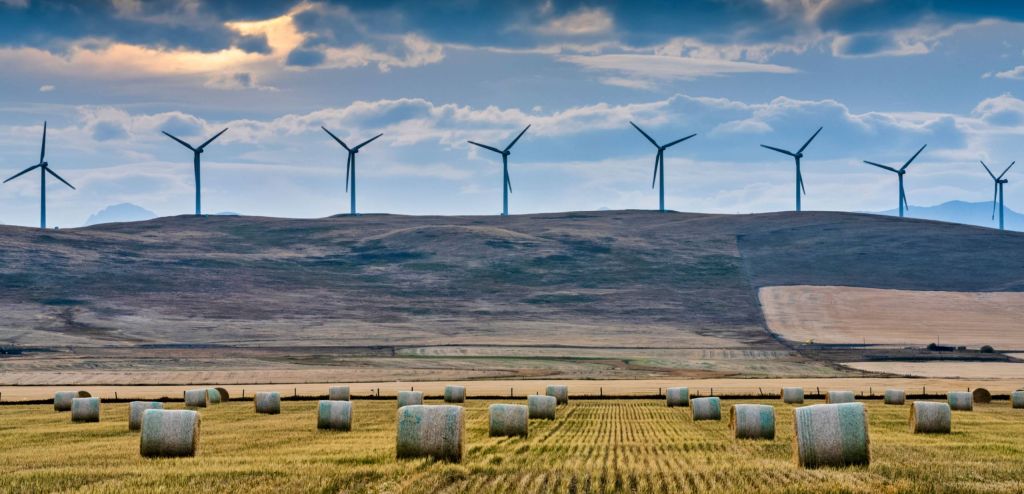
Some provincial grids will find it harder to hit Net Zero targets by 2035
GHG emissions in electricity sector by jurisdiction
| Jurisdiction | Electricity Total Greenhouse Gases (Megatonnes) | Electricity Sector Emissions as a % of Total Emissions | Share of clean/renewable electricity (%) |
|---|---|---|---|
| British Columbia | 0.4 | 1 | 97.5 |
| Alberta | 32.7 | 13 | 15.1 |
| Saskatchewan | 13.9 | 21 | 14.1 |
| Manitoba | 0 | 0 | 99.8 |
| Ontario | 3.7 | 2 | 92.3 |
| Quebec | 0.3 | 0 | 99.7 |
| New Brunswick | 3.5 | 28 | 73.4 |
| Nova Scotia | 6.3 | 43 | 26.6 |
| Prince Edward Island | 0 | 0 | 99.3 |
| Newfoundland and Labrador | 1 | 10 | 97.8 |
| Yukon | 0.1 | 9 | 72.8 |
| Northwest Territories | 0.1 | 4 | 68.7 |
| Nunavut | 0.2 | 25 | 0.2 |
| Canada | 62.1 | 9 | 82.6 |
Source: Environment & Climate Change Canada, Canada Energy Regulator, RBC Climate Action Institute
A Role For Natural Gas
The CER consultations launched last year had sparked tensions between Ottawa and fossil-fuel reliant provinces such as Alberta—which recently announced a six-month moratorium on renewable energy projects. Other gas-powered provinces such as Saskatchewan, Ontario and Nova Scotia had also expressed concerns. Provincial utilities worry that as more power comes from wind and solar power, it will be harder to reliably match supply and demand of electricity, risking blackouts. Ontario’s Independent Electricity System Operator (IESO) noted that 40% of severe weather events that could cause renewables outages exceeded the length of time it can store power in batteries. Rising demand and higher costs of alternatives such as energy storage or nuclear power makes the case for gas a lot stronger. The proposed rules offer some flexibility to help alleviate those concerns and ensure natural gas has a role to play, albeit diminishing, in provincial grids:- The draft regulations require that grid-connected electricity generating units online as of 2035 with a capacity of 25 megawatts (MW) or more meet an annual average emission threshold under 30 tonnes of CO2 per gigawatt-hour (GWh) of electricity produced. An unabated gas-fired generator produces 400-500 tonnes per GWh.
- For reliability, unabated peaking gas turbines can fire for up to 5% of the year without meeting an emissions performance standard. Ottawa considered allowing peakers to run more but found it decreased costs by only 2% while increasing emissions.
- Natural gas turbines already in service before 2025 have 20 years of uncapped emissions before being subject to the rule (this likely will not apply to any gas units not already planned, which won’t be commissioned before 2025).
- Natural gas-fired generators that install carbon capture can apply for exceptions to the emissions threshold (increasing allowed emissions to 40 tonnes/GWh on an annual average basis) for up to 7 years after commissioning the unit, to allow for capture system downtime.
- “Behind-the-fence” (i.e., own-use) power generation is exempt, as are emissions associated with the heat element of combined heat-and-power systems (e.g., those used in the oil sands). They are still covered under the large emitters carbon price.
Provinces Take Charge
We think these are material concessions in response to provincial and industry feedback, without sacrificing the core intent of the regulations. We expect the regulations will have a significant impact on the role of unabated natural gas in the grid. The 5% threshold for peaking is restrictive (many peakers operate above this capacity factor) but existing transition gas (e.g., Alberta’s recently grow in gas to get off coal) will be allowed to operate for at least 20 years, enough time for operators to be paid out for their investments. Future gas baseload plants will likely be significantly challenged in areas without access to carbon storage. If the regulations come into force as proposed, gas baseload power is unlikely to offer a solution for eastern Canada without significant work to develop a carbon, capture and storage (CCS) strategy and studies of storage opportunities. Indeed, the federal government’s model sees little role of emitting generation under the regulations even with the peaker provisions, with natural gas providing somewhere between 0.5% and 1% of Canada’s electricity after 2035. The sum of the regulations and investment tax credits from Budget 2023 would help move the needle. Teasing a forthcoming clean electricity strategy, Ottawa suggested federal funds would be restricted to provinces that “take concrete action to achieve Net Zero.” Indeed, provinces will likely need to publicly commit to the 2035 Net Zero Electricity goals and start cutting emissions beyond electricity. Supporting the required permitting for transmission lines, power storage projects, and carbon capture equipment will also be critical for provinces to move at an accelerated pace.Contributors:
Lead author: Colin Guldimann, Senior Economist
RBC Climate Action Institute Myha Truong-Regan, Head of Climate Research Yadullah Hussain, Managing Editor Shiplu Talukder, Digital Publishing Specialist Caprice Biasoni, Graphic Design Specialist