

 EN
EN 

Introduction
The skies above Davos were unusually cloudy during the World Economic Forum. The annual winter gathering, on the other hand, had unusual bursts of sun.
The global meeting of government, business and community leaders—the first in three years—can’t quite be described as optimistic. But after a year marked by war, inflation, energy shortages and pandemic fears, the general view of Davos 2023 was, “hey, things could be a lot worse.” Europe is more united than it’s been in decades. The Ukraine war seems contained. China has re-emerged from a marathon COVID lockdown. Inflation is on its way down. And many revised economic forecasts suggest most of the world is headed for only a “You-call-that-a-recession?” recession.
In short, a year to hold your ground.
This was my 7th trip to Davos, an otherwise sleepy ski town in the Swiss Alps. And while the pandemic did nothing to wash away the gathering’s hubris (“We’re good; the world isn’t,” could be its motto), the Forum continues to be a rare opportunity for much of the world to exchange views on the world. Where else can you sit with a scientist from the Bill & Melinda Gates Foundation, an economist from Oxford University, a tech entrepreneur from Brazil, and a social activist from Johannesburg?
Here are 12 ideas—a Davos dozen—that I took away from this year’s Forum:
1. It’s a fragmented world, after all
An extraordinary 30-year run of global openness and cooperation that rose from the ashes of the Cold War is coming to an end. A decade ago, at my first Davos, I met with Iranian leaders, Russian oligarchs and Chinese techies. In the 2020s, that seems a distant memory, as large parts of the world feel unwelcome at international events. It’s what the Germans are calling a Zeitenwende, a tectonic shift that now threatens serious aftershocks. Those include a rise in economic nationalism that’s become a norm in every region, and a renewed desire in the West to impose liberal values on a new global order. For those who felt economics replaced geopolitics after the Cold War, the history of great power—and value—struggles is back.

Ironically, the Forum was created more than 50 years ago to combat economic nationalism in Europe. Today, many of its founding members are pushing for a “Climate Club” to foster a renewable energy cartel to rival the Organization of the Petroleum Exporting Countries (OPEC), and new democracy-based trading blocs to challenge China. Economic security has become national security, and a justification for governments to impose arbitrary investment and trade rules.
In one interactive discussion among 200 participants, geopolitics was identified as the top risk to financial stability, well ahead of cyber and economic risks. The World Trade Organization came to Davos to warn that such forms of deglobalization could cost the world US$7 trillion of lost output if it goes too far. But there was no sign of backtracking. When asked about deglobalization, Ursula von der Leyen, president of the European Commission, chafed at the word, preferring to call this a new era of “de-risking.”
2. Meh-conomy, 101
If there was a Davos consensus, it was that 2023 will be, well, meh. A CNBC survey of 90 CEOs at the Forum found they were generally optimistic but not bullish. Kristalina Georgieva, head of the International Monetary Fund, said she expects to roughly stick to the IMF forecast of 2.7% global economic growth. China has suffered the worst of its economic downturn and may help lift the world with “revenge spending,” as Chinese households are estimated to have US$2 trillion in pent-up savings.

Supply chains are slowly getting back to normal. Europeans are limping through a warmer winter with lower energy costs, while the U.S. appears to have its economic nose above water.
There’s one Matterhorn-sized risk: interest rates. Central bankers used the Davos stage to stress they’re not tempted to cut rates due to the slowing economy. “Stay the course” was said more often, in more languages, than any other line. While inflation appears to have peaked, central banks recognize it will be much harder to get from 4% to 2% than from 6% to 4%. Wage increases alone will continue to frustrate inflation hawks.
Central banks are fighting a credibility question, too, having missed the early signals of global inflation during the pandemic. Another challenge is an enigmatic labour force, with its remarkably low unemployment levels that show few signs of bending, thanks to a new work culture that has millennials redesigning jobs, Baby Boomers redesigning retirement, and a huge number of working-aged men—one in eight—opting out of the formal economy in the U.S. If central banks continue to focus on employment levels, they’re likely to keep rates higher for longer—and economic growth lower into 2024.
3. National security subsumes climate strategy
The hottest topic was the U.S. Inflation Reduction Act, with its US$370 billion of subsidies for clean energy and a promise of easy regulation for U.S. firms to help the world’s biggest energy user create the technologies to get to Net Zero, and export them to the world. In Davos, it was like the U.S. had dropped an economic bomb on the European Union. The bloc has had a few months to digest the IRA, and seems determined to launch its own wave of subsidies. Europeans know they will have to do something far more challenging: cut regulation.

Canada is facing the same challenge to not just match U.S. spending but to ensure the notoriously slow federal-provincial approach to project approvals can find warp speed. Europe’s main goal is to negotiate preferential access for some climate-friendly technologies like electric vehicles; in effect, getting inside America’s climate club.
Europe wants to build as much renewables capacity by 2030 as it has today, launching the biggest building boom since the Marshall Plan repaired the wreckage of the Second World War. Chancellor Olaf Scholz stressed Germany will use all its spending and regulatory might to get off coal by 2030, and be fully reliant on renewables soon after.
That’s not how many Americans see their climate plan, which is designed to ensure energy security, with low emissions, not eliminate fossil fuels. Joe Manchin, the U.S. Senator who orchestrated the legislation, came to Davos to explain that it’s not meant to be a threat to America’s allies—nor is it meant to speed up the death of oil. He surprised many Europeans by saying the U.S. might see oil production increase 20% and gas by as much as 50%, using carbon capture to keep emissions in the ground. His goal is to see an America that produces all forms of energy. Climate is a secondary concern.
4. The realities of reshoring
The semiconductor shock of 2022 is still reverberating. In addition to clean tech, the U.S. is spending billions to help companies like Intel move chip production from Asia back to North America. The U.S. accounted for 37% of global chip manufacturing in the 1990s. Today, its share is 12%. That decline took 30 years, and may take just as long to reverse, if that’s even possible. Taiwan and Korea are so sophisticated in their production networks, as to make it a kind of supercomputer puzzle. Intel is building plants in the U.S. and Germany but will need years to build up both a workforce and supply chains. Trouble is, the U.S. may not have decades to get reshoring right, as 5G unleashes a wave of industrial demand and the EV revolution turns to a new generation of chips, which could account for 20% of EV car content—four times what cars need now.

While the reshoring rhetoric is popular in Davos, and on political campaign trails, it’s proving to be less appealing to business operators. New McKinsey research shows that over the past five years, since former president Donald Trump brought his America First speech to Davos, no major economy, including the U.S., has systemically diversified trade. The consulting firm also found no region to be anywhere near self-sufficient. Instead, there is heavy concentration of production for a range of goods and commodities, from laptops and airplanes to soybeans, iron ore and, yes, microchips.
5. Ukraine holds while Europe hopes
Volodymyr Zelenskyy was a relative unknown at Davos in 2020, when he spoke about the need for speed in decision making. He stormed Davos 2023 by video, using his motivational skills to keep the West from slowing down support. His wife Olena spoke in person, and sat in the front row for several leaders’ addresses. One after another, European, American and Canadian politicians assured Ukrainians their support was unconditional, and they were prepared to stand by the country for years—“a decade, if needed,” said Finland’s Prime Minister Sanna Marin. Europe is showing more confidence than it has in decades, but it knows its vulnerabilities, including the ghosts of history. Germany continues to go slow on tank supplies, not wanting to provoke Russia. Europe also knows it dodged an energy bullet this winter, thanks to warm weather, emergency gas supplies from Qatar and the U.S., and less competing demand from a China in lockdown. Next winter may not be so kind.

To Zelenskyy, the end game will be Russia’s defeat, apology and reparations. This would be difficult for Russia without political upheaval, economic crisis or military debacle—or all three. Henry Kissinger, the former U.S. Secretary of State, spoke to a small group, also by video, to share a view that Europeans are not partial to. Kissinger believes there can be a ceasefire, but Ukraine would have to concede Crimea, which Russia took in 2014, and possibly some other towns that Moscow has claimed.
In return, Russia would have to accept Ukraine joining NATO and the European Union—currently red lines for the Kremlin, as it would bring the West right to its borders. The West will need to give Russia a path back into the international community, including the removal of sanctions. All of which would be hard for Ukraine, and much of Europe, to accept. But if the fighting goes on another year, backers of the war—namely the U.S.—may have other views.
6. China agitates while India accelerates
The most notable absence in Davos was China, which was represented only by the soon-to-retire Vice Premier Liu He. Instead of the usual Chinese self-aggrandizement, and finger-wagging, Liu gave a tepid speech that seemed designed primarily to build bridges with the West. He spoke privately to business executives, signalling that “China is back.” He urged U.S. and European politicians to avoid “a Cold War mentality” and to scale back trade sanctions, including a ban on semiconductors from U.S.-affiliated suppliers.

U.S. political leaders weren’t interested, with Republicans and Democrats focused on out-toughing each other on China. Clearly, the Chinese economy is suffering from more than lockdowns. Its inflated real estate sector was top-ofmind for Liu, as it now accounts for 60% of urban household wealth and 40% of bank loans. That’s concerning for a country with a population in decline—and that’s projected to lose 150 million working-age people by 2050.
A more different image could not have been crafted by China’s neighbour and sometime rival, India, which took Davos by storm. India occupied an entire block of the Davos promenade, with trade showcases, reception spaces and a large billboard of Prime Minister Narendra Modi. It’s more than PR.
India has overtaken China in economic growth, and will overtake it in population as the world’s biggest country this spring. Having won an iPhone manufacturing mandate from China, it’s also aiming to be a leading tech supplier to the world. The Modi government has committed US$10 billion to subsidizing the semiconductor industry, which employs 50,000 engineers in India, and reorienting post-secondary education to accommodate a doubling of chip production, with 500,000 new engineers a year. In addition, an Indian delegation of CEOs and economic ministers told the Forum they intend to be the world’s leading telecom equipment exporter, and leading locomotive and train exporter, by the end of the decade.
7. The riskiest places on earth
The world’s poorest countries always get a seat at the table at Davos. They just don’t always get a voice. That changed this year as the spectre of low economic growth, high interest rates and stiff competition for energy, food and advanced technologies like microchips cast into stark relief the coming challenges for developing countries. And how that may make them the riskiest places on earth for global stability.

Coming into 2023, 60 of the world’s 80 low-income countries were listed as “distressed” in terms of their ability to pay their debts. If interest rates remain high, that stress will worsen if the U.S. dollar remains the world’s safe haven (and in turn makes imports of food, oil and other essentials for those countries more expensive.) Add to that the scarring of both COVID and climate-related disasters like last year’s floods in Pakistan, and scores of countries face a tough road ahead.
No one is predicting a Third World debt crisis like the one that destabilized global markets in the 1980s. By the same token, any debt crunch will be harder to resolve in an increasingly fractured world. In the 1980s, the U.S. was able to orchestrate debt relief packages through a group of creditors called the Paris Club. Today, most emerging market debt is spread across a panoply of creditors, from sovereign wealth funds to commercial banks, and the biggest new creditor, China.
Some Davos regulars, led by former central banker Mark Carney and former U.S. Secretary of the Treasury Lawrence Summers, are pushing for reform of the World Bank and International Monetary Fund, at their annual meetings this spring, in part to avert future debt crises while also accelerating climate finance. According to the WEF, those institutions, along with regional development banks, need access to US$3 trillion a year in capital to finance developing countries through a socially just transition to Net Zero.
8. Soil, the new gold
Leave it to Davos to follow the money. One of the quickest sessions to fill up was on “soil health,” where the CEOs of Nestlé, Unilever and Illycaffè joined farmers and policymakers to explain their approach to regenerative agriculture. Farm lands are considered a leading asset for climate action, as, properly managed, they can absorb the emissions of entire sectors. They can also offset the carbon, methane and nitrous emissions that come from fertilizer, and the production and consumption of food. What’s more, soil degradation has become a serious consequence of climate change, albeit less noticed than hurricanes and floods.

The Italian coffee entrepreneur, Andrea Illy, warned the Forum that half the world’s coffee lands may be out of production by 2050 if their soils, and trees, are not better protected. If we help farmers preserve their land and trees, the world wins, as do coffee drinkers.
The challenge for Davos was how to finance the next green revolution, by rewarding farmers and landowners not only for producing food, but for protecting and preserving their soil.
Nestlé and Unilever are among the large food companies testing an “inset” model that certifies and pays farmers directly for sustainable practices such as no-till planting or low-emission fertilizers. Food companies can then claim the emissions on their climate accounting books—something many investors and consumers want to see to better measure progress. For now, retailers are leading the push, wanting to win over climate-minded shoppers. But for a true gold rush, consumers will need to take charge, sending a signal from their purchases back to farmers that they want to help preserve the soil that produced their food.
9. A concrete approach to climate
For millennia, Europeans have prided themselves as builders. But they have recently discovered their great concrete monuments—and all the heat required to make the materials—are not helpful to the planet. European innovators are trying to change that, reimagining ways to make concrete, and other materials, with far fewer emissions.

Building construction is estimated to account for 11% of global emissions. That’s why many local governments are using building codes as well as procurement to help the construction industry get to Net Zero. The 2024 Paris Olympics will be the next hurdle in that race. But it won’t come cheaply. The global construction sector, which is adding the equivalent of 40 New York Cities a year, would need US$10 trillion—per year—to abate or offset its emissions, which are on course to triple over the next 25 years.
The construction giant Holcim sees a different approach, and has invested in more than 100 startups to help design a new path. It’s developing new ways to recycle concrete, largely from demolished buildings. Other companies are electrifying kilns, to ensure a low-emissions method of making bricks.
But to succeed, the innovators will need governments to create new approaches to building codes, lenders to reimagine how they finance recyclable construction materials, and landlords to bake the climate value into their business models.
10. In person, like never before
The pandemic was supposed to bring an end to large-scale gatherings like Davos, saving its 2,500 visitors the long journey and endless hours of schmoozing. The obituaries were premature, judging by the crowds—and by the newest pop-up pavilion in the heart of Davos, a café sponsored by Zoom.

Enrique Lores, CEO of computer maker HP Group, put himself among the many who couldn’t wait to be back in person, for conferences and for work. A techie to the core, he said he nonetheless gets pushed, prodded and inspired in person in ways he’s never experienced on Zoom. The pandemic cruelly revealed the importance of personal interaction can be for mental health, too, which has quickly moved from a corporate risk to corporate imperative. Several CEOs said they’re looking to develop a more productive and competitive workforce by ensuring they have a mentally healthy workforce. It took a pandemic to see how depression can inflict an insidious cost on everyone.
A different approach to work requires a different approach to management. For most organizations, that seems to mean a hybrid strategy. (All-remote teams tend to have high turnover rates.) But as many firms are discovering, hybrid requires a different set of management skills, particularly for team managers.
Alexi Robichaux, co-founder of BetterUp, an online coaching platform, thinks the performance—and engagement—of middle managers may be a defining element of the new world of hybrid work. And it’s being put to the test in real time, in what he’s calling “the year of the manager.”
11. The cloud wars
A year ago, when Russian forces were amassing to invade eastern Ukraine, some of the world’s best techies and security analysts swapped ideas on how to build a line of defence in the cloud. They knew Russian President Vladimir Putin would be unleashing his top forces there, too. Matthew Prince, founder of CloudFlare, explained how his Silicon Valley company worked with the Pentagon and Kyiv to protect Ukraine in cyberspace, and to keep Russia on its digital heels.
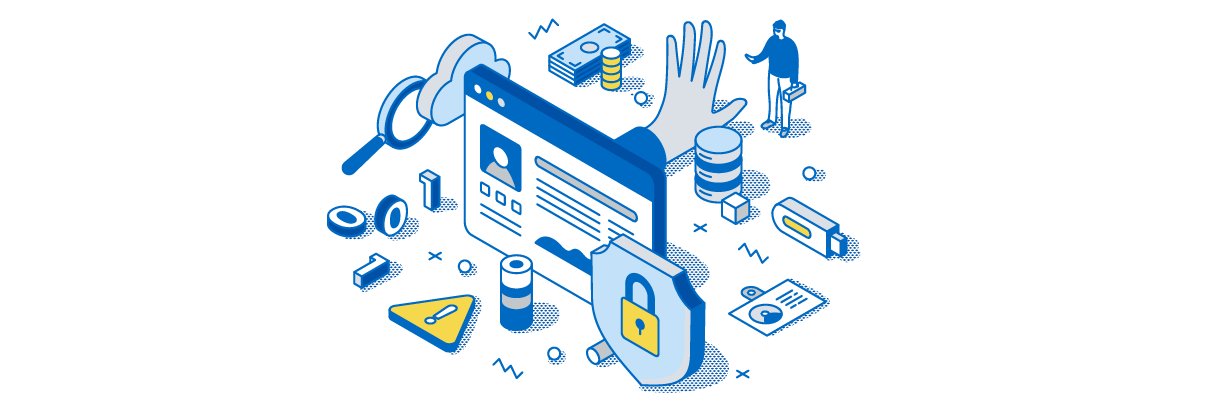
Rather than pull out of Russia entirely, CloudFlare maintained some services, which Prince said are now being accessed by 10% of Russians hoping to bypass censorship and surveillance. Silicon Valley and Kyiv tech firms have also been able to keep the Ukraine internet, and digital services like banking, operating with little disruption.
Ukraine is just one front in the global cyber battle, which some see as World War III. U.S. firms are actively working with U.S. intelligence groups to fend off forces from Iran and their most aggressive adversary, China.
FBI Director Christopher Wray said China has “the world’s most sophisticated hacking program.” Their artillery are dual-use technologies that can attack and defend. And their ammunition is data, which they try to steal with every hack and breach to train algorithms to know where, when and how to strike.
12. Deep Tech takes Davos
Davos has long been a solid platform for Big Tech. And over the years, it’s used it effectively to get close to government officials, policymakers and influencers, as well as to inform and shape global tech thinking. Some like Salesforce founder Marc Benioff use the Forum to advance their causes; in Benioff’s case, refugees.

The tech giants were in Davos again, occupying the best real estate and putting on hot-ticket parties, although a little more humbly as they began to announce tens of thousands of layoffs back home. Before the pandemic, Big Tech leaders like Benioff and Microsoft’s Satya Nadella loved to align themselves with the Forum’s favourite topic, the Fourth Industrial Revolution. Meta (Facebook) still finds Davos a good avenue on which to tout itself as the village square of democracy. But with the Great Reopening has come the Great Reckoning, and the revolution may have to pause until interest rates come down and venture capital flows again.
That sombreness didn’t seem to affect the Deep Tech tribe, as it explores the edges of discovery and doesn’t need to worry too much about consumers and other Planet Earth realities. Despite Big Tech troubles, Generative AI—and the celebrated ChatGPT—were star attractions, showing up in blogs, podcasts and multimedia art.
The emphasis on “deep tech”—technologies without commercial applications—is opening all sorts of possibilities for a world challenged by slow growth, aging, conflict and social disharmony. Ethical dilemmas will continue, which is why forums like Davos are needed, to draw people from all the world’s fragments to find or create common ground.

Download the Report
This article is intended as general information only and is not to be relied upon as constituting legal, financial or other professional advice. The reader is solely liable for any use of the information contained in this document and Royal Bank of Canada (“RBC”) nor any of its affiliates nor any of their respective directors, officers, employees or agents shall be held responsible for any direct or indirect damages arising from the use of this document by the reader. A professional advisor should be consulted regarding your specific situation. Information presented is believed to be factual and up-to-date but we do not guarantee its accuracy and it should not be regarded as a complete analysis of the subjects discussed. All expressions of opinion reflect the judgment of the authors as of the date of publication and are subject to change. No endorsement of any third parties or their advice, opinions, information, products or services is expressly given or implied by Royal Bank of Canada or any of its affiliates. This document may contain forward-looking statements within the meaning of certain securities laws, which are subject to RBC’s caution regarding forward-looking statements. ESG (including climate) metrics, data and other information contained on this website are or may be based on assumptions, estimates and judgements. For cautionary statements relating to the information on this website, refer to the “Caution regarding forward-looking statements” and the “Important notice regarding this document” sections in our latest climate report or sustainability report, available at: https://www.rbc.com/our-impact/sustainability-reporting/index.html. Except as required by law, none of RBC nor any of its affiliates undertake to update any information in this document.