

 EN



For the week of November 16th
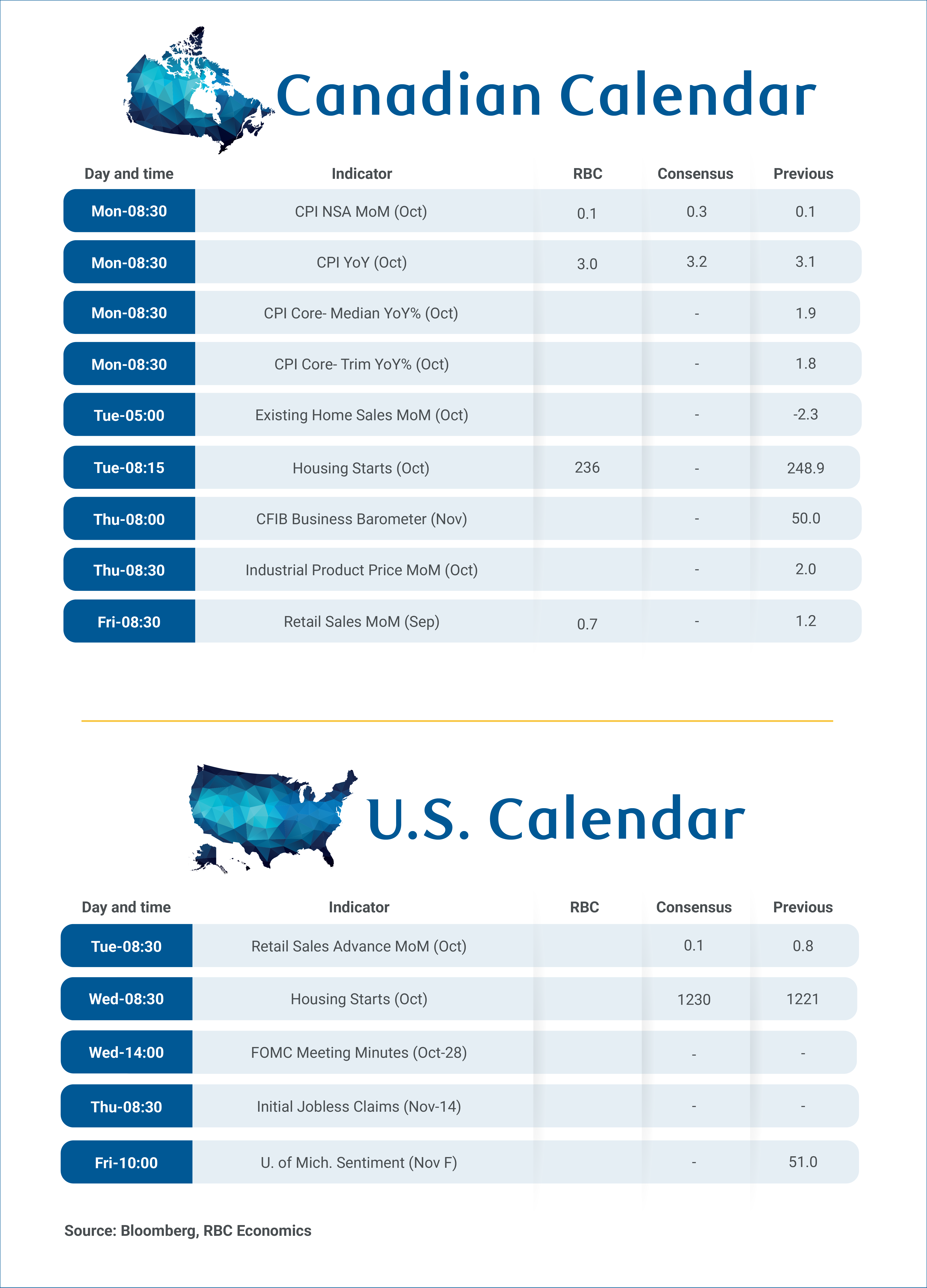
We continue to look for signs of elevated energy costs generating broader price pressures, in Canada’s October inflation report next Monday (last one before the next Bank of Canada meeting).
We expect headline CPI growth to ease slightly to 3% year-over-year from 3.1% in September. Energy prices mostly held steady between September and October at levels that remained well above last year. Food inflation, having eased closer to 2%, is expected to have changed little in October.
Excluding food and energy, we expect CPI to tick slightly lower from September’s 2.1% to 1.9% in October. The Bank of Canada’s preferred core measures, including CPI-trim and CPI-median are likely to average the same year-over-year growth rate after another benign 0.2% increase month-over-month.
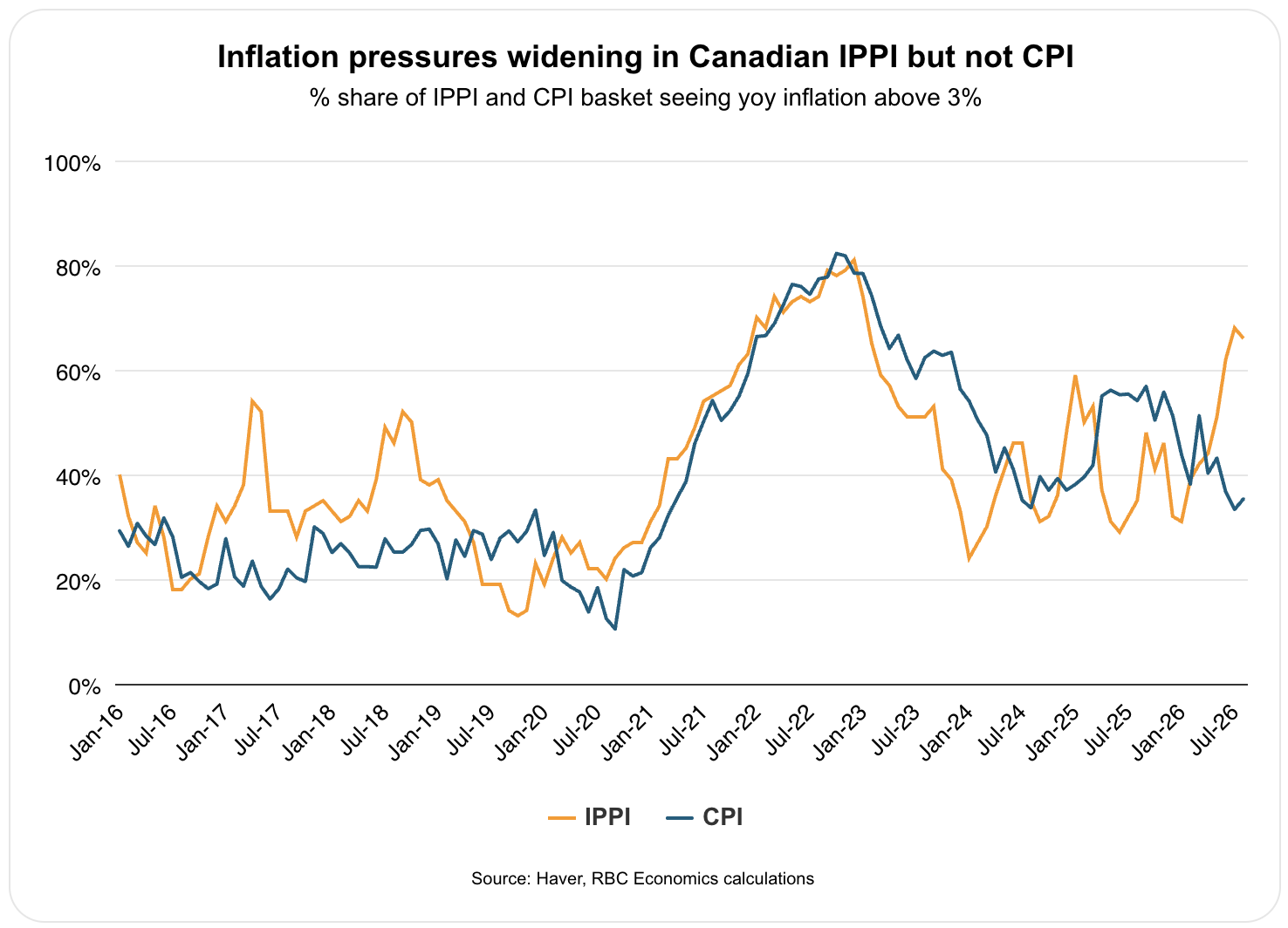
Energy pass-through still muted to date but pressure is building
Importantly, the diffusion index that we calculate to track the share of consumer basket items seeing abnormally high inflation is expected to have remained relatively narrow, pointing to limited spillover from energy to other components of consumer prices outside inter-city transport.
Still, limited evidence to date does not rule out the potential for more significant spillover in the future. The BoC in October opted to hike interest rates to preemptively neutralize some of those upside inflation risks before they materialize. We expect another rate hike in December to bring the overnight rate to 2.75%, the middle of the estimated neutral range.
The case for a December hike is not a slam dunk. Economic data since their last meeting has mostly turned softer. The labour market recorded its third consecutive job loss in October and Q3 GDP growth is on course to disappoint the BoC’s 2% estimate. Additionally, domestic gasoline prices have fallen significantly in November, back closer to levels in March as oil prices and refining margins both normalize.
But the path of oil is highly unpredictable and previous periods of elevated prices also means that pressure has already been accumulating in the pipeline. The same diffusion index calculated on a producer price basis has pointed to a significant widening in scope, which will likely continue to trickle through supply chains before showing up in consumer prices with a lag.
Our base case remains a low conviction hike in December.
-
Next Friday’s September Canadian retail sales report will provide an update on household demand amid rising borrowing costs. Statistics Canada’s advance estimate was a 0.7% increase in nominal sales, broadly consistent with our own cardholder data that pointed to resilient spending in the fall.
-
Housing starts data will round out the week’s Canadian releases. We expect housing starts to decrease to 236,000 annualized units in October, down from the strong 259,000 reading in September.
About the authors:
Claire Fan is a Senior Economist at RBC. She focuses on macroeconomic analysis and is responsible for projecting key indicators including GDP, employment and inflation for Canada and the US.
Abbey Xu is an economist at RBC. She is a member of the macroeconomic analysis group, focusing on macroeconomic forecasting models and providing timely analysis and updates on economic trends.
Explore the latest from RBC Economics:
Canada’s headline inflation masks a harsher regional reality
New Immigration Levels Plan adds upside to population growth outlook
Why AI investment won’t add to near-term GDP growth in Canada
Caribbean Outlook Monitor: Uncertainty is the only certainty
Share these insights with your network:
This article is intended as general information only and is not to be relied upon as constituting legal, financial or other professional advice. The reader is solely liable for any use of the information contained in this document and Royal Bank of Canada (“RBC”) nor any of its affiliates nor any of their respective directors, officers, employees or agents shall be held responsible for any direct or indirect damages arising from the use of this document by the reader. A professional advisor should be consulted regarding your specific situation. Information presented is believed to be factual and up-to-date but we do not guarantee its accuracy and it should not be regarded as a complete analysis of the subjects discussed. All expressions of opinion reflect the judgment of the authors as of the date of publication and are subject to change. No endorsement of any third parties or their advice, opinions, information, products or services is expressly given or implied by Royal Bank of Canada or any of its affiliates.
This document may contain forward-looking statements within the meaning of certain securities laws, which are subject to RBC’s caution regarding forward-looking statements. ESG (including climate) metrics, data and other information contained on this website are or may be based on assumptions, estimates and judgements. For cautionary statements relating to the information on this website, refer to the “Caution regarding forward-looking statements” and the “Important notice regarding this document” sections in our latest climate report or sustainability report, available at: https://www.rbc.com/community-social-impact/reporting-performance/index.html. Except as required by law, none of RBC nor any of its affiliates undertake to update any information in this document.

