

 EN


Overview
In the Caribbean these days, it feels as though it’s not a matter of if the next shock is on the way, but rather, how soon it will arrive. Indeed, thus far the 2020s have been marked by crisis after crisis, each one—whether natural or man-made—threatening to derail the region’s development prospects.
This time last year, there was much concern about the impact that U.S. tariffs would have on the global economy, and any subsequent repercussions for the Caribbean. Yet the region’s economic growth has been broadly resilient – supported by steady tourism demand and, in most countries, an improving fiscal backdrop. The global economy continues to grow – we estimate on track for a 3.0% gain this year.
While significant tariff clouds remain, a series of ongoing and compounding energy shocks have shifted the global economic focus from trade wars to real ones. Since the start of the year, oil prices have risen substantially and on current trends, we don’t expect to see meaningful relief until the back half of 2027.
The result has been rising inflation across many economies, both globally and in the Caribbean. And, it’s not just the magnitude of the headline movements that are worrying, but so too the underlying drivers given the importance of energy in the modern economy.
In some cases, fiscal supports act as a partial shock absorber, but our view is that these aren’t indefinite, and the longer these conflicts drag on, probably so too is the resilience we’ve seen exhibited across many economies to date.
As for the economic prospects across the Caribbean countries that we cover explicitly, we see a two-speed regional outlook where almost paradoxically in light of the ongoing energy price shock, tourism-dependent economies are expected to outperform this year on the back of resilient activity in key source markets, while structural challenges in Trinidad & Tobago’s energy sector continue to weigh on overall activity.






ARUBA: ¡Bienvenido a Aruba!
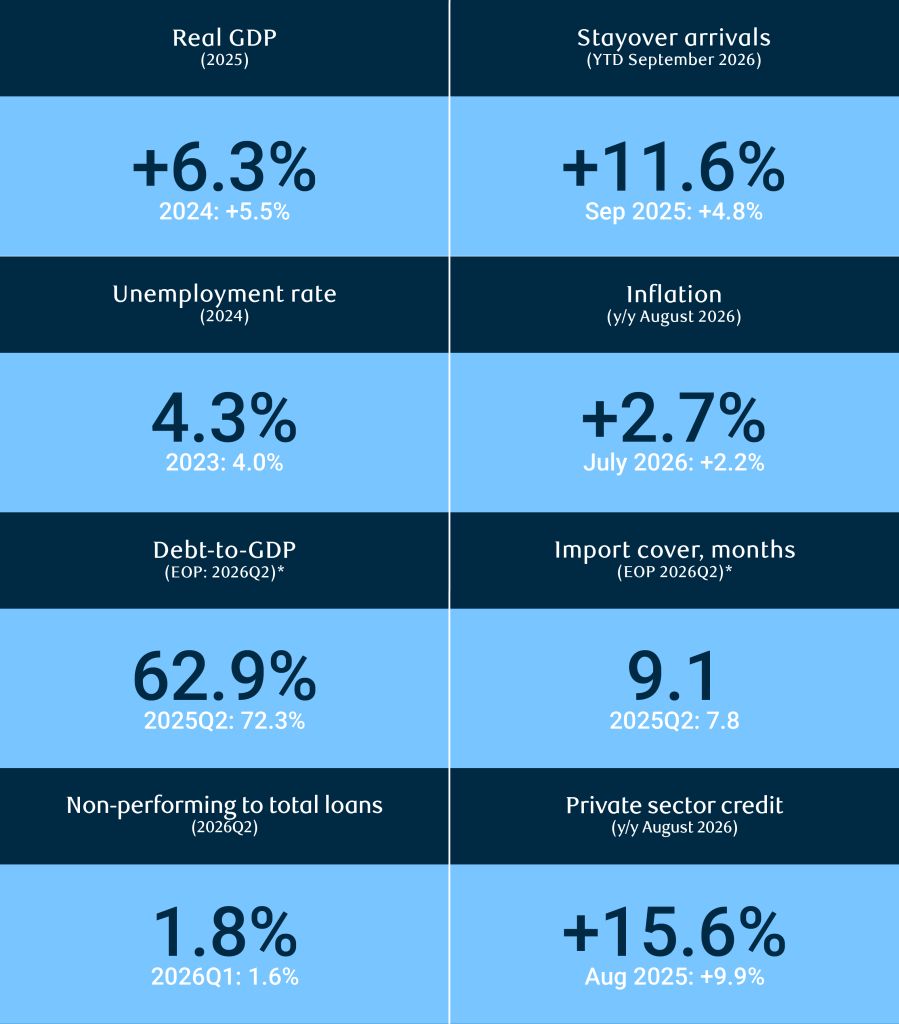
Aruba’s economy appears on more solid footing than previously assumed, with new estimates from the Central Bank of Aruba (CBA) pointing to growth of 6.3% in 2025. That marks a sizeable revision from the 3.4% previously estimated. And the CBA now projects that economic growth in 2026 will settle at 3.7%, up from the previous call of 1.8%.
After posting sub-1% readings for 17 consecutive months prior to March 2026, inflation has gradually trended higher to 2.7% y/y in August. And with global oil prices moving higher since, we see further cost of living pressures in the offing, especially considering that August marked the first month without broad-based fiscal support for households since the U.S.-Iran war began. But we expect targeted supports and immigration flows will continue to provide a backstop, complemented by the fact that as of 2025, gross national savings were estimated at 28% of GDP – a useful buffer for the economy.
Tourism remains the main bright-spot, with long-stay arrivals up 11.6% through September. While the U.S. market remains the main anchor, the triple-digit growth out of Argentina continues to be the major stand-out. Since 2025, half of all new long-stay arrivals have emanated from Argentina, steadily eroding the U.S.’ market share. We view this shift constructively given the need to insulate against potential changes in travel preferences and economic conditions in source markets. And it’s not like the reduced U.S. share has come from diminished American demand, which continues to grow by 5.2% year-to-date. Tightening global financial conditions and a modest uptick in Argentinian unemployment are worth monitoring but aren’t yet significant enough to alter our views around robust tourism activity heading into 2027.
Source: CBA, ATA, Central Bureau of Statistics, Finance Department
Note: * estimate by RBC Economics
The Bahamas: Affordability in focus
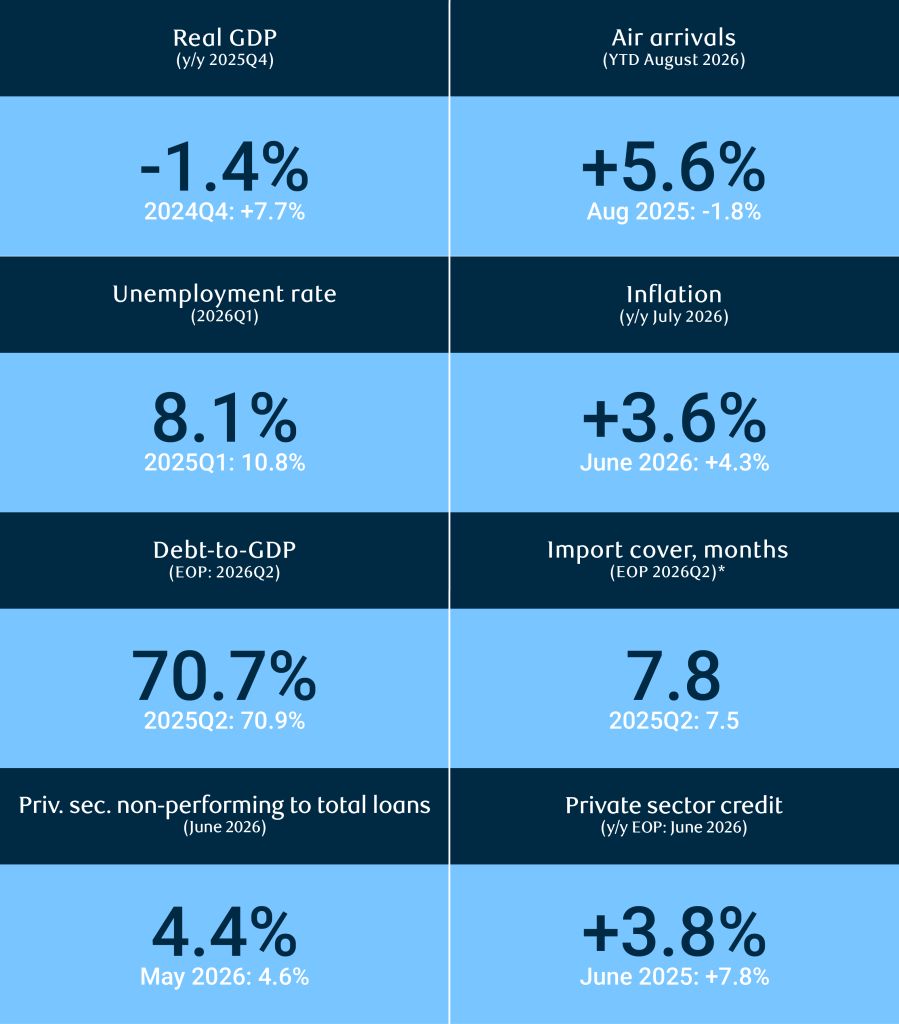
The Bahamian economy has shown some signs of improvement to-date in 2026 after a shaky end to 2025. The economy posted solid growth in 2025 (3.8% gain in GDP), but the quarterly numbers showed that growth heavily concentrated in the first nine months of the year followed by an outright contraction in Q4 (-1.4% y/y) – the first since Q1 2021.
That left us with concerns about the challenges facing Bahamian households through 2026, and we remain concerned about affordability, which we expect is coming under further pressure this year following the recent uptick in inflation. Despite easing recently, as of July, inflation was running at 3.6% y/y, and by our count, housing and transportation accounted for near 90% of the increase. It’s not surprising therefore that improving affordability has emerged as a core policy objective of the new (returned) government, based on some of the measures outlined in Budget 2026/27.
However, tourism demand has remained relatively strong through August. The stopover arrivals market seems to have steadied after the declines of 2024 and 2025, a fact often overshadowed by record-breaking total arrivals. We think tourism activity and various investment projects can help to offset affordability pressures on domestic consumers and support economic growth this year, which the IMF estimates at 2.5%. Moving forward, the Global Minimum Tax (OECD Pillar Two) poses a modest downside investment risk, though government estimates a steady $350M annual tax take through FY2028/29, suggesting no major disruptions to the corporate tax base. Accounting for 2% of GDP, this revenue could provide material support for ongoing debt reduction efforts.
Source: BNSI, Central Bank of The Bahamas, Tourism Min, Finance Min
* months of current year goods imports
Barbados: Some turbulence in the skies
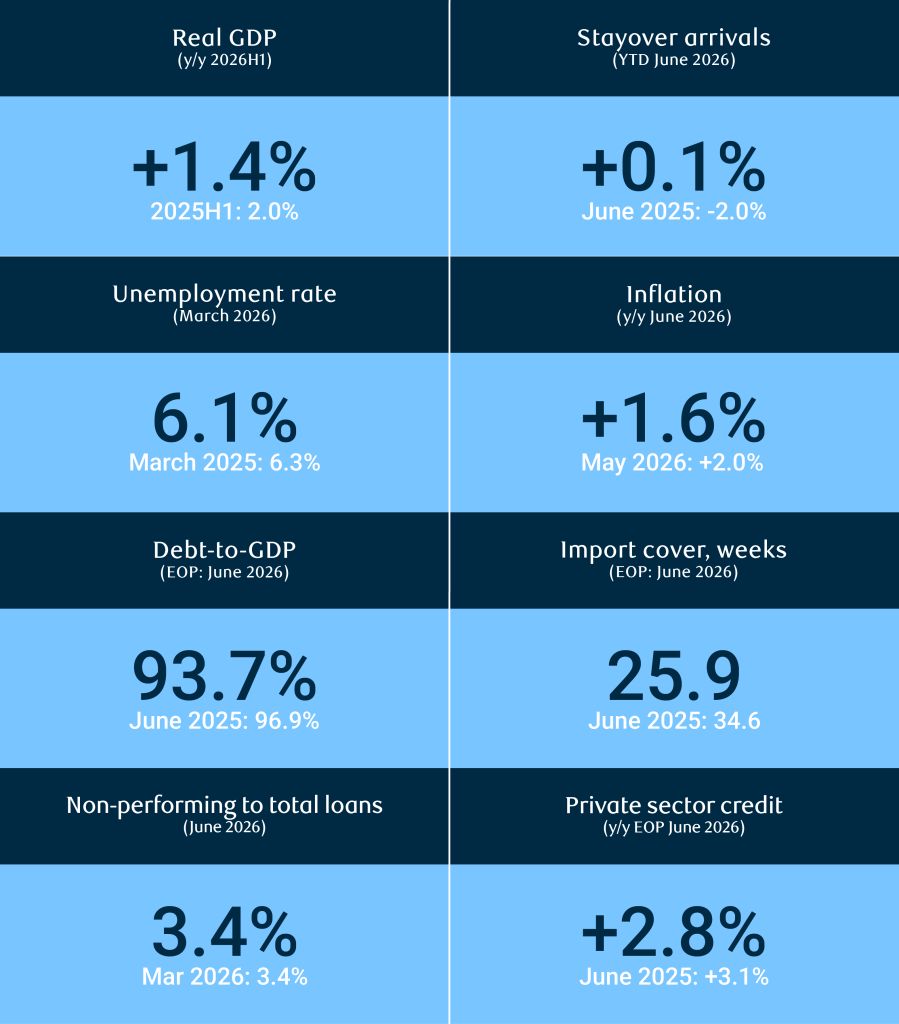
For some time now, it’s been steady as she goes for the Barbados economy, with output growing uninterrupted since late 2021 – and we expect that trend has broadly continued to-date in 2026. The economy finally surpassed its 2008 levels in 2025. But new estimates from the Central Bank point to an economy losing momentum. In the first half of 2026, growth slowed to 1.4% from 2.0% a year earlier. Activity was concentrated in domestically oriented industries, with the non-traded sector expanding 1.5% while traded activity managed just 0.4%.
Tourism was a notable soft spot in H1 2026. While stayover arrivals increased marginally by 0.1%, the shifting composition of arrivals meant that reduced visitor nights pushed tourism value-added -0.5% y/y into the red. For all the (valid) concerns around an over-reliance around tourism though, other sectors were able to more than offset these losses. That said, as the main export-earning engine of the economy, we are hopeful for a rebound in activity in the second half of the year and see this as an important aspect in helping to achieve the IMF’s growth estimate of 1.8% for 2026. While there are certainly risks on the demand front, we view achieving such as likely more contingent on improving supply-side factors like seat capacity.
The fiscal situation is also nuanced. We continue to see improvements, but a recent decline in corporate tax receipts (excl. Pillar Two) is of early concern to us. At this time, we can’t definitively link such to recent corporate tax reform, but it serves as a useful reminder that moving forward, investment attraction will have to rest on economic substance rather than tax preferences. The IMF precautionary standby arrangement remains in place as a backstop, but as of September 30th, government continues to treat it as such, not drawing on the facility.
Source: Central Bank of Barbados, Barbados Statistical Service, Ministry of Finance
Cayman Islands: Red hot labour market
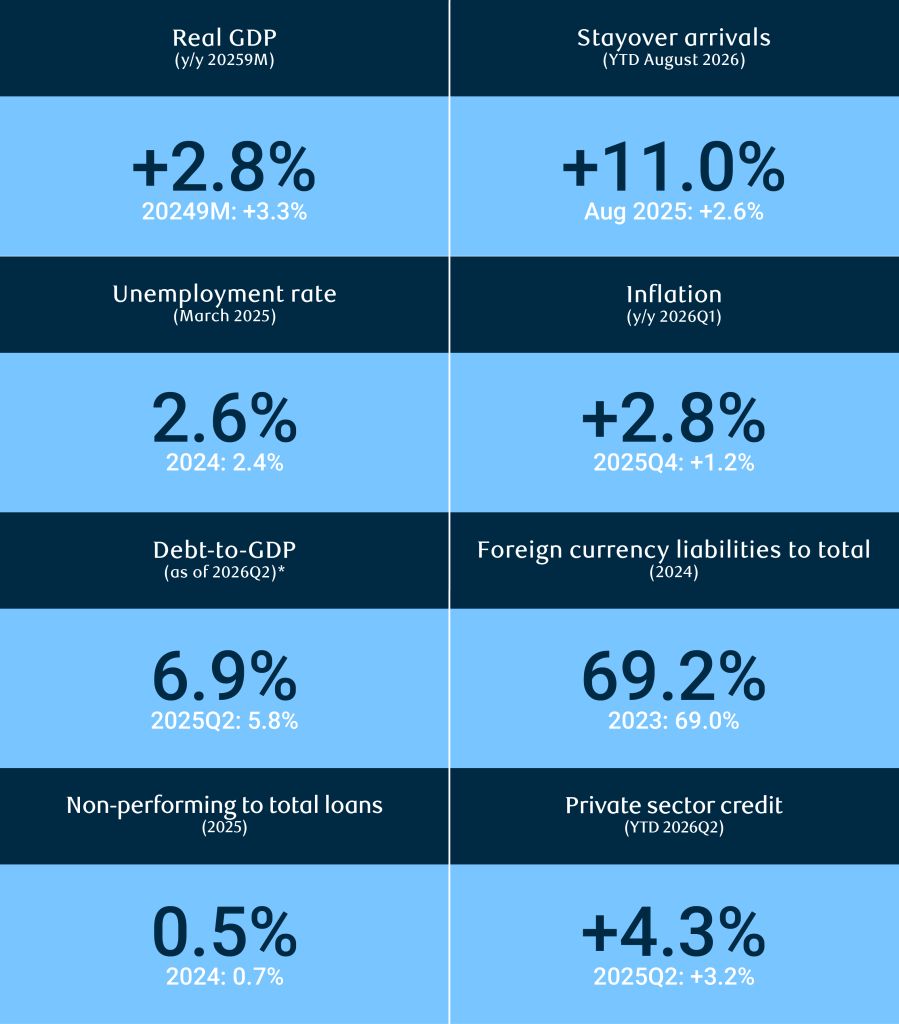
The Cayman Islands economy is estimated to have continued growing in 2026. The financial services sector continues to benefit from strong fund activity (proxied by registrations), and long-stay arrivals are on track to potentially reach levels last seen in 2019 when air arrivals peaked at just over 500K. Stopover arrivals have grown consecutively for the past 10 months, up 11.0% through August.
Importantly, this stronger activity is also showing up in the government’s coffers, with fund administration fees and tourist accommodation charges running ahead of budget through June. This strong performance helped the government to post a fiscal surplus of $252M in the first half of the year, 36% ($67.3M) higher than budgeted. As various projects and initiatives progress over H2, government expects the surplus to decline, but at $10.5M, government still has sufficient fiscal space to continue supporting households through the energy shock. We estimate that so far, these measures have saved households roughly 20% per month on electricity bills alone since June.
Given these supports, and the strong industry numbers seen this year, we think there’s some genuine upside around the (dated) 2.2% growth the ESO forecasts for this year, despite tightening financial conditions in response to the Fed’s 25bps rate hike in September.
And don’t forget the strong post-pandemic population and employment growth, which has likely persisted into 2026. Since 2020, the economy has added over 20K jobs, outpacing growth in the native labour force and underscoring the role of immigration in supporting labour supply. The divergence between employment and GDP growth also highlights a challenge however, with labour productivity down over 20% since 2020.
Source: ESO, Cayman Islands Monetary Authority (CIMA)
Note: * estimate by RBC Economics
Curaçao: Stored up potential
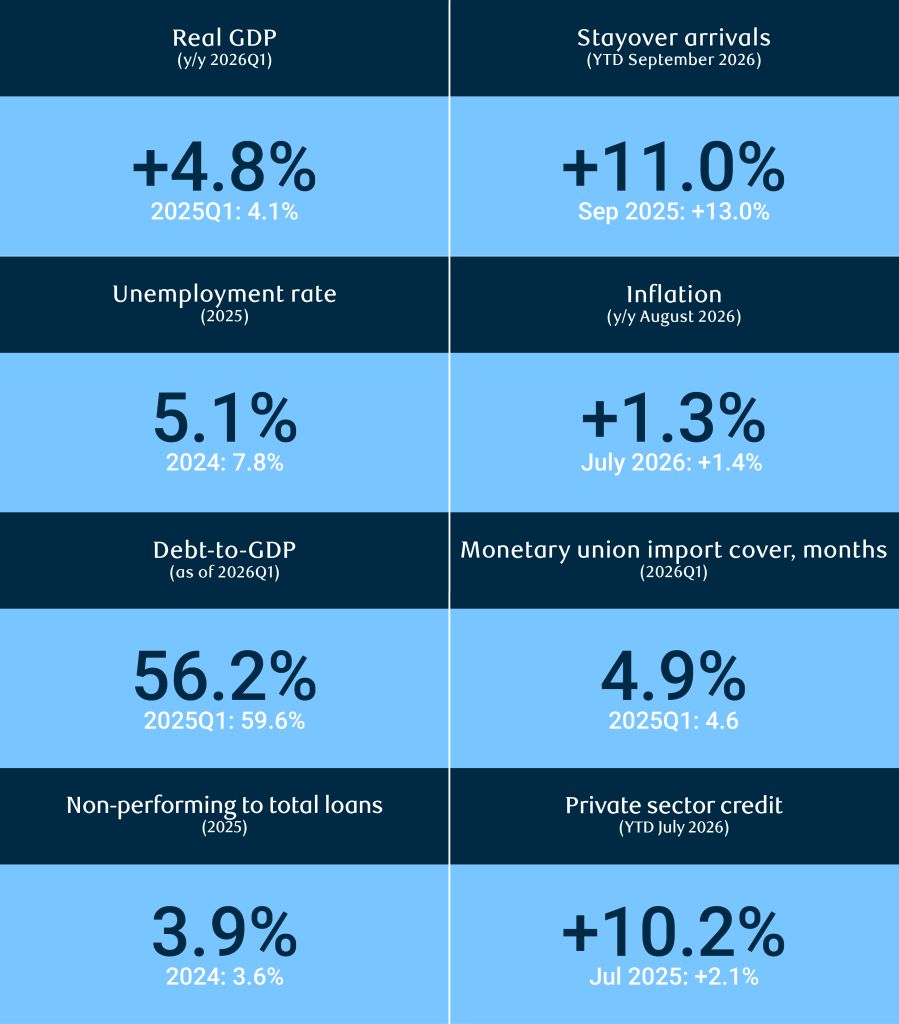
In Curaçao, economic activity was off to a bumper start in 2026, with growth accelerating to 4.8% y/y in Q1, up from 4.1% a year prior. Consumption growth, however, remained tepid at just 0.1% y/y. Since then, inflation has moved higher, but peaked at 1.8% y/y in June, and has since moved lower to 1.3% y/y in August. But don’t let the headlines fool you – price pressures are showing up sharply at the extremes, with about 10% of the CPI basket growing near or above 10% y/y. And it’s entirely an energy story, all accounted for by household energy expenses and costs for personal transport vehicles. At the other end though, over 25% of the CPI basket is in outright deflationary territory, helping to keep a lid on overall price growth.
The island continues to be one of the region’s tourism standouts, with almost 650K stopover tourists already welcomed through September. Heading into Q4, barring any negative surprises, we are confident that Curacao is on track for its first year of 800K+ stopover arrivals. As highlighted in Aruba, the main tourism source markets – Netherlands and U.S. in this case – continue to anchor growth, but Latin America is growing in importance, with stayover arrivals out of Chile and Peru both up over 100% this year. We expect tourism flows to drive growth this year, which the CBCS estimates at 2.8%.
The medium-term prospects also look promising for the country’s oil storage and transshipment industry, given potential developments in Venezuela. Curaçao may already be getting a trial run for what’s potentially to come, with reports stating that Bullenbaai has received very large crude carriers again for the first time in almost a decade. That is borne out in the port data, with the estimated volume of tanker trade seen this year more than the last seven years combined.
Source: CBCS, Central Bureau of Statistics
Note: CBS unemployment rate differs from CBCS rate of 7.5%.
Sint Maarten: Cruising along
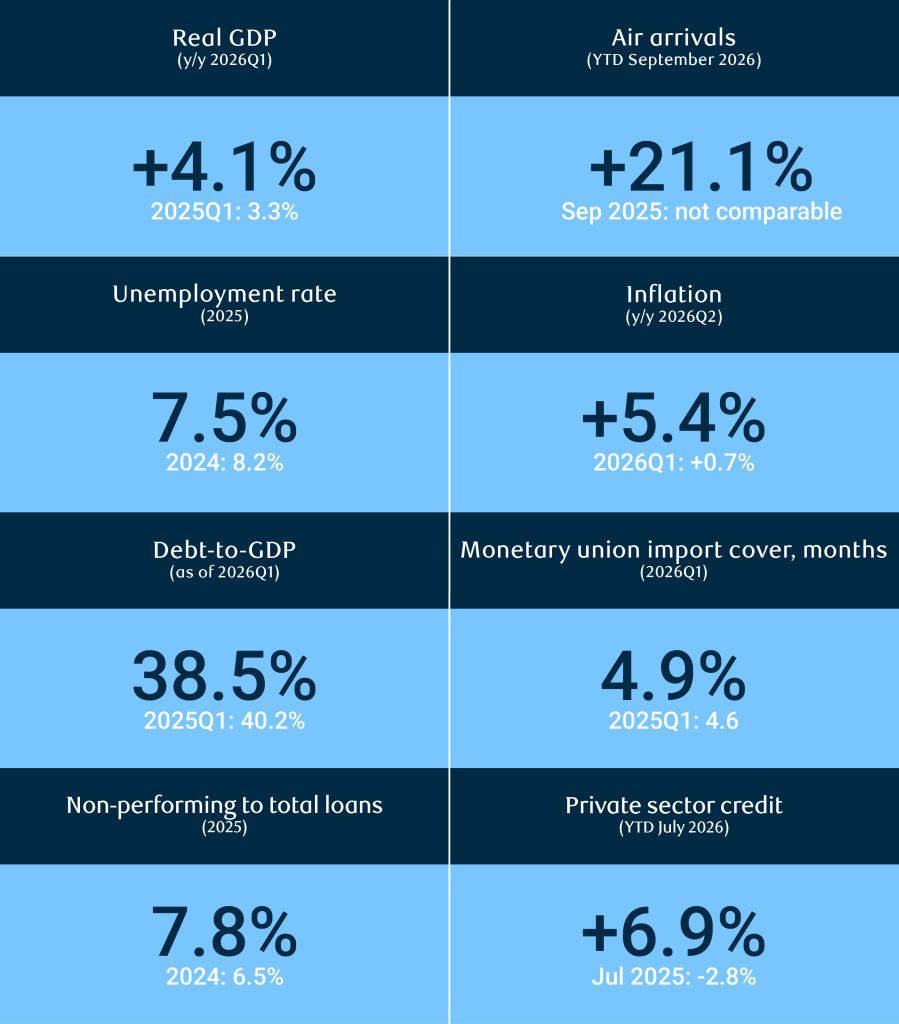
After hurricanes and the pandemic disrupted economic activity between 2017 and 2020, we estimate that the economy is now running above trend levels seen prior to Hurricane Irma in 2017. Growth got off to a good start this year, with CBCS reporting that the economy grew by 4.1% y/y in Q1, stronger than the 3.3% y/y seen a year prior. The economic expansion was broad-based, with output increasing across all sectors but financial & insurance services. The important tourism sector is also on solid footing as a confluence of factors – improved airport capacity, new routes, additional carriers, more cruise calls – all combined to help the sector post strong gains so far this year. In September, CBCS updated their forecast for the year by 0.5 ppts to 3.1%, citing stronger than previously expected tourism activity.
Favourable domestic conditions also supported activity in Q1, with inflation at just 0.7% y/y. But as expected, inflation jumped sharply to 5.4% y/y in Q2. That leaves inflation tracking 3.0% y-t-d; not far from CBCS’ 2026 estimate of 2.8%. So, while strong, the jump in Q2 may not be too disruptive in aggregate as the CBCS still expects an increased contribution to growth from domestic demand. The stronger outlook also helps the debt position, with CBCS noting nominal GDP growth accounts for the downward movement in the debt-to-GDP ratio in 2026.
While The Bahamas remains the Caribbean’s cruise heavyweight with more than 10 million passengers welcomed in 2025, Sint Maarten is the region’s most cruise-intensive destination, with nearly 37 cruise visits for every resident. Given reports we’ve seen so far this year, the sector seems set to strengthen through 2026 and into 2027, with the prospect of homeporting even potentially producing some meaningful spillover effects for the long-stay market.
Source: CBCS, Sint Maarten Department of Statistics
Trinidad & Tobago: Downside risk is the new base case
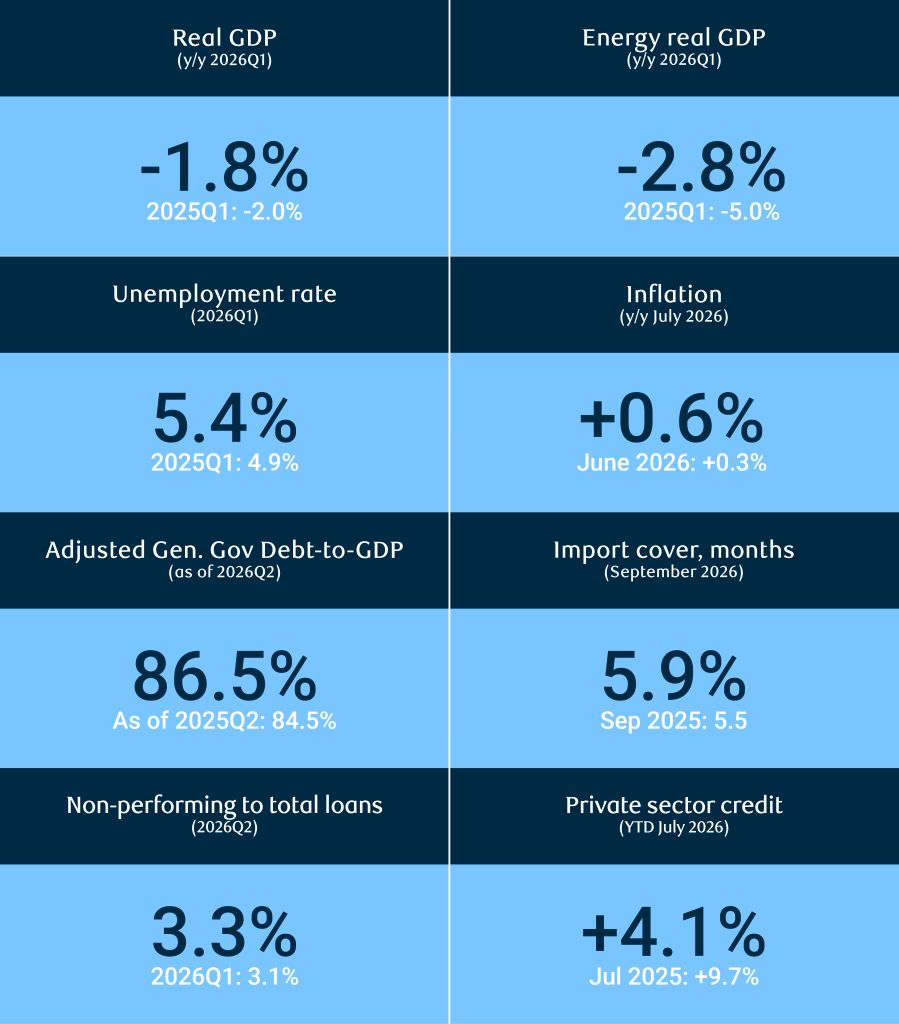
Economic growth in Trinidad & Tobago has moderated in every quarter since 2025Q2, recently turning negative (on a y/y basis) for two consecutive quarters through 2026Q1. More concerningly, while the losses in 2025Q4 were concentrated in the energy sector, Q1 saw broad-based declines, with both energy (-2.8% y/y) and non-energy (-1.4% y/y) activity moving lower. The Ministry of Finance projects the economy will contract 2.2% this year, led by a 6.6% decline in energy while non-energy declines 0.7%. The notoriously volatile net taxes on products – which has had an outsized influence on annual GDP since 2022 – is also expected to move lower.
The moderation in economic activity is also showing up elsewhere. In July, private sector credit from commercial banks to businesses declined (-0.1% y/y) for the first time in almost five years, and while lending growth to consumers remains positive, this momentum has steadily waned since the end of 2024. We remain hopeful that the economy can turn the corner next year on account of improving gas supply, but a sustained non-energy push over the medium-term will also be needed to address other broader structural challenges.
Budget 2027 projects a deficit of $3.6B (2.1% of GDP), with fiscal consolidation expected to be driven by a $5.5B (10%) improvement in revenue while expenditures also rise by a smaller $2.1B (3.5%). Of the additional revenue expected, we attribute roughly $1B to new measures, leaving a further $4.5B dependent on growth and collection improvements. However, Budget 2026 versus actuals highlights the challenge of containing expenditure and meeting revenue targets in this environment, with the actual deficit roughly doubling the projection at approximately 3.9% of GDP.
Source: Central Statistical Office, Central Bank of Trinidad & Tobago, Ministry of Finance
Turks and Caicos Islands: A fiscal beacon
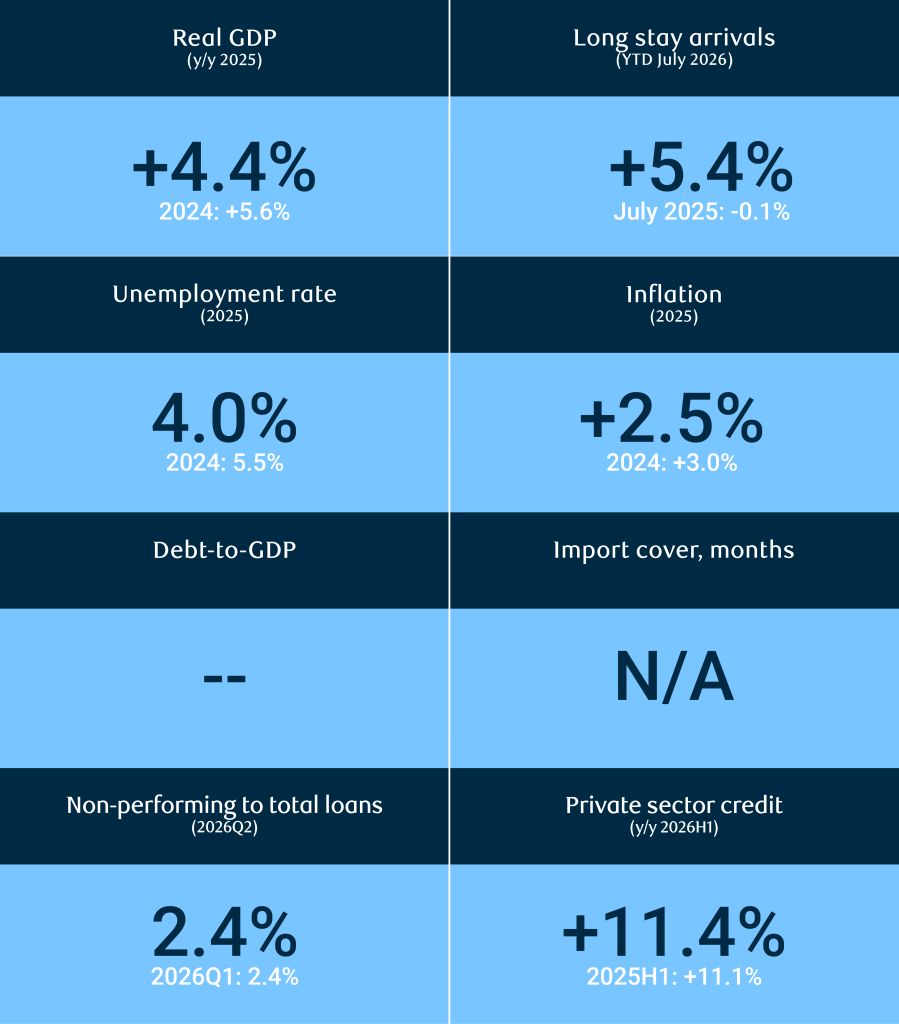
The Turks and Caicos economy has experienced remarkable growth over the past decade, with services exports rising 200%, real GDP expanding nearly 190%, and real per capita income climbing over 90%. Even after a sharp 34% pandemic contraction, the economy remained more than 30% larger than in 2017. Tourism has driven this success, with the hotels and restaurants sector alone accounting for 40% of the last decade’s growth. Despite recent softening, overnight arrivals still stood 30% above 2019 levels as of 2025, and appears poised to return to growth this year, rising 5.4% year-to-date through July. However, the sector will likely contend with weaker cruise tourism activity, with arrivals down due to fewer cruise calls.
Earlier, the government forecasted economic growth of 3.5% for 2026, but has since revised this forecast down to 2.5%, citing a tourism moderation (we assume this refers to the cruise segment) and price pressures due to global oil markets. To the best of our knowledge, sub-annual inflation estimates are not available in TCI, but government expects 3.3% inflation this year, which is consistent with our view that inflation has likely moved higher, considering that virtually all of the island’s energy is supplied by imported oil.
But with probably the best fiscal picture in the Caribbean, the government certainly has the flexibility to continue supporting households through its Cost-of-Living Programme that has already processed and approved about 70% of applications. Also on the fiscal front, Budget 2026/27, and subsequent announcements since, have signaled government’s intention to break from its current negligible-debt status, and execute a medium-term borrowing strategy that will seek to build out the country’s productive and carrying capacities.
Source: TCI Statistics Authority, Financial Services Commission
Note: N/A because economy is dollarized
Guyana: An exponential rise
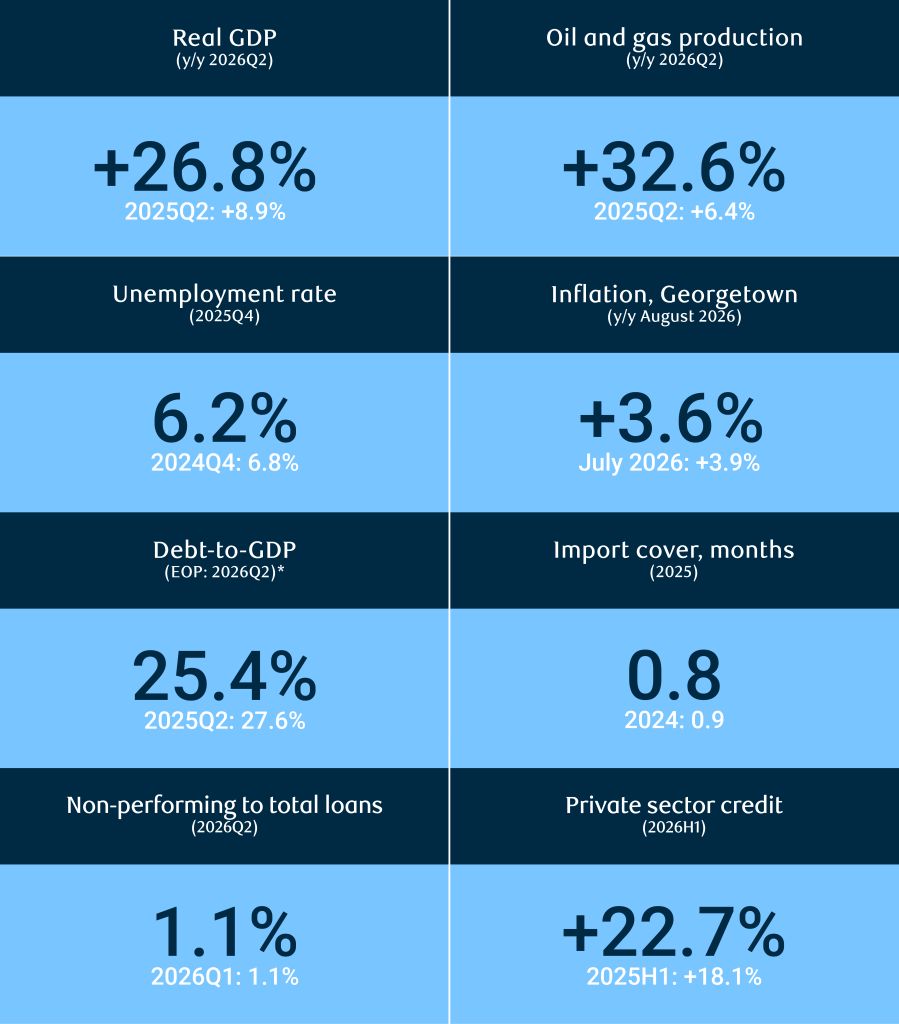
Guyana was among the world’s fastest-growing economies in 2025, with GDP expanding by 19.3%, second only to South Sudan. The scale of the country’s growth since 2019 has been striking – on a purchasing-power-adjusted basis, real GDP per capita is now higher than that of the United States. For reference, it was only a fifth as large in 2019. The oil buildout remains the key driver of economic activity, with production surpassing 900,000 bpd towards the end of 2025. That momentum has also carried into 2026, and the IMF expects growth to strengthen to 22.3% – placing Guyana atop the global GDP growth chart. In the first half of this year, the economy grew by 33.3%, driven by a 41.3% rise in oil & gas production.
While the eye-popping oil numbers tend to steal the headlines, non-oil activity is also expanding at a rapid pace, up 10.2% in the first half of the year, on the back of growth of just over 14% in 2025 – the fourth consecutive year of double-digit gains. Construction has been a large contributor, likely reflecting the development of supporting oil infrastructure and government’s increased capital spending, which has averaged about 11% of GDP since 2022. Some of this spending has been financed through the Natural Resources Fund (NRF) which had a closing balance of US$5.5B as of September. Also in September, US$200M was transferred to the national treasury.
So, when we pair the rapid rise in oil production with the expected improvement in the country’s terms of trade due to higher oil prices, it’s clear that there’s benefits to be had this year. But national purchasing power and household purchasing power are not equivalent, especially in economies like Guyana which are net energy importers of refined fuel products.
Source: Bank of Guyana, Guyana Bureau of Statistics, IMF
Note: * estimate by RBC Economics
Jamaica: All eyes on the Bank of Jamaica
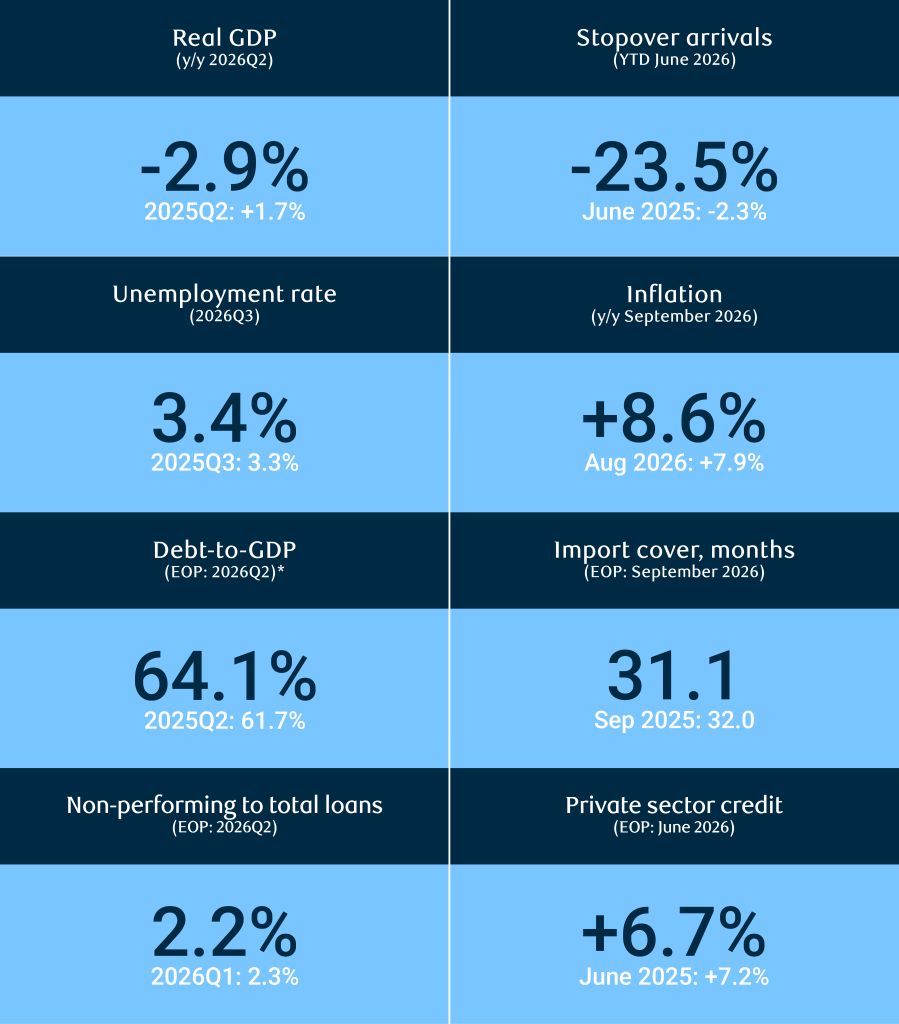
Jamaica’s economy continues to gradually recover from Hurricane Melissa, after output contracted sharply by a seasonally-adjusted 7.3% q/q in 2025Q4. To put that drop into perspective, that was almost half the 16.7% q/q drop seen in 2020Q2 when the pandemic hit. As if we needed any more, it’s another timely reminder of the fragility that exists around small island developing economies that are acutely exposed to the climate crisis. It also reinforces the importance of maintaining adequate fiscal buffers and an array of financing instruments that allow for swift response to events of this nature.
Quarterly growth has rebounded but remains down on a y/y basis as the economy gradually stabilizes. The recovery has been uneven, with industries tied to re-construction (e.g., construction, manufacturing and finance) faring better than exposed industries like accommodation and real estate. The IMF projects no growth for the economy this year, but optimism abounds heading into 2027 with the Planning Institute of Jamaica expecting output to return to pre-hurricane levels by mid-2027.
Another emerging, and partially related theme is materially higher inflation, running at 8.6% y/y in September – the highest since December 2022 and well clear of the Bank of Jamaica’s 4%-6% inflation target. While the Bank can’t control many of the underlying supply-side problems that underly the inflation outturn, in September, the Bank raised its policy rate by 50 basis points, signaling its intention to keep expectations anchored. Above all else, we expect the Bank to stay true to its mandate, but the potential tradeoff between higher financing (and reconstruction) costs and the need to prevent further erosion of household purchasing power will be an interesting dynamic to monitor moving forward.
Source: STATIN, BoJ, Jamaica Tourist Board, Ministry of Finance
Note: * estimate by RBC Economics
Other Regional Developments
Caribbean Netherlands: Generally speaking, inflation has drifted higher since the start of the year, reflecting the vulnerability and exposure of very small open economies to the ongoing energy shock. We expect that these are lending to pressures on household finances, as our assessment of the annual data reveals that in 2025, some pressures may have already been mounting with real wage gains either narrowing or outright declining.
Bonaire: Inflation accelerated sharply to 5.9% y/y in Q3, up 2.6 ppts from Q2.
Saba: The rise in inflation was moderate to 5.2% y/y in Q3, virtually unchanged from the 5.0% y/y in Q1.
Sint Eustatius: After leading the inflationary pack for the past two quarters, inflation in Statia ticked lower by 0.7 ppts to 4.5% y/y in Q3.
Belize: Inflation continues to run at elevated levels with the 4.4% y/y rate notched in August being the fifth consecutive month that prices have grown by more than 3% on an annualized basis. Also, through September, overnight arrivals are tracking -1.9%. Growth has slowed to 1.4% y/y in Q2 after the economy grew by 1.7% y/y in 2025Q2. The IMF projects growth will slow this year to 1.9%.
Bermuda: Bermuda’s economy expanded by 0.5% y/y in Q1, supported by construction and household activity. In the first half of the year, air arrivals grew by 2.5% and more importantly, visitor spending was also up by 7.9%. In April, inflation rose to 2.5% y/y and the volume of retail sales moved lower by 3.2% y/y.
British Virgin Islands: Tourist arrivals hit a record 1.2M in 2025 driven by a 14% surge in cruise arrivals. By some reports, the island has already crossed the 1M mark through September this year, and government seems intent on attracting even more cruise ships moving forward. Earlier government forecasts suggests the economy could grow by 1% in 2026 and towards the end of 2025, S&P affirmed its BBB long-term and A-2 short-term sovereign credit ratings.
Cuba: Cuba’s economic crisis continues to deepen amid fuel shortages, power outages and U.S. sanctions. After seeing some disinflationary progress through 2025, inflation is now approaching 30% y/y, at 28.4% y/y in September. Through the first eight months of this year, the island welcomed just over 450K tourists, over 800K less than the same time last year.
Dominican Republic: Economic growth is off to a strong start this year, with the Central Bank’s monthly economic activity indicator pointing to growth of 4.5% over the first eight months of the year. This is consistent with the IMF’s latest outlook where the Fund sees growth strengthening this year to 4.6% this year from 2.1% in 2025.
Haiti: The IMF predicts that in 2026, Haiti’s economy will contract by 1.7% – the eight consecutive year of economic decline. Instability and insecurity continue to be top concerns, and the UN estimates that as of September, 1.5 million persons have been displaced due to ongoing developments. Disinflationary progress continues, with inflation down to 16.4% y/y in September.
Suriname: IMF expects economic growth of about 4.0% over the next two years, before rising sharply to 28% in 2028 and 43% in 2029 as oil production commences. Inflation is expected to end 2026 over 12% y/y, but we note that is actually quite low by recent historical standards, and we have seen some disinflationary movement through September where inflation moved lower to 7.3% y/y.
Eastern Caribbean: The European Union (EU) has asked Eastern Caribbean countries with Citizenship by Investment (CBI) Programs to phase these out by June 2028 or risk losing visa-free access to the Bloc. This threatens an important source of revenue for many governments, with prior IMF research finding that across the Eastern Caribbean Currency Union (ECCU), CBI revenues accounted for an average of 6.5% of GDP over 2019-2023. The benefits extend beyond the government too, with the Fund also estimating that these programs have become a more important source of investment for these countries, with CBI inflows estimated at roughly 20% of GDP in 2023.
Anguilla: Anguilla’s tourism sector is performing exceptionally well so far this year. Stayover arrivals reached a record 82K in the first half of the year, up essentially 20% y/y, with every month setting a record.
Antigua and Barbuda: The IMF estimates that economic growth will moderate to 2.4% this year, after the economy grew by 3% in 2025. After arrivals returned to pre-pandemic levels in 2024, flows edged lower by 1.5% in 2025. So far this year though, arrivals seem to be just about holding their own, up 0.9% y-t-d through August.
Dominica: Dominica’s 10MW geothermal power plant has commenced commercial operations, making it the first CARICOM country to generate electricity from geothermal resources. CARILEC estimates that geothermal could supply half of Dominica’s energy demand in 2026; a boon for the country’s push towards 100% renewable energy by 2030. Relative to the 2022 energy shock, inflation has remained comparatively low, at just 0.9% y/y in June.
Grenada: Inflation has generally crept higher since the beginning of the year, up to 2.0% y/y in June. That isn’t out of control by any means, but we do note that it is halfway to the recent peak of 4.0% y/y seen in January 2023. Overnight arrivals have been strong so far this year, up 11.7% y-t-d through June. The IMF expects another strong year of growth at 3.9%, following on from the 4.8% estimated for 2025.
Montserrat: Eastern Caribbean Central Bank (ECCB) projects economic growth of 3% in 2026, supported by construction activity. Earlier this year, government tabled a $345.9M budget, with funding from the United Kingdom expected to remain a major revenue source, accounting for about 65% of the $183.3M in recurrent revenue expected.
St. Kitts and Nevis: The IMF projects growth of 1.8% this year, a bit stronger than the 1.5% estimated for 2025. Since 2024, CBI windfalls have been fading, leaving questions around the path of public debt, which the IMF estimates will breach the 60% of GDP threshold this year, rising to 65%.
St. Lucia: On the back of weak tourism flows, the economy contracted by 0.6% in 2025, but the IMF expects a return to growth of 1.2% this year. After declining through 2025, stayover arrivals have generally steadied, growing by 2.5% y-t-d through June.
St. Vincent and the Grenadines: Economic growth is expected to slightly moderate to 2.5% this year as reconstruction activity normalizes after repeated shocks. These shocks have generally also caused a deterioration in public finances, with the debt-to-GDP ratio up over 40 ppts since 2019, projected to reach 112% this year.
2026 Economic Projections
Real GDP Growth, percent change
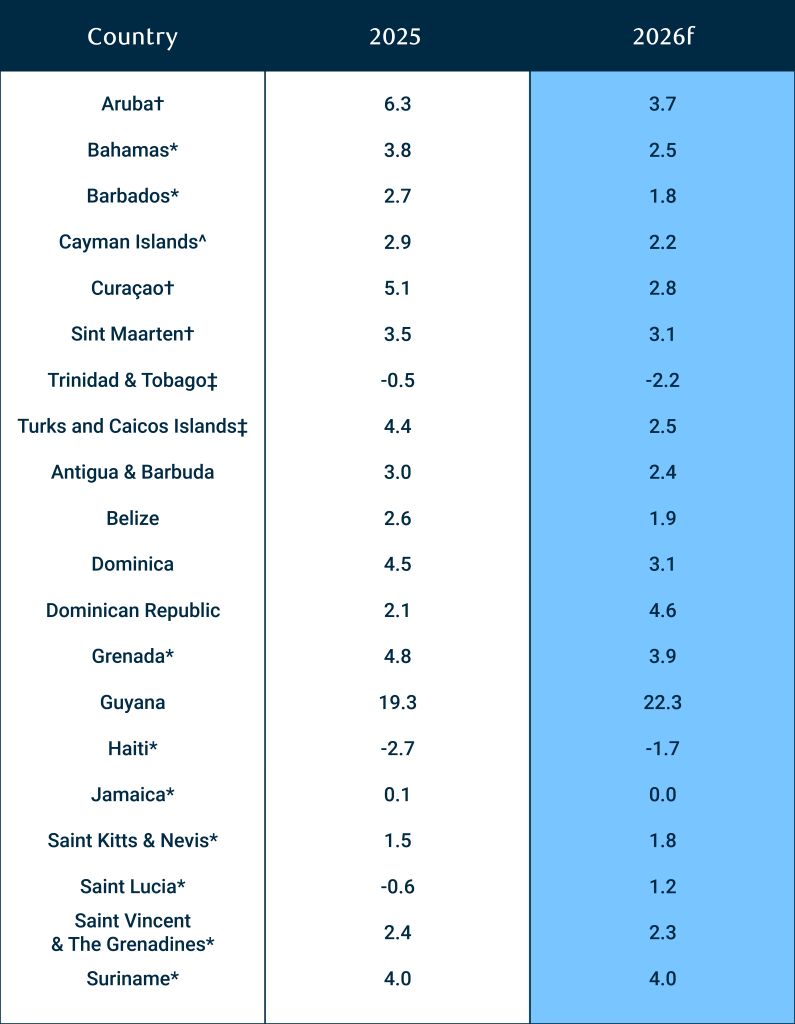
Forecast source: † Caribbean Central Banks; ‡ Ministries of Finance; ^ Statistical Agencies; *IMF WEO October 2026

This article is intended as general information only and is not to be relied upon as constituting legal, financial or other professional advice. The reader is solely liable for any use of the information contained in this document and Royal Bank of Canada (“RBC”) nor any of its affiliates nor any of their respective directors, officers, employees or agents shall be held responsible for any direct or indirect damages arising from the use of this document by the reader. A professional advisor should be consulted regarding your specific situation. Information presented is believed to be factual and up-to-date but we do not guarantee its accuracy and it should not be regarded as a complete analysis of the subjects discussed. All expressions of opinion reflect the judgment of the authors as of the date of publication and are subject to change. No endorsement of any third parties or their advice, opinions, information, products or services is expressly given or implied by Royal Bank of Canada or any of its affiliates.
This document may contain forward-looking statements within the meaning of certain securities laws, which are subject to RBC’s caution regarding forward-looking statements. ESG (including climate) metrics, data and other information contained on this website are or may be based on assumptions, estimates and judgements. For cautionary statements relating to the information on this website, refer to the “Caution regarding forward-looking statements” and the “Important notice regarding this document” sections in our latest climate report or sustainability report, available at: https://www.rbc.com/community-social-impact/reporting-performance/index.html. Except as required by law, none of RBC nor any of its affiliates undertake to update any information in this document.
Get the latest forecasts and analysis from RBC Economics.
Subscribe Now
- ARUBA: ¡Bienvenido a Aruba!
- The Bahamas: Affordability in focus
- Barbados: Some turbulence in the skies
- Cayman Islands: Red hot labour market
- Curaçao: Stored up potential
- Sint Maarten: Cruising along
- Trinidad & Tobago: Downside risk is the new base case
- Turks and Caicos Islands: A fiscal beacon
- Guyana: An exponential rise
- Jamaica: All eyes on the Bank of Jamaica
- Other Regional Developments
- 2026 Economic Projections