

 EN
EN 


For the week of October 13th
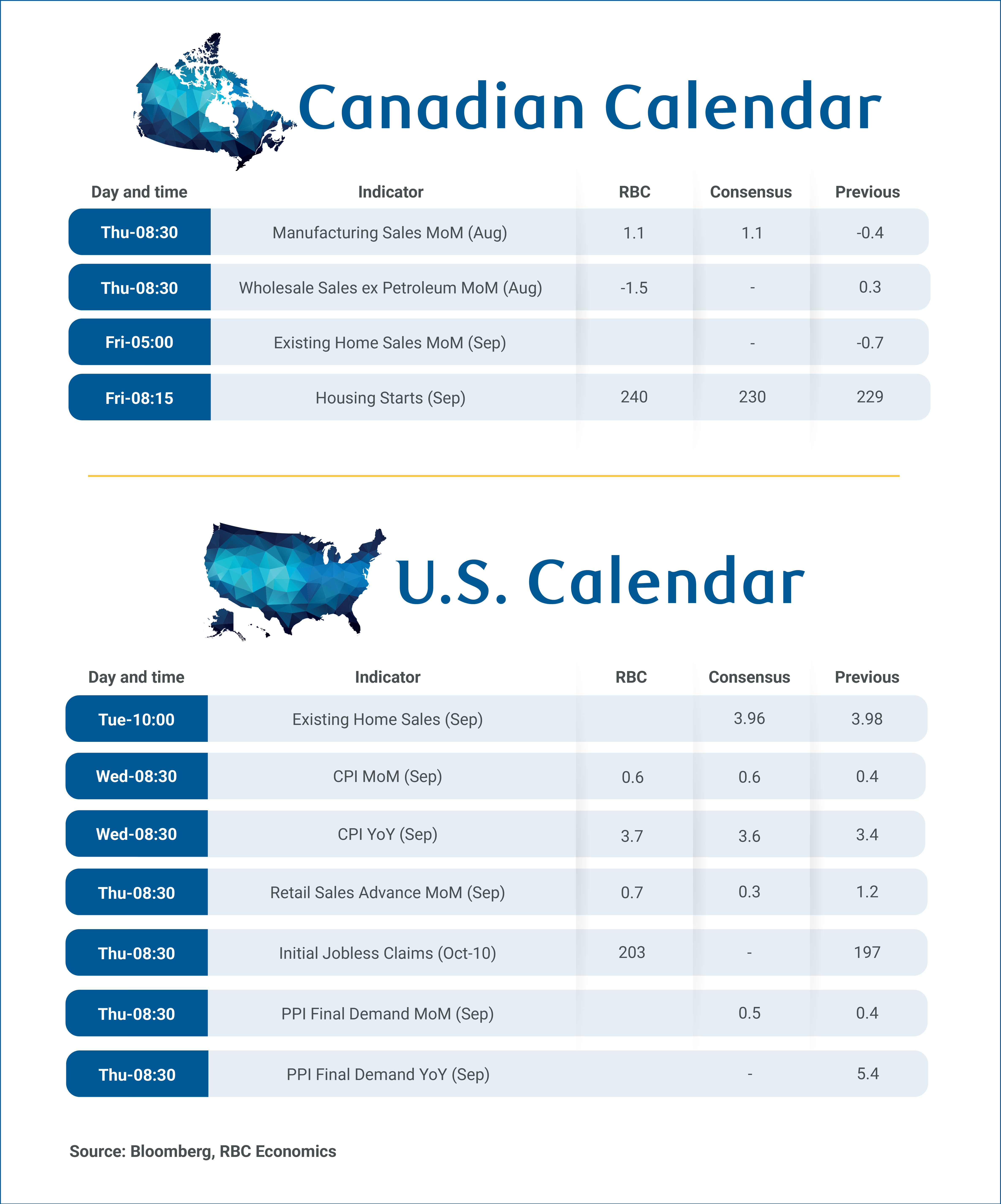
Canada’s economy entered Q3 on a softer footing as activity stalled in July. Statistics Canada’s advance estimates pointed to a 0.2% rebound in August, but declining home resales already released and weaker manufacturing, wholesale shipments expected next Thursday suggest a more modest increase.
New U.S. Section 338 tariffs targeting 5% of imports from Canada came into effect on August 22. Trade data on Tuesday showed meaningful front-loading, with U.S. buyers driving a 40% year-over-year surge in their imports of products on the tariff lists from Canada that month.
Those products, however, map to a relatively small share of the Canadian economy. As a result, front-loading widened trade surplus but is not expected to have meaningfully added to production.
StatsCan’s advance estimate for August manufacturing sales was up a nominal 1.1%, which rounds to little change in volumes once a similar 1.3% increase in industrial manufacturing prices is taken into account. Wholesale trade also looked softer, with the advance estimate pointing to a 1.5% decline in core sales from July, dragged down by lower shipments of agricultural supplies, vehicles, and parts.
Those alongside weaker home resale activity are suggesting downside risks to StatCan’s preliminary estimate for a 0.2% rise in real GDP in August — although retail activity likely remained strong and offered some offset, consistent with robust purchases in our RBC cardholder spending tracking.
A more modest rebound in August GDP growth should still leave growth in the third quarter around our 1.8% annualized estimate. That is softer than the 3.2% real GDP growth in Q2 but still solid.
Also in focus next week are September home resale data on Thursday, which are expected to show further softening after most early regional real estate boards reports pointed to weaker activity that month. Housing starts data on Friday, however, are expected to show some stabilization, with starts rising to 240,000 annualized units in September, up roughly 5% from August.
Overall, we continue to expect a gradual and uneven recovery in Canada’s housing market, as affordability relief tapers off on the back of stabilizing home prices and rising bond yields.
-
On Tuesday, we expect the headline U.S. Consumer Price Index to rise 0.6% in September from rising energy prices, leaving year-over-year at 3.7%, up from 3.4% in August. Core inflation excluding food and energy is expected to have risen 0.2% from August or 2.5% year-over-year, with details closely watched for signs of potential passthrough from existing tariffs and/or elevated energy inflation.
About the authors:
Claire Fan is a Senior Economist at RBC. She focuses on macroeconomic analysis and is responsible for projecting key indicators including GDP, employment and inflation for Canada and the US.
Annie Zheng is an economist at RBC. She is a member of the macroeconomic analysis group, focusing on macroeconomic modeling.
Explore the latest from RBC Economics:
More turbulence hits Canada’s housing markets to kick off fall
Canadian exports surged ahead of new U.S. tariffs in August
Share these insights with your network:
This article is intended as general information only and is not to be relied upon as constituting legal, financial or other professional advice. The reader is solely liable for any use of the information contained in this document and Royal Bank of Canada (“RBC”) nor any of its affiliates nor any of their respective directors, officers, employees or agents shall be held responsible for any direct or indirect damages arising from the use of this document by the reader. A professional advisor should be consulted regarding your specific situation. Information presented is believed to be factual and up-to-date but we do not guarantee its accuracy and it should not be regarded as a complete analysis of the subjects discussed. All expressions of opinion reflect the judgment of the authors as of the date of publication and are subject to change. No endorsement of any third parties or their advice, opinions, information, products or services is expressly given or implied by Royal Bank of Canada or any of its affiliates.
This document may contain forward-looking statements within the meaning of certain securities laws, which are subject to RBC’s caution regarding forward-looking statements. ESG (including climate) metrics, data and other information contained on this website are or may be based on assumptions, estimates and judgements. For cautionary statements relating to the information on this website, refer to the “Caution regarding forward-looking statements” and the “Important notice regarding this document” sections in our latest climate report or sustainability report, available at: https://www.rbc.com/community-social-impact/reporting-performance/index.html. Except as required by law, none of RBC nor any of its affiliates undertake to update any information in this document.

