RBC Thought Leadership Jennifer Marron
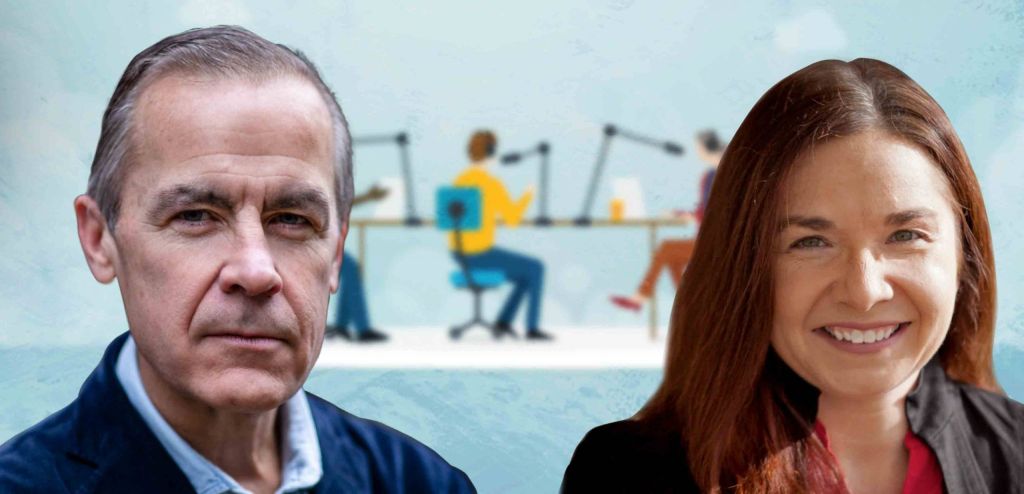
When it comes to the energy transition, we’re going to need to literally rewire our economy. On the series finale of Disruptors, an RBC Podcast, host John Stackhouse sits down with Olivier Desmarias, the CEO of Power Sustainable, one of Canada’s most significant and global enterprises. The firm is a sustainable investment manager that invests in companies and projects that contribute to decarbonization, social progress and growth. Listen as they discuss where Canada fits in the global Net Zero transition, investment strategies, and the country’s biggest opportunities to win. Links: To learn more about Power Sustainable, visit their website.
Speaker 1 [00:00:01] Hi, it’s John here. We’re coming to the end of season six of Disruptors and want to thank you, our listeners, for a remarkable journey this season and for helping make us the number one Business and Entrepreneurship podcast in Canada. We’ve got a lot more ahead, but it’s kind of exciting how far we’ve come this season. We’ve talked about some remarkable disruptions from chat to the tech rack, and we wanted to wrap up the season with a conversation about the biggest disruption out there, which is climate and how Canada can play an even greater role in the world’s progress towards net zero. It’s going to take a lot of capital, a lot of ideas and a lot of technology. And we’ll be joined today by a Canadian leader who thinks this is Canada’s opportunity to win. We’re seeing historic amounts of capital, whether it’s in the US Inflation Reduction Act or with China’s bold moves on decarbonization that are transforming every sector of the economy. And we’ve also heard through this season remarkable innovations in Canada, from construction to agriculture to energy systems. We’ve called it the $2 trillion transition. That’s the amount of capital Canada is going to need to mobilize over the next 25 years to get to net zero. And when you think about all the technology and all the people that’s going to be required to put that capital to work, it’s hard not to see the coming years and decades as a remarkable period of positive disruption. This is Disruptors, an RBC podcast. I’m John Stackhouse. When it comes to the energy transition and the enormous innovation and technologies, we’re going to need to literally rewire our economy. There are few Canadians with a better viewpoint than Olivier Desmarais. He’s the chairman and CEO of Power Sustainable, a sustainable investment manager that invests in companies and projects that contribute to decarbonization, social progress and growth while also delivering returns. And if you’re not familiar with the power group of companies, it’s one of Canada’s most significant and global enterprises. Founded by Olivier’s late grandfather, the legendary Paul Desmarais, who started with a single business, a bass company. So it’s kind of fitting that two generations later, Olivier and the team at Power are looking to new ways to pardon the expression power, our lives and economy. Olivier, welcome to Disruptors. Speaker 2 [00:02:42] Hello, John. Glad to be here. Speaker 1 [00:02:44] It’s great to have you on the podcast and I think it may be your first podcast. So all the more special. You’ve been blessed with a lot of things in life, but to remarkable grandfathers as well as remarkable grandmothers. I mentioned Paul Desmarais in the introduction and of course Jean Cretien is the other. What did they teach you about business from a young age? Speaker 2 [00:03:04] There’s actually a lot that they taught me, and a lot of it was through osmosis of just being allowed to be there while they were negotiating certain deals, just being around the dinner table during conversations when they were talking about business. Both of them imbued sort of foundational values. You know, what our principles that you just want to hold true, especially when taking over the long term. Speaker 1 [00:03:29] What a great lesson for life. Whatever you do, make sure it’s values rooted. Tell us a bit about power sustainable. What’s the origin? Speaker 2 [00:03:37] Power sustainable got created, I guess, in 2019 when I joined Power Corp. roughly nine years ago, when Power Corp. merged with Power Financial, there was a will to be much more financially focused as a firm, really get to all the correct conversations at all the correct tables so that we can be forward thinking in where we want to go. And instead of just catching up, how to try to leapfrog our competitors in order to go there. And so the angle that we took it was building a climate First alternative asset manager. And by climate, it’s really about decarbonization. That’s the one kind of KPI that cuts across all of our strategies that we bring to market. Got to be. Speaker 1 [00:04:18] A decarbonization KPI, whatever you do. Speaker 2 [00:04:21] Fully, that’s the big one. Net zero is all about decarbonization. It’s more of a broad sword tool, but it’s a great place to get all corporations focused in order to have everybody working together. If we’re going to keep ourselves below 1.5 degrees Celsius, which we’re already not going to do. Speaker 1 [00:04:38] Olivier, what were you doing before this that prepared you? Speaker 2 [00:04:43] Well, I’m a lawyer by background. You know, went to law school that studied political science and sociology because at first I wanted to go into politics. I then learned that politics is a very ugly business. And so therefore, I chose the environment as a place to where I wish to lean in and work with governments. And by that I mean all governments are trying to push their economies forward in a clean way. And so that’s where I decide to push forward. Speaker 1 [00:05:06] It’s remarkable how few politicians in Canada spend time in business. Unfortunately, it’s a bit of a gap for the country. You mentioned starting power sustainable in 2019. What gives you confidence to continue to be investing in sustainability in 2023? Speaker 2 [00:05:23] Oh my God. This is not even the beginning of where we have to go as a society. We’re going to be seeing much more, shall we call it climate impact within our own lives, which will drive the public to becoming much more serious. But more than this, I think governments are competing. You know, the United States with the IRA, China, that’s already a leader across so many sectors and sustainability. The Middle East wants to change. Europe wants their say. And the reason is it’s because it’s about the economy of the future. And will your companies be up for that challenge? And to me, just seeing the big actors on planet Earth going at it full tilt just doubles down my intuition and my theory that all Canadians should be focused much more on that. And we will need a lot more capital to help grow this sector. Speaker 1 [00:06:14] Where are the most exciting opportunities you’re seeing in the world today? You mentioned the U.S., China, Europe, the Middle East. What areas excite you most anywhere? Speaker 2 [00:06:23] Just pick where you want to play in sustainability. It’s all incredibly exciting. I mean, energy is the main focus right now. We want to electrify everything as long as we can make clean energy, which we have solar that’s continuing to improve, wind that continues to improve, and those resources are free. Batteries continue to get worked on in order to levels how the grid works. People are coming out with small modular reactions. We got hydrogen coming on board. So energy is sort of the starting point. But every single other sector will also be all about electrification. So we’re really at the beginning of this. We have a lot of the technologies today that can decarbonize us, but we’re still missing a good 20 to 30% of them. And people who do come up with those solutions will have beautiful businesses in the future. But more than that, people that also focus on how to put all the technologies together and make them even more efficient and effective will have a wonderful future in this transition that will be taking place over the next 20 to 30 years. Easy. Speaker 1 [00:07:30] I want to get deeper into some of those opportunities and where Canada sits. How are we today in 2023 in terms of the attraction to Canada for investment, for the transition versus all those other dynamic markets that you mentioned? Speaker 2 [00:07:48] Yes. Look, Canada is endowed with resources. We have huge oil reserves, natural gas reserves. We have huge hydro reserves which really help to electrify our grid in a intelligent and clean way. We have metals and mining critical minerals all over China that have yet to be extracted. But lastly, and most importantly, we have entrepreneurs and we have business leaders. There are going to be the people who really help shape the rest of Canada through the clean tech start ups that we’re creating and where Power sustainable comes in play, which is how do we think more intelligently about the energy and the resources that we have? How do we work with our First Nations to build more pipelines to the West Coast so we can sell to Asia? That’s building tons of coal fired power plants? You know how to. We help them. Do not get switching. I get that it’s not the end solution. But if considering how good we are at extraction, how clean we can be in extraction because of the quality of the labor that we have, but also the regulations that we have. We can be a real solution to help India, China and the rest of all of Asia really go off of coal and onto that gas, which is and most likely can be cleaner. Speaker 1 [00:09:04] It’s such an important point, and that’s why we call it a transition, not a switch. But it’s going to take a different kind of approach to business, I would argue more public private cooperation, a lot more collaboration with indigenous communities, as you said. And that’s one of the fundamental differences between the clean tech revolution, if I can put it that way, and the digital revolution of 20, 30 years ago, which the private sector was able to do, VC’s were able to do kind of on their own. Among the fundamental differences this time is it’s going to take a lot more public capital and a lot more public engagement because of regulations and other policies that are critical to accelerating innovation. How do you think we can go about that differently, we as Canadians? Speaker 2 [00:09:47] Well, first of all, as Canadians, we can’t be everything to everyone, right? So we have to pick where we want to win and focus in on it. There are a lot of advantages that we have in Canada or natural resources being one, and how do we add value throughout that supply chain to the world as it’s transitioning, but also leave us in a strong position after the change that we have good companies that can continue to add value. So how do we help support our clean tech entrepreneurs that are really sort of straddling this fire between private and public investments? One of the things that everybody’s investing in infrastructure, this will clearly have a private public dimension to it. I think there’s loads of opportunity for people in there, but to your point, it will require them understanding and partnering up with bigger partners that know how to work in a more public, private way. Speaker 1 [00:10:42] Olivier, tell us a bit more about power sustainable and where you see things going. You’ve launched a number of new funds in recent years and hoping we can discuss maybe a couple of them briefly. And what excites you most, beginning with the billion dollar Renewable Energy Infrastructure Fund. What’s the priority there? Speaker 2 [00:11:00] So we have four main strategies that power sustainable and a few products inside those strategies. The first one is an energy strategy, as I mentioned, electrification. This is more of a traditional product offering solar, wind, batteries. We’re looking into renewable natural gas. And so it’s really changing our grid from what it was to what we want it to be, so more sustainable, renewable focus. So right here we have about $1.6 billion of committed a um, we’ve deployed about a billion or 800 million of it as we speak right now. This will continue to be a focus because as I mentioned, the grid needs to grow rapidly and that’s how this strategy of renewables really helps power sustainable, make a difference. Speaker 1 [00:11:48] Getting projects going is not the easiest thing in this country, including in the energy sector. How can we go about that differently to meet the fairly pressing deadlines that we know are coming at us? Speaker 2 [00:12:02] Well, I think the government has taken steps already by mimicking a lot of the IRA in the U.S. That means a lot of projects that might have been put on pause will be shovel ready and moving forward. This is fantastic because we need to virtually double the size of our grid and make it clean if we really want to be competitive. And 20 to 30 years from now with our peers that are focused on doing this also, the quicker we can get there in a cost effective way, the more competitive we will be as a society and all businesses within Canada will be on a go forward basis. Speaker 1 [00:12:43] A lot of people might wonder how we’re going to pay for this. How are you thinking through the long term impact of these transitions on the economy and on individual Canadians who will have to be along for the journey? Speaker 2 [00:12:57] Yeah, well, these are infrastructure projects that have 20 to 30 year lives to them if we do them correctly, maybe even longer. So therefore, my quick one is you mortgage your country, right? You put on debt and this is to me is the correct decision. This is a part that I believe is very strategic for Canada to make sure that we win, which is being the cheapest and most effective and cleanest form of energy possible, but not over 5 to 10 years. That could lead you to doing more coal fired power plants. But over 20 to 30 years, which will lead you into taking a little bit of technology risk. But we should start thinking, well, where does. Clear fit into all of this for us as a baseload. Where can we develop even more hydro because it’s a natural born batteries set? These are the real questions that we have to ask ourselves and these are our long term focus. So as we figure out how are we going to pay for this? I think definitely some more long term capital from the government side, but also some more long term players from the private market should be building this out as much as they can in partnership with government indications of how they would like our grid to look like in the future. Speaker 1 [00:14:08] The mortgage is a great reference because none of us could afford the homes we live in if we had to pay for it all at once. So it’s a great to get a long term view. You’re right, Olivia, that governments are now taking a longer term view. You deal with a lot of private investors as well when you’re raising capital and when you’re working with partners, what do they need to have confidence to make those long term 2025 year investments, particularly in an investing world that over the last quarter century has become very short term oriented? How do you kind of compete with a mindset. Speaker 2 [00:14:43] Like the private markets are the best at really telling you where the most? Effective capital allocation is. So for us, you have the energy side, which is more infrastructure related, which I think people should be investing in that because there’s such a shortness of supply. But then you can go to agri foods where we have companies that want to shift and be more sustainable. But the impacts of how we get there are complicated. We have lots of people that would love to take a business. Risk and investing are sustainable because they see where it is in the future. But unfortunately the capital is more than they could bear and that’s where people like us come in place. We would like to partner up with mid-sized mid-cap companies that we think can be leaders in the North American market, but also the global market and sort of write significant checks that helps them achieve the goal of what they’re going for. And we will help them measure it. We will help them accomplish that transition with the managers and the private equity people that we hire, such that we can create winners in that sphere that can help to catalyze capital faster as they win. And more people want to build businesses like them. Speaker 1 [00:15:54] That’s a great description of the flywheel impact and what we can see emerging in this country in all sectors. Stay with us. In just a moment, we’ll talk more with Olivier Marais about the climate transition, about exciting technologies, and about the emerging trends in agrifood. Welcome back. I’m talking with Olivier Desmarais about the climate transition and power sustainable. In the previous segment, you were describing four strategies you’ve got for power sustainable, and we talked largely about energy, which is the dominant theme. So appropriate. Maybe you can expand on the other strategies. Speaker 2 [00:16:41] Yeah. So as I mentioned, we have four strategies. One is in energy, one is our agrifood strategy under the US name. And basically what it is is a mid-cap private equity strategy. So $200 million of revenue and less across the supply chain. And it’s how do we take hopefully the company private. But as you can imagine, some of the companies might be too big for our fund size, which is 300 million. So we would take small positions where we would really lean in and have impact from the board on helping the company really get all of its measurements up to speed, but also continue down the path of truly decarbonizing its footprint or having a good source of social impact. So, for example, the first kind of company that we bought is a company called Goodlife. And so basically Goodlife is a company that pretty much makes a salad in a vertical farming kind of way. And so it’s lots of technology, very energy intensive, which is very useful that we’re here in Canada because our energy tends to be a little bit cheaper. But not only that, our energy tends to be a lot cleaner. So therefore the carbon footprint that you can have is wonderful. Speaker 1 [00:17:56] And so glad you’re focused on agrifood. We’ve done a lot of work on that. As our listeners know, it’s such a great opportunity for candidates. 10% roughly of our emissions, maybe more, depending on how far up or down in the value chain you go. But it’s also something we can export to the world, not just the food, but all these technologies that can transform agrifood here in Canada, but ten acts the impact by being implemented elsewhere. Speaker 2 [00:18:21] Yeah, but there’s also another benefit, John, which is medicine. Some medicines are only in different places in the world here. Can we grow them at home. But when you think about sort of vertical farming and where it could go, food security across the globe could become a reality where everybody sort of is producing their own food and getting a higher quality food because of it. Speaker 1 [00:18:45] How do we do that efficiently? Because we have a food system, for better or worse, and it’s both that is incredibly efficient. So those tomatoes or strawberries that come from California. There’s a downside to that, including a climate downside. But the upside is it’s cheaper. How do we ensure that food is accessible as well as nutritious and more sustainable as we go through this transition? Speaker 2 [00:19:07] Well, I think that’s exactly what the point of the transition is and the technologies that are coming out and that will be coming out and even the vertical farming technology, you know, it’s on the cusp of becoming really economic. It’s economic in some regions, but not in all regions. And so it’s how do we get people to really hone in to that technology, but from a point of strength, from a point of profitability, and then really grow globally to allow all the markets to get more nutritious food, but hopefully also greener because of the nature of how the electric grid has been green-ified. Speaker 1 [00:19:41] It’s really interesting and often misunderstood by consumers how much energy goes into food production. It’s eye popping, how much energy. But fossil fuel energy particularly goes into the production and delivery of that tomato. So pick up a tomato and think it’s got a low carbon footprint. It actually might have a fairly significant carbon footprint. And the agtech that you’re talking about can really help transform that, while also improving food security and nutrition, other benefits. Speaker 2 [00:20:11] And it’s going to go slowly but surely. But you will reach a tipping point to where, you know, the big food companies will start to see that A, there’s more supply to be sustainable because their big problem is they’d love everything to be sustainable. It’s just hard to make that shift all at once. And where do you focus? So that’s where we can help. But with these technologies that I think will just enhance the yield and also the nutritional value for populations around the world. And this will be a phenomenal, phenomenal outcome if done correctly. And I think we have a place to where we can lead here in Canada by continue to invest inside these technologies and by being supported by government subsidies to make sure that we can be extremely competitive and at the forefront of this massive change that will be happening in our Food Network. Speaker 1 [00:21:02] Olivier, you’ve talked about energy and agrifood. What else are you looking to take on? Speaker 2 [00:21:07] Another mandate that we’re coming out with is industrial decarbonization, but also infrastructure debt investing, Because, John, one of the goals of Paris is. Attainable is to catalyze capital in this sector in order to make us go faster. Because when you think about sustainability, right, there’s two camps. You have the technologists and the put steel in the ground, the technologists. If you think about it, we don’t have the technology to get to zero. So there’s a lot of capital being put in there in order to figure it out. And then we have the other side, which is, well, we have enough of the technology to make a significant dent into the climate story and to shape the curve of how quickly we decarbonize. And within that, we need more people to start putting steel in the ground, right. Deploying the technology that we have. Messing around with how you combine the technology that we have in order to make it more effective. And the only way we’re going to do this is by showing people that not only can you be sustainable, truly sustainable, but that you can make market or market better returns. Speaker 1 [00:22:06] When you talk about putting steel in the ground, can you give us an illustration? Speaker 2 [00:22:10] Well, literally building out the energy grid of the future, right, Putting windmills all over the place, building new vertical farms, coming up with industrial companies that are making the shift to sustainability in their processes or are starting a whole new way of attacking a system like Carbon Cure, which is helping construction companies decarbonize, which helps make cement stronger and also helps suck up carbon from the atmosphere. These kinds of companies across the three pillars that we mentioned will be winners as they continue to rethink how we can decarbonize the future. Speaker 1 [00:22:45] Glad you mentioned Carbon cure. We’ve had them on the podcast and it’s a really interesting company. You also mentioned the challenge of market returns, war for infrastructure, and I’m curious about what gives you more than a hunch confidence that this space is going to outperform the market. Speaker 2 [00:23:01] So look, just to kind of macro trends, China and the U.S. are really going at it over sustainability. The Europeans want and people want this thing to happen. So a lot of money is being deployed by governments towards electrifying our grid. It’s almost reached a form of national security. And so therefore, there’s a lot of will from government actors and people see that it could be the future of businesses, period. And so therefore, that’s one is a big micro trend that even government actors are buying into now. The second one is every financial firm that I know of has signed up to U.N., PRI, which means they have to hit their net zero targets. There is a lot of balance sheet money out there, like trillions that will be chasing less amount of good products. That means yield compression in the market. This will happen over time, naturally. But I think that as 2030 comes around and we realize that we haven’t quite decarbonized 50%, which is our goal for 2030, we will start to focus in more from a government perspective, but also from a people perspective on what we can do, which will create a sort of gold rush effect towards the sector. And so I think from where governments and people want to deploy their capital is creating all the conditions to win for people that take it seriously and for people that really focus solely on this, which is what we do at power sustainable, We are solely climate focused. Climate first, right? Speaker 1 [00:24:39] Climate first. And you’ve taken us through energy agrifood infrastructure. You touched briefly on industrial decarbonization. But before we wrap up, Olivier, I wonder if you can tell us a bit more about industrial decarbonization and what catches your interest there. Speaker 2 [00:24:53] So this is a broader category, right? What really catches the interest here is the US kind of has $25 for every $1 that we put inside that growth opportunity. We Canadians know how to build interesting companies that can help decarbonize our industrial base. But what they really need, if we want to keep them in Canada and if we want them to really go bigger, is we need that kind of capital that can come in and help them grow. And so that’s really where we power sustainable, come into play. This fund that we’re going to be launching comes into play, which is how do we really target these companies that really want to win and give them that growth capital? Now, we will have a Canadian contingent inside this fund because it is North America focused, but this will help Canadian companies that I think are really good access to this kind of growth capital such that they can win and we can have real Canadian winners in our marketplace going forward. Speaker 1 [00:25:53] Olivier, you’ve laid out so many great opportunities from the energy sector to agrifood to infrastructure and to heavy industry and decarbonizing it. And it’s a global opportunity, but also a global race, as you said at the beginning. What does Canada need to come to grips with in order to be a winner in that race to net zero? Speaker 2 [00:26:12] I think we have to realize it’s a transition. Even if we produce ten carbon more in Canada, as long as we’re eliminating 100 carbon somewhere else, we’re a net contributor to -90. Let’s dare to think big. Let’s dare to take risk and not be afraid so much a failure which we are in Canada, but take risks in order to grow and to be winners in sectors. And dare I say case, we can’t get over that challenge. There are lots of sectors that will pride themselves on the Canadian sort of slow but steady and methodical way in order to win. So let’s not put all our eggs on the fact that we’re going to be super aggressive. Let’s put some of it towards the less sexy parts of the value chain, but where you can really decarbonize and really have good long term business, that creates good long term employment here in Canada. Speaker 1 [00:27:02] You mentioned an interesting point earlier about a realization that we may have in the coming years that we’re not going to hit our 2030 targets and that that could be a powerful catalyst. I suppose there’s another side of that coin where people may just shrug or give up and say, We can’t do it. As we come to that crossroads. What do we need to keep in mind? Speaker 2 [00:27:23] Look, first of all, we can’t quit. It’s really it’s not an option because of the power of compounding. So right now, by 2050, we’re trying to keep it to below 1.5 degrees. What does 1.5 degrees mean? Well, minus two degrees was the ice Age. Now, I’m not saying that two degrees will be a literal hell on Earth, but it will disrupt lots of states. People will start to emigrate all over the place in order to have a lifestyle or just a chance to live. And that will cause huge global problems. And so therefore, it’s not about can we get there? We have to get there because if we don’t, it will just get worse and worse in our own countries also. So we will get there. It’s just the speed at which we get there makes a difference. Speaker 1 [00:28:07] But it’s not just a threat. As you’ve laid out through this conversation, the power of compounding as an opportunity is extraordinary, perhaps unprecedented. Speaker 2 [00:28:16] Well, yes, we have to get there. And so therefore, we will get there. And so, therefore, it’s about more people coming to the realization that you can actually be profitable and be thoughtful and get there. And that’s one of the things that we have Paris Sustainable are trying to do, which is catalyze capital by really truly being sustainable, being forward thinking, and then teaming up with great investment teams in order to get market or market better returns. And so if you partner up with the best and you are thinking forward on sustainability, there’s no reason you’re not going to win. Period. Speaker 1 [00:28:49] What a great note to wrap up on. We have to get there, so we will get there. Olivier, thank you for being on disruptors. Speaker 2 [00:28:57] Well, thank you, John. Speaker 1 [00:29:01] That was Olivier Desmarais, chairman and CEO of Power Sustainable. There was so much that Olivier talked about, and it’s hard not to feel confident about that. QUESTION Can Canada win? When you hear him lay out the opportunities? But it’s also clear that we’re not going to win if all Canadians are engaged in this transition, whether it’s entrepreneurs or investors and certainly governments, but all of us as consumers and voters, to leaning into these enormous opportunities that are right before us. I took away from Olivier’s comments that we’ll need even more government commitment, whether it’s federal or provincial or local, to the climate transition. We’re going to need even more leadership from the private sector, from large companies and small companies laying out pathways for their own transition to net zero. And we’ll need even more commitments from investors who are going to finance this transition. At the end of the day, we can win this, but it’s on all of us to get there. That’s a wrap for season six of Disruptors. We’ll be taking a break over the summer months, but we’ll still be releasing episodes featuring our conversations from this past season. And we’ll be back with a fresh lineup for September. Have a great summer and we’ll look forward to joining you with Season seven in September. Until then, I’m John Stackhouse and this is Disruptors, an RBC podcast. Talk to you soon. Speaker 3 [00:30:26] Disruptors, an RBC Podcast is created by the RBC Thought Leadership Group and does not constitute a recommendation for any organization, product or service. For more Disruptors content, visit RBC dot com slash disruptors and leave us a five star rating if you like our show.
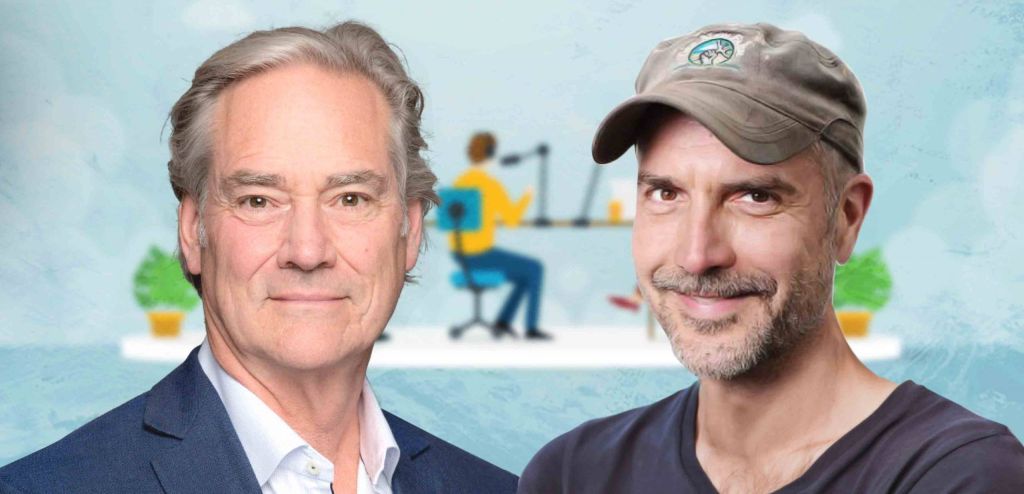
If Canada is going to transition to clean energy, we’ve got to involve and engage our Indigenous communities for economic development and reconciliation. On this episode of Disruptors, an RBC Podcast, host John Stackhouse speaks to two leaders working to make a meaningful partnership happen: Annette Verschuren, CEO of NRStor and Matthew Jamieson, the CEO and President of Six Nations of the Grand River Development Corporation. Listen as John and guests dissect the makings behind the recently-announced Oneida Energy Storage project, a 50/50 private and public partnership with Six Nations of the Grand River. The project will help Ontario reduce greenhouse gas emissions by 4.1 million tonnes, the equivalent of taking 40,000 cars off the road every year. Links: To read RBC Economics & Thought Leadership’s report, “92 to Zero: How economic reconciliation can power Canada’s climate goals”, click here.
Speaker 1 [00:00:02] Hi. Is John here. It’s National Indigenous History Month here in Canada. And while there’s a great range of issues, some of them very difficult for us all to reflect on and learn from. There’s also a lot we can take forward from history to advance society, help our communities and accelerate economic growth. One of those clear opportunities is indigenous ownership in all aspects of the economy, but particularly the resources sector. We’ve done a lot of research on this at RBC, including a report entitled 92 to 0. The 92 is a reference to recommendation number 92 from the Truth and Reconciliation report. And zero refers to net zero. The point being we’re not going to get to net zero without economic reconciliation. The report shows that more than 50% of the critical minerals opportunities in the country sit on Indigenous territory and 40% or more of the best wind and solar developments are going to take place on Indigenous territories. So it’s clear that economic reconciliation is fundamental to our prospects of getting to net zero. I recently spent time in Ottawa with a group of Indigenous leaders making this case to a range of departments, including the need for a National Indigenous loan guarantee to help scale and accelerate the flow of capital to Indigenous owned projects. And it’s not just about money. Canada’s Indigenous communities hold the key to unlocking the country’s national resources in a more sustainable way, which is why they must have a seat at every table. Their unique insights on sustainable practices make them a key partner in accelerating Canada’s new energy economy, as well as helping us achieve reconciliation. One great example of this is the six nations of the Grand River. It’s the most populous first nation in Canada, with about 30,000 members spanning around 180 square kilometers. And the community recently announced something called the Oneida Energy Storage Project, which will help Ontario reduce greenhouse gas emissions by 4.1 million tonnes. That’s the equivalent of taking 40,000 cars off the road every year. But it’s also going to help Ontario better manage peak electricity demand by drawing power from the grid during off peak hours and storing it for later periods of heavier demand. And when it’s operational in 2025, it’s expected to offer enough power to run a city the size of Oshawa. And just as importantly, when completed, it will be amongst the first of its size to be co-developed by private and public partners, including the provincial and federal governments. As you can see, the entire project is a pretty big deal. It promises to make renewables more reliable, advance reconciliation, and perhaps forever change the way our electricity grid works. It’s probably the kind of project we’ll see a lot more of in the years to come. This is Disruptors. An RBC podcast. I’m John Stackhouse. As Canada recognizes National Indigenous History Month, we look at why Canada’s next resource boom must run through Indigenous consent and collaboration. On this episode, we’re going behind the scenes of the Oneida Energy Storage Project to see how indigenous business can accelerate Canada’s net zero transition. My first guest today is Annette Verschuren and she’s a great Canadian trailblazer from a small town dairy farmer to global change maker. Annette has done pretty much everything. She co-founded the craft chain Michael’s and is the former CEO of Home Depot, Canada and Asia. She sits on so many boards, too many to count. She’s the chair of Mars Discovery District and Sustainable Development Technology Canada. She’s also the president of the Ontario Energy Association and a bestselling author. And if that weren’t enough, by day, she’s the chair and CEO of Enter Store Inc. That’s a Toronto based clean tech firm that builds, owns and operates innovative energy storage projects. I’ve known Annette for many years and have engaged on a range of issues. Annette, welcome to Disruptors. Speaker 2 [00:04:28] Hey John, great to be here. Speaker 1 [00:04:30] It’s wonderful to have you and to be talking about Oneida. It’s a big commercial project for you and our store and a true 5050 partnership with Six Nations of the Grand River. That’s all the more significant because we’re in Indigenous Peoples Month in Canada. And I want to start with asking you, Annette, what Canadians need to understand about the importance of Indigenous equity in the economy and especially in the energy transition. Speaker 2 [00:04:58] Follow This is such an important topic, John. I think there’s a real opportunity as we make this energy transition that we really truly engage our indigenous peoples. This project started six years ago and we wanted to do it from the beginning with six nations of the Grand River Chief Mark Joe and Matt Jamison, the president of the Development Corporation. We were truly partners from the very beginning. We wanted to partnership. We have a lot to learn from the indigenous peoples in our country. I come from Mi’kmaq territory. I am from Cape Breton. I grew up with Chief Terry Powell. I grew up with Chief Downey. I understand the capacity, the enormous capacity, the long term capacity of how indigenous people think. There’s so much to contribute to us. And so what a way to do this. A 5050 partnership. We set up the rules at the very beginning, we were involved in designing, involved and choosing the equity. We’re involved making the application. We were involved and presenting to governments together. This to me is the way it needs to be done. In order to have that economic reconciliation. They need returns to build their infrastructure and their communities. And so what better way to do it in a project like Oneida? Speaker 1 [00:06:15] You’ve done projects across the country and around the world. How did that kind of partnership make things different? Speaker 2 [00:06:21] So I think we have a tendency to want to do things faster and perhaps not as thoughtful as things should be done. We had this outreach with the Six Nations community and we talked to the community about this project, and we just kept coming back to say, Look, we want you to understand what we’re doing. We want you to understand the benefits and the risks of this project. And we were very open in how we dealt with the communication project. It truly, truly was something that was built in partnership. Speaker 1 [00:06:57] Tell us a bit about the basics of battery storage and how that’s playing into the economy of southern Ontario. Speaker 2 [00:07:05] I really feel that battery storage is a bridge to the future of other technologies that are being developed. And what’s really needed as we are verify our grid and have a greater demand for electrification. We need capacity, right? So what this facility does, it takes excess energy and it’s not just from renewables. It’s from anything access, whether it’s a nuclear plant, whether it’s hydro, it takes in those electrons when they are not needed and then they distribute that electrons when they are needed. And so it’s a really wonderful tool where electrons go both ways and that two way movement really will provide an amazing opportunity for the electricity operator, the ISO, to manage that grid way more effectively, to not have to curtail wind, to not have to sell our excess electricity, to give back to our friends south of the border. And what’s really cool is this project saves ratepayers money. Speaker 1 [00:08:11] I suppose you could do this in a lot of different parts of Southern Ontario. Why do it on the territory that you chose? For our listeners who don’t know the territory, it’s just over the Niagara escarpment from Toronto and Hamilton, a beautiful little part of southern Ontario. Speaker 2 [00:08:27] Yeah, look, the place that we put it had enormous transmission capacity, 4000 megawatts. So we wanted to put it in a place where it could be used very efficiently and effectively, had the capacity to go both ways. So we worked closely with the ISO, Hydro One, etc. to make that all work and close to the Imperial Refinery as well, right next to a transmission station. It’s it’s really the right location for this facility. The other thing that’s important is that Mississauga, because of the credit, are us involved. And it’s one of the first projects where two different first Nations groups are working together. So it’s very cool. Speaker 1 [00:09:04] What’s the ambition from here? Speaker 2 [00:09:06] I want to get off call very quickly. I want to help Saskatchewan. I want to help Nova Scotia. I want to help New Brunswick make this transition. We have to reduce greenhouse gases quickly. We’re going to need three times the amount of electricity in the next 15 years. And it’s got to be clean because companies will not be attracted to Canada. They’re really pushing hard to say, Well, can you produce my tire clean? You produce my steel plate, you produce all the things, all the products clean. So we have a big opportunity. 80% of the electricity in Canada is clean. That’s amazing. And so let’s use that to attract industry and manufacturing to Canada. Speaker 1 [00:09:49] Tell us a bit about reliability is also a concern. Affordability. Sustainability are key components, but reliability is also something we actually get to take for granted. But it was only 20 years ago this summer, and Ontarians will remember this well that we had the great blackout of 2003. How do we manage this transition and not risk more episodes like that? Speaker 2 [00:10:15] Well, battery storage will help that transition, right? You know, you put a battery a next to a manufacturing plant and the electricity goes out and the backup power is battery. You know, I was involved in 23. I was working at Home Depot, and 12 of our stores had generators, which was highly unusual. And so we could continue operating those stores during that time. Resiliency is really cheap. Manufacturing plants wind in the middle of a still run around, middle of a pulp and paper run. You have a problem with the quality of your electricity. You can screw the whole day’s production. Another example is we sell the Tesla power of Yeah, right. And so we did a deal with Hydro One and remember that storm that came through about two years ago. We put those Tesla batteries at the end of the road. Okay. And it saved the utility an enormous amount of money, like 80% of what it normally would cost when you have to take all your trucks and have to reboot the whole system, etc., etc.. So decentralization of energy and electricity is very, very exciting. Speaker 1 [00:11:23] How are we going to get all this built? I mean, it’s very exciting the way you describe it. But whether it’s big energy storage facilities like the one you’ve built it or Nidaa or the Tesla battery packs at the end of my street, we’re kind of literally flipping a system that has been built over the last century and a half, and we’re going to have to do that in probably 15 years or less. Speaker 2 [00:11:44] Yeah, you know, it’s not easy, my friend. Not easy. And it’s going to require a lot of creativity. There is an enormous amount of work that has to be done. When you think of growing, all the buildings in the city are all built with a different electricity model. The wiring of these buildings are not built for putting chargers in. There’s a whole bunch of work that has to be done. But businesses are driving this change. You know, there’s not a meeting that I go to that ESG and the e of ESG is not one of the top issues that people are dealing with, but it’s going to require an enormous amount of money. It’s going to require different thinking about how we pay for this. It’s going to require involvement of the business community, involvement of the business community. It’s a lot of work, but the social and economic advantages are enormous. The return on investment are enormous. And so let’s do it this way. Let’s go forward and really make a difference as Canada makes this big transition. Speaker 1 [00:12:46] That’s a great message to all our listeners as we move towards closing that, I wonder if you can reflect a bit on what we can all learn in terms of reconciliation and Indigenous inclusion. What you’ve learned through the entire project. As I said earlier, it’s Indigenous Peoples Month, which is both a month for reflection and for celebration, but also for commitment. Curious what we should all be thinking about in terms of how we take a business minded approach. To both reconciliation and economic development. Speaker 2 [00:13:18] We have this amazing upsurge of 1.8 million indigenous people in our country. We need to engage with them. When I go to a conference and I see one or two Indigenous people there, I really worry that we don’t invite Indigenous people to table with us. The way we need to think is how can I develop a relationship with that Indigenous community on this particular project? My team’s filter system is that we are really trying to do every project going forward with an Indigenous partnership like this. So we have to think differently and what you will discover is that these are amazingly smart, capable people. I’m humbled by working with people that have survived what we’ve done to them over the last 200 years. I come from a community where a lot of the indigenous people went to residential homes. I know the history and it’s time we catch up and we do it quickly and we do it with respect. And we don’t have these biases that I see sometimes. And we have to be more patient and we have to be more constructive. And in the end, I’ll tell you this prejudice can be built on budget and on tongue. We have people that want to do this project. We have people that are empowered to do this project. And what is the cost of that? How much would it cost if we were trying to set up this battery operation on land that is the territory of Indigenous people and not having them involved? Speaker 1 [00:14:54] That’s a great message to wrap up on, Annette. Thanks for all you’ve done for Canada and for being on the podcast. Speaker 2 [00:15:00] Great to be with you, Joan. You’re terrific. Speaker 1 [00:15:03] That was Annette, for sure. CEO of Enter Store. We’ll be joined in a moment by Matt Jamison, the president and CEO of Six Nations of the Grand River Development Corporation. Please stay with us. Welcome back. Today, we’re talking about the Oneida Energy Storage Project and its significance for the clean energy transition and indigenous economic reconciliation. We’re joined by Matt Jamison, president and CEO of Six Nations of the Grand River Development Corporation. Six Nations is the only first nation community that includes all 600 national nations. It’s located along the banks of the Grand River in southwestern Ontario and is also the most populous first nation in Canada. Under Matt’s guidance, the Development Corporation has deployed more than $50 million of direct equity into utility scale renewable energy projects and has participated in the construction of more than $2 billion of infrastructure assets. Matt, welcome to Disruptors. Speaker 3 [00:16:10] Happy to be here, John. Thanks for the time. Speaker 1 [00:16:12] I want to start with the connection between Indigenous led conservation and economic reconciliation and how that applies to energy production. Probably some people don’t see the immediate link there, so maybe walk us through that. Speaker 3 [00:16:24] Sure. From an economic development standpoint, six Nations is not unlike other indigenous communities in this country. We went through this cycle of development where the world was effectively built around us. Through that time. That was frustration and a lack of consultation. Finally, the emerging green energy economy came really to our doorstep, and it’s one of those very few sectors that are really closely aligned with the values of indigenous people not just six nations, but generally. And so for us it was really an opportunity to participate in a new paradigm of economic development and ownership of assets that really ultimately strive to achieve our long term values, which is creating a better future for the next seven generations. Speaker 1 [00:17:07] Tell us a bit more about how battery storage connects with your values as a community. Speaker 3 [00:17:12] Well, Six Nations, Devco. We’ve been an investor in the renewable space since as far back as 2010. We’ve made some significant investments in and around our region that large wind and large solar farms. And we see firsthand the performance characteristics of these assets. But at the same time, you see the frustration of the rate there. You see energy curtailment that happens. And really what that did for us is it opened up the reality that we are operating within an inefficient system. We don’t have the right tools in the toolkit to really unlock the value of these assets. And so energy storage for us was a way for us to actually bring forward a solution. And and that energy project was really borne through that goal of how do we bring forward a solution that hasn’t been done before at a scale that will be meaningful, that will be grid facing and create value not just for us as equity or as bucks for the ratepayers and for the environment. Speaker 1 [00:18:02] How did this particular project find you or how did you find the project? Speaker 3 [00:18:07] It’s been a long time coming, John. It just so happened that through networking and connections, I ended up coming across the net reassuring in our store and she of course had a reputation for getting things done in our store as a company that was really at the forefront of energy storage across Canada. And one of our key tenets of our strategy for economic development is to seek out and partner with the best industry. At the same time was thinking, how do we work with indigenous communities to do something that matters, to do something that’s more than just profit? We really latched onto each other very closely that we struck an economic bargain where we’re in this 5050. And so this thing was born not from Miner Story and not from situations that were born together. And I think that’s really the future of economic reconciliation, the communities to do things together as opposed to trying to have a solution that you then bring in the 11th hour and expect an indigenous community to accept. Speaker 1 [00:19:01] Lots of businesses across the country. Maybe most businesses now want to partner with Indigenous communities. What do you look for in a partner? Speaker 3 [00:19:10] Yeah, and I will say that there is a paradigm shift happening in this country. You see from coast to coast, whether it be as Squamish Nation, there they have a $1.4 billion housing project that they’re building. You’ve got the MEMBERTOU and the billion dollar seafood deal. There is this collision of opportunity and economic development. And really the question I get all the time is, well, how do these companies make these connections? How do these companies make these transactions take place? I think it goes back to the key ingredient for the entire project, and that is working together. The early onset of a concept or idea, allowing those indigenous communities to inject their DNA, if you will, their fingerprints on projects to talk about siting, whether or not the location has impact from an archeology perspective or from the plants and wildlife perspective. Those are the principles that really are important to indigenous communities anyway. And energy storage is really the first example. We’ve been able to demonstrate that and has really been a catalyst for us to approach all projects in new and interesting ways. Speaker 1 [00:20:06] How did you convince your own community and communities, since there are six nations involved here, that this was the right project at the right time? Speaker 3 [00:20:14] Well, I mean, Six Nations is not unlike other indigenous communities in this country, not unlike other societies. We do have folks in our. Community who we know may not necessarily understand the technology or expressed concern. And it really is an exercise of patience job. We have a fairly methodical process that we go through to speak with our community. We went through ten sessions with this particular project. We were on the radio. We exercised efforts to all channels to reach our community members. We were looking for qualitative feedback, the kind of feedback that can help us put that DNA that I talked about on these projects. That qualitative type of feedback would enable us to make the project that much more attractive to the community members. And at the same time, we have to talk about other things economic benefits like revenue, profits, employment, capacity building training. Carry on a good conversation with the community and have them have a better appreciation for what we’re trying to accomplish. Speaker 1 [00:21:06] How do you know when you have the support of your community or even consent? Speaker 3 [00:21:11] Well, consent is a very, very challenging thing to achieve. Consent is something that has been a sort of a blurry goal line, not just for six nations, but for businesses in general in this country. And so for us in our community, we do the best we can. And really, the development corporation was founded on the principle of transparency and accountability so people can come here and ask questions all day long about anything they want. And we have those answers. If we don’t, we’ll find them. We don’t seek to quantify community content because if you have 80% that still does 20% of the people who don’t support the project. And so what we’re really trying to achieve is an environment where community members can quietly support projects. There will be folks who don’t support it. Sometimes they can be loud, but they don’t necessarily care the voice of the people. And so we act amongst the silent majority within the best interests of our community in a way that’s transparent, accountable. Speaker 1 [00:22:00] You talked about your private sector partners and our store being the lead one. You also had to negotiate with the provincial government as well as the electricity authorities, including the ISO, the independent electricity system operator, which for people outside of Ontario runs essentially the grid for the province. What did you learn not through that journey? Speaker 3 [00:22:22] Well, I mean, it’s been a learning process for us, but also for the province of Ontario and the ISO, this curtailment issue, there was a lot of political pressure on renewables, and for us it was how do we unlock the inefficiency used to open up the opportunity for more renewables? And so, yeah, I mean, it was a challenge. It took a lot more time than I would have expected. But now you see new active procurements sent to the ISO, which is going to lead to a much more accelerated future of energy storage. I must say though, John, the energy storage project I think is a classic example of call it an MBA course for Emerging Bright Minds, where you assess the relationship or the opportunities that can be created through collaboration with the federal government, through the Canada Infrastructure Bank, who’ve played a big role in this project through the province, through the ISO to an indigenous community, six nations, two public companies like our new partner Northland, and through private companies like Interstellar. I think that that really is an example of what the future of Canada is, and that’s a collaborative future that definitely includes Indigenous participation. Speaker 1 [00:23:26] When other Indigenous leaders call you up to ask you for guidance on how they should approach deals like this, what’s your advice to them? Speaker 3 [00:23:34] Well, I get that a lot, John. And the one thing that my board of directors does encourage me to do is share our story as much as possible with those indigenous communities. So I would say my number one message to those leaders are our responsibility as Indigenous people is to be organized and prepared to do business when those opportunities present themselves. There’s this collision of reconciliation. There’s the U.N. Declaration on the Rights of Indigenous people. You’ve got to RC, you’ve got Supreme Court rulings. All of this is driving this conversation with indigenous communities. And if they’re not prepared, they’re doing a disservice for future generations. So I always advocate for communities to create a separate legal structure like what we have that Stations Development Corporation, so you can separate business from politics. So that would be my key word of advice. Speaker 1 [00:24:20] That sounds like a pretty logical approach, but communities are always complicated and this is what politics are. People are pushing for different benefits or different outcomes. How does the community find that balance between the political and the commercial imperatives for the community? Speaker 3 [00:24:36] I think it’s important for us to think about the history that has gone on. Right, And that history for Six Nations for indigenous people is very much an oral history of this country. So we went through this exercise to understand what are the barriers that we face as a community. We wanted to list them. And one is how does a community suddenly enter into the corporate world and do large commercial transactions and borrow money and trust development partners sort of in a hope and a prayer on someone else’s capabilities. And the reality of it is that it is communities, not just six nations, but others, lack understanding in the corporate world and never done due diligence deals before. They don’t have many people on staff. They don’t understand the risk and how debt structures and tax implications work. When things take place, folks volunteer. When your grandparents and great grandparents tell you that they were harmed by somebody that resonates with you. That’s amplified over the course of time. And that’s something that we as a community do go through this healing process to recognize that what was in the past isn’t in the future. We need to do things on our terms, and we’re looking for partners that see it that way and believe in that and will buy into working together. That’s the way we’re going to overcome these barriers. That’s where we’re going to get our community onside. And the social license is something you earn, you’re not entitled to, and it’s something that you can lose very quickly if you one poor decision. So we’re always cognizant of that and we’re always keeping those fears and distrust and those other barriers that mildly transact business. Speaker 1 [00:26:04] Those are powerful messages, especially for Indigenous Peoples History Month, including your line, that we don’t need to be beholden by history, but we certainly need to learn from it and need to carry those lessons into the future. What are the key messages that you’d like Canadians to carry forward? Speaker 3 [00:26:19] Well, I think that Indigenous history in Canada, believe it or not, in the Stone Age, is not well understood. Less than 40% of Canadians have ever stepped foot on Indigenous communities, but yet 100% have an opinion. And I think that part of the responsibility of Canadians is to take the time to learn and to go on that discovery. The future is bright. The future is possible. There’s nothing that’s going to be built in this country from a large scale perspective unless there’s an indigenous ownership. Almost 100% of Canada is subject to a land claim, a treaty writer asserted. Land interest and indigenous people make up 5% of the population. So you have a very small group of folks who have a very vast interest in land. And you know what? We’ve been here for thousands and thousands of years. We’re not going anywhere. So let’s work together in ways that are innovative and creative. One of our goals by 2030 is to have $1,000,000,000 asset valuation for our company. That’s our goal. And whether we achieve it or not, I’m not sure, but nobody’s ever accused me of thinking it’s all junk. Speaker 1 [00:27:18] That’s what we love. On disrupters. People who don’t think small not. It’s been great to have you on the podcast. Thank you. Speaker 3 [00:27:24] John. Thanks for having me. Speaker 1 [00:27:28] That was Mark Jamison, president and CEO of Six Nations of the Grand River Development Corporation. I’d also like to thank Annette for Sharon, the CEO of our store, who joined us in the first half. The Oneida Energy Storage Project is something you may be hearing a lot more about in the years ahead because it’s being talked about all over the country as a model of what’s possible. It also reflects how much Canada has changed, of course, how much we still need to change. But it shows what’s possible. Not far from where the project sits is a big hulk of an industrial structure, which used to be the world’s biggest coal burning power facility that was shut down just a decade ago. And now the province of Ontario has one of the continent’s cleanest grids. With this new battery project, we’re also seeing the power of indigenous ownership, which will only increase across the energy sector and frankly, across the economy in the years and decades to come. It’s not a bad way to end a discussion about Indigenous People’s History Month by casting an eye to the future with a sense of where we’ve been and the pain that that’s caused, but also to see the possibilities of Indigenous communities from coast to coast to coast. That’s real disruption. Join us next time for our season finale. When I sit down with the leader of one of Canada’s most significant and global enterprises, Olivier Desmarais is the CEO of Power Sustainable. Join us to hear his insights on how Canada can win the global clean tech race. Until then, I’m John Stackhouse and this is Disruptors, an RBC podcast. Talk to you soon. Speaker 2 [00:29:10] Disruptors, an RBC Podcast is created by the RBC Thought Leadership Group and does not constitute a recommendation for any organization, product or service. For more Disruptors content, visit RBC dot com slash disruptors and leave us a five star rating if you like our show.
It all starts with the envelope—a building’s envelope, that is, to create more sustainable, comfortable homes and offices. Then the power of innovative materials and software comes together to create Net Zero buildings. In Part 2 of a special two-part series of Disruptors, an RBC Podcast, focused on greening Canada’s build sector, host John Stackhouse chats with three experts dedicated to building Canada’s next generation of sustainable buildings: Brad Carr, CEO of Mattamy Homes; Carol Philips, Design Leader and Partner, Moriyama Teshima Architects; and Sam Ramadori, CEO of BrainBox AI. Find out how buildings made of wood are paving the way for less carbon-intensive concrete, and how the power of AI is helping buildings run smarter and greener. Links: To read RBC Climate Action Institute’s latest report, “High Rise, Low Carbon: Canada’s $40 billion Net Zero Building Challenge”, click here. To sign up for “Climate Signals”, a new weekly newsletter from the RBC Climate Action Institute on the world’s path to Net Zero, click here to subscribe. To learn more about Mattamy Homes, check out their website here. To learn more about Moriyama Teshima Architects, click here, and for updates on George Brown College Limberlost Place, click here. To learn more about BrainBox AI, click here.
Speaker 1 [00:00:01] Hi, it’s John here. You know, one of the great things about Canada I’ve always thought is the lineup of people around the world to get into this country. It’s a tribute to every Canadian and the society that we continue to build. It can also be a challenge, especially when it comes to housing. Canada has an affordability crisis and we’re going to need a lot more housing units to accommodate not only the population that we have, but the population we aspire and need to grow in the coming decades. That’s a housing challenge. It’s also a climate challenge because the houses that we all enjoy and call home are also contributing negatively to climate change over the coming decade. We’re going to need up to 6 million new housing units to accommodate the expected growth of our population and to make housing more affordable. How can we add all those units and also cut the emissions from our buildings? As you heard on our last episode, buildings are Canada’s third biggest source of greenhouse gases. That’s because of the unsustainable construction materials that go into every building and also the way we heat and cool our homes and offices, shopping centers and warehouses. Technology can make a big difference, and it can be materials technology, as well as the software that increasingly drives our homes. But it’s also going to take a bit of change from each of us when it comes to our relationships with the built environment. Can technology make our homes and offices smarter for a new climate change? This is Disruptors and RBC podcast. I’m John Stackhouse. Welcome to the second of a two part series on Greening Canada’s built sector. We’re exploring new builds and whether the combined power of new technologies, techniques and innovative materials can get us closer to net zero. Building better homes can be better for everyone, as we’re about to hear from our next guest. Brad Carr leads one of the largest privately owned building firms in North America, and it’s the largest new homebuilder in Canada. From its origins in 1978, Mattamy Homes has gone on to build more than 60,000 homes and in some ways is just getting going. It’s a real pleasure to welcome Brad to Disruptors. Brad, welcome to the podcast. Speaker 2 [00:02:37] Thanks for having me, John It’s a pleasure to be here. Speaker 1 [00:02:39] Let’s start with a basic question about houses, because a lot of people probably don’t think of their homes as sources of greenhouse gas emissions and therefore a challenge to the climate. What’s wrong with our houses as they’re built now? Speaker 2 [00:02:52] I’ll try and break it down into two components. There is obviously a lot of energy, a lot of carbon that is used to construct homes and to construct all the materials that go into homes. So that’s kind of one component, the actual physical building of the house. The second part is how we operate our homes. We all live in built structures and we all consume energy to heat cool and operate our homes. And so that we referred to is kind of the operational component of the greenhouse gases produced by housing. Speaker 1 [00:03:27] And what can you as a home builder do because you presumably just have to buy the cement and wood and glass that’s on the market. And then once you sell the home, people can turn up or turn down the heat as much as they choose. You have no real control over that. Speaker 2 [00:03:41] I think what’s important is we all recognize that we have a role to play. And our founder, Peter Gilligan, once said it very succinctly As the largest home builder in Canada, we not only have the opportunity, but we have the obligation to lead our industry in the direction that it needs to go. I think we can be a real catalyst for changing some of those materials by encouraging our trades and suppliers to do things differently. And at the same time, I think we can create built environments that our home buyers can operate more efficiently. So we’re kind of right in the middle and we can hopefully have an impact on both. Speaker 1 [00:04:21] Give us a sense of how houses are changing. What’s different today from, let’s say, 25 years ago in terms of the climate impact? Speaker 2 [00:04:30] I think one of the easiest things for everybody to get their arms around is how well-built the homes are and the fact that as we build better building envelopes, the more efficient it is in terms of its consumption of energy. Ultimately, what we don’t want is a whole bunch of leaky houses where we’re just paying money and consuming energy to heat the outdoors or cool the outdoors. Speaker 1 [00:04:55] So it seems like an interesting challenge between kind of old fashioned materials, the way we seal a window, for instance, and then high tech, the way we operate our homes. Where do you think the greatest opportunities are? The ingredients of the building or more in the technologies that help us operate our homes better? Speaker 2 [00:05:14] It’s always the safest answer, but I think it’s a bit of both. I think materials science can make a massive difference moving forward. If we think about some of the elements in our homes that we all value so much. An example would be Windows. Obviously, the tightest home we could build would be a box with no windows, but that wouldn’t be very enjoyable to live in. And so materials science around window efficiency and window insulation, the type of sealants we use around the windows, all of those things can have a major impact. But the other part of it that can have an impact is just how we put these materials together. Just really efficient building practices that encourage disciplined installation methodologies can also have an impact on how well that building envelope performs. Speaker 1 [00:06:00] I’m guessing that costs more, and that cost ultimately has to be borne by the homeowner. So how are you thinking through and how are home buyers thinking through the economics of this? Speaker 2 [00:06:10] I think we would all agree that in Canada today, one of the number one topics is housing affordability. The truth is we can’t talk just about affordability without talking about sustainability. We need to make sure that the homes we’re building today are going to be those more efficient, sustainable homes for tomorrow. So how do we get there and how do we achieve both? I think we do it with scale. I think we try and bring along everybody with us. And by bringing more materials to the market that more builders are using more frequently, hopefully we ultimately drive down those costs and we can tackle affordability and sustainability at the same time. Speaker 1 [00:06:48] As you say, though, it’s a challenging market for a lot of people right now. You can’t turn on a news channel without seeing descriptions of the housing crisis. Is this something that people want to take on but maybe not? This year or next year that they want to defer this, perhaps? Speaker 2 [00:07:02] I think it’s a safe assumption that many feel that this is one that we can defer. I think we’re already behind the curve. Any time you’re tackling something so significant as climate change, it always feels like, well, we can delay it, we can delay it. But the truth is, if we don’t get in front of this today, it’s going to creep up on us in 2050 will be here before we know it, and we will have an opportunity to recover. Speaker 1 [00:07:27] I’m always curious when I see a real estate sign for a net zero community or a net zero house and wonder what does that mean if someone’s labeling their home as net zero? Speaker 2 [00:07:38] So essentially what it means is the house has been designed such that the energy that it requires can be produced by sustainable forms of energy attached to the house. So whether that be solar or geothermal or any type of renewable energy source and the energy that’s created and the energy that’s consumed are equal and thus net zero. Speaker 1 [00:08:05] So with that in mind, as a homeowner, am I actually going to save money in the long term if I have a net zero already home? Speaker 2 [00:08:12] That’s an important thing to consider because while we all agreed today, the capital cost of building a net zero home is slightly higher, the operating cost is lower. And so the hope is that we can create a balance in terms of how much it costs upfront, offset by how much you save on a monthly basis moving forward. Speaker 1 [00:08:36] Rob, before we let you go, I want to ask you about the insights that you’ve gained in building sustainable communities. Not a me in some ways is in the vanguard of Net zero community. Specifically, what have you learned today? Speaker 2 [00:08:47] I think one of the things that is permeating through every corner of Mat, Amy Holmes, is an understanding that this is important, an understanding that like customer experience, like quality, like profitability, this is going to be a key driver of our future success by making sustainability a pillar of everything we do, I truly believe, will help not only advance sustainability at Miami, but advance sustainability right across the homebuilding building sector. Speaker 1 [00:09:19] That’s a great message. Brad, thanks for being on disruptors. Speaker 2 [00:09:22] Thanks for having me. Speaker 1 [00:09:23] That was Brad Carr, CEO of Miami Homes. As we’ve heard, buildings can often be the sum of their parts, the materials that go into their construction, be it cement or glass or steel. Those have significant impacts on their carbon footprint. And as our next guest will tell us, reducing the amount of materials, particularly materials like concrete, can be key to creating eco friendly buildings. Carol Phillips is design lead and partner at Moriyama Teshima Architects. That’s the firm behind such notable buildings as the Canadian War Museum in Ottawa, the Ontario Science Centre and Bata Shoe Museum in Toronto, and the stunning Canadian Embassy in Tokyo. Carol, welcome to Disruptors. Speaker 3 [00:10:09] Thank you, John. Speaker 1 [00:10:10] Let me ask you to help us understand a bit more what raw materials play when it comes to construction and new builds. Speaker 3 [00:10:17] Well, buildings represent about 40% of the greenhouse gas emissions on the planet. And this breaks down into two categories their operational carbon and their embodied carbon. And materials are effectively embodied carbon. And so I think it’s up to us as architects, designers, builders and clients to really look hard at that proportions and try to increasingly reduce the operational carbon in a building. The carbon that is expended when we run the lights or the air conditioning or the heating. That’s going to become increasingly decarbonized and more efficient as we clean up our grids. So then it matters even more to select the right materials for our projects, because that embodied carbon starts to matter even more as we begin to clean up the energy sources. Carol, I’d love to. Speaker 1 [00:11:10] Know how as an architect, you think through this challenge. I grew up admiring the work of Raymond Moriyama, the founder of your firm, and the dreamer of many of the most iconic buildings in our cities, especially here in Toronto. As an architect, when did you start to think about the climate impact of the materials that go into your buildings? Speaker 3 [00:11:33] Well, I think part of the philosophies of the firm and all of us here together is, is that we choose materials and we design buildings that actually represent the sites and the places that the buildings are cited in. And increasingly, we cannot ignore the fact that we’re having negative impact on the environment. And so we begin to search for materials that represent and come from places. And we’ve always been attracted to the natural sources of materials. And for that reason, I think timber is a fantastic material because if you even look across Canada, the forests are not the same. The forests of Quebec and the forests of B.C., they’re different and so imbued in the material there is a personality that is regionally specific. And I think for me as a designer, it satisfies both the ethos to represent a place and to look for carbon sequestering highly sustainable renewable materials. Speaker 1 [00:12:30] Well, let’s get into this issue and opportunity of timber, because you’re currently the partner in charge of a remarkable project currently being constructed in Toronto’s East Bayfront community to George Brown College, and this is known as limber loss place. Can you give us a sense of what the building aspires to be? Speaker 3 [00:12:50] Close really is a remarkable building. So Lumber Lost Place is going to be the first tall, exposed mass timber net zero carbon emissions teaching facility in Canada, in North America. And I think it’s on track to be that in the world. It is a building that’s actually going to use no fuel fired equipment to power it. It’s going to use renewable materials for the structure. And this is a building that will has 3400 students. So what better place to teach a new generation about how we’re going to change expectations and change a culture of what we expect from our public buildings? And we really have George Brown College to thank for setting that vision and setting that bar really high. It’s also going to be a striking building. It was procured through an international design competition, so they were not only looking for a high performance building, they were looking for beauty. And I think that that’s actually part of the solution as well, to make really valuable, enduring, remarkable places that also achieve all of those high criteria for treating the planet better. Speaker 1 [00:13:58] Why does beauty matter so much? We’ve got an efficiency challenge here as well of just making buildings more climate efficient. What’s the role of beauty in that? Speaker 3 [00:14:07] Well, I think it’s the assignment of value. And by value, I don’t mean it has to cost more. I mean, it actually has to mean something to you. It has to inspire you. And I think that there is something to be said for making remarkable places that actually elevate your experience, connect you with your environment, and actually make you feel better and feel more connected. Not only. Your community but to the planet. And I think it adds a level of care and responsibility to everybody who encounters a space and an environment. If you see a care that went into creating that place to house yourself or your peers. Speaker 1 [00:14:43] It’s such a great point. I often think of Tesla in that there’s a climate centric innovation that is also very esthetically appealing to a lot of people. And in fact that sometimes is the main motivation for people to adopt it. As we think about changing our lifestyles or our preferences in a more climate smart way, we have to think of the esthetic side of it that adds value, as you said, to our lives. I wonder, Carol, if you can tell us a bit more about timber. What’s so special and unique about mass timber compared to traditional concrete and steel? Speaker 3 [00:15:14] Timber is an incredibly remarkable material. It’s grown with strength and remarkably Tall Tree demonstrates on its own it’s structural integrity. But what we’re talking about when we talk about mass timber is not cutting down the old growth. It’s about using smaller members, even weaker members, and laminating them together into massive pieces that we can use structurally to actually replace, in many cases, concrete and steel. Concrete is an incredibly durable material, and it makes the most sense in very, very specific applications. However, we can’t ignore the fact that both concrete and steel have very, very carbon intensive processes that actually allow them to become the remarkable materials that they use. But we have, again, a responsibility to use carbon sequestering renewable materials as much as we possibly can as we race towards 20, 30 and 2050. And timber is really unique in that way, in that we can use it for structural means for building in urban centers, for instance. But at the same time, understand that we’re also making space in the forest to replant and regrow those very same trees. Speaker 1 [00:16:26] Can you give us a sense of all that goes into the production of mass timber? Where do these very large pieces of wood come from and how are they processed? Speaker 3 [00:16:36] That’s a really interesting question because I think when we think about using timber in buildings, we are saying cuts your standard two by four or a two by six, or we think about very large members that come from a whole tree and Mastaba is neither one of those. It’s laminating together two by sixes and two by fours into much larger members so that they act like an entire tree. In fact, a tree like you’ve never seen before, the largest that you can actually assemble. And in that way, we’re not using old straws. We’re using smaller members and laminating them together with glue under pressure in order to create this stable, fire resistant, massive member that has at the structural integrity of a much larger piece of wood and basically using the actual capacity of the fiber in different ways. We can laminate wood together to have different kinds of performances that are incredibly stable, incredibly true and straight. And also, again, I’m just going to say it renewable. Speaker 1 [00:17:44] Carol, before we let you go, when lumber losses complete and people get to admire it, what do you hope they think? Speaker 3 [00:17:51] You know, one of the interesting things that happens when we tour people around the construction site or people walk by, they look at the building and they immediately recognize the natural material. And they say, where did that would come from? And as an architect or a designer or a builder, we have that responsibility immediately to answer where does it come from? How many trees were replaced? Where is the forest? How was the forest impacted? And ultimately, I would love for someone to say and ask that of every material they see in the building. I’d like them to ask that of the glass that they see and the metals that they see there. I think the raising of consciousness beyond the beauty, beyond the idea that this is a remarkable space that actually feels like a tree house at the edge of the lake. I also welcome the question, where did that would come from and how is the forest being treated? Because we need to extend that same thinking to every single choice we make if we’re going to live a more sustainable future together with the planet. Speaker 1 [00:18:53] That’s an outstanding question for every climate conversation. Where does that come from? Carol, thanks so much for being on disruptors. Speaker 3 [00:19:00] Thank you. Speaker 1 [00:19:03] That was Carol Phillips of Moriyama Teshima Architects. Our last guest today is a Canadian tech entrepreneur who’s on a mission to make buildings smarter from the inside out by leveraging the incredible power of AI in conjunction with the building’s heating, cooling and ventilation systems. Sam Rama Dorie is the CEO of Montreal based Brain Box A.I., a company named by Time magazine, as one of the best inventions of 2020. Sam, welcome to Disruptors. Speaker 3 [00:19:39] Thanks for having me, John. Pleasure to be here. Speaker 1 [00:19:42] Let’s start with Brain Box I. Give us a quick sense of what it does. Speaker 3 [00:19:47] Sure, John. What brain box set out to do is really leverage new capabilities that Air is now giving us. And obviously it’s a timely discussion given the last few months around Jupiter. But what we sought to do was basically take data from buildings and specifically the heating and cooling systems of buildings. That is by far the biggest energy consumer and emitter of GHG. And the whole goal was to leverage data that buildings are generating today, but to really under using and marry that data with external data impacting the building and letting the new capabilities of air loose on that data. Ultimately with the goal of optimizing the building’s energy consumption, reducing emissions, making the space more comfortable using autonomous artificial intelligence. Speaker 1 [00:20:31] That’s a really good connection to what we’ve been talking about earlier in the episode, and that’s about the incredible power of materials in determining how much GHG emissions go into a building but also come out of the building. But there can be a technology gap. Are we at a stage now where technology is sufficient for buildings to manage themselves? Speaker 3 [00:20:52] We are at a stage. I mean, our inventor, Jose Mohan, was inspired when he got to sit in a self-driving car six, seven years back in California. And the idea of a technology that can learn the environment that’s in that’s constantly changing and then be able to make decisions on the fly. In the case of a self-driving car, obviously getting from point A to point B safely could be applied to buildings because they’re constantly being impacted by other factors. And so using this capability of the self-learning artificial intelligence that then can autonomously control the many hundreds of individual pieces of equipment in a building in real time is now at our fingertips. And that’s what we sought to leverage to really make a real impact on the energy consumption of buildings, but also in a way that’s very scalable. Speaker 1 [00:21:40] Can you give us a sense of the role of AI here? I work in an office where the lights go on and off by themselves. The heat seems to go up and down by itself. How is AI changing the dynamics of temperature and lighting regulation? Speaker 3 [00:21:54] You have systems today that are purely responding to what the sensors are telling it, and those sensors are simply the thermostats on your wall, maybe a humidity sensor somewhere. It’s making decisions based on what that sensor is saying. But at the same time, it has no idea that it’s sunny and 30 degrees outside. But soon it’s going to be cloudy and rainy. And my energy right now costs so much and it may cost more in the afternoon. And it’s this carbon intensive now, less carbon stuff like it. It knows nothing of those external factors impacting costs and energy consumption. And so here we seek to turn that dynamic around. So let’s bring all the buildings data to the cloud, this Marriott with all this external data so that it can learn and make smarter decisions. Speaker 1 [00:22:41] Brain Box AI’s been at this for a few years or more now, but as you mentioned earlier, we’re kind of into a new chapter of AI in 2023 with generative AI with GPT. How is that changing your thinking about the role of AI and what brain box can do in the building space? Speaker 3 [00:23:00] Well, I mean, we’re lucky in Canada, particularly in cities like Montreal and Toronto, where there’s such an incredible knowhow around the AI and really pushing the envelope that as company like brain boxing, AI, we can interact with that ecosystem. And so that’s benefit number one. But two, I think we’re all seeing the push on the regulatory front around AI and having been involved in developing and our platform, we are supportive about the efforts to put some framework around the use of AI and definitely recognize that this is moving much more rapidly than I think most people thought. And there are things we need to keep in mind as we’re pushing this technology in many fields. Speaker 1 [00:23:40] How fast do you think that’s going to accelerate the technology? Speaker 3 [00:23:44] And if you speak to the experts, there’s a fairly consistent message that the acceleration is faster than they would have originally thought a couple of years ago or a few years back. And then we’ve heard this quote. Exactly. If you look at the last five years of change, look forward, five years is not just going to go faster. So there’s no doubt that this is moving at a rapid pace. Regulation, I think it’s being considered Europe here in Canada, U.S. feels like it will be coming. I think it needs to be done right. I think in our case, a brain box. We’re proud that we’re using it for a very important global goal of decarbonizing buildings. It’s one of the big top five global climate problems we have. So you don’t want to discourage us and many other innovators to come with scalable solutions. That’s what I really have to offer is its scalability. But at the same time, we’ve got to think about how we could put a framework around it for many other industries, our own, but many other industries as well. Speaker 1 [00:24:36] You’ve talked about the technology. Let’s turn for a moment to the users, to building owners specifically. Your technology is now being used in 25 or more countries. I’m curious how you’re engaging and encouraging building owners to invest in and take advantage of the kinds of innovations we’re seeing coming out of the Brain Box API. Speaker 3 [00:24:56] The real estate sector is probably not the fastest adopter of new technologies, right? So you do have to understand and get better at how we interact with the day to day operators, managers of buildings. And that’s something we have breytenbachs and also have to continue improving on. When you’re doing groundbreaking tech, you really have to focus on the technology, make it work. But given the number of years we’re at it now, certainly at the phase where we have to think more and more about how we interact with the users of the technology, in our case, building operators, there’s a lot to manage. You’ve got the constant phone call from the tenants dealing with the day to day crises. Now you’re getting the additional pressures from senior management and the board that are putting forth sustainability targets and goals that are very real and very challenging to achieve. So you’re entering a fray and creating a relationship that involves working together to make it a success. So I think many of the technology companies ourselves and many that we interact with recognize that we have to keep getting better and better. Speaker 1 [00:26:01] Your primary market is large buildings, office buildings. How far are we away from this being widely applied in the home sector? Speaker 3 [00:26:10] I’d say for the moment, our biggest deployments are in commercial buildings and retail buildings. The issue with the homes is truly every one is unique, although I think there is a drive to make the homes much more efficient right off the bat with common systems and common protocols. Unfortunately, right now, 99% of the building stock is already out there and you have to deal with that 99%. And so it is a challenge. I think people are tackling it in different ways. But for us, we are really focused on the commercial side of things. The scalability going on the commercial side versus any other movement to residential is probably a number of years out for us. Speaker 1 [00:26:51] Before we let you go, Sam. What can all of us as building users, occupants, tenants and even owners do differently to accelerate this kind of progress? Speaker 3 [00:27:01] The tenants and landlord relationship, it’s been around forever and a day, right? We go back a couple of thousand years and it will look something like it does today in a sense. Given the change and how fast we need to make it happen, I think the tenants really have to get much more involved or be made to be involved because in the end, true innovation, it’s not an easy flip the switch, right? There’s change involved. People need to be kept up to speed. There are implementation times where things may be reacting differently. We don’t want to discourage that big move towards innovation and the normal hiccups of true innovation happen, but the tenants need to be informed, whereas for them it’s a regular Wednesday afternoon and something went off and they do what they have to do, which is they have an office that needs work and they’re going to call downstairs and say, What’s going on? Well, I think if there’s a relationship and a shared common goal, I think everybody in that building wants it to decarbonize, which just have to be a little bit differently than we have in the past. Speaker 1 [00:27:58] That’s a great note to end on that technology is ultimately about people and buildings are ultimately about people. Sam, thanks for being on disruptors. Speaker 3 [00:28:08] Thank you very much, John, for having us. Speaker 1 [00:28:12] That was Sam Rama Dory, CEO of Brain Box A.I.. Thanks to my other guests, Brad Carr of Miami Holmes and Carol Phillips of Moriyama Teshima Architects. Canada is a nation of builders, and I guess we have to be given the environment that we inhabit. And there’s a lot of people out there who think we can’t really change the way we build homes and offices, shopping malls and industrial parks. It kind of works the way it is and too big to change. There’s others who say most of the buildings that we’ll have in 20 or 30 years are already out there. So we can’t really change them unless we go about some massive renovation project which could be cost prohibitive. But as we’ve heard over the last two episodes, there’s already remarkable change and innovation and yes, disruption underway across the built environment, whether it’s new subdivisions or old buildings being renovated or the way we’re using technology to operate the buildings of our lives, Canadian developers and technologists and innovators are showing the world how we can transform our communities to make them part of our net zero future. Join us next time for a special episode. In recognition of Indigenous History Month, we’ll go behind the Oneida Energy Storage Project in southwestern Ontario and explore its significance as the largest of its kind in Canada. Until then, I’m John Stackhouse and this is Disruptors, an RBC podcast. Talk to you soon. Speaker 3 [00:29:42] Disruptors, an RBC podcast is created by the RBC Thought Leadership Group and does not constitute a recommendation for any organization, product or service. For more Disruptors content, visit RBC dot com slash disruptors and leave us a five star rating, if you like our show
Canada is a nation of builders—but buildings are our third biggest source of greenhouse gases and release some 90 million tonnes of C02 annually. On Part 1 of a special two-part series of Disruptors, an RBC Podcast, focused on greening Canada’s built sector, host John Stackhouse chats with three experts committed to decarbonizing our buildings. Together, they explore the question, “how can retrofitting old buildings help get us to Net Zero?” We hear from Kent Peterson, owner at engineering services firm P2S and Chair of the ASHRAE Task Force for Building Decarbonization. We then chat with Jody Becker, the Chief Strategy Officer, Executive VP, Infrastructure Services & Technology at construction services firm Ellis Don, and finally Jamie Gray-Donald, the SVP of Sustainability & Environmental, Health & Safety at QuadReal Property Group. It turns out our existing buildings present the biggest opportunity to transition the building sector for a more sustainable, Net Zero future. Stay tuned for part two, where we explore new technologies, techniques, designs and innovative materials for a more sustainable future. Links: To read RBC Climate Action Institute’s latest report, “High Rise, Low Carbon: Canada’s $40 billion Net Zero Building Challenge”, click here. To sign up for “Climate Signals”, a new weekly newsletter from the RBC Climate Action Institute on the world’s path to Net Zero, click here to subscribe. To learn more about P2S Inc., check out their website here. For information on ASHRAE, visit their website here. To learn more about Ellis Don, visit their website. To learn more about QuadReal Property Group, visit their corporate website.
Speaker 1 [00:00:01] Hi. Is John here. I want to start with a big thank you to our listeners. You’ve helped make us one of Canada’s top listened to podcasts. We recently cracked the top 15 on the Apple charts, and we’re the most listened to podcast in the business and entrepreneurship category. So to all the disruptors out there, thank you. This episode we’re talking about something close to home, really close to home. Our houses, shopping malls, office buildings, the so-called built environment, and the challenge and opportunity it presents for disruption in our collective journey to net zero. Fortunately, Canada is a nation of builders. For generations, we have led the world in the built environment, and we now have to turn that brainpower, that creativity and that hard work to the net zero challenge. Many of us don’t realize that next to the cars we drive and the flights we take, buildings are the third biggest source of greenhouse gases in our lives and for decades, the most important buildings in our lives. Our homes were built with a focus on affordability, not climate, as a guiding priority. We’ve got to start to change that. As we found in a recent report from the RBC Climate Action Institute called High Rise Low Carbon. Canada’s existing buildings release some 90 million tonnes of CO2 annually. That’s a little more than 10% of the national footprint. So what’s the solution? Part of it lies in creating what’s referred to as a retrofit economy. Think about converting 57 million square meters of residential space to low carbon heating each and every year. That’s about 400,000 units roughly the size of the city of Ottawa every year for the next 25 years. So how do we get there? It’s going to take the right mix of financial investment policy incentives, design, technology, reskilling and scale. And most importantly, it’s going to take all of us to lean into the challenge. This is Disruptors, an RBC podcast. I’m John Stackhouse. Welcome to the first in a special two episode series on Greening Canada’s built sector. In Part one, we’re exploring the question How can retrofitting old buildings help us get to net zero? And I’ll be speaking with several building experts today, including our first guest, Ken Peterson. Kent is the owner of P2S, which is a California based engineering consulting firm. He’s also a distinguished fellow at Asprey, the American Society of Heating Refrigeration, Air Conditioning Engineers, and is chair of the Decarbonization Task Force. Kent, welcome to Disruptors. Speaker 2 [00:02:51] John, it’s great to join you today and your listeners. Speaker 1 [00:02:54] Can I wonder if we can start with some ground floor questions, pardon the expression. Help us understand where emissions come from in our buildings. Speaker 2 [00:03:03] Primarily, people are mostly familiar with the emissions that come from the energy that’s used by the building sector, and I’ll put that in perspective. Buildings are responsible for roughly 40% of the global greenhouse gas emissions related to energy related emissions, but that’s only where it starts. We also have emissions from refrigerants, whether we’re talking about air conditioning units, chillers, heat pumps. We also have what we refer to as embodied carbon emissions. And embodied carbon is the carbon that’s emitted and the extraction, the manufacturing, the production, the construction of the buildings and any of the renewals of the buildings themselves. And so we’re starting to get that big picture of where all these emissions are coming from. And that really takes the whole lifecycle of the building for us to really address this issue. Speaker 1 [00:03:47] When I hop in an old fashioned car and maybe turn on the ignition, I think this may not be good for the planet. I don’t have the same mental connect when I walk through the door of a house or a building. How do I know when I kind of turn the handle, whether it’s a green building or not that I’m walking into? Speaker 2 [00:04:03] I would probably start with a number one and our loading factor when we’re looking at existing buildings or even new buildings, and that’s energy efficiency. So if you were walking into a building and you had a really good envelope, have excellent windows, good thermal insulation, it’s going to use the least amount of energy and it’s going to produce the least amount of carbon from an operational standpoint. And sometimes when we talked about energy efficiency, people always looking at payback, when am I going to get my investment back on? But operational savings and not everything in decarbonization has payback. Taking those fossil fuel-based systems, pulling the furnaces out of the house and replacing it with the heat pump may not have a great payback by itself. It’s really that efficiency component that gives us that payback. Speaker 1 [00:04:45] And using the car analogy, again, if I buy an electric vehicle today, I’m probably spending more. But I save money over the long term by relying on electricity rather than gas to run it. Is it the same equation for a house? Speaker 2 [00:04:58] It is the same equation for a house as long as the electric cost is going to be low. So as I go across the United States and Canada, electric costs can vary substantially depending on which state or which province you might actually be in. And so it would be much more viable to go all electric where you have lower cost of electricity. In fact, buildings account for roughly 70% of all the electricity that gets use off the electric grid. And as we begin to decarbonize buildings, we have to decarbonize the electric grid in order to see the overall savings. If I have an electric vehicle feels really good, if I draw the boundary around the vehicle, But if I actually use a coal powered power plant to generate the electricity that charges the vehicle, and I draw the boundary around the vehicle and the power plant, now it’s not so good anymore. So it takes both the building down the grid to work together in order to get us to zero. Speaker 1 [00:05:51] Let me for a moment draw a boundary around our buildings and particularly our homes. Many of us grew up in an era where conservation was a key word. And when we hear energy efficiency, our minds probably go to, certainly in Canada, turning the heat down a little bit in the winter and maybe wearing a sweater. How far does conservation get us in terms of getting our own footprint closer to net zero? Speaker 2 [00:06:13] It gets us a long way. The International Energy Agency has a really good report on getting to zero and it looks at the building sector and says, what are the things that we need to do? And they look at the loading order and energy efficiency gets us 40% of the way there from what we call direct and indirect. So directives were burning fossil fuels, and indirect is the energy that’s coming from the electric grid. You said turning the thermostat down is one of those examples we used to think about. We don’t have to really do that, to be honest with you. There are a lot of other energy efficient things we can do and heat reclaim and trying to not have waste heat leave buildings to recover that waste heat and reuse it in some form with the pump technology. So we’re going to see much more heat pump technology being used that allows us to use electricity and what we call a coefficient of performance, which is somewhere between 250 to 300% efficient. And getting out of that device using refrigerants. Speaker 1 [00:07:10] Can you explain what a heat pump is and what it does? Speaker 2 [00:07:14] A heat pump. There’s nothing more than an air conditioner that has a. Reversing bulb, they can actually move heat either direction. So an air conditioner extracts heat from a building and that’s how it actually cools when you make it a heat pump. They put a reversing building that unit and now I can extract heat out of the air. We now have technology that can extract heat out of the air when it’s minus ten degrees Celsius outside. And that’s pretty amazing. Speaker 1 [00:07:40] What about -30? Speaker 2 [00:07:41] -30? We haven’t gotten quite there when we’re talking about using air source technology. We could do ground live technology and has no problem depending on what the outside air temperature is. In fact, I’m right now just building a cabin up in Idaho, in the Rockies, and we do get the -30. And in that system, I’m actually putting in a ground forces pump in order to do my heating of that cabin. Speaker 1 [00:08:03] Technology adoption is always both fascinating and challenging, even more so for big pieces of hardware like this that tend to run in the thousands of dollars. How do you convince people. Speaker 2 [00:08:14] It takes education at the educational materials going to be different depending on who it is? We’re trying to communicate well, and by no means are we recommending people to take something that happens ten years of life left and change it out today. And Lester happens to be other benefits like energy efficiency and you’re going to get some type of payback. And the reason is the embodied carbon part of that equation that we talked about earlier. I don’t want to spend a lot of upfront on body carbon. I’d rather use my equipment to the end of life and then have that alternative of what I can put in. That’s going to be the best alternative. And then on the technical side, we have to educate contractors with educate engineers on how to actually design these systems. There’s a big workforce development issue that we don’t have enough people that can actually install these type of systems. And so that being undertaken by ASHRAE and other organizations out there working together. Speaker 1 [00:09:03] Kent, as we wrap up, I wonder if you can share some insights on what governments need to come to grips with in the near term, whether it’s subsidies for heat pumps or more aggressive approaches to decarbonizing the grid or other measures that can be taken in the next couple of years. Speaker 2 [00:09:20] I think we need to look at the whole picture. So all circle back to my opening comments and that is whole life. Carbon really makes a difference. And so just as we did when we were having problems with the ozone layer, this goes back into the 1990s and the activity in our industry really responded positively and we got rid of those CFC refrigerants that were burning a hole in the ozone layer. We now have to deal with the same thing on these high GHG refrigerants that are being used in HPC in our business and we’re moving in that direction. But this is something that’s part of the overall picture. So it’s about energy efficiency. I think anything we can do to help incentivize or get tax incentives for people to do things that are energy efficient and lower the greenhouse gas emissions, I think are going to help us shift the industry on the retrofit market forward. The retrofit market is the big lift for us to get to 2050 and beyond zero. Speaker 1 [00:10:12] And what can we all do as building occupants or homeowners in the coming months to make more progress? Speaker 2 [00:10:18] You know, one of the easiest things to do right away is to make sure you have a smart thermostat in your house. Smart thermostats are really good about understanding when you’re home and when you’re not home. And that alone saves energy and saves carbon emissions. The first thing we should do on this journey is try and make our buildings as efficient as possible. Speaker 1 [00:10:35] That’s great advice. Ken, thanks so much for being on disruptors. Speaker 2 [00:10:38] Thank you, John. Speaker 1 [00:10:42] It’s no secret that Canada’s construction sector has a lot to do in terms of our collective net zero challenge. To help us better understand that. I’m joined next by Jody Becker, the chief strategy officer and executive VP of Infrastructure Services and Technology at Ellis Dawn Ellis Dion is one of Canada’s largest construction firms, and it completes more than $5 billion of volume each year. Jody, welcome to Disruptors. Speaker 3 [00:11:06] Thanks very much. Pleasure to be here. Speaker 1 [00:11:09] Jody We’ve just formed something called the Climate Smart Buildings Alliance, which is Ellis Don, Mattamy, and RBC, and a lot more will join us. Can you give us a quick sense of the ambition of the alliance? Speaker 3 [00:11:22] Absolutely. It’s interesting to see these three companies come together. And I think the real power behind that is we have three strong leaders with their sights set on changing the industry. And the hope is really that we can start to move the needle. We know that we need support from government at all levels to really change the way we approach the built environment in terms of decarbonization. But we know that the private sector has its role to play as well, and that we can really move the needle if we work together. Speaker 1 [00:11:55] We’ve been talking on this episode about leaky buildings, and a lot of the leaky buildings out there are the big ones. They can be all the hospitals, old university buildings, but also old office towers and older apartment blocks. Do we need to come to grips with tearing them all down and building more efficient buildings, or can we fix them as they are? Speaker 3 [00:12:16] Absolutely. Have to look at all options. Right? It’s not always practical to just tear down and start over again. So we have to think strategically about how we approach those buildings. And retrofits are a big part of that, obviously. But we need to do that in a way that makes sense, particularly in active operating environment. So we operate a number of health care facilities across the country and we’re using technology and we are using the capital plans that exist for those buildings to think about how we can strategically upgrade those facilities while still maintaining a healthy operating environment. Speaker 1 [00:12:55] Can you give us a couple of examples of how that works? Speaker 3 [00:12:57] Sure. One of the things we’re using right now is technology that will scan the existing facility and create a digital road map of the existing infrastructure so we can see all of the piping, where it’s going and what some of the potential problems are. You can imagine that within a hospital, for example, if you turn off the water because of a leak and you’re turning off the water that’s running to the renal lab, you can cause a great deal of problems. So we have to be very careful and understand the facility really well before we touch anything. And with all the infrastructure, that can be a real challenge. So we use that scanning technology. We’ll turn that into an actual digital twin so that we understand the connections between all of the equipment and systems. Speaker 1 [00:13:41] So retrofitting is about much more than double painting a window or putting weather stripping around the doors. Speaker 3 [00:13:47] Absolutely. We have to look at retrofitting from a number of different respects, and we’re always looking at improving the functionality and the performance of the building. But we’re also now thinking about how we decarbonize that building as well. So if there’s an opportunity to change a boiler or to a heat pump, if there’s an opportunity to change an electrical system to an led system, all of those things have to be taken into consideration at the same time that we’re doing the retrofit. Speaker 1 [00:14:15] It’s always nice to think technology can save us, but of course, humans are part of the equation and you can retrofit a building in the most tech savvy way, but someone is literally turning on the lights and turning up the temperature or turning it down at the beginning or end of every day. How are you working on that human side of the equation for building owners and operators? Speaker 3 [00:14:37] Well, so I have to challenge you on what you just said, because it isn’t always people that are turning on the lights or changing the temperature and now the building can do that itself. Now, that doesn’t mean that we’re going to eliminate the people from the equation, but I think we’ll be looking at different kinds of people to operate our buildings. And we have to think about where we source those people and how they’re trained, because we are moving much more from technicians to technologists as buildings become more intelligent. Speaker 1 [00:15:06] You’ve got a neat group, at least on that I think you call the Geek Squad and people may not think of techies working in the construction industry. Tell us a bit about what the Geek Squad is and what it does and what it reflects about maybe where construction is going. Speaker 3 [00:15:22] So officially they’re called our Construction Sciences and Energy and digital Services teams, but unofficially, the Geek Squad. They’re looking at everything from construction technology in terms of low carbon concrete, mass timber construction and virtual design and construction, for example, through BIM models. But also our Energy and digital services team builds bespoke platforms for our clients, whether it’s around energy management or whether it is that full digital twin that I was talking about. We also have a great team that is developing construction dashboards that will provide key metrics for clients through the construction process so they can have real time visualization of how well that project is moving. Speaker 1 [00:16:09] At the end of the day, someone’s got to pay for all this, and I’m guessing this can make things more expensive, not less, at least in the short term. How can we better come to grips with the cost pressures of greening buildings, whether they be new or old? Speaker 3 [00:16:23] Yeah, I think that there’s no one solution to this. It’s great to see the federal government moving to projects where net zero is a focus, and I think that creates a nice sandbox for us to try new things and helps us to build some momentum around reducing the premium around green technologies. So if we can get governments to think about changing their specifications to use a low carbon concrete and create supplementary cementitious materials, those types of things, then that becomes an easier sell when we go to the private sector and say, Look, we’ve already done this on three projects before, we can do this on your projects as well. Speaker 1 [00:17:02] So where are we going to get all the people to take this on? This sounds like a massive national construction project, all this retrofitting, and maybe that’s what it is. You’ve talked in very inspiring ways about the technology, but that’s also going to take a lot of people with new skills. Speaker 3 [00:17:17] We really do have to think differently about where we are sourcing the people for our projects. We are starting to look at tapping into some schools that are training folks that weren’t traditionally in our trades, right? There’s a whole ESG requirement to look outside of our traditional pools of talent. So we’re working with groups that are retraining black, indigenous, bipoc people, women who have no training in the construction industry but have some skills and talent to bring. I think immigration is also going to be a key factor for us. There just aren’t enough people in Canada right now to fulfill the needs that we have, particularly on some of the mega projects that we’re building. So we need to be working with government to think about the types of people that we need to bring to Canada to help us accomplish this. Speaker 1 [00:18:07] Judy, I wonder if I can wrap up this segment with a global question. Ellis on works in all parts of the world. What are you seeing in other countries, other markets that Canadians should be aware of? Speaker 3 [00:18:19] I think the biggest difference in some of the markets where we work internationally is the speed at which projects can be achieved. We tend to run a bit slowly here in Canada and we’re a bit slower to adopt those new technologies. Some of the work that we are doing in the MENA region, MENA. Speaker 1 [00:18:37] Middle East and North Africa, if I’m correct. Speaker 3 [00:18:39] Yeah, that’s right. So some of the work that we’re doing there, they’re very ambitious projects, but when they decide to make a project happen, it happens very quickly. And there’s a boldness to their embracing of innovation and new technologies. I think we can learn from that. And I think if we can move projects to market faster, it’s to the benefit of the economy and all of us working in it. Speaker 1 [00:19:04] Be fast, be bold. What a great message. Jody, thanks so much for being on disruptors. Speaker 3 [00:19:08] Thank you. Speaker 1 [00:19:17] Our last guest today knows a thing or two about consumer behavior when it comes to how we use and sometimes abuse our home and office energy. Jaime Gray Donald is senior vice president of sustainability at Quadrille Property Group. That’s a global real estate investment operating and development company based in Vancouver. Jamie, welcome to Disruptors. Speaker 2 [00:19:39] Thanks, John. Great to be here. Speaker 1 [00:19:41] Jamie, Let’s start with QuadReal. Not a household name to a lot of people, especially away from British Columbia. Give us a sense of the company and also what is driving it with sustainability. Speaker 2 [00:19:54] Yeah, so QuadReal is wholly owned by a BCI that represents the public employee pensioners of B.C.. One of the ways that we help secure long term returns is the real estate investment. So we invest in office residential, retail and industrial in Canada and globally. And one of the things that we hear very regularly from the pensioners is how important sustainability is. Speaker 1 [00:20:19] That’s a perfect point to kick off with, because real estate is by definition a long-term investment and climate is both a near-term and long term challenge. How do you explain to pensioners that you’re going to meet the pension obligations? That’s probably first and foremost in many of their minds and help the planet over a decades long journey? Speaker 2 [00:20:39] Yeah, we’re in a very fortunate position that the pension obligations are met, so we’re above where we need to be on returns. But the next is really looking at long term risk and long-term returns. And what we see is that you need to invest in keeping buildings up to date. You need to invest in making sure they’re appealing to tenants. And carbon is just another way, both from a risk avoidance mitigation standpoint to make sure the buildings aren’t prone to flooding so they can handle extreme heat. And then also, more recently, tenants are looking to be in buildings that align with their net zero obligations. Speaker 1 [00:21:18] And our tenants, I’m sure this varies by category, but generally willing to pay more for that. Speaker 2 [00:21:24] Tenants are very rational. And so if we can time things so that this is, hey, we had to replace the roof anyway. Here’s a perfect time to put solar on it or in an office building. Hey, the domestic hot water needs to be replaced. It’s a little incremental charge to go for low carbon. They’re fully onside. The other is that the carbon tax helps. So while we might be paying a bit more now, we know that over the lifetime of that boiler, the numbers are going to pencil out pretty close. And we find people are very reasonable when you engage in the conversation saying, hey, the next two, three years you might be paying a little bit more, but six years from now you’re going to really thank us both from a values perspective and from a cost perspective. Speaker 1 [00:22:14] I wonder if you can take us into a couple of examples. Jamie, Maybe we can start with Vancouver’s Park Place, which has gone through a retrofit. What were the key learnings from that? Speaker 2 [00:22:24] So in Park Place, it’s a 700,000 square foot office building or had offices there. We done LEED, we’d done, you know, 30% energy reduction. We’ve done a lot of the low hanging fruit. We keen to do heat recovery. So instead of taking excess heat and cleaned up to the cooling tower, we put in the heat recovery chiller, which basically redistributes the excess heat within the building. It was anticipated to save, you know, 50 to 80% of our natural gas-powered steam that we use. It’s probably closer to 30 or 40%. And the big learning here is before you electrify, you need a lot of data. Speaker 1 [00:23:05] I’m not sure I can recall a Disruptors episode where the word data didn’t come up, and it’s great that it’s coming up in one about construction and buildings. Jimmy, can you give us a deeper sense of both the data challenge and opportunity for a building’s investor and operator like Quadrille? Speaker 2 [00:23:21] Typically, when you have no data for a building, you’re just paying your monthly utility bill and that’s it. And you move to interval meter data where you see the live data for your main electricity account. We usually see about a 10% reduction in energy when you move to sub meters. So each tenant in an office building or each tenant in retail paying their own bills, you get another 10%. And then when we add in live building automation system data and emerge that with really granular energy data, you can save another 10%. So you’re looking at 30% really from how engaged are you in managing the building and have you lined the incentives of everyone in the building towards conservation? Speaker 1 [00:24:07] I imagine this immediately leads you into AI conversations. And Jamie, I’m curious where Quadrille is thinking in terms of the. Power of I and what I can do in this space. Speaker 2 [00:24:19] Yeah great question about I. So we think that’s the future for now. Buildings are quite complicated and each building’s a bit different. A.I. works really well when you’ve got the same thing happening over and over again. So we found it very effective to get a lot of data and then have an engineer look at it. But we haven’t, with success, handed over the keys to an AI system and said, Do it for us. We imagine that future and we’re getting all the pieces in play to get there. But I think it’ll be another 5 to 10 years before we really get AI in buildings. I think there are lots of other applications that come first. Speaker 1 [00:24:58] In the meantime, we’re going to rely heavily on human behavior. What sort of tricks are you seeing in terms of nudging different kinds of behavior, whether it’s tenants in an apartment or occupants in warehouses or shopping malls? Speaker 2 [00:25:12] Yeah, my background is I have a Ph.D. in environmental education. So I had this belief that if you just gave people the knowledge, their behavior would change. But really, it’s social norms play a major part of it. And so we’re really focusing on reinforcing that. Sustainability in all its forms is a social norm. Conservation, recycling, turning lights off. I think that really creates the groundwork. What we see on energy is if people see the impact of their actions, they tend to do something about it, particularly if the impact is financial. So we see in residential units when the lease turns over and there’s a new person in the space, they’re using typically 40% less energy than the person who was in that suite before. They know they’re paying the bill and so they’ll turn the lights off. They won’t leave the windows open all the time in the middle of winter. There’s just a real personal responsibility that takes hold. And I think people want to do sustainability stuff, but you need feedback. And if you don’t have feedback, it’s hard. Speaker 1 [00:26:21] That’s remarkable. The power of pricing. We started the podcast talking about the footprint of the build sector. It’s significant, but it’s really exciting to hear about the progress that’s being made, but also the opportunities right before us as we move towards close. Jamie I wonder, recognizing the scale of this challenge, what message you would want to leave Canadians with? Speaker 2 [00:26:44] I think we’re at a very exciting time where we have 20 years of work on sustainability. That is really just the groundwork we’ve made 2030 present progress, but we’ve created capacity, industry and innovation. I think we’re going to double that progress by 2030 and it’s exciting. It’s a fun place to be. And then the last I’d say is there are a lot of really good jobs coming in, retrofit of real estate. These are good paying middle class jobs that are accessible to a range of people, and it’s going to be a really big employer. And I think that’s going to be exciting for Canada. A lot of good jobs and good places that people can feel great about. Speaker 1 [00:27:31] What a great message to end with. Jamie, thanks for being on Disruptors. Speaker 2 [00:27:35] Thank you, John. My pleasure. Speaker 1 [00:27:40] I’d like to thank our guests Ken Petersen of P2S, Jody Becker of Ellis Don and Jamie Gray-Donald of QuadReal. What a great conversation. As Jody said, we need speed and we need to be bold, but we also need to be mindful about the fact that this is a transition. There’s no single technology, no single change that is going to get us there, frankly, in any sector, but particularly in the buildings sector. Ken laid out the challenges, but also the choices we’re all going to need to make and we can make as consumers in the years ahead. But we need to make them thoughtfully. And as Jamie said, we need to make them data informed. We don’t have enough data in terms of how we operate our buildings, whether it’s our houses or apartments or offices or shopping malls. They give us real time information that lead to smarter decisions, both in what we’re doing in the moment and what we’re investing in for the future. This is truly a national challenge and it’s also a household challenge. There’s opportunity for us all to do more today or this summer where we work, where we live, where we play to help Canada move closer to net zero, particularly with the buildings that are such critical parts of our lives. Who knows? Maybe this can be the great Canadian Rainbow Project. Join us next time for part two of our special series on Greening Canada’s build sector. We’re going to look at new builds and the new technologies, techniques, designs and innovative materials that are going to help us build a more sustainable future. Until then, I’m John Stackhouse. And. This is disruptors, an RBC podcast. Talk to you soon. Speaker 3 [00:29:25] Disruptors, an RBC Podcast is created by the RBC Thought Leadership Group and does not constitute a recommendation for any organization, product or service. For more Disruptors content, visit our RBC.com disrupters and leave us a five star rating if you like our show.

It’s an issue that’s estimated to cost Canada more than $21 billion per year—nevermind the environmental impacts. But how much thought have you really given to the problem of food waste and spoilage, and how it could be hampering our country’s effort to reduce emissions? Whenever wasted or spoiled food ends up buried in a landfill instead of decomposing while exposed to air, it generates methane—a potent greenhouse gas with 86 times the warming power of carbon dioxide. And it just so happens that Canada is one of the worst countries on the planet when it comes to wasted food. So what can be done about it? On this episode of Disruptors, an RBC podcast, co-hosts John Stackhouse and Trinh Theresa Do wrap up their special, three-part series called “The Growing Challenge”, with an in-depth examination of how both food waste and spoilage represent a huge and often overlooked obstacle to our nation’s sustainability efforts. They’ll also discuss new technologies and tactics helping food producers to address the issue—as well as how we as consumers all need to change our attitudes when it comes to things like best before dates, portion sizes, and so-called “rescued food.” In addition to Sonya Hoo, a familiar voice from earlier in the series, John and Theresa will also hear from Meeru Dhalwala, author, chef, and the co-owner of Vij’s and Rangoli restaurants in Vancouver; Randy Huffman, the Chief Food Safety and Sustainability Officer at Maple Leaf Foods; Kevin Groh, Senior Vice President of Corporate Affairs at Loblaw Companies Limited; as well as Jeremy Lang, the founder and Vice-President of Sustainability at Pela Earth, which makes a smart, countertop-based composting system called Lomi. Shownotes: To learn more about Meeru Dhalwala you can visit her Wikipedia page or follow her on Instagram at @meerudhalwala. Maple Leaf Foods has much more information about its sustainability goals on its website. Loblaw Companies Limited has details on its efforts to reduce waste in both the textiles and food industries. Click here to learn more about the Lomi smart composter, and here for information about Pela’s compostable phone cases. For more about BCG’s work on food systems and food security—follow this link. And for details on The Arrell Food Institute at the University of Guelph, please click here.
Speaker 1 [00:00:00] Hi. It’s John here. Speaker 2 [00:00:02] And it’s Theresa. Speaker 1 [00:00:03] Theresa? When I think back, way back to my childhood, there’s a saying I seem to remember hearing a lot, which was waste not want not. In fact, it seemed to be a daily message at the dinner table that scraps of food could be much better used elsewhere in the world if we kids didn’t appreciate them. Speaker 2 [00:00:22] Yeah. And I mean, the numbers are shocking, John. According to the Boston Consulting Group, about one third of the world’s food is lost or wasted every year. And the UN’s Food and Agriculture Organization estimates everything that’s lost or wasted is enough to feed one and a quarter billion hungry people each year. But before we go any further, it’s worth clarifying some terms. Food loss is something that happens at harvest or soon. After all, food waste happens after the food reaches retailers or consumers. And so if we eliminated both food loss and waste, so many hungry people would be fed, which is especially important given how many people are facing food insecurity. Speaker 1 [00:01:00] Plus, there’s a huge opportunity to reduce greenhouse gas emissions if we can reduce these totals because food loss and waste create 12 megatons of emissions every year across Canada, landfills are literally filling up with food. Metro Vancouver, to take just one example, estimates that up to 30% of the garbage sent to landfills is organic waste. Speaker 2 [00:01:21] Canada is among the worst countries on the planet when it comes to food waste. Not so fun. Fact Did you know that the average Canadian household throws out a staggering 79 kilograms per year? That’s compared to 59 kilos in the U.S., according to the UN’s Food Waste Index Report. But businesses have a part to play to. More than a quarter of all food waste comes from restaurants, while 13% comes from retailers. Speaker 1 [00:01:46] It’s a massive issue throughout the food system, but there are some elegant solutions emerging from the farmer’s field to the grocery store to our plates. And each of these solutions has the potential to reduce loss and waste and reduce harmful greenhouse gas emissions throughout the system. And that’s what’s on our table today. This is Disruptors, an RBC podcast. I’m John Stackhouse. Speaker 2 [00:02:17] And I am friend Theresa Do. Welcome to the final installment in a special three part series that we’re calling The Growing Challenge. And it we’re exploring how Canada can lead the world in clean, green agriculture using cutting edge technology, data systems and smart thinking to increase yields while reducing our environmental impact. Last week we talked about some of the technological solutions aimed at reducing emissions on Canada’s beef and dairy farms. But the issue of food waste and food loss is arguably an even bigger challenge to be solved. After all, the less we waste, the more resources we save, the fewer emissions we put into our atmosphere and the better able we are to feed a growing planet. In the first episode of this series, we introduced you to Sonja, who she’s a managing partner at Boston Consulting Group, who is investigating this vital question How can Canada produce more food while slashing GHG emissions in the process? As Sonja explains, the twin issues of food waste and food loss have to be central to that discussion. Food waste is something that actually happens all across the value chain, from everywhere, from production, all the way to the food that we waste at home. And that makes up about 10% or so of the agricultural emissions. Speaker 1 [00:03:36] That’s a significant number. But I also wanted to know how much food, waste and loss happens at each stage of the value chain, from producer to retailer to consumer. Speaker 2 [00:03:45] A good chunk of that comes from the on farm production. So what happens is farmers will actually grow food that is just not for whatever reason harvested or if it’s harvested, it may just not be brought to market. Then that happens for many reasons, including labor challenges. There may be fluctuations and variability in prices in the market, or there just may not be a market for the farmers to sell into. So it’s actually more cost effective for them to just leave the food there and there aren’t any penalties for doing so in terms of processing and manufacturing. Now mostly we’re pretty efficient at food processing, but there are byproducts of processing. So as we make food, things that come off that could potentially be leveraged because there’s still sort of food stock, but they may not be today. So that’s another source of waste. And then really the big chunk of waste. So, you know, close to 40% or so will be from sort of what we think of as restaurants, grocery stores, and then ultimately consumers at home. And that’s everything ranging from, you know, if you just think about the food that you’re leaving on your plate when you go out or when you’re at an event and there’s the buffet that set up, you know, not all of that food gets eaten. It gets thrown out to the food that just goes bad in our refrigerators because we bought too much or we didn’t get around to eating it. John This gets back to that saying you mentioned off the top waste not want not all that food we buy at the grocery store or in a restaurant that never gets eaten. And that 40% number that Sonia mentioned, it’s seared into the minds of many of those who work with food day in and day out. Like our next guest. Hi, Meeru Dalwala. I’m the co-owner and chef of Veggies Restaurant here in Vancouver as well. I am the founder of my Banbury Organic Baby Foods Meeru, along with her ex-husband Vikram, which runs one of Canada’s most acclaimed Indian restaurants. Mira is a child of immigrants, and her upbringing has shaped her entire attitude towards food waste. So Mom and Dad grew up in refugee camps in Old Delhi because of the war of partition, and so it was a little bit more direct for me growing up. We weren’t allowed to waste food. We could we could do a lot of other things. I remember I shoplifted once at the age of ten and I got in trouble for shoplifting. It was candy bars because we weren’t allowed to eat candy bars, but I got in less trouble for shoplifting. Then I would get in trouble for not finishing my dinner. This is super relatable as a child of refugees myself, not wanting to waste food is related to living with a scarcity mindset. You don’t waste food because you can’t afford to, and if you do, it means you’re depriving your family or your future self of nutrition, which risks your ability to survive another day. So I can very much understand why Mira takes the issue of food waste so seriously, as do many of the people she works with. We had a restaurant in Seattle called Shana Restaurant from December 2012, all the way through to 2015. And half of my kitchen staff I hired, they were refugees from Ethiopia and Eritrea, and the other half were new immigrants from India, all women on opening night. From my point of view, it was a fantastic evening. And then at around 12:30 a.m. I found my Ethiopian and Eritrean staff by the Compost and they were pulling out all this meat, all this meat going to the trash. And I said, It’s the compost. And they said, No, compost is trash. I don’t see any goats eating this right. We don’t see any cows eating this. They were tearfully indignant. Then I looked in it to. Well, there’s a lot of lamb popsicles in there. It was uneaten. I can’t even just jump in here. LAMB Popsicles are one of Mira and breadcrumbs, signature dishes, fresh cut racks of lamb with vinaigrette, cream sauce. That sounds so good. Honestly, finding those in a compost bean would seem like some kind of environmental food crime. And that’s when I looked at that and I thought, how must this look to people coming from? And we all know about the history of famine in Ethiopia and Eritrea. And I that’s when I thought, oh, this is just I’m so embarrassed at all levels. But at that point, I was more morally embarrassed for is now it’s not just about pointing your finger now. It’s just a logical climate change issue as well. Speaker 1 [00:08:09] That’s a profound story, Teresa. And being confronted with our own waste by people who have seen famine up close. It’s a real wake up call. Speaker 2 [00:08:17] Very true. So Muro says that she is very committed to reducing food waste and also to solving foods, climate challenges in terms of emissions. She thinks that part of the problem lies in the fact that consumers have trouble connecting the dots between food waste and climate change. It’s an out of sight, out of mind situation. Maybe it’s because we don’t see the visual of it getting wasted. Maybe because right now we’re not feeling the impact of food waste in terms of climate change. Maybe we just need it, for lack of a better phrase, thrown in our face. The obviousness of we’re thinking about how do we cut down our carbon footprint? But maybe food is so cheap that we’re not thinking about the fact that when you buy that steak or you’re buying that chicken in the store, a lot of fossil fuels have already gone into putting it there in the supermarket. The plastic wrap on the chicken is there, the raising of the chicken, the fertilizer, the feed, the pollution going into the river, transporting it. Then we’re purchasing that chicken. It sits in our full fridge and then we realize, Oh, the best before date was two days ago. Then we’re worried about getting food sick and then we actually toss the chicken. Speaker 1 [00:09:31] So maybe there are some ways to address that in the grocery store. Things like labeling the detail, the carbon footprint of that package of chicken breasts to use mirrors. Example, if you gave an indication of how far that chicken has traveled from farmer to grocer, it might help build awareness right at the point of sale. But how does that awareness then translate into the restaurant environment? How do you reduce waste there when the order of the day is giving customers what they want? Here’s Meru again. Speaker 2 [00:09:59] We restauranteurs. The smaller we are, the more efficient we tend to be with our money is tighter, right? The smaller you are, the less staff you have, the tighter you have to be. We’re pretty consistent at veggies, so that really helps the restaurant. When you are consistent, when you know, okay, we’re going to do approximately within $500 or within $1,000. We’re going to do this much business on a particular night. It’s a lot easier for us at the restaurant. We can choose what we want to purchase and get deliveries and things done. So on the back side of the kitchen, we have minimal, minimal food waste at the restaurants. Our food waste comes from the customer point of view. Now, that’s a hard one because in the past 15 years, maybe even 20 years, the U.S. and Canada, we’re competing with these big corporations, with all you can eat for 699. And people are expecting this bang for their buck when they go to the restaurant. And especially for us during tourist season in the summertime, there is this preconceived notion that Indian food is like an all you can eat buffet. That really resonates with me, John. Every time I travel, especially to the U.S., but really all across North America, I can’t help but notice how big portions have become. Speaker 1 [00:11:14] For some reason, many consumers have come to value quantity over quality. When it comes to dining out, it’s something Miro thinks about a lot. Speaker 2 [00:11:22] I have been working a lot in the past couple of years of trying to figure out how do I do it? That the customer is paying what the customer should pay for the food. But the food isn’t cheap enough subliminally to that customer that they have no problem leaving an entire lamb popsicle on their plate or asking for more naan and more rice and then just leaving that rice and not on the plate. We actually look at our compost every single night to determine, just to have a look at it and just say, okay, this is what customers today wasted. Speaker 1 [00:11:54] Have you tried scolding your customers the way your parents did? Speaker 2 [00:11:57] Well, Vikram is pretty good at that. Finish your plate. But customers don’t mind being teased about, you know, what they’re wearing. But morally, it’s hard to tease the customer. Speaker 1 [00:12:07] So instead of teasing or scolding customers, Mira and Vikram try to educate them about food waste for some of their charity fundraising dinners, for example. Mira uses ingredients from a nonprofit in Vancouver, the Food Starch Foundation. It collects so-called rescue food from local grocery stores and. Speaker 2 [00:12:23] At the very end when I announced that you just ate a meal prepared from rescued food and even rescued food. I don’t like that word because it has like some charitable component to it. You get very high quality food that grocery stores deemed not worthy to sell anymore because of this best before date or because it didn’t look the way a consumer wants it to look. And thankfully, I got it. I was able to host a fundraiser. You were able to experience what this food is. I mean, it’s great to see the look on their faces. Speaker 1 [00:12:59] I’ll bet they’re a little surprised, but also impressed. Emmy RU hopes it causes people to really think about their habits. Speaker 2 [00:13:05] We need to change our eating when we go to restaurants and we need to change our purchasing. When we go to the grocery stores, we need to become a little bit smarter and wiser about how we purchase food and our fears of getting sick. As Mira says, we need to change how we eat and go to restaurants, and we need to change how we shop when we go to grocery stores. But of course, there’s another critical player in this revolution, and that’s the producer who supplies those restaurants and stocks, those store shelves. Speaker 3 [00:13:35] I’m Randy Huffman and the chief food safety and sustainability officer at Maple Leaf Foods. Speaker 1 [00:13:40] Maple Leaf Foods is one of Canada’s largest and oldest food producers. Dating way back to 1927 and as a food producer. Maple Leaf knows full well that its activities have a significant carbon footprint. But Randy Huffman told us that Maple Leaf is also aiming to become, quote, the most sustainable protein company on earth. And a key ingredient in that plan is cutting its own food waste in half. Speaker 3 [00:14:03] Back in about 20 1415, we began to set long term environmental footprint goals focused on how our operations impact our utility usage, such as natural gas, electricity and water. But we also recognized the importance of food loss back in 2014, and we set a goal to reduce our impact, to reduce the amount of food loss and waste from our manufacturing system by 50% by 2025. That was a goal, we said, based on a baseline in 2016. Since 2016, we’ve accomplished a 36% reduction in food loss and waste in our system. So we’re on track to meet our target of a 50% reduction by 2025. We’ve got work to do, but we feel confident we’ll hit that. Speaker 1 [00:14:49] Of course, targets are great, but implementing those changes on a tight timeline is another matter. I asked Randy how he’s planning to achieve this audacious net zero goal, and specifically what role food waste plays in the effort. Speaker 3 [00:15:03] The products that we produce have a very defined shelf life, and depending on the category, it can be from, you know, a week or two of salable shelf life to several months. But in all cases there’s an end to the life of that product. So probably the most meaningful approaches that we can take to ensure that the product maintains its quality and maintains its quality characteristics and consumer acceptability throughout the shelf life have to do with improving our hygienic conditions in our facilities. So improving the microbiological status of foods that we produce. And we’ve made dramatic strides in that. Second, we packaging the technologies and the ways that we packaged foods today compared to five, ten, 20 years ago, is is dramatically improved. And so packaging can play a role in improving the quality of the product through the consumer’s use of that product. Speaker 2 [00:15:59] Essentially, he’s saying that quality foods, cleaner facilities and better packaging make food last longer. That all checks out because the longer food lasts, the less likely it is to get thrown out. But there must be some waste that occurs in other areas of Maple Leafs production process, right? Speaker 1 [00:16:15] There is. That’s why it’s often called shrinkage in the retail world. When something falls off a conveyor belt and onto the floor, for instance, it gets deemed unfit for human consumption. It has to be thrown out. But as Randy says, through regular food and waste audits at its plants, Maple Leaf has been able to tighten its production processes and reduce some of that shrinkage. Speaker 3 [00:16:35] Those audits continue every year, and they identify best practices or engineering changes that we can make to our equipment that reduce the amount of loss that occurs in the system that Maple Leaf Foods were big believers in. You manage what you measure. That that concept and principle helps us strive for improvements. One example that comes to mind is very simple mechanical approaches to preventing product from falling off of a conveyor. Let’s say once we started measuring this, it became more important to our teams. And then we began to address, well, how can we create that guarding on that conveyor to be more effective and not have that inch gap where food can fall through? Speaker 2 [00:17:21] One thing I thought was interesting in our conversation with Randy was how he highlighted generational changes in the reasons why food gets wasted. He says, For one thing, we’re much more conscientious these days about spoilage. Speaker 3 [00:17:33] In the past, food spoilage was a much larger contributor to waste, and my parents grew up in the Depression era. My dad on a dairy farm. And now when it comes to assessing whether or not deli meat is safe to consume, my mom, she would say, never eat slippery me how we think about freshness and shelf life and quality of food products today. I know many consumers are driven by what’s on the label, the use by date. In fact, our food systems have become so efficient at producing food that it has a long shelf life and it has technology over the course of history. Recent history has led to dramatic improvements in the life of the foods that we consume. Yet we still have a major problem. Speaker 1 [00:18:17] It’s an interesting observation, Teresa. In the past, food got wasted due to things like poor refrigeration or production processes. But back then, consumers valued food, especially during economic crises like the Great Depression, when there was so much scarcity. Canadians waste more than 50 million tons of food. Every year. This suggests that the source of the problem lies at least partly in the attitudes of consumers. Speaker 3 [00:18:40] I think prior generations, our parents generations were much more cognizant of the value of food and were less tolerant of approach we have today where, you know, there’s just not as much appreciation for the value of food and what goes into getting it to a consumer’s home. I think back in those days, people were much more aware of that and reducing food loss in the home. Speaker 2 [00:19:03] It’s true, although I do have to wonder about the impact inflation is having. Food may be relatively cheap compared to historical highs, but it’s getting more expensive by the day. Data released by Statistics Canada this fall suggests the price of food purchased from stores is now rising at its fastest pace since 1981, up more than 11% year over year. You have to think that maybe those increases will force consumers to be smarter about what they buy and don’t buy. And to that point, John, who better to ask than somebody from Canada’s top grocery chain? Stick around for that conversation and more right after this short break. You’re listening to Disruptors an RBC podcast. I’m Theresa Do. I’d like to share with you our latest Proof Point report from RBC Economics and thought leadership that dives into Canada’s provincial finances. All provinces from coast to coast have recently recorded surprisingly high revenues, thanks in part to elevated commodity prices and soaring inflation. But how long will this revenue windfall last? We predict that the looming economic downturn and higher interest rates will soon tip the scale for provincial governments. To learn more, visit RBC E-commerce Thought Leadership. Welcome back to the third and final episode in our special series on the future of Canadian Agriculture, The Growing Challenge. Today, we’re looking at the issue of food waste from several different perspectives, from the role played by consumers to producers to restaurateurs and retailers. We just heard from Randy Huffman of Maple Leaf Foods, who told us about how Canada’s leading food producer is reducing waste and loss throughout its production system, thanks to data driven decision making and cutting edge technology. But remember that stat Sonja, who from BCG shared with us that 40% of waste comes from a further down the food chain from restaurants, grocery stores and ultimately consumers at home. While this means that grocery stores in particular have a vital role to play in helping to move the needle. Speaker 3 [00:21:12] My name is Kevin Groh. I head up an area called Corporate Affairs for Loblaw Companies Ltd.. And Corporate Affairs is really the company’s relationship and communication with stakeholders right across the spectrum. So from the people we work with, to the folks in our stores, to suppliers, governments, communities, and that’s an increasingly tightly connected activity to the things we’re doing around the environment, fighting climate change and also priorities around advancing social equity. Speaker 1 [00:21:43] Kevin says grocery stores are in a unique position to gauge changing consumer choices about climate change and sustainability. Everything from how we shop, whether it’s in-store or online to what we buy organic vegan, gluten free meat or dairy to how those items are sourced are all part of the food shopping equation. As the Loblaw Group of companies moves to become a net zero operation. Kevin says they’re looking at the many ways they can reduce waste in stores and throughout the supply chain. Speaker 3 [00:22:12] As we look at our company purpose. We talk about helping Canadians live life well. And it’s really evident how you might do that if you’re Loblaw and you operate the largest chain of both corporately owned and independent grocery stores across Canada and also the Shoppers Drug Mart chain. So we came up with five crisp commitments. One is to fight climate change and the other is to advance social equity. And beneath those are really specific goals and activities around. On the climate side, bringing our carbon footprint to zero, getting to net zero greenhouse gas emissions position and then food waste are. Our goal is really simple, which is we want to send zero food waste to landfill by 2030 and all of those things we believe link back to helping Canadians live life well. The interesting thing is many of them intersect. So if you look at carbon, for instance, we want to have a net zero carbon footprint within. That is certainly going to be consideration of food waste and the negative impact that food waste going to landfill has on the environment. Similarly, on some of the commitments we’ve made around social interests, namely the health and wellness of families, there is a very direct connection between food waste and that category of social equity, which is think it’s morally offensive that businesses or people are throwing out food that can be otherwise consumed, particularly when we have levels of food insecurity like we do in Canada. Speaker 2 [00:23:41] That last point. Food insecurity is a really important one, John. When we talked with Sonja from BCG, she told us a shocking fact. Nearly 16% of households in Canada were food insecure in 2021. That means that nearly one in six Canadians doesn’t have access to enough safe and nutritious food to meet their daily needs. And the soaring cost of food isn’t helping. But Kevin says a food waste for grocers is also a sign of a business that’s not running particularly well. Speaker 3 [00:24:12] I guess if you look at food waste, fundamentally, you could almost say that that the existence of food waste is a business failure for a grocer. So if you talk to ten grocers about the idea of food waste, most of them will start with the statement, something like, you know, we’re in the business of selling food, not throwing it out. Many years ago, we met internally and actually met with others in the industry to wrestle the challenge of food waste and the fact that, you know, it’s not only morally objectionable, but from a business perspective, the less food waste we create, the better our business is running. And in those conversations, we took a baseline of our food waste from 2016 and said that we would cut it in half by 2025. And we came out of the gates really, really strong. And within a matter of a couple of years, I think we had cut our food waste by about 75% in our corporate stores. Those are the ones we effectively own and operate that aren’t independently run. And it was a really great achievement. And it it sort of gave us the ambition of saying, you know what, we’re going to up the goal and we’re going to say by 2030, we will be sending no food waste to landfill. Speaker 1 [00:25:19] And that’s where innovation comes into play. Loblaw has partnered with a wide variety of startups delivering tech solutions. To the food waste challenge and to research. There are innovations that provide benefits to the environment and substantial savings to consumers. Speaker 3 [00:25:33] One of the innovations we’ve been looking at and have actually tested with great success is Flash Foods, and that’s an app based program that actually gives people access to food in our store at discounts as great as 50%. And the selection of those items really has to do with an algorithm that assesses whether we have ordered too much of something and the likelihood that that product will sell by its best before date. And as items sort of approach their best before date, but are still very safe and healthy to eat, they’re made available at deep discounts. And we found that it’s an interesting microcosm of the bigger challenge, which is we don’t want to create food waste. Ideally, the things on our shelves we’d like to sell and not throw away. And people are very inspired by discounts. Speaker 2 [00:26:22] I get that. I mean, who doesn’t appreciate a good deal? Right. Speaker 3 [00:26:26] And I think when you look at the issues behind food waste, whether it’s the negative business implication of throwing out food or the negative social implication of throwing out food, flush foods has been a bit of a sweet spot solution that checks a lot of those boxes. Speaker 1 [00:26:42] Flashfood was introduced in more than 500 Loblaw stores, resulting in the elimination of more than 5 million kilos of potential food waste in 2020. So some pretty significant savings there, but the benefits are also being seen up and down Loblaws supply chain. Speaker 2 [00:26:58] Kevin told us the company is working with growers to help market imperfect produce to consumers. You’ll remember hearing about that concept of rescued food from Marion’s Alala so it’s a similar idea at Loblaw. The company is taking fruits and veggies that might not fetch a full price and giving them a new lease on life. Speaker 3 [00:27:16] We’ve actually packaged it up to say, Yeah, this potato looks a little strange, but it’s perfectly edible and healthy and we’ve packaged that under the no name naturally imperfect line. So there’s a there’s an effort there to just think slightly differently, both at the at the brand level, but also at the consumer level to capture what otherwise might become waste or in another part of the country. We’ve been partnering with a group called Loop Resources to literally collect our food waste and take it and turn it into animal feed for local farms. So there are there are ways to address the challenge and where food waste is inevitable, we’re working to make sure that it’s not inevitably the landfill. The other areas that we’ve worked on include Zoo Share, which is a partnership with the Toronto Zoo to take our food waste and their anim on manure, combine it into a biogas that is renewable energy fed directly into the grid. Speaker 1 [00:28:11] Theresa We’re hearing this again and again about biogas and the opportunities throughout the food system to turn waste into energy. Speaker 2 [00:28:19] It really gets back to that idea of a circular economy, John, where surplus food or waste from farms, grocers and wholesalers is finding new purpose while helping to reduce harmful emissions. And that commitment to a circular economy is something that consumers can also tackle in their own homes. You don’t have to wait for your favorite retailer or restaurant to take that action, as our next guest proves. Speaker 3 [00:28:41] Hi, I’m Jeremy Lang. I’m the founder of Pila and we are working on creating a waste free future. So we do it by creating everyday products or everyday waste, and our goal is to eliminate £10 billion of waste. And we started with plastic waste and now we’re working on food waste to help keep food waste out of the landfill and get it back to the soil where it belongs. Speaker 2 [00:29:00] Sheila produces a smart countertop, composter called Lomi. It holds about four liters of waste and takes between three and 15 hours to break it down, depending on the type of material that’s compared to the weeks or months it takes. Conventional composter. Jeremy says the need for his product was obvious because our landfills just aren’t meant to handle the millions of tons of organic waste they get every year. Speaker 3 [00:29:23] When plants and animals die, they’re supposed to go back to the earth. When we send them to a landfill, they biodegrade anaerobic with no air and they create methane, which is way worse than CO2. Food waste rotting in landfill creates roughly seven or 8% of all greenhouse gas emissions. So it’s a big problem to solve. So anything that we can do to help nature get that food waste, keep it out of the landfill and put it back into the soil so it helps to create healthy topsoil, which helps to grow healthy plants. And it’s like nature’s fertilizer, the end product. You can sprinkle in your garden and you can sprinkle on your lawn. You can avoid the compost facility altogether and go directly into the soil. We’re saving emissions by preventing that greenhouse gas emission, by preventing and are avoiding the landfill, avoiding that food waste from rotting landfill, and by creating healthy topsoil, which helps to sequester carbon from the atmosphere. Speaker 1 [00:30:14] It sounds like a great consumer oriented innovation. Theresa And according to Jeremy, more than 100,000 households are now using Lumi to reduce their food waste. Speaker 2 [00:30:23] That’s quite impressive. John, I can’t believe we’ve reached the end of this series. We’ve covered so much ground, and yet there’s still so much more to say. When I think about that big number that more than a third of the world’s food is lost or wasted every year, it really strikes a chord with me. Reducing waste seems like low hanging fruit, to use another food pun in our battle to get more food into the hands of those who need it and to keep our greenhouse gas emissions in check. Speaker 1 [00:30:54] But before we wrap up, Teresa, I’d love to hear your thoughts on everything we’ve learned in the series. Speaker 2 [00:30:58] There’s a lot to digest here, John, but what stands out to me the most is how incredibly high tech agriculture is, which of course, is evidence everybody working in the space and not that much to those outside of it, like I was until I started doing research on it. And we were only able to touch a little bit on this in a previous episode. But the future of food is unreal. Lab grown meats, cheeses, even chocolate one day could be available at a restaurant or bodega near you. Not to mention the vertical farms that are already offering fresher local microgreens at the grocery store. It makes me feel like we can really transform how we produce and consume food to be way more climate conscious and meaningfully reduce our emissions. What about you? Speaker 1 [00:31:43] I keep thinking about change, and if we’re going to tackle climate change, we all have to think about how to change the way we produce food, the way we transport food, the way we consume food, and how we can better preserve food. Fortunately, there are technologies emerging in all sorts of fascinating ways. I think about how the past decade of innovation or a couple of decades really has been rooted in software and how much innovation in the decade ahead is going to be based on hardware, especially in the ag and food sector, where we’re going to need new machines, tools, devices to transform and change all that we do with food. And that’s what Canadians for generations have been great at. So for Canada, it’s game on. Speaker 2 [00:32:28] And just to cap off with the focus of today’s episode, I think about food waste or rather not wasting food a lot in my daily life. It’s fascinating to me that food waste is both one of the easiest aspects of emissions to address because it’s directly under our control and also one of the hardest, because it’s about changing our behavior and our attitudes, which are very sticky. Speaker 1 [00:32:49] Absolutely. We love on this podcast to talk about technology, but technology doesn’t matter if we don’t think a lot harder about all of our own behaviors. Speaker 2 [00:32:58] So we’d like to offer a huge thanks to all our guests for sharing their insights with us. We hope you’ve enjoyed listening to the series as much as we’ve enjoyed putting it together. And if you’d like to revisit some of our past episodes or you just want to keep the conversation going, visit RBC dot com slash thought leadership. Until next time. I’m Theresa Do. Speaker 1 [00:33:18] And I’m John Stackhouse. This is Disruptors, an RBC podcast. Talk to you soon. Speaker 2 [00:33:27] Disruptors, an RBC podcast is created by the RBC Thought Leadership Group and does not constitute a recommendation for any organization, product or service. It’s produced and recorded by Jar Audio. For more disruptors content, like or subscribe wherever you get your podcasts and visit rbc dot com, slash disruptors.
. Jennifer Marron produces “Disruptors, an RBC podcast”. Prior to joining RBC, Jennifer spent five years as Community Manager at MaRS Discovery District and cultivated a large network of industry leaders, entrepreneurs and partners to support the Canadian startup ecosystem. Her writing has appeared in The National Post, Financial Post, Techvibes, IT Business, CWTA Magazine and Procter & Gamble’s magazine, Rouge. Follow her on Twitter @J_Marron.
In a world dominated by social media platforms like Instagram and TikTok, content creators can become viral sensations overnight, with short-form videos or “reels” leveraging the algorithms and tapping into the small screens of massive global audiences. But for those trying to make it “big” in the music business, blockchain promises to put the power back into the creators’ hands from an economic and creative perspective. It’s been well cited that streaming platforms such as YouTube and Spotify pay a fraction of a penny to content creators for every stream, with several reports calculating that a song needs to be played 250 times on Spotify before the artist earns a single dollar. So is there a better way? Raine Maida thinks so. As lead singer of Our Lady Peace, he’s seen the evolution of digital innovation first-hand, since 1992, the year the band was formed. Today, in addition to music making and performing, he’s working on advancing the industry’s potential seismic shift, as chief product officer at S!NG, a digital marketplace for emerging artists, powered by blockchain. Through new streaming platforms using blockchain technology and non-fungible tokens, or digital assets, it’s the artists themselves, and not the record labels, who stand to benefit. Maida was our guest on the most recent episode of the Disruptors podcast, on blockchain’s potential to empower musicians. Here are just some of the ways artists stand to benefit from blockchain technology: 1. Blockchain enables IP protection and ownership for the artist With blockchain, there are no intermediaries such as record labels or producers who own or split the rights to an artist’s intellectual property and their body of work. By saving their work directly to a blockchain technology such as Ethereum, it creates an immutable ledger which makes it impossible for someone to steal or copy lyrics or melodies—artists can essentially own their own “masters.” 2. Profits go directly to the artist themselves—instantly Blockchain technology ensures more efficient and equitable royalty distribution and revenue sharing, and rights/IP management, by circumventing the middleman. “Fans are absolutely willing to still support and buy directly from the artists if they know that money’s going direct to them […] I think the passion is there, maybe not for everyone, but for a core set of fans that can help you sustain a career or build a career,” said Maida. “Anyone that understands the music business, it’s usually six to nine months to get money, either from a publisher, a record label, a pro, so you can take all these different components and start seeing the value. So in terms of how quickly they get paid, it’s instant—brilliant,” said Maida. Furthermore, by selling music as NFTs, fans receive a digital asset, and if they resell it, artists can build in royalties, so they continue making a share of the sale(s), something Maida said creators have never had the opportunity to do before. 3. Allows for audience portability & creating communities directly with fans Blockchain-based streaming platforms connect artists and fans in ways not seen in the industry before. Platforms such as Drrops allow artists to communicate directly with their fans and offer them exclusive content and perks. Gone are the days of signing up for mailing lists, to keep up-to-date with one’s favourite artist. Our Lady Peace tested this theory, releasing their latest album, “Spiritual Machines II” as an NFT, ahead of its traditional release and featuring demos, remixes, personalized video messages, as well as a key to unlock other goodies over time. With all these benefits that blockchain offers, the main barrier standing in its path is sheer scale required to do so effectively at a truly global, industry-wide level. “It’s a really interesting time and I think what Web3 and blockchain do now is set us up for this next paradigm shift for musicians and creators, and I’m doing my damnedest to be at the forefront of that,” said Maida.
Speaker 1 [00:00:02] Hi. Speaker 2 [00:00:02] It’s John here, and it’s Theresa. Speaker 1 [00:00:04] You know that old expression, Theresa, “music is the soundtrack of your life”? Speaker 2 [00:00:08] I do. Speaker 1 [00:00:09] Well, I was kind of thinking about that as I was preparing for the show. And as we get older, we forget a lot of things and. Well, some of us do anyway. But we always remember songs and what was playing maybe for the first dance at your wedding or in the car radio as we’re driving to a vacation spot. When cars had radios that families listened to or that first record, if you remember what a record was for me. And I’m going to date myself here. It was Goodbye. Yellow Brick Road, E.J. at his finest. First album that I owned and I still cherish. What was your first music that you bought with your own money? Speaker 2 [00:00:51] Oh, I don’t even remember. But I do remember. My dad loves garage sales and he came home one day with a box of just old CDs he picked up. And of that, like, I think Smashing Pumpkins is the album I remember most, but I remember which Smashing Pumpkins didn’t buy. It was I was gifted it. But, you know, when we think about like our experience of music, how we consume it, how we purchase that, my generation and those that have come after me have certainly just disrupted the music industry. I don’t know if anyone besides anymore. Digital is the default way to consume music. And where we actually do own a digital version of a single or album, you know, iTunes was not that different from the old days, John. I mean, all day is this comparative word. But we have in less than a decade just given up owning entirely streaming music, essentially renting songs and albums from services like Spotify or Apple Music is now how most people listen to the soundtrack of their lives. But this shift has come at a real cost to artists. John. Speaker 1 [00:01:55] Yeah, that’s right. The days of BJ or Elton John making all their money on record sales are long gone. Streaming services pay a fraction of a penny every time they play your song. By one account, they need to have that song played 250 times before they make a dollar, and that’s no way to make a living. Luckily, though, just as technology has disrupted the livelihoods of musicians pretty much everywhere, it’s now opening the door to new opportunities, new ways for enterprising artists to capitalize on their creative output, cut out the middleman and establish a new kind of relationship, a sustainable one with their fans, with their audiences, with all of us. Maybe, just maybe, it’s never been a better time to be both a musician and a music lover. This is Disruptors, an RBC podcast. I’m John Stackhouse. Speaker 2 [00:02:52] And I’m and Theresa Do. In this episode of Disruptors, we’re looking at how the music business is set to be transformed yet again by digital innovation. But this time, through new streaming platforms using blockchain technology and new products like Nfts or Nonfungible tokens, it’s the artists themselves and not the record labels who stand to benefit. Our next guest has a unique perspective on this potentially seismic shift. Raine Maida is the lead vocalist and primary songwriter of the alt rock band Our Lady Peace. Speaker 3 [00:03:30] Used to. Speaker 2 [00:03:31] Which has sold millions of albums worldwide and won four Juno awards. He’s also chief product officer of Sing, a sharing platform and tech company targeting the music industry and artists like OLP. Speaker 2 [00:03:45] Welcome to Disruptors. Speaker 3 [00:03:46] Great to be here. Thank you. Speaker 2 [00:03:48] I’m wondering if we can start off with a bit of a description of parties and how they’re being used by artists and their fans. So Our Lady Peace released its latest album, Spiritual Machines to as an NFT this past January before releasing it to the general public a month later. Can you walk us through what an NFT is, why LP chose to release one? Why did you think consumers would want to buy an NFT of the album? Speaker 3 [00:04:11] Yeah. I mean, there’s a lot of aspects and components to an NFT that make it interesting, especially for creators. You mentioned Our Lady Peace. So we gave out or sold 500 limited edition versions of her album prior, probably six, seven weeks prior to them, meaning the DSPs. So the benefit was that you get to hear the music early, which I think is I never want this to get lost in the technology. But from my perspective and my lens, obviously a music fan, that’s what they’re looking for is music. But the fact that they got generative artwork, so they got an original piece of art with it and being on the blockchain that can be verified has provenance. And I think that that’s what’s very interesting about blockchain, that whole component of Web3 being able to add utility to this NFT that a fan purchased was something that we explored. We, we added demos stands of the song so like original studio kind of files that they’re able to manipulate themselves afterwards and some physical components as well the album artwork signed by us in a in a video message so we tried to kind of trying to bridge this gap for fans because, you know, I do admit that I had to kind of just help fans understand why the digital asset has value like an app lifetime value. Some of the things that are very interesting for a creator is the fact that we built in a royalty into that NFT where in a sense of the band were to go resell that on an OPENSEA or let’s say which is a market that we launched on, you know, for the first time ever, that creator and maybe the artist, we have a 10% royalty built in. So on a resale, we actually make a little bit of money, which is I think for creators is something that we’ve never had the opportunity to do before. Speaker 1 [00:05:51] I wonder if you can give us a sense of how much the economics of music has changed just in your career? I believe your band started in 1992, really at the at the beginning of the digital era. And while much of your music may have the same inspiration, it’s extraordinary how the economics have transformed, for better and for worse. How has that influenced your work as a creator? Speaker 3 [00:06:17] Yeah, I think it’s a great question, John. I think I’m like the perfect case study because I did come in right at the advent of digital age in music and literally have lived through the paradigm shift. So it really it really started for me in terms of why my interest in technology, like why do I, why do I need to start understanding this? Probably around the time that Napster started. Technology on the music side has always been progressing, kind of not slowly. But, you know, the way you record we did we actually recorded our first album on two track tape and then moved into digital, a different media called Radar and then into Pro-Tools and kind of all the platforms that you experience now as a creator, which are amazing and 100% democratize the space and do so much greater for artists and creators on the technology side. In terms of the economy of music, yes, Shawn Fanning created Napster and literally started taking money out of my pockets. And I kind of sat there saying, wow. So I am a fan of technology in terms of exponential use on the creative side. But what do I feel about this? Because now people are using BitTorrent and different sites to kind of I’m not going to say steal music, but start streaming. And with the advent of digital music streaming and not have to pay for it. So I was like I say, I was a fan, but I was a fan of like progress. And I think as an artist and a creative that’s being creative, you know. So I did have an appreciation for that as opposed to, you know, Metallica who went out and said, Hey, man, stop stealing our music. It inspired me. And I felt like, okay, this is technology just needs to with all technology, there’s a downside. And maybe this was the first downside for me as a creator, but how do we leverage it? So I literally started building products that were in the space of trying to empower the independent creator. And so. Here we are. Fast forward and we’ve gone through the illegal streaming to Apple selling music for $0.99 a song, however arbitrary that was by Jobs to create that value. But then that lost out to streaming and subscription models. So it’s a really interesting time and I think what Web3 and blockchain now do is set us up for this next paradigm shift for musicians and creators, and I’m doing my damnedest to be at the forefront of that. Speaker 1 [00:08:25] Yeah. Web3 or web 3.0, depending on how you like to call it, is really about decentralization. We had Web 1.0 with the Internet 2.0 with social, and now it is being decentralized through things like blockchain. And we got a really good taste of this when we were all rapidly distributed through the pandemic and forced to live decentralized lives for better and for worse. And I’m curious, rain just looking back over the last two years. Hopefully that’s not the future that we just went through. But if it gave us a sense of the the techno future of 3.0 and, and what that might mean for creators and for art, including music. Speaker 3 [00:09:06] The path that I’m really focused on is, is when you talk about attributes of Web3, the one that’s most important to me is portability. So when I talk about portability, I look at my career and the art of creating communities. Now, if I go back to 92 or when we first started in clubs, you know, throughout America and Canada, we were literally putting an email list at our merch. I wanted to connect with our fans, so say sign up to our whatever newsletter or fan club. And that was literally like total score. Someone sign up, you know, with a pen and paper and a clipboard at the merch. But obviously it’s progressed to where now we build communities on other platforms. And the problem now is that I started with MySpace, I spent a lot of time and energy building something there that’s no longer. And so it’s really about keeping up with the Joneses of what’s the new hit platform to build on. But the problem is and this literally just I was talking to a manager about it on the weekend. It was over our house in Los Angeles. And he was saying, yeah, isn’t it weird? Like we all know there are something change in the algorithm on Instagram back in February and everyone’s kind of growth really slowed down and your reach wasn’t as good and they’re trying to move you to reals. And so not saying that that the tools that Instagram have are an amazing. But the problem is if I get upset and I’m feeling like Instagram’s misbehaving, I can’t just take all those thousands of fans that I’ve been building over the last five or six years that have literally limited letting into my life. When you talk about the pandemic, John, and yeah, I’ve been showing them like what I’m eating for breakfast or doing on Instagram live. But the problem is, if I don’t like what’s happening over there, I can’t take that fan base that I’ve built that community. It’s not portable, they own it. So what I’m hyper focused on with my partner, Mitch Butler, who’s based out of Toronto here is a platform that we build called Drrop, with two “R’s”, and that is about creating your communities on a platform that the artist owns for the first time. So that is really kind of the lane I picked in Web three. And like I said, I think portability is the future for artists. Speaker 2 [00:10:59] I’m really interested in that vein, Raine about empowering the independent artists and ensuring that they can retain ownership and IP rights. In a recent interview you mentioned the reason you chose Etherium specifically is because of smart contracts, and I’m hoping you can tell us more about smart contracts and the potential for blockchain to do things like enable artists to retain IP rights when collaborating with other artists, for example, some royalties they might get from those sorts of things. Speaker 3 [00:11:25] When you talk about smart contract and the theory and block like that, digital ledger is incredibly important because that essentially what that acts like, you know, you have this ledger of I think what you’re hitting addresses is even sign split. So distributing those moneys, I mean, the value of blockchain is amazing, right? Just to give you that in real life. Example one when we sold our 500 copies of spiritual machines to as an NFT on the SING market, it’s incredible, right? Everyone got their unique asset, but we got paid immediately. Like if someone bought it through their wallet, like all of a sudden, all these gatekeepers, all these intermediaries that were controlling literally my money, I see that money go straight into my metamask wallet from point A purchased out money is delivered right to me. Anyone that understands the music business, it’s usually 6 to 9 months to get money, either from a publisher, a record label, a pro, so you can take all these different components and start seeing the value. So in terms of how quickly they get paid, it’s instant. Brilliant. And just to go back to your initial question, I’m kind of a believer in a theory. I’m, you know, obviously it was built here in Canada. So I have a great affinity for it for those reasons. But it seems like it would be the one urge. There are other blocks until we find interoperability between all these different chains, which I don’t know is possible or is something that’s that we want as a solution. Ethereum seems to be the best bet. Having that portability on the Ethereum chain is something that I know is it’s immutable. I’m going to have that data and the fans that that we’ve been building over the last six months forever on that. And that’s how you build a career. Now, if you’re a new creator of good bye. Speaker 1 [00:13:06] I want to go old school on your for a minute because portability used to be about the album cover. That’s how you used to port your music if you go over to a friend’s house to listen to records. And I’ve heard you talk on other podcasts about the lost art of album, album art, which I love to see in my basement. We have a wall of old albums of like Synchronicity and Breakfast in America who albums even kind of weird things like Upstairs at Eric’s and our kids who are in their early twenties now and have phenomenal music tastes kind of look at us. What is that? But t they’re really intrigued by it because it’s not a poster. We got into arguments about this. It’s an expression of the art that the music tries to project as well. How do you carry that into web3 and into ideas like NFT too? I know NFT is are great for art, but do it in a way that keeps it integral with the music. Speaker 3 [00:14:11] Yeah, it’s a great question. There’s a generation that artwork is really like a thumbnail that exists on their smartphone, you know, and with that and I’ve seen it with me, there’s a decline in the creative process with that because because knowing that it’s not that important anymore, I kind of lost just too lost a lot of juice in terms of the bandwidth that I give to our work for an album or even music videos anymore. Like, you know, back in the day, Radiohead would make these incredible little films. It’s definitely lost a lot of that glamor. But I think it’s about to come back now because with Blockchain and NFT, it allows me as a creator to think digital. And what that does is, as we did with our artwork, we have we have a great artist that we partner here in Toronto called All the Goldsmiths. So he created the artwork for both Spirits Machines record. And now people have these collectible pieces because they’re all very, you know, the highest as possible is a digital asset that you either buy or rewarded on the different platforms that we use. You can absolutely print these things up and they look beautiful or they just they’re great to sit around at a bar when you’re sitting, you’re comparing entities on your phone. But the ability to think digitally now has as me really excited. And so artwork has become not a new medium but it’s reinvigorated that that medium. Album covers music, videos, pieces of content that now people can own and train on the theory and. Speaker 1 [00:15:35] Coming up after the break, more of our conversation with Raine Maida. So stay right there. Speaker 4 [00:15:43] I’m Sasha Braganza, lead on RBC Music, a platform that uses music to support and inspire youth. One of our key pillars on RBC Music is support for emerging Canadian artists through programs like First Stop. We look to provide artists with the resources required to chase their dreams. It really is such an exciting time to be an emerging artist as we’re starting to see an important evolution in the learning and making of music. RBC Music will be partnering with Sound Unite on a global mobile music education ecosystem coming soon. This mobile offering will be a game changer for how artists create, collaborate and distribute their music. We’re so excited to expand RBC Music’s support of emerging artists through this venture. Follow RBC Music on Instagram for exciting updates related to sounds. You might. Speaker 2 [00:16:36] Welcome back. On today’s episode, we’re talking with Raine Maida, lead singer of Our Lady Peace about the opportunities and challenges posed by new technologies in the music industry. I’m very curious about how emerging artists are going to fare in this new world. I think it’s very easy for one to be able to sell an NFT from an established band like Our Lady Pea. But for some of the artists on the same marketplace, I’ve never heard of many of them. I wouldn’t necessarily be compelled to purchase an NFT. What’s the potential for these emerging artists who don’t have a substantial fan base, who aren’t using a record label or a giant like Spotify to help them build that base in order to get a foothold and to build themselves? Speaker 3 [00:17:21] That’s a great question. I like to use some like real world examples of this because again, like we’re getting into the weeds of like what an NFT is having these, you know, crypto wallets. So you can participate on drops. We’ve kind of removed all those barriers. So if you’re a new artist on drops and you’re out of show and all these people are going to be awarded, say, a pop or some sort of token or something or even a piece of merch. It can be physical. You don’t need to worry about any of that stuff. So I think that’s a key. And that goes back to like this, this kind of like not jumping fall into Web3 where we call ourselves a Web 2.2.5. To your point on seeing what I think is really interesting and that is if you look at platforms like Web two platforms like Patreon, so there are a lot of young artists that make pretty good money by selling subscriptions to their content and them as creators. The key to that is it’s direct to fan. Right. Bandcamp is another example I like to use, which is again another kind of direct to fan merch house. And if you paid attention during COVID, it was incredible. They had what they call Bandcamp Fridays where the fans knew that 100% of the proceeds. So if you bought a vinyl album or if you bought a piece of merch from that artist on Bandcamp, 100% of the proceeds directly to the artists. Those Fridays over the pandemic were massive. Fans are absolutely willing to still support and buy directly from the artists if they know that money’s going direct to them. We’ve had that kind of taken away from us in a way, because we we’ve all kind of adopted subscription models of DSPs and haven’t had to have that same engagement. But I think the passion is there, maybe not for everyone, but for a core set of fans that can help you sustain a career or build a career. I think there is that want to support the artists. So as soon as the adoption happens to where, you know, like I said, on seeing where we start to realize, hey, this is going direct to artists, get out of the weeds of what an NFT is and the speculative nature of real. Realize that in its simplicity, it’s just this direct relationship with the artists that you can have that actually instill some lifetime value. I think once we get there in messaging, things start to change. Speaker 1 [00:19:29] We’re also seeing lots of new platforms. That’s the beauty of human creativity and commerce at play platforms disrupt and replace each other. You probably see a bit through your own son, Rowan, who’s becoming a musician in his own right and developing a good following on Tik Tok. I’m curious, as you watch yet another generation disrupt previous generations through newer platforms like Tik Tok, in what direction you think that might take? Music and the business of music? Speaker 3 [00:20:01] Yeah, I mean, I look at it very simply or I’ve seen all aspects of this business. So when I think about Tik Tok, I, it’s funny, we were actually having this discussion with my son Rowan the other day in the studio because we had a pretty high profile band and they were saying, Hey, Rowan, like, are you all, are you, are you are you willing to really go for new tik tok? And his answer was no. I think I think it cheapens my music. I don’t want to put it up there. I don’t want someone dancing to my song. And so the conversation really started for me. I was like, It’s interesting if someone would’ve told me back when I was starting, if there is a free platform out there where I can market myself, do whatever I want, all the fall where the meeting was accepting of like basically just and holding your phone up with your own hand. That would have been incredible because we were spending like there are hundreds of thousand dollars on videos using that medium to try to get our music out to people. Now, you could do with virtually nothing, so why would you ever say no to that? I have to go back to the next stage, especially for some of my like my son who was still independent, has a signed a record deal. If you can leverage that platform to build an audience, but then find a way to where you can own that audience as well, because you 100% do not own that audience on Tik Tok. And like I said, there is no portability. Then I think we hit this really great Inception point where music and technology kind of sways back to where the artist has the power again, and not these intermediaries and gatekeepers that have controlled, you know, art for so long. Speaker 2 [00:21:28] What does the music industry look like if blockchain technology, if what you’re trying to do and what others are trying to do takes off, do record labels suddenly cease to exist or do they just become glorified maybe marketing materials or a shared services provider for artists? Like what does that future look like? Speaker 3 [00:21:44] Yeah, I mean, I think you have to look at it from our perspective as much as. We love to create the ability to market ourselves takes away from being a creator. Like, I love artists that come into my studio in L.A. and just want to write a song or record a song and are worried about being on, on, on tik-tok all day or doing a live on Instagram. They’re really just focused on being artists. And I think what all these platforms and the power of them, which is really great, it does take away from you being an artist in terms of, hey, I am a songwriter or do I spend too many hours of the day on these social platforms trying to build up the volume? It’s almost like a necessary evil at this point. I think the labels will continue to exist, obviously. But like you said, like a shared services feels a little bit more natural and a better fit. And the artists clawing back that power in terms of, hey, you know what, I need to fundraise to go into a studio to report on. How can I fractionalized myself on a blockchain? Can I use a site like Royale where I can go sell 50% of the song before I even make it or an album? And that’s the way I’m funny myself. That’s really interesting. So Fractionalization is interesting what Singer’s trying to do in terms of distribution. Can I can I get this this album or this EP or this song out to individuals or my fans before I release it to DSPs? Can I take a little bit of power back where the people that really wanted and want to support me and will pay for it and find lifetime value in that asset are willing to do that. That’s really interesting. And then with Drrops for me, you know, working on this project for the last few years, owning our communities, that’s another component that I think as it starts to catch fire and we get enough use cases over the course of the summer that some of the artists that we’re working with realizing that, oh my gosh, I’d like to give just to give you an example, with Drrops, we did a small LP, did seven shows right before Christmas, like Boston, New York, all of the Eastern Seaboard of the U.S. We probably onboarded four or 5000 new Our Lady fans. If I were to tell you how many fans I have in our database that we can connect directly to via email. From my last 20 years of touring, I mean, I’m embarrassed to tell you it’s probably 12,000. Half of them probably don’t. Even those emails are dead. So that’s just that’s a great example of, hey, it’s really empowering and it’s time to take back our communities and be able to speak directly. Speaker 1 [00:24:03] I think I remember joining those audience groups literally with a pen and paper, writing clubs, writing down my email with my old Hotmail account. You can delete that. If it was Hotmail, you have permission to do delete. Speaker 3 [00:24:19] Trust me, any anyone that’s on the OLB fan club or email list, that’s EarthLink. They’re probably. Speaker 1 [00:24:26] Right. This is this has been an extraordinary conversation. And as we move towards close, I wonder if I can just get you to step back, to look at your career as a musician through these incredible changes in business models and in technologies, and share some thoughts on what has endured in your music and also what’s changed and may continue to change because of technology. Speaker 3 [00:24:50] Yeah, I think what’s most profound for me is the challenges that the music industry in particular has faced as we’ve really gone through these technological changes that have truly disrupted music and how it’s distributed, how you make it. I think it goes back to that that component of our inner creativity. And even as an artist myself, who considers myself a creative, that’s how we make a living. Being creative, writing songs, playing, playing these songs live. It’s really forced me to even massage and use that creative muscle even more, right? Because I’ve had to adapt. And I think that’s part of creativity is being able to adapt. And this is this has been something that I’ve and I can tell you first off, I didn’t embrace that early on, like when I first started in the music business, much more kind of set in my ways and kind of old school. But the technology changes are what have helped me like really trigger that creative muscle again and probably ways that I, you know, just sticking to simply being a songwriter I would have experienced. So I think my creativity expanded because of technology and all the changes that that affected music, which I’m, you know, ultimately and grateful for. And to sit here today with you guys, really hopeful for the next generation, three years in terms of being to own and they control their work and in ways that I never was able to. Speaker 2 [00:26:06] That’s such a beautiful sentiment. Raine, thank you so much for joining us today on Disruptors. Speaker 3 [00:26:13] Pleasure. I’m honoured to be here. Thank you so much. Speaker 1 [00:26:15] Really, we wouldn’t dream. And that conversation has me wanting to dig out my old records and some of the CDs in my basement. And it makes me think about not only how much music has changed in our lifetimes, but also how much it hasn’t changed. The technologies that my parents listened to music on is a universe away from the technologies that my kids listened to music on. But there’s also so many similarities in the messages and the ideas in the spirit of music. And I think rain really captured that, that we always should be embracing new technologies and not try to chase them away just because it disrupts things or even makes it a little uncomfortable, both for producer and consumer in the disruption. But we always have to find ways to sustain the artistry of music to ensure that the creators have a viable way to continue to create. And all of us have a role to play in that and to pay into that technology kind of helps us with that. Speaker 2 [00:27:17] Yeah, exactly. And I think how you can build that or how artists can build that is by developing those relationships with fans. Right. Like Raine talked about, how Drrop the platform creates new experiences for fans to get more collectibles, more merch. And, you know, I think about how as a fan and as a spectator going to concerts or watching sporting events, it’s no longer this one sided relationship where I’m sitting there. I’m watching whatever’s happening in front of me. But what can I do that allows me to be part of this experience, that allows me to feel like I am an artist myself, inspired by the artists in front of me. So I think the future of this industry is so exciting and I’m really keen to see how it will emerge and develop. Speaker 1 [00:28:03] Well, that’s all for now. Thanks to our guest Raine Maida. Next week, join us for the latest tech and innovation buzz with our ten minute take series. Until then, I’m John Stackhouse. Speaker 2 [00:28:13] And I’m Theresa Do. This is Disruptors, an RBC podcast. Talk to you soon. Speaker 4 [00:28:24] Disruptors, an RBC podcast is created by the RBC Thought Leadership Group and does not constitute a recommendation for any organization, product or service. It’s produced and recorded by JAR Audio. For more disruptors content like or subscribe wherever you get your podcasts and visit rbc dot com, slash disruptors.
In this edition of Disruptors: The 10-Minute Take, host John Stackhouse and co-host Trinh Theresa Do examine why demand for cash in Canada is at its highest level in 60 years. They’re joined by Josh Nye, Senior Economist at RBC Economics, who shares insights on what this means for Canada’s future with digital currencies. Episode Notes To read Josh’s new report, “Proof Point: Canadians can’t kick cash,” click here.
Speaker 1 [00:00:02] Hi, it’s John here. Speaker 2 [00:00:04] And as Theresa. Speaker 1 [00:00:05] Theresa, great to be with you again. Speaker 2 [00:00:07] Yeah, it’s been a long time. Speaker 1 [00:00:08] Quick question off the top. When’s the last time you paid for something with cash? Speaker 2 [00:00:13] Ooh, that would have to be at my favorite Vietnamese restaurant in Toronto. And only because they only accept cash. Otherwise, I never have cash on me. My mom would actually hate that because she has always warned me to carry cash in case of emergencies. But I know I have to pay. How about you, John? Speaker 1 [00:00:29] I have a favorite Italian deli that has the same cash only, and they won’t even allow you to stay if you pull out a piece of plastic. But my kids always laugh at me when I pull out cash. And ironies of ironies. One of them comes home from university with $400 of cash in the form of coins. And you can only guess how a university student amasses $400 with coins, but then has to schlep off to a bank to roll it and exchange it for something digital. And I said, Hey, there’s the value of cash, it stays with us and it actually is staying with us. As we’re discovering on this episode, Cash is with us more than ever coming out of the pandemic, right? Speaker 2 [00:01:17] Yeah. People have been crying the death of cash for years now. And that was the big message actually when I first started at RBC. But according to Monera, as a payments processor, by 2030, cash purchases are going to make up only 10% of money spent in Canada. And yet through the pandemic, the use of cash as a savings vehicle soared amid cybersecurity worries and low interest rates. And it’s crazy that demand for cash in Canada was actually at its highest point in 60 years. Speaker 1 [00:01:45] This is Disruptors, the ten minute take where we dove into the latest innovation, tech and economic buzz. Speaker 2 [00:01:52] This week’s take is on cash in Canada. Why are we still so attached to it as a society? And what does the future hold for paper currency? Speaker 1 [00:02:00] Today we’re joined by Josh Knight, senior economist with RBC Economics, who just wrote a fascinating proof point piece called Canadians Can’t Kick Cash. Josh, welcome to the ten minute take. Speaker 3 [00:02:12] Thanks for inviting me. Speaker 1 [00:02:13] It’s a great report, Josh, and you get into how the pandemic hasn’t killed cash. In fact, it may have reacquainted us with cash in all sorts of ways. Our attachment to hard currency seems to be stronger than ever as we come out of this pandemic with literally cash in our hands. What are you seeing? Speaker 3 [00:02:34] So during the pandemic, we saw an ongoing shift away from cash as a method of payment data from the Bank of Canada shows 22% of payments were made with cash in 2020, which is down from one third in 2017. What’s interesting is that the decline in cash payments didn’t seem to be accelerated by the pandemic. It was really just a part of an ongoing and longstanding shift away from cash and toward cashless options like credit cards. You might have thought that with concerns about virus transmission through hard currency and a rise in e-commerce during the pandemic, that we’d see an even greater move away from cash as a method of payment, that doesn’t seem to have been the case. Another interesting thing we saw during the pandemic was a sharp rise in demand for cash relative to the size of Canada’s economy. Cash in circulation rose to its highest level since the early 1960s. That might seem inconsistent with a decline in cash payments, but it really reflects the other way. We use cash, which is as a store of value. Most of the increase has been in larger denomination notes, like hundred dollar bills. Outstanding people tend to use those more for stuffing under their mattresses rather than for making payments. Speaker 2 [00:03:36] Yeah, that actually brings very true for me and my family. My family comes from Vietnam and they still buy cash holding a hangover from colonial and war times. And my dad actually still doesn’t trust banks. Just hilarious. And so you mentioned some of the reasons why people hoard cash. Are there any others that that come to mind? Speaker 3 [00:03:52] Yeah, certainly. We tend to see a spike in demand for cash during times of crisis or perceived crises. So in 1999, for instance, when there were concerns that the Y2K bug would disrupt the banking and payment system, people were withdrawing cash ahead of that. During the global financial crisis, you saw an increase in demand for cash as people worried about the health of the financial system. You saw that to a greater extent in the US and you did here in Canada. And then during the pandemic people might have worried about bank branches closing or access to ATMs being cut off. And then I think just the general talk of this potentially being the next Great Depression probably had people stashing cash for precautionary reasons in the background. I think you’ve also got growing concerns about cybersecurity. I’m like Y2K, which was a very discrete event. I think for some people there’s just an underlying concern about potential vulnerabilities or the risk of disruption to the digital payment system or the banking system. And that might be causing people to hoard cash, which is really the only mode of payment or store value that doesn’t have that cyber vulnerability. Speaker 1 [00:04:51] Theresa, I love your story about your family, and it reminds me of some of the anecdotes I heard around the bank in the early weeks of. The pandemic, where people were showing up at branches literally with bags, saying, I’d like as many thousands of dollars as I can get out of my account, because they maybe had seen this movie before where crises hit and you want enough to survive on and willing to take the take the risks with you literally with your bag full of money in the basement or wherever you hide it or under that proverbial mattress. Josh I always wonder about why technology disrupts, but also why it doesn’t disrupt. You know, we see in all sorts of sectors great replacements for physical products, and yet we cling to some of those physical products like a book. But cash is another thing that has been disrupted by digital payments, by credit cards and all the things we use and rely on now. And yet people like me still like a bit of cash in their pockets. How do you figure this is going to evolve over the next few years as we see more and more technology all around us that may not make cash so necessary? Speaker 3 [00:06:00] Yeah, I mean, it’s interesting to see the ongoing appeal of cash as a store of value. At the same time, you’re seeing growing interest in crypto and particularly Bitcoin, which some see as a store of value. Some people like the decentralized aspect of crypto, but it seems there’s also a big group of people that takes comfort in the centralization of cash and the safety and security that comes from government backing. Then there’s also the disintermediated aspect of cryptocurrencies and cash is the original disintermediated payment system and store of value. You don’t need a bank account to store it. You don’t need a debit or credit card to use it to pay for something. So perhaps some of that desire for disintermediation is what people are. What appeals to people about cash? If we’re talking about the future and potentially a cashless world, I think you have to ask what’s going to replace cash and think about that beyond just, you know, digital forms of payment and store value, because cash plays a pretty unique role in the economy and society. Cash is what we call public money, as opposed to bank deposits, which are private money. Cash has a direct claim on the central bank, and that brings that safety and security I mentioned. It’s also the most universally accepted form of payment. It doesn’t require any intermediaries. As I said, you don’t need a bank account or a credit card to transact with it. So there’s some public utility that comes from cash. And central banks are evaluating how they can continue to provide that utility in an increasingly digital world. Speaker 2 [00:07:23] And with that public debate happening about central bank digital currencies or cbdcs, as they’re as they’re often called in shorthand, what benefits do you see if Canada does move to a cashless society? Speaker 3 [00:07:34] So I think it’s probably more significant on the payments side where cash continues to make up a smaller and smaller share of payments. And as that share declines, the central bank’s role as a facilitator of payments also shrinks. And there might be some value to having that public provision of a means of payment, particularly if we end up in a market that is dominated by one or a few digital payment providers. That seems to be where the Bank of Canada sees real value in offering a central bank digital currency. But it is also said that it will continue to provide cash as long as there is demand for it. So if we do see a cbdc in the future, I think it’s likely to coexist with cash, at least for the foreseeable future. Speaker 1 [00:08:13] Josh if people want to read your report, they should go to RBC dot com slash economics or RBC dot com slash thought leadership or check us out on social media. Thanks so much for being on the ten minute take. Speaker 3 [00:08:26] Thank you. Speaker 2 [00:08:27] So, John, this conversation reminds me of the first time I traveled to Japan, actually, and my perception of the third biggest economy in the world at the time and what I knew of their advanced robotics technology left me so unprepared for the fact that most places I went to only accepted cash, not card, and then I learned it was a cultural thing. So John, how are you thinking about the post-pandemic future for payments technologies when cash is still also such a thing with a lot of Canadians? Speaker 1 [00:08:54] I think we always need to remind ourselves that people like options, even when they’re not always rational or fully rational options. You know, sometimes I’m getting a cup of coffee and the easy thing to do would be just tap my card. But sometimes I don’t want the system to know that I’m getting a cup of coffee. I don’t know why that is. I just feel like this is my cup of coffee. I’m going to pay cash and there’s no real record of that. Maybe that’s something I need to get over. Maybe that’s the sort of optionality that people want. And that’s one of the reasons, as we’ve heard, that cash is enduring. But we also have to think about all of society whenever we look at disruptive technologies, and that includes in the payments world, we can never fully, nor should we perhaps want to move to a fully cashless society because there are all sorts of people in society who would be more vulnerable. Think of the million unbanked Canadians who rely on cash for daily essentials. Think about all the times we all use cash in our daily lives and how that might be more difficult for. People coming from different backgrounds, so going cashless could marginalize many Canadians further. And as with all technologies, we shouldn’t rush full steam into the brave new world without thinking about how all people will get through the disruptive transition. A hybrid model might be more enduring than we think and might be better than we think. Speaker 2 [00:10:21] I know that I would prefer a nice crisp but $100 bill in a card for my birthday than a $100 e-transfer personally speaking. Speaker 1 [00:10:29] I’m glad you mentioned the c note, because as we’ve learned from Josh’s research, 60% of the bills issued in Canada are hundred dollar bills. And fun fact, because most of us don’t know the answer instantly to this. Who’s on the hundred dollar bill? It’s Robert Borden, Sir. Robert Laird Borden, the eighth prime minister of Canada. 1911 to 1920 helped get us through World War One. Speaker 2 [00:10:57] And that is your bit of trivia for today’s episode. That’s it for this week’s ten minute take. Join us again next week for our conversation with one of Canada’s most notable musicians, Raine Maida, from Our Lady Peace, who’s working on redefining the power of creators using blockchain technology. Until then, I’m Teresa Do. Speaker 1 [00:11:16] And I’m John Stackhouse. Talk to you soon. Speaker 4 [00:11:21] Disruptors, The ten minute take is created by the RBC Thought Leadership Group and does not constitute a recommendation for any organization, product or service. It’s produced and recorded by our audio. For more disruptors content like or subscribe wherever you get your podcasts and visit rbc dot com, slash disruptors.
For those who measure their daily steps and heart rates via wearable health tech like Fitbits or Apple Watches, why not extend that monitoring to brain activity? After two years of increased stress brought on by a global pandemic, it seems many are looking for devices to help calm their minds, sleep better, or boost productivity. The new pressures on our health and well-being is set to propell the wearables market to potentially USD118.16 billion by 2028. There’s now a wide range of new brain computer interface powered by artificial intelligence, promising to help each one of us reach our full cognitive potential. The idea is a simple but powerful one: by leveraging neurotechnology, consumers can find meaningful ways to live a healthier, happier life. With neurotech, and braintech picking up steam in the past year, a new generation of entrepreneurs is taking wearable health technology a step further to solve some of society’s biggest neurological challenges, as well as finding ways to enhance our quality of life. One leading Canadian company in the space is Toronto’s Interaxon, makers of Muse, a popular headband that senses brain activity through meditation exercises and provides real-time feedback on your brain, heart and breath direct to a phone or tablet. We spoke to the company’s CEO, Derek Luke on the latest episode of the Disruptors podcast, about the industry’s exciting future, and its implications for the medical device space, which could also prompt a new set of privacy and ethical challenges. Muse is an application of neurofeedback, a tool for training how to regulate one’s brain waves. In fact, neurofeedback is just one of the newer technologies being touted as a way to catapult us to higher, more enlightened states of consciousness. Interaxon believes the integration of real-time biosensors will help us better understand, predict and ultimately change our moods, behaviours and emotional states. It’s all about training how we use our brains. In Muse’s guided mediation, the technology encourages focusing on a single task to help better understand our brain functions to improve meditation, focus, hypnagogic states, brain performance, cognitive fatigue, and more. “What we’re doing is we’re training that brain muscle to stop people from multitasking and bring it onto a single point of focus,” explained Luke. The exercises generate large amounts of data, with Interaxon’s 500,000 users globally that have logged over 100 million minutes, resulting in one of the largest electroencephalogram (EEG), or brain data, collections in the world. Technologies such as artificial intelligence and machine learning crunch that data to create meaningful learnings on how our brains function. “Where the technology really comes alive is when you can pair it with a mobile phone, and then the other thing is massive cloud infrastructure that you can then take that data and use supercomputers to analyze the data,” said Luke. The level of opportunity into applications that use biometric data is still largely untapped and unexplored, including in areas such as creative flow and psychedelic states, education and training, social gaming, and more. “I think the future is going to be less about controlling things, but understanding underlying pathology changes in your brain, be it something severe like a stroke or something like aging that happens over a long time, I think that’s going to be the true value that our technology brings to the world,” said Luke.
Speaker 1 [00:00:01] Hey, it’s Theresa. You know, when people use the expression, it’s all in your head, it said rather dismissively. What they mean to say is you are disconnected from reality. You need to pay more attention to what’s going on around you. And yet, as many scientists will tell you today, more than ever, it really is all in your head. The ancient Greeks knew it. Alchemy in a philosopher slash scientist suggested it’s the brain, not the heart, the rules, the body. He also believed that the brain’s power to synthesize sensations makes it the seat of memories and thought You may remember the 2011 movie Limitless, in which Bradley Cooper plays a struggling author who chances upon a brain enhancing drug that allows him to fully use his brain. It leads him to dizzying success and dramatic risks. The movie’s premise is based on the myth that we only use 10 percent of our brains. In fact, we use nearly 100 percent of our brains almost every day. It’s the most complex organ in our bodies, so it’s no wonder that companies everywhere are trying to leverage technology to solve some of our biggest neurological challenges, including depression and traumatic brain injury, and also trying to find ways to enhance our quality of life during the pandemic. Companies sign up for meditation, app subscriptions or offered employees wearable health tech like Fitbits or Apple Watches to help us calm our minds and encourage wellness and productivity. But that’s just the tip of the iceberg. There’s now a wide range of new brain computer interface is powered by artificial intelligence, promising to help each one of us reach our full cognitive potential. It’s an exciting time to be studying and working with the human brain and frankly, in 2022. Not a bad idea at all to be all in your head. This is Disruptors and RBC podcast, I’m Trinh Theresa Do. In this episode of Disruptors, we’re exploring the intersection of neuroscience and technology and the exciting opportunities for Canadian investors and consumers in the fields of neurotechnology, neuro monitoring and brain machine or brain computer interface to help us wrap our heads around this. We’ve brought in one of Canada’s top innovators in this space. Derek Luke is CEO of Interaction, whose flagship product is Muse and EEG powered headband, which senses brain activity through meditation exercises. It sends out information to your phone or tablet, providing real time feedback and helping users to find focus, create calm, even sleep better. Since Muse launched in 2014, interacts and has sold more portable EEG devices than any other system in history and has built one of the largest brain data collections in the world. Derek, welcome to disruptors. Speaker 2 [00:02:59] Thanks, Theresa. Thanks for having me on your show. Speaker 1 [00:03:01] So it seemed inevitable, given how much time we had to spend alone these past two years that many of us would turn inward. Now, more than ever, we want to understand how our brain works and how we can maximize its ability to make us quote calm a fitter, healthier and more productive. In the words of Radiohead, what have you and muse learned about how our brains have changed or adapted through Covid? Speaker 2 [00:03:25] First of all, COVID has been hard on many, many people, and I just want to acknowledge that I’ve had a fairly privileged time through Covid. I’ve been employed then and, you know, leading interaxon. We definitely saw a fairly large spike in sales on the onset of the pandemic that lasted three, four or five months, where people, you know, leaned into the technology. And then we did see sales go back to the pre-COVID level. And then just recently, we’re seeing them start to go up again. What we have noticed is a few things like we can monitor when people are meditating, and an interesting one of the things we saw a very large spike of people meditating was the 6th of January in 2020. So you definitely got the ability to go in and look at people’s behavior in terms of how they adopt meditation. To answer your question in an authentic way, here is, I think all of us don’t know how this pandemic is going to affect us. We know it’s been difficult and I think some of the long term effects are still to be seen in terms of people’s mental health, people’s employment, people’s engagement and their work. But what we do is we are collecting data and you know, these long digital studies become very important in terms of research, and we actually have one of our research partners in Mayo Clinic looking at the long term effect of COVID. So. So we’re participating in understanding, but we’ll have to wait to see what these long term effects are. Speaker 1 [00:04:59] Yeah, that’s fair. And Derek, you took over from Ariel Garten, the co-founder of Interacts in a CEO a few years ago. Then back in Scotland, you studied physics and statistics and have worked at a variety of other tech companies, including BlackBerry. What attracted you to neuroscience and specifically, what was the appeal of Speaker 2 [00:05:16] Muse area was an amazing human being. I know anyone can take anything over from Maori, which is absolutely amazing. The board in Aria approached me and said, Hey, I too late to join this start up. And you know, my reaction initially was, this is interesting. I thought it was a bit weird, to be honest. This idea of controlling things or are doing things with brainwaves. I mean, we’ve all watched Back to the future and other, you know, other TV shows that have made fun of such technology. So I wanted to try the technology. They had that cupboard. They put me in the cupboard and sat me down and had an apple back behind some curtains and some leads coming out of this Apple Mac and onto my head. And they said, Look, we want you to relax and meditate and you’ll see the weather change. My natural reaction was no way this is fake. I’ve been meditating us and something to. And so I knew how to meditate. I went and I started meditating. And when behold, the weather started to calm down these very basic animated flash graphics. I was stunned. That was in disbelief. Like I didn’t believe. You know, you watch my away from breathing to thinking. Then the weather got bad, OK? And my next reaction was to check behind the curtain to see if anyone who is they are right. But the technology worked. And I just this was such an epiphany for me that be it simple graphics on a on the screen of a bike that you could actually control something with your what’s your thoughts? So from meeting the team, meeting the founders, meeting the board there, I was always 100 percent and you know, that’s where. The Japanese stock. Speaker 1 [00:07:10] So my understanding is that is not just monitoring brain activity, but it’s providing what’s called neurofeedback, although not traditional neurofeedback. Can you briefly describe Muse’s approach and how the head bands provide that neurofeedback? Speaker 2 [00:07:23] You know, the technology electroencephalogram EEG has been up for over 100 years. The technology has been there. Most people can relate to it by seeing pictures of people sitting down and having lots of wires coming out of their heads. That’s essentially EEG and issues clinically. And so cap systems that are fairly expensive and used in medical situations for, you know, things for what can epilepsy to whether people are brain dead or neurofeedback far for treating various conditions under the supervision of a physician. So the technology has been about for a long time. What was unique about neurons is that we made it portable and easy to self-administer and created experiences that people could relate to. So the hardware itself is not that complicated stuff. Some fairly sophisticated beta has a sophisticated process, and I know it can handle a lot of data over sampling. But at its fundamental heart, the Muse headband is a waiter. Speaker 1 [00:08:28] And so what it is a matter for those Speaker 2 [00:08:30] vessels that vote me for a sometime electrician would use for checking the voltage or how charged a battery is right, so that those photos are true. That an electrician mate is very similar to what might be used for a EKG for measuring people’s hearts. So a very similar technology. The challenge with EEG measuring brainwaves opposed to measuring county signal, it’s about a thousand times smaller and there’s a lot of noise in the body. This electrical signals that you measure using using the mirrors and your body generates lots of them. Every time you blink or you look at last or you or you, you grit your teeth or you move your head and you move your arm, you create electrical signals that are fairly noisy. What our technology does is it can see billboards and use these various techniques for doing it. Uses that can eliminate artifacts are generated by the body, and it can do oversampling to get and see them. So that’s the physical signal that you’re measuring. Where the technology really comes alive is when you can pair it with a mobile phone, the mobile phones that they have tremendous processing power that wasn’t available even 10 20 years ago. And then the other thing is massive cloud infrastructure that you can then take that data and use essentially supercomputers to analyze the data. And what we do is everyone, everyone knows the buzzword artificial intelligence. Everybody has an artificial intelligence solution for everything. But what we hear is a self-supervised slamming, a machine learning technique we use off the shelf Google tool called TensorFlow analysis that makes it very easy to do. And what we can do there is build classifiers. So what we can do is we can actually look at one brain state and compared it to another brain state. So in the case of meditation, like the brain states we’re looking at is one where you’re focused like we could be. We encourage people to focus on the breath, but you can look at a single point or do a mantra, but you’re focused on a single task. And then what you’ve got is like, we’re all familiar that you start thinking about what you’re going to have for dinner or did you pick something up from the groceries? So your brain can start to multitask and many way. So what we’re doing is we’re training that brain muscle to stop people multitasking and bring it onto a single point of focus, right? Or be in the zone in terms of what they’re doing there Speaker 1 [00:10:59] in that brain training sort of speak by providing that real time feedback with slightly more, I guess, aggressive sounds. If your mind is wandering, you’re training your brain to get back into that focus state. And so that sounds to me that it’s beyond just monitoring and getting a little bit into brain stimulation, which I understand is an approach where you attempt to write the brain and change what your neurons are basically up to. I might also not as neuroscience Speaker 2 [00:11:28] know, note that there is the discoveries out there interesting and some form of cranium stimulation or vague nerve stimulation. And you know, it’s not something we do. What we do is completely passive in terms of monitoring your brain. We have thought about going into that stage and certainly our technology, coupled with some stimulation, could have some merits. The thing this thought was going into this point is, I think a lot of people have concerns when you’re measuring people’s vital signs and data, you know, it’s a lot of privacy concerns they have. There’s a lot of anxiety generated by the measuring. I’m thinking about, right? Do they know I’m thinking about going for a beer tonight rather than going to the gym or something? So like none of that we can do. But the idea of moving into stimulation at this point is just for us one thing, one thing too far at this point in the sense that we operate under the FDA. General Wellness and Health Canada are general wellness, and I think for moving into that stimulation, then getting them to a point where you’re being more like a medical device. No one’s seen that this is used successfully to treat things from migraine or help people get into focus. But these are not something that as a company, we’re focused on at this point. Speaker 1 [00:12:54] Another area I was hoping to get into with you is different types of brain computer interface. So one of the more well-known contemporary BCI Vikas is Elon Musk, says brain microchip company Neuralink, which uses a neural implant. Why would someone want to use a physical implant versus a noninvasive sensor? To me, it sounds frankly frightening. Speaker 2 [00:13:16] I mean, I love the technology of Elon Musk. The one thing he has demonstrated that’s usually 25 to 30 years after its promised right, but it does get there, right? I mean, it was promised in the electric car for many, many years, but it gets there, right? I think when you have someone like Elon Musk, what Canada, you know, he sees the potential of it, but you know where we are now to where we need to be in order to to realize his vision is it’s decades apart and in my opinion, with words, with fundamental raw research that needs to be done to bridge that gap. Like the idea of doing surgery on someone to implant electrodes into their brain. I mean, you really have to have a real need in order to go to that type of commitment to do something. So if your idea is to play a video game, perhaps not. Maybe if you are a paraplegic, that technology becomes very important and liberating for you. I think when you run a technology company where you’ve actively got devices out in the field like Elon Musk is committed to the research. He’s not selling dance and commercial, but we are selling commercial products, so I think we have a responsibility to be realistic about what the technology can deliver. Speaker 1 [00:14:41] Coming up after the break, more of our stimulating conversation with Derek Luke. So stay right there. You’re listening to Disruptors, an RBC podcast. I’m Theresa Do. In the weeks ahead, Disruptors is launching a special three part series focused on Canada’s net zero transition, and we explore our country’s various paths to energy and climate security and some of the key implications both political and economic. From carbon capture to more renewable energy sources, we evaluate the options ahead and explore the important role of indigenous reconciliation in this transition. The series drops in late April, so be sure to follow disruptors wherever you get your podcasts. Welcome back. We’re talking with Derek Luke, the CEO of Interaxion about its flagship product Muse and the future potential and constraints for brain computer interfaces. So how much farther can we push consumer brand technology and what are the other use cases that you’ve been seeing? Speaker 2 [00:15:46] in terms of the future stuff we’re looking at, we’ve worked with a number of universities that are using our technology and, you know, our no publishing papers, other technologies can be used for stroke detection. That’s one that we don’t really envisage when we started this out with three papers published with that and in conversation with one company that wants to commercialize our technology for elderly stroke detection. The other areas were seen. It coming out is we had a great paper published by the Mayo Clinic, where Muse and our protocols help people on their journey west breast cancer. No, we’re not curing it. But you know, it’s a disability thing. Disease may play as much as physically and their study showed that we help people and not jump. John made dealing with the anxiety of having cancer and using muse as an intervention tool to deal with that. So that was an interesting space that we saw. Other spaces that we’re seeing, the technology emerge is VR, mainly on the medical side. We’re about to release our own developer for VR, supporting Unreal Engine and Unity as well, just for developers. There’s lot of stuff moving in the VR side where you can start looking at people’s responses to certain stimuli. So a great example that would be maybe you’ve got agoraphobia, a fear of spiders. So what we can do is we can detect that level of fear and introduce you to spiders in the VR world. And when we detect that just that your level of being uncomfortable, we can back the experience off and you can also use that type of response to do the opposite. Right? You could use it to scare the bejeezus somewhat because you find out what does scale them and you crank it up. So. So the technology’s got lots of places that can go. Our review as a company is to focus on meditation, on sleep, and then we’re actually developing measures of brain pathology. You’ve got to remember the EEG studies are normally done by 30 people, and it’s very expensive and very time consuming. And here comes along this technology beta and 5000 people. And what we find is we can detect brain aging. We can actually see that brains age as soon as you’re born or know a case. Last year’s those of being 16 to right into the water users of 18, we can actually bring a biomarker of age. So that becomes interesting. Wouldn’t it be cool to understand? Where did you send that card relative to populations? How can you affect that color with lifestyle choices? By eating healthy, by meditating, by sleeping properly, by avoiding disease? So I think one of the most powerful things that you can bring is this idea of mass longitudinal studies that we have. We have now 250 million minutes of brain data, and we had our first classifier for meditation, took us seven years to develop a sleep classifier, took about seven weeks to develop because you’ve got all the data and you’ve now got these off the shelf tools like Google TensorFlow that can do the machine learning for you very, very quickly. So I think if you’re looking at the future, I think the future is going to be less about controlling things. But understanding underlying pathology changes in your brain, be it something severe like a stroke or something like aging that happens over a long time, I think that’s going to be the true value that our technology brings to the world. Speaker 1 [00:19:27] Derek, if I can go back a little bit earlier, you mentioned that the reason why a musician in the area of brain stimulation is there’s some thorny issues of privacy and user privacy. And so I’m wondering how you navigate that, that question. We’re seeing lots of new rules, of course, coming out of Europe, especially as to how tech companies use their customers data. So what does Muse do or what don’t you do with that trove of brain data that you’re collecting? Speaker 2 [00:19:51] Yeah, I think the authentic troche relationship with the people that use your technology is paramount to any company. And I think if you lose that, companies will leave you very quickly. So it’s something that we take very seriously. The first part is being authentic about what our technology can help. So that’s the first stage. The second stage is being very open about what we use your data for and where we use your data. So we are complying with all the standards out there in terms of consumer wearables. We don’t allow technology to be used on children. So you have to be 16 and above because we have definitive views on collecting data from children. But when people are adults, you can then often and so therefore what we do is before we collect any data, people have to opt in to AIS collecting not data, and we actually see about a 70 percent Opt-In rate. And we do people with like 6.4 legal ways, right? We make it very clear and very plain English. What we’re doing with your data, we do a to into it. So when we’re doing research, what do not data on a ton of my data, so we don’t know that person. As I say, we have a number of researchers using our product. In fact, McCain can keep up with them. The best way for me to find who’s using our products for researchers is to Google Music research and find out things like that being used for lie detection. I think that, you know again with respect the academic integrity. So if I am academic phones are finding we won’t run ahead then and publish it. Franklin Western University make the claim about the 20 percent improvement sleep. We had their permission in order to do it. And there’s other things we know our technology can do, but we have to again be respectful of the data and in this case, it’s owned by the researchers for them to publish it first. And then we will we will then use it. So, so data privacy and data responsibility goes to your end consumer. It goes to it goes to the legal framework and governance within the country and that you operate there also goes into researchers and the wider community. How do you how do you use that data? Speaker 1 [00:22:06] Derek, as we move towards close, I’m hoping to pivot slightly. So Canada has world class universities, research labs, medical institutions and last year at the Creative Destruction Lab launched its neuro streams. So this field is picking up steam. And yet what often happens is that we don’t end up commercializing our research or don’t create enough incentives for innovators and entrepreneurs to scale. Here they choose to exit via acquisitions or escape to Silicon Valley and elsewhere to grow. As this field of neurotic continues to develop, what needs to happen for Canada to become a global leader? Speaker 2 [00:22:42] We are not sure of great companies within Canada and great researchers and great technology leaders and great founders. So we’ve got all the ingredients there and we see all we can see. Our tech sector is flourishing and growing, and the amount of unicorns getting grown in Canada is growing. But to go to your wider question of how do we create an industry around us because some of the leading neuroscientists in the world come from centers based on Montreal, for instance, like very deep understanding of neuroscience. I think what creative destruction labs are doing is a great thing. But right now we are the largest supplier of mobile EEG equipment in the world, though, and we’ve created a company that is that is growing and with 90 percent of our products are exported. Canada’s 10 percent of our market. So I wish I had the answer to that, but I’m encouraged by some of the initiatives I love. Some of the initiatives round IP and Canada’s have recognized that IP is very important to us, and there’s some government initiatives coming out that I’m very encouraged by the focus on, you know, not just startups, but companies that are now scaling. We have a great partnership with Mars, where they’re focusing on scaling partners beyond 100 million or up to 100 million. So I’m encouraged. But could we do more as a country? Yes, is the answer. We are the 10th largest economy in the world, right? We are. We are a big country with a big player, and neuroscience and brain technology is way, way to be acquired, right? I ruined my one vision is not to be acquired with love, to grow this company and in, you know, the next Shopify or the next Wealthsimple, where it’s based in Canada and. But the reality is when you’ve got a big family, you know, 500 pound gorilla, you know, to the south of us, then I think that’s the question we have to get around. This is how do we stop our best technologies being acquired when you know that 100 million or even 500 million or billion? Right? How do we have a go at creating a one trillion dollar companies? Speaker 1 [00:25:01] So to sum up, the future has a lot of opportunity and a lot of promise, but with an asterisk. Speaker 2 [00:25:08] I think the actress is owned by the company. I mean, at the end of the day, you have to own your own destiny, either as an individual or a company. And I think we are very optimistic. I mean, we are focusing on on our sleep technology or meditation technology and, you know, brain pathology, some measure of brain health. And then on the other side, we’re looking at licensing our technology where we can do things like stroke detection or or treatment of ADHD or multiple sclerosis or, you know, there’s a lot of interest in things like psychedelics and and VR. So we’re taking that dual approach to it, but we can’t be everything to everyone. You know, one thing you learn very, very quickly, so you have to focus and drive down on that focus. But the right technology is a very vast platform, and I’m optimistic. I think the next three, we will grow significantly in terms of our reach and our capability and the people we employ and the people we help. Speaker 1 [00:26:12] We’re very interested to see the next stage of Muse’s growth and all of the exciting use cases that will emerge. Derek, thank you so much for this conversation. It was fascinating. Speaker 2 [00:26:21] Thank you very much, Theresa. It was my pleasure. Thank you. Speaker 1 [00:26:24] That conversation really stimulated my brain, and it leads me to wonder, how much further will technology be embedded in our lives and bodies? It’s already a mainstay. We spend hours, if not the majority of hours plugged into our phones or laptops or devices. You know, we don’t think of ourselves as cyborgs, but maybe we are. Many of us have grown dependent on technology. We use it to remember important dates to turn on our lights to help us solve our problems. Amuse amuses case to help us sleep. And with these BCI and headsets, technology is really becoming our exoskeleton. One hundred years from now, will we be plugged into the metaverse or the matrix wearing our headbands and continuously optimizing ourselves with our personal brain trainers? I think we may just be entering an era of superhuman cognition enabled by technology. Well, that’s a wrap on this week’s episode. Thanks again to our guest, Derek Luke, the CEO of Interaxon. Join us again next week for the latest tech and innovation buzz with our 10 minute tech series. Until then, I’m Theresa Do and this is Disruptors, an RBC podcast. Talk to you soon. Speaker 3 [00:27:42] Disruptors, an RBC podcast is created by the RBC Thought Leadership Group and does not constitute a recommendation for any organization, product or service. It’s produced and recorded by Jar Audio. For more disruptors content, like or subscribe wherever you get your podcasts and visit rbc dot com, slash disruptors.
Canada is an agriculture giant. And Canadian farmers feed the world. We export half of our beef and cattle, and 70% of our pork. We’re the world’s sixth largest wheat exporter and the top producer of canola. In all, agriculture accounted for 2% of Canada’s total GDP over the last decade and currently employs over 300,000 Canadians. But the sector is also a major contributor to the current climate crisis. Agriculture generates about 10% of our country’s greenhouse gases and the amount of energy it uses grew 30% between 2008 and 2018. “It’s been well known that agrifood is one of the principal contributors to the climate crisis we face,” said Maple Leaf Foods CEO Michael McCain. “We’ve been working for a long time trying to do the right thing to improve our footprint.” McCain and Canadian regenerative farmer Brent Preston joined us for the second episode of The Climate Conversations, a special podcast miniseries from Disruptors. So how can we move towards a more sustainable future in the food sector? McCain told us that regenerative agriculture—a set of farming practices that leverage nature to address climate change—could convert the industry from “one of the largest sources of the problem, to one of the only sources of solution.” Maple Leaf Foods made headlines in late 2019 after announcing they are the first food company globally to be carbon neutral. Low tech practices, including the use of cover crops (crops not grown to harvest, but to feel the soil) can help reduce emissions, while increasing crop resiliency, McCain said. Another example is anaerobic digestion (technology that takes methane from manure, concentrates then captures it, and converts it to a renewable fuel). But as Preston noted, it takes time and money to realize the economic benefits. “A lot of farmers don’t have that ability to spend three to five years losing money on a practice before they start making money on it,” he said. “The precariousness of a lot of farmers in terms of the financial position means they’re very risk-averse and they don’t want to try out new practices, especially if it’s going to take three or four or five years for those practices to start paying dividends.” Despite these hesitations, if Canada is to achieve its target of Net Zero emissions by 2050, change in the agriculture and farming sector needs to happen now. “One of the principles when we started down this journey [of carbon neutrality]—and this was as important internally as it was externally—was we said, ‘we’re going to take the first step, but only on the premise of progress, not perfection’,” said McCain. “And I think that serves us well on this journey.” To read RBC Thought Leadership and Economics 2019 report, Farmer 4.0: How the coming Skills revolution can transform agriculture, please click here. RBC Future Launch has launched a program that aims to unlock the full potential of Canadian youth by providing access to skill development, networking, work experience, mental well-being services and other resources to empower youth for the diverse jobs of tomorrow in our Canadian agriculture industry. To learn more, click here.
Speaker 1 [00:00:01] Hi, it’s John here. Speaker 2 [00:00:02] And it’s Theresa Speaker 1 [00:00:03] Theresa. I know you’re something of a foodie, and I’ve always wanted to ask you, how much thought do you put into your carbon footprint when you’re cooking and eating? Speaker 2 [00:00:13] Oh, I have put a fair amount into the carbon footprint of what I cook, so I kind of reduce my meat consumption as much as I can to try to consume plant-based alternatives. And I do think about how water intensive, different alternatives are. So something that I’ve learned through my cooking adventures in the pandemic is to go to the farmer’s market, find what is being produced seasonally, what’s available seasonally and then building your meals from that. Speaker 1 [00:00:41] I’m glad you raised that because I find even for meat consumption, how valuable it is to talk to farmers or people who work with the farmers about the cuts of the meat you might be buying. So the closer we can get to the food producers, even though that’s not always possible, the better it is for our own consumption. You know, one of the challenges in Canada’s search for climate action is we don’t always know where the problem lies, and that includes what we eat wherever we may be in the country. Unlike, say, the oilsands, which are very concentrated in one region. Emissions from the production of food are distributed across the country and often hidden by bucolic landscapes or just our distance as consumers from the producers of our food. But there’s no hiding from the fact that farming generates about eight to 10 percent of Canada’s total greenhouse gas emissions. We all need food. Many of us love food and want to continue to enjoy sustainably produced food. And for Canada, that could be a huge opportunity to create more sustainable food products, not just for us here at home, but for the world. Speaker 2 [00:01:41] We are definitely seeing more of those sustainable solutions on the food growing side, but holistically. We also have to address how food gets to our kitchens and the increasingly global supply chain for agriculture. I think it’s very important for consumers to understand where their food comes from, how far their food has traveled and reduce that physical distance between food growers and food consumers. My partner, James, his family owns an independent apple farm in Creamery, the Morrison Century Farm, and they sell their apples locally. Farmers markets, they accept visitors who come and buy apples by the bushel. And because these visitors does the actual farm, they may ask questions about how apples are grown and they get a deeper understanding of what it takes to produce food. And then I think that starts to help them truly grasp the real cost of having a meal and the role that they might play in the whole landscape. Speaker 1 [00:02:32] I love apple farms and was lucky enough to be able to eat an apple right off the tree the other day and got me thinking a little bit. Trees are just as you were saying about the carbon footprint of that apple coming straight off the tree versus buying it, let’s say, in a grocery store. And most of us, if not all of us need grocery stores. It just makes food accessible, convenient and even affordable, but often creates a distance between us and the producer. And like so many things connected to the climate conversation, Theresa, a change in those very consumer attitudes is going to be critical. Will we ultimately pay for a more sustainable form of agriculture? You mentioned apples. Are we willing to spend an extra dollar or maybe two dollars for that apple because it’s locally produced and uses fewer chemicals? And does knowing that a producer is carbon neutral makes us more willing to buy from that producer, even if it’s not the cheapest option on the grocery shelves? This is Disruptors, an RBC podcast. I’m John Stackhouse Speaker 2 [00:03:37] and I’m Trinh Theresa Do, welcome to the climate conversations. In this week’s installment of the Climate Conversations, a special multi-part series on Disruptors that’s exploring viable paths towards Net Zero. We talked to two influential players in Canada’s vital agricultural sector. Speaker 1 [00:04:00] That’s right, after the break, you’ll hear my conversation with a pioneering farmer from Creemore, Ontario. Not far from that, apple farm trees are just mentioned who have some provocative things to say about the future of agriculture. But first, we look at the big climate challenges facing Canada’s largest food producers. There are few economic sectors more central to the debate about climate change than agriculture and food production. Our next guest has been thinking a lot about a warming climate and how his business may be contributing to it, but also affected by climate change, and it’s key to any solution. Michael McCain has been president and CEO of Maple Leaf Foods, one of Canada’s largest and oldest food producers, since 1999. In recent years, Maple Leaf has made carbon reduction a central focus and today claims to be the most sustainable protein company on Earth. Michael, welcome to disrupters. Speaker 3 [00:04:52] John. Thank you for having me today on this very important topic. Speaker 1 [00:04:56] You’ve been CEO of Maple Leaf Foods for a couple of decades now, and I just want to take you back to a moment when you realized that you had to make climate a strategic issue and what captured your attention? Speaker 3 [00:05:09] Well, the science has been clear for some time. John, it’s certainly clarified over the last number of years, some more vividly. But it has been somewhat clear for a long period of time, and it’s been well known that agrifood is one of the principal contributors to the climate crisis we face. So we’ve been working for a long time trying to do the right thing to improve our footprint, going back for probably a decade. However, I’m reminded of a period of time several years ago when I’m sitting at Davos and in a luncheon discussion with 200 of the world’s leading activists, there are climate activists, food activists, animal welfare activists. I must say I felt a little bit like Darth Vader in the middle of the room. But you know, their whole thesis was the collective goal to eliminate animal meat production by 2035, and I’m the largest shareholder of the largest meat company in Canada. That’s a crystallizing point of view. You know, we had a bit of an existential moment inside our organization where we have to decide, are we going to put our foot in yesteryear and defend and promote all the good things we’re doing? Or are we going to recognize that these activists there may not be fully right, but they’re not wrong either. And that is much better and more productive for us to embrace the problem and embrace the reality that the agrifood footprint and specifically the meat footprint has not been appropriately managed over many decades and that we do need to change. Speaker 1 [00:06:38] Talk to us about how it’s going at Maple Leaf in 2014. You set out to reduce the emissions. You’ve got five production facilities across North America, and you set out to cut emissions by 50 percent by 2025. It’s an extraordinary goal for just ten years. How how’s it going? Speaker 3 [00:06:55] Well, actually, John, well, we’ve sort of taken this in two tranches. We established our first tranche of goals, which was a reduction of in our footprint of 25 percent by 2025. We’re sort of on track to that as we speak. We’re getting close to 2025 now, but most of the components of our emissions are down in the 20 to 22 percent range. But we’ve reframed those two years ago when we were one of the first companies to actually adopt science based targets at the time. In the fall of 2019, there were 290 companies, I think two in Canada. We were one of those to 290 globally. Speaker 1 [00:07:36] And Michael, what does what does that mean? Speaker 3 [00:07:38] Science-Based targets Once the Paris accord was adopted, it became painfully obvious to most leaders and science advocates around the world that the collection of target setting of most industrial organizations, the sum total of their targets were not credible and didn’t add up to the one and a half degree limitation that was established in the Paris accord. And it’s a central body that accepts applications for targets, reviews them with a very scientific lens for their robustness and their scientific integrity, to the extent that if everybody around the world adopted science based targets, which are, by the way, very aggressive, if everybody adopted science based targets, we would meet the goals of the Paris court simultaneously in 2019, following the very important architecture of avoid, reduce, recycle and offset. In that order, recognizing that you know the first three have to be committed to before you get to the third. We also became the very first food company in the world. To become carbon neutral now, Speaker 1 [00:08:50] I wonder if you can walk us through a couple of the key decisions for you that got you to carbon neutrality. You’ve had to offset some of it. But what did you do in your own operations that got you down the path Speaker 3 [00:09:03] again with the backdrop of a large constituency saying that you know you don’t deserve to be in business against the backdrop of an owner, operator and a family that has a 30 year generational view, saying, Do I want to own this meat company over a 30 year period on the back of being carbon neutral versus, you know, the alternative? And yet will we make less money? Maybe, maybe some, depending on how well we monetize that? You know, we don’t have to convince everybody that they should buy more from us just a few. But we just decided that that was the long term, better calculus to own a carbon neutral company, particularly in the context of the vision that we had established. So we did two years of analytics with some outside help just to make sure that we were not just making an impulsive decision, but, you know, to be the first in the world of that, we had to make sure that we were very careful in that in that calculus. Speaker 1 [00:09:55] In 2017, you made the decision to enter the plant based protein market when you bought light life foods. Michael, how do you see Maple Leafs product mix changing over the coming years? Speaker 3 [00:10:05] We see it as additive protein. The consumer’s migration today is they want more protein in their diet, not less. They want more choice in the proteins that they select plant versus meat. It’s the rise of flexitarians over vegetarians or vegans. And ultimately, there’s the evidence would suggest that it will be additive to meat consumption is not going to go away, which is over the course of the next 10 years. So it’s not a substitution effect that’s taking place here. We wanted to respect that need for choice and additive protein. We obviously want it to be in the growth markets. But the most important point unsustainability sustainability is plant based protein is not the answer to the sustainability challenges of the meat industry. The sustainability challenge of the meat industry are embodied in fixing the ills of the meat industry, not replacing it, like asking the transportation sector, you know, cars are our bad, so get people to walk to work. No, that’s not going to work. We have to fix the ills of the industry, and we believe that the footprint of animal meat production can be normalized to a sustainable level. And that’s our pursuit. Speaker 1 [00:11:13] Walk us through a bit of that pursuit. What can the industry do to reduce its own footprint directly in the production of meat? Speaker 3 [00:11:19] When you look at transportation, inbound transportation, outbound transportation, the movement of cars and vehicles, it’s a bubble on the chart, but it’s a really damn small one. The lion’s share of emissions in our footprint come from two sources. Number one manure and number two grains grain production. I mean, they’re overwhelmingly large bubbles manure because it’s methane. Methane, as you know, is 28 to one in the ratio of its impact on the environment relative to carbon. It is a very corrosive emission because of that concentration, and it shows up in intensive meat production manure in grains. It shows up in agricultural practice and agricultural practice that for a hundred years has unleashed carbon from the soil where it’s been for the millennia into the atmosphere, where it has been having the effect that we’ve all seen. But there are two technologies that are heavy hitters that are fundamentally game changers that have the capacity over the next 10 years to convert an industry from being one of the largest sources of the problem to being one of the only sources of solution. One of them is regenerative agriculture, and the other is anaerobic digestion. Anaerobic digestion is a technology that takes the methane from manure, concentrates it intensifies it, captures it and convert it to a renewable fuel. To the extent that that can be economically applied across the animal meat production system, you convert that largest bubble into a renewable energy source with respect to regenerative agriculture. That’s reversing the negative effects of 100 years, 100 years of poor agricultural practice to not just release carbon from soil into the atmosphere, but actually convert it to sequestering that carbon from the atmosphere back into the soil where it belongs. There are agricultural practices that are tested time true if applied properly and consistently, have that sequestration capacity. It’s very, very exciting. Speaker 1 [00:13:25] You mentioned consumers and the reality that while we all care about climate, we may not make it part of our food buying decision when we’re actually at the make me counter or in the in the deli. But what’s holding us back? Speaker 3 [00:13:39] Consumers care, you know, in this order of preference, they care about what goes in their body first, what goes on their body? Second, what’s around their body? Third, and this one certainly falls into the third category. Number two is, you know, let’s put that against the backdrop of other issues connected to the food chain. Things like food insecurity. Affordability. You know, if you are single mother, two kids, one income operating on a budget. There are lots of considerations and carbon neutrality might be, you know, down on the list relative to other subjects. And so, you know, I also think that I also think one of the things that none of us do very well is we don’t calibrate Horizon. We tend to worry less about what’s going to happen next year, the year after 10 years from now versus what’s going to happen next week, next month, six months from now. We know that carbon neutrality in the end, the story of the carbon crisis, probably, and I’m sixty two years old problem. You know, it’s going to affect my life a little, but not a lot. It’s going to affect my grandchildren a lot. It’s going to be life changing, game changing for my grandchildren. So there’s I think consumers sometimes succumb to a little bit of the, you know, the horizon effect. Speaker 1 [00:14:59] I wonder, as we move to close Michael, if you can give us a global perspective, you operate in Canada, you’re huge in Canada, but you also operate significantly in the United States and Australia. What are you seeing in other markets and what are you sensing around the world in terms of where agriculture is going, where food production is going? With respect to climate action, Speaker 3 [00:15:20] I think if you did a heat map, John, you would find it the hottest in continental Europe, the coolest in Asia, kind of Canada, the North America kind of neutral. But there’s a lot of greenwashing and a lot of carbon denial in the U.S. industry. And I think to some degree, because we compete so directly with the U.S. that that has a bit of an overflow. You know, we have a three percent for three to four percent market share. And so we, you know, we can go into the U.S. marketplace and we’re the disruptor in that market and we are gaining a very pointed and well-known reputation for being leaders in this space. And you know, when you got three to four percent market share, you don’t have to convince everybody. You just got to miss a few people to favor you with some type of growth. One of the principles when we started down this journey and this was as important internally as it was externally was, we said, we’re going, we’re going to take the first step, but only on the premise of progress, not perfection. And I think that serves us well on this journey Speaker 1 [00:16:17] might be a good message for a lot of listeners across the country as we wrap up Speaker 3 [00:16:20] progress over perfection. It’s a good message for a lot of listeners to recognize that sometimes disruption comes with a lack of perfection. Speaker 1 [00:16:29] Michael, thank you for being on disruptors. Speaker 3 [00:16:30] Thank you, John. It’s been wonderful to spend the time with you today. Speaker 1 [00:16:33] Coming up after the break, we talked to an Ontario farmer who’s advocating for a new model of agriculture, one in which the goal is to produce less food, not more. So stay right there. Speaker 2 [00:16:49] You’re listening to Disruptors and RBC podcast. I’m Theresa Dohme, RBC Economics and Thought Leadership recently released a report called The Two Trillion Dollar Transition. It explores the costs and benefits of Canada’s shift to a carbon neutral economy and how it can fuel a new generation of Canadian innovation, from carbon capture technology to sustainable agriculture to the full potential of supercharging electric vehicles. We look at all the ways for Canada to take a leading role in the fight for climate action and the economic opportunities they create. To learn more. Check out the link in the show notes of this episode and visit our bbc.com. Net zero. And be sure to like and follow disruptors wherever you get your podcasts. Speaker 1 [00:17:38] Welcome back. Theresa. I’m really struck by something Michael McCain said about horizons and how we’re so focused on the immediate future that especially older generations, those in positions of power don’t look down the road at how much carbon emissions will cost our children and grandchildren. How do we overcome that Horizon’s problem? Speaker 2 [00:17:56] I think it’s as simple as talking about it and creating empathy. If you’re someone who cares about the detrimental effects of climate change, but perhaps older members of your family don’t talk to them openly and without judgment, talk to them about the benefits of doing certain things sustainably and differently, like how much money you save by choosing energy efficient systems to power your home, or, in my case, with food. I’m talking to my parents, James, his family, about how easy and delicious it is to use plant based meat instead of meat. Me and you know, we’re seeing younger generations are forcing a shift in consumption habits, things like plant protein burgers, which is a major focus of maple leaf foods. So I do believe that it starts with influencing drone circles and hoping that they receive the message and can share that along. Speaker 1 [00:18:44] Well, the challenges of getting to net zero are a problem confronting all generations of consumers and all sizes of agriculture operations. The 100 acre farm owned and operated by our next guest definitely falls into the smaller category, though he has an outsized influence in the sustainable agriculture movement over the past 15 years. Brant, Preston and his wife, Gillian have turned New Farm, which is based in Creedmoor, Ontario, 120 kilometers north of Toronto, into a thriving organic operation. They grow vegetables for restaurants, retail stores and wholesale customers right across southern Ontario. Brant is a former journalist, and his first book was called The New Farm. After 10 years on the front lines of the Good Food Revolution, it was published by Random House Canada in 2017 and offers a hopeful vision for farming’s future, outlining a model of agriculture built around three simple principles. First, to feed Brent’s young family. Second, to strengthen the environment. And third to nourish the local community. Brant, welcome to disruptors. Speaker 4 [00:19:48] Thanks so much for having me. Speaker 1 [00:19:50] So I before we get going, but I think we need to be clear with the audience. You weren’t actually born a farmer. How did you get into farming? Speaker 4 [00:19:57] It’s an interesting question. I’m not sure myself sometimes, but you’re right. I was born in Toronto. I grew up in suburban Toronto and worked in international development and human rights and journalism for a number of years. It was really after having a couple of kids and living in the city, my wife and I felt like we needed to do something really concrete and substantial about some of the big issues that we’re seeing around us, especially climate change. And there was really a motivation to have a hands on role in the fight against climate change that pushed us out of the city, and we bought a farm and have kind of never looked back. We sort of went into it thinking that there was going to be a trade off between our desire to farm in a way that was good for the environment and the climate and the amount of money we could make on the farm. And we’ve actually found the opposite that focusing on environmental issues and focusing on the climate impact of our farmers actually made our operation more profitable. Speaker 1 [00:20:50] Tell us more about that because a lot of farmers who I’ve met over the years, but also in researching climate change and sustainability, will say it’s incredibly tough to make a buck to begin with, and now you’re adding on other costs related to sustainability. So how have you made it work where maybe some of your neighbors are a bit more skeptical? Speaker 4 [00:21:10] In a couple of ways, I think, first of all, it takes time. So the economic benefits from climate friendly or environmentally friendly farming don’t materialize immediately. It takes some time and trial and error in order to realize those benefits. The other problem is that there’s very little support for farmers to make that transition. There’s not a lot of effort spent at our universities and research institutions on figuring out the ways that farmers can farm in a more environmentally sustainable way. And then also, there are very much short term costs. So the transition is expensive and it’s difficult. And I think because so many farmers are in such a precarious financial position, they don’t have the cushion to take a few years of losses in order to get these practices established. So I think that the precariousness of a lot of farmers in terms of the financial position means they’re very risk adverse and they don’t want to try out new practices, especially if it’s going to take three or four or five years for those practices to start paying dividends. Speaker 1 [00:22:13] Earlier, we got to speak with Michael McCain of Maple Leaf Foods about a lot of these challenges across the agriculture industry and also in food processing, which his company is trying to take head off. They, of course, are much bigger than than your operation have capital and technology that you may not have access to, but there’s different challenges when you talk to your neighbors, whether it’s. The local coffee shop or wherever you catch up on some of these ideas, what do you suggest to them in terms of getting started? Speaker 4 [00:22:45] Well, there’s some sort of low hanging fruit there practices that are low tech proven in use on a lot of Canadian farms that there’s very, very sound research showing that they can help reduce agricultural emissions and increase resilience. And so the easiest example is cover crops. So these are crops that are grown not to harvest, but to feed the soil and enhance their fertility on the farm in order to promote the growth of the cash crop that you want to grow. So we’ve been cover cropping on our farms for 15 years. The benefits are very, very obvious increased soil health, increased soil biodiversity, better water holding capacity in the soil, better ability to withstand drought and a really effective means of driving carbon down into the ground, pulling carbon dioxide out of the atmosphere and putting into the ground. They’re also a really good way to reduce the amount of nitrogen fertilizer that we use, and I think it’s really important to remember that nitrogen fertilizer is actually the single biggest source of emissions on Canadian farms. So anything we can do to reduce the amount of synthetic fertilizer we use on our farms is going to have an immediate benefit to the climate. So a practice like cover cropping is is something that’s really accessible to farmers. Well understood. We call it the gateway practice for environmental practices on the farm. It’s really, really beneficial on a whole bunch of levels. Speaker 1 [00:24:06] If things like cover cropping are so sensible the way you’re, you’re laying it out, why? Why isn’t everyone doing it? Speaker 4 [00:24:13] Because there’s an initial cost that takes three to five years, the research shows, before farmers start realizing the private economic benefits of cover cropping. And a lot of farmers don’t have that ability to spend three to five years losing money on a practice before they start making money on it. The other one is that there hasn’t been a lot of public research and education for farmers on how to implement this practice. So cover cropping seed mixes and cover cropping techniques have almost entirely been developed by farmers. This research, by and large, is not happening in our public universities, so there’s not a lot of information for farmers if they want to adopt that practice. So it gets to a whole bunch of problems that we see in the agricultural sector that are major input companies who have an interest in selling products to farmers are the primary funders of agricultural research and the primary funders of agricultural institutions in Canada. And cover cropping is, by definition, a low input practice that reduces the amount of things that farmers have to buy. It reduces the amount of expenses we incur in our farm, and that’s good for the bottom line of individual farmers. But it’s not necessarily good for the bottom line of the people who are who are funding agricultural research in this country. Speaker 1 [00:25:31] Some people may argue that we need those inputs to increase production and increase efficiency not only to feed Canada, but to help feed the world to hungry and growing world. You gave a TED talk three or four years ago and titled The World Needs Less Food a very provocative title. Explain a bit why the world may need less food. Speaker 4 [00:25:53] Well, it shouldn’t be provocative because it’s I think it’s pretty straightforward right now. Globally, we have a glut of calories available at the household level on every continent, including South America, including Africa. We have more calories available on average than we need to keep us healthy as human beings. So a lot of the time, the people who are arguing for the necessity of a high input agricultural system, those higher input systems are producing a lot of things like corn and meat, calories that that are often going into highly processed foods that are not making people healthy. We see that malnutrition is, of course, a really, really serious problem. But malnutrition is caused by inadequate distribution of food, not by an absolute lack of food. And what we’re seeing everywhere in the world is that obesity related illnesses are rapidly increasing. And globally, obesity is now responsible for the deaths of three times as many people as malnutrition. So I think we need to get over this idea that we need to keep pumping inputs into our farms and producing more and more food to feed the world because the world is already, to a large extent, overfed. Speaker 1 [00:27:09] One of the things that Michael McCain shared with us, which stuck with me, I find it fascinating is he challenge of getting consumers to pay for this. We tend to want to pay less for food, not more. We’re very price sensitive in the grocery aisle. There are, of course, great exceptions to that. But I think food producers, big or small know the challenge of convincing consumers to pay, especially to absorb some of what Bill Gates may. Called the green premium of sustainably produced agriculture in your experience, bred in farming, you’ve talked a bit about the investments you need upfront and the time you need, but at the consumer end. How has your thinking evolved in terms of what we humans are willing to absorb to help farmers produce in the way that you’re describing? Speaker 4 [00:27:58] Well, I think I think first of all, it’s really important to recognize that as Canadians, we pay less for food as a portion of our income than any other country in the planet, except maybe the United States, and that we spend less of our time earning money to buy food than any other civilization in human history. So I think we have to start from the recognition that our food is ridiculously cheap right now. That doesn’t mean that people are going to gladly pay more for it, but I think we have to start from that recognition. Secondly, I don’t think that any big environmental or social problem has ever been solved by consumer behavior. So we’re not going to solve the climate crisis or the farm crisis by just convincing individual consumers that they need to pay more for their food. We need to ensure that people are paying the true cost of their food. And right now, a lot of food is really cheap because the environmental and climate costs of those food are externalized. They’re borne by not by the consumer, but by poorly paid farm workers, by farmers who can’t make a living, by the local environment that suffers because of the farming practices that are employed and from our climate. So we need to start paying the full cost of food, and I personally believe that means that Canadians are going to have to get used to paying more for their food. To be frank, whether they like it or not. And it’s also important to realize that a lot of the food that Canadian farmers are producing is going into food products where the very, very large majority of the price of that food product on the shelf in the grocery store is for things other than the cost of the money that was paid to the farmer is one egg, analysts told me a long, long time ago. If you doubled the price of corn, it wouldn’t make any difference on the price of a box of corn flakes in the store. Because those corn flakes, the cost of the processing distribution, the markup of all the people in the food chain, the packaging, the marketing that’s, you know, 80 90 percent of the cost of that product. So I think, you know, we’re not going to solve the problem of food affordability or accessibility on the backs of farmers. Consumers at some point are going to have to pay more. Speaker 1 [00:30:11] Right. You’ve been farming for 15 years, roughly and seeing in very different ways the impacts of climate change. What do you see today that was not so evident a decade or a decade and a half ago. Speaker 4 [00:30:26] We’ve seen very marked changes in climate over the past 15 years. Just on our farm. We have very, very different weather patterns now than we started with. What is really hit home is that we’re now entering an era of extreme variability. So we have colleagues who we’re in contact with on the Canadian prairies, who’ve just had a devastating year. They’ve had to they’ve had to go out to harvest their crops in the middle of the night because their equipment was setting their fields on fire when they’re working during the heat of the day. And it never occurred to me 10 years ago that that we would actually have farms burning because of climate change. It’s just absolutely remarkable. But here on our farm, we’ve had the best growing season we’ve ever had. We’ve had lots of rain, lots of heat, really, really regular rain, whereas the last two years we’ve had really bad drought. So I think what we what we’re realizing here is that we’re in an era of real unpredictability and that the practices that we need to employ to reduce our emissions are pretty much the same as the practices that are going to help us withstand that variability in the future. And so it’s a it’s an imperative for survival of our business to adapt to climate change. Speaker 1 [00:31:39] This has been an inspiring conversation. Brant, thanks for joining us on, disrupters. Speaker 4 [00:31:43] Thanks so much, John. It’s been a real pleasure. Speaker 2 [00:31:46] What an interesting conversation, John. It sounds like a real challenge to be a farmer these days, you know, not knowing whether you’re going to have a bumper crop one year or a drought that wipes you out the next. Speaker 1 [00:31:58] You know, it really gets back to what Brant said about not only embracing practices that reduce carbon emissions, but also learning to adapt to climate change is something I’ve always admired in farmers. They understand the environment and climate better than most of us, their livelihoods, and for many of them, their purpose in life is inextricably linked to the world around them, to the natural world, around them, which they want to strengthen through everything they do in farming. Speaker 2 [00:32:25] Mm-Hmm. Absolutely. They are so incredibly resilient. Well, stay with us in the weeks ahead for more provocative climate conversations and cutting edge solutions. And you know, it’s impossible to. Talk about climate change without addressing oil and gas. Next time we explore how Canada’s energy sector is reinventing itself to meet its net zero future. Until then, I’m Theresa Do. Speaker 1 [00:32:48] and I’m John Stackhouse. This is Disruptors, an RBC podcast. Talk to you soon.

Wildfires. Hurricanes. Drought. We’ve just come through a summer of environmental catastrophes, signaling climate change effects that are not only accelerating, but getting far worse. In August, the latest IPCC report issued a “code red for humanity” and found that the earth’s global surface temperature had already risen 1.09°C since the 19th century. The last decade is quite likely the hottest the planet has seen in 125,000 years, the report stated. The scientific evidence is unequivocal—and time is running out. A major United Nations Climate Change conference in Glasgow, called COP26, is fast approaching. For the community of world leaders in attendance, how to reach Net Zero—in which we take as much carbon, methane and other greenhouse gases out of the air as we put in—will be the main topic of discussion. “Net Zero has become an organizing principle for sustainability—it’s become much clearer to a much broader range of actors,” said former Bank of Canada governor Mark Carney, now the UN special envoy on climate action and finance, and chair of the Glasgow Financial Alliance for Net Zero. Carney and renowned climate scientist Dr. Katherine Hayhoe join RBC’s John Stackhouse for the opening episode of The Climate Conversations, a special podcast miniseries from Disruptors. The team spent weeks interviewing leading experts like Hayhoe and Carney to gather the best insights on Canada’s path to Net Zero emissions. Our current commitment is to reach Net Zero by 2050. But using existing technologies and know how will get us only two-thirds of the way to that goal. RBC’s latest report, The $2 Trillion Transition: Canada’s Road to Net Zero, lays out six possible pathways to go the full distance—and estimates the costs by sector. As we lay out in the report, for Canada to get just 65% of the way to Net Zero, it will need roughly $60 billion annually in private and public investment in new technologies, products and processes. “Climate is changing faster than at any time in the history of human civilization on this planet, and that’s why it matters,” said Hayhoe, who is chief scientist at the Nature Conservancy and a distinguished professor at Texas Tech University. “It’s not about saving the world—the planet will still be orbiting the sun long after we’re gone. It is literally about saving us.” Hayhoe refers to herself as a “rational optimist,” who looks to form connections with those who oppose her views as a scientist. Those connections, she believes, are critical to charting a course out of the climate emergency. “How did the world change before?” she asks. “It wasn’t because the prime minister or a president or a king or a CEO or even a celebrity decided it had to. It was when ordinary people used their voices to say, ‘you know what? The world can and must be different’.” Though Hayhoe and Carney come at the challenge of climate action from different angles, they share an optimism about how we can meet the moment—and both are using their globally-respected voices to win over skeptics in an existential battle for our planet. What we learned: large-scale, global Net Zero initiatives are required now if we’re to keep the world’s temperature from rising another two, three or even four degrees. As Carney told us, collective action is what’s needed to make meaningful change. “We have a carbon budget and we are spending it rapidly. Emissions need to go down — ultimately every country, region, sector, company, financial institution will have to be at Net Zero.” Stay tuned for our next episode of Disruptors, focusing on the agriculture sector and creating a more sustainable food chain. “The Climate Conversations: How to Build a Greener Food Chain” will be available Nov. 2nd wherever you get your podcasts.
Speaker 1 [00:00:02] Hi, it’s John here, Speaker 2 [00:00:04] and it’s Theresa. Speaker 1 [00:00:05] Theresa, how are you? Speaker 2 [00:00:06] I’m not too bad. How are you, John? Speaker 1 [00:00:09] That’s actually a tough question to answer these days because we’re coming out of a pandemic, so we should all feel a little better. But we’re also facing the extraordinary climate crisis, and it’s so easy to get down on it for all the high level talk about climate, and we heard a lot of it in the election. We can’t forget it comes back to us as consumers, as citizens, as neighbors. The choices we make every day add up in the conversations we have really do have an impact. And yet climate, I find, is one of the most difficult conversations. Sometimes it’s just too big to think about or too personal to talk about, but it really is about us. Speaker 2 [00:00:49] So speaking of us, John, you’ve talked to people inside RBC and outside RBC, where one of the largest companies in Canada and the leading financial institution. What sort of role should RBC play in these big climate conversations? Speaker 1 [00:01:04] We see climate change as one of the most significant issues in our world and in our country, and it has a meaningful impact on almost everything we do as a bank. We hear about it from our clients, whether they’re big companies or individuals. We see it impacting the direction of the economy. We see it increasingly influencing investment flows. And in a lot of ways, these are really positive changes. We’re seeing more and more dynamism in the economy among our clients. Among businesses we work with investing in new technologies, finding new processes that are making companies and entire industries more efficient, more competitive globally. We’re hearing from individuals and communities who are really hungry for change, and we want to be part of that conversation. Theresa, you’ve been involved in a research report that we’re putting out this fall looking at pathways to net zero and the two trillion dollar transition, as we call it, which is what Canada needs to think about over the next 30 years up to 2050. We need to transition the economy, and it’s not just oil and gas, it’s not just agriculture. It’s every part of the economy, it’s every region of the country. Teresa, you’ve seen a lot of the evidence from our research and the part of the conversations about what we need to do in the decades to come. Here we are in the fall of 2021. What do you think we stand? Speaker 2 [00:02:27] I would say that if we were heading out report cards, I think our great at the moment would be needs improvement. Canada is on course to meet only two thirds of our climate commitment with existing technologies and existing know-how and for the sake of our audience net zero. It’s a it’s a complex concept, but at its most basic level, it’s about removing as much greenhouse gas from the atmosphere as we’re putting into it. Why net zero matters and why we talk about it so much is that it’s our only way to stabilize the temperature increases that our planet’s seeing. The Paris Agreement set out to limit global rises to 1.5 degrees. So if you don’t change how we’re living now, how we’re working our current approach, we’re going to be on track to see temperatures rise 3.4 3.9 Celsius this century. And the consequences are catastrophic. Speaker 1 [00:03:17] It’s a pretty tall order. Do you think we can make it? Speaker 2 [00:03:20] I think it will take some ingenuity, a lot of hard work, maybe a bit of luck, but I am very hopeful that we can work our way up to a passing grade. Speaker 1 [00:03:28] Me too. Over the next several weeks, Theresa and I will be talking to some of the business innovators and market disruptors who are working to get us on that net zero path. We’ll also speak to some of the leading climate thinkers and advocates for climate action, each of whom is helping us become more knowledgeable about and more engaged in this existential fight for our planet. This is Disruptors, an RBC podcast. I’m John Stackhouse. Speaker 2 [00:03:58] and I’m Trinh Theresa Do. Welcome to the climate conversations. Speaker 1 [00:04:08] On today’s episode, we’re talking with two of the leading evangelists on climate action. In the second half. We’ll hear from Mark Carney, the former Bank of Canada governor who is now the U.N. special envoy on climate action and finance and also chairs the Glasgow Financial Alliance for Net Zero. But first, we’re going to speak with a woman who’s often called the most influential climate scientist on the planet. Katharine Hayhoe is the Toronto born chief scientist for the Nature Conservancy and a distinguished professor at Texas Tech University. Her work has resulted in more than 125 peer reviewed papers, and she’s contributed to multiple climate reports for the U.S. government and the United Nations. But you know what? What Hayhoe is best known for is her ability to connect with regular people and having those difficult conversations about what needs to change, even with those who don’t agree with her. In 2014, she cracked TIME magazine’s 100 Most Influential People list, and in 2018 she delivered a TED talk called The Most Important Thing You Can Do to Fight Climate Change. Talk about it. It’s been viewed almost four million times, so people do want to talk about us. Kathryn’s latest book is saving us a climate scientist case for hope and healing in a divided world. Fellow Canadian Margaret Atwood calls it a must read. If we’re serious about enacting positive change from the ground up, Katharine, welcome to disrupters. Speaker 3 [00:05:37] Thank you so much for having me. Speaker 1 [00:05:38] I want to start Katharine with a question about optimism because so many climate conversations are negative or pessimistic. You’re an optimist. What gives you optimism? Speaker 3 [00:05:49] I am, and I would like to say that I’m a rational optimist because I am a scientist and as a scientist, I see all the bad news firsthand. In fact, I get it hot off the press, so to speak. I look at the data myself, and the science does not give us a lot of hope. When we look at what’s happening to our world, climate is changing faster than any time in the history of human civilization on this planet. And that’s why it matters. It’s not about saving the world. The planet will still be orbiting the sun long after we’re gone. It is literally about saving us. But what I’ve noticed wherever I go, and I literally got this question even twice yesterday, once talking to medical students and then once talking to an academic group every single day, almost I’m asked what gives you hope? And so that’s actually why I wrote the book is because I figured there’s enough doom and gloom out there. Enough of us are activated. We’re concerned about it. The majority of Canadians understand that it’s a serious issue. So what can we do about it? It turns out that hope comes from action that interesting and not recycling. And though, you know, every little bit helps. But specifically, when we get out and we use our voice to advocate for change would reengage with others when we speak within the place where we work or the neighborhood or a kid’s school or, you know, an organization where part of obviously our city and our province and at the national scale when we use our voices to talk about why this matters and what we can do to help fix it. We don’t have to be David Suzuki to do this. I’m absolutely convinced that every single Canadian can do this. And when you look to the past, when you look to massive issues like slavery and women being able to vote and civil rights in the states and apartheid in South Africa, how did the world change before? It wasn’t because the prime minister or a president or a king or a CEO or even a celebrity decided it had to. It was when ordinary people used their voices to say, You know what? The world can and must be different. That’s how change happened. Speaker 1 [00:07:48] What can each of us be doing more of? I recycle, and as our longtime listeners know, I’m an active biker, but I don’t think I’m doing nearly enough. What can each of us be doing more of? Speaker 3 [00:08:00] Well, it’s so interesting because when I first started to talk to people about climate change, I would get that question immediately. And, you know, I would say the traditional things that we would all say. I would say, Well, you know, have you changed your light bulbs? Have you looked at where your electricity comes from? But then I thought to myself, Is that really enough? So I stepped on the carbon scales myself. I stepped on, you know, I went to a carbon footprint calculator and I calculated my carbon footprint. And I was absolutely shocked because the number one source of my personal carbon emissions was not my light bulbs, and it was not even the car that I drove. It was not my hydro bill. It was my travel. And I’m not talking about like travel. The yoga retreats in Bali. The last time I went on an actual vacation, I can’t even remember. I mean, just to see family. It was travel to scientific conferences and to talk to people about climate change. I thought to myself, Well, this is Speaker 1 [00:08:54] Oh the irony, the irony. Speaker 3 [00:08:57] So, so I decided that pre-COVID I was going to transition 80 percent of the events I did to virtual events, whether people liked it or not. And if I traveled, I was only going to travel by bundling. My events together, so I would go somewhere and do like five, eight, 10. I think my record so far is 29 events in six days, which is kind of crazy, but it’s a very effective use of your time and your carbon. But then and here’s where being a scientist comes in. I started to calculate, OK. So I did this, and here’s how much I could reduce my carbon footprint. And I also got solar panels and plug-in car and address food waste and diet and stuff like that. What if everybody else who’s concerned and activated did it too? How much impact would that have on our national emissions? A fraction, a very small fraction, not even a third. And so I thought to myself, Look, this is not the answer. This is not the most effective thing that we can be doing. So that’s what I did this deep dove into. How is the world changed before? Was it because individual people took individual steps and that’s all they did? No, it’s because individual people use their voices to advocate for change in the larger sphere that they are in. Speaker 1 [00:10:08] We’ve just come through the summer of the apocalypse. It felt like in many parts of the world. Did that dent your optimism? Speaker 3 [00:10:16] Unfortunately, it did, because with climate change, a big part of our problem is something called psychological distance. We all agree it’s a big issue. We agree it will affect future generations and plants and animals and people living over there. But you know, we’re the north. We sort of see ourselves as invulnerable to global warming. We see it as a distant issue. And studies have shown that as we decrease our psychological distance, as we’re able to say, look, that crazy heat wave out west, it was one hundred and fifty times more likely because of climate change. The wildfire season we had back in 2017, it burned about 10 times the area because of climate change. The floods that we’re seeing, the hurricane category one passing over Newfoundland, we’re seeing climate change loading the weather dice against us. And so studies have shown that when we’re able to connect the impacts of climate change to our lives, our lived experience, our activation increases, our concern increases. But then you get Covid and I live in Texas. I live in a place where I know people who lost their lives and with their dying breath, we’re saying this isn’t coronavirus. I know people who their families then did not wear a mask or get vaccinated, and then they got Covid. And I’m thinking to myself, have I overestimated the human capability for self preservation? Speaker 1 [00:11:36] You’ve argued as well that climate is about values, and we’re also talking to Mark Carney, who has a book called Values and I think would agree with a lot of what you’re saying. But you’re also saying it’s a rational decision. And I just wonder how we can balance in our conversations just the rational decision that saves you money or saves you time or makes your neighborhood safer versus the moral decision that this is about values and our collective being an even more existential questions. Speaker 3 [00:12:10] In most cases, for most of us, those two are not incompatible, in fact, often they’re very compatible. I have a really funny story in my book, probably my favorite story of my colleague John. His dad lives in a rural area of Australia and his dad is a fiscal conservative, but he’s also an ideological conservative. And so in Australia, like in Canada, many conservatives reject the science of climate change because they don’t think there’s any solution other than destroying the economy. So its solution aversion masked to science sounding arguments. Because if you say it’s real, but I don’t want to fix it, that would make you a bad person. And most of us don’t want to be a bad person. So John’s dad would drag up, Oh, there’s more polar bears now than there ever were. What are you saying? The Arctic is melting dot every time John went home for dinner. And so John went back to school. He got a p, h d and cognitive psychology to understand denial. He created the world leading skeptical science website that lists 198 science sounding arguments against climate change and provides peer reviewed responses. Do you think that changed his father’s mind? Speaker 1 [00:13:14] I suspect not Speaker 3 [00:13:16] correct. It did not. But then there was a rebate on solar panels in his dad’s area, and so his dad got solar panels started to save a ton of money. Every month, you would send on his power bill, saying, John, look how much money I saved. It reinforced his own identity. It fit rate with one of the things at the top of his priority list. And so two years later, John was sitting with his dad and out of nowhere, his dad said, Oh, you know, global warming. I’ve always thought that was real. And John was like, what? Not only had he changed his mind, but he had forgotten that he had ever denied it because the solutions change his mind. You know what? There is nothing wrong with that. Speaker 1 [00:13:52] I sometimes think about smoking and cigarettes, and it’s an imperfect and maybe a bad analogy, but that has been a decades long struggle with behavioral change. And when I think about some of the behavioral changes we need for true climate action, maybe there’s some lessons we can draw that out. And even though with the smoking, all the science is there and many of us smoked regardless, we knew the risks that that we were taking and we did it anyway because it was maybe enjoyable, definitely addictive. But it was also cool. And I wonder, in terms of climate and our own behaviors, what kind of norms in terms of mass media pop culture, we may need to start to challenge or think about to help change our own thinking and our own behavior. Speaker 3 [00:14:41] I think you’re absolutely right. I mean, that’s that whole idea of social norms, the idea that we determine what’s acceptable and what’s not, because we always, as humans have these antenna, these invisible antenna up that are taking, you know, sort of taking the measure of what’s going on. So is it acceptable to have a plastic water bottle? No. Well, I better not have one. Is it acceptable to drive a giant gas guzzler? Oh, well, not really. That’s not cool anymore. What’s cool is the fast electric car better. Think about that next time. So you’re right, that has a huge impact, and that has played a big role in the changes that we’ve seen in the world. Before that I mentioned everything from, you know, women getting the right to vote to civil rights, to all kinds of changes. It’s been changes in social norms where people like that’s just not acceptable anymore. And how do we figure that out when we see other people doing it and when we hear other people talking about it? So, you know, get your solar panels or do whatever it is that you’re doing, but then talk about what you’re doing. That’s how you can change people. And in my book, even talk about how their scientific studies showing the impact of contagion, for example, with solar panels, the number one predictor of whether you’ve got solar panels is whether there’s somebody else within about a kilometer and a half of your house that has the that’s the number one predictor. It’s contagious literally in a good way, not a bad way. Speaker 1 [00:15:52] We’ve been having a fairly optimistic conversation, which I appreciate, but there may be people listening who say, that’s not the full story. There will be people. There will be sectors. There may be regions that will be losers in this transition. How do you engage people who feel they see writing on the wall? That is not for them. Happy writing. Speaker 3 [00:16:15] Well, first of all, I think the most important thing is to be proactive about that engagement. Acknowledge it upfront. Don’t wait for them to tell you. Think of it and look at it yourself and realize, Hey, there’s a lot of people who are just trying to feed their families. They have a well-paying job in Alberta, in the oil and gas industry, or here in West Texas, which is also the home to the oil and gas industry. And they’re not doing it. They did that job because they wanted to, you know, help destroy civilization as we know it. They picked that job because we need energy and energy is something that is inextricably linked with human well-being around the world. Access to electricity specifically is one of the major metrics that determines our level of well-being. So when I had the chance to talk to the Board of Big Oil and Gas Company here in Texas a couple of years ago, I was invited to speak and I thought to myself, Well, I can’t do it unless I figure out how we can connect over something we share first. I’m not. Go in there and start with something we disagree on, I have to start with something that we agree on, and if I can’t do that, I’m not the right person to have that conversation. Finally, I realize, you know what? I am profoundly grateful for fossil fuels. Imagine what a woman’s life was like. Imagine what anyone’s life is like 200 years ago, it was short, miserable and filled with bone breaking, repetitive tasks that left them no time for education, no time for leisure, no time for travel, no time for anything that we enjoy doing today. Energy has transformed our lives, so I actually started off by telling them how grateful I was for fossil fuels and how I realized that they were doing this because it helped people and we need energy and a solution to our future is not to just pull the plug. It’s to figure out new ways of getting energy. The same way we don’t use a Model T Ford today, the same way we don’t use a party line telephone in the same way we need energy just as much, if not more in the future than we did in the past. But in the same way, we’re transitioning to new sources of energy. So how can we work together to try to figure out how to get those new sources while still providing good paying jobs for people who have these skills who again are just trying to support their family and be part of the local economy? And I can tell you it was amazing because I went in and meeting all the arms were folded. All the pastor was leaning back. Everybody was giving side I to the one guy who invited me there, like, why did you invite her to speak to us? He sort of read the brainwaves, but when I said that? You could see like the arms were unfolding, people were leaning forward, and then one guy finally said, he’s like, You get it. We’re not the bad guys. We’re doing this because people need energy. And I was like, Yes, that’s right. And how can we keep on making sure they get energy in the future? And so that conversation was supposed to be about 40 minutes ended up going two plus hours. Everybody wanted to know what’s really happening. How is it affecting people and how can they be the good guys? Speaker 1 [00:18:57] You mentioned the transition and this is a transition. It will take time. There are many people, thoughtful people who say, we don’t have time. There’s a lot of people, including maybe a whole generation, that is convinced that 2030 is not the end, but is, you know, a significant marker in their lives and frankly, their century. And I’m starting to wonder, well, what? What’s it going to be like if we fall short, even a little bit short, but maybe a lot short, how are we going to kind of stay together as people and keep keep at it? Speaker 3 [00:19:35] Well, that’s part of the danger of having these hard targets, like saying, you know, 20, 30, because if we end up at, you know, one percent over by 2030, it’s not like everything’s lost. We’re a lot closer to 2030 than we would have been if we hadn’t had that goal. Every action counts, every bit of warming counts, every time counts, and we are taking a lot more action today than we were a year ago. And then next year, more, hopefully than. But you’re right. Are we going to achieve our ambitious goals? Are we going to stop smoking fast enough to avoid all of the impacts on our lands? I can tell you the answer is no, because some of the impacts already here, we’ve been essentially smoking that pack of cigarettes every day for years and even decades. And so we have some impaired breathing. We have some spots in our lungs, but we don’t have emphysema, we don’t have lung cancer and we’re not dead. So the time to act is now. And so I think when we sort of remind ourselves that what’s at stake is all of us, we’re all at stake. We all sink or swim together. We can get angry. We can get frustrated. And believe me, I do too. But ultimately, understanding that most people want to do the right thing, but they’re just scared and coming from that place of sort of understanding and forgiveness and encouragement. And in some places, you know, drawing that line and saying this is not acceptable and we cannot keep on doing this, but doing it in a way that recognizes that it’s not about us or that it’s not about allies or enemies, it’s about the fact that we’re all humans together. Speaker 1 [00:20:55] Catherine, you are an optimist Speaker 3 [00:20:58] in my immediate moments. I absolutely am. Speaker 1 [00:21:01] And it’s contagious. Katharine, thank you for being on disruptors. Speaker 3 [00:21:05] Thank you for having me. Speaker 1 [00:21:06] Coming up after the break, we turn our attention to some of the biggest players in the global economy and speak to one of the most influential people in finance to figure out who needs to do what to get us to net zero. So stay right there. Speaker 2 [00:21:24] You’re listening to Disruptors, an RBC podcast. I’m Theresa Do. As we mentioned off the top of this episode, RBC Economics and Thought Leadership has a new report coming out this month called the two trillion dollar transition. It explores the costs and benefits of Canada’s shift to a carbon neutral economy and how it can fuel a new generation of Canadian innovation, from carbon capture technology to sustainable agriculture to the full potential of super charging electric vehicles. If we look at all the ways for Canada to take a leading role in the fight for climate action and the economic opportunities they create. To learn more. Check out the link in the show notes of this episode and visit our rbc.com. slash Net zero. And be sure to like and follow disruptors wherever you get your podcasts. Speaker 1 [00:22:15] Welcome back, Theresa. I don’t know about you, but listening to Katharine Hayhoe, it’s hard not to be inspired. What stood out for you? Speaker 2 [00:22:23] She is so inspiring. I love her overall messaging on the power of the olive branch or finding a way to connect with people who may not agree with you. Being able to reach across the aisle gets to that global cooperation that you had been talking about, and it’s the only way that we’re going to able to move forward. Speaker 1 [00:22:41] That’s so true. And, you know, maybe you have to be a climate scientist, a Canadian climate scientist living in Texas to know how to engage in those conversations because she’s done it with incredible effect. Well, our second guest is no less an advocate for individual climate action, but much of what Mark Carney focuses on these days is corralling the forces of business and the forces of finance to help get us to net zero. As the U.N. special envoy on climate action and finance, Carney is getting deep into the plumbing of the global financial system to find ways to get capital to the areas that will be critical to the transition to net zero. And as chair of the Glasgow Financial Alliance for Net Zero, Carney is working with more than 160 financial firms that control $70 billion in assets to make that a reality by 2050, if not sooner. There are many people better suited for the task. Carney is a former top banker in both Canada and England. He has deep experience in the private sector, including 13 years at Goldman Sachs and his latest book, He’s done. A lot of thinking about. This is called values building a better world for all. Mark Carney, welcome to disruptors. Speaker 4 [00:23:54] John Stackhouse, a pleasure to be with you. Speaker 1 [00:23:58] And I want to ask a question that came to me this morning when I woke up because this is the 20th anniversary of 911 and there’s much debate about how much it changed the world in different ways. And we’re talking about climate, and I wonder why 20 years ago, the world galvanized around a horrific event and was able to mobilize, rightly or wrongly, trillions of dollars and mobilized nations, as well as individual action to change the world. And arguably, we have not been able to mobilize the same will or resources on climate. I wonder how you think through our different collective approaches to global challenges. Speaker 4 [00:24:42] You know, there has been a lot of progress over those 20 years, but let’s focus on what hasn’t been accomplished and how much more difficult it has become to galvanize global action, as you say. And I think there is a couple of roots of that. One was how quickly the goodwill the global goodwill of the response to 911 was dissipated within a few years. I think the second thing, though I’d underscore, is we had the financial crisis. You and I know that well, we from different vantage points lived and worked through that and the response to the financial crisis. The policy response was overwhelmingly an economic policy response in the run up to twenty seven eight. There was increasing focus on climate action at the global level. The you know, the elements of the consensus of which you just spoke were there and within the private sector an increasing focus. And I would suggest in the financial sector as well that it didn’t absolutely stop. But it was set back dramatically. As the issues in the financial sector became survival, the issues from a public policy perspective became recovering from what was then the worst economic crisis of anyone’s lifetime and had the prospect of moving into a depression if the right policy hadn’t been followed. And that set back climate efforts almost a decade when we got back to the level of public urgency, maybe arguably a greater public urgency around addressing climate in the run up to the start of 2020, government starting to come together, the financial sector starting to focus on this more. And then, of course, we had the COVID health crisis and economic crisis associated with it. And I given that history thought, Well, this is 50. You know, this could be history repeating itself and will be set back again. What’s happened and I’m sure we’ll get into this is has been the opposite that the experience of COVID and the economic circumstances and the right economic response, also a social response has galvanized climate action. Speaker 1 [00:26:49] Why is climate not relegated by yet another global crisis? Speaker 4 [00:26:53] Well, I think there’s several factors. One of them is I’ll start with the negative, which is that it’s 10 years later and it’s that much later. It’s that much more obvious. The climate impacts. It’s that much more urgent. That’s the first. The second is that technology has moved on quite substantially. So many more of the opportunities are economic today. It’s a question of will and getting capital to work and investment in the ground that I’m not saying that. We’ve got all of the solutions at an economic level to fully decarbonize, but there is a path for at least the next decade for substantial progress that makes a big difference. I think thirdly, a number of governments and informally I’ve been involved in these discussions with a number of governments over the last 18 months. They took a lesson from a few countries, had a climate focused response to 2008 South Korea, elements of China, elements of the German fiscal response. And lo and behold, those countries established quite competitive position, very competitive positions in key industries, solar, wind as well. So again, the economic congruence, if I can say it that way, the alignment is much better now and it’s much better understood. And I think the last thing which is a softer point, if you will, or a values point in many respects, that’s a harder point. A stronger point is what lessons do you take from the health crisis? We undervalued resilience. We didn’t prepare for something that wasn’t just a possibility, it was a certainty, and there were ample warnings. So we undervalued resilience. We didn’t listen enough to science. We didn’t think about sustainability. And by and large, and you know, there are exceptions to this. But by and large, people’s response to COVID was one of solidarity. They did what they needed to do, not just for themselves and their families, but for others. Speaker 1 [00:28:48] Let’s talk about values. That’s of course, the title of your book, which I read with great interest. It’s an excellent book for those who haven’t read it in a very. Serious book, and I mean, not in a complimentary way. I read it concurrently with the Bill Gates book and wrestled with similarities and differences. I think you agree on many, many things, but stepping back, I found Gates. And this shouldn’t be surprising. Perhaps for a math guy like him took a very technological approach. That’s what we would expect from Bill Gates. It was almost Cartesian that this is a problem that can be solved, and you take a more bit more of a moralistic point, if I can put it that way, kind of Hobbesian. And as I compare and contrast the two works, I thought, and this is oversimplifying it, but there’s a real tension between man and machine, both in the cause of the climate crisis, but also in the solutions. But I wonder how you, you know, in the balance, are weighing technology and human behavior as we get deeper into trying to solve this crisis. Speaker 4 [00:29:51] As you say, John, it’s both. We need the engineering technologies, and I referenced a moment ago that some of them are fully economic, profitable today when solar increasingly on the storage side, prospectively on hydrogen, they’re economic today. But we need those and I’ll use Bill Gates is termed breakthrough technologies elements of green hydrogen, sustainable aviation fuels, direct air capture and even large scale carbon capture, which is a big issue for Canada. We need those to become economic, so we need the engineers. We need the technological solutions. And what I argue in the book and what I really believe, of course I believe it. But is that when you get a consensus around something like sustainability and you move out of a trade off the planet and profit, you know, sustainability today versus tomorrow and people say, no, we want the climate crisis addressed. We expect our businesses, our governments, our financial institutions to be addressing this. This changes the value equation. It means that it is valuable to do things that reduce our carbon footprint that move us towards net zero and it becomes not just risky but actively harmful to the viability of a business. If you’re still part of the problem, if you’re not moving and that gets to the third leg of the triangle, which is financial technology, and that’s a lot of what the work I’ve been doing for the U.N. and run up to the Glasgow cop, which is and you’ve been helping with this as an institution is to put in place the plumbing of the system so that there is proper disclosure about who’s part of the solution, who’s still part of the problem. That there’s new markets that help to invest in not just the breakthrough technologies, but carbon offsets and other things that are necessary to optimize the carbon budget to have bigger capital flows into emerging economies, creating those, but also to have the commitments of the financial institutions. And with that, the transparency about what they’re doing to solve the problem. Speaker 1 [00:31:57] I’ve been tracking summits and cops back to the to the first one in Rio. There has been a diminishment of the state in those 30 years and an expectation that the private sector, the business should do more and can do more. That was not a dominant line of thinking in Rio in 92, but it is Glasgow in in twenty one. I wonder what has shifted in those 30 years? Has the state failed in its obligations to society or is it just reached its limits? Or is there a greater robustness to private initiative, whether it’s technology or financial mobilization that we’re finally appreciating? Speaker 4 [00:32:40] I’m not sure I would fully subscribe that the state has had the face in or has set the ground rules and been aggressive enough in the objectives and and in playing its role over the period of time. And so many in the private sector have, I mean, I’ll put it in the pejorative, but have either ignored the issue or a free road on others efforts. And so we have not been nearly aggressive enough in pricing carbon and investing in primary research. The 2008 experience. I won’t belabor it, but is an example where over 90 percent of the quote shovel ready infrastructure was carbon intensive. Effectively, it was anything but green, so it was a massive missed opportunity. What has mainstreamed over the course of the last decade and accelerated since Paris? Net zero has become an organizing principle for sustainability. It’s become much clearer to a much broader range of actors. If I can put it that way that we have a carbon budget, we are spending it rapidly, that emissions need to go down, that ultimately every country, region, sector, company, financial institutions. We’ll have to be at net zero. Candidly, that’s from my perspective, that’s one of gratitude Berg’s contributions, the sort of remorseless logic of a of a teenager, very intelligent teenager, but of a teenager, which is, well, how does this all that up? And you know, it wasn’t anywhere near shape or form and even in the financial sector or especially maybe I should say, in the financial sector 18 months ago, certainly the start of 2020, focus on climate risk management focused on disclosure. We set up pretty big objectives for the Glasgow summit, and at the heart of it was that climate was part of every major financial decision, and mapping to get there was to organize the system around net zero. And now we’re seeing that. Speaker 1 [00:34:43] But there’s an important tension underway in the world. I would argue around timelines. When I talk to my environmentalist friends, I often divide them into two camps the 2030 camp and the 2050 camp and the 2030 camp. For people who say we can’t really think too much about net zero by 2050. The crisis has to be solved by 2030 by getting emissions down by 40 or 50 percent in that range. And then the 2050 camp for those and I’ve heard Bill Gates speak to those who say, let’s, let’s not undermine the 30 year journey by trying to do too much in the 10 year now eight year journey to 2030. So maybe we’ll fall a bit short of 2030. But the real need is to get on the right path to 2050. And hey, it’d be great to have both, but just don’t let one undermine the other. Are you a 2050 or 2030? Speaker 4 [00:35:38] I’m more of a 20 30 year. I think that I mean, experience in managing things to extent I have and I have some is that you need objectives that are within your timeline of responsibility. Let’s put it that way that you’re going to live to live for the consequences. Now that’s the first reason. The second, just given how tight the carbon budget is, it is. It is essential. I think the third point I’ll make, which is tangential to this, but I just want to make it, which is some in the 20 30 camp, maybe not those you’ve talked to. Take the view. OK, well, we just need to radically change and shut down a variety of things. I think the lesson of the last 18 months is we’re not going to shrink our way to net zero. You know, we shut down a quarter of the global economy effectively, maybe more and only just met that seven percent annual reduction. We’re not going to shut down another quarter of our economy and then another and another. I mean, so we need to invest at scale to grow. Speaker 1 [00:36:41] You get to see Canada both as a Canadian on Canadian soil, but also from a from a global perch. What are the two or three most important things the country can do in the next 24 months to get moving? Speaker 4 [00:36:55] I think I’d say the following one I’d lock down those 20, 30, 20, 30, five hard commitments. So on the auto side, on the electricity side, I think that’s an imperative. I think the initiative in the net zero oil sands, the private initiative making that fully tangible, credible and moving it forward, you know, an appropriately scaled. I think having the whole of the financial sector organized for net zero and being transparent about being organized to net zero as a necessary facilitator of that, if you establish a reputation that climate policies is headed in the right direction and the market can anticipate the future entrepreneurs, innovators, investors, banks, others, they’ll put money behind the future and we’ll get there faster. Speaker 1 [00:37:44] Well, if this were, this was outstanding. Mark, thank you. Speaker 4 [00:37:46] Thank you. My pleasure. No, it’s great pleasure, John. Speaker 2 [00:37:51] Well, that was a lot to chew on there, John. Are you as hopeful as Mark Carney about the ability of capital to nudge countries to try harder, in his words in Glasgow? Speaker 1 [00:38:03] I’m hopeful that capital can play a really constructive role, but we can’t assume that others are going to take care of this, whether the others are governments or multilateral institutions like the U.N. or so-called big business. Ultimately, this all rests on all of us. We are consumers, we are citizens, we are neighbors, and the choices we make in our everyday lives may not seem consequential in their own, but together that’s what capital responds to. Let’s ensure that we’re all in this together and making informed decisions and making sure that information flows freely in open democratic systems, whether it’s in politics or in the economy or in our own communities. Speaker 2 [00:38:47] Yeah, I love that, and I think it’s extremely important to remember the power of our own voices to make change happen. So on that note, please stay with us. In the weeks ahead, four more provocative climate conversations and cutting edge solutions, including how Canada’s farmers and food producers are responding to a rapidly warming world. Until then, I’m Theresa Do and Speaker 1 [00:39:10] I’m John Stackhouse. This is Disruptors, an RBC podcast. Talk to you soon. Speaker 3 [00:39:21] Disruptors, an RBC podcast is created by the RBC Thought Leadership group and does not constitute a recommendation for any organization, product or service. It’s produced and recorded by Jar Audio. For more disruptors content, like or subscribe wherever you get your podcasts or visit rbc.com slash disruptors.