View By Topics Or Author Page Link

view_by_topics_or_author_page_link

our stories

Videos that showcase Canadian entrepreneurs changing the world. Learn and be inspired.

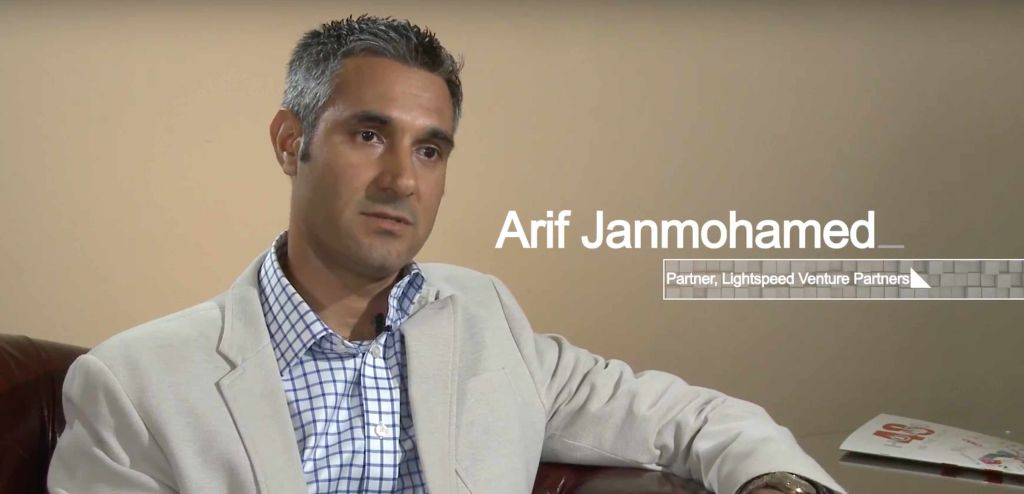
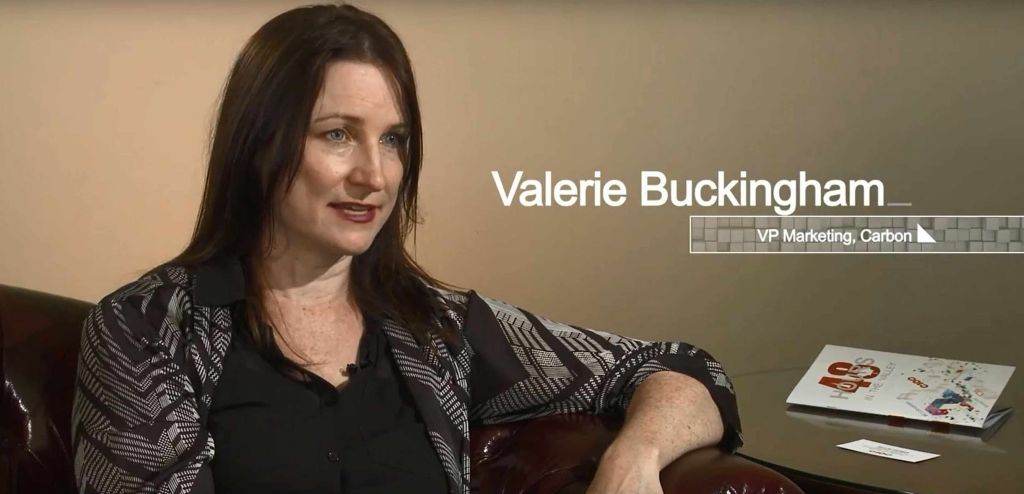
RBC has joined forces with the C100 to share stories of Canadian entrepreneurs and our connections with Silicon Valley. “our stories” is your inside track on what it takes to succeed as a global player. RBC and C100 will be sharing videos that showcase Canadians changing the world, provide real-life stories of successes (and failures) and advice on how to succeed as an entrepreneur.

RBC is committed to sharing Canadian technology, entrepreneurship and innovation stories to elevate the conversation at home and abroad. Sharing and highlighting content elevates the conversation around infrastructure, education, talent, regulation and resources needed for economic prosperity in Canada.

C100 is dedicated to giving back to the Canadian innovation economy and fostering the next generation of successful entrepreneurs and innovative companies in Canada. Showcasing Canadian business thought leaders in the San Francisco Bay area through storytelling sheds light on their successes, their challenges and their advice for those who are building global players based in Canada.

About the C100:

C100 is a non-profit, member-driven association of Canadian thought leaders in the San Francisco Bay Area committed to supporting and accelerating the innovation economy in Canada. The C100 represents a select group of experienced entrepreneurs, executives of leading technology companies, and venture capital investors.

View By Topics Or Author Page Link

view_by_topics_or_author_page_link

our stories

Videos that showcase Canadian entrepreneurs changing the world. Learn and be inspired.

RBC has joined forces with the C100 to share stories of Canadian entrepreneurs and our connections with Silicon Valley. “our stories” is your inside track on what it takes to succeed as a global player. RBC and C100 will be sharing videos that showcase Canadians changing the world, provide real-life stories of successes (and failures) and advice on how to succeed as an entrepreneur.

RBC is committed to sharing Canadian technology, entrepreneurship and innovation stories to elevate the conversation at home and abroad. Sharing and highlighting content elevates the conversation around infrastructure, education, talent, regulation and resources needed for economic prosperity in Canada.

C100 is dedicated to giving back to the Canadian innovation economy and fostering the next generation of successful entrepreneurs and innovative companies in Canada. Showcasing Canadian business thought leaders in the San Francisco Bay area through storytelling sheds light on their successes, their challenges and their advice for those who are building global players based in Canada.

About the C100:

C100 is a non-profit, member-driven association of Canadian thought leaders in the San Francisco Bay Area committed to supporting and accelerating the innovation economy in Canada. The C100 represents a select group of experienced entrepreneurs, executives of leading technology companies, and venture capital investors.

View By Topics Or Author Page Link

view_by_topics_or_author_page_link

And for Kylie Jenner, it’s perhaps the best shot yet to change an entire category overnight; thanks to e-commerce, her cosmetics line is now outselling L’Oréal and MAC online – combined. Celebrity brands, mobile payment platforms and emerging technologies like augmented reality may be bringing e-commerce to an inflection point. Too bad not enough retailers are ready. E-commerce accounts for less than 15% of retail sales in the US, and less than 10% in Canada. But as mobile payment technology takes hold and distribution costs decline, those numbers may shift quickly. “The Internet has democratized distribution,” says Harley Finkelstein, Shopify’s chief operating officer, speaking at the latest #RBCDisruptors, our monthly forum on innovation. Here are some of his insights:

The Big Shift: Power to the Purchaser

Sorry stores, it’s no longer about you. Retailers have long dictated shopping terms to consumers: how, where and when you can buy something. But “store hours” are becoming a thing of the past. So, too, is the middleman. “I can go directly to the retailer, get great insights prior to that purchase – and it’s cheaper,” explained Finkelstein.

Social Selling

The old mall map has been replaced by social media channels that can guide you through a personalized shopping journey, informed by your habits, preferences and friends. “What social media has done from a marketing perspective, is level the playing field,” explained Finkelstein. Which brings a whole new meaning to You Are Here.

Side Hustles Go Mainstream

Celebrities like Jenner, Kanye West and Drake were quick to seize on this opportunity, knowing social commerce would allow them to monetize their massive fan bases as old business models – music, for instance – fade. The resulting celebrity product lines have helped launch a whole new side of retail, known as “side hustles.” Case in point: Finkelstein described an investment banker who uses Shopify to sell homemade jam made from lemons on his hobby farm.

Playing With the Platforms

Online platform giants like Amazon, Facebook and Alibaba enjoy an unparalleled scale and cost base. For everyone else, that means an even greater need to create a unique ecommerce value proposition. Forget commonly available products. Think cool brands, unique experiences (online and offline) and personalized relationships with customers. “You have to create value,” said Finkelstein.

Paying How You Want

When it comes to payment, Finkelstein believes retailers should accept the payment that’s preferred by customers. Full stop. He pointed out that Shopify was one of the first to accept bitcoin, with rapper 50 Cent selling his branded headphones via Shopify and accepting cryptocurrency as payment. “We as a retail industry should be agnostic as to how people pay.”

The Many Cultures of Commerce

When selling online to a global audience, knowing the culture is key. “Each country and each region has these really interesting nuances. The idea of using a credit card to pay for a transaction online in India is unheard of. You have to use a ‘cash and delivery’ type of model,” explained Finkelstein. In Indonesia, retailers have sold through Instagram for years, and now use social media in very different ways from North America. While in the U.S., “everybody is used to next-day delivery. Most countries don’t expect that. In Brazil, you just want to receive your package.”

The Big Q: Is Traditional Retail Dead?

The short answer: no. That is, if retailers can create great, customized experiences that are unique to their store offerings and to the customers they’re targeting. In other words, it’s not just about product and price. It’s about the experience and emotion that shoppers attach to a brand. Some clothiers, for instance, offer espresso and hot shaves to customers who visit their shops, perhaps after browsing online. Others are starting to offer Augmented Reality tools that let customers visualize products on them, to get a smart read on sizes and cuts. There’s no denying the retail industry is in a state of mass disruption, with over 5,000 stores in the U.S. closing their doors last year. But Finkelstein believes that chance will create greater opportunities for Canadians seeking a slice of the global market. “Canada is becoming a lot more ambitious. We are fiercely Canadian but we are becoming fiercely ambitious with our companies.”

View By Topics Or Author Page Link

view_by_topics_or_author_page_link

Q: What is the one thing Canadian business need to think about when it relates to e-commerce and tapping into the global supply chain?

Harley: Canadian retail businesses that want to compete globally need to realize that customers are now in control. The customer decides where, when and what they want to buy, but most importantly, they decide how they make that purchase. The companies that will win in the future are the ones that build a truly channel agnostic strategy, allowing consumers to buy in whatever way is most convenient to them, and not how their retailer thinks they want to buy. At Shopify, we enable our merchants to reach any potential customers anywhere and everywhere.

Q: How do we continue to build more world-class businesses in Canada?

Harley: At Shopify, we focus on building for the long term. We are driven by our values, motivated by our teams, and are determined to take the path that leads to more entrepreneurs. By lowering the barrier to entry to start a business, we are making the making entrepreneurship more accessible and enabling people to more easily pursue their life’s work. To build more world-class businesses in Canada, we need to raise the level of ambition we all have, and continue to support each other along the way.

Q: What’s one success story that sticks out to you of a Shopify user?

Harley: One Shopify success story that I really love is Nora — a snoring solution intended for both those who snore and their sleep-deprived partners. The Toronto founders created the product to help their father stop snoring and to give their mother a peaceful night’s sleep. That’s the amazing thing about entrepreneurs — they see the gap in the market that no one else can. Whether it’s through personal experience or outside of their purview, they strive to fill the gap. They won our Build A Business competition in 2016 and are one of #OprahsFavoriteThings for 2017. These guys are just getting started and I can’t wait to see where they go.

Want to hear more from Harley Finkelstein? Join us for the next #RBCDisruptors: The future of e-commerce on Nov. 8 from 9 – 10 a.m. EDT. Tune in via Facebook Live and follow the conversation on Twitter using #RBCDisruptors.

View By Topics Or Author Page Link

view_by_topics_or_author_page_link

Its innovation scene is starting to play more at the extremes. BC’s tech sector, with $14-billion in revenue and 100,000 employees, is the fastest-growing in Canada.

The city’s booming startup scene is ranked tops in Canada and 15th in the world. But it’s not growing enough world-scale companies, perhaps because too few are playing at the edges of innovation.

Diversity may change that. If we harness the twin powers of disruptive technology and diverse, inclusive thinking, we can help lead this century. And we can do it — we have to do it — through business, entrepreneurs, investors and risk-takers.

I delivered a keynote speech this week on, “How BC can become Scale-up Central” to the B.C. Business Council, at their fifth annual BC Business Summit. To read the full transcript, please click here.

Below are some key takeaways:

We Need More Gazelles

Unfortunately, half of Canadian start-ups rarely amount to much and don’t make it past the five-year mark. Worse, of every 100 businesses in our country, only two ever get to be so-called gazelles — companies that after five years still generate an annualized growth rate of 20% or better.

They’re the 10x-ers.

What makes them gazelles?

We’ve been thinking a lot about that at RBC, talking to clients across the country, in all sorts of sectors. We think it comes down to three business factors — and one trait: capital, talent and markets.

The trait is courage, the willingness to look at what you’ve built and accept that it’s nowhere near enough. We need to think about 10x growth, not 10%.

Scale Factor #1: Capital

When it comes to capital, there’s no shortage of it in Canada. VC investment is booming again, averaging about $300-million a month. Governments are making billions more available through low-interest financing, grants and tax breaks.

What we’re missing is smart capital and patient capital — money that comes with experience and savvy, and is willing to stay with a business for 7-10 years rather than the 3-5 year window that many investors look for.

It’s why we call it smart capital, because it depends on people as much as money.

Capital Is Nothing Without the Second Factor: Talent

Talent is a big reason the federal government chose Vancouver as a finalist in the national supercluster competition, for a digital technology hub led by Telus, Microsoft and the Business Council, among others. However, top talent is in shorter supply than ever, especially the talent needed to turn a local success into a global player.

We need to rethink some basics.

First is compensation. It’s not just big-ticket, US dollar salaries; it’s the equity that high-growth talent often demands and yet our entrepreneurs are often not in a position to grant.

Second is location. We need to fight for these people, the way our sports teams compete for their superstars. We need to make ourselves a talent destination.

Third is taxes. The best in the world, when it comes to building companies, can live anywhere in the world. They’ve done the math; we should, too.

But it’s not just superstars that we need. A gap exists at the entry level, too, where emerging talent is not given enough of a chance.

It’s why we believe that work-integrated learning (WIL) is needed as a national imperative, to seize on co-op students, apprentices and interns as catalysts of innovation.We need business, big and small, to step up to make that happen.

Which Takes Me to the Third Factor: Markets

Currently, only 12% of our small businesses, and 28% of our medium-sized ones, ship things out of the country.

And here’s a shocker: More than a quarter of the non-exporters see no benefit in even trying. Export activity is actually declining as a percentage of GDP — falling from 46% in 2000 to 30% in 2012.

We need to drastically shift our attitude when it comes to reaching a global customer base.

Fortunately, on the immediate horizon lies Cascadia, the region of Washington, Oregon, and British Columbia, that’s home to 16-million people and US$660-billion in GDP.

BC needs to access markets like China and India, even virtually. Our competitors are, for sure. Last year, Washington state sold more to China than to all of Canada.

BC the Bold

We believe Canadian companies need capital, talent and markets to grow. But more than anything, we all need more ambition.

BC has the chance to build even more world-leading firms here and will secure the province’s path of economic growth for another generation.

And there are few places better positioned than BC to scale that lead. With access to growing markets, outstanding talent and patient capital, the province can get there.

It may not be easy, but as Jack Ma, a scale-up guru in his own right, says, “Today is difficult. Tomorrow is more difficult. The day-after-tomorrow is beautiful.”

View By Topics Or Author Page Link

view_by_topics_or_author_page_link

our stories

Videos that showcase Canadian entrepreneurs changing the world. Learn and be inspired.

RBC has joined forces with the C100 to share stories of Canadian entrepreneurs and our connections with Silicon Valley. “our stories” is your inside track on what it takes to succeed as a global player. RBC and C100 will be sharing videos that showcase Canadians changing the world, provide real-life stories of successes (and failures) and advice on how to succeed as an entrepreneur.

RBC is committed to sharing Canadian technology, entrepreneurship and innovation stories to elevate the conversation at home and abroad. Sharing and highlighting content elevates the conversation around infrastructure, education, talent, regulation and resources needed for economic prosperity in Canada.

C100 is dedicated to giving back to the Canadian innovation economy and fostering the next generation of successful entrepreneurs and innovative companies in Canada. Showcasing Canadian business thought leaders in the San Francisco Bay area through storytelling sheds light on their successes, their challenges and their advice for those who are building global players based in Canada.

About the C100:

C100 is a non-profit, member-driven association of Canadian thought leaders in the San Francisco Bay Area committed to supporting and accelerating the innovation economy in Canada. The C100 represents a select group of experienced entrepreneurs, executives of leading technology companies, and venture capital investors.

View By Topics Or Author Page Link

view_by_topics_or_author_page_link

our stories

Videos that showcase Canadian entrepreneurs changing the world. Learn and be inspired.

RBC has joined forces with the C100 to share stories of Canadian entrepreneurs and our connections with Silicon Valley. “our stories” is your inside track on what it takes to succeed as a global player. RBC and C100 will be sharing videos that showcase Canadians changing the world, provide real-life stories of successes (and failures) and advice on how to succeed as an entrepreneur.

RBC is committed to sharing Canadian technology, entrepreneurship and innovation stories to elevate the conversation at home and abroad. Sharing and highlighting content elevates the conversation around infrastructure, education, talent, regulation and resources needed for economic prosperity in Canada.

C100 is dedicated to giving back to the Canadian innovation economy and fostering the next generation of successful entrepreneurs and innovative companies in Canada. Showcasing Canadian business thought leaders in the San Francisco Bay area through storytelling sheds light on their successes, their challenges and their advice for those who are building global players based in Canada.

About the C100:

C100 is a non-profit, member-driven association of Canadian thought leaders in the San Francisco Bay Area committed to supporting and accelerating the innovation economy in Canada. The C100 represents a select group of experienced entrepreneurs, executives of leading technology companies, and venture capital investors.

View By Topics Or Author Page Link

view_by_topics_or_author_page_link

our stories

Videos that showcase Canadian entrepreneurs changing the world. Learn and be inspired.

RBC has joined forces with the C100 to share stories of Canadian entrepreneurs and our connections with Silicon Valley. “our stories” is your inside track on what it takes to succeed as a global player. RBC and C100 will be sharing videos that showcase Canadians changing the world, provide real-life stories of successes (and failures) and advice on how to succeed as an entrepreneur.

RBC is committed to sharing Canadian technology, entrepreneurship and innovation stories to elevate the conversation at home and abroad. Sharing and highlighting content elevates the conversation around infrastructure, education, talent, regulation and resources needed for economic prosperity in Canada.

C100 is dedicated to giving back to the Canadian innovation economy and fostering the next generation of successful entrepreneurs and innovative companies in Canada. Showcasing Canadian business thought leaders in the San Francisco Bay area through storytelling sheds light on their successes, their challenges and their advice for those who are building global players based in Canada.

About the C100:

C100 is a non-profit, member-driven association of Canadian thought leaders in the San Francisco Bay Area committed to supporting and accelerating the innovation economy in Canada. The C100 represents a select group of experienced entrepreneurs, executives of leading technology companies, and venture capital investors.

View By Topics Or Author Page Link

view_by_topics_or_author_page_link

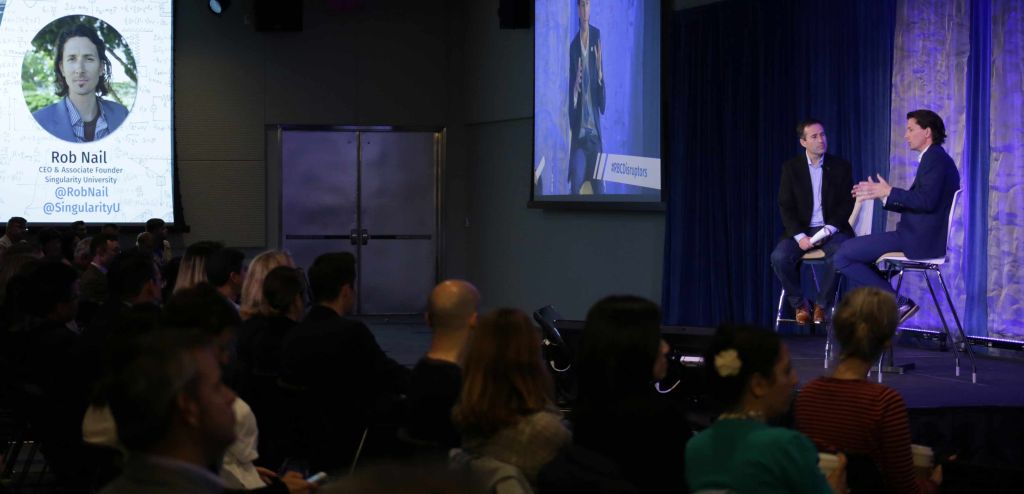
Nail is CEO and co-founder of Singularity University, a Valley think tank that’s taught 18,000 participants from 111 countries in exponential change. He’s also a master of the big wave. This is what he says you need to know about both: Every wave is different. Every day you’re a beginner. And every failure – at least those that don’t kill or maim – is a gift. Nail spoke recently at #RBCDisruptors about the massive changes coming at us because of technology, the mindset needed for exponential change and how we can shape it. He helped launch the first-ever SingularityU Canada Summit last week, to advise large Canadian firms and governments on the disruptive power of technological change. Here’s some of what he had to say:

If You Knew You Would Live to 120, What Would Your Retirement Strategy Look Like?

Nail believes this will become reality in the next 30 years, as advances in health technology continue to evolve exponentially. His young children may even live to double his life expectancy. Singularity predicts that human longevity will change dramatically with the increased use of digital health checks, in which humans will access 150GB of their body’s data yearly, literally digitizing their physical selves. Through closer monitoring and preventative interventions, they want to “make 100 the new 60″.

What Does Singularity Advise Companies to Do to Shift Their Mindsets?

Embrace the crazy idea. “If those crazy ideas just so happen to be the future of this business ten years from now, you need to set up a structure, a team or a process that will allow those to come in, or at least experiment with them in some way,” said Nail. And this has to come from the top. Nail emphasized that the CEO has to directly support change and protect the individual or team that is experimenting with something new, different and ‘weird’. One CEO that has embraced radical change is Former GE CEO Jeff Immelt. With such a hardware-heavy, industrial model, GE has become a leader in digitizing their business in order to prepare for the future. “Ultimately what I believe Jeff has built is a business that has longevity; he’s built resilience for that business,” said Nail. Another company example? Hardware giant Lowe’s. Nail recounted an interesting story about their small innovation team that began collaborating with startups and experimenting in different areas of the business. One prototype to emerge was a multilingual robot, with inventory management system integration, designed to interact with customers on the sales floor. Despite not having much, or any, support internally (except for the CEO), the robot got built and was eventually launched in-market at a San Jose store. This launch generated more publicity and press coverage than anything the company had seen in its entire 80-year history. “From then on, the CEO internally starts talking about Lowe’s as an ‘information and innovation business’,” explained Nail.

The Role of Failure

Nail expressed that the grind of the workforce beats us to be fearful of failure, as many of us need to work in order to survive. Similarly, most organizations get set up and develop this deep fear of failure – in that, if a project doesn’t work, people are reprimanded or fired. Nail brings in surfing as a metaphor. “It’s going through those failures over and over again, and then the one time you hit it, it all makes sense and makes it that much more powerful. Those failures aren’t really failures, they’re all part of the learning.” Nail believes that corporations have a responsibility to empower their employees with new skills to help them find their next path, even if that means leaving the company – without fear. “If you’re motivated by fear, you look for something stable, which often looks like the past,” said Nail, referencing Brexit and Trump.

Moving Forward

According to Nail, we require adaptability, mindset, tools, resources and a support ecosystem) to help us move at a faster pace. “We are going to see a fundamental amount of change in every aspect of our lives, every business, every industry and society,” said Nail. Where to start? Nail advises taking a moment to think about the future, the shape of the next 30 years and what we can do differently. “It’s rare that any of us have time to look beyond the next project, the next quarterly numbers, or even the next election cycle,” said Nail. “Remember that there is a fear of technology out there. However, it may be the strongest force for good.”
 

View By Topics Or Author Page Link

view_by_topics_or_author_page_link

our stories

Videos that showcase Canadian entrepreneurs changing the world. Learn and be inspired.

RBC has joined forces with the C100 to share stories of Canadian entrepreneurs and our connections with Silicon Valley. “our stories” is your inside track on what it takes to succeed as a global player. RBC and C100 will be sharing videos that showcase Canadians changing the world, provide real-life stories of successes (and failures) and advice on how to succeed as an entrepreneur.

RBC is committed to sharing Canadian technology, entrepreneurship and innovation stories to elevate the conversation at home and abroad. Sharing and highlighting content elevates the conversation around infrastructure, education, talent, regulation and resources needed for economic prosperity in Canada.

C100 is dedicated to giving back to the Canadian innovation economy and fostering the next generation of successful entrepreneurs and innovative companies in Canada. Showcasing Canadian business thought leaders in the San Francisco Bay area through storytelling sheds light on their successes, their challenges and their advice for those who are building global players based in Canada.

About the C100:

C100 is a non-profit, member-driven association of Canadian thought leaders in the San Francisco Bay Area committed to supporting and accelerating the innovation economy in Canada. The C100 represents a select group of experienced entrepreneurs, executives of leading technology companies, and venture capital investors.