

 EN
EN 



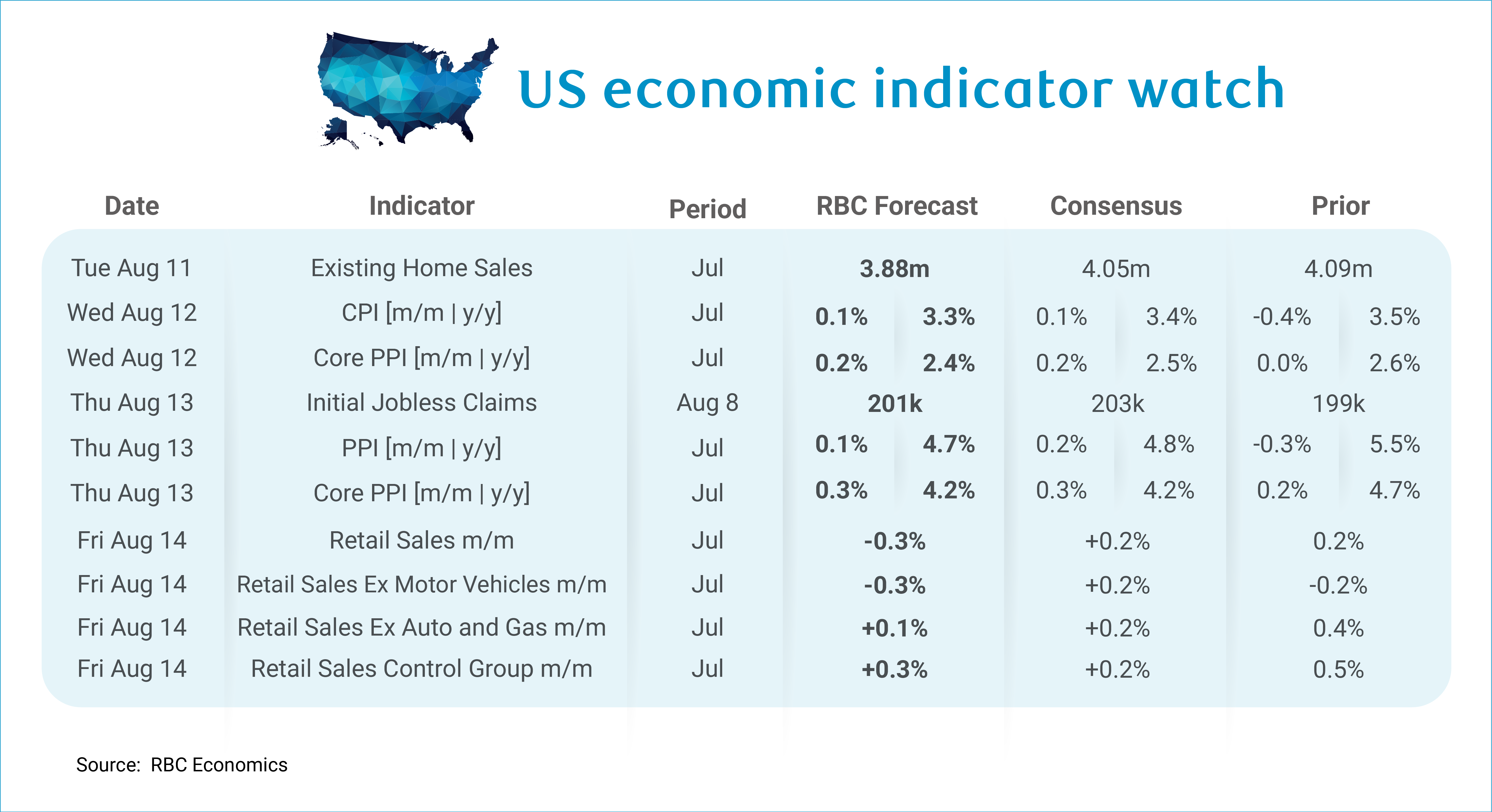
Next week marks a packed calendar, with the most consequential data release being the July CPI print which lands on Wednesday. We expect core CPI rose +0.2% m/m, knocking the y/y pace down to 2.4%. We look for headline inflation to come in at a more subdued +0.1% m/m (+3.3% y/y), helped by a continued retracement in gasoline prices.
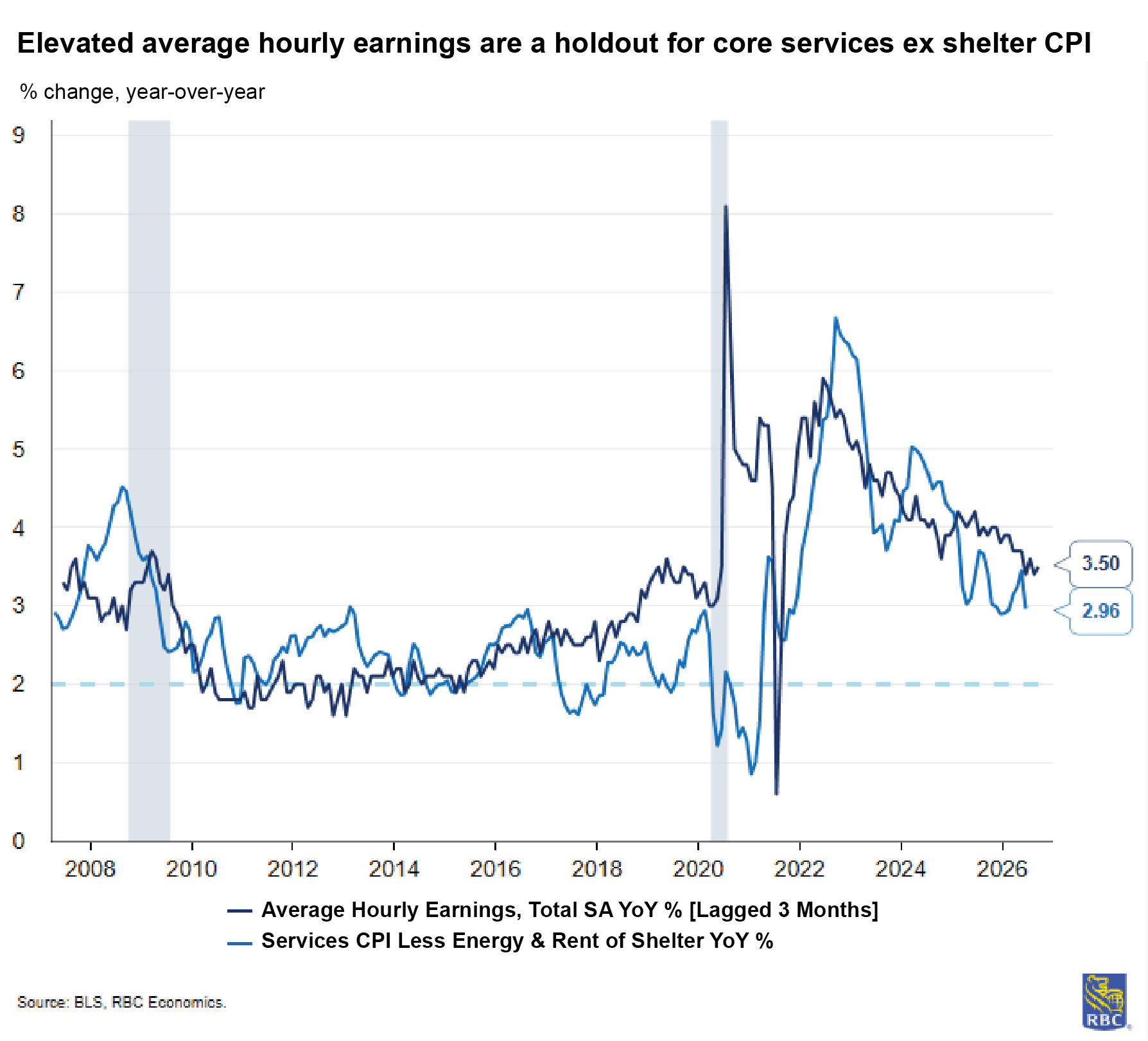
Core goods have consistently helped headline inflation as of late – registering flat to negative for three consecutive months. Core services inflation is expected to continue to retreat from April and highs – but as the final ingredient to return core inflation to target, we expect it will remain stickier than the FOMC would like. Still, shelter price growth will likely register cooler in July, providing some relief to core services. The Zillow Observed Rent Index has decelerated since Q1 2025 (aside from a recent one-month blip) and tends to flow through to OER with a sizeable lag. New and existing home sales have largely moderated over the past year and a half, and with a nearly two-year lag to OER, that should continue pulling shelter lower through year-end — though more meaningful relief will come later on. And airfares will add a further tailwind on cheaper jet fuel. But the longer-term limitation for core services is still elevated wage growth, which continues to put a floor under core services disinflation, while Baby Boomers – a cohort that is relatively less sensitive to wage income – will also be demand supportive for services.
Core PPI is unlikely to register the same relief that we expect to see in core CPI. Our forecast calls for core PPI to rise +0.3% m/m, with pressures stemming from services including transportation and warehousing. Headline PPI will be helped by the energy reprieve (+0.1% m/m). Trade services is the wildcard, and after the ISM Services prices paid index unexpectedly shot up in July, we will be watching to see how wholesale and retail margins are faring via trade services PPI.
The week culminates with retail sales data. We expect that a retracement in gasoline prices will translate to negative nominal retail sales (-0.3% m/m), and declines in light motor vehicle sales will also be a drag. Most importantly, excluding autos and gas, spending is expected to remain in positive territory suggesting a resilient consumer picture. We are forecasting a +0.3% m/m increase in the retail sales control group (which excludes autos, gasoline, building materials, and restaurant spending) in July. This should reassure the Fed that demand is still healthy. Still, we expect next week’s inflation print will preserve Fed optionality as the FOMC awaits one additional inflation print before the September meeting.
About the authors:
Mike Reid is Head of US Economics at RBC. He is responsible for generating RBC’s US economic outlook, providing commentary on macro indicators, and producing written analysis around the economic backdrop.
Carrie Freestone is a Senior US Economist at RBC. She is responsible for generating RBC’s US economic forecasts across GDP, employment, and inflation, and providing macro commentary through publications, presentations, and the media.
Imri Haggin is an US Economist at RBC, where he focuses on thematic research. His prior work has centered on consumer credit dynamics and treasury modeling, with an emphasis on leveraging data to understand behavior.
This article is intended as general information only and is not to be relied upon as constituting legal, financial or other professional advice. The reader is solely liable for any use of the information contained in this document and Royal Bank of Canada (“RBC”) nor any of its affiliates nor any of their respective directors, officers, employees or agents shall be held responsible for any direct or indirect damages arising from the use of this document by the reader. A professional advisor should be consulted regarding your specific situation. Information presented is believed to be factual and up-to-date but we do not guarantee its accuracy and it should not be regarded as a complete analysis of the subjects discussed. All expressions of opinion reflect the judgment of the authors as of the date of publication and are subject to change. No endorsement of any third parties or their advice, opinions, information, products or services is expressly given or implied by Royal Bank of Canada or any of its affiliates.
This document may contain forward-looking statements within the meaning of certain securities laws, which are subject to RBC’s caution regarding forward-looking statements. ESG (including climate) metrics, data and other information contained on this website are or may be based on assumptions, estimates and judgements. For cautionary statements relating to the information on this website, refer to the “Caution regarding forward-looking statements” and the “Important notice regarding this document” sections in our latest climate report or sustainability report, available at: https://www.rbc.com/community-social-impact/reporting-performance/index.html. Except as required by law, none of RBC nor any of its affiliates undertake to update any information in this document.

