

 EN
EN 


Next week is light on US economic data, which will be a welcome relief as markets continue to digest the Fed’s first rate hike in three years. With inflation pressures building, though, we’ll be watching the regional Fed surveys from Philadelphia, Richmond, and Kansas City alongside the S&P PMIs. These surveys can offer early clues on inflation’s trajectory and the degree of energy price passthrough to the broader economy. We expect two more rate hikes from the Fed by year-end, driven by persistent inflation concerns.
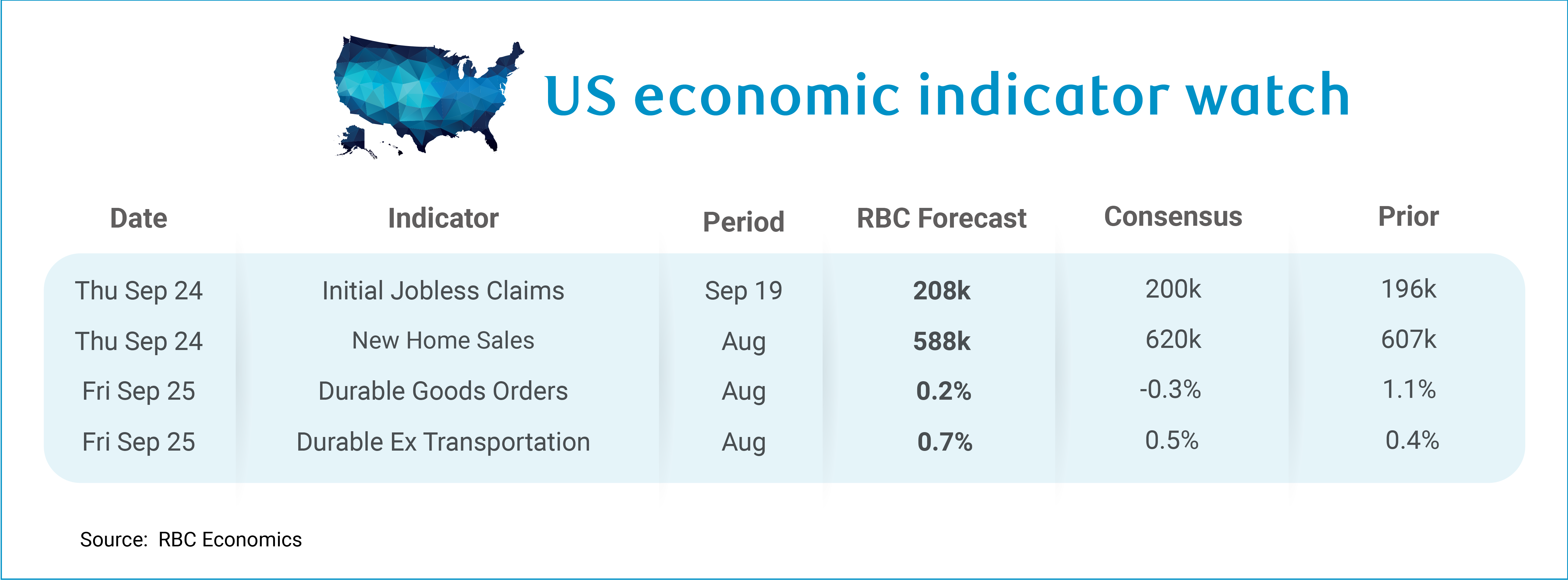
With rates moving higher, the housing market will remain under pressure. New home sales data on Thursday should confirm that picture — we expect the level to stay depressed at 588k as rising mortgage rates weigh on affordability. The pipeline for new construction signals a continued slowdown as well: building permits for August declined and sit near cycle lows as weak demand, input price pressures, and high borrowing costs weigh on homebuilder activity. Our growth outlook does not look for a housing rebound. Residential investment subtracted from headline GDP growth in seven of the last ten quarters and is unlikely to contribute positively over the next several quarters.
The durable goods report is worth watching to gauge the momentum in AI-related investment. In contrast to housing, nonresidential investment has consistently added to GDP growth since 2020, driven largely by structures — particularly data center construction — and equipment spending tied to the AI buildout. Nonresidential investment has been contributing nearly one percentage point to GDP growth since early 2025, suggesting that without the AI investment boost, growth would have run below 1% in the first half of 2026. The near entirety of US GDP growth is now being driven by the consumer and AI-linked capital spending, and a slowdown in either would be concerning.
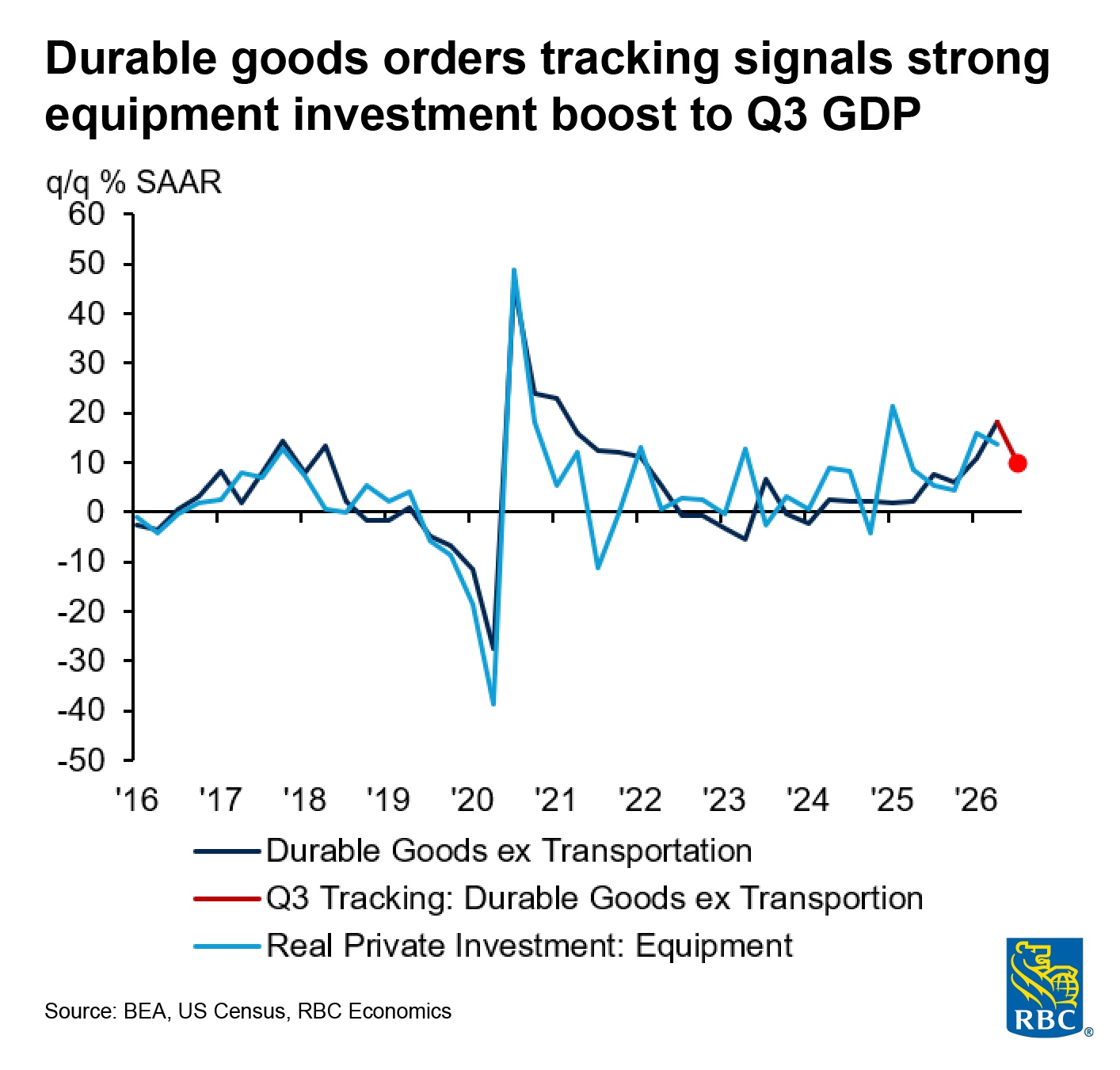
On that note, a growing wave of state and local measures to curb data center development — notably in New York, Texas, Pennsylvania, Oregon, Massachusetts, and New Jersey — threatens to slow AI capex momentum. We are closely watching durable goods orders for early signs of a pullback, but we do not expect this to appear in the data yet. Our forecast calls for headline durable goods orders to rise 0.2% month-over-month despite a retracement in Boeing orders. Stripping out transportation, we expect core orders to rise 0.7% month-over-month, driven primarily by computer and electrical equipment as the AI boom continues.
About the authors:
Mike Reid is Head of US Economics at RBC. He is responsible for generating RBC’s US economic outlook, providing commentary on macro indicators, and producing written analysis around the economic backdrop.
Carrie Freestone is a Senior US Economist at RBC. She is responsible for generating RBC’s US economic forecasts across GDP, employment, and inflation, and providing macro commentary through publications, presentations, and the media.
Imri Haggin is an US Economist at RBC, where he focuses on thematic research. His prior work has centered on consumer credit dynamics and treasury modeling, with an emphasis on leveraging data to understand behavior.
This article is intended as general information only and is not to be relied upon as constituting legal, financial or other professional advice. The reader is solely liable for any use of the information contained in this document and Royal Bank of Canada (“RBC”) nor any of its affiliates nor any of their respective directors, officers, employees or agents shall be held responsible for any direct or indirect damages arising from the use of this document by the reader. A professional advisor should be consulted regarding your specific situation. Information presented is believed to be factual and up-to-date but we do not guarantee its accuracy and it should not be regarded as a complete analysis of the subjects discussed. All expressions of opinion reflect the judgment of the authors as of the date of publication and are subject to change. No endorsement of any third parties or their advice, opinions, information, products or services is expressly given or implied by Royal Bank of Canada or any of its affiliates.
This document may contain forward-looking statements within the meaning of certain securities laws, which are subject to RBC’s caution regarding forward-looking statements. ESG (including climate) metrics, data and other information contained on this website are or may be based on assumptions, estimates and judgements. For cautionary statements relating to the information on this website, refer to the “Caution regarding forward-looking statements” and the “Important notice regarding this document” sections in our latest climate report or sustainability report, available at: https://www.rbc.com/community-social-impact/reporting-performance/index.html. Except as required by law, none of RBC nor any of its affiliates undertake to update any information in this document.

