The U.S. was losing to communists on the battlefield, socialism was winning in the streets, monetary policy was fighting for credibility, and young people were challenging the multinationals that had come to define global commerce.
Capitalism did win out, and for the vast majority of people, the world became a better place – more open, more educated, more innovative, and by most measures more prosperous. But at the 50th World Economic Forum in Davos last week, a new global divide became apparent. After a half-century of globalization, of rules and ambitions that carried the world through the end of the Cold War, the rise of the Internet and the explosion of mobile computing, the world is facing new challenges, and new questions. And once again, a new generation is demanding action. Can capitalism again rise to the challenge?
This was my fifth trip to the Forum, and the first where I began to see the emergence of geopolitical systems and their economies as platforms competing for the transformation that lies ahead – and the deep implications that this holds. The 2020s may see a reordering of economies and industries, as societies respond to the threats of climate change and sectors tap the potential of smart technologies. But who defines that change remains to be seen. More than ever, business will have to step up.
Here’s some of what I learned at WEF 50:
1. Superpowers as the new super platforms
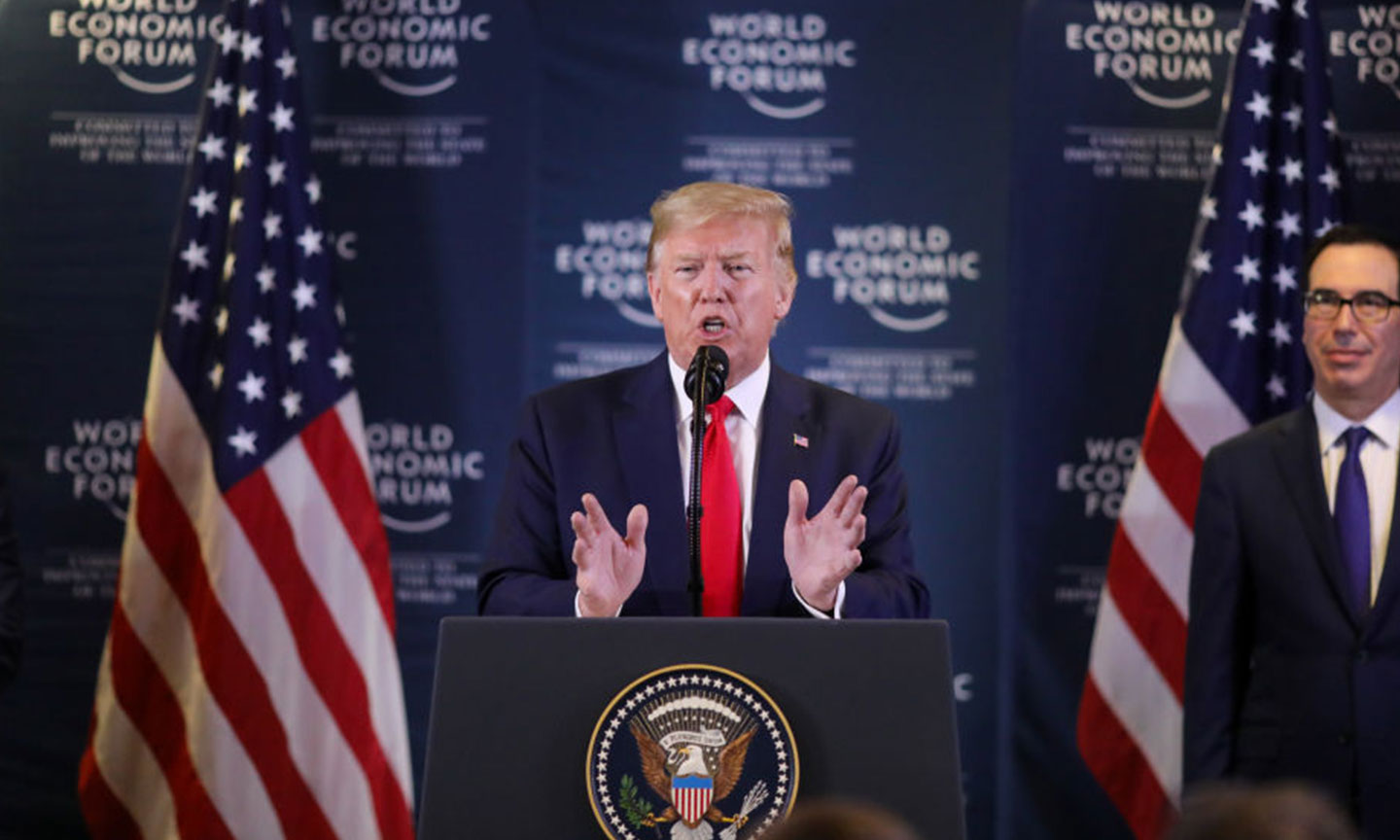
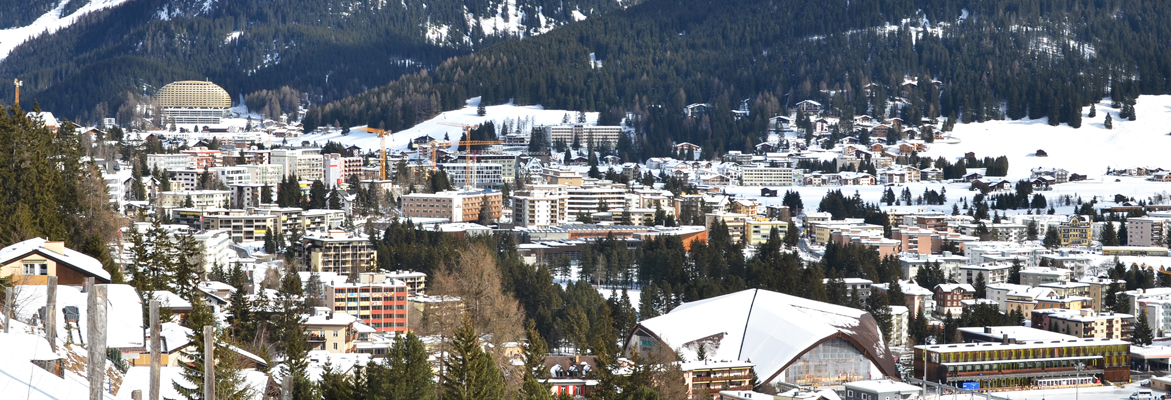
Every January, the shops along Davos’ main street are converted into showcases for far-flung markets from around the world, from Karnataka to the Caspian, with nods this year to Saudi Arabia, Ukraine and Canada’s cannabis industry. The Disneyesque displays always capture the diversity of our global economy, but the loudest messages this year came from those that didn’t have much of a visible presence: the United States and China. The two powers control 40% of global GDP, and as their trade conflict shows, they’re each trying to position themselves as a platform for global growth. That’s critical to everyone looking for global scale to solve problems, whether it’s to cure diseases, reduce carbon emissions or find new markets. It’s not just a race for scale; it’s a competition between operating systems for business, between America’s shareholder capitalism and China’s state capitalism.
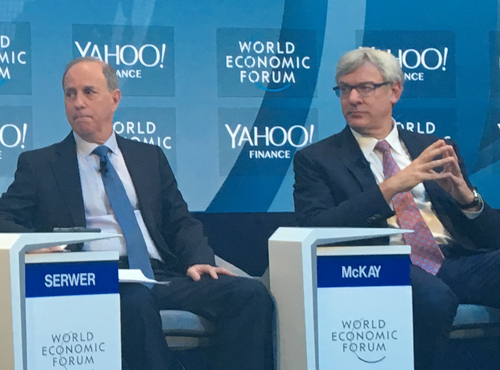
I was with a group of CEOs who met with President Trump and members of his administration whose confidence was palpable. They felt their economic policies had exceeded expectations and their approach to a new trading order, based on regional and bilateral deals, would ensure the global economy continues to revolve around the American platform of capitalism, rooted in the capital markets of New York, the innovation labs of Silicon Valley and a manufacturing renaissance in between. China was less visible at this Forum, but the trade war hadn’t diminished the confidence of the Chinese leaders I met. In fact, their resolve seemed to be growing. As one regular Davos-goer noted, the absence this year of many world leaders – none of the BRIC leaders, for instance – could reflect the draw of China’s Belt and Road summit, which is held every April (Beijing last year, Dubai in 2020) and may be the new Davos. China’s rise is about more than summits and sales, however. Its approach to state capitalism is about scale, using technology and an expanding reach across Asia into Europe to create data fields that could become the OPEC of the digital age. Which platform prevails in the 2020s will be critical to every business, and country, looking for growth.
2. Government, redirected
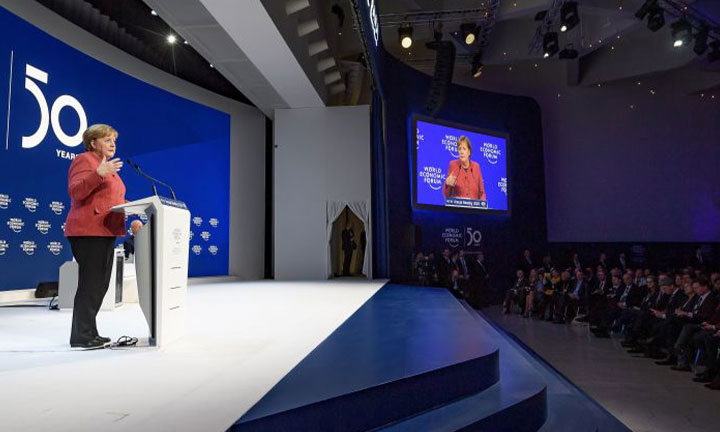
Across the aging, slow-growth West, governments are asserting themselves with a conviction not seen since the financial crisis. Nowhere is this truer than Europe, where governments are vexed by negative interest rates and the imminent departure of Britain from the European Union, a move that could further fray the world’s biggest common market. Into this valley of uncertainty, the EU leadership came in force to Davos to make the case for a more activist state. Ursula von der Leyen, the German president of the European Commission, made clear the continent isn’t going to compromise on regulations to compete with Britain. She’s ready to impose trade measures against any country that doesn’t meet environmental, social and labour standards. The Europeans are even planning to mobilize €1 trillion over the decade for a “green investment wave” that could rival the Democrats and their Green New Deal.
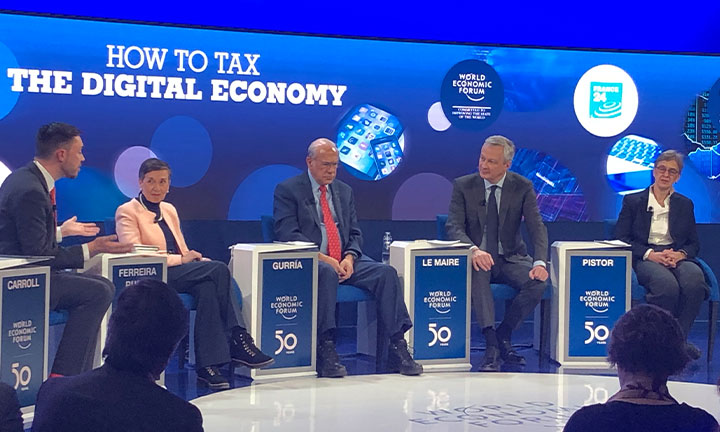
Even just a year ago, many Davos-goers thought rising global frustrations might spark a return to socialism. That may still happen. But at the forefront of the resurgent state are pragmatists like Germany’s Angela Merkel, who laid out an economic model that is neither left nor right: it’s a new economic model rooted in sustainability. “The whole way we do business will have to change,” the Chancellor said at her 12th Davos Forum. Europe’s more balanced approach to markets has carried into the cyber-economy, where its governments appear happy with their new, more onerous data regulations, and are determined to impose a digital tax on the Internet giants, for the sake of fairness and revenue. Global trade tensions won’t help, and indeed may worsen as Britain tries to cut deals with the U.S. and, eventually, China, in a race to bridge the two platforms.
3. Capitalism, repurposed
The Forum’s theme was “stakeholder capitalism,” an unfortunately anodyne description of a smart and sustainable approach to business that strikes a balance between communities, customers, employees and shareholders. Simply put, it puts purpose ahead of profit. Over the past 50 years, business has largely expected government to set rules and levy taxes to serve the public good. As trust in governments wanes, and the complexity of society’s problems grows, companies are charting their own course on environment, social and governance issues, to maintain public confidence in business and ensure the prosperity of communities that business serves. The challenge is serious. According to this year’s Edelman Trust Barometer, more than half of respondents worldwide feel capitalism does more harm than good – a sentiment driven largely by income stagnation. “Capitalism as we’ve known it is dead,” declared Marc Benioff, the founder and CEO of Salesforce.com.
In some ways, European and Canadian companies have already developed a purpose-driven approach to business that their American and Asian peers are only now pursuing in earnest. Microsoft CEO Satya Nadella made the case for this repurposing of capitalism, describing our economic model as the world’s most powerful economic learning system, rooted in discovery and testing. That learning system is needed more than ever to solve the world’s increasingly complex challenges, he argued. Mastercard CEO Ajay Banga suggested business can build the partnerships and networks needed to solve those problems. He came back to that word, scale, which may be the most important force of the 2020s. Business has proven to be the most effective model for scale anywhere, and is proving that again with global platforms. But this repurposed capitalism, and its complex web of relationships, will put ever-greater pressure on CEOs to reach beyond their walls and sectors, to delve into foreign subjects and work with unlikely allies, using the strength and spirit of their organizations to take solutions to a global scale. As Banga told the Forum, “there’s not enough philanthropic money or government money to solve these problems.”
4. Accountability, redefined
If business is to play a leading role in the 2020s, it will need more acceptance from society than ever, and that will require a more active role in developing national and international standards for a company’s performance on environmental, social and governance issues. We can’t wait for government. This year the Forum and 140 global companies launched an initiative to measure and show the progress of business across four pillars – principles, people, planet and prosperity – with 22 measures developed by the world’s major accounting firms. Properly adopted, the index can help communities, environmental groups, regulators, even employees, hold companies to account on their performance beyond the financial bottom line. And, in turn, this model can help business transparently measure its progress and outcomes, as we continue to strive to earn our social license to operate in society.
Such measurement tools carry risks, especially when they lose a sense of balance among their many variables. The risk was evident at this year’s Forum when environmental concerns overwhelmed the social and governance components of ESG. It’s important to remember how the failure of authorities, in business and government, to restore social inclusion after the financial crisis led to the rise of populism in the last decade. The governance failures of the Internet have been equally damaging. If the new capitalism is to find balance, it will need to ensure it continues to see the concerns of society as an integrated system rather than an itemized scorecard.
5. The new math of net zero

If two words defined this Forum, they were “net zero” – the idea that companies, even countries, can strive to reclaim more carbon from the atmosphere than they emit. The snowless pastures in the lower valleys around Davos this winter illustrated the realities of climate change and the urgency that Greta Thunberg brought to the Forum with her message that history is watching and a new generation is judging. She wasn’t alone. The world’s biggest asset manager, BlackRock, announced it would hold companies to a higher standard on all measures of sustainability, including their role in reducing global emissions. Microsoft set its own bar higher with a net-negative carbon policy that commits the software giant to offset all the carbon it has ever emitted. Few companies have done the hard math that Microsoft did, to calculate new emissions that can be attributed to its existence. If we’re serious about net-zero concepts, a lot of homework remains.
While much of the focus was on emissions reduction, more attention is going to offsets, especially nature-based ones that could allow our seas, land and forests to absorb more carbon, more quickly, as we work to transition industrial practices and consumer preferences. The Forum announced a bold commitment to help the world plant 1 trillion trees, increasing the global total by a third. That won’t be easy or cheap. The world’s leading financial institutions – banks, pension funds and asset managers – are also working to ensure more capital flows to carbon-reducing companies and technologies, and gradually away from major net emitters. In my conversations with finance officials and other global bank CEOs, it was clear governments need to do more – to set the rules of sustainable finance, and set clearer prices for risks, including carbon, so capital markets and business operators can get on with what they do best: optimizing the allocation of scarce resources, driving change and scaling innovation.
6. The messy math of energy
The most difficult conversations at Davos were also the most important. They were around how we plan for the next-quarter century of energy production and consumption, allowing investors and consumers to make economically rational choices that don’t lead to ecological catastrophe or social upheaval. To get there, we need more math and less emotion, because right now the math doesn’t add up. The Saudis, with low costs and low emissions, covered Davos with billboards and tea huts to burnish their image as they continue to export a good chunk of the world’s oil. They’re well positioned for any transition. The Americans, with a proven track record of innovation that’s made them the world’s Number One oil producer, show no signs of pulling back either. And then there’s China, whose ambitions could upend the world’s carbon math. As one China expert told us, the country is on course to open two new coal plants a month for the next 12 years.
I met with the world’s leading energy CEOs to better understand what they’re up against, and what they’re doing to reduce emissions. We need them to succeed. Our transition to a greener economy, with a more diverse energy mix, will take decades if it’s to avoid massive economic disruption. But it also needs to be more deliberate if it’s to avoid large-scale dispersion of capital away from some of our best innovators – the oil and gas companies that are using artificial intelligence, drone surveillance and advanced chemistry to reduce emissions. Some of those producers fear they’ll be cut off from investors who make unilateral decisions to adhere to the new carbon math. It may be short-sighted. Without a clearer plan to replace fossil fuels, we risk seeing producers hoard cash – or give it back to shareholders — rather than invest in new technologies. Any resulting decline in production, especially without a visible change in consumer behavior, might lead to a run-up in oil prices, something that could spark economic shocks and a political backlash.
7. The return of Malthus
When the Forum began in 1971, the world’s population was 3.8 billion, and plenty of Malthusian doomsayers warned we didn’t have enough land, water or food to cope. Instead, technology and trade triumphed, allowing roughly 7.8 billion people today to enjoy access to more food than the planet has ever produced. Can it continue as our population heads to 10 billion by 2050? With the world adding 80 million people a year, increasingly in Africa, the Middle East and other food-challenged regions, Davos renewed its focus on food security and the need to see global food production grow by 60% by the middle of the century.
The Forum brought together food innovators from around the world to showcase how technology may save us again. Cell-based meat production, pea proteins, vertical farming: there are plenty of ideas being developed. They will require new supply chains, changes to consumer behaviour and much more public and private investment. To show what individuals can do, the Forum launched a Future Food Day, serving locally sourced dishes, with smaller servings. Can such nudges make a difference? Not without large-scale investments in public research and the private scaling of innovation. Ramon Laguarta, the CEO of PepsiCo, suggested the world needs half a dozen Silicon Valleys of food innovation, in which universities, entrepreneurs and major producers can work with farmers of all sizes to transform how they produce food. The United Nations did just that in the 1960s and ‘70s, fostering a Green Revolution that helped avert a Malthusian mess. If we can make a renewed commitment to multilateralism, and allow for more business leadership, we might be able to do it again.
8. Currencies 2.0
The first Davos Forum inspired conversations around the dismantling of the gold standard, and emergence of the U.S. dollar as the world’s reserve currency. Fifty years later, the Forum is working with central banks and financial institutions to talk about currencies for the digital economy. A group of financial executives met with Bank of England governor Mark Carney to discuss the next frontier in payments, knowing there is a complex problem to solve: How can we reduce the friction of digital payments without undermining the financial system that is a foundation block of our economy? We’ve weathered financial crises since the end of the gold standard because our financial system doesn’t separate the storing, lending and movement of money into isolated channels. In fact, the confluence of these channels has ensured liquidity and an efficient matching of short-term savings (deposits) with long-term investments (loans). While digital currencies could make transactions easier, they risk diverting the lifeblood of our financial system to sources outside the system, like the big tech platforms that want the economic value of payments without the regulatory costs.
The next generation of payments will present another critical question: will digital currencies ever replace King Dollar? Not any time soon. Facebook’s Libra project has struggled to gain acceptance. And China’s initiative to build a digital yuan faces some fundamental problems. Beijing hasn’t explained which currencies (if any) might backstop the concept, which would be essential if a digital yuan is to facilitate trade such as an Alibaba purchase from Europe or Russian oil sales to China. The consequences are equally unclear if such a currency were to be adopted by rogue actors seeking to evade U.S. financial sanctions. The Trump administration’s active use of sanctions has already pushed many countries, notably Russia and Iran, to pursue new financial channels with Europe, the Middle East and Asia, making the notion of a new digital currency all the more appealing to them. The biggest challenge for the next generation of currencies will be to earn the trust of consumers, producers, sellers and lenders – and scale that trust. Through financial crises, wars and recessions, the U.S. dollar has done that, which is why the world continues to flock to it. For all the frustrations they can cause, America’s legal and regulatory systems remain the gold standard of global finance. Which is why the dollar is backstopped by the most valuable currency of all: trust.
9. Organizations 3.0
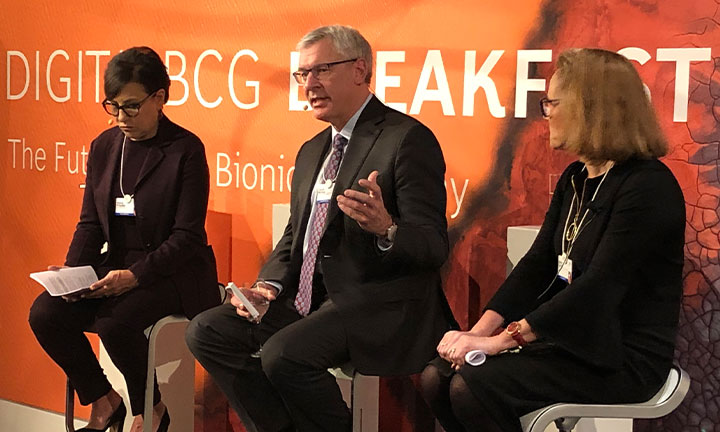
Businesses were first built around people. Over the last 50 years, they’ve been built around technology, too. We’re moving into an age when they’ll need a bionic blend, in which the interoperability of people and technology will be a critical success factor. I was part of a Davos panel on the “bionic organization,” led by the Boston Consulting Group and featuring Belén Garijo, the CEO of Merck’s Healthcare division, and Penny Pritzker, the former U.S. commerce secretary and founder of the investment company PSP Partners. We talked about how organizations can ensure their employees work effectively with smarter technologies, and how those technologies can be developed and refined to take advantage of the enormous human skills found in successful companies. Think of it as “intelligent augmentation” – the IA that can be just as powerful as AI to an organization. In the case of Merck, such an approach has increased demand for employees who can work across cultures as comfortably as they work across data platforms, blending tech and social skills. It’s one reason the company restated its purpose as “curious minds devoted to human progress.”
This blend of skills will be critical to legacy organizations trying to create 3.0 versions of themselves, using smart technologies and data pools to build their own platforms. One example: Yara International, the Norwegian fertilizer company, has built a digital platform with IBM that gives users the tools, data, networks and products they need for sustainable farming. Trouble is, such efforts rarely succeed without a diverse human mindset driving a platform. Pritzker told our session she looks for openness, authenticity and permission in companies she buys. “Innovation takes risk,” she’s found – and risk is rare if people don’t feel safe to speak their minds. She said a strong culture of diversity is critical to the bionic organization – something she didn’t appreciate until she worked in government and saw diversity as more than representation. “It’s also the difference in where you come from,” she said.
10. Education 4.0
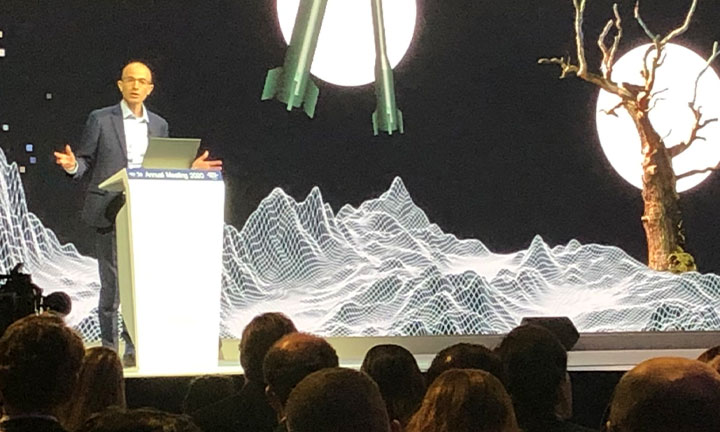
Leave it to Yuval Noah Harari to rattle the sapiens of Davos. The Israeli author is one of my favourites, and he didn’t disappoint when he told the Forum about the disruptions coming at humanity through automation. “How do you teach a 50-year-old truck driver to be a software engineer, or teach yoga to software engineers?” he asked. Even more than job loss, the historian and author of Sapiens worries the greatest threat to progress will be the loss of our sense of relevance as machines do more of what we thought we were good at. Offering advice. Giving directions. Telling a story. “It’s much worse to be irrelevant than to be exploited,” he warned, suggesting a new “useless class” will be our great challenge in the decade ahead.
Over to you, educators, and that could soon include all of us. The Forum launched an initiative this year to provide 1 billion people with better education, skills and jobs by 2030, which will require educators, government and business to develop new learning models together. As Suzanne Fortier, the Principal of McGill University, told the Forum, we need to be ready for a revolution in lifelong learning, which will run from early childhood until we’re 100. We’ll need a lot more such innovations if the Forum is correct in its projection that technology investments will create 133 million new jobs over the next three years. Many of those jobs will require specialized tech skills. Many will demand trade skills, which the world over aren’t attracting enough young people. But everywhere, the greatest demand will be for critical thinking and communications, the power skills of the 2020s. There’s just too much information out there for humans to cope with. Indeed, over the next 50 years, our greatest challenge may be to ensure we’re always learning. As Harari knows, it’s what defines us as sapiens.
I left Davos with a sense of concern for our increasingly divided world, and a sense of hope for the human spirit at the root of progress.
The balance may rest in the concept of trust. It could, as IBM CEO Ginni Rometty told the Forum, define the decade. There’s so much change happening, so quickly, that trust is the new glue, for communities and companies. Unfortunately, as the Edelman Trust Barometer shows, our trust in governments and media is limited. Companies face a fair degree of scepticism too – but business still enjoys more trust than other institutions. We will need to honour that trust, by investing in the concerns that have divided so many, and by ensuring that the positive power of technology isn’t hampered by lack of trust. Our ability to learn, share and resolve has never been more important. As is our willingness to listen. Angela Merkel put it well when she said “the fact that people aren’t willing to talk with each other fills me with grave concern.”
It’s why forums like Davos are more critical than ever, to bring people together at a time when we’re easily pulled apart. If there was any confidence to bring home, it was in the messages from scores of youth leaders who represent a new generation – one that’s creating a more positive sense of change, and an impatience in those who can’t deliver. As Natasha Wang Mwansa, a 19-year-old girls’ rights activist from Zambia, told the Forum, “It’s not about being young or old. How will you be part of the change we need?”


 EN
EN 


 Vaccine politics could prolong the pandemic
 Joe Biden can’t unite the world
 Get ready for smart supply chains
 Climate change, the next catalyst of innovation
 Increasing trust is the challenge of post-COVID capitalism
 Money’s cheap; judgment is not
 A new social dilemma: speech or reach?