

 EN
EN 

Content Type: Podcast

The Canadian entrepreneur spent his early childhood without electricity, taught himself to code, and studied philosophy at Cambridge before falling into a tech career that’s now pitting him against Microsoft and Google.
Butterfield’s biggest business success, Slack, is a corporate communications tool that arouses the kind of devotion that brings to mind Blackberry’s early days—and is aimed at reducing some of the 269 billion emails sent around the world each day. In person, Butterfield is soft-spoken and thoughtful, as one would expect from a guy who once contemplated a career as a philosophy prof. He joined us at RBCDisruptors earlier this week, where we had a chance to talk to him about effective communications, the merits of Silicon Valley and why corporate values are important. Here’s some of what we learned.
An Accidental Success Story
Stewart Butterfield didn’t start out to create either of his startups, Flickr and Slack. They were by-products of his efforts to create web-based, multiplayer games. The gaming ventures went nowhere. But in trying to build shared fantasy worlds, he came up with the photo-sharing software that became Flickr, and later the chat tool that morphed into Slack.
While he knew he was onto something with Slack, Butterfield didn’t initially think the tool would work for large organizations. Slack has 9 million users and counts IBM and Oracle among its biggest customers. While the path may not have been planned, building Slack into the company it is now—a challenger to the mighty Microsoft—was no accident, Butterfield says. “It’s a lot of work.”
An Antidote for Email
Butterfield’s luck with startups shouldn’t obscure his big ambitions. He wants to fundamentally change the way people collaborate, whether they work at IBM or as wedding planners. His solution is Slack, an alternative to the ubiquitous office email that Butterfield says is a “terrible choice” for intra-company communications. To illustrate, Butterfield describes a new hire signing onto corporate email and staring at an empty inbox. If that employee joins an organization using Slack, she or he has access to all the work that’s been done on a given project, right on Day One.
With the average 1,000-person company sending out an estimated 40,000 emails each day, it isn’t surprising that Slack has a community of evangelists.
Slack’s greatest advantage, Butterfield says, is that it provides a high degree of transparency across an organization, and quickly. That gives individuals and teams the clarity and alignment they need to perform their jobs.
The Valley Still Wins
Butterfield said more than once during the event that he’s a “patriotic Canadian,” and he believes Canada has all the talent it needs in terms of engineers, designers and marketers to staff Canadian startups.
So if given the choice, why would he start his next company in Silicon Valley? Butterfield’s answer was one we’ve heard before from entrepreneurs: It’s still the place with the deepest bench strength for recruiting specialized executive tech talent.
Corporate Values Matter. Like Playfulness
Butterfield took a page from Netflix’s playbook in assigning Slack some core values. But he wanted to make sure those values set Slack apart, reminding employees both how they should act and how Slack views them. He suggested any company should think carefully about its corporate values and ensure they tell employees and customers what makes it unique.
In case you’re wondering, Slack’s values include courtesy, playfulness and craftsmanship. Courtesy, for Butterfield, means empathizing with the client and always being open to understanding his or her needs. By emphasizing playfulness, he wants his employees to “look at the world sideways” in order to find creative solutions to problems. Craftsmanship is more than a call to avoid shoddy work—it’s Slack’s way of telling employees their individual work has meaning and value.
China’s Off Limits. Everywhere Else is Fair Game
When it comes to the massive and lucrative Chinese market, many tech companies want in. Slack isn’t one of them: Butterfield said the company isn’t prepared to give Beijing access to the company’s messaging data. But he is targeting the 600 million or so knowledge workers around the world that aren’t in China. He’s doing that by making Slack available in other languages and ensuring it supports specific industries and regulatory environments.
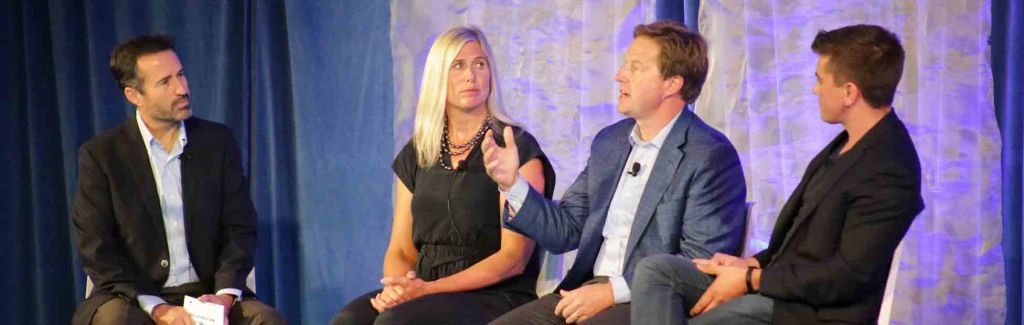
That was the theme of the latest #RBCDisruptors in advance of Mental Illness Awareness Week, which runs from September 30 to October 6 in Canada and the U.S.
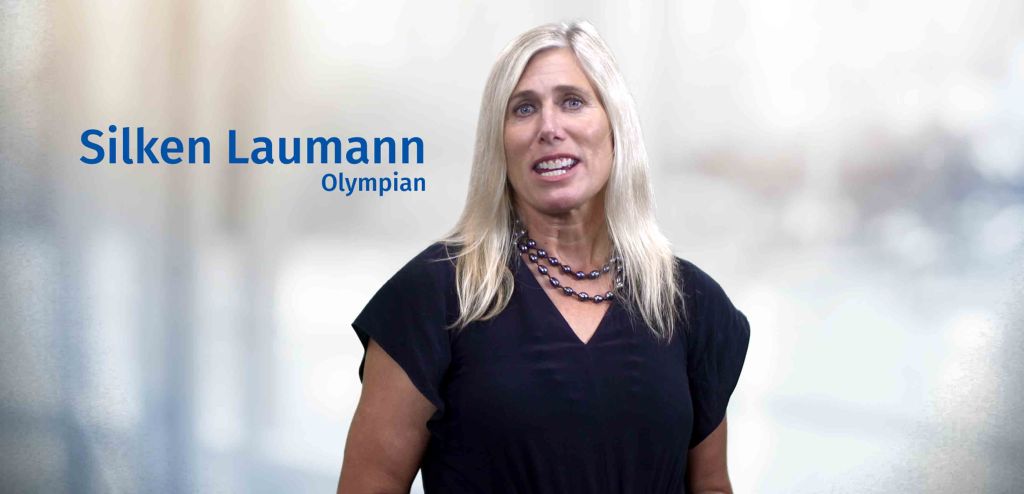
Our conversation brought together former Olympian and mental health advocate Silken Laumann with two entrepreneurs — Sam Duboc and Dan Seider who believe technology can be harnessed to monitor mental health and provide more accessible treatment options.
Here’s some of what we learned:
Listen on Apple Podcasts, Spotify or Simplecast
Stigma Remains a Major Obstacle to Seeking Treatment. Technology May Help.
Laumann, who revealed childhood emotional abuse in her 2014 memoir, Unsinkable, said she was hesitant to share those details for fear people would think differently about her. Until her book came out, Canadians’ perception of Laumann was one of a steely, world-class rower who overcame a horrific leg injury to win a bronze medal in the 1992 Barcelona Games. The stigma associated with mental illness is still one of the main reasons many don’t reach out for help. And that’s a problem, because one in five Canadians will experience mental illness at some point.
Duboc says he has a possible solution. His company, Beacon, is a digital platform offering Cognitive Behavioural Therapy — a well-established approach to treating depression, anxiety and other mood disorders. By providing affordable CBT online, Duboc says his company opens the door for those who would hesitate to set foot in a clinic.
Technology Provides an Answer to the Accessibility Challenge.
Our public health system is designed to deal with mental health when it becomes a crisis, but many sufferers don’t ever fall into that category because their illness is in a mild or moderate form. Others have trouble accessing treatment because they lack the funds, or live in remote areas. And then there’s the problem of long wait lists for a relatively small number of healthcare professionals in most Canadian communities. For some of these people, an app to track wellbeing or to communicate with a healthcare professional is an appealing option.
Data Has a Big Role to Play.
Seider was diagnosed with bipolar disorder eight years ago. Though he received effective treatment in the form of drugs and therapy, he says he got even better when he began to focus on how his behaviour affected his wellbeing. He taught himself to code and built a tool to track his moods — an effort that eventually led to Stigma, Seider’s mood-tracking software.
While the thought of using AI to tackle the problem of mental wellness might scare some people, Seider and our other panelists were more sanguine. AI is about recognizing patterns, and that means it holds the potential for many to recognize harmful mood or behaviour patterns as a first step in addressing them.
Ensuring Privacy Is Key.
Harnessing mobile technology to treat mental health poses a range of privacy concerns. With some 48,000 wellness apps out there, how can one be sure every one of the parties behind them has our privacy interests at heart? Regulation in this emerging space is scant, and more public conversations are needed about the protection of individual data, the rights of patients and the potential risks of harmful advice.
There’s a Business Case.
Mental illness is the number one cause of disability claims in Canada. For employers, mental illness represents a cost — in terms of lost productivity and increased benefit payments. The possibility that technology can provide a more economical solution to assessing and maybe even treating mental health is catching companies’ interest. Duboc says his virtual psychotherapy platform is being used by some large Canadian insurers and universities. As Laumann put it, a mental health problem shouldn’t be “a sentence to a non-productive life.”
Listen on Apple Podcasts, Spotify or Simplecast
New curriculums changed how they learned, new technologies changed how they communicate, and new forms of work have changed their career paths. So why don’t more millennials embrace the challenge of entrepreneurship?
It’s hard to measure just how many Canadians are building innovative startups, but those born after 1980 are lagging behind—in 2014, three quarters of small-business owners were aged 40 to 64.
For millennials, who now represent the biggest age group in the Canadian labour force, entrepreneurship might seem like a natural choice as careers have become less predictable—according to LinkedIn, early-career millennials are already switching jobs twice as fast as some Gen-Xers.
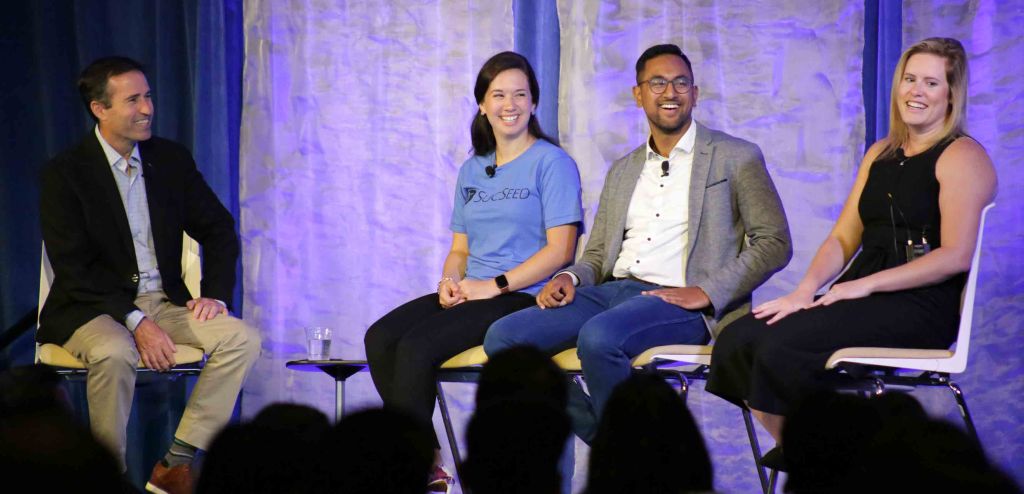
“Millennials have this special passion, an ability to just want to disrupt everything,” said Emily Bland, who was 22 when she was part of the Enactus Memorial team that founded hydroponics startup SucSeed in 2017. “We don’t look at things as the way they are. We look at them for what they could be.”
What Canada needs to do is harness that mindset to build the next generation of entrepreneurs.
Next-gen Tools
Today’s entrepreneurs have a real advantage. It’s never been easier to start a company, build a website, and get your message out. Of course, that also means it’s never been harder to get noticed.
Emma Harris didn’t have a background in coding when she built her startup, Healthy Pets, at the age of 25. The company offers an online service connecting pet owners and veterinarians via phone and a mobile app.
“I’m not an engineer and yet I was still able to pursue those opportunities because of what exists today,” she said. “The flip side to the low barriers to entry is that it’s now harder than ever to succeed and make your way to the top of the industry that you’re pursuing, simply because more people are entering themselves.”
Harris and Bland spoke at the Aug. 21 RBC Disruptors event along with Daniel D’Souza, the 22-year-old co-founder of inclusion-training startup Crescendo, on the future of youth entrepreneurship.
They agreed that it’s never been easier to get a business up and running. The challenge is getting others to follow in their footsteps.
Innovating in the Classroom
One answer may lie in giving students more exposure to entrepreneurial options during their schooling. In 2017, more than 64,000 students participated in entrepreneurial competitions in Ontario and Quebec alone.
That’s how Bland got her start. Before she started working on SucSeed as a social enterprise to improve food security through hydroponic grow operations, she wanted to be a lawyer.
In university, she got involved with the Enactus socially conscious entrepreneurial competition and, in her final year, led a team that beat students from 1,700 other campuses with a business idea that would become SucSeed.
Bland said that international success showed her the value of entrepreneurship as a career, and showed her how to think big.
“I think as Canadians, sometimes we cut ourselves short,” she said. “We look at success as building a million-dollar company, doing a hundred thousand dollars in revenue, getting one big sale. But we need to take initiative, we need to believe that we can build billion-dollar companies here.”
What’s NEXT
Bland, Harris and D’Souza are all involved with the entrepreneurship programs offered by the non-profit NEXT Canada. Supported by RBC, it provides mentorship, professional development and networking opportunities for select groups of entrepreneurs at varying stages of their careers.
D’Souza said it’s a great time to be running your own business. The celebrity status of founders has never been higher, with innovators like Elon Musk, Jeff Bezos and even Kylie Jenner making headlines and becoming role models.
“Being an entrepreneur now is sexier than it’s ever been,” he said. “That inspires a lot of people and shows that it’s not as difficult as you might think.”
Listen on Apple Podcasts, Spotify or Simplecast
Materially improving gender, ethnic and cultural diversity, particularly within executive teams correlates with a wide range of successes – specifically being able to recruit top talent and improve employee satisfaction and decision making.
Diversity can also help drive technological innovation and disruption. Consider Montreal-based Lightspeed, one of Canada’s most successful tech start-ups.
The software firm launched in 2005 by Dax Dasilva and a group of LGBT+ colleagues, and has grown in size to now include 600 employees in eight offices around the world.
A culture of inclusion was essential. So, too, was a recognition that innovation through diversity is as much evolution as revolution.
“Company culture is just as important as code,” Lightspeed’s CEO and founder Dax Dasilva told RBCDisruptors, our monthly event looking at innovation and how technology is changing the world around us.
The purpose of these two organizations is to build up leaders. You can’t make change in the world without having everyone see themselves as a leader.
Dasilva stressed that companies need to iterate in order to innovate.
As part of Pride Month, RBCDisruptors profiled Dasilva, a leading voice for the LGBT+ community in business and technology.
After Dasilva founded Lightspeed, he developed a mantra to ensure that everyone, regardless of gender or sexual orientation, had a seat at the table.
“That gave everybody the freedom to help us to grow the way that we wanted,” he said. “It allowed anyone at the company to be themselves and who they wanted to be.”
Lightspeed’s growth has soared since its start in a converted Montreal home and has become one of Canada’s most successful tech start-ups in recent years after its latest financing round in October that values the company around $1 billion. The company makes a cloud-based point-of-sale system that runs on tablets and computers aimed at for independent retailers and restaurants who annually process $15 billion worth of sales in over 100 countries.
Several recent studies that examine the business impact of LGBT-positive workplaces conclude that inclusiveness results in a more innovative and productive workplace. A study published in the journal Management Science in 2016 found that companies in U.S. states that are considered to be more gay-friendly are actually significantly more innovative, specifically producing higher rates of patents.
On average, companies based in U.S. states that passed laws that prohibit discrimination based on sexual preference or gender identity experienced an 8% increase in the number of patents and an 11% increase in the number of patent citations, compared to states that did not pass such a law.
And yet, LGBT+ people are among the most marginalized employees, according to a recent report by Diversio, a Toronto-based firm.
Diversio surveyed 2,100 people in 20 companies in Canada, the U.S. and Britain and found that LGBTQ2+ employees felt more at risk of workplace harassment, and were twice as likely to feel their opinions were not sought out or valued by their employers.
Dasilva shared an example in which he encouraged Lightspeed’s management to focus on diversifying the company’s data science team to gain additional perspectives.
“If we only build certain predictive models, it’s a self-fulfilling prophecy that creates a certain set of solutions. As great as the AI community is in Montreal, we have to have other viewpoints work on that data science and find new and different angles.”
Supporting LGBT+ inclusion also makes better business sense. A 2017 report by the Center for Talent Innovation concluded 71% of LGBT respondents and 82% of LGBT-supportive allies are more likely to purchase from LGBT-inclusive companies. Even more importantly, LGBT+ inclusiveness drives market innovation as teams with members whose sexual orientation matches the target consumer are much more likely to understand the market, the report found.
“We’re all looking for sources of innovation,” Dasilva said, stressing that one of his goals in technology is creativity. “All of the best of us is when we’re involved in something that’s creating good.”
After Dasilva launched Lightspeed, he discovered he had created a “monoculture” by hiring people from his own network of friends and acquaintances. It limited the company’s growth. “You have to own up to your mistakes and widen your circle,” he said. “You have to get out of your comfort zone of the people who are like you.”
In addition to managing Lightspeed ahead of a possible IPO next year, Dasilva also runs Never Apart, a Montreal-based non-profit organization that encourages social change through cultural programming. He understands that his role at both groups is to foster and build leadership, in the corporate world and within the LGBT+ community.
“The purpose of these two organizations is to build up leaders. You can’t make change in the world without having everyone see themselves as a leader.”

Listen on Apple Podcasts, Spotify or Simplecast
It began with news that Barack and Michelle Obama will produce documentaries and television series for the streaming service. And it ended with Netflix topping Disney as the world’s most valuable media company.
Netflix is doing more than disrupt the business model of show business. With exploding growth (its stock is the S&P 500’s top performer this year), it’s become a case study in the culture of innovation, as it melds the moonshot minds of Silicon Valley with the creative souls of Hollywood.
To do that, the company puts a lot of emphasis on attracting the right talent, and getting out of their way. Which is how Netflix says it has pivoted successfully — twice — in its two-decade existence.
Its credo was established in the 2009 Netflix Manifesto — a 120-slide masterpiece that was updated last year as a crisper, 10-page outline known simply as “Netflix Culture.”
Among the highlights: Set your own vacation, don’t bother with performance reviews and demand “adult-like behaviour.” And most critically: always be testing. Whether it’s ideas, shows or people.
I sat down with Jessica Neal, Netflix’s chief talent officer, at the C2 conference in Montreal to talk about that culture and how it’s evolving as they company goes global.
Neal, a Kentucky native who studied at New York’s School of Visual Arts, was an early Netflix talent scout who left to work at a couple of other Valley startups. She returned last year to help CEO Reed Hastings manage a growth trajectory that now spans 4,000 full-time employees and 125 million customers in 190 countries.
Here’s some of what she had to say:
Give Employees a Long Leash
Netflix gives its employees lots of runway: to make decisions, to experiment and to fail. For instance, the company doesn’t have a corporate expense policy. Instead, it asks employees to “spend the company’s money as if it was your own.” And it has found that, when you give employees that kind of freedom and responsibility, they generally make the right choices. Giving employees a high degree of independence is one of the reasons why founder Hastings claims he sometimes goes an entire quarter without making a single decision.
Information Is Power — And It Should Be Shared Broadly
Netflix decided to become a “memo culture” around the time it hit the 1,000-employee mark. Rather than share minutes of a meeting after it’s over, Netflix asks anyone scheduling a meeting to write up the main takeaways and desired outcome before it even starts. The practice allows employees to get to the point faster and reduces the number of follow-on meetings. A relentless focus on information and data underpins pretty much everything Netflix does, which Neal credits for enabling the company to abandon bad ideas early and pivot to better ones. (Netflix began as a mail-order DVD supplier before embarking on streaming and later morphing into one of the world’s biggest producers of entertainment content.)
Expect Feedback. A Lot of It
Netflix encourages employees to try out new ideas and doesn’t shy away from failure, in the belief that continuous experimentation and feedback will allow the best ideas to surface. Even the CEO is open about “things he needs to get better at,” Neal says. It’s part of a culture of “sun shining” — bringing failures out into the open so all employees can learn from them. But feedback is about more than commentary. As part of its testing culture, it relies heavily on data to show how employees are doing — and ensures they know.
Don’t Be Afraid to Let People Go
Working at Netflix isn’t for everyone. It’s a high-performance culture, and Neal says the company is pretty committed to parting ways with employees who don’t have what it takes. It can also require an array of executives and managers — often in the scores — to comment on a hire or promotion before it’s made. The company talks a lot about “dream teams” — the ideal mix of talent that thrives when working together. And as Neal put it, a team isn’t a family. It’s there to win.
Inclusion Is Emblazoned
Inclusion is a big part of the Netflix Culture document, as it strives to help employees recognize and work past their biases. To many, it doesn’t embody the “bro culture” that’s common in the tech world. But what about #MeToo? Neal says that, as an executive who works in both the Valley and Hollywood, she continues to push for progress. Among her concerns: ensuring female talent gets paid fairly. “Equal pay isn’t that hard, just write a cheque” she says. “Just pay them.”
 
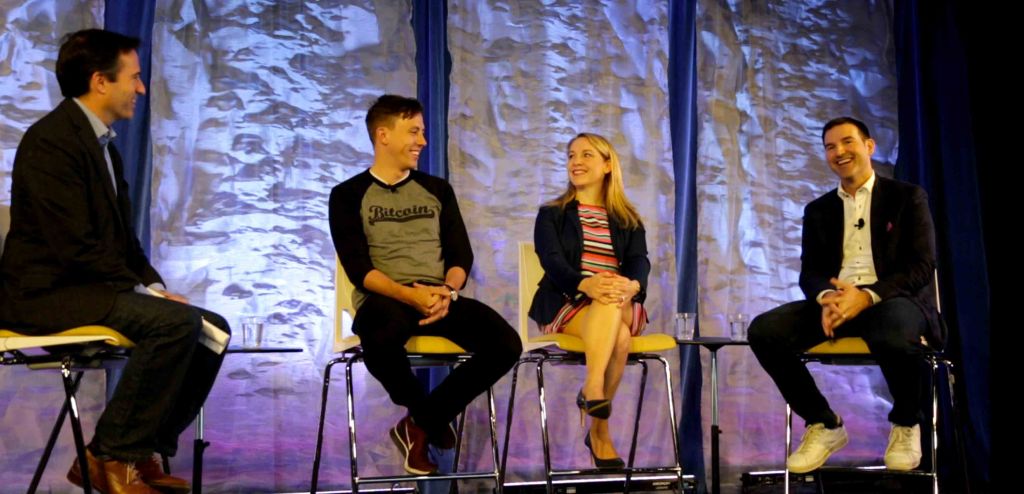
But with Bitcoin meeting gravity — falling from a high of $20,000 in December to $7,000 this month — is it also at risk of becoming the latest bubble to pop?
We put that question to three cryptocurrency experts at our most recent RBCDisruptors event:
Hilary Carter, Research Director at the Toronto-based Blockchain Research Institute;
Christian Lassonde, Founder and Managing Partner of Impression Ventures, who specializes in fintech investing;
and Matthew Spoke, the CEO of Nuco, a blockchain company that’s building a network to connect blockchains around the world.
Lassonde thinks crypto is more of a speculative asset than a medium of exchange, and fueled largely by greed and hype. Spoke disagreed, believing cryptocurrencies address a discontent with the centralized financial system. Either way, Carter thinks big companies and governments need to explore underlying blockchain technologies that can eliminate the frictions and costs of centralized book-keeping, whether for financial transactions or other methods of exchange.
<!– To hear our full discussion, listen to the RBCDisruptors podcast on Soundcloud or iTunes. –>
Here’s some of what was said:
Listen on Apple Podcasts, Spotify or Simplecast
1. What’s the Problem?
For centuries, money has been centrally controlled and managed, for reasons of personal security and economic stability. But with universal access to electronic exchanges and cloud computing, those central ledgers may no longer be needed. Or so the cryptocurrency advocates would have you believe. They think every financial transaction can now be instantly recorded — and encrypted — on every computer in the world. Think of it as one of those card games that doesn’t require a dealer. But what if we like having a dealer, to keep track of the cards and score, and to keep an eye on the other players for us? Centralization is something most consumers seem happy with, whether it’s centralized social media platforms (Facebook), entertainment platforms (Netflix) or money (U.S. dollars). And we’ve already got a range of systems, including digital payments, that work fairly well. Even where there are areas of friction — cross-border payments, for instance — improvements are emerging through technology and competition. Carter still believes cryptocurrencies may be most useful in parts of the world where technology and competition are not widespread, or where trust in the banking system may be weak. She estimates there are 2.5 billion “unbanked” people in the world without access to traditional financial institutions. For them, cryptocurrencies offer an alternative — and may even be necessary for those wanting to protect their money from corrupt governments.
2. Isn’t That a Side Door to Money Laundering?
Crypto is sounding alarm bells with regulators because of its obvious appeal for those who want to go unnoticed. Even big investors may not want to be connected to it because of its links to the underground economy and illicit activities like smuggling, tax evasion and terror financing. As Lassonde put it, “the money that’s coming in doesn’t want to be known, doesn’t want to be traced.” He thinks cryptocurrencies are so useful to money launderers and sanction-busting governments that they won’t escape the long arm of global regulators for much longer. Can those concerns be addressed in time? Spoke, a crypto proponent, admits that’s unlikely, as the technology is out of the bag and “regulatory arbitrage” is already underway. But he feels the underlying technology can still be useful to identify patterns of abuse, and root out the wrong-doers, who will always be looking for alternative channels to move money. Throw out crypto, he said, and the evaders will find something else. “With every new technology, comes the good and bad and you just hope that over time, the good outweighs the bad, and this is a perfect example of that.”
3. What If Regulators Move to Shut It Down?
The Chinese government has cracked down on crypto activity, last year banning Initial Coin Offerings (ICOs) and this year announcing it will scrutinize crypto exchanges. Do crypto investors in Canada face similar risks of a regulatory crackdown? Lassonde thinks so, likening it to the peer-to-peer music sharing platforms that disappeared after regulations were imposed. “We may see a change in the laws here in the next five plus years, where the ownership of crypto has become illegal — there’s very effective tools from centralized states to crush this stuff,” he argued. Carter and Spoke see it differently, with an opportunity for Canada to lead. Recognizing cryptocurrencies as currencies would allow the federal government to license digital wallets, a move that would help Canadians keep their assets safe, they said. But Spoke worries public officials aren’t spending enough time on the issue. “If anybody understands this the least,” he said, “it’s governments and regulators around the world.”
4. With So Many Concerns, Will Crypto Ever Become Mainstream?
Crypto remains on the fringes, used largely by early tech adopters, speculators and thrill-seekers. Lassonde believes that taking that into the mainstream will require massive behavior change. And that usually requires a large organization investing heavily in the infrastructure needed to create platforms for entrepreneurs and developers. He likened it to what Apple did for smart phones — except with crypto, no major developer is stepping forward. Without that investment, he argued, massive growth will be hard. Spoke agreed, saying,“if we can’t get these systems to a point where they’re significantly more accessible and more efficient, I don’t think they will hit the mainstream.”
5. Could Crypto Find a Second Life in Other Areas?
If regulators crack down on crypto-currencies, the underlying technology may find a home in less regulated fields like voting and business registration. Carter says governments are interested in “non-payment applications” as a way to reduce inefficiencies, and they may be willing to launch test cases in fields that currently require a centralized ledger. Drivers licenses and vehicle registration, for instance. “If you’re the Blockbuster of today,” she asked, “what’s the Netflix of tomorrow?”

If your screens are still filled with football a month after the Super Bowl, it’s because the NFL is trying to turn the league into a 24/7, all-season river of content.
In an age of media disruption, the world’s most powerful sports enterprise is charting a digital strategy that it hopes will transcend the seemingly irreversible decline of its mainstay, broadcast TV.
According to a study by RBC Capital Markets, the NFL earns US$3.2 billion in profit a year — more than the NBA, NHL and MLB combined. That’s largely because it dominates old media like no other sport. Last month’s Super Bowl was the 10th most watched TV program in history, even though ratings were down 7% from the previous year.
But as traditional broadcast audience age, the league is branching into new channels at every turn.
“We’re training everyone with ubiquity,” says Mary Ann Turcke, the Canadian media executive who last year became president of NFL Networks and head of the league’s digital operations.
(You can listen to our podcast here.)
While the NFL’s digital stream is still small — 5% of its total audience — it’s growing at 25% a year.
To maintain those growth rates, the league will need a lot more content like Good Morning Football, the NFL Network’s flagship morning program aimed at millennials, and All or Nothing, its reality drama series on Amazon Prime.
Turcke’s goal: “interesting football content that keeps people in the football ecosystem.”
She spoke recently at RBCDisruptors, our regular series on innovation and digital disruption. Here’s some of what she shared about the world’s most successful sports league and how it’s trying to disrupt itself on the digital playing field:
1. Keep It Fun and Surprising, the Juice of Reality TV
No matter the platform, nothing in content is as powerful as surprise. For the NFL, that includes teams that go from last to first, like this year’s Super Bowl champion Philadelphia Eagles, and players who make viral plays, like Eagles quarterback Nick Foles catching a touchdown in the big game. Turcke says the adrenaline rush of surprising moments like that is still the juice of big audiences. “Sports is the first reality TV produced. It’s live. It’s real.”2. Try Every Channel in the Playbook
Twitter now carries NFL video year-round. Its Periscope app features pre-game coverage. SnapChat produces live stories for every NFL game, including the Super Bowl when it was Verizon’s top social channel. And Facebook is sharing abbreviated game highlights. The league’s most ambitious partnership, though, may be Thursday Night Football with content-hungry Amazon. Thursday games have proven to be a big draw for millennials, with the league promoting “your weekend starts here” and trick plays like “colour rush” uniforms that add visual spark to screens. The league is less concerned, for now, about the revenue model, believing it can continue to negotiate the value of its content with platform companies — Amazon, Facebook, Twitter — as it proves its new engagement model.3. Always Protect Your Lead
It’s an old adage in business, but the value difference between first and second is greater than between second and the rest. The NFL knows that better than anyone. Its fans, advertisers, sponsors, even owners are willing to pay a big premium to be part of America’s game because it continues to be the biggest draw for autumn audiences. Which means broadcasters will continue to spend disproportionately for the rights to games. In fact, the bidding may get more intense as the supply of mass-market draws dwindles.4. Build Business Models Around Players, Not Just Teams
Few businesses have a more intense and loyal fan following, and the NFL is building on that by spreading what it calls “fandom” to individual athletes. It’s a page from the NBA’s playbook, although not easy in a “football is family” culture that has puts team over player. Even harder when players spend most of their screen time masked by helmets and lying in piles of players. The NFL believes it can use other channels to encourage athletes to develop their own brands to seize on North America’s celebrity culture. Case in point: Tom vs. Time, Tom Brady’s web reality TV show.5. Go Global, Even If It’s All-American
America’s game is going where the sport has never gone before, taking another page from the NBA. One difference: basketball is played on every continent, and is a big part of the Olympics, while the NFL is and always will be American. It’s not just the rules of the game that are foreign in every other country; the NFL’s patriotic pulse thumps even louder in an America First world. Ex-pats will always be a core fan base overseas, but Turcke thinks the league’s growing celebrity factor can add to foreign markets. Thanks to a TV deal with Sky, the NFL’s ratings last years in the United Kingdom were up 60%. “The more people around the world watch football, the better we are.” Turcke says. “We have to go where they are and reverse-engineer the monetization model underneath it.”6. Make the Physical and Digital Experience Work Together
The NFL is building its next generation audience around physical and digital experiences. Billion-dollar stadiums in Dallas, Las Vegas and Los Angeles aren’t just pleasure palaces. They’re anchors for business models that include residential developments, retail complexes and entertainment zones that can pull ever-growing digital audiences into the leisure economy. Even on game days, digital audiences thrive on the live experience, following fans at games or just catching the viral buzz of an event. It’s the human power of sport. “I hope no predictive model ever puts a name on it,” Turcke says.7. Always Watch the Blindside
Concussions, domestic violence, #takeaknee; the NFL has taken a brand beating, much of it self-inflicted. Turcke, in her rookie year with the league, says she learned to work with teams and fans who are intensely loyal to the sport, even if the greater issues of gender-based violence and racial profiling remain unresolved. The league is more acutely aware of its social challenges, she says, thanks in part to the much bigger digital audiences it’s building at home and abroad. But as it discovered in the national anthem debate, which split its fan base in two, the burden of America’s game is it’s one of the few threads that still stitches together red states with blue. That may become a greater burden as it tries to build its audience in new markets and with new generations.
Football’s Still the Biggest Thing on the Small Screen
Sunday Night Football remains the highest rated show in primetime viewership, beating the top scripted show (The Big Bang Theory) by four million viewers.- The NFL earns US$3.2 billion in profit per year, more than the NBA, NHL and MLB combined.
- Live sports were an unstoppable force for TV ratings, but they’re now facing digital disruption. At risk for the NFL: US$10 billion a year in TV rights. Those rights represent the source of 60 percent of the league’s revenue.
- The league is great for the networks: CBS alone makes US$1 billion in ad sales every year from its NFL deal.
From the TV Screen to the Smartphone Screen
The NFL has entered into several partnerships with tech giants, to reach the digitally-savvy.- Twitter: Multi-year agreement that brings official NFL video to fans year-round, including a new 30-minute live digital show that airs on Twitter five nights per week during the regular football season. Live footage is augmented with NFL highlights, news and analysis, and historical content.
- Snapchat: Multi-year strategic partnership, in which the NFL has become the first pro sports league to have a presence on the “discover” platform. Additionally, Snapchat Live Stories are produced for every NFL game during the season, including the Super Bowl.
- Facebook: Recently inked deal that sees highlights go to Facebook directly after live gamers, as well as highlights shows on Facebook Watch.
- Amazon: The NFL has recently moved to Amazon Prime for digital viewing of Thursday Night Football.
- Periscope: Live, pre-game coverage that includes player warm-ups and sideline interviews, designed to give football fans behind-the-scenes access to teams on game days.
- Streaming accounts for about 5% of the total NFL audience, but it has seen a 25% increase in viewership over the last year.
The Millennial Challenge
According to a Sept. 2017 Forbes article, the average NFL viewer is now around 50 years old. How are they attracting the younger, millennial demographic?- Millennials spend less than half (3:00 vs 6:42) the amount of time in front of the TV per day as Baby Boomers.
- An Oct. 2017 McKinsey study found that increases in sports options have caused fans of all ages to watch fewer games for shorter durations.
- Millennials are much more likely to view content non-linearly. In general, they remain sports fans and watch almost as many live games across all sports as Gen X (3.2 games/week vs. 3.4) and the same amount of highlights and other non-live sports (32 minutes/day).
Making America’s Game Global
Football is the quintessential American sport, but the league has great global ambitions.- In 2007 the NFL launched its annual London Game Series, which as of this year has seen 26 of the league’s 32 teams play games in London.
- NFL ratings were up 60% in the UK this past year, thanks to a large TV deal with Sky and a relationship with the BBC, as well as a continued series of games played each season in the UK.
- Games have also started to be played in Mexico City, which hosted the Oakland Raiders against the Houston Texans in 2016, and New England Patriots and the Oakland Raiders in 2017.
TV Habits
The numbers don’t lie — tv viewership is on a steady decline.- The average audience for a game this season was 14.9 million, down 9.7% when compared with 16.5 million viewers for the 2016 regular season, according to Nielsen ratings.
- Cord cutting is on the rise: the number of broadband-only homes in the U.S. rose nearly 40% between 2016 and 2017 to 5.4 million.
- Weekly traditional TV viewing by Americans aged 18–24 has fallen by nearly half since 2011.
- Netflix now has more paying subscribers in the US than all of the top cable TV companies combined.
The Super Bowl Is Still TV’s Biggest Event
This year’s Super Bowl between the New England Patriots and the Philadelphia Eagles was the 10th most-watched program in TV history — even after the audience fell 8% from last year.- On Super Bowl game day, Verizon fans (Verizon owns NFL mobile rights) used 18.8 TB of data in and around the stadium, the equivalent of a single user binge watching HD video for 435 straight days.
- The data usage by Verizon fans was 71% more than the 11 TB used at Super Bowl 51. At Super Bowl 50, Verizon customers used 7 TB of data – roughly 1/3 of Sunday’s big game.
- The top three favourite social media apps at the gamer were: Snapchat, Facebook and Instagram, with Snapchat moving from third at last year’s Super Bowl to first most used.

Fast forward to 2018, and another big American thinker, Dan Doctoroff, is aiming to join a new urban revolution in Toronto, this one fueled by data more than division.
Doctoroff would balk at any comparison to Jacobs, who made her name as a writer and rabble-rouser. He’s a corporate leader and builder. But he recognizes they both would see the power of sustainable neighbourhoods as a bedrock to any future city.
A former deputy mayor of New York, who help lead the city’s renaissance after 9/11, Doctoroff is CEO of Sidewalk Labs, a company he created with Google co-founder Larry Page to radically change the way design our cities.
Sidewalk Labs is now focused on Toronto, where they’ve won the right to build a 12-acre community called Quayside on the downtown waterfront — an urban lab, really, where up to 5,000 people will live, work and play. They’ll do that by harnessing technology to reduce the financial, environmental and emotional cost of city-dwelling.
“A set of technologies are converging that can fundamentally bend the curve on the quality of life,” Doctoroff says.
He calls it a “fourth urban revolution,” following the steam revolution that gave us trains and the connected city, the electric revolution that gave us the vertical city, and the car revolution that gave us the sprawling city.
Doctoroff spoke at the most recent session of RBCDisruptors, our regular series on innovation, disruption and how technology is changing the way we live. You can listen to the full conversation on our podcast on iTunes or SoundCloud.
Here are some of the highlights:
1. If It’s Technologists Versus Urbanists, We All Lose
Doctoroff and his Sidewalk Labs team studied 150 so-called smart cities around the world and found none had worked. Simple reason: they didn’t harness humanity. Too many tried to impose master plans (the stuff of urbanists) and master technologies (the stuff of techies) on residents, rather than letting them play with technology and see what might emerge. “Cities cannot be planned all the way down to the last detail. You want people’s creativity and imagination and ideas.”
2. We Need to See Cities As the New Smartphone
Quayside will be a platform for others to build on, with apps, systems and buildings that connect with each other through a kind of open-source neighbourhood. “What makes smartphones so revolutionary is that they enable through reasonably open APIs, for people all over the world to build on top of it, creating things that no one ever imagined were possible, and that’s what gives it the power that it has.”
3. Diversity Will Matter; Inclusion More So
Toronto is renowned for its diversity but its inclusiveness is what caught Doctoroff’s eye. People mix easily in the city, and the inflow of 100,000 people a year hasn’t led to any signs of social fray. This was critical to Sidewalk Labs’ decision to focus on Toronto rather than the other 51 cities it surveyed in North America. “People here (are) more open to new approaches and new ideas… If Amazon sees what we see here, it wouldn’t even be close.” Diversity will define Quayside, but its inclusions is what will make it relevant globally.
4. Avoiding a Digital Palace
Diversity is about more than people’s background. Quayside will need a vibrant mix of income groups and lifestyles if it’s to be useful as a lab. In other words, it can’t be a shiny palace on the hill for technologists. Doctoroff thinks a key to drawing middle-income families, including from the suburbs, will be its ability to meld community design and building to cut housing costs. He thinks Quayside’s living costs will be 15–20% cheaper than elsewhere in the city. “Imagine for that family that makes $80,000 a year, if you can save them 15%, or $12,000 a year, that’s a meaningful change in people’s lives.”
5. Building a Mobility Lab
Quayside’s first priority is mobility. Only autonomous-driving vehicles. A lot of vehicle and bike sharing. And experimentation in pathway design, from tighter corners (efficiency) to curved roads (aesthetics) to bigger sidewalks and laneways (open space). Doctoroff thinks Quayside’s design will reduce the footprint of roads and driveways, which take up 30–40% of North American cities. “If you can reclaim that, you can double the amount of public space, putting everyone within a very short walk of a park.”
6. An Environmental Moonshot
Doctorff is aiming for “the first climate positive community in the world.” That starts with buildings, which in Canada consume a lot of energy. The deep waters of Toronto’s harbour may act as a heating and cooling system. Trees along the waterfront can also help buffer residents from the lake’s winds as they walk or bike. And underground service corridors can feed electricity and fibre-optic cables to residents — along with goods to local shops and the removal of waste.
7. Privacy Remains a Paramount Challenge
Quayside has three guiding principles for privacy. First, protections will be built into all products. Second, all data collected will be used to improve quality of life, and not for commercial purposes. Third, the process used to develop these policies will be open and collaborative. Doctoroff says Toronto has the chance to create “a global standard” for privacy.
8. Toronto As a Global Hub
Doctoroff says Toronto has the chance to draw urban thinkers, and developers, from around the world, in a way Jacobs never envisioned. If Quayside works, cities from China to Nigeria will pay attention — and those who help build it will have a global market. He thinks the project may actually create a new kind of Silicon Valley, around city-building. “One of the great opportunities for Toronto is to set the global example for what urban living can actually be, and to become the hub of urban innovation.”